EP3849554B1 - Kombinationstherapie mit einem phosphoinositol-3-kinase-inhibitor mit einem zinkbindenden teil - Google Patents
Kombinationstherapie mit einem phosphoinositol-3-kinase-inhibitor mit einem zinkbindenden teil Download PDFInfo
- Publication number
- EP3849554B1 EP3849554B1 EP19860430.8A EP19860430A EP3849554B1 EP 3849554 B1 EP3849554 B1 EP 3849554B1 EP 19860430 A EP19860430 A EP 19860430A EP 3849554 B1 EP3849554 B1 EP 3849554B1
- Authority
- EP
- European Patent Office
- Prior art keywords
- compound
- pharmaceutically acceptable
- mixture
- mmol
- added
- Prior art date
- Legal status (The legal status is an assumption and is not a legal conclusion. Google has not performed a legal analysis and makes no representation as to the accuracy of the status listed.)
- Active
Links
Images

Classifications
-
- A—HUMAN NECESSITIES
- A61—MEDICAL OR VETERINARY SCIENCE; HYGIENE
- A61K—PREPARATIONS FOR MEDICAL, DENTAL OR TOILETRY PURPOSES
- A61K31/00—Medicinal preparations containing organic active ingredients
- A61K31/33—Heterocyclic compounds
- A61K31/395—Heterocyclic compounds having nitrogen as a ring hetero atom, e.g. guanethidine or rifamycins
- A61K31/535—Heterocyclic compounds having nitrogen as a ring hetero atom, e.g. guanethidine or rifamycins having six-membered rings with at least one nitrogen and one oxygen as the ring hetero atoms, e.g. 1,2-oxazines
- A61K31/5375—1,4-Oxazines, e.g. morpholine
- A61K31/5377—1,4-Oxazines, e.g. morpholine not condensed and containing further heterocyclic rings, e.g. timolol
-
- A—HUMAN NECESSITIES
- A61—MEDICAL OR VETERINARY SCIENCE; HYGIENE
- A61K—PREPARATIONS FOR MEDICAL, DENTAL OR TOILETRY PURPOSES
- A61K31/00—Medicinal preparations containing organic active ingredients
- A61K31/33—Heterocyclic compounds
- A61K31/395—Heterocyclic compounds having nitrogen as a ring hetero atom, e.g. guanethidine or rifamycins
- A61K31/495—Heterocyclic compounds having nitrogen as a ring hetero atom, e.g. guanethidine or rifamycins having six-membered rings with two or more nitrogen atoms as the only ring heteroatoms, e.g. piperazine or tetrazines
- A61K31/505—Pyrimidines; Hydrogenated pyrimidines, e.g. trimethoprim
- A61K31/519—Pyrimidines; Hydrogenated pyrimidines, e.g. trimethoprim ortho- or peri-condensed with heterocyclic rings
-
- A—HUMAN NECESSITIES
- A61—MEDICAL OR VETERINARY SCIENCE; HYGIENE
- A61K—PREPARATIONS FOR MEDICAL, DENTAL OR TOILETRY PURPOSES
- A61K39/00—Medicinal preparations containing antigens or antibodies
- A61K39/395—Antibodies; Immunoglobulins; Immune serum, e.g. antilymphocytic serum
- A61K39/39533—Antibodies; Immunoglobulins; Immune serum, e.g. antilymphocytic serum against materials from animals
- A61K39/3955—Antibodies; Immunoglobulins; Immune serum, e.g. antilymphocytic serum against materials from animals against proteinaceous materials, e.g. enzymes, hormones, lymphokines
-
- A—HUMAN NECESSITIES
- A61—MEDICAL OR VETERINARY SCIENCE; HYGIENE
- A61K—PREPARATIONS FOR MEDICAL, DENTAL OR TOILETRY PURPOSES
- A61K39/00—Medicinal preparations containing antigens or antibodies
- A61K39/395—Antibodies; Immunoglobulins; Immune serum, e.g. antilymphocytic serum
- A61K39/39533—Antibodies; Immunoglobulins; Immune serum, e.g. antilymphocytic serum against materials from animals
- A61K39/39558—Antibodies; Immunoglobulins; Immune serum, e.g. antilymphocytic serum against materials from animals against tumor tissues, cells, antigens
-
- A—HUMAN NECESSITIES
- A61—MEDICAL OR VETERINARY SCIENCE; HYGIENE
- A61K—PREPARATIONS FOR MEDICAL, DENTAL OR TOILETRY PURPOSES
- A61K45/00—Medicinal preparations containing active ingredients not provided for in groups A61K31/00 - A61K41/00
- A61K45/06—Mixtures of active ingredients without chemical characterisation, e.g. antiphlogistics and cardiaca
-
- A—HUMAN NECESSITIES
- A61—MEDICAL OR VETERINARY SCIENCE; HYGIENE
- A61K—PREPARATIONS FOR MEDICAL, DENTAL OR TOILETRY PURPOSES
- A61K9/00—Medicinal preparations characterised by special physical form
- A61K9/20—Pills, tablets, discs, rods
-
- A—HUMAN NECESSITIES
- A61—MEDICAL OR VETERINARY SCIENCE; HYGIENE
- A61K—PREPARATIONS FOR MEDICAL, DENTAL OR TOILETRY PURPOSES
- A61K9/00—Medicinal preparations characterised by special physical form
- A61K9/48—Preparations in capsules, e.g. of gelatin, of chocolate
-
- A—HUMAN NECESSITIES
- A61—MEDICAL OR VETERINARY SCIENCE; HYGIENE
- A61P—SPECIFIC THERAPEUTIC ACTIVITY OF CHEMICAL COMPOUNDS OR MEDICINAL PREPARATIONS
- A61P35/00—Antineoplastic agents
-
- A—HUMAN NECESSITIES
- A61—MEDICAL OR VETERINARY SCIENCE; HYGIENE
- A61P—SPECIFIC THERAPEUTIC ACTIVITY OF CHEMICAL COMPOUNDS OR MEDICINAL PREPARATIONS
- A61P35/00—Antineoplastic agents
- A61P35/02—Antineoplastic agents specific for leukemia
-
- A—HUMAN NECESSITIES
- A61—MEDICAL OR VETERINARY SCIENCE; HYGIENE
- A61P—SPECIFIC THERAPEUTIC ACTIVITY OF CHEMICAL COMPOUNDS OR MEDICINAL PREPARATIONS
- A61P35/00—Antineoplastic agents
- A61P35/04—Antineoplastic agents specific for metastasis
-
- C—CHEMISTRY; METALLURGY
- C07—ORGANIC CHEMISTRY
- C07D—HETEROCYCLIC COMPOUNDS
- C07D495/00—Heterocyclic compounds containing in the condensed system at least one hetero ring having sulfur atoms as the only ring hetero atoms
- C07D495/02—Heterocyclic compounds containing in the condensed system at least one hetero ring having sulfur atoms as the only ring hetero atoms in which the condensed system contains two hetero rings
- C07D495/04—Ortho-condensed systems
-
- C—CHEMISTRY; METALLURGY
- C07—ORGANIC CHEMISTRY
- C07K—PEPTIDES
- C07K16/00—Immunoglobulins [IG], e.g. monoclonal or polyclonal antibodies
- C07K16/18—Immunoglobulins [IG], e.g. monoclonal or polyclonal antibodies against material from animals or humans
- C07K16/28—Immunoglobulins [IG], e.g. monoclonal or polyclonal antibodies against material from animals or humans against receptors, cell surface antigens or cell surface determinants
- C07K16/2803—Immunoglobulins [IG], e.g. monoclonal or polyclonal antibodies against material from animals or humans against receptors, cell surface antigens or cell surface determinants against the immunoglobulin superfamily
- C07K16/2818—Immunoglobulins [IG], e.g. monoclonal or polyclonal antibodies against material from animals or humans against receptors, cell surface antigens or cell surface determinants against the immunoglobulin superfamily against CD28 or CD152
-
- A—HUMAN NECESSITIES
- A61—MEDICAL OR VETERINARY SCIENCE; HYGIENE
- A61K—PREPARATIONS FOR MEDICAL, DENTAL OR TOILETRY PURPOSES
- A61K39/00—Medicinal preparations containing antigens or antibodies
- A61K2039/505—Medicinal preparations containing antigens or antibodies comprising antibodies
-
- A—HUMAN NECESSITIES
- A61—MEDICAL OR VETERINARY SCIENCE; HYGIENE
- A61K—PREPARATIONS FOR MEDICAL, DENTAL OR TOILETRY PURPOSES
- A61K2300/00—Mixtures or combinations of active ingredients, wherein at least one active ingredient is fully defined in groups A61K31/00 - A61K41/00
Definitions
- Therapeutic regimens for the treatment of cancers often involve combination therapy with two or more agents.
- target therapies may be combined to more effectively treat various types of cancer and inhibit the development of cancer cells resistant to therapy.
- WO 2017/223422 teaches pharmaceutical compositions comprising a phosphatidylinositol 3-kinase inhibitor, or pharmaceutically acceptable form thereof, in combination with a second agent, or a pharmaceutically acceptable form thereof, wherein the second agent is chosen from one or more of 1) a checkpoint modulator, 2) an XPO1 inhibitor, 3) an anti-CD19 antibody, 4) a TLR agonist, 5) a STING agonist, or 6) a Flt3 ligand, or a combination thereof.
- US 2018/0133223 teaches a method of treating cancer in a subject in need thereof, comprising administering to the subject a compound of Formula I as disclosed therein, and a BCL-2 inhibitor; wherein the compound of Formula I or pharmaceutically acceptable salt thereof and a BCL-2 inhibitor are administered in amounts which in combination are therapeutically effective.
- US 2012/0039906 teaches PD-1 antibodies and PD-L1 antibodies and uses thereof.
- US 8,461,157 teaches deazapurines, thienopyrimidines and furopyrimidines with zinc-binding moiety based derivatives and their use in the treatment of phosphoinositide 3-kinase related diseases and disorders such as cancer.
- WO 2013/019906 teaches combination treatment comprising a PD-1 axis binding antagonist and a MEK inhibitor and methods for use thereof, including methods of treating conditions where enhanced immunogenicity is desired such as increasing tumor immunogenicity for the treatment of cancer.
- each composition is independently administered transmucosally, orally, rectally, vaginally, sublingually, intravenously, intramuscularly, subcutaneously, bucally, intranasally, intracistemally, intraperitoneally, or intra-aurally.
- one or both compositions is administered in a suppository or hydrogel. In preferred embodiments, both compositions are administered orally.
- the timing of their administration is such that the pharmacological activities of the agents overlap in time, thereby exerting a combined therapeutic effect.
- the compound of Formula I or pharmaceutically acceptable salt thereof and the PD-1 signaling inhibitor can be administered sequentially with a time separation of more than about 60 minutes.
- the time between the sequential administration of the compound of Formula I or pharmaceutically acceptable salt thereof and the PD-1 signaling inhibitor can be more than 60 minutes, more than 2 hours, more than 5 hours, more than 10 hours, more than 1 day, more than 2 days, more than 3 days, or more than 1 week apart.
- the optimal administration times will depend on the rates of absorption, distribution, metabolism and/or excretion of the compound of Formula I or pharmaceutically acceptable salt thereof and the PD-1 signaling inhibitor.
- Cancers that the compounds described herein may be useful in preventing, treating and studying are colon carcinoma.
- pharmaceutically acceptable carriers may be aqueous or non-aqueous solutions, suspensions, emulsions or oils.
- non-aqueous solvents are propylene glycol, polyethylene glycol, and injectable organic esters such as ethyl oleate.
- Aqueous carriers include water, alcoholic/aqueous solutions, emulsions or suspensions, including saline and buffered media.
- oils are those of petroleum, animal, vegetable, or synthetic origin, for example, peanut oil, soybean oil, mineral oil, olive oil, sunflower oil, and fish-liver oil.
- the active compounds are prepared with carriers that will protect the compound against rapid elimination from the body, such as a controlled release formulation, including implants and microencapsulated delivery systems.
- a controlled release formulation including implants and microencapsulated delivery systems.
- Biodegradable, biocompatible polymers can be used, such as ethylene vinyl acetate, polyanhydrides, polyglycolic acid, collagen, polyorthoesters, and polylactic acid. Methods for preparation of such formulations will be apparent to those skilled in the art.
- the materials can also be obtained commercially from Alza Corporation and Nova Pharmaceuticals, Inc.
- Liposomal suspensions can also be used as pharmaceutically acceptable carriers. These can be prepared according to methods known to those skilled in the art, for example, as described in U.S. Pat. No. 4,522,811 .
- the amount of the compound administered to the patient is less than an amount that would cause toxicity in the patient. In certain embodiments, the amount of the compound that is administered to the patient is less than the amount that causes a concentration of the compound in the patient's plasma to equal or exceed the toxic level of the compound.
- the concentration of the compound in the patient's plasma is maintained at about 10 nM. In one embodiment, the concentration of the compound in the patient's plasma is maintained at about 25 nM. In one embodiment, the concentration of the compound in the patient's plasma is maintained at about 50 nM. In one embodiment, the concentration of the compound in the patient's plasma is maintained at about 100 nM. In one embodiment, the concentration of the compound in the patient's plasma is maintained at about 500 nM.
- acyl refers to hydrogen, alkyl, partially saturated or fully saturated cycloalkyl, partially saturated or fully saturated heterocycle, aryl, and heteroaryl substituted carbonyl groups.
- acyl includes groups such as (C 1 -C 6 )alkanoyl (e.g., formyl, acetyl, propionyl, butyryl, valeryl, caproyl, t-butylacetyl, etc.), (C 3 -C 6 )cycloalkylcarbonyl (e.g., cyclopropylcarbonyl, cyclobutylcarbonyl, cyclopentylcarbonyl, cyclohexylcarbonyl, etc.), heterocyclic carbonyl (e.g., pyrrolidinylcarbonyl, pyrrolid-2-one-5-carbonyl, piperidinylcarbonyl, piperazinylcarbonyl, tetrahydrofuranylcarbonyl,
- alkyl embraces linear or branched radicals having one to about twenty carbon atoms or, preferably, one to about twelve carbon atoms. More preferred alkyl radicals are "lower alkyl” radicals having one to about ten carbon atoms. Most preferred are lower alkyl radicals having one to about eight carbon atoms. Examples of such radicals include methyl, ethyl, n-propyl, isopropyl, n-butyl, isobutyl, sec-butyl, tert-butyl, pentyl, iso-amyl, hexyl and the like.
- alkenyl embraces linear or branched radicals having at least one carbon-carbon double bond of two to about twenty carbon atoms or, preferably, two to about twelve carbon atoms. More preferred alkenyl radicals are "lower alkenyl” radicals having two to about ten carbon atoms and more preferably about two to about eight carbon atoms. Examples of alkenyl radicals include ethenyl, allyl, propenyl, butenyl and 4-methylbutenyl.
- alkenyl and “lower alkenyl” embrace radicals having "cis” and “trans” orientations, or alternatively, "E” and "Z” orientations.
- alkynyl embraces linear or branched radicals having at least one carbon-carbon triple bond of two to about twenty carbon atoms or, preferably, two to about twelve carbon atoms. More preferred alkynyl radicals are "lower alkynyl” radicals having two to about ten carbon atoms and more preferably about two to about eight carbon atoms. Examples of alkynyl radicals include propargyl, 1-propynyl, 2-propynyl, 1-butyne, 2-butynyl and 1-pentynyl.
- aryl alone or in combination, means a carbocyclic aromatic system containing one, two or three rings wherein such rings may be attached together in a pendent manner or may be fused.
- aryl embraces aromatic radicals such as phenyl, naphthyl, tetrahydronaphthyl, indane and biphenyl.
- heteroaryl embraces unsaturated heterocyclyl radicals.
- heteroaryl radicals include unsaturated 3 to 6-membered, preferably 5 or 6-membered, heteromonocyclic group containing 1 to 4 nitrogen atoms, for example, pyrrolyl, pyrrolinyl, imidazolyl, pyrazolyl, pyridyl, pyrimidyl, pyrazinyl, pyridazinyl, triazolyl (e.g., 4H-1,2,4-triazolyl, 1H-1,2,3-triazolyl, 2H-1,2,3-triazolyl, etc.) tetrazolyl (e.g., 1H-tetrazolyl, 2H-tetrazolyl, etc.), etc.; unsaturated condensed heterocyclyl group containing 1 to 5 nitrogen atoms, for example, indolyl, isoindolyl, indolizinyl,
- substituted refers to the replacement of one or more hydrogen radicals in a given structure with the radical of a specified substituent including, but not limited to: halo, alkyl, alkenyl, alkynyl, aryl, heterocyclyl, thiol, alkylthio, arylthio, alkylthioalkyl, arylthioalkyl, alkylsulfonyl, alkylsulfonylalkyl, arylsulfonylalkyl, alkoxy, aryloxy, aralkoxy, aminocarbonyl, alkylaminocarbonyl, arylaminocarbonyl, alkoxycarbonyl, aryloxycarbonyl, haloalkyl, amino, trifluoromethyl, cyano, nitro, alkylamino, arylamino, alkylaminoalkyl, arylaminoalkyl, aminoalkylamino, hydroxy
- inhibitors in the context of neoplasia, tumor growth or tumor cell growth, may be assessed by delayed appearance of primary or secondary tumors, slowed development of primary or secondary tumors, decreased occurrence of primary or secondary tumors, slowed or decreased severity of secondary effects of disease, arrested tumor growth and regression of tumors, among others. In the extreme, complete inhibition, is referred to herein as prevention or chemoprevention.
- Metastasis refers to the migration of cancer cells from the original tumor site through the blood and lymph vessels to produce cancers in other tissues. Metastasis also is the term used for a secondary cancer growing at a distant site.
- Neoplasm refers to an abnormal mass of tissue that results from excessive cell division. Neoplasms may be benign (not cancerous), or malignant (cancerous) and may also be called a tumor. The term “neoplasia” is the pathological process that results in tumor formation.
- pre-cancerous refers to a condition that is not malignant, but is likely to become malignant if left untreated.
- proliferation refers to cells undergoing mitosis.
- treatment refers to any process, action, application, therapy, or the like, wherein a mammal, including a human being, is subject to medical aid with the object of improving the mammal's condition, directly or indirectly.
- the term "pharmaceutically acceptable salt” refers to those salts which are, within the scope of sound medical judgment, suitable for use in contact with the tissues of humans and lower animals without undue toxicity, irritation, allergic response and the like, and are commensurate with a reasonable benefit/risk ratio.
- Pharmaceutically acceptable salts are well known in the art. For example, S. M. Berge, et al. describes pharmaceutically acceptable salts in detail in J. Pharmaceutical Sciences, 66: 1-19 (1977 ).
- the salts can be prepared in situ during the final isolation and purification of the compounds of the invention, or separately by reacting the free base function with a suitable organic acid or inorganic acid.
- nontoxic acid addition salts include, but are not limited to, salts of an amino group formed with inorganic acids such as hydrochloric acid, hydrobromic acid, phosphoric acid, sulfuric acid and perchloric acid or with organic acids such as acetic acid, maleic acid, tartaric acid, citric acid, succinic acid lactobionic acid or malonic acid or by using other methods used in the art such as ion exchange.
- inorganic acids such as hydrochloric acid, hydrobromic acid, phosphoric acid, sulfuric acid and perchloric acid
- organic acids such as acetic acid, maleic acid, tartaric acid, citric acid, succinic acid lactobionic acid or malonic acid or by using other methods used in the art such as ion exchange.
- salts include, but are not limited to, adipate, alginate, ascorbate, aspartate, benzenesulfonate, benzoate, bisulfate, borate, butyrate, camphorate, camphorsulfonate, citrate, cyclopentanepropionate, digluconate, dodecylsulfate, ethanesulfonate, formate, fumarate, glucoheptonate, glycerophosphate, gluconate, hemisulfate, heptanoate, hexanoate, hydroiodide, 2-hydroxy-ethanesulfonate, lactobionate, lactate, laurate, lauryl sulfate, malate, maleate, malonate, methanesulfonate, 2-naphthalenesulfonate, nicotinate, nitrate, oleate, oxalate, palmitate, pamo
- Representative alkali or alkaline earth metal salts include sodium, lithium, potassium, calcium, magnesium, and the like.
- Further pharmaceutically acceptable salts include, when appropriate, nontoxic ammonium, quaternary ammonium, and amine cations formed using counterions such as halide, hydroxide, carboxylate, sulfate, phosphate, nitrate, alkyl sulfonate having from 1 to 6 carbon atoms, sulfonate and aryl sulfonate.
- Certain salts such as the sodium, potassium and choline base salts as well as acidic salts such as sulfate and methanesulfonate salts have been found to improve the solubility of compounds of Formula I in pharmaceutically acceptable aqueous media.
- the pharmaceutically acceptable salt of Compound 1 is the choline salt.
- Preferred salts of Compound 1 include the sodium salt and the potassium salt.
- Other preferred salts include the sulfate and methanesulfonate salts.
- Particularly preferred salts of Compound 1 are the methanesulfonate and benzenesulfonate salts.
- pharmaceutically acceptable carrier is intended to include any and all solvents, dispersion media, coatings, antibacterial and antifungal agents, isotonic and absorption delaying agents, and the like, compatible with pharmaceutical administration, such as sterile pyrogen-free water. Suitable carriers are described in the most recent edition of Remington's Pharmaceutical Sciences, a standard reference text in the field. Preferred examples of such carriers or diluents include, but are not limited to, water, saline, Ringer's solutions, dextrose solution, and 5% human serum albumin. Liposomes and non-aqueous vehicles such as fixed oils may also be used. The use of such media and agents for pharmaceutically active substances is well known in the art. Except insofar as any conventional media or agent is incompatible with the active compound, use thereof in the compositions is contemplated. Supplementary active compounds can also be incorporated into the compositions.
- pre-cancerous refers to a condition that is not malignant, but is likely to become malignant if left untreated.
- subject refers to an animal.
- the animal is a mammal. More preferably the mammal is a human.
- a subject also refers to, for example, dogs, cats, horses, cows, pigs, guinea pigs, fish, birds and the like.
- the compounds of this invention may be modified by appending appropriate functionalities to enhance selective biological properties.
- modifications are known in the art and may include those which increase biological penetration into a given biological system (e.g., blood, lymphatic system, central nervous system), increase oral availability, increase solubility to allow administration by injection, alter metabolism and alter rate of excretion.
- compositions of the present invention comprise a therapeutically effective amount of Compound 1, or a pharmaceutically acceptable salt thereof in combination with a PD-1 signaling inhibitor, formulated together with one or more pharmaceutically acceptable carriers or excipients.
- the pharmaceutically acceptable carrier or excipient is a non-toxic, inert solid, semi-solid or liquid filler, diluent, encapsulating material or formulation auxiliary of any type.
- materials which can serve as pharmaceutically acceptable carriers are sugars such as lactose, glucose and sucrose; cyclodextrins such as alpha- ( ⁇ ), beta- ( ⁇ ) and gamma- ( ⁇ ) cyclodextrins; starches such as corn starch and potato starch; cellulose and its derivatives such as sodium carboxymethyl cellulose, ethyl cellulose and cellulose acetate; powdered tragacanth; malt; gelatin; talc; excipients such as cocoa butter and suppository waxes; oils such as peanut oil, cottonseed oil, safflower oil, sesame oil, olive oil, corn oil and soybean oil; glycols such as propylene glycol; esters such as ethyl oleate and e
- compositions of this invention may be administered orally, parenterally, by inhalation spray, topically, rectally, nasally, buccally, vaginally or via an implanted reservoir, preferably by oral administration or administration by injection.
- the pharmaceutical compositions of this invention may contain any conventional non-toxic pharmaceutically-acceptable carriers, adjuvants or vehicles.
- the pH of the formulation may be adjusted with pharmaceutically acceptable acids, bases or buffers to enhance the stability of the formulated compound or its delivery form.
- parenteral as used herein includes subcutaneous, intracutaneous, intravenous, intramuscular, intraarticular, intraarterial, intrasynovial, intrasternal, intrathecal, intralesional and intracranial injection or infusion techniques.
- Liquid dosage forms for oral administration include pharmaceutically acceptable emulsions, microemulsions, solutions, suspensions, syrups and elixirs.
- the liquid dosage forms may contain inert diluents commonly used in the art such as, for example, water or other solvents, solubilizing agents and emulsifiers such as ethyl alcohol, isopropyl alcohol, ethyl carbonate, ethyl acetate, benzyl alcohol, benzyl benzoate, propylene glycol, 1,3-butylene glycol, dimethylformamide, oils (in particular, cottonseed, groundnut, corn, germ, olive, castor, and sesame oils), glycerol, tetrahydrofurfuryl alcohol, polyethylene glycols and fatty acid esters of sorbitan, and mixtures thereof.
- the oral compositions can also include adjuvants such as wetting agents, e
- Injectable preparations for example, sterile injectable aqueous or oleaginous suspensions, may be formulated according to the known art using suitable dispersing or wetting agents and suspending agents.
- the sterile injectable preparation may also be a sterile injectable solution, suspension or emulsion in a nontoxic parenterally acceptable diluent or solvent, for example, as a solution in 1,3-butanediol.
- the acceptable vehicles and solvents that may be employed are water, Ringer's solution, U.S.P. and isotonic sodium chloride solution.
- sterile, fixed oils are conventionally employed as a solvent or suspending medium.
- any bland fixed oil can be employed including synthetic mono- or diglycerides.
- fatty acids such as oleic acid are used in the preparation of injectables.
- the injectable formulations can be sterilized, for example, by filtration through a bacterial-retaining filter, or by incorporating sterilizing agents in the form of sterile solid compositions which can be dissolved or dispersed in sterile water or other sterile injectable medium prior to use.
- the rate of drug release can be controlled.
- biodegradable polymers include poly(orthoesters) and poly(anhydrides).
- Depot injectable formulations are also prepared by entrapping the drug in liposomes or microemulsions that are compatible with body tissues.
- compositions for rectal or vaginal administration are preferably suppositories which can be prepared by mixing the compounds of this invention with suitable nonirritating excipients or carriers such as cocoa butter, polyethylene glycol or a suppository wax which are solid at ambient temperature but liquid at body temperature and therefore melt in the rectum or vaginal cavity and release the active compound.
- suitable nonirritating excipients or carriers such as cocoa butter, polyethylene glycol or a suppository wax which are solid at ambient temperature but liquid at body temperature and therefore melt in the rectum or vaginal cavity and release the active compound.
- Solid dosage forms for oral administration include capsules, tablets, pills, powders, and granules.
- the active compound is mixed with at least one inert, pharmaceutically acceptable excipient or carrier such as sodium citrate or dicalcium phosphate and/or: a) fillers or extenders such as starches, lactose, sucrose, glucose, mannitol, and silicic acid; b) binders such as, for example, carboxymethylcellulose, alginates, gelatin, polyvinylpyrrolidinone, sucrose, and acacia; c) humectants such as glycerol; d) disintegrating agents such as agar-agar, calcium carbonate, potato or tapioca starch, alginic acid, certain silicates, and sodium carbonate; e) solution retarding agents such as paraffin; f) absorption accelerators such as quaternary ammonium compounds; g) wetting agents such as, for example, cetyl alcohol and g
- compositions of a similar type may also be employed as fillers in soft and hard-filled gelatin capsules using such excipients as lactose or milk sugar as well as high molecular weight polyethylene glycols and the like.
- the solid dosage forms of tablets, dragees, capsules, pills, and granules can be prepared with coatings and shells such as enteric coatings and other coatings well known in the pharmaceutical formulating art. They may optionally contain opacifying agents and can also be of a composition that they release the active ingredient(s) only, or preferentially, in a certain part of the intestinal tract, optionally, in a delayed manner. Examples of embedding compositions that can be used include polymeric substances and waxes.
- Dosage forms for topical or transdermal administration of a compound of this invention include ointments, pastes, creams, lotions, gels, powders, solutions, sprays, inhalants or patches.
- the active component is admixed under sterile conditions with a pharmaceutically acceptable carrier and any needed preservatives or buffers as may be required.
- Ophthalmic formulation, ear drops, eye ointments, powders and solutions are also contemplated as being within the scope of this invention.
- the ointments, pastes, creams and gels may contain, in addition to an active compound of this invention, excipients such as animal and vegetable fats, oils, waxes, paraffins, starch, tragacanth, cellulose derivatives, polyethylene glycols, silicones, bentonites, silicic acid, talc and zinc oxide, or mixtures thereof.
- excipients such as animal and vegetable fats, oils, waxes, paraffins, starch, tragacanth, cellulose derivatives, polyethylene glycols, silicones, bentonites, silicic acid, talc and zinc oxide, or mixtures thereof.
- Powders and sprays can contain, in addition to the compounds of this invention, excipients such as lactose, talc, silicic acid, aluminum hydroxide, calcium silicates and polyamide powder, or mixtures of these substances.
- Sprays can additionally contain customary propellants such as chlorofluorohydrocarbons.
- Transdermal patches have the added advantage of providing controlled delivery of a compound to the body.
- dosage forms can be made by dissolving or dispensing the compound in the proper medium.
- Absorption enhancers can also be used to increase the flux of the compound across the skin.
- the rate can be controlled by either providing a rate controlling membrane or by dispersing the compound in a polymer matrix or gel.
- a therapeutic composition of the invention is formulated and administered to the patient in solid or liquid particulate form by direct administration (e.g., inhalation into the respiratory system).
- Solid or liquid particulate forms of the active compound prepared for practicing the present invention include particles of respirable size: that is, particles of a size sufficiently small to pass through the mouth and larynx upon inhalation and into the bronchi and alveoli of the lungs.
- Delivery of aerosolized therapeutics, particularly aerosolized antibiotics is known in the art (see, for example U.S. Pat. No. 5,767,068 to Van Devanter et al. , U.S. Pat. No. 5,508,269 to Smith et al. , and WO 98/43650 by Montgomery ).
- a discussion of pulmonary delivery of antibiotics is also found in U.S. Pat. No. 6,014,969 .
- a “therapeutically effective amount” of a combination of the compound of Formula I and the PD-1 signaling inhibitor is meant an amount of each compound which in combination confers a therapeutic effect on the treated subject, at a reasonable benefit/risk ratio applicable to any medical treatment.
- the therapeutic effect may be objective (i.e., measurable by some test or marker) or subjective (i.e., subject gives an indication of or feels an effect).
- Effective doses will also vary depending on route of administration, as well as the possibility of co-usage with other agents. It will be understood, however, that the total daily usage of the compounds and compositions of the present invention will be decided by the attending physician within the scope of sound medical judgment.
- the specific therapeutically effective dose level for any particular patient will depend upon a variety of factors including the disorder being treated and the severity of the disorder; the activity of the specific compound employed; the specific composition employed; the age, body weight, general health, sex and diet of the patient; the time of administration, route of administration, and rate of excretion of the specific compound employed; the duration of the treatment; drugs used in combination or contemporaneously with the specific compound employed; and like factors well known in the medical arts.
- the therapeutically effective amount of the combination of the compound of Formula I or pharmaceutically acceptable salt thereof and the PD-1 signaling inhibitor exhibits synergism in the cancer type to be treated.
- the total daily dose of each compound in the combination therapy of this invention administered to a human or other animal in single or in divided doses can be in amounts, for example, from 0.01 to 50 mg/kg body weight or more usually from 0.1 to 25 mg/kg body weight.
- Single dose compositions may contain such amounts or submultiples thereof to make up the daily dose.
- treatment regimens according to the present invention comprise administration to a patient in need of such treatment from about 10 mg to about 1000 mg of the compound(s) of this invention per day in single or multiple doses.
- Each compound in the combination therapy of the invention can, for example, be administered by injection, intravenously, intraarterially, subdermally, intraperitoneally, intramuscularly, or subcutaneously; or orally, buccally, nasally, transmucosally, topically, in an ophthalmic preparation, or by inhalation, with a dosage ranging from about 0.1 to about 500 mg/kg of body weight, alternatively dosages between 1 mg and 1000 mg/dose, every 4 to 120 hours, or according to the requirements of the particular drug.
- the methods herein contemplate administration of an effective amount of compound or compound composition to achieve the desired or stated effect.
- the pharmaceutical compositions of this invention will be administered from about 1 to about 6 times per day or alternatively, as a continuous infusion.
- Such administration can be used as a chronic or acute therapy.
- the amount of active ingredient that may be combined with pharmaceutically excipients or carriers to produce a single dosage form will vary depending upon the host treated and the particular mode of administration.
- a typical preparation will contain from about 5% to about 95% active compound (w/w).
- such preparations may contain from about 20% to about 80% active compound.
- a maintenance dose of a compound, composition or combination of this invention may be administered, if necessary. Subsequently, the dosage or frequency of administration, or both, may be reduced, as a function of the symptoms, to a level at which the improved condition is retained when the symptoms have been alleviated to the desired level. Patients may, however, require intermittent treatment on a long-term basis upon any recurrence of disease symptoms.
- the intermediate 107-1 or 107-2 can be prepared by reacting 106 with either R-2-1 or R-2-2, respectively.
- the synthetic schemes for the synthesis of R-2-1 and R-2-2 are illustrated below:
- Intermediate 108-1 and 108-2 can be prepared by the coupling reaction of 107-1 or 107-2 with either R-3-1 or R-3-2, where R-3-1 and R-3-2 can be prepared according to the following scheme:
- Step a ( Z )-Ethyl-2-(ethoxymethyl)-3-methoxyacrylate (Compound 202)
- Step b Ethyl 2-oxo-1,2,3,4-tetrahydropyrimidine-5-carboxylate (Compound 203)
- Step e Sodium (Z)-2-(dimethoxymethyl)-3-methoxy-3-oxoprop-1-en-1-olate (Compound 206)
- Step j 2-methoxy-5-(4,4,5,5,-tetramethyl-1,3,2-dioxaborolan-2-yl)pyridine (Compound R-3-2)
- Step k Thieno[3,2-d]pyrimidine-2,4(1H,3H)-dione (Compound 102)
- KOCN method To a mixture of 3-aminothiophene-2-carboxylate (101) (100.0 g, 636.9 mmol, 1.0 eq), acetic acid (705 mL) and water (600 mL) was added a solution of potassium cyanate (154.8 g, 1.91 mol, 3.0 eq) in water (326 mL) slowly over a period of 1 h. The resulting mixture was stirred at room temperature for 20 h, filtered and rinsed with water (500 mL). The cake was charged to a suitably sized reactor and 2 M aqueous sodium hydroxide solution (1.65 L) was added, the slurry was stirred for 2 h and LCMS confirmed the formation of the desired product.
- Phosphorous oxychloride (152 mL, 1.67 mol, 7.0 eq) was added slowly to cold solution of compound 102 (40 g, 238 mmol, 1.0 eq) and N,N-dimethylaniline (22.5 mL, 179 mmol, 0.75 eq) in acetonitrile (250 mL) while maintaining the temperature below 20°C. The mixture was then heated to 85°C and stirred for 24 h. The reaction mixture was cooled to 15°C, and then poured slowly onto a mixture of ice and cold water (360 mL). The resulting slurry was filtered, rinsed with cold water (200 mL).
- Method A A mixture of compound 107-1 (12 g, 26.7 mmol), R-3-1 (4.9 g, 32 mmol), NaHCO 3 (6.7 g, 80.1 mmol) and bis(triphenylphosphine)palladium(II) chloride (188 mg, 0.267 mmol) in a mixed solvents of toluene (80 ml), ethanol (50 ml) and water (10 ml) was heated at 108°C for 4.5 h under N 2 atmosphere. TLC showed reaction was complete. The reaction mixture was then cooled to room temperature and water (20 ml) was added. The resulting solid was collected by filtration and was then suspended in ethanol (100 mL). The suspension was stirred at room temperature for 30 minutes and filtered. The collected solid was washed with ethanol and dried in vacuo to afford titled compound 108-1 as a white solid (10g, 72%).
- Method B A mixture of compound 107-1 (1.5 g, 3.34 mmol), R-3-2 (1.6 g, 6.68 mmol), NaHCO 3 (0.84 g,10.0 mmol) and bis(triphenylphosphine)palladium(II) chloride (118 mg, 0.167 mmol) in a mixed solvents of toluene (24 ml), ethanol (15 ml), and water (3 ml) was heated at 108°C under N 2 atmosphere overnight. The reaction mixture was partitioned between dichloromethane and water.
- Step r N-Hydroxy-2-(((2-(6-methoxypyridin-3-yl)-4-morpholinothieno[3,2-d] pyrimidin-6-yl)methyl)(methyl)amino)pyrimidine-5-carboxamide (Compound 1)
- the suspension was filtered and washed with minimum amount of methanol (100mL ⁇ 3).
- the collected white solid was re-suspended in methanol (620mL) and water (124mL) to form a suspension.
- additional acetic acid (11g) was added to adjust the pH to 5-6. The change of the solid form was observed.
- the suspension was continued to stir for another 2 h and filtered through filter paper and washed with minimum amount of methanol (100 mL ⁇ 3).
- the collected white solid was dried in oven (50°C) for 12 h to afford the title Compound 1 as a white solid (23.6g, 76.0%). m. p.: 255-259°C.
- Method A To a mixture of Compound 1 (300 mg, 0.59 mmol) and MeOH/Et 2 O (3/1, 40 mL) was added a solution of methanesulfonic acid (114 mg, 1.18 mmol) in MeOH (3 mL) at 0°C. The resulting mixture was stirred at 0°C for 3 h. The precipitate was collected by filtration and washed with Et 2 O to afford Compound 2 as a white solid (260 mg, 73%).
- Method B To a suspension of Compound 1 (1.5 g, 2.95 mmol) in dichloromethane/ MeOH (40 mL / 10 mL) was added methanesulfonic acid (341 mg, 3.55 mmol) in 2 mL MeOH at room temperature (15°C) to form a clear solution. The reaction mixture was stirred at room temperature overnight. The reaction mixture was still clear. Ethyl acetate (40mL) was added to the mixture and continued to stir for 3 h at room temperature. The resulting precipitate was collected by filtration to afford Compound 2 as a white solid (1.45g, 83%).
- PI3K ⁇ activity was measured using ADP-Glo luminescent kinase assay.
- P13K ⁇ a complex ofN-terminal GST-tagged recombinant full-length human p110 ⁇ and untagged recombinant full length human p85 ⁇ were coexpressed in a Baculovirus infected Sf9 cell expression system. (GenBank Accession No. for p110 ⁇ , U79143; for p85 ⁇ , XM_043865).
- the proteins were purified by one-step affinity chromatography using glutathione-agarose.
- a competition assay was performed to measure the amount of ADP generated from ATP in the presence of purified recombinant PI3K ⁇ (p110 ⁇ /p85 ⁇ ) and PIP2.
- PI3K ⁇ was incubated with 20 ⁇ M PIP2 substrate in the reaction buffer (50 mM HEPES, pH 7.4, 150 mM NaCl, 5 mM MgCl2, 3 ⁇ M Na orthovanadate, 1 mM DTT, 10 ⁇ M ultrapure ATP and 0.5% DMSO) for 30 minutes at 30°C.
- the ADP generated in the reaction was then measured by the ADP-Glo Assay.
- the assay was performed in two steps; first an equal volume of ADP-GLO TM Reagent (Promega) was added to terminate the kinase reaction and deplete the remaining ATP. In the second step, the Kinase Detection Reagent was added, which simultaneously converts ADP to ATP. The newly synthesized ATP was measured using coupled luciferase/luciferin reaction.
- the IC 50 determined for Compound 1 in this assay was less than 100 nM.
- PI3K ⁇ Activity of PI3K ⁇ was measured using time-resolved fluorescence resonance energy transfer (TR-FRET) assay utilizing homogenous time resolved fluorescence (HTRF) technology.
- TR-FRET time-resolved fluorescence resonance energy transfer
- HTRF homogenous time resolved fluorescence
- a competition assay was performed to measure the amount of PIP3 generated from PIP2 in the presence of purified recombinant PI3Kbeta (p110 ⁇ /p85 ⁇ ).
- PI3K ⁇ was incubated with 10 ⁇ M PIP2 substrate in the reaction buffer (20 mM HEPES, pH 7.5, 10 mM NaCl, 4 mM MgCl 2 , 2 mM DTT, 10 ⁇ M ATP and 1% DMSO) for 30 minutes at 30°C.
- the reaction product was then mixed with a PIP3 detector protein, europium-labeled antibody, biotin-labeled PIP3 probe and allophycocyanin-labeled Streptavidin.
- a sensor complex is formed to generate a stable TR-FRET signal in the reaction mixture. This signal intensity decrease as biotin-labeled probe binding to the PIP3 detector is displaced by PIP3 produced by enzymatic activity and the amount of unbound biotin-labeled PIP3 probe in the mixture increases.
- TR-FRET signal was determined using microplate reader with background subtraction.
- the IC 50 determined for Compound 1 in this assay was between 100 and 1000 nM.
- P13K ⁇ a complex of N-terminal histidine-tagged recombinant full-length human p110 ⁇ and untagged recombinant full length human p85 ⁇ were coexpressed in a Baculovirus infected Sf9 cell expression system. (GenBank Accession No. for p110 ⁇ , NM_005026).
- the proteins are purified by one-step affinity chromatography using glutathione-agarose.
- a competition assay was performed to measure the amount of PIP3 generated from PIP2 in the presence of purified recombinant PI3K ⁇ (p110 ⁇ /p85 ⁇ ).
- PI3K ⁇ was incubated with 10 ⁇ M PIP2 substrate in the reaction buffer (20 mM HEPES (pH 7.5), 10 mM NaCl, 4 mM MgCl 2 , 2 mM DTT, 10 ⁇ M ATP and 1% DMSO) for 1 hour at 30°C.
- the reaction product was then mixed with a PIP3 detector protein and the fluorescent PIP3 probe.
- Polarization (mP) values decrease as fluorescent probe binding to the PIP3 detector is displaced by PIP3 produced by enzymatic activity and the amount of unbound fluorescent probe in the mixture increases.
- Polarization degrees (mP) value was determined using microplate reader with background subtraction.
- the IC 50 determined for Compound 1 in this assay was less than 100 nM.
- PI3K ⁇ Activity of PI3K ⁇ was measured using time-resolved fluorescence resonance energy transfer (TR-FRET) assay utilizing homogenous time resolved fluorescence (HTRF) technology. N-terminal histidine tagged human P13K ⁇ was expressed in a Baculovirus infected Sf9 cell expression system. (GenBank Accession AF327656). The proteins are purified by one-step affinity chromatography using glutathione-agarose. A competition assay was performed to measure the amount of PIP3 generated from PIP2 in the presence of purified recombinant PI3K ⁇ (p120 ⁇ ).
- TR-FRET time-resolved fluorescence resonance energy transfer
- HTRF homogenous time resolved fluorescence
- PI3K ⁇ (2 nM) was incubated with 10 ⁇ M PIP2 substrate in the reaction buffer (20 mM HEPES, pH 7.5, 10 mM NaCl, 4 mM MgCl 2 , 2 mM DTT, 10 ⁇ M ATP and 1% DMSO) for 30 minutes at 30°C.
- the reaction product was then mixed with a PIP3 detector protein, europium-labeled antibody, biotin-labeled PIP3 probe and allophycocyanin-labeled Streptavidin.
- a sensor complex is formed to generate a stable TR-FRET signal in the reaction mixture.
- TR-FRET signal was determined using microplate reader with background subtraction.
- the IC 50 determined for Compound 1 in this assay was between 100 and 1000 nM.
- HDAC inhibitory activity was assessed using the Biomol Color de Lys system (AK-500, Biomol, Plymouth Meeting, PA). Briefly, HeLa cell nuclear extracts were used as a source of HDACs. Different concentrations of test compounds were serially diluted in dimethylsulfoxide (DMSO) and added to HeLa cell nuclear extracts in the presence of a colorimetric artificial substrate. Final assay condition contained 50 mM Tris/Cl, pH 8.0, 137 mM NaCl, 2.7 mM KCl and 1 mM MgCl 2 . Reactions were carried in room temperature (25°C) for 1 hour before addition of developer for termination.
- DMSO dimethylsulfoxide
- Relative enzyme activity was measured in the WALLAC Victor II 1420 microplate reader as fluorescence intensity (excitation: 350- 380 nm; emission: 440-460 nm). Data were analyzed using GraphPad Prism (v4.0a) with a sigmoidal dose response curve fitting for IC 50 calculation. The IC 50 determined for Compound 1 in this assay was less than 100 nM.
- HDAC specificity assays were performed at BPS Bioscience (San Diego, CA), following their standard operating procedure. Briefly, purified flag- (human HDAC-1), NCOR2-(human HDAC3), GST- (human HDAC4, 6, 7, 10 and 11) or His- (human HDAC 2, 5, 8 and 9) tagged enzymes were expressed in Sf9 insect cells and purified before use.
- the substrate used for HDAC1, 2, 3, 6, 7, 8, 9 and 11 was HDAC Substrate 3 developed by BPS Bioscience.
- HDAC Class 2a substrate was used for other HDAC enzymes. All enzymatic reactions were conducted in duplicate at 37°C for 30 minutes, except HDAC 11 enzyme assay, which was conducted at room temperature for 3 hours.
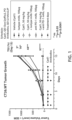
- Example 9 Study of Compound 1 and anti-PD-1 in the Mouse Xenograft Model-CTW26.WT Mouse Colon Carcinoma Cells
- Compound 1 dosed PO at 50 mg/kg at a 5 days on, 2 days off schedule (5+2-)
- Isotype Control LEAF TM Purified Rat IgG2a, obtained from BioLegend TM , San Diego, CA; dosed IP at 100 ug/mouse, BIW.
- PD-1 antibody LEAF TM rat anti-mouse CD279 (PD-1), clone 29F.1A12, obtained from BioLegend TM , San Diego, CA; dosed IP at 100 ug/mouse, BIW.
- CT26.WT cells were collected from flasks and washed once in RPMI 1640 with no additives. Final concentrations were reached in plain media (RPMI-1640) and kept on ice until administration to mice. Mice were grouped once tumors were palpable on day 7 or day 8 and randomized by body weight. Treatment started with antibody and Compound 1 was begun immediately.
- Groups 1-3 had 7 mice that were evaluable. In Groups 4-6, all 8 mice were evaluable. Compound 1 alone at 50 mg/kg showed only small inhibition of tumor growth. Anti-PD-1 showed greater tumor growth inhibiton, but still under 50%. The combination of Compound 1 and anti-PD-1, however, showed almost complete inhibition of tumor growth.
- Example 12 Study of Compound 1 and anti-PD-1 in the A20 Mouse Xenograft Model
- Compound 1 dosed PO at 50 mg/kg or 100 mg/kg at a 5 days on, 2 days off schedule (5+2-).
- Isotype Control LEAF TM Purified Rat IgG2a, obtained from BioLegend TM , San Diego, CA; dosed IP at 100 ug/mouse, BIW, 3 weeks.
- Anti-PD-1 antibody LEAF TM rat anti-mouse CD279 (PD-1), clone 29F.1A12, obtained from BioLegend TM , San Diego, CA; dosed at 100 ug/mouse, BIW, 3 weeks.
- Vehicle Compound 1 vehicle- 30% Captisol TM ; dosed 5+2-, PO, 3 weeks.
- A20 syngeneic cells were collected from flasks and washed once in RPMI 1640 with no additives. Final concentrations were reached in plain media (RPMI-1640) and kept on ice until administration to mice. Animals were implanted with 2 ⁇ 10 5 cells in the right flank. Dosing commenced when tumors were greater than 100 mm 3 (around day 13) and dosing continued for 21 days or until the tumors reached the limit of 2000 mm 3 .
Landscapes
- Health & Medical Sciences (AREA)
- Chemical & Material Sciences (AREA)
- Medicinal Chemistry (AREA)
- Life Sciences & Earth Sciences (AREA)
- General Health & Medical Sciences (AREA)
- Public Health (AREA)
- Veterinary Medicine (AREA)
- Pharmacology & Pharmacy (AREA)
- Animal Behavior & Ethology (AREA)
- Organic Chemistry (AREA)
- Immunology (AREA)
- Epidemiology (AREA)
- Genetics & Genomics (AREA)
- Biochemistry (AREA)
- Proteomics, Peptides & Aminoacids (AREA)
- Molecular Biology (AREA)
- Biophysics (AREA)
- General Chemical & Material Sciences (AREA)
- Nuclear Medicine, Radiotherapy & Molecular Imaging (AREA)
- Chemical Kinetics & Catalysis (AREA)
- Oncology (AREA)
- Engineering & Computer Science (AREA)
- Bioinformatics & Cheminformatics (AREA)
- Mycology (AREA)
- Microbiology (AREA)
- Hematology (AREA)
- Endocrinology (AREA)
- Biomedical Technology (AREA)
- Pharmaceuticals Containing Other Organic And Inorganic Compounds (AREA)
- Medicines That Contain Protein Lipid Enzymes And Other Medicines (AREA)
- Medicines Containing Antibodies Or Antigens For Use As Internal Diagnostic Agents (AREA)
- Medicinal Preparation (AREA)
Claims (7)
- Verbindung der folgenden Formel:
 oder ein pharmazeutisch verträgliches Salz davon undein PD-1-Signalinhibitor, für eine kombinierte Verwendung bei der Behandlung von Krebs, wobei der Krebs Dickdarmkarzinom ist.
 - Verbindung oder das pharmazeutisch verträgliche Salz davon und der PD-1-Signalinhibitor für die Verwendung nach Anspruch 1, wobei der PD-1-Signalinhibitor ein Inhibitor von einem oder mehreren von PD-1, PD-L1 und PD-L2 ist.
- Verbindung oder das pharmazeutisch verträgliche Salz davon und der PD-1-Signalinhibitor für die Verwendung nach Anspruch 2, wobei der PD-1-Signalinhibitor Pembrolizumab, Nivolumab, Atelolizumab, Avelumab, Durvalumab oder Pidilizumab ist.
- Pharmazeutische Zusammensetzung für die Behandlung von Dickdarmkarzinom, umfassend:(a) eine Verbindung der folgenden Formel:
 (b) ein PD-1-Signalhemmer; und(c) ein pharmazeutisch verträglicher Träger oder Hilfsstoff.
 - Pharmazeutische Zusammensetzung für die Verwendung nach Anspruch 4, wobei der PD-1-Signalinhibitor ein Inhibitor von einem oder mehreren von PD-1, PD-L1 und PD-L2 ist.
- Pharmazeutische Zusammensetzung für die Verwendung nach Anspruch 5, wobei der PD-1-Signalhemmer Pembrolizumab, Nivolumab, Atelolizumab, Avelumab, Durvalumab oder Pidilizumab ist.
- Pharmazeutische Zusammensetzung für die Verwendung nach einem der Ansprüche 4 bis 6 in Form einer Tablette oder Kapsel.
Applications Claiming Priority (2)
| Application Number | Priority Date | Filing Date | Title |
|---|---|---|---|
| US201862729648P | 2018-09-11 | 2018-09-11 | |
| PCT/US2019/050373 WO2020055840A1 (en) | 2018-09-11 | 2019-09-10 | Combination therapy with a phosphoinositide 3-kinase inhibitor with a zinc binding moiety |
Publications (4)
| Publication Number | Publication Date |
|---|---|
| EP3849554A1 EP3849554A1 (de) | 2021-07-21 |
| EP3849554A4 EP3849554A4 (de) | 2022-06-01 |
| EP3849554C0 EP3849554C0 (de) | 2025-01-29 |
| EP3849554B1 true EP3849554B1 (de) | 2025-01-29 |
Family
ID=69721106
Family Applications (1)
| Application Number | Title | Priority Date | Filing Date |
|---|---|---|---|
| EP19860430.8A Active EP3849554B1 (de) | 2018-09-11 | 2019-09-10 | Kombinationstherapie mit einem phosphoinositol-3-kinase-inhibitor mit einem zinkbindenden teil |
Country Status (18)
| Country | Link |
|---|---|
| US (2) | US11234986B2 (de) |
| EP (1) | EP3849554B1 (de) |
| JP (2) | JP7467423B2 (de) |
| KR (1) | KR102903072B1 (de) |
| CN (1) | CN113164466B (de) |
| AU (2) | AU2019340376B2 (de) |
| BR (1) | BR112021004371A2 (de) |
| CA (1) | CA3112177A1 (de) |
| EA (1) | EA202190748A1 (de) |
| ES (1) | ES3014591T3 (de) |
| IL (1) | IL281303B1 (de) |
| MA (1) | MA53619A (de) |
| MX (1) | MX2021002742A (de) |
| MY (1) | MY206479A (de) |
| PH (1) | PH12021550471A1 (de) |
| SG (1) | SG11202102343QA (de) |
| WO (1) | WO2020055840A1 (de) |
| ZA (1) | ZA202102241B (de) |
Families Citing this family (3)
| Publication number | Priority date | Publication date | Assignee | Title |
|---|---|---|---|---|
| SG11202102343QA (en) * | 2018-09-11 | 2021-04-29 | Curis Inc | Combination therapy with a phosphoinositide 3-kinase inhibitor with a zinc binding moiety |
| CN112778212B (zh) * | 2021-01-28 | 2022-03-15 | 苏州莱克施德药业有限公司 | 库潘尼西中间体2-胺基嘧啶-5-羧酸甲酯的合成方法 |
| CN117865979A (zh) * | 2024-01-04 | 2024-04-12 | 广州必贝特医药股份有限公司 | 噻吩嘧啶类化合物的晶型及其制备方法 |
Family Cites Families (76)
| Publication number | Priority date | Publication date | Assignee | Title |
|---|---|---|---|---|
| US4522811A (en) | 1982-07-08 | 1985-06-11 | Syntex (U.S.A.) Inc. | Serial injection of muramyldipeptides and liposomes enhances the anti-infective activity of muramyldipeptides |
| US4828991A (en) | 1984-01-31 | 1989-05-09 | Akzo N.V. | Tumor specific monoclonal antibodies |
| US5369108A (en) | 1991-10-04 | 1994-11-29 | Sloan-Kettering Institute For Cancer Research | Potent inducers of terminal differentiation and methods of use thereof |
| US5502187A (en) | 1992-04-03 | 1996-03-26 | The Upjohn Company | Pharmaceutically active bicyclic-heterocyclic amines |
| US5497763A (en) | 1993-05-21 | 1996-03-12 | Aradigm Corporation | Disposable package for intrapulmonary delivery of aerosolized formulations |
| US5508269A (en) | 1994-10-19 | 1996-04-16 | Pathogenesis Corporation | Aminoglycoside formulation for aerosolization |
| US6777217B1 (en) | 1996-03-26 | 2004-08-17 | President And Fellows Of Harvard College | Histone deacetylases, and uses related thereto |
| US6083922A (en) | 1996-04-02 | 2000-07-04 | Pathogenesis, Corp. | Method and a tobramycin aerosol formulation for treatment prevention and containment of tuberculosis |
| US5767068A (en) | 1997-02-13 | 1998-06-16 | Pathogenesis Corporation | Pure biologically active colistin, its components and a colistin formulation for treatment of pulmonary infections |
| US6608053B2 (en) | 2000-04-27 | 2003-08-19 | Yamanouchi Pharmaceutical Co., Ltd. | Fused heteroaryl derivatives |
| CN1186324C (zh) | 2000-04-27 | 2005-01-26 | 山之内制药株式会社 | 稠合杂芳基衍生物 |
| OA12793A (en) | 2002-03-13 | 2006-07-10 | Janssen Pharmaceutica Nv | Sulfonylamino-derivatives as novel inhibitors of histone deacetylase. |
| DE60326436D1 (en) | 2002-03-13 | 2009-04-16 | Janssen Pharmaceutica Nv | Aminoderivate als histone-deacetylase-inhibitoren |
| MXPA04008796A (es) | 2002-03-13 | 2004-11-26 | Janssen Pharmaceutica Nv | Derivados de carbonilamino como novedosos inhibidores de desacetilasa de histona. |
| ES2306859T3 (es) | 2002-03-13 | 2008-11-16 | Janssen Pharmaceutica Nv | Derivados de sulfonil como nuevos inhibidores de histona deacetilasa. |
| WO2004017950A2 (en) | 2002-08-22 | 2004-03-04 | Piramed Limited | Phosphadidylinositol 3,5-biphosphate inhibitors as anti-viral agents |
| CN1753912B (zh) | 2002-12-23 | 2011-11-02 | 惠氏公司 | 抗pd-1抗体及其用途 |
| US7300935B2 (en) | 2003-01-29 | 2007-11-27 | Takeda Pharmaceutical Company | Thienopyrimidine compounds and use thereof |
| WO2005097747A1 (en) | 2004-04-05 | 2005-10-20 | Aton Pharma, Inc. | Histone deacetylase inhibitor prodrugs |
| WO2005117909A2 (en) | 2004-04-23 | 2005-12-15 | Exelixis, Inc. | Kinase modulators and methods of use |
| EP1806347A4 (de) | 2004-10-08 | 2009-07-01 | Astellas Pharma Inc | Mit einem aromatischen ring kondensierte pyrimidinderivate |
| GB0423653D0 (en) | 2004-10-25 | 2004-11-24 | Piramed Ltd | Pharmaceutical compounds |
| NZ589276A (en) | 2005-02-03 | 2012-06-29 | Topotarget Uk Ltd | Combination therapies using hdac inhibitors and erlotinib (tarceva) |
| RU2494107C2 (ru) | 2005-05-09 | 2013-09-27 | Оно Фармасьютикал Ко., Лтд. | Моноклональные антитела человека к белку программируемой смерти 1 (pd-1) и способы лечения рака с использованием анти-pd-1-антител самостоятельно или в комбинации с другими иммунотерапевтическими средствами |
| CN104356236B (zh) | 2005-07-01 | 2020-07-03 | E.R.施贵宝&圣斯有限责任公司 | 抗程序性死亡配体1(pd-l1)的人单克隆抗体 |
| US7834011B2 (en) | 2006-01-19 | 2010-11-16 | Janssen Pharmaceutica N.V. | Heterocyclylalkyl derivatives as novel inhibitors of histone deacetylase |
| AU2007206942B2 (en) | 2006-01-19 | 2012-08-23 | Janssen Pharmaceutica N.V. | Pyridine and pyrimidine derivatives as inhibitors of histone deacetylase |
| WO2007082880A1 (en) | 2006-01-19 | 2007-07-26 | Janssen Pharmaceutica N.V. | Pyridine and pyrimidine derivatives as inhibitors of histone deacetylase |
| TWI498332B (zh) | 2006-04-26 | 2015-09-01 | Hoffmann La Roche | 作為pi3k抑制劑之嘧啶衍生物及相關製備方法、醫藥組合物、用途、套組及產物 |
| MX2008013578A (es) | 2006-04-26 | 2009-03-23 | Hoffmann La Roche | Derivados de tieno [3,2-d]pirimidina utiles como inhibidores de fosfatidilinositol 3-cinasa(p13k). |
| CN101511840A (zh) | 2006-04-26 | 2009-08-19 | 吉宁特有限公司 | 磷酸肌醇3-激酶抑制剂化合物及其使用方法 |
| WO2007131364A1 (en) | 2006-05-16 | 2007-11-22 | Mcgill University | Hybrid molecules having mixed vitamin d receptor agonism and histone deacetylase inhibitory properties |
| CA2663147A1 (en) | 2006-09-11 | 2008-03-20 | Curis, Inc. | Substituted 2-indolinone as ptk inhibitors containing a zinc binding moiety |
| CN101535279B (zh) | 2006-09-11 | 2015-05-20 | 柯瑞斯公司 | 含锌结合基的喹唑啉基egfr抑制剂 |
| US7547781B2 (en) | 2006-09-11 | 2009-06-16 | Curis, Inc. | Quinazoline based EGFR inhibitors containing a zinc binding moiety |
| EP2061772A4 (de) | 2006-09-11 | 2011-06-29 | Curis Inc | Multifunktionale kleine moleküle als proliferationshemmende wirkstoffe |
| US20080161320A1 (en) | 2006-09-11 | 2008-07-03 | Xiong Cai | Fused bicyclic pyrimidines as ptk inhibitors containing a zinc binding moiety |
| AU2007296743B2 (en) | 2006-09-11 | 2012-02-16 | Curis, Inc. | Tyrosine kinase inhibitors containing a zinc binding moiety |
| CN101573333B (zh) | 2006-10-28 | 2013-06-12 | 梅特希尔基因公司 | 组蛋白脱乙酰酶抑制剂 |
| ES2571028T3 (es) | 2006-12-07 | 2016-05-23 | Genentech Inc | Compuestos inhibidores de fosfoinositida 3-cinasa y métodos de uso |
| WO2008070740A1 (en) | 2006-12-07 | 2008-06-12 | F.Hoffmann-La Roche Ag | Phosphoinositide 3-kinase inhibitor compounds and methods of use |
| BRPI0807812A2 (pt) | 2007-02-15 | 2020-06-23 | Novartis Ag | Combinações de lbh589 com outros agentes terapêuticos para tratar câncer |
| EP2136809A4 (de) | 2007-03-20 | 2012-01-04 | Curis Inc | Raf-kinase-hemmer mit einem zinkbindenden teil |
| HRP20131167T1 (hr) | 2007-06-18 | 2014-01-03 | Merck Sharp & Dohme B.V. | Antitijela za humani receptor programirane smrti pd-1 |
| WO2009036020A1 (en) | 2007-09-10 | 2009-03-19 | Curis, Inc. | Mek inhibitors containing a zinc binding moiety |
| TW200922590A (en) | 2007-09-10 | 2009-06-01 | Curis Inc | VEGFR inhibitors containing a zinc binding moiety |
| WO2009036066A1 (en) | 2007-09-10 | 2009-03-19 | Curis, Inc. | Vegfr inhibitors containing a zinc binding moiety |
| WO2009036057A1 (en) | 2007-09-10 | 2009-03-19 | Curis, Inc. | Antiproliferative agents containing a zinc binding moiety |
| TW200922564A (en) | 2007-09-10 | 2009-06-01 | Curis Inc | CDK inhibitors containing a zinc binding moiety |
| AU2008298948B2 (en) | 2007-09-12 | 2014-09-04 | F. Hoffmann-La Roche Ag | Combinations of phosphoinositide 3-kinase inhibitor compounds and chemotherapeutic agents, and methods of use |
| WO2009042646A1 (en) | 2007-09-24 | 2009-04-02 | Curis, Inc. | Anti-proliferative agents |
| US8354528B2 (en) | 2007-10-25 | 2013-01-15 | Genentech, Inc. | Process for making thienopyrimidine compounds |
| US20090149511A1 (en) | 2007-10-30 | 2009-06-11 | Syndax Pharmaceuticals, Inc. | Administration of an Inhibitor of HDAC and an mTOR Inhibitor |
| WO2009086012A1 (en) | 2007-12-20 | 2009-07-09 | Curis, Inc. | Aurora inhibitors containing a zinc binding moiety |
| WO2009114335A2 (en) | 2008-03-12 | 2009-09-17 | Merck & Co., Inc. | Pd-1 binding proteins |
| WO2010008847A2 (en) | 2008-06-24 | 2010-01-21 | Takeda Pharmaceutical Company Limited | Pi3k/m tor inhibitors |
| WO2009155659A1 (en) | 2008-06-27 | 2009-12-30 | The University Of Queensland | Combination therapy |
| CN102203132A (zh) | 2008-08-25 | 2011-09-28 | 安普利穆尼股份有限公司 | Pd-1拮抗剂的组合物和使用方法 |
| US8196911B2 (en) | 2008-10-27 | 2012-06-12 | Honda Motor Co., Ltd. | Adjustable rate subframe mount |
| AU2009333580B2 (en) | 2008-12-09 | 2016-07-07 | Genentech, Inc. | Anti-PD-L1 antibodies and their use to enhance T-cell function |
| AU2010203512C1 (en) | 2009-01-08 | 2013-10-17 | Curis, Inc. | Phosphoinositide 3-kinase inhibitors with a zinc binding moiety |
| WO2010089411A2 (en) | 2009-02-09 | 2010-08-12 | Universite De La Mediterranee | Pd-1 antibodies and pd-l1 antibodies and uses thereof |
| CN102369011A (zh) | 2009-03-12 | 2012-03-07 | 健泰科生物技术公司 | 用于治疗造血恶性肿瘤的磷酸肌醇3-激酶抑制剂化合物与化学治疗剂的组合 |
| KR101489045B1 (ko) | 2009-10-12 | 2015-02-02 | 에프. 호프만-라 로슈 아게 | Pi3k 억제자 및 mek 억제자의 조합 |
| WO2011066342A2 (en) | 2009-11-24 | 2011-06-03 | Amplimmune, Inc. | Simultaneous inhibition of pd-l1/pd-l2 |
| AU2011239537A1 (en) | 2010-04-16 | 2012-11-15 | Curis, Inc. | Treatment of cancers having K-ras mutations |
| DK3111938T3 (da) | 2011-04-01 | 2019-07-01 | Curis Inc | Phosphoinositid 3-kinase-hæmmer med en zink-bindende gruppe |
| US20130102595A1 (en) | 2011-04-15 | 2013-04-25 | Curis, Inc. | Treatment of cancers having k-ras mutations |
| JP6238459B2 (ja) * | 2011-08-01 | 2017-11-29 | ジェネンテック, インコーポレイテッド | Pd−1軸結合アンタゴニストとmek阻害剤を使用する癌の治療方法 |
| WO2016128912A1 (en) * | 2015-02-12 | 2016-08-18 | Acerta Pharma B.V. | Therapeutic combinations of a btk inhibitor, a pi3k inhibitor, a jak-2 inhibitor, a pd-1 inhibitor, and/or a pd-l1 inhibitor |
| EP4257134A3 (de) * | 2015-06-25 | 2024-01-24 | Immunomedics, Inc. | Kombination von anti-hla-dr- oder anti-trop-2-antikörpern mit mikrotubuli-inhibitoren, parp-inhibitoren, bruton-kinase-inhibitoren oder phosphoinositol-3-kinase-inhibitoren zur signifikanten verbesserung des therapeutischen ergebnisses bei krebs |
| GB201514760D0 (en) * | 2015-08-19 | 2015-09-30 | Karus Therapeutics Ltd | Compounds and method of use |
| RU2754507C2 (ru) | 2016-06-24 | 2021-09-02 | Инфинити Фармасьютикалз, Инк. | Комбинированная терапия |
| MY205585A (en) | 2016-10-20 | 2024-10-28 | Aurigene Oncology Ltd | Dual inhibitors of vista and pd-1 pathways |
| WO2018085342A1 (en) | 2016-11-02 | 2018-05-11 | Curis, Inc. | Combination therapy with a phosphoinositide 3-kinase inhibitor with a zinc binding moiety |
| SG11202102343QA (en) * | 2018-09-11 | 2021-04-29 | Curis Inc | Combination therapy with a phosphoinositide 3-kinase inhibitor with a zinc binding moiety |
-
2019
- 2019-09-10 SG SG11202102343QA patent/SG11202102343QA/en unknown
- 2019-09-10 EP EP19860430.8A patent/EP3849554B1/de active Active
- 2019-09-10 MX MX2021002742A patent/MX2021002742A/es unknown
- 2019-09-10 MA MA053619A patent/MA53619A/fr unknown
- 2019-09-10 ES ES19860430T patent/ES3014591T3/es active Active
- 2019-09-10 WO PCT/US2019/050373 patent/WO2020055840A1/en not_active Ceased
- 2019-09-10 JP JP2021513198A patent/JP7467423B2/ja active Active
- 2019-09-10 CA CA3112177A patent/CA3112177A1/en active Pending
- 2019-09-10 BR BR112021004371-3A patent/BR112021004371A2/pt unknown
- 2019-09-10 CN CN201980074099.0A patent/CN113164466B/zh active Active
- 2019-09-10 EA EA202190748A patent/EA202190748A1/ru unknown
- 2019-09-10 AU AU2019340376A patent/AU2019340376B2/en active Active
- 2019-09-10 US US16/565,921 patent/US11234986B2/en active Active
- 2019-09-10 KR KR1020217010381A patent/KR102903072B1/ko active Active
- 2019-09-10 MY MYPI2021001221A patent/MY206479A/en unknown
-
2021
- 2021-03-05 PH PH12021550471A patent/PH12021550471A1/en unknown
- 2021-03-07 IL IL281303A patent/IL281303B1/en unknown
- 2021-04-01 ZA ZA2021/02241A patent/ZA202102241B/en unknown
- 2021-12-21 US US17/557,567 patent/US12403142B2/en active Active
-
2024
- 2024-04-02 JP JP2024059385A patent/JP2024096750A/ja active Pending
-
2025
- 2025-03-12 AU AU2025201766A patent/AU2025201766A1/en not_active Abandoned
Also Published As
| Publication number | Publication date |
|---|---|
| US12403142B2 (en) | 2025-09-02 |
| EP3849554C0 (de) | 2025-01-29 |
| ES3014591T3 (en) | 2025-04-23 |
| EP3849554A1 (de) | 2021-07-21 |
| JP2022500374A (ja) | 2022-01-04 |
| JP7467423B2 (ja) | 2024-04-15 |
| CN113164466A (zh) | 2021-07-23 |
| AU2019340376A1 (en) | 2021-04-08 |
| PH12021550471A1 (en) | 2021-11-22 |
| US20200078364A1 (en) | 2020-03-12 |
| US11234986B2 (en) | 2022-02-01 |
| KR20210087438A (ko) | 2021-07-12 |
| CA3112177A1 (en) | 2020-03-19 |
| MA53619A (fr) | 2021-12-15 |
| IL281303A (en) | 2021-04-29 |
| CN113164466B (zh) | 2025-07-08 |
| KR102903072B1 (ko) | 2025-12-22 |
| SG11202102343QA (en) | 2021-04-29 |
| IL281303B1 (en) | 2026-03-01 |
| MY206479A (en) | 2024-12-18 |
| US20220249502A1 (en) | 2022-08-11 |
| BR112021004371A2 (pt) | 2021-05-25 |
| JP2024096750A (ja) | 2024-07-17 |
| ZA202102241B (en) | 2024-11-27 |
| AU2019340376B2 (en) | 2024-12-19 |
| EA202190748A1 (ru) | 2021-07-22 |
| EP3849554A4 (de) | 2022-06-01 |
| AU2025201766A1 (en) | 2025-04-03 |
| MX2021002742A (es) | 2021-08-11 |
| WO2020055840A1 (en) | 2020-03-19 |
Similar Documents
| Publication | Publication Date | Title |
|---|---|---|
| AU2009212462B2 (en) | AMPK modulators | |
| US8796268B2 (en) | Heteroaryls and uses thereof | |
| US12403142B2 (en) | Combination therapy with a phosphoinositide 3-kinase inhibitor with a zinc binding moiety | |
| CN106008488B (zh) | 氰基吲哚类衍生物及其制备方法和用途 | |
| AU2020227036A1 (en) | Combination therapy with a phosphoinositide 3-kinase inhibitor with a zinc binding moiety | |
| CN105102447B (zh) | 双环取代的嘧啶类pde‑5抑制剂的前药 | |
| EA044974B1 (ru) | Комбинированная терапия ингибитором фосфоинозитид-3-киназы с цинксвязывающей группировкой | |
| HK40054242A (en) | Combination therapy with a phosphoinositide 3-kinase inhibitor with a zinc binding moiety | |
| HK40054242B (zh) | 使用具有锌结合部分的磷酸肌醇3-激酶抑制剂的联合治疗 | |
| HK40009962A (en) | Combination therapy with a phosphoinositide 3-kinase inhibitor with a zinc binding moiety | |
| HK1212338B (en) | Bicyclic substituted pyrimidine pde-5 inhibitor prodrug |
Legal Events
| Date | Code | Title | Description |
|---|---|---|---|
| STAA | Information on the status of an ep patent application or granted ep patent |
Free format text: STATUS: THE INTERNATIONAL PUBLICATION HAS BEEN MADE |
|
| PUAI | Public reference made under article 153(3) epc to a published international application that has entered the european phase |
Free format text: ORIGINAL CODE: 0009012 |
|
| STAA | Information on the status of an ep patent application or granted ep patent |
Free format text: STATUS: REQUEST FOR EXAMINATION WAS MADE |
|
| 17P | Request for examination filed |
Effective date: 20210408 |
|
| AK | Designated contracting states |
Kind code of ref document: A1 Designated state(s): AL AT BE BG CH CY CZ DE DK EE ES FI FR GB GR HR HU IE IS IT LI LT LU LV MC MK MT NL NO PL PT RO RS SE SI SK SM TR |
|
| RAV | Requested validation state of the european patent: fee paid |
Extension state: TN Effective date: 20210408 Extension state: MD Effective date: 20210408 Extension state: MA Effective date: 20210408 |
|
| A4 | Supplementary search report drawn up and despatched |
Effective date: 20220429 |
|
| RIC1 | Information provided on ipc code assigned before grant |
Ipc: C07K 16/28 20060101ALI20220422BHEP Ipc: A61K 31/5377 20060101ALI20220422BHEP Ipc: A61K 39/395 20060101ALI20220422BHEP Ipc: A61K 45/06 20060101ALI20220422BHEP Ipc: A61K 31/519 20060101ALI20220422BHEP Ipc: A61K 31/506 20060101ALI20220422BHEP Ipc: A61K 31/4725 20060101AFI20220422BHEP |
|
| RAP3 | Party data changed (applicant data changed or rights of an application transferred) |
Owner name: CURIS, INC. |
|
| P01 | Opt-out of the competence of the unified patent court (upc) registered |
Effective date: 20230322 |
|
| STAA | Information on the status of an ep patent application or granted ep patent |
Free format text: STATUS: EXAMINATION IS IN PROGRESS |
|
| 17Q | First examination report despatched |
Effective date: 20240124 |
|
| REG | Reference to a national code |
Ref country code: DE Ref legal event code: R079 Free format text: PREVIOUS MAIN CLASS: A61K0031472500 Ipc: A61K0031537700 Ref document number: 602019065496 Country of ref document: DE |
|
| GRAP | Despatch of communication of intention to grant a patent |
Free format text: ORIGINAL CODE: EPIDOSNIGR1 |
|
| STAA | Information on the status of an ep patent application or granted ep patent |
Free format text: STATUS: GRANT OF PATENT IS INTENDED |
|
| RIC1 | Information provided on ipc code assigned before grant |
Ipc: A61K 39/395 20060101ALI20240729BHEP Ipc: A61K 45/06 20060101ALI20240729BHEP Ipc: C07K 16/28 20060101ALI20240729BHEP Ipc: A61P 35/04 20060101ALI20240729BHEP Ipc: A61K 31/5377 20060101AFI20240729BHEP |
|
| INTG | Intention to grant announced |
Effective date: 20240829 |
|
| GRAS | Grant fee paid |
Free format text: ORIGINAL CODE: EPIDOSNIGR3 |
|
| GRAA | (expected) grant |
Free format text: ORIGINAL CODE: 0009210 |
|
| STAA | Information on the status of an ep patent application or granted ep patent |
Free format text: STATUS: THE PATENT HAS BEEN GRANTED |
|
| AK | Designated contracting states |
Kind code of ref document: B1 Designated state(s): AL AT BE BG CH CY CZ DE DK EE ES FI FR GB GR HR HU IE IS IT LI LT LU LV MC MK MT NL NO PL PT RO RS SE SI SK SM TR |
|
| REG | Reference to a national code |
Ref country code: GB Ref legal event code: FG4D |
|
| REG | Reference to a national code |
Ref country code: CH Ref legal event code: EP |
|
| REG | Reference to a national code |
Ref country code: DE Ref legal event code: R096 Ref document number: 602019065496 Country of ref document: DE |
|
| REG | Reference to a national code |
Ref country code: IE Ref legal event code: FG4D |
|
| U01 | Request for unitary effect filed |
Effective date: 20250225 |
|
| U07 | Unitary effect registered |
Designated state(s): AT BE BG DE DK EE FI FR IT LT LU LV MT NL PT RO SE SI Effective date: 20250303 |
|
| P04 | Withdrawal of opt-out of the competence of the unified patent court (upc) registered |
Free format text: CASE NUMBER: APP_9734/2025 Effective date: 20250226 |
|
| REG | Reference to a national code |
Ref country code: ES Ref legal event code: FG2A Ref document number: 3014591 Country of ref document: ES Kind code of ref document: T3 Effective date: 20250423 |
|
| PG25 | Lapsed in a contracting state [announced via postgrant information from national office to epo] |
Ref country code: RS Free format text: LAPSE BECAUSE OF FAILURE TO SUBMIT A TRANSLATION OF THE DESCRIPTION OR TO PAY THE FEE WITHIN THE PRESCRIBED TIME-LIMIT Effective date: 20250429 |
|
| PG25 | Lapsed in a contracting state [announced via postgrant information from national office to epo] |
Ref country code: PL Free format text: LAPSE BECAUSE OF FAILURE TO SUBMIT A TRANSLATION OF THE DESCRIPTION OR TO PAY THE FEE WITHIN THE PRESCRIBED TIME-LIMIT Effective date: 20250129 |
|
| PG25 | Lapsed in a contracting state [announced via postgrant information from national office to epo] |
Ref country code: IS Free format text: LAPSE BECAUSE OF FAILURE TO SUBMIT A TRANSLATION OF THE DESCRIPTION OR TO PAY THE FEE WITHIN THE PRESCRIBED TIME-LIMIT Effective date: 20250529 Ref country code: NO Free format text: LAPSE BECAUSE OF FAILURE TO SUBMIT A TRANSLATION OF THE DESCRIPTION OR TO PAY THE FEE WITHIN THE PRESCRIBED TIME-LIMIT Effective date: 20250429 |
|
| PG25 | Lapsed in a contracting state [announced via postgrant information from national office to epo] |
Ref country code: HR Free format text: LAPSE BECAUSE OF FAILURE TO SUBMIT A TRANSLATION OF THE DESCRIPTION OR TO PAY THE FEE WITHIN THE PRESCRIBED TIME-LIMIT Effective date: 20250129 |
|
| PG25 | Lapsed in a contracting state [announced via postgrant information from national office to epo] |
Ref country code: GR Free format text: LAPSE BECAUSE OF FAILURE TO SUBMIT A TRANSLATION OF THE DESCRIPTION OR TO PAY THE FEE WITHIN THE PRESCRIBED TIME-LIMIT Effective date: 20250430 |
|
| REG | Reference to a national code |
Ref country code: CH Ref legal event code: U11 Free format text: ST27 STATUS EVENT CODE: U-0-0-U10-U11 (AS PROVIDED BY THE NATIONAL OFFICE) Effective date: 20251001 |
|
| PG25 | Lapsed in a contracting state [announced via postgrant information from national office to epo] |
Ref country code: SM Free format text: LAPSE BECAUSE OF FAILURE TO SUBMIT A TRANSLATION OF THE DESCRIPTION OR TO PAY THE FEE WITHIN THE PRESCRIBED TIME-LIMIT Effective date: 20250129 |
|
| PGFP | Annual fee paid to national office [announced via postgrant information from national office to epo] |
Ref country code: MC Payment date: 20250821 Year of fee payment: 7 |
|
| VS25 | Lapsed in a validation state [announced via postgrant information from nat. office to epo] |
Ref country code: MD Free format text: LAPSE BECAUSE OF FAILURE TO SUBMIT A TRANSLATION OF THE DESCRIPTION OR TO PAY THE FEE WITHIN THE PRESCRIBED TIME-LIMIT Effective date: 20250129 |
|
| PGFP | Annual fee paid to national office [announced via postgrant information from national office to epo] |
Ref country code: GB Payment date: 20250929 Year of fee payment: 7 |
|
| PG25 | Lapsed in a contracting state [announced via postgrant information from national office to epo] |
Ref country code: CZ Free format text: LAPSE BECAUSE OF FAILURE TO SUBMIT A TRANSLATION OF THE DESCRIPTION OR TO PAY THE FEE WITHIN THE PRESCRIBED TIME-LIMIT Effective date: 20250129 |
|
| PGFP | Annual fee paid to national office [announced via postgrant information from national office to epo] |
Ref country code: IE Payment date: 20250929 Year of fee payment: 7 |
|
| PG25 | Lapsed in a contracting state [announced via postgrant information from national office to epo] |
Ref country code: SK Free format text: LAPSE BECAUSE OF FAILURE TO SUBMIT A TRANSLATION OF THE DESCRIPTION OR TO PAY THE FEE WITHIN THE PRESCRIBED TIME-LIMIT Effective date: 20250129 |
|
| U20 | Renewal fee for the european patent with unitary effect paid |
Year of fee payment: 7 Effective date: 20250929 |
|
| PLBE | No opposition filed within time limit |
Free format text: ORIGINAL CODE: 0009261 |
|
| STAA | Information on the status of an ep patent application or granted ep patent |
Free format text: STATUS: NO OPPOSITION FILED WITHIN TIME LIMIT |
|
| 26N | No opposition filed |
Effective date: 20251030 |
|
| PGFP | Annual fee paid to national office [announced via postgrant information from national office to epo] |
Ref country code: CH Payment date: 20251001 Year of fee payment: 7 |
|
| PGFP | Annual fee paid to national office [announced via postgrant information from national office to epo] |
Ref country code: ES Payment date: 20251001 Year of fee payment: 7 |
|
| VS25 | Lapsed in a validation state [announced via postgrant information from nat. office to epo] |
Ref country code: MA Free format text: LAPSE BECAUSE OF FAILURE TO SUBMIT A TRANSLATION OF THE DESCRIPTION OR TO PAY THE FEE WITHIN THE PRESCRIBED TIME-LIMIT; INVALID AB INITIO Effective date: 20190910 |