EP3850643B1 - Verfahren zum schutz eines kernreaktors und entsprechender kernreaktor - Google Patents
Verfahren zum schutz eines kernreaktors und entsprechender kernreaktor Download PDFInfo
- Publication number
- EP3850643B1 EP3850643B1 EP19765512.9A EP19765512A EP3850643B1 EP 3850643 B1 EP3850643 B1 EP 3850643B1 EP 19765512 A EP19765512 A EP 19765512A EP 3850643 B1 EP3850643 B1 EP 3850643B1
- Authority
- EP
- European Patent Office
- Prior art keywords
- calculated
- thermomechanical
- sub
- code
- energy density
- Prior art date
- Legal status (The legal status is an assumption and is not a legal conclusion. Google has not performed a legal analysis and makes no representation as to the accuracy of the status listed.)
- Active
Links
Images




Classifications
-
- G—PHYSICS
- G21—NUCLEAR PHYSICS; NUCLEAR ENGINEERING
- G21D—NUCLEAR POWER PLANT
- G21D3/00—Control of nuclear power plant
- G21D3/001—Computer implemented control
-
- G—PHYSICS
- G21—NUCLEAR PHYSICS; NUCLEAR ENGINEERING
- G21C—NUCLEAR REACTORS
- G21C3/00—Reactor fuel elements and their assemblies; Selection of substances for use as reactor fuel elements
- G21C3/02—Fuel elements
- G21C3/04—Constructional details
- G21C3/045—Pellets
- G21C3/047—Pellet-clad interaction
-
- G—PHYSICS
- G21—NUCLEAR PHYSICS; NUCLEAR ENGINEERING
- G21C—NUCLEAR REACTORS
- G21C9/00—Emergency protection arrangements structurally associated with the reactor, e.g. safety valves provided with pressure equalisation devices
-
- G—PHYSICS
- G21—NUCLEAR PHYSICS; NUCLEAR ENGINEERING
- G21C—NUCLEAR REACTORS
- G21C17/00—Monitoring; Testing ; Maintaining
- G21C17/10—Structural combination of fuel element, control rod, reactor core, or moderator structure with sensitive instruments, e.g. for measuring radioactivity, strain
- G21C17/108—Measuring reactor flux
-
- Y—GENERAL TAGGING OF NEW TECHNOLOGICAL DEVELOPMENTS; GENERAL TAGGING OF CROSS-SECTIONAL TECHNOLOGIES SPANNING OVER SEVERAL SECTIONS OF THE IPC; TECHNICAL SUBJECTS COVERED BY FORMER USPC CROSS-REFERENCE ART COLLECTIONS [XRACs] AND DIGESTS
- Y02—TECHNOLOGIES OR APPLICATIONS FOR MITIGATION OR ADAPTATION AGAINST CLIMATE CHANGE
- Y02E—REDUCTION OF GREENHOUSE GAS [GHG] EMISSIONS, RELATED TO ENERGY GENERATION, TRANSMISSION OR DISTRIBUTION
- Y02E30/00—Energy generation of nuclear origin
- Y02E30/30—Nuclear fission reactors
Definitions
- the invention generally relates to the protection of nuclear reactors against the risks of fuel rod clad rupture by pellet-clad interaction (IPG).
- IPG pellet-clad interaction
- the reactor protection system periodically evaluates, with a short time constant, the linear power of the nuclear fuel rods and triggers an automatic shutdown of the reactor if the linear power in a rod section exceeds a maximum value. predetermined.
- the rupture of the sheath by IPG results from a thermomechanical phenomenon.
- the linear power is a parameter which is not entirely representative of the physical phenomenon leading to the risk.
- FR2946454A1 describes a method for determining operating limit values for a nuclear reactor to avoid damage due to pellet-cladding interaction.
- the invention aims to propose a method for protecting a nuclear reactor against the risks of fuel rod cladding rupture by IPG which is less penalizing for reactor control.
- cladding failure by IPG is due to a thermomechanical phenomenon, the representative parameter being the mechanical stress in zircaloy claddings, or the strain energy density (DED) for M5 claddings.
- DED strain energy density
- the invention makes it possible to calculate online, in the protection system of the nuclear reactor, the evolution of the stress or of the deformation energy density, and to compare it with a threshold. It is the exceeding of the threshold that triggers the automatic shutdown of the reactor.
- This threshold corresponds directly to the technological limit leading to failure. In other words, the technological limit of the fuel directly becomes the threshold triggering the automatic shutdown of the reactor.
- the reactor is therefore protected from rupture by IPG from the direct monitoring of the thermomechanical physical parameter conditioning the rupture.
- thermomechanical code The online calculation of the stress or the DED is carried out with a time constant compatible with the protection requirements of the reactor thanks to the use of a meta-model of the thermomechanical code.
- a meta-model of the thermomechanical code makes it possible to calculate the mechanical stress or the strain energy density extremely quickly, much faster than a classical thermomechanical code typically operating by finite elements.
- the invention relates to a computer program comprising the instructions for the execution of the steps of the method having the above characteristics.
- the invention relates to a medium that can be used in a computer and on which the above program is recorded.
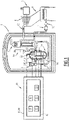
- the figure 1 schematically illustrates a nuclear reactor 1 which comprises a core 2.
- the reactor 1 comprises a primary circuit 8 equipped with at least one pump 9 and in which pressurized water circulates, along the path shown by the arrows on the figure 1 . This water rises in particular through core 2 to be heated there by ensuring the refrigeration of core 2.
- the primary circuit 8 further comprises a pressurizer 10 making it possible to pressurize the water circulating in the primary circuit 8 and to control said pressure.
- the water in the primary circuit 8 also supplies the or each steam generator 3 where it is cooled by ensuring the vaporization of water circulating in a secondary circuit 12.
- the steam produced by the or each generator 3 is channeled through the secondary circuit 12 to the turbine 4 then to the condenser 6 where this steam is condensed by indirect heat exchange with cooling water circulating in the condenser 6.
- the secondary circuit 12 comprises downstream of the condenser 6 a pump 13 and a heater 14.
- the core 2 comprises a plurality of nuclear fuel assemblies 16.
- assemblies 16 are loaded into a tank 18.
- a single assembly 16 is shown in the figure 1 , but the core 2 comprises for example 157 assemblies 16.
- Reactor 1 comprises control clusters 20 which are arranged in vessel 18 above certain assemblies 16.
- a single cluster 20 is shown on the figure 1 , but the heart 2 can comprise for example approximately 60 clusters 20.
- the clusters 20 are moved by mechanisms 22 to be inserted into the fuel assemblies 16 which they overlook.
- each control cluster 20 comprises rods comprising one or more neutron-absorbing materials.
- each cluster 20 makes it possible to adjust the reactivity of the reactor 1 and allows variations in the overall power P supplied by the core 2 from zero power to the nominal power PN, depending on the penetration of the clusters 20 into the assemblies 16.
- clusters 20 are intended to ensure the regulation of the operation of the core 2, for example in terms of power or temperature, and are called control clusters. Others are intended solely for stopping reactor 1 and are called stop clusters.
- the 20 clusters are gathered into groups according to their nature and destination. For example, for the majority of 900 MWe type reactors, these groups are called groups G1, G2, N1, N2, R, SA, SB, SC, SD, etc.
- the reactor 1 also comprises a certain number of sensors for measuring the actual values of reactor operating parameters, in particular a thermocouple 21A for measuring the average temperature of the water in the primary circuit at the outlet of the tank 18 and a thermocouple 21B for measurement of the average temperature of the water in the primary circuit at the inlet of the tank 18.
- a thermocouple 21A for measuring the average temperature of the water in the primary circuit at the outlet of the tank 18
- a thermocouple 21B for measurement of the average temperature of the water in the primary circuit at the inlet of the tank 18.
- the nuclear reactor 1 comprises probes for measuring the neutron flux in the core 2 of the reactor, operating continuously.
- these probes are external chambers 21C arranged around the vessel 18.
- reactor 1 comprises thermocouples 21D placed in core 2 above assemblies 16 to measure the temperature of the water in the primary circuit at the outlet of assemblies 16.
- a single chamber 21C and a single sensor 21D have been represented on the figure 1 .
- some reactors include fixed internal chambers for continuous measurement of the neutron flux (not shown), which chambers are arranged inside certain fuel assemblies placed in the core.
- These chambers are for example cobalt collectors.
- 21C ex-core chambers and 21D thermocouples or fixed in-core chambers continuously provide information about the three-dimensional local power distribution in the core.
- the nuclear reactor 1 also includes devices for measuring or reconstructing the following quantities: positions of the clusters 20 in the core, pressure in the pressurizer 10, speed of rotation of the or each primary pump 9.
- each assembly 16 conventionally comprises a plurality of fuel rods 24. These rods are arranged in a network and held in position by a support skeleton 26 for the rods 24.
- the skeleton 26 conventionally comprises a lower end piece 28, an upper end piece 30, guide tubes 31 connecting the two end pieces 30 and 28 and intended to receive rods from the control clusters 20 and spacer grids 32.
- each fuel rod 24 conventionally comprises a sheath 33 and a nuclear fuel enclosed in the sheath 33.
- the sheath 33 is a longitudinal tube closed at its lower longitudinal end by a lower plug 34 and at its upper longitudinal end by an upper plug 35.
- the nuclear fuel comprises a series of pellets 36 stacked in the sheath 33 and bearing against the lower plug 34.
- a retaining spring 40 is arranged in the upper section of the sheath 33 to bear against the upper plug 35 and on the pellet. 36 upper.
- the pellets 36 are based on uranium oxide and the sheath 33 is for example made of a zirconium alloy called zircaloy.
- the nuclear fuel of the pellets 36 will be, according to the term used in the art, conditioned.
- the conditioning is essentially characterized by the closing of the clearance J between the pellets 36 and the sheath 33, due to the creep of the sheath 33 and the swelling of the pellets 36.
- pellet 36 will expand more than sheath 33 and impose its deformation on the latter.
- the deformation imposed by the pad 36 on the sheath 33 during a transient, or variation, of power can cause a rupture of the sheath 33.
- Power transients can occur during normal operation of reactor 1, that is to say in so-called category 1 situations. electrical energy from the network that the generator 5 supplies. Transients of power can also occur in so-called category 2 accident situations, such as excessive load increase, uncontrolled removal of group(s) of power rods 20, boric acid dilution or even the fall of power rods 20 detected.
- Reactor 1 also includes a set 41 for monitoring and protecting the reactor, comprising an information processing unit 42.
- the assembly 41 includes a reactor protection system 43.
- the reactor protection system 43 is configured to protect the nuclear reactor 1 against a certain number of risks, and in particular against the risks of fuel rod cladding rupture by IPG.
- the reactor protection system 43 receives the information detected by the sensors fitted to the nuclear reactor, and automatically triggers the shutdown of the nuclear reactor in the event of a risk, in particular in the event of a risk of rupture of the fuel rod cladding by IPG.
- the acquisition of information from the sensors and the triggering of the automatic reactor shutdown are carried out with a short time constant, compatible with the kinetics of the physical phenomena at the origin of the risks to be dealt with.
- Assembly 41 also includes a reactor monitoring system 44.
- the reactor monitoring system 44 is configured to continuously monitor core operation.
- the reactor monitoring system 44 receives the information recorded by the sensors fitted to the nuclear reactor, and calculates quantities characteristic of the operation of the reactor. It triggers alarms when these quantities go outside the authorized operating range.
- the reactor monitoring and protection assembly 41 is informed in particular by the thermocouples 21A, 21B and 21D. It is also informed, in particular, by the ex-core chambers 21C and/or the in-core chambers, and by the organs arranged to measure or reconstruct the positions of the clusters 20 in the core, the pressure in the pressurizer 10, and the rotational speed of the primary pump(s) 9.
- the information processing unit 42 is typically made up of a processor and a memory associated with the processor. Various software or calculation codes are stored in the memory, as described below.
- the information processing unit is made in the form of programmable logic components, such as FPGAs (Field-Programmable Gate Array), or in the form of a dedicated integrated circuit, such as ASICs (Application-Specific Integrated Circuit).
- programmable logic components such as FPGAs (Field-Programmable Gate Array)
- ASICs Application-Specific Integrated Circuit
- the invention proposes a protection method during which the mechanical stress or the deformation energy density in the sheath of at least one of the rods is calculated, the method comprising a step of shutting down the reactor if the calculated mechanical stress or the calculated strain energy density exceeds a respective predetermined threshold.
- the information processing unit 42 is configured to implement the nuclear reactor protection method which will be described below.
- the protection system 43 reconstructs in particular the maximum linear power released by each of the rods of the nuclear fuel assemblies, typically using the information provided by the ex-core chambers 21C or by the in-core chambers .
- This reconstruction is performed by software 46, integrated in the information processing unit 42.
- This software is known per se and will not be described in detail here.
- the power released per unit of longitudinal length of the rod is considered here.
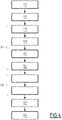
- step S12 comprises an operation making it possible to determine how the maximum power released per unit length varies over time.
- the step of reconstructing the maximum linear power P lin max is thus performed using measurements provided continuously by the neutron flux measurement probes (ex-core chambers 21C or in-core chambers).
- the reconstruction step S12 is performed periodically, with a time constant of less than one minute, preferably less than 10 seconds, even more preferably less than 1 ssecond, typically of the order of 0.5 s.
- thermomechanical state considered here is the mechanical stress ⁇ , for example the tangential stress in internal skin ⁇ ⁇ or the difference between the tangential stress ⁇ ⁇ and the radial radial stress ⁇ rr .
- Step S14 is performed using software embedded in monitoring system 44.
- Sub-steps S16 and S18 are performed by software 47 using a neutron code from the heart.
- This software uses, for example, the SMART code from the SCIENCE channel. It is known and will not be described in detail here.
- the software 47 calculates the three-dimensional power distribution in the core using the measurements provided continuously by the ex-core chambers 21C and the thermocouples 21D or the fixed in-core chambers.
- Requirement EN 2787196 describes for example a method for obtaining the three-dimensional power distribution in the core using at least this information.
- the 47 software uses the thermal power of the core which is calculated by enthalpy balance, the axial power imbalance supplied by the ex-core 21C chambers, the position of the clusters, the vessel inlet temperature and flow rate, the pressurizer pressure and the core exit temperatures supplied by the thermocouples 21D.
- the power is calculated at any point of core 2.
- the exhaustion rate TE is calculated at any point of the core 2. It is calculated more precisely according to an axial grid fixed by the axial grid of the neutronics code used by the monitoring system 44, typically by the SMART code.
- the local exhaustion rate results from the integration over time of the local power.
- Step S14 further includes a sub-step S20 of calculating the thermomechanical state of rods 24 with the aid of a thermomechanical code, using the calculated three-dimensional power distribution.
- thermomechanical code is for example the COPERNIC 48 code developed by the company Framatome. This calculation code 48 is known and will not be detailed here. It is typically implemented in the monitoring system 44.
- thermomechanical state is calculated at any point of the core, that is to say at any point of each of the rods 24 of the core 2.
- Step S14 also includes a sub-step S22 for storing the thermomechanical state and the exhaustion rate calculated for a control section of one of the rods 24.
- the control section is preferably the section giving off the maximum linear power. This control section is determined using the data provided by the software 47 integrated into the monitoring system 44.
- This information is stored in a memory 49 of the information processing unit 42.
- Step S14 is carried out repeatedly, with a time constant of the order of an hour.
- the thermomechanical state of the rods 24 is essentially conditioned by the duration of operation of the nuclear reactor at intermediate power, which is normally one or more days. Calculating the thermomechanical state of the fuel rods using the COPERNIC 48 thermomechanical code takes about an hour, which is largely satisfactory.
- thermomechanical state and the rate of exhaustion calculated for the control section are used by the protection system 43 of the nuclear reactor, it is necessary for this information to be permanently available, even in the event of loss of the protection system. monitoring 44, which does not have the same classification as the protection system 43. Thus, it is expected that the storage of this information in the memory 49 has the same classification as the protection system 43 from the point of view of safety .
- the monitoring system 44 has the same classification as the protection system 43 from the point of view of safety.
- the mechanical stress ⁇ calculated in sub-step S24 is for example the circumferential and normal stress ⁇ in the sheath 33. Alternatively, it is the difference between the circumferential and normal stress ⁇ and the radial and normal stress or, called TRESCA stress.
- the mechanical stress ⁇ is calculated in step S24 when the sheath 33 is in zircaloy.
- step S24 provides for calculating the strain energy density in the cladding of one of the rods 33.
- Integration begins when the internal skin strain rate exceeds a threshold value set at 10 -5 s -1 , and stops when the rate falls below this threshold.
- thermomechanical code such as COPERNIC
- the meta-model 50 is for example a meta-model of the COPERNIC thermomechanical code.
- the meta-model 50 is typically a multilayer neural network.
- the meta-model 50 uses a non-linear function as transfer function, for example sigmoid.
- the mechanical stress or the strain energy density at the current time step ⁇ (t) constitutes the only output of the meta-model.
- the reconstructed maximum linear power is that calculated in step S12.
- the rate of exhaustion calculated for the control section is that stored in sub-step S22.
- the neural network comprises an input layer 52 located on the left on the figure 5 , an output layer 54 located to the right of the figure 5 , and one or more intermediate layers 56 also called hidden layers. On the figure 5 , two intermediate layers 56 are shown. However, the neural network could have any number of intermediate layers.
- the input layer has one neuron for each of the scalar inputs mentioned above, namely four neurons.
- the or each hidden layer 56 comprises a determined number of neurons, for example at least five neurons.
- the number of hidden layers and the number of neurons in the or each hidden layer is determined during the parameter setting or training phase of the neural network.
- the inputs constitute a vector, called input vector and denoted X 0 .
- X 0 ⁇ you ⁇ dt , dP linen max dt you , P linen max you , YOU
- Each hidden layer i of the neural network produces a vector of value X i , by processing the vector of value X i-1 coming from the immediately preceding layer i-1.
- X I f I . HAS I . X I ⁇ 1
- a i is a predetermined matrix of dimension N i *N i-1 , N i being the number of neurons of layer i and N i-1 being the number of i-1 layer neurons.
- f i is a predetermined nonlinear operator.
- the operator f is for example a sigmoid transfer function acting on each component of the vector.
- Each matrix A i acts as an affine transformation on the components of the vector X i-1 .
- HAS I X I ⁇ 1 W I X I ⁇ 1 + b I
- W i is the matrix of synaptic weights that connect the N i neurons of layer i to the N i-1 neurons i-1
- b i is the vector of biases of dimension N i of layer i.
- step S30 the mechanical stress calculated in step S24 is compared with a predetermined threshold, or the strain energy density calculated in step S24 is compared with a predetermined threshold.
- Said threshold is equal to the technological limit of the cladding considered: TRESCA stress leading to rupture for the zircaloy cladding, DED leading to rupture for the M5 cladding.
- step S32 an automatic reactor shutdown procedure is initiated if the calculated mechanical stress or the calculated strain energy density exceeds said respective threshold.
- This automatic shutdown is carried out by lowering the shutdown clusters 20 at high speed into the core 2 of the nuclear reactor. This operation is fully automatic.
- the risk of clad rupture does not necessarily occur at the hot point of the core, that is to say at the level of the section of clad seeing the maximum linear power.
- the risk of rupture is greater, on the contrary, at the level of a section of rod which is a little less powerful, but which is more weakened by a higher rate of exhaustion.
- a predetermined bias is applied to the technological limit of the cladding considered, constituting the threshold of triggering the automatic shutdown of the reactor in step S32.
- the bias consists of a decrease in the technological limit.
- the method advantageously comprises a step S10 of determining the bias.
- Step S10 is carried out during a study phase, called IPG study phase, which occurs before the implementation of steps S12, S14, S24, S30 and S32.
- This step S10 is performed only once and is not repeated.
- the bias is predetermined in the sense that the same bias is used at each of the iterations of the method of the invention.
- Sub-step S34 is performed by simulating the evolution of rods 36 during the sequence of fuel management cycles for the nuclear reactor.
- the standard operating cycles of the nuclear reactor are considered here.
- This simulation is carried out by using, for example, a software for modeling the neutron behavior of rods 24.
- thermomechanical state of the rods is determined using a thermomechanical code, for example COPERNIC.
- thermomechanical code such as COPERNIC
- This evolution is typically calculated for the cladding 33 of all the rods 24. It is calculated at all points of the cladding of each rod.
- the maximum determined in sub-step S38 corresponds to the highest value of mechanical stress or DED encountered for a section of sheath during the or each transient.
- the length of the section considered is fixed by the axial mesh of the thermomechanical code.
- Step S10 also includes a step S40 of calculating the evolution over time of the maximum linear power reconstructed by the protection system 43 for said at least one accidental transient.
- Step S10 also includes a sub-step S41 for storing the thermomechanical state and the rate of exhaustion of a control section.
- This control section corresponds to the rod section 24 giving off the maximum linear power in the initial state of the rods 24.
- This initial state is that calculated in sub-step S34.
- Sub-step S42 is performed using the meta-model 50 used in step S24.
- the evolution of the reconstructed maximum linear power, determined in sub-step 40, constitutes one of the inputs of this meta-model, for sub-step S42.
- the state thermomechanical and the depletion rate of the control section obtained at sub-step S41 constitutes another entry of the meta-model 50 for sub-step S42.
- the maximum determined corresponds to the highest value of mechanical stress or DED encountered at the hot point of the core as estimated by the protection system 43.
- the bias is determined by comparing the maximum obtained at sub-step S38 and the maximum obtained at sub-step S44, for the or each transient.
- the bias to be applied to the initial thermomechanical state of the control section is chosen so that the maximum calculated by the meta-model 50 at step S44 is always greater than or equal to the maximum calculated by the thermomechanical code at step S38, for all considered transients.
- the bias is for example a constraint or DED deviation deducted from the corresponding technological limit.
- the method of the invention can be implemented using any type of monitoring system, provided that the latter makes it possible to determine the three-dimensional power distribution online, and that it integrates a thermomechanical code configured to determine fuel conditioning.
- the protection method provided for the calculation of the mechanical stress or of the deformation energy density, depending on the type of fuel rod cladding. It would be possible to calculate both stress and strain energy density.
- the protection method has been described in an application to a nuclear reactor of the pressurized water type (REP or PWR). As a variant, it is applied to any other suitable type of nuclear reactor.
- REP pressurized water type
- PWR pressurized water type
Landscapes
- Engineering & Computer Science (AREA)
- Physics & Mathematics (AREA)
- General Engineering & Computer Science (AREA)
- Plasma & Fusion (AREA)
- High Energy & Nuclear Physics (AREA)
- Monitoring And Testing Of Nuclear Reactors (AREA)
Claims (12)
- Verfahren zum Schutz eines Kernreaktors (1), der Kernreaktor (1) umfassend einen Kern (2), der eine Vielzahl von Kernbrennstoffbündeln (16), jedes Bündel (16) umfassend eine Vielzahl von Stäben (24), jeder Stab (24) umfassend eine Hülle (33) und einen in der Hülle (33) eingeschlossenen Kernbrennstoff, das Verfahren umfassend die folgenden Schritte:- Schritt (S12): Rekonstruieren einer maximalen linearen Leistung, die zwischen den Stäben (24) des Kernbrennstoffbündels (16) des Kerns (2) freigesetzt wird;- Schritt (S14): Berechnen des thermomechanischen Zustands und der Erschöpfungsrate von Stäben (24);- Schritt (S24): Berechnen einer mechanischen Spannung oder einer Deformationsenergiedichte in der Hülle (33) eines der Stäbe (24) unter Verwendung der rekonstruierten maximalen linearen Leistung, der berechneten thermomechanischen Zustände und der berechneten Erschöpfungsraten, unter Verwendung eines Metamodells (50) eines thermomechanischen Codes;- Schritt (S30): Vergleichen der berechneten mechanischen Spannung oder der berechneten Deformationsenergiedichte mit einem jeweiligen Schwellenwert;- Schritt (S32): Abschalten des Kernreaktors (1), wenn die berechnete mechanische Spannung oder die berechnete Deformationsenergiedichte den jeweiligen Schwellenwert überschreitet.
- Verfahren nach Anspruch 1, wobei der Schritt (S12) eines Rekonstruierens der maximalen linearen Leistung unter Verwendung von Messwerten durchgeführt wird, die kontinuierlich von Sonden zur Messung eines Neutronenflusses (21C) bereitgestellt werden.
- Verfahren nach Anspruch 1 oder 2, wobei der Rekonstruktionsschritt (S12) mit einer Zeitkonstante von weniger als 1 Minute durchgeführt wird.
- Verfahren nach einem der vorherigen Ansprüche, wobei der Schritt (S14) eines Berechnens des thermomechanischen Zustands und der Erschöpfungsrate der Stäbe (24) einen Teilschritt (S16) eines Berechnens der dreidimensionalen Leistungsverteilung in dem Kern (2) und einen Teilschritt (S18) eines Berechnens der Erschöpfungsrate der Stäbe (24) unter Verwendung der berechneten dreidimensionalen Leistungsverteilung umfasst.
- Verfahren nach Anspruch 4, wobei der Schritt (S14) eines Berechnens des thermomechanischen Zustands und der Erschöpfungsrate der Stäbe (24) einen Teilschritt (S20) eines Berechnens des thermomechanischen Zustands der Stäbe (24) unter Verwendung eines thermomechanischen Codes umfasst, wobei die berechnete dreidimensionale Leistungsverteilung verwendet wird.
- Verfahren nach einem der vorherigen Ansprüche, wobei der Schritt (S14) eines Berechnens des thermomechanischen Zustands und der Erschöpfungsrate der Stäbe (24) einen Teilschritt (S22) eines Speicherns des thermomechanischen Zustands und der Erschöpfungsrate umfasst, die für einen Kontrollabschnitt eines der Stäbe (24) berechnet wird.
- Verfahren nach Anspruch 6, wobei der Kontrollabschnitt der Abschnitt ist, der die maximale lineare Leistung freisetzt.
- Verfahren nach Anspruch 6 oder 7, wobei das Metamodell des thermomechanischen Codes mindestens die folgenden Eingaben verwendet: mechanische Spannung oder Deformationsenergiedichte, die in dem vorherigen Zeitschritt berechnet wurde, rekonstruierte maximale lineare Leistung, zeitliche Ableitung der rekonstruierten maximalen linearen Leistung, Erschöpfungsrate, die für den Kontrollabschnitt berechnet wird.
- Verfahren nach einem der vorherigen Ansprüche, wobei das Metamodell des thermomechanischen Codes ein mehrschichtiges neuronales Netz ist.
- Verfahren nach einem der vorherigen Ansprüche, wobei auf den für den Vergleichsschritt (S30) betrachteten Schwellenwert ein vorbestimmtes Bias angewendet wird.
- Verfahren nach Anspruch 10, wobei das Verfahren einen Schritt (S10) eines Bestimmens des Bias umfasst, umfassend die folgenden Teilschritte:- Teilschritt (S34): Berechnen des anfänglichen thermomechanischen Zustands und der anfänglichen Erschöpfungsrate von Stäben (24);- Teilschritt (S36): Berechnen der zeitlichen Entwicklung der mechanischen Spannung oder der Deformationsenergiedichte in der Hülle (33) der Stäbe (24) aus dem anfänglichen thermomechanischen Zustand und der anfänglichen Erschöpfungsrate der Stäbe (24), die für mindestens einen zufälligen Übergang mithilfe des genannten thermomechanischen Codes berechnet werden;- Teilschritt (S38): Bestimmen des Maximums der mechanischen Spannung oder der Deformationsenergiedichte, die mittels des genannten thermomechanischen Codes berechnet wird;- Teilschritt (S42): Berechnen der zeitlichen Entwicklung der mechanischen Spannung oder der Deformationsenergiedichte in der Hülle (33) der Stäbe (24) aus dem thermomechanischen Anfangszustand und der anfänglichen Brennstofferschöpfungsrate an der Stelle der berechneten maximalen linearen Leistung der Stäbe (24) für den mindestens einen unfallbedingten Übergang mittels des Metamodells des thermomechanischen Codes unter Berücksichtigung einer Simulation der Entwicklung der maximalen linearen Leistung, die in Schritt (S12) rekonstruiert wird;- Teilschritt (S44): Bestimmen des Maximums der mechanischen Spannung oder der Deformationsenergiedichte, die mittels des Metamodells des thermomechanischen Codes berechnet wird;- Teilschritt (S46): Bestimmen des Bias, basierend auf der Abweichung zwischen einerseits der mechanischen Spannung oder der Deformationsenergiedichte, die mittels des thermomechanischen Codes berechnet wird, und andererseits dem Maximum der mechanischen Spannung oder der Deformationsenergiedichte, die mittels des Metamodells des thermomechanischen Codes berechnet wird.
- Kernreaktor (1), umfassend:
einen Kern (2), der eine Vielzahl von Kernbrennstoffbündeln (16), jedes Bündel (16) umfassend eine Vielzahl von Stäben (24), jeder Stab (24) umfassend eine Hülle (33) und einen in der Hülle (33) eingeschlossenen Kernbrennstoff;- eine Anordnung (41) zum Überwachen und zum Schutz des Reaktors, umfassend eine Informationsverarbeitungseinheit (42), die konfiguriert ist, um das Verfahren nach einem der Ansprüche 1 bis 11 durchzuführen.
Applications Claiming Priority (2)
| Application Number | Priority Date | Filing Date | Title |
|---|---|---|---|
| FR1858153A FR3085788B1 (fr) | 2018-09-12 | 2018-09-12 | Procede de protection d'un reacteur nucleaire et reacteur nucleaire correspondant |
| PCT/EP2019/074388 WO2020053347A1 (fr) | 2018-09-12 | 2019-09-12 | Procédé de protection d'un réacteur nucléaire et réacteur nucléaire correspondant |
Publications (2)
| Publication Number | Publication Date |
|---|---|
| EP3850643A1 EP3850643A1 (de) | 2021-07-21 |
| EP3850643B1 true EP3850643B1 (de) | 2022-10-05 |
Family
ID=65201376
Family Applications (1)
| Application Number | Title | Priority Date | Filing Date |
|---|---|---|---|
| EP19765512.9A Active EP3850643B1 (de) | 2018-09-12 | 2019-09-12 | Verfahren zum schutz eines kernreaktors und entsprechender kernreaktor |
Country Status (9)
| Country | Link |
|---|---|
| US (1) | US12051515B2 (de) |
| EP (1) | EP3850643B1 (de) |
| CN (1) | CN112771625B (de) |
| ES (1) | ES2932460T3 (de) |
| FR (1) | FR3085788B1 (de) |
| HU (1) | HUE060434T2 (de) |
| UA (1) | UA129186C2 (de) |
| WO (1) | WO2020053347A1 (de) |
| ZA (1) | ZA202101518B (de) |
Families Citing this family (4)
| Publication number | Priority date | Publication date | Assignee | Title |
|---|---|---|---|---|
| CN112989595B (zh) * | 2021-03-09 | 2022-12-09 | 西安交通大学 | 一种压水堆堆芯瞬态精细功率重构方法 |
| FR3149105A1 (fr) * | 2023-05-25 | 2024-11-29 | Commissariat A L'energie Atomique Et Aux Energies Alternatives | Procédé de détermination des caractéristiques d’un parc nucléaire cible pour la gestion de ressources et déchets nucléaires |
| CN117390981B (zh) * | 2023-09-27 | 2026-03-17 | 上海交通大学 | 一种燃料棒包壳腐蚀污垢沉积层的预测方法及装置 |
| CN119480178B (zh) * | 2024-09-20 | 2025-08-05 | 中国核动力研究设计院 | 燃料棒pci性能风险评估方法、装置、存储介质及电子设备 |
Family Cites Families (11)
| Publication number | Priority date | Publication date | Assignee | Title |
|---|---|---|---|---|
| US6061412A (en) * | 1995-10-05 | 2000-05-09 | Westinghouse Electric Company Llc | Nuclear reaction protection system |
| FR2787196B1 (fr) | 1998-12-10 | 2001-01-05 | Commissariat Energie Atomique | Generateur de courant multiniveaux a commande numerique et systeme de test d'endurance de composant equipe d'un tel generateur |
| FR2846139B1 (fr) * | 2002-10-21 | 2005-02-18 | Framatome Anp | Procede de determination d'une valeur limite d'un parametre de fonctionnement d'un reacteur nucleaire, programme et support correspondants |
| US7366273B2 (en) * | 2005-12-30 | 2008-04-29 | General Electric Company | Method of determining margins to operating limits for nuclear reactor operation |
| US8149983B2 (en) * | 2006-06-06 | 2012-04-03 | Westinghouse Electric Company Llc | Method for analysis of pellet-cladding interaction |
| FR2924852B1 (fr) * | 2007-12-07 | 2010-02-19 | Areva Np | Procede de determination de la valeur d'un parametre representatif de la manoeuvrabilite d'un reacteur nucleaire, systeme de determination, programme d'ordinateur et support correspondant. |
| US8548789B2 (en) * | 2008-02-11 | 2013-10-01 | Westinghouse Electric Company Llc | Methodology for modeling the fuel rod power distribution within a nuclear reactor core |
| FR2946454B1 (fr) * | 2009-06-08 | 2011-07-22 | Areva Np | Procede de determination de valeurs limites d'exploitation d'un reacteur nucleaire pour eviter l'endommagement par interaction pastille-gaine. |
| CN104934084B (zh) * | 2015-04-27 | 2018-10-16 | 中广核工程有限公司 | 一种核电站燃料元件包壳破损监测方法及系统 |
| CN105895175B (zh) * | 2015-06-15 | 2017-11-07 | 广东核电合营有限公司 | 一种标定核反应堆堆芯出口热电偶的方法 |
| CN107273582B (zh) * | 2017-05-23 | 2020-03-17 | 西安交通大学 | 一种用于快中子反应堆中子输运燃耗耦合分析的计算方法 |
-
2018
- 2018-09-12 FR FR1858153A patent/FR3085788B1/fr not_active Expired - Fee Related
-
2019
- 2019-09-12 US US17/275,424 patent/US12051515B2/en active Active
- 2019-09-12 EP EP19765512.9A patent/EP3850643B1/de active Active
- 2019-09-12 WO PCT/EP2019/074388 patent/WO2020053347A1/fr not_active Ceased
- 2019-09-12 ES ES19765512T patent/ES2932460T3/es active Active
- 2019-09-12 CN CN201980063203.6A patent/CN112771625B/zh active Active
- 2019-09-12 HU HUE19765512A patent/HUE060434T2/hu unknown
- 2019-09-12 UA UAA202101201A patent/UA129186C2/uk unknown
-
2021
- 2021-03-05 ZA ZA2021/01518A patent/ZA202101518B/en unknown
Also Published As
| Publication number | Publication date |
|---|---|
| EP3850643A1 (de) | 2021-07-21 |
| CN112771625A (zh) | 2021-05-07 |
| HUE060434T2 (hu) | 2023-03-28 |
| CN112771625B (zh) | 2024-10-11 |
| WO2020053347A1 (fr) | 2020-03-19 |
| ZA202101518B (en) | 2022-07-27 |
| ES2932460T3 (es) | 2023-01-19 |
| FR3085788A1 (fr) | 2020-03-13 |
| US20220051824A1 (en) | 2022-02-17 |
| UA129186C2 (uk) | 2025-02-05 |
| US12051515B2 (en) | 2024-07-30 |
| FR3085788B1 (fr) | 2020-11-27 |
Similar Documents
| Publication | Publication Date | Title |
|---|---|---|
| EP2218078B1 (de) | Verfahren zur ermittlung des zahlenwertes einer die steuerbarkeit eines kernreaktors repräsentierenden kenngrösse | |
| EP3850643B1 (de) | Verfahren zum schutz eines kernreaktors und entsprechender kernreaktor | |
| EP3475953B1 (de) | Verfahren zur berechnung eines pci-vorhalts im zusammenhang mit einem ladungsmuster eines kernreaktors, zugehöriges system, computerprogramm und medium | |
| EP0369865B1 (de) | Verfahren zur Regelung eines Druckwasserkernreaktors | |
| EP3729466B1 (de) | Verfahren zur bestimmung mindestens eines schwellwerts von mindestens einem betriebsparameter eines kernreaktors sowie zugehöriges computerprogramm und elektronisches system | |
| EP1585140B1 (de) | Verfahren und Vorrichtung zur Überwachung des Kerns eines Kernreaktors | |
| EP3850641B1 (de) | Verfahren zum betrieb eines kernreaktors mit online-berechnung des ctfr, zugehöriger kernreaktor | |
| EP1556870B1 (de) | Verfahren zum bestimmen eines grenzwertes eines betriebsparameters eines kernreaktors, entsprechende vorrichtung, rechnerprogramm und träger | |
| EP0336338B1 (de) | Verfahren zur Bestimmung und Abschätzung des Leistungsbeaufschlagungsvermögens eines Druckwasserkernreaktors | |
| EP3659158B1 (de) | Verfahren zur überwachung eines kernreaktors mit einer relaxation einer schwelle und zugehöriges programm, träger und kernreaktor | |
| FR3140981A1 (fr) | Procédé d’estimation d’une valeur future d’une grandeur physique d’un système industriel tel qu’un réacteur nucléaire | |
| Liu et al. | Bison fuel performance modeling on RIA in a PWR | |
| Hernandez et al. | Proposal to reload using MOX weapons grade in a BWR reactor | |
| RU2772793C2 (ru) | Способ мониторинга активной зоны, включающий в себя ослабление порога, и соответствующие программа, носитель информации и ядерный реактор | |
| FR3062747A1 (fr) | Procede pour determiner la puissance degagee par un milieu fissile | |
| FR3164055A1 (fr) | Centrale nucléaire à bâtiment nucléaire logeant au moins un réacteur nucléaire à sel(s) fondu(s), de type à neutrons rapides et un système de gestion des gaz de fission accumulés dans le ciel de pile du réacteur. | |
| Dutte | A Final Report on Analyses of High Burnup Fuel Pins Using Code'FAIR'.(Cases Referred Under IAEA CRP on FUXEX-III 2009-11) | |
| Calabrese | FUMEX III Project (Improvement of Computer Codes Used for Fuel Behaviour Simulation). ENEA Contribution | |
| Rihane | Multicriteria choice of a nuclear reactor and nuclear power project application in Tunisian | |
| Lemaignan | Fuel pins irradiation: experimental devices and analytical behaviour |
Legal Events
| Date | Code | Title | Description |
|---|---|---|---|
| STAA | Information on the status of an ep patent application or granted ep patent |
Free format text: STATUS: UNKNOWN |
|
| STAA | Information on the status of an ep patent application or granted ep patent |
Free format text: STATUS: THE INTERNATIONAL PUBLICATION HAS BEEN MADE |
|
| PUAI | Public reference made under article 153(3) epc to a published international application that has entered the european phase |
Free format text: ORIGINAL CODE: 0009012 |
|
| STAA | Information on the status of an ep patent application or granted ep patent |
Free format text: STATUS: REQUEST FOR EXAMINATION WAS MADE |
|
| 17P | Request for examination filed |
Effective date: 20210310 |
|
| AK | Designated contracting states |
Kind code of ref document: A1 Designated state(s): AL AT BE BG CH CY CZ DE DK EE ES FI FR GB GR HR HU IE IS IT LI LT LU LV MC MK MT NL NO PL PT RO RS SE SI SK SM TR |
|
| DAV | Request for validation of the european patent (deleted) | ||
| DAX | Request for extension of the european patent (deleted) | ||
| GRAP | Despatch of communication of intention to grant a patent |
Free format text: ORIGINAL CODE: EPIDOSNIGR1 |
|
| STAA | Information on the status of an ep patent application or granted ep patent |
Free format text: STATUS: GRANT OF PATENT IS INTENDED |
|
| INTG | Intention to grant announced |
Effective date: 20220406 |
|
| GRAS | Grant fee paid |
Free format text: ORIGINAL CODE: EPIDOSNIGR3 |
|
| GRAA | (expected) grant |
Free format text: ORIGINAL CODE: 0009210 |
|
| STAA | Information on the status of an ep patent application or granted ep patent |
Free format text: STATUS: THE PATENT HAS BEEN GRANTED |
|
| AK | Designated contracting states |
Kind code of ref document: B1 Designated state(s): AL AT BE BG CH CY CZ DE DK EE ES FI FR GB GR HR HU IE IS IT LI LT LU LV MC MK MT NL NO PL PT RO RS SE SI SK SM TR |
|
| REG | Reference to a national code |
Ref country code: GB Ref legal event code: FG4D Free format text: NOT ENGLISH |
|
| REG | Reference to a national code |
Ref country code: CH Ref legal event code: EP |
|
| REG | Reference to a national code |
Ref country code: AT Ref legal event code: REF Ref document number: 1523257 Country of ref document: AT Kind code of ref document: T Effective date: 20221015 |
|
| REG | Reference to a national code |
Ref country code: IE Ref legal event code: FG4D Free format text: LANGUAGE OF EP DOCUMENT: FRENCH |
|
| REG | Reference to a national code |
Ref country code: DE Ref legal event code: R096 Ref document number: 602019020323 Country of ref document: DE |
|
| REG | Reference to a national code |
Ref country code: ES Ref legal event code: FG2A Ref document number: 2932460 Country of ref document: ES Kind code of ref document: T3 Effective date: 20230119 |
|
| REG | Reference to a national code |
Ref country code: LT Ref legal event code: MG9D |
|
| REG | Reference to a national code |
Ref country code: NL Ref legal event code: MP Effective date: 20221005 |
|
| REG | Reference to a national code |
Ref country code: AT Ref legal event code: MK05 Ref document number: 1523257 Country of ref document: AT Kind code of ref document: T Effective date: 20221005 |
|
| REG | Reference to a national code |
Ref country code: HU Ref legal event code: AG4A Ref document number: E060434 Country of ref document: HU |
|
| PG25 | Lapsed in a contracting state [announced via postgrant information from national office to epo] |
Ref country code: NL Free format text: LAPSE BECAUSE OF FAILURE TO SUBMIT A TRANSLATION OF THE DESCRIPTION OR TO PAY THE FEE WITHIN THE PRESCRIBED TIME-LIMIT Effective date: 20221005 |
|
| PG25 | Lapsed in a contracting state [announced via postgrant information from national office to epo] |
Ref country code: SE Free format text: LAPSE BECAUSE OF FAILURE TO SUBMIT A TRANSLATION OF THE DESCRIPTION OR TO PAY THE FEE WITHIN THE PRESCRIBED TIME-LIMIT Effective date: 20221005 Ref country code: PT Free format text: LAPSE BECAUSE OF FAILURE TO SUBMIT A TRANSLATION OF THE DESCRIPTION OR TO PAY THE FEE WITHIN THE PRESCRIBED TIME-LIMIT Effective date: 20230206 Ref country code: NO Free format text: LAPSE BECAUSE OF FAILURE TO SUBMIT A TRANSLATION OF THE DESCRIPTION OR TO PAY THE FEE WITHIN THE PRESCRIBED TIME-LIMIT Effective date: 20230105 Ref country code: LT Free format text: LAPSE BECAUSE OF FAILURE TO SUBMIT A TRANSLATION OF THE DESCRIPTION OR TO PAY THE FEE WITHIN THE PRESCRIBED TIME-LIMIT Effective date: 20221005 Ref country code: AT Free format text: LAPSE BECAUSE OF FAILURE TO SUBMIT A TRANSLATION OF THE DESCRIPTION OR TO PAY THE FEE WITHIN THE PRESCRIBED TIME-LIMIT Effective date: 20221005 |
|
| PG25 | Lapsed in a contracting state [announced via postgrant information from national office to epo] |
Ref country code: RS Free format text: LAPSE BECAUSE OF FAILURE TO SUBMIT A TRANSLATION OF THE DESCRIPTION OR TO PAY THE FEE WITHIN THE PRESCRIBED TIME-LIMIT Effective date: 20221005 Ref country code: PL Free format text: LAPSE BECAUSE OF FAILURE TO SUBMIT A TRANSLATION OF THE DESCRIPTION OR TO PAY THE FEE WITHIN THE PRESCRIBED TIME-LIMIT Effective date: 20221005 Ref country code: LV Free format text: LAPSE BECAUSE OF FAILURE TO SUBMIT A TRANSLATION OF THE DESCRIPTION OR TO PAY THE FEE WITHIN THE PRESCRIBED TIME-LIMIT Effective date: 20221005 Ref country code: IS Free format text: LAPSE BECAUSE OF FAILURE TO SUBMIT A TRANSLATION OF THE DESCRIPTION OR TO PAY THE FEE WITHIN THE PRESCRIBED TIME-LIMIT Effective date: 20230205 Ref country code: HR Free format text: LAPSE BECAUSE OF FAILURE TO SUBMIT A TRANSLATION OF THE DESCRIPTION OR TO PAY THE FEE WITHIN THE PRESCRIBED TIME-LIMIT Effective date: 20221005 Ref country code: GR Free format text: LAPSE BECAUSE OF FAILURE TO SUBMIT A TRANSLATION OF THE DESCRIPTION OR TO PAY THE FEE WITHIN THE PRESCRIBED TIME-LIMIT Effective date: 20230106 |
|
| REG | Reference to a national code |
Ref country code: DE Ref legal event code: R097 Ref document number: 602019020323 Country of ref document: DE |
|
| P01 | Opt-out of the competence of the unified patent court (upc) registered |
Effective date: 20230606 |
|
| PG25 | Lapsed in a contracting state [announced via postgrant information from national office to epo] |
Ref country code: SM Free format text: LAPSE BECAUSE OF FAILURE TO SUBMIT A TRANSLATION OF THE DESCRIPTION OR TO PAY THE FEE WITHIN THE PRESCRIBED TIME-LIMIT Effective date: 20221005 Ref country code: RO Free format text: LAPSE BECAUSE OF FAILURE TO SUBMIT A TRANSLATION OF THE DESCRIPTION OR TO PAY THE FEE WITHIN THE PRESCRIBED TIME-LIMIT Effective date: 20221005 Ref country code: EE Free format text: LAPSE BECAUSE OF FAILURE TO SUBMIT A TRANSLATION OF THE DESCRIPTION OR TO PAY THE FEE WITHIN THE PRESCRIBED TIME-LIMIT Effective date: 20221005 Ref country code: DK Free format text: LAPSE BECAUSE OF FAILURE TO SUBMIT A TRANSLATION OF THE DESCRIPTION OR TO PAY THE FEE WITHIN THE PRESCRIBED TIME-LIMIT Effective date: 20221005 |
|
| PLBE | No opposition filed within time limit |
Free format text: ORIGINAL CODE: 0009261 |
|
| STAA | Information on the status of an ep patent application or granted ep patent |
Free format text: STATUS: NO OPPOSITION FILED WITHIN TIME LIMIT |
|
| PG25 | Lapsed in a contracting state [announced via postgrant information from national office to epo] |
Ref country code: SK Free format text: LAPSE BECAUSE OF FAILURE TO SUBMIT A TRANSLATION OF THE DESCRIPTION OR TO PAY THE FEE WITHIN THE PRESCRIBED TIME-LIMIT Effective date: 20221005 Ref country code: AL Free format text: LAPSE BECAUSE OF FAILURE TO SUBMIT A TRANSLATION OF THE DESCRIPTION OR TO PAY THE FEE WITHIN THE PRESCRIBED TIME-LIMIT Effective date: 20221005 |
|
| 26N | No opposition filed |
Effective date: 20230706 |
|
| PG25 | Lapsed in a contracting state [announced via postgrant information from national office to epo] |
Ref country code: SI Free format text: LAPSE BECAUSE OF FAILURE TO SUBMIT A TRANSLATION OF THE DESCRIPTION OR TO PAY THE FEE WITHIN THE PRESCRIBED TIME-LIMIT Effective date: 20221005 |
|
| REG | Reference to a national code |
Ref country code: DE Ref legal event code: R119 Ref document number: 602019020323 Country of ref document: DE |
|
| REG | Reference to a national code |
Ref country code: CH Ref legal event code: PL |
|
| PG25 | Lapsed in a contracting state [announced via postgrant information from national office to epo] |
Ref country code: LU Free format text: LAPSE BECAUSE OF NON-PAYMENT OF DUE FEES Effective date: 20230912 |
|
| REG | Reference to a national code |
Ref country code: BE Ref legal event code: MM Effective date: 20230930 |
|
| PG25 | Lapsed in a contracting state [announced via postgrant information from national office to epo] |
Ref country code: LU Free format text: LAPSE BECAUSE OF NON-PAYMENT OF DUE FEES Effective date: 20230912 Ref country code: IT Free format text: LAPSE BECAUSE OF FAILURE TO SUBMIT A TRANSLATION OF THE DESCRIPTION OR TO PAY THE FEE WITHIN THE PRESCRIBED TIME-LIMIT Effective date: 20221005 Ref country code: MC Free format text: LAPSE BECAUSE OF FAILURE TO SUBMIT A TRANSLATION OF THE DESCRIPTION OR TO PAY THE FEE WITHIN THE PRESCRIBED TIME-LIMIT Effective date: 20221005 |
|
| REG | Reference to a national code |
Ref country code: IE Ref legal event code: MM4A |
|
| PG25 | Lapsed in a contracting state [announced via postgrant information from national office to epo] |
Ref country code: IE Free format text: LAPSE BECAUSE OF NON-PAYMENT OF DUE FEES Effective date: 20230912 |
|
| PG25 | Lapsed in a contracting state [announced via postgrant information from national office to epo] |
Ref country code: CH Free format text: LAPSE BECAUSE OF NON-PAYMENT OF DUE FEES Effective date: 20230930 |
|
| PG25 | Lapsed in a contracting state [announced via postgrant information from national office to epo] |
Ref country code: IE Free format text: LAPSE BECAUSE OF NON-PAYMENT OF DUE FEES Effective date: 20230912 Ref country code: DE Free format text: LAPSE BECAUSE OF NON-PAYMENT OF DUE FEES Effective date: 20240403 Ref country code: CH Free format text: LAPSE BECAUSE OF NON-PAYMENT OF DUE FEES Effective date: 20230930 |
|
| PG25 | Lapsed in a contracting state [announced via postgrant information from national office to epo] |
Ref country code: BE Free format text: LAPSE BECAUSE OF NON-PAYMENT OF DUE FEES Effective date: 20230930 |
|
| PG25 | Lapsed in a contracting state [announced via postgrant information from national office to epo] |
Ref country code: BG Free format text: LAPSE BECAUSE OF FAILURE TO SUBMIT A TRANSLATION OF THE DESCRIPTION OR TO PAY THE FEE WITHIN THE PRESCRIBED TIME-LIMIT Effective date: 20221005 |
|
| PG25 | Lapsed in a contracting state [announced via postgrant information from national office to epo] |
Ref country code: BG Free format text: LAPSE BECAUSE OF FAILURE TO SUBMIT A TRANSLATION OF THE DESCRIPTION OR TO PAY THE FEE WITHIN THE PRESCRIBED TIME-LIMIT Effective date: 20221005 |
|
| PG25 | Lapsed in a contracting state [announced via postgrant information from national office to epo] |
Ref country code: CY Free format text: LAPSE BECAUSE OF FAILURE TO SUBMIT A TRANSLATION OF THE DESCRIPTION OR TO PAY THE FEE WITHIN THE PRESCRIBED TIME-LIMIT; INVALID AB INITIO Effective date: 20190912 |
|
| PGFP | Annual fee paid to national office [announced via postgrant information from national office to epo] |
Ref country code: FI Payment date: 20250822 Year of fee payment: 7 |
|
| PGFP | Annual fee paid to national office [announced via postgrant information from national office to epo] |
Ref country code: HU Payment date: 20250822 Year of fee payment: 7 Ref country code: GB Payment date: 20250919 Year of fee payment: 7 |
|
| PGFP | Annual fee paid to national office [announced via postgrant information from national office to epo] |
Ref country code: FR Payment date: 20250929 Year of fee payment: 7 |
|
| PGFP | Annual fee paid to national office [announced via postgrant information from national office to epo] |
Ref country code: CZ Payment date: 20250910 Year of fee payment: 7 |
|
| PG25 | Lapsed in a contracting state [announced via postgrant information from national office to epo] |
Ref country code: TR Free format text: LAPSE BECAUSE OF FAILURE TO SUBMIT A TRANSLATION OF THE DESCRIPTION OR TO PAY THE FEE WITHIN THE PRESCRIBED TIME-LIMIT Effective date: 20221005 |
|
| PGFP | Annual fee paid to national office [announced via postgrant information from national office to epo] |
Ref country code: ES Payment date: 20251015 Year of fee payment: 7 |