EP3851025B1 - Informationsverarbeitungsvorrichtung, steuerungsverfahren und programm - Google Patents
Informationsverarbeitungsvorrichtung, steuerungsverfahren und programm Download PDFInfo
- Publication number
- EP3851025B1 EP3851025B1 EP19861116.2A EP19861116A EP3851025B1 EP 3851025 B1 EP3851025 B1 EP 3851025B1 EP 19861116 A EP19861116 A EP 19861116A EP 3851025 B1 EP3851025 B1 EP 3851025B1
- Authority
- EP
- European Patent Office
- Prior art keywords
- output
- abnormal
- information processing
- processing apparatus
- moving image
- Prior art date
- Legal status (The legal status is an assumption and is not a legal conclusion. Google has not performed a legal analysis and makes no representation as to the accuracy of the status listed.)
- Active
Links
Images




Classifications
-
- A—HUMAN NECESSITIES
- A61—MEDICAL OR VETERINARY SCIENCE; HYGIENE
- A61B—DIAGNOSIS; SURGERY; IDENTIFICATION
- A61B1/00—Instruments for performing medical examinations of the interior of cavities or tubes of the body by visual or photographical inspection, e.g. endoscopes; Illuminating arrangements therefor
- A61B1/00002—Operational features of endoscopes
- A61B1/00004—Operational features of endoscopes characterised by electronic signal processing
- A61B1/00009—Operational features of endoscopes characterised by electronic signal processing of image signals during a use of endoscope
- A61B1/000094—Operational features of endoscopes characterised by electronic signal processing of image signals during a use of endoscope extracting biological structures
-
- A—HUMAN NECESSITIES
- A61—MEDICAL OR VETERINARY SCIENCE; HYGIENE
- A61B—DIAGNOSIS; SURGERY; IDENTIFICATION
- A61B1/00—Instruments for performing medical examinations of the interior of cavities or tubes of the body by visual or photographical inspection, e.g. endoscopes; Illuminating arrangements therefor
- A61B1/00002—Operational features of endoscopes
- A61B1/00043—Operational features of endoscopes provided with output arrangements
- A61B1/00045—Display arrangement
- A61B1/0005—Display arrangement combining images e.g. side-by-side, superimposed or tiled
-
- G—PHYSICS
- G06—COMPUTING OR CALCULATING; COUNTING
- G06T—IMAGE DATA PROCESSING OR GENERATION, IN GENERAL
- G06T7/00—Image analysis
- G06T7/0002—Inspection of images, e.g. flaw detection
- G06T7/0012—Biomedical image inspection
-
- H—ELECTRICITY
- H04—ELECTRIC COMMUNICATION TECHNIQUE
- H04N—PICTORIAL COMMUNICATION, e.g. TELEVISION
- H04N5/00—Details of television systems
- H04N5/222—Studio circuitry; Studio devices; Studio equipment
- H04N5/262—Studio circuits, e.g. for mixing, switching-over, change of character of image, other special effects ; Cameras specially adapted for the electronic generation of special effects
- H04N5/272—Means for inserting a foreground image in a background image, i.e. inlay, outlay
-
- A—HUMAN NECESSITIES
- A61—MEDICAL OR VETERINARY SCIENCE; HYGIENE
- A61B—DIAGNOSIS; SURGERY; IDENTIFICATION
- A61B1/00—Instruments for performing medical examinations of the interior of cavities or tubes of the body by visual or photographical inspection, e.g. endoscopes; Illuminating arrangements therefor
- A61B1/00002—Operational features of endoscopes
- A61B1/00043—Operational features of endoscopes provided with output arrangements
- A61B1/00055—Operational features of endoscopes provided with output arrangements for alerting the user
-
- G—PHYSICS
- G06—COMPUTING OR CALCULATING; COUNTING
- G06T—IMAGE DATA PROCESSING OR GENERATION, IN GENERAL
- G06T2207/00—Indexing scheme for image analysis or image enhancement
- G06T2207/10—Image acquisition modality
- G06T2207/10024—Color image
-
- G—PHYSICS
- G06—COMPUTING OR CALCULATING; COUNTING
- G06T—IMAGE DATA PROCESSING OR GENERATION, IN GENERAL
- G06T2207/00—Indexing scheme for image analysis or image enhancement
- G06T2207/10—Image acquisition modality
- G06T2207/10068—Endoscopic image
-
- G—PHYSICS
- G06—COMPUTING OR CALCULATING; COUNTING
- G06T—IMAGE DATA PROCESSING OR GENERATION, IN GENERAL
- G06T2207/00—Indexing scheme for image analysis or image enhancement
- G06T2207/30—Subject of image; Context of image processing
- G06T2207/30004—Biomedical image processing
- G06T2207/30028—Colon; Small intestine
- G06T2207/30032—Colon polyp
-
- G—PHYSICS
- G06—COMPUTING OR CALCULATING; COUNTING
- G06T—IMAGE DATA PROCESSING OR GENERATION, IN GENERAL
- G06T2207/00—Indexing scheme for image analysis or image enhancement
- G06T2207/30—Subject of image; Context of image processing
- G06T2207/30004—Biomedical image processing
- G06T2207/30096—Tumor; Lesion
Definitions
- the present invention relates to an examination of an inside of a body of a person or other animals using a captured image.
- An examination is performed to find out whether or not there is an abnormality inside a body using an image in which an inside of a body of a person or an animal is imaged.
- an endoscope examination is known.
- a physician inserts a scope provided with a camera at a tip from a nose, a mouse, an anus, or the like of a subject and moves the scope inside a body. In this manner, a state inside the body is imaged by the camera.
- the physician checks whether or not an abnormal part exists inside the body of the subject while viewing the state inside the body being imaged by the camera using moving image displayed on the display apparatus.
- Patent Document 1 discloses a technique that detects a lesion from an image and changes the detected lesion to a color tone different from other parts, thereby enabling easy discrimination of the lesion from other parts.
- Patent Document 2 discloses a technique that detects a lesion included in an image, computes a degree of seriousness of the lesion, and applies a mark indicating a position or the degree of seriousness of the lesion to the image.
- Patent Document 3 discloses a technique that, when a lesion is detected from an image, outputs an icon relating to the lesion in a display aspect according to the size of the lesion.
- An object of the present invention is to provide a new technique that improves quality of an examination using an image in which an inside of a body of a subject is imaged.
- An information processing apparatus of the present invention includes 1) a detection unit that detects an abnormal region inside a body from a captured image in which the inside of the body is imaged, and 2) an output unit that generates output information based on the number of the abnormal regions and outputs the generated output information.
- a program of the present invention causes a computer to execute each step of the control method of the present invention.
- each block is not a configuration of a hardware unit but a configuration of a function unit.
- Fig. 1 is a diagram conceptually illustrating an information processing apparatus 2000 of Example Embodiment 1. It should be noted that Fig. 1 merely shows an example of the operation for ease of understanding of the information processing apparatus 2000, and is not intended to limit the functions of the information processing apparatus 2000.
- a camera 10 is used for an examination of a person or other animals.
- a person or the like to be examined is referred to as a subject.
- the camera 10 is any camera that can image an inside of a body of the subject, and generates a moving image frame 14 representing an imaging result.
- the camera 10 is an endoscope camera.
- Moving image data 12 is composed of a plurality of moving image frames 14 generated at different times.
- a user for example, a physician of the information processing apparatus 2000 recognizes a state inside the body of the subject by viewing moving image data 12. More specifically, the user recognizes whether or not there is an abnormal part inside the body of the subject, a degree of abnormality, or the like.
- abnormal part inside the body is, for example, a part having a lesion, a part having a wound, a part having a foreign substance, or the like.
- the lesion is a change in a living body caused by a disease, and is, for example, a tumor or the like.
- useful information obtained by analyzing moving image data 12 is provided, whereby improvement of the accuracy of an endoscope examination or the like can be expected.
- the physician or the like searches for an abnormal part inside the body while observing the inside of the body of the subject with the camera. In this case, even though an abnormal part is imaged by the camera, the physician may miss the abnormal part. For this reason, it is preferable to perform support such that the physician easily recognizes the abnormal part, and to prevent missing of the abnormal part.
- the information processing apparatus 2000 of the example embodiment performs the following operation.
- the information processing apparatus 2000 acquires moving image data 12 and performs image analysis on the moving image frame 14 composing moving image data 12.
- the information processing apparatus 2000 detects an abnormal region 30 from the moving image frame 14.
- the abnormal region 30 is a region that is presumed to represent an abnormal part inside the body of the subject.
- the abnormal region 30 of Fig. 1 is a region including a tumor (a region representing a lesion).
- the information processing apparatus 2000 outputs output information based on the number of detected abnormal regions 30.
- the information processing apparatus 2000 performs an output based on the number of abnormal regions 30, thereby making the physician or the like recognize that the number of abnormal regions 30 is not one but is plural or the number of abnormal regions 30 is large.
- the information processing apparatus 2000 processes the moving image frame 14 so as to superimpose a frame 80 on the abnormal region 30, and then, displays the moving image frame 14 on a display apparatus 20.
- the thickness of the frame 80 in a case where the number of abnormal regions 30 detected from the moving image frame 14 is plural is made thicker than the thickness of the frame 80 in a case where the number of abnormal regions 30 detected from the moving image frame 14 is one.
- the physician or the like who views the moving image frame 14 can easily recognize information relating to the number of abnormal regions 30. With this, an effect that the physician or the like can be prevented from missing the abnormal region 30 or an effect that the physician or the like can efficiently observe the abnormal region 30 is achieved. Then, an effect that the quality of the examination by the physician or the like is improved is obtained from such an effect.
- Fig. 2 is a block diagram illustrating the functional configuration of the information processing apparatus 2000.
- the information processing apparatus 2000 includes a detection unit 2020 and an output unit 2040.
- the detection unit 2020 detects the abnormal region 30 from the moving image frame 14.
- the output unit 2040 outputs the output information based on the number of detected abnormal regions 30.
- Each functional component of the information processing apparatus 2000 may be implemented by hardware (for example, a hard-wired electronic circuit or the like) that implements each functional component or may be implemented by a combination of hardware and software (for example, a combination of an electronic circuit and a program that controls the electronic circuit, or the like).
- hardware for example, a hard-wired electronic circuit or the like
- software for example, a combination of an electronic circuit and a program that controls the electronic circuit, or the like.
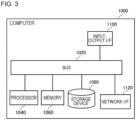
- Fig. 3 is a diagram illustrating a computer 1000 for implementing the information processing apparatus 2000.
- the computer 1000 is any computer.
- the computer 1000 is a stationary computer, such as a personal computer (PC) or a server machine.
- the computer 1000 is a portable computer, such as a smartphone or a tablet terminal.
- the computer 1000 may be a dedicated computer designed in order to implement the information processing apparatus 2000 or may be a general-purpose computer.
- the computer 1000 has a bus 1020, a processor 1040, a memory 1060, a storage device 1080, an input-output interface 1100, and a network interface 1120.
- the bus 1020 is a data transmission path through which the processor 1040, the memory 1060, the storage device 1080, the input-output interface 1100, and the network interface 1120 transmit and receive data from one another.
- a method of connecting the processor 1040 and the like to one another is not limited to bus connection.
- a processor 1040 is various processors, such as a central processing unit (CPU), a graphics processing unit (GPU), and a field-programmable gate array (FPGA).
- a memory 1060 is a main storage that is implemented using a random access memory (RAM) or the like.
- a storage device 1080 is an auxiliary storage that is implemented using a hard disk, a solid state drive (SSD), a memory card, or a read only memory (ROM).
- the input-output interface 1100 is an interface that connects the computer 1000 and an input-output device.
- the camera 10 or the display apparatus 20 is connected to the input-output interface 1100.
- the network interface 1120 is an interface that connects the computer 1000 to a communication network.
- the communication network is, for example, a local area network (LAN) or a wide area network (WAN).
- a method in which the network interface 1120 is connected to the communication network may be wireless connection or may be wired connection.
- the storage device 1080 stores a program module that implements each functional component of the information processing apparatus 2000.
- the processor 1040 reads each program module to the memory 1060 and executes each program module, thereby implementing a function corresponding to each program module.
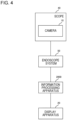
- Fig. 4 is a diagram illustrating a specific example of a usage environment of the information processing apparatus 2000.
- the information processing apparatus 2000 is used along with the scope 40 and the endoscope system 50.
- the scope 40 is connected to the endoscope system 50.
- the scope 40 is provided with the camera 10.
- moving image data 12 is composed of a plurality of moving image frames 14 generated by the camera 10 provided in the scope 40.
- the endoscope system 50 outputs moving image data 12 to the information processing apparatus 2000.
- moving image data 12 is output from an interface for video output (for example, a High-Definition Multimedia Interface (HDMI) (Registered Trademark) interface) provided in the endoscope system 50 to an interface for video input in the information processing apparatus 2000.
- HDMI High-Definition Multimedia Interface
- the information processing apparatus 2000 processes moving image data 12 acquired from the endoscope system 50 to generate the output information.
- the output information may be display that is performed using the display apparatus 20 or may be other kinds.
- the information processing apparatus 2000 performs control on the display apparatus 20 such that moving image data 12 is displayed on the display apparatus 20 along with the output information.
- the processing of displaying moving image data 12 on the display apparatus 20 may be executed by the information processing apparatus 2000 or may be executed by another apparatus (for example, the endoscope system 50).
- the display apparatus 20 does not need to be connected to the information processing apparatus 2000.
- the configuration shown in Fig. 4 is merely illustrative, and the usage environment of the information processing apparatus 2000 is not limited to the configuration shown in Fig. 4 .
- the information processing apparatus 2000 may be provided inside the camera 10, the endoscope system 50, or the display apparatus 20.
- moving image data 12 may be output from the camera 10 to the information processing apparatus 2000.
- the information processing apparatus 2000 may not be connected to the endoscope system 50.
- Fig. 5 is a flowchart illustrating a flow of processing that is executed by the information processing apparatus 2000 of Example Embodiment 1.
- the detection unit 2020 acquires the moving image frame 14 (S102).
- the detection unit 2020 detects the abnormal region 30 from the acquired moving image frame 14 (S104).
- the output unit 2040 outputs the output information based on the number of detected abnormal regions 30 (S106).
- the information processing apparatus 2000 executes the series of processing shown in Fig. 5 each time the moving image frame 14 is generated by the camera 10.
- the information processing apparatus 2000 may acquire moving image data 12 from a storage apparatus at a predetermined timing and may execute the series of processing shown in Fig. 5 on each of a plurality of moving image frames 14 composing moving image data 12 (may execute so-called batch processing).
- the detection unit 2020 acquires moving image data 12 may be used.
- the detection unit 2020 accesses the storage apparatus in which moving image data 12 is stored, thereby acquiring moving image data 12.
- the storage apparatus in which moving image data 12 is stored may be provided inside the camera 10 or may be provided outside the camera 10.
- the detection unit 2020 may receive moving image data 12 transmitted from the camera 10, thereby acquiring moving image data 12.
- the detection unit 2020 may acquire moving image data 12 from another apparatus (for example, the above-described endoscope system 50) connected to the camera 10.
- the detection unit 2020 detects the abnormal region 30 from each moving image frame 14 composing moving image data 12.
- an existing technique can be used as a technique that analyzes the image, in which the inside of the body is imaged, to detect the abnormal part.
- a method such as feature value matching or template matching, can be used.
- feature values representing a feature of an appearance (color, pattern, shape, or the like) of the tumor are defined in advance.
- the detection unit 2020 detects an image region having high similarity to the feature value of the tumor defined in advance from among image regions of the moving image frame 14. Then, the detection unit 2020 handles the detected image region as an image region representing the abnormal region 30.
- the same method can be employed in a case of detecting a wound or a foreign substance.
- a detector that detects the abnormal region 30 from the moving image frame 14 may be generated by machine learning, and the abnormal region 30 may be detected using the detector.
- various models such as a neural network or a support vector machine, can be employed. It should be noted that an existing technique can be used as a technique that generates a detector, which detects a region having a specific feature from an image, by machine learning.
- a feature value of the foreign substance can be specified to the information processing apparatus 2000.
- a photograph of the foreign substance which entered the inside of the body is input to the information processing apparatus 2000.
- the information processing apparatus 2000 performs image analysis on the photograph, thereby computing the feature value of the foreign substance to be detected.
- the detection unit 2020 detects the foreign substance having the computed feature value from the moving image frame 14.
- the output unit 2040 counts the number of abnormal regions 30 included in the moving image frame 14 and outputs the output information based on the number of abnormal regions 30 (S106).
- the number of abnormal region 30 detected from a certain moving image frame 14 is also denoted as the number of detections for the moving image frame 14.
- the output unit 2040 generates the output information indicating the number of detections.
- Figs. 6 to 8 are diagrams illustrating the output information indicating the number of detections.
- display 90 representing the number of detections is displayed in the vicinity of the frame 80 representing the abnormal region 30.
- the display 90 representing the number of detections is displayed at a position having a predetermined relationship with the abnormal region 30.
- the position having the predetermined relationship with the abnormal region 30 is a position at a distance equal to or less than a predetermined value from the abnormal region 30.
- Fig. 6 three abnormal regions 30 are detected, and display 90-1, display 90-2, and display 90-3 are displayed in the vicinity of the abnormal regions 30, respectively.
- the physician or the like can easily recognize whether or not the abnormal region 30 other than the abnormal region 30 currently viewed by the physician or the like is detected or the number of abnormal regions 30 (that is, the number of abnormal regions 30 that should be observed by the physician or the like) detected from the moving image frame 14 only by viewing any one abnormal region 30.
- the physician or the like when observing one abnormal region 30, the physician or the like can naturally view the display 90 displayed in the vicinity of the abnormal region 30, and as a result, can recognize that three (two other than the abnormal region 30 under observation) abnormal regions 30 in total are detected.
- output information is an image in which a moving image frame 14 is included
- the image is an image that is displayed on the display apparatus.
- display 90 representing the number of detections is displayed outside the moving image frame 14.
- output information is an image in which moving image frames 14 are included
- the moving image frames 14 are displayed in two display regions, respectively.
- a latest moving image frame 14 (a moving image frame 14 representing a place being currently imaged by the camera 10) is displayed.
- each moving image frame 14 from which abnormal region 30 is detected in the past is displayed.
- the display region 24 is a region where a history of the abnormal regions 30 detected so far is displayed.
- Fig. 8 display 90 representing the number of detections is displayed for each moving image frame 14 of the display region 22 and the display region 24.
- a method itself of displaying the number of detections for each moving image frame 14 a method of displaying the number of detections in the vicinity of the frame 80 illustrated in Fig. 6
- a method of displaying the number of detections outside the moving image frame 14 illustrated in Fig. 7 , or the like can be employed.
- Fig. 8 outside each moving image frame 14, the number of abnormal regions 30 detected from the moving image frame 14 is displayed.
- the moving image frames 14 displayed in the display region 24 may be some of the moving image frames 14 from which the abnormal regions 30 are detected, not all the moving image frames 14. For example, for a plurality of moving image frames 14 in which the same abnormal regions 30 are included, any one moving image frame may be displayed in the display region 24.
- the output unit 2040 outputs the image including the display 90 and the moving image frame 14 to the display apparatus connected to the information processing apparatus 2000.
- the output unit 2040 may store the image including the display 90 and the moving image frame 14 in the storage apparatus.
- the output unit 2040 may perform highlighting in a case where the number of detections is equal to or greater than a threshold value.
- the processing corresponds to processing of "performing highlighting in a case where a plurality of abnormal regions 30 are detected from one moving image frame 14".
- the threshold value may be set in advance in the output unit 2040 or may be stored in a storage apparatus that is accessible from the output unit 2040.
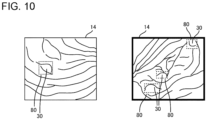
- Figs. 9 and 10 are diagrams illustrating variation of highlighting. There are various methods of highlighting.
- highlighting is performed for the frame surrounding the abnormal region 30.
- the threshold value 2
- a shape or a color of the frame may be changed or a color with which the frame is colored may be changed.
- highlighting is performed for the frame of the moving image frame 14.
- the output unit 2040 performs highlighting by thickening the frame of the moving image frame 14 in a case where the number of detections is equal to or greater than the threshold value more than the frame of the moving image frame 14 in a case where the number of detections is less than the threshold value.
- a color of the frame or a color with which the frame is colored may be changed.
- highlighting may be realized such that the frame is applied to the moving image frame 14 in a case where the number of detections is equal to or greater than the threshold value and the frame is not applied to the moving image frame 14 in a case where the number of detections is less than the threshold value.
- the output information in the case of Fig. 10 is an image, in which the moving image frame 14 is included, as in the case of Fig. 7 or 8 .
- a plurality of threshold values of the number of detections may be provided.
- the output unit 2040 performs highlighting according to a maximum threshold value satisfying "the number of detections ⁇ the threshold value".
- the maximum threshold value satisfying "the number of detections ⁇ the threshold value” is greater, more highlighted display (that is, display that is likely to attract person's attention) is used.
- the thickness of the frame 80 is made thicker or a color that is likely to attract person's attention is used for the frame 80.
- the output unit 2040 performs highlighting in the cases 1) and 2).
- the display of the case 1) display that is more likely to attract person's attention than the display of the case 2) is used.
- the output unit 2040 sets the color of the frame 80 to red in the case 1) and sets the color of the frame 80 to yellow in the case 2).
- the color of the frame 80 may be set to a color representing a comparatively safe situation, such as green.
- the threshold value T2 is set to 2
- the threshold value T1 is set to 3.
- the frame 80 is green in a case where the number of detections is 1, the frame 80 is yellow in a case where the number of detections is 2, and the frame 80 is red in a case where the number of detections is equal to or greater than 3.
- the output unit 2040 may increase the thickness of the frame 80 in an order of the case 1), the case 2), and the case 3).
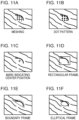
- Fig. 11 is a diagram illustrating marks that are applied to the abnormal regions 30.
- the output unit 2040 outputs the highlighted moving image frame 14 to the display apparatus.
- the output unit 2040 may store the highlighted moving image frame 14 in the storage apparatus.
- the output unit 2040 outputs alarm sound according to the number of detections.
- the output unit 2040 outputs alarm sound to a speaker or the like connected to the information processing apparatus 2000.
- alarm sound in a case where the number of detections is equal to or greater than the threshold value is more likely to attract person's attention than alarm sound in a case where the number of detections is less than the threshold value.
- a length of alarm sound in a case where the number of detections is equal to or greater than the threshold value is set to be longer than a length of alarm sound in a case where the number of detections is less than the threshold value.
- a volume of alarm sound in a case where the number of detections is equal to or greater than the threshold value is set to be greater than a volume of alarm sound in a case where the number of detections is less than the threshold value.
- the output unit 2040 outputs alarm sound according to the maximum threshold value satisfying "the number of detections ⁇ the threshold value". For example, as the maximum threshold value satisfying "the number of detections ⁇ the threshold value" is greater, the length of alarm sound may be set to be longer or the volume of alarm sound may be set to be greater.
- the output unit 2040 may output sound that allows the recognition of the number of detections.
- the output unit 2040 outputs sound (" 1", "2", or the like) representing the number of detections.
- the output unit 2040 may output alarm sound the same number of times as the number of detections.
- the example embodiment of the present invention has been described referring to the drawings, the example embodiment is merely an example of the present invention.
- the present invention can employ a combination of the example embodiment or various configurations other than the above.
Landscapes
- Engineering & Computer Science (AREA)
- Health & Medical Sciences (AREA)
- Life Sciences & Earth Sciences (AREA)
- Surgery (AREA)
- Radiology & Medical Imaging (AREA)
- General Health & Medical Sciences (AREA)
- Physics & Mathematics (AREA)
- Medical Informatics (AREA)
- Nuclear Medicine, Radiotherapy & Molecular Imaging (AREA)
- Heart & Thoracic Surgery (AREA)
- Veterinary Medicine (AREA)
- Biomedical Technology (AREA)
- Optics & Photonics (AREA)
- Biophysics (AREA)
- Molecular Biology (AREA)
- Animal Behavior & Ethology (AREA)
- Pathology (AREA)
- Public Health (AREA)
- Signal Processing (AREA)
- Quality & Reliability (AREA)
- Computer Vision & Pattern Recognition (AREA)
- General Physics & Mathematics (AREA)
- Theoretical Computer Science (AREA)
- Multimedia (AREA)
- Image Analysis (AREA)
- Closed-Circuit Television Systems (AREA)
- Endoscopes (AREA)
Claims (9)
- Informationsverarbeitungsvorrichtung, umfassend:eine Erfassungseinheit (2020), die konfiguriert ist, um einen anormalen Bereich (30) innerhalb eines Körpers aus einem aufgenommenen Bild zu erfassen, in welchem das Innere des Körpers abgebildet ist; undeine Ausgabeeinheit (2040), die konfiguriert ist, um die Anzahl der durch die Erfassungseinheit (2020) erfassten anormalen Bereiche (30) zu zählen, Ausgabeinformation einschließlich Information, die die Anzahl der anormalen Bereiche (30) anzeigt, zu erzeugen und die erzeugte Ausgabeinformation auszugeben,dadurch gekennzeichnet, dassdie Ausgabeeinheit (2040) konfiguriert ist, um die erzeugte Ausgabeinformation auf solche Weise auszugeben, dass für jeden der anormalen Bereiche die die Anzahl der anormalen Bereiche (30) anzeigende Information dem aufgenommenen Bild bei einer Position überlagert ist, bei welcher ein Abstand gleich einem vorbestimmten Wert oder kleiner als dieser vom jeweiligen anormalen Bereich (30) ist.
- Informationsverarbeitungsvorrichtung nach Anspruch 1,wobei die Ausgabeeinheit (2040) konfiguriert ist, um die Ausgabeinformation einschließlich eines zweiten Bildes auszugeben, in welchem eine Vielzahl der aufgenommenen Bilder, die den erfassten anormalen Bereich (30) haben, enthalten sind, unddas zweite Bild für jedes der Vielzahl der aufgenommenen Bilder die Information enthält, die die Anzahl der aus dem aufgenommenen Bild erfassten anormalen Bereiche (30) anzeigt.
- Informationsverarbeitungsvorrichtung nach Anspruch 1,
wobei die Ausgabeeinheit (2040) konfiguriert ist, um die Ausgabeinformation zu erzeugen, in welcher das aufgenommene Bild, das die Anzahl der anormalen Bereiche (30) hat, die gleich einem Schwellenwert oder größer als dieser ist, mehr als andere aufgenommene Bilder hervorgehoben ist. - Informationsverarbeitungsvorrichtung nach Anspruch 3,
wobei das Hervorheben des aufgenommenen Bildes ein Hervorheben des im aufgenommenen Bild enthaltenen anormalen Bereichs (30) oder ein Hervorheben des gesamten aufgenommenen Bildes ist. - Informationsverarbeitungsvorrichtung nach Anspruch 3 oder 4,
wobei die Ausgabeeinheit (2040) konfiguriert ist, um ein Hervorheben bezüglich verschiedener Aspekte zwischen der Ausgabeinformation in einem Fall, in welchem die Anzahl der anormalen Bereiche (30) gleich einem ersten Schwellenwert oder größer als dieser ist, und der Ausgebeinformation in einem Fall, in welchem die Anzahl der anormalen Bereiche (30) kleiner als der erste Schwellenwert und gleich einem zweiten Schwellenwert oder größer als dieser ist, durchzuführen. - Informationsverarbeitungsvorrichtung nach Anspruch 1,
wobei die Ausgabeeinheit (2040) konfiguriert ist, um basierend auf der Anzahl der anormalen Bereiche (30) bestimmten Klang als die Ausgabeinformation auszugeben. - Informationsverarbeitungsvorrichtung nach Anspruch 6,
wobei die Ausgabeeinheit (2040) konfiguriert ist, um verschiedene Arten von Klang zwischen einem Fall, in welchem die Anzahl der anormalen Bereiche (30) gleich einem Schwellenwert oder größer als dieser ist, und einem Fall, in welchem die Anzahl der anormalen Bereiche (30) kleiner als der Schwellenwert ist, auszugeben. - Steuerverfahren, das durch einen Computer ausgeführt wird, wobei das Steuerverfahren folgendes umfasst:Erfassen eines anormalen Bereichs (30) innerhalb eines Körpers aus einem aufgenommenen Bild, in welchem das Innere des Körpers abgebildet ist;Zählen der Anzahl der erfassten anormalen Bereiche (30);Erzeugen von Ausgabeinformation einschließlich Information, die die Anzahl der anormalen Bereiche (30) anzeigt; undAusgeben der erzeugten Ausgabeinformation,dadurch gekennzeichnet, dassdie erzeugte Ausgabeinformation beim Ausgabeschritt auf solche Weise ausgegeben wird, dass für jeden der anormalen Bereiche die die Anzahl der anormalen Bereiche (30) anzeigende Information dem aufgenommenen Bild bei einer Position überlagert wird, bei welcher ein Abstand gleich einem vorbestimmten Wert oder kleiner als dieser vom jeweiligen anormalen Bereich (30) ist.
- Programm, das veranlasst, dass ein Computer jeden Schritt des Steuerverfahrens nach Anspruch 8 ausführt.
Applications Claiming Priority (2)
| Application Number | Priority Date | Filing Date | Title |
|---|---|---|---|
| JP2018169722 | 2018-09-11 | ||
| PCT/JP2019/035158 WO2020054604A1 (ja) | 2018-09-11 | 2019-09-06 | 情報処理装置、制御方法、及びプログラム |
Publications (3)
| Publication Number | Publication Date |
|---|---|
| EP3851025A1 EP3851025A1 (de) | 2021-07-21 |
| EP3851025A4 EP3851025A4 (de) | 2021-10-13 |
| EP3851025B1 true EP3851025B1 (de) | 2024-07-24 |
Family
ID=69778318
Family Applications (1)
| Application Number | Title | Priority Date | Filing Date |
|---|---|---|---|
| EP19861116.2A Active EP3851025B1 (de) | 2018-09-11 | 2019-09-06 | Informationsverarbeitungsvorrichtung, steuerungsverfahren und programm |
Country Status (4)
| Country | Link |
|---|---|
| US (3) | US11957300B2 (de) |
| EP (1) | EP3851025B1 (de) |
| JP (1) | JP7232424B2 (de) |
| WO (1) | WO2020054604A1 (de) |
Families Citing this family (5)
| Publication number | Priority date | Publication date | Assignee | Title |
|---|---|---|---|---|
| US12419492B2 (en) | 2020-03-31 | 2025-09-23 | Nec Corporation | Information processing device, display method, and non-transitory computer-readable medium for storing a program for lesion detection processing supporting decision making using machine learning |
| CN116963656A (zh) * | 2021-03-09 | 2023-10-27 | 富士胶片株式会社 | 内窥镜系统及其工作方法 |
| JP7396329B2 (ja) * | 2021-05-20 | 2023-12-12 | 株式会社村田製作所 | 表示方法、プログラム、表示システム、及び、評価システム |
| JP2024070526A (ja) * | 2022-11-11 | 2024-05-23 | 富士フイルム株式会社 | 内視鏡システム、内視鏡システムの作動方法、プロセッサ |
| JPWO2025009144A1 (de) * | 2023-07-06 | 2025-01-09 |
Family Cites Families (11)
| Publication number | Priority date | Publication date | Assignee | Title |
|---|---|---|---|---|
| JP4218347B2 (ja) | 2003-01-17 | 2009-02-04 | コニカミノルタホールディングス株式会社 | 画像診断支援装置 |
| US8064677B2 (en) | 2009-11-25 | 2011-11-22 | Fujifilm Corporation | Systems and methods for measurement of objects of interest in medical images |
| JP2011255006A (ja) * | 2010-06-09 | 2011-12-22 | Olympus Corp | 画像処理装置、内視鏡装置、プログラム及び画像処理方法 |
| JP6120762B2 (ja) | 2013-12-13 | 2017-04-26 | オリンパス株式会社 | 画像処理装置 |
| JP6346576B2 (ja) | 2015-02-27 | 2018-06-20 | Hoya株式会社 | 画像処理装置 |
| JP6246431B2 (ja) * | 2015-11-10 | 2017-12-13 | オリンパス株式会社 | 内視鏡装置 |
| WO2018069992A1 (ja) * | 2016-10-12 | 2018-04-19 | オリンパス株式会社 | 挿入システム |
| JP6270967B2 (ja) | 2016-11-17 | 2018-01-31 | Hoya株式会社 | 画像処理装置及び内視鏡装置 |
| JP6805931B2 (ja) | 2017-03-29 | 2020-12-23 | 株式会社デンソーウェーブ | タグリーダ |
| WO2019146075A1 (ja) | 2018-01-26 | 2019-08-01 | オリンパス株式会社 | 内視鏡画像処理装置、内視鏡画像処理プログラム及び内視鏡画像処理方法 |
| WO2019220848A1 (ja) | 2018-05-17 | 2019-11-21 | 富士フイルム株式会社 | 内視鏡装置、内視鏡操作方法、及びプログラム |
-
2019
- 2019-09-06 US US17/274,713 patent/US11957300B2/en active Active
- 2019-09-06 WO PCT/JP2019/035158 patent/WO2020054604A1/ja not_active Ceased
- 2019-09-06 EP EP19861116.2A patent/EP3851025B1/de active Active
- 2019-09-06 JP JP2020545987A patent/JP7232424B2/ja active Active
-
2024
- 2024-03-11 US US18/601,521 patent/US12295545B2/en active Active
-
2025
- 2025-04-21 US US19/184,819 patent/US20250248585A1/en active Pending
Also Published As
| Publication number | Publication date |
|---|---|
| JP7232424B2 (ja) | 2023-03-03 |
| WO2020054604A1 (ja) | 2020-03-19 |
| EP3851025A1 (de) | 2021-07-21 |
| US11957300B2 (en) | 2024-04-16 |
| US20250248585A1 (en) | 2025-08-07 |
| EP3851025A4 (de) | 2021-10-13 |
| US20220051397A1 (en) | 2022-02-17 |
| JPWO2020054604A1 (ja) | 2021-08-30 |
| US12295545B2 (en) | 2025-05-13 |
| US20240206700A1 (en) | 2024-06-27 |
Similar Documents
| Publication | Publication Date | Title |
|---|---|---|
| EP3851025B1 (de) | Informationsverarbeitungsvorrichtung, steuerungsverfahren und programm | |
| CN110662477B (zh) | 信息处理装置、控制方法和程序 | |
| US12118739B2 (en) | Medical image processing method, apparatus, and device, medium, and endoscope | |
| US8502861B2 (en) | Image display apparatus | |
| CN110662476B (zh) | 信息处理装置、控制方法和程序 | |
| US20170004620A1 (en) | Image processing apparatus, image processing method, and computer-readable recording medium | |
| US20240104769A1 (en) | Information processing apparatus, control method, and non-transitory storage medium | |
| CN112115803B (zh) | 口罩状态提醒方法、装置及移动终端 | |
| US20240382065A1 (en) | Information processing apparatus, control method, and non-transitory storage medium | |
| US20140064563A1 (en) | Image processing apparatus, method of controlling image processing apparatus and storage medium | |
| CN112750099A (zh) | 卵泡测量方法、超声设备以及计算机可读存储介质 | |
| EP3949832A1 (de) | System zur abschätzung der verschlimmerung einer krankheit | |
| CN118608870A (zh) | 医学图像分类方法和装置、电子设备及存储介质 |
Legal Events
| Date | Code | Title | Description |
|---|---|---|---|
| STAA | Information on the status of an ep patent application or granted ep patent |
Free format text: STATUS: THE INTERNATIONAL PUBLICATION HAS BEEN MADE |
|
| PUAI | Public reference made under article 153(3) epc to a published international application that has entered the european phase |
Free format text: ORIGINAL CODE: 0009012 |
|
| STAA | Information on the status of an ep patent application or granted ep patent |
Free format text: STATUS: REQUEST FOR EXAMINATION WAS MADE |
|
| 17P | Request for examination filed |
Effective date: 20210412 |
|
| AK | Designated contracting states |
Kind code of ref document: A1 Designated state(s): AL AT BE BG CH CY CZ DE DK EE ES FI FR GB GR HR HU IE IS IT LI LT LU LV MC MK MT NL NO PL PT RO RS SE SI SK SM TR |
|
| A4 | Supplementary search report drawn up and despatched |
Effective date: 20210909 |
|
| RIC1 | Information provided on ipc code assigned before grant |
Ipc: A61B 1/00 20060101AFI20210903BHEP |
|
| DAV | Request for validation of the european patent (deleted) | ||
| DAX | Request for extension of the european patent (deleted) | ||
| REG | Reference to a national code |
Ref country code: DE Ref legal event code: R079 Free format text: PREVIOUS MAIN CLASS: A61B0001045000 Ipc: A61B0001000000 Ref document number: 602019055874 Country of ref document: DE |
|
| GRAP | Despatch of communication of intention to grant a patent |
Free format text: ORIGINAL CODE: EPIDOSNIGR1 |
|
| STAA | Information on the status of an ep patent application or granted ep patent |
Free format text: STATUS: GRANT OF PATENT IS INTENDED |
|
| RIC1 | Information provided on ipc code assigned before grant |
Ipc: G06T 7/00 20170101ALI20240129BHEP Ipc: A61B 1/00 20060101AFI20240129BHEP |
|
| INTG | Intention to grant announced |
Effective date: 20240214 |
|
| GRAS | Grant fee paid |
Free format text: ORIGINAL CODE: EPIDOSNIGR3 |
|
| GRAA | (expected) grant |
Free format text: ORIGINAL CODE: 0009210 |
|
| STAA | Information on the status of an ep patent application or granted ep patent |
Free format text: STATUS: THE PATENT HAS BEEN GRANTED |
|
| AK | Designated contracting states |
Kind code of ref document: B1 Designated state(s): AL AT BE BG CH CY CZ DE DK EE ES FI FR GB GR HR HU IE IS IT LI LT LU LV MC MK MT NL NO PL PT RO RS SE SI SK SM TR |
|
| REG | Reference to a national code |
Ref country code: GB Ref legal event code: FG4D |
|
| REG | Reference to a national code |
Ref country code: CH Ref legal event code: EP |
|
| REG | Reference to a national code |
Ref country code: DE Ref legal event code: R096 Ref document number: 602019055874 Country of ref document: DE |
|
| REG | Reference to a national code |
Ref country code: IE Ref legal event code: FG4D |
|
| REG | Reference to a national code |
Ref country code: LT Ref legal event code: MG9D |
|
| REG | Reference to a national code |
Ref country code: NL Ref legal event code: MP Effective date: 20240724 |
|
| PG25 | Lapsed in a contracting state [announced via postgrant information from national office to epo] |
Ref country code: PT Free format text: LAPSE BECAUSE OF FAILURE TO SUBMIT A TRANSLATION OF THE DESCRIPTION OR TO PAY THE FEE WITHIN THE PRESCRIBED TIME-LIMIT Effective date: 20241125 |
|
| REG | Reference to a national code |
Ref country code: AT Ref legal event code: MK05 Ref document number: 1705478 Country of ref document: AT Kind code of ref document: T Effective date: 20240724 |
|
| PG25 | Lapsed in a contracting state [announced via postgrant information from national office to epo] |
Ref country code: NL Free format text: LAPSE BECAUSE OF FAILURE TO SUBMIT A TRANSLATION OF THE DESCRIPTION OR TO PAY THE FEE WITHIN THE PRESCRIBED TIME-LIMIT Effective date: 20240724 |
|
| PG25 | Lapsed in a contracting state [announced via postgrant information from national office to epo] |
Ref country code: PT Free format text: LAPSE BECAUSE OF FAILURE TO SUBMIT A TRANSLATION OF THE DESCRIPTION OR TO PAY THE FEE WITHIN THE PRESCRIBED TIME-LIMIT Effective date: 20241125 Ref country code: NL Free format text: LAPSE BECAUSE OF FAILURE TO SUBMIT A TRANSLATION OF THE DESCRIPTION OR TO PAY THE FEE WITHIN THE PRESCRIBED TIME-LIMIT Effective date: 20240724 |
|
| PG25 | Lapsed in a contracting state [announced via postgrant information from national office to epo] |
Ref country code: NO Free format text: LAPSE BECAUSE OF FAILURE TO SUBMIT A TRANSLATION OF THE DESCRIPTION OR TO PAY THE FEE WITHIN THE PRESCRIBED TIME-LIMIT Effective date: 20241024 |
|
| PG25 | Lapsed in a contracting state [announced via postgrant information from national office to epo] |
Ref country code: FI Free format text: LAPSE BECAUSE OF FAILURE TO SUBMIT A TRANSLATION OF THE DESCRIPTION OR TO PAY THE FEE WITHIN THE PRESCRIBED TIME-LIMIT Effective date: 20240724 Ref country code: GR Free format text: LAPSE BECAUSE OF FAILURE TO SUBMIT A TRANSLATION OF THE DESCRIPTION OR TO PAY THE FEE WITHIN THE PRESCRIBED TIME-LIMIT Effective date: 20241025 Ref country code: PL Free format text: LAPSE BECAUSE OF FAILURE TO SUBMIT A TRANSLATION OF THE DESCRIPTION OR TO PAY THE FEE WITHIN THE PRESCRIBED TIME-LIMIT Effective date: 20240724 |
|
| PG25 | Lapsed in a contracting state [announced via postgrant information from national office to epo] |
Ref country code: BG Free format text: LAPSE BECAUSE OF FAILURE TO SUBMIT A TRANSLATION OF THE DESCRIPTION OR TO PAY THE FEE WITHIN THE PRESCRIBED TIME-LIMIT Effective date: 20240724 |
|
| PG25 | Lapsed in a contracting state [announced via postgrant information from national office to epo] |
Ref country code: LV Free format text: LAPSE BECAUSE OF FAILURE TO SUBMIT A TRANSLATION OF THE DESCRIPTION OR TO PAY THE FEE WITHIN THE PRESCRIBED TIME-LIMIT Effective date: 20240724 |
|
| PG25 | Lapsed in a contracting state [announced via postgrant information from national office to epo] |
Ref country code: IS Free format text: LAPSE BECAUSE OF FAILURE TO SUBMIT A TRANSLATION OF THE DESCRIPTION OR TO PAY THE FEE WITHIN THE PRESCRIBED TIME-LIMIT Effective date: 20241124 Ref country code: AT Free format text: LAPSE BECAUSE OF FAILURE TO SUBMIT A TRANSLATION OF THE DESCRIPTION OR TO PAY THE FEE WITHIN THE PRESCRIBED TIME-LIMIT Effective date: 20240724 |
|
| PG25 | Lapsed in a contracting state [announced via postgrant information from national office to epo] |
Ref country code: HR Free format text: LAPSE BECAUSE OF FAILURE TO SUBMIT A TRANSLATION OF THE DESCRIPTION OR TO PAY THE FEE WITHIN THE PRESCRIBED TIME-LIMIT Effective date: 20240724 |
|
| PG25 | Lapsed in a contracting state [announced via postgrant information from national office to epo] |
Ref country code: RS Free format text: LAPSE BECAUSE OF FAILURE TO SUBMIT A TRANSLATION OF THE DESCRIPTION OR TO PAY THE FEE WITHIN THE PRESCRIBED TIME-LIMIT Effective date: 20241024 Ref country code: ES Free format text: LAPSE BECAUSE OF FAILURE TO SUBMIT A TRANSLATION OF THE DESCRIPTION OR TO PAY THE FEE WITHIN THE PRESCRIBED TIME-LIMIT Effective date: 20240724 |
|
| PG25 | Lapsed in a contracting state [announced via postgrant information from national office to epo] |
Ref country code: RS Free format text: LAPSE BECAUSE OF FAILURE TO SUBMIT A TRANSLATION OF THE DESCRIPTION OR TO PAY THE FEE WITHIN THE PRESCRIBED TIME-LIMIT Effective date: 20241024 Ref country code: PL Free format text: LAPSE BECAUSE OF FAILURE TO SUBMIT A TRANSLATION OF THE DESCRIPTION OR TO PAY THE FEE WITHIN THE PRESCRIBED TIME-LIMIT Effective date: 20240724 Ref country code: NO Free format text: LAPSE BECAUSE OF FAILURE TO SUBMIT A TRANSLATION OF THE DESCRIPTION OR TO PAY THE FEE WITHIN THE PRESCRIBED TIME-LIMIT Effective date: 20241024 Ref country code: LV Free format text: LAPSE BECAUSE OF FAILURE TO SUBMIT A TRANSLATION OF THE DESCRIPTION OR TO PAY THE FEE WITHIN THE PRESCRIBED TIME-LIMIT Effective date: 20240724 Ref country code: IS Free format text: LAPSE BECAUSE OF FAILURE TO SUBMIT A TRANSLATION OF THE DESCRIPTION OR TO PAY THE FEE WITHIN THE PRESCRIBED TIME-LIMIT Effective date: 20241124 Ref country code: HR Free format text: LAPSE BECAUSE OF FAILURE TO SUBMIT A TRANSLATION OF THE DESCRIPTION OR TO PAY THE FEE WITHIN THE PRESCRIBED TIME-LIMIT Effective date: 20240724 Ref country code: GR Free format text: LAPSE BECAUSE OF FAILURE TO SUBMIT A TRANSLATION OF THE DESCRIPTION OR TO PAY THE FEE WITHIN THE PRESCRIBED TIME-LIMIT Effective date: 20241025 Ref country code: FI Free format text: LAPSE BECAUSE OF FAILURE TO SUBMIT A TRANSLATION OF THE DESCRIPTION OR TO PAY THE FEE WITHIN THE PRESCRIBED TIME-LIMIT Effective date: 20240724 Ref country code: ES Free format text: LAPSE BECAUSE OF FAILURE TO SUBMIT A TRANSLATION OF THE DESCRIPTION OR TO PAY THE FEE WITHIN THE PRESCRIBED TIME-LIMIT Effective date: 20240724 Ref country code: BG Free format text: LAPSE BECAUSE OF FAILURE TO SUBMIT A TRANSLATION OF THE DESCRIPTION OR TO PAY THE FEE WITHIN THE PRESCRIBED TIME-LIMIT Effective date: 20240724 Ref country code: AT Free format text: LAPSE BECAUSE OF FAILURE TO SUBMIT A TRANSLATION OF THE DESCRIPTION OR TO PAY THE FEE WITHIN THE PRESCRIBED TIME-LIMIT Effective date: 20240724 |
|
| PG25 | Lapsed in a contracting state [announced via postgrant information from national office to epo] |
Ref country code: RO Free format text: LAPSE BECAUSE OF FAILURE TO SUBMIT A TRANSLATION OF THE DESCRIPTION OR TO PAY THE FEE WITHIN THE PRESCRIBED TIME-LIMIT Effective date: 20240724 Ref country code: DK Free format text: LAPSE BECAUSE OF FAILURE TO SUBMIT A TRANSLATION OF THE DESCRIPTION OR TO PAY THE FEE WITHIN THE PRESCRIBED TIME-LIMIT Effective date: 20240724 Ref country code: SM Free format text: LAPSE BECAUSE OF FAILURE TO SUBMIT A TRANSLATION OF THE DESCRIPTION OR TO PAY THE FEE WITHIN THE PRESCRIBED TIME-LIMIT Effective date: 20240724 |
|
| PG25 | Lapsed in a contracting state [announced via postgrant information from national office to epo] |
Ref country code: MC Free format text: LAPSE BECAUSE OF FAILURE TO SUBMIT A TRANSLATION OF THE DESCRIPTION OR TO PAY THE FEE WITHIN THE PRESCRIBED TIME-LIMIT Effective date: 20240724 Ref country code: EE Free format text: LAPSE BECAUSE OF FAILURE TO SUBMIT A TRANSLATION OF THE DESCRIPTION OR TO PAY THE FEE WITHIN THE PRESCRIBED TIME-LIMIT Effective date: 20240724 |
|
| PG25 | Lapsed in a contracting state [announced via postgrant information from national office to epo] |
Ref country code: CZ Free format text: LAPSE BECAUSE OF FAILURE TO SUBMIT A TRANSLATION OF THE DESCRIPTION OR TO PAY THE FEE WITHIN THE PRESCRIBED TIME-LIMIT Effective date: 20240724 |
|
| REG | Reference to a national code |
Ref country code: DE Ref legal event code: R097 Ref document number: 602019055874 Country of ref document: DE |
|
| PG25 | Lapsed in a contracting state [announced via postgrant information from national office to epo] |
Ref country code: IT Free format text: LAPSE BECAUSE OF FAILURE TO SUBMIT A TRANSLATION OF THE DESCRIPTION OR TO PAY THE FEE WITHIN THE PRESCRIBED TIME-LIMIT Effective date: 20240724 Ref country code: SK Free format text: LAPSE BECAUSE OF FAILURE TO SUBMIT A TRANSLATION OF THE DESCRIPTION OR TO PAY THE FEE WITHIN THE PRESCRIBED TIME-LIMIT Effective date: 20240724 |
|
| REG | Reference to a national code |
Ref country code: CH Ref legal event code: PL |
|
| PG25 | Lapsed in a contracting state [announced via postgrant information from national office to epo] |
Ref country code: LU Free format text: LAPSE BECAUSE OF NON-PAYMENT OF DUE FEES Effective date: 20240906 |
|
| PLBE | No opposition filed within time limit |
Free format text: ORIGINAL CODE: 0009261 |
|
| STAA | Information on the status of an ep patent application or granted ep patent |
Free format text: STATUS: NO OPPOSITION FILED WITHIN TIME LIMIT |
|
| 26N | No opposition filed |
Effective date: 20250425 |
|
| REG | Reference to a national code |
Ref country code: BE Ref legal event code: MM Effective date: 20240930 |
|
| PG25 | Lapsed in a contracting state [announced via postgrant information from national office to epo] |
Ref country code: BE Free format text: LAPSE BECAUSE OF NON-PAYMENT OF DUE FEES Effective date: 20240930 |
|
| PG25 | Lapsed in a contracting state [announced via postgrant information from national office to epo] |
Ref country code: CH Free format text: LAPSE BECAUSE OF NON-PAYMENT OF DUE FEES Effective date: 20240930 |
|
| PG25 | Lapsed in a contracting state [announced via postgrant information from national office to epo] |
Ref country code: IE Free format text: LAPSE BECAUSE OF NON-PAYMENT OF DUE FEES Effective date: 20240906 |
|
| PG25 | Lapsed in a contracting state [announced via postgrant information from national office to epo] |
Ref country code: SE Free format text: LAPSE BECAUSE OF FAILURE TO SUBMIT A TRANSLATION OF THE DESCRIPTION OR TO PAY THE FEE WITHIN THE PRESCRIBED TIME-LIMIT Effective date: 20240724 |
|
| PGFP | Annual fee paid to national office [announced via postgrant information from national office to epo] |
Ref country code: DE Payment date: 20250919 Year of fee payment: 7 |
|
| PGFP | Annual fee paid to national office [announced via postgrant information from national office to epo] |
Ref country code: GB Payment date: 20250919 Year of fee payment: 7 |
|
| PGFP | Annual fee paid to national office [announced via postgrant information from national office to epo] |
Ref country code: FR Payment date: 20250922 Year of fee payment: 7 |
|
| PG25 | Lapsed in a contracting state [announced via postgrant information from national office to epo] |
Ref country code: CY Free format text: LAPSE BECAUSE OF FAILURE TO SUBMIT A TRANSLATION OF THE DESCRIPTION OR TO PAY THE FEE WITHIN THE PRESCRIBED TIME-LIMIT; INVALID AB INITIO Effective date: 20190906 |
|
| PG25 | Lapsed in a contracting state [announced via postgrant information from national office to epo] |
Ref country code: HU Free format text: LAPSE BECAUSE OF FAILURE TO SUBMIT A TRANSLATION OF THE DESCRIPTION OR TO PAY THE FEE WITHIN THE PRESCRIBED TIME-LIMIT; INVALID AB INITIO Effective date: 20190906 |