EP3851416A2 - Trägerelement für die abwasserbehandlung und verfahren zur modifizierung eines trägerelements - Google Patents
Trägerelement für die abwasserbehandlung und verfahren zur modifizierung eines trägerelements Download PDFInfo
- Publication number
- EP3851416A2 EP3851416A2 EP20211762.8A EP20211762A EP3851416A2 EP 3851416 A2 EP3851416 A2 EP 3851416A2 EP 20211762 A EP20211762 A EP 20211762A EP 3851416 A2 EP3851416 A2 EP 3851416A2
- Authority
- EP
- European Patent Office
- Prior art keywords
- carrier element
- biofilm
- way
- channel
- biofilm growth
- Prior art date
- Legal status (The legal status is an assumption and is not a legal conclusion. Google has not performed a legal analysis and makes no representation as to the accuracy of the status listed.)
- Granted
Links
Images


Classifications
-
- B—PERFORMING OPERATIONS; TRANSPORTING
- B05—SPRAYING OR ATOMISING IN GENERAL; APPLYING FLUENT MATERIALS TO SURFACES, IN GENERAL
- B05D—PROCESSES FOR APPLYING FLUENT MATERIALS TO SURFACES, IN GENERAL
- B05D1/00—Processes for applying liquids or other fluent materials
- B05D1/18—Processes for applying liquids or other fluent materials performed by dipping
-
- C—CHEMISTRY; METALLURGY
- C02—TREATMENT OF WATER, WASTE WATER, SEWAGE, OR SLUDGE
- C02F—TREATMENT OF WATER, WASTE WATER, SEWAGE, OR SLUDGE
- C02F3/00—Biological treatment of water, waste water, or sewage
- C02F3/02—Aerobic processes
- C02F3/10—Packings; Fillings; Grids
-
- B—PERFORMING OPERATIONS; TRANSPORTING
- B01—PHYSICAL OR CHEMICAL PROCESSES OR APPARATUS IN GENERAL
- B01J—CHEMICAL OR PHYSICAL PROCESSES, e.g. CATALYSIS OR COLLOID CHEMISTRY; THEIR RELEVANT APPARATUS
- B01J19/00—Chemical, physical or physico-chemical processes in general; Their relevant apparatus
- B01J19/30—Loose or shaped packing elements, e.g. Raschig rings or Berl saddles, for pouring into the apparatus for mass or heat transfer
-
- C—CHEMISTRY; METALLURGY
- C12—BIOCHEMISTRY; BEER; SPIRITS; WINE; VINEGAR; MICROBIOLOGY; ENZYMOLOGY; MUTATION OR GENETIC ENGINEERING
- C12N—MICROORGANISMS OR ENZYMES; COMPOSITIONS THEREOF; PROPAGATING, PRESERVING, OR MAINTAINING MICROORGANISMS; MUTATION OR GENETIC ENGINEERING; CULTURE MEDIA
- C12N1/00—Microorganisms; Compositions thereof; Processes of propagating, maintaining or preserving microorganisms or compositions thereof; Processes of preparing or isolating a composition containing a microorganism; Culture media therefor
- C12N1/20—Bacteria; Culture media therefor
-
- C—CHEMISTRY; METALLURGY
- C12—BIOCHEMISTRY; BEER; SPIRITS; WINE; VINEGAR; MICROBIOLOGY; ENZYMOLOGY; MUTATION OR GENETIC ENGINEERING
- C12N—MICROORGANISMS OR ENZYMES; COMPOSITIONS THEREOF; PROPAGATING, PRESERVING, OR MAINTAINING MICROORGANISMS; MUTATION OR GENETIC ENGINEERING; CULTURE MEDIA
- C12N11/00—Carrier-bound or immobilised enzymes; Carrier-bound or immobilised microbial cells; Preparation thereof
- C12N11/02—Enzymes or microbial cells immobilised on or in an organic carrier
- C12N11/08—Enzymes or microbial cells immobilised on or in an organic carrier the carrier being a synthetic polymer
-
- B—PERFORMING OPERATIONS; TRANSPORTING
- B01—PHYSICAL OR CHEMICAL PROCESSES OR APPARATUS IN GENERAL
- B01J—CHEMICAL OR PHYSICAL PROCESSES, e.g. CATALYSIS OR COLLOID CHEMISTRY; THEIR RELEVANT APPARATUS
- B01J2219/00—Chemical, physical or physico-chemical processes in general; Their relevant apparatus
- B01J2219/30—Details relating to random packing elements
- B01J2219/302—Basic shape of the elements
- B01J2219/30223—Cylinder
-
- B—PERFORMING OPERATIONS; TRANSPORTING
- B01—PHYSICAL OR CHEMICAL PROCESSES OR APPARATUS IN GENERAL
- B01J—CHEMICAL OR PHYSICAL PROCESSES, e.g. CATALYSIS OR COLLOID CHEMISTRY; THEIR RELEVANT APPARATUS
- B01J2219/00—Chemical, physical or physico-chemical processes in general; Their relevant apparatus
- B01J2219/30—Details relating to random packing elements
- B01J2219/302—Basic shape of the elements
- B01J2219/30246—Square or square-derived
- B01J2219/30249—Cube
-
- B—PERFORMING OPERATIONS; TRANSPORTING
- B01—PHYSICAL OR CHEMICAL PROCESSES OR APPARATUS IN GENERAL
- B01J—CHEMICAL OR PHYSICAL PROCESSES, e.g. CATALYSIS OR COLLOID CHEMISTRY; THEIR RELEVANT APPARATUS
- B01J2219/00—Chemical, physical or physico-chemical processes in general; Their relevant apparatus
- B01J2219/30—Details relating to random packing elements
- B01J2219/302—Basic shape of the elements
- B01J2219/30296—Other shapes
-
- B—PERFORMING OPERATIONS; TRANSPORTING
- B01—PHYSICAL OR CHEMICAL PROCESSES OR APPARATUS IN GENERAL
- B01J—CHEMICAL OR PHYSICAL PROCESSES, e.g. CATALYSIS OR COLLOID CHEMISTRY; THEIR RELEVANT APPARATUS
- B01J2219/00—Chemical, physical or physico-chemical processes in general; Their relevant apparatus
- B01J2219/30—Details relating to random packing elements
- B01J2219/304—Composition or microstructure of the elements
- B01J2219/30466—Plastics
-
- C—CHEMISTRY; METALLURGY
- C02—TREATMENT OF WATER, WASTE WATER, SEWAGE, OR SLUDGE
- C02F—TREATMENT OF WATER, WASTE WATER, SEWAGE, OR SLUDGE
- C02F2305/00—Use of specific compounds during water treatment
- C02F2305/06—Nutrients for stimulating the growth of microorganisms
-
- C—CHEMISTRY; METALLURGY
- C02—TREATMENT OF WATER, WASTE WATER, SEWAGE, OR SLUDGE
- C02F—TREATMENT OF WATER, WASTE WATER, SEWAGE, OR SLUDGE
- C02F2305/00—Use of specific compounds during water treatment
- C02F2305/08—Nanoparticles or nanotubes
-
- C—CHEMISTRY; METALLURGY
- C02—TREATMENT OF WATER, WASTE WATER, SEWAGE, OR SLUDGE
- C02F—TREATMENT OF WATER, WASTE WATER, SEWAGE, OR SLUDGE
- C02F3/00—Biological treatment of water, waste water, or sewage
- C02F3/02—Aerobic processes
- C02F3/08—Aerobic processes using moving contact bodies
- C02F3/085—Fluidized beds
-
- C—CHEMISTRY; METALLURGY
- C02—TREATMENT OF WATER, WASTE WATER, SEWAGE, OR SLUDGE
- C02F—TREATMENT OF WATER, WASTE WATER, SEWAGE, OR SLUDGE
- C02F3/00—Biological treatment of water, waste water, or sewage
- C02F3/02—Aerobic processes
- C02F3/10—Packings; Fillings; Grids
- C02F3/109—Characterized by the shape
-
- C—CHEMISTRY; METALLURGY
- C02—TREATMENT OF WATER, WASTE WATER, SEWAGE, OR SLUDGE
- C02F—TREATMENT OF WATER, WASTE WATER, SEWAGE, OR SLUDGE
- C02F3/00—Biological treatment of water, waste water, or sewage
- C02F3/28—Anaerobic digestion processes
- C02F3/2806—Anaerobic processes using solid supports for microorganisms
-
- Y—GENERAL TAGGING OF NEW TECHNOLOGICAL DEVELOPMENTS; GENERAL TAGGING OF CROSS-SECTIONAL TECHNOLOGIES SPANNING OVER SEVERAL SECTIONS OF THE IPC; TECHNICAL SUBJECTS COVERED BY FORMER USPC CROSS-REFERENCE ART COLLECTIONS [XRACs] AND DIGESTS
- Y02—TECHNOLOGIES OR APPLICATIONS FOR MITIGATION OR ADAPTATION AGAINST CLIMATE CHANGE
- Y02W—CLIMATE CHANGE MITIGATION TECHNOLOGIES RELATED TO WASTEWATER TREATMENT OR WASTE MANAGEMENT
- Y02W10/00—Technologies for wastewater treatment
- Y02W10/10—Biological treatment of water, waste water, or sewage
Definitions
- This invention relates to the development of a carrier element providing high surface area for biofilm formation in wastewater treatment plants and a carrier element surface modification method for accelerating and enriching biofilm formation.
- the carrier element developed within the scope of the invention has three forms: cubic, cylindrical and second-stage plate-type cylindrical forms.
- the invention covers the modified and unmodified states of the surfaces of each of these three forms and the method related to this modification.
- Most of the domestic and industrial wastewater is mainly treated with biological treatment processes using microorganisms.
- the biological treatment process to be used depends on the wastewater characteristics, the quality of the water to be discharged and the environmental conditions.
- Treatment efficiency is affected by the number and residence time of the microorganisms retained in the reactor. With the increase in the number of active microorganisms, the treatment efficiency increases and the reactor volume decreases.
- a major part of the current biological treatment systems comprises conventional active sludge systems where microorganisms grow in suspension.
- microorganisms move freely in flocs, and the pollutants in water are broken down by the microorganisms in aerobic or anaerobic environments.
- microorganisms are separated from the water phase and so, the biological treatment phase is completed.
- the microorganisms separated at sedimentation phase are sent back to the biological reactor to a large extent. As a result, surface areas of sedimentation tanks get large, and a significant hydraulic capacity is used for the return activated sludge.
- Biofilm is a complex community of bacterial cells attaching to each other and to a surface.
- Extracellular polymeric substances (EPS) produced by microorganisms play an active role in attachment.
- EPSs in a biofilm serve as a kind of protective barrier against external effects for microorganisms in the biofilm and this allows the bacterial community, living in the biofilm, to be more resistant to toxic pollutants.
- Microbial extracellular polymeric substances are composed of molecules with high molecular weight such as polysaccharides, DNA, proteins, lipids and humic acids (Flemming & Wingender, 2010).
- EPSs secreted by microorganisms play a role in attachment to surface, which is the first step of biofilm formation, and subsequently in colony formation, and also affect the structure and stability of the microbial community.
- EPS formation and composition are affected by many factors such as wastewater characteristics (carbon/nitrogen ratio, pH, ionic strength, toxic substance concentration, etc.) and reactor operating conditions (sludge age and hydraulic retention time, dissolved oxygen concentration and shearing forces).
- Biofilm systems include trickling filters in which stone and large block materials are used as surfaces on a fixed bed. Even though these systems have various advantages specific to biofilm systems, due to some disadvantages like clogging over time due to particles and/or biofilm formation in wastewater, dead space formation, efficiency loss and limited application capacity, they have not been commonly used.
- Moving bed biofilm treatment systems combining the advantages of suspension and biofilm systems, have started to become widespread.
- Moving bed biofilm reactors are basically composed of a diffuser system to meet the oxygen need in the biological reactor and to make a mixture, a mechanical mixer for use in case of treatment under anoxic conditions and/or anaerobic conditions, carrier elements and a sieve to keep carrier elements in the reactor.
- moving bed biofilm treatment systems the carrier element used as surface for biofilm development is suspended and in motion in the reactor. So, problems such as clogging, dead spaces and decrease of treatment efficiency encountered in conventional biofilm systems such as trickling filters are eliminated.
- Moving bed biofilm systems allow the coexistence of biofilms and microorganisms growing in suspension, and the amount of biomass retained in the reactor can be increased. Thus, both the reactor volume and the dimensions of the sedimentation tanks can be smaller.
- biofilm systems Compared to conventional activated sludge systems, biofilm systems have the advantages of high tolerance to shock loads and load fluctuations, high adaptability to low temperatures, strength against toxic pollutants and application of high loads in smaller volumes.
- carrier elements can be employed both as fixed beds in anaerobic treatment systems and as the basic elements of treatment technologies with moving bed biofilm systems such as MBBR (mixed bed biofilm reactor) and IFAS (integrated fixed-film activated sludge); and they can be used to increase the capacities of existing biological wastewater treatment plants.
- moving bed systems to create a high surface area, generally 40-60% of the biological reactor volume is filled with carrier element (Huang et al., 2017; Mannina et al., 2017; Young et al., 2017) and a period of time is waited for biofilm formation after adding inoculum sludge.
- the cubic configuration in this invention has interlocking three-way open and three-channel biofilm growth chambers in the center, to support substrate and oxygen transfer.
- the cylindrical-type carrier elements are efficient in terms of treatment performance, the effective specific surface area (m 2 /m 3 ) of the existing carriers is limited. By increasing the effective specific surface area of these carriers, the wastewater loading rate can be increased, the amount of carrier element to be used can be reduced, and the mixing conditions can be improved.
- the carrier elements with greatly increased surface areas generally have small dimensions and small gaps in the material and frequently experience clogging problems and dead spaces in biofilm formation. It is possible to experience clogging problem especially in wastewaters containing particles of fiber and cellulose.
- Another important matter related to the carrier element is the ratio of the effective specific surface area to the total specific surface area. A small ratio means that a significant part of the area is inefficient. Therefore, attention must be paid both to the effective specific surface area and to its ratio in the total specific surface area.
- Biofilm amount attached to carrier surface and biofilm stability vary depending on surface properties, wastewater characteristics and reactor operation conditions (Piculell, Maria, 2016).
- biofilm is fragile during its first attachment to a surface, and consequently, peeling-type biofilm ruptures (as a whole) can be experienced and the reactor efficiency can be affected negatively (Hu et al., 2017).
- the attachment stage which is the first stage of biofilm formation, has a decisive effect on the adhesion and structure of biofilm in later stages (Busscher & Van Der Mei, 1995).
- microorganisms have a negative surface charge, so they tend to attach more easily to positively charged surfaces.
- modification of the surface of the carrier element high density polyethylene, HDPE
- positively charged polymers polyquaternium-10, PQAS-10, and cationic polyacrylamides, CPAM
- surface properties such as surface roughness, hydrophobicity of the surface and surface energy are also among the factors affecting microbial attachment.
- Microorganisms tend to adhere preferably to hydrophobic surfaces (Rosenberg and Kjelleberg 1986; Donlan, 2002; Thomas et al., 2004; Harmsen et al., 2010). Accordingly, surface modification can be an attractive option to control biofilm formation.
- the long acclimation time which makes it difficult to start biofilm systems especially in cold regions, can be shortened (Hu et al., 2017).
- peeling-type ruptures can be prevented, the treatment efficiency can be stabilized and even, the amount of carrier element needed can be reduced.
- carrier materials with large surface areas that can be used in wastewater treatment plants and a surface modification method have been developed to accelerate the formation of a biofilm layer on the surfaces of these carrier materials and/or to increase the biofilm layer stability.
- the effective specific surface area and the ratio of this area to the total specific surface area are small. Consequently, the inefficient surface area in total area is high, and creating a large surface area requires the use of large amounts of carrier elements.
- the carrier element developed within the scope of the invention is designed in both cubic (1) and cylindrical (2) forms, and the effective specific surface areas of the carrier element are increased in the both structures.
- the effective specific surface area of the cylindrical carrier element (2) is approximately 1.3-1.5 times greater than that of similar cylindrical carriers in the same dimensions.
- the ratio of effective specific surface area to total specific surface area is high, and the carrier is efficient in terms of area usage.
- the configuration with the highest ratio of effective specific surface area to total specific surface area is the cubic configuration (1).
- the ratio of effective specific surface area to total specific surface area is about 20% higher than the ratio in the cylindrical configuration (2) with the same dimensions.
- the high figures of effective specific surface areas and the low figures of inefficient areas can help to reduce the amount of carrier to be used in the reactor. In addition, this indirectly results in improved mixing conditions in the reactor and consequently a better mass transfer.
- the thickness and amount of biomass attaching to the surface of existing carrier elements is limited.
- the cylindrical configuration (2) of the carrier element developed within the scope of the invention provides protected inner surfaces and supports biofilm development.
- the improvement of biofilm development contributes to the protection of microorganisms on the inner surface and to their resistance to inhibition. This is an advantage for industrial wastewater treatment plants, where a wide variety of pollutants are generated and a change of wastewater characteristics are relatively much, and / or for urban wastewater treatment plants with large industrial inputs.
- partial anoxic and/or anoxic conditions may form in the interior of the biofilm, which could cause concurrent development of nitrification/denitrification and contribute to nitrogen removal.
- the cubic configuration (1) of the carrier element developed within the scope of this invention can allow the biofilm surface to be open to water and air movements and thus contribute to the improvement of oxygen and material transfer into the biofilm. With the improvement of material and oxygen transfer, the electricity and energy consumption for ventilation is reduced.
- the cubic configuration may be further advantageous, especially in wastewaters where the change in characteristics is less and inhibition effects are not observed.
- the first biofilm formation on existing carrier element surfaces can be fragile and peeling-type biofilm ruptures (as a whole) can be experienced.
- the reactor start-up period is prolonged and the treatment performance fluctuates.
- the fragility of the attached biofilm is reduced, the peeling-type biofilm ruptures (as a whole) are prevented, and consequently, the treatment process performance is made more stable. Also, along with the decrease in biofilm fragility, the biofilm thickness is increased which makes it possible to protect the microorganisms in the interior of the biofilm and to make the biofilm more resistant against inhibition.
- the concurrent development of nitrification/denitrification in the interior of the biofilm may contribute to a more effective nitrogen removal.
- the invention relates to (i) the development of a carrier element providing high surface area for biofilm formation in wastewater treatment plants and (ii) a carrier element surface modification method for accelerating and enriching biofilm formation.
- carrier elements with a large effective specific surface area and with a high ratio of this area to total specific surface area- have been developed.
- the representation of the biofilm growth chamber is shown in (9).
- the geometric form of the biofilm growth chamber (9) may vary depending on the carrier element design. Since the liquid flow in this biofilm growth chamber (9) is through the upper and lower clearances, this design (9) is called two-way biofilm growth chamber.
- Three-way single-channel biofilm growth chambers (5) allow liquid flow in three directions, which are through the upper and lower clearances and the channel (5.1).
- Interlocking three-way three-channel biofilm growth chamber (6) includes three combined three-way three-channel biofilm growth chambers (5). The interior parts of these chambers (5) allow liquid transfer among each other.
- the four-way two-channel biofilm growth chamber (7) allows interlocking liquid transfer in four directions, which are through the upper and lower clearances and the two channels (5.1).
- Interlocking three-way four-channel biofilm growth chamber (10) has four channels (5.1) and four three-way single-channel biofilm growth chambers (5).
- a cylindrical configuration (2) has been developed to contribute to the increase of biofilm thickness and to allow a protected and inhibition-resistant biofilm growth, with a central support section (8) surrounded by three-way single-channel biofilm growth chambers (5), two-way biofilm growth chambers (9) and interlocking three-way four-channel biofilm growth chambers (10), having a circular outer surface (11) and fins (12) with the same height as the circular outer surface (11).
- Carrier elements can be made of polyethylene (PE), high density polyethylene (HDPE), polypropylene (PP), polyvinylchloride (PVC) and/or composite plastic materials.
- the specific gravity of the material is preferably in the range between 0.94 and 1.05 g/cm 3 .
- the carrier elements can be made from pure raw material and/or preferably, owing to environment-friendly nature, from duly recycled material that is not contaminated with micro-pollutants and/or toxic substances.
- the cubic configuration (1) allows material transfer into the biofilm to take place from three or four directions owing to water movements, as well as allowing relatively thinner biofilm formation due to shear forces and supporting more oxygen and substance transfer into the biofilm compared to the cylindrical configuration (2).
- the effective specific surface area in the invention is in a range of 490-960 m 2 /m 3 in the cubic configuration (1), 430-850 m 2 /m 3 in the cylindrical configuration (2) and 410-680 m 2 /m 3 in the second-stage plate-type cylindrical configuration (3).
- the ratio of effective specific surface area to total specific surface area is averagely 97% in the cubic configuration (1), 76% in the cylindrical configuration (2) and 71% in the second-stage plate-type cylindrical configuration (3).
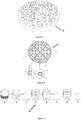
- the cubic configuration (1) of the carrier element to be used for biofilm development as a part of the present invention is shown in Figure 1 and Figure 2 .
- the carrier element (1) is composed of, firstly, three-way single-channel biofilm growth chambers (5) for increasing substance transfer to biofilm and supporting biofilm renewal owing to shear forces, interlocking three-way three-channel biofilm growth chambers (6), interlocking four-way two-channel biofilm growth chambers (7) and a central support section (8).
- the outer surface of the carrier element contains recesses contributing to the rotational movements of the carrier in water and reducing the inefficient area on the outer surface which is unusable due to friction.
- the cubic carrier element (1) may preferably have a width of 15-30 mm and a height of 15-30 mm, i.e.
- an edge of it may preferably be 15-30 mm long.
- the diagonal clearance may be preferably 3-7.3 mm in three-way single-channel biofilm growth chamber (5) and preferably 6.7-14.7 mm in three-way three-channel biofilm growth chamber (6). These parameters may vary depending on production technology.
- the cylindrical configuration (2) of the carrier element to be used for biofilm development as a part of the present invention is shown in Figure 3 and Figure 4 .
- the cylindrical configuration (2) has a central support section (8) surrounded by two-way biofilm growth chambers (9), interlocking three-way four-channel biofilm growth chambers (10), a circular outer surface (11) and fins (12).
- the outer surface (11) of the cylindrical form carrier element (2) contains small fins (12) contributing to the rotational movements of the carrier in water and reducing the inefficient area on the outer surface which is unusable due to friction.
- the cylindrical carrier element (2) may preferably have a diameter of 15-30 mm and a height of 5-15 mm, and may contain preferably equally-spaced 30 to 60 fins (12) in 0.7-1.5 mm height.
- the highest diagonal clearance in the interlocking three-way four-channel biofilm growth chamber (10) may preferably be 6.7-14.7 mm.
- the second-stage plate-type cylindrical configuration (3) of the carrier element to be used for biofilm development as a part of the present invention is shown in Figure 5 and Figure 6 .
- the plate-type cylindrical configuration (3) has a central support section (8) surrounded by two-way biofilm growth chambers (9), interlocking three-way three-channel biofilm growth chambers (6), interlocking four-way two-channel biofilm growth chambers (7) and a circular outer surface (11). Unlike the configuration in Figure 3 , the number of biofilm growth chambers is increased.
- the second-stage plate-type cylindrical carrier (3) may have a diameter in the range of 30-50 mm and a height of 2-5 mm.
- the plate-type carrier element (3) may have a larger diameter than the cylindrical carrier (2), which is a part of the invention. This provides an advantage by retaining the carrier element in the reactor, allowing the use of a grille/sieve system with larger pores.
- the carrier elements can preferably be produced by extrusion and/or injection molding methods.
- the carrier element surface modification method (4) which is another subject matter of the invention, is related to the acceleration of biofilm attachment to the surface and the reduction of biofilm fragility.
- microorganism attachment to a surface is directly related to the hydrophobicity of the surface and that the hydrophobicity supports the microorganism attachment to the surface (Donlan et al., 2002; Cerca et al., 2005; Mazumder et al., 2010; Pagedar et al., 2010).
- the invention relates to increasing the hydrophobicity of the carrier element surface used in wastewater treatment plants by coating it with paraffin wax, consequently, shortening the biofilm formation time, and also reducing the biofilm fragility and preventing peeling-type complete biofilm ruptures, owing to the achievement of a more stable and durable structure in the attached biofilm.
- the carrier element surface is washed with water, freed from particles like dust, burr, etc., dried at room temperature and made ready for surface treatment.
- Paraffin wax (A) in solid state at room temperature containing 25-50 carbon atoms per molecule is switched to liquid state (B) at a temperature of 70-80°C by using hot water bath, oven, etc.
- the carrier element (C) is immersed into the bath containing hot paraffin wax in liquid state (D); after a period of time (preferably a few seconds), the material is removed from the bath, and the excess paraffin remaining on the surface is allowed to flow away and harden (E). Finally, the material is allowed to dry at room temperature (F). Drying process is preferably realized by keeping the material at room temperature for 5-10 seconds.
- the carrier element surface modification method (4) of the invention also includes the impregnation of a nutrient solution on the carrier element surface covered with paraffin wax as a second stage surface treatment in order to support the acceleration of biofilm formation in nutrient-poor wastewater.
- the carrier element coated with paraffin is immersed in the nutrient solution (G) and after an average of 24 hours, it is removed from the solution and allowed to dry at room temperature (F).
- G nutrient solution
- F room temperature
- peptone solution it is possible to use peptone solution as the nutrient.
- the carrier element coated with paraffin is immersed into a solution preferably containing 20-30% peptone by weight, and the described process is performed.
- trace elements such as zinc, copper, cobalt, molybdenum
- the needed elements can be determined by analyzing the wastewater, and can be applied to the carrier material surface preferably by adding an appropriate amount of relevant trace elements in powder form into the melted paraffin (B) or by immersing into a solution of trace elements.
- the carrier material developed can be produced by plants processing plastic materials by injection and/or extrusion method.
- the carrier material surface modification method developed can be applied by enterprises having infrastructures for coating by immersion method.
Landscapes
- Chemical & Material Sciences (AREA)
- Life Sciences & Earth Sciences (AREA)
- Engineering & Computer Science (AREA)
- Organic Chemistry (AREA)
- Health & Medical Sciences (AREA)
- Bioinformatics & Cheminformatics (AREA)
- Genetics & Genomics (AREA)
- Wood Science & Technology (AREA)
- Zoology (AREA)
- Microbiology (AREA)
- Biotechnology (AREA)
- General Engineering & Computer Science (AREA)
- General Health & Medical Sciences (AREA)
- Biomedical Technology (AREA)
- Biochemistry (AREA)
- Biodiversity & Conservation Biology (AREA)
- Water Supply & Treatment (AREA)
- Environmental & Geological Engineering (AREA)
- Hydrology & Water Resources (AREA)
- Medicinal Chemistry (AREA)
- Chemical Kinetics & Catalysis (AREA)
- Thermal Sciences (AREA)
- Physics & Mathematics (AREA)
- Virology (AREA)
- Tropical Medicine & Parasitology (AREA)
- Biological Treatment Of Waste Water (AREA)
- Immobilizing And Processing Of Enzymes And Microorganisms (AREA)
Applications Claiming Priority (1)
| Application Number | Priority Date | Filing Date | Title |
|---|---|---|---|
| TR2019/21186A TR201921186A2 (tr) | 2019-12-23 | 2019-12-23 | Atıksu arıtımı için taşıyıcı eleman ve taşıyıcı eleman modifikasyon yöntemi |
Publications (4)
| Publication Number | Publication Date |
|---|---|
| EP3851416A2 true EP3851416A2 (de) | 2021-07-21 |
| EP3851416A3 EP3851416A3 (de) | 2021-11-10 |
| EP3851416C0 EP3851416C0 (de) | 2025-01-01 |
| EP3851416B1 EP3851416B1 (de) | 2025-01-01 |
Family
ID=73726580
Family Applications (1)
| Application Number | Title | Priority Date | Filing Date |
|---|---|---|---|
| EP20211762.8A Active EP3851416B1 (de) | 2019-12-23 | 2020-12-04 | Verfahren zur modifizierung eines trägerelements für die abwasserbehandlung |
Country Status (3)
| Country | Link |
|---|---|
| US (1) | US11541418B2 (de) |
| EP (1) | EP3851416B1 (de) |
| TR (1) | TR201921186A2 (de) |
Families Citing this family (6)
| Publication number | Priority date | Publication date | Assignee | Title |
|---|---|---|---|---|
| US10744426B2 (en) * | 2015-12-31 | 2020-08-18 | Crystaphase Products, Inc. | Structured elements and methods of use |
| WO2023283112A1 (en) | 2021-07-05 | 2023-01-12 | Inspired Water Technology Inc. | Wastewater treatment system for improved primary treatment and volatile fatty acid generation |
| CN114804351B (zh) * | 2022-05-05 | 2023-11-07 | 中国电建集团中南勘测设计研究院有限公司 | 一种具备兼养反硝化功能的缺氧悬浮载体及其制备方法 |
| CN115121214B (zh) * | 2022-07-04 | 2025-08-29 | 北京坦思环保科技有限公司 | 填料单元、填料组件及填料单元的制作方法 |
| US20240228346A9 (en) * | 2022-10-24 | 2024-07-11 | Inspired Water Technology Inc. | Biological Wastewater Treatment System |
| CN120964982A (zh) * | 2025-08-15 | 2025-11-18 | 四川新水平衡环保科技有限公司 | 基于气液脉冲强化的模块化微污染水体原位修复装置 |
Citations (9)
| Publication number | Priority date | Publication date | Assignee | Title |
|---|---|---|---|---|
| EP0142123A2 (de) | 1983-11-09 | 1985-05-22 | Linde Aktiengesellschaft | Verfahren und Vorrichtung zur biologischen Denitrifikation von Wasser |
| US5543039A (en) | 1990-01-23 | 1996-08-06 | Kaldnes Miljoteknologi A/S | Reactor for purification of water |
| EP0750591A1 (de) | 1994-03-16 | 1997-01-02 | Anox Biosystem AB | Biofilmträger für wasser- und abwasser-reinigung |
| US5783069A (en) | 1995-03-09 | 1998-07-21 | Mass Transfer International Ltd. | Packing elements |
| US7189323B2 (en) | 2002-02-18 | 2007-03-13 | Anoxkaldnes As | Method for biological purification of water using a carrier material |
| US20120037551A1 (en) | 2010-01-13 | 2012-02-16 | Kenyeres Istvan | Carrier insert for accommodating and maintaining the biofilm culture of fluid cleaning structures |
| CN203715362U (zh) | 2013-12-31 | 2014-07-16 | 江阴晔辰生态科技有限公司 | 生物载体球 |
| US20160376175A1 (en) | 2013-12-02 | 2016-12-29 | Veolia Water Solutions & Technologies Support | Free-flowing carrier elements |
| WO2017144928A1 (en) | 2016-02-26 | 2017-08-31 | Biopolus Intézet Nonprofit Zrt. | Biofilm carrier |
Family Cites Families (7)
| Publication number | Priority date | Publication date | Assignee | Title |
|---|---|---|---|---|
| ZA762830B (en) * | 1975-05-21 | 1977-04-27 | Norton Co | Trickling filters media for biological filters |
| NZ580684A (en) * | 2007-05-01 | 2012-11-30 | Blue Lagoon Pearls Pty Ltd | Water treatment composition |
| WO2009021502A1 (de) * | 2007-08-16 | 2009-02-19 | Georg Fritzmeier Gmbh & Co. Kg | Gitterkugel |
| EP2119499A1 (de) * | 2008-04-28 | 2009-11-18 | Dytras, S.A. | Biofilmträger für die Verwendung in der Abwasserreinigung |
| AU2010240486B2 (en) * | 2009-04-22 | 2014-09-18 | Ofir Menashe | Microorganism comprising particles and uses of same |
| CN201896101U (zh) * | 2010-10-13 | 2011-07-13 | 杭州金枫叶科技有限公司 | 用于移动床生物膜反应器的微生物悬浮填料 |
| CN102320876B (zh) * | 2011-09-02 | 2013-01-09 | 史丹利化肥股份有限公司 | 高塔造粒缓释长效氮磷钾复合肥料及其制备方法 |
-
2019
- 2019-12-23 TR TR2019/21186A patent/TR201921186A2/tr unknown
-
2020
- 2020-12-04 EP EP20211762.8A patent/EP3851416B1/de active Active
- 2020-12-22 US US17/130,899 patent/US11541418B2/en active Active
Patent Citations (9)
| Publication number | Priority date | Publication date | Assignee | Title |
|---|---|---|---|---|
| EP0142123A2 (de) | 1983-11-09 | 1985-05-22 | Linde Aktiengesellschaft | Verfahren und Vorrichtung zur biologischen Denitrifikation von Wasser |
| US5543039A (en) | 1990-01-23 | 1996-08-06 | Kaldnes Miljoteknologi A/S | Reactor for purification of water |
| EP0750591A1 (de) | 1994-03-16 | 1997-01-02 | Anox Biosystem AB | Biofilmträger für wasser- und abwasser-reinigung |
| US5783069A (en) | 1995-03-09 | 1998-07-21 | Mass Transfer International Ltd. | Packing elements |
| US7189323B2 (en) | 2002-02-18 | 2007-03-13 | Anoxkaldnes As | Method for biological purification of water using a carrier material |
| US20120037551A1 (en) | 2010-01-13 | 2012-02-16 | Kenyeres Istvan | Carrier insert for accommodating and maintaining the biofilm culture of fluid cleaning structures |
| US20160376175A1 (en) | 2013-12-02 | 2016-12-29 | Veolia Water Solutions & Technologies Support | Free-flowing carrier elements |
| CN203715362U (zh) | 2013-12-31 | 2014-07-16 | 江阴晔辰生态科技有限公司 | 生物载体球 |
| WO2017144928A1 (en) | 2016-02-26 | 2017-08-31 | Biopolus Intézet Nonprofit Zrt. | Biofilm carrier |
Non-Patent Citations (17)
| Title |
|---|
| BARWAL, A.CHAUDHARY, R.: "Impact of carrier filling ratio on oxygen uptake and transfer rate, volumetric oxygen transfer coefficient and energy saving potential in a lab-scale MBBR", JOURNAL OF WATER PROCESS ENGINEERING, vol. 8, 2015, pages 202 - 208, Retrieved from the Internet <URL:https://doi.org/10.1016/J.JWPE.2015.10.008> |
| BUSSCHER, H. J.VAN DER MEI, R. B. H. C.: "Initial microbial adhesion is a determinant for the strength of biofilm adhesion", FEMS MICROBIOLOGY LETTERS, vol. 128, no. 3, 1995, pages 229 - 234, Retrieved from the Internet <URL:https://doi.org/10.1016/0378-1097(95)00103-C> |
| CERCA, N.PIER, G.B.VILANOVA, M.OLIVEIRA, R.AZEREDO, J.: "Quantitative analysis of adhesion and biofilm formation on hydrophilic and hydrophobic surfaces of clinical isolates of Staphylococcus epidermidis", RES. MICROBIOL., vol. 156, 2005, pages 506 - 514, XP025305721, DOI: 10.1016/j.resmic.2005.01.007 |
| DONLAN, R. M.: "Biofilms: microbial life on surfaces", EMERGING INFECTIOUS DISEASES, vol. 8, no. 9, 2002, pages 881 - 890, XP002384848 |
| GARCIA, KODY, THE EFFECT OF BIOFILM CARRIER LENGTH ON NITRIFICATION IN MOVING BED BIOFILM REACTORS: AN EXAMINATION OF MIXING INTENSITY, SHOCK LOADINGS, AND PH CHANGES, 2016, Retrieved from the Internet <URL:http://digitalrepository.unm.edu/ce_etds/115> |
| GU, Q.SUN, T.WU, G.LI, M.QIU, W.: "Influence of carrier filling ratio on the performance of moving bed biofilm reactor in treating coking wastewater", BIORESOURCE TECHNOLOGY, vol. 166, 2014, pages 72 - 78, XP028859384, Retrieved from the Internet <URL:https://doi.org/10.1016/J.BIORTECH.2014.05.026> DOI: 10.1016/j.biortech.2014.05.026 |
| HARMSEN, M.YANG, L.PAMP, S. J.TOLKER-NIELSEN, T.: "An update on Pseudomonas aeruginosa biofilm formation, tolerance, and dispersal", FEMS IMMUNOLOGY AND MEDICAL MICROBIOLOGY, vol. 59, 2010, pages 253 - 268 |
| HU, H.HE, J.YU, H.LIU, J.ZHANG, J.: "A strategy to speed up formation and strengthen activity of biofilms at low temperature", RSC ADVANCES, vol. 7, no. 37, 2017, pages 22788 - 22796, Retrieved from the Internet <URL:https://doi.org/10.1039/c7ra02223a> |
| HUANG, C.SHI, Y.XUE, J.ZHANG, Y.GAMAL EL-DIN, M.LIU, Y.: "Comparison of biomass from integrated fixed-film activated sludge (IFAS), moving bed biofilm reactor (MBBR) and membrane bioreactor (MBR) treating recalcitrant organics: Importance of attached biomass", J. HAZARD. MATER., vol. 326, 2017, pages 120 - 129, XP029879667, DOI: 10.1016/j.jhazmat.2016.12.015 |
| JING, J. Y.FENG, J.LI, W. Y.: "Carrier effects on oxygen mass transfer behavior in a moving-bed biofilm reactor", ASIA-PACIFIC JOURNAL OF CHEMICAL ENGINEERING, vol. 4, no. 5, 2009, pages 618 - 623, Retrieved from the Internet <URL:https://doi.org/10.1002/apj.302> |
| MANNINA, G.CAPODICI, M.COSENZA, A.CINA, P.DI TRAPANI, D.PUGLIA, A.M.EKAMA, G.A.: "Bacterial community structure and removal performances in IFAS-MBRs: A pilot plant case study", J. ENVIRON. MANAGE., vol. 198, 2017, pages 122 - 131 |
| MAO, Y.QUAN, X.ZHAO, H.ZHANG, Y.CHEN, S.LIU, T.QUAN, W.: "Accelerated startup of moving bed biofilm process with novel electrophilic suspended biofilm carriers", CHEMICAL ENGINEERING JOURNAL, vol. 315, 2017, pages 364 - 372, XP029924032, Retrieved from the Internet <URL:https://doi.org/10.1016/J.CEJ.2017.01.041> DOI: 10.1016/j.cej.2017.01.041 |
| MAZUMDER, S.FALKINHAM, J.O.DIETRICH, A.M.PURI, I.K.FALKINHAM LII, J.O.: "Role of hydrophobicity in bacterial adherence to carbon nanostructures and biofilm formation", J. BIOADHESION BIOFILM RES., vol. 26, no. 3, 2010, pages 333 - 339 |
| PAGEDAR, A.SINGH, J.BATISH, V.K.: "Staphylococcus aureus biofilms and temperature influences its survival in preformed biofilms Introduction", S98 J. BASIC MICROBIOL., vol. 50, 2010, pages 98 - 106 |
| ROSENBERG, M.KJELLEBERG, S.: "Hydrophobic interactions in bacterial adhesion", ADVANCES IN MICROBIAL ECOLOGY, vol. 9, 1986, pages 353 - 393 |
| THOMAS, W. E.NILSSON, L. M.FORERO, M.SOKURENKO, E. V.VOGEL, V.: "Shear-dependent 'stick-and-roll' adhesion of type 1 fimbriated Escherichia coli", MOLECULAR MICROBIOLOGY, vol. 53, 2004, pages 1545 - 1557 |
| YOUNG, B.DELATOLLA, R.KENNEDY, K.LAFLAMME, E.STINTZI, A.: "Low temperature MBBR nitrification: Microbiome analysis", WATER RES., vol. 111, 2017, pages 224 - 233, XP029919411, DOI: 10.1016/j.watres.2016.12.050 |
Also Published As
| Publication number | Publication date |
|---|---|
| EP3851416C0 (de) | 2025-01-01 |
| EP3851416B1 (de) | 2025-01-01 |
| US11541418B2 (en) | 2023-01-03 |
| US20210188675A1 (en) | 2021-06-24 |
| TR201921186A2 (tr) | 2021-07-26 |
| EP3851416A3 (de) | 2021-11-10 |
Similar Documents
| Publication | Publication Date | Title |
|---|---|---|
| US11541418B2 (en) | Carrier element for wastewater treatment and carrier element modification method | |
| EP3411339B1 (de) | Verfahren zur aeroben nitrierung von ammoniak | |
| US20190263696A1 (en) | Apparatus and method for biofilm management in water systems | |
| KR102244397B1 (ko) | 자유-유동 캐리어 요소 | |
| WO2016061248A1 (en) | High bioactivity density, aerobic wastewater treatment | |
| CN103058362B (zh) | 一种水处理悬浮填料 | |
| CN112358029A (zh) | 一种新型生物复合填料及其制备方法和应用 | |
| WO2025148672A1 (zh) | 一种快速流化和稳定挂膜的悬浮填料 | |
| Mahmoud et al. | Simultaneous organic and nutrient removal in a naturally ventilated biotower treating presettled municipal wastewater | |
| US20240286939A1 (en) | Advanced granular sludge bed reactor | |
| CN105836902B (zh) | 一种用于处理固定床气化废水的多腔室复合生物载体及方法 | |
| KR100951109B1 (ko) | 미생물 담체 및 이의 제조방법 | |
| Li et al. | Comparative study of the nitrification characteristics of two different nitrifier immobilization methods | |
| Li et al. | Implementing a completely autotrophic nitrogen removal over nitrite process using a novel umbrella basalt fiber carrier | |
| CN209411871U (zh) | 一种聚氨酯盘片生物转盘及生物转盘污水处理装置 | |
| CN114467840A (zh) | 一种海水池塘养殖尾水原位处理的强化颗粒的制备方法及装置 | |
| Sándor et al. | PVA-PAA hydrogel micro-carrier for the improvement of phase separation efficiency of biomass in wastewater treatment | |
| Larysa et al. | Biofilm properties on carriers for wastewater treatment: supporting Green Deal | |
| Kulikowska et al. | Efficiency of nitrification and organics removal from municipal landfill leachate in the rotating biological contactor (RBC) | |
| KR200324896Y1 (ko) | 수질정화용 생물막 유동상 담체 | |
| CN213171650U (zh) | 一种负载生物膜的污水处理填料 | |
| KR20210050926A (ko) | 할로이사이트 표면처리를 통해 균사 생장이 억제된 균류 펠릿 구조체 및 그 제조방법 | |
| CN118666411B (zh) | 一种功能性载体填料及其制备方法和应用 | |
| Pakhira et al. | Microbial Biofilm and Wastewater Treatment | |
| JPS63302995A (ja) | 固定床型廃水処理装置の運転方法 |
Legal Events
| Date | Code | Title | Description |
|---|---|---|---|
| PUAI | Public reference made under article 153(3) epc to a published international application that has entered the european phase |
Free format text: ORIGINAL CODE: 0009012 |
|
| STAA | Information on the status of an ep patent application or granted ep patent |
Free format text: STATUS: THE APPLICATION HAS BEEN PUBLISHED |
|
| AK | Designated contracting states |
Kind code of ref document: A2 Designated state(s): AL AT BE BG CH CY CZ DE DK EE ES FI FR GB GR HR HU IE IS IT LI LT LU LV MC MK MT NL NO PL PT RO RS SE SI SK SM TR |
|
| PUAL | Search report despatched |
Free format text: ORIGINAL CODE: 0009013 |
|
| AK | Designated contracting states |
Kind code of ref document: A3 Designated state(s): AL AT BE BG CH CY CZ DE DK EE ES FI FR GB GR HR HU IE IS IT LI LT LU LV MC MK MT NL NO PL PT RO RS SE SI SK SM TR |
|
| RIC1 | Information provided on ipc code assigned before grant |
Ipc: C12N 11/00 20060101ALN20211004BHEP Ipc: C02F 3/08 20060101ALN20211004BHEP Ipc: C02F 3/28 20060101ALI20211004BHEP Ipc: B01J 19/30 20060101ALI20211004BHEP Ipc: C02F 3/10 20060101AFI20211004BHEP |
|
| STAA | Information on the status of an ep patent application or granted ep patent |
Free format text: STATUS: REQUEST FOR EXAMINATION WAS MADE |
|
| 17P | Request for examination filed |
Effective date: 20220506 |
|
| RBV | Designated contracting states (corrected) |
Designated state(s): AL AT BE BG CH CY CZ DE DK EE ES FI FR GB GR HR HU IE IS IT LI LT LU LV MC MK MT NL NO PL PT RO RS SE SI SK SM TR |
|
| STAA | Information on the status of an ep patent application or granted ep patent |
Free format text: STATUS: EXAMINATION IS IN PROGRESS |
|
| 17Q | First examination report despatched |
Effective date: 20240119 |
|
| GRAP | Despatch of communication of intention to grant a patent |
Free format text: ORIGINAL CODE: EPIDOSNIGR1 |
|
| STAA | Information on the status of an ep patent application or granted ep patent |
Free format text: STATUS: GRANT OF PATENT IS INTENDED |
|
| RIC1 | Information provided on ipc code assigned before grant |
Ipc: C12N 11/00 20060101ALN20240628BHEP Ipc: C02F 3/08 20060101ALN20240628BHEP Ipc: C02F 3/28 20060101ALI20240628BHEP Ipc: B01J 19/30 20060101ALI20240628BHEP Ipc: C02F 3/10 20060101AFI20240628BHEP |
|
| INTG | Intention to grant announced |
Effective date: 20240724 |
|
| GRAS | Grant fee paid |
Free format text: ORIGINAL CODE: EPIDOSNIGR3 |
|
| GRAA | (expected) grant |
Free format text: ORIGINAL CODE: 0009210 |
|
| STAA | Information on the status of an ep patent application or granted ep patent |
Free format text: STATUS: THE PATENT HAS BEEN GRANTED |
|
| AK | Designated contracting states |
Kind code of ref document: B1 Designated state(s): AL AT BE BG CH CY CZ DE DK EE ES FI FR GB GR HR HU IE IS IT LI LT LU LV MC MK MT NL NO PL PT RO RS SE SI SK SM TR |
|
| REG | Reference to a national code |
Ref country code: GB Ref legal event code: FG4D |
|
| REG | Reference to a national code |
Ref country code: DE Ref legal event code: R096 Ref document number: 602020043988 Country of ref document: DE |
|
| REG | Reference to a national code |
Ref country code: CH Ref legal event code: EP |
|
| REG | Reference to a national code |
Ref country code: IE Ref legal event code: FG4D |
|
| U01 | Request for unitary effect filed |
Effective date: 20250109 |
|
| U07 | Unitary effect registered |
Designated state(s): AT BE BG DE DK EE FI FR IT LT LU LV MT NL PT RO SE SI Effective date: 20250203 |
|
| PG25 | Lapsed in a contracting state [announced via postgrant information from national office to epo] |
Ref country code: PL Free format text: LAPSE BECAUSE OF FAILURE TO SUBMIT A TRANSLATION OF THE DESCRIPTION OR TO PAY THE FEE WITHIN THE PRESCRIBED TIME-LIMIT Effective date: 20250101 |
|
| PG25 | Lapsed in a contracting state [announced via postgrant information from national office to epo] |
Ref country code: ES Free format text: LAPSE BECAUSE OF FAILURE TO SUBMIT A TRANSLATION OF THE DESCRIPTION OR TO PAY THE FEE WITHIN THE PRESCRIBED TIME-LIMIT Effective date: 20250101 |
|
| PG25 | Lapsed in a contracting state [announced via postgrant information from national office to epo] |
Ref country code: IS Free format text: LAPSE BECAUSE OF FAILURE TO SUBMIT A TRANSLATION OF THE DESCRIPTION OR TO PAY THE FEE WITHIN THE PRESCRIBED TIME-LIMIT Effective date: 20250501 Ref country code: NO Free format text: LAPSE BECAUSE OF FAILURE TO SUBMIT A TRANSLATION OF THE DESCRIPTION OR TO PAY THE FEE WITHIN THE PRESCRIBED TIME-LIMIT Effective date: 20250401 |
|
| PG25 | Lapsed in a contracting state [announced via postgrant information from national office to epo] |
Ref country code: HR Free format text: LAPSE BECAUSE OF FAILURE TO SUBMIT A TRANSLATION OF THE DESCRIPTION OR TO PAY THE FEE WITHIN THE PRESCRIBED TIME-LIMIT Effective date: 20250101 |
|
| PG25 | Lapsed in a contracting state [announced via postgrant information from national office to epo] |
Ref country code: GR Free format text: LAPSE BECAUSE OF FAILURE TO SUBMIT A TRANSLATION OF THE DESCRIPTION OR TO PAY THE FEE WITHIN THE PRESCRIBED TIME-LIMIT Effective date: 20250402 |
|
| PG25 | Lapsed in a contracting state [announced via postgrant information from national office to epo] |
Ref country code: CZ Free format text: LAPSE BECAUSE OF FAILURE TO SUBMIT A TRANSLATION OF THE DESCRIPTION OR TO PAY THE FEE WITHIN THE PRESCRIBED TIME-LIMIT Effective date: 20250101 |
|
| PG25 | Lapsed in a contracting state [announced via postgrant information from national office to epo] |
Ref country code: SM Free format text: LAPSE BECAUSE OF FAILURE TO SUBMIT A TRANSLATION OF THE DESCRIPTION OR TO PAY THE FEE WITHIN THE PRESCRIBED TIME-LIMIT Effective date: 20250101 |
|
| PG25 | Lapsed in a contracting state [announced via postgrant information from national office to epo] |
Ref country code: SK Free format text: LAPSE BECAUSE OF FAILURE TO SUBMIT A TRANSLATION OF THE DESCRIPTION OR TO PAY THE FEE WITHIN THE PRESCRIBED TIME-LIMIT Effective date: 20250101 |
|
| PLBE | No opposition filed within time limit |
Free format text: ORIGINAL CODE: 0009261 |
|
| STAA | Information on the status of an ep patent application or granted ep patent |
Free format text: STATUS: NO OPPOSITION FILED WITHIN TIME LIMIT |
|
| REG | Reference to a national code |
Ref country code: CH Ref legal event code: L10 Free format text: ST27 STATUS EVENT CODE: U-0-0-L10-L00 (AS PROVIDED BY THE NATIONAL OFFICE) Effective date: 20251112 |
|
| 26N | No opposition filed |
Effective date: 20251002 |
|
| PGFP | Annual fee paid to national office [announced via postgrant information from national office to epo] |
Ref country code: TR Payment date: 20251114 Year of fee payment: 6 |
|
| U20 | Renewal fee for the european patent with unitary effect paid |
Year of fee payment: 6 Effective date: 20251217 |
|
| PG25 | Lapsed in a contracting state [announced via postgrant information from national office to epo] |
Ref country code: MC Free format text: LAPSE BECAUSE OF FAILURE TO SUBMIT A TRANSLATION OF THE DESCRIPTION OR TO PAY THE FEE WITHIN THE PRESCRIBED TIME-LIMIT Effective date: 20250101 |
|
| PG25 | Lapsed in a contracting state [announced via postgrant information from national office to epo] |
Ref country code: RS Free format text: LAPSE BECAUSE OF FAILURE TO SUBMIT A TRANSLATION OF THE DESCRIPTION OR TO PAY THE FEE WITHIN THE PRESCRIBED TIME-LIMIT Effective date: 20250101 |
|
| REG | Reference to a national code |
Ref country code: CH Ref legal event code: H13 Free format text: ST27 STATUS EVENT CODE: U-0-0-H10-H13 (AS PROVIDED BY THE NATIONAL OFFICE) Effective date: 20260723 |