EP3851450B1 - Chimäre antigenrezeptoren und verfahren zur verwendung - Google Patents
Chimäre antigenrezeptoren und verfahren zur verwendung Download PDFInfo
- Publication number
- EP3851450B1 EP3851450B1 EP20212399.8A EP20212399A EP3851450B1 EP 3851450 B1 EP3851450 B1 EP 3851450B1 EP 20212399 A EP20212399 A EP 20212399A EP 3851450 B1 EP3851450 B1 EP 3851450B1
- Authority
- EP
- European Patent Office
- Prior art keywords
- cells
- cell
- receptor
- polypeptide
- oligopeptide
- Prior art date
- Legal status (The legal status is an assumption and is not a legal conclusion. Google has not performed a legal analysis and makes no representation as to the accuracy of the status listed.)
- Active
Links
Images



Classifications
-
- A—HUMAN NECESSITIES
- A61—MEDICAL OR VETERINARY SCIENCE; HYGIENE
- A61K—PREPARATIONS FOR MEDICAL, DENTAL OR TOILETRY PURPOSES
- A61K40/00—Cellular immunotherapy
- A61K40/10—Cellular immunotherapy characterised by the cell type used
- A61K40/11—T-cells, e.g. tumour infiltrating lymphocytes [TIL] or regulatory T [Treg] cells; Lymphokine-activated killer [LAK] cells
-
- A—HUMAN NECESSITIES
- A61—MEDICAL OR VETERINARY SCIENCE; HYGIENE
- A61K—PREPARATIONS FOR MEDICAL, DENTAL OR TOILETRY PURPOSES
- A61K40/00—Cellular immunotherapy
- A61K40/30—Cellular immunotherapy characterised by the recombinant expression of specific molecules in the cells of the immune system
- A61K40/31—Chimeric antigen receptors [CAR]
-
- A—HUMAN NECESSITIES
- A61—MEDICAL OR VETERINARY SCIENCE; HYGIENE
- A61K—PREPARATIONS FOR MEDICAL, DENTAL OR TOILETRY PURPOSES
- A61K40/00—Cellular immunotherapy
- A61K40/30—Cellular immunotherapy characterised by the recombinant expression of specific molecules in the cells of the immune system
- A61K40/32—T-cell receptors [TCR]
-
- A—HUMAN NECESSITIES
- A61—MEDICAL OR VETERINARY SCIENCE; HYGIENE
- A61K—PREPARATIONS FOR MEDICAL, DENTAL OR TOILETRY PURPOSES
- A61K40/00—Cellular immunotherapy
- A61K40/40—Cellular immunotherapy characterised by antigens that are targeted or presented by cells of the immune system
- A61K40/41—Vertebrate antigens
- A61K40/42—Cancer antigens
-
- A—HUMAN NECESSITIES
- A61—MEDICAL OR VETERINARY SCIENCE; HYGIENE
- A61K—PREPARATIONS FOR MEDICAL, DENTAL OR TOILETRY PURPOSES
- A61K40/00—Cellular immunotherapy
- A61K40/40—Cellular immunotherapy characterised by antigens that are targeted or presented by cells of the immune system
- A61K40/46—Viral antigens
-
- C—CHEMISTRY; METALLURGY
- C07—ORGANIC CHEMISTRY
- C07K—PEPTIDES
- C07K14/00—Peptides having more than 20 amino acids; Gastrins; Somatostatins; Melanotropins; Derivatives thereof
- C07K14/435—Peptides having more than 20 amino acids; Gastrins; Somatostatins; Melanotropins; Derivatives thereof from animals; from humans
- C07K14/705—Receptors; Cell surface antigens; Cell surface determinants
- C07K14/70503—Immunoglobulin superfamily
- C07K14/7051—T-cell receptor (TcR)-CD3 complex
-
- C—CHEMISTRY; METALLURGY
- C07—ORGANIC CHEMISTRY
- C07K—PEPTIDES
- C07K14/00—Peptides having more than 20 amino acids; Gastrins; Somatostatins; Melanotropins; Derivatives thereof
- C07K14/435—Peptides having more than 20 amino acids; Gastrins; Somatostatins; Melanotropins; Derivatives thereof from animals; from humans
- C07K14/705—Receptors; Cell surface antigens; Cell surface determinants
- C07K14/70503—Immunoglobulin superfamily
- C07K14/70539—MHC-molecules, e.g. HLA-molecules
-
- C—CHEMISTRY; METALLURGY
- C12—BIOCHEMISTRY; BEER; SPIRITS; WINE; VINEGAR; MICROBIOLOGY; ENZYMOLOGY; MUTATION OR GENETIC ENGINEERING
- C12N—MICROORGANISMS OR ENZYMES; COMPOSITIONS THEREOF; PROPAGATING, PRESERVING, OR MAINTAINING MICROORGANISMS; MUTATION OR GENETIC ENGINEERING; CULTURE MEDIA
- C12N15/00—Mutation or genetic engineering; DNA or RNA concerning genetic engineering, vectors, e.g. plasmids, or their isolation, preparation or purification; Use of hosts therefor
- C12N15/09—Recombinant DNA-technology
- C12N15/10—Processes for the isolation, preparation or purification of DNA or RNA
- C12N15/1034—Isolating an individual clone by screening libraries
- C12N15/1055—Protein x Protein interaction, e.g. two hybrid selection
-
- C—CHEMISTRY; METALLURGY
- C12—BIOCHEMISTRY; BEER; SPIRITS; WINE; VINEGAR; MICROBIOLOGY; ENZYMOLOGY; MUTATION OR GENETIC ENGINEERING
- C12N—MICROORGANISMS OR ENZYMES; COMPOSITIONS THEREOF; PROPAGATING, PRESERVING, OR MAINTAINING MICROORGANISMS; MUTATION OR GENETIC ENGINEERING; CULTURE MEDIA
- C12N5/00—Undifferentiated human, animal or plant cells, e.g. cell lines; Tissues; Cultivation or maintenance thereof; Culture media therefor
- C12N5/06—Animal cells or tissues; Human cells or tissues
- C12N5/0602—Vertebrate cells
- C12N5/0634—Cells from the blood or the immune system
- C12N5/0636—T lymphocytes
-
- G—PHYSICS
- G01—MEASURING; TESTING
- G01N—INVESTIGATING OR ANALYSING MATERIALS BY DETERMINING THEIR CHEMICAL OR PHYSICAL PROPERTIES
- G01N33/00—Investigating or analysing materials by specific methods not covered by groups G01N1/00 - G01N31/00
- G01N33/48—Biological material, e.g. blood, urine; Haemocytometers
- G01N33/50—Chemical analysis of biological material, e.g. blood, urine; Testing involving biospecific ligand binding methods; Immunological testing
- G01N33/5005—Chemical analysis of biological material, e.g. blood, urine; Testing involving biospecific ligand binding methods; Immunological testing involving human or animal cells
- G01N33/5008—Chemical analysis of biological material, e.g. blood, urine; Testing involving biospecific ligand binding methods; Immunological testing involving human or animal cells for testing or evaluating the effect of chemical or biological compounds, e.g. drugs, cosmetics
- G01N33/5044—Chemical analysis of biological material, e.g. blood, urine; Testing involving biospecific ligand binding methods; Immunological testing involving human or animal cells for testing or evaluating the effect of chemical or biological compounds, e.g. drugs, cosmetics involving specific cell types
- G01N33/5047—Cells of the immune system
- G01N33/505—Cells of the immune system involving T-cells
-
- C—CHEMISTRY; METALLURGY
- C07—ORGANIC CHEMISTRY
- C07K—PEPTIDES
- C07K2319/00—Fusion polypeptide
- C07K2319/01—Fusion polypeptide containing a localisation/targetting motif
- C07K2319/03—Fusion polypeptide containing a localisation/targetting motif containing a transmembrane segment
-
- C—CHEMISTRY; METALLURGY
- C07—ORGANIC CHEMISTRY
- C07K—PEPTIDES
- C07K2319/00—Fusion polypeptide
- C07K2319/40—Fusion polypeptide containing a tag for immunodetection, or an epitope for immunisation
-
- C—CHEMISTRY; METALLURGY
- C07—ORGANIC CHEMISTRY
- C07K—PEPTIDES
- C07K2319/00—Fusion polypeptide
- C07K2319/60—Fusion polypeptide containing spectroscopic/fluorescent detection, e.g. green fluorescent protein [GFP]
-
- C—CHEMISTRY; METALLURGY
- C07—ORGANIC CHEMISTRY
- C07K—PEPTIDES
- C07K2319/00—Fusion polypeptide
- C07K2319/61—Fusion polypeptide containing an enzyme fusion for detection (lacZ, luciferase)
-
- C—CHEMISTRY; METALLURGY
- C12—BIOCHEMISTRY; BEER; SPIRITS; WINE; VINEGAR; MICROBIOLOGY; ENZYMOLOGY; MUTATION OR GENETIC ENGINEERING
- C12N—MICROORGANISMS OR ENZYMES; COMPOSITIONS THEREOF; PROPAGATING, PRESERVING, OR MAINTAINING MICROORGANISMS; MUTATION OR GENETIC ENGINEERING; CULTURE MEDIA
- C12N2510/00—Genetically modified cells
- C12N2510/02—Cells for production
-
- G—PHYSICS
- G01—MEASURING; TESTING
- G01N—INVESTIGATING OR ANALYSING MATERIALS BY DETERMINING THEIR CHEMICAL OR PHYSICAL PROPERTIES
- G01N2800/00—Detection or diagnosis of diseases
- G01N2800/24—Immunology or allergic disorders
Definitions
- T-cells express aPT-cell receptors (TCRs) and recognize antigens in the form of peptides (epitopes) presented by the major histocompatibility complex (MHC) on other cells.
- TCRs aPT-cell receptors
- MHC major histocompatibility complex
- the TCRs of cytotoxic T-lymphocytes recognise epitopes displayed by MHC class I molecules on the surface of almost every cell in the body.
- the TCRs of helper T cells recognise epitopes displayed by MHC class II molecules on the surface of antigen-presenting immune cells, including macrophages, dendritic cells and B-cells.
- T cells Efficient recognition of the epitope by T cells involves additional T cell surface glycoproteins: CD8 on cytotoxic T-lymphocytes (CD8 + T cells), and CD4 on helper T cells (CD4 + T cells), which bind MHC class I and II molecules, respectively.
- CD8 + T cells cytotoxic T-lymphocytes
- CD4 + T cells helper T cells
- TCRs bind MHC-peptide complexes with low affinity, which makes phage- and yeast-display methods inefficient.
- Alternative methods like screening of positional scanning combinatorial peptide libraries, take advantage of the cross-reactivity of the TCR and use peptide pools to define motifs that lead to T-cell activation. Apart from similar affinity constrains, these cumbersome methods suffer from a high rate of false-positive results. Because random peptide sequences are interrogated, the identified peptide motifs are ambiguous or have no clear homology to native proteins.
- US 2008/286312 shows a transgenic antigen receptor comprising a beta2-microglobulin linked to a toll-like receptor of CD40 cytoplasmic domain.
- the hinge region, the transmembrane and intracellular part of the transgenic antigen-receptor in the first and/or second polypeptide is not derived from the same TCR chain.
- the hinge region or the transmembrane domain of the TCR ⁇ -chain could be connected to the transmembrane or intracellular domain of the TCR ⁇ -chain and vice versa.
- the second polypeptide comprises substantially the entire extracellular part of the major histocompatibility complex I (MHC class I) associated ⁇ 2-microglobulin domain. In certain embodiments, the second polypeptide is the major histocompatibility complex I (MHC class I) associated ⁇ 2-microglobulin domain.
- the first polypeptide comprises substantially the entire extracellular part of the major histocompatibility complex II (MHC class II) alpha chain. In certain embodiments, the first polypeptide is the extracellular part of the major histocompatibility complex II (MHC class II) alpha chain. In certain embodiments, the second polypeptide comprises substantially the entire major histocompatibility complex II (MHC class II) beta chain. In certain embodiments, the second polypeptide is the major histocompatibility complex II (MHC class II) beta chain.
- At least one of the first and the second polypeptide chain additionally comprises an antigen-peptide covalently linked to the extracellular MHC domain, wherein said oligopeptide can be recognized by a T cell receptor.
- the antigen-peptide sequence and a glycine-serine linker are inserted between the last amino acid of the MHC signal/leader peptide and the first amino acid of the MHC ⁇ 1 domain or ⁇ 1 domain.
- the present disclosure further describes a nucleic acid molecule encoding the chimeric antigen-receptor polypeptide heterodimer, particularly a nucleic acid molecule having a promoter sequence operable in a mammalian host cell.
- the present disclosure further describes a cell, particularly a mammalian cell, comprising or expressing the nucleic acid molecule.
- the present disclosure further describes a cell, particularly a mammalian cell, more particularly a mammalian T-lymphocyte, comprising
- the present disclosure further describes a method for obtaining a preparation of T-lymphocytes having a reduced reactivity against an antigen.
- the method comprises:
- T lymphocytes able to bind to the oligopeptide sequences provided within the chimeric antigen-receptor polypeptide heterodimer of the mammalian cell would undergo cell death, particularly apoptosis.
- the present disclosure further describes a method for depletion of T lymphocytes having an activity against specific antigens for use in a patient in need thereof.
- the method comprises the steps of:
- T lymphocytes able to bind to the oligopeptide sequence that is displayed in the chimeric antigen-receptor polypeptide heterodimer are selectively depleted. This can be used for example for the reduction or removal of autoreactive T lymphocytes in a patient with need thereof.
- this method is used to treat autoimmune diseases such as allergies. In certain embodiments this method is used for the prevention and treatment of organ rejection after transplantation.
- the present disclosure further describes a mammalian cell described herein above for use in the treatment or prevention of autoimmune disease, transplant rejection or immune dysfunction including but not limited to, type 1 diabetes, multiple sclerosis, rheumatoid arthritis, Crohn's disease and inflammatory bowel syndrome.
- the mammalian cell is used for the depletion of T-lymphocytes having an activity against specific, disease associated antigens.
- the present disclosure further describes a method for detecting a patient's immune response to an oligopeptide.
- the method comprises the steps of:
- the oligopeptide used in this method is derived from a virus, a bacterium, a fungus or a parasite.
- a multitude of the mammalian cells with different oligopeptides in the chimeric antigen-receptor polypeptide heterodimer is used.
- Each of these oligopeptides is derived from a certain pathogen, allergen, tumour or inflamed tissue (in the case of an autoimmune patient). This allows simultaneous testing for a multitude of different immune responses.
- One non-limiting example is the use as a diagnostic tool.
- Example 1 Screening of T-cell epitopes in mammalian cells using the disclosed chimeric antigen-receptor polypeptide heterodimer
- T-cell epitopes are based in principle on two major approaches.
- the first approach relies on detecting physical MHC-TCR interactions by staining T-cells with MHC-tetramers or by staining phage, yeast or insect cells displaying peptide-MHC complexes with recombinant TCRs.
- the second approach relies on measuring T-cell activation in co-cultures with dendritic cells (DCs) presenting peptide pools or positional scanning combinatorial peptide libraries.
- DCs dendritic cells
- MHC-tetramer libraries Screening of MHC-tetramer libraries is effective for defining the fine-specificity of recognition of known or predicted antigens, but because not all peptide-MHC tetramers bind with equal strength, low affinity interactions may be easily missed (e.g. 400 times more OVA-I-A b tetramers than gp66-I-A b tetramers are needed, for similar staining of OVA-specific OT-II and gp61-specifc Smarta2 T-cells, respectively). Similar affinity constraints apply to current peptide-MHC display methods, were soluble TCRs are used. Furthermore, MHC molecules have to be mutagenized to allow efficient surface expression on phages or yeast cells.
- the inventors disclose herein the development of an universal system that allows direct, unbiased, sensitive and efficient epitope screening in mammalian cells. Such a method should: i) provide a complex mixture of APCs, each presenting peptides of one, unique, naturally occurring sequence; ii) provide efficient means to identify and separate APCs presenting cognate peptides; iii) offer a possibility to iteratively repeat the procedure and iv) allow easy recovery of peptide sequences by cloning. To generate APCs fulfilling the first criteria, the inventors followed the approaches used to produce "single-peptide" mice and to construct different peptide-MHC display systems.
- a peptide was attached directly to the MHC molecule, making a stable complex and preventing other peptides from binding.
- a library of such peptide-MHC complexes transfected into MHC-deficient cells yields a pool of cells each presenting a unique peptide (for details see Materials and Methods).
- identification of APCs carrying cognate peptides for particular T-cells would involve an easily measurable signal once their peptide-MHC complexes were bound by the TCRs of the specific T-cells. Therefore the peptide-MHC fusion molecule was linked to the TCR complex, which is tailor-made for sensing low-affinity interactions.
- Direct zeta chain (CD247) fusions have been successfully used to construct various chimeric antigen receptors.
- the peptide MHC complexes were fused to truncated TCR ⁇ and TCR ⁇ chains consisting of the hinge region, trans-membrane (TM) and intracellular (IC) domains. Connecting the peptide-MHC to the whole TCR signaling machinery provides more physiological signals.
- This MHC-TCR chimera is referred to as the MCR in the context of this specification.
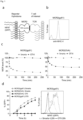
- Such a molecule upon transfection into TCR-deficient T-cell hybridomas, allows direct monitoring of peptide-MHC engagement by the TCRs of specific T-cells using an NFAT-EGFP reporter system ( Fig.1a ).
- Co-culture of cells carrying a library of peptide-MCR molecules with antigen-specific T cell clones or hybridomas allows direct identification of cognate peptide specificities of T-cells by massively parallel, functional screening in mammalian cells.
- MCR2 consists of two chains: the ⁇ -chain, composed of the extracellular domains of the I-A b MHC class II ⁇ -chain linked to a truncated TCR ⁇ ; and the ⁇ -chain composed of a peptide (the dominant LCMV-derived epitope, gp61) and the extracellular domains of the I-A b MHC class II ⁇ -chain linked to a truncated TCR ⁇ ( Fig.1a ).
- MCR2(gp61) and MCR2(OVA) were also cloned carrying the OVA-peptide and the two were designated MCR2(gp61) and MCR2(OVA), respectively.
- MHC-II - TCR - BEKO thymoma cell line After transduction of the MCRs into a MHC-II - TCR - BEKO thymoma cell line, their expression was verified by staining with anti-MHC-II antibodies. As depicted in Figure 1b , the MCR2 was efficiently expressed on the cell surface, indicating that it assembled with CD3 components of the TCR complex.
- BEKO cells expressing MCR2(gp61) or MCR2(OVA) were co-cultured, with purified Smarta2 or OT-II CD4 + T-cells.
- MCR2(gp61) was down-regulated in co-cultures with Smarta2 T-cells and not in the presence of OT-II T-cells ( Fig.1c , left panel). The reverse was true for the MCR2(OVA), highlighting the specificity of the MCR2 system ( Fig.1c , right panel).
- OVA OT-II T-cells
- NFAT response was only triggered when MCR2-carrying hybridomas were co-cultured with peptide-specific T-cells ( Fig.1d ).
- the response was robust and easily measurable already after 2h ( Fig.1d most right panel).
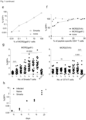
- Figure 1e it was possible to directly detect specific NFAT-reporter expression in cells present at frequencies above 1/10000.
- a linear correlation between the percentage of detected NFAT-EGFP expressing cells and the percentage of cells carrying the "T-cell/idotype-specific" MCR2 was observed, indicating that specific cells present at frequencies lower than 1/10000 are still NFAT-EGFP + , even if they cannot be distinguished from the background.
- NFAT-EGFP + reporter cells To use the disclosed invention for finding rare specific peptides in a complex library, multiple iterative cycles of co-culture and sorting of NFAT-EGFP + reporter cells are necessary. Because efficient detection of NFAT-activation in subsequent rounds of stimulation depends on fast disappearance of NFAT-reporter signals triggered in previous rounds, the very stable EGFP was replaced with the slow Fluorescent Timer (sFT). This mutant of mCherry changes "color" with time, enabling the distinction of recent (blue-mCherry) and past NFAT-activation (red-mCherry) and therefore allows for much shorter intervals between subsequent rounds of stimulation.
- sFT Fluorescent Timer
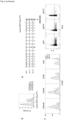
- the disclosed invention was applied to search for mimotopes of gp61 in the MCR2(gp61-RSS) library, generated by randomizing center residues of gp61 through RAG-mediated rearrangement ( Fig.2a and M&M). Randomly picked clones consistently contained unique mutants of the gp61-sequence ( Fig.2a ). After transducing this library into NFAT-sFT carrying reporter cells (16.2c11), MCR2 + cells were sorted, expanded and co-cultured with gp61-specific or OVA-specific T-cell hybridomas ( Fig.2b ).
- gp61S serine
- gp61N asparagine
- Smarta2 TCR binds the new mimotopes (in particular gp61S) with lower affinity (histogram in Fig.2c ).
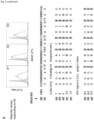
- a screen for novel LCMV epitopes with the help of CD4 + T-cell hybridomas derived from LCMV-infected animals 5 and 8 days post infection was performed ( Fig.3a and b) .
- the hybridomas carried an NFAT-EGFP reporter that allowed verification of their reactivity against LCMV and pick gp61-nonreactive hybridomas for further analysis ( Fig.3b ).
- Five such hybridomas (H30,H14,H2 responding strongly and H4,H3 responding weekly) were used to screen 16.2c11 reporter cells transduced with a library of MCR2 molecules carrying all possible, overlapping peptides of the LCMV glycoprotein (GP) and nuclear protein (NP).
- GPL gene peptide library
- the fifth hybridoma did not yield any enrichment for reactive reporter cells even after 3 iterative rounds of screening. TCR surface expression was tested on this hybridoma and was found to be TCR-negative. The TCR was probably lost during expansion after the initial LCMV-specificity screening. This result further verifies the TCR-specificity of the disclosed method.
- One additional hybridoma (H9) was used to screen a MCR2 library carrying random peptides and found several strongly reactive epitopes, but they did not resemble any LCMV peptides. This further supports the strategy of using GPLs rather than random peptide libraries for T-cell epitope screening.
- a new molecular sensor which allows for sensing of peptide-MHC-TCR interactions on the APC side with great specificity, sensitivity and fast kinetics.
- a novel approach for unbiased, functional screening of T-cell epitopes was established. It combines the versatility of expression cloning with the sensitivity and high-throughput capabilities of fluorescence activated cell sorting and allows for efficient iterative screening of peptide libraries in mammalian cells. All this provides significant advantages over the methods known in the art.
- high and low affinity binding generate similar NFAT-reporter signals ( Figure 1d ) and therefore low affinity ligands are less likely to be missed.
- Beko is a spontaneous thymoma cell line derived from TCR ⁇ -deficient mice.
- the H18.3.13 reporter cell line was generated by retrovirally transducing the NFAT-EGFP reporter (carrying four copies of the minimal human IL-2 promoter, each containing 3 NFAT binding sites ACGCCTTCTGTATGAAACAGTTTTTCCTCC (SEQ ID NO 001), inserted upstream of the EGFP coding sequence) into a TCR - B6 T-cell hybridoma.
- the 16.2c11 reporter cell line was generated by transfecting the 16.2 T-cell hybridoma with the NFAT-sFT reporter construct and a vector encoding the murine eco-tropic retrovirus receptor Slc7a1.
- Sorted T-cells or thymocytes were activated with plastic-bound anti-CD3 ⁇ and anti-CD28 antibodies in the presence of mouse IL-2 for 2-3 days. Equal numbers of activated T-cells and the TCR ⁇ - ⁇ - BW5147 fusion partner were fused using PEG-1500, and plated at limiting dilution in the presence of 100mM hypoxanthine, 400nM aminopterin, and 16mM thymidine (HAT).
- the MCR2 ⁇ and ⁇ chains were cloned by standard techniques and contain the following parts:
- MCR ⁇ and MCR ⁇ were cloned into the pMYiresGFP retroviral vector, so that MCR ⁇ replaced GFP.
- this vector pMY-MCR ⁇ iresMCR ⁇
- Retrovirus containing supernatants were produced in the ecotropic Phoenix packaging cell line and used to infect reporter cell lines and sorted cells.
- the MCR2(gp61-RSS-EGFP-RSS/I-A b ) construct was built by inserting a stuffer fragment containing EGFP and the RAG recombination signal sequences (RSS) into the middle of the gp61 peptide in the MCR2(gp61) construct ( Fig.2a ). This construct was transduced into sorted CD4 - CD8 - double-negative (DN) thymocytes cultured on Tst-4/DLL1 32 .
- DN double-negative
- the MCR2 random peptide library was made by cloning an oligonucleotide (GGTNNNNNNTWCNNNNNNBCCNNNSCCNNNNNNKCCNNNGGA) (SEQ ID NO 006) into the MCR2-vector using the strategy described above.
- This oligonucleotide encoded random amino acids at positions facing the TCR, while anchor residues were partially fixed to ensure good presentation.
- the complexity was 5.5*10 6 bacterial clones and after transduction 11.5*10 6 individual MCR2+ cells were sorted.
- MCR2 + Beko cells were co-cultured with a 5-fold excess of sorted CD4 + T-cells from indicated donor mice.
- MCR2 + cells were co-cultured with a 5-fold excess of sorted CD4 + T-cells or CD4 + T-cell hybridomas from indicated donor mice for 8-12h.
- Example 2 chimeric antigen-receptor polypeptide heterodimer
- Amino acids 1-208 are derived from MHC2 alpha.
- Amino acids 209-216 are a linker sequence.
- Amino acids 217-267 are derived from TCR alpha.
- Second polypeptide, beta chain (SEQ ID NO 008):
- Amino acids 1 to 26 are a leader peptide. Between amino acids 27 and 28 is the insertion site of oligopeptides to be displayed. Amino acids 29 to 36 are a linker sequence. Amino acids 37 to 228 are derived from MHC2 beta. Amino acids 229 to 236 are a linker sequence. Amino acids 237 to 287 are derived from TCRbeta.
Landscapes
- Health & Medical Sciences (AREA)
- Life Sciences & Earth Sciences (AREA)
- Chemical & Material Sciences (AREA)
- Immunology (AREA)
- Engineering & Computer Science (AREA)
- General Health & Medical Sciences (AREA)
- Organic Chemistry (AREA)
- Biomedical Technology (AREA)
- Genetics & Genomics (AREA)
- Zoology (AREA)
- Cell Biology (AREA)
- Epidemiology (AREA)
- Veterinary Medicine (AREA)
- Public Health (AREA)
- Animal Behavior & Ethology (AREA)
- Biotechnology (AREA)
- Bioinformatics & Cheminformatics (AREA)
- Biochemistry (AREA)
- Molecular Biology (AREA)
- Wood Science & Technology (AREA)
- Hematology (AREA)
- Medicinal Chemistry (AREA)
- Microbiology (AREA)
- Toxicology (AREA)
- Biophysics (AREA)
- General Engineering & Computer Science (AREA)
- Proteomics, Peptides & Aminoacids (AREA)
- Gastroenterology & Hepatology (AREA)
- Urology & Nephrology (AREA)
- Physics & Mathematics (AREA)
- Pathology (AREA)
- Plant Pathology (AREA)
- Tropical Medicine & Parasitology (AREA)
- Bioinformatics & Computational Biology (AREA)
- Food Science & Technology (AREA)
- Analytical Chemistry (AREA)
- Crystallography & Structural Chemistry (AREA)
- General Physics & Mathematics (AREA)
- Peptides Or Proteins (AREA)
- Micro-Organisms Or Cultivation Processes Thereof (AREA)
Claims (15)
- In vitro-Verfahren zur Identifizierung einer TCR-erkennbaren Peptidsequenz, umfassend:i. Inkontaktbringen einer Vielzahl von Säugerzellen, wobei- jede der Vielzahl von Säugerzellen ein Mitglied einer Bibliothek exprimiert;- jedes Mitglied der Bibliothek einen transgenen Antigen-Rezeptor codiert;- der transgene Antigen-Rezeptor umfasst:• eine extrazelluläre Domäne von MHC1 oder MHC2,• ein Oligopeptid, das innerhalb der extrazellulären Domäne umfasst ist, wobei das Oligopeptid für jedes Mitglied der Bibliothek unterschiedlich ist, und wobei das Oligopeptid so präsentiert wird, dass es für die Erkennung durch einen T-Zell-Rezeptor geeignet ist,• eine Transmembrandomäne eines T-Zell-Rezeptors (TCR), und• eine intrazelluläre Domäne eines TCR;- der transgene Antigen-Rezeptor mit einem Reportergen funktionell verknüpft ist, das ein Reporterprotein codiert, wobei das Binden eines verwandten T-Zell-Rezeptors an den transgenen Antigen-Rezeptor in der Aktivierung des Reportergens resultiert,mit einer Zubereitung von T-Lymphozyten,ii. Trennen der Zellen, die ein nachweisbares Reporterprotein zeigen, von der Vielzahl von Säugerzellen gemäß dem nachweisbaren Spiegel des Reporterproteins, wodurch sich aktivierte Zellen ergeben,iii. Isolieren der DNA aus den aktivierten Zellen, undiv. Sequenzieren der isolierten DNA, die die Oligopeptidsequenz codiert, die in dem transgenen Antigen-Rezeptor umfasst ist.
- Das Verfahren nach Anspruch 1, wobei Schritt (ii) mindestens 1, 2, 3, 4, 5, 6, 7, 8, 9 oder 10 mal durchgeführt wird.
- In vitro-Verfahren zur Identifizierung einer TCR-erkennbaren Peptidsequenz, umfassend:i. Inkontaktbringen einer Säugerzelle, wobei- die Säugerzelle einen transgenen Antigen-Rezeptor exprimiert;- das transgene Antigen-Rezeptor-Molekül umfasst:• eine extrazelluläre Domäne von MHC1 oder MHC2, die ein Oligopeptid umfasst, das so präsentiert wird, dass es für die Erkennung durch einen T-Zell-Rezeptor geeignet ist,• eine Transmembrandomäne eines T-Zell-Rezeptors (TCR), und• eine intrazelluläre Domäne eines TCR;- der transgene Antigen-Rezeptor mit einem Reportergen funktionell verknüpft ist, das ein Reporterprotein codiert, wobei das Binden eines verwandten T-Zell-Rezeptors an den transgenen Antigen-Rezeptor in der Aktivierung des Reportergens resultiert,mit einer Zubereitung von T-Lymphozyten, wodurch das Reportergen aktiviert wird, was eine aktivierte Säugerzelle ergibt,ii. Isolieren von DNA aus der aktivierten Säugerzelle, undiii. Sequenzieren der isolierten DNA, die die Oligopeptidsequenz codiert, die in dem transgenen chimären Antigen-Rezeptor umfasst ist.
- Verfahren nach einem der Ansprüche 1 bis 3, wobei der transgene Antigen-Rezeptor ein chimäres Antigen-Rezeptor-Polypeptid-Heterodimer ist, das ein erstes Polypeptid und ein zweites Polypeptid umfasst, wobeia. das erste Polypeptid einen extrazellulären Teil der Alpha-Kette des Haupthistokompatibilitätskomplexes I (major histocompatibility complex, MHC Klasse I) umfasst und das zweite Polypeptid eine β2-Microglobulin-Domäne umfasst, oderb. das erste Polypeptid einen extrazellulären Teil der Alpha-Kette des Haupthistokompatibilitätskomplexes II (major histocompatibility complex, MHC Klasse II) umfasst und das zweite Polypeptid einen extrazellulären Teil der Beta-Kette des Haupthistokompatibilitätskomplexes II (major histocompatibility complex, MHC Klasse II) umfasst,wobei mindestens eine der ersten und der zweiten Polypeptid-Kette zusätzlich ein Oligopeptid umfasst, das mit der extrazellulären MHC-Domäne kovalent verknüpft ist;eines aus dem ersten Polypeptid und dem zweiten Polypeptid des Weiteren eine Gelenk-Region, eine Transmembrandomäne und eine intrazelluläre Domäne oder ein intrazelluläres Ende der Alpha-Kette des T-Zell-Rezeptors umfasst und das andere aus dem ersten Polypeptid und dem zweiten Polypeptid eine Gelenk-Region, eine Transmembrandomäne und eine intrazelluläre Domäne der Beta-Kette des T-Zell-Rezeptors umfasst.
- Verfahren nach Anspruch 4, wobei das erste Polypeptid eine Aminosäuresequenz umfasst, die mindestens ≥ 80%, 85%, 90%, 92%, 94%, 96%, 97%, 98% oder 99% Identität mit SEQ ID NO:007 aufweist und wobei das zweite Polypeptid eine Aminosäuresequenz umfasst, die mindestens ≥ 80%, 85%, 90%, 92%, 94%, 96%, 97%, 98% oder 99% Identität mit SEQ ID NO:008 aufweist.
- Verfahren nach einem der Ansprüche 1 bis 5, wobei das Oligopeptid eine Länge von 8, 9, 10, 11, 12, 13, 14, 15, 16, 17, 18, 19, 20, 25, 30 oder 40 Aminosäuren aufweist.
- Verfahren nach einem der Ansprüche 1 bis 6, wobei das Oligopeptid einen Linker umfasst.
- Verfahren nach Anspruch 7, wobei der Linker eine Länge von 4 bis 16 Aminosäuren aufweist und/oder wobei der Linker Glycin und eines aus Serin, Threonin und Alanin umfasst.
- Verfahren nach einem der Ansprüche 1 bis 8, wobei das Oligopeptid und eine Linker-Sequenz nach der Aminosäure 1, 2, 3, 4 oder 5 der Sequenz der MHC α1-Domäne oder der Sequenz der β1-Domäne inseriert ist.
- Verfahren nach Anspruch 5, wobei das Oligopeptid zwischen den Aminosäureresten 27 und 28 des wie in SEQ ID NO:8 definierten transgenen Antigen-Rezeptors inseriert ist.
- Verfahren nach einem der Ansprüche 1 bis 10, wobei das Reportergen ausgewählt ist aus:a. ein Gen, das ein fluoreszierendes Protein codiert;b. ein Gen, das ein Luciferase-Protein codiert;c. ein Antibiotika-Resistenzgen;d. ein Gen, das eine Cre Rekombinase codiert;e. ein Gen, das eine CAS-9 Nuclease codiert; oderf. ein Gen, das einen CAS-9 chimären Transkriptionsuppressor oder -aktivator codiert.
- Verfahren nach einem der Ansprüche 1 bis 11, wobei das Reportergen unter der Kontrolle eines NFAT-Response-Elements steht.
- Verfahren nach einem der Ansprüche 1 bis 12, wobei die Säugerzelle eine MHC-defiziente Zelle ist.
- Verfahren nach einem der Ansprüche 1 bis 13, wobei die Zubereitung von T-Lymphozyten eine Zubereitung von Tumor-infiltrierenden T-Zellen oder eine Zubereitung von auto-reaktiven Gewebe-infiltrierenden T-Zellen ist.
- Verfahren nach Anspruch 14, wobei die Zubereitung von T-Lymphozyten von einem Patienten erhalten wurde.
Applications Claiming Priority (3)
| Application Number | Priority Date | Filing Date | Title |
|---|---|---|---|
| EP14199148 | 2014-12-19 | ||
| PCT/EP2015/080576 WO2016097334A1 (en) | 2014-12-19 | 2015-12-18 | Chimeric antigen receptors and methods of use |
| EP15817277.5A EP3233903B1 (de) | 2014-12-19 | 2015-12-18 | Chimäre antigenrezeptoren und verfahren zur verwendung |
Related Parent Applications (1)
| Application Number | Title | Priority Date | Filing Date |
|---|---|---|---|
| EP15817277.5A Division EP3233903B1 (de) | 2014-12-19 | 2015-12-18 | Chimäre antigenrezeptoren und verfahren zur verwendung |
Publications (3)
| Publication Number | Publication Date |
|---|---|
| EP3851450A1 EP3851450A1 (de) | 2021-07-21 |
| EP3851450C0 EP3851450C0 (de) | 2024-11-27 |
| EP3851450B1 true EP3851450B1 (de) | 2024-11-27 |
Family
ID=52292645
Family Applications (2)
| Application Number | Title | Priority Date | Filing Date |
|---|---|---|---|
| EP20212399.8A Active EP3851450B1 (de) | 2014-12-19 | 2015-12-18 | Chimäre antigenrezeptoren und verfahren zur verwendung |
| EP15817277.5A Active EP3233903B1 (de) | 2014-12-19 | 2015-12-18 | Chimäre antigenrezeptoren und verfahren zur verwendung |
Family Applications After (1)
| Application Number | Title | Priority Date | Filing Date |
|---|---|---|---|
| EP15817277.5A Active EP3233903B1 (de) | 2014-12-19 | 2015-12-18 | Chimäre antigenrezeptoren und verfahren zur verwendung |
Country Status (10)
| Country | Link |
|---|---|
| US (3) | US10865408B2 (de) |
| EP (2) | EP3851450B1 (de) |
| JP (1) | JP6718450B2 (de) |
| CN (1) | CN107995926B (de) |
| AU (1) | AU2015366305B2 (de) |
| CA (2) | CA2969056C (de) |
| DK (1) | DK3233903T3 (de) |
| ES (2) | ES2999411T3 (de) |
| IL (1) | IL252604B (de) |
| WO (1) | WO2016097334A1 (de) |
Families Citing this family (15)
| Publication number | Priority date | Publication date | Assignee | Title |
|---|---|---|---|---|
| US9511151B2 (en) | 2010-11-12 | 2016-12-06 | Uti Limited Partnership | Compositions and methods for the prevention and treatment of cancer |
| AU2014343379B2 (en) | 2013-11-04 | 2019-02-14 | Uti Limited Partnership | Methods and compositions for sustained immunotherapy |
| EP3851450B1 (de) | 2014-12-19 | 2024-11-27 | ETH Zürich | Chimäre antigenrezeptoren und verfahren zur verwendung |
| EP3291832B1 (de) | 2015-05-06 | 2025-09-03 | UTI Limited Partnership | Nanopartikelzusammensetzungen zur verzögerten therapie |
| US12577289B2 (en) | 2015-06-30 | 2026-03-17 | Arizona Board Of Regents On Behalf Of The University Of Arizona | Surrogate co-receptors for t cells and methods of use |
| US11059880B2 (en) * | 2015-06-30 | 2021-07-13 | Arizona Board Of Regents On Behalf Of The University Of Arizona | Redirected cells with MHC chimeric receptors and methods of use in immunotherapy |
| WO2018185564A2 (en) | 2017-04-07 | 2018-10-11 | Uti Limited Partnership | Assay to measure the potency of receptor-ligand interactions in nanomedicines |
| CN111315769A (zh) * | 2017-09-06 | 2020-06-19 | 加州理工学院 | 信号传导和抗原呈递双功能受体(sabr) |
| CA3083748A1 (en) | 2017-11-29 | 2019-06-06 | Uti Limited Partnership | Methods of treating autoimmune disease |
| KR102920246B1 (ko) | 2018-04-12 | 2026-02-02 | 에테하 쭈리히 | 백신 설계를 위한 에피토프 선별 도구로서의 포유류 mhc 펩티드 디스플레이 |
| JP2021534394A (ja) * | 2018-08-14 | 2021-12-09 | ボード オブ リージェンツ, ザ ユニバーシティ オブ テキサス システムBoard Of Regents, The University Of Texas System | 主要組織適合遺伝子複合体に結合されたペプチドを配列決定する単一分子 |
| CA3115007A1 (en) * | 2018-10-19 | 2020-04-23 | Eth Zurich | Chimeric molecules |
| CN111676195A (zh) * | 2019-03-11 | 2020-09-18 | 北京卡替医疗技术有限公司 | 一种治疗t细胞肿瘤的ucar免疫细胞 |
| AU2023314797A1 (en) | 2022-07-29 | 2024-12-12 | Repertoire Immune Medicines, Inc. | T cell epitopes associated with type 1 diabetes |
| WO2025072849A1 (en) | 2023-09-29 | 2025-04-03 | Repertoire Immune Medicines, Inc. | Mhc-presentable peptides associated with type 1 diabetes |
Family Cites Families (6)
| Publication number | Priority date | Publication date | Assignee | Title |
|---|---|---|---|---|
| EP1287363A2 (de) * | 2000-05-25 | 2003-03-05 | Sunol Molecular Corporation | Modulation von wechselwirkungen in t-zellrezeptoren |
| US20080286312A1 (en) * | 2002-06-12 | 2008-11-20 | Gavish-Galilee Bio Applications Ltd. | Membrane-anchored beta2 microglobulincovalently linked to MHC class I peptide epitopes |
| HRP20171164T1 (hr) * | 2010-09-20 | 2017-10-20 | Biontech Cell & Gene Therapies Gmbh | Antigen-specifični t stanični receptori i t stanični epitopi |
| KR102499753B1 (ko) * | 2012-07-27 | 2023-02-16 | 더 보오드 오브 트러스티스 오브 더 유니버시티 오브 일리노이즈 | T 세포 수용체 조작 |
| DK2956175T3 (da) * | 2013-02-15 | 2017-11-27 | Univ California | Kimærisk antigenreceptor og fremgangsmåder til anvendelse deraf |
| EP3851450B1 (de) | 2014-12-19 | 2024-11-27 | ETH Zürich | Chimäre antigenrezeptoren und verfahren zur verwendung |
-
2015
- 2015-12-18 EP EP20212399.8A patent/EP3851450B1/de active Active
- 2015-12-18 ES ES20212399T patent/ES2999411T3/es active Active
- 2015-12-18 WO PCT/EP2015/080576 patent/WO2016097334A1/en not_active Ceased
- 2015-12-18 CA CA2969056A patent/CA2969056C/en active Active
- 2015-12-18 CN CN201580068761.3A patent/CN107995926B/zh active Active
- 2015-12-18 AU AU2015366305A patent/AU2015366305B2/en active Active
- 2015-12-18 DK DK15817277.5T patent/DK3233903T3/da active
- 2015-12-18 JP JP2017531730A patent/JP6718450B2/ja active Active
- 2015-12-18 US US15/537,418 patent/US10865408B2/en active Active
- 2015-12-18 ES ES15817277T patent/ES2857052T3/es active Active
- 2015-12-18 EP EP15817277.5A patent/EP3233903B1/de active Active
- 2015-12-18 CA CA3207135A patent/CA3207135A1/en active Pending
-
2017
- 2017-06-01 IL IL252604A patent/IL252604B/en active IP Right Grant
-
2020
- 2020-11-13 US US17/098,226 patent/US11939572B2/en active Active
-
2024
- 2024-02-09 US US18/437,678 patent/US20240425847A1/en active Pending
Also Published As
| Publication number | Publication date |
|---|---|
| IL252604B (en) | 2021-02-28 |
| AU2015366305B2 (en) | 2020-03-05 |
| US11939572B2 (en) | 2024-03-26 |
| CN107995926A (zh) | 2018-05-04 |
| EP3233903A1 (de) | 2017-10-25 |
| CA2969056A1 (en) | 2016-06-23 |
| ES2857052T3 (es) | 2021-09-28 |
| EP3233903B1 (de) | 2020-12-09 |
| IL252604A0 (en) | 2017-07-31 |
| WO2016097334A1 (en) | 2016-06-23 |
| CA2969056C (en) | 2023-09-05 |
| CN107995926B (zh) | 2021-07-06 |
| EP3851450A1 (de) | 2021-07-21 |
| EP3851450C0 (de) | 2024-11-27 |
| AU2015366305A1 (en) | 2017-07-27 |
| CA3207135A1 (en) | 2016-06-23 |
| JP6718450B2 (ja) | 2020-07-08 |
| JP2017537642A (ja) | 2017-12-21 |
| US20190345485A1 (en) | 2019-11-14 |
| US10865408B2 (en) | 2020-12-15 |
| DK3233903T3 (da) | 2021-02-22 |
| US20240425847A1 (en) | 2024-12-26 |
| US20210123042A1 (en) | 2021-04-29 |
| ES2999411T3 (en) | 2025-02-25 |
Similar Documents
| Publication | Publication Date | Title |
|---|---|---|
| US11939572B2 (en) | Chimeric antigen receptors and methods of use | |
| KR102457504B1 (ko) | 암에 대한 면역요법에서의 사용을 위하여 형질주입된 t 세포 및 t 세포 수용체 | |
| AU2018200222B2 (en) | Engineering T-cell receptors | |
| US12221465B2 (en) | Signaling and antigen-presenting bifunctional receptors (SABR) | |
| JP2024153848A (ja) | 野生型抗原及び強力なペプチドミモトープを認識する、患者腫瘍から単離されたt細胞受容体に対する抗原の発見 | |
| CN106132428B (zh) | 用于快速和全面t细胞免疫监测的细胞平台 | |
| US20120252742A1 (en) | Human Single-Chain T Cell Receptors | |
| US12066430B2 (en) | Trogocytosis mediated epitope discovery methods | |
| HK1239704B (en) | Chimeric antigen receptors and methods of use | |
| HK1239704A1 (en) | Chimeric antigen receptors and methods of use | |
| Hayball et al. | The immune function of MHC class II molecules mutated in the putative superdimer interface | |
| HK40012442A (en) | Antigen discovery for t cell receptors isolated from patient tumors recognizing wild-type antigens and potent peptide mimotopes | |
| Santomasso | From Naturally Occurring Tumor Immunity to Supernatural T Cells: Isolation and Characterization of a Murine T Cell Receptor Specific for Human Breast and Ovarian Tumor Antigen Cdr2 |
Legal Events
| Date | Code | Title | Description |
|---|---|---|---|
| PUAI | Public reference made under article 153(3) epc to a published international application that has entered the european phase |
Free format text: ORIGINAL CODE: 0009012 |
|
| STAA | Information on the status of an ep patent application or granted ep patent |
Free format text: STATUS: THE APPLICATION HAS BEEN PUBLISHED |
|
| AC | Divisional application: reference to earlier application |
Ref document number: 3233903 Country of ref document: EP Kind code of ref document: P |
|
| AK | Designated contracting states |
Kind code of ref document: A1 Designated state(s): AL AT BE BG CH CY CZ DE DK EE ES FI FR GB GR HR HU IE IS IT LI LT LU LV MC MK MT NL NO PL PT RO RS SE SI SK SM TR |
|
| STAA | Information on the status of an ep patent application or granted ep patent |
Free format text: STATUS: REQUEST FOR EXAMINATION WAS MADE |
|
| 17P | Request for examination filed |
Effective date: 20220121 |
|
| RBV | Designated contracting states (corrected) |
Designated state(s): AL AT BE BG CH CY CZ DE DK EE ES FI FR GB GR HR HU IE IS IT LI LT LU LV MC MK MT NL NO PL PT RO RS SE SI SK SM TR |
|
| GRAP | Despatch of communication of intention to grant a patent |
Free format text: ORIGINAL CODE: EPIDOSNIGR1 |
|
| STAA | Information on the status of an ep patent application or granted ep patent |
Free format text: STATUS: GRANT OF PATENT IS INTENDED |
|
| RIC1 | Information provided on ipc code assigned before grant |
Ipc: A61K 39/00 20060101ALI20240528BHEP Ipc: C12N 5/0783 20100101ALI20240528BHEP Ipc: C07K 14/74 20060101ALI20240528BHEP Ipc: C07K 14/725 20060101AFI20240528BHEP |
|
| INTG | Intention to grant announced |
Effective date: 20240617 |
|
| GRAS | Grant fee paid |
Free format text: ORIGINAL CODE: EPIDOSNIGR3 |
|
| GRAA | (expected) grant |
Free format text: ORIGINAL CODE: 0009210 |
|
| STAA | Information on the status of an ep patent application or granted ep patent |
Free format text: STATUS: THE PATENT HAS BEEN GRANTED |
|
| AC | Divisional application: reference to earlier application |
Ref document number: 3233903 Country of ref document: EP Kind code of ref document: P |
|
| AK | Designated contracting states |
Kind code of ref document: B1 Designated state(s): AL AT BE BG CH CY CZ DE DK EE ES FI FR GB GR HR HU IE IS IT LI LT LU LV MC MK MT NL NO PL PT RO RS SE SI SK SM TR |
|
| REG | Reference to a national code |
Ref country code: GB Ref legal event code: FG4D |
|
| REG | Reference to a national code |
Ref country code: CH Ref legal event code: EP |
|
| REG | Reference to a national code |
Ref country code: IE Ref legal event code: FG4D |
|
| REG | Reference to a national code |
Ref country code: DE Ref legal event code: R096 Ref document number: 602015090539 Country of ref document: DE |
|
| U01 | Request for unitary effect filed |
Effective date: 20241213 |
|
| U07 | Unitary effect registered |
Designated state(s): AT BE BG DE DK EE FI FR IT LT LU LV MT NL PT RO SE SI Effective date: 20241223 |
|
| U20 | Renewal fee for the european patent with unitary effect paid |
Year of fee payment: 10 Effective date: 20241220 |
|
| REG | Reference to a national code |
Ref country code: ES Ref legal event code: FG2A Ref document number: 2999411 Country of ref document: ES Kind code of ref document: T3 Effective date: 20250225 |
|
| PG25 | Lapsed in a contracting state [announced via postgrant information from national office to epo] |
Ref country code: HR Free format text: LAPSE BECAUSE OF FAILURE TO SUBMIT A TRANSLATION OF THE DESCRIPTION OR TO PAY THE FEE WITHIN THE PRESCRIBED TIME-LIMIT Effective date: 20241127 Ref country code: IS Free format text: LAPSE BECAUSE OF FAILURE TO SUBMIT A TRANSLATION OF THE DESCRIPTION OR TO PAY THE FEE WITHIN THE PRESCRIBED TIME-LIMIT Effective date: 20250327 |
|
| PG25 | Lapsed in a contracting state [announced via postgrant information from national office to epo] |
Ref country code: NO Free format text: LAPSE BECAUSE OF FAILURE TO SUBMIT A TRANSLATION OF THE DESCRIPTION OR TO PAY THE FEE WITHIN THE PRESCRIBED TIME-LIMIT Effective date: 20250227 |
|
| PG25 | Lapsed in a contracting state [announced via postgrant information from national office to epo] |
Ref country code: GR Free format text: LAPSE BECAUSE OF FAILURE TO SUBMIT A TRANSLATION OF THE DESCRIPTION OR TO PAY THE FEE WITHIN THE PRESCRIBED TIME-LIMIT Effective date: 20250228 |
|
| PG25 | Lapsed in a contracting state [announced via postgrant information from national office to epo] |
Ref country code: PL Free format text: LAPSE BECAUSE OF FAILURE TO SUBMIT A TRANSLATION OF THE DESCRIPTION OR TO PAY THE FEE WITHIN THE PRESCRIBED TIME-LIMIT Effective date: 20241127 |
|
| PG25 | Lapsed in a contracting state [announced via postgrant information from national office to epo] |
Ref country code: RS Free format text: LAPSE BECAUSE OF FAILURE TO SUBMIT A TRANSLATION OF THE DESCRIPTION OR TO PAY THE FEE WITHIN THE PRESCRIBED TIME-LIMIT Effective date: 20250227 |
|
| PG25 | Lapsed in a contracting state [announced via postgrant information from national office to epo] |
Ref country code: SM Free format text: LAPSE BECAUSE OF FAILURE TO SUBMIT A TRANSLATION OF THE DESCRIPTION OR TO PAY THE FEE WITHIN THE PRESCRIBED TIME-LIMIT Effective date: 20241127 |
|
| PG25 | Lapsed in a contracting state [announced via postgrant information from national office to epo] |
Ref country code: SK Free format text: LAPSE BECAUSE OF FAILURE TO SUBMIT A TRANSLATION OF THE DESCRIPTION OR TO PAY THE FEE WITHIN THE PRESCRIBED TIME-LIMIT Effective date: 20241127 |
|
| PG25 | Lapsed in a contracting state [announced via postgrant information from national office to epo] |
Ref country code: CZ Free format text: LAPSE BECAUSE OF FAILURE TO SUBMIT A TRANSLATION OF THE DESCRIPTION OR TO PAY THE FEE WITHIN THE PRESCRIBED TIME-LIMIT Effective date: 20241127 |
|
| PG25 | Lapsed in a contracting state [announced via postgrant information from national office to epo] |
Ref country code: MC Free format text: LAPSE BECAUSE OF FAILURE TO SUBMIT A TRANSLATION OF THE DESCRIPTION OR TO PAY THE FEE WITHIN THE PRESCRIBED TIME-LIMIT Effective date: 20241127 |
|
| PLBE | No opposition filed within time limit |
Free format text: ORIGINAL CODE: 0009261 |
|
| STAA | Information on the status of an ep patent application or granted ep patent |
Free format text: STATUS: NO OPPOSITION FILED WITHIN TIME LIMIT |
|
| REG | Reference to a national code |
Ref country code: CH Ref legal event code: L10 Free format text: ST27 STATUS EVENT CODE: U-0-0-L10-L00 (AS PROVIDED BY THE NATIONAL OFFICE) Effective date: 20251008 |
|
| 26N | No opposition filed |
Effective date: 20250828 |
|
| REG | Reference to a national code |
Ref country code: CH Ref legal event code: U11 Free format text: ST27 STATUS EVENT CODE: U-0-0-U10-U11 (AS PROVIDED BY THE NATIONAL OFFICE) Effective date: 20260101 |
|
| PGFP | Annual fee paid to national office [announced via postgrant information from national office to epo] |
Ref country code: GB Payment date: 20251222 Year of fee payment: 11 |
|
| PGFP | Annual fee paid to national office [announced via postgrant information from national office to epo] |
Ref country code: IE Payment date: 20251218 Year of fee payment: 11 |
|
| U20 | Renewal fee for the european patent with unitary effect paid |
Year of fee payment: 11 Effective date: 20251229 |
|
| PGFP | Annual fee paid to national office [announced via postgrant information from national office to epo] |
Ref country code: ES Payment date: 20260122 Year of fee payment: 11 |
|
| PGFP | Annual fee paid to national office [announced via postgrant information from national office to epo] |
Ref country code: CH Payment date: 20260101 Year of fee payment: 11 |