EP3851462A1 - Catalyseurs pour polymérisation d'oléfines - Google Patents
Catalyseurs pour polymérisation d'oléfines Download PDFInfo
- Publication number
- EP3851462A1 EP3851462A1 EP19873090.5A EP19873090A EP3851462A1 EP 3851462 A1 EP3851462 A1 EP 3851462A1 EP 19873090 A EP19873090 A EP 19873090A EP 3851462 A1 EP3851462 A1 EP 3851462A1
- Authority
- EP
- European Patent Office
- Prior art keywords
- catalyst
- transition metal
- substituted
- metal compound
- unsubstituted
- Prior art date
- Legal status (The legal status is an assumption and is not a legal conclusion. Google has not performed a legal analysis and makes no representation as to the accuracy of the status listed.)
- Pending
Links
Images
Classifications
-
- C—CHEMISTRY; METALLURGY
- C08—ORGANIC MACROMOLECULAR COMPOUNDS; THEIR PREPARATION OR CHEMICAL WORKING-UP; COMPOSITIONS BASED THEREON
- C08F—MACROMOLECULAR COMPOUNDS OBTAINED BY REACTIONS ONLY INVOLVING CARBON-TO-CARBON UNSATURATED BONDS
- C08F4/00—Polymerisation catalysts
- C08F4/42—Metals; Metal hydrides; Metallo-organic compounds; Use thereof as catalyst precursors
- C08F4/44—Metals; Metal hydrides; Metallo-organic compounds; Use thereof as catalyst precursors selected from light metals, zinc, cadmium, mercury, copper, silver, gold, boron, gallium, indium, thallium, rare earths or actinides
- C08F4/60—Metals; Metal hydrides; Metallo-organic compounds; Use thereof as catalyst precursors selected from light metals, zinc, cadmium, mercury, copper, silver, gold, boron, gallium, indium, thallium, rare earths or actinides together with refractory metals, iron group metals, platinum group metals, manganese, rhenium technetium or compounds thereof
- C08F4/62—Refractory metals or compounds thereof
- C08F4/64—Titanium, zirconium, hafnium or compounds thereof
- C08F4/659—Component covered by group C08F4/64 containing a transition metal-carbon bond
- C08F4/6592—Component covered by group C08F4/64 containing a transition metal-carbon bond containing at least one cyclopentadienyl ring, condensed or not, e.g. an indenyl or a fluorenyl ring
- C08F4/65922—Component covered by group C08F4/64 containing a transition metal-carbon bond containing at least one cyclopentadienyl ring, condensed or not, e.g. an indenyl or a fluorenyl ring containing at least two cyclopentadienyl rings, fused or not
-
- C—CHEMISTRY; METALLURGY
- C08—ORGANIC MACROMOLECULAR COMPOUNDS; THEIR PREPARATION OR CHEMICAL WORKING-UP; COMPOSITIONS BASED THEREON
- C08F—MACROMOLECULAR COMPOUNDS OBTAINED BY REACTIONS ONLY INVOLVING CARBON-TO-CARBON UNSATURATED BONDS
- C08F4/00—Polymerisation catalysts
- C08F4/42—Metals; Metal hydrides; Metallo-organic compounds; Use thereof as catalyst precursors
- C08F4/44—Metals; Metal hydrides; Metallo-organic compounds; Use thereof as catalyst precursors selected from light metals, zinc, cadmium, mercury, copper, silver, gold, boron, gallium, indium, thallium, rare earths or actinides
- C08F4/60—Metals; Metal hydrides; Metallo-organic compounds; Use thereof as catalyst precursors selected from light metals, zinc, cadmium, mercury, copper, silver, gold, boron, gallium, indium, thallium, rare earths or actinides together with refractory metals, iron group metals, platinum group metals, manganese, rhenium technetium or compounds thereof
- C08F4/62—Refractory metals or compounds thereof
- C08F4/64—Titanium, zirconium, hafnium or compounds thereof
- C08F4/659—Component covered by group C08F4/64 containing a transition metal-carbon bond
- C08F4/6592—Component covered by group C08F4/64 containing a transition metal-carbon bond containing at least one cyclopentadienyl ring, condensed or not, e.g. an indenyl or a fluorenyl ring
- C08F4/65922—Component covered by group C08F4/64 containing a transition metal-carbon bond containing at least one cyclopentadienyl ring, condensed or not, e.g. an indenyl or a fluorenyl ring containing at least two cyclopentadienyl rings, fused or not
- C08F4/65927—Component covered by group C08F4/64 containing a transition metal-carbon bond containing at least one cyclopentadienyl ring, condensed or not, e.g. an indenyl or a fluorenyl ring containing at least two cyclopentadienyl rings, fused or not two cyclopentadienyl rings being mutually bridged
-
- C—CHEMISTRY; METALLURGY
- C08—ORGANIC MACROMOLECULAR COMPOUNDS; THEIR PREPARATION OR CHEMICAL WORKING-UP; COMPOSITIONS BASED THEREON
- C08F—MACROMOLECULAR COMPOUNDS OBTAINED BY REACTIONS ONLY INVOLVING CARBON-TO-CARBON UNSATURATED BONDS
- C08F210/00—Copolymers of unsaturated aliphatic hydrocarbons having only one carbon-to-carbon double bond
- C08F210/16—Copolymers of ethene with alpha-alkenes, e.g. EP rubbers
-
- C—CHEMISTRY; METALLURGY
- C08—ORGANIC MACROMOLECULAR COMPOUNDS; THEIR PREPARATION OR CHEMICAL WORKING-UP; COMPOSITIONS BASED THEREON
- C08F—MACROMOLECULAR COMPOUNDS OBTAINED BY REACTIONS ONLY INVOLVING CARBON-TO-CARBON UNSATURATED BONDS
- C08F4/00—Polymerisation catalysts
- C08F4/42—Metals; Metal hydrides; Metallo-organic compounds; Use thereof as catalyst precursors
- C08F4/44—Metals; Metal hydrides; Metallo-organic compounds; Use thereof as catalyst precursors selected from light metals, zinc, cadmium, mercury, copper, silver, gold, boron, gallium, indium, thallium, rare earths or actinides
- C08F4/52—Metals; Metal hydrides; Metallo-organic compounds; Use thereof as catalyst precursors selected from light metals, zinc, cadmium, mercury, copper, silver, gold, boron, gallium, indium, thallium, rare earths or actinides selected from boron, aluminium, gallium, indium, thallium or rare earths
-
- C—CHEMISTRY; METALLURGY
- C08—ORGANIC MACROMOLECULAR COMPOUNDS; THEIR PREPARATION OR CHEMICAL WORKING-UP; COMPOSITIONS BASED THEREON
- C08F—MACROMOLECULAR COMPOUNDS OBTAINED BY REACTIONS ONLY INVOLVING CARBON-TO-CARBON UNSATURATED BONDS
- C08F4/00—Polymerisation catalysts
- C08F4/42—Metals; Metal hydrides; Metallo-organic compounds; Use thereof as catalyst precursors
- C08F4/44—Metals; Metal hydrides; Metallo-organic compounds; Use thereof as catalyst precursors selected from light metals, zinc, cadmium, mercury, copper, silver, gold, boron, gallium, indium, thallium, rare earths or actinides
- C08F4/60—Metals; Metal hydrides; Metallo-organic compounds; Use thereof as catalyst precursors selected from light metals, zinc, cadmium, mercury, copper, silver, gold, boron, gallium, indium, thallium, rare earths or actinides together with refractory metals, iron group metals, platinum group metals, manganese, rhenium technetium or compounds thereof
- C08F4/62—Refractory metals or compounds thereof
- C08F4/64—Titanium, zirconium, hafnium or compounds thereof
- C08F4/659—Component covered by group C08F4/64 containing a transition metal-carbon bond
- C08F4/65904—Component covered by group C08F4/64 containing a transition metal-carbon bond in combination with another component of C08F4/64
-
- C—CHEMISTRY; METALLURGY
- C08—ORGANIC MACROMOLECULAR COMPOUNDS; THEIR PREPARATION OR CHEMICAL WORKING-UP; COMPOSITIONS BASED THEREON
- C08F—MACROMOLECULAR COMPOUNDS OBTAINED BY REACTIONS ONLY INVOLVING CARBON-TO-CARBON UNSATURATED BONDS
- C08F4/00—Polymerisation catalysts
- C08F4/42—Metals; Metal hydrides; Metallo-organic compounds; Use thereof as catalyst precursors
- C08F4/44—Metals; Metal hydrides; Metallo-organic compounds; Use thereof as catalyst precursors selected from light metals, zinc, cadmium, mercury, copper, silver, gold, boron, gallium, indium, thallium, rare earths or actinides
- C08F4/60—Metals; Metal hydrides; Metallo-organic compounds; Use thereof as catalyst precursors selected from light metals, zinc, cadmium, mercury, copper, silver, gold, boron, gallium, indium, thallium, rare earths or actinides together with refractory metals, iron group metals, platinum group metals, manganese, rhenium technetium or compounds thereof
- C08F4/62—Refractory metals or compounds thereof
- C08F4/64—Titanium, zirconium, hafnium or compounds thereof
- C08F4/659—Component covered by group C08F4/64 containing a transition metal-carbon bond
- C08F4/6592—Component covered by group C08F4/64 containing a transition metal-carbon bond containing at least one cyclopentadienyl ring, condensed or not, e.g. an indenyl or a fluorenyl ring
- C08F4/65922—Component covered by group C08F4/64 containing a transition metal-carbon bond containing at least one cyclopentadienyl ring, condensed or not, e.g. an indenyl or a fluorenyl ring containing at least two cyclopentadienyl rings, fused or not
- C08F4/65925—Component covered by group C08F4/64 containing a transition metal-carbon bond containing at least one cyclopentadienyl ring, condensed or not, e.g. an indenyl or a fluorenyl ring containing at least two cyclopentadienyl rings, fused or not two cyclopentadienyl rings being mutually non-bridged
-
- C—CHEMISTRY; METALLURGY
- C08—ORGANIC MACROMOLECULAR COMPOUNDS; THEIR PREPARATION OR CHEMICAL WORKING-UP; COMPOSITIONS BASED THEREON
- C08F—MACROMOLECULAR COMPOUNDS OBTAINED BY REACTIONS ONLY INVOLVING CARBON-TO-CARBON UNSATURATED BONDS
- C08F2420/00—Metallocene catalysts
-
- C—CHEMISTRY; METALLURGY
- C08—ORGANIC MACROMOLECULAR COMPOUNDS; THEIR PREPARATION OR CHEMICAL WORKING-UP; COMPOSITIONS BASED THEREON
- C08F—MACROMOLECULAR COMPOUNDS OBTAINED BY REACTIONS ONLY INVOLVING CARBON-TO-CARBON UNSATURATED BONDS
- C08F4/00—Polymerisation catalysts
- C08F4/42—Metals; Metal hydrides; Metallo-organic compounds; Use thereof as catalyst precursors
- C08F4/44—Metals; Metal hydrides; Metallo-organic compounds; Use thereof as catalyst precursors selected from light metals, zinc, cadmium, mercury, copper, silver, gold, boron, gallium, indium, thallium, rare earths or actinides
- C08F4/60—Metals; Metal hydrides; Metallo-organic compounds; Use thereof as catalyst precursors selected from light metals, zinc, cadmium, mercury, copper, silver, gold, boron, gallium, indium, thallium, rare earths or actinides together with refractory metals, iron group metals, platinum group metals, manganese, rhenium technetium or compounds thereof
- C08F4/62—Refractory metals or compounds thereof
- C08F4/64—Titanium, zirconium, hafnium or compounds thereof
- C08F4/659—Component covered by group C08F4/64 containing a transition metal-carbon bond
- C08F4/65912—Component covered by group C08F4/64 containing a transition metal-carbon bond in combination with an organoaluminium compound
-
- C—CHEMISTRY; METALLURGY
- C08—ORGANIC MACROMOLECULAR COMPOUNDS; THEIR PREPARATION OR CHEMICAL WORKING-UP; COMPOSITIONS BASED THEREON
- C08F—MACROMOLECULAR COMPOUNDS OBTAINED BY REACTIONS ONLY INVOLVING CARBON-TO-CARBON UNSATURATED BONDS
- C08F4/00—Polymerisation catalysts
- C08F4/42—Metals; Metal hydrides; Metallo-organic compounds; Use thereof as catalyst precursors
- C08F4/44—Metals; Metal hydrides; Metallo-organic compounds; Use thereof as catalyst precursors selected from light metals, zinc, cadmium, mercury, copper, silver, gold, boron, gallium, indium, thallium, rare earths or actinides
- C08F4/60—Metals; Metal hydrides; Metallo-organic compounds; Use thereof as catalyst precursors selected from light metals, zinc, cadmium, mercury, copper, silver, gold, boron, gallium, indium, thallium, rare earths or actinides together with refractory metals, iron group metals, platinum group metals, manganese, rhenium technetium or compounds thereof
- C08F4/62—Refractory metals or compounds thereof
- C08F4/64—Titanium, zirconium, hafnium or compounds thereof
- C08F4/659—Component covered by group C08F4/64 containing a transition metal-carbon bond
- C08F4/65916—Component covered by group C08F4/64 containing a transition metal-carbon bond supported on a carrier, e.g. silica, MgCl2, polymer
-
- C—CHEMISTRY; METALLURGY
- C08—ORGANIC MACROMOLECULAR COMPOUNDS; THEIR PREPARATION OR CHEMICAL WORKING-UP; COMPOSITIONS BASED THEREON
- C08L—COMPOSITIONS OF MACROMOLECULAR COMPOUNDS
- C08L23/00—Compositions of homopolymers or copolymers of unsaturated aliphatic hydrocarbons having only one carbon-to-carbon double bond; Compositions of derivatives of such polymers
- C08L23/02—Compositions of homopolymers or copolymers of unsaturated aliphatic hydrocarbons having only one carbon-to-carbon double bond; Compositions of derivatives of such polymers not modified by chemical after-treatment
- C08L23/04—Homopolymers or copolymers of ethene
- C08L23/08—Copolymers of ethene
- C08L23/0807—Copolymers of ethene with unsaturated hydrocarbons only containing four or more carbon atoms
- C08L23/0815—Copolymers of ethene with unsaturated hydrocarbons only containing four or more carbon atoms with aliphatic 1-olefins containing one carbon-to-carbon double bond
-
- Y—GENERAL TAGGING OF NEW TECHNOLOGICAL DEVELOPMENTS; GENERAL TAGGING OF CROSS-SECTIONAL TECHNOLOGIES SPANNING OVER SEVERAL SECTIONS OF THE IPC; TECHNICAL SUBJECTS COVERED BY FORMER USPC CROSS-REFERENCE ART COLLECTIONS [XRACs] AND DIGESTS
- Y02—TECHNOLOGIES OR APPLICATIONS FOR MITIGATION OR ADAPTATION AGAINST CLIMATE CHANGE
- Y02P—CLIMATE CHANGE MITIGATION TECHNOLOGIES IN THE PRODUCTION OR PROCESSING OF GOODS
- Y02P20/00—Technologies relating to chemical industry
- Y02P20/50—Improvements relating to the production of bulk chemicals
- Y02P20/52—Improvements relating to the production of bulk chemicals using catalysts, e.g. selective catalysts
Definitions
- the present invention relates to a catalyst for olefin polymerization. Specifically, the present invention relates to a hybrid catalyst comprising different transition metal compounds and capable of preparing a polyolefin, particularly a linear low-density polyethylene, which has excellent processability, impact strength, and haze.
- a metallocene catalyst which is one of the catalysts used in the polymerization of olefins, is a compound in which a ligand such as cyclopentadienyl, indenyl, and cycloheptadienyl is coordinated to a transition metal or a transition metal halide compound. It has a sandwich structure in its basic form.
- a metallocene catalyst is a single compound having a specific structure, it is known as a single-site catalyst in which all active sites have the same polymerization characteristics.
- a polymer prepared by such a metallocene catalyst is characterized by a narrow molecular weight distribution and a uniform distribution of comonomers.
- a linear low-density polyethylene (LLDPE) is produced by copolymerizing ethylene and an alpha-olefin at a low pressure using a polymerization catalyst. It has a narrow molecular weight distribution and short chain branches (SCBs) having a certain length, but generally does not have long chain branches (LCBs). Films prepared from a linear low-density polyethylene have high strength at breakage, elongation, tear strength, and impact strength in addition to the characteristics of common polyethylenes. They are widely used for stretch films and overlap films to which conventional low-density polyethylenes or high-density polyethylene are difficult to be applied.
- SCBs short chain branches
- LCBs long chain branches
- An object of the present invention is to provide a metallocene catalyst for preparing a polyolefin, particularly a linear low-density polyolefin, having excellent processability as well as excellent impact strength and haze.
- a catalyst for olefin polymerization which comprises a first transition metal compound represented by Formula A and a second transition metal compound represented by Formula B.
- n and o are each an integer of 0 to 2, provided that at least one of them is not 0, and m and 1 are each an integer of 0 to 4,
- M is titanium (Ti), zirconium (Zr), or hafnium (Hf)
- X is each independently halogen, C 1-20 alkyl, C 2-20 alkenyl, C 2-20 alkynyl, C 6-20 aryl, C 1-20 alkyl C 6-20 aryl, C 6-20 aryl C 1-20 alkyl, C 1-20 alkylamido, C 6-20 arylamido, or C 1-20 alkylidene
- Q is carbon (C), silicon (Si), germanium (Ge), or tin (Sn)
- R 1 to R 7 are each independently substituted or unsubstituted C 1-20 alkyl, substituted or unsubstituted C 2-20 alkenyl, substituted or unsubstituted C 6-20 aryl, substituted or unsubstituted
- n and o are each 1 or 2
- m and 1 are each 1
- X is each independently halogen
- M is zirconium
- Q is carbon
- at least one of R 1 and R 2 is independently linked to adjacent groups to form a substituted or unsubstituted unsaturated C 4-20 ring
- R 3 to R 5 are each C 1-20 alkyl
- R 6 and R 7 are each C 6-20 aryl.
- the compound represented by Formulae A and B may be a compound represented by Formulae A-land B-1, respectively.
- the catalyst for olefin polymerization comprises the first transition metal compound and the second transition metal compound at a weight ratio of 20:1 to 1:20.
- the catalyst for olefin polymerization according to an embodiment of the present invention may further comprise a cocatalyst compound selected from the group consisting of a compound represented by Formula 1, a compound represented by Formula 2, and a compound represented by Formula 3.
- n is an integer of 2 or more, and R a may each independently be halogen, C 1-20 hydrocarbon, or C 1-20 hydrocarbon substituted with halogen. Specifically, R a may be methyl, ethyl, n-butyl, or isobutyl.
- D is aluminum (Al) or boron (B), and R b , R c , and R d are each independently halogen, C 1-20 hydrocarbon, C 1-20 hydrocarbon substituted with halogen, or C 1-20 alkoxy.
- R b , R c , and R d may each independently be methyl or isobutyl
- D is boron (B)
- R b , R c , and R d may each be pentafluorophenyl.
- n is an integer of 2 or more, and R a may each independently be a halogen atom, C 1-20 hydrocarbon, or C 1-20 hydrocarbon substituted with halogen.
- D is aluminum (Al) or boron
- R b , R c , and R d are each independently a halogen atom, C 1-20 hydrocarbon, C 1-20 hydrocarbon substituted with halogen, or C 1-20 alkoxy.
- L is a neutral or cationic Lewis acid, [L-H] + and [L] + a Brönsted acid, Z is a group 13 element; and A is each independently substituted or unsubstituted C 6-20 aryl or substituted or unsubstituted C 1-20 alkyl.
- the compound represented by Formula 1 is at least one selected from the group consisting of methylaluminoxane, ethylaluminoxane, isobutylaluminoxane, and butylaluminoxane.
- the compound represented by Formula 2 is at least one selected from the group consisting of trimethylaluminum, triethylaluminum, triisobutylaluminum, tripropylaluminum, tributylaluminum, dimethylchloroaluminum, triisopropylaluminum, tri- s -butylaluminum, tricyclopentylaluminum, tripentylaluminum, triisopentyaluminum, trihexyaluminum, trioctyaluminum, ethyldimethylaluminum, methyldiethylaluminum, triphenylaluminum, tri- p -tolylaluminum, dimethylaluminummethoxide, dimethylaluminumethoxide, trimethylboron, triethylboron, triisobutylboron, tripropylboron, and tributylboron.
- the compound represented by Formula 3 is at least one selected from the group consisting of triethylammonium tetraphenylborate, tributylammonium tetraphenylborate, trimethylammonium tetraphenylborate, tripropylammonium tetraphenylborate, trimethylammonium tetra( p -tolyl)borate, trimethylammonium tetra( o,p -dimethylphenyl)borate, tributylammonium tetra( p -trifluoromethylphenyl)borate, trimethylammonium tetra( p -trifluoromethylphenyl)borate, tributylammonium tetrapentafluorophenylborate, N,N-diethylanilinium tetraphenylborate, N,N-diethylanilinium tetrapentafluorophenyl
- the catalyst for olefin polymerization further comprises a carrier for supporting the first transition metal compound, the second transition metal compound, or both.
- the carrier may support all of the first transition metal compound, the second transition metal compound, and the cocatalyst.
- the total amount of the first transition metal compound and the second transition metal compound supported on the carrier is 0.001 mmole to 1 mmole based on 1 g of the carrier, and the amount of the cocatalyst compound supported on the carrier is 2 mmoles to 15 mmoles based on the 1 g of the carrier.
- the carrier may comprise at least one selected from the group consisting of silica, alumina, and magnesia.
- the catalyst for olefin polymerization may be a hybrid supported catalyst in which the first transition metal compound and the second transition metal compound are supported together. More preferably, it may be a hybrid supported catalyst in which the first transition metal compound and the second transition metal compound are supported together on a single carrier.
- the catalyst for olefin polymerization is a hybrid supported catalyst in which the first transition metal compound, the second transition metal compound, and the cocatalyst compound are supported together on silica.
- the hybrid metallocene catalyst for olefin polymerization according to an embodiment of the present invention can provide a polyolefin, particularly a linear low-density polyolefin, having excellent processability, impact strength, and haze.
- the catalyst for olefin polymerization comprises a first transition metal compound represented by Formula A and a second transition metal compound represented by Formula B.
- n and o are each an integer of 0 to 2, provided that at least one of them is not 0, and m and 1 are each an integer of 0 to 4. Specifically, n and o may each be 1 or 2, and m and 1 may each be 1.
- M is titanium (Ti), zirconium (Zr), or hafnium (Hf). Specifically, M may be zirconium (Zr).
- X is each independently halogen, C 1-20 alkyl, C 2-20 alkenyl, C 2-20 alkynyl, C 6-20 aryl, C 1-20 alkyl C 6-20 aryl, C 6-20 aryl C 1-20 alkyl, C 1-20 alkylamido, C 6-20 arylamido, or C 1-20 alkylidene.
- X may each be halogen. More specifically, X may each be chlorine (Cl).
- Q is carbon (C), silicon (Si), germanium (Ge), or tin (Sn). Specifically, Q may be carbon (C).
- R 1 to R 7 are each independently substituted or unsubstituted C 1-20 alkyl, substituted or unsubstituted C 2-20 alkenyl, substituted or unsubstituted C 6-20 aryl, substituted or unsubstituted C 1-20 alkyl C 6-20 aryl, substituted or unsubstituted C 6-20 aryl C 1-20 alkyl, substituted or unsubstituted C 1-20 heteroalkyl, substituted or unsubstituted C 3-20 heteroaryl, substituted or unsubstituted C 1-20 alkylamido, substituted or unsubstituted C 6-20 arylamido, substituted or unsubstituted C 1-20 alkylidene, or substituted or unsubstituted C 1-20 silyl.
- R 1 and R 2 are independently linked to adjacent groups to form a substituted or unsubstituted saturated or unsaturated C 4-20 ring.
- R 3 to R 7 may each independently be linked to adjacent groups to form a substituted or unsubstituted saturated or unsaturated C 4-20 ring.
- R 1 and R 2 may independently be linked to adjacent groups to form a substituted or unsubstituted saturated or unsaturated C 4-20 ring. More specifically, R 1 and R 2 are each linked to adjacent groups to form an unsubstituted unsaturated C 4 ring.
- R 3 may be C 1-20 alkyl. More specifically, R 3 may be C 1-6 alkyl. Preferably, R 3 is n -butyl.
- R 4 and R 5 may each be C 1-20 alkyl. More specifically, R 4 and R 5 may each be C 1-6 alkyl. Preferably, R 4 and R 5 are each t -butyl.
- R 6 and R 7 may each be C 6-20 aryl. More specifically, R 6 and R 7 may each be phenyl.
- the compound represented by Formula A may be a compound represented by Formula A-1.
- the compound represented by Formula B may be a compound represented by Formula B-1.
- the catalyst for olefin polymerization may comprise the first transition metal compound and the second transition metal compound at a weight ratio of 20:1 to 1:20.
- the catalyst for olefin polymerization may comprise the first transition metal compound and the second transition metal compound at a weight ratio of 10:1 to 1:10. More preferably, the catalyst for olefin polymerization may comprise the first transition metal compound and the second transition metal compound at a weight ratio of 6:4 to 4:6.
- an appropriate activity of the supported catalyst may be exhibited, which may be advantageous from the viewpoint of maintaining the activity of the catalyst and economical efficiency.
- a polyolefin prepared in the presence of the catalyst for polymerizing olefin, which satisfies the above range has excellent processability, and a film prepared therefrom may have excellent strength and haze.
- polyolefins containing a small amount of short chain branches have poor optical properties
- polyolefins containing a large amount of long chain branches have excessively high elasticity, thereby having poor mechanical properties.
- Polyolefins prepared by the first transition metal compound alone contain a small amount of short chain branches and are relatively poor in optical properties.
- Polyolefins prepared by the second transition metal compound alone have a large amount of short chain branches and long chain branches, whereby they are excellent in optical properties, whereas they are relatively poor in mechanical properties. That is, it is confirmed in experimental ways that it is difficult to satisfy both optical and mechanical properties when any of the first transition metal compound and the second transition metal compound is used alone, or when the ratio of either the first transition metal compound or the second transition metal compound is excessively high.
- a catalyst for olefin polymerization which comprises the first transition metal compound and the second transition metal compound at a weight ratio of 0.4:1 to 2.5:1 can produce a polyolefin having excellent strength and haze.
- the catalyst for olefin polymerization according to an embodiment of the present invention may further comprise a cocatalyst compound.
- the cocatalyst compound may comprise at least one of a compound represented by Formula 1, a compound represented by Formula 2, and a compound represented by Formula 3.
- n is an integer of 2 or more, and R a may each independently be halogen, C 1-20 hydrocarbon, or C 1-20 hydrocarbon substituted with halogen. Specifically, R a may be methyl, ethyl, n-butyl, or isobutyl.
- D is aluminum (Al) or boron (B), and R b , R c , and R d are each independently halogen, C 1-20 hydrocarbon, C 1-20 hydrocarbon substituted with halogen, or C 1-20 alkoxy.
- R b , R c , and R d may each independently be methyl or isobutyl
- D is boron (B)
- R b , R c , and R d may each be pentafluorophenyl.
- L is a neutral or cationic Lewis acid
- Z is a group 13 element
- A is each independently substituted or unsubstituted C 6-20 aryl or substituted or unsubstituted C 1-20 alkyl.
- [LH] + may be a dimethylanilinium cation
- [Z(A) 4 ] - may be [B(C 6 F 5 ) 4 ] -
- [L] + may be [(C 6 H 5 ) 3 C] + .
- Examples of the compound represented by Formula 1 include methylaluminoxane, ethylaluminoxane, isobutylaluminoxane, butylaluminoxane, and the like. Preferred is methylaluminoxane. But it is not limited thereto.
- Examples of the compound represented by Formula 2 include trimethylaluminum, triethylaluminum, triisobutylaluminum, tripropylaluminum, tributylaluminum, dimethylchloroaluminum, triisopropylaluminum, tri- s -butylaluminum, tricyclopentylaluminum, tripentylaluminum, triisopentyaluminum, trihexyaluminum, trioctyaluminum, ethyldimethylaluminum, methyldiethylaluminum, triphenylaluminum, tri- p -tolylaluminum, dimethylaluminummethoxide, dimethylaluminumethoxide, trimethylboron, triethylboron, triisobutylboron, tripropylboron, and tributylboron. Preferred are trimethylaluminum, triethylaluminum,
- Examples of the compound represented by Formula 3 include triethylammonium tetraphenylborate, tributylammonium tetraphenylborate, trimethylammonium tetraphenylborate, tripropylammonium tetraphenylborate, trimethylammonium tetra( p- tolyl)borate, trimethylammonium tetra( o,p -dimethylphenyl)borate, tributylammonium tetra( p -trifluoromethylphenyl)borate, trimethylammonium tetra( p- trifluoromethylphenyl)borate, tributylammonium tetrapentafluorophenylborate, N,N-diethylanilinium tetraphenylborate, N,N-diethylanilinium tetrapentafluorophenylborate, diethylammonium
- the catalyst for olefin polymerization according to an embodiment of the present invention may further comprise a carrier for supporting the first transition metal compound, the second transition metal compound, or both.
- the catalyst for olefin polymerization may further comprise a carrier for supporting all of the first transition metal compound, the second transition metal compound, and the cocatalyst compound.
- the carrier may comprise a material containing a hydroxyl group on its surface.
- a material that has been dried to remove moisture from its surface and has a highly reactive hydroxyl group and a siloxane group may be used.
- the carrier may comprise at least one selected from the group consisting of silica, alumina, and magnesia.
- silica, silica-alumina, and silica-magnesia dried at high temperatures may be used as a carrier. They usually contain oxides, carbonates, sulfates, and nitrates components such as Na 2 O, K 2 CO 3 , BaSO 4 , and Mg(NO 3 ) 2 .
- they may comprise carbon, zeolite, magnesium chloride, and the like.
- the carrier is not limited thereto. It is not particularly limited as long as it can support the first and second transition metal compounds and the cocatalyst compound.
- a physical adsorption method or a chemical adsorption method may be used as a method of supporting the transition metal compounds and the cocatalyst compound employed in a catalyst for olefin polymerization on the carrier.
- the physical adsorption method may be a method of contacting a solution in which a transition metal compound has been dissolved with a carrier and then drying the same; a method of contacting a solution in which a transition metal compound and a cocatalyst compound have been dissolved with a carrier and then drying the same; or a method of contacting a solution in which a transition metal compound has been dissolved with a carrier and then drying the same to prepare the carrier that supports the transition metal compound, separately contacting a solution in which a cocatalyst compound has been dissolved with a carrier and then drying the same to prepare the carrier that supports the cocatalyst compound, and then mixing them.
- the chemical adsorption method may be a method of supporting a cocatalyst compound on the surface of a carrier, and then supporting a transition metal compound on the cocatalyst compound; or a method of covalently bonding a functional group on the surface of a carrier (e.g., a hydroxy group (-OH) on the silica surface in the case of silica) with a catalyst compound.
- a functional group on the surface of a carrier e.g., a hydroxy group (-OH) on the silica surface in the case of silica
- the total amount of the first transition metal compound and the second transition metal compound supported on a carrier may be 0.001 mmole to 1 mmole based on 1 g of the carrier.
- an appropriate activity of the supported catalyst may be exhibited, which is advantageous from the viewpoint of maintaining the activity of the catalyst and economical efficiency.
- the amount of the cocatalyst compound supported on a carrier may be 2 mmoles to 15 mmoles based on the 1 g of the carrier.
- first transition metal compound and the second transition metal compound may be supported on one type of a carrier, or the first transition metal compound and the second transition metal compound may be supported on two or more types of a carrier, respectively.
- either one of the first transition metal compound and the second transition metal compound may be supported on a carrier.
- the catalyst for olefin polymerization may a hybrid supported catalyst in which the first transition metal compound and the second transition metal compound are supported together. More preferably, it may a hybrid supported catalyst in which the first transition metal compound and the second transition metal compound are supported together on a single carrier.
- the catalyst for olefin polymerization may be a hybrid supported catalyst in which the first transition metal compound, the second transition metal compound, and the cocatalyst compound are supported together on silica.
- the examples of the present invention are not limited thereto.
- a polyolefin prepared by polymerizing an olefinic monomer in the presence of the catalyst for olefin polymerization described above.
- the polyolefin may be a homopolymer of an olefinic monomer or a copolymer of an olefinic monomer and an olefinic comonomer.
- the olefinic monomer is at least one selected from the group consisting of a C 2-20 alpha-olefin, a C 1-20 diolefin, a C 3-20 cycloolefin, and a C 3-20 cyclodiolefin.
- the olefinic monomer may be ethylene, propylene, 1-butene, 1-pentene, 4-methyl-1-pentene, 1-hexene, 1-heptene, 1-octene, 1-decene, 1-undecene, 1-dodecene, 1-tetradecene, 1-hexadecene, or the like
- the polyolefin may be a homopolymer comprising only one olefinic monomer or a copolymer comprising two or more olefinic monomers exemplified above.
- the polyolefin may be a copolymer in which ethylene and a C 3-20 alpha-olefin are copolymerized.
- Preferred is a copolymer in which ethylene and 1-hexene are copolymerized. But it is not limited thereto.
- the content of ethylene is preferably 55 to 99.9% by weight, more preferably 90 to 99.9% by weight.
- the content of the alpha-olefinic comonomer is preferably 0.1 to 45% by weight, more preferably 0.1 to 10% by weight.
- the polyolefin according to an embodiment of the present invention may be prepared by polymerization reaction such as free radical, cationic, coordination, condensation, and addition, but it is not limited thereto.
- the polyolefin may be prepared by a gas phase polymerization method, a solution polymerization method, a slurry polymerization method, or the like.
- a solvent that may be used include C 5-12 aliphatic hydrocarbon solvents such as pentane, hexane, heptane, nonane, decane, and isomers thereof; aromatic hydrocarbon solvents such as toluene and benzene; hydrocarbon solvents substituted with chlorine atoms such as dichloromethane and chlorobenzene; and mixtures thereof, but it is not limited thereto.
- the polyolefin according to an embodiment of the present invention satisfies (1) a molecular weight distribution represented as a polydispersity index (Mw/Mn) of 5 to 20, (2) a density of 0.910 to 0.930 g/cm3, (3) a melt index of 0.5 to 2.0 g/10 minutes when measured at 190°C under a load of 2.16 kg, and (4) a melt index ratio (MI 21.6 /MI 2.16 ) of 20 to 30.
- Mw/Mn polydispersity index
- MI 21.6 /MI 2.16 melt index ratio
- the polyolefin is prepared in the presence of the hybrid supported catalyst for olefin polymerization as described above and has a relatively wide molecular weight distribution.
- the polyolefin has a molecular weight distribution represented as a polydispersity index (Mw/Mn) of 5 to 20.
- the molecular weight distribution represented as a polydispersity index (Mw/Mn) of the polyolefin may be 6 to 15. Since the polyolefin has a relatively wide molecular weight distribution, the polyolefin exhibits excellent processability, whereby a film obtained therefrom may have good impact resistance.
- the polyolefin is a low-density polyethylene copolymer having a density in the range of 0.910 to 0.930 g/cm3.
- the density of the polyolefin is in the range of 0.915 to 0.925 g/cm3. If the density of the polyolefin is within the above range, a film obtained from the polyolefin may have good impact resistance.
- the density of the polyolefin may be adjusted by the content of alpha-olefin, preferably 1-hexene, relative to the content of ethylene.
- alpha-olefin preferably 1-hexene
- the lower the content of alpha-olefin relative to ethylene the higher the density.
- the higher the content of alpha-olefin the lower the density.
- a polyolefin having a density within the above range may be prepared by adjusting the content of alpha-olefin relative to the content of ethylene in the polyolefin.
- the polyolefin of the present invention has a melt index of 0.5 to 2.0 g/10 minutes when measured at 190°C under a load of 2.16 kg according to ASTM D1238.
- the melt index of the polyolefin is in the range of 0.5 to 1.5 g/10 minutes when measured at 190°C under a load of 2.16 kg. If the melt index of the polyolefin is within the above range, it is possible to balance the processability of the polyolefin and the mechanical properties of a film obtained therefrom.
- the polyolefin of the present invention has a melt flow ratio (MFR) of 20 to 30, which is a value obtained by dividing the melt index measured at 190°C under a load of 21.6 kg by the melt index measured at 190°C under a load of 2.16 kg according to ASTM D1238.
- MFR melt flow ratio
- the MFR of the polyolefin is in the range of 22 to 26. If the MFR of the polyolefin is within the above range, it exhibits excellent processability and is particularly suitable for preparing a blown film.
- the polyolefin according to an embodiment of the present invention may have a weight average molecular weight (Mw) of 50,000 to 250,000 g/mole.
- Mw weight average molecular weight
- the weight average molecular weight is a value measured using gel permeation chromatography (GPC) and converted based on standard polystyrene. If the weight average molecular weight of the polyolefin is within the above range, the mechanical properties of a film produced therefrom may be good.
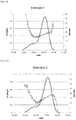
- the polyolefin according to an embodiment of the present invention may have a BOCD index of 0 to 3.0.
- the BOCD index refers to a measure of how many short chain branches having 2 to 6 carbon atoms attached to the main chain of a polymer are present in a relatively high molecular weight component. If the BOCD index is 0 or less, it is not a polymer having a BOCD structure. If it is greater than 0, it may be regarded as a polymer having a BOCD structure.
- the molecular weight, molecular weight distribution, and content of short chain branches of a polymer may be measured simultaneously and continuously using a GPC-FTIR device.
- the BOCD index may be calculated by the following Equation 1 by measuring the content of short chain branches (unit: number/1000 C) in the 30% range of left and right (60% in total) in the molecular weight distribution (MWD) based on weight average molecular weight (Mw).
- BOCD index content of short chain branches in the high-molecular weight component ⁇ content of short chain branches inthe low-molecular weight component / content of short chain branches in the low-molecular weight component
- tie molecules such as short chain branches are more present in the high molecular weight component that is relatively responsible for physical properties than the low molecular weight component, whereby it may have excellent physical properties such as impact strength.
- the polyolefin according to an embodiment of the present invention may have a content of long chain branches of 0.01 to 0.1 per 10,000 carbon atoms.
- a long chain branch refers to a long branch having 7 or more carbon atoms attached to the main chain of a polyolefin. It is usually formed when such an alpha-olefin as 1-butene, 1-hexene, and 1-octene is used as a comonomer.
- long chain branches give rise to the physical effect of filling the voids between polymers, they are known to affect the viscosity and elasticity of a molten polymer in general. If long chain branches increase in the polymer chain, causing an increase in the entanglement of the polymer chain, the intrinsic viscosity at the same molecular weight is lowered, which lowers the load on the screw during extrusion and injection, resulting in better workability.
- long chain branches of the polyolefin may be measured by the method described in Macromolecules, Vol. 33, No. 29, pp. 7481-7488 (2000 ).
- the molecular weight distribution (MWD) value is fitted through the complex viscosity measured using MCR702 of Anton Parr, and the maximum peak value is taken. The maximum value of MWD through 3D-GPC is taken. It is then determined from the ratio thereof whether long chain branching is or not. If the ratio is less than 1, the long chain branching value is 0 (Relationship 1a below). If it exceeds 1, the calculated value of Relationship 1b below is taken.
- LCB 10 4 C GPC peak viscosity peak ⁇ 1,0
- LCB 10 4 C GPC peak viscosity peak ⁇ 1 , 1.125 log GPC peak viscosity peak
- the polyolefin according to an embodiment of the present invention is excellent in melt strength.
- bubble stability refers to a feature that the film thus prepared maintains its shape without tearing.
- the bubble stability is associated with the melt strength.
- Melt strength refers to the strength to withstand tension when a polymer in a molten or softened state is processed such as blowing or stretching.
- the polyolefin of the present invention can exhibit high melt strength since a relatively large number of short chain branches are present in the high molecular weight component, and long chain branches are also attached to the main chain of the polymer.
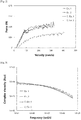
- the polyolefin according to an embodiment of the present invention has a c 2 value of -0.3 to -0.2 when a graph of the complex index (Pa ⁇ s) with respect to the frequency (rad/s) is fitted with the power law of the following Equation 2.
- y c 1 x c 2
- a polymer in a molten state has properties that are in between a fully elastic material and a viscous liquid, which is called viscoelasticity. That is, when a polymer in a molten state is subjected to shear stress, the deformation is not proportional to the shear stress, and the viscosity changes according to the shear stress. These properties are understood to be attributable to the large molecular size and complex intermolecular structure of the polymer.
- the shear thinning phenomenon refers to a phenomenon in which the viscosity of a polymer decreases as the shear rate increases. Such shear thinning characteristics have a great impact on the molding method of a polymer.
- Equation 2 is a model for quantitatively evaluating the shear thinning characteristics of a polyolefin and also for predicting the complex viscosity at a high frequency by applying complex viscosity data with respect to the frequency.
- x denotes a frequency
- y denotes a complex viscosity
- c 1 denotes a consistency index
- c 2 denotes a CV index, which represents the slope of the graph.
- the smaller the value of c 2 that is, the larger the negative slope of the graph, the more preferable.
- the complex viscosity with respect to the frequency may be measured using, for example, MCR702 of Anton Parr in a frequency range of 0.1 to 500 rad/s and a strain condition of 5% at 190°C.
- Equation 3 ⁇ 0 is the complex viscosity at a frequency of 0.1 rad/s, and ⁇ 500 is the complex viscosity at a frequency of 500 rad/s.
- the film according to an embodiment of the present invention comprises the polyolefin of the present invention, thus, it is excellent in optical properties such as haze and in mechanical properties such as impact strength. It is understood that since the polyolefin of the present invention has a relatively wide molecular weight distribution, and since short chain branches are relatively more present in the high molecular weight component, a film produced therefrom is excellent in haze and impact resistance.
- the film according to an embodiment of the present invention has a haze of 10% or less and a drop impact strength of 600 g or more.
- the film of the present invention has a haze of 8% or less, preferably 7% or less, and more preferably 6.5% or less.
- the film of the present invention has a drop impact strength of 650 g or more, preferably 700 g or more, and more preferably 800 g or more.
- the method for producing a film according to the embodiment of the present invention there is no particular limitation to the method for producing a film according to the embodiment of the present invention, and any method known in the technical field of the present invention can be used.
- the polyolefin according to an embodiment of the present invention may be molded by a conventional method such as blown film molding, extrusion molding, casting molding, or the like to prepare a heat-shrinkable polypropylene film. Blown film molding among the above is the most preferred.
- transition metal compound of Formula A-1 purchased from sPCI was used without purification, and the transition metal compound of Formula B-1 was purchased from MCN and used without further purification.
- An ethylene/1-hexene copolymer was prepared in the presence of the hybrid supported catalyst obtained in Preparation Example 1 in a fluidized-bed gas-phase reactor.
- the temperature in the reactor was maintained in the range of 80 to 90°C, and the degree of polymerization of the ethylene/1-hexene copolymer prepared was adjusted by adding hydrogen in addition to ethylene and 1-hexene.
- the ethylene/1-hexene copolymer was extruded in an extruder having a screw of 40 mm in diameter, a die of 75 mm in diameter, and a die gap of 2 mm at a screw speed of 80 rpm, and it was then subjected to blown film molding at a blow-up ratio of 2.0 to obtain a film having a thickness of 50 ⁇ m.
- An ethylene/1-hexene copolymer was prepared in the same manner as in Example 1, except that the hybrid supported catalyst obtained in Preparation Example 2 was used. Subsequently, it was molded in the same manner as in Example 1 to obtain a film having a thickness of 50 ⁇ m.
- An ethylene/1-hexene copolymer was prepared in the same manner as in Example 1, except that the supported catalyst obtained in Preparation Example 3 was used. Subsequently, it was molded in the same manner as in Example 1 to obtain a film having a thickness of 50 ⁇ m.
- a linear low-density polyethylene (M1810HN) of Hanwha Chemical Corp. manufactured with a single metallocene catalyst was used. This resin was molded in the same manner as in Example 1 to obtain a film having a thickness of 50 ⁇ m.
- the molecular weight distribution (MWD) value is fitted through the complex viscosity measured using MCR702 of Anton Parr, and the maximum peak value was taken. The maximum value of MWD through 3D-GPC was taken. The number of long chain branches was calculated from the ratio using Equations 1a and 1b above.
- a blown film was prepared in a film processing machine having a die of 75 mm ⁇ and a die gap of 2 mm using a screw of 40 mm ⁇ .
- the screw speed was set to 80 rpm, and the blow-up ratio (BUR) was fixed to 2 to process a film having a thickness of 50 ⁇ m, and the extrusion load at that time was measured.
- BUR blow-up ratio
- MD machine direction
- TD transverse direction
- MD machine direction
- TD transverse direction
- the polyolefins prepared in the presence of the hybrid supported catalyst prepared in the Examples of the present invention had a wide molecular weight distribution, and short chain branches were relatively more present in the high molecular weight component. They also had long chain branches.
- the processability of the polyolefins excellent, but also such mechanical properties as drop impact strength and such optical properties as haze are excellent as compared with the films prepared from the polyolefins of Comparative Examples.
- the hybrid supported catalyst according to the embodiment of the present invention can provide a polyolefin that has excellent processability, impact strength, and haze.
- the film made of this polyolefin can be advantageously used as a stretch film, an overlap film, a ramie, a silage wrap, an agricultural film, and the like.
Landscapes
- Chemical & Material Sciences (AREA)
- Health & Medical Sciences (AREA)
- Chemical Kinetics & Catalysis (AREA)
- Medicinal Chemistry (AREA)
- Polymers & Plastics (AREA)
- Organic Chemistry (AREA)
- Engineering & Computer Science (AREA)
- Materials Engineering (AREA)
- Crystallography & Structural Chemistry (AREA)
- Transition And Organic Metals Composition Catalysts For Addition Polymerization (AREA)
Applications Claiming Priority (2)
| Application Number | Priority Date | Filing Date | Title |
|---|---|---|---|
| KR1020180124842A KR102294563B1 (ko) | 2018-10-19 | 2018-10-19 | 올레핀 중합용 촉매 |
| PCT/KR2019/013321 WO2020080745A1 (fr) | 2018-10-19 | 2019-10-11 | Catalyseurs pour polymérisation d'oléfines |
Publications (2)
| Publication Number | Publication Date |
|---|---|
| EP3851462A1 true EP3851462A1 (fr) | 2021-07-21 |
| EP3851462A4 EP3851462A4 (fr) | 2022-06-22 |
Family
ID=70284728
Family Applications (1)
| Application Number | Title | Priority Date | Filing Date |
|---|---|---|---|
| EP19873090.5A Pending EP3851462A4 (fr) | 2018-10-19 | 2019-10-11 | Catalyseurs pour polymérisation d'oléfines |
Country Status (6)
| Country | Link |
|---|---|
| US (1) | US11859040B2 (fr) |
| EP (1) | EP3851462A4 (fr) |
| JP (1) | JP7238116B2 (fr) |
| KR (1) | KR102294563B1 (fr) |
| CN (1) | CN113272336B (fr) |
| WO (1) | WO2020080745A1 (fr) |
Cited By (2)
| Publication number | Priority date | Publication date | Assignee | Title |
|---|---|---|---|---|
| EP3851463A4 (fr) * | 2018-10-19 | 2022-07-13 | Hanwha Solutions Corporation | Polymère oléfinique |
| EP3885374A4 (fr) * | 2018-12-18 | 2022-09-14 | Hanwha Solutions Corporation | Catalyseur pour la polymérisation d'oléfines, et polymère à base d'oléfine produit à l'aide de celui-ci |
Families Citing this family (8)
| Publication number | Priority date | Publication date | Assignee | Title |
|---|---|---|---|---|
| KR102608612B1 (ko) * | 2020-11-23 | 2023-12-04 | 한화솔루션 주식회사 | 올레핀계 중합체 및 그 제조방법 |
| KR102611798B1 (ko) * | 2020-11-23 | 2023-12-12 | 한화솔루션 주식회사 | 올레핀계 중합체, 그로부터 제조된 필름 및 그 제조방법 |
| KR102608616B1 (ko) * | 2020-11-23 | 2023-12-04 | 한화솔루션 주식회사 | 올레핀계 중합체, 그로부터 제조된 필름 및 그 제조방법 |
| CN116601188B (zh) * | 2020-12-08 | 2025-07-04 | 韩华思路信株式会社 | 烯烃系聚合物及其制造方法 |
| CN116601187B (zh) * | 2020-12-08 | 2025-07-04 | 韩华思路信株式会社 | 烯烃系聚合物、由其制造的膜及其制造方法 |
| KR102611764B1 (ko) * | 2020-12-17 | 2023-12-11 | 한화솔루션 주식회사 | 올레핀계 중합체 및 그 제조방법 |
| KR102611686B1 (ko) * | 2020-12-17 | 2023-12-08 | 한화솔루션 주식회사 | 올레핀계 중합체 및 그 제조방법 |
| KR102613125B1 (ko) * | 2020-12-23 | 2023-12-14 | 한화솔루션 주식회사 | 혼성 촉매 조성물, 이를 포함하는 촉매 및 이를 이용한 올레핀계 중합체의 제조방법 |
Family Cites Families (10)
| Publication number | Priority date | Publication date | Assignee | Title |
|---|---|---|---|---|
| US5914289A (en) * | 1996-02-19 | 1999-06-22 | Fina Research, S.A. | Supported metallocene-alumoxane catalysts for the preparation of polyethylene having a broad monomodal molecular weight distribution |
| US6069213A (en) * | 1997-12-16 | 2000-05-30 | Union Carbide Chemicals & Plastics Technology Corporation | Mixed catalyst system |
| JP4517695B2 (ja) | 2003-12-25 | 2010-08-04 | 東ソー株式会社 | エチレン系重合体およびその製造方法 |
| KR100753477B1 (ko) * | 2005-01-31 | 2007-08-31 | 주식회사 엘지화학 | 혼합 담지 메탈로센 촉매, 그 제조방법 및 이를 이용하여제조된 폴리올레핀 및 그 제조 방법 |
| US7619047B2 (en) * | 2006-02-22 | 2009-11-17 | Chevron Phillips Chemical Company, Lp | Dual metallocene catalysts for polymerization of bimodal polymers |
| US8932975B2 (en) * | 2010-09-07 | 2015-01-13 | Chevron Phillips Chemical Company Lp | Catalyst systems and methods of making and using same |
| US8865846B2 (en) * | 2012-09-25 | 2014-10-21 | Chevron Phillips Chemical Company Lp | Metallocene and half sandwich dual catalyst systems for producing broad molecular weight distribution polymers |
| KR101394943B1 (ko) * | 2012-11-19 | 2014-05-14 | 대림산업 주식회사 | 에틸렌과 알파-올레핀의 공중합체 및 그 제조방법 |
| KR101800866B1 (ko) | 2016-04-26 | 2017-12-21 | 대림산업 주식회사 | 용융강도가 높은 멀티모달 폴리올레핀 수지 및 이로부터 제조되는 성형체 |
| KR102258230B1 (ko) | 2018-10-19 | 2021-05-28 | 한화솔루션 주식회사 | 올레핀계 중합체 |
-
2018
- 2018-10-19 KR KR1020180124842A patent/KR102294563B1/ko active Active
-
2019
- 2019-10-11 CN CN201980068729.3A patent/CN113272336B/zh active Active
- 2019-10-11 US US17/283,572 patent/US11859040B2/en active Active
- 2019-10-11 EP EP19873090.5A patent/EP3851462A4/fr active Pending
- 2019-10-11 WO PCT/KR2019/013321 patent/WO2020080745A1/fr not_active Ceased
- 2019-10-11 JP JP2021520979A patent/JP7238116B2/ja active Active
Cited By (4)
| Publication number | Priority date | Publication date | Assignee | Title |
|---|---|---|---|---|
| EP3851463A4 (fr) * | 2018-10-19 | 2022-07-13 | Hanwha Solutions Corporation | Polymère oléfinique |
| US12031021B2 (en) | 2018-10-19 | 2024-07-09 | Hanwha Solutions Corporation | Polyolefin |
| EP3885374A4 (fr) * | 2018-12-18 | 2022-09-14 | Hanwha Solutions Corporation | Catalyseur pour la polymérisation d'oléfines, et polymère à base d'oléfine produit à l'aide de celui-ci |
| US12221499B2 (en) | 2018-12-18 | 2025-02-11 | Hanwha Solutions Corporation | Catalyst for olefin polymerization and polyolefin prepared using the same |
Also Published As
| Publication number | Publication date |
|---|---|
| EP3851462A4 (fr) | 2022-06-22 |
| CN113272336B (zh) | 2023-05-30 |
| US20210347920A1 (en) | 2021-11-11 |
| CN113272336A (zh) | 2021-08-17 |
| US11859040B2 (en) | 2024-01-02 |
| KR20200044295A (ko) | 2020-04-29 |
| JP2022505078A (ja) | 2022-01-14 |
| WO2020080745A1 (fr) | 2020-04-23 |
| JP7238116B2 (ja) | 2023-03-13 |
| KR102294563B1 (ko) | 2021-08-26 |
Similar Documents
| Publication | Publication Date | Title |
|---|---|---|
| EP3851463A1 (fr) | Polymère oléfinique | |
| EP3885374B1 (fr) | Catalyseur pour la polymérisation d'oléfines, et polymère à base d'oléfine produit à l'aide de celui-ci | |
| EP3851462A1 (fr) | Catalyseurs pour polymérisation d'oléfines | |
| EP0898585B1 (fr) | Composition polyolefinique presentant un poids moleculaire maximum dans sa partie ayant la teneur la plus elevee en comonomeres | |
| JP5409381B2 (ja) | コポリマー及びそのフィルム | |
| JP7577211B2 (ja) | オレフィン系重合体、それにより製造されたフィルム、およびその製造方法 | |
| EP3649185B1 (fr) | Copolymères d'éthylène alpha-oléfine ayant des distributions de comonomères multimodales et leurs procédés d'obtention | |
| EP4249530A1 (fr) | Polymère à base d'oléfine, film préparé à partir de celui-ci et procédés de préparation associés | |
| BR112012018231B1 (pt) | copolímero de etileno e uma a-olefina e processo para a preparação de copolímeros | |
| EP4438636A1 (fr) | Polyoléfine ayant une excellente aptitude au traitement et son processus de préparation | |
| JP7603162B2 (ja) | オレフィン系重合体、それより製造されたフィルム、およびその製造方法 | |
| KR102467898B1 (ko) | 고 탄성계수의 단일 부위 선형 저밀도 폴리에틸렌(lldpe) | |
| TW202311310A (zh) | 製備聚烯烴之方法及用其製備之聚烯烴 | |
| EP4269453A1 (fr) | Composition de catalyseur hybride, catalyseur le comprenant et procédé de préparation d'un polymère à base d'oléfine l'utilisant | |
| EP4635991A1 (fr) | Procédé de préparation de polymère à base d'oléfine et polymère à base d'oléfine, qui est ainsi préparé et qui présente une excellente aptitude au traitement | |
| JPH1180454A (ja) | ポリプロピレン系樹脂組成物及びそのフィルム | |
| KR100490509B1 (ko) | 공단량체함량이가장높은부분에서분자량이최대인폴리올레핀조성물 | |
| EP4127061A1 (fr) | Copolymères séquencés en peigne et procédés associés |
Legal Events
| Date | Code | Title | Description |
|---|---|---|---|
| STAA | Information on the status of an ep patent application or granted ep patent |
Free format text: STATUS: THE INTERNATIONAL PUBLICATION HAS BEEN MADE |
|
| PUAI | Public reference made under article 153(3) epc to a published international application that has entered the european phase |
Free format text: ORIGINAL CODE: 0009012 |
|
| STAA | Information on the status of an ep patent application or granted ep patent |
Free format text: STATUS: REQUEST FOR EXAMINATION WAS MADE |
|
| 17P | Request for examination filed |
Effective date: 20210414 |
|
| AK | Designated contracting states |
Kind code of ref document: A1 Designated state(s): AL AT BE BG CH CY CZ DE DK EE ES FI FR GB GR HR HU IE IS IT LI LT LU LV MC MK MT NL NO PL PT RO RS SE SI SK SM TR |
|
| DAV | Request for validation of the european patent (deleted) | ||
| DAX | Request for extension of the european patent (deleted) | ||
| A4 | Supplementary search report drawn up and despatched |
Effective date: 20220524 |
|
| RIC1 | Information provided on ipc code assigned before grant |
Ipc: C08F 210/16 20060101ALI20220518BHEP Ipc: C08F 4/659 20060101ALI20220518BHEP Ipc: C08F 4/6592 20060101AFI20220518BHEP |
|
| STAA | Information on the status of an ep patent application or granted ep patent |
Free format text: STATUS: EXAMINATION IS IN PROGRESS |
|
| 17Q | First examination report despatched |
Effective date: 20251006 |