EP3852061B1 - Verfahren und vorrichtung zur schadenssegmentierung von fahrzeugschäden - Google Patents
Verfahren und vorrichtung zur schadenssegmentierung von fahrzeugschäden Download PDFInfo
- Publication number
- EP3852061B1 EP3852061B1 EP19858832.9A EP19858832A EP3852061B1 EP 3852061 B1 EP3852061 B1 EP 3852061B1 EP 19858832 A EP19858832 A EP 19858832A EP 3852061 B1 EP3852061 B1 EP 3852061B1
- Authority
- EP
- European Patent Office
- Prior art keywords
- segmentation
- damage
- target
- classification
- samples
- Prior art date
- Legal status (The legal status is an assumption and is not a legal conclusion. Google has not performed a legal analysis and makes no representation as to the accuracy of the status listed.)
- Active
Links
Images




Classifications
-
- G—PHYSICS
- G06—COMPUTING OR CALCULATING; COUNTING
- G06T—IMAGE DATA PROCESSING OR GENERATION, IN GENERAL
- G06T7/00—Image analysis
- G06T7/0002—Inspection of images, e.g. flaw detection
- G06T7/0004—Industrial image inspection
-
- G—PHYSICS
- G06—COMPUTING OR CALCULATING; COUNTING
- G06T—IMAGE DATA PROCESSING OR GENERATION, IN GENERAL
- G06T7/00—Image analysis
- G06T7/0002—Inspection of images, e.g. flaw detection
- G06T7/0004—Industrial image inspection
- G06T7/001—Industrial image inspection using an image reference approach
-
- G—PHYSICS
- G06—COMPUTING OR CALCULATING; COUNTING
- G06N—COMPUTING ARRANGEMENTS BASED ON SPECIFIC COMPUTATIONAL MODELS
- G06N3/00—Computing arrangements based on biological models
- G06N3/02—Neural networks
- G06N3/04—Architecture, e.g. interconnection topology
- G06N3/045—Combinations of networks
-
- G—PHYSICS
- G06—COMPUTING OR CALCULATING; COUNTING
- G06N—COMPUTING ARRANGEMENTS BASED ON SPECIFIC COMPUTATIONAL MODELS
- G06N3/00—Computing arrangements based on biological models
- G06N3/02—Neural networks
- G06N3/04—Architecture, e.g. interconnection topology
- G06N3/0464—Convolutional networks [CNN, ConvNet]
-
- G—PHYSICS
- G06—COMPUTING OR CALCULATING; COUNTING
- G06N—COMPUTING ARRANGEMENTS BASED ON SPECIFIC COMPUTATIONAL MODELS
- G06N3/00—Computing arrangements based on biological models
- G06N3/02—Neural networks
- G06N3/08—Learning methods
-
- G—PHYSICS
- G06—COMPUTING OR CALCULATING; COUNTING
- G06N—COMPUTING ARRANGEMENTS BASED ON SPECIFIC COMPUTATIONAL MODELS
- G06N3/00—Computing arrangements based on biological models
- G06N3/02—Neural networks
- G06N3/08—Learning methods
- G06N3/0895—Weakly supervised learning, e.g. semi-supervised or self-supervised learning
-
- G—PHYSICS
- G06—COMPUTING OR CALCULATING; COUNTING
- G06N—COMPUTING ARRANGEMENTS BASED ON SPECIFIC COMPUTATIONAL MODELS
- G06N3/00—Computing arrangements based on biological models
- G06N3/02—Neural networks
- G06N3/08—Learning methods
- G06N3/09—Supervised learning
-
- G—PHYSICS
- G06—COMPUTING OR CALCULATING; COUNTING
- G06N—COMPUTING ARRANGEMENTS BASED ON SPECIFIC COMPUTATIONAL MODELS
- G06N3/00—Computing arrangements based on biological models
- G06N3/02—Neural networks
- G06N3/08—Learning methods
- G06N3/096—Transfer learning
-
- G—PHYSICS
- G06—COMPUTING OR CALCULATING; COUNTING
- G06Q—INFORMATION AND COMMUNICATION TECHNOLOGY [ICT] SPECIALLY ADAPTED FOR ADMINISTRATIVE, COMMERCIAL, FINANCIAL, MANAGERIAL OR SUPERVISORY PURPOSES; SYSTEMS OR METHODS SPECIALLY ADAPTED FOR ADMINISTRATIVE, COMMERCIAL, FINANCIAL, MANAGERIAL OR SUPERVISORY PURPOSES, NOT OTHERWISE PROVIDED FOR
- G06Q10/00—Administration; Management
- G06Q10/10—Office automation; Time management
-
- G—PHYSICS
- G06—COMPUTING OR CALCULATING; COUNTING
- G06Q—INFORMATION AND COMMUNICATION TECHNOLOGY [ICT] SPECIALLY ADAPTED FOR ADMINISTRATIVE, COMMERCIAL, FINANCIAL, MANAGERIAL OR SUPERVISORY PURPOSES; SYSTEMS OR METHODS SPECIALLY ADAPTED FOR ADMINISTRATIVE, COMMERCIAL, FINANCIAL, MANAGERIAL OR SUPERVISORY PURPOSES, NOT OTHERWISE PROVIDED FOR
- G06Q40/00—Finance; Insurance; Tax strategies; Processing of corporate or income taxes
- G06Q40/08—Insurance
-
- G—PHYSICS
- G06—COMPUTING OR CALCULATING; COUNTING
- G06T—IMAGE DATA PROCESSING OR GENERATION, IN GENERAL
- G06T7/00—Image analysis
- G06T7/10—Segmentation; Edge detection
- G06T7/11—Region-based segmentation
-
- G—PHYSICS
- G06—COMPUTING OR CALCULATING; COUNTING
- G06T—IMAGE DATA PROCESSING OR GENERATION, IN GENERAL
- G06T7/00—Image analysis
- G06T7/10—Segmentation; Edge detection
- G06T7/12—Edge-based segmentation
-
- G—PHYSICS
- G06—COMPUTING OR CALCULATING; COUNTING
- G06T—IMAGE DATA PROCESSING OR GENERATION, IN GENERAL
- G06T7/00—Image analysis
- G06T7/10—Segmentation; Edge detection
- G06T7/174—Segmentation; Edge detection involving the use of two or more images
-
- G—PHYSICS
- G06—COMPUTING OR CALCULATING; COUNTING
- G06T—IMAGE DATA PROCESSING OR GENERATION, IN GENERAL
- G06T7/00—Image analysis
- G06T7/10—Segmentation; Edge detection
- G06T7/194—Segmentation; Edge detection involving foreground-background segmentation
-
- G—PHYSICS
- G06—COMPUTING OR CALCULATING; COUNTING
- G06T—IMAGE DATA PROCESSING OR GENERATION, IN GENERAL
- G06T2200/00—Indexing scheme for image data processing or generation, in general
- G06T2200/24—Indexing scheme for image data processing or generation, in general involving graphical user interfaces [GUIs]
-
- G—PHYSICS
- G06—COMPUTING OR CALCULATING; COUNTING
- G06T—IMAGE DATA PROCESSING OR GENERATION, IN GENERAL
- G06T2207/00—Indexing scheme for image analysis or image enhancement
- G06T2207/10—Image acquisition modality
- G06T2207/10004—Still image; Photographic image
-
- G—PHYSICS
- G06—COMPUTING OR CALCULATING; COUNTING
- G06T—IMAGE DATA PROCESSING OR GENERATION, IN GENERAL
- G06T2207/00—Indexing scheme for image analysis or image enhancement
- G06T2207/20—Special algorithmic details
- G06T2207/20081—Training; Learning
-
- G—PHYSICS
- G06—COMPUTING OR CALCULATING; COUNTING
- G06T—IMAGE DATA PROCESSING OR GENERATION, IN GENERAL
- G06T2207/00—Indexing scheme for image analysis or image enhancement
- G06T2207/20—Special algorithmic details
- G06T2207/20084—Artificial neural networks [ANN]
-
- G—PHYSICS
- G06—COMPUTING OR CALCULATING; COUNTING
- G06T—IMAGE DATA PROCESSING OR GENERATION, IN GENERAL
- G06T2207/00—Indexing scheme for image analysis or image enhancement
- G06T2207/20—Special algorithmic details
- G06T2207/20112—Image segmentation details
- G06T2207/20132—Image cropping
-
- G—PHYSICS
- G06—COMPUTING OR CALCULATING; COUNTING
- G06T—IMAGE DATA PROCESSING OR GENERATION, IN GENERAL
- G06T2207/00—Indexing scheme for image analysis or image enhancement
- G06T2207/20—Special algorithmic details
- G06T2207/20112—Image segmentation details
- G06T2207/20164—Salient point detection; Corner detection
-
- G—PHYSICS
- G06—COMPUTING OR CALCULATING; COUNTING
- G06T—IMAGE DATA PROCESSING OR GENERATION, IN GENERAL
- G06T2207/00—Indexing scheme for image analysis or image enhancement
- G06T2207/30—Subject of image; Context of image processing
- G06T2207/30108—Industrial image inspection
- G06T2207/30156—Vehicle coating
-
- G—PHYSICS
- G07—CHECKING-DEVICES
- G07C—TIME OR ATTENDANCE REGISTERS; REGISTERING OR INDICATING THE WORKING OF MACHINES; GENERATING RANDOM NUMBERS; VOTING OR LOTTERY APPARATUS; ARRANGEMENTS, SYSTEMS OR APPARATUS FOR CHECKING NOT PROVIDED FOR ELSEWHERE
- G07C5/00—Registering or indicating the working of vehicles
- G07C5/08—Registering or indicating performance data other than driving, working, idle, or waiting time, with or without registering driving, working, idle or waiting time
- G07C5/0808—Diagnosing performance data
Definitions
- Embodiments of the specification relate to the field of vehicle damage determination, and in particular to a method and an apparatus for performing damage segmentation on a vehicle damage image.
- acquiring, from a vehicle damage image, a pixel-level segmentation result of a damage object is very important both for improving accuracy of identifying the damage object and for precise positioning and display of the damage object.
- a pixel-level damage region in a vehicle damage image is mainly determined by means of manual labeling.
- shapes of damage to appearance of vehicle bodies include a large quantity of discontinuous irregular scratches, deformations, rips, and the like, resulting in difficulty in determining a boundary of pixel points in a damage region. Therefore, it is difficult to perform manual labeling.
- the invention discloses an automobile damage part recognition method and system.
- the method comprises the following steps of: if an automobile insurance claim photo uploaded by a first terminal, recognizing a pixel area of an automobile damage part in the automobile insurance claim photo by utilizing a pre-trained recognition model, wherein the predetermined recognition model is obtained through labelling and training pixel areas in a preset quantity of automobile damage part sample pictures; and if the pixel area of the automobile damage part in the insurance claim photo is recognized, labeling the recognized pixel area, and sending the insurance claim photo with the pixel area label to the first tenninal and/or a predetermined second terminal, or intercepting the recognized pixel area and then sending the pixel area to the first tenninal and/or the predetermined second terminal.
- the automobile damage parts with different area sizes in the insurance claim photos can be recognized more accurately.
- the model generates spatial highlights of each category presented in images using an attention model, and subsequently performs binary segmentation for each highlighted region using decoder.
- attention model the decoder trained with segmentation annotations in different categories boosts accuracy of weakly-supervised semantic segmentation.
- the proposed algorithm demonstrates substantially improved performance compared to the state-of-the-art weakly-supervised techniques in PASCAL MC 2012 dataset when our model is trained with the annotations in 60 exclusive categories in Microsoft COCO dataset.”
- a damage segmentation model is determined on the basis of the idea of transfer learning, and is used to perform damage segmentation on a vehicle damage image.
- Embodiments of the specification disclose a method for performing damage segmentation on a vehicle damage image.
- the damage segmentation refers to performing regional extraction on a damage object having a target classification and a clear boundary in a vehicle damage image, and the regional extraction can be manifested as determining an outline of the damage object.
- the method specifically includes determining a damage segmentation model, so that the vehicle damage image can be inputted to the model, and then the target classification of the damage object (briefly referred to as a damage classification in the following) and a segmentation outline of the damage object can be acquired.
- a damage segmentation model so that the vehicle damage image can be inputted to the model, and then the target classification of the damage object (briefly referred to as a damage classification in the following) and a segmentation outline of the damage object can be acquired.
- the following first introduces an application scenario of the damage segmentation model.
- the damage segmentation model can be applied to a damage determination client provided to a user.
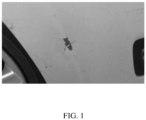
- a user in the scene of an accident, a user can use a terminal, such as a mobile phone, a tablet computer, or the like, to take a photo of the scene, such as an image of a part of a vehicle shown in FIG. 1 , and upload the captured photo to a damage determination client on the terminal.
- the damage determination client can use the damage segmentation model to determine vehicle damage information corresponding to the photo of the scene. For example, as shown in FIG. 2 , it can be determined that a vehicle damage classification is a moderate scratch, and an outline of the scratch-caused damage can be determined.
- a repair scheme and an associated compensation amount corresponding to the damage information can be provided.
- the repair scheme is to repair paint
- the insurance repair compensation amount is 120 yuan.
- a conventional machine learning method can be used, and training is performed on the basis of a large number of manually labeled damage segmentation samples.
- a staff member usually uses a painting tool such as a brush to approximately draw a damage region, and performs damage pixel point labeling.
- This labeling technique is not precise, especially in cases in which a large amount of discontinuous irregular damage, such as scratches, deformations, rips, and the like, occur. Since it is difficult to determine a pixel point boundary of the damage region, labeling is usually performed on the level of an entire area, and a large amount of pixel-level noise occurs in the labeling.
- the manual labeling in this scheme has overly high costs and, thus, is difficult to implement.
- a transfer learning method is used to determine a damage segmentation model.
- Transfer learning can be understood as using prior knowledge to learn new knowledge, and its core is to find similarity between the prior knowledge and the new knowledge.
- the damage segmentation model can be determined on the basis of a large number of segmentation samples corresponding to a non-damage object having a feature similar to that of a damage object, and these segmentation samples are usually easy to acquire.
- segmentation samples in which target objects are component objects are used. Because an outline feature of a component is similar to an outline feature of damage, and a component outline is relatively regular compared with a damage outline, therefore, it is relatively easy to acquire a large number of component segmentation samples labeled with segmentation results.
- a plurality of segmentation samples having a feature similar to that of vehicle damage and a plurality of damage detection samples can be acquired.
- a segmentation sample is labeled with a target detection result (including a classification and a boundary box of a target object) and a target segmentation result, and a plurality of classifications corresponding to the plurality of segmentation samples constitute a classification set A.
- a damage detection sample is labeled with a target detection result, but is not labeled with a target segmentation result, and a plurality of classifications corresponding to the plurality of damage detection samples constitute a classification set B.
- the classification set B includes classifications not belonging to the classification set A.
- a relationship between the target detection result and the target segmentation result corresponding to each classification in the segmentation sample is determined. Then, this relationship is transferred to the damage detection sample. Therefore, a target segmentation parameter corresponding to each classification in classification set B can be determined on the basis of this relationship, and can be used to perform segmentation on a damage object in the vehicle damage image and corresponding to classification set B.
- FIG. 3 illustrates a flowchart of a method for performing damage segmentation on a vehicle damage image according to an embodiment.
- the executive body of the method can be a device having a processing capability: a server, a system, or an apparatus. As shown in FIG.
- a process of the method includes the following steps: step S310, acquire a plurality of segmentation samples labeled with both a target detection result and a target segmentation result, wherein a plurality of classifications with which target objects are labeled in these segmentation samples constitute a first classification subset; step S320, acquire a plurality of damage detection samples labeled with a target detection result but not labeled with a target segmentation result, wherein a plurality of classifications with which target objects are labeled in these detection samples constitute a second classification subset, and the second classification subset includes classifications not belonging to the first classification subset; and step S330, use the plurality of segmentation samples and the plurality of damage detection samples to train a damage segmentation model, the model including a target detection parameter for detecting a damage object and a target segmentation parameter for determining an outline of the damage object.
- step S310 the plurality of segmentation samples labeled with both the target detection result and the target segmentation result are acquired.
- the target detection result includes a classification and a boundary box of a target object
- the target segmentation result includes an outline of the target object, namely a mask corresponding to the outline of the target object.
- the target object is an object having a feature similar or close to that of vehicle damage, thereby ensuring that the trained damage segmentation model can achieve a good segmentation effect.
- the target object includes a vehicle component
- the plurality of segmentation samples include a plurality of component segmentation samples.
- the plurality of component segmentation samples can include component segmentation samples acquired on the basis of manual labeling. It should be noted that an outline of a vehicle component in a vehicle damage image is relatively regular, so that performing manual labeling on a segmentation result of the vehicle component is feasible.
- the plurality of component segmentation samples can further include component segmentation samples acquired on the basis of a component segmentation model.
- the component segmentation model can be acquired by training on the basis of the aforementioned manually labeled component segmentation samples, and then a large number of vehicle damage images are inputted to the component segmentation model, so that more images having component segmentation results are acquired, and these images are used as a portion of the plurality of component segmentation samples.
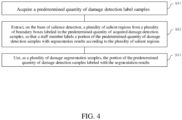
- the target object can include vehicle damage, and therefore the plurality of segmentation samples can include a plurality of damage segmentation samples. It should be noted that the number of classifications corresponding to these damage segmentation samples is less than or far less than the number of classifications corresponding to damage detection samples mentioned below. Further, as shown in FIG. 4 , the damage segmentation sample can be acquired by means of the following steps:
- step S41 acquire a predetermined quantity of damage detection samples from a damage sample library.
- the damage detection sample refers to a sample labeled with a target detection result but not labeled with a target segmentation result. That is, the damage detection sample is labeled with a classification of a damage object and a boundary box in which the damage object is located, but is not labeled with a segmentation result of the damage object.
- the damage detection sample can be easily acquired.
- the operation of manually labeling a damage box and a damage classification in a vehicle damage image is relatively easy, so that a large number of damage detection samples can be acquired on the basis of manual labeling.
- a corresponding damage detection result can be acquired, and a damage detection sample can be determined according to the damage detection result.
- the predetermined quantity can be determined by a staff member according to practical experience.
- step S42 extract, on the basis of salience detection, a plurality of salient regions from a plurality of boundary boxes labeled in the predetermined quantity of acquired damage detection samples, so that a staff member can perform segmentation result labeling on a portion of the predetermined quantity of damage detection samples according to the plurality of salient regions.
- the salience detection (also referred to as a visual attention mechanism) refers to extracting a salient region (namely a region that human beings are interested in) in an image by using an intelligent algorithm to simulate a visual feature of human beings.
- a salient region has a certain structure and texture, is stimulus in color, and the salient region is quite different from surrounding regions.
- salience detection can be performed.
- the damage objects therein are quite different from other regions in the boundary boxes in terms of color, structure, and texture. Therefore, salience detection can be performed on an image in the boundary box so as to rapidly extract a damage object therein.
- a saliency map shown in FIG. 5(b) can be acquired, in which the white part is a detected damage object. Therefore, a plurality of damage objects can be correspondingly extracted from a plurality of boundary boxes of the predetermined quantity of damage detection samples.
- a salient region extracted on the basis of salience detection can be directly automatically labeled as a segmentation result of a corresponding damage object.
- dust, stains, and other salient objects other a damage object may be present in a boundary box, and on the other hand, a large variety of vehicle damage exists, and includes a large amount of discontinuous damage or slight damage. Therefore, for some damage detection samples, it is possible that a region covered by a damage object cannot be completely and accurately extracted therefrom on the basis of salience detection.
- the plurality of extracted salient regions can be provided to a staff member, so that the staff member labels a portion of the predetermined quantity of damage detection samples with segmentation results according to the plurality of salient regions, and for example, the staff member can filter or correct the salient regions so as to obtain damage segmentation samples having more precise segmentation results.
- the portion of the predetermined quantity of damage detection samples labeled with the segmentation results can be acquired. Then in step S43, use the acquired portion of the predetermined quantity of damage detection samples as the plurality of damage segmentation samples.
- the plurality of acquired segmentation samples include the aforementioned plurality of component segmentation samples and optionally the plurality of damage segmentation samples acquired on the basis of the salience detection.
- the plurality of segmentation samples can further include a small number of damage segmentation samples acquired on the basis of manual labeling.
- the plurality of segmentation samples can further include other segmentation samples having a feature similar to that of the damage object, such as a segmentation sample in which a target object is a leaf of a plant.
- the plurality of segmentation samples labeled with both the target detection result and the target segmentation result can be acquired, and the plurality of classifications with which the target objects are labeled in these segmentation samples constitute the first classification subset. Then, in step S320, acquire a plurality of damage detection samples labeled with a target detection result but not labeled with a target segmentation result.
- a plurality of classifications with which target objects are labeled in the plurality of damage detection samples constitute a second classification subset, and the second classification subset includes classifications not belonging to the first classification subset.
- the plurality of segmentation samples acquired in step S310 include component segmentation samples in which target objects are component objects.
- target objects of damage detection samples are damage objects.
- the classifications in the first classification subset are component classifications
- the classifications in the second classification subset are damage classifications. Damage classifications are different from component classifications.
- a portion of the plurality of segmentation samples acquired in step S310 is damage segmentation samples. It can be seen from the above that damage classifications corresponding to these damage segmentation samples are limited. Therefore, the number of damage classifications corresponding to damage segmentation samples is less than or far less than the number of damage classifications in the second classification subset.
- the rest for example, the predetermined quantity minus the quantity of the portion
- the rest for example, the predetermined quantity minus the quantity of the portion
- a plurality of segmentation samples can be acquired in step S310, and a plurality of damage detection samples can be acquired in step S320. Then, in step S330, use the plurality of segmentation samples and the plurality of damage detection samples to train a damage segmentation model, the damage segmentation model including a target detection parameter for detecting a damage object and a target segmentation parameter for determining an outline of the damage object.
- training the damage segmentation model can include the following steps:
- step S61 determine, on the basis of the target detection results in the plurality of segmentation samples and the target detection results in the plurality of damage detection samples, a target detection parameter corresponding to each classification in a classification set consisting of the first classification subset and the second classification subset.
- an existing target detection algorithm such as faster R-CNN, R-FCN, SSD, or the like, can be used to determine the target detection parameter corresponding to each classification in the classification set.
- step S62 determine, on the basis of the target detection results and the target segmentation results in the plurality of segmentation samples, a weight transfer function, the weight transfer function indicating a mapping from the target detection parameter to the target segmentation parameter.
- the weight transfer function indicates a mapping from the target detection parameter to the target segmentation parameter, so that in an embodiment, the target detection parameter and the target segmentation parameter are separately determined, and a mapping relationship therebetween is mathematically determined, and used as the weight transfer function.
- the target detection parameter corresponding to each classification in the first classification subset can be determined according to the target detection results in the segmentation samples, and with reference to the target segmentation results, the target segmentation parameter corresponding to each classification in the first classification subset is determined; then, the weight transfer function can be determined according to the target detection parameter and the target segmentation parameter corresponding to each classification.
- the weight transfer function is determined by training.
- an initial weight transfer function is determined first (that is, a preliminary function parameter is determined); then, the weight transfer function is acquired through training by using the target detection parameter as input, by using the target segmentation result as a label, and by means of function parameter adjustment.
- the weight transfer function is acquired by performing training.
- the target detection parameter corresponding to the first classification includes a target classification parameter and a target boundary box parameter, and correspondingly, inputting the target detection parameter corresponding to the first classification to an initial weight transfer function can include: inputting the target classification parameter and/or the target boundary box parameter to the initial weight transfer function.
- the target detection parameter can be a combination of the target classification parameter and the target boundary box parameter.
- the weight transfer function can be represented as where ⁇ det represents a target detection function of any classification; ⁇ seg represents a target segmentation parameter corresponding to the same classification as ⁇ det , and ⁇ is a learning parameter independent of classification.
- ⁇ can be set to ⁇ 0 , and specifically, can be set to a random value.
- the weight transfer function can be implemented by means of a convolutional neural network. That is, operation of the weight transfer function is implemented by means of a combination of neurons of a neural network.
- training the weight transfer function includes: adjusting and determining an operational parameter of the neurons in the neural network, a weight parameter of connections between the neurons, and the like.
- adjusting the initial weight transfer function can include: determining, on the basis of the predicted target segmentation result corresponding to one or more classifications in the first classification set and the target segmentation result with which the segmentation sample is labeled, a loss function corresponding to the target segmentation result, and adjusting the initial weight transfer function by means of error backpropagation or a gradient descent technique.
- a target segmentation parameter ⁇ seg c corresponding to the first classification c is acquired. Then, on the basis of ⁇ seg c , a predicted target segmentation result corresponding to the segmentation sample of the first classification is determined; then, the initial weight transfer function is adjusted on the basis of this predicted target segmentation result and the target segmentation result with which the segmentation sample of the first classification c is labeled, that is, ⁇ 0 is adjusted to ⁇ 1 .
- determining the weight transfer function includes determining the parameter value of ⁇ in formula (1).
- step S61 and step S62 can be performed simultaneously independently, and can also be performed independently one after the other, or step S62 can be performed simultaneously as a branch of step S61 so as to reduce resource consumption.
- the weight transfer function can be determined, and this function indicates a mapping from the target detection parameter to the target segmentation parameter. Then, in step S63, input the target detection parameter determined in step S61 and corresponding to each classification in the classification set to the weight transfer function to obtain a target segmentation parameter corresponding to each classification, so as to determine the damage segmentation model used to perform damage segmentation on a vehicle damage image.
- the target segmentation parameter corresponding to each classification in the classification set consisting of the first classification subset and the second classification subset can be acquired, and can be used to perform segmentation on a target object included in the image and corresponding to each classification in the classification set.
- a corresponding target segmentation parameter can also be acquired by using the method provided by the embodiments of the specification, and used to perform damage segmentation on vehicle damage images corresponding to these classifications.
- FIG. 7 illustrates a diagram of a mask R-CNN architecture based on transfer learning. Assumed that the first classification subset is a set A, and the second classification subset is a set B. A U B indicates the union of set A and set B, and is the aforementioned classification set.
- the weight transfer function can be determined on the basis of the plurality of segmentation samples.
- this image is an image corresponding to the detection sample
- processing performed on this image is the same as that in 1), so that the target detection parameter corresponding to the classification of this image can be acquired.
- the weight transfer function can be determined on the basis of the plurality of segmentation samples corresponding to the classification set A; in addition, the target detection parameter corresponding to each classification in A U B is determined on the basis of the plurality of segmentation samples corresponding to the classification set A and the plurality of damage detection samples corresponding to the classification set B.
- the target detection parameter corresponding to each classification in A U B is inputted to the weight transfer function, and a target segmentation parameter corresponding to each classification is acquired, so as to determine the damage segmentation model used to perform damage segmentation on a vehicle damage image corresponding to the damage classification in A U B.
- a target detection parameter and a target segmentation parameter corresponding to each classification in a classification set consisting of the first classification subset and the second classification subset can be determined, so as to determine a damage segmentation model used to perform damage segmentation on a vehicle damage image.
- FIG. 8 is a flowchart of a method for performing damage segmentation on a vehicle damage image according to an embodiment not encompassed by the wording of the claims. The method is executed by a device having a processing capability: a server, a system, or an apparatus. As shown in FIG.
- a process of the method includes the following steps: step S810, acquire a plurality of segmentation samples labeled with both a target detection result and a target segmentation result, wherein a plurality of classifications with which target objects are labeled in these segmentation samples constitute a third classification subset; step S820, acquire a plurality of component detection samples labeled with a target detection result but not labeled with a target segmentation result, wherein a plurality of classifications with which target objects are labeled in these detection samples constitute a fourth classification subset, and the fourth classification subset includes classifications not belonging to the third classification subset; and step S830, use the plurality of segmentation samples and the plurality of component detection samples to train a component segmentation model, the model including a target detection parameter for detecting a component object and a target segmentation parameter for determining an outline of the component object.
- step S810 acquire a plurality of segmentation samples labeled with both a target detection result and a target segmentation result, wherein a plurality of classifications with which target objects are labeled in these segmentation samples constitute a third classification subset.
- the plurality of segmentation samples can include segmentation samples having an outline feature similar to that of a component, such as leaf segmentation samples of a variety of plants.
- the plurality of segmentation samples include a plurality of component segmentation samples in which target objects are component objects.
- a vehicle includes a large variety of components, and the classifications corresponding to a plurality of acquired component segmentation samples are generally part of vehicle components, and may, in an example, account for 1/3 or 1/4 of all vehicle component classifications.
- component detection samples corresponding thereto are easy to acquire, but component segmentation samples labeled with segmentation results are difficult to acquire.
- some vehicle components are unlikely to be damaged, and therefore a limited number of vehicle damage images related thereto exist.
- costs of labeling segmentation results are high, so that it is unlikely that segmentation results of such components are manually labeled, and therefore it is difficult to acquire segmentation samples of these components.
- step S810 to step S830 reference can also be made to the foregoing descriptions of step S310 to step S330, and details will not be described herein again.
- a target detection parameter and a target segmentation parameter corresponding to each classification in a classification set consisting of the first classification subset and the second classification subset can be determined, so as to determine a component segmentation model used to perform component segmentation on a vehicle damage image.
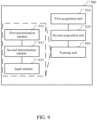
- FIG. 9 is a structural diagram of an apparatus for performing damage segmentation on a vehicle damage image according to an embodiment. As shown in FIG. 9 , the apparatus includes:
- the first classification subset includes a first classification
- the second determination module 932 is specifically configured to:
- the target detection parameter corresponding to the first classification includes a target classification parameter and a target boundary box parameter; the input module 933 is specifically configured to: input the target classification parameter and/or the target boundary box parameter to the initial weight transfer function.
- the weight transfer function is implemented by means of a convolutional neural network.
- the plurality of segmentation samples include a plurality of component segmentation samples in which target objects are component objects.
- the plurality of segmentation samples include a plurality of damage segmentation samples in which target objects are damage objects.
- the first acquisition unit 910 is specifically configured to:
- a target detection parameter and a target segmentation parameter corresponding to each classification in a classification set consisting of the first classification subset and the second classification subset can be determined, so as to determine a damage segmentation model used to perform damage segmentation on a vehicle damage image.
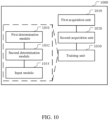
- FIG. 10 is a structural diagram of an apparatus for performing component segmentation on a vehicle damage image according to an embodiment. As shown in FIG. 10 , the apparatus includes:
- the plurality of segmentation samples include a plurality of component segmentation samples in which target objects are component objects.
- a target detection parameter and a target segmentation parameter corresponding to each classification in a classification set consisting of the first classification subset and the second classification subset can be determined, so as to determine a component segmentation model used to perform component segmentation on a vehicle damage image.
- a computer-readable storage medium is further provided, on which a computer program is stored, wherein the computer program, when executed on a computer, causes the computer to perform the method described with reference to FIG. 3 , FIG. 4 , FIG. 6 , or FIG. 8 .
- a computing device including a memory and a processor, wherein the memory stores executable code, and the processor, when executing the executable code, implements the method described with reference to FIG. 3 , FIG. 4 , FIG. 6 , or FIG. 8 .
Landscapes
- Engineering & Computer Science (AREA)
- Theoretical Computer Science (AREA)
- Physics & Mathematics (AREA)
- General Physics & Mathematics (AREA)
- Data Mining & Analysis (AREA)
- Business, Economics & Management (AREA)
- Software Systems (AREA)
- General Engineering & Computer Science (AREA)
- Biophysics (AREA)
- Evolutionary Computation (AREA)
- General Health & Medical Sciences (AREA)
- Molecular Biology (AREA)
- Computing Systems (AREA)
- Computational Linguistics (AREA)
- Biomedical Technology (AREA)
- Mathematical Physics (AREA)
- Artificial Intelligence (AREA)
- Life Sciences & Earth Sciences (AREA)
- Health & Medical Sciences (AREA)
- Computer Vision & Pattern Recognition (AREA)
- Accounting & Taxation (AREA)
- Strategic Management (AREA)
- Finance (AREA)
- Quality & Reliability (AREA)
- Marketing (AREA)
- General Business, Economics & Management (AREA)
- Economics (AREA)
- Technology Law (AREA)
- Entrepreneurship & Innovation (AREA)
- Human Resources & Organizations (AREA)
- Development Economics (AREA)
- Operations Research (AREA)
- Tourism & Hospitality (AREA)
- Image Analysis (AREA)
Claims (10)
- Verfahren zur Durchführung von Schadenssegmentierung auf einem Fahrzeugschadensbild, wobei das Verfahren umfasst:Erfassen einer Mehrzahl von Segmentierungsproben von Fahrzeugbildern, wobei die Mehrzahl von Segmentierungsproben sowohl mit einem Zielerkennungsergebnis als auch einem Zielsegmentierungsergebnis gekennzeichnet ist, wobei das Zielerkennungsergebnis eine Klassifizierung und einen Begrenzungsrahmen eines Zielobjekts umfasst, das Zielobjekt ein Fahrzeugkomponentenobjekt umfasst und das Zielsegmentierungsergebnis eine Kontur des Zielobjekts umfasst; wobei eine Mehrzahl von Klassifizierungen, mit der die Zielobjekte in der Mehrzahl von Segmentierungsproben gekennzeichnet sind, eine erste Klassifizierungsteilmenge bildet und in der die Segmentierungsproben einem Nicht-Schadensobjekt mit einem Merkmal entsprechen, das dem eines Schadensobjekts ähnelt;Erfassen einer Mehrzahl von Schadenserkennungsproben von Fahrzeugbildern, wobei die Mehrzahl von Schadenserkennungsproben mit einem Zielerkennungsergebnis des Schadensobjekts gekennzeichnet ist, aber nicht mit einem Zielsegmentierungsergebnis des Schadensobjekts gekennzeichnet ist, wobei das Zielerkennungsergebnis eine Klassifizierung eines Schadensobjekts und einen Begrenzungsrahmen des Schadensobjekts umfasst, wobei eine Mehrzahl von Klassifizierungen, mit der Zielobjekte in der Mehrzahl von Schadenserkennungsproben gekennzeichnet sind, eine zweite Klassifizierungsteilmenge bildet und die zweite Klassifizierungsteilmenge nicht zu der ersten Klassifizierungsteilmenge gehört; undVerwenden der Mehrzahl von Segmentierungsproben und der Mehrzahl von Schadenserkennungsproben zum Trainieren eines Schadenssegmentierungsmodells, wobei das Schadenssegmentierungsmodell einen Zielerkennungsparameter zum Erkennen eines Schadensobjekts und einen Zielsegmentierungsparameter zum Bestimmen einer Kontur des Schadensobjekts umfasst, wobei das Trainieren eines Schadenssegmentierungsmodells umfasst:Bestimmen eines Zielerkennungsparameters, der jeder Klassifizierung in einem Klassifizierungssatz entspricht, der aus der ersten Klassifizierungsteilmenge und der zweiten Klassifizierungsteilmenge besteht, auf der Basis der Zielerkennungsergebnisse in der Mehrzahl von Segmentierungsproben und der Zielerkennungsergebnisse in der Mehrzahl von Schadenserkennungsproben;Bestimmen einer Gewichtsübertragungsfunktion auf der Basis der Zielerkennungserbnisse und der Zielsegmentierungsergebnisse in der Mehrzahl von Segmentierungsproben, wobei die Gewichtübertragungsfunktion eine Zuordnung von dem Zielerkennungsparameter zu dem Zielsegmentierungsparameter angibt; undEingeben des Zielerkennungsparameters, der jeder Klassifizierung entspricht, in die Gewichtsübertragungsfunktion, um einen Zielsegmentierungsparameter zu erhalten, der jeder Klassifizierung entspricht, um ein trainiertes Schadenssegmentierungsmodell zu bestimmen, das zum Durchführen von Schadenssegmentierung auf einem Fahrzeugschadensbild verwendet wird.
- Verfahren nach Anspruch 1, wobei die erste Klassifizierungsteilmenge eine erste Klassifizierung umfasst, und wobei das Bestimmen einer Gewichtsübertragungsfunktion umfasst:Erfassen eines Zielerkennungsparameters, der der ersten Klassifizierung entspricht;Eingeben des Zielerkennungsparameters, der der ersten Klassifizierung entspricht, in eine anfängliche Gewichtübertragungsfunktion, um einen entsprechenden prädiktiven Zielsegmentierungsparameter zu erhalten;Bestimmen eines vorhergesagten Zielsegmentierungsergebnisses, das einer Segmentierungsprobe der ersten Klassifizierung entspricht, auf der Basis des prädiktiven Zielsegmentierungsparameters; undAnpassen der anfänglichen Gewichtsübertragungsfunktion zumindest auf der Basis des vorhergesagten Zielsegmentierungsergebnisses und des Zielsegmentierungsergebnisses, mit dem die Segmentierungsprobe der ersten Klassifizierung gekennzeichnet ist; und optionalwobei der Zielerkennungsparameter, der der ersten Klassifizierung entspricht, einen Zielklassifizierungsparameter und einen Zielbegrenzungsrahmenparameter umfasst, und das Eingeben des Zielerkennungsparameters, der der ersten Klassifizierung entspricht, in die anfängliche Gewichtsübertragungsfunktion umfasst:
Eingeben des Zielklassifizierungsparameters und/oder des Zielbegrenzungsrahmenparameters in die anfängliche Gewichtsübertragungsfunktion. - Verfahren nach Anspruch 1, wobei die Gewichtsübertragungsfunktion mittels eines neuronalen Faltungsnetzwerks implementiert wird.
- Verfahren nach Anspruch 1, wobei die Mehrzahl von Segmentierungsproben eine Mehrzahl von Schadenssegmentierungsproben umfasst, in der Zielobjekte Schadensobjekte sind.
- Verfahren nach Anspruch 4, wobei das Erfassen einer Mehrzahl von Segmentierungsproben, die sowohl mit einem Zielerkennungsergebnis als auch einem Zielsegmentierungsergebnis gekennzeichnet ist, umfasst:Erfassen einer vorbestimmten Menge von Schadenserkennungsproben aus einer Schadensprobenbibliothek;Extrahieren einer Mehrzahl markanter Regionen aus einer Mehrzahl von Begrenzungsrahmen, die in der vorbestimmten Menge von Schadenserkennungsproben gekennzeichnet ist, auf der Basis der Salienzerkennung, sodass ein Mitarbeiter einen Teil der vorbestimmten Menge von Schadenserkennungsproben mit Segmentierungsergebnissen gemäß der Mehrzahl von markanten Regionen kennzeichnet;Bestimmen des Teils der vorbestimmten Menge von Schadenserkennungsproben, der mit den Segmentierungsergebnissen gekennzeichnet ist, als die Mehrzahl von Schadenssegmentierungsproben; und Bestimmen des Rests der vorbestimmten Menge von Schadenserkennungsproben als die Mehrzahl von Schadenserkennungsproben.
- Vorrichtung zum Durchführen von Schadenssegmentierung auf einem Fahrzeugschadensbild, wobei die Vorrichtung umfasst:eine erste Erfassungseinheit, die zum Erfassen einer Mehrzahl von Segmentierungsproben von Fahrzeugbildern konfiguriert ist, wobei die Mehrzahl von Segmentierungsproben sowohl mit einem Zielerkennungsergebnis als auch einem Zielsegmentierungsergebnis gekennzeichnet ist, wobei das Zielerkennungsergebnis eine Klassifizierung und einen Begrenzungsrahmen eines Zielobjekts umfasst, das Zielobjekt ein Fahrzeugkomponentenobjekt umfasst und das Zielsegmentierungsergebnis eine Kontur des Zielobjekts umfasst; wobei eine Mehrzahl von Klassifizierungen, mit der die Zielobjekte in der Mehrzahl von Segmentierungsproben gekennzeichnet sind, eine erste Klassifizierungsteilmenge bildet und in der die Segmentierungsproben einem Nicht-Schadensobjekt mit einem Merkmal entsprechen, das dem eines Schadensobjekts ähnelt;eine zweite Erfassungseinheit, die zum Erfassen einer Mehrzahl von Schadenserkennungsproben von Fahrzeugbildern konfiguriert ist, wobei die Mehrzahl von Schadenserkennungsproben mit einem Zielerkennungsergebnis des Schadensobjekts gekennzeichnet ist, aber nicht mit einem Zielsegmentierungsergebnis des Schadensobjekts gekennzeichnet ist, wobei das Zielerkennungsergebnis eine Klassifizierung eines Schadensobjekts und einen Begrenzungsrahmen des Schadensobjekts umfasst, wobei eine Mehrzahl von Klassifizierungen, mit der Zielobjekte in der Mehrzahl von Schadenserkennungsproben gekennzeichnet sind, eine zweite Klassifizierungsteilmenge bildet und die zweite Klassifizierungsteilmenge nicht zu der ersten Klassifizierungsteilmenge gehört; undeine Trainingseinheit, die zum Verwenden der Mehrzahl von Segmentierungsproben und der Mehrzahl von Schadenserkennungsproben zum Trainieren eines Schadenssegmentierungsmodells konfiguriert ist, wobei das Schadenssegmentierungsmodell einen Zielerkennungsparameter zum Erkennen eines Schadensobjekts und einen Zielsegmentierungsparameter zum Bestimmen einer Kontur des Schadensobjekts umfasst,wobei das Trainingseinheit insbesondere umfasst:ein erstes Bestimmungsmodul, das so konfiguriert ist, dass es einen Zielerkennungsparameter, der jeder Klassifizierung in einem Klassifizierungssatz entspricht, der aus der ersten Klassifizierungsteilmenge und der zweiten Klassifizierungsteilmenge besteht, auf der Basis der Zielerkennungsergebnisse in der Mehrzahl von Segmentierungsproben und der Zielerkennungsergebnisse in der Mehrzahl von Schadenserkennungsproben bestimmt;ein zweites Bestimmungsmodul, das so konfiguriert ist, dass es eine Gewichtsübertragungsfunktion auf der Basis der Zielerkennungserbnisse und der Zielsegmentierungsergebnisse in der Mehrzahl von Segmentierungsproben bestimmt, wobei die Gewichtübertragungsfunktion eine Zuordnung von dem Zielerkennungsparameter zu dem Zielsegmentierungsparameter angibt; undein Eingabemodul, das so konfiguriert ist, dass es den Zielerkennungsparameter, der jeder Klassifizierung entspricht, in die Gewichtsübertragungsfunktion eingibt, um einen Zielsegmentierungsparameter zu erhalten, der jeder Klassifizierung entspricht, um ein trainiertes Schadenssegmentierungsmodell zu bestimmen, das zum Durchführen von Schadenssegmentierung auf einem Fahrzeugschadensbild verwendet wird.
- Vorrichtung nach Anspruch 6, wobei die erste Klassifizierungsteilmenge eine erste Klassifizierung umfasst, und wobei das zweite Bestimmungsmodul insbesondere konfiguriert ist zum:Erfassen eines Zielerkennungsparameters, der der ersten Klassifizierung entspricht;Eingeben des Zielerkennungsparameters, der der ersten Klassifizierung entspricht, in eine anfängliche Gewichtübertragungsfunktion, um einen entsprechenden prädiktiven Zielsegmentierungsparameter zu erhalten;Bestimmen eines vorhergesagten Zielsegmentierungsergebnisses, das einer Segmentierungsprobe der ersten Klassifizierung entspricht, auf der Basis des prädiktiven Zielsegmentierungsparameters; undAnpassen der anfänglichen Gewichtsübertragungsfunktion zumindest auf der Basis des vorhergesagten Zielsegmentierungsergebnisses und des Zielsegmentierungsergebnisses, mit dem die Segmentierungsprobe der ersten Klassifizierung gekennzeichnet ist; und wobei optional der Zielerkennungsparameter, der der ersten Klassifizierung entspricht, einen Zielklassifizierungsparameter und einen Zielbegrenzungsrahmenparameter umfasst; wobei das Eingabemodul insbesondere konfiguriert ist zum:
Eingeben des Zielklassifizierungsparameters und/oder des Zielbegrenzungsrahmenparameters in die anfängliche Gewichtsübertragungsfunktion. - Vorrichtung nach Anspruch 6, wobei die Gewichtsübertragungsfunktion mittels eines neuronalen Faltungsnetzwerks implementiert wird.
- Vorrichtung nach Anspruch 6, wobei die Mehrzahl von Segmentierungsproben eine Mehrzahl von Schadenssegmentierungsproben umfasst, in der Zielobjekte Schadensobjekte sind; und optional
wobei die erste Erfassungseinheit insbesondere konfiguriert ist zum:Erfassen einer vorbestimmten Menge von Schadenserkennungsproben aus einer Schadensprobenbibliothek;Extrahieren einer Mehrzahl markanter Regionen aus einer Mehrzahl von Begrenzungsrahmen, die in der vorbestimmten Menge von Schadenserkennungsproben gekennzeichnet ist, auf der Basis der Salienzerkennung, sodass ein Mitarbeiter einen Teil der vorbestimmten Menge von Schadenserkennungsproben mit Segmentierungsergebnissen gemäß der Mehrzahl von markanten Regionen kennzeichnet;Bestimmen des Teils der vorbestimmten Menge von Schadenserkennungsproben, der mit den Segmentierungsergebnissen gekennzeichnet ist, als die Mehrzahl von Schadenssegmentierungsproben; und Bestimmen des Rests der vorbestimmten Menge von Schadenserkennungsproben als die Mehrzahl von Schadenserkennungsproben. - Computerlesbares Speichermedium, auf dem ein Computerprogramm gespeichert ist, wobei das Computerprogramm bei Ausführung auf einem Computer den Computer zum Durchführen des Verfahrens nach einem der Ansprüche 1 bis 5 veranlasst.
Applications Claiming Priority (2)
| Application Number | Priority Date | Filing Date | Title |
|---|---|---|---|
| CN201811052994.6A CN110570435B (zh) | 2018-09-10 | 2018-09-10 | 用于对车辆损伤图像进行损伤分割的方法及装置 |
| PCT/CN2019/097904 WO2020052352A1 (zh) | 2018-09-10 | 2019-07-26 | 用于对车辆损伤图像进行损伤分割的方法及装置 |
Publications (3)
| Publication Number | Publication Date |
|---|---|
| EP3852061A1 EP3852061A1 (de) | 2021-07-21 |
| EP3852061A4 EP3852061A4 (de) | 2022-06-08 |
| EP3852061B1 true EP3852061B1 (de) | 2024-06-26 |
Family
ID=68772408
Family Applications (1)
| Application Number | Title | Priority Date | Filing Date |
|---|---|---|---|
| EP19858832.9A Active EP3852061B1 (de) | 2018-09-10 | 2019-07-26 | Verfahren und vorrichtung zur schadenssegmentierung von fahrzeugschäden |
Country Status (6)
| Country | Link |
|---|---|
| US (1) | US11042978B2 (de) |
| EP (1) | EP3852061B1 (de) |
| CN (1) | CN110570435B (de) |
| SG (1) | SG11202100117XA (de) |
| TW (1) | TWI709085B (de) |
| WO (1) | WO2020052352A1 (de) |
Families Citing this family (13)
| Publication number | Priority date | Publication date | Assignee | Title |
|---|---|---|---|---|
| CN109359676A (zh) * | 2018-10-08 | 2019-02-19 | 百度在线网络技术(北京)有限公司 | 用于生成车辆损伤信息的方法和装置 |
| CN111091492B (zh) * | 2019-12-23 | 2020-09-04 | 韶鼎人工智能科技有限公司 | 一种基于卷积神经网络的人脸图像光照迁移方法 |
| WO2021136939A1 (en) | 2020-01-03 | 2021-07-08 | Tractable Ltd | Method of determining repair operations for a damaged vehicle |
| CN112183541B (zh) * | 2020-09-17 | 2023-04-18 | 中山大学肿瘤防治中心(中山大学附属肿瘤医院、中山大学肿瘤研究所) | 一种轮廓提取方法及装置、电子设备、存储介质 |
| CN112192318B (zh) * | 2020-09-28 | 2022-07-19 | 北京天泽智云科技有限公司 | 机加工刀具状态监控方法和系统 |
| CN112365453A (zh) * | 2020-10-26 | 2021-02-12 | 上海东普信息科技有限公司 | 快递货物堆放的检测方法、装置、设备和存储介质 |
| CN114519793B (zh) * | 2020-11-16 | 2025-12-12 | 顺丰科技有限公司 | 目标物体检测方法、装置、电子设备及存储介质 |
| US12211299B2 (en) * | 2021-05-10 | 2025-01-28 | Ccc Intelligent Solutions Inc. | Methods and systems of utilizing image processing systems to measure objects |
| CN113450362A (zh) * | 2021-06-02 | 2021-09-28 | 北京迈格威科技有限公司 | 一种视频目标分割方法、装置和电子系统 |
| CN113763389B (zh) * | 2021-08-24 | 2022-06-14 | 深圳前海爱客风信息技术有限公司 | 一种基于多主体检测分割的图像识别方法 |
| US12002192B2 (en) * | 2021-11-16 | 2024-06-04 | Solera Holdings, Llc | Transfer of damage markers from images to 3D vehicle models for damage assessment |
| CN115115611B (zh) | 2022-07-21 | 2023-04-07 | 明觉科技(北京)有限公司 | 车辆损伤识别方法、装置、电子设备和存储介质 |
| CN116523865A (zh) * | 2023-04-25 | 2023-08-01 | 大连理工大学 | 一种工件表面粗糙度预测方法 |
Family Cites Families (15)
| Publication number | Priority date | Publication date | Assignee | Title |
|---|---|---|---|---|
| US11017250B2 (en) * | 2010-06-07 | 2021-05-25 | Affectiva, Inc. | Vehicle manipulation using convolutional image processing |
| RU2629875C1 (ru) * | 2016-04-04 | 2017-09-04 | Общество С Ограниченной Ответственностью "Яндекс" | Способы и системы прогнозирования условий вождения |
| US10692050B2 (en) * | 2016-04-06 | 2020-06-23 | American International Group, Inc. | Automatic assessment of damage and repair costs in vehicles |
| US11144889B2 (en) * | 2016-04-06 | 2021-10-12 | American International Group, Inc. | Automatic assessment of damage and repair costs in vehicles |
| CN107292394A (zh) * | 2016-04-11 | 2017-10-24 | 富泰华工业(深圳)有限公司 | 车辆损伤定价系统及方法 |
| US10445576B2 (en) * | 2016-09-23 | 2019-10-15 | Cox Automotive, Inc. | Automated vehicle recognition systems |
| US10546242B2 (en) * | 2017-03-03 | 2020-01-28 | General Electric Company | Image analysis neural network systems |
| WO2018187632A1 (en) * | 2017-04-05 | 2018-10-11 | Carnegie Mellon University | Deep learning methods for estimating density and/or flow of objects, and related methods and software |
| CN107392218B (zh) * | 2017-04-11 | 2020-08-04 | 创新先进技术有限公司 | 一种基于图像的车辆定损方法、装置及电子设备 |
| CN107194398B (zh) * | 2017-05-10 | 2018-09-25 | 平安科技(深圳)有限公司 | 车损部位的识别方法及系统 |
| US20190095877A1 (en) * | 2017-09-26 | 2019-03-28 | Panton, Inc. | Image recognition system for rental vehicle damage detection and management |
| CN107977895A (zh) * | 2017-12-08 | 2018-05-01 | 北京小米移动软件有限公司 | 车辆损毁信息的确定方法、装置及用户设备 |
| CN108460328A (zh) * | 2018-01-15 | 2018-08-28 | 浙江工业大学 | 一种基于多任务卷积神经网络的套牌车检测方法 |
| CN108414549A (zh) * | 2018-03-07 | 2018-08-17 | 中国科学院高能物理研究所 | 一种用于汽车定损的射线检测方法 |
| CN108446618A (zh) * | 2018-03-09 | 2018-08-24 | 平安科技(深圳)有限公司 | 车辆定损方法、装置、电子设备及存储介质 |
-
2018
- 2018-09-10 CN CN201811052994.6A patent/CN110570435B/zh active Active
-
2019
- 2019-07-04 TW TW108123629A patent/TWI709085B/zh not_active IP Right Cessation
- 2019-07-26 EP EP19858832.9A patent/EP3852061B1/de active Active
- 2019-07-26 SG SG11202100117XA patent/SG11202100117XA/en unknown
- 2019-07-26 WO PCT/CN2019/097904 patent/WO2020052352A1/zh not_active Ceased
-
2021
- 2021-01-21 US US17/154,361 patent/US11042978B2/en not_active Expired - Fee Related
Also Published As
| Publication number | Publication date |
|---|---|
| EP3852061A1 (de) | 2021-07-21 |
| CN110570435A (zh) | 2019-12-13 |
| WO2020052352A1 (zh) | 2020-03-19 |
| EP3852061A4 (de) | 2022-06-08 |
| US11042978B2 (en) | 2021-06-22 |
| US20210150691A1 (en) | 2021-05-20 |
| TWI709085B (zh) | 2020-11-01 |
| TW202011267A (zh) | 2020-03-16 |
| SG11202100117XA (en) | 2021-02-25 |
| CN110570435B (zh) | 2020-06-26 |
Similar Documents
| Publication | Publication Date | Title |
|---|---|---|
| EP3852061B1 (de) | Verfahren und vorrichtung zur schadenssegmentierung von fahrzeugschäden | |
| CN109858555B (zh) | 基于图像的数据处理方法、装置、设备及可读存储介质 | |
| CN109492643B (zh) | 基于ocr的证件识别方法、装置、计算机设备及存储介质 | |
| WO2019232830A1 (zh) | 机场异物检测方法、装置、计算机设备及存储介质 | |
| CN111931664A (zh) | 混贴票据图像的处理方法、装置、计算机设备及存储介质 | |
| CN112862024B (zh) | 一种文本识别方法及系统 | |
| WO2019232831A1 (zh) | 机场异物识别方法、装置、计算机设备及存储介质 | |
| WO2019128646A1 (zh) | 人脸检测方法、卷积神经网络参数的训练方法、装置及介质 | |
| CN110634116B (zh) | 一种面部图像评分方法及摄像机 | |
| CN111199541A (zh) | 图像质量评价方法、装置、电子设备及存储介质 | |
| CN112686129B (zh) | 一种人脸识别系统及方法 | |
| KR102105954B1 (ko) | 사고위험 감지시스템 및 감지방법 | |
| CN117079313A (zh) | 图像处理方法、装置、设备及存储介质 | |
| Do et al. | Automatic license plate recognition using mobile device | |
| WO2024055530A1 (zh) | 一种图像的目标检测方法、系统、设备及存储介质 | |
| CN111353491A (zh) | 一种文字方向确定方法、装置、设备及存储介质 | |
| Garai et al. | A novel method for image to text extraction using tesseract-OCR | |
| CN115063770B (zh) | 车道线检测方法、模型训练方法、装置、设备及存储介质 | |
| CN112396060A (zh) | 基于身份证分割模型的身份证识别方法及其相关设备 | |
| CN116958919A (zh) | 目标检测方法、装置、计算机可读介质及电子设备 | |
| CN109145723A (zh) | 一种印章识别方法、系统、终端装置及存储介质 | |
| CN117765493A (zh) | 鱼眼图像的目标识别方法、电子设备及存储介质 | |
| US10991085B2 (en) | Classifying panoramic images | |
| CN111738012B (zh) | 提取语义对齐特征的方法、装置、计算机设备和存储介质 | |
| Parikh et al. | Number Plate Detection and Recognition Using OpenCV |
Legal Events
| Date | Code | Title | Description |
|---|---|---|---|
| STAA | Information on the status of an ep patent application or granted ep patent |
Free format text: STATUS: THE INTERNATIONAL PUBLICATION HAS BEEN MADE |
|
| PUAI | Public reference made under article 153(3) epc to a published international application that has entered the european phase |
Free format text: ORIGINAL CODE: 0009012 |
|
| STAA | Information on the status of an ep patent application or granted ep patent |
Free format text: STATUS: REQUEST FOR EXAMINATION WAS MADE |
|
| 17P | Request for examination filed |
Effective date: 20210102 |
|
| AK | Designated contracting states |
Kind code of ref document: A1 Designated state(s): AL AT BE BG CH CY CZ DE DK EE ES FI FR GB GR HR HU IE IS IT LI LT LU LV MC MK MT NL NO PL PT RO RS SE SI SK SM TR |
|
| DAV | Request for validation of the european patent (deleted) | ||
| DAX | Request for extension of the european patent (deleted) | ||
| A4 | Supplementary search report drawn up and despatched |
Effective date: 20220506 |
|
| RIC1 | Information provided on ipc code assigned before grant |
Ipc: G06T 7/194 20170101ALI20220429BHEP Ipc: G06T 7/11 20170101ALI20220429BHEP Ipc: G06N 3/08 20060101ALI20220429BHEP Ipc: G06N 3/04 20060101ALI20220429BHEP Ipc: G06T 7/12 20170101AFI20220429BHEP |
|
| REG | Reference to a national code |
Free format text: PREVIOUS MAIN CLASS: G06T0007120000 Ref country code: DE Ref legal event code: R079 Ref document number: 602019054360 Country of ref document: DE Free format text: PREVIOUS MAIN CLASS: G06T0007120000 Ipc: G06Q0040080000 |
|
| RIC1 | Information provided on ipc code assigned before grant |
Ipc: G06T 7/194 20170101ALI20231213BHEP Ipc: G06T 7/11 20170101ALI20231213BHEP Ipc: G06N 3/08 20060101ALI20231213BHEP Ipc: G06Q 10/10 20120101ALI20231213BHEP Ipc: G06N 3/045 20230101ALI20231213BHEP Ipc: G06T 7/00 20170101ALI20231213BHEP Ipc: G06Q 40/08 20120101AFI20231213BHEP |
|
| GRAP | Despatch of communication of intention to grant a patent |
Free format text: ORIGINAL CODE: EPIDOSNIGR1 |
|
| STAA | Information on the status of an ep patent application or granted ep patent |
Free format text: STATUS: GRANT OF PATENT IS INTENDED |
|
| INTG | Intention to grant announced |
Effective date: 20240122 |
|
| GRAS | Grant fee paid |
Free format text: ORIGINAL CODE: EPIDOSNIGR3 |
|
| GRAA | (expected) grant |
Free format text: ORIGINAL CODE: 0009210 |
|
| STAA | Information on the status of an ep patent application or granted ep patent |
Free format text: STATUS: THE PATENT HAS BEEN GRANTED |
|
| AK | Designated contracting states |
Kind code of ref document: B1 Designated state(s): AL AT BE BG CH CY CZ DE DK EE ES FI FR GB GR HR HU IE IS IT LI LT LU LV MC MK MT NL NO PL PT RO RS SE SI SK SM TR |
|
| REG | Reference to a national code |
Ref country code: GB Ref legal event code: FG4D |
|
| REG | Reference to a national code |
Ref country code: CH Ref legal event code: EP |
|
| REG | Reference to a national code |
Ref country code: DE Ref legal event code: R096 Ref document number: 602019054360 Country of ref document: DE |
|
| P01 | Opt-out of the competence of the unified patent court (upc) registered |
Free format text: CASE NUMBER: APP_37932/2024 Effective date: 20240625 |
|
| PG25 | Lapsed in a contracting state [announced via postgrant information from national office to epo] |
Ref country code: BG Free format text: LAPSE BECAUSE OF FAILURE TO SUBMIT A TRANSLATION OF THE DESCRIPTION OR TO PAY THE FEE WITHIN THE PRESCRIBED TIME-LIMIT Effective date: 20240626 |
|
| PG25 | Lapsed in a contracting state [announced via postgrant information from national office to epo] |
Ref country code: FI Free format text: LAPSE BECAUSE OF FAILURE TO SUBMIT A TRANSLATION OF THE DESCRIPTION OR TO PAY THE FEE WITHIN THE PRESCRIBED TIME-LIMIT Effective date: 20240626 Ref country code: HR Free format text: LAPSE BECAUSE OF FAILURE TO SUBMIT A TRANSLATION OF THE DESCRIPTION OR TO PAY THE FEE WITHIN THE PRESCRIBED TIME-LIMIT Effective date: 20240626 |
|
| REG | Reference to a national code |
Ref country code: LT Ref legal event code: MG9D |
|
| PG25 | Lapsed in a contracting state [announced via postgrant information from national office to epo] |
Ref country code: GR Free format text: LAPSE BECAUSE OF FAILURE TO SUBMIT A TRANSLATION OF THE DESCRIPTION OR TO PAY THE FEE WITHIN THE PRESCRIBED TIME-LIMIT Effective date: 20240927 |
|
| PG25 | Lapsed in a contracting state [announced via postgrant information from national office to epo] |
Ref country code: LV Free format text: LAPSE BECAUSE OF FAILURE TO SUBMIT A TRANSLATION OF THE DESCRIPTION OR TO PAY THE FEE WITHIN THE PRESCRIBED TIME-LIMIT Effective date: 20240626 |
|
| REG | Reference to a national code |
Ref country code: NL Ref legal event code: MP Effective date: 20240626 |
|
| PG25 | Lapsed in a contracting state [announced via postgrant information from national office to epo] |
Ref country code: NO Free format text: LAPSE BECAUSE OF FAILURE TO SUBMIT A TRANSLATION OF THE DESCRIPTION OR TO PAY THE FEE WITHIN THE PRESCRIBED TIME-LIMIT Effective date: 20240926 Ref country code: LV Free format text: LAPSE BECAUSE OF FAILURE TO SUBMIT A TRANSLATION OF THE DESCRIPTION OR TO PAY THE FEE WITHIN THE PRESCRIBED TIME-LIMIT Effective date: 20240626 Ref country code: HR Free format text: LAPSE BECAUSE OF FAILURE TO SUBMIT A TRANSLATION OF THE DESCRIPTION OR TO PAY THE FEE WITHIN THE PRESCRIBED TIME-LIMIT Effective date: 20240626 Ref country code: GR Free format text: LAPSE BECAUSE OF FAILURE TO SUBMIT A TRANSLATION OF THE DESCRIPTION OR TO PAY THE FEE WITHIN THE PRESCRIBED TIME-LIMIT Effective date: 20240927 Ref country code: FI Free format text: LAPSE BECAUSE OF FAILURE TO SUBMIT A TRANSLATION OF THE DESCRIPTION OR TO PAY THE FEE WITHIN THE PRESCRIBED TIME-LIMIT Effective date: 20240626 Ref country code: BG Free format text: LAPSE BECAUSE OF FAILURE TO SUBMIT A TRANSLATION OF THE DESCRIPTION OR TO PAY THE FEE WITHIN THE PRESCRIBED TIME-LIMIT Effective date: 20240626 Ref country code: RS Free format text: LAPSE BECAUSE OF FAILURE TO SUBMIT A TRANSLATION OF THE DESCRIPTION OR TO PAY THE FEE WITHIN THE PRESCRIBED TIME-LIMIT Effective date: 20240926 |
|
| PG25 | Lapsed in a contracting state [announced via postgrant information from national office to epo] |
Ref country code: NL Free format text: LAPSE BECAUSE OF FAILURE TO SUBMIT A TRANSLATION OF THE DESCRIPTION OR TO PAY THE FEE WITHIN THE PRESCRIBED TIME-LIMIT Effective date: 20240626 |
|
| REG | Reference to a national code |
Ref country code: AT Ref legal event code: MK05 Ref document number: 1698350 Country of ref document: AT Kind code of ref document: T Effective date: 20240626 |
|
| PG25 | Lapsed in a contracting state [announced via postgrant information from national office to epo] |
Ref country code: NL Free format text: LAPSE BECAUSE OF FAILURE TO SUBMIT A TRANSLATION OF THE DESCRIPTION OR TO PAY THE FEE WITHIN THE PRESCRIBED TIME-LIMIT Effective date: 20240626 |
|
| PG25 | Lapsed in a contracting state [announced via postgrant information from national office to epo] |
Ref country code: PT Free format text: LAPSE BECAUSE OF FAILURE TO SUBMIT A TRANSLATION OF THE DESCRIPTION OR TO PAY THE FEE WITHIN THE PRESCRIBED TIME-LIMIT Effective date: 20241028 |
|
| PG25 | Lapsed in a contracting state [announced via postgrant information from national office to epo] |
Ref country code: PT Free format text: LAPSE BECAUSE OF FAILURE TO SUBMIT A TRANSLATION OF THE DESCRIPTION OR TO PAY THE FEE WITHIN THE PRESCRIBED TIME-LIMIT Effective date: 20241028 |
|
| PG25 | Lapsed in a contracting state [announced via postgrant information from national office to epo] |
Ref country code: PL Free format text: LAPSE BECAUSE OF FAILURE TO SUBMIT A TRANSLATION OF THE DESCRIPTION OR TO PAY THE FEE WITHIN THE PRESCRIBED TIME-LIMIT Effective date: 20240626 |
|
| PG25 | Lapsed in a contracting state [announced via postgrant information from national office to epo] |
Ref country code: EE Free format text: LAPSE BECAUSE OF FAILURE TO SUBMIT A TRANSLATION OF THE DESCRIPTION OR TO PAY THE FEE WITHIN THE PRESCRIBED TIME-LIMIT Effective date: 20240626 |
|
| PG25 | Lapsed in a contracting state [announced via postgrant information from national office to epo] |
Ref country code: AT Free format text: LAPSE BECAUSE OF FAILURE TO SUBMIT A TRANSLATION OF THE DESCRIPTION OR TO PAY THE FEE WITHIN THE PRESCRIBED TIME-LIMIT Effective date: 20240626 Ref country code: IS Free format text: LAPSE BECAUSE OF FAILURE TO SUBMIT A TRANSLATION OF THE DESCRIPTION OR TO PAY THE FEE WITHIN THE PRESCRIBED TIME-LIMIT Effective date: 20241026 |
|
| PG25 | Lapsed in a contracting state [announced via postgrant information from national office to epo] |
Ref country code: CZ Free format text: LAPSE BECAUSE OF FAILURE TO SUBMIT A TRANSLATION OF THE DESCRIPTION OR TO PAY THE FEE WITHIN THE PRESCRIBED TIME-LIMIT Effective date: 20240626 |
|
| PG25 | Lapsed in a contracting state [announced via postgrant information from national office to epo] |
Ref country code: RO Free format text: LAPSE BECAUSE OF FAILURE TO SUBMIT A TRANSLATION OF THE DESCRIPTION OR TO PAY THE FEE WITHIN THE PRESCRIBED TIME-LIMIT Effective date: 20240626 Ref country code: SK Free format text: LAPSE BECAUSE OF FAILURE TO SUBMIT A TRANSLATION OF THE DESCRIPTION OR TO PAY THE FEE WITHIN THE PRESCRIBED TIME-LIMIT Effective date: 20240626 |
|
| PG25 | Lapsed in a contracting state [announced via postgrant information from national office to epo] |
Ref country code: ES Free format text: LAPSE BECAUSE OF FAILURE TO SUBMIT A TRANSLATION OF THE DESCRIPTION OR TO PAY THE FEE WITHIN THE PRESCRIBED TIME-LIMIT Effective date: 20240626 Ref country code: SM Free format text: LAPSE BECAUSE OF FAILURE TO SUBMIT A TRANSLATION OF THE DESCRIPTION OR TO PAY THE FEE WITHIN THE PRESCRIBED TIME-LIMIT Effective date: 20240626 |
|
| PG25 | Lapsed in a contracting state [announced via postgrant information from national office to epo] |
Ref country code: SM Free format text: LAPSE BECAUSE OF FAILURE TO SUBMIT A TRANSLATION OF THE DESCRIPTION OR TO PAY THE FEE WITHIN THE PRESCRIBED TIME-LIMIT Effective date: 20240626 Ref country code: SK Free format text: LAPSE BECAUSE OF FAILURE TO SUBMIT A TRANSLATION OF THE DESCRIPTION OR TO PAY THE FEE WITHIN THE PRESCRIBED TIME-LIMIT Effective date: 20240626 Ref country code: RO Free format text: LAPSE BECAUSE OF FAILURE TO SUBMIT A TRANSLATION OF THE DESCRIPTION OR TO PAY THE FEE WITHIN THE PRESCRIBED TIME-LIMIT Effective date: 20240626 Ref country code: PL Free format text: LAPSE BECAUSE OF FAILURE TO SUBMIT A TRANSLATION OF THE DESCRIPTION OR TO PAY THE FEE WITHIN THE PRESCRIBED TIME-LIMIT Effective date: 20240626 Ref country code: IS Free format text: LAPSE BECAUSE OF FAILURE TO SUBMIT A TRANSLATION OF THE DESCRIPTION OR TO PAY THE FEE WITHIN THE PRESCRIBED TIME-LIMIT Effective date: 20241026 Ref country code: ES Free format text: LAPSE BECAUSE OF FAILURE TO SUBMIT A TRANSLATION OF THE DESCRIPTION OR TO PAY THE FEE WITHIN THE PRESCRIBED TIME-LIMIT Effective date: 20240626 Ref country code: EE Free format text: LAPSE BECAUSE OF FAILURE TO SUBMIT A TRANSLATION OF THE DESCRIPTION OR TO PAY THE FEE WITHIN THE PRESCRIBED TIME-LIMIT Effective date: 20240626 Ref country code: CZ Free format text: LAPSE BECAUSE OF FAILURE TO SUBMIT A TRANSLATION OF THE DESCRIPTION OR TO PAY THE FEE WITHIN THE PRESCRIBED TIME-LIMIT Effective date: 20240626 Ref country code: AT Free format text: LAPSE BECAUSE OF FAILURE TO SUBMIT A TRANSLATION OF THE DESCRIPTION OR TO PAY THE FEE WITHIN THE PRESCRIBED TIME-LIMIT Effective date: 20240626 |
|
| PG25 | Lapsed in a contracting state [announced via postgrant information from national office to epo] |
Ref country code: IT Free format text: LAPSE BECAUSE OF FAILURE TO SUBMIT A TRANSLATION OF THE DESCRIPTION OR TO PAY THE FEE WITHIN THE PRESCRIBED TIME-LIMIT Effective date: 20240626 |
|
| REG | Reference to a national code |
Ref country code: CH Ref legal event code: PL |
|
| PG25 | Lapsed in a contracting state [announced via postgrant information from national office to epo] |
Ref country code: LU Free format text: LAPSE BECAUSE OF NON-PAYMENT OF DUE FEES Effective date: 20240726 |
|
| PG25 | Lapsed in a contracting state [announced via postgrant information from national office to epo] |
Ref country code: MC Free format text: LAPSE BECAUSE OF FAILURE TO SUBMIT A TRANSLATION OF THE DESCRIPTION OR TO PAY THE FEE WITHIN THE PRESCRIBED TIME-LIMIT Effective date: 20240626 |
|
| REG | Reference to a national code |
Ref country code: DE Ref legal event code: R097 Ref document number: 602019054360 Country of ref document: DE |
|
| PG25 | Lapsed in a contracting state [announced via postgrant information from national office to epo] |
Ref country code: MC Free format text: LAPSE BECAUSE OF FAILURE TO SUBMIT A TRANSLATION OF THE DESCRIPTION OR TO PAY THE FEE WITHIN THE PRESCRIBED TIME-LIMIT Effective date: 20240626 Ref country code: LU Free format text: LAPSE BECAUSE OF NON-PAYMENT OF DUE FEES Effective date: 20240726 |
|
| PG25 | Lapsed in a contracting state [announced via postgrant information from national office to epo] |
Ref country code: DK Free format text: LAPSE BECAUSE OF FAILURE TO SUBMIT A TRANSLATION OF THE DESCRIPTION OR TO PAY THE FEE WITHIN THE PRESCRIBED TIME-LIMIT Effective date: 20240626 |
|
| PG25 | Lapsed in a contracting state [announced via postgrant information from national office to epo] |
Ref country code: BE Free format text: LAPSE BECAUSE OF NON-PAYMENT OF DUE FEES Effective date: 20240731 Ref country code: CH Free format text: LAPSE BECAUSE OF NON-PAYMENT OF DUE FEES Effective date: 20240731 |
|
| PLBE | No opposition filed within time limit |
Free format text: ORIGINAL CODE: 0009261 |
|
| STAA | Information on the status of an ep patent application or granted ep patent |
Free format text: STATUS: NO OPPOSITION FILED WITHIN TIME LIMIT |
|
| GBPC | Gb: european patent ceased through non-payment of renewal fee |
Effective date: 20240926 |
|
| 26N | No opposition filed |
Effective date: 20250327 |
|
| REG | Reference to a national code |
Ref country code: BE Ref legal event code: MM Effective date: 20240731 |
|
| PG25 | Lapsed in a contracting state [announced via postgrant information from national office to epo] |
Ref country code: GB Free format text: LAPSE BECAUSE OF NON-PAYMENT OF DUE FEES Effective date: 20240926 |
|
| PG25 | Lapsed in a contracting state [announced via postgrant information from national office to epo] |
Ref country code: FR Free format text: LAPSE BECAUSE OF NON-PAYMENT OF DUE FEES Effective date: 20240826 |
|
| PG25 | Lapsed in a contracting state [announced via postgrant information from national office to epo] |
Ref country code: IE Free format text: LAPSE BECAUSE OF NON-PAYMENT OF DUE FEES Effective date: 20240726 |
|
| PG25 | Lapsed in a contracting state [announced via postgrant information from national office to epo] |
Ref country code: SE Free format text: LAPSE BECAUSE OF FAILURE TO SUBMIT A TRANSLATION OF THE DESCRIPTION OR TO PAY THE FEE WITHIN THE PRESCRIBED TIME-LIMIT Effective date: 20240626 |
|
| PGFP | Annual fee paid to national office [announced via postgrant information from national office to epo] |
Ref country code: DE Payment date: 20250604 Year of fee payment: 7 |
|
| PG25 | Lapsed in a contracting state [announced via postgrant information from national office to epo] |
Ref country code: CY Free format text: LAPSE BECAUSE OF FAILURE TO SUBMIT A TRANSLATION OF THE DESCRIPTION OR TO PAY THE FEE WITHIN THE PRESCRIBED TIME-LIMIT; INVALID AB INITIO Effective date: 20190726 |
|
| PG25 | Lapsed in a contracting state [announced via postgrant information from national office to epo] |
Ref country code: HU Free format text: LAPSE BECAUSE OF FAILURE TO SUBMIT A TRANSLATION OF THE DESCRIPTION OR TO PAY THE FEE WITHIN THE PRESCRIBED TIME-LIMIT; INVALID AB INITIO Effective date: 20190726 |