EP3852111A1 - Verfahren und vorrichtung zur analyse von fpga-basierter resequenzierung - Google Patents
Verfahren und vorrichtung zur analyse von fpga-basierter resequenzierung Download PDFInfo
- Publication number
- EP3852111A1 EP3852111A1 EP18937933.2A EP18937933A EP3852111A1 EP 3852111 A1 EP3852111 A1 EP 3852111A1 EP 18937933 A EP18937933 A EP 18937933A EP 3852111 A1 EP3852111 A1 EP 3852111A1
- Authority
- EP
- European Patent Office
- Prior art keywords
- resequencing
- fpga
- data
- task
- alignment
- Prior art date
- Legal status (The legal status is an assumption and is not a legal conclusion. Google has not performed a legal analysis and makes no representation as to the accuracy of the status listed.)
- Granted
Links
Images

Classifications
-
- G—PHYSICS
- G16—INFORMATION AND COMMUNICATION TECHNOLOGY [ICT] SPECIALLY ADAPTED FOR SPECIFIC APPLICATION FIELDS
- G16B—BIOINFORMATICS, i.e. INFORMATION AND COMMUNICATION TECHNOLOGY [ICT] SPECIALLY ADAPTED FOR GENETIC OR PROTEIN-RELATED DATA PROCESSING IN COMPUTATIONAL MOLECULAR BIOLOGY
- G16B30/00—ICT specially adapted for sequence analysis involving nucleotides or amino acids
- G16B30/10—Sequence alignment; Homology search
-
- G—PHYSICS
- G06—COMPUTING OR CALCULATING; COUNTING
- G06F—ELECTRIC DIGITAL DATA PROCESSING
- G06F30/00—Computer-aided design [CAD]
- G06F30/30—Circuit design
- G06F30/32—Circuit design at the digital level
- G06F30/33—Design verification, e.g. functional simulation or model checking
- G06F30/3308—Design verification, e.g. functional simulation or model checking using simulation
- G06F30/331—Design verification, e.g. functional simulation or model checking using simulation with hardware acceleration, e.g. by using field programmable gate array [FPGA] or emulation
-
- G—PHYSICS
- G06—COMPUTING OR CALCULATING; COUNTING
- G06F—ELECTRIC DIGITAL DATA PROCESSING
- G06F30/00—Computer-aided design [CAD]
- G06F30/20—Design optimisation, verification or simulation
-
- G—PHYSICS
- G06—COMPUTING OR CALCULATING; COUNTING
- G06F—ELECTRIC DIGITAL DATA PROCESSING
- G06F9/00—Arrangements for program control, e.g. control units
- G06F9/06—Arrangements for program control, e.g. control units using stored programs, i.e. using an internal store of processing equipment to receive or retain programs
- G06F9/30—Arrangements for executing machine instructions, e.g. instruction decode
- G06F9/30098—Register arrangements
- G06F9/3012—Organisation of register space, e.g. banked or distributed register file
- G06F9/30123—Organisation of register space, e.g. banked or distributed register file according to context, e.g. thread buffers
-
- G—PHYSICS
- G06—COMPUTING OR CALCULATING; COUNTING
- G06F—ELECTRIC DIGITAL DATA PROCESSING
- G06F9/00—Arrangements for program control, e.g. control units
- G06F9/06—Arrangements for program control, e.g. control units using stored programs, i.e. using an internal store of processing equipment to receive or retain programs
- G06F9/30—Arrangements for executing machine instructions, e.g. instruction decode
- G06F9/34—Addressing or accessing the instruction operand or the result ; Formation of operand address; Addressing modes
- G06F9/345—Addressing or accessing the instruction operand or the result ; Formation of operand address; Addressing modes of multiple operands or results
-
- G—PHYSICS
- G06—COMPUTING OR CALCULATING; COUNTING
- G06F—ELECTRIC DIGITAL DATA PROCESSING
- G06F9/00—Arrangements for program control, e.g. control units
- G06F9/06—Arrangements for program control, e.g. control units using stored programs, i.e. using an internal store of processing equipment to receive or retain programs
- G06F9/46—Multiprogramming arrangements
- G06F9/48—Program initiating; Program switching, e.g. by interrupt
- G06F9/4806—Task transfer initiation or dispatching
- G06F9/4843—Task transfer initiation or dispatching by program, e.g. task dispatcher, supervisor, operating system
- G06F9/4881—Scheduling strategies for dispatcher, e.g. round robin, multi-level priority queues
-
- G—PHYSICS
- G06—COMPUTING OR CALCULATING; COUNTING
- G06N—COMPUTING ARRANGEMENTS BASED ON SPECIFIC COMPUTATIONAL MODELS
- G06N3/00—Computing arrangements based on biological models
- G06N3/12—Computing arrangements based on biological models using genetic models
- G06N3/126—Evolutionary algorithms, e.g. genetic algorithms or genetic programming
-
- G—PHYSICS
- G16—INFORMATION AND COMMUNICATION TECHNOLOGY [ICT] SPECIALLY ADAPTED FOR SPECIFIC APPLICATION FIELDS
- G16B—BIOINFORMATICS, i.e. INFORMATION AND COMMUNICATION TECHNOLOGY [ICT] SPECIALLY ADAPTED FOR GENETIC OR PROTEIN-RELATED DATA PROCESSING IN COMPUTATIONAL MOLECULAR BIOLOGY
- G16B20/00—ICT specially adapted for functional genomics or proteomics, e.g. genotype-phenotype associations
- G16B20/20—Allele or variant detection, e.g. single nucleotide polymorphism [SNP] detection
-
- G—PHYSICS
- G16—INFORMATION AND COMMUNICATION TECHNOLOGY [ICT] SPECIALLY ADAPTED FOR SPECIFIC APPLICATION FIELDS
- G16B—BIOINFORMATICS, i.e. INFORMATION AND COMMUNICATION TECHNOLOGY [ICT] SPECIALLY ADAPTED FOR GENETIC OR PROTEIN-RELATED DATA PROCESSING IN COMPUTATIONAL MOLECULAR BIOLOGY
- G16B40/00—ICT specially adapted for biostatistics; ICT specially adapted for bioinformatics-related machine learning or data mining, e.g. knowledge discovery or pattern finding
Definitions
- the present disclosure relates to the field of bioinformatics analysis technology, particularly relates to a Field-Programmable Gate Array (FPGA)-based resequencing analysis method and device.
- FPGA Field-Programmable Gate Array
- resequencing analysis includes alignment of sequencing sequences and detection of variations, where the alignment of sequencing sequences adopts a dynamic seed-and-extend algorithm.
- the seed length is increased to obtain fewer alignment positions when the number of that obtained by the initial seed length exceeds a fixed value.
- the Smith-Waterman algorithm is used for alignment and multiple threads are used for the detection of variations.
- the present discourse provides in embodiments a Field Programmable Gate Array (FPGA)-based resequencing analysis method and device, to reduce program running time and calculation cost, and to improve resequencing efficiency, thereby solving the technical problems of low execution efficiency and slow analysis rate in the prior art.
- FPGA Field Programmable Gate Array
- the present disclosure provides in embodiments a FPGA-based resequencing analysis method, including:
- the FPGA-based resequencing analysis method receives the genome resequencing data; takes the genome resequencing data as the input of the FPGA, determines the alignment result in the process of resequencing based on the output of the FPGA, and at the same time, sorts and deduplicates the alignment result; subjects the sorted and deduplicated alignment result to correction in accordance with the base quality value; and detects the variation result based on the corrected alignment result.
- the processes of aligning, sorting and deduplicating may be executed in parallel such that the program running time and calculation cost are reduced, thereby improving resequencing efficiency.
- the present disclosure provides in embodiments a FPGA-based resequencing analysis device, including:
- the FPGA-based resequencing analysis device receives genome resequencing data; takes the genome resequencing data as the input of the FPGA, determines the alignment result in the process of resequencing based on the output of the FPGA, and at the same time, sorts and deduplicates the alignment result; subjects the sorted and deduplicated alignment result to correction in accordance with the base quality value; and detects the variation result based on the corrected alignment result.
- the processes of aligning, sorting and deduplicating may be executed in parallel such that the program running time and calculation cost are reduced, thereby improving resequencing efficiency.
- the present disclosure provides in embodiments a computer device, including a memory, a processor, and a computer program stored in the memory and executable by the processor, wherein the computer program, when executed by the processor, achieves a Field-Programmable Gate Array (FPGA)-based resequencing analysis method according to above-mentioned embodiments of the present disclosure.
- a computer device including a memory, a processor, and a computer program stored in the memory and executable by the processor, wherein the computer program, when executed by the processor, achieves a Field-Programmable Gate Array (FPGA)-based resequencing analysis method according to above-mentioned embodiments of the present disclosure.
- FPGA Field-Programmable Gate Array
- the present disclosure provides in embodiments a computer-readable storage medium having stored therein computer-readable instructions that causes the computer to perform a Field-Programmable Gate Array (FPGA)-based resequencing analysis method according to above-mentioned embodiments of the present disclosure.
- FPGA Field-Programmable Gate Array
- Field-Programmable Gate Array is a configurable integrated circuit containing a programmable wiring network that connects a logic array module, an embedded memory module and a digital signal processors (abbreviated as DSP) module, while the data path and topology of a central processing unit (CPU) and a graphics processing unit (GPU) for processing program instructions are fixed.
- FPGA resource may be configured and connected to establish a customized instruction pipeline to process data, such that the resulting system configuration may solve many types of computing problems efficiently.
- applications well-developed and used on a large scale may also rely on FPGAs as basis and verification for designing the faster but less flexible Application Specific Integrated Circuit (abbreviated as ASIC).
- ASIC Application Specific Integrated Circuit
- Resequencing refers to sequencing the respective genomes of different individuals for species with known genome sequences, based on which variations are analyzed among individuals or populations. A large number of single nucleotide polymorphism (SNP) sites, and insertion and deletion sites can be determined through the detection of variations in the sequenced genome of each individual.
- SNP single nucleotide polymorphism
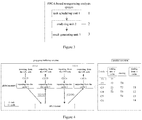
- Figure 1 is a flow chart showing a FPGA-based resequencing analysis method in the Example 1 of the present disclosure.
- the FPGA-based resequencing analysis method configured in the FPGA-based resequencing analysis device is taken as an example for illustration.
- the FPGA-based resequencing analysis device may be configured in any computer device so that the computer device may execute the FPGA-based resequencing analysis.
- the FPGA-based resequencing analysis method includes the following Step 101 to Step 104.
- Step 101 genome resequencing data is received.
- the genome resequencing data includes basic genome resequencing data and parameter information describing the basic genome resequencing data.
- the genome resequencing data may be written into a preset file in advance which may be read when a genome is resequenced, thereby obtaining the genome resequencing data based on the preset file.
- the preset file is saved as a compressed file generally, for example, in a format such as gz. Therefore, the preset file may also be decompressed before being read.
- Step 102 the genome resequencing data is taken as an input of an FPGA, an alignment result in a process of resequencing is determined based on an output of the FPGA, and at the same time, the alignment result is sorted and deduplicated.
- the genome resequencing data may be aligned to a reference genome to obtain information such as alignment positions.
- the obtained information then may be transmitted to the FPGA for calculation to obtain the alignment result.
- it may rely on the parallel processing property of the FPGA, dividing the genome resequencing data into multiple subsets of genome resequencing sub- with a fixed length, aligning the multiple subsets of genome resequencing data with the fixed length to the reference genome in parallel to obtain multiple subsets of alignment results; and combining the multiple sub-sets of alignment sub-results to obtain the alignment result.
- the alignment result when obtained, may be at the same time sorted according to the alignment positions on the reference genome, and those genome resequencing data aligned to a same position may be deduplicated.
- the reason is that duplicate genome resequencing data affects comparison and evaluation of alignment such as a sequencing depth, and eventually leads to a false positive in the detection of variations. Therefore, the genome resequencing data aligned to a same position may be deduplicated.
- the genome resequencing data may be aligned by calling a bioinformatics software and an alignment script, to determine the alignment result in the process of resequencing.
- the alignment result is then sorted and deduplicated by a bioinformatics software and a sorting and deduplicating script, to determine a sorted and deduplicated alignment result.
- the bioinformatics software includes BuildAlignerIndex, Alignment, SortMarkDup, BuildBQSRIndex, BQSR, and HaplotypeCaller, etc.
- the genome resequencing data may be aligned by a FPGA-accelerated high-performance DNA sequence alignment software that supports alignment of paired-end short reads in a length of 33 to 160 bp.
- the alignment result may be sorted and deduplicated by a multi-thread-accelerated high-performance sorting and deduplicating software that supports input and output of a pipe, thereby improving efficiency of sorting and deduplicating.
- the processes of aligning, sorting and deduplicating may be executed in parallel, thus reducing program running time and calculation cost, thereby improving resequencing efficiency.
- Step 103 a sorted and deduplicated alignment result is subjected to correction in accordance with a base quality value.
- the sorted and deduplicated alignment result may be corrected in accordance with the base quality value, i.e., the sorted and deduplicated alignment result is corrected in accordance with the base quality value within the genome resequencing data.
- the sorted and deduplicated alignment result may be corrected in accordance with the base quality value by calling a bioinformatics software and a base quality value correcting script, to obtain a corrected alignment result.
- the sorted and deduplicated alignment result may be corrected in accordance with the base quality value by a multi-thread-accelerated high-performance base quality value correcting software that supports input and output of a pipe, thereby improving correction efficiency.
- Step 104 a variation result is detected based on a corrected alignment result.
- detection of the variation result includes detection of a single nucleotide polymorphism (SNP) site and detection of insertion and deletion sites.
- the variation result may be detected based on the corrected alignment result and related information.
- the variation result may be detected based on the corrected alignment result by calling a bioinformatics software and a variation detecting script, to determine a detection result.
- the variation result may be detected based on the corrected alignment result by a FPGA-accelerated high-performance variation detecting software, to obtain a variation detecting result, thereby improving efficiency of variation detection.
- the FPGA-based resequencing analysis method receives the genome resequencing data; takes the genome resequencing data as the input of the FPGA, determines the alignment result in the process of resequencing based on the output of the FPGA, and at the same time, sorts and deduplicates the alignment result; subjects the sorted and deduplicated alignment result to correction in accordance with the base quality value; and detects the variation result based on the corrected alignment result.
- the processes of aligning, sorting and deduplicating may be executed in parallel such that the program running time and calculation cost are reduced, thereby improving resequencing efficiency.
- the genome resequencing data may be further subjected to hash-calculation based on a sequence of a preset length, and hash-calculated genome resequencing data is taken as the input of the FPGA. Therefore, it is possible to fast locate the alignment position in the reference genome, thereby reducing random access to memory and thus improving alignment efficiency
- the present disclosure provides in an example another FPGA-based resequencing analysis method.
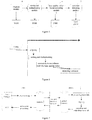
- Figure 2 a flow chart showing a FPGA-based resequencing analysis method in the Example 2 of the present disclosure.
- the FPGA-based resequencing analysis method may include the following Step 201 to Step 207.
- Step 201 genome resequencing data is received, where the genome resequencing data includes basic genome resequencing data and parameter information describing the basic genome resequencing data.
- Figure 3 is a schematic diagram 1 showing a FPGA-based resequencing analysis system according to examples of the present disclosure, where the resequencing analysis system includes a task scheduling unit 1, an analyzing unit 2 and a result generating unit 3.
- the task scheduling unit 1 is configured to receive the basic genome resequencing data and the parameter information describing the basic genome resequencing data.
- a first task for inputting the alignment result and a second task for sorting and deduplicating the alignment result are determined based on the basic genome resequencing data and the parameter information describing the basic genome resequencing data.
- the processes of aligning, sorting and deduplicating are executed in parallel, thus reducing program running time and calculation cost, thereby improving resequencing efficiency. Therefore, once the genome resequencing data is received, the first task for inputting the alignment result and the second task for sorting and deduplicating the alignment result both may be determined in parallel based on the basic genome resequencing data and the parameter information describing the basic genome resequencing data.
- the task scheduling unit 1 may be configured to determine both the first task for inputting the alignment result and the second task for sorting and deduplicating the alignment result in parallel based on the basic genome resequencing data and the parameter information describing the basic genome resequencing data.
- the first task and the second task may be then sent to the analyzing unit 2, which is process-scheduled.
- the analyzing unit 2 may be process-scheduled by a bioinformatics software and a system scheduling script.
- Step 203 a first thread corresponding to the first task and a second thread corresponding to the second task are allocated from the FPGA and a CPU, respectively.
- the first thread corresponding to the first task and the second thread corresponding to the second task may be allocated from the FPGA and the CPU, respectively.
- Step 204 the first thread corresponding to the first task and the second thread corresponding to the second task are started and executed in parallel, such that the genome resequencing data is called via respective threads.
- the first thread corresponding to the first task and the second thread corresponding to the second task, after determined, may be started and executed in parallel, such that the genome resequencing data is called via respective threads for aligning, sorting and deduplicating.
- Step 205 the alignment result in the process of resequencing is determined via an output result of the first thread corresponding to the first task, and at the same time, the alignment result is sorted and deduplicated via an output result of the second thread corresponding to the second task.
- the alignment result in the process of resequencing may be determined based on the output result of the first thread corresponding to the first task.
- the first thread corresponding to the first task may be executed to determine a targeted alignment position, the alignment on duplicate base pairs in the basic genome resequencing data is triggered in accordance with the targeted alignment position, and an alignment result of the duplicate base pairs is taken as the alignment result in the process of resequencing.
- the analyzing unit 2 may be configured to analyze the genome resequencing data to determine the alignment result by process-calling a bioinformatics software and an alignment script, by accelerating the software and by calling the first thread corresponding to the first task from the FPGA.
- the alignment result may be called via the second thread corresponding to the second task for sorting and deduplicating.
- the analyzing unit 2 may be configured to sort and deduplicate the alignment result by process-calling a bioinformatics software and a sorting and deduplicating script, by accelerating the software and by calling the second thread corresponding to the second task from the CPU.
- Step 206 a sorted and deduplicated alignment result is subjected to correction in accordance with a base quality value.
- Step 207 a variation result is detected based on a corrected alignment result.
- the analyzing unit 2 may be configured to correct the sorted and deduplicated alignment result in accordance with the base quality value by process-calling a bioinformatics software and a base quality value correcting script. Further, the analyzing unit 2 may be configured to detect the variation result based on the corrected alignment result to determine a variation detecting result by process-calling a bioinformatics software and a variation detecting script.
- the result generating unit 3 is configured to send the variation detecting result from the analyzing unit 2 to a designated location based on the parameter information describing the basic genome resequencing data transmitted by the task scheduling unit 1.
- the genome resequencing data is analyzed by calling a bioinformatics software and a personalized analyzing script, by accelerating the software and by calling resources from the FPGA, thereby improving efficiency of genome resequencing.
- the targeted alignment position may be cached by a ping-pong buffering technology.
- Figure 4 is a schematic diagram showing acceleration using a ping-pong buffering technology according to examples of the present disclosure.
- the data in a global memory of the FPGA is cached using the ping pong buffer technology. The reason is that a reading/writing operation in the global memory of the FPGA by the CPU may be performed in parallel with a calculating operation by a FPGA kernel module, thereby improving running efficiency.
- a calculating module of the FPGA would be in a state of waiting for Input/Output (I/O) for a period of time, leading to low running efficiency. Therefore, using the ping pong buffer technology to cache the data in the FPGA global memory, such as the targeted alignment position, may keep the calculating module of the FPGA always in an efficient working state, and allow multiple subtasks of a single task to be executed in pipeline, thus achieving parallel execution of the task. For example, referring to Figure 4 , the task T1 being read and output from the cache 1, the task T2 being data-calculated by the cache 2, and the task T3 being written and input into the cache 1 are performed in parallel at the time slice C3.
- FIG. 5 is a schematic diagram 2 showing a FPGA-based resequencing analysis system according to examples of the present disclosure.
- the FPGA-based resequencing analysis system includes an aligning module 4, a sorting and deduplicating module 5, a base quality value-based correcting module 6 and a variation detecting module 7.
- the aligning module 4 is configured to align received genome resequencing data to the reference genome; and to transmit aligned data to the FPGA for calculation, thereby obtaining the alignment result, which may be stored in a SAM format file.
- the sorting and deduplicating module 5 is configured to sort the data output from the aligning module 4 in accordance with the alignment positions; and to mark and filter the duplicate data.
- the sorted and deduplicatedg alignment results may be stored in a BAM format file.
- the base quality value-based correcting module 6 is configured to correct the data output from the sorting and deduplicating module 5 in accordance with the base quality value.
- the corrected alignment result may be stored in a BAM format file.
- the variation detecting module 7 is configured to detect a variation result based on the data output from the base quality value-based correcting module 6 by calling a bioinformatics software and an analyzing script.
- the detection of the variation result includes detection of a single nucleotide polymorphism (SNP) site and detection of insertion and deletion sites.
- the variation detecting result may be stored in a VCF or gVCF format file.
- Figure 6 is a schematic diagram of running timing sequence according to examples of the present disclosure.
- the entire calculation process is optimized as a pipeline structure by adjusting the calculation modes of data between adjacent steps and adding corresponding input and output buffers.
- the aligning module running at the start of the program, is configured to align the genome resequencing data in the input file to the reference genome to obtain the alignment result, which is output to the sorting and deduplicating module.
- the sorting and deduplicating module running at the same time with the aligning module, is configured to sort the data output from the aligning module in accordance with the alignment positions; and to mark and filter the duplicate data.
- the base quality value-based correcting module running at the same time with the sorting and deduplicating module after alignment is completed in the alignment module, is configured to correct the data output from the sorting and deduplicating module in accordance with the base quality value.
- the variation detecting module is configured to detect a variation result based on the data output from the base quality value-based correcting module by calling a bioinformatics software and an analyzing script.
- the detection of the variation result includes detection of a single nucleotide polymorphism (SNP) site and detection of insertion and deletion sites.
- SNP single nucleotide polymorphism
- the genome resequencing analysis is accelerated by process-calling the bioinformatics software and the analyzing script, thus improving efficiency of genome resequencing.
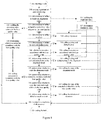
- FIG. 7 is a schematic diagram 3 showing a FPGA-based resequencing analysis system according to examples of the present disclosure.
- the CPU side reads the input file (Fastq), stores the data that needs to be calculated in the memory, and transmits the data in the memory to the global memory of the FPGA through the bus and interface standard.
- the input data is processed and aligned, and the result is recorded, output, and stored in the global memory.
- the FPGA then transmits the processed data to the memory at the CPU side through the bus and interface standard for subsequent processing, and outputs the SAM format file.
- the genome resequencing data is aligned at a high speed by independent configuration of CPU and FPGA, where CPU achieves preprocessing and subsequent processing of data in parallel through the multi-thread technology, and FPAG achieves fine-grained pipeline processing by multiple functional modules connected with channels.
- the I/O reading and writing operations may be separated from compression/decompression operations.
- the compression/decompression operations may be calculated in parallel with loop caching and multi-threading, thereby improving efficiency of genome resequencing.
- Figure 8 is a flow chart showing a FPGA-based resequencing analysis method in the Example 3 of the present disclosure.
- the FPGA-based resequencing analysis method may include the following steps:
- a FPGA accelerator card or a GPU may also be used to improve resequencing efficiency.
- the FPGA-based resequencing analysis system of the present disclosure is composed of multiple modules, improvement, modification, or replacement to any module method, such as using the bwt algorithm to replace the above-described alignment, is within the protection scope of the present disclosure. Therefore, both the hardware-accelerated bwt algorithm and the bwt algorithm replacing the above-described alignment directly can achieve the technical effects of the present disclosure.
- the web path of the data is http://gigadb.org/dataset/100274
- the data path is ftp://parrot.genomics.cn/gigadb/pub/10.5524/100001_101000/100274/CL100008589_L02_r ead_1.fq.gz ftp://parrot.genomics.cn/gigadb/pub/10.5524/100001_101000/100274/CL100008589_L02_r ead_2.fq.gz.
- the process of the present disclosure is as follows: MegaBOLT -type allwithindex -list ./my.list -scalafile ./my.scala -ref ./REF_hs37d5/hs37d5/hs37d5.fa -alignerindex ./REF_hs37d5/hs37d5/hs37d5.fa -bqsrindex ./REF_hs37d5/hs37d5/bqsrRef -vcf ./REF_hs37d5/dbsnp_GRCh37_b149/dbsnp-149.vcf. Table 1.
- the present disclosure further provides in an example a FPGA-based resequencing analysis device.
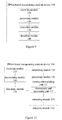
- Figure 9 is a schematic diagram showing a FPGA-based resequencing analysis device in the Example 4 of the present disclosure.
- the FPGA-based resequencing analysis device 100 includes a receiving module 101, a processing module 120, a correcting module 130 and a detecting module 140.
- the receiving module 101 is configured to receive genome resequencing data.
- the processing module 120 is configured to take the resequencing data as an input of an FPGA, to determine an alignment result in a process of resequencing based on an output of the FPGA, and at the same time, to sort and deduplicate the alignment result.
- the correcting module 130 is configured to subject a sorted and deduplicated alignment result to correction in accordance with a base quality value.
- the detecting module 140 is configured to detect a variation result based on a corrected alignment result.
- the FPGA-based resequencing analysis device 100 may further include: a calculating module 150, configured to subject the genome resequencing data to hash-calculation based on a sequence of a preset length after the genome resequencing data is received.
- a calculating module 150 configured to subject the genome resequencing data to hash-calculation based on a sequence of a preset length after the genome resequencing data is received.
- the processing module 120 is specifically configured to take hash-calculated genome resequencing data as the input of the FPGA.
- the genome resequencing data include basic genome resequencing data and parameter information describing the basic genome resequencing data.
- the FPGA-based resequencing analysis device 100 may further include:
- the processing module 120 includes:
- the determining and processing unit 122 is specifically configured to execute the first thread corresponding to the first task to determine a targeted alignment position; to trigger alignment on duplicated base pairs in the basic genome resequencing data in accordance with the targeted alignment position; and to take an alignment result of the duplicated base pairs as the alignment result in the process of resequencing.
- the determining and processing unit 122 is further configured to cache the targeted alignment position by using a ping-pong buffering technology.
- the FPGA-based resequencing analysis device receives genome resequencing data; takes the genome resequencing data as the input of the FPGA, determines the alignment result in the process of resequencing based on the output of the FPGA, and at the same time, sorts and deduplicates the alignment result; subjects the sorted and deduplicated alignment result to correction in accordance with the base quality value; and detects the variation result based on the corrected alignment result.
- the processes of aligning, sorting and deduplicating may be executed in parallel such that the program running time and calculation cost are reduced, thereby improving resequencing efficiency.
- the present disclosure further provides in an example a computer device, including: a memory; a processor; and a computer program stored in the memory and executable by the processor, wherein the computer program, when executed by the processor, achieves a Field-Programmable Gate Array (FPGA)-based resequencing analysis method in the above-mentioned embodiments of the present disclosure.
- a computer device including: a memory; a processor; and a computer program stored in the memory and executable by the processor, wherein the computer program, when executed by the processor, achieves a Field-Programmable Gate Array (FPGA)-based resequencing analysis method in the above-mentioned embodiments of the present disclosure.
- FPGA Field-Programmable Gate Array
- the present disclosure further provides in an example a computer-readable storage medium having stored therein computer-readable instructions that causes the computer to perform a Field-Programmable Gate Array (FPGA)-based resequencing analysis method in the above-mentioned embodiments of the present disclosure.
- FPGA Field-Programmable Gate Array
- first and second are used herein for purposes of description and are not intended to indicate or imply relative importance or significance or impliedly indicate quantity of the technical feature referred to.
- the feature defined with “first” and “second” may comprise one or more this features.
- a plurality of means two or more than two this features, unless specified otherwise.
- Any procedure or method described in the flow charts or described in any other way herein may be understood to comprise one or more modules, portions or parts for storing executable codes that realize particular logic functions or procedures.
- advantageous embodiments of the present disclosure comprises other implementations in which the order of execution is different from that which is depicted or discussed, including executing functions in a substantially simultaneous manner or in an opposite order according to the related functions. This should be understood by those skilled in the art to which embodiments of the present disclosure belong.
- the logic and/or step described in other manners herein or shown in the flow chart, for example, a particular sequence table of executable instructions for realizing the logical function may be specifically achieved in any computer readable medium to be used by the instruction execution system, device or equipment (such as the system based on computers, the system comprising processors or other systems capable of obtaining the instruction from the instruction execution system, device and equipment and executing the instruction), or to be used in combination with the instruction execution system, device and equipment.
- the computer readable medium may be any device adaptive for including, storing, communicating, propagating or transferring programs to be used by or in combination with the instruction execution system, device or equipment.
- the computer readable medium comprise but are not limited to: an electronic connection (an electronic device) with one or more wires, a portable computer enclosure (a magnetic device), a random access memory (RAM), a read only memory (ROM), an erasable programmable read-only memory (EPROM or a flash memory), an optical fiber device and a portable compact disk read-only memory (CDROM).
- the computer readable medium may even be a paper or other appropriate medium capable of printing programs thereon, this is because, for example, the paper or other appropriate medium may be optically scanned and then edited, decrypted or processed with other appropriate methods when necessary to obtain the programs in an electric manner, and then the programs may be stored in the computer memories.
- each part of the present disclosure may be realized by the hardware, software, firmware or their combination.
- a plurality of steps or methods may be realized by the software or firmware stored in the memory and executed by the appropriate instruction execution system.
- the steps or methods may be realized by one or a combination of the following techniques known in the art: a discrete logic circuit having a logic gate circuit for realizing a logic function of a data signal, an application-specific integrated circuit having an appropriate combination logic gate circuit, a programmable gate array (PGA), a field programmable gate array (FPGA), etc.
- each function cell of the embodiments of the present disclosure may be integrated in a processing module, or these cells may be separate physical existence, or two or more cells are integrated in a processing module.
- the integrated module may be realized in a form of hardware or in a form of software function modules. When the integrated module is realized in a form of software function module and is sold or used as a standalone product, the integrated module may be stored in a computer readable storage medium.
- the storage medium mentioned above may be read-only memories, magnetic disks, CD, etc.
Landscapes
- Engineering & Computer Science (AREA)
- Physics & Mathematics (AREA)
- Theoretical Computer Science (AREA)
- Life Sciences & Earth Sciences (AREA)
- Health & Medical Sciences (AREA)
- Software Systems (AREA)
- Biophysics (AREA)
- Bioinformatics & Cheminformatics (AREA)
- General Physics & Mathematics (AREA)
- General Engineering & Computer Science (AREA)
- Bioinformatics & Computational Biology (AREA)
- Evolutionary Biology (AREA)
- Computer Hardware Design (AREA)
- General Health & Medical Sciences (AREA)
- Medical Informatics (AREA)
- Evolutionary Computation (AREA)
- Spectroscopy & Molecular Physics (AREA)
- Biotechnology (AREA)
- Proteomics, Peptides & Aminoacids (AREA)
- Chemical & Material Sciences (AREA)
- Analytical Chemistry (AREA)
- Geometry (AREA)
- Molecular Biology (AREA)
- Genetics & Genomics (AREA)
- Artificial Intelligence (AREA)
- Data Mining & Analysis (AREA)
- Computing Systems (AREA)
- Computational Linguistics (AREA)
- Mathematical Physics (AREA)
- Biomedical Technology (AREA)
- Physiology (AREA)
- Bioethics (AREA)
- Computer Vision & Pattern Recognition (AREA)
- Databases & Information Systems (AREA)
- Epidemiology (AREA)
- Public Health (AREA)
- Measuring Or Testing Involving Enzymes Or Micro-Organisms (AREA)
- Management, Administration, Business Operations System, And Electronic Commerce (AREA)
- Apparatus Associated With Microorganisms And Enzymes (AREA)
Applications Claiming Priority (1)
| Application Number | Priority Date | Filing Date | Title |
|---|---|---|---|
| PCT/CN2018/111357 WO2020082224A1 (zh) | 2018-10-23 | 2018-10-23 | 基于fpga的重测序分析方法和装置 |
Publications (3)
| Publication Number | Publication Date |
|---|---|
| EP3852111A1 true EP3852111A1 (de) | 2021-07-21 |
| EP3852111A4 EP3852111A4 (de) | 2022-04-20 |
| EP3852111B1 EP3852111B1 (de) | 2025-10-22 |
Family
ID=70330861
Family Applications (1)
| Application Number | Title | Priority Date | Filing Date |
|---|---|---|---|
| EP18937933.2A Active EP3852111B1 (de) | 2018-10-23 | 2018-10-23 | Verfahren und vorrichtung zur analyse von fpga-basierter resequenzierung |
Country Status (7)
| Country | Link |
|---|---|
| US (1) | US11836430B2 (de) |
| EP (1) | EP3852111B1 (de) |
| JP (1) | JP7334244B2 (de) |
| KR (1) | KR20210091126A (de) |
| CN (1) | CN113168888B (de) |
| SG (1) | SG11202102591TA (de) |
| WO (1) | WO2020082224A1 (de) |
Families Citing this family (4)
| Publication number | Priority date | Publication date | Assignee | Title |
|---|---|---|---|---|
| CA3178441A1 (en) | 2022-10-05 | 2024-04-05 | Wilten Nicola | Data transmission between devices |
| CN115631792A (zh) * | 2022-11-18 | 2023-01-20 | 湖南师范大学 | 一种基于测序的杂交鱼类基因重组分析方法及装置 |
| CN115691672B (zh) * | 2022-12-20 | 2023-06-16 | 臻和(北京)生物科技有限公司 | 针对测序平台特征的碱基质量值矫正方法、装置、电子设备和存储介质 |
| CN119646367B (zh) * | 2025-02-13 | 2025-05-09 | 中昊芯英(杭州)科技有限公司 | 一种数据处理方法、装置、介质及芯片 |
Family Cites Families (12)
| Publication number | Priority date | Publication date | Assignee | Title |
|---|---|---|---|---|
| EP2754078A4 (de) * | 2011-04-14 | 2015-12-02 | Complete Genomics Inc | Verarbeitung und analyse komplexer nukleinsäuresequenzdaten |
| EP2634717A2 (de) * | 2012-02-28 | 2013-09-04 | Koninklijke Philips Electronics N.V. | Sequenzierungsdatenset der nächsten Generation und effiziente Sequenzverarbeitung damit |
| US9600625B2 (en) | 2012-04-23 | 2017-03-21 | Bina Technologies, Inc. | Systems and methods for processing nucleic acid sequence data |
| US9679104B2 (en) * | 2013-01-17 | 2017-06-13 | Edico Genome, Corp. | Bioinformatics systems, apparatuses, and methods executed on an integrated circuit processing platform |
| US9436565B2 (en) * | 2013-07-04 | 2016-09-06 | Altera Corporation | Non-intrusive monitoring and control of integrated circuits |
| CN105631239B (zh) | 2014-10-30 | 2018-08-17 | 国际商业机器公司 | 用于管理基因序列的方法和装置 |
| CN104462211B (zh) * | 2014-11-04 | 2018-01-02 | 北京诺禾致源科技股份有限公司 | 重测序数据的处理方法和处理装置 |
| US20170316154A1 (en) * | 2014-11-21 | 2017-11-02 | Research Institute At Nationwide Children's Hospital | Parallel-processing systems and methods for highly scalable analysis of biological sequence data |
| WO2016141294A1 (en) | 2015-03-05 | 2016-09-09 | Seven Bridges Genomics Inc. | Systems and methods for genomic pattern analysis |
| US20170270245A1 (en) | 2016-01-11 | 2017-09-21 | Edico Genome, Corp. | Bioinformatics systems, apparatuses, and methods for performing secondary and/or tertiary processing |
| CN107194204A (zh) * | 2017-05-22 | 2017-09-22 | 人和未来生物科技(长沙)有限公司 | 一种全基因组测序数据计算解读方法 |
| CN107609350B (zh) * | 2017-09-08 | 2020-04-03 | 厦门极元科技有限公司 | 一种二代测序数据分析平台的数据处理方法 |
-
2018
- 2018-10-23 JP JP2021519716A patent/JP7334244B2/ja active Active
- 2018-10-23 KR KR1020217010322A patent/KR20210091126A/ko not_active Ceased
- 2018-10-23 US US17/275,075 patent/US11836430B2/en active Active
- 2018-10-23 SG SG11202102591TA patent/SG11202102591TA/en unknown
- 2018-10-23 EP EP18937933.2A patent/EP3852111B1/de active Active
- 2018-10-23 WO PCT/CN2018/111357 patent/WO2020082224A1/zh not_active Ceased
- 2018-10-23 CN CN201880095562.5A patent/CN113168888B/zh active Active
Also Published As
| Publication number | Publication date |
|---|---|
| US11836430B2 (en) | 2023-12-05 |
| SG11202102591TA (en) | 2021-04-29 |
| CN113168888B (zh) | 2025-04-18 |
| US20220058321A1 (en) | 2022-02-24 |
| CN113168888A (zh) | 2021-07-23 |
| EP3852111B1 (de) | 2025-10-22 |
| KR20210091126A (ko) | 2021-07-21 |
| EP3852111A4 (de) | 2022-04-20 |
| JP2022504611A (ja) | 2022-01-13 |
| WO2020082224A1 (zh) | 2020-04-30 |
| JP7334244B2 (ja) | 2023-08-28 |
Similar Documents
| Publication | Publication Date | Title |
|---|---|---|
| EP3852111B1 (de) | Verfahren und vorrichtung zur analyse von fpga-basierter resequenzierung | |
| US10622096B2 (en) | Bioinformatics systems, apparatuses, and methods executed on an integrated circuit processing platform | |
| US20240004838A1 (en) | Quality score compression for improving downstream genotyping accuracy | |
| CN107609350B (zh) | 一种二代测序数据分析平台的数据处理方法 | |
| US8332367B2 (en) | Parallel data redundancy removal | |
| US20160306922A1 (en) | Bioinformatics systems, apparatuses, and methods executed on an integrated circuit processing platform | |
| CN106549673B (zh) | 一种数据压缩方法及装置 | |
| CN112732650A (zh) | 文件分片方法及装置 | |
| EP3608913A1 (de) | Bioinformatiksysteme, vorrichtungen und auf einer verarbeitungsplattform einer integrierten schaltung ausgeführte verfahren | |
| CN108694413A (zh) | 自适应采样不平衡数据分类处理方法、装置、设备及介质 | |
| CN113626399B (zh) | 数据同步方法、装置、服务器及存储介质 | |
| Standish et al. | Group-based variant calling leveraging next-generation supercomputing for large-scale whole-genome sequencing studies | |
| CN114237911A (zh) | 基于cuda的基因数据处理方法、装置和cuda构架 | |
| CN113687773A (zh) | 数据压缩模型训练方法及装置、存储介质 | |
| US12353742B2 (en) | Method, device, and computer program product for data deduplication | |
| KR20240123515A (ko) | Dna 저장장치 염기 서열 분석 장치 및 그 방법 | |
| CN111158994B (zh) | 一种压测性能测试方法及装置 | |
| CN116230085A (zh) | 基于并行聚类的核酸测序方法与系统 | |
| US20240170102A1 (en) | Bioinformatics Systems, Apparatuses, and Methods Executed on an Integrated Circuit Processing Platform | |
| CN113257356B (zh) | 基于不同存储层次的基因测序数据外排序方法及装置 | |
| US20260057234A1 (en) | Method and device of training graph neural network | |
| CN121728262A (zh) | 数据存储方法、电子终端及计算机可读存储介质 | |
| Ito et al. | Acceleration of BAM I/O on distributed file systems | |
| CN117908783A (zh) | 一种操作日志上传方法、装置、电子设备和可读介质 | |
| AU2016219812A1 (en) | Bioinformatics systems, apparatuses, and methods executed on an integrated circuit processing platform |
Legal Events
| Date | Code | Title | Description |
|---|---|---|---|
| STAA | Information on the status of an ep patent application or granted ep patent |
Free format text: STATUS: THE INTERNATIONAL PUBLICATION HAS BEEN MADE |
|
| PUAI | Public reference made under article 153(3) epc to a published international application that has entered the european phase |
Free format text: ORIGINAL CODE: 0009012 |
|
| STAA | Information on the status of an ep patent application or granted ep patent |
Free format text: STATUS: REQUEST FOR EXAMINATION WAS MADE |
|
| 17P | Request for examination filed |
Effective date: 20210325 |
|
| AK | Designated contracting states |
Kind code of ref document: A1 Designated state(s): AL AT BE BG CH CY CZ DE DK EE ES FI FR GB GR HR HU IE IS IT LI LT LU LV MC MK MT NL NO PL PT RO RS SE SI SK SM TR |
|
| DAV | Request for validation of the european patent (deleted) | ||
| DAX | Request for extension of the european patent (deleted) | ||
| REG | Reference to a national code |
Ref country code: DE Ref legal event code: R079 Free format text: PREVIOUS MAIN CLASS: G16B0030000000 Ref country code: DE Ref legal event code: R079 Ref document number: 602018086657 Country of ref document: DE Free format text: PREVIOUS MAIN CLASS: G16B0030000000 Ipc: G16B0030100000 |
|
| A4 | Supplementary search report drawn up and despatched |
Effective date: 20220323 |
|
| RIC1 | Information provided on ipc code assigned before grant |
Ipc: G16B 30/10 20190101AFI20220318BHEP |
|
| GRAP | Despatch of communication of intention to grant a patent |
Free format text: ORIGINAL CODE: EPIDOSNIGR1 |
|
| STAA | Information on the status of an ep patent application or granted ep patent |
Free format text: STATUS: GRANT OF PATENT IS INTENDED |
|
| INTG | Intention to grant announced |
Effective date: 20250522 |
|
| GRAS | Grant fee paid |
Free format text: ORIGINAL CODE: EPIDOSNIGR3 |
|
| GRAA | (expected) grant |
Free format text: ORIGINAL CODE: 0009210 |
|
| STAA | Information on the status of an ep patent application or granted ep patent |
Free format text: STATUS: THE PATENT HAS BEEN GRANTED |
|
| AK | Designated contracting states |
Kind code of ref document: B1 Designated state(s): AL AT BE BG CH CY CZ DE DK EE ES FI FR GB GR HR HU IE IS IT LI LT LU LV MC MK MT NL NO PL PT RO RS SE SI SK SM TR |
|
| REG | Reference to a national code |
Ref country code: CH Ref legal event code: F10 Free format text: ST27 STATUS EVENT CODE: U-0-0-F10-F00 (AS PROVIDED BY THE NATIONAL OFFICE) Effective date: 20251022 Ref country code: GB Ref legal event code: FG4D |
|
| REG | Reference to a national code |
Ref country code: DE Ref legal event code: R096 Ref document number: 602018086657 Country of ref document: DE |
|
| REG | Reference to a national code |
Ref country code: IE Ref legal event code: FG4D |
|
| PGFP | Annual fee paid to national office [announced via postgrant information from national office to epo] |
Ref country code: DE Payment date: 20251014 Year of fee payment: 8 |
|
| PGFP | Annual fee paid to national office [announced via postgrant information from national office to epo] |
Ref country code: GB Payment date: 20251029 Year of fee payment: 8 |
|
| PGFP | Annual fee paid to national office [announced via postgrant information from national office to epo] |
Ref country code: FR Payment date: 20251023 Year of fee payment: 8 |
|
| REG | Reference to a national code |
Ref country code: NL Ref legal event code: MP Effective date: 20251022 |
|
| PG25 | Lapsed in a contracting state [announced via postgrant information from national office to epo] |
Ref country code: NL Free format text: LAPSE BECAUSE OF FAILURE TO SUBMIT A TRANSLATION OF THE DESCRIPTION OR TO PAY THE FEE WITHIN THE PRESCRIBED TIME-LIMIT Effective date: 20251022 |
|
| PG25 | Lapsed in a contracting state [announced via postgrant information from national office to epo] |
Ref country code: ES Free format text: LAPSE BECAUSE OF FAILURE TO SUBMIT A TRANSLATION OF THE DESCRIPTION OR TO PAY THE FEE WITHIN THE PRESCRIBED TIME-LIMIT Effective date: 20251022 |
|
| REG | Reference to a national code |
Ref country code: LT Ref legal event code: MG9D |
|
| PG25 | Lapsed in a contracting state [announced via postgrant information from national office to epo] |
Ref country code: NO Free format text: LAPSE BECAUSE OF FAILURE TO SUBMIT A TRANSLATION OF THE DESCRIPTION OR TO PAY THE FEE WITHIN THE PRESCRIBED TIME-LIMIT Effective date: 20260122 |
|
| PG25 | Lapsed in a contracting state [announced via postgrant information from national office to epo] |
Ref country code: AT Free format text: LAPSE BECAUSE OF FAILURE TO SUBMIT A TRANSLATION OF THE DESCRIPTION OR TO PAY THE FEE WITHIN THE PRESCRIBED TIME-LIMIT Effective date: 20251022 Ref country code: FI Free format text: LAPSE BECAUSE OF FAILURE TO SUBMIT A TRANSLATION OF THE DESCRIPTION OR TO PAY THE FEE WITHIN THE PRESCRIBED TIME-LIMIT Effective date: 20251022 Ref country code: HR Free format text: LAPSE BECAUSE OF FAILURE TO SUBMIT A TRANSLATION OF THE DESCRIPTION OR TO PAY THE FEE WITHIN THE PRESCRIBED TIME-LIMIT Effective date: 20251022 |
|
| REG | Reference to a national code |
Ref country code: AT Ref legal event code: MK05 Ref document number: 1849952 Country of ref document: AT Kind code of ref document: T Effective date: 20251022 |
|
| PG25 | Lapsed in a contracting state [announced via postgrant information from national office to epo] |
Ref country code: RS Free format text: LAPSE BECAUSE OF FAILURE TO SUBMIT A TRANSLATION OF THE DESCRIPTION OR TO PAY THE FEE WITHIN THE PRESCRIBED TIME-LIMIT Effective date: 20260122 |
|
| PG25 | Lapsed in a contracting state [announced via postgrant information from national office to epo] |
Ref country code: IS Free format text: LAPSE BECAUSE OF FAILURE TO SUBMIT A TRANSLATION OF THE DESCRIPTION OR TO PAY THE FEE WITHIN THE PRESCRIBED TIME-LIMIT Effective date: 20260222 |
|
| PG25 | Lapsed in a contracting state [announced via postgrant information from national office to epo] |
Ref country code: PT Free format text: LAPSE BECAUSE OF FAILURE TO SUBMIT A TRANSLATION OF THE DESCRIPTION OR TO PAY THE FEE WITHIN THE PRESCRIBED TIME-LIMIT Effective date: 20260223 |
|
| PG25 | Lapsed in a contracting state [announced via postgrant information from national office to epo] |
Ref country code: PL Free format text: LAPSE BECAUSE OF FAILURE TO SUBMIT A TRANSLATION OF THE DESCRIPTION OR TO PAY THE FEE WITHIN THE PRESCRIBED TIME-LIMIT Effective date: 20251022 |
|
| PG25 | Lapsed in a contracting state [announced via postgrant information from national office to epo] |
Ref country code: LV Free format text: LAPSE BECAUSE OF FAILURE TO SUBMIT A TRANSLATION OF THE DESCRIPTION OR TO PAY THE FEE WITHIN THE PRESCRIBED TIME-LIMIT Effective date: 20251022 |