EP3852432B1 - Procécé de configuration de ressource et procédé et appareil d'envois d'informations - Google Patents
Procécé de configuration de ressource et procédé et appareil d'envois d'informations Download PDFInfo
- Publication number
- EP3852432B1 EP3852432B1 EP19865063.2A EP19865063A EP3852432B1 EP 3852432 B1 EP3852432 B1 EP 3852432B1 EP 19865063 A EP19865063 A EP 19865063A EP 3852432 B1 EP3852432 B1 EP 3852432B1
- Authority
- EP
- European Patent Office
- Prior art keywords
- uci
- resource
- terminal device
- format
- indication information
- Prior art date
- Legal status (The legal status is an assumption and is not a legal conclusion. Google has not performed a legal analysis and makes no representation as to the accuracy of the status listed.)
- Active
Links
Images



Classifications
-
- H—ELECTRICITY
- H04—ELECTRIC COMMUNICATION TECHNIQUE
- H04W—WIRELESS COMMUNICATION NETWORKS
- H04W72/00—Local resource management
- H04W72/20—Control channels or signalling for resource management
- H04W72/23—Control channels or signalling for resource management in the downlink direction of a wireless link, i.e. towards a terminal
-
- H—ELECTRICITY
- H04—ELECTRIC COMMUNICATION TECHNIQUE
- H04L—TRANSMISSION OF DIGITAL INFORMATION, e.g. TELEGRAPHIC COMMUNICATION
- H04L1/00—Arrangements for detecting or preventing errors in the information received
- H04L1/12—Arrangements for detecting or preventing errors in the information received by using return channel
- H04L1/16—Arrangements for detecting or preventing errors in the information received by using return channel in which the return channel carries supervisory signals, e.g. repetition request signals
- H04L1/1607—Details of the supervisory signal
- H04L1/1671—Details of the supervisory signal the supervisory signal being transmitted together with control information
-
- H—ELECTRICITY
- H04—ELECTRIC COMMUNICATION TECHNIQUE
- H04W—WIRELESS COMMUNICATION NETWORKS
- H04W72/00—Local resource management
- H04W72/50—Allocation or scheduling criteria for wireless resources
- H04W72/53—Allocation or scheduling criteria for wireless resources based on regulatory allocation policies
-
- H—ELECTRICITY
- H04—ELECTRIC COMMUNICATION TECHNIQUE
- H04B—TRANSMISSION
- H04B7/00—Radio transmission systems, i.e. using radiation field
- H04B7/02—Diversity systems; Multi-antenna system, i.e. transmission or reception using multiple antennas
- H04B7/04—Diversity systems; Multi-antenna system, i.e. transmission or reception using multiple antennas using two or more spaced independent antennas
- H04B7/06—Diversity systems; Multi-antenna system, i.e. transmission or reception using multiple antennas using two or more spaced independent antennas at the transmitting station
- H04B7/0613—Diversity systems; Multi-antenna system, i.e. transmission or reception using multiple antennas using two or more spaced independent antennas at the transmitting station using simultaneous transmission
- H04B7/0615—Diversity systems; Multi-antenna system, i.e. transmission or reception using multiple antennas using two or more spaced independent antennas at the transmitting station using simultaneous transmission of weighted versions of same signal
- H04B7/0619—Diversity systems; Multi-antenna system, i.e. transmission or reception using multiple antennas using two or more spaced independent antennas at the transmitting station using simultaneous transmission of weighted versions of same signal using feedback from receiving side
- H04B7/0621—Feedback content
- H04B7/0626—Channel coefficients, e.g. channel state information [CSI]
-
- H—ELECTRICITY
- H04—ELECTRIC COMMUNICATION TECHNIQUE
- H04L—TRANSMISSION OF DIGITAL INFORMATION, e.g. TELEGRAPHIC COMMUNICATION
- H04L1/00—Arrangements for detecting or preventing errors in the information received
- H04L1/12—Arrangements for detecting or preventing errors in the information received by using return channel
- H04L1/16—Arrangements for detecting or preventing errors in the information received by using return channel in which the return channel carries supervisory signals, e.g. repetition request signals
- H04L1/18—Automatic repetition systems, e.g. Van Duuren systems
- H04L1/1812—Hybrid protocols; Hybrid automatic repeat request [HARQ]
- H04L1/1819—Hybrid protocols; Hybrid automatic repeat request [HARQ] with retransmission of additional or different redundancy
-
- H—ELECTRICITY
- H04—ELECTRIC COMMUNICATION TECHNIQUE
- H04L—TRANSMISSION OF DIGITAL INFORMATION, e.g. TELEGRAPHIC COMMUNICATION
- H04L1/00—Arrangements for detecting or preventing errors in the information received
- H04L1/12—Arrangements for detecting or preventing errors in the information received by using return channel
- H04L1/16—Arrangements for detecting or preventing errors in the information received by using return channel in which the return channel carries supervisory signals, e.g. repetition request signals
- H04L1/18—Automatic repetition systems, e.g. Van Duuren systems
- H04L1/1867—Arrangements specially adapted for the transmitter end
- H04L1/1896—ARQ related signaling
-
- H—ELECTRICITY
- H04—ELECTRIC COMMUNICATION TECHNIQUE
- H04W—WIRELESS COMMUNICATION NETWORKS
- H04W72/00—Local resource management
- H04W72/04—Wireless resource allocation
- H04W72/044—Wireless resource allocation based on the type of the allocated resource
- H04W72/0446—Resources in time domain, e.g. slots or frames
-
- H—ELECTRICITY
- H04—ELECTRIC COMMUNICATION TECHNIQUE
- H04W—WIRELESS COMMUNICATION NETWORKS
- H04W72/00—Local resource management
- H04W72/20—Control channels or signalling for resource management
- H04W72/21—Control channels or signalling for resource management in the uplink direction of a wireless link, i.e. towards the network
-
- H—ELECTRICITY
- H04—ELECTRIC COMMUNICATION TECHNIQUE
- H04W—WIRELESS COMMUNICATION NETWORKS
- H04W72/00—Local resource management
- H04W72/20—Control channels or signalling for resource management
Definitions
- This application relates to the field of wireless communications technologies, and in particular, to a resource configuration method, an information sending method, and an apparatus.
- a terminal device needs to send uplink control information (uplink control information, UCI) to a network device through a physical uplink control channel (physical uplink control channel, PUCCH), to support uplink and downlink data transmission.
- uplink control information uplink control information
- PUCCH physical uplink control channel
- a resource that is on the PUCCH channel and that is used to transmit the UCI is configured by the network device for the terminal device in an initial power-on phase, an initialization phase, or during cell (channel) parameter update.
- each piece of UCI information sent by the terminal device occupies one resource. Therefore, when the terminal device needs to simultaneously send a plurality of pieces of UCI, if one piece of UCI can be multiplexed to send information carried in the plurality of pieces of UCI, more information can be simultaneously reported.
- one piece of UCI can be multiplexed only when the plurality of pieces of UCI can be combined, to carry the information included in the plurality of pieces of UCI.
- EP 2806593 A1 describes a method and an apparatus for transmitting uplink control information performed by a user equipment in a wireless communication system.
- the method comprises the steps of: receiving a first parameter for indicating whether to simultaneously transmit a first combination of an ACK/NACK and a channel quality indicator (CQI), and a second parameter for indicating whether to multiplex a second combination of an ACK/NACK and the CQI and transmitting same as a second physical uplink control channel (PUCCH) format; and multiplexing the first combination of the ACK/NACK or the second combination of ACK/NACK with the CQI and transmitting same as a first PUCCH format or the second PUCCH format, based on the first parameter and the second parameter.
- CQI channel quality indicator
- Embodiments of this application provide a resource configuration method, an information sending method, and an apparatus, to provide a determining solution for a terminal device to determine whether to combine a plurality of pieces of UCI.
- the technical solutions in the embodiments of this application may be applied to various communications systems, for example, a long term evolution (long term evolution, LTE) system, a worldwide interoperability for microwave access (worldwide interoperability for microwave access, WiMAX) communications system, a future 5th generation (5th Generation, 5G) system such as a new radio access technology (new radio access technology, NR), and a future communications system such as a 6G system.
- LTE long term evolution
- WiMAX worldwide interoperability for microwave access
- 5G future 5th generation
- new radio access technology new radio access technology
- 6G future communications system
- information (information), a signal (signal), a message (message), or a channel (channel) may be interchangeably used sometimes.
- meanings expressed by the terms are consistent when differences between the terms are not emphasized.
- "Of (of)”, “corresponding, relevant (corresponding, relevant)”, and “corresponding (corresponding)” may be interchangeably used sometimes. It should be noted that meanings expressed by the terms are consistent when differences between the terms are not emphasized.
- a network architecture and a service scenario that are described in the embodiments of this application are intended to describe the technical solutions in the embodiments of this application more clearly, and do not constitute any limitation on the technical solutions provided in the embodiments of this application.
- a person of ordinary skill in the art may know that, with evolution of the network architecture and emergence of a new service scenario, the technical solutions provided in the embodiments of this application are also applicable to a similar technical problem.
- the embodiments of this application may be applied to a time division duplex (time division duplex, TDD) scenario, or may be applicable to a frequency division duplex (frequency division duplex, FDD) scenario.
- TDD time division duplex
- FDD frequency division duplex
- an NR network scenario in a wireless communications network is used as an example to describe some scenarios. It should be noted that the solutions in the embodiments of this application may further be applied to another wireless communications network, and a corresponding name may also be replaced with a name of a corresponding function in the another wireless communications network.
- the communications system 100 includes a network device 101 and a terminal device 102.
- a plurality of antennas may be configured for the network device 101, and a plurality of antennas may also be configured for the terminal device 102.
- the network device 101 may simultaneously communicate with a terminal device (not shown in FIG. 1 ) other than the terminal device 102, or the terminal device 102 may also simultaneously communicate with a network device (not shown in FIG. 1 ) other than the network device 101.
- the network device 101 is a device having wireless transmission and reception functions or a chip that may be disposed in the device.
- the device includes but is not limited to an evolved NodeB (evolved Node B, eNB), a radio network controller (radio network controller, RNC), a NodeB (Node B, NB), a base station controller (base station controller, BSC), a base transceiver station (base transceiver station, BTS), a home base station (for example, a home evolved NodeB or a home Node B, HNB), a baseband unit (baseband unit, BBU), an access point (access point, AP) in a wireless fidelity (wireless fidelity, Wi-Fi) system, a wireless relay node, a wireless backhaul node, a transmission point (transmission and reception point, TRP; or transmission point, TP), or the like.
- eNB evolved NodeB
- RNC radio network controller
- NodeB Node B
- BSC base station controller
- the network device 101 may alternatively be a gNB or a transmission point (TRP or TP) in a 5G system, for example, an NR system, or one or one group (including a plurality of antenna panels) of antenna panels of a gNB in a 5G system.
- the network device 101 may alternatively be a network node, for example, a baseband unit (BBU) or a distributed unit (DU, distributed unit), that constitutes a gNB or a transmission point.
- BBU baseband unit
- DU distributed unit
- the gNB may include a centralized unit (centralized unit, CU) and a distributed unit (distributed unit, DU).
- the gNB may further include a radio frequency unit (radio frequency unit, RFU).
- the CU implements some functions of the gNB
- the DU implements some functions of the gNB.
- the CU implements functions of a radio resource control (radio resource control, RRC) layer and a packet data convergence protocol (packet data convergence protocol, PDCP) layer
- the DU implements functions of a radio link control (radio link control, RLC) layer, a media access control (media access control, MAC) layer, and a physical (physical, PHY) layer.
- RRC radio resource control
- PDCP packet data convergence protocol
- the DU implements functions of a radio link control (radio link control, RLC) layer, a media access control (media access control, MAC) layer, and a physical (physical, PHY) layer.
- RLC radio
- the network device may be a CU node, a DU node, or a device including a CU node and a DU node.
- the CU may be classified as a network device in an access network RAN, or the CU may be classified as a network device in a core network CN. This is not limited herein.
- the terminal device 102 may also be referred to as user equipment (user equipment, UE), an access terminal, a subscriber unit, a subscriber station, a mobile station, a mobile station, a remote station, a remote terminal, a mobile device, a user terminal, a terminal, a wireless communications device, a user agent, or a user apparatus.
- user equipment user equipment
- UE user equipment
- an access terminal a subscriber unit, a subscriber station, a mobile station, a mobile station, a remote station, a remote terminal, a mobile device, a user terminal, a terminal, a wireless communications device, a user agent, or a user apparatus.
- the terminal device in the embodiments of this application may be a mobile phone (mobile phone), a tablet computer (Pad), a computer having wireless transmission and reception functions, a virtual reality (virtual reality, VR) terminal device, an augmented reality (augmented reality, AR) terminal device, a wireless terminal in industrial control (industrial control), a wireless terminal in self driving (self driving), a wireless terminal in telemedicine (remote medical), a wireless terminal in a smart grid (smart grid), a wireless terminal in transportation safety (transportation safety), a wireless terminal in a smart city (smart city), a wireless terminal in a smart home (smart home), or the like.
- An application scenario is not limited in the embodiments of this application.
- a terminal device having wireless transmission and reception functions and a chip that may be disposed in the foregoing terminal device are collectively referred to as terminal devices.
- the network device configures a resource on a PUCCH channel for the terminal device in an initial power-on phase, an initialization phase, or during cell (channel) parameter update.
- a part of the resource of the PUCCH channel is used to transmit UCI sent by the terminal device to the network device.
- the network device when configuring a resource used to transmit the UCI, configures indication information for each resource, to indicate whether the terminal device can multiplex one piece of UCI to send information carried in a plurality of pieces of UCI.
- the network device configures a parameter simultaneousHARQ-ACK-CSI (simultaneousHARQ-ACK-CSI) for each resource used to transmit the UCI.
- simultaneousHARQ-ACK-CSI is used to indicate whether the terminal device can combine the HARQ-ACK and the CSI. If the HARQ-ACK and the CSI can be combined, one piece of UCI may be multiplexed to carry information included in the HARQ-ACK and the CSI.
- the network device Before sending the UCI to the network device, the network device first needs to configure, for each piece of to-be-sent UCI, a resource used to transmit the UCI, and then the terminal device sends each piece of UCI based on a configuration result.
- the UCI may be a scheduling request (scheduling request, SR) in addition to the HARQ-ACK and the CSI.
- SR scheduling request
- the terminal device usually needs to multiplex one piece of UCI to send information included in a plurality of pieces of UCI.
- the network device configures the indication information for each resource, and indication information of different resources may indicate different determining results. Consequently, the terminal device cannot determine whether the plurality of pieces to-be-sent UCI can be combined.
- a resource configured for the terminal device for transmitting the HARQ-ACK is a resource A
- a resource configured for the terminal device for transmitting the CSI is a resource B.
- the terminal device When the network device configures the resources, if a value of simultaneousHARQ-ACK-CSI configured for the resource A is "true”, and a value of simultaneousHARQ-ACK-CSI configured for the resource B is "false", the terminal device obtains contradictory determining results based on the values of simultaneousHARQ-ACK-CSI of the two resources, and therefore cannot determine whether the HARQ-ACK and the CSI can be combined.
- the embodiments of this application provide an information sending method, so that a terminal device can determine whether a plurality of pieces of UCI can be combined.
- the communications system may include at least one network device and at least one terminal device, and the network device and the terminal device may communicate with each other through a radio air interface.
- the network device in the communications system may correspond to the network device 101 shown in FIG. 1
- the terminal device may correspond to the terminal device 102 shown in FIG. 1 .
- the terminal device may be a terminal device that is in a wireless communications system and that has a wireless connection relationship with the network device. It may be understood that the network device and a plurality of terminal devices that are in the wireless communications system and that have wireless connection relationships with the network device may transmit a signal according to the same technical solutions. This is not limited in this application.
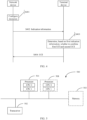
- FIG. 2 is a schematic flowchart of an information sending method according to a claimed embodiment of this application from a perspective of device interaction. As shown in FIG. 2 , the method may include the following steps.
- a network device configures, for a terminal device, a plurality of resources used to transmit UCI.
- the network device sends at least one piece of indication information to the terminal device, where the at least one piece of indication information that is sent includes first indication information.
- the at least one piece of indication information is carried on a resource of a downlink control channel or carried in downlink control information, and the network device sends the at least one piece of indication information to the terminal device through the downlink control channel.
- S203 The terminal device determines, based on the first indication information in the at least one piece of indication information, whether first UCI and second UCI can be multiplexed.
- the method further includes S204: The terminal device sends the UCI to the network device.
- the terminal device if the first indication information indicates to combine the first UCI and the second UCI, the terminal device multiplexes one piece of UCI to carry information included in the first UCI and the second UCI, and sends the multiplexed UCI to the network device in S204. If the first indication information indicates not to combine the first UCI and the second UCI, the terminal device may send one piece of UCI that is in the first UCI and the second UCI and that has a higher priority in S204, and may delay sending or discard the other piece of UCI. For example, if the first indication information indicates not to combine a HARQ-ACK and CSI, the terminal device sends the HARQ-ACK to the network device in S204, and discards the CSI.
- the terminal device if the first indication information indicates to combine the first UCI and the second UCI, the terminal device generates a piece of new UCI, and multiplexes the newly generated UCI to carry the information included in the first UCI and the second UCI. Therefore, the multiplexed UCI may also be referred to as the first UCI and the second UCI that are combined. Then, the terminal device further configures, from the plurality of resources that are configured by the network device and that are used to transmit the UCI, a third resource used to transmit the multiplexed UCI, and sends the multiplexed UCI to the network device on the third resource used to transmit the multiplexed UCI.
- the terminal device may alternatively use a resource configured for UCI having a larger quantity of bits in the second UCI and the first UCI as the third resource configured for transmitting the multiplexed UCI. For example, in most cases, a quantity of bits of the CSI is greater than that of the HARQ-ACK. Therefore, when determining that the CSI and the HARQ-ACK can be combined, the terminal device may send the multiplexed UCI on a resource configured for transmitting the CSI.
- the network device when the first UCI is scheduled by the network device, the network device sends uplink control channel resource indicator (PUCCH resource indicator) information to the terminal device, and the terminal device configures, based on the PUCCH resource indicator information, a resource used to transmit the first UCI.
- the terminal device may alternatively configure, based on a PUCCH resource indicator, the third resource used to transmit the multiplexed UCI.
- the network device for the network device that sends the first indication information to the terminal device, to indicate to combine the first UCI and the second UCI, the network device further configures the third resource for the multiplexed UCI, and receives, on the third resource, the multiplexed UCI sent by the terminal device.
- the network device receives the first UCI on a resource configured for the first UCI (it is assumed that a priority of the first UCI is higher).
- the first UCI and the second UCI are two pieces of UCI that the terminal device needs to multiplex one piece of UCI to send.
- types of the first UCI and the second UCI are different.
- the first UCI and the second UCI may correspond to different services.
- the first UCI is a HARQ-ACK
- the second UCI is CSI.
- the types of the first UCI and the second UCI may alternatively be the same.
- the method provided in this embodiment of this application is also applicable to a scenario in which the first UCI and the second UCI are UCI of a same type, and the scenario is also included in this embodiment of this application.
- the terminal device may determine, in the following manner, whether one piece of UCI needs to be multiplexed to send the first UCI and the second UCI:
- FIG. 3a shows an example of a resource configuration result of the terminal device by using a HARQ-ACK and CSI in 5G NR as an example.
- Resources shown in FIG. 3a are 11 resources selected by the terminal device from the plurality of resources that are configured by the network device for the terminal device and that are used to transmit the UCI.
- the 11 resources are resources in one slot, and are respectively used to transmit 11 pieces of to-be-sent UCI.
- One slot includes 14 time-domain symbols in total: 0 to 13, each resource may occupy one or more time-domain symbols, and the time-domain symbol occupied by each resource is configured by the network device in S201.
- a resource that is used to transmit the HARQ-ACK and that is configured for the terminal device occupies time-domain symbols 6 to 13
- a resource that is used to transmit CSI 1 and that is configured for the terminal device occupies time-domain symbols 5 to 12
- a resource that is used to transmit CSI 2 and that is configured for the terminal device occupies the time-domain symbol 3.
- the slot may further include a resource configured for transmitting an SR.
- eight resources respectively used to transmit an SR 0 to an SR 7 are further configured for the terminal device.
- Step 3 The terminal device obtains a first resource set.
- the resource configuration result shown in FIG. 3a may alternatively be that shown in FIG. 3b .
- any resource in the first resource set and at least one resource in the first resource set other than the resource overlap in time domain, and resources in the first resource set are consecutive in time domain. It should be understood that, that any two resources overlap in time domain means that the two resources occupy at least one same time-domain symbol.
- the first resource set is from a time-domain symbol 1 to a time-domain symbol 13, and there is at least one resource on each time-domain symbol, that is, the resources in the first resource set are consecutive in time domain.
- Step 4 When both the resource configured for transmitting the first UCI and the resource configured for transmitting the second UCI are included in the same first resource set, determine that the first UCI and the second UCI need to be multiplexed.
- the first UCI is a HARQ-ACK
- the second UCI is CSI.
- the first resource set includes a resource configured for transmitting the HARQ-ACK, a resource configured for transmitting CSI 1, and a resource configured for transmitting CSI 2.
- the multiplexed UCI may further be used to send information included in an SR 1 to an SR 7 in FIG. 3b .
- the terminal device may further determine, by using the method shown in FIG. 2 , whether the HARQ-ACK and the CSI 1 can be combined, and whether the HARQ-ACK and the CSI 2 can be combined.
- the embodiments of this application provide the following two embodiments for description.
- the steps shown in FIG. 2 may be implemented in different manners in the two embodiments.
- different implementations are distinguished by using lowercase letters.
- S201a is a possible implementation of S201
- S202a is a possible implementation of S202
- S201b is another possible implementation of S201, and the like. Details are not described again.
- a network device configures same indication information, namely, first indication information, for a plurality of resources.
- the network device configures the same indication information, namely, the first indication information, for the plurality of resources based on factors such as a propagation environment of a communications system. For example, for a terminal device that is far away from a base station and located at an edge of cell coverage, a propagation environment of a wireless communications system of the terminal device is relatively poor.
- the network device configures the same first indication information for the plurality of resources, to indicate the terminal device not to combine first UCI and second UCI.
- the network device configures the same first indication information for the plurality of resources, to indicate the terminal device to combine first UCI and second UCI.
- the indication information is a resource-level PUCCH format parameter (PUCCH-formatconfig).
- the network device configures the same indication information, namely, the first indication information for each resource, to indicate a same determining result. For example, in 5G NR, a value of simultaneousHARQ-ACK-CSI configured by the network device for each resource is "true” or "false”.
- the indication information is a channel-level PUCCH parameter (PUCCH-config).
- the network device configures the indication information for a PUCCH channel on which the plurality of resources used to transmit the UCI are located, and the indication information is the first indication information.
- S202a The network device sends the first indication information to the terminal device.
- S203a The terminal device determines, based on the first indication information sent by the network device, whether to combine the first UCI and the second UCI.
- the terminal device determines based on the same first indication information configured by the network device for the plurality of resources, whether to combine the first UCI and the second UCI, so that a case in which indication information of the first UCI conflicts with indication information of the second UCI is avoided. Therefore, the terminal device can determine whether to combine the first UCI and the second UCI.
- this application further provides another possible implementation.
- S201b A network device configures, for a terminal device, a plurality of resources used to transmit UCI.
- the network device configures each resource, and generates configuration information of each resource.
- the configuration information includes a plurality of configuration parameters such as a format type, a start time-domain symbol, and a quantity of consecutive time-domain symbols.
- the configuration information further includes indication information configured by the network device for the resource.
- the network device may configure the indication information for each resource based on coverage and a network capacity of the network device. For example, indication information A indicates to combine first UCI and second UCI, and indication information B indicates not to combine the first UCI and the second UCI. In this case, the network device may first determine, based on the coverage and the network capacity of the network device, a quantity of pieces of indication information A that can be allocated.
- the network device may preferentially allocate the indication information A to the first 20 resources having the largest quantity of bits.
- the network device sends a plurality of pieces of indication information to the terminal device.
- the plurality of pieces of indication information sent by the network device may be indication information configured by the network device for all or some of the plurality of resources in S201b.
- the network device may send the indication information of the plurality of resources to the terminal device by using the configuration information.
- the terminal device receives the configuration information that is of the plurality of resources and that is sent by the network device. Before performing S203b, the terminal device may first determine first indication information in the plurality of pieces of indication information, and then perform S203b: The terminal device determines, based on the first indication information, whether to combine the first UCI and the second UCI.
- the terminal device may determine a first resource in a first resource set based on a format type of a resource in the configuration information, use indication information in configuration information of the first resource as the first indication information, and then perform S203b.
- the terminal device may use a resource configured for transmitting the second UCI as the first resource.
- a format type of a resource configured for transmitting the first UCI is a first type
- the terminal device may use a resource configured for transmitting the second UCI as the first resource.
- a format type of a resource configured for transmitting the first UCI is a second type
- the terminal device may use a resource configured for transmitting the first UCI as the first resource.
- the network device may configure the following format types for the resource: a format 0, a format 1, a format 2, a format 3, and a format 4.
- the five format types may be respectively used to carry different types of UCI.
- the format 0 and the format 1 may be used to carry UCI having a relatively small quantity of bits
- the format 2, the format 3, and the format 4 may be used to carry UCI having a relatively large quantity of bits.
- the first type may be the format 0 or the format 1
- the second type may be the format 2, the format 3, or the format 4.
- a HARQ-ACK and CSI are used as an example.
- a format type of a resource configured for transmitting the HARQ-ACK is the format 0 or the format 1
- the terminal device may use a resource configured for transmitting the CSI as the first resource.
- a format type of a resource configured for transmitting the HARQ-ACK is any one of the format 2, the format 3, and the format 4, the terminal device may use the resource configured for transmitting the HARQ-ACK as the first resource.
- the format type of the resource configured for the HARQ-ACK is the format 0 or the format 1, it indicates that a quantity of bits of the HARQ-ACK is relatively small. Therefore, whether to combine the HARQ-ACK and the CSI may be determined based on indication information of the resource configured for the CSI.
- the format type of the resource configured for the HARQ-ACK is any one of the format 2, the format 3, and the format 4, it indicates that a quantity of bits of the HARQ-ACK is relatively large. Because a priority of the HARQ-ACK is higher than that of the CSI, whether to combine the HARQ-ACK and the CSI needs to be determined based on indication information of the resource configured for the HARQ-ACK.
- S203 The terminal device determines, based on the first indication information, whether to combine the first UCI and the second UCI.
- the terminal device may multiplex one piece of UCI to carry the information included in the first UCI and the second UCI. Then, the terminal device configures a third resource used to transmit the multiplexed UCI. In a possible implementation, the terminal device may further obtain indication information included in configuration information of the third resource. If the indication information included in the configuration information of the third resource indicates to combine the first UCI and the second UCI, the terminal device sends the multiplexed UCI on the third resource. If the indication information included in the configuration information of the third resource indicates not to combine the first UCI and the second UCI, the terminal device sends, on the third resource, UCI having a higher priority in the first UCI and the second UCI.
- the first indication information may be more flexibly determined based on the quantity of bits of the HARQ-ACK, to further determine whether to combine the first UCI and the second UCI.
- FIG. 4 is a schematic flowchart of another information sending method according to an embodiment of this application. As shown in FIG. 4 , the method mainly includes the following steps.
- a network device configures, for a terminal device, a plurality of resources used to transmit UCI.
- resource configuration performed by the network device is similar to that in S201b. Details are not described again in this embodiment of this application.
- the terminal device receives configuration information of each of the plurality of resources used to transmit the uplink control information.
- the terminal device receives, through a downlink control channel, the configuration information that is of the plurality of resources and that is sent by the network device.
- the configuration information of the plurality of resources is configuration information that is of each resource and that is sent by the network device to the terminal device after the network device separately configures the plurality of resources in S401.
- the terminal device determines, depending on whether a first resource set has a resource whose configuration information includes combination indication information, whether to combine first UCI and second UCI, where the combination indication information is indication information used to indicate to combine the first UCI and the second UCI.
- S404 The terminal device sends the UCI to the network device.
- the terminal device may determine, depending on whether resources configured for transmitting the first UCI and the second UCI belong to the same first resource set, whether one piece of UCI needs to be multiplexed to send information carried in the first UCI and information carried in the second UCI.
- the terminal device may determine, depending on whether the first resource set has the resource whose configuration information includes the combination indication information, whether to combine the first UCI and the second UCI. For example, if the resource whose configuration information includes the combination indication information exists, the terminal device determines to combine the first UCI and the second UCI; or if the resource whose configuration information includes the combination indication information does not exist, the terminal device determines not to combine the first UCI and the second UCI.
- the first resource set shown in FIG. 3b is used as an example. If a value of simultaneousHARQ-ACK-CSI in configuration information of any resource in the first resource set is "true”, the terminal device determines to combine a HARQ-ACK and CSI 1, and a HARQ-ACK and CSI 2. If values of simultaneousHARQ-ACK-CSI in configuration information of all resources in the first resource set are "false", the terminal device determines not to combine a HARQ-ACK and CSI 1, and a HARQ-ACK and CSI 2.
- the terminal device may configure, according to the methods provided in Embodiment 1 and Embodiment 2, a third resource used to transmit the first UCI and the second UCI that are combined, and perform further determining based on indication information included in configuration information of the third resource.
- FIG. 5 is a schematic diagram of an apparatus 500 according to an embodiment of this application.
- the apparatus 500 may be a network device, or may be a system-on-a-chip or a chip, and may perform the method performed by the network device in the embodiment shown in FIG. 2 and/or the embodiment shown in FIG. 4 .
- the apparatus 500 includes at least one processor 501 and a transceiver 502.
- the apparatus 500 further includes a memory 503.
- the processor 501, the transceiver 502, and the memory 503 are connected through a communications bus.
- the processor 501 may be a general purpose central processing unit (CPU), a microprocessor, a specific ASIC, or one or more integrated circuits configured to control execution of a program of the solutions in the present invention.
- CPU central processing unit
- microprocessor a specific ASIC
- integrated circuits configured to control execution of a program of the solutions in the present invention.
- the communications bus may include a path for transferring information between the foregoing components.
- the transceiver 502 is configured to communicate with another device or a communications network.
- the transceiver may be a communications interface, for example, a wired interface, a wireless interface, or a Wi-Fi interface.
- the transceiver includes a radio frequency circuit.
- the memory 503 may be a ROM or another type of static storage device that can store static information and an instruction, or a RAM or another type of dynamic storage device that can store information and an instruction, or may be an EEPROM, a CD-ROM or another compact disc storage, an optical disc storage (including a compressed optical disc, a laser disc, an optical disc, a digital versatile disc, a Blu-ray disc, or the like), a magnetic disk storage medium or another magnetic storage device, or any other medium that can be configured to carry or store expected program code in a form of an instruction or a data structure and that can be accessed by a computer.
- the memory 503 is not limited thereto.
- the memory 503 may exist independently, and is connected to the processor 501 through the communications bus.
- the memory 503 may alternatively be integrated with the processor.
- the memory 503 is configured to store program code for executing the solutions in the present invention, and the execution is controlled by the processor 501.
- the processor 501 is configured to execute the application program code stored in the memory 5
- the processor 501 may include one or more CPUs, for example, a CPU 0 and a CPU 1 in the apparatus 500.
- the apparatus 500 may include a plurality of processors, for example, the processor 501 and a processor 508 shown in the apparatus 500.
- Each of the processors may be a single-core (single-CPU) processor, or may be a multi-core (multi-CPU) processor.
- the processors herein may be one or more devices, circuits, and/or processing cores configured to process data (for example, a computer program instruction).
- the apparatus may be configured to implement the steps performed by the network device in the method in the embodiment shown in FIG. 2 and/or the embodiment shown in FIG. 4 .
- the apparatus may be configured to implement the steps performed by the network device in the method in the embodiment shown in FIG. 2 and/or the embodiment shown in FIG. 4 .
- function modules in the apparatus may be obtained through division based on the foregoing method examples.
- the function modules may be obtained through division based on corresponding functions, or two or more functions may be integrated into one processing module.
- the integrated module may be implemented in a form of hardware, or may be implemented in a form of a software function module.
- division into the modules is an example and is merely logical function division, and may be other division in an actual implementation.
- FIG. 6 is a schematic diagram of an apparatus.
- the apparatus may be the network device in the embodiments of this application, a system-on-a-chip, or a chip.
- the apparatus includes a processing unit 601 and a communications unit 602.
- the processing unit 601 may be, for example, a processor.
- the communications unit 602 may be, for example, a transceiver.
- the transceiver includes a radio frequency circuit.
- the network device further includes a storage unit, and the storage unit may be, for example, a memory.
- the storage unit stores a computer-executable instruction.
- the processing unit is connected to the storage unit.
- the processing unit executes the computer-executable instruction stored in the storage unit, so that the network device performs the foregoing method.
- the processing unit 601 is configured to control the communications unit 602 to perform the following processing: configuring, for a terminal device, a plurality of resources used to transmit uplink control information UCI; and sending at least one piece of indication information to the terminal device, where the at least one piece of indication information includes first indication information, and the first indication information is used to indicate whether to combine first UCI and second UCI, where resources configured for transmitting the first UCI and the second UCI belong to a first resource set, the first resource set is a subset of a resource set that includes the plurality of resources, any resource in the first resource set and at least one resource in the first resource set other than the any resource overlap in time domain, and resources in the first resource set are consecutive in time domain.
- the processing unit 601 is further configured to: control the communications unit 602 to receive, on a third resource, the first UCI and the second UCI that are combined, where the third resource is a resource in the plurality of resources that are configured by the processing unit 601 for the terminal device and that are used to transmit the UCI; or control the communications unit 602 to receive the first UCI on the resource configured for transmitting the first UCI.
- the at least one piece of indication information is carried on a resource of a downlink control channel or carried in downlink control information.
- the first UCI is hybrid automatic repeat request-acknowledgment HARQ-ACK information
- the second UCI is channel state information CSI
- the indication information is used to indicate whether to combine parameters of the first UCI and the second UCI.
- the first indication information is indication information that is in the at least one piece of indication information and that is included in configuration information of a first resource; and a format type of the resource configured for transmitting the first UCI is a first type, and the first resource is the resource configured for transmitting the second UCI; or a format type of the resource configured for transmitting the first UCI is a second type, and the first resource is the resource configured for transmitting the first UCI.
- the first type is a format 0 or a format 1; and the second type is a format 2, a format 3, or a format 4.
- the apparatus may be configured to implement the steps performed by the network device in the communication method in the embodiments of the present invention.
- the steps performed by the network device in the communication method in the embodiments of the present invention.
- the apparatus 500 shown in FIG. 5 may alternatively be a terminal device, a system-on-a-chip, or a chip, and may perform the method performed by the terminal device in the embodiment shown in FIG. 2 and/or the embodiment shown in FIG. 4 .
- the apparatus 500 shown in FIG. 5 may alternatively be a terminal device, a system-on-a-chip, or a chip, and may perform the method performed by the terminal device in the embodiment shown in FIG. 2 and/or the embodiment shown in FIG. 4 .
- the apparatus 500 shown in FIG. 5 may alternatively be a terminal device, a system-on-a-chip, or a chip, and may perform the method performed by the terminal device in the embodiment shown in FIG. 2 and/or the embodiment shown in FIG. 4 .
- FIG. 6 is a schematic diagram of an apparatus.
- the apparatus may alternatively be the terminal device in the embodiments of this application, a system-on-a-chip, or a chip.
- the apparatus includes a processing unit 601 and a communications unit 602.
- the processing unit 601 may be, for example, a processor
- the communications unit 602 may be, for example, a transceiver.
- the transceiver includes a radio frequency circuit.
- the terminal device further includes a storage unit, and the storage unit may be, for example, a memory.
- the storage unit stores a computer-executable instruction.
- the processing unit is connected to the storage unit.
- the processing unit executes the computer-executable instruction stored in the storage unit, so that the terminal device performs the foregoing method.
- the processing unit 601 is configured to control the communications unit 602 to perform the following processing: receiving at least one piece of indication information through the communications unit 602, where the at least one piece of indication information includes first indication information; and determining, based on the first indication information, whether to combine first UCI and second UCI, where resources configured for transmitting the first UCI and the second UCI belong to a first resource set, the first resource set is a subset of a resource set that includes a plurality of resources that are configured by a network device for the terminal device and that are used to transmit the UCI, any resource in the first resource set and at least one resource in the first resource set other than the any resource overlap in time domain, and resources in the first resource set are consecutive in time domain.
- the processing unit 601 is further configured to: control the communications unit 602 to send, on a third resource, the first UCI and the second UCI that are combined, where the third resource is a resource in the plurality of resources that are configured by the network device for the terminal device and that are used to transmit the UCI; or control the communications unit 602 to send the first UCI on the resource configured for transmitting the first UCI.
- the at least one piece of indication information is carried on a resource of a downlink control channel or carried in downlink control information.
- the first UCI is hybrid automatic repeat request-acknowledgment HARQ-ACK information
- the second UCI is channel state information CSI
- the indication information is used to indicate whether to combine parameters of the first UCI and the second UCI.
- the first indication information is indication information that is in the at least one piece of indication information and that is carried in configuration information of a first resource; and a format type of the resource configured for transmitting the first UCI is a first type, and the first resource is the resource configured for transmitting the second UCI; or a format type of the resource configured for transmitting the first UCI is a second type, and the first resource is the resource configured for transmitting the first UCI.
- the first type is a format 0 or a format 1; and the second type is a format 2, a format 3, or a format 4.
- the processing unit 601 is configured to control the communications unit 602 to perform the following processing: receiving, through the communications unit 602, configuration information corresponding to each of a plurality of resources used to transmit uplink control information, where the configuration information corresponding to the resource includes indication information; and determining, depending on whether a first resource set has a resource whose configuration information includes combination indication information, whether to combine first UCI and second UCI, where the combination indication information is indication information used to indicate to combine the first UCI and the second UCI, where resources configured for transmitting the first UCI and the second UCI belong to the first resource set, the first resource set is a subset of a resource set that includes the plurality of resources that are configured by a network device for the terminal device and that are used to transmit the UCI, any resource in the first resource set and at least one resource in the first resource set other than the any resource overlap in time domain, and resources in the first resource set are consecutive in time domain.
- the apparatus may be configured to implement the steps performed by the terminal device in the communication method in the embodiments of the present invention.
- the steps performed by the terminal device in the communication method in the embodiments of the present invention.
- an embodiment of this application further provides a computer-readable storage medium.
- the computer-readable storage medium stores a computer instruction.
- the instruction When the instruction is run on a computer, the computer is enabled to perform any one of the foregoing method embodiments.
- an embodiment of this application further provides a computer program product including an instruction.
- the computer program product runs on a computer, the computer is enabled to perform the method embodiments in the foregoing aspects.
- All or some of the foregoing embodiments may be implemented by software, hardware, firmware, or any combination thereof.
- software is used to implement the embodiments, all or some of the embodiments may be implemented in a form of a computer program product.
- the computer program product includes one or more computer instructions.
- the computer may be a general purpose computer, a special purpose computer, a computer network, or another programmable apparatus.
- the computer instructions may be stored in a computer-readable storage medium or may be transmitted from one computer-readable storage medium to another computer-readable storage medium.
- the computer instructions may be transmitted from one website, computer, server, or data center to another website, computer, server, or data center in a wired (for example, a coaxial cable, an optical fiber, or a digital subscriber line (DSL)) or wireless (for example, infrared, radio, or microwave) manner.
- the computer-readable storage medium may be any usable medium accessible by a computer, or a data storage device, such as a server or a data center, integrating one or more usable media.
- the usable medium may be a magnetic medium (for example, a floppy disk, a hard disk, or a magnetic tape), an optical medium (for example, a DVD), a semiconductor medium (for example, a solid-state drive (Solid State Disk, SSD)), or the like.
- a magnetic medium for example, a floppy disk, a hard disk, or a magnetic tape
- an optical medium for example, a DVD
- a semiconductor medium for example, a solid-state drive (Solid State Disk, SSD)
- These computer program instructions may be provided for a general purpose computer, a special purpose computer, an embedded processor, or a processor of another programmable data processing device to generate a machine, so that the instructions executed by the computer or the processor of the another programmable data processing device generate an apparatus for implementing a specified function in one or more procedures in the flowcharts and/or in one or more blocks in the block diagrams.
- These computer program instructions may alternatively be stored in a computer-readable memory that can indicate the computer or the another programmable data processing device to work in a specific manner, so that the instructions stored in the computer-readable memory generate an artifact that includes an instruction apparatus.
- the instruction apparatus implements a specified function in one or more procedures in the flowcharts and/or in one or more blocks in the block diagrams.
- These computer program instructions may alternatively be loaded onto the computer or the another programmable data processing device, so that a series of operations and steps are performed on the computer or the another programmable device, thereby generating computer-implemented processing. Therefore, the instructions executed on the computer or the another programmable device provide steps for implementing a specified function in one or more procedures in the flowcharts and/or in one or more blocks in the block diagrams.
Landscapes
- Engineering & Computer Science (AREA)
- Computer Networks & Wireless Communication (AREA)
- Signal Processing (AREA)
- Mobile Radio Communication Systems (AREA)
Claims (15)
- Procédé de configuration de ressources, comprenant :la configuration (S201), par un dispositif de réseau, pour un dispositif de terminal, d'une pluralité de ressources utilisées pour transmettre des informations de commande de liaison montante, UCI ;la configuration (S201), par le dispositif de réseau, de premières informations d'indication identiques, pour la totalité de la pluralité de ressources ; etl'envoi (S202), par le dispositif de réseau, des premières informations d'indication, au dispositif de terminal, dans lequelles premières informations d'indication indiquent au dispositif de terminal de multiplexer des premières UCI et des secondes UCI, et un type des premières UCI est différent d'un type des secondes UCI,le procédé comprenant en outre :
la réception (S204), par le dispositif de réseau, sur une troisième ressource, des premières UCI et des secondes UCI qui sont multiplexées, dans lequel la troisième ressource est une ressource dans la pluralité de ressources qui sont configurées, par le dispositif de réseau, pour le dispositif de terminal, et qui sont utilisées pour transmettre les UCI. - Procédé selon la revendication 1, dans lequel
des ressources configurées pour transmettre les premières UCI et les secondes UCI appartiennent à un premier ensemble de ressources, le premier ensemble de ressources est un sous-ensemble d'un ensemble de ressources qui est constitué de la pluralité de ressources, une quelconque ressource dans le premier ensemble de ressources et au moins une ressource dans le premier ensemble de ressources autre que l'une quelconque ressource se chevauchent en domaine de temps, et des ressources dans le premier ensemble de ressources sont consécutives en domaine de temps. - Procédé selon la revendication 1 ou 2, dans lequella troisième ressource est une ressource configurée pour des UCI ayant une plus grande quantité de bits dans les secondes UCI et les premières UCI ; oula troisième ressource est une ressource déterminée par un indicateur de ressource de PUCCH.
- Procédé selon l'une quelconque des revendications 1 à 3, dans lequel les premières UCI sont des informations d'accusé de réception de demande de répétition automatique hybride, HARQ-ACK, et les secondes UCI sont des informations d'état de canal, CSI.
- Procédé selon l'une quelconque des revendications 1 à 4, dans lequel les premières informations d'indication sont des informations d'indication portées dans des informations de configuration d'une première ressource ; etun type de format de la ressource configurée pour transmettre les premières UCI est un premier type, et la première ressource est la ressource configurée pour transmettre les secondes UCI; ouun type de format de la ressource configurée pour transmettre les premières UCI est un second type, et la première ressource est la ressource configurée pour transmettre les premières UCI.
- Procédé selon la revendication 5, dans lequel le premier type est un format 0 ou un format 1 ; et le second type est un format 2, un format 3, ou un format 4.
- Procédé d'envoi d'informations, comprenant :la réception (S202), par un dispositif de terminal, d'informations de configuration qui sont d'une pluralité de ressources utilisées pour transmettre des informations de commande de liaison montante, UCI, et qui sont envoyées par un dispositif de réseau ;la réception (S202), par le dispositif de terminal, de premières informations d'indication, dans lequel les premières informations d'indication indiquent au dispositif de terminal de multiplexer des premières UCI et des secondes UCI, et un type des premières UCI est différent d'un type des secondes UCI dans lequel la totalité de la pluralité de ressources correspondent aux premières informations d'indication identiques ; etla détermination (S203), par le dispositif de terminal, sur la base des premières informations d'indication, de multiplexer des premières UCI et des secondes UCI, et un type des premières UCI est différent d'un type des secondes UCI,le procédé comprenant en outre :
l'envoi (S204), par le dispositif de terminal, sur une troisième ressource, des premières UCI et des secondes UCI qui sont multiplexées, dans lequel la troisième ressource est une ressource dans la pluralité de ressources qui sont configurées par le dispositif de réseau, pour le dispositif de terminal, et qui sont utilisées pour transmettre les UCI. - Procédé selon la revendication 7, dans lequel
des ressources configurées pour transmettre les premières UCI et les secondes UCI appartiennent à un premier ensemble de ressources, le premier ensemble de ressources est un sous-ensemble d'un ensemble de ressources qui est constitué de la pluralité de ressources qui sont configurées, par le dispositif de réseau, pour le dispositif de terminal, et qui sont utilisées pour transmettre les UCI, une quelconque ressource dans le premier ensemble de ressources et au moins une ressource dans le premier ensemble de ressources autre que l'une quelconque ressource se chevauchent en domaine de temps, et des ressources dans le premier ensemble de ressources sont consécutives en domaine de temps. - Procédé selon la revendication 7 ou 8, dans lequella troisième ressource est une ressource configurée pour des UCI ayant une plus grande quantité de bits dans les secondes UCI et les premières UCI ; oula troisième ressource est une ressource déterminée par un indicateur de ressource de PUCCH.
- Procédé selon l'une quelconque des revendications 7 à 9, dans lequel les premières UCI sont des informations d'accusé de réception de demande de répétition automatique hybride, HARQ-ACK, et les secondes UCI sont des informations d'état de canal, CSI.
- Procédé selon l'une quelconque des revendications 7 à 10, dans lequel les premières informations d'indication sont des informations d'indication portées dans des informations de configuration d'une première ressource ; etun type de format de la ressource configurée pour transmettre les premières UCI est un premier type, et la première ressource est la ressource configurée pour transmettre les secondes UCI; ouun type de format de la ressource configurée pour transmettre les premières UCI est un second type, et la première ressource est la ressource configurée pour transmettre les premières UCI.
- Procédé selon la revendication 11, dans lequel le premier type est un format 0 ou un format 1 ; et le second type est un format 2, un format 3, ou un format 4.
- Appareil configuré pour faire en sorte qu'une station de base réalise le procédé selon l'une quelconque des revendications 1 à 6.
- Appareil configuré pour faire en sorte qu'un dispositif de terminal réalise le procédé selon l'une quelconque des revendications 7 à 12.
- Programme d'ordinateur, comprenant des instructions qui, lorsqu'elles sont exécutées par un ordinateur, font en sorte que l'ordinateur réalise le procédé selon l'une quelconque des revendications 1 à 6, 7 à 12.
Applications Claiming Priority (2)
| Application Number | Priority Date | Filing Date | Title |
|---|---|---|---|
| CN201811142571.3A CN110972280B (zh) | 2018-09-28 | 2018-09-28 | 一种资源配置方法、信息发送方法及装置 |
| PCT/CN2019/108767 WO2020063927A1 (fr) | 2018-09-28 | 2019-09-27 | Procécé de configuration de ressource et procédé et appareil d'envois d'informations |
Publications (3)
| Publication Number | Publication Date |
|---|---|
| EP3852432A1 EP3852432A1 (fr) | 2021-07-21 |
| EP3852432A4 EP3852432A4 (fr) | 2021-11-24 |
| EP3852432B1 true EP3852432B1 (fr) | 2024-11-06 |
Family
ID=69951038
Family Applications (1)
| Application Number | Title | Priority Date | Filing Date |
|---|---|---|---|
| EP19865063.2A Active EP3852432B1 (fr) | 2018-09-28 | 2019-09-27 | Procécé de configuration de ressource et procédé et appareil d'envois d'informations |
Country Status (4)
| Country | Link |
|---|---|
| US (1) | US20210219298A1 (fr) |
| EP (1) | EP3852432B1 (fr) |
| CN (2) | CN110972280B (fr) |
| WO (1) | WO2020063927A1 (fr) |
Families Citing this family (9)
| Publication number | Priority date | Publication date | Assignee | Title |
|---|---|---|---|---|
| CN111901875B (zh) * | 2020-04-21 | 2025-06-27 | 中兴通讯股份有限公司 | 指示方法、上行传输方法、装置、服务节点、终端及介质 |
| CN114599104B (zh) * | 2020-12-04 | 2025-07-25 | 大唐移动通信设备有限公司 | Uci复用的资源确定方法、装置及存储介质 |
| WO2022151419A1 (fr) * | 2021-01-15 | 2022-07-21 | 华为技术有限公司 | Procédé de transmission d'informations de commande de liaison montante et appareil de communication |
| CN115333690B (zh) * | 2021-05-10 | 2024-05-31 | 维沃移动通信有限公司 | 信息传输方法、装置、终端及网络侧设备 |
| CN115334676B (zh) * | 2021-05-11 | 2026-04-17 | 维沃移动通信有限公司 | 上行传输的复用指示方法、装置、终端及网络侧设备 |
| CN115333681B (zh) * | 2021-05-11 | 2024-05-07 | 大唐移动通信设备有限公司 | 信息传输方法、装置及存储介质 |
| EP4099598A1 (fr) * | 2021-06-04 | 2022-12-07 | Panasonic Intellectual Property Corporation of America | Équipement d'utilisateur, noeud de planification, procédé associé à un équipement d'utilisateur et procédé associé à un noeud de planification |
| CN116981082A (zh) * | 2022-04-20 | 2023-10-31 | 华为技术有限公司 | 一种通信方法、装置及设备 |
| WO2023206326A1 (fr) * | 2022-04-29 | 2023-11-02 | Qualcomm Incorporated | Multiplexage de commandes de liaison montante pour de multiples points de transmission et de réception |
Family Cites Families (11)
| Publication number | Priority date | Publication date | Assignee | Title |
|---|---|---|---|---|
| CN102281133B (zh) * | 2010-06-13 | 2014-02-19 | 华为技术有限公司 | 一种在物理上行控制信道上传输信息的方法及装置 |
| US8885496B2 (en) * | 2010-10-08 | 2014-11-11 | Sharp Kabushiki Kaisha | Uplink control information transmission on backward compatible PUCCH formats with carrier aggregation |
| CN101984568B (zh) * | 2010-11-05 | 2016-01-13 | 中兴通讯股份有限公司 | 一种信息发送方法及系统 |
| WO2013109073A1 (fr) * | 2012-01-17 | 2013-07-25 | 엘지전자 주식회사 | Procédé et appareil pour la transmission d'informations de commande de liaison montante dans un système de communication sans fil |
| KR101611825B1 (ko) * | 2013-11-08 | 2016-04-14 | 주식회사 케이티 | 상향링크 전송 전력을 제어하는 방법과 그 장치 |
| WO2016093600A1 (fr) * | 2014-12-08 | 2016-06-16 | 엘지전자 주식회사 | Procédé de transmission d'informations de commande de liaison montante et son dispositif |
| WO2016163855A1 (fr) * | 2015-04-09 | 2016-10-13 | Samsung Electronics Co., Ltd. | Procédé de multiplexage d'informations de liaison montante |
| EP3350951B1 (fr) * | 2015-09-17 | 2021-10-27 | Apple Inc. | Transmission d'informations de commande de liaison montante dans des systèmes sans fil |
| WO2017052251A1 (fr) * | 2015-09-24 | 2017-03-30 | 엘지전자 주식회사 | Procédé et appareil pour transmettre des informations de commande de liaison montante (uci) dans un système de communication sans fil |
| JP6125596B1 (ja) * | 2015-11-05 | 2017-05-10 | 株式会社Nttドコモ | ユーザ端末、無線基地局及び無線通信方法 |
| CN107846707B (zh) * | 2016-09-18 | 2020-12-08 | 上海朗帛通信技术有限公司 | 一种免授予的ue、基站中的方法和装置 |
-
2018
- 2018-09-28 CN CN201811142571.3A patent/CN110972280B/zh active Active
- 2018-09-28 CN CN202210998107.4A patent/CN115568020B/zh active Active
-
2019
- 2019-09-27 EP EP19865063.2A patent/EP3852432B1/fr active Active
- 2019-09-27 WO PCT/CN2019/108767 patent/WO2020063927A1/fr not_active Ceased
-
2021
- 2021-03-26 US US17/214,217 patent/US20210219298A1/en not_active Abandoned
Also Published As
| Publication number | Publication date |
|---|---|
| CN110972280B (zh) | 2022-08-26 |
| EP3852432A1 (fr) | 2021-07-21 |
| CN115568020A (zh) | 2023-01-03 |
| WO2020063927A1 (fr) | 2020-04-02 |
| CN115568020B (zh) | 2026-03-27 |
| US20210219298A1 (en) | 2021-07-15 |
| EP3852432A4 (fr) | 2021-11-24 |
| CN110972280A (zh) | 2020-04-07 |
Similar Documents
| Publication | Publication Date | Title |
|---|---|---|
| US20210219298A1 (en) | Resource configuration method, information sending method, and apparatus | |
| TWI691225B (zh) | 衝突處理之方法、及其使用者設備和基地台 | |
| US10701751B2 (en) | Signaling for multiple radio access technology dual connectivity in wireless network | |
| US11778619B2 (en) | Communication method and apparatus, and computer storage medium | |
| US20200008250A1 (en) | Wireless Connection Establishment Method And Apparatus | |
| JP6148635B2 (ja) | ユーザ装置及びアップリンクデータ送信方法 | |
| US11330579B2 (en) | Method and apparatus for uplink carrier indication | |
| US11496972B2 (en) | Information receiving method and apparatus | |
| JP7510962B2 (ja) | ユーザ機器および基地局 | |
| AU2017207499A1 (en) | Inter-cell fractional frequency reuse scheduler | |
| CN108668374B (zh) | 一种调度请求的传输方法及装置 | |
| US20220022245A1 (en) | Handling misalignment between arrival of critical data for transmission and transmission occasions of a configured grant | |
| JP2023065547A (ja) | 端末装置、ネットワークデバイス、及び方法 | |
| US12089213B2 (en) | Communications method and apparatus for ensuring correct transmission of a PUSCH | |
| US20240155581A1 (en) | Signal transmission method and apparatus | |
| WO2015166792A1 (fr) | Dispositif de station de base, dispositif de terminal et procédé de communication | |
| CN119968882A (zh) | 体验质量测量报告 | |
| JP2018093536A (ja) | 移動局及び上りリンクデータ量報告方法 | |
| US20230371023A1 (en) | Terminal, base station and method | |
| US20260143513A1 (en) | Resource configuration method, information sending method, and apparatus | |
| JP6438524B2 (ja) | ユーザ装置及びアップリンクデータ送信方法 | |
| US20250039884A1 (en) | Wireless communication method, terminal device and network device |
Legal Events
| Date | Code | Title | Description |
|---|---|---|---|
| STAA | Information on the status of an ep patent application or granted ep patent |
Free format text: STATUS: THE INTERNATIONAL PUBLICATION HAS BEEN MADE |
|
| PUAI | Public reference made under article 153(3) epc to a published international application that has entered the european phase |
Free format text: ORIGINAL CODE: 0009012 |
|
| STAA | Information on the status of an ep patent application or granted ep patent |
Free format text: STATUS: REQUEST FOR EXAMINATION WAS MADE |
|
| 17P | Request for examination filed |
Effective date: 20210412 |
|
| AK | Designated contracting states |
Kind code of ref document: A1 Designated state(s): AL AT BE BG CH CY CZ DE DK EE ES FI FR GB GR HR HU IE IS IT LI LT LU LV MC MK MT NL NO PL PT RO RS SE SI SK SM TR |
|
| A4 | Supplementary search report drawn up and despatched |
Effective date: 20211027 |
|
| RIC1 | Information provided on ipc code assigned before grant |
Ipc: H04W 28/04 20090101ALI20211021BHEP Ipc: H04L 1/16 20060101ALI20211021BHEP Ipc: H04W 72/04 20090101AFI20211021BHEP |
|
| DAV | Request for validation of the european patent (deleted) | ||
| DAX | Request for extension of the european patent (deleted) | ||
| REG | Reference to a national code |
Ref country code: DE Ref legal event code: R079 Free format text: PREVIOUS MAIN CLASS: H04W0028040000 Ipc: H04W0072040000 Ref document number: 602019061700 Country of ref document: DE |
|
| GRAP | Despatch of communication of intention to grant a patent |
Free format text: ORIGINAL CODE: EPIDOSNIGR1 |
|
| STAA | Information on the status of an ep patent application or granted ep patent |
Free format text: STATUS: GRANT OF PATENT IS INTENDED |
|
| RIC1 | Information provided on ipc code assigned before grant |
Ipc: H04L 1/16 20060101ALI20240117BHEP Ipc: H04W 28/04 20090101ALI20240117BHEP Ipc: H04W 72/04 20090101AFI20240117BHEP |
|
| INTG | Intention to grant announced |
Effective date: 20240201 |
|
| GRAJ | Information related to disapproval of communication of intention to grant by the applicant or resumption of examination proceedings by the epo deleted |
Free format text: ORIGINAL CODE: EPIDOSDIGR1 |
|
| STAA | Information on the status of an ep patent application or granted ep patent |
Free format text: STATUS: REQUEST FOR EXAMINATION WAS MADE |
|
| GRAP | Despatch of communication of intention to grant a patent |
Free format text: ORIGINAL CODE: EPIDOSNIGR1 |
|
| STAA | Information on the status of an ep patent application or granted ep patent |
Free format text: STATUS: GRANT OF PATENT IS INTENDED |
|
| INTC | Intention to grant announced (deleted) | ||
| RIC1 | Information provided on ipc code assigned before grant |
Ipc: H04L 1/16 20060101ALI20240524BHEP Ipc: H04W 28/04 20090101ALI20240524BHEP Ipc: H04W 72/04 20090101AFI20240524BHEP |
|
| INTG | Intention to grant announced |
Effective date: 20240613 |
|
| RIC1 | Information provided on ipc code assigned before grant |
Ipc: H04L 1/16 20060101ALI20240603BHEP Ipc: H04W 28/04 20090101ALI20240603BHEP Ipc: H04W 72/04 20090101AFI20240603BHEP |
|
| GRAS | Grant fee paid |
Free format text: ORIGINAL CODE: EPIDOSNIGR3 |
|
| GRAA | (expected) grant |
Free format text: ORIGINAL CODE: 0009210 |
|
| STAA | Information on the status of an ep patent application or granted ep patent |
Free format text: STATUS: THE PATENT HAS BEEN GRANTED |
|
| AK | Designated contracting states |
Kind code of ref document: B1 Designated state(s): AL AT BE BG CH CY CZ DE DK EE ES FI FR GB GR HR HU IE IS IT LI LT LU LV MC MK MT NL NO PL PT RO RS SE SI SK SM TR |
|
| REG | Reference to a national code |
Ref country code: GB Ref legal event code: FG4D |
|
| REG | Reference to a national code |
Ref country code: CH Ref legal event code: EP |
|
| REG | Reference to a national code |
Ref country code: DE Ref legal event code: R096 Ref document number: 602019061700 Country of ref document: DE |
|
| REG | Reference to a national code |
Ref country code: IE Ref legal event code: FG4D |
|
| REG | Reference to a national code |
Ref country code: LT Ref legal event code: MG9D |
|
| REG | Reference to a national code |
Ref country code: NL Ref legal event code: MP Effective date: 20241106 |
|
| PG25 | Lapsed in a contracting state [announced via postgrant information from national office to epo] |
Ref country code: PT Free format text: LAPSE BECAUSE OF FAILURE TO SUBMIT A TRANSLATION OF THE DESCRIPTION OR TO PAY THE FEE WITHIN THE PRESCRIBED TIME-LIMIT Effective date: 20250306 Ref country code: IS Free format text: LAPSE BECAUSE OF FAILURE TO SUBMIT A TRANSLATION OF THE DESCRIPTION OR TO PAY THE FEE WITHIN THE PRESCRIBED TIME-LIMIT Effective date: 20250306 Ref country code: HR Free format text: LAPSE BECAUSE OF FAILURE TO SUBMIT A TRANSLATION OF THE DESCRIPTION OR TO PAY THE FEE WITHIN THE PRESCRIBED TIME-LIMIT Effective date: 20241106 |
|
| PG25 | Lapsed in a contracting state [announced via postgrant information from national office to epo] |
Ref country code: FI Free format text: LAPSE BECAUSE OF FAILURE TO SUBMIT A TRANSLATION OF THE DESCRIPTION OR TO PAY THE FEE WITHIN THE PRESCRIBED TIME-LIMIT Effective date: 20241106 Ref country code: NL Free format text: LAPSE BECAUSE OF FAILURE TO SUBMIT A TRANSLATION OF THE DESCRIPTION OR TO PAY THE FEE WITHIN THE PRESCRIBED TIME-LIMIT Effective date: 20241106 |
|
| REG | Reference to a national code |
Ref country code: AT Ref legal event code: MK05 Ref document number: 1740783 Country of ref document: AT Kind code of ref document: T Effective date: 20241106 |
|
| PG25 | Lapsed in a contracting state [announced via postgrant information from national office to epo] |
Ref country code: BG Free format text: LAPSE BECAUSE OF FAILURE TO SUBMIT A TRANSLATION OF THE DESCRIPTION OR TO PAY THE FEE WITHIN THE PRESCRIBED TIME-LIMIT Effective date: 20241106 |
|
| PG25 | Lapsed in a contracting state [announced via postgrant information from national office to epo] |
Ref country code: ES Free format text: LAPSE BECAUSE OF FAILURE TO SUBMIT A TRANSLATION OF THE DESCRIPTION OR TO PAY THE FEE WITHIN THE PRESCRIBED TIME-LIMIT Effective date: 20241106 |
|
| PG25 | Lapsed in a contracting state [announced via postgrant information from national office to epo] |
Ref country code: NO Free format text: LAPSE BECAUSE OF FAILURE TO SUBMIT A TRANSLATION OF THE DESCRIPTION OR TO PAY THE FEE WITHIN THE PRESCRIBED TIME-LIMIT Effective date: 20250206 |
|
| PG25 | Lapsed in a contracting state [announced via postgrant information from national office to epo] |
Ref country code: AT Free format text: LAPSE BECAUSE OF FAILURE TO SUBMIT A TRANSLATION OF THE DESCRIPTION OR TO PAY THE FEE WITHIN THE PRESCRIBED TIME-LIMIT Effective date: 20241106 Ref country code: LV Free format text: LAPSE BECAUSE OF FAILURE TO SUBMIT A TRANSLATION OF THE DESCRIPTION OR TO PAY THE FEE WITHIN THE PRESCRIBED TIME-LIMIT Effective date: 20241106 Ref country code: GR Free format text: LAPSE BECAUSE OF FAILURE TO SUBMIT A TRANSLATION OF THE DESCRIPTION OR TO PAY THE FEE WITHIN THE PRESCRIBED TIME-LIMIT Effective date: 20250207 |
|
| PG25 | Lapsed in a contracting state [announced via postgrant information from national office to epo] |
Ref country code: PL Free format text: LAPSE BECAUSE OF FAILURE TO SUBMIT A TRANSLATION OF THE DESCRIPTION OR TO PAY THE FEE WITHIN THE PRESCRIBED TIME-LIMIT Effective date: 20241106 |
|
| PG25 | Lapsed in a contracting state [announced via postgrant information from national office to epo] |
Ref country code: RS Free format text: LAPSE BECAUSE OF FAILURE TO SUBMIT A TRANSLATION OF THE DESCRIPTION OR TO PAY THE FEE WITHIN THE PRESCRIBED TIME-LIMIT Effective date: 20250206 |
|
| PG25 | Lapsed in a contracting state [announced via postgrant information from national office to epo] |
Ref country code: SM Free format text: LAPSE BECAUSE OF FAILURE TO SUBMIT A TRANSLATION OF THE DESCRIPTION OR TO PAY THE FEE WITHIN THE PRESCRIBED TIME-LIMIT Effective date: 20241106 |
|
| PG25 | Lapsed in a contracting state [announced via postgrant information from national office to epo] |
Ref country code: DK Free format text: LAPSE BECAUSE OF FAILURE TO SUBMIT A TRANSLATION OF THE DESCRIPTION OR TO PAY THE FEE WITHIN THE PRESCRIBED TIME-LIMIT Effective date: 20241106 |
|
| PG25 | Lapsed in a contracting state [announced via postgrant information from national office to epo] |
Ref country code: EE Free format text: LAPSE BECAUSE OF FAILURE TO SUBMIT A TRANSLATION OF THE DESCRIPTION OR TO PAY THE FEE WITHIN THE PRESCRIBED TIME-LIMIT Effective date: 20241106 |
|
| PG25 | Lapsed in a contracting state [announced via postgrant information from national office to epo] |
Ref country code: RO Free format text: LAPSE BECAUSE OF FAILURE TO SUBMIT A TRANSLATION OF THE DESCRIPTION OR TO PAY THE FEE WITHIN THE PRESCRIBED TIME-LIMIT Effective date: 20241106 |
|
| PG25 | Lapsed in a contracting state [announced via postgrant information from national office to epo] |
Ref country code: SK Free format text: LAPSE BECAUSE OF FAILURE TO SUBMIT A TRANSLATION OF THE DESCRIPTION OR TO PAY THE FEE WITHIN THE PRESCRIBED TIME-LIMIT Effective date: 20241106 |
|
| PG25 | Lapsed in a contracting state [announced via postgrant information from national office to epo] |
Ref country code: CZ Free format text: LAPSE BECAUSE OF FAILURE TO SUBMIT A TRANSLATION OF THE DESCRIPTION OR TO PAY THE FEE WITHIN THE PRESCRIBED TIME-LIMIT Effective date: 20241106 |
|
| PG25 | Lapsed in a contracting state [announced via postgrant information from national office to epo] |
Ref country code: IT Free format text: LAPSE BECAUSE OF FAILURE TO SUBMIT A TRANSLATION OF THE DESCRIPTION OR TO PAY THE FEE WITHIN THE PRESCRIBED TIME-LIMIT Effective date: 20241106 |
|
| REG | Reference to a national code |
Ref country code: DE Ref legal event code: R097 Ref document number: 602019061700 Country of ref document: DE |
|
| PG25 | Lapsed in a contracting state [announced via postgrant information from national office to epo] |
Ref country code: SE Free format text: LAPSE BECAUSE OF FAILURE TO SUBMIT A TRANSLATION OF THE DESCRIPTION OR TO PAY THE FEE WITHIN THE PRESCRIBED TIME-LIMIT Effective date: 20241106 |
|
| PLBE | No opposition filed within time limit |
Free format text: ORIGINAL CODE: 0009261 |
|
| STAA | Information on the status of an ep patent application or granted ep patent |
Free format text: STATUS: NO OPPOSITION FILED WITHIN TIME LIMIT |
|
| PGFP | Annual fee paid to national office [announced via postgrant information from national office to epo] |
Ref country code: DE Payment date: 20250805 Year of fee payment: 7 |
|
| 26N | No opposition filed |
Effective date: 20250807 |
|
| PGFP | Annual fee paid to national office [announced via postgrant information from national office to epo] |
Ref country code: GB Payment date: 20250807 Year of fee payment: 7 |
|
| REG | Reference to a national code |
Ref country code: CH Ref legal event code: H13 Free format text: ST27 STATUS EVENT CODE: U-0-0-H10-H13 (AS PROVIDED BY THE NATIONAL OFFICE) Effective date: 20260504 |