EP3852921B1 - Katalysatorsystem zur herstellung von cyclischen carbonaten und zugehöriges verfahren - Google Patents
Katalysatorsystem zur herstellung von cyclischen carbonaten und zugehöriges verfahren Download PDFInfo
- Publication number
- EP3852921B1 EP3852921B1 EP19842424.4A EP19842424A EP3852921B1 EP 3852921 B1 EP3852921 B1 EP 3852921B1 EP 19842424 A EP19842424 A EP 19842424A EP 3852921 B1 EP3852921 B1 EP 3852921B1
- Authority
- EP
- European Patent Office
- Prior art keywords
- range
- iodide
- silica
- bicl
- catalyst system
- Prior art date
- Legal status (The legal status is an assumption and is not a legal conclusion. Google has not performed a legal analysis and makes no representation as to the accuracy of the status listed.)
- Active
Links
Images


Classifications
-
- B—PERFORMING OPERATIONS; TRANSPORTING
- B01—PHYSICAL OR CHEMICAL PROCESSES OR APPARATUS IN GENERAL
- B01J—CHEMICAL OR PHYSICAL PROCESSES, e.g. CATALYSIS OR COLLOID CHEMISTRY; THEIR RELEVANT APPARATUS
- B01J31/00—Catalysts comprising hydrides, coordination complexes or organic compounds
- B01J31/02—Catalysts comprising hydrides, coordination complexes or organic compounds containing organic compounds or metal hydrides
- B01J31/0234—Nitrogen-, phosphorus-, arsenic- or antimony-containing compounds
- B01J31/0255—Phosphorus containing compounds
- B01J31/0267—Phosphines or phosphonium compounds, i.e. phosphorus bonded to at least one carbon atom, including e.g. sp2-hybridised phosphorus compounds such as phosphabenzene, the other atoms bonded to phosphorus being either carbon or hydrogen
- B01J31/0268—Phosphonium compounds, i.e. phosphine with an additional hydrogen or carbon atom bonded to phosphorous so as to result in a formal positive charge on phosphorous
-
- B—PERFORMING OPERATIONS; TRANSPORTING
- B01—PHYSICAL OR CHEMICAL PROCESSES OR APPARATUS IN GENERAL
- B01J—CHEMICAL OR PHYSICAL PROCESSES, e.g. CATALYSIS OR COLLOID CHEMISTRY; THEIR RELEVANT APPARATUS
- B01J31/00—Catalysts comprising hydrides, coordination complexes or organic compounds
- B01J31/02—Catalysts comprising hydrides, coordination complexes or organic compounds containing organic compounds or metal hydrides
- B01J31/0277—Catalysts comprising hydrides, coordination complexes or organic compounds containing organic compounds or metal hydrides comprising ionic liquids, as components in catalyst systems or catalysts per se, the ionic liquid compounds being used in the molten state at the respective reaction temperature
- B01J31/0292—Catalysts comprising hydrides, coordination complexes or organic compounds containing organic compounds or metal hydrides comprising ionic liquids, as components in catalyst systems or catalysts per se, the ionic liquid compounds being used in the molten state at the respective reaction temperature immobilised on a substrate
- B01J31/0295—Catalysts comprising hydrides, coordination complexes or organic compounds containing organic compounds or metal hydrides comprising ionic liquids, as components in catalyst systems or catalysts per se, the ionic liquid compounds being used in the molten state at the respective reaction temperature immobilised on a substrate by covalent attachment to the substrate, e.g. silica
-
- B—PERFORMING OPERATIONS; TRANSPORTING
- B01—PHYSICAL OR CHEMICAL PROCESSES OR APPARATUS IN GENERAL
- B01J—CHEMICAL OR PHYSICAL PROCESSES, e.g. CATALYSIS OR COLLOID CHEMISTRY; THEIR RELEVANT APPARATUS
- B01J21/00—Catalysts comprising the elements, oxides, or hydroxides of magnesium, boron, aluminium, carbon, silicon, titanium, zirconium, or hafnium
- B01J21/06—Silicon, titanium, zirconium or hafnium; Oxides or hydroxides thereof
- B01J21/08—Silica
-
- B—PERFORMING OPERATIONS; TRANSPORTING
- B01—PHYSICAL OR CHEMICAL PROCESSES OR APPARATUS IN GENERAL
- B01J—CHEMICAL OR PHYSICAL PROCESSES, e.g. CATALYSIS OR COLLOID CHEMISTRY; THEIR RELEVANT APPARATUS
- B01J23/00—Catalysts comprising metals or metal oxides or hydroxides, not provided for in group B01J21/00
- B01J23/16—Catalysts comprising metals or metal oxides or hydroxides, not provided for in group B01J21/00 of arsenic, antimony, bismuth, vanadium, niobium, tantalum, polonium, chromium, molybdenum, tungsten, manganese, technetium or rhenium
- B01J23/18—Arsenic, antimony or bismuth
-
- B—PERFORMING OPERATIONS; TRANSPORTING
- B01—PHYSICAL OR CHEMICAL PROCESSES OR APPARATUS IN GENERAL
- B01J—CHEMICAL OR PHYSICAL PROCESSES, e.g. CATALYSIS OR COLLOID CHEMISTRY; THEIR RELEVANT APPARATUS
- B01J31/00—Catalysts comprising hydrides, coordination complexes or organic compounds
- B01J31/02—Catalysts comprising hydrides, coordination complexes or organic compounds containing organic compounds or metal hydrides
- B01J31/0234—Nitrogen-, phosphorus-, arsenic- or antimony-containing compounds
- B01J31/0235—Nitrogen containing compounds
- B01J31/0239—Quaternary ammonium compounds
-
- B—PERFORMING OPERATIONS; TRANSPORTING
- B01—PHYSICAL OR CHEMICAL PROCESSES OR APPARATUS IN GENERAL
- B01J—CHEMICAL OR PHYSICAL PROCESSES, e.g. CATALYSIS OR COLLOID CHEMISTRY; THEIR RELEVANT APPARATUS
- B01J31/00—Catalysts comprising hydrides, coordination complexes or organic compounds
- B01J31/02—Catalysts comprising hydrides, coordination complexes or organic compounds containing organic compounds or metal hydrides
- B01J31/0277—Catalysts comprising hydrides, coordination complexes or organic compounds containing organic compounds or metal hydrides comprising ionic liquids, as components in catalyst systems or catalysts per se, the ionic liquid compounds being used in the molten state at the respective reaction temperature
- B01J31/0278—Catalysts comprising hydrides, coordination complexes or organic compounds containing organic compounds or metal hydrides comprising ionic liquids, as components in catalyst systems or catalysts per se, the ionic liquid compounds being used in the molten state at the respective reaction temperature containing nitrogen as cationic centre
- B01J31/0279—Catalysts comprising hydrides, coordination complexes or organic compounds containing organic compounds or metal hydrides comprising ionic liquids, as components in catalyst systems or catalysts per se, the ionic liquid compounds being used in the molten state at the respective reaction temperature containing nitrogen as cationic centre the cationic portion being acyclic or nitrogen being a substituent on a ring
-
- B—PERFORMING OPERATIONS; TRANSPORTING
- B01—PHYSICAL OR CHEMICAL PROCESSES OR APPARATUS IN GENERAL
- B01J—CHEMICAL OR PHYSICAL PROCESSES, e.g. CATALYSIS OR COLLOID CHEMISTRY; THEIR RELEVANT APPARATUS
- B01J31/00—Catalysts comprising hydrides, coordination complexes or organic compounds
- B01J31/02—Catalysts comprising hydrides, coordination complexes or organic compounds containing organic compounds or metal hydrides
- B01J31/0277—Catalysts comprising hydrides, coordination complexes or organic compounds containing organic compounds or metal hydrides comprising ionic liquids, as components in catalyst systems or catalysts per se, the ionic liquid compounds being used in the molten state at the respective reaction temperature
- B01J31/0298—Catalysts comprising hydrides, coordination complexes or organic compounds containing organic compounds or metal hydrides comprising ionic liquids, as components in catalyst systems or catalysts per se, the ionic liquid compounds being used in the molten state at the respective reaction temperature the ionic liquids being characterised by the counter-anions
-
- B—PERFORMING OPERATIONS; TRANSPORTING
- B01—PHYSICAL OR CHEMICAL PROCESSES OR APPARATUS IN GENERAL
- B01J—CHEMICAL OR PHYSICAL PROCESSES, e.g. CATALYSIS OR COLLOID CHEMISTRY; THEIR RELEVANT APPARATUS
- B01J31/00—Catalysts comprising hydrides, coordination complexes or organic compounds
- B01J31/02—Catalysts comprising hydrides, coordination complexes or organic compounds containing organic compounds or metal hydrides
- B01J31/12—Catalysts comprising hydrides, coordination complexes or organic compounds containing organic compounds or metal hydrides containing organo-metallic compounds or metal hydrides
- B01J31/121—Metal hydrides
-
- B—PERFORMING OPERATIONS; TRANSPORTING
- B01—PHYSICAL OR CHEMICAL PROCESSES OR APPARATUS IN GENERAL
- B01J—CHEMICAL OR PHYSICAL PROCESSES, e.g. CATALYSIS OR COLLOID CHEMISTRY; THEIR RELEVANT APPARATUS
- B01J31/00—Catalysts comprising hydrides, coordination complexes or organic compounds
- B01J31/26—Catalysts comprising hydrides, coordination complexes or organic compounds containing in addition, inorganic metal compounds not provided for in groups B01J31/02 - B01J31/24
-
- B—PERFORMING OPERATIONS; TRANSPORTING
- B01—PHYSICAL OR CHEMICAL PROCESSES OR APPARATUS IN GENERAL
- B01J—CHEMICAL OR PHYSICAL PROCESSES, e.g. CATALYSIS OR COLLOID CHEMISTRY; THEIR RELEVANT APPARATUS
- B01J35/00—Catalysts, in general, characterised by their form or physical properties
- B01J35/20—Catalysts, in general, characterised by their form or physical properties characterised by their non-solid state
- B01J35/27—Catalysts, in general, characterised by their form or physical properties characterised by their non-solid state in a liquid or molten state
-
- B—PERFORMING OPERATIONS; TRANSPORTING
- B01—PHYSICAL OR CHEMICAL PROCESSES OR APPARATUS IN GENERAL
- B01J—CHEMICAL OR PHYSICAL PROCESSES, e.g. CATALYSIS OR COLLOID CHEMISTRY; THEIR RELEVANT APPARATUS
- B01J37/00—Processes, in general, for preparing catalysts; Processes, in general, for activation of catalysts
- B01J37/04—Mixing
-
- B—PERFORMING OPERATIONS; TRANSPORTING
- B01—PHYSICAL OR CHEMICAL PROCESSES OR APPARATUS IN GENERAL
- B01J—CHEMICAL OR PHYSICAL PROCESSES, e.g. CATALYSIS OR COLLOID CHEMISTRY; THEIR RELEVANT APPARATUS
- B01J37/00—Processes, in general, for preparing catalysts; Processes, in general, for activation of catalysts
- B01J37/08—Heat treatment
-
- C—CHEMISTRY; METALLURGY
- C07—ORGANIC CHEMISTRY
- C07F—ACYCLIC, CARBOCYCLIC OR HETEROCYCLIC COMPOUNDS CONTAINING ELEMENTS OTHER THAN CARBON, HYDROGEN, HALOGEN, OXYGEN, NITROGEN, SULFUR, SELENIUM OR TELLURIUM
- C07F7/00—Compounds containing elements of Groups 4 or 14 of the Periodic Table
- C07F7/02—Silicon compounds
- C07F7/08—Compounds having one or more C—Si linkages
- C07F7/18—Compounds having one or more C—Si linkages as well as one or more C—O—Si linkages
- C07F7/1804—Compounds having Si-O-C linkages
-
- B—PERFORMING OPERATIONS; TRANSPORTING
- B01—PHYSICAL OR CHEMICAL PROCESSES OR APPARATUS IN GENERAL
- B01J—CHEMICAL OR PHYSICAL PROCESSES, e.g. CATALYSIS OR COLLOID CHEMISTRY; THEIR RELEVANT APPARATUS
- B01J2231/00—Catalytic reactions performed with catalysts classified in B01J31/00
- B01J2231/30—Addition reactions at carbon centres, i.e. to either C-C or C-X multiple bonds
- B01J2231/34—Other additions, e.g. Monsanto-type carbonylations, addition to 1,2-C=X or 1,2-C-X triplebonds, additions to 1,4-C=C-C=X or 1,4-C=-C-X triple bonds with X, e.g. O, S, NH/N
-
- B—PERFORMING OPERATIONS; TRANSPORTING
- B01—PHYSICAL OR CHEMICAL PROCESSES OR APPARATUS IN GENERAL
- B01J—CHEMICAL OR PHYSICAL PROCESSES, e.g. CATALYSIS OR COLLOID CHEMISTRY; THEIR RELEVANT APPARATUS
- B01J31/00—Catalysts comprising hydrides, coordination complexes or organic compounds
- B01J31/02—Catalysts comprising hydrides, coordination complexes or organic compounds containing organic compounds or metal hydrides
- B01J31/0277—Catalysts comprising hydrides, coordination complexes or organic compounds containing organic compounds or metal hydrides comprising ionic liquids, as components in catalyst systems or catalysts per se, the ionic liquid compounds being used in the molten state at the respective reaction temperature
- B01J31/0278—Catalysts comprising hydrides, coordination complexes or organic compounds containing organic compounds or metal hydrides comprising ionic liquids, as components in catalyst systems or catalysts per se, the ionic liquid compounds being used in the molten state at the respective reaction temperature containing nitrogen as cationic centre
- B01J31/0281—Catalysts comprising hydrides, coordination complexes or organic compounds containing organic compounds or metal hydrides comprising ionic liquids, as components in catalyst systems or catalysts per se, the ionic liquid compounds being used in the molten state at the respective reaction temperature containing nitrogen as cationic centre the nitrogen being a ring member
- B01J31/0284—Catalysts comprising hydrides, coordination complexes or organic compounds containing organic compounds or metal hydrides comprising ionic liquids, as components in catalyst systems or catalysts per se, the ionic liquid compounds being used in the molten state at the respective reaction temperature containing nitrogen as cationic centre the nitrogen being a ring member of an aromatic ring, e.g. pyridinium
-
- C—CHEMISTRY; METALLURGY
- C07—ORGANIC CHEMISTRY
- C07D—HETEROCYCLIC COMPOUNDS
- C07D317/00—Heterocyclic compounds containing five-membered rings having two oxygen atoms as the only ring hetero atoms
- C07D317/08—Heterocyclic compounds containing five-membered rings having two oxygen atoms as the only ring hetero atoms having the hetero atoms in positions 1 and 3
- C07D317/10—Heterocyclic compounds containing five-membered rings having two oxygen atoms as the only ring hetero atoms having the hetero atoms in positions 1 and 3 not condensed with other rings
- C07D317/32—Heterocyclic compounds containing five-membered rings having two oxygen atoms as the only ring hetero atoms having the hetero atoms in positions 1 and 3 not condensed with other rings with hetero atoms or with carbon atoms having three bonds to hetero atoms with at the most one bond to halogen, e.g. ester or nitrile radicals, directly attached to ring carbon atoms
- C07D317/34—Oxygen atoms
- C07D317/36—Alkylene carbonates; Substituted alkylene carbonates
Definitions
- This invention relates to a catalyst system for producing cyclic carbonates, and a method for preparation of the cyclic carbonates by using the catalyst system.
- Carbon dioxide (CO 2 ) emissions such as from industrial processes and fuel combustion, are becoming a serious problem worldwide because such emissions are considered a primary driver of climate change.
- CO 2 Carbon dioxide
- Legislators around the globe have started to set limitations on the unrestricted release of CO 2 in the atmosphere.
- Cyclic carbonates are one of those because they can be easily produced from the cycloaddition of CO 2 to epoxides under mild conditions.
- Cyclic carbonates are at the center of a multibillion USD market that involves polycarbonates, glycols, and polyesters.
- CO 2 is kinetically and thermodynamically stable, thus it requires a large amount of energy to transform CO 2 into other chemicals, including cyclic carbonates.
- a promising approach is to develop effective catalysts that allow for higher conversion of CO 2 at lower temperatures.
- Cyclic carbonates are produced from CO 2 by cycloaddition reaction to epoxides.
- catalyst systems exist to carry out such reaction, however, very few of such systems are capable of operating using impure CO 2 under ambient or moderate pressure (0.1 to 1 MPa).
- the ability to capture CO 2 from gas mixtures is advantageous as it can be easily applied with flue gas and is therefore commercially attractive for cyclic carbonate production.
- said catalysts include a bimetallic aluminum (salen) complex disclosed in Energy Environ. Sci., 2010,3, 212-215 which is used for cyclic carbonate production with CO 2 having moisture and NO x as impurities in CO 2 .
- said complex has a very high molecular weight and its preparation involves several synthetic steps because of the elaborated structure of organic framework-coordinating aluminum atoms.
- US 9,586,926 B2 disclosed a method for producing cyclic carbonate from carbonation of epoxide by CO 2 .
- the method is performed via a homogeneous catalyst system comprising a pre-catalyst selected from YCl 3 , Y 2 O 3 , Y(NO 3 ) 3 , ScCl 2 , or LaCl 3 and a co-catalyst selected from tetrabutylammonium bromide, 4-dimethylaminopyridine, or bis(triphenylphosphine) iminium chloride at a mole ratio in the range of 1:1 to 1:2.
- a homogeneous catalyst system comprising a pre-catalyst selected from YCl 3 , Y 2 O 3 , Y(NO 3 ) 3 , ScCl 2 , or LaCl 3 and a co-catalyst selected from tetrabutylammonium bromide, 4-dimethylamino
- Monteiro, et. al. (Applied Catalysis A: General (2017), 544 (25), 46-54 ) disclosed a catalyst system comprising 1-methyl-3-(3-trimethoxysilylpropyl) imidazolium chloride ionic liquid catalyst supported on titanate nanotubes (TNT) or nanowires (TNW) as a pre-catalyst and ZnBr 2 as a co-catalyst for synthesizing cyclic carbonates. Although selectivity of the catalyst to CO 2 is high, this catalyst was not applied for the conversion of impure or diluted CO 2 .
- Aquino, et al. (RSC ADVANCES, vol. 5, no. 79, (2015), 64220-64227 ) disclosed a catalyst system comprising an imidazolium-based ionic liquid supported on mesoporous silica (MCM-41) and ZnBr2 co-catalyst for the preparation of cyclic carbonates from CO2 and an epoxy compound.
- MCM-411 mesoporous silica
- ZnBr2 co-catalyst for the preparation of cyclic carbonates from CO2 and an epoxy compound.
- the present invention is intended to provide a catalyst system for the conversion of CO 2 and epoxides to cyclic carbonates under mild conditions using pure and impure CO 2 having a high catalytic activity and being cost-effective.
- the present invention provides a catalyst system for producing cyclic carbonates from carbon dioxide (CO 2 ) and epoxide-based compounds comprising:
- the present invention relates to a method for preparation of a catalyst system of this invention comprising steps of:
- the present invention relates to a method for preparation of a catalyst system of this invention comprising steps of:
- the present invention relates to a method for producing cyclic carbonates, which comprises reacting epoxide-based compounds with carbon dioxide in the presence of a catalyst system comprising:
- the present invention provides a catalyst system for producing cyclic carbonates with cost-effectiveness and high catalytic activity for conversion of CO 2 and epoxide-based compounds to cyclic carbonates. Also, the present invention provides a method of making the cyclic carbonates by using the catalyst system with mild conditions using pure and impure CO 2 . Details of the present invention can be elucidated according to the specification as follows.
- Equipment, apparatus, methods, or chemicals mentioned here means equipment, apparatus, processes, or chemicals commonly operated or used by those skilled in the art, unless explicitly stated otherwise that they are equipment, apparatus, methods, or chemicals specifically used in this invention.
- the present invention provides a catalyst system for producing cyclic carbonates comprising:
- the compound having the formula (I) is selected from 1-methyl-3-(3-(trimethoxysilyl)propyl)-1H-imidazol-3-ium iodide or N,N,N- trimethyl-3-(trimethoxysilyl)propan-1-aminium iodide.
- this invention relates to a use of the catalyst system of the invention for producing cyclic carbonates from CO 2 and epoxide-based compounds.
- the present invention relates to a method for preparation of a catalyst system of this invention comprising steps of:
- the mole ratio between the silane compound and N- methylimidazole is in the range of about 2:1 to 1:2.
- the organic solvent is an aromatic hydrocarbon solvent.
- the organic solvent is toluene.
- contacting the pre-catalyst with the metal oxide obtained from step (b) may be performed by, for example, a dipping method, an impregnation method, a solid state reaction method, or the like, and among them, a solid state reaction method, such as grinding, mulling, or ball milling techniques is preferred because the operation is simple and offers excellent productivity.
- the present invention provides a method for preparation of a catalyst system according to the present invention comprising steps of:
- organic solvent is selected from an aromatic hydrocarbon solvent.
- the organic solvent is toluene.
- contacting the pre-catalyst with the metal oxide obtained from step (b) may be prepared by, for example, a dipping method, an impregnation method, a solid state reaction method, or the like, and among them, a solid state reaction method, such as grinding, mulling, or ball milling techniques is preferred because the operation is simple and offers excellent productivity.
- the present invention provides a method for producing cyclic carbonates from the reaction of carbon dioxide and epoxide-based compounds comprising reacting epoxide-based compounds with carbon dioxide in the presence of a catalyst system having:
- the concentration of the catalyst system is in the range of about 0.5 to 10 mol% relative to the epoxide-based compounds.
- the pressure of carbon dioxide is in the range of about 1 to 10 bar.
- the temperature is in the range of about 60 to 120 °C.
- reaction time is in a range of about 2 to 4 hours.
- Y is iodide (I - ).
- the compound having the formula (I) is selected from 1-methyl-3-(3-(trimethoxysilyl)propyl)-1H-imidazol-3-ium iodide or N,N,N -trimethyl-3-(trimethoxysilyl)propan-1-aminium iodide.
- N -Methylimidazole about 5 mL
- (3-bromopropyl) trimethoxysilane about 11.65 mL
- the obtained mixture was washed with diethyl ether several times, and dried under a vacuum for about 24 hours.
- the resulting N-3-(3- trimethoxysilylpropyl)-3-methyl imidazolium bromide was a brownish viscous liquid.
- the structure of the product was identified by 1 H-NMR in DMSO-d6 as shown in Figure 1 .
- SiO 2 was functionalized with 1-methyl-3-(3-(trimethoxysilyl)propyl)-1H-imidazol-3-ium iodide.
- Silica about 4 g was suspended in toluene (about 25 mL.) N-3-(3-trimethoxysilylpropyl)-3-methyl imidazolium iodide (about 2.5 mL) dissolved in toluene was then added. After stirring the mixture for about 48 hours at about 110 °C, the silica was allowed to settle down. The supernatant solution was separated by centrifugation and the modified silica was washed with toluene several times prior to being dried for about 24 hours in vacuum.
- SiO 2 was functionalized with N,N,N -trimethyl-3-(trimethoxysilyl)propan-1-aminium iodide followed by quaternarization of the amine with methyl iodide.
- SiO 2 (about 4 g) was suspended in toluene (about 25 mL).
- N-3-(3-trimethoxysilylpropyl)-3-dimethylamine (about 2.5 mL) dissolved in toluene was then added. After stirring the mixture for about 48 hours at about 110 °C, the silica was allowed to settle down.
- the supernatant solution was separated by centrifugation and the modified silica was washed with toluene several times prior to being dried for about 24 hours in a vacuum.
- the resultant functionalized silica was further reacted with methyl iodide in DMF in the dark for about 2 hours to obtain quaternary ammonium salt. This step was repeated twice to ensure the formation of quaternarized amine.
- the supernatant solution was separated by centrifugation and the modified silica was washed with toluene several times prior to being dried for about 24 hours in vacuum.
- the loading of the pre-catalyst was carried out in the glove box. About 5 wt% and 10 wt% of metal of pre-catalyst with respect to the weight of silica was loaded on the functionalized supports. BiCl 3 , as a pre-catalyst, was ground with the support through a manual mechanical grinding process. The mixture of modified silica support and pre-catalyst was ground for about 2 hours in the glove box and used as such.
- Cyclic carbonates were synthesized using the catalysts of the present invention to test their catalytic activity.
- the synthesis was carried out in a 75 mL autoclave under inert atmosphere (glove box).
- the catalysts of the present invention (about 0.5 to 1g) and propylene oxide (about 5 mL, 71.4 mmol) were added to the autoclave equipped with a magnetic stir bar.
- the reactions were initialized with addition of 10 bar CO 2 (CO 2 at a concentration of about 50% and about 100% were used).
- the autoclave was set in an oil-bath at about 60 °C and about 80 °C and stirred at about 500 rpm. After about 3 hours, the vessel was allowed to cool to room temperature in a water bath.
- the crude reaction mixture sample was collected for 1 H NMR.
- the reaction mixture was filtered, and unreacted propylene oxide was evaporated by a rotary evaporator.
- the propylene carbonate obtained from the reaction was identified by 1 H-NMR in CDCl 3 ( Figure 4 ).
- the studied catalysts were N,N,N -trimethyl-3-(trimethoxysilyl)propan-1-aminium iodide and BiCl 3 supported on SiO 2 (SiNMe 2 -MeI-BiCl 3 ), and 1-methyl-3-(3-(trimethoxysilyl)propyl)-1H-imidazol-3-ium iodide and BiCl 3 supported on SiO 2 (Si-ImI-BiCl 3 ).
- Si-ImI-BiCl 3 10/80 100 92 7 Si-ImI-BiCl 3 10/80 50 76 8 Si-ImI-BiCl 3 10/60 50 76 9 Si-Nme 2 -MeI-BiCl 3 10/80 100 100 10 Si-Nme 2 -MeI-BiCl 3 10/80 50 78 11 Si-Nme 2 -MeI-BiCl 3 10/60 100 79 12 Si-Nme 2 -MeI-BiCl 3 10/60 50 79 13 Recyclability study Si-Nme 2 -MeI-BiCl 3 10/80 50 83 14 Si-Nme 2 -MeI-BiCl 3 (1st reuse) 10/80 50 70 15 Si-Nme 2 -MeI-BiCl 3 (2nd reuse) 10/80 50 62
Landscapes
- Chemical & Material Sciences (AREA)
- Organic Chemistry (AREA)
- Engineering & Computer Science (AREA)
- Materials Engineering (AREA)
- Chemical Kinetics & Catalysis (AREA)
- Inorganic Chemistry (AREA)
- Physics & Mathematics (AREA)
- Thermal Sciences (AREA)
- Catalysts (AREA)
- Low-Molecular Organic Synthesis Reactions Using Catalysts (AREA)
- Polyesters Or Polycarbonates (AREA)
- Organic Low-Molecular-Weight Compounds And Preparation Thereof (AREA)
Claims (22)
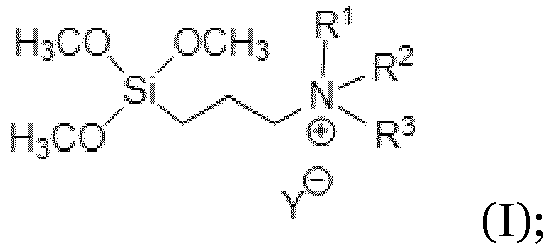
- Katalysatorsystem zum Herstellen von zyklischen Carbonaten, umfassend:einen Prä-Katalysator, der BiCl3 in Mengen im Bereich von 5 bis 10 Gew.-% eines Silica-Trägers ist;eine Verbindung mit der Formel (I)
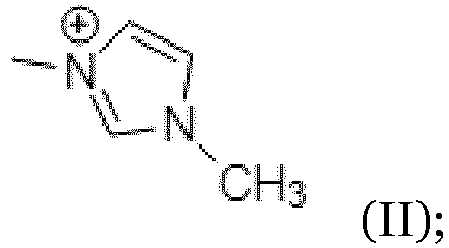
 wobei:Y ausgewählt ist aus Bromid (Br) oder Iodid (I-);R1, R2 und R3 eine Methylgruppe sind, oder R1, R2 und R3 zusammengenommen einen Heteroarylring mit Formel (II) bilden
 einen Silica(SiO2)-Träger.
 - Katalysatorsystem nach Anspruch 1, wobei Y Iodid (I-) ist.
- Katalysatorsystem nach Anspruch 1, wobei die Verbindung mit der Formel (I) ausgewählt ist aus 1-Methyl-3-(3-(trimethoxysilyl)propyl)-1H-imidazol-3-ium-jodid oder N,N,N-Trimethyl-3-(trimethoxysilyl)propan-1-aminium-jodid.
- Verwendung des Katalysatorsystems zur Herstellung von zyklischen Carbonaten, wobei das Katalysatorsystem umfasst:einen Prä-Katalysator, der BiCl3 in Mengen im Bereich von 5 bis 10 Gew.-% eines Silica-Trägers ist;eine Verbindung mit Formel (I)
 wobei:Y ausgewählt ist aus Bromid (Br) oder Iodid (I-);R1, R2 und R3 eine Methylgruppe sind, oder R1, R2 und R3 zusammengenommen einen Heteroarylring mit Formel (II) bilden
 einen Silica(SiO2)-Träger.
 - Verwendung des Katalysatorsystems nach Anspruch 4, wobei Y Iodid (I-) ist.
- Verwendung des Katalysatorsystems nach Anspruch 4, wobei die Verbindung mit Formel (I) ausgewählt ist aus 1-Methyl-3-(3-(trimethoxysilyl)propyl)-1H-imidazol-3-ium-jodid oder N,N,N-Trimethyl-3-(trimethoxysilyl)propan-1-aminium-jodid.
- Verfahren zur Herstellung eines Katalysatorsystems zum Herstellen von zyklischen Carbonaten nach Anspruch 1, umfassend die Schritte:(a) Erhitzen einer Silanverbindung mit Formel (III) mit N-Methylimidazol in einem organischen Lösungsmittel unter Rückfluss bei einer Temperatur von 100 bis 150°C für 12 bis 72 Stunden, wobei das Molverhältnis zwischen der Silanverbindung und N-Methylimidazol im Bereich von 5:1 bis 1:5 ist, um Verbindung (I) nach Anspruch 1 zu erhalten;

A ausgewählt ist aus Bromid (Br) oder Iodid (I-);(b) Erhitzen der Mischung der aus Schritt (a) erhaltenen Verbindung (I) und einem Silica(SiO2)-Träger in einem organischen Lösungsmittel unter Rückfluss bei einer Temperatur im Bereich von 100 bis 200°C für 5 bis 50 Stunden, wobei die Konzentration der Verbindung (I) im Bereich von 5 bis 15 Vol./Vol.-% ist und die Konzentration des Silica(SiO2)-Trägers im Bereich von 10 bis 20 Gew./Vol.-% ist; und(c) In-Kontakt-Bringen von BiCl3 mit dem aus Schritt (b) erhaltenen Silica-Träger für 1 bis 5 Stunden, wobei die Konzentration von BiCl3 im Bereich von 5 bis 10 Gew.-% des Silica-Trägers ist. - Verfahren nach Anspruch 7, wobei das Molverhältnis zwischen der Silanverbindung und N-Methylimidazol im Bereich von 2:1 bis 1:2 ist.
- Verfahren nach Anspruch 7, wobei das organische Lösungsmittel ein aromatisches Kohlenwasserstofflösungsmittel ist.
- Verfahren nach Anspruch 9, wobei das organische Lösungsmittel Toluol ist.
- Verfahren nach Anspruch 7, wobei Schritt (c) unter Verwendung eines Festzustand-Reaktionsverfahrens durchgeführt wird.
- Verfahren zur Herstellung eines Katalysatorsystems zur Herstellung von zyklischen Carbonaten nach Anspruch 1, umfassend die Schritte:(a) Erhitzen der Mischung von N-3-(3-Trimethoxysilylpropyl)-3-dimethylamin und Silica(SiO2)-Träger in einem organischen Lösungsmittel unter Rückfluss bei 100 bis 200°C für 5 bis 50 Stunden, wobei die Konzentration an N-3-(3-Trimethoxysilylpropyl)-3-dimethylamin im Bereich von 5 bis 15 Vol/Vol.-% ist und die Konzentration des Silica(SiO2)-Trägers im Bereich von 10 bis 20 Gew./Vol.-% ist; und(b) Mischen des aus Schritt (a) erhaltenen Produkts mit einem Methyliodid in einem organischen Lösungsmittel bei einer Temperatur von 100 bis 150°C für 12 bis 72 Stunden, wobei das Molverhältnis zwischen N-3-(3-Trimethoxysilylpropyl)-3-dimethylamin und Methyljodid im Bereich von 5:1 bis 1:5 ist; und(c) In-Kontakt-Bringen des aus Schritt (b) erhaltenen Silica-Trägers für 1 bis 5 Stunden, wobei die Konzentration an BiCl3 im Bereich von 5 bis 10 Gew.-% des Silica-Trägers ist.
- Verfahren nach Anspruch 12, wobei das organische Lösungsmittel ausgewählt ist aus einem aromatischen Kohlenwasserstofflösungsmittel.
- Verfahren nach Anspruch 13, wobei das organische Lösungsmittel Toluol ist.
- Verfahren nach Anspruch 12, wobei Schritt (c) unter Verwendung eines Festzustand-Reaktionsverfahrens durchgeführt wird.
- Verfahren zur Herstellung von zyklischen Carbonaten aus der Reaktion von Kohlendioxid und Epoxid-basierenden Verbindungen, welches das Umsetzen von Epoxid-basierenden Verbindungen mit Kohlendioxid in der Anwesenheit eines Katalysatorsystems umfasst, umfassend:einen Prä-Katalysator, der BiCl3 in Mengen im Bereich von 5 bis 10 Gew.-% eines Silica-Trägers ist;eine Verbindung mit Formel (I)
 einen Silica (SiO2)-Trägerwobei:Y ausgewählt ist aus Bromid (Br) oder Iodid (I-);R1, R2 und R3 eine Methylgruppe sind, oder R1, R2 und R3 zusammengenommen einen Heteroarylring der Formel (II) bilden
 wobei das Verfahren unter Verwendung einer Konzentration des Katalysatorsystems im Bereich von 0,1 bis 20 Mol-%, relativ zu den Epoxid-basierten Verbindungen, durchgeführt wird, bei einem Druck von Kohlendioxid im Bereich von 1 bis 100 bar, einer Temperatur im Bereich von 10 bis 200°C, und einer Reaktionszeit im Bereich von 1-8 Stunden.
 - Verfahren nach Anspruch 16, wobei die Konzentration des Katalysatorsystems im Bereich von 0,5 bis 10 Mol-%, relativ zu den Epoxid-basierten Verbindungen, ist.
- Verfahren nach Anspruch 16, wobei der Druck an Kohlendioxid im Bereich von 1 bis 10 bar ist.
- Verfahren nach Anspruch 16, wobei die Temperatur im Bereich von 60 bis 120°C ist.
- Verfahren nach Anspruch 16, wobei die Reaktionszeit im Bereich von 2 bis 4 Stunden ist.
- Verfahren nach Anspruch 16, wobei Y Iodid (I-) ist.
- Verfahren nach Anspruch 16, wobei die Verbindung mit Formel (I) ausgewählt ist aus 1-Methyl-3-(3-(trimethoxysilyl)propyl)-1H-imidazol-3-ium-jodid oder N,N,N-Trimethyl-3-(trimethoxysilyl)propan-1-aminium-jodid.
Applications Claiming Priority (2)
| Application Number | Priority Date | Filing Date | Title |
|---|---|---|---|
| US201862732987P | 2018-09-18 | 2018-09-18 | |
| PCT/TH2019/000042 WO2020060499A1 (en) | 2018-09-18 | 2019-09-18 | Catalyst system for producing cyclic carbonates and method related thereto |
Publications (3)
| Publication Number | Publication Date |
|---|---|
| EP3852921A1 EP3852921A1 (de) | 2021-07-28 |
| EP3852921C0 EP3852921C0 (de) | 2023-06-07 |
| EP3852921B1 true EP3852921B1 (de) | 2023-06-07 |
Family
ID=69187883
Family Applications (2)
| Application Number | Title | Priority Date | Filing Date |
|---|---|---|---|
| EP19842424.4A Active EP3852921B1 (de) | 2018-09-18 | 2019-09-18 | Katalysatorsystem zur herstellung von cyclischen carbonaten und zugehöriges verfahren |
| EP19842423.6A Active EP3852920B1 (de) | 2018-09-18 | 2019-09-18 | Katalysatorsystem zur herstellung von cyclischen carbonaten und zugehöriges verfahren |
Family Applications After (1)
| Application Number | Title | Priority Date | Filing Date |
|---|---|---|---|
| EP19842423.6A Active EP3852920B1 (de) | 2018-09-18 | 2019-09-18 | Katalysatorsystem zur herstellung von cyclischen carbonaten und zugehöriges verfahren |
Country Status (8)
| Country | Link |
|---|---|
| US (2) | US11938467B2 (de) |
| EP (2) | EP3852921B1 (de) |
| JP (2) | JP7480154B2 (de) |
| KR (2) | KR102588583B1 (de) |
| CN (2) | CN113164940B (de) |
| MY (2) | MY200835A (de) |
| SA (2) | SA521421511B1 (de) |
| WO (2) | WO2020060499A1 (de) |
Families Citing this family (3)
| Publication number | Priority date | Publication date | Assignee | Title |
|---|---|---|---|---|
| CN112495431B (zh) * | 2020-11-24 | 2022-02-11 | 中国科学院过程工程研究所 | 一种多位点离子液体温和催化合成环状碳酸酯的方法 |
| CN114917955B (zh) * | 2022-06-06 | 2023-11-10 | 辽宁大学 | 一种含氮MOFs材料及其在催化低浓度CO2环加成反应中的应用 |
| KR102949035B1 (ko) | 2022-07-29 | 2026-04-07 | 명지대학교 산학협력단 | 이산화탄소로부터 고리형 카보네이트 제조를 위한 촉매 및 이를 이용한 고리형 카보네이트의 제조방법 |
Family Cites Families (15)
| Publication number | Priority date | Publication date | Assignee | Title |
|---|---|---|---|---|
| US2773070A (en) * | 1952-10-31 | 1956-12-04 | Jefferson Chem Co Inc | Catalytic process for producing alkylene carbonates |
| CN1189246C (zh) * | 2002-11-26 | 2005-02-16 | 大连理工大学 | 用于合成环状碳酸酯的高活性催化剂 |
| US9943833B2 (en) * | 2010-11-16 | 2018-04-17 | Yissum Research Development Company Of The Hebrew University Of Jerusalem Ltd. | Bismuth oxyhalide compounds useful as photocatalysts |
| WO2012139994A1 (de) * | 2011-04-13 | 2012-10-18 | Basf Se | Verfahren zur kupplung von epoxiden und kohlendioxid |
| CN102775378B (zh) * | 2011-12-20 | 2015-10-28 | 湖南大学 | 一种环状碳酸酯的无溶剂催化合成方法 |
| CN102838583A (zh) * | 2012-09-10 | 2012-12-26 | 南昌航空大学 | 一种功能化季鏻盐离子液体制备环状碳酸酯的方法 |
| CN105377827A (zh) | 2013-07-09 | 2016-03-02 | 阿卜杜拉国王科技大学 | 制造碳酸烷二酯的方法和转化co2的方法 |
| TWI636980B (zh) * | 2013-07-19 | 2018-10-01 | 獨立行政法人產業技術綜合研究所 | Method for producing cyclic carbonate |
| CN103447091B (zh) * | 2013-09-05 | 2016-03-30 | 中国科学院长春应用化学研究所 | 四齿吡啶基席夫碱金属配合物、其制备方法及环状碳酸酯的方法 |
| TWI519347B (zh) * | 2013-10-24 | 2016-02-01 | 財團法人工業技術研究院 | 觸媒系統及以此觸媒系統製備環碳酸酯的方法 |
| BR112016014012B1 (pt) * | 2013-12-20 | 2021-01-05 | Saudi Basic Industries Corporation | sistema de catalisador para polimerização de uma olefina, compreendendo um composto, processo de preparação do referido sistema e usos do composto |
| CN105080613A (zh) * | 2014-05-14 | 2015-11-25 | 中国石油化工股份有限公司 | 用于制备碳酸乙烯酯的催化剂及其方法 |
| MX2016015768A (es) * | 2014-06-02 | 2017-04-10 | Sabic Global Technologies Bv | Procatalizador para la polimerizacion de olefinas. |
| JP6765098B2 (ja) | 2016-07-14 | 2020-10-07 | 国立研究開発法人産業技術総合研究所 | 磁性ナノ粒子固定化炭酸水素イミダゾリウム |
| CN106732770B (zh) * | 2016-12-02 | 2019-11-08 | 太原理工大学 | 在温和条件下将co2转化为环状碳酸酯的催化剂及方法 |
-
2019
- 2019-09-18 WO PCT/TH2019/000042 patent/WO2020060499A1/en not_active Ceased
- 2019-09-18 CN CN201980071319.4A patent/CN113164940B/zh active Active
- 2019-09-18 MY MYPI2021001421A patent/MY200835A/en unknown
- 2019-09-18 JP JP2021539330A patent/JP7480154B2/ja active Active
- 2019-09-18 CN CN201980069116.1A patent/CN112912176B/zh active Active
- 2019-09-18 MY MYPI2021001419A patent/MY201737A/en unknown
- 2019-09-18 WO PCT/TH2019/000041 patent/WO2020060498A1/en not_active Ceased
- 2019-09-18 JP JP2021539329A patent/JP7500576B2/ja active Active
- 2019-09-18 KR KR1020217011226A patent/KR102588583B1/ko active Active
- 2019-09-18 EP EP19842424.4A patent/EP3852921B1/de active Active
- 2019-09-18 EP EP19842423.6A patent/EP3852920B1/de active Active
- 2019-09-18 KR KR1020217011227A patent/KR102588584B1/ko active Active
-
2021
- 2021-03-17 SA SA521421511A patent/SA521421511B1/ar unknown
- 2021-03-17 SA SA521421512A patent/SA521421512B1/ar unknown
- 2021-03-18 US US17/206,077 patent/US11938467B2/en active Active
- 2021-03-18 US US17/206,080 patent/US11938468B2/en active Active
Also Published As
| Publication number | Publication date |
|---|---|
| CN113164940A (zh) | 2021-07-23 |
| MY200835A (en) | 2024-01-17 |
| KR102588584B1 (ko) | 2023-10-12 |
| SA521421512B1 (ar) | 2024-02-21 |
| US20210205798A1 (en) | 2021-07-08 |
| WO2020060498A1 (en) | 2020-03-26 |
| EP3852921C0 (de) | 2023-06-07 |
| SA521421511B1 (ar) | 2024-02-21 |
| KR102588583B1 (ko) | 2023-10-12 |
| EP3852920B1 (de) | 2022-09-07 |
| JP2022501192A (ja) | 2022-01-06 |
| CN112912176A (zh) | 2021-06-04 |
| KR20210057803A (ko) | 2021-05-21 |
| US11938467B2 (en) | 2024-03-26 |
| WO2020060499A1 (en) | 2020-03-26 |
| JP2022501426A (ja) | 2022-01-06 |
| EP3852921A1 (de) | 2021-07-28 |
| KR20210057804A (ko) | 2021-05-21 |
| MY201737A (en) | 2024-03-15 |
| JP7500576B2 (ja) | 2024-06-17 |
| CN113164940B (zh) | 2023-09-29 |
| EP3852920A1 (de) | 2021-07-28 |
| US20210346877A1 (en) | 2021-11-11 |
| JP7480154B2 (ja) | 2024-05-09 |
| CN112912176B (zh) | 2023-11-17 |
| US11938468B2 (en) | 2024-03-26 |
Similar Documents
| Publication | Publication Date | Title |
|---|---|---|
| Jiang et al. | Cycloaddition of epoxides and CO 2 catalyzed by bisimidazole-functionalized porphyrin cobalt (III) complexes | |
| US11938468B2 (en) | Catalyst system for producing cyclic carbonates and method related thereto | |
| Han et al. | Silica grafted imidazolium-based ionic liquids: efficient heterogeneous catalysts for chemical fixation of CO 2 to a cyclic carbonate | |
| CN1280280C (zh) | 环氧烷烃的连续制造方法 | |
| CN105377829B (zh) | 环状碳酸酯的连续制造方法 | |
| CN107999124B (zh) | 一种核壳结构Ti-MWW@Si分子筛及其制备和应用 | |
| JP6011867B2 (ja) | デンドリマー固定化含窒素複素環カルベン−金錯体 | |
| Akbari et al. | Heterogenization of a green homogeneous catalyst: Synthesis and characterization of imidazolium ionene/Br–Cl–@ SiO2 as an efficient catalyst for the cycloaddition of CO2 with epoxides | |
| CN100384829C (zh) | 环氧丙烷的制造方法 | |
| Guo et al. | Catalytic coupling of CO2 and epoxides by lignin-based catalysts: A combined experimental and theoretical study | |
| JP2022501192A5 (de) | ||
| Fujita et al. | Direct transformation of carbon dioxide to value-added products over heterogeneous catalysts | |
| KR101482236B1 (ko) | 디메틸카보네이트 제조용 구리 담지촉매 및 이의 제조방법 | |
| CN112812091A (zh) | 一种环状碳酸酯的合成方法 | |
| US10722875B2 (en) | Zinc-imidazole complex mixed catalyst and method for producing methyl N-phenyl carbamate using the same | |
| EP4545543A1 (de) | Immobilisierter zinkkomplex mit guanidinliganden, verfahren zur herstellung davon und verfahren zur herstellung von cyclischem carbonat damit | |
| US20140046079A1 (en) | Method for preparing epoxides | |
| Lee et al. | Synthesis of cyclic carbonate from allyl glycidyl ether and CO2 over silica-supported ionic liquid catalysts prepared by sol-gel method | |
| US9051287B2 (en) | Method for producing epoxide | |
| CN107999125B (zh) | 一种含微孔-介孔的核壳结构Ti-MWW分子筛制备及应用 | |
| TWI827008B (zh) | 一種用於合成環狀碳酸酯的異相催化劑及其製備方法 | |
| CN117447438B (zh) | 一种环状碳酸酯类化合物的制备方法 | |
| JPH06211821A (ja) | オレフィン化合物のエポキシ化方法 | |
| CN109761954A (zh) | 二硫代环碳酸酯类化合物的制备方法 | |
| Tangku et al. | Rational Functionalization of Mesoporous Silica with Ionic Liquid and Co (II) for Robust Single-Component CO2 Conversion |
Legal Events
| Date | Code | Title | Description |
|---|---|---|---|
| STAA | Information on the status of an ep patent application or granted ep patent |
Free format text: STATUS: UNKNOWN |
|
| STAA | Information on the status of an ep patent application or granted ep patent |
Free format text: STATUS: THE INTERNATIONAL PUBLICATION HAS BEEN MADE |
|
| PUAI | Public reference made under article 153(3) epc to a published international application that has entered the european phase |
Free format text: ORIGINAL CODE: 0009012 |
|
| STAA | Information on the status of an ep patent application or granted ep patent |
Free format text: STATUS: REQUEST FOR EXAMINATION WAS MADE |
|
| 17P | Request for examination filed |
Effective date: 20210409 |
|
| AK | Designated contracting states |
Kind code of ref document: A1 Designated state(s): AL AT BE BG CH CY CZ DE DK EE ES FI FR GB GR HR HU IE IS IT LI LT LU LV MC MK MT NL NO PL PT RO RS SE SI SK SM TR |
|
| DAV | Request for validation of the european patent (deleted) | ||
| DAX | Request for extension of the european patent (deleted) | ||
| GRAP | Despatch of communication of intention to grant a patent |
Free format text: ORIGINAL CODE: EPIDOSNIGR1 |
|
| STAA | Information on the status of an ep patent application or granted ep patent |
Free format text: STATUS: GRANT OF PATENT IS INTENDED |
|
| INTG | Intention to grant announced |
Effective date: 20220506 |
|
| GRAJ | Information related to disapproval of communication of intention to grant by the applicant or resumption of examination proceedings by the epo deleted |
Free format text: ORIGINAL CODE: EPIDOSDIGR1 |
|
| STAA | Information on the status of an ep patent application or granted ep patent |
Free format text: STATUS: REQUEST FOR EXAMINATION WAS MADE |
|
| INTC | Intention to grant announced (deleted) | ||
| GRAP | Despatch of communication of intention to grant a patent |
Free format text: ORIGINAL CODE: EPIDOSNIGR1 |
|
| STAA | Information on the status of an ep patent application or granted ep patent |
Free format text: STATUS: GRANT OF PATENT IS INTENDED |
|
| INTG | Intention to grant announced |
Effective date: 20221007 |
|
| GRAS | Grant fee paid |
Free format text: ORIGINAL CODE: EPIDOSNIGR3 |
|
| GRAA | (expected) grant |
Free format text: ORIGINAL CODE: 0009210 |
|
| STAA | Information on the status of an ep patent application or granted ep patent |
Free format text: STATUS: THE PATENT HAS BEEN GRANTED |
|
| AK | Designated contracting states |
Kind code of ref document: B1 Designated state(s): AL AT BE BG CH CY CZ DE DK EE ES FI FR GB GR HR HU IE IS IT LI LT LU LV MC MK MT NL NO PL PT RO RS SE SI SK SM TR |
|
| REG | Reference to a national code |
Ref country code: GB Ref legal event code: FG4D |
|
| REG | Reference to a national code |
Ref country code: CH Ref legal event code: EP Ref country code: AT Ref legal event code: REF Ref document number: 1573317 Country of ref document: AT Kind code of ref document: T Effective date: 20230615 |
|
| REG | Reference to a national code |
Ref country code: DE Ref legal event code: R096 Ref document number: 602019030715 Country of ref document: DE |
|
| U01 | Request for unitary effect filed |
Effective date: 20230607 |
|
| U07 | Unitary effect registered |
Designated state(s): AT BE BG DE DK EE FI FR IT LT LU LV MT NL PT SE SI Effective date: 20230614 |
|
| REG | Reference to a national code |
Ref country code: NO Ref legal event code: T2 Effective date: 20230607 |
|
| REG | Reference to a national code |
Ref country code: LT Ref legal event code: MG9D |
|
| U20 | Renewal fee for the european patent with unitary effect paid |
Year of fee payment: 5 Effective date: 20230828 |
|
| PG25 | Lapsed in a contracting state [announced via postgrant information from national office to epo] |
Ref country code: ES Free format text: LAPSE BECAUSE OF FAILURE TO SUBMIT A TRANSLATION OF THE DESCRIPTION OR TO PAY THE FEE WITHIN THE PRESCRIBED TIME-LIMIT Effective date: 20230607 |
|
| PG25 | Lapsed in a contracting state [announced via postgrant information from national office to epo] |
Ref country code: RS Free format text: LAPSE BECAUSE OF FAILURE TO SUBMIT A TRANSLATION OF THE DESCRIPTION OR TO PAY THE FEE WITHIN THE PRESCRIBED TIME-LIMIT Effective date: 20230607 Ref country code: HR Free format text: LAPSE BECAUSE OF FAILURE TO SUBMIT A TRANSLATION OF THE DESCRIPTION OR TO PAY THE FEE WITHIN THE PRESCRIBED TIME-LIMIT Effective date: 20230607 Ref country code: GR Free format text: LAPSE BECAUSE OF FAILURE TO SUBMIT A TRANSLATION OF THE DESCRIPTION OR TO PAY THE FEE WITHIN THE PRESCRIBED TIME-LIMIT Effective date: 20230908 |
|
| PG25 | Lapsed in a contracting state [announced via postgrant information from national office to epo] |
Ref country code: SK Free format text: LAPSE BECAUSE OF FAILURE TO SUBMIT A TRANSLATION OF THE DESCRIPTION OR TO PAY THE FEE WITHIN THE PRESCRIBED TIME-LIMIT Effective date: 20230607 |
|
| PG25 | Lapsed in a contracting state [announced via postgrant information from national office to epo] |
Ref country code: IS Free format text: LAPSE BECAUSE OF FAILURE TO SUBMIT A TRANSLATION OF THE DESCRIPTION OR TO PAY THE FEE WITHIN THE PRESCRIBED TIME-LIMIT Effective date: 20231007 |
|
| PG25 | Lapsed in a contracting state [announced via postgrant information from national office to epo] |
Ref country code: SM Free format text: LAPSE BECAUSE OF FAILURE TO SUBMIT A TRANSLATION OF THE DESCRIPTION OR TO PAY THE FEE WITHIN THE PRESCRIBED TIME-LIMIT Effective date: 20230607 Ref country code: SK Free format text: LAPSE BECAUSE OF FAILURE TO SUBMIT A TRANSLATION OF THE DESCRIPTION OR TO PAY THE FEE WITHIN THE PRESCRIBED TIME-LIMIT Effective date: 20230607 Ref country code: RO Free format text: LAPSE BECAUSE OF FAILURE TO SUBMIT A TRANSLATION OF THE DESCRIPTION OR TO PAY THE FEE WITHIN THE PRESCRIBED TIME-LIMIT Effective date: 20230607 Ref country code: IS Free format text: LAPSE BECAUSE OF FAILURE TO SUBMIT A TRANSLATION OF THE DESCRIPTION OR TO PAY THE FEE WITHIN THE PRESCRIBED TIME-LIMIT Effective date: 20231007 Ref country code: CZ Free format text: LAPSE BECAUSE OF FAILURE TO SUBMIT A TRANSLATION OF THE DESCRIPTION OR TO PAY THE FEE WITHIN THE PRESCRIBED TIME-LIMIT Effective date: 20230607 |
|
| PG25 | Lapsed in a contracting state [announced via postgrant information from national office to epo] |
Ref country code: PL Free format text: LAPSE BECAUSE OF FAILURE TO SUBMIT A TRANSLATION OF THE DESCRIPTION OR TO PAY THE FEE WITHIN THE PRESCRIBED TIME-LIMIT Effective date: 20230607 |
|
| REG | Reference to a national code |
Ref country code: DE Ref legal event code: R097 Ref document number: 602019030715 Country of ref document: DE |
|
| PLBE | No opposition filed within time limit |
Free format text: ORIGINAL CODE: 0009261 |
|
| STAA | Information on the status of an ep patent application or granted ep patent |
Free format text: STATUS: NO OPPOSITION FILED WITHIN TIME LIMIT |
|
| REG | Reference to a national code |
Ref country code: CH Ref legal event code: PL |
|
| 26N | No opposition filed |
Effective date: 20240308 |
|
| PG25 | Lapsed in a contracting state [announced via postgrant information from national office to epo] |
Ref country code: MC Free format text: LAPSE BECAUSE OF FAILURE TO SUBMIT A TRANSLATION OF THE DESCRIPTION OR TO PAY THE FEE WITHIN THE PRESCRIBED TIME-LIMIT Effective date: 20230607 |
|
| REG | Reference to a national code |
Ref country code: IE Ref legal event code: MM4A |
|
| PG25 | Lapsed in a contracting state [announced via postgrant information from national office to epo] |
Ref country code: IE Free format text: LAPSE BECAUSE OF NON-PAYMENT OF DUE FEES Effective date: 20230918 |
|
| PG25 | Lapsed in a contracting state [announced via postgrant information from national office to epo] |
Ref country code: CH Free format text: LAPSE BECAUSE OF NON-PAYMENT OF DUE FEES Effective date: 20230930 |
|
| PG25 | Lapsed in a contracting state [announced via postgrant information from national office to epo] |
Ref country code: IE Free format text: LAPSE BECAUSE OF NON-PAYMENT OF DUE FEES Effective date: 20230918 Ref country code: CH Free format text: LAPSE BECAUSE OF NON-PAYMENT OF DUE FEES Effective date: 20230930 |
|
| U20 | Renewal fee for the european patent with unitary effect paid |
Year of fee payment: 6 Effective date: 20240916 |
|
| PG25 | Lapsed in a contracting state [announced via postgrant information from national office to epo] |
Ref country code: CY Free format text: LAPSE BECAUSE OF FAILURE TO SUBMIT A TRANSLATION OF THE DESCRIPTION OR TO PAY THE FEE WITHIN THE PRESCRIBED TIME-LIMIT; INVALID AB INITIO Effective date: 20190918 |
|
| PG25 | Lapsed in a contracting state [announced via postgrant information from national office to epo] |
Ref country code: HU Free format text: LAPSE BECAUSE OF FAILURE TO SUBMIT A TRANSLATION OF THE DESCRIPTION OR TO PAY THE FEE WITHIN THE PRESCRIBED TIME-LIMIT; INVALID AB INITIO Effective date: 20190918 |
|
| U20 | Renewal fee for the european patent with unitary effect paid |
Year of fee payment: 7 Effective date: 20250901 |
|
| PGFP | Annual fee paid to national office [announced via postgrant information from national office to epo] |
Ref country code: NO Payment date: 20250929 Year of fee payment: 7 |
|
| PGFP | Annual fee paid to national office [announced via postgrant information from national office to epo] |
Ref country code: GB Payment date: 20250929 Year of fee payment: 7 |
|
| PG25 | Lapsed in a contracting state [announced via postgrant information from national office to epo] |
Ref country code: TR Free format text: LAPSE BECAUSE OF FAILURE TO SUBMIT A TRANSLATION OF THE DESCRIPTION OR TO PAY THE FEE WITHIN THE PRESCRIBED TIME-LIMIT Effective date: 20230607 |