EP3853817B1 - Optimisation de la livraison de l'image - Google Patents
Optimisation de la livraison de l'image Download PDFInfo
- Publication number
- EP3853817B1 EP3853817B1 EP19778604.9A EP19778604A EP3853817B1 EP 3853817 B1 EP3853817 B1 EP 3853817B1 EP 19778604 A EP19778604 A EP 19778604A EP 3853817 B1 EP3853817 B1 EP 3853817B1
- Authority
- EP
- European Patent Office
- Prior art keywords
- image
- version
- area
- dimension
- display area
- Prior art date
- Legal status (The legal status is an assumption and is not a legal conclusion. Google has not performed a legal analysis and makes no representation as to the accuracy of the status listed.)
- Active
Links
Images

Classifications
-
- G—PHYSICS
- G06—COMPUTING OR CALCULATING; COUNTING
- G06F—ELECTRIC DIGITAL DATA PROCESSING
- G06F16/00—Information retrieval; Database structures therefor; File system structures therefor
- G06F16/90—Details of database functions independent of the retrieved data types
- G06F16/95—Retrieval from the web
- G06F16/957—Browsing optimisation, e.g. caching or content distillation
-
- G—PHYSICS
- G09—EDUCATION; CRYPTOGRAPHY; DISPLAY; ADVERTISING; SEALS
- G09G—ARRANGEMENTS OR CIRCUITS FOR CONTROL OF INDICATING DEVICES USING STATIC MEANS TO PRESENT VARIABLE INFORMATION
- G09G5/00—Control arrangements or circuits for visual indicators common to cathode-ray tube indicators and other visual indicators
- G09G5/36—Control arrangements or circuits for visual indicators common to cathode-ray tube indicators and other visual indicators characterised by the display of a graphic pattern, e.g. using an all-points-addressable [APA] memory
- G09G5/37—Details of the operation on graphic patterns
- G09G5/373—Details of the operation on graphic patterns for modifying the size of the graphic pattern
-
- G—PHYSICS
- G06—COMPUTING OR CALCULATING; COUNTING
- G06F—ELECTRIC DIGITAL DATA PROCESSING
- G06F16/00—Information retrieval; Database structures therefor; File system structures therefor
- G06F16/50—Information retrieval; Database structures therefor; File system structures therefor of still image data
- G06F16/51—Indexing; Data structures therefor; Storage structures
-
- G—PHYSICS
- G06—COMPUTING OR CALCULATING; COUNTING
- G06T—IMAGE DATA PROCESSING OR GENERATION, IN GENERAL
- G06T3/00—Geometric image transformations in the plane of the image
- G06T3/40—Scaling of whole images or parts thereof, e.g. expanding or contracting
-
- H—ELECTRICITY
- H04—ELECTRIC COMMUNICATION TECHNIQUE
- H04N—PICTORIAL COMMUNICATION, e.g. TELEVISION
- H04N21/00—Selective content distribution, e.g. interactive television or video on demand [VOD]
- H04N21/20—Servers specifically adapted for the distribution of content, e.g. VOD servers; Operations thereof
- H04N21/23—Processing of content or additional data; Elementary server operations; Server middleware
- H04N21/234—Processing of video elementary streams, e.g. splicing of video streams or manipulating encoded video stream scene graphs
- H04N21/2343—Processing of video elementary streams, e.g. splicing of video streams or manipulating encoded video stream scene graphs involving reformatting operations of video signals for distribution or compliance with end-user requests or end-user device requirements
- H04N21/23439—Processing of video elementary streams, e.g. splicing of video streams or manipulating encoded video stream scene graphs involving reformatting operations of video signals for distribution or compliance with end-user requests or end-user device requirements for generating different versions
-
- H—ELECTRICITY
- H04—ELECTRIC COMMUNICATION TECHNIQUE
- H04N—PICTORIAL COMMUNICATION, e.g. TELEVISION
- H04N21/00—Selective content distribution, e.g. interactive television or video on demand [VOD]
- H04N21/20—Servers specifically adapted for the distribution of content, e.g. VOD servers; Operations thereof
- H04N21/23—Processing of content or additional data; Elementary server operations; Server middleware
- H04N21/235—Processing of additional data, e.g. scrambling of additional data or processing content descriptors
- H04N21/2355—Processing of additional data, e.g. scrambling of additional data or processing content descriptors involving reformatting operations of additional data, e.g. HTML pages
- H04N21/2356—Processing of additional data, e.g. scrambling of additional data or processing content descriptors involving reformatting operations of additional data, e.g. HTML pages by altering the spatial resolution
-
- H—ELECTRICITY
- H04—ELECTRIC COMMUNICATION TECHNIQUE
- H04N—PICTORIAL COMMUNICATION, e.g. TELEVISION
- H04N21/00—Selective content distribution, e.g. interactive television or video on demand [VOD]
- H04N21/20—Servers specifically adapted for the distribution of content, e.g. VOD servers; Operations thereof
- H04N21/25—Management operations performed by the server for facilitating the content distribution or administrating data related to end-users or client devices, e.g. end-user or client device authentication, learning user preferences for recommending movies
- H04N21/258—Client or end-user data management, e.g. managing client capabilities, user preferences or demographics, processing of multiple end-users preferences to derive collaborative data
- H04N21/25808—Management of client data
- H04N21/25825—Management of client data involving client display capabilities, e.g. screen resolution of a mobile phone
-
- H—ELECTRICITY
- H04—ELECTRIC COMMUNICATION TECHNIQUE
- H04N—PICTORIAL COMMUNICATION, e.g. TELEVISION
- H04N21/00—Selective content distribution, e.g. interactive television or video on demand [VOD]
- H04N21/40—Client devices specifically adapted for the reception of or interaction with content, e.g. set-top-box [STB]; Operations thereof
- H04N21/47—End-user applications
- H04N21/478—Supplemental services, e.g. displaying phone caller identification, shopping application
- H04N21/4782—Web browsing, e.g. WebTV
Definitions
- This invention relates to a method for the display of an image in a display area.
- media files such as image files, video files and music files
- Computer networks, and the internet have made it easier to share such media files.
- image files these may be displayed on a wide range of devices such as desktop computers, tablet devices and phone devices.
- Each of these devices may have a different type of connection to the internet.
- a desktop computer may have a wired link to the internet
- a tablet device may connect via a wireless link such as Wi-Fi
- a phone device may connect via a wireless link such as a cellular network.
- Each of these connections may have a different maximum download speed associated with them.
- Each of these devices may also have a different resolution display screen and/or a different size of display screen. This may alter the way in which image files should be displayed on the screen to give maximum quality to the display of the image file.
- a standard approach is to make the image file available in a size large enough that it can be rescaled by the device to the appropriate size based on the particular properties of the display screen of that device. Such a methodology means that the image is likely to be displayed acceptably on a wide range of devices.
- the device has to process the image before displaying it, which on some devices with limited processing power may be inefficient.
- downloading a large version of the image can be inefficient and/or costly depending on the connection that the device uses to connect other computer networks.
- the present specification describes inter alia a method for the display of an image in a display area, the display area having a pixel density, the image being stored on a server in a plurality of versions, each version of the image having a respective image size, the method comprising: detecting the pixel density of the display area; determining a first version of the image to request from the server based on the pixel density of the display area, the first version of the image having a first image size; requesting the first version of the image; receiving the first version of the image; and displaying the first version of the image in the display area.
- the present specification further describes inter alia a method for the display of an image in an image area of a display area, the image area having a logical dimension and the display area having a pixel density, the image being stored on a server in a plurality of versions, each version of the image having a respective image size, the method comprising: detecting the pixel density of the display area; determining a first version of the image to request from the server based on the pixel density of the display area, the first version of the image having a first image size, wherein determining a first version of the image comprises calculating a desired image dimension by multiplying the pixel density of the display area by the logical dimension of the image area; requesting the first version of the image; receiving the first version of the image; and displaying the first version of the image in the display area.
- the image may be displayed in an image area of the display area, and the method may comprise: determining a change in size of the image area to a new size of the image area; if the new size of the image area is equal to or less than the first image size, resizing the first version of the image to the new size of the image area.
- the image may be displayed in an image area of the display area, and the method may comprise: determining a change in size of the image area to a new size of the image area; if the new size of the image area is greater than the first image size, determining a second version of the image to request from the server based on the pixel density of the display area, the second version of the image having a second image size.
- a user device may comprise the display area and determining a first version of the image to request from the server may comprise determining a device model and/or device type for the user device and determining a first version of the image to request from the server based on the device model and/or device type. Determining a first version of the image to request from the server based on the device model and/or device type may comprise applying a scaling factor to the desired image dimension, and determining a first version of the image to request from the server based on the scaled desired image dimension.
- the image may be processed into the plurality of versions by resizing the image into a plurality of versions of the image that have defined image widths.
- the image widths may be selected based on a determined use-case for the image supplied by a user.
- the display area may be an area of a display screen and the pixel density may be the number of physical pixels of the display area of the display screen that are used to display one logical pixel.
- the display area may be an area of a browser window and the pixel density of the display area may be a combination of the pixel density of the display screen and the zoom level of the browser window.
- a version of the image that has an image size greater than the desired image dimension may be requested from the server and resized downward to fit the image area.
- the version of the image that has an image size greater than the desired image dimension may be larger than the desired image dimension by a predefined amount.
- the version of the image that has an image size greater than the desired image dimension may be the next largest version of the image that is larger than the desired image dimension added to the predefined amount.
- the present specification relates to a method for the display of an image in a display area, the display area having a pixel density, the image being stored on a server in a plurality of versions, each version of the image having a respective image size.
- the method comprises detecting the pixel density of the display area and determining a first version of the image to request from the server based on the pixel density of the display area, the first version of the image having a first image size.
- the method further comprises requesting the first version of the image; receiving the first version of the image; and displaying the first version of the image in the display area.
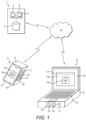
- FIG. 1 shows an example system that can permit the delivery and display of images in a display area of a device.
- the system comprises a server 1. It will be appreciated that whilst reference may be made to a single server 10, this server could be part of a cluster of servers or may be a virtual server running in a cloud-based, virtual environment.
- the server comprises a processing section 2 and a storage section 3.
- the server 1 is configured to implement methods described herein for processing image files and transmitting them to end-user devices. These methods can be implemented and controlled by the processing section 2.
- the processing section 2 could perform its methods using dedicated hardware, using a general purpose processor executing software code, or using a combination of the two.
- a processor 4 executes software code stored in a non-transient way in software memory 5 in order to perform its methods.
- the processing section can read/write data from/to storage location 3.
- the storage location 3 may be in the form of a memory.
- Storage location 3 may comprise non-volatile memory, may be in the form of an array of discrete banks of memory such as hard disks. Whilst shown in Figure 1 as schematically being part of server 1, the storage location 3 may be separate to server 1 and connected to server 1.
- the above described image files may be stored in storage location 3.
- the methods undertaken by server 1 may be spilt across multiple servers. For instance, a first server may receive image files and send them for image processing by a second server. The second server may deliver the processed images to a third server from which an end-user device can access them.
- the server 1 may be connected to a computer network 6 to permit the transmission of image files.
- Computer network 6 may be made up of many network segments that are connected together and so may be a large distributed network such as the internet or another public network.
- User terminals may be a computer, such as a desktop or laptop computer; a portable device, such as a laptop, tablet computer or smartphone; or a smart TV or other device that can connect to remote servers using computer network 6 to access remote content located on servers such as server 1 to permit a user to send and receive information over computer network 6.
- a computer such as a desktop or laptop computer
- portable device such as a laptop, tablet computer or smartphone
- smart TV or other device that can connect to remote servers using computer network 6 to access remote content located on servers such as server 1 to permit a user to send and receive information over computer network 6.
- the first user device 7 being a smartphone 7
- the second user device 8 being a laptop 8.
- the user device 7, 8 will be located remote from the server 1 and may well be located in a different country or even on a different continent from the server 1.
- the first and second devices 7, 8 may comprise a housing 9.
- the first and second devices 7, 8 comprise a processing section 10 and a memory 11.
- the first and second devices comprise a user interface constituted by a display 12 and, shown in the case of second device 8, a series of user-actuable switches 13.
- the display and switches could be combined into a touchscreen device as shown by first device 7.
- the first and second devices 7, 8 may comprise a wireless communication device for communicating with computer network 6.
- the first and second devices 7, 8 may comprise a wired communication device for communicating with computer network 6.
- the display screen 12 comprises a plurality of pixels.
- the pixels may be arranged in a grid.
- the display screen 12 may have a generally rectangular shape with the pixels arranged in a grid within that shape. As shown in figure 1 , there may be some deviation from that rectangular shape as shown by the screen 12 of the smartphone 7. In any case, the display screen has a shape within which the pixels are arranged in a grid within that shape.
- the pixels that are present within the display screen 12 may be referred to as physical pixels. This is because they are each capable of physically displaying one pixel of colour on the display screen 12.
- the device 7, 8 may be configured to display content on the screen.
- the content may have a defined number of pixels in each direction that describes the information that is to be displayed by that content.
- an image may have an image size which is defined as a grid of colour values in two dimensions, each of those colour values may be described as an image pixel.
- the device may be configured to display the content on the screen so that one physical pixel is used for each image pixel.
- the physical pixel density of the display area would have a value of 1.
- the device may be configured to display content on the screen so that more than one physical pixel is used for each image pixel.
- the physical pixel density may be 1.5. In this case one and a half physical pixels would be used to display every image pixel of the content. If the physical pixel density is set to 2 then two physical pixels would be used to display every image pixel of the content.
- the number of image pixels in each of the two dimensions that the display screen can display due to the physical pixel density may be defined as a number of logical pixels in each dimension.
- Each logical pixel can be used to display one image pixel of the content to be displayed but may physically be represented by one or more physical pixels depending on the physical pixel density current set by the device.
- the first and second devices 7, 8 may be capable of implementing methods described herein display images on display screen 12. These methods may be implemented and controlled by the processing section 10.
- the processing section 10 could perform its methods using dedicated hardware, using a general purpose processor executing software code, or using a combination of the two.
- a processor 14 executes software code stored in a non-transient way in software memory 15 in order to perform its methods.
- the processing section can read/write data from/to memory 11.
- the memory 11 may be a storage location for data.
- Memory 11 may comprise non-volatile memory, may be in the form of an array of discrete banks of memory such as hard disks. Whilst shown in Figure 1 as schematically being part of first and second devices 7, 8, the memory 11 may be separate to first and second devices 7, 8 and respectively connected to first and second devices 7, 8 by some means.
- user device 8 is shown displaying an image file 16 within an internet browser window 17 using display 12.
- the internet browser window comprises a display area 18.
- the internet browser may use display area 18 for the display of webpages that have been accessed over the internet 6 or other computer network 6.
- the display area 18 may display content items 16 of which the image 16 may be one of them. Those content items 16 may have been received from server 1 over the communications network 6.
- the content items 16 that are displayed in the display area 18 and the way in which those content items 16 are displayed may be specified by code, stored on server 1, that may be interpreted by a user device 7, 8 to display those content items 16 on display area 18.
- the code may be in the form of a webpage. Such a webpage may be accessed by the internet browser 17.
- First user device 7, analogously to second user device 8, is shown displaying an image file 16.
- the browser window 17 fills the display screen 12 of the first user device 7.
- the display area 18 therefore takes up most, if not all, of the space of display screen 12.
- the internet browser and display area operate in an analogous way to second user device 8.
- internet browsers 17 may have been a separate application running on user device 7, 8, it will be appreciated that the term internet browser may encompass a part of another application that displays a webpage within that application. In this case the internet browser itself may be embodied by and/or be part of the other application. The area of the other application may then suitably be the display area 18 of the internet browser. In this way, another application may be capable of interpreting the code, stored on server 1, so as to display those content items 16 on display area 18. At least one of those content items may be an image file 16.
- FIG. 2 shows a flow diagram of the methods that can be used to optimise the delivery and display of an image in a display area of a device. It will be appreciated that although a number of steps are shown in the flow diagram in Figure 2 in series at least some of those steps are optional and other steps may be implemented whilst omitting those optional steps. In addition, certain steps may be undertaken separate from other steps, for instance the initial processing of images may happen separately from the providing of images to an end-user device.
- a user may upload at least one image to the server 1.
- the image uploaded can be seen as an original image and will generally be a high-resolution version. It may also have little compression to ensure that the quality of the image is high.
- This original image can be stored by server 1 in storage location 3.
- the uploaded images are sent for image size processing by an image resizing process.
- the process of sending the images for image size processing may involve the server 1 requesting that the image resizing process running on server 1 initiate the image size processing described herein.
- server 1 may transmit a request to a second server running the image resizing process to initiate image size processing.
- the request may include a reference to where the images are stored or the images may be sent to the second server. It should be taken that any future reference to the server could be taken to mean server 1 or the second server if such as server is present in the system.
- Image size processing comprises processing the original image and creating a plurality of versions of the image. Each version of the image has a respective image size meaning that the image has a defined width and height measured by the number of pixels in each direction.
- the original image is processes into the plurality of versions by resizing the original image into a plurality of versions of the image that have defined image widths.
- the image widths can be selected based on a determined use-case for the image. This use-case may have been supplied by the user when the image was uploaded. Alternatively, the image widths can be selected based on statistical data associated with previous images that have been processed by the image resizing process.
- Image size processing may also optimise each version of the image that is created so that a quality factor is selected for each version of the image that uses the lowest quality factor possible without introducing visible image compression artefacts into the image.
- the quality factor may comprise the compression ratio of the image.
- Image size processing may also comprise the creation of an image thumbnail for the original image.
- This image thumbnail is relatively small in size compared to both the original image and the versions of the image that are created by the image resizing process.
- the image thumbnail may be a sub-10Kb file.
- the image thumbnail may include basic image information about the original image (and versions of the image) such as metadata, aspect ratio, and a minimal thumbnail image of the original image. This image thumbnail can be used later on in the process to render a low-resolution placeholder of the image whilst a selected version of the image is collected from the server 1.
- the versions of the image (together with the image thumbnail - if created) can be made available for request and download by the end user, as shown at 103.
- the images may be made available by one of server 1 or second server.
- the image versions may be transmitted to a third server which is configured to deliver those images to end users.
- the third server may be connected to network 6 in a manner that permits external access to that server. I.e. it may be a web application server.
- image processing may be undertaken on the image versions before they are made available for access by the end user.
- the image versions may be scrambled so that unauthorised access is prevented or at least inhibited.
- the image scrambling and unscrambling may be undertaken using the methods described in WO2017/051152 .
- a user controls a user device to visit a webpage using an internet browser that contains browser executable code that is configured to display an image within a display area.
- the image may be to be displayed in an image area of the display area.
- the visiting of the webpage comprises the user device requesting data from server 1
- the browser executable code is interpreted by the internet browser 17 which causes the user device to request the image thumbnail associated with the image from server 1. This is as shown by 105.
- the server 1 sends the image thumbnail to the user device and the internet browser 17 displays the image thumbnail in the display area 18 once it has been received by the user device.
- the image thumbnail is displayed with the image size (i.e. filling the image area) that the version of the image will be display with once the version of the image has been downloaded.
- the browser executable code can cause the image area that will be filled by the image version to be filled by something that looks like the final image practically immediately. This reduces perceived image download latency by taking up the webpage height quickly whilst the final image continues to load.
- the user device Whilst the user device is requesting and displaying the image thumbnail, the user device may also interrogate the server 1 for the image sizes of the versions of the image that are available. Thus, the device may request a list of the image sizes of the versions of the image that are available. This is as shown by 106.
- the browser executable code may already have the list of image sizes for the versions of the image written into it. In this case, the user device will already have a list of the image sizes and so not need to contact the server 1 for this information.
- the user device determines a first version of the image to request from the server. The determination may be made by the browser interpreting the browser executable code.
- the first version of the image has a first image size.
- the user device determines which version of the image to request based on the pixel density of the display area where the image will be rendered.
- the pixel density is the number of physical pixels of the display screen 12 that are used to display one logical pixel by the device 7, 8.
- the pixel density of the display area of the browser window may be further altered by the zoom level that the browser has been configured to show content at.
- the pixel density of the display area may be a combination of the pixel density of the display screen and the zoom level of the browser window.
- the user device may limit the pixel density value that is used in determining the first version of the image to request from the server to two. This is because if the pixel density value is greater than two then there is little or no perceptible change in image sharpness by increasing displayed image size beyond this value.
- the image is to be displayed in an image area.
- the user device can determine which version of the image to request based on a logical dimension of the image area.
- the logical dimension being the number of logical pixels along the dimension defined by the logical dimension.
- the logical dimension may be the logical width or the logical height of the image area.
- the logical width being the number of logical pixels required to display the image across the image area.
- the logical width can be the number of logical pixels across the horizontal (rather than vertical) dimension of the image display area.
- the logical height being the number of logical pixels required to display the image along the image area.
- the logical height can be the number of logical pixels along the vertical (rather than horizontal) dimension of the image display area.
- the user device may determine a desired image dimension using the pixel density of the display area and the logical dimension of the image area.
- the user device may calculate a desired image dimension based on the pixel density of the display area and the logical dimension of the image area.
- the desired image dimension may be calculated by multiplying the pixel density of the display area by the logical dimension of the image area. If the logical width is used then the desired image dimension can be a desired image width and if the logical height is used then the desired image dimension can be a desired image height.
- the desired image dimension is compared to the list of the image sizes of the versions of the image that are available from the server.
- the desired image dimension is compared to the same dimension present in the list of image sizes. If there is a version of the image that has an image size that matches the desired image dimension, then this version of the image is requested from the server 1.
- a version of the image that has an image size that is greater than the desired image dimension is requested from the server 1. This version of the image can then be resized downward to fit the image area.
- the version of the image that is selected is greater than the desired image dimension by an amount that provides information sufficient for an anti-aliasing filter used for downsizing to have enough information to produce a downsized image that does not have artefacts.
- the version of the image that is selected may be larger than the desired image dimension by a predefined amount.
- the version of the image that is selected may be the next largest version of the image that is larger than the desired image dimension added to the predefined amount. This means that the amount of data needed to be transferred to send the image to the user device is minimised by only sending the next largest version of the image.
- This predefined amount may be a fixed value or may be determined with reference to the desired image dimension. For instance, if the predefined amount is a fixed value it might be 50px, 100px, 150px or 200px. If the predefined amount is determined with reference to the desired image dimension the predefined amount may be a fraction of the desired image dimension. For instance, it might be 0.05, 0.1, 0.15, 0.2 or 0.25 times of the desired image dimension.
- the predefined amount is calculated as the smaller of a fixed value or a fraction of the desired image size.
- the predefined amount may be calculated as the smaller of 50px or 0.05 times the desired image dimension.
- the predefined amount may be calculated as the smaller of 100px or 0.1 times the desired image dimension.
- the predefined amount may be calculated as the smaller of 150px or 0.15 times the desired image dimension.
- the predefined amount may be calculated as the smaller of 200px or 0.2 times the desired image dimension.
- the predefined amount may be calculated as the smaller of 250px or 0.25 times the desired image dimension.
- the version of the image may be selected by selecting the smallest size from the N i versions of the image that contains sizes satisfying: N i > id + min fv , frac ⁇ id where id is the desired image dimension, fv is the fixed value and frac is the factional value.
- the predefined amount may be calculated as the smaller of 200px or 0.2 times the desired image dimension
- the above equation would therefore be: N i > id + min 200 , 0.2 ⁇ id
- the user device can determine which version of the image to request based on a determination of the device type and/or model of the user device.
- the user device may use the determination of the device type and/or model to apply a correction factor to the desired image dimension prior to selecting a version of the image.
- the browser executable code may determine at least one device property associated with the device and determine a type and/or model of the user device based on the at least one device property.
- the device properties may comprise:
- the user device may use these device properties to determine a device type of the user device.
- the device type may comprise:
- the user device may use these device properties to determine a device model of the user device.
- the device model may comprise the manufacturer of the device and/or the specific model of the device.
- the user device may determine the device type by comparing the determined device properties to known device properties associated with each of the device types. If the known device properties for a particular device type match the determined device properties then it can be determined that the user device has a particular device type. Similarly, the user device may determine the device model by comparing the device properties to known device properties for a particular device model. If the known device properties for a particular device model match the determined device properties then it can be determined that the user device has a particular device model. For instance, some smartphones have particular screen resolutions that are distinct from other devices. This may mean the device type can be determined and/or the particular device model.
- the determination of the device type and/or device model means that an assumption can be made about the size of the display screen and/or the distance that the device is being viewed at. For instance, a smartphone's display screen is likely to be significantly smaller than that of a desktop computer. Therefore, the determination of the device type and/or device model may be used to determine that the user device is a handheld device.
- the selection method described herein that selects an image based on the calculated desired image dimension using the pixel density of the display area and the logical dimension of the image area selects the image that has sufficient quality and resolution information to be acceptably displayed on a large screen. However, if the screen is small this amount of quality and resolution information is not necessarily required. Therefore, in response to a determination that the device type and/or device model is one of a group of small screen device types or models (i.e. a handheld device) then the user device may select a smaller image than the one determined above.
- the version of the image that is selected may be the next smallest version of the image that is smaller than the desired image dimension.
- the version of the image that is selected may be multiple versions smaller than the desired image dimension.
- the user device may select a smaller image by applying a scaling factor to the desired image dimension.
- the scaling factor may cause the desired image dimension to become smaller. This means that a smaller version of the image will be selected than would otherwise be selected using the method described above.
- the scaling factor may be between 1:1 and 2:1. I.e. scaling the selected image down to half the size it would otherwise be.
- the user device requests this version of the image from server 1.
- the requesting may be made by the browser interpreting the browser executable code.
- the request may include an identifier for the image and the size of version that is required.
- the request may include an identifier that is specific to that version of the image.
- the user device receives the version of the image from server 1.
- the receiving may be made by the browser running on the user device.
- the user device displays the version of the image within the display area.
- the displaying may be done by the browser interpreting the browser executable code.
- the version of the image may be displayed in the area of the display area defined by the image area.
- the displaying may be done by the browser rendering the version of the image to a virtual layer within the display area of the browser window.
- the displaying may be done by the browser rendering the version of the image to a canvas layer within the display area of the browser window.
- a canvas layer may be as defined by the HTML5 standard.
- the version of image is displayed within the display area using the logical pixels so that the version of the image fills the image area.
- image processing may be undertaken on the image versions before they are displayed in the display area.
- the image versions may be scrambled so that unauthorised access is prevented or at least inhibited. Therefore, the image version may need to be unscrambled by the browser executable code prior to display in the display area.
- the image scrambling and unscrambling may be undertaken using the methods described in WO2017/051152 .
- the user device determines whether the change in size of the image area means that a new version of the image should be requested. If after the change in size, the image area is equal to or less than the image size of the current version of the image then no new version of the image is requested. The current version of the image is merely resized to fit the new size of image area. If after the change in size, the image area is greater than the image size of the current version of the image then the user device determines which version of the image to request using the steps outlined with reference to 106. The device then requests the image as outlined with reference to 107 and shown at 113, receives it as outlined with reference to 108 and shown at 114 and displays it as outlined with reference to 109 and shown at 115.
- the method herein described are advantageous because an optimised size of a version of the desired image is downloaded at a given time.
- the size is selected so that the fact that lower quality/smaller version of the image is downloaded is not perceptible to the end user whilst decreasing download time and the amount of data needed to download the image.
Landscapes
- Engineering & Computer Science (AREA)
- Theoretical Computer Science (AREA)
- Databases & Information Systems (AREA)
- General Physics & Mathematics (AREA)
- Physics & Mathematics (AREA)
- Multimedia (AREA)
- Signal Processing (AREA)
- General Engineering & Computer Science (AREA)
- Data Mining & Analysis (AREA)
- Computer Hardware Design (AREA)
- Software Systems (AREA)
- Computer Security & Cryptography (AREA)
- Computer Graphics (AREA)
- Information Transfer Between Computers (AREA)
Claims (6)
- Procédé pour l'affichage d'une image (16) dans une zone de l'image d'une zone d'affichage (18) d'un écran d'affichage, la zone de l'image ayant une dimension logique qui est le nombre de pixels logiques à travers la dimension horizontale ou verticale de la zone de l'image ; et la zone d'affichage ayant une densité de pixels, l'image étant stockée sur un serveur (1) dans une pluralité de versions, chaque version de l'image ayant une taille de l'image respective, le procédé comprenant :la détection de la densité de pixels de la zone d'affichage, la densité de pixels étant le nombre de pixels physiques de la zone d'affichage de l'écran d'affichage qui sont utilisés pour afficher un pixel logique ;le calcul d'une dimension de l'image souhaitée en multipliant la densité de pixels de la zone d'affichage par la dimension logique de la zone de l'image ;la détermination d'une première version de l'image à demander au serveur sur la base de la dimension de l'image souhaitée, la première version de l'image ayant une première taille de l'image ;la demande de la première version de l'image ;la réception de la première version de l'image ; etl'affichage de la première version de l'image dans la zone d'affichage,caractérisé par le calcul d'une quantité prédéfinie en tant que valeur plus petite d'une valeur fixe et d'une fraction de la dimension de l'image souhaitée,dans lequel la détermination de la première version de l'image à demander au serveur comprend la sélection, parmi la pluralité de versions de l'image, d'une version de l'image :de telle sorte que la première taille de l'image a une dimension de l'image supérieure à la dimension de l'image souhaitée de la quantité prédéfinie ; etqui est la version suivante la plus grande de l'image qui est plus grande que la dimension de l'image souhaitée ajoutée à la quantité prédéfinie ; etl'affichage de la première version de l'image dans la zone d'affichage comprend le redimensionnement de la première version de l'image pour l'adapter à la zone de l'image.
- Procédé selon l'une quelconque des revendications précédentes, dans lequel l'image est affichée dans la zone de l'image de la zone d'affichage, et le procédé comprend :la détermination d'un changement de taille de la zone de l'image en une nouvelle taille de la zone de l'image ;si la nouvelle taille de la zone de l'image est égale ou inférieure à la première taille de l'image,le redimensionnement de la première version de l'image à la nouvelle taille de la zone de l'image.
- Procédé selon l'une quelconque des revendications précédentes, dans lequel l'image est affichée dans la zone de l'image de la zone d'affichage, et le procédé comprend :la détermination d'un changement de taille de la zone de l'image en une nouvelle taille de la zone de l'image ;si la nouvelle taille de la zone de l'image est supérieure à la première taille de l'image, la détermination d'une deuxième version de l'image à demander au serveur sur la base de la densité de pixels de la zone d'affichage, la deuxième version de l'image ayant une deuxième taille de l'image.
- Procédé selon l'une quelconque des revendications précédentes, dans lequel un dispositif utilisateur (7, 8) comprend la zone d'affichage et la détermination d'une première version de l'image à demander au serveur comprend la détermination d'un modèle de dispositif et/ou d'un type de dispositif pour le dispositif utilisateur et la détermination d'une première version de l'image à demander au serveur sur la base du modèle de dispositif et/ou du type de dispositif.
- Procédé selon la revendication 4 lorsqu'elle dépend de la revendication 1, dans lequel la détermination d'une première version de l'image à demander au serveur sur la base du modèle de dispositif et/ou du type de dispositif comprend l'application d'un facteur d'échelle à la dimension de l'image souhaitée, et la détermination d'une première version de l'image à demander au serveur sur la base de la dimension de l'image souhaitée mise à l'échelle.
- Procédé selon l'une quelconque des revendications précédentes, dans lequel la zone d'affichage est la zone d'une fenêtre de navigateur (17) et la densité de pixels de la zone d'affichage est en outre modifiée par le niveau de zoom de la fenêtre de navigateur.
Applications Claiming Priority (2)
| Application Number | Priority Date | Filing Date | Title |
|---|---|---|---|
| GBGB1815270.2A GB201815270D0 (en) | 2018-09-19 | 2018-09-19 | Image delivery optimisation |
| PCT/GB2019/052638 WO2020058718A1 (fr) | 2018-09-19 | 2019-09-19 | Optimisation de fourniture d'image |
Publications (2)
| Publication Number | Publication Date |
|---|---|
| EP3853817A1 EP3853817A1 (fr) | 2021-07-28 |
| EP3853817B1 true EP3853817B1 (fr) | 2024-07-31 |
Family
ID=64013393
Family Applications (1)
| Application Number | Title | Priority Date | Filing Date |
|---|---|---|---|
| EP19778604.9A Active EP3853817B1 (fr) | 2018-09-19 | 2019-09-19 | Optimisation de la livraison de l'image |
Country Status (4)
| Country | Link |
|---|---|
| US (1) | US12080258B2 (fr) |
| EP (1) | EP3853817B1 (fr) |
| GB (1) | GB201815270D0 (fr) |
| WO (1) | WO2020058718A1 (fr) |
Families Citing this family (1)
| Publication number | Priority date | Publication date | Assignee | Title |
|---|---|---|---|---|
| EP4418659A4 (fr) | 2021-12-21 | 2025-03-05 | Samsung Electronics Co., Ltd. | Appareil de fourniture d'image basé sur l'ia et procédé associé, et appareil d'affichage basé sur l'ia et procédé associé |
Citations (3)
| Publication number | Priority date | Publication date | Assignee | Title |
|---|---|---|---|---|
| US20090317020A1 (en) * | 2008-06-24 | 2009-12-24 | Microsoft Corporation | Variable Resolution Images |
| GB2528274A (en) * | 2014-07-15 | 2016-01-20 | Canon Kk | Responsive design with push messages |
| WO2017140939A1 (fr) * | 2016-02-16 | 2017-08-24 | Nokia Technologies Oy | Encapsulation et désencapsulation multimédia |
Family Cites Families (8)
| Publication number | Priority date | Publication date | Assignee | Title |
|---|---|---|---|---|
| GB2374773A (en) | 2000-10-04 | 2002-10-23 | Public Forums Internet | Image display |
| CN101449270B (zh) | 2006-03-15 | 2011-11-16 | 谷歌公司 | 自动显示尺寸调整后的图像 |
| DE102013221086A1 (de) * | 2013-10-17 | 2015-04-23 | Volkswagen Aktiengesellschaft | Verfahren und Anordnung zur Darstellung eines Anzeigeelements |
| US9134948B1 (en) * | 2013-12-11 | 2015-09-15 | Google Inc. | Method and system for detecting and serving high-resolution images to high-resolution devices |
| US9953016B2 (en) * | 2015-04-28 | 2018-04-24 | Box, Inc. | Composition and declaration of sprited images in a web page style sheet |
| US9594776B2 (en) * | 2015-05-05 | 2017-03-14 | Microsoft Technology Licensing, Llc | Dynamic, parameterized image resource selection |
| GB201516880D0 (en) | 2015-09-23 | 2015-11-04 | Pixelrights Ltd | Secure distribution of an image |
| CN108648679B (zh) * | 2018-05-18 | 2020-06-26 | 京东方科技集团股份有限公司 | 显示面板的驱动方法及装置、显示设备 |
-
2018
- 2018-09-19 GB GBGB1815270.2A patent/GB201815270D0/en not_active Ceased
-
2019
- 2019-09-19 WO PCT/GB2019/052638 patent/WO2020058718A1/fr not_active Ceased
- 2019-09-19 EP EP19778604.9A patent/EP3853817B1/fr active Active
- 2019-09-19 US US17/278,080 patent/US12080258B2/en active Active
Patent Citations (3)
| Publication number | Priority date | Publication date | Assignee | Title |
|---|---|---|---|---|
| US20090317020A1 (en) * | 2008-06-24 | 2009-12-24 | Microsoft Corporation | Variable Resolution Images |
| GB2528274A (en) * | 2014-07-15 | 2016-01-20 | Canon Kk | Responsive design with push messages |
| WO2017140939A1 (fr) * | 2016-02-16 | 2017-08-24 | Nokia Technologies Oy | Encapsulation et désencapsulation multimédia |
Non-Patent Citations (2)
| Title |
|---|
| ANONYMOUS: "High DPI Images for Variable Pixel Densities - HTML5 Rocks", 22 August 2012 (2012-08-22), XP055499458, Retrieved from the Internet <URL:https://www.html5rocks.com/en/mobile/high-dpi/> [retrieved on 20180813] * |
| ERIC PORTIS: "Srcset and sizes - ericportis.com", 24 March 2014 (2014-03-24), pages 1 - 29, XP093060187, Retrieved from the Internet <URL:https://ericportis.com/posts/2014/srcset-sizes/#footnote-1> [retrieved on 20230703] * |
Also Published As
| Publication number | Publication date |
|---|---|
| US12080258B2 (en) | 2024-09-03 |
| US20210350770A1 (en) | 2021-11-11 |
| EP3853817A1 (fr) | 2021-07-28 |
| WO2020058718A1 (fr) | 2020-03-26 |
| GB201815270D0 (en) | 2018-10-31 |
Similar Documents
| Publication | Publication Date | Title |
|---|---|---|
| JP5967614B2 (ja) | ウェブページを表示する方法、装置およびシステム | |
| US8667054B2 (en) | Systems and methods for networked, in-context, composed, high resolution image viewing | |
| US9459825B2 (en) | Systems and methods for high-resolution image viewing | |
| US7991837B1 (en) | Systems and methods for networked, in-context, high resolution image viewing | |
| CN107103890B (zh) | 在固定方向显示器上显示应用的方法及设备 | |
| EP2932462B1 (fr) | Redimensionnement de vidéo tenant compte du contenu | |
| CN112149025B (zh) | 媒体资源展示方法和装置、存储介质及电子设备 | |
| CN105912318A (zh) | 一种终端屏幕自适应显示方法、终端、服务器及系统 | |
| WO2012021246A2 (fr) | Systèmes et procédés pour la visualisation d'images à haute résolution en réseau et dans leur contexte | |
| KR20020007945A (ko) | 데이터 통신망을 통한 디지털 확대 이미지 제공방법,디지털 확대 이미지 제공장치 | |
| EP3275201B1 (fr) | Détermination de débit binaire initial pour lecture vidéo à débit binaire adaptatif | |
| JP5766169B2 (ja) | 広告配信装置及び広告配信方法 | |
| EP1646200B1 (fr) | Procédé de traitement d'image base sur un serveur pour présenter des documents | |
| CN112416346B (zh) | 界面配色方案的生成方法、装置、设备及存储介质 | |
| US20170329502A1 (en) | Method and device for processing image | |
| US10891387B2 (en) | Secure distribution of an image | |
| US10630755B2 (en) | Selective consumption of web page data over a data-limited connection | |
| US11683358B2 (en) | Dynamic user-device upscaling of media streams | |
| EP3853817B1 (fr) | Optimisation de la livraison de l'image | |
| CN112069042B (zh) | 动画性能监测方法、装置、存储介质和计算机设备 | |
| WO2013107032A1 (fr) | Liaison d'adresse réseau raccourcie à une représentation d'image de page web | |
| CN108647069B (zh) | 界面显示方法和装置、存储介质及电子装置 | |
| CN115221441A (zh) | 页面展示的调整方法和装置、电子设备和存储介质 | |
| CN110473146B (zh) | 遥感图像显示方法、装置及存储介质和计算机设备 | |
| EP4588243A1 (fr) | Conversion en temps réel de macroblocs en champs de distance signés pour améliorer la clarté de texte dans une diffusion vidéo en continu |
Legal Events
| Date | Code | Title | Description |
|---|---|---|---|
| STAA | Information on the status of an ep patent application or granted ep patent |
Free format text: STATUS: UNKNOWN |
|
| STAA | Information on the status of an ep patent application or granted ep patent |
Free format text: STATUS: THE INTERNATIONAL PUBLICATION HAS BEEN MADE |
|
| PUAI | Public reference made under article 153(3) epc to a published international application that has entered the european phase |
Free format text: ORIGINAL CODE: 0009012 |
|
| STAA | Information on the status of an ep patent application or granted ep patent |
Free format text: STATUS: REQUEST FOR EXAMINATION WAS MADE |
|
| 17P | Request for examination filed |
Effective date: 20210331 |
|
| AK | Designated contracting states |
Kind code of ref document: A1 Designated state(s): AL AT BE BG CH CY CZ DE DK EE ES FI FR GB GR HR HU IE IS IT LI LT LU LV MC MK MT NL NO PL PT RO RS SE SI SK SM TR |
|
| DAV | Request for validation of the european patent (deleted) | ||
| DAX | Request for extension of the european patent (deleted) | ||
| STAA | Information on the status of an ep patent application or granted ep patent |
Free format text: STATUS: EXAMINATION IS IN PROGRESS |
|
| 17Q | First examination report despatched |
Effective date: 20220705 |
|
| 17Q | First examination report despatched |
Effective date: 20220713 |
|
| P01 | Opt-out of the competence of the unified patent court (upc) registered |
Effective date: 20230530 |
|
| REG | Reference to a national code |
Ref country code: DE Ref legal event code: R079 Free format text: PREVIOUS MAIN CLASS: G06T0009000000 Ipc: H04N0021234300 Ref country code: DE Ref legal event code: R079 Ref document number: 602019056156 Country of ref document: DE Free format text: PREVIOUS MAIN CLASS: G06T0009000000 Ipc: H04N0021234300 |
|
| GRAP | Despatch of communication of intention to grant a patent |
Free format text: ORIGINAL CODE: EPIDOSNIGR1 |
|
| STAA | Information on the status of an ep patent application or granted ep patent |
Free format text: STATUS: GRANT OF PATENT IS INTENDED |
|
| RIC1 | Information provided on ipc code assigned before grant |
Ipc: H04N 21/4782 20110101ALI20240213BHEP Ipc: H04N 21/258 20110101ALI20240213BHEP Ipc: H04N 21/235 20110101ALI20240213BHEP Ipc: H04N 21/2343 20110101AFI20240213BHEP |
|
| INTG | Intention to grant announced |
Effective date: 20240313 |
|
| GRAS | Grant fee paid |
Free format text: ORIGINAL CODE: EPIDOSNIGR3 |
|
| GRAA | (expected) grant |
Free format text: ORIGINAL CODE: 0009210 |
|
| STAA | Information on the status of an ep patent application or granted ep patent |
Free format text: STATUS: THE PATENT HAS BEEN GRANTED |
|
| RAP3 | Party data changed (applicant data changed or rights of an application transferred) |
Owner name: SMARTFRAME TECHNOLOGIES LIMITED |
|
| AK | Designated contracting states |
Kind code of ref document: B1 Designated state(s): AL AT BE BG CH CY CZ DE DK EE ES FI FR GB GR HR HU IE IS IT LI LT LU LV MC MK MT NL NO PL PT RO RS SE SI SK SM TR |
|
| REG | Reference to a national code |
Ref country code: CH Ref legal event code: EP Ref country code: GB Ref legal event code: FG4D |
|
| REG | Reference to a national code |
Ref country code: DE Ref legal event code: R096 Ref document number: 602019056156 Country of ref document: DE |
|
| REG | Reference to a national code |
Ref country code: IE Ref legal event code: FG4D |
|
| REG | Reference to a national code |
Ref country code: LT Ref legal event code: MG9D |
|
| REG | Reference to a national code |
Ref country code: NL Ref legal event code: MP Effective date: 20240731 |
|
| PG25 | Lapsed in a contracting state [announced via postgrant information from national office to epo] |
Ref country code: PT Free format text: LAPSE BECAUSE OF FAILURE TO SUBMIT A TRANSLATION OF THE DESCRIPTION OR TO PAY THE FEE WITHIN THE PRESCRIBED TIME-LIMIT Effective date: 20241202 |
|
| REG | Reference to a national code |
Ref country code: AT Ref legal event code: MK05 Ref document number: 1709662 Country of ref document: AT Kind code of ref document: T Effective date: 20240731 |
|
| PG25 | Lapsed in a contracting state [announced via postgrant information from national office to epo] |
Ref country code: PT Free format text: LAPSE BECAUSE OF FAILURE TO SUBMIT A TRANSLATION OF THE DESCRIPTION OR TO PAY THE FEE WITHIN THE PRESCRIBED TIME-LIMIT Effective date: 20241202 |
|
| PG25 | Lapsed in a contracting state [announced via postgrant information from national office to epo] |
Ref country code: NO Free format text: LAPSE BECAUSE OF FAILURE TO SUBMIT A TRANSLATION OF THE DESCRIPTION OR TO PAY THE FEE WITHIN THE PRESCRIBED TIME-LIMIT Effective date: 20241031 |
|
| PG25 | Lapsed in a contracting state [announced via postgrant information from national office to epo] |
Ref country code: FI Free format text: LAPSE BECAUSE OF FAILURE TO SUBMIT A TRANSLATION OF THE DESCRIPTION OR TO PAY THE FEE WITHIN THE PRESCRIBED TIME-LIMIT Effective date: 20240731 Ref country code: NL Free format text: LAPSE BECAUSE OF FAILURE TO SUBMIT A TRANSLATION OF THE DESCRIPTION OR TO PAY THE FEE WITHIN THE PRESCRIBED TIME-LIMIT Effective date: 20240731 Ref country code: GR Free format text: LAPSE BECAUSE OF FAILURE TO SUBMIT A TRANSLATION OF THE DESCRIPTION OR TO PAY THE FEE WITHIN THE PRESCRIBED TIME-LIMIT Effective date: 20241101 Ref country code: PL Free format text: LAPSE BECAUSE OF FAILURE TO SUBMIT A TRANSLATION OF THE DESCRIPTION OR TO PAY THE FEE WITHIN THE PRESCRIBED TIME-LIMIT Effective date: 20240731 |
|
| PG25 | Lapsed in a contracting state [announced via postgrant information from national office to epo] |
Ref country code: BG Free format text: LAPSE BECAUSE OF FAILURE TO SUBMIT A TRANSLATION OF THE DESCRIPTION OR TO PAY THE FEE WITHIN THE PRESCRIBED TIME-LIMIT Effective date: 20240731 |
|
| PG25 | Lapsed in a contracting state [announced via postgrant information from national office to epo] |
Ref country code: LV Free format text: LAPSE BECAUSE OF FAILURE TO SUBMIT A TRANSLATION OF THE DESCRIPTION OR TO PAY THE FEE WITHIN THE PRESCRIBED TIME-LIMIT Effective date: 20240731 |
|
| PG25 | Lapsed in a contracting state [announced via postgrant information from national office to epo] |
Ref country code: IS Free format text: LAPSE BECAUSE OF FAILURE TO SUBMIT A TRANSLATION OF THE DESCRIPTION OR TO PAY THE FEE WITHIN THE PRESCRIBED TIME-LIMIT Effective date: 20241130 Ref country code: AT Free format text: LAPSE BECAUSE OF FAILURE TO SUBMIT A TRANSLATION OF THE DESCRIPTION OR TO PAY THE FEE WITHIN THE PRESCRIBED TIME-LIMIT Effective date: 20240731 |
|
| PG25 | Lapsed in a contracting state [announced via postgrant information from national office to epo] |
Ref country code: HR Free format text: LAPSE BECAUSE OF FAILURE TO SUBMIT A TRANSLATION OF THE DESCRIPTION OR TO PAY THE FEE WITHIN THE PRESCRIBED TIME-LIMIT Effective date: 20240731 |
|
| PG25 | Lapsed in a contracting state [announced via postgrant information from national office to epo] |
Ref country code: RS Free format text: LAPSE BECAUSE OF FAILURE TO SUBMIT A TRANSLATION OF THE DESCRIPTION OR TO PAY THE FEE WITHIN THE PRESCRIBED TIME-LIMIT Effective date: 20241031 Ref country code: ES Free format text: LAPSE BECAUSE OF FAILURE TO SUBMIT A TRANSLATION OF THE DESCRIPTION OR TO PAY THE FEE WITHIN THE PRESCRIBED TIME-LIMIT Effective date: 20240731 |
|
| PG25 | Lapsed in a contracting state [announced via postgrant information from national office to epo] |
Ref country code: RS Free format text: LAPSE BECAUSE OF FAILURE TO SUBMIT A TRANSLATION OF THE DESCRIPTION OR TO PAY THE FEE WITHIN THE PRESCRIBED TIME-LIMIT Effective date: 20241031 Ref country code: PL Free format text: LAPSE BECAUSE OF FAILURE TO SUBMIT A TRANSLATION OF THE DESCRIPTION OR TO PAY THE FEE WITHIN THE PRESCRIBED TIME-LIMIT Effective date: 20240731 Ref country code: NO Free format text: LAPSE BECAUSE OF FAILURE TO SUBMIT A TRANSLATION OF THE DESCRIPTION OR TO PAY THE FEE WITHIN THE PRESCRIBED TIME-LIMIT Effective date: 20241031 Ref country code: NL Free format text: LAPSE BECAUSE OF FAILURE TO SUBMIT A TRANSLATION OF THE DESCRIPTION OR TO PAY THE FEE WITHIN THE PRESCRIBED TIME-LIMIT Effective date: 20240731 Ref country code: LV Free format text: LAPSE BECAUSE OF FAILURE TO SUBMIT A TRANSLATION OF THE DESCRIPTION OR TO PAY THE FEE WITHIN THE PRESCRIBED TIME-LIMIT Effective date: 20240731 Ref country code: IS Free format text: LAPSE BECAUSE OF FAILURE TO SUBMIT A TRANSLATION OF THE DESCRIPTION OR TO PAY THE FEE WITHIN THE PRESCRIBED TIME-LIMIT Effective date: 20241130 Ref country code: HR Free format text: LAPSE BECAUSE OF FAILURE TO SUBMIT A TRANSLATION OF THE DESCRIPTION OR TO PAY THE FEE WITHIN THE PRESCRIBED TIME-LIMIT Effective date: 20240731 Ref country code: GR Free format text: LAPSE BECAUSE OF FAILURE TO SUBMIT A TRANSLATION OF THE DESCRIPTION OR TO PAY THE FEE WITHIN THE PRESCRIBED TIME-LIMIT Effective date: 20241101 Ref country code: FI Free format text: LAPSE BECAUSE OF FAILURE TO SUBMIT A TRANSLATION OF THE DESCRIPTION OR TO PAY THE FEE WITHIN THE PRESCRIBED TIME-LIMIT Effective date: 20240731 Ref country code: ES Free format text: LAPSE BECAUSE OF FAILURE TO SUBMIT A TRANSLATION OF THE DESCRIPTION OR TO PAY THE FEE WITHIN THE PRESCRIBED TIME-LIMIT Effective date: 20240731 Ref country code: BG Free format text: LAPSE BECAUSE OF FAILURE TO SUBMIT A TRANSLATION OF THE DESCRIPTION OR TO PAY THE FEE WITHIN THE PRESCRIBED TIME-LIMIT Effective date: 20240731 Ref country code: AT Free format text: LAPSE BECAUSE OF FAILURE TO SUBMIT A TRANSLATION OF THE DESCRIPTION OR TO PAY THE FEE WITHIN THE PRESCRIBED TIME-LIMIT Effective date: 20240731 |
|
| PG25 | Lapsed in a contracting state [announced via postgrant information from national office to epo] |
Ref country code: RO Free format text: LAPSE BECAUSE OF FAILURE TO SUBMIT A TRANSLATION OF THE DESCRIPTION OR TO PAY THE FEE WITHIN THE PRESCRIBED TIME-LIMIT Effective date: 20240731 Ref country code: DK Free format text: LAPSE BECAUSE OF FAILURE TO SUBMIT A TRANSLATION OF THE DESCRIPTION OR TO PAY THE FEE WITHIN THE PRESCRIBED TIME-LIMIT Effective date: 20240731 Ref country code: SM Free format text: LAPSE BECAUSE OF FAILURE TO SUBMIT A TRANSLATION OF THE DESCRIPTION OR TO PAY THE FEE WITHIN THE PRESCRIBED TIME-LIMIT Effective date: 20240731 |
|
| PG25 | Lapsed in a contracting state [announced via postgrant information from national office to epo] |
Ref country code: EE Free format text: LAPSE BECAUSE OF FAILURE TO SUBMIT A TRANSLATION OF THE DESCRIPTION OR TO PAY THE FEE WITHIN THE PRESCRIBED TIME-LIMIT Effective date: 20240731 Ref country code: MC Free format text: LAPSE BECAUSE OF FAILURE TO SUBMIT A TRANSLATION OF THE DESCRIPTION OR TO PAY THE FEE WITHIN THE PRESCRIBED TIME-LIMIT Effective date: 20240731 |
|
| PG25 | Lapsed in a contracting state [announced via postgrant information from national office to epo] |
Ref country code: CZ Free format text: LAPSE BECAUSE OF FAILURE TO SUBMIT A TRANSLATION OF THE DESCRIPTION OR TO PAY THE FEE WITHIN THE PRESCRIBED TIME-LIMIT Effective date: 20240731 |
|
| PG25 | Lapsed in a contracting state [announced via postgrant information from national office to epo] |
Ref country code: SK Free format text: LAPSE BECAUSE OF FAILURE TO SUBMIT A TRANSLATION OF THE DESCRIPTION OR TO PAY THE FEE WITHIN THE PRESCRIBED TIME-LIMIT Effective date: 20240731 Ref country code: IT Free format text: LAPSE BECAUSE OF FAILURE TO SUBMIT A TRANSLATION OF THE DESCRIPTION OR TO PAY THE FEE WITHIN THE PRESCRIBED TIME-LIMIT Effective date: 20240731 |
|
| REG | Reference to a national code |
Ref country code: CH Ref legal event code: PL |
|
| REG | Reference to a national code |
Ref country code: DE Ref legal event code: R097 Ref document number: 602019056156 Country of ref document: DE |
|
| PG25 | Lapsed in a contracting state [announced via postgrant information from national office to epo] |
Ref country code: LU Free format text: LAPSE BECAUSE OF NON-PAYMENT OF DUE FEES Effective date: 20240919 |
|
| PLBE | No opposition filed within time limit |
Free format text: ORIGINAL CODE: 0009261 |
|
| STAA | Information on the status of an ep patent application or granted ep patent |
Free format text: STATUS: NO OPPOSITION FILED WITHIN TIME LIMIT |
|
| 26N | No opposition filed |
Effective date: 20250501 |
|
| REG | Reference to a national code |
Ref country code: BE Ref legal event code: MM Effective date: 20240930 |
|
| PG25 | Lapsed in a contracting state [announced via postgrant information from national office to epo] |
Ref country code: BE Free format text: LAPSE BECAUSE OF NON-PAYMENT OF DUE FEES Effective date: 20240930 |
|
| PG25 | Lapsed in a contracting state [announced via postgrant information from national office to epo] |
Ref country code: CH Free format text: LAPSE BECAUSE OF NON-PAYMENT OF DUE FEES Effective date: 20240930 |
|
| PG25 | Lapsed in a contracting state [announced via postgrant information from national office to epo] |
Ref country code: IE Free format text: LAPSE BECAUSE OF NON-PAYMENT OF DUE FEES Effective date: 20240919 |
|
| PG25 | Lapsed in a contracting state [announced via postgrant information from national office to epo] |
Ref country code: SE Free format text: LAPSE BECAUSE OF FAILURE TO SUBMIT A TRANSLATION OF THE DESCRIPTION OR TO PAY THE FEE WITHIN THE PRESCRIBED TIME-LIMIT Effective date: 20240731 |
|
| PGFP | Annual fee paid to national office [announced via postgrant information from national office to epo] |
Ref country code: DE Payment date: 20250926 Year of fee payment: 7 |
|
| PGFP | Annual fee paid to national office [announced via postgrant information from national office to epo] |
Ref country code: GB Payment date: 20250716 Year of fee payment: 7 |
|
| PGFP | Annual fee paid to national office [announced via postgrant information from national office to epo] |
Ref country code: FR Payment date: 20250924 Year of fee payment: 7 |
|
| PG25 | Lapsed in a contracting state [announced via postgrant information from national office to epo] |
Ref country code: CY Free format text: LAPSE BECAUSE OF FAILURE TO SUBMIT A TRANSLATION OF THE DESCRIPTION OR TO PAY THE FEE WITHIN THE PRESCRIBED TIME-LIMIT; INVALID AB INITIO Effective date: 20190919 |
|
| PG25 | Lapsed in a contracting state [announced via postgrant information from national office to epo] |
Ref country code: HU Free format text: LAPSE BECAUSE OF FAILURE TO SUBMIT A TRANSLATION OF THE DESCRIPTION OR TO PAY THE FEE WITHIN THE PRESCRIBED TIME-LIMIT; INVALID AB INITIO Effective date: 20190919 |