EP3854865A1 - Composition liquide de nettoyage - Google Patents
Composition liquide de nettoyage Download PDFInfo
- Publication number
- EP3854865A1 EP3854865A1 EP19861841.5A EP19861841A EP3854865A1 EP 3854865 A1 EP3854865 A1 EP 3854865A1 EP 19861841 A EP19861841 A EP 19861841A EP 3854865 A1 EP3854865 A1 EP 3854865A1
- Authority
- EP
- European Patent Office
- Prior art keywords
- cleaning liquid
- liquid composition
- substrate
- cleaning
- wiring
- Prior art date
- Legal status (The legal status is an assumption and is not a legal conclusion. Google has not performed a legal analysis and makes no representation as to the accuracy of the status listed.)
- Withdrawn
Links
Images
Classifications
-
- C—CHEMISTRY; METALLURGY
- C11—ANIMAL OR VEGETABLE OILS, FATS, FATTY SUBSTANCES OR WAXES; FATTY ACIDS THEREFROM; DETERGENTS; CANDLES
- C11D—DETERGENT COMPOSITIONS; USE OF SINGLE SUBSTANCES AS DETERGENTS; SOAP OR SOAP-MAKING; RESIN SOAPS; RECOVERY OF GLYCEROL
- C11D3/00—Other compounding ingredients of detergent compositions covered in group C11D1/00
- C11D3/16—Organic compounds
- C11D3/20—Organic compounds containing oxygen
- C11D3/2096—Heterocyclic compounds
-
- C—CHEMISTRY; METALLURGY
- C11—ANIMAL OR VEGETABLE OILS, FATS, FATTY SUBSTANCES OR WAXES; FATTY ACIDS THEREFROM; DETERGENTS; CANDLES
- C11D—DETERGENT COMPOSITIONS; USE OF SINGLE SUBSTANCES AS DETERGENTS; SOAP OR SOAP-MAKING; RESIN SOAPS; RECOVERY OF GLYCEROL
- C11D1/00—Detergent compositions based essentially on surface-active compounds; Use of these compounds as a detergent
- C11D1/02—Anionic compounds
- C11D1/12—Sulfonic acids or sulfuric acid esters; Salts thereof
-
- C—CHEMISTRY; METALLURGY
- C11—ANIMAL OR VEGETABLE OILS, FATS, FATTY SUBSTANCES OR WAXES; FATTY ACIDS THEREFROM; DETERGENTS; CANDLES
- C11D—DETERGENT COMPOSITIONS; USE OF SINGLE SUBSTANCES AS DETERGENTS; SOAP OR SOAP-MAKING; RESIN SOAPS; RECOVERY OF GLYCEROL
- C11D1/00—Detergent compositions based essentially on surface-active compounds; Use of these compounds as a detergent
- C11D1/02—Anionic compounds
- C11D1/12—Sulfonic acids or sulfuric acid esters; Salts thereof
- C11D1/16—Sulfonic acids or sulfuric acid esters; Salts thereof derived from divalent or polyvalent alcohols
-
- C—CHEMISTRY; METALLURGY
- C11—ANIMAL OR VEGETABLE OILS, FATS, FATTY SUBSTANCES OR WAXES; FATTY ACIDS THEREFROM; DETERGENTS; CANDLES
- C11D—DETERGENT COMPOSITIONS; USE OF SINGLE SUBSTANCES AS DETERGENTS; SOAP OR SOAP-MAKING; RESIN SOAPS; RECOVERY OF GLYCEROL
- C11D17/00—Detergent materials or soaps characterised by their shape or physical properties
- C11D17/08—Liquid soap, e.g. for dispensers; capsuled
-
- C—CHEMISTRY; METALLURGY
- C11—ANIMAL OR VEGETABLE OILS, FATS, FATTY SUBSTANCES OR WAXES; FATTY ACIDS THEREFROM; DETERGENTS; CANDLES
- C11D—DETERGENT COMPOSITIONS; USE OF SINGLE SUBSTANCES AS DETERGENTS; SOAP OR SOAP-MAKING; RESIN SOAPS; RECOVERY OF GLYCEROL
- C11D3/00—Other compounding ingredients of detergent compositions covered in group C11D1/00
- C11D3/0005—Other compounding ingredients characterised by their effect
- C11D3/0042—Reducing agents
-
- C—CHEMISTRY; METALLURGY
- C11—ANIMAL OR VEGETABLE OILS, FATS, FATTY SUBSTANCES OR WAXES; FATTY ACIDS THEREFROM; DETERGENTS; CANDLES
- C11D—DETERGENT COMPOSITIONS; USE OF SINGLE SUBSTANCES AS DETERGENTS; SOAP OR SOAP-MAKING; RESIN SOAPS; RECOVERY OF GLYCEROL
- C11D3/00—Other compounding ingredients of detergent compositions covered in group C11D1/00
- C11D3/16—Organic compounds
- C11D3/37—Polymers
- C11D3/3746—Macromolecular compounds obtained by reactions only involving carbon-to-carbon unsaturated bonds
- C11D3/378—(Co)polymerised monomers containing sulfur, e.g. sulfonate
-
- C—CHEMISTRY; METALLURGY
- C11—ANIMAL OR VEGETABLE OILS, FATS, FATTY SUBSTANCES OR WAXES; FATTY ACIDS THEREFROM; DETERGENTS; CANDLES
- C11D—DETERGENT COMPOSITIONS; USE OF SINGLE SUBSTANCES AS DETERGENTS; SOAP OR SOAP-MAKING; RESIN SOAPS; RECOVERY OF GLYCEROL
- C11D7/00—Compositions of detergents based essentially on non-surface-active compounds
- C11D7/02—Inorganic compounds
- C11D7/04—Water-soluble compounds
- C11D7/08—Acids
-
- C—CHEMISTRY; METALLURGY
- C11—ANIMAL OR VEGETABLE OILS, FATS, FATTY SUBSTANCES OR WAXES; FATTY ACIDS THEREFROM; DETERGENTS; CANDLES
- C11D—DETERGENT COMPOSITIONS; USE OF SINGLE SUBSTANCES AS DETERGENTS; SOAP OR SOAP-MAKING; RESIN SOAPS; RECOVERY OF GLYCEROL
- C11D7/00—Compositions of detergents based essentially on non-surface-active compounds
- C11D7/22—Organic compounds
-
- C—CHEMISTRY; METALLURGY
- C11—ANIMAL OR VEGETABLE OILS, FATS, FATTY SUBSTANCES OR WAXES; FATTY ACIDS THEREFROM; DETERGENTS; CANDLES
- C11D—DETERGENT COMPOSITIONS; USE OF SINGLE SUBSTANCES AS DETERGENTS; SOAP OR SOAP-MAKING; RESIN SOAPS; RECOVERY OF GLYCEROL
- C11D7/00—Compositions of detergents based essentially on non-surface-active compounds
- C11D7/22—Organic compounds
- C11D7/26—Organic compounds containing oxygen
-
- C—CHEMISTRY; METALLURGY
- C11—ANIMAL OR VEGETABLE OILS, FATS, FATTY SUBSTANCES OR WAXES; FATTY ACIDS THEREFROM; DETERGENTS; CANDLES
- C11D—DETERGENT COMPOSITIONS; USE OF SINGLE SUBSTANCES AS DETERGENTS; SOAP OR SOAP-MAKING; RESIN SOAPS; RECOVERY OF GLYCEROL
- C11D7/00—Compositions of detergents based essentially on non-surface-active compounds
- C11D7/22—Organic compounds
- C11D7/26—Organic compounds containing oxygen
- C11D7/261—Alcohols; Phenols
-
- C—CHEMISTRY; METALLURGY
- C11—ANIMAL OR VEGETABLE OILS, FATS, FATTY SUBSTANCES OR WAXES; FATTY ACIDS THEREFROM; DETERGENTS; CANDLES
- C11D—DETERGENT COMPOSITIONS; USE OF SINGLE SUBSTANCES AS DETERGENTS; SOAP OR SOAP-MAKING; RESIN SOAPS; RECOVERY OF GLYCEROL
- C11D7/00—Compositions of detergents based essentially on non-surface-active compounds
- C11D7/22—Organic compounds
- C11D7/26—Organic compounds containing oxygen
- C11D7/265—Carboxylic acids or salts thereof
-
- C—CHEMISTRY; METALLURGY
- C11—ANIMAL OR VEGETABLE OILS, FATS, FATTY SUBSTANCES OR WAXES; FATTY ACIDS THEREFROM; DETERGENTS; CANDLES
- C11D—DETERGENT COMPOSITIONS; USE OF SINGLE SUBSTANCES AS DETERGENTS; SOAP OR SOAP-MAKING; RESIN SOAPS; RECOVERY OF GLYCEROL
- C11D7/00—Compositions of detergents based essentially on non-surface-active compounds
- C11D7/22—Organic compounds
- C11D7/26—Organic compounds containing oxygen
- C11D7/266—Esters or carbonates
-
- C—CHEMISTRY; METALLURGY
- C11—ANIMAL OR VEGETABLE OILS, FATS, FATTY SUBSTANCES OR WAXES; FATTY ACIDS THEREFROM; DETERGENTS; CANDLES
- C11D—DETERGENT COMPOSITIONS; USE OF SINGLE SUBSTANCES AS DETERGENTS; SOAP OR SOAP-MAKING; RESIN SOAPS; RECOVERY OF GLYCEROL
- C11D7/00—Compositions of detergents based essentially on non-surface-active compounds
- C11D7/22—Organic compounds
- C11D7/26—Organic compounds containing oxygen
- C11D7/267—Heterocyclic compounds
-
- C—CHEMISTRY; METALLURGY
- C11—ANIMAL OR VEGETABLE OILS, FATS, FATTY SUBSTANCES OR WAXES; FATTY ACIDS THEREFROM; DETERGENTS; CANDLES
- C11D—DETERGENT COMPOSITIONS; USE OF SINGLE SUBSTANCES AS DETERGENTS; SOAP OR SOAP-MAKING; RESIN SOAPS; RECOVERY OF GLYCEROL
- C11D7/00—Compositions of detergents based essentially on non-surface-active compounds
- C11D7/22—Organic compounds
- C11D7/32—Organic compounds containing nitrogen
- C11D7/3209—Amines or imines with one to four nitrogen atoms; Quaternized amines
-
- C—CHEMISTRY; METALLURGY
- C11—ANIMAL OR VEGETABLE OILS, FATS, FATTY SUBSTANCES OR WAXES; FATTY ACIDS THEREFROM; DETERGENTS; CANDLES
- C11D—DETERGENT COMPOSITIONS; USE OF SINGLE SUBSTANCES AS DETERGENTS; SOAP OR SOAP-MAKING; RESIN SOAPS; RECOVERY OF GLYCEROL
- C11D7/00—Compositions of detergents based essentially on non-surface-active compounds
- C11D7/50—Solvents
-
- H—ELECTRICITY
- H10—SEMICONDUCTOR DEVICES; ELECTRIC SOLID-STATE DEVICES NOT OTHERWISE PROVIDED FOR
- H10P—GENERIC PROCESSES OR APPARATUS FOR THE MANUFACTURE OR TREATMENT OF DEVICES COVERED BY CLASS H10
- H10P52/00—Grinding, lapping or polishing of wafers, substrates or parts of devices
-
- H—ELECTRICITY
- H10—SEMICONDUCTOR DEVICES; ELECTRIC SOLID-STATE DEVICES NOT OTHERWISE PROVIDED FOR
- H10P—GENERIC PROCESSES OR APPARATUS FOR THE MANUFACTURE OR TREATMENT OF DEVICES COVERED BY CLASS H10
- H10P70/00—Cleaning of wafers, substrates or parts of devices
- H10P70/20—Cleaning during device manufacture
- H10P70/27—Cleaning during device manufacture during, before or after processing of conductive materials, e.g. polysilicon or amorphous silicon layers
-
- H—ELECTRICITY
- H10—SEMICONDUCTOR DEVICES; ELECTRIC SOLID-STATE DEVICES NOT OTHERWISE PROVIDED FOR
- H10P—GENERIC PROCESSES OR APPARATUS FOR THE MANUFACTURE OR TREATMENT OF DEVICES COVERED BY CLASS H10
- H10P70/00—Cleaning of wafers, substrates or parts of devices
- H10P70/20—Cleaning during device manufacture
- H10P70/27—Cleaning during device manufacture during, before or after processing of conductive materials, e.g. polysilicon or amorphous silicon layers
- H10P70/277—Cleaning during device manufacture during, before or after processing of conductive materials, e.g. polysilicon or amorphous silicon layers the processing being a planarisation of conductive layers
-
- C—CHEMISTRY; METALLURGY
- C11—ANIMAL OR VEGETABLE OILS, FATS, FATTY SUBSTANCES OR WAXES; FATTY ACIDS THEREFROM; DETERGENTS; CANDLES
- C11D—DETERGENT COMPOSITIONS; USE OF SINGLE SUBSTANCES AS DETERGENTS; SOAP OR SOAP-MAKING; RESIN SOAPS; RECOVERY OF GLYCEROL
- C11D2111/00—Cleaning compositions characterised by the objects to be cleaned; Cleaning compositions characterised by non-standard cleaning or washing processes
- C11D2111/10—Objects to be cleaned
- C11D2111/14—Hard surfaces
- C11D2111/22—Electronic devices, e.g. PCBs or semiconductors
Definitions
- the present invention relates to a cleaning liquid composition used for cleaning a substrate having Co.
- CMP chemical mechanical polishing
- tungsten has been used for contact plugs for pulling an electrode such as gate, source, and drain of a transistor onto an insulating film; however, with miniaturization, cobalt (Co) has come to be used as a material with lower electrical resistance than W in advanced devices.
- W tungsten
- Co cobalt
- wiring (middle of line: MOL) that electrically connects these contact plugs and the wiring in the upper layer is also shifting from copper (Cu) to Co with miniaturization.
- CMP is carried out using slurry in which alumina and silicon compound such as silicon oxide and/or cerium compound such as cerium oxide are used as abrasive grains.
- the surface of a substrate after CMP is contaminated with particles typified by alumina, silica or cerium oxide particles contained in the slurry, and metal impurities derived from constituent substances on the surface to be polished and from chemicals contained in the slurry. Since these contaminants cause pattern defects, poor adhesion, and poor electrical characteristics, etc., they must be completely removed before entering the next step.
- brush cleaning is performed in which chemical action of cleaning liquid and physical action of sponge brush made from polyvinyl alcohol, etc. are combined.
- Patent Documents 1 to 4 it is considered to be difficult to use these cleaning liquids for contact plugs and MOLs that use Co.
- Co used as a barrier metal or liner is very thin, and it is considered that foreign substances called organic residues derived from slurry and abrasive grains are unlikely to remain on Co; whereas the area of Co in contact plugs and MOLs is larger than that in liners, and organic residues and abrasive grains remain easily, and therefore, it is difficult to say that the use of cleaning liquids that can be used for barrier metals and liners that use Co is appropriate, and in fact, it has turned out to be true. Therefore, a cleaning liquid corresponding to Co contact plugs and wiring using Co (hereinafter referred to as Co wiring) is considered to be required, but such a cleaning liquid has not yet been proposed.
- Co wiring a cleaning liquid corresponding to Co contact plugs and wiring using Co
- an object of the present invention is to provide a cleaning liquid that effectively removes in a short time organic residues and abrasive grains derived from slurry in a semiconductor substrate in which a Co contact plug and Co wiring are present.
- a cleaning liquid composition containing one or more reducing agents and water can effectively remove in a short time organic residues and abrasive grains derived from slurry containing Co, by acting on the organic residue that is a polymer in which Co ions generated by CMP and a preservative contained in the slurry are complexly bound, and changing the valence of Co ions, thereby weakening the chemical bond that forms the polymer.
- the present inventors have completed the present invention.
- the present invention relates to the following.
- the cleaning liquid composition of the present invention can effectively remove in a short time metal impurities and fine particles, in particular organic residues containing Co which are reaction products of Co and an organic corrosion inhibitor, and abrasive grains.
- the cleaning liquid composition of the present invention can be used not only for cleaning a substrate but also for dissolving organic residues containing Co in all applications.
- the cleaning liquid composition of the present invention is a cleaning liquid composition for cleaning a substrate having a Co contact plug and/or Co wiring, containing one or more reducing agents and water.
- the reducing agent used in the present invention is not particularly limited as long as it can change the valence of Co ions, and examples thereof include a five-membered ring or six-membered ring compound in which two or more hydroxyl groups are directly bonded to the ring. These reducing agents may be used alone or in combination of two or more.
- the five- or six-membered ring in which two or more hydroxyl groups are directly bonded to the ring may be a saturated or unsaturated five- or six-membered ring, or may be an aromatic five- or six-membered ring.
- An aromatic five-membered ring or an aromatic six-membered ring in which two or more hydroxyl groups are directly bonded to the ring is preferably used in the present invention, and examples thereof include, but are not limited to, a ⁇ -lactone group and a phenyl group.
- a substituent other than the hydroxyl group may also be directly bonded to the ring.
- the reducing agent used in the present invention is preferably ascorbic acid, pyrogallol, or methyl gallate, and from the viewpoint of stability in a cleaning liquid, it is particularly preferably pyrogallol or methyl gallate.
- the pH of the cleaning liquid composition is preferably less than 12, and more preferably 3 or more and less than 12. From the viewpoint of the cleaning property of organic residues and abrasive grains containing Co, a higher cleaning property can be obtained when the pH is 4 to 9, and a pH of 6 to 9 is particularly preferable.
- the cleaning liquid composition of the present invention may contain a surfactant in order to improve removability of fine particles.
- the type of surfactant is appropriately selected depending on the fine particles to be removed and the substrate, and without limitation, a polysulfonic acid compound is preferable.
- polysulfonic acid compound include naphthalene sulfonic acid-formaldehyde condensate, polystyrene sulfonic acid, lignin sulfonic acid and salts thereof, etc.
- the organic residue is, without limitation, a Co-containing organic residue which is a dimer or oligomer of an organometallic complex formed by crosslinking Co with an organic anticorrosive agent such as benzotriazole (BTA) by Co, which is produced by the reaction during CMP process, and is poorly soluble.
- the organic residues of the substrate which are the target of the cleaning liquid composition according to the present invention may contain a high concentration of Co.
- examples of the dimer or oligomer of an organometallic complex formed by crosslinking Co with an organic anticorrosive agent such as benzotriazole (BTA) by Co, which is produced by the reaction during CMP process include, but are not limited to, a Co-benzotriazole (BTA) complex.
- the Co-BTA complex refers to a complex of Co and benzotriazole (BTA) formed by crosslinking or the like, and examples thereof include, but are not limited to, a compound wherein an inorganic substance derived from a slurry such as SiO 2 is mixed in a Co-BTA complex or Cu-BTA complex.
- BTA benzotriazole
- the substrate having a Co contact plug and/or Co wiring in the present invention is not particularly limited as long as it is a substrate obtained after chemical mechanical polishing (CMP), and examples thereof include a substrate immediately after CMP, and a substrate immediately after the upper insulating film is processed by dry etching after a Co contact plug and/or Co wiring is formed. Of these, the substrate immediately after CMP is preferable.
- CMP chemical mechanical polishing
- the chemical mechanical polishing (CMP) in the present invention can be performed in accordance with known chemical mechanical polishing, and examples thereof include, but are not limited to, a polishing method using abrasive grains such as SiO 2 and Al 2 O 3 , and an abrasive grain-less polishing method using electrolyzed water. Of these, a polishing method using abrasive grains such as SiO 2 and Al 2 O 3 is preferable.
- the stock solution composition of the present invention is the one from which the cleaning liquid composition of the present invention can be obtained by its dilution; and the cleaning liquid composition of the present invention can be obtained by diluting the stock solution composition, for example, but without limitation, 10 times or more, preferably 10 to 1000 times, and more preferably 50 to 200 times; and the dilution may be appropriately determined depending on the composition.
- the cleaning liquid composition of the present invention is mostly composed of water
- a dilution mixing device when installed in the production line of electronic devices, it is supplied as a stock solution composition, and used by diluting with a diluent including water (said diluent includes those consisting only of ultrapure water) immediately before use; therefore, it also has the advantage of being able to contribute to reduction of transportation cost, reduction of carbon dioxide gas during transportation, and reduction of manufacturing cost at electronic device manufacturers.
- the cleaning liquid composition of the present invention can be used, for example, for a substrate having a Co contact plug and/or Co wiring, and it is particularly suitable for use on a substrate having a Co contact plug and/or Co wiring and not having Cu. It is also suitable for use on a substrate after chemical mechanical polishing (CMP), wherein on the substrate surface after CMP, in addition to various wiring and barrier metal materials (Co, Ti-based compounds, Ta-based compounds, Ru, etc.) as well as insulating film materials (SiO 2 , low-k), fine particles and metal impurities contained in the slurry may be present.
- CMP chemical mechanical polishing
- the fine particles are mainly alumina, silica, and cerium oxide, etc.
- metal impurities include Cu dissolved and redeposited in the slurry during polishing, Fe derived from oxidizing agent in the slurry, and a Co organic metal complex in which a Co preservative and Co contained in the slurry are reacted.
- the barrier metal is Co, a Ti-based compound, a Ta-based compound, and Ru, which is used as a layer (barrier metal layer) formed between a contact plug or wiring of a semiconductor substrate and an insulating film to prevent the metal in the contact plug or wiring from diffusing into the insulating film.
- the low-k material is a material having a low dielectric constant used for an interlayer insulating film and the like, and examples thereof include, but are not limited to, porous silicon, a silicon-containing organic polymer, and TEOS (tetraethoxysilane). Specific examples include Black Diamond (Applied Materials, Inc.) and Aurora (ASM International).
- the method for manufacturing a semiconductor substrate according to the present invention is a method for manufacturing a semiconductor substrate, which comprises a step of bringing the cleaning liquid composition of the present invention into contact with a substrate having a Co contact plug and/or Co wiring.
- the method for manufacturing a semiconductor substrate according to the present invention is a method for manufacturing a semiconductor substrate, comprising a step of chemical mechanical polishing (CMP) of a substrate having a Co contact plug and/or Co wiring, before the step of bringing the cleaning liquid composition of the present invention into contact with the substrate having a Co contact plug and/or Co wiring.
- CMP chemical mechanical polishing
- Examples of the contact step include, but are not limited to, a cleaning step after CMP, and a cleaning step after processing the insulating film of the upper layer of the Co contact plug by dry etching.
- Examples of the method for contact include, but are not limited to, a single-wafer cleaning method combined with brush scrub, a single-wafer cleaning method in which a cleaning liquid is sprayed from a spray or nozzle, a batch-type spray cleaning method, and a batch-type immersion cleaning method.
- a single-wafer cleaning method combined with brush scrub and a single-wafer cleaning method in which a cleaning liquid is sprayed from a spray or nozzle are preferable, and a single-wafer cleaning method combined with brush scrub is particularly preferable.
- Examples of the atmosphere for the contact include, but are not limited to, in the air, in a nitrogen atmosphere, and in vacuum. Of these, it is preferably in the air and in a nitrogen atmosphere.
- the contact time is appropriately selected according to the purpose and is not particularly limited; in the cases of single-wafer cleaning method combined with brush scrub and single-wafer cleaning method in which a cleaning liquid is sprayed from a spray or nozzle, it is 0.5 to 5 minutes, and in the cases of batch-type spray cleaning method and batch-type immersion cleaning method, it is 0.5 to 30 minutes.
- the temperature is appropriately selected according to the purpose and is not particularly limited; in the cases of single-wafer cleaning method combined with brush scrub and single-wafer cleaning method in which a cleaning liquid is sprayed from a spray or nozzle, it is 20°C to 50°C, and in the cases of batch-type spray cleaning method and batch-type immersion cleaning method, it is 20°C to 100°C.
- Examples of the semiconductor substrate include, but are not limited to, silicon, silicon carbide, silicon nitride, gallium arsenide, gallium nitride, gallium phosphide, and indium phosphide. Of these, silicon, silicon carbide, gallium arsenide, and gallium nitride are preferable, and silicon and silicon carbide are particularly preferable.
- the method for dissolving an organic residue containing Co of the present invention comprises a step of bringing a cleaning liquid composition containing one or more reducing agents and water and having a pH of 4 to 9 into contact with the organic residue containing Co.
- the cleaning liquid composition is not particularly limited as long as it is the above-mentioned one, and the cleaning liquid composition of the present invention described in detail can be used.
- the contact method is not particularly limited as long as it is the above-mentioned method.
- a slurry using silicon oxide with an average particle size of 70 nm was diluted 3-fold with ultrapure water (DIW), mixed with hydrogen peroxide solution, to obtain a CMP polishing liquid.
- DIW ultrapure water
- a Co substrate having the following configuration was prepared (PVD-Co 2k ⁇ /Ti/Th-SiO 2 /Si, Advanced Materials Technology, INC.).
- the wafer to be polished was polished for 30 seconds by a polishing apparatus (CMP polishing apparatus manufactured by Mat, model number: ARW-681MSII). After polishing was completed, the wafer was rinsed with 100 mL of ultrapure water (DIW) for 10 seconds while rotating.
- DIW ultrapure water
- Examples 11 and 12 are post-CMP cleaning liquid compositions containing no reducing agent manufactured by Kanto Chemical Co., Inc., which are an alkaline Cu post-CMP cleaning liquid for Co barrier metal and an acidic Cu post-CMP cleaning liquid for Ta barrier metal, respectively), the wafer was washed for 60 seconds by rolling a brush made from polyvinyl alcohol (manufactured by Aion Co., Ltd.) while rotating the rinsed wafer. The washed wafer was rinsed with 300 mL of ultrapure water (DIW) for 30 seconds while rotating, and further dried at 25°C for 30 seconds while rotating, to obtain a wafer for measurement.
- DIW ultrapure water
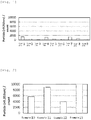
- the number of defects on the above wafer surface for measurement was measured by a surface inspection device (Topcon Corporation, model number: WM-10), and the cleaning property of the cleaning liquid composition was evaluated.
- the evaluation results are shown in Figs. 1 and 2 .
- the cleaning liquids generally used for cleaning Cu are not suitable as cleaning liquids for Co, and they had better cleaning performance compared to the cleaning liquids for the cleaning liquid composition of the present invention.
- a Co substrate having the following configuration (PVD-Co 2k ⁇ /Ti/Th-SiO 2 /Si, Advanced Materials Technology, INC.) was cut into 1.0 x 1.0 cm 2 , and these substrates were immersed in a 1% aqueous oxalic acid solution for 10 seconds, rinsed with ultrapure water (DIW) for 1 minute, then immersed in BTA aqueous solution (concentration: 10 mM, pH 8) for 2 minutes, then rinsed again with DIW for 1 minute, and dried by nitrogen blow, to obtain Co-BTA substrates.
- DIW ultrapure water
- a Co substrate having the following configuration (PVD-Co 2kA/Ti/Th-SiO 2 /Si, Advanced Materials Technology, INC.) was cut into 1.0 x 1.0 cm 2 , and these substrates were immersed in a 1% aqueous oxalic acid solution for 10 seconds, rinsed with ultrapure water (DIW) for 1 minute, then immersed in BTA aqueous solution (concentration: 10 mM, pH 8) for 2 minutes, then further rinsed with DIW for 1 minute, immersed in each of the cleaning liquid compositions in Tables 3 and 4 (they were adjusted to have a predetermined pH using hydrochloric acid and TMAH) for 1 minute, then rinsed again with DIW for 1 minute, and dried with nitrogen blow, to obtain substrates for evaluation.
- DIW ultrapure water
- BTA aqueous solution concentration: 10 mM, pH 8
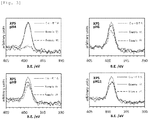
- the N1s spectrum of each of the above substrates was measured using XPS (X-ray photoelectron spectroscopy, manufactured by JEOL Ltd., model number: JPS-9200).
- XPS X-ray photoelectron spectroscopy, manufactured by JEOL Ltd., model number: JPS-9200.
- the intensity of the spectrum of the evaluation substrate when the obtained spectrum of the Co-BTA substrate was used as a reference was compared, and the Co-BTA removability was evaluated from the degree of decrease in the intensity.
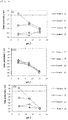
- 0.05 g of cobalt (SIGMA-ALDRICH) having an average particle size of 50 nm is mixed with 20 ml of ultrapure water (DIW), stirred for 10 minutes using an ultrasonic device to achieve uniform dispersion, and then 20 ⁇ L of this solution is collected and added to 50 mL of the cleaning liquid compositions having the composition shown in Table 5 (they were adjusted to have a predetermined pH using hydrochloric acid and TMAH). These solutions were further stirred and made uniform, and zeta potential of cobalt was measured using a zeta potential measuring device (Otsuka Electronics Co., Ltd., model number: ELS-Z).
- DIW ultrapure water
- Zeta potential (mV) was measured for each particle of silicon oxide and silicon nitride in the same manner as for cobalt.
- the zeta potential of the cleaning liquid composition containing the reducing agent in the acidic region exceeds 0, whereas the zeta potential of the cleaning liquid compositions containing the reducing agent and/or the surfactant showed a large negative zeta potential in a wide pH range of pH 6-12. Therefore, a negative zeta potential is also shown in objects to be cleaned containing cobalt wiring and silicon nitride.
- the silica abrasive grains contained in a cobalt-polishing slurry generally have a negative zeta potential
- the present cleaning liquid composition containing a reducing agent and/or a surfactant it is expected that the lift-off effect of silica abrasive grains due to repulsive action caused by the negative zeta potential between the silica abrasive grains and the object to be cleaned is enhanced, and at the same time, reattachment of the silica abrasive grains to the cleaning object is prevented, which contributes to the improvement of cleaning performance.
- Cleaning liquid Co SiO 2 SiN pH pH pH pH Reducing agent Surfactant
Landscapes
- Chemical & Material Sciences (AREA)
- Organic Chemistry (AREA)
- Engineering & Computer Science (AREA)
- Chemical Kinetics & Catalysis (AREA)
- Oil, Petroleum & Natural Gas (AREA)
- Wood Science & Technology (AREA)
- Life Sciences & Earth Sciences (AREA)
- Health & Medical Sciences (AREA)
- Emergency Medicine (AREA)
- Inorganic Chemistry (AREA)
- Cleaning Or Drying Semiconductors (AREA)
- Detergent Compositions (AREA)
- Mechanical Treatment Of Semiconductor (AREA)
Applications Claiming Priority (2)
| Application Number | Priority Date | Filing Date | Title |
|---|---|---|---|
| JP2018176376A JP7220040B2 (ja) | 2018-09-20 | 2018-09-20 | 洗浄液組成物 |
| PCT/JP2019/036709 WO2020059782A1 (fr) | 2018-09-20 | 2019-09-19 | Composition liquide de nettoyage |
Publications (2)
| Publication Number | Publication Date |
|---|---|
| EP3854865A1 true EP3854865A1 (fr) | 2021-07-28 |
| EP3854865A4 EP3854865A4 (fr) | 2022-05-25 |
Family
ID=69888504
Family Applications (1)
| Application Number | Title | Priority Date | Filing Date |
|---|---|---|---|
| EP19861841.5A Withdrawn EP3854865A4 (fr) | 2018-09-20 | 2019-09-19 | Composition liquide de nettoyage |
Country Status (8)
| Country | Link |
|---|---|
| US (1) | US11905490B2 (fr) |
| EP (1) | EP3854865A4 (fr) |
| JP (1) | JP7220040B2 (fr) |
| KR (1) | KR20210060454A (fr) |
| CN (1) | CN112639068A (fr) |
| SG (1) | SG11202102387SA (fr) |
| TW (1) | TWI832902B (fr) |
| WO (1) | WO2020059782A1 (fr) |
Families Citing this family (1)
| Publication number | Priority date | Publication date | Assignee | Title |
|---|---|---|---|---|
| JP2025014775A (ja) * | 2023-07-19 | 2025-01-30 | 関東化学株式会社 | 洗浄液組成物 |
Family Cites Families (19)
| Publication number | Priority date | Publication date | Assignee | Title |
|---|---|---|---|---|
| JP2005101479A (ja) * | 2002-11-08 | 2005-04-14 | Sumitomo Chemical Co Ltd | 半導体基板用洗浄液 |
| KR20040041019A (ko) | 2002-11-08 | 2004-05-13 | 스미또모 가가꾸 고오교오 가부시끼가이샤 | 반도체 기판용 세정액 |
| WO2006025373A1 (fr) * | 2004-08-31 | 2006-03-09 | Sanyo Chemical Industries, Ltd. | Agent tensioactif |
| US7922823B2 (en) | 2005-01-27 | 2011-04-12 | Advanced Technology Materials, Inc. | Compositions for processing of semiconductor substrates |
| JP2008543060A (ja) | 2005-05-26 | 2008-11-27 | アドバンスド テクノロジー マテリアルズ,インコーポレイテッド | 銅不活性化化学機械研磨後洗浄組成物及び使用方法 |
| TWI450052B (zh) | 2008-06-24 | 2014-08-21 | 黛納羅伊有限責任公司 | 用於後段製程操作有效之剝離溶液 |
| US8765653B2 (en) * | 2009-07-07 | 2014-07-01 | Air Products And Chemicals, Inc. | Formulations and method for post-CMP cleaning |
| KR20140139565A (ko) | 2012-03-18 | 2014-12-05 | 인티그리스, 인코포레이티드 | 개선된 장벽층 상용성 및 세정 성능을 가진 cmp-후 배합물 |
| WO2013173743A2 (fr) | 2012-05-18 | 2013-11-21 | Advanced Technology Materials, Inc. | Solution de nettoyage aqueuse ayant une vitesse d'attaque cuivrique faible, destinée à enlever plus efficacement les résidus organiques |
| JP6203525B2 (ja) | 2013-04-19 | 2017-09-27 | 関東化學株式会社 | 洗浄液組成物 |
| KR102256773B1 (ko) * | 2013-11-08 | 2021-05-27 | 후지 필름 일렉트로닉 머트리얼즈 가부시키가이샤 | 반도체 기판용 세정제 및 반도체 기판 표면의 처리방법 |
| JP2015165562A (ja) | 2014-02-06 | 2015-09-17 | 三菱化学株式会社 | 半導体デバイス用基板洗浄液及び半導体デバイス用基板の洗浄方法 |
| JP6488740B2 (ja) | 2014-02-06 | 2019-03-27 | 三菱ケミカル株式会社 | 半導体デバイス用基板洗浄液及び半導体デバイス用基板の洗浄方法 |
| JP2017005050A (ja) | 2015-06-08 | 2017-01-05 | 信越化学工業株式会社 | 研磨組成物及びその製造方法並びに研磨方法 |
| JP6112329B1 (ja) * | 2016-05-10 | 2017-04-12 | Jsr株式会社 | 半導体洗浄用組成物および洗浄方法 |
| JP2018026461A (ja) | 2016-08-10 | 2018-02-15 | 株式会社荏原製作所 | 化学機械研磨後の基板洗浄技術 |
| JP6689991B2 (ja) | 2016-08-31 | 2020-04-28 | 富士フイルム株式会社 | 処理液、基板の洗浄方法、半導体デバイスの製造方法 |
| JP6847657B2 (ja) * | 2016-12-28 | 2021-03-24 | 花王株式会社 | 半導体デバイス用基板用の洗浄剤組成物 |
| KR102460770B1 (ko) * | 2017-03-17 | 2022-10-28 | 미쯔비시 케미컬 주식회사 | 반도체 디바이스용 기판의 세정제 조성물, 반도체 디바이스용 기판의 세정 방법, 반도체 디바이스용 기판의 제조 방법 및 반도체 디바이스용 기판 |
-
2018
- 2018-09-20 JP JP2018176376A patent/JP7220040B2/ja active Active
-
2019
- 2019-09-19 SG SG11202102387SA patent/SG11202102387SA/en unknown
- 2019-09-19 EP EP19861841.5A patent/EP3854865A4/fr not_active Withdrawn
- 2019-09-19 KR KR1020217006692A patent/KR20210060454A/ko not_active Withdrawn
- 2019-09-19 WO PCT/JP2019/036709 patent/WO2020059782A1/fr not_active Ceased
- 2019-09-19 US US17/275,629 patent/US11905490B2/en active Active
- 2019-09-19 CN CN201980054513.1A patent/CN112639068A/zh active Pending
- 2019-09-20 TW TW108133961A patent/TWI832902B/zh active
Also Published As
| Publication number | Publication date |
|---|---|
| TW202034394A (zh) | 2020-09-16 |
| WO2020059782A1 (fr) | 2020-03-26 |
| SG11202102387SA (en) | 2021-04-29 |
| TWI832902B (zh) | 2024-02-21 |
| EP3854865A4 (fr) | 2022-05-25 |
| US11905490B2 (en) | 2024-02-20 |
| JP7220040B2 (ja) | 2023-02-09 |
| CN112639068A (zh) | 2021-04-09 |
| KR20210060454A (ko) | 2021-05-26 |
| JP2020045453A (ja) | 2020-03-26 |
| US20220033744A1 (en) | 2022-02-03 |
Similar Documents
| Publication | Publication Date | Title |
|---|---|---|
| KR101331747B1 (ko) | 반도체 기판 처리 조성물 | |
| TWI297730B (en) | Alkaline post-chemical mechanical planarization cleaning compositions | |
| US7468105B2 (en) | CMP cleaning composition with microbial inhibitor | |
| KR101232249B1 (ko) | 반도체 기판 세정액 및 반도체 기판 세정방법 | |
| TWI288175B (en) | Post-CMP washing liquid composition | |
| KR102770047B1 (ko) | 연마액, 및, 화학적 기계적 연마 방법 | |
| US11905490B2 (en) | Cleaning liquid composition | |
| US12006446B2 (en) | Polishing liquid and chemical mechanical polishing method | |
| KR101789251B1 (ko) | 화학적 기계적 연마 후 세정용 조성물 | |
| KR102727373B1 (ko) | 연마액, 및, 화학적 기계적 연마 방법 | |
| US20060070979A1 (en) | Using ozone to process wafer like objects | |
| CN110140196B (zh) | 清洗液组合物 | |
| CN100374527C (zh) | 减少微擦痕且利于金属氧化物的去除的金属cmp浆料组合物 | |
| US20040140288A1 (en) | Wet etch of titanium-tungsten film | |
| JP2008277848A (ja) | 化学機械研磨組成物及び化学機械研磨方法 | |
| JP2015203047A (ja) | 半導体デバイス用基板洗浄液及び半導体デバイス用基板の洗浄方法 | |
| JP2025014775A (ja) | 洗浄液組成物 | |
| US20230266671A1 (en) | Amine Oxides for Etching, Stripping and Cleaning Applications |
Legal Events
| Date | Code | Title | Description |
|---|---|---|---|
| STAA | Information on the status of an ep patent application or granted ep patent |
Free format text: STATUS: THE INTERNATIONAL PUBLICATION HAS BEEN MADE |
|
| PUAI | Public reference made under article 153(3) epc to a published international application that has entered the european phase |
Free format text: ORIGINAL CODE: 0009012 |
|
| STAA | Information on the status of an ep patent application or granted ep patent |
Free format text: STATUS: REQUEST FOR EXAMINATION WAS MADE |
|
| 17P | Request for examination filed |
Effective date: 20210419 |
|
| AK | Designated contracting states |
Kind code of ref document: A1 Designated state(s): AL AT BE BG CH CY CZ DE DK EE ES FI FR GB GR HR HU IE IS IT LI LT LU LV MC MK MT NL NO PL PT RO RS SE SI SK SM TR |
|
| DAV | Request for validation of the european patent (deleted) | ||
| DAX | Request for extension of the european patent (deleted) | ||
| A4 | Supplementary search report drawn up and despatched |
Effective date: 20220425 |
|
| RIC1 | Information provided on ipc code assigned before grant |
Ipc: C11D 11/00 20060101ALI20220419BHEP Ipc: C11D 3/37 20060101ALI20220419BHEP Ipc: C11D 3/00 20060101ALI20220419BHEP Ipc: H01L 21/304 20060101ALI20220419BHEP Ipc: C11D 7/22 20060101ALI20220419BHEP Ipc: C11D 7/26 20060101AFI20220419BHEP |
|
| STAA | Information on the status of an ep patent application or granted ep patent |
Free format text: STATUS: EXAMINATION IS IN PROGRESS |
|
| 17Q | First examination report despatched |
Effective date: 20230727 |
|
| STAA | Information on the status of an ep patent application or granted ep patent |
Free format text: STATUS: THE APPLICATION IS DEEMED TO BE WITHDRAWN |
|
| 18D | Application deemed to be withdrawn |
Effective date: 20231007 |