EP3855540B1 - Cathode comprenant un composé résistant à la base et batterie lithium-air la comprenant - Google Patents
Cathode comprenant un composé résistant à la base et batterie lithium-air la comprenant Download PDFInfo
- Publication number
- EP3855540B1 EP3855540B1 EP21151997.0A EP21151997A EP3855540B1 EP 3855540 B1 EP3855540 B1 EP 3855540B1 EP 21151997 A EP21151997 A EP 21151997A EP 3855540 B1 EP3855540 B1 EP 3855540B1
- Authority
- EP
- European Patent Office
- Prior art keywords
- cathode
- gao
- lithium
- sio
- base
- Prior art date
- Legal status (The legal status is an assumption and is not a legal conclusion. Google has not performed a legal analysis and makes no representation as to the accuracy of the status listed.)
- Active
Links
Images


Classifications
-
- H—ELECTRICITY
- H01—ELECTRIC ELEMENTS
- H01M—PROCESSES OR MEANS, e.g. BATTERIES, FOR THE DIRECT CONVERSION OF CHEMICAL ENERGY INTO ELECTRICAL ENERGY
- H01M12/00—Hybrid cells; Manufacture thereof
- H01M12/04—Hybrid cells; Manufacture thereof composed of a half-cell of the fuel-cell type and of a half-cell of the primary-cell type
- H01M12/06—Hybrid cells; Manufacture thereof composed of a half-cell of the fuel-cell type and of a half-cell of the primary-cell type with one metallic and one gaseous electrode
-
- H—ELECTRICITY
- H01—ELECTRIC ELEMENTS
- H01M—PROCESSES OR MEANS, e.g. BATTERIES, FOR THE DIRECT CONVERSION OF CHEMICAL ENERGY INTO ELECTRICAL ENERGY
- H01M12/00—Hybrid cells; Manufacture thereof
- H01M12/08—Hybrid cells; Manufacture thereof composed of a half-cell of a fuel-cell type and a half-cell of the secondary-cell type
-
- H—ELECTRICITY
- H01—ELECTRIC ELEMENTS
- H01M—PROCESSES OR MEANS, e.g. BATTERIES, FOR THE DIRECT CONVERSION OF CHEMICAL ENERGY INTO ELECTRICAL ENERGY
- H01M4/00—Electrodes
- H01M4/02—Electrodes composed of, or comprising, active material
- H01M4/36—Selection of substances as active materials, active masses, active liquids
- H01M4/362—Composites
-
- H—ELECTRICITY
- H01—ELECTRIC ELEMENTS
- H01M—PROCESSES OR MEANS, e.g. BATTERIES, FOR THE DIRECT CONVERSION OF CHEMICAL ENERGY INTO ELECTRICAL ENERGY
- H01M4/00—Electrodes
- H01M4/02—Electrodes composed of, or comprising, active material
- H01M4/36—Selection of substances as active materials, active masses, active liquids
- H01M4/38—Selection of substances as active materials, active masses, active liquids of elements or alloys
- H01M4/381—Alkaline or alkaline earth metals elements
- H01M4/382—Lithium
-
- H—ELECTRICITY
- H01—ELECTRIC ELEMENTS
- H01M—PROCESSES OR MEANS, e.g. BATTERIES, FOR THE DIRECT CONVERSION OF CHEMICAL ENERGY INTO ELECTRICAL ENERGY
- H01M4/00—Electrodes
- H01M4/02—Electrodes composed of, or comprising, active material
- H01M4/36—Selection of substances as active materials, active masses, active liquids
- H01M4/48—Selection of substances as active materials, active masses, active liquids of inorganic oxides or hydroxides
- H01M4/485—Selection of substances as active materials, active masses, active liquids of inorganic oxides or hydroxides of mixed oxides or hydroxides for inserting or intercalating light metals, e.g. LiTi2O4 or LiTi2OxFy
-
- H—ELECTRICITY
- H01—ELECTRIC ELEMENTS
- H01M—PROCESSES OR MEANS, e.g. BATTERIES, FOR THE DIRECT CONVERSION OF CHEMICAL ENERGY INTO ELECTRICAL ENERGY
- H01M4/00—Electrodes
- H01M4/86—Inert electrodes with catalytic activity, e.g. for fuel cells
- H01M4/8605—Porous electrodes
-
- H—ELECTRICITY
- H01—ELECTRIC ELEMENTS
- H01M—PROCESSES OR MEANS, e.g. BATTERIES, FOR THE DIRECT CONVERSION OF CHEMICAL ENERGY INTO ELECTRICAL ENERGY
- H01M4/00—Electrodes
- H01M4/86—Inert electrodes with catalytic activity, e.g. for fuel cells
- H01M4/8647—Inert electrodes with catalytic activity, e.g. for fuel cells consisting of more than one material, e.g. consisting of composites
-
- H—ELECTRICITY
- H01—ELECTRIC ELEMENTS
- H01M—PROCESSES OR MEANS, e.g. BATTERIES, FOR THE DIRECT CONVERSION OF CHEMICAL ENERGY INTO ELECTRICAL ENERGY
- H01M4/00—Electrodes
- H01M4/86—Inert electrodes with catalytic activity, e.g. for fuel cells
- H01M4/8663—Selection of inactive substances as ingredients for catalytic active masses, e.g. binders, fillers
-
- H—ELECTRICITY
- H01—ELECTRIC ELEMENTS
- H01M—PROCESSES OR MEANS, e.g. BATTERIES, FOR THE DIRECT CONVERSION OF CHEMICAL ENERGY INTO ELECTRICAL ENERGY
- H01M4/00—Electrodes
- H01M4/86—Inert electrodes with catalytic activity, e.g. for fuel cells
- H01M4/90—Selection of catalytic material
- H01M4/9016—Oxides, hydroxides or oxygenated metallic salts
-
- H—ELECTRICITY
- H01—ELECTRIC ELEMENTS
- H01M—PROCESSES OR MEANS, e.g. BATTERIES, FOR THE DIRECT CONVERSION OF CHEMICAL ENERGY INTO ELECTRICAL ENERGY
- H01M4/00—Electrodes
- H01M4/02—Electrodes composed of, or comprising, active material
- H01M2004/026—Electrodes composed of, or comprising, active material characterised by the polarity
- H01M2004/027—Negative electrodes
-
- H—ELECTRICITY
- H01—ELECTRIC ELEMENTS
- H01M—PROCESSES OR MEANS, e.g. BATTERIES, FOR THE DIRECT CONVERSION OF CHEMICAL ENERGY INTO ELECTRICAL ENERGY
- H01M4/00—Electrodes
- H01M4/02—Electrodes composed of, or comprising, active material
- H01M2004/026—Electrodes composed of, or comprising, active material characterised by the polarity
- H01M2004/028—Positive electrodes
-
- H—ELECTRICITY
- H01—ELECTRIC ELEMENTS
- H01M—PROCESSES OR MEANS, e.g. BATTERIES, FOR THE DIRECT CONVERSION OF CHEMICAL ENERGY INTO ELECTRICAL ENERGY
- H01M4/00—Electrodes
- H01M4/86—Inert electrodes with catalytic activity, e.g. for fuel cells
- H01M2004/8678—Inert electrodes with catalytic activity, e.g. for fuel cells characterised by the polarity
- H01M2004/8689—Positive electrodes
-
- Y—GENERAL TAGGING OF NEW TECHNOLOGICAL DEVELOPMENTS; GENERAL TAGGING OF CROSS-SECTIONAL TECHNOLOGIES SPANNING OVER SEVERAL SECTIONS OF THE IPC; TECHNICAL SUBJECTS COVERED BY FORMER USPC CROSS-REFERENCE ART COLLECTIONS [XRACs] AND DIGESTS
- Y02—TECHNOLOGIES OR APPLICATIONS FOR MITIGATION OR ADAPTATION AGAINST CLIMATE CHANGE
- Y02E—REDUCTION OF GREENHOUSE GAS [GHG] EMISSIONS, RELATED TO ENERGY GENERATION, TRANSMISSION OR DISTRIBUTION
- Y02E60/00—Enabling technologies; Technologies with a potential or indirect contribution to GHG emissions mitigation
- Y02E60/10—Energy storage using batteries
Definitions
- This disclosure relates to a cathode including a base-resistant compound, and a lithium-air battery including the same.
- a lithium-air battery lithium itself is used as an anode and it is not necessary to store air as a cathode active material in the battery.
- a lithium-air battery may be implemented as a high-capacity battery.
- lithium-air batteries have a relatively high theoretical specific energy, which is equal to greater than 3,500 watt hours per kilogram (Wh/kg). Such a specific energy is about 10 times greater than that of a general lithium-ion battery.
- a voltage of about 4.5 V is generated when moisture-containing air is used as a cathode active material, whereas a voltage of about 3 V is generated when oxygen is used as a cathode active material. Accordingly, moisture-containing air is favorably used as the cathode active material.
- LiOH is generated, which is strongly basic, as a discharge product from a discharge reaction, and materials currently being used as a cathode material, may be undesirably decomposed due to the strongly basic material.
- US 2013/071761 discloses a process including contacting a carbon support material with an oxidizing agent followed by the acid treatment to form a functionalized carbon support material including surface hydroxyl functionality; contacting the functionalized carbon support material with a solution of a catalyst precursor; and adjusting the pH of the solution to produce a carbon supported catalyst material including a metal oxide catalyst.
- US 2016/079590 discloses a cathode for a lithium air battery, the cathode including: an organic-inorganic composite material including a coating layer on at least one portion of a surface thereof, wherein the coating layer includes a positively charged silane compound and an ionic bond forming anion.
- WO 2014/020349 discloses a cathode and in particular an air-breathing cathode for use in a metal-air battery.
- a base-resistant cathode is provided.
- a lithium-air battery including the cathode.
- a cathode for a lithium-air battery inn accordance with claim 1.
- a lithium-air battery including:
- a cathode according to an embodiment uses air including moisture and oxygen as a cathode active material, and includes a base-resistant compound.
- Li 2 O 2 is generated as a discharge product on a surface of a cathode during discharge.
- the air including moisture and oxygen is used as a cathode active material, and thus LiOH is generated on a surface of a cathode as a discharge product during discharge.
- Reaction Formula 1 Reaction Formula 1 4Li + + 4e - + O 2 + 2H 2 O ⁇ 4LiOH
- a lithium anode During discharge of the lithium-air battery, a lithium anode provides a lithium ion and an electron, and the lithium ion is transferred to the cathode surface through a solid electrolyte, while the electron is transferred from the lithium anode to the cathode surface through an external circuit.
- the air including oxygen and moisture which is present on the cathode surface, reacts with the lithium ion and the electron to generate LiOH as a reaction product. Since LiOH is an alkali hydroxide, which is strongly basic, a cathode material that is stable when contacted by LiOH, and does not deteriorate in the presence of a strong base is desired.
- a porous carbon or a ruthenium (Ru) based metals have been used as cathode materials having electronic and ionic conductivity in lithium-air batteries.
- ruthenium (Ru) based metals can deteriorate under a strongly basic condition.
- the use of the moisture-containing air as a cathode active material has been limited.
- the present inventors have identified that a compound having a particular composition, which will later be described, is electrochemically stable under a basic condition, for example, under a strongly basic condition, and is unexpectedly structurally and chemically stable at a voltage in a range of 2 V to 4.5 V vs Li/Li + , which corresponds to a charge/discharge voltage range of a lithium-air battery.
- the identified compound can be used to prepare a cathode for a lithium air battery.
- the base-resistant compound included in the cathode is structurally and chemically stable at a pH of about 7 or greater, for example, about 8 or greater, about 9 or greater, about 10 or greater, about 11 or greater, or about 12 or greater.
- the base-resistant compound may be electrochemically stable at a pH of about 9 or greater.
- the base-resistant compound may be electrochemically stable at a pH from about 7 to about 14, about 8 to about 13, or about 9 to about 12.
- the base-resistant compound may be electrochemically stable at a pH of about 12 to about 14.
- the pH value from about 12 to about 14, which is a pH value of an aqueous solution having LiOH dissolved therein, may be a pH value produced by a discharge product generated from a lithium-air battery using the air including moisture as a cathode active material.
- the base-resistant compound is thermodynamically stable at 2 V to 4.5V vs Li/Li + , having 0 or a positive Gibbs free energy at 2 V to 4.5V vs Li/Li + , e.g., a Gibbs free energy of about 5 eV to 0 eV, about 3 eV to about 0.1 eV, or equal to or greater than 0 eV at a voltage of 2 V to 4.5 V vs Li/Li + .
- the base-resistant compound has a Gibbs free energy difference ( ⁇ G) of 0 eV under a voltage condition of 2 V to 4.5 V. Therefore, the base-resistant compound is electrochemically stable during charge and discharge of the lithium-air battery, and thus does not undergo a phase change.
- the Gibbs free energy of the base-resistant compounds in the specific range of pH are calculated by using quantum computation of Pourbaix algorithm.
- the base-resistant compound may be electrochemically stable with respect to lithium metal, or a lithium-containing alloy at a voltage of 2 V to 4.5 V vs Li/Li + and a pH of about 9 to about 14.
- the base-resistant compound may be electrochemically stable with respect to a lithium metal at a voltage of 2 V to 4.5 V vs Li/Li + and a pH of 12 to 14. Therefore, since the base resistant compound may be structurally and chemically stable under a basic or strongly basic pH environment and at a particular charge/discharge voltage, the lithium-air battery including the base-resistant compound may have improved durability, and thus may have desirable long life characteristics.
- the lithium-air battery may provide improved rate capability when moisture is used as a cathode active material relative to when moisture is not used.
- the base-resistant compound may have suitable oxidation resistance and reduction resistance with respect to lithium metal at a voltage of 2 V to 4.5 V vs Li/Li + and a pH of about 12 to about 14.
- oxidation resistance used herein means resistance to oxidation by not participating in an oxidation reaction.
- reduction resistance means resistance to reduction by not participating in a reduction reaction. Therefore, the base-resistant compound may be substantially non-reactive, e.g., inert, under the aforementioned pH environment and charge/discharge voltage. In an aspect, the base-resistant compound is not involved in oxidation and reduction of lithium and oxygen under the pH environment in the foregoing charge/discharge voltage range.
- the base-resistant compound includes at least one of Y 2 O 3 , HfO 2 , Ta 2 O 5 , Nd 2 O 3 , PuO 2 , Tb 2 O 3 , Dy 2 O 3 , Gd 2 O 3 , Sm 2 O 3 , Ho 2 O 3 , Er 2 O 3 , Sc 2 O 3 , Tm 2 O 3 , Lu 2 O 3 , ThO 2 , UO 3 , Eu 2 O 3 , In 2 O 3 , BeO, SnO 2 , YbF 2 , Al 2 ZnO 4 , BaTa 2 O 6 , BaUO 4 , CaTa 2 O 6 , CaUO 4 , Cd(GaO 2 ) 2 , Cd 2 Sb 2 O 7 , CdIn 2 O 4 , CdSnO 3 , CeTh 9 O 20 , Dy 11 Y 5 O 24 , Dy 29 Y 3 O 48 , Dy 2 CO 5 , Dy 2 GeO 5 , Dy 2 Hf 2
- These base-resistant compounds are electrochemically stable with respect to a lithium anode at a voltage of 2 V to 4.5 V vs Li/Li + at a pH of about 12 to about 14, and thus enable the lithium-air battery using the air including moisture as a cathode active material to be used for an extended period of time.
- the base-resistant compound may be included in the cathode in an amount of 1 part by weight to 100 parts by weight, based on 100 parts by weight of the cathode.
- the amount of the base-resistant compound included in the cathode may be about 10 parts by weight to 100 parts by weight, about 50 parts by weight to 100 parts by weight, about 60 parts by weight to 100 parts by weight, about 70 parts by weight to 100 parts by weight, about 80 parts by weight to 100 parts by weight or about 90 parts by weight to 100 parts by weight.
- the amount of the base-resistant compound included in the cathode is within these ranges, a cathode having a sufficiently high durability with respect to the discharge product can be attained.
- the cathode may include a conductive material, a catalyst for oxidation/reduction of oxygen, or a binder.
- the air may include about 1 volume percent (vol %) and less than 100 vol % of moisture, based on a total volume of the air.
- a volume proportion of moisture in the air may be about 5 vol % to about 99 vol %, about 10 vol % to about 98 vol %, about 20 vol % to about 97 vol %, about 30 vol % to about 96 vol %, about 40 vol % to about 95 vol %, about 50 vol % to about 94 vol %, about 55 vol % to about 93 vol %, about 60 vol % to about 92 vol %, about 65 vol % to 91 vol %, or about 70 vol % to 90 vol %.
- the moisture is used as a cathode active material, thereby generating a sufficiently high power output.
- a lithium-air battery includes the cathode; an anode including lithium; and an electrolyte disposed between the cathode and the anode.
- Deterioration of the lithium-air battery is inhibited by the use of the cathode including the base-resistant compound, and high output power can be achieved.
- the lithium-air battery includes a cathode.
- the cathode is an air electrode, and the air included in the air electrode is air including moisture and oxygen.
- the cathode may be arranged on, for example, a cathode current collector.
- the cathode is inert with respect to a discharge product having a pH of 9 or greater.
- the cathode is inert with respect to a discharge product at a pH of 12 to 14. Therefore, in the lithium-air battery using the air including moisture as a cathode active material, the cathode is structurally stable and deterioration thereof is inhibited, and thus the lithium-air battery can have a long life characteristic.
- the discharge product may include LiOH generated by a reaction between a lithium ion and gaseous moisture (H 2 O (g)).
- the discharge product can be expressed by the above chemical formula.
- An alkali hydroxide such as LiOH is strongly basic and has a pH of 12 to 14 in an aqueous state.
- the cathode has a simplified configuration and can be easily manufactured by substantially including the porous layer including the base-resistant compound.
- the cathode is permeable with respect to, for example, a gas such as moisture, oxygen or air. Therefore, the cathode is distinguished from a cathode that is substantially impermeable to a gas such as moisture or oxygen.
- the moisture, oxygen or air may be easily diffused into the cathode by the cathode being porous and/or gas permeable, and thus electrochemical reactions between lithium ions, electrons, oxygen and moisture can be easily carried out on a surface of the cathode.
- the cathode includes a porous conductive carbon-based material, which will later be described, and may further include a coating layer on its surface, and the coating layer may include a base-resistant compound. Alternatively, the coating layer may be made of a base-resistant compound. Therefore, the cathode may be distinguished from an available cathode that is substantially impermeable to a gas such as moisture or oxygen.
- the moisture, oxygen or air may be easily diffused into the cathode by the cathode being porous and/or gas permeable and lithium ions and/or electrons may easily migrate through a porous layer, and thus electrochemical reactions between lithium ions, electrons, oxygen and moisture can be easily carried out on the surface of the cathode.
- deterioration of the cathode, caused by a discharge product may be prevented by the coating layer including the base-resistant compound, and thus the cathode has a long life characteristic.
- the conductive material is a porous carbon-based material.
- the carbon-based material include a carbon black-like material, a graphite-like material, a graphene-like material, an activated carbon-like material, and a carbon fiber-like material, but are not limited thereto. Any suitable carbon-based material may be used.
- the conductive material may be, for example, a metallic material.
- the metallic material may be, for example, a metal fiber, a metal mesh, or a metal powder.
- the metal powder may be, for example, copper, silver, nickel, or aluminum.
- the conductive material may be, for example, an organic conductive material.
- the conductive material may be, for example, a polyphenylene derivative, or a polythiophene derivative.
- the conductive material may be used alone or in combination.
- the cathode may include a composite conductor as a conductive material, and may further include the above-mentioned conductive materials in addition to the composite conductor.
- the cathode may further include a catalyst for facilitating oxidation/reduction of oxygen.
- a catalyst for facilitating oxidation/reduction of oxygen examples include: a precious metal-based catalyst, such as platinum (Pt), gold (Au), silver (Ag), palladium (Pd), ruthenium (Ru), rhodium (Rh), and osmium (Os); an oxide-based catalyst, such as manganese oxide, iron oxide, cobalt oxide, and nickel oxide; or an organic metal-based catalyst, such as cobalt phthalocyanine, but are not limited thereto. Any suitable catalyst for oxidation/reduction of oxygen may be used.
- the catalyst may be provided on a support.
- the support may be, for example, an oxide support, a zeolite support, a clay mineral support, or a carbon support.
- the oxide support may be, for example, a metal or semimetal oxide support including at least one of Al, Si, Zr, Ti, Ce, Pr, Sm, Eu, Tb, Tm, Yb, Sb, Bi, V, Cr, Mn, Fe, Co, Ni, Cu, Nb, Mo, or W.
- the oxide support may include, for example, alumina, silica, zirconium oxide, and titanium dioxide.
- the carbon support may include, but is not limited to, a carbon black-like material, such as Ketjen black, acetylene black, channel black, or lamp black; a graphite-like material, such as natural graphite, artificial graphite, or expanded graphite; an activated carbon-like material; or a carbon fiber-like material. Any suitable support may be used.
- the cathode may further include, for example, a binder.
- the binder may include, for example, a thermoplastic resin or a thermosetting resin.
- the binder may include at least one of, but are not limited to, polyethylene, polypropylene, polytetrafluoroethylene (PTFE), polyvinylidene fluoride (PVDF), styrene-butadiene rubber, a tetrafluoroethylene-perfluoroalkylvinylether copolymer, a vinylidene fluoride-hexafluoropropylene copolymer, a vinylidene fluoride-chlorotrifluoroethylene copolymer, ethylene-tetrafluoroethylene copolymer, polychlorotrifluoroethylene, a vinylidene fluoride-pentafluoropropylene copolymer, a propylene-tetrafluoroethylene copolymer, an ethylene-chlorotri
- the cathode is prepared by mixing, for example, a conductive material, a catalyst for oxidation/reduction of oxygen, and a binder, and then adding an appropriate solvent thereto to prepare a cathode slurry, and coating the cathode slurry on a surface of a substrate and then drying or press-molding the cathode slurry on a substrate for increasing an electrode density.
- the substrate may be, for example, a cathode current collector, a separator, or a solid electrolyte layer.
- the cathode current collector may be, for example, a gas diffusion layer.
- the conductive material may include a composite conductor, and the catalyst for oxidation/reduction of oxygen and the binder may not be provided in the cathode according to the kind of cathode required.
- the lithium-air battery includes an anode.
- the anode includes lithium.
- the anode may be, for example, a lithium metal film or a lithium-based alloy film.
- the lithium-based alloy may be, for example, an alloy of lithium with aluminum, tin, magnesium, indium, potassium, titanium, or vanadium.
- the lithium-air battery includes an electrolyte layer disposed between the cathode and the anode.
- the electrolyte layer includes at least one of a solid electrolyte, a gel electrolyte, or a liquid electrolyte.
- the solid electrolyte, the gel electrolyte, and the liquid electrolyte are not particularly limited, and any suitable electrolyte may be used.
- the solid electrolyte may include, but is not limited to, at least one of an ionically conducting inorganic material, a solid electrolyte including a polymeric ionic liquid (PIL) and a lithium salt, a solid electrolyte including an ionically conducting polymer and a lithium salt, and a solid electrolyte including an electronically conducting polymer, or any suitable solid electrolyte.
- PIL polymeric ionic liquid
- the solid electrolyte may include, but is not limited to, at least one of an ionically conducting inorganic material, a solid electrolyte including a polymeric ionic liquid (PIL) and a lithium salt, a solid electrolyte including an ionically conducting polymer and a lithium salt, and a solid electrolyte including an electronically conducting polymer, or any suitable solid electrolyte.
- the ionically conducting inorganic material may include, but is not limited to, at least one of a glass or amorphous metal ion conductor, a ceramic active metal ion conductor, and a glass ceramic active metal ion conductor, or any suitable ionically conducting inorganic material.
- the ionically conducting inorganic material may be in the form of, for example, ionically conducting inorganic particles or a sheet formed of the ionically conducting inorganic material.
- Examples of the ionically conducting inorganic material may include at least one of BaTiO 3 , Pb(Zr a Ti 1-a )O 3 (PZT) wherein 0 ⁇ a ⁇ 1, Pb 1-x La x Zr 1-y Ti y O 3 (PLZT) (wherein 0 ⁇ x ⁇ 1 and 0 ⁇ y ⁇ 1), Pb(Mg 1/3 Nb 2/3 )O 3 -PbTiO 3 (PMN-PT), HfO 2 , SrTiO 3 , SnO 2 , CeO 2 , Na 2 O, MgO, NiO, CaO, BaO, ZnO, ZrO 2 , Y 2 O 3 , Al 2 O 3 , TiO 2 , SiO 2 , SiC, lithium phosphate (e.g., Li 3 PO 4 ), lithium titanium phosphate (e.g., Li x Ti y (PO 4 ) 3 , wherein 0 ⁇ x ⁇ 2 and 0 ⁇ y ⁇ 3), lithium
- Examples of the polymeric ionic liquid (PIL) may include repeating units including: i) at least one of an ammonium-based cation, a pyrrolidinium-based cation, a pyridinium-based cation, a pyrimidinium-based cation, an imidazolium-based cation, a piperidinium-based cation, a pyrazolium-based cation, an oxazolium-based cation, a pyridazinium-based cation, a phosphonium-based cation, a sulfonium-based cation, or a triazolium-based cation; and ii) at least one of BF 4 -, PFs-, AsF 6 -, SbF 6 -, AlCl 4 -, HSO 4 -, ClO 4 -, CH 3 SO 3 -, (CF 3 SO 2 ) 2 N-, Cl-,
- polymeric ionic liquid may include poly(diallyldimethylammonium bistrifluoromethanesulfonylimide) (poly(diallyldimethylammonium)TFSI), poly(1-allyl-3-methylimidazolium trifluoromethanesulfonylimide), or poly(N-methyl-N-propylpiperidinium bis(trifluoromethanesulfonyl)imide).
- poly(diallyldimethylammonium bistrifluoromethanesulfonylimide) poly(diallyldimethylammonium)TFSI)
- the ionically conducting polymer may include at least one ion conductive repeating unit derived from an ether-based monomer, an acryl-based monomer, a methacryl-based monomer, or a siloxane-based monomer.
- Examples of the ionically conducting polymer may include, but are not limited to, polyethylene oxide (PEO), polyvinyl alcohol (PVA), polyvinylpyrrolidone (PVP), polyvinylsulfone (polysulfone), polypropylene oxide (PPO), polymethylmethacrylate, polyethylmethacrylate, polydimethyl siloxane, polyacrylic acid, polymethacrylic acid, polymethylacrylate, polyethylacrylate, poly-2-ethylhexyl acrylate, polybutyl methacrylate, poly2-ethylhexylmethacrylate, polydecylacrylate, polyethylenevinylacetate, a phosphate ester polymer, polyester sulfide, and polyfluorovinylidene (PVdF), Li-substituted Nafion, or any suitable ionically conducting polymer.
- PEO polyethylene oxide
- PVA polyvinyl alcohol
- PVP
- Examples of the electronically conducting polymer may include, but are not limited to, a polyphenylene derivative and polythiophene derivative, or any suitable electronically conducting polymer.
- the gel electrolyte may be obtained by additionally adding a low-molecular weight solvent to, for example, a solid electrolyte disposed between the cathode and the anode.
- the gel electrolyte is obtained by additionally adding a solvent, that is, a low-molecular weight organic compound, an oligomer, or the like, to, for example, a polymer.
- the liquid electrolyte includes a solvent and a lithium salt.
- the solvent includes, but is not limited to, at least one of an organic solvent, an ionic liquid, and an oligomer, or any suitable solvent that is a liquid at room temperature (25 °C).
- the organic solvent may include, for example, at least one of an ether-based solvent, a carbonate-based solvent, an ester-based solvent, or a ketone-based solvent.
- the organic solvent may include at least one of propylene carbonate, ethylene carbonate, fluoroethylene carbonate, vinyl ethylene carbonate butylene carbonate, dimethyl carbonate, diethyl carbonate, methylethyl carbonate, methylpropyl carbonate, ethylpropyl carbonate, methylisopropyl carbonate, dipropyl carbonate, dibutyl carbonate, benzonitrile, acetonitrile, tetrahydrofuran, 2-methyltetrahydrofuran, ⁇ -butyrolactone, dioxolane, 4-methyldioxorane, dimethylacetamide, dimethylsulfoxide, dioxane, 1,2-dimethoxyethane, sulfolane, dichloroethane, chlorobenzene
- Examples of the ionic liquid (IL) may include: i) at least one of an ammonium-based cation, a pyrrolidinium-based cation, a pyridinium-based cation, a pyrimidinium-based cation, an imidazolium-based cation, a piperidinium-based cation, a pyrazolium-based cation, an oxazolium-based cation, a pyridazinium-based cation, a phosphonium-based cation, a sulfonium-based cation, or a triazolium-based cation; and ii) at least one of BF 4 -, PF 6 -, AsFs-, SbF 6 -, AlCl 4 -, HSO 4 -, ClO 4 -, CH 3 SO 3 -, (CF 3 SO 2 ) 2 N-, Cl-, Br-, I-, SO
- the lithium salt may include, but is not limited to, at least one of lithium bis(trifluoromethanesulfonyl)imide (LiTFSI), LiPF 6 , LiBF 4 , LiAsF 6 , LiClO 4 , LiNO 3 , lithium bis(oxalato) borate (LiBOB), LiCF 3 SO 3 , LiN(SO 2 CF 3 ) 2 , LiN(SO 2 C 2 F 5 ) 2 , LiC(SO 2 CF 3 ) 3 , LiN(SO 3 CF 3 ) 2 , LiC 4 F 9 SO 3 , LiAlCl 4 , lithium trifluoromethane sulfonate (LiCF 3 SO 3 , LiTfO), or any suitable lithium salt.
- a concentration of the lithium salt may be, for example, about 0.01 M to about 5.0 M.
- the lithium-air battery may further include, for example, a separator disposed between the cathode and the anode.
- the separator is not limited as long as it has a suitable composition for an operating condition of a lithium air battery.
- the separator may include, for example, a non-woven polymer fabric such as a non-woven fabric including a polypropylene material or a non-woven fabric including a polyphenylene sulfide material, a porous film including an olefin-based resin such as polyethylene or polypropylene, glass fiber, or a combination of two or more of these materials.
- the electrolyte layer may have, for example, a solid polymer electrolyte impregnated in the separator or a liquid electrolyte impregnated in the separator.
- the electrolyte in which a solid polymer electrolyte is impregnated in the separator may be prepared by arranging solid polymer electrolyte films on opposite surfaces of the separator, and roll-pressing the resulting structure at the same time.
- the electrolyte in which a liquid electrolyte is impregnated in the separator is prepared by injecting a liquid electrolyte including a lithium salt into the separator.
- the lithium-air battery may be prepared by installing the anode on an inner side of a case, sequentially arranging the electrolyte layer on the anode, the cathode on the electrolyte layer, and a porous cathode current collector on the cathode, and then arranging a pressing member on the porous cathode current collector to press a resulting cell structure to allow the air including moisture and oxygen to be transferred to an air electrode.
- the case may be divided into upper and lower portions that contact the anode and the air electrode, respectively, and an insulating resin may be disposed between the upper and lower portions of the case to electrically insulate the cathode and the anode from one another.
- the lithium-air battery may be used as a lithium primary battery or a lithium secondary battery.
- the lithium-air battery may have any suitable shape of, for example, a coin, a button, a sheet, a stack, a cylinder, a plane, or a horn, but not limited thereto.
- the lithium-air battery may be used in a medium or large battery for electric vehicles.
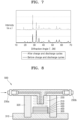
- the lithium-air battery 500 includes a cathode 200 adjacent to a first current collector 210 that uses the air including moisture and oxygen as an active material, an anode 300 adjacent to a second current collector 310 and including lithium, and a first electrolyte 400 disposed between the cathode 200 and the anode 300.
- the first electrolyte layer 400 is a separator having a liquid electrolyte impregnated therein.
- a second electrolyte layer 450 is disposed between the cathode 200 and the first electrolyte layer 400.
- the second electrolyte layer 450 is a lithium ion conductive solid electrolyte layer.
- the first current collector 210 may be porous and may function as a gas diffusion layer which allows diffusion of the air including moisture and oxygen. Alternatively, a gas diffusion layer may be additionally disposed between the first current collector 210 and the cathode 200.
- a pressing member 220 for transferring the air including moisture and oxygen to the cathode 200 may be arranged on the first current collector 210.
- a case 320 made of an insulating resin may be disposed between the cathode 200 and the anode 300 to electrically insulate the cathode 200 and the anode 300 from one another.
- the air is supplied to the lithium-air battery 500 through an air inlet 230a and may be discharged through an air outlet 230b.
- the lithium-air battery 500 may be provided in a stainless steel container.
- the air which is present in a cavity between the first current collector and the cathode, includes moisture and oxygen, and a volume proportion of moisture in the air may be 1 vol % and less than 100 vol %, for example, 5 vol % and less than 100 vol %, 10 vol % and less than 100 vol %, 30 vol % and less than 100 vol %, 40 vol % and less than 100 vol %, 50 vol % and less than 100 vol %, 60 vol % and less than 100 vol %, 70 vol % and less than 100 vol %, 80 vol % and less than 100 vol %, or 90 vol % and less than 100 vol %, based on a total volume of the air.
- air used with regard to a lithium-air battery is not limited to atmospheric air, and may refer to a combination of gases including oxygen. This broad definition of "air” may also be applied in other ways, such as an air battery or an air electrode.
- a method of preparing a cathode according to an aspect includes the steps of: preparing a composition including a base-resistant compound and a binder; molding the composition to prepare a sheet; and heat-treating the sheet under an oxidation atmosphere at a temperature of 900 °C to 1300 °C.
- the composition may include, for example, the base-resistant compound, a binder, a dispersant, or a plasticizer.
- the type and amount of a binder, a dispersant, and a plasticizer used are not particularly limited, and any suitable binder, dispersant, and plasticizer for forming a green sheet including ceramic may be used.
- the composition may include, for example, about 5 parts by weight to about 20 parts by weight of a binder, about 1 part by weight to about 10 parts by weight of a dispersant, and about 1 part by weight to about 10 parts by weight of a plasticizer, based on 100 parts by weight of the base-resistant compound.
- the composition may further include a solvent. An amount of the solvent may be about 1 part by weight to about 500 parts by weight, for example, based on 100 parts by weight of a total solid content of the base-resistant compound, the binder, the dispersant, or the plasticizer.
- the step of preparing the sheet may include, for example, coating the composition on a substrate to prepare a coating layer and drying the composition on the substrate to prepare a dried coating layer; and stacking and laminating a plurality of dried layers to prepare the sheet.
- the composition may be coated on a substrate such as a release film to a thickness of about 1 to about 1000 ⁇ m using a doctor blade and then dried to prepare a dried coating layer.
- a plurality of dried coating layers disposed on the release film are prepared, and stacked so as to face each other, and then laminated to prepare a green sheet.
- the laminating may be performed by hot rolling with a predetermined pressure.
- the prepared green sheet may be heat-treated under an oxidation atmosphere of 500 °C to 700 °C for 1 hour to 4 hours, and then additionally heat-treated under an oxidation atmosphere at a temperature of 900 °C to 1300 °C for about 3 to about 10 hours.
- a temperature increase rate may be, for example, 5 °C per minute, up to a heat-treatment temperature, and cooling may be performed by natural cooling.
- inventive concept will be described in further detail with reference to the following examples and comparative examples. However, the examples are provided for illustrating the inventive concept, but the scope of the inventive concept is not limited thereto.
- Example 1 Cathode including Y 2 O 3
- Y 2 O 3 (Sigma Aldrich) was ground in a ball mill to obtain powder having an average diameter of 100 nanometers (nm).
- Y 2 O 3 powder and polyacrylic acid (molecular weight: 1,800 Dalton) as a dispersant were added to ethanol and stirred to prepare a suspension.
- the amount of Y 2 O 3 was 0.1% by weight and the amount of dispersant was 0.05% by weight.
- Carbon paper (SGL, 29BA) was used as each anode and a cathode in the suspension.
- the carbon paper used had a thickness of about 190 ⁇ m, a porosity of about 89%, and an area resistance (through-plane resistance) of less than 10 m ⁇ cm -2 .
- Fibrous carbon included in the carbon paper had an average diameter of about 7 ⁇ m.
- a voltage of 100 V/cm was applied between the cathode and the anode for 10 minutes to deposit Y 2 O 3 on the carbon paper through electrophoretic deposition.
- a loading level of the deposited metal oxide coating layer was 2 mg/cm 2 .
- the carbon paper having a metal oxide deposited thereon was taken out from the suspension and dried at 25 °C for 2 hours to prepare a cathode.
- the cathode had a porosity of about 89%.
- Cathodes were prepared in the same manner as in Example 1, except that HfO 2 (Sigma Aldrich) and Ta 2 O 5 (Sigma Aldrich), instead of Y 2 O 3 , were used, respectively.
- Li 2 CO 3 , La 2 O 3 , and RuO 2 were added to ethanol according to the composition ratio of Li 0.34 La 0.55 RuO 3 and mixed.
- An amount of ethanol is about 4 parts by weight, based on 100 parts by weight of a total weight of the Li 2 CO 3 , La 2 O 3 , and RuO 2 .
- the mixture was put into a ball-milling device to be milled and mixed for 4 hours.
- the mixed product was dried and heated up to 800 °C at a temperature increase rate of about 5 °C/min, and then subjected to primary heat-treatment at 800 °C under an air atmosphere for 4 hours.
- the powder obtained by the primary heat-treatment was ground to prepare powder having a primary particle size of about 0.3 ⁇ m.
- the prepared powder was pressed to prepare cylindrical pellets each having a diameter of about 1.3 cm, a height of about 0.5 cm, and a weight of about 0.3 g.
- the prepared pellets were subjected to secondary heat-treatment at a temperature of 1200 °C under an air atmosphere for about 24 hours to obtain a desired product. When increasing the temperature up to 1200 °C for secondary heat-treatment, a temperature increase rate was about 5 °C/min.
- a cathode was prepared in the same manner as in Example 1 using the prepared Li 0.34 La 0.55 RuO 3 instead of Y 2 O 3 .
- the electrodes including the Y-, Hf-, and Ta-based oxides, respectively, used in Examples 1 to 3 were not dissolved in an aqueous solution of a strong base, whereas the Ru-based oxide in Comparative Example 1 was dissolved in the strong base aqueous solution (e.g., a lithium aqueous solution).
- the strong base aqueous solution e.g., a lithium aqueous solution.
- a separator (Celgard 3501) was disposed on a lithium metal foil anode.
- a lithium-aluminum titanium phosphate (LATP) solid electrolyte layer (250 ⁇ m in thickness, Ohara Corp., Japan) was arranged on the separator to prepare a lower structure including anode/anode intermediate layer/solid electrolyte layer.
- LATP lithium-aluminum titanium phosphate
- the lower structure was covered by a pouch having aluminum coated on a polyolefin film.
- a window having a predetermined size was installed at a top end of the pouch to allow the LATP solid electrolyte to be exposed to the outside of the pouch.
- the cathode prepared in Example 1 was arranged on the exposed LATP solid electrolyte.
- a gas diffusion layer (GDL) (SGL, 25BC) was arranged on the cathode, a nickel mesh was arranged on the GDL, a space between the cathode and the GDL was filled with air including moisture and oxygen, a pressing member was then arranged on the nickel mesh to press a resulting cell so as to allow the air to be transferred to the cathode, thereby manufacturing a lithium-air battery.
- a lithium-air battery was manufactured in the same manner as in Example 4, instead of the cathodes prepared in Examples 2 to 3 and Comparative Example 1 were used.
- Charge and discharge were performed in an oxygen atmosphere of 40 °C, 1 atm, and relative humidity of 100 %.
- the lithium-air batteries manufactured in Examples 4 to 6 were subjected to 10 times repeated charge-discharge cycles of discharge and charge with a constant current of 0.05 mA/cm 2 for 10 hours.
- FIG. 2 Charge-discharge cycle test results for first and second cycles are shown in FIG. 2 (Example 4), FIG. 3 (Example 5), and FIG. 4 (Example 6), respectively.
- the lithium-air batteries employing the cathodes, each including a base-resistant compound, prepared in Examples 4 to 6 showed charge-discharge curves exhibiting no short-circuit, confirming that the cathode including a base-resistant compound could be used for a lithium-air battery using air including moisture and oxygen as a cathode active material.
- XRD spectrums for the cathode material (Ru-based oxide) used in Comparative Example 1 were measured, and XRD spectrums for the cathode material (Ru-based oxide) included in the cathode of Comparative Example 2 were measured after performing 10 charge-discharge cycles of Evaluation Example 2. The measurement results are shown in FIG. 7 .
- electrochemical stabilities of a cathode and a lithium-air battery including the same may be improved.
- the powder obtained by the primary heat-treatment was ground to prepare powder having a primary particle size of about 0.3 ⁇ m.
- the prepared powder was pressed to prepare cylindrical pellets each having a diameter of about 1.3 cm, a height of about 0.5 cm, and a weight of about 0.3 g.
- the prepared pellets were subjected to secondary heat-treatment at a temperature of 1200 °C under an air atmosphere for about 24 hours to obtain a desired product. When increasing the temperature up to 1200 °C for secondary heat-treatment, a temperature increase rate was about 5 °C/min.
- a cathode was prepared in the same manner as in Example 1 using the prepared Li 0.34 La 0.55 RuO 3 instead of Y 2 O 3 .
- the electrodes including the Y-, Hf-, and Ta-based oxides, respectively, used in Examples 1 to 3 were not dissolved in an aqueous solution of a strong base, whereas the Ru-based oxide in Comparative Example 1 was dissolved in the strong base aqueous solution (e.g., a lithium aqueous solution).
- the strong base aqueous solution e.g., a lithium aqueous solution.
- a separator (Celgard 3501) was disposed on a lithium metal foil anode.
- a lithium-aluminum titanium phosphate (LATP) solid electrolyte layer (250 ⁇ m in thickness, Ohara Corp., Japan) was arranged on the separator to prepare a lower structure including anode/anode intermediate layer/solid electrolyte layer.
- LATP lithium-aluminum titanium phosphate
- the lower structure was covered by a pouch having aluminum coated on a polyolefin film.
- a window having a predetermined size was installed at a top end of the pouch to allow the LATP solid electrolyte to be exposed to the outside of the pouch.
- the cathode prepared in Example 1 was arranged on the exposed LATP solid electrolyte.
- a gas diffusion layer (GDL) (SGL, 25BC) was arranged on the cathode, a nickel mesh was arranged on the GDL, a space between the cathode and the GDL was filled with air including moisture and oxygen, a pressing member was then arranged on the nickel mesh to press a resulting cell so as to allow the air to be transferred to the cathode, thereby manufacturing a lithium-air battery.
- a lithium-air battery was manufactured in the same manner as in Example 4, instead of the cathodes prepared in Examples 2 to 3 and Comparative Example 1 were used.
- Charge and discharge were performed in an oxygen atmosphere of 40 °C, 1 atm, and relative humidity of 100 %.
- the lithium-air batteries manufactured in Examples 4 to 6 were subjected to 10 times repeated charge-discharge cycles of discharge and charge with a constant current of 0.05 mA/cm 2 for 10 hours.
- FIG. 2 Charge-discharge cycle test results for first and second cycles are shown in FIG. 2 (Example 4), FIG. 3 (Example 5), and FIG. 4 (Example 6), respectively.
- the lithium-air batteries employing the cathodes, each including a base-resistant compound, prepared in Examples 4 to 6 showed charge-discharge curves exhibiting no short-circuit, confirming that the cathode including a base-resistant compound could be used for a lithium-air battery using air including moisture and oxygen as a cathode active material.
- XRD spectrums for the cathode material (Ru-based oxide) used in Comparative Example 1 were measured, and XRD spectrums for the cathode material (Ru-based oxide) included in the cathode of Comparative Example 2 were measured after performing 10 charge-discharge cycles of Evaluation Example 2. The measurement results are shown in FIG. 7 .
- electrochemical stabilities of a cathode and a lithium-air battery including the same may be improved.
Landscapes
- Chemical & Material Sciences (AREA)
- Chemical Kinetics & Catalysis (AREA)
- Electrochemistry (AREA)
- General Chemical & Material Sciences (AREA)
- Engineering & Computer Science (AREA)
- Manufacturing & Machinery (AREA)
- Composite Materials (AREA)
- Materials Engineering (AREA)
- Inorganic Chemistry (AREA)
- Hybrid Cells (AREA)
- Battery Electrode And Active Subsutance (AREA)
Claims (6)
- Cathode pour une batterie lithium-air, la cathode comprenant :un matériau conducteur poreux à base de carbone ; etun composé résistant aux bases sur une surface du matériau conducteur poreux, le composé résistant aux bases comportant une énergie libre de Gibbs de 0 ou positive, à 2 v à 4,5 v par rapport à Li/Li+ à un pH de 7 à 14, dans lequel l'énergie libre de Gibbs des composés résistants aux bases dans la plage spécifique de pH est calculée en utilisant le calcul quantique de l'algorithme de Pourbaix ;dans laquelle le composé résistant aux bases comprend au moins un des éléments suivants : Y2O3, HfO2, Ta2O5, Nd2O3, PuO2, Tb2O3, Dy2O3, Gd2O3, Sm2O3, Ho2O3, Er2O3, Sc2O3, Tm2O3, Lu2O3, ThO2, UO3, Eu2O3, In2O3, BeO, SnO2, YbF2, Al2ZnO4, BaTa2O6, BaUO4, CaTa2O6, CaUO4, Cd(GaO2)2, Cd2Sb2O7, CdIn2O4, CdSnO3, CeTh9O20, Dy11Y5O24, Dy29Y3O48, Dy2CO5, Dy2GeO5, Dy2Hf2O7, Dy2SiO5, Dy2Sn2O7, Dy2Ti2O7, Dy2WO6, Dy2Zr8O19, Dy3Al5O12, Dy3Ga5O12, Dy3GaO6, Dy3Y5O12, DyAsO4, DyNbO4, DyOF, DyPO4, DyTaO4, DyY3O6, DyY7O12, Er10W2O21, Er2GeO5, Er2SiO5, Er2Sn2O7, Er2TiO5, Er3Al5O12, Er3Ga5O12, Er4Zr3O12, ErAsO4, ErBO3, ErNbO4, ErPO4, ErTaO4, Eu2Hf2O7, Eu2SiO5, Eu2Sn2O7, Eu3Ga5O12, Eu3GaO6, Eu3NbO7, Eu6WO12, EuOF, Gd2GeO5, Gd2Hf2O7, Gd2MoO6, Gd2SiO5, Gd2Sn2O7, Gd2TiO5, Gd3Al5O12, Gd3Ga5O12, Gd3GaO6, Gd3SbO7, Gd3Y13O24, Gd3Y5O12, Gd5Y3O12, Gd6WO12, GdAsO4, GdInO3, GdNbO4, GdOF, GdPO4, GdTaO4, Ho2SiO5, Ho2Sn2O7, Ho2Ti2O7, Ho2WO6, Ho2Zr8O19, Ho3Al3O12, Ho3Ga5O12, Ho3GaO6, Ho3ScO6, HoAsO4, HoBO3, HoNbO4, HoOF, HoPO4, HoTaO4, KTa5O13, La2CO5, La2GeO5, La2Hf2O7, La2MoO6, La2Si2O7, La2Sn2O7, La2SO6, La2TeO6, La2Th8O19, La2Ti2O7, La2UO6, La2WO6, La2Zr2O7, La3Ga5O12, La4Ga2O9, LaAlO3, LaAsO4, LaBO3, LaNbO4, LaOF, LaPO4, LaSbO4, LaScO3, LaTaO4, Lu2SiO5, Lu2Sn2O7, Lu2TiO5, Lu4Hf3O12, Lu4Zr3O12, Lu6UO12, LU6WO12, LuGaO3, LuNbO4, LuSbO4, LuTaO4, Mg(GaO2)2, MgTa2O6, MgTi2O5, Nd2GeO5, Nd2Hf2O7, Nd2MoO6, Nd2SiO5, Nd2Sn2O7, Nd2TeO6, Nd2Ti2O7, Nd2WO6, Nd2Zr8O19, Nd3Ga5O12, Nd3GaO6, Nd3U2O10, Nd4Ga2O9, NdAlO3, NdAsO4, NdBO3, NdFeO3, NdNbO4, NdOF, NdPO4, NdSbO4, NdScO3, NdTaO4, PrTaO4, Sc2Ti2O7, ScTaO4, Sm27Y5O48, Sm2Ge2O7, Sm2Hf2O7, Sm2MoO6, Sm2SiO5, Sm2Sn2O7, Sm2TeO6, Sm2Th8O19, Sm2TiO5, Sm2WO6, Sm2Zr8O19, Sm3Ga5O12, Sm3GaO6, SmAlO3, SmAsO4, SmBO3, SmNbO4, SmOF, SmPO4, SmSbO4, SmScO3, SmTaO4, SmY15O24, Sr3U11O36, SrTa2O6, Ta12MoO33, Ta2Cd2O7, Ta2Zn3O8, Ta2ZnO6, TaAlO4, TaBiO4, TaInO4, Tb2Ge2O7, Tb2SiO5, Tb2Sn2O7, Tb2Ti2O7, Tb2WO6, Tb2Zr8O19, Tb3Al5O12, Tb3Ga5O12, Tb3GaO6, TbAsO4, TbNbO4, TbOF, TbPO4, TbTaO4, ThTa2O7, ThTi2O6, Ti3Zn2O8, TiCdO3, Tm2Si2O7, Tm2Sn2O7, Tm2Ti2O7, Tm2Zr8O19, Tm3Al5O12, Tm3Ga5O12, Tm6WO12, TmNbO4, TmOF, TmPO4, TmTaO4, UCdO4, Y11Tm5O24, Y13Ho19O48, Y13Ho3O24, Y13Tm3O24, Y15TmO24, Y2GeO5, Y2Hf2O7, Y2HfO5, Y2SiO5, Y2Sn2O7, Y2Th8O19, Y2TiO5, Y2Zr8O19, Y3Al5O12, Y3Ga5O12, Y3GaO6, Y3SbO7, Y5Tm11O24, Y6WO12, Y7HoO12, Y7TmO12, YAsO4, Yb4Ta25O68, YbCO3, YBO3, YbTiO3, YNbO4, YOF, YPO4, YTaO4, Zn(GaO2)2, ou Zr8Sc2O19.
- Cathode selon la revendication 1, la cathode comprenant le composé résistant aux bases en une quantité de 1 partie en poids et de moins de 100 parties en poids, sur la base de 100 parties en poids de la cathode ; et/ou
dans lequel l'air comprend entre 1 pour cent en volume et 100 pour cent en volume d'humidité, sur la base d'un volume total de l'air. - Batterie au lithium-air, comprenant :la cathode selon les revendications 1 ou 2 ;une anode comprenant du métal lithium ; etun électrolyte disposé entre la cathode et l'anode.
- Batterie lithium-air selon la revendication 3, dans laquelle la cathode est inerte en présence d'un produit de décharge comportant un pH de 9 à 14 ;
de préférence dans laquelle le produit de décharge comprend du LiOH. - Batterie lithium-air selon les revendications 3 ou 4, dans laquelle l'électrolyte comprend un électrolyte solide ; et/ou
dans laquelle la cathode comprend en outre une couche poreuse, et la couche poreuse comprend le composé résistant aux bases. - Procédé de préparation d'une cathode pour une batterie lithium-air, le procédé comprenant :la fourniture d'une composition comprenant un composé résistant aux bases et un liant ;le moulage de la composition pour préparer une feuille ; etle traitement thermique de la feuille sous une atmosphère oxydante à une température de 900 °C à 1300 °C pour former la cathode ;dans lequel le composé résistant aux bases comprend au moins un des éléments suivants : Y2O3, HfO2, Ta2O5, Nd2O3, PuO2, Tb2O3, Dy2O3, Gd2O3, Sm2O3, Ho2O3, Er2O3, Sc2O3, Tm2O3, Lu2O3, ThO2, UO3, Eu2O3, In2O3, BeO, SnO2, YbF2, Al2ZnO4, BaTa2O6, BaUO4, CaTa2O6, CaUO4, Cd(GaO2)2, Cd2Sb2O7, CdIn2O4, CdSnO3, CeTh9O20, Dy11Y5O24, Dy29Y3O48, Dy2CO5, Dy2GeO5, Dy2Hf2O7, Dy2SiO5, Dy2Sn2O7, Dy2Ti2O7, Dy2WO6, Dy2Zr8O19, Dy3Al5O12, Dy3Ga5O12, Dy3GaO6, Dy3Y5O12, DyAsO4, DyNbO4, DyOF, DyPO4, DyTaO4, DyY3O6, DyY7O12, Er10W2O21, Er2GeO5, Er2SiO5, Er2Sn2O7, Er2TiO5, Er3Al5O12, Er3Ga5O12, Er4Zr3O12, ErAsO4, ErBO3, ErNbO4, ErPO4, ErTaO4, Eu2Hf2O7, Eu2SiO5, Eu2Sn2O7, Eu3Ga5O12, Eu3GaO6, Eu3NbO7, Eu6WO12, EuOF, Gd2GeO5, Gd2Hf2O7, Gd2MoO6, Gd2SiO5, Gd2Sn2O7, Gd2TiO5, Gd3Al5O12, Gd3Ga5O12, Gd3GaO6, Gd3SbO7, Gd3Y13O24, Gd3Y5O12, Gd5Y3O12, Gd6WO12, GdAsO4, GdInO3, GdNbO4, GdOF, GdPO4, GdTaO4, Ho2SiO5, Ho2Sn2O7, Ho2Ti2O7, Ho2WO6, Ho2Zr8O19, Ho3Al5O12, Ho3Ga5O12, Ho3GaO6, Ho3ScO6, HoAsO4, HoBO3, HoNbO4, HoOF, HoPO4, HoTaO4, KTa5O13, La2CO5, La2GeO5, La2Hf2O7, La2MoO6, La2Si2O7, La2Sn2O7, La2SO6, La2TeO6, La2Th8O19, La2Ti2O7, La2UO6, La2WO6, La2Zr2O7, La3Ga5O12, La4Ga2O9, LaAlO3, LaAsO4, LaBO3, LaNbO4, LaOF, LaPO4, LaSbO4, LaScO3, LaTaO4, Lu2SiO5, Lu2Sn2O7, Lu2TiO5, Lu4Hf3O12, Lu4Zr3O12, Lu6UO12, Lu6WO12, LuGaO3, LuNbO4, LuSbO4, LuTaO4, Mg(GaO2)2, MgTa2O6, MgTi2O5, Nd2GeO5, Nd2Hf2O7, Nd2MoO6, Nd2SiO5, Nd2Sn2O7, Nd2TeO6, Nd2Ti2O7, Nd2WO6, Nd2Zr8O19, Nd3Ga5O12, Nd3GaO6, Nd3U2O10, Nd4Ga2O9, NdAlO3, NdAsO4, NdBO3, NdFeO3, NdNbO4, NdOF, NdPO4, NdSbO4, NdScO3, NdTaO4, PrTaO4, Sc2Ti2O7, ScTaO4, Sm27Y5O48, Sm2Ge2O7, Sm2Hf2O7, Sm2MoO6, Sm2SiO5, Sm2Sn2O7, Sm2TeO6, Sm2Th8O19, Sm2TiO5, Sm2WO6, Sm2Zr8O19, Sm3Ga5O12, Sm3GaO6, SmAlO3, SmAsO4, SmBO3, SmNbO4, SmOF, SmPO4, SmSbO4, SmScO3, SmTaO4, SmY15O24, Sr3U11O36, SrTa2O6, Ta12MoO33, Ta2Cd2O7, Ta2Zn3O8, Ta2ZnO6, TaAlO4, TaBiO4, TaInO4, Tb2Ge2O7, Tb2SiO5, Tb2Sn2O7, Tb2Ti2O7, Tb2WO6, Tb2Zr8O19, Tb3Al5O12, Tb3Ga5O12, Tb3GaO6, TbAsO4, TbNbO4, TbOF, TbPO4, TbTaO4, ThTa2O7, ThTi2O6, Ti3Zn2O8, TiCdO3, Tm2Si2O7, Tm2Sn2O7, Tm2Ti2O7, Tm2Zr8O19, Tm3Al5O12, Tm3Ga5O12, Tm6WO12, TmNbO4, TmOF, TmPO4, TmTaO4, UCdO4, Y11Tm5O24, Y13Ho19O48, Y13Ho3O24, Y13Tm3O24, Y15TmO24, Y2GeO5, Y2Hf2O7, Y2HfO5, Y2SiO5, Y2Sn2O7, Y2Th8O19, Y2TiO5, Y2Zr8O19, Y3Al5O12, Y3Ga5O12, Y3GaO6, Y3SbO7, Y5Tm11O24, Y6WO12, Y7HoO12, Y7TmO12, YAsO4, Yb4Ta25O68, YbCO3, YBO3, YbTiO3, YNbO4, YOF, YPO4, YTaO4, Zn(GaO2)2, ou Zr8Sc2O19;de préférence dans lequel le moulage de la feuille comprend en outre :l'application de la composition sur un substrat pour former une couche de revêtement ;le séchage de la couche de revêtement pour former une couche de revêtement séchée ;l'empilement et la stratification d'une pluralité de couches de revêtement séchées pour préparer la feuille.
Applications Claiming Priority (2)
| Application Number | Priority Date | Filing Date | Title |
|---|---|---|---|
| US202062963811P | 2020-01-21 | 2020-01-21 | |
| KR1020200021771A KR20210094435A (ko) | 2020-01-21 | 2020-02-21 | 내염기성 화합물을 포함한 양극, 및 이를 포함하는 리튬공기전지 |
Publications (2)
| Publication Number | Publication Date |
|---|---|
| EP3855540A1 EP3855540A1 (fr) | 2021-07-28 |
| EP3855540B1 true EP3855540B1 (fr) | 2025-03-19 |
Family
ID=74186580
Family Applications (1)
| Application Number | Title | Priority Date | Filing Date |
|---|---|---|---|
| EP21151997.0A Active EP3855540B1 (fr) | 2020-01-21 | 2021-01-18 | Cathode comprenant un composé résistant à la base et batterie lithium-air la comprenant |
Country Status (3)
| Country | Link |
|---|---|
| US (1) | US12021244B2 (fr) |
| EP (1) | EP3855540B1 (fr) |
| CN (1) | CN113224317B (fr) |
Family Cites Families (16)
| Publication number | Priority date | Publication date | Assignee | Title |
|---|---|---|---|---|
| JP2000106203A (ja) * | 1998-09-30 | 2000-04-11 | Aisin Seiki Co Ltd | 固体高分子電解質膜及び燃料電池用電極及び固体高分子電解質型燃料電池 |
| KR20040002847A (ko) | 2000-11-16 | 2004-01-07 | 미쓰비시 마테리알 가부시키가이샤 | 고체 전해질형 연료전지 및 그것에 사용하는 공기극 집전체 |
| JP2002334695A (ja) * | 2001-03-09 | 2002-11-22 | Canon Inc | 二次電池および二次電池の製造方法 |
| US8080335B2 (en) * | 2006-06-09 | 2011-12-20 | Canon Kabushiki Kaisha | Powder material, electrode structure using the powder material, and energy storage device having the electrode structure |
| JP5023936B2 (ja) | 2006-10-06 | 2012-09-12 | 株式会社豊田中央研究所 | 正極用触媒及びリチウム空気二次電池 |
| JP2009164104A (ja) * | 2007-09-06 | 2009-07-23 | Canon Inc | 負極用電極材料、その製造方法ならびに該材料を用いた電極構造体及び蓄電デバイス |
| JP5616002B2 (ja) | 2008-03-19 | 2014-10-29 | 株式会社オハラ | リチウムイオン伝導性固体電解質およびその製造方法 |
| CN102934280A (zh) | 2010-06-04 | 2013-02-13 | 日立造船株式会社 | 金属空气电池 |
| JP6052176B2 (ja) * | 2011-08-05 | 2016-12-27 | 旭硝子株式会社 | リチウムイオン二次電池用正極活物質 |
| US8846256B2 (en) * | 2011-09-05 | 2014-09-30 | Ngk Insulators, Ltd. | Selectively oxygen-permeable substrate, metal-air battery positive electrode and metal-air battery |
| US20130071761A1 (en) | 2011-09-16 | 2013-03-21 | Khalil Amine | Catalytic cathode for lithium-air batteries |
| KR20130049003A (ko) | 2011-11-03 | 2013-05-13 | 현대자동차주식회사 | 차량용 리튬공기 배터리 장치 |
| DE102011121236A1 (de) | 2011-12-12 | 2013-06-13 | Fraunhofer-Gesellschaft zur Förderung der angewandten Forschung e.V. | Festkörperelektrolyt für den Einsatz in Lithium-Luft- oder Lithium-Wasser-Akkumulatoren |
| GB201213832D0 (en) | 2012-08-03 | 2012-09-19 | Johnson Matthey Plc | Cathode |
| KR101586403B1 (ko) | 2013-09-17 | 2016-01-19 | 한국에너지기술연구원 | 금속-공기 전지용 양극 촉매, 그의 제조방법 및 그를 포함하는 금속-공기 전지 |
| KR102280682B1 (ko) | 2014-09-15 | 2021-07-22 | 삼성전자주식회사 | 양극, 이를 포함하는 리튬공기전지, 및 상기 양극의 제조방법 |
-
2020
- 2020-12-03 US US17/110,534 patent/US12021244B2/en active Active
-
2021
- 2021-01-18 EP EP21151997.0A patent/EP3855540B1/fr active Active
- 2021-01-20 CN CN202110074513.7A patent/CN113224317B/zh active Active
Also Published As
| Publication number | Publication date |
|---|---|
| US20210226224A1 (en) | 2021-07-22 |
| EP3855540A1 (fr) | 2021-07-28 |
| US12021244B2 (en) | 2024-06-25 |
| CN113224317B (zh) | 2026-03-03 |
| CN113224317A (zh) | 2021-08-06 |
Similar Documents
| Publication | Publication Date | Title |
|---|---|---|
| EP2683005B1 (fr) | Conducteur ionique solide, électrolyte solide le contenant, pile au lithium comprenant ledit électrolyte solide et procédé de fabrication de ladite pile au lithium | |
| KR102395989B1 (ko) | 복합전극, 이를 포함하는 전기화학전지 및 전극제조방법 | |
| US11848411B2 (en) | Cathode and lithium-air battery including the cathode | |
| US20220359886A1 (en) | Mixed conductor, method of preparing the mixed conductor, and cathode, lithium-air battery and electrochemical device each including the mixed conductor | |
| US11658306B2 (en) | Cathode, lithium-air battery comprising the same, and method of preparing the cathode | |
| KR20200087661A (ko) | 고체이온전도체, 이를 포함하는 고체전해질, 이를 포함하는 리튬전지, 및 이의 제조방법 | |
| US11764364B2 (en) | Cathode, lithium-air battery comprising the same, and method of preparing the cathode | |
| KR20210048291A (ko) | 금속공기전지용 양극, 그 제조방법 및 이를 포함하는 금속공기전지 | |
| KR20210068965A (ko) | 고체 전해질, 그 제조방법, 이를 포함하는 금속공기전지 및 전기화학소자 | |
| EP3893294B1 (fr) | Électrode positive ayant une excellente résistance aux alcalins, son procédé de fabrication et batterie métal-air et dispositif électrochimique comprenant l'électrode positive | |
| KR20200055592A (ko) | 양극 및 이를 포함하는 리튬공기전지 | |
| KR20200084232A (ko) | 양극, 이를 포함하는 리튬 공기전지 및 이의 제조방법 | |
| EP3836265A1 (fr) | Électrolyte solide, son procédé de préparation, couche de protection pour batterie au lithium, batterie métal-air et dispositif électrochimique | |
| EP3855540B1 (fr) | Cathode comprenant un composé résistant à la base et batterie lithium-air la comprenant | |
| US20220199992A1 (en) | Cathode material, cathode including the same, and lithium-air battery including the cathode | |
| US11271218B2 (en) | Cathode, lithium air battery including cathode, and method of preparing lithium air battery | |
| US11121378B2 (en) | Mixed conductor, electrochemical device including the same, and method of preparing mixed conductor | |
| KR102715033B1 (ko) | 양극 및 이를 포함하는 리튬-공기 전지 | |
| US20200194802A1 (en) | Mixed conductor, electrochemical device including the same, and method of preparing mixed conductor | |
| US11283124B2 (en) | Lithium air battery | |
| KR102626923B1 (ko) | 혼합전도체, 그 제조방법, 이를 포함하는 양극, 리튬공기전지 및 전기화학소자 | |
| KR20210094435A (ko) | 내염기성 화합물을 포함한 양극, 및 이를 포함하는 리튬공기전지 | |
| KR20210075808A (ko) | 고체 전해질, 그 제조방법, 이를 포함하는 금속공기전지 및 전기화학소자 | |
| KR20210068292A (ko) | 고체 전해질, 그 제조방법, 이를 포함하는 리튬공기전지 및 전기화학소자 |
Legal Events
| Date | Code | Title | Description |
|---|---|---|---|
| PUAI | Public reference made under article 153(3) epc to a published international application that has entered the european phase |
Free format text: ORIGINAL CODE: 0009012 |
|
| STAA | Information on the status of an ep patent application or granted ep patent |
Free format text: STATUS: THE APPLICATION HAS BEEN PUBLISHED |
|
| AK | Designated contracting states |
Kind code of ref document: A1 Designated state(s): AL AT BE BG CH CY CZ DE DK EE ES FI FR GB GR HR HU IE IS IT LI LT LU LV MC MK MT NL NO PL PT RO RS SE SI SK SM TR |
|
| STAA | Information on the status of an ep patent application or granted ep patent |
Free format text: STATUS: REQUEST FOR EXAMINATION WAS MADE |
|
| 17P | Request for examination filed |
Effective date: 20220111 |
|
| RBV | Designated contracting states (corrected) |
Designated state(s): AL AT BE BG CH CY CZ DE DK EE ES FI FR GB GR HR HU IE IS IT LI LT LU LV MC MK MT NL NO PL PT RO RS SE SI SK SM TR |
|
| STAA | Information on the status of an ep patent application or granted ep patent |
Free format text: STATUS: EXAMINATION IS IN PROGRESS |
|
| 17Q | First examination report despatched |
Effective date: 20230113 |
|
| P01 | Opt-out of the competence of the unified patent court (upc) registered |
Effective date: 20230520 |
|
| RIC1 | Information provided on ipc code assigned before grant |
Ipc: H01M 4/02 20060101ALN20240722BHEP Ipc: H01M 12/08 20060101ALI20240722BHEP Ipc: H01M 4/90 20060101ALI20240722BHEP Ipc: H01M 4/86 20060101ALI20240722BHEP Ipc: H01M 4/485 20100101ALI20240722BHEP Ipc: H01M 4/36 20060101AFI20240722BHEP |
|
| GRAP | Despatch of communication of intention to grant a patent |
Free format text: ORIGINAL CODE: EPIDOSNIGR1 |
|
| STAA | Information on the status of an ep patent application or granted ep patent |
Free format text: STATUS: GRANT OF PATENT IS INTENDED |
|
| RIC1 | Information provided on ipc code assigned before grant |
Ipc: H01M 4/02 20060101ALN20240908BHEP Ipc: H01M 12/08 20060101ALI20240908BHEP Ipc: H01M 4/90 20060101ALI20240908BHEP Ipc: H01M 4/86 20060101ALI20240908BHEP Ipc: H01M 4/485 20100101ALI20240908BHEP Ipc: H01M 4/36 20060101AFI20240908BHEP |
|
| INTG | Intention to grant announced |
Effective date: 20241009 |
|
| RAP3 | Party data changed (applicant data changed or rights of an application transferred) |
Owner name: SAMSUNG ELECTRONICS CO., LTD |
|
| RIN1 | Information on inventor provided before grant (corrected) |
Inventor name: SEO, DONGHWA Inventor name: KIM, MOKWON Inventor name: MA, SANGBOK |
|
| GRAS | Grant fee paid |
Free format text: ORIGINAL CODE: EPIDOSNIGR3 |
|
| GRAA | (expected) grant |
Free format text: ORIGINAL CODE: 0009210 |
|
| STAA | Information on the status of an ep patent application or granted ep patent |
Free format text: STATUS: THE PATENT HAS BEEN GRANTED |
|
| AK | Designated contracting states |
Kind code of ref document: B1 Designated state(s): AL AT BE BG CH CY CZ DE DK EE ES FI FR GB GR HR HU IE IS IT LI LT LU LV MC MK MT NL NO PL PT RO RS SE SI SK SM TR |
|
| REG | Reference to a national code |
Ref country code: GB Ref legal event code: FG4D |
|
| REG | Reference to a national code |
Ref country code: CH Ref legal event code: EP |
|
| REG | Reference to a national code |
Ref country code: IE Ref legal event code: FG4D |
|
| REG | Reference to a national code |
Ref country code: DE Ref legal event code: R096 Ref document number: 602021027678 Country of ref document: DE |
|
| REG | Reference to a national code |
Ref country code: NL Ref legal event code: FP |
|
| PG25 | Lapsed in a contracting state [announced via postgrant information from national office to epo] |
Ref country code: RS Free format text: LAPSE BECAUSE OF FAILURE TO SUBMIT A TRANSLATION OF THE DESCRIPTION OR TO PAY THE FEE WITHIN THE PRESCRIBED TIME-LIMIT Effective date: 20250619 |
|
| PG25 | Lapsed in a contracting state [announced via postgrant information from national office to epo] |
Ref country code: FI Free format text: LAPSE BECAUSE OF FAILURE TO SUBMIT A TRANSLATION OF THE DESCRIPTION OR TO PAY THE FEE WITHIN THE PRESCRIBED TIME-LIMIT Effective date: 20250319 |
|
| REG | Reference to a national code |
Ref country code: LT Ref legal event code: MG9D |
|
| PG25 | Lapsed in a contracting state [announced via postgrant information from national office to epo] |
Ref country code: NO Free format text: LAPSE BECAUSE OF FAILURE TO SUBMIT A TRANSLATION OF THE DESCRIPTION OR TO PAY THE FEE WITHIN THE PRESCRIBED TIME-LIMIT Effective date: 20250619 |
|
| PG25 | Lapsed in a contracting state [announced via postgrant information from national office to epo] |
Ref country code: HR Free format text: LAPSE BECAUSE OF FAILURE TO SUBMIT A TRANSLATION OF THE DESCRIPTION OR TO PAY THE FEE WITHIN THE PRESCRIBED TIME-LIMIT Effective date: 20250319 |
|
| PG25 | Lapsed in a contracting state [announced via postgrant information from national office to epo] |
Ref country code: LV Free format text: LAPSE BECAUSE OF FAILURE TO SUBMIT A TRANSLATION OF THE DESCRIPTION OR TO PAY THE FEE WITHIN THE PRESCRIBED TIME-LIMIT Effective date: 20250319 |
|
| PG25 | Lapsed in a contracting state [announced via postgrant information from national office to epo] |
Ref country code: BG Free format text: LAPSE BECAUSE OF FAILURE TO SUBMIT A TRANSLATION OF THE DESCRIPTION OR TO PAY THE FEE WITHIN THE PRESCRIBED TIME-LIMIT Effective date: 20250319 Ref country code: GR Free format text: LAPSE BECAUSE OF FAILURE TO SUBMIT A TRANSLATION OF THE DESCRIPTION OR TO PAY THE FEE WITHIN THE PRESCRIBED TIME-LIMIT Effective date: 20250620 |
|
| REG | Reference to a national code |
Ref country code: AT Ref legal event code: MK05 Ref document number: 1777737 Country of ref document: AT Kind code of ref document: T Effective date: 20250319 |
|
| PG25 | Lapsed in a contracting state [announced via postgrant information from national office to epo] |
Ref country code: SE Free format text: LAPSE BECAUSE OF FAILURE TO SUBMIT A TRANSLATION OF THE DESCRIPTION OR TO PAY THE FEE WITHIN THE PRESCRIBED TIME-LIMIT Effective date: 20250319 |
|
| PG25 | Lapsed in a contracting state [announced via postgrant information from national office to epo] |
Ref country code: SM Free format text: LAPSE BECAUSE OF FAILURE TO SUBMIT A TRANSLATION OF THE DESCRIPTION OR TO PAY THE FEE WITHIN THE PRESCRIBED TIME-LIMIT Effective date: 20250319 |
|
| PG25 | Lapsed in a contracting state [announced via postgrant information from national office to epo] |
Ref country code: PT Free format text: LAPSE BECAUSE OF FAILURE TO SUBMIT A TRANSLATION OF THE DESCRIPTION OR TO PAY THE FEE WITHIN THE PRESCRIBED TIME-LIMIT Effective date: 20250721 Ref country code: ES Free format text: LAPSE BECAUSE OF FAILURE TO SUBMIT A TRANSLATION OF THE DESCRIPTION OR TO PAY THE FEE WITHIN THE PRESCRIBED TIME-LIMIT Effective date: 20250319 |
|
| PG25 | Lapsed in a contracting state [announced via postgrant information from national office to epo] |
Ref country code: PL Free format text: LAPSE BECAUSE OF FAILURE TO SUBMIT A TRANSLATION OF THE DESCRIPTION OR TO PAY THE FEE WITHIN THE PRESCRIBED TIME-LIMIT Effective date: 20250319 Ref country code: IT Free format text: LAPSE BECAUSE OF FAILURE TO SUBMIT A TRANSLATION OF THE DESCRIPTION OR TO PAY THE FEE WITHIN THE PRESCRIBED TIME-LIMIT Effective date: 20250319 |
|
| PG25 | Lapsed in a contracting state [announced via postgrant information from national office to epo] |
Ref country code: AT Free format text: LAPSE BECAUSE OF FAILURE TO SUBMIT A TRANSLATION OF THE DESCRIPTION OR TO PAY THE FEE WITHIN THE PRESCRIBED TIME-LIMIT Effective date: 20250319 |
|
| PG25 | Lapsed in a contracting state [announced via postgrant information from national office to epo] |
Ref country code: CZ Free format text: LAPSE BECAUSE OF FAILURE TO SUBMIT A TRANSLATION OF THE DESCRIPTION OR TO PAY THE FEE WITHIN THE PRESCRIBED TIME-LIMIT Effective date: 20250319 Ref country code: EE Free format text: LAPSE BECAUSE OF FAILURE TO SUBMIT A TRANSLATION OF THE DESCRIPTION OR TO PAY THE FEE WITHIN THE PRESCRIBED TIME-LIMIT Effective date: 20250319 |
|
| PG25 | Lapsed in a contracting state [announced via postgrant information from national office to epo] |
Ref country code: RO Free format text: LAPSE BECAUSE OF FAILURE TO SUBMIT A TRANSLATION OF THE DESCRIPTION OR TO PAY THE FEE WITHIN THE PRESCRIBED TIME-LIMIT Effective date: 20250319 |
|
| PG25 | Lapsed in a contracting state [announced via postgrant information from national office to epo] |
Ref country code: SK Free format text: LAPSE BECAUSE OF FAILURE TO SUBMIT A TRANSLATION OF THE DESCRIPTION OR TO PAY THE FEE WITHIN THE PRESCRIBED TIME-LIMIT Effective date: 20250319 |
|
| PG25 | Lapsed in a contracting state [announced via postgrant information from national office to epo] |
Ref country code: IS Free format text: LAPSE BECAUSE OF FAILURE TO SUBMIT A TRANSLATION OF THE DESCRIPTION OR TO PAY THE FEE WITHIN THE PRESCRIBED TIME-LIMIT Effective date: 20250719 |
|
| REG | Reference to a national code |
Ref country code: DE Ref legal event code: R097 Ref document number: 602021027678 Country of ref document: DE |
|
| PGFP | Annual fee paid to national office [announced via postgrant information from national office to epo] |
Ref country code: GB Payment date: 20251211 Year of fee payment: 6 |
|
| PG25 | Lapsed in a contracting state [announced via postgrant information from national office to epo] |
Ref country code: DK Free format text: LAPSE BECAUSE OF FAILURE TO SUBMIT A TRANSLATION OF THE DESCRIPTION OR TO PAY THE FEE WITHIN THE PRESCRIBED TIME-LIMIT Effective date: 20250319 |
|
| PGFP | Annual fee paid to national office [announced via postgrant information from national office to epo] |
Ref country code: NL Payment date: 20251225 Year of fee payment: 6 |
|
| PLBE | No opposition filed within time limit |
Free format text: ORIGINAL CODE: 0009261 |
|
| STAA | Information on the status of an ep patent application or granted ep patent |
Free format text: STATUS: NO OPPOSITION FILED WITHIN TIME LIMIT |
|
| REG | Reference to a national code |
Ref country code: CH Ref legal event code: L10 Free format text: ST27 STATUS EVENT CODE: U-0-0-L10-L00 (AS PROVIDED BY THE NATIONAL OFFICE) Effective date: 20260128 |
|
| 26N | No opposition filed |
Effective date: 20251222 |
|
| PGFP | Annual fee paid to national office [announced via postgrant information from national office to epo] |
Ref country code: DE Payment date: 20251216 Year of fee payment: 6 |