EP3855662A1 - Ressourcenkonfigurationsverfahren, endgerät und netzwerkvorrichtung - Google Patents
Ressourcenkonfigurationsverfahren, endgerät und netzwerkvorrichtung Download PDFInfo
- Publication number
- EP3855662A1 EP3855662A1 EP19863518.7A EP19863518A EP3855662A1 EP 3855662 A1 EP3855662 A1 EP 3855662A1 EP 19863518 A EP19863518 A EP 19863518A EP 3855662 A1 EP3855662 A1 EP 3855662A1
- Authority
- EP
- European Patent Office
- Prior art keywords
- resource
- semi
- transmission carrier
- persistent
- period
- Prior art date
- Legal status (The legal status is an assumption and is not a legal conclusion. Google has not performed a legal analysis and makes no representation as to the accuracy of the status listed.)
- Pending
Links
Images



Classifications
-
- H—ELECTRICITY
- H04—ELECTRIC COMMUNICATION TECHNIQUE
- H04L—TRANSMISSION OF DIGITAL INFORMATION, e.g. TELEGRAPHIC COMMUNICATION
- H04L5/00—Arrangements affording multiple use of the transmission path
- H04L5/0091—Signalling for the administration of the divided path, e.g. signalling of configuration information
- H04L5/0094—Indication of how sub-channels of the path are allocated
-
- H—ELECTRICITY
- H04—ELECTRIC COMMUNICATION TECHNIQUE
- H04W—WIRELESS COMMUNICATION NETWORKS
- H04W72/00—Local resource management
- H04W72/50—Allocation or scheduling criteria for wireless resources
- H04W72/53—Allocation or scheduling criteria for wireless resources based on regulatory allocation policies
-
- H—ELECTRICITY
- H04—ELECTRIC COMMUNICATION TECHNIQUE
- H04L—TRANSMISSION OF DIGITAL INFORMATION, e.g. TELEGRAPHIC COMMUNICATION
- H04L5/00—Arrangements affording multiple use of the transmission path
- H04L5/003—Arrangements for allocating sub-channels of the transmission path
- H04L5/0053—Allocation of signalling, i.e. of overhead other than pilot signals
-
- H—ELECTRICITY
- H04—ELECTRIC COMMUNICATION TECHNIQUE
- H04L—TRANSMISSION OF DIGITAL INFORMATION, e.g. TELEGRAPHIC COMMUNICATION
- H04L1/00—Arrangements for detecting or preventing errors in the information received
- H04L1/12—Arrangements for detecting or preventing errors in the information received by using return channel
- H04L1/16—Arrangements for detecting or preventing errors in the information received by using return channel in which the return channel carries supervisory signals, e.g. repetition request signals
- H04L1/18—Automatic repetition systems, e.g. Van Duuren systems
- H04L1/1822—Automatic repetition systems, e.g. Van Duuren systems involving configuration of automatic repeat request [ARQ] with parallel processes
-
- H—ELECTRICITY
- H04—ELECTRIC COMMUNICATION TECHNIQUE
- H04B—TRANSMISSION
- H04B7/00—Radio transmission systems, i.e. using radiation field
- H04B7/02—Diversity systems; Multi-antenna system, i.e. transmission or reception using multiple antennas
- H04B7/04—Diversity systems; Multi-antenna system, i.e. transmission or reception using multiple antennas using two or more spaced independent antennas
- H04B7/06—Diversity systems; Multi-antenna system, i.e. transmission or reception using multiple antennas using two or more spaced independent antennas at the transmitting station
- H04B7/0613—Diversity systems; Multi-antenna system, i.e. transmission or reception using multiple antennas using two or more spaced independent antennas at the transmitting station using simultaneous transmission
- H04B7/0615—Diversity systems; Multi-antenna system, i.e. transmission or reception using multiple antennas using two or more spaced independent antennas at the transmitting station using simultaneous transmission of weighted versions of same signal
- H04B7/0619—Diversity systems; Multi-antenna system, i.e. transmission or reception using multiple antennas using two or more spaced independent antennas at the transmitting station using simultaneous transmission of weighted versions of same signal using feedback from receiving side
- H04B7/0621—Feedback content
- H04B7/0626—Channel coefficients, e.g. channel state information [CSI]
-
- H—ELECTRICITY
- H04—ELECTRIC COMMUNICATION TECHNIQUE
- H04L—TRANSMISSION OF DIGITAL INFORMATION, e.g. TELEGRAPHIC COMMUNICATION
- H04L1/00—Arrangements for detecting or preventing errors in the information received
- H04L1/12—Arrangements for detecting or preventing errors in the information received by using return channel
- H04L1/16—Arrangements for detecting or preventing errors in the information received by using return channel in which the return channel carries supervisory signals, e.g. repetition request signals
- H04L1/18—Automatic repetition systems, e.g. Van Duuren systems
- H04L1/1812—Hybrid protocols; Hybrid automatic repeat request [HARQ]
-
- H—ELECTRICITY
- H04—ELECTRIC COMMUNICATION TECHNIQUE
- H04L—TRANSMISSION OF DIGITAL INFORMATION, e.g. TELEGRAPHIC COMMUNICATION
- H04L1/00—Arrangements for detecting or preventing errors in the information received
- H04L1/12—Arrangements for detecting or preventing errors in the information received by using return channel
- H04L1/16—Arrangements for detecting or preventing errors in the information received by using return channel in which the return channel carries supervisory signals, e.g. repetition request signals
- H04L1/18—Automatic repetition systems, e.g. Van Duuren systems
- H04L1/1812—Hybrid protocols; Hybrid automatic repeat request [HARQ]
- H04L1/1819—Hybrid protocols; Hybrid automatic repeat request [HARQ] with retransmission of additional or different redundancy
-
- H—ELECTRICITY
- H04—ELECTRIC COMMUNICATION TECHNIQUE
- H04L—TRANSMISSION OF DIGITAL INFORMATION, e.g. TELEGRAPHIC COMMUNICATION
- H04L1/00—Arrangements for detecting or preventing errors in the information received
- H04L1/12—Arrangements for detecting or preventing errors in the information received by using return channel
- H04L1/16—Arrangements for detecting or preventing errors in the information received by using return channel in which the return channel carries supervisory signals, e.g. repetition request signals
- H04L1/18—Automatic repetition systems, e.g. Van Duuren systems
- H04L1/1825—Adaptation of specific ARQ protocol parameters according to transmission conditions
-
- H—ELECTRICITY
- H04—ELECTRIC COMMUNICATION TECHNIQUE
- H04L—TRANSMISSION OF DIGITAL INFORMATION, e.g. TELEGRAPHIC COMMUNICATION
- H04L1/00—Arrangements for detecting or preventing errors in the information received
- H04L1/12—Arrangements for detecting or preventing errors in the information received by using return channel
- H04L1/16—Arrangements for detecting or preventing errors in the information received by using return channel in which the return channel carries supervisory signals, e.g. repetition request signals
- H04L1/18—Automatic repetition systems, e.g. Van Duuren systems
- H04L1/1867—Arrangements specially adapted for the transmitter end
- H04L1/1887—Scheduling and prioritising arrangements
-
- H—ELECTRICITY
- H04—ELECTRIC COMMUNICATION TECHNIQUE
- H04L—TRANSMISSION OF DIGITAL INFORMATION, e.g. TELEGRAPHIC COMMUNICATION
- H04L5/00—Arrangements affording multiple use of the transmission path
- H04L5/0001—Arrangements for dividing the transmission path
- H04L5/0003—Two-dimensional division
- H04L5/0005—Time-frequency
- H04L5/0007—Time-frequency the frequencies being orthogonal, e.g. OFDM(A) or DMT
- H04L5/001—Time-frequency the frequencies being orthogonal, e.g. OFDM(A) or DMT the frequencies being arranged in component carriers
-
- H—ELECTRICITY
- H04—ELECTRIC COMMUNICATION TECHNIQUE
- H04L—TRANSMISSION OF DIGITAL INFORMATION, e.g. TELEGRAPHIC COMMUNICATION
- H04L5/00—Arrangements affording multiple use of the transmission path
- H04L5/0001—Arrangements for dividing the transmission path
- H04L5/0014—Three-dimensional division
- H04L5/0023—Time-frequency-space
-
- H—ELECTRICITY
- H04—ELECTRIC COMMUNICATION TECHNIQUE
- H04L—TRANSMISSION OF DIGITAL INFORMATION, e.g. TELEGRAPHIC COMMUNICATION
- H04L5/00—Arrangements affording multiple use of the transmission path
- H04L5/003—Arrangements for allocating sub-channels of the transmission path
- H04L5/0048—Allocation of pilot signals, i.e. of signals known to the receiver
-
- H—ELECTRICITY
- H04—ELECTRIC COMMUNICATION TECHNIQUE
- H04L—TRANSMISSION OF DIGITAL INFORMATION, e.g. TELEGRAPHIC COMMUNICATION
- H04L5/00—Arrangements affording multiple use of the transmission path
- H04L5/003—Arrangements for allocating sub-channels of the transmission path
- H04L5/0048—Allocation of pilot signals, i.e. of signals known to the receiver
- H04L5/0051—Allocation of pilot signals, i.e. of signals known to the receiver of dedicated pilots, i.e. pilots destined for a single user or terminal
-
- H—ELECTRICITY
- H04—ELECTRIC COMMUNICATION TECHNIQUE
- H04L—TRANSMISSION OF DIGITAL INFORMATION, e.g. TELEGRAPHIC COMMUNICATION
- H04L5/00—Arrangements affording multiple use of the transmission path
- H04L5/003—Arrangements for allocating sub-channels of the transmission path
- H04L5/0078—Timing of allocation
- H04L5/0082—Timing of allocation at predetermined intervals
-
- H—ELECTRICITY
- H04—ELECTRIC COMMUNICATION TECHNIQUE
- H04L—TRANSMISSION OF DIGITAL INFORMATION, e.g. TELEGRAPHIC COMMUNICATION
- H04L5/00—Arrangements affording multiple use of the transmission path
- H04L5/0091—Signalling for the administration of the divided path, e.g. signalling of configuration information
- H04L5/0092—Indication of how the channel is divided
-
- H—ELECTRICITY
- H04—ELECTRIC COMMUNICATION TECHNIQUE
- H04W—WIRELESS COMMUNICATION NETWORKS
- H04W56/00—Synchronisation arrangements
- H04W56/001—Synchronization between nodes
-
- H—ELECTRICITY
- H04—ELECTRIC COMMUNICATION TECHNIQUE
- H04W—WIRELESS COMMUNICATION NETWORKS
- H04W72/00—Local resource management
- H04W72/04—Wireless resource allocation
- H04W72/11—Semi-persistent scheduling
-
- H—ELECTRICITY
- H04—ELECTRIC COMMUNICATION TECHNIQUE
- H04W—WIRELESS COMMUNICATION NETWORKS
- H04W72/00—Local resource management
- H04W72/12—Wireless traffic scheduling
- H04W72/1263—Mapping of traffic onto schedule, e.g. scheduled allocation or multiplexing of flows
-
- H—ELECTRICITY
- H04—ELECTRIC COMMUNICATION TECHNIQUE
- H04W—WIRELESS COMMUNICATION NETWORKS
- H04W72/00—Local resource management
- H04W72/20—Control channels or signalling for resource management
-
- H—ELECTRICITY
- H04—ELECTRIC COMMUNICATION TECHNIQUE
- H04W—WIRELESS COMMUNICATION NETWORKS
- H04W72/00—Local resource management
- H04W72/20—Control channels or signalling for resource management
- H04W72/23—Control channels or signalling for resource management in the downlink direction of a wireless link, i.e. towards a terminal
-
- H—ELECTRICITY
- H04—ELECTRIC COMMUNICATION TECHNIQUE
- H04W—WIRELESS COMMUNICATION NETWORKS
- H04W80/00—Wireless network protocols or protocol adaptations to wireless operation
- H04W80/02—Data link layer protocols
-
- H—ELECTRICITY
- H04—ELECTRIC COMMUNICATION TECHNIQUE
- H04L—TRANSMISSION OF DIGITAL INFORMATION, e.g. TELEGRAPHIC COMMUNICATION
- H04L5/00—Arrangements affording multiple use of the transmission path
- H04L5/003—Arrangements for allocating sub-channels of the transmission path
- H04L5/0053—Allocation of signalling, i.e. of overhead other than pilot signals
- H04L5/0055—Physical resource allocation for ACK/NACK
-
- H—ELECTRICITY
- H04—ELECTRIC COMMUNICATION TECHNIQUE
- H04W—WIRELESS COMMUNICATION NETWORKS
- H04W56/00—Synchronisation arrangements
- H04W56/001—Synchronization between nodes
- H04W56/0015—Synchronization between nodes one node acting as a reference for the others
-
- H—ELECTRICITY
- H04—ELECTRIC COMMUNICATION TECHNIQUE
- H04W—WIRELESS COMMUNICATION NETWORKS
- H04W72/00—Local resource management
- H04W72/04—Wireless resource allocation
- H04W72/044—Wireless resource allocation based on the type of the allocated resource
- H04W72/0446—Resources in time domain, e.g. slots or frames
-
- H—ELECTRICITY
- H04—ELECTRIC COMMUNICATION TECHNIQUE
- H04W—WIRELESS COMMUNICATION NETWORKS
- H04W72/00—Local resource management
- H04W72/04—Wireless resource allocation
- H04W72/044—Wireless resource allocation based on the type of the allocated resource
- H04W72/0453—Resources in frequency domain, e.g. a carrier in FDMA
Definitions
- This disclosure relates to the technical field of communication applications, and in particular, to a resource configuration method, a terminal, and a network device.
- high-frequency communication and massive antenna technologies are introduced to a fifth generation (5G) mobile communications system.
- 5G fifth generation
- a wider system bandwidth and a smaller antenna size can be provided to facilitate deployment of a large quantity of antennas in base stations and user equipments (UEs).
- UEs user equipments
- Multi-beam multi-beam
- Multi-TRP multi-transmission reception point
- the 5G system may configure semi-persistent data transmission resources for UEs, including downlink semi-persistent scheduling (DL Semi-Persistent Scheduling, DL SPS), uplink configured grant type 1 (UL configured grant Type 1), uplink configured grant type 2 (UL configured grant Type 2), and autonomous uplink (Autonomous Uplink, AUL).
- DL SPS downlink semi-persistent Scheduling
- uplink configured grant type 1 UL configured grant Type 1
- uplink configured grant type 2 UL configured grant Type 2
- autonomous uplink Autonomous Uplink
- An objective of this disclosure is to provide a resource configuration method, a terminal, and a network device, so as to resolve a problem that there is still no definite solution to configuration of semi-persistent resources when different beams or transmission points are used for data transmission or reception for UE.
- an embodiment of this disclosure provides a resource configuration method, including:
- an embodiment of this disclosure further provides a resource configuration method, including: transmitting resource configuration information of a semi-persistent resource, where the resource configuration information includes identification information of a plurality of transmission carriers and resource allocation information corresponding to identification information of each transmission carrier.
- an embodiment of this disclosure further provides a terminal, including:
- an embodiment of this disclosure further provides a terminal, including a memory, a processor, and a computer program stored in the memory and capable of running on the processor, and when the computer program is executed by the processor, the steps of the resource configuration method according to the first aspect are implemented.
- an embodiment of this disclosure further provides a network device, including: a transmitting module, configured to transmit resource configuration information of a semi-persistent resource, where the resource configuration information includes identification information of a plurality of transmission carriers and resource allocation information corresponding to identification information of each transmission carrier.
- an embodiment of this disclosure further provides a network device, including a memory, a processor, and a computer program stored in the memory and capable of running on the processor, and when the computer program is executed by the processor, the steps of the resource configuration method according to the second aspect are implemented.
- an embodiment of this disclosure further provides a computer-readable storage medium, where a computer program is stored in the computer-readable storage medium, and when the computer program is executed by a processor, the steps of the resource configuration method according to the first aspect are implemented, or the steps of the resource configuration method according to the second aspect are implemented.
- the resource configuration information of the semi-persistent resource is obtained, where the resource configuration information includes the identification information of the plurality of transmission carriers and the resource allocation information corresponding to the identification information of each transmission carrier. At least one of the information about the resource position available for the transmission carrier in each resource period and the hybrid automatic repeat request HARQ process serial number available for the transmission carrier in each resource period is determined based on the resource configuration information of the semi-persistent resource.
- different semi-persistent resources are configured for different uplink transmission carriers and/or downlink transmission carriers, thereby improving utilization of the semi-persistent resources in a case of a plurality of transmission carriers, and reducing a delay caused by scheduling during data transmission.
- FIG. 1 is a structural diagram of a network system applied to an embodiment of this disclosure.
- the network system includes a user terminal 11 and a base station 12.
- the user terminal 11 may be referred to as user equipment (User Equipment, UE), for example, may be a terminal-side device such as a mobile phone, a tablet computer (Tablet Personal Computer), a laptop computer (Laptop Computer), a personal digital assistant (Personal Digital Assistant, PDA), a mobile Internet device (Mobile Internet Device, MID), or a wearable device (Wearable Device).
- UE user equipment
- PDA Personal Digital Assistant
- a mobile Internet device Mobile Internet Device
- MID mobile Internet Device
- Wearable Device wearable Device
- the base station 12 may be a base station of 5G or a later release (for example, a gNB or a 5G NR NB), or a base station in another communications system, or be referred to as a NodeB, an evolved NodeB, a transmission reception point (TRP), or another term in the art. Provided that the same technical effects are achieved, the base station is not limited to a specific technical term. It should be noted that only the 5G base station is used as an example in the embodiments of this disclosure, and a specific type of the base station 12 is not limited.
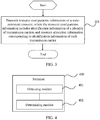
- an embodiment of this disclosure provides a resource configuration method applied to a terminal.
- the method includes the following steps.
- Step 201 Obtain resource configuration information of a semi-persistent resource, where the resource configuration information includes identification information of a plurality of transmission carriers and resource allocation information corresponding to identification information of each transmission carrier.
- the transmission carrier includes a beam or a transmission reception point.
- the resource allocation information includes a resource periodicity.
- the identification information of the transmission carrier includes: at least one of a transmission carrier identifier, a cell identity corresponding to the transmission carrier, a frequency identifier corresponding to the transmission carrier, a bandwidth part BWP identifier corresponding to the transmission carrier, a control channel information identifier corresponding to the transmission carrier, and a MAC entity identifier corresponding to the transmission carrier.
- the cell identity corresponding to the transmission carrier may be specifically cell 1
- the frequency identifier corresponding to the transmission carrier may be specifically frequency 1
- the bandwidth part BWP identifier corresponding to the transmission carrier may be specifically BWP_1
- the MAC entity identifier corresponding to the transmission carrier may be specifically MAC_1.
- the transmission carrier identifier includes: at least one of a synchronization signal block SSB identifier, a channel state information reference signal CSI-RS identifier, and a port number identifier corresponding to a reference signal, where the reference signal includes an SSB and/or a CSI-RS.
- the transmission carrier identifier may be another signal identifier, which is not specifically limited herein.
- the port number identifier corresponding to the reference signal may be specifically port_1, and the reference signal may be a reference signal other than the SSB and the CSI-RS, which is not specifically limited herein.
- the control channel identifier corresponding to the transmission carrier includes: at least one of a type identifier of a control channel, a resource position identifier of the control channel, a reference signal identifier of the control channel, and a port number identifier corresponding to a reference signal of the control channel.
- the type identifier of the control channel may be specifically PDCCH_1 of a primary cell PCell.
- the resource position identifier of the control channel may be a control resource set (CORESET) and/or search space (search space) identifier.
- the reference signal identifier of the control channel may be an SSB identifier and/or a CSI-RS identifier.
- Step 202 Determine, based on the resource configuration information of the semi-persistent resource, at least one of information about a resource position available for the transmission carrier in each resource period and a hybrid automatic repeat request HARQ process serial number available for the transmission carrier in each resource period.
- the information about the resource position available for the transmission carrier in each resource period and the hybrid automatic repeat request HARQ process serial number available for the transmission carrier in each resource period are determined based on the resource configuration information of the semi-persistent resource.
- the determining information about a resource position available for the transmission carrier in each resource period based on the resource configuration information of the semi-persistent resource includes:
- the determining information about a resource position available for the transmission carrier in each resource period based on the resource configuration information of the semi-persistent resource includes:
- an uplink configured grant type 1 resource, or an uplink configured grant type 2 resource when there is one HARQ process available in each resource period, the determining a HARQ process serial number available for the transmission carrier in each resource period based on the resource configuration information of the semi-persistent resource includes:
- the determining a HARQ process serial number available for the transmission carrier in each resource period based on the resource configuration information of the semi-persistent resource includes:
- the determining a HARQ process serial number available for the transmission carrier in each resource period based on the resource configuration information of the semi-persistent resource includes:
- the resource configuration information of the semi-persistent resource is obtained, where the resource configuration information includes the identification information of the plurality of transmission carriers and the resource allocation information corresponding to the identification information of each transmission carrier. At least one of the information about the resource position available for the transmission carrier in each resource period and the hybrid automatic repeat request HARQ process serial number available for the transmission carrier in each resource period is determined based on the resource configuration information of the semi-persistent resource. In this way, different semi-persistent resources are configured for different uplink transmission carriers and/or downlink transmission carriers, thereby improving utilization of the semi-persistent resources in a case of a plurality of transmission carriers, and reducing a delay caused by scheduling during data transmission.
- the resource allocation information further includes: at least one of allocation information of a semi-persistent resource for the transmission carrier in each resource period and a quantity of HARQ processes for the semi-persistent resource for the transmission carrier.
- the semi-persistent resource is a downlink semi-persistent scheduling SPS resource, an uplink configured grant type 2 resource, or an autonomous uplink AUL resource.
- the resource allocation information further includes the allocation information of the semi-persistent resource for the transmission carrier in each resource period.
- the resource allocation information further includes at least one of the allocation information of the semi-persistent resource for the transmission carrier in each resource period and the quantity of HARQ processes for the semi-persistent resource for the transmission carrier.
- the resource allocation information further includes: at least one of allocation information of a semi-persistent resource for the transmission carrier in each resource period, a time-domain offset of the semi-persistent resource for the transmission carrier, and a time-domain length occupied by each time-domain resource in the semi-persistent resource for the transmission carrier.
- the semi-persistent resource is an uplink configured grant type 1 resource.
- the time-domain length occupied by each time domain resource may be specifically two symbols.
- the allocation information of the semi-persistent resource for the transmission carrier in each resource period includes: at least one of information about a start position for resource allocation, a resource allocation bitmap (bitmap), resource allocation duration, and a resource allocation short period, where duration of the resource allocation short period is less than duration of the resource period.
- bitmap resource allocation bitmap
- the information about the start position for resource allocation may be specifically slot 2, or an offset with respect to an activation position is 2 slots.
- the resource allocation bitmap (bitmap) may be specifically positions of 10 slots identified by 10 bits, and a resource in a slot position identified by a bit with a value of 1 is determined as a resource allocated to the terminal.
- the resource allocation duration may be specifically, for a resource with a 40-ms period, resource allocation duration of 10 ms from a start position of the resource.
- the resource allocation short period may be specifically: for a resource with a 40-ms period, there is resource allocation duration of 10 ms every 40 ms, and the resource allocation short period is 2 ms within the 10 ms.
- the semi-persistent resource is a downlink semi-persistent scheduling SPS resource, and there is one HARQ process available in each resource period.
- the downlink semi-persistent scheduling SPS resource is a periodic downlink resource configured by a network side, and one downlink resource is allocated in each period.
- the network side activates or deactivates the use of the SPS resource by using physical downlink control channel (Physical Downlink Control Channel, PDCCH) control signaling.
- PDCCH Physical Downlink Control Channel
- the PDCCH command indicates that a position of an activated resource, for example, a start system frame number (SFN start time ) and a start slot number (slot start time ), is a start position of the resource.
- the determining information about a resource position available for the transmission carrier in each resource period based on the resource configuration information of the semi-persistent resource in Step 202 includes: in a case in which activation signaling transmitted by a network device is received, determining a start position of the semi-persistent resource based on the activation signaling, and determining information about a start resource position available for the transmission carrier in each resource period based on the resource configuration information and the start position of the semi-persistent resource.
- the activation signaling may be PDCCH activation signaling
- the terminal determines, based on the activation signaling, the start position of the semi-persistent resource, for example, SFN start time and slot start time .
- the resource allocation information includes allocation information of a resource in each resource period
- the information about the resource position available for the transmission carrier in each resource period is determined based on allocation information of the semi-persistent resource in each resource period.
- the allocation information of the semi-persistent resource for the transmission carrier in each resource period includes: at least one of information about a start position for resource allocation, a resource allocation bitmap (bitmap), resource allocation duration, and a resource allocation short period, where duration of the resource allocation short period is less than duration of the resource period.
- bitmap resource allocation bitmap
- the terminal may specifically determine the information about the resource position available for the transmission carrier in each resource period by using the following methods.
- the allocation information includes a resource allocation bitmap, and the resource allocation bitmap is a 10-bit bitmap.
- the available resource position is determined from 10 bits starting from the start position.
- the allocation information includes resource allocation duration, for example, 10 ms.
- resource allocation duration for example, 10 ms.
- resources within a time of 10 ms starting from the start position are determined as the resources available for the transmission carrier in each resource period.
- the allocation information includes resource allocation duration such as 10 ms and a resource allocation short period such as 2 ms. In this case, within a time of 10 ms starting from the start position, one available resource is allocated to the terminal every 2 ms.
- the determining a HARQ process serial number available for the transmission carrier in each resource period based on the resource configuration information of the semi-persistent resource in Step 202 includes: in a case in which different transmission carriers correspond to different HARQ entities, determining a HARQ process serial number available for each transmission carrier in each resource period based on the resource periodicity, a current slot number, a quantity of slots per system frame, and a quantity of HARQ processes for the semi-persistent resource.
- HARQ Process ID floor CURRENT _ slot ⁇ 10 / N SlotsPerFrame ⁇ T periodicity modulo N HARQ-Processes , where
- a HARQ process serial number available for each transmission carrier in each resource period is determined based on the resource periodicity, a current slot number, a quantity of slots per system frame, a quantity of HARQ processes for the semi-persistent resource, and a HARQ process identifier offset.
- the HARQ process identifier offset includes: at least one of a start number of HARQ process identifiers for the transmission carrier, an end number of HARQ process identifiers for the transmission carrier, and a quantity of numbers available for HARQ process identifiers for the transmission carrier.
- the network device configures or the protocol specifies HARQ configuration information available for the terminal, and the HARQ configuration information includes a quantity of HARQ processes for the semi-persistent resource, for example, a total quantity of HARQ processes available for the semi-persistent resource is 4.
- the network device determines the information about the resource position available for the transmission carrier in each resource period and the hybrid automatic repeat request HARQ process serial number available for the transmission carrier in each resource period by using the same method described above, and transmits data based on the determined information about the resource position available and the determined HARQ process serial number available.
- the terminal receives, at the corresponding position, the data transmitted by the network device.
- the network device first detects whether a resource corresponding to the information about the resource position available and the HARQ process serial number are idle, and if the resource and the HARQ process serial number are idle, transmits the data.
- the semi-persistent resource is a downlink semi-persistent scheduling SPS resource, and there are a plurality of HARQ processes available in each resource period.
- the downlink semi-persistent scheduling SPS resource is a periodic downlink resource configured by the network side, and one downlink resource is allocated in each period.
- the network side activates or deactivates the use of the SPS resource by using physical downlink control channel (Physical Downlink Control Channel, PDCCH) control signaling.
- PDCCH Physical Downlink Control Channel
- the PDCCH command indicates that a position of an activated resource, for example, a start system frame number (SFN start time ) and a start slot number (slot start time ), is a start position of the resource.
- the determining information about a resource position available for the transmission carrier in each resource period based on the resource configuration information of the semi-persistent resource in Step 202 includes:
- the specific implementation process of determining the information about the resource position available for the transmission carrier in each resource period is the same as the specific implementation process of determining the information about the resource position available for the transmission carrier in each resource period in the first optional implementation described above, and details are not described herein again.
- the determining a HARQ process serial number available for the transmission carrier in each resource period based on the resource configuration information of the semi-persistent resource in Step 202 includes: in a case in which different transmission carriers correspond to different HARQ entities, determining a HARQ process serial number for a start resource for the transmission carrier in each resource period based on a current slot number, a quantity of slots per system frame, the resource periodicity, a quantity of HARQ processes for the semi-persistent resource, and a quantity of HARQ processes per resource period; and determining a HARQ process serial number for a subsequent resource in each resource period based on a resource period number and a resource number.
- N HARQ-ProcessesPerPeriod represents a quantity of HARQ processes available in each resource period.
- a HARQ process serial number for a start resource for the transmission carrier in each resource period is determined based on a current slot number, a quantity of slots per system frame, the resource periodicity, a quantity of HARQ processes for the semi-persistent resource, a quantity of HARQ processes per resource period, and a HARQ process identifier offset; and a HARQ process serial number for a subsequent resource in each resource period is determined based on a resource period number and a resource number.
- the HARQ process identifier offset includes: at least one of a start number of HARQ process identifiers for the transmission carrier, an end number of HARQ process identifiers for the transmission carrier, and a quantity of numbers available for HARQ process identifiers for the transmission carrier.
- the network device configures or the protocol specifies HARQ configuration information available for the terminal, and the HARQ configuration information includes: at least one of a quantity of HARQ processes for the semi-persistent resource, a HARQ process serial number for the semi-persistent resource (for example, numbers of HARQ processes available for the semi-persistent resource are 1, 2, 3, and 4), a quantity of HARQ processes available for the semi-persistent resource in each resource period (for example, two HARQ processes are available in each resource period), and a HARQ process serial number available for the semi-persistent resource in each resource period.
- a quantity of HARQ processes for the semi-persistent resource for example, numbers of HARQ processes available for the semi-persistent resource are 1, 2, 3, and 4
- a quantity of HARQ processes available for the semi-persistent resource in each resource period for example, two HARQ processes are available in each resource period
- a HARQ process serial number available for the semi-persistent resource in each resource period
- the UE has a total of four available HARQ processes, and two HARQ processes are available in each resource period.
- the HARQ process serial numbers in the 1 st resource period are 1 and 2; the HARQ process serial numbers in the 2 nd period are 3 and 4; the HARQ process serial numbers in the 3 rd period are 1 and 2; the HARQ process serial numbers in the 4 th period are 3 and 4; and so on.
- the network device determines the information about the resource position available for the transmission carrier in each resource period and the hybrid automatic repeat request HARQ process serial number available for the transmission carrier in each resource period by using the same method described above, and transmits data based on the determined information about the resource position available and the determined HARQ process serial number available.
- the terminal receives, at the corresponding position, the data transmitted by the network device.
- the network device first detects whether a resource corresponding to the information about the resource position available and the HARQ process serial number are idle, and if the resource and the HARQ process serial number are idle, transmits the data.
- the semi-persistent resource is an uplink configured grant type 1 resource, and there is one HARQ process available in each resource period.
- the uplink configured grant type 1 resource is a periodic uplink resource configured by the network side.
- One uplink resource is allocated in each period and can be used after being configured by using RRC, not requiring activation by using a PDCCH command.
- the determining information about a resource position available for the transmission carrier in each resource period based on the resource configuration information of the semi-persistent resource in Step 202 includes: determining information about a start resource position available for the transmission carrier in each resource period based on the resource configuration information of the semi-persistent resource.
- the resource allocation information includes allocation information of a resource in each resource period
- the information about the resource position available for the transmission carrier in each resource period is determined based on allocation information of the semi-persistent resource in each resource period.
- the allocation information of the semi-persistent resource for the transmission carrier in each resource period includes: at least one of information about a start position for resource allocation, a resource allocation bitmap (bitmap), resource allocation duration, and a resource allocation short period, where duration of the resource allocation short period is less than duration of the resource period.
- bitmap resource allocation bitmap
- the terminal may specifically determine the information about the resource position available for the transmission carrier in each resource period by using the following methods.
- the allocation information includes a resource allocation bitmap, and the resource allocation bitmap is a 10-bit bitmap.
- the available resource position is determined from 10 bits starting from the start position.
- the allocation information includes resource allocation duration, for example, 10 ms.
- resource allocation duration for example, 10 ms.
- resources within a time of 10 ms starting from the start position are determined as the resources available for the transmission carrier in each resource period.
- the allocation information includes resource allocation duration such as 10 ms and a resource allocation short period such as 2 ms. In this case, within a time of 10 ms starting from the start position, one available resource is allocated to the terminal every 2 ms.
- the determining a HARQ process serial number available for the transmission carrier in each resource period based on the resource configuration information of the semi-persistent resource in Step 202 includes:
- the network device configures or the protocol specifies HARQ configuration information available for the terminal, and the HARQ configuration information includes a quantity of HARQ processes for the semi-persistent resource, for example, a total quantity of HARQ processes available for the semi-persistent resource is 4.
- the terminal after determining the information about the resource position available for the transmission carrier in each resource period and the hybrid automatic repeat request HARQ process serial number available for the transmission carrier in each resource period based on the resource configuration information of the semi-persistent resource, the terminal transmits data at the resource position available in each resource period by using a corresponding HARQ process serial number.
- the terminal first detects whether a resource corresponding to the information about the resource position available and the HARQ process serial number are idle, and if the resource and the HARQ process serial number are idle, transmits the data.
- the semi-persistent resource is an uplink configured grant type 1 resource, and there are a plurality of HARQ processes available in each resource period.
- the uplink configured grant type 1 resource is a periodic uplink resource configured by the network side.
- One uplink resource is allocated in each period and can be used after being configured by using RRC, not requiring activation by using a PDCCH command.
- the determining information about a resource position available for the transmission carrier in each resource period based on the resource configuration information of the semi-persistent resource in Step 202 includes:
- the determining a HARQ process serial number available for the transmission carrier in each resource period based on the resource configuration information of the semi-persistent resource in Step 202 includes:
- the network device configures or the protocol specifies HARQ configuration information available for the terminal, and the HARQ configuration information includes: at least one of a quantity of HARQ processes for the semi-persistent resource, a HARQ process serial number for the semi-persistent resource (for example, numbers of HARQ processes available for the semi-persistent resource are 1, 2, 3, and 4), a quantity of HARQ processes available for the semi-persistent resource in each resource period (for example, two HARQ processes are available in each resource period), and a HARQ process serial number available for the semi-persistent resource in each resource period.
- a quantity of HARQ processes for the semi-persistent resource for example, numbers of HARQ processes available for the semi-persistent resource are 1, 2, 3, and 4
- a quantity of HARQ processes available for the semi-persistent resource in each resource period for example, two HARQ processes are available in each resource period
- a HARQ process serial number available for the semi-persistent resource in each resource period
- the UE has a total of four available HARQ processes, and two HARQ processes are available in each resource period.
- the HARQ process serial numbers in the 1 st resource period are 1 and 2; the HARQ process serial numbers in the 2 nd period are 3 and 4; the HARQ process serial numbers in the 3 rd period are 1 and 2; the HARQ process serial numbers in the 4 th period are 3 and 4; and so on.
- the terminal after determining the information about the resource position available for the transmission carrier in each resource period and the hybrid automatic repeat request HARQ process serial number available for the transmission carrier in each resource period based on the resource configuration information of the semi-persistent resource, the terminal transmits data at the resource position available in each resource period by using a corresponding HARQ process serial number.
- the terminal first detects whether a resource corresponding to the information about the resource position available and the HARQ process serial number are idle, and if the resource and the HARQ process serial number are idle, transmits the data.
- the semi-persistent resource is an uplink configured grant type 2 resource, and there is one HARQ process available in each resource period.
- the uplink configured grant type 2 resource is a periodic downlink resource configured by the network side, and one downlink resource is allocated in each period.
- the network side activates or deactivates the use of the SPS resource by using PDCCH control signaling.
- the PDCCH command indicates that a position of an activated resource (for example, SFN start time (a start system frame number), slot start time (a start slot number), and symbol start time (a start symbol number)), is a start position of the resource.
- the determining information about a resource position available for the transmission carrier in each resource period based on the resource configuration information of the semi-persistent resource in Step 202 includes: in a case in which activation signaling transmitted by a network device is received, determining a start position of the semi-persistent resource based on the activation signaling, and determining information about a start resource position available for the transmission carrier in each resource period based on the resource configuration information and the start position of the semi-persistent resource.
- the resource allocation information includes allocation information of a resource in each resource period
- the information about the resource position available for the transmission carrier in each resource period is determined based on allocation information of the semi-persistent resource in each resource period.
- the allocation information of the semi-persistent resource for the transmission carrier in each resource period includes: at least one of information about a start position for resource allocation, a resource allocation bitmap (bitmap), resource allocation duration, and a resource allocation short period, where duration of the resource allocation short period is less than duration of the resource period.
- bitmap resource allocation bitmap
- the terminal may specifically determine the information about the resource position available for the transmission carrier in each resource period by using the following methods.
- the allocation information includes a resource allocation bitmap, and the resource allocation bitmap is a 10-bit bitmap.
- the available resource position is determined from 10 bits starting from the start position.
- the allocation information includes resource allocation duration, for example, 10 ms.
- resource allocation duration for example, 10 ms.
- resources within a time of 10 ms starting from the start position are determined as the resources available for the transmission carrier in each resource period.
- the allocation information includes resource allocation duration such as 10 ms and a resource allocation short period such as 2 ms. In this case, within a time of 10 ms starting from the start position, one available resource is allocated to the terminal every 2 ms.
- the determining a HARQ process serial number available for the transmission carrier in each resource period based on the resource configuration information of the semi-persistent resource in Step 202 includes: the determining a HARQ process serial number available for the transmission carrier in each resource period based on the resource configuration information of the semi-persistent resource includes:
- the network device configures or the protocol specifies HARQ configuration information available for the terminal, and the HARQ configuration information includes a quantity of HARQ processes for the semi-persistent resource, for example, a total quantity of HARQ processes available for the semi-persistent resource is 4.
- the terminal after determining the information about the resource position available for the transmission carrier in each resource period and the hybrid automatic repeat request HARQ process serial number available for the transmission carrier in each resource period based on the resource configuration information of the semi-persistent resource, the terminal transmits data at the resource position available in each resource period by using a corresponding HARQ process serial number.
- the terminal first detects whether a resource corresponding to the information about the resource position available and the HARQ process serial number are idle, and if the resource and the HARQ process serial number are idle, transmits the data.
- the semi-persistent resource is an uplink configured grant type 2 resource, and there are a plurality of HARQ processes available in each resource period.
- the uplink configured grant type 2 resource is a periodic downlink resource configured by the network side, and one downlink resource is allocated in each period.
- the network side activates or deactivates the use of the SPS resource by using PDCCH control signaling.
- the PDCCH command indicates that a position of an activated resource (for example, SFN start time (a start system frame number), slot start time (a start slot number), and symbol start time (a start symbol number)), is a start position of the resource.
- the determining information about a resource position available for the transmission carrier in each resource period based on the resource configuration information of the semi-persistent resource in Step 202 includes:
- the determining a HARQ process serial number available for the transmission carrier in each resource period based on the resource configuration information of the semi-persistent resource in Step 202 includes: the determining a HARQ process serial number available for the transmission carrier in each resource period based on the resource configuration information of the semi-persistent resource includes: in a case in which different transmission carriers correspond to different HARQ entities, determining a HARQ process serial number for a start resource for the transmission carrier in each resource period based on a current slot number, a quantity of slots per system frame, the resource periodicity, and a quantity of HARQ processes for the semi-persistent resource; and determining a HARQ process serial number for a subsequent resource in each resource period based on a resource period number and a resource number.
- T periodicity 10
- a HARQ process serial number for a start resource for the transmission carrier in each resource period is determined based on a current slot number, a quantity of slots per system frame, the resource periodicity, a quantity of HARQ processes for the semi-persistent resource, and a HARQ process identifier offset; and a HARQ process serial number for a subsequent resource in each resource period is determined based on a resource period number and a resource number.
- the network device configures or the protocol specifies HARQ configuration information available for the terminal, and the HARQ configuration information includes: at least one of a quantity of HARQ processes for the semi-persistent resource, a HARQ process serial number for the semi-persistent resource (for example, HARQ process serial numbers available for the semi-persistent resource are 1, 2, 3, and 4), a quantity of HARQ processes available for the semi-persistent resource in each resource period (for example, two HARQ processes are available in each resource period), and a HARQ process serial number available for the semi-persistent resource in each resource period.
- a quantity of HARQ processes for the semi-persistent resource for example, HARQ process serial numbers available for the semi-persistent resource are 1, 2, 3, and 4
- a quantity of HARQ processes available for the semi-persistent resource in each resource period for example, two HARQ processes are available in each resource period
- a HARQ process serial number available for the semi-persistent resource in each resource period
- the UE has a total of four available HARQ processes, and two HARQ processes are available in each resource period.
- the HARQ process serial numbers in the 1 st resource period are 1 and 2; the HARQ process serial numbers in the 2 nd period are 3 and 4; the HARQ process serial numbers in the 3 rd period are 1 and 2; the HARQ process serial numbers in the 4 th period are 3 and 4; and so on.
- the terminal after determining the information about the resource position available for the transmission carrier in each resource period and the hybrid automatic repeat request HARQ process serial number available for the transmission carrier in each resource period based on the resource configuration information of the semi-persistent resource, the terminal transmits data at the resource position available in each resource period by using a corresponding HARQ process serial number.
- the terminal first detects whether a resource corresponding to the information about the resource position available and the HARQ process serial number are idle, and if the resource and the HARQ process serial number are idle, transmits the data.
- the semi-persistent resource is an autonomous uplink AUL resource.
- AUL is resource allocation implemented by configuring a bitmap (bitmap) (for example, if a value of one bit in 40 bits is set to 1, the resource is allocated to the UE) by the network side.
- the network side activates or deactivates the use of the AUL resource by using PDCCH control signaling.
- the PDCCH command indicates that a position of an activated resource (for example, SFN start time (a start system frame number), slot start time (a start slot number), and symbol start time (a start symbol number)), is a start position of the resource.
- SFN start time a start system frame number
- slot start time a start slot number
- symbol start time a start symbol number
- the determining information about a resource position available for the transmission carrier in each resource period based on the resource configuration information of the semi-persistent resource in Step 202 includes:
- the network device configures or the protocol specifies HARQ configuration information available for the terminal, and the HARQ configuration information includes a HARQ process serial number pool available for the terminal, for example, HARQ process serial numbers available for the terminal are 1, 2, 3, and 4.
- the terminal after determining the information about the resource position available for the transmission carrier in each resource period and the hybrid automatic repeat request HARQ process serial number available for the transmission carrier in each resource period based on the resource configuration information of the semi-persistent resource, the terminal transmits data at the resource position available in each resource period by using a corresponding HARQ process serial number.
- the terminal first detects whether a resource corresponding to the information about the resource position available and the HARQ process serial number are idle, and if the resource and the HARQ process serial number are idle, selects a HARQ process from the available HARQ process serial number pool to transmit the data, for example, selects a HARQ process 1 to transmit the data.
- the resource configuration information of the semi-persistent resource is obtained, where the resource configuration information includes the identification information of the plurality of transmission carriers and the resource allocation information corresponding to the identification information of each transmission carrier.
- the information about the resource position available for the transmission carrier in each resource period and the hybrid automatic repeat request HARQ process serial number available for the transmission carrier in each resource period are determined based on the resource configuration information of the semi-persistent resource. In this way, different semi-persistent resources are configured for different uplink transmission carriers and/or downlink transmission carriers, thereby improving utilization of the semi-persistent resources in a case of a plurality of transmission carriers, and reducing a delay caused by scheduling during data transmission.
- an embodiment of this disclosure further provides a resource configuration method applied to a network device.
- the method includes the following steps.
- Step 301 Transmit resource configuration information of a semi-persistent resource, where the resource configuration information includes identification information of a plurality of transmission carriers and resource allocation information corresponding to identification information of each transmission carrier.
- the transmission carrier includes a beam or a transmission point.
- the resource allocation information includes a resource periodicity of the semi-persistent resource.
- the identification information of the transmission carrier includes: at least one of a transmission carrier identifier, a cell identity corresponding to the transmission carrier, a frequency identifier corresponding to the transmission carrier, a bandwidth part BWP identifier corresponding to the transmission carrier, a control channel information identifier corresponding to the transmission carrier, and a MAC entity identifier corresponding to the transmission carrier.
- the cell identity corresponding to the transmission carrier may be specifically cell 1
- the frequency identifier corresponding to the transmission carrier may be specifically frequency 1
- the bandwidth part BWP identifier corresponding to the transmission carrier may be specifically BWP_1
- the MAC entity identifier corresponding to the transmission carrier may be specifically MAC_1.
- the transmission carrier identifier includes: at least one of a synchronization signal block SSB identifier, a channel state information reference signal CSI-RS identifier, and a port number identifier corresponding to a reference signal; and the reference signal includes an SSB and/or a CSI-RS.
- the transmission carrier identifier may be another signal identifier, which is not specifically limited herein.
- the port number identifier corresponding to the reference signal may be specifically port_1, and the reference signal may be a reference signal other than the SSB and the CSI-RS, which is not specifically limited herein.
- the control channel identifier corresponding to the transmission carrier includes: at least one of a type identifier of a control channel, a resource position identifier of the control channel, a reference signal identifier of the control channel, and a port number identifier corresponding to a reference signal of the control channel.
- the type identifier of the control channel may be specifically PDCCH_1 of a primary cell PCell.
- the resource position identifier of the control channel may be a control resource set (CORESET) and/or search space (search space) identifier.
- the reference signal identifier of the control channel may be an SSB identifier and/or a CSI-RS identifier.
- the network device configures the semi-persistent resource for the terminal, different semi-persistent resources are configured for different transmission carriers, thereby improving utilization of the semi-persistent resources in a case of a plurality of transmission carriers, and reducing a delay caused by scheduling during data transmission.
- the resource allocation information further includes: at least one of allocation information of a semi-persistent resource for the transmission carrier in each resource period and a quantity of HARQ processes for the semi-persistent resource for the transmission carrier.
- the semi-persistent resource is a downlink semi-persistent scheduling SPS resource, an uplink configured grant type 2 resource, or an autonomous uplink AUL resource.
- the resource allocation information further includes the allocation information of the semi-persistent resource for the transmission carrier in each resource period.
- the resource allocation information further includes at least one of the allocation information of the semi-persistent resource for the transmission carrier in each resource period and the quantity of HARQ processes for the semi-persistent resource for the transmission carrier.
- the resource allocation information further includes: at least one of allocation information of a semi-persistent resource for the transmission carrier in each resource period, a time-domain offset of the semi-persistent resource for the transmission carrier, and a time-domain length occupied by each time-domain resource in the semi-persistent resource for the transmission carrier.
- the semi-persistent resource is an uplink configured grant type 1 resource.
- the time-domain length occupied by each time domain resource may be specifically two symbols.
- the allocation information of the semi-persistent resource for the transmission carrier in each resource period includes: at least one of information about a start position for resource allocation, a resource allocation bitmap (bitmap), resource allocation duration, and a resource allocation short period, where duration of the resource allocation short period is less than duration of the resource period.
- bitmap resource allocation bitmap
- the information about the start position for resource allocation may be specifically slot 2, or an offset with respect to an activation position is 2 slots.
- the resource allocation bitmap (bitmap) may be specifically positions of 10 slots identified by 10 bits, and a resource in a slot position identified by a bit with a value of 1 is determined as a resource allocated to the terminal.
- the resource allocation duration may be specifically, for a resource with a 40-ms period, resource allocation duration of 10 ms from a start position of the resource.
- the resource allocation short period may be specifically: for a resource with a 40-ms period, there is resource allocation duration of 10 ms every 40 ms, and the resource allocation short period is 2 ms within 10 ms.
- the network device configures or the protocol specifies HARQ configuration information available for the terminal.
- the HARQ configuration information includes: at least one of a quantity of HARQ processes for the semi-persistent resource, a HARQ process serial number for the semi-persistent resource, a quantity of HARQ processes available for the semi-persistent resource in each resource period, a HARQ process serial number available for the semi-persistent resource in each resource period, and a HARQ process serial number pool available for the terminal.
- the HARQ configuration information includes a quantity of HARQ processes for the semi-persistent resource, for example, a total quantity of HARQ processes available for the semi-persistent resource is 4.
- the HARQ configuration information includes: at least one of a quantity of HARQ processes for the semi-persistent resource, a HARQ process serial number for the semi-persistent resource (for example, numbers of HARQ processes available for the semi-persistent resource are 1, 2, 3, and 4), a quantity of HARQ processes available for the semi-persistent resource in each resource period (for example, two HARQ processes are available in each resource period), and a HARQ process serial number available for the semi-persistent resource in each resource period.
- the UE has a total of four available HARQ processes, and two HARQ processes are available in each resource period.
- the HARQ process serial numbers in the 1 st resource period are 1 and 2; the HARQ process serial numbers in the 2 nd period are 3 and 4; the HARQ process serial numbers in the 3 rd period are 1 and 2; the HARQ process serial numbers in the 4 th period are 3 and 4; and so on.
- the HARQ configuration information includes a quantity of HARQ processes for the semi-persistent resource, for example, a total quantity of HARQ processes available for the semi-persistent resource is 4.
- the HARQ configuration information includes: at least one of a quantity of HARQ processes for the semi-persistent resource, a HARQ process serial number for the semi-persistent resource (for example, numbers of HARQ processes available for the semi-persistent resource are 1, 2, 3, and 4), a quantity of HARQ processes available for the semi-persistent resource in each resource period (for example, two HARQ processes are available in each resource period), and a HARQ process serial number available for the semi-persistent resource in each resource period.
- the HARQ configuration information includes a quantity of HARQ processes for the semi-persistent resource, for example, a total quantity of HARQ processes available for the semi-persistent resource is 4.
- the HARQ configuration information includes: at least one of a quantity of HARQ processes for the semi-persistent resource, a HARQ process serial number for the semi-persistent resource (for example, numbers of HARQ processes available for the semi-persistent resource are 1, 2, 3, and 4), a quantity of HARQ processes available for the semi-persistent resource in each resource period (for example, two HARQ processes are available in each resource period), and a HARQ process serial number available for the semi-persistent resource in each resource period.
- the HARQ configuration information includes a HARQ process serial number pool available for the terminal, for example, HARQ process serial numbers available for the terminal are 1, 2, 3, and 4.
- the network device configures the semi-persistent resource for the terminal, different semi-persistent resources are configured for different transmission carriers, thereby improving utilization of the semi-persistent resources in a case of a plurality of transmission carriers, and reducing a delay caused by scheduling during data transmission.
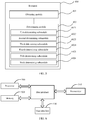
- FIG. 4 is a schematic diagram of modules of a terminal according to an embodiment of this disclosure. As shown in FIG. 4 , this embodiment of this disclosure further provides a terminal 400, including:
- the resource allocation information includes: a resource periodicity.
- the resource allocation information further includes: at least one of allocation information of a semi-persistent resource for the transmission carrier in each resource period and a quantity of HARQ processes for the semi-persistent resource for the transmission carrier.
- the determining module is configured to: in a case in which activation signaling transmitted by a network device is received, determine a start position of the semi-persistent resource based on the activation signaling, and determine information about a start resource position available for the transmission carrier in each resource period based on the resource configuration information and the start position of the semi-persistent resource; or configured to: in a case in which the resource allocation information includes allocation information of a resource in each resource period, determine the information about the resource position available for the transmission carrier in each resource period based on allocation information of the semi-persistent resource in each resource period.
- the semi-persistent resource is a downlink semi-persistent scheduling SPS resource, an uplink configured grant type 2 resource, or an autonomous uplink AUL resource.
- the resource allocation information further includes: at least one of allocation information of a semi-persistent resource for the transmission carrier in each resource period, a time-domain offset of the semi-persistent resource for the transmission carrier, and a time-domain length occupied by each time-domain resource in the semi-persistent resource for the transmission carrier.
- the determining module is configured to: determine information about a start resource position available for the transmission carrier in each resource period based on the resource configuration information of the semi-persistent resource; or configured to: in a case in which the resource allocation information includes allocation information of a resource in each resource period, determine the information about the resource position available for the transmission carrier in each resource period based on allocation information of the semi-persistent resource in each resource period.
- the semi-persistent resource is an uplink configured grant type 1 resource.
- the allocation information of the semi-persistent resource for the transmission carrier in each resource period includes: at least one of information about a start position for resource allocation, a resource allocation bitmap (bitmap), resource allocation duration, and a resource allocation short period; and duration of the resource allocation short period is less than duration of the resource period.
- the determining module 402 when there is one HARQ process available in each resource period, the determining module 402 includes:
- the semi-persistent resource is a downlink semi-persistent scheduling SPS resource, an uplink configured grant type 1 resource, or an uplink configured grant type 2 resource.
- the HARQ process identifier offset includes: at least one of a start number of HARQ process identifiers for the transmission carrier, an end number of HARQ process identifiers for the transmission carrier, and a quantity of numbers available for HARQ process identifiers for the transmission carrier.
- the determining module 402 when there are a plurality of HARQ processes available in each resource period, the determining module 402 includes:
- the semi-persistent resource is a downlink semi-persistent scheduling SPS resource or an uplink configured grant type 1 resource.
- the determining module 402 when there are a plurality of HARQ processes available in each resource period, the determining module 402 includes:
- the semi-persistent resource is an uplink configured grant type 2 resource.
- the identification information of the transmission carrier includes: at least one of a transmission carrier identifier, a cell identity corresponding to the transmission carrier, a frequency identifier corresponding to the transmission carrier, a bandwidth part BWP identifier corresponding to the transmission carrier, a control channel information identifier corresponding to the transmission carrier, and a MAC entity identifier corresponding to the transmission carrier.
- the transmission carrier identifier includes: at least one of a synchronization signal block SSB identifier, a channel state information reference signal CSI-RS identifier, and a port number identifier corresponding to a reference signal; and the reference signal includes an SSB and/or a CSI-RS.
- the control channel identifier corresponding to the transmission carrier includes: at least one of a type identifier of a control channel, a resource position identifier of the control channel, a reference signal identifier of the control channel, and a port number identifier corresponding to a reference signal of the control channel.
- the determining module of the terminal in this embodiment of this disclosure includes at least one of the first determining submodule, the second determining submodule, the third determining submodule, the fourth determining submodule, the fifth determining submodule, and the sixth determining submodule.
- the resource configuration information of the semi-persistent resource is obtained, where the resource configuration information includes the identification information of the plurality of transmission carriers and the resource allocation information corresponding to the identification information of each transmission carrier. At least one of the information about the resource position available for the transmission carrier in each resource period and the hybrid automatic repeat request HARQ process serial number available for the transmission carrier in each resource period is determined based on the resource configuration information of the semi-persistent resource. In this way, different semi-persistent resources are configured for different uplink transmission carriers and/or downlink transmission carriers, thereby improving utilization of the semi-persistent resources in a case of a plurality of transmission carriers, and reducing a delay caused by scheduling during data transmission.
- An embodiment of this disclosure further provides a terminal, including a memory, a processor, and a computer program stored in the memory and capable of running on the processor.
- a terminal including a memory, a processor, and a computer program stored in the memory and capable of running on the processor.
- the computer program is executed by the processor, processes of the foregoing resource configuration method embodiment applied to the terminal can be implemented, with the same technical effects achieved. To avoid repetition, details are not described herein again.
- An embodiment of this disclosure further provides a computer-readable storage medium, where a computer program is stored in the computer-readable storage medium.
- a computer program is stored in the computer-readable storage medium.
- the computer-readable storage medium is, for example, a read-only memory (Read-Only Memory, ROM), a random access memory (Random Access Memory, RAM), a magnetic disk, or an optical disc.
- an embodiment of this disclosure further provides a terminal, including a memory 520, a processor 500, a transceiver 510, a user interface 530, a bus interface, and a computer program stored in the memory 520 and capable of running on the processor 500.
- the processor 500 is configured to read the program in the memory 520 and execute the following processes:
- a bus architecture may include any quantity of interconnected buses and bridges, and specifically connects together circuits that are of one or more processors represented by the processor 500 and of a memory represented by the memory 520.
- the bus architecture may further interconnect various other circuits such as a peripheral device, a voltage regulator, and a power management circuit. These are all well known in the art, and therefore are not further described in this specification.
- the bus interface provides an interface.
- the transceiver 510 may be a plurality of components, that is, the transceiver 510 includes a transmitter and a receiver, and provides a unit for communicating with various other apparatuses on a transmission medium.
- the user interface 530 may also be an interface that can be externally or internally connected to a required device.
- the connected device includes but is not limited to a keypad, a display, a speaker, a microphone, a joystick, and the like.
- the processor 500 is responsible for management of the bus architecture and general processing, and the memory 520 is capable of storing data that is used by the processor 500 during operation.
- the resource allocation information includes a resource periodicity.
- the resource allocation information further includes: at least one of allocation information of a semi-persistent resource for the transmission carrier in each resource period and a quantity of HARQ processes for the semi-persistent resource for the transmission carrier.
- the processor 500 reads the program in the memory 520, and is further configured to execute the following steps:
- the semi-persistent resource is a downlink semi-persistent scheduling SPS resource, an uplink configured grant type 2 resource, or an autonomous uplink AUL resource.
- the resource allocation information further includes: at least one of allocation information of a semi-persistent resource for the transmission carrier in each resource period, a time-domain offset of the semi-persistent resource for the transmission carrier, and a time-domain length occupied by each time-domain resource in the semi-persistent resource for the transmission carrier.
- the processor 500 reads the program in the memory 520, and is further configured to execute the following steps:
- the semi-persistent resource is an uplink configured grant type 1 resource.
- the allocation information of the semi-persistent resource for the transmission carrier in each resource period includes: at least one of information about a start position for resource allocation, a resource allocation bitmap (bitmap), resource allocation duration, and a resource allocation short period; and duration of the resource allocation short period is less than duration of the resource period.
- bitmap resource allocation bitmap
- duration of the resource allocation short period is less than duration of the resource period.
- the processor 500 reads the program in the memory 520, and is further configured to execute the following steps:
- the semi-persistent resource is a downlink semi-persistent scheduling SPS resource, an uplink configured grant type 1 resource, or an uplink configured grant type 2 resource.
- the HARQ process identifier offset includes: at least one of a start number of HARQ process identifiers for the transmission carrier, an end number of HARQ process identifiers for the transmission carrier, and a quantity of numbers available for HARQ process identifiers for the transmission carrier.
- the processor 500 reads the program in the memory 520, and is further configured to execute the following steps:
- the semi-persistent resource is a downlink semi-persistent scheduling SPS resource or an uplink configured grant type 1 resource.
- the processor 500 reads the program in the memory 520, and is further configured to execute the following steps:
- the semi-persistent resource is an uplink configured grant type 2 resource.
- the identification information of the transmission carrier includes: at least one of a transmission carrier identifier, a cell identity corresponding to the transmission carrier, a frequency identifier corresponding to the transmission carrier, a bandwidth part BWP identifier corresponding to the transmission carrier, a control channel information identifier corresponding to the transmission carrier, and a MAC entity identifier corresponding to the transmission carrier.
- the transmission carrier identifier includes: at least one of a synchronization signal block SSB identifier, a channel state information reference signal CSI-RS identifier, and a port number identifier corresponding to a reference signal; and the reference signal includes an SSB and/or a CSI-RS.
- control channel identifier corresponding to the transmission carrier includes: at least one of a type identifier of a control channel, a resource position identifier of the control channel, a reference signal identifier of the control channel, and a port number identifier corresponding to a reference signal of the control channel.
- the resource configuration information of the semi-persistent resource is obtained, where the resource configuration information includes the identification information of the plurality of transmission carriers and the resource allocation information corresponding to the identification information of each transmission carrier. At least one of the information about the resource position available for the transmission carrier in each resource period and the hybrid automatic repeat request HARQ process serial number available for the transmission carrier in each resource period is determined based on the resource configuration information of the semi-persistent resource. In this way, different semi-persistent resources are configured for different uplink transmission carriers and/or downlink transmission carriers, thereby improving utilization of the semi-persistent resources in a case of a plurality of transmission carriers, and reducing a delay caused by scheduling during data transmission.
- FIG. 7 is a schematic structural diagram of hardware of a terminal according to the embodiments of this disclosure.
- the terminal 600 includes but is not limited to components such as a radio frequency unit 601, a network module 602, an audio output unit 603, an input unit 604, a sensor 605, a display unit 606, a user input unit 607, an interface unit 608, a memory 609, a processor 610, and a power supply 611.
- a structure of the terminal shown in FIG. 7 does not constitute any limitation on the terminal, and the terminal may include more or fewer components than those shown in the figure, or a combination of some components, or the components disposed differently.
- the terminal includes but is not limited to a mobile phone, a tablet computer, a laptop computer, a palmtop computer, an in-vehicle terminal, a wearable device, a pedometer, and the like.
- the processor 610 is configured to obtain resource configuration information of a semi-persistent resource, where the resource configuration information includes identification information of a plurality of transmission carriers and resource allocation information corresponding to identification information of each transmission carrier; and determine, based on the resource configuration information of the semi-persistent resource, at least one of information about a resource position available for the transmission carrier in each resource period and a hybrid automatic repeat request HARQ process serial number available for the transmission carrier in each resource period.
- the resource configuration information of the semi-persistent resource is obtained, where the resource configuration information includes identification information of a plurality of transmission carriers and resource allocation information corresponding to identification information of each transmission carrier. At least one of information about a resource position available for the transmission carrier in each resource period and a hybrid automatic repeat request HARQ process serial number available for the transmission carrier in each resource period is determined based on the resource configuration information of the semi-persistent resource.
- different semi-persistent resources are configured for different uplink transmission carriers and/or downlink transmission carriers, thereby improving utilization of the semi-persistent resources in a case of a plurality of transmission carriers, and reducing a delay caused by scheduling during data transmission.
- the radio frequency unit 601 may be configured to receive and send information, or to receive and send a signal in a call process, and specially, after receiving downlink data from a network device, send the downlink data to the processor 610 for processing; and also send uplink data to the network device.
- the radio frequency unit 601 includes but is not limited to an antenna, at least one amplifier, a transceiver, a coupler, a low noise amplifier, a duplexer, and the like.
- the radio frequency unit 601 may also communicate with a network and other devices via a wireless communications system.
- the terminal provides a user with wireless broadband internet access through the network module 602, for example, helping the user to transmit and receive e-mails, browse web pages, and access streaming media.
- the audio output unit 603 may convert audio data received by the radio frequency unit 601 or the network module 602 or stored in the memory 609 into an audio signal and output the audio signal as a sound. Furthermore, the audio output unit 603 may also provide audio output (for example, a call signal received sound or a message received sound) related to a specific function performed by the terminal 600.
- the audio output unit 603 includes a speaker, a buzzer, a phone receiver, and the like.
- the input unit 604 is configured to receive an audio or video signal.
- the input unit 604 may include a graphics processing unit (Graphics Processing Unit, GPU) 6041 and a microphone 6042.
- the graphics processing unit 6041 processes image data of a still picture or video obtained by an image capture apparatus (such as a camera) in a video capture mode or an image capture mode.
- a processed image frame may be displayed on the display unit 606.
- the image frame processed by the graphics processing unit 6041 may be stored in the memory 609 (or another storage medium) or be sent by the radio frequency unit 601 or the network module 602.
- the microphone 6042 is capable of receiving sounds and processing such sounds into audio data.
- the processed audio data can be converted into a format output that can be sent to a mobile communication network device through the radio frequency unit 601 in a telephone call mode.
- the terminal 600 may further include at least one sensor 605, for example, an optical sensor, a motion sensor, and another sensor.
- the optical sensor may include an ambient light sensor and a proximity sensor.
- the ambient light sensor may adjust luminance of the display panel 6061 based on brightness of ambient light
- the proximity sensor may turn off the display panel 6061 and/or backlight when the terminal 600 moves close to an ear.
- an accelerometer sensor can detect magnitudes of accelerations in all directions (usually three axes), can detect a magnitude and a direction of gravity when the mobile phone is in a static state, and can be applied to posture recognition (such as screen switching between portrait and landscape, related games, and magnetometer posture calibration) of the terminal, functions related to vibration recognition (such as pedometer and tapping), and the like.
- the sensor 605 may also include a fingerprint sensor, a pressure sensor, an iris sensor, a molecular sensor, a gyroscope, a barometer, a hygrometer, a thermometer, an infrared sensor, and the like. Details are not described herein.
- the display unit 606 is configured to display information input by the user or information provided to the user.
- the display unit 606 may include a display panel 6061, and the display panel 6061 may be configured in a form of a liquid crystal display (Liquid Crystal Display, LCD), an organic light-emitting diode (Organic Light-Emitting Diode, OLED), or the like.
- LCD Liquid Crystal Display
- OLED Organic Light-Emitting Diode
- the user input unit 607 may be configured to receive input digit or character information and generate key signal input related to user setting and function control of the mobile terminal.
- the user input unit 607 may include a touch panel 6071 and other input devices 6072.
- the touch panel 6071 is also referred to as a touchscreen and can collect a touch operation (such as an operation performed by the user on the touch panel 6071 or near the touch panel 6071 with a finger or by using any proper object or accessory such as a stylus) of the user on or near the touch panel 6071.
- the touch panel 6071 may include two parts: a touch detection apparatus and a touch controller.
- the touch detection apparatus detects a touch direction of the user, detects a signal carried by a touch operation, and transmits the signal to the touch controller.
- the touch controller receives touch information from the touch detection apparatus, converts the touch information to point coordinates, and sends the point coordinates to the processor 610, and receives and executes a command sent by the processor 610.
- the touch panel 6071 may be implemented in a plurality of forms, for example, as a resistive, capacitive, infrared, or surface acoustic wave touch panel.
- the user input unit 607 may further include other input devices 6072.
- the other input devices 6072 may include but are not limited to a physical keyboard, a function key (such as a volume control key or a power on/off key), a trackball, a mouse, a joystick, and the like. Details are not described herein.
- the touch panel 6071 may cover the display panel 6061.
- the touch panel 6071 transmits the touch operation to the processor 610 to determine a type of a touch event. Then, the processor 610 provides a corresponding visual output on the display panel 6061 based on the type of the touch event.
- the touch panel 6071 and the display panel 6061 act as two independent parts to implement input and output functions of the terminal, in some embodiments, the touch panel 6071 and the display panel 6061 may be integrated to implement the input and output functions of the terminal. This is not specifically limited herein.
- the interface unit 608 is an interface between an external apparatus and the terminal 600.
- an external apparatus may include a wired or wireless headset port, an external power supply (or a battery charger) port, a wired or wireless data port, a memory port, a port for connecting an apparatus with an identification module, an audio input/output (I/O) port, a video I/O port, an earphone port, and the like.
- the interface unit 608 may be configured to receive an input (for example, data information or power) from an external apparatus and transmit the received input to one or more elements within the terminal 600, or may be configured to transmit data between the terminal 600 and the external apparatus.
- the memory 609 may be configured to store software programs and various data.
- the memory 609 may primarily include a program storage area and a data storage area.
- the program storage area may store an operating system, an application (such as an audio play function and an image play function) required by at least one function, and the like.
- the data storage area may store data (such as audio data and a phone book) created based on use of the mobile phone.
- the memory 609 may include a high-speed random access memory, and may further include a non-volatile memory, for example, at least one disk storage device, flash memory device, or other volatile solid-state storage device.
- the processor 610 is a control center of the terminal, and is connected to all components of the terminal by using various interfaces and lines. By running or executing a software program and/or module that is stored in the memory 609 and calling data stored in the memory 609, the processor 610 executes various functions of the terminal and processes data, so as to perform overall monitoring on the terminal.
- the processor 610 may include one or more processing units.
- an application processor and a modem processor may be integrated in the processor 610.
- the application processor primarily processes an operating system, user interfaces, application programs, and the like.
- the modem processor primarily processes radio communication. It can be understood that the modem processor may alternatively be not integrated in the processor 610.
- the terminal 600 may further include the power supply 611 (for example, a battery) supplying power to all components.
- the power supply 611 may be logically connected to the processor 610 through a power management system. In this way, functions such as charge management, discharge management, and power consumption management are implemented by using the power management system.
- the terminal 600 includes some functional modules that are not shown. Details are not described herein.
- an embodiment of this disclosure further provides a network device 700, including: a transmitting module 701, configured to transmit resource configuration information of a semi-persistent resource, where the resource configuration information includes identification information of a plurality of transmission carriers and resource allocation information corresponding to identification information of each transmission carrier.
- the network device when the network device configures the semi-persistent resource for the terminal, different semi-persistent resources are configured for different transmission carriers, thereby improving utilization of the semi-persistent resources in a case of a plurality of transmission carriers, and reducing a delay caused by scheduling during data transmission.
- the resource allocation information includes: a resource periodicity.
- the resource allocation information further includes: at least one of allocation information of a semi-persistent resource for the transmission carrier in each resource period and a quantity of HARQ processes for the semi-persistent resource for the transmission carrier.
- the semi-persistent resource is a downlink semi-persistent scheduling SPS resource, an uplink configured grant type 2 resource, or an autonomous uplink AUL resource.
- the resource allocation information further includes: at least one of allocation information of a semi-persistent resource for the transmission carrier in each resource period, a time-domain offset of the semi-persistent resource for the transmission carrier, and a time-domain length occupied by each time-domain resource in the semi-persistent resource for the transmission carrier.
- the semi-persistent resource is an uplink configured grant type 1 resource.
- the allocation information of the semi-persistent resource for the transmission carrier in each resource period includes: at least one of information about a start position for resource allocation, a resource allocation bitmap (bitmap), resource allocation duration, and a resource allocation short period; and duration of the resource allocation short period is less than duration of the resource period.
- the identification information of the transmission carrier includes: at least one of a transmission carrier identifier, a cell identity corresponding to the transmission carrier, a frequency identifier corresponding to the transmission carrier, a bandwidth part BWP identifier corresponding to the transmission carrier, a control channel information identifier corresponding to the transmission carrier, and a MAC entity identifier corresponding to the transmission carrier.
- the transmission carrier identifier includes: at least one of a synchronization signal block SSB identifier, a channel state information reference signal CSI-RS identifier, and a port number identifier corresponding to a reference signal; and the reference signal includes an SSB and/or a CSI-RS.
- the control channel identifier corresponding to the transmission carrier includes: at least one of a type identifier of a control channel, a resource position identifier of the control channel, a reference signal identifier of the control channel, and a port number identifier corresponding to a reference signal of the control channel.
- the network device when the network device configures the semi-persistent resource for the terminal, different semi-persistent resources are configured for different transmission carriers, thereby improving utilization of the semi-persistent resources in a case of a plurality of transmission carriers, and reducing a delay caused by scheduling during data transmission.
- An embodiment of this disclosure further provides a network device, including a memory, a processor, and a computer program stored in the memory and capable of running on the processor.
- a network device including a memory, a processor, and a computer program stored in the memory and capable of running on the processor.
- An embodiment of this disclosure further provides a computer-readable storage medium, where a computer program is stored in the computer-readable storage medium.
- a computer program is stored in the computer-readable storage medium.
- the computer-readable storage medium is, for example, a read-only memory (Read-Only Memory, ROM), a random access memory (Random Access Memory, RAM), a magnetic disk, or an optical disc.
- an embodiment of this disclosure further provides a network device 800, including a processor 801, a transceiver 802, a memory 803, and a bus interface.
- the processor 801 is configured to read a program in the memory 803 and execute the following process: transmitting resource configuration information of a semi-persistent resource, where the resource configuration information includes identification information of a plurality of transmission carriers and resource allocation information corresponding to identification information of each transmission carrier.
- a bus architecture may include any quantity of interconnected buses and bridges, and specifically connects together circuits that are of one or more processors represented by the processor 801 and of a memory represented by the memory 803.
- the bus architecture may further interconnect various other circuits such as a peripheral device, a voltage regulator, and a power management circuit. These are all well known in the art, and therefore are not further described in this specification.
- the bus interface provides an interface.
- the transceiver 802 may be a plurality of components, including a transmitter and a receiver, and provides units for communicating with a variety of other apparatuses on a transmission medium.
- the processor 801 is responsible for management of the bus architecture and general processing, and the memory 803 is capable of storing data that is used by the processor 801 during operation.
- the resource allocation information includes a resource periodicity.
- the resource allocation information further includes: at least one of allocation information of a semi-persistent resource for the transmission carrier in each resource period and a quantity of HARQ processes for the semi-persistent resource for the transmission carrier.
- the semi-persistent resource is a downlink semi-persistent scheduling SPS resource, an uplink configured grant type 2 resource, or an autonomous uplink AUL resource.
- the resource allocation information further includes: at least one of allocation information of a semi-persistent resource for the transmission carrier in each resource period, a time-domain offset of the semi-persistent resource for the transmission carrier, and a time-domain length occupied by each time-domain resource in the semi-persistent resource for the transmission carrier.
- the semi-persistent resource is an uplink configured grant type 1 resource.
- the allocation information of the semi-persistent resource for the transmission carrier in each resource period includes: at least one of information about a start position for resource allocation, a resource allocation bitmap (bitmap), resource allocation duration, and a resource allocation short period; and duration of the resource allocation short period is less than duration of the resource period.
- bitmap resource allocation bitmap
- duration of the resource allocation short period is less than duration of the resource period.
- the identification information of the transmission carrier includes: at least one of a transmission carrier identifier, a cell identity corresponding to the transmission carrier, a frequency identifier corresponding to the transmission carrier, a bandwidth part BWP identifier corresponding to the transmission carrier, a control channel information identifier corresponding to the transmission carrier, and a MAC entity identifier corresponding to the transmission carrier.
- the transmission carrier identifier includes: at least one of a synchronization signal block SSB identifier, a channel state information reference signal CSI-RS identifier, and a port number identifier corresponding to a reference signal; and the reference signal includes an SSB and/or a CSI-RS.
- control channel identifier corresponding to the transmission carrier includes: at least one of a type identifier of a control channel, a resource position identifier of the control channel, a reference signal identifier of the control channel, and a port number identifier corresponding to a reference signal of the control channel.
- the network device when the network device configures the semi-persistent resource for the terminal, different semi-persistent resources are configured for different transmission carriers, thereby improving utilization of the semi-persistent resources in a case of a plurality of transmission carriers, and reducing a delay caused by scheduling during data transmission.
- the foregoing embodiments may be implemented by using software in combination with a necessary common hardware platform, and certainly may alternatively be implemented by using hardware. However, in most cases, the former is a preferred implementation manner.
- the technical solutions of this disclosure essentially or the part contributing to the prior art may be implemented in a form of a software product.
- the software product is stored in a storage medium (such as a ROM/RAM, a magnetic disk, or an optical disc), and includes several instructions for instructing a terminal (which may be a mobile phone, a computer, a server, an air conditioner, a network device, or the like) to perform the methods described in the embodiments of this disclosure.
Landscapes
- Engineering & Computer Science (AREA)
- Signal Processing (AREA)
- Computer Networks & Wireless Communication (AREA)
- Mobile Radio Communication Systems (AREA)
Applications Claiming Priority (2)
| Application Number | Priority Date | Filing Date | Title |
|---|---|---|---|
| CN201811110744.3A CN110943816B (zh) | 2018-09-21 | 2018-09-21 | 一种资源配置方法、终端及网络设备 |
| PCT/CN2019/103016 WO2020057336A1 (zh) | 2018-09-21 | 2019-08-28 | 资源配置方法、终端及网络设备 |
Publications (2)
| Publication Number | Publication Date |
|---|---|
| EP3855662A1 true EP3855662A1 (de) | 2021-07-28 |
| EP3855662A4 EP3855662A4 (de) | 2021-11-17 |
Family
ID=69888259
Family Applications (1)
| Application Number | Title | Priority Date | Filing Date |
|---|---|---|---|
| EP19863518.7A Pending EP3855662A4 (de) | 2018-09-21 | 2019-08-28 | Ressourcenkonfigurationsverfahren, endgerät und netzwerkvorrichtung |
Country Status (6)
| Country | Link |
|---|---|
| US (1) | US11979893B2 (de) |
| EP (1) | EP3855662A4 (de) |
| JP (1) | JP7194819B2 (de) |
| KR (1) | KR102750218B1 (de) |
| CN (1) | CN110943816B (de) |
| WO (1) | WO2020057336A1 (de) |
Families Citing this family (10)
| Publication number | Priority date | Publication date | Assignee | Title |
|---|---|---|---|---|
| US11509426B2 (en) * | 2019-08-14 | 2022-11-22 | Ofinno, Llc | URLLC HARQ processes |
| CN114450904B (zh) * | 2019-10-01 | 2024-01-05 | 华为技术有限公司 | 一种控制harq进程的方法以及装置 |
| CN114788376A (zh) * | 2020-01-19 | 2022-07-22 | Oppo广东移动通信有限公司 | 资源配置方法、装置、终端、非易失性存储介质 |
| CN115039475B (zh) | 2020-04-11 | 2025-04-01 | 中兴通讯股份有限公司 | 一种用于改进的探测参考信号(srs)开销和灵活重用方案的方法和系统 |
| US20230114310A1 (en) * | 2020-04-21 | 2023-04-13 | Qualcomm Incorporated | Enhanced cg-ul transmission over pusch |
| CN113556814A (zh) * | 2020-04-23 | 2021-10-26 | 维沃移动通信有限公司 | 下行数据接收方法、下行资源配置方法及装置、通信设备 |
| US12426045B2 (en) * | 2020-05-22 | 2025-09-23 | Indian Institute Of Technology Hyderabad (Iith) | Method and system for transferring data between distributed unit and radio unit |
| US11924846B2 (en) * | 2020-07-27 | 2024-03-05 | Samsung Electronics Co., Ltd. | HARQ process identification and soft buffer management for non-terrestrial networks |
| WO2022041084A1 (zh) * | 2020-08-27 | 2022-03-03 | 北京小米移动软件有限公司 | 盲重传方法和装置、盲重传指示方法和装置 |
| US20240340879A1 (en) * | 2021-08-05 | 2024-10-10 | Beijing Xiaomi Mobile Software Co., Ltd. | Semi-persistent scheduling method and apparatus for multicast broadcast service (mbs) |
Family Cites Families (15)
| Publication number | Priority date | Publication date | Assignee | Title |
|---|---|---|---|---|
| CN101621364B (zh) * | 2008-06-30 | 2013-01-30 | 富士通株式会社 | 自动重传控制器和重传块重组装置 |
| CN101800991B (zh) * | 2009-02-06 | 2012-10-03 | 电信科学技术研究院 | 一种数据传输方法、系统及装置 |
| CN109510697B (zh) * | 2013-07-04 | 2021-07-06 | 韩国电子通信研究院 | 处理无线电链路故障的方法 |
| EP4661546A3 (de) * | 2016-02-03 | 2026-03-04 | Mitsubishi Electric Corporation | Kommunikationssystem, basisstation und benutzervorrichtung |
| CN111683411B (zh) | 2016-05-13 | 2023-06-13 | 中兴通讯股份有限公司 | 资源请求、资源分配方法及装置 |
| JP6492167B2 (ja) | 2016-08-12 | 2019-03-27 | 北京小米移動軟件有限公司Beijing Xiaomi Mobile Software Co.,Ltd. | リソーススケジューリング方法、スケジューラ、基地局、端末、システム、プログラム及び記憶媒体 |
| WO2018027926A1 (zh) * | 2016-08-12 | 2018-02-15 | 华为技术有限公司 | 半静态传输方法及装置 |
| US11284413B2 (en) * | 2016-08-12 | 2022-03-22 | Beijing Xiaomi Mobile Software Co., Ltd. | Traffic type based scheduling in a wireless network and device |
| CN108307502B (zh) | 2016-08-25 | 2023-05-23 | 中兴通讯股份有限公司 | 信息发送、接收方法及装置、基站、终端 |
| CN108023705B (zh) * | 2016-11-04 | 2021-01-08 | 维沃移动通信有限公司 | 一种半静态参考信号配置、收发方法、基站及终端 |
| ES2927069T3 (es) * | 2016-12-27 | 2022-11-02 | 5G Ip Holdings Llc | Método para señalizar indicadores de parte de ancho de banda (BWP) y equipo de comunicación por radio que utiliza el mismo |
| CN108347307B (zh) * | 2017-01-25 | 2021-02-09 | 华为技术有限公司 | 传输数据的方法、终端设备和网络设备 |
| US11038649B2 (en) * | 2017-02-01 | 2021-06-15 | Samsung Electronics Co., Ltd. | Method and apparatus for CSI report in next generation wireless system |
| CN108401301B (zh) * | 2017-02-04 | 2022-01-14 | 华为技术有限公司 | 一种半静态调度方法、网络设备及终端设备 |
| US11582781B2 (en) * | 2018-08-10 | 2023-02-14 | Qualcomm Incorporated | SPS support for multi-TRP |
-
2018
- 2018-09-21 CN CN201811110744.3A patent/CN110943816B/zh active Active
-
2019
- 2019-08-28 KR KR1020217011019A patent/KR102750218B1/ko active Active
- 2019-08-28 WO PCT/CN2019/103016 patent/WO2020057336A1/zh not_active Ceased
- 2019-08-28 EP EP19863518.7A patent/EP3855662A4/de active Pending
- 2019-08-28 JP JP2021515646A patent/JP7194819B2/ja active Active
-
2021
- 2021-03-18 US US17/205,097 patent/US11979893B2/en active Active
Also Published As
| Publication number | Publication date |
|---|---|
| JP7194819B2 (ja) | 2022-12-22 |
| KR20210057156A (ko) | 2021-05-20 |
| CN110943816B (zh) | 2021-06-15 |
| US11979893B2 (en) | 2024-05-07 |
| KR102750218B1 (ko) | 2025-01-07 |
| WO2020057336A1 (zh) | 2020-03-26 |
| US20210204297A1 (en) | 2021-07-01 |
| JP2022500950A (ja) | 2022-01-04 |
| CN110943816A (zh) | 2020-03-31 |
| EP3855662A4 (de) | 2021-11-17 |
Similar Documents
| Publication | Publication Date | Title |
|---|---|---|
| US11979893B2 (en) | Resource configuration method, terminal, and network device | |
| US12177781B2 (en) | Channel monitoring method, terminal, and network device | |
| US11968012B2 (en) | Information transmission method and terminal | |
| US20220022169A1 (en) | Method for determining channel resource, channel detection method, and terminal | |
| CA3128281C (en) | Information transmission method, information detection method, terminal device, and network device | |
| US12376130B2 (en) | Method for configured grant configuration, terminal, and network-side device | |
| CN111436138A (zh) | 信号传输方法、设备及系统 | |
| CN111615205A (zh) | 一种半静态调度配置的配置方法、设备及系统 | |
| CN112566249B (zh) | 一种信息指示方法、设备及系统 | |
| US12063693B2 (en) | Method and terminal for transmitting random access request information or target information based on priority | |
| US12119936B2 (en) | Data transmission method, terminal, and network device | |
| US12177877B2 (en) | Sending method, interference handling method, terminal, and network-side device | |
| CN113498088B (zh) | 资源确定方法及终端 | |
| CN113543215B (zh) | 一种冲突资源判断方法、终端和网络设备 | |
| CN111601370A (zh) | 信息确定方法及用户设备 | |
| CN112584536B (zh) | 上行传输方法、资源配置方法、终端和网络侧设备 | |
| EP4013176A1 (de) | Verfahren zur auswahl von direktzugriffsanfrageressourcen, endgerät und netzwerkvorrichtung | |
| HK40064729A (en) | Transmission method, interference processing method, terminal, and network-side device | |
| HK40064729B (en) | Transmission method, interference processing method, terminal, and network-side device | |
| HK40062013A (en) | Channel resource determination method, channel detection method and terminal | |
| HK40067214A (en) | Method for selecting random access request resource, terminal, and network device |
Legal Events
| Date | Code | Title | Description |
|---|---|---|---|
| STAA | Information on the status of an ep patent application or granted ep patent |
Free format text: STATUS: THE INTERNATIONAL PUBLICATION HAS BEEN MADE |
|
| PUAI | Public reference made under article 153(3) epc to a published international application that has entered the european phase |
Free format text: ORIGINAL CODE: 0009012 |
|
| STAA | Information on the status of an ep patent application or granted ep patent |
Free format text: STATUS: REQUEST FOR EXAMINATION WAS MADE |
|
| 17P | Request for examination filed |
Effective date: 20210415 |
|
| AK | Designated contracting states |
Kind code of ref document: A1 Designated state(s): AL AT BE BG CH CY CZ DE DK EE ES FI FR GB GR HR HU IE IS IT LI LT LU LV MC MK MT NL NO PL PT RO RS SE SI SK SM TR |
|
| A4 | Supplementary search report drawn up and despatched |
Effective date: 20211015 |
|
| RIC1 | Information provided on ipc code assigned before grant |
Ipc: H04W 72/12 20090101ALI20211011BHEP Ipc: H04L 5/00 20060101AFI20211011BHEP |
|
| DAV | Request for validation of the european patent (deleted) | ||
| DAX | Request for extension of the european patent (deleted) | ||
| STAA | Information on the status of an ep patent application or granted ep patent |
Free format text: STATUS: EXAMINATION IS IN PROGRESS |
|
| 17Q | First examination report despatched |
Effective date: 20250417 |