EP3857486B1 - Système, procédé et produit programme d'ordinateur permettant une authentification et un règlement de transaction à distance sécurisés - Google Patents
Système, procédé et produit programme d'ordinateur permettant une authentification et un règlement de transaction à distance sécurisés Download PDFInfo
- Publication number
- EP3857486B1 EP3857486B1 EP19864105.2A EP19864105A EP3857486B1 EP 3857486 B1 EP3857486 B1 EP 3857486B1 EP 19864105 A EP19864105 A EP 19864105A EP 3857486 B1 EP3857486 B1 EP 3857486B1
- Authority
- EP
- European Patent Office
- Prior art keywords
- transaction
- communication device
- merchant
- processor
- data
- Prior art date
- Legal status (The legal status is an assumption and is not a legal conclusion. Google has not performed a legal analysis and makes no representation as to the accuracy of the status listed.)
- Active
Links
Images




Classifications
-
- G—PHYSICS
- G06—COMPUTING OR CALCULATING; COUNTING
- G06Q—INFORMATION AND COMMUNICATION TECHNOLOGY [ICT] SPECIALLY ADAPTED FOR ADMINISTRATIVE, COMMERCIAL, FINANCIAL, MANAGERIAL OR SUPERVISORY PURPOSES; SYSTEMS OR METHODS SPECIALLY ADAPTED FOR ADMINISTRATIVE, COMMERCIAL, FINANCIAL, MANAGERIAL OR SUPERVISORY PURPOSES, NOT OTHERWISE PROVIDED FOR
- G06Q20/00—Payment architectures, schemes or protocols
- G06Q20/38—Payment protocols; Details thereof
- G06Q20/40—Authorisation, e.g. identification of payer or payee, verification of customer or shop credentials; Review and approval of payers, e.g. check credit lines or negative lists
- G06Q20/401—Transaction verification
-
- G—PHYSICS
- G06—COMPUTING OR CALCULATING; COUNTING
- G06Q—INFORMATION AND COMMUNICATION TECHNOLOGY [ICT] SPECIALLY ADAPTED FOR ADMINISTRATIVE, COMMERCIAL, FINANCIAL, MANAGERIAL OR SUPERVISORY PURPOSES; SYSTEMS OR METHODS SPECIALLY ADAPTED FOR ADMINISTRATIVE, COMMERCIAL, FINANCIAL, MANAGERIAL OR SUPERVISORY PURPOSES, NOT OTHERWISE PROVIDED FOR
- G06Q20/00—Payment architectures, schemes or protocols
- G06Q20/02—Payment architectures, schemes or protocols involving a neutral party, e.g. certification authority, notary or trusted third party [TTP]
-
- G—PHYSICS
- G06—COMPUTING OR CALCULATING; COUNTING
- G06Q—INFORMATION AND COMMUNICATION TECHNOLOGY [ICT] SPECIALLY ADAPTED FOR ADMINISTRATIVE, COMMERCIAL, FINANCIAL, MANAGERIAL OR SUPERVISORY PURPOSES; SYSTEMS OR METHODS SPECIALLY ADAPTED FOR ADMINISTRATIVE, COMMERCIAL, FINANCIAL, MANAGERIAL OR SUPERVISORY PURPOSES, NOT OTHERWISE PROVIDED FOR
- G06Q20/00—Payment architectures, schemes or protocols
- G06Q20/04—Payment circuits
- G06Q20/06—Private payment circuits, e.g. involving electronic currency used among participants of a common payment scheme
- G06Q20/065—Private payment circuits, e.g. involving electronic currency used among participants of a common payment scheme using e-cash
-
- G—PHYSICS
- G06—COMPUTING OR CALCULATING; COUNTING
- G06Q—INFORMATION AND COMMUNICATION TECHNOLOGY [ICT] SPECIALLY ADAPTED FOR ADMINISTRATIVE, COMMERCIAL, FINANCIAL, MANAGERIAL OR SUPERVISORY PURPOSES; SYSTEMS OR METHODS SPECIALLY ADAPTED FOR ADMINISTRATIVE, COMMERCIAL, FINANCIAL, MANAGERIAL OR SUPERVISORY PURPOSES, NOT OTHERWISE PROVIDED FOR
- G06Q20/00—Payment architectures, schemes or protocols
- G06Q20/08—Payment architectures
- G06Q20/20—Point-of-sale [POS] network systems
-
- G—PHYSICS
- G06—COMPUTING OR CALCULATING; COUNTING
- G06Q—INFORMATION AND COMMUNICATION TECHNOLOGY [ICT] SPECIALLY ADAPTED FOR ADMINISTRATIVE, COMMERCIAL, FINANCIAL, MANAGERIAL OR SUPERVISORY PURPOSES; SYSTEMS OR METHODS SPECIALLY ADAPTED FOR ADMINISTRATIVE, COMMERCIAL, FINANCIAL, MANAGERIAL OR SUPERVISORY PURPOSES, NOT OTHERWISE PROVIDED FOR
- G06Q20/00—Payment architectures, schemes or protocols
- G06Q20/30—Payment architectures, schemes or protocols characterised by the use of specific devices or networks
- G06Q20/32—Payment architectures, schemes or protocols characterised by the use of specific devices or networks using wireless devices
-
- G—PHYSICS
- G06—COMPUTING OR CALCULATING; COUNTING
- G06Q—INFORMATION AND COMMUNICATION TECHNOLOGY [ICT] SPECIALLY ADAPTED FOR ADMINISTRATIVE, COMMERCIAL, FINANCIAL, MANAGERIAL OR SUPERVISORY PURPOSES; SYSTEMS OR METHODS SPECIALLY ADAPTED FOR ADMINISTRATIVE, COMMERCIAL, FINANCIAL, MANAGERIAL OR SUPERVISORY PURPOSES, NOT OTHERWISE PROVIDED FOR
- G06Q20/00—Payment architectures, schemes or protocols
- G06Q20/38—Payment protocols; Details thereof
- G06Q20/382—Payment protocols; Details thereof insuring higher security of transaction
- G06Q20/3823—Payment protocols; Details thereof insuring higher security of transaction combining multiple encryption tools for a transaction
-
- G—PHYSICS
- G06—COMPUTING OR CALCULATING; COUNTING
- G06Q—INFORMATION AND COMMUNICATION TECHNOLOGY [ICT] SPECIALLY ADAPTED FOR ADMINISTRATIVE, COMMERCIAL, FINANCIAL, MANAGERIAL OR SUPERVISORY PURPOSES; SYSTEMS OR METHODS SPECIALLY ADAPTED FOR ADMINISTRATIVE, COMMERCIAL, FINANCIAL, MANAGERIAL OR SUPERVISORY PURPOSES, NOT OTHERWISE PROVIDED FOR
- G06Q20/00—Payment architectures, schemes or protocols
- G06Q20/38—Payment protocols; Details thereof
- G06Q20/382—Payment protocols; Details thereof insuring higher security of transaction
- G06Q20/3829—Payment protocols; Details thereof insuring higher security of transaction involving key management
-
- G—PHYSICS
- G06—COMPUTING OR CALCULATING; COUNTING
- G06Q—INFORMATION AND COMMUNICATION TECHNOLOGY [ICT] SPECIALLY ADAPTED FOR ADMINISTRATIVE, COMMERCIAL, FINANCIAL, MANAGERIAL OR SUPERVISORY PURPOSES; SYSTEMS OR METHODS SPECIALLY ADAPTED FOR ADMINISTRATIVE, COMMERCIAL, FINANCIAL, MANAGERIAL OR SUPERVISORY PURPOSES, NOT OTHERWISE PROVIDED FOR
- G06Q20/00—Payment architectures, schemes or protocols
- G06Q20/38—Payment protocols; Details thereof
- G06Q20/40—Authorisation, e.g. identification of payer or payee, verification of customer or shop credentials; Review and approval of payers, e.g. check credit lines or negative lists
- G06Q20/401—Transaction verification
- G06Q20/4014—Identity check for transactions
- G06Q20/40145—Biometric identity checks
Definitions
- Disclosed embodiments relate generally to transaction authentication and settlement computer networks, and in some non-limiting embodiments or aspects, to a system, method, and computer program product for secured communication via point-to-point encoded signal exchange and remote transaction authentication.
- Customer-to-merchant payment can be inconvenient, leading users to abandon their transaction (e.g., "dump" their online shopping cart, exit a store, etc.) prior to completion.
- users may abandon a transaction prior to completion.
- a user may discover at checkout that the merchant is requesting them to make an account, sign up for a program, or provide personal information they do not wish to disclose.
- the user may also find the checkout process to be long and cumbersome, or worse, an electronic checkout process may encounter errors or crash before completion.
- users may not trust a particular store or website with their credit card information, or the merchant may not accept the payment method of their choosing. Higher rates of transaction completion could be achieved if the underlying issues of security, efficiency, and versatility were addressed, both in brick-and-mortar stores and in e-commerce.
- transactions may be subject to fraud.
- One type of fraud is "friendly fraud,” in which a transaction is completed not by the account holder but by someone (e.g., a relation, a friend) inadvertently using the account holder's payment method, such as a credit card that has been previously linked to a user account.
- Another type of fraud is "identity fraud,” in which someone intentionally uses an account holder's payment method to complete a transaction. Fraudulent transactions may result in chargebacks, which further increases time and costs in resolution, especially for the defrauded account holder.
- US 2014/0108252 A1 discloses a mobile image payment system that uses sound-based codes.
- US 2014/0101043 discloses the facilitation of a payment through sound-based communication.
- an authentication mediary system as defined by appended claim 6.
- a range of 1 to 10 is intended to include all sub-ranges between (and including) the recited minimum value of 1 and the recited maximum value of 10, that is, having a minimum value equal to or greater than 1 and a maximum value of equal to or less than 10.
- the terms “communication” and “communicate” refer to the receipt or transfer of one or more signals, messages, commands, or other type of data.
- one unit e.g., any device, system, or component thereof
- to be in communication with another unit means that the one unit is able to directly or indirectly receive data from and/or transmit data to the other unit. This may refer to a direct or indirect connection that is wired and/or wireless in nature.
- two units may be in communication with each other even though the data transmitted may be modified, processed, relayed, and/or routed between the first and second unit.
- a first unit may be in communication with a second unit even though the first unit passively receives data and does not actively transmit data to the second unit.
- a first unit may be in communication with a second unit if an intermediary unit processes data from one unit and transmits processed data to the second unit.
- transaction service provider may refer to an entity that receives transaction authorization requests from merchants or other entities and provides guarantees of payment, in some cases through an agreement between the transaction service provider and an issuer institution.
- transaction service provider and transaction service provider system may also refer to one or more computer systems operated by or on behalf of a transaction service provider, such as a transaction processing server executing one or more software applications.
- a transaction processing server may include one or more processors and, in some non-limiting embodiments, may be operated by or on behalf of a transaction service provider.
- issuer institution may refer to one or more entities, such as a bank, that provide accounts to customers for conducting payment transactions, such as initiating credit and/or debit payments.
- issuer institution may provide an account identifier, such as a personal account number (PAN), to a customer that uniquely identifies one or more accounts associated with that customer.
- PAN personal account number
- the account identifier may be embodied on a physical transaction instrument, such as a payment card, and/or may be electronic and used for electronic payments.
- issuer institution may also refer to one or more computer systems operated by or on behalf of an issuer institution, such as a server computer executing one or more software applications.
- an issuer system may include one or more authorization servers for authorizing a payment transaction.
- the term "acquirer institution” may refer to an entity licensed by the transaction service provider and approved by the transaction service provider to originate transactions using a portable financial device of the transaction service provider.
- the transactions may include original credit transactions (OCTs) and account funding transactions (AFTs).
- OCTs original credit transactions
- AFTs account funding transactions
- the acquirer institution may be authorized by the transaction service provider to originate transactions using a portable financial device of the transaction service provider.
- the acquirer institution may contract with a payment gateway to enable the facilitators to sponsor merchants.
- An acquirer institution may be a financial institution, such as a bank.
- the terms "acquirer institution,” “acquirer bank,” and “acquirer system” may also refer to one or more computer systems operated by or on behalf of an acquirer institution, such as a server computer executing one or more software applications.
- the term "account identifier" may include one or more PANs, tokens, or other identifiers associated with a customer account.
- the term “token” may refer to an identifier that is used as a substitute or replacement identifier for an original account identifier, such as a PAN.
- Account identifiers may be alphanumeric or any combination of characters and/or symbols. Tokens may be associated with a PAN or other original account identifier in one or more databases, such that the tokens can be used to conduct a transaction without directly using the original account identifier.
- an original account identifier such as a PAN, may be associated with a plurality of tokens for different individuals or purposes.
- An issuer institution may be associated with a bank identification number (BIN) or other unique identifier that uniquely identifies the issuer institution among other issuer institutions.
- BIN bank identification number
- the term “merchant” may refer to an individual or entity that provides goods and/or services, or access to goods and/or services, to customers based on a transaction, such as a payment transaction.
- the term “merchant” or “merchant system” may also refer to one or more computer systems operated by or on behalf of a merchant, such as a server computer executing one or more software applications.
- POS system may refer to one or more computers and/or peripheral devices used by a merchant to engage in payment transactions with customers, including one or more card readers, near-field communication (NFC) receivers, radio-frequency identification (RFID) receivers, and/or other contactless transceivers or receivers, contact-based receivers, payment terminals, computers, servers, input devices, and/or other like devices that can be used to initiate a payment transaction.
- NFC near-field communication
- RFID radio-frequency identification
- a POS terminal may be located proximal to a user, such as at a physical store location, or a POS terminal may be remote from the user, such as a server interacting with a user browsing on their personal computer.
- a mobile device may refer to one or more portable electronic devices configured to communicate with one or more networks.
- a mobile device may include a cellular phone (e.g., a smartphone or standard cellular phone), a portable computer (e.g., a tablet computer, a laptop computer, etc.), a wearable device (e.g., a watch, pair of glasses, lens, clothing, and/or the like), a personal digital assistant (PDA), and/or other like devices.
- PDA personal digital assistant
- client device refers to any electronic device that is configured to communicate with one or more servers or remote devices and/or systems.
- a client device may include a mobile device, a network-enabled appliance (e.g., a network-enabled television, refrigerator, thermostat, and/or the like), a computer, a POS system, and/or any other device or system capable of communicating with a network.
- a network-enabled appliance e.g., a network-enabled television, refrigerator, thermostat, and/or the like
- a computer e.g., a POS system, and/or any other device or system capable of communicating with a network.
- the term "payment device” may refer to a portable payment card (e.g., a credit or debit card), a gift card, a smartcard, smart media, a payroll card, a healthcare card, a wristband, a machine-readable medium containing account information, a keychain device or fob, an RFID transponder, a retailer discount or loyalty card, a mobile device executing an electronic wallet application, a personal digital assistant, a security card, an access card, a wireless terminal, and/or a transponder, as examples.
- the payment device may include a volatile or a nonvolatile memory to store information, such as an account identifier or a name of the account holder.
- the payment device may store account credentials locally on the device, in digital or non-digital representation, or may facilitate accessing account credentials stored in a medium that is accessible by the payment device in a connected network.
- server may refer to or include one or more processors or computers, storage devices, or similar computer arrangements that are operated by or facilitate communication and processing for multiple parties in a network environment, such as the internet.
- communication may be facilitated over one or more public or private network environments and that various other arrangements are possible.
- multiple computers, e.g., servers, or other computerized devices, e.g., POS devices, directly or indirectly communicating in the network environment may constitute a system, such as a merchant's POS system.
- references to a server or a processor may refer to a previously-recited server and/or processor that is recited as performing a previous step or function, a different server and/or processor, and/or a combination of servers and/or processors.
- a first server and/or a first processor that is recited as performing a first step or function may refer to the same or different server and/or a processor recited as performing a second step or function.
- account data refers to any data concerning one or more accounts for one or more users.
- Account data may include, for example, one or more account identifiers, user identifiers, transaction histories, balances, credit limits, issuer institution identifiers, and/or the like.
- the described systems and methods improve upon existing systems by providing a secure method of authenticating a paying user at the time of checkout without surrendering or revealing personal information to the merchant or third party authenticators.
- payment data privacy may be maintained for both brick-and-mortar store POS terminals and online POS terminals (e.g., electronic marketplaces).
- non-limiting embodiments reduce instances of both "friendly" fraud (e.g., inadvertent use of someone's payment device) and identity fraud (e.g., intentional use of someone's payment device) by adding an additional layer of authentication.
- the environmental sample can be used to verify the location of the payment device holder at the time of payment.
- the described new systems and methods prevent unauthorized payments, which further prevents often-resulting chargebacks, fraud investigation, account lockdown, digital audits, and/or the like, in addition to reducing the use of computing resources, and, therefore, increasing the speed of the system, resulting from processing such chargebacks, lockdowns, and audits.
- the present disclosure enhances a checkout transaction experience and performs second factor authentication transparently.
- the present disclosure improves the checkout experience by addressing common issues in the transaction process, removing need for account registration, reducing time of checkout process, minimizing errors by minimizing checkout codes, reducing exposure of payment information or personal information to merchants, and maximizing available payment methods by allowing various mobile applications to complete a transaction.
- the present disclosure further eliminates the integration burden on merchants.
- the present disclosure makes use of two important features, FatToken and AuthChain, which are described in further technical detail below, followed by detailed description of the systems and methods.
- FatToken contains encrypted identity attributes, payment credentials, and authentication policies configured by an issuer.
- An issuer fetches cipher credentials, including user demographics, billing address, and payment credentials upon user authentication request and encrypts said data against the issuer's public key.
- the issuer provides a pre-configured list of re-encryption keys using payment gateways, such that only payment gateways can decrypt the cipher credentials.
- the issuer configures the list of authentication policies, such as dynamic authentication, white listed or black listed merchant category codes, amount limit checks, and proximity/background checks before re-encrypting the cipher credentials against the merchant-associated-gateway's re-encryption key.
- a computing device binds the cipher credentials, public re-encryption keys, and authenticating policies against the computing device (or an application thereon) to prevent skimming attacks on FatToken.
- the cipher credentials, public re-encryption keys, and authentication policies may be digitally signed with an issuer's private key or a private key of an authentication mediary system (e.g., one or more servers for provisioning and validating token keys, in part).
- AuthChain is a blockchain-based system, where any node can perform authentication and log a transaction on behalf of an issuer. Each node may have a Software Guard Extensions (SGX) enabled processor for the efficient and confidential execution of authentication algorithms. AuthChain contains the following building blocks: blockchain node, FatToken, route, authentication policy checker, and audit (log proof).
- SGX Software Guard Extensions
- each issuer provisions the SGX node with the following enclaves: enroll, route, authentication policy checker, and audit.
- the issuer invokes the enroll enclave by inputting a digital signature, public key, and audit public key.
- the enroll enclave verifies the public key and the signature.
- the enroll enclave creates a new audit key pair and returns the audit public key to the issuer.
- the issuer signs the audit public key and returns it to the enroll enclave.
- the enroll enclave establishes a secure connection with the audit enclave and shares the issuer-signed audit public key and secret key.
- each node in the network inspects the request and routes the request to other nodes if not configured to process FatToken from a particular issuer based on the issuer's public key.
- the authentication policy checker enclave receives FatToken and metadata (e.g., device attributes, behavioral attributes, etc.) as input, executes authentication policies, invokes the audit enclave for logging, and returns re-encrypted cipher credentials and proof of authentication.
- the audit enclave receives authentication proof from the authentication policy checker enclave and contacts all other audit enclaves to commit the authentication proof to blockchain.
- the present described system has the following phases: on-boarding, setup, and commerce. On-boarding and setup are explained in the present section in further detail.
- payment gateways and issuers communicate with the authentication mediary system and provision keys using proxy-re-encryption.
- a payment gateway runs a key generation procedure and outputs the payment gateway's public/secret keys (GW pk / GW sk ).
- the payment gateway publishes its public key (GW pk , Sign GWsk (GW pk )) to the authentication mediary system (e.g., one or more servers for provisioning and validating token keys, in part).
- the authentication mediary system AMS validates the gateway public key (GW pk ) and stores the public key (AMS_Sign sk (GW pk )) by signing using the authentication mediary system's secret key.
- an issuer contacts the authentication mediary system and fetches all payment gateway public keys ( ⁇ AMS_Sign sk (GW pk1 ), AMS_Sign sk (GW pk2 ), ... AMS_Sign sk (GW pkn ) >) to generate re-encryption keys.
- an issuer runs a key generation procedure and outputs its issuer public/secret keys (Issuer pk / Issuer sk ).
- an issuer filters the payment gateway public keys and invokes key regeneration for each public key.
- an issuer runs a key regeneration procedure by inputting payment gateway public key (GW pk ) and issuer's secret key (Issuer sk ), outputting PK Issuer ⁇ GW for each payment gateway.
- an issuer publishes the re-encrypted keys ( ⁇ PK Issuer ⁇ GW1 , PK Issuer ⁇ GW2 , ... PK Issuer ⁇ GWn >) with the authentication mediary system.
- the authentication mediary system stores (e.g., persists) re-encryption keys from all issuers.
- Issuers participate in the AuthChain by adding the SGX-enabled node to the network, interacting with the enroll enclave to start processing transactions. Issuers follow the following procedure to participate in the AuthChain blockchain network.
- an issuer sets up keys as described in on-boarding, above.
- an issuer authenticates with the authentication mediary system (AMS) via a digital signature and downloads the blockchain software.
- the issuer provisions the SGX-enabled node, installing the blockchain software.
- the issuer adds the node to the AuthChain blockchain network.
- the issuer sends certificate Issuer pk and AMS_Sign sk (Issuisr pk ) to enroll the node for processing transactions.
- the issuer validates the certificate and generates an audit key pair (Audit pk / Audit sk ). Next, the issuer validates the audit public key by verifying the signature. Issuer signs the audit public key after validating it and sends the audit public key to the enroll enclave. The enroll enclave shares audit keys with the audit enclave and finishes the enrollment of the issuer node. Now, the issuer node is ready to execute authentication policies.
- Issuers may integrate their mobile applications with a mobile device software development kit (SDK) to help users provision FatToken, link with other partner applications (e.g., social media applications, electronic marketplaces, etc.), and transact with merchants.
- SDK mobile device software development kit
- a mobile device SDK may offer the following functionalities: provision, application links, and commerce. Provision allows users to provision FatToken and store the token in local memory. Application links allows users to choose a list of mobile applications for choice of checkout. Commerce allows users to view a shopping cart and confirm/deny checkout.
- Partners may integrate their mobile applications with a mobile device SDK to help customers checkout efficiently.
- a mobile device SDK may offer the following functionalities: application links and commerce.
- Application links enable users to configure their default provider or select a provider during checkout.
- Commerce allows users to view their shopping cart and confirm/deny checkout.
- a user may not be allowed to provision a FatToken from a partner application.
- both users and merchants may follow a one-time setup procedure.
- Users perform the following steps to configure their payment system.
- a user may install an issuer mobile application.
- the user may authenticate themselves to the issuer mobile application via credentials (e.g., biometrics, knowledge-based check, etc.).
- credentials e.g., biometrics, knowledge-based check, etc.
- the user may enable participation in the present system by clicking on a toggle button.
- the mobile device SDK sends a request to an issuer backend service to provision FatToken.
- the mobile device SDK fetches a list of re-encryption keys ( ⁇ PK Issuer ⁇ GW1 , PK Issuer ⁇ GW2 , ... PK Issuer ⁇ GWn >).
- the mobile device SDK creates FatToken by assembling encrypted user credentials, authentication policies, and re-encryption keys.
- the mobile device SDK sends FatToken to the authentication mediary system for signing the token.
- the authentication mediary system signs the FatToken using a secret key and sends the signed FatToken as a response (AMS_Sign sk (FT)).
- the mobile device SDK receives the signed FatToken and stores the signed FatToken locally.
- the user receives a FatToken-provisioning success message.
- a merchant conducts a one-time setup, based on the following steps, to deploy the present system on an e-commerce website of the merchant.
- a merchant selects an appropriate payment gateway and sends a request to the authentication mediary system for a script (e.g., Javascript) library.
- the authentication mediary system stores a merchant and/or gateway URL in a database and prepares a checkout script library.
- the merchant downloads the script library to enable the present system for checkouts.
- the merchant deploys the script library in the e-commerce website.
- the deployed script library provides both legacy checkout and checkout provided by the presently described system.
- a similar process may be executed for a POS terminal of a physical storefront.
- the system 100 includes a customer 102 associated with a user communication device 104, which may be a payment device (e.g., a mobile device).
- the user communication device 104 may include an audio input device (e.g., microphone) and/or a visual input device (e.g., a camera).
- the system 100 further includes a merchant POS system 106, which may include a merchant communication device and a merchant POS terminal.
- the merchant communication device may be the same device as a merchant POS terminal (e.g., a mobile device, a countertop computing device).
- the POS terminal may include an audio output device (e.g., speaker) and/or a visual output device (e.g., display).
- the system 100 further includes an authentication mediary system 108, e.g., one or more servers for provisioning and validating token keys, at least in part.
- the user communication device 104 may be operating a mobile application using a software development kit (SDK) of an authentication mediary system 108.
- SDK software development kit
- the system 100 further includes AuthChain 110, e.g., a blockchain-based system where any node can perform authentication on behalf of an issuer and log transactions accordingly.
- the system 100 further includes a payment gateway 112 and a payment network 114, e.g., including a transaction service provider system, an acquirer processor, and/or the like.
- a system 100 and method 200 for secure, remote transaction authentication and settlement In step 202, a customer 102 launches an enabled mobile device application and authenticates himself via a form of credentials, e.g., passcode, biometrics (e.g., fingerprint, facial scan, etc.), user name and password, and/or the like.
- the customer 102 may go to a merchant (e.g., physically, electronically) and select items (e.g., goods, services, etc.) for purchase.
- the customer 102 may be interacting with an online store through which items are added to a virtual shopping cart.
- the customer 102 may also be interacting with a physical store in which items are collected for purchase.
- the customer 102 may also scan in-store objects with the user communication device 104 to create a purchase list.
- the merchant POS system is provided with the list of one or more items for purchase by the customer 102.
- the merchant POS system 106 communicates transaction data of the items to be purchased to an authentication mediary system 108.
- Transaction data may include, but is not limited to, a transaction cost, a transaction description, a transaction time, a merchant identifier, or any combination thereof.
- the authentication mediary system 108 may communicate a unique identifier representative of the transaction to the merchant POS system 106, in step 208.
- the authentication mediary system 108 may generate sound data encoding the unique identifier, e.g., an audio QR code, and communicate the sound data to the merchant POS system 106.
- the merchant POS system 106 may encode the received unique identifier into sound data.
- any form of audio or visual signal data may be used to encode the unique identifier, including audio QR code, visual QR code, barcode, and/or the like.
- the authentication mediary system 108 may store the unique identifier in a database in association with the transaction data.
- the merchant may present the signal data, e.g., sound data, for detection by the user communication device.
- the POS terminal e.g., a website, a physical checkout device, etc.
- a sound wave e.g., a musical tone, a voice emulation, an ultra- or infra-sonic tone, etc.
- the sound wave is a carrier for the embedded/encoded unique identifier (e.g., frequency modulation).
- the POS terminal may display a visual pattern or code (e.g., a visual QR code, a barcode, alphanumeric code, etc.) based on the signal data, where the visual pattern or code is a carrier for the embedded/encoded unique identifier.
- the user communication device 104 may detect the signal data, e.g., sound data, and decode the unique identifier.
- the user communication device 104 may communicate the unique identifier to the authentication mediary system 108.
- the authentication mediary system 108 may compare the received unique identifier to stored unique identifiers and retrieve stored transaction data associated with the received unique identifier. Further in step 214, the authentication mediary system 108 may communicate at least a portion of the transaction data to the user communication device 102. In step 216, the customer 102 may then review the transaction data and confirm that the items they intended to purchase are reflected in transaction data. The customer 102 may input a confirmation to the user communication device 104. In step 218, the user communication device 104 may retrieve FatToken and other metadata (e.g., device attributes, behavioral attributes, etc.) and communicate the aforesaid to AuthChain 110.
- FatToken e.g., device attributes, behavioral attributes, etc.
- AuthChain 110 may receive FatToken and other metadata, execute authentication policies, log the computation, and re-encrypt FatToken against the public key of the payment gateway 112.
- the user communication device 104 may receive the re-encrypted FatToken from AuthChain 110 in step 220.
- the user communication device 104 may communicate the re-encrypted FatToken and proof of authentication to the authentication mediary system 108.
- the authentication mediary system 108 may verify the proof of authentication.
- the authentication mediary system 108 may communicate the re-encrypted FatToken to the payment gateway 112 with transaction data.
- the payment gateway 112 may decrypt the FatToken using the private key of the payment gateway 112. Based on the FatToken and transaction data, the payment gateway 112 may send a transaction request to the payment network 114 for authorization in step 230.
- the payment network 114 may authorize or decline the transaction request, and the payment gateway 112 may receive a communication of the authorization or decline.
- the payment gateway 112 may communication a message to the merchant POS system 106 reporting the authorization or the decline.
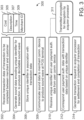
- a method 300 for secure, remote transaction authentication and settlement may be carried out by one or more computing devices, including those of the authentication mediary system, merchant POS system, payment gateway, another computing device, or a combination thereof.
- the authentication mediary system receives, from a merchant device, transaction data associated with a transaction to be completed between a merchant and a customer via a merchant POS system, including a POS terminal.
- the transaction data may include, but is not limited to, a transaction cost 303, a transaction description 305, a transaction time 307, a merchant identifier 309, or any combination thereof.
- the authentication mediary system may generate a unique identifier and sound data encoding the unique identifier.
- the sound data may be configured to cause an audio output device (e.g., speaker) to produce a sound wave such that, when the sound wave is received by an audio input device (e.g., microphone), the sound wave is decodable to provide the unique identifier.
- an audio output device e.g., speaker
- an audio input device e.g., microphone
- the authentication mediary system may store the unique identifier in one or more databases in association with the transaction data.
- the authentication mediary system may communicate the sound data to the merchant communication device (e.g., associated with a merchant POS system) to cause the sound wave to be produced at the POS terminal for receipt and decoding by a user communication device of the customer.
- the unique identifier may be communicated to the merchant POS system for generation of sound data by the merchant POS system.
- the sound wave may be produced on a user device accessing the online store.
- the sound wave may be produced on an audio output device of the POS terminal.
- the authentication mediary system may receive, in step 310, the unique identifier from the user communication device.
- the authentication mediary system may receive user payment authorization data (e.g., including an account identifier associated with a customer transaction account).
- the authentication mediary system may correspond, based on the unique identifier received from the user communication device, the user payment authorization data with the transaction data.
- the user payment authorization data may be encrypted as received from the user communication device, in step 311, and be configured for decryption by a payment gateway and/or acquirer processor.
- the user payment authorization data may be formatted and encrypted according to a predetermined ruleset input by the payment gateway and/or acquirer processor (e.g., via a portal having an application programming interface).
- the authentication mediary system may generate, or cause a payment gateway to generate, a transaction request to an acquirer processor associated with a merchant transaction account.
- the transaction request may include the user payment authorization data and the transaction data for settlement of payment from the customer transaction account to the merchant transaction account for completion of the transaction.
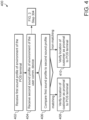
- a method 400 for secure, remote transaction authentication and settlement may be carried out by one or more computing devices, including those of the authentication mediary system, merchant POS system, payment gateway, another computing device, or a combination thereof.
- the authentication mediary system may receive, from the merchant communication device, a first sound profile (e.g., an audio recording) of an environment of the POS terminal (e.g., a physical merchant store, a space near a computing device hosting an online store website, etc.).
- a first sound profile e.g., an audio recording
- an environment of the POS terminal e.g., a physical merchant store, a space near a computing device hosting an online store website, etc.
- the authentication mediary system may receive, from the user communication device, a second sound profile (e.g., an audio recording) of an environment of the user communication device (e.g., a physical merchant store, a space near a computing device hosting an online store website, etc.).
- a second sound profile e.g., an audio recording
- the authentication mediary system may compare the first sound profile to the second sound profile and determine if the sound profiles match (e.g., determine a likelihood of match, determine a percent match, etc.). In doing so, it may be determined if the user communication device (presumed to be near the customer) is in the same environment as the POS terminal.
- the authentication mediary system may verify that the location of the customer is proximal to the POS terminal, in step 408. If the first sound profile and the second sound profile are determined to not match, or not to sufficiently match, in step 406, then the authentication mediary system may reject a verification that the location of the customer is proximal to the POS terminal, in step 410. It will further be appreciated that based on a second sound profile received in step 404, the authentication mediary system may determine a frequency range of the sound wave (during generation of the sound data in step 304 of FIG. 3 ) that is non-overlapping with a frequency range of a portion of the second sound profile associated with the environment of the user communication device, so as to increase the likelihood and accuracy of the user communication device detecting the sound wave in the environment of the user communication device.
- method 500 for secure, remote transaction authentication and settlement.
- method 500 may be carried out by one or more computing devices, including those of the authentication mediary system, merchant POS system, payment gateway, another computing device, or a combination thereof.
- the authentication mediary system may store the unique identifier in association with the transaction data.
- the authentication mediary system may receive the unique identifier from the user communication device, which has received the unique identifier via encoding in a signal (e.g., audio, visual, etc.) from the POS terminal.
- a signal e.g., audio, visual, etc.
- the authentication mediary system may communicate at least a portion of the transaction data to the user communication device prior to receiving the user payment authorization data from the user communication device. The customer may then review the transaction data and confirm or reject the purchase using their user communication device. If the purchase is confirmed and authorized by the customer, then, in step 506, the authentication mediary system may receive user payment authorization data from the user communication device.
- the authentication mediary system may generate a transaction request, or cause a payment gateway to generate a transaction request, to an acquirer processor associated with a merchant transaction account (or other payment network device), so as to settle payment from the customer transaction account to the merchant transaction account for completion of the transaction.
- the authentication mediary system and/or a payment gateway may receive acknowledgement from an acquirer processor (or other payment network device) of completion of the transaction.
- the authentication mediary system and/or the payment gateway may communicate, in step 510, a transaction confirmation message to the merchant communication device and/or the user communication device.
- a method 600 for secure, remote transaction authentication and settlement may be carried out by one or more computing devices, including those of the authentication mediary system, merchant POS system, payment gateway, another computing device, or a combination thereof.
- the authentication mediary system may receive, from a merchant communication device, transaction data associated with a transaction to be completed between a merchant and a customer via a POS terminal.
- the transaction data may include a transaction cost 603, a transaction description 605, a transaction time 607, a merchant identifier 609, or any combination thereof.
Landscapes
- Business, Economics & Management (AREA)
- Accounting & Taxation (AREA)
- Engineering & Computer Science (AREA)
- Physics & Mathematics (AREA)
- Strategic Management (AREA)
- General Business, Economics & Management (AREA)
- General Physics & Mathematics (AREA)
- Theoretical Computer Science (AREA)
- Finance (AREA)
- Computer Security & Cryptography (AREA)
- Computer Networks & Wireless Communication (AREA)
- Financial Or Insurance-Related Operations Such As Payment And Settlement (AREA)
- Cash Registers Or Receiving Machines (AREA)
Claims (11)
- Procédé mis en œuvre par ordinateur pour une authentification et un règlement de transaction à distance sécurisés, le procédé comprenant :la réception (302), par l'au moins un processeur d'un système de médiation d'authentification (108), et à partir d'un système de point de vente de commerçant, POS, (106) associé à un commerçant, de données de transaction associées à une transaction à réaliser entre le commerçant et un client par l'intermédiaire d'un terminal POS du système de point de vente de commerçant, les données de transaction comprenant l'au moins un des éléments suivants : un coût de transaction ; une transaction de description ; un temps de transaction ; un identifiant de commerçant ; ou toute combinaison de ceux-ci ;la génération (304), par l'au moins un processeur, (i) d'un identifiant unique représentatif de la transaction et (ii) de toute forme de données de signal audio codant l'identifiant unique ;le stockage (306), par l'au moins un processeur et dans l'au moins une base de données, de l'identifiant unique en association avec les données de transaction ;la communication (308), par l'au moins un processeur, des données de signal au système POS commerçant, dans lequel le terminal POS est configuré, sur la base des données de signal, pour amener un dispositif de sortie audio du terminal POS à produire un signal audio de sorte que, lorsque le signal audio est reçu par un dispositif d'entrée audio d'un dispositif de communication utilisateur (104) du client, le signal audio est décodé par le dispositif de communication utilisateur pour fournir l'identifiant unique ;la réception (310), par l'au moins un processeur et depuis le dispositif de communication utilisateur, (i) de l'identifiant unique représentatif de la transaction et (ii) des données d'autorisation de paiement utilisateur comprenant l'au moins un identifiant de compte associé à un compte de transaction client ;la correspondance (312), par l'au moins un processeur, des données d'autorisation de paiement d'utilisateur avec les données de transaction stockées associées à la transaction sur la base de l'identifiant unique reçu du dispositif de communication d'utilisateur ;la génération (314), par l'au moins un processeur, d'une demande de transaction, la demande de transaction comprenant les données d'autorisation de paiement d'utilisateur et les données de transaction ; etla transmission, par l'au moins un processeur, de la demande de transaction à un processeur acquéreur associé à un compte de transaction de commerçant du commerçant pour le règlement du paiement depuis le compte de transaction de client vers le compte de transaction de commerçant pour l'achèvement de la transaction ;dans lequel le procédé comprend en outre :la réception (402), par l'au moins un processeur du système médiaire d'authentification (108) et à partir d'un dispositif de communication de commerçant du système de point de vente de commerçant (106), d'un premier profil sonore d'un environnement physique du terminal de point de vente du système de point de vente de commerçant ;la réception (404), par l'au moins un processeur et depuis le dispositif de communication utilisateur (104), d'un deuxième profil sonore d'un environnement physique du dispositif de communication utilisateur, le deuxième profil sonore étant enregistré pendant la réception du signal audio, sous la forme d'une onde sonore, par le dispositif de communication utilisateur depuis le terminal POS ; etla vérification (408), par l'au moins un processeur, d'un emplacement du dispositif de communication utilisateur comme étant proximal au terminal POS sur la base d'une comparaison, par l'au moins un processeur, du premier profil sonore au deuxième profil sonore.
- Procédé mis en œuvre par ordinateur selon la revendication 1, comprenant en outre :la réception, par l'au moins un processeur du système médiaire d'authentification (108) et à partir du dispositif de communication d'utilisateur (104), des données d'autorisation de paiement d'utilisateur sous une forme cryptée ; etla transmission, par l'au moins un processeur et au processeur acquéreur, des données d'autorisation de paiement d'utilisateur dans ladite forme cryptée, lesdites données d'autorisation de paiement d'utilisateur étant configurées pour un décryptage par le processeur acquéreur.
- Procédé mis en oeuvre par ordinateur selon la revendication 1, dans lequel les données de signal comprennent des données sonores configurées pour amener un dispositif de sortie audio du terminal POS à produire une onde sonore, le procédé comprenant en outre la détermination, par l'au moins un processeur du système médiateur d'authentification (108), qu'une plage de fréquences de l'onde sonore ne se chevauche pas avec une plage de fréquences d'une partie du deuxième profil sonore de l'environnement physique du dispositif de communication utilisateur (104).
- Procédé mis en oeuvre par ordinateur selon l'une quelconque des revendications 1 à 3, comprenant en outre, en réponse à la réception par l'au moins un processeur du système médiaire d'authentification (108) de l'identifiant unique provenant du dispositif de communication d'utilisateur (104), la communication, par l'au moins un processeur, de l'au moins une partie des données de transaction au dispositif de communication d'utilisateur avant la réception par l'au moins un processeur des données d'autorisation de paiement d'utilisateur provenant du dispositif de communication d'utilisateur.
- Procédé mis en oeuvre par ordinateur selon l'une quelconque des revendications 1 à 4, comprenant en outre, en réponse au fait que l'au moins un processeur du système médiateur d'authentification (108) reçoit un accusé de réception du processeur acquéreur de la transaction qui est achevée conformément à la demande de transaction, la communication, par l'au moins un processeur, d'un message de confirmation de transaction au dispositif de communication commerçant du système POS commerçant (106) et/ou au dispositif de communication d'utilisateur (104).
- Système médiateur d'authentification (108) comprenant l'au moins un ordinateur serveur comprenant l'au moins un processeur, l'au moins un ordinateur serveur étant programmé et/ou configuré pour :recevoir, à partir d'un système de point de vente de commerçant, POS, (106) associé à un commerçant, des données de transaction associées à une transaction à réaliser entre le commerçant et un client par l'intermédiaire d'un terminal POS du système de point de vente de commerçant, les données de transaction comprenant l'au moins un des éléments suivants : un coût de transaction ; une transaction de description ; un temps de transaction ; un identifiant de commerçant ; ou toute combinaison de ceux-ci ;générer un identifiant unique représentatif de la transaction et (ii) toute forme de données de signal audio codant l'identifiant unique ;stocker, dans l'au moins une base de données, l'identifiant unique en association avec les données de transaction ;communiquer les données de signal au système POS marchand, dans lequel le terminal POS est configuré, sur la base des données de signal, pour amener un dispositif de sortie audio du terminal POS à produire un signal audio de sorte que, lorsque le signal audio est reçu par un dispositif d'entrée audio d'un dispositif de communication utilisateur (104) du client, le signal audio est décodé par le dispositif de communication utilisateur pour fournir l'identifiant unique ;recevoir, depuis le dispositif de communication utilisateur, (i) l'identifiant unique représentatif de la transaction et (ii) les données d'autorisation de paiement utilisateur comprenant l'au moins un identifiant de compte associé à un compte de transaction client ;faire correspondre les données d'autorisation de paiement d'utilisateur avec les données de transaction stockées associées à la transaction sur la base de l'identifiant unique reçu du dispositif de communication d'utilisateur ;générer une demande de transaction, la demande de transaction comprenant les données d'autorisation de paiement de l'utilisateur et les données de transaction ; ettransmettre la demande de transaction à un processeur acquéreur associé à un compte de transaction du commerçant pour le règlement du paiement du compte de transaction du client au compte de transaction du commerçant pour l'achèvement de la transaction ;dans lequel l'au moins un ordinateur serveur est en outre programmé et/ou configuré pour :recevoir, depuis un dispositif de communication de commerçant du système de point de vente de commerçant (106), un premier profil sonore d'un environnement physique du terminal de point de vente du système de point de vente de commerçant ;recevoir, à partir du dispositif de communication utilisateur (104), d'un deuxième profil sonore d'un environnement physique du dispositif de communication utilisateur, le deuxième profil sonore étant enregistré pendant la réception du signal audio, sous la forme d'une onde sonore, par le dispositif de communication utilisateur à partir du terminal POS ; etvérifier un emplacement du dispositif de communication utilisateur comme étant proximal au terminal POS sur la base d'une comparaison du premier profil sonore au deuxième profil sonore.
- Système selon la revendication 6, dans lequel l'au moins un ordinateur serveur est en outre programmé et/ou configuré pour :recevoir, à partir du dispositif de communication d'utilisateur (104), les données d'autorisation de paiement d'utilisateur sous une forme cryptée ; ettransmettre, au processeur acquéreur, les données d'autorisation de paiement d'utilisateur dans ladite forme cryptée, lesdites données d'autorisation de paiement d'utilisateur étant configurées pour un décryptage par le processeur acquéreur.
- Système selon la revendication 6, dans lequel les données de signal comprennent des données sonores configurées pour amener un dispositif de sortie audio du terminal POS à produire une onde sonore, dans lequel le au moins un ordinateur serveur est en outre programmé et/ou configuré pour déterminer qu'une plage de fréquences de l'onde sonore ne se chevauche pas avec une plage de fréquences d'une partie du deuxième profil sonore de l'environnement physique du dispositif de communication utilisateur (104).
- Système selon l'une quelconque des revendications 6 à 8, dans lequel l'au moins un ordinateur serveur est en outre programmé et/ou configuré pour, en réponse à la réception de l'identifiant unique provenant du dispositif de communication utilisateur (104), communiquer au moins une partie des données de transaction au dispositif de communication utilisateur avant la réception des données d'autorisation de paiement utilisateur provenant du dispositif de communication utilisateur.
- Système selon l'une quelconque des revendications 6 à 9, dans lequel l'au moins un ordinateur serveur est en outre programmé et/ou configuré pour, en réponse à la réception d'un accusé de réception provenant du processeur acquéreur de la transaction en cours d'achèvement conformément à la demande de transaction, communiquer un message de confirmation de transaction au dispositif de communication de commerçant du système de point de vente de commerçant (106) et/ou au dispositif de communication d'utilisateur (104).
- Produit de programme informatique pour pour une authentification et un règlement de transaction à distance sécurisés, le produit de programme informatique comprenant l'au moins un support non transitoire lisible par ordinateur comprenant des instructions de programme qui, lorsqu'elles sont exécutées par l'au moins un processeur d'un système médiateur d'authentification (108), amènent l'au moins un processeur à réaliser un procédé de l'une quelconque des revendications 1 à 5.
Applications Claiming Priority (2)
| Application Number | Priority Date | Filing Date | Title |
|---|---|---|---|
| US201862737972P | 2018-09-28 | 2018-09-28 | |
| PCT/US2019/053370 WO2020069262A1 (fr) | 2018-09-28 | 2019-09-27 | Système, procédé et produit programme d'ordinateur permettant une authentification et un règlement de transaction à distance sécurisés |
Publications (3)
| Publication Number | Publication Date |
|---|---|
| EP3857486A1 EP3857486A1 (fr) | 2021-08-04 |
| EP3857486A4 EP3857486A4 (fr) | 2021-12-22 |
| EP3857486B1 true EP3857486B1 (fr) | 2025-07-09 |
Family
ID=69949935
Family Applications (1)
| Application Number | Title | Priority Date | Filing Date |
|---|---|---|---|
| EP19864105.2A Active EP3857486B1 (fr) | 2018-09-28 | 2019-09-27 | Système, procédé et produit programme d'ordinateur permettant une authentification et un règlement de transaction à distance sécurisés |
Country Status (5)
| Country | Link |
|---|---|
| US (1) | US20220114585A1 (fr) |
| EP (1) | EP3857486B1 (fr) |
| CN (1) | CN113015990B (fr) |
| SG (1) | SG11202102793WA (fr) |
| WO (1) | WO2020069262A1 (fr) |
Families Citing this family (5)
| Publication number | Priority date | Publication date | Assignee | Title |
|---|---|---|---|---|
| WO2021262338A1 (fr) * | 2020-06-24 | 2021-12-30 | Visa International Service Association | Identification de confiance d'utilisateurs en cours d'inscription sur la base d'images et d'identificateurs uniques associés à des utilisateurs de parrainage |
| CN118103860B (zh) * | 2021-09-01 | 2025-05-09 | 维萨国际服务协会 | 用于动态密码通信的系统、方法和计算机程序产品 |
| US12393945B2 (en) * | 2022-07-28 | 2025-08-19 | Mastercard International Incorporated | Method and system for payment processing using distributed digitized surrogates |
| WO2025054805A1 (fr) * | 2023-09-12 | 2025-03-20 | Paypal, Inc. | Rattachement d'identifiants de visage à des comptes numériques pour authentifications sécurisées lors d'activités informatiques à haut risque |
| CN120128276B (zh) * | 2025-05-09 | 2025-09-16 | 比亚迪股份有限公司 | 交互方法、设备及服务器、交互系统、车辆和存储介质 |
Family Cites Families (15)
| Publication number | Priority date | Publication date | Assignee | Title |
|---|---|---|---|---|
| US6397198B1 (en) * | 1994-11-28 | 2002-05-28 | Indivos Corporation | Tokenless biometric electronic transactions using an audio signature to identify the transaction processor |
| US7349871B2 (en) * | 2002-08-08 | 2008-03-25 | Fujitsu Limited | Methods for purchasing of goods and services |
| US8606638B2 (en) * | 2009-03-02 | 2013-12-10 | First Data Corporation | Systems, methods and apparatus for facilitating transactions using a mobile device |
| US20110191253A1 (en) * | 2009-04-17 | 2011-08-04 | Geomonkey, Inc. | Use of mobile devices for communicating sound-based virtual transaction data |
| US9400978B2 (en) * | 2010-04-09 | 2016-07-26 | Paypal, Inc. | Methods and systems for selecting accounts and offers in payment transactions |
| US8924297B2 (en) * | 2011-02-25 | 2014-12-30 | Visa International Service Association | Direct connection systems and methods |
| US20130185214A1 (en) * | 2012-01-12 | 2013-07-18 | Firethorn Mobile Inc. | System and Method For Secure Offline Payment Transactions Using A Portable Computing Device |
| WO2013114248A1 (fr) * | 2012-01-31 | 2013-08-08 | Fundamo (Pty) Ltd | Système de paiement de communication sonore proche |
| US20140101043A1 (en) * | 2012-10-08 | 2014-04-10 | Bank Of America Corporation | Sound-Based Payment Transactions |
| US20140108252A1 (en) * | 2012-10-16 | 2014-04-17 | Riavera Corp. | Mobile image payment system using sound-based codes |
| US9082413B2 (en) * | 2012-11-02 | 2015-07-14 | International Business Machines Corporation | Electronic transaction authentication based on sound proximity |
| US20140244514A1 (en) * | 2013-02-26 | 2014-08-28 | Digimarc Corporation | Methods and arrangements for smartphone payments and transactions |
| JP6469933B2 (ja) * | 2015-07-09 | 2019-02-13 | ナファ イノベーションズ プライベート リミテッドNaffa Innovations Private Limited | 音声信号を用いるコンピュータ装置間のデータ通信システム及び方法 |
| KR101707614B1 (ko) * | 2015-09-04 | 2017-02-27 | 주식회사 인포소닉 | 음파 신호를 이용한 모바일 결제 서비스 제공 방법 및 이를 구현하기 위한 모바일 결제 시스템 |
| CN114707994B (zh) * | 2016-03-01 | 2025-08-12 | 谷歌有限责任公司 | 免手操交易的直接结算 |
-
2019
- 2019-09-27 WO PCT/US2019/053370 patent/WO2020069262A1/fr not_active Ceased
- 2019-09-27 CN CN201980063666.2A patent/CN113015990B/zh active Active
- 2019-09-27 EP EP19864105.2A patent/EP3857486B1/fr active Active
- 2019-09-27 SG SG11202102793WA patent/SG11202102793WA/en unknown
- 2019-09-27 US US17/277,738 patent/US20220114585A1/en active Pending
Also Published As
| Publication number | Publication date |
|---|---|
| CN113015990A (zh) | 2021-06-22 |
| WO2020069262A1 (fr) | 2020-04-02 |
| SG11202102793WA (en) | 2021-04-29 |
| EP3857486A1 (fr) | 2021-08-04 |
| EP3857486A4 (fr) | 2021-12-22 |
| CN113015990B (zh) | 2024-06-11 |
| US20220114585A1 (en) | 2022-04-14 |
Similar Documents
| Publication | Publication Date | Title |
|---|---|---|
| US12475456B2 (en) | Secure authentication system with token service | |
| US12346903B2 (en) | Identification and verification for provisioning mobile application | |
| US12008088B2 (en) | Recurring token transactions | |
| JP7407254B2 (ja) | 位置照合を使用する認証システムおよび方法 | |
| US11943231B2 (en) | Token and cryptogram using transaction specific information | |
| US12120117B2 (en) | Method and system for token provisioning and processing | |
| US11750368B2 (en) | Provisioning method and system with message conversion | |
| US11170379B2 (en) | Peer forward authorization of digital requests | |
| AU2016220072B2 (en) | Secure authentication of user and mobile device | |
| CN107438992B (zh) | 浏览器与密码的集成 | |
| US20180150832A1 (en) | System, process and device for e-commerce transactions | |
| US20210241266A1 (en) | Enhancing 3d secure user authentication for online transactions | |
| US20220114585A1 (en) | System, method, and computer program product for secure, remote transaction authentication and settlement | |
| US20180316687A1 (en) | System and method for generating access credentials | |
| US20220207527A1 (en) | System and method utilizing chain of trust | |
| CN113177786A (zh) | 将交易作为推送支付交易进行处理的系统、方法和计算机程序产品 | |
| WO2025101186A1 (fr) | Procédé et système de traitement utilisant un historique de jetons de chaîne de blocs | |
| US20250200573A1 (en) | Efficient and secure token provisioning | |
| CA3009364C (fr) | Systemes et procedes d'authentification utilisant la mise en correspondance de positions | |
| CA2883873A1 (fr) | Systeme de transaction securise | |
| HK1241587A1 (en) | Token and cryptogram using transaction specific information |
Legal Events
| Date | Code | Title | Description |
|---|---|---|---|
| STAA | Information on the status of an ep patent application or granted ep patent |
Free format text: STATUS: THE INTERNATIONAL PUBLICATION HAS BEEN MADE |
|
| PUAI | Public reference made under article 153(3) epc to a published international application that has entered the european phase |
Free format text: ORIGINAL CODE: 0009012 |
|
| STAA | Information on the status of an ep patent application or granted ep patent |
Free format text: STATUS: REQUEST FOR EXAMINATION WAS MADE |
|
| 17P | Request for examination filed |
Effective date: 20210428 |
|
| AK | Designated contracting states |
Kind code of ref document: A1 Designated state(s): AL AT BE BG CH CY CZ DE DK EE ES FI FR GB GR HR HU IE IS IT LI LT LU LV MC MK MT NL NO PL PT RO RS SE SI SK SM TR |
|
| A4 | Supplementary search report drawn up and despatched |
Effective date: 20211124 |
|
| RIC1 | Information provided on ipc code assigned before grant |
Ipc: G06Q 20/40 20120101ALI20211118BHEP Ipc: G06Q 20/38 20120101ALI20211118BHEP Ipc: G06Q 20/32 20120101ALI20211118BHEP Ipc: G06Q 20/06 20120101ALI20211118BHEP Ipc: G06Q 20/22 20120101ALI20211118BHEP Ipc: G06Q 20/20 20120101ALI20211118BHEP Ipc: G06Q 20/08 20120101ALI20211118BHEP Ipc: G06Q 20/04 20120101ALI20211118BHEP Ipc: G06Q 20/02 20120101AFI20211118BHEP |
|
| DAV | Request for validation of the european patent (deleted) | ||
| DAX | Request for extension of the european patent (deleted) | ||
| P01 | Opt-out of the competence of the unified patent court (upc) registered |
Effective date: 20230511 |
|
| STAA | Information on the status of an ep patent application or granted ep patent |
Free format text: STATUS: EXAMINATION IS IN PROGRESS |
|
| 17Q | First examination report despatched |
Effective date: 20240524 |
|
| GRAP | Despatch of communication of intention to grant a patent |
Free format text: ORIGINAL CODE: EPIDOSNIGR1 |
|
| STAA | Information on the status of an ep patent application or granted ep patent |
Free format text: STATUS: GRANT OF PATENT IS INTENDED |
|
| INTG | Intention to grant announced |
Effective date: 20250211 |
|
| GRAS | Grant fee paid |
Free format text: ORIGINAL CODE: EPIDOSNIGR3 |
|
| GRAA | (expected) grant |
Free format text: ORIGINAL CODE: 0009210 |
|
| STAA | Information on the status of an ep patent application or granted ep patent |
Free format text: STATUS: THE PATENT HAS BEEN GRANTED |
|
| AK | Designated contracting states |
Kind code of ref document: B1 Designated state(s): AL AT BE BG CH CY CZ DE DK EE ES FI FR GB GR HR HU IE IS IT LI LT LU LV MC MK MT NL NO PL PT RO RS SE SI SK SM TR |
|
| REG | Reference to a national code |
Ref country code: GB Ref legal event code: FG4D |
|
| REG | Reference to a national code |
Ref country code: CH Ref legal event code: EP |
|
| REG | Reference to a national code |
Ref country code: IE Ref legal event code: FG4D |
|
| REG | Reference to a national code |
Ref country code: DE Ref legal event code: R096 Ref document number: 602019072424 Country of ref document: DE |
|
| PGFP | Annual fee paid to national office [announced via postgrant information from national office to epo] |
Ref country code: DE Payment date: 20250820 Year of fee payment: 7 |
|
| PGFP | Annual fee paid to national office [announced via postgrant information from national office to epo] |
Ref country code: GB Payment date: 20250820 Year of fee payment: 7 |
|
| PGFP | Annual fee paid to national office [announced via postgrant information from national office to epo] |
Ref country code: FR Payment date: 20250821 Year of fee payment: 7 |
|
| REG | Reference to a national code |
Ref country code: NL Ref legal event code: MP Effective date: 20250709 |
|
| PG25 | Lapsed in a contracting state [announced via postgrant information from national office to epo] |
Ref country code: PT Free format text: LAPSE BECAUSE OF FAILURE TO SUBMIT A TRANSLATION OF THE DESCRIPTION OR TO PAY THE FEE WITHIN THE PRESCRIBED TIME-LIMIT Effective date: 20251110 |
|
| PG25 | Lapsed in a contracting state [announced via postgrant information from national office to epo] |
Ref country code: NL Free format text: LAPSE BECAUSE OF FAILURE TO SUBMIT A TRANSLATION OF THE DESCRIPTION OR TO PAY THE FEE WITHIN THE PRESCRIBED TIME-LIMIT Effective date: 20250709 |
|
| REG | Reference to a national code |
Ref country code: AT Ref legal event code: MK05 Ref document number: 1812561 Country of ref document: AT Kind code of ref document: T Effective date: 20250709 |
|
| PG25 | Lapsed in a contracting state [announced via postgrant information from national office to epo] |
Ref country code: IS Free format text: LAPSE BECAUSE OF FAILURE TO SUBMIT A TRANSLATION OF THE DESCRIPTION OR TO PAY THE FEE WITHIN THE PRESCRIBED TIME-LIMIT Effective date: 20251109 |
|
| PG25 | Lapsed in a contracting state [announced via postgrant information from national office to epo] |
Ref country code: NO Free format text: LAPSE BECAUSE OF FAILURE TO SUBMIT A TRANSLATION OF THE DESCRIPTION OR TO PAY THE FEE WITHIN THE PRESCRIBED TIME-LIMIT Effective date: 20251009 |
|
| REG | Reference to a national code |
Ref country code: LT Ref legal event code: MG9D |
|
| PG25 | Lapsed in a contracting state [announced via postgrant information from national office to epo] |
Ref country code: AT Free format text: LAPSE BECAUSE OF FAILURE TO SUBMIT A TRANSLATION OF THE DESCRIPTION OR TO PAY THE FEE WITHIN THE PRESCRIBED TIME-LIMIT Effective date: 20250709 |
|
| PG25 | Lapsed in a contracting state [announced via postgrant information from national office to epo] |
Ref country code: FI Free format text: LAPSE BECAUSE OF FAILURE TO SUBMIT A TRANSLATION OF THE DESCRIPTION OR TO PAY THE FEE WITHIN THE PRESCRIBED TIME-LIMIT Effective date: 20250709 |
|
| PG25 | Lapsed in a contracting state [announced via postgrant information from national office to epo] |
Ref country code: HR Free format text: LAPSE BECAUSE OF FAILURE TO SUBMIT A TRANSLATION OF THE DESCRIPTION OR TO PAY THE FEE WITHIN THE PRESCRIBED TIME-LIMIT Effective date: 20250709 |
|
| PG25 | Lapsed in a contracting state [announced via postgrant information from national office to epo] |
Ref country code: GR Free format text: LAPSE BECAUSE OF FAILURE TO SUBMIT A TRANSLATION OF THE DESCRIPTION OR TO PAY THE FEE WITHIN THE PRESCRIBED TIME-LIMIT Effective date: 20251010 |
|
| PG25 | Lapsed in a contracting state [announced via postgrant information from national office to epo] |
Ref country code: SE Free format text: LAPSE BECAUSE OF FAILURE TO SUBMIT A TRANSLATION OF THE DESCRIPTION OR TO PAY THE FEE WITHIN THE PRESCRIBED TIME-LIMIT Effective date: 20250709 |
|
| PG25 | Lapsed in a contracting state [announced via postgrant information from national office to epo] |
Ref country code: LV Free format text: LAPSE BECAUSE OF FAILURE TO SUBMIT A TRANSLATION OF THE DESCRIPTION OR TO PAY THE FEE WITHIN THE PRESCRIBED TIME-LIMIT Effective date: 20250709 |
|
| PG25 | Lapsed in a contracting state [announced via postgrant information from national office to epo] |
Ref country code: BG Free format text: LAPSE BECAUSE OF FAILURE TO SUBMIT A TRANSLATION OF THE DESCRIPTION OR TO PAY THE FEE WITHIN THE PRESCRIBED TIME-LIMIT Effective date: 20250709 Ref country code: PL Free format text: LAPSE BECAUSE OF FAILURE TO SUBMIT A TRANSLATION OF THE DESCRIPTION OR TO PAY THE FEE WITHIN THE PRESCRIBED TIME-LIMIT Effective date: 20250709 |
|
| PG25 | Lapsed in a contracting state [announced via postgrant information from national office to epo] |
Ref country code: RS Free format text: LAPSE BECAUSE OF FAILURE TO SUBMIT A TRANSLATION OF THE DESCRIPTION OR TO PAY THE FEE WITHIN THE PRESCRIBED TIME-LIMIT Effective date: 20251009 |
|
| PG25 | Lapsed in a contracting state [announced via postgrant information from national office to epo] |
Ref country code: ES Free format text: LAPSE BECAUSE OF FAILURE TO SUBMIT A TRANSLATION OF THE DESCRIPTION OR TO PAY THE FEE WITHIN THE PRESCRIBED TIME-LIMIT Effective date: 20250709 |
|
| PG25 | Lapsed in a contracting state [announced via postgrant information from national office to epo] |
Ref country code: RO Free format text: LAPSE BECAUSE OF FAILURE TO SUBMIT A TRANSLATION OF THE DESCRIPTION OR TO PAY THE FEE WITHIN THE PRESCRIBED TIME-LIMIT Effective date: 20250709 |
|
| PG25 | Lapsed in a contracting state [announced via postgrant information from national office to epo] |
Ref country code: SM Free format text: LAPSE BECAUSE OF FAILURE TO SUBMIT A TRANSLATION OF THE DESCRIPTION OR TO PAY THE FEE WITHIN THE PRESCRIBED TIME-LIMIT Effective date: 20250709 |
|
| PG25 | Lapsed in a contracting state [announced via postgrant information from national office to epo] |
Ref country code: DK Free format text: LAPSE BECAUSE OF FAILURE TO SUBMIT A TRANSLATION OF THE DESCRIPTION OR TO PAY THE FEE WITHIN THE PRESCRIBED TIME-LIMIT Effective date: 20250709 |
|
| PG25 | Lapsed in a contracting state [announced via postgrant information from national office to epo] |
Ref country code: IT Free format text: LAPSE BECAUSE OF FAILURE TO SUBMIT A TRANSLATION OF THE DESCRIPTION OR TO PAY THE FEE WITHIN THE PRESCRIBED TIME-LIMIT Effective date: 20250709 |
|
| PG25 | Lapsed in a contracting state [announced via postgrant information from national office to epo] |
Ref country code: CZ Free format text: LAPSE BECAUSE OF FAILURE TO SUBMIT A TRANSLATION OF THE DESCRIPTION OR TO PAY THE FEE WITHIN THE PRESCRIBED TIME-LIMIT Effective date: 20250709 |
|
| PG25 | Lapsed in a contracting state [announced via postgrant information from national office to epo] |
Ref country code: SK Free format text: LAPSE BECAUSE OF FAILURE TO SUBMIT A TRANSLATION OF THE DESCRIPTION OR TO PAY THE FEE WITHIN THE PRESCRIBED TIME-LIMIT Effective date: 20250709 Ref country code: EE Free format text: LAPSE BECAUSE OF FAILURE TO SUBMIT A TRANSLATION OF THE DESCRIPTION OR TO PAY THE FEE WITHIN THE PRESCRIBED TIME-LIMIT Effective date: 20250709 |
|
| REG | Reference to a national code |
Ref country code: CH Ref legal event code: H13 Free format text: ST27 STATUS EVENT CODE: U-0-0-H10-H13 (AS PROVIDED BY THE NATIONAL OFFICE) Effective date: 20260504 |
|
| PLBE | No opposition filed within time limit |
Free format text: ORIGINAL CODE: 0009261 |
|
| STAA | Information on the status of an ep patent application or granted ep patent |
Free format text: STATUS: NO OPPOSITION FILED WITHIN TIME LIMIT |