EP3857543B1 - Pipeline d'agent conversationnel formé sur des données synthétiques - Google Patents
Pipeline d'agent conversationnel formé sur des données synthétiques Download PDFInfo
- Publication number
- EP3857543B1 EP3857543B1 EP19865011.1A EP19865011A EP3857543B1 EP 3857543 B1 EP3857543 B1 EP 3857543B1 EP 19865011 A EP19865011 A EP 19865011A EP 3857543 B1 EP3857543 B1 EP 3857543B1
- Authority
- EP
- European Patent Office
- Prior art keywords
- phonemes
- synthetic
- training
- sequence
- data items
- Prior art date
- Legal status (The legal status is an assumption and is not a legal conclusion. Google has not performed a legal analysis and makes no representation as to the accuracy of the status listed.)
- Active
Links
Images



Classifications
-
- G—PHYSICS
- G10—MUSICAL INSTRUMENTS; ACOUSTICS
- G10L—SPEECH ANALYSIS TECHNIQUES OR SPEECH SYNTHESIS; SPEECH RECOGNITION; SPEECH OR VOICE PROCESSING TECHNIQUES; SPEECH OR AUDIO CODING OR DECODING
- G10L15/00—Speech recognition
- G10L15/06—Creation of reference templates; Training of speech recognition systems, e.g. adaptation to the characteristics of the speaker's voice
- G10L15/063—Training
-
- G—PHYSICS
- G06—COMPUTING OR CALCULATING; COUNTING
- G06F—ELECTRIC DIGITAL DATA PROCESSING
- G06F40/00—Handling natural language data
- G06F40/20—Natural language analysis
- G06F40/237—Lexical tools
-
- G—PHYSICS
- G06—COMPUTING OR CALCULATING; COUNTING
- G06F—ELECTRIC DIGITAL DATA PROCESSING
- G06F40/00—Handling natural language data
- G06F40/40—Processing or translation of natural language
- G06F40/55—Rule-based translation
- G06F40/56—Natural language generation
-
- G—PHYSICS
- G06—COMPUTING OR CALCULATING; COUNTING
- G06N—COMPUTING ARRANGEMENTS BASED ON SPECIFIC COMPUTATIONAL MODELS
- G06N20/00—Machine learning
-
- G—PHYSICS
- G06—COMPUTING OR CALCULATING; COUNTING
- G06N—COMPUTING ARRANGEMENTS BASED ON SPECIFIC COMPUTATIONAL MODELS
- G06N20/00—Machine learning
- G06N20/20—Ensemble learning
-
- G—PHYSICS
- G06—COMPUTING OR CALCULATING; COUNTING
- G06N—COMPUTING ARRANGEMENTS BASED ON SPECIFIC COMPUTATIONAL MODELS
- G06N3/00—Computing arrangements based on biological models
- G06N3/02—Neural networks
- G06N3/04—Architecture, e.g. interconnection topology
- G06N3/044—Recurrent networks, e.g. Hopfield networks
-
- G—PHYSICS
- G06—COMPUTING OR CALCULATING; COUNTING
- G06N—COMPUTING ARRANGEMENTS BASED ON SPECIFIC COMPUTATIONAL MODELS
- G06N3/00—Computing arrangements based on biological models
- G06N3/02—Neural networks
- G06N3/04—Architecture, e.g. interconnection topology
- G06N3/044—Recurrent networks, e.g. Hopfield networks
- G06N3/0442—Recurrent networks, e.g. Hopfield networks characterised by memory or gating, e.g. long short-term memory [LSTM] or gated recurrent units [GRU]
-
- G—PHYSICS
- G06—COMPUTING OR CALCULATING; COUNTING
- G06N—COMPUTING ARRANGEMENTS BASED ON SPECIFIC COMPUTATIONAL MODELS
- G06N3/00—Computing arrangements based on biological models
- G06N3/02—Neural networks
- G06N3/04—Architecture, e.g. interconnection topology
- G06N3/045—Combinations of networks
-
- G—PHYSICS
- G06—COMPUTING OR CALCULATING; COUNTING
- G06N—COMPUTING ARRANGEMENTS BASED ON SPECIFIC COMPUTATIONAL MODELS
- G06N3/00—Computing arrangements based on biological models
- G06N3/02—Neural networks
- G06N3/04—Architecture, e.g. interconnection topology
- G06N3/047—Probabilistic or stochastic networks
-
- G—PHYSICS
- G06—COMPUTING OR CALCULATING; COUNTING
- G06N—COMPUTING ARRANGEMENTS BASED ON SPECIFIC COMPUTATIONAL MODELS
- G06N3/00—Computing arrangements based on biological models
- G06N3/02—Neural networks
- G06N3/04—Architecture, e.g. interconnection topology
- G06N3/0475—Generative networks
-
- G—PHYSICS
- G06—COMPUTING OR CALCULATING; COUNTING
- G06N—COMPUTING ARRANGEMENTS BASED ON SPECIFIC COMPUTATIONAL MODELS
- G06N3/00—Computing arrangements based on biological models
- G06N3/02—Neural networks
- G06N3/08—Learning methods
- G06N3/09—Supervised learning
-
- G—PHYSICS
- G06—COMPUTING OR CALCULATING; COUNTING
- G06N—COMPUTING ARRANGEMENTS BASED ON SPECIFIC COMPUTATIONAL MODELS
- G06N3/00—Computing arrangements based on biological models
- G06N3/02—Neural networks
- G06N3/08—Learning methods
- G06N3/094—Adversarial learning
-
- G—PHYSICS
- G06—COMPUTING OR CALCULATING; COUNTING
- G06N—COMPUTING ARRANGEMENTS BASED ON SPECIFIC COMPUTATIONAL MODELS
- G06N5/00—Computing arrangements using knowledge-based models
- G06N5/01—Dynamic search techniques; Heuristics; Dynamic trees; Branch-and-bound
-
- G—PHYSICS
- G06—COMPUTING OR CALCULATING; COUNTING
- G06N—COMPUTING ARRANGEMENTS BASED ON SPECIFIC COMPUTATIONAL MODELS
- G06N7/00—Computing arrangements based on specific mathematical models
- G06N7/01—Probabilistic graphical models, e.g. probabilistic networks
-
- G—PHYSICS
- G10—MUSICAL INSTRUMENTS; ACOUSTICS
- G10L—SPEECH ANALYSIS TECHNIQUES OR SPEECH SYNTHESIS; SPEECH RECOGNITION; SPEECH OR VOICE PROCESSING TECHNIQUES; SPEECH OR AUDIO CODING OR DECODING
- G10L13/00—Speech synthesis; Text to speech systems
-
- G—PHYSICS
- G10—MUSICAL INSTRUMENTS; ACOUSTICS
- G10L—SPEECH ANALYSIS TECHNIQUES OR SPEECH SYNTHESIS; SPEECH RECOGNITION; SPEECH OR VOICE PROCESSING TECHNIQUES; SPEECH OR AUDIO CODING OR DECODING
- G10L15/00—Speech recognition
- G10L15/02—Feature extraction for speech recognition; Selection of recognition unit
-
- G—PHYSICS
- G10—MUSICAL INSTRUMENTS; ACOUSTICS
- G10L—SPEECH ANALYSIS TECHNIQUES OR SPEECH SYNTHESIS; SPEECH RECOGNITION; SPEECH OR VOICE PROCESSING TECHNIQUES; SPEECH OR AUDIO CODING OR DECODING
- G10L15/00—Speech recognition
- G10L15/08—Speech classification or search
- G10L15/18—Speech classification or search using natural language modelling
- G10L15/1815—Semantic context, e.g. disambiguation of the recognition hypotheses based on word meaning
-
- G—PHYSICS
- G10—MUSICAL INSTRUMENTS; ACOUSTICS
- G10L—SPEECH ANALYSIS TECHNIQUES OR SPEECH SYNTHESIS; SPEECH RECOGNITION; SPEECH OR VOICE PROCESSING TECHNIQUES; SPEECH OR AUDIO CODING OR DECODING
- G10L15/00—Speech recognition
- G10L15/08—Speech classification or search
- G10L15/18—Speech classification or search using natural language modelling
- G10L15/1822—Parsing for meaning understanding
-
- G—PHYSICS
- G06—COMPUTING OR CALCULATING; COUNTING
- G06N—COMPUTING ARRANGEMENTS BASED ON SPECIFIC COMPUTATIONAL MODELS
- G06N3/00—Computing arrangements based on biological models
- G06N3/004—Artificial life, i.e. computing arrangements simulating life
- G06N3/006—Artificial life, i.e. computing arrangements simulating life based on simulated virtual individual or collective life forms, e.g. social simulations or particle swarm optimisation [PSO]
-
- G—PHYSICS
- G10—MUSICAL INSTRUMENTS; ACOUSTICS
- G10L—SPEECH ANALYSIS TECHNIQUES OR SPEECH SYNTHESIS; SPEECH RECOGNITION; SPEECH OR VOICE PROCESSING TECHNIQUES; SPEECH OR AUDIO CODING OR DECODING
- G10L15/00—Speech recognition
- G10L15/08—Speech classification or search
- G10L15/16—Speech classification or search using artificial neural networks
-
- G—PHYSICS
- G10—MUSICAL INSTRUMENTS; ACOUSTICS
- G10L—SPEECH ANALYSIS TECHNIQUES OR SPEECH SYNTHESIS; SPEECH RECOGNITION; SPEECH OR VOICE PROCESSING TECHNIQUES; SPEECH OR AUDIO CODING OR DECODING
- G10L15/00—Speech recognition
- G10L15/08—Speech classification or search
- G10L15/18—Speech classification or search using natural language modelling
- G10L15/183—Speech classification or search using natural language modelling using context dependencies, e.g. language models
- G10L15/19—Grammatical context, e.g. disambiguation of the recognition hypotheses based on word sequence rules
- G10L15/193—Formal grammars, e.g. finite state automata, context free grammars or word networks
-
- G—PHYSICS
- G10—MUSICAL INSTRUMENTS; ACOUSTICS
- G10L—SPEECH ANALYSIS TECHNIQUES OR SPEECH SYNTHESIS; SPEECH RECOGNITION; SPEECH OR VOICE PROCESSING TECHNIQUES; SPEECH OR AUDIO CODING OR DECODING
- G10L15/00—Speech recognition
- G10L15/02—Feature extraction for speech recognition; Selection of recognition unit
- G10L2015/025—Phonemes, fenemes or fenones being the recognition units
Definitions
- This disclosure relates to the field of artificial intelligence and machine learning, and in particular to a conversational agent pipeline that is trained for use in a constrained domain using synthetic data.
- a conversational agent is a software program that interprets and responds to statements made by users in ordinary natural language. Examples of conversational agents include Microsoft ® Cortana ® , Applet Siri ® , Amazon ® Alexa ® and Google ® Assistant ® .
- a traditional conversational agent receives an audio waveform, performs feature extraction to convert the audio waveform into sequences of acoustic features, and inputs the sequences of acoustic features into an automatic speech recognition (ASR) system that includes an acoustical model (AM) and a language model (LM).
- ASR automatic speech recognition
- AM acoustical model
- LM language model
- the AM determines the likelihood of the mapping from these acoustic features to various hypothesized sequences of phonemes, while the LM determines the a priori likelihood of sequences of words.
- a decoder uses these two models together with a pronunciation lexicon to select a maximally likely sequence of words given the input (e.g., acts as a speech transcription engine).
- the sequences of text output by the ASR are the input into a natural language understanding (NLU) system, which determines a speaker's intent based on the text output by the ASR.
- NLU natural language understanding
- the speaker's determined intent is then input into a dialog management system that determines one or more actions to perform to satisfy the determined intent.
- the accuracy of conversational agents degrades when there is noise (e.g., in real world conditions with background acoustic noise) or any other acoustic mismatch between training data and real world data (e.g., data used in testing and/or field application) that can degrade performance of the ASR.
- noise e.g., in real world conditions with background acoustic noise
- real world data e.g., data used in testing and/or field application
- mismatches can be caused, for example, by variability in noise, reverb, speaker gender, age, accent, and so on.
- United States Patent Application Publication number US 2018/0090140 A1 Georges, M. N. A., et al (“Context - Aware Query Recognition for Electronic Devices", March 29, 2018 ) discloses a method for context - aware query recognition in an electronic device includes receiving user speech from an input device. A speech signal is generated from the user speech.. It is determined if the speech signal includes an action to be performed and if the electronic device is the intended recipient of the user speech. If the recognized speech signal include the action and the intended recipient of the user speech is the electronic device, a command is generated for the electronic device to perform the action.
- Embodiments of the present disclosure relate to a new conversational agent pipeline capable of accurately determining speaker intent within a restricted domain from utterances even with background noise, reverberation and non-standard grammar that may include frequent stops, restarts, incomplete utterances, corrections, "urns", "ands", and so on in the utterances.
- a constrained domain e.g., a specific user interaction scenario such as fast food ordering, online ordering, in-store information kiosks, travel booking, call centers, etc.
- the conversational agent pipeline can be trained to provide a more natural conversational experience within that restricted domain.
- a conversational agent may be trained to understand and respond accurately to every way that a customer might order off of a restaurant's menu.
- An example of a more natural conversational experience that may be achieved by the conversational agent pipeline in embodiments is an experience that avoids the traditional "activate agent with wake-word or button, say a single command or query, wait for a response, and repeat" flow. Instead, users are able to speak freely to the conversational agent as they would to another person, without needing to know any particular commands, features or characteristics of the conversational agent.
- the conversational agent described in embodiments includes an acoustic model (AM), a transcoder, and a business logic system arranged in a pipeline.
- the acoustic model is trained to receive as an input an audio waveform that represents an utterance of a speaker and to output a sequence of phonemes (the basic building blocks of speech) that represent the utterance of the speaker.
- the sequences of phonemes may be represented by sequences of vectors that include phoneme probability distributions.
- the acoustic model may also optionally output sequences of non-phonemic or prosodic features along with the sequence of phonemes. Some examples of such features include pitch, volume, duration, and so on.
- the phonemes e.g., which may include vectors of phoneme probability distributions
- non- phonemic or prosodic features output by the acoustic model may occur at regular and/or irregular intervals (e.g., every 10 ms).
- the sequence of phonemes (e.g., which may include sequences of vectors representing phoneme probability distributions) and/or non-phonemic features output by the acoustic model is input into the transcoder, which is trained to receive sequences of phonemes and to output core inferences about intent (referred to herein as transcodes) based on the sequences of phonemes.
- the determined intent may include one or more requested actions (e.g., add an item to an order, cancel an order, remove an item from an order, modify an item from an order) and one or more entities (e.g., nouns) associated with the one or more actions (e.g., a hamburger, a pickle, a drink, a particular plane flight, and so on).
- the transcoder described in embodiments operates on sequences of phonemes rather than on text.
- traditional NLUs operate on text to determine intent.
- the transcoder in embodiments is capable of accurately determining intent even when the original audio includes acoustic noise, reverberation, distortions, and non-standard grammar such as stops, restarts, incomplete utterances, corrections, "urns", "ands", and so on in an utterance.
- the transcoder described herein is able to accurately determine intent even in instances, for example, where one or more words and/or syllables from the original utterance were missing and/or a car honked during the original utterance.
- the transcoder in embodiments filters out inconsequential parts of an input sequence of phonemes and focuses on the salient part of a conversation that reflects intent. Such abilities are provided in some embodiments at least in part because the transcoder does not operate on a text hypothesis (as generated by an ASR), which is how traditional NLUs function.
- the AM generates one or more sequences of phonemes, which get mapped to a decision by the transcoder without ever generating or using text.
- the conversational agent pipeline that excludes an ASR and traditional NLU can function without using text at least in part because it is operating in a restricted domain.
- the transcodes output by the transcoder are input into a business logic system or layer.
- the business logic system may include one or more rules that check the transcodes for inconsistencies and/or errors (e.g., such as a diet coke ordered with mayonnaise, or a multiple identical articles ordered in a short time frame).
- the business logic resolves any identified inconsistencies and/or errors, and then performs one or more operations to satisfy the actions in the transcodes, such as adding items to an order.
- the acoustic model may be trained using a first training dataset and the transcoder may be trained using a second training dataset in embodiments.
- the first training dataset may comprise a plurality of data items, wherein each data item of the plurality of data items comprises audio data (e.g., an audio waveform) for an utterance and a textual representation of the utterance.
- the first training dataset may be real audio data, which may not be associated with the restricted domain for which the conversational agent will be used.
- the textual representation of the utterance may be converted into a sequence of phonemes that represent the utterance of that data item.
- the AM may then be trained to generate sequences of phonemes from audio data of utterances using the training dataset comprising a plurality of modified data items that comprise a) audio data for utterances and b) sequences of phonemes that represent the utterances.
- the audio data may be the inputs into the AM during training, and the sequences of phonemes may be labels or targets associated with the data items.
- the synthetic training data items may comprise a) a textual representation of a synthetic sentence and b) a transcoding of the synthetic sentence comprising one or more actions and one or more entities associated with the one or more actions included in the synthetic sentence.
- the synthetic sentence and associated transcodes may be within a restricted domain within which the conversational agent will function.
- a grapheme to phoneme converter may convert the textual representation of the synthetic sentence into a sequence of phonemes that represent the synthetic sentence.
- the data items in the second training dataset may include a) sequences phonemes that represent synthetic sentences and b) sequences of transcodes of the synthetic sentences.
- the sequences of phonemes may be used as the inputs into the transcoder during training, and the transcodes may be labels or targets associated with the sequences of phonemes.
- the transcoder may therefore be trained on synthetic training data generated using domain specific information and/or stochastic grammar rules. This enables a large range of possible utterances to be generated, potentially covering the entire range of possibilities within the restricted domain.
- the transcoder may be robust, and may be trained to accurately determine speaker intent within the restricted domain even when the original audio includes acoustic noise, reverberations, distortions, and non-standard grammar such as stops, restarts, incomplete utterances, corrections, "urns", “ands”, and so on in an utterance.
- embodiments provide a conversational agent pipeline that is more accurate than traditional conversational agents that use ASR and traditional NLU when used in a restricted domain. Additionally, the conversational agent pipeline described in embodiments includes fewer subsystems than traditional conversational agents, thus reducing a total amount of computing resources, memory resources and/or network bandwidth that is used to process input speech, determine intent from the speech, and perform actions on the determined intent.
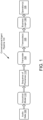
- FIG. 1 is a block diagram illustrating a conversational agent pipeline 100, in accordance with embodiments of the present disclosure.
- the conversational agent pipeline 100 comprises an acoustical model (AM) 110, a transcoder 120 and a business logic 130 (also referred to as a business logic system or business logic layer).
- AM acoustical model
- transcoder 120 a transcoder
- business logic 130 also referred to as a business logic system or business logic layer
- the acoustical model 110 may be a machine learning model (or arrangement of multiple machine learning models) that has been trained to generate sequences of phonemes 115 from audio data 105 of utterances (e.g., from one or more speakers).
- the transcoder 120 may be another machine learning model (or arrangement of multiple machine learning models) that determines speaker intent based on sequences of phonemes (e.g., sequence of phonemes 115).
- the intent may be represented as one or more transcodes 125 comprising actions and associated entities.
- the transcodes 125 may be input into the business logic 130, which may determine one or more operations 135 to perform to satisfy the intent represented by the one or more transcodes 125 (e.g., to perform one or more actions identified in the transcodes 125).
- the conversational agent 100 in some embodiments does not include an ASR or other language model that determines the probability of specific sequences of words. Instead, the acoustical model 110 outputs sequences of phonemes rather than sequences of words, and the transcoder 120 determines intent based on sequences of phonemes rather than based on sequences of words.
- the AM includes a language model. However, in such embodiments the AM still outputs phonemes rather than text. Using phonemes rather than words has multiple benefits. First, by using phonemes, multiple subsystems may be eliminated, reducing an amount of compute resources, memory resources and/or network bandwidth resources that are used by the conversational agent pipeline 100.
- the output domain of the acoustical model 110 is reduced from thousands of possibilities (e.g., around 180,000 words for the English language) to less than 100 possibilities (e.g., 39 phonemes in the Carnegie Mellon University Pronouncing Dictionary). Accordingly, at the phoneme level 39 different phonemes can be used to represent all of the words in the English dictionary. Additionally, the phonemes can also cover any utterances, including those with out-of-lexicon words and phrases which may not be included in any language dictionary. Standard ASRs and NLUs that operate at the word level may fail when words not in a dictionary are used, precisely because they must map all or most of the input to text. However, the conversational agent pipeline 100 is able to accurately determine speaker intent even when such out of lexicon words are used in utterances.
- the acoustical model 110 may output phonemes and/or non-phonemic or prosodic features at regular or irregular intervals.
- the acoustic model 110 may output sequences of phonemes (and optionally non-phonemic or prosodic features) at 10 ms intervals, where a distinct phoneme (or vector of phoneme probabilities) is output at each 10 ms interval.
- the output phoneme for a time interval may be a single phoneme that had the highest probability of being correct.
- the output phoneme is a sparse vector that includes a separate element for each phoneme.
- the output phoneme may have a 1 value associated with the winning phoneme with the highest probability and 0s values associated with the other phonemes.
- the output phoneme may be a vector that may include probabilities for some or all of the possible phonemes.
- an output of the acoustical model 110 may be a sequence of vectors (e.g., 39 element vectors if CMU phonemes are used with no non-phonemic features), where each vector includes a probability value for each of the elements (e.g., 10% probability of a first phoneme, 90% probability of a second vector, and 0% probability of remaining phonemes; [0.1 , 0.9, 0, ... , O]).
- the sequence of phonemes is represented as a lattice that includes a series of alignment values (e.g., 0, 1, 2, 3, etc.) that each represent a time step, where each alignment value is associated with a sparse vector with a value of 1 for a winning phoneme class and values of O for the remaining phoneme classes.
- the sequence of phonemes is represented as a lattice that includes a series of alignment values (e.g., 0, 1, 2, 3, etc.) that each represent a time step (e.g., 0 ms, 10 ms, 20 ms, etc.), where each alignment value is associated with a phonetic posteriorgram.
- a phonetic posteriorgram is defined by a probability vector representing the posterior probabilities of a set of pre-defined phonetic classes (e.g., the 39 CMU phoneme classes) for speech frames (e.g., from a window of speech frames).
- the acoustical model 110 is a hidden Markov model (HMM) that maps audio data inputs (e.g., acoustic features such as MFCCs extracted from audio wav) into sequences of phonemes, such as those described above.
- HMM is a statistical Markov model in which the system being modeled is assumed to be a Markov process with hidden states.
- a Markov model is a stochastic model used to model randomly changing systems.
- a hidden Markov model models the state of a system with a random variable that changes over time, where the state is only partially observable. In other words, observations are related to the state of the system, but they are typically insufficient to precisely determine the state of the system.
- observed data is the embedding (e.g., MFCCs and/or other acoustic features) of a speech audio waveform and the hidden state is the spoken phonemes.
- the acoustical model 110 is a trained neural network, such as a recurrent neural network (RNN).
- RNN a type of neural network that includes a memory to enable the neural network to capture temporal dependencies.
- An RNN is able to learn input-output mappings that depend on both a current input and past inputs.
- RNNs may be trained using a training dataset to generate a fixed number of outputs (e.g., to classify time varying data such as audio data as belonging to a fixed number of classes such as phoneme classes).
- One type of RNN that may be used is a long short term memory (LSTM) neural network. In one embodiment, a six layer LSTM is used.
- LSTM long short term memory
- the acoustical model 110 is a combination of a neural network (e.g., an RNN) and a Hidden Markov Model.
- the acoustic model has two main parts, including a Hidden Markov Model (HMM) and a Long Short Term Memory (LSTM) inside the HMM which models feature statistics.
- the AM may be based on a combination of a Gaussian Mixture Model (GMM) and an HMM (e.g., a GMM- HMM).
- GMM Gaussian Mixture Model
- the acoustical model 110 is an implementation based on the Kaldi ® framework to output phonemes (and optionally non-phonemic or prosodic features) rather than text. Other machine learning models may also be used for the acoustical model 110.
- the transcoder 120 is a machine learning model trained to generate transcodes 125 from sequences of phonemes 115.
- the transcoder 120 may be or include a neural network.
- the transcoder 120 is a recurrent neural network.
- the transcoder 120 is an LSTM that uses a connectionist temporal classification (CTC) loss function.
- CTC connectionist temporal classification
- the transcoder 120 receives a sequence of phonemes 115 as an input and outputs one or more transcodes 125, where the transcodes 125 represent an inference of intent associated with the utterance captured in the original audio data 105.
- the set of possible transcodes that may be output by the transcoder 120 may depend on the restricted domain for which the conversational agent pipeline 100 is trained.
- the same acoustical model 110 may be used across different conversational agent pipelines 100 in different domains, but the transcoders 120 may be used for a particular domain in embodiments.
- the possible actions for the transcodes may include add entity to order, remove entity from order and modify entity.
- the possible entities that may be added to the order may be based on a menu associated with a fast food restaurant. Each entry may be associated with additional entities, such as size entities, component/ingredient entities, and so on.
- additional entities such as size entities, component/ingredient entities, and so on.
- a hamburger entity may be associated with sub-entities of meat, ketchup, mustard, mayonnaise, onion, lettuce and pickles, and any of these sub-entities may be added, removed or modified as well as the hamburger entity.
- the audio data 105 may be a waveform of an utterance that states, "can I please have a hamburger with no pickles, oh, and please add extra onions.”
- the acoustical model 110 may receive acoustic features (e.g., an embedding including MFCCs) for such audio data 105 as an input, and may output a sequence of phonemes 115 as follows: "k ah n ay p 1 iy z hh ae v ah hh ae m berg er w ih th now p ih k ah 1 z ow ae n d p 1 iy z ae d eh k s t er ah n y ah n z.”
- This sequence of phonemes 115 may then be input into the transcoder 120, which may output one ormore transcodes 125 that represent the intent of the original utterance. For
- the transcodes 125 output by the transcoder 120 are input into thebusiness logic 130.
- the business logic 130 may make final decisions based on the transcodes 125.
- the business logic 130 may perform one or more operations or actions 135 to satisfy the intent associated with the transcodes 125.
- the business logic 130 may add a hamburger to an order, and may specify that the hamburger is to have no pickles and extra onions in the order.
- the business logic 130 may include a rules engine that applies one or more rules to the transcodes. The business logic 130 may then perform one or more operations based on whether or not the rule or rules are satisfied.
- the business logic 130 includes one or more rules that determine whether the transcodes 125 make sense and/or whether multiple identical entities have been ordered consecutively.
- the business logic 130 includes one or more rules for producing follow-up questions to output to a speaker if the transcodes indicate an impossible or ambiguous intent.
- FIG. 2A is a block diagram illustrating an acoustical model training pipeline 200, in accordance with embodiments of the present disclosure.
- the acoustical model training pipeline 200 includes an acoustical model 110 that outputs sequences of phonemes based on inputs of acoustic features from audio data.
- a training dataset modified training dataset 230
- available datasets e.g., initial training dataset 202
- training speech recognition systems such as the Common Voice and Libre Speech datasets
- training data items 205 in the initial training dataset 202 each include audio data 210 and an associated text transcription 215 of the audio data.
- the text transcriptions 215 of the training data items 205 in the initial training dataset 202 are input into a grapheme to phoneme converter 228 that converts the text transcriptions 215 into sequences of phonemes 235.
- the grapheme to phoneme converter 228 is a machine learning model that has been trained to convert text (graphemes) into phonemes.
- the grapheme to phoneme converter 228 is a neural network.
- the grapheme to phoneme converter 228 may be an RNN or a hidden Markov model.
- the grapheme to phoneme converter 228 includes a lookup table that maps text into phonemes.
- the lookup table may include an English language dictionary, where each word in the dictionary includes the phoneme sequence associated with that word. Accordingly, the grapheme to phoneme converter 228 may find a word from input text on the table, determine the sequence of phonemes for that word of text, and output the determined sequence of phonemes.
- the initial training dataset 202 may include data that lacks background noise, vibrations, reverberations, distortions, and so on.
- audio data that is received by the conversational agent 100 during use may include such background noise, distortions, vibrations, reverberations, and so on. Accordingly, in order to train the acoustical model 110 to accurately determine phonemes even with such distortions and other noise and reverberation, training data items 205 from the initial training dataset 202 may be input into an audio distorter 218.
- Audio distorter 218 may augment the audio data 210 of the training data items 205 by adding background music, background noise, vibrations, and so on to the audio data 210, resulting in a distorted or augmented training dataset 222 that includes distorted/augmented training data items 220 with distorted audio data 224.
- An augmented training dataset 230 may include augmented training data items 232 that include acoustic features/embeddings of original audio data 210 with associated sequences of phonemes 235 and/or acoustic features/embeddings of augmented/distorted audio data 224 with associated sequences of phonemes 235, where the sequences of phonemes 235 represent targets.
- the modified or augmented training dataset 230 may be used to train the acoustical model 110. For example, for each augmented training data item 232, the embeddings of the audio data 210 and/or distorted audio data 224 may be input into the acoustical model 110 for training of the acoustical model 110.
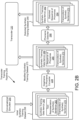
- FIG. 2B is a block diagram illustrating a transcoder training pipeline 250, in accordance with embodiments of the present disclosure.
- the transcoder training pipeline 250 includes a machine learning model that is to be trained as a transcoder 120 that outputs one or more transcodes (e.g., sequences of transcodes) based on inputs of sequences of phonemes.
- a training dataset should include training data items that include both sequences of phonemes and transcodes, where the transcodes represent targets.
- the transcoder training pipeline 250 includes a conversational simulator 255.
- Conversational simulator 255 is a natural language generator that may be configured to generate synthetic sentences and associated descriptors (e.g., transcodes) that apply to a particular domain (e.g., fast food ordering, web travel booking, in-store kiosk, etc.).
- Each set of transcodes may include one or more actions and one or more associated entities. For example, in the domain of web travel bookings, actions may include book a trip, cancel a trip, and modify a trip, and associated entities may include flights, times, locations, and so on.
- the conversational simulator 255 may include a collection of grammar rules that are applied along with randomness (e.g., using a random number generator or pseudorandom number generator) to generate an initial synthetic training dataset 258 that includes a large corpus of synthetic training data items 260.
- the conversational simulator 255 includes a neural network or other machine learning model trained to generate plausible sentences within a restricted domain.
- the conversational simulator 255 is a generative adversarial network (GAN) that generates synthetic training data items 260.
- GAN generative adversarial network
- the conversational simulator 255 includes a context-free grammar.
- a context-free grammar is a set of recursive rewriting rules used to generate patterns of strings. Each rule may cause an expansion from an initial object into one or more output objects.
- a context free grammar may include a set of terminal symbols, which are the characters of an alphabet that appear in the strings generated by the context-free grammar.
- the context free grammar may have a small set of rules that can be used to generate a very large number unique sentences. Each unique sentence may be generated by building a tree using one or more of the rules of the context-free grammar. The leaves of the tree may contain terminals that may form the string or sentence (e.g., sequence of words).
- the context-free grammar has rules that generate text as well as rules that generate transcodes. Additionally, or alternatively, a single rule may generate both text (e.g., a string) as well as an associated transcode. Accordingly, the leaves of a tree formed using the context-free grammar may include a pair of sequences that include a sequence of text (the sentence) as well as a sequence of transcodes.
- the context-free grammar may include a first rule for an order category.
- a tree may be created for an order, where the tree when completed will include a sequence of text and an associated sequence of transcodes.
- the context-free grammar may have a rule that expands the order category into an add, update or split category.
- the context-free grammar may also have a rule that causes expansion to an optional greeting, one or more regular expressions, joins, and so on.
- the context-free grammar may also have one or more rules that expand objects to one or more optional request phrases, optional pauses, and so on.
- the context-free grammar may also have one or more rules that expand objects to one or more noun phrases and/or verb phrases.
- the context-free grammar may also have one or more rules that expand objects to one or more post modifiers.
- the context-free grammar may include rules that generate variables which are terminals of the context-free grammar.
- Each of the variables may map to one or more lists of entities, lists of properties, lists of phrases (e.g., post modifiers) and so on.
- a variable of food entities may map to a list or table of food items from a menu.
- a variable of hamburger options may map to a list of options for hamburgers, and may only be generated by the context-free grammar if a previous terminal of food entries has resolved to a hamburger.
- the variables and associated lists or tables that are used by the conversational simulator may be specific to a particular domain for which the conversational simulator is generating synthetic sentences.
- the conversational simulator 255 may select an entity (e.g., an entry) from an appropriate list associated with a variable in a generated tree. Once the variable is replaced with an entity, the information on the selected entity may be used to limit options for other expansions and/or leaves on the tree, thereby reducing the range of options for the later expansions or leaves to those that are reasonable in association with the selected entity. Thus, information may be passed up and down the tree as it is generated by the context-free grammar. Accordingly, once a particular entity is selected, the conversational simulator 255 can limit the further grammar that can be created for a sentence to those that are reasonable in the context of the selected entity.
- an entity e.g., an entry
- Particular selections of particular options when multiple options are available at a particular branch of a tree generated by the context-free grammar may be random or pseudorandom selections based on the output of a random number generator or pseudorandom number generator.
- selection of options from a list associated with a variable may be a random or pseudorandom selection based on the output of a random number generator or pseudorandom number generator.
- Some entities may have multiple different properties associated with them. Once such an entity is selected, later leaves in the tree may comprise values of one or more of the properties associated with the entity. Some entities with one or more properties may have default options for some or all of the properties.
- Such default options may be associated with a particular probability weight that causes those default options to be selected more often than alternative options (e.g., a weight of 70%, 80%, 90%, and so on).
- the conversational simulator 255 may determine whether the default option is selected or an alternate option is selected using a pseudorandom number generator and a probability weight associated with a default option of the property. If a default option is selected for a property, then no text or associated transcode may be added to the tree for that property.
- the grapheme to phoneme converter 228 converts the text representation of synthetic sentences 265 of synthetic training data items 260 output by the conversational simulator 255 into sequences of phonemes 285. Accordingly, after using the grapheme to phoneme converter 228 on the initial synthetic training dataset 258, a modified synthetic training dataset 275 is generated that includes synthetic training data items 280 that include sequences of phonemes 285 and associated transcodes of the synthetic sentence 270.
- the modified synthetic training dataset 275 may be input into the transcoder 120 for training. Additionally, or alternatively, the sequences of phonemes 285 from the synthetic training data items 280 of the modified synthetic training dataset 275 may be input into a phoneme distorter 288 prior to being input into the transcoder 120 for training.
- the phoneme distorter 228 may include a number of rules that perform operations such as inserting one or more additional phonemes to a sequence of phonemes 285, deleting one or more phonemes to a sequence of phonemes 285, and/or substituting one or more phonemes from the sequence of phonemes 285.
- the phoneme distorter 288 includes a rules engine that randomly or pseudorandomly applies one or more distortion rules.
- the phoneme distorter 288 is a machine learning model (e.g., a neural network) trained to distort sequences of phonemes.
- the output of the phoneme distorter 288 may be a distorted synthetic training dataset 290 that includes a collection of synthetic training data items 292 with a distorted sequence of phonemes 294 and transcodes of the synthetic sentence 270 originally output by the conversational simulator 255.
- the distorted synthetic training dataset 290 may be input into the transcoder 120 during training along with or instead of the modified synthetic training dataset 275.
- a text distorter (not shown) additionally or alternatively distorts the text representations of synthetic sentences 265 for one or more synthetic training data items 260 before they are input into the grapheme to phoneme converter 228.
- Distortion of the phonemes in at least some of the training data causes the transcoder 120 to be trained to successfully determine transcodes even from noisy, distorted inputs of phonemes, making the transcoder 120 more robust to noise, accents, and so on.
- FIGS. 3-6 are flow diagrams illustrating methods for training components of a conversational agent as well as methods of applying audio data to a trained conversational agent to determine speaker intent, in accordance with embodiments of the present disclosure.
- the methods may be performed by processing logic that comprises hardware (e.g., circuitry, dedicated logic, programmable logic, microcode, etc.), software (e.g., instructions run on a processor), firmware, or a combination thereof.
- the methods may be performed, for example, by a computing device such as computing device 700 executing a conversational agent pipeline 780, an AM training pipeline 782 and/or a transcoder training pipeline 784 of FIG. 7 .
- FIG. 3 is a flow diagram illustrating a method 300 of training a machine learning model as a transcoder, in accordance with embodiments of the present disclosure.
- Method 300 may be performed, for example, using the transcoder training pipeline 250 of FIG. 2B in embodiments.
- processing logic generates a synthetic training data item comprising a) a textual representation of a synthetic sentence (e.g., a sequence of text characters) and b) a corresponding sequence of transcodes of the synthetic sentence using conversational simulator 255.
- the synthetic sentence may be, "can I please have a hamburger with no pickles, oh, and please add extra onions”
- the sequence of transcodes may be, “[order], [hamburger], [remove], [pickles], [add], [onions]” or “[add hamburger], [no pickles], [add onions].”
- processing logic may distort the textual representation of the synthetic sentence.
- processing logic converts the textual representation of the synthetic sentence into a sequence of phonemes that represent the synthetic sentence using graphene to phoneme converter 228.
- processing logic may distort one or more phonemes in the sequence of phonemes.
- processing logic replaces one or more phonemes, deletes one or more phonemes and/or adds one or more phonemes.
- processing logic trains a machine learning model as a transcoder 120 that determines sequences of transcodes from sequences of phonemes using the modified synthetic training data that includes the sequence of phonemes and the sequence of transcodes.
- processing logic determines whether training of the transcoder 120 is complete. Training may be complete if the transcoder has a target level of accuracy. If training is not complete, the method returns to block 305 and another synthetic training data item is generated. If training is complete, the method ends.
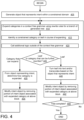
- FIG. 4 is a flow diagram illustrating a method 400 of generating synthetic speech data, in accordance with embodiments of the present disclosure.
- Method 400 may be performed by processing logic executing conversational simulator 255 in embodiments.
- processing logic generates an intent object that represents an intent within a constrained domain.
- An example of an intent object is [cheeseburger, no onions, extra mayonnaise].
- processing logic uses a context free grammar to begin building a tree representing a synthetic sentence. The processing logic expands one or more categories in the context free grammar using rewrite rules for a branch of the tree.
- processing logic identifies a constrained category or leaf in the course of expanding.
- processing logic calls additional logic (e.g., python logic) that is outside of the context free grammar.
- processing logic determines whether a constrained category or a leaf was identified at block 415. If a category that can be further expanded was identified, the method continues to block 430. If a leaf is identified, the method proceeds to block 440.
- processing logic determines how to expand the constrained category using the intent object. For example, if the intent object included “hamburger”, then a noun may expand to "food item” or "hamburger”.
- processing logic may then modify the intent object by removing a portion of the intent object associated with the expanded category at block 430. For example, if the intent object was [hamburger, no onions, extra mayo], then the intent object may be updated to [no onions, extra mayo]. The method then returns to block 410.
- processing logic turns a leaf of the tree into text and/or a transcode based on the intent object.
- processing logic may modify the intent object by removing a portion of the intent object associated with the text and/or transcode added at block 440.
- processing logic determines whether the tree is complete (meaning that the synthetic sentence and associated transcodes are complete). If the tree is complete, the method ends. Otherwise, the method returns to block 410.
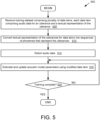
- FIG. 5 is a flow diagram illustrating a method 500 of training a machine learning model as an acoustical model, in accordance with embodiments of the present disclosure.
- Method 500 may be performed, for example, using the AM training pipeline 200 of FIG. 2A in embodiments.
- processing logic receives a training dataset comprising a plurality of data items.
- Each data item in the training dataset may include audio data (e.g., an audio waveform) for an utterance and a textual representation of the utterance.
- a grapheme to phoneme converter 228 converts the textual representation of the utterance (e.g., sequence of text words) for a data item into a sequence of phonemes that represent the utterance.
- processing logic may distort the audio data, such as by adding background music, reverberation, background noise (e.g., airport noise, playground noise, classroom noise, road noise, etc.), and so on to the audio data.
- processing logic trains a machine learning model using the modified data item.
- the acoustical model is trained to generate sequences of phonemes from acoustic features derived from raw audio data of utterances.
- processing logic determines whether training is complete. If training is complete, the method ends. If training is not complete, the method returns to block 510, and another training data item is processed.
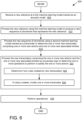
- FIG. 6 is a flow diagram illustrating a method 600 of determining a speaker's intent from audio data using a conversational agent (e.g., conversational agent pipeline 100), in accordance with embodiments of the present disclosure.
- processing logic receives a new utterance (e.g., an audio waveform of an utterance) at a first machine learning model trained as an acoustical model 110.
- processing logic processes the new utterance using the first machine learning model to produce a new sequence of phonemes that represent the new utterance.
- processing logic processes the new sequence of phonemes using a second machine learning model trained as a transcoder 120 to determine one or more new transcodes comprising one or more new actions and one or more associated entities.
- processing logic processes the new transcodes comprising the one or more new actions and the one or more new associated entities using a business logic 130 to determine or more operations to perform to satisfy the one or more actions.
- the business logic determines if any rules are violated by the new transcodes at block 625. If any rules are violated, processing logic may modify one or more of the transcodes at block 630, such as by deleting one or more transcodes if there are duplicate transcodes.
- the business logic may also determine that a speaker intent is ambiguous from the transcodes and output an inquiry.
- the business logic may perform the one or more determined operations to satisfy a speaker intent.
- FIG. 7 illustrates a diagrammatic representation of a machine in the exemplary form of a computing device 700 within which a set of instructions, for causing the machine to perform any one or more of the methodologies discussed herein, may be executed.
- the computing device 700 may be in the form of a computing device within which a set of instructions, for causing the machine to perform any one or more of the methodologies discussed herein, may be executed.
- the machine may be connected (e.g., networked) to other machines in a LAN, an intranet, an extranet, or the Internet.
- the machine may operate in the capacity of a server machine in client-server network environment.
- the machine may be a personal computer (PC), a set-top box (STB), a server computing device, a network router, switch or bridge, or any machine capable of executing a set of instructions (sequential or otherwise) that specify actions to be taken by that machine.
- PC personal computer
- STB set-top box
- server computing device a network router, switch or bridge
- any machine capable of executing a set of instructions (sequential or otherwise) that specify actions to be taken by that machine.
- the computing device 700 includes a processing device (processor) 702, a main memory 704 (e.g., read-only memory (ROM), flash memory, dynamic random access memory (DRAM) such as synchronous DRAM (SDRAM)), a static memory 706 (e.g., flash memory, static random access memory (SRAM)), and a data storage device 718, which communicate with each other via a bus 730.
- processor processing device
- main memory 704 e.g., read-only memory (ROM), flash memory, dynamic random access memory (DRAM) such as synchronous DRAM (SDRAM)
- DRAM dynamic random access memory
- SDRAM synchronous DRAM
- static memory 706 e.g., flash memory, static random access memory (SRAM)
- SRAM static random access memory
- Processing device 702 represents one or more general-purpose processing devices such as a microprocessor, central processing unit, or the like. More particularly, the processing device 702 may be a complex instruction set computing (CISC) microprocessor, reduced instruction set computing (RISC) microprocessor, very long instruction word (VLIW) microprocessor, or a processor implementing other instruction sets or processors implementing a combination of instruction sets.
- the processing device 702 may also be one or more special-purpose processing devices such as an application specific integrated circuit (ASIC), afield programmable gate array (FPGA), a digital signal processor (DSP), network processor, or the like.
- ASIC application specific integrated circuit
- FPGA field programmable gate array
- DSP digital signal processor
- the computing device 700 may further include a network interface device 708.
- the computing device 700 also may include a video display unit 710 (e.g., a liquid crystal display (LCD) or a cathode ray tube (CRT)), an alphanumeric input device 712 (e.g., a keyboard), a cursor control device 714 (e.g., a mouse), and a signal generation device 716 (e.g., a speaker).
- the data storage device 718 may include a computer-readable medium 728 on which is stored one or more sets of instructions 722 (e.g., instructions of machine learning system 780) embodying any one or more of the methodologies or functions described herein.
- Conversational agent pipeline 780 may correspond to conversational agent pipeline 100 of FIG.
- AM training pipeline 782 may correspond to AM training pipeline 200 of FIG. 2A in embodiments.
- Transcoder training pipeline 784 may correspond to transcoder training pipeline 250 of FIG. 2B in embodiments.
- the instructions 722 may also reside, completely or at least partially, within the main memory 704 and/or the processing device 702 during execution thereof by the computer system 700, the main memory 704 and the processing device 702 also constituting computer-readable media.
- a single computing device 700 is shown that includes conversational agent pipeline 780, AM training pipeline 782 and transcoder training pipeline 784, each of these pipelines may resides on separate computing devices. Additionally, each of the separate computing devices may be multiple computing devices that operate together (e.g., a cluster of computing devices) to implement one or more of the methodologies or functions described herein.
- While the computer-readable storage medium 728 is shown in an exemplary embodiment to be a single medium, the term "computer-readable storage medium” should be taken to include a single medium or multiple media (e.g., a centralized or distributed database, and/or associated caches and servers) that store the one or more sets of instructions.
- the term “computer-readable storage medium” shall also be taken to include any non- transitory medium that is capable of storing, encoding or carrying a set of instructions for execution by the machine and that cause the machine to perform any one or more of the methodologies described herein.
- the term “computer-readable storage medium” shall accordingly be taken to include, but not be limited to, solid-state memories, optical media, and magnetic media.
- Embodiments of the disclosure also relate to an apparatus for performing the operations herein.
- This apparatus may be specially constructed for the required purposes, or it may comprise a general purpose computer selectively activated or reconfigured by a computer program stored in the computer.
- a computer program may be stored in a computer readable storage medium, such as, but not limited to, any type of disk including floppy disks, optical disks, CD-ROMs, and magnetic-optical disks, read-only memories (ROMs), random access memories (RAMs), EPROMs, EEPROMs, magnetic or optical cards, or any type of media suitable for storing electronic instructions.
Landscapes
- Engineering & Computer Science (AREA)
- Physics & Mathematics (AREA)
- Theoretical Computer Science (AREA)
- Artificial Intelligence (AREA)
- Computational Linguistics (AREA)
- General Physics & Mathematics (AREA)
- Health & Medical Sciences (AREA)
- General Engineering & Computer Science (AREA)
- Software Systems (AREA)
- Computing Systems (AREA)
- Mathematical Physics (AREA)
- Evolutionary Computation (AREA)
- Data Mining & Analysis (AREA)
- General Health & Medical Sciences (AREA)
- Audiology, Speech & Language Pathology (AREA)
- Life Sciences & Earth Sciences (AREA)
- Biomedical Technology (AREA)
- Molecular Biology (AREA)
- Biophysics (AREA)
- Human Computer Interaction (AREA)
- Multimedia (AREA)
- Acoustics & Sound (AREA)
- Computer Vision & Pattern Recognition (AREA)
- Medical Informatics (AREA)
- Probability & Statistics with Applications (AREA)
- Algebra (AREA)
- Pure & Applied Mathematics (AREA)
- Mathematical Optimization (AREA)
- Mathematical Analysis (AREA)
- Computational Mathematics (AREA)
- Machine Translation (AREA)
Claims (11)
- Procédé pour un pipeline conversationnel, le procédé comprenant de :générer (305) un ensemble de données d'apprentissage initial (258) comprenant une première pluralité d'éléments de données d'apprentissage synthétiques, un élément de données d'apprentissage synthétique de la première pluralité d'éléments de données d'apprentissage synthétiques comprenant a) une représentation textuelle (265) d'une phrase synthétique et b) un ou plusieurs transcodes (270) de la phrase synthétique comprenant une ou plusieurs actions et une ou plusieurs entités associées à la ou aux actions incluses dans la phrase synthétique;pour chaque élément de données d'apprentissage synthétique de la première pluralité d'éléments de données d'apprentissage synthétiques, convertir (315) la représentation textuelle de la phrase synthétique de l'élément de données d'apprentissage synthétique en une séquence de phonèmes qui représentent la phrase synthétique pour déterminer un premier ensemble de données d'apprentissage modifié (275) comprenant une deuxième pluralité d'éléments de données d'apprentissage synthétiques, un élément de données d'apprentissage synthétique de la deuxième pluralité d'éléments de données d'apprentissage synthétiques comprenant a) des phonèmes de séquence qui représentent des phrases synthétiques et b) les transcodages des phrases synthétiques; etentraîner (325) un premier modèle d'apprentissage automatique en tant que transcodeur (120) qui détermine des transcodes comprenant des actions et des entités associées à partir de séquences de phonèmes, dans lequel l'apprentissage est effectué à l'aide du premier ensemble de données d'apprentissage modifié ; recevoir (505) un deuxième ensemble de données d'apprentissage (202) comprenant une pluralité d'éléments de données, chaque élément de données de la pluralité d'éléments de données comprenant des caractéristiques acoustiques dérivées de données audio pour un énoncé et une représentation textuelle de l'énoncé;pour chaque élément de données de la pluralité d'éléments de données, convertir (510) la représentation textuelle de l'énoncé en une séquence de phonèmes qui représentent l'énoncé pour déterminer un deuxième ensemble de données d'apprentissage modifié (230) comprenant une pluralité d'éléments de données modifiés qui comprennent a) des caractéristiques acoustiques des données audio pour les énoncés et b) des séquences de phonèmes qui représentent les énoncés ; et entraîner un deuxième modèle d'apprentissage automatique en tant que modèle acoustique (110) qui génère des séquences de phonèmes à partir de caractéristiques acoustiques dérivées de données audio d'énoncés, dans lequel l'entraînement est effectué à l'aide du deuxième ensemble de données d'apprentissage modifié.
- Procédé selon la revendication 1, comprenant en outre de :recevoir (605) de nouvelles caractéristiques acoustiques d'un nouvel énoncé au niveau du deuxième modèle d'apprentissage automatique formé en tant que modèle acoustique (110) ;traiter (610) les caractéristiques acoustiques du nouvel énoncé à l'aide du deuxième modèle d'apprentissage automatique pour produire une nouvelle séquence de phonèmes qui représente le nouvel énoncé ;traiter (615) la nouvelle séquence de phonèmes à l'aide du premier modèle d'apprentissage automatique formé en tant que transcodeur (120) pour déterminer un ou plusieurs nouveaux transcodes comprenant une ou plusieurs nouvelles actions et une ou plusieurs nouvelles entités associées ;traiter (620) le ou les nouveaux transcodes comprenant la ou les nouvelles actions et la ou les nouvelles entités associées par une logique métier pour déterminer une ou plusieurs opérations à effectuer pour satisfaire la ou les actions ; eteffectuer (635) la ou les opérations.
- Procédé selon la revendication 2, dans lequel la nouvelle séquence de phonèmes produite par le deuxième modèle d'apprentissage automatique (110) comprend un postérieurgramme comprenant une séquence de vecteurs, dans lequel chaque vecteur dans la séquence de vecteurs est un vecteur clairsemé comprenant une pluralité de valeurs, dans lequel chaque valeur de la pluralité de valeurs représentent une probabilité d'un phonème particulier.
- Procédé selon la revendication 1, comprenant en outre de :
pour un ou plusieurs éléments de données de la pluralité d'éléments de données, déformer (512) les données audio en ajoutant au moins une réverbération de fond, un bruit de fond ou une musique de fond aux données audio, dans lequel le deuxième ensemble de données d'apprentissage modifié comprend un premier ensemble d'éléments de données avec des données audio non déformées et un deuxième ensemble d'éléments de données avec des données audio déformées. - Procédé selon la revendication 1, comprenant en outre de :
pour un ou plusieurs éléments de données d'apprentissage parmi la pluralité d'éléments de données d'apprentissage, effectuer au moins une des opérations suivantes : a) distorsion (310) de la représentation textuelle de la phrase synthétique pour le ou les éléments de données d'apprentissage avant de convertir la représentation textuelle en la séquence de phonèmes ou b) distorsion (320) de la séquence de phonèmes après avoir converti la représentation textuelle en séquence de phonèmes. - Procédé selon la revendication 5, dans lequel la distorsion de la séquence de phonèmes comprend l'exécution d'au moins une des opérations suivantes : a) substitution (322) d'un ou plusieurs phonèmes dans la séquence de phonèmes, b) suppression d'un ou plusieurs phonèmes dans la séquence de phonèmes ou c) insertion d'un ou plusieurs phonèmes dans la séquence de phonèmes.
- Procédé selon la revendication 1, dans lequel la génération d'un élément de données d'apprentissage synthétique comprend : la génération (405) d'un objet d'intention qui représente l'intention dans un domaine contraint ; expansion (410) de catégories dans une grammaire hors contexte à l'aide d'une ou plusieurs règles de réécriture ;
identification (415) d'une catégorie contrainte lors de l'exécution de l'expansion ; et détermination de la manière d'expansion de la catégorie contrainte à partir de l'objet d'intention, dans lequel la catégorie contrainte est étendue à une entité particulière. - Procédé selon la revendication 7, comprenant en outre :
la modification (435) de l'objet d'intention en supprimant l'entité particulière de l'objet d'intention. - Procédé selon la revendication 1, dans lequel la génération d'un élément de données d'apprentissage synthétique comprend : la génération (405) d'un objet d'intention qui représente l'intention dans un domaine contraint ; l'expansion (410) de catégories dans une grammaire hors contexte à l'aide d'une ou plusieurs règles de réécriture ;
l'identification (415) d'une feuille lors de l'exécution de l'expansion ; et la détermination de la manière de transformation de la feuille en texte ou en un ou plusieurs transcodages sur la base de l'objet d'intention. - Système pour un pipeline d'agent conversationnel, le système comprenant : une ou plusieurs mémoires pour mémoriser des instructions ; et
un ou plusieurs dispositifs de traitement connectés à la mémoire, le ou les dispositifs de traitement étant destinés à exécuter les instructions pour exécuter le procédé selon une quelconque des revendications 1 à 9. - Produit de programme informatique pour un pipeline d'agent conversationnel, le produit de programme informatique comprenant : un support de mémorisation lisible par ordinateur, lisible par un circuit de traitement et mémorisant des instructions pour exécution par le circuit de traitement afin d'exécuter un procédé selon une quelconque des revendications 1 à 9.
Applications Claiming Priority (2)
| Application Number | Priority Date | Filing Date | Title |
|---|---|---|---|
| US16/146,924 US10210861B1 (en) | 2018-09-28 | 2018-09-28 | Conversational agent pipeline trained on synthetic data |
| PCT/US2019/052648 WO2020068790A1 (fr) | 2018-09-28 | 2019-09-24 | Pipeline d'agent conversationnel formé sur des données synthétiques |
Publications (3)
| Publication Number | Publication Date |
|---|---|
| EP3857543A1 EP3857543A1 (fr) | 2021-08-04 |
| EP3857543A4 EP3857543A4 (fr) | 2022-07-06 |
| EP3857543B1 true EP3857543B1 (fr) | 2024-04-24 |
Family
ID=65322755
Family Applications (1)
| Application Number | Title | Priority Date | Filing Date |
|---|---|---|---|
| EP19865011.1A Active EP3857543B1 (fr) | 2018-09-28 | 2019-09-24 | Pipeline d'agent conversationnel formé sur des données synthétiques |
Country Status (6)
| Country | Link |
|---|---|
| US (1) | US10210861B1 (fr) |
| EP (1) | EP3857543B1 (fr) |
| CN (1) | CN113168828B (fr) |
| AU (1) | AU2019347734B2 (fr) |
| CA (1) | CA3114572A1 (fr) |
| WO (1) | WO2020068790A1 (fr) |
Families Citing this family (31)
| Publication number | Priority date | Publication date | Assignee | Title |
|---|---|---|---|---|
| US20190130896A1 (en) * | 2017-10-26 | 2019-05-02 | Salesforce.Com, Inc. | Regularization Techniques for End-To-End Speech Recognition |
| US10452902B1 (en) * | 2018-12-21 | 2019-10-22 | Capital One Services, Llc | Patent application image generation systems |
| US12346432B2 (en) * | 2018-12-31 | 2025-07-01 | Intel Corporation | Securing systems employing artificial intelligence |
| US11580379B1 (en) * | 2019-01-29 | 2023-02-14 | Amazon Technologies, Inc. | Phased deployment of deep-learning models to customer facing APIs |
| CN109887489B (zh) * | 2019-02-23 | 2021-10-26 | 天津大学 | 基于生成对抗网络的深度特征的语音去混响方法 |
| WO2020187587A1 (fr) | 2019-03-15 | 2020-09-24 | Dolby International Ab | Procédé et appareil permettant de mettre à jour un réseau neuronal |
| US20200349425A1 (en) * | 2019-04-30 | 2020-11-05 | Fujitsu Limited | Training time reduction in automatic data augmentation |
| US11335347B2 (en) * | 2019-06-03 | 2022-05-17 | Amazon Technologies, Inc. | Multiple classifications of audio data |
| CN112420026B (zh) * | 2019-08-23 | 2024-06-18 | 微软技术许可有限责任公司 | 优化关键词检索系统 |
| US11810042B1 (en) * | 2019-11-01 | 2023-11-07 | United Services Automobile Association | Disclosure quality assurance |
| US12518089B2 (en) * | 2019-11-11 | 2026-01-06 | Sri International | Machine learning for translation to structured computer readable representation |
| CN111147444B (zh) * | 2019-11-20 | 2021-08-06 | 维沃移动通信有限公司 | 一种交互方法及电子设备 |
| US20210319150A1 (en) * | 2020-04-10 | 2021-10-14 | The Boeing Company | Instruction authoring tool |
| US11574622B2 (en) * | 2020-07-02 | 2023-02-07 | Ford Global Technologies, Llc | Joint automatic speech recognition and text to speech conversion using adversarial neural networks |
| CN112002302B (zh) * | 2020-07-27 | 2024-05-10 | 北京捷通华声科技股份有限公司 | 一种语音合成方法和装置 |
| US12056219B2 (en) * | 2020-12-21 | 2024-08-06 | Cryptography Research, Inc. | Protection of neural networks by obfuscation of neural network architecture |
| US11514894B2 (en) | 2021-02-24 | 2022-11-29 | Conversenowai | Adaptively modifying dialog output by an artificial intelligence engine during a conversation with a customer based on changing the customer's negative emotional state to a positive one |
| US11355122B1 (en) | 2021-02-24 | 2022-06-07 | Conversenowai | Using machine learning to correct the output of an automatic speech recognition system |
| US11354760B1 (en) | 2021-02-24 | 2022-06-07 | Conversenowai | Order post to enable parallelized order taking using artificial intelligence engine(s) |
| US11810550B2 (en) | 2021-02-24 | 2023-11-07 | Conversenowai | Determining order preferences and item suggestions |
| US11862157B2 (en) | 2021-02-24 | 2024-01-02 | Conversenow Ai | Automated ordering system |
| US11348160B1 (en) | 2021-02-24 | 2022-05-31 | Conversenowai | Determining order preferences and item suggestions |
| CN115223540B (zh) * | 2021-03-30 | 2025-02-21 | 暗物智能科技(广州)有限公司 | 一种英语语音合成方法及系统 |
| US20230274093A1 (en) * | 2022-02-28 | 2023-08-31 | Infosys Limited | Method and system for performance evaluation using an ai model |
| CN115035885A (zh) * | 2022-04-15 | 2022-09-09 | 科大讯飞股份有限公司 | 一种语音合成方法、装置、设备及存储介质 |
| US12008921B2 (en) * | 2022-04-22 | 2024-06-11 | 617 Education Inc. | Systems and methods for grapheme-phoneme correspondence learning |
| US12266197B2 (en) | 2022-04-28 | 2025-04-01 | Capital One Services, Llc | Detection of manual entry error |
| US20230419952A1 (en) * | 2022-05-18 | 2023-12-28 | Meta Platforms, Inc. | Data Synthesis for Domain Development of Natural Language Understanding for Assistant Systems |
| EP4584690A1 (fr) | 2022-09-08 | 2025-07-16 | Booz Allen Hamilton Inc. | Système et procédé de génération de données synthétiques |
| US20240395259A1 (en) * | 2023-05-24 | 2024-11-28 | Zoom Video Communications, Inc. | Ai-assisted transcript analysis and script generation |
| TWI897448B (zh) * | 2024-05-29 | 2025-09-11 | 神通資訊科技股份有限公司 | 提供多模態人機交互導引的多媒體事務機之系統及其方法 |
Family Cites Families (15)
| Publication number | Priority date | Publication date | Assignee | Title |
|---|---|---|---|---|
| US6622121B1 (en) * | 1999-08-20 | 2003-09-16 | International Business Machines Corporation | Testing speech recognition systems using test data generated by text-to-speech conversion |
| US7133827B1 (en) * | 2002-02-06 | 2006-11-07 | Voice Signal Technologies, Inc. | Training speech recognition word models from word samples synthesized by Monte Carlo techniques |
| AU2003900584A0 (en) * | 2003-02-11 | 2003-02-27 | Telstra New Wave Pty Ltd | System for predicting speech recognition accuracy and development for a dialog system |
| US7684988B2 (en) * | 2004-10-15 | 2010-03-23 | Microsoft Corporation | Testing and tuning of automatic speech recognition systems using synthetic inputs generated from its acoustic models |
| US7885817B2 (en) * | 2005-03-08 | 2011-02-08 | Microsoft Corporation | Easy generation and automatic training of spoken dialog systems using text-to-speech |
| US8296144B2 (en) * | 2008-06-04 | 2012-10-23 | Robert Bosch Gmbh | System and method for automated testing of complicated dialog systems |
| US8285550B2 (en) * | 2008-09-09 | 2012-10-09 | Industrial Technology Research Institute | Method and system for generating dialogue managers with diversified dialogue acts |
| US9135237B2 (en) * | 2011-07-13 | 2015-09-15 | Nuance Communications, Inc. | System and a method for generating semantically similar sentences for building a robust SLM |
| US10095692B2 (en) * | 2012-11-29 | 2018-10-09 | Thornson Reuters Global Resources Unlimited Company | Template bootstrapping for domain-adaptable natural language generation |
| US20180247640A1 (en) * | 2013-12-06 | 2018-08-30 | Speech Morphing Systems, Inc. | Method and apparatus for an exemplary automatic speech recognition system |
| KR102410914B1 (ko) * | 2015-07-16 | 2022-06-17 | 삼성전자주식회사 | 음성 인식을 위한 모델 구축 장치 및 음성 인식 장치 및 방법 |
| US10134388B1 (en) * | 2015-12-23 | 2018-11-20 | Amazon Technologies, Inc. | Word generation for speech recognition |
| US10147423B2 (en) * | 2016-09-29 | 2018-12-04 | Intel IP Corporation | Context-aware query recognition for electronic devices |
| US10331791B2 (en) * | 2016-11-23 | 2019-06-25 | Amazon Technologies, Inc. | Service for developing dialog-driven applications |
| KR102643501B1 (ko) * | 2016-12-26 | 2024-03-06 | 현대자동차주식회사 | 대화 처리 장치, 이를 포함하는 차량 및 대화 처리 방법 |
-
2018
- 2018-09-28 US US16/146,924 patent/US10210861B1/en active Active
-
2019
- 2019-09-24 AU AU2019347734A patent/AU2019347734B2/en active Active
- 2019-09-24 CN CN201980078503.1A patent/CN113168828B/zh active Active
- 2019-09-24 WO PCT/US2019/052648 patent/WO2020068790A1/fr not_active Ceased
- 2019-09-24 CA CA3114572A patent/CA3114572A1/fr active Pending
- 2019-09-24 EP EP19865011.1A patent/EP3857543B1/fr active Active
Also Published As
| Publication number | Publication date |
|---|---|
| US10210861B1 (en) | 2019-02-19 |
| CN113168828B (zh) | 2024-07-12 |
| EP3857543A4 (fr) | 2022-07-06 |
| CN113168828A (zh) | 2021-07-23 |
| EP3857543A1 (fr) | 2021-08-04 |
| AU2019347734B2 (en) | 2023-10-19 |
| WO2020068790A1 (fr) | 2020-04-02 |
| AU2019347734A1 (en) | 2021-04-29 |
| CA3114572A1 (fr) | 2020-04-02 |
Similar Documents
| Publication | Publication Date | Title |
|---|---|---|
| EP3857543B1 (fr) | Pipeline d'agent conversationnel formé sur des données synthétiques | |
| AU2019395322B2 (en) | Reconciliation between simulated data and speech recognition output using sequence-to-sequence mapping | |
| US12205596B2 (en) | Generating and using text-to-speech data for speech recognition models | |
| US11837216B2 (en) | Speech recognition using unspoken text and speech synthesis | |
| EP4285358B1 (fr) | Apprentissage instantané en matière de synthèse de la parole à partir du texte pendant un dialogue | |
| US9905220B2 (en) | Multilingual prosody generation | |
| KR20210146368A (ko) | 숫자 시퀀스에 대한 종단 간 자동 음성 인식 | |
| JP7146038B2 (ja) | 音声認識システム及び方法 | |
| CN112397056B (zh) | 语音评测方法及计算机存储介质 | |
| CN111833844A (zh) | 用于语音识别和语种分类的混合模型的训练方法及系统 | |
| KR20230156795A (ko) | 단어 분할 규칙화 | |
| CN120548570A (zh) | 通过生成语义和声学表示的半监督文本转语音 | |
| Irengbam et al. | Text to Speech System for Meitei Mayek Script | |
| Duong | Building a Website for Natural Text-to-Speech Conversion |
Legal Events
| Date | Code | Title | Description |
|---|---|---|---|
| STAA | Information on the status of an ep patent application or granted ep patent |
Free format text: STATUS: THE INTERNATIONAL PUBLICATION HAS BEEN MADE |
|
| PUAI | Public reference made under article 153(3) epc to a published international application that has entered the european phase |
Free format text: ORIGINAL CODE: 0009012 |
|
| STAA | Information on the status of an ep patent application or granted ep patent |
Free format text: STATUS: REQUEST FOR EXAMINATION WAS MADE |
|
| 17P | Request for examination filed |
Effective date: 20210422 |
|
| AK | Designated contracting states |
Kind code of ref document: A1 Designated state(s): AL AT BE BG CH CY CZ DE DK EE ES FI FR GB GR HR HU IE IS IT LI LT LU LV MC MK MT NL NO PL PT RO RS SE SI SK SM TR |
|
| DAV | Request for validation of the european patent (deleted) | ||
| DAX | Request for extension of the european patent (deleted) | ||
| RAP1 | Party data changed (applicant data changed or rights of an application transferred) |
Owner name: INTERNATIONAL BUSINESS MACHINES CORPORATION |
|
| A4 | Supplementary search report drawn up and despatched |
Effective date: 20220607 |
|
| RIC1 | Information provided on ipc code assigned before grant |
Ipc: G06N 99/00 20190101ALI20220601BHEP Ipc: G10L 15/193 20130101ALI20220601BHEP Ipc: G10L 15/18 20130101ALI20220601BHEP Ipc: G10L 15/02 20060101ALI20220601BHEP Ipc: G10L 15/06 20130101AFI20220601BHEP |
|
| GRAP | Despatch of communication of intention to grant a patent |
Free format text: ORIGINAL CODE: EPIDOSNIGR1 |
|
| STAA | Information on the status of an ep patent application or granted ep patent |
Free format text: STATUS: GRANT OF PATENT IS INTENDED |
|
| RIC1 | Information provided on ipc code assigned before grant |
Ipc: G06N 3/006 20230101ALN20240123BHEP Ipc: G06N 20/20 20190101ALI20240123BHEP Ipc: G06N 7/01 20230101ALI20240123BHEP Ipc: G06N 5/01 20230101ALI20240123BHEP Ipc: G06N 3/047 20230101ALI20240123BHEP Ipc: G06N 3/045 20230101ALI20240123BHEP Ipc: G06N 3/044 20230101ALI20240123BHEP Ipc: G10L 13/00 20060101ALI20240123BHEP Ipc: G06F 40/56 20200101ALI20240123BHEP Ipc: G06F 40/237 20200101ALI20240123BHEP Ipc: G10L 15/02 20060101ALI20240123BHEP Ipc: G10L 15/18 20130101ALI20240123BHEP Ipc: G10L 15/193 20130101ALI20240123BHEP Ipc: G06N 99/00 20190101ALI20240123BHEP Ipc: G10L 15/06 20130101AFI20240123BHEP |
|
| INTG | Intention to grant announced |
Effective date: 20240206 |
|
| GRAS | Grant fee paid |
Free format text: ORIGINAL CODE: EPIDOSNIGR3 |
|
| GRAA | (expected) grant |
Free format text: ORIGINAL CODE: 0009210 |
|
| STAA | Information on the status of an ep patent application or granted ep patent |
Free format text: STATUS: THE PATENT HAS BEEN GRANTED |
|
| AK | Designated contracting states |
Kind code of ref document: B1 Designated state(s): AL AT BE BG CH CY CZ DE DK EE ES FI FR GB GR HR HU IE IS IT LI LT LU LV MC MK MT NL NO PL PT RO RS SE SI SK SM TR |
|
| REG | Reference to a national code |
Ref country code: GB Ref legal event code: FG4D |
|
| REG | Reference to a national code |
Ref country code: CH Ref legal event code: EP |
|
| REG | Reference to a national code |
Ref country code: DE Ref legal event code: R084 Ref document number: 602019051081 Country of ref document: DE Ref country code: DE Ref legal event code: R096 Ref document number: 602019051081 Country of ref document: DE |
|
| REG | Reference to a national code |
Ref country code: IE Ref legal event code: FG4D |
|
| P01 | Opt-out of the competence of the unified patent court (upc) registered |
Effective date: 20240430 |
|
| RAP4 | Party data changed (patent owner data changed or rights of a patent transferred) |
Owner name: INTERNATIONAL BUSINESS MACHINES CORPORATION |
|
| REG | Reference to a national code |
Ref country code: GB Ref legal event code: 746 Effective date: 20240524 |
|
| REG | Reference to a national code |
Ref country code: LT Ref legal event code: MG9D |
|
| REG | Reference to a national code |
Ref country code: NL Ref legal event code: MP Effective date: 20240424 |
|
| REG | Reference to a national code |
Ref country code: AT Ref legal event code: MK05 Ref document number: 1680507 Country of ref document: AT Kind code of ref document: T Effective date: 20240424 |
|
| PG25 | Lapsed in a contracting state [announced via postgrant information from national office to epo] |
Ref country code: NL Free format text: LAPSE BECAUSE OF FAILURE TO SUBMIT A TRANSLATION OF THE DESCRIPTION OR TO PAY THE FEE WITHIN THE PRESCRIBED TIME-LIMIT Effective date: 20240424 |
|
| PG25 | Lapsed in a contracting state [announced via postgrant information from national office to epo] |
Ref country code: NL Free format text: LAPSE BECAUSE OF FAILURE TO SUBMIT A TRANSLATION OF THE DESCRIPTION OR TO PAY THE FEE WITHIN THE PRESCRIBED TIME-LIMIT Effective date: 20240424 |
|
| PG25 | Lapsed in a contracting state [announced via postgrant information from national office to epo] |
Ref country code: IS Free format text: LAPSE BECAUSE OF FAILURE TO SUBMIT A TRANSLATION OF THE DESCRIPTION OR TO PAY THE FEE WITHIN THE PRESCRIBED TIME-LIMIT Effective date: 20240824 |
|
| PG25 | Lapsed in a contracting state [announced via postgrant information from national office to epo] |
Ref country code: BG Free format text: LAPSE BECAUSE OF FAILURE TO SUBMIT A TRANSLATION OF THE DESCRIPTION OR TO PAY THE FEE WITHIN THE PRESCRIBED TIME-LIMIT Effective date: 20240424 |
|
| PG25 | Lapsed in a contracting state [announced via postgrant information from national office to epo] |
Ref country code: HR Free format text: LAPSE BECAUSE OF FAILURE TO SUBMIT A TRANSLATION OF THE DESCRIPTION OR TO PAY THE FEE WITHIN THE PRESCRIBED TIME-LIMIT Effective date: 20240424 Ref country code: FI Free format text: LAPSE BECAUSE OF FAILURE TO SUBMIT A TRANSLATION OF THE DESCRIPTION OR TO PAY THE FEE WITHIN THE PRESCRIBED TIME-LIMIT Effective date: 20240424 |
|
| PG25 | Lapsed in a contracting state [announced via postgrant information from national office to epo] |
Ref country code: GR Free format text: LAPSE BECAUSE OF FAILURE TO SUBMIT A TRANSLATION OF THE DESCRIPTION OR TO PAY THE FEE WITHIN THE PRESCRIBED TIME-LIMIT Effective date: 20240725 |
|
| PG25 | Lapsed in a contracting state [announced via postgrant information from national office to epo] |
Ref country code: PT Free format text: LAPSE BECAUSE OF FAILURE TO SUBMIT A TRANSLATION OF THE DESCRIPTION OR TO PAY THE FEE WITHIN THE PRESCRIBED TIME-LIMIT Effective date: 20240826 |
|
| PG25 | Lapsed in a contracting state [announced via postgrant information from national office to epo] |
Ref country code: ES Free format text: LAPSE BECAUSE OF FAILURE TO SUBMIT A TRANSLATION OF THE DESCRIPTION OR TO PAY THE FEE WITHIN THE PRESCRIBED TIME-LIMIT Effective date: 20240424 |
|
| PG25 | Lapsed in a contracting state [announced via postgrant information from national office to epo] |
Ref country code: AT Free format text: LAPSE BECAUSE OF FAILURE TO SUBMIT A TRANSLATION OF THE DESCRIPTION OR TO PAY THE FEE WITHIN THE PRESCRIBED TIME-LIMIT Effective date: 20240424 |
|
| PG25 | Lapsed in a contracting state [announced via postgrant information from national office to epo] |
Ref country code: PL Free format text: LAPSE BECAUSE OF FAILURE TO SUBMIT A TRANSLATION OF THE DESCRIPTION OR TO PAY THE FEE WITHIN THE PRESCRIBED TIME-LIMIT Effective date: 20240424 |
|
| PG25 | Lapsed in a contracting state [announced via postgrant information from national office to epo] |
Ref country code: LV Free format text: LAPSE BECAUSE OF FAILURE TO SUBMIT A TRANSLATION OF THE DESCRIPTION OR TO PAY THE FEE WITHIN THE PRESCRIBED TIME-LIMIT Effective date: 20240424 |
|
| PG25 | Lapsed in a contracting state [announced via postgrant information from national office to epo] |
Ref country code: PT Free format text: LAPSE BECAUSE OF FAILURE TO SUBMIT A TRANSLATION OF THE DESCRIPTION OR TO PAY THE FEE WITHIN THE PRESCRIBED TIME-LIMIT Effective date: 20240826 Ref country code: PL Free format text: LAPSE BECAUSE OF FAILURE TO SUBMIT A TRANSLATION OF THE DESCRIPTION OR TO PAY THE FEE WITHIN THE PRESCRIBED TIME-LIMIT Effective date: 20240424 Ref country code: NO Free format text: LAPSE BECAUSE OF FAILURE TO SUBMIT A TRANSLATION OF THE DESCRIPTION OR TO PAY THE FEE WITHIN THE PRESCRIBED TIME-LIMIT Effective date: 20240724 Ref country code: LV Free format text: LAPSE BECAUSE OF FAILURE TO SUBMIT A TRANSLATION OF THE DESCRIPTION OR TO PAY THE FEE WITHIN THE PRESCRIBED TIME-LIMIT Effective date: 20240424 Ref country code: IS Free format text: LAPSE BECAUSE OF FAILURE TO SUBMIT A TRANSLATION OF THE DESCRIPTION OR TO PAY THE FEE WITHIN THE PRESCRIBED TIME-LIMIT Effective date: 20240824 Ref country code: HR Free format text: LAPSE BECAUSE OF FAILURE TO SUBMIT A TRANSLATION OF THE DESCRIPTION OR TO PAY THE FEE WITHIN THE PRESCRIBED TIME-LIMIT Effective date: 20240424 Ref country code: GR Free format text: LAPSE BECAUSE OF FAILURE TO SUBMIT A TRANSLATION OF THE DESCRIPTION OR TO PAY THE FEE WITHIN THE PRESCRIBED TIME-LIMIT Effective date: 20240725 Ref country code: FI Free format text: LAPSE BECAUSE OF FAILURE TO SUBMIT A TRANSLATION OF THE DESCRIPTION OR TO PAY THE FEE WITHIN THE PRESCRIBED TIME-LIMIT Effective date: 20240424 Ref country code: ES Free format text: LAPSE BECAUSE OF FAILURE TO SUBMIT A TRANSLATION OF THE DESCRIPTION OR TO PAY THE FEE WITHIN THE PRESCRIBED TIME-LIMIT Effective date: 20240424 Ref country code: BG Free format text: LAPSE BECAUSE OF FAILURE TO SUBMIT A TRANSLATION OF THE DESCRIPTION OR TO PAY THE FEE WITHIN THE PRESCRIBED TIME-LIMIT Effective date: 20240424 Ref country code: AT Free format text: LAPSE BECAUSE OF FAILURE TO SUBMIT A TRANSLATION OF THE DESCRIPTION OR TO PAY THE FEE WITHIN THE PRESCRIBED TIME-LIMIT Effective date: 20240424 Ref country code: RS Free format text: LAPSE BECAUSE OF FAILURE TO SUBMIT A TRANSLATION OF THE DESCRIPTION OR TO PAY THE FEE WITHIN THE PRESCRIBED TIME-LIMIT Effective date: 20240724 |
|
| PG25 | Lapsed in a contracting state [announced via postgrant information from national office to epo] |
Ref country code: DK Free format text: LAPSE BECAUSE OF FAILURE TO SUBMIT A TRANSLATION OF THE DESCRIPTION OR TO PAY THE FEE WITHIN THE PRESCRIBED TIME-LIMIT Effective date: 20240424 |
|
| PG25 | Lapsed in a contracting state [announced via postgrant information from national office to epo] |
Ref country code: EE Free format text: LAPSE BECAUSE OF FAILURE TO SUBMIT A TRANSLATION OF THE DESCRIPTION OR TO PAY THE FEE WITHIN THE PRESCRIBED TIME-LIMIT Effective date: 20240424 |
|
| PG25 | Lapsed in a contracting state [announced via postgrant information from national office to epo] |
Ref country code: CZ Free format text: LAPSE BECAUSE OF FAILURE TO SUBMIT A TRANSLATION OF THE DESCRIPTION OR TO PAY THE FEE WITHIN THE PRESCRIBED TIME-LIMIT Effective date: 20240424 |
|
| PG25 | Lapsed in a contracting state [announced via postgrant information from national office to epo] |
Ref country code: SK Free format text: LAPSE BECAUSE OF FAILURE TO SUBMIT A TRANSLATION OF THE DESCRIPTION OR TO PAY THE FEE WITHIN THE PRESCRIBED TIME-LIMIT Effective date: 20240424 Ref country code: RO Free format text: LAPSE BECAUSE OF FAILURE TO SUBMIT A TRANSLATION OF THE DESCRIPTION OR TO PAY THE FEE WITHIN THE PRESCRIBED TIME-LIMIT Effective date: 20240424 |
|
| REG | Reference to a national code |
Ref country code: DE Ref legal event code: R097 Ref document number: 602019051081 Country of ref document: DE |
|
| PG25 | Lapsed in a contracting state [announced via postgrant information from national office to epo] |
Ref country code: SM Free format text: LAPSE BECAUSE OF FAILURE TO SUBMIT A TRANSLATION OF THE DESCRIPTION OR TO PAY THE FEE WITHIN THE PRESCRIBED TIME-LIMIT Effective date: 20240424 |
|
| PG25 | Lapsed in a contracting state [announced via postgrant information from national office to epo] |
Ref country code: SM Free format text: LAPSE BECAUSE OF FAILURE TO SUBMIT A TRANSLATION OF THE DESCRIPTION OR TO PAY THE FEE WITHIN THE PRESCRIBED TIME-LIMIT Effective date: 20240424 Ref country code: SK Free format text: LAPSE BECAUSE OF FAILURE TO SUBMIT A TRANSLATION OF THE DESCRIPTION OR TO PAY THE FEE WITHIN THE PRESCRIBED TIME-LIMIT Effective date: 20240424 Ref country code: RO Free format text: LAPSE BECAUSE OF FAILURE TO SUBMIT A TRANSLATION OF THE DESCRIPTION OR TO PAY THE FEE WITHIN THE PRESCRIBED TIME-LIMIT Effective date: 20240424 Ref country code: EE Free format text: LAPSE BECAUSE OF FAILURE TO SUBMIT A TRANSLATION OF THE DESCRIPTION OR TO PAY THE FEE WITHIN THE PRESCRIBED TIME-LIMIT Effective date: 20240424 Ref country code: DK Free format text: LAPSE BECAUSE OF FAILURE TO SUBMIT A TRANSLATION OF THE DESCRIPTION OR TO PAY THE FEE WITHIN THE PRESCRIBED TIME-LIMIT Effective date: 20240424 Ref country code: CZ Free format text: LAPSE BECAUSE OF FAILURE TO SUBMIT A TRANSLATION OF THE DESCRIPTION OR TO PAY THE FEE WITHIN THE PRESCRIBED TIME-LIMIT Effective date: 20240424 |
|
| PLBE | No opposition filed within time limit |
Free format text: ORIGINAL CODE: 0009261 |
|
| STAA | Information on the status of an ep patent application or granted ep patent |
Free format text: STATUS: NO OPPOSITION FILED WITHIN TIME LIMIT |
|
| 26N | No opposition filed |
Effective date: 20250127 |
|
| PG25 | Lapsed in a contracting state [announced via postgrant information from national office to epo] |
Ref country code: SI Free format text: LAPSE BECAUSE OF FAILURE TO SUBMIT A TRANSLATION OF THE DESCRIPTION OR TO PAY THE FEE WITHIN THE PRESCRIBED TIME-LIMIT Effective date: 20240424 Ref country code: MC Free format text: LAPSE BECAUSE OF FAILURE TO SUBMIT A TRANSLATION OF THE DESCRIPTION OR TO PAY THE FEE WITHIN THE PRESCRIBED TIME-LIMIT Effective date: 20240424 |
|
| REG | Reference to a national code |
Ref country code: CH Ref legal event code: PL |
|
| PG25 | Lapsed in a contracting state [announced via postgrant information from national office to epo] |
Ref country code: LU Free format text: LAPSE BECAUSE OF NON-PAYMENT OF DUE FEES Effective date: 20240924 |
|
| REG | Reference to a national code |
Ref country code: BE Ref legal event code: MM Effective date: 20240930 |
|
| PG25 | Lapsed in a contracting state [announced via postgrant information from national office to epo] |
Ref country code: BE Free format text: LAPSE BECAUSE OF NON-PAYMENT OF DUE FEES Effective date: 20240930 |
|
| PG25 | Lapsed in a contracting state [announced via postgrant information from national office to epo] |
Ref country code: CH Free format text: LAPSE BECAUSE OF NON-PAYMENT OF DUE FEES Effective date: 20240930 |
|
| PG25 | Lapsed in a contracting state [announced via postgrant information from national office to epo] |
Ref country code: IE Free format text: LAPSE BECAUSE OF NON-PAYMENT OF DUE FEES Effective date: 20240924 |
|
| PG25 | Lapsed in a contracting state [announced via postgrant information from national office to epo] |
Ref country code: SE Free format text: LAPSE BECAUSE OF FAILURE TO SUBMIT A TRANSLATION OF THE DESCRIPTION OR TO PAY THE FEE WITHIN THE PRESCRIBED TIME-LIMIT Effective date: 20240424 |
|
| PGFP | Annual fee paid to national office [announced via postgrant information from national office to epo] |
Ref country code: DE Payment date: 20250807 Year of fee payment: 7 |
|
| PGFP | Annual fee paid to national office [announced via postgrant information from national office to epo] |
Ref country code: GB Payment date: 20250903 Year of fee payment: 7 |
|
| PGFP | Annual fee paid to national office [announced via postgrant information from national office to epo] |
Ref country code: FR Payment date: 20250924 Year of fee payment: 7 |
|
| PG25 | Lapsed in a contracting state [announced via postgrant information from national office to epo] |
Ref country code: CY Free format text: LAPSE BECAUSE OF FAILURE TO SUBMIT A TRANSLATION OF THE DESCRIPTION OR TO PAY THE FEE WITHIN THE PRESCRIBED TIME-LIMIT; INVALID AB INITIO Effective date: 20190924 Ref country code: IT Free format text: LAPSE BECAUSE OF FAILURE TO SUBMIT A TRANSLATION OF THE DESCRIPTION OR TO PAY THE FEE WITHIN THE PRESCRIBED TIME-LIMIT Effective date: 20240424 |
|
| PG25 | Lapsed in a contracting state [announced via postgrant information from national office to epo] |
Ref country code: HU Free format text: LAPSE BECAUSE OF FAILURE TO SUBMIT A TRANSLATION OF THE DESCRIPTION OR TO PAY THE FEE WITHIN THE PRESCRIBED TIME-LIMIT; INVALID AB INITIO Effective date: 20190924 |