EP3857802B1 - Détermination de ressource de canal de commande de liaison montante physique et multiplexage de multiples rétroactions d'accusé de réception de demande de répétition automatique hybride et d'autres informations de commande de liaison montante sur un canal de commande de liaison montante physique et canal partagé de liaison montante physique - Google Patents
Détermination de ressource de canal de commande de liaison montante physique et multiplexage de multiples rétroactions d'accusé de réception de demande de répétition automatique hybride et d'autres informations de commande de liaison montante sur un canal de commande de liaison montante physique et canal partagé de liaison montante physique Download PDFInfo
- Publication number
- EP3857802B1 EP3857802B1 EP19866332.0A EP19866332A EP3857802B1 EP 3857802 B1 EP3857802 B1 EP 3857802B1 EP 19866332 A EP19866332 A EP 19866332A EP 3857802 B1 EP3857802 B1 EP 3857802B1
- Authority
- EP
- European Patent Office
- Prior art keywords
- harq
- pucch resource
- ack
- feedbacks
- updated
- Prior art date
- Legal status (The legal status is an assumption and is not a legal conclusion. Google has not performed a legal analysis and makes no representation as to the accuracy of the status listed.)
- Active
Links
Images



Classifications
-
- H—ELECTRICITY
- H04—ELECTRIC COMMUNICATION TECHNIQUE
- H04L—TRANSMISSION OF DIGITAL INFORMATION, e.g. TELEGRAPHIC COMMUNICATION
- H04L5/00—Arrangements affording multiple use of the transmission path
- H04L5/003—Arrangements for allocating sub-channels of the transmission path
- H04L5/0053—Allocation of signalling, i.e. of overhead other than pilot signals
- H04L5/0055—Physical resource allocation for ACK/NACK
-
- H—ELECTRICITY
- H04—ELECTRIC COMMUNICATION TECHNIQUE
- H04L—TRANSMISSION OF DIGITAL INFORMATION, e.g. TELEGRAPHIC COMMUNICATION
- H04L1/00—Arrangements for detecting or preventing errors in the information received
- H04L1/12—Arrangements for detecting or preventing errors in the information received by using return channel
- H04L1/16—Arrangements for detecting or preventing errors in the information received by using return channel in which the return channel carries supervisory signals, e.g. repetition request signals
- H04L1/18—Automatic repetition systems, e.g. Van Duuren systems
- H04L1/1812—Hybrid protocols; Hybrid automatic repeat request [HARQ]
- H04L1/1819—Hybrid protocols; Hybrid automatic repeat request [HARQ] with retransmission of additional or different redundancy
-
- H—ELECTRICITY
- H04—ELECTRIC COMMUNICATION TECHNIQUE
- H04L—TRANSMISSION OF DIGITAL INFORMATION, e.g. TELEGRAPHIC COMMUNICATION
- H04L1/00—Arrangements for detecting or preventing errors in the information received
- H04L1/12—Arrangements for detecting or preventing errors in the information received by using return channel
- H04L1/16—Arrangements for detecting or preventing errors in the information received by using return channel in which the return channel carries supervisory signals, e.g. repetition request signals
- H04L1/1607—Details of the supervisory signal
- H04L1/1671—Details of the supervisory signal the supervisory signal being transmitted together with control information
-
- H—ELECTRICITY
- H04—ELECTRIC COMMUNICATION TECHNIQUE
- H04L—TRANSMISSION OF DIGITAL INFORMATION, e.g. TELEGRAPHIC COMMUNICATION
- H04L1/00—Arrangements for detecting or preventing errors in the information received
- H04L1/12—Arrangements for detecting or preventing errors in the information received by using return channel
- H04L1/16—Arrangements for detecting or preventing errors in the information received by using return channel in which the return channel carries supervisory signals, e.g. repetition request signals
- H04L1/18—Automatic repetition systems, e.g. Van Duuren systems
- H04L1/1829—Arrangements specially adapted for the receiver end
- H04L1/1854—Scheduling and prioritising arrangements
-
- H—ELECTRICITY
- H04—ELECTRIC COMMUNICATION TECHNIQUE
- H04L—TRANSMISSION OF DIGITAL INFORMATION, e.g. TELEGRAPHIC COMMUNICATION
- H04L1/00—Arrangements for detecting or preventing errors in the information received
- H04L1/12—Arrangements for detecting or preventing errors in the information received by using return channel
- H04L1/16—Arrangements for detecting or preventing errors in the information received by using return channel in which the return channel carries supervisory signals, e.g. repetition request signals
- H04L1/18—Automatic repetition systems, e.g. Van Duuren systems
- H04L1/1867—Arrangements specially adapted for the transmitter end
- H04L1/1896—ARQ related signaling
-
- H—ELECTRICITY
- H04—ELECTRIC COMMUNICATION TECHNIQUE
- H04L—TRANSMISSION OF DIGITAL INFORMATION, e.g. TELEGRAPHIC COMMUNICATION
- H04L5/00—Arrangements affording multiple use of the transmission path
- H04L5/003—Arrangements for allocating sub-channels of the transmission path
- H04L5/0078—Timing of allocation
-
- H—ELECTRICITY
- H04—ELECTRIC COMMUNICATION TECHNIQUE
- H04L—TRANSMISSION OF DIGITAL INFORMATION, e.g. TELEGRAPHIC COMMUNICATION
- H04L5/00—Arrangements affording multiple use of the transmission path
- H04L5/0091—Signalling for the administration of the divided path, e.g. signalling of configuration information
- H04L5/0094—Indication of how sub-channels of the path are allocated
-
- H—ELECTRICITY
- H04—ELECTRIC COMMUNICATION TECHNIQUE
- H04W—WIRELESS COMMUNICATION NETWORKS
- H04W72/00—Local resource management
- H04W72/04—Wireless resource allocation
- H04W72/044—Wireless resource allocation based on the type of the allocated resource
- H04W72/0446—Resources in time domain, e.g. slots or frames
-
- H—ELECTRICITY
- H04—ELECTRIC COMMUNICATION TECHNIQUE
- H04W—WIRELESS COMMUNICATION NETWORKS
- H04W72/00—Local resource management
- H04W72/20—Control channels or signalling for resource management
- H04W72/21—Control channels or signalling for resource management in the uplink direction of a wireless link, i.e. towards the network
-
- H—ELECTRICITY
- H04—ELECTRIC COMMUNICATION TECHNIQUE
- H04W—WIRELESS COMMUNICATION NETWORKS
- H04W72/00—Local resource management
- H04W72/20—Control channels or signalling for resource management
- H04W72/23—Control channels or signalling for resource management in the downlink direction of a wireless link, i.e. towards a terminal
-
- H—ELECTRICITY
- H04—ELECTRIC COMMUNICATION TECHNIQUE
- H04L—TRANSMISSION OF DIGITAL INFORMATION, e.g. TELEGRAPHIC COMMUNICATION
- H04L5/00—Arrangements affording multiple use of the transmission path
- H04L5/003—Arrangements for allocating sub-channels of the transmission path
- H04L5/0044—Allocation of payload; Allocation of data channels, e.g. PDSCH or PUSCH
Definitions
- Various embodiments generally may relate to the field of wireless communications, and particularly to the field of Hybrid Automatic Repeat Request Acknowledgment scheduling using uplink resources in a cellular network environment.
- the patent document WO 2018/021821 A1 discloses methods of "piggybacking" multiple HARQ-ACKs in a PUSCH channel when both are scheduled in a slot, or of transmitting multiple different PUCCHs in a same subframe, said PUCCHs containing individual UCls.
- 5G next generation wireless communication system
- NR new radio
- short physical uplink control channel (PUCCH formats 0 and 2) can span 1 or 2 symbols and long PUCCH (PUCCH formats 1, 3 and 4) can span from 4 to 14 symbols within a slot. Further, long PUCCH may span multiple slots to further enhance coverage.
- UE User Equipment
- two short PUCCHs as well as short PUCCH and long PUCCH can be multiplexed in a time division multiplexing (TDM) manner in the same slot.
- TDM time division multiplexing
- uplink control information can be carried by PUCCH or PUSCH.
- UCI may include scheduling request (SR), hybrid automatic repeat request - acknowledgement (HARQ-ACK) feedback, channel state information (CSI) report, e.g., channel quality indicator (CQI), pre-coding matrix indicator (PMI), CSI resource indicator (CRI) and rank indicator (RI) and/or beam related information (e.g., L1-RSRP (layer 1- reference signal received power)).
- SR scheduling request
- HARQ-ACK hybrid automatic repeat request -ACK
- CSI channel state information
- CQI channel quality indicator
- PMI pre-coding matrix indicator
- CRI rank indicator
- beam related information e.g., L1-RSRP (layer 1- reference signal received power
- HARQ-ACK semi-static and dynamic hybrid automatic repeat request - acknowledgement
- PUCCH physical uplink control channel
- PUSCH physical uplink shared channel
- DCI downlink control information
- a PUCCH resource indicator in the last DCI and/or a starting control channel element (CCE) index for the physical downlink control channel (PDCCH) carrying the last DCI are jointly employed to determine the PUCCH resource carrying HARQ-ACK feedback.
- HARQ-ACK feedback delay can be expected, especially when considering the smaller subcarrier spacing, e.g., 15kHz including a 1ms slot duration.
- URLLC Ultra Reliable Low Latency Communication
- an additional PUCCH resource carrying HARQ-ACK feedback in a slot may be needed. For instance, the additional PUCCH resource carrying HARQ-ACK feedback may be transmitted in the earlier part of the slot so as to reduce latency.
- plurality of PUCCH resources carrying HARQ-ACK feedback are envisioned to be scheduled in a slot, however, the plurality of PUCCH resources may overlap with another PUCCH resource carrying a same or different UCI types or carrying PUSCH. In such a case, certain mechanisms are needed for UCI multiplexing to ensure alignment between a NR evolved NodeB (gNodeB) and a UE.
- gNodeB NR evolved NodeB
- Embodiments pertain to devices, methods, systems and products to allow multiplexing of multiple HARQ-ACK feedbacks and other UCI on PUCCH or PUSCH in a same slot.
- embodiments envision multiplexing multiple HARQ-ACK feedbacks and other UCI on PUCCH, or other non-limiting examples envision multiplexing multiple HARQ-ACK feedbacks and PUSCH
- dynamic HARQ-ACK feedback corresponds to the case where the HARQ-ACK is in response to a physical downlink shared channel (PDSCH) reception scheduled by a corresponding physical downlink control channel (PDCCH).
- PDSCH physical downlink shared channel
- PDCCH physical downlink control channel
- SPS semi-persistent scheduled
- Embodiments of multiplexing multiple HARQ-ACK feedback and other UCI on PUCCH in a slot are described below.
- the UCI multiplexing follows the procedure as defined in Section 9.2.5 in TS38.213 V15.2.0.
- the second UCI may include a periodic and/or semi-persistent scheduled CSI (P/SP-CSI) report and/or SR and/or SPS HARQ-ACK feedback.
- P/SP-CSI periodic and/or semi-persistent scheduled CSI
- the UE is configured to multiplex HARQ-ACK and CSI in a PUCCH resource via higher layers. Otherwise, the UE is expected to transmit the PUCCH transmissions with the HARQ-ACK feedback and to drop the P/SP-CSI reports.
- the UE may determine a set of overlapping PUCCH resources for UCI multiplexing.
- the resource set is first determined based on the UCI payload size.
- one resource from multiple configured resources are indicated to UE, based on the PUCCH resource indicator field in DCI.
- Each PUCCH resource is identified by PUCCH format, starting symbol, starting RB (frequency-domain allocation), cyclic shifts, and code domain allocation (e.g., if there is an OCC, etc., depending on the particular format). This information can therefore be indicated to the UE.
- the UE may transmit two PUCCHs in a slot.
- the second UCI and the second HARQ-ACK payload may be considered for UCI multiplexing, and if the resulting determined second PUCCH resource carrying the second UCI and the second HARQ-ACK feedback payload do not overlap with the first HARQ-ACK PUCCH resource, and if one of the PUCCH resources is a short PUCCH, then the UE may transmit the first HARQ-ACK PUCCH and the determined second PUCCH resource within the slot.
- the UE may evaluate either option of multiplexing the second UCI with the first or the second HARQ-ACK PUCCH resource, and may transmit the combination of multiple PUCCH transmissions within the slot depending on the resulting determined first PUCCH resource (to carry the first HARQ-ACK feedback and the second UCI) or the second PUCCH resource (to carry the second HARQ-ACK and the second UCI).
- the UE may transmit following either the (i) updated/determined first PUCCH resource and second HARQ-ACK PUCCH, or the (ii) updated/determined second PUCCH resource and first HARQ-ACK PUCCH.
- the first or second PUCCH resources are "updated" as used herein in the sense that they are used to multiplex the first or second HARQ-ACK feedback with the second UCI, respectively.
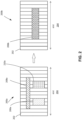
- Fig. 1 illustrates one example of multiplexing two HARQ-ACKs and a second UCI (such as one carrying P/SP-CSI reports) on PUCCH in a slot 104 with symbols 102.
- Fig. 1 shows respective time frequency resources 100a and 100b, where resource 100a shows determined uplink resources prior to multiplexing of a first or second HARQ-ACK feedback with the second UCI, and resource 100B shows uplink resources updated after multiplexing of the first HARQ-ACK feedback with the second UCI according to one embodiment (updated uplink resources).
- resource 100a shows determined uplink resources prior to multiplexing of a first or second HARQ-ACK feedback with the second UCI
- resource 100B shows uplink resources updated after multiplexing of the first HARQ-ACK feedback with the second UCI according to one embodiment (updated uplink resources).
- uplink resources may be updated by the UE in the form of PUCCH resource 106b to carry the second UCI of PUCCH resource 108a along with the first HARQ-ACK feedback of PUCCH resource 106a.
- the UE may therefore, according to this embodiment, transmit both updated PUCCH resources 106b and 108b in a same slot 104 as shown in Fig. 1 .
- a PUCCH resource indicator in the DCls scheduling the PDSCHs where the corresponding HARQ-ACK feedbacks are scheduled in the same slot may, according to an embodiment, point to different starting symbols for PUCCH resources, or to different PUCCH resources with no time domain overlap.
- the actual PUCCH resources which carry such feedbacks (as well as other potentially multiplexed reports), may then be determined directly based on the corresponding PUCCH resource indicator values.
- some reference point may be defined to further adjust the PUCCH resource, such as, for example, its starting symbol.
- the PUCCH resource indicator may be interpreted relative to the beginning of the slot. In another example, the PUCCH resource indicator may be interpreted relative to the end/start of the last PUCCH resource carrying a HARQ-ACK.
- some relative symbol offset may be defined and dynamically or semi-statically indicated by RRC configuration signaling or L1-signaling, such that in case of multiple HARQ-ACK transmissions within a slot, the timing relationship between the corresponding PUCCH resources carrying the HARQ-ACK feedbacks (potentially each multiplexed with any other report/information), are implicitly or explicitly indicated to the UE.
- the indication of different PUCCH resources for HARQ-ACK feedback within a slot may be achieved via a combination of a K1 offset (as indicated by a PDSCH-to-HARQ-timing-indicator field in the scheduling DCI format, if present, or as provided by higher layer parameter dl-DataToUL-ACK) and the PUCCH resource indicator (PRI) in the scheduling DCI.
- a K1 offset as indicated by a PDSCH-to-HARQ-timing-indicator field in the scheduling DCI format, if present, or as provided by higher layer parameter dl-DataToUL-ACK
- PRI PUCCH resource indicator
- the starting symbol of a PUCCH resource indicated by the PRI may be interpreted jointly with the indicated value of the PDSCH-to-HARQ-timing-indicator field K1 in the DCI (or as provided by the higher layer parameter dl-DataToUL-ACK), wherein the latter indication may be reinterpreted to indicate the PDSCH-end to the HARQ-ACK-start timing offset using a combination of one or more of: slots, half-slots, or a set of one or more symbols (as against the Rel-15 interpretation in terms of number of slots).
- the UE may be configured by higher layers (such as by UE-specific RRC signaling) with the possibility of multiple PUCCH transmissions with HARQ-ACK feedback in a slot, or alternatively, configured by higher layers to follow a different interpretation of the K1 offset and PUCCH resource starting symbol determination for HARQ-ACK feedback while being capable of transmitting multiple PUCCH transmissions with HARQ-ACK feedback in a slot.
- higher layers such as by UE-specific RRC signaling
- the value indicated using PDSCH-to-HARQ-timing-indicator field in the DCI format may be interpreted in units of half-slots or in units of a specified number of one or more symbols, e.g., 2, 4 or 7 symbols.
- the PDSCH-to-HARQ-timing-indicator field in the DCI format may be interpreted such that the last (N-1) least significant bit(s) (LSBs) of the DCI bit-field indicate one of 2 (N-1) values in units of slots as configured in the first 2 (N-1) values provided by higher layer parameter dl-DataToUL-ACK, and the most significant bit (MSB) (1 bit) of the PDSCH-to-HARQ-timing-indicator field in the DCI format is used to indicate an additional half-slot offset or a symbol group, where the number of symbols within the symbol group can be predefined in the specification or configured by higher layers.
- LSBs least significant bit(s)
- MSB most significant bit
- a '0' may indicate that the timing offset is in terms of an integer number of slots from PDSCH-end, while a '1' indicates that the timing offset is in terms of an integer number of slots from the PDSCH-end plus another half-slot (7 symbols for normal cyclic prefix (NCP) length and 6 symbols for extended cyclic prefix (ECP) length where the cyclic prefix (CP) configuration corresponds to that for the PUCCH in the corresponding UL bandwidth part (BWP)).
- NCP normal cyclic prefix
- ECP extended cyclic prefix
- the bit-field may only indicate the whether or not to apply a half-slot offset in addition to the timing offset indicated by the first value indicated by the higher layer parameter dl-DataToUL-ACK.
- This mechanism can be extended to other variants using indication of the PDSCH to HARQ-ACK timing offset in units of 'k' symbols with value of 'k' other than 7 (or 6 for the ECP case).
- An advantage of the above mechanism is that the grouping of HARQ-ACK feedback to multiple PUCCH resources within a slot is realized by indicating this information using part of the slot offset indication instead of using additional DCI bits or alternative mechanisms, e.g., partitioning of PUCCH resource sets or partitioning of HARQ processes or based on RNTI.
- the PUCCH resource information corresponding to the PUCCH resources carrying multiple HARQ-ACK feedbacks may be configured by a jointly encoded time domain resource allocation (TD-RA) table and dynamic indication of a combination of such parameters to the UE.
- TD-RA time domain resource allocation
- N 3 is, for example, defined as “Capability #1” or “Capability #2” in Table 1 below
- Table 1 N3 values for different SCS ( ⁇ ) and UE minimum processing time capabilities ⁇ Capability #1 Capability #2 0 8 3 1 10 4.5 2 17 9 3 20 N/A
- Fig. 2 illustrates one example of multiplexing two HARQ-ACKs and P/SP-CSI reports on PUCCH.
- Fig. 2 shows respective time frequency resources 200a and 200b in symbols 202 of a slot 204, where resource 200a shows determined uplink resources prior to multiplexing of a first and second HARQ-ACK feedback with the second UCI, and resource 200b shows uplink resources updated after multiplexing of the first and second HARQ-ACK feedbacks with the second UCI according to one embodiment (updated uplink resources).
- resource 200a shows determined uplink resources prior to multiplexing of a first and second HARQ-ACK feedback with the second UCI
- resource 200b shows uplink resources updated after multiplexing of the first and second HARQ-ACK feedbacks with the second UCI according to one embodiment (updated uplink resources).
- two PUCCH resources 206a and 210a to carry separate first and second HARQ-ACK feedbacks, respectively are determined by the UE to overlap with another PUCCH 208a that is to carry P/SP CSI report.
- uplink resources may be updated by the UE in the form of PUCCH 206b to carry the second UCI of PUCCH resource 208a along with the first and second HARQ-ACK feedbacks of PUCCH resource 206a.
- the UE may therefore, according to this embodiment, transmit updated PUCCHs 206b carrying all UCls in a same slot 204 as shown in Fig. 2 .
- the PUCCH resource 206b may be determined based on the PRI field which is used to indicate the PUCCH carrying the first HARQ-ACK feedback.
- the PUCCH resource carrying combined UCI may be determined in accordance with PUCCH resource indicator (PRI) which is used to indicate the PUCCH carrying the first or the last dynamic HARQ-ACK feedback among multiple HARQ-ACK feedbacks. More specifically, one PUCCH resource set may be determined based on the total payload size of the combined UCI. Further, the aforementioned PRI may be used to allow selection of one PUCCH resource from the determined PUCCH resource set.
- PRI PUCCH resource indicator
- the PUCCH resource carrying combined UCI may be determined in accordance with PUCCH resource indicator (PRI) which is included in the first or last DCI scheduling the PDSCHs where the corresponding HARQ-ACK feedbacks are scheduled in the same slot.
- PRI PUCCH resource indicator
- the PRI may be included in the DCI which is transmitted with the lowest component carrier (CC) index.
- the bit order of HARQ-ACK feedbacks within the combined UCI may follow the timing of one or more of: first symbol of each HARQ-ACK feedback in the same slot, the relative timing between the PDCCH monitoring occasions in which the corresponding scheduling DCls are detected, and the relative timing between the first or last symbol of the scheduled PDSCHs.
- the bit order of HARQ-ACK feedbacks within the combined UCI can be 1 st HARQ-ACK, 2 nd HARQ-ACK, ... , N th HARQ-ACK.
- the ordering of the HARQ-ACK feedback information may be determined according to the order of the HARQ process ID (PID) used to schedule the corresponding PDSCHs.
- PID HARQ process ID
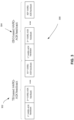
- Fig. 3 illustrates a PUCCH resource 300 showing one example of two HARQ-ACK codebooks for multiple HARQ-ACK feedbacks multiplexed therein.
- TB transport block
- CBG code block group
- two separate HARQ-ACK codebooks may be carried by one PUCCH, such as PUCCH 300, according to some embodiments, wherein each HARQ-ACK codebook 302 and 304 includes multiple TB based HARQ-ACK feedbacks or CBG based HARQ-ACK feedbacks.
- TB based HARQ-ACK feedback and CBG based HARQ-ACK feedback are shown as being concatenated and carried by a PUCCH.
- Fig. 3 may also be applied for the case where SPS HARQ-ACK feedbacks are concatenated with TB/CBG based HARQ-ACK feedback. If the payload size of the combined UCI exceeds the capacity of the determined PUCCH resource, certain portion of the CSI report including CSI part 1 and/or CSI part 2 may be dropped in accordance with the priority rule as defined in Section 5.2.5 of TS38.214 V15.2.0.
- Embodiments of multiplexing multiple HARQ-ACK feedback and PUSCHs are provided as follows below.
- the UE may piggyback multiple HARQ-ACK feedbacks on PUSCH.
- This embodiment may also apply for the case when two non-overlapping SPS HARQ-ACK PUCCH resources overlap with the second UCI PUCCH.
- the second UCI may include periodic and/or semi-persistent scheduled CSI (P/SP-CSI) report and/or SR and/or SPS HARQ-ACK feedback.
- multiple HARQ-ACK feedbacks may be mapped onto a PUSCH resource separately.
- the amount of resources for each HARQ-ACK feedback may be calculated in accordance with the corresponding HARQ-ACK payload size and configured/indicated beta offset.
- the multiple HARQ-ACK feedbacks may be mapped sequentially on PUSCH based on one or more of: the transmission timing of the first symbol HARQ-ACK feedback, the relative timing between the PDCCH monitoring occasions in which the corresponding scheduling DCls are detected, and the relative timing between the first or last symbol of the scheduled PDSCHs.
- the earliest HARQ-ACK feedback in a slot is mapped first and second HARQ-ACK feedback is mapped after the first HARQ-ACK feedback, etc.
- the ordering of the mapping of the HARQ-ACK feedback information may be determined according to the order of the HARQ process ID (PID) used to schedule the corresponding PDSCHs.
- the information bits of multiple HARQ-ACK feedbacks may be first concatenated.
- the bit order of HARQ-ACK feedbacks can be defined similar to the aforementioned embodiments, as shown for example in the context of Fig. 3 .
- the concatenated HARQ-ACK feedbacks may be modulated and mapped on PUSCH.
- the amount of resource allocated for combined HARQ-ACK may calculated in accordance with the concatenated HARQ-ACK payload size and configured/indicated beta offset.
- Fig. 4 illustrates one example of multiplexing two HARQ-ACK feedbacks with PUSCH, including multiplexing two HARQ-ACKs and a PUSCH in a slot 104 with symbols 102.
- Fig. 4 shows respective time frequency resources 400a and 400b, where resource 400b shows determined uplink resources prior to multiplexing of a first and second HARQ-ACK feedback with a PUSCH, and resource 100b shows uplink resources updated after multiplexing of the first and second HARQ-ACK feedbacks with the PUSCH according to one embodiment (updated uplink resources).
- uplink resources uplink resources
- two PUCCH resources 406a and 410a to carry separate first and second HARQ-ACK feedbacks, respectively, are determined by the UE to overlap with a PUSCH 408a.
- uplink resources may be updated by the UE in the form of PUCCH 406b to carry the PUSCH 408a along with the first and second HARQ-ACK feedbacks of PUCCH resources 406a and 410a, respectively. Given that the determined first PUCCH resource 406a does not overlap with the second determined HARQ-ACK PUCCH resource 410a in Fig.
- the UE may therefore, according to this embodiment, transmit updated PUCCHs 406b in a slot 404 as shown in Fig. 4 .
- two HARQ-ACK feedbacks may be combined together and piggyback combined HARQ-ACK feedbacks on PUSCH.
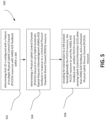
- a process 500 includes at operation 502, determining that UE is configured with a feature of multiple Physical Uplink Control Channel (PUCCH) resources with HARQ-ACK feedback within a slot; at operation 504, determining a Physical Uplink Control Channel (PUCCH) resource to carry Hybrid Automatic Repeat Request Acknowledgment (HARQ-ACK) feedback in response to a scheduled Physical Downlink Shared Channel (PDSCH) resource; and at operation 506, encoding for transmission to a NR evolved NodeB (gNodeB) the PUCCH resource, the PUCCH resource to carry the HARQ-ACK feedback and: another PUCCH resource carrying Uplink Control Information (UCI) other than HARQ-ACK feedback, and a scheduled Physical Uplink Shared Channel (PUSCH) resource.
- PUCCH Physical Uplink Control Channel
- PUSCH Physical Uplink Shared Channel
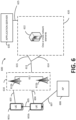
- Fig. 6 illustrates an architecture of a system 600 of a network according to some embodiments.
- the system 600 is shown to include a user equipment (UE) 601 and a UE 602.
- the UEs 601 and 602 are illustrated as smartphones (e.g., handheld touchscreen mobile computing devices connectable to one or more cellular networks) but may also comprise any mobile or non-mobile computing device.
- the UEs 601 and 602 may be configured to connect, e.g., communicatively couple, with a radio access network (RAN) 610.
- RAN radio access network
- the UEs 601 and 602 utilize connections 603 and 604, respectively, each of which comprises a physical communications interface or layer (discussed in further detail below); in this example, the connections 603 and 604 are illustrated as an air interface to enable communicative coupling and may be consistent with cellular communications protocols.
- the UEs 601 and 602 may further directly exchange communication data via a ProSe interface 605.
- the ProSe interface 605 may alternatively be referred to as a sidelink interface comprising one or more logical channels, including but not limited to a Physical Sidelink Control Channel (PSCCH), a Physical Sidelink Shared Channel (PSSCH), a Physical Sidelink Discovery Channel (PSDCH), and a Physical Sidelink Broadcast Channel (PSBCH).
- PSCCH Physical Sidelink Control Channel
- PSSCH Physical Sidelink Shared Channel
- PSDCH Physical Sidelink Discovery Channel
- PSBCH Physical Sidelink Broadcast Channel
- the UE 602 is shown to be configured to access an access point (AP) 606 via connection 607.
- the connection 607 may comprise a local wireless connection, such as a connection consistent with any IEEE 802.11 protocol, wherein the AP 606 would comprise a wireless fidelity (WiFi ® ) router.
- WiFi ® wireless fidelity
- the AP 606 is shown to be connected to the Internet without connecting to the core network of the wireless system (described in further detail below).
- the RAN 610 may include one or more access nodes that enable the connections 603 and 604. These access nodes (ANs) may be referred to as base stations (BSs), NodeBs, evolved NodeBs (eNBs), next Generation or New Radio evolved NodeBs (gNodeB), RAN nodes, and so forth, and may comprise ground stations (e.g., terrestrial access points) or satellite stations providing coverage within a geographic area (e.g., a cell).
- BSs base stations
- NodeBs evolved NodeBs
- gNodeB next Generation or New Radio evolved NodeBs
- RAN nodes and so forth, and may comprise ground stations (e.g., terrestrial access points) or satellite stations providing coverage within a geographic area (e.g., a cell).
- the UEs 601 and 602 may be configured to communicate using Orthogonal Frequency-Division Multiplexing (OFDM) communication signals with each other or with any of the RAN nodes 611 and 612 over a multicarrier communication channel in accordance various communication techniques, such as, but not limited to, an Orthogonal Frequency-Division Multiple Access (OFDMA) communication technique (e.g., for downlink communications) or a Single Carrier Frequency Division Multiple Access (SC-FDMA) communication technique (e.g., for uplink and ProSe or sidelink communications), although the scope of the embodiments is not limited in this respect.
- OFDM signals may comprise a plurality of orthogonal subcarriers.
- the RAN 610 is shown to be communicatively coupled to a core network (CN) 620 -via an S1 interface 613.
- the CN 620 may be an evolved packet core (EPC) network, a NextGen Packet Core (NPC) network, or some other type of CN.
- EPC evolved packet core
- NPC NextGen Packet Core
- the S1 interface 613 is split into two parts: the S1-U interface 614, which carries traffic data between the RAN nodes 611 and 612 and the serving gateway (S-GW) 622, and the S1-mobility management entity (MME) interface 615, which is a signalling interface between the RAN nodes 611 and 612 and MMEs 621.
- S-GW serving gateway
- MME S1-mobility management entity
- the CN 620 includes network elements.
- the term "network element” may describe a physical or virtualized equipment used to provide wired or wireless communication network services.
- the CN 620 comprises, as network elements, the MMEs 621, the S-GW 622, the Packet Data Network (PDN) Gateway (P-GW) 623, and a home subscriber server (HSS) 624.
- the MMEs 621 may be similar in function to the control plane of legacy Serving General Packet Radio Service (GPRS) Support Nodes (SGSN).
- GPRS General Packet Radio Service
- Fig. 7 illustrates example interfaces of baseband circuitry according to various embodiments.
- the baseband circuitry 700 may be included in a UE or gNodeB, for example, in UE or gNodeB of Fig. 6 , and may comprise processors 738-742 and a memory 744 utilized by said processors.
- Each of the processors 738-732 may include a memory interface, 704A-704E, respectively, to send/receive data to/from the memory 744.
- Baseband circuitry 700 may also include an audio digital signal processor (Audio DSP) 743.
- Audio DSP audio digital signal processor
- the baseband circuitry 700 may further include one or more interfaces to communicatively couple to other circuitries/devices, such as a memory interface 712 (e.g., an interface to send/receive data to/from memory external to the baseband circuitry 700), an application circuitry interface 714 (e.g., an interface to send/receive data to/from an application circuitry), an RF circuitry interface 716 (e.g., an interface to send/receive data to/from an RF circuitry), a wireless hardware connectivity interface 718 (e.g., an interface to send/receive data to/from Near Field Communication (NFC) components, Bluetooth ® components (e.g., Bluetooth ® Low Energy), Wi-Fi ® components, and other communication components), and a power management interface 720 (e.g., an interface to send/receive power or control signals to/from a power management integrated circuit (PMIC).
- a memory interface 712 e.g., an interface to send/receive data to/
- Figs. 6 and/or 7 such as the shown UEs and gNodeB's, may be used in any of the embodiments described herein.
Landscapes
- Engineering & Computer Science (AREA)
- Signal Processing (AREA)
- Computer Networks & Wireless Communication (AREA)
- Mobile Radio Communication Systems (AREA)
Claims (11)
- Un appareil d'un équipement utilisateur, UE, comprenant :une interface radiofréquence, RF, etune circuiterie de traitement couplée à l'interface RF, la circuiterie de traitement étant configurée pour :déterminer un chevauchement entre une pluralité de ressources de canal physique de contrôle de liaison montante, PUCCH, déterminées destinées à porter une pluralité respective de retours d'accusé de réception de requête de répétition automatique hybride, HARQ-ACK, et une autre ressource PUCCH déterminée destinée à porter une information de contrôle de liaison montante, UCI ;déterminer une ressource PUCCH mise à jour destinée à porter au moins un premier retour HARQ-ACK de la pluralité de retours HARQ-ACK et l'UCI, dans lequel la ressource PUCCH mise à jour ne chevauche pas une ressource PUCCH déterminée destinée à porter un second retour HARQ-ACK de la pluralité de retours HARQ-ACK non inclus dans la ressource PUCCH mise à jour ; etcoder la ressource PUCCH mise à jour et la ressource PUCCH déterminée pour transmission à une station de base à l'intérieur d'un slot.
- L'appareil selon la revendication 1, dans lequel la circuiterie de traitement est en outre configurée pour coder la ressource PUCCH mise à jour et la ressource PUCCH déterminée pour la transmission dans un slot lorsqu'une parmi la ressource PUCCH mise à jour ou la ressource PUCCH déterminée est une ressource PUCCH courte.
- L'appareil selon la revendication 1, dans lequel la circuiterie de traitement est en outre configurée pour :décoder une information de contrôle de liaison descendante, DCI, provenant d'une station de base, la DCI comportant un champ d'indicateur de ressource PUCCH, PRI ; etdéterminer la ressource PUCCH mise à jour sur la base du champ d'indicateur de ressource PUCCH dans la DCI.
- L'appareil selon la revendication 3, dans lequel la circuiterie de traitement est en outre configurée pour déterminer la ressource PUCCH mise à jour et la ressource PUCCH déterminée sur la base d'une combinaison du champ PRI et d'un décalage Kl indiqué à l'UE par la station de base.
- L'appareil selon la revendication 4, dans lequel la circuiterie de traitement est en outre configurée pour déterminer le décalage Kl en décodant un parmi un champ de ressource de canal physique partagé de liaison descendante, PDSCH, à indicateur de séquencement HARQ, PDSCH-to-HARQ-timing-indicator, dans la DCI, ou un paramètre de couche supérieure de donnée de liaison descendante à accusé de réception de liaison montante, dl-DataToUL-ACK, en provenance de la station de base.
- L'appareil selon la revendication 5, dans lequel le PRI indique un symbole PUCCH de départ pour chacune parmi la ressource PUCCH mise à jour et la ressource PUCCH déterminée, et dans lequel la circuiterie de traitement est en outre configurée pour déterminer, en unités de slots, de demi-slots ou d'un ensemble d'un ou plusieurs symboles, un décalage de séquencement de fin de PDSCH à début de HARQ-ACK en utilisant une combinaison du symbole PUCCH de départ et d'une valeur du champ d'indicateur de séquencement PDSCH-à-HARQ.
- L'appareil selon la revendication 3, dans lequel la DCI est une première ou une dernière DCI planifiant un canal physique partagé de liaison descendante, PDSCH, pour lequel la pluralité de retours HARQ-ACK doit être planifiée, et dans lequel la pluralité de retours HARQ-ACK dans la ressource PUCCH mise à jour doit être planifiée dans un slot.
- L'appareil selon la revendication 1, dans lequel un ordre de bits dans un même slot dudit au moins un parmi la pluralité de retours HARQ-ACK doit suivre un séquencement dudit au moins un de la pluralité de retours HARQ-ACK.
- L'appareil selon la revendication 1, dans lequel un ordonnancement d'un mappage d'informations pour ledit au moins un parmi la pluralité de retours HARQ-ACK est basé sur un ordre d'identifications de processus HARQ, PID, utilisées pour planifier des ressources de canal physique partagé de liaison descendante, PDSCH, correspondantes.
- L'appareil selon la revendication 1, dans lequel l'au moins un parmi la pluralité de retours HARQ-ACK comporte des retours HARQ-ACK basés sur un bloc de transport, TB, des retours HARQ-ACK basés sur un groupe de blocs de code, CBG, la ressource PUCCH mise à jour destinée à porter deux livres de codes HARQ-ACK séparés correspondant respectivement aux retours HARQ-ACK basés sur le TB et aux retours HARQ-ACK basés sur le CBG.
- Un procédé destiné à être réalisé au niveau d'un dispositif d'équipement utilisateur, UE, New Radio, NR, le procédé comportant :la détermination d'un chevauchement entre une pluralité de ressources de canal physique de contrôle de liaison montante, PUCCH, déterminées destinée à porter une pluralité respective de retours d'accusé de réception de requête de répétition automatique hybride, HARQ-ACK, et l'une d'une autre ressource PUCCH déterminée destinée à porter une information de contrôle de liaison montante, UCI ;la détermination d'une ressource PUCCH mise à jour destinée à porter au moins un premier retour HARQ-ACK de la pluralité de retours HARQ-ACK et l'UCI, dans lequel la ressource PUCCH mise à jour ne chevauche pas une ressource PUCCH déterminée destinée à porter un second retour HARQ-ACK de la pluralité de retours HARQ-ACK non inclus dans la ressource PUCCH mise à jour ; etle codage de la ressource PUCCH mise à jour et de la ressource PUCCH déterminée pour une transmission à une station de base à l'intérieur du slot.
Priority Applications (1)
| Application Number | Priority Date | Filing Date | Title |
|---|---|---|---|
| EP24210910.6A EP4482067A3 (fr) | 2018-09-28 | 2019-09-27 | Transmission de receptions de demande de répétition automatique hybride et d'autres informations de commande de liaison montante |
Applications Claiming Priority (2)
| Application Number | Priority Date | Filing Date | Title |
|---|---|---|---|
| US201862739081P | 2018-09-28 | 2018-09-28 | |
| PCT/US2019/053695 WO2020069468A1 (fr) | 2018-09-28 | 2019-09-27 | Détermination de ressource de canal de commande de liaison montante physique et multiplexage de multiples rétroactions d'accusé de réception de demande de répétition automatique hybride et d'autres informations de commande de liaison montante sur un canal de commande de liaison montante physique et canal partagé de liaison montante physique |
Related Child Applications (2)
| Application Number | Title | Priority Date | Filing Date |
|---|---|---|---|
| EP24210910.6A Division EP4482067A3 (fr) | 2018-09-28 | 2019-09-27 | Transmission de receptions de demande de répétition automatique hybride et d'autres informations de commande de liaison montante |
| EP24210910.6A Division-Into EP4482067A3 (fr) | 2018-09-28 | 2019-09-27 | Transmission de receptions de demande de répétition automatique hybride et d'autres informations de commande de liaison montante |
Publications (3)
| Publication Number | Publication Date |
|---|---|
| EP3857802A1 EP3857802A1 (fr) | 2021-08-04 |
| EP3857802A4 EP3857802A4 (fr) | 2022-06-29 |
| EP3857802B1 true EP3857802B1 (fr) | 2025-04-30 |
Family
ID=69950766
Family Applications (2)
| Application Number | Title | Priority Date | Filing Date |
|---|---|---|---|
| EP24210910.6A Pending EP4482067A3 (fr) | 2018-09-28 | 2019-09-27 | Transmission de receptions de demande de répétition automatique hybride et d'autres informations de commande de liaison montante |
| EP19866332.0A Active EP3857802B1 (fr) | 2018-09-28 | 2019-09-27 | Détermination de ressource de canal de commande de liaison montante physique et multiplexage de multiples rétroactions d'accusé de réception de demande de répétition automatique hybride et d'autres informations de commande de liaison montante sur un canal de commande de liaison montante physique et canal partagé de liaison montante physique |
Family Applications Before (1)
| Application Number | Title | Priority Date | Filing Date |
|---|---|---|---|
| EP24210910.6A Pending EP4482067A3 (fr) | 2018-09-28 | 2019-09-27 | Transmission de receptions de demande de répétition automatique hybride et d'autres informations de commande de liaison montante |
Country Status (4)
| Country | Link |
|---|---|
| US (3) | US11979236B2 (fr) |
| EP (2) | EP4482067A3 (fr) |
| CN (2) | CN119483871A (fr) |
| WO (1) | WO2020069468A1 (fr) |
Families Citing this family (42)
| Publication number | Priority date | Publication date | Assignee | Title |
|---|---|---|---|---|
| US11825418B2 (en) * | 2018-10-17 | 2023-11-21 | Apple Inc. | Enhanced physical uplink control channel (PUCCH) power control |
| WO2020093016A1 (fr) * | 2018-11-02 | 2020-05-07 | Hong He | Attribution de ressources de canal de commande de liaison montante physique (pucch) et améliorations de détermination de livre de codes d'accusé de réception de demande de répétition automatique hybride (harq) dans le cas de multiples informations de commande de liaison descendante (dci) dans un intervalle |
| US11296849B2 (en) * | 2018-11-02 | 2022-04-05 | Lenovo (Singapore) Pte. Ltd. | Method and apparatus for transmitting HARQ-ACK information |
| US12218761B2 (en) * | 2018-11-02 | 2025-02-04 | Qualcomm Incorporated | Hybrid automatic repeat request feedback for low latency transmissions |
| WO2020095457A1 (fr) * | 2018-11-09 | 2020-05-14 | 株式会社Nttドコモ | Terminal utilisateur |
| US11627560B2 (en) * | 2019-01-07 | 2023-04-11 | Kt Corporation | Method and apparatus for transmitting and receiving uplink control information |
| US12177157B2 (en) * | 2019-01-10 | 2024-12-24 | Sharp Kabushiki Kaisha | Low-latency physical uplink control channel (PUCCH) enhancements and resource configuration |
| CN113518470B (zh) * | 2019-01-11 | 2023-03-24 | Oppo广东移动通信有限公司 | 信道接入方案的确定方法及装置、终端设备、网络设备 |
| US11558864B2 (en) * | 2019-02-15 | 2023-01-17 | Qualcomm Incorporated | Out-of-order processing |
| CN113597805B (zh) * | 2019-03-27 | 2024-07-26 | 鸿颖创新有限公司 | 用于上行链路传输的方法和用户设备 |
| CN111756493B (zh) * | 2019-03-28 | 2023-07-14 | 中兴通讯股份有限公司 | 资源的确定、接收方法及装置 |
| US12568493B2 (en) * | 2019-03-28 | 2026-03-03 | Telefonaktiebolaget Lm Ericsson (Publ) | Multiple downlink semi-persistent scheduling configurations for New Radio Internet of Things |
| US12144019B2 (en) * | 2019-03-29 | 2024-11-12 | Lg Electronics Inc. | Method and device for transmitting PUCCH |
| US12004185B2 (en) * | 2019-04-19 | 2024-06-04 | Telefonaktiebolaget Lm Ericsson (Publ) | Setting HARQ timing for PDSCH with pending PDSCH-to-HARQ-timing-indicator |
| KR102907784B1 (ko) * | 2019-05-03 | 2026-01-06 | 삼성전자 주식회사 | 무선 통신 시스템에서 상향링크 채널들의 전송 방법 및 장치 |
| US10979200B2 (en) | 2019-05-24 | 2021-04-13 | Qualcomm Incorporated | Acknowledgment feedback for multiple active downlink semi-persistent scheduling configurations |
| WO2021022439A1 (fr) * | 2019-08-05 | 2021-02-11 | Zte Corporation | Systèmes et procédés pour déterminer un livre de codes de rétroaction |
| US12309782B2 (en) * | 2019-08-07 | 2025-05-20 | Lenovo (Beijing) Limited | Apparatus and method of UCI multiplexing in PUCCH resources for multiple TRPs |
| KR20210017222A (ko) * | 2019-08-07 | 2021-02-17 | 삼성전자주식회사 | 무선 통신 시스템에서 서브-슬롯 구성 및 상향 링크 정보 전송을 위한 장치 및 방법 |
| US12418911B2 (en) * | 2019-08-14 | 2025-09-16 | Zte Corporation | Transmission method, communication node and medium |
| CN113259067B (zh) * | 2020-02-12 | 2022-08-16 | 北京紫光展锐通信技术有限公司 | Harq-ack反馈时刻、位置的确定以及设备和介质 |
| WO2021203420A1 (fr) * | 2020-04-10 | 2021-10-14 | Lenovo (Beijing) Limited | Procédé et appareil de combinaison de sous-livre de codes harq-ack |
| WO2021221431A1 (fr) * | 2020-04-27 | 2021-11-04 | 엘지전자 주식회사 | Procédé, équipement utilisateur, dispositif de traitement, support d'enregistrement et programme informatique permettant de recevoir un canal de liaison descendante, et procédé et station de base permettant de transmettre un canal de liaison descendante |
| US11546935B2 (en) * | 2020-04-29 | 2023-01-03 | Qualcomm Incorporated | Feedback for multiple downlink transmissions |
| CN113676300B (zh) * | 2020-05-15 | 2023-06-20 | 北京佰才邦技术股份有限公司 | 混合自适应重传请求应答信息的反馈方法及设备 |
| CN113839747B (zh) * | 2020-06-08 | 2023-02-03 | 维沃移动通信有限公司 | 混合自动重传请求harq反馈方法、终端设备和网络设备 |
| EP4152667A4 (fr) * | 2020-07-31 | 2023-06-28 | Guangdong Oppo Mobile Telecommunications Corp., Ltd. | Procédé de détermination de livre de codes de rétroaction, dispositif, équipement et support de stockage |
| CN116171621B (zh) * | 2020-08-05 | 2025-05-16 | 苹果公司 | 用于利用用户装备在新无线电中动态调度的系统和方法 |
| US12574157B2 (en) | 2020-08-06 | 2026-03-10 | Lg Electronics Inc. | Method and device for transmitting and receiving signal in wireless communication system |
| WO2022027999A1 (fr) | 2020-08-06 | 2022-02-10 | Apple Inc. | Opération de point de réception et multi-transmission |
| US12256379B2 (en) * | 2020-10-16 | 2025-03-18 | Qualcomm Incorporated | Dynamic change of mapping payload size to PUCCH configuration |
| CN114698108B (zh) * | 2020-12-31 | 2025-10-17 | 维沃移动通信有限公司 | Uci复用的方法、装置、设备及可读存储介质 |
| US20240381359A1 (en) * | 2021-03-30 | 2024-11-14 | Purplevine Innovation Company Limited | Wireless communication method, user equipment, and base station |
| TW202306341A (zh) * | 2021-03-31 | 2023-02-01 | 香港商翼勝科技有限公司 | 無線通信方法、使用者裝置、及基地台 |
| US11659548B2 (en) * | 2021-05-07 | 2023-05-23 | Qualcomm Incorporated | Separate feedback for semi-persistent scheduling downlink wireless communications |
| CN117136517A (zh) * | 2021-05-10 | 2023-11-28 | 高通股份有限公司 | 经由上行链路共享信道的推迟的反馈的传输 |
| WO2023010241A1 (fr) * | 2021-08-02 | 2023-02-09 | Mediatek Singapore Pte. Ltd. | Procédés et appareils de multiplexage et d'envoi d'informations de commande à types multiples |
| WO2023010435A1 (fr) * | 2021-08-05 | 2023-02-09 | 北京小米移动软件有限公司 | Procédé et appareil de détermination de créneau, et équipement d'utilisateur ainsi que support d'enregistrement |
| KR20230021933A (ko) * | 2021-08-06 | 2023-02-14 | 주식회사 아이티엘 | 무선 통신 시스템에서 상향링크 제어채널 자원 할당 방법 및 장치 |
| US20240223318A1 (en) * | 2021-08-06 | 2024-07-04 | Qualcomm Incorporated | Transmission configuration indicator (tci) indication in downlink control information scheduling a virtual physical downlink shared channel |
| US20250158861A1 (en) * | 2022-02-18 | 2025-05-15 | Beijing Xiaomi Mobile Software Co., Ltd. | Data transmission method and apparatus, and storage medium |
| US20240107525A1 (en) * | 2022-09-28 | 2024-03-28 | Interdigital Patent Holdings, Inc. | Pucch-related latency and coverage enhancement for subband non-overlapping full duplex |
Family Cites Families (11)
| Publication number | Priority date | Publication date | Assignee | Title |
|---|---|---|---|---|
| CN105027469B (zh) | 2013-04-04 | 2019-06-14 | 英特尔Ip公司 | 针对长期演进(lte)的虚拟载波检测机制 |
| WO2014165517A1 (fr) * | 2013-04-04 | 2014-10-09 | Intel IP Corporation | Reconfiguration de mappage de ressources de canal de commande pour éviter une collision |
| CA2967281C (fr) * | 2014-12-08 | 2023-01-31 | Lg Electronics Inc. | Procede de transmission d'informations de commande de liaison montante et son dispositif |
| WO2018021821A1 (fr) * | 2016-07-26 | 2018-02-01 | 엘지전자 주식회사 | Procédé de transmission d'informations de commande de liaison montante dans un système de communication sans fil et dispositif prenant en charge ce procédé |
| WO2018085044A1 (fr) | 2016-11-02 | 2018-05-11 | Intel IP Corporation | Équipement utilisateur (ue), nœud-b évolué (enb) et procédés de signalisation d'attributions de canal de commande de liaison montante physique (pucch) de nouvelle radio (nr) |
| WO2018112322A2 (fr) | 2016-12-16 | 2018-06-21 | Intel IP Corporation | Attribution de ressources et conception détaillée pour un canal de commande de liaison montante physique (pucch) new radio (nr) à durée d'intervalle multiple |
| WO2018142264A1 (fr) * | 2017-02-01 | 2018-08-09 | Telefonaktiebolaget Lm Ericsson (Publ) | Procédés et nœuds pour l'activation ou la désactivation d'une porteuse dans un réseau de communication prenant en charge l'agrégation de porteuses |
| US10897753B2 (en) * | 2017-05-04 | 2021-01-19 | Sharp Kabushiki Kaisha | Systems and methods for supporting multiple allocations in UL/DL grant for a 5G NR UE and gNB |
| US11251909B2 (en) * | 2017-08-11 | 2022-02-15 | Telefonaktiebolaget Lm Ericsson (Publ) | Redundancy versions in a hybrid automatic repeat request, HARQ process |
| JP7160912B2 (ja) * | 2018-05-11 | 2022-10-25 | 株式会社Nttドコモ | 端末、無線通信方法、基地局及びシステム |
| US20200106569A1 (en) * | 2018-09-27 | 2020-04-02 | Mediatek Inc. | Mechanisms for postponing hybrid automatic repeat request acknowledgement (harq-ack) feedback |
-
2019
- 2019-09-27 CN CN202411842702.4A patent/CN119483871A/zh active Pending
- 2019-09-27 EP EP24210910.6A patent/EP4482067A3/fr active Pending
- 2019-09-27 WO PCT/US2019/053695 patent/WO2020069468A1/fr not_active Ceased
- 2019-09-27 EP EP19866332.0A patent/EP3857802B1/fr active Active
- 2019-09-27 CN CN201980063579.7A patent/CN113196696B/zh active Active
- 2019-09-27 US US17/270,576 patent/US11979236B2/en active Active
-
2022
- 2022-10-19 US US17/968,863 patent/US12095570B2/en active Active
-
2024
- 2024-08-15 US US18/805,766 patent/US20240405926A1/en active Pending
Also Published As
| Publication number | Publication date |
|---|---|
| EP4482067A2 (fr) | 2024-12-25 |
| US20240405926A1 (en) | 2024-12-05 |
| US20210211241A1 (en) | 2021-07-08 |
| US20230047403A1 (en) | 2023-02-16 |
| EP4482067A3 (fr) | 2025-03-19 |
| CN119483871A (zh) | 2025-02-18 |
| CN113196696A (zh) | 2021-07-30 |
| CN113196696B (zh) | 2025-03-07 |
| US12095570B2 (en) | 2024-09-17 |
| EP3857802A4 (fr) | 2022-06-29 |
| EP3857802A1 (fr) | 2021-08-04 |
| US11979236B2 (en) | 2024-05-07 |
| WO2020069468A1 (fr) | 2020-04-02 |
Similar Documents
| Publication | Publication Date | Title |
|---|---|---|
| EP3857802B1 (fr) | Détermination de ressource de canal de commande de liaison montante physique et multiplexage de multiples rétroactions d'accusé de réception de demande de répétition automatique hybride et d'autres informations de commande de liaison montante sur un canal de commande de liaison montante physique et canal partagé de liaison montante physique | |
| US10827491B2 (en) | Techniques for transmitting a sounding reference signal or scheduling request over an unlicensed radio frequency spectrum band | |
| US9894651B2 (en) | Methods and apparatus for resource allocation for D2D communications | |
| EP3032909B1 (fr) | Procédé et appareil de demande de programmation dans un système de communication mobile cellulaire | |
| US20240314807A1 (en) | Panel switching indication in multiple transmission/reception point (multi-trp) operations | |
| US11564210B2 (en) | Two stage control channel for peer to peer communication | |
| US20240314806A1 (en) | Multi physical uplink shared channel (pusch) scheduling for multiple transmission reception points (m-trp) | |
| US20240214133A1 (en) | Transmission configuration indicator state applicability prior to acknowledgement | |
| US12375956B2 (en) | PDCCH monitoring adaptation and PDCCH repetition | |
| EP4320770B1 (fr) | Rétroaction de requête automatique de répétition hybride (harq) améliorée pour canal physique partagé descendant (pdsch) dynamique à intervalles multiples | |
| US20250071778A1 (en) | Compact mac-ce design for pairing a downlink tci state and an uplink tci state | |
| US12074709B2 (en) | Hybrid automatic repeat request (HARQ) feedback for dynamic multi-slot physical downlink shared channel (PDSCH) | |
| US20240244659A1 (en) | Dynamic indication of channel occupancy time (cot) initiated by user equipment (ue) or network | |
| WO2023092275A1 (fr) | Livre de codes harq et rétroaction pour répétitions multi-pdsch |
Legal Events
| Date | Code | Title | Description |
|---|---|---|---|
| STAA | Information on the status of an ep patent application or granted ep patent |
Free format text: STATUS: THE INTERNATIONAL PUBLICATION HAS BEEN MADE |
|
| PUAI | Public reference made under article 153(3) epc to a published international application that has entered the european phase |
Free format text: ORIGINAL CODE: 0009012 |
|
| STAA | Information on the status of an ep patent application or granted ep patent |
Free format text: STATUS: REQUEST FOR EXAMINATION WAS MADE |
|
| 17P | Request for examination filed |
Effective date: 20210420 |
|
| AK | Designated contracting states |
Kind code of ref document: A1 Designated state(s): AL AT BE BG CH CY CZ DE DK EE ES FI FR GB GR HR HU IE IS IT LI LT LU LV MC MK MT NL NO PL PT RO RS SE SI SK SM TR |
|
| DAV | Request for validation of the european patent (deleted) | ||
| DAX | Request for extension of the european patent (deleted) | ||
| A4 | Supplementary search report drawn up and despatched |
Effective date: 20220530 |
|
| RIC1 | Information provided on ipc code assigned before grant |
Ipc: H04L 1/16 20060101ALI20220523BHEP Ipc: H04W 72/12 20090101ALI20220523BHEP Ipc: H04W 72/04 20090101ALI20220523BHEP Ipc: H04L 1/18 20060101ALI20220523BHEP Ipc: H04L 5/00 20060101AFI20220523BHEP |
|
| RIC1 | Information provided on ipc code assigned before grant |
Ipc: H04L 1/1607 20230101ALI20240612BHEP Ipc: H04W 72/12 20090101ALI20240612BHEP Ipc: H04W 72/04 20090101ALI20240612BHEP Ipc: H04L 1/1829 20230101ALI20240612BHEP Ipc: H04L 5/00 20060101AFI20240612BHEP |
|
| GRAP | Despatch of communication of intention to grant a patent |
Free format text: ORIGINAL CODE: EPIDOSNIGR1 |
|
| STAA | Information on the status of an ep patent application or granted ep patent |
Free format text: STATUS: GRANT OF PATENT IS INTENDED |
|
| INTG | Intention to grant announced |
Effective date: 20240726 |
|
| GRAJ | Information related to disapproval of communication of intention to grant by the applicant or resumption of examination proceedings by the epo deleted |
Free format text: ORIGINAL CODE: EPIDOSDIGR1 |
|
| STAA | Information on the status of an ep patent application or granted ep patent |
Free format text: STATUS: REQUEST FOR EXAMINATION WAS MADE |
|
| GRAP | Despatch of communication of intention to grant a patent |
Free format text: ORIGINAL CODE: EPIDOSNIGR1 |
|
| STAA | Information on the status of an ep patent application or granted ep patent |
Free format text: STATUS: GRANT OF PATENT IS INTENDED |
|
| INTC | Intention to grant announced (deleted) | ||
| INTG | Intention to grant announced |
Effective date: 20241218 |
|
| P01 | Opt-out of the competence of the unified patent court (upc) registered |
Free format text: CASE NUMBER: APP_67178/2024 Effective date: 20241219 |
|
| GRAS | Grant fee paid |
Free format text: ORIGINAL CODE: EPIDOSNIGR3 |
|
| GRAA | (expected) grant |
Free format text: ORIGINAL CODE: 0009210 |
|
| STAA | Information on the status of an ep patent application or granted ep patent |
Free format text: STATUS: THE PATENT HAS BEEN GRANTED |
|
| AK | Designated contracting states |
Kind code of ref document: B1 Designated state(s): AL AT BE BG CH CY CZ DE DK EE ES FI FR GB GR HR HU IE IS IT LI LT LU LV MC MK MT NL NO PL PT RO RS SE SI SK SM TR |
|
| REG | Reference to a national code |
Ref country code: CH Ref legal event code: EP Ref country code: GB Ref legal event code: FG4D |
|
| REG | Reference to a national code |
Ref country code: DE Ref legal event code: R096 Ref document number: 602019069447 Country of ref document: DE |
|
| REG | Reference to a national code |
Ref country code: IE Ref legal event code: FG4D |
|
| REG | Reference to a national code |
Ref country code: NL Ref legal event code: MP Effective date: 20250430 |
|
| REG | Reference to a national code |
Ref country code: AT Ref legal event code: MK05 Ref document number: 1791096 Country of ref document: AT Kind code of ref document: T Effective date: 20250430 |
|
| PG25 | Lapsed in a contracting state [announced via postgrant information from national office to epo] |
Ref country code: PT Free format text: LAPSE BECAUSE OF FAILURE TO SUBMIT A TRANSLATION OF THE DESCRIPTION OR TO PAY THE FEE WITHIN THE PRESCRIBED TIME-LIMIT Effective date: 20250901 Ref country code: FI Free format text: LAPSE BECAUSE OF FAILURE TO SUBMIT A TRANSLATION OF THE DESCRIPTION OR TO PAY THE FEE WITHIN THE PRESCRIBED TIME-LIMIT Effective date: 20250430 Ref country code: ES Free format text: LAPSE BECAUSE OF FAILURE TO SUBMIT A TRANSLATION OF THE DESCRIPTION OR TO PAY THE FEE WITHIN THE PRESCRIBED TIME-LIMIT Effective date: 20250430 |
|
| PGFP | Annual fee paid to national office [announced via postgrant information from national office to epo] |
Ref country code: DE Payment date: 20250729 Year of fee payment: 7 |
|
| REG | Reference to a national code |
Ref country code: LT Ref legal event code: MG9D |
|
| PG25 | Lapsed in a contracting state [announced via postgrant information from national office to epo] |
Ref country code: NO Free format text: LAPSE BECAUSE OF FAILURE TO SUBMIT A TRANSLATION OF THE DESCRIPTION OR TO PAY THE FEE WITHIN THE PRESCRIBED TIME-LIMIT Effective date: 20250730 Ref country code: GR Free format text: LAPSE BECAUSE OF FAILURE TO SUBMIT A TRANSLATION OF THE DESCRIPTION OR TO PAY THE FEE WITHIN THE PRESCRIBED TIME-LIMIT Effective date: 20250731 |
|
| PG25 | Lapsed in a contracting state [announced via postgrant information from national office to epo] |
Ref country code: PL Free format text: LAPSE BECAUSE OF FAILURE TO SUBMIT A TRANSLATION OF THE DESCRIPTION OR TO PAY THE FEE WITHIN THE PRESCRIBED TIME-LIMIT Effective date: 20250430 Ref country code: NL Free format text: LAPSE BECAUSE OF FAILURE TO SUBMIT A TRANSLATION OF THE DESCRIPTION OR TO PAY THE FEE WITHIN THE PRESCRIBED TIME-LIMIT Effective date: 20250430 |
|
| PG25 | Lapsed in a contracting state [announced via postgrant information from national office to epo] |
Ref country code: BG Free format text: LAPSE BECAUSE OF FAILURE TO SUBMIT A TRANSLATION OF THE DESCRIPTION OR TO PAY THE FEE WITHIN THE PRESCRIBED TIME-LIMIT Effective date: 20250430 |
|
| PGFP | Annual fee paid to national office [announced via postgrant information from national office to epo] |
Ref country code: GB Payment date: 20250917 Year of fee payment: 7 |
|
| PG25 | Lapsed in a contracting state [announced via postgrant information from national office to epo] |
Ref country code: HR Free format text: LAPSE BECAUSE OF FAILURE TO SUBMIT A TRANSLATION OF THE DESCRIPTION OR TO PAY THE FEE WITHIN THE PRESCRIBED TIME-LIMIT Effective date: 20250430 |
|
| PG25 | Lapsed in a contracting state [announced via postgrant information from national office to epo] |
Ref country code: AT Free format text: LAPSE BECAUSE OF FAILURE TO SUBMIT A TRANSLATION OF THE DESCRIPTION OR TO PAY THE FEE WITHIN THE PRESCRIBED TIME-LIMIT Effective date: 20250430 |
|
| PG25 | Lapsed in a contracting state [announced via postgrant information from national office to epo] |
Ref country code: RS Free format text: LAPSE BECAUSE OF FAILURE TO SUBMIT A TRANSLATION OF THE DESCRIPTION OR TO PAY THE FEE WITHIN THE PRESCRIBED TIME-LIMIT Effective date: 20250731 |
|
| PG25 | Lapsed in a contracting state [announced via postgrant information from national office to epo] |
Ref country code: IS Free format text: LAPSE BECAUSE OF FAILURE TO SUBMIT A TRANSLATION OF THE DESCRIPTION OR TO PAY THE FEE WITHIN THE PRESCRIBED TIME-LIMIT Effective date: 20250830 |
|
| PG25 | Lapsed in a contracting state [announced via postgrant information from national office to epo] |
Ref country code: LV Free format text: LAPSE BECAUSE OF FAILURE TO SUBMIT A TRANSLATION OF THE DESCRIPTION OR TO PAY THE FEE WITHIN THE PRESCRIBED TIME-LIMIT Effective date: 20250430 |
|
| PG25 | Lapsed in a contracting state [announced via postgrant information from national office to epo] |
Ref country code: SM Free format text: LAPSE BECAUSE OF FAILURE TO SUBMIT A TRANSLATION OF THE DESCRIPTION OR TO PAY THE FEE WITHIN THE PRESCRIBED TIME-LIMIT Effective date: 20250430 Ref country code: DK Free format text: LAPSE BECAUSE OF FAILURE TO SUBMIT A TRANSLATION OF THE DESCRIPTION OR TO PAY THE FEE WITHIN THE PRESCRIBED TIME-LIMIT Effective date: 20250430 |
|
| PG25 | Lapsed in a contracting state [announced via postgrant information from national office to epo] |
Ref country code: CZ Free format text: LAPSE BECAUSE OF FAILURE TO SUBMIT A TRANSLATION OF THE DESCRIPTION OR TO PAY THE FEE WITHIN THE PRESCRIBED TIME-LIMIT Effective date: 20250430 |
|
| PG25 | Lapsed in a contracting state [announced via postgrant information from national office to epo] |
Ref country code: EE Free format text: LAPSE BECAUSE OF FAILURE TO SUBMIT A TRANSLATION OF THE DESCRIPTION OR TO PAY THE FEE WITHIN THE PRESCRIBED TIME-LIMIT Effective date: 20250430 |
|
| PG25 | Lapsed in a contracting state [announced via postgrant information from national office to epo] |
Ref country code: SK Free format text: LAPSE BECAUSE OF FAILURE TO SUBMIT A TRANSLATION OF THE DESCRIPTION OR TO PAY THE FEE WITHIN THE PRESCRIBED TIME-LIMIT Effective date: 20250430 Ref country code: RO Free format text: LAPSE BECAUSE OF FAILURE TO SUBMIT A TRANSLATION OF THE DESCRIPTION OR TO PAY THE FEE WITHIN THE PRESCRIBED TIME-LIMIT Effective date: 20250430 |
|
| PG25 | Lapsed in a contracting state [announced via postgrant information from national office to epo] |
Ref country code: IT Free format text: LAPSE BECAUSE OF FAILURE TO SUBMIT A TRANSLATION OF THE DESCRIPTION OR TO PAY THE FEE WITHIN THE PRESCRIBED TIME-LIMIT Effective date: 20250430 |
|
| REG | Reference to a national code |
Ref country code: DE Ref legal event code: R097 Ref document number: 602019069447 Country of ref document: DE |
|
| PLBE | No opposition filed within time limit |
Free format text: ORIGINAL CODE: 0009261 |
|
| STAA | Information on the status of an ep patent application or granted ep patent |
Free format text: STATUS: NO OPPOSITION FILED WITHIN TIME LIMIT |
|
| REG | Reference to a national code |
Ref country code: CH Ref legal event code: L10 Free format text: ST27 STATUS EVENT CODE: U-0-0-L10-L00 (AS PROVIDED BY THE NATIONAL OFFICE) Effective date: 20260311 |
|
| 26N | No opposition filed |
Effective date: 20260202 |
|
| REG | Reference to a national code |
Ref country code: CH Ref legal event code: H13 Free format text: ST27 STATUS EVENT CODE: U-0-0-H10-H13 (AS PROVIDED BY THE NATIONAL OFFICE) Effective date: 20260425 |