EP3858209B1 - Dispositif électrique mobile - Google Patents
Dispositif électrique mobile Download PDFInfo
- Publication number
- EP3858209B1 EP3858209B1 EP18939194.9A EP18939194A EP3858209B1 EP 3858209 B1 EP3858209 B1 EP 3858209B1 EP 18939194 A EP18939194 A EP 18939194A EP 3858209 B1 EP3858209 B1 EP 3858209B1
- Authority
- EP
- European Patent Office
- Prior art keywords
- electrode
- positive electrode
- negative electrode
- contact detection
- negative
- Prior art date
- Legal status (The legal status is an assumption and is not a legal conclusion. Google has not performed a legal analysis and makes no representation as to the accuracy of the status listed.)
- Active
Links
Images




Classifications
-
- B—PERFORMING OPERATIONS; TRANSPORTING
- B25—HAND TOOLS; PORTABLE POWER-DRIVEN TOOLS; MANIPULATORS
- B25J—MANIPULATORS; CHAMBERS PROVIDED WITH MANIPULATION DEVICES
- B25J19/00—Accessories fitted to manipulators, e.g. for monitoring, for viewing; Safety devices combined with or specially adapted for use in connection with manipulators
- B25J19/02—Sensing devices
-
- A—HUMAN NECESSITIES
- A47—FURNITURE; DOMESTIC ARTICLES OR APPLIANCES; COFFEE MILLS; SPICE MILLS; SUCTION CLEANERS IN GENERAL
- A47L—DOMESTIC WASHING OR CLEANING; SUCTION CLEANERS IN GENERAL
- A47L9/00—Details or accessories of suction cleaners, e.g. mechanical means for controlling the suction or for effecting pulsating action; Storing devices specially adapted to suction cleaners or parts thereof; Carrying-vehicles specially adapted for suction cleaners
- A47L9/28—Installation of the electric equipment, e.g. adaptation or attachment to the suction cleaner; Controlling suction cleaners by electric means
- A47L9/2805—Parameters or conditions being sensed
- A47L9/281—Parameters or conditions being sensed the amount or condition of incoming dirt or dust
-
- A—HUMAN NECESSITIES
- A47—FURNITURE; DOMESTIC ARTICLES OR APPLIANCES; COFFEE MILLS; SPICE MILLS; SUCTION CLEANERS IN GENERAL
- A47L—DOMESTIC WASHING OR CLEANING; SUCTION CLEANERS IN GENERAL
- A47L11/00—Machines for cleaning floors, carpets, furniture, walls, or wall coverings
- A47L11/24—Floor-sweeping machines, motor-driven
-
- A—HUMAN NECESSITIES
- A47—FURNITURE; DOMESTIC ARTICLES OR APPLIANCES; COFFEE MILLS; SPICE MILLS; SUCTION CLEANERS IN GENERAL
- A47L—DOMESTIC WASHING OR CLEANING; SUCTION CLEANERS IN GENERAL
- A47L11/00—Machines for cleaning floors, carpets, furniture, walls, or wall coverings
- A47L11/40—Parts or details of machines not provided for in groups A47L11/02 - A47L11/38, or not restricted to one of these groups, e.g. handles, arrangements of switches, skirts, buffers, levers
- A47L11/4002—Installations of electric equipment
-
- A—HUMAN NECESSITIES
- A47—FURNITURE; DOMESTIC ARTICLES OR APPLIANCES; COFFEE MILLS; SPICE MILLS; SUCTION CLEANERS IN GENERAL
- A47L—DOMESTIC WASHING OR CLEANING; SUCTION CLEANERS IN GENERAL
- A47L11/00—Machines for cleaning floors, carpets, furniture, walls, or wall coverings
- A47L11/40—Parts or details of machines not provided for in groups A47L11/02 - A47L11/38, or not restricted to one of these groups, e.g. handles, arrangements of switches, skirts, buffers, levers
- A47L11/4011—Regulation of the cleaning machine by electric means; Control systems and remote control systems therefor
-
- A—HUMAN NECESSITIES
- A47—FURNITURE; DOMESTIC ARTICLES OR APPLIANCES; COFFEE MILLS; SPICE MILLS; SUCTION CLEANERS IN GENERAL
- A47L—DOMESTIC WASHING OR CLEANING; SUCTION CLEANERS IN GENERAL
- A47L11/00—Machines for cleaning floors, carpets, furniture, walls, or wall coverings
- A47L11/40—Parts or details of machines not provided for in groups A47L11/02 - A47L11/38, or not restricted to one of these groups, e.g. handles, arrangements of switches, skirts, buffers, levers
- A47L11/4036—Parts or details of the surface treating tools
- A47L11/4038—Disk shaped surface treating tools
-
- A—HUMAN NECESSITIES
- A47—FURNITURE; DOMESTIC ARTICLES OR APPLIANCES; COFFEE MILLS; SPICE MILLS; SUCTION CLEANERS IN GENERAL
- A47L—DOMESTIC WASHING OR CLEANING; SUCTION CLEANERS IN GENERAL
- A47L11/00—Machines for cleaning floors, carpets, furniture, walls, or wall coverings
- A47L11/40—Parts or details of machines not provided for in groups A47L11/02 - A47L11/38, or not restricted to one of these groups, e.g. handles, arrangements of switches, skirts, buffers, levers
- A47L11/4036—Parts or details of the surface treating tools
- A47L11/4041—Roll shaped surface treating tools
-
- A—HUMAN NECESSITIES
- A47—FURNITURE; DOMESTIC ARTICLES OR APPLIANCES; COFFEE MILLS; SPICE MILLS; SUCTION CLEANERS IN GENERAL
- A47L—DOMESTIC WASHING OR CLEANING; SUCTION CLEANERS IN GENERAL
- A47L11/00—Machines for cleaning floors, carpets, furniture, walls, or wall coverings
- A47L11/40—Parts or details of machines not provided for in groups A47L11/02 - A47L11/38, or not restricted to one of these groups, e.g. handles, arrangements of switches, skirts, buffers, levers
- A47L11/4063—Driving means; Transmission means therefor
- A47L11/4066—Propulsion of the whole machine
-
- A—HUMAN NECESSITIES
- A47—FURNITURE; DOMESTIC ARTICLES OR APPLIANCES; COFFEE MILLS; SPICE MILLS; SUCTION CLEANERS IN GENERAL
- A47L—DOMESTIC WASHING OR CLEANING; SUCTION CLEANERS IN GENERAL
- A47L11/00—Machines for cleaning floors, carpets, furniture, walls, or wall coverings
- A47L11/40—Parts or details of machines not provided for in groups A47L11/02 - A47L11/38, or not restricted to one of these groups, e.g. handles, arrangements of switches, skirts, buffers, levers
- A47L11/4072—Arrangement of castors or wheels
-
- B—PERFORMING OPERATIONS; TRANSPORTING
- B25—HAND TOOLS; PORTABLE POWER-DRIVEN TOOLS; MANIPULATORS
- B25J—MANIPULATORS; CHAMBERS PROVIDED WITH MANIPULATION DEVICES
- B25J11/00—Manipulators not otherwise provided for
- B25J11/008—Manipulators for service tasks
- B25J11/0085—Cleaning
-
- B—PERFORMING OPERATIONS; TRANSPORTING
- B25—HAND TOOLS; PORTABLE POWER-DRIVEN TOOLS; MANIPULATORS
- B25J—MANIPULATORS; CHAMBERS PROVIDED WITH MANIPULATION DEVICES
- B25J9/00—Program-controlled manipulators
- B25J9/16—Program controls
- B25J9/1679—Program controls characterised by the tasks executed
- B25J9/1684—Tracking a line or surface by means of sensors
-
- G—PHYSICS
- G01—MEASURING; TESTING
- G01N—INVESTIGATING OR ANALYSING MATERIALS BY DETERMINING THEIR CHEMICAL OR PHYSICAL PROPERTIES
- G01N27/00—Investigating or analysing materials by the use of electric, electrochemical, or magnetic means
- G01N27/02—Investigating or analysing materials by the use of electric, electrochemical, or magnetic means by investigating impedance
-
- G—PHYSICS
- G01—MEASURING; TESTING
- G01N—INVESTIGATING OR ANALYSING MATERIALS BY DETERMINING THEIR CHEMICAL OR PHYSICAL PROPERTIES
- G01N27/00—Investigating or analysing materials by the use of electric, electrochemical, or magnetic means
- G01N27/02—Investigating or analysing materials by the use of electric, electrochemical, or magnetic means by investigating impedance
- G01N27/04—Investigating or analysing materials by the use of electric, electrochemical, or magnetic means by investigating impedance by investigating resistance
-
- G—PHYSICS
- G01—MEASURING; TESTING
- G01N—INVESTIGATING OR ANALYSING MATERIALS BY DETERMINING THEIR CHEMICAL OR PHYSICAL PROPERTIES
- G01N27/00—Investigating or analysing materials by the use of electric, electrochemical, or magnetic means
- G01N27/02—Investigating or analysing materials by the use of electric, electrochemical, or magnetic means by investigating impedance
- G01N27/22—Investigating or analysing materials by the use of electric, electrochemical, or magnetic means by investigating impedance by investigating capacitance
- G01N27/226—Construction of measuring vessels; Electrodes therefor
-
- A—HUMAN NECESSITIES
- A47—FURNITURE; DOMESTIC ARTICLES OR APPLIANCES; COFFEE MILLS; SPICE MILLS; SUCTION CLEANERS IN GENERAL
- A47L—DOMESTIC WASHING OR CLEANING; SUCTION CLEANERS IN GENERAL
- A47L2201/00—Robotic cleaning machines, i.e. with automatic control of the travelling movement or the cleaning operation
- A47L2201/04—Automatic control of the travelling movement; Automatic obstacle detection
-
- A—HUMAN NECESSITIES
- A47—FURNITURE; DOMESTIC ARTICLES OR APPLIANCES; COFFEE MILLS; SPICE MILLS; SUCTION CLEANERS IN GENERAL
- A47L—DOMESTIC WASHING OR CLEANING; SUCTION CLEANERS IN GENERAL
- A47L2201/00—Robotic cleaning machines, i.e. with automatic control of the travelling movement or the cleaning operation
- A47L2201/06—Control of the cleaning action for autonomous devices; Automatic detection of the surface condition before, during or after cleaning
Definitions
- the present disclosure relates to the technical field of cleaning, and particularly to a movable electric device.
- a main object of the present disclosure is to provide a movable electric device, for improving an accuracy with which the movable electric device detects diffusible dirt.
- a capacitance value, resistance value or impedance value of the contact detection electrode varies, so that current in a detection circuit where the contact detection electrode lies varies.
- the variation in the capacitance value, resistance value or impedance value of the contact detection electrode, or the variation in the current in the detection circuit it is judged whether the currently detected object is diffusible dirt. Since the contact detection electrode directly contacts the object for detection, numerous factors that affect the detection accuracy are accordingly avoided.
- the accuracy of the detection results is greatly improved, thereby facilitating improvement of an accuracy with which the movable electric device detects the diffusible dirt and facilitating an accurate judgment and operation of the movable electric device.
- the present disclosure mainly proposes a movable electric device.
- the movable electric device can be a movable cleaning device such as a sweeping robot (with detecting and cleaning functions at the same time), or an electric detection device with only a detecting function.
- the movable electric device has a contact detection electrode.
- the contact detection electrode has a detection area. In response to that the contact detection electrode comes into contact with diffusible dirt, one of a resistance value, capacitance value and impedance value of the contact detection electrode varies, so that current in a detection circuit of the movable electric device varies.
- a control circuit of the movable electric device triggers a prompt apparatus of the movable electric device according to the variation in the resistance value, capacitance value or impedance value of the contact detection electrode, or according to the variation in the current value (or the value of current) in the detection circuit.
- the prompt apparatus may send out an alert to the outside via one or more of light, sound and vibration.
- the prompt apparatus may also send a signal to a designated terminal and send a prompt through this terminal.
- the movable electric device switches the cleaning device to a cleaning tool for diffusible dirt to remove the diffusible dirt.
- the movable electric device stops moving to avoid diffusion of the dirt and contaminating the ground to be cleaned.
- diffusible dirt usually has a certain humidity and viscosity, and is prone to diffuse along with carriers, such as animal excrements, melted candies, liquids (e.g., water), flowable media (e.g., tomato sauce, soup) and the like.
- a movable electric device is configured to detect or clean up wastes.
- the movable electric device has a movable device body 100 including an electric drive means or an electric actuator.
- the electric drive means may be a motor, an electrically driven hydraulic pump or pneumatic pump, electromagnetic-induction drive equipment, or any other devices driven by electricity.
- the movable electric device further includes a contact detection electrode 200 which is mounted on the movable device body 100. In response to the contact detection electrode 200 contacting diffusible dirt, a resistance, capacitance, or impedance of the contact detection electrode 200 varies.
- the movable device body 100 includes a housing 110 and a roller 130 or a wheel 130.
- the roller 130 is disposed at a bottom portion of the housing 110 and is rotatably connected to the housing 110.
- the electric drive means is connected to the roller 130 to drive the roller 130 to roll.
- the electric drive means is connected to the housing 110.
- the housing 110 can have many shapes, such as polygon, ellipse, circle, etc. In the case of a same volume, in order to enable the movable electric device to enter a narrower space, the housing 110 is configured to be circular.
- a rolling brush 150 for cleaning up ground dusts and the like is mounted on the housing 110, and is driven by a motor.
- a side brush 140 is also provided on the chassis 120. The side brush 140 extends from the chassis 120 out of the housing 110 to expand the cleaning range of the movable electric device, thereby improving the cleaning efficiency.
- a capacitance value, resistance value or impedance value of the contact detection electrode 200 varies, so that current in the detection circuit where the contact detection electrode 200 lies varies. According to the variation in the capacitance value, resistant value or impedance value of the contact detection electrode 200 or the variation in the current in the detection circuit, it is judged whether the currently detected object is diffusible dirt.
- the contact detection electrode 200 directly contacts the object for detection, numerous factors that affect the detection accuracy are accordingly avoided, so that the accuracy of the detection results is greatly improved, thereby facilitating the improvement of an accuracy with which the movable electric device detects the diffusible dirt and facilitating an accurate judgment and operation of the movable electric device.
- the contact detection electrode 200 may be provided in any of such positions as a peripheral side wall of the housing 110, the chassis 120, the roller 130, the first baffle 170, the second baffle 160, the side brush 140, and the rolling brush 150 etc. Some specific forms of the contact detection electrode 200, specific positions where the contact detection electrode 200 is arranged, preferred electrode forms at the specific positions, and the like will be specifically introduced below.
- the contact detection electrode 200 includes a ring-shaped positive electrode 211 and a ring-shaped negative electrode 212.
- the ring-shaped negative electrode 212 is sleeved at an outer side of the ring-shaped positive electrode 211.
- the ring-shaped negative electrode 212 is disposed inside the ring-shaped positive electrode 211.
- a detection area is formed between the ring-shaped positive electrode 211 and the ring-shaped negative electrode 212.
- the shape of the ring-shaped negative electrode 212 can be equivalent to that of the ring-shaped positive electrode 211, or can be completely different therefrom.
- the ring-shaped negative electrode 212 may be configured to be sleeved at the outside of the ring-shaped positive electrode 211, or may be mounted within an area enclosed by the ring-shaped positive electrode 211.
- a separation area is provided between the ring-shaped positive electrode 211 and the ring-shaped negative electrode 212. The separation area functions as a detection area of the contact electrode. When an object enters the detection area, a resistance, capacitance or impedance of the contact detection electrode 200 varies.
- the main control circuit of the movable electric device acquires the parameter variation, and judges whether the object is diffusible dirt according to the variation.
- the contact detection electrode 200 includes a comb-teeth positive electrode 251 and a comb-tooth negative electrode 254.
- the comb-teeth positive electrode 251 includes a positive electrode connecting arm 252 and a plurality of positive electrode teeth 253 arranged along a length direction of the positive electrode connecting arm 252.
- the comb-tooth negative electrode 254 includes a negative electrode connecting arm 256 and a plurality of negative electrode teeth 255 arranged along a length direction of the negative electrode connecting arm 256.
- the positive electrode teeth 253 of the comb-teeth positive electrode 251 are configured in an elongate-strip shape. One end of the positive electrode teeth 253 is connected to the positive electrode connecting arm 252, and the other end thereof extends in a direction away from the positive electrode connecting arm 252.
- the positive electrode teeth 253 and the connecting arm are configured at an included angle between 30° and 150°.
- the positive electrode teeth 253 and the positive electrode connecting arm 252 being perpendicular to each other is taken as an example.
- the positive electrode teeth 253 can be arranged on a same side of the positive electrode connecting arm 252 or on two opposite sides of the connecting arm 252. Of course, in some embodiments, the positive electrode teeth 253 may also be arranged along a peripheral direction of the connecting arm.
- the positive electrode teeth 253 and the positive electrode connecting arm 252 may be configured integrally or separately.
- the negative electrode teeth 255 of the comb-teeth negative electrode 254 are configured in an elongate-strip shape. One end of the negative electrode teeth 255 is connected to the negative electrode connecting arm 256, and the other end thereof extends in a direction away from the negative electrode connecting arm 252.
- the negative electrode teeth 253 and the connecting arm are configured at an included angle between 30° and 150°.
- the negative electrode teeth 253 and the negative electrode connecting arm 256 being perpendicular to each other is taken as an example.
- the negative electrode teeth 255 can be arranged on a same side of the negative electrode connecting arm 256 or on two opposite sides of the connecting arm. Of course, in some embodiments, the negative electrode teeth 252 may also be arranged along a peripheral direction of the negative electrode connecting arm 256.
- the negative electrode teeth 255 and the negative electrode connecting arm 256 may be configured integrally or separately.
- the positive electrode connecting arm 252 and the negative electrode connecting arm 256 are configured in parallel.
- the positive electrode teeth 253 extend toward the negative electrode connecting arm 256.
- the negative electrode teeth 255 extend toward the positive electrode connecting arm 252.
- the positive electrode teeth 253 and the negative electrode teeth 255 are arranged in a spaced and staggered manner.
- a detection area is formed between the positive electrode teeth 253 and the negative electrode teeth 255.
- the negative electrodes 282 can have a variety of forms, such as an elongate-strip shape, a block shape, a dot shape, etc.. When the negative electrodes 282 are in the elongate-strip shape, the negative electrodes 282 extend along a length direction of the gap. When the negative electrodes 282 are in the block shape and the dot shape, the negative electrodes 282 are arranged in the gap. A plurality of negative electrodes 282 may be provided in a same gap. In some embodiments, ends of a plurality of positive electrode plates 281 adjacent to the convergence point enclose a central area in which the negative electrodes 282 are provided.
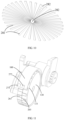
- the negative electrodes 282 are arranged radially in a star shape, and the positive electrodes are embedded in the gaps between the adjacent negative electrodes 282.
- the shapes of the central positive electrode 241 and the negative electrodes 242 are not limited herein, and they can be any of a triangle, a quadrilateral and other polygon, a circle, an ellipse, and the like. Of course, in some embodiments, positive electrodes may also be arranged on the periphery of the central positive electrode 241, and cooperate with the adjacent negative electrodes 242 to form a detection area.
- the negative electrode 242 is placed in the middle to form the central negative electrode 242 around which positive electrodes are provided.
- the number of positive electrodes can be one or plural, and the plurality of positive electrodes are arranged around the central negative electrode 242.
- the number of positive electrodes is related to the area of the negative electrode 242. The larger the area facing the positive electrodes, the greater the number of positive electrodes that can be matched with the negative electrode 242 at the same time.
- the positive electrodes 242 radiate to a periphery of the central negative electrode 242, with the central negative electrode 242 as the center.
- central negative electrode 242 and the positive electrodes are not limited herein, and they can be any of a triangle, a quadrilateral and other polygon, a circle, an ellipse, and the like.
- negative electrodes 242 may also be arranged on the periphery of the central negative electrode 242, and cooperate with the adjacent positive electrodes to form a detection area.
- the contact detection electrode 200 when the contact detection electrode 200 is mounted on the movable device body 100, contour surfaces of some mounting positions are uneven, thus after the electrode is mounted, an end of the electrode away from the movable device body 100 is uneven, resulting in a low detection accuracy (there is a case when only a single electrode contacts the detected object). In this case, it is needed to adjust the thickness of the electrode to compensate for the detection accuracy problem caused by the unevenness of the contour surfaces.
- a positive electrode or a negative electrode with a relatively small thickness is correspondingly adopted for a convex contour surface, and a negative electrode or a positive electrode with a relatively great thickness is adopted for a concave contour surface, so that ends of the paired positive electrode and negative electrode away from the movable device body 100 are flush with each other.
- the contact detection electrode 200 includes a positive electrode and a negative electrode.
- the positive electrode and/or the negative electrode have pointed teeth or sharp teeth.
- the positive electrode and/or the negative electrode have arc-shaped transitions.
- the pointed teeth are more likely to adhere to the dirt to be detected, which is conducive to improving the detection accuracy.
- the positive electrode or the negative electrode has an arc-shaped transition, it is possible to prevent the electrode from being scratched during the detection process.
- the arc shape of the arc-shaped transition can have various forms, for example, a circular arc.
- the contact detection electrodes 200 In order to adapt to different working environments, there are multiple groups of contact detection electrodes 200, where at least one group of the contact detection electrodes 200 has a thickness greater than that of the other contact detection electrodes 200. Thicknesses of the multiple groups of contact detection electrodes 200 may all be different, or some of them may be identical.
- the contact detection electrodes 200 of different thicknesses are mounted on the movable device body 100 according to requirements of different operating conditions. In some embodiments, the contact detection electrodes 200 are arranged such that the thickness thereof gradually increases along an extending direction from the edge to the middle of the movable device body 100. The movable electric device can thus detect contaminants in different situations, which is conducive to improving the adaptability of the contact detection electrode 200.
- the contact detection electrode 200 in order to extend the service life of the contact detection electrode 200, is configured as a flexible electrode.
- the contact detection electrode 200 includes a positive electrode and a negative electrode.
- the positive electrode and the negative electrode have flexibility.
- a length of the positive electrode and a length of the negative electrode are smaller than a half of the distance between the adjacent positive electrode and negative electrode.
- the contact detection electrodes 200 mounted in different positions will be described below.
- the contact detection electrode 200 is mounted on a roller 130.
- the movable device body 100 includes a housing 110 and a roller 130.
- the roller 130 is provided at a bottom portion of the housing 110.
- the contact detection electrode 200 is provided on an outer peripheral surface 131 and/or side portion of the roller 130.
- the contact detection electrode 200 may be mounted on the outer peripheral surface 131 of the roller 130 or on a axial side of the roller 130.
- the contact detection electrode can be mounted on the roller 130, for example, through a buckle, a screw, a slot, glue, etc.
- the contact detection electrode can be directly embedded in the roller 130.
- the arrangement of the contact detection electrodes 200 on the roller 130 there can be many forms.
- a plurality of contact detection electrodes 200 are arranged along a peripheral direction of the roller 130, so that detection can be carried out at any position of the roller 130, which is conducive to improving the detection efficiency and accuracy.
- the peripheral direction of the roller 130 is divided into several areas. A plurality of contact detection electrodes 200 are provided within each of these areas to detect dirt in the respective areas.
- the contact detection electrode 200 includes a positive electrode 261 and a negative electrode 265.
- the positive electrode 261 includes a plurality of positive electrode plates 262 connected by a positive electrode connector 263, and there is a positive electrode gap 268 between the two adjacent positive electrode plates 262.
- the negative electrode 265 includes a plurality of negative electrode plates 266 connected by a negative electrode connector 267, and there is a negative electrode gap 268 between the two adjacent negative electrode plates 266.
- the positive electrode 261 and the negative electrode 265 are arranged in parallel. Further, the positive electrode plates 262 are configured to correspond to the negative electrode gaps 268, and the negative electrode plates 266 are configured to correspond to the positive electrode gaps 268.
- the positive electrode 261 includes a plurality of positive electrode plates 262 which can be connected to each other through a positive electrode connector 263 or may be arranged independently of each other.
- the negative electrode 265 includes a plurality of negative electrode plates 266 which can be connected to each other through a negative electrode connector 267 or may be arranged independently of each other.
- the positive electrode connector 263 connecting the positive electrode plates 262 is provided at an end of the positive electrode plates 262 or in the middle of the positive electrode plates 262. That the positive electrode plates 262 are provided on the same side of the positive electrode connector 263 is taken as an example.
- a width of the positive electrode gap 268 is slightly larger than a width of the negative electrode plates 266, and a width of the negative electrode gap 268 is slightly wider than a width of the positive electrode plates 262.
- the negative electrode connector 267 connecting the negative electrode plates 266 is provided at an end of the negative electrode plates 266 or in the middle of the negative electrode plates 266. That the negative electrode plates 266 are provided on the same side of the negative electrode connector 267 is taken as an example.
- the plurality of positive electrode plates 262 and the positive electrode connector 263 are integrally configured, and the plurality of negative electrode plates 266 and the negative electrode connector 267 are integrally configured.
- the positive electrode 261 and the negative electrode 265 are each arranged in a ring shape, and the positive electrode 261 and the negative electrode 265 are provided around the outer peripheral surface 131 of the roller 130 along the peripheral direction of the roller 130.
- both the positive electrode 261 and the negative electrode 265 are configured to sleeve the same roller 130. With rolling of the roller 130, different positive electrode plates and negative electrode plates 266 successively contact the ground.
- the positive electrode 261 and the negative electrode 265 each covers one of the two sides of the outer peripheral surface 131 of the roller 130.
- the contact detection electrode 200 is mounted on the first baffle 170 of the roller 130.
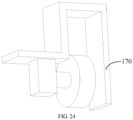
- the movable device body 100 includes a first baffle 170 provided on an axial side of the roller 130, and the contact detection electrode 200 is provided on the first baffle 170.
- the contact detection electrode 200 can be mounted on a side of the first baffle 170 facing the roller 130 or on a side of the first baffle 170 facing away from the roller 130.
- the positive electrode and the negative electrode of the contact detection electrode 200 are arranged along a front-rear direction of the first baffle 170.
- the contact detection electrode 200 is mounted at a bottom portion of the first baffle 170.
- this distance is greater than the thickness of the contact detection electrode 200. That is, a gap is guaranteed to remain between the contact detection electrode and the ground, to avoid a direct friction of the contact detection electrode 200 with the ground.
- the positive electrode and the negative electrode of the contact detection electrode 200 can be mounted on the roller 130 and the first baffle 170 respectively.
- the contact detection electrode 200 includes a positive electrode and a negative electrode.
- a side of the first baffle 170 facing the roller 130 is provided with a positive electrode and/or a negative electrode, and a side of the roller 130 facing the first baffle 170 is provided with a negative electrode and/or a positive electrode.
- the detection area further includes a detection area formed by the positive electrode located on the roller 130 or the first baffle 170 and the negative electrode located on the first baffle 170 or the roller 130, in addition to an area formed by the positive and negative electrodes on the axis sides of the roller 130 and an area formed by the positive and negative electrodes on the first baffle.
- the first baffle 170 not only blocks external interference with the roller 130, but also provides support for a rotating shaft of the roller 130.
- the rotating shaft of the roller 130 is rotatably connected to the first baffle 170.
- an end of the rotating shaft of the roller 130 is connected to a motor, and the other end thereof is inserted into a shaft hole in the first gear.
- the peripheral side wall of the roller is provided with a mounting cavity.
- the contact detection electrode is mounted in the mounting cavity.
- a top portion of the contact detection electrode is flush with an opening of the mounting cavity or lower than an edge of the opening.
- the contact detection electrode and the peripheral side wall of the roller contact the ground together, the friction is relatively small.
- the contact detection electrode does not directly contact the ground, while only the peripheral side wall of the roller directly contacts the ground.
- the contact detection electrode has no friction force, which is conducive to improving the service life of the contact detection electrode, avoiding damage, and ensuring accuracy.
- the contact detection electrode can also be configured to protrude beyond the opening of the mounting cavity, so that the contact detection sensor may make an earlier contact with the object to be detected than the roller in the corresponding position, thereby effectively ensuring a sampling volume of the contact detection electrode and facilitating improvement of the detection efficiency.
- the contact detection electrode 200 is mounted on a second baffle 160.
- the movable device body 100 includes a second baffle 160 provided on an upper portion of the roller 130, and the contact detection electrode 200 is mounted on the second baffle 160.
- the second baffle 160 is disposed above the roller 130 and extends along the outer peripheral surface of the roller 130 to prevent the roller 130 in rotation from dumping liquid dirt onto the movable device body 100.
- the contact detection electrode 200 is provided at an end (a front end or a rear end) of the second baffle 160 adjacent to the roller 130.
- the positive electrode 271 and the negative electrode 272 of the contact detection electrode 200 can be arranged along a length direction of the second baffle 160, or along a width direction of the second baffle 160.
- the positive electrode 271 can be mounted on the second baffle 160 or the roller 130, and the negative electrode 272 can be correspondingly mounted on the roller 130 or the second baffle 160.
- the contact detection electrode 200 includes a positive electrode 271 and a negative electrode 272.
- the positive electrode 271 and/or the negative electrode 272 are mounted on the second baffle 160, and the negative electrode 272 and/or the positive electrode 271 are mounted on the roller 130.
- the detection area is not only formed on the contact detection electrodes 200 on the second baffle 160 and on the roller 130, but also formed on an area between the second baffle 160 and the roller 130.
- multiple groups of contact detection electrodes 200 are provided, and are distributed at multiple positions of the movable device body 100.
- the position of the diffusible dirt may be determined according to the position of the corresponding contact electrode. Therefore, it is beneficial for the main control circuit to control movement of the movable electric device to avoid the movement of the dirt, thereby avoiding diffusion of the diffusible dirt.
- the contact detection electrode 200 is mounted on the chassis 120.
- the movable device body 100 includes a chassis 120 on which the contact detection electrode 200 is provided.
- the chassis 120 is located at a bottom portion of the movable device body 100, and the shape and structure of the chassis 120 are configured as required.
- the chassis 120 is provided with an opening through which the rolling brush 150 operates, and the opening is located in the middle of the chassis 120.
- the position of the opening can be configured according to actual conditions.
- Two rollers 130 are located on two ends of the opening respectively. That is, two rollers 130 are located on two sides of the rolling brush 150.
- the contact electrodes can be provided, such as any of the front, rear, left, right, and middle portion of the chassis 120.
- There are also many manners of mounting the contact detection electrodes 200 for example, through a buckle, a screw, gluing or the like.
- a mounting slot can also be provided on the chassis 120 to mount the electrode within the mounting slot.
- the contact detection electrode 200 includes an insulating substrate 215, and a substrate positive electrode 216 and a substrate negative electrode 217 which are mounted on the insulating substrate 215. A detection area is formed between the substrate positive electrode 216 and the substrate negative electrode 217.
- the substrate positive electrode 216 and the substrate negative electrode 217 are mounted on an insulating substrate 215, and then the substrate and the chassis 120 are configured to be detachably connected. Therefore, mounting and dismounting of the substrate positive electrode 216 and the substrate negative electrode 217 and the chassis 120 are converted to mounting and dismounting of the insulating substrate 215 and the chassis 120.
- the insulating substrate 215 is an independent component, it can be automatically manufactured together with the substrate positive electrode 216 and the substrate negative electrode 217, which is conducive to simplifying the mounting of the substrate positive electrode 216 and the substrate negative electrode 217 and improving the mounting accuracy thereof.
- the above examples can be referred to. All examples where mounting can be carried out through the insulating substrate 215, such as dot matrix electrodes, star-shaped radiation electrodes, central electrodes, curvilinear electrodes, comb-teeth electrodes and the like can be implemented in the present example.
- the contact detection electrode 200 includes a fixing part 283 and a detecting part 284 connected to the fixing part 283.
- the fixing part 283 is detachably connected to the chassis 120, and the detecting part 284 extends in a direction away from the fixing part 283.
- the fixing part 283 is provided in an elongate-strip shape.
- the detecting part 284 includes a plurality of detecting teeth arranged along a length direction of the fixing part 284. Polarities of the detection teeth can be identical or different. That is, the positive electrode and the negative electrode can be provided on the same fixing part 284.
- the electrodes can also be configured to be identical. In this case, a plurality of fixing parts 283 and detecting parts 284 need to be provided to mate with each other.
- the contact detection electrode 200 is provided in an elongate-strip shape, and extends along a peripheral direction of the chassis 120.
- the contact detection electrode 200 includes a positive electrode and a negative electrode.
- the positive electrode and the negative electrode are provided in an elongate-strip shape.
- the positive electrode and the negative electrode extend along an extending direction of the edge of the chassis 120.
- the numbers of positive electrodes and negative electrodes can be multiple.
- the positive electrodes and the negative electrodes are arranged in a staggered manner.
- the contact detection electrode 200 is configured to be adjacent to an edge of a front side of the chassis 120.
- the electrode can not only perform detection in a wide range, but also can make contact with the object to be detected as soon as possible, so as to avoid the sweeping robot from damaging the object to be detected as much as possible.
- the contact detection electrode 200 can sample the most complete sample as soon as possible for detection, thereby fundamentally preventing the chassis 120 from carrying the object to be detected and contaminating more places and greatly improving the detection efficiency and accuracy.
- the edge of the front side of the chassis 120 is configured in an arc shape, and the contact detection electrode 200 is also configured in an arc shape to detect the object to be detected in the maximum range.
- the contact detection electrode is mounted at a position adjacent to the side brush 140.
- the movable device body 100 includes a side brush 140.
- a mounting platform 141 of the side brush 140 protrudes outward, and the contact detection electrode 200 is provided on the mounting platform 141.
- the side brush 140 includes a rotating shaft and a brush body provided on the rotating shaft.
- the number of brush bodies can be plural, for example, three.
- the brush bodies extend outward from the rotating shaft to the outside of the chassis 120, and rotate along with the rotating shaft.
- the contact detection electrode 200 provided on the mounting platform 141 can have various forms, such as a dot matrix electrode. For more details, the above-mentioned examples can be referred to and will not be repeated here.
- the number of side brushes 140 is configured to be two.
- the two side brushes 140 are configured on the left and right sides of a front side of the bottom portion of the housing 110.
- the contact detection electrode 200 is mounted on a side of the mounting platform 141 facing the middle.
- the contact detection electrode 200 can be directly mounted on the side brush 140.
- the contact detection electrode 200 for example, a flexible electrode, is arranged in parallel with bristles on the side brush 140, and detects the dirt during operation of the side brush 140.
- the contact detection electrode 200 is mounted on the rolling brush 150.
- the movable device body 100 includes a rolling brush 150 provided in the middle of the housing 110.
- the contact detection electrode 200 is mounted on the rolling brush 150.
- the contact detection electrode 200 is a flexible electrode.
- the contact detection electrode 200 is arranged in parallel with bristles of the rolling brush 150.
- the positive electrode and the negative electrode of the contact detection electrode 200 are arranged in a spaced manner among the bristles, and the dirt is detected along with rolling and cleaning of the rolling brush 150.
- the contact detection electrode 200 on the rolling brush 150 and the contact detection electrode 200 on the side brush 140 can be provided simultaneously to ensure the detection accuracy.
- the contact detection electrode 200 is mounted on a peripheral side wall of the housing 110.
- the movable device body 100 includes a housing 110.
- the contact detection electrode 200 is provided on a peripheral side wall of the housing 110.
- There are many manners of mounting the contact detection electrode 200 on the peripheral side wall such as through a buckle, a screw, glue, slot embedding and the like.
- There are also many forms of contact detection electrodes 200 mounted on the peripheral side wall and some examples are given below for description.
- the contact detection electrode 200 is attached to a surface of the housing 110.
- the contact detection electrode 200 includes a flexible substrate 291.
- the positive and negative electrodes of the contact detection electrode 200 are mounted on the flexible substrate 291.
- the flexible substrate 291 is wound and mounted on the peripheral side wall of the housing 110.
- the flexible substrate 291 is configured in an elongate-strip shape.
- the positive and negative electrodes are arranged sequentially in a staggered manner on the surface of the flexible substrate 291, and there are gaps between the positive electrodes and the negative electrodes.
- a lower side of the flexible substrate 291 is provided adjacent to the chassis 120, so that the positive electrodes and the negative electrodes are more close to the ground, thereby facilitating the detection by the contact detection electrode 200.
- the positive electrode includes a plurality of positive electrode plates
- the negative electrode includes a plurality of negative electrode plates 293.
- the positive electrode plates and the negative electrode plates 293 are arranged sequentially in a staggered manner on the flexible substrate 291.
- ends of all the positive electrode plates 292 are connected together by a conductive connector.
- ends of all the negative electrode plates 293 are connected together by a conductive connector.
- the connector connecting the positive electrode plates 292 and the connector connecting the negative electrode plates 293 are respectively located on two opposite sides of the flexible insulating substrate.
- the positive electrode plates 292 and the negative electrode plates 293 extend along a length direction of the flexible substrate 291, or along a width direction of the flexible substrate 291. That is, the positive electrode plates 292 can extend along the length direction of the flexible substrate 291 or along the width direction of the flexible substrate 291.
- the negative electrode plates 293 and the positive electrode plates 292 are arranged in parallel. That is, the negative electrode plates 293 can extend along the length direction of the flexible substrate 291 or along the width direction of the flexible substrate 291.
- the positive electrode plates 292 and/or the negative electrode plates 293 are attached and fixed to the surface of the flexible substrate 291.
- attaching and fixing for example, by glue or by slot fitting.
- an end of the positive electrode plates and/or the negative electrode plates is connected to the surface of the flexible substrate 291, and the other end thereof extends in a direction away from the flexible substrate 291.
- the positive electrode plates 292 and/or the negative electrode plates 293 extend toward an end away from the flexible substrate 291, so that a deeper detection area is formed between the adjacent positive electrode plates 292 and the negative electrode plates 293.
- a height of the detection area (a distance from the chassis 120 or a distance from the ground) is equivalent to a height of the flexible substrate 291. In this way, the contact detection electrode 200 can increase the area of contact between the dirt and the electrode during the detection process, thereby effectively improving the detection accuracy.
- the flexible substrate 291 is mounted on a lower portion of the peripheral side wall of the housing 110, and the positive electrode plates and/or the negative electrode plates extend toward the bottom portion of the housing 110.
- the flexible substrate 291 By mounting the flexible substrate 291 on the lower portion of the peripheral side wall and configuring the positive electrode plates 292 and/or the negative electrode plates 293 to extend toward the bottom portion, a detection area enclosed by the positive electrode plates 292 and the negative electrode plates 293 is made more close to the chassis 120 or the bottom surface, such that the area of contact with the dirt during the detection process is further increased, thereby efficiently improving the detection accuracy.
- the positive electrode includes positive electrode bumps 294, and the negative electrode includes negative electrode bumps 295.
- the positive electrode bumps 294 and the negative electrode bumps 295 are arranged sequentially in a dot matrix.
- the dot matrix is arranged on the surface of the flexible substrate 291. Since the areas of the positive convex points 294 and the negative convex points 295 are small, they can be set very flexibly as required, so that the detection area can also be formed very flexibly, which is conducive to improving the adaptability of the electrode 200.
Landscapes
- Engineering & Computer Science (AREA)
- Chemical & Material Sciences (AREA)
- Mechanical Engineering (AREA)
- Immunology (AREA)
- Electrochemistry (AREA)
- Life Sciences & Earth Sciences (AREA)
- Analytical Chemistry (AREA)
- Biochemistry (AREA)
- General Health & Medical Sciences (AREA)
- General Physics & Mathematics (AREA)
- Physics & Mathematics (AREA)
- Pathology (AREA)
- Health & Medical Sciences (AREA)
- Robotics (AREA)
- Chemical Kinetics & Catalysis (AREA)
- Investigating Or Analyzing Materials By The Use Of Electric Means (AREA)
- Measurement Of Length, Angles, Or The Like Using Electric Or Magnetic Means (AREA)
- Electric Vacuum Cleaner (AREA)
- Telephone Set Structure (AREA)
- Force Measurement Appropriate To Specific Purposes (AREA)
Claims (9)
- Dispositif électrique mobile de détection de saleté sur le sol ou de nettoyage des déchets, comprenant :un corps de dispositif mobile (100), comprenant un moyen d'entraînement électrique ; etune électrode de détection de contact (200), montée sur le corps de dispositif mobile (100),dans lequel, en réponse à un contact de l'électrode de détection de contact (200) avec des saletés diffusibles, au moins un élément parmi une résistance, une capacité ou une impédance de l'électrode de détection de contact (200) varie ;caractérisé en ce que le corps de dispositif mobile (100) comprend un boîtier (110) et un rouleau (130) disposé dans une partie inférieure du boîtier (110) ; l'électrode de détection de contact (200) est placée sur une surface périphérique externe (131) et/ou sur une partie latérale du rouleau (130).
- Dispositif électrique mobile selon la revendication 1, dans lequel l'électrode de détection de contact (200) comprend :une électrode positive en forme d'anneau (211) ; etune électrode négative en forme d'anneau (212), l'électrode négative en forme d'anneau (212) étant fournie pour gainer une face extérieure de l'électrode positive en forme d'anneau (211), ou l'électrode négative en forme d'anneau (212) étant disposée à l'intérieur de l'électrode positive en forme d'anneau (211) ;dans lequel une zone de détection est formée entre l'électrode positive en forme d'anneau (211) et l'électrode négative en forme d'anneau (212).
- Dispositif électrique mobile selon la revendication 1, dans lequel l'électrode de détection de contact (200) comprend :une électrode positive (251) en dents de peigne, comprenant un bras de connexion d'électrode positive (252) et une pluralité de dents d'électrode positive (253) disposée dans le sens de la longueur du bras de connexion d'électrode positive (252) ; etune électrode négative (254) en dents de peigne, comprenant un bras de connexion d'électrode négative (256) et une pluralité de dents d'électrode négative (255) disposée dans le sens de la longueur du bras de connexion d'électrode négative (256) ;dans lequel les dents d'électrode positive (253) et les dents d'électrode négative (255) sont disposées en quinconce pour former une zone de détection entre les dents d'électrode positive (253) et les dents d'électrode négative (255).
- Dispositif électrique mobile selon la revendication 1, dans lequel l'électrode de détection de contact (200) comprend :une électrode positive curviligne (222), courbée et s'étendant dans une direction ; etune électrode négative curviligne (221), s'étendant le long d'une direction longitudinale de l'électrode positive curviligne (222) pour former une zone de détection entre l'électrode positive curviligne (222) et l'électrode négative curviligne (221).
- Dispositif électrique mobile selon la revendication 1, dans lequel l'électrode de détection de contact (200) comprend une pluralité de points d'électrode positive (231) et de points d'électrode négative (232) disposés en quinconce, une zone de détection est formée entre les points d'électrode positive (231) et les points d'électrode négative (232).
- Dispositif électrique mobile selon la revendication 1, dans lequel l'électrode de détection de contact (200) comprend :une pluralité de plaques d'électrode positive (281), disposée radialement du centre vers la périphérie ; etune pluralité d'électrodes négatives (282), située dans des espaces entre des plaques d'électrode positive adjacentes (281), une zone de détection est formée entre les plaques d'électrode positive (281) et les électrodes négatives (282) ; oul'électrode de détection de contact (200) comprend :une pluralité de plaques d'électrode négative (282), disposée radialement du centre vers la périphérie ; etune pluralité d'électrodes positives, située dans des espaces entre des plaques d'électrode négative (282) adjacentes, une zone de détection est formée entre les plaques d'électrode négative (282) et les électrodes positives.
- Dispositif électrique mobile selon la revendication 1, dans lequel l'électrode de détection de contact (200) comprend :une électrode positive centrale (241) et une pluralité d'électrodes négatives (242) disposées sur le pourtour de l'électrode positive centrale (241), une zone de détection est formée entre l'électrode positive centrale (241) et les électrodes négatives (242) ; ouune électrode négative centrale (242) et une pluralité d'électrodes positives disposée circonférentiellement autour de l'électrode négative centrale (242), une zone de détection est formée entre l'électrode négative centrale (242) et les électrodes positives.
- Dispositif électrique mobile selon l'une quelconque des revendications précédentes, dans lequel le corps de dispositif mobile (100) comprend un premier déflecteur (170) fourni sur un côté axial du rouleau (130), l'électrode de détection de contact (200) est fournie sur le premier déflecteur (170).
- Dispositif électrique mobile selon l'une quelconque des revendications 1 à 7, dans lequel le corps de dispositif mobile (100) comprend un second déflecteur (160) fourni sur une partie supérieure du rouleau (130), l'électrode de détection de contact (200) est montée sur le second déflecteur (160).
Applications Claiming Priority (1)
| Application Number | Priority Date | Filing Date | Title |
|---|---|---|---|
| PCT/CN2018/114887 WO2020093389A1 (fr) | 2018-11-09 | 2018-11-09 | Dispositif électrique mobile |
Publications (3)
| Publication Number | Publication Date |
|---|---|
| EP3858209A1 EP3858209A1 (fr) | 2021-08-04 |
| EP3858209A4 EP3858209A4 (fr) | 2021-11-03 |
| EP3858209B1 true EP3858209B1 (fr) | 2024-06-19 |
Family
ID=70611682
Family Applications (1)
| Application Number | Title | Priority Date | Filing Date |
|---|---|---|---|
| EP18939194.9A Active EP3858209B1 (fr) | 2018-11-09 | 2018-11-09 | Dispositif électrique mobile |
Country Status (6)
| Country | Link |
|---|---|
| US (1) | US11937751B2 (fr) |
| EP (1) | EP3858209B1 (fr) |
| JP (1) | JP7248792B2 (fr) |
| KR (1) | KR102461562B1 (fr) |
| CN (1) | CN111491547B (fr) |
| WO (1) | WO2020093389A1 (fr) |
Families Citing this family (3)
| Publication number | Priority date | Publication date | Assignee | Title |
|---|---|---|---|---|
| CN111175350A (zh) * | 2018-11-09 | 2020-05-19 | 广东美的白色家电技术创新中心有限公司 | 接触式检测电极及可移动电动装置 |
| KR102297914B1 (ko) * | 2019-07-05 | 2021-09-06 | 엘지전자 주식회사 | 인공지능을 이용한 이동 로봇 및 이동 로봇의 제어방법 |
| JP1708870S (ja) * | 2021-03-29 | 2022-03-02 | 掃除ロボット |
Family Cites Families (22)
| Publication number | Priority date | Publication date | Assignee | Title |
|---|---|---|---|---|
| JPH076938B2 (ja) * | 1986-11-21 | 1995-01-30 | 株式会社日本自動車部品総合研究所 | 水滴検出装置 |
| JPH073444B2 (ja) | 1987-10-27 | 1995-01-18 | 株式会社日本システム研究所 | 導電性測定装置 |
| PT1077634E (pt) * | 1998-05-13 | 2003-12-31 | Cygnus Therapeutic Systems | Monitorizacao de substancias fisiologicas a analisar |
| US6956348B2 (en) * | 2004-01-28 | 2005-10-18 | Irobot Corporation | Debris sensor for cleaning apparatus |
| JP2004057704A (ja) | 2002-07-31 | 2004-02-26 | Ntt Docomo Inc | 電極装置 |
| US8428778B2 (en) * | 2002-09-13 | 2013-04-23 | Irobot Corporation | Navigational control system for a robotic device |
| JP2005224264A (ja) * | 2004-02-10 | 2005-08-25 | Funai Electric Co Ltd | 自走式掃除機 |
| KR101121416B1 (ko) | 2010-04-27 | 2012-03-16 | 김진연 | 액체 감지수단을 갖는 이동체 |
| KR101302149B1 (ko) * | 2011-08-18 | 2013-08-30 | 이상열 | 로봇청소기의 장애물 감지장치 및 이를 구비한 로봇청소기 |
| KR101366860B1 (ko) | 2011-09-20 | 2014-02-21 | 엘지전자 주식회사 | 이동 로봇 및 이의 제어 방법 |
| DE102011083336A1 (de) | 2011-09-23 | 2013-03-28 | Ident Technology Ag | Elektrodenkonfiguration zur Positionserfassung sowie Verfahren zur Positionserfassung |
| DE202012000569U1 (de) * | 2012-01-20 | 2013-04-23 | Seuffer Gmbh & Co.Kg | Sensorvorrichtung zur Erfassung von Flüssigkeitseigenschaften |
| KR102021894B1 (ko) | 2012-10-18 | 2019-11-04 | 엘지전자 주식회사 | 자동 청소기의 제어방법 |
| KR101495191B1 (ko) * | 2013-10-21 | 2015-02-24 | 엘지전자 주식회사 | 로봇 청소기 및 이의 먼지 감지 방법 |
| JP6342711B2 (ja) | 2014-05-20 | 2018-06-13 | 株式会社テクノバ | 異物検知機能を備えた非接触給電装置 |
| CN106137058B (zh) | 2015-04-15 | 2019-08-06 | 小米科技有限责任公司 | 清洁机器人系统及虚拟墙检测方法 |
| KR101766296B1 (ko) | 2015-10-23 | 2017-08-08 | 아주대학교산학협력단 | 액체 제거 로봇 청소기 |
| CN107913030A (zh) | 2016-10-06 | 2018-04-17 | 日立空调·家用电器株式会社 | 自走式电动吸尘器 |
| CN106333631B (zh) * | 2016-11-11 | 2022-03-08 | 北京地平线机器人技术研发有限公司 | 可移动清洁设备及其控制方法 |
| CN206403711U (zh) | 2016-11-11 | 2017-08-15 | 北京地平线机器人技术研发有限公司 | 可移动清洁设备 |
| KR102206201B1 (ko) | 2017-08-02 | 2021-01-22 | 삼성전자주식회사 | 청소 로봇 및 그 제어방법 |
| EP3858211B1 (fr) * | 2018-11-09 | 2025-03-12 | Guangdong Midea White Home Appliance Technology Innovation Center Co., Ltd. | Appareil électronique mobile |
-
2018
- 2018-11-09 US US17/287,529 patent/US11937751B2/en active Active
- 2018-11-09 EP EP18939194.9A patent/EP3858209B1/fr active Active
- 2018-11-09 JP JP2021523233A patent/JP7248792B2/ja active Active
- 2018-11-09 KR KR1020217014041A patent/KR102461562B1/ko active Active
- 2018-11-09 WO PCT/CN2018/114887 patent/WO2020093389A1/fr not_active Ceased
- 2018-11-09 CN CN201880039203.8A patent/CN111491547B/zh active Active
Also Published As
| Publication number | Publication date |
|---|---|
| JP2022506075A (ja) | 2022-01-17 |
| CN111491547A (zh) | 2020-08-04 |
| CN111491547B (zh) | 2022-02-11 |
| JP7248792B2 (ja) | 2023-03-29 |
| EP3858209A4 (fr) | 2021-11-03 |
| WO2020093389A1 (fr) | 2020-05-14 |
| KR102461562B1 (ko) | 2022-11-01 |
| EP3858209A1 (fr) | 2021-08-04 |
| US11937751B2 (en) | 2024-03-26 |
| US20210393100A1 (en) | 2021-12-23 |
| KR20210072075A (ko) | 2021-06-16 |
Similar Documents
| Publication | Publication Date | Title |
|---|---|---|
| EP3858209B1 (fr) | Dispositif électrique mobile | |
| EP3685728B1 (fr) | Dispositif de nettoyage et composant de brosse à rouleau | |
| CN106333631B (zh) | 可移动清洁设备及其控制方法 | |
| JP2004148021A (ja) | 自走式掃除機 | |
| JP2020529933A (ja) | ロボット用の容量性ケーシング要素、このようなケーシング要素を備えたロボット | |
| CN109419455A (zh) | 具有电机驱动的地面处理元件的地面处理设备 | |
| EP3858210B1 (fr) | Robot de balayage | |
| US12154748B2 (en) | Power device for continuously detecting entrance and exit positions | |
| CN116784731A (zh) | 清洁设备的边扫定停方法、边扫组件及清洁设备 | |
| CA2014160A1 (fr) | Systeme de balais pour moteur a courant continu | |
| US12191096B2 (en) | Power device monitoring system | |
| EP1414054B1 (fr) | Bagues nettoyantes pour isolateur entrainees par le vent | |
| US20120085190A1 (en) | Mobile robotic vacuum cleaner with a detachable electrical fan | |
| US20230144848A1 (en) | Power device for continuously detecting entry and exit positions | |
| KR101121416B1 (ko) | 액체 감지수단을 갖는 이동체 | |
| CN217565921U (zh) | 一种扫地机器人及清洁设备 | |
| CN110270456B (zh) | 一种可自动检测传送带上零件种类选择是否喷漆的机器人 | |
| CN216962325U (zh) | 清洁组件及清洁基部 | |
| CN222077331U (zh) | 弧形镜面清洗机构 | |
| KR20110122332A (ko) | 충돌 감지 장치 및 이를 이용한 청소 로봇 | |
| CN217852790U (zh) | 一种拖地机滚刷的v型结构卡扣 | |
| CN222303861U (zh) | 清洁组件、清洁设备和清洁系统 | |
| CN223585890U (zh) | 地刷装置、清洁设备和清洁系统 | |
| KR101585526B1 (ko) | 대면적 기판의 접촉식 세정장치 | |
| KR101220848B1 (ko) | 접촉 감지 장치 및 이를 이용한 청소 로봇 |
Legal Events
| Date | Code | Title | Description |
|---|---|---|---|
| STAA | Information on the status of an ep patent application or granted ep patent |
Free format text: STATUS: THE INTERNATIONAL PUBLICATION HAS BEEN MADE |
|
| PUAI | Public reference made under article 153(3) epc to a published international application that has entered the european phase |
Free format text: ORIGINAL CODE: 0009012 |
|
| STAA | Information on the status of an ep patent application or granted ep patent |
Free format text: STATUS: REQUEST FOR EXAMINATION WAS MADE |
|
| 17P | Request for examination filed |
Effective date: 20210430 |
|
| AK | Designated contracting states |
Kind code of ref document: A1 Designated state(s): AL AT BE BG CH CY CZ DE DK EE ES FI FR GB GR HR HU IE IS IT LI LT LU LV MC MK MT NL NO PL PT RO RS SE SI SK SM TR |
|
| A4 | Supplementary search report drawn up and despatched |
Effective date: 20211006 |
|
| RIC1 | Information provided on ipc code assigned before grant |
Ipc: A47L 9/28 20060101ALI20210930BHEP Ipc: B25J 11/00 20060101ALI20210930BHEP Ipc: A47L 11/24 20060101AFI20210930BHEP |
|
| DAV | Request for validation of the european patent (deleted) | ||
| DAX | Request for extension of the european patent (deleted) | ||
| STAA | Information on the status of an ep patent application or granted ep patent |
Free format text: STATUS: EXAMINATION IS IN PROGRESS |
|
| 17Q | First examination report despatched |
Effective date: 20230628 |
|
| GRAP | Despatch of communication of intention to grant a patent |
Free format text: ORIGINAL CODE: EPIDOSNIGR1 |
|
| STAA | Information on the status of an ep patent application or granted ep patent |
Free format text: STATUS: GRANT OF PATENT IS INTENDED |
|
| INTG | Intention to grant announced |
Effective date: 20240405 |
|
| GRAS | Grant fee paid |
Free format text: ORIGINAL CODE: EPIDOSNIGR3 |
|
| GRAA | (expected) grant |
Free format text: ORIGINAL CODE: 0009210 |
|
| STAA | Information on the status of an ep patent application or granted ep patent |
Free format text: STATUS: THE PATENT HAS BEEN GRANTED |
|
| AK | Designated contracting states |
Kind code of ref document: B1 Designated state(s): AL AT BE BG CH CY CZ DE DK EE ES FI FR GB GR HR HU IE IS IT LI LT LU LV MC MK MT NL NO PL PT RO RS SE SI SK SM TR |
|
| REG | Reference to a national code |
Ref country code: GB Ref legal event code: FG4D |
|
| REG | Reference to a national code |
Ref country code: CH Ref legal event code: EP |
|
| REG | Reference to a national code |
Ref country code: DE Ref legal event code: R096 Ref document number: 602018070905 Country of ref document: DE |
|
| PG25 | Lapsed in a contracting state [announced via postgrant information from national office to epo] |
Ref country code: BG Free format text: LAPSE BECAUSE OF FAILURE TO SUBMIT A TRANSLATION OF THE DESCRIPTION OR TO PAY THE FEE WITHIN THE PRESCRIBED TIME-LIMIT Effective date: 20240619 |
|
| PG25 | Lapsed in a contracting state [announced via postgrant information from national office to epo] |
Ref country code: HR Free format text: LAPSE BECAUSE OF FAILURE TO SUBMIT A TRANSLATION OF THE DESCRIPTION OR TO PAY THE FEE WITHIN THE PRESCRIBED TIME-LIMIT Effective date: 20240619 Ref country code: FI Free format text: LAPSE BECAUSE OF FAILURE TO SUBMIT A TRANSLATION OF THE DESCRIPTION OR TO PAY THE FEE WITHIN THE PRESCRIBED TIME-LIMIT Effective date: 20240619 |
|
| REG | Reference to a national code |
Ref country code: LT Ref legal event code: MG9D |
|
| PG25 | Lapsed in a contracting state [announced via postgrant information from national office to epo] |
Ref country code: GR Free format text: LAPSE BECAUSE OF FAILURE TO SUBMIT A TRANSLATION OF THE DESCRIPTION OR TO PAY THE FEE WITHIN THE PRESCRIBED TIME-LIMIT Effective date: 20240920 |
|
| REG | Reference to a national code |
Ref country code: NL Ref legal event code: MP Effective date: 20240619 |
|
| PG25 | Lapsed in a contracting state [announced via postgrant information from national office to epo] |
Ref country code: LV Free format text: LAPSE BECAUSE OF FAILURE TO SUBMIT A TRANSLATION OF THE DESCRIPTION OR TO PAY THE FEE WITHIN THE PRESCRIBED TIME-LIMIT Effective date: 20240619 |
|
| PG25 | Lapsed in a contracting state [announced via postgrant information from national office to epo] |
Ref country code: NO Free format text: LAPSE BECAUSE OF FAILURE TO SUBMIT A TRANSLATION OF THE DESCRIPTION OR TO PAY THE FEE WITHIN THE PRESCRIBED TIME-LIMIT Effective date: 20240919 Ref country code: LV Free format text: LAPSE BECAUSE OF FAILURE TO SUBMIT A TRANSLATION OF THE DESCRIPTION OR TO PAY THE FEE WITHIN THE PRESCRIBED TIME-LIMIT Effective date: 20240619 Ref country code: HR Free format text: LAPSE BECAUSE OF FAILURE TO SUBMIT A TRANSLATION OF THE DESCRIPTION OR TO PAY THE FEE WITHIN THE PRESCRIBED TIME-LIMIT Effective date: 20240619 Ref country code: GR Free format text: LAPSE BECAUSE OF FAILURE TO SUBMIT A TRANSLATION OF THE DESCRIPTION OR TO PAY THE FEE WITHIN THE PRESCRIBED TIME-LIMIT Effective date: 20240920 Ref country code: FI Free format text: LAPSE BECAUSE OF FAILURE TO SUBMIT A TRANSLATION OF THE DESCRIPTION OR TO PAY THE FEE WITHIN THE PRESCRIBED TIME-LIMIT Effective date: 20240619 Ref country code: BG Free format text: LAPSE BECAUSE OF FAILURE TO SUBMIT A TRANSLATION OF THE DESCRIPTION OR TO PAY THE FEE WITHIN THE PRESCRIBED TIME-LIMIT Effective date: 20240619 Ref country code: RS Free format text: LAPSE BECAUSE OF FAILURE TO SUBMIT A TRANSLATION OF THE DESCRIPTION OR TO PAY THE FEE WITHIN THE PRESCRIBED TIME-LIMIT Effective date: 20240919 |
|
| PG25 | Lapsed in a contracting state [announced via postgrant information from national office to epo] |
Ref country code: NL Free format text: LAPSE BECAUSE OF FAILURE TO SUBMIT A TRANSLATION OF THE DESCRIPTION OR TO PAY THE FEE WITHIN THE PRESCRIBED TIME-LIMIT Effective date: 20240619 |
|
| REG | Reference to a national code |
Ref country code: AT Ref legal event code: MK05 Ref document number: 1695362 Country of ref document: AT Kind code of ref document: T Effective date: 20240619 |
|
| PG25 | Lapsed in a contracting state [announced via postgrant information from national office to epo] |
Ref country code: NL Free format text: LAPSE BECAUSE OF FAILURE TO SUBMIT A TRANSLATION OF THE DESCRIPTION OR TO PAY THE FEE WITHIN THE PRESCRIBED TIME-LIMIT Effective date: 20240619 |
|
| PG25 | Lapsed in a contracting state [announced via postgrant information from national office to epo] |
Ref country code: PT Free format text: LAPSE BECAUSE OF FAILURE TO SUBMIT A TRANSLATION OF THE DESCRIPTION OR TO PAY THE FEE WITHIN THE PRESCRIBED TIME-LIMIT Effective date: 20241021 |
|
| PG25 | Lapsed in a contracting state [announced via postgrant information from national office to epo] |
Ref country code: PT Free format text: LAPSE BECAUSE OF FAILURE TO SUBMIT A TRANSLATION OF THE DESCRIPTION OR TO PAY THE FEE WITHIN THE PRESCRIBED TIME-LIMIT Effective date: 20241021 |
|
| PGFP | Annual fee paid to national office [announced via postgrant information from national office to epo] |
Ref country code: DE Payment date: 20241122 Year of fee payment: 7 |
|
| P01 | Opt-out of the competence of the unified patent court (upc) registered |
Free format text: CASE NUMBER: APP_64769/2024 Effective date: 20241206 |
|
| PG25 | Lapsed in a contracting state [announced via postgrant information from national office to epo] |
Ref country code: PL Free format text: LAPSE BECAUSE OF FAILURE TO SUBMIT A TRANSLATION OF THE DESCRIPTION OR TO PAY THE FEE WITHIN THE PRESCRIBED TIME-LIMIT Effective date: 20240619 |
|
| PGFP | Annual fee paid to national office [announced via postgrant information from national office to epo] |
Ref country code: GB Payment date: 20241122 Year of fee payment: 7 |
|
| PGFP | Annual fee paid to national office [announced via postgrant information from national office to epo] |
Ref country code: FR Payment date: 20241122 Year of fee payment: 7 |
|
| PG25 | Lapsed in a contracting state [announced via postgrant information from national office to epo] |
Ref country code: EE Free format text: LAPSE BECAUSE OF FAILURE TO SUBMIT A TRANSLATION OF THE DESCRIPTION OR TO PAY THE FEE WITHIN THE PRESCRIBED TIME-LIMIT Effective date: 20240619 |
|
| PG25 | Lapsed in a contracting state [announced via postgrant information from national office to epo] |
Ref country code: AT Free format text: LAPSE BECAUSE OF FAILURE TO SUBMIT A TRANSLATION OF THE DESCRIPTION OR TO PAY THE FEE WITHIN THE PRESCRIBED TIME-LIMIT Effective date: 20240619 Ref country code: IS Free format text: LAPSE BECAUSE OF FAILURE TO SUBMIT A TRANSLATION OF THE DESCRIPTION OR TO PAY THE FEE WITHIN THE PRESCRIBED TIME-LIMIT Effective date: 20241019 |
|
| PG25 | Lapsed in a contracting state [announced via postgrant information from national office to epo] |
Ref country code: CZ Free format text: LAPSE BECAUSE OF FAILURE TO SUBMIT A TRANSLATION OF THE DESCRIPTION OR TO PAY THE FEE WITHIN THE PRESCRIBED TIME-LIMIT Effective date: 20240619 |
|
| PG25 | Lapsed in a contracting state [announced via postgrant information from national office to epo] |
Ref country code: RO Free format text: LAPSE BECAUSE OF FAILURE TO SUBMIT A TRANSLATION OF THE DESCRIPTION OR TO PAY THE FEE WITHIN THE PRESCRIBED TIME-LIMIT Effective date: 20240619 Ref country code: SK Free format text: LAPSE BECAUSE OF FAILURE TO SUBMIT A TRANSLATION OF THE DESCRIPTION OR TO PAY THE FEE WITHIN THE PRESCRIBED TIME-LIMIT Effective date: 20240619 |
|
| PG25 | Lapsed in a contracting state [announced via postgrant information from national office to epo] |
Ref country code: ES Free format text: LAPSE BECAUSE OF FAILURE TO SUBMIT A TRANSLATION OF THE DESCRIPTION OR TO PAY THE FEE WITHIN THE PRESCRIBED TIME-LIMIT Effective date: 20240619 Ref country code: SM Free format text: LAPSE BECAUSE OF FAILURE TO SUBMIT A TRANSLATION OF THE DESCRIPTION OR TO PAY THE FEE WITHIN THE PRESCRIBED TIME-LIMIT Effective date: 20240619 |
|
| PG25 | Lapsed in a contracting state [announced via postgrant information from national office to epo] |
Ref country code: SM Free format text: LAPSE BECAUSE OF FAILURE TO SUBMIT A TRANSLATION OF THE DESCRIPTION OR TO PAY THE FEE WITHIN THE PRESCRIBED TIME-LIMIT Effective date: 20240619 Ref country code: SK Free format text: LAPSE BECAUSE OF FAILURE TO SUBMIT A TRANSLATION OF THE DESCRIPTION OR TO PAY THE FEE WITHIN THE PRESCRIBED TIME-LIMIT Effective date: 20240619 Ref country code: RO Free format text: LAPSE BECAUSE OF FAILURE TO SUBMIT A TRANSLATION OF THE DESCRIPTION OR TO PAY THE FEE WITHIN THE PRESCRIBED TIME-LIMIT Effective date: 20240619 Ref country code: PL Free format text: LAPSE BECAUSE OF FAILURE TO SUBMIT A TRANSLATION OF THE DESCRIPTION OR TO PAY THE FEE WITHIN THE PRESCRIBED TIME-LIMIT Effective date: 20240619 Ref country code: IS Free format text: LAPSE BECAUSE OF FAILURE TO SUBMIT A TRANSLATION OF THE DESCRIPTION OR TO PAY THE FEE WITHIN THE PRESCRIBED TIME-LIMIT Effective date: 20241019 Ref country code: ES Free format text: LAPSE BECAUSE OF FAILURE TO SUBMIT A TRANSLATION OF THE DESCRIPTION OR TO PAY THE FEE WITHIN THE PRESCRIBED TIME-LIMIT Effective date: 20240619 Ref country code: EE Free format text: LAPSE BECAUSE OF FAILURE TO SUBMIT A TRANSLATION OF THE DESCRIPTION OR TO PAY THE FEE WITHIN THE PRESCRIBED TIME-LIMIT Effective date: 20240619 Ref country code: CZ Free format text: LAPSE BECAUSE OF FAILURE TO SUBMIT A TRANSLATION OF THE DESCRIPTION OR TO PAY THE FEE WITHIN THE PRESCRIBED TIME-LIMIT Effective date: 20240619 Ref country code: AT Free format text: LAPSE BECAUSE OF FAILURE TO SUBMIT A TRANSLATION OF THE DESCRIPTION OR TO PAY THE FEE WITHIN THE PRESCRIBED TIME-LIMIT Effective date: 20240619 |
|
| PG25 | Lapsed in a contracting state [announced via postgrant information from national office to epo] |
Ref country code: IT Free format text: LAPSE BECAUSE OF FAILURE TO SUBMIT A TRANSLATION OF THE DESCRIPTION OR TO PAY THE FEE WITHIN THE PRESCRIBED TIME-LIMIT Effective date: 20240619 |
|
| REG | Reference to a national code |
Ref country code: DE Ref legal event code: R097 Ref document number: 602018070905 Country of ref document: DE |
|
| PG25 | Lapsed in a contracting state [announced via postgrant information from national office to epo] |
Ref country code: DK Free format text: LAPSE BECAUSE OF FAILURE TO SUBMIT A TRANSLATION OF THE DESCRIPTION OR TO PAY THE FEE WITHIN THE PRESCRIBED TIME-LIMIT Effective date: 20240619 |
|
| PLBE | No opposition filed within time limit |
Free format text: ORIGINAL CODE: 0009261 |
|
| STAA | Information on the status of an ep patent application or granted ep patent |
Free format text: STATUS: NO OPPOSITION FILED WITHIN TIME LIMIT |
|
| 26N | No opposition filed |
Effective date: 20250320 |
|
| REG | Reference to a national code |
Ref country code: CH Ref legal event code: PL |
|
| PG25 | Lapsed in a contracting state [announced via postgrant information from national office to epo] |
Ref country code: MC Free format text: LAPSE BECAUSE OF FAILURE TO SUBMIT A TRANSLATION OF THE DESCRIPTION OR TO PAY THE FEE WITHIN THE PRESCRIBED TIME-LIMIT Effective date: 20240619 |
|
| PG25 | Lapsed in a contracting state [announced via postgrant information from national office to epo] |
Ref country code: LU Free format text: LAPSE BECAUSE OF NON-PAYMENT OF DUE FEES Effective date: 20241109 |
|
| REG | Reference to a national code |
Ref country code: CH Ref legal event code: PL |
|
| PG25 | Lapsed in a contracting state [announced via postgrant information from national office to epo] |
Ref country code: CH Free format text: LAPSE BECAUSE OF NON-PAYMENT OF DUE FEES Effective date: 20241130 |
|
| REG | Reference to a national code |
Ref country code: BE Ref legal event code: MM Effective date: 20241130 |
|
| PG25 | Lapsed in a contracting state [announced via postgrant information from national office to epo] |
Ref country code: SE Free format text: LAPSE BECAUSE OF FAILURE TO SUBMIT A TRANSLATION OF THE DESCRIPTION OR TO PAY THE FEE WITHIN THE PRESCRIBED TIME-LIMIT Effective date: 20240619 |
|
| PG25 | Lapsed in a contracting state [announced via postgrant information from national office to epo] |
Ref country code: BE Free format text: LAPSE BECAUSE OF NON-PAYMENT OF DUE FEES Effective date: 20241130 |
|
| PG25 | Lapsed in a contracting state [announced via postgrant information from national office to epo] |
Ref country code: IE Free format text: LAPSE BECAUSE OF NON-PAYMENT OF DUE FEES Effective date: 20241109 |
|
| PG25 | Lapsed in a contracting state [announced via postgrant information from national office to epo] |
Ref country code: HU Free format text: LAPSE BECAUSE OF FAILURE TO SUBMIT A TRANSLATION OF THE DESCRIPTION OR TO PAY THE FEE WITHIN THE PRESCRIBED TIME-LIMIT; INVALID AB INITIO Effective date: 20181109 |
|
| PG25 | Lapsed in a contracting state [announced via postgrant information from national office to epo] |
Ref country code: CY Free format text: LAPSE BECAUSE OF FAILURE TO SUBMIT A TRANSLATION OF THE DESCRIPTION OR TO PAY THE FEE WITHIN THE PRESCRIBED TIME-LIMIT; INVALID AB INITIO Effective date: 20181109 |