EP3859536B1 - Procédé et dispositif de mise en mémoire tampon de blocs de données, dispositif informatique et support d'enregistrement lisible par ordinateur - Google Patents
Procédé et dispositif de mise en mémoire tampon de blocs de données, dispositif informatique et support d'enregistrement lisible par ordinateur Download PDFInfo
- Publication number
- EP3859536B1 EP3859536B1 EP19866678.6A EP19866678A EP3859536B1 EP 3859536 B1 EP3859536 B1 EP 3859536B1 EP 19866678 A EP19866678 A EP 19866678A EP 3859536 B1 EP3859536 B1 EP 3859536B1
- Authority
- EP
- European Patent Office
- Prior art keywords
- data block
- data
- block
- lazy
- cache space
- Prior art date
- Legal status (The legal status is an assumption and is not a legal conclusion. Google has not performed a legal analysis and makes no representation as to the accuracy of the status listed.)
- Active
Links
Images



Classifications
-
- G—PHYSICS
- G06—COMPUTING OR CALCULATING; COUNTING
- G06F—ELECTRIC DIGITAL DATA PROCESSING
- G06F12/00—Accessing, addressing or allocating within memory systems or architectures
- G06F12/02—Addressing or allocation; Relocation
- G06F12/08—Addressing or allocation; Relocation in hierarchically structured memory systems, e.g. virtual memory systems
- G06F12/12—Replacement control
- G06F12/121—Replacement control using replacement algorithms
-
- G—PHYSICS
- G06—COMPUTING OR CALCULATING; COUNTING
- G06F—ELECTRIC DIGITAL DATA PROCESSING
- G06F3/00—Input arrangements for transferring data to be processed into a form capable of being handled by the computer; Output arrangements for transferring data from processing unit to output unit, e.g. interface arrangements
- G06F3/06—Digital input from, or digital output to, record carriers, e.g. RAID, emulated record carriers or networked record carriers
- G06F3/0601—Interfaces specially adapted for storage systems
- G06F3/0602—Interfaces specially adapted for storage systems specifically adapted to achieve a particular effect
- G06F3/061—Improving I/O performance
-
- G—PHYSICS
- G06—COMPUTING OR CALCULATING; COUNTING
- G06F—ELECTRIC DIGITAL DATA PROCESSING
- G06F12/00—Accessing, addressing or allocating within memory systems or architectures
- G06F12/02—Addressing or allocation; Relocation
- G06F12/08—Addressing or allocation; Relocation in hierarchically structured memory systems, e.g. virtual memory systems
- G06F12/0802—Addressing of a memory level in which the access to the desired data or data block requires associative addressing means, e.g. caches
- G06F12/0866—Addressing of a memory level in which the access to the desired data or data block requires associative addressing means, e.g. caches for peripheral storage systems, e.g. disk cache
- G06F12/0868—Data transfer between cache memory and other subsystems, e.g. storage devices or host systems
-
- G—PHYSICS
- G06—COMPUTING OR CALCULATING; COUNTING
- G06F—ELECTRIC DIGITAL DATA PROCESSING
- G06F12/00—Accessing, addressing or allocating within memory systems or architectures
- G06F12/02—Addressing or allocation; Relocation
- G06F12/08—Addressing or allocation; Relocation in hierarchically structured memory systems, e.g. virtual memory systems
- G06F12/0802—Addressing of a memory level in which the access to the desired data or data block requires associative addressing means, e.g. caches
- G06F12/0891—Addressing of a memory level in which the access to the desired data or data block requires associative addressing means, e.g. caches using clearing, invalidating or resetting means
-
- G—PHYSICS
- G06—COMPUTING OR CALCULATING; COUNTING
- G06F—ELECTRIC DIGITAL DATA PROCESSING
- G06F12/00—Accessing, addressing or allocating within memory systems or architectures
- G06F12/02—Addressing or allocation; Relocation
- G06F12/08—Addressing or allocation; Relocation in hierarchically structured memory systems, e.g. virtual memory systems
- G06F12/12—Replacement control
- G06F12/121—Replacement control using replacement algorithms
- G06F12/126—Replacement control using replacement algorithms with special data handling, e.g. priority of data or instructions, handling errors or pinning
-
- G—PHYSICS
- G06—COMPUTING OR CALCULATING; COUNTING
- G06F—ELECTRIC DIGITAL DATA PROCESSING
- G06F3/00—Input arrangements for transferring data to be processed into a form capable of being handled by the computer; Output arrangements for transferring data from processing unit to output unit, e.g. interface arrangements
- G06F3/06—Digital input from, or digital output to, record carriers, e.g. RAID, emulated record carriers or networked record carriers
- G06F3/0601—Interfaces specially adapted for storage systems
- G06F3/0628—Interfaces specially adapted for storage systems making use of a particular technique
- G06F3/0638—Organizing or formatting or addressing of data
- G06F3/064—Management of blocks
-
- G—PHYSICS
- G06—COMPUTING OR CALCULATING; COUNTING
- G06F—ELECTRIC DIGITAL DATA PROCESSING
- G06F3/00—Input arrangements for transferring data to be processed into a form capable of being handled by the computer; Output arrangements for transferring data from processing unit to output unit, e.g. interface arrangements
- G06F3/06—Digital input from, or digital output to, record carriers, e.g. RAID, emulated record carriers or networked record carriers
- G06F3/0601—Interfaces specially adapted for storage systems
- G06F3/0628—Interfaces specially adapted for storage systems making use of a particular technique
- G06F3/0655—Vertical data movement, i.e. input-output transfer; data movement between one or more hosts and one or more storage devices
- G06F3/0656—Data buffering arrangements
-
- G—PHYSICS
- G06—COMPUTING OR CALCULATING; COUNTING
- G06F—ELECTRIC DIGITAL DATA PROCESSING
- G06F2212/00—Indexing scheme relating to accessing, addressing or allocation within memory systems or architectures
- G06F2212/10—Providing a specific technical effect
- G06F2212/1016—Performance improvement
-
- G—PHYSICS
- G06—COMPUTING OR CALCULATING; COUNTING
- G06F—ELECTRIC DIGITAL DATA PROCESSING
- G06F2212/00—Indexing scheme relating to accessing, addressing or allocation within memory systems or architectures
- G06F2212/21—Employing a record carrier using a specific recording technology
- G06F2212/214—Solid state disk
-
- G—PHYSICS
- G06—COMPUTING OR CALCULATING; COUNTING
- G06F—ELECTRIC DIGITAL DATA PROCESSING
- G06F2212/00—Indexing scheme relating to accessing, addressing or allocation within memory systems or architectures
- G06F2212/22—Employing cache memory using specific memory technology
- G06F2212/222—Non-volatile memory
-
- G—PHYSICS
- G06—COMPUTING OR CALCULATING; COUNTING
- G06F—ELECTRIC DIGITAL DATA PROCESSING
- G06F2212/00—Indexing scheme relating to accessing, addressing or allocation within memory systems or architectures
- G06F2212/46—Caching storage objects of specific type in disk cache
- G06F2212/466—Metadata, control data
Definitions
- This application relates to the field of storage technologies, and in particular, to a method and an apparatus for caching a data block, a computer device, and a computer-readable storage medium.
- a data storage system includes a storage space and a cache space.
- the storage space stores a full data block.
- the cache space is used for storing a frequently accessed hot data block.
- the hot data block is a subset of the full data block.
- a hot data block is moved into or out of the cache space by using a caching algorithm.
- the cache space is full, for each missed data block in the cache space, after the data block is read from the storage space by using the caching algorithm, the data block is exchanged as a new hot data block with an old hot data block in the cache space.
- a method and an apparatus for caching a data block, a computer device, and a computer-readable storage medium are provided.
- Lazy eviction is a method that conditionally replaces a second data block (which is also referred to as a candidate elimination block) in a cache space with a first data block in a case that the first data block is missed in the cache space. "Lazy" herein is discussed in comparison with a forced replacement of a candidate elimination block in a cache space each time a data block is missed in the cache space in the related art.
- a reuse distance is a count of unique data blocks between two consecutive accesses to the same data block or a count of data blocks between two consecutive accesses to the same data block.
- a sequence of historical accessed data blocks includes: 1-2-4-5-4-3-3-2.
- the reuse distance of a data block 2 is 3 when a manner of counting unique data blocks is used, because the set of unique data blocks between two consecutive accesses to the data block is ⁇ 3, 4, 5 ⁇ .
- the reuse distance of the data block is 5 when a manner of counting data blocks is used.
- Consecutive accesses are also referred to as re-accesses and are an event that the same data block is accessed again.
- the reuse distance of a data block has huge impact on a cache hit rate.
- different storage systems have different reuse distance features. For example, in a conventional on-chip cache environment, the average reuse distance may be far shorter than that in a cloud block storage system.
- An index table is a data structure used for accelerating data search.
- a common index table structure includes a B-tree, a B+ tree, a hash table, a red-black tree and so on.
- a hit is that when a data block is accessed, if the data block is present in a cache space, it is considered that the data block is hit in the cache space.
- FIG. 1 is a structural block diagram of a storage system 100 according to an exemplary embodiment of this application.
- the storage system 100 includes a control device 120, a cache space 140, and a storage space 160.
- the control device 120 is a computer device configured to control the cache space 140 to store a frequently accessed data block 142.
- a caching algorithm is run on the control device 120, and the caching algorithm is used for implementing the method for caching a data block provided in the embodiments of this application.
- the cache space 140 is a storage logic unit configured to cache the frequently accessed data block 142 in the storage space 160.
- the read and write performance of the cache space 140 is better than that of the storage space 160.
- the cache space 140 is constructed by using a non-volatile cache device.
- the non-volatile cache device includes: a solid state drive (SSD), a phase-change memory (PCM), a shared transistor technology magnetic random access memory (STT-MRAM), a resistive RAM (ReRAM) and so on.
- the storage space 160 is a storage logic unit configured to store a full data block 164.
- the storage space 160 may be constructed by using a non-volatile storage device.
- a common non-volatile storage device is a hard disk drive.
- a plurality of storage volumes 162 are present in the storage space 160.
- Each storage volume 162 stores a plurality of data blocks 164.
- the sizes of data blocks are the same or different.
- the size of a data block may be 4 KB, 8 KB, 16 KB or 32 KB.
- Each storage volume 162 corresponds to a respective volume identity (ID).
- Each data block 164 corresponds to one respective block ID.
- the storage system 100 further includes an access device 110.
- the access device 110 is configured to: receive access requests for data blocks transmitted by the terminals 180, and store the access requests in a request list 112 in forward order of receiving time.
- each client 180 may transmit an access request for a data block to the access device 110.
- the access request for a data block may be a read request or a write request.
- the control device 120 accesses the data blocks in the cache space 140 and the storage space 160 according to the access request. When the data block is hit in the cache space 140, the control device 120 preferentially accesses the data block from the cache space 140. When the data block is missed in the cache space 140, the control device 120 accesses the data block from the storage space 160.
- each missed data block is simply replaced into the cache space, causing some data blocks with low re-access probabilities to be moved into the cache space. As a result, the cache space is polluted. The data blocks may never be hit in the future.
- a novel non-volatile cache medium has a feature of limiting a quantity of write times.
- the lifespan of the cache medium is exhausted when a quantity of write times reaches a particular number.
- the cache space is constructed by using the novel non-volatile cache medium, the lifespan of the cache medium is exhausted quickly with the foregoing caching algorithm.
- This embodiment of this application is to provide a technical solution to keep valuable data blocks in a cache space as much as possible.
- the method for caching a data block provided in this embodiment of this application may be applied to a storage system with a cache space and a storage space.
- the storage system is a cloud block storage system.
- the cloud block storage system provides users with a flexible block-level cloud storage service.
- the cloud block storage system simultaneously serves tens of thousands of users having large amount of working loads.
- FIG. 2 is a flowchart of a method for caching a data block according to an exemplary embodiment of this application. This embodiment is described by using an example in which the method is applied to the storage system shown in FIG. 1 . The method includes the following steps.
- Step 201 Obtain an access request, the access request being used for requesting access to a first data block.
- a control device reads an access request from a request list.
- the request list stores a plurality of access requests in sequence. For example, the control device reads the access request with the earliest receiving time from the request list.
- the access request is used for requesting access to the first data block.
- the access request carries identifier information of the first data block.
- the identifier information includes a volume ID and a block ID or includes a block ID.
- the control device detects, according to the identifier information, whether the first data block is present in a cache space.
- step 202 is performed.
- Step 202 Detect whether a second data block satisfies a lazy condition.
- the second data block is a candidate elimination block in the cache space.
- the lazy condition is a condition for determining, according to a re-access probability, to delay replacing the second data block from the cache space.
- the second data block is the data block located at the list tail. That is, the second data block is the data block with the lowest re-access probability among all data blocks in the cache space.
- the lazy condition is also referred to as a lazy eviction condition.
- the lazy condition is a condition for determining, according to the re-access probability of the second data block, whether to delay replacing the second data block from the cache space.
- the lazy condition is a condition for determining to delay replacing the second data block from the cache space when the re-access probability of the second data block is higher than an expected threshold.
- the lazy condition is a condition for determining the re-access probability of the second data block according to a re-access score and/or a reuse distance of the second data block and determining, according to the re-access probability of the second data block, whether to delay replacing the second data block from the cache space.
- Step 203 Access the first data block from a storage space of the storage system and skip replacing the second data block from the cache space in a case that the second data block satisfies the lazy condition.
- the control device reads the first data block from the storage space, and temporarily skips replacing the second data block from the cache space.
- Step 204 Replace the second data block in the cache space with the first data block in a case that the second data block does not satisfy the lazy condition.
- the control device After reading the first data block from the storage space, the control device replaces the second data block in the cache space with the first data block.
- the method provided in this embodiment it is detected whether the second data block satisfies the lazy condition in a case that the first data block is missed in the cache space, and the first data block is read from the storage space and replacing the second data block from the cache space is temporarily skipped in a case that the second data block satisfies the lazy condition, so that a dwell time of the second data block in the cache space can be greatly extended, the hit rate of a useful data block can be improved, and the read and write performance of the storage system can be improved.
- the second data block is temporarily not replaced from the cache space, thereby extending the dwell time of the second data block in the cache space.
- the historical access condition of the first data block is recorded by using a data block identifier list (BIL).
- BIL data block identifier list
- the first data block stored on the data BIL has a higher probability of being replaced into the cache space during access next time. In this manner, a data block more beneficial to the cache space can be chosen more efficiently, and an unnecessary write to the cache device can be avoided.
- FIG. 3 is a flowchart of a method for caching a data block according to an exemplary embodiment of this application. This embodiment is described by using an example in which the method is implemented by the control device 120 shown in FIG. 1 . The method includes the following steps.
- Step 301 Obtain an access request, the access request being used for requesting access to a first data block.
- a control device reads an access request from a request list.
- the request list stores a plurality of access requests in sequence. For example, the control device reads an i th access request with the earliest receiving time from the request list. The i th access request is used for requesting access to the first data block.
- Step 302 Detect whether the first data block is present in a cache space.
- the access request carries identifier information of the first data block.
- the identifier information includes a volume ID and a block ID or includes a block ID.
- the control device detects, according to the identifier information, whether the first data block is present in the cache space. If the first data block is present in the cache space, the first data block is hit in the cache space.
- step 303 is performed.
- Step 303 Detect whether the first data block is present in a data BIL.
- the data BIL stores block metadata of n historically accessed data blocks.
- the block metadata includes, but is not limited to, at least one of a block ID of a data block, a volume ID of a storage volume of the data block, the reuse distance of the data block, a flag value of the data block, and a dwell time of the data block in a cache space.
- the flag value is a score used for representing the importance of a data block in the dimension of re-access, is also referred to as a re-access score, and is dynamically kept by a control device according to historical re-access data of the data block.
- the dwell time is counted according to a quantity of data block access times performed after the data block is stored in the cache space. For example, after a data block 2 is stored in the cache space, the subsequent data block access sequence is 1-2-3-6-7-5-4-7. Therefore, the dwell time of the data block is 8.
- the control device queries, according to a block ID of the first data block, whether the first data block is stored in the data BIL. When the first data block is not present in the data BIL, step 304 is performed. When the first data block is present in the data BIL, step 305 is performed.
- Two lazy conditions namely, a first lazy condition and a second lazy condition, are provided in this embodiment.
- a re-access probability indicated by the first lazy condition is less than a re-access probability indicated by the second lazy condition. That is, the second lazy condition has a stronger limitation than the first lazy condition.
- a second data block needs to have a larger re-access probability, so as to continue to stay in the cache space.
- Step 304 Detect whether the second data block satisfies the first lazy condition.
- the first lazy condition includes that:
- step 306 When the second data block satisfies the first lazy condition, step 306 is performed. When the second data block does not satisfy the first lazy condition, step 307 is performed.
- Step 305 Detect whether the second data block satisfies the second lazy condition.
- the second lazy condition includes the following conditions.
- step 306 When the second data block satisfies the second lazy condition, step 306 is performed. When the second data block does not satisfy the second lazy condition, step 307 is performed.
- Step 306 Access the first data block from the storage space and skip replacing the second data block from the cache space.
- the control device accesses the first data block from the storage space and reads or writes the first data block. However, the first data block is temporarily not stored in the cache space and the second data block is not replaced from the cache space. The second data block continues to be kept in the cache space for caching.
- Step 307 Replace the second data block in the cache space with the first data block.
- the control device accesses the first data block from the storage space and reads or writes the first data block.
- the second data block is simultaneously moved out of the cache space, and the first data block is stored in the cache space for caching.
- control device updates block metadata of corresponding data blocks.
- two lazy conditions are provided, and a re-access probability of a data block is determined.
- the first data block When the first data block is present in the data BIL, the first data block has a higher probability of being replaced into the cache space, so that a more valuable data block is stored in the cache space, thereby reducing the probability that the data block in the cache space is replaced from the cache space, improving the utilization of the cache space, and reducing the quantity of write times of the cache space.
- the storage system provides two lists, namely, a lazy eviction list (LEL) and a data BIL.
- LEL lazy eviction list
- data BIL data BIL
- the LEL is used for storing an entity of a data block located in a cache space and block metadata.
- the entity of the data block is the data of the data block.
- the block metadata is metadata used for describing a data block, and includes, but is not limited to, at least one of a block ID of the data block, a volume ID of a storage volume of the data block, the reuse distance of the data block, a flag value of the data block, and a dwell time of the data block in a cache space.
- the block ID is used for uniquely identifying a data block in the entire storage system or the storage volume in which the block ID is located.
- the block ID may be represented by using at least one type of numbers, letters, and characters.
- the volume ID is used for uniquely identifying a storage volume in the entire storage system.
- the reuse distance is a count of unique data blocks (or data blocks) between two consecutive accesses to the same data block.
- the flag value is a score used for representing the importance of a data block in the dimension of re-access, is also referred to as a re-access score, and is dynamically kept by a control device according to historical re-access data of the data block.
- the flag value is increased according to a first amplitude in a case that one data block is hit in a cache space, and the flag value is decreased according to a second amplitude in a case that one data block is used as a candidate elimination block in a cache space, and satisfies a lazy condition and is therefore not replaced.
- the first amplitude is less than the second amplitude.
- the initial value of a flag is 0.
- the flag value is increased by 1.
- the flag value is halved.
- the dwell time is counted according to a quantity of data block access times performed after the data block is stored in the cache space. For example, after a data block 2 is stored in the cache space, the subsequent data block access sequence is 1-2-3-6-7-5-4-7. Therefore, the dwell time of the data block is 8.
- the data BIL is used for storing n historically accessed data blocks.
- the data BIL is a shadow linked list and may only store block metadata information such as a volume ID and a block ID of a data block, but does not need to store an entity of the data block.
- the LEL and the data BIL have the same list length.
- Both the LEL and the data BIL include two ends, namely, the list head and the list tail.
- the data block is always inserted into the list from the list head and is deleted from the list tail.
- FIG. 4 is a flowchart of a method for caching a data block according to another exemplary embodiment of this application. This embodiment is described by using an example in which the method is applied to a control device of the storage system shown in FIG. 1 . The method includes the following steps.
- Step 401 Read an access request from a request list, the access request being used for requesting access to a first data block.
- the control device reads an access request from the request list.
- the request list stores a plurality of access requests in sequence. For example, the control device reads an access request from the request list, for example, the access request with the earliest receiving time.
- the access request is used for requesting access to the first data block.
- the access request carries identifier information of the first data block.
- the identifier information includes a volume ID and a block ID or includes a block ID. This embodiment is described by using an example in which a volume ID and a block ID are used for uniquely identifying a data block.
- Step 402 Query the first data block from an index table.
- the index table stores a volume ID and a block ID of each data block and a link pointer of the data block.
- the link pointer of the data block may point to an LEL or a data BIL.
- a cache space stores an index table 50, a metadata region 51, and a data region 52.
- the index table 50 stores a volume ID, a block ID, and a link pointer of each data block.
- the link pointer points to a list element of the LEL.
- the link pointer points to a list element of the data BIL.
- a list is a data structure. Data to be moved into the list enters the list from the list head, and data to be moved out of the list is moved out from the list tail.
- the LEL and the data BIL may use a data structure of a queue. This is not limited in this embodiment.
- a block n in a volume m is located in the list head of the LEL. That is, the block n is present in the LEL.
- a block 4 in a volume 8 is located at the list tail of the data BIL. That is, the block 4 is present in the data BIL.
- the LEL stores block metadata of each data block and a pointer (which may be considered as an entity of the data block) in a data region 52 of each data block.
- the data BIL stores the block metadata of each data block.
- Data content of each data block is stored in the data region 52.
- the control device queries storage information of the first data block in the index table according to a volume ID and a block ID of the first data block.
- Step 403 Determine whether the first data block is present in the LEL.
- the control device determines whether the link pointer of the first data block points to a list element of the LEL.
- step 404 When the first data block is present in the LEL, it is considered that the first data block is hit in a cache space, and step 404 is performed. When the first data block is not present in the LEL, it is considered that the second data block is missed in a cache space, and step 406 is performed.
- Step 404 Access the first data block from the LEL.
- the control device obtains a storage location of the first data block in the data region from the LEL, and reads or writes the first data block according to the storage location.
- Step 405 Move block metadata of the first data block to the list head of the LEL.
- control device When the control device hits the first data block in the cache space, the control device also moves the block metadata of the first data block to the list head of the LEL and reduces the probability that the first data block is replaced from the cache space.
- Step 406 Detect whether the first data block is present in the data BIL.
- the control device determines whether the link pointer of the first data block points to a list element of the data BIL.
- the first data block When the first data block is not present in the data BIL, it represents that the first data block is a data block accessed for the first time within a recent period of time.
- a relatively loose first lazy condition is used to perform a lazy eviction evaluation on the second data block located at the list tail of the LEL, and step 407 is performed.
- the first data block When the first data block is present in the data BIL, it represents that the first data block is a data block historically accessed within a recent period of time, and a relatively strict second lazy condition is used to perform a lazy eviction evaluation on the second data block located at the list tail of the LEL, thereby increasing the probability that the first data block is replaced into the cache space, and step 408 is performed.
- Step 407 Detect whether the second data block satisfies the first lazy condition.
- the first lazy condition includes that a flag value of the second data block is greater than a first threshold (for example, 0).
- step 409 When the second data block satisfies the first lazy condition, step 409 is performed.
- step 412 is performed.
- Step 408 Detect whether the second data block satisfies the second lazy condition.
- the second lazy condition includes that a flag value of the second data block is greater than a second threshold (for example, 0), and a dwell time of the second data block in the LEL is greater than K times of a block average reuse distance, where K is a variable parameter and may change with the load of the storage system. For example, when the load is relatively heavy, K is increased to reduce the quantity of replacement times. When the load is relatively light, K is reduced to increase the quantity of replacement times.
- K is a variable parameter and may change with the load of the storage system. For example, when the load is relatively heavy, K is increased to reduce the quantity of replacement times. When the load is relatively light, K is reduced to increase the quantity of replacement times.
- step 415 When the second data block satisfies the second lazy condition, step 415 is performed.
- step 417 is performed.
- Step 409 Access the first data block from the storage space and temporarily skip replacing the second data block from the cache space.
- the control device reads the first data block from or writes the first data block into the storage space, and skips inserting the first data block into the LEL, that is, temporarily skips replacing the second data block from the cache space with the first data block.
- Step 410 Move the block metadata of the first data block to the list head of the data BIL.
- the control device also inserts the block metadata of the first data block at the list head of the data BIL, thereby recording the access to the first data block in the data BIL.
- Step 411 Delete block metadata of a third data block located at the list tail of the data BIL.
- the control device also deletes the block metadata of the third data block from the list tail of the data BIL, thereby ensuring that a total quantity of list elements of the data BIL is n.
- Step 412 Replace the second data block with the first data block.
- the control device replaces the second data block with the first data block in the LEL. That is, the first data block is inserted into the LEL, and the second data block is deleted from the LEL.
- Step 413 Move the block metadata of the first data block to the list head of the LEL.
- the control device inserts the block metadata of the first data block at the list head of the LEL.
- Step 414 Delete block metadata of the second data block located at the list tail of the LEL.
- the control device further deletes the block metadata of the second data block from the list tail of the LEL, thereby ensuring that a total quantity of list elements of the LEL is n.
- the block metadata of the first data block is inserted at the list head of the data BIL; and if the second data block does not satisfy the first lazy condition, the block metadata of the first data block is inserted at the list head of the LEL.
- Step 415 Access the first data block from the storage space and temporarily skip replacing the second data block from the cache space.
- the control device reads the first data block from or writes the first data block into the storage space, and skips inserting the first data block into the LEL, that is, temporarily skips replacing the second data block from the cache space with the first data block.
- Step 416 Move the block metadata of the first data block to the list head of the data BIL.
- control device moves the block metadata of the first data block to the list head of the data BIL.
- Step 417 Replace the second data block with the first data block.
- the control device replaces the second data block with the first data block in the LEL, that is, inserts the first data block into the LEL, and deletes the second data block from the LEL.
- Step 418 Move the block metadata of the first data block to the list head of the LEL.
- the control device inserts the block metadata of the first data block at the list head of the LEL.
- Step 419 Move the block metadata of the second data block from the list tail of the LEL to the list head of the data BIL.
- the control device also deletes the block metadata of the second data block from the list tail of the LEL, thereby ensuring that a total quantity of list elements of the LEL is n.
- the control device also inserts the block metadata of the second data block at the list head of the data BIL, thereby ensuring that when the second data block is re-accessed next time, the second data block has a higher probability of being replaced back to the LEL.
- the block metadata of the first data block is inserted at the list head of the data BIL. If the second data block does not satisfy the second lazy condition, the block metadata of the first data block is inserted at the list head of the LEL, and the block metadata of the second data block is moved from the list tail of the LEL to the list head of the data BIL.
- Step 420 Update block metadata of a related data block.
- the block metadata of the related data block needs to be updated.
- the content of update includes, but is not limited to, at least one of the following: the reuse distance of all or some of data blocks, the dwell time of the data blocks located in the cache space, the flag value of the first data block, and the flag value of the second data block.
- the dwell time is represented indirectly by using the last access time, it is only necessary to update the last access time of the first data block.
- Step 421 Detect whether all the access requests have been processed.
- the control device detects whether all the access requests in the request list have been processed.
- step 422 is performed.
- Step 422 Obtain a next access request from the request list.
- the control device obtains the next access request from the request list and performs step 402 again to process the access request.
- two lazy conditions are provided, and a re-access probability of a data block is determined.
- the first data block When the first data block is present in the data BIL, the first data block has a higher probability of being replaced into the cache space, so that a more valuable data block is stored in the cache space, thereby reducing the probability that the data block in the cache space is replaced from the cache space, improving the utilization of the cache space, and reducing the quantity of write times of the cache space.
- the block metadata of the first data block is moved into the data BIL, so that the first data block has a higher probability of being replaced into the cache space during access a next time.
- the block metadata of the second data block is deleted from the cache space, and is moved to the list head of the data BIL and stored, so that the second data block has a higher probability of being replaced into the cache space during access a next time.
- an experimental result shows that, the foregoing caching method can greatly improve the hit rate of the algorithm, thereby improving the read and write performance of the storage system.
- the quantity of write times of the cache space can be reduced, thereby extending the service life of the cache space.
- real user data of a cloud block service is collected, and a logging-driven experimental method is used.
- the test result shows that the hit rate is increased by 23.80% by using the algorithm compared with Least Recently Used (LRU) algorithm, increased by 15.70% by using the algorithm compared with the Read Cache Elimination algorithm or is increased by 9.66% by using the algorithm compared with the Adjustable Replacement Cache (ARC) algorithm.
- LRU Least Recently Used
- the method can greatly reduce the write to a non-volatile cache device, thereby effectively extending the service life of a cache device.
- the test result shows that the cache device write flow is reduced by 62.85% by using the algorithm compared with the LRU algorithm and is reduced by 61.85% by using the algorithm compared with the ARC algorithm.
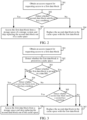
- the data block A when a user requests to access a data block A, and the data block A is present in an LEL, the data block A is accessed directly from a cache space 84.
- a data block A is not present in an LEL, it is detected whether the data block A is present in a data BIL and whether a data block B that is located in the cache space 84 and is used as a candidate elimination block satisfies a lazy condition.
- the data block A is accessed from a storage space 82.
- the data block A When the data block A is present in the data BIL, and the data block B satisfies the second lazy condition, the data block A is accessed from the storage space 82.
- the data block A is read from the storage space 82, and the data block B is replaced in the cache space 84 with the data block A.
- the data block A is read from the storage space 82, and the data block B is replaced in the cache space 84 with the data block A.
- FIG. 2 to FIG. 4 are schematic flowcharts of a method for caching a data block in an embodiment. It is to be understood that although the steps of the flowcharts in FIG. 2 to FIG. 4 are shown sequentially according to arrows, the steps are not necessarily performed in the orders indicated by arrows. Unless explicitly specified herein, these steps are performed without any strict sequence limitation, and may be performed in another sequence. In addition, at least some steps in FIG. 2 to FIG. 8 may include a plurality of substeps or a plurality of stages. The substeps or the stages are not necessarily performed at the same moment, and instead may be performed at different moments. A performing sequence of the substeps or the stages is not necessarily performed in sequence, and instead may be performed in turn or alternately with another step or at least some of substeps or stages of the another step.
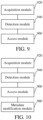
- FIG. 9 is a structural block diagram of an apparatus for caching a data block according to an exemplary embodiment of this application.
- the cache device may be implemented as a part of a storage system, or may be applied to the foregoing storage system, for example, may be implemented as a part of a control device.
- the apparatus includes:
- the storage system stores a data BIL
- the data BIL stores block metadata of n historically accessed data blocks, and n is a positive integer.
- the detection module 940 is further configured to: detect whether the second data block satisfies a first lazy condition in a case that the first data block is not present in the data BIL; and detect whether the second data block satisfies a second lazy condition in a case that the first data block is present in the data BIL, a re-access probability indicated by the first lazy condition being less than a re-access probability indicated by the second lazy condition.
- the first lazy condition includes that a flag value of the second data block is greater than a first threshold, the flag value being a variable used for measuring the access importance of the second data block; and the second lazy condition includes that the flag value of the second data block is greater than a second threshold, a dwell time of the second data block in the cache space being greater than K times of a block average reuse distance.
- the flag value is increased according to a first amplitude in a case that the second data block is hit in the cache space, and the flag value is decreased according to a second amplitude in a case that the second data block satisfies the lazy condition and is therefore not replaced in the cache space.
- the apparatus further includes a metadata modification module 980, as shown in FIG. 10 .
- the metadata modification module 980 is configured to: add block metadata of the first data block to the list head of the data BIL in a case that the second data block satisfies the first lazy condition, delete block metadata of a third data block at the list tail of the data BIL, and move the block metadata of the first data block to the list head of the data BIL in a case that the second data block satisfies the second lazy condition.
- the storage system stores an LEL
- the LEL stores block metadata of n data blocks located in the cache space, and n is a positive integer.
- the metadata modification module 980 is configured to delete block metadata of the second data block from the list tail of the LEL in a case that the second data block does not satisfy the first lazy condition.
- the metadata modification module 980 is configured to: delete the block metadata of the second data block from the list tail of the LEL in a case that the second data block does not satisfy the second lazy condition, and move the block metadata of the second data block to the list head of the data BIL.
- the metadata modification module 980 is configured to move the block metadata of the first data block to the list head of the LEL in a case that the second data block does not satisfy the lazy condition.
- the lazy condition includes the first lazy condition and the second lazy condition.
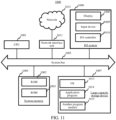
- FIG. 11 is a schematic structural diagram of a computer device according to an embodiment of this application.
- the computer device 1000 includes a central processing unit (CPU) 1001, a system memory 1004 including a RAM 1002 and a read-only memory (ROM) 1003, and a system bus 1005 connecting the system memory 1004 to the CPU 1001.
- the computer device 1000 further includes a basic input/output (I/O) system 1006 configured to transmit information between components in the computer, and a large-capacity storage device 1007 configured to store an operating system 1013, an application program 1014, and another program module 1015.
- I/O basic input/output
- the basic I/O system 1006 includes a display 1008 configured to display information and an input device 1009 such as a mouse or a keyboard used by a user to input information.
- the display 1008 and the input device 1009 are both connected to the CPU 1001 by an I/O controller 1010 connected to the system bus 1005.
- the basic I/O system 1006 may further include the I/O controller 1010, to receive and process inputs from multiple other devices, such as the keyboard, the mouse, or an electronic stylus.
- the I/O controller 1010 further provides an output to a display screen, a printer or another type of output device.
- the large-capacity storage device 1007 is connected to the CPU 1001 by using a large-capacity storage controller (not shown) connected to the system bus 1005.
- the large-capacity storage device 1007 and an associated computer-readable medium provide non-volatile storage for the computer device 1000. That is, the large-capacity storage device 1007 may include a computer-readable medium (not shown) such as a hard disk or a compact disc ROM (CD-ROM) drive.
- the computer-readable storage medium may include a computer storage medium and a communication medium.
- the computer storage medium includes volatile and non-volatile, removable and non-removable media that store information such as computer-readable instructions, data structures, program modules or other data and that are implemented by using any method or technology.
- the computer storage medium includes a RAM, a ROM, an erasable programmable ROM (EPROM), an electrically EPROM (EEPROM), a flash memory or another solid-state memory technology, a CD-ROM, a digital versatile disc (DVD) or another optical memory, a tape cartridge, a magnetic cassette, a magnetic disk memory, or another magnetic storage device.
- EPROM erasable programmable ROM
- EEPROM electrically EPROM
- flash memory or another solid-state memory technology
- CD-ROM compact disc
- DVD digital versatile disc
- the computer storage medium is not limited to the foregoing several types.
- the system memory 1004 and the large-capacity storage device 1007 may be generally referred to as a
- the computer device 1000 may further be connected, by a network such as the Internet, to a remote computer on the network and run. That is, the computer device 1000 may be connected to a network 1012 by a network interface unit 1011 connected to the system bus 1005, or may be connected to another type of network or a remote computer system (not shown) by a network interface unit 1011.
- a network such as the Internet
- the foregoing processor is configured to load and execute executable instructions to implement the method for caching a data block provided in the foregoing method embodiments.
- This application further provides a computer-readable storage medium, the storage medium storing at least one instruction, at least one program, a code set or an instruction set, and the at least one instruction, the at least one program, the code set or the instruction set being loaded and executed by the processor to implement the method for caching a data block provided in the foregoing method embodiments.
- This application further provides a computer program product.
- the computer program product When run on an electronic device, the computer program product causes the electronic device to perform the method for caching a data block provided in the foregoing method embodiments.
- the program may be stored in a computer-readable storage medium. During execution of the program, processes of the embodiments of the foregoing method may be included.
- Any reference to a memory, storage, database or another medium used in the embodiments provided in this application may include a non-volatile and/or volatile memory.
- the non-volatile memory may include a ROM, a programmable ROM (PROM), an EPROM, an EEPROM or a flash.
- the volatile memory may include a RAM or an external high-speed cache.
- the RAM is available in various forms, such as a static RAM SRAM, a dynamic RAM (DRAM), a synchronous DRAM (SDRAM), a double data rate SDRAM (DDRSDRAM), an enhanced SDRAM (ESDRAM), synchronous link (Synchlink) DRAM (SLDRAM), a rambus direct RAM (RDRAM), a direct rambus dynamic RAM (DRDRAM), and a rambus dynamic RAM (DRAM).
- DRAM dynamic RAM
- SDRAM synchronous DRAM
- DDRSDRAM double data rate SDRAM
- ESDRAM enhanced SDRAM
- SLDRAM synchronous link
- RDRAM rambus direct RAM
- DRAM direct rambus dynamic RAM
- DRAM rambus dynamic RAM
Landscapes
- Engineering & Computer Science (AREA)
- Theoretical Computer Science (AREA)
- Physics & Mathematics (AREA)
- General Engineering & Computer Science (AREA)
- General Physics & Mathematics (AREA)
- Human Computer Interaction (AREA)
- Information Retrieval, Db Structures And Fs Structures Therefor (AREA)
- Memory System Of A Hierarchy Structure (AREA)
Claims (10)
- Procédé de mise en mémoire cache d'un bloc de données, réalisé par un dispositif informatique, le procédé comprenant :l'obtention, à partir d'un terminal, d'une demande d'accès pour demander un accès à un premier bloc de données (201) ;la détection si un deuxième bloc de données satisfait ou non une condition en différé dans un cas où le premier bloc de données est manqué dans un espace de mémoire cache d'un système de stockage, le deuxième bloc de données étant un bloc d'élimination candidat dans l'espace de mémoire cache, et la condition en différé étant une condition pour déterminer s'il faut ou non retarder le remplacement du deuxième bloc de données de l'espace de mémoire cache en fonction d'une probabilité de nouvel accès (202) ; etl'accès au premier bloc de données depuis un espace de stockage du système de stockage et le saut du remplacement du deuxième bloc de données de l'espace de mémoire cache dans un cas où le deuxième bloc de données satisfait la condition en différé (203) ;dans lequel le système de stockage stocke une liste d'identifiants de blocs (BIL) de données, la BIL de données stockant des métadonnées de bloc de n blocs de données ayant fait l'objet historiquement d'un accès, où n est un entier positif ; etdans lequel la détection si le deuxième bloc de données satisfait ou non la condition en différé comprend : la détection si le deuxième bloc de données satisfait ou non une première condition en différé dans un cas où le premier bloc de données n'est pas présent dans la BIL de données (304) ; et la détection si le deuxième bloc de données satisfait ou non une deuxième condition en différé dans un cas où le premier bloc de données est présent dans la BIL de données (305) ; etdans lequel une probabilité de nouvel accès indiquée par la première condition en différé est inférieure à une probabilité de nouvel accès indiquée par la deuxième condition en différé ;dans lequel la première condition en différé comprend une valeur de drapeau du deuxième bloc de données qui est supérieure à un premier seuil, la valeur de drapeau étant une variable utilisée pour mesurer une importance d'accès du deuxième bloc de données ; etdans lequel la deuxième condition en différé comprend la valeur de drapeau du deuxième bloc de données qui est supérieure à un deuxième seuil, et un temps de maintien du deuxième bloc de données dans l'espace de mémoire cache, le temps de maintien étant supérieur à K fois une distance de réutilisation moyenne de bloc, où K > 0.
- Procédé selon la revendication 1, comprenant en outre :l'augmentation de la valeur de drapeau d'une première amplitude dans un cas où le deuxième bloc de données est un succès dans l'espace de mémoire cache ; etla réduction de la valeur de drapeau d'une deuxième amplitude dans un cas où le deuxième bloc de données satisfait l'une de la première condition en différé ou de la deuxième condition en différé et n'est pas remplacé de l'espace de mémoire cache.
- Procédé selon la revendication 1 ou 2, comprenant en outre :l'ajout de métadonnées de bloc du premier bloc de données à une tête de liste de la BIL de données dans un cas où le deuxième bloc de données satisfait la première condition en différé, et la suppression de métadonnées de bloc d'un troisième bloc de données d'une queue de liste de la BIL de données ; etle déplacement des métadonnées de bloc du premier bloc de données à la tête de liste de la BIL de données dans un cas où le deuxième bloc de données satisfait la deuxième condition en différé.
- Procédé selon la revendication 1 ou 2, comprenant en outre :
le remplacement du deuxième bloc de données par le premier bloc de données dans un cas où le deuxième bloc de données ne satisfait pas la première condition en différé ou la deuxième condition en différé (307). - Procédé selon la revendication 1 ou 2, dans lequel le système de stockage stocke une liste d'évictions en différé (LEL), la LEL stockant les métadonnées de bloc de n blocs de données situés dans l'espace de mémoire cache, et le procédé comprend en outre :la suppression de métadonnées de bloc du deuxième bloc de données d'une queue de liste de la LEL dans un cas où le deuxième bloc de données ne satisfait pas la première condition en différé ; etla suppression des métadonnées de bloc du deuxième bloc de données de la queue de liste de la LEL dans un cas où le deuxième bloc de données ne satisfait pas la deuxième condition en différé, et le déplacement des métadonnées de bloc du deuxième bloc de données à la tête de liste de la BIL de données.
- Procédé selon la revendication 1 ou 2, dans lequel le système de stockage stocke une liste d'évictions en différé (LEL), la LEL stockant des métadonnées de bloc de n blocs de données situés dans l'espace de mémoire cache, et le procédé comprend en outre :
le déplacement de métadonnées de bloc du premier bloc de données à une tête de liste de la LEL dans un cas où le deuxième bloc de données ne satisfait pas la condition en différé. - Appareil de mise en mémoire cache d'un bloc de données, appliqué à un système de stockage, l'appareil comprenant :un module d'acquisition (920), configuré pour une demande d'accès pour demander un accès à un premier bloc de données ;un module de détection (940), configuré pour détecter si un deuxième bloc de données satisfait ou non une condition en différé dans un cas où le premier bloc de données est manqué dans un espace de mémoire cache d'un système de stockage, le deuxième bloc de données étant un bloc d'élimination candidat dans l'espace de mémoire cache, et la condition en différé étant une condition pour déterminer s'il faut ou non retarder le remplacement du deuxième bloc de données de l'espace de mémoire cache en fonction d'une probabilité de nouvel accès ; etun module d'accès (960), configuré pour accéder au premier bloc de données depuis un espace de stockage du système de stockage et sauter le remplacement du deuxième bloc de données de l'espace de mémoire cache dans un cas où le deuxième bloc de données satisfait la condition en différé ;caractérisé en ce quele système de stockage stocke une liste d'identifiants de blocs (BIL) de données, la BIL de données stockant des métadonnées de bloc de n blocs de données ayant fait l'objet historiquement d'un accès, et n est un entier positif ;le module de détection (940) est en outre configuré pour : détecter si le deuxième bloc de données satisfait ou non une première condition en différé dans un cas où le premier bloc de données n'est pas présent dans la BIL de données ; et détecter si le deuxième bloc de données satisfait ou non une deuxième condition en différé dans un cas où le premier bloc de données est présent dans la BIL de données,une probabilité de nouvel accès indiquée par la première condition en différé est inférieure à une probabilité de nouvel accès indiquée par la deuxième condition en différé ;dans lequel la première condition en différé comprend une valeur de drapeau du deuxième bloc de données qui est supérieure à un premier seuil, la valeur de drapeau étant une variable utilisée pour mesurer une importance d'accès du deuxième bloc de données ; etdans lequel la deuxième condition en différé comprend la valeur de drapeau du deuxième bloc de données qui est supérieure à un deuxième seuil, et un temps de maintien du deuxième bloc de données dans l'espace de mémoire cache, le temps de maintien étant supérieur à K fois une distance de réutilisation moyenne de bloc.
- Appareil selon la revendication 7, comprenant en outre :
un module de modification de métadonnées (980), configuré pour : ajouter des métadonnées de bloc du premier bloc de données à une tête de liste de la BIL de données dans un cas où le deuxième bloc de données satisfait la première condition en différé, supprimer des métadonnées de bloc d'un troisième bloc de données d'une queue de liste de la BIL de données, et déplacer les métadonnées de bloc du premier bloc de données à la tête de liste de la BIL de données dans un cas où le deuxième bloc de données satisfait la deuxième condition en différé. - Appareil selon la revendication 7, dans lequel le système de stockage stocke une liste d'évictions en différé (LEL), la LEL stockant des métadonnées de bloc de n blocs de données situés dans l'espace de mémoire cache, et l'appareil comprend en outre :
un module de modification de métadonnées (980), configuré pour : supprimer des métadonnées de bloc du deuxième bloc de données d'une queue de liste de la LEL dans un cas où le deuxième bloc de données ne satisfait pas la première condition en différé, supprimer les métadonnées de bloc du deuxième bloc de données de la queue de liste de la LEL dans un cas où le deuxième bloc de données ne satisfait pas la deuxième condition en différé, et déplacer les métadonnées de bloc du deuxième bloc de données à une tête de liste de la BIL de données. - Support de stockage lisible par ordinateur, le support de stockage lisible par ordinateur stockant au moins une instruction, au moins un programme, un ensemble de codes ou un ensemble d'instructions, l'au moins une instruction, l'au moins un programme, l'ensemble de codes ou l'ensemble d'instructions étant chargé et exécuté par un processeur pour réaliser le procédé selon l'une quelconque des revendications 1 à 6.
Applications Claiming Priority (2)
| Application Number | Priority Date | Filing Date | Title |
|---|---|---|---|
| CN201811157995.7A CN109144431B (zh) | 2018-09-30 | 2018-09-30 | 数据块的缓存方法、装置、设备及存储介质 |
| PCT/CN2019/105509 WO2020063355A1 (fr) | 2018-09-30 | 2019-09-12 | Procédé et dispositif de mise en mémoire tampon de blocs de données, dispositif informatique et support d'enregistrement lisible par ordinateur |
Publications (3)
| Publication Number | Publication Date |
|---|---|
| EP3859536A1 EP3859536A1 (fr) | 2021-08-04 |
| EP3859536A4 EP3859536A4 (fr) | 2021-12-01 |
| EP3859536B1 true EP3859536B1 (fr) | 2024-02-28 |
Family
ID=64814106
Family Applications (1)
| Application Number | Title | Priority Date | Filing Date |
|---|---|---|---|
| EP19866678.6A Active EP3859536B1 (fr) | 2018-09-30 | 2019-09-12 | Procédé et dispositif de mise en mémoire tampon de blocs de données, dispositif informatique et support d'enregistrement lisible par ordinateur |
Country Status (4)
| Country | Link |
|---|---|
| US (1) | US11461239B2 (fr) |
| EP (1) | EP3859536B1 (fr) |
| CN (1) | CN109144431B (fr) |
| WO (1) | WO2020063355A1 (fr) |
Families Citing this family (6)
| Publication number | Priority date | Publication date | Assignee | Title |
|---|---|---|---|---|
| CN109144431B (zh) * | 2018-09-30 | 2021-11-02 | 华中科技大学 | 数据块的缓存方法、装置、设备及存储介质 |
| CN110245095A (zh) * | 2019-06-20 | 2019-09-17 | 华中科技大学 | 一种基于数据块图谱的固态盘缓存优化方法和系统 |
| US11797455B2 (en) * | 2019-10-14 | 2023-10-24 | Advanced Micro Devices, Inc. | Cache management based on reuse distance |
| CN111625536B (zh) * | 2020-04-23 | 2023-09-22 | 北京城市网邻信息技术有限公司 | 一种数据访问方法及装置 |
| CN115963771B (zh) * | 2022-12-16 | 2025-09-09 | 中国科学院近代物理研究所 | Plc及基于其的高速数据采集与分析处理方法和系统 |
| US12339783B2 (en) * | 2022-12-27 | 2025-06-24 | Advanced Micro Devices, Inc. | Managing a cache using per memory region reuse distance estimation |
Citations (1)
| Publication number | Priority date | Publication date | Assignee | Title |
|---|---|---|---|---|
| US20170293565A1 (en) * | 2016-04-08 | 2017-10-12 | Qualcomm Incorporated | Selective bypassing of allocation in a cache |
Family Cites Families (29)
| Publication number | Priority date | Publication date | Assignee | Title |
|---|---|---|---|---|
| US6654855B1 (en) * | 2000-10-26 | 2003-11-25 | Emc Corporation | Method and apparatus for improving the efficiency of cache memories using chained metrics |
| US7275135B2 (en) * | 2001-08-31 | 2007-09-25 | Intel Corporation | Hardware updated metadata for non-volatile mass storage cache |
| US7774549B2 (en) * | 2006-10-11 | 2010-08-10 | Mips Technologies, Inc. | Horizontally-shared cache victims in multiple core processors |
| US8443341B2 (en) * | 2006-11-09 | 2013-05-14 | Rogue Wave Software, Inc. | System for and method of capturing application characteristics data from a computer system and modeling target system |
| GB0625330D0 (en) * | 2006-12-20 | 2007-01-24 | Ibm | System,method and computer program product for managing data using a write-back cache unit |
| US8601217B2 (en) * | 2010-08-31 | 2013-12-03 | Oracle International Corporation | Method and system for inserting cache blocks |
| US9251052B2 (en) * | 2012-01-12 | 2016-02-02 | Intelligent Intellectual Property Holdings 2 Llc | Systems and methods for profiling a non-volatile cache having a logical-to-physical translation layer |
| CN102799392B (zh) * | 2012-06-16 | 2015-12-16 | 北京忆恒创源科技有限公司 | 存储设备及其中断控制方法 |
| CN105917318A (zh) * | 2012-07-24 | 2016-08-31 | 英特尔公司 | 用于实现基于ssd的i/o高速缓存的系统和方法 |
| US9274956B1 (en) * | 2012-10-31 | 2016-03-01 | Amazon Technologies, Inc. | Intelligent cache eviction at storage gateways |
| US9779029B2 (en) * | 2012-11-06 | 2017-10-03 | Facebook, Inc. | Cache replacement policy for data with strong temporal locality |
| US9009413B2 (en) * | 2012-12-21 | 2015-04-14 | Intel Corporation | Method and apparatus to implement lazy flush in a virtually tagged cache memory |
| CN103257935B (zh) * | 2013-04-19 | 2016-07-13 | 华中科技大学 | 一种缓存管理方法及其应用 |
| CN103440207B (zh) * | 2013-07-31 | 2017-02-22 | 北京智谷睿拓技术服务有限公司 | 缓存方法及装置 |
| CN103678169B (zh) * | 2013-11-11 | 2016-04-13 | 华中科技大学 | 一种高效利用固态盘缓存的方法和系统 |
| US9471497B2 (en) * | 2014-01-24 | 2016-10-18 | Netapp, Inc. | Methods for combining access history and sequentiality for intelligent prefetching and devices thereof |
| CN105094691B (zh) * | 2014-05-21 | 2019-05-21 | 华为技术有限公司 | 一种数据操作的方法、设备和系统 |
| US20150347310A1 (en) * | 2014-05-30 | 2015-12-03 | Lsi Corporation | Storage Controller and Method for Managing Metadata in a Cache Store |
| CN104391653A (zh) * | 2014-10-31 | 2015-03-04 | 山东超越数控电子有限公司 | 一种基于数据块的高速缓存设计方法 |
| US9892044B1 (en) * | 2015-01-30 | 2018-02-13 | EMC IP Holding Company LLC | Methods to efficiently implement coarse granularity cache eviction |
| US9779031B2 (en) * | 2015-06-17 | 2017-10-03 | International Business Machines Corporation | Caching policies for selection and replacement of objects |
| CN112231242B (zh) * | 2015-12-01 | 2024-11-29 | 华为技术有限公司 | 数据缓存方法、存储控制装置、及存储设备 |
| US20170168944A1 (en) * | 2015-12-15 | 2017-06-15 | Facebook, Inc. | Block cache eviction |
| CN107463509B (zh) * | 2016-06-05 | 2020-12-15 | 华为技术有限公司 | 缓存管理方法、缓存控制器以及计算机系统 |
| US20180173636A1 (en) * | 2016-12-20 | 2018-06-21 | Intel Corporation | Increasing lifetime reliability for a cache memory |
| CN106897030A (zh) * | 2017-02-28 | 2017-06-27 | 郑州云海信息技术有限公司 | 一种缓存数据管理方法及装置 |
| WO2018161272A1 (fr) * | 2017-03-08 | 2018-09-13 | 华为技术有限公司 | Procédé, dispositif et système de remplacement en cache |
| CN108021674A (zh) * | 2017-12-06 | 2018-05-11 | 浙江远算云计算有限公司 | 一种同步云端仿真数据的多级缓存传输加速系统 |
| CN109144431B (zh) * | 2018-09-30 | 2021-11-02 | 华中科技大学 | 数据块的缓存方法、装置、设备及存储介质 |
-
2018
- 2018-09-30 CN CN201811157995.7A patent/CN109144431B/zh active Active
-
2019
- 2019-09-12 WO PCT/CN2019/105509 patent/WO2020063355A1/fr not_active Ceased
- 2019-09-12 EP EP19866678.6A patent/EP3859536B1/fr active Active
-
2020
- 2020-09-30 US US17/038,680 patent/US11461239B2/en active Active
Patent Citations (1)
| Publication number | Priority date | Publication date | Assignee | Title |
|---|---|---|---|---|
| US20170293565A1 (en) * | 2016-04-08 | 2017-10-12 | Qualcomm Incorporated | Selective bypassing of allocation in a cache |
Also Published As
| Publication number | Publication date |
|---|---|
| WO2020063355A1 (fr) | 2020-04-02 |
| CN109144431B (zh) | 2021-11-02 |
| CN109144431A (zh) | 2019-01-04 |
| EP3859536A1 (fr) | 2021-08-04 |
| EP3859536A4 (fr) | 2021-12-01 |
| US20210011857A1 (en) | 2021-01-14 |
| US11461239B2 (en) | 2022-10-04 |
Similar Documents
| Publication | Publication Date | Title |
|---|---|---|
| EP3859536B1 (fr) | Procédé et dispositif de mise en mémoire tampon de blocs de données, dispositif informatique et support d'enregistrement lisible par ordinateur | |
| KR102564170B1 (ko) | 데이터 객체 저장 방법, 장치, 및 이를 이용한 컴퓨터 프로그램이 저장되는 컴퓨터 판독가능한 저장 매체 | |
| EP3229142B1 (fr) | Procédé de gestion de mémoire cache de lecture et dispositif basé sur un disque statique à semiconducteurs | |
| US9779027B2 (en) | Apparatus, system and method for managing a level-two cache of a storage appliance | |
| EP2735978B1 (fr) | Système de stockage et procédé de gestion utilisés pour les métadonnées d'un système de fichiers en grappe | |
| CN105653591B (zh) | 一种工业实时数据分级存储及迁移方法 | |
| US11080239B2 (en) | Key value store using generation markers | |
| US20120150869A1 (en) | Method for creating a index of the data blocks | |
| CN107430551B (zh) | 数据缓存方法、存储控制装置、及存储设备 | |
| CN103150395B (zh) | 基于ssd的文件系统目录路径解析方法 | |
| WO2013152678A1 (fr) | Procédé et dispositif d'interrogation de métadonnées | |
| US10185660B2 (en) | System and method for automated data organization in a storage system | |
| US20150212744A1 (en) | Method and system of eviction stage population of a flash memory cache of a multilayer cache system | |
| CN113641681B (zh) | 一种空间自适应的海量数据查询方法 | |
| CN109491619A (zh) | 缓存数据处理方法、装置和系统 | |
| CN106708750B (zh) | 存储系统的缓存预读方法及系统 | |
| US20210271389A1 (en) | Method and apparatus for deleting index in internal memory | |
| CN111611179B (zh) | 元数据命中率提升方法、装置、存储介质及电子设备 | |
| CN112799590A (zh) | 一种针对在线主存储重删的差异化缓存方法 | |
| CN107506156B (zh) | 一种块设备的io优化方法 | |
| CN115878677A (zh) | 分布式多级缓存的数据处理方法和装置 | |
| CN118747061B (zh) | 数据处理方法、装置、计算机设备和存储介质 | |
| CN118860298B (zh) | 缓存数据的管理方法和装置、存储介质及程序产品 | |
| CN118484437A (zh) | 对象数据列举方法、装置、电子设备及可读存储介质 | |
| US10922228B1 (en) | Multiple location index |
Legal Events
| Date | Code | Title | Description |
|---|---|---|---|
| STAA | Information on the status of an ep patent application or granted ep patent |
Free format text: STATUS: THE INTERNATIONAL PUBLICATION HAS BEEN MADE |
|
| PUAI | Public reference made under article 153(3) epc to a published international application that has entered the european phase |
Free format text: ORIGINAL CODE: 0009012 |
|
| STAA | Information on the status of an ep patent application or granted ep patent |
Free format text: STATUS: REQUEST FOR EXAMINATION WAS MADE |
|
| 17P | Request for examination filed |
Effective date: 20201023 |
|
| AK | Designated contracting states |
Kind code of ref document: A1 Designated state(s): AL AT BE BG CH CY CZ DE DK EE ES FI FR GB GR HR HU IE IS IT LI LT LU LV MC MK MT NL NO PL PT RO RS SE SI SK SM TR |
|
| REG | Reference to a national code |
Ref country code: DE Ref legal event code: R079 Free format text: PREVIOUS MAIN CLASS: G06F0012123000 Ipc: G06F0012086800 Ref country code: DE Ref legal event code: R079 Ref document number: 602019047509 Country of ref document: DE Free format text: PREVIOUS MAIN CLASS: G06F0012123000 Ipc: G06F0012086800 |
|
| A4 | Supplementary search report drawn up and despatched |
Effective date: 20211102 |
|
| RIC1 | Information provided on ipc code assigned before grant |
Ipc: G06F 12/121 20160101ALI20211026BHEP Ipc: G06F 12/126 20160101ALI20211026BHEP Ipc: G06F 12/0868 20160101AFI20211026BHEP |
|
| DAV | Request for validation of the european patent (deleted) | ||
| DAX | Request for extension of the european patent (deleted) | ||
| RAP3 | Party data changed (applicant data changed or rights of an application transferred) |
Owner name: TENCENT TECHNOLOGY (SHENZHEN) COMPANY LIMITED Owner name: HUAZHONG UNIVERSITY OF SCIENCE AND TECHNOLOGY |
|
| STAA | Information on the status of an ep patent application or granted ep patent |
Free format text: STATUS: EXAMINATION IS IN PROGRESS |
|
| 17Q | First examination report despatched |
Effective date: 20220912 |
|
| GRAP | Despatch of communication of intention to grant a patent |
Free format text: ORIGINAL CODE: EPIDOSNIGR1 |
|
| STAA | Information on the status of an ep patent application or granted ep patent |
Free format text: STATUS: GRANT OF PATENT IS INTENDED |
|
| INTG | Intention to grant announced |
Effective date: 20231122 |
|
| GRAS | Grant fee paid |
Free format text: ORIGINAL CODE: EPIDOSNIGR3 |
|
| GRAA | (expected) grant |
Free format text: ORIGINAL CODE: 0009210 |
|
| STAA | Information on the status of an ep patent application or granted ep patent |
Free format text: STATUS: THE PATENT HAS BEEN GRANTED |
|
| AK | Designated contracting states |
Kind code of ref document: B1 Designated state(s): AL AT BE BG CH CY CZ DE DK EE ES FI FR GB GR HR HU IE IS IT LI LT LU LV MC MK MT NL NO PL PT RO RS SE SI SK SM TR |
|
| REG | Reference to a national code |
Ref country code: GB Ref legal event code: FG4D |
|
| REG | Reference to a national code |
Ref country code: CH Ref legal event code: EP |
|
| REG | Reference to a national code |
Ref country code: DE Ref legal event code: R096 Ref document number: 602019047509 Country of ref document: DE |
|
| REG | Reference to a national code |
Ref country code: IE Ref legal event code: FG4D |
|
| REG | Reference to a national code |
Ref country code: LT Ref legal event code: MG9D |
|
| PG25 | Lapsed in a contracting state [announced via postgrant information from national office to epo] |
Ref country code: IS Free format text: LAPSE BECAUSE OF FAILURE TO SUBMIT A TRANSLATION OF THE DESCRIPTION OR TO PAY THE FEE WITHIN THE PRESCRIBED TIME-LIMIT Effective date: 20240628 |
|
| REG | Reference to a national code |
Ref country code: NL Ref legal event code: MP Effective date: 20240228 |
|
| PG25 | Lapsed in a contracting state [announced via postgrant information from national office to epo] |
Ref country code: LT Free format text: LAPSE BECAUSE OF FAILURE TO SUBMIT A TRANSLATION OF THE DESCRIPTION OR TO PAY THE FEE WITHIN THE PRESCRIBED TIME-LIMIT Effective date: 20240228 |
|
| PG25 | Lapsed in a contracting state [announced via postgrant information from national office to epo] |
Ref country code: GR Free format text: LAPSE BECAUSE OF FAILURE TO SUBMIT A TRANSLATION OF THE DESCRIPTION OR TO PAY THE FEE WITHIN THE PRESCRIBED TIME-LIMIT Effective date: 20240529 |
|
| PG25 | Lapsed in a contracting state [announced via postgrant information from national office to epo] |
Ref country code: HR Free format text: LAPSE BECAUSE OF FAILURE TO SUBMIT A TRANSLATION OF THE DESCRIPTION OR TO PAY THE FEE WITHIN THE PRESCRIBED TIME-LIMIT Effective date: 20240228 Ref country code: NL Free format text: LAPSE BECAUSE OF FAILURE TO SUBMIT A TRANSLATION OF THE DESCRIPTION OR TO PAY THE FEE WITHIN THE PRESCRIBED TIME-LIMIT Effective date: 20240228 Ref country code: RS Free format text: LAPSE BECAUSE OF FAILURE TO SUBMIT A TRANSLATION OF THE DESCRIPTION OR TO PAY THE FEE WITHIN THE PRESCRIBED TIME-LIMIT Effective date: 20240528 |
|
| PG25 | Lapsed in a contracting state [announced via postgrant information from national office to epo] |
Ref country code: ES Free format text: LAPSE BECAUSE OF FAILURE TO SUBMIT A TRANSLATION OF THE DESCRIPTION OR TO PAY THE FEE WITHIN THE PRESCRIBED TIME-LIMIT Effective date: 20240228 |
|
| PG25 | Lapsed in a contracting state [announced via postgrant information from national office to epo] |
Ref country code: RS Free format text: LAPSE BECAUSE OF FAILURE TO SUBMIT A TRANSLATION OF THE DESCRIPTION OR TO PAY THE FEE WITHIN THE PRESCRIBED TIME-LIMIT Effective date: 20240528 Ref country code: NO Free format text: LAPSE BECAUSE OF FAILURE TO SUBMIT A TRANSLATION OF THE DESCRIPTION OR TO PAY THE FEE WITHIN THE PRESCRIBED TIME-LIMIT Effective date: 20240528 Ref country code: NL Free format text: LAPSE BECAUSE OF FAILURE TO SUBMIT A TRANSLATION OF THE DESCRIPTION OR TO PAY THE FEE WITHIN THE PRESCRIBED TIME-LIMIT Effective date: 20240228 Ref country code: LT Free format text: LAPSE BECAUSE OF FAILURE TO SUBMIT A TRANSLATION OF THE DESCRIPTION OR TO PAY THE FEE WITHIN THE PRESCRIBED TIME-LIMIT Effective date: 20240228 Ref country code: IS Free format text: LAPSE BECAUSE OF FAILURE TO SUBMIT A TRANSLATION OF THE DESCRIPTION OR TO PAY THE FEE WITHIN THE PRESCRIBED TIME-LIMIT Effective date: 20240628 Ref country code: HR Free format text: LAPSE BECAUSE OF FAILURE TO SUBMIT A TRANSLATION OF THE DESCRIPTION OR TO PAY THE FEE WITHIN THE PRESCRIBED TIME-LIMIT Effective date: 20240228 Ref country code: GR Free format text: LAPSE BECAUSE OF FAILURE TO SUBMIT A TRANSLATION OF THE DESCRIPTION OR TO PAY THE FEE WITHIN THE PRESCRIBED TIME-LIMIT Effective date: 20240529 Ref country code: FI Free format text: LAPSE BECAUSE OF FAILURE TO SUBMIT A TRANSLATION OF THE DESCRIPTION OR TO PAY THE FEE WITHIN THE PRESCRIBED TIME-LIMIT Effective date: 20240228 Ref country code: ES Free format text: LAPSE BECAUSE OF FAILURE TO SUBMIT A TRANSLATION OF THE DESCRIPTION OR TO PAY THE FEE WITHIN THE PRESCRIBED TIME-LIMIT Effective date: 20240228 Ref country code: BG Free format text: LAPSE BECAUSE OF FAILURE TO SUBMIT A TRANSLATION OF THE DESCRIPTION OR TO PAY THE FEE WITHIN THE PRESCRIBED TIME-LIMIT Effective date: 20240228 |
|
| PG25 | Lapsed in a contracting state [announced via postgrant information from national office to epo] |
Ref country code: PL Free format text: LAPSE BECAUSE OF FAILURE TO SUBMIT A TRANSLATION OF THE DESCRIPTION OR TO PAY THE FEE WITHIN THE PRESCRIBED TIME-LIMIT Effective date: 20240228 Ref country code: PT Free format text: LAPSE BECAUSE OF FAILURE TO SUBMIT A TRANSLATION OF THE DESCRIPTION OR TO PAY THE FEE WITHIN THE PRESCRIBED TIME-LIMIT Effective date: 20240628 |
|
| REG | Reference to a national code |
Ref country code: AT Ref legal event code: MK05 Ref document number: 1661872 Country of ref document: AT Kind code of ref document: T Effective date: 20240228 |
|
| PG25 | Lapsed in a contracting state [announced via postgrant information from national office to epo] |
Ref country code: SE Free format text: LAPSE BECAUSE OF FAILURE TO SUBMIT A TRANSLATION OF THE DESCRIPTION OR TO PAY THE FEE WITHIN THE PRESCRIBED TIME-LIMIT Effective date: 20240228 Ref country code: PT Free format text: LAPSE BECAUSE OF FAILURE TO SUBMIT A TRANSLATION OF THE DESCRIPTION OR TO PAY THE FEE WITHIN THE PRESCRIBED TIME-LIMIT Effective date: 20240628 Ref country code: PL Free format text: LAPSE BECAUSE OF FAILURE TO SUBMIT A TRANSLATION OF THE DESCRIPTION OR TO PAY THE FEE WITHIN THE PRESCRIBED TIME-LIMIT Effective date: 20240228 Ref country code: LV Free format text: LAPSE BECAUSE OF FAILURE TO SUBMIT A TRANSLATION OF THE DESCRIPTION OR TO PAY THE FEE WITHIN THE PRESCRIBED TIME-LIMIT Effective date: 20240228 |
|
| PG25 | Lapsed in a contracting state [announced via postgrant information from national office to epo] |
Ref country code: DK Free format text: LAPSE BECAUSE OF FAILURE TO SUBMIT A TRANSLATION OF THE DESCRIPTION OR TO PAY THE FEE WITHIN THE PRESCRIBED TIME-LIMIT Effective date: 20240228 |
|
| PG25 | Lapsed in a contracting state [announced via postgrant information from national office to epo] |
Ref country code: SM Free format text: LAPSE BECAUSE OF FAILURE TO SUBMIT A TRANSLATION OF THE DESCRIPTION OR TO PAY THE FEE WITHIN THE PRESCRIBED TIME-LIMIT Effective date: 20240228 |
|
| PG25 | Lapsed in a contracting state [announced via postgrant information from national office to epo] |
Ref country code: EE Free format text: LAPSE BECAUSE OF FAILURE TO SUBMIT A TRANSLATION OF THE DESCRIPTION OR TO PAY THE FEE WITHIN THE PRESCRIBED TIME-LIMIT Effective date: 20240228 Ref country code: CZ Free format text: LAPSE BECAUSE OF FAILURE TO SUBMIT A TRANSLATION OF THE DESCRIPTION OR TO PAY THE FEE WITHIN THE PRESCRIBED TIME-LIMIT Effective date: 20240228 |
|
| PG25 | Lapsed in a contracting state [announced via postgrant information from national office to epo] |
Ref country code: AT Free format text: LAPSE BECAUSE OF FAILURE TO SUBMIT A TRANSLATION OF THE DESCRIPTION OR TO PAY THE FEE WITHIN THE PRESCRIBED TIME-LIMIT Effective date: 20240228 |
|
| PG25 | Lapsed in a contracting state [announced via postgrant information from national office to epo] |
Ref country code: SK Free format text: LAPSE BECAUSE OF FAILURE TO SUBMIT A TRANSLATION OF THE DESCRIPTION OR TO PAY THE FEE WITHIN THE PRESCRIBED TIME-LIMIT Effective date: 20240228 |
|
| PG25 | Lapsed in a contracting state [announced via postgrant information from national office to epo] |
Ref country code: SM Free format text: LAPSE BECAUSE OF FAILURE TO SUBMIT A TRANSLATION OF THE DESCRIPTION OR TO PAY THE FEE WITHIN THE PRESCRIBED TIME-LIMIT Effective date: 20240228 Ref country code: SK Free format text: LAPSE BECAUSE OF FAILURE TO SUBMIT A TRANSLATION OF THE DESCRIPTION OR TO PAY THE FEE WITHIN THE PRESCRIBED TIME-LIMIT Effective date: 20240228 Ref country code: RO Free format text: LAPSE BECAUSE OF FAILURE TO SUBMIT A TRANSLATION OF THE DESCRIPTION OR TO PAY THE FEE WITHIN THE PRESCRIBED TIME-LIMIT Effective date: 20240228 Ref country code: EE Free format text: LAPSE BECAUSE OF FAILURE TO SUBMIT A TRANSLATION OF THE DESCRIPTION OR TO PAY THE FEE WITHIN THE PRESCRIBED TIME-LIMIT Effective date: 20240228 Ref country code: DK Free format text: LAPSE BECAUSE OF FAILURE TO SUBMIT A TRANSLATION OF THE DESCRIPTION OR TO PAY THE FEE WITHIN THE PRESCRIBED TIME-LIMIT Effective date: 20240228 Ref country code: CZ Free format text: LAPSE BECAUSE OF FAILURE TO SUBMIT A TRANSLATION OF THE DESCRIPTION OR TO PAY THE FEE WITHIN THE PRESCRIBED TIME-LIMIT Effective date: 20240228 Ref country code: AT Free format text: LAPSE BECAUSE OF FAILURE TO SUBMIT A TRANSLATION OF THE DESCRIPTION OR TO PAY THE FEE WITHIN THE PRESCRIBED TIME-LIMIT Effective date: 20240228 |
|
| REG | Reference to a national code |
Ref country code: DE Ref legal event code: R097 Ref document number: 602019047509 Country of ref document: DE |
|
| PG25 | Lapsed in a contracting state [announced via postgrant information from national office to epo] |
Ref country code: IT Free format text: LAPSE BECAUSE OF FAILURE TO SUBMIT A TRANSLATION OF THE DESCRIPTION OR TO PAY THE FEE WITHIN THE PRESCRIBED TIME-LIMIT Effective date: 20240228 |
|
| PG25 | Lapsed in a contracting state [announced via postgrant information from national office to epo] |
Ref country code: IT Free format text: LAPSE BECAUSE OF FAILURE TO SUBMIT A TRANSLATION OF THE DESCRIPTION OR TO PAY THE FEE WITHIN THE PRESCRIBED TIME-LIMIT Effective date: 20240228 |
|
| PLBE | No opposition filed within time limit |
Free format text: ORIGINAL CODE: 0009261 |
|
| STAA | Information on the status of an ep patent application or granted ep patent |
Free format text: STATUS: NO OPPOSITION FILED WITHIN TIME LIMIT |
|
| 26N | No opposition filed |
Effective date: 20241129 |
|
| PG25 | Lapsed in a contracting state [announced via postgrant information from national office to epo] |
Ref country code: MC Free format text: LAPSE BECAUSE OF FAILURE TO SUBMIT A TRANSLATION OF THE DESCRIPTION OR TO PAY THE FEE WITHIN THE PRESCRIBED TIME-LIMIT Effective date: 20240228 Ref country code: SI Free format text: LAPSE BECAUSE OF FAILURE TO SUBMIT A TRANSLATION OF THE DESCRIPTION OR TO PAY THE FEE WITHIN THE PRESCRIBED TIME-LIMIT Effective date: 20240228 |
|
| REG | Reference to a national code |
Ref country code: CH Ref legal event code: PL |
|
| PG25 | Lapsed in a contracting state [announced via postgrant information from national office to epo] |
Ref country code: LU Free format text: LAPSE BECAUSE OF NON-PAYMENT OF DUE FEES Effective date: 20240912 |
|
| REG | Reference to a national code |
Ref country code: BE Ref legal event code: MM Effective date: 20240930 |
|
| PG25 | Lapsed in a contracting state [announced via postgrant information from national office to epo] |
Ref country code: BE Free format text: LAPSE BECAUSE OF NON-PAYMENT OF DUE FEES Effective date: 20240930 |
|
| PG25 | Lapsed in a contracting state [announced via postgrant information from national office to epo] |
Ref country code: CH Free format text: LAPSE BECAUSE OF NON-PAYMENT OF DUE FEES Effective date: 20240930 |
|
| PG25 | Lapsed in a contracting state [announced via postgrant information from national office to epo] |
Ref country code: IE Free format text: LAPSE BECAUSE OF NON-PAYMENT OF DUE FEES Effective date: 20240912 |
|
| PGFP | Annual fee paid to national office [announced via postgrant information from national office to epo] |
Ref country code: DE Payment date: 20250919 Year of fee payment: 7 |
|
| PGFP | Annual fee paid to national office [announced via postgrant information from national office to epo] |
Ref country code: GB Payment date: 20250923 Year of fee payment: 7 |
|
| PGFP | Annual fee paid to national office [announced via postgrant information from national office to epo] |
Ref country code: FR Payment date: 20250924 Year of fee payment: 7 |
|
| PG25 | Lapsed in a contracting state [announced via postgrant information from national office to epo] |
Ref country code: CY Free format text: LAPSE BECAUSE OF FAILURE TO SUBMIT A TRANSLATION OF THE DESCRIPTION OR TO PAY THE FEE WITHIN THE PRESCRIBED TIME-LIMIT; INVALID AB INITIO Effective date: 20190912 |
|
| PG25 | Lapsed in a contracting state [announced via postgrant information from national office to epo] |
Ref country code: HU Free format text: LAPSE BECAUSE OF FAILURE TO SUBMIT A TRANSLATION OF THE DESCRIPTION OR TO PAY THE FEE WITHIN THE PRESCRIBED TIME-LIMIT; INVALID AB INITIO Effective date: 20190912 |