EP3860013B1 - Nachrichtenverarbeitungsverfahren und -vorrichtung - Google Patents
Nachrichtenverarbeitungsverfahren und -vorrichtung Download PDFInfo
- Publication number
- EP3860013B1 EP3860013B1 EP19873443.6A EP19873443A EP3860013B1 EP 3860013 B1 EP3860013 B1 EP 3860013B1 EP 19873443 A EP19873443 A EP 19873443A EP 3860013 B1 EP3860013 B1 EP 3860013B1
- Authority
- EP
- European Patent Office
- Prior art keywords
- packet
- network device
- retransmission
- level
- acknowledgement
- Prior art date
- Legal status (The legal status is an assumption and is not a legal conclusion. Google has not performed a legal analysis and makes no representation as to the accuracy of the status listed.)
- Active
Links
Images


Classifications
-
- H—ELECTRICITY
- H04—ELECTRIC COMMUNICATION TECHNIQUE
- H04L—TRANSMISSION OF DIGITAL INFORMATION, e.g. TELEGRAPHIC COMMUNICATION
- H04L1/00—Arrangements for detecting or preventing errors in the information received
- H04L1/12—Arrangements for detecting or preventing errors in the information received by using return channel
- H04L1/16—Arrangements for detecting or preventing errors in the information received by using return channel in which the return channel carries supervisory signals, e.g. repetition request signals
- H04L1/1607—Details of the supervisory signal
-
- H—ELECTRICITY
- H04—ELECTRIC COMMUNICATION TECHNIQUE
- H04L—TRANSMISSION OF DIGITAL INFORMATION, e.g. TELEGRAPHIC COMMUNICATION
- H04L1/00—Arrangements for detecting or preventing errors in the information received
- H04L1/12—Arrangements for detecting or preventing errors in the information received by using return channel
- H04L1/16—Arrangements for detecting or preventing errors in the information received by using return channel in which the return channel carries supervisory signals, e.g. repetition request signals
- H04L1/1607—Details of the supervisory signal
- H04L1/1642—Formats specially adapted for sequence numbers
-
- H—ELECTRICITY
- H04—ELECTRIC COMMUNICATION TECHNIQUE
- H04L—TRANSMISSION OF DIGITAL INFORMATION, e.g. TELEGRAPHIC COMMUNICATION
- H04L1/00—Arrangements for detecting or preventing errors in the information received
- H04L1/12—Arrangements for detecting or preventing errors in the information received by using return channel
- H04L1/16—Arrangements for detecting or preventing errors in the information received by using return channel in which the return channel carries supervisory signals, e.g. repetition request signals
- H04L1/1607—Details of the supervisory signal
- H04L1/1685—Details of the supervisory signal the supervisory signal being transmitted in response to a specific request, e.g. to a polling signal
-
- H—ELECTRICITY
- H04—ELECTRIC COMMUNICATION TECHNIQUE
- H04L—TRANSMISSION OF DIGITAL INFORMATION, e.g. TELEGRAPHIC COMMUNICATION
- H04L1/00—Arrangements for detecting or preventing errors in the information received
- H04L1/12—Arrangements for detecting or preventing errors in the information received by using return channel
- H04L1/16—Arrangements for detecting or preventing errors in the information received by using return channel in which the return channel carries supervisory signals, e.g. repetition request signals
- H04L1/18—Automatic repetition systems, e.g. Van Duuren systems
- H04L1/1867—Arrangements specially adapted for the transmitter end
-
- H—ELECTRICITY
- H04—ELECTRIC COMMUNICATION TECHNIQUE
- H04L—TRANSMISSION OF DIGITAL INFORMATION, e.g. TELEGRAPHIC COMMUNICATION
- H04L1/00—Arrangements for detecting or preventing errors in the information received
- H04L1/12—Arrangements for detecting or preventing errors in the information received by using return channel
- H04L1/16—Arrangements for detecting or preventing errors in the information received by using return channel in which the return channel carries supervisory signals, e.g. repetition request signals
- H04L1/18—Automatic repetition systems, e.g. Van Duuren systems
- H04L1/1867—Arrangements specially adapted for the transmitter end
- H04L1/188—Time-out mechanisms
-
- H—ELECTRICITY
- H04—ELECTRIC COMMUNICATION TECHNIQUE
- H04L—TRANSMISSION OF DIGITAL INFORMATION, e.g. TELEGRAPHIC COMMUNICATION
- H04L45/00—Routing or path finding of packets in data switching networks
- H04L45/74—Address processing for routing
-
- H—ELECTRICITY
- H04—ELECTRIC COMMUNICATION TECHNIQUE
- H04L—TRANSMISSION OF DIGITAL INFORMATION, e.g. TELEGRAPHIC COMMUNICATION
- H04L47/00—Traffic control in data switching networks
- H04L47/10—Flow control; Congestion control
- H04L47/28—Flow control; Congestion control in relation to timing considerations
- H04L47/283—Flow control; Congestion control in relation to timing considerations in response to processing delays, e.g. caused by jitter or round trip time [RTT]
-
- H—ELECTRICITY
- H04—ELECTRIC COMMUNICATION TECHNIQUE
- H04L—TRANSMISSION OF DIGITAL INFORMATION, e.g. TELEGRAPHIC COMMUNICATION
- H04L47/00—Traffic control in data switching networks
- H04L47/10—Flow control; Congestion control
- H04L47/34—Flow control; Congestion control ensuring sequence integrity, e.g. using sequence numbers
-
- H—ELECTRICITY
- H04—ELECTRIC COMMUNICATION TECHNIQUE
- H04L—TRANSMISSION OF DIGITAL INFORMATION, e.g. TELEGRAPHIC COMMUNICATION
- H04L69/00—Network arrangements, protocols or services independent of the application payload and not provided for in the other groups of this subclass
- H04L69/22—Parsing or analysis of headers
-
- H—ELECTRICITY
- H04—ELECTRIC COMMUNICATION TECHNIQUE
- H04L—TRANSMISSION OF DIGITAL INFORMATION, e.g. TELEGRAPHIC COMMUNICATION
- H04L69/00—Network arrangements, protocols or services independent of the application payload and not provided for in the other groups of this subclass
- H04L69/28—Timers or timing mechanisms used in protocols
Definitions
- This application relates to the field of communications technologies, and in particular, to a data processing method and an apparatus.
- a network application mainly includes hosts (such as personal computers, mobile phones, or servers) at both ends and an intermediate network (such as a wired or wireless network). Data exchanged between the hosts is transmitted via the intermediate network. Data transmission control (such as packet loss-triggered retransmission and rate control) is implemented by the host without participation of the intermediate network in the control.
- the intermediate network only provides a best-effort and stateless forwarding service.
- a transmit end host estimates a network status based on an acknowledgement packet returned by a receive end host, and then adjusts a sending rate. This mechanism is misjudgment-prone, and consequently a transmission control effect is poor.
- WO 2012/141648 A2 discloses a method in a radio network controller for transmitting data to a user equipment in a wireless communication system.
- the radio network controller is communicating over a Radio Link Control layer with the user equipment.
- the radio network controller transmits a packet data unit to the user equipment.
- the packet data unit comprises a header with a first field, which first field comprises bits for a sequence number of the packet data unit.
- the header further comprises a second field comprising at least one bit indicating that a third field of the header comprises bits for the sequence number as an extension of bits to the first field for the sequence number.
- WO 2018/082382 A1 discloses a method for processing a message in a hybrid access network, and a network device for realizing real-time monitoring and traffic balancing of network bandwidth, alleviating the congestion of a main link caused due to a network emergency situation, and improving network bandwidth.
- the method comprises: a first network device sending, to a second network device, a first data message in a first sending window by means of the first tunnel; in response to the case that a first confirmation response sent by a second network device is received, the first network device increasing the size of the first sending window according to a first proportion; in response to the case that the first confirmation response is not received within a first pre-determined time, reducing the size of the first sending window according to a second proportion; and in response to the case that it is determined that the size of the first sending window is greater than or equal to a first threshold value, sending a second data message to a second receiving window of the second network device by means of a second sending window, wherein a first confirmation number carried in the first confirmation response is obtained according to a first sub-link number in the first data message.
- CHONGGANG WANG ET AL "A survey of transport protocols for wireless sensor networks", IEEE NETWORKS, IEEE SERVICE CENTER, NEW YORK, NY, US, vol. 20, no. 3, 1 May 2006 (2006-05-01), pages 34-40 , discloses the basic design criteria and challenges of transport protocols, including energy-efficiency, quality of service, reliability, and congestion control.
- US 9 007 915 B2 discloses a method of transmitting data over a communication network using negative acknowledgment. In the method, a stream of data packets is transmitted from a first node of the network to a second node of the network.
- All but at least two of the stream of data packets is successfully received at the second node, wherein the data packets that are not successfully received are not located sequentially within the stream of data packets.
- a status packet is transmitted from the second node to the first node, wherein the status packet includes an indication of each of the data packets that were not successfully received.
- the data packets that were not successfully received at the second node are retransmitted from the first node to the second node in response to receiving the status packet.
- Embodiments of the present invention provide a packet processing method and an apparatus, to resolve a packet transmission control problem in the prior art.
- Tunnel type Packets of different tunnel types correspond to different number queues.
- a number of a packet between a first network device and a second network device is used as an example.
- a packet number of a next packet is 10
- a packet number of a next packet is 5.
- different transmission control policies may be used for different tunnel types. For example, for the packet of the low-latency tunnel type, packet loss-triggered retransmission is not performed between the first network device and the second network device.
- packet loss-triggered retransmission is performed between the first network device and the second network device.
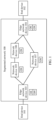
- the end device 101 may be a transmit end host, and the end device 102 may be a receive end host.
- the network devices 103 to 107 may participate in transmission control.
- the network device 103 may monitor a status of the first path and a status of the second path, and further select a packet forwarding path based on the path statuses.
- the network device 103 may perform multipath redundant transmission, to concurrently transmit the service packet by using the first path and the second path.
- the concurrent transmission may be completely repeated multipath packet sending, or may be concurrent transmission in a manner such as through multipath forward error correction (Forward Error Correction, FEC) or multipath network coding.
- the network device 103 may alternatively perform load sharing by using the first path and the second path, to transmit a part of the service packet by using the first path and transmit the other part of the service packet by using the second path.
- FEC Forward Error Correction
- the network device 103 may retransmit the packet based on a feedback of a subsequent network device, for example, may retransmit the packet based on a feedback of the network device 104.
- the network device 105 may also retransmit the packet based on a feedback of a subsequent network device, for example, may retransmit the packet based on a feedback of the network device 106.
- the OE-OE-level transmission control mainly includes OE-OE-level retransmission, order preserving, redundancy removal, reordering, and the like.
- the ON-ON-level transmission control mainly includes hop-by-hop retransmission, and the like.
- Retransmission persistence is determined by factors such as an OE-OE-level round-trip time latency, a service latency tolerance, and a retransmission mechanism of an upper-layer transmission protocol (for example, TCP).
- a persistence value needs to be set based on the service latency tolerance, or a persistence value needs to be set based on the upper-layer transmission protocol.
- Path ID an ID of a path in a tunnel.
- One tunnel may include a plurality of paths.
- the path ID is generated by an OE node and is used during detouring (detour).
- the OE node can find, by using the ID, a specific path that needs to be detoured.
- Cur hop a location of a current network device in a forwarding path list.
- Retransmission indication used to indicate whether a network device that receives a corresponding packet is allowed to perform a retransmission operation.
- the retransmission persistence (retransmit persistence) is used to indicate whether ON-ON retransmission is allowed.
- the retransmit persistence indicates available total ON-ON retransmission duration. For example, if a unidirectional latency tolerance limit of a voice application is 150 ms and a current OE-OE latency is 100 ms, the available total ON-ON retransmission duration is 50 ms. A retransmission time spent between any two ONs needs to be subtracted from 50 ms. When remaining duration is 0, subsequent ONs do not perform hop-by-hop retransmission.
- the retransmission indication field may be directly set to retransmission allowed, and an intermediate forwarding node does not modify this field either, and always allows retransmission.
- OE-OE-level round-trip time latency (round-trip time latency, RTT): referred to as an accumulated round-trip time latency in this embodiment.
- An RTT of each path between OEs is obtained by accumulating RTTs of all ON-ON segments on the path.
- each ON node adds an RTT of a current ON-ON segment to this field.
- OE-OE-level packet number The packet number remains unchanged during transmission. This number is used for OE-OE-level order preserving, redundancy removal, reordering, packet loss detection, and the like.
- Timestamp of the OE-OE-level packet number a time point at which the network device 103 sends the packet.
- Hop list an ordered list of nodes on a forwarding path. The list is generated by an OE node by searching a routing table based on source and destination addresses of a service and a service feature.
- the network device 105 After receiving the packet sent by the network device 103, the network device 105 feeds back an acknowledgement packet based on the ON-ON-level packet number in the packet.
- Table 2 shows an acknowledgement packet header provided in an embodiment of the present invention. Various fields in the acknowledgement packet header are described as follows:
- ON-ON-level acknowledgement packet number a maximum packet number received by the network device 105.
- ON-ON-level echo timestamp a timestamp of an ON-ON-level packet number carried in a FORWARD_DATA packet that triggers the acknowledgement packet, and is fed back to the network device 103 without being changed.
- Quantity of negative acknowledgement packets a quantity of packets that are not received before the maximum packet number.
- List of the negative acknowledgement packets a list of the packets that are not received before the maximum packet number.
- control packet header in Table 1 is merely an example control packet header.
- a field in the control packet header may be added, reduced, or modified.
- the ON-ON-level packet number field and the field indicating the timestamp of the ON-ON-level packet number may not be included.
- the OE-OE-level packet number field and the field indicating the timestamp of the OE-OE-level packet number may not be included.
- the network device 104 After receiving the packet sent by the network device 103, the network device 104 feeds back an acknowledgement packet based on the OE-OE-level packet number in the packet.
- Table 3 shows an acknowledgement packet header provided in an embodiment of the present invention. Various fields in the acknowledgement packet header are described as follows: Functions of a version field, a time to live field, a packet header length field, a message type field, and a tunnel type field are similar to those in Table 1.
- Path quantity a quantity of paths between OEs for packet transmission.
- OE-OE-level acknowledgement packet number a maximum packet number received by the network device 104.
- OE-OE-level echo timestamp a timestamp of an OE-OE-level packet number carried in a FORWARD_DATA packet that triggers the acknowledgement packet, and is fed back to the network device 103 without being changed.
- Quantity of negative acknowledgement packets a quantity of packets that are not received before the maximum packet number.
- List of the negative acknowledgement packets a list of the packets that are not received before the maximum packet number.
- Path attribute an attribute of each path, such as a packet loss rate and an RTT.
- the path attribute is brought back to the network device 103 for determining a network status of the path.
- Table 3 0 1 2 3 Version (4 bits) + time to live (4 bits) Packet header length (16 bits) Message type (8 bits) Tunnel type Path quantity OE-OE-level RTT (16 bit) OE-OE-level acknowledgement packet number (32 bits) OE-OE-level echo timestamp (32 bits) Quantity of negative acknowledgement packets (16 bits) List of the negative acknowledgement packets (32 bits included in each packet) Path attribute (32 bits included in an attribute of each path)
- acknowledgement packets in Table 2 and Table 3 are merely example acknowledgement packets.
- the acknowledgement packet may not include the received maximum packet number, and includes only a number of a desired packet to be received. In this way, a sending node is implicitly notified of a number of a packet that has been received, or implicitly notified of a number of a packet that has not been received.
- an acknowledgement packet may indicate whether a receiving node receives the packet with the packet number. The indication may be direct, for example, may indicate that packets whose packet numbers are 1 to 10 and 12 to 20 are received and a packet whose packet number is 11 is not received.
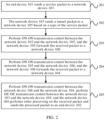
- the network device 105 forwards the received packet to the network device 106.
- the network device 105 updates a time to live field, the ON-ON-level packet number field, a field indicating a timestamp of an ON-ON-level packet number, and a current-hop field in the control packet header.
- the network device 105 refreshes the ON-ON-level packet number field in the control packet header. Therefore, before the packet 2 is successfully retransmitted, the network device 105 may directly forward the received packet 3, and an ON-ON-level packet number field in the packet 3 forwarded by the network device 105 indicates a new number.
- the new number is a number of a packet between the network device 105 and the network device 106.
- a retransmission indication field in the packet forwarded by the network device 105 remains unchanged (still 50), for example, the packet 1 and the packet 3. If a packet is retransmitted between the network device 103 and the network device 105, a retransmission indication field in the packet forwarded by the network device 105 changes, for example, the packet 2 (a value of the retransmission indication field changes to 40). When determining that the network device 106 does not receive the packet 2, the network device 105 determines, based on the new value (40), whether retransmission is allowed.
- the network device 105 establishes communication between the network device 105 and the network device 106, including maintaining the number of the packet, a retransmission queue, a retransmission timer, and the like between the two network devices.
- S204 Perform ON-ON transmission control between the network device 105 and the network device 106, and the network device 106 forwards the received packet to a network device 104.
- This step is similar to the step 203.
- S205 Perform ON-ON transmission control between the network device 106 and the network device 104, perform OE-OE transmission control between the network device 103 and the network device 104, and the network device 104 performs order preserving on the received packet and sends the processed packet to an end device 102.
- the performing ON-ON transmission control between the network device 106 and the network device 104 is similar to that in the step 203.
- the performing OE-OE transmission control between the network device 103 and the network device 104 mainly includes: feeding back, by the network device 104, an acknowledgement packet; performing, by the network device 103, packet loss-triggered retransmission based on the acknowledgement packet; and obtaining, by the network device 103, a status of a network between the network device 103 and the network device 104 based on the acknowledgement packet.
- the network device 104 sends the acknowledgement packet to the network device 103 based on an OE-OE-level packet number field in a control packet header.
- a control packet header of the acknowledgement packet is shown in Table 3.
- An acknowledgement packet may be sent for each tunnel packet, may be sent after a preset quantity of tunnel packets are received, or may be sent after a preset time. This is not limited in this embodiment of the present invention.
- the network device 104 receives the packets whose OE-OE-level packet numbers are 11 and 13, and does not receive the packet whose OE-OE-level packet number is 12.
- an OE-OE-level acknowledgement packet number is 13
- an OE-OE-level echo timestamp is a timestamp of the OE-OE-level packet number carried in the packet 3
- a quantity of negative acknowledgment packets is 1
- a list of the negative acknowledgment packets includes the packet number 12
- a tunnel type is the high-throughput type
- a path quantity is 1
- an OE-OE-level RTT is an OE-OE-level RTT carried in the received packet 3
- a path attribute includes an attribute of the first path.
- the network device 103 determines, based on the acknowledgement packet of the network device 104, whether a packet loss occurs. If determining that the packet loss occurs, the network device 103 performs packet loss-triggered retransmission. If determining that the network device 104 does not receive the packet whose OE-OE-level acknowledgement packet number is 12, the network device 103 retransmits the packet whose OE-OE-level acknowledgement packet number is 12.
- the network device 103 may obtain the status of the network between the network device 103 and the network device 104 based on the acknowledgement packet of the network device 104.
- the network device 103 may obtain an RTT between the network device 103 and the network device 104 through calculation based on the OE-OE-level echo timestamp, and may further obtain a packet loss rate between the network device 103 and the network device 104 based on a packet loss status. Multipath concurrent transmission is used. Therefore, the status of the network between the network device 103 and the network device 104 may be obtained and fed back directly by the network device 104.
- a path attribute field in this embodiment of the present invention carries a status of the first path.
- the OE-OE-level RTT is obtained based on an OE-OE-level RTT field.
- the network device 103 may perform further transmission control based on network statuses of the network device 103 and the network device 104. For example, a specific path for forwarding a packet may be selected, and the packet may be switched to a second path for transmission. For a decision on transmission control, refer to a network status obtained based on an OE-OE-level acknowledgment packet, or refer to a network status obtained based on an ON-ON-level acknowledgment packet. The network status needs to be sent by an ON-ON-level sending node to an OE-OE-level sending node.
- the network device 104 performs the order preserving on the received packet, and then sends the processed packet to the end device 102.
- a control packet header may change, and generally, a control packet payload does not change.
- An OE-OE-level packet number in the control packet header does not change. Therefore, an OE-OE-level receiving node performs, based on the number, operations such as packet loss detection and sending an acknowledgement packet to an OE-OE-level sending node.
- An ON-ON-level packet number in the control packet header is updated hop by hop. Therefore, the ON-ON-level receiving node and sending node can perform, based on a new ON-ON-level packet number, operations such as network status confirmation and packet loss-triggered retransmission.
- a timestamp of the OE-OE-level packet number in the control packet header is updated when OE-OE-level packet retransmission occurs.
- a timestamp of the ON-ON-level packet number in the control packet header is updated when ON-ON-level packet retransmission occurs.
- a retransmission indication field in the control packet header is updated when the ON-ON-level packet retransmission occurs.
- a network device in the segmented network 100 may modify a current-hop field, forward the packet with reference to a forwarding path field.
- a lower layer of a control packet header further includes an IP packet header, a source IP address of the IP packet header is an IP address of an ON-ON-level sending node, and a destination IP address of the IP packet header is an IP address of an ON-ON-level receiving node.
- the control packet header includes a field indicating a forwarding path between OEs and a current-hop field.
- a forwarding node obtains an IP address of a next hop based on the current-hop field and the forwarding path field, and then when forwarding a corresponding packet, updates an IP packet header of the packet based on an IP address of the local node and the IP address of the next hop. If the segmented network 100 forwards the packet by using another protocol, a corresponding forwarding operation may also be performed based the current-hop field and the forwarding path field.
- only OE-OE-level packet loss-triggered retransmission or only ON-ON-level packet loss-triggered retransmission may be performed, or packet loss-triggered retransmission may be performed only between specific ONs.
- retransmission is not triggered based on confirmation of a packet loss.
- the network device 103 may set a timer for the packet 1. When the timer expires and no acknowledgement packet from the network device 105 is received, it is highly likely that a packet loss occurs, and retransmission may also be triggered in this case.
- a network device 103 performs the multipath concurrent transmission based on a service type of the service packet.
- the network device 103 confirms that the type of the service packet is a low-latency type, determines to perform the multipath concurrent transmission, and forwards the service packet to a network device 104 by using a first path and a second path.
- Concurrent transmission may be completely repeated multipath packet sending, or may be concurrent transmission in a manner such as through multipath forward error correction (Forward Error Correction, FEC) or multipath network coding.
- FEC Forward Error Correction
- packets with a same payload on the two paths use a same OE-OE-level packet number.
- the network device 104 may perform an operation of removing a redundant packet from the packets with the same OE-OE-level packet number.
- the network device 103 sends a tunnel packet to a network device 105.
- the network device 103 uses the service packet as a payload and adds a control packet header to obtain the tunnel packet.
- a format of the control packet header is shown in Table 1.
- an ON-ON-level packet number of a packet 1 is 1, and an OE-OE-level packet number of the packet 1 is 11.
- An ON-ON-level packet number of a packet 2 is 2, and an OE-OE-level packet number of the packet 2 is 12.
- An ON-ON-level packet number of a packet 3 is 3, and an OE-OE-level packet number of the packet 3 is 13.
- the type of the service packet is the low-latency type. Therefore, a packet loss-triggered retransmission operation is not performed.
- a tunnel type field is set to the low-latency type
- a retransmission indication field is set to 0
- a path ID field is set to an ID of the first path.
- S304 Perform ON-ON transmission control between the network device 103 and the network device 105, and the network device 105 forwards the received packet to a network device 106.
- the performing ON-ON transmission control between the network device 103 and the network device 105 mainly includes: feeding back, by the network device 105, an acknowledgement packet; and obtaining, by the network device 103, a status of a network between the network device 103 and the network device 105 based on the acknowledgement packet.
- the network device 105 sends the acknowledgement packet to the network device 103 based on an ON-ON-level packet number field in the control packet header.
- a control packet header of the acknowledgement packet is shown in Table 2.
- An acknowledgement packet may be sent for each tunnel packet, may be sent after a preset quantity of tunnel packets are received, or may be sent after a preset time. This is not limited in this embodiment of the present invention.
- the network device 105 receives the packets whose ON-ON-level packet numbers are 1 and 3, and does not receive the packet whose ON-ON-level packet number is 2.
- an ON-ON-level acknowledgement packet number is 3
- an ON-ON-level echo timestamp is a timestamp of the ON-ON-level packet number carried in the packet 3
- a quantity of negative acknowledgment packets is 1, and a list of the negative acknowledgment packets includes the packet number 2.
- the network device 103 determines, based on the acknowledgement packet of the network device 105, whether a packet loss occurs. When the packet loss occurs, the network device 103 does not perform packet loss-triggered retransmission. However, the network device 103 may obtain the status of the network between the network device 103 and the network device 105 based on the acknowledgement packet of the network device 105, for example, may obtain an RTT between the network device 103 and the network device 105 through calculation based on the ON-ON-level echo timestamp, and may further obtain a packet loss rate between the network device 103 and the network device 105 based on a packet loss status.
- the network device 105 forwards the received packet to the network device 106.
- the network device 105 updates a time to live field, the ON-ON-level packet number field, a field indicating a timestamp of an ON-ON-level packet number, and a current-hop field in the control packet header.
- the network device 105 refreshes the ON-ON-level packet number field in the control packet header. Therefore, before the packet 2 is successfully retransmitted, the network device 105 may directly forward the received packet 3, and an ON-ON-level packet number field in the packet 3 forwarded by the network device 105 indicates a new number.
- the new number is a number of a packet between the network device 105 and the network device 106.
- S305 Perform ON-ON transmission control between the network device 105 and the network device 106, and the network device 106 forwards the received packet to the network device 104.
- This step is similar to the step 304.
- S306 Perform ON-ON transmission control between the network device 106 and the network device 104.
- This step is similar to the step 304.
- the network device 103 sends a tunnel packet to a network device 107.
- the network device 103 uses the service packet as a payload and adds a control packet header to obtain the tunnel packet.
- a format of the control packet header is shown in Table 1.
- an ON-ON-level packet number of a packet 11 is 111, and an OE-OE-level packet number of the packet 11 is 11.
- An ON-ON-level packet number of a packet 12 is 112, and an OE-OE-level packet number of the packet 12 is 12.
- An ON-ON-level packet number of a packet 13 is 113, and an OE-OE-level packet number of the packet 13 is 13.
- a payload of the packet 11 is the same as that of the packet 1 in the step 303. Therefore, the same OE-OE-level packet number 11 is used.
- a payload of the packet 12 is the same as that of the packet 2 in the step 303. Therefore, the same OE-OE-level packet number 12 is used.
- a payload of the packet 13 is the same as that of the packet 3 in the step 303. Therefore, the same OE-OE-level packet number 13 is used.
- the type of the service packet is the low-latency type. Therefore, a packet loss-triggered retransmission operation is not performed.
- a tunnel type field is set to the low-latency type
- a retransmission indication field is set to 0
- a path ID field is set to an ID of the second path.
- S308 Perform ON-ON transmission control between the network device 103 and the network device 107, and the network device 107 forwards the received packet to the network device 104.
- This step is similar to the step 304.
- This step is similar to the step 304.
- the network device 104 performs redundancy removal and reordering operations based on the multipath packets. Perform OE-OE transmission control between the network device 103 and the network device 104, and the network device 104 performs order preserving on the received packet and sends the processed packet to an end device 102.
- the network device 104 receives the packet from the first path and the second path, and performs redundancy removal and reordering based on an OE-OE-level packet number field in the packet.
- the network device 103 determines, based on the acknowledgement packet of the network device 105, whether a packet loss occurs. When the packet loss occurs, the network device 103 does not perform packet loss-triggered retransmission. However, the network device 103 may obtain the status of the network between the network device 103 and the network device 104 based on the acknowledgement packet of the network device 104, for example, may obtain an RTT between the network device 103 and the network device 104 through calculation based on the OE-OE-level echo timestamp, and may further obtain a packet loss rate between the network device 103 and the network device 104 based on a packet loss status. The multipath concurrent transmission is used.
- a path attribute field in this embodiment of the present invention carries statuses of the first path and the second path.
- the OE-OE-level RTT is obtained based on an OE-OE-level RTT field.
- the network device 104 performs the order preserving on the received packet, and then sends the processed packet to the end device 102.
- payloads of packets transmitted on the first path and the second path are different.
- Load sharing is performed service packets by using the first path and the second path (for example, a service packet 1, a service packet 3, ..., and the like are sent by using the first path, and a service packet 2, a service packet 4, ..., and the like are sent by using the second path), or multipath load sharing may be performed on service packets after FEC and network coding are performed on the service packets. In this way, an end-to-end throughput can be greatly improved.
- status maintenance and transmission control are performed not based on a flow in a conventional solution, but flows of a same type are converged into a same tunnel for tunnel-based status maintenance and transmission control.
- the network can use a multipath for efficient transmission to improve service transmission performance and experience.
- the network can proactively recover transmission quality in time to improve the service transmission performance and experience.
- a segmented network When a type of a service is the low-latency type and a packet loss tolerance is low, a segmented network performs the multipath transmission control for the service, the OE-OE transmission control is OE-OE-level reordering and redundancy removal, and an ON performs a pure forwarding service without retransmission.
- the segmented network guarantees segmented transmission for the service. Each segment of transmission is stateful.
- the segmented network performs inband and timely recovery on a perceived service impairment based on these statuses
- the OE-OE transmission control is OE-OE-level retransmission and order preserving
- the corresponding ON-ON transmission control is reliable service forwarding based on the retransmission and order preserving.
- FIG. 4 is a structural block diagram of a network device according to an embodiment of the present invention.
- the network device 400 in FIG. 4 is a first network device, and may correspond to the foregoing network devices 103, 105, 106, and 107.
- the network device 400 includes a sending module 401 and a receiving module 402.
- the sending module 401 is configured to send a first packet to a second network device, where a control packet header of the first packet includes a first number, and the first number is used to indicate a number of the packet that carries the first number and that is between the first network device and the second network device.
- the receiving module 402 is configured to receive a first acknowledgement packet from the second network device, where the first acknowledgement packet includes an indication indicating whether the second network device receives the first packet.
- the sending module 401 may be implemented by a transmitter.
- the receiving module 402 may be implemented by a receiver.
- FIG. 5 is a structural block diagram of another network device according to an embodiment of the present invention.
- the network device 500 in FIG. 5 is a second network device, and may correspond to the foregoing network devices 105, 106, 107, and 104.
- the network device 500 includes a receiving module 501 and a sending module 502.
- the receiving module 501 is configured to receive a first packet from a first network device, where a control packet header of the first packet includes a first number, and the first number is used to indicate a number of the packet that carries the first number and that is between the first network device and the second network device.
- the sending module 502 is configured to send a first acknowledgement packet to the first network device, where the first acknowledgement packet includes an indication indicating whether the second network device receives the first packet.
- the receiving module 501 may be implemented by a receiver.
- the sending module 502 may be implemented by a transmitter.
- FIG. 6 is a structural block diagram of a network device according to an embodiment of the present invention.
- the network device 600 in FIG. 6 is a first network device, and may correspond to the foregoing network devices 103, 105, 106, and 107.
- the network device 600 includes a transceiver 601, a processor 602, and a memory 603.
- FIG. 6 shows only one memory and one processor.
- the memory may also be referred to as a storage medium, a storage device, or the like.
- the memory may be disposed independent of the processor, or may be integrated with the processor. This is not limited in this embodiment of this application.
- the transceiver 601, the processor 602, and the memory 603 communicate with each other through an internal connection path, to transfer a control signal and/or a data signal.
- the transceiver 601 is configured to: send a first packet to a second network device, where a control packet header of the first packet includes a first number, and the first number is used to indicate a number of the packet that carries the first number and that is between the first network device and the second network device; and receive a first acknowledgement packet from the second network device, where the first acknowledgement packet includes an indication indicating whether the second network device receives the first packet.
- FIG. 7 is a structural block diagram of another network device according to an embodiment of the present invention.
- the network device 700 in FIG. 7 is a second network device, and may correspond to the foregoing network devices 105, 106, 107, and 104.
- the network device 700 includes a transceiver 701, a processor 702, and a memory 703.
- FIG. 7 shows only one memory and one processor.
- the memory may also be referred to as a storage medium, a storage device, or the like.
- the memory may be disposed independent of the processor, or may be integrated with the processor. This is not limited in this embodiment of this application.
- the transceiver 701, the processor 702, and the memory 703 communicate with each other through an internal connection path, to transfer a control signal and/or a data signal.
- the transceiver 701 is configured to: receive a first packet from a first network device, where a control packet header of the first packet includes a first number, and the first number is used to indicate a number of the packet that carries the first number and that is between the first network device and the second network device; and send a first acknowledgement packet to the first network device, where the first acknowledgement packet includes an indication indicating whether the second network device receives the first packet.
- the transceiver described in the embodiments of this application may also be referred to as a transceiver unit, a transceiver, a transceiver apparatus, or the like.
- the processor may also be referred to as a processing unit, a processing board, a processing module, a processing apparatus, or the like.
- a component that is in the transceiver and that is configured to implement a receiving function may be considered as a receiving unit
- a component that is in the transceiver and that is configured to implement a sending function may be considered as a sending unit.
- the transceiver includes the receiving unit and the sending unit.
- the receiving unit sometimes may also be referred to as a receiver machine, a receiver, a receiver circuit, or the like.
- the sending unit sometimes may also be referred to as a transmitter machine, a transmitter, a transmitter circuit, or the like.
- the memory in the embodiments of this application is configured to store a computer instruction and a parameter that are required for running the processor.
- the processor in the embodiments of the present invention may be an integrated circuit chip, and has a signal processing capability. In an implementation process, steps in the foregoing methods can be implemented by using a hardware integrated logic circuit in the processor, or by using instructions in a form of software.
- the processor in the embodiments of this application may be a general-purpose processor, a digital signal processor (digital signal processor, DSP), an application-specific integrated circuit (application specific integrated circuit, ASIC), a field programmable gate array (field programmable gate array, FPGA) or another programmable logic device, a discrete gate or transistor logic device, or a discrete hardware component.
- DSP digital signal processor
- ASIC application specific integrated circuit
- FPGA field programmable gate array
- the processor may implement or perform the methods, steps, and logical block diagrams that are disclosed in the embodiments of the present invention.
- the general-purpose processor may be a microprocessor, or the processor may be any conventional processor or the like. Steps of the methods disclosed with reference to the embodiments of the present invention may be directly executed and accomplished by using a hardware decoding processor, or may be executed and accomplished by using a combination of hardware and software modules in the decoding processor.
- a software module may be located in a mature storage medium in the art, such as a random access memory (random access memory, RAM), a flash memory, a read-only memory (read-only memory, ROM), a programmable read-only memory, an electrically erasable programmable memory, or a register.
- the storage medium is located in a memory, and a processor reads instructions in the memory and completes the steps in the foregoing methods in combination with hardware of the processor.
- Sequence numbers of the foregoing processes do not mean execution sequences in various embodiments of this application.
- the execution sequences of the processes should be determined based on functions and internal logic of the processes, and should not be construed as any limitation on the implementation processes of the embodiments of this application.
- All or some of the foregoing embodiments may be implemented by using software, hardware, firmware, or any combination thereof.
- the embodiments may be all or partially implemented in a form of a computer program product.
- the computer program product includes one or more computer instructions.
- the computer program instructions When the computer program instructions are loaded and executed on a computer, the procedures or functions according to the embodiments of this application are all or partially generated.
- the computer may be a general-purpose computer, a special-purpose computer, a computer network, or another programmable apparatus.
- the computer instructions may be stored in a computer-readable storage medium or may be transmitted from a computer-readable storage medium to another computer-readable storage medium.
- the computer instructions may be transmitted from a website, computer, server, or data center to another website, computer, server, or data center in a wired (for example, a coaxial cable, an optical fiber, or a digital subscriber line (digital subscriber line, DSL)) or wireless (for example, infrared, radio, or microwave) manner.
- the computer-readable storage medium may be any usable medium accessible by a computer, or a data storage device, such as a server or a data center, integrating one or more usable media.
- the usable medium may be a magnetic medium (for example, a floppy disk, a hard disk, or a magnetic tape), an optical medium (for example, a digital video disc (digital video disc, DVD)), a semiconductor medium (for example, a solid state disk (solid state disk, SSD)), or the like.
- a magnetic medium for example, a floppy disk, a hard disk, or a magnetic tape
- an optical medium for example, a digital video disc (digital video disc, DVD)
- a semiconductor medium for example, a solid state disk (solid state disk, SSD)
- the disclosed system, apparatus, and method may be implemented in other manners.
- the described apparatus embodiment is merely an example.
- the unit division is merely logical function division and may be other division in actual implementation.
- a plurality of units or components may be combined or integrated into another system, or some features may be ignored or not performed.
- the displayed or discussed mutual couplings or direct couplings or communication connections may be implemented by using some interfaces.
- the indirect couplings or communication connections between the apparatuses or units may be implemented in electrical, mechanical, or other forms.
- the units described as separate parts may or may not be physically separate, and parts displayed as units may or may not be physical units, may be located in one position, or may be distributed on a plurality of network units. Some or all of the units may be selected based on actual requirements to achieve the objectives of the solutions of the embodiments.
- the functions When the functions are implemented in a form of a software functional unit and sold or used as an independent product, the functions may be stored in a computer-readable storage medium. Based on such an understanding, the technical solutions of this application essentially, or the part contributing to the prior art, or some of the technical solutions may be implemented in a form of a software product.
- the software product is stored in a storage medium, and includes several instructions for instructing a computer device (which may be a personal computer, a server, or a network device) to perform all or some of the steps of the methods described in the embodiments of this application.
- the foregoing storage medium includes: any medium that can store program code, such as a USB flash drive, a removable hard disk, a read-only memory (read-only memory, ROM), a random access memory (random access memory, RAM), a magnetic disk, or an optical disc.
- program code such as a USB flash drive, a removable hard disk, a read-only memory (read-only memory, ROM), a random access memory (random access memory, RAM), a magnetic disk, or an optical disc.
Landscapes
- Engineering & Computer Science (AREA)
- Computer Networks & Wireless Communication (AREA)
- Signal Processing (AREA)
- Computer Security & Cryptography (AREA)
- Data Exchanges In Wide-Area Networks (AREA)
- Communication Control (AREA)
- Detection And Prevention Of Errors In Transmission (AREA)
Claims (2)
- Paketverarbeitungsverfahren, das durch ein System ausgeführt wird, das eine erste Netzwerkvorrichtung (103), eine zweite Netzwerkvorrichtung (104) und mindestens eine dritte Netzwerkvorrichtung (105) umfasst, wobei das Verfahren Folgendes umfasst:Senden eines ersten Pakets zu der zweiten Netzwerkvorrichtung (104) durch die erste Netzwerkvorrichtung (103) unter Verwendung eines ersten Pfads, wobei der erste Pfad die mindestens eine dritte Netzwerkvorrichtung (105) umfasst, die zwischen der ersten Netzwerkvorrichtung (103) und der zweiten Netzwerkvorrichtung (104) angeordnet ist, ein Steuerpaketheader des ersten Pakets eine erste Nummer umfasst und die erste Nummer verwendet wird, um eine Nummer des Pakets anzugeben, das die erste Nummer trägt und das sich zwischen der ersten Netzwerkvorrichtung (103) und der zweiten Netzwerkvorrichtung (104) befindet;Empfangen eines ersten Bestätigungspakets von der zweiten Netzwerkvorrichtung (104) durch die erste Netzwerkvorrichtung (103), wobei das erste Bestätigungspaket eine Angabe umfasst, die angibt, ob die zweite Netzwerkvorrichtung (104) das erste Paket empfängt;eine Neuübertragung des ersten Pakets von der ersten Netzwerkvorrichtung (103) zu der zweiten Netzwerkvorrichtung (104) auf der Basis eines ausdrücklichen Bestätigungspakets ausgelöst wird, wobei das ausdrückliche Bestätigungspaket das erste Bestätigungspaket ist, das einen Paketverlust des ersten Pakets angibt, oder auf der Basis eines Neuübertragungtimers und eines Bestätigungspakets ausgelöst wird; undNeuübertragen des ersten Pakets zu der zweiten Netzwerkvorrichtung (104) Folgendes umfasst:Senden des ersten Pakets zu der mindestens einen dritten Netzwerkvorrichtung (105) des ersten Pfads durch die erste Netzwerkvorrichtung (103);Senden eines zweiten Bestätigungspaket zu der ersten Netzwerkvorrichtung (103) durch die mindestens eine dritte Netzwerkvorrichtung (105).Bestimmen durch die erste Netzwerkvorrichtung (103) auf der Basis des zweiten Bestätigungspaket der mindestens einen dritten Netzwerkvorrichtung (105), ob ein Paketverlust auftritt; wenn ein Paketverlust aufgetreten ist, Aktualisieren einer in dem ersten Paket enthaltenen Neuübertragungs-Angabeinformation durch die erste Netzwerkvorrichtung (103) und Neuübertragen des ersten Pakets durch die erste Netzwerkvorrichtung (103);Weiterleiten des ersten Pakets zu einer weiteren Netzwerkvorrichtung (106) oder zu der zweiten Netzwerkvorrichtung (104) durch die mindestens eine dritte Netzwerkvorrichtung (105); undwenn bestimmt wird, dass die weitere Netzwerkvorrichtung (106) oder die zweite Netzwerkvorrichtung (104) das erste Paket nicht empfängt, bestimmt die dritte Netzwerkvorrichtung (105) auf der Basis der Neuübertragungs-Angabeinformation, ob Neuübertragung erlaubt ist, aktualisiert die in dem ersten Paket enthaltenen Neuübertragungs-Angabeinformation und überträgt das erste Paket neu, wenn Neuübertragung erlaubt ist;wobei die Neuübertragungs-Angabeinformation verwendet werden, um anzugeben, ob einer Netzwerkvorrichtung, die das erste Paket empfängt, erlaubt ist, das erste Paket neu zu übertragen, und ein neu übertragenes erstes Paket aktualisierte Neuübertragungs-Angabeinformationen umfasst;wobei, ob Neuübertragung erlaubt ist, von einer Latenzanforderung abhängig ist.
- Netzwerkvorrichtung, wobei die Netzwerkvorrichtung eine erste Netzwerkvorrichtung (103) ist und Folgendes umfasst:ein Sendemodul, ausgelegt zum Senden eines ersten Pakets zu einer zweiten Netzwerkvorrichtung (104) unter Verwendung eines ersten Pfads, wobei der erste Pfad die mindestens eine dritte Netzwerkvorrichtung (105) umfasst, die zwischen der ersten Netzwerkvorrichtung (103) und der zweiten Netzwerkvorrichtung (104) angeordnet ist, ein Steuerpaketheader des ersten Pakets eine erste Nummer umfasst und die erste Nummer verwendet wird, um eine Nummer des Pakets anzugeben, das die erste Nummer trägt und das sich zwischen der ersten Netzwerkvorrichtung (103) und der zweiten Netzwerkvorrichtung (104) befindet; undein Empfangsmodul, ausgelegt zum Empfangen eines ersten Bestätigungspakets von der zweiten Netzwerkvorrichtung (104), wobei das erste Bestätigungspaket eine Angabe umfasst, die angibt, ob die zweite Netzwerkvorrichtung (104) das erste Paket empfängt;wobei das Sendemodul ferner ausgelegt ist zum Neuübertragen des ersten Pakets zu der zweiten Netzwerkvorrichtung (104), wobei die Neuübertragung auf der Basis eines ausdrücklichen Bestätigungspaket ausgelöst wird, wobei das ausdrückliche Bestätigungspaket das erste Bestätigungspaket ist, das einen Paketverlust des ersten Pakets angibt, oder auf der Basis eines Neuübertragungtimers und des ersten Bestätigungspakets ausgelöst wird, umfassend:Senden des ersten Pakets von der ersten Netzwerkvorrichtung (103) zu der mindestens einen dritten Netzwerkvorrichtung (105) des ersten Pfads;Empfangen eines durch die mindestens eine dritte Netzwerkvorrichtung (105) gesendeten zweiten Bestätigungspakets;Bestimmen durch die erste Netzwerkvorrichtung (103) auf der Basis des zweiten Bestätigungspaket der mindestens einen dritten Netzwerkvorrichtung (105), ob ein Paketverlust auftritt; wenn ein Paketverlust aufgetreten ist, Aktualisieren einer in dem ersten Paket enthaltenen Neuübertragungs-Angabeinformation durch die erste Netzwerkvorrichtung (103) und Neuübertragen des ersten Pakets durch die erste Netzwerkvorrichtung (103), wenn Neuübertragung erlaubt ist;wobei die Neuübertragungs-Angabeinformation verwendet werden, um anzugeben, ob einer Netzwerkvorrichtung, die das erste Paket empfängt, erlaubt ist, das erste Paket neu zu übertragen, und ein neu übertragenes erstes Paket aktualisierte Neuübertragungs-Angabeinformationen umfasst;wobei, ob Neuübertragung erlaubt ist, von einer Latenzanforderung abhängig ist.
Applications Claiming Priority (2)
| Application Number | Priority Date | Filing Date | Title |
|---|---|---|---|
| CN201811223687.XA CN111082898B (zh) | 2018-10-19 | 2018-10-19 | 一种报文处理方法和装置 |
| PCT/CN2019/111863 WO2020078448A1 (zh) | 2018-10-19 | 2019-10-18 | 一种报文处理方法和装置 |
Publications (3)
| Publication Number | Publication Date |
|---|---|
| EP3860013A1 EP3860013A1 (de) | 2021-08-04 |
| EP3860013A4 EP3860013A4 (de) | 2022-03-02 |
| EP3860013B1 true EP3860013B1 (de) | 2025-05-28 |
Family
ID=70283365
Family Applications (1)
| Application Number | Title | Priority Date | Filing Date |
|---|---|---|---|
| EP19873443.6A Active EP3860013B1 (de) | 2018-10-19 | 2019-10-18 | Nachrichtenverarbeitungsverfahren und -vorrichtung |
Country Status (5)
| Country | Link |
|---|---|
| US (1) | US11888960B2 (de) |
| EP (1) | EP3860013B1 (de) |
| JP (1) | JP7327730B2 (de) |
| CN (1) | CN111082898B (de) |
| WO (1) | WO2020078448A1 (de) |
Families Citing this family (8)
| Publication number | Priority date | Publication date | Assignee | Title |
|---|---|---|---|---|
| CN113132062A (zh) * | 2019-12-31 | 2021-07-16 | 华为技术有限公司 | 报文传输方法及电子设备 |
| CN112865931B (zh) * | 2020-12-30 | 2022-12-06 | 京信网络系统股份有限公司 | 数据重传处理方法、装置、设备和可读存储介质 |
| CN115412508A (zh) * | 2021-05-28 | 2022-11-29 | 华为技术有限公司 | 传输报文的方法及装置 |
| CN114205256A (zh) * | 2021-12-07 | 2022-03-18 | 苏州盛科通信股份有限公司 | 基于twamp协议连续测量网络性能的方法、装置和存储介质 |
| CN117155525A (zh) * | 2022-05-24 | 2023-12-01 | 华为技术有限公司 | 一种冗余传输控制方法及相关设备 |
| CN115296900B (zh) * | 2022-08-03 | 2024-01-23 | 北京天融信网络安全技术有限公司 | 一种网络报文修正方法、装置、电子设备及存储介质 |
| WO2024092292A2 (en) * | 2024-02-16 | 2024-05-02 | Futurewei Technologies, Inc. | A method for load balancing using latency aware packet spraying (laps) |
| CN119094450B (zh) * | 2024-08-26 | 2026-01-06 | 中国移动通信有限公司研究院 | 报文处理方法、装置、相关设备、存储介质及计算机程序产品 |
Family Cites Families (17)
| Publication number | Priority date | Publication date | Assignee | Title |
|---|---|---|---|---|
| JP3708950B2 (ja) * | 2000-08-24 | 2005-10-19 | 松下電器産業株式会社 | 送受信方法およびその装置 |
| US20040213278A1 (en) * | 2003-04-24 | 2004-10-28 | Broadcom Corporation | System, method, and computer program product for in-place, lightweight Ack promotion in a cable modem environment |
| JP2007208635A (ja) | 2006-02-01 | 2007-08-16 | Matsushita Electric Ind Co Ltd | ノード、パケット通信方法、及びパケット通信システム |
| DE602006006917D1 (de) * | 2006-11-20 | 2009-07-02 | Ntt Docomo Inc | Relais zum Weiterleiten eines Datenpaketes gesendet von einem ersten Sender/Empfänger an einen zweiten Sender/Empfänger. |
| US8169914B2 (en) * | 2009-03-16 | 2012-05-01 | Sling Media Pvt. Ltd. | Method and node for transmitting data over a communication network using negative acknowledgment |
| WO2011020229A1 (zh) * | 2009-08-17 | 2011-02-24 | 上海贝尔股份有限公司 | 在中继链路上处理数据的方法和相关设备 |
| JP5585591B2 (ja) * | 2009-12-14 | 2014-09-10 | 日本電気株式会社 | パケット再送制御システム、方法、及びプログラム |
| CN102158409B (zh) * | 2011-04-02 | 2014-09-10 | 杭州华三通信技术有限公司 | 一种ip报文转发控制方法及其设备 |
| RU2601175C2 (ru) * | 2011-04-12 | 2016-10-27 | Телефонактиеболагет Л М Эрикссон (Пабл) | Способ и система передачи данных от контроллера радиосети к пользовательскому устройству |
| CN103024930B (zh) * | 2011-09-23 | 2016-01-20 | 中国移动通信集团公司 | 数据传输方法、中继节点、汇聚服务器和系统 |
| JP5928583B2 (ja) * | 2012-05-16 | 2016-06-01 | 富士通株式会社 | ノード装置および通信方法 |
| CN103259696B (zh) * | 2013-04-19 | 2016-12-28 | 华为技术有限公司 | 网络带宽检测方法、装置及网络设备 |
| CN103618678A (zh) * | 2013-11-18 | 2014-03-05 | 北京星网锐捷网络技术有限公司 | 自适应多链路聚合的方法、装置及系统 |
| CN104038322B (zh) | 2014-06-16 | 2017-12-19 | 北京邮电大学 | 中间节点、通信网络及其数据传输控制方法 |
| US9515777B2 (en) | 2014-10-23 | 2016-12-06 | International Business Machines Corporation | Snoop virtual receiver time |
| CN108023758B (zh) * | 2016-11-04 | 2020-06-02 | 华为技术有限公司 | 一种混合接入网络中处理报文的方法及网络设备 |
| CN110830182B (zh) * | 2018-08-09 | 2023-08-01 | 北京三星通信技术研究有限公司 | 数据重传的方法和装置 |
-
2018
- 2018-10-19 CN CN201811223687.XA patent/CN111082898B/zh active Active
-
2019
- 2019-10-18 EP EP19873443.6A patent/EP3860013B1/de active Active
- 2019-10-18 JP JP2021521432A patent/JP7327730B2/ja active Active
- 2019-10-18 WO PCT/CN2019/111863 patent/WO2020078448A1/zh not_active Ceased
-
2021
- 2021-04-16 US US17/232,832 patent/US11888960B2/en active Active
Also Published As
| Publication number | Publication date |
|---|---|
| WO2020078448A1 (zh) | 2020-04-23 |
| US11888960B2 (en) | 2024-01-30 |
| US20210234945A1 (en) | 2021-07-29 |
| JP2022505424A (ja) | 2022-01-14 |
| CN111082898A (zh) | 2020-04-28 |
| EP3860013A4 (de) | 2022-03-02 |
| CN111082898B (zh) | 2022-08-26 |
| JP7327730B2 (ja) | 2023-08-16 |
| EP3860013A1 (de) | 2021-08-04 |
Similar Documents
| Publication | Publication Date | Title |
|---|---|---|
| EP3860013B1 (de) | Nachrichtenverarbeitungsverfahren und -vorrichtung | |
| US9577791B2 (en) | Notification by network element of packet drops | |
| US11477130B2 (en) | Transmission control method and apparatus | |
| US10237153B2 (en) | Packet retransmission method and apparatus | |
| US20200358886A1 (en) | Data Transmission Method, Apparatus, And System | |
| KR101610715B1 (ko) | 단방향 데이터 송수신 시스템 및 방법 | |
| CN106254202B (zh) | 一种基于喷泉码的多路并行传输方法以及装置 | |
| JP5816718B2 (ja) | 通信装置、通信システム、およびデータ通信の中継方法 | |
| US8843654B2 (en) | Data packet transfer over wide area network in fast and reliable manner | |
| WO2014092779A1 (en) | Notification by network element of packet drops | |
| KR101453182B1 (ko) | 프레임 전송의 적어도 부분적인 중단 | |
| US9866351B2 (en) | Communication method and communication apparatus | |
| US20080159150A1 (en) | Method and Apparatus for Preventing IP Datagram Fragmentation and Reassembly | |
| JP2006222960A (ja) | マルチtcp確認応答を用いたtcp輻輳制御システム及びその方法 | |
| CN114302451B (zh) | 一种数据传输方法、系统和存储介质 | |
| JP5832335B2 (ja) | 通信装置および通信システム | |
| CN111131179B (zh) | 业务处理方法、装置、网络设备及存储介质 | |
| CN108650061A (zh) | 基于fec的vpn代理方法、装置、存储介质和系统 | |
| CN100505608C (zh) | 一种适合卫星网络的自适应拥塞控制方法及系统 | |
| CN114070475A (zh) | 比特块的发送方法及装置 | |
| US8085669B2 (en) | Session relay device and session relay method | |
| CN120074764A (zh) | 一种逐跳可靠的传输层数据传输方法和系统 | |
| JP2001136209A (ja) | 通信装置 | |
| JP7701335B2 (ja) | Tcp通信装置、方法及びプログラム |
Legal Events
| Date | Code | Title | Description |
|---|---|---|---|
| STAA | Information on the status of an ep patent application or granted ep patent |
Free format text: STATUS: THE INTERNATIONAL PUBLICATION HAS BEEN MADE |
|
| PUAI | Public reference made under article 153(3) epc to a published international application that has entered the european phase |
Free format text: ORIGINAL CODE: 0009012 |
|
| STAA | Information on the status of an ep patent application or granted ep patent |
Free format text: STATUS: REQUEST FOR EXAMINATION WAS MADE |
|
| 17P | Request for examination filed |
Effective date: 20210429 |
|
| AK | Designated contracting states |
Kind code of ref document: A1 Designated state(s): AL AT BE BG CH CY CZ DE DK EE ES FI FR GB GR HR HU IE IS IT LI LT LU LV MC MK MT NL NO PL PT RO RS SE SI SK SM TR |
|
| RIC1 | Information provided on ipc code assigned before grant |
Ipc: H04L 1/18 20060101ALI20211020BHEP Ipc: H04L 1/16 20060101AFI20211020BHEP |
|
| DAV | Request for validation of the european patent (deleted) | ||
| DAX | Request for extension of the european patent (deleted) | ||
| A4 | Supplementary search report drawn up and despatched |
Effective date: 20220127 |
|
| RIC1 | Information provided on ipc code assigned before grant |
Ipc: H04L 1/18 20060101ALI20220121BHEP Ipc: H04L 1/16 20060101AFI20220121BHEP |
|
| STAA | Information on the status of an ep patent application or granted ep patent |
Free format text: STATUS: EXAMINATION IS IN PROGRESS |
|
| 17Q | First examination report despatched |
Effective date: 20230214 |
|
| REG | Reference to a national code |
Ref country code: DE Ref legal event code: R079 Free format text: PREVIOUS MAIN CLASS: H04L0001160000 Ipc: H04L0001160700 Ref country code: DE Ref legal event code: R079 Ref document number: 602019070620 Country of ref document: DE Free format text: PREVIOUS MAIN CLASS: H04L0001160000 Ipc: H04L0001160700 |
|
| GRAP | Despatch of communication of intention to grant a patent |
Free format text: ORIGINAL CODE: EPIDOSNIGR1 |
|
| STAA | Information on the status of an ep patent application or granted ep patent |
Free format text: STATUS: GRANT OF PATENT IS INTENDED |
|
| RIC1 | Information provided on ipc code assigned before grant |
Ipc: H04L 69/28 20220101ALI20241216BHEP Ipc: H04L 69/22 20220101ALI20241216BHEP Ipc: H04L 47/34 20220101ALI20241216BHEP Ipc: H04L 47/283 20220101ALI20241216BHEP Ipc: H04L 1/1607 20230101AFI20241216BHEP |
|
| INTG | Intention to grant announced |
Effective date: 20250103 |
|
| GRAS | Grant fee paid |
Free format text: ORIGINAL CODE: EPIDOSNIGR3 |
|
| GRAA | (expected) grant |
Free format text: ORIGINAL CODE: 0009210 |
|
| STAA | Information on the status of an ep patent application or granted ep patent |
Free format text: STATUS: THE PATENT HAS BEEN GRANTED |
|
| AK | Designated contracting states |
Kind code of ref document: B1 Designated state(s): AL AT BE BG CH CY CZ DE DK EE ES FI FR GB GR HR HU IE IS IT LI LT LU LV MC MK MT NL NO PL PT RO RS SE SI SK SM TR |
|
| REG | Reference to a national code |
Ref country code: GB Ref legal event code: FG4D |
|
| REG | Reference to a national code |
Ref country code: CH Ref legal event code: EP |
|
| REG | Reference to a national code |
Ref country code: IE Ref legal event code: FG4D Ref country code: DE Ref legal event code: R096 Ref document number: 602019070620 Country of ref document: DE |
|
| REG | Reference to a national code |
Ref country code: NL Ref legal event code: MP Effective date: 20250528 |
|
| PG25 | Lapsed in a contracting state [announced via postgrant information from national office to epo] |
Ref country code: FI Free format text: LAPSE BECAUSE OF FAILURE TO SUBMIT A TRANSLATION OF THE DESCRIPTION OR TO PAY THE FEE WITHIN THE PRESCRIBED TIME-LIMIT Effective date: 20250528 Ref country code: ES Free format text: LAPSE BECAUSE OF FAILURE TO SUBMIT A TRANSLATION OF THE DESCRIPTION OR TO PAY THE FEE WITHIN THE PRESCRIBED TIME-LIMIT Effective date: 20250528 |
|
| REG | Reference to a national code |
Ref country code: LT Ref legal event code: MG9D |
|
| PG25 | Lapsed in a contracting state [announced via postgrant information from national office to epo] |
Ref country code: NO Free format text: LAPSE BECAUSE OF FAILURE TO SUBMIT A TRANSLATION OF THE DESCRIPTION OR TO PAY THE FEE WITHIN THE PRESCRIBED TIME-LIMIT Effective date: 20250828 Ref country code: GR Free format text: LAPSE BECAUSE OF FAILURE TO SUBMIT A TRANSLATION OF THE DESCRIPTION OR TO PAY THE FEE WITHIN THE PRESCRIBED TIME-LIMIT Effective date: 20250829 |
|
| PG25 | Lapsed in a contracting state [announced via postgrant information from national office to epo] |
Ref country code: PL Free format text: LAPSE BECAUSE OF FAILURE TO SUBMIT A TRANSLATION OF THE DESCRIPTION OR TO PAY THE FEE WITHIN THE PRESCRIBED TIME-LIMIT Effective date: 20250528 Ref country code: NL Free format text: LAPSE BECAUSE OF FAILURE TO SUBMIT A TRANSLATION OF THE DESCRIPTION OR TO PAY THE FEE WITHIN THE PRESCRIBED TIME-LIMIT Effective date: 20250528 |
|
| PG25 | Lapsed in a contracting state [announced via postgrant information from national office to epo] |
Ref country code: BG Free format text: LAPSE BECAUSE OF FAILURE TO SUBMIT A TRANSLATION OF THE DESCRIPTION OR TO PAY THE FEE WITHIN THE PRESCRIBED TIME-LIMIT Effective date: 20250528 |
|
| PG25 | Lapsed in a contracting state [announced via postgrant information from national office to epo] |
Ref country code: HR Free format text: LAPSE BECAUSE OF FAILURE TO SUBMIT A TRANSLATION OF THE DESCRIPTION OR TO PAY THE FEE WITHIN THE PRESCRIBED TIME-LIMIT Effective date: 20250528 |
|
| PG25 | Lapsed in a contracting state [announced via postgrant information from national office to epo] |
Ref country code: RS Free format text: LAPSE BECAUSE OF FAILURE TO SUBMIT A TRANSLATION OF THE DESCRIPTION OR TO PAY THE FEE WITHIN THE PRESCRIBED TIME-LIMIT Effective date: 20250828 |
|
| PG25 | Lapsed in a contracting state [announced via postgrant information from national office to epo] |
Ref country code: IS Free format text: LAPSE BECAUSE OF FAILURE TO SUBMIT A TRANSLATION OF THE DESCRIPTION OR TO PAY THE FEE WITHIN THE PRESCRIBED TIME-LIMIT Effective date: 20250928 |
|
| PG25 | Lapsed in a contracting state [announced via postgrant information from national office to epo] |
Ref country code: LV Free format text: LAPSE BECAUSE OF FAILURE TO SUBMIT A TRANSLATION OF THE DESCRIPTION OR TO PAY THE FEE WITHIN THE PRESCRIBED TIME-LIMIT Effective date: 20250528 |
|
| REG | Reference to a national code |
Ref country code: AT Ref legal event code: MK05 Ref document number: 1799272 Country of ref document: AT Kind code of ref document: T Effective date: 20250528 |
|
| PGFP | Annual fee paid to national office [announced via postgrant information from national office to epo] |
Ref country code: DE Payment date: 20250902 Year of fee payment: 7 |
|
| PG25 | Lapsed in a contracting state [announced via postgrant information from national office to epo] |
Ref country code: SM Free format text: LAPSE BECAUSE OF FAILURE TO SUBMIT A TRANSLATION OF THE DESCRIPTION OR TO PAY THE FEE WITHIN THE PRESCRIBED TIME-LIMIT Effective date: 20250528 Ref country code: AT Free format text: LAPSE BECAUSE OF FAILURE TO SUBMIT A TRANSLATION OF THE DESCRIPTION OR TO PAY THE FEE WITHIN THE PRESCRIBED TIME-LIMIT Effective date: 20250528 Ref country code: DK Free format text: LAPSE BECAUSE OF FAILURE TO SUBMIT A TRANSLATION OF THE DESCRIPTION OR TO PAY THE FEE WITHIN THE PRESCRIBED TIME-LIMIT Effective date: 20250528 |
|
| PG25 | Lapsed in a contracting state [announced via postgrant information from national office to epo] |
Ref country code: CZ Free format text: LAPSE BECAUSE OF FAILURE TO SUBMIT A TRANSLATION OF THE DESCRIPTION OR TO PAY THE FEE WITHIN THE PRESCRIBED TIME-LIMIT Effective date: 20250528 |
|
| PG25 | Lapsed in a contracting state [announced via postgrant information from national office to epo] |
Ref country code: EE Free format text: LAPSE BECAUSE OF FAILURE TO SUBMIT A TRANSLATION OF THE DESCRIPTION OR TO PAY THE FEE WITHIN THE PRESCRIBED TIME-LIMIT Effective date: 20250528 |
|
| PG25 | Lapsed in a contracting state [announced via postgrant information from national office to epo] |
Ref country code: RO Free format text: LAPSE BECAUSE OF FAILURE TO SUBMIT A TRANSLATION OF THE DESCRIPTION OR TO PAY THE FEE WITHIN THE PRESCRIBED TIME-LIMIT Effective date: 20250528 Ref country code: SK Free format text: LAPSE BECAUSE OF FAILURE TO SUBMIT A TRANSLATION OF THE DESCRIPTION OR TO PAY THE FEE WITHIN THE PRESCRIBED TIME-LIMIT Effective date: 20250528 |
|
| PG25 | Lapsed in a contracting state [announced via postgrant information from national office to epo] |
Ref country code: IT Free format text: LAPSE BECAUSE OF FAILURE TO SUBMIT A TRANSLATION OF THE DESCRIPTION OR TO PAY THE FEE WITHIN THE PRESCRIBED TIME-LIMIT Effective date: 20250528 |
|
| REG | Reference to a national code |
Ref country code: DE Ref legal event code: R097 Ref document number: 602019070620 Country of ref document: DE |
|
| PLBE | No opposition filed within time limit |
Free format text: ORIGINAL CODE: 0009261 |
|
| STAA | Information on the status of an ep patent application or granted ep patent |
Free format text: STATUS: NO OPPOSITION FILED WITHIN TIME LIMIT |
|
| REG | Reference to a national code |
Ref country code: CH Ref legal event code: L10 Free format text: ST27 STATUS EVENT CODE: U-0-0-L10-L00 (AS PROVIDED BY THE NATIONAL OFFICE) Effective date: 20260409 |