EP3860442B1 - Système et procédé de surveillance de l'utilisation de dispositif médical - Google Patents
Système et procédé de surveillance de l'utilisation de dispositif médical Download PDFInfo
- Publication number
- EP3860442B1 EP3860442B1 EP20839632.5A EP20839632A EP3860442B1 EP 3860442 B1 EP3860442 B1 EP 3860442B1 EP 20839632 A EP20839632 A EP 20839632A EP 3860442 B1 EP3860442 B1 EP 3860442B1
- Authority
- EP
- European Patent Office
- Prior art keywords
- time
- user
- computer
- wearable device
- brace
- Prior art date
- Legal status (The legal status is an assumption and is not a legal conclusion. Google has not performed a legal analysis and makes no representation as to the accuracy of the status listed.)
- Active
Links
Images




Classifications
-
- G—PHYSICS
- G06—COMPUTING OR CALCULATING; COUNTING
- G06F—ELECTRIC DIGITAL DATA PROCESSING
- G06F3/00—Input arrangements for transferring data to be processed into a form capable of being handled by the computer; Output arrangements for transferring data from processing unit to output unit, e.g. interface arrangements
- G06F3/01—Input arrangements or combined input and output arrangements for interaction between user and computer
- G06F3/011—Arrangements for interaction with the human body, e.g. for user immersion in virtual reality
-
- A—HUMAN NECESSITIES
- A61—MEDICAL OR VETERINARY SCIENCE; HYGIENE
- A61B—DIAGNOSIS; SURGERY; IDENTIFICATION
- A61B5/00—Measuring for diagnostic purposes; Identification of persons
- A61B5/103—Measuring devices for testing the shape, pattern, colour, size or movement of the body or parts thereof, for diagnostic purposes
- A61B5/11—Measuring movement of the entire body or parts thereof, e.g. head or hand tremor or mobility of a limb
- A61B5/1126—Measuring movement of the entire body or parts thereof, e.g. head or hand tremor or mobility of a limb using a particular sensing technique
-
- A—HUMAN NECESSITIES
- A61—MEDICAL OR VETERINARY SCIENCE; HYGIENE
- A61B—DIAGNOSIS; SURGERY; IDENTIFICATION
- A61B5/00—Measuring for diagnostic purposes; Identification of persons
- A61B5/48—Other medical applications
- A61B5/4833—Assessment of subject's compliance to treatment
-
- A—HUMAN NECESSITIES
- A61—MEDICAL OR VETERINARY SCIENCE; HYGIENE
- A61B—DIAGNOSIS; SURGERY; IDENTIFICATION
- A61B5/00—Measuring for diagnostic purposes; Identification of persons
- A61B5/68—Arrangements of detecting, measuring or recording means, e.g. sensors, in relation to patient
- A61B5/6801—Arrangements of detecting, measuring or recording means, e.g. sensors, in relation to patient specially adapted to be attached to or worn on the body surface
- A61B5/683—Means for maintaining contact with the body
- A61B5/6831—Straps, bands or harnesses
-
- A—HUMAN NECESSITIES
- A61—MEDICAL OR VETERINARY SCIENCE; HYGIENE
- A61B—DIAGNOSIS; SURGERY; IDENTIFICATION
- A61B5/00—Measuring for diagnostic purposes; Identification of persons
- A61B5/68—Arrangements of detecting, measuring or recording means, e.g. sensors, in relation to patient
- A61B5/6801—Arrangements of detecting, measuring or recording means, e.g. sensors, in relation to patient specially adapted to be attached to or worn on the body surface
- A61B5/6843—Monitoring or controlling sensor contact pressure
-
- A—HUMAN NECESSITIES
- A61—MEDICAL OR VETERINARY SCIENCE; HYGIENE
- A61B—DIAGNOSIS; SURGERY; IDENTIFICATION
- A61B5/00—Measuring for diagnostic purposes; Identification of persons
- A61B5/74—Details of notification to user or communication with user or patient; User input means
- A61B5/742—Details of notification to user or communication with user or patient; User input means using visual displays
-
- G—PHYSICS
- G04—HOROLOGY
- G04F—TIME-INTERVAL MEASURING
- G04F10/00—Apparatus for measuring unknown time intervals by electric means
-
- G—PHYSICS
- G16—INFORMATION AND COMMUNICATION TECHNOLOGY [ICT] SPECIALLY ADAPTED FOR SPECIFIC APPLICATION FIELDS
- G16H—HEALTHCARE INFORMATICS, i.e. INFORMATION AND COMMUNICATION TECHNOLOGY [ICT] SPECIALLY ADAPTED FOR THE HANDLING OR PROCESSING OF MEDICAL OR HEALTHCARE DATA
- G16H15/00—ICT specially adapted for medical reports, e.g. generation or transmission thereof
-
- G—PHYSICS
- G16—INFORMATION AND COMMUNICATION TECHNOLOGY [ICT] SPECIALLY ADAPTED FOR SPECIFIC APPLICATION FIELDS
- G16H—HEALTHCARE INFORMATICS, i.e. INFORMATION AND COMMUNICATION TECHNOLOGY [ICT] SPECIALLY ADAPTED FOR THE HANDLING OR PROCESSING OF MEDICAL OR HEALTHCARE DATA
- G16H40/00—ICT specially adapted for the management or administration of healthcare resources or facilities; ICT specially adapted for the management or operation of medical equipment or devices
- G16H40/60—ICT specially adapted for the management or administration of healthcare resources or facilities; ICT specially adapted for the management or operation of medical equipment or devices for the operation of medical equipment or devices
- G16H40/63—ICT specially adapted for the management or administration of healthcare resources or facilities; ICT specially adapted for the management or operation of medical equipment or devices for the operation of medical equipment or devices for local operation
-
- G—PHYSICS
- G16—INFORMATION AND COMMUNICATION TECHNOLOGY [ICT] SPECIALLY ADAPTED FOR SPECIFIC APPLICATION FIELDS
- G16H—HEALTHCARE INFORMATICS, i.e. INFORMATION AND COMMUNICATION TECHNOLOGY [ICT] SPECIALLY ADAPTED FOR THE HANDLING OR PROCESSING OF MEDICAL OR HEALTHCARE DATA
- G16H40/00—ICT specially adapted for the management or administration of healthcare resources or facilities; ICT specially adapted for the management or operation of medical equipment or devices
- G16H40/60—ICT specially adapted for the management or administration of healthcare resources or facilities; ICT specially adapted for the management or operation of medical equipment or devices for the operation of medical equipment or devices
- G16H40/67—ICT specially adapted for the management or administration of healthcare resources or facilities; ICT specially adapted for the management or operation of medical equipment or devices for the operation of medical equipment or devices for remote operation
-
- A—HUMAN NECESSITIES
- A61—MEDICAL OR VETERINARY SCIENCE; HYGIENE
- A61B—DIAGNOSIS; SURGERY; IDENTIFICATION
- A61B2560/00—Constructional details of operational features of apparatus; Accessories for medical measuring apparatus
- A61B2560/02—Operational features
- A61B2560/0266—Operational features for monitoring or limiting apparatus function
- A61B2560/028—Arrangements to prevent overuse, e.g. by counting the number of uses
-
- A—HUMAN NECESSITIES
- A61—MEDICAL OR VETERINARY SCIENCE; HYGIENE
- A61B—DIAGNOSIS; SURGERY; IDENTIFICATION
- A61B2562/00—Details of sensors; Constructional details of sensor housings or probes; Accessories for sensors
- A61B2562/02—Details of sensors specially adapted for in-vivo measurements
- A61B2562/0247—Pressure sensors
-
- A—HUMAN NECESSITIES
- A61—MEDICAL OR VETERINARY SCIENCE; HYGIENE
- A61B—DIAGNOSIS; SURGERY; IDENTIFICATION
- A61B2562/00—Details of sensors; Constructional details of sensor housings or probes; Accessories for sensors
- A61B2562/02—Details of sensors specially adapted for in-vivo measurements
- A61B2562/0271—Thermal or temperature sensors
-
- A—HUMAN NECESSITIES
- A61—MEDICAL OR VETERINARY SCIENCE; HYGIENE
- A61F—FILTERS IMPLANTABLE INTO BLOOD VESSELS; PROSTHESES; DEVICES PROVIDING PATENCY TO, OR PREVENTING COLLAPSING OF, TUBULAR STRUCTURES OF THE BODY, e.g. STENTS; ORTHOPAEDIC, NURSING OR CONTRACEPTIVE DEVICES; FOMENTATION; TREATMENT OR PROTECTION OF EYES OR EARS; BANDAGES, DRESSINGS OR ABSORBENT PADS; FIRST-AID KITS
- A61F5/00—Orthopaedic methods or devices for non-surgical treatment of bones or joints; Nursing devices ; Anti-rape devices
- A61F5/01—Orthopaedic devices, e.g. long-term immobilising or pressure directing devices for treating broken or deformed bones such as splints, casts or braces
- A61F5/02—Orthopaedic corsets
-
- G—PHYSICS
- G16—INFORMATION AND COMMUNICATION TECHNOLOGY [ICT] SPECIALLY ADAPTED FOR SPECIFIC APPLICATION FIELDS
- G16H—HEALTHCARE INFORMATICS, i.e. INFORMATION AND COMMUNICATION TECHNOLOGY [ICT] SPECIALLY ADAPTED FOR THE HANDLING OR PROCESSING OF MEDICAL OR HEALTHCARE DATA
- G16H20/00—ICT specially adapted for therapies or health-improving plans, e.g. for handling prescriptions, for steering therapy or for monitoring patient compliance
- G16H20/30—ICT specially adapted for therapies or health-improving plans, e.g. for handling prescriptions, for steering therapy or for monitoring patient compliance relating to physical therapies or activities, e.g. physiotherapy, acupressure or exercising
Definitions
- a doctor or other health processional may prescribe a back brace.
- WO 2013/191933 A2 discloses an automated orthotic device with a treatment regimen and a method for using an automated orthotic device with a treatment regimen to provide a plurality of prescribed tension settings.
- the orthotic device may comprise a body brace, a controller, a data storage means, and a communication means to address the problem of patients being required to visit the physician's office every time an adjustment must be made in the prescribed tension setting in their automated orthotic device.
- a plurality of prescribed tension settings in the automated orthotic device are sorted so that as the patient's condition improves, the next prescribed tension setting in the treatment regimen may be applied.
- the physician is allowed to edit or supplement a patient's treatment regimen remotely by connecting to the automated orthotic device over a network.
- JP 2009 142470 A discloses posture information measuring apparatuses which are respectively arranged in right and left shoes to be put on by the person to be measured, including: acceleration sensors for measuring acceleration to be added to mounting parts; magnetic direction sensors for measuring the magnetic directions of the mounting parts; and radio communication parts.
- the posture information measuring apparatus includes: a comparing function part for comparing the measurement data of the acceleration sensor and the magnetic direction sensor respectively with the measurement data of the acceleration sensor and the magnetic direction sensor which are received by the radio communication part from the posture information measuring apparatus, and outputting a notification instruction when a deviation between the measurement data of the both sensors is a prescribed threshold or more or a deviation between the measurement data of the both sensors is a prescribed threshold or more; and a notifying part for performing a notification action to the person to be measured when the notification instruction is inputted.
- CN 109 171 750 A discloses a kind of human body attitude monitoring device, the device includes: first detection unit and/or second detection unit, processing unit, and the prompt unit being electrically connected with processing unit, wherein, first detection unit, the ontology including fitting neck, and the multiple condenser type strain transducers being arranged on the ontology of fitting neck ; Second detection unit, the ontology including fitting shoulder, and the multiple resistance strains being arranged on the ontology of fitting shoulder ; Second dependent variable of processing unit, the first dependent variable instruction information and/or the output of multiple resistance strains for being exported according to multiple condenser type strain transducers indicates information, generates posture prompt information ; Prompt unit, for carrying out posture prompt according to posture prompt information.It is prompted as a result, according to posture, user can carry out activity or rest appropriate, to avoid cervical vertebra and/or shoulder fatigue, maintain health.
- CN 106 923 838 A discloses a kind of Wearable sitting posture detection device, sitting posture detecting method and system, the detection means includes detection means body, and some strain transducers for detecting neck attitude and the microprocessor for receiving the detection data of strain transducer are provided with the detection means body; Some strain transducers are connected with the microprocessor.
- the strain transducer that the present invention is arranged on detection means body, by the strain transducer Real-time Collection human body sitting posture, and is occurring proposing to remind in time when sitting posture is bad, realizes the effect of sitting posture detection and correction.
- KR 2019 0024847 A discloses a posture monitoring device for measuring and correcting a posture of a user by utilizing a resistance element which is elastic and has resistance to be changed according to a mechanical deformation, and a posture monitoring method and system using the same.
- the posture monitoring device is configured to monitor a posture by measuring the degree of stretching of a first part and a second part of an abdominal part divided by spine, and comprises: a first elastic resistance element and a second elastic resistance element configured to be attached onto skins of the first part and the second part or to be inserted into the skins, disposed to measure the degree of stretching of skins of the first part and the second part along a longitudinal direction of the spine, made of a conductive material, and having elasticity; a power supply device for supplying a current or a voltage to the first elastic resistance element and the second elastic resistance element through electrodes formed on both ends of each of the first elastic resistance element and the second elastic resistance element; and a communications module for transmitting data output from the first elastic resistance element and the second elastic resistance element to a controller so as to calculate information on mechanical deformations that have occurred to the first elastic resistance element and the second elastic resistance element and information on the curvature of a body on the first part and the second part.
- the brace In order for the back brace to significantly improve the position of the spine, guidelines say the brace has to be worn a certain number of hours per day based on the patient's spinal curvature (commonly up to or exceeding eighteen hours a day). Patients must adhere to these guidelines to reap the full benefits of the back brace.
- the present invention discloses a computer-implemented method according to appended claim 1.
- the present disclosure may be embodied as a method, system, or computer program product. Accordingly, in some implementations, the present disclosure may take the form of an entirely hardware implementation, an entirely software implementation (including firmware, resident software, micro-code, etc.) or an implementation combining software and hardware aspects that may all generally be referred to herein as a"circuit,""module" or”system.” Furthermore, in some implementations, the present disclosure may take the form of a computer program product on a computer-usable storage medium having computer-usable program code embodied in the medium.
- any suitable computer usable or computer readable medium may be utilized.
- the computer readable medium may be a computer readable signal medium or a computer readable storage medium.
- the computer-usable, or computer-readable, storage medium (including a storage device associated with a computing device or client electronic device) may be, for example, but is not limited to, an electronic, magnetic, optical, electromagnetic, infrared, or semiconductor system, apparatus, device, or any suitable combination of the foregoing.
- the computer-readable medium may include the following: an electrical connection having one or more wires, a portable computer diskette, a hard disk, a random access memory (RAM), a read-only memory (ROM), an erasable programmable read-only memory (EPROM or Flash memory), an optical fiber, a portable compact disc read-only memory (CD-ROM), an optical storage device, a digital versatile disk (DVD), a static random access memory (SRAM), a memory stick, a floppy disk, a mechanically encoded device such as punch-cards or raised structures in a groove having instructions recorded thereon, a media such as those supporting the internet or an intranet, or a magnetic storage device.
- RAM random access memory
- ROM read-only memory
- EPROM or Flash memory erasable programmable read-only memory
- CD-ROM compact disc read-only memory
- DVD digital versatile disk
- SRAM static random access memory
- a memory stick a floppy disk
- a mechanically encoded device such as punch-cards or
- a computer-usable or computer-readable, storage medium may be any tangible medium that can contain or store a program for use by or in connection with the instruction execution system, apparatus, or device.
- a computer readable signal medium may include a propagated data signal with computer readable program code embodied therein, for example, in baseband or as part of a carrier wave. In some implementations, such a propagated signal may take any of a variety of forms, including, but not limited to, electro-magnetic, optical, or any suitable combination thereof.
- the computer readable program code may be transmitted using any appropriate medium, including but not limited to the internet, wireline, optical fiber cable, RF, etc.
- a computer readable signal medium may be any computer readable medium that is not a computer readable storage medium and that can communicate, propagate, or transport a program for use by or in connection with an instruction execution system, apparatus, or device.
- computer program code for carrying out operations of the present disclosure may be assembler instructions, instruction-set-architecture (ISA) instructions, machine instructions, machine dependent instructions, microcode, firmware instructions, state-setting data, or either source code or object code written in any combination of one or more programming languages, including an object oriented programming language such as Java ® , Smalltalk, C++ or the like. Java ® and all Java- based trademarks and logos are trademarks or registered trademarks of Oracle and/or its affiliates.
- the computer program code for carrying out operations of the present disclosure may also be written in conventional procedural programming languages, such as the "C" programming language, PASCAL, or similar programming languages, as well as in scripting languages such as Javascript, PERL, or Python.
- the program code may execute entirely on the user's computer, partly on the user's computer, as a stand-alone software package, partly on the user's computer and partly on a remote computer or entirely on the remote computer or server.
- the remote computer may be connected to the user's computer through a local area network (LAN), a wide area network (WAN), a body area network BAN), a personal area network (PAN), a metropolitan area network (MAN), etc., or the connection may be made to an external computer (for example, through the internet using an Internet Service Provider).
- LAN local area network
- WAN wide area network
- BAN body area network
- PAN personal area network
- MAN metropolitan area network
- electronic circuitry including, for example, programmable logic circuitry, an application specific integrated circuit (ASIC), field-programmable gate arrays (FPGAs) or other hardware accelerators, micro-controller units (MCUs), or programmable logic arrays (PLAs) may execute the computer readable program instructions/code by utilizing state information of the computer readable program instructions to personalize the electronic circuitry, in order to perform aspects of the present disclosure.
- ASIC application specific integrated circuit
- FPGAs field-programmable gate arrays
- MCUs micro-controller units
- PDAs programmable logic arrays
- the flowchart and block diagrams in the figures illustrate the architecture, functionality, and operation of possible implementations of apparatus (systems), methods and computer program products according to various implementations of the present disclosure.
- Each block in the flowchart and/or block diagrams, and combinations of blocks in the flowchart and/or block diagrams may represent a module, segment, or portion of code, which comprises one or more executable computer program instructions for implementing the specified logical function(s)/act(s).
- These computer program instructions may be provided to a processor of a general purpose computer, special purpose computer, or other programmable data processing apparatus to produce a machine, such that the computer program instructions, which may execute via the processor of the computer or other programmable data processing apparatus, create the ability to implement one or more of the functions/acts specified in the flowchart and/or block diagram block or blocks or combinations thereof.
- the functions noted in the block(s) may occur out of the order noted in the figures (or combined or omitted).
- two blocks shown in succession may, in fact, be executed substantially concurrently, or the blocks may sometimes be executed in the reverse order, depending upon the functionality involved.
- these computer program instructions may also be stored in a computer-readable memory that can direct a computer or other programmable data processing apparatus to function in a particular manner, such that the instructions stored in the computer-readable memory produce an article of manufacture including instruction means which implement the function/act specified in the flowchart and/or block diagram block or blocks or combinations thereof.
- the computer program instructions may also be loaded onto a computer or other programmable data processing apparatus to cause a series of operational steps to be performed (not necessarily in a particular order) on the computer or other programmable apparatus to produce a computer implemented process such that the instructions which execute on the computer or other programmable apparatus provide steps for implementing the functions/acts (not necessarily in a particular order) specified in the flowchart and/or block diagram block or blocks or combinations thereof.
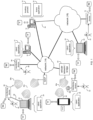
- tracking process 10 may reside on and may be executed by a computer (e.g., computer 12), which may be connected to a network (e.g., network 14) (e.g., the internet or a local area network).
- a network e.g., network 14
- Examples of computer 12 may include, but are not limited to, a storage system (e.g., a Network Attached Storage (NAS) system, a Storage Area Network (SAN)), a personal computer(s), a laptop computer(s), mobile computing device(s), a server computer, a series of server computers, a mainframe computer(s), or a computing cloud(s).
- NAS Network Attached Storage
- SAN Storage Area Network
- a SAN may include one or more of the client electronic devices, including a RAID device and a NAS system.
- each of the aforementioned may be generally described as a computing device.
- a computing device may be a physical or virtual device.
- a computing device may be any device capable of performing operations, such as a dedicated processor, a portion of a processor, a virtual processor, a portion of a virtual processor, portion of a virtual device, or a virtual device.
- a processor may be a physical processor or a virtual processor.
- a virtual processor may correspond to one or more parts of one or more physical processors.
- the instructions/logic may be distributed and executed across one or more processors, virtual or physical, to execute the instructions/logic.
- Computer 12 may execute an operating system, for example, but not limited to, Microsoft ® Windows ® ; Mac ® OS X ® ; Red Hat ® Linux ® , Windows ® Mobile, Chrome OS, Blackberry OS, Fire OS, or a custom operating system.
- Microsoft and Windows are registered trademarks of Microsoft Corporation in the United States, other countries or both
- Mac and OS X are registered trademarks of Apple Inc. in the United States, other countries or both
- Red Hat is a registered trademark of Red Hat Corporation in the United States, other countries or both
- Linux is a registered trademark of Linus Torvalds in the United States, other countries or both).
- a tracking process such as tracking process 10 of Fig. 1 may determine that a user wears a wearable device during one or more time periods. A total amount of time that the user is wearing the wearable device during the one or more time periods may be tracked. The total amount of time that the user wears the wearable device during the one or more time periods may be transmitted to a computing device for display on a user interface.
- a tracking process may receive, by a computing device, a total amount of time that a user wears a wearable device during one or more time periods.
- the total amount of time that the user wears the wearable device during the one or more time periods may be compared to a threshold amount of time for the one or more time periods.
- a remaining amount of time for the user to wear the wearable device during the one or more time periods may be displayed on a user interface based upon, at least in part, comparing the total amount of time that the user wears the wearable device during the one or more time periods to the threshold amount of time.
- the instruction sets and subroutines of tracking process 10 may be stored on storage device, such as storage device 16, coupled to computer 12, may be executed by one or more processors and one or more memory architectures included within computer 12.
- storage device 16 may include but is not limited to: a hard disk drive; all forms of flash memory storage devices; a tape drive; an optical drive; a RAID array (or other array); a random access memory (RAM); a read-only memory (ROM); or combination thereof.
- storage device 16 may be organized as an extent, an extent pool, a RAID extent (e.g., an example 4D+1P R5, where the RAID extent may include, e.g., five storage device extents that may be allocated from, e.g., five different storage devices), a mapped RAID (e.g., a collection of RAID extents), or combination thereof.
- a RAID extent e.g., an example 4D+1P R5, where the RAID extent may include, e.g., five storage device extents that may be allocated from, e.g., five different storage devices
- a mapped RAID e.g., a collection of RAID extents
- network 14 may be connected to one or more secondary networks (e.g., network 18), examples of which may include but are not limited to: a local area network; a wide area network or other telecommunications network facility; or an intranet, for example.
- secondary networks e.g., network 18
- telecommunications network facility may refer to a facility configured to transmit, and/or receive transmissions to/from one or more mobile client electronic devices (e.g., cellphones, etc.) as well as many others.
- computer 12 may include a data store 20, such as a database (e.g., relational database, object-oriented database, triplestore database, etc.) and may be located within any suitable memory location, such as storage device 16 coupled to computer 12.
- a database e.g., relational database, object-oriented database, triplestore database, etc.
- data, metadata, information, etc. described throughout the present disclosure may be stored in the data store.
- computer 12 may utilize any known database management system such as, but not limited to, DB2, in order to provide multi-user access to one or more databases, such as the above noted relational database.
- the data store may also be a custom database, such as, for example, a flat file database or an XML database.
- tracking process 10 may be a component of the data store, a standalone application that interfaces with the above noted data store and/or an applet / application that is accessed via client applications 22, 24, 26, 28.
- the above noted data store may be, in whole or in part, distributed in a cloud computing topology. In this way, computer 12 and storage device 16 may refer to multiple devices, which may also be distributed throughout the network.
- computer 12 may execute a brace application (e.g., brace application 20), examples of which may include, but are not limited to, e.g., a time tracking application, a calendar application, a sensor recording application, or other application that allows for the tracking and maintaining of information related to a user wearing a back brace (or other medical brace).
- a brace application 20 may be the application provided by BraceTrack, LLC of Fort Lauderdale, FL.
- BraceTrack LLC of Fort Lauderdale, FL.
- any application and user interface capable of performing the present disclosure may also be used without departing from the scope of the present disclosure.
- the application provided by BraceTrack should be taken as example only and not to otherwise limit the scope of the present disclosure.
- tracking process 10 and/or brace application 20 may be accessed via one or more of client applications 22, 24, 26, 28.
- tracking process 10 may be a standalone application, or may be an applet / application / script / extension that may interact with and/or be executed within brace application 20, a component of brace application 20, and/or one or more of client applications 22, 24, 26, 28.
- brace application 20 may be a standalone application, or may be an applet / application / script / extension that may interact with and/or be executed within tracking process 10, a component of tracking process 10, and/or one or more of client applications 22, 24, 26, 28.
- one or more of client applications 22, 24, 26, 28 may be a standalone application, or may be an applet / application / script / extension that may interact with and/or be executed within and/or be a component of tracking process 10 and/or brace application 20.
- client applications 22, 24, 26, 28 may include, but are not limited to, e.g., a time tracking application, a calendar application, a sensor recording application, or other application that allows for the tracking and maintaining of information related to a user wearing a back brace (or other medical brace), a brace application, a standard and/or mobile web browser, an email application (e.g., an email client application), a textual and/or a graphical user interface, a customized web browser, a plugin, an Application Programming Interface (API), or a custom application.
- a time tracking application e.g., a calendar application, a sensor recording application, or other application that allows for the tracking and maintaining of information related to a user wearing a back brace (or other medical brace), a brace application, a standard and/or mobile web browser, an email application (e.g., an email client application), a textual and/or a graphical user interface, a customized web browser, a plugin, an Application Programming Interface (API),
- the instruction sets and subroutines of client applications 22, 24, 26, 28, which may be stored on storage devices 30, 32, 34, 36, 30a, 32a, 34a, 36a, coupled to client electronic devices 38, 40, 42, 44 and/or brace 64, 66, 68, 70, may be executed by one or more processors and one or more memory architectures incorporated into client electronic devices 38, 40, 42, 44 and/or brace 64, 66, 68, 70.
- one or more of storage devices 30, 32, 34, 36, 30a, 32a, 34a, 36a may include but are not limited to: hard disk drives; flash drives, tape drives; optical drives; RAID arrays; random access memories (RAM); and read-only memories (ROM).
- client electronic devices 38, 40, 42, 44 may include, but are not limited to, a personal computer (e.g., client electronic device 38), a laptop computer (e.g., client electronic device 40), a smart/data-enabled, cellular phone (e.g., client electronic device 42), a notebook computer (e.g., client electronic device 44), a tablet, a server, a television, a smart television, a smart speaker, an Internet of Things (IoT) device, a media (e.g., audio/video, photo, etc.) capturing and/or output device, an audio input and/or recording device (e.g., a handheld microphone, a lapel microphone, an embedded microphone (such as those embedded within eyeglasses, smart phones, tablet computers and/or watches, etc.), a brace (e.g., back brace), and a dedicated network device.
- a personal computer e.g., client electronic device 38
- a laptop computer e.g., client electronic device 40
- client electronic devices 38, 40, 42, 44 may include (or may be a separate) monitoring device/sensor (e.g., also referred to herein as brace 64, 66, 68, 70).
- Client electronic devices 38, 40, 42, 44 may each execute an operating system, examples of which may include but are not limited to, Android TM , Apple ® iOS ® , Mac ® OS X ® ; Red Hat ® Linux ® , Windows ® Mobile, Chrome OS, Blackberry OS, Fire OS, or a custom operating system.
- one or more of client applications 22, 24, 26, 28 may be configured to effectuate some or all of the functionality of tracking process 10 (and vice versa). Accordingly, in some implementations, tracking process 10 may be a purely server-side application, a purely client-side application, or a hybrid server-side / client-side application that is cooperatively executed by one or more of client applications 22, 24, 26, 28 and/or tracking process 10.
- brace application 20 may be a purely server-side application, a purely client-side application, or a hybrid server-side / client-side application that is cooperatively executed by one or more of client applications 22, 24, 26, 28 and/or brace application 20.
- client applications 22, 24, 26, 28, tracking process 10, and brace application 20 taken singly or in any combination, may effectuate some or all of the same functionality, any description of effectuating such functionality via one or more of client applications 22, 24, 26, 28, tracking process 10, brace application 20, or combination thereof, and any described interaction(s) between one or more of client applications 22, 24, 26, 28, tracking process 10, brace application 20, or combination thereof to effectuate such functionality, should be taken as an example only and not to limit the scope of the disclosure.
- one or more of users 46, 48, 50, 52 and/or one or more of brace 64, 66, 68, 70 may access computer 12 and tracking process 10 (e.g., using one or more of client electronic devices 38, 40, 42, 44) directly through network 14 or through secondary network 18. Further, computer 12 may be connected to network 14 through secondary network 18, as illustrated with phantom link line 54. Tracking process 10 may include one or more user interfaces, such as browsers and textual or graphical user interfaces, through which users 46, 48, 50, 52 may access tracking process 10 and/or brace 64, 66, 68, 70.
- user interfaces such as browsers and textual or graphical user interfaces
- one or more of the various client electronic devices and/or one or more of brace 64, 66, 68, 70 may be directly or indirectly coupled to network 14 (or network 18).
- personal computer 38 and brace 64 are shown directly coupled to network 14 via a hardwired network connection.
- notebook computer 44 and brace 70 are shown directly coupled to network 18 via a hardwired network connection.
- Laptop computer 40 and brace 66 are shown wirelessly coupled to network 14 via wireless communication channels 56a and 56b respectively established between laptop computer 40 and wireless access point (i.e., WAP) 58 and between brace 66 and WAP 58, which is shown directly coupled to network 14.
- WAP 58 may be, for example, an IEEE 802.11a, 802.11b, 802.
- a brace e.g., brace 66
- a client electronic device e.g., client electronic device 40
- a brace e.g., brace 66
- a client electronic device e.g., client electronic device 40
- the information may be communicated, e.g., to computer 12 via, e.g., a network (e.g., network 14).
- Smart phone 42 and brace 68 are shown wirelessly coupled to network 14 via wireless communication channels 60a and 60b respectively established between smart phone 42 and cellular network / bridge 62 and brace 68 and cellular network / bridge 62, which is shown by example directly coupled to network 14.
- some or all of the IEEE 802.1 lx specifications may use Ethernet protocol and carrier sense multiple access with collision avoidance (i.e., CSMA/CA) for path sharing.
- the various 802.1 lx specifications may use phase-shift keying (i.e., PSK) modulation or complementary code keying (i.e., CCK) modulation, for example.
- PSK phase-shift keying
- CCK complementary code keying
- Bluetooth TM is a telecommunications industry specification that allows, e.g., mobile phones, computers, smart phones, and other electronic devices (e.g., brace 64, 66, 68, 70) to be interconnected using a short-range wireless connection. Other forms of interconnection (e.g., Near Field Communication (NFC)) may also be used.
- NFC Near Field Communication
- I/O requests may be sent from, e.g., client applications 22, 24, 26, 28 and/or brace 64, 66, 68, 70 to, e.g., computer 12 (and vice versa).
- I/O request 15 may include but are not limited to, data write requests (e.g., a request that content be written to computer 12) and data read requests (e.g., a request that content be read from computer 12).
- Other examples of I/O request 15 may include sensor data transmitted between the brace and computer 12, or other type of data indicating that a user is wearing the brace.
- a diagrammatic view of client electronic device 38 there is shown a diagrammatic view of client electronic device 38. While client electronic device 38 is shown in this figure, this is for example purposes only and is not intended to be a limitation of this disclosure, as other configurations are possible. Additionally, any computing device capable of executing, in whole or in part, tracking process 10 may be substituted for client electronic device 38 (in whole or in part) within Fig. 2 , examples of which may include but are not limited to computer 12 and/or one or more of client electronic devices 38, 40, 42, 44 and/or one or more of brace 64, 66, 68, 70.
- client electronic device 38 may include a processor (e.g., microprocessor 200) configured to, e.g., process data and execute the above-noted code / instruction sets and subroutines.
- Microprocessor 200 may be coupled via a storage adaptor to the above-noted storage device(s) (e.g., storage device 30).
- An EO controller e.g., I/O controller 202 may be configured to couple microprocessor 200 with various devices (e.g., via wired or wireless connection), such as keyboard 206, pointing/selecting device (e.g., touchpad, touchscreen, mouse 208, etc.), custom device (e.g., device 215 such as a sensor), USB ports, and printer ports.
- a display adaptor (e.g., display adaptor 210) may be configured to couple display 212 (e.g., touchscreen monitor(s), plasma, CRT, or LCD monitor(s), etc.) with microprocessor 200, while network controller/adaptor 214 (e.g., an Ethernet adaptor) may be configured to couple microprocessor 200 to the above-noted network 14 (e.g., the Internet or a local area network).
- display 212 e.g., touchscreen monitor(s), plasma, CRT, or LCD monitor(s), etc.
- network controller/adaptor 214 e.g., an Ethernet adaptor
- a doctor or other health processional may prescribe a back brace.
- a back brace In order for it to significantly improve the position of the spine, guidelines say the brace has to be worn a certain number of hours per day based on the patient's spinal curvature (commonly up to or exceeding eighteen hours a day). Patients must adhere to these guidelines to reap the full benefits of the back brace. It is generally difficult to keep track of the hours that the patient wears the brace.
- the present disclosure may include a sensor that may be separate from a back brace, or included in the back brace, that may track how long a user is wearing the brace.
- the present disclosure may include an application that may maintain an accurate log of how long the user is wearing the brace (e.g., either by manual entry by the user or automatically by receiving data from the brace sensor) which may be displayed to the user.
- tracking process 10 may at least help, e.g., improve existing technological processes, necessarily rooted in computer technology in order to overcome an example and non-limiting problem specifically arising in the realm of patient adherence to wearing a brace, and being integrated into the practical application of monitoring and tracking such an adherence automatically and/or manually.
- computer processes described throughout are integrated into one or more practical applications, and when taken at least as a whole are not considered to be well-understood, routine, and conventional functions.
- tracking process 10 may determine 300 that a user wears a wearable device during one or more time periods. Tracking process 10 may track 302 a total amount of time that the user is wearing the wearable device during the one or more time periods. Tracking process 10 may transmit 304 the total amount of time that the user wears the wearable device during the one or more time periods to a computing device for display on a user interface.
- a doctor or other health processional may prescribe a back brace to be worn by the patient.
- a back brace In order for it to significantly improve the position of the spine, guidelines say the brace has to be worn a certain number of hours per day based on the patient's spinal curvature (commonly at least eighteen hours a day but other times/guidelines may be used). Patients must typically adhere to these guidelines to reap the full benefits of the back brace, which may be onerous to track.
- tracking process 10 may determine 300 that a user wears a wearable device during one or more time periods.
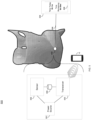
- an example wearable device e.g., back brace 500
- back brace 500 may include at least one sensor (e.g., sensor 502), a power source 501 (e.g., battery or direct AC connection), a transceiver 503 (e.g., Bluetooth Low Energy (BLE) System on Chip (SOC) transceiver), and memory 505.
- a sensor connected to the wearable device may determine 300 that the user wears (or is wearing) the wearable device during one or more time periods.
- at least one sensor e.g., sensor 502
- sensor 502 may be located in the front of back brace 500 (e.g., approximating the position of the user's belly button) and may be of a thickness typical of back brace 500 or any other thickness capable of operating effectively.
- sensor 502 may include at least one of a capacitive sensor, a proximity sensor, a pressure sensor, a temperature sensor, and a motion sensor.
- the pressure sensor may be positioned anywhere on the inside of back brace 500 so as to be pressed (or sense sufficient pressure) when back brace 500 is worn.
- the user would inherently apply sufficient pressure or"press" upon the sensor with the user's body to provide an indication signal to make a determination 300 that back brace 500 is being worn.
- sensor 502 is a temperature sensor
- the temperature sensor may be positioned anywhere on the inside of back brace 500 so as to detect temperature when back brace 500 is worn.
- sensor 502 may be based on a dual channel capacitive proximity sensor (e.g., detects the presence or absence of virtually any object, such as the user wearing brace 500, regardless of material by utilizing the electrical property of capacitance and the change of capacitance based on a change in the electrical field around the active face of the sensor), as well as a proximity sensor (e.g., detecting the presence or absence of an object, such as the user wearing brace 500, using electromagnetic fields, light, and sound) which may be used to detect the wear state of the brace for a long period of time, or combination conductance proximity sensor.
- a dual channel capacitive proximity sensor e.g., detects the presence or absence of virtually any object, such as the user wearing brace 500, regardless of material by utilizing the electrical property of capacitance and the change of capacitance based on a change in the electrical field around the active face of the sensor
- a proximity sensor e.g., detecting the presence or absence of an object, such as the user wearing brace 500
- Temperature sensing may be used to account for drift in capacitance due to temperature changes.
- a non-limiting example of such a sensor is the AZD107 or IQS620/IQS620A sensor offered by Azoteq of Austin Texas.
- this sensor when temperature is detected within a certain range (e.g., between 96 and 102 degrees) this would provide an indication signal to make a determination 300 that back brace 500 is being worn.
- sensor 502 is a motion/movement sensor (e.g., accelerometer, gyroscope, GPS, etc.), this sensor may be positioned anywhere on the inside and/or outside of back brace 500 so as to detect movement when back brace 500 is worn. In the example, when wearing back brace 500, the user may move around, causing sensor 502 to detect this movement to provide an indication signal to make a determination 300 that back brace 500 is being worn.
- any combination and any number of the above-noted sensors may be used. For instance, only one sensor (e.g., temperature) determining that back brace 500 is being worn may not be sufficient to make a final determination that back brace 500 is being worn (e.g., if it is already warm in the room or the brace is in the sunlight), whereas two or more sensors (e.g., temperature and pressure) essentially simultaneously determining that back brace 500 is being worn may be sufficient to make a final determination that back brace 500 is being worn.
- one sensor e.g., temperature
- two or more sensors e.g., temperature and pressure
- only one pressure sensor determining that back brace 500 is being worn may not be sufficient to make a final determination that back brace 500 is being worn (e.g., if something is accidentally resting on top of the pressure sensor), whereas two or more pressure sensors determining that back brace 500 is being worn may be sufficient to make a final determination that back brace 500 is being worn.
- tracking process 10 may track 302 (e.g., monitor) a total amount of time that the user is wearing the wearable device during the one or more time periods.
- the on/off state of any of the above sensors may be captured over, e.g., I2C with a Bluetooth Low Energy (BLE) System on Chip (SOC) (e.g., via transceiver 503) or Wi-Fi, etc.
- BLE SOC may contain a radio to connect with a computing device (e.g., mobile phone/tablet, etc. and/or a microprocessor) to process the data stream from the sensor.
- the module may also contain memory 505 (e.g., flash memory) to temporarily store sensor readings along with a timestamp. Sensor data may be temporarily stored in the module for situations where the receiving mobile device is either not within transmission proximity of the sensor or is turned off.
- the BLE module may advertise its presence continuously or periodically.
- the computing device may pick up those advertising signals and connect to sensor 502 using, e.g., Bluetooth Low Energy. Once a connection is established, the computing device may request on/off events along with the timestamp from sensor 502.
- tracking process 10 may (e.g., using the above-noted timestamp or otherwise) track 302 (e.g., monitor) how long the user is wearing back brace 500 for a particular time period (e.g., one day, one week, one month, etc.). For example, assume that sensor 502 is used to determine that the user is wearing back brace 500 for 8 hours on Monday (e.g., 4 hours from 10 am to 2 pm and then 4 hours from 4 pm to 8 pm). In the example, tracking process 10 may track 302 that the user has worn back brace 500 for 8 hours on Monday.
- a particular time period e.g., one day, one week, one month, etc.
- tracking process 10 may track 302 that the user has worn back brace 500 for 8 hours on Monday and 6 hours on Tuesday of the same week.
- tracking process 10 may transmit 304 the total amount of time that the user wears the wearable device during the one or more time periods to a computing device for display on a user interface.
- the total amount of time where the user was determined to have worn back brace 500 e.g., 8 hours on Monday and/or 6 hours on Tuesday
- a computing device e.g., client electronic device 42 via client application 26 and/or to computer 12 which may then be transmitted to client electronic device 42
- a user interface e.g., user interface 508.
- the data may be transmitted 304 wirelessly (as discussed above) and/or the data may be transmitted 304 via a wired connection (as discussed above).
- client electronic device 42 may be a mobile device (e.g., smart phone)
- the client electronic device may be a wired device that is wired directly to sensor 502.
- client electronic device 504 is shown connected to back brace 500 via wired connection 506.
- Client electronic device 504 may include a user interface capable of displaying the above-noted amount of time back brace 500 is worn or time remaining to be worn, or any other relevant information, such as those discussed below with Figs. 6-8 .
- the total amount of time that the user wears the wearable device during the one or more time periods may be transmitted 304 automatically.
- the total amount of time that the user wears back brace 500 may be transmitted in real-time (e.g., in example intervals of 1-2 seconds or minutes) as the user is wearing back brace 500.
- the total amount of time that the user wears back brace 500 may be transmitted after sensor 502 determines that the user is no longer wearing back brace 500, which may help save resources (e.g., battery life, processing resources, storage space, bandwidth, etc.) of back brace 500 and/or client electronic device 42.
- the total amount of time may be verified by the user prior to transmitting and/or after transmitting.
- the total amount of time that the user wears the wearable device during the one or more time periods may be transmitted 304 manually.
- the total amount of time that the user wears back brace 500 may be transmitted manually.
- the user may manually upload and/or enter the hours/minutes into client electronic device 42 via a user interface of client application 26.
- manual entry need not require use of sensor 502, and client electronic device 504 may include a timer that the user may be manually started and stopped by the user to determine how long back brace 500 has been worn.
- manual entry may still use sensor 502, where client electronic device 504 may include a timer that may start and stop depending on the use of the sensor to determine whether back brace 500 is being worn, which may be verified by the user and then added manually (or added automatically without verification).
- tracking process 10 may receive 400, by a computing device, a total amount of time that a user wears a wearable device during one or more time periods. Tracking process 10 may compare 402 the total amount of time that the user wears the wearable device during the one or more time periods to a threshold amount of time for the one or more time periods. Tracking process 10 may display 404 on a user interface a remaining amount of time for the user to wear the wearable device during the one or more time periods based upon, at least in part, comparing the total amount of time that the user wears the wearable device during the one or more time periods to the threshold amount of time.
- tracking process 10 may receive 400, by a computing device, a total amount of time that a user wears a wearable device during one or more time periods.
- a computing device may use the above-noted total amount of time that the user wears back brace 500, which may be received 400 by tracking process 10 (e.g., via sensor 502 connected to the wearable device, wherein the sensor may include at least one of a pressure sensor, a temperature sensor, and a motion sensor).
- the total amount of time where the user was determined to have worn back brace 500 may be transmitted 304 to and received 400 by a computing device (e.g., client electronic device 42 via client application 26 and/or to computer 12 which may then be transmitted to and received 400 by client electronic device 42) to log and display for the user (or medical professional) on a user interface this amount of time (discussed below).
- a computing device e.g., client electronic device 42 via client application 26 and/or to computer 12 which may then be transmitted to and received 400 by client electronic device 42
- log and display for the user (or medical professional) on a user interface this amount of time discussed below.
- the total amount of time that the user wears the wearable device during the one or more time periods may be received 400 automatically, and in some implementations the total amount of time that the user wears the wearable device during the one or more time periods may be received 400 manually.
- an example user interface 600 e.g., of tracking process 10 via client application 26 of client electronic device 42
- an "Add Time" icon 602 may be selected by the user using any known technique (e.g., touch screen). By selecting this example icon 602, the user may manually upload and/or enter the hours/minutes into client electronic device 42 via user interface 600 of client application 26.
- manual entry need not require use of sensor 502, and client electronic device 504 may include a timer that the user may manually start (e.g., via icon 604) and stop (e.g., via icon 606) to determine how long back brace 500 has been worn (e.g., for the current day).
- manual entry may still use sensor 502, where client electronic device 504 may include a timer that may start and stop depending on the use of the sensor to determine whether back brace 500 is being worn, which may be verified by the user and then added manually (or added automatically without verification).
- Tracking process 10 compares 402 the total amount of time that the user wears the wearable device during the one or more time periods to a threshold amount of time for the one or more time periods, and tracking process 10 displays 404 on a user interface a remaining amount of time for the user to wear the wearable device during the one or more time periods based upon, at least in part, comparing the total amount of time that the user wears the wearable device during the one or more time periods to the threshold amount of time. For instance, assume for example purposes only that the user is required to wear back brace 500 for 18 hours (as shown in Fig. 6 ). In the example, further assume that the user, for the current day, has worn back brace 500 for 8 hours and 1 minute (as also shown in Fig. 6 ).
- Tracking process 10 compares 402 that total amount of time (8 hours and 1 minute) to the required (threshold) amount of time for that same day (18 hours). As a result, tracking process 10 displays 404 (e.g., via user interface 600) the remaining amount of time that the user should wear back brace 500 (e.g., 9 hours and 59 minutes) to meet the above-noted guidelines.
- the threshold amount of time may be changed in the user's profile (e.g., via profile icon 608), which may include other options as well (e.g., entering the user's name, device pairing options or other connectivity options, etc.).
- Displaying 404 on the user interface the remaining amount of time for the user to wear the wearable device during the one or more time periods includes displaying 406 a surplus amount of time above the threshold amount of time that the user wears the wearable device during the one or more time periods.
- an example user interface e.g., user interface 700 of tracking process 10 via client application 26 of client electronic device 42
- tracking process 10 displays 406 a surplus amount of time that is above the threshold amount of time that the user is required to wear back brace 500.
- the threshold amount of time for a particular period is 18 hours
- tracking process 10 has only received data indicating that the user has worn back brace 500 for 8 hours and 1 minute for that same day.
- there would be 0 surplus or"banked" hours as the user has not even worn back brace 500 long enough to meet the threshold of 18 hours, let alone worn back brace 500 longer than the threshold of 18 hours.
- tracking process 10 has received data indicating that the user has worn back brace 500 for 19 hours and 1 minute for that same day.
- selecting the example"history" icon 712 may display the surplus amount of time, as well as other historical usage data (e.g., history for any given date in the user's brace tracking history).
- user interface 700 may enable the user to export the user's history of brace time worn and banked for, e.g., the trailing week, month, and year along with daypart trends (e.g., via a PDF (or other format) email, text, etc.)
- Daypart trends may include, e.g., the typical hours the brace is being worn so the user may visualize patterns by time of day.
- time periods that may be used include months, years, etc., which may be viewed in user interface 700 by selecting the appropriate icon (e.g., Trailing week icon 702, Trailing month icon 704, Trailing year icon 706, Trends icon 708, etc., which may be viewed in any form, such as the graph 710, and which may also show the deficit amount of time needed to wear back brace 500 to meet the threshold).
- the appropriate icon e.g., Trailing week icon 702, Trailing month icon 704, Trailing year icon 706, Trends icon 708, etc.
- the use of a single day as the time period should be taken as example only and not to otherwise limit the scope of the present disclosure.
- an example user interface (e.g., user interface 800 of tracking process 10 via client application 26 of client electronic device 42) is shown.
- information pertaining to the total amount of time the user has worn back brace 500 is displayed by tacking process 10 and viewed by the user in calendar form (e.g., by selecting the example" calendar" icon 804).
- the user may select the current day (e.g., 09 June 2020), which may display the current information for that day (e.g., 8 hours and 1 minute having worn back brace 500), how many surplus hours have been banked for that day, as well as how many surplus hours have been applied (as will be discussed further below).
- tracking process 10 may display all available data up to the selected day (e.g., 01 June 2020 - 09 June 2020), and in other implementations, the user may manually select which days (or months, years, etc.) to include when displaying the available data.
- displaying 404 on the user interface the remaining amount of time for the user to wear the wearable device during the one or more time periods may include applying 408 the surplus amount of time above the threshold amount of time to the remaining amount of time for the user to wear the wearable device during the one or more time periods. For instance, assume that tracking process 10 has received data indicating that the user has worn back brace 500 for 19 hours and 1 minute for a particular day (e.g., 08 June 2020). In the example, there would be 1 hour and 1 minute surplus or"banked" hours shown in Fig. 7 , as the user has worn back brace 500 for 1 hour and 1 minute longer than the threshold of 18 hours.
- tracking process 10 may apply 408 the surplus (or "banked") time of 59 minutes from 08 June 2020 to the 59 minute deficiency of 07 June 2020, resulting in the user meeting the 18 hour quota each day for two days.
- the total amount of banked time that has been applied may be displayed on any of the example user interfaces described above.
- the total amount of banked time that has been applied may be applied automatically by tracking process 10 and/or may be applied manually by tracking process 10 receiving an input from the user (e.g., via example" Apply Banked Time” icon 802) to specifically apply any portion of banked time to any particular day, week, month, etc.
- the wearable device may include other types of wearable devices without departing from the scope of the present disclosure.
- the wearable device may be a back brace
- the wearable device may include at least one of a knee brace (e.g., for MCL/ACL injuries and for preventive knee braces used commonly in football and contact sports), an ankle brace, a sling (e.g., hamstring or shoulder sling), a removable cast, a posture device, a post-surgical stabilization device, or any other type of wearable device.
- a knee brace e.g., for MCL/ACL injuries and for preventive knee braces used commonly in football and contact sports
- a sling e.g., hamstring or shoulder sling
- a removable cast e.g., a posture device, a post-surgical stabilization device, or any other type of wearable device.
- the use of a back brace should be taken as example only and not to otherwise limit the scope of the present disclosure.
- tracking process 10 may be used separately or combined in any combination (e.g., as a brace to collect data, as an application to culminate and display the data, as a brace to collect data that then transmits the data to the application to culminate and display the data, or a single apparatus capable of collecting and culminating data for display, etc.).
- a brace to collect data
- an application to culminate and display the data as a brace to collect data that then transmits the data to the application to culminate and display the data
- a single apparatus capable of collecting and culminating data for display etc.
- the use of a separate device (e.g., brace with sensor) and a separate application should be taken as example only and not to otherwise limit the scope of the present disclosure.
Landscapes
- Health & Medical Sciences (AREA)
- Engineering & Computer Science (AREA)
- Life Sciences & Earth Sciences (AREA)
- Biomedical Technology (AREA)
- Public Health (AREA)
- General Health & Medical Sciences (AREA)
- Medical Informatics (AREA)
- Physics & Mathematics (AREA)
- Animal Behavior & Ethology (AREA)
- Veterinary Medicine (AREA)
- Biophysics (AREA)
- Heart & Thoracic Surgery (AREA)
- Surgery (AREA)
- Molecular Biology (AREA)
- Pathology (AREA)
- Primary Health Care (AREA)
- Epidemiology (AREA)
- General Physics & Mathematics (AREA)
- Theoretical Computer Science (AREA)
- General Engineering & Computer Science (AREA)
- General Business, Economics & Management (AREA)
- Business, Economics & Management (AREA)
- Human Computer Interaction (AREA)
- Oral & Maxillofacial Surgery (AREA)
- Dentistry (AREA)
- Physiology (AREA)
- Nursing (AREA)
- Orthopedic Medicine & Surgery (AREA)
- Vascular Medicine (AREA)
- Physical Education & Sports Medicine (AREA)
- Measuring And Recording Apparatus For Diagnosis (AREA)
- User Interface Of Digital Computer (AREA)
- Medical Treatment And Welfare Office Work (AREA)
- Selective Calling Equipment (AREA)
- Measurement Of The Respiration, Hearing Ability, Form, And Blood Characteristics Of Living Organisms (AREA)
Claims (8)
- Une procédure mise en oeuvre par ordinateur, comprenant les éléments suivants :recevoir (400), par un dispositif informatique, un temps total pendant lequel un utilisateur porte un dispositif portable (500) pendant une pluralité de périodes de temps, le dispositif portable (500) comprenant au moins l'un d'un support dorsal, d'un support de genou, d'un support de cheville, d'une écharpe, d'un plâtre amovible, d'un dispositif de posture et d'un dispositif de stabilisation postopératoirecaractérisé parcomparer (402) le temps total pendant lequel l'utilisateur a porté le dispositif portable (500) pour chacune de la pluralité de périodes de temps à une période de temps seuil pour chacune de la pluralité de périodes de temps ;afficher (404) sur une interface utilisateur un temps restant à l'utilisateur pour porter le dispositif portable (500) pendant une période de temps courante, sur la base, au moins en partie, de la comparaison du temps total pendant lequel l'utilisateur a porté le dispositif portable (500) pendant la période de temps courante avec le temps de seuil pour la période de temps courante,en variante, afficher (406) une quantité de temps excédentaire par rapport à la quantité de temps de seuil pour chaque période de temps d'un sous-ensemble historique de la pluralité de périodes de temps pendant lesquelles l'utilisateur a porté le dispositif portable (500),appliquer (408) au moins une partie de la quantité de temps en excès au-dessus de la quantité de temps de seuil pour chacune de la pluralité de périodes de temps à une période de temps passée de la pluralité de périodes de temps pendant lesquelles l'utilisateur a porté le dispositif portable (500) en dessous de la quantité de temps de seuil, etafficher un montant total du temps excédentaire ainsi que un temps excédentaire appliqué.
- Le procédé mis en oeuvre par ordinateur selon la revendication 1, dans lequel le temps total pendant lequel l'utilisateur porte le dispositif portable (500) pendant chacune des multiples périodes de temps est reçu manuellement.
- Le procédé mis en oeuvre par ordinateur selon la revendication 1, dans lequel le temps total pendant lequel l'utilisateur porte le dispositif portable (500) pendant chacune des périodes multiples est reçu automatiquement.
- Le procédé mis en oeuvre par ordinateur selon la revendication 1, dans lequel le temps total pendant lequel l'utilisateur porte le dispositif portable (500) pendant chacune de la pluralité de périodes de temps est reçu par un capteur (502) connecté au dispositif portable, dans lequel le capteur (502) comprend au moins un capteur capacitif, un capteur de proximité, un capteur de pression, un capteur de température ou un capteur de mouvement.
- Le procédé mis en oeuvre par ordinateur selon l'une quelconque des revendications 1 à 4 comprend en outre la réception par l'utilisateur d'une sélection de la période passée parmi la pluralité de périodes pendant lesquelles l'utilisateur a porté le dispositif portable (500) en dessous de la valeur seuil.
- Le procédé mis en oeuvre par ordinateur selon la revendication 5 comprend en outre l'application à la période passée d'au moins la partie de la quantité de temps excédentaire qui est basée au moins en partie sur la réception par l'utilisateur de la sélection de la période passée.
- Un produit programme d'ordinateur résidant sur un support de stockage lisible par ordinateur (16) sur lequel est stockée une pluralité d'instructions qui, lorsqu'elles sont exécutées par l'intermédiaire d'un ou de plusieurs processeurs, amènent au moins une partie desdits un ou plusieurs processeurs à exécuter les opérations du procédé selon l'une quelconque des revendications 1 à 6.
- Un système informatique (12) comprenant un ou plusieurs processeurs et une ou plusieurs mémoires, configuré pour exécuter les opérations du procédé selon l'une quelconque des revendications 1 à 6.
Applications Claiming Priority (2)
| Application Number | Priority Date | Filing Date | Title |
|---|---|---|---|
| US201962873541P | 2019-07-12 | 2019-07-12 | |
| PCT/US2020/041526 WO2021011346A1 (fr) | 2019-07-12 | 2020-07-10 | Système et procédé de surveillance de l'utilisation de dispositif médical |
Publications (3)
| Publication Number | Publication Date |
|---|---|
| EP3860442A1 EP3860442A1 (fr) | 2021-08-11 |
| EP3860442A4 EP3860442A4 (fr) | 2021-12-22 |
| EP3860442B1 true EP3860442B1 (fr) | 2025-01-22 |
Family
ID=74101503
Family Applications (2)
| Application Number | Title | Priority Date | Filing Date |
|---|---|---|---|
| EP20840452.5A Pending EP3852694A4 (fr) | 2019-07-12 | 2020-07-10 | Système et procédé de surveillance d'utilisation de dispositif médical |
| EP20839632.5A Active EP3860442B1 (fr) | 2019-07-12 | 2020-07-10 | Système et procédé de surveillance de l'utilisation de dispositif médical |
Family Applications Before (1)
| Application Number | Title | Priority Date | Filing Date |
|---|---|---|---|
| EP20840452.5A Pending EP3852694A4 (fr) | 2019-07-12 | 2020-07-10 | Système et procédé de surveillance d'utilisation de dispositif médical |
Country Status (9)
| Country | Link |
|---|---|
| US (4) | US10990164B2 (fr) |
| EP (2) | EP3852694A4 (fr) |
| AU (2) | AU2020315565B2 (fr) |
| BR (2) | BR112021013949A2 (fr) |
| CA (2) | CA3121008A1 (fr) |
| IL (2) | IL282408B (fr) |
| MX (2) | MX2021005054A (fr) |
| NZ (1) | NZ775097A (fr) |
| WO (2) | WO2021011346A1 (fr) |
Families Citing this family (4)
| Publication number | Priority date | Publication date | Assignee | Title |
|---|---|---|---|---|
| US11810032B2 (en) * | 2016-03-16 | 2023-11-07 | Triax Technologies, Inc. | Systems and methods for low-energy wireless applications using networked wearable sensors |
| WO2022155402A2 (fr) * | 2021-01-15 | 2022-07-21 | Aidplex Inc. | Corset lombaire, système destiné à être utilisé avec un corset lombaire, et méthode de gestion efficace d'un traitement d'une déformation de la colonne vertébrale |
| CN113892953B (zh) * | 2021-10-09 | 2023-04-14 | 中国人民解放军海军军医大学第一附属医院 | 一种使用柔性传感器的脊柱测压装置 |
| US11902773B1 (en) * | 2023-02-24 | 2024-02-13 | Msg Entertainment Group, Llc | Method and system for spatial audio metering using extended reality devices |
Citations (1)
| Publication number | Priority date | Publication date | Assignee | Title |
|---|---|---|---|---|
| EP3764956B1 (fr) * | 2018-03-15 | 2022-05-11 | Coloplast A/S | Procédés de gestion du temps d'usure restant d'un appareil de stomie et dispositifs accessoires associés |
Family Cites Families (36)
| Publication number | Priority date | Publication date | Assignee | Title |
|---|---|---|---|---|
| US20020022973A1 (en) * | 2000-03-24 | 2002-02-21 | Jianguo Sun | Medical information management system and patient interface appliance |
| US6514200B1 (en) * | 2000-05-17 | 2003-02-04 | Brava, Llc | Patient compliance monitor |
| US8771149B2 (en) * | 2001-10-01 | 2014-07-08 | The Nemours Foundation | Compliance monitor and method for a medical device |
| US6890285B2 (en) * | 2001-10-01 | 2005-05-10 | Tariq Rahman | Brace compliance monitor |
| US7278966B2 (en) * | 2004-01-31 | 2007-10-09 | Nokia Corporation | System, method and computer program product for managing physiological information relating to a terminal user |
| CN101341505A (zh) * | 2005-12-22 | 2009-01-07 | 皇家飞利浦电子股份有限公司 | 使用自适应目标的体重管理系统 |
| EP2180920A1 (fr) * | 2007-07-20 | 2010-05-05 | Össur HF | Dispositif prothétique ou orthopédique ayant une rétroaction |
| JP2009142470A (ja) * | 2007-12-14 | 2009-07-02 | Panasonic Electric Works Co Ltd | 姿勢判別装置 |
| US10595748B2 (en) * | 2010-07-09 | 2020-03-24 | The University Of Utah Research Foundation | Systems, devices, and methods for providing foot loading feedback to patients and physicians during a period of partial weight bearing |
| US10512564B2 (en) * | 2010-12-16 | 2019-12-24 | Scion Neurostim, Llc | Combination treatments |
| US8753275B2 (en) * | 2011-01-13 | 2014-06-17 | BioSensics LLC | Intelligent device to monitor and remind patients with footwear, walking aids, braces, or orthotics |
| US9323893B2 (en) * | 2011-06-23 | 2016-04-26 | Orca Health, Inc. | Using mobile consumer devices to communicate with consumer medical devices |
| US9839553B2 (en) | 2012-06-20 | 2017-12-12 | Bio Cybernetics International, Inc. | Automated orthotic device with treatment regimen and method for using the same |
| US9759712B2 (en) | 2012-11-05 | 2017-09-12 | Glucome Ltd. | Method for collecting medical data and associated system |
| US20170156639A1 (en) | 2013-02-28 | 2017-06-08 | Gokhale Method Enterprise | Posture mapping and posture monitoring system and method |
| EP2964048B1 (fr) * | 2013-03-05 | 2019-08-28 | Boa Technology Inc. | Systèmes et dispositifs de fermeture automatique de dispositifs médicaux |
| WO2014179594A2 (fr) * | 2013-05-01 | 2014-11-06 | Francis Nathania Alexandra | Système et procédé pour surveiller l'administration d'une nutrition |
| US9798458B2 (en) * | 2013-10-02 | 2017-10-24 | The Joan and Irwin Jacobs Technion-Cornell Innovation Institute | Methods, systems, and apparatuses for accurate measurement and real-time feedback of solar ultraviolet exposure |
| GB2519987B (en) | 2013-11-04 | 2021-03-03 | Imperial College Innovations Ltd | Biomechanical activity monitoring |
| US9565810B2 (en) * | 2014-02-11 | 2017-02-14 | Comcast Cable Communications, Llc | Automated sprinkler control system |
| GB2529998A (en) * | 2014-06-04 | 2016-03-16 | Ki Health Innovation Ltd | Monitoring adherence to healthcare guidelines |
| US9442523B2 (en) * | 2014-07-25 | 2016-09-13 | Salutron, Inc. | User-wearable devices with power conserving features |
| US9719871B2 (en) | 2014-08-09 | 2017-08-01 | Google Inc. | Detecting a state of a wearable device |
| US9808185B2 (en) * | 2014-09-23 | 2017-11-07 | Fitbit, Inc. | Movement measure generation in a wearable electronic device |
| US10315032B2 (en) * | 2015-01-26 | 2019-06-11 | CyMedica Orthopedics, Inc. | Patient therapy systems and methods |
| WO2016176544A1 (fr) * | 2015-04-29 | 2016-11-03 | Wellinks, Inc. | Capteur et plate-forme de rétroaction pour une utilisation dans des dispositifs d'orthèse et de prothèse |
| US10376410B2 (en) | 2015-05-08 | 2019-08-13 | Craig Flanagan | Automated, snore activated electro-mechanical mandibular advancement device |
| US10575759B2 (en) | 2015-07-01 | 2020-03-03 | BaziFIT, Inc. | Method and system for monitoring and analyzing position, motion, and equilibrium of body parts |
| US20180055660A1 (en) | 2015-11-04 | 2018-03-01 | John Macmahon | Diagnostic and therapeutic approaches for spinal deformities |
| WO2017218947A1 (fr) * | 2016-06-17 | 2017-12-21 | Align Technology, Inc. | Appareils intraoraux avec détection |
| CN106291121B (zh) | 2016-07-29 | 2023-10-13 | 歌尔股份有限公司 | 一种可穿戴设备的佩戴状态检测方法和可穿戴设备 |
| CN106923838A (zh) * | 2017-02-07 | 2017-07-07 | 深圳先进技术研究院 | 一种穿戴式坐姿检测装置、坐姿检测方法及系统 |
| EP3618696A4 (fr) * | 2017-05-04 | 2021-01-06 | Modjoul, Inc. | Dispositif de ceinture électronique mettable |
| KR102202619B1 (ko) * | 2017-08-31 | 2021-01-13 | 주니어데이비드승준 신 | 신축성 저항 소자를 이용한 자세 모니터링 장치, 이를 이용한 자세 모니터링 방법 및 시스템 |
| NL2021099B1 (en) | 2018-06-11 | 2019-12-16 | Momo Medical Holding B V | Assembly, configured to detect a body on a support surface |
| CN109171750A (zh) * | 2018-10-10 | 2019-01-11 | 合肥京东方光电科技有限公司 | 人体姿态监测装置 |
-
2020
- 2020-07-10 US US16/925,652 patent/US10990164B2/en active Active
- 2020-07-10 US US16/925,673 patent/US10990165B2/en active Active
- 2020-07-10 IL IL282408A patent/IL282408B/en unknown
- 2020-07-10 AU AU2020315565A patent/AU2020315565B2/en active Active
- 2020-07-10 EP EP20840452.5A patent/EP3852694A4/fr active Pending
- 2020-07-10 CA CA3121008A patent/CA3121008A1/fr active Pending
- 2020-07-10 MX MX2021005054A patent/MX2021005054A/es unknown
- 2020-07-10 CA CA3117931A patent/CA3117931C/fr active Active
- 2020-07-10 MX MX2021005568A patent/MX2021005568A/es unknown
- 2020-07-10 NZ NZ775097A patent/NZ775097A/en not_active IP Right Cessation
- 2020-07-10 BR BR112021013949A patent/BR112021013949A2/pt not_active Application Discontinuation
- 2020-07-10 WO PCT/US2020/041526 patent/WO2021011346A1/fr not_active Ceased
- 2020-07-10 IL IL282803A patent/IL282803B/en unknown
- 2020-07-10 WO PCT/US2020/041521 patent/WO2021011342A1/fr not_active Ceased
- 2020-07-10 EP EP20839632.5A patent/EP3860442B1/fr active Active
- 2020-07-10 BR BR112021013059A patent/BR112021013059A2/pt not_active Application Discontinuation
- 2020-07-10 AU AU2020314539A patent/AU2020314539B2/en active Active
-
2021
- 2021-04-13 US US17/229,591 patent/US11256324B2/en not_active Expired - Fee Related
- 2021-04-13 US US17/229,656 patent/US11256325B2/en not_active Expired - Fee Related
Patent Citations (2)
| Publication number | Priority date | Publication date | Assignee | Title |
|---|---|---|---|---|
| EP3764956B1 (fr) * | 2018-03-15 | 2022-05-11 | Coloplast A/S | Procédés de gestion du temps d'usure restant d'un appareil de stomie et dispositifs accessoires associés |
| DK3764956T3 (da) * | 2018-03-15 | 2022-08-01 | Coloplast As | Fremgangsmåder til styring af resterende slitagetid for en stomianordning og tilhørende tilbehørsanordning |
Also Published As
| Publication number | Publication date |
|---|---|
| MX2021005568A (es) | 2021-07-06 |
| CA3117931C (fr) | 2023-08-15 |
| US10990164B2 (en) | 2021-04-27 |
| IL282408B (en) | 2022-08-01 |
| AU2020315565A1 (en) | 2021-06-03 |
| EP3852694A1 (fr) | 2021-07-28 |
| EP3860442A1 (fr) | 2021-08-11 |
| US10990165B2 (en) | 2021-04-27 |
| NZ775097A (en) | 2022-12-23 |
| MX2021005054A (es) | 2021-06-15 |
| IL282803B (en) | 2022-08-01 |
| US20210011543A1 (en) | 2021-01-14 |
| AU2020314539B2 (en) | 2021-07-08 |
| CA3121008A1 (fr) | 2021-01-21 |
| AU2020315565B2 (en) | 2021-07-08 |
| AU2020314539A1 (en) | 2021-05-20 |
| WO2021011342A1 (fr) | 2021-01-21 |
| IL282408A (en) | 2021-06-30 |
| WO2021011346A1 (fr) | 2021-01-21 |
| BR112021013949A2 (pt) | 2022-02-15 |
| BR112021013059A2 (pt) | 2022-03-22 |
| EP3852694A4 (fr) | 2021-11-24 |
| US20210011544A1 (en) | 2021-01-14 |
| US11256325B2 (en) | 2022-02-22 |
| CA3117931A1 (fr) | 2021-01-21 |
| US20210232213A1 (en) | 2021-07-29 |
| US20210232214A1 (en) | 2021-07-29 |
| US11256324B2 (en) | 2022-02-22 |
| IL282803A (en) | 2021-06-30 |
| EP3860442A4 (fr) | 2021-12-22 |
Similar Documents
| Publication | Publication Date | Title |
|---|---|---|
| EP3860442B1 (fr) | Système et procédé de surveillance de l'utilisation de dispositif médical | |
| US12324655B2 (en) | Method for measuring biological signal and wearable electronic device for the same | |
| US11103195B2 (en) | Method for providing eating habit information and wearable device therefor | |
| US10463300B2 (en) | Body-worn monitor | |
| US20210378601A1 (en) | Analyte monitoring systems and methods | |
| JP2025004151A (ja) | ウェアラブル装置を利用した甲状腺機能亢進症の予測システム及び予測コンピュータプログラム | |
| CN108133757A (zh) | 用于提供健康管理服务的设备及其方法 | |
| CN106163385A (zh) | 一种用于控制可穿戴装置的方法和可穿戴装置 | |
| EP3500163B1 (fr) | Gestion de la pression artérielle | |
| CN119366879A (zh) | 基于生理参数进行疾病检测的系统和终端设备 | |
| KR102713711B1 (ko) | IoT 기반 혈당측정장치의 데이터를 이용하여 사용자의 건강상태를 관리하는 시스템 | |
| US20230138977A1 (en) | Device and system for monitoring operation of bodily joints | |
| Rebedew | Blood Glucose Tracker |
Legal Events
| Date | Code | Title | Description |
|---|---|---|---|
| STAA | Information on the status of an ep patent application or granted ep patent |
Free format text: STATUS: THE INTERNATIONAL PUBLICATION HAS BEEN MADE |
|
| PUAI | Public reference made under article 153(3) epc to a published international application that has entered the european phase |
Free format text: ORIGINAL CODE: 0009012 |
|
| STAA | Information on the status of an ep patent application or granted ep patent |
Free format text: STATUS: REQUEST FOR EXAMINATION WAS MADE |
|
| 17P | Request for examination filed |
Effective date: 20210506 |
|
| AK | Designated contracting states |
Kind code of ref document: A1 Designated state(s): AL AT BE BG CH CY CZ DE DK EE ES FI FR GB GR HR HU IE IS IT LI LT LU LV MC MK MT NL NO PL PT RO RS SE SI SK SM TR |
|
| RBV | Designated contracting states (corrected) |
Designated state(s): AL AT BE BG CH CY CZ DE DK EE ES FI FR GB GR HR HU IE IS IT LI LT LU LV MC MK MT NL NO PL PT RO RS SE SI SK SM TR |
|
| STAA | Information on the status of an ep patent application or granted ep patent |
Free format text: STATUS: EXAMINATION IS IN PROGRESS |
|
| A4 | Supplementary search report drawn up and despatched |
Effective date: 20211122 |
|
| RIC1 | Information provided on ipc code assigned before grant |
Ipc: A61F 5/01 20060101ALI20211116BHEP Ipc: A61F 5/00 20060101ALI20211116BHEP Ipc: A61B 5/11 20060101ALI20211116BHEP Ipc: A61B 5/00 20060101ALI20211116BHEP Ipc: A61F 5/02 20060101AFI20211116BHEP |
|
| 17Q | First examination report despatched |
Effective date: 20211203 |
|
| DAV | Request for validation of the european patent (deleted) | ||
| DAX | Request for extension of the european patent (deleted) | ||
| REG | Reference to a national code |
Ipc: G16H0040670000 Ref country code: DE Ref legal event code: R079 Ref document number: 602020045271 Country of ref document: DE Free format text: PREVIOUS MAIN CLASS: A61B0005000000 Ipc: G16H0040670000 |
|
| GRAP | Despatch of communication of intention to grant a patent |
Free format text: ORIGINAL CODE: EPIDOSNIGR1 |
|
| STAA | Information on the status of an ep patent application or granted ep patent |
Free format text: STATUS: GRANT OF PATENT IS INTENDED |
|
| INTG | Intention to grant announced |
Effective date: 20240813 |
|
| RIC1 | Information provided on ipc code assigned before grant |
Ipc: G16H 20/30 20180101ALI20240807BHEP Ipc: G16H 40/67 20180101AFI20240807BHEP |
|
| GRAS | Grant fee paid |
Free format text: ORIGINAL CODE: EPIDOSNIGR3 |
|
| GRAA | (expected) grant |
Free format text: ORIGINAL CODE: 0009210 |
|
| STAA | Information on the status of an ep patent application or granted ep patent |
Free format text: STATUS: THE PATENT HAS BEEN GRANTED |
|
| AK | Designated contracting states |
Kind code of ref document: B1 Designated state(s): AL AT BE BG CH CY CZ DE DK EE ES FI FR GB GR HR HU IE IS IT LI LT LU LV MC MK MT NL NO PL PT RO RS SE SI SK SM TR |
|
| P01 | Opt-out of the competence of the unified patent court (upc) registered |
Free format text: CASE NUMBER: APP_65768/2024 Effective date: 20241212 |
|
| REG | Reference to a national code |
Ref country code: GB Ref legal event code: FG4D |
|
| REG | Reference to a national code |
Ref country code: CH Ref legal event code: EP |
|
| REG | Reference to a national code |
Ref country code: IE Ref legal event code: FG4D |
|
| REG | Reference to a national code |
Ref country code: DE Ref legal event code: R096 Ref document number: 602020045271 Country of ref document: DE |
|
| REG | Reference to a national code |
Ref country code: NL Ref legal event code: MP Effective date: 20250122 |
|
| PG25 | Lapsed in a contracting state [announced via postgrant information from national office to epo] |
Ref country code: NL Free format text: LAPSE BECAUSE OF FAILURE TO SUBMIT A TRANSLATION OF THE DESCRIPTION OR TO PAY THE FEE WITHIN THE PRESCRIBED TIME-LIMIT Effective date: 20250122 |
|
| PG25 | Lapsed in a contracting state [announced via postgrant information from national office to epo] |
Ref country code: RS Free format text: LAPSE BECAUSE OF FAILURE TO SUBMIT A TRANSLATION OF THE DESCRIPTION OR TO PAY THE FEE WITHIN THE PRESCRIBED TIME-LIMIT Effective date: 20250422 |
|
| PG25 | Lapsed in a contracting state [announced via postgrant information from national office to epo] |
Ref country code: FI Free format text: LAPSE BECAUSE OF FAILURE TO SUBMIT A TRANSLATION OF THE DESCRIPTION OR TO PAY THE FEE WITHIN THE PRESCRIBED TIME-LIMIT Effective date: 20250122 |
|
| PG25 | Lapsed in a contracting state [announced via postgrant information from national office to epo] |
Ref country code: PL Free format text: LAPSE BECAUSE OF FAILURE TO SUBMIT A TRANSLATION OF THE DESCRIPTION OR TO PAY THE FEE WITHIN THE PRESCRIBED TIME-LIMIT Effective date: 20250122 |
|
| PG25 | Lapsed in a contracting state [announced via postgrant information from national office to epo] |
Ref country code: ES Free format text: LAPSE BECAUSE OF FAILURE TO SUBMIT A TRANSLATION OF THE DESCRIPTION OR TO PAY THE FEE WITHIN THE PRESCRIBED TIME-LIMIT Effective date: 20250122 |
|
| REG | Reference to a national code |
Ref country code: LT Ref legal event code: MG9D |
|
| PG25 | Lapsed in a contracting state [announced via postgrant information from national office to epo] |
Ref country code: IS Free format text: LAPSE BECAUSE OF FAILURE TO SUBMIT A TRANSLATION OF THE DESCRIPTION OR TO PAY THE FEE WITHIN THE PRESCRIBED TIME-LIMIT Effective date: 20250522 Ref country code: NO Free format text: LAPSE BECAUSE OF FAILURE TO SUBMIT A TRANSLATION OF THE DESCRIPTION OR TO PAY THE FEE WITHIN THE PRESCRIBED TIME-LIMIT Effective date: 20250422 |
|
| REG | Reference to a national code |
Ref country code: AT Ref legal event code: MK05 Ref document number: 1762091 Country of ref document: AT Kind code of ref document: T Effective date: 20250122 |
|
| PG25 | Lapsed in a contracting state [announced via postgrant information from national office to epo] |
Ref country code: HR Free format text: LAPSE BECAUSE OF FAILURE TO SUBMIT A TRANSLATION OF THE DESCRIPTION OR TO PAY THE FEE WITHIN THE PRESCRIBED TIME-LIMIT Effective date: 20250122 |
|
| PG25 | Lapsed in a contracting state [announced via postgrant information from national office to epo] |
Ref country code: LV Free format text: LAPSE BECAUSE OF FAILURE TO SUBMIT A TRANSLATION OF THE DESCRIPTION OR TO PAY THE FEE WITHIN THE PRESCRIBED TIME-LIMIT Effective date: 20250122 Ref country code: PT Free format text: LAPSE BECAUSE OF FAILURE TO SUBMIT A TRANSLATION OF THE DESCRIPTION OR TO PAY THE FEE WITHIN THE PRESCRIBED TIME-LIMIT Effective date: 20250522 |
|
| PG25 | Lapsed in a contracting state [announced via postgrant information from national office to epo] |
Ref country code: BG Free format text: LAPSE BECAUSE OF FAILURE TO SUBMIT A TRANSLATION OF THE DESCRIPTION OR TO PAY THE FEE WITHIN THE PRESCRIBED TIME-LIMIT Effective date: 20250122 Ref country code: GR Free format text: LAPSE BECAUSE OF FAILURE TO SUBMIT A TRANSLATION OF THE DESCRIPTION OR TO PAY THE FEE WITHIN THE PRESCRIBED TIME-LIMIT Effective date: 20250423 |
|
| PG25 | Lapsed in a contracting state [announced via postgrant information from national office to epo] |
Ref country code: AT Free format text: LAPSE BECAUSE OF FAILURE TO SUBMIT A TRANSLATION OF THE DESCRIPTION OR TO PAY THE FEE WITHIN THE PRESCRIBED TIME-LIMIT Effective date: 20250122 |
|
| PG25 | Lapsed in a contracting state [announced via postgrant information from national office to epo] |
Ref country code: SE Free format text: LAPSE BECAUSE OF FAILURE TO SUBMIT A TRANSLATION OF THE DESCRIPTION OR TO PAY THE FEE WITHIN THE PRESCRIBED TIME-LIMIT Effective date: 20250122 |
|
| PG25 | Lapsed in a contracting state [announced via postgrant information from national office to epo] |
Ref country code: SM Free format text: LAPSE BECAUSE OF FAILURE TO SUBMIT A TRANSLATION OF THE DESCRIPTION OR TO PAY THE FEE WITHIN THE PRESCRIBED TIME-LIMIT Effective date: 20250122 |
|
| PG25 | Lapsed in a contracting state [announced via postgrant information from national office to epo] |
Ref country code: DK Free format text: LAPSE BECAUSE OF FAILURE TO SUBMIT A TRANSLATION OF THE DESCRIPTION OR TO PAY THE FEE WITHIN THE PRESCRIBED TIME-LIMIT Effective date: 20250122 |
|
| PG25 | Lapsed in a contracting state [announced via postgrant information from national office to epo] |
Ref country code: IT Free format text: LAPSE BECAUSE OF FAILURE TO SUBMIT A TRANSLATION OF THE DESCRIPTION OR TO PAY THE FEE WITHIN THE PRESCRIBED TIME-LIMIT Effective date: 20250122 |
|
| PGFP | Annual fee paid to national office [announced via postgrant information from national office to epo] |
Ref country code: GB Payment date: 20250722 Year of fee payment: 6 |
|
| PG25 | Lapsed in a contracting state [announced via postgrant information from national office to epo] |
Ref country code: EE Free format text: LAPSE BECAUSE OF FAILURE TO SUBMIT A TRANSLATION OF THE DESCRIPTION OR TO PAY THE FEE WITHIN THE PRESCRIBED TIME-LIMIT Effective date: 20250122 Ref country code: CZ Free format text: LAPSE BECAUSE OF FAILURE TO SUBMIT A TRANSLATION OF THE DESCRIPTION OR TO PAY THE FEE WITHIN THE PRESCRIBED TIME-LIMIT Effective date: 20250122 |
|
| REG | Reference to a national code |
Ref country code: DE Ref legal event code: R097 Ref document number: 602020045271 Country of ref document: DE |
|
| PG25 | Lapsed in a contracting state [announced via postgrant information from national office to epo] |
Ref country code: RO Free format text: LAPSE BECAUSE OF FAILURE TO SUBMIT A TRANSLATION OF THE DESCRIPTION OR TO PAY THE FEE WITHIN THE PRESCRIBED TIME-LIMIT Effective date: 20250122 |
|
| PG25 | Lapsed in a contracting state [announced via postgrant information from national office to epo] |
Ref country code: SK Free format text: LAPSE BECAUSE OF FAILURE TO SUBMIT A TRANSLATION OF THE DESCRIPTION OR TO PAY THE FEE WITHIN THE PRESCRIBED TIME-LIMIT Effective date: 20250122 |
|
| PLBE | No opposition filed within time limit |
Free format text: ORIGINAL CODE: 0009261 |
|
| STAA | Information on the status of an ep patent application or granted ep patent |
Free format text: STATUS: NO OPPOSITION FILED WITHIN TIME LIMIT |
|
| REG | Reference to a national code |
Ref country code: CH Ref legal event code: L10 Free format text: ST27 STATUS EVENT CODE: U-0-0-L10-L00 (AS PROVIDED BY THE NATIONAL OFFICE) Effective date: 20251203 |
|
| 26N | No opposition filed |
Effective date: 20251023 |
|
| REG | Reference to a national code |
Ref country code: DE Ref legal event code: R119 Ref document number: 602020045271 Country of ref document: DE |
|
| REG | Reference to a national code |
Ref country code: CH Ref legal event code: H13 Free format text: ST27 STATUS EVENT CODE: U-0-0-H10-H13 (AS PROVIDED BY THE NATIONAL OFFICE) Effective date: 20260224 |
|
| PG25 | Lapsed in a contracting state [announced via postgrant information from national office to epo] |
Ref country code: LU Free format text: LAPSE BECAUSE OF NON-PAYMENT OF DUE FEES Effective date: 20250710 |
|
| REG | Reference to a national code |
Ref country code: BE Ref legal event code: MM Effective date: 20250731 |
|
| PG25 | Lapsed in a contracting state [announced via postgrant information from national office to epo] |
Ref country code: DE Free format text: LAPSE BECAUSE OF NON-PAYMENT OF DUE FEES Effective date: 20260203 |
|
| PG25 | Lapsed in a contracting state [announced via postgrant information from national office to epo] |
Ref country code: BE Free format text: LAPSE BECAUSE OF NON-PAYMENT OF DUE FEES Effective date: 20250731 |
|
| PG25 | Lapsed in a contracting state [announced via postgrant information from national office to epo] |
Ref country code: FR Free format text: LAPSE BECAUSE OF NON-PAYMENT OF DUE FEES Effective date: 20250731 |