EP3860863B1 - Verfahren zur herstellung eines sicherheitselements auf sicherheitsdokumenten und sicherheitselement enthaltendes sicherheitsdokument - Google Patents
Verfahren zur herstellung eines sicherheitselements auf sicherheitsdokumenten und sicherheitselement enthaltendes sicherheitsdokument Download PDFInfo
- Publication number
- EP3860863B1 EP3860863B1 EP19821444.7A EP19821444A EP3860863B1 EP 3860863 B1 EP3860863 B1 EP 3860863B1 EP 19821444 A EP19821444 A EP 19821444A EP 3860863 B1 EP3860863 B1 EP 3860863B1
- Authority
- EP
- European Patent Office
- Prior art keywords
- foil
- hot stamping
- security
- layer
- pigments
- Prior art date
- Legal status (The legal status is an assumption and is not a legal conclusion. Google has not performed a legal analysis and makes no representation as to the accuracy of the status listed.)
- Active
Links
Images
Classifications
-
- B—PERFORMING OPERATIONS; TRANSPORTING
- B42—BOOKBINDING; ALBUMS; FILES; SPECIAL PRINTED MATTER
- B42D—BOOKS; BOOK COVERS; LOOSE LEAVES; PRINTED MATTER CHARACTERISED BY IDENTIFICATION OR SECURITY FEATURES; PRINTED MATTER OF SPECIAL FORMAT OR STYLE NOT OTHERWISE PROVIDED FOR; DEVICES FOR USE THEREWITH AND NOT OTHERWISE PROVIDED FOR; MOVABLE-STRIP WRITING OR READING APPARATUS
- B42D25/00—Information-bearing cards or sheet-like structures characterised by identification or security features; Manufacture thereof
- B42D25/40—Manufacture
- B42D25/45—Associating two or more layers
- B42D25/455—Associating two or more layers using heat
-
- B—PERFORMING OPERATIONS; TRANSPORTING
- B42—BOOKBINDING; ALBUMS; FILES; SPECIAL PRINTED MATTER
- B42D—BOOKS; BOOK COVERS; LOOSE LEAVES; PRINTED MATTER CHARACTERISED BY IDENTIFICATION OR SECURITY FEATURES; PRINTED MATTER OF SPECIAL FORMAT OR STYLE NOT OTHERWISE PROVIDED FOR; DEVICES FOR USE THEREWITH AND NOT OTHERWISE PROVIDED FOR; MOVABLE-STRIP WRITING OR READING APPARATUS
- B42D25/00—Information-bearing cards or sheet-like structures characterised by identification or security features; Manufacture thereof
- B42D25/30—Identification or security features, e.g. for preventing forgery
-
- B—PERFORMING OPERATIONS; TRANSPORTING
- B42—BOOKBINDING; ALBUMS; FILES; SPECIAL PRINTED MATTER
- B42D—BOOKS; BOOK COVERS; LOOSE LEAVES; PRINTED MATTER CHARACTERISED BY IDENTIFICATION OR SECURITY FEATURES; PRINTED MATTER OF SPECIAL FORMAT OR STYLE NOT OTHERWISE PROVIDED FOR; DEVICES FOR USE THEREWITH AND NOT OTHERWISE PROVIDED FOR; MOVABLE-STRIP WRITING OR READING APPARATUS
- B42D25/00—Information-bearing cards or sheet-like structures characterised by identification or security features; Manufacture thereof
- B42D25/20—Information-bearing cards or sheet-like structures characterised by identification or security features; Manufacture thereof characterised by a particular use or purpose
- B42D25/29—Securities; Bank notes
-
- B—PERFORMING OPERATIONS; TRANSPORTING
- B42—BOOKBINDING; ALBUMS; FILES; SPECIAL PRINTED MATTER
- B42D—BOOKS; BOOK COVERS; LOOSE LEAVES; PRINTED MATTER CHARACTERISED BY IDENTIFICATION OR SECURITY FEATURES; PRINTED MATTER OF SPECIAL FORMAT OR STYLE NOT OTHERWISE PROVIDED FOR; DEVICES FOR USE THEREWITH AND NOT OTHERWISE PROVIDED FOR; MOVABLE-STRIP WRITING OR READING APPARATUS
- B42D25/00—Information-bearing cards or sheet-like structures characterised by identification or security features; Manufacture thereof
- B42D25/30—Identification or security features, e.g. for preventing forgery
- B42D25/328—Diffraction gratings; Holograms
-
- B—PERFORMING OPERATIONS; TRANSPORTING
- B42—BOOKBINDING; ALBUMS; FILES; SPECIAL PRINTED MATTER
- B42D—BOOKS; BOOK COVERS; LOOSE LEAVES; PRINTED MATTER CHARACTERISED BY IDENTIFICATION OR SECURITY FEATURES; PRINTED MATTER OF SPECIAL FORMAT OR STYLE NOT OTHERWISE PROVIDED FOR; DEVICES FOR USE THEREWITH AND NOT OTHERWISE PROVIDED FOR; MOVABLE-STRIP WRITING OR READING APPARATUS
- B42D25/00—Information-bearing cards or sheet-like structures characterised by identification or security features; Manufacture thereof
- B42D25/30—Identification or security features, e.g. for preventing forgery
- B42D25/36—Identification or security features, e.g. for preventing forgery comprising special materials
- B42D25/378—Special inks
-
- B—PERFORMING OPERATIONS; TRANSPORTING
- B42—BOOKBINDING; ALBUMS; FILES; SPECIAL PRINTED MATTER
- B42D—BOOKS; BOOK COVERS; LOOSE LEAVES; PRINTED MATTER CHARACTERISED BY IDENTIFICATION OR SECURITY FEATURES; PRINTED MATTER OF SPECIAL FORMAT OR STYLE NOT OTHERWISE PROVIDED FOR; DEVICES FOR USE THEREWITH AND NOT OTHERWISE PROVIDED FOR; MOVABLE-STRIP WRITING OR READING APPARATUS
- B42D25/00—Information-bearing cards or sheet-like structures characterised by identification or security features; Manufacture thereof
- B42D25/40—Manufacture
- B42D25/45—Associating two or more layers
-
- B—PERFORMING OPERATIONS; TRANSPORTING
- B42—BOOKBINDING; ALBUMS; FILES; SPECIAL PRINTED MATTER
- B42D—BOOKS; BOOK COVERS; LOOSE LEAVES; PRINTED MATTER CHARACTERISED BY IDENTIFICATION OR SECURITY FEATURES; PRINTED MATTER OF SPECIAL FORMAT OR STYLE NOT OTHERWISE PROVIDED FOR; DEVICES FOR USE THEREWITH AND NOT OTHERWISE PROVIDED FOR; MOVABLE-STRIP WRITING OR READING APPARATUS
- B42D25/00—Information-bearing cards or sheet-like structures characterised by identification or security features; Manufacture thereof
- B42D25/40—Manufacture
- B42D25/45—Associating two or more layers
- B42D25/46—Associating two or more layers using pressure
-
- B—PERFORMING OPERATIONS; TRANSPORTING
- B42—BOOKBINDING; ALBUMS; FILES; SPECIAL PRINTED MATTER
- B42D—BOOKS; BOOK COVERS; LOOSE LEAVES; PRINTED MATTER CHARACTERISED BY IDENTIFICATION OR SECURITY FEATURES; PRINTED MATTER OF SPECIAL FORMAT OR STYLE NOT OTHERWISE PROVIDED FOR; DEVICES FOR USE THEREWITH AND NOT OTHERWISE PROVIDED FOR; MOVABLE-STRIP WRITING OR READING APPARATUS
- B42D25/00—Information-bearing cards or sheet-like structures characterised by identification or security features; Manufacture thereof
- B42D25/40—Manufacture
- B42D25/45—Associating two or more layers
- B42D25/465—Associating two or more layers using chemicals or adhesives
- B42D25/47—Associating two or more layers using chemicals or adhesives using adhesives
-
- B—PERFORMING OPERATIONS; TRANSPORTING
- B44—DECORATIVE ARTS
- B44C—PRODUCING DECORATIVE EFFECTS; MOSAICS; TARSIA WORK; PAPERHANGING
- B44C1/00—Processes, not specifically provided for elsewhere, for producing decorative surface effects
- B44C1/10—Applying flat materials, e.g. leaflets, pieces of fabrics
- B44C1/14—Metallic leaves or foils, e.g. gold leaf
-
- B—PERFORMING OPERATIONS; TRANSPORTING
- B44—DECORATIVE ARTS
- B44C—PRODUCING DECORATIVE EFFECTS; MOSAICS; TARSIA WORK; PAPERHANGING
- B44C1/00—Processes, not specifically provided for elsewhere, for producing decorative surface effects
- B44C1/16—Processes, not specifically provided for elsewhere, for producing decorative surface effects for applying transfer pictures or the like
- B44C1/165—Processes, not specifically provided for elsewhere, for producing decorative surface effects for applying transfer pictures or the like for decalcomanias; sheet material therefor
- B44C1/17—Dry transfer
- B44C1/1712—Decalcomanias applied under heat and pressure, e.g. provided with a heat activable adhesive
- B44C1/1729—Hot stamping techniques
-
- B—PERFORMING OPERATIONS; TRANSPORTING
- B32—LAYERED PRODUCTS
- B32B—LAYERED PRODUCTS, i.e. PRODUCTS BUILT-UP OF STRATA OF FLAT OR NON-FLAT, e.g. CELLULAR OR HONEYCOMB, FORM
- B32B2425/00—Cards, e.g. identity cards, credit cards
-
- B—PERFORMING OPERATIONS; TRANSPORTING
- B32—LAYERED PRODUCTS
- B32B—LAYERED PRODUCTS, i.e. PRODUCTS BUILT-UP OF STRATA OF FLAT OR NON-FLAT, e.g. CELLULAR OR HONEYCOMB, FORM
- B32B37/00—Methods or apparatus for laminating, e.g. by curing or by ultrasonic bonding
- B32B37/02—Methods or apparatus for laminating, e.g. by curing or by ultrasonic bonding characterised by a sequence of laminating steps, e.g. by adding new layers at consecutive laminating stations
- B32B37/025—Transfer laminating
Definitions
- the present invention relates to a method with which a security element may be created on security documents, particularly passports, which security element contains at least two foils partially overlapping each other, which is applied using hot stamping in such a way that the register precision is maintained at +/- 0.4 mm.
- the invention also relates to a security document produced using the method.
- Security documents need to be provided with security elements in the interest of preventing them being forged.
- Security elements produced with high precision and that require the use of special identification equipment, or a combination of these features, are usually used in the interest of preventing forgery.
- Hot stamping is a type of letterpress printing, which is adapted for producing particularly decorative printing industry products.
- the usually heated stamping tool (which carries the pattern to be printed) presses the hot stamping foil containing dry ink or a metal layer and adhesive onto the work piece. After stamping the head is raised and the device replaces the work piece for a new one, while moving the hot stamping foil to the desired extent, and then the device is ready for a new cycle.
- Details of hot stamping may be found in, for example, Nyomdaipari Enciklopédia [Printing Industry Encyclopaedia] (M szaki Könyvkiadó, Budapest, 1977. pages 632-634).
- the disadvantage of the above hot stamping method is that the simple graphic material is easy to reproduce, and prints may be made that are confusingly similar to the original using hot stamping presses that are accessible without limitation. In other words it is easy to forge decorative and/or security elements produced with the above hot stamping method.
- Patent document number U.S. 5,186,787 discloses a foil adapted for hot stamping. Accordingly, a foil built up from five layers is most frequently used, which five layers in the direction from the stamping tool to the document are the following: a carrier layer, a separation layer (these two layers come off the document after stamping), a protective layer, a decoration layer, and a heat-activated adhesive layer.
- the disadvantage of this foil is that when performing a further hot stamping step on a surface already hot stamped, the hot stamping tool may lift up the previous hot stamped impression from the surface during the second stamping cycle. Also single-foil patterns are easy to reproduce using the hot stamping presses commercially available.
- the hot stamping foil may be combined with various security elements, for example by using a further liquid crystal layer.
- various security elements for example by using a further liquid crystal layer.
- the colour of the foil changes for the observer, as disclosed in patent document number GB2357061A .
- Foils using a liquid crystal layer are more difficult to reproduce, and so are more difficult to forge, however, they are significantly more expensive.
- Patent document number CN202563805 discloses a combination with a security-enhancing element, where random-like patterns are formed from fibres in the one layer, then by storing this pattern in a database the authenticity of a given document may be checked later on at any time.
- the disadvantage of this security element is that the check is expensive, as, on the one hand, it is necessary to have equipment available that is capable of reading the pattern, and this equipment must contain the pattern database, or it must provide online access to it.
- Patent document WO 2012/159871 A2 discloses a hot stamping method, which can hot stamp one or more foil(s) to a substrate.
- Patent document GB2220386 A discloses a hot stamping method, which is capable to hot stamp a foil with diffractive colours, and another foil is hot stamped on that foil or on the substrate with another diffractive colour.
- Patent document WO2017/076872 A2 discloses a method, where at least one film applied to a surface of another film already applied to a substrate. The films are applied by an embossing technique.
- the objective of the present invention is to provide a method capable of creating suitably complex and also aesthetic security elements on security documents consisting of several foils with a hot stamping process that enables the creation of decorative solutions.
- the present invention is based on the recognition that several foils may be applied to security documents with a hot stamping process in such a way that the individual foils only partially overlap each other. Due to this at least one surface part of each foil remains visible, the surface combination of which deriving from the arrangement makes it significantly more difficult to forge security documents according to the present invention.
- the partial overlapping also ensures stronger adhesion, and so the problem of the foils lifting up in the case of multi-foil hot stamping can be minimised. Also the phenomenon of lifting may also be remedied with the selection of suitable adhesive and/or hot stamping parameters.
- the register precision is +/- 0.2 mm.
- At least one of the foils has at least five layers, which five layers in the direction starting from the stamping tool to the surface of the security document to be supplied with a security element are the following: polyester layer, separation layer, transparent protective layer, metallised layer and adhesive layer, of which the first two layers are not applied to the document during the implementation of the method according to the invention.
- the adhesive layer of the foil contains 0.1-2 g/m 2 1,4-cyclohexanedimethanol dibenzoate, preferably 0.3-0.6 g/m 2 1,4-cyclohexanedimethanol dibenzoate.
- the hot stamping temperature during the hot stamping of the first foil is between 140-200 °C, preferably 160-180 °C, depending on the quality of the surface to be hot stamped.
- the hot stamping temperature during the hot stamping of the second and, optionally, other foils is between 60-100 °C, preferably between 75-85 °C, depending on the quality of the surface to be hot stamped.
- the pressure used during the hot stamping of the first foil is between 100-220 bar, preferably between 120-160 bar, depending on the quality of the surface to be hot stamped.
- the pressure used during the hot stamping of the second and, optionally, other foils is between 10-50 bar, preferably between 25-35 bar.
- the holding time used during the hot stamping of the first foil is 0.1-2 sec, preferably 0.3-0.6 sec.
- the holding time used during the hot stamping of the second and possibly other foils is 0.1-1 sec, preferably 0.15-0.3 sec.
- the object of the invention also relates to a security document as defined in claim 12.
- This specification further discloses a non-claimed hot stamping foil that has a polyester layer, a separation layer, a metallised layer and adhesive layer, which adhesive layer contains 1,4-cyclohexanedimethanol dibenzoate.
- the essence of the security element created with the method according to the invention is that the position of the several foils as compared to each other and to the security document is within a given margin of error (the register precision is +/-0.4 mm), however, the forgers do not have this information and a forgery may be recognised if these positions fall outside of the margin of error in the case of a given security document.
- the partially overlapping, optionally differently shaped foils provide a great number of variation possibilities for defining the positions as compared to each other.
- foil is understood to mean a foil that is adapted for use during hot stamping.
- a security element is understood to mean an element placed on a security document that provides protection against forgery and contains at least two hot stamped foils partially overlapping each other.
- security document is understood to mean all documents, certificates, papers that physically exist and that a forger could profit from counterfeiting, such as documents for proving identity, passports, travel passes, concert tickets, flight tickets, banknotes, etc.
- register precision is understood to mean that precision of fit (tolerance limit) with which the two or more foils are positioned with respect to each other.
- holding time is understood to mean the time during which the heated stamping tool presses the foil during the implementation of the hot stamping method.
- secondary security element is understood to mean a layer providing a phenomenon based on light diffraction; fluorescent elements; anti-Stokes pigments; infrared fluorescent elements; iridescent pigments; metallic lustre pigments; pigments that change colour depending on the direction of illumination and viewing; photochromic pigments and thermochromic pigments.
- a layer providing a phenomenon based on light diffraction is understood to mean a layer primarily used for security purposes that breaks the light falling onto it up into colours, and that reflects the broken up light into different, specific directions in space.
- a particularly useful form of this from the point of view of security is provided by those devices (DOVID, i.e. Diffractive Optically Variable Imaging Device) that break up and reflect light in such a way that the observer sees an interpretable image.
- fluorescent security elements are those materials, mixtures that react to the effect of exciting UV radiation with at least one of the following phenomena:
- anti-Stokes pigments are understood to mean those pigments that emit shorter wavelength radiation, characteristically but not exclusively visible radiation, due to the effect of longer, characteristically but not exclusively infrared wavelength radiation.
- infrared fluorescent pigments are understood to mean those pigments that emit longer wavelength infrared radiation due to the effect of shorter, characteristically but not exclusively visible wavelength radiation.
- iridescent pigments are understood to mean pigments that dominantly transmit the light incident on it (transparent), and partially reflect a small part of it after breaking it up into its colours.
- metallic lustre pigments are understood to mean those pigments that reflect the light incident on them in a controlled way (similarly to metallic surfaces).
- pigments that change colour depending on the direction of illumination and viewing are understood to mean those pigments that reflect a dominant part of the light incident on them so that the observer sees different colours depending on the direction of observation.
- photochromic pigments are understood to mean those pigments that reversibly change their colour due to the effect of electromagnetic (characteristically but not exclusively ultraviolet) radiation.
- thermochromic pigments are understood to mean those pigments that change their colour due to the effect of a change in temperature.
- the process may be reversible or irreversible.
- security elements are understood to mean parts of the security document in addition to the security element created with hot stamping and optionally containing secondary security elements that make the work of the forger difficult.
- a foil is applied to the security document with hot stamping.
- another foil is placed on this foil is applied with hot stamping in such a way that the second foil partially overlaps the first.
- the second foil is placed completely onto the first foil, in this case the surface of the second foil is necessarily smaller than the surface of the first foil so that partial overlapping is realised.
- the second foil also covers an area outside of the first foil and in this case the surface of the second foil may be smaller, the same size or even larger than that of the first foil.
- the first foil covers the entire surface of the security document.
- lacquer layer is placed between the two foils, or any separate layer is located between the two foils, and the second foil is placed onto that using hot stamping.
- the register precision is adjusted to +/- 0.4 mm, preferably to +/- 0.2 mm, which is achieved by guiding the delimiting elements that control the movement of the sheets to the appropriate position using laser positioning, as is known to a person skilled in the art.
- register precision of +/- 0.5 mm is used.
- an at least five-layer foil is selected, which five layers in the direction from the stamping tool to the surface of the security document to be supplied with a security element are the following: polyester layer, separation layer, transparent protective layer, metallised layer and adhesive layer, of which the first two layers are not applied to the security document, as is obvious for a person skilled in the art.
- the tasks of the adhesive layer is to secure the foil to the surface of the security document to be supplied with a security element
- the task of the metallised layer is to form the visual image of the print
- the task of the transparent protective layer is to protect this visual image from scratches, cleaning agents, other external impacts
- the task of the separation layer is the complete transfer of the functional layers from the carrier, and the role of this carrier is filled by the polyester layer.
- the adhesive layer contains 1,4-cyclohexanedimethanol dibenzoate.
- This measure is based on the recognition that it may occur that the first, already hot stamped foil becomes damaged during the hot stamping of the second foil as a result of the repeated hot stamping. Damage to the already hot stamped foil may be avoided by reducing the hot stamping parameters, such as temperature, for which the activation temperature of the adhesive must also be reduced. It was surprising to experience that the additive 1,4-cyclohexanedimethanol dibenzoate is suitable for reducing the activation temperature of the adhesive.
- the adhesive layer of the foil layer containing 1,4-cyclohexanedimethanol dibenzoate is produced by applying 1,4-cyclohexanedimethanol dibenzoate using a solvent-based flexo printing process to the adhesive layer of the foil known of in itself in such a way that the surface of the foil or a part of it is coated with an isopropanol solution of 1,4-cyclohexanedimethanol dibenzoate using a printing plate.
- the high tension isopropanol solvent evaporates from the surface almost immediately, while the 1,4-cyclohexanedimethanol dibenzoate diffuses into the substance of the adhesive.
- 0.1-2 g/m 2 preferably 0.3-0.6 g/m 2 1,4-cyclohexanedimethanol dibenzoate may be found in the adhesive layer.
- the use of the hot stamping foil containing the modified adhesive layer according to the above is preferred because the heat-activated adhesive layer of the currently commercially available foils cannot be activated at temperatures of 100 °C or below, and when further foil is applied to hot stamped foil using hot stamping, it is preferable to use a lower temperature, pressure and holding time to avoid causing any damage to the layer already hot stamped.
- the hot stamping temperature used is preferably selected to be 140-200 °C, even more preferably 160-180 °C depending on the quality of the surface to be hot stamped. Higher temperatures are required on rougher surfaces where the adhesive is secured less effectively.
- the hot stamping temperature used is selected to be preferably between 60-100 °C, even more preferably 75-85 °C, depending on the quality of the surface to be hot stamped. Higher temperatures are required on rougher surfaces where the adhesive is secured less effectively.
- the pressure selected is preferably between 100-220 bar, even more preferably 120-160 bar, depending on the quality of the surface to be hot stamped. Higher pressures are required on rougher surfaces where the adhesive is secured less effectively.
- the pressure used is selected to be preferably between 10-50 bar, even more preferably 25-35 bar, depending on the quality of the surface to be hot stamped. Higher pressures are required on rougher surfaces where the adhesive is secured less effectively.
- the holding time used is preferably selected to be between 0.1-2 sec, even more preferably 0.3-0.6 sec, depending on the quality of the surface to be hot stamped. Longer holding times are required for rougher surfaces where the adhesive is secured less effectively.
- the holding time used is preferably selected to be between 0.1-1 sec, even more preferably 0.15-0.3 sec, depending on the quality of the surface to be hot stamped. Longer holding times are required for rougher surfaces where the adhesive is secured less effectively.
- the temperature, pressure and holding time parameters used in the cases of the individual hot stamping foils must be selected in consideration of the unevenness resulting from the two or more surfaces originating from the partial overlapping and from the layer thicknesses. Within the ranges disclosed above these factors may be taken into consideration by performing simple optimisation belonging to the mandatory knowledge of a person skilled in the art, and by producing and examining a number of experimental prints.
- secondary security elements may be layers containing light-diffraction based special effects, including devices (DOVID - Diffractive Optically Variable Imaging Device) using elements displaying image information (commonly imprecisely known as "holographic" elements); fluorescent security elements, preferably mono-, bi-, and tri-fluorescent pigments and pigment mixtures; anti-Stokes pigments; infrared fluorescent elements; iridescent pigments; metallic lustre pigments; pigments that change colour depending on the direction of illumination and viewing; photochromic pigments and thermochromic pigments.
- These secondary security elements may be applied in any of the foil layers disclosed above, except for in the metallised layer, or they may even constitute an independent layer in the foil.
- These secondary security elements may be used either independently or combined with each other, in the same layer or even in different layers within a foil or within different foils.
- the security document according to the present invention is created using the method disclosed above.
- the security document according to the invention contains two or more foils applied using hot stamping which display partial overlapping as compared to each other.
- the precision of the partial overlapping moves within a narrow range by suitably setting the register precision used.
- forgers are not usually able to achieve this precision, and do not necessarily know which geometrical parameter precision they need to pay attention to, therefore the security document according to the invention is difficult to forge, in other words a forged product is easy to identify.
- This specification further discloses a non-claimed hot stamping foil, which has a polyester layer, separation layer, metallised layer and adhesive layer, which latter layer contains 1,4-cyclohexanedimethanol dibenzoate.
- the task of the adhesive layer is to secure the foil to the surface of the security document to be provided with security elements
- the task of the metallised layer is to form the visual image of the print
- the task of the separation layer is the complete transfer of the functional layers from the carrier, and the role of this carrier is filled by the polyester layer.
- the adhesive layer of the foil layer containing 1,4-cyclohexanedimethanol dibenzoate is produced by applying 1,4-cyclohexanedimethanol dibenzoate using a solvent-based flexo printing process to the adhesive layer of the foil known of in itself in such a way that the surface of the foil or a part of it is coated with an isopropanol solution of 1,4-cyclohexanedimethanol dibenzoate using a printing plate.
- the high tension isopropanol solvent evaporates from the surface almost immediately, while the 1,4-cyclohexanedimethanol dibenzoate diffuses into the substance of the adhesive.
- 0.1-2 g/m 2 preferably 0.3-0.6 g/m 2 1,4-cyclohexanedimethanol dibenzoate may be found in the adhesive layer.
- the activation temperature of the adhesive drops. This makes the method more cost-effective and also makes the foil suitable for being applied to heat-sensitive surfaces, or makes it possible to perform the hot stamping on surfaces that have already been hot stamped. As in the case of a hot stamped surface repeating the hot stamping at the same temperature may cause damage to the lower hot stamped layer.
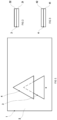
- This example relates to the passport security document shown in figures 1, 2 and 3 .
- a triangular shaped, four-layer first foil 3 is applied to the cover 2 of a passport 1, as security document, using hot stamping, which four layers in the direction from the stamping tool to the cover 2 of the passport 1 are the following: polyester layer, separation layer, metallised layer 32 and adhesive layer 31.
- a triangular shaped, four-layer second foil 4 is placed on the first foil 3 using hot stamping.
- the four layers of the second foil 4 in the direction from the stamping tool to the cover 2 of the passport 1 are the following: polyester layer, separation layer, metallised layer 42 and adhesive layer 41.
- the second foil 4 is placed on the surface of the first foil 3 parallel to side a and displaced, extending beyond the surface of the first foil 3 in the way shown in figure 1 .
- the hot stamping parameters used during the hot stamping of the second foil 4 are the same as the hot stamping parameters used in the case of the hot stamping of the first foil 3.
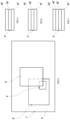
- This example relates to the festival ticket security document shown in figures 4, 5, 6 and 7 .
- a square shaped, five-layer first foil 3' is applied to the cover 2' of a festival ticket 1' using hot stamping, which five layers in the direction from the stamping tool to the cover 2' of the festival ticket 1' are the following: polyester layer, separation layer, transparent protective layer 33', metallised layer 32' and adhesive layer 31'.
- a square shaped, five-layer second foil 4' is placed using hot stamping in such a way that it is positioned in the lower right corner of the surface of the first foil 3' in the way shown in the figure.
- the five layers of the foil in the direction from the stamping tool to the cover 2' of the festival ticket 1' are the following: polyester layer, separation layer, transparent protective layer 43', metallised layer 42' and adhesive layer 41'.
- the adhesive layer 41' of this second foil 4' contains 0.4-0.5 g/m 2 1,4-cyclohexanedimethanol dibenzoate, and has a transparent protective layer 43' containing monofluorescent pigments as secondary security element.
- a square shaped, six-layer third foil 5' is applied using hot stamping in such a way that the lower left corner of the third foil 5' is positioned on the second foil 4', and through this the right edge of the first foil 3' is also covered by the left edge of the third foil 5' in the way shown in the figure.
- the six layers of the foil 5' in the direction from the stamping tool to the cover 2' of the festival ticket 1' are the following: polyester layer, separation layer, transparent protective layer 53', layer containing iridescent pigments 54' as secondary security element, metallised layer 52' and adhesive layer 51', which adhesive layer 51' contains 0.4-0.5 g/m 2 1,4-cyclohexanedimethanol dibenzoate.
- the hot stamping parameters used during the hot stamping of the third foil 5' are the same as the hot stamping parameters used during the hot stamping of the second foil 4'.
- the method and product according to the present invention are suitable for creating aesthetic and sufficiently complex surfaces on security documents, which are very complex for forgers to copy.
- the great advantage of the present invention is that for all this known technology, hot stamping is used, and the hot stamping press and hot stamping foil required for this are commercially available, preferably with the adhesive layer of the foil being modified using the method disclosed above.
- Another advantage of the present invention is that if necessary the complexity of the security element can be enhanced using secondary or other security elements, thereby increasing the level of protection of the security document.
- Yet another advantage of the present invention is that in the case of certain preferred methods of implementation the authenticity of the security document may be verified with the naked eye.
- a print image is created that has a characteristic appearance that may be discerned with the naked eye due to the partial and/or complete overlapping of the several precisely positioned foils possibly of varying colour.
- Security documents primarily passport covers, may be produced at the industrial scale using this special method.
- the checking method is simple visual examination.
- the print image created as a result of the high-precision application largely depends on the register precision.
- a small displacement of the foils as compared to each other significantly influences the image created, which primarily changes the overall effect of the colours, furthermore the geometrical forms established due to the effect of the various colours and patterns may become distorted.
- Another advantage of the present invention is that in the case of its preferred embodiments, during the hot stamping of the second and, optionally further foils the values of the hot stamping parameters of temperature, pressure and holding time are much lower than those used during the hot stamping of the first foil, which makes the hot stamping of the second and further foils cheaper and faster.
- Another advantage of the present invention is that after hot stamping all the foils onto the security document, the security document is ready for use. Naturally it is not excluded that in the case of the use of certain secondary and/or other security elements further steps need to be taken or time is required after the hot stamping for the security document to be completed.
Landscapes
- Engineering & Computer Science (AREA)
- Manufacturing & Machinery (AREA)
- Health & Medical Sciences (AREA)
- Chemical & Material Sciences (AREA)
- Chemical Kinetics & Catalysis (AREA)
- General Chemical & Material Sciences (AREA)
- General Health & Medical Sciences (AREA)
- Toxicology (AREA)
- Business, Economics & Management (AREA)
- Accounting & Taxation (AREA)
- Finance (AREA)
- Credit Cards Or The Like (AREA)
- Burglar Alarm Systems (AREA)
Claims (12)
- Verfahren zur Herstellung von folienhaltigen Sicherheitselementen auf Sicherheitsdokumenten (1, 1') unter Verwendung von Heißprägen, wobei eine erste Folie (3, 3') unter Verwendung von Heißprägen auf ein Sicherheitsdokument (1, 1') aufgebracht wird und darauf eine zweite Folie (4, 4'), die diese teilweise überlappt, ebenfalls unter Verwendung von Heißprägen aufgebracht wird, und gegebenenfalls eine oder mehrere weitere Folien (5'), die mindestens eine der vorherigen Folien teilweise überlappen, ebenfalls unter Verwendung von Heißprägen aufgebracht werden, dadurch gekennzeichnet, dass die bei dem Verfahren verwendete Registergenauigkeit, d. h. die Toleranzgrenze, mit der die zwei oder mehr Folien in Bezug zueinander angeordnet sind, +/- 0,4 mm beträgt.
- Verfahren nach Anspruch 1, dadurch gekennzeichnet, dass die Registergenauigkeit + /- 0,2 mm beträgt.
- Verfahren nach Anspruch 1 oder 2, dadurch gekennzeichnet, dass mindestens die eine Folie mindestens fünf Schichten aufweist, wobei die fünf Schichten in die Richtung vom Prägewerkzeug zur Oberfläche des mit einem Sicherheitselement zu versehenden Sicherheitsdokuments die folgenden sind: Polyesterschicht, Trennschicht, transparente Schutzschicht (33, 43, 33', 43', 53'), metallisierte Schicht (32, 42, 32', 42', 52') und Klebeschicht (31, 41, 31', 41', 51').
- Verfahren nach Anspruch 3, dadurch gekennzeichnet, dass die Klebeschicht (41', 51') der zweiten und/oder weiteren Folie(n) (4', 5') 0,1-2 g/m2, 1,4-Cyclohexandimethanoldibenzoat, vorzugsweise 0,3-0,6 g/m2 1,4-Cyclohexandimethanoldibenzoat enthält.
- Verfahren nach einem der Ansprüche 1 bis 4, dadurch gekennzeichnet, dass die Heißprägetemperatur beim Heißprägen der ersten Folie (3, 3') zwischen 140-200 °C, vorzugsweise zwischen 160-180 °C, liegt.
- Verfahren nach einem der Ansprüche 1 bis 5, dadurch gekennzeichnet, dass die Heißprägetemperatur beim Heißprägen der zweiten Folie (4') und gegebenenfalls weiterer Folien (5') zwischen 60-100 °C, vorzugsweise zwischen 75-85 °C, liegt.
- Verfahren nach einem der Ansprüche 1 bis 6, dadurch gekennzeichnet, dass der beim Heißprägen der ersten Folie (3, 3') verwendete Druck zwischen 100-220 bar, vorzugsweise 120-160 bar, liegt.
- Verfahren nach einem der Ansprüche 1 bis 7, dadurch gekennzeichnet, dass der beim Heißprägen der zweiten Folie (4') und gegebenenfalls weiterer Folien (5') verwendete Druck zwischen 10-50 bar, vorzugsweise 25-35 bar, liegt.
- Verfahren nach einem der Ansprüche 1 bis 8, dadurch gekennzeichnet, dass die verwendete Haltezeit beim Heißprägen der ersten Folie (3, 3') 0,1 bis 2 Sekunden, vorzugsweise 0,3 bis 0,6 Sekunden, beträgt.
- Verfahren nach einem der Ansprüche 1 bis 9, dadurch gekennzeichnet, dass die verwendete Haltezeit beim Heißprägen der zweiten Folie (4') und gegebenenfalls weiterer Folien (5') 0,1-1 sec, vorzugsweise 0,15-0,3 sec, beträgt.
- Verfahren nach einem der Ansprüche 1 bis 10, dadurch gekennzeichnet, dass mindestens die eine Folie ein oder mehrere sekundäre Sicherheitselemente enthält, die aus den folgenden ausgewählt sind:- eine Schicht, die ein auf Lichtbeugung basierendes Phänomen vorsieht;- fluoreszierende Sicherheitselemente, vorzugsweise mono-, bi-, trifluoreszenze Pigmente und Pigmentgemische;- Anti-Stokes-Pigmente;- infrarot-fluoreszenze Elemente;- irisierende Pigmente, Metallglanzpigmente, Pigmente, die ihre Farbe je nach Beleuchtungs- und Blickrichtung ändern;- photochrome und thermochrome Pigmente.
- Sicherheitsdokument (1, 1'), das ein unter Verwendung von Heißprägen erzeugtes Sicherheitselement enthält, dadurch gekennzeichnet, dass das Sicherheitselement mit dem Verfahren nach einem der Ansprüche 1 bis 11 erzeugt wird.
Applications Claiming Priority (2)
| Application Number | Priority Date | Filing Date | Title |
|---|---|---|---|
| HU1800340A HUP1800340A1 (hu) | 2018-10-04 | 2018-10-04 | Eljárás biztonsági elem kialakítására biztonsági okmányokon, biztonsági elemet tartalmazó biztonsági okmány, és aranyozó fólia biztonsági okmányhoz |
| PCT/HU2019/050044 WO2020070528A2 (en) | 2018-10-04 | 2019-10-02 | Method for creating security element on security documents, security document containing security element, and hot stamping foil for security document |
Publications (3)
| Publication Number | Publication Date |
|---|---|
| EP3860863A2 EP3860863A2 (de) | 2021-08-11 |
| EP3860863B1 true EP3860863B1 (de) | 2024-08-21 |
| EP3860863C0 EP3860863C0 (de) | 2024-08-21 |
Family
ID=89992769
Family Applications (1)
| Application Number | Title | Priority Date | Filing Date |
|---|---|---|---|
| EP19821444.7A Active EP3860863B1 (de) | 2018-10-04 | 2019-10-02 | Verfahren zur herstellung eines sicherheitselements auf sicherheitsdokumenten und sicherheitselement enthaltendes sicherheitsdokument |
Country Status (3)
| Country | Link |
|---|---|
| EP (1) | EP3860863B1 (de) |
| HU (2) | HUP1800340A1 (de) |
| WO (1) | WO2020070528A2 (de) |
Family Cites Families (7)
| Publication number | Priority date | Publication date | Assignee | Title |
|---|---|---|---|---|
| GB8807827D0 (en) * | 1988-03-31 | 1988-05-05 | Pizzanelli D J | Method for manufacture of multicolour diffractive patterns & composite holograms |
| US5186787A (en) | 1988-05-03 | 1993-02-16 | Phillips Roger W | Pre-imaged high resolution hot stamp transfer foil, article and method |
| GB2357061B (en) | 1999-12-08 | 2003-09-17 | Merck Patent Gmbh | Hot stamping foils |
| CN202563805U (zh) | 2010-11-05 | 2012-11-28 | 海南亚元防伪技术研究所 | 纤维防伪标识带 |
| DE102011103000A1 (de) * | 2011-05-24 | 2012-11-29 | Leonhard Kurz Stiftung & Co. Kg | Verfahren und Vorrichtung zum Heißprägen |
| DE102015104416A1 (de) | 2015-03-24 | 2016-09-29 | Leonhard Kurz Stiftung & Co. Kg | Mehrschichtkörper und Verfahren zu dessen Herstellung |
| TWI764875B (zh) * | 2015-11-03 | 2022-05-21 | 德商利昂哈德 庫爾茲公司 | 用於將薄膜上的轉印層施覆在底材上的方法及其施覆裝置 |
-
2018
- 2018-10-04 HU HU1800340A patent/HUP1800340A1/hu unknown
-
2019
- 2019-10-02 EP EP19821444.7A patent/EP3860863B1/de active Active
- 2019-10-02 WO PCT/HU2019/050044 patent/WO2020070528A2/en not_active Ceased
- 2019-10-02 HU HUE19821444A patent/HUE068970T2/hu unknown
Also Published As
| Publication number | Publication date |
|---|---|
| WO2020070528A3 (en) | 2020-07-23 |
| WO2020070528A4 (en) | 2020-09-17 |
| WO2020070528A2 (en) | 2020-04-09 |
| HUP1800340A1 (hu) | 2020-04-28 |
| EP3860863A2 (de) | 2021-08-11 |
| EP3860863C0 (de) | 2024-08-21 |
| HUE068970T2 (hu) | 2025-02-28 |
Similar Documents
| Publication | Publication Date | Title |
|---|---|---|
| EP2807036B1 (de) | Sicherheitsdokument sowie verfahren zur herstellung eines sicherheitsdokuments | |
| AU2015306295B2 (en) | Transfer film and method for producing a transfer film | |
| US6712399B1 (en) | Security device | |
| US7252239B2 (en) | Method for producing laser-writable data carriers and data carrier produced according to this method | |
| RU2321498C2 (ru) | Способ нанесения различимой на ощупь маркировки на ценный документ, а также ценный документ и защищенная от подделки бумага с такой маркировкой | |
| DE102007024298B3 (de) | Folienelement zur Echtheitserkennung, Sicherheitspapier, Sicherheitsdokument, Wertdokument, Münze, Jeton, Gebrauchsgegenstand, Gestaltungselement sowie Verfahren zur Herstellung eines Folienelements zur Echtheitserkennung und Verfahren zur Herstellung eines Sicherheitspapiers, eines Sicherheitsdokuments und eines Wertdokuments wie einer Banknote | |
| EP1132862A2 (de) | Datenträger mit einem optisch variablen Element | |
| DE19915943A1 (de) | Dekorationsfolie | |
| KR20080055703A (ko) | 극소 표시 보안 향상을 가지는 물품 | |
| JP4405915B2 (ja) | ストリップ形セキュリティー素子 | |
| EP3687828B1 (de) | Sicherheitsvorrichtung und verfahren zur herstellung davon | |
| WO2024002680A1 (de) | Sicherheitsdokument, system zur herstellung eines sicherheitsdokuments und verfahren zur herstellung eines sicherheitsdokuments | |
| RU2322359C2 (ru) | Носитель информации и способ его изготовления | |
| EP3860863B1 (de) | Verfahren zur herstellung eines sicherheitselements auf sicherheitsdokumenten und sicherheitselement enthaltendes sicherheitsdokument | |
| CN100522648C (zh) | 有价文件 | |
| OA20537A (en) | Method for creating security element on security documents, security document containing security element, and hot stamping foil for security document. | |
| US10384486B2 (en) | Method for the production of a multi-layer data medium with security inscriptions |
Legal Events
| Date | Code | Title | Description |
|---|---|---|---|
| STAA | Information on the status of an ep patent application or granted ep patent |
Free format text: STATUS: UNKNOWN |
|
| STAA | Information on the status of an ep patent application or granted ep patent |
Free format text: STATUS: THE INTERNATIONAL PUBLICATION HAS BEEN MADE |
|
| PUAI | Public reference made under article 153(3) epc to a published international application that has entered the european phase |
Free format text: ORIGINAL CODE: 0009012 |
|
| STAA | Information on the status of an ep patent application or granted ep patent |
Free format text: STATUS: REQUEST FOR EXAMINATION WAS MADE |
|
| 17P | Request for examination filed |
Effective date: 20210427 |
|
| AK | Designated contracting states |
Kind code of ref document: A2 Designated state(s): AL AT BE BG CH CY CZ DE DK EE ES FI FR GB GR HR HU IE IS IT LI LT LU LV MC MK MT NL NO PL PT RO RS SE SI SK SM TR |
|
| DAX | Request for extension of the european patent (deleted) | ||
| GRAP | Despatch of communication of intention to grant a patent |
Free format text: ORIGINAL CODE: EPIDOSNIGR1 |
|
| STAA | Information on the status of an ep patent application or granted ep patent |
Free format text: STATUS: GRANT OF PATENT IS INTENDED |
|
| INTG | Intention to grant announced |
Effective date: 20240321 |
|
| GRAS | Grant fee paid |
Free format text: ORIGINAL CODE: EPIDOSNIGR3 |
|
| GRAA | (expected) grant |
Free format text: ORIGINAL CODE: 0009210 |
|
| STAA | Information on the status of an ep patent application or granted ep patent |
Free format text: STATUS: THE PATENT HAS BEEN GRANTED |
|
| AK | Designated contracting states |
Kind code of ref document: B1 Designated state(s): AL AT BE BG CH CY CZ DE DK EE ES FI FR GB GR HR HU IE IS IT LI LT LU LV MC MK MT NL NO PL PT RO RS SE SI SK SM TR |
|
| REG | Reference to a national code |
Ref country code: GB Ref legal event code: FG4D |
|
| REG | Reference to a national code |
Ref country code: CH Ref legal event code: EP |
|
| REG | Reference to a national code |
Ref country code: IE Ref legal event code: FG4D |
|
| REG | Reference to a national code |
Ref country code: DE Ref legal event code: R096 Ref document number: 602019057531 Country of ref document: DE |
|
| U01 | Request for unitary effect filed |
Effective date: 20240918 |
|
| U07 | Unitary effect registered |
Designated state(s): AT BE BG DE DK EE FI FR IT LT LU LV MT NL PT RO SE SI Effective date: 20241008 |
|
| U20 | Renewal fee for the european patent with unitary effect paid |
Year of fee payment: 6 Effective date: 20241022 |
|
| REG | Reference to a national code |
Ref country code: GR Ref legal event code: EP Ref document number: 20240402579 Country of ref document: GR Effective date: 20241209 |
|
| PG25 | Lapsed in a contracting state [announced via postgrant information from national office to epo] |
Ref country code: NO Free format text: LAPSE BECAUSE OF FAILURE TO SUBMIT A TRANSLATION OF THE DESCRIPTION OR TO PAY THE FEE WITHIN THE PRESCRIBED TIME-LIMIT Effective date: 20241121 |
|
| PG25 | Lapsed in a contracting state [announced via postgrant information from national office to epo] |
Ref country code: PL Free format text: LAPSE BECAUSE OF FAILURE TO SUBMIT A TRANSLATION OF THE DESCRIPTION OR TO PAY THE FEE WITHIN THE PRESCRIBED TIME-LIMIT Effective date: 20240821 |
|
| PG25 | Lapsed in a contracting state [announced via postgrant information from national office to epo] |
Ref country code: IS Free format text: LAPSE BECAUSE OF FAILURE TO SUBMIT A TRANSLATION OF THE DESCRIPTION OR TO PAY THE FEE WITHIN THE PRESCRIBED TIME-LIMIT Effective date: 20241221 |
|
| PG25 | Lapsed in a contracting state [announced via postgrant information from national office to epo] |
Ref country code: HR Free format text: LAPSE BECAUSE OF FAILURE TO SUBMIT A TRANSLATION OF THE DESCRIPTION OR TO PAY THE FEE WITHIN THE PRESCRIBED TIME-LIMIT Effective date: 20240821 |
|
| PG25 | Lapsed in a contracting state [announced via postgrant information from national office to epo] |
Ref country code: RS Free format text: LAPSE BECAUSE OF FAILURE TO SUBMIT A TRANSLATION OF THE DESCRIPTION OR TO PAY THE FEE WITHIN THE PRESCRIBED TIME-LIMIT Effective date: 20241121 Ref country code: ES Free format text: LAPSE BECAUSE OF FAILURE TO SUBMIT A TRANSLATION OF THE DESCRIPTION OR TO PAY THE FEE WITHIN THE PRESCRIBED TIME-LIMIT Effective date: 20240821 |
|
| PG25 | Lapsed in a contracting state [announced via postgrant information from national office to epo] |
Ref country code: RS Free format text: LAPSE BECAUSE OF FAILURE TO SUBMIT A TRANSLATION OF THE DESCRIPTION OR TO PAY THE FEE WITHIN THE PRESCRIBED TIME-LIMIT Effective date: 20241121 Ref country code: PL Free format text: LAPSE BECAUSE OF FAILURE TO SUBMIT A TRANSLATION OF THE DESCRIPTION OR TO PAY THE FEE WITHIN THE PRESCRIBED TIME-LIMIT Effective date: 20240821 Ref country code: NO Free format text: LAPSE BECAUSE OF FAILURE TO SUBMIT A TRANSLATION OF THE DESCRIPTION OR TO PAY THE FEE WITHIN THE PRESCRIBED TIME-LIMIT Effective date: 20241121 Ref country code: IS Free format text: LAPSE BECAUSE OF FAILURE TO SUBMIT A TRANSLATION OF THE DESCRIPTION OR TO PAY THE FEE WITHIN THE PRESCRIBED TIME-LIMIT Effective date: 20241221 Ref country code: HR Free format text: LAPSE BECAUSE OF FAILURE TO SUBMIT A TRANSLATION OF THE DESCRIPTION OR TO PAY THE FEE WITHIN THE PRESCRIBED TIME-LIMIT Effective date: 20240821 Ref country code: ES Free format text: LAPSE BECAUSE OF FAILURE TO SUBMIT A TRANSLATION OF THE DESCRIPTION OR TO PAY THE FEE WITHIN THE PRESCRIBED TIME-LIMIT Effective date: 20240821 |
|
| REG | Reference to a national code |
Ref country code: HU Ref legal event code: AG4A Ref document number: E068970 Country of ref document: HU |
|
| PG25 | Lapsed in a contracting state [announced via postgrant information from national office to epo] |
Ref country code: SM Free format text: LAPSE BECAUSE OF FAILURE TO SUBMIT A TRANSLATION OF THE DESCRIPTION OR TO PAY THE FEE WITHIN THE PRESCRIBED TIME-LIMIT Effective date: 20240821 |
|
| PG25 | Lapsed in a contracting state [announced via postgrant information from national office to epo] |
Ref country code: CZ Free format text: LAPSE BECAUSE OF FAILURE TO SUBMIT A TRANSLATION OF THE DESCRIPTION OR TO PAY THE FEE WITHIN THE PRESCRIBED TIME-LIMIT Effective date: 20240821 |
|
| PG25 | Lapsed in a contracting state [announced via postgrant information from national office to epo] |
Ref country code: SK Free format text: LAPSE BECAUSE OF FAILURE TO SUBMIT A TRANSLATION OF THE DESCRIPTION OR TO PAY THE FEE WITHIN THE PRESCRIBED TIME-LIMIT Effective date: 20240821 |
|
| REG | Reference to a national code |
Ref country code: CH Ref legal event code: PL |
|
| VS25 | Lapsed in a validation state [announced via postgrant information from nat. office to epo] |
Ref country code: MD Free format text: LAPSE BECAUSE OF FAILURE TO SUBMIT A TRANSLATION OF THE DESCRIPTION OR TO PAY THE FEE WITHIN THE PRESCRIBED TIME-LIMIT Effective date: 20240821 |
|
| PLBE | No opposition filed within time limit |
Free format text: ORIGINAL CODE: 0009261 |
|
| STAA | Information on the status of an ep patent application or granted ep patent |
Free format text: STATUS: NO OPPOSITION FILED WITHIN TIME LIMIT |
|
| PG25 | Lapsed in a contracting state [announced via postgrant information from national office to epo] |
Ref country code: MC Free format text: LAPSE BECAUSE OF FAILURE TO SUBMIT A TRANSLATION OF THE DESCRIPTION OR TO PAY THE FEE WITHIN THE PRESCRIBED TIME-LIMIT Effective date: 20240821 |
|
| GBPC | Gb: european patent ceased through non-payment of renewal fee |
Effective date: 20241121 |
|
| PG25 | Lapsed in a contracting state [announced via postgrant information from national office to epo] |
Ref country code: CH Free format text: LAPSE BECAUSE OF NON-PAYMENT OF DUE FEES Effective date: 20241031 |
|
| 26N | No opposition filed |
Effective date: 20250522 |
|
| PGFP | Annual fee paid to national office [announced via postgrant information from national office to epo] |
Ref country code: TR Payment date: 20250930 Year of fee payment: 7 |
|
| PG25 | Lapsed in a contracting state [announced via postgrant information from national office to epo] |
Ref country code: GB Free format text: LAPSE BECAUSE OF NON-PAYMENT OF DUE FEES Effective date: 20241121 |
|
| PGFP | Annual fee paid to national office [announced via postgrant information from national office to epo] |
Ref country code: AL Payment date: 20250930 Year of fee payment: 7 |
|
| PG25 | Lapsed in a contracting state [announced via postgrant information from national office to epo] |
Ref country code: IE Free format text: LAPSE BECAUSE OF NON-PAYMENT OF DUE FEES Effective date: 20241002 |
|
| U20 | Renewal fee for the european patent with unitary effect paid |
Year of fee payment: 7 Effective date: 20250912 |
|
| PGFP | Annual fee paid to national office [announced via postgrant information from national office to epo] |
Ref country code: HU Payment date: 20250912 Year of fee payment: 7 |
|
| PGFP | Annual fee paid to national office [announced via postgrant information from national office to epo] |
Ref country code: GR Payment date: 20251029 Year of fee payment: 7 |
|
| PGFP | Annual fee paid to national office [announced via postgrant information from national office to epo] |
Ref country code: CY Payment date: 20250930 Year of fee payment: 7 |
|
| REG | Reference to a national code |
Ref country code: HU Ref legal event code: HC9C Owner name: ANY BIZTONSAGI NYOMDA NYRT, HU |
|
| VS25 | Lapsed in a validation state [announced via postgrant information from nat. office to epo] |
Ref country code: MA Free format text: FAILURE TO ELECT DOMICILE IN THE NATIONAL COUNTRY Effective date: 20241122 |
|
| VS25 | Lapsed in a validation state [announced via postgrant information from nat. office to epo] |
Ref country code: MA Free format text: LAPSE BECAUSE OF FAILURE TO SUBMIT A TRANSLATION OF THE DESCRIPTION OR TO PAY THE FEE WITHIN THE PRESCRIBED TIME-LIMIT Effective date: 20240821 |