EP3865472B1 - Antagonistes du récepteur de thromboxane - Google Patents
Antagonistes du récepteur de thromboxane Download PDFInfo
- Publication number
- EP3865472B1 EP3865472B1 EP20212296.6A EP20212296A EP3865472B1 EP 3865472 B1 EP3865472 B1 EP 3865472B1 EP 20212296 A EP20212296 A EP 20212296A EP 3865472 B1 EP3865472 B1 EP 3865472B1
- Authority
- EP
- European Patent Office
- Prior art keywords
- compounds
- group
- ntp42
- compound
- halogenated
- Prior art date
- Legal status (The legal status is an assumption and is not a legal conclusion. Google has not performed a legal analysis and makes no representation as to the accuracy of the status listed.)
- Active
Links
Images









Classifications
-
- A—HUMAN NECESSITIES
- A61—MEDICAL OR VETERINARY SCIENCE; HYGIENE
- A61K—PREPARATIONS FOR MEDICAL, DENTAL OR TOILETRY PURPOSES
- A61K31/00—Medicinal preparations containing organic active ingredients
- A61K31/64—Sulfonylureas, e.g. glibenclamide, tolbutamide, chlorpropamide
-
- A—HUMAN NECESSITIES
- A61—MEDICAL OR VETERINARY SCIENCE; HYGIENE
- A61P—SPECIFIC THERAPEUTIC ACTIVITY OF CHEMICAL COMPOUNDS OR MEDICINAL PREPARATIONS
- A61P11/00—Drugs for disorders of the respiratory system
-
- A—HUMAN NECESSITIES
- A61—MEDICAL OR VETERINARY SCIENCE; HYGIENE
- A61P—SPECIFIC THERAPEUTIC ACTIVITY OF CHEMICAL COMPOUNDS OR MEDICINAL PREPARATIONS
- A61P11/00—Drugs for disorders of the respiratory system
- A61P11/06—Antiasthmatics
-
- A—HUMAN NECESSITIES
- A61—MEDICAL OR VETERINARY SCIENCE; HYGIENE
- A61P—SPECIFIC THERAPEUTIC ACTIVITY OF CHEMICAL COMPOUNDS OR MEDICINAL PREPARATIONS
- A61P13/00—Drugs for disorders of the urinary system
- A61P13/08—Drugs for disorders of the urinary system of the prostate
-
- A—HUMAN NECESSITIES
- A61—MEDICAL OR VETERINARY SCIENCE; HYGIENE
- A61P—SPECIFIC THERAPEUTIC ACTIVITY OF CHEMICAL COMPOUNDS OR MEDICINAL PREPARATIONS
- A61P13/00—Drugs for disorders of the urinary system
- A61P13/12—Drugs for disorders of the urinary system of the kidneys
-
- A—HUMAN NECESSITIES
- A61—MEDICAL OR VETERINARY SCIENCE; HYGIENE
- A61P—SPECIFIC THERAPEUTIC ACTIVITY OF CHEMICAL COMPOUNDS OR MEDICINAL PREPARATIONS
- A61P29/00—Non-central analgesic, antipyretic or antiinflammatory agents, e.g. antirheumatic agents; Non-steroidal antiinflammatory drugs [NSAID]
-
- A—HUMAN NECESSITIES
- A61—MEDICAL OR VETERINARY SCIENCE; HYGIENE
- A61P—SPECIFIC THERAPEUTIC ACTIVITY OF CHEMICAL COMPOUNDS OR MEDICINAL PREPARATIONS
- A61P3/00—Drugs for disorders of the metabolism
- A61P3/08—Drugs for disorders of the metabolism for glucose homeostasis
- A61P3/10—Drugs for disorders of the metabolism for glucose homeostasis for hyperglycaemia, e.g. antidiabetics
-
- A—HUMAN NECESSITIES
- A61—MEDICAL OR VETERINARY SCIENCE; HYGIENE
- A61P—SPECIFIC THERAPEUTIC ACTIVITY OF CHEMICAL COMPOUNDS OR MEDICINAL PREPARATIONS
- A61P35/00—Antineoplastic agents
-
- A—HUMAN NECESSITIES
- A61—MEDICAL OR VETERINARY SCIENCE; HYGIENE
- A61P—SPECIFIC THERAPEUTIC ACTIVITY OF CHEMICAL COMPOUNDS OR MEDICINAL PREPARATIONS
- A61P43/00—Drugs for specific purposes, not provided for in groups A61P1/00-A61P41/00
-
- A—HUMAN NECESSITIES
- A61—MEDICAL OR VETERINARY SCIENCE; HYGIENE
- A61P—SPECIFIC THERAPEUTIC ACTIVITY OF CHEMICAL COMPOUNDS OR MEDICINAL PREPARATIONS
- A61P7/00—Drugs for disorders of the blood or the extracellular fluid
- A61P7/02—Antithrombotic agents; Anticoagulants; Platelet aggregation inhibitors
-
- A—HUMAN NECESSITIES
- A61—MEDICAL OR VETERINARY SCIENCE; HYGIENE
- A61P—SPECIFIC THERAPEUTIC ACTIVITY OF CHEMICAL COMPOUNDS OR MEDICINAL PREPARATIONS
- A61P9/00—Drugs for disorders of the cardiovascular system
-
- A—HUMAN NECESSITIES
- A61—MEDICAL OR VETERINARY SCIENCE; HYGIENE
- A61P—SPECIFIC THERAPEUTIC ACTIVITY OF CHEMICAL COMPOUNDS OR MEDICINAL PREPARATIONS
- A61P9/00—Drugs for disorders of the cardiovascular system
- A61P9/10—Drugs for disorders of the cardiovascular system for treating ischaemic or atherosclerotic diseases, e.g. antianginal drugs, coronary vasodilators, drugs for myocardial infarction, retinopathy, cerebrovascula insufficiency, renal arteriosclerosis
-
- A—HUMAN NECESSITIES
- A61—MEDICAL OR VETERINARY SCIENCE; HYGIENE
- A61P—SPECIFIC THERAPEUTIC ACTIVITY OF CHEMICAL COMPOUNDS OR MEDICINAL PREPARATIONS
- A61P9/00—Drugs for disorders of the cardiovascular system
- A61P9/12—Antihypertensives
-
- C—CHEMISTRY; METALLURGY
- C07—ORGANIC CHEMISTRY
- C07C—ACYCLIC OR CARBOCYCLIC COMPOUNDS
- C07C311/00—Amides of sulfonic acids, i.e. compounds having singly-bound oxygen atoms of sulfo groups replaced by nitrogen atoms, not being part of nitro or nitroso groups
- C07C311/50—Compounds containing any of the groups, X being a hetero atom, Y being any atom
- C07C311/52—Y being a hetero atom
- C07C311/54—Y being a hetero atom either X or Y, but not both, being nitrogen atoms, e.g. N-sulfonylurea
- C07C311/57—Y being a hetero atom either X or Y, but not both, being nitrogen atoms, e.g. N-sulfonylurea having sulfur atoms of the sulfonylurea groups bound to carbon atoms of six-membered aromatic rings
- C07C311/58—Y being a hetero atom either X or Y, but not both, being nitrogen atoms, e.g. N-sulfonylurea having sulfur atoms of the sulfonylurea groups bound to carbon atoms of six-membered aromatic rings having nitrogen atoms of the sulfonylurea groups bound to hydrogen atoms or to acyclic carbon atoms
Definitions
- the invention relates to a T prostanoid receptor (TP) antagonist represented by formula (X): or a pharmaceutically acceptable salt thereof.
- TP T prostanoid receptor
- the invention also provides a composition comprising said compound, or a pharmaceutically acceptable salt thereof, for use in treating pulmonary arterial hypertension (PAH).
- PAH pulmonary arterial hypertension
- TXA 2 or of its TXA 2 receptor which is also referred to as the T prostanoid receptor or, in short, as the TP
- TXA 2 receptor which is also referred to as the T prostanoid receptor or, in short, as the TP
- thrombosis e.g thrombosis, atherothrombosis, peripheral arterial disease, myocardial infarction, stroke and transient ischemic attack/TIA, acute coronary syndrome/ACS, systemic and pregnancy induced hypertension
- renal including glomerular nephritis and renal hypertension
- pulmonary including asthma and pulmonary arterial hypertension/PAH
- prostate e.g benign prostate hyperplasia/BPH
- TXA 2 TXA 2 synthase
- TXAS TXA 2 synthase
- TP ⁇ TXA 2 synthase
- C carboxyl-terminal
- TP ⁇ and TP ⁇ are expressed in a range of cells throughout the body including in platelets, in various types of SM, in endothelial cells and in macrophages, for example.
- TP antagonists Due to the roles of TXA 2 in the CV, renal, pulmonary and prostate systems, there is significant clinical interest in the development of TP antagonists, not least for the treatment of atherothrombosis and other CV, renal and pulmonary disorders. TP antagonists also have potential applications in the treatment of various pro-inflammatory (including but not limited to inflammatory CVD, CVD associated with types 1 and 2 diabetes mellitus, renal and pulmonary diseases, post-viral/microbial infection), neoplastic and prostate (such as benign prostate hyperplasia/BPH) diseases. Other traditional therapeutic approaches currently used as alternatives to TP antagonists aim to inhibit the biosynthesis of TXA 2 .
- pro-inflammatory including but not limited to inflammatory CVD, CVD associated with types 1 and 2 diabetes mellitus, renal and pulmonary diseases, post-viral/microbial infection
- neoplastic and prostate such as benign prostate hyperplasia/BPH
- COX inhibitors cyclooxygenase (COX) inhibitors referred to as the non-steroidal anti-inflammatory drugs (NSAIDs), which includes Aspirin and related COX 1 and/or COX 2 inhibitors.
- NSAIDs non-steroidal anti-inflammatory drugs
- COX inhibitors act by inhibiting the conversion of arachidonic acid into the endoperoxide prostaglandin (PG) G 2 /PGH 2 , the first enzymatic step in the synthesis of TXA 2 and of the related prostanoids which includes PGD 2 , PGE 2 , PGF 2 ⁇ and PGI 2 /prostacyclin.
- the anucleated platelet which mainly express COX 1 as opposed to COX 2
- low-dose Aspirin is widely used to reduce/inhibit the synthesis of TXA 2 within platelets while not substantially affecting the synthesis of the other prostanoids by COX 1 or COX 2 in other nucleated cells.
- low-dose Aspirin is widely used to prevent excessive thrombosis in patients at risk of CV episodes by inhibiting TXA 2 generation in the anucleated platelet.
- COXIB COX 2 selective inhibitors
- TP antagonists but not Aspirin or other NSAIDS or COXIBs, will inhibit the actions of TXA 2 and of the free-radical derived isoprostane 8-iso-prostaglandin (PG) F 2 ⁇ and of all other incidental TP ligands (e.g., the endoperoxide PGG 2 /PGH 2 , 20-hydroxyeicosatetraenoic acid/20-HETE) that also act as full or partial agonists of the TP.
- PG free-radical derived isoprostane 8-iso-prostaglandin
- PG free-radical derived isoprostane 8-iso-prostaglandin
- PG free-radical derived isoprostane 8-iso-prostaglandin
- PG free-radical derived isoprostane 8-iso-prostaglandin
- PG free-radical derived isoprostane 8-iso-prostaglandin
- the invention provides a compound represented by formula (X): or a pharmaceutically acceptable salt thereof.
- the invention also provides a composition comprising said compound, or a pharmaceutically acceptable salt thereof, for use in treating pulmonary arterial hypertension (PAH).
- PAH pulmonary arterial hypertension
- the description generally provides compounds that bind to thromboxane (TX) A 2 receptors (the TP) and inhibit thrombosis and other events within the cardiovascular, renal, pulmonary, or other systems where the TP is expressed including, but not limited to, platelets, various types of smooth muscle (SM) cells, endothelial cells, monocytes/macrophages and certain cells of the immune system.
- TX thromboxane
- SM smooth muscle
- TP antagonist of the invention provides beneficial pharmaceutical properties for treating thrombosis and other events within the cardiovascular, renal, pulmonary or other systems where the TP is expressed and/or where its ligands are dysregulated.
- the compound of the invention as TP antagonist should act as therapeutic drug for pulmonary arterial hypertension (PAH), not only inhibiting the excessive vasoconstriction but also preventing the micro-thrombosis and, potentially, limit the pulmonary artery remodeling, right ventricular (RV) hypertrophy, endothelial cell dysfunction and local inflammation found in PAH.
- PAH pulmonary arterial hypertension
- RV right ventricular
- endothelial cell dysfunction and local inflammation found in PAH.
- the compound of the invention may also directly suppress inflammation or proliferation pathways implicated in PAH.
- the compound of the invention will also antagonize these effects in PAH.
- TXA 2 is a potent pro-inflammatory and mitogenic agent promoting vascular remodeling, restenosis and/or hypertrophy and is the main cyclo-oxygenase (COX)-derived constrictor prostanoid within the lung, the compound of the invention will antagonize these effects.
- the compound of the invention would have added advantage over other PAH therapeutic agents used in that such compounds would not only inhibit TXA 2 , the main vaso-constricting prostaglandin produced in the lung but also inhibit the adverse actions of the oxidative-stress derived isoprostane 8-iso-PGF2 ⁇ , in addition to those of TXA 2 itself.
- Compounds of the description include a benzenesulfonyl urea in which the benzene is substituted by a substituted biphenylyloxy group (e.g., at the 2 position) and by a nitrile group (e.g., at the 5 position), which compounds show promising results as TP-isoform selective TP antagonists.
- Benzenesulfonyl urea in which the benzene is substituted at the 2 position by a substituted biphenylyloxy group and at the 5 position by a nitrile group and the urea is substituted by a halogen, an alkyl group, a halogenated alkyl group, an aryl group, or a halogenated aryl group, or a pharmaceutically acceptable salt thereof.
- the biphenylyloxy group is substituted by a halogenated alkyl group, a halogenated methoxy group, a primary amide, a secondary amide, a tertiary amide, or a nitrile group.
- R 1 is selected from the group consisting of: a halogen, an alkyl group, a cycloalkyl group, an aryl group, a heterocycloalkyl group, a halogenated alkyl group, a halogenated cycloalkyl group, a halogenated aryl group, a halogenated heterocycloalkyl group, a halogenated methoxy group, an ethoxy group, an isopropoxy group, a tert-butoxy group, a halogenated ethoxy group, a halogenated isopropoxy group, a halogenated tert-butoxy group, a primary amide, a secondary amide, a tertiary amide, OH, a halogen, CO 2 H, methyl ketone, a nitrile group, a methyl ester group, an ethyl ester group, an is
- R 1 may be selected from the group consisting of: a halogen, an alkyl group, a halogenated alkyl group, a halogenated cycloalkyl group, a halogenated aryl group, a halogenated heterocycloalkyl group, a halogenated methoxy group, an ethoxy group, an isopropoxy group, a tert-butoxy group, a halogenated ethoxy group, a halogenated isopropoxy group, a halogenated tert-butoxy group, a primary amide, a secondary amide, a tertiary amide, and a nitrile group; and R 2 is selected from the group consisting of a halogen, an alkyl group, a halogenated alkyl group, an aryl group, and a halogenated aryl group, or a pharmaceutically acceptable salt thereof.
- alkyl group means either branched or un
- R 1 is selected from the group consisting of: a halogenated alkyl group, a halogenated methoxy group, a primary amide, a secondary amide, a tertiary amide, and a nitrile group
- R 2 is selected from the group consisting of an alkyl group of 3 to 6 carbons, and a halogenated alkyl group of 3 to 6 carbons, or a pharmaceutically acceptable salt thereof.
- R 1 is selected from the group consisting of: a difluoromethyl group, a trifluoromethyl group, a difluormethoxy group, a trifluormethoxy group, a primary amide, a secondary amide, a tertiary amide, and a nitrile group
- R 2 is selected from the group consisting of an alkyl group of 6 or fewer carbons and a halogenated alkyl group of 6 or fewer carbons, or a pharmaceutically acceptable salt thereof.
- R 1 is selected from the group consisting of: a halogen, an alkyl group, a halogenated alkyl group, a halogenated cycloalkyl group, a halogenated aryl group, a halogenated heterocycloalkyl group, a halogenated methoxy group, an ethoxy group, an isopropoxy group, a tert-butoxy group, a halogenated ethoxy group, a halogenated isopropoxy group, a halogenated tert-butoxy group, a primary amide, a secondary amide, a tertiary amide, and a nitrile group; and R 2 is selected from the group consisting of an alkyl group of 2 to 6 carbons, and a halogenated alkyl group of 2 to 6 carbons, or a pharmaceutically acceptable salt thereof.
- R 1 is selected from the group consisting of: a halogenated alkyl group, a halogenated methoxy group, a primary amide, a secondary amide, a tertiary amide, and a nitrile group; and R 2 is an alkyl group of 3 to 6 carbons, or a pharmaceutically acceptable salt thereof.
- R 1 is selected from the group consisting of: a difluoromethyl group, a trifluoromethyl group, a difluormethoxy group, a trifluormethoxy group, a primary amide, a secondary amide, a tertiary amide, and a nitrile group
- R 2 is selected from the group consisting of an alkyl group of 3 to 5 carbons and a halogenated alkyl group of 3 to 5 carbons, or a pharmaceutically acceptable salt thereof.
- a compound of formula (III) is further described: in which R 1 is selected from the group consisting of a difluoromethyl group, a trifluoromethyl group, a difluormethoxy group, a trifluormethoxy group, a primary amide, a secondary amide, a tertiary amide, and a nitrile group, or a pharmaceutically acceptable salt thereof.
- R 1 is selected from the group consisting of a difluoromethyl group, a trifluoromethyl group, a difluormethoxy group, a trifluormethoxy group, a primary amide, a secondary amide, a tertiary amide, and a nitrile group, or a pharmaceutically acceptable salt thereof.
- the compound may be represented by formula (IV), (V), (VI), (VII), (VIII), (IX), (X), or (XI): or a pharmaceutically acceptable salt thereof.
- a compound of formula (II) is described and more specifically is shown by formula (IV), (V), or (X): or a pharmaceutically acceptable salt thereof.
- a compound represented by formula (IV) is described: or a pharmaceutically acceptable salt thereof.
- a compound is also described represented by formula (V): or a pharmaceutically acceptable salt thereof.
- the invention provides a compound represented by formula (X): or a pharmaceutically acceptable salt thereof.
- the compounds can be used to treat human diseases in which human thromboxane (TX) A 2 receptors/T Prostanoid receptors/TPs play a role.
- TX human thromboxane
- the compounds can be used to treat human diseases where there is altered expression in the levels of the human TPs.
- the compounds can be used to treat human diseases in which there are elevated levels of TXA 2 .
- the compounds can be used to treat human diseases in which there are elevated levels of other biochemical entities/ligands (eg PGG 2 /PGH 2 , 20-HETE or isoprostanes including 8-iso PGF 2 ⁇ ) that act through the human TPs.
- biochemical entities/ligands eg PGG 2 /PGH 2 , 20-HETE or isoprostanes including 8-iso PGF 2 ⁇ .
- the compounds can be administered by different routes of administration including oral, inhalation, nebulization, transdermal, intravenous, sub-cutaneous, transmusosal, implantable depot formulation
- the compounds can be used to antagonise the TP for use in the treatment of pulmonary arterial hypertension (PAH).
- PAH pulmonary arterial hypertension
- the compounds can be used to treat pulmonary arterial hypertension (PAH) when used in combination with other drugs approved to treat this disease.
- PAH pulmonary arterial hypertension
- the compounds can be used in combination with implantable sensors to measure pulmonary artery pressure, the therapeutic administration or therapeutic dosing of such compounds optimised or adjusted to changes in such measured pulmonary artery pressure.
- the compounds can be used to treat thrombosis, either alone or in combination with other therapeutic agents.
- the compounds can be used to treat micro-vessel thrombosis, either alone or in combination with other therapeutic agents
- the compounds can be used to treat other cardiovascular diseases, including those CVDs associated with types 1 and 2 diabetes mellitus.
- cardiovascular diseases including those CVDs associated with types 1 and 2 diabetes mellitus.
- fields of application include treatment of various cardiovascular diseases including prevention of excessive platelet aggregation associated atherothrombosis, ischemic stroke, transient ischemic attach (TIA), acute coronary syndrome.
- TIA transient ischemic attach
- compounds of the invention can be used either alone or in combination with other therapeutics drugs.
- the compounds can be used to treat other pulmonary diseases, including but not limited to asthma, and used either alone or in combination with other therapeutics drugs.
- the compounds can be used to treat renal diseases and used either alone or in combination with other therapeutics drugs.
- the compounds can be used to treat prostate diseases including, but not limited to benign prostate hyperplasia (BPH) and either alone or in combination with other therapeutics drugs.
- BPH benign prostate hyperplasia
- the compounds can be used to treat inflammatory diseases, and either alone or in combination with other therapeutics drugs.
- the compounds can be used to treat neoplastic diseases including cancers, and used either alone or in combination with other therapeutics drugs.
- the compounds can be used to treat stroke and transient ischemic attack (TIA), and used either alone or in combination with other therapeutics drugs.
- TIA stroke and transient ischemic attack
- the compounds can be used in combination with immune modulators to treat cancers.
- the compounds can be used to treat dysregulated smooth muscle cell function, such as but not limited to various types of hypertension and restenosis post-surgical stenting.
- the compounds can be used to treat dysregulated endothelial cell function.
- the compounds can be coated onto implantable medical devices for controlled or local delivery at sites of implantation of such medical devices including stents, balloons, stent grafts, prosthetic valves, shunts, abdominal aortic valves.
- T prostanoid receptor (TP) antagonists T prostanoid receptor (TP) antagonists and to their use in the treatment of human diseases in which thromboxane (TX) A and of all other agents that act as incidental ligands of the TP, including the endoperoxide prostaglandin (PG)G 2 /PGH 2 , 20-hydroxyeicosatetraenoic acid (20-HETE) and the free-radical derived isoprostanes (e.g 8-iso-prostaglandin (PG) F 2 ⁇ ), play a role.
- TX thromboxane
- PG endoperoxide prostaglandin
- 20-HETE 20-hydroxyeicosatetraenoic acid
- free-radical derived isoprostanes e.g 8-iso-prostaglandin (PG) F 2 ⁇
- the description generally relates to novel chemical entities/compounds that act as antagonists of the TP to prevent TXA 2 , PGG 2 /H 2 , 20-HETE, isoprostanes including 8-iso-PGF 2 ⁇ or any other incidental TP ligands binding to the TP expressed in humans.
- Compounds of the invention include those that exhibit preferential binding for either TP ⁇ and/or TP ⁇ receptor subtype.
- the invention provides small molecule compounds which, for example but not limited to, inhibit aggregation of human platelets, prevent pulmonary arterial hypertension (PAH) in a preclinical PAH model and-exhibit attractive ADME (absorption, distribution, metabolism, and excretion) properties.
- PAH pulmonary arterial hypertension
- ADME absorption, distribution, metabolism, and excretion
- the description further provides exemplary synthetic routes for the novel TP antagonist compounds by way of example but not exhaustive of all routes of synthesis. Exemplary compounds are disclosed
- These compounds may display significant TP selectivity and antagonistic activity ex vivo in human platelets and are effective in preventing pulmonary arterial hypertension (PAH) in a preclinical disease model of PAH.
- PAH pulmonary arterial hypertension
- Compounds preferably inhibit TXA 2 -induced platelet aggregation at a half-maximal inhibitory concentration (IC 50 ) below 100 nM. Compounds preferably inhibit TXA 2 -induced platelet aggregation at a half-maximal inhibitory concentration (IC 50 ) below 50 nM. Compounds of the invention preferably inhibit TXA 2 -induced platelet aggregation at a half-maximal inhibitory concentration (IC 50 ) below 20 nM. Compounds preferably inhibit TXA 2 -induced platelet aggregation at a half-maximal inhibitory concentration (IC 50 ) below 5 nM.
- IC 50 half-maximal inhibitory concentration
- Compounds prevent PAH in a pre-clinical model of PAH when used below 5 mg/kg/day.
- Compounds may further inhibit TXA 2 -induced platelet aggregation but not aggregation induced by other platelet agonists such as, for example, thrombin or adenosine diphosphate (ADP).
- platelet agonists such as, for example, thrombin or adenosine diphosphate (ADP).
- ADP adenosine diphosphate
- compounds preferably do not agonize or antagonize signaling by several other G-protein coupled receptors, kinases, phosphatases, or ion channels including human Ether-á-go-go related gene (hERG).
- Compounds exhibit attractive ADME properties. Compounds may exhibit the ability to inhibit TP agonist-induced intracellular calcium mobilization and inhibit platelet aggregation in ex vivo assays. Compounds may show no effect on signaling through other prostanoid receptors (prostaglandin (PG) D 2 receptor, DP; PGE 2 receptors EP 1 - EP 4 ; PGF 2 ⁇ receptor, FP; PGI 2 /Prostacyclin receptor, IP) and non-prostanoid receptors including the purinergic (ADP) and thrombin (PAR1) receptors, also involved in platelet activation similar to the TP isoforms. Further, compounds exhibit minimal toxicity and favorable cell permeability.
- prostanoid receptors prostaglandin (PG) D 2 receptor, DP; PGE 2 receptors EP 1 - EP 4 ; PGF 2 ⁇ receptor, FP; PGI 2 /Prostacyclin receptor, IP
- non-prostanoid receptors including the purinergic (ADP) and
- a synthetic route is outlined in Pathway 1.
- a range of aryl bromides (SM 1 to SM 6) undergoes palladium mediated coupling with 3-hydroxyphenylboronic acid (SM 7) to generate intermediates i-1 through i-6.
- SM 7 3-hydroxyphenylboronic acid
- the phenol intermediates i-1 to i-6 undergo ipso-substitution of the chlorine in i-7 (formed from SM 8) to give i-8 through i-14 which upon reaction with tert-butylisocyanate furnish the compounds described.
- SM 8.1 is purchased and converted into the corresponding sulfonamide i-7.1 using Pathway 3.
- Pathway 5 provides a compound of formula (III).
- the preparation of 4-(3-hydroxyphenyl)benzonitrile (i-6) may include Pathway 6.
- Nitrogen is bubbled through a mixture of 3-hydroxybenzeneboronic acid (SM 7, 2.00 g, 14.5 mmol), 4-bromobenzonitrile (SM 6, 2.90 g, 15.9 mmol) and potassium carbonate (2.20 g, 15.9 mmol) in acetone (65 mL) and H2O (120 mL) for 5 minutes.
- Pd(OAc)2 (325 mg, 1.45 mmol) is added and the mixture is stirred under a nitrogen atmosphere at room temperature for 30 minutes, after which time LC-MS analysis shows the reaction to be complete.
- the reaction mixture is concentrated under vacuum, acidified with saturated aqueous NH 4 Cl solution (50 ml) and extracted with DCM (200 ml then 2 x 75 mL).
- the combined organic phases are passed through a phase separator and concentrated to dryness under vacuum.
- the crude product is absorbed onto silica and purified by MPLC chromatography on a 100 g Biotage silica cartridge (eluting with DCM/EtOAc gradient 0 to 40 %).
- the target compound, 4-(3-hydroxyphenyl)benzonitrile (i-6) is isolated as a white solid.
- SM 1-bromo-4-(difluoromethyl)-benzene
- iso-hexane/DCM gradient 0 to 100%.
- the target compound 3-[4-(difluoromethyl)phenyl]phenol (i-1) is isolated as a white solid.
- SM 2 4-bromobenzotrifluoride
- the target compound 3-[4-(Trifluoromethyl)phenyl]phenol (i-2) is isolated as a white solid.
- SM-3 (4-Bromobenzamide) may be used.
- the generic procedure is modified and the crude reaction mixture is recrystallized from EtOAc).
- the target compound, 4-(3-hydroxyphenyl)benzamide (i-3) is isolated as a white solid.
- SM-4 N-Methyl-4-bromobenzamide
- the target compound, 4-(3-hydroxyphenyl)-N-methylbenzamide (i-4) is isolated as a white solid.
- SM-5 N,N-Dimethyl-4-bromobenzamide
- the generic procedure is modified and the crude reaction mixture is recrystallized from EtOAc).
- the target compound, 4-(3-hydroxyphenyl)-N,N-dimethyl-benzamide (i-5) is isolated as a white solid.
- the reaction mixture is added to 2M HCl (10 mL), diluted with water (40 mL) and extracted with EtOAc (30 mL, 2x15 mL). The combined organic phases are washed with water (15 mL), dried (MgSO4) and concentrated to dryness under vacuum.
- the crude reaction is purified by MPLC chromatography on a 10 g Biotage silica cartridge (eluting with iso-hexane/EtOAc gradient 40 to 100 %).
- the target compound, 4-[3-(4-cyano-2-sulfamoyl-phenoxy)phenyl]-N,N-dimethyl-benzamide (i-12) is isolated.
- the 5-cyano-2-((4'-(substituted)-[1,1'biphenyl]-3-yl)oxy)benzenesulfonamides (i-8 to i-13) are stirred in dioxan (10 mL per mmol) and 3.1M KOH (1.1 eq.) added. The mixtures are stirred for 10 minutes then concentrated to dryness under vacuum. Dry DMF (7 mL per mmol) is added followed by tert-butyl isocyanate (2.5 eq.) and the reaction mixtures are stirred at room temperature for 18 hours. The reaction mixtures are concentrated under vacuum and 2M HCl (1.7 mL per mmol) added.
- R 1 is a halogen, an alkyl group, a cycloalkyl group, an aryl group, a heterocycloalkyl group, a halogenated alkyl group, a halogenated cycloalkyl group, a halogenated aryl group, a halogenated heterocycloalkyl group, a halogenated methoxy group, an ethoxy group, an isopropoxy group, a tert-butoxy group, a halogenated ethoxy group, a halogenated isopropoxy group, a halogenated tert-butoxy group, a primary amide, a secondary amide, a tertiary amide, OH, a halogen, CO 2 H, methyl ketone, a nitrile group, a methyl ester group, an ethyl
- Halogenated may be taken to mean substituted with one or more of F, CL, BR, I, and At, and preferably one or more of F and Cl.
- the compound of the invention can be in a pharmaceutically acceptable salt form or as the free base.
- Suitable routes of administration include oral, buccal, topical (including trans-dermal), injection, intravenous, nasal, pulmonary, and with or on an implantable medical device (e.g., stent or drug-eluting stent or balloon equivalents).
- each agent can readily be determined by a skilled person, having regard to typical factors such as the age, weight, sex and clinical history of the patient.
- a typical dosage could be, for example, 1-1,000 mg/kg, preferably 5-500 mg/kg per day, or less than about 5 mg/kg, for example administered once per day, every other day, every few days, once a week, once every two weeks, or once a month, or a limited number of times, such as just once, twice or three or more times.
- a pharmaceutical composition containing each active ingredient may be in a form suitable for oral use, for example, as tablets, troches, lozenges, fast-melts, aqueous or oily suspensions, dispersible powders or granules, emulsions, hard or soft capsules, or syrups or elixirs.
- Compositions intended for oral use may be prepared according to any method known in the art for the manufacture of pharmaceutical compositions and such compositions may contain one or more agents selected from sweetening agents, flavoring agents, coloring agents and preserving agents, in order to provide pharmaceutically elegant and palatable preparations. Tablets contain the active ingredient in admixture with non-toxic pharmaceutically acceptable excipients which are suitable for the manufacture of tablets.
- excipients may be for example, inert diluents, such as calcium carbonate, sodium carbonate, lactose, calcium phosphate or sodium phosphate; granulating and disintegrating agents, for example corn starch, or alginic acid; binding agents, for example starch, gelatin or acacia, and lubricating agents, for example magnesium stearate, stearic acid or talc.
- the tablets may be uncoated or they may be coated by known techniques to delay disintegration in the stomach and absorption lower down in the gastrointestinal tract and thereby provide a sustained action over a longer period.
- a time delay material such as glyceryl monostearate or glyceryl distearate may be employed.
- Formulations for oral use may also be presented as hard gelatin capsules in which the active ingredient is mixed with an inert solid diluent, for example calcium carbonate, calcium phosphate or kaolin, or as soft gelatin capsules in which the active ingredient is mixed with water or an oil medium, for example peanut oil, liquid paraffin or olive oil.
- an inert solid diluent for example calcium carbonate, calcium phosphate or kaolin
- an oil medium for example peanut oil, liquid paraffin or olive oil.
- An alternative oral formulation where control of gastrointestinal tract hydrolysis of the compound is sought, can be achieved using a controlled-release formulation, where a compound of the invention is encapsulated in an enteric coating.
- Aqueous suspensions contain the active materials in admixture with excipients suitable for the manufacture of aqueous suspensions.
- excipients are suspending agents, for example sodium carboxymethylcellulose, methylcellulose, hydroxypropylmethylcellulose, sodium alginate, polyvinyl-pyrrolidone, gum tragacanth and gum acacia; dispersing or wetting agents such as a naturally occurring phosphatide, for example lecithin, or condensation products of an alkylene oxide with fatty acids, for example polyoxyethylene stearate, or condensation products of ethylene oxide with long chain aliphatic alcohols, for example heptadecaethyleneoxycetanol, or condensation products of ethylene oxide with partial esters derived from fatty acids and a hexitol such a polyoxyethylene with partial esters derived from fatty acids and hexitol anhydrides, for example polyoxyethylene sorbitan monooleate.
- suspending agents for example sodium carboxymethylcellulose, methylcellulose
- the aqueous suspensions may also contain one or more preservatives, for example ethyl, or n-propyl p-hydroxybenzoate, one or more coloring agents, one or more flavoring agents, and one or more sweetening agents, such as sucrose or saccharin.
- preservatives for example ethyl, or n-propyl p-hydroxybenzoate
- coloring agents for example ethyl, or n-propyl p-hydroxybenzoate
- flavoring agents for example ethyl, or n-propyl p-hydroxybenzoate
- sweetening agents such as sucrose or saccharin.
- Oily suspensions may be formulated by suspending the active ingredient in a vegetable oil, for example arachis oil, olive oil, sesame oil or coconut oil, or in a mineral oil such as liquid paraffin.
- the oily suspensions may contain a thickening agent, for example beeswax, hard paraffin or cetyl alcohol. Sweetening agents such as those set forth above, and flavoring agents may be added to provide a palatable oral preparation. These compositions may be preserved by the addition of an anti-oxidant such as ascorbic acid.
- Dispersible powders and granules suitable for preparation of an aqueous suspension by the addition of water provide the active ingredient in admixture with a dispersing or wetting agent, suspending agent and one or more preservatives.
- a dispersing or wetting agent, suspending agent and one or more preservatives Suitable dispersing or wetting agents and suspending agents are exemplified, for example sweetening, flavoring and coloring agents, may also be present.
- the pharmaceutical compositions of the invention may also be in the form of oil-in-water emulsions.
- the oily phase may be a vegetable oil, for example olive oil or arachis oil, or a mineral oil, for example liquid paraffin or mixtures of these.
- Suitable emulsifying agents may be naturally-occurring gums, for example gum acacia or gum tragacanth, naturally occurring phosphatides, for example soya bean, lecithin, and esters or partial esters derived from fatty acids and hexitol anhydrides, for example sorbitan monooleate and condensation products of the said partial esters with ethylene oxide, for example polyoxyethylene sorbitan monooleate.
- the emulsions may also contain sweetening and flavoring agents.
- Syrups and elixirs may be formulated with sweetening agents, for example glycerol, propylene glycol, sorbitol or sucrose. Such formulations may also contain a demulcent, a preservative and flavoring and coloring agents.
- the pharmaceutical compositions may be in the form of a sterile injectable aqueous or oleaginous suspension. This suspension may be formulated according to the known art using those suitable dispersing or wetting agents and suspending agents which have been mentioned above.
- the sterile injectable preparation may also be in a sterile injectable solution or suspension in a non-toxic parenterally acceptable diluent or solvent, for example as a solution in 1,3-butanediol.
- Suitable vehicles and solvents that may be employed are water, Ringer's solution and isotonic sodium chloride solution.
- sterile, fixed oils are conventionally employed as a solvent or suspending medium.
- any bland fixed oil may be employed including synthetic mono- or di- glycerides.
- fatty acids such as oleic acid find use in the preparation of injectables.
- Each active agent including the inventive compound, may also be administered in the form of suppositories for rectal administration of the drug.
- These compositions can be prepared by mixing the drug with a suitable non-irritating excipient which is solid at ordinary temperatures but liquid at the rectal temperature and will therefore melt in the rectum to release the drug. Examples of such materials are cocoa butter and polyethylene glycols.
- creams, ointments, jellies, fast melt tablets, solutions or suspensions are suitable as are nebulized forms for pulmonary delivery.
- Topical application includes the use of mouth washes and gargles.
- a stent e.g., a drug-eluting stent
- balloon is also described comprising a compound of the invention or a compound of the invention along with other complementary drugs such as sirolimus, paclitaxel, tPA, urokinase etc.
- a device be a drug-eluting aortic valve prosthesis or a drug-eluting mitral valve prosthesis. Accordingly, administration of a compound of the invention via delivery from a stent, aortic valve, or mitral valve is described.
- a drug-eluting aortic valve or drug-eluting mitral valve is also described.
- An implantable medical device or balloon comprising a compound of the invention for use in percutaneous cardiovascular intervention (PCI), is described.
- a device can be a stent or a balloon.
- Methods of using devices comprising antithrombotic compounds, is also described.
- Devices and methods described herein can provide a TP antagonist compound in a stent (e.g., DES), balloon, implantable device, or surgical device or a compound of the invention along with other complementary drugs such as tPA, urokinase etc.
- Devices and antithrombotic compounds are discussed in U.S. Pat. 7,947,302 ; U.S. Pat. 7,618,949 ; and U.S. Pub. 2006/0122143 .
- a stent can comprise a mesh tube-like structure, for example, to be used in conjunction with angioplasty to permanently hold open an artery at the narrowed site in the blood vessel, allowing for unrestricted blood flow, or to support a weakness or "aneurysm" in the blood vessel artery wall.
- Stents are discussed in U.S. Pat. 6,796,998 ; U.S. Pat. 6,352,552 ; U.S. Pub. 2005/0015136 ; U.S. Pub. 2005/0010279 ; and U.S. Pub. 2007/0168015 .
- the compound of the invention may provide a coating agent for stents, drug-eluting stents (DESs), bifurcation stents, by-pass graft vessel stents, balloons, medical devices, or surgical devices used, for example, to treat stroke or other thrombotic events.
- DESs drug-eluting stents
- bifurcation stents by-pass graft vessel stents
- balloons graft vessel stents
- medical devices or surgical devices used, for example, to treat stroke or other thrombotic events.
- the compound of the invention may also inhibit the undesirable actions of 8-iso-PGF 2 ⁇ within the damaged blood vessel.
- the combination of the compound with very low levels of sirolimus and/or paclitaxel may be synergistic in further preventing restenosis while at the same time in eliminating or reducing the adverse effects associated with local, high levels of sirolimus or paxlitaxol.
- clot lysing drugs such as tPA, urokinase or related type of drug can both lyse clots at sites of occlusion and prevent new thrombus formation, such as in the treatment of atherothrombosis, ischemic or cerebral stroke etc.
- DESs are discussed in U.S. Pat. 7,135,038 ; U.S. Pat. 5,697,967 ; U.S. Pub. 2011/0099785 ; U.S. Pub. 2010/0023115 ; and U.S. Pub. 2005/0043788 .
- Coating of stents is discussed in U.S. Pat. 7,833,544 and U.S. Pub. 2009/0062904 .
- the invention may provide a TP antagonist with novel applications as a coating or a component of a device either used alone or in combination with very low levels of sirolimus and/or paxlitaxol.
- the release profile and timing of the release profile of both the compound of the invention along with either sirolimus and/or paxlitaxol can be optimized to maximize the anti-thrombotic and anti-restenosis effects. This can result in the prevention of signaling by the elevated levels of TXA 2 , and of the isoprostane 8-iso-PGF 2 ⁇ , found in vicinity of damaged blood vessels post angioplasty and stenting.
- the compound of the invention may further prevent restenosis, for example, by antagonizing TP on smooth muscle cells.
- the compound of the invention could also be coated onto aortic or mitral valves which are used in TAVI (trans-catheter aortic valve intervention) to treat aortic stenosis. Such coating with the compound onto aortic or mitral valves may prevent thrombus or stroke occurrence after TAVI surgery.
- the invention provides a compound which can be used as a coating on bare metal stents, interwoven stents, drug-eluting stents and balloons, bifurcation stents and by-pass graft stents, namely for use as: (a) an anti-restenosis agent, (b) an anti-thrombotic agent and (c) a pro reendothelialization agent.
- the compound of the invention would be released from such coated medical devices used in the treatment of various diseases of the vasculature including coronary arterial disease (CAD) and peripheral arterial disease (PAD) in a pre-defined manner including zero order release, first order release and/or a combination of initial burst release followed by controlled release over a defined time period (e.g., 12 months).
- the compound of the invention may be particularly beneficial in Aspirin resistant patients (-30% of the general population) who are even more vulnerable to acute coronary stent thrombosis and who develop elevated levels of prostanoids such as TXA 2 post stenting ( Ruef & Kranzhofer, 2006, J Inter. Cardiol. Vol 19, pages 507-509 ).
- Other applications of the new small molecule drug as a coating on medical devices include applications on (a) bifurcation stents or by-pass graft lesion stents, (b) clot dissolvers on medical devices used to treat stroke and further prevention of clot formation on medical devices for neurological applications, (c) as well as a coating on inferior vena cava filters (IVCFs) used to treat severe deep vein thrombosis (DVT) or pulmonary embolism (PE) in various types of patients including those subject to various surgical interventions such as bariatric surgery, orthopedic surgery, trauma patients and diabetic patients undergoing surgical intervention. Drug delivery from devices is discussed in U.S. Pat. 7.713.538 ; U.S. Pub. 2004/0213818 and U.S. Pub. 2009/0311299 .
- the compound of the invention as TP antagonist should act as therapeutic drugs for pulmonary arterial hypertension (PAH), not only inhibiting the excessive vasoconstriction but also preventing the micro-thrombosis and, potentially, limit the pulmonary artery remodeling, right ventricular (RV) hypertrophy, endothelial cell dysfunction and local inflammation found in PAH.
- PAH pulmonary arterial hypertension
- RV right ventricular
- endothelial cell dysfunction endothelial cell dysfunction
- the compound of the invention may also directly suppress inflammation or proliferation pathways implicated in PAH.
- the compound of the invention will also antagonize these effects in PAH.
- TXA 2 is a potent pro-inflammatory and mitogenic agent promoting vascular remodeling, restenosis and/or hypertrophy and is the main cyclo-oxygenase (COX)-derived constrictor prostanoid within the lung, the compound of the invention will antagonize these effects.
- the compound of the invention would have added advantage over other PAH therapeutic agents used in that such compound would not only inhibit TXA 2 , the main vasoconstricting prostaglandin produced in the lung but also inhibit the adverse actions of the oxidative-stress derived isoprostane 8-iso-PGF 2 ⁇ , in addition to those of TXA 2 itself, its endoperoxide precursor PGG 2 /PGH 2 and 20-HETE, for example.
- TP antagonists will inhibit the actions (antagonize) of thromboxane (TX)A 2 , and of the free radical derived isoprostane 8-iso-prostaglandin (PG)F 2 ⁇ and of all other incidental agents (e.g the endoperoxide PGG 2 /PGH 2 and 20-HETE) that activate (act as agonists or as partial agonists) of the TP.
- TX thromboxane
- PG free radical derived isoprostane 8-iso-prostaglandin
- the TP is expressed in a range of cell types throughout the body and the compounds (TP antagonists) described herein target the TPs (including TP ⁇ and/or TP ⁇ ) expressed in all of those cell types.
- TP antagonists target the TPs (including TP ⁇ and/or TP ⁇ ) expressed in all of those cell types and in different disease settings including in inflammation and in cancer.
- the compounds can be used in any drug format (such as, but not limited to oral, i.v, i.p, dermal, transdermal delivery systems or on medical devices, such as stents of on drug eluting stents). Reference is made to compounds with formulas NTP4 and TP20, and also see Table 5, at the end.
- NTP42, NTP43 and NTP48 have each been confirmed not to exhibit any effect on DP-, EP1-EP4-, FP- or IP-mediated signaling.
- the data have confirmed that NTP42, and NTP43 and NTP48 exhibit minimal toxicity and favorable cell permeability.
- NTP42-NTP49 TP ⁇ - and TP ⁇ -selective antagonists NTP42-NTP49 that have been subject to biological evaluation.
- TP antagonists for the treatment of various CV diseases, there are numerous other disease indications, including diseases with orphan disease designations, for use or commercial development of our TP antagonist technology.
- these TP antagonists will inhibit the actions of thromboxane (TX)A 2 and of the free-radical derived isoprostane 8-iso-prostaglandin (PG) F 2 ⁇ and of all other incidental agents (e.g the endoperoxide PGG 2 /PGH 2 , 20-HETE) that activate (act as agonists or as partial agonists) of the TP.
- TX thromboxane
- PG free-radical derived isoprostane 8-iso-prostaglandin
- incidental agents e.g the endoperoxide PGG 2 /PGH 2 , 20-HETE
- the TP is expressed in a range of cell types throughout the body and the compounds (TP antagonists) described herein target the TPs (including TP ⁇ and/or TP ⁇ ) expressed in all of those cell types.
- altered expression of the TPs occurs in a range of disease settings and the compounds (TP antagonists) described herein target the TPs (including TP ⁇ and/or TP ⁇ ) expressed in all of those cell types and in different disease settings including in inflammation and in cancer.
- the compounds can be used in any drug format (such as, but not limited to oral, i.v, i.p, dermal, transdermal delivery systems or on medical devices, such as stents of on drug eluting stents).
- NTP42-NTP49 northern group variants of NTP4, were assessed through calcium mobilization assays using proprietary HEK 293 cells over-expressing the thromboxane (TX)A 2 receptor, ⁇ (TP ⁇ ) and ⁇ (TP ⁇ ) isoforms, referred to as HEK.TP ⁇ and HEK.TP ⁇ cells, respectively.
- TX thromboxane
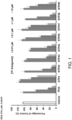
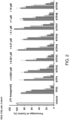
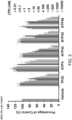
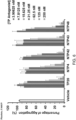
- the initial screening involved dose-responses assays (concentrations used 0.0001 (TP ⁇ only), 0.001, 0.1, 1 & 10 ⁇ M; (TP ⁇ and TP ⁇ )) followed by more focused, full dose response assays (concentration range: 0.00001 to 10 ⁇ M) for determination of IC 50 values where the effect of the compounds on calcium mobilized in response to the TXA 2 mimetic U46619 (1 ⁇ M) were performed in side-by-side comparison with the key lead compounds TP20 and NTP4. The results are shown in FIGS. 1-4 and Table 1 (n ⁇ 4).
- NTP42 nor NTP48 exhibited any effect on signaling through other prostanoid receptors (prostaglandin (PG) D 2 receptor, DP; PGE 2 receptors EP1, EP2, EP3 and EP4; PGF 2 ⁇ receptor, FP; PGI 2 /prostacyclin receptor, IP) and non-prostanoid receptors including the purinergic (ADP) and thrombin (PAR1) receptors, also involved in platelet activation similar to the TP isoforms.
- PG prostanoid receptor
- DP prostaglandin
- PGE 2 receptors EP1, EP2, EP3 and EP4 PGF 2 ⁇ receptor, FP
- PGI 2 /prostacyclin receptor, IP non-prostanoid receptors
- NTP42, NTP43 and NTP48 have each been confirmed not to exhibit any effect on DP-, EP1-EP4-, FP- or IP-mediated signaling.
- the data have confirmed that NTP42, and NTP43 and NTP48 exhibit minimal toxicity and
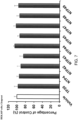
- FIG. 1 shows the effect of the TP antagonists on U46619-mediated calcium mobilization in HEK TP ⁇ cells (Isolate HR#4).
- HEK.TP ⁇ (HR#4) cells preloaded with Fluo-4, were incubated with the TP20, NTP4, NTP42, NTP43, NTP44, NTP45, NTP47, NTP48 & NTP49 where each antagonist was used at 0.001, 0.1, 1 & to 10 ⁇ M, as indicated, prior to stimulation with 1 ⁇ M U46619.
- Data is presented as the mean ( ⁇ S.E.M.) percentage of the agonist-induced response in vehicle-treated cells (Percentage of Control; %) and represents data from at least 4 independent experiments were cells were treated in duplicate.
- FIG. 2 shows the effect of the TP antagonists on U46619-mediated calcium mobilization in HEK TP ⁇ cells.
- Data is presented as the mean ( ⁇ S.E.M.) percentage of the agonist-induced response in vehicle-treated cells (Percentage of Control; %) and represents data from at least 4 independent experiments were cells were treated in duplicate.
- FIG. 3 shows the effect of the TP antagonists on U46619-mediated calcium mobilization in HEK TP ⁇ cells (Isolate HR#4).
- FIG. 4 shows the effect of the TP antagonists on U46619-mediated calcium mobilization in HEK TP ⁇ cells.
- Data is presented as the mean ( ⁇ S.E.M.) percentage of the agonist-induced response in vehicle-treated cells (Percentage of Control; %) and represents data from at least 4 independent experiments were cells were treated in duplicate. Table 1.
- the IC 50 values indicate that NTP42, NTP43 and NTP48 are more effective at antagonizing TP ⁇ and TP ⁇ responses than NTP4, i.e., replacement of the methoxy group with a di-, tri-fluoromethoxy or a tertiary amide has improved efficacy.
- the three compounds, NTP42, NTP43 and NTP48, were subject to further characterization through both calcium and platelet aggregation assays.
- FIG. 5 shows the effect of NTP42 to NTP49 on U46619-mediated platelet aggregation.
- the new NTP42-NTP49 chemical entities potently inhibit U46619-mediated aggregation of human platelet ex vivo, where NTP42, NTP43 & NTP48 are the most efficacious.
- NTP42, NTP43 & NTP48 and, as reference compounds TP20 & NTP4 were performed using the PAP-8E platelet aggregometer.
- FIG. 6 shows the effect of NTP42, NTP43 & NTP48 on U46619-mediated platelet aggregation.
- PRP was prepared from blood taken from healthy volunteers into syringes containing 3.8 % sodium citrate and 10 ⁇ M indomethacin such that the final ratio of anticoagulant to blood was 1:9. Aliquots of PRP (300 ⁇ l) were pre-incubated for 10 min with the TP antagonists, TP20, NTP4, NTP42, NTP43 and NTP48, where 2-fold serial dilutions from 1 ⁇ M was prepared for each, prior to stimulating platelets with 1 ⁇ M U46619, incubated at 37 °C, with stirring.
- NTP42, NTP43 and NTP48 inhibited U46619-mediated responses, where both NTP42 and NTP48 were more potent than either TP20 or NTP4.
- NTP43 exhibited equivalent potency as NTP4 to inhibit U46619-mediated responses.
- FIG. 7 shows the effect of the TP antagonists on Cicaprost -Mediated Calcium Mobilization in HEK.hIP cells.
- HEK.hIP cells preloaded with Fluo-4, were incubated with the TP20, NTP4, NTP42, NTP43, NTP45, NTP47, NTP48 and NTP49 where each antagonist was used at 10 ⁇ M, as indicated, prior to stimulation with 1 ⁇ M Cicaprost.
- Data is presented as the mean ( ⁇ S.E.M.) percentage of the agonist-induced response in vehicle-treated cells (Percentage of Control; %) and represents data from at least 3 independent experiments were cells were treated in triplicate.
- HEK.hIP cells Percentage of Control
- FIG. 8 shows the effect of the TP antagonists on EP/PGE 2 -Mediated Calcium Mobilization in HEL 92.1.7 cells.
- Data is presented as the mean ( ⁇ S.E.M.) percentage of the agonist induced response in vehicle-treated cells (Percentage of Control; %) and represents data from 3 independent experiments were cells were treated in triplicate. 1 ⁇ M PGE 2 .
- NTP42 to NTP49 have no issues with respect to specificity and have been demonstrated to be highly specific for antagonism of TP/U46619-mediated responses.
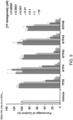
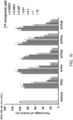
- FIGS. 9 and 10 show the effect of the TP antagonists on 8-iso-PGF 2 ⁇ -mediated calcium mobilization in HEK TP ⁇ cells.
- FIG. 9 shows results after HEK.TP ⁇ cells, preloaded with Fluo-4, were incubated with the TP20, NTP4, NTP42, NTP43 and NTP48 where each antagonist was used at 0.00001 - 10 ⁇ M, as indicated, prior to stimulation with 10 ⁇ M 8-iso-PGF 2 ⁇ .
- FIG. 10 shows results after HEK.TP ⁇ cells, preloaded with Fluo-4, were incubated with the TP20, NTP4, NTP42, NTP43 and NTP48 where each antagonist was used at 0.00001 - 10 ⁇ M, as indicated, prior to stimulation with 10 ⁇ M 8-iso-PGF 2 ⁇ .
- Data is presented as the mean ( ⁇ S.E.M.) percentage of the agonist-induced response in vehicle-treated cells (Percentage of Control; %) and represents data from at least 3 independent experiments were cells were treated in duplicate, except NTP48.
- Table 3. Estimated IC 50 values for inhibition of 8-iso-PGF 2 ⁇ -mediated [Ca 2+ ] i mobilization in HEK.TP ⁇ and HEK.TP ⁇ cells.
- NTP42, NTP43 & NTP48 are potent inhibitors of 8-iso-PGF 2 ⁇ -mediated calcium responses. Furthermore, the data (presented above) confirms that NTP42, NTP43 & NTP48 are more potent than TP20 and NTP4.
- the rank order for inhibition of 8-iso-PGF 2 ⁇ -mediated calcium mobilization by the TP antagonists in each cell line is as follows:
- FIGS. 11-17 are examples of further specificity testing and shows that neither NTP42 nor NTP48 exhibited any effect on signaling through the other prostanoid receptors (i.e the prostaglandin (PG) D 2 receptor, DP; PGE 2 receptors EP1, EP2, EP3 and EP4; PGF 2 ⁇ receptor, FP; PGI 2 /prostacyclin receptor, IP).
- PG prostaglandin
- FIG. 11 shows that NTP42 and NTP48 exhibit no effect on the DP 1 receptor.
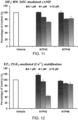
- FIG. 12 shows that NTP42 and NTP48 exhibit no effect on the EP 1 receptor.
- FIG. 13 shows that NTP42 and NTP48 exhibit no effect on the EP 2 receptor.
- FIG. 14 shows that NTP42 and NTP48 exhibit no effect on the EP 3 receptor.
- FIG. 15 shows that NTP42 and NTP48 exhibit no effect on the EP 4 receptor.
- FIG. 16 shows that NTP42 and NTP48 exhibit no effect on the FP 1 receptor.
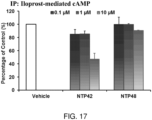
- FIG. 17 shows that NTP42 and NTP48 exhibit no effect on the IP receptor.
- NTP42 and NTP48 have each been confirmed not to exhibit any effect on DP-, EP1-EP4-, FP- or IP-mediated signaling.
- NTP42 There is no or minimal inhibition of the majority of the non-TP-mediated signaling observed in the presence of either NTP42 & NTP48. Where there is inhibition of signaling, it is observed at the 10 ⁇ M concentration only.
- NTP42 at 10 ⁇ M only exerts maximal inhibition of DP 1 , EP 1 , EP 4 & IP, where the percentage reduction in responses is ⁇ 30 %, -55 %, 40 % & 50 %, respectively.
- NTP48 has less of an effect on the signaling of the non-TP prostanoid receptors and therefore, may be considered more favorable in this context.
- FIG. 18 presents the effect of NTP42 and NTP48 on TP- or U44069-mediated signaling (CEREP use the related U44069 rather than U46619), including IC 50 values for inhibition (see also Table 4).
- IC 50 values for inhibition see also Table 4.
- the differences in IC 50 values may be attributed to the differences in the particular conditions of the assay, including differences in cell type, agonist, calcium indicator, etc.
- Table 4 is an example of the IC 50 values of NTP42 and NTP48 to antagonize TP-mediated [Ca 2+ ] i mobilization following stimulation of cells with the alternative TP agonist U46609. Table 4.
- FIGS. 19-23 show the efficacy of NTP42 in the monocrotoline (MCT)-induced model of pulmonary arterial hypertension (PAH) in rats.
- MCT monocrotoline
- PAH pulmonary arterial hypertension
- male Wistar/Kyoto rats were given a single dose of MCT (60 mg/kg, subcutaneously) and then treated with twice daily doses (oral dosing) for 28 days with either the drug vehicle, the test article NTP42 (0.25 mg/kg/dose, BID) or with the reference compounds Sildenafil (50 mg/kg/dose, BID) or TP20 (0.25 mg/kg/dose, BID).
- Sildenafil 50 mg/kg/dose, BID
- TP20 0.25 mg/kg/dose, BID
- rats were anaesthetised for cardiac surgery & hemodynamic parameters recorded. Thereafter, the trachea, heart & lungs were removed en masse, the wet weights of the heart & lungs recorded and then the lungs were harvested, fixed and processed for histopathology.
- FIG. 19 shows the effect of the test articles on diastolic pulmonary arterial pressure (dPAP).
- FIG. 20 shows the effect of the test articles on mean pulmonary arterial pressure (mPAP).
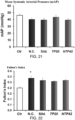
- FIG. 21 shows the effect of the test articles on mean systemic arterial pressure (mAP).
- FIG. 22 shows the effect of the test articles on Fulton's Index.
- control refers to animals not treated with MCT or test/reference compounds
- negative control refers to animals treated with MCT to induce PAH but not treated with test/reference compounds.
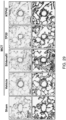
- FIG. 23 shows formalin-fixed paraffin embedded (FFPE) lung tissue sections following staining with haematoxylin and eosin (H&E) and scanned using the Aperio image capture system.
- the representative images depict the extent of pulmonary vascular remodelling (upper panels, white arrows) and alveolar air-space (lower panels).
- the horizontal scale bar in each image corresponds to 100 ⁇ M and all images were captured at 20 ⁇ magnification.
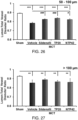
- FIGS. 24-27 show the effect of the test articles on the mean ( ⁇ S.E.M.) lumen: total vessel diameter ratio for all arterioles (Total) and the arterioles categorized by size: small, ⁇ 50 ⁇ m total diameter; medium, 50 -100 ⁇ m and large, > 100 ⁇ m.
- FIGS. 24-27 show morphometric Analysis of the effects of NTP42 on vascular remodeling in MCT-induced PAH.
- FIG. 24 presents data representing the mean ( ⁇ SEM) lumen: total vessel diameter ratio for total arterioles.
- FIG. 25 presents data representing the mean ( ⁇ SEM) lumen: total vessel diameter ratio for small arterioles ( ⁇ 50 ⁇ m).
- FIG. 26 presents data representing the mean ( ⁇ SEM) lumen: total vessel diameter ratio for medium arterioles (50 - 100 ⁇ m).
- FIG. 27 presents data representing the mean ( ⁇ SEM) lumen: total vessel diameter ratio for large arterioles (> 100 ⁇ m).
- asterisks indicate that the lumen : total vessel diameter ratio of the MCT-treated groups is statistically decreased from the Sham Control /no-MCT group and hash marks indicate that the lumen : total vessel diameter ratio of the Sildenafil, TP20 & NTP42-treated animals is significantly increased from animal-treated with MCT-alone, where */#, p ⁇ 0.05; **/##, p ⁇ 0.01 and ***/###, p ⁇ 0.0001.
- FIG. 28 FFPE lung tissue sections were stained with H&E and digitally scanned (Aperio Slide Scanner).
- the horizontal scale bars correspond to 50 ⁇ m (small and medium arterioles) and 100 ⁇ m (large arterioles) were images were captured at 40 ⁇ magnification.
- the horizontal scale bar in each image corresponds to 50 ⁇ m (small and medium vessels) or 100 ⁇ m (large vessels) and all images were captured at 40 ⁇ magnification.
- FIG. 28 shows FFPE lung tissue sections following immunohistochemistry (IHC) using an anti- alpha smooth muscle actin antibody to detect smooth muscle cells in vessel walls, as an independent measure of assessing vessel remodeling or muscularization.
- IHC immunohistochemistry
- the stained slides were scanned using the Aperio image capture system and the representative images in the upper panels depict the extent of pulmonary vascular remodelling in medium arterioles (50 to 100 ⁇ m diameter).
- the horizontal scale bar in each image corresponds to 50 ⁇ m and all images were captured at 20 ⁇ magnification.
- the lower panels indicate intensity of positive (yellow to red) and negative (blue) staining as determined by ImageScope's Positive Pixel algorithm v 9.0.
- the compounds of the invention as exemplified by NTP42 in FIGS. 19-28 , are efficacious in the MCT-induced PAH model as shown by measurement of the hemodynamic and histological features of the animals subject to MCT-PAH.
- FIG. 29 shows effects of NTP42 on vascular remodeling in MCT-induced PAH assessed by ⁇ -SMA IHC.
- FFPE lung tissue sections were immunostained with an anti- ⁇ smooth muscle actin ( ⁇ -SMA; upper Figure, brown staining) antibody and nuclei counterstained with hematoxylin (upper Figure, blue nuclei) followed by digital scanning (Aperio Slide Scanner).
- the upper representative images depict ⁇ -SMA (brown) immunostaining of the smooth muscle layers around the arterioles and show the extent of pulmonary vascular remodeling in medium (50-100 ⁇ m diameter) arterioles.
- the lower Figures indicate negative (blue) or intensity of positive staining (yellow/red) as assessed using Aperio's ImageScope's Positive Pixel algorithm v 9.0.
- the horizontal scale bars correspond to 50 ⁇ m were images were captured at 20 ⁇ magnification.
- Table 5 is a concordance of NTP references to formula numbers. Any entry in the left column is defined as the formula in the right column and vice-versa. Table 5 Correspondence between NTP references an formula numbers NTP # Formula # NTP42 (IV) NTP43 (V) NTP44 (VI) NTP45 (VII) NTP46 (VIII) NTP47 (IX) NTP48 (X) NTP49 (XI)
Landscapes
- Health & Medical Sciences (AREA)
- Chemical & Material Sciences (AREA)
- Organic Chemistry (AREA)
- General Health & Medical Sciences (AREA)
- Medicinal Chemistry (AREA)
- Pharmacology & Pharmacy (AREA)
- Life Sciences & Earth Sciences (AREA)
- Animal Behavior & Ethology (AREA)
- Public Health (AREA)
- Veterinary Medicine (AREA)
- Chemical Kinetics & Catalysis (AREA)
- General Chemical & Material Sciences (AREA)
- Nuclear Medicine, Radiotherapy & Molecular Imaging (AREA)
- Bioinformatics & Cheminformatics (AREA)
- Engineering & Computer Science (AREA)
- Diabetes (AREA)
- Heart & Thoracic Surgery (AREA)
- Pulmonology (AREA)
- Cardiology (AREA)
- Urology & Nephrology (AREA)
- Epidemiology (AREA)
- Hematology (AREA)
- Endocrinology (AREA)
- Obesity (AREA)
- Pain & Pain Management (AREA)
- Rheumatology (AREA)
- Emergency Medicine (AREA)
- Vascular Medicine (AREA)
- Pharmaceuticals Containing Other Organic And Inorganic Compounds (AREA)
- Organic Low-Molecular-Weight Compounds And Preparation Thereof (AREA)
- Medicines That Contain Protein Lipid Enzymes And Other Medicines (AREA)
- Materials For Medical Uses (AREA)
Claims (2)
- Composé : représenté par la formule (X) :

- Composition comprenant un composé selon la revendication 1, ou un sel pharmaceutiquement acceptable de celui-ci, pour une utilisation dans le traitement de l'hypertension artérielle pulmonaire (HTAP).
Applications Claiming Priority (3)
| Application Number | Priority Date | Filing Date | Title |
|---|---|---|---|
| US201562180317P | 2015-06-16 | 2015-06-16 | |
| EP16739541.7A EP3310756B1 (fr) | 2015-06-16 | 2016-06-13 | Antagonistes des récepteurs du thromboxane |
| PCT/IB2016/000960 WO2016203314A1 (fr) | 2015-06-16 | 2016-06-13 | Antagonistes des récepteurs du thromboxane |
Related Parent Applications (1)
| Application Number | Title | Priority Date | Filing Date |
|---|---|---|---|
| EP16739541.7A Division EP3310756B1 (fr) | 2015-06-16 | 2016-06-13 | Antagonistes des récepteurs du thromboxane |
Publications (3)
| Publication Number | Publication Date |
|---|---|
| EP3865472A1 EP3865472A1 (fr) | 2021-08-18 |
| EP3865472B1 true EP3865472B1 (fr) | 2024-06-12 |
| EP3865472C0 EP3865472C0 (fr) | 2024-06-12 |
Family
ID=56418554
Family Applications (2)
| Application Number | Title | Priority Date | Filing Date |
|---|---|---|---|
| EP16739541.7A Active EP3310756B1 (fr) | 2015-06-16 | 2016-06-13 | Antagonistes des récepteurs du thromboxane |
| EP20212296.6A Active EP3865472B1 (fr) | 2015-06-16 | 2016-06-13 | Antagonistes du récepteur de thromboxane |
Family Applications Before (1)
| Application Number | Title | Priority Date | Filing Date |
|---|---|---|---|
| EP16739541.7A Active EP3310756B1 (fr) | 2015-06-16 | 2016-06-13 | Antagonistes des récepteurs du thromboxane |
Country Status (8)
| Country | Link |
|---|---|
| US (3) | US9932304B2 (fr) |
| EP (2) | EP3310756B1 (fr) |
| JP (2) | JP6837190B2 (fr) |
| AU (1) | AU2016280058B2 (fr) |
| CA (1) | CA2989271C (fr) |
| DK (1) | DK3310756T3 (fr) |
| ES (2) | ES2858551T3 (fr) |
| WO (1) | WO2016203314A1 (fr) |
Families Citing this family (4)
| Publication number | Priority date | Publication date | Assignee | Title |
|---|---|---|---|---|
| ES2858551T3 (es) * | 2015-06-16 | 2021-09-30 | Atxa Therapeutics Ltd | Antagonistas del receptor de tromboxano |
| WO2022008515A1 (fr) | 2020-07-07 | 2022-01-13 | Atxa Therapeutics Limited | Formulations d'antagoniste du récepteur du thromboxane |
| CN116850166B (zh) * | 2023-05-25 | 2024-04-05 | 华中科技大学协和深圳医院 | Ntp42用于制备抗葡萄球菌感染药物中的应用 |
| WO2025202463A1 (fr) | 2024-03-28 | 2025-10-02 | Atxa Therapeutics Limited | Formulations de médicament encapsulé d'antagonistes du récepteur de thromboxane |
Family Cites Families (40)
| Publication number | Priority date | Publication date | Assignee | Title |
|---|---|---|---|---|
| US3556764A (en) | 1969-03-28 | 1971-01-19 | Monsanto Co | Method of increasing the sugar content of sugarcane |
| US3714209A (en) | 1971-02-22 | 1973-01-30 | Monsanto Co | Isopropylidineaminoethanol salt of p-nitrobenzenesulfonylurea |
| US4166452A (en) | 1976-05-03 | 1979-09-04 | Generales Constantine D J Jr | Apparatus for testing human responses to stimuli |
| US4256108A (en) | 1977-04-07 | 1981-03-17 | Alza Corporation | Microporous-semipermeable laminated osmotic system |
| US4265874A (en) | 1980-04-25 | 1981-05-05 | Alza Corporation | Method of delivering drug with aid of effervescent activity generated in environment of use |
| DE4105518A1 (de) | 1991-02-22 | 1992-08-27 | Basf Ag | Sulfonylharnstoffderivate, verfahren zu ihrer herstellung und ihre verwendung |
| US5599352A (en) | 1992-03-19 | 1997-02-04 | Medtronic, Inc. | Method of making a drug eluting stent |
| US6231600B1 (en) | 1995-02-22 | 2001-05-15 | Scimed Life Systems, Inc. | Stents with hybrid coating for medical devices |
| SE509731C2 (sv) | 1996-05-14 | 1999-03-01 | Labwell Ab | Metod för palladium-katalyserade organiska reaktioner innefattande ett uppvärmningssteg utfört med mikrovågsenergi |
| JP2001525823A (ja) | 1997-05-15 | 2001-12-11 | イーライ・リリー・アンド・カンパニー | 抗血栓化合物 |
| US20030040790A1 (en) | 1998-04-15 | 2003-02-27 | Furst Joseph G. | Stent coating |
| BE1012386A3 (fr) | 1999-01-15 | 2000-10-03 | Univ Liege | Derives de sulfonamides benzeniques et leurs utilisations. |
| US6352552B1 (en) | 2000-05-02 | 2002-03-05 | Scion Cardio-Vascular, Inc. | Stent |
| US7452870B2 (en) | 2000-08-21 | 2008-11-18 | Inspire Pharmaceuticals, Inc. | Drug-eluting stents coated with P2Y12 receptor antagonist compound |
| DE10050940A1 (de) | 2000-10-10 | 2002-04-11 | Biotronik Mess & Therapieg | Stent |
| HRP20000765A2 (en) * | 2000-11-10 | 2002-06-30 | Pliva D D | Compositions of n-(1-methylethylaminocarbonyl)-4-(3-methylphenylamino)-3-pyridylsulfonamide and cyclic oligosaccharides with increased release |
| GB0100760D0 (en) | 2001-01-11 | 2001-02-21 | Biocompatibles Ltd | Drug delivery from stents |
| GB0100761D0 (en) | 2001-01-11 | 2001-02-21 | Biocompatibles Ltd | Drug delivery from stents |
| US6583307B2 (en) | 2001-03-07 | 2003-06-24 | University Of New Orleans Research And Technology Foundation, Inc. | Convenient and efficient Suzuki-Miyaura cross-coupling catalyzed by a palladium/diazabutadiene system |
| EP1402871B1 (fr) | 2001-06-05 | 2009-02-18 | Toyo Boseki Kabushiki Kaisha | Compositions antithrombotiques et instruments medicaux contenant lesdites compositions |
| JP3605388B2 (ja) | 2001-10-16 | 2004-12-22 | 川澄化学工業株式会社 | ステント |
| WO2003053359A2 (fr) | 2001-12-19 | 2003-07-03 | Atherogenics, Inc. | 1,3-bis-(phenyl-substitue)-2-propyne-1-ones et leur utilisation pour le traitement d'affections |
| JP4512369B2 (ja) | 2002-01-31 | 2010-07-28 | ラディ・メディカル・システムズ・アクチェボラーグ | ステント |
| JP2005531391A (ja) | 2002-06-27 | 2005-10-20 | 微創医療器械(上海)有限公司 | 薬剤放出ステント |
| US7135038B1 (en) | 2002-09-30 | 2006-11-14 | Advanced Cardiovascular Systems, Inc. | Drug eluting stent |
| US7156869B1 (en) | 2003-01-27 | 2007-01-02 | Advanced Cardiovascular Systems, Inc. | Drug-eluting stent and delivery system with tapered stent in shoulder region |
| DE10317241A1 (de) | 2003-04-10 | 2004-10-28 | Biotronik Meß- und Therapiegeräte GmbH & Co. Ingenieurbüro Berlin | Stent |
| US20050025705A1 (en) | 2003-07-22 | 2005-02-03 | Xinkang Wang | Thrombosis animal models and their use in drug discovery and development |
| US20050152943A1 (en) | 2003-12-23 | 2005-07-14 | Medtronic Vascular, Inc. | Medical devices to treat or inhibit restenosis |
| US20070048350A1 (en) | 2005-08-31 | 2007-03-01 | Robert Falotico | Antithrombotic coating for drug eluting medical devices |
| US8710252B2 (en) | 2006-04-19 | 2014-04-29 | Cecil Pace-Asciak | Hepodxilin analog enantiomers |
| US20100273824A1 (en) | 2007-01-18 | 2010-10-28 | Evolva Sa | Substituted 1,3-dioxanes and their uses |
| CN101686668A (zh) * | 2007-05-03 | 2010-03-31 | 博尔托拉制药公司 | 用血栓烷受体拮抗剂治疗和预防血栓形成的单位剂量制剂和方法 |
| WO2009089098A1 (fr) | 2008-01-03 | 2009-07-16 | Musc Foundation For Research Development | Traitements anticancéreux |
| US7951193B2 (en) | 2008-07-23 | 2011-05-31 | Boston Scientific Scimed, Inc. | Drug-eluting stent |
| PE20120008A1 (es) * | 2009-01-12 | 2012-01-24 | Icagen Inc | Derivados de fenoxi bencenosulfonamida |
| WO2011057262A2 (fr) | 2009-11-09 | 2011-05-12 | Evolva Inc. | Traitement des infections par des antagonistes du récepteur tp |
| US9718781B2 (en) | 2012-04-17 | 2017-08-01 | University College Dublin, National University Of Ireland, Dublin | Methods and compounds for treating proliferative disorders and viral infections |
| US9388127B2 (en) * | 2012-04-17 | 2016-07-12 | University College Dublin, National University Of Ireland, Dublin | Thromboxane receptor antagonists |
| ES2858551T3 (es) * | 2015-06-16 | 2021-09-30 | Atxa Therapeutics Ltd | Antagonistas del receptor de tromboxano |
-
2016
- 2016-06-13 ES ES16739541T patent/ES2858551T3/es active Active
- 2016-06-13 AU AU2016280058A patent/AU2016280058B2/en active Active
- 2016-06-13 US US15/180,805 patent/US9932304B2/en active Active
- 2016-06-13 ES ES20212296T patent/ES2984026T3/es active Active
- 2016-06-13 WO PCT/IB2016/000960 patent/WO2016203314A1/fr not_active Ceased
- 2016-06-13 EP EP16739541.7A patent/EP3310756B1/fr active Active
- 2016-06-13 EP EP20212296.6A patent/EP3865472B1/fr active Active
- 2016-06-13 CA CA2989271A patent/CA2989271C/fr active Active
- 2016-06-13 DK DK16739541.7T patent/DK3310756T3/da active
- 2016-06-13 JP JP2017564898A patent/JP6837190B2/ja active Active
-
2018
- 2018-02-21 US US15/901,503 patent/US10357504B2/en active Active
-
2019
- 2019-07-22 US US16/517,947 patent/US10966994B2/en active Active
-
2020
- 2020-10-15 JP JP2020173909A patent/JP6991296B2/ja active Active
Also Published As
| Publication number | Publication date |
|---|---|
| ES2984026T3 (es) | 2024-10-28 |
| US20160368867A1 (en) | 2016-12-22 |
| JP6991296B2 (ja) | 2022-02-15 |
| CA2989271A1 (fr) | 2016-12-22 |
| WO2016203314A1 (fr) | 2016-12-22 |
| ES2858551T3 (es) | 2021-09-30 |
| EP3310756A1 (fr) | 2018-04-25 |
| JP2021042207A (ja) | 2021-03-18 |
| US20180179152A1 (en) | 2018-06-28 |
| US10966994B2 (en) | 2021-04-06 |
| JP6837190B2 (ja) | 2021-03-03 |
| CA2989271C (fr) | 2023-09-26 |
| JP2018519281A (ja) | 2018-07-19 |
| DK3310756T3 (da) | 2021-03-08 |
| EP3865472A1 (fr) | 2021-08-18 |
| EP3310756B1 (fr) | 2020-12-09 |
| US9932304B2 (en) | 2018-04-03 |
| AU2016280058A1 (en) | 2018-01-18 |
| EP3865472C0 (fr) | 2024-06-12 |
| US20190336513A1 (en) | 2019-11-07 |
| US10357504B2 (en) | 2019-07-23 |
| AU2016280058B2 (en) | 2020-10-08 |
Similar Documents
| Publication | Publication Date | Title |
|---|---|---|
| US10966994B2 (en) | Thromboxane receptor antagonists | |
| KR101882328B1 (ko) | 거세-저항성 전립선 암 및 골형성성 뼈전이의 치료용 met 및 vegf 이중 억제제들 | |
| KR100902799B1 (ko) | 키마제 저해제 및 ace 저해제를 유효성분으로 함유하는약제 | |
| JP2014518260A (ja) | 抗血栓症化合物 | |
| EA030651B1 (ru) | Замещенные ароматические соединения и связанный с ними способ лечения фиброза | |
| JP2016514702A (ja) | アンギオテンシン関連疾患の処置のための方法、化合物および組成物 | |
| JP2013536220A (ja) | 血栓症または塞栓を治療または予防するための方法 | |
| US9738599B2 (en) | Thromboxane receptor antagonists | |
| EP2832357A1 (fr) | Agonistes sélectifs du récepteur AT2 destinés à être utilisés dans le traitement de la cachexie | |
| TW200817000A (en) | New paediatric indications for direct thrombin inhibitors | |
| CA2969051C (fr) | Composes pour une utilisation dans le traitement de conditions associees a la nadph oxydase | |
| CA3095221A1 (fr) | Composes d'imidazolidinedione deuteres et leurs utilisations | |
| EP2801361A1 (fr) | Promoteur visant à améliorer la circulation sanguine collatérale | |
| JP2022530461A (ja) | アテローム性動脈硬化を治療するための医薬品の製造における化合物の使用 | |
| TW202310839A (zh) | 用於預防或治療纖維化之醫藥組成物 | |
| WO2025240752A1 (fr) | Antagonistes de mmp-13 | |
| HK40096647A (zh) | 用於预防或治疗纤维化的药物组合物 | |
| HK40038590A (en) | Methods for treating pulmonary fibrosis | |
| EP2358366A1 (fr) | Schémas posologiques d'un antagoniste du récepteur de la thrombine basés sur la pharmacocinétique |
Legal Events
| Date | Code | Title | Description |
|---|---|---|---|
| PUAI | Public reference made under article 153(3) epc to a published international application that has entered the european phase |
Free format text: ORIGINAL CODE: 0009012 |
|
| STAA | Information on the status of an ep patent application or granted ep patent |
Free format text: STATUS: THE APPLICATION HAS BEEN PUBLISHED |
|
| AC | Divisional application: reference to earlier application |
Ref document number: 3310756 Country of ref document: EP Kind code of ref document: P |
|
| AK | Designated contracting states |
Kind code of ref document: A1 Designated state(s): AL AT BE BG CH CY CZ DE DK EE ES FI FR GB GR HR HU IE IS IT LI LT LU LV MC MK MT NL NO PL PT RO RS SE SI SK SM TR |
|
| STAA | Information on the status of an ep patent application or granted ep patent |
Free format text: STATUS: REQUEST FOR EXAMINATION WAS MADE |
|
| 17P | Request for examination filed |
Effective date: 20220209 |
|
| RBV | Designated contracting states (corrected) |
Designated state(s): AL AT BE BG CH CY CZ DE DK EE ES FI FR GB GR HR HU IE IS IT LI LT LU LV MC MK MT NL NO PL PT RO RS SE SI SK SM TR |
|
| STAA | Information on the status of an ep patent application or granted ep patent |
Free format text: STATUS: EXAMINATION IS IN PROGRESS |
|
| 17Q | First examination report despatched |
Effective date: 20230131 |
|
| GRAP | Despatch of communication of intention to grant a patent |
Free format text: ORIGINAL CODE: EPIDOSNIGR1 |
|
| STAA | Information on the status of an ep patent application or granted ep patent |
Free format text: STATUS: GRANT OF PATENT IS INTENDED |
|
| INTG | Intention to grant announced |
Effective date: 20240104 |
|
| GRAS | Grant fee paid |
Free format text: ORIGINAL CODE: EPIDOSNIGR3 |
|
| GRAA | (expected) grant |
Free format text: ORIGINAL CODE: 0009210 |
|
| STAA | Information on the status of an ep patent application or granted ep patent |
Free format text: STATUS: THE PATENT HAS BEEN GRANTED |
|
| AC | Divisional application: reference to earlier application |
Ref document number: 3310756 Country of ref document: EP Kind code of ref document: P |
|
| AK | Designated contracting states |
Kind code of ref document: B1 Designated state(s): AL AT BE BG CH CY CZ DE DK EE ES FI FR GB GR HR HU IE IS IT LI LT LU LV MC MK MT NL NO PL PT RO RS SE SI SK SM TR |
|
| REG | Reference to a national code |
Ref country code: GB Ref legal event code: FG4D |
|
| REG | Reference to a national code |
Ref country code: CH Ref legal event code: EP |
|
| REG | Reference to a national code |
Ref country code: IE Ref legal event code: FG4D |
|
| REG | Reference to a national code |
Ref country code: DE Ref legal event code: R096 Ref document number: 602016088005 Country of ref document: DE |
|
| U01 | Request for unitary effect filed |
Effective date: 20240619 |
|
| U07 | Unitary effect registered |
Designated state(s): AT BE BG DE DK EE FI FR IT LT LU LV MT NL PT SE SI Effective date: 20240701 |
|
| U20 | Renewal fee for the european patent with unitary effect paid |
Year of fee payment: 9 Effective date: 20240807 |
|
| PG25 | Lapsed in a contracting state [announced via postgrant information from national office to epo] |
Ref country code: HR Free format text: LAPSE BECAUSE OF FAILURE TO SUBMIT A TRANSLATION OF THE DESCRIPTION OR TO PAY THE FEE WITHIN THE PRESCRIBED TIME-LIMIT Effective date: 20240612 |
|
| PG25 | Lapsed in a contracting state [announced via postgrant information from national office to epo] |
Ref country code: GR Free format text: LAPSE BECAUSE OF FAILURE TO SUBMIT A TRANSLATION OF THE DESCRIPTION OR TO PAY THE FEE WITHIN THE PRESCRIBED TIME-LIMIT Effective date: 20240913 |
|
| REG | Reference to a national code |
Ref country code: ES Ref legal event code: FG2A Ref document number: 2984026 Country of ref document: ES Kind code of ref document: T3 Effective date: 20241028 |
|
| PG25 | Lapsed in a contracting state [announced via postgrant information from national office to epo] |
Ref country code: HR Free format text: LAPSE BECAUSE OF FAILURE TO SUBMIT A TRANSLATION OF THE DESCRIPTION OR TO PAY THE FEE WITHIN THE PRESCRIBED TIME-LIMIT Effective date: 20240612 Ref country code: GR Free format text: LAPSE BECAUSE OF FAILURE TO SUBMIT A TRANSLATION OF THE DESCRIPTION OR TO PAY THE FEE WITHIN THE PRESCRIBED TIME-LIMIT Effective date: 20240913 Ref country code: RS Free format text: LAPSE BECAUSE OF FAILURE TO SUBMIT A TRANSLATION OF THE DESCRIPTION OR TO PAY THE FEE WITHIN THE PRESCRIBED TIME-LIMIT Effective date: 20240912 |
|
| PG25 | Lapsed in a contracting state [announced via postgrant information from national office to epo] |
Ref country code: PL Free format text: LAPSE BECAUSE OF FAILURE TO SUBMIT A TRANSLATION OF THE DESCRIPTION OR TO PAY THE FEE WITHIN THE PRESCRIBED TIME-LIMIT Effective date: 20240612 |
|
| PG25 | Lapsed in a contracting state [announced via postgrant information from national office to epo] |
Ref country code: IS Free format text: LAPSE BECAUSE OF FAILURE TO SUBMIT A TRANSLATION OF THE DESCRIPTION OR TO PAY THE FEE WITHIN THE PRESCRIBED TIME-LIMIT Effective date: 20241012 |
|
| PG25 | Lapsed in a contracting state [announced via postgrant information from national office to epo] |
Ref country code: CZ Free format text: LAPSE BECAUSE OF FAILURE TO SUBMIT A TRANSLATION OF THE DESCRIPTION OR TO PAY THE FEE WITHIN THE PRESCRIBED TIME-LIMIT Effective date: 20240612 |
|
| PG25 | Lapsed in a contracting state [announced via postgrant information from national office to epo] |
Ref country code: RO Free format text: LAPSE BECAUSE OF FAILURE TO SUBMIT A TRANSLATION OF THE DESCRIPTION OR TO PAY THE FEE WITHIN THE PRESCRIBED TIME-LIMIT Effective date: 20240612 Ref country code: SK Free format text: LAPSE BECAUSE OF FAILURE TO SUBMIT A TRANSLATION OF THE DESCRIPTION OR TO PAY THE FEE WITHIN THE PRESCRIBED TIME-LIMIT Effective date: 20240612 |
|
| PG25 | Lapsed in a contracting state [announced via postgrant information from national office to epo] |
Ref country code: SM Free format text: LAPSE BECAUSE OF FAILURE TO SUBMIT A TRANSLATION OF THE DESCRIPTION OR TO PAY THE FEE WITHIN THE PRESCRIBED TIME-LIMIT Effective date: 20240612 |
|
| PG25 | Lapsed in a contracting state [announced via postgrant information from national office to epo] |
Ref country code: SM Free format text: LAPSE BECAUSE OF FAILURE TO SUBMIT A TRANSLATION OF THE DESCRIPTION OR TO PAY THE FEE WITHIN THE PRESCRIBED TIME-LIMIT Effective date: 20240612 Ref country code: SK Free format text: LAPSE BECAUSE OF FAILURE TO SUBMIT A TRANSLATION OF THE DESCRIPTION OR TO PAY THE FEE WITHIN THE PRESCRIBED TIME-LIMIT Effective date: 20240612 Ref country code: RO Free format text: LAPSE BECAUSE OF FAILURE TO SUBMIT A TRANSLATION OF THE DESCRIPTION OR TO PAY THE FEE WITHIN THE PRESCRIBED TIME-LIMIT Effective date: 20240612 Ref country code: PL Free format text: LAPSE BECAUSE OF FAILURE TO SUBMIT A TRANSLATION OF THE DESCRIPTION OR TO PAY THE FEE WITHIN THE PRESCRIBED TIME-LIMIT Effective date: 20240612 Ref country code: IS Free format text: LAPSE BECAUSE OF FAILURE TO SUBMIT A TRANSLATION OF THE DESCRIPTION OR TO PAY THE FEE WITHIN THE PRESCRIBED TIME-LIMIT Effective date: 20241012 Ref country code: CZ Free format text: LAPSE BECAUSE OF FAILURE TO SUBMIT A TRANSLATION OF THE DESCRIPTION OR TO PAY THE FEE WITHIN THE PRESCRIBED TIME-LIMIT Effective date: 20240612 |
|
| PG25 | Lapsed in a contracting state [announced via postgrant information from national office to epo] |
Ref country code: MC Free format text: LAPSE BECAUSE OF FAILURE TO SUBMIT A TRANSLATION OF THE DESCRIPTION OR TO PAY THE FEE WITHIN THE PRESCRIBED TIME-LIMIT Effective date: 20240612 |
|
| PG25 | Lapsed in a contracting state [announced via postgrant information from national office to epo] |
Ref country code: MC Free format text: LAPSE BECAUSE OF FAILURE TO SUBMIT A TRANSLATION OF THE DESCRIPTION OR TO PAY THE FEE WITHIN THE PRESCRIBED TIME-LIMIT Effective date: 20240612 |
|
| PLBE | No opposition filed within time limit |
Free format text: ORIGINAL CODE: 0009261 |
|
| STAA | Information on the status of an ep patent application or granted ep patent |
Free format text: STATUS: NO OPPOSITION FILED WITHIN TIME LIMIT |
|
| 26N | No opposition filed |
Effective date: 20250313 |
|
| U20 | Renewal fee for the european patent with unitary effect paid |
Year of fee payment: 10 Effective date: 20250509 |
|
| PGFP | Annual fee paid to national office [announced via postgrant information from national office to epo] |
Ref country code: GB Payment date: 20250401 Year of fee payment: 10 |
|
| PGFP | Annual fee paid to national office [announced via postgrant information from national office to epo] |
Ref country code: NO Payment date: 20250610 Year of fee payment: 10 |
|
| PGFP | Annual fee paid to national office [announced via postgrant information from national office to epo] |
Ref country code: IE Payment date: 20250402 Year of fee payment: 10 |
|
| PGFP | Annual fee paid to national office [announced via postgrant information from national office to epo] |
Ref country code: ES Payment date: 20250703 Year of fee payment: 10 |
|
| PGFP | Annual fee paid to national office [announced via postgrant information from national office to epo] |
Ref country code: CH Payment date: 20250701 Year of fee payment: 10 |
|
| PG25 | Lapsed in a contracting state [announced via postgrant information from national office to epo] |
Ref country code: CY Free format text: LAPSE BECAUSE OF FAILURE TO SUBMIT A TRANSLATION OF THE DESCRIPTION OR TO PAY THE FEE WITHIN THE PRESCRIBED TIME-LIMIT; INVALID AB INITIO Effective date: 20160613 |
|
| PG25 | Lapsed in a contracting state [announced via postgrant information from national office to epo] |
Ref country code: HU Free format text: LAPSE BECAUSE OF FAILURE TO SUBMIT A TRANSLATION OF THE DESCRIPTION OR TO PAY THE FEE WITHIN THE PRESCRIBED TIME-LIMIT; INVALID AB INITIO Effective date: 20160613 |