EP3865535A1 - Neues verfahren zur synthese von chitosanderivaten und deren verwendung - Google Patents
Neues verfahren zur synthese von chitosanderivaten und deren verwendung Download PDFInfo
- Publication number
- EP3865535A1 EP3865535A1 EP20156732.8A EP20156732A EP3865535A1 EP 3865535 A1 EP3865535 A1 EP 3865535A1 EP 20156732 A EP20156732 A EP 20156732A EP 3865535 A1 EP3865535 A1 EP 3865535A1
- Authority
- EP
- European Patent Office
- Prior art keywords
- chitosan
- cross
- linked
- acid
- optionally substituted
- Prior art date
- Legal status (The legal status is an assumption and is not a legal conclusion. Google has not performed a legal analysis and makes no representation as to the accuracy of the status listed.)
- Withdrawn
Links
- 229920001661 Chitosan Polymers 0.000 title claims abstract description 282
- 238000000034 method Methods 0.000 title claims description 96
- 230000015572 biosynthetic process Effects 0.000 title description 30
- 238000003786 synthesis reaction Methods 0.000 title description 14
- 239000000203 mixture Substances 0.000 claims abstract description 87
- 238000002360 preparation method Methods 0.000 claims abstract description 25
- -1 acrylic compound Chemical class 0.000 claims description 83
- 238000005917 acylation reaction Methods 0.000 claims description 44
- 230000010933 acylation Effects 0.000 claims description 42
- 125000003277 amino group Chemical group 0.000 claims description 42
- 208000037265 diseases, disorders, signs and symptoms Diseases 0.000 claims description 39
- 239000002904 solvent Substances 0.000 claims description 37
- 208000027418 Wounds and injury Diseases 0.000 claims description 35
- 210000001519 tissue Anatomy 0.000 claims description 33
- 230000006378 damage Effects 0.000 claims description 32
- 201000010099 disease Diseases 0.000 claims description 27
- 238000007127 saponification reaction Methods 0.000 claims description 27
- 239000000126 substance Substances 0.000 claims description 26
- 206010028980 Neoplasm Diseases 0.000 claims description 24
- 208000014674 injury Diseases 0.000 claims description 23
- 150000003839 salts Chemical class 0.000 claims description 22
- 206010052428 Wound Diseases 0.000 claims description 20
- 239000000010 aprotic solvent Substances 0.000 claims description 19
- 230000007170 pathology Effects 0.000 claims description 18
- 239000002253 acid Substances 0.000 claims description 17
- FGUUSXIOTUKUDN-IBGZPJMESA-N C1(=CC=CC=C1)N1C2=C(NC([C@H](C1)NC=1OC(=NN=1)C1=CC=CC=C1)=O)C=CC=C2 Chemical compound C1(=CC=CC=C1)N1C2=C(NC([C@H](C1)NC=1OC(=NN=1)C1=CC=CC=C1)=O)C=CC=C2 FGUUSXIOTUKUDN-IBGZPJMESA-N 0.000 claims description 15
- 238000011282 treatment Methods 0.000 claims description 14
- HFBMWMNUJJDEQZ-UHFFFAOYSA-N acryloyl chloride Chemical compound ClC(=O)C=C HFBMWMNUJJDEQZ-UHFFFAOYSA-N 0.000 claims description 13
- 239000012429 reaction media Substances 0.000 claims description 13
- 238000003756 stirring Methods 0.000 claims description 13
- 125000003118 aryl group Chemical group 0.000 claims description 12
- 238000005966 aza-Michael addition reaction Methods 0.000 claims description 12
- 210000000988 bone and bone Anatomy 0.000 claims description 12
- 210000000845 cartilage Anatomy 0.000 claims description 12
- 208000035475 disorder Diseases 0.000 claims description 12
- 125000001072 heteroaryl group Chemical group 0.000 claims description 12
- 208000032544 Cicatrix Diseases 0.000 claims description 11
- 208000003556 Dry Eye Syndromes Diseases 0.000 claims description 11
- 206010013774 Dry eye Diseases 0.000 claims description 11
- 239000000945 filler Substances 0.000 claims description 11
- 125000000592 heterocycloalkyl group Chemical group 0.000 claims description 11
- 208000015181 infectious disease Diseases 0.000 claims description 11
- 231100000241 scar Toxicity 0.000 claims description 11
- 230000037387 scars Effects 0.000 claims description 11
- 208000017520 skin disease Diseases 0.000 claims description 11
- 125000004169 (C1-C6) alkyl group Chemical group 0.000 claims description 10
- 208000002874 Acne Vulgaris Diseases 0.000 claims description 10
- 206010000496 acne Diseases 0.000 claims description 10
- 150000002500 ions Chemical class 0.000 claims description 10
- 239000008194 pharmaceutical composition Substances 0.000 claims description 10
- 238000001356 surgical procedure Methods 0.000 claims description 10
- QTBSBXVTEAMEQO-UHFFFAOYSA-N Acetic acid Chemical compound CC(O)=O QTBSBXVTEAMEQO-UHFFFAOYSA-N 0.000 claims description 9
- 201000004624 Dermatitis Diseases 0.000 claims description 9
- 206010016717 Fistula Diseases 0.000 claims description 9
- 208000010412 Glaucoma Diseases 0.000 claims description 9
- 201000004681 Psoriasis Diseases 0.000 claims description 9
- 241001303601 Rosacea Species 0.000 claims description 9
- 206010042496 Sunburn Diseases 0.000 claims description 9
- 208000025865 Ulcer Diseases 0.000 claims description 9
- 206010046851 Uveitis Diseases 0.000 claims description 9
- 208000010668 atopic eczema Diseases 0.000 claims description 9
- 230000003890 fistula Effects 0.000 claims description 9
- 201000008482 osteoarthritis Diseases 0.000 claims description 9
- 239000011541 reaction mixture Substances 0.000 claims description 9
- 206010039073 rheumatoid arthritis Diseases 0.000 claims description 9
- 201000004700 rosacea Diseases 0.000 claims description 9
- 230000000472 traumatic effect Effects 0.000 claims description 9
- 231100000397 ulcer Toxicity 0.000 claims description 9
- 206010003658 Atrial Fibrillation Diseases 0.000 claims description 8
- 206010060999 Benign neoplasm Diseases 0.000 claims description 8
- 206010011026 Corneal lesion Diseases 0.000 claims description 8
- 206010020772 Hypertension Diseases 0.000 claims description 8
- 208000035965 Postoperative Complications Diseases 0.000 claims description 8
- 208000014151 Stomatognathic disease Diseases 0.000 claims description 8
- 208000002847 Surgical Wound Diseases 0.000 claims description 8
- 208000009443 Vascular Malformations Diseases 0.000 claims description 8
- 150000008064 anhydrides Chemical class 0.000 claims description 8
- 206010003119 arrhythmia Diseases 0.000 claims description 8
- 210000000133 brain stem Anatomy 0.000 claims description 8
- 201000011510 cancer Diseases 0.000 claims description 8
- 210000003169 central nervous system Anatomy 0.000 claims description 8
- 208000018631 connective tissue disease Diseases 0.000 claims description 8
- 238000001035 drying Methods 0.000 claims description 8
- 229910052736 halogen Inorganic materials 0.000 claims description 8
- 208000014617 hemorrhoid Diseases 0.000 claims description 8
- 210000000281 joint capsule Anatomy 0.000 claims description 8
- 210000003041 ligament Anatomy 0.000 claims description 8
- 206010025135 lupus erythematosus Diseases 0.000 claims description 8
- 208000028169 periodontal disease Diseases 0.000 claims description 8
- 230000003239 periodontal effect Effects 0.000 claims description 8
- 208000005987 polymyositis Diseases 0.000 claims description 8
- 201000005671 spondyloarthropathy Diseases 0.000 claims description 8
- 238000005406 washing Methods 0.000 claims description 8
- 208000012260 Accidental injury Diseases 0.000 claims description 7
- 208000034493 Mucous membrane disease Diseases 0.000 claims description 7
- 230000002526 effect on cardiovascular system Effects 0.000 claims description 7
- 238000001704 evaporation Methods 0.000 claims description 7
- 230000003211 malignant effect Effects 0.000 claims description 7
- 230000002265 prevention Effects 0.000 claims description 7
- 201000009030 Carcinoma Diseases 0.000 claims description 6
- 206010025323 Lymphomas Diseases 0.000 claims description 6
- 206010039491 Sarcoma Diseases 0.000 claims description 6
- 125000000304 alkynyl group Chemical group 0.000 claims description 6
- 125000005843 halogen group Chemical group 0.000 claims description 6
- 238000004949 mass spectrometry Methods 0.000 claims description 6
- 201000001441 melanoma Diseases 0.000 claims description 6
- IZUPBVBPLAPZRR-UHFFFAOYSA-N pentachlorophenol Chemical compound OC1=C(Cl)C(Cl)=C(Cl)C(Cl)=C1Cl IZUPBVBPLAPZRR-UHFFFAOYSA-N 0.000 claims description 6
- 125000006552 (C3-C8) cycloalkyl group Chemical group 0.000 claims description 5
- 239000002537 cosmetic Substances 0.000 claims description 5
- 125000000753 cycloalkyl group Chemical group 0.000 claims description 5
- VHRYZQNGTZXDNX-UHFFFAOYSA-N methacryloyl chloride Chemical compound CC(=C)C(Cl)=O VHRYZQNGTZXDNX-UHFFFAOYSA-N 0.000 claims description 5
- 235000015097 nutrients Nutrition 0.000 claims description 5
- 210000004872 soft tissue Anatomy 0.000 claims description 5
- 125000000882 C2-C6 alkenyl group Chemical group 0.000 claims description 4
- 238000005903 acid hydrolysis reaction Methods 0.000 claims description 4
- 238000004458 analytical method Methods 0.000 claims description 4
- 125000000392 cycloalkenyl group Chemical group 0.000 claims description 4
- 239000012535 impurity Substances 0.000 claims description 4
- 238000001819 mass spectrum Methods 0.000 claims description 4
- 125000001997 phenyl group Chemical group [H]C1=C([H])C([H])=C(*)C([H])=C1[H] 0.000 claims description 4
- 238000010992 reflux Methods 0.000 claims description 4
- 125000001424 substituent group Chemical group 0.000 claims description 4
- JBMAUZQHVVHPEL-UHFFFAOYSA-N 4-hydroxy-3-nitrobenzenesulfonic acid Chemical class OC1=CC=C(S(O)(=O)=O)C=C1[N+]([O-])=O JBMAUZQHVVHPEL-UHFFFAOYSA-N 0.000 claims description 3
- NQTADLQHYWFPDB-UHFFFAOYSA-N N-Hydroxysuccinimide Chemical compound ON1C(=O)CCC1=O NQTADLQHYWFPDB-UHFFFAOYSA-N 0.000 claims description 3
- 125000001797 benzyl group Chemical group [H]C1=C([H])C([H])=C(C([H])=C1[H])C([H])([H])* 0.000 claims description 3
- 125000001309 chloro group Chemical group Cl* 0.000 claims description 3
- 239000003937 drug carrier Substances 0.000 claims description 3
- 150000002367 halogens Chemical class 0.000 claims description 3
- 125000000449 nitro group Chemical group [O-][N+](*)=O 0.000 claims description 3
- 239000003104 tissue culture media Substances 0.000 claims description 3
- 239000006143 cell culture medium Substances 0.000 claims description 2
- 230000003472 neutralizing effect Effects 0.000 claims description 2
- 125000005017 substituted alkenyl group Chemical group 0.000 claims description 2
- 125000000547 substituted alkyl group Chemical group 0.000 claims description 2
- 125000004426 substituted alkynyl group Chemical group 0.000 claims description 2
- 125000003107 substituted aryl group Chemical group 0.000 claims description 2
- 125000005346 substituted cycloalkyl group Chemical group 0.000 claims description 2
- 239000002105 nanoparticle Substances 0.000 abstract description 80
- 239000012867 bioactive agent Substances 0.000 abstract description 18
- 239000013543 active substance Substances 0.000 abstract description 11
- 238000006243 chemical reaction Methods 0.000 description 50
- ZMXDDKWLCZADIW-UHFFFAOYSA-N N,N-Dimethylformamide Chemical compound CN(C)C=O ZMXDDKWLCZADIW-UHFFFAOYSA-N 0.000 description 49
- 239000000047 product Substances 0.000 description 39
- XLYOFNOQVPJJNP-UHFFFAOYSA-N water Substances O XLYOFNOQVPJJNP-UHFFFAOYSA-N 0.000 description 34
- 210000004027 cell Anatomy 0.000 description 29
- 239000000243 solution Substances 0.000 description 28
- 239000002585 base Substances 0.000 description 26
- 239000003795 chemical substances by application Substances 0.000 description 24
- 238000004132 cross linking Methods 0.000 description 22
- XBDQKXXYIPTUBI-UHFFFAOYSA-N dimethylselenoniopropionate Natural products CCC(O)=O XBDQKXXYIPTUBI-UHFFFAOYSA-N 0.000 description 22
- 125000003178 carboxy group Chemical group [H]OC(*)=O 0.000 description 17
- 210000001508 eye Anatomy 0.000 description 16
- 229920002521 macromolecule Polymers 0.000 description 15
- 239000000463 material Substances 0.000 description 15
- YMWUJEATGCHHMB-UHFFFAOYSA-N Dichloromethane Chemical compound ClCCl YMWUJEATGCHHMB-UHFFFAOYSA-N 0.000 description 12
- 238000000502 dialysis Methods 0.000 description 12
- 238000009472 formulation Methods 0.000 description 12
- MSWZFWKMSRAUBD-IVMDWMLBSA-N glucosamine group Chemical group OC1[C@H](N)[C@@H](O)[C@H](O)[C@H](O1)CO MSWZFWKMSRAUBD-IVMDWMLBSA-N 0.000 description 12
- 238000006845 Michael addition reaction Methods 0.000 description 11
- 150000001875 compounds Chemical class 0.000 description 11
- 229920000642 polymer Polymers 0.000 description 11
- 235000019260 propionic acid Nutrition 0.000 description 11
- IUVKMZGDUIUOCP-BTNSXGMBSA-N quinbolone Chemical compound O([C@H]1CC[C@H]2[C@H]3[C@@H]([C@]4(C=CC(=O)C=C4CC3)C)CC[C@@]21C)C1=CCCC1 IUVKMZGDUIUOCP-BTNSXGMBSA-N 0.000 description 11
- 125000002924 primary amino group Chemical group [H]N([H])* 0.000 description 10
- CSCPPACGZOOCGX-UHFFFAOYSA-N Acetone Chemical compound CC(C)=O CSCPPACGZOOCGX-UHFFFAOYSA-N 0.000 description 9
- LFQSCWFLJHTTHZ-UHFFFAOYSA-N Ethanol Chemical compound CCO LFQSCWFLJHTTHZ-UHFFFAOYSA-N 0.000 description 9
- 238000012377 drug delivery Methods 0.000 description 9
- 230000007062 hydrolysis Effects 0.000 description 9
- 238000006460 hydrolysis reaction Methods 0.000 description 9
- 230000000269 nucleophilic effect Effects 0.000 description 9
- XKRFYHLGVUSROY-UHFFFAOYSA-N Argon Chemical compound [Ar] XKRFYHLGVUSROY-UHFFFAOYSA-N 0.000 description 8
- QOSSAOTZNIDXMA-UHFFFAOYSA-N Dicylcohexylcarbodiimide Chemical compound C1CCCCC1N=C=NC1CCCCC1 QOSSAOTZNIDXMA-UHFFFAOYSA-N 0.000 description 8
- VEXZGXHMUGYJMC-UHFFFAOYSA-N Hydrochloric acid Chemical compound Cl VEXZGXHMUGYJMC-UHFFFAOYSA-N 0.000 description 8
- ZMANZCXQSJIPKH-UHFFFAOYSA-N Triethylamine Chemical compound CCN(CC)CC ZMANZCXQSJIPKH-UHFFFAOYSA-N 0.000 description 8
- NIXOWILDQLNWCW-UHFFFAOYSA-N acrylic acid group Chemical group C(C=C)(=O)O NIXOWILDQLNWCW-UHFFFAOYSA-N 0.000 description 8
- 150000001408 amides Chemical class 0.000 description 8
- MSWZFWKMSRAUBD-UHFFFAOYSA-N beta-D-galactosamine Natural products NC1C(O)OC(CO)C(O)C1O MSWZFWKMSRAUBD-UHFFFAOYSA-N 0.000 description 8
- 125000004432 carbon atom Chemical group C* 0.000 description 8
- 239000003153 chemical reaction reagent Substances 0.000 description 8
- 239000003814 drug Substances 0.000 description 8
- 150000002148 esters Chemical class 0.000 description 8
- MHMNJMPURVTYEJ-UHFFFAOYSA-N fluorescein-5-isothiocyanate Chemical compound O1C(=O)C2=CC(N=C=S)=CC=C2C21C1=CC=C(O)C=C1OC1=CC(O)=CC=C21 MHMNJMPURVTYEJ-UHFFFAOYSA-N 0.000 description 8
- 229960002442 glucosamine Drugs 0.000 description 8
- 239000003586 protic polar solvent Substances 0.000 description 8
- 239000007858 starting material Substances 0.000 description 8
- DLYUQMMRRRQYAE-UHFFFAOYSA-N tetraphosphorus decaoxide Chemical compound O1P(O2)(=O)OP3(=O)OP1(=O)OP2(=O)O3 DLYUQMMRRRQYAE-UHFFFAOYSA-N 0.000 description 8
- SMZOUWXMTYCWNB-UHFFFAOYSA-N 2-(2-methoxy-5-methylphenyl)ethanamine Chemical compound COC1=CC=C(C)C=C1CCN SMZOUWXMTYCWNB-UHFFFAOYSA-N 0.000 description 7
- WEVYAHXRMPXWCK-UHFFFAOYSA-N Acetonitrile Chemical compound CC#N WEVYAHXRMPXWCK-UHFFFAOYSA-N 0.000 description 7
- IAZDPXIOMUYVGZ-UHFFFAOYSA-N Dimethylsulphoxide Chemical compound CS(C)=O IAZDPXIOMUYVGZ-UHFFFAOYSA-N 0.000 description 7
- 239000011149 active material Substances 0.000 description 7
- 210000004087 cornea Anatomy 0.000 description 7
- 239000000725 suspension Substances 0.000 description 7
- 241000124008 Mammalia Species 0.000 description 6
- OKKJLVBELUTLKV-UHFFFAOYSA-N Methanol Chemical compound OC OKKJLVBELUTLKV-UHFFFAOYSA-N 0.000 description 6
- JGFZNNIVVJXRND-UHFFFAOYSA-N N,N-Diisopropylethylamine (DIPEA) Chemical compound CCN(C(C)C)C(C)C JGFZNNIVVJXRND-UHFFFAOYSA-N 0.000 description 6
- HEMHJVSKTPXQMS-UHFFFAOYSA-M Sodium hydroxide Chemical compound [OH-].[Na+] HEMHJVSKTPXQMS-UHFFFAOYSA-M 0.000 description 6
- 125000000217 alkyl group Chemical group 0.000 description 6
- 239000012530 fluid Substances 0.000 description 6
- 239000012634 fragment Substances 0.000 description 6
- 239000000314 lubricant Substances 0.000 description 6
- 210000002901 mesenchymal stem cell Anatomy 0.000 description 6
- 238000002156 mixing Methods 0.000 description 6
- 230000008569 process Effects 0.000 description 6
- 238000009210 therapy by ultrasound Methods 0.000 description 6
- VEXZGXHMUGYJMC-UHFFFAOYSA-M Chloride anion Chemical compound [Cl-] VEXZGXHMUGYJMC-UHFFFAOYSA-M 0.000 description 5
- WSFSSNUMVMOOMR-UHFFFAOYSA-N Formaldehyde Chemical compound O=C WSFSSNUMVMOOMR-UHFFFAOYSA-N 0.000 description 5
- WQZGKKKJIJFFOK-GASJEMHNSA-N Glucose Natural products OC[C@H]1OC(O)[C@H](O)[C@@H](O)[C@@H]1O WQZGKKKJIJFFOK-GASJEMHNSA-N 0.000 description 5
- 239000007864 aqueous solution Substances 0.000 description 5
- 150000001720 carbohydrates Chemical class 0.000 description 5
- 230000000052 comparative effect Effects 0.000 description 5
- 239000003431 cross linking reagent Substances 0.000 description 5
- 239000008367 deionised water Substances 0.000 description 5
- 229910021641 deionized water Inorganic materials 0.000 description 5
- 229940079593 drug Drugs 0.000 description 5
- 239000008103 glucose Substances 0.000 description 5
- 239000001963 growth medium Substances 0.000 description 5
- 238000005470 impregnation Methods 0.000 description 5
- 108020004707 nucleic acids Proteins 0.000 description 5
- 150000007523 nucleic acids Chemical class 0.000 description 5
- 102000039446 nucleic acids Human genes 0.000 description 5
- 239000002245 particle Substances 0.000 description 5
- 108090000623 proteins and genes Proteins 0.000 description 5
- 150000003335 secondary amines Chemical class 0.000 description 5
- 208000024891 symptom Diseases 0.000 description 5
- 125000001302 tertiary amino group Chemical group 0.000 description 5
- YWZKHUXXEKYLCD-UHFFFAOYSA-N 2-methylidenedodecanoic acid Chemical compound CCCCCCCCCCC(=C)C(O)=O YWZKHUXXEKYLCD-UHFFFAOYSA-N 0.000 description 4
- BPVHBBXCESDRKW-UHFFFAOYSA-N 5(6)-carboxyfluorescein Chemical compound C12=CC=C(O)C=C2OC2=CC(O)=CC=C2C21OC(=O)C1=CC(C(=O)O)=CC=C21.C12=CC=C(O)C=C2OC2=CC(O)=CC=C2C11OC(=O)C2=CC=C(C(=O)O)C=C21 BPVHBBXCESDRKW-UHFFFAOYSA-N 0.000 description 4
- CURLTUGMZLYLDI-UHFFFAOYSA-N Carbon dioxide Chemical compound O=C=O CURLTUGMZLYLDI-UHFFFAOYSA-N 0.000 description 4
- HEDRZPFGACZZDS-UHFFFAOYSA-N Chloroform Chemical compound ClC(Cl)Cl HEDRZPFGACZZDS-UHFFFAOYSA-N 0.000 description 4
- 241001465754 Metazoa Species 0.000 description 4
- 241001529936 Murinae Species 0.000 description 4
- 238000005481 NMR spectroscopy Methods 0.000 description 4
- 208000002193 Pain Diseases 0.000 description 4
- 238000002479 acid--base titration Methods 0.000 description 4
- 239000003513 alkali Substances 0.000 description 4
- 125000003368 amide group Chemical group 0.000 description 4
- 239000003242 anti bacterial agent Substances 0.000 description 4
- 229910052786 argon Inorganic materials 0.000 description 4
- 150000001718 carbodiimides Chemical class 0.000 description 4
- 235000014633 carbohydrates Nutrition 0.000 description 4
- 230000006196 deacetylation Effects 0.000 description 4
- 238000003381 deacetylation reaction Methods 0.000 description 4
- 238000009795 derivation Methods 0.000 description 4
- 230000000694 effects Effects 0.000 description 4
- 238000000799 fluorescence microscopy Methods 0.000 description 4
- 239000003102 growth factor Substances 0.000 description 4
- 150000004820 halides Chemical class 0.000 description 4
- 239000007943 implant Substances 0.000 description 4
- 238000000338 in vitro Methods 0.000 description 4
- 239000007788 liquid Substances 0.000 description 4
- 230000004048 modification Effects 0.000 description 4
- 238000012986 modification Methods 0.000 description 4
- 239000003880 polar aprotic solvent Substances 0.000 description 4
- 235000018102 proteins Nutrition 0.000 description 4
- 102000004169 proteins and genes Human genes 0.000 description 4
- 238000000746 purification Methods 0.000 description 4
- 125000000467 secondary amino group Chemical group [H]N([*:1])[*:2] 0.000 description 4
- KDYFGRWQOYBRFD-UHFFFAOYSA-N succinic acid Chemical compound OC(=O)CCC(O)=O KDYFGRWQOYBRFD-UHFFFAOYSA-N 0.000 description 4
- 239000003826 tablet Substances 0.000 description 4
- 230000001225 therapeutic effect Effects 0.000 description 4
- VZCYOOQTPOCHFL-UHFFFAOYSA-N trans-butenedioic acid Natural products OC(=O)C=CC(O)=O VZCYOOQTPOCHFL-UHFFFAOYSA-N 0.000 description 4
- 125000000391 vinyl group Chemical group [H]C([*])=C([H])[H] 0.000 description 4
- 239000000080 wetting agent Substances 0.000 description 4
- ZWEHNKRNPOVVGH-UHFFFAOYSA-N 2-Butanone Chemical compound CCC(C)=O ZWEHNKRNPOVVGH-UHFFFAOYSA-N 0.000 description 3
- NGNBDVOYPDDBFK-UHFFFAOYSA-N 2-[2,4-di(pentan-2-yl)phenoxy]acetyl chloride Chemical compound CCCC(C)C1=CC=C(OCC(Cl)=O)C(C(C)CCC)=C1 NGNBDVOYPDDBFK-UHFFFAOYSA-N 0.000 description 3
- WFDIJRYMOXRFFG-UHFFFAOYSA-N Acetic anhydride Chemical compound CC(=O)OC(C)=O WFDIJRYMOXRFFG-UHFFFAOYSA-N 0.000 description 3
- 125000003601 C2-C6 alkynyl group Chemical group 0.000 description 3
- 229920002101 Chitin Polymers 0.000 description 3
- 102000004127 Cytokines Human genes 0.000 description 3
- 108090000695 Cytokines Proteins 0.000 description 3
- RTZKZFJDLAIYFH-UHFFFAOYSA-N Diethyl ether Chemical compound CCOCC RTZKZFJDLAIYFH-UHFFFAOYSA-N 0.000 description 3
- 108090000790 Enzymes Proteins 0.000 description 3
- 102000004190 Enzymes Human genes 0.000 description 3
- XEKOWRVHYACXOJ-UHFFFAOYSA-N Ethyl acetate Chemical compound CCOC(C)=O XEKOWRVHYACXOJ-UHFFFAOYSA-N 0.000 description 3
- VZCYOOQTPOCHFL-OWOJBTEDSA-N Fumaric acid Chemical compound OC(=O)\C=C\C(O)=O VZCYOOQTPOCHFL-OWOJBTEDSA-N 0.000 description 3
- PEDCQBHIVMGVHV-UHFFFAOYSA-N Glycerine Chemical compound OCC(O)CO PEDCQBHIVMGVHV-UHFFFAOYSA-N 0.000 description 3
- 241000282412 Homo Species 0.000 description 3
- 238000004566 IR spectroscopy Methods 0.000 description 3
- 206010061218 Inflammation Diseases 0.000 description 3
- 102000016943 Muramidase Human genes 0.000 description 3
- 108010014251 Muramidase Proteins 0.000 description 3
- 108010062010 N-Acetylmuramoyl-L-alanine Amidase Proteins 0.000 description 3
- MWUXSHHQAYIFBG-UHFFFAOYSA-N Nitric oxide Chemical compound O=[N] MWUXSHHQAYIFBG-UHFFFAOYSA-N 0.000 description 3
- KWYUFKZDYYNOTN-UHFFFAOYSA-M Potassium hydroxide Chemical compound [OH-].[K+] KWYUFKZDYYNOTN-UHFFFAOYSA-M 0.000 description 3
- 150000001252 acrylic acid derivatives Chemical class 0.000 description 3
- 230000009471 action Effects 0.000 description 3
- 238000007259 addition reaction Methods 0.000 description 3
- 150000001412 amines Chemical class 0.000 description 3
- 229940088710 antibiotic agent Drugs 0.000 description 3
- 239000012298 atmosphere Substances 0.000 description 3
- 238000010533 azeotropic distillation Methods 0.000 description 3
- 150000001540 azides Chemical class 0.000 description 3
- 239000011230 binding agent Substances 0.000 description 3
- 239000006227 byproduct Substances 0.000 description 3
- 239000002775 capsule Substances 0.000 description 3
- 229910052799 carbon Inorganic materials 0.000 description 3
- 238000004113 cell culture Methods 0.000 description 3
- 238000012512 characterization method Methods 0.000 description 3
- LOIYMIARKYCTBW-UPHRSURJSA-N cis-urocanic acid Chemical compound OC(=O)\C=C/C1=CNC=N1 LOIYMIARKYCTBW-UPHRSURJSA-N 0.000 description 3
- 239000011248 coating agent Substances 0.000 description 3
- 238000000576 coating method Methods 0.000 description 3
- 239000002274 desiccant Substances 0.000 description 3
- 238000001514 detection method Methods 0.000 description 3
- 239000007884 disintegrant Substances 0.000 description 3
- 239000003995 emulsifying agent Substances 0.000 description 3
- 229940088598 enzyme Drugs 0.000 description 3
- 230000008020 evaporation Effects 0.000 description 3
- 238000004108 freeze drying Methods 0.000 description 3
- 238000001415 gene therapy Methods 0.000 description 3
- 150000002301 glucosamine derivatives Chemical class 0.000 description 3
- 230000012010 growth Effects 0.000 description 3
- 230000004054 inflammatory process Effects 0.000 description 3
- 238000002347 injection Methods 0.000 description 3
- 239000007924 injection Substances 0.000 description 3
- 150000002605 large molecules Chemical class 0.000 description 3
- 210000000265 leukocyte Anatomy 0.000 description 3
- 239000004325 lysozyme Substances 0.000 description 3
- 235000010335 lysozyme Nutrition 0.000 description 3
- 229960000274 lysozyme Drugs 0.000 description 3
- FPYJFEHAWHCUMM-UHFFFAOYSA-N maleic anhydride Chemical compound O=C1OC(=O)C=C1 FPYJFEHAWHCUMM-UHFFFAOYSA-N 0.000 description 3
- 239000002609 medium Substances 0.000 description 3
- 125000002496 methyl group Chemical group [H]C([H])([H])* 0.000 description 3
- 230000000926 neurological effect Effects 0.000 description 3
- 230000007935 neutral effect Effects 0.000 description 3
- 210000002220 organoid Anatomy 0.000 description 3
- 229920001223 polyethylene glycol Polymers 0.000 description 3
- 239000003755 preservative agent Substances 0.000 description 3
- 230000035484 reaction time Effects 0.000 description 3
- 239000000600 sorbitol Substances 0.000 description 3
- 235000010356 sorbitol Nutrition 0.000 description 3
- 238000001228 spectrum Methods 0.000 description 3
- 210000000130 stem cell Anatomy 0.000 description 3
- LOIYMIARKYCTBW-UHFFFAOYSA-N trans-urocanic acid Natural products OC(=O)C=CC1=CNC=N1 LOIYMIARKYCTBW-UHFFFAOYSA-N 0.000 description 3
- ZCJLOOJRNPHKAV-ONEGZZNKSA-N (e)-3-(furan-2-yl)prop-2-enoic acid Chemical compound OC(=O)\C=C\C1=CC=CO1 ZCJLOOJRNPHKAV-ONEGZZNKSA-N 0.000 description 2
- YQYHCJZVJNOGBP-UPHRSURJSA-N (z)-2,3-dichloroprop-2-enoic acid Chemical compound OC(=O)C(\Cl)=C\Cl YQYHCJZVJNOGBP-UPHRSURJSA-N 0.000 description 2
- UWFRVQVNYNPBEF-UHFFFAOYSA-N 1-(2,4-dimethylphenyl)propan-1-one Chemical compound CCC(=O)C1=CC=C(C)C=C1C UWFRVQVNYNPBEF-UHFFFAOYSA-N 0.000 description 2
- 125000004973 1-butenyl group Chemical group C(=CCC)* 0.000 description 2
- 125000006017 1-propenyl group Chemical group 0.000 description 2
- 125000004974 2-butenyl group Chemical group C(C=CC)* 0.000 description 2
- 125000006020 2-methyl-1-propenyl group Chemical group 0.000 description 2
- 125000003903 2-propenyl group Chemical group [H]C([*])([H])C([H])=C([H])[H] 0.000 description 2
- 125000001494 2-propynyl group Chemical group [H]C#CC([H])([H])* 0.000 description 2
- DFSFLZCLKYZYRD-UHFFFAOYSA-N 3,4-diethoxycyclobut-3-ene-1,2-dione Chemical compound CCOC1=C(OCC)C(=O)C1=O DFSFLZCLKYZYRD-UHFFFAOYSA-N 0.000 description 2
- MBRVKEJIEFZNST-UHFFFAOYSA-N 3-methyl-2-methylidenebutanoic acid Chemical compound CC(C)C(=C)C(O)=O MBRVKEJIEFZNST-UHFFFAOYSA-N 0.000 description 2
- SSAYTINUCCRGDR-UHFFFAOYSA-N 3-pyridin-4-ylprop-2-enoic acid Chemical compound OC(=O)C=CC1=CC=NC=C1 SSAYTINUCCRGDR-UHFFFAOYSA-N 0.000 description 2
- GACSIVHAIFQKTC-UPHRSURJSA-N 4-maleylacetoacetic acid Chemical compound OC(=O)CC(=O)CC(=O)\C=C/C(O)=O GACSIVHAIFQKTC-UPHRSURJSA-N 0.000 description 2
- 241000220479 Acacia Species 0.000 description 2
- 0 CCC(*)(*)C(C)(C(N)=C1O)OC(CO)C1(C)O Chemical compound CCC(*)(*)C(C)(C(N)=C1O)OC(CO)C1(C)O 0.000 description 2
- OKTJSMMVPCPJKN-UHFFFAOYSA-N Carbon Chemical compound [C] OKTJSMMVPCPJKN-UHFFFAOYSA-N 0.000 description 2
- FBPFZTCFMRRESA-FSIIMWSLSA-N D-Glucitol Natural products OC[C@H](O)[C@H](O)[C@@H](O)[C@H](O)CO FBPFZTCFMRRESA-FSIIMWSLSA-N 0.000 description 2
- 108020004414 DNA Proteins 0.000 description 2
- 108010010803 Gelatin Proteins 0.000 description 2
- 208000009319 Keratoconjunctivitis Sicca Diseases 0.000 description 2
- 235000010643 Leucaena leucocephala Nutrition 0.000 description 2
- BZLVMXJERCGZMT-UHFFFAOYSA-N Methyl tert-butyl ether Chemical compound COC(C)(C)C BZLVMXJERCGZMT-UHFFFAOYSA-N 0.000 description 2
- FXHOOIRPVKKKFG-UHFFFAOYSA-N N,N-Dimethylacetamide Chemical compound CN(C)C(C)=O FXHOOIRPVKKKFG-UHFFFAOYSA-N 0.000 description 2
- 108091093105 Nuclear DNA Proteins 0.000 description 2
- 239000002202 Polyethylene glycol Substances 0.000 description 2
- 239000002262 Schiff base Substances 0.000 description 2
- 150000004753 Schiff bases Chemical class 0.000 description 2
- VYPSYNLAJGMNEJ-UHFFFAOYSA-N Silicium dioxide Chemical compound O=[Si]=O VYPSYNLAJGMNEJ-UHFFFAOYSA-N 0.000 description 2
- 238000010521 absorption reaction Methods 0.000 description 2
- WETWJCDKMRHUPV-UHFFFAOYSA-N acetyl chloride Chemical compound CC(Cl)=O WETWJCDKMRHUPV-UHFFFAOYSA-N 0.000 description 2
- 239000012346 acetyl chloride Substances 0.000 description 2
- 230000021736 acetylation Effects 0.000 description 2
- 238000006640 acetylation reaction Methods 0.000 description 2
- 239000004480 active ingredient Substances 0.000 description 2
- 150000001266 acyl halides Chemical class 0.000 description 2
- 239000002671 adjuvant Substances 0.000 description 2
- 238000012382 advanced drug delivery Methods 0.000 description 2
- 150000001298 alcohols Chemical class 0.000 description 2
- 125000003342 alkenyl group Chemical group 0.000 description 2
- 230000029936 alkylation Effects 0.000 description 2
- 238000005804 alkylation reaction Methods 0.000 description 2
- 235000001014 amino acid Nutrition 0.000 description 2
- 150000001413 amino acids Chemical class 0.000 description 2
- UIERETOOQGIECD-ARJAWSKDSA-N angelic acid Chemical compound C\C=C(\C)C(O)=O UIERETOOQGIECD-ARJAWSKDSA-N 0.000 description 2
- 229940121375 antifungal agent Drugs 0.000 description 2
- 239000004599 antimicrobial Substances 0.000 description 2
- 239000002246 antineoplastic agent Substances 0.000 description 2
- 230000001363 autoimmune Effects 0.000 description 2
- 230000008901 benefit Effects 0.000 description 2
- 125000004618 benzofuryl group Chemical group O1C(=CC2=C1C=CC=C2)* 0.000 description 2
- UCMIRNVEIXFBKS-UHFFFAOYSA-N beta-alanine Chemical compound NCCC(O)=O UCMIRNVEIXFBKS-UHFFFAOYSA-N 0.000 description 2
- 230000000975 bioactive effect Effects 0.000 description 2
- 238000006065 biodegradation reaction Methods 0.000 description 2
- 230000004071 biological effect Effects 0.000 description 2
- 239000012620 biological material Substances 0.000 description 2
- 229920001222 biopolymer Polymers 0.000 description 2
- 210000001185 bone marrow Anatomy 0.000 description 2
- 244000309464 bull Species 0.000 description 2
- 125000002837 carbocyclic group Chemical group 0.000 description 2
- 239000001569 carbon dioxide Substances 0.000 description 2
- 229910002092 carbon dioxide Inorganic materials 0.000 description 2
- 239000000969 carrier Substances 0.000 description 2
- 230000015556 catabolic process Effects 0.000 description 2
- 125000002091 cationic group Chemical group 0.000 description 2
- 238000007385 chemical modification Methods 0.000 description 2
- 239000003086 colorant Substances 0.000 description 2
- 238000001816 cooling Methods 0.000 description 2
- 125000000113 cyclohexyl group Chemical group [H]C1([H])C([H])([H])C([H])([H])C([H])(*)C([H])([H])C1([H])[H] 0.000 description 2
- 210000000805 cytoplasm Anatomy 0.000 description 2
- 238000006731 degradation reaction Methods 0.000 description 2
- 238000011161 development Methods 0.000 description 2
- 230000018109 developmental process Effects 0.000 description 2
- 238000003745 diagnosis Methods 0.000 description 2
- 239000003085 diluting agent Substances 0.000 description 2
- 238000004821 distillation Methods 0.000 description 2
- 235000013601 eggs Nutrition 0.000 description 2
- 238000001962 electrophoresis Methods 0.000 description 2
- 239000000839 emulsion Substances 0.000 description 2
- 238000005538 encapsulation Methods 0.000 description 2
- 239000003623 enhancer Substances 0.000 description 2
- 150000002170 ethers Chemical class 0.000 description 2
- 230000002349 favourable effect Effects 0.000 description 2
- 230000006870 function Effects 0.000 description 2
- 125000000524 functional group Chemical group 0.000 description 2
- 239000000499 gel Substances 0.000 description 2
- 239000008273 gelatin Substances 0.000 description 2
- 229920000159 gelatin Polymers 0.000 description 2
- 235000019322 gelatine Nutrition 0.000 description 2
- 235000011852 gelatine desserts Nutrition 0.000 description 2
- 229930195733 hydrocarbon Natural products 0.000 description 2
- 150000002430 hydrocarbons Chemical class 0.000 description 2
- 230000002209 hydrophobic effect Effects 0.000 description 2
- 125000002887 hydroxy group Chemical group [H]O* 0.000 description 2
- 238000003384 imaging method Methods 0.000 description 2
- 125000002883 imidazolyl group Chemical group 0.000 description 2
- 238000001727 in vivo Methods 0.000 description 2
- 230000004968 inflammatory condition Effects 0.000 description 2
- 208000027866 inflammatory disease Diseases 0.000 description 2
- 239000004615 ingredient Substances 0.000 description 2
- 230000000968 intestinal effect Effects 0.000 description 2
- 238000001361 intraarterial administration Methods 0.000 description 2
- 238000007917 intracranial administration Methods 0.000 description 2
- 238000007918 intramuscular administration Methods 0.000 description 2
- 238000007912 intraperitoneal administration Methods 0.000 description 2
- 238000007919 intrasynovial administration Methods 0.000 description 2
- 230000002601 intratumoral effect Effects 0.000 description 2
- 238000001990 intravenous administration Methods 0.000 description 2
- 125000000555 isopropenyl group Chemical group [H]\C([H])=C(\*)C([H])([H])[H] 0.000 description 2
- KWGKDLIKAYFUFQ-UHFFFAOYSA-M lithium chloride Chemical compound [Li+].[Cl-] KWGKDLIKAYFUFQ-UHFFFAOYSA-M 0.000 description 2
- HQKMJHAJHXVSDF-UHFFFAOYSA-L magnesium stearate Chemical compound [Mg+2].CCCCCCCCCCCCCCCCCC([O-])=O.CCCCCCCCCCCCCCCCCC([O-])=O HQKMJHAJHXVSDF-UHFFFAOYSA-L 0.000 description 2
- VZCYOOQTPOCHFL-UPHRSURJSA-N maleic acid Chemical compound OC(=O)\C=C/C(O)=O VZCYOOQTPOCHFL-UPHRSURJSA-N 0.000 description 2
- 238000004519 manufacturing process Methods 0.000 description 2
- 238000005259 measurement Methods 0.000 description 2
- 230000007246 mechanism Effects 0.000 description 2
- 230000001404 mediated effect Effects 0.000 description 2
- 229910021645 metal ion Inorganic materials 0.000 description 2
- BDAGIHXWWSANSR-UHFFFAOYSA-N methanoic acid Natural products OC=O BDAGIHXWWSANSR-UHFFFAOYSA-N 0.000 description 2
- 238000001000 micrograph Methods 0.000 description 2
- 238000012544 monitoring process Methods 0.000 description 2
- 210000000214 mouth Anatomy 0.000 description 2
- GBCAVSYHPPARHX-UHFFFAOYSA-M n'-cyclohexyl-n-[2-(4-methylmorpholin-4-ium-4-yl)ethyl]methanediimine;4-methylbenzenesulfonate Chemical compound CC1=CC=C(S([O-])(=O)=O)C=C1.C1CCCCC1N=C=NCC[N+]1(C)CCOCC1 GBCAVSYHPPARHX-UHFFFAOYSA-M 0.000 description 2
- 125000003136 n-heptyl group Chemical group [H]C([H])([H])C([H])([H])C([H])([H])C([H])([H])C([H])([H])C([H])([H])C([H])([H])* 0.000 description 2
- 125000001624 naphthyl group Chemical group 0.000 description 2
- 238000006386 neutralization reaction Methods 0.000 description 2
- 125000002868 norbornyl group Chemical group C12(CCC(CC1)C2)* 0.000 description 2
- 230000000149 penetrating effect Effects 0.000 description 2
- 230000035515 penetration Effects 0.000 description 2
- FDPIMTJIUBPUKL-UHFFFAOYSA-N pentan-3-one Chemical compound CCC(=O)CC FDPIMTJIUBPUKL-UHFFFAOYSA-N 0.000 description 2
- 239000000546 pharmaceutical excipient Substances 0.000 description 2
- 230000000144 pharmacologic effect Effects 0.000 description 2
- INAAIJLSXJJHOZ-UHFFFAOYSA-N pibenzimol Chemical compound C1CN(C)CCN1C1=CC=C(N=C(N2)C=3C=C4NC(=NC4=CC=3)C=3C=CC(O)=CC=3)C2=C1 INAAIJLSXJJHOZ-UHFFFAOYSA-N 0.000 description 2
- 239000013641 positive control Substances 0.000 description 2
- 125000001844 prenyl group Chemical group [H]C([*])([H])C([H])=C(C([H])([H])[H])C([H])([H])[H] 0.000 description 2
- 102000004196 processed proteins & peptides Human genes 0.000 description 2
- 108090000765 processed proteins & peptides Proteins 0.000 description 2
- 230000035755 proliferation Effects 0.000 description 2
- 230000009467 reduction Effects 0.000 description 2
- 238000006722 reduction reaction Methods 0.000 description 2
- 230000001172 regenerating effect Effects 0.000 description 2
- 238000011160 research Methods 0.000 description 2
- 238000012552 review Methods 0.000 description 2
- 238000007086 side reaction Methods 0.000 description 2
- 150000003384 small molecules Chemical class 0.000 description 2
- 239000007787 solid Substances 0.000 description 2
- ATHGHQPFGPMSJY-UHFFFAOYSA-N spermidine Chemical compound NCCCCNCCCN ATHGHQPFGPMSJY-UHFFFAOYSA-N 0.000 description 2
- 239000007921 spray Substances 0.000 description 2
- 238000001694 spray drying Methods 0.000 description 2
- 239000003381 stabilizer Substances 0.000 description 2
- 239000000758 substrate Substances 0.000 description 2
- 239000001384 succinic acid Substances 0.000 description 2
- 235000000346 sugar Nutrition 0.000 description 2
- 229910052717 sulfur Inorganic materials 0.000 description 2
- 239000000375 suspending agent Substances 0.000 description 2
- 229920002994 synthetic fiber Polymers 0.000 description 2
- 235000020357 syrup Nutrition 0.000 description 2
- 239000006188 syrup Substances 0.000 description 2
- CWERGRDVMFNCDR-UHFFFAOYSA-N thioglycolic acid Chemical compound OC(=O)CS CWERGRDVMFNCDR-UHFFFAOYSA-N 0.000 description 2
- 125000003396 thiol group Chemical group [H]S* 0.000 description 2
- QAIPRVGONGVQAS-DUXPYHPUSA-N trans-caffeic acid Chemical compound OC(=O)\C=C\C1=CC=C(O)C(O)=C1 QAIPRVGONGVQAS-DUXPYHPUSA-N 0.000 description 2
- 229920002554 vinyl polymer Polymers 0.000 description 2
- 239000011782 vitamin Substances 0.000 description 2
- 229930003231 vitamin Natural products 0.000 description 2
- 235000013343 vitamin Nutrition 0.000 description 2
- 229940088594 vitamin Drugs 0.000 description 2
- VQTBINYMFPKLQD-UHFFFAOYSA-N (2,5-dioxopyrrolidin-1-yl) 2-(3-hydroxy-6-oxoxanthen-9-yl)benzoate Chemical compound C=12C=CC(=O)C=C2OC2=CC(O)=CC=C2C=1C1=CC=CC=C1C(=O)ON1C(=O)CCC1=O VQTBINYMFPKLQD-UHFFFAOYSA-N 0.000 description 1
- QZPHITYSQMPDNL-PXXFDUCLSA-N (2E,4E)-hexa-2,4-dienedioic acid Chemical compound OC(=O)\C=C\C=C\C(O)=O.OC(=O)\C=C\C=C\C(O)=O QZPHITYSQMPDNL-PXXFDUCLSA-N 0.000 description 1
- BIMLRHVKCTTZHW-AATRIKPKSA-N (4E)-2-methylideneocta-4,7-dienoic acid Chemical compound OC(=O)C(=C)C\C=C\CC=C BIMLRHVKCTTZHW-AATRIKPKSA-N 0.000 description 1
- 125000004178 (C1-C4) alkyl group Chemical group 0.000 description 1
- 125000005913 (C3-C6) cycloalkyl group Chemical group 0.000 description 1
- GZRHZZSARAUGHK-UHFFFAOYSA-N (E)-14,15,16-trinorlabda-8(17),11-dien-13-oic acid Natural products OC(=O)C=CC1C(=C)CCC2C(C)(C)CCCC21C GZRHZZSARAUGHK-UHFFFAOYSA-N 0.000 description 1
- RKPYTKCLJKMNTA-BUHFOSPRSA-N (E)-2,3-bis(phenoxycarbonylamino)but-2-enedioic acid Chemical compound C=1C=CC=CC=1OC(=O)N\C(C(O)=O)=C(C(=O)O)\NC(=O)OC1=CC=CC=C1 RKPYTKCLJKMNTA-BUHFOSPRSA-N 0.000 description 1
- ACEAELOMUCBPJP-UHFFFAOYSA-N (E)-3,4,5-trihydroxycinnamic acid Natural products OC(=O)C=CC1=CC(O)=C(O)C(O)=C1 ACEAELOMUCBPJP-UHFFFAOYSA-N 0.000 description 1
- GZRHZZSARAUGHK-VIJNKSRKSA-N (E)-3-[(1S,4aS,8aS)-5,5,8a-trimethyl-2-methylidene-3,4,4a,6,7,8-hexahydro-1H-naphthalen-1-yl]prop-2-enoic acid Chemical compound OC(=O)/C=C/[C@H]1C(=C)CC[C@H]2C(C)(C)CCC[C@@]21C GZRHZZSARAUGHK-VIJNKSRKSA-N 0.000 description 1
- BJEPYKJPYRNKOW-REOHCLBHSA-N (S)-malic acid Chemical compound OC(=O)[C@@H](O)CC(O)=O BJEPYKJPYRNKOW-REOHCLBHSA-N 0.000 description 1
- PWSGIAZISDWKNV-WAYWQWQTSA-N (Z)-3-(furan-2-yl)but-2-enoic acid Chemical compound OC(=O)/C=C(/C)C1=CC=CO1 PWSGIAZISDWKNV-WAYWQWQTSA-N 0.000 description 1
- GXAFLSXYHSLRNY-PLNGDYQASA-N (Z)-3-[(2-methylpropan-2-yl)oxycarbonylamino]prop-2-enoic acid Chemical compound CC(C)(C)OC(=O)N\C=C/C(O)=O GXAFLSXYHSLRNY-PLNGDYQASA-N 0.000 description 1
- GYEYFOYXHNRMGO-SREVYHEPSA-N (Z)-3-cyclohexylprop-2-enoic acid Chemical compound C1(CCCCC1)\C=C/C(=O)O GYEYFOYXHNRMGO-SREVYHEPSA-N 0.000 description 1
- TUNLYEHIVPWOHK-ONEGZZNKSA-N (e)-2-methylbut-2-enoyl chloride Chemical compound C\C=C(/C)C(Cl)=O TUNLYEHIVPWOHK-ONEGZZNKSA-N 0.000 description 1
- VPQZQQILWCCMPS-AATRIKPKSA-N (e)-3-[4-(2,6-dioxo-1,3-dipropyl-7h-purin-8-yl)-1-bicyclo[2.2.2]octanyl]prop-2-enoic acid Chemical compound C1CC(\C=C\C(O)=O)(CC2)CCC12C1=NC(N(C(N(CCC)C2=O)=O)CCC)=C2N1 VPQZQQILWCCMPS-AATRIKPKSA-N 0.000 description 1
- SSAYTINUCCRGDR-OWOJBTEDSA-N (e)-3-pyridin-4-ylprop-2-enoic acid Chemical compound OC(=O)\C=C\C1=CC=NC=C1 SSAYTINUCCRGDR-OWOJBTEDSA-N 0.000 description 1
- DFQUBYCHLQAFOW-NSCUHMNNSA-N (e)-4-(methylamino)-4-oxobut-2-enoic acid Chemical compound CNC(=O)\C=C\C(O)=O DFQUBYCHLQAFOW-NSCUHMNNSA-N 0.000 description 1
- WMDBQMYVAIBBDH-IHWYPQMZSA-N (z)-2-chlorobut-2-enoic acid Chemical compound C\C=C(/Cl)C(O)=O WMDBQMYVAIBBDH-IHWYPQMZSA-N 0.000 description 1
- IAMALOVTVCLUKP-IHWYPQMZSA-N (z)-2-chlorobut-2-enoyl chloride Chemical compound C\C=C(/Cl)C(Cl)=O IAMALOVTVCLUKP-IHWYPQMZSA-N 0.000 description 1
- LWCDSJZGNUDNCO-IHWYPQMZSA-N (z)-2-fluorobut-2-enoic acid Chemical compound C\C=C(/F)C(O)=O LWCDSJZGNUDNCO-IHWYPQMZSA-N 0.000 description 1
- KLRXDKRZWWJJQC-KHPPLWFESA-N (z)-2-methylideneoctadec-9-enoic acid Chemical compound CCCCCCCC\C=C/CCCCCCC(=C)C(O)=O KLRXDKRZWWJJQC-KHPPLWFESA-N 0.000 description 1
- WBYWAXJHAXSJNI-VOTSOKGWSA-M .beta-Phenylacrylic acid Natural products [O-]C(=O)\C=C\C1=CC=CC=C1 WBYWAXJHAXSJNI-VOTSOKGWSA-M 0.000 description 1
- SCYULBFZEHDVBN-UHFFFAOYSA-N 1,1-Dichloroethane Chemical compound CC(Cl)Cl SCYULBFZEHDVBN-UHFFFAOYSA-N 0.000 description 1
- ZORQXIQZAOLNGE-UHFFFAOYSA-N 1,1-difluorocyclohexane Chemical compound FC1(F)CCCCC1 ZORQXIQZAOLNGE-UHFFFAOYSA-N 0.000 description 1
- 125000004502 1,2,3-oxadiazolyl group Chemical group 0.000 description 1
- 125000004529 1,2,3-triazinyl group Chemical group N1=NN=C(C=C1)* 0.000 description 1
- 125000001399 1,2,3-triazolyl group Chemical group N1N=NC(=C1)* 0.000 description 1
- 125000004504 1,2,4-oxadiazolyl group Chemical group 0.000 description 1
- 125000001376 1,2,4-triazolyl group Chemical group N1N=C(N=C1)* 0.000 description 1
- 125000004506 1,2,5-oxadiazolyl group Chemical group 0.000 description 1
- 125000001781 1,3,4-oxadiazolyl group Chemical group 0.000 description 1
- ADFXKUOMJKEIND-UHFFFAOYSA-N 1,3-dicyclohexylurea Chemical compound C1CCCCC1NC(=O)NC1CCCCC1 ADFXKUOMJKEIND-UHFFFAOYSA-N 0.000 description 1
- 125000006039 1-hexenyl group Chemical group 0.000 description 1
- IIZPXYDJLKNOIY-JXPKJXOSSA-N 1-palmitoyl-2-arachidonoyl-sn-glycero-3-phosphocholine Chemical compound CCCCCCCCCCCCCCCC(=O)OC[C@H](COP([O-])(=O)OCC[N+](C)(C)C)OC(=O)CCC\C=C/C\C=C/C\C=C/C\C=C/CCCCC IIZPXYDJLKNOIY-JXPKJXOSSA-N 0.000 description 1
- 125000006023 1-pentenyl group Chemical group 0.000 description 1
- 125000000530 1-propynyl group Chemical group [H]C([H])([H])C#C* 0.000 description 1
- YBYIRNPNPLQARY-UHFFFAOYSA-N 1H-indene Natural products C1=CC=C2CC=CC2=C1 YBYIRNPNPLQARY-UHFFFAOYSA-N 0.000 description 1
- 125000000069 2-butynyl group Chemical group [H]C([H])([H])C#CC([H])([H])* 0.000 description 1
- 125000006076 2-ethyl-1-butenyl group Chemical group 0.000 description 1
- LWCDSJZGNUDNCO-UHFFFAOYSA-N 2-fluorobut-2-enoic acid Chemical compound CC=C(F)C(O)=O LWCDSJZGNUDNCO-UHFFFAOYSA-N 0.000 description 1
- 125000006040 2-hexenyl group Chemical group 0.000 description 1
- FKTODIWIJOOPQD-UHFFFAOYSA-N 2-hydroxy-3-sulfanylprop-2-enoic acid Chemical compound OC(=O)C(O)=CS FKTODIWIJOOPQD-UHFFFAOYSA-N 0.000 description 1
- 125000004493 2-methylbut-1-yl group Chemical group CC(C*)CC 0.000 description 1
- 125000003229 2-methylhexyl group Chemical group [H]C([H])([H])C([H])([H])C([H])([H])C([H])([H])C([H])(C([H])([H])[H])C([H])([H])* 0.000 description 1
- LTJJWOYEEDOKEU-UHFFFAOYSA-N 2-methylideneoct-7-ynoic acid Chemical compound OC(=O)C(=C)CCCCC#C LTJJWOYEEDOKEU-UHFFFAOYSA-N 0.000 description 1
- 125000005916 2-methylpentyl group Chemical group 0.000 description 1
- 125000006024 2-pentenyl group Chemical group 0.000 description 1
- WWSNKXVETXETTP-UHFFFAOYSA-N 3,3-dihydroxyprop-2-enoic acid Chemical compound OC(O)=CC(O)=O WWSNKXVETXETTP-UHFFFAOYSA-N 0.000 description 1
- UOQHWNPVNXSDDO-UHFFFAOYSA-N 3-bromoimidazo[1,2-a]pyridine-6-carbonitrile Chemical compound C1=CC(C#N)=CN2C(Br)=CN=C21 UOQHWNPVNXSDDO-UHFFFAOYSA-N 0.000 description 1
- 125000004975 3-butenyl group Chemical group C(CC=C)* 0.000 description 1
- 125000006041 3-hexenyl group Chemical group 0.000 description 1
- 125000003469 3-methylhexyl group Chemical group [H]C([H])([H])C([H])([H])C([H])([H])C([H])(C([H])([H])[H])C([H])([H])C([H])([H])* 0.000 description 1
- 125000005917 3-methylpentyl group Chemical group 0.000 description 1
- 238000010146 3D printing Methods 0.000 description 1
- OSWFIVFLDKOXQC-UHFFFAOYSA-N 4-(3-methoxyphenyl)aniline Chemical compound COC1=CC=CC(C=2C=CC(N)=CC=2)=C1 OSWFIVFLDKOXQC-UHFFFAOYSA-N 0.000 description 1
- RURHILYUWQEGOS-VOTSOKGWSA-N 4-Methylcinnamic acid Chemical compound CC1=CC=C(\C=C\C(O)=O)C=C1 RURHILYUWQEGOS-VOTSOKGWSA-N 0.000 description 1
- 125000006042 4-hexenyl group Chemical group 0.000 description 1
- 125000003119 4-methyl-3-pentenyl group Chemical group [H]\C(=C(/C([H])([H])[H])C([H])([H])[H])C([H])([H])C([H])([H])* 0.000 description 1
- XMMRNCHTDONGRJ-ZZXKWVIFSA-N 4-nitrocinnamic acid Chemical compound OC(=O)\C=C\C1=CC=C([N+]([O-])=O)C=C1 XMMRNCHTDONGRJ-ZZXKWVIFSA-N 0.000 description 1
- 102100022464 5'-nucleotidase Human genes 0.000 description 1
- QCVGEOXPDFCNHA-UHFFFAOYSA-N 5,5-dimethyl-2,4-dioxo-1,3-oxazolidine-3-carboxamide Chemical compound CC1(C)OC(=O)N(C(N)=O)C1=O QCVGEOXPDFCNHA-UHFFFAOYSA-N 0.000 description 1
- 125000006043 5-hexenyl group Chemical group 0.000 description 1
- BZTDTCNHAFUJOG-UHFFFAOYSA-N 6-carboxyfluorescein Chemical compound C12=CC=C(O)C=C2OC2=CC(O)=CC=C2C11OC(=O)C2=CC=C(C(=O)O)C=C21 BZTDTCNHAFUJOG-UHFFFAOYSA-N 0.000 description 1
- FHVDTGUDJYJELY-UHFFFAOYSA-N 6-{[2-carboxy-4,5-dihydroxy-6-(phosphanyloxy)oxan-3-yl]oxy}-4,5-dihydroxy-3-phosphanyloxane-2-carboxylic acid Chemical compound O1C(C(O)=O)C(P)C(O)C(O)C1OC1C(C(O)=O)OC(OP)C(O)C1O FHVDTGUDJYJELY-UHFFFAOYSA-N 0.000 description 1
- QTBSBXVTEAMEQO-UHFFFAOYSA-M Acetate Chemical compound CC([O-])=O QTBSBXVTEAMEQO-UHFFFAOYSA-M 0.000 description 1
- 235000001674 Agaricus brunnescens Nutrition 0.000 description 1
- QGZKDVFQNNGYKY-UHFFFAOYSA-O Ammonium Chemical compound [NH4+] QGZKDVFQNNGYKY-UHFFFAOYSA-O 0.000 description 1
- UIERETOOQGIECD-UHFFFAOYSA-N Angelic acid Natural products CC=C(C)C(O)=O UIERETOOQGIECD-UHFFFAOYSA-N 0.000 description 1
- 239000004475 Arginine Substances 0.000 description 1
- 241000416162 Astragalus gummifer Species 0.000 description 1
- 208000023275 Autoimmune disease Diseases 0.000 description 1
- 208000003014 Bites and Stings Diseases 0.000 description 1
- 241000283690 Bos taurus Species 0.000 description 1
- 108091003079 Bovine Serum Albumin Proteins 0.000 description 1
- DKPFZGUDAPQIHT-UHFFFAOYSA-N Butyl acetate Natural products CCCCOC(C)=O DKPFZGUDAPQIHT-UHFFFAOYSA-N 0.000 description 1
- NHDYACKXCCSBQI-UHFFFAOYSA-N C(=O)(O)C1C(C(C1C=CC1=CC=CC=C1)C1=CC=CC=C1)C=CC(=O)O Chemical compound C(=O)(O)C1C(C(C1C=CC1=CC=CC=C1)C1=CC=CC=C1)C=CC(=O)O NHDYACKXCCSBQI-UHFFFAOYSA-N 0.000 description 1
- JSJDTVDXCWRBEX-SREVYHEPSA-N C/C(/C(=O)Cl)=C/CCC#C Chemical compound C/C(/C(=O)Cl)=C/CCC#C JSJDTVDXCWRBEX-SREVYHEPSA-N 0.000 description 1
- 125000004648 C2-C8 alkenyl group Chemical group 0.000 description 1
- 125000004649 C2-C8 alkynyl group Chemical group 0.000 description 1
- RKPYTKCLJKMNTA-YPKPFQOOSA-N C=1C=CC=CC=1OC(=O)N/C(C(O)=O)=C(C(=O)O)\NC(=O)OC1=CC=CC=C1 Chemical compound C=1C=CC=CC=1OC(=O)N/C(C(O)=O)=C(C(=O)O)\NC(=O)OC1=CC=CC=C1 RKPYTKCLJKMNTA-YPKPFQOOSA-N 0.000 description 1
- 238000011749 CBA mouse Methods 0.000 description 1
- XYIVVTLZAWTXSZ-UHFFFAOYSA-N CC(CC(CCC1(C)SC)CC1Cl)CC(O)=O Chemical compound CC(CC(CCC1(C)SC)CC1Cl)CC(O)=O XYIVVTLZAWTXSZ-UHFFFAOYSA-N 0.000 description 1
- ADZQBZHSXHHURC-UHFFFAOYSA-N CC1(O)OC(CO)CC(O)=C1N Chemical compound CC1(O)OC(CO)CC(O)=C1N ADZQBZHSXHHURC-UHFFFAOYSA-N 0.000 description 1
- VNPUNBJTAZCCDP-UHFFFAOYSA-N CCCCC#CCCC(=C)C(O)=O Chemical compound CCCCC#CCCC(=C)C(O)=O VNPUNBJTAZCCDP-UHFFFAOYSA-N 0.000 description 1
- 102100032912 CD44 antigen Human genes 0.000 description 1
- QPWDYCCXDYPNQQ-GOTSBHOMSA-N C[C@H](CC(C(=O)O)=C)C[C@H](CCCCCCCCCCCCCCCC)C Chemical compound C[C@H](CC(C(=O)O)=C)C[C@H](CCCCCCCCCCCCCCCC)C QPWDYCCXDYPNQQ-GOTSBHOMSA-N 0.000 description 1
- INJVPDVRVPVADD-IZYGHGNLSA-N C\C(=C/CCC(C(=O)O)=C)\CCC(=CC)C Chemical compound C\C(=C/CCC(C(=O)O)=C)\CCC(=CC)C INJVPDVRVPVADD-IZYGHGNLSA-N 0.000 description 1
- KXDHJXZQYSOELW-UHFFFAOYSA-M Carbamate Chemical compound NC([O-])=O KXDHJXZQYSOELW-UHFFFAOYSA-M 0.000 description 1
- 229920002134 Carboxymethyl cellulose Polymers 0.000 description 1
- 208000002177 Cataract Diseases 0.000 description 1
- 108010001857 Cell Surface Receptors Proteins 0.000 description 1
- 102000000844 Cell Surface Receptors Human genes 0.000 description 1
- WBYWAXJHAXSJNI-SREVYHEPSA-N Cinnamic acid Chemical compound OC(=O)\C=C/C1=CC=CC=C1 WBYWAXJHAXSJNI-SREVYHEPSA-N 0.000 description 1
- KRKNYBCHXYNGOX-UHFFFAOYSA-K Citrate Chemical compound [O-]C(=O)CC(O)(CC([O-])=O)C([O-])=O KRKNYBCHXYNGOX-UHFFFAOYSA-K 0.000 description 1
- 102000008186 Collagen Human genes 0.000 description 1
- 108010035532 Collagen Proteins 0.000 description 1
- 208000006992 Color Vision Defects Diseases 0.000 description 1
- 206010010254 Concussion Diseases 0.000 description 1
- 241000777300 Congiopodidae Species 0.000 description 1
- 208000034656 Contusions Diseases 0.000 description 1
- RYGMFSIKBFXOCR-UHFFFAOYSA-N Copper Chemical compound [Cu] RYGMFSIKBFXOCR-UHFFFAOYSA-N 0.000 description 1
- 229920002261 Corn starch Polymers 0.000 description 1
- 206010010984 Corneal abrasion Diseases 0.000 description 1
- 208000028006 Corneal injury Diseases 0.000 description 1
- 206010048843 Cytomegalovirus chorioretinitis Diseases 0.000 description 1
- FBPFZTCFMRRESA-JGWLITMVSA-N D-glucitol Chemical compound OC[C@H](O)[C@@H](O)[C@H](O)[C@H](O)CO FBPFZTCFMRRESA-JGWLITMVSA-N 0.000 description 1
- 241000238557 Decapoda Species 0.000 description 1
- 206010012688 Diabetic retinal oedema Diseases 0.000 description 1
- RWSOTUBLDIXVET-UHFFFAOYSA-N Dihydrogen sulfide Chemical compound S RWSOTUBLDIXVET-UHFFFAOYSA-N 0.000 description 1
- ZAFNJMIOTHYJRJ-UHFFFAOYSA-N Diisopropyl ether Chemical compound CC(C)OC(C)C ZAFNJMIOTHYJRJ-UHFFFAOYSA-N 0.000 description 1
- 239000006144 Dulbecco’s modified Eagle's medium Substances 0.000 description 1
- 102000002322 Egg Proteins Human genes 0.000 description 1
- 108010000912 Egg Proteins Proteins 0.000 description 1
- 241000283086 Equidae Species 0.000 description 1
- 241000233866 Fungi Species 0.000 description 1
- SXRSQZLOMIGNAQ-UHFFFAOYSA-N Glutaraldehyde Chemical compound O=CCCCC=O SXRSQZLOMIGNAQ-UHFFFAOYSA-N 0.000 description 1
- 208000023329 Gun shot wound Diseases 0.000 description 1
- 241000238631 Hexapoda Species 0.000 description 1
- 101000678236 Homo sapiens 5'-nucleotidase Proteins 0.000 description 1
- 101000868273 Homo sapiens CD44 antigen Proteins 0.000 description 1
- 101000800116 Homo sapiens Thy-1 membrane glycoprotein Proteins 0.000 description 1
- UFHFLCQGNIYNRP-UHFFFAOYSA-N Hydrogen Chemical compound [H][H] UFHFLCQGNIYNRP-UHFFFAOYSA-N 0.000 description 1
- 108090000604 Hydrolases Proteins 0.000 description 1
- 102000004157 Hydrolases Human genes 0.000 description 1
- 239000004354 Hydroxyethyl cellulose Substances 0.000 description 1
- 229920000663 Hydroxyethyl cellulose Polymers 0.000 description 1
- 206010020751 Hypersensitivity Diseases 0.000 description 1
- 102000008394 Immunoglobulin Fragments Human genes 0.000 description 1
- 108010021625 Immunoglobulin Fragments Proteins 0.000 description 1
- 208000022559 Inflammatory bowel disease Diseases 0.000 description 1
- 201000002287 Keratoconus Diseases 0.000 description 1
- AHLPHDHHMVZTML-BYPYZUCNSA-N L-Ornithine Chemical compound NCCC[C@H](N)C(O)=O AHLPHDHHMVZTML-BYPYZUCNSA-N 0.000 description 1
- ODKSFYDXXFIFQN-BYPYZUCNSA-P L-argininium(2+) Chemical compound NC(=[NH2+])NCCC[C@H]([NH3+])C(O)=O ODKSFYDXXFIFQN-BYPYZUCNSA-P 0.000 description 1
- KDXKERNSBIXSRK-YFKPBYRVSA-N L-lysine Chemical compound NCCCC[C@H](N)C(O)=O KDXKERNSBIXSRK-YFKPBYRVSA-N 0.000 description 1
- 208000034693 Laceration Diseases 0.000 description 1
- JVTAAEKCZFNVCJ-UHFFFAOYSA-M Lactate Chemical compound CC(O)C([O-])=O JVTAAEKCZFNVCJ-UHFFFAOYSA-M 0.000 description 1
- GUBGYTABKSRVRQ-QKKXKWKRSA-N Lactose Natural products OC[C@H]1O[C@@H](O[C@H]2[C@H](O)[C@@H](O)C(O)O[C@@H]2CO)[C@H](O)[C@@H](O)[C@H]1O GUBGYTABKSRVRQ-QKKXKWKRSA-N 0.000 description 1
- DUKURNFHYQXCJG-UHFFFAOYSA-N Lewis A pentasaccharide Natural products OC1C(O)C(O)C(C)OC1OC1C(OC2C(C(O)C(O)C(CO)O2)O)C(NC(C)=O)C(OC2C(C(OC3C(OC(O)C(O)C3O)CO)OC(CO)C2O)O)OC1CO DUKURNFHYQXCJG-UHFFFAOYSA-N 0.000 description 1
- 208000010415 Low Vision Diseases 0.000 description 1
- KDXKERNSBIXSRK-UHFFFAOYSA-N Lysine Natural products NCCCCC(N)C(O)=O KDXKERNSBIXSRK-UHFFFAOYSA-N 0.000 description 1
- 239000004472 Lysine Substances 0.000 description 1
- 235000019759 Maize starch Nutrition 0.000 description 1
- OFOBLEOULBTSOW-UHFFFAOYSA-L Malonate Chemical compound [O-]C(=O)CC([O-])=O OFOBLEOULBTSOW-UHFFFAOYSA-L 0.000 description 1
- CERQOIWHTDAKMF-UHFFFAOYSA-N Methacrylic acid Chemical compound CC(=C)C(O)=O CERQOIWHTDAKMF-UHFFFAOYSA-N 0.000 description 1
- 229920000168 Microcrystalline cellulose Polymers 0.000 description 1
- 229920000715 Mucilage Polymers 0.000 description 1
- SECXISVLQFMRJM-UHFFFAOYSA-N N-Methylpyrrolidone Chemical compound CN1CCCC1=O SECXISVLQFMRJM-UHFFFAOYSA-N 0.000 description 1
- OVRNDRQMDRJTHS-FMDGEEDCSA-N N-acetyl-beta-D-glucosamine Chemical compound CC(=O)N[C@H]1[C@H](O)O[C@H](CO)[C@@H](O)[C@@H]1O OVRNDRQMDRJTHS-FMDGEEDCSA-N 0.000 description 1
- GNKWBNFQCOCIAO-ONEGZZNKSA-N N=C(/C=C/C1=CCCO1)O Chemical compound N=C(/C=C/C1=CCCO1)O GNKWBNFQCOCIAO-ONEGZZNKSA-N 0.000 description 1
- 108091005461 Nucleic proteins Proteins 0.000 description 1
- BHNJERXDWOLSMZ-UHFFFAOYSA-N OC(=O)C(=C)CCC=C.OC(=O)C(=C)CCC=C Chemical compound OC(=O)C(=C)CCC=C.OC(=O)C(=C)CCC=C BHNJERXDWOLSMZ-UHFFFAOYSA-N 0.000 description 1
- MESNNYRWFYCOLN-UHFFFAOYSA-N OC(=O)C=CC1CCCC1=CC(O)=O Chemical compound OC(=O)C=CC1CCCC1=CC(O)=O MESNNYRWFYCOLN-UHFFFAOYSA-N 0.000 description 1
- 206010030043 Ocular hypertension Diseases 0.000 description 1
- 108091034117 Oligonucleotide Proteins 0.000 description 1
- AHLPHDHHMVZTML-UHFFFAOYSA-N Orn-delta-NH2 Natural products NCCCC(N)C(O)=O AHLPHDHHMVZTML-UHFFFAOYSA-N 0.000 description 1
- UTJLXEIPEHZYQJ-UHFFFAOYSA-N Ornithine Natural products OC(=O)C(C)CCCN UTJLXEIPEHZYQJ-UHFFFAOYSA-N 0.000 description 1
- 229910019142 PO4 Inorganic materials 0.000 description 1
- 241001494479 Pecora Species 0.000 description 1
- 229920002873 Polyethylenimine Polymers 0.000 description 1
- 239000004743 Polypropylene Substances 0.000 description 1
- 241000288906 Primates Species 0.000 description 1
- OFOBLEOULBTSOW-UHFFFAOYSA-N Propanedioic acid Natural products OC(=O)CC(O)=O OFOBLEOULBTSOW-UHFFFAOYSA-N 0.000 description 1
- XBDQKXXYIPTUBI-UHFFFAOYSA-M Propionate Chemical compound CCC([O-])=O XBDQKXXYIPTUBI-UHFFFAOYSA-M 0.000 description 1
- 206010038848 Retinal detachment Diseases 0.000 description 1
- 241000283984 Rodentia Species 0.000 description 1
- 208000028990 Skin injury Diseases 0.000 description 1
- DBMJMQXJHONAFJ-UHFFFAOYSA-M Sodium laurylsulphate Chemical compound [Na+].CCCCCCCCCCCCOS([O-])(=O)=O DBMJMQXJHONAFJ-UHFFFAOYSA-M 0.000 description 1
- 206010041899 Stab wound Diseases 0.000 description 1
- 229920002472 Starch Polymers 0.000 description 1
- 235000021355 Stearic acid Nutrition 0.000 description 1
- 229930182558 Sterol Chemical class 0.000 description 1
- 208000004350 Strabismus Diseases 0.000 description 1
- 241000282887 Suidae Species 0.000 description 1
- QAOWNCQODCNURD-UHFFFAOYSA-L Sulfate Chemical class [O-]S([O-])(=O)=O QAOWNCQODCNURD-UHFFFAOYSA-L 0.000 description 1
- NINIDFKCEFEMDL-UHFFFAOYSA-N Sulfur Chemical compound [S] NINIDFKCEFEMDL-UHFFFAOYSA-N 0.000 description 1
- 102100033523 Thy-1 membrane glycoprotein Human genes 0.000 description 1
- 229920001615 Tragacanth Polymers 0.000 description 1
- COQLPRJCUIATTQ-UHFFFAOYSA-N Uranyl acetate Chemical compound O.O.O=[U]=O.CC(O)=O.CC(O)=O COQLPRJCUIATTQ-UHFFFAOYSA-N 0.000 description 1
- 241000700605 Viruses Species 0.000 description 1
- 208000034699 Vitreous floaters Diseases 0.000 description 1
- 238000005299 abrasion Methods 0.000 description 1
- 230000001133 acceleration Effects 0.000 description 1
- KXKVLQRXCPHEJC-UHFFFAOYSA-N acetic acid trimethyl ester Natural products COC(C)=O KXKVLQRXCPHEJC-UHFFFAOYSA-N 0.000 description 1
- 125000002777 acetyl group Chemical group [H]C([H])([H])C(*)=O 0.000 description 1
- 150000000475 acetylene derivatives Chemical class 0.000 description 1
- 150000008065 acid anhydrides Chemical class 0.000 description 1
- 150000007513 acids Chemical class 0.000 description 1
- 150000001253 acrylic acids Chemical class 0.000 description 1
- 230000003213 activating effect Effects 0.000 description 1
- 239000008186 active pharmaceutical agent Substances 0.000 description 1
- 150000001263 acyl chlorides Chemical class 0.000 description 1
- 125000002252 acyl group Chemical group 0.000 description 1
- 125000004442 acylamino group Chemical group 0.000 description 1
- 239000000654 additive Substances 0.000 description 1
- 239000000853 adhesive Substances 0.000 description 1
- 230000009815 adipogenic differentiation Effects 0.000 description 1
- 230000002411 adverse Effects 0.000 description 1
- 206010064930 age-related macular degeneration Diseases 0.000 description 1
- 238000005054 agglomeration Methods 0.000 description 1
- 230000002776 aggregation Effects 0.000 description 1
- 125000003172 aldehyde group Chemical group 0.000 description 1
- 150000001299 aldehydes Chemical class 0.000 description 1
- 229940072056 alginate Drugs 0.000 description 1
- 235000010443 alginic acid Nutrition 0.000 description 1
- 229920000615 alginic acid Polymers 0.000 description 1
- 239000012670 alkaline solution Substances 0.000 description 1
- 125000003545 alkoxy group Chemical group 0.000 description 1
- 125000004453 alkoxycarbonyl group Chemical group 0.000 description 1
- 208000026935 allergic disease Diseases 0.000 description 1
- 230000007815 allergy Effects 0.000 description 1
- HSFWRNGVRCDJHI-UHFFFAOYSA-N alpha-acetylene Natural products C#C HSFWRNGVRCDJHI-UHFFFAOYSA-N 0.000 description 1
- BJEPYKJPYRNKOW-UHFFFAOYSA-N alpha-hydroxysuccinic acid Natural products OC(=O)C(O)CC(O)=O BJEPYKJPYRNKOW-UHFFFAOYSA-N 0.000 description 1
- 229940037003 alum Drugs 0.000 description 1
- CEGOLXSVJUTHNZ-UHFFFAOYSA-K aluminium tristearate Chemical compound [Al+3].CCCCCCCCCCCCCCCCCC([O-])=O.CCCCCCCCCCCCCCCCCC([O-])=O.CCCCCCCCCCCCCCCCCC([O-])=O CEGOLXSVJUTHNZ-UHFFFAOYSA-K 0.000 description 1
- 229940063655 aluminum stearate Drugs 0.000 description 1
- 125000004397 aminosulfonyl group Chemical group NS(=O)(=O)* 0.000 description 1
- 229940124326 anaesthetic agent Drugs 0.000 description 1
- 230000003444 anaesthetic effect Effects 0.000 description 1
- 229940035676 analgesics Drugs 0.000 description 1
- 238000002583 angiography Methods 0.000 description 1
- 238000010171 animal model Methods 0.000 description 1
- 125000000129 anionic group Chemical group 0.000 description 1
- 230000002547 anomalous effect Effects 0.000 description 1
- 239000000730 antalgic agent Substances 0.000 description 1
- 230000003288 anthiarrhythmic effect Effects 0.000 description 1
- 125000005428 anthryl group Chemical group [H]C1=C([H])C([H])=C2C([H])=C3C(*)=C([H])C([H])=C([H])C3=C([H])C2=C1[H] 0.000 description 1
- 230000000844 anti-bacterial effect Effects 0.000 description 1
- 230000000843 anti-fungal effect Effects 0.000 description 1
- 230000002924 anti-infective effect Effects 0.000 description 1
- 229940124599 anti-inflammatory drug Drugs 0.000 description 1
- 230000000259 anti-tumor effect Effects 0.000 description 1
- 239000003416 antiarrhythmic agent Substances 0.000 description 1
- 239000003146 anticoagulant agent Substances 0.000 description 1
- 229940127219 anticoagulant drug Drugs 0.000 description 1
- 239000003429 antifungal agent Substances 0.000 description 1
- 229940030225 antihemorrhagics Drugs 0.000 description 1
- 239000002220 antihypertensive agent Substances 0.000 description 1
- 229940030600 antihypertensive agent Drugs 0.000 description 1
- 229960005475 antiinfective agent Drugs 0.000 description 1
- 229940041181 antineoplastic drug Drugs 0.000 description 1
- 239000003443 antiviral agent Substances 0.000 description 1
- 230000006907 apoptotic process Effects 0.000 description 1
- ODKSFYDXXFIFQN-UHFFFAOYSA-N arginine Natural products OC(=O)C(N)CCCNC(N)=N ODKSFYDXXFIFQN-UHFFFAOYSA-N 0.000 description 1
- 230000002917 arthritic effect Effects 0.000 description 1
- 208000006673 asthma Diseases 0.000 description 1
- 238000004630 atomic force microscopy Methods 0.000 description 1
- 125000002393 azetidinyl group Chemical group 0.000 description 1
- 125000003785 benzimidazolyl group Chemical group N1=C(NC2=C1C=CC=C2)* 0.000 description 1
- 125000001164 benzothiazolyl group Chemical group S1C(=NC2=C1C=CC=C2)* 0.000 description 1
- 125000004196 benzothienyl group Chemical group S1C(=CC2=C1C=CC=C2)* 0.000 description 1
- 125000003354 benzotriazolyl group Chemical group N1N=NC2=C1C=CC=C2* 0.000 description 1
- 125000004541 benzoxazolyl group Chemical group O1C(=NC2=C1C=CC=C2)* 0.000 description 1
- 229940000635 beta-alanine Drugs 0.000 description 1
- 125000002619 bicyclic group Chemical group 0.000 description 1
- 230000003115 biocidal effect Effects 0.000 description 1
- 230000005540 biological transmission Effects 0.000 description 1
- 239000000090 biomarker Substances 0.000 description 1
- 206010005159 blepharospasm Diseases 0.000 description 1
- 230000037396 body weight Effects 0.000 description 1
- 238000009835 boiling Methods 0.000 description 1
- 238000009583 bone marrow aspiration Methods 0.000 description 1
- 229940098773 bovine serum albumin Drugs 0.000 description 1
- 125000001246 bromo group Chemical group Br* 0.000 description 1
- 239000000872 buffer Substances 0.000 description 1
- 235000004883 caffeic acid Nutrition 0.000 description 1
- 229940074360 caffeic acid Drugs 0.000 description 1
- 239000001506 calcium phosphate Substances 0.000 description 1
- 229910000389 calcium phosphate Inorganic materials 0.000 description 1
- 235000011010 calcium phosphates Nutrition 0.000 description 1
- 125000003917 carbamoyl group Chemical group [H]N([H])C(*)=O 0.000 description 1
- 125000000609 carbazolyl group Chemical group C1(=CC=CC=2C3=CC=CC=C3NC12)* 0.000 description 1
- BVKZGUZCCUSVTD-UHFFFAOYSA-N carbonic acid Chemical class OC(O)=O BVKZGUZCCUSVTD-UHFFFAOYSA-N 0.000 description 1
- PFKFTWBEEFSNDU-UHFFFAOYSA-N carbonyldiimidazole Chemical compound C1=CN=CN1C(=O)N1C=CN=C1 PFKFTWBEEFSNDU-UHFFFAOYSA-N 0.000 description 1
- 239000001768 carboxy methyl cellulose Substances 0.000 description 1
- 235000010948 carboxy methyl cellulose Nutrition 0.000 description 1
- 150000001732 carboxylic acid derivatives Chemical class 0.000 description 1
- 239000008112 carboxymethyl-cellulose Substances 0.000 description 1
- 230000010261 cell growth Effects 0.000 description 1
- 210000000170 cell membrane Anatomy 0.000 description 1
- 238000002659 cell therapy Methods 0.000 description 1
- 239000001913 cellulose Substances 0.000 description 1
- 235000010980 cellulose Nutrition 0.000 description 1
- 229920002678 cellulose Polymers 0.000 description 1
- 238000005119 centrifugation Methods 0.000 description 1
- 238000010382 chemical cross-linking Methods 0.000 description 1
- 229940044683 chemotherapy drug Drugs 0.000 description 1
- 230000009816 chondrogenic differentiation Effects 0.000 description 1
- 238000004587 chromatography analysis Methods 0.000 description 1
- 230000001684 chronic effect Effects 0.000 description 1
- 235000013985 cinnamic acid Nutrition 0.000 description 1
- 229930016911 cinnamic acid Natural products 0.000 description 1
- 125000000259 cinnolinyl group Chemical group N1=NC(=CC2=CC=CC=C12)* 0.000 description 1
- QAIPRVGONGVQAS-UHFFFAOYSA-N cis-caffeic acid Natural products OC(=O)C=CC1=CC=C(O)C(O)=C1 QAIPRVGONGVQAS-UHFFFAOYSA-N 0.000 description 1
- 229920001436 collagen Polymers 0.000 description 1
- 239000000084 colloidal system Substances 0.000 description 1
- 201000007254 color blindness Diseases 0.000 description 1
- 239000000306 component Substances 0.000 description 1
- 239000002131 composite material Substances 0.000 description 1
- 230000009514 concussion Effects 0.000 description 1
- 238000010276 construction Methods 0.000 description 1
- 238000011109 contamination Methods 0.000 description 1
- 230000009519 contusion Effects 0.000 description 1
- 229910052802 copper Inorganic materials 0.000 description 1
- 239000010949 copper Substances 0.000 description 1
- GZRHZZSARAUGHK-JJRVBVJISA-N coronadiene Natural products CC1(C)CCC[C@@]2(C)[C@@H]1CCC(=C)[C@@H]2C=CC(=O)O GZRHZZSARAUGHK-JJRVBVJISA-N 0.000 description 1
- 150000001912 cyanamides Chemical class 0.000 description 1
- 125000001511 cyclopentyl group Chemical group [H]C1([H])C([H])([H])C([H])([H])C([H])(*)C1([H])[H] 0.000 description 1
- 208000001763 cytomegalovirus retinitis Diseases 0.000 description 1
- 239000000824 cytostatic agent Substances 0.000 description 1
- 230000001085 cytostatic effect Effects 0.000 description 1
- 230000007850 degeneration Effects 0.000 description 1
- 238000000432 density-gradient centrifugation Methods 0.000 description 1
- 201000011190 diabetic macular edema Diseases 0.000 description 1
- ZOCHARZZJNPSEU-UHFFFAOYSA-N diboron Chemical compound B#B ZOCHARZZJNPSEU-UHFFFAOYSA-N 0.000 description 1
- 235000014113 dietary fatty acids Nutrition 0.000 description 1
- 238000009792 diffusion process Methods 0.000 description 1
- DZAUWHJDUNRCTF-UHFFFAOYSA-N dihydrocaffeic acid Natural products OC(=O)CCC1=CC=C(O)C(O)=C1 DZAUWHJDUNRCTF-UHFFFAOYSA-N 0.000 description 1
- 125000005442 diisocyanate group Chemical group 0.000 description 1
- 230000008034 disappearance Effects 0.000 description 1
- 239000002270 dispersing agent Substances 0.000 description 1
- 229940088679 drug related substance Drugs 0.000 description 1
- 230000002500 effect on skin Effects 0.000 description 1
- 235000014103 egg white Nutrition 0.000 description 1
- 210000000969 egg white Anatomy 0.000 description 1
- 230000005684 electric field Effects 0.000 description 1
- 238000004945 emulsification Methods 0.000 description 1
- 230000012202 endocytosis Effects 0.000 description 1
- 230000007071 enzymatic hydrolysis Effects 0.000 description 1
- 238000006047 enzymatic hydrolysis reaction Methods 0.000 description 1
- BEFDCLMNVWHSGT-UHFFFAOYSA-N ethenylcyclopentane Chemical compound C=CC1CCCC1 BEFDCLMNVWHSGT-UHFFFAOYSA-N 0.000 description 1
- 125000001495 ethyl group Chemical group [H]C([H])([H])C([H])([H])* 0.000 description 1
- 125000002534 ethynyl group Chemical group [H]C#C* 0.000 description 1
- 208000001936 exophthalmos Diseases 0.000 description 1
- 239000004744 fabric Substances 0.000 description 1
- 239000003925 fat Substances 0.000 description 1
- 239000000194 fatty acid Substances 0.000 description 1
- 229930195729 fatty acid Natural products 0.000 description 1
- 150000004665 fatty acids Chemical class 0.000 description 1
- 230000001605 fetal effect Effects 0.000 description 1
- 239000000796 flavoring agent Substances 0.000 description 1
- 238000000684 flow cytometry Methods 0.000 description 1
- GNBHRKFJIUUOQI-UHFFFAOYSA-N fluorescein Chemical compound O1C(=O)C2=CC=CC=C2C21C1=CC=C(O)C=C1OC1=CC(O)=CC=C21 GNBHRKFJIUUOQI-UHFFFAOYSA-N 0.000 description 1
- 238000012921 fluorescence analysis Methods 0.000 description 1
- 125000001153 fluoro group Chemical group F* 0.000 description 1
- 239000006260 foam Substances 0.000 description 1
- 235000013355 food flavoring agent Nutrition 0.000 description 1
- 235000019253 formic acid Nutrition 0.000 description 1
- 238000013467 fragmentation Methods 0.000 description 1
- 238000006062 fragmentation reaction Methods 0.000 description 1
- 238000007710 freezing Methods 0.000 description 1
- 230000008014 freezing Effects 0.000 description 1
- 239000001530 fumaric acid Substances 0.000 description 1
- 238000007306 functionalization reaction Methods 0.000 description 1
- 230000002538 fungal effect Effects 0.000 description 1
- 125000002541 furyl group Chemical group 0.000 description 1
- 230000014509 gene expression Effects 0.000 description 1
- 238000007429 general method Methods 0.000 description 1
- 125000002350 geranyl group Chemical group [H]C([*])([H])/C([H])=C(C([H])([H])[H])/C([H])([H])C([H])([H])C([H])=C(C([H])([H])[H])C([H])([H])[H] 0.000 description 1
- 210000004195 gingiva Anatomy 0.000 description 1
- 150000002302 glucosamines Chemical class 0.000 description 1
- 235000001727 glucose Nutrition 0.000 description 1
- 150000002334 glycols Chemical class 0.000 description 1
- 229930182470 glycoside Natural products 0.000 description 1
- 229920000578 graft copolymer Polymers 0.000 description 1
- 238000000227 grinding Methods 0.000 description 1
- 230000000025 haemostatic effect Effects 0.000 description 1
- 230000036541 health Effects 0.000 description 1
- 238000010438 heat treatment Methods 0.000 description 1
- 230000002439 hemostatic effect Effects 0.000 description 1
- 208000006454 hepatitis Diseases 0.000 description 1
- 231100000283 hepatitis Toxicity 0.000 description 1
- 150000002390 heteroarenes Chemical class 0.000 description 1
- 125000005842 heteroatom Chemical group 0.000 description 1
- FUZZWVXGSFPDMH-UHFFFAOYSA-N hexanoic acid Chemical compound CCCCCC(O)=O FUZZWVXGSFPDMH-UHFFFAOYSA-N 0.000 description 1
- 210000004394 hip joint Anatomy 0.000 description 1
- 239000005556 hormone Substances 0.000 description 1
- 229940088597 hormone Drugs 0.000 description 1
- 150000003840 hydrochlorides Chemical class 0.000 description 1
- 239000000416 hydrocolloid Substances 0.000 description 1
- 239000000017 hydrogel Substances 0.000 description 1
- 229910052739 hydrogen Inorganic materials 0.000 description 1
- 239000001257 hydrogen Substances 0.000 description 1
- IXCSERBJSXMMFS-UHFFFAOYSA-N hydrogen chloride Substances Cl.Cl IXCSERBJSXMMFS-UHFFFAOYSA-N 0.000 description 1
- 229910000041 hydrogen chloride Inorganic materials 0.000 description 1
- 239000012433 hydrogen halide Substances 0.000 description 1
- 229910000039 hydrogen halide Inorganic materials 0.000 description 1
- 229910000037 hydrogen sulfide Inorganic materials 0.000 description 1
- 235000019447 hydroxyethyl cellulose Nutrition 0.000 description 1
- 150000002443 hydroxylamines Chemical class 0.000 description 1
- 239000005457 ice water Substances 0.000 description 1
- 239000012216 imaging agent Substances 0.000 description 1
- 125000005946 imidazo[1,2-a]pyridyl group Chemical group 0.000 description 1
- 150000002465 imidoyl halides Chemical class 0.000 description 1
- 230000006872 improvement Effects 0.000 description 1
- 238000011065 in-situ storage Methods 0.000 description 1
- 238000011534 incubation Methods 0.000 description 1
- 125000003454 indenyl group Chemical group C1(C=CC2=CC=CC=C12)* 0.000 description 1
- 125000001041 indolyl group Chemical group 0.000 description 1
- 239000011261 inert gas Substances 0.000 description 1
- 230000036512 infertility Effects 0.000 description 1
- 230000002757 inflammatory effect Effects 0.000 description 1
- 230000002401 inhibitory effect Effects 0.000 description 1
- 230000000977 initiatory effect Effects 0.000 description 1
- 239000007972 injectable composition Substances 0.000 description 1
- 238000011081 inoculation Methods 0.000 description 1
- 239000002917 insecticide Substances 0.000 description 1
- 230000010354 integration Effects 0.000 description 1
- 238000009884 interesterification Methods 0.000 description 1
- 230000003834 intracellular effect Effects 0.000 description 1
- 230000002427 irreversible effect Effects 0.000 description 1
- 125000005990 isobenzothienyl group Chemical group 0.000 description 1
- 125000000959 isobutyl group Chemical group [H]C([H])([H])C([H])(C([H])([H])[H])C([H])([H])* 0.000 description 1
- 125000004491 isohexyl group Chemical group C(CCC(C)C)* 0.000 description 1
- 125000000904 isoindolyl group Chemical group C=1(NC=C2C=CC=CC12)* 0.000 description 1
- 125000001972 isopentyl group Chemical group [H]C([H])([H])C([H])(C([H])([H])[H])C([H])([H])C([H])([H])* 0.000 description 1
- 125000001449 isopropyl group Chemical group [H]C([H])([H])C([H])(*)C([H])([H])[H] 0.000 description 1
- 125000005956 isoquinolyl group Chemical group 0.000 description 1
- 125000001786 isothiazolyl group Chemical group 0.000 description 1
- 125000000842 isoxazolyl group Chemical group 0.000 description 1
- 150000003932 ketenimines Chemical class 0.000 description 1
- 150000002576 ketones Chemical class 0.000 description 1
- 210000003127 knee Anatomy 0.000 description 1
- 229940099563 lactobionic acid Drugs 0.000 description 1
- 239000008101 lactose Substances 0.000 description 1
- 235000010445 lecithin Nutrition 0.000 description 1
- 239000000787 lecithin Substances 0.000 description 1
- 229940067606 lecithin Drugs 0.000 description 1
- 239000012669 liquid formulation Substances 0.000 description 1
- 239000007791 liquid phase Substances 0.000 description 1
- 238000011068 loading method Methods 0.000 description 1
- 231100000053 low toxicity Toxicity 0.000 description 1
- 230000004303 low vision Effects 0.000 description 1
- 239000007937 lozenge Substances 0.000 description 1
- 230000001050 lubricating effect Effects 0.000 description 1
- 208000002780 macular degeneration Diseases 0.000 description 1
- 235000019359 magnesium stearate Nutrition 0.000 description 1
- 230000014759 maintenance of location Effects 0.000 description 1
- 239000011976 maleic acid Substances 0.000 description 1
- 239000001630 malic acid Substances 0.000 description 1
- 235000011090 malic acid Nutrition 0.000 description 1
- 239000003550 marker Substances 0.000 description 1
- 239000011159 matrix material Substances 0.000 description 1
- 229910052987 metal hydride Inorganic materials 0.000 description 1
- 150000004681 metal hydrides Chemical class 0.000 description 1
- 125000005395 methacrylic acid group Chemical class 0.000 description 1
- 229920000609 methyl cellulose Polymers 0.000 description 1
- 239000004292 methyl p-hydroxybenzoate Substances 0.000 description 1
- 235000010270 methyl p-hydroxybenzoate Nutrition 0.000 description 1
- WBYWAXJHAXSJNI-UHFFFAOYSA-N methyl p-hydroxycinnamate Natural products OC(=O)C=CC1=CC=CC=C1 WBYWAXJHAXSJNI-UHFFFAOYSA-N 0.000 description 1
- 239000001923 methylcellulose Substances 0.000 description 1
- 235000010981 methylcellulose Nutrition 0.000 description 1
- 230000000813 microbial effect Effects 0.000 description 1
- 235000019813 microcrystalline cellulose Nutrition 0.000 description 1
- 229940016286 microcrystalline cellulose Drugs 0.000 description 1
- 239000008108 microcrystalline cellulose Substances 0.000 description 1
- 150000007522 mineralic acids Chemical class 0.000 description 1
- 239000002808 molecular sieve Substances 0.000 description 1
- 125000002757 morpholinyl group Chemical group 0.000 description 1
- 230000003232 mucoadhesive effect Effects 0.000 description 1
- YKYONYBAUNKHLG-UHFFFAOYSA-N n-Propyl acetate Natural products CCCOC(C)=O YKYONYBAUNKHLG-UHFFFAOYSA-N 0.000 description 1
- 229950006780 n-acetylglucosamine Drugs 0.000 description 1
- 125000004108 n-butyl group Chemical group [H]C([H])([H])C([H])([H])C([H])([H])C([H])([H])* 0.000 description 1
- 125000001280 n-hexyl group Chemical group C(CCCCC)* 0.000 description 1
- 125000000740 n-pentyl group Chemical group [H]C([H])([H])C([H])([H])C([H])([H])C([H])([H])C([H])([H])* 0.000 description 1
- 125000004123 n-propyl group Chemical group [H]C([H])([H])C([H])([H])C([H])([H])* 0.000 description 1
- 239000013642 negative control Substances 0.000 description 1
- 125000001971 neopentyl group Chemical group [H]C([*])([H])C(C([H])([H])[H])(C([H])([H])[H])C([H])([H])[H] 0.000 description 1
- 239000002840 nitric oxide donor Substances 0.000 description 1
- 239000002687 nonaqueous vehicle Substances 0.000 description 1
- 231100000956 nontoxicity Toxicity 0.000 description 1
- 238000005935 nucleophilic addition reaction Methods 0.000 description 1
- QIQXTHQIDYTFRH-UHFFFAOYSA-N octadecanoic acid Chemical compound CCCCCCCCCCCCCCCCCC(O)=O QIQXTHQIDYTFRH-UHFFFAOYSA-N 0.000 description 1
- OQCDKBAXFALNLD-UHFFFAOYSA-N octadecanoic acid Natural products CCCCCCCC(C)CCCCCCCCC(O)=O OQCDKBAXFALNLD-UHFFFAOYSA-N 0.000 description 1
- 239000002674 ointment Substances 0.000 description 1
- 238000005457 optimization Methods 0.000 description 1
- 210000000056 organ Anatomy 0.000 description 1
- 230000005813 organ abnormality Effects 0.000 description 1
- 229960003104 ornithine Drugs 0.000 description 1
- 230000009818 osteogenic differentiation Effects 0.000 description 1
- 238000013021 overheating Methods 0.000 description 1
- 125000002971 oxazolyl group Chemical group 0.000 description 1
- 229910052760 oxygen Inorganic materials 0.000 description 1
- NMHMNPHRMNGLLB-UHFFFAOYSA-N p-hydroxybenzene propanoic acid Natural products OC(=O)CCC1=CC=C(O)C=C1 NMHMNPHRMNGLLB-UHFFFAOYSA-N 0.000 description 1
- 239000006179 pH buffering agent Substances 0.000 description 1
- 230000036961 partial effect Effects 0.000 description 1
- 230000006320 pegylation Effects 0.000 description 1
- 230000007903 penetration ability Effects 0.000 description 1
- 125000003538 pentan-3-yl group Chemical group [H]C([H])([H])C([H])([H])C([H])(*)C([H])([H])C([H])([H])[H] 0.000 description 1
- 230000000737 periodic effect Effects 0.000 description 1
- 239000000575 pesticide Substances 0.000 description 1
- 239000008177 pharmaceutical agent Substances 0.000 description 1
- 125000001792 phenanthrenyl group Chemical group C1(=CC=CC=2C3=CC=CC=C3C=CC12)* 0.000 description 1
- 239000003016 pheromone Substances 0.000 description 1
- NBIIXXVUZAFLBC-UHFFFAOYSA-K phosphate Chemical class [O-]P([O-])([O-])=O NBIIXXVUZAFLBC-UHFFFAOYSA-K 0.000 description 1
- 239000010452 phosphate Chemical class 0.000 description 1
- 229910001392 phosphorus oxide Inorganic materials 0.000 description 1
- 230000000704 physical effect Effects 0.000 description 1
- 230000004962 physiological condition Effects 0.000 description 1
- 230000001766 physiological effect Effects 0.000 description 1
- 125000004193 piperazinyl group Chemical group 0.000 description 1
- 125000003386 piperidinyl group Chemical group 0.000 description 1
- 230000008635 plant growth Effects 0.000 description 1
- 239000004033 plastic Substances 0.000 description 1
- 229920003023 plastic Polymers 0.000 description 1
- 229920000867 polyelectrolyte Polymers 0.000 description 1
- 238000006116 polymerization reaction Methods 0.000 description 1
- 108091033319 polynucleotide Proteins 0.000 description 1
- 102000040430 polynucleotide Human genes 0.000 description 1
- 239000002157 polynucleotide Substances 0.000 description 1
- 229920001155 polypropylene Polymers 0.000 description 1
- 229920001282 polysaccharide Polymers 0.000 description 1
- 229920000136 polysorbate Polymers 0.000 description 1
- 239000004810 polytetrafluoroethylene Substances 0.000 description 1
- 229920001343 polytetrafluoroethylene Polymers 0.000 description 1
- 239000001267 polyvinylpyrrolidone Substances 0.000 description 1
- 229920000036 polyvinylpyrrolidone Polymers 0.000 description 1
- 235000013855 polyvinylpyrrolidone Nutrition 0.000 description 1
- 239000011148 porous material Substances 0.000 description 1
- 230000002980 postoperative effect Effects 0.000 description 1
- 229920001592 potato starch Polymers 0.000 description 1
- 239000002244 precipitate Substances 0.000 description 1
- 150000003141 primary amines Chemical class 0.000 description 1
- 238000012545 processing Methods 0.000 description 1
- 230000000770 proinflammatory effect Effects 0.000 description 1
- 230000002035 prolonged effect Effects 0.000 description 1
- 230000000069 prophylactic effect Effects 0.000 description 1
- 229940090181 propyl acetate Drugs 0.000 description 1
- 125000001436 propyl group Chemical group [H]C([*])([H])C([H])([H])C([H])([H])[H] 0.000 description 1
- 239000004405 propyl p-hydroxybenzoate Substances 0.000 description 1
- 235000010232 propyl p-hydroxybenzoate Nutrition 0.000 description 1
- QELSKZZBTMNZEB-UHFFFAOYSA-N propylparaben Chemical compound CCCOC(=O)C1=CC=C(O)C=C1 QELSKZZBTMNZEB-UHFFFAOYSA-N 0.000 description 1
- 230000017854 proteolysis Effects 0.000 description 1
- 125000001042 pteridinyl group Chemical group N1=C(N=CC2=NC=CN=C12)* 0.000 description 1
- 238000010926 purge Methods 0.000 description 1
- 239000012264 purified product Substances 0.000 description 1
- 125000000561 purinyl group Chemical group N1=C(N=C2N=CNC2=C1)* 0.000 description 1
- 125000003226 pyrazolyl group Chemical group 0.000 description 1
- 150000003222 pyridines Chemical class 0.000 description 1
- 125000004076 pyridyl group Chemical group 0.000 description 1
- 125000000714 pyrimidinyl group Chemical group 0.000 description 1
- 238000000197 pyrolysis Methods 0.000 description 1
- 125000000719 pyrrolidinyl group Chemical group 0.000 description 1
- 125000000168 pyrrolyl group Chemical group 0.000 description 1
- 125000002294 quinazolinyl group Chemical group N1=C(N=CC2=CC=CC=C12)* 0.000 description 1
- 125000005493 quinolyl group Chemical group 0.000 description 1
- 150000004053 quinones Chemical class 0.000 description 1
- 125000001567 quinoxalinyl group Chemical group N1=C(C=NC2=CC=CC=C12)* 0.000 description 1
- 239000000376 reactant Substances 0.000 description 1
- 238000002278 reconstructive surgery Methods 0.000 description 1
- 238000006268 reductive amination reaction Methods 0.000 description 1
- 230000002829 reductive effect Effects 0.000 description 1
- 238000005067 remediation Methods 0.000 description 1
- 230000008439 repair process Effects 0.000 description 1
- 230000004044 response Effects 0.000 description 1
- 230000004264 retinal detachment Effects 0.000 description 1
- 201000005404 rubella Diseases 0.000 description 1
- 229920006395 saturated elastomer Polymers 0.000 description 1
- 210000003786 sclera Anatomy 0.000 description 1
- 125000002914 sec-butyl group Chemical group [H]C([H])([H])C([H])([H])C([H])(*)C([H])([H])[H] 0.000 description 1
- 230000007226 seed germination Effects 0.000 description 1
- 238000000926 separation method Methods 0.000 description 1
- 210000002966 serum Anatomy 0.000 description 1
- 230000011664 signaling Effects 0.000 description 1
- 239000000377 silicon dioxide Substances 0.000 description 1
- 235000020374 simple syrup Nutrition 0.000 description 1
- 230000037380 skin damage Effects 0.000 description 1
- 239000007974 sodium acetate buffer Substances 0.000 description 1
- URGAHOPLAPQHLN-UHFFFAOYSA-N sodium aluminosilicate Chemical compound [Na+].[Al+3].[O-][Si]([O-])=O.[O-][Si]([O-])=O URGAHOPLAPQHLN-UHFFFAOYSA-N 0.000 description 1
- 235000019333 sodium laurylsulphate Nutrition 0.000 description 1
- 239000008109 sodium starch glycolate Substances 0.000 description 1
- 229940079832 sodium starch glycolate Drugs 0.000 description 1
- 229920003109 sodium starch glycolate Polymers 0.000 description 1
- 239000008247 solid mixture Substances 0.000 description 1
- 239000004334 sorbic acid Substances 0.000 description 1
- 235000010199 sorbic acid Nutrition 0.000 description 1
- 229940075582 sorbic acid Drugs 0.000 description 1
- 239000001593 sorbitan monooleate Substances 0.000 description 1
- 235000011069 sorbitan monooleate Nutrition 0.000 description 1
- 229940035049 sorbitan monooleate Drugs 0.000 description 1
- 229940063673 spermidine Drugs 0.000 description 1
- 230000002269 spontaneous effect Effects 0.000 description 1
- 238000010561 standard procedure Methods 0.000 description 1
- 229940032147 starch Drugs 0.000 description 1
- 239000008107 starch Substances 0.000 description 1
- 235000019698 starch Nutrition 0.000 description 1
- 239000008117 stearic acid Substances 0.000 description 1
- 150000003432 sterols Chemical class 0.000 description 1
- 235000003702 sterols Nutrition 0.000 description 1
- 238000003860 storage Methods 0.000 description 1
- 238000010254 subcutaneous injection Methods 0.000 description 1
- 239000007929 subcutaneous injection Substances 0.000 description 1
- KDYFGRWQOYBRFD-UHFFFAOYSA-L succinate(2-) Chemical compound [O-]C(=O)CCC([O-])=O KDYFGRWQOYBRFD-UHFFFAOYSA-L 0.000 description 1
- 150000008163 sugars Chemical class 0.000 description 1
- 125000000475 sulfinyl group Chemical group [*:2]S([*:1])=O 0.000 description 1
- 125000000472 sulfonyl group Chemical group *S(*)(=O)=O 0.000 description 1
- 239000011593 sulfur Substances 0.000 description 1
- 239000006228 supernatant Substances 0.000 description 1
- 230000008961 swelling Effects 0.000 description 1
- 239000000454 talc Substances 0.000 description 1
- 229910052623 talc Inorganic materials 0.000 description 1
- 235000012222 talc Nutrition 0.000 description 1
- 125000000999 tert-butyl group Chemical group [H]C([H])([H])C(*)(C([H])([H])[H])C([H])([H])[H] 0.000 description 1
- 238000012360 testing method Methods 0.000 description 1
- 125000003718 tetrahydrofuranyl group Chemical group 0.000 description 1
- VSAISIQCTGDGPU-UHFFFAOYSA-N tetraphosphorus hexaoxide Chemical compound O1P(O2)OP3OP1OP2O3 VSAISIQCTGDGPU-UHFFFAOYSA-N 0.000 description 1
- 125000003831 tetrazolyl group Chemical group 0.000 description 1
- 229940124597 therapeutic agent Drugs 0.000 description 1
- 125000000335 thiazolyl group Chemical group 0.000 description 1
- 125000001544 thienyl group Chemical group 0.000 description 1
- 230000000451 tissue damage Effects 0.000 description 1
- 231100000827 tissue damage Toxicity 0.000 description 1
- 125000003944 tolyl group Chemical group 0.000 description 1
- 239000012049 topical pharmaceutical composition Substances 0.000 description 1
- 231100000331 toxic Toxicity 0.000 description 1
- 231100000167 toxic agent Toxicity 0.000 description 1
- 230000002588 toxic effect Effects 0.000 description 1
- 239000003053 toxin Substances 0.000 description 1
- 231100000765 toxin Toxicity 0.000 description 1
- 108700012359 toxins Proteins 0.000 description 1
- 235000010487 tragacanth Nutrition 0.000 description 1
- 239000000196 tragacanth Substances 0.000 description 1
- 229940116362 tragacanth Drugs 0.000 description 1
- LOIYMIARKYCTBW-OWOJBTEDSA-N trans-urocanic acid Chemical compound OC(=O)\C=C\C1=CNC=N1 LOIYMIARKYCTBW-OWOJBTEDSA-N 0.000 description 1
- 230000031998 transcytosis Effects 0.000 description 1
- 238000001890 transfection Methods 0.000 description 1
- 238000012546 transfer Methods 0.000 description 1
- 230000032258 transport Effects 0.000 description 1
- 230000008733 trauma Effects 0.000 description 1
- QORWJWZARLRLPR-UHFFFAOYSA-H tricalcium bis(phosphate) Chemical compound [Ca+2].[Ca+2].[Ca+2].[O-]P([O-])([O-])=O.[O-]P([O-])([O-])=O QORWJWZARLRLPR-UHFFFAOYSA-H 0.000 description 1
- 125000004953 trihalomethyl group Chemical group 0.000 description 1
- 238000001291 vacuum drying Methods 0.000 description 1
- NQPDZGIKBAWPEJ-UHFFFAOYSA-N valeric acid Chemical compound CCCCC(O)=O NQPDZGIKBAWPEJ-UHFFFAOYSA-N 0.000 description 1
- 239000003981 vehicle Substances 0.000 description 1
- 230000003612 virological effect Effects 0.000 description 1
- 238000009736 wetting Methods 0.000 description 1
- 230000037303 wrinkles Effects 0.000 description 1
- 125000001834 xanthenyl group Chemical group C1=CC=CC=2OC3=CC=CC=C3C(C12)* 0.000 description 1
Images




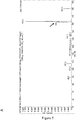

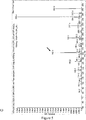


Classifications
-
- C—CHEMISTRY; METALLURGY
- C08—ORGANIC MACROMOLECULAR COMPOUNDS; THEIR PREPARATION OR CHEMICAL WORKING-UP; COMPOSITIONS BASED THEREON
- C08J—WORKING-UP; GENERAL PROCESSES OF COMPOUNDING; AFTER-TREATMENT NOT COVERED BY SUBCLASSES C08B, C08C, C08F, C08G or C08H
- C08J3/00—Processes of treating or compounding macromolecular substances
- C08J3/24—Crosslinking, e.g. vulcanising, of macromolecules
-
- C—CHEMISTRY; METALLURGY
- C07—ORGANIC CHEMISTRY
- C07D—HETEROCYCLIC COMPOUNDS
- C07D309/00—Heterocyclic compounds containing six-membered rings having one oxygen atom as the only ring hetero atom, not condensed with other rings
- C07D309/02—Heterocyclic compounds containing six-membered rings having one oxygen atom as the only ring hetero atom, not condensed with other rings having no double bonds between ring members or between ring members and non-ring members
- C07D309/08—Heterocyclic compounds containing six-membered rings having one oxygen atom as the only ring hetero atom, not condensed with other rings having no double bonds between ring members or between ring members and non-ring members with hetero atoms or with carbon atoms having three bonds to hetero atoms with at the most one bond to halogen, e.g. ester or nitrile radicals, directly attached to ring carbon atoms
- C07D309/14—Nitrogen atoms not forming part of a nitro radical
-
- C—CHEMISTRY; METALLURGY
- C08—ORGANIC MACROMOLECULAR COMPOUNDS; THEIR PREPARATION OR CHEMICAL WORKING-UP; COMPOSITIONS BASED THEREON
- C08B—POLYSACCHARIDES; DERIVATIVES THEREOF
- C08B37/00—Preparation of polysaccharides not provided for in groups C08B1/00 - C08B35/00; Derivatives thereof
- C08B37/0006—Homoglycans, i.e. polysaccharides having a main chain consisting of one single sugar, e.g. colominic acid
- C08B37/0024—Homoglycans, i.e. polysaccharides having a main chain consisting of one single sugar, e.g. colominic acid beta-D-Glucans; (beta-1,3)-D-Glucans, e.g. paramylon, coriolan, sclerotan, pachyman, callose, scleroglucan, schizophyllan, laminaran, lentinan or curdlan; (beta-1,6)-D-Glucans, e.g. pustulan; (beta-1,4)-D-Glucans; (beta-1,3)(beta-1,4)-D-Glucans, e.g. lichenan; Derivatives thereof
- C08B37/0027—2-Acetamido-2-deoxy-beta-glucans; Derivatives thereof
- C08B37/003—Chitin, i.e. 2-acetamido-2-deoxy-(beta-1,4)-D-glucan or N-acetyl-beta-1,4-D-glucosamine; Chitosan, i.e. deacetylated product of chitin or (beta-1,4)-D-glucosamine; Derivatives thereof
-
- C—CHEMISTRY; METALLURGY
- C08—ORGANIC MACROMOLECULAR COMPOUNDS; THEIR PREPARATION OR CHEMICAL WORKING-UP; COMPOSITIONS BASED THEREON
- C08L—COMPOSITIONS OF MACROMOLECULAR COMPOUNDS
- C08L5/00—Compositions of polysaccharides or of their derivatives not provided for in groups C08L1/00 or C08L3/00
- C08L5/08—Chitin; Chondroitin sulfate; Hyaluronic acid; Derivatives thereof
-
- B—PERFORMING OPERATIONS; TRANSPORTING
- B82—NANOTECHNOLOGY
- B82Y—SPECIFIC USES OR APPLICATIONS OF NANOSTRUCTURES; MEASUREMENT OR ANALYSIS OF NANOSTRUCTURES; MANUFACTURE OR TREATMENT OF NANOSTRUCTURES
- B82Y5/00—Nanobiotechnology or nanomedicine, e.g. protein engineering or drug delivery
-
- C—CHEMISTRY; METALLURGY
- C08—ORGANIC MACROMOLECULAR COMPOUNDS; THEIR PREPARATION OR CHEMICAL WORKING-UP; COMPOSITIONS BASED THEREON
- C08J—WORKING-UP; GENERAL PROCESSES OF COMPOUNDING; AFTER-TREATMENT NOT COVERED BY SUBCLASSES C08B, C08C, C08F, C08G or C08H
- C08J2305/00—Characterised by the use of polysaccharides or of their derivatives not provided for in groups C08J2301/00 or C08J2303/00
- C08J2305/08—Chitin; Chondroitin sulfate; Hyaluronic acid; Derivatives thereof
Definitions
- the present invention relates to the preparation of chitosan, in particular nanoparticles from chitosan, preparations, compositions and uses thereof, in particular in the fields of chemistry, biology, medicine and material sciences.
- Biopolymers are promising materials as carriers of various drugs and other active substances due to their biocompatibility, biodegradation, and non-toxicity when administered. With suitable chemical modification, these polymers can provide better materials for drug delivery systems, where active substances can be both low molecular weight compounds (small molecules) or high molecular weight compounds (marcomolecules). Nanostructured drug carriers allow the delivery of high-molecular compounds such as nucleic acids and proteins ( Advances in Polymer Science. Chitosan for Biomaterials I. Volume Editors: R. Jayakumar, M. Prabaharan, R.A.A. Muzzarelli. Springer Heidelberg Dordrecht London New York 2011 DOI 10.1007/978-3-642-23114-8 ).
- Chitosan is one of the most promising biopolymer candidates for the creation of nanoparticles.
- it has attractive native properties such as mucoadhesiveness, biocompatibility and low toxicity, ability to biodegradation and the formation of complexes and the other hand, the high regularity of the structure and the presence of hydroxyl and amino groups in it presents good prospects for selective modification of the polymer. Therefore, those properties of chitosan have attracted the attention for the development of drug delivery solutions ( Bhattarai et al., 2010, Advanced Drug Delivery Reviews, 62 83-99. doi: 10.1016 / j.addr.2009.07.019 ).
- chitosan presents several favourable characteristics as an excellent carrier, the use of unmodified chitosan is limited due to its low solubility in physiological conditions.
- many different chemical modifications of chitosan have been developed, ( Kritchenkov et al., 2017, Russ. Chem. Rev., 86, 231-239. http://dx.doi.org/10.1070/RCR4636 ; Chuanet al., 2019, Adv. Colloid Interface Sci., 268, 25-38 .; Jiang, H.-L.; Xing et al., 2018, Curr. Org. Chem., 22, 668-689.
- chitosan offers the possibility to be modified in a variety of ways.
- chitosan amides can be readily made with fatty acids, sterol derivatives, urocanic acid, carboxylic acid derivatives containing an imidazole fragment, etc.
- secondary chitosan amines can be formed using alkyl substituents of various structures, pyridine derivatives, spermidine and others by alkylation or reductive amination through appropriate Schiff bases.
- chitosan amides may be created with amino acids, including sulfur-containing amino acids, lactobionic acid, thioglycolic acid, etc.
- secondary amines of chitosan may be obtained using various sugars, polyethyleneimine and its derivatives. Synthesis of polyethylene glycol derivatives by pegylation is especially popular.
- Chitosan derivatives produced according to these methods are enhanced in their capacity to form nanoparticles, in particular with polyelectrolytes such as nucleic acids and may have altered pharmacological properties.
- Chitosan nanoparticles may be formed in an essentially irreversible manner through chemical cross-linking that involves the formation of covalent bonds with the use of different reagents for catalyzing such cross-linking ( Bhattarai et al., 2010, supra )
- glutaraldehyde and formaldehyde were the first and most popular agents used for this cross-linking but those are losing popularity today due to the difficulty of removing all trace of these toxic compounds, as well as the slow hydrolysis of nanoparticles that releases these aldehydes.
- Genepine has received much attention recently, but this reagent is very expensive and prone itself to polymerization.
- Photo-activated cross-linking reagents also exist: functional azides, functional acrylates, as well as enzyme-activated agents - phloretic acid and activated quinones.
- the present invention relates to the unexpected finding of a new method for producing nanoparticles from chitosan which presents the advantage avoiding the need of dissolving the chitosan starting material and therefore having recourse to the formation of salts or the use of diluted acid aqueous solutions or the need to disperse the chitosan in solution and therefore having recourse to emulsification, grinding or other procedures that could have a mechanical impact on the integrity of the polymer.
- the invention relates to a new method of cross-linking chitosan, in particular where, through two chemical steps new intra-chemical bonds between different parts of the chitosan molecule are formed.
- the resulting product spontaneously forms nanoparticles at the end of the second step of the method of preparation, those nanoparticles being suitable for a wide range of applications.
- the resulting cross-linked chitosan product has similar biological activities to those of standard linear or branched chitosans but unexpectedly exhibits some particular advantages in terms of stability over a broad range of biologically relevant pH or microbial conditions and physicochemical properties that allows an easier handling.
- An aspect of the invention provides a method for the preparation of a cross-linked chitosan according to the invention.
- the invention relates to a new cross-linked chitosan, in particular a new cross-linked chitosan which spontaneously forms nanoparticles.
- Another aspect of the invention relates to a composition comprising at least one cross-linked chitosan according to the invention and at least one carrier.
- Another aspect of the invention relates to a pharmaceutical composition comprising at least one cross-linked chitosan according to the invention and at least one pharmaceutically acceptable carrier.
- nanoparticles comprising one cross-linked chitosan according to the invention according to the invention.
- Another aspect of the invention relates to a cosmetic composition comprising at least one cross-linked chitosan according to the invention.
- Another aspect of the invention relates to a soft tissue filler comprising at least one cross-linked chitosan according to the invention or a composition thereof according to the invention.
- Another aspect of the invention relates to a wound dressing comprising at least one cross-linked chitosan according to the invention.
- a reconstruction tissue comprising at least one cross-linked chitosan or a composition thereof according to the invention.
- Another aspect of the invention relates to an agricultural composition comprising at least one cross-linked chitosan according to the invention.
- Another aspect of the invention relates to a method of preparation of a composition (e.g.
- a soft tissue filler such as a soft tissue filler, a wound dressing or a reconstruction tissue
- a cross-linked chitosan or nanoparticles thereof comprising at least one cross-linked chitosan or nanoparticles thereof according to the invention.
- Another aspect of the invention relates to cross-linked chitosan according to the invention for use in in vivo drug delivery, in vitro cell or biological tissue culture and tissue engineering applications.
- a cell or biological tissue culture medium comprising at least one cross-linked chitosan or a composition thereof according to the invention.
- a cross-linked chitosan according to the invention for use in the prevention and/or treatment of a medical disorder and in particular cardiovascular conditions, such as cardiac arrhythmias, in particular atrial fibrillation and hypertension, joint pathologies and articular diseases, such as rheumatoid arthritis, osteoarthritis, spondyloarthritis, and traumatic events leading to cartilage, bone, ligament or synovial capsule damage, eye pathologies and injuries, such as dry eye syndrome, uveitis, glaucoma, corneal lesions, connective tissue disorders, such as lupus and polymyositis, skin/ mucous membrane disorders or injuries, such as wounds, scars, psoriasis, acne, eczema, rosacea, burns of physical or chemical nature, in
- Another aspect of the invention relates to a use of a cross-linked chitosan according to the invention for the preparation of a pharmaceutical formulation for the prevention and/or treatment of a medical disorder and in particular cardiovascular conditions, such as cardiac arrhythmias, in particular atrial fibrillation and hypertension, joint pathologies and articular diseases, such as rheumatoid arthritis, osteoarthritis, spondyloarthritis, and traumatic events leading to cartilage, bone, ligament or synovial capsule damage, eye pathologies and injuries, such as dry eye syndrome, uveitis, glaucoma, corneal lesions, connective tissue disorders, such as lupus and polymyositis, skin/ mucous membrane disorders or injuries, such as wounds, scars, psoriasis, acne, eczema, rosacea, burns of physical or chemical nature, in particular surgical wounds and sunburns, ulcers, haemorrhoids, periodontal and dental diseases, dural
- Another aspect of the invention relates to a method for the preparation of a drug delivery system for a bioactive agent.
- a method for identifying a cross-linked chitosan obtainable from a method according to the invention.
- Another aspect of the invention relates to a method of preventing, treating or ameliorating a medical disorder, and in particular cardiovascular conditions, such as cardiac arrhythmias, in particular atrial fibrillation and hypertension, joint pathologies and articular diseases, such as rheumatoid arthritis, osteoarthritis, spondyloarthritis, and traumatic events leading to cartilage, bone, ligament or synovial capsule damage, eye pathologies and injuries, such as dry eye syndrome, uveitis, glaucoma, corneal lesions, connective tissue disorders, such as lupus and polymyositis, skin/ mucous membrane disorders or injuries, such as wounds, scars, psoriasis, acne, eczema, rosace
- kits comprising at least one cross-linked chitosan of the invention or composition thereof, e.g. in a lyophilized form.
- kit for preparation of nanoparticles for encapsulation of material e.g. bioactive agent, drug substance, protein, antibody, saccharide, nucleic acid, or a combination thereof or for prevention or treatment comprising at least one cross-linked chitosan of the invention or composition thereof.
- a method for the preparation of a cross-linked chitosan comprising the following steps:
- the solvent used under step a) and/or b) is a protic solvent (such as alcohols or water).
- the free acrylic acids which are formed if a protic solvent such as alcohols or water
- a protic solvent such as alcohols or water
- the solvent is an aprotic solvent, in particular under step a) and/or b) and/or c).
- step c) if an aprotic solvent is used under step c) if no further step f) of subsequent acylation is carried out.
- step a) is conducted at room temperature.
- the R3 or R4 but also R2 groups of the acylated product of step b) will react with the primary amino groups of the glucosamine backbone to form a cross-link between glucosamines.
- the groups reacting will depend on the specific acrylic compound. For example, for acrylic and methacrylic acids, the groups reacting with the primary amino groups of the glucosamine backbone are groups R3 or R4. However, when R3 and R4 groups are replaced by halogen atoms, then R2 groups will react with the primary amino groups of the glucosamine backbone.
- this cross-linking leads to the formation of nanoparticles.
- the method of the invention can be schematized under Scheme 1 as follows: wherein a chitosan (A) wherein m is a integer comprised between 1 and 12'500 and n is a integer comprised between 1 and 12'500, is first provided in a swollen state in an aprotic solvent at room temperature and then the amino groups of said chitosan are acylated with an acrylic compound (I) and the resulting acylation product (B1) is then reacted in presence of a base-to lead to a cross-linked chitosan (B2) which can then be isolated by purification to lead to a purified cross-linked chitosan according to the invention.
- A chitosan
- n is a integer comprised between 1 and 12'500
- the chitosan can be provided in swollen state, even in dissolved state, in a protic solvent but in this case, side reactions of hydrolysis of the acylating agent can occur and this must be taken into account when calculating reaction loads. Additionally, in this case, it will be necessary to wash the acylated chitosan obtained under step b) to remove the hydrolysis products of the acylating agent before the stage of aza-Michael reaction under step c).
- the chitosan is provided in absence of water and the acylating step is carried out in absence of water.
- the absence of water advantageously leads to higher yields and avoid the formation of side products.
- the acylation step is conducted in absence of water.
- an aprotic solvent can be used as reaction medium or a supercritical fluid.
- the aprotic solvent is a polar aprotic solvent such as for example selected from DMF and DMSO.
- a supercritical fluid can be a supercritical solvent such as carbon dioxide, nitric oxide (I), freons (chloro(bromo)(fluoro)hydrocarbons) which is used to provide the acylating agent to the reaction medium and then acylation reaction carried out after removal of the supercritical solvent from the reaction medium, for example by lowering the pressure below the critical value.
- the acylation step is conducted an anhydrous aprotic medium.
- a polar aprotic solvent is selected from dimethylformamide (DMF), dimethylacetamide, acetonitrile (MeCN), N-methylpyrrolidone, dimethyl sulfoxide (DMSO) or a mixture thereof.
- dichloromethane, dichloroethane, chloroform, and other chloro(fluoro)hydrocarbons can be also used as a polar aprotic solvent, but when conducting the aza-Michael reaction step c), those solvents should be distilled off right before the provision of the base. It is desirable to perform such distillation at temperatures not exceeding 60°C, which is feasible at atmospheric pressure for most of the mentioned solvents. If a high-boiling solvent was used, distillation must be carried out under reduced pressure.
- ethers and esters, ketones can also be used as solvents for the reaction steps a) to c) under anhydrous conditions but reactions in such solvents will proceed more slowly.
- solvents for example, diethyl ether, diisopropyl ether, methyl tert-butyl ether, methyl acetate, ethyl acetate, propyl acetate, butyl acetate, acetone, methyl ethyl ketone and diethyl ketone can be used.
- the acylation step b) can be conducted by any method described in the context of acylation of glucosamine with acryloyl chloride ( Zhang et al., 2017, Biomacromolecules, 1, 3, 778 - 786 ; Bu et al., 2017, Advances, 7, 76, 48166 - 48175 ) or methods described as useful for the acylation of an amino group such as methods using i) a carbodiimide; ii) an azide; iii) mixed anhydrides; iv) an activated ester and v) others methods described below.
- acylation methods using carbodiimide with the formation of intermediate enol esters can be used under step b) ( WO 2019/60740 ; Hao-Bin et al., 2018, Carbohydrate Polymers, 196, 359 - 367 ).
- N,N'-dicyclohexylcarbodiimide DCC
- 1-ethyl-(3-(3-dimethylamino)propyl)-carbodiimide hydrochloride and N-cyclohexyl-N'-(2-morpholinoethyl)carbodiimide methyl p-toluenesulfonate CAS Registry Number: 2491-17-0
- Known acylation methods using azides can be used under step b) ( Honzl et al., 1961, Coll. Czech. Chem. Commun., 26, N. 9, 2333-2344 ).
- acylation methods using mixed anhydrides can be used under step b) ( Wieland et al., 1951, Ann. Chem., 572, N3, 190-194 ; Belleau et al., 1968, J. Amer. Chem. Soc., 90, N 6, 1651-1652 ; Gorecka et al., 1978, Synthesis, N 6, 474-476 ; Diago-Meseguer et al., 1980, Synthesis, N 7, 547-551 ; Leplawy et al., 1960, Tetrahedron, 11, N 1, 39-51 ).
- the use of internal anhydrides is also possible for acylation, for example maleic anhydride ( Liwschitz et al.
- acylation methods using activated esters through the formation of activated amides can be used under step b) such as a carbonyldiimidazole method ( Paul et al., 1960, J. Amer. Chem. Soc., 82, N 17., 4596-4600 ), a cyanomethyl ester method ( Schwyzer et al., 1955, Helv. Chim.
- acylation methods can be can be used under step b) such as ketenimine method ( Stevens et al., 1958, J. Amer. Soc., 80, N 15, 4069-4071 ); Acetylene derivatives method ( Arens, 1955, Rec. Trav. Chim., 74, N 6, 759-770 ; Gais 1978, Aktivtechnischsstoff für Peptidsynthesen J. Angew. Chem. Int.
- the acrylic compound of Formula (I) can be an acid, an acid halide, an active ester (e.g. 3-hydroxybenzotriazole ester, N-hydroxysuccinimide, pentachlorophenol, 2-nitro-4-sulfophenol esters and esters having other similar leaving groups), an anhydride or mixtures thereof.
- an active ester e.g. 3-hydroxybenzotriazole ester, N-hydroxysuccinimide, pentachlorophenol, 2-nitro-4-sulfophenol esters and esters having other similar leaving groups
- the acrylic compound of Formula (I) is selected from the following group: (angelic acid, CAS Registry Number: 565-63-9 ); (2-iso-propyl acrylic acid CAS Registry Number: 4465-04-7 ); (2-methylenedodecanoic acid, CAS Registry Number: 52756-21-5 ); (4S,6S)-4,6-dimethyl-2-methylenedocosanoic acid; ((Z)-3-cyclohexylpropenoic acid, CAS Registry Number: 673456-32-1 ); ((E)-3-[4-(2,6-dioxo-1,3-dipropyl-2,3,6,7-tetrahydro-1H-purin-8-yl)-bicyclo[2.2.2]oct-1-yl]-acrylic acid, CAS Registry Number: 340021-16-1 ); ((2E)-3-((E)-4- ⁇ [2-(4-Chlorophenoxy)-2-methylpropanoyl]amin
- the acrylic compound used under the acylation step b) is an acid halide
- the acrylic compound used under the acylation step b) is an acid chloride (e.g. acyl chloride).
- an acid chloride e.g. acyl chloride
- the use of an acid chloride advantageously results in the formation of hydrogen chloride that does not interfere with the next reaction step in the presence of excess of base and is easily removed in the form of salts during dialysis.
- acylation of amines with carboxylic acid halides leads to the production of one equivalent acid, which will form a salt with unreacted amine and diminish the yield of a method of the invention. Therefore, when acid halide is used under the acylation step b), the addition of an equivalent amount of a base, preferably a non-nucleophilic base (e.g. triethylamine is used under step b) to neutralise this acid.
- a base preferably a non-nucleophilic base (e.g. triethylamine is used under step b) to neutralise this acid.
- the method of the invention further comprises a step of washing the reaction medium and removing the formed acid to avoid the presence of water in the reaction system before conducting step c).
- the formed acid can be washed off from the acylation product with a solvent through a filter, or by dialysis against a solvent or by suspending the acylation product in a solvent and centrifuging with discarding the supernatant.
- condensing agents e.g. DCC
- a washing step as a precaution.
- a condensing agent such as DCC
- by-products are formed, such as dicyclohexylurea, during the acylation reaction which needs to be removed from the reaction mass before conducting the next step so that it is not involved in the formed cross-linking leading to the nanoparticles of the invention.
- the base under step c) is used in a molar excess sufficient to form an alkaline medium which neutralizes the hydrogen halide formed under step b).
- the molar excess of the base is at least a 10% molar excess (e.g. about 20 to 40% molar excess) which would correspond to at least 1-3 molar excess in relation to the amino groups of the resulting acylation product of step b).
- the cross-linked chitosan obtained under step c) can be purified under step d) by standard techniques to remove salt impurities and/or the remaining aprotic solvent such as by dialysis or washing steps with a solvent such as water or methylene chloride, methanol, ethanol, acetone and the like, followed by centrifugation or using supercritical solvents such as use carbon dioxide in which the formed nanoparticles of the cross-linked chitosan are insoluble or by removing the aprotic solvent by evaporation and then washing out the by-products from the cross-linked chitosan product with a solvent through a filter, for example a filter having pores not more than 40 ⁇ m.
- a filter for example a filter having pores not more than 40 ⁇ m.
- hydrophobic filter elements of fine porosity such as polypropylene or PTFE can be advantageously used, since their hydrophobicity creates additional obstacles for the penetration of hydrophilic chitosan nanoparticles through them.
- the purified cross-linked chitosan obtained under step d) can be dried, e.g. under an optional further drying step e).
- the base used under step c) for the Michael addition reaction is an essentially pure non-nucleophilic base, in particular essentially free from the presence of secondary amines.
- the Michael addition step c) is conducted in a protic solvent such as water.
- a protic solvent such as water.
- a protic solvent at this step might be advantageous when the obtaining of saponified cross-linked chitosan nanoparticles are wished at the end of step c) or if it is planned to repeat the acylation step as described below in order to saturate the nanoparticles with carboxy functions and then achieve cross-linking in excess.
- the saponification step is carried out.
- the steps of acylation and aza-Michael are repeated, followed by saponification. If spontaneous saponification occurs during the aza-Michael step in a protic solvent this is not disadvantageous since saponification is anyway carried out afterwards and the fact that it partially occurs during the aza-Michael reaction would not be a problem.
- the Michael addition step c) is conducted in absence of water which can be achieved by the use of an aprotic solvent as reaction medium or by using a base as a solvent.
- the Michael addition reaction step is carried out in alkali medium such that for each amide bond formed during the acylation step, one equivalent of secondary amine is formed after the Michael addition reaction, thereby leading that even in case of a cross-linking of all amino groups, at least half of the amino groups remain available for salt formation.
- This can be checked by acid-base titration, IR and NMR spectrometry such as described in Glazunov et al., 1999, 25(3), 216-219; Brugnerotto et al., 2001, Polymer, 42, 3569-3580 or Kubota, et al., 2000, Carbohydrate Research, 324, 268-274 .
- the intramolecular addition reaction inside the chitosan macromolecule is significantly preferable to the intermolecular reactions, due to statistical and steric factors, thereby leading to a high yield in cross-linking.
- the resulting nanoparticles after Michael's addition reaction step c) can be subjected to a reduction (e.g. by reacting with complex metal hydrides, diboran, cyanoborohydride and others derivatives of borohydride) in order to transform the amide groups into a secondary amines and increase the possible degree of ionization of the nanoparticles.
- the possible degree of ionization of the nanoparticles depends on the number of amino groups. The more amino groups present, the greater the opportunity for the formation of salts and, respectively, ionization to occur. The degree of ionization can be assessed by acid-base titration, IR and NMR spectrometry.
- the cross-linked chitosan product obtained under step c) or step d) or the corresponding dried product obtained step e) can be subjected to a saponification step f) under alkaline conditions (e.g. in presence of an aqueous base in excess) in a protic solvent in order to increase the solubility of the cross-linked chitosan nanoparticles on a wider pH range, e.g. under physiological weakly alkaline conditions (e.g. about pH is 7.2-7.3). If the solvent used under steps c) or d) does not allow saponification (e.g.
- saponification needs to be carried out after purification step d) in a solvent allowing saponification or by re-suspension of the dried cross-linked chitosan in a solvent allowing saponification after step e) such as in ethers as solvents.
- a solvent allowing saponification such as in ethers as solvents.
- an aqueous base is added to the product obtained under steps c) or d) in a molar excess compared to the amount of the acylating agent used under step b), such as for example about 10 times or 100 times the molar amount of such acylating agents.
- the amide groups of the cross-linked chitosan (B2) are hydrolyzed into corresponding carboxyl groups in a product (B3) available for the formation of the corresponding salts.
- cross-linked chitosan This allows regenerating half of the amino groups in the cross-linked chitosan as primary amine, the second half becoming secondary amines, which are now alkylated with propionic acid (or substituted propionic acid).
- saponification of a cross-linked chitosan can be conducted by the addition of 1 molar aqueous solution of sodium hydroxide at 50 degrees Celsius for an hour.
- the obtained product (B3) can then be subjected again to an acylation step b) as schematized in Scheme 3a and Scheme 3b below wherein in this case the acylation occurs under the same conditions wherein acylation of both primary (Scheme 3a) and secondary ( de novo acylation of amino groups obtained at stages b, c, or f, Scheme 3b) amino groups are possible can occur.
- the obtained product (B4) is then subjected again to a Michael's addition reaction under step c) to achieve a cross-linking of all amino groups and obtain an essentially fully cross-linked chitosan (B5).
- such a product will contain essentially the same number of carboxyl groups, total secondary and tertiary amino groups, amide functions (excluding the initial acetylaminoglycoside fragments), i.e. That is, such a product will comprise a complete internal salt, all carboxyl groups being balanced by amino groups.
- X regenerated primary amino groups can be further acylated (the secondary amino groups that we obtained in step c) can probably be acylated, but this is a less likely process). Then, when repeating step c), the secondary amino groups obtained earlier in step c) enter the aza-Michael reaction to form X tertiary amino groups.
- step f If exhaustive derivation is carried out for a third time, then, only X/2 acylating agent is needed, since only X amino groups remain capable of entering into these reactions and all these amino groups are primary.
- step f only 2.5X carboxyl groups, 1.5X tertiary amino groups, 0.5X primary amino groups are obtained and the polymer will become anionic with a 0.5X excess of carboxyl groups. Therefore, repeating this reaction sequence shall each time give an increase in the number of carboxyl groups in increments of 0.25, 0.125, 0.0625, 0.03175 etc..
- the present of carboxyl groups can easily be confirmed by infrared or by acid-base titration, and also by the mass spectrometry.
- the amount of alkali used under optional saponification step f) is in equimolar amounts with the amide groups obtained in the first reaction step c)/d) or e) to be saponified and up to 10 times molar excess.
- At least one sequence of steps b) to c) (or d)/e)) is carried out with a saponification step f) as the end of the Michael addition before re-subjecting to new sequence of acylation steps b) to c) (or d)/e)).
- reaction sequence of steps a) to f) is repeated once or twice.
- solubility of the cross-linked chitosan is obtained in a wider range of pH and the properties of native chitosan may be modified, for example in terms of mucotropy and penetration into cells. Therefore, those properties can be advantageously adjusted, depending on the number of reaction sequence performed and the obtained cross-linked chitosan nanoparticles can be useful for the delivery of compounds of interest.
- cationic e.g. cationic peptides such as sequences enriched in arginine, ornithine or lysine or neutral substances in terms of electric charge
- cationic e.g. cationic peptides such as sequences enriched in arginine, ornithine or lysine or neutral substances in terms of electric charge
- a cross-linked chitosan according to the invention.
- cross-linked chitosan according to the invention can be used to formulate those compounds for protecting them from degradation (e.g. by proteolysis) or from the binding of non-desirable substances (e.g. antibodies or other macromolecules) or for ensuring a slow release of the soluble for of those compounds.
- degradation e.g. by proteolysis
- non-desirable substances e.g. antibodies or other macromolecules
- biologically active material can be integrated within the formed nanoparticles, either after the first acylation step b) or the first Michael addition step c).
- a biologically active material can be either covalently attached, or adsorbed or fixed in the form of salts or encapsulated within the cross-linked chitosan nanoparticles of the invention.
- the nanoparticles can be impregnated with biologically active substances resistant to reagents used in steps a) to f) when a sequence of these steps is applied such as clusters of heavy elements to create radiopaque nanoparticles.
- multifunctional, labile, biologically active substances are preferably introduced by diffusion into cross-linked chitosan nanoparticles of the invention after their synthesis, or using click chemistry, methods of immobilization of enzymes, proteins, nucleic acids and antibodies.
- integration of a biologically active material within the chitosan nanoparticles of the invention can be achieved by impregnation of the product resulting from step b) or c) with the desired biologically active material.
- a solution of a biologically active material in an aprotic solvent can be added to the product resulting from step b) before conducting the Michael addition step c).
- the acetylated chitosan product resulting from step b) can be dissolved in a solvent suitable to the further synthesis conditions.
- Impregnation can be performed without dissolving the cross-linked chitosan of the invention.
- the biologically active agent/substance can be dissolved in a polar aprotic solvent or in any other. If a protic solvent is used, then, before the aza-Michael reaction, it is desirable to remove it and dry the impregnated product.
- supercritical fluids can be used as described in Weidner 2018, The Journal of Supercritical Fluids, 134, 220-227 https://doi.org/10.1016/j.supflu.2017.12.024 ; Duarte et al., 2007, The Journal of Supercritical Fluids, 42 (3), 373-377 https://doi.org/10.1016/j.supflu.2007.01.007 which provides extremely high degree and high-quality impregnation. It is also possible to use electrophoresis methods as described in Boccaccini et al., 2010, J. R. Soc.
- an aqueous solution of a biologically active material such as an antibiotic can be mixed with an aqueous solution of chitosan acylated after step b) and subjected to evaporation with azeotropic distillation of water, spray drying, lyophilization, and other drying methods to obtain the acylated chitosan impregnated with the biologically active material in dry state. Then, the dried material is subjected to an excess of a non-nucleophilic base to deionize the amino groups of chitosan and the resulting mixture is then subjected to the Michael addition reaction step c).
- a biologically active material such as an antibiotic
- the chitosan provided under step a) has a mean molecular weight ranging from about 5 to about 2'000 kDaltons, in particular from about 150 to 2'000 kDaltons.
- the chitosan provided under step a) has a degree of deacetylation from about 100% (as in glucosamine) to about two deacetylated fragments per macromolecule, which, for example, for chitosan (chitin) with molecular mass 300 kDa is about 0.14%.
- Suitable chitosan that can be used as starting material in method of the invention can be of various origins, including natural (animal or fungal), in particular from shells of crab and shrimp, exoskeleton of insects, higher fungi, cultures of unicellular mushrooms. Chemically or enzymatically synthesized chitosan may also be used.
- the chitosan provided under step a) is left to swell for about 5 minutes to about 1 day, preferably in an aprotic solvent.
- the deacetylation step b) is carried out at a temperature of from about -70 °C (beginning of the reaction) to about +150 °C (completion of the reaction), preferably from about +2 °C (beginning of the reaction) to about +55 °C (completion of the reaction).
- the reaction time is from about 0.5 hour to 10 days, preferably about 2.5 hours at about +20 to about +30 °C, preferably under ultrasonic action as mixing means.
- the Michael addition step c) is carried out at a temperature of from about -70 °C (beginning of the reaction) to about +150 °C (completion of the reaction), preferably from about +20 °C (beginning of the reaction) to +55 °C (completion of the reaction).
- the reaction time is from about 0.5 hour to 10 days, preferably about 15-18 hours at about +20 °C and about 6 hours at about +55 °C, preferably under ultrasonic action as mixing means.
- the drying step of the cross-linked chitosan is conducted by freeze drying under step e).
- the optional additional saponification step f) is carried out at a temperature from about 0 °C (beginning of the reaction) to about +140 °C (completion of the reaction), preferably from about +20 °C (beginning of the reaction) to about +55 °C (completion of the reaction).
- the reaction time is from about 0.5 hour to 10 days, preferably about 2-6 hours at +55 °C, preferably with ultrasonic action as mixing means.
- nanoparticles of the invention are spontaneously formed by the material obtained under steps b) and c) of a method of the invention. Those particles are very stable over time. For example, a 2% solution at room temperature is stable for at least a year and for at least several years in dry state.
- a method for the preparation of a drug delivery system for a bioactive agent comprising the step of conducting a method of the invention wherein a bioactive agent is added under step b), c), d) or e).
- a method for the preparation of a drug delivery system for a bioactive agent comprising the step of:
- a method for identifying a cross-linked chitosan obtainable from a method according to the invention, said method comprising the steps of:
- the cross-linked chitosan according to the invention can be prepared from readily available starting materials according to a method of the invention. It will be appreciated that where typical or preferred experimental conditions (i.e. reaction temperatures, time, moles of reagents, solvents etc.) are given, other experimental conditions can also be used unless otherwise stated. Optimum reaction conditions may vary with the particular reactants or solvents used, but such conditions can be determined by the person skilled in the art, using routine optimization procedures. According to a particular embodiment, is provided a cross-linked chitosan and nanoparticles thereof obtained by a method of the invention. According to another particular embodiment, is provided a cross-linked chitosan characterized by a lower viscosity than the starting chitosan.
- a solution of nanoparticles according to the invention is 3 times less viscous than the starting chitosan, e.g. 2.4 cSt at 25°C and 1.82 cSt at 37°C for chitosan nanoparticles of the invention versus 7.5 cSt at 25°C and 5.4 cSt at 37° C for the corresponding starting chitosan.
- pharmaceutically acceptable salts of the cross-linked chitosan of the invention comprise such as acetate, lactate, succinate, citrate, malonate, fumarate, maleate, a salt of malic acid, as well as other carboxylic, hydroxycarboxylic acids, in addition to this hydrochloride, phosphate, sulfate and other inorganic acids. It is understood that the molecular weight of the cross-linked chitosan of the invention can be adapted in by the selection of the starting material and its choice will depend on the intended function of the nanoparticles of the invention and formulation thereof.
- the desired nanoparticles composition degradation rate, the desired release rate of a bioactive agent optionally incorporated therein, the therapeutic condition to be treated will influence the choice of molecular weight for the chitosan as starting material.
- the molecular weight of cross-linked chitosan of the invention is comprised between about 2 kDa and 2 MDa.
- the molecular weight of cross-linked chitosan of the invention for use in lubricating/filler composition may be chosen between about 2 kDa and 2, preferably from about 30 kDa and 1'000 kDa.
- the molecular weight of cross-linked chitosan of the invention for use in or as drug delivery system may be chosen between about 2 kDa and 2 MDa, preferably from about 30 kDa and 1'000 kDa.
- the invention provides pharmaceutical or therapeutic agents as compositions, or medical devices comprising thereof and methods for treating a subject, preferably a mammalian patient, and most preferably a human patient who is suffering a medical disorder and in particular cardiovascular conditions, such as cardiac arrhythmias, in particular atrial fibrillation and hypertension, joint pathologies and articular diseases, such as rheumatoid arthritis, osteoarthritis, spondyloarthritis, and traumatic events leading to cartilage, bone, ligament or synovial capsule damage, eye pathologies and injuries, such as dry eye syndrome, uveitis, glaucoma, corneal lesions, connective tissue disorders, such as lupus and polymyositis, skin/ mucous membrane disorders or injuries, such as wounds, scars, psoriasis, acne, eczema, rosacea, burns of physical or chemical nature, in particular surgical wounds and sunburns, ulcers, haemorrhoids, periodontal and dental
- the invention provides compositions at least one cross-linked chitosan of the invention or composition thereof useful for human, veterinary or agricultural use.
- the cross-linked chitosan of the invention can be used for the preparation of self-assembled structures, molecular machines, delivery mechanisms, electronics, composite materials and lubricants.
- compositions of the invention provide a pharmaceutical formulation comprising at least one cross-linked chitosan of the invention or composition thereof for use as a medicament.
- compositions of the invention are parenteral formulations.
- compositions of the invention are injectable formulations, such as intra-articular, intra-arterial, intravenous, intra-synovial, intradermal, subdermal, submucosal, interstitial, intra-cranial, intra-ocular, intra-tumoral, intra-gastric, intestinal, anal, intra-peritoneal, and intramuscular formulations.
- compositions of the invention are oral formulations.
- compositions of the invention are topical formulations.
- compositions of the invention are ophthalmic formulations.
- the invention provides compositions that can be used in another mammal thus humans for the same uses as described above.
- the invention further provides compositions or medical devices useful for cosmetic, reconstruction surgery (e.g. tissue reconstruction), cell or biological tissue culture (e.g. stem cell culture), material science (e.g. surface coating such as implant coating, lubricant compositions, floculant compositions), diagnosis (e.g. imaging compositions) applications.
- Those compositions further comprise respectively cosmetically acceptable carriers or cell or biological tissue culture nutrients.
- Compositions according to the invention comprise soft tissue filler compositions, for example, dermal and subdermal fillers, comprising at least one cross-linked chitosan of the invention or nanoparticles thereof.
- chitosan-based soft tissue filler compositions can be carried out for example as described in Grant et al., 2018, Tissue EngPartA., 24(13-14):1091-1098. doi: 10.1089/ten.TEA.2017.0385 . Epub 2018 Mar 20.
- nanoparticles of a cross-linked chitosan of the invention having a mean size ranging from about 5 and 100 nm.
- a wound dressing comprising at least one cross-linked chitosan according to the invention.
- the invention relates to a wound dressing comprising a permeating a matrix comprising a hydrocolloid, hydrogel, alginate, collagen, cellulose, foam or cloth.
- compositions of this invention may further comprise one or more pharmaceutically acceptable additional ingredient(s) such as alum, stabilizers, antimicrobial agents, buffers, coloring agents, flavoring agents, adjuvants, and the like.
- additional ingredient(s) such as alum, stabilizers, antimicrobial agents, buffers, coloring agents, flavoring agents, adjuvants, and the like.
- the compositions according to the invention, together with a conventionally employed adjuvant, carrier, diluent or excipient may be placed into the form of pharmaceutical compositions and may be employed as solids, such as tablets or filled capsules, or liquids such as solutions, suspensions, ointments, emulsions, elixirs, or capsules filled with the same, films or gels, all for oral use.
- the compositions may also be formulated as a dry product for reconstitution with water or another suitable vehicle before use.
- compositions of this invention as liquid formulations including, but not limited to, aqueous or oily suspensions, solutions, emulsions, syrups, and elixirs.
- Such liquid preparations may contain additives including, but not limited to, suspending agents, emulsifying agents, non-aqueous vehicles and preservatives.
- Suspending agents include, but are not limited to, sorbitol syrup, methyl cellulose, glucose/sugar syrup, gelatin, hydroxyethyl cellulose, carboxymethyl cellulose, aluminum stearate gel, and hydrogenated edible fats.
- Emulsifying agents include, but are not limited to, lecithin, sorbitan monooleate, and acacia.
- Preservatives include, but are not limited to, methyl or propyl p-hydroxybenzoate and sorbic acid.
- Dispersing or wetting agents include but are not limited to poly(ethylene glycol), glycerol, bovine serum albumin, Tween®, Span®. Further materials as well as formulation processing techniques and the like are set out in The Science and Practice of Pharmacy (Remington: The Science & Practice of Pharmacy), 22nd Edition, 2012, Lloyd, Ed. Allen, Pharmaceutical Press , which is incorporated herein by reference. Solid compositions of this invention may be in the form of tablets or lozenges formulated in a conventional manner.
- tablets and capsules for oral administration may contain conventional excipients including, but not limited to, binding agents, fillers, lubricants, disintegrants and wetting agents.
- Binding agents include, but are not limited to, syrup, acacia, gelatin, sorbitol, tragacanth, mucilage of starch and polyvinylpyrrolidone.
- Fillers include, but are not limited to, lactose, sugar, microcrystalline cellulose, maizestarch, calcium phosphate, and sorbitol.
- Lubricants include, but are not limited to, magnesium stearate, stearic acid, talc, polyethylene glycol, and silica.
- Disintegrants include, but are not limited to, potato starch and sodium starch glycolate.
- Wetting agents include, but are not limited to, sodium lauryl sulfate. Tablets may be coated according to methods well known in the art.
- compositions according to the invention comprise plant growth accelerators, seed germination enhancers, moisture and nutrient retention formulations, pesticide enhancers, prolonged forms and pheromone stabilizers, mucoadhesive forms of insecticides, arachnocides and anti-mollusk preparations.
- the compositions or nanoparticles of the invention further comprise a bioactive agent, which is either dispersed in or covalently attached to the cross-linked chitosan composition.
- the compositions or nanoparticles of the invention are in the form of a bioactive agent delivery system.
- compositions according to the invention comprise a cell or biological tissue culture medium comprising cross-linked chitosan or a composition thereof. This culture medium may further comprise cell nutrients such as glucose, vitamins, growth factors, metal ions and the like.
- compositions according to the invention comprise a biological tissue (endogeneous or exogeneous) or a synthetic or semi-synthetic material useful for repairing damaged tissues of the body such as epidermal, neurological, cartilage or bone tissues.
- compositions or nanoparticles of the invention can be useful, once loaded with a bioactive substance or agent, for administration and in situ release of the said active principle injection.
- Compositions of this invention may also be administered in any manner by injection such as subcutaneous injections, intra-synovial, intra-arterial, intravenous, intraarticular, intramuscular, subdermal, submucosal, intra-ocular, intra-cranial, intra-gastric, intestinal, anal, intra-peritoneal, intra-tumoral and interstitial injections.
- Compositions of this invention may be administered in any manner by oral route including to the mucosal surfaces of the oral cavity including the gingiva, the floor of the oral cavity, cheeks, lips, tongue, teeth.
- Compositions of this invention may also be administered topically to the skin, various mucous or the eye.
- cross-linked chitosan or nanoparticles thereof of the invention or any suitable pharmaceutically acceptable thereof and pharmaceutical formulations thereof may be administered alone or in combination with at least one co-agent.
- co-agents according to the invention include antibiotics, nucleic acids, including gene constructs, antibodies and antibody fragments, toxins, cytostatics, antifungal agents, components of chemotherapeutic drugs, antihypertensive agents, antiarrhythmic substances, proliferation activating substances, hormones, cytokines, nitric oxide donors, and hydrogen sulfide donors.
- the invention encompasses the administration of cross-linked chitosan or particles thereof of the invention and pharmaceutical formulations thereof to an individual simultaneously or sequentially with said at least a co-agent.
- Cross-linked-chitosan or nanoparticles thereof according to the invention or a pharmaceutical formulation thereof that is administered simultaneously with said co-agent can be administered in the same or different composition(s) and by the same or different route(s) of administration.
- the dosage administered, as single or multiple doses, to an individual will vary depending upon a variety of factors, including pharmacokinetic properties, patient conditions and characteristics (sex, age, body weight, health, and size), extent of symptoms, concurrent treatments, frequency of treatment and the effect desired.
- patients according to the invention are subjects suffering from cardiovascular conditions, such as cardiac arrhythmias, in particular atrial fibrillation and hypertension.
- cardiovascular conditions such as cardiac arrhythmias, in particular atrial fibrillation and hypertension.
- patients according to the invention are subjects suffering from joint pathologies and articular diseases, such as rheumatoid arthritis, osteoarthritis, spondyloarthritis, and traumatic events leading to cartilage, bone, ligament or synovial capsule damage.
- patients according to the invention are subjects suffering from eye pathologies and injuries, such as dry eye syndrome, uveitis, glaucoma, corneal lesions.
- connective tissue disorders such as lupus and polymyositis.
- patients according to the invention are subjects suffering from skin/ mucous membrane disorders or injuries, such as wounds, scars, psoriasis, acne, eczema, rosacea, burns of physical or chemical nature, in particular surgical wounds and sunburns, ulcers, hemorrhoids.
- patients according to the invention are subjects suffering from periodontal and dental diseases.
- patients according to the invention are subjects suffering from dural damage such as following accidental injury or brain and central nervous system surgery.
- patients according to the invention are subjects suffering from malignant and benign neoplasms.
- patients according to the invention are subjects suffering from postoperative complications as fistulas and infections.
- patients according to the invention are subjects willing or requiring body parts volume enhancements or anatomical reshapes such as any enhancement/modification and/or increase of the volume of a body part for aesthetic or therapeutic reasons.
- patients according to the invention are subjects suffering from a tumor, a vascular malformation or any other newly arising physical tissue or organ abnormality resulting in pain.
- the cross-linked chitosan of the invention is useful for various applications such as in vitro cell or biological tissue culture, as tissue fillers, for cosmetic, tissue and organoids engineering and material science applications.
- the cross-linked chitosan of the invention can be used as a carrier of pharmaceutical active ingredients (e.g. as drug delivery system, as a cell-penetration system (e.g. in gene therapy or for non-cell penetrating agents), as solubilizing agent, as capture agent: encapsulation of ingredients of interest within nanoparticles to generate suspensions for effective removal from solutions for example by switching from acid to alkaline pH).
- the cross-linked chitosan of the invention can be used as medical implants (e.g. coating of implants for improving biocompatibility, cell-containing regenerative medical implants) or materials (e.g. hemostatic materials).
- the cross-linked chitosan of the invention can be used as substrates for imaging agents (e.g. used in standard angiography (CT) and other emerging imaging modalities (e.g. EPR-based, NMR-based and X-ray-based)).
- CT standard angiography
- other emerging imaging modalities e.g. EPR-based, NMR-based and X-ray-based
- the cross-linked chitosan of the invention can be used as substrates for cell culture (e.g. stem cells), cell culture medium, tissue engineering such as 3D printing of organoids, for separation/purification techniques, for cell transfection.
- the cross-linked chitosan of the invention can be used as nano-sized lubricants (e.g. after pyrolysis), dispersive agent for colloidal preparations or as floculant.
- cross-linked chitosans or nanoparticles according to the invention or formulations thereof are useful for use in the prevention or treatment of a medical disorder, and in particular cardiovascular conditions, such as cardiac arrhythmias, in particular atrial fibrillation and hypertension, joint pathologies and articular diseases, such as rheumatoid arthritis, osteoarthritis, spondyloarthritis, and traumatic events leading to cartilage, bone, ligament or synovial capsule damage, eye pathologies and injuries, such as dry eye syndrome, uveitis, glaucoma, corneal lesions, connective tissue disorders, such as lupus and polymyositis, skin/ mucous membrane disorders or injuries, such as wounds, scars, psoriasis, acne, eczema, rosacea, burns of physical or chemical nature, in particular surgical wounds and sunburns, ulcers, haemorrhoids, periodontal and dental diseases, dural damage such as following accidental
- cross-linked chitosans or nanoparticles according to the invention or formulations thereof for use in in vivo drug delivery is provided the use of a nanoparticle according to the invention as a delivery system for at least one bioactive agent.
- a composition comprising at least one cross-linked chitosans or nanoparticles according to the invention which is useful in many medical applications such as delivery system for at least one bioactive agent or cell delivery system in tissue engineering, cell or biological tissue culture systems, and the like. Examples illustrating the invention will be described hereinafter in a more detailed manner and by reference to the embodiments represented in the Figures.
- DMF Dimethylformamide
- DMSO dimethyl sulfoxide
- MWCO Molecular weight cut-off
- Nanoparticles of a chitosan of the invention were synthesized as described in Scheme 1 above, wherein the starting materials used were the following:
- chitosan can be dried in vacuo over phosphorus oxide, in vacuo with moderate heat, azeotropic distillation with ethanol, acetonitrile, acetone or any other suitable solvent
- a reactor in an inert atmosphere (e.g. purged with argon).
- This reactor is preferably a round-bottomed two-liter-flask equipped with a magnetic stirrer, a two-horned nozzle, into which a nozzle from the Drexel flask for purging with an inert gas (e.g. argon) and a dropping funnel with backpressure for adding reagents.
- an inert gas e.g. argon
- an aprotic solvent e.g. DMF
- 1'400 ml of an aprotic solvent e.g. DMF
- 1'500 ml of an aprotic solvent e.g. DMF
- 300 ml of aprotic solvent e.g. DMF
- 200 ml of DMF are added to the dried chitosan into the reactor and the chitosan is allowed to swell for 1 hour at room temperature.
- the reaction medium with swollen chitosan is then cooled to about 2-6 °C in an ice bath or with a bath connected to a thermostat for about 2-6 °C.
- a 250 ml reactor e.g. round bottom flask
- 100 ml dry DMF is also cooled.
- the acylating agent is added to the aprotic solvent (100 ml of DMF), dropwise, with stirring and avoiding local overheating, while swirling the solvent.
- the solution of acylating reagent in DMF can warm up to about room temperature.
- the solution of acryloyl compound prepared above is added to a suspension of chitosan obtained above within about 15 minutes with vigorous stirring, while preferably gently shaking the reactor (e.g. manually), while stopping the addition of acryloyl compound, since this allows to wash off the chitosan lumps with solvent sprays from the upper walls of the flask.
- the dropping funnel is washed with a minimum amount of an aprotic solvent (e.g. DMF) of the order of 10-15 ml and this solution is added to the reaction medium.
- the cooling is removed and stirring is continued for another two hours with occasional shaking, allowing the reaction medium to warm to room temperature.
- the flask is placed in an ultrasonic bath for about 15 minutes and the reaction mixture is subjected to ultrasonic treatment. During this time of ultrasonic exposure, only a slight heating of the reaction mixture occurs to no more than 30 °C.
- step b) subjecting the acylation product of step b) to a nucleophilic addition reaction (Aza-Michael addition) in presence of a non-nucleophilic base:
- a non-nucleophilic base e.g. triethylamine, diisopropylethylamine
- the reaction medium e.g. through a dropping funnel
- the mixture is left to mix overnight or about 15-18 hours at room temperature.
- the reactor is placed in a bath with a temperature of about 55 °C and the mixture is stirred for about 6 hours.
- the reactor is removed from the bath and placed in an ultrasonic bath preheated to about 55 °C for about 15 minutes and the reaction mixture is subjected to ultrasonic treatment.
- the reactor is transferred to a rotary evaporator and the non-nucleophilic base is distilled off, if a volatile organic non-nucleophilic base is used. If a non-volatile base is used, then, the reactor is cooled to room temperature or lower temperature and an equivalent amount of acid (e.g. hydrochloric acid) is added with vigorous stirring. The pH of the resulting reaction medium is controlled to ensure achieving a neutral reaction medium.
- acid e.g. hydrochloric acid
- the cross-linked chitosan is obtained under step c) in suspension in the aprotic solvent (e.g. DMF) with salts impurities. Therefore, the product is subjected to a purification step, for example by dialysis against deionized water.
- a purification step for example by dialysis against deionized water.
- the reacting solution obtained under step c) is transferred to dialysis bags, closed with clamps and placed in containers with mixing deionized water on a magnetic stirrer.
- Dialysis can be monitored in different ways: for example by monitoring the salt contents through the measurement of the conductivity of washing liquids, or by monitoring the DMF content by UV absorption at a wavelength of less than 260 nm. If after the incubation of deionized water with a dialyzed product for 20 minutes, there are no significant differences either in electrical conductivity or in UV absorption, then the dialysis process is considered complete.
- a wet product obtained under step d) without drying it. However, it can be also dried, for example for the sake of formulation/storage or transport.
- the purified product obtained under step d) is then dried.
- drying can be carried out in a freeze dryer with preliminary freezing of the product; first in the presence of phosphoric anhydride or any suitable desiccant such as molecular sieves, potassium hydroxide and the like) at atmospheric pressure to absorb most of the liquid, and then in vacuum in the presence of phosphoric anhydride or any suitable desiccant or with preliminary evaporation on a rotary evaporator and repeated azeotropic distillation of water with ethanol and subsequent vacuum drying over phosphoric anhydride or any suitable desiccant.
- phosphoric anhydride or any suitable desiccant such as molecular sieves, potassium hydroxide and the like
- a yield of the method of the invention is about 90%. Losses are most likely associated with the entrainment of nanoparticles during drying, as well as losses during transfer from the reaction vessel, dialysis bags, since the priority of sterility and the absence of contamination is higher than the priority of yield.
- the purified cross-linked chitosan obtained under step c), step d) or step e) can be subjected to a saponification.
- the cross-linked chitosan obtained under step d) is placed in a reactor under inert atmosphere (e.g. purged with argon). 1'200 ml of deionized water are poured into the flask and an alkaline solution (e.g. NaOH in water) with a 20% molar excess relative to the amount of acryloyl compound used in approximately 100 ml of deionized water is added with vigorous stirring over about 15 minutes.
- an alkaline solution e.g. NaOH in water
- Example 2 Example of synthesis of cross-linked chitosans of the invention
- CHI cross-linked chitosans of the invention
- chitosan 450 grams of chitosan is used as starting material.
- the acryloyl compound is acryloyl chloride ( CAS registry number: 814-68-6 ).
- Examples 2t-2al the acryloyl compound is methacryloyl chloride ( CAS registry number: 920-46-7 ).
- the reaction is carried out as described in steps a) to c) of the method of the invention.
- Examples 2am-2as the acryloyl compound are different acryloyl chlorides.
- the final amount of modified with propionic acid amino groups corresponds to half of the amine groups initially present in the chitosan macromolecule.
- 2ax Obtained in 2k Idem as 2av 2ay Obtained in 2r Idem as 2av 2az Obtained in 2av 56.24 g of acryloyl chloride The reaction is carried out as described at step b), at step c), at step f) Under these conditions, the 75% of the amine groups initially present in the chitosan macromolecule undergo modification with propionic acid.
- Example 2i A sample of 3.2% cross-linked 501 kDa chitosan (Example 2i) prepared as described above was adsorbed for 30 seconds on a formvar/carbon coated copper grid, and stained with uranyl acetate for 5 seconds. A micrograph of the stained material was then obtained using a Jem1400 transmission electron microscope (Jeol) and a Veleta camer (SIS, Germany) ( Fig. 1A ) which shows that the bulk of the preparation consists of globular particles with an approximate diameter of 15 nm, similar in size to small mammalian viruses. Some larger particles can also be observed, with diameters in the 60-80 nm range, corresponding to that of medium-sized viral particles.
- Jem1400 transmission electron microscope Jeol
- SIS Veleta camer
- the three-dimensional representation of a 100 ⁇ m x 100 ⁇ m film surface area of the standard chitosan sample shows that the surface is smooth, with the linear chitosan polymers probably arranged collinearly ( Fig.1B1 ), while the surface area of the corresponding cross-linked chitosan sample of Example 2i is rugged, with "peaks” and “valleys", formed by agglomerations of globular structures ( Fig.1B2 ).
- any acryloyl chloride (e.g. the acid chloride of any acrylic acid used for the cross-linking step according to the invention) of Formula (I) is used as a cross-linking reagent (for example for 2i example ), after preliminary sample preparation (e.g. acetylation, washing), the reflux acid hydrolysis of the obtained polymers which leads to not only hydrolysis of the glycoside bonds between glucosamine units, but also of the amide bonds of both acetylglucosamine and the ones created during acylation with a cross-linking agent (e.g.
- a cross-linking agent e.g.
- the stability of the 3.2% cross-linked 501 kDa chitosan of the invention ( Example 2i ) prepared as described above was monitored by mass spectrometry after the addition of 500 ⁇ l of a solution of egg lysozyme at a concentration of 10 mg per ml in sodium acetate buffer (pH 5.5) to 5 mg of the invention.
- the mixture was incubated on a shaker at 37 °C for 7 days until no further changes in the mass spectrum could be observed anymore.
- the mass spectra revealed a characteristic "comb"-like pattern of high molecular weight compounds: regularly interspersed peaks with a regularly increasing intensity at 955-958, 1023-1024, 1101-1104, 1193-1196 m/z ratios.
- Example 4 Cell internalization of the nanoparticles of a chitosan of the invention
- the contents of the tubes were transferred to 12-14 kDa dialysis tubes and dialyzed against water. After 20 dialysis procedures against 100 ml of water, 50 mg of succinic acid was added to each dialysis tube, chitosans were dissolved and the dialysis procedure was repeated. The resulting solutions were lyophilized and subsequently resuspended to yield 0.25% solutions.
- Murine leukocytes were incubated with these solutions for 4 hours at 37 °C, stained with DNA-specific dye (Hoechst 33258) and analyzed by fluorescence microscopy. The fluorescence analysis ( Fig.
- FIG. 2 shows green fluorescence (C) is uniform throughout the cytoplasm, indicating that FITC-labeled crosslinked chitosan is inside the cell and therefore has been endocytosed (simple association of the labeled chitosan with the cell membrane would have created a fluorescent ring at the boundary of the cell (A).
- the blue fluorescence observed outside of the nucleus (D) may be caused by the initiation of apoptosis
- cross-linked chitosan nanoparticles of the invention would be useful for increasing the cell penetration abilities of poorly cell-penetrating (hydrophilic) or cell non-penetrating (large molecules) active ingredients either to intracellular locations through nanoparticle-mediated endocytosis and/or possibly across cells through nanoparticle-mediated transcytosis.
- Example 4 Biocompatibility of the nanoparticles of a chitosan of the invention
- Biocompatibility of a cross-linked chitosan of the invention was assessed in in vitro cultures of human bone marrow mesenchymal stem cells (MSCs), collected from healthy donors through bone marrow aspiration as described in Bieback et al., 2008, Transfus Med Hemother., 35(4): 286-294, doi: 10.1159/000141567 in order to assess its possible influence on the culture and growth of MSCs.
- MSCs bone marrow mesenchymal stem cells
- MSCs were isolated as described in Bieback, et al. , 2008, supra through 1,077 g/ml density gradient centrifugation, followed by 2 washes and grown in DMEM growth medium containing 10% Mesecult fetal serum, 1-glutamine and antibiotics. The purity of the culture was verified using flow cytometry.
- the cultured MSCs displayed the following phenotype: CD44+/CD73+/CD90+/CD105+/CD34-/HLA-DR- with a demonstrated capacity for chondrogenic, osteogenic and adipogenic differentiation upon addition of specific media as described in Ciuffreda et al., 2016,,Methods Mol Biol. 2016;1416:149-58. doi: 10.1007/978-1-4939-3584-0_8 .
- cross-linked chitosan of the invention sustains the growth and proliferation of human bone marrow mesenchymal stem cells, albeit at a lower efficiency than under standard conditions.
Landscapes
- Chemical & Material Sciences (AREA)
- Organic Chemistry (AREA)
- Health & Medical Sciences (AREA)
- Chemical Kinetics & Catalysis (AREA)
- Polymers & Plastics (AREA)
- Medicinal Chemistry (AREA)
- Life Sciences & Earth Sciences (AREA)
- Biochemistry (AREA)
- Materials Engineering (AREA)
- Engineering & Computer Science (AREA)
- Molecular Biology (AREA)
- General Health & Medical Sciences (AREA)
- Pharmaceuticals Containing Other Organic And Inorganic Compounds (AREA)
Priority Applications (15)
| Application Number | Priority Date | Filing Date | Title |
|---|---|---|---|
| EP20156732.8A EP3865535A1 (de) | 2020-02-11 | 2020-02-11 | Neues verfahren zur synthese von chitosanderivaten und deren verwendung |
| TW110104862A TW202144465A (zh) | 2020-02-11 | 2021-02-09 | 合成聚葡萄胺糖衍生物之新方法及其用途 |
| KR1020227031202A KR102897152B1 (ko) | 2020-02-11 | 2021-02-10 | 새로운 키토산 유도체 합성 방법 및 이의 용도 |
| ES21705897T ES3026557T3 (en) | 2020-02-11 | 2021-02-10 | New method of synthesis of chitosan derivatives and uses thereof |
| CA3167628A CA3167628A1 (en) | 2020-02-11 | 2021-02-10 | New method of synthesis of chitosan derivatives and uses thereof |
| AU2021220596A AU2021220596B2 (en) | 2020-02-11 | 2021-02-10 | New method of synthesis of chitosan derivatives and uses thereof |
| EP21705897.3A EP4103640B1 (de) | 2020-02-11 | 2021-02-10 | Neues verfahren zur synthese von chitosanderivaten und deren verwendung |
| HUE21705897A HUE071507T2 (hu) | 2020-02-11 | 2021-02-10 | Kitozánszármazékok szintézisének új eljárása és alkalmazásuk |
| IL295319A IL295319B2 (en) | 2020-02-11 | 2021-02-10 | A new method for the synthesis of chitosan derivatives and its uses |
| CN202180014212.3A CN115516012B (zh) | 2020-02-11 | 2021-02-10 | 壳聚糖衍生物的新合成方法及其用途 |
| PL21705897.3T PL4103640T3 (pl) | 2020-02-11 | 2021-02-10 | Nowy sposób syntezy pochodnych chitozanu i jego zastosowania |
| JP2022549208A JP7830334B2 (ja) | 2020-02-11 | 2021-02-10 | キトサン誘導体の新規の合成法及びその使用 |
| BR112022015727A BR112022015727A2 (pt) | 2020-02-11 | 2021-02-10 | Métodos para a preparação de uma quitosana reticulada, para a preparação de um sistema de liberação de fármacos, para prevenir, tratar ou melhorar um distúrbio médico e para identificar uma quitosana reticulada, quitosana reticulada, composição, enchimento de tecido mole, curativo para ferimentos ou tecido de reconstrução, nanopartículas, meio de cultura para células ou tecido biológico, uso de quitosana reticulada, e, kit |
| US17/798,583 US20230096466A1 (en) | 2020-02-11 | 2021-02-10 | New method of synthesis of chitosan derivatives and uses thereof |
| PCT/EP2021/053204 WO2021160667A1 (en) | 2020-02-11 | 2021-02-10 | New method of synthesis of chitosan derivatives and uses thereof |
Applications Claiming Priority (1)
| Application Number | Priority Date | Filing Date | Title |
|---|---|---|---|
| EP20156732.8A EP3865535A1 (de) | 2020-02-11 | 2020-02-11 | Neues verfahren zur synthese von chitosanderivaten und deren verwendung |
Publications (1)
| Publication Number | Publication Date |
|---|---|
| EP3865535A1 true EP3865535A1 (de) | 2021-08-18 |
Family
ID=69571866
Family Applications (1)
| Application Number | Title | Priority Date | Filing Date |
|---|---|---|---|
| EP20156732.8A Withdrawn EP3865535A1 (de) | 2020-02-11 | 2020-02-11 | Neues verfahren zur synthese von chitosanderivaten und deren verwendung |
Country Status (1)
| Country | Link |
|---|---|
| EP (1) | EP3865535A1 (de) |
Cited By (1)
| Publication number | Priority date | Publication date | Assignee | Title |
|---|---|---|---|---|
| CN115888815A (zh) * | 2022-10-25 | 2023-04-04 | 湖北工程学院 | 一种n-马来酰化壳聚糖铜催化剂的制备及其在硼加成反应中的应用 |
Citations (4)
| Publication number | Priority date | Publication date | Assignee | Title |
|---|---|---|---|---|
| US5770712A (en) * | 1997-03-14 | 1998-06-23 | Virginia Tech Intellectual Properties, Inc. | Crosslinked hydrogel beads from chitosan |
| US20140017329A1 (en) * | 2012-07-10 | 2014-01-16 | Shaker A. Mousa | Nanoformulation and methods of use of thyroid receptor beta1 agonists for liver targeting |
| US20160200730A1 (en) | 2014-04-29 | 2016-07-14 | Zhejiang DTRM Biopharma Co. Ltd. | Polyfluorinated compounds acting as bruton tyrosine kinase inhibitors |
| WO2019060740A1 (en) | 2017-09-21 | 2019-03-28 | Riboscience Llc | 4'-FLUORO-2'-METHYL SUBSTITUTED NUCLEOSIDE DERIVATIVES AS INHIBITORS OF HCV RNA REPLICATION |
-
2020
- 2020-02-11 EP EP20156732.8A patent/EP3865535A1/de not_active Withdrawn
Patent Citations (4)
| Publication number | Priority date | Publication date | Assignee | Title |
|---|---|---|---|---|
| US5770712A (en) * | 1997-03-14 | 1998-06-23 | Virginia Tech Intellectual Properties, Inc. | Crosslinked hydrogel beads from chitosan |
| US20140017329A1 (en) * | 2012-07-10 | 2014-01-16 | Shaker A. Mousa | Nanoformulation and methods of use of thyroid receptor beta1 agonists for liver targeting |
| US20160200730A1 (en) | 2014-04-29 | 2016-07-14 | Zhejiang DTRM Biopharma Co. Ltd. | Polyfluorinated compounds acting as bruton tyrosine kinase inhibitors |
| WO2019060740A1 (en) | 2017-09-21 | 2019-03-28 | Riboscience Llc | 4'-FLUORO-2'-METHYL SUBSTITUTED NUCLEOSIDE DERIVATIVES AS INHIBITORS OF HCV RNA REPLICATION |
Non-Patent Citations (53)
| Title |
|---|
| "Advances in Polymer Science. Chitosan for Biomaterials", vol. I, 2011, SPRINGER |
| "The Science and Practice of Pharmacy (Remington: The Science & Practice of Pharmacy)", 2012, PHARMACEUTICAL PRESS |
| ARENS, REC. TRAV. CHIM., vol. 74, no. 6, 1955, pages 759 - 770 |
| BAOQIANG LI ET AL: "Hydrosoluble, UV-crosslinkable and injectable chitosan for patterned cell-laden microgel and rapid transdermal curing hydrogel in vivo", ACTA BIOMATERIALIA, vol. 22, 1 August 2015 (2015-08-01), AMSTERDAM, NL, pages 59 - 69, XP055715573, ISSN: 1742-7061, DOI: 10.1016/j.actbio.2015.04.026 * |
| BAOQIANG LI ET AL: "Ultraviolet-Crosslinkable and Injectable Chitosan/Hydroxyapatite Hybrid Hydrogel for Critical Size Calvarial Defect Repair In Vivo", JOURNAL OF NANOTECHNOLOGY IN ENGINEERING AND MEDICINE, vol. 6, no. 4, 1 November 2015 (2015-11-01), US, pages 041001 - 6, XP055715576, ISSN: 1949-2944, DOI: 10.1115/1.4032902 * |
| BELLEAU ET AL., J. AMER. CHEM. SOC., vol. 90, no. 6, 1968, pages 1651 - 1652 |
| BERGMANN ET AL., J. BIOL. CHEM., vol. 115, no. 3, 1936, pages 93 - 611 |
| BHATTARAI ET AL., ADVANCED DRUG DELIVERY REVIEWS, vol. 62, 2010, pages 12 - 2 7 |
| BIEBACK ET AL., TRANSFUS MEDHEMOTHER., vol. 35, no. 4, 2008, pages 286 - 294 |
| BOCCACCINI ET AL., J. R. SOC. INTERFACE, vol. 7, 2010, Retrieved from the Internet <URL:https://doi.org/10.1098/rsif.2010.0156.focus> |
| BRUGNEROTTO ET AL., POLYMER, vol. 42, 2001, pages 3569 - 3580 |
| BU ET AL., ADVANCES, vol. 7, no. 76, 2017, pages 48166 - 48175 |
| CHEMICAL ABSTRACTS, Columbus, Ohio, US; abstract no. 340021-16-1 |
| CHUANET, ADV. COLLOID INTERFACE SCI., vol. 268, 2019, pages 25 - 38 |
| CIUFFREDA ET AL., METHODS MOL BIOL. 2016, vol. 1416, 2016, pages 149 - 58 |
| DEVADAS ET AL., IND. J. CHEM., vol. B16, no. 11, 1979, pages 1026 - 1027 |
| DIAGO-MESEGUER ET AL., SYNTHESIS, 1980, pages 547 - 551 |
| DUARTE ET AL., THE JOURNAL OF SUPERCRITICAL FLUIDS, vol. 42, no. 3, 2007, pages 373 - 377, Retrieved from the Internet <URL:httys://doi.ors/l0.1016/i.suyflu.2007.01.007> |
| EL-SHERBINY ET AL: "Synthesis, characterization and metal uptake capacity of a new carboxymethyl chitosan derivative", EUROPEAN POLYMER JOURNAL, PERGAMON PRESS LTD. OXFORD, GB, vol. 45, no. 1, 1 January 2009 (2009-01-01), pages 199 - 210, XP025869150, ISSN: 0014-3057, [retrieved on 20081107], DOI: 10.1016/J.EURPOLYMJ.2008.10.042 * |
| FUJINO ET AL., CH. CHEM. PHARM. BULL., vol. 16, no. 5, 1968, pages 929 - 932 |
| GAIS, AKTIVIERUNGSMITTEL FUR PEPTIDSYNTHESEN J. ANGEW. CHEM. INT. ED, vol. 90, no. 8, 1978, pages 625 - 626, Retrieved from the Internet <URL:https://doi.org/10.1002/ange.19780900808> |
| GORECKA ET AL., SYNTHESIS, 1978, pages 474 - 476 |
| GRANT ET AL., TISSUE ENGPARTA., vol. 24, no. 13-14, 20 March 2018 (2018-03-20), pages 1091 - 1098 |
| GROSS ET AL.: "Mayenhofer", 1983, pages: 421 |
| HAO-BIN ET AL., CARBOHYDRATE POLYMERS, vol. 196, 2018, pages 359 - 367 |
| HONZL ET AL., COLL. CZECH. CHEM. COMMUN., vol. 26, no. 9, 1961, pages 2333 - 2344 |
| JAKUBKE ET AL., A. CHEM. BER., vol. 99, no. 8, 1966, pages 2419 - 2429 |
| JIANG, H.-L.XING ET AL., CURR. ORG. CHEM., vol. 22, 2018, pages 668 - 689 |
| KANG ET AL., BIOORGANIC AND MEDICINAL CHEMISTRY LETTERS, vol. 2, no. 10, 2014, pages 2364 - 2367 |
| KONIG ET AL., CHEM. BER., vol. 103, no. 3, 1970, pages 788 - 798 |
| KRITCHENKOV ET AL., RUSS. CHEM. REV., vol. 86, 2017, pages 231 - 239 |
| KUBOTA ET AL., CARBOHYDRATE RESEARCH, vol. 324, 2000, pages 268 - 274 |
| LAYEK, B.SINGH, J.: "In Chitosan Based Biomaterials", vol. 2, 2017, WOODHEAD PUBLISHING, article "8-Chitosanfor DNA and gene therapy", pages: 209 - 244 |
| LEPLAWY ET AL., TETRAHEDRON, vol. 11, 1960, pages 39 - 51 |
| LI JINGFENG ET AL: "Development of a mass spectrometry method for the characterization of a series of chitosan", INTERNATIONAL JOURNAL OF BIOLOGICAL MACROMOLECULES, ELSEVIER BV, NL, vol. 121, 30 September 2018 (2018-09-30), pages 89 - 96, XP085535357, ISSN: 0141-8130, DOI: 10.1016/J.IJBIOMAC.2018.09.194 * |
| LIWSCHITZ ET AL., JOURNAL OF THE CHEMICAL SOCIETY, 1957, pages 4399 |
| LOSSE ET AL., ANN. CHEM., vol. 636, 1960, pages 144 - 149 |
| LOSSE ET AL., ANN. CHEM., vol. 678, 1964, pages 185 - 190 |
| NEJKENS ET AL., AMER. CHEM. SOC., vol. 83, no. 5, 1961, pages 1263 |
| PAUL ET AL., J. AMER. CHEM. SOC., vol. 82, no. 17, 1960, pages 4596 - 4600 |
| PISHBIN ET AL., ACTA BIOMATERIALIA, vol. 9, no. 7, 2013, pages 7469 - 7479 |
| SAKAKIBARA, BULL. CHEM. SOC. JAP., vol. 38, no. 1, 1965, pages 1979 - 1984 |
| SANCHEZ ET AL., ANNA EUROPEAN JOURNAL OF ORGANIC CHEMISTRY, vol. 13, 2010, pages 2600 - 2606 |
| SCHWYZER ET AL., HELV. CHIM. ACTA, vol. 38, no. 1, 1955, pages 80 - 83 |
| STEVENS ET AL., J. AMER. SOC., vol. 80, no. 15, 1958, pages 4069 - 4071 |
| STRADLEIGH ET AL., PROG RETIN EYE RES., vol. 48, 2015, pages 181 - 202 |
| TAKEBE ET AL., SCIENCE, vol. 364, no. 6444, 2019, pages 956 - 959 |
| TASCHNER ET AL., ANN. CHEM., vol. 690, 1965, pages 177 - 181 |
| WEIDNER, THE JOURNAL OF SUPERCRITICAL FLUIDS, vol. 134, 2018, pages 220 - 227, Retrieved from the Internet <URL:https://doi.org/10.1016/j.supflu.2017.12.024> |
| WIELAND ET AL., ANN. CHEM., vol. 572, no. 3, 1951, pages 190 - 194 |
| WOODWART ET AL., J. AMER. CHEM. SOC., vol. 83, no. 4, 1961, pages 1010 - 1012 |
| ZHANG ET AL., BIOMACROMOLECULES, vol. 1, no. 3, 2017, pages 778 - 786 |
| ZHAO ET AL., PLOS ONE, vol. 7, no. 10, 2012, pages e46765 |
Cited By (2)
| Publication number | Priority date | Publication date | Assignee | Title |
|---|---|---|---|---|
| CN115888815A (zh) * | 2022-10-25 | 2023-04-04 | 湖北工程学院 | 一种n-马来酰化壳聚糖铜催化剂的制备及其在硼加成反应中的应用 |
| CN115888815B (zh) * | 2022-10-25 | 2024-03-19 | 湖北工程学院 | 一种n-马来酰化壳聚糖铜催化剂的制备及其在硼加成反应中的应用 |
Similar Documents
| Publication | Publication Date | Title |
|---|---|---|
| EP4103640B1 (de) | Neues verfahren zur synthese von chitosanderivaten und deren verwendung | |
| Ozgen et al. | Glycopolymer decorated multiwalled carbon nanotubes for dual targeted breast cancer therapy | |
| JP7055881B2 (ja) | 新規光増感剤複合ナノ多機能材料の調製及びその使用 | |
| JP2021509138A (ja) | 両親媒性ブロック共重合体及びその調製方法とナノミセル薬物キャリヤーシステム | |
| CN118108876A (zh) | 透明质酸衍生物、药物组合物和透明质酸衍生物-药物结合体 | |
| Nie et al. | In vitro and in vivo evaluation of stimuli-responsive vesicle from PEGylated hyperbranched PAMAM-doxorubicin conjugate for gastric cancer therapy | |
| CN103381273B (zh) | 阿霉素前药及其制备方法和可注射的组合物 | |
| JP6360243B1 (ja) | エモジンを担持するためのナノ粒子の新規な調製方法 | |
| EP3530291A1 (de) | Bi-funktionalisierbare amphiphile diblockcopolymere, konjugate und verwendungen davon | |
| CN110804177B (zh) | 一种基于赖氨酸的聚酯酰胺纳米递药体系及其制备方法和应用 | |
| Zaboon et al. | Comparative cytotoxicity and genotoxicity assessments of Chitosan amino acid derivative nanoparticles toward human breast cancer cell lines | |
| Levêque et al. | Aqueous synthesis and self-assembly of bioactive and thermo-responsive HA-b-ELP bioconjugates | |
| EP3865535A1 (de) | Neues verfahren zur synthese von chitosanderivaten und deren verwendung | |
| Zhang et al. | Precise engineering of iron oxide nanoparticle-encapsulated protein hydrogel: Implications for cardiac toxicity and ultrasound contrast agents | |
| US8377418B2 (en) | Process for preparing thermosensitive (poly(ethylene oxide) poly(propylene oxide)) derivatives that can be used to functionalize chitosan | |
| US8796234B2 (en) | Crosslinking branched molecule through thiol-disulfide exchange to form hydrogel | |
| Shameli et al. | Cross-linked chitosan-based hydrogels nanocomposites for treatment of disease | |
| CN112972693B (zh) | 用于长效抑制肿瘤术后复发的多糖复合物及其制备与应用 | |
| CN118892556A (zh) | 一种细胞外囊泡-紫杉醇偶联物及其制备方法和应用 | |
| EA052510B1 (ru) | Новый способ синтеза производных хитозана и варианты их применения | |
| CN107266662A (zh) | 一种明胶‑聚乳酸接枝两亲共聚物纳米胶束材料及其制备方法 | |
| CN106581691A (zh) | 还原响应的靶向聚乙二醇‑聚碳酸酯美登素前药胶束、其制备方法与应用 | |
| US20140072513A1 (en) | Sugar and peg functionalized polyacetals with controlled ph-dependent degradation | |
| CN115554272B (zh) | 一种纳米颗粒的制备方法及其应用 | |
| CN119118877B (zh) | 一种助乳化的疏水辅料及其合成方法和应用 |
Legal Events
| Date | Code | Title | Description |
|---|---|---|---|
| PUAI | Public reference made under article 153(3) epc to a published international application that has entered the european phase |
Free format text: ORIGINAL CODE: 0009012 |
|
| STAA | Information on the status of an ep patent application or granted ep patent |
Free format text: STATUS: THE APPLICATION HAS BEEN PUBLISHED |
|
| AK | Designated contracting states |
Kind code of ref document: A1 Designated state(s): AL AT BE BG CH CY CZ DE DK EE ES FI FR GB GR HR HU IE IS IT LI LT LU LV MC MK MT NL NO PL PT RO RS SE SI SK SM TR |
|
| STAA | Information on the status of an ep patent application or granted ep patent |
Free format text: STATUS: THE APPLICATION IS DEEMED TO BE WITHDRAWN |
|
| 18D | Application deemed to be withdrawn |
Effective date: 20220219 |