EP3866507A1 - Auswahl von netzwerkscheibendatenrate - Google Patents
Auswahl von netzwerkscheibendatenrate Download PDFInfo
- Publication number
- EP3866507A1 EP3866507A1 EP21156741.7A EP21156741A EP3866507A1 EP 3866507 A1 EP3866507 A1 EP 3866507A1 EP 21156741 A EP21156741 A EP 21156741A EP 3866507 A1 EP3866507 A1 EP 3866507A1
- Authority
- EP
- European Patent Office
- Prior art keywords
- throughput value
- session
- maximum
- slice
- network
- Prior art date
- Legal status (The legal status is an assumption and is not a legal conclusion. Google has not performed a legal analysis and makes no representation as to the accuracy of the status listed.)
- Granted
Links
Images



Classifications
-
- H—ELECTRICITY
- H04—ELECTRIC COMMUNICATION TECHNIQUE
- H04W—WIRELESS COMMUNICATION NETWORKS
- H04W48/00—Access restriction; Network selection; Access point selection
- H04W48/02—Access restriction performed under specific conditions
- H04W48/06—Access restriction performed under specific conditions based on traffic conditions
-
- H—ELECTRICITY
- H04—ELECTRIC COMMUNICATION TECHNIQUE
- H04W—WIRELESS COMMUNICATION NETWORKS
- H04W4/00—Services specially adapted for wireless communication networks; Facilities therefor
- H04W4/70—Services for machine-to-machine communication [M2M] or machine type communication [MTC]
-
- H—ELECTRICITY
- H04—ELECTRIC COMMUNICATION TECHNIQUE
- H04M—TELEPHONIC COMMUNICATION
- H04M15/00—Arrangements for metering, time-control or time indication ; Metering, charging or billing arrangements for voice wireline or wireless communications, e.g. VoIP
- H04M15/66—Policy and charging system
-
- H—ELECTRICITY
- H04—ELECTRIC COMMUNICATION TECHNIQUE
- H04W—WIRELESS COMMUNICATION NETWORKS
- H04W28/00—Network traffic management; Network resource management
- H04W28/02—Traffic management, e.g. flow control or congestion control
- H04W28/0247—Traffic management, e.g. flow control or congestion control based on conditions of the access network or the infrastructure network
-
- H—ELECTRICITY
- H04—ELECTRIC COMMUNICATION TECHNIQUE
- H04W—WIRELESS COMMUNICATION NETWORKS
- H04W28/00—Network traffic management; Network resource management
- H04W28/02—Traffic management, e.g. flow control or congestion control
- H04W28/0268—Traffic management, e.g. flow control or congestion control using specific QoS parameters for wireless networks, e.g. QoS class identifier [QCI] or guaranteed bit rate [GBR]
-
- H—ELECTRICITY
- H04—ELECTRIC COMMUNICATION TECHNIQUE
- H04W—WIRELESS COMMUNICATION NETWORKS
- H04W28/00—Network traffic management; Network resource management
- H04W28/16—Central resource management; Negotiation of resources or communication parameters, e.g. negotiating bandwidth or QoS [Quality of Service]
- H04W28/18—Negotiating wireless communication parameters
- H04W28/22—Negotiating communication rate
-
- H—ELECTRICITY
- H04—ELECTRIC COMMUNICATION TECHNIQUE
- H04W—WIRELESS COMMUNICATION NETWORKS
- H04W48/00—Access restriction; Network selection; Access point selection
- H04W48/16—Discovering, processing access restriction or access information
-
- H—ELECTRICITY
- H04—ELECTRIC COMMUNICATION TECHNIQUE
- H04W—WIRELESS COMMUNICATION NETWORKS
- H04W48/00—Access restriction; Network selection; Access point selection
- H04W48/18—Selecting a network or a communication service
-
- H—ELECTRICITY
- H04—ELECTRIC COMMUNICATION TECHNIQUE
- H04W—WIRELESS COMMUNICATION NETWORKS
- H04W76/00—Connection management
- H04W76/10—Connection setup
- H04W76/12—Setup of transport tunnels
-
- H—ELECTRICITY
- H04—ELECTRIC COMMUNICATION TECHNIQUE
- H04W—WIRELESS COMMUNICATION NETWORKS
- H04W76/00—Connection management
- H04W76/10—Connection setup
- H04W76/18—Management of setup rejection or failure
-
- H—ELECTRICITY
- H04—ELECTRIC COMMUNICATION TECHNIQUE
- H04W—WIRELESS COMMUNICATION NETWORKS
- H04W8/00—Network data management
- H04W8/02—Processing of mobility data, e.g. registration information at HLR [Home Location Register] or VLR [Visitor Location Register]; Transfer of mobility data, e.g. between HLR, VLR or external networks
- H04W8/08—Mobility data transfer
Definitions
- a user equipment may connect to a network that includes network slicing.
- network slicing refers to a network architecture in which multiple end-to-end logical networks run on a shared physical network infrastructure.
- Each network slice may be configured to serve a particular purpose.
- the network may include a network slice configured to provide carrier services (e.g., voice, multimedia messaging service (MMS), Internet, etc.), a network slice configured to provide machine-type communications (MTC) services, a network slice configured to provide ultra-reliable low latency communications (URLLC) services, etc.
- carrier services e.g., voice, multimedia messaging service (MMS), Internet, etc.
- MTC machine-type communications
- URLLC ultra-reliable low latency communications
- the UE may camp on a cell of the network.
- the UE is not aware of whether a cell supports a particular network slice when the UE selects a cell to camp on. As a result, the UE may camp on a cell that does not support a network slice that the UE is configured to utilize.
- Some exemplary embodiments are related to a processor configured to perform operations.
- the operations include receiving a request to establish a new Protocol Data Unit (PDU) session for a network slice for a user equipment (UE), receiving a maximum session throughput value for the new PDU session, adding the maximum session throughput value for the new PDU session to an accumulated maximum session throughput value to determine an updated accumulated maximum session throughput value, comparing the updated accumulated maximum session throughput value to a maximum slice throughput value and when the updated accumulated maximum session throughput value exceeds the maximum slice throughput value, performing an action related to the new PDU session.
- PDU Protocol Data Unit
- UE user equipment
- exemplary embodiments are related to a processor configured to perform operations.
- the operations include determining a maximum slice throughput value for a network slice for a user equipment (UE), determining an accumulated session throughput value for currently active Protocol Data Unit (PDU) sessions for the network slice for the UE, comparing the accumulated session throughput value to the maximum slice throughput value and when the accumulated session throughput value exceeds the maximum slice throughput value, throttling one of the active PDU sessions such that the accumulated session throughput value does not exceeds the maximum slice throughput value.
- UE user equipment
- PDU Protocol Data Unit
- the exemplary embodiments may be further understood with reference to the following description and the related appended drawings, wherein like elements are provided with the same reference numerals.
- the exemplary embodiments relate to implementing a manner to control the data throughput for a network slice.
- the exemplary embodiments may be used to control the data rate on a per slice basis.
- the exemplary embodiments include a static manner of controlling the data rate where the radio access network (RAN) is not involved, only the core network.
- the exemplary embodiments also include a dynamic manner of controlling the data rate based on the RAN enforcing the data rate.
- RAN radio access network
- network slicing refers to a network architecture in which multiple end-to-end logical networks run on a shared physical network infrastructure. Each network slice may be configured to provide a particular set of capabilities and/or characteristics. Thus, the physical infrastructure of the 5G network may be sliced into multiple virtual networks, each configured for a different purpose.
- 5G may support use cases such as enhanced mobile broadband (eMBB), massive machine type communication (mMTC) and ultra-reliable low latency communication (URLLC).
- eMBB enhanced mobile broadband
- mMTC massive machine type communication
- URLLC ultra-reliable low latency communication
- a network slice may be characterized by a type of use case, a type of application and/or service or the entity that provides the application and/or service via the network slice.
- any example in this description that characterizes a network slice in a specific manner is only provided for illustrative purposes.
- reference to a network slice may represent any type of end-to-end logical network that is configured to serve a particular purpose and implemented on the 5G physical infrastructure.
- a network slice may serve a wide variety of different purposes.
- the configured purpose of a network slice is beyond the scope of the exemplary embodiments.
- the exemplary embodiments are not limited to any particular type of network slice. Instead, the exemplary embodiments relate to selecting a data rate on a per slice basis.
- the exemplary embodiments describe controlling a data rate for a network slice. It should be understood that the exemplary embodiments may apply to either or both of the downlink (DL) data rate or the uplink (UL) data rate for a slice. That is, as the exemplary embodiments are described below, the control of the data rates may be in either or both of the DL or UL.
- DL downlink
- UL uplink
- 5G NR currently allows for a per PDU Session Aggregate Maximum Bit Rate ("Session-AMBR") and a per UE-AMBR.
- the exemplary embodiments relate to implementing a per network slice per UE AMBR.
- the exemplary embodiments may be used to determine whether and how to limit the data rate of a UE for a network slice to ensure that the aggregate of the PDU sessions that use the slice are rate limited to the rate defined for the network slice in either or both of the DL or UL.
- the exemplary embodiments may also provider manners of signaling the rate limits for the network slice.
- Fig. 1 shows an exemplary network arrangement 100 according to various exemplary embodiments.
- the exemplary network arrangement 100 includes a UE 110.
- the UE 110 may be any type of electronic component that is configured to communicate via a network, e.g., mobile phones, tablet computers, desktop computers, smartphones, phablets, embedded devices, wearables, Internet of Things (IoT) devices, eMTC devices, etc.
- IoT Internet of Things
- eMTC devices Internet of Things
- an actual network arrangement may include any number of UEs being used by any number of users.
- the example of a single UE 110 is merely provided for illustrative purposes.
- the UE 110 may be configured to communicate with one or more networks.
- the networks with which the UE 110 may wirelessly communicate are 5G New Radio (NR) radio access networks (5G NR-RAN) 120, 122 and a LTE-RAN 124.
- NR 5G New Radio
- the UE 110 may also communicate with other types of networks (e.g. legacy cellular network, WLAN, etc.) and the UE 110 may also communicate with networks over a wired connection.
- the UE 110 may establish a connection with the 5G NR-RAN 120, the 5G NR-RAN 122 or the LTE-RAN 124.
- the 5G NR-RANs 120, 122 and the LTE-RAN 124 may be portions of cellular networks that may be deployed by cellular providers (e.g., Verizon, AT&T, Sprint, T-Mobile, etc.). These networks 120, 122 may include, for example, cells or base stations (Node Bs, eNodeBs, HeNBs, eNBS, gNBs, gNodeBs, macrocells, microcells, small cells, femtocells, etc.) that are configured to send and receive traffic from UEs that are equipped with the appropriate cellular chip set.
- Node Bs, eNodeBs, HeNBs, eNBS, gNBs, gNodeBs, macrocells, microcells, small cells, femtocells, etc. that are configured to send and receive traffic from UEs that are equipped with the appropriate cellular chip set.
- the 5G NR-RANs 120, 122 may include architecture that is capable of providing both 5G NR RAT and LTE RAT services.
- a next-generation radio access network (NG-RAN) (not pictured) may include a next generation Node B (gNB) that provides 5G NR services and a next generation evolved Node B
- gNB next generation Node B
- the NG-RAN may be connected to at least one of the evolved packet core (EPC) or the 5G core (5GC).
- EPC evolved packet core
- 5GC 5G core
- the UE 110 may connect to the 5G NR-RAN 120 via the next generation Node B (gNB) 120A, the 5G NR-RAN 122 via gNB 122A and the LTE-RAN 124 via the eNB 124A.
- gNB next generation Node B
- the 5G NR-RAN 120 may be associated with a particular cellular provider where the UE 110 and/or the user thereof has a contract and credential information (e.g., stored on a SIM card).
- the UE 110 may transmit the corresponding credential information to associate with the 5G NR-RAN 120. More specifically, the UE 110 may associate with a specific cell (e.g., the gNB 120A of the 5g NR-RAN 120). Similarly, for access to the 5G NR-RAN 122 the UE 110 may associate with gNB 122A and for access to the LTE-RAN 124, the UE 110 may associate with the eNB 124A.
- a specific cell e.g., the gNB 120A of the 5g NR-RAN 120.
- the UE 110 may associate with gNB 122A and for access to the LTE-RAN 124, the UE 110 may associate with the eNB 124A.
- the network arrangement 100 also includes a cellular core network 130, the Internet 140, an IP Multimedia Subsystem (IMS) 150, and a network services backbone 160.
- the cellular core network 130 may be considered to be the interconnected set of components that manages the operation/traffic of the cellular network.
- the cellular core network 130 also manages the traffic that flows between the cellular network and the Internet 140.
- the IMS 150 may be generally described as an architecture for delivering multimedia services to the UE 110 using the IP protocol.
- the IMS 150 may communicate with the cellular core network 130 and the Internet 140 to provide the multimedia services to the UE 110.
- the network services backbone 160 is in communication either directly or indirectly with the Internet 140 and the cellular core network 130.
- the network services backbone 160 may be generally described as a set of components (e.g., servers, network storage arrangements, etc.) that implement a suite of services that may be used to extend the functionalities of the UE 110 in communication with the various networks.
- the exemplary embodiments include a static manner of controlling the data rate where the radio access network (RAN) is not involved, only the core network.
- This exemplary embodiment is referred to as a static manner of controlling the data rate because it is based on the maximum AMBR of the slice and corresponding PDU sessions not the actual throughput for the slice.
- a slice PDU session may have an AMBR of X.
- the actual throughput of the slice PDU session may be 1 ⁇ 2X.
- the core network 130 Because the core network 130 is not aware of the current actual throughput, the core network 130 will enforce the data throughput limits based on the session AMBR which is a static value.
- the enforcement of the per slice AMBR occurs each time a new Protocol Data Unit (PDU) session is established for the network slice.
- PDU Protocol Data Unit
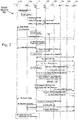
- Fig. 2 shows an exemplary signaling diagram for a registration procedure for a UE 110 to register with a network where either the core network 130 enforces a data rate limit for network slices or the radio access network (RAN) enforces a data rate limit for network slices according to various exemplary embodiments.
- the core network 130 is enforcing the data rate limit.
- the first component is the UE 110 that was discussed above.
- the next component is the 5G NR-RAN 120.
- the UE 110 may connect to the 5G NR-RAN 120 via the gNB 120A or any other gNB associated with the 5G NR-RAN 120.
- the UE 110 may access the 5G NR-RAN 122 or the LTE-RAN 124.
- the UE 110 will be registering via the 5G NR-RAN 120.
- the remaining components/functionalities may be considered to reside in the core network 130. However, those skilled in the art will understand that these components/functionalities may reside in other portions of the network (e.g., the 5G NR-RAN 120) or may be distributed among various portions of the network.
- the next component is the Access and Mobility Management Function (AMF) 131.
- the AMF 131 is generally responsible for mobility management in the 5G NR-RAN 120. For example, the AMF 131 may be responsible for managing handovers between gNBs.
- the next component is a second AMF 132.
- a typical network will have multiple AMF functions and different UEs may be assigned to different AMFs. with the same AMF to reduce mobility management signaling.
- the next component is a Policy Control Function (PCF) 133.
- PCF 133 provides policy rules for control plane functions including network slicing, roaming and mobility management.
- the next component is a Session Management Function (SMF) 134.
- SMF Session Management Function
- the SMF 134 may be responsible for creating, updating and removing Protocol Data Unit (PDU) sessions for UEs.
- PDU Protocol Data Unit
- the next component is an Authentication Server Function (AUSF) 135.
- the AUSF 135 is generally responsible for subscriber authentication during registration or reregistration.
- the next component is a Unified Data Management (UDM) 136.
- the UDM 136 is generally responsible for providing data to the other functions.
- the UDM 136 may provide the AMFs 131 and 132 and the SMF 134 with data to perform the corresponding functions.
- the UDM 135 may generate authentication vector for the AUSF 134.
- steps 14a-c of the registration procedure will focus on steps 14a-c of the registration procedure as that is where there are differences between the standard registration procedure as described in 3GPP 23.502 and the exemplary embodiments.
- a typical registration scenario in steps 14a-c will be described for a service such as Voice over PS (VoPS).
- the AMF 131 registers with the UDM 136 using the Nudm_UECM_Registration for the access to be registered.
- the AMF 131 may provide the UDM with the services that are supported by the UE 110 (e.g., Voice over PS (VoPS)).
- VoIP Voice over PS
- the AMF 131 may not have the subscription information for the UE 110 e.g., whether the subscription associated with the UE 110 supports the VoPS service. If the AMF 131 does not have the subscription data for the UE 110, the AMF 131 retrieves the various subscription data for the UE 110 using the Nudm_SDM in step 14b. After receiving the subscription information, the AMF 131 may subscribe to be notified using Nudm_SDM_Subscribe (step 14c) when the data requested is modified (e.g., the subscription information changes). Thus, in this manner, the AMF 131 may enforce the subscription information for the UE 110 during operation.
- the UDM 136 may include the data rate limits per network slice in the UL and DL.
- the AMF 131 during the registration process for the UE 110, may retrieve this data rate limits per network slice information from the UDM 136. The AMF 131 may then enforce this limit when the UE 110 is connected to the network as will be described in greater detail below.
- Fig. 3 shows an exemplary signaling diagram 300 for a UE 110 to establish a Protocol Data Unit (PDU) session for a network slice where the core network 130 includes a data rate limit for network slices according to various exemplary embodiments.
- the core network 130 also includes a User Plane Function (UPF) 137.
- the UPF 137 performs packet routing and forwarding, packet inspection and QoS handling.
- the core network 130 also includes a data network (DN) 138.
- the entirety of the PDU session establishment procedure of the signaling diagram 300 will not be described as those skilled in the art will understand that the signaling diagram 300 and the various signaling is similar to the signaling described by the PDU session establishment procedure in 3GPP 23.502 Release 16.3.0 Figure 4 .3.2.2.1-1 UE-requested PDU Session Establishment for non-roaming and roaming with local breakout.
- step 4a the SMF 134 will send the session AMBR to the AMF 131. That is, the SMF 134 will provide the AMF with the session AMBR for the new PDU session that is attempting to be established.
- the AMF 131 will accumulate the per session AMBR from all the currently active PDU sessions as well as the new PDU session. The AMF 131 may then compare the accumulated value with the data rate limit (e.g., that was retrieved from the UDM 136 during the registration procedure as described above).
- the AMF 131 will allow the PDU session to be established. If the accumulated AMBR exceeds the data rate limit, the AMF 131 will report this to the SMF 134. The SMF 134 may then either reject the PDU session establishment or cap the session AMBR for the new PDU session such that the accumulated AMBR does not exceed the data rate limit.
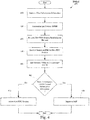
- Fig. 4 shows an exemplary method 400 for a core network 130 to enforce a data rate limit for network slices according to various exemplary embodiments.
- the exemplary method 400 will be described with reference to the exemplary network arrangement 100 of Fig. 1 and the signaling diagrams 200 and 300 of Figs. 2 and 3 , respectively.
- the exemplary method 400 is described from the perspective of the AMF 131.
- the AMF 131 retrieves the subscription information from the UDM 136 during the network registration procedure that is performed for the UE 110.
- the UDM 136 may store the subscription information that includes the per slice AMBR limit per UE.
- the AMF 131 may accumulate the per session AMBR per slice per UE for any active PDU sessions for the UE 110.
- the AMF 131 receives a new slice PDU session establishment request from the UE 110. As described above, the AMF 131 then receives the session AMBR for the new PDU session from the SMF 134 in 440. The AMF 131 then adds the session AMBR for the new PDU session with the current accumulated AMBR in 450. In 460, the AMF 141 may then compare the accumulated AMBR (including the session AMBR for the new PDU session) to the subscription information that was retrieved in 410. If the accumulated AMBR does not exceed the total per slice AMBR of the subscription information, the AMF 131 allows the new PDU session to be established in 470.
- the AMF 131 will report this information to the SMF 134 in 480.
- the SMF 134 may then then either reject the new PDU session establishment or cap the session AMBR for the new PDU session such that the accumulated AMBR does not exceed the data rate limit.
- the exemplary embodiments also include a dynamic manner of controlling the data rate based on the RAN enforcing the data rate.
- the signaling diagrams 200 and 500 of Figs. 2 and 5 , respectively, and the method diagram 600 are used to describe this type of exemplary embodiment.
- the per slice AMBR is enforced by the RAN (e.g., 5G NR-RAN 120) based on the aggregated bit rate from all the non-GBR (non-guaranteed bit rate) QoS flows belonging to the network slice.
- Fig. 2 shows an exemplary signaling diagram for a registration procedure for a UE 110 to register with a network where either the core network 130 enforces a data rate limit for network slices or the radio access network (RAN) enforces a data rate limit for network slices according to various exemplary embodiments.
- the RAN and specifically the 5G NR-RAN 120 is enforcing the data rate limits.
- Fig. 2 will not be described again because it is the same for this exemplary embodiment as described above for the other exemplary embodiment. That is, the UDM will store the subscription information associated with the UE 110 for the network slice, e.g., the maximum AMBR per slice per UE that is associated with the UE 110. The AMF 131 will retrieve this information during the registration procedure.
- Fig. 5 shows an exemplary signaling diagram 500 for a UE 110 to establish a Protocol Data Unit (PDU) session for a network slice where the RAN enforces a data rate limit for network slices according to various exemplary embodiments.
- PDU Protocol Data Unit
- the signaling diagram 500 and the various signaling is similar to the signaling described by the PDU session establishment procedure in 3GPP 23.502 Release 16.3.0 Figure 4 .3.2.2.1-1 UE-requested PDU Session Establishment for non-roaming and roaming with local breakout.
- the entirety of the signaling will not be described but rather the portions that are different from the PDU establishment procedure described in 3GPP 23.502.
- the 5G NR-RAN 120 When establishing the PDU session the 5G NR-RAN 120 will receive the Quality of Service (QoS) profiles and the single network slice selection assistance information (s-NSSAI) (e.g., the network slice with which the PDU session is associated). In the exemplary embodiments, in steps 11 and 12, the 5G NR-RAN will also associate the QoS profiles with the corresponding QoS Flow Identifier (QFI) with the s-NSSAI.
- QoS Quality of Service
- s-NSSAI single network slice selection assistance information
- the 5G NR-RAN 120 may then enforce the per slice AMBR for the network slice. That is, the 5G NR-RAN 120 has received the information corresponding to the data rate limits per network slice for the network slice from the AMF 131 during the registration procedure. This enforcement mechanism by the 5G NR-RAN 120 may be considered to be dynamic because the PDU session will not be rejected. Rather, the PDU session is established and the 5G NR-RAN 120 may then monitor the aggregated bit rate for the particular slice in any time measurement window. If the aggregated bit rate exceeds the subscription information, the 5G NR-RAN 120 may lower the data rates for one or more of the active PDU sessions for the slice to keep the bit rate below the threshold associated with the subscription data rate limit.
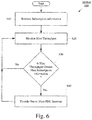
- Fig. 6 shows an exemplary method 600 for a RAN to enforce a data rate limit for network slices according to various exemplary embodiments.
- the exemplary method 600 will be described with reference to the exemplary network arrangement 100 of Fig. 1 and the signaling diagrams 200 and 500 of Figs. 2 and 5 , respectively.
- the exemplary method 600 is described from the perspective of the 5G NR-RAN 120.
- the 5G NR-RAN 120 retrieves the subscription information for the UE 110 related to the network slice.
- the AMF 131 will receive the subscription information from the UDM 136.
- the AMF 131 may then send this subscription information to the 5G NR-RAN 120 during the registration procedure.
- the subscription information may include the per slice data rate limit per UE.
- the 5G NR-RAN 120 may monitor the throughput for the particular network slice.
- the slice throughput will include the accumulated throughput for all currently active slice PDU sessions for the UE 110. This throughput may be measured for a defined measurement window.
- the RAN e.g., 5G NR-RAN
- the RAN may enforce the data throughput limits for the network slice because the 5G NR-RAN 120 is the entity that is aware of the total throughput (either UL or DL) for the UE 110 for the particular slice on a real time basis.
- the 5G NR-RAN 120 may compare the accumulated throughput to the subscription information, e.g., the data rate limit for the network slice for the UE 110. If the current slice throughput is greater than the limit, the 5G NR-RAN may throttle one or more of the PDU sessions corresponding to the network slice and UE 110 to drop the accumulated throughput to below the data rate limit for the network slice in 640. If the current slice throughput is less than the limit, the 5G NR-RAN will continue back to 620 and continue to monitor the accumulated throughput for the network slice and compare it to the limit (630) for as long as the network slice remains active for the UE 110.
- the subscription information e.g., the data rate limit for the network slice for the UE 110.
- An exemplary hardware platform for implementing the exemplary embodiments may include, for example, an Intel x86 based platform with compatible operating system, a Windows OS, a Mac platform and MAC OS, a mobile device having an operating system such as iOS, Android, etc.
- the exemplary embodiments of the above described method may be embodied as a program containing lines of code stored on a nontransitory computer readable storage medium that, when compiled, may be executed on a processor or microprocessor.
- personally identifiable information should follow privacy policies and practices that are generally recognized as meeting or exceeding industry or governmental requirements for maintaining the privacy of users.
- personally identifiable information data should be managed and handled so as to minimize risks of unintentional or unauthorized access or use, and the nature of authorized use should be clearly indicated to users.
Landscapes
- Engineering & Computer Science (AREA)
- Computer Networks & Wireless Communication (AREA)
- Signal Processing (AREA)
- Computer Security & Cryptography (AREA)
- Quality & Reliability (AREA)
- Databases & Information Systems (AREA)
- Mobile Radio Communication Systems (AREA)
Priority Applications (1)
| Application Number | Priority Date | Filing Date | Title |
|---|---|---|---|
| EP24193793.7A EP4436305A3 (de) | 2020-02-12 | 2021-02-12 | Auswahl der datenrate eines netzwerksegments |
Applications Claiming Priority (2)
| Application Number | Priority Date | Filing Date | Title |
|---|---|---|---|
| US202062975583P | 2020-02-12 | 2020-02-12 | |
| US17/248,689 US11653289B2 (en) | 2020-02-12 | 2021-02-03 | Selection of network slice data rate |
Related Child Applications (2)
| Application Number | Title | Priority Date | Filing Date |
|---|---|---|---|
| EP24193793.7A Division EP4436305A3 (de) | 2020-02-12 | 2021-02-12 | Auswahl der datenrate eines netzwerksegments |
| EP24193793.7A Division-Into EP4436305A3 (de) | 2020-02-12 | 2021-02-12 | Auswahl der datenrate eines netzwerksegments |
Publications (2)
| Publication Number | Publication Date |
|---|---|
| EP3866507A1 true EP3866507A1 (de) | 2021-08-18 |
| EP3866507B1 EP3866507B1 (de) | 2026-04-01 |
Family
ID=74625803
Family Applications (2)
| Application Number | Title | Priority Date | Filing Date |
|---|---|---|---|
| EP24193793.7A Pending EP4436305A3 (de) | 2020-02-12 | 2021-02-12 | Auswahl der datenrate eines netzwerksegments |
| EP21156741.7A Active EP3866507B1 (de) | 2020-02-12 | 2021-02-12 | Auswahl von netzwerkscheibendatenrate |
Family Applications Before (1)
| Application Number | Title | Priority Date | Filing Date |
|---|---|---|---|
| EP24193793.7A Pending EP4436305A3 (de) | 2020-02-12 | 2021-02-12 | Auswahl der datenrate eines netzwerksegments |
Country Status (3)
| Country | Link |
|---|---|
| US (1) | US11653289B2 (de) |
| EP (2) | EP4436305A3 (de) |
| CN (2) | CN118785119A (de) |
Families Citing this family (3)
| Publication number | Priority date | Publication date | Assignee | Title |
|---|---|---|---|---|
| WO2022002453A1 (en) * | 2020-07-01 | 2022-01-06 | Telefonaktiebolaget Lm Ericsson (Publ) | Sending and receiving a pdu |
| US11496929B2 (en) * | 2021-04-01 | 2022-11-08 | T-Mobile Usa, Inc. | Methods and systems for selecting a user plane function in a wireless communication network |
| US20250168703A1 (en) * | 2023-11-17 | 2025-05-22 | Verizon Patent And Licensing Inc. | Network slicing capacity planning based on throughput variation and latency variation |
Family Cites Families (13)
| Publication number | Priority date | Publication date | Assignee | Title |
|---|---|---|---|---|
| US9420511B2 (en) * | 2012-11-01 | 2016-08-16 | Intel Corporation | Signaling QoS requirements and UE power preference in LTE-A networks |
| WO2015056392A1 (ja) * | 2013-10-18 | 2015-04-23 | 日本電気株式会社 | ネットワーク制御のためのシステム及び方法 |
| US10856183B2 (en) * | 2016-11-10 | 2020-12-01 | Huawei Technologies Co., Ltd. | Systems and methods for network slice service provisioning |
| US10986516B2 (en) * | 2017-03-10 | 2021-04-20 | Huawei Technologies Co., Ltd. | System and method of network policy optimization |
| US10932111B2 (en) * | 2017-03-20 | 2021-02-23 | Convida Wireless, Llc | Service capability exposure at the user equipment |
| CN109842955B (zh) * | 2017-09-23 | 2023-11-21 | 华为技术有限公司 | 通信方法及装置 |
| US11425607B2 (en) * | 2017-11-17 | 2022-08-23 | Telefonaktiebolaget Lm Ericsson (Publ) | Management of uplink bitrates |
| CN110324867A (zh) * | 2018-03-31 | 2019-10-11 | 华为技术有限公司 | 一种通信方法及装置 |
| CN110366271B (zh) * | 2018-04-10 | 2023-11-17 | 华为技术有限公司 | 通信方法和通信装置 |
| WO2020035130A1 (en) * | 2018-08-14 | 2020-02-20 | Huawei Technologies Co., Ltd. | Time-aware quality-of-service in communication systems |
| US11678252B2 (en) * | 2018-10-05 | 2023-06-13 | Huawei Technologies Co., Ltd. | Quality of service information notification to user equipment, users, and application server |
| US11963247B2 (en) * | 2019-11-07 | 2024-04-16 | Qualcomm Incorporated | Handling slice limitations |
| US12273773B2 (en) * | 2020-05-22 | 2025-04-08 | Apple Inc. | Apparatus and method for dynamic data rate adjustment for a wireless slice |
-
2021
- 2021-02-03 US US17/248,689 patent/US11653289B2/en active Active
- 2021-02-09 CN CN202411117168.0A patent/CN118785119A/zh active Pending
- 2021-02-09 CN CN202110175158.2A patent/CN113259914B/zh active Active
- 2021-02-12 EP EP24193793.7A patent/EP4436305A3/de active Pending
- 2021-02-12 EP EP21156741.7A patent/EP3866507B1/de active Active
Non-Patent Citations (6)
| Title |
|---|
| "3rd Generation Partnership Project; Technical Specification Group Services and System Aspects; Procedures for the 5G System (5GS); Stage 2 (Release 16)", vol. SA WG2, no. V16.3.0, 22 December 2019 (2019-12-22), pages 1 - 558, XP051840932, Retrieved from the Internet <URL:ftp://ftp.3gpp.org/Specs/archive/23_series/23.502/23502-g30.zip 23502-g30.docx> [retrieved on 20191222] * |
| "3rd Generation Partnership Project; Technical Specification Group Services and System Aspects; Study on enhancement of network slicing; Phase 2 (Release 17)", 30 November 2020 (2020-11-30), XP051963935, Retrieved from the Internet <URL:https://ftp.3gpp.org/tsg_sa/WG2_Arch/Latest_SA2_Specs/Latest_draft_S2_Specs/23700-40-120.zip 23700-40-120_MCCclean.docx> [retrieved on 20201130] * |
| "3rd Generation Partnership Project; Technical Specification Group Services and System Aspects; System architecture for the 5G System (5GS); Stage 2 (Release 16)", vol. SA WG2, no. V16.7.0, 17 December 2020 (2020-12-17), pages 1 - 450, XP051999854, Retrieved from the Internet <URL:https://ftp.3gpp.org/Specs/latest/Rel-16/23_series/23501-g70.zip 23501-g70.docx> [retrieved on 20201217] * |
| 3GPP 23.502 |
| HUAWEI ET AL: "Solution on limitation of data rate per Network Slice in UL and DL per UE", vol. SA WG2, no. Incheon, South Korea; 20200113 - 20200117, 7 January 2020 (2020-01-07), XP051842578, Retrieved from the Internet <URL:https://ftp.3gpp.org/tsg_sa/WG2_Arch/TSGS2_136AH_Incheon/Docs/S2-2000515.zip S2-2000515 Solution on limitation of data rate per Network Slice in UL a.._.doc> [retrieved on 20200107] * |
| LG ELECTRONICS: "Scope of Access Control", vol. SA WG1, no. Guilin, China; 20170821 - 20170825, 21 August 2017 (2017-08-21), XP051324743, Retrieved from the Internet <URL:http://www.3gpp.org/ftp/Meetings_3GPP_SYNC/SA1/Docs/> [retrieved on 20170821] * |
Also Published As
| Publication number | Publication date |
|---|---|
| US20210250845A1 (en) | 2021-08-12 |
| CN118785119A (zh) | 2024-10-15 |
| CN113259914A (zh) | 2021-08-13 |
| EP4436305A2 (de) | 2024-09-25 |
| EP3866507B1 (de) | 2026-04-01 |
| EP4436305A3 (de) | 2024-12-25 |
| CN113259914B (zh) | 2024-11-22 |
| US11653289B2 (en) | 2023-05-16 |
Similar Documents
| Publication | Publication Date | Title |
|---|---|---|
| AU2023201180B2 (en) | Systems and method for secure updates of configuration parameters provisioned in user equipment | |
| CN108574969B (zh) | 多接入场景中的连接处理方法和装置 | |
| US11102696B1 (en) | Systems and methods for handover with dynamic quality of service (QoS) in a 5th generation (5G) network | |
| US10581747B2 (en) | System and method for low-overhead interoperability between 4G and 5G networks | |
| WO2020019764A1 (zh) | 信息传输方法、设备及计算机可读存储介质 | |
| US11026124B2 (en) | Enhanced handling on 5G QoS operations | |
| CN111918271A (zh) | 一种信息配置方法及装置 | |
| CN101632318A (zh) | 在一无线接入网络中在进行移动性和无线资源管理决策时考虑订户类型的方法 | |
| EP4462884A2 (de) | Verbesserungen für benutzergerätenetzwerk-slice-verwaltung | |
| US20220361093A1 (en) | Network Slice Admission Control (NSAC) Discovery and Roaming Enhancements | |
| EP3866507B1 (de) | Auswahl von netzwerkscheibendatenrate | |
| US20230189053A1 (en) | Apparatus, method, and computer program | |
| CN107006057A (zh) | 控制无线局域网接入 | |
| EP4662883A1 (de) | Zugangsfunktion (af) mit regeln für eine benutzergeräteroutenauswahlrichtlinie (ursp) für roamer |
Legal Events
| Date | Code | Title | Description |
|---|---|---|---|
| PUAI | Public reference made under article 153(3) epc to a published international application that has entered the european phase |
Free format text: ORIGINAL CODE: 0009012 |
|
| STAA | Information on the status of an ep patent application or granted ep patent |
Free format text: STATUS: REQUEST FOR EXAMINATION WAS MADE |
|
| 17P | Request for examination filed |
Effective date: 20210212 |
|
| AK | Designated contracting states |
Kind code of ref document: A1 Designated state(s): AL AT BE BG CH CY CZ DE DK EE ES FI FR GB GR HR HU IE IS IT LI LT LU LV MC MK MT NL NO PL PT RO RS SE SI SK SM TR |
|
| STAA | Information on the status of an ep patent application or granted ep patent |
Free format text: STATUS: EXAMINATION IS IN PROGRESS |
|
| 17Q | First examination report despatched |
Effective date: 20230605 |
|
| GRAP | Despatch of communication of intention to grant a patent |
Free format text: ORIGINAL CODE: EPIDOSNIGR1 |
|
| STAA | Information on the status of an ep patent application or granted ep patent |
Free format text: STATUS: GRANT OF PATENT IS INTENDED |
|
| RIC1 | Information provided on ipc code assigned before grant |
Ipc: H04W 28/22 20090101AFI20251009BHEP Ipc: H04W 76/18 20180101ALI20251009BHEP Ipc: H04W 28/02 20090101ALI20251009BHEP Ipc: H04W 76/12 20180101ALI20251009BHEP Ipc: H04W 48/18 20090101ALN20251009BHEP |
|
| INTG | Intention to grant announced |
Effective date: 20251030 |
|
| GRAS | Grant fee paid |
Free format text: ORIGINAL CODE: EPIDOSNIGR3 |
|
| GRAA | (expected) grant |
Free format text: ORIGINAL CODE: 0009210 |
|
| STAA | Information on the status of an ep patent application or granted ep patent |
Free format text: STATUS: THE PATENT HAS BEEN GRANTED |
|
| AK | Designated contracting states |
Kind code of ref document: B1 Designated state(s): AL AT BE BG CH CY CZ DE DK EE ES FI FR GB GR HR HU IE IS IT LI LT LU LV MC MK MT NL NO PL PT RO RS SE SI SK SM TR |
|
| REG | Reference to a national code |
Ref country code: CH Ref legal event code: F10 Free format text: ST27 STATUS EVENT CODE: U-0-0-F10-F00 (AS PROVIDED BY THE NATIONAL OFFICE) Effective date: 20260401 Ref country code: GB Ref legal event code: FG4D |
|
| REG | Reference to a national code |
Ref country code: IE Ref legal event code: FG4D |
|
| REG | Reference to a national code |
Ref country code: DE Ref legal event code: R096 Ref document number: 602021050956 Country of ref document: DE |