EP3869372B1 - Verfahren zum senden von daten - Google Patents
Verfahren zum senden von daten Download PDFInfo
- Publication number
- EP3869372B1 EP3869372B1 EP20158360.6A EP20158360A EP3869372B1 EP 3869372 B1 EP3869372 B1 EP 3869372B1 EP 20158360 A EP20158360 A EP 20158360A EP 3869372 B1 EP3869372 B1 EP 3869372B1
- Authority
- EP
- European Patent Office
- Prior art keywords
- transaction
- party
- data
- polynomial
- database
- Prior art date
- Legal status (The legal status is an assumption and is not a legal conclusion. Google has not performed a legal analysis and makes no representation as to the accuracy of the status listed.)
- Active
Links
Images


Classifications
-
- G—PHYSICS
- G06—COMPUTING OR CALCULATING; COUNTING
- G06F—ELECTRIC DIGITAL DATA PROCESSING
- G06F21/00—Security arrangements for protecting computers, components thereof, programs or data against unauthorised activity
- G06F21/60—Protecting data
- G06F21/62—Protecting access to data via a platform, e.g. using keys or access control rules
- G06F21/6218—Protecting access to data via a platform, e.g. using keys or access control rules to a system of files or objects, e.g. local or distributed file system or database
- G06F21/6245—Protecting personal data, e.g. for financial or medical purposes
- G06F21/6254—Protecting personal data, e.g. for financial or medical purposes by anonymising data, e.g. decorrelating personal data from the owner's identification
-
- G—PHYSICS
- G06—COMPUTING OR CALCULATING; COUNTING
- G06F—ELECTRIC DIGITAL DATA PROCESSING
- G06F16/00—Information retrieval; Database structures therefor; File system structures therefor
- G06F16/20—Information retrieval; Database structures therefor; File system structures therefor of structured data, e.g. relational data
- G06F16/24—Querying
- G06F16/245—Query processing
-
- G—PHYSICS
- G06—COMPUTING OR CALCULATING; COUNTING
- G06F—ELECTRIC DIGITAL DATA PROCESSING
- G06F21/00—Security arrangements for protecting computers, components thereof, programs or data against unauthorised activity
- G06F21/60—Protecting data
- G06F21/602—Providing cryptographic facilities or services
-
- G—PHYSICS
- G06—COMPUTING OR CALCULATING; COUNTING
- G06Q—INFORMATION AND COMMUNICATION TECHNOLOGY [ICT] SPECIALLY ADAPTED FOR ADMINISTRATIVE, COMMERCIAL, FINANCIAL, MANAGERIAL OR SUPERVISORY PURPOSES; SYSTEMS OR METHODS SPECIALLY ADAPTED FOR ADMINISTRATIVE, COMMERCIAL, FINANCIAL, MANAGERIAL OR SUPERVISORY PURPOSES, NOT OTHERWISE PROVIDED FOR
- G06Q20/00—Payment architectures, schemes or protocols
- G06Q20/08—Payment architectures
- G06Q20/20—Point-of-sale [POS] network systems
- G06Q20/204—Point-of-sale [POS] network systems comprising interface for record bearing medium or carrier for electronic funds transfer or payment credit
-
- G—PHYSICS
- G06—COMPUTING OR CALCULATING; COUNTING
- G06Q—INFORMATION AND COMMUNICATION TECHNOLOGY [ICT] SPECIALLY ADAPTED FOR ADMINISTRATIVE, COMMERCIAL, FINANCIAL, MANAGERIAL OR SUPERVISORY PURPOSES; SYSTEMS OR METHODS SPECIALLY ADAPTED FOR ADMINISTRATIVE, COMMERCIAL, FINANCIAL, MANAGERIAL OR SUPERVISORY PURPOSES, NOT OTHERWISE PROVIDED FOR
- G06Q20/00—Payment architectures, schemes or protocols
- G06Q20/38—Payment protocols; Details thereof
- G06Q20/387—Payment using discounts or coupons
-
- G—PHYSICS
- G06—COMPUTING OR CALCULATING; COUNTING
- G06Q—INFORMATION AND COMMUNICATION TECHNOLOGY [ICT] SPECIALLY ADAPTED FOR ADMINISTRATIVE, COMMERCIAL, FINANCIAL, MANAGERIAL OR SUPERVISORY PURPOSES; SYSTEMS OR METHODS SPECIALLY ADAPTED FOR ADMINISTRATIVE, COMMERCIAL, FINANCIAL, MANAGERIAL OR SUPERVISORY PURPOSES, NOT OTHERWISE PROVIDED FOR
- G06Q30/00—Commerce
- G06Q30/02—Marketing; Price estimation or determination; Fundraising
- G06Q30/0201—Market modelling; Market analysis; Collecting market data
-
- G—PHYSICS
- G06—COMPUTING OR CALCULATING; COUNTING
- G06Q—INFORMATION AND COMMUNICATION TECHNOLOGY [ICT] SPECIALLY ADAPTED FOR ADMINISTRATIVE, COMMERCIAL, FINANCIAL, MANAGERIAL OR SUPERVISORY PURPOSES; SYSTEMS OR METHODS SPECIALLY ADAPTED FOR ADMINISTRATIVE, COMMERCIAL, FINANCIAL, MANAGERIAL OR SUPERVISORY PURPOSES, NOT OTHERWISE PROVIDED FOR
- G06Q30/00—Commerce
- G06Q30/02—Marketing; Price estimation or determination; Fundraising
- G06Q30/0241—Advertisements
-
- G—PHYSICS
- G06—COMPUTING OR CALCULATING; COUNTING
- G06Q—INFORMATION AND COMMUNICATION TECHNOLOGY [ICT] SPECIALLY ADAPTED FOR ADMINISTRATIVE, COMMERCIAL, FINANCIAL, MANAGERIAL OR SUPERVISORY PURPOSES; SYSTEMS OR METHODS SPECIALLY ADAPTED FOR ADMINISTRATIVE, COMMERCIAL, FINANCIAL, MANAGERIAL OR SUPERVISORY PURPOSES, NOT OTHERWISE PROVIDED FOR
- G06Q30/00—Commerce
- G06Q30/06—Buying, selling or leasing transactions
-
- H—ELECTRICITY
- H04—ELECTRIC COMMUNICATION TECHNIQUE
- H04L—TRANSMISSION OF DIGITAL INFORMATION, e.g. TELEGRAPHIC COMMUNICATION
- H04L9/00—Cryptographic mechanisms or cryptographic arrangements for secret or secure communications; Network security protocols
- H04L9/008—Cryptographic mechanisms or cryptographic arrangements for secret or secure communications; Network security protocols involving homomorphic encryption
-
- H—ELECTRICITY
- H04—ELECTRIC COMMUNICATION TECHNIQUE
- H04L—TRANSMISSION OF DIGITAL INFORMATION, e.g. TELEGRAPHIC COMMUNICATION
- H04L2209/00—Additional information or applications relating to cryptographic mechanisms or cryptographic arrangements for secret or secure communication H04L9/00
- H04L2209/08—Randomization, e.g. dummy operations or using noise
-
- H—ELECTRICITY
- H04—ELECTRIC COMMUNICATION TECHNIQUE
- H04L—TRANSMISSION OF DIGITAL INFORMATION, e.g. TELEGRAPHIC COMMUNICATION
- H04L2209/00—Additional information or applications relating to cryptographic mechanisms or cryptographic arrangements for secret or secure communication H04L9/00
- H04L2209/42—Anonymization, e.g. involving pseudonyms
-
- H—ELECTRICITY
- H04—ELECTRIC COMMUNICATION TECHNIQUE
- H04L—TRANSMISSION OF DIGITAL INFORMATION, e.g. TELEGRAPHIC COMMUNICATION
- H04L2209/00—Additional information or applications relating to cryptographic mechanisms or cryptographic arrangements for secret or secure communication H04L9/00
- H04L2209/56—Financial cryptography, e.g. electronic payment or e-cash
Definitions
- the present disclosure relates to a method of retrieving data.
- the disclosure relates to the provision of anonymised transaction data.
- the disclosure relates to a method of sending data related to cardholder transactions and a database comprising transaction data related to cardholder transactions.
- receipts When cardholders undertake transactions a receipt relating to the transaction is generated.
- receipts have been provided in either hard-copy form (a printed receipt) and/or in electronic form (e.g. a copy of a receipt may be emailed to a cardholder both in cardholder present transactions and also in cardholder not present transactions that occur via an online merchant).
- Subsequent to a transaction between a cardholder and a merchant limited transaction data may be available for later retrieval by the cardholder.
- US2017031963 describes a method of tracking tagged transaction data corresponding to transactions between users and merchants is provided. The method includes receiving, by the tag tracking computing device, a plurality of transaction signals including a plurality of transaction data associated with the transactions.
- the present disclosure aims to provide improved transaction related data retrieval and transaction sharing.
- a method of sending data related to cardholder transactions comprising: receiving transaction data from a merchant relating to the cardholder transactions, the transaction data comprising itemised product data and payment device data, the itemised product data comprising itemised receipt line items for goods or services received from the merchant; storing, for each transaction, the received transaction data relating to that transaction in a transaction record in a database; aggregating received transaction data and storing the aggregated transaction data in the transaction records; receiving a request for data related to cardholder transactions stored in the database; querying the database and returning aggregated transaction data to a third party, wherein each transaction record comprises a transaction ID and wherein the database defines a set of attributes relating to the transaction records, the method comprising: generating a polynomial Ai(X) for each attribute where the zeros of the polynomial correspond to the transaction IDs of the records that have the ith attribute; assigning
- the present disclosure provides a method of receiving transaction data related to cardholder transactions, storing and aggregating the received data before returning, in response to a request, the aggregated data to a third party.
- the received transaction data comprises itemised product data (e.g. the products bought in the transaction) and payment device data (which enables a cardholder to send a request for their receipt data and for this data to be returned to the cardholder).
- the present disclosure therefore enables cardholders to obtain a digital record of their itemised receipt data and third parties to perform analytics on suitably anonymised and aggregated data.
- Services such as Mastercard's M/Chip Tap and Connect allow itemised lists of items purchased by a cardholder in a transaction to be collected and stored.
- the received transaction data is also anonymised and the aggregated and anonymised transaction data may be stored in the transaction records.
- a database system comprising transaction data related to cardholder transactions, the database system comprising: an input arranged to receive transaction data from a merchant relating to cardholder transactions, the transaction data comprising itemised product data and payment device data, the itemised product data comprising itemised receipt line items for goods or services received from the merchant; ; a processor arranged to: store, for each transaction, the received transaction data relating to that transaction in a transaction record; aggregate received transaction data and store the aggregated transaction data in the transaction records; an output for outputting transaction data wherein the input is arranged to further receive requests for cardholder transactions stored in the database and the processor is arranged to query the transaction records and return aggregated transaction data to a third party, the output being arranged to output the returned transaction data to the cardholder or third party wherein each transaction record comprises a transaction ID and wherein the database system defines a set of attributes relating to the transaction records, the processor being arranged to: generate a polynomial Ai(X) for each attribute where the zeros
- the method may further comprise: filtering the database transaction data to identify a set P of cardholder accounts that have completed a transaction for the specific product; calculating M(P), where M() is a one way commutative function; receiving G(C) from the third party, where G() is a one way commutative function known to the third party and C is a set of data identifying accounts that have interacted with a campaign hosted by the third party for the specific product; calculating MG(C) and sending to third party such that the third party can determine the intersection of MG(P) and MG(C).
- the set MG(C) may be shuffled before sending to the third party.
- Fictitious cardholder accounts may be added to the set P.
- M() may be a commutative one-way function, such as an elliptic curve scalar multiplication function.
- G() may be a commutative one-way function such as an elliptic curve scaler multiplication function.
- the received request may be for a class of products and the database may be filtered for cardholder accounts that have completed a transaction for the product class.
- the method may comprise receiving transaction IDs from the third party wherein the transaction IDs have been determined by factorising the polynomial B(x) and sending aggregated transaction data relating to data record IDs associated with B(x) to the third party.
- the method may comprise identifying a set P of cardholders that have completed a transaction for products associated with the data record IDs associated with B(x).
- the method may comprise sending transaction data associated with the set P according to the method of any of the above aspects of the disclosure.
- the set MG(C) may be calculated as described above and sent.
- the set J and total blinded sums S as described above may be sent.
- the homomorphic encryption function may comprise a Paillier encryption function.
- the database used may be the database according to the second aspect of the present disclosure.
- a method of sending transaction data from a database comprising transaction data in the form of a plurality of transaction records, each transaction record comprising product data for products obtained by a cardholder in a transaction
- the method comprising: receiving a request for product data related to a specific product from a third party; filtering the database transaction data to identify a set P of cardholder accounts that have completed a transaction for the specific product; calculating M(P), where M() is a one way commutative function; receiving G(C) from the third party, where G() is a one way commutative function known to the third party and C is a set of data identifying accounts that have interacted with a campaign hosted by the third party for the specific product; calculating MG(C) and sending to third party such that the third party can determine the intersection of MG(P) and MG(C).
- a method of sending transaction data from a database comprising transaction data in the form of a plurality of transaction records, each transaction record comprising product data for products obtained by a cardholder in a transaction
- a method of sending transaction data from a database comprising aggregated transaction data in the form of a plurality of transaction records, each transaction record comprising product data for products obtained by a cardholder in a transaction and having a transaction ID, wherein the database defines a set of attributes relating to the transaction records, the method comprising,: generating a polynomial Ai(X) for each attribute where the zeros of the polynomial correspond to the transaction IDs of the records that have the ith attribute; assigning a Tag, Tag_i, to each attribute and encrypting each Ai(x) as Enc (Ai(x)); sending the set ⁇ Tag_i, Enc(Ai(x)) ⁇ to a proxy database; receiving an encrypted and blinded polynomial Enc(B(x)) from the proxy database, the polynomial comprising attributes selected by a third party; decrypting Enc(B(x)) with the third party.
- a method of sending transaction data from a database comprising transaction data in the form of a plurality of transaction records, each transaction record comprising product data for products obtained by a cardholder in a transaction, the method comprising:
- FIG 1 shows a transaction system 100 comprising a cardholder's payment device 102 (in the arrangement shown in Figure 1 this is a mobile device 104 with a digitised payment card 106 stored in a digital wallet. It is noted however that the transaction system may also comprise a physical payment card 108 in place of the mobile device), a merchant system 110 (comprising a point of sale device 112 and an electronic cash register 114), a transaction network 116 and a remote database 118.
- a cardholder's payment device 102 in the arrangement shown in Figure 1 this is a mobile device 104 with a digitised payment card 106 stored in a digital wallet. It is noted however that the transaction system may also comprise a physical payment card 108 in place of the mobile device), a merchant system 110 (comprising a point of sale device 112 and an electronic cash register 114), a transaction network 116 and a remote database 118.
- a cardholder's payment device 102 undertakes a transaction with the merchant system 110.
- the cardholder presents their payment device 106 during the transaction and, optionally, an offer token (such as a loyalty token or voucher) and payment for the goods or services obtained from the merchant is then taken.
- an offer token such as a loyalty token or voucher
- transaction data 120 (including an itemised receipt of the goods/services obtained by the cardholder and additionally payment device data) is sent via the transaction network 116 to the remote database 118 where the transaction data is stored. Subsequently the cardholder may retrieve their itemised receipt from the remote database 118.
- the remote database is configured to receive transaction data from each transaction and to store such transaction data.
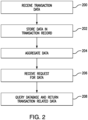
- Figure 2 shows a method of retrieving data from the remote database in which in step 200 transaction data relating to cardholder transactions is received at the remote database.
- the transaction data for each transaction comprises itemised product data and also payment device data. It is noted that the payment device data received is sufficient to identify specific cardholders.
- "Product data" in the present context means an itemised receipt line item for a goods or service received from the merchant.
- the remote database is arranged to store, for each transaction, the received transaction data in a transaction record in the database, each specific transaction (transaction record) relating to a specific cardholder account.
- the received transaction data is aggregated and the aggregated transaction data is additionally stored in the records within the database.
- the specific transaction data relating to a given cardholder's transaction may be aggregated into one or more transaction data categories (e.g. merchant name, merchant type, product category, product brand, transaction amount or transaction range etc.).
- the aggregation process may effectively create an anonymised counterpart of the cardholder's transaction data.
- the database may comprise a number of records where each record comprises aggregated data representing a purchased item and associated payment account (PAN), date, product identifier, and price.
- PAN payment account
- the primary index of the database is Record#. Fully itemised product data may also be present within the Record# for access by the cardholder.
- the remote database may subsequently receive a request for data relating to cardholder transactions stored in the database.
- a request may originate from the cardholder themselves or from a third party.
- Step 208 the database may be queried and either itemised product data may be returned in the event that the querying entity is the cardholder or aggregated transaction data may be returned in the event that the request is received from a third party entity.
- the use of the database containing transaction data and aggregated transaction data is described below in relation to two general use types: (i) where the actual consumer wishes to retrieve information relating to a transaction they have undertaken in the past (e.g. a user retrieving transaction data in order to activate or use a product warranty); (ii) where a 3rd party wants to access aggregated transaction data (e.g. so that a 3rd party can determine whether a promotional campaign for a targeted merchant (here, Walmart) and merchandise (here, electric appliances) was successful).
- a targeted merchant here, Walmart
- merchandise here, electric appliances
- an itemised receipt is generated, in JSON format, as indicated below.
- the transaction data relating to the transaction is sent to the remote database where it is stored in a transaction record relating to consumer/cardholder "John Doe".
- the storage of the transaction data in the cloud at the remote database enables the consumer to retrieve information required to use the product warranty if necessary.
- the cardholder in the event the shaver breaks down on November 5th, 2020 (which is within a 2 year warranty period) then the cardholder is able to log into the remote database (for instance, through User ID and password) as John Doe. He is then able to place a search query (e.g. a combination of one or more of the search terms: "Electric shaver”; “Braun Brau”; “March 2019”; “Walmart”) in order to access the digital itemised receipt data held on the database.
- a search query e.g. a combination of one or more of the search terms: "Electric shaver"; “Braun Brau”; “March 2019”; “Walmart”
- the aggregated and anonymised data may then be used by a third party as part of a campaign as follows.
- a third party contracts the third party to start a promotional campaign on small electrical appliances affordable to youngsters that are typical for male adults, such as electric shavers or power tools.
- the campaign starts on March 1 st 2020 and runs until March 21 st 2020.
- the third party operates in the online space and while the campaign is running the third party arranges for online adverts to appear in the browsers of, at least a proportion, of users browsing small electrical appliances.
- the third party is able to demonstrate to Walmart that the campaign had an effect and increased the number of affordable electronic appliances with respect to previous years, in particular to the previous year (i.e. 2019).
- This demonstration may be undertaken by the third party running a query on the database, comparing the total number of electrical appliances below $200 bought at Walmart between March 1st and March 31st in 2019 - where no promotional campaign was run- and the same period for 2020. A significant difference between the two numbers should illustrate the effectiveness of the campaign and therefore the value of the adverts/campaign.
- the first deals with an advert for a specific product (e.g. Braun electric razor model 3200i), and the second deals with an advert for a product category (e.g. electrical appliances).
- the third party queries the remote desktop with a search query (the transactions in which they are interested). The relevant transactions can then be filtered from the remote database and then, by means of a homomorphic protocol, the third party may be provided with a clicked subset of the associated aggregate information.
- the third party does not reveal their query criteria yet still manages to obtain the aggregate information for the transactions that satisfy their search query.
- the third example may be used on top of the existing 'double-blind' protocol in the first two worked examples or in place of it.
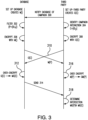
- Step 300 the third party informs the remote database of the campaign (product and time period) such that the remote database can identify, in step 302, all accounts that were used to purchase the specific product.
- This step (302) requires access to the database of transaction data comprising itemized product data.
- the total number of cardholder accounts is therefore filtered and the result is a (multi-)set P of transaction data relating to 'purchased' accounts, where some accounts may be repeated if the cardholder made multiple purchases of the same product.
- the third party identifies in step 304 all accounts that clicked on the advert for the specific product. This results in a set C of 'clicked' accounts.
- M(P) ⁇ M(IDx) ⁇ .
- M() and G() are one way commutative functions known to, respectively, the remote database and the third party which are created in a set up phase. Such one way commutative functions may be elliptic curve scalar multiplications.
- Step 310 the remote database and the third party then exchange M(P) and G(C).
- the remote database and the third party exchange M(P) and G(C).
- the remote database and the third party it is possible for the remote database and the third party to include fictitious accounts that do not correspond to live accounts so that in Step 306/308 the size of the sets M(P) and G(C) do not reveal the number of product purchases or advert clicks, respectively.
- Step 312 the remote database then over-encrypts G(C) to become MG(C), shuffles the elements of the set and then sends, in step 314, the shuffled MG(C) to the third party.
- the third party is able to determine the size of the intersection, being the number of items purchased that correspond to a click.
- steps 302 and 306 described herein could occur before steps 304 and 308 or vice versa.
- steps 312 and 316 may happen concurrently or sequentially.
- the third party could screen out purchases that were made before an interaction with the campaign had occurred.
- the remote database could provide the third party with the same information for unclicked accounts and also for a time period preceding the campaign.
- the total number of items purchased increases, compared to a time period immediately prior to the campaign, by the number of purchase clicked accounts (i.e. the purchase unclicked accounts is the same for both time periods) then this is a strong argument that the additional purchases resulted from the clicks and hence the campaign.
- a campaign may run in relation to a range of products which are on sale at a variety of prices at different retailers. As there is diversity in the products on sale a monetary value $value is included in the analysis below.
- the third party advises the remote database of a product range that is the subject of a campaign.
- the remote database is then able to provide aggregated transaction data to the third party as per the process below.
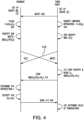
- Worked example 2 is detailed below in combination with Figure 4 which shows the exchange of information between the remote database and the third party.
- the remote database and third party create one way encryption functions M() and G() respectively.
- the remote database additionally generates a key pair for Paillier homomorphic encryption E() and shares the public key with the third party.
- step 400 the third party notifies the database of the campaign (product category and time period).
- the remote database identifies all transaction records (cardholder accounts) that were used to purchase items in the product category. This requires access to the database of transaction data comprising itemised product data. The total number of cardholder accounts is therefore filtered and the result is a (multi-)set P of aggregated transaction data relating to the 'purchased' accounts, where some accounts may be repeated if the cardholder made multiple purchases within the same product category.
- the remote database may optionally aggregate multiple transactions in respect of the same cardholder account and hold a single $value Vx for account IDx.
- the third party identifies in step 404 all accounts that interacted with the campaign for the product category. This results in a set C of 'clicked' accounts.
- step 410 the remote database and the third party then exchange M E (P) and G(C). It is noted that in step 402 and 404 it is possible for the remote database and the third party to include fictitious accounts that do not correspond to live accounts so that in Step 406/408 the size of the sets M E (P) and G(C) do not reveal the number of product purchase accounts or advert clicked accounts, respectively.
- step 412 the third party over-encrypts each M(IDx) to form GM(IDx) and blinds each Vx with an Rx (which it records for later use in Step 420).
- Rx which it records for later use in Step 420.
- the third party then sends, in step 414, ⁇ GM(IDx):E(Vx+Rx) ⁇ to the remote database. It is noted that the elements of the set may be shuffled so that the remote database cannot cross-correlate items received with items sent.
- Step 416 the remote database determines the purchased clicked items corresponding to the intersection J of ⁇ GM(IDx) ⁇ with ⁇ MG(IDy) ⁇ and then decrypts in step 418, the values ⁇ Vx+Rx ⁇ associated with these values.
- the third party's blinding of the Vx prevents the remote database from knowing the total value of the purchased clicked transactions as well as preventing cross-correlation (per the shuffling at the end of Step 414).
- the remote database then sends (step 420) back to the third party the set J and the total blinded value S (the sum in J of ⁇ Vx+Rx ⁇ ).
- the third party may then use the set J to calculate (step 422) the total blind (the sum in J of ⁇ Rx ⁇ ) and can then subtract this from S to reveal the total value of purchased clicked transactions.
- Typical choices for commutative one-way functions M() and G() are modular exponentiation over a finite field or scalar multiplication of a point on an elliptic curve over a finite field.
- the remote database and the third party could agree on a curve and a mapping of ID to points on the curve (which are the actual domain of the functions but the mapping is ignored for ease of exposition).
- the Paillier encryption function E() is a homomorphic encryption function like RSA but taking place modulo n 2 .
- the remote database may encrypt and decrypt, but the third party can only encrypt.
- M() and G() there needs to be an agreed mapping to the domain, in this case, between $values and integers modulo n 2 which are the true domain of E(). Because n 2 might be over 700 bytes there will actually be space to map multiple $values into this domain.
- the third party openly informs the remote database of the product to be queried. If this is considered a privacy problem then the remote database would either have to send the third party the full encrypted database or a privacy method such as that described in the third worked example below could be used.
- the third worked example privacy techniques are used to select a set of accounts ⁇ IDx ⁇ from the remote database without revealing the selection criteria to the database.
- the example described below additionally utilises a proxy database that is separate from the remote database described above.
- the selection criteria that the third party is using corresponds to "electrical appliances" from “Walmart” which are under $200.
- the remote database receives in step 501 a request from the third party related to Walmart in March 2020 and based on its historic data, the remote database prepares, in step 503, a data set as a subset of the Mastercard Items database in which the dataset contains all transactions at Walmart between March 1 st , 2020 and March 31 st , 2020.
- the dataset contains 10 transaction records, represented by the entries 1 to 10 in the table below.
- Each entry has an identifier equal to the Record# (written as REC) and so each entry is represented as REC1 to REC10.
- step 505 a list of attributes Ai (e.g. "electrical appliance", " ⁇ $200”) are generated. Purchased items contained within the dataset fall into different product categories (e.g. electrical appliance, healthcare, beauty etc.) and have different amounts (or amount categories such as " ⁇ $200").
- product categories e.g. electrical appliance, healthcare, beauty etc.
- amounts or amount categories such as " ⁇ $200”
- Records REC1, REC2 and REC5 include the purchase of an electrical appliance (indicated by transaction records with an "X"). Records 1, 2, 6, 7 and 8 include a transaction item costing less than 200$ (indicated by transaction records with a "+").
- the remote database generates attribute polynomials Ai(x) whose zeros are the transaction IDs (REC#) of the records that have the i th attribute. It is noted that the remote database is arranged to generate a polynomial for all allowed query attributes along with an attribute identifying tag (the tag being a pseudo random function hash of the name of the attribute such that attribute information is not leaked to the Proxy database).
- A1(x) represents a polynomial with 3 roots, where each root is the value of a REC: REC1, REC 2 and REC5 A2(x) represents a polynomial with 5 roots, again each root having the value of a REC, here REC1 REC2, REC6, REC7 and REC8.
- step 509 to hide the polynomials (and hence their roots) from the Proxy database, the remote database encrypts all polynomials before sending them and their tags, in step 511, to the Proxy lookup database where they are stored.
- Each polynomial is encrypted in step 509 by encrypting its coefficients and the encryption function is a homomorphic encryption function E() owned by the remote database.
- the Proxy database comprises an encrypted polynomial for each attribute that might be queried and as such there may be hundreds or thousands of such polynomials (each with an identifying tag).
- step 513 the third party obtains from the remote database the list of tags and associated attributes.
- step 515 the third party sends the tags associated with the attributes they are interested in ("electrical appliance” and " ⁇ $200") to the proxy database.
- the proxy database sends the third party an encrypted blinded polynomial.
- the blinded polynomial B(x) is encrypted by encrypting the coefficients of B(X).
- step 519 the third party then interacts with the remote database (e.g. using an oblivious protocol) to determine the decrypted polynomial B(x).
- step 521 the third party then factorises the result to find its roots thereby finding the record indices of the conjunction of the two queries.
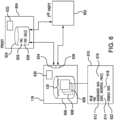
- Figure 6 shows the remote database 118 of Figure 1 , a third party computing device 602 representing the third party and the proxy database 604.
- the remote database 118 comprises a data store 606 within which transaction data 120 is stored in the form of a number of transaction records 608 where each record 610 comprises aggregated data 612 representing a purchased item and associated payment account (PAN) 614, date 616, product identifier 618, and price 620.
- PAN payment account
- the primary index of the database is REC#.
- Fully itemised product data 622 may also be present within the Record# for access by the cardholder.
- the proxy database 604 comprises a data store 624 within which are the tags 626 and encrypted attributes 628 received from the remote database 118.
- the remote database 118 comprises an input 634 for receiving transaction data relating to cardholder transactions and requests from cardholders or third parties for transaction data stored in the database and an output 636 for outputting transaction data.
- the remote database 118 and proxy database 604 comprise processors (630, 632 respectively) arranged to carry out the various method steps described above in relation to Figures 2 through 5 .
Landscapes
- Engineering & Computer Science (AREA)
- Business, Economics & Management (AREA)
- Accounting & Taxation (AREA)
- Finance (AREA)
- Theoretical Computer Science (AREA)
- Strategic Management (AREA)
- Physics & Mathematics (AREA)
- General Physics & Mathematics (AREA)
- Development Economics (AREA)
- General Business, Economics & Management (AREA)
- Economics (AREA)
- Marketing (AREA)
- General Engineering & Computer Science (AREA)
- Entrepreneurship & Innovation (AREA)
- General Health & Medical Sciences (AREA)
- Computer Security & Cryptography (AREA)
- Bioethics (AREA)
- Health & Medical Sciences (AREA)
- Computer Hardware Design (AREA)
- Databases & Information Systems (AREA)
- Data Mining & Analysis (AREA)
- Game Theory and Decision Science (AREA)
- Software Systems (AREA)
- Computational Linguistics (AREA)
- Signal Processing (AREA)
- Computer Networks & Wireless Communication (AREA)
- Medical Informatics (AREA)
- Management, Administration, Business Operations System, And Electronic Commerce (AREA)
- Storage Device Security (AREA)
Claims (5)
- Verfahren zum Senden von Daten im Zusammenhang mit Karteninhabertransaktionen, das durch eine entfernte Datenbank durchgeführt wird, umfassendEmpfangen (200) von Transaktionsdaten von einem Händler im Zusammenhang mit Karteninhabertransaktionen, die Transaktionsdaten umfassend aufgeschlüsselte Produktdaten und Zahlungsvorrichtungsdaten, die aufgeschlüsselten Produktdaten umfassend aufgeschlüsselte Belegpositionen für von dem Händler erhaltene Waren oder Dienstleistungen;Speichern (202), für jede Karteninhabertransaktion, der empfangenen Transaktionsdaten im Zusammenhang mit dieser Transaktion in einem Transaktionsdatensatz in der entfernten Datenbank, wobei jeder Transaktionsdatensatz eine Transaktions-ID umfasst und wobei die entfernte Datenbank einen Satz von Attributen im Zusammenhang mit Transaktionsdatensätzen definiert;Aggregieren (204) der empfangenen Transaktionsdaten und Speichern der aggregierten Transaktionsdaten in den Transaktionsdatensätzen;Empfangen, von einer Drittpartei, (206, 501) einer Anfrage von Daten im Zusammenhang mit Karteninhabertransaktionen, die in der entfernten Datenbank gespeichert sind;Erzeugen (507) eines Polynoms Ai(X) für jedes Attribut, dessen Nullen den Transaktions-IDs der Datensätze entsprechen, die das i-te Attribut aufweisen, Zuweisen (507) eines Tag, Tag_i, zu jedem Attribut und Verschlüsseln (509) jedes Ai(x) als Enc (Ai(x))Senden (511) eines Satzes {Tag_i, Enc(Ai(x))} an eine Proxy-Datenbank;Empfangen eines verschlüsselten und verblindeten Polynoms Enc(B(x)), das auf dem Polynom Ai(x) basiert, aus der Proxy-Datenbank durch die Drittpartei, das Polynom Enc (B(x)) umfassend Attribute, die durch die Drittpartei ausgewählt sind;Entschlüsseln von Enc(B(x)) und Senden des entschlüsselten Polynoms B(x) an die Drittpartei;Abfragen (208) der entfernten Datenbank basierend auf dem entschlüsselten Polynom B(x) und Zurückgeben von aggregierten Transaktionsdaten an die Drittpartei.
- Verfahren nach Anspruch 1, wobei die empfangenen Transaktionsdaten anonymisiert werden und die aggregierten und anonymisierten Transaktionsdaten in den Transaktionsdatensätzen gespeichert werden.
- Verfahren nach Anspruch 1, umfassend Empfangen von Transaktions-IDs von der Drittpartei, wobei die Transaktions-IDs durch Faktorisieren des Polynoms B(x) bestimmt wurden, Senden von aggregierten Transaktionsdaten im Zusammenhang mit Transaktions-IDs, die dem Polynom B(x) zugehörig sind, an die dritte Partei.
- Verfahren nach Anspruch 1 oder 3, umfassend ein Identifizieren eines Satzes P von Karteninhabern, die eine Transaktion für Produkte abgeschlossen haben, die den Transaktions-IDs zugehörig sind, die dem Polynom B(x) zugehörig sind.
- Entfernte Datenbank (118), umfassend Transaktionsdaten im Zusammenhang mit Karteninhabertransaktionen, die entfernte Datenbank umfassend:einen Eingang (632), der angeordnet ist, um die Transaktionsdaten (120) von einem Händler im Zusammenhang mit Karteninhabertransaktionen zu empfangen, die Transaktionsdaten umfassend aufgeschlüsselte Produktdaten und Zahlungsvorrichtungsdaten, die aufgeschlüsselten Produktdaten umfassend aufgeschlüsselte Belegpositionen für von dem Händler erhaltene Waren oder Dienstleistungen;einen Prozessor (630), der angeordnet ist zum:Speichern, für jede Karteninhabertransaktion, der empfangenen Transaktionsdaten im Zusammenhang mit dieser Transaktion in einem Transaktionsdatensatz in der entfernten Datenbank (610), wobei jeder Transaktionsdatensatz eine Transaktions-ID umfasst und wobei die entfernte Datenbank einen Satz von Attributen im Zusammenhang mit Transaktionsdatensätzen definiert;Aggregieren der empfangenen Transaktionsdaten und Speichern der aggregierten Transaktionsdaten in den Transaktionsdatensätzen;einen Ausgang (634) zum Ausgeben von Transaktionsdatenwobei der Eingang angeordnet ist, um ferner Anfragen für Karteninhabertransaktionen, die in der entfernten Datenbank gespeichert sind, von einer Drittpartei zu empfangen;wobei der Prozessor angeordnet ist zum:Erzeugen (507) eines Polynoms Ai(X) für jedes Attribut, dessen Nullen den Transaktions-IDs der Datensätze entsprechen, die das i-te Attribut aufweisen;Zuweisen (507) eines Tag, Tag_i, zu jedem Attribut und Verschlüsseln (509) jedes Ai(x) als Enc (Ai(x))wobei der Ausgang angeordnet ist, um einen Satz {Tag_i, Enc(Ai(x))} an eine Proxy-Datenbank zu senden (511), und der Eingang angeordnet ist, um ein verschlüsseltes und verblindetes Polynom Enc(B(x)), das auf dem Polynom Ai(x) basiert, aus der Proxy-Datenbank zu empfangen, das Polynom Enc (B(x)) umfassend Attribute, die durch die Drittpartei ausgewählt sind;und der Prozessor angeordnet ist, um Enc(B(x)) zu entschlüsseln und das entschlüsselte Polynom B(x) an die Drittpartei zu senden;und der Prozessor angeordnet ist, um die Transaktionsdatensätze basierend auf dem entschlüsselten Polynom B(x) abzufragen und aggregierte Transaktionsdaten (612) an die Drittpartei zurückzugeben, wobei die Ausgabe angeordnet ist, um die zurückgegebenen Transaktionsdaten an die Drittpartei auszugeben.
Priority Applications (2)
| Application Number | Priority Date | Filing Date | Title |
|---|---|---|---|
| EP20158360.6A EP3869372B1 (de) | 2020-02-19 | 2020-02-19 | Verfahren zum senden von daten |
| PCT/US2021/016792 WO2021167802A1 (en) | 2020-02-19 | 2021-02-05 | A method of sending data |
Applications Claiming Priority (1)
| Application Number | Priority Date | Filing Date | Title |
|---|---|---|---|
| EP20158360.6A EP3869372B1 (de) | 2020-02-19 | 2020-02-19 | Verfahren zum senden von daten |
Publications (2)
| Publication Number | Publication Date |
|---|---|
| EP3869372A1 EP3869372A1 (de) | 2021-08-25 |
| EP3869372B1 true EP3869372B1 (de) | 2024-11-13 |
Family
ID=69701125
Family Applications (1)
| Application Number | Title | Priority Date | Filing Date |
|---|---|---|---|
| EP20158360.6A Active EP3869372B1 (de) | 2020-02-19 | 2020-02-19 | Verfahren zum senden von daten |
Country Status (2)
| Country | Link |
|---|---|
| EP (1) | EP3869372B1 (de) |
| WO (1) | WO2021167802A1 (de) |
Families Citing this family (1)
| Publication number | Priority date | Publication date | Assignee | Title |
|---|---|---|---|---|
| CN114331405B (zh) * | 2021-12-28 | 2025-02-14 | 中国联合网络通信集团有限公司 | 一种交易账单数据的处理方法、装置、系统及存储介质 |
Family Cites Families (8)
| Publication number | Priority date | Publication date | Assignee | Title |
|---|---|---|---|---|
| US8170932B1 (en) * | 2007-11-28 | 2012-05-01 | Wells Fargo Bank, N.A. | System and method for data management and financial transaction categorization |
| US20100301114A1 (en) * | 2009-05-26 | 2010-12-02 | Lo Faro Walter F | Method and system for transaction based profiling of customers within a merchant network |
| US8738418B2 (en) * | 2010-03-19 | 2014-05-27 | Visa U.S.A. Inc. | Systems and methods to enhance search data with transaction based data |
| AU2013214801B2 (en) * | 2012-02-02 | 2018-06-21 | Visa International Service Association | Multi-source, multi-dimensional, cross-entity, multimedia database platform apparatuses, methods and systems |
| US9384493B2 (en) * | 2012-03-01 | 2016-07-05 | Visa International Service Association | Systems and methods to quantify consumer sentiment based on transaction data |
| US20150073989A1 (en) * | 2013-09-10 | 2015-03-12 | Visa International Service Association | Systems and methods to transmit consumer information in connection with payment transactions |
| IL234613A0 (en) * | 2014-09-11 | 2014-12-02 | Google Inc | Exchange consolidated and encrypted transaction information with a transaction information provider |
| US20170031963A1 (en) * | 2015-07-27 | 2017-02-02 | Mastercard International Incorporated | Systems and methods for tracking data using user provided data tags |
-
2020
- 2020-02-19 EP EP20158360.6A patent/EP3869372B1/de active Active
-
2021
- 2021-02-05 WO PCT/US2021/016792 patent/WO2021167802A1/en not_active Ceased
Also Published As
| Publication number | Publication date |
|---|---|
| EP3869372A1 (de) | 2021-08-25 |
| WO2021167802A1 (en) | 2021-08-26 |
Similar Documents
| Publication | Publication Date | Title |
|---|---|---|
| JP7514232B2 (ja) | ゼロ知識広告方法、装置、およびシステムのための暗号化匿名化 | |
| US12034705B2 (en) | Systems and methods for exchanging data between devices | |
| CN108230163B (zh) | 保险产品推广方法、装置、设备及计算机可读存储介质 | |
| US20020091650A1 (en) | Methods of anonymizing private information | |
| US20080270248A1 (en) | System and device for social shopping on-line | |
| US9641332B1 (en) | Privacy-preserving measurements of a campaign | |
| CN108629666A (zh) | 信息推荐方法、装置、电子设备及计算机可读存储介质 | |
| KR101994092B1 (ko) | 레시피 및 식재료 통합 관리 시스템에서의 레시피의 매매를 중개하는 방법 및 장치 | |
| CN109886728B (zh) | 一种线上商城的实现方法、系统和数据统一管理系统 | |
| WO2022204589A1 (en) | Smart link for outside network input/output | |
| EP3869372B1 (de) | Verfahren zum senden von daten | |
| US10554384B2 (en) | Aggregation of encrypted data | |
| JP2013210933A (ja) | リコメンド支援方法、リコメンド支援装置及びプログラム | |
| JPWO2017122437A1 (ja) | 情報処理装置、情報処理システム、および情報処理方法、並びにプログラム | |
| WO2015186574A1 (ja) | 情報システム、統合装置、第一装置、情報処理方法、および記録媒体 | |
| CN111260415B (zh) | 广告推荐方法、装置 | |
| US20090083139A1 (en) | Systems and methods for serving generalized gift certificates to consumers on a web site | |
| CN108256981B (zh) | 服务推荐方法、装置、电子设备及计算机可读存储介质 | |
| US20020069181A1 (en) | Tagged private information retrieval | |
| CN110998646A (zh) | 信息处理装置、信息处理系统、信息处理方法和程序 | |
| CN114610964A (zh) | 一种金融产品的视图确定方法和相关装置 | |
| Veugen et al. | Content-based recommendations with approximate integer division | |
| Leherbauer | Cryptomoney and its' Applications in B2C Markets: Status quo and future Trends/submitted by Philipp Leherbauer, B. Sc. | |
| Biswas et al. | Privacy-preserving outsourced profiling | |
| CN119814265A (zh) | 一种基于区块链和量子通信的能源交易方法及系统 |
Legal Events
| Date | Code | Title | Description |
|---|---|---|---|
| PUAI | Public reference made under article 153(3) epc to a published international application that has entered the european phase |
Free format text: ORIGINAL CODE: 0009012 |
|
| STAA | Information on the status of an ep patent application or granted ep patent |
Free format text: STATUS: THE APPLICATION HAS BEEN PUBLISHED |
|
| AK | Designated contracting states |
Kind code of ref document: A1 Designated state(s): AL AT BE BG CH CY CZ DE DK EE ES FI FR GB GR HR HU IE IS IT LI LT LU LV MC MK MT NL NO PL PT RO RS SE SI SK SM TR |
|
| STAA | Information on the status of an ep patent application or granted ep patent |
Free format text: STATUS: REQUEST FOR EXAMINATION WAS MADE |
|
| 17P | Request for examination filed |
Effective date: 20220222 |
|
| RBV | Designated contracting states (corrected) |
Designated state(s): AL AT BE BG CH CY CZ DE DK EE ES FI FR GB GR HR HU IE IS IT LI LT LU LV MC MK MT NL NO PL PT RO RS SE SI SK SM TR |
|
| GRAP | Despatch of communication of intention to grant a patent |
Free format text: ORIGINAL CODE: EPIDOSNIGR1 |
|
| STAA | Information on the status of an ep patent application or granted ep patent |
Free format text: STATUS: GRANT OF PATENT IS INTENDED |
|
| RIC1 | Information provided on ipc code assigned before grant |
Ipc: G06Q 20/20 20120101ALI20240514BHEP Ipc: G06Q 20/38 20120101ALI20240514BHEP Ipc: G06F 16/245 20190101ALI20240514BHEP Ipc: G06Q 30/0201 20230101ALI20240514BHEP Ipc: G06Q 30/06 20120101ALI20240514BHEP Ipc: G06Q 30/0241 20230101ALI20240514BHEP Ipc: G06Q 30/02 20120101ALI20240514BHEP Ipc: H04L 9/00 20060101ALI20240514BHEP Ipc: G06F 21/62 20130101ALI20240514BHEP Ipc: G06F 21/60 20130101AFI20240514BHEP |
|
| INTG | Intention to grant announced |
Effective date: 20240604 |
|
| GRAS | Grant fee paid |
Free format text: ORIGINAL CODE: EPIDOSNIGR3 |
|
| GRAA | (expected) grant |
Free format text: ORIGINAL CODE: 0009210 |
|
| STAA | Information on the status of an ep patent application or granted ep patent |
Free format text: STATUS: THE PATENT HAS BEEN GRANTED |
|
| AK | Designated contracting states |
Kind code of ref document: B1 Designated state(s): AL AT BE BG CH CY CZ DE DK EE ES FI FR GB GR HR HU IE IS IT LI LT LU LV MC MK MT NL NO PL PT RO RS SE SI SK SM TR |
|
| REG | Reference to a national code |
Ref country code: GB Ref legal event code: FG4D |
|
| REG | Reference to a national code |
Ref country code: CH Ref legal event code: EP |
|
| REG | Reference to a national code |
Ref country code: DE Ref legal event code: R096 Ref document number: 602020041165 Country of ref document: DE |
|
| REG | Reference to a national code |
Ref country code: IE Ref legal event code: FG4D |
|
| REG | Reference to a national code |
Ref country code: LT Ref legal event code: MG9D |
|
| REG | Reference to a national code |
Ref country code: NL Ref legal event code: MP Effective date: 20241113 |
|
| PG25 | Lapsed in a contracting state [announced via postgrant information from national office to epo] |
Ref country code: PT Free format text: LAPSE BECAUSE OF FAILURE TO SUBMIT A TRANSLATION OF THE DESCRIPTION OR TO PAY THE FEE WITHIN THE PRESCRIBED TIME-LIMIT Effective date: 20250313 Ref country code: HR Free format text: LAPSE BECAUSE OF FAILURE TO SUBMIT A TRANSLATION OF THE DESCRIPTION OR TO PAY THE FEE WITHIN THE PRESCRIBED TIME-LIMIT Effective date: 20241113 Ref country code: IS Free format text: LAPSE BECAUSE OF FAILURE TO SUBMIT A TRANSLATION OF THE DESCRIPTION OR TO PAY THE FEE WITHIN THE PRESCRIBED TIME-LIMIT Effective date: 20250313 |
|
| PG25 | Lapsed in a contracting state [announced via postgrant information from national office to epo] |
Ref country code: NL Free format text: LAPSE BECAUSE OF FAILURE TO SUBMIT A TRANSLATION OF THE DESCRIPTION OR TO PAY THE FEE WITHIN THE PRESCRIBED TIME-LIMIT Effective date: 20241113 Ref country code: FI Free format text: LAPSE BECAUSE OF FAILURE TO SUBMIT A TRANSLATION OF THE DESCRIPTION OR TO PAY THE FEE WITHIN THE PRESCRIBED TIME-LIMIT Effective date: 20241113 |
|
| REG | Reference to a national code |
Ref country code: AT Ref legal event code: MK05 Ref document number: 1742227 Country of ref document: AT Kind code of ref document: T Effective date: 20241113 |
|
| PG25 | Lapsed in a contracting state [announced via postgrant information from national office to epo] |
Ref country code: BG Free format text: LAPSE BECAUSE OF FAILURE TO SUBMIT A TRANSLATION OF THE DESCRIPTION OR TO PAY THE FEE WITHIN THE PRESCRIBED TIME-LIMIT Effective date: 20241113 |
|
| PG25 | Lapsed in a contracting state [announced via postgrant information from national office to epo] |
Ref country code: ES Free format text: LAPSE BECAUSE OF FAILURE TO SUBMIT A TRANSLATION OF THE DESCRIPTION OR TO PAY THE FEE WITHIN THE PRESCRIBED TIME-LIMIT Effective date: 20241113 |
|
| PG25 | Lapsed in a contracting state [announced via postgrant information from national office to epo] |
Ref country code: NO Free format text: LAPSE BECAUSE OF FAILURE TO SUBMIT A TRANSLATION OF THE DESCRIPTION OR TO PAY THE FEE WITHIN THE PRESCRIBED TIME-LIMIT Effective date: 20250213 |
|
| PG25 | Lapsed in a contracting state [announced via postgrant information from national office to epo] |
Ref country code: LV Free format text: LAPSE BECAUSE OF FAILURE TO SUBMIT A TRANSLATION OF THE DESCRIPTION OR TO PAY THE FEE WITHIN THE PRESCRIBED TIME-LIMIT Effective date: 20241113 Ref country code: GR Free format text: LAPSE BECAUSE OF FAILURE TO SUBMIT A TRANSLATION OF THE DESCRIPTION OR TO PAY THE FEE WITHIN THE PRESCRIBED TIME-LIMIT Effective date: 20250214 Ref country code: AT Free format text: LAPSE BECAUSE OF FAILURE TO SUBMIT A TRANSLATION OF THE DESCRIPTION OR TO PAY THE FEE WITHIN THE PRESCRIBED TIME-LIMIT Effective date: 20241113 |
|
| PG25 | Lapsed in a contracting state [announced via postgrant information from national office to epo] |
Ref country code: PL Free format text: LAPSE BECAUSE OF FAILURE TO SUBMIT A TRANSLATION OF THE DESCRIPTION OR TO PAY THE FEE WITHIN THE PRESCRIBED TIME-LIMIT Effective date: 20241113 |
|
| PG25 | Lapsed in a contracting state [announced via postgrant information from national office to epo] |
Ref country code: RS Free format text: LAPSE BECAUSE OF FAILURE TO SUBMIT A TRANSLATION OF THE DESCRIPTION OR TO PAY THE FEE WITHIN THE PRESCRIBED TIME-LIMIT Effective date: 20250213 |
|
| PG25 | Lapsed in a contracting state [announced via postgrant information from national office to epo] |
Ref country code: SM Free format text: LAPSE BECAUSE OF FAILURE TO SUBMIT A TRANSLATION OF THE DESCRIPTION OR TO PAY THE FEE WITHIN THE PRESCRIBED TIME-LIMIT Effective date: 20241113 |
|
| PG25 | Lapsed in a contracting state [announced via postgrant information from national office to epo] |
Ref country code: DK Free format text: LAPSE BECAUSE OF FAILURE TO SUBMIT A TRANSLATION OF THE DESCRIPTION OR TO PAY THE FEE WITHIN THE PRESCRIBED TIME-LIMIT Effective date: 20241113 |
|
| PG25 | Lapsed in a contracting state [announced via postgrant information from national office to epo] |
Ref country code: EE Free format text: LAPSE BECAUSE OF FAILURE TO SUBMIT A TRANSLATION OF THE DESCRIPTION OR TO PAY THE FEE WITHIN THE PRESCRIBED TIME-LIMIT Effective date: 20241113 |
|
| PG25 | Lapsed in a contracting state [announced via postgrant information from national office to epo] |
Ref country code: RO Free format text: LAPSE BECAUSE OF FAILURE TO SUBMIT A TRANSLATION OF THE DESCRIPTION OR TO PAY THE FEE WITHIN THE PRESCRIBED TIME-LIMIT Effective date: 20241113 |
|
| PG25 | Lapsed in a contracting state [announced via postgrant information from national office to epo] |
Ref country code: SK Free format text: LAPSE BECAUSE OF FAILURE TO SUBMIT A TRANSLATION OF THE DESCRIPTION OR TO PAY THE FEE WITHIN THE PRESCRIBED TIME-LIMIT Effective date: 20241113 |
|
| PG25 | Lapsed in a contracting state [announced via postgrant information from national office to epo] |
Ref country code: CZ Free format text: LAPSE BECAUSE OF FAILURE TO SUBMIT A TRANSLATION OF THE DESCRIPTION OR TO PAY THE FEE WITHIN THE PRESCRIBED TIME-LIMIT Effective date: 20241113 |
|
| PG25 | Lapsed in a contracting state [announced via postgrant information from national office to epo] |
Ref country code: IT Free format text: LAPSE BECAUSE OF FAILURE TO SUBMIT A TRANSLATION OF THE DESCRIPTION OR TO PAY THE FEE WITHIN THE PRESCRIBED TIME-LIMIT Effective date: 20241113 |
|
| REG | Reference to a national code |
Ref country code: DE Ref legal event code: R097 Ref document number: 602020041165 Country of ref document: DE |
|
| PG25 | Lapsed in a contracting state [announced via postgrant information from national office to epo] |
Ref country code: SE Free format text: LAPSE BECAUSE OF FAILURE TO SUBMIT A TRANSLATION OF THE DESCRIPTION OR TO PAY THE FEE WITHIN THE PRESCRIBED TIME-LIMIT Effective date: 20241113 |
|
| PG25 | Lapsed in a contracting state [announced via postgrant information from national office to epo] |
Ref country code: MC Free format text: LAPSE BECAUSE OF FAILURE TO SUBMIT A TRANSLATION OF THE DESCRIPTION OR TO PAY THE FEE WITHIN THE PRESCRIBED TIME-LIMIT Effective date: 20241113 |
|
| PLBE | No opposition filed within time limit |
Free format text: ORIGINAL CODE: 0009261 |
|
| STAA | Information on the status of an ep patent application or granted ep patent |
Free format text: STATUS: NO OPPOSITION FILED WITHIN TIME LIMIT |
|
| REG | Reference to a national code |
Ref country code: CH Ref legal event code: PL |
|
| PG25 | Lapsed in a contracting state [announced via postgrant information from national office to epo] |
Ref country code: LU Free format text: LAPSE BECAUSE OF NON-PAYMENT OF DUE FEES Effective date: 20250219 |
|
| PG25 | Lapsed in a contracting state [announced via postgrant information from national office to epo] |
Ref country code: CH Free format text: LAPSE BECAUSE OF NON-PAYMENT OF DUE FEES Effective date: 20250228 |
|
| 26N | No opposition filed |
Effective date: 20250814 |
|
| REG | Reference to a national code |
Ref country code: BE Ref legal event code: MM Effective date: 20250228 |
|
| PGFP | Annual fee paid to national office [announced via postgrant information from national office to epo] |
Ref country code: FR Payment date: 20251208 Year of fee payment: 7 |
|
| PG25 | Lapsed in a contracting state [announced via postgrant information from national office to epo] |
Ref country code: BE Free format text: LAPSE BECAUSE OF NON-PAYMENT OF DUE FEES Effective date: 20250228 |
|
| PG25 | Lapsed in a contracting state [announced via postgrant information from national office to epo] |
Ref country code: IE Free format text: LAPSE BECAUSE OF NON-PAYMENT OF DUE FEES Effective date: 20250219 |
|
| PGFP | Annual fee paid to national office [announced via postgrant information from national office to epo] |
Ref country code: GB Payment date: 20260106 Year of fee payment: 7 |
|
| PGFP | Annual fee paid to national office [announced via postgrant information from national office to epo] |
Ref country code: DE Payment date: 20251224 Year of fee payment: 7 |