EP3869376B1 - System und verfahren zur blockchain-basierten dezentralisierten speicherung mit dynamischen datenoperationen - Google Patents
System und verfahren zur blockchain-basierten dezentralisierten speicherung mit dynamischen datenoperationen Download PDFInfo
- Publication number
- EP3869376B1 EP3869376B1 EP20198513.2A EP20198513A EP3869376B1 EP 3869376 B1 EP3869376 B1 EP 3869376B1 EP 20198513 A EP20198513 A EP 20198513A EP 3869376 B1 EP3869376 B1 EP 3869376B1
- Authority
- EP
- European Patent Office
- Prior art keywords
- host
- sector
- node
- modified
- root
- Prior art date
- Legal status (The legal status is an assumption and is not a legal conclusion. Google has not performed a legal analysis and makes no representation as to the accuracy of the status listed.)
- Active
Links
Images


Classifications
-
- G—PHYSICS
- G06—COMPUTING OR CALCULATING; COUNTING
- G06F—ELECTRIC DIGITAL DATA PROCESSING
- G06F16/00—Information retrieval; Database structures therefor; File system structures therefor
- G06F16/10—File systems; File servers
- G06F16/18—File system types
- G06F16/182—Distributed file systems
-
- H—ELECTRICITY
- H04—ELECTRIC COMMUNICATION TECHNIQUE
- H04L—TRANSMISSION OF DIGITAL INFORMATION, e.g. TELEGRAPHIC COMMUNICATION
- H04L9/00—Cryptographic mechanisms or cryptographic arrangements for secret or secure communications; Network security protocols
- H04L9/32—Cryptographic mechanisms or cryptographic arrangements for secret or secure communications; Network security protocols including means for verifying the identity or authority of a user of the system or for message authentication, e.g. authorization, entity authentication, data integrity or data verification, non-repudiation, key authentication or verification of credentials
- H04L9/3236—Cryptographic mechanisms or cryptographic arrangements for secret or secure communications; Network security protocols including means for verifying the identity or authority of a user of the system or for message authentication, e.g. authorization, entity authentication, data integrity or data verification, non-repudiation, key authentication or verification of credentials using cryptographic hash functions
- H04L9/3239—Cryptographic mechanisms or cryptographic arrangements for secret or secure communications; Network security protocols including means for verifying the identity or authority of a user of the system or for message authentication, e.g. authorization, entity authentication, data integrity or data verification, non-repudiation, key authentication or verification of credentials using cryptographic hash functions involving non-keyed hash functions, e.g. modification detection codes [MDCs], MD5, SHA or RIPEMD
-
- G—PHYSICS
- G06—COMPUTING OR CALCULATING; COUNTING
- G06F—ELECTRIC DIGITAL DATA PROCESSING
- G06F16/00—Information retrieval; Database structures therefor; File system structures therefor
- G06F16/10—File systems; File servers
- G06F16/16—File or folder operations, e.g. details of user interfaces specifically adapted to file systems
-
- G—PHYSICS
- G06—COMPUTING OR CALCULATING; COUNTING
- G06F—ELECTRIC DIGITAL DATA PROCESSING
- G06F21/00—Security arrangements for protecting computers, components thereof, programs or data against unauthorised activity
- G06F21/60—Protecting data
- G06F21/62—Protecting access to data via a platform, e.g. using keys or access control rules
- G06F21/6218—Protecting access to data via a platform, e.g. using keys or access control rules to a system of files or objects, e.g. local or distributed file system or database
-
- G—PHYSICS
- G06—COMPUTING OR CALCULATING; COUNTING
- G06F—ELECTRIC DIGITAL DATA PROCESSING
- G06F21/00—Security arrangements for protecting computers, components thereof, programs or data against unauthorised activity
- G06F21/60—Protecting data
- G06F21/64—Protecting data integrity, e.g. using checksums, certificates or signatures
- G06F21/645—Protecting data integrity, e.g. using checksums, certificates or signatures using a third party
-
- H—ELECTRICITY
- H04—ELECTRIC COMMUNICATION TECHNIQUE
- H04L—TRANSMISSION OF DIGITAL INFORMATION, e.g. TELEGRAPHIC COMMUNICATION
- H04L63/00—Network architectures or network communication protocols for network security
- H04L63/08—Network architectures or network communication protocols for network security for authentication of entities
-
- H—ELECTRICITY
- H04—ELECTRIC COMMUNICATION TECHNIQUE
- H04L—TRANSMISSION OF DIGITAL INFORMATION, e.g. TELEGRAPHIC COMMUNICATION
- H04L63/00—Network architectures or network communication protocols for network security
- H04L63/12—Applying verification of the received information
-
- H—ELECTRICITY
- H04—ELECTRIC COMMUNICATION TECHNIQUE
- H04L—TRANSMISSION OF DIGITAL INFORMATION, e.g. TELEGRAPHIC COMMUNICATION
- H04L67/00—Network arrangements or protocols for supporting network services or applications
- H04L67/01—Protocols
- H04L67/10—Protocols in which an application is distributed across nodes in the network
- H04L67/1097—Protocols in which an application is distributed across nodes in the network for distributed storage of data in networks, e.g. transport arrangements for network file system [NFS], storage area networks [SAN] or network attached storage [NAS]
-
- H—ELECTRICITY
- H04—ELECTRIC COMMUNICATION TECHNIQUE
- H04L—TRANSMISSION OF DIGITAL INFORMATION, e.g. TELEGRAPHIC COMMUNICATION
- H04L9/00—Cryptographic mechanisms or cryptographic arrangements for secret or secure communications; Network security protocols
- H04L9/50—Cryptographic mechanisms or cryptographic arrangements for secret or secure communications; Network security protocols using hash chains, e.g. blockchains or hash trees
Definitions
- the disclosure herein generally relates to decentralized storage systems, and, more particularly, to system and method for blockchain based decentralized storage with dynamic data operations.
- Peer-to-peer storage also known as decentralized storage has gained significance due to the disadvantages associated with the centralized cloud storage systems.
- peer-to-peer storage protocols are in the early stage of development, there is little or no development on a single source of control from central authority.
- existing protocols do not support dynamic operations on stored files which is rather an important feature to enable renters to seamlessly store and modify files.
- Sanat Ghoshal et al.: "Exploiting Block-Chain Data Structure for Auditorless Auditing on Cloud Data" discloses an auditing scheme for cloud data without requiring a third party. The authors exploit the block-chain data structure of Bitcoins to propose an auditing mechanism whereby any user can perform the validation of selected files efficiently.
- a method for blockchain based decentralized storage with dynamic data operations includes providing a decentralized storage system comprising at least a client node, a plurality of host nodes communicatively coupled to the client node via a communication interface and a blockchain, wherein the client node comprises a file, further wherein the client node splits the file in a plurality of blocks and each block into a plurality of sectors, and distributes each of the plurality of sectors to a host node from amongst the plurality of host nodes.
- the method includes facilitating dynamic data operations on the file stored in the decentralized storage system.
- Facilitating the dynamic data operations on a sector from amongst the plurality of sectors stored at a host node from amongst the plurality of host nodes includes receiving, at the host node, a request for data operation on a sector stored at the host node.
- the sector and authentication information associated with the sector are sent to the client node, the authentication information includes an authenticator and an authentication path associated with the sector, wherein the host node determines validity of the authenticator and correctness of the authentication path, and in response creates a modified authenticator for a modified sector obtained by the modification of the sector, and wherein the client node further recreates and shares with the host node, a modified root corresponding to the host node using the authentication path and the modified sector. Further, a modified intermediate host root is computed by the host node, upon receiving the modified sector and the modified authenticator.
- the modified intermediate host root is published at the blockchain, wherein remaining hosts of the plurality of hosts recreates a modified top root using the modified intermediate host root, and wherein, based on a determination of the modified top root and the modified intermediate host root, the client node confirms the data operation.
- a system for blockchain based decentralized storage with dynamic data operations includes one or more memories; and one or more hardware processors, the one or more memories coupled to the one or more hardware processors, wherein the one or more hardware processors are configured to execute programmed instructions stored in the one or more memories, to provide a decentralized storage system comprising at least a client node, a plurality of host nodes communicatively coupled to the client node via a communication interface and a blockchain, wherein the client node comprises a file, further wherein the client node splits the file in a plurality of blocks and each block into a plurality of sectors, and distributes each of the plurality of sectors to a host node from amongst the plurality of host nodes.
- the one or more hardware processors are configured by the instructions to facilitate dynamic data operations on the file stored in the decentralized storage system.
- Facilitating the dynamic data operations on a sector from amongst the plurality of sectors stored at a host node from amongst the plurality of host nodes includes receiving, at the host node, a request for data operation on a sector stored at the host node.
- the sector and authentication information associated with the sector are sent to the client node, the authentication information includes an authenticator and an authentication path associated with the sector, wherein the host node determines validity of the authenticator and correctness of the authentication path, and in response creates a modified authenticator for a modified sector obtained by the modification of the sector, and wherein the client node further recreates and shares with the host node, a modified root corresponding to the host node using the authentication path and the modified sector. Further, a modified intermediate host root is computed by the host node, upon receiving the modified sector and the modified authenticator.
- the modified intermediate host root is published at the blockchain, wherein remaining hosts of the plurality of hosts recreates a modified top root using the modified intermediate host root, and wherein, based on a determination of the modified top root and the modified intermediate host root, the client node confirms the data operation.
- a non-transitory computer readable medium for a method for blockchain based decentralized storage with dynamic data operations includes providing a decentralized storage system comprising at least a client node, a plurality of host nodes communicatively coupled to the client node via a communication interface and a blockchain, wherein the client node comprises a file, further wherein the client node splits the file in a plurality of blocks and each block into a plurality of sectors, and distributes each of the plurality of sectors to a host node from amongst the plurality of host nodes. Further, the method includes facilitating dynamic data operations on the file stored in the decentralized storage system.
- Facilitating the dynamic data operations on a sector from amongst the plurality of sectors stored at a host node from amongst the plurality of host nodes includes receiving, at the host node, a request for data operation on a sector stored at the host node. Further, the sector and authentication information associated with the sector are sent to the client node, the authentication information includes an authenticator and an authentication path associated with the sector, wherein the host node determines validity of the authenticator and correctness of the authentication path, and in response creates a modified authenticator for a modified sector obtained by the modification of the sector, and wherein the client node further recreates and shares with the host node, a modified root corresponding to the host node using the authentication path and the modified sector.
- a modified intermediate host root is computed by the host node, upon receiving the modified sector and the modified authenticator.
- the modified intermediate host root is published at the blockchain, wherein remaining hosts of the plurality of hosts recreates a modified top root using the modified intermediate host root, and wherein, based on a determination of the modified top root and the modified intermediate host root, the client node confirms the data operation.
- Cloud storage is being utilized by several organizations and end-users due to its high flexibility, availability and accessibility across the globe to store, organize and analyze data. It reduces operational cost and enables easy disaster recovery and end-user mobility. It also minimizes the organization's or end-user's investment on hardware infrastructure.
- data privacy concerns as customer's data is controlled by the cloud service provider. Lately there has been growing concern on using cloud storage solutions because of recent reports on data breach incidents that exposed sensitive data of millions of U.S. consumers.
- cloud is controlled by a single organization which is not desirable.
- the decentralized storage setup has a set of storage providers (hosts or host nodes) who rent out their unused disk space to the end-users who wish to outsource storage of their files in exchange for monetary benefit.
- each file is split into multiple blocks and stored on different hosts.
- the end-user's or a Trusted Party Auditor (TPA) periodically checks integrity of the file to ensure that the file is intact.
- TPA Trusted Party Auditor
- PoR proof-of-retrievability
- PDP Proof of Data Possession
- the hosts the end-users (called data owners) register with a platform to offer their unused disk and to outsource their files respectively in exchange for tokens.
- the data owner's software renter splits the file into shards and encrypt them and upload these shards to different nodes.
- the node replicates the pieces until there are at-least six copies of every shard distributed on the network.
- the data owners periodically audit the farmers for the integrity of the stored files i.e. they fully recover the stored files which is to be guaranteed using proof of retrievability schemes.
- Said system uses Merkle trees and Merkle proofs for auditing in the form of challenge response interactions.
- said system uses blockchain only for payments to farmers in the form of Ethereum tokens which are paid by data owners to the platform.
- Said system does not support smart contracts and penalizing the hosts for a missing proof is taken care of by the platform.
- Some of the other known systems or platforms have storage contracts between the hosts and the end-users. Hosts compete to offer their disk space at a low cost than their peers to the end-users. The host should periodically submit proof that the end-user's file is intact on their machine. These proofs are written on to blockchain for public verifiability. The farmers are compensated for submitting the proofs and penalized for a missing proof.
- One such known platform uses proof of storage, while another platform uses proof of retrievability to ensure the integrity of the file. All these platforms does not have support for dynamic data operations.
- the farmers lend their resources such as storage space, bandwidth, CPU and online time. Safecoins TM are paid as incentives to the farmers for providing their resources.
- none of the existing peer-to-peer storage protocols support modifications on files which is a necessary condition for any file storage schemes.
- the disclosed method includes distributing a file among multiple hosts to prevent single party control, since if a powerful host breaks the encryption, the entire file is not exposed.
- the disclosed embodiments in order to see/access the entire file, all the hosts must collude.
- the disclosed embodiments facilitate in achieving fully-stateless by storing a verification metadata on a blockchain for public auditability and verifiability.
- the disclosed systems are capable of enhancing existing decentralized storage schemes by making them more practical and enabling renters to dynamically modify the files with high detection probability of sector corruption rather than simply storing their files on host nodes.
- the disclosed system enables data dynamics in decentralized storage and ensures data integrity using co-operative PDP scheme for multi-cloud storage by using blockchain, thereby making the PDP scheme more efficient and trust-worthy.
- the security of the disclosed system is evaluated in terms of ensuring confidentiality of files, privacy of renters and the hosts, preventing a cheating host and preserving the integrity of files.
- the disclosed system is platform agnostic and is implemented on any permissioned and permissionless blockchain platforms, as will be described further in detail with reference to the description below.
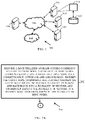
- FIG. 1 through 8 where similar reference characters denote corresponding features consistently throughout the figures, there are shown preferred embodiments and these embodiments are described in the context of the following exemplary system and/or method.
- FIG. 1 illustrates a network implementation 100 of a system for blockchain based decentralized storage with dynamic data operations, in accordance with example embodiments.
- the term 'decentralized' refers to the structure of blockchain, wherein the blockchain network is decentralized, meaning thereby that it has no need to rely on any server or node.
- the data are recorded, stored, and updated by a group of nodes.
- the network implementation 100 includes at least one client node, a client node 104 and a plurality of host nodes, a host node 106.
- the client node 104 is associated with a renter that wishes to outsource its files on to multiple hosts who offer their storage space for rent.
- the file that is to be outsourced is divided into blocks and further divided into sectors and stored on a host.
- Each host has a block of file.
- Renter constructs a Merkle Hash Tree from all the sectors and signs the root hash and sends the blocks to hosts.
- Renters and hosts together maintain blockchain that records root hash of the file, the challenges sent by the verifier, the auxiliary information for each host to their intermediate root and other metadata. All the operations such as registering a renter, registering a host, audit protocol by the renters are run by the smart contracts. For ensuring that the file is intact with the hosts, there is a protocol for integrity verification.
- the basic integrity verification scheme is the use of Merkle tree proofs that also supports dynamic data operations and public verifiability in cloud computing.
- said scheme is extended to a multi-host setting in peer-to-peer storage where the file blocks are stored on different hosts rather than a single cloud service provider. Said scheme also provides option for data modification, insertion and deletion to achieve practicality in a decentralized setting.
- the system implementing the disclosed protocol is described further with reference to FIGS. 2A and 2B and 3 .
- the communication network 108 is a wireless network, wired network or a combination thereof.
- the communication network 108 is implemented as one of the different types of networks, such as intranet, local area network (LAN), wide area network (WAN), the internet, a metropolitan area network (MAN), an ad hoc network, an intranet, a fiber optic-based network, and/or a combination of these or other types of networks.
- the communication network 108 includes a cellular network, the Public Land Mobile Network (PLMN), a second generation (2G) network, a third generation (3G) network, a fourth generation (4G) network (e.g., a long term evolution (LTE) network), a fifth generation (5G) network, and/or another network.
- PLMN Public Land Mobile Network
- 2G second generation
- 3G third generation
- 4G fourth generation
- 5G fifth generation
- the communication network 108 is either one of a dedicated network or a shared network, which represents an association of the different types of networks that use a variety of protocols, such as Hypertext Transfer Protocol (HTTP), Transmission Control Protocol/Internet Protocol (TCP/IP), Wireless Application Protocol (WAP), etc., to communicate with each other. Further the communication network 108 includes a variety of network devices, including routers, bridges, servers, computing devices, storage devices, etc.
- HTTP Hypertext Transfer Protocol
- TCP/IP Transmission Control Protocol/Internet Protocol
- WAP Wireless Application Protocol
- the communication network 108 includes a variety of network devices, including routers, bridges, servers, computing devices, storage devices, etc.
- the network environment 100 supports various connectivity options such as BLUETOOTH ® , USB, ZigBee and other cellular services.
- the network environment enables connection of devices 106 such as computing devices with the server 104, and accordingly with the database 112 using any communication link including Internet, WAN, MAN, and so on.
- the system 102 is implemented to operate as a stand-alone device.
- the client node 104 includes any computation or communication device that is capable of communicating via the communication network 108.
- the client device is a computation device that is capable of storing and distributing a file to host nodes via the communication network to the blockchain 110.
- the client node 104 is implemented in a variety of communication devices such as a laptop computer, a desktop computer, a notebook, a workstation, a mobile phone, a personal digital assistant (PDA), and so on.
- PDA personal digital assistant
- the client node is configured to register itself on the blockchain to avail services of a decentralized storage. The details of registration of the client node are described further with reference to FIGS. 2A-2B .
- the host node 106 includes a computation and communication device that includes extra storage space for lending in order to store the file.
- the host node registers with the blockchain network to provide the services for file storage.
- the host nodes register to the network by specifying the storage space available with them.
- the host node 106 is implemented in a variety of communication devices such as a laptop computer, a desktop computer, a notebook, a workstation, a mobile phone, a PDA, and so on.
- the host node 106 is special purpose computing device capable with high computing powers.
- the system 102 is implemented in a computing device, for instance the computing devices 104, 106 such as a hand-held device, a laptop or other portable computer, a tablet computer, a mobile phone, a PDA, a smartphone, and a desktop computer.
- the system 102 is coupled to a data repository or a database, a repository 112.
- the repository 112 stores data processed, received, and generated by the system 102.
- the system 102 embodies the data repository 112.
- the computing device embodying system 102 includes specially designed hardware that stores and processes information which allows an individual to make transactions that use, for instance, blockchain. Examples of such transaction include, sharing of files by the client nodes with the host nodes, data operations on stored files, and so on.
- the blockchain 110 implements a blockchain technology that is composed of multiple technologies, including but not limited to, cryptography, mathematics, consensus algorithms, and economic models, hash function, and so on.
- the blockchain It is a secure, shared and distributed ledger (database) that records all transactional data as what are called blocks.
- the blockchain use P2P networks and consensus mechanisms to solve the problem of distributed data synchronization, and so it is not necessary to have a centralized trusted authority.
- the blockchain data structure is defined as an ordered back-linked record of blocks of transactions. Each block is recognized by a SHA256 cryptographic hash algorithm on the header of the block. Generally, the block is composed of two parts-the main data and the header. The main data contains a list of transactions, while the header includes a hash of the previous and current block, Merkle Root, timestamp, nonce, and other information.
- Figure 1 shows the structure of blockchain.
- a hash function is used for any size of data and corresponds to a fixed-size hash output. It is a one-way function where the returned values are called hash values, hash codes, digests, or simply hashes. Hash functions are often used in computer software for efficiently searching data. Also, the hash function effectively avoids duplicate data being written into a file or database. Hash functions are also commonly used in an encryption algorithm. The hash function in a cryptosystem, it quickly generates the hash value of an input and check the correctness corresponding to the data in the cryptosystem. Also, the one-way hash function has no inverse function to convert the hash value back to the original data.
- the components and functions of the system 102 are described further in detail in conjunction with method steps of flow diagrams depicted in FIGS. 2A-5C and further with use case examples of FIG. 8 .
- the system 102 is implemented among the plurality of nodes of the blockchain network, thus enabling sharing and storing of files in a decentralized storage system.
- FIGS. 2A-5C illustrates a flow diagram for a method for blockchain based decentralized storage with dynamic data operations in accordance with an example embodiment.
- FIG. 3 illustrates an example representation of distribution of a file to multiple host nodes in accordance with an example embodiment of the present disclosure.
- FIG. 4 illustrates an example of the distributed storage system 400 is illustrated in accordance with an example embodiment of the present disclosure.
- FIGS. 5A-5C illustrate various data operations on sectors of the host node, in accordance with an example embodiment of the present disclosure.
- FIGS. 2A-2B is a flow diagram illustrating a method 200 for blockchain based decentralized storage with dynamic data operations, using the system of FIG. 1 , in accordance with some embodiments of the present disclosure.
- the steps of the method 200 of the present disclosure will now be explained with reference to the system 100 as depicted in FIG. 1 and the steps of flow diagram as depicted in FIGS. 2A-2B .
- the system 102 is implemented as system 701 of FIG. 7 , as will be described further in the description below.
- the system 701 includes one or more data storage devices or the memory 102 operatively coupled to the processor(s) 104, and is configured to store instructions for execution of steps of the method 200 by the processor(s) 104.
- the method 200 includes providing a decentralized storage system, the system 102 of FIG. 1 comprising at least a client node, a plurality of host nodes communicatively coupled to the client node via a communication interface and a blockchain.
- the client node and the host nodes are registered on the blockchain network.
- the host node (or the renter) makes use of membership services available in the specific blockchain platform and registers with said network.
- Host node have multiple pseudonyms corresponding to public and private key pair thereof.
- Renter initiates a request for outsourcing a file using a pseudonym and distribute the file to multiple hosts.
- the renter specifies the duration for which it wants to store data on the hosts and hosts specify the amount that is charged for providing the storage services. This agreement is stored on blockchain for reference.
- the host nodes are registered on the blockchain network. For instance, any host node that wants to lend extra storage space register with the blockchain network to provide the services. Hosts nodes register to the blockchain network by specifying the storage space available with them.
- the system does not use proof of space for proving the storage space available with the client node, as the host node that does not have enough space to store the files. Said host note are identified on subsequent audits and are penalized.
- the terms 'host' and 'peer' are to be used interchangeably. Similar to client node, the host nodes also initiates transactions using pseudonyms to hide their identity.
- the blockchain is leveraged to store metadata of the file.
- Each file has a public and private information.
- Public information is visible to all the host nodes whereas the private information is host specific.
- Examples of private information includes, but are not limited to, the encrypted sectors of a file, their hashes, authenticators and the authentication paths.
- the private information is stored in the private state.
- Examples of public information includes, but are not limited to, the challenges, host level roots, the top root and the proofs information. Said public information is to be stored as a part of the public state.
- An important contribution of disclosed embodiments is storing of said public and private information on the blockchain network.
- the technical advantage of recording the public and private information on blockchain network is that it enables the client node to retrieve required data in a transparent and verifiable manner as and when required, rather than storing metadata of the file at their end, eventually making the protocol fully stateless. Stateless verification enables the renter to verify the possession of the file without storing any verification data.
- the client node may be setup for file storage in the distributed storage system 100.
- G ⁇ G ⁇ G T be a bilinear map, where g is a generator of G .
- H ⁇ 0,1 ⁇ ⁇ ⁇ G is a BLS hash function.
- the client node possesses ( ssk,spk ) which are private and public key pair for the system.
- the client node has a raw data file F (marked as 302) which is encrypted using a symmetric encryption, Advanced Encryption Standard (AES) 304.
- AES Advanced Encryption Standard
- Each of the host node divides the encrypted file F ⁇ into n blocks ⁇ m 1 ...m n ⁇ at 306.
- the host node selects name from Z p as an identifier of the file, u and ⁇ are chosen uniformly at random from G and Z p respectively.
- the host node splits each block into s sectors where each sector is an element of Z p .
- a file tag t 0 name ⁇ u ⁇ n ⁇ s is created which is used in proof verification.
- Each sector in a file is m ij where i E [ 1,n ] and j ⁇ [ 1,s ] .
- the host node creates the authenticator as follows.
- ⁇ ij H m ij . u m ij ⁇ Then the i th host receives ⁇ m ij , ⁇ ij ⁇ 1 ⁇ j ⁇ s and t 0 is broadcasted to the blockchain.
- the host node Before distributing the blocks of the file to the plurality of host nodes, the host node forms a global Merkle tree for the purpose of validating the file.
- the structure of the global Merkle tree helps in verifying consistency of data.
- a Merkle tree is a complete binary tree, and is formed by hashing a pair of leaf nodes until a single hash remains called the Merkle root.
- the Merkle root comes from a hashing transaction and pairing two transactions to hash and generate the upper level tree node. By doing so, it gets one hash to store that is deterministic based on the hashes of all the underlying transactions. This single hash is called the Merkle root.
- each block has a Merkle root stored in the block header.
- the Merkle root acts as a validator for the entire tree.
- An example Merkle tree is illustrated in FIG. 4 .
- intermediate root refers to an intermediate node of the Merkle tree, hence throughout the description, the terms intermediate root and intermediate node will be used interchangeably.
- the distributed storage system 400 includes a renter or a client node 402 and a plurality of host nodes 410, 430, 450, 470.
- the client node 402 distributes the ns sectors among n hosts with each host node having s sectors. Sectors in each host node concatenated with their corresponding indices are grouped in pairs to form an intermediate root for that host node. For host node 410, the sectors 412, 414 are concatenated with their corresponding indices in pairs to form a parent node 416.
- the sectors 420, 422 are concatenated with their corresponding indices in pairs to form a parent node 424, and the parent nodes 416, 424 are concatenated to form the intermediate root 426.
- an intermediate node 432 from the host node 430 and intermediate node 426 from the host node 410 are hashed together to form its parent root 440.
- the parent root 440 from the host nodes 410, 430 and parent root 460 from the host nodes 450, 470 are hashed together to form a Merkle root R 480.
- the Merkle root R validates the entire file.
- the authentication path for m ij is represented by a set of intermediate sibling hashes ⁇ ij ⁇ required to compute the top root. Merkle tree preserves the order in which the sectors are stored.
- the sectors of the file are then distributed by the client node to a plurality of host nodes.
- the client node sends ⁇ m ij ⁇ , ⁇ ⁇ ij ⁇ for j ⁇ [ 1,s ] to host P i where i E [ 1,n ] .
- the steps in distributing file to multiple hosts is described further in detail with reference to FIG. 3 .
- n blocks of file F are distributed to n storage providers P 1 ...P n and intermediate root R i corresponding to each host P i are calculated by each host node.
- the client node verifies each of the intermediate roots and after verification all the host nodes form the top root hash R.
- the host level roots R i and the top root R are available to all of the plurality of host nodes on the blockchain whereas the sectors corresponding to each host are accessible only to the corresponding host.
- the blockchain network enables a challenge response protocol between host nodes and a verifier node.
- the verifier node is one of a renter or an auditor that is one of the host nodes (from amongst the plurality of host nodes) for the entity planning to verify the file integrity. Integrity of blocks should be verified in every host. Therefore, challenges are sent to every host node and host nodes should collaborate for generating the proof of file possession.
- verifier For each i, 1 ⁇ i ⁇ n, verifier picks c random locations from [1, s ] and form the subset J i . Then form the c-subset of Z p challenge values ⁇ v ij ⁇ j ⁇ J i .
- the integrity verification includes a proof generation protocol and proof verification protocol.
- the host node records proof ⁇ , ⁇ , ⁇ H ( m ij ), ⁇ ij ⁇ on blockchain.
- the verifier node receives the proof information ⁇ , ⁇ , ⁇ H( m ij ), ⁇ ij ⁇ .
- the verifier node uses authentication information ⁇ H ( m ij ), ⁇ ij ⁇ for the challenges to check the correctness of the challenged position and check intermediate roots R i of each host P i . If any of the intermediate roots R i does not match, then the corresponding host P i is corrupted. The stored file is intact only if the above two steps are successful.
- the disclosed system facilitate dynamic data operations in the decentralized storage system at 204.
- dynamic data operations includes, but are not limited to, performing one or more of modification operation, insertion operation, and deletion operation on the sector information stored at the host node. As the authentication does not require indices, one performs insertion, deletion and modification operations.
- the host node receives a request for data operation on a sector stored.
- the client node recalls a file tag associated with the tag from the blockchain.
- the host sends the sector and authentication information associated with the sector to the client node.
- the authentication information includes an authenticator and an authentication path associated with the sector.
- the host node determines validity of the authenticator and correctness of the authentication path, and in response creates a modified authenticator for a modified sector obtained by the modification of the sector.
- the client node further recreates and shares with the host node, a modified root corresponding to the host node using the authentication path and the modified sector.
- the host node creates a modified intermediate host root upon receiving the modified sector and the modified authenticator.
- the host node publishes, at the blockchain, the modified intermediate host root.
- remaining hosts of the plurality of hosts recreates a modified top root using the modified intermediate host root.
- the client node confirms the data operation.
- the data operation is a modification operation to be performed on the sector stored at the host node.
- the method for performing modification operation on the host node is described hereinunder with reference to FIG. 5A .
- the Renter (or the client node) wants to modify the j th sector of i th host, m ij to m'.
- the Host node i sends m ij along with ⁇ ij and its authentication path ⁇ ij .
- the Renter checks the correctness of the authentication path.
- the Renter recreates the modified root of Host P i as R i ′ using the authentication path ⁇ ij and m'.
- the host node i Upon receiving m' and ⁇ ', the host node i calculates R i ′ , and publishes it to the blockchain. All the hosts recreate the top root R' with the modified R i ′ .
- the Renter confirms if R' and R i ′ are correct.
- the request for data operation includes performing an insertion operation on the sector stored at the host node.
- the insertion operation includes inserting the new sector after a specific position of the host. The method for performing insertion operation on the host node is described hereinunder with reference to FIG. 5B .
- the Renter wants to insert m' after the j th position of the i th host.
- the Host node P i sends m ij along with ⁇ ij and its authentication path ⁇ ij .
- the Renter checks the correctness of the authentication path.
- the Renter sends the insert request to the host along with the new sector m', the position j after which the sector has to be inserted, and the modified authenticator ⁇ '.
- the Host creates parent node from H ( m ij ) and H ( m' ) . Said parent node takes the place of H ( m ij ) and a new root R i ′ is created using m' and authentication path ⁇ ij and sends R i ′ as response to the renter.
- the Renter checks if the correctness of insertion operation by generating new root R i ′ using authentication path ⁇ ij , m ij and m' and validates against host's response. After confirmation from the renter the host publishes new root R i ′ to the blockchain. All the hosts recreate the top root R' with the modified R i ′ .
- the Renter confirms if R i ′ and R ' are correct.
- the request for data operation includes performing a data deletion operation on the sector stored at the host node.
- the method for performing data deletion operation on the host node is described hereinunder with reference to FIG. 5C .
- the Renter wishes to delete j th sector of i th host and sends a delete request.
- the Host deletes m ij from its storage, replaces the parent hash of m ij with the sibling hash and generates a new root R i ′ .
- the Host node sends the proof of deletion by sending the parent hash, its authentication path and new root R i ′ to the renter.
- the Renter checks the correctness of deletion operation by computing new root R i ′ and validating against host's response. After confirmation from the renter the host publishes new root R i ′ to the blockchain. All the hosts recreate the top root R '. with the modified R i ′ .
- the Renter confirms if R' and R i ′ are correct.
- the payment to the host node is initiated by the renters using smart contacts after successful verification of the proof of data possession.
- erasure code is used to get the whole file even with some missing parts i.e. k out of n parts are sufficient to recover the original file.
- the system is designed with intermediate roots to facilitate easy detection of the corrupt hosts in the case of root mismatch and also act as the authenticators for the file parts stored on that particular host. Authentication paths improve the efficiency while computing the intermediate roots in case of root mismatch by considering only the path from leaf to root without using all the leaves.
- Confidentiality of outsourced files is important to avoid disclosure of renter's information to the third parties.
- the disclosed system handles confidentiality at two levels: firstly the files stored on the hosts are encrypted with the renter's secret key and secondly the complete file is not available with a single entity. Therefore, for an adversary to retrieve the file, all the hosts storing the file must collude and the adversary should have access to the secret key of the renter. This prevents unauthorized access to the file.
- Blockchain ensures in preserving integrity of the file as it records the host level roots, top root and challenge response values to provide a transparency and tamper proof record of the proof of data possession.
- the total number of sectors in whole file is n ⁇ s. Size of each sector is ⁇ -bit.
- the probability of file corruption by the i th host be i.
- c be the number of challenged sectors per host, the number of challenges for the whole file with n hosts is nc.
- FIG. 6 a graph illustrated in FIG. 6 is presented which compares the number of challenged sectors for different detection probabilities.
- file size is 1GB that is to be distributed to 8 hosts.
- Each host gets 125 MB of file.
- the number of sectors s in each host with each chunk size 256-bits is 4096000.
- the total number of sectors n for the given file is 32768000.
- the failure probability of the host that is detected by the renter be 90% and the sector corruption probability be 0.0001.
- Around 1% of the sectors are needed to be sent as challenge to achieve 90% detection of file corruption.
- the graph depicting various detection probabilities and corruption probabilities is illustrated in FIG. 6 .
- the number of challenges per host is independent of the number of sectors stored per host.
- the disclosed system ensures that host cannot cheat a renter by persisting the hashes of the file blocks and not storing the files.
- the protocol ensures that while generating proof the host uses actual sector in calculating ⁇ . Therefore, even if the host persists the file hash, it needs m ij to calculate v ij m ij which ensures that the host actually stores the file. For verification, the renter does not need to store any metadata or file, rather it retrieves the verification information from the blockchain and performs the verification. Therefore, the disclosed protocol embodied in the disclosed system is fully stateless.
- Renters and hosts information are submitted as a transaction to the blockchain network and this information is recorded on to a common ledger after validation, which is available to all the entities participating in the network. Therefore, there are privacy concerns for both renters and hosts about the information stored on the ledger.
- renters and hosts chooses to be anonymous by registering themselves with pseudonyms on the network.
- Blockchain enables them to be anonymous while submitting transactions to the network.
- Pseudonyms also allows users to make their transactions unlinkable. Unlinkability of transactions does not reveal the actual identity of the renters and cannot link the transactions initiated by the same renter or host.
- the renters and hosts are mutually anonymous.
- Hyperledger Fabric platform Version 1.4.4.
- This protocol is implemented on any permissioned or permissionless blockchain platform.
- Hyperledger Fabric was selected to leverage its unique private data collections feature which is necessary for the protocol embodied by the system. The robustness and scalability of said protocol was tested by taking various file sizes.
- the test setup uses a system configuration of 2.9 GHz Intel QuadCore Processor with 4 GB RAM running a Fedora 28 operating system to run the simulations.
- HLF Hyperledger Fabric
- a network with single channel consisting of one orderer node, 8 organizations, 8 peers (one for each organization), 8 certificate authorities (CA) (one for each organization) is considered for implementation.
- Organizations also called as the members were invited to join the blockchain network by the blockchain service provider.
- Each peer uses CouchDB TM to maintain the ledger state.
- the protocol leveraged private data collections feature in HLF. This feature allows hosts to see a transaction while keeping a portion of the data private.
- Each host in the channel installs the smart contract to simulate transactions.
- Encrypted file sectors, their hashes, authenticators and authentication path are visible only to members of the given organization.
- Each organization has a policy defined such that it allows members of that organization to access their private data.
- the Renter's application interacts with the ledger through smart contract.
- raw file F is encrypted using AES in CBC mode to get an encrypted file.
- This encrypted file is split into sectors m ij of ⁇ -bits each. Splitting an encrypted file is achieved using OpenSSL split command.
- the client application submits a transaction proposal.
- the transaction proposal consists of encrypted file sectors and their authenticators ⁇ ij as private inputs which are sent to a host.
- Host validates the proposal and update file public and private information ( m ij , ⁇ ij , H ( m ij )) into the system. As per the defined collection access policy, private data will be stored in organization specific private state.
- Host level root guarantees integrity of the file sectors stored in that specific host P i .
- peers compute host level roots R i from sectors by forming a Merkle tree with SHA256 hash. These are computed at peer level independently. Each host updates its root and is available to all hosts in the channel. Subsequently, the client computes node level root hashes and sends its approval status as host-level-root verification success or host-level-root verification fail and the verification status is updated in the public state, visible to all organizations in the channel.
- Merkle root R guarantees integrity of the whole file. If the integrity of top root fails, one verifies the host level roots in order to detect a corrupt host.
- the renter submits Merkle root computation transaction proposal. The transaction is validated by the smart contract to determine the possibility of creating Merkle root. The generation depends on the renter's approval status.
- the smart contract queries the renters approval status on any one peers for a given file. If the approval status of all hosts is host-level-root verification success, then one of the hosts compute the Merkle root and update the result to the blockchain.
- Renter verifies the integrity of stored file at any point of time by challenging the hosts to send proof of data possession.
- renter defines challenges ⁇ i,v ij ⁇ and submits a transaction.
- Hosts validate the transaction and updates the challenges, authentication paths ( m ij , ⁇ ij ) to the network, available to all the hosts.
- peers After receiving the challenges, peers submit proof generation transaction proposal. Each peers simulates the transaction and generates a proof of data possession ( ⁇ i , ⁇ i ) for the challenged sectors and updates ⁇ i , ⁇ i to the network. These host level proofs ⁇ i , ⁇ i , are available to all the hosts. After receiving the proofs from the individual hosts ( ⁇ 1 ... ⁇ 8 , ⁇ 1 ... ⁇ 8 ), one of the host aggregates the proofs to compute the aggregated proof ⁇ , ⁇ .
- Renter or verifier submits proof verification transaction proposal.
- One of the peer simulates the transaction to verify the integrity of the stored file.
- Peer sends the verification information ⁇ , ⁇ ,m ij , ⁇ ij of the challenged sectors and the metadata information u, s, n.
- Verifier runs the verification protocol to check the integrity of the stored file.
- Renter or verifier updates the verification status as PDP verification success if all the steps in the verification succeed. If any of the steps fail, corrupted host is determined using Merkle tree and updates the status as PDP verification fail for that particular host in the public state. The system fails to verify if the host sends proof for the non-challenged sectors or corrupted sectors.
- Various embodiments disclosed herein provides method and system for blockchain based decentralized storage with dynamic data operations.
- the decentralized storage is important to avoid single point of trust in outsourcing file to a service provider.
- dynamic file support is necessary to enable renters to modify files which is a common operation on outsourced files.
- Conventional methods and system in decentralized storage do not offer dynamic file support.
- Renter verifies the integrity of outsourced file through proof of data possession.
- the disclosed system and method leverages blockchain to store the Merkle roots, challenges and proofs in a public state which is retrieved as and when required.
Landscapes
- Engineering & Computer Science (AREA)
- Theoretical Computer Science (AREA)
- Computer Security & Cryptography (AREA)
- General Engineering & Computer Science (AREA)
- General Physics & Mathematics (AREA)
- Computer Networks & Wireless Communication (AREA)
- Signal Processing (AREA)
- Physics & Mathematics (AREA)
- Computer Hardware Design (AREA)
- Databases & Information Systems (AREA)
- Data Mining & Analysis (AREA)
- Health & Medical Sciences (AREA)
- Computing Systems (AREA)
- Bioethics (AREA)
- General Health & Medical Sciences (AREA)
- Software Systems (AREA)
- Human Computer Interaction (AREA)
- Information Retrieval, Db Structures And Fs Structures Therefor (AREA)
Claims (14)
- Prozessorimplementiertes Verfahren (200), das umfasst:Bereitstellen (202) eines dezentralisierten Speicherungssystems, das mindestens einen Client-Knoten, eine Mehrzahl von Host-Knoten, die mittels einer Kommunikationsschnittstelle mit dem Client-Knoten kommunikativ gekoppelt sind, und eine Blockchain aufweist, mittels eines oder mehrerer Hardwareprozessoren, wobei der Client-Knoten eine Datei aufweist, wobei der Client-Knoten ferner die Datei in eine Mehrzahl von Blöcken und jeden Block in eine Mehrzahl von Sektoren aufteilt und jeden der Mehrzahl von Sektoren an einen Host-Knoten aus der Mehrzahl von Host-Knoten verteilt;Ermöglichen dynamischer Datenoperationen auf der Datei, die in dem dezentralisierten Speicherungssystem gespeichert ist, mittels des oder der Hardware-prozessoren, wobei das Ermöglichen der dynamischen Datenoperationen auf einem Sektor aus der Mehrzahl von Sektoren, die auf einem Host-Knoten aus der Mehrzahl von Host-Knoten gespeichert sind, umfasst:Empfangen (206) einer Anfrage für eine Datenoperation auf einem Sektor, der auf dem Host-Knoten gespeichert ist, an dem Host-Knoten;Senden (208) des Sektors und von Authentifizierungsinformation, die dem Sektor zugeordnet ist, an den Client-Knoten durch den Host-Knoten, wobei die Authentifizierungsinformation einen Authentifikator und einen Authentifizierungspfad, die dem Sektor zugeordnet sind, umfasst, wobei der Host-Knoten die Gültigkeit des Authentifikators und die Korrektheit des Authentifizierungspfads bestimmt und als Reaktion einen modifizierten Authentifikator für einen modifizierten Sektor erzeugt, der durch die Modifikation des Sektors erlangt wird, und wobei der Client-Knoten ferner eine modifizierte Wurzel, die dem Host-Knoten entspricht, unter Verwendung des Authentifizierungspfads und des modifizierten Sektors erneut erzeugt und mit dem Host-Knoten teilt;Berechnen (210) einer modifizierten Zwischen-Host-Wurzel auf das Empfangen des modifizierten Sektors und des modifizierten Authentifikators durch den Host-Knoten; undPublizieren (212) der modifizierten Zwischen-Host-Wurzel auf der Block-chain durch den Host-Knoten,wobei verbleibende Hosts der Mehrzahl von Hosts eine modifizierte oberste Wurzel unter Verwendung der modifizierten Zwischen-Host-Wurzel erneut erzeugen undwobei auf Grundlage einer Bestimmung der modifizierten obersten Wurzel und der modifizierten Zwischen-Host-Wurzel der Client-Knoten die Datenoperation bestätigt.
- Verfahren nach Anspruch 1, wobei der Client-Knoten einen lokalen Merkle-Baum unter Verwendung von modifiziertem Sektor und Authentifizierungspfad, der dem Sektor vor der Modifikation zugeordnet ist, bildet, wobei der Authentifizierungspfad für jeden Sektor durch einen Satz von Zwischengeschwister-Hash dargestellt ist, die dafür erforderlich sind, eine oberste Wurzel des lokalen Merkle-Baums zu berechnen, wobei ferner der lokale Merkle-Baum die Reihenfolge beibehält, in der die Sektoren gespeichert sind, und wobei ferner der lokale Merkle-Baum des modifizierten Sektors, der dem Host-Knoten entspricht, und verbleibende Zwischenwurzeln jedes der Mehrzahl von Host-Knoten einen globalen Merkle-Baum bilden, der es vermag, einen aktuellen Status der Datei zu validieren, wobei eine Wurzel jedes der Mehrzahl von Host-Knoten als Blattknoten angenommen wird, um den globalen Merkle-Baum zu bilden.
- Verfahren nach Anspruch 1, wobei die Anfrage für eine Datenoperation eines umfasst von:Durchführen einer Modifikationsoperation auf dem Sektor, der auf dem Host-Knoten gespeichert ist, undDurchführen einer Einfügeoperation auf dem Sektor, der auf dem Host-Knoten gespeichert ist, wobei die Einfügeoperation das Einfügen des neuen Sektors nach einer festgelegten Position des Hosts umfasst.
- Verfahren nach Anspruch 3, wobei der Client-Knoten ferner eine Einfügeanfrage zusammen mit dem neuen Sektor, der Position, nach der der Sektor einzufügen ist, und dem neuen Authentifikator an den Host-Knoten sendet.
- Verfahren nach Anspruch 4, das ferner das Erzeugen eines neuen Elternknotens aus einem Hash des Sektors an der Position, nach der der Sektor einzufügen ist, und eines Hash des neuen Sektors durch den Host-Knoten umfasst, wobei der neue Elternknoten an die Stelle des Hash des Host-Knotens an der einzufügenden Position in dem lokalen Merkle-Baum, der dem Host-Knoten zugeordnet ist, tritt.
- Verfahren nach Anspruch 1, wobei die Anfrage für eine Datenoperation das Durchführen einer Löschoperation auf dem Sektor, der auf dem Host-Knoten gespeichert ist, umfasst, wobei das Durchführen der Löschoperation umfasst:Löschen des Sektors des Host-Knotens;Ersetzen des Eltern-Hash des Sektors durch einen Geschwister-Hash des Sektors, um eine neue Zwischenwurzel zu erzeugen; undSenden des Eltern-Hash zusammen mit dem Authentifizierungspfad und wobei die neue Wurzel als ein Nachweis der Löschung auf der Blockchain publiziert wird, von wo aus der Client-Knoten die Löschoperation verifiziert.
- Verfahren nach Anspruch 1, das ferner umfasst:Registrieren der Mehrzahl von Host-Knoten auf der Blockchain unter Verwendung einer Host-Registrierungsinformation und Registrieren des Client-Knotens auf der Blockchain unter Verwendung einer Client-Registrierungsinformation; undSpeichern der Registrierungsinformation für die modifizierte oberste Wurzel und der Client-Registrierungsinformation auf der Blockchain, um vollständig zustandslose Datenoperationen zu erreichen.
- System (701), das aufweist:einen oder mehrere Speicher (715); undeinen oder mehrere Hardwareprozessoren (702), wobei der oder die Speicher (715) mit dem oder den Hardwareprozessoren (702) gekoppelt sind, wobei der oder die Hardwareprozessoren (702) dazu ausgelegt sind, programmierte Anweisungen, die in dem oder den Speichern (715) gespeichert sind, auszuführen, um:ein dezentralisiertes Speicherungssystem bereitzustellen, das mindestens einen Client-Knoten, eine Mehrzahl von Host-Knoten, die mittels einer Kommunikationsschnittstelle mit dem Client-Knoten kommunikativ gekoppelt sind, und eine Blockchain aufweist, wobei der Client-Knoten eine Datei aufweist, wobei ferner der Client-Knoten die Datei in eine Mehrzahl von Blöcken und jeden Block in eine Mehrzahl von Sektoren aufteilt und jeden der Mehrzahl von Sektoren an einen Host-Knoten aus der Mehrzahl von Host-Knoten verteilt;dynamische Datenoperationen auf der Datei, die in dem dezentralisierten Speicherungssystem gespeichert ist, zu ermöglichen, wobei das Ermöglichen der dynamischen Datenoperationen auf einem Sektor aus der Mehrzahl von Sektoren, die auf einem Host-Knoten aus der Mehrzahl von Host-Knoten gespeichert sind, umfasst:an dem Host-Knoten eine Anfrage für eine Datenoperation auf einem Sektor, der auf dem Host-Knoten gespeichert ist, zu empfangen;durch den Host-Knoten den Sektor und Authentifizierungsinformation, die dem Sektor zugeordnet ist, an den Client-Knoten zu senden, wobei die Authentifizierungsinformation einen Authentifikator und einen Authentifizierungspfad, die dem Sektor zugeordnet sind, umfasst, wobei der Host-Knoten die Gültigkeit des Authentifikators und die Korrektheit des Authentifizierungspfads bestimmt und als Reaktion einen modifizierten Authentifikator für einen modifizierten Sektor erzeugt, der durch die Modifikation des Sektors erlangt wird, und wobei der Client-Knoten ferner eine modifizierte Wurzel, die dem Host-Knoten entspricht, unter Verwendung des Authentifizierungspfads und des modifizierten Sektors erneut erzeugt und mit dem Host-Knoten teilt;durch den Host-Knoten eine modifizierte Zwischen-Host-Wurzel auf das Empfangen des modifizierten Sektors und des modifizierten Authentifikators zu berechnen; unddurch den Host-Knoten die modifizierte Zwischen-Host-Wurzel auf der Blockchain zu publizieren,wobei verbleibende Hosts der Mehrzahl von Hosts eine modifizierte oberste Wurzel unter Verwendung der modifizierten Zwischen-Host-Wurzel erneut erzeugen undwobei auf Grundlage einer Bestimmung der modifizierten obersten Wurzel und der modifizierten Zwischen-Host-Wurzel der Client-Knoten die Datenoperation bestätigt.
- System nach Anspruch 8, wobei der Client-Knoten einen lokalen Merkle-Baum unter Verwendung von modifiziertem Sektor und Authentifizierungspfad, der dem Sektor vor der Modifikation zugeordnet ist, bildet, wobei der Authentifizierungspfad für jeden Sektor durch einen Satz von Zwischengeschwister-Hash dargestellt ist, die dafür erforderlich sind, eine oberste Wurzel des lokalen Merkle-Baums zu berechnen,wobei ferner der lokale Merkle-Baum die Reihenfolge beibehält, in der die Sektoren gespeichert sind, undwobei ferner der lokale Merkle-Baum des modifizierten Sektors, der dem Host-Knoten entspricht, und verbleibende Zwischenwurzeln jedes der Mehrzahl von Host-Knoten einen globalen Merkle-Baum bilden, der es vermag, einen aktuellen Status der Datei zu validieren, und wobei eine Wurzel jedes der Mehrzahl von Host-Knoten als Blattknoten angenommen wird, um den globalen Merkle-Baum zu bilden.
- System nach Anspruch 9, wobei die Anfrage für eine Datenoperation eines umfasst von:Durchführen einer Modifikationsoperation auf dem Sektor, der an dem Host-Knoten gespeichert ist, undDurchführen einer Einfügeoperation auf dem Sektor, der auf dem Host-Knoten gespeichert ist, wobei die Einfügeoperation das Einfügen des neuen Sektors nach einer festgelegten Position des Hosts umfasst.
- System nach Anspruch 8, wobei der Client-Knoten ferner eine Einfügeanfrage zusammen mit dem neuen Sektor, der Position, nach der der Sektor einzufügen ist, und dem neuen Authentifikator an den Host-Knoten sendet.
- System nach Anspruch 8, wobei der eine oder die mehreren Hardware-Prozessoren ferner durch die Anweisungen dazu ausgelegt sind, durch den Host-Knoten einen neuen Elternknoten aus einem Hash des Sektors an der Position, nach der der Sektor einzufügen ist, und einen Hash des neuen Sektors zu erzeugen, wobei der neue Elternknoten an die Stelle des Hash des Host-Knotens an der einzufügenden Position in dem lokalen Merkle-Baum, der dem Host-Knoten zugeordnet ist, tritt.
- System nach Anspruch 8, wobei die Anfrage für eine Datenoperation das Durchführen einer Löschoperation auf dem Sektor, der auf dem Host-Knoten gespeichert ist, umfasst, und wobei zum Durchführen der Löschoperation der eine oder die mehreren Hardware-Prozessoren ferner durch die Anweisungen dazu ausgelegt sind:den Sektor des Host-Knotens zu löschen;den Eltern-Hash des Sektors durch einen Geschwister-Hash des Sektors zu ersetzen, um eine neue Zwischenwurzel zu erzeugen; undden Eltern-Hash zusammen mit dem Authentifizierungspfad zu senden und wobei die neue Wurzel als ein Nachweis der Löschung auf der Blockchain publiziert wird, von wo aus der Client-Knoten die Löschoperation verifiziert.
- Ein oder mehrere nichtflüchtige maschinenlesbare Informationsspeichermedien, die eine oder mehrere Anweisungen aufweisen, die, wenn sie von einem oder mehreren Hardware-Prozessoren ausgeführt werden, bewirken:Bereitstellen eines dezentralisierten Speicherungssystems, das mindestens einen Client-Knoten, eine Mehrzahl von Host-Knoten, die mittels einer Kommunikationsschnittstelle mit dem Client-Knoten kommunikativ gekoppelt sind, und eine Blockchain aufweist, mittels eines oder mehrerer Hardwareprozessoren, wobei der Client-Knoten eine Datei aufweist, wobei ferner der Client-Knoten die Datei in eine Mehrzahl von Blöcken und jeden Block in eine Mehrzahl von Sektoren aufteilt und jeden der Mehrzahl von Sektoren an einen Host-Knoten aus der Mehrzahl von Host-Knoten verteilt;Ermöglichen dynamischer Datenoperationen auf der Datei, die in dem dezentralisierten Speicherungssystem gespeichert ist, mittels des oder der Hardware-prozessoren, wobei das Ermöglichen der dynamischen Datenoperationen auf einem Sektor aus der Mehrzahl von Sektoren, die auf einem Host-Knoten aus der Mehrzahl von Host-Knoten gespeichert sind, umfasst:Empfangen einer Anfrage für eine Datenoperation auf einem Sektor, der auf dem Host-Knoten gespeichert ist, an dem Host-Knoten;Senden des Sektors und von Authentifizierungsinformation, die dem Sektor zugeordnet ist, an den Client-Knoten durch den Host-Knoten, wobei die Authentifizierungsinformation einen Authentifikator und einen Authentifizierungspfad, die dem Sektor zugeordnet sind, umfasst, wobei der Host-Knoten die Gültigkeit des Authentifikators und die Korrektheit des Authentifizierungspfads bestimmt und als Reaktion einen modifizierten Authentifikator für einen modifizierten Sektor erzeugt, der durch die Modifikation des Sektors erlangt wird, und wobei der Client-Knoten ferner eine modifizierte Wurzel, die dem Host-Knoten entspricht, unter Verwendung des Authentifizierungspfads und des modifizierten Sektors erneut erzeugt und mit dem Host-Knoten teilt;Berechnen einer modifizierten Zwischen-Host-Wurzel auf das Empfangen des modifizierten Sektors und des modifizierten Authentifikators durch den Host-Knoten; undPublizieren der modifizierten Zwischen-Host-Wurzel auf der Blockchain durch den Host-Knoten,wobei verbleibende Hosts der Mehrzahl von Hosts eine modifizierte oberste Wurzel unter Verwendung der modifizierten Zwischen-Host-Wurzel erneut erzeugen undwobei auf Grundlage einer Bestimmung der modifizierten obersten Wurzel und der modifizierten Zwischen-Host-Wurzel der Client-Knoten die Datenoperation bestätigt.
Applications Claiming Priority (1)
| Application Number | Priority Date | Filing Date | Title |
|---|---|---|---|
| IN202021007183 | 2020-02-19 |
Publications (2)
| Publication Number | Publication Date |
|---|---|
| EP3869376A1 EP3869376A1 (de) | 2021-08-25 |
| EP3869376B1 true EP3869376B1 (de) | 2022-10-26 |
Family
ID=72659704
Family Applications (1)
| Application Number | Title | Priority Date | Filing Date |
|---|---|---|---|
| EP20198513.2A Active EP3869376B1 (de) | 2020-02-19 | 2020-09-25 | System und verfahren zur blockchain-basierten dezentralisierten speicherung mit dynamischen datenoperationen |
Country Status (2)
| Country | Link |
|---|---|
| US (1) | US11494345B2 (de) |
| EP (1) | EP3869376B1 (de) |
Families Citing this family (8)
| Publication number | Priority date | Publication date | Assignee | Title |
|---|---|---|---|---|
| AU2018354949B2 (en) * | 2017-10-24 | 2022-03-10 | Tata Consultancy Services Limited | System and method for generating a blockchain application for different blockchain technologies |
| CN114499865B (zh) * | 2022-02-25 | 2024-12-06 | 西安电子科技大学 | 支持数据动态和公开完整性审计去中心化存储方法及系统 |
| IT202200003839A1 (it) * | 2022-03-01 | 2023-09-01 | Traent S R L | Memorizzazione di dati resi a evidenza di manomissione in accordo con corrispondenti prove di consistenza certificate |
| CN115292243B (zh) * | 2022-06-29 | 2023-10-20 | 苏州科技大学 | 一种基于区块链的非准入分布式文件存储系统及存储方法 |
| CN115604014A (zh) * | 2022-10-24 | 2023-01-13 | 郑州师范学院(Cn) | 一种数据完整性审计方法、设备及存储介质 |
| CN115865428B (zh) * | 2022-11-15 | 2024-05-17 | 重庆邮电大学 | 基于信任值和纠删码的边缘数据存储和完整度验证方法 |
| CN116226113A (zh) * | 2023-04-13 | 2023-06-06 | 东南大学 | 一种面向物联网的相似数据去重和安全审计管理方法 |
| CN117992932B (zh) * | 2023-12-12 | 2024-07-05 | 中科科界(北京)科技有限公司 | 区块链链上链下协同存储的数字资源权利保护方法及系统 |
Family Cites Families (3)
| Publication number | Priority date | Publication date | Assignee | Title |
|---|---|---|---|---|
| US11030187B1 (en) * | 2016-05-18 | 2021-06-08 | Salesforce.Com, Inc. | Distributed database systems and structures |
| US11196623B2 (en) | 2016-12-30 | 2021-12-07 | Intel Corporation | Data packaging protocols for communications between IoT devices |
| US11989208B2 (en) * | 2018-08-06 | 2024-05-21 | Inveniam Capital Partners, Inc. | Transactional sharding of blockchain transactions |
-
2020
- 2020-09-25 EP EP20198513.2A patent/EP3869376B1/de active Active
- 2020-09-29 US US17/037,222 patent/US11494345B2/en active Active
Also Published As
| Publication number | Publication date |
|---|---|
| US11494345B2 (en) | 2022-11-08 |
| EP3869376A1 (de) | 2021-08-25 |
| US20210255993A1 (en) | 2021-08-19 |
Similar Documents
| Publication | Publication Date | Title |
|---|---|---|
| EP3869376B1 (de) | System und verfahren zur blockchain-basierten dezentralisierten speicherung mit dynamischen datenoperationen | |
| US11842317B2 (en) | Blockchain-based authentication and authorization | |
| US11159526B2 (en) | System and method for decentralized-identifier authentication | |
| US11038883B2 (en) | System and method for decentralized-identifier creation | |
| EP3721603B1 (de) | System und verfahren zur erzeugung dezentraler identifikatoren | |
| WO2019179535A2 (en) | System and method for verifying verifiable claims | |
| Cangir et al. | A taxonomy for Blockchain based distributed storage technologies | |
| Xie et al. | Blockchain‐based cloud data integrity verification scheme with high efficiency | |
| Guo et al. | Dynamic proof of data possession and replication with tree sharing and batch verification in the cloud | |
| Zhang et al. | Redactable transactions in consortium blockchain: Controlled by multi-authority CP-ABE | |
| CN115705571A (zh) | 保护可审计的帐户的隐私 | |
| Li et al. | A Blockchain‐Based Public Auditing Protocol with Self‐Certified Public Keys for Cloud Data | |
| Xiao et al. | A collaborative auditing scheme with dynamic data updates based on blockchain | |
| Zhou et al. | A Scalable Blockchain‐Based Integrity Verification Scheme | |
| JP2023530594A (ja) | 分散型データベースにおける許可されたイベント処理 | |
| Li et al. | Audit as You Go: A Smart Contract‐Based Outsourced Data Integrity Auditing Scheme for Multiauditor Scenarios with One Person, One Vote | |
| US20230403161A1 (en) | Aggregate anonymous credentials for decentralized identity in blockchain | |
| Yuan et al. | Blockchain‐Based Self‐Auditing Scheme with Batch Verification for Decentralized Storage | |
| Yang et al. | Improved outsourced provable data possession for secure cloud storage | |
| Rao et al. | Dynamic outsourced proofs of retrievability enabling auditing migration for remote storage security | |
| Li et al. | Improved Efficient Privacy‐Preserving Certificateless Provable Data Possession Scheme for Cloud Storage | |
| HK40082991A (en) | Data processing method, device, computer equipment and storage medium | |
| CN117892364A (zh) | 一种数字资产的管理方法及系统 |
Legal Events
| Date | Code | Title | Description |
|---|---|---|---|
| PUAI | Public reference made under article 153(3) epc to a published international application that has entered the european phase |
Free format text: ORIGINAL CODE: 0009012 |
|
| STAA | Information on the status of an ep patent application or granted ep patent |
Free format text: STATUS: THE APPLICATION HAS BEEN PUBLISHED |
|
| AK | Designated contracting states |
Kind code of ref document: A1 Designated state(s): AL AT BE BG CH CY CZ DE DK EE ES FI FR GB GR HR HU IE IS IT LI LT LU LV MC MK MT NL NO PL PT RO RS SE SI SK SM TR |
|
| STAA | Information on the status of an ep patent application or granted ep patent |
Free format text: STATUS: REQUEST FOR EXAMINATION WAS MADE |
|
| REG | Reference to a national code |
Ref country code: DE Ref legal event code: R079 Ref document number: 602020005859 Country of ref document: DE Free format text: PREVIOUS MAIN CLASS: G06F0021620000 Ipc: H04L0009320000 |
|
| 17P | Request for examination filed |
Effective date: 20220224 |
|
| RBV | Designated contracting states (corrected) |
Designated state(s): AL AT BE BG CH CY CZ DE DK EE ES FI FR GB GR HR HU IE IS IT LI LT LU LV MC MK MT NL NO PL PT RO RS SE SI SK SM TR |
|
| RIC1 | Information provided on ipc code assigned before grant |
Ipc: G06F 21/62 20130101ALI20220331BHEP Ipc: G06F 21/64 20130101ALI20220331BHEP Ipc: H04L 67/1097 20220101ALI20220331BHEP Ipc: H04L 9/40 20220101ALI20220331BHEP Ipc: H04L 9/32 20060101AFI20220331BHEP |
|
| GRAP | Despatch of communication of intention to grant a patent |
Free format text: ORIGINAL CODE: EPIDOSNIGR1 |
|
| STAA | Information on the status of an ep patent application or granted ep patent |
Free format text: STATUS: GRANT OF PATENT IS INTENDED |
|
| INTG | Intention to grant announced |
Effective date: 20220509 |
|
| GRAS | Grant fee paid |
Free format text: ORIGINAL CODE: EPIDOSNIGR3 |
|
| GRAA | (expected) grant |
Free format text: ORIGINAL CODE: 0009210 |
|
| STAA | Information on the status of an ep patent application or granted ep patent |
Free format text: STATUS: THE PATENT HAS BEEN GRANTED |
|
| AK | Designated contracting states |
Kind code of ref document: B1 Designated state(s): AL AT BE BG CH CY CZ DE DK EE ES FI FR GB GR HR HU IE IS IT LI LT LU LV MC MK MT NL NO PL PT RO RS SE SI SK SM TR |
|
| REG | Reference to a national code |
Ref country code: GB Ref legal event code: FG4D |
|
| REG | Reference to a national code |
Ref country code: CH Ref legal event code: EP |
|
| REG | Reference to a national code |
Ref country code: AT Ref legal event code: REF Ref document number: 1527875 Country of ref document: AT Kind code of ref document: T Effective date: 20221115 |
|
| REG | Reference to a national code |
Ref country code: DE Ref legal event code: R096 Ref document number: 602020005859 Country of ref document: DE |
|
| REG | Reference to a national code |
Ref country code: IE Ref legal event code: FG4D |
|
| REG | Reference to a national code |
Ref country code: NL Ref legal event code: FP |
|
| REG | Reference to a national code |
Ref country code: LT Ref legal event code: MG9D |
|
| REG | Reference to a national code |
Ref country code: AT Ref legal event code: MK05 Ref document number: 1527875 Country of ref document: AT Kind code of ref document: T Effective date: 20221026 |
|
| PG25 | Lapsed in a contracting state [announced via postgrant information from national office to epo] |
Ref country code: SE Free format text: LAPSE BECAUSE OF FAILURE TO SUBMIT A TRANSLATION OF THE DESCRIPTION OR TO PAY THE FEE WITHIN THE PRESCRIBED TIME-LIMIT Effective date: 20221026 Ref country code: PT Free format text: LAPSE BECAUSE OF FAILURE TO SUBMIT A TRANSLATION OF THE DESCRIPTION OR TO PAY THE FEE WITHIN THE PRESCRIBED TIME-LIMIT Effective date: 20230227 Ref country code: NO Free format text: LAPSE BECAUSE OF FAILURE TO SUBMIT A TRANSLATION OF THE DESCRIPTION OR TO PAY THE FEE WITHIN THE PRESCRIBED TIME-LIMIT Effective date: 20230126 Ref country code: LT Free format text: LAPSE BECAUSE OF FAILURE TO SUBMIT A TRANSLATION OF THE DESCRIPTION OR TO PAY THE FEE WITHIN THE PRESCRIBED TIME-LIMIT Effective date: 20221026 Ref country code: FI Free format text: LAPSE BECAUSE OF FAILURE TO SUBMIT A TRANSLATION OF THE DESCRIPTION OR TO PAY THE FEE WITHIN THE PRESCRIBED TIME-LIMIT Effective date: 20221026 Ref country code: ES Free format text: LAPSE BECAUSE OF FAILURE TO SUBMIT A TRANSLATION OF THE DESCRIPTION OR TO PAY THE FEE WITHIN THE PRESCRIBED TIME-LIMIT Effective date: 20221026 Ref country code: AT Free format text: LAPSE BECAUSE OF FAILURE TO SUBMIT A TRANSLATION OF THE DESCRIPTION OR TO PAY THE FEE WITHIN THE PRESCRIBED TIME-LIMIT Effective date: 20221026 |
|
| PG25 | Lapsed in a contracting state [announced via postgrant information from national office to epo] |
Ref country code: RS Free format text: LAPSE BECAUSE OF FAILURE TO SUBMIT A TRANSLATION OF THE DESCRIPTION OR TO PAY THE FEE WITHIN THE PRESCRIBED TIME-LIMIT Effective date: 20221026 Ref country code: PL Free format text: LAPSE BECAUSE OF FAILURE TO SUBMIT A TRANSLATION OF THE DESCRIPTION OR TO PAY THE FEE WITHIN THE PRESCRIBED TIME-LIMIT Effective date: 20221026 Ref country code: LV Free format text: LAPSE BECAUSE OF FAILURE TO SUBMIT A TRANSLATION OF THE DESCRIPTION OR TO PAY THE FEE WITHIN THE PRESCRIBED TIME-LIMIT Effective date: 20221026 Ref country code: IS Free format text: LAPSE BECAUSE OF FAILURE TO SUBMIT A TRANSLATION OF THE DESCRIPTION OR TO PAY THE FEE WITHIN THE PRESCRIBED TIME-LIMIT Effective date: 20230226 Ref country code: HR Free format text: LAPSE BECAUSE OF FAILURE TO SUBMIT A TRANSLATION OF THE DESCRIPTION OR TO PAY THE FEE WITHIN THE PRESCRIBED TIME-LIMIT Effective date: 20221026 Ref country code: GR Free format text: LAPSE BECAUSE OF FAILURE TO SUBMIT A TRANSLATION OF THE DESCRIPTION OR TO PAY THE FEE WITHIN THE PRESCRIBED TIME-LIMIT Effective date: 20230127 |
|
| P01 | Opt-out of the competence of the unified patent court (upc) registered |
Effective date: 20230526 |
|
| REG | Reference to a national code |
Ref country code: DE Ref legal event code: R097 Ref document number: 602020005859 Country of ref document: DE |
|
| PG25 | Lapsed in a contracting state [announced via postgrant information from national office to epo] |
Ref country code: SM Free format text: LAPSE BECAUSE OF FAILURE TO SUBMIT A TRANSLATION OF THE DESCRIPTION OR TO PAY THE FEE WITHIN THE PRESCRIBED TIME-LIMIT Effective date: 20221026 Ref country code: RO Free format text: LAPSE BECAUSE OF FAILURE TO SUBMIT A TRANSLATION OF THE DESCRIPTION OR TO PAY THE FEE WITHIN THE PRESCRIBED TIME-LIMIT Effective date: 20221026 Ref country code: EE Free format text: LAPSE BECAUSE OF FAILURE TO SUBMIT A TRANSLATION OF THE DESCRIPTION OR TO PAY THE FEE WITHIN THE PRESCRIBED TIME-LIMIT Effective date: 20221026 Ref country code: DK Free format text: LAPSE BECAUSE OF FAILURE TO SUBMIT A TRANSLATION OF THE DESCRIPTION OR TO PAY THE FEE WITHIN THE PRESCRIBED TIME-LIMIT Effective date: 20221026 Ref country code: CZ Free format text: LAPSE BECAUSE OF FAILURE TO SUBMIT A TRANSLATION OF THE DESCRIPTION OR TO PAY THE FEE WITHIN THE PRESCRIBED TIME-LIMIT Effective date: 20221026 |
|
| PG25 | Lapsed in a contracting state [announced via postgrant information from national office to epo] |
Ref country code: SK Free format text: LAPSE BECAUSE OF FAILURE TO SUBMIT A TRANSLATION OF THE DESCRIPTION OR TO PAY THE FEE WITHIN THE PRESCRIBED TIME-LIMIT Effective date: 20221026 Ref country code: AL Free format text: LAPSE BECAUSE OF FAILURE TO SUBMIT A TRANSLATION OF THE DESCRIPTION OR TO PAY THE FEE WITHIN THE PRESCRIBED TIME-LIMIT Effective date: 20221026 |
|
| PLBE | No opposition filed within time limit |
Free format text: ORIGINAL CODE: 0009261 |
|
| STAA | Information on the status of an ep patent application or granted ep patent |
Free format text: STATUS: NO OPPOSITION FILED WITHIN TIME LIMIT |
|
| 26N | No opposition filed |
Effective date: 20230727 |
|
| PG25 | Lapsed in a contracting state [announced via postgrant information from national office to epo] |
Ref country code: SI Free format text: LAPSE BECAUSE OF FAILURE TO SUBMIT A TRANSLATION OF THE DESCRIPTION OR TO PAY THE FEE WITHIN THE PRESCRIBED TIME-LIMIT Effective date: 20221026 |
|
| PG25 | Lapsed in a contracting state [announced via postgrant information from national office to epo] |
Ref country code: LU Free format text: LAPSE BECAUSE OF NON-PAYMENT OF DUE FEES Effective date: 20230925 |
|
| REG | Reference to a national code |
Ref country code: BE Ref legal event code: MM Effective date: 20230930 |
|
| PG25 | Lapsed in a contracting state [announced via postgrant information from national office to epo] |
Ref country code: LU Free format text: LAPSE BECAUSE OF NON-PAYMENT OF DUE FEES Effective date: 20230925 Ref country code: IT Free format text: LAPSE BECAUSE OF FAILURE TO SUBMIT A TRANSLATION OF THE DESCRIPTION OR TO PAY THE FEE WITHIN THE PRESCRIBED TIME-LIMIT Effective date: 20221026 Ref country code: MC Free format text: LAPSE BECAUSE OF FAILURE TO SUBMIT A TRANSLATION OF THE DESCRIPTION OR TO PAY THE FEE WITHIN THE PRESCRIBED TIME-LIMIT Effective date: 20221026 |
|
| REG | Reference to a national code |
Ref country code: IE Ref legal event code: MM4A |
|
| PG25 | Lapsed in a contracting state [announced via postgrant information from national office to epo] |
Ref country code: IE Free format text: LAPSE BECAUSE OF NON-PAYMENT OF DUE FEES Effective date: 20230925 |
|
| PG25 | Lapsed in a contracting state [announced via postgrant information from national office to epo] |
Ref country code: IE Free format text: LAPSE BECAUSE OF NON-PAYMENT OF DUE FEES Effective date: 20230925 |
|
| PG25 | Lapsed in a contracting state [announced via postgrant information from national office to epo] |
Ref country code: BE Free format text: LAPSE BECAUSE OF NON-PAYMENT OF DUE FEES Effective date: 20230930 |
|
| PG25 | Lapsed in a contracting state [announced via postgrant information from national office to epo] |
Ref country code: BG Free format text: LAPSE BECAUSE OF FAILURE TO SUBMIT A TRANSLATION OF THE DESCRIPTION OR TO PAY THE FEE WITHIN THE PRESCRIBED TIME-LIMIT Effective date: 20221026 |
|
| PG25 | Lapsed in a contracting state [announced via postgrant information from national office to epo] |
Ref country code: BG Free format text: LAPSE BECAUSE OF FAILURE TO SUBMIT A TRANSLATION OF THE DESCRIPTION OR TO PAY THE FEE WITHIN THE PRESCRIBED TIME-LIMIT Effective date: 20221026 |
|
| PG25 | Lapsed in a contracting state [announced via postgrant information from national office to epo] |
Ref country code: CY Free format text: LAPSE BECAUSE OF FAILURE TO SUBMIT A TRANSLATION OF THE DESCRIPTION OR TO PAY THE FEE WITHIN THE PRESCRIBED TIME-LIMIT; INVALID AB INITIO Effective date: 20200925 |
|
| PG25 | Lapsed in a contracting state [announced via postgrant information from national office to epo] |
Ref country code: HU Free format text: LAPSE BECAUSE OF FAILURE TO SUBMIT A TRANSLATION OF THE DESCRIPTION OR TO PAY THE FEE WITHIN THE PRESCRIBED TIME-LIMIT; INVALID AB INITIO Effective date: 20200925 |
|
| REG | Reference to a national code |
Ref country code: CH Ref legal event code: U11 Free format text: ST27 STATUS EVENT CODE: U-0-0-U10-U11 (AS PROVIDED BY THE NATIONAL OFFICE) Effective date: 20251001 |
|
| PGFP | Annual fee paid to national office [announced via postgrant information from national office to epo] |
Ref country code: DE Payment date: 20250926 Year of fee payment: 6 |
|
| PGFP | Annual fee paid to national office [announced via postgrant information from national office to epo] |
Ref country code: NL Payment date: 20250925 Year of fee payment: 6 |
|
| PGFP | Annual fee paid to national office [announced via postgrant information from national office to epo] |
Ref country code: GB Payment date: 20250923 Year of fee payment: 6 |
|
| PGFP | Annual fee paid to national office [announced via postgrant information from national office to epo] |
Ref country code: FR Payment date: 20250925 Year of fee payment: 6 |
|
| PG25 | Lapsed in a contracting state [announced via postgrant information from national office to epo] |
Ref country code: TR Free format text: LAPSE BECAUSE OF FAILURE TO SUBMIT A TRANSLATION OF THE DESCRIPTION OR TO PAY THE FEE WITHIN THE PRESCRIBED TIME-LIMIT Effective date: 20221026 |
|
| PGFP | Annual fee paid to national office [announced via postgrant information from national office to epo] |
Ref country code: CH Payment date: 20251001 Year of fee payment: 6 |