EP3869744A1 - Produktionssystem, kommunikationsverfahren und programm - Google Patents
Produktionssystem, kommunikationsverfahren und programm Download PDFInfo
- Publication number
- EP3869744A1 EP3869744A1 EP21157107.0A EP21157107A EP3869744A1 EP 3869744 A1 EP3869744 A1 EP 3869744A1 EP 21157107 A EP21157107 A EP 21157107A EP 3869744 A1 EP3869744 A1 EP 3869744A1
- Authority
- EP
- European Patent Office
- Prior art keywords
- data
- region
- industrial machine
- control apparatus
- motor control
- Prior art date
- Legal status (The legal status is an assumption and is not a legal conclusion. Google has not performed a legal analysis and makes no representation as to the accuracy of the status listed.)
- Withdrawn
Links
Images



Classifications
-
- G—PHYSICS
- G05—CONTROLLING; REGULATING
- G05B—CONTROL OR REGULATING SYSTEMS IN GENERAL; FUNCTIONAL ELEMENTS OF SUCH SYSTEMS; MONITORING OR TESTING ARRANGEMENTS FOR SUCH SYSTEMS OR ELEMENTS
- G05B19/00—Program-control systems
- G05B19/02—Program-control systems electric
- G05B19/18—Numerical control [NC], i.e. automatically operating machines, in particular machine tools, e.g. in a manufacturing environment, so as to execute positioning, movement or co-ordinated operations by means of program data in numerical form
- G05B19/408—Numerical control [NC], i.e. automatically operating machines, in particular machine tools, e.g. in a manufacturing environment, so as to execute positioning, movement or co-ordinated operations by means of program data in numerical form characterised by data handling or data format, e.g. reading, buffering or conversion of data
-
- H—ELECTRICITY
- H04—ELECTRIC COMMUNICATION TECHNIQUE
- H04L—TRANSMISSION OF DIGITAL INFORMATION, e.g. TELEGRAPHIC COMMUNICATION
- H04L12/00—Data switching networks
- H04L12/28—Data switching networks characterised by path configuration, e.g. LAN [Local Area Networks] or WAN [Wide Area Networks]
- H04L12/40—Bus networks
- H04L12/407—Bus networks with decentralised control
- H04L12/417—Bus networks with decentralised control with deterministic access, e.g. token passing
-
- H—ELECTRICITY
- H04—ELECTRIC COMMUNICATION TECHNIQUE
- H04L—TRANSMISSION OF DIGITAL INFORMATION, e.g. TELEGRAPHIC COMMUNICATION
- H04L41/00—Arrangements for maintenance, administration or management of data switching networks, e.g. of packet switching networks
- H04L41/08—Configuration management of networks or network elements
- H04L41/0803—Configuration setting
-
- G—PHYSICS
- G05—CONTROLLING; REGULATING
- G05B—CONTROL OR REGULATING SYSTEMS IN GENERAL; FUNCTIONAL ELEMENTS OF SUCH SYSTEMS; MONITORING OR TESTING ARRANGEMENTS FOR SUCH SYSTEMS OR ELEMENTS
- G05B19/00—Program-control systems
- G05B19/02—Program-control systems electric
- G05B19/04—Program control other than numerical control, i.e. in sequence controllers or logic controllers
- G05B19/042—Program control other than numerical control, i.e. in sequence controllers or logic controllers using digital processors
- G05B19/0421—Multiprocessor system
-
- H—ELECTRICITY
- H04—ELECTRIC COMMUNICATION TECHNIQUE
- H04L—TRANSMISSION OF DIGITAL INFORMATION, e.g. TELEGRAPHIC COMMUNICATION
- H04L12/00—Data switching networks
- H04L12/28—Data switching networks characterised by path configuration, e.g. LAN [Local Area Networks] or WAN [Wide Area Networks]
- H04L12/40—Bus networks
- H04L12/40006—Architecture of a communication node
-
- H—ELECTRICITY
- H04—ELECTRIC COMMUNICATION TECHNIQUE
- H04L—TRANSMISSION OF DIGITAL INFORMATION, e.g. TELEGRAPHIC COMMUNICATION
- H04L67/00—Network arrangements or protocols for supporting network services or applications
- H04L67/01—Protocols
- H04L67/12—Protocols specially adapted for proprietary or special-purpose networking environments, e.g. medical networks, sensor networks, networks in vehicles or remote metering networks
-
- G—PHYSICS
- G05—CONTROLLING; REGULATING
- G05B—CONTROL OR REGULATING SYSTEMS IN GENERAL; FUNCTIONAL ELEMENTS OF SUCH SYSTEMS; MONITORING OR TESTING ARRANGEMENTS FOR SUCH SYSTEMS OR ELEMENTS
- G05B2219/00—Program-control systems
- G05B2219/30—Nc systems
- G05B2219/31—From computer integrated manufacturing till monitoring
- G05B2219/31115—Network controller
-
- H—ELECTRICITY
- H04—ELECTRIC COMMUNICATION TECHNIQUE
- H04L—TRANSMISSION OF DIGITAL INFORMATION, e.g. TELEGRAPHIC COMMUNICATION
- H04L12/00—Data switching networks
- H04L12/28—Data switching networks characterised by path configuration, e.g. LAN [Local Area Networks] or WAN [Wide Area Networks]
- H04L12/40—Bus networks
- H04L2012/40208—Bus networks characterized by the use of a particular bus standard
Definitions
- the present disclosure relates to a production system, a communication method, and a program.
- JP 2004-242031 A there is described a configuration in which, in a production system configured to cause periodic transmission data to be transmitted and received at predetermined transmission cycles between a first industrial machine and a second industrial machine, the second industrial machine transmits and receives non-periodic transmission data, which is not required to be periodically transmitted, in a free time period in which the periodic transmission data is not transmitted or received.
- One object of the present disclosure is to guarantee, for example, a time period required to transmit data.
- a production system including: a first industrial machine; and a second industrial machine configured to periodically communicate to and from the first industrial machine, wherein the second industrial machine includes a transmission module configured to divide data on the second industrial machine into portions and transmit each of the divided portions of the data to the first industrial machine in each of a plurality of periods through use of a periodic region included in each of the plurality of periods.
- a communication method which is performed between a first industrial machine and a second industrial machine, the second industrial machine being configured to periodically communicate to and from the first industrial machine, the communication method including dividing, by the second industrial machine, data on the second industrial machine into portions and transmitting each of the divided portions of the data to the first industrial machine in each of a plurality of periods through use of a periodic region included in each of the plurality of periods .
- a program for causing a second industrial machine configured to periodically communicate to and from a first industrial machine to function as a transmission module configured to divide data on the second industrial machine into portions and transmit each of the divided portions of the data to the first industrial machine in each of a plurality of periods through use of a periodic region included in each of the plurality of periods .
- a part of the periodic region is used to transmit and receive data for control between the first industrial machine and the second industrial machine at least once in one period.
- the periodic region includes a first region and a second region, the first region corresponding to data capable of being transmitted in one period, the second region corresponding to data not capable of being transmitted in one period, and the transmission module is configured to use the second region of the periodic region.
- the second industrial machine includes a plurality of second industrial machines
- the first industrial machine is configured to sequentially communicate to and from the plurality of second industrial machines in one period
- the transmission module of each of the plurality of second industrial machines is configured to use the periodic region corresponding to one of the plurality of second industrial machines including the transmission module to transmit a part of the data on the one of the plurality of second industrial machines when a turn corresponding to the one of the plurality of second industrial machines arrives.
- the second industrial machine is capable of acquiring a plurality of types of the data
- the first industrial machine includes a type specification module configured to specify at least one type of the plurality of types
- the transmission module is configured to divide data of the specified at least one type into portions and transmit each of the divided portions of the data of the specified at least one type to the first industrial machine in each of a plurality of periods.
- the periodic region includes a plurality of regions for storing a part of the data
- the first industrial machine includes a region specification module configured to specify at least one of the plurality of regions
- the transmission module is configured to use the specified at least one of the plurality of regions to transmit the data to the first industrial machine.
- the periodic region and a non-periodic region exist in one period
- the transmission module is configured to use both of the periodic region and the non-periodic region in each period to transmit the data to the first industrial machine.
- a data portion distributed to one of the periodic region and the non-periodic region has identification information assigned thereto
- the first industrial machine includes a reassembling module configured to reassemble, based on the identification information, the respective data portions received through use of the periodic region and the non-periodic region.
- the data is trace data generated by the second industrial machine, analysis data obtained through analysis by the second industrial machine, or machine data on a machine connected to the second industrial machine.
- a communication region for the periodic communication has been used to transmit and receive data for control
- a communication region for non-periodic communication has been used to transmit and receive other data.
- the communication region for the non-periodic communication is not dedicated to certain industrial machines, and industrial machines to use the communication region for the non-periodic communication and purposes of those usages are not determined.
- the speed of the communication region for the non-periodic communication is also relatively low. Accordingly, it is not possible to guarantee a time period required to transmit the data other than the data for control.
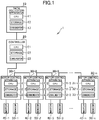
- FIG. 1 is a diagram for illustrating an example of an overall configuration of the production system according to the embodiment.
- a production system 1 includes a data collection apparatus 10, a controller 20, motor control apparatus 30-1 to 30-n, motors 40-1 to 40-n, and sensors 50-1 to 50-n.
- the symbol “n” represents a natural number, and in the case of FIG. 1 , "n" is any integer equal to or larger than four.
- the motor control apparatus 30-1 to 30-n are generally referred to as "motor control apparatus 30"
- the motors 40-1 to 40-n are generally referred to as “motor 40”
- the sensors 50-1 to 50-n are generally referred to as "sensor 50.”
- the CPUs 31-1 to 31-n are generally referred to as "CPU 31,”
- the storages 32-1 to 32-n are generally referred to as “storage 32, " and the communicators 33-1 to 33-n are generally referred to as "communicator 33.”
- the data collection apparatus 10 is a computer configured to collect data.
- the data collection apparatus 10 includes a CPU 11, a storage 12, and a communicator 13.
- the CPU 11 includes at least one processor.
- the storage 12 includes a RAM, an EEPROM, and a hard disk drive, and is configured to store various programs and data.
- the CPU 11 is configured to execute various types of processing based on those programs and data.
- the communicator 13 includes a communication interface for wired communication or wireless communication, and is configured to communicate to and from other apparatus.
- the controller 20 is an apparatus configured to control the motor control apparatus 30.
- the controller 20 is an example of a first industrial machine. Accordingly, a portion described as “controller 20" can be replaced by "first industrial machine” in this embodiment.
- the industrial machine is a general name of a machine configured to support or take over work executed by humans, and peripheral machines of the machine.
- the motor control apparatus 30 described later corresponds to the industrial machine.
- a robot controller, an industrial robot, an inverter, a converter, a machine tool, and a programmable logic controller (PLC) correspond to the industrial machine.
- the controller 20 controls four or more motor control apparatus 30, but the number of motor control apparatus 30 to be controlled by the controller 20 may be any number, and may be, for example, three or less. Moreover, for example, not only the motor control apparatus 30 but also sensors, input/output devices, and the like may be connected to the controller 20. Further, for example, the production system 1 may include a plurality of controllers 20.
- the controller 20 includes a CPU 21, a storage 22, and a communicator 23. The physical configuration of each of the CPU 21, the storage 22, and the communicator 23 is the same as that of each of the CPU 11, the storage 12, and the communicator 13.
- the second industrial machine is an industrial machine configured to periodically communicate to and from the first industrial machine.
- the meaning of the "industrial machine” is as described above.
- the second industrial machine is not required to always communicate to and from the first industrial machine periodically, and may communicate to and from the first industrial machine non-periodically. It is only required that the first industrial machine and the second industrial machine be capable of periodically communicating to and from each other.
- the first industrial machine is a machine provided on a data reception side (apparatus being a transmission destination of data) from the second industrial machine.
- the second industrial machine is a machine provided to a data transmission side (machine being a transmission source of data) .
- the second industrial machine may also be considered as a machine configured to generate data, or a machine whose operation is to be analyzed.
- the first industrial machine is a master machine configured to transmit a command
- the second industrial machine is a slave machine configured to operate in accordance with the command.
- the first industrial machine may be the slave machine
- the second industrial machine may be the master machine.
- the first industrial machine and the second industrial machine are not required to be in the master/slave relationship. In other words, the master/slave relationship or a hierarchical relationship may not exist between the first industrial machine and the second industrial machine.
- connection order is an order counted from the controller 20.
- the connection order may also be considered as a hierarchy.
- the connection order of the motor control apparatus 30-k (“k” is an integer equal to or larger than 1 and equal to or smaller than "n") is k-th.
- the serial connection corresponds to a state in which at least one motor control apparatus 30 is connected to the motor control apparatus 30 at least one of an upper level or a lower level thereof.
- a connection form of so-called "multi-drop connection,” “cascade connection,” or “daisy-chain connection” is an example of the serial connection.
- the motor control apparatus 30 includes a CPU 31, a storage 32, and a communicator 33.
- the physical configuration of each of the CPU 31, the storage 32, and the communicator 33 is the same as that of each of the CPU 11, the storage 12, and the communicator 13.
- the motor control apparatus 30 is configured to control a current directed to the motor 40 connected through power lines based on the command received from the controller 20.
- the motor 40 may be a motor of a rotary type or a linear type.
- the sensor 50 is a sensor capable of detecting a physical quantity, and is, for example, a motor encoder, a torque sensor, a temperature sensor, a force sensor, a vision sensor, a motion sensor, a gyro sensor, an acceleration sensor, or the like.
- one sensor 50 corresponds to one motor control apparatus 30. However, a plurality of sensors 50 may be connected to one motor control apparatus.
- Programs and data described as being stored in each of the data collection apparatus 10, the controller 20, and the motor control apparatus 30 may be supplied through the network.
- the hardware configurations of the data collection apparatus 10, the controller 20, and the motor control apparatus 30 are not limited to the above-mentioned examples, and various types of hardware can be applied.
- a reader for example, optical disc drive or memory card slot
- an input/output unit for example, USB terminal
- programs and data stored in the information storage medium may be supplied through the reader or the input/output unit.
- an integrated circuit called "ASIC" or "FPGA” may be included.
- the periodic communication is executed between the controller 20 and the motor control apparatus 30.
- the periodic communication is communication executed cyclically (periodically).
- the periodic communication is communication which has a communication procedure in one period defined in advance, and is executed in every constant period in accordance with the communication procedure.
- the periodic communication is executed on an industrial network (including so-called "field network") configured to connect the controller 20 and the motor control apparatus 30 to each other.
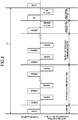
- FIG. 2 is a diagram for illustrating a communication procedure in one period.
- a duration T of one period is defined in advance.
- the duration T of one period may have any length.
- the duration T may have a length of, for example, approximately some tens of microseconds to approximately some hundreds of microseconds, or may be equal to or longer than this length or equal to or shorter than this length.
- the duration T of one period is only required to be defined in accordance with the number of motor control apparatus 30 (so called "number of axes") . For example, as the number of motor control apparatus 30 increases, the duration T increases.
- the controller 20 counts up the time stored in the storage 22, to thereby determine whether or not a start time point of each period has arrived (whether or not the duration T has elapsed).
- communication phases arrive in an order of a synchronization, the periodic communication, a retry of the periodic communication, and the non-periodic communication in one period.
- the controller 20 and the motor control apparatus 30 are synchronized with each other ("SYNC" of FIG. 2 ).
- a time managed by the controller 20 and a time managed by the motor control apparatus 30 are matched with each other through the synchronization.
- each of the controller 20 and the motor control apparatus 30 uses a timer to manage the time.
- the controller 20 sequentially communicates to and from each of the motor control apparatus 30-1 to 30-n. For example, when the communication phase for the periodic communication arrives, the controller 20 transmits a command ("CMD#1" of FIG. 2 ) to the motor control apparatus 30-1, which is the first in the communication order.
- the motor control apparatus 30-1 receives the command, executes the command, and transmits a response ("RSP#1" of FIG. 2 ) to the controller 20.
- the controller 20 transmits a command ("CMD#2" of FIG. 2 ) to the motor control apparatus 30-2, which is the second in the communication order.
- the motor control apparatus 30-1 is arranged between the controller 20 and the motor control apparatus 30-2, and the motor control apparatus 30-1 thus transfers the command received from the controller 20 to the motor control apparatus 30-2.
- the motor control apparatus 30-2 receives the transferred command, executes the command, and transmits a response ("RSP#2" of FIG. 2 ) to the controller 20.
- the motor control apparatus 30-1 transfers the response received from the motor control apparatus 30-2 to the controller 20.
- the communication to and from the controller 20 is similarly executed sequentially from the motor control apparatus 30 upper in the connection order.
- Other motor control apparatus 30 arranged between the controller 20 and the motor control apparatus 30 being the communication target are only required to transfer the command to the motor control apparatus 30 being the communication target, and to transfer the response to the controller 20.
- the communication order of the motor control apparatus 30-1 to 30-n matches the connection order, but the communication order and the connection order may not match each other.
- the motor control apparatus 30-2 may communicate to and from the controller 20 first in the order.
- the non-periodic communication is executed in the communication phase for the non-periodic communication.
- the non-periodic communication is communication that is not the periodic communication, and is communication that is not cyclically (periodically) executed.
- the non-periodic communication is sometimes called "message communication.”
- the non-periodic communication is executed in a free time period that is not the communication phase for the periodic communication.
- the speed of the non-periodic communication is lower than that of the periodic communication, and the size of data transmitted at once is larger than that of the periodic communication.
- data having a size of approximately some hundreds of bytes is non-periodically read and written at once.
- the controller 20 does not communicate to and from all of the motor control apparatus 30, but communicates to and from a part of the motor control apparatus 30. Accordingly, in the non-periodic communication, there exist motor control apparatus 30 that do not communicate to and from the controller 20.
- the controller 20 specifies the motor control apparatus 30 being an opposite party of the communication, and transmits a command (for example, "MSG#n" in the first non-periodic communication of FIG. 2 ) to this motor control apparatus 30.
- the motor control apparatus 30 being the opposite party of the communication receives the command, executes the command, and transmits a response (for example, "ACK or MSG#n" in the first non-periodic communication of FIG. 2 ) to the controller 20.
- a command for example, "MSG#n" in the first non-periodic communication of FIG. 2
- the motor control apparatus 30 being the opposite party of the communication receives the command, executes the command, and transmits a response (for example, "ACK or MSG#n" in the first non-periodic communication of FIG. 2 ) to the controller 20.
- ACK or MSG#n in the first non-periodic communication of FIG. 2
- the controller 20 may not communicate to and from a specific motor control apparatus 30, but may execute broadcast communication to and from all of the motor control apparatus 30.
- FIG. 2 there is illustrated a case in which there exist two communication phases for the non-periodic communication, but the number of the communication phases for the non-periodic communication may be only one, or may be three or more.
- the non-periodic communication is not particularly required, there may not exist the communication phase for the non-periodic communication.
- a next period starts.
- the communication phases arrive in the order of the synchronization, the periodic communication, the retry of the periodic communication, and the non-periodic communication. After that, the periodic communication is repeated between the controller 20 and the motor control apparatus 30.
- a command for a trace start in addition to the commands for controlling the motor 40 is also transmitted from the controller 20 to the motor control apparatus 30.
- the motor control apparatus 30 receives the command for the trace start from the controller 20, the motor control apparatus 30 starts a trace when a predetermined trigger condition is satisfied, to thereby generate trace data.
- the motor control apparatus 30 not only generates the trace data, but also executes a primary analysis of the trace data, to thereby generate primary analysis data.
- the motor control apparatus 30 transmits, to the controller 20, data (hereinafter referred to as "data to be transmitted") formed by unifying the trace data and the primary analysis data.
- data to be transmitted data formed by unifying the trace data and the primary analysis data.
- the non-periodic communication takes 10 ms per time, it takes 160 ms to transmit the data to be transmitted on one motor control apparatus 30.
- 30 motor control apparatus 30 are connected (when the value of "n" is 30), it takes 4.8 seconds to transmit the data to be transmitted on all of the motor control apparatus 30.
- the non-periodic communication is used also for other purposes, and it may take 4.8 seconds or longer to transmit the data to be transmitted. Accordingly, when the non-periodic communication is used, a long time period is required to transmit the data to be transmitted. Further, the time period required to transmit the data to be transmitted is not guaranteed, and it is thus not possible to timely read out the data to be transmitted.
- the motor control apparatus 30 is configured to use the communication region for the periodic communication to transmit the data to be transmitted.
- the data size of the data to be transmitted is 8 kilobytes, and four bytes is to be used in the communication region for the periodic communication, 2,048 times of transmission are required to transmit the entire data to be transmitted on one motor control apparatus 30.
- the duration T of each period is 125 ⁇ s, it takes 256 ms to transmit the data to be transmitted on one motor control apparatus 30.
- the size of each piece of data to be transmitted and received through the periodic communication is small, but the controller 20 communicate to and from all of the motor control machine 30 in the periodic communication. Accordingly, even when 30 motor control apparatus 30 are connected (even when the value of "n" is 30), it takes only 256 seconds to transmit the data to be transmitted on all of the motor control apparatus 30. That is, even when the size of the data to be transmitted is the same, the time period for the transmission is shorter than that in the case in which the communication region for the non-periodic communication is used. Further, in the periodic communication, the controller 20 communicates to and from all of the motor control apparatus 30, and the communication region dedicated to each of the motor control apparatus 30 is secured. Accordingly, the time period required to transmit the data to be transmitted is guaranteed, and it is thus possible to timely read out the data to be transmitted.
- the motor control apparatus 30 uses the communication region for the periodic communication to transmit the data to be transmitted on the motor control apparatus 30, to thereby reduce the time period required to transmit the data, and to thereby guarantee the required time period simultaneously.
- a detailed description is now given of the production system 1.
- FIG. 3 is a functional block diagram for illustrating functions to be implemented in the production system 1. The functions to be implemented in each of the controller 20 and the motor control apparatus 30 are now described.
- a data storage 200 As illustrated in FIG. 3 , in the controller 20, a data storage 200, an operation control module 201, a type specification module 202, a region specification module 203, a transmission module 204, and a reception module 205 are implemented.
- the data storage 200 is implemented mainly by the storage 22.
- the operation control module 201, the type specification module 202, the region specification module 203, the transmission module 204, and the reception module 205 are implemented mainly by the CPU 21.
- the data storage 200 is configured to store data required to control the motor control apparatus 30.
- the data storage 200 stores: control programs in which command contents directed to the motor control apparatus 30 (operation contents of the motor control apparatus 30) are described; and parameters to be stored in the motor control apparatus 30.
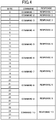
- FIG. 4 is a table for showing data formats of the data transmitted and received in the communication phase for the periodic communication.
- a data format of the commands transmitted by the controller 20 and a data format of the responses transmitted by the motor control apparatus 30.
- description is given of a case in which the data size of the command and the data size of the response are the same, but the data sizes may be different from each other.
- a data region including 32 bytes defined by the data formats shown in FIG. 4 is hereinafter referred to as "periodic region. "
- the data region for the command including 32 bytes is an example of the periodic region.
- the data region for the response including 32 bytes is also an example of the periodic region.
- the periodic region is a communication region for the periodic communication.
- the communication region is a unit of data (data region) to be transmitted and received.
- a so-called "packet" or "frame” is an example of the communication region.
- it is assumed that the data size of the periodic region is fixed, but the data size of the periodic region may be variable .
- the communication region may not mean a unit of data, but may mean a period in which the communication is executed (period in which data is transmitted and received) .
- the period of the communication phase for the periodic communication illustrated in FIG. 2 may be referred to as "periodic region.”
- the periodic region is defined for each motor control apparatus 30.
- each motor control apparatus 30 in the communication phase for the periodic communication, communicates to and from the controller 20 once, to thereby transmit and receive the data of 32 bytes shown in FIG. 4 .
- one periodic region exists for each motor control apparatus 30.
- the data format of the command is configured such that the periodic region including 32 bytes are partitioned into ten regions, and the content of the command is stored in each of the ten regions.
- the content of the command is described in the control program stored in the data storage 200.
- the content of the command may be any content relating to an operation of the motor control apparatus 30, and may be, for example, a content relating to the direction and speed of the motor 40, whether or not the motor control apparatus 30 is to be maintained in a standby state without operating the motor 40, a type of data to be acquired by the motor control apparatus 30, or the like.
- a command 1 is stored in the first one byte (0th byte of FIG. 4 ), and a command 2 is stored in the following one byte (first byte of FIG. 4 ) .
- a command 3 is stored in the following two bytes (second and third bytes of FIG. 4 ), and thereafter, a command 4 to a command 10 are stored in a data region partitioned into portions each having four bytes .
- the periodic region for the commands there may exist data regions available for any purposes (regions corresponding to an unspecified region described later).
- the data format of the response is configured such that the periodic region including 32 bytes are partitioned into ten regions, and a content of the response is stored in each of the ten regions.
- the content of the response is a content corresponding to the command transmitted by the controller 20.
- the content of the response is a physical quantity detected by the sensor 50, still image data or motion image data taken by the sensor 50, internal information on the motor control apparatus 30, or the like.
- the physical quantity is position information (for example, number of rotations or rotational angle) of the motor 40 detected by the motor encoder, a torque value detected by the torque sensor, or temperature information detected by the temperature sensor.
- the still image data or the motion image data is data on an image taken by a camera (vision sensor).
- a state of a workpiece there is indicated a state of a workpiece, a state of the motor control apparatus 30, or a peripheral apparatus (for example, other motor control apparatus 30 or transfer machines) of the motor control apparatus 30.
- the internal information on the motor control apparatus 30 is a load ratio of the CPU 31, a status of use of the storage 32, or a status of use of the communicator 33.
- a response 1 is stored in the first one byte (0th byte of FIG. 4 ), and a response 2 is stored in the following one byte (first byte of FIG. 4 ) .
- a response 3 is stored in the following two bytes (second and third bytes of FIG. 4 ), and thereafter, a response 4 to a response 7 are stored in a data region partitioned into portions each having four bytes .
- the response 1 to the response 7 are contents that can be transmitted at once.
- each of the response 1 to the response 7 is an instantaneous value of the physical quantity, the internal information, and the like described above.
- the instantaneous value is not a change represented in a form of a time series, but a value at a certain time point.
- the 20th byte and the following bytes (response 8 to response 10) of FIG. 4 correspond to a response region provided for the command, and are set as regions to which none is specified and a physical quantity and internal information can thus appropriately be specified in accordance with setting of servo control.
- the response 8 to the response 10 are hereinafter referred to as "unspecified regions.”
- the unspecified region is a region capable of storing any type of data.
- the unspecified region is a region that is available for an unspecified application, and is used to store a dynamically changing type of data.
- a type of data specified by the controller 20 is stored in the unspecified region.
- the controller 20 specifies the torque value
- the torque value detected by the torque sensor is stored in the unspecified region.
- the image data the image data generated by the camera is stored in the unspecified region.
- Data which cannot be stored in each unspecified region may be specified, and in this case, the data is divided into smaller portions each having four bytes, and each portion of data is stored in the unspecified region.
- the periodic region is used to transmit and receive data.
- a data region to be used to store the data transmitted and received in the communication phase for the non-periodic communication is referred to as "non-periodic region.”
- the non-periodic region is a communication region for the non-periodic communication.
- the data size of the non-periodic region is variable, but the data size of the non-periodic region may be fixed.
- the communication region does not mean a unit of data but means a period in which the communication is executed, the period of the communication phase for the non-periodic communication illustrated in FIG. 2 may be referred to as "non-periodic region.”
- the non-periodic region exists for only this motor control apparatus 30.
- the controller 20 and the motor control apparatus 30-n communicate to and from each other, and only the non-periodic region for the motor control apparatus 30-n thus exists.
- the periodic region and the non-periodic regions exist in one period, but there may exist a period in which a non-periodic region does not exist.
- the data stored in the data storage 200 is not limited to the above-mentioned example.
- the data storage 200 may store basic information (such as apparatus names and IP addresses) on the motor control apparatus 30 to be controlled by the controller 20.
- the data storage 200 may store the trace data and the primary analysis data received from the motor control apparatus 30.
- the data storage 200 may store the physical quantities detected by the sensors directly connected to the controller 20.
- the operation control module 201 is configured to execute the control program stored in the data storage 200, to thereby control the motor control apparatus 30. For example, a content of a command directed to the motor control apparatus 30 is described in a form of a time series in the control program.
- the operation control module 201 identifies the content of the command described in the control program corresponding to the motor control apparatus 30.
- the operation control module 201 generates data (data having 32 bytes of FIG. 4 ) including the identified content of the command.
- the generated data is transmitted by the transmission module 204 described later.
- a header portion exists in this data, which is not shown in FIG. 4 , and it is assumed that address information for identifying the destination, for example, an IP address of the motor control apparatus 30 being the transmission destination, is stored in the header portion.
- the motor control apparatus 30 can acquire a plurality of types of data.
- the type specification module 202 is configured to specify at least one of the plurality of types of data.
- the type of data means a content represented by the data. For example, when the motor control apparatus 30 can acquire the position information detected by the motor encoder, the torque value detected by the torque sensor, and the temperature information detected by the temperature sensor, the number of types of data is three. Those types of data are data that may form a response, and are to be stored in, for example, the unspecified region.
- the types specified by the type specification module 202 are types to be acquired by the controller 20. The types to be specified may be defined in the control program, or may be defined in another program.
- the type specification module 202 specifies the type of data corresponding to the alarm which has occurred.
- relationships each between an alarm code and a type of data to be acquired is stored in the data storage 200.
- This relationship may be defined in any data form. The relationship may be defined in, for example, a table form or a form of a numerical expression, or may be described as a part of a program code.
- the type specification module 202 receives an alarm code of an alarm which has occurred from the motor control apparatus 30, the type specification module 202 refers to this relationship, and specifies a type of data corresponding to the alarm code.
- the periodic region includes the plurality of regions each capable of storing a part of the data to be transmitted, and the region specification module 203 is configured to specify at least one of the plurality of regions.
- the region specification module 203 is configured to specify at least one of the plurality of regions.
- Apart of the data to be transmitted is each of the portions obtained by dividing the data to be transmitted into a plurality of portions .
- the region capable of storing a part of the data to be transmitted is a part of the regions of the periodic region.
- the data sizes of the respective plurality of regions may be the same, or may be different from one another.
- the unspecified regions in the data format shown in FIG. 4 correspond to regions capable of storing a part of the data to be transmitted.
- portions described as "unspecified region” in this embodiment can be replaced by "region capable of storing a part of the data to be transmitted.
- the region specified by the region specification module 203 may be a region called by a name different from the unspecified region.
- the region specification module 203 specifies a start byte and an end byte of the periodic region to be used.
- the transmission module 204 is configured to transmit any data to the motor control apparatus 30.
- the transmission module 204 transmits data indicating the content of the command generated by the operation control module 201 to the motor control apparatus 30.
- the transmission module 204 transmits, to the motor control apparatus 30, data including identification information on the type specified by the type specification module 202.
- the transmission module 204 transmits, to the motor control apparatus 30, data including the identification information on the regions specified by the region specification module 203.
- the transmission module 204 stores data in the periodic region, and transmits the data to the motor control apparatus 30.
- the transmission module 204 stores data in the non-periodic region, and transmits the data to the motor control apparatus 30.
- the reception module 205 is configured to receive any data from the motor control apparatus 30.
- the reception module 205 receives data indicating the content of the response generated by an operation control module 301 described later from the motor control apparatus 30.
- the reception module 205 receives data of the type specified by the type specification module 202 from the motor control apparatus 30.
- the reception module 205 receives the data to be transmitted stored in the regions specified by the region specification module 203 from the motor control apparatus 30.
- the reception module 205 receives the data stored in the periodic region from the motor control apparatus 30.
- the reception module 205 receives the data stored in the non-periodic region from the motor control apparatus 30.
- a data storage 300 As illustrated in FIG. 3 , in the motor control apparatus 30, a data storage 300, the operation control module 301, a transmission module 302, and a reception module 303 are implemented.
- the data storage 300 is implemented mainly by the storage 32.
- the operation control module 301, the transmission module 302, and the reception module 303 are implemented mainly by the CPU 31.
- the data storage 300 is configured to store data required to control the motor 40.
- the data storage 300 stores a control program for the motor 40 and the parameters received from the controller 20. In the control program, a relationship between the content of the command and a content of an operation (for example, output to the motor 40) to be executed by the motor control apparatus 30 is described.
- the data storage 300 stores, as data required to execute the periodic communication, information on a timer indicating a current time and the like and information on the format of the data to be transmitted and received in each communication phase inoneperiod.
- the data storage 300 stores the data to be transmitted including the trace data and the primary analysis data. When the trace data and the primary analysis data are being generated, the data storage 300 stores those pieces of data being generated.
- FIG. 5 is a graph for showing contents of the trace data and the primary analysis data.
- the content of the trace data is indicated by the broken line
- the content of the primary analysis data is indicated by the solid line.
- a physical quantity indicating the state of the motor 40 detected by the sensor 50 in a form of a time series is stored in the trace data.
- the horizontal axis of the graph of FIG. 5 is a time axis.
- the vertical axis represents the physical quantity.
- calculation results of predetermined calculation applied to the physical quantity included in the trace data are stored.
- the data obtained through the primary analysis is shown. For example, when a threshold value (dotted line of FIG. 5 ) for the analyzed data is set, times when the analyzed value becomes equal to or larger than the threshold value may be included in the primary analysis data.
- the primary analysis data may not be information having a form of a time series.
- FIG. 6 is a diagram for illustrating an overall configuration of the data to be transmitted.
- the data to be transmitted includes the header portion, the trace data, and the primary analysis data. An order of the trace data and the primary analysis data may be switched.
- the data to be transmitted is divided into portions each having a predetermined data length. Each of the divided portions of data is transmitted each time. For example, when the "response 8" of the data format shown in FIG. 4 is used to transmit the data to be transmitted, the "response 8" includes four bytes, and four bytes of the data to be transmitted is thus transmitted each time.
- the data stored in the data storage 300 is not limited to the above-mentioned example.
- the data storage 300 may store basic information (such as an apparatus name and an IP address) on the controller 20.
- the data storage 300 may store the trace data and the primary analysis data during the generation, and may store finished data to be transmitted.
- the data to be transmitted that has been transmitted may be deleted from the data storage 300, or may be retained in the data storage 300.
- the operation control module 301 is configured to control the operation of the motor 40 based on the command from the controller 20.
- the operation control module 301 executes an operation corresponding to the command based on the control program. For example, the operation control module 301 controls a current supplied to the motor 40 such that the motor 40 rotates or moves toward a direction or at a speed corresponding to the command.
- the operation control module 301 generates a response including the physical quantity detected by the sensor 50.
- the operation control module 301 generates the trace data storing the physical quantity detected by the sensor 50 in the form of a time series.
- the operation control module 301 applies the predetermined calculation processing to the trace data, to thereby generate the primary analysis data.
- the operation control module 301 adds the header portion to the trace data and the primary analysis data, to thereby generate the data to be transmitted.
- the header portion includes the sizes of the trace data and the primary analysis data and information, for example, the IP address of the controller 20.
- the "data on itself” is not limited to the data to be transmitted, and is only required to be data that can be generated or acquired by the motor control apparatus 30.
- the "data on itself” is the trace data generated by the motor control apparatus 30, the analysis data obtained through the analysis by the motor control apparatus 30, or the machine data on a machine connected to the motor control apparatus 30.
- a pair of the trace data and the primary analysis data does not always correspond to the data to be transmitted, but only one thereof may correspond to the data to be transmitted.
- the machine data is only required to be any information on the machine, and is, for example, a name, a model number, and a serial number of the machine and setting information (firmware, parameters, or the like) on the machine.
- the program and the parameters stored in the motor control apparatus 30 or a name, a model number, or a serial number of the motor control apparatus 30 may correspond to the "data on itself.”
- Diviiding the data into portions and transmitting each of the divided portions of the data in each of the plurality of periods is to use the plurality of periods to transmit the data to be transmitted.
- transmission of the data to be transmitted over the plurality of periods corresponds to dividing the data into portions and transmitting each of the divided portions of the data in each of the plurality of periods.
- the transmission module 302 transmits a part of the data to be transmitted in some periods, and transmits the rest of the data to be transmitted in other periods. For example, the transmission module 302 divides the data to be transmitted into a plurality of portions, and transmits each of the divided portions of the data in each period.
- the transmission module 302 divides the data to be transmitted based on the data size of the region to store the data. For example, when the "response 8" of the data format shown in FIG. 4 is used to transmit the data to be transmitted, the "response 8" includes four bytes, and the transmission module 302 thus divides the data to be transmitted into portions each having four bytes. In this case, the transmission module 302 transmits one of the divided portions of the data in one period.
- the transmission module 302 may use a plurality of regions of the periodic region to transmit the data to be transmitted. For example, when the "response 8" and the "response 9" of the data format shown in FIG. 4 are used to transmit the data to be transmitted, each of the "response 8" and the “response 9” includes four bytes, and the transmission module 302 thus divides the data to be transmitted into portions each having four bytes. This point is the same as in the case in which only the "response 8" is used to transmit the data to be transmitted, but the two portions of divided data are transmitted in one period, and the transmission module 302 thus transmits the two portions of divided data in one period.
- the “response 8" and the “response 9" are continuous to each other, and hence the transmission module 302 may divide the data to be transmitted into portions each having eight bytes. Moreover, the transmission module 302 may use three or more regions to transmit the data to be transmitted. Further, the transmission module 302 may use a plurality of regions that are not continuous to each other (for example, "response 8" and "response 10") to transmit the data to be transmitted.
- the transmission module 302 uses the periodic region to transmit the data to be transmitted at any timing after the data to be transmitted has been generated. For example, handshake is executed between the controller 20 and the motor control apparatus 30 after the data to be transmitted has been generated, and the transmission module 203 uses the periodic region to transmit the data to be transmitted after the handshake has been executed.
- the data to be transmitted may be transmitted at another timing. For example, the data may be transmitted at a timing at which a predetermined command is received from the controller 20 or a timing at which a predetermined time arrives.
- a part of the periodic region is used to transmit and receive data for control between the controller 20 and the motor control apparatus 30 at least once in one period.
- the data for control is data directly relating to the control of the motor control apparatus 30.
- the command relating to the direction and the speed of the motor 40 is an example of the data for control.
- the periodic region is used to transmit and receive the data for control once per motor control apparatus 30 in one period.
- the transmission and reception correspond to the transmission of the data for control by the controller 20 and the reception of the data for control by the motor control apparatus 30.
- the transmission and reception of the data for control and the transmission and reception of the data to be transmitted including the trace data and the primary analysis data are executed in parallel between the controller 20 and the motor control apparatus 30.
- the periodic region includes a first region and a second region.
- the first region corresponds to data capable of being transmitted in one period.
- the second region corresponds to data not capable of being transmitted in one period.
- the transmission module 302 uses the second region of the periodic region.
- the first region is a data region having a size equal to or larger than the size of entire data to be transmitted.
- the first region is a data region for storing data all contents of which can be transmitted at once.
- the region storing each of the response 1 to the response 7 is an example of the first region.
- the periodic region does not mean not a data region but means a period
- the first region is a period equal to or longer than a time period required to transmit entire data.
- the second region is a data region having a size smaller than the size of the entire data to be transmitted.
- the second region is a data region for storing each of the divided portions of data.
- each of the response 8 to response 10 is an example of the second region.
- each of the response 8 to the response 10 is available for any application, and can be used also for data other than the data to be transmitted. For example, data capable of being transmitted in one period may be stored in the second region.
- the periodic region does not mean a data region but means a period
- the second region is a period shorter than a time period required to transmit entire data.
- the controller 20 sequentially communicates to and from the plurality of the motor control apparatus 30 in one period.
- the transmission module 302 uses the periodic region corresponding to itself to transmit a part of the data on itself.
- the periodic region corresponding to itself means a periodic region to be used by the motor control apparatus 30 including the transmission module 302 to transmit data through the periodic communication.
- the type specification module 202 specifies the types of data included in the data to be transmitted.
- the transmission module 302 divides the data of specified at least one type into portions, and transmits each of the divided portions of the data to the controller 20 in each of the plurality of periods . Data of types that are not specified by the type specification module 202 is not transmitted to the controller 20.
- the region specification module 203 specifies a region for storing each of the portions of the data obtained by dividing the data to be transmitted.
- the transmission module 302 thus uses the specified at least one region to transmit the data to the controller 20. Regions that are not specified by the region specification module 203 are not used to transmit the data to be transmitted.
- the reception module 303 is configured to receive any data from the controller 20.
- the reception module 303 receives data indicating the content of the command generated by the operation control module 201 from the controller 20.
- the reception module 303 receives the data stored in the periodic region from the controller 20.
- the reception module 303 receives the data stored in the non-periodic region from the controller 20.
- FIG. 7 is a flowchart for illustrating a form of the transmission and the reception of the data to be transmitted in the production system 1.
- the processing illustrated in FIG. 7 is executed by the CPU 21 and the CPU 31 operating in accordance with the programs stored in the storage 22 and the storage 32, respectively.
- the processing described below is an example of processing executed by the functional blocks illustrated in FIG. 3 .
- FIG. 7 only one motor control apparatus 30 is illustrated, but the same processing is executed by each of the plurality of motor control apparatus 30.
- the processing executed by the motor control apparatus 30 to control the motor 40 is omitted.
- the controller 20 transmits a command for starting the trace to the motor control apparatus 30 (Step S1).
- the command for the trace start is data having a form defined in advance, and includes, for example, the identification information on the type of data to be traced.
- the controller 20 executes the control program to determine the type of data to be traced, and transmits the command including the identification information on the determined type.
- conditions such as a trigger of the trace start and a trace time period are set, it is assumed that those conditions are included in the command transmitted in Step S1. It is also assumed that those conditions are stored in the storage 22.
- the motor control apparatus 30 determines whether or not a predetermined trigger has been detected (Step S2) .
- the trigger is a condition for the trace start. Any trigger can be set as the trigger. For example, a condition that an alarm occurs, a condition that the physical quantity detected by the sensor 50 reaches a predetermined value, or a condition that the current time becomes a predetermined time can be set as the trigger.
- the trigger may be determined in advance, or may be included in the command transmitted in Step S1.
- the motor control apparatus 30 determines whether or not the trigger has been detected based on a detection signal of the sensor 50 or the timer stored in the storage 32.
- Step S3 the motor control apparatus 30 traces the data of the type included in the command for the trace start based on the detection signal of the sensor 50 (Step S3).
- the motor control apparatus 30 stores the physical quantity detected by the sensor 50 in the trace data in the form of a time series. For example, the motor control apparatus 30 associates the physical quantity detected by the sensor 50 with the current time, and stores the associated physical quantity in the trace data.
- the motor control apparatus 30 determines whether or not the trace has been completed (Step S4) .
- a condition for the trace completion may be any condition. For example, a condition that a certain time period has elapsed since the start of trace, a condition that the alarm stops, or a condition that the physical quantity detected by the sensor 50 reaches a predetermined value can be the condition for the trace completion.
- the motor control apparatus 30 determines whether or not the trace has been completed based on the timer stored in the storage 32, the detection signal of the sensor 50, or the size of the trace data.
- Step S5 the motor control apparatus 30 executes the primary analysis of the trace data.
- the primary analysis it is only required to execute analysis in accordance with the trace data. It is assumed that a program for the primary analysis is stored in the storage 32 in advance.
- Step S5 the motor control apparatus 30 executes this program, to thereby execute the primary analysis of the trace data.
- the motor control apparatus 30 generates primary analysis data based on an execution result of the primary analysis, and stores the primary analysis data in the storage 32.
- the motor control apparatus 30 adds the header portion to the trace data and the primary analysis data, to thereby generate the data to be transmitted.
- the motor control apparatus 30 requests the controller 20 for the handshake with the motor control apparatus 30 (Step S6) .
- the request for the handshake is executed through transmission of data having form defined in advance.
- the controller 20 executes the handshake with the motor control apparatus 30, and prepares for the reception of the data (Step S7).
- the motor control apparatus 30 is only required to execute the handshake by following a procedure defined in a communication protocol.
- the motor control apparatus 30 starts transmitting the data to be transmitted to the controller 20 (Step S8). For example, when the handshake has been completed, the controller 20 transmits, to the motor control apparatus 30, a command indicating that the data to be transmitted is requested. In this command, the region to be used to transmit the data to be transmitted may be specified.
- the motor control apparatus 30 divides the data to be transmitted into the portions each having the number of bytes included in the specified region.
- the motor control apparatus 30 stores the divided data portion in the region specified by the controller 20 in the periodic region.
- the motor control apparatus 30 stores the data for control in other portions of the periodic region.
- the motor control apparatus 30 determines whether or not the transmission of the data to be transmitted has been completed (Step S9) . In Step S9, the motor control apparatus 30 determines whether or not the transmission has been completed up to the last data portion of the data to be transmitted.
- Step S10 each time the period arrives, the controller 20 transmits the command to the motor control apparatus 30.
- the motor control apparatus 30 stores, as the response to the command, each of the data portions, which are obtained by dividing the data to be transmitted, in the specified region of the periodic region, to thereby transmit the data portion. Subsequently, the data transmission using the periodic region is continued until the transmission of the data to be transmitted is completed.
- the motor control apparatus 30 executes predetermined completion processing, to thereby transmit a completion notification for the data transmission to the controller 20 (Step S11).
- the completion processing is executed by transmitting data having a form defined in advance.
- the completion notification is executed by transmitting a character string indicating that an end of the data to be transmitted has been reached.
- Step S12 the controller 20 reassembles the portions of data received from the motor control apparatus 30 into one piece of data, and records the reassembled data as a file in the storage 22.
- the controller 20 may transmit the file recorded in the storage 22 to the data collection apparatus 10.
- the data collection apparatus 10 receives the file, and records the file in the storage 12.
- the data collection apparatus 10 may analyze the file recorded in the storage 12, or may instruct the controller 20 to correct the control content or to recover from a failure based on the primary analysis data included in the file.
- the time period required to transmit the data to be transmitted can be guaranteed by dividing the data to be transmitted into portions and transmitting, to the controller 20, each of the divided portions of the data in each of the plurality of periods through use of the periodic region in each of the plurality of periods.
- the data to be transmitted may be transmitted through use of the non-periodic region, but the non-periodic region may be used for communication for other industrial machines, or may be used to transmit other data, and the time period required to transmit the data to be transmitted may be unstable.
- the periodic region is the dedicated communication region provided for the motor control apparatus 30, and hence the time period required to transmit the data to be transmitted can be stabilized. As a result, the time period required to transmit the data to be transmitted can be reduced.
- the data for control is transmitted and received between the controller 20 and the motor control apparatus 30 at least once in each period through use of a part of the periodic region, and the data to be transmitted is thus transmitted while the data for control is received and transmitted, thereby being capable of effectively using the periodic region.
- the data for control cannot be transmitted, and the operation may be interfered with.
- the data for control is transmitted at least once in each period, thereby being capable of preventing the operation from being interfered with.
- the motor control apparatus 30 divides the data to be transmitted into portions and transmits each of the divided portions of the data in each of the plurality of periods through use of the unspecified regions of the periodic region, and thus uses regions other than the unspecified regions, thereby being capable of transmitting also other data while guaranteeing the time period required to transmit the data. For example, when the entire periodic region is used as unspecified regions, data requiring immediacy cannot be transmitted, and the operation may be interfered with. However, other regions are used to transmit such data, thereby being capable of preventing the operation from being interfered with.
- each of the plurality of motor control apparatus 30 uses the periodic region corresponding to itself to transmit the data to be transmitted on itself when the own turn for the communication arrives. Consequently, even when the production system 1 includes a plurality of motor control apparatus 30, the time period to transmit the data can be guaranteed.
- the periodic regions each assigned to each motor control apparatus 30 exist in one period, and the data on each of the plurality of motor control apparatus 30 can thus be transmitted.
- the motor control apparatus 30 divides data of the type specified by the controller 20 into portions and transmits each of the divided portions of the data in each of the plurality of periods, and the controller 20 is thus allowed to acquire the data of the desired type.
- the controller 20 controls the motor control apparatus 30 or analyzes the operation of the motor control apparatus 30 based on data, precisions of the control and the operation analysis can be increased by acquiring data of the desired type.
- the motor control apparatus 30 transmits data through use of the regions specified by the controller 20, thereby being capable of using the desired regions to transmit the data. For example, when a plurality of regions are specified, data can efficiently be transmitted, thereby being capable of reducing the time period required to transmit the data. Moreover, for example, when only a part of the regions is specified, other regions can be used to transmit data other than the data.
- the trace data, the primary analysis data, or the machine data is transmitted as the data to be transmitted, and hence the time period required to transmit those pieces of data can be guaranteed.
- the controller 20 corresponds to a master machine
- the motor control apparatus 30 corresponds to a slave machine. Accordingly, it is possible to guarantee the time period required to transmit data transmitted from the slave machine to the master machine.
- the data to be transmitted by the motor control apparatus 30 to the controller 20 is divided into portions and each of the divided portions of the data is transmitted in each of the plurality of periods, but the data to be transmitted by the controller 20 to the motor control apparatus 30 may be divided into portions, and each of the divided portions of the data may be transmitted in each of a plurality of periods.
- the controller 20 may not use the non-periodic communication but uses the periodic communication in each of the plurality of periods to transmit data, for example, the parameters, to the motor control apparatus 30.
- the data may be divided into portions, and each of the divided portions of the data may be transmitted in each of a plurality of periods as in the flow described in the embodiment.
- the periodic communication is used between the controller 20 and the motor control apparatus 30, and the data to be transmitted is divided into portions and each of the divided portions of the data is transmitted in each of the plurality of periods, but the same communication may be executed between other industrial machines.
- the periodic communication is executed between the motor control apparatus 30 and the sensor 50, data to be transmitted that is generated by the sensor 50 may be divided into portions, and each of the divided portions of the data may be transmitted to the motor control apparatus 30 in each of a plurality of periods.
- the same communication as described above may be used for communication between a cell controller configured to manage a unit called "cell" and a robot controller.
- the same communication as described above may be used for communication between a PLC and an apparatus to be controlled.
- the network for industry is exemplified above, but the network is only required to be a network capable of executing the periodic communication, and the same communication as that described above may be executed on another network.
Landscapes
- Engineering & Computer Science (AREA)
- Computer Networks & Wireless Communication (AREA)
- Signal Processing (AREA)
- Automation & Control Theory (AREA)
- Physics & Mathematics (AREA)
- General Physics & Mathematics (AREA)
- Human Computer Interaction (AREA)
- Manufacturing & Machinery (AREA)
- Medical Informatics (AREA)
- General Health & Medical Sciences (AREA)
- Computing Systems (AREA)
- Health & Medical Sciences (AREA)
- Control Of Electric Motors In General (AREA)
- Small-Scale Networks (AREA)
- Control Of Multiple Motors (AREA)
Applications Claiming Priority (1)
| Application Number | Priority Date | Filing Date | Title |
|---|---|---|---|
| JP2020026175A JP7229957B2 (ja) | 2020-02-19 | 2020-02-19 | 生産システム、通信方法、及びプログラム |
Publications (1)
| Publication Number | Publication Date |
|---|---|
| EP3869744A1 true EP3869744A1 (de) | 2021-08-25 |
Family
ID=74625877
Family Applications (1)
| Application Number | Title | Priority Date | Filing Date |
|---|---|---|---|
| EP21157107.0A Withdrawn EP3869744A1 (de) | 2020-02-19 | 2021-02-15 | Produktionssystem, kommunikationsverfahren und programm |
Country Status (4)
| Country | Link |
|---|---|
| US (1) | US20210255598A1 (de) |
| EP (1) | EP3869744A1 (de) |
| JP (1) | JP7229957B2 (de) |
| CN (1) | CN113285820A (de) |
Families Citing this family (2)
| Publication number | Priority date | Publication date | Assignee | Title |
|---|---|---|---|---|
| JP7524863B2 (ja) | 2021-08-16 | 2024-07-30 | トヨタ自動車株式会社 | 車両、及び給電方法 |
| KR20240168223A (ko) * | 2023-05-22 | 2024-11-29 | 가부시키가이샤 키엔스 | 설정 지원 장치, 제어 방법 및 프로그램 |
Citations (4)
| Publication number | Priority date | Publication date | Assignee | Title |
|---|---|---|---|---|
| JP2004242031A (ja) | 2003-02-05 | 2004-08-26 | Fuji Electric Fa Components & Systems Co Ltd | 通信システム |
| JP2010171804A (ja) * | 2009-01-23 | 2010-08-05 | Fujitsu Semiconductor Ltd | 通信装置及び通信システム |
| US20100208755A1 (en) * | 2007-11-02 | 2010-08-19 | Fujitsu Microelectronics Limited | Signal processor and communication device |
| US20120300794A1 (en) * | 2011-05-27 | 2012-11-29 | Honeywell International Inc. | Guardian scrubbing strategy for distributed time-triggered protocols |
Family Cites Families (9)
| Publication number | Priority date | Publication date | Assignee | Title |
|---|---|---|---|---|
| JP4683346B2 (ja) * | 2006-12-27 | 2011-05-18 | 株式会社安川電機 | マスタ・スレーブ通信システムおよびマスタ・スレーブ通信方法 |
| JP6460688B2 (ja) | 2014-09-12 | 2019-01-30 | 矢崎エナジーシステム株式会社 | 運行管理システム |
| CN106385304B (zh) * | 2016-08-31 | 2019-10-25 | 华为技术有限公司 | 数据传输方法、设备和系统 |
| JP6769230B2 (ja) * | 2016-10-14 | 2020-10-14 | オムロン株式会社 | 通信装置、制御装置および通信方法 |
| JP6962099B2 (ja) * | 2017-09-25 | 2021-11-05 | オムロン株式会社 | 制御システムおよび制御装置 |
| JP6897462B2 (ja) | 2017-09-27 | 2021-06-30 | オムロン株式会社 | 制御システムおよび通信方法 |
| JP7059673B2 (ja) * | 2018-02-14 | 2022-04-26 | オムロン株式会社 | 制御装置、制御システム、制御方法、および、制御プログラム |
| JP6911791B2 (ja) | 2018-02-14 | 2021-07-28 | オムロン株式会社 | 制御装置、制御システム、制御方法、および、制御プログラム |
| JP7269113B2 (ja) * | 2019-06-28 | 2023-05-08 | ファナック株式会社 | Plc装置、及び制御装置 |
-
2020
- 2020-02-19 JP JP2020026175A patent/JP7229957B2/ja active Active
-
2021
- 2021-02-15 EP EP21157107.0A patent/EP3869744A1/de not_active Withdrawn
- 2021-02-18 US US17/179,333 patent/US20210255598A1/en not_active Abandoned
- 2021-02-18 CN CN202110187301.XA patent/CN113285820A/zh active Pending
Patent Citations (4)
| Publication number | Priority date | Publication date | Assignee | Title |
|---|---|---|---|---|
| JP2004242031A (ja) | 2003-02-05 | 2004-08-26 | Fuji Electric Fa Components & Systems Co Ltd | 通信システム |
| US20100208755A1 (en) * | 2007-11-02 | 2010-08-19 | Fujitsu Microelectronics Limited | Signal processor and communication device |
| JP2010171804A (ja) * | 2009-01-23 | 2010-08-05 | Fujitsu Semiconductor Ltd | 通信装置及び通信システム |
| US20120300794A1 (en) * | 2011-05-27 | 2012-11-29 | Honeywell International Inc. | Guardian scrubbing strategy for distributed time-triggered protocols |
Non-Patent Citations (1)
| Title |
|---|
| SHAW ROBERT ET AL: "An Introduction to FlexRay as an Industrial Network", 1 July 2008 (2008-07-01), pages 1849 - 1854, XP055812010, Retrieved from the Internet <URL:https://ieeexplore.ieee.org/stampPDF/getPDF.jsp?tp=&arnumber=4676987&ref=aHR0cHM6Ly9pZWVleHBsb3JlLmllZWUub3JnL2Fic3RyYWN0L2RvY3VtZW50LzQ2NzY5ODc=> [retrieved on 20210609] * |
Also Published As
| Publication number | Publication date |
|---|---|
| CN113285820A (zh) | 2021-08-20 |
| JP7229957B2 (ja) | 2023-02-28 |
| JP2021132279A (ja) | 2021-09-09 |
| US20210255598A1 (en) | 2021-08-19 |
Similar Documents
| Publication | Publication Date | Title |
|---|---|---|
| US11703832B2 (en) | Production system, communication method, and information storage medium | |
| JP6950385B2 (ja) | 制御装置および制御方法 | |
| EP3119041B1 (de) | Konstruktionsassistenzvorrichtung, konstruktionsassistenzverfahren und programm | |
| US11269313B2 (en) | Controller and control system that stores data in current control cycle for output in next control cycle | |
| JP7294085B2 (ja) | 制御システム、制御装置および制御方法 | |
| CN112230603B (zh) | 一种基于数控机床的多传感器数据采集方法及系统 | |
| EP3869744A1 (de) | Produktionssystem, kommunikationsverfahren und programm | |
| US12072685B2 (en) | Data collection system and motor controller | |
| JP6969455B2 (ja) | 制御装置、制御システム、制御方法、および、制御プログラム | |
| CN111586087B (zh) | 通信系统、通信方法和程序 | |
| US11698632B2 (en) | Production system, data transmission method, and information storage medium | |
| EP3933592B1 (de) | Produktionssystem, host-steuerungsvorrichtung, steuerungsvorrichtung, kommunikationsverfahren und programm | |
| CN114072741A (zh) | 控制系统、控制装置以及程序 | |
| US12085904B2 (en) | Engineering device, engineering method, and information storage medium | |
| JP2021026587A (ja) | 制御装置 | |
| JP2022048289A (ja) | 制御装置および制御システム |
Legal Events
| Date | Code | Title | Description |
|---|---|---|---|
| PUAI | Public reference made under article 153(3) epc to a published international application that has entered the european phase |
Free format text: ORIGINAL CODE: 0009012 |
|
| STAA | Information on the status of an ep patent application or granted ep patent |
Free format text: STATUS: THE APPLICATION HAS BEEN PUBLISHED |
|
| AK | Designated contracting states |
Kind code of ref document: A1 Designated state(s): AL AT BE BG CH CY CZ DE DK EE ES FI FR GB GR HR HU IE IS IT LI LT LU LV MC MK MT NL NO PL PT RO RS SE SI SK SM TR |
|
| STAA | Information on the status of an ep patent application or granted ep patent |
Free format text: STATUS: REQUEST FOR EXAMINATION WAS MADE |
|
| 17P | Request for examination filed |
Effective date: 20220221 |
|
| RBV | Designated contracting states (corrected) |
Designated state(s): AL AT BE BG CH CY CZ DE DK EE ES FI FR GB GR HR HU IE IS IT LI LT LU LV MC MK MT NL NO PL PT RO RS SE SI SK SM TR |
|
| STAA | Information on the status of an ep patent application or granted ep patent |
Free format text: STATUS: THE APPLICATION HAS BEEN WITHDRAWN |
|
| 18W | Application withdrawn |
Effective date: 20221109 |