EP3871503A1 - Systèmes et procédés de stérilisation de compositions iodophores - Google Patents
Systèmes et procédés de stérilisation de compositions iodophores Download PDFInfo
- Publication number
- EP3871503A1 EP3871503A1 EP21158141.8A EP21158141A EP3871503A1 EP 3871503 A1 EP3871503 A1 EP 3871503A1 EP 21158141 A EP21158141 A EP 21158141A EP 3871503 A1 EP3871503 A1 EP 3871503A1
- Authority
- EP
- European Patent Office
- Prior art keywords
- minutes
- composition
- iodophor
- iodophor composition
- iodine
- Prior art date
- Legal status (The legal status is an assumption and is not a legal conclusion. Google has not performed a legal analysis and makes no representation as to the accuracy of the status listed.)
- Pending
Links
Images

Classifications
-
- A—HUMAN NECESSITIES
- A01—AGRICULTURE; FORESTRY; ANIMAL HUSBANDRY; HUNTING; TRAPPING; FISHING
- A01N—PRESERVATION OF BODIES OF HUMANS OR ANIMALS OR PLANTS OR PARTS THEREOF; BIOCIDES, e.g. AS DISINFECTANTS, AS PESTICIDES OR AS HERBICIDES; PEST REPELLANTS OR ATTRACTANTS; PLANT GROWTH REGULATORS
- A01N25/00—Biocides, pest repellants or attractants, or plant growth regulators, characterised by their forms, or by their non-active ingredients or by their methods of application, e.g. seed treatment or sequential application; Substances for reducing the noxious effect of the active ingredients to organisms other than pests
- A01N25/08—Biocides, pest repellants or attractants, or plant growth regulators, characterised by their forms, or by their non-active ingredients or by their methods of application, e.g. seed treatment or sequential application; Substances for reducing the noxious effect of the active ingredients to organisms other than pests containing solids as carriers or diluents
- A01N25/10—Macromolecular compounds
-
- A—HUMAN NECESSITIES
- A01—AGRICULTURE; FORESTRY; ANIMAL HUSBANDRY; HUNTING; TRAPPING; FISHING
- A01N—PRESERVATION OF BODIES OF HUMANS OR ANIMALS OR PLANTS OR PARTS THEREOF; BIOCIDES, e.g. AS DISINFECTANTS, AS PESTICIDES OR AS HERBICIDES; PEST REPELLANTS OR ATTRACTANTS; PLANT GROWTH REGULATORS
- A01N25/00—Biocides, pest repellants or attractants, or plant growth regulators, characterised by their forms, or by their non-active ingredients or by their methods of application, e.g. seed treatment or sequential application; Substances for reducing the noxious effect of the active ingredients to organisms other than pests
- A01N25/30—Biocides, pest repellants or attractants, or plant growth regulators, characterised by their forms, or by their non-active ingredients or by their methods of application, e.g. seed treatment or sequential application; Substances for reducing the noxious effect of the active ingredients to organisms other than pests characterised by the surfactants
-
- A—HUMAN NECESSITIES
- A01—AGRICULTURE; FORESTRY; ANIMAL HUSBANDRY; HUNTING; TRAPPING; FISHING
- A01N—PRESERVATION OF BODIES OF HUMANS OR ANIMALS OR PLANTS OR PARTS THEREOF; BIOCIDES, e.g. AS DISINFECTANTS, AS PESTICIDES OR AS HERBICIDES; PEST REPELLANTS OR ATTRACTANTS; PLANT GROWTH REGULATORS
- A01N31/00—Biocides, pest repellants or attractants, or plant growth regulators containing organic oxygen or sulfur compounds
- A01N31/02—Acyclic compounds
-
- A—HUMAN NECESSITIES
- A01—AGRICULTURE; FORESTRY; ANIMAL HUSBANDRY; HUNTING; TRAPPING; FISHING
- A01N—PRESERVATION OF BODIES OF HUMANS OR ANIMALS OR PLANTS OR PARTS THEREOF; BIOCIDES, e.g. AS DISINFECTANTS, AS PESTICIDES OR AS HERBICIDES; PEST REPELLANTS OR ATTRACTANTS; PLANT GROWTH REGULATORS
- A01N59/00—Biocides, pest repellants or attractants, or plant growth regulators containing elements or inorganic compounds
- A01N59/12—Iodine, e.g. iodophors; Compounds thereof
-
- A—HUMAN NECESSITIES
- A01—AGRICULTURE; FORESTRY; ANIMAL HUSBANDRY; HUNTING; TRAPPING; FISHING
- A01P—BIOCIDAL, PEST REPELLANT, PEST ATTRACTANT OR PLANT GROWTH REGULATORY ACTIVITY OF CHEMICAL COMPOUNDS OR PREPARATIONS
- A01P1/00—Disinfectants; Antimicrobial compounds or mixtures thereof
-
- A—HUMAN NECESSITIES
- A61—MEDICAL OR VETERINARY SCIENCE; HYGIENE
- A61K—PREPARATIONS FOR MEDICAL, DENTAL OR TOILETRY PURPOSES
- A61K31/00—Medicinal preparations containing organic active ingredients
- A61K31/74—Synthetic polymeric materials
- A61K31/785—Polymers containing nitrogen
- A61K31/787—Polymers containing nitrogen containing heterocyclic rings having nitrogen as a ring hetero atom
- A61K31/79—Polymers of vinyl pyrrolidone
-
- A—HUMAN NECESSITIES
- A61—MEDICAL OR VETERINARY SCIENCE; HYGIENE
- A61L—METHODS OR APPARATUS FOR STERILISING MATERIALS OR OBJECTS IN GENERAL; DISINFECTION, STERILISATION OR DEODORISATION OF AIR; CHEMICAL ASPECTS OF BANDAGES, DRESSINGS, ABSORBENT PADS OR SURGICAL ARTICLES; MATERIALS FOR BANDAGES, DRESSINGS, ABSORBENT PADS OR SURGICAL ARTICLES
- A61L2/00—Disinfection or sterilisation of materials or objects, in general; Accessories therefor
- A61L2/02—Disinfection or sterilisation of materials or objects, in general; Accessories therefor using physical processes
- A61L2/04—Heat
-
- A—HUMAN NECESSITIES
- A61—MEDICAL OR VETERINARY SCIENCE; HYGIENE
- A61P—SPECIFIC THERAPEUTIC ACTIVITY OF CHEMICAL COMPOUNDS OR MEDICINAL PREPARATIONS
- A61P31/00—Antiinfectives, i.e. antibiotics, antiseptics, chemotherapeutics
-
- A—HUMAN NECESSITIES
- A61—MEDICAL OR VETERINARY SCIENCE; HYGIENE
- A61P—SPECIFIC THERAPEUTIC ACTIVITY OF CHEMICAL COMPOUNDS OR MEDICINAL PREPARATIONS
- A61P31/00—Antiinfectives, i.e. antibiotics, antiseptics, chemotherapeutics
- A61P31/02—Local antiseptics
-
- A—HUMAN NECESSITIES
- A61—MEDICAL OR VETERINARY SCIENCE; HYGIENE
- A61L—METHODS OR APPARATUS FOR STERILISING MATERIALS OR OBJECTS IN GENERAL; DISINFECTION, STERILISATION OR DEODORISATION OF AIR; CHEMICAL ASPECTS OF BANDAGES, DRESSINGS, ABSORBENT PADS OR SURGICAL ARTICLES; MATERIALS FOR BANDAGES, DRESSINGS, ABSORBENT PADS OR SURGICAL ARTICLES
- A61L2103/00—Materials or objects being the target of disinfection or sterilisation
- A61L2103/05—Living organisms or biological materials
Definitions
- Sterilization of antiseptic compositions can advantageously reduce and/or prevent infection.
- known methods of sterilizing antiseptic compositions such as exposure to gamma radiation, can have deleterious effects on iodophor compositions. Accordingly, improved systems and methods for sterilizing iodophor compositions are needed.
- Systems and methods for sterilizing iodophor compositions are generally provided.
- the subject matter disclosed herein involves, in some cases, interrelated products, alternative solutions to a particular problem, and/or a plurality of different uses of one or more systems and/or articles.
- a sterilized iodophor composition is provided.
- the sterilized iodophor composition is sterilized by a method comprising heating an initial iodophor composition to produce the sterilized iodophor composition.
- the sterilized iodophor composition has a sterility assurance level of 10 -3 or less.
- a sterilized iodophor composition comprises at least 5.0% by weight of povidone-iodine. In certain embodiments, the sterilized iodophor composition has a sterility assurance level of 10 -3 or less. In certain embodiments, the sterilized iodophor composition has a viscosity of 3000 cP or less.
- a sterilization method comprises heating an initial iodophor composition to produce a sterilized iodophor composition that has a sterility assurance level of 10 -3 or less.
- the iodophor composition comprises a complex comprising iodine and a polymer (i.e., an iodine-polymer complex).
- the iodine-polymer complex may be polyvinylpyrrolidone iodine (also referred to as "povidone-iodine" or "PVP-I”) or iodine povacrylex. Methods are described for heating an initial iodophor composition to produce a sterilized iodophor composition.
- the resulting sterilized iodophor composition may have a relatively high assurance of sterility (e.g., a sterility assurance level of 10 -3 or less, 10 -6 or less).
- heating the initial iodophor composition comprises exposing at least a portion of a container containing the initial iodophor composition to a heated liquid.
- the heated liquid is part of a moving liquid stream (e.g., a cascading waterfall stream produced by a cascading waterfall sterilizer).
- sterilization systems and methods described herein may advantageously preserve certain positive attributes of an initial iodophor composition (e.g., potency, pH, viscosity).
- An iodophor composition generally refers to a composition comprising an iodine-containing complex, typically dissolved or suspended in a liquid solvent (e.g., water and/or an alcohol) or other fluent carrier, including but not limited to a cream, ointment, or gel (e.g., a hydrogel).
- a liquid solvent e.g., water and/or an alcohol
- other fluent carrier including but not limited to a cream, ointment, or gel (e.g., a hydrogel).
- the iodine-containing complex is a complex comprising iodine and a polymer (i.e., an iodine-polymer complex).
- suitable polymers include homopolymers and copolymers comprising a vinylpyrrolidone and/or an acrylate (e.g., methyl methacrylate, isooctyl acrylate).
- the iodophor composition comprises povidone-iodine.
- Povidone-iodine is a complex comprising polyvinylpyrrolidone (also referred to as "povidone” or “PVP") and iodine.
- Povidone-iodine generally has the following chemical structure, where m and n represent the number of repeat units of each indicated structure in the overall polymer:
- the iodophor composition comprises iodine povacrylex.
- Iodine povacrylex is an active ingredient in 3M's DuraPrepTM formulation (an iodine povacrylex and isopropyl alcohol solution available from the 3M Company of St. Paul, Minn.).
- Povacrylex is an acrylate copolymer.
- the iodophor composition comprises a complex comprising iodine (e.g., diiodine, sodium iodide) and poly(methyl methacrylate-co-N-vinylpyrrolidone-co-isooctyl acrylate).
- iodine-polymer complex has the following chemical structure, where n1, n2, n3, and x represent the number of repeat units of each indicated structure in the overall polymer:
- an iodophor composition has antiseptic properties.
- an antiseptic iodophor composition may be topically applied to one or more locations on a patient (e.g., a human or animal) to reduce, treat, and/or prevent infection (e.g., by reducing microbial load).
- a patient e.g., a human or animal
- an iodophor composition may be applied to intact skin of a patient.
- an iodophor composition may be applied to, and/or in the vicinity of, a surgical incision, a wound, an ulcer, a cut, an abrasion, and/or a burn.
- an iodophor composition may be used as a preoperative disinfectant (i.e., to disinfect a surgical site prior to surgery), a surgical hand wash, and/or a general disinfectant.
- an iodophor composition may be applied using a dispenser configured for topical application to a patient.
- Iodophor compositions described herein may be formulated as solutions, suspensions, emulsions, gels, creams, and/or ointments.
- the mode of action of the antiseptic effect of an iodophor composition is believed to involve release of iodine (e.g., as iodine or triiodide) from the iodine-containing complex contained in the iodophor composition.
- iodine e.g., as iodine or triiodide
- an iodophor composition comprising povidone-iodine and/or iodine povacrylex releases iodine (e.g., as iodine or triiodide) over time, thereby providing an antiseptic effect.
- Iodine is generally considered an active antimicrobial agent that can kill various types of microorganisms (e.g., bacteria, viruses, fungi, protozoa). For example, iodine can kill microorganisms and/or reduce or inhibit their growth. In certain cases, iodine may kill transient skin flora and/or resident skin flora.
- microorganisms e.g., bacteria, viruses, fungi, protozoa.
- iodine can kill microorganisms and/or reduce or inhibit their growth.
- iodine may kill transient skin flora and/or resident skin flora.
- an iodophor composition in a sterilized form.
- certain iodophor compositions may themselves be capable of supporting the growth of certain microorganisms or rapidly killing the microorganisms.
- a relatively large number of microorganisms may be present in an iodophor composition. Sterilization of such an iodophor composition may advantageously reduce and/or prevent introduction of harmful microorganisms to a location on a patient where the iodophor composition is applied.
- iodophor composition is applied to, and/or in the vicinity of, a surgical incision, a wound, an ulcer, a cut, an abrasion, and/or a burn to prevent the patient from becoming infected with any microorganisms that may be present in the iodophor composition.
- prolonged heating of an iodophor composition can alter the pH, viscosity, color, solubility, and/or concentration of available iodine of the iodophor composition to a degree sufficient to reduce the efficacy of the iodophor composition, increase the difficulty of applying the iodophor composition to a patient, and/or reduce the safety of the iodophor composition.
- heat sterilization is not typically used for iodophor compositions formulated as antiseptic agents.
- an iodophor composition may be effectively sterilized by heating the iodophor composition to a relatively low sterilization temperature for a relatively short sterilization time period.
- heating the iodophor composition to a relatively low sterilization temperature for a relatively short sterilization time period may achieve a relatively high assurance of sterility (e.g., a sterility assurance level of 10 -3 or less, 10 -6 or less).
- sterilization of an iodophor composition according to sterilization systems and methods described herein can also reduce or minimize adverse impacts on positive attributes of the iodophor composition, including but not limited to pH, viscosity, appearance, solubility, and concentration of available iodine that can otherwise result from heat treatment.
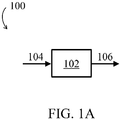
- FIG. 1A illustrates a schematic diagram of an exemplary system for sterilizing an iodophor composition.
- sterilization system 100 comprises sterilization unit 102.
- Sterilization unit 102 may comprise any device configured to heat an object.
- sterilization unit 102 is configured to perform moist heat sterilization.
- suitable sterilization units include, but are not limited to, a cascading water sterilizer and an autoclave.
- sterilization unit 102 is a cascading water sterilizer.
- a non-limiting example of a suitable cascading water sterilizer is a SWS sterilizer, Model No. SWS-14.12.26, manufactured by Bosch Packaging Technology.
- sterilization unit 102 receives initial iodophor composition 104. Sterilization unit 102 then heats initial iodophor composition 104 to a sterilization temperature for a sterilization time period.
- the "sterilization temperature” refers to the temperature or temperature range that the iodophor composition reaches and maintains during the sterilization time period.
- the "sterilization time” or “sterilization time period” refers to the length of time at which the iodophor composition is heated to the sterilization temperature.
- the sterilization temperature sets the maximum temperature that the iodophor composition can reach during the sterilization time period. Exposure of initial iodophor composition 104 to the sterilization temperature is terminated upon expiration of the sterilization time period.
- initial iodophor composition 104 is heated in sterilization unit 102 to a relatively low sterilization temperature for a relatively short sterilization time period. Heating initial iodophor composition 104 to the sterilization temperature for the sterilization time period produces sterilized iodophor composition 106.
- the initial iodophor composition is heated to a relatively low sterilization temperature.
- the sterilization temperature of the iodophor composition is 121°C or less, 115°C or less, 110°C or less, 100°C or less, 95°C or less, 90°C or less, 85°C or less, 80°C or less, 75°C or less, 70°C or less, or 65°C or less.
- the sterilization temperature is in a range from 65°C to 85°C, 65°C to 100°C, 65°C to 110°C, 65°C to 115°C, 65°C to 121°C, 75°C to 85°C, 75°C to 100°C, 75°C to 110°C, 75°C to 115°C, 75°C to 121°C, 85°C to 100°C, 85°C to 110°C, 85°C to 115°C, 85°C to 121°C, 90°C to 100°C, 90°C to 110°C, 90°C to 115°C, 90°C to 121°C, 95°C to 110°C, 95°C to 115°C, 95°C to 121°C, 100°C to 110°C, 100°C to 115°C, 100°C to 121°C, 110°C to 115°C, 110°C to 121°C, or 115°C to 121°C.
- the sterilization temperature of the iodophor composition may be measured according to any method known in the art.
- the temperature of the iodophor composition may not be measured directly (e.g., in certain embodiments when the iodophor composition is contained in a sealed ampoule, it may be difficult or inconvenient to measure the temperature directly), but rather may be determined or inferred based on a measured temperature of a fluid heating a container containing the iodophor composition and an appropriate correlation between the heating fluid temperature and exposure time to the temperature of the iodophor composition in such container. Those skilled in the art know how to experimentally and/or theoretically determine such correlation.
- a temperature measuring device can be provided that measures the temperature of recirculating water within a sterilization unit.
- experiments and/or standard heat transfer calculations have been previously conducted to establish a correlation between the temperature of an iodophor composition within a container being treated (e.g., an ampoule) in a sterilization unit and the temperature of recirculating water as a function of exposure time.
- conditions and/or containers are chosen so that the temperature of the iodophor composition within the container equilibrates such that it becomes closely aligned with the temperature of recirculating water in the sterilization unit quickly to minimize treatment time.
- the temperature of the iodophor composition may be measured directly, for example with a temperature measuring device at least partially immersed in the iodophor composition undergoing sterilization.
- the initial iodophor composition is heated to the sterilization temperature for a relatively short sterilization time period.
- the "sterilization time” or “sterilization time period” refers to the length of time at which the iodophor composition is heated to the sterilization temperature.
- the “sterilization time period” does not include the time it takes for the iodophor composition to reach the sterilization temperature from a starting temperature (i.e., it does not include “ramp up” time).
- the “sterilization time period” also does not include the time it takes for the iodophor composition to return to the starting temperature from the sterilization temperature (i.e., it does not include “cool down” time).
- the sterilization time period is 20 minutes or less, 15 minutes or less, 12 minutes or less, 10 minutes or less, 6 minutes or less, 5 minutes or less, 4 minutes or less, 3 minutes or less, 2 minutes or less, 1.5 minutes or less, or 1 minute or less.
- the sterilization time period is in a range from 1 minute to 3 minutes, 1 minute to 6 minutes, 1 minute to 10 minutes, 1 minute to 12 minutes, 1 minute to 15 minutes, 1 minute to 20 minutes, 1.5 minutes to 3 minutes, 1.5 minutes to 6 minutes, 1.5 minutes to 10 minutes, 1.5 minutes to 12 minutes, 1.5 minutes to 15 minutes, 1.5 minutes to 20 minutes, 3 minutes to 6 minutes, 3 minutes to 10 minutes, 3 minutes to 12 minutes, 3 minutes to 15 minutes, 3 minutes to 20 minutes, 6 minutes to 10 minutes, 6 minutes to 12 minutes, 6 minutes to 15 minutes, 6 minutes to 20 minutes, 10 minutes to 12 minutes, 10 minutes to 15 minutes, 10 minutes to 20 minutes, 12 minutes to 15 minutes, 12 minutes to 20 minutes, or 15 minutes to 20 minutes.
- the sterilization temperature is relatively low and the sterilization time period is relatively short. In certain instances, the sterilization temperature is in a range from 65°C to 85°C, 65°C to 100°C, 65°C to 110°C, 65°C to 115°C, 65°C to 121°C, 75°C to 85°C, 75°C to 100°C, 75°C to 110°C, 75°C to 115°C, 75°C to 121°C, 85°C to 100°C, 85°C to 110°C, 85°C to 115°C, 85°C to 121°C, 90°C to 100°C, 90°C to 110°C, 90°C to 115°C, 90°C to 121°C, 95°C to 110°C, 95°C to 115°C, 95°C to 121°C, 100°C to 110°C, 100°C to 115°C, 100°C to 121°C, 110°C to 115°C, 110°C to 121°C, 100
- the sterilization temperature is about 95°C and the sterilization time period is in a range from 1 minute to 3 minutes, 1 minute to 6 minutes, 1 minute to 10 minutes, 1 minute to 12 minutes, 1 minute to 15 minutes, 1 minute to 20 minutes, 1.5 minutes to 3 minutes, 1.5 minutes to 6 minutes, 1.5 minutes to 10 minutes, 1.5 minutes to 12 minutes, 1.5 minutes to 15 minutes, 1.5 minutes to 20 minutes, 3 minutes to 6 minutes, 3 minutes to 10 minutes, 3 minutes to 12 minutes, 3 minutes to 15 minutes, 3 minutes to 20 minutes, 6 minutes to 10 minutes, 6 minutes to 12 minutes, 6 minutes to 15 minutes, 6 minutes to 20 minutes, 10 minutes to 12 minutes, 10 minutes to 15 minutes, 10 minutes to 20 minutes, 12 minutes to 15 minutes, 12 minutes, or 15 minutes to 20 minutes.
- the sterilization temperature is about 100°C and the sterilization time period is in a range from 1 minute to 3 minutes, 1 minute to 6 minutes, 1 minute to 10 minutes, 1 minute to 12 minutes, 1 minute to 15 minutes, 1 minute to 20 minutes, 1.5 minutes to 3 minutes, 1.5 minutes to 6 minutes, 1.5 minutes to 10 minutes, 1.5 minutes to 12 minutes, 1.5 minutes to 15 minutes, 1.5 minutes to 20 minutes, 3 minutes to 6 minutes, 3 minutes to 10 minutes, 3 minutes to 12 minutes, 3 minutes to 15 minutes, 3 minutes to 20 minutes, 6 minutes to 10 minutes, 6 minutes to 12 minutes, 6 minutes to 15 minutes, 6 minutes to 20 minutes, 10 minutes to 12 minutes, 10 minutes to 15 minutes, 10 minutes to 20 minutes, 12 minutes to 15 minutes, 12 minutes, or 15 minutes to 20 minutes.
- the sterilization temperature is about 105°C and the sterilization time period is in a range from 1 minute to 3 minutes, 1 minute to 6 minutes, 1 minute to 10 minutes, 1 minute to 12 minutes, 1 minute to 15 minutes, 1 minute to 20 minutes, 1.5 minutes to 3 minutes, 1.5 minutes to 6 minutes, 1.5 minutes to 10 minutes, 1.5 minutes to 12 minutes, 1.5 minutes to 15 minutes, 1.5 minutes to 20 minutes, 3 minutes to 6 minutes, 3 minutes to 10 minutes, 3 minutes to 12 minutes, 3 minutes to 15 minutes, 3 minutes to 20 minutes, 6 minutes to 10 minutes, 6 minutes to 12 minutes, 6 minutes to 15 minutes, 6 minutes to 20 minutes, 10 minutes to 12 minutes, 10 minutes to 15 minutes, 10 minutes to 20 minutes, 12 minutes to 15 minutes, 12 minutes, or 15 minutes to 20 minutes.
- the sterilization temperature period is about 110°C and the sterilization time period is in a range from 1 minute to 3 minutes, 1 minute to 6 minutes, 1 minute to 10 minutes, 1 minute to 12 minutes, 1 minute to 15 minutes, 1 minute to 20 minutes, 1.5 minutes to 3 minutes, 1.5 minutes to 6 minutes, 1.5 minutes to 10 minutes, 1.5 minutes to 12 minutes, 1.5 minutes to 15 minutes, 1.5 minutes to 20 minutes, 3 minutes to 6 minutes, 3 minutes to 10 minutes, 3 minutes to 12 minutes, 3 minutes to 15 minutes, 3 minutes to 20 minutes, 6 minutes to 10 minutes, 6 minutes to 12 minutes, 6 minutes to 15 minutes, 6 minutes to 20 minutes, 10 minutes to 12 minutes, 10 minutes to 15 minutes, 10 minutes to 20 minutes, 12 minutes to 15 minutes, 12 minutes, or 15 minutes to 20 minutes.
- the sterilization temperature is about 115°C and the sterilization time period is in a range from 1 minute to 3 minutes, 1 minute to 6 minutes, 1 minute to 10 minutes, 1 minute to 12 minutes, 1 minute to 15 minutes, 1 minute to 20 minutes, 1.5 minutes to 3 minutes, 1.5 minutes to 6 minutes, 1.5 minutes to 10 minutes, 1.5 minutes to 12 minutes, 1.5 minutes to 15 minutes, 1.5 minutes to 20 minutes, 3 minutes to 6 minutes, 3 minutes to 10 minutes, 3 minutes to 12 minutes, 3 minutes to 15 minutes, 3 minutes to 20 minutes, 6 minutes to 10 minutes, 6 minutes to 12 minutes, 6 minutes to 15 minutes, 6 minutes to 20 minutes, 10 minutes to 12 minutes, 10 minutes to 15 minutes, 10 minutes to 20 minutes, 12 minutes to 15 minutes, 12 minutes, or 15 minutes to 20 minutes.
- heating an initial iodophor composition to a sterilization temperature for a sterilization time period produces a sterilized iodophor composition having a relatively high assurance of sterility.
- the sterility assurance level ("SAL") of a product provides a measure of the probability that the product will remain nonsterile after undergoing a sterilization process.
- SAL of 10 -3 means that there is a 1 in 1,000 chance of a viable microorganism being present in a sterilized product
- an SAL of 10 -6 means that there is a 1 in 1,000,000 chance of a viable microorganism being present in a sterilized product.
- an SAL of 10 -6 or less encompasses SAL values of 10 -6 , 10 -7 , 10 -8 , 10 -9 , etc.
- the sterilized iodophor composition has an SAL of 10 -3 or less, 10 -4 or less, 10 -5 or less, 10 -6 or less, 10 -7 or less, 10 -8 or less, 10 -9 or less, 10 -10 or less, 10 -11 or less, or 10 -12 or less.
- the sterilized iodophor composition has an SAL of 10 -4 to 10 -3 , 10 -5 to 10 -3 , 10 -6 to 10 -3 , 10 -7 to 10 -3 , 10 -8 to 10 -3 , 10 -9 to 10 -3 , 10 -10 to 10 -3 , 10 -11 to 10 -3 , 10 -12 to 10 -3 , 10 -5 to 10 -4 , 10 -6 to 10 -4 , 10 -7 to 10 -4 , 10 -8 to 10 -4 , 10 -9 to 10 -4 , 10 -10 to 10 -4 , 10 -11 to 10 -4 , 10 -12 to 10 -4 , 10 -6 to 10 -5 , 10 -7 to 10 -5 , 10 -8 to 10 -5 , 10 -9 to 10 -5 , 10 -10 to 10 -5 , 10 -11 to 10 -5 , 10 -12 to 10 -6 , 10 -8 to 10 -5 , 10 -9 to 10 -5 , 10 -10 to
- An SAL of 10 -3 or less may be suitable for a composition applied topically to intact skin.
- An SAL of 10 -6 or less may be suitable for a composition contacting a surgical incision, a wound, an ulcer, a cut, an abrasion, and/or a burn.
- the ANSI/AAMI ST67:2011(R)2017 standard has specified that an SAL of 10 -6 or less shall be used for products intended to come into contact with breached skin or compromised tissue (i.e., tissue that has lost its natural barrier integrity or is damaged or injured).
- the sterilization time and/or sterilization temperature required to achieve an SAL may be calculated from one or more "D-values."
- D-value has its ordinary meaning as used in microbiology. Specifically, it refers to the time required under specific sterilization conditions (e.g., exposure to a sterilization temperature) to kill 90% (i.e., 1 log) of a microorganism being studied (sometimes referred to as a "challenge microorganism").
- a non-limiting example of a suitable challenge organism is Geobacillus stearothermophilus.
- the time required to achieve an SAL of 10 -6 at a certain temperature may be calculated by multiplying the D-value at that temperature by 6 (i.e., to obtain the time required to obtain a 6-log reduction in counts of the challenge microorganism).
- heating an initial iodophor composition comprises exposing at least a portion of a container containing the initial iodophor composition to a heated liquid.
- suitable liquids include water, aqueous solutions, alcohols, organic solvents, and oils.
- the heated liquid is water.
- heating an initial iodophor composition comprises contacting at least a portion of a container containing the initial iodophor composition with one or more moving liquid streams comprising a heated liquid.
- the one or more moving liquid streams comprising a heated liquid comprise one or more cascading waterfall streams produced by a cascading water sterilizer.
- An exemplary cascading water sterilizer is described in U.S. Patent No. 9,511,156, by Degala et al., filed June 30, 2015 , and entitled “Systems, Methods, and Devices for Sterilizing Antiseptic Solutions," the contents of which are incorporated herein by reference in their entirety for all purposes.
- the heated liquid is part of a liquid bath.
- the liquid bath comprises one or more agitating elements (e.g., an agitator, a magnetic stir bar).
- heating the initial iodophor composition comprises immersing at least a portion of a container containing the initial iodophor composition in a liquid bath.
- a sterilization system comprises a cascading water sterilizer.
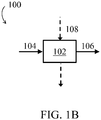
- FIG. 1B shows a schematic diagram of exemplary sterilization system 100 comprising cascading water sterilizer 102.
- cascading water sterilizer 102 comprises a chamber.
- the chamber may have any suitable shape and volume.
- the chamber is coupled to a water dispensing device configured to create one or more cascading waterfall streams flowing through the chamber.
- the water dispensing device is configured to create one or more cascading waterfall streams flowing from a top portion of the chamber to a bottom portion of the chamber.
- suitable water dispensing devices include, but are not limited to, a perforated sheet (e.g., a sheet comprising a plurality of holes) and one or more spray nozzles.
- one or more containers containing initial iodophor composition 104 may be positioned within the chamber of cascading water sterilizer 102.
- water stream 108 may be directed to flow as a cascading waterfall from the top of the chamber to the bottom of the chamber.
- the cascading waterfall may be heated to a relatively high temperature (i.e., a temperature sufficient to raise the temperature of the initial iodophor composition in the container to the desired sterilization temperature).
- a relatively high temperature i.e., a temperature sufficient to raise the temperature of the initial iodophor composition in the container to the desired sterilization temperature.
- Conditions are chosen so that contact between water stream 108 and the one or more containers containing initial iodophor composition 104 can heat the initial iodophor composition 104 to the sterilization temperature for the sterilization time period to produce sterilized iodophor composition 106.
- at least a portion of water stream 108 exits the bottom of the chamber of cascading water sterilizer 102 and is recirculated to the top of the chamber. In other embodiments, water stream 108 exits the bottom of the chamber of cascading water sterilizer 102 and is not recirculated.
- the chamber of cascading water sterilizer 102 is drained of water, and the exterior surfaces of the one or more containers containing sterilized iodophor composition 106 are dried.
- the one or more containers are dried (e.g., exposed to heated, dehumidified air) within the chamber of cascading water sterilizer 102.
- the one or more containers are transferred to a separate drying unit for drying.
- a sterilization system (e.g., comprising a cascading water sterilizer) further comprises a heater configured to heat the liquid stream.
- suitable heaters include, but are not limited to, a heat exchanger, a boiler, an electric heater, and a heat pump.
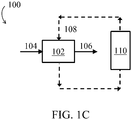
- FIG. 1C shows a schematic diagram of an exemplary sterilization system 100 comprising cascading water sterilizer 102 and heater 110. As shown in FIG. 1C , cascading water sterilizer 102 is in fluidic communication with heater 110.
- At least a portion of water stream 108 exits through the bottom of the chamber of cascading water sterilizer 102 and is directed to flow through heater 110 and is subsequently returned to the top of the chamber of cascading water sterilizer 102.
- a sterilization system comprises one or more additional components.
- FIG. 2 shows a schematic diagram of an exemplary sterilization system 200 comprising two sterilization units 202 (e.g., cascading water sterilizers), two heaters 204, chiller 206, chiller pump reservoir 208, deionized water pump reservoir 210, and two drying units 212.
- heaters 204 are boilers.
- a plurality of containers are filled with an iodophor composition and loaded into the chambers of sterilization units 202.
- deionized water from deionized water pump reservoir 210 is pumped through input line 213 into the chambers of sterilization units 202.
- the deionized water is then continuously circulated within each chamber such that the deionized water falls over the containers.
- steam from heaters 204 flows into sterilization units 202 via input line 214.
- the steam passes through a heat exchanger, and heat is transferred from the steam to the deionized water.
- steam condensate exits the heat exchanger and returns to heaters 204 via return line 216.
- the heat exchange cycle continues until the temperature of the circulating deionized water is determined to be at an appropriate temperature.
- the sterilization system may precisely control the input of steam from heaters 204 to maintain the appropriate sterilization conditions (e.g., by actuating the appropriate valves). During this heat exchange process, the deionized water continues to circulate within the chamber and fall over the containers, thereby heating the iodophor composition.
- a cooling process may be initiated.
- water chilled by chiller 206 flows to chiller pump reservoir 208 via input and return lines 211.
- the chilled water travels from chiller pump reservoir 208 to sterilization units 202 via input line 218.
- Heat is then transferred from deionized water to the chilled water, thereby cooling the deionized water and heating the chilled water.
- the deionized water continues to circulate within the chamber and fall over the containers, thereby cooling the iodophor composition.
- the chilled water returns to chiller pump reservoir 208 and chiller 206 via lines 220 and 211.
- the cooling process continues until the deionized water in the chamber has reached the desired temperature (e.g., room temperature).
- drying units 212 may be used to dry the exterior surfaces of the containers.
- drying units 212 comprise a dehumidifier.
- drying units 212 may employ heated, dehumidified air to dry the containers.
- a computer control system may be used to control sterilization system 200.
- the computer control system may include a processor programmed to provide the appropriate operating parameters (e.g., amount of deionized water circulated in the sterilization unit, sterilization temperature, sterilization time period) for particular iodophor compositions being sterilized.
- a sterilization system comprises a plurality of sterilization units. In certain cases, a sterilization system comprises at least 2, at least 5, or at least 10 sterilization units. In some embodiments, the number of sterilization units in a sterilization system is in a range from 1 to 2, 1 to 5, 1 to 10, 2 to 5, 2 to 10, or 5 to 10. In some embodiments, a sterilization system comprises a plurality of heating units and/or a plurality of cooling units.
- a method of sterilizing an iodophor composition comprises providing one or more containers containing an initial iodophor composition.
- the one or more containers may be any containers suitable for containing a volume of a liquid.
- suitable containers include ampoules, jars, bottles, tubes, and pouches.
- the one or more containers are configured to stand vertically upright.
- the one or more containers are sealed.
- the one or more containers may be made from any material suitable for containing an iodophor composition.
- suitable materials for the one or more containers include glass, plastic, a polymer, and/or a metallic laminate.
- the one or more containers comprise a glass ampoule, a plastic ampoule, a plastic bottle, a plastic tube, a polymer pouch, or a metallic laminate pouch.
- the one or more containers may have any suitable size and shape.
- one or more containers may be sized to contain 0.67 mL, 0.75 mL, 1 mL, 1.5 mL, 3 mL, 5 mL, 10.5 mL, 13 mL, and/or 26 mL of a liquid.
- one or more containers are sized to contain an amount in a range from 0.67 mL to 1 mL, 0.67 mL to 3 mL, 0.67 mL to 5 mL, 0.67 mL to 10.5 mL, 0.67 mL to 13 mL, 0.67 mL to 26 mL, 0.75 mL to 1 mL, 0.75 mL to 3 mL, 0.75 mL to 5 mL, 0.75 mL to 10.5 mL, 0.75 mL to 13 mL, 0.75 mL to 26 mL, 1 mL to 3 mL, 1 mL to 5 mL, 1 mL to 10.5 mL, 1 mL to 13 mL, 1 mL to 26 mL, 3 mL to 10.5 mL, 3 mL to 13 mL, 3 mL to 26 mL, 10.5 mL to 13 mL, 10.5 mL to 26 mL,
- the initial iodophor composition has a relatively high concentration of an iodine-polymer complex (e.g., PVP-I, iodine povacrylex).
- concentration of a component may be expressed as a weight percentage (wt.%).
- the weight percentage of a component of a composition generally refers to the ratio of the mass of the component to the total mass of the composition, multiplied by 100.
- the weight percentage of an iodine-polymer complex (e.g., PVP-I, iodine povacrylex) in the initial iodophor composition can be determined by dividing the mass of the iodine-polymer complex (e.g., PVP-I, iodine povacrylex) by the total mass of the initial iodophor composition, and multiplying the quotient by 100.
- an iodine-polymer complex e.g., PVP-I, iodine povacrylex
- the initial iodophor composition comprises the iodine-polymer complex (e.g., PVP-I, iodine povacrylex) in a concentration of at least 5.0 wt.%, at least 5.5 wt.%, at least 6.0 wt.%, at least 6.5 wt.%, at least 7.0 wt.%, at least 7.5 wt.%, at least 8.0 wt.%, at least 8.5 wt.%, at least 9.0 wt.%, at least 9.5 wt.%, or at least 10.0 wt.%.
- PVP-I iodine povacrylex
- the initial iodophor composition comprises the iodine-polymer complex (e.g., PVP-I, iodine povacrylex) in a concentration in a range from 5.0 wt.% to 6.0 wt.%, 5.0 wt.% to 7.0 wt.%, 5.0 wt.% to 8.0 wt.%, 5.0 wt.% to 9.0 wt.%, 5.0 wt.% to 10.0 wt.%, 6.0 wt.% to 7.0 wt.%, 6.0 wt.% to 8.0 wt.%, 6.0 wt.% to 9.0 wt.%, 6.0 wt.% to 10.0 wt.%, 7.0 wt.% to 8.0 wt.%, 7.0 wt.% to 9.0 wt.%, 7.0 wt.% to 10.0 wt.%, 8.0 wt.%, 7.0
- the initial iodophor composition has a relatively high concentration of available iodine (also referred to as percentage of available iodine).
- the initial iodophor composition comprises a concentration of available iodine of at least 0.30 wt.%, at least 0.40 wt.%, at least 0.50 wt.%, at least 0.55 wt.%, at least 0.60 wt.%, at least 0.65 wt.%, at least 0.70 wt.%, at least 0.75 wt.%, at least 0.80 wt.%, at least 0.85 wt.%, at least 0.90 wt.%, at least 0.95 wt.%, at least 1.0 wt.%, at least 1.2 wt.%, at least 1.3 wt.%, at least 1.4 wt.%, or at least 1.5 wt.%.
- the initial iodophor composition comprises a concentration of available iodine in a range from 0.30 wt.% to 0.50 wt.%, 0.30 wt.% to 0.60 wt.%, 0.30 wt.% to 0.70 wt.%, 0.30 wt.% to 0.80 wt.%, 0.30 wt.% to 0.90 wt.%, 0.30 wt.% to 1.0 wt.%, 0.30 wt.% to 1.1 wt.%, 0.30% to 1.2%, 0.30 wt.% to 1.3 wt.%, 0.30 wt.% to 1.4 wt.%, 0.30 wt.% to 1.5 wt.%, 0.40 wt.% to 0.60 wt.%, 0.40 wt.% to 0.70 wt.%, 0.40 wt.% to 0.80 wt.%, 0.40 wt.% to 0.90
- the concentration of available iodine in an iodophor composition may be determined according to any method known in the art.
- the concentration of available iodine in an iodophor composition may be measured by titrimetry using sodium thiosulfate.
- the initial iodophor composition comprises an iodine-polymer complex (e.g., PVP-I, iodine povacrylex) dissolved and/or suspended in a solvent.
- suitable solvents include water, alcohols, acetone, polyethylene glycol, glycerol, and combinations thereof.
- the initial and/or sterilized iodophor composition comprises a solvent in a concentration of at least 50 wt.%, at least 60 wt.%, at least 70 wt.%, at least 80 wt.%, at least 90 wt.%, or at least 95 wt.%.
- the initial and/or sterilized iodophor composition comprises a solvent in a concentration in a range from 50 wt.% to 80 wt.%, 50 wt.% to 90 wt.%, 50 wt.% to 95 wt.%, 60 wt.% to 80 wt.%, 60 wt.% to 90 wt.%, 60 wt.% to 95 wt.%, 70 to 90 wt.%, 70 to 95 wt.%, or 80 wt.% to 95 wt.%.
- the initial iodophor composition comprises water and has an acidic or neutral pH.
- the initial iodophor composition has a pH of at least 1.5, at least 2.0, at least 2.5, at least 3.0, at least 3.5, at least 4.0, at least 4.5, at least 5.0, at least 5.5, at least 6.0, at least 6.5, or at least 7.0.
- the initial iodophor composition has a pH of 7.0 or less, 6.5 or less, 6.0 or less, 5.5 or less, 5.0 or less, 4.5 or less, 4.0 or less, 3.5 or less, 3.0 or less, 2.5 or less, 2.0 or less, or 1.5 or less.
- the initial iodophor composition has a pH in a range from 1.5 to 3.0, 1.5 to 4.0, 1.5 to 5.0, 1.5 to 6.0, 1.5 to 6.5, 1.5 to 7.0, 2.0 to 4.0, 2.0 to 5.0, 2.0 to 5.5, 2.0 to 6.0, 2.0 to 6.5, 2.0 to 7.0, 3.0 to 5.0, 3.0 to 6.0, 3.0 to 6.5, 3.0 to 7.0, 4.0 to 6.0, 4.0 to 6.5, 4.0 to 7.0, 5.0 to 6.0, 5.0 to 6.5, 5.0 to 7.0, or 6.0 to 7.0.
- the initial iodophor composition has a viscosity that facilitates application of the initial iodophor composition to one or more locations on a patient.
- the initial iodophor composition has a viscosity at ambient temperature (i.e., about 20°C) of at least 500 centipoise (cP), at least 600 cP, at least 700 cP, at least 800 cP, at least 900 cP, at least 1000 cP, at least 1500 cP, at least 2000 cP, at least 2500 cP, or at least 3000 cP.
- the initial iodophor composition has a viscosity at ambient temperature of 3000 cP or less, 2500 cP or less, 2000 cP or less, 1500 cP or less, 1000 cP or less, or 500 cP or less.
- the initial iodophor composition has a viscosity at ambient temperature in a range from 500 cP to 1000 cP, 500 cP to 1500 cP, 500 cP to 2000 cP, 500 cP to 2500 cP, 500 cP to 3000 cP, 1000 cP to 1500 cP, 1000 cP to 2000 cP, 1000 cP to 2500 cP, 1000 cP to 3000 cP, 1500 cP to 2000 cP, 1500 cP to 2500 cP, 1500 cP to 3000 cP, 2000 cP to 2500 cP, or 2000 cP to 3000 cP.
- the viscosity of the initial iodophor composition at ambient temperature may be measured according to any method known in the art. For example, the viscosity of the initial iodophor composition at ambient temperature may be measured using a rotational viscometer.
- the initial iodophor composition may have any form suitable for application to a location on a patient.
- the initial iodophor composition is a gel, solution, suspension, emulsion, cream, ointment, lotion, paste, medicated stick, and/or balm.
- the initial iodophor composition is configured to facilitate topical application on a location on a patient.
- the initial iodophor composition may have any suitable appearance.
- the initial iodophor composition does not comprise any solid phase components. In certain embodiments, for example, the initial iodophor composition does not comprise any visible precipitate or solid particles.
- the sterilized iodophor composition maintains certain advantageous properties of the initial iodophor composition.
- sterilization systems, methods, and conditions described herein can reduce and/or minimize certain negative impacts of sterilization on one or more properties of the initial iodophor composition important to its effectiveness or suitability for its intended use.
- the sterilized iodophor composition retains a relatively high concentration of an iodine-polymer complex (e.g., PVP-I, iodine povacrylex).
- the sterilized iodophor composition comprises an iodine-polymer complex (e.g., PVP-I, iodine povacrylex) in a concentration of at least 5.0 wt.%, at least 5.5 wt.%, at least 6.0 wt.%, at least 6.5 wt.%, at least 7.0 wt.%, at least 7.5 wt.%, at least 8.0 wt.%, at least 8.5 wt.%, at least 9.0 wt.%, at least 9.5 wt.%, or at least 10.0 wt.%.
- PVP-I iodine povacrylex
- the sterilized iodophor composition comprises an iodine-polymer complex (e.g., PVP-I, iodine povacrylex) in a concentration in a range from 5.0 wt.% to 6.0 wt.%, 5.0 wt.% to 7.0 wt.%, 5.0 wt.% to 8.0 wt.%, 5.0 wt.% to 9.0 wt.%, 5.0 wt.% to 10.0 wt.%, 6.0 wt.% to 7.0 wt.%, 6.0 wt.% to 8.0 wt.%, 6.0 wt.% to 9.0 wt.%, 6.0 wt.% to 10.0 wt.%, 7.0 wt.% to 8.0 wt.%, 7.0 wt.% to 9.0 wt.%, 7.0 wt.% to 10.0 wt.%, 8.0 wt.%,
- any decrease in concentration of an iodine-polymer complex e.g., PVP-I, iodine povacrylex resulting from sterilization is relatively low.
- the percent difference between a first iodine-polymer complex (e.g., PVP-I, iodine povacrylex) concentration of the initial iodophor composition and a second iodine-polymer complex (e.g., PVP-I, iodine povacrylex) concentration of the sterilized iodophor composition is 8% or less, 7% or less, 6% or less, 5% or less, 4% or less, 3% or less, 2% or less, 1% or less, 0.5% or less, or 0.1% or less.
- the percent difference between a first iodine-polymer complex (e.g., PVP-I, iodine povacrylex) concentration of the initial iodophor composition and a second iodine-polymer complex (e.g., PVP-I, iodine povacrylex) concentration of the sterilized iodophor composition is in a range from 0.1% to 0.5%, 0.1% to 1%, 0.1% to 2%, 0.1% to 5%, 0.1% to 6%, 0.1% to 7%, 0.1% to 8%, 0.5% to 1%, 0.5% to 2%, 0.5% to 5%, 0.5% to 6%, 0.5% to 7%, 0.5% to 8%, 1% to 2%, 1% to 5%, 1% to 6%, 1% to 7%, 1% to 8%, 2% to 5%, 2% to 6%, 2% to 7%, 2% to 8%, 3% to 5%, 3% to 6%, 3% to 6%,
- the absolute value of the difference between a first iodine-polymer complex (e.g., PVP-I, iodine povacrylex) concentration of the initial iodophor composition and a second iodine-polymer complex (e.g., PVP-I, iodine povacrylex) concentration of the sterilized iodophor composition is 1 wt.% or less, 0.9 wt.% or less, 0.8 wt.% or less, 0.7 wt.% or less, 0.6 wt.% or less, 0.5 wt.% or less, 0.4 wt.% or less, 0.3 wt.% or less, 0.2 wt.% or less, 0.1 wt.% or less, 0.05 wt.% or less, 0.02 wt.% or less, or 0.01 wt.% or less.
- a first iodine-polymer complex e.g., PVP
- the absolute value of the difference between a first iodine-polymer complex (e.g., PVP-I, iodine povacrylex) concentration of the initial iodophor composition and a second iodine-polymer complex (e.g., PVP-I, iodine povacrylex) concentration of the sterilized iodophor composition is in a range from 0.01 wt.% to 0.05 wt.%, 0.01 wt.% to 0.1 wt.%, 0.01 wt.% to 0.2 wt.%, 0.01 wt.% to 0.3 wt.%, 0.01 wt.% to 0.4 wt.%, 0.01 wt.% to 0.5 wt.%, 0.01 wt.% to 0.6 wt.%, 0.01 wt.% to 0.7 wt.%, 0.01 wt.% to 0.8 wt.%,
- the sterilized iodophor composition has a relatively high concentration of available iodine.
- the sterilized iodophor composition comprises a concentration of available iodine of at least 0.30 wt.%, at least 0.40 wt.%, at least 0.50 wt.%, at least 0.55 wt.%, at least 0.60 wt.%, at least 0.65 wt.%, at least 0.70 wt.%, at least 0.75 wt.%, at least 0.80 wt.%, at least 0.85 wt.%, at least 0.90 wt.%, at least 0.95 wt.%, at least 1.0 wt.%, at least 1.2 wt.%, at least 1.3 wt.%, at least 1.4 wt.%, or at least 1.5 wt.%.
- the sterilized iodophor composition comprises a concentration of available iodine in a range from 0.30 wt.% to 0.50 wt.%, 0.30 wt.% to 0.60 wt.%, 0.30 wt.% to 0.70 wt.%, 0.30 wt.% to 0.80 wt.%, 0.30 wt.% to 0.90 wt.%, 0.30 wt.% to 1.0 wt.%, 0.30 wt.% to 1.1 wt.%, 0.30% to 1.2%, 0.30 wt.% to 1.3 wt.%, 0.30 wt.% to 1.4 wt.%, 0.30 wt.% to 1.5 wt.%, 0.40 wt.% to 0.60 wt.%, 0.40 wt.% to 0.70 wt.%, 0.40 wt.% to 0.80 wt.%, 0.40 wt.% to 0.
- any percentage decrease in concentration of available iodine is relatively low.
- the percent difference between a first concentration of available iodine of the initial iodophor composition and a second concentration of available iodine of the sterilized iodophor composition is 8% or less, 7% or less, 6% or less, 5% or less, 4% or less, 3% or less, 2% or less, 1% or less, 0.5% or less, or 0.1% or less.
- the percent difference between a first concentration of available iodine of the initial iodophor composition and a second concentration of available iodine of the sterilized iodophor composition is in a range from 0.1% to 0.5%, 0.1% to 1%, 0.1% to 2%, 0.1% to 5%, 0.1% to 6%, 0.1% to 7%, 0.1% to 8%, 0.5% to 1%, 0.5% to 2%, 0.5% to 5%, 0.5% to 6%, 0.5% to 7%, 0.5% to 8%, 1% to 2%, 1% to 5%, 1% to 6%, 1% to 7%, 1% to 8%, 2% to 5%, 2% to 6%, 2% to 7%, 2% to 8%, 3% to 5%, 3% to 6%, 3% to 7%, 3% to 8%, 4% to 6%, 4% to 7%, 4% to 8%, 5% to 7%, 5% to 8%, or 6% to 8%.
- the absolute value of the difference between a first concentration of available iodine of the initial iodophor composition and a second concentration of available iodine of the sterilized iodophor composition is 1 wt.% or less, 0.9 wt.% or less, 0.8 wt.% or less, 0.7 wt.% or less, 0.6 wt.% or less, 0.5 wt.% or less, 0.4 wt.% or less, 0.3 wt.% or less, 0.2 wt.% or less, 0.1 wt.% or less, 0.05 wt.% or less, 0.02 wt.% or less, or 0.01 wt.% or less.
- the absolute value of the difference between a first concentration of available iodine of the initial iodophor composition and a second concentration of available iodine of the sterilized iodophor composition is in a range from 0.01 wt.% to 0.05 wt.%, 0.01 wt.% to 0.1 wt.%, 0.01 wt.% to 0.2 wt.%, 0.01 wt.% to 0.3 wt.%, 0.01 wt.% to 0.4 wt.%, 0.01 wt.% to 0.5 wt.%, 0.01 wt.% to 0.6 wt.%, 0.01 wt.% to 0.7 wt.%, 0.01 wt.% to 0.8 wt.%, 0.01 wt.% to 0.9 wt.%, 0.01 wt.% to 1 wt.%, 0.05 wt.% to 0.1 wt.%,
- the sterilized iodophor composition comprises water and has an acidic or neutral pH.
- the sterilized iodophor composition has a pH of at least 1.5, at least 2.0, at least 2.5, at least 3.0, at least 3.5, at least 4.0, at least 4.5, at least 5.0, at least 5.5, at least 6.0, at least 6.5, or at least 7.0.
- the sterilized iodophor composition has a pH of 7.0 or less, 6.5 or less, 6.0 or less, 5.5 or less, 5.0 or less, 4.5 or less, 4.0 or less, 3.5 or less, 3.0 or less, 2.5 or less, 2.0 or less, or 1.5 or less.
- the sterilized iodophor composition has a pH in a range from 1.5 to 3.0, 1.5 to 4.0, 1.5 to 5.0, 1.5 to 6.0, 1.5 to 6.5, 1.5 to 7.0, 2.0 to 4.0, 2.0 to 5.0, 2.0 to 5.5, 2.0 to 6.0, 2.0 to 6.5, 2.0 to 7.0, 3.0 to 5.0, 3.0 to 6.0, 3.0 to 6.5, 3.0 to 7.0, 4.0 to 6.0, 4.0 to 6.5, 4.0 to 7.0, 5.0 to 6.0, 5.0 to 6.5, 5.0 to 7.0, or 6.0 to 7.0.
- any difference between the pH values of the initial iodophor composition and the sterilized iodophor composition is relatively small. In some cases, minimizing any change in pH caused by sterilization may be advantageous because the pH of an iodophor composition may significantly impact the potency of the composition, patient comfort, and/or patient safety. As an illustrative example, a highly acidic or basic iodophor composition may cause irritation when applied to a patient's skin.
- the absolute value of the difference between the pH of the initial iodophor composition and the pH of the sterilized iodophor composition is 0.5 or less, 0.4 or less, 0.3 or less, 0.2 or less, 0.1 or less, 0.05 or less, 0.02 or less, 0.01 or less, or about 0.0.
- the absolute value of the difference between the pH of the initial iodophor composition and the pH of the sterilized iodophor composition is in a range from about 0.0 to 0.01, about 0.0 to 0.02, about 0.0 to 0.05, about 0.0 to 0.1, about 0.0 to 0.2, about 0.0 to 0.3, about 0.0 to 0.4, about 0.0 to 0.5, about 0.01 to 0.02, about 0.01 to 0.05, about 0.01 to 0.1, about 0.01 to 0.2, about 0.01 to 0.3, about 0.01 to 0.4, about 0.01 to 0.5, about 0.05 to 0.1, about 0.05 to 0.2, about 0.05 to 0.3, about 0.05 to 0.4, about 0.05 to 0.5, about 0.1 to 0.2, about 0.1 to 0.3, about 0.1 to 0.4, about 0.1 to 0.5, or about 0.2 to 0.5.
- the sterilized iodophor composition has a viscosity at ambient temperature (i.e., about 20°C) that facilitates application of the sterilized iodophor composition to one or more locations on a patient.
- the sterilized iodophor composition has a viscosity at ambient temperature (i.e., about 20°C) of at least 500 centipoise (cP), at least 600 cP, at least 700 cP, at least 800 cP, at least 900 cP, at least 1000 cP, at least 1500 cP, at least 2000 cP, at least 2500 cP, or at least 3000 cP.
- the sterilized iodophor composition has a viscosity at ambient temperature of 3000 cP or less, 2500 cP or less, 2000 cP or less, 1500 cP or less, 1000 cP or less, or 500 cP or less.
- the sterilized iodophor composition has a viscosity at ambient temperature in a range from 500 cP to 1000 cP, 500 cP to 1500 cP, 500 cP to 2000 cP, 500 cP to 2500 cP, 500 cP to 3000 cP, 1000 cP to 1500 cP, 1000 cP to 2000 cP, 1000 cP to 2500 cP, 1000 cP to 3000 cP, 1500 cP to 2000 cP, 1500 cP to 2500 cP, 1500 cP to 3000 cP, 2000 cP to 2500 cP, or 2000 cP to 3000 cP.
- any difference between the viscosity of the initial iodophor composition at ambient temperature and the viscosity of the sterilized iodophor composition at ambient temperature is relatively small.
- minimizing any change in viscosity caused by sterilization may be advantageous because the viscosity of an iodophor composition may significantly impact application of the iodophor composition to a patient.
- the viscosity of an iodophor composition may prevent pooling and/or provide improved control over application of the composition.
- the percent difference between the viscosity of the initial iodophor composition and the viscosity of the sterilized iodophor composition is 60% or less, 50% or less, 40% or less, 30% or less, 20% or less, 10% or less, 5% or less, 2% or less, 1% or less, or about 0%.
- the percent difference between the viscosity of the initial iodophor composition and the viscosity of the sterilized iodophor composition is in a range from 0% to 1%, 0% to 2%, 0% to 5%, 0% to 10%, 0% to 20%, 0% to 30%, 0% to 40%, 0% to 50%, 0% to 60%, 1% to 2%, 1% to 5%, 1% to 10%, 1% to 20%, 1% to 30%, 1% to 40%, 1% to 50%, 1% to 60%, 5% to 10%, 5% to 20%, 5% to 30%, 5% to 40%, 5% to 50%, 5% to 60%, 10% to 20%, 10% to 30%, 10% to 40%, 10% to 50%, 10% to 60%, 20% to 30%, 20% to 40%, 20% to 50%, 20% to 60%, 30% to 40%, 30% to 50%, 30% to 60%, 40% to 50%, 40% to 60%, or 50% to 60%.
- the initial and/or sterilized iodophor composition comprises water.
- the water is deionized water and/or distilled water.
- the initial and/or sterilized iodophor composition comprises water in a concentration of at least 5 wt.%, at least 10 wt.%, at least 15 wt.%, at least 20 wt.%, at least 30 wt.%, at least 40 wt.%, at least 50 wt.%, at least 60 wt.%, at least 70 wt.%, at least 80 wt.%, at least 90 wt.%, or at least 95 wt.%.
- the initial and/or sterilized iodophor composition comprises water in a concentration in a range from 5 wt.% to 20 wt.%, 5 wt.% to 30 wt.%, 5 wt.% to 40 wt.%, 5 wt.% to 50 wt.%, 5 wt.% to 60 wt.%, 5 wt.% to 70 wt.%, 5 wt.% to 80 wt.%, 5 wt.% to 90 wt.%, 5 wt.% to 95 wt.%, 10 wt.% to 20 wt.%, 10 wt.% to 30 wt.%, 10 wt.% to 40 wt.%, 10 wt.% to 50 wt.%, 10 wt.% to 60 wt.%, 10 wt.% to 70 wt.%, 10 wt.% to 80 wt.%,
- the initial and/or sterilized iodophor composition comprises an alcohol.
- suitable alcohols include methanol, ethanol, n-propanol, isopropanol, n-butanol, isobutanol, sec-butanol, tert-butanol, benzyl alcohol, phenol, and combinations thereof.
- the alcohol comprises ethanol, isopropanol, and/or n-propanol.
- the initial and/or sterilized iodophor composition comprises an alcohol in a concentration of at least 5 wt.%, at least 10 wt.%, at least 15 wt.%, at least 20 wt.%, at least 30 wt.%, at least 40 wt.%, at least 50 wt.%, at least 60 wt.%, at least 70 wt.%, at least 80 wt.%, at least 90 wt.%, or at least 95 wt.%.
- the initial and/or sterilized iodophor composition comprises an alcohol in a concentration in a range from 5 wt.% to 20 wt.%, 5 wt.% to 30 wt.%, 5 wt.% to 40 wt.%, 5 wt.% to 50 wt.%, 5 wt.% to 60 wt.%, 5 wt.% to 70 wt.%, 5 wt.% to 80 wt.%, 5 wt.% to 90 wt.%, 5 wt.% to 95 wt.%, 10 wt.% to 20 wt.%, 10 wt.% to 30 wt.%, 10 wt.% to 40 wt.%, 10 wt.% to 50 wt.%, 10 wt.% to 60 wt.%, 10 wt.% to 70 wt.%, 10 wt.% to 80 wt.%
- the initial and/or sterilized iodophor composition comprises one or more polymer-forming agents.
- a polymer-forming agent comprises a copolymer.
- suitable polymer-forming agent include, but are not limited to, a methacrylic acid-methyl methacrylate copolymer, a carboxylated acrylic copolymer, and hydroxypropylcellulose.
- the initial and/or sterilized iodophor composition comprises a polymer-forming agent in a concentration of at least 0.1 wt.%, at least 0.2 wt.%, at least 0.5 wt.%, at least 1 wt.%, at least 1.5 wt.%, at least 2 wt.%, at least 5 wt.%, or at least 10 wt.%.
- the initial and/or sterilized iodophor composition comprises a polymer-forming agent in a concentration in a range from 0.1 wt.% to 0.5 wt.%, 0.1 wt.% to 1 wt.%, 0.1 wt.% to 2 wt.%, 0.1 wt.% to 5 wt.%, 0.1 wt.% to 10 wt.%, 0.2 wt.% to 1 wt.%, 0.2 wt.% to 2 wt.%, 0.2 wt.% to 5 wt.%, 0.2 wt.% to 10 wt.%, 0.5 wt.% to 1 wt.%, 0.5 wt.% to 2 wt.%, 0.5 wt.% to 5 wt.%, 0.5 wt.% to 10 wt.%, 1 wt.% to 2 wt.%, 1 wt.% to 5 wt.
- the initial and/or sterilized iodophor composition comprises a total concentration of polymer-forming agents of at least 0.1 wt.%, at least 0.2 wt.%, at least 0.5 wt.%, at least 1 wt.%, at least 1.5 wt.%, at least 2 wt.%, at least 5 wt.%, or at least 10 wt.%.
- the initial and/or sterilized iodophor composition comprises a total concentration of polymer-forming agents in a range from 0.1 wt.% to 0.5 wt.%, 0.1 wt.% to 1 wt.%, 0.1 wt.% to 2 wt.%, 0.1 wt.% to 5 wt.%, 0.1 wt.% to 10 wt.%, 0.2 wt.% to 1 wt.%, 0.2 wt.% to 2 wt.%, 0.2 wt.% to 5 wt.%, 0.2 wt.% to 10 wt.%, 0.5 wt.% to 1 wt.%, 0.5 wt.% to 2 wt.%, 0.5 wt.% to 5 wt.%, 0.5 wt.% to 10 wt.%, 1 wt.% to 2 wt.%, 1 wt.% to 5 wt.%
- the initial and/or sterilized iodophor composition comprises one or more pH-adjusting agents.
- the pH-adjusting agent may be an acid, a base, or a buffer salt.
- suitable acidic pH-adjusting agents include citric acid, lactic acid, and acetic acid.
- suitable basic pH-adjusting agents include 2-amino-2-methyl-1-propanol (e.g., AMP-95), sodium hydroxide, potassium hydroxide, and disodium phosphate.
- the initial and/or sterilized iodophor composition comprises a pH-adjusting agent in a concentration of at least 0.01 wt.%, at least 0.02 wt.%, at least 0.05 wt.%, at least 0.1 wt.%, at least 0.2 wt.%, at least 0.5 wt.%, at least 1 wt.%, at least 2 wt.%, or at least 5 wt.%.
- the initial and/or sterilized iodophor composition comprises a pH-adjusting agent in a concentration in a range from 0.01 wt.% to 0.05 wt.%, 0.01 wt.% to 0.1 wt.%, 0.01 wt.% to 0.5 wt.%, 0.01 wt.% to 1 wt.%, 0.01 wt.% to 2 wt.%, 0.01 wt.% to 5 wt.%, 0.05 wt.% to 0.1 wt.%, 0.05 wt.% to 0.5 wt.%, 0.05 wt.% to 1 wt.%, 0.05 wt.% to 2 wt.%, 0.05 wt.% to 5 wt.%, 0.1 wt.% to 0.5 wt.%, 0.1 wt.% to 1 wt.%, 0.1 wt.% to 2 wt.%, 0.05 wt.%
- the initial and/or sterilized iodophor composition comprises one or more additional components.
- the initial and/or sterilized iodophor composition comprises one or more surfactants.
- a non-limiting example of a suitable surfactant is nonoxynol-9.
- the initial and/or sterilized iodophor composition comprises one or more thickening and/or gelling agents.
- suitable thickening and/or gelling agents include hydroxypropyl cellulose, simethicone, sodium carboxymethyl cellulose, and polyethylene glycol ("PEG").
- the initial and/or sterilized iodophor composition comprises one or more irritation-reducing agents.
- Non-limiting examples of suitable irritation-reducing agents include glycerin, petroleum jelly, mineral oil, and glycerol.
- the initial and/or sterilized iodophor composition further comprises one or more dyes and/or emulsifiers.
- the iodophor composition comprises one or more components that advantageously enhance polymer stability. In certain instances, one or more components of the iodophor composition may serve multiple functions (e.g., a single component may both reduce irritation and enhance polymer stability).
- Iodophor compositions described herein may be administered in any suitable amount.
- an amount of an iodophor composition administered to a patient is at least 0.01 mL, at least 0.05 mL, at least 0.1 mL, at least 0.5 mL, at least 0.67 mL, at least 0.75 mL, at least 1 mL, at least 1.5 mL, at least 3 mL, at least 5 mL, at least 10 mL, at least 10.5 mL, at least 13 mL, at least 26 mL, at least 30 mL, at least 60 mL, or at least 100 mL.
- an amount of an iodophor composition administered to a patient is in a range from 0.01 mL to 0.1 mL, 0.01 mL to 0.5 mL, 0.01 mL to 1 mL, 0.01 mL to 3 mL, 0.01 mL to 5 mL, 0.01 mL to 10 mL, 0.01 to 13 mL, 0.01 to 30 mL, 0.01 mL to 60 mL, 0.01 mL to 100 mL, 0.1 mL to 1 mL, 0.1 mL to 3 mL, 0.1 mL to 5 mL, 0.1 mL to 10 mL, 0.1 mL to 13 mL, 0.1 mL to 30 mL, 0.1 mL to 60 mL, 0.1 mL to 100 mL, 1 mL to 5 mL, 1 mL to 10 mL, 1 mL to 13 mL, 1 mL to 30 m
- Iodophor compositions described herein may be administered using any applicator known in the art.
- suitable applicators are described in U.S. Patent No. 7,993,066, by Flores et al., filed May 18, 2010 , entitled “Liquid Applicator and Method for Reducing the Concentration of By-Products from Antiseptic”; and U.S. Patent No. 9,757,551, by Degala et al., filed Oct. 4, 2013 , entitled “Antiseptic Applicator,” the contents of which are incorporated herein by reference in their entireties for all purposes.
- the D-values i.e., time required to reduce the challenge organism, Geobacillus stearothermophilus, counts by one log
- a Prevail-FX® formulation comprising 8.3% povidone-iodine in 72.5% isopropanol (i.e., an iodophor composition comprising PVP-I) and compared against the D-values for: (1) a solution of 70% isopropanol; and (2) a ChloraPrepTM formulation comprising 2% chlorhexidine gluconate in 70% isopropanol (i.e., an antiseptic formulation comprising two active ingredients).
- an oil bath was used to simulate the efficient heat transfer characteristic of a moist heat sterilization process (i.e., cascading water sterilization process).
- Samples of six test formulations were hermetically sealed in glass ampoules. Each glass ampoule, which had a maximum capacity of approximately 10 mL, contained approximately 5 to 8 mL of one of the six test formulations.
- Each glass ampoule was formed from USP Type I borosilicate glass and had a diameter of 19 mm. The glass ampoules were then submerged in a recirculating oil bath pre-equilibrated to a set temperature for a specified amount of time and were quickly removed and quenched in a cold water bath prior to chemical analysis. It was estimated that the temperatures of the formulations within the glass ampoules reached thermal equilibrium with the recirculating oil in less than about 30 seconds.
- Table 2 Percentage of Available Iodine in PVP-I as a Function of Time at 110°C Formulation Time (mins) 0 30 60 90 120 % Available Iodine PrevailTM (gel) 0.51 0.50 0.48 0.47 0.45 Prevail-FX® 0.89 0.85 0.82 0.81 0.8 Povidone- iodine (Walgreens) 0.96 0.88 0.82 0.76 0.71 Povidone- iodine scrub (Aplicare) 0.72 0.66 0.65 0.63 0.62 Povidone- iodine 5% (Aplicare) 0.52 0.49 0.47 0.45 0.42 Betadine® 1.09 1.08 1.07 1.06 1.05
- Table 3 Percentage of Available Iodine in PVP-I as a Function of Time at 115°C Formulation Time (mins) 0 30 60 90 120 % Available Iodine PrevailTM (gel) 0.51 0.49 0.46 0.44 0.42 Prevail-FX® 0.89 0.83 0.79 0.78 0.76 Po
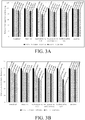
- Tables 2 and 3 along with FIGS. 3A and 3B , demonstrate the reduction in percentage of available iodine as a function of time at 110°C and 115°C.
- Table 4 Percentage of Available Iodine in PVP-I-containing formulations at 110°C for 3 minutes and 121°C for 15 minutes Formulation Time (mins) 0 3 minutes at 110°C 15 minutes at 121°C % Available Iodine PrevailTM (gel) 0.51 0.51 0.49 Prevail-FX® 0.86 0.85 0.82 Povidone- iodine (Walgreens) 1.03 1.03 0.97 Povidone- iodine scrub (Aplicare) 0.69 0.69 0.64 Povidone- iodine 5% (Aplicare) 0.88 0.88 0.82 Betadine® 0.50 0.50 0.46
- Table 5 pH Values Following Heating at 110°C for 12 Minutes Formulation Untreated Heat- Treated ⁇ pH PV PV-I Scrub 4.68 4.73 -0.04Veronicare 10% PVP-I Solution 5.32 5.07 0.26 PVP-I (Walgreens) 4.38 3.94 0.44 PrevailTM (gel) 3.61 3.52 0.09 Prevail-FX® 2.70 2.55 0.15 Betadine® 3.47 3.29 0.19
- Table 6 pH of PVP-1-containing formulations at 110°C for 3 minutes and 121°C for 15 minutes Formulation Time (mins) 0 3 minutes at 110°C 15 minutes at 121°C pH PrevailTM (gel) 3.651 3.673 3.420 Prevail-FX® 2.937 2.854 2.735 Povidone- iodine (Walgreens) 3.350 3.351 3.032 Povidone- iodine scrub (Aplicare) 4.550 4.490 4.125 Povidone- iodine (Walgreens) 3.350 3.351 3.
- a reference to "A and/or B,” when used in conjunction with open-ended language such as “comprising” can refer, in one embodiment, to A without B (optionally including elements other than B); in another embodiment, to B without A (optionally including elements other than A); in yet another embodiment, to both A and B (optionally including other elements); etc.
- the phrase "at least one,” in reference to a list of one or more elements, should be understood to mean at least one element selected from any one or more of the elements in the list of elements, but not necessarily including at least one of each and every element specifically listed within the list of elements and not excluding any combinations of elements in the list of elements.
- This definition also allows that elements may optionally be present other than the elements specifically identified within the list of elements to which the phrase "at least one" refers, whether related or unrelated to those elements specifically identified.
- At least one of A and B can refer, in one embodiment, to at least one, optionally including more than one, A, with no B present (and optionally including elements other than B); in another embodiment, to at least one, optionally including more than one, B, with no A present (and optionally including elements other than A); in yet another embodiment, to at least one, optionally including more than one, A, and at least one, optionally including more than one, B (and optionally including other elements); etc.
Landscapes
- Life Sciences & Earth Sciences (AREA)
- Health & Medical Sciences (AREA)
- General Health & Medical Sciences (AREA)
- Environmental Sciences (AREA)
- Zoology (AREA)
- Wood Science & Technology (AREA)
- Plant Pathology (AREA)
- Pest Control & Pesticides (AREA)
- Engineering & Computer Science (AREA)
- Chemical & Material Sciences (AREA)
- Dentistry (AREA)
- Agronomy & Crop Science (AREA)
- Veterinary Medicine (AREA)
- Animal Behavior & Ethology (AREA)
- Public Health (AREA)
- Medicinal Chemistry (AREA)
- Pharmacology & Pharmacy (AREA)
- Toxicology (AREA)
- Chemical Kinetics & Catalysis (AREA)
- General Chemical & Material Sciences (AREA)
- Epidemiology (AREA)
- Nuclear Medicine, Radiotherapy & Molecular Imaging (AREA)
- Organic Chemistry (AREA)
- Oncology (AREA)
- Communicable Diseases (AREA)
- Inorganic Chemistry (AREA)
- Apparatus For Disinfection Or Sterilisation (AREA)
- Pharmaceuticals Containing Other Organic And Inorganic Compounds (AREA)
- Agricultural Chemicals And Associated Chemicals (AREA)
- Medicinal Preparation (AREA)
- Acyclic And Carbocyclic Compounds In Medicinal Compositions (AREA)
Applications Claiming Priority (1)
| Application Number | Priority Date | Filing Date | Title |
|---|---|---|---|
| US202062981964P | 2020-02-26 | 2020-02-26 |
Publications (1)
| Publication Number | Publication Date |
|---|---|
| EP3871503A1 true EP3871503A1 (fr) | 2021-09-01 |
Family
ID=74672157
Family Applications (1)
| Application Number | Title | Priority Date | Filing Date |
|---|---|---|---|
| EP21158141.8A Pending EP3871503A1 (fr) | 2020-02-26 | 2021-02-19 | Systèmes et procédés de stérilisation de compositions iodophores |
Country Status (10)
| Country | Link |
|---|---|
| US (1) | US20210259253A1 (fr) |
| EP (1) | EP3871503A1 (fr) |
| JP (1) | JP7898379B2 (fr) |
| KR (1) | KR20220146545A (fr) |
| CN (1) | CN115335088A (fr) |
| AU (1) | AU2021225781A1 (fr) |
| BR (1) | BR112022017042A2 (fr) |
| CA (1) | CA3173273A1 (fr) |
| MX (1) | MX2022010570A (fr) |
| WO (1) | WO2021173438A1 (fr) |
Families Citing this family (3)
| Publication number | Priority date | Publication date | Assignee | Title |
|---|---|---|---|---|
| US12171235B2 (en) | 2021-05-05 | 2024-12-24 | Hdr Llc | Antimicrobial composition and system for delivering an antimicrobial composition |
| JP2025519145A (ja) * | 2022-05-24 | 2025-06-24 | エイチディーアール エルエルシー | ヨウ素を含有する機器の自己滅菌のためのシステム、方法及びプロセス |
| CN117146984B (zh) * | 2023-10-26 | 2024-01-26 | 山东鸿安食品科技有限公司 | 一种用于物料灭菌的料液温度检测方法 |
Citations (8)
| Publication number | Priority date | Publication date | Assignee | Title |
|---|---|---|---|---|
| GB1472408A (en) * | 1974-05-28 | 1977-05-04 | Flow Pharma Inc | Iodine composition |
| US4402937A (en) * | 1979-10-18 | 1983-09-06 | Basf Aktiengesellschaft | Preparation of PVP-iodine |
| US4684519A (en) * | 1986-04-09 | 1987-08-04 | Gaf Corporation | Method of preparing a polyvinylpyrrolidone-halogen complex of improved stability |
| US5158768A (en) * | 1991-10-08 | 1992-10-27 | Isp Investments Inc. | Process for preparing a stable, low K-value, water-soluble PVP-iodine product |
| US6319909B1 (en) * | 1997-04-24 | 2001-11-20 | Basf Aktiengesellschaft | Liquid iodophor from poly-n-vinyl lactam, dextrin and alcohols |
| US7993066B2 (en) | 2006-02-14 | 2011-08-09 | Carefusion 2200, Inc. | Liquid applicator and method for reducing the concentration of by-products from antiseptic |
| US9511156B2 (en) | 2014-01-08 | 2016-12-06 | Carefusion 2200, Inc. | Systems, methods, and devices for sterilizing antiseptic solutions |
| US9757551B2 (en) | 2013-10-04 | 2017-09-12 | Carefusion 2200, Inc. | Antiseptic applicator |
Family Cites Families (14)
| Publication number | Priority date | Publication date | Assignee | Title |
|---|---|---|---|---|
| US4576818A (en) * | 1984-08-07 | 1986-03-18 | Euroceltique, S.A. | Iodophor composition |
| GB8428899D0 (en) * | 1984-11-15 | 1984-12-27 | Schering Chemicals Ltd | Sterilising hydrogels |
| GB8621008D0 (en) * | 1986-08-30 | 1986-10-08 | Smith & Nephew Ass | Pharmaceutical composition |
| DE4414254A1 (de) * | 1994-04-23 | 1995-10-26 | Basf Ag | Iodophor aus Poly-N-vinyllactam und Dextrin |
| US20010037095A1 (en) * | 1994-06-14 | 2001-11-01 | Rucinski Paul J. | Novel wound irrigation device and method |
| US6376590B2 (en) * | 1999-10-28 | 2002-04-23 | 3M Innovative Properties Company | Zirconia sol, process of making and composite material |
| US20020100194A1 (en) * | 2000-12-21 | 2002-08-01 | Huffer Scott W. | Printed Label with electron beam cured coating |
| US7147873B2 (en) * | 2002-01-16 | 2006-12-12 | 3M Innovative Properties Company | Antiseptic compositions and methods |
| CA2808561C (fr) * | 2009-09-30 | 2017-08-29 | Tso3 Inc. | Appareil de sterilisation |
| CN103720713B (zh) * | 2013-12-18 | 2016-04-20 | 深圳市安多福消毒高科技股份有限公司 | 一种高络合碘及其制备方法 |
| WO2016175727A1 (fr) * | 2015-04-27 | 2016-11-03 | Aydin Kimya Sanayi Ve Ticaret Anonim Sirketi | Procédé de production d'hydrogel antimicrobien à base d'iodophore |
| CA2990627A1 (fr) * | 2015-06-22 | 2016-12-29 | Infection Containment Company, LLC | Systeme antiseptique topique |
| AU2016288582B2 (en) * | 2015-06-30 | 2020-05-21 | Carefusion 2200, Inc. | Systems, methods, and devices for sterilizing antiseptic solutions |
| CN106265729A (zh) * | 2016-10-11 | 2017-01-04 | 重庆市普康消毒用品有限公司 | 一种碘伏消毒液 |
-
2021
- 2021-02-19 JP JP2022551620A patent/JP7898379B2/ja active Active
- 2021-02-19 BR BR112022017042A patent/BR112022017042A2/pt unknown
- 2021-02-19 CN CN202180024488.XA patent/CN115335088A/zh active Pending
- 2021-02-19 AU AU2021225781A patent/AU2021225781A1/en not_active Abandoned
- 2021-02-19 US US17/180,539 patent/US20210259253A1/en active Pending
- 2021-02-19 MX MX2022010570A patent/MX2022010570A/es unknown
- 2021-02-19 CA CA3173273A patent/CA3173273A1/fr active Pending
- 2021-02-19 EP EP21158141.8A patent/EP3871503A1/fr active Pending
- 2021-02-19 WO PCT/US2021/018715 patent/WO2021173438A1/fr not_active Ceased
- 2021-02-19 KR KR1020227032971A patent/KR20220146545A/ko active Pending
Patent Citations (8)
| Publication number | Priority date | Publication date | Assignee | Title |
|---|---|---|---|---|
| GB1472408A (en) * | 1974-05-28 | 1977-05-04 | Flow Pharma Inc | Iodine composition |
| US4402937A (en) * | 1979-10-18 | 1983-09-06 | Basf Aktiengesellschaft | Preparation of PVP-iodine |
| US4684519A (en) * | 1986-04-09 | 1987-08-04 | Gaf Corporation | Method of preparing a polyvinylpyrrolidone-halogen complex of improved stability |
| US5158768A (en) * | 1991-10-08 | 1992-10-27 | Isp Investments Inc. | Process for preparing a stable, low K-value, water-soluble PVP-iodine product |
| US6319909B1 (en) * | 1997-04-24 | 2001-11-20 | Basf Aktiengesellschaft | Liquid iodophor from poly-n-vinyl lactam, dextrin and alcohols |
| US7993066B2 (en) | 2006-02-14 | 2011-08-09 | Carefusion 2200, Inc. | Liquid applicator and method for reducing the concentration of by-products from antiseptic |
| US9757551B2 (en) | 2013-10-04 | 2017-09-12 | Carefusion 2200, Inc. | Antiseptic applicator |
| US9511156B2 (en) | 2014-01-08 | 2016-12-06 | Carefusion 2200, Inc. | Systems, methods, and devices for sterilizing antiseptic solutions |
Also Published As
| Publication number | Publication date |
|---|---|
| KR20220146545A (ko) | 2022-11-01 |
| BR112022017042A2 (pt) | 2022-11-08 |
| CN115335088A (zh) | 2022-11-11 |
| AU2021225781A1 (en) | 2022-09-29 |
| JP2023516296A (ja) | 2023-04-19 |
| MX2022010570A (es) | 2022-11-30 |
| WO2021173438A1 (fr) | 2021-09-02 |
| US20210259253A1 (en) | 2021-08-26 |
| CA3173273A1 (fr) | 2021-09-02 |
| JP7898379B2 (ja) | 2026-07-31 |
Similar Documents
| Publication | Publication Date | Title |
|---|---|---|
| US20210259253A1 (en) | Systems and methods for sterilizing iodophor compositions | |
| US4923677A (en) | Chemical sterilization | |
| JP2004537345A (ja) | 医療用または歯科用の機器または装置の洗浄、高レベル殺菌または滅菌のためのシステムおよび方法 | |
| BR122020015748B1 (pt) | Composições antimicrobianas e métodos empregando as mesmas | |
| ES2881334T3 (es) | Método para preparar una solución antiséptica estéril | |
| CN102600496A (zh) | Ⅰ、ⅱ、ⅲ类医疗器械产品作用于皮肤、粘膜、伤口灭活病毒 | |
| CN105079858B (zh) | 一种伤口杀菌修复液体敷料及其制法 | |
| KR101413138B1 (ko) | 환자의 수술 준비에 사용하기 위한 방법 및 조성물 | |
| JP7275051B2 (ja) | 低アルコールかつ滅菌可能な抗菌性組成物及びその使用 | |
| AU756015B2 (en) | Multi-part anti-microbial sterilization compositions and methods | |
| EP0394881B1 (fr) | Onguent antimicrobien stérilisable par irradiation et son procédé de préparation | |
| RU2277935C2 (ru) | Способ стерилизации и набор средств для его осуществления | |
| JPH04134036A (ja) | 擦式手指消毒用医薬品組成物 | |
| RU2524621C1 (ru) | Стабилизированный противомикробный гелевый состав на основе пероксида водорода | |
| AU2016288582B2 (en) | Systems, methods, and devices for sterilizing antiseptic solutions | |
| AU2016287486B2 (en) | Systems, methods, and devices for sterilizing antiseptic solutions | |
| CN115119849A (zh) | 一种器具去污消毒液及其制备方法 | |
| CN121586591A (zh) | 灭菌方法 | |
| Sachan et al. | Sterilization and Infection control in breast procedures |
Legal Events
| Date | Code | Title | Description |
|---|---|---|---|
| PUAI | Public reference made under article 153(3) epc to a published international application that has entered the european phase |
Free format text: ORIGINAL CODE: 0009012 |
|
| STAA | Information on the status of an ep patent application or granted ep patent |
Free format text: STATUS: THE APPLICATION HAS BEEN PUBLISHED |
|
| AK | Designated contracting states |
Kind code of ref document: A1 Designated state(s): AL AT BE BG CH CY CZ DE DK EE ES FI FR GB GR HR HU IE IS IT LI LT LU LV MC MK MT NL NO PL PT RO RS SE SI SK SM TR |
|
| STAA | Information on the status of an ep patent application or granted ep patent |
Free format text: STATUS: REQUEST FOR EXAMINATION WAS MADE |
|
| 17P | Request for examination filed |
Effective date: 20220301 |
|
| RBV | Designated contracting states (corrected) |
Designated state(s): AL AT BE BG CH CY CZ DE DK EE ES FI FR GB GR HR HU IE IS IT LI LT LU LV MC MK MT NL NO PL PT RO RS SE SI SK SM TR |
|
| STAA | Information on the status of an ep patent application or granted ep patent |
Free format text: STATUS: EXAMINATION IS IN PROGRESS |
|
| 17Q | First examination report despatched |
Effective date: 20240214 |