EP3871685A1 - Agent anti-obésité, agent atténuant la pollakiurie et régulateur de l'activité du système nerveux autonome - Google Patents
Agent anti-obésité, agent atténuant la pollakiurie et régulateur de l'activité du système nerveux autonome Download PDFInfo
- Publication number
- EP3871685A1 EP3871685A1 EP19877309.5A EP19877309A EP3871685A1 EP 3871685 A1 EP3871685 A1 EP 3871685A1 EP 19877309 A EP19877309 A EP 19877309A EP 3871685 A1 EP3871685 A1 EP 3871685A1
- Authority
- EP
- European Patent Office
- Prior art keywords
- pro
- val
- gln
- thr
- leu
- Prior art date
- Legal status (The legal status is an assumption and is not a legal conclusion. Google has not performed a legal analysis and makes no representation as to the accuracy of the status listed.)
- Granted
Links
Images


Classifications
-
- A—HUMAN NECESSITIES
- A61—MEDICAL OR VETERINARY SCIENCE; HYGIENE
- A61K—PREPARATIONS FOR MEDICAL, DENTAL OR TOILETRY PURPOSES
- A61K38/00—Medicinal preparations containing peptides
- A61K38/04—Peptides having up to 20 amino acids in a fully defined sequence; Derivatives thereof
- A61K38/10—Peptides having 12 to 20 amino acids
-
- A—HUMAN NECESSITIES
- A61—MEDICAL OR VETERINARY SCIENCE; HYGIENE
- A61P—SPECIFIC THERAPEUTIC ACTIVITY OF CHEMICAL COMPOUNDS OR MEDICINAL PREPARATIONS
- A61P7/00—Drugs for disorders of the blood or the extracellular fluid
- A61P7/12—Antidiuretics, e.g. drugs for diabetes insipidus
-
- A—HUMAN NECESSITIES
- A61—MEDICAL OR VETERINARY SCIENCE; HYGIENE
- A61P—SPECIFIC THERAPEUTIC ACTIVITY OF CHEMICAL COMPOUNDS OR MEDICINAL PREPARATIONS
- A61P1/00—Drugs for disorders of the alimentary tract or the digestive system
-
- A—HUMAN NECESSITIES
- A61—MEDICAL OR VETERINARY SCIENCE; HYGIENE
- A61P—SPECIFIC THERAPEUTIC ACTIVITY OF CHEMICAL COMPOUNDS OR MEDICINAL PREPARATIONS
- A61P1/00—Drugs for disorders of the alimentary tract or the digestive system
- A61P1/04—Drugs for disorders of the alimentary tract or the digestive system for ulcers, gastritis or reflux esophagitis, e.g. antacids, inhibitors of acid secretion, mucosal protectants
-
- A—HUMAN NECESSITIES
- A61—MEDICAL OR VETERINARY SCIENCE; HYGIENE
- A61P—SPECIFIC THERAPEUTIC ACTIVITY OF CHEMICAL COMPOUNDS OR MEDICINAL PREPARATIONS
- A61P1/00—Drugs for disorders of the alimentary tract or the digestive system
- A61P1/12—Antidiarrhoeals
-
- A—HUMAN NECESSITIES
- A61—MEDICAL OR VETERINARY SCIENCE; HYGIENE
- A61P—SPECIFIC THERAPEUTIC ACTIVITY OF CHEMICAL COMPOUNDS OR MEDICINAL PREPARATIONS
- A61P11/00—Drugs for disorders of the respiratory system
- A61P11/08—Bronchodilators
-
- A—HUMAN NECESSITIES
- A61—MEDICAL OR VETERINARY SCIENCE; HYGIENE
- A61P—SPECIFIC THERAPEUTIC ACTIVITY OF CHEMICAL COMPOUNDS OR MEDICINAL PREPARATIONS
- A61P13/00—Drugs for disorders of the urinary system
-
- A—HUMAN NECESSITIES
- A61—MEDICAL OR VETERINARY SCIENCE; HYGIENE
- A61P—SPECIFIC THERAPEUTIC ACTIVITY OF CHEMICAL COMPOUNDS OR MEDICINAL PREPARATIONS
- A61P13/00—Drugs for disorders of the urinary system
- A61P13/10—Drugs for disorders of the urinary system of the bladder
-
- A—HUMAN NECESSITIES
- A61—MEDICAL OR VETERINARY SCIENCE; HYGIENE
- A61P—SPECIFIC THERAPEUTIC ACTIVITY OF CHEMICAL COMPOUNDS OR MEDICINAL PREPARATIONS
- A61P25/00—Drugs for disorders of the nervous system
- A61P25/02—Drugs for disorders of the nervous system for peripheral neuropathies
-
- A—HUMAN NECESSITIES
- A61—MEDICAL OR VETERINARY SCIENCE; HYGIENE
- A61P—SPECIFIC THERAPEUTIC ACTIVITY OF CHEMICAL COMPOUNDS OR MEDICINAL PREPARATIONS
- A61P3/00—Drugs for disorders of the metabolism
- A61P3/04—Anorexiants; Antiobesity agents
-
- A—HUMAN NECESSITIES
- A61—MEDICAL OR VETERINARY SCIENCE; HYGIENE
- A61P—SPECIFIC THERAPEUTIC ACTIVITY OF CHEMICAL COMPOUNDS OR MEDICINAL PREPARATIONS
- A61P3/00—Drugs for disorders of the metabolism
- A61P3/08—Drugs for disorders of the metabolism for glucose homeostasis
- A61P3/10—Drugs for disorders of the metabolism for glucose homeostasis for hyperglycaemia, e.g. antidiabetics
-
- A—HUMAN NECESSITIES
- A61—MEDICAL OR VETERINARY SCIENCE; HYGIENE
- A61P—SPECIFIC THERAPEUTIC ACTIVITY OF CHEMICAL COMPOUNDS OR MEDICINAL PREPARATIONS
- A61P9/00—Drugs for disorders of the cardiovascular system
- A61P9/02—Non-specific cardiovascular stimulants, e.g. drugs for syncope, antihypotensives
-
- C—CHEMISTRY; METALLURGY
- C07—ORGANIC CHEMISTRY
- C07K—PEPTIDES
- C07K14/00—Peptides having more than 20 amino acids; Gastrins; Somatostatins; Melanotropins; Derivatives thereof
- C07K14/435—Peptides having more than 20 amino acids; Gastrins; Somatostatins; Melanotropins; Derivatives thereof from animals; from humans
- C07K14/46—Peptides having more than 20 amino acids; Gastrins; Somatostatins; Melanotropins; Derivatives thereof from animals; from humans from vertebrates
- C07K14/47—Peptides having more than 20 amino acids; Gastrins; Somatostatins; Melanotropins; Derivatives thereof from animals; from humans from vertebrates from mammals
- C07K14/4701—Peptides having more than 20 amino acids; Gastrins; Somatostatins; Melanotropins; Derivatives thereof from animals; from humans from vertebrates from mammals not used
- C07K14/4732—Casein
Definitions
- the present invention relates to an anti-obesity agent, a pollakiuria improving agent, an autonomic nervous activity regulator, and the like.
- the quality of life may deteriorate at the present time due to aging or change in lifestyle.
- Lifestyle-related diseases including visceral obesity and urinary disorder, and the like background the deterioration of the QOL, and the disturbance of autonomic nervous activity may participate in these.
- Patent Literature 1 capsaicin contained in red peppers
- Patent Literature 2 plant bodies of plants belonging to Brassicaceae
- pollakiuria is an event in which since urination occurs before the original bladder's capacity for storing urine is utilized, the frequency of urination increases. Pollakiuria is stressful in daily life, and pollakiuria during the nighttime reduces the quality and quantity of sleep, and spoils healthy and comfortable life.
- Patent Literature 3 discloses Piper longum
- Patent Literature 4 discloses linear saturated fatty acids having 6 to 12 carbon atoms in edible oils
- Patent Literature 5 discloses banana extract
- Patent Literature 6 discloses perilla leaves
- Patent Literature 7 discloses pumpkin seeds.
- Patent Literature 8 discloses amino acid-substituted and modified peptides of neurokinin, which are a neuropeptide, as urinary incontinence preventive drugs by peptide-based substances.
- An object of the present invention is to provide new technology relating to anti-obesity.
- the present inventor has earnestly investigated and consequently found that obesity can be improved based on the body fat decomposition promoting effect of lactononadecapeptide (LNDP).
- LNDP lactononadecapeptide
- the present inventor has further found improvement in pollakiuria based on the urine collection promoting effect, the autonomic nervous activity regulating effect, and the like of LNDP and completed the present invention.
- the gist of the present invention is as follows.
- new technology relating to anti-obesity can be provided.
- the present embodiment relates to an anti-obesity agent, and contains lactononadecapeptide (LNDP) or a salt thereof as an active ingredient.
- LNDP lactononadecapeptide
- Anti-obesity herein means that obesity can be prevented or improved (excessive accumulation of fat is solved or relieved).
- LNDP has the sequence Asn-Ile-Pro-Pro-Leu-Thr-Gln-Thr-Pro-Val-Val-Val-Pro-Pro-Phe-Leu-Gln-Pro-Glu represented by the 3-letter code (NIPPLTQTPVVVPPFLQPE represented by the 1-letter code, SEQ ID NO: 1).
- 3-letter code representations and the 1-letter code representations of amino acids, and the representations of peptides follow the general rule well-known to those skilled in the art.
- LNDP may be organochemically synthesized, or may be derived from natural substances.
- the synthesis method is not particularly limited.
- a common method such as a solid phase method (the t-Boc method or the Fmoc method) or a liquid phase method can be used.
- LNDP may be synthesized using a peptide automatic synthesizer such as a peptide synthesizer (PSSM-8) described in International Publication No. WO 2011/080947 and manufactured by SHIMADZU CORPORATION.
- PSSM-8 peptide synthesizer
- the reaction conditions at the time of synthesis or the method for purifying the obtained peptide is not particularly limited, and those skilled in the art can set the reaction conditions and the purification method suitably.
- LNDP is derived from a natural substance, and a method in which LNDP is generated from the natural substance is not particularly limited, either. Examples thereof include a method for fermenting animal milk or milk protein to generate LNDP described in Japanese Patent Laid-Open No. 2013-005757 and a method for subjecting milk casein to enzymatic treatment to generate LNDP described in Japanese Patent Laid-Open No. 2013-005763 and Japanese Patent Laid-Open No. 2015-154773 .
- the anti-obesity agent of the present embodiment may contain a salt of LNDP instead of LNDP or with LNDP.
- a salt such as a sodium salt, a potassium salt, or a hydrochloride which can exist under the physiological conditions can be illustrated.
- the anti-obesity agent of the present embodiment may contain other components besides LNDP or a salt thereof as long as an object of the present invention can be achieved.
- the anti-obesity agent of the present embodiment may be a composition for preventing or improving obesity.
- the anti-obesity agent of the present embodiment may be a fermented product itself obtained by fermenting animal milk or milk protein or a treated material itself obtained by subjecting animal milk or milk protein to enzymatic treatment.
- the form (dosage form) of the anti-obesity agent of the present embodiment is not particularly limited, and the anti-obesity agent can be produced, for example, as a composition for a drug, a quasi drug, or food and drink for humans (especially for humans having obesity symptoms).
- the anti-obesity agent of the present embodiment is prepared as a drug, a quasi drug, or food and drink
- an excipient for example, an excipient, a binder, a stabilizer, a disintegrator, a lubricant, a corrective, a suspending agent, a coating agent, and other optional components can be mixed with LNDP or a salt thereof for formulation.
- dosage forms tablets, pills, capsules, granules, powder medicine, powder, syrups, and the like are possible, and it is desirable to orally administer these.
- the anti-obesity agent of the present embodiment is not particularly limited, the anti-obesity agent may be food for special uses; food for specified health use, functional nutritional food, or food with function claims, which is health functional food; or the like besides ordinary food and drink when the anti-obesity agent of the present embodiment is produced in an aspect as food and drink.
- food and drink include supplements, milk, processed milk, milk beverages, soft drinks, alcoholic beverages, fermented food and drink, fermented milk, yogurt, cheese, bread, biscuits, crackers, pizza crust, ice cream, candies, gummi candies, gum, chocolate, modified milk powder, liquid food, food for invalids, food such as milk powder for infants, food such as milk powder for nursing women, freeze-dried food, seasonings, sauces, and noodles.
- the anti-obesity agent of the present embodiment may be an aspect such as a drug, feed, or the like for animals other than humans (especially for animals having obesity symptoms) without being limited to a drug, a quasi drug, and food and drink for humans.
- animals other than humans include higher vertebrates other than humans, especially mammals other than humans, and pets such as dogs and cats and domestic animals such as bovines, horses, pigs, sheep can be more specifically illustrated. Additionally, examples thereof include birds, and pet birds such as parakeets and parrots and domestic fowls such as chickens, quails, and turkeys can be more specifically illustrated.
- the daily intake of the anti-obesity agent of the present embodiment is not particularly limited, either.
- the content and the like may be adjusted so that LNDP or a salt thereof can be ingested in an amount of 0.001 mg to 1 g, preferably 0.01 mg to 100 mg, more preferably 0.1 mg to 10 mg, further more preferably 1 mg to 5 mg (in terms of the total amount of LNDP and the salt thereof if both LNDP and the salt thereof are contained).
- the content ratio of LNDP or the salt thereof in the anti-obesity agent of the present embodiment is not particularly limited, either, and may be adjusted depending on the ease of production, a preferable daily dose, and the like.
- the number of times of the ingestion of the anti-obesity agent of the present embodiment per day is not particularly limited, either, and can be once or a plurality of times per day, preferably 1 to 3 times/day, and more preferably 1 time/day or 2 times/day.
- the decomposition of fat in white adipose tissue can be promoted in a human or a nonhuman animal which has ingested LNDP or the salt thereof according to the present embodiment, for example, by ingesting LNDP or the salt thereof in an aspect such as the above-mentioned drug, quasi drug, or food and drink containing LNDP or the salt thereof (therefore, the present invention also relates to a body fat decomposition promotor containing LNDP which can have the same composition and form (dosage form) as the anti-obesity agent).
- LNDP or the salt thereof enables promoting the decomposition of fat which has already accumulated in the body and controlling fat accumulation in the body
- LNDP or the salt thereof for example, enables preventing or improving obesity, and can be expected to contribute to improvement in the quality of life (QOL).
- the present invention may be specifically a pollakiuria improving agent, a urine collection promoter, an autonomic nerve activity regulator, a sympathetic nerve activity promoter, a white adipose tissue sympathetic nerve activity promoter, the promoter of the efferent white adipose tissue sympathetic nerve activity, an adrenal sympathetic nerve activity promoter, the promoter of the efferent adrenal sympathetic nerve activity, a hypogastric nerve activity promoter, the promoter of the efferent hypogastric nerve activity, a parasympathetic nerve activity inhibitor, a pelvic splanchnic nerve activity inhibitor, the inhibitor of the efferent pelvic splanchnic nerve activity, an appetite inhibitor, an antidiarrheal agent, an irritable bowel syndrome improving agent, a glycogen hydrolyzing to glucose promoter, a fatigue recovering agent, a cardiotonic agent, a bronchodilator, or an adrenal
- composition and the form (dosage form) thereof can be, for example, the same as those of the above-mentioned anti-obesity agent. The description of this point will be omitted.
- Urine collection means collecting urine in the bladder.
- LNDP has the effect of enhancing the efferent white adipose tissue sympathetic nerve activity, which is autonomic nerve, and is sympathetic nerve, as understood from Test Example 1. It is known that when the efferent white adipose tissue sympathetic nerve activity is enhanced, the activity of hormone sensitivity lipase of white adipose tissue is enhanced, and lipolysis is promoted, ( Timothy J. Bartness, Shrestha, Y. B., Vaughan, C. H., Schwartz, G. J., and Song, C. K., Mol Cell Endocrinol. 2010, 29; 318 (1-2): 34-43. doi:10.1016/j.mce.2009.08.031 . Sensory and sympathetic nerve system control of white adipose tissue lipolysis). Actually, LNDP promotes the hydrolysis of neutral fat, and increases plasma free fatty acid in the same way as in Test Example 5.
- the white adipose tissue sympathetic nerve is a sympathetic nerve derived from the T5 to L3 segments of the spinal cord according to Ngoc Ly T. Nguyen, Jessica Randall, Bruce W. Banfield, and Timothy J. Bartness, Am J Physiol Regul Integr Comp Physiol 306: R375-R386, 2014. doi:10.1152/ajpregu.00552.2013 . Central sympathetic innervations to visceral and subcutaneous white adipose tissue.
- LNDP since sympathetic nerves derived from the T5 to L3 segments widely dominate a region from the thorax to the abdomen such as the heart, the lungs, the stomach, the liver, the pancreas, the spleen, the adrenal medulla, the small intestine, the large intestine, the kidneys, the bladder, and the genitals, LNDP also enables regulating the functions of these internal organs based on its effect of regulating the white adipose tissue sympathetic nerve activity. Actually, LNDP promotes the efferent hypogastric nerve activity, which is sympathetic nerve, in the same way as in Test Example 2, and promotes the efferent adrenal sympathetic nerve activity in the same way as in Test Example 4.
- the heart its activity is enhanced, and the heart copes with an increase in blood volume required at the time of exercise, activities, and excitement.
- bronchi are expanded, and the lungs cope with an increase in oxygen intake required at the time of exercise, activities, and excitement.
- the liver glycogen is hydrolyzed to glucose, the release of glucose required at the time of exercise, activities, and excitement to blood is increased.
- insulin secretion is inhibited, and the glucose concentration in blood is increased.
- the release of adrenaline and a noradrenaline to blood is increased, the sympathetic nerve activity of the whole body is enhanced, the glucose concentration in blood is increased as mentioned above, and exercise, activities, and excitement are induced and maintained thereby.
- appetite can be suppressed by inhibiting its motility.
- appetite can be first suppressed by controlling its motility.
- Diarrhea can be suppressed due to a decrease in motility.
- diarrhea can be suppressed by inhibiting its motility.
- pollakiuria is improved by promoting the efferent hypogastric nerve activity and promoting urine collection as mention below. That is, since more urine can be collected in the bladder, the frequency of urination can be further reduced.
- LNDP can be utilized for infertility treatment or the like. Since the promotion of sexual excitement, vaginal mucus secretion, and vaginal wall contraction is described in CHAPTER 22 "Reproductive Development & Function of the Female Reproductive System” (p.467 to 499) of Ganong's Review of Medical Physiology 25th edition, 2017 , LNDP can be utilized for improvement in frigidity or the like.
- LNDP has the effect of controlling the efferent the pelvic splanchnic nerve activity, which is autonomic nerve, and is parasympathetic nerve, in the same way as in Test Example 3.
- the pelvic splanchnic nerve is connected with parasympathetic nerve derived from the S2 to S4 segments of the spinal cord according to Figure 1 on P.100 of William C. de Groat, Derek Griffiths, and Naoki Yoshimura, Compr Physiol. 2015 Jan;5(1):327-396. doi: 10.1002/cphy.c130056 , Neural Control of the Lower Urinary Tract.
- LNDP enables adjusting the functions of these internal organs based on its effect of regulating pelvic splanchnic nerve activity.
- diarrhea can be inhibited by controlling its motility.
- This effect enables regulation in the condition of disease such as the irritable bowel syndrome.
- LNDP or the salt thereof can be used for regulating autonomic nerve activity.
- LNDP or the salt thereof can be used, for example, for the promotion of sympathetic nerve activity, more specifically for the promotion of white adipose tissue sympathetic nerve activity (especially the promotion of the efferent white adipose tissue sympathetic nerve activity), the promotion of adrenal sympathetic nerve activity (especially the promotion of the efferent adrenal sympathetic nerve activity), and the promotion of hypogastric nerve activity (especially the promotion of the efferent hypogastric nerve activity).
- LNDP or the salt thereof can be used, for example, for the inhibition of parasympathetic nerve activity, more specifically for the inhibition of pelvic splanchnic nerve activity (especially the inhibition of the efferent pelvic splanchnic nerve activity).
- LNDP or the salt thereof can be used for improvement in pollakiuria, the promotion of urine collection, the suppression of appetite, antidiarrheal, improvement in the irritable bowel syndrome, the hydrolysis of glycogen to glucose, recovery from fatigue, cardiotonics, bronchiectasis, the promotion of adrenaline secretion, the promotion of noradrenaline secretion, the infertility treatment of males (including human males (men)), ejaculation induction, improvement in female frigidity, vagina contraction, the promotion of vaginal mucus secretion, and the suppression of sexual desire (especially excessive sexual desire).
- LNDP SEQ ID NO: 1 of the sequence table
- Fmoc Fmoc
- an efferent nerve refers to transmit command of the central nerve system to tissue.
- mice Male Wistar rats with a weight of around 300 g raised for 1 week or more at a thermostat animal room at 24°C in a cycle including a 12-hour light period and a 12-hour dark period (the lamp is lit from 8:00 to 20:00) were used. Each rat was urethane-anesthetized after a 3-hour fast on the day of the test, and a cannula for intragastric administration was inserted. Then, the abdomen was opened, an epididymal white adipose tissue sympathetic nerve was lifted with silver electrodes, and its electric activity was measured. When the measured value of this nervous activity stabilized, 1 mL/300 g body weight of a solution containing LNDP was intragastrically administered using the cannula.
- a change in this nerve activity was measured for 60 minutes.
- a change in the white adipose tissue sympathetic nerve activity when 1 mL/300 g body weight of water was intragastrically administered was measured.
- the data of these nerve activities were analyzed by the average value of the firing rate per 5 seconds (pulse/5s) of every 5 minutes and expressed in terms of the percentage with the average value for 5 minutes before the stimulation start (value at 0 minutes) defined as 100%.
- the average value ⁇ the standard error was calculated from the data, and the statistically significant difference as groups was subjected to a statistical test by the analysis of variance (ANOVA) with repeated measures.
- ANOVA analysis of variance
- each one rat was tested using each LNDP solution ranging from 0.001 mg/1 mL/300 g body weight to 1 mg/1 mL/300 g body weight to grasp dose dependency roughly ( Figure 1 ).
- WAT-SNA white adipose tissue sympathetic nerve activity
- the WAT-SNA hardly changed; the WAT-SNA value gave a minimum value of 94.7% 5 minutes after the administration, a maximum value of 108.9% 20 minutes after the administration, and a value between these values during the measurement period other than the above time points.
- the WAT-SNA increased gradually, gave a maximum value of 141.3% 40 minutes after the administration, then decreased slightly, and however gave 136.2% 60 minutes after the administration.
- the WAT-SNA gave a maximum value of 149.1% 55 minutes later.
- the WAT-SNA gave a maximum value of 162.4% 60 minutes later.
- the WAT-SNA gave a maximum value of 123.% 55 minutes later.
- LNDP had the capability to enhance the efferent white adipose tissue sympathetic nerve activity, which promote the hydrolysis of neutral fat stored in white adipose cells, by the oral intragastric administration.
- the white adipose tissue sympathetic nerve is a sympathetic nerve derived from the T5 to L3 segments of the spinal cord
- the sympathetic nerves derived from the T5 to L3 segments widely dominate a region from the thorax to the abdomen such as the heart, the lungs, the stomach, the liver, the pancreas, the spleen, the adrenal medulla, the small intestine, the large intestine, the kidneys, the bladder, and the genitals
- LNDP also enables regulating the functions of these internal organs based on its effect of regulating the white adipose tissue sympathetic nerve activity.
- LNDP promotes the efferent hypogastric nerve activity, which is a sympathetic nerve, in the same way as Test Example 2 and the efferent adrenal sympathetic nerve activity in the same way as in Test Example 4.
- Test Example 1 showed that LNDP regulated the activity of sympathetic nerves derived from the T5 to L3 segments of the spinal cord. It is known that hypogastric nerve, which is a sympathetic nerve derived from the T11 to L2 segments among the T5 to L3 segments of the spinal cord, dominates internal organs and tissues such as the bladder, the small intestine, the large intestine, and the genitals of the abdomen. Since it is known that the promotion of the efferent the hypogastric nerve activity (HGNA) enables relaxing the detrusor muscle, contracting the internal urethral sphincter, inhibiting urination which occurs involuntarily and collecting urine, an effect which the intragastric administration of LNDP has on the HGNA was examined.
- hypogastric nerve which is a sympathetic nerve derived from the T11 to L2 segments among the T5 to L3 segments of the spinal cord, dominates internal organs and tissues such as the bladder, the small intestine, the large intestine, and the genitals of the abdomen.
- mice Male Wistar rats with a weight of around 300 g raised in a thermostat animal room at 24°C in a cycle including a 12-hour light period and a 12-hour dark period for 1 week or more were used. Each rat was urethane-anesthetized after a 3-hour fast on the day of the test, and a cannula for intragastric administration was inserted. Then, the abdomen was opened, the efferent hypogastric nerve was lifted with silver electrodes, and its electric activity was measured. When the measured value stabilized, 1 mL/300 g body weight of an aqueous solution containing LNDP was intragastrically administered using the cannula. A change in the efferent hypogastric nerve activity was electrophysiologically measured for 60 minutes.
- the HGNA decreased slightly at first, decreased further to a minimum value of 90.8% 15 minutes after the administration, then, however, increased to a maximum value of 115.1% 50 minutes after the administration, and then decreased.
- the HGNA increased slightly, gave a maximum value of 129.2% 25 minutes after the administration, then decreased slightly, and, however, gave 113.5% 60 minutes after the administration.
- the HGNA When 1 mL/300 g body weight of 0.1 mg/mL LNDP was intragastrically administered, the HGNA increased gradually, and gave a maximum value of 141.1% 55 minutes after the administration. When 1 mL/300 g body weight of 1 mg/mL LNDP was intragastrically administered, the HGNA increased, gave a maximum value of 147.8% 40 minutes after the administration, and then remained at values near that.
- LNDP enhances the efferent hypogastric nerve activity derived from the T11 to L2 segments of the spinal cord by oral administration. Therefore, LNDP has a capability to inhibit urination and reduce the frequency of urination.
- pelvic splanchnic nerve is a parasympathetic nerve which is derived from the S2 to S4 segments of the spinal cord and dominate internal organs and tissues such as the bladder, the large intestine, and the genitals of the abdomen, and an efferent nerve refers to transmit command of the central nerve system to tissue.
- a change in the efferent pelvic splanchnic nerve activity was electrophysiologically measured using three rats each for 60 minutes.
- a change in the activity of the pelvic splanchnic nerves when 1 mL/300 g body weight of water was intragastrically administered was measured.
- a tube is inserted in the trachea to secure the respiratory tract, and the body temperature (rat rectal temperature) was maintained at 37.0 ⁇ 0.5°C with a warmer from the operation start to the measurement end.
- the data of the pelvic splanchnic nerve activities were analyzed by the average value of the firing rate per 5 seconds (pulse/5s) of every 5 minutes and expressed in terms of the percentage with the average value for 5 minutes before the stimulation start (value at 0 minutes) defined as 100%.
- the average value ⁇ the standard error was calculated from the data, and the statistically significant difference as groups was subjected to a statistical test by the ANOVA with repeated measures.
- the statistically significant difference between the absolute values of the nervous activities before the intragastric administration (0 minutes) was subjected to a statistical test by the Mann-Whitney U-test.
- LNDP controlled the pelvic splanchnic nerve activity by oral administration. Therefore, LNDP has the capability to inhibit urination and reduce the frequency of urination.
- Test Example 1 showed that LNDP regulates the activity of the sympathetic nerves derived from the T5 to L3 segments of the spinal cord. It is known that the adrenal sympathetic nerve, which is a sympathetic nerve derived from the T9 to T10 segments among the T5 to L3 segments of the spinal cord, dominates the adrenal medulla.
- adrenal sympathetic nerve activity is enhanced, an increase in the release of adrenaline and noradrenaline from the adrenal medulla to blood and an increase in the glucose concentration in blood enable inducing and maintaining exercise, activities, and excitement. Therefore, the effect of LNDP intragastric administration on the efferent adrenal sympathetic nerve activity (ASNA) was examined.
- ASNA adrenal sympathetic nerve activity
- LNDP promotes the adrenal sympathetic nerve activity by oral administration. Therefore, LNDP has the capability to induce and maintain exercise, activities, and excitement by promoting the release of adrenaline and noradrenaline from the adrenal medulla to blood and increasing the glucose concentration in blood.
- mice Male Wistar rats (around 9 weeks old) with a weight of around 300 g were used which were raised in a thermostat animal room at 24°C in a cycle including a 12-hour light period and a 12-hour dark period (the lamp is lit from 8:00 to 20:00) for 1 week or more.
- a cannula for collecting blood was inserted in the right jugular vein under anesthesia using pentobarbital sodium (35 mg/kg, ip) and ketamine hydrochloride (75 mg/kg, ip) 3 days before the experiment.
- Feed was removed directly before the experiment start on the day, blood was collected using a venous cannula under no anesthesia before administration, 1 mL/300 g body weight of an aqueous solution containing 0.1 mg/mL LNDP, or water was then intragastrically administered using a sonde for intragastric administration, and blood was collected 30 minutes, 60 minutes, 90 minutes, and 120 minutes after the intragastric administration.
- EDTA 300 nmol/0.01 mL EDTA
- plasma was collected by centrifugality.
- the plasma free fatty acid concentration (plasma FFA) was immediately measured by an enzyme method (NEFA C-Test Wako L, manufactured by FUJIFILM Wako Pure Chemical Corporation) after the plasma collection.
- the data were expressed in terms of the percentage with the absolute value of plasma FFA before the intragastric administration of LNDP or water (value at 0 minutes) defined as 100%.
- the average value ⁇ the standard error was calculated from the data, the statistically significant difference as groups was subjected to a statistical test by the analysis of variance (ANOVA) with repeated measures.
- ANOVA analysis of variance
- the statistically significant difference between the absolute values of plasma FFA before the intragastric administration start (0 minutes) was subjected to a statistical test by the Mann-Whitney U-test.
- Figure 8 shows the results.
- LNDP has the function of exciting sympathetic nerve which dominate the nerve of white adipose tissue and promoting the hydrolysis of neutral fat into fatty acid and glycerin in white adipose tissue. That is, it is considered that LNDP has the anti-obesity effect of hydrolyzing body fat.
- the efferent white adipose tissue sympathetic nerve activity is increased at 0.001 to 1 mg/mL in Test Example 1, and it is therefore considered that neutral fat is hydrolyzed to release free fatty acid to blood similarly also at 0.001 to 1 mg/mL.
- the weight data of the electronic balance were chronologically confirmed as to each individual, an increase in weight was considered as one time of urination, and the difference between the maximum value and the immediately preceding minimum value was defined as one time of the urination amount.
- the aqueous 0.1 mg/mL LNDP solution ingestion group was compared with the water ingestion group, the significant differences in change in body weight, the general symptoms, the amount of feed ingested per day, the amount of drinking per day, and the urination amount per day were not observed. Meanwhile, the frequency of urination per day of the water ingestion group was 18.6 ⁇ 0.5, the frequency of urination per day of the aqueous LNDP solution ingestion group was 15.8 ⁇ 0.4, and a significant decrease in the frequency of urination was observed in the aqueous LNDP solution ingestion group as compared with the water ingestion group.
- the urination amount per time of the water ingestion group was 1.20 ⁇ 0.03 g
- the average value of the urine amount per time of the aqueous LNDP solution ingestion group was 1.41 ⁇ 0.05 g
- a significant increase in the urination amount per time was observed in the aqueous LNDP solution ingestion group as compared with the water ingestion group.
- LNDP The influence of LNDP on the frequency of urination was examined by randomized, double-blinded, placebo-controlled, crossover, comparative study on 14 persons which are healthy men and women of ages of 40 or more and less than 65 with slight pollakiuria symptoms.
- the test was performed using test foods containing LNDP and placebo foods not containing LNDP as test meals. Specifically, the 14 persons were divided into 2 groups each having 7 persons, and, in one group, the persons were made to ingest the test foods for 14 days and ingest placebo foods for 14 days after a 14-day washout period. In the other group, the persons were made to ingest the placebo foods for 14 days and ingest test foods for 14 days after a 14-day washout period.
- the below-mentioned tablets were used for test meals, and the test meal was ingested in a dosage of 4 tablets after dinner. Since the test foods contain 0.6 mg per tablet of LNDP as mention below, LNDP contained in a dose of test food is 2.4 mg, and the daily LNDP intake of a person belonging to the group which ingests test foods is also 2.4 mg.
- the subjects were asked to write urination diaries recording the frequencies of urination and the urination times during the test period, and the influence of LNDP on the frequency of urination was evaluated using this.
- Tablets comprising a casein enzymolysis product, lactose, maltose, calcium stearate, silicon oxide, and shellac were used for test foods, and tablets having the same composition as the test foods except that an equivalent amount of dextrin was used instead of the casein enzymolysis product were used for placebo foods.
- An aqueous casein sodium solution is enzymolyzed with protease derived from Bacillus licheniformis and powdered to obtain the casein enzymolysis product contained in test foods, and the casein enzymolysis product contains LNDP.
- the casein enzymolysis product was added so that 0.6 mg per tablet of LNDP was contained in test foods.
- the daytime awakening time refers to awakening time from rising to retiring, and however, the time of awakening during sleep at night is excluded.
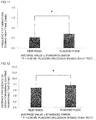
- the significant improvement was observed in the amount of change in the frequency of urination per day from the first day of test meal ingestion to the fourteenth day of test meal ingestion (difference in the frequency of urination between the fourteenth day of test meal ingestion and the first day of test meal ingestion) between the groups in the signed rank sum test of Wilcoxon ( Figure 9 ).
- a pollakiuria improving effect of the ingestion of the test foods was observed from the above. Since there was no significant difference in the intake of water per day between both groups, it was considered that this effect was caused by LNDP.
- Randomized, double-blinded, placebo-controlled, crossover, comparative study was performed on 12 subjects which are healthy men and women of ages of 40 or more and less than 65 with slight pollakiuria symptoms to examine the influence on the frequency of urination when LNDP is ingested a plurality of times per day.
- the test was performed using test foods containing LNDP and placebo foods not containing LNDP as test meals.
- the 12 persons were divided into 2 groups each having 6 persons, and, in one group, the persons were made to ingest the test foods for 14 days and ingest placebo foods for 14 days after a 14-day washout period.
- the persons were made to ingest the placebo foods for 14 days and ingest test foods for 14 days after a 14-day washout period.
- the tablets of Test Example 7 were used for test meals, and the test meal was ingested in a dosage of 4 tablets after lunch and dinner. Since the test foods contain 0.6 mg per tablet of LNDP, LNDP contained in a dose of test food is 2.4 mg, and the daily LNDP intake of a group which ingests test foods is 4.8 mg.
- the subjects were asked to write urination diaries recording the frequencies of urination and the urination times during the test period, and the influence of LNDP on the frequency of urination was evaluated using this.
- the test food group specifically decreased in the frequency of urination per day, the frequency of urination during the nighttime, and the frequency of urination during the daytime awakening time by 0.65 times/day, 0.16 times/day, and 0.45 times/day on average, respectively, as compared with the placebo food group. Also, when the test foods were ingested a plurality of times per day, a pollakiuria improving effect was observed from the above. Since there was no significant difference in the intake of water per day between both groups, it was considered that this effect was caused by LNDP.
Landscapes
- Health & Medical Sciences (AREA)
- Life Sciences & Earth Sciences (AREA)
- Engineering & Computer Science (AREA)
- Bioinformatics & Cheminformatics (AREA)
- Animal Behavior & Ethology (AREA)
- Public Health (AREA)
- Veterinary Medicine (AREA)
- Medicinal Chemistry (AREA)
- General Health & Medical Sciences (AREA)
- Chemical & Material Sciences (AREA)
- Pharmacology & Pharmacy (AREA)
- Organic Chemistry (AREA)
- Nuclear Medicine, Radiotherapy & Molecular Imaging (AREA)
- Chemical Kinetics & Catalysis (AREA)
- General Chemical & Material Sciences (AREA)
- Diabetes (AREA)
- Hematology (AREA)
- Obesity (AREA)
- Child & Adolescent Psychology (AREA)
- Urology & Nephrology (AREA)
- Gastroenterology & Hepatology (AREA)
- Immunology (AREA)
- Proteomics, Peptides & Aminoacids (AREA)
- Epidemiology (AREA)
- Heart & Thoracic Surgery (AREA)
- Cardiology (AREA)
- Emergency Medicine (AREA)
- Neurosurgery (AREA)
- Endocrinology (AREA)
- Neurology (AREA)
- Biomedical Technology (AREA)
- Pulmonology (AREA)
- Medicines That Contain Protein Lipid Enzymes And Other Medicines (AREA)
- Acyclic And Carbocyclic Compounds In Medicinal Compositions (AREA)
- Peptides Or Proteins (AREA)
Applications Claiming Priority (2)
| Application Number | Priority Date | Filing Date | Title |
|---|---|---|---|
| JP2018202084 | 2018-10-26 | ||
| PCT/JP2019/040809 WO2020085179A1 (fr) | 2018-10-26 | 2019-10-17 | Agent anti-obésité, agent atténuant la pollakiurie et régulateur de l'activité du système nerveux autonome |
Publications (4)
| Publication Number | Publication Date |
|---|---|
| EP3871685A1 true EP3871685A1 (fr) | 2021-09-01 |
| EP3871685A4 EP3871685A4 (fr) | 2022-07-13 |
| EP3871685C0 EP3871685C0 (fr) | 2023-08-30 |
| EP3871685B1 EP3871685B1 (fr) | 2023-08-30 |
Family
ID=70331941
Family Applications (1)
| Application Number | Title | Priority Date | Filing Date |
|---|---|---|---|
| EP19877309.5A Active EP3871685B1 (fr) | 2018-10-26 | 2019-10-17 | Agent anti-obésité, agent atténuant la pollakiurie et régulateur de l'activité du système nerveux autonome |
Country Status (5)
| Country | Link |
|---|---|
| US (1) | US12178839B2 (fr) |
| EP (1) | EP3871685B1 (fr) |
| JP (1) | JP7326318B2 (fr) |
| AU (2) | AU2019366076B2 (fr) |
| WO (1) | WO2020085179A1 (fr) |
Family Cites Families (18)
| Publication number | Priority date | Publication date | Assignee | Title |
|---|---|---|---|---|
| JPS6063543U (ja) | 1983-10-07 | 1985-05-04 | 株式会社協和リ−ス | プラスチツクから油を回収する装置に於ける分解槽 |
| JP2004323519A (ja) * | 2003-04-10 | 2004-11-18 | Dainippon Pharmaceut Co Ltd | スルホン酸アニリド誘導体及びそれを含有する医薬組成物 |
| JP2005160356A (ja) | 2003-12-01 | 2005-06-23 | Powdernova Inc | 健康食品 |
| JP2006265142A (ja) | 2005-03-23 | 2006-10-05 | Toyo Shinyaku:Kk | 体脂肪の蓄積抑制または低減剤 |
| JP5758561B2 (ja) | 2005-04-25 | 2015-08-05 | 金印株式会社 | 肥満防止剤 |
| AU2007292786B2 (en) * | 2006-09-04 | 2013-02-14 | Megmilk Snow Brand Co., Ltd. | Agent for accelerating the increase in and/or preventing the decrease in blood adiponectin level, and visceral fat accumulation inhibitor |
| EP2520308B1 (fr) * | 2009-12-28 | 2016-06-22 | Asahi Group Holdings, Ltd. | Composition et procédé visant à améliorer la fonction cérébrale |
| JP3164015U (ja) | 2010-08-28 | 2010-11-11 | アサマ化成株式会社 | カボチャ属種子を収納したティーバッグ |
| MY160992A (en) * | 2010-11-09 | 2017-03-31 | Asahi Group Holdings Ltd | Lactobacillus helveticus having high proteolysis activity |
| US9523109B2 (en) * | 2011-06-24 | 2016-12-20 | Calpis Co., Ltd. | Method for enzymatically preparing peptides for use in improvement of brain function |
| JP5718741B2 (ja) | 2011-06-24 | 2015-05-13 | カルピス株式会社 | 脳機能改善用ペプチドの酵素的製造方法 |
| JP5686680B2 (ja) | 2011-06-24 | 2015-03-18 | カルピス株式会社 | 乳酸菌発酵によるカゼイン由来ペプチドの製造方法 |
| JP2014084283A (ja) * | 2012-10-19 | 2014-05-12 | Univ Of Yamanashi | 排尿障害治療薬 |
| EP3027199B1 (fr) | 2013-08-01 | 2019-06-26 | Dignify Therapeutics, LLC | Compositions et procédés d'induction de la miction et de la défécation |
| KR101712790B1 (ko) | 2014-03-21 | 2017-03-23 | 동화약품주식회사 | 필발 추출물을 포함하는 배뇨 장애 예방, 치료 및 개선용 조성물 |
| JP6005202B2 (ja) | 2015-03-19 | 2016-10-12 | アサヒグループホールディングス株式会社 | 脳機能改善用ペプチドの酵素的製造方法 |
| JP6063543B2 (ja) | 2015-10-28 | 2017-01-18 | 花王株式会社 | 過活動膀胱の予防又は改善剤 |
| JP2017214342A (ja) | 2016-06-02 | 2017-12-07 | 日清オイリオグループ株式会社 | 排尿障害の予防用又は改善用組成物 |
-
2019
- 2019-10-17 AU AU2019366076A patent/AU2019366076B2/en active Active
- 2019-10-17 US US17/288,197 patent/US12178839B2/en active Active
- 2019-10-17 EP EP19877309.5A patent/EP3871685B1/fr active Active
- 2019-10-17 WO PCT/JP2019/040809 patent/WO2020085179A1/fr not_active Ceased
- 2019-10-17 JP JP2020553276A patent/JP7326318B2/ja active Active
-
2026
- 2026-02-03 AU AU2026200775A patent/AU2026200775A1/en active Pending
Also Published As
| Publication number | Publication date |
|---|---|
| JP7326318B2 (ja) | 2023-08-15 |
| AU2026200775A1 (en) | 2026-02-26 |
| EP3871685C0 (fr) | 2023-08-30 |
| JPWO2020085179A1 (ja) | 2021-09-16 |
| US20210401928A1 (en) | 2021-12-30 |
| AU2019366076A1 (en) | 2021-06-10 |
| EP3871685A4 (fr) | 2022-07-13 |
| WO2020085179A1 (fr) | 2020-04-30 |
| US12178839B2 (en) | 2024-12-31 |
| EP3871685B1 (fr) | 2023-08-30 |
| AU2019366076B2 (en) | 2026-01-29 |
Similar Documents
| Publication | Publication Date | Title |
|---|---|---|
| Sufian et al. | Pork peptone stimulates cholecystokinin secretion from enteroendocrine cells and suppresses appetite in rats | |
| EP1378236B1 (fr) | Agents contre les maladies provoquees par le stress | |
| JP5618395B2 (ja) | 自律神経活動調節用組成物および自律神経を調節する方法 | |
| Al‐Shoumer et al. | Overnight metabolic fuel deficiency in patients treated conventionally for hypopituitarism | |
| JP2573976B2 (ja) | 低カロリ−状態での窒素保持のための成長ホルモンの使用 | |
| EP3871685B1 (fr) | Agent anti-obésité, agent atténuant la pollakiurie et régulateur de l'activité du système nerveux autonome | |
| US11766458B2 (en) | Method and a dietary composition on regulation, treatment, and prevention of obesity | |
| JP5925569B2 (ja) | 消化管ホルモン分泌調節剤 | |
| CN108354080A (zh) | 一种肥胖期专用减肥犬粮的制备方法 | |
| US20170224746A1 (en) | Nutritional Support Method For Health Issues | |
| WO2010110439A1 (fr) | Composition permettant de réguler l'activité nerveuse autonome et procédé de régulation du nerf autonome | |
| WO2005018654A1 (fr) | Utilisation de souches de enterococcus faecium pour traiter l'insuffisance hepatique, pour regenerer et pour intensifier le metabolisme hepatique | |
| JP2014152149A (ja) | Ampキナーゼ活性化剤及びその用途 | |
| KR102428972B1 (ko) | 비만의 예방을 위한 식이조성물 | |
| KR102428974B1 (ko) | 비만 예방을 위한 식이조성물 | |
| JP3605528B2 (ja) | 体重増加抑制剤 | |
| Von Noorden | Clinical treatises on the pathology and therapy of disorders of metabolism and nutrition v. 7, 1904-10 | |
| Zabielski et al. | Development and regulation of pancreatic juice secretion in cattle. State-of-the-art | |
| US10538593B2 (en) | Method for manufacturing digestive enzyme antibody and egg having same, and for manufacturing processed product containing egg as ingredient thereof and composition including antibody | |
| KR20250098482A (ko) | Hb-egf 단백질 또는 이를 코딩하는 폴리뉴클레오타이드를 유효성분으로 포함하는 말초신경병증 예방 또는 치료용 약학 조성물 | |
| TW202535421A (zh) | 用於提高生物能量代謝之含有蔗果三糖的組成物 | |
| JP5853326B2 (ja) | 自律神経活動調節用組成物および自律神経を調節する方法 | |
| Kawai et al. | Clinical Nutrition ESPEN | |
| Hirsch et al. | Functional changes in the gastrointestinal system | |
| JP2020189889A (ja) | 代謝改善剤 |
Legal Events
| Date | Code | Title | Description |
|---|---|---|---|
| STAA | Information on the status of an ep patent application or granted ep patent |
Free format text: STATUS: THE INTERNATIONAL PUBLICATION HAS BEEN MADE |
|
| PUAI | Public reference made under article 153(3) epc to a published international application that has entered the european phase |
Free format text: ORIGINAL CODE: 0009012 |
|
| STAA | Information on the status of an ep patent application or granted ep patent |
Free format text: STATUS: REQUEST FOR EXAMINATION WAS MADE |
|
| 17P | Request for examination filed |
Effective date: 20210526 |
|
| AK | Designated contracting states |
Kind code of ref document: A1 Designated state(s): AL AT BE BG CH CY CZ DE DK EE ES FI FR GB GR HR HU IE IS IT LI LT LU LV MC MK MT NL NO PL PT RO RS SE SI SK SM TR |
|
| DAV | Request for validation of the european patent (deleted) | ||
| DAX | Request for extension of the european patent (deleted) | ||
| A4 | Supplementary search report drawn up and despatched |
Effective date: 20220614 |
|
| RIC1 | Information provided on ipc code assigned before grant |
Ipc: C07K 14/47 20060101ALN20220609BHEP Ipc: A61P 25/02 20060101ALI20220609BHEP Ipc: A61P 13/00 20060101ALI20220609BHEP Ipc: A61P 11/08 20060101ALI20220609BHEP Ipc: A61P 9/02 20060101ALI20220609BHEP Ipc: A61P 7/12 20060101ALI20220609BHEP Ipc: A61P 3/10 20060101ALI20220609BHEP Ipc: A61P 3/04 20060101ALI20220609BHEP Ipc: A61P 1/12 20060101ALI20220609BHEP Ipc: A61P 1/04 20060101ALI20220609BHEP Ipc: A61P 1/00 20060101ALI20220609BHEP Ipc: A61K 38/10 20060101AFI20220609BHEP |
|
| GRAP | Despatch of communication of intention to grant a patent |
Free format text: ORIGINAL CODE: EPIDOSNIGR1 |
|
| RIC1 | Information provided on ipc code assigned before grant |
Ipc: C07K 14/47 20060101ALN20230209BHEP Ipc: A61P 25/02 20060101ALI20230209BHEP Ipc: A61P 13/00 20060101ALI20230209BHEP Ipc: A61P 11/08 20060101ALI20230209BHEP Ipc: A61P 9/02 20060101ALI20230209BHEP Ipc: A61P 7/12 20060101ALI20230209BHEP Ipc: A61P 3/10 20060101ALI20230209BHEP Ipc: A61P 3/04 20060101ALI20230209BHEP Ipc: A61P 1/12 20060101ALI20230209BHEP Ipc: A61P 1/04 20060101ALI20230209BHEP Ipc: A61P 1/00 20060101ALI20230209BHEP Ipc: A61K 38/10 20060101AFI20230209BHEP |
|
| STAA | Information on the status of an ep patent application or granted ep patent |
Free format text: STATUS: GRANT OF PATENT IS INTENDED |
|
| INTG | Intention to grant announced |
Effective date: 20230316 |
|
| GRAS | Grant fee paid |
Free format text: ORIGINAL CODE: EPIDOSNIGR3 |
|
| GRAA | (expected) grant |
Free format text: ORIGINAL CODE: 0009210 |
|
| STAA | Information on the status of an ep patent application or granted ep patent |
Free format text: STATUS: THE PATENT HAS BEEN GRANTED |
|
| AK | Designated contracting states |
Kind code of ref document: B1 Designated state(s): AL AT BE BG CH CY CZ DE DK EE ES FI FR GB GR HR HU IE IS IT LI LT LU LV MC MK MT NL NO PL PT RO RS SE SI SK SM TR |
|
| REG | Reference to a national code |
Ref country code: GB Ref legal event code: FG4D |
|
| REG | Reference to a national code |
Ref country code: CH Ref legal event code: EP |
|
| REG | Reference to a national code |
Ref country code: DE Ref legal event code: R096 Ref document number: 602019036452 Country of ref document: DE |
|
| REG | Reference to a national code |
Ref country code: IE Ref legal event code: FG4D |
|
| U01 | Request for unitary effect filed |
Effective date: 20230927 |
|
| U07 | Unitary effect registered |
Designated state(s): AT BE BG DE DK EE FI FR IT LT LU LV MT NL PT SE SI Effective date: 20231004 |
|
| U20 | Renewal fee for the european patent with unitary effect paid |
Year of fee payment: 5 Effective date: 20231025 |
|
| PG25 | Lapsed in a contracting state [announced via postgrant information from national office to epo] |
Ref country code: GR Free format text: LAPSE BECAUSE OF FAILURE TO SUBMIT A TRANSLATION OF THE DESCRIPTION OR TO PAY THE FEE WITHIN THE PRESCRIBED TIME-LIMIT Effective date: 20231201 |
|
| PG25 | Lapsed in a contracting state [announced via postgrant information from national office to epo] |
Ref country code: IS Free format text: LAPSE BECAUSE OF FAILURE TO SUBMIT A TRANSLATION OF THE DESCRIPTION OR TO PAY THE FEE WITHIN THE PRESCRIBED TIME-LIMIT Effective date: 20231230 |
|
| PG25 | Lapsed in a contracting state [announced via postgrant information from national office to epo] |
Ref country code: RS Free format text: LAPSE BECAUSE OF FAILURE TO SUBMIT A TRANSLATION OF THE DESCRIPTION OR TO PAY THE FEE WITHIN THE PRESCRIBED TIME-LIMIT Effective date: 20230830 Ref country code: NO Free format text: LAPSE BECAUSE OF FAILURE TO SUBMIT A TRANSLATION OF THE DESCRIPTION OR TO PAY THE FEE WITHIN THE PRESCRIBED TIME-LIMIT Effective date: 20231130 Ref country code: IS Free format text: LAPSE BECAUSE OF FAILURE TO SUBMIT A TRANSLATION OF THE DESCRIPTION OR TO PAY THE FEE WITHIN THE PRESCRIBED TIME-LIMIT Effective date: 20231230 Ref country code: HR Free format text: LAPSE BECAUSE OF FAILURE TO SUBMIT A TRANSLATION OF THE DESCRIPTION OR TO PAY THE FEE WITHIN THE PRESCRIBED TIME-LIMIT Effective date: 20230830 Ref country code: GR Free format text: LAPSE BECAUSE OF FAILURE TO SUBMIT A TRANSLATION OF THE DESCRIPTION OR TO PAY THE FEE WITHIN THE PRESCRIBED TIME-LIMIT Effective date: 20231201 |
|
| PG25 | Lapsed in a contracting state [announced via postgrant information from national office to epo] |
Ref country code: PL Free format text: LAPSE BECAUSE OF FAILURE TO SUBMIT A TRANSLATION OF THE DESCRIPTION OR TO PAY THE FEE WITHIN THE PRESCRIBED TIME-LIMIT Effective date: 20230830 |
|
| PG25 | Lapsed in a contracting state [announced via postgrant information from national office to epo] |
Ref country code: ES Free format text: LAPSE BECAUSE OF FAILURE TO SUBMIT A TRANSLATION OF THE DESCRIPTION OR TO PAY THE FEE WITHIN THE PRESCRIBED TIME-LIMIT Effective date: 20230830 |
|
| PG25 | Lapsed in a contracting state [announced via postgrant information from national office to epo] |
Ref country code: SM Free format text: LAPSE BECAUSE OF FAILURE TO SUBMIT A TRANSLATION OF THE DESCRIPTION OR TO PAY THE FEE WITHIN THE PRESCRIBED TIME-LIMIT Effective date: 20230830 Ref country code: RO Free format text: LAPSE BECAUSE OF FAILURE TO SUBMIT A TRANSLATION OF THE DESCRIPTION OR TO PAY THE FEE WITHIN THE PRESCRIBED TIME-LIMIT Effective date: 20230830 Ref country code: ES Free format text: LAPSE BECAUSE OF FAILURE TO SUBMIT A TRANSLATION OF THE DESCRIPTION OR TO PAY THE FEE WITHIN THE PRESCRIBED TIME-LIMIT Effective date: 20230830 Ref country code: CZ Free format text: LAPSE BECAUSE OF FAILURE TO SUBMIT A TRANSLATION OF THE DESCRIPTION OR TO PAY THE FEE WITHIN THE PRESCRIBED TIME-LIMIT Effective date: 20230830 Ref country code: SK Free format text: LAPSE BECAUSE OF FAILURE TO SUBMIT A TRANSLATION OF THE DESCRIPTION OR TO PAY THE FEE WITHIN THE PRESCRIBED TIME-LIMIT Effective date: 20230830 |
|
| PG25 | Lapsed in a contracting state [announced via postgrant information from national office to epo] |
Ref country code: MC Free format text: LAPSE BECAUSE OF FAILURE TO SUBMIT A TRANSLATION OF THE DESCRIPTION OR TO PAY THE FEE WITHIN THE PRESCRIBED TIME-LIMIT Effective date: 20230830 |
|
| REG | Reference to a national code |
Ref country code: CH Ref legal event code: PL |
|
| REG | Reference to a national code |
Ref country code: DE Ref legal event code: R097 Ref document number: 602019036452 Country of ref document: DE |
|
| PLBE | No opposition filed within time limit |
Free format text: ORIGINAL CODE: 0009261 |
|
| STAA | Information on the status of an ep patent application or granted ep patent |
Free format text: STATUS: NO OPPOSITION FILED WITHIN TIME LIMIT |
|
| PG25 | Lapsed in a contracting state [announced via postgrant information from national office to epo] |
Ref country code: CH Free format text: LAPSE BECAUSE OF NON-PAYMENT OF DUE FEES Effective date: 20231031 |
|
| PG25 | Lapsed in a contracting state [announced via postgrant information from national office to epo] |
Ref country code: CH Free format text: LAPSE BECAUSE OF NON-PAYMENT OF DUE FEES Effective date: 20231031 |
|
| 26N | No opposition filed |
Effective date: 20240603 |
|
| PG25 | Lapsed in a contracting state [announced via postgrant information from national office to epo] |
Ref country code: IE Free format text: LAPSE BECAUSE OF NON-PAYMENT OF DUE FEES Effective date: 20231017 |
|
| U20 | Renewal fee for the european patent with unitary effect paid |
Year of fee payment: 6 Effective date: 20240906 |
|
| PG25 | Lapsed in a contracting state [announced via postgrant information from national office to epo] |
Ref country code: IE Free format text: LAPSE BECAUSE OF NON-PAYMENT OF DUE FEES Effective date: 20231017 |
|
| PG25 | Lapsed in a contracting state [announced via postgrant information from national office to epo] |
Ref country code: CY Free format text: LAPSE BECAUSE OF FAILURE TO SUBMIT A TRANSLATION OF THE DESCRIPTION OR TO PAY THE FEE WITHIN THE PRESCRIBED TIME-LIMIT; INVALID AB INITIO Effective date: 20191017 |
|
| PG25 | Lapsed in a contracting state [announced via postgrant information from national office to epo] |
Ref country code: HU Free format text: LAPSE BECAUSE OF FAILURE TO SUBMIT A TRANSLATION OF THE DESCRIPTION OR TO PAY THE FEE WITHIN THE PRESCRIBED TIME-LIMIT; INVALID AB INITIO Effective date: 20191017 |
|
| U20 | Renewal fee for the european patent with unitary effect paid |
Year of fee payment: 7 Effective date: 20250909 |
|
| PGFP | Annual fee paid to national office [announced via postgrant information from national office to epo] |
Ref country code: GB Payment date: 20250828 Year of fee payment: 7 |
|
| PG25 | Lapsed in a contracting state [announced via postgrant information from national office to epo] |
Ref country code: TR Free format text: LAPSE BECAUSE OF FAILURE TO SUBMIT A TRANSLATION OF THE DESCRIPTION OR TO PAY THE FEE WITHIN THE PRESCRIBED TIME-LIMIT Effective date: 20230830 |