EP3874852B1 - Procédés pour éviter des collisions de transmission pour v2x nr et v2x lte au sein du même dispositif - Google Patents
Procédés pour éviter des collisions de transmission pour v2x nr et v2x lte au sein du même dispositif Download PDFInfo
- Publication number
- EP3874852B1 EP3874852B1 EP19809671.1A EP19809671A EP3874852B1 EP 3874852 B1 EP3874852 B1 EP 3874852B1 EP 19809671 A EP19809671 A EP 19809671A EP 3874852 B1 EP3874852 B1 EP 3874852B1
- Authority
- EP
- European Patent Office
- Prior art keywords
- rat
- resources
- transmission
- component
- information
- Prior art date
- Legal status (The legal status is an assumption and is not a legal conclusion. Google has not performed a legal analysis and makes no representation as to the accuracy of the status listed.)
- Active
Links
Images




Classifications
-
- H—ELECTRICITY
- H04—ELECTRIC COMMUNICATION TECHNIQUE
- H04W—WIRELESS COMMUNICATION NETWORKS
- H04W72/00—Local resource management
- H04W72/12—Wireless traffic scheduling
- H04W72/1215—Wireless traffic scheduling for collaboration of different radio technologies
-
- H—ELECTRICITY
- H04—ELECTRIC COMMUNICATION TECHNIQUE
- H04W—WIRELESS COMMUNICATION NETWORKS
- H04W74/00—Wireless channel access
- H04W74/08—Non-scheduled access, e.g. ALOHA
- H04W74/0808—Non-scheduled access, e.g. ALOHA using carrier sensing, e.g. carrier sense multiple access [CSMA]
- H04W74/0816—Non-scheduled access, e.g. ALOHA using carrier sensing, e.g. carrier sense multiple access [CSMA] with collision avoidance
-
- H—ELECTRICITY
- H04—ELECTRIC COMMUNICATION TECHNIQUE
- H04L—TRANSMISSION OF DIGITAL INFORMATION, e.g. TELEGRAPHIC COMMUNICATION
- H04L5/00—Arrangements affording multiple use of the transmission path
- H04L5/003—Arrangements for allocating sub-channels of the transmission path
- H04L5/0042—Intra-user or intra-terminal allocation
-
- H—ELECTRICITY
- H04—ELECTRIC COMMUNICATION TECHNIQUE
- H04L—TRANSMISSION OF DIGITAL INFORMATION, e.g. TELEGRAPHIC COMMUNICATION
- H04L5/00—Arrangements affording multiple use of the transmission path
- H04L5/003—Arrangements for allocating sub-channels of the transmission path
- H04L5/0058—Allocation criteria
- H04L5/0062—Avoidance of ingress interference, e.g. ham radio channels
-
- H—ELECTRICITY
- H04—ELECTRIC COMMUNICATION TECHNIQUE
- H04L—TRANSMISSION OF DIGITAL INFORMATION, e.g. TELEGRAPHIC COMMUNICATION
- H04L5/00—Arrangements affording multiple use of the transmission path
- H04L5/0091—Signalling for the administration of the divided path, e.g. signalling of configuration information
-
- H—ELECTRICITY
- H04—ELECTRIC COMMUNICATION TECHNIQUE
- H04W—WIRELESS COMMUNICATION NETWORKS
- H04W28/00—Network traffic management; Network resource management
- H04W28/16—Central resource management; Negotiation of resources or communication parameters, e.g. negotiating bandwidth or QoS [Quality of Service]
- H04W28/26—Resource reservation
-
- H—ELECTRICITY
- H04—ELECTRIC COMMUNICATION TECHNIQUE
- H04W—WIRELESS COMMUNICATION NETWORKS
- H04W72/00—Local resource management
- H04W72/02—Selection of wireless resources by user or terminal
-
- H—ELECTRICITY
- H04—ELECTRIC COMMUNICATION TECHNIQUE
- H04W—WIRELESS COMMUNICATION NETWORKS
- H04W72/00—Local resource management
- H04W72/12—Wireless traffic scheduling
-
- H—ELECTRICITY
- H04—ELECTRIC COMMUNICATION TECHNIQUE
- H04W—WIRELESS COMMUNICATION NETWORKS
- H04W16/00—Network planning, e.g. coverage or traffic planning tools; Network deployment, e.g. resource partitioning or cells structures
- H04W16/14—Spectrum sharing arrangements between different networks
-
- H—ELECTRICITY
- H04—ELECTRIC COMMUNICATION TECHNIQUE
- H04W—WIRELESS COMMUNICATION NETWORKS
- H04W36/00—Hand-off or reselection arrangements
- H04W36/03—Reselecting a link using a direct mode connection
- H04W36/037—Reselecting a link using a direct mode connection by reducing handover delay, e.g. latency
-
- H—ELECTRICITY
- H04—ELECTRIC COMMUNICATION TECHNIQUE
- H04W—WIRELESS COMMUNICATION NETWORKS
- H04W36/00—Hand-off or reselection arrangements
- H04W36/14—Reselecting a network or an air interface
- H04W36/144—Reselecting a network or an air interface over a different radio air interface technology
-
- H—ELECTRICITY
- H04—ELECTRIC COMMUNICATION TECHNIQUE
- H04W—WIRELESS COMMUNICATION NETWORKS
- H04W4/00—Services specially adapted for wireless communication networks; Facilities therefor
- H04W4/30—Services specially adapted for particular environments, situations or purposes
- H04W4/40—Services specially adapted for particular environments, situations or purposes for vehicles, e.g. vehicle-to-pedestrians [V2P]
-
- H—ELECTRICITY
- H04—ELECTRIC COMMUNICATION TECHNIQUE
- H04W—WIRELESS COMMUNICATION NETWORKS
- H04W72/00—Local resource management
- H04W72/50—Allocation or scheduling criteria for wireless resources
- H04W72/54—Allocation or scheduling criteria for wireless resources based on quality criteria
-
- H—ELECTRICITY
- H04—ELECTRIC COMMUNICATION TECHNIQUE
- H04W—WIRELESS COMMUNICATION NETWORKS
- H04W88/00—Devices specially adapted for wireless communication networks, e.g. terminals, base stations or access point devices
- H04W88/02—Terminal devices
- H04W88/06—Terminal devices adapted for operation in multiple networks or having at least two operational modes, e.g. multi-mode terminals
Definitions
- the present disclosure relates generally to communication systems, and more particularly, to wireless communication using two radio access technologies within the same device.
- Wireless communication systems are widely deployed to provide various telecommunication services such as telephony, video, data, messaging, and broadcasts.
- Typical wireless communication systems may employ multiple-access technologies capable of supporting communication with multiple users by sharing available system resources. Examples of such multiple-access technologies include code division multiple access (CDMA) systems, time division multiple access (TDMA) systems, frequency division multiple access (FDMA) systems, orthogonal frequency division multiple access (OFDMA) systems, single-carrier frequency division multiple access (SC-FDMA) systems, and time division synchronous code division multiple access (TD-SCDMA) systems.
- CDMA code division multiple access
- TDMA time division multiple access
- FDMA frequency division multiple access
- OFDMA orthogonal frequency division multiple access
- SC-FDMA single-carrier frequency division multiple access
- TD-SCDMA time division synchronous code division multiple access
- 5G New Radio is part of a continuous mobile broadband evolution promulgated by Third Generation Partnership Project (3GPP) to meet new requirements associated with latency, reliability, security, scalability (e.g., with Internet of Things (IoT)), and other requirements.
- 3GPP Third Generation Partnership Project
- 5G NR includes services associated with enhanced mobile broadband (eMBB), massive machine type communications (mMTC), and ultra reliable low latency communications (URLLC).
- eMBB enhanced mobile broadband
- mMTC massive machine type communications
- URLLC ultra reliable low latency communications
- Some aspects of 5G NR may be based on the 4G Long Term Evolution (LTE) standard.
- LTE Long Term Evolution
- aspects of wireless communication may comprise direct communication between devices, such as in V2X, V2V, and/or D2D communication.
- V2X, V2V, and/or D2D communication There exists a need for further improvements in 5G NR, V2X, V2V, and/or D2D technology. These improvements may also be applicable to other multi-access technologies and the telecommunication standards that employ these technologies.
- Intel Corporation, R1-1810781 relates to the impact of in-device coexistence on physical layer.
- US2016/0255639 relates to interference mitigation at a user equipment during wireless communication.
- US2017/0280330 relates to communicating with a terminal device in accordance with a first RAT on a primary cell supporting a primary component carrier on radio resources within a first frequency band and a secondary cell supporting a secondary component carrier on radio resources within a second frequency band.
- processors include microprocessors, microcontrollers, graphics processing units (GPUs), central processing units (CPUs), application processors, digital signal processors (DSPs), reduced instruction set computing (RISC) processors, systems on a chip (SoC), baseband processors, field programmable gate arrays (FPGAs), programmable logic devices (PLDs), state machines, gated logic, discrete hardware circuits, and other suitable hardware configured to perform the various functionality described throughout this disclosure.
- processors in the processing system may execute software.
- Software shall be construed broadly to mean instructions, instruction sets, code, code segments, program code, programs, subprograms, software components, applications, software applications, software packages, routines, subroutines, objects, executables, threads of execution, procedures, functions, etc., whether referred to as software, firmware, middleware, microcode, hardware description language, or otherwise.
- the functions described may be implemented in hardware, software, or any combination thereof. If implemented in software, the functions may be stored on or encoded as one or more instructions or code on a computer-readable medium.
- Computer-readable media includes computer storage media. Storage media may be any available media that can be accessed by a computer.
- such computer-readable media can comprise a random-access memory (RAM), a read-only memory (ROM), an electrically erasable programmable ROM (EEPROM), optical disk storage, magnetic disk storage, other magnetic storage devices, combinations of the aforementioned types of computer-readable media, or any other medium that can be used to store computer executable code in the form of instructions or data structures that can be accessed by a computer.
- FIG. 1 is a diagram illustrating an example of a wireless communications system and an access network 100.
- the wireless communications system (also referred to as a wireless wide area network (WWAN)) includes base stations 102, UEs 104, an Evolved Packet Core (EPC) 160, and a Core Network (e.g., 5GC) 190.
- the base stations 102 may include macro cells (high power cellular base station) and/or small cells (low power cellular base station).
- the macro cells include base stations.
- the small cells include femtocells, picocells, and microcells.
- the base stations 102 configured for 4G LTE may interface with the EPC 160 through backhaul links 132 (e.g., S 1 interface).
- the base stations 102 configured for NR may interface with Core Network 190 through backhaul links 184.
- UMTS Universal Mobile Telecommunications System
- NR Next Generation RAN
- the base stations 102 may perform one or more of the following functions: transfer of user data, radio channel ciphering and deciphering, integrity protection, header compression, mobility control functions (e.g., handover, dual connectivity), inter-cell interference coordination, connection setup and release, load balancing, distribution for non-access stratum (NAS) messages, NAS node selection, synchronization, radio access network (RAN) sharing, multimedia broadcast multicast service (MBMS), subscriber and equipment trace, RAN information management (RIM), paging, positioning, and delivery of warning messages.
- the base stations 102 may communicate directly or indirectly (e.g., through the EPC 160 or Core Network 190) with each other over backhaul links 134 (e.g., X2 interface).
- the backhaul links 134 may be wired or wireless.
- the base stations 102 may wirelessly communicate with the UEs 104. Each of the base stations 102 may provide communication coverage for a respective geographic coverage area 110. There may be overlapping geographic coverage areas 110. For example, the small cell 102' may have a coverage area 110' that overlaps the coverage area 110 of one or more macro base stations 102.
- a network that includes both small cell and macro cells may be known as a heterogeneous network.
- a heterogeneous network may also include Home Evolved Node Bs (eNBs) (HeNBs), which may provide service to a restricted group known as a closed subscriber group (CSG).
- eNBs Home Evolved Node Bs
- CSG closed subscriber group
- the communication links 120 between the base stations 102 and the UEs 104 may include uplink (UL) (also referred to as reverse link) transmissions from a UE 104 to a base station 102 and/or downlink (DL) (also referred to as forward link) transmissions from a base station 102 to a UE 104.
- the communication links 120 may use multiple-input and multiple-output (MIMO) antenna technology, including spatial multiplexing, beamforming, and/or transmit diversity.
- the communication links may be through one or more carriers.
- the base stations 102 / UEs 104 may use spectrum up to YMHz (e.g., 5, 10, 15, 20, 100, 400, etc.
- the component carriers may include a primary component carrier and one or more secondary component carriers.
- a primary component carrier may be referred to as a primary cell (PCell) and a secondary component carrier may be referred to as a secondary cell (SCell).
- D2D communication link 158 may use the DL/LTL WWAN spectrum.
- the D2D communication link 158 may use one or more sidelink channels, such as a physical sidelink broadcast channel (PSBCH), a physical sidelink discovery channel (PSDCH), a physical sidelink shared channel (PSSCH), and a physical sidelink control channel (PSCCH).
- sidelink channels such as a physical sidelink broadcast channel (PSBCH), a physical sidelink discovery channel (PSDCH), a physical sidelink shared channel (PSSCH), and a physical sidelink control channel (PSCCH).
- sidelink channels such as a physical sidelink broadcast channel (PSBCH), a physical sidelink discovery channel (PSDCH), a physical sidelink shared channel (PSSCH), and a physical sidelink control channel (PSCCH).
- sidelink channels such as a physical sidelink broadcast channel (PSBCH), a physical sidelink discovery channel (PSDCH), a physical sidelink shared channel (PSSCH), and a physical sidelink control channel (PSCCH).
- the wireless communications system may further include a Wi-Fi access point (AP) 150 in communication with Wi-Fi stations (STAs) 152 via communication links 154 in a 5 GHz unlicensed frequency spectrum.
- AP Wi-Fi access point
- STAs Wi-Fi stations
- communication links 154 in a 5 GHz unlicensed frequency spectrum.
- the STAs 152 / AP 150 may perform a clear channel assessment (CCA) prior to communicating in order to determine whether the channel is available.
- CCA clear channel assessment
- the small cell 102' may operate in a licensed and/or an unlicensed frequency spectrum. When operating in an unlicensed frequency spectrum, the small cell 102' may employ NR and use the same 5 GHz unlicensed frequency spectrum as used by the Wi-Fi AP 150. The small cell 102', employing NR in an unlicensed frequency spectrum, may boost coverage to and/or increase capacity of the access network.
- a base station 102 may include an eNB, gNodeB (gNB), or other type of base station.
- Some base stations 180 such as a gNB, may operate in a traditional sub 6 GHz spectrum, in millimeter wave (mmW) frequencies, and/or near mmW frequencies in communication with the UE 104.
- mmW millimeter wave
- mmW millimeter wave
- mmW base station Extremely high frequency (EHF) is part of the RF in the electromagnetic spectrum. EHF has a range of 30 GHz to 300 GHz and a wavelength between 1 millimeter and 10 millimeters.
- Radio waves in the band may be referred to as a millimeter wave.
- Near mmW may extend down to a frequency of 3 GHz with a wavelength of 100 millimeters.
- the super high frequency (SHF) band extends between 3 GHz and 30 GHz, also referred to as centimeter wave. Communications using the mmW / near mmW radio frequency band has extremely high path loss and a short range.
- the base station 180 e.g., a mmW base station, may utilize beamforming 182 with the UE 104 to compensate for the extremely high path loss and short range.
- FIG. 1 illustrates that a base station 180 may transmit a beamformed signal to the UE 104 in one or more transmit directions 182'.
- the UE 104 may receive the beamformed signal from the base station 180 in one or more receive directions 182".
- the UE 104 may also transmit a beamformed signal to the base station 180 in one or more transmit directions.
- the base station 180 may receive the beamformed signal from the UE 104 in one or more receive directions.
- the base station 180 / UE 104 may perform beam training to determine the best receive and transmit directions for each of the base station 180 / UE 104.
- the transmit and receive directions for the base station 180 may or may not be the same.
- the transmit and receive directions for the UE 104 may or may not be the same. Although beamformed signals are illustrated between UE 104 and base station 102/180, aspects of beamforming may similarly may be applied by UE 104 or RSU 107 to communicate with another UE 104 or RSU 107, such as based on V2X, V2V, or D2D communication.
- the EPC 160 may include a Mobility Management Entity (MME) 162, other MMEs 164, a Serving Gateway 166, a Multimedia Broadcast Multicast Service (MBMS) Gateway 168, a Broadcast Multicast Service Center (BM-SC) 170, and a Packet Data Network (PDN) Gateway 172.
- MME Mobility Management Entity
- MBMS Multimedia Broadcast Multicast Service
- BM-SC Broadcast Multicast Service Center
- PDN Packet Data Network
- the MME 162 may be in communication with a Home Subscriber Server (HSS) 174.
- HSS Home Subscriber Server
- the MME 162 is the control node that processes the signaling between the UEs 104 and the EPC 160.
- the MME 162 provides bearer and connection management. All user Internet protocol (IP) packets are transferred through the Serving Gateway 166, which itself is connected to the PDN Gateway 172.
- IP Internet protocol
- the PDN Gateway 172 provides UE IP address allocation as well as other functions.
- the PDN Gateway 172 and the BM-SC 170 are connected to the IP Services 176.
- the IP Services 176 may include the Internet, an intranet, an IP Multimedia Subsystem (IMS), a PS Streaming Service, and/or other IP services.
- the BM-SC 170 may provide functions for MBMS user service provisioning and delivery.
- the BM-SC 170 may serve as an entry point for content provider MBMS transmission, may be used to authorize and initiate MBMS Bearer Services within a public land mobile network (PLMN), and may be used to schedule MBMS transmissions.
- PLMN public land mobile network
- the MBMS Gateway 168 may be used to distribute MBMS traffic to the base stations 102 belonging to a Multicast Broadcast Single Frequency Network (MBSFN) area broadcasting a particular service, and may be responsible for session management (start/stop) and for collecting eMBMS related charging information.
- MMSFN Multicast Broadcast Single Frequency Network
- the Core Network 190 may include a Access and Mobility Management Function (AMF) 192, other AMFs 193, a Session Management Function (SMF) 194, and a User Plane Function (UPF) 195.
- the AMF 192 may be in communication with a Unified Data Management (UDM) 196.
- the AMF 192 is the control node that processes the signaling between the UEs 104 and the Core Network 190.
- the AMF 192 provides QoS flow and session management. All user Internet protocol (IP) packets are transferred through the UPF 195.
- the UPF 195 provides LTE IP address allocation as well as other functions.
- the UPF 195 is connected to the IP Services 197.
- the IP Services 197 may include the Internet, an intranet, an IP Multimedia Subsystem (IMS), a PS Streaming Service, and/or other IP services.
- IMS IP Multimedia Subsystem
- the base station may also be referred to as a gNB, Node B, evolved Node B (eNB), an access point, a base transceiver station, a radio base station, a radio transceiver, a transceiver function, a basic service set (BSS), an extended service set (ESS), a transmit reception point (TRP), or some other suitable terminology.
- the base station 102 provides an access point to the EPC 160 or Core Network 190 for a LTE 104.
- Examples of UEs 104 include a cellular phone, a smart phone, a session initiation protocol (SIP) phone, a laptop, a personal digital assistant (PDA), a satellite radio, a global positioning system, a multimedia device, a video device, a digital audio player (e.g., MP3 player), a camera, a game console, a tablet, a smart device, a wearable device, a vehicle, an electric meter, a gas pump, a large or small kitchen appliance, a healthcare device, an implant, a sensor/actuator, a display, or any other similar functioning device.
- SIP session initiation protocol
- PDA personal digital assistant
- the UEs 104 may be referred to as IoT devices (e.g., parking meter, gas pump, toaster, vehicles, heart monitor, etc.).
- the LTE 104 may also be referred to as a station, a mobile station, a subscriber station, a mobile unit, a subscriber unit, a wireless unit, a remote unit, a mobile device, a wireless device, a wireless communications device, a remote device, a mobile subscriber station, an access terminal, a mobile terminal, a wireless terminal, a remote terminal, a handset, a user agent, a mobile client, a client, or some other suitable terminology.
- Some wireless communication networks may include vehicle-based communication devices that can communicate from vehicle-to-vehicle (V2V), vehicle-to-infrastructure (V2I) (e.g., from the vehicle-based communication device to road infrastructure nodes such as a Road Side Unit (RSU)), vehicle-to-network (V2N) (e.g., from the vehicle-based communication device to one or more network nodes, such as a base station), and/or a combination thereof and/or with other devices, which can be collectively referred to as vehicle-to-anything (V2X) communications.
- V2V vehicle-to-vehicle
- V2I vehicle-to-infrastructure
- RSU Road Side Unit
- V2N vehicle-to-network
- V2X vehicle-to-anything
- a UE 104 e.g., a transmitting Vehicle User Equipment (VUE) or other UE, may be configured to transmit messages directly to another UE 104.
- the communication may be based on V2V/V2X/V2I or other D2D communication, such as Proximity Services (ProSe), etc.
- Communication based on V2V, V2X, V2I, and/or D2D may also be transmitted and received by other transmitting and receiving devices, such as Road Side Unit (RSU) 107, etc.
- RSU Road Side Unit
- aspects of the communication may be based on PCS or sidelink communication e.g., as described in connection with the example in FIG. 15 .
- the concepts described herein may be applicable to other similar areas, such as LTE-A, CDMA, GSM, and other wireless technologies.
- 5G NR technology is expected to facilitate autonomous vehicles by enabling communication between vehicles (V2V), as well as other types of vehicle communication such as vehicle to network (V2N), vehicle to infrastructure (V2I), vehicle to pedestrian (V2P), etc., all of which may broadly be categorized as vehicle to everything (V2X) communication.
- An apparatus such as the UE 104 may perform V2X communication with a device using NR technology and may perform V2X communication with another device using LTE technology.
- NR V2X capability coexists with LTE V2X capability within the same UE, collisions between V2X transmission using NR and LTE technologies may occur. Collisions between NR V2X transmission and LTE V2X transmission may degrade performance such as reducing communication throughput, range, or both.
- an apparatus such as the UE 104 or the base station 180 may be configured to avoid or minimize collisions between NR V2X transmission and LTE V2X transmission.
- the apparatus may comprise a dual radio access technology (RAT) V2X transmissions avoidance component 198 in the UE 104 or the base station 180 that may be configured to receive information on resources reserved for a first RAT and to allocate resources for a second RAT to avoid collisions in transmission between the first RAT and the second RAT.
- the first RAT may be LTE and the second RAT may be NR.
- the dual RAT V2X transmissions avoidance component 198 may receive information on resources reserved for LTE V2X transmission.
- the dual RAT V2X transmissions avoidance component 198 may allocate or adjust resources for NR V2X transmission based on the resources reserved for the LTE V2X transmission to avoid collisions between the NR V2X transmission and the LTE V2X transmission.
- the LTE V2X transmission may be given higher priority over the NR V2X transmission.
- the LTE 104 may allocate the resources for NR V2X transmission and LTE V2X transmission to avoid collision without assistance from a base station.
- a base station such as base station 180 for a first RAT may receive information on resources reserved for V2X transmission using the second RAT from the LTE 104 and may allocate or adjust resources for V2X transmission using the first RAT by the UE 104 to avoid collisions.
- the base station may transmit the information on the resources allocated for the V2X transmission using the first RAT to the UE 104.
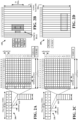
- FIG. 2A is a diagram 200 illustrating an example of a first subframe within a 5G/NR frame structure.
- FIG. 2B is a diagram 230 illustrating an example of DL channels within a 5G/NR subframe.
- FIG. 2C is a diagram 250 illustrating an example of a second subframe within a 5G/NR frame structure.
- FIG. 2D is a diagram 280 illustrating an example of UL channels within a 5G/NR subframe.
- the 5G/NR frame structure may be FDD in which for a particular set of subcarriers (carrier system bandwidth), subframes within the set of subcarriers are dedicated for either DL or UL, or may be TDD in which for a particular set of subcarriers (carrier system bandwidth), subframes within the set of subcarriers are dedicated for both DL and UL.
- the 5G/NR frame structure is assumed to be TDD, with subframe 4 being configured with slot format 28 (with mostly DL), where D is DL, U is UL, and X is flexible for use between DL/UL, and subframe 3 being configured with slot format 34 (with mostly UL).
- subframes 3, 4 are shown with slot formats 34, 28, respectively, any particular subframe may be configured with any of the various available slot formats 0-61.
- Slot formats 0, 1 are all DL, UL, respectively.
- Other slot formats 2-61 include a mix of DL, UL, and flexible symbols.
- UEs are configured with the slot format (dynamically through DL control information (DCI), or semi-statically/statically through radio resource control (RRC) signaling) through a received slot format indicator (SFI). Note that the description infra applies also to a 5G/NR frame structure that is TDD.
- DCI DL control information
- RRC radio resource control
- a frame (10 ms) may be divided into 10 equally sized subframes (1 ms). Each subframe may include one or more time slots. Subframes may also include mini-slots, which may include 7, 4, or 2 symbols. Each slot may include 7 or 14 symbols, depending on the slot configuration. For slot configuration 0, each slot may include 14 symbols, and for slot configuration 1, each slot may include 7 symbols.
- the symbols on DL may be cyclic prefix (CP) OFDM (CP-OFDM) symbols.
- the symbols on UL may be CP-OFDM symbols (for high throughput scenarios) or discrete Fourier transform (DFT) spread OFDM (DFT-s-OFDM) symbols (also referred to as single carrier frequency-division multiple access (SC-FDMA) symbols) (for power limited scenarios; limited to a single stream transmission).
- the number of slots within a subframe is based on the slot configuration and the numerology. For slot configuration 0, different numerologies ⁇ 0 to 5 allow for 1, 2, 4, 8, 16, and 32 slots, respectively, per subframe. For slot configuration 1, different numerologies 0 to 2 allow for 2, 4, and 8 slots, respectively, per subframe. Accordingly, for slot configuration 0 and numerology ⁇ , there are 14 symbols/slot and 2 ⁇ slots/subframe.
- the subcarrier spacing and symbol length/duration are a function of the numerology.
- the subcarrier spacing may be equal to 2 ⁇ * 15 kHz, where ⁇ is the numerology 0 to 5.
- the symbol length/duration is inversely related to the subcarrier spacing.
- the subcarrier spacing is 15 kHz and symbol duration is approximately 66.7 ⁇ s .
- a resource grid may be used to represent the frame structure.
- Each time slot includes a resource block (RB) (also referred to as physical RBs (PRBs)) that extends 12 consecutive subcarriers.
- RB resource block
- PRBs physical RBs
- the resource grid is divided into multiple resource elements (REs). The number of bits carried by each RE depends on the modulation scheme.
- the RS may include demodulation RS (DM-RS) (indicated as R x for one particular configuration, where 100x is the port number, but other DM-RS configurations are possible) and channel state information reference signals (CSI-RS) for channel estimation at the UE.
- DM-RS demodulation RS
- CSI-RS channel state information reference signals
- the RS may also include beam measurement RS (BRS), beam refinement RS (BRRS), and phase tracking RS (PT-RS).
- BRS beam measurement RS
- BRRS beam refinement RS
- PT-RS phase tracking RS
- FIG. 2B illustrates an example of various DL channels within a subframe of a frame.
- the physical downlink control channel (PDCCH) carries DCI within one or more control channel elements (CCEs), each CCE including nine RE groups (REGs), each REG including four consecutive REs in an OFDM symbol.
- a primary synchronization signal (PSS) may be within symbol 2 of particular subframes of a frame. The PSS is used by a UE 104 to determine subframe/symbol timing and a physical layer identity.
- a secondary synchronization signal (SSS) may be within symbol 4 of particular subframes of a frame . The SSS is used by a UE to determine a physical layer cell identity group number and radio frame timing.
- the LTE can determine a physical cell identifier (PCI). Based on the PCI, the UE can determine the locations of the aforementioned DM-RS.
- the physical broadcast channel (PBCH) which carries a master information block (MIB), may be logically grouped with the PSS and SSS to form a synchronization signal (SS)/PBCH block.
- the MIB provides a number of RBs in the system bandwidth and a system frame number (SFN).
- the physical downlink shared channel (PDSCH) carries user data, broadcast system information not transmitted through the PBCH such as system information blocks (SIBs), and paging messages.
- SIBs system information blocks
- some of the REs carry DM-RS (indicated as R for one particular configuration, but other DM-RS configurations are possible) for channel estimation at the base station.
- the UE may transmit DM-RS for the physical uplink control channel (PUCCH) and DM-RS for the physical uplink shared channel (PUSCH).
- the PUSCH DM-RS may be transmitted in the first one or two symbols of the PUSCH.
- the PUCCH DM-RS may be transmitted in different configurations depending on whether short or long PUCCHs are transmitted and depending on the particular PUCCH format used.
- the UE may transmit sounding reference signals (SRS).
- the SRS may be used by a base station for channel quality estimation to enable frequency-dependent scheduling on the UL.
- FIG. 2D illustrates an example of various UL channels within a subframe of a frame.
- the PUCCH may be located as indicated in one configuration.
- the PUCCH carries uplink control information (UCI), such as scheduling requests, a channel quality indicator (CQI), a precoding matrix indicator (PMI), a rank indicator (RI), and HARQ ACK/NACK feedback.
- UCI uplink control information
- the PUSCH carries data, and may additionally be used to carry a buffer status report (BSR), a power headroom report (PHR), and/or UCI.
- BSR buffer status report
- PHR power headroom report
- FIG. 15 illustrates example diagrams 1500 and 1510 illustrating example slot structures that may be used for wireless communication between UE 104 and UE 104', e.g., for sidelink communication.
- the slot structure may be within a 5G/NR frame structure.
- 5G NR the concepts described herein may be applicable to other similar areas, such as LTE, LTE-A, CDMA, GSM, and other wireless technologies. This is merely one example, and other wireless communication technologies may have a different frame structure and/or different channels.
- a frame (10 ms) may be divided into 10 equally sized subframes (1 ms). Each subframe may include one or more time slots. Subframes may also include mini-slots, which may include 7, 4, or 2 symbols.
- Each slot may include 7 or 14 symbols, depending on the slot configuration. For slot configuration 0, each slot may include 14 symbols, and for slot configuration 1, each slot may include 7 symbols.
- Diagram 1500 illustrates a single slot transmission, e.g., which may correspond to a 0.5 ms transmission time interval (TTI).
- Diagram 1510 illustrates an example two-slot aggregation, e.g., an aggregation of two 0.5 ms TTIs.
- Diagram 1500 illustrates a single RB, whereas diagram 1510 illustrates N RBs. In diagram 1510, 10 RBs being used for control is merely one example. The number of RBs may differ.
- a resource grid may be used to represent the frame structure.
- Each time slot may include a resource block (RB) (also referred to as physical RBs (PRBs)) that extends 12 consecutive subcarriers.
- RB resource block
- PRBs physical RBs
- the resource grid is divided into multiple resource elements (REs). The number of bits carried by each RE depends on the modulation scheme.
- some of the REs may comprise control information, e.g., along with demodulation RS (DMRS).
- DMRS demodulation RS
- FIG. 15 also illustrates that symbol(s) may comprise CSI-RS.
- the symbols in FIG. 15 that are indicated for DMRS or CSI-RS indicate that the symbol comprises DMRS or CSI-RS REs. Such symbols may also comprise REs that include data.
- a CSI-RS resource may start at any symbol of a slot, and may occupy 1, 2, or 4 symbols depending on a configured number of ports.
- CSI-RS can be periodic, semi-persistent, or aperiodic (e.g., based on DCI triggering). For time/frequency tracking, CSI-RS may be either periodic or aperiodic.
- CSI-RS may be transmitted in busts of two or four symbols that are spread across one or two slots.
- the control information may comprise Sidelink Control Information (SCI).
- At least one symbol may be used for feedback, as described herein.
- a symbol prior to and/or after the feedback may be used for turnaround between reception of data and transmission of the feedback.
- symbol 12 is illustrated for data, it may instead be a gap symbol to enable turnaround for feedback in symbol 13.
- Another symbol, e.g., at the end of the slot may be used as a gap.
- the gap enables a device to switch from operating as a transmitting device to prepare to operate as a receiving device, e.g., in the following slot.
- Data may be transmitted in the remaining REs, as illustrated.
- the data may comprise the data message described herein.
- the position of any of the SCI, feedback, and LBT symbols may be different than the example illustrated in FIG. 15 . Multiple slots may be aggregated together.
- FIG. 15 Multiple slots may be aggregated together.
- the aggregated number of slots may also be larger than two.
- the symbols used for feedback and/or a gap symbol may be different that for a single slot. While feedback is not illustrated for the aggregated example, symbol(s) in a multiple slot aggregation may also be allocated for feedback, as illustrated in the one slot example.
- FIG. 3 is a block diagram of a base station 310 in communication with a UE 350 in an access network.
- IP packets from the EPC 160 may be provided to a controller/processor 375.
- the controller/processor 375 implements layer 3 and layer 2 functionality.
- Layer 3 includes a radio resource control (RRC) layer
- layer 2 includes a service data adaptation protocol (SDAP) layer, a packet data convergence protocol (PDCP) layer, a radio link control (RLC) layer, and a medium access control (MAC) layer.
- RRC radio resource control
- SDAP service data adaptation protocol
- PDCP packet data convergence protocol
- RLC radio link control
- MAC medium access control
- the controller/processor 375 provides RRC layer functionality associated with broadcasting of system information (e.g., MIB, SIBs), RRC connection control (e.g., RRC connection paging, RRC connection establishment, RRC connection modification, and RRC connection release), inter radio access technology (RAT) mobility, and measurement configuration for UE measurement reporting; PDCP layer functionality associated with header compression / decompression, security (ciphering, deciphering, integrity protection, integrity verification), and handover support functions; RLC layer functionality associated with the transfer of upper layer packet data units (PDUs), error correction through ARQ, concatenation, segmentation, and reassembly of RLC service data units (SDUs), re-segmentation of RLC data PDUs, and reordering of RLC data PDUs; and MAC layer functionality associated with mapping between logical channels and transport channels, multiplexing of MAC SDUs onto transport blocks (TBs), demultiplexing of MAC SDUs from TBs, scheduling information reporting, error correction
- the transmit (TX) processor 316 and the receive (RX) processor 370 implement layer 1 functionality associated with various signal processing functions.
- Layer 1 which includes a physical (PHY) layer, may include error detection on the transport channels, forward error correction (FEC) coding/decoding of the transport channels, interleaving, rate matching, mapping onto physical channels, modulation/demodulation of physical channels, and MIMO antenna processing .
- the TX processor 316 handles mapping to signal constellations based on various modulation schemes (e.g., binary phase-shift keying (BPSK), quadrature phase-shift keying (QPSK), M-phase-shift keying (M-PSK), M-quadrature amplitude modulation (M-QAM)).
- BPSK binary phase-shift keying
- QPSK quadrature phase-shift keying
- M-PSK M-phase-shift keying
- M-QAM M-quadrature amplitude modulation
- Each stream may then be mapped to an OFDM subcarrier, multiplexed with a reference signal (e.g., pilot) in the time and/or frequency domain, and then combined together using an Inverse Fast Fourier Transform (IFFT) to produce a physical channel carrying a time domain OFDM symbol stream.
- the OFDM stream is spatially precoded to produce multiple spatial streams.
- Channel estimates from a channel estimator 374 may be used to determine the coding and modulation scheme, as well as for spatial processing.
- the channel estimate may be derived from a reference signal and/or channel condition feedback transmitted by the UE 350.
- Each spatial stream may then be provided to a different antenna 320 via a separate transmitter 318TX.
- Each transmitter 318TX may modulate an RF carrier with a respective spatial stream for transmission.
- each receiver 354RX receives a signal through its respective antenna 352.
- Each receiver 354RX recovers information modulated onto an RF carrier and provides the information to the receive (RX) processor 356.
- the TX processor 368 and the RX processor 356 implement layer 1 functionality associated with various signal processing functions.
- the RX processor 356 may perform spatial processing on the information to recover any spatial streams destined for the UE 350. If multiple spatial streams are destined for the LTE 350, they may be combined by the RX processor 356 into a single OFDM symbol stream.
- the RX processor 356 then converts the OFDM symbol stream from the time-domain to the frequency domain using a Fast Fourier Transform (FFT).
- FFT Fast Fourier Transform
- the frequency domain signal comprises a separate OFDM symbol stream for each subcarrier of the OFDM signal.
- the symbols on each subcarrier, and the reference signal are recovered and demodulated by determining the most likely signal constellation points transmitted by the base station 310. These soft decisions may be based on channel estimates computed by the channel estimator 358.
- the soft decisions are then decoded and deinterleaved to recover the data and control signals that were originally transmitted by the base station 310 on the physical channel.
- the data and control signals are then provided to the controller/processor 359, which implements layer 3 and layer 2 functionality.
- the controller/processor 359 can be associated with a memory 360 that stores program codes and data.
- the memory 360 may be referred to as a computer-readable medium.
- the controller/processor 359 provides demultiplexing between transport and logical channels, packet reassembly, deciphering, header decompression, and control signal processing to recover IP packets from the EPC 160.
- the controller/processor 359 is also responsible for error detection using an ACK and/or NACK protocol to support HARQ operations.
- the controller/processor 359 provides RRC layer functionality associated with system information (e.g., MIB, SIBs) acquisition, RRC connections, and measurement reporting; PDCP layer functionality associated with header compression / decompression, and security (ciphering, deciphering, integrity protection, integrity verification); RLC layer functionality associated with the transfer of upper layer PDUs, error correction through ARQ, concatenation, segmentation, and reassembly of RLC SDUs, re-segmentation of RLC data PDUs, and reordering of RLC data PDUs; and MAC layer functionality associated with mapping between logical channels and transport channels, multiplexing of MAC SDUs onto TBs, demultiplexing of MAC SDUs from TBs, scheduling information reporting, error correction through HARQ, priority handling, and logical channel prioritization.
- RRC layer functionality associated with system information (e.g., MIB, SIBs) acquisition, RRC connections, and measurement reporting
- PDCP layer functionality associated with header compression
- Channel estimates derived by a channel estimator 358 from a reference signal or feedback transmitted by the base station 310 may be used by the TX processor 368 to select the appropriate coding and modulation schemes, and to facilitate spatial processing.
- the spatial streams generated by the TX processor 368 may be provided to different antenna 352 via separate transmitters 354TX. Each transmitter 354TX may modulate an RF carrier with a respective spatial stream for transmission.
- the UL transmission is processed at the base station 310 in a manner similar to that described in connection with the receiver function at the UE 350.
- Each receiver 318RX receives a signal through its respective antenna 320.
- Each receiver 318RX recovers information modulated onto an RF carrier and provides the information to a RX processor 370.
- the controller/processor 375 can be associated with a memory 376 that stores program codes and data.
- the memory 376 may be referred to as a computer-readable medium.
- the controller/processor 375 provides demultiplexing between transport and logical channels, packet reassembly, deciphering, header decompression, control signal processing to recover IP packets from the UE 350. IP packets from the controller/processor 375 may be provided to the EPC 160.
- the controller/processor 375 is also responsible for error detection using an ACK and/or NACK protocol to support HARQ operations.
- At least one of the TX processor 368, the RX processor 356, and the controller/processor 359 may be configured to perform aspects in connection with 198 of FIG. 1
- At least one of the TX processor 316, the RX processor 370, and the controller/processor 375 may be configured to perform aspects in connection with 198 of FIG. 1 .
- a UE may have capability for V2X communication based on multiple RATs.
- a UE may be capable of communication based on NR V2X and based on LTE V2X.
- a UE may be capable of communication based on NR V2X and based on LTE V2X.
- LTE V2X Low-power wireless technology
- collisions may occur between V2X transmissions based on NR and LTE technologies.
- Such collisions between V2X transmissions for different RATs e.g., NR V2X transmissions and LTE V2X transmissions, may degrade performance of the LTE such as reducing communication throughput and/or range.
- the two V2X transmission components may share the same RF chain.
- the two V2X transmission components for the different RATs operate in different frequency channels, sharing the same power amplifier of the RF chain may introduce inter-modulation product and power back-off issues between transmissions on the two frequency channels.
- a power back-off may be used.
- a power back-off reduces the range of the transmission.
- Power sharing between two colliding transmissions may also require reducing the transmission power of each transmission, which also reduces the communication range and/or the data throughput.
- the UE and/or a base station may allocate or adjust a transmission or transmission resources for a NR V2X transmission and/or a LTE V2X transmission to avoid or reduce potential collisions.
- a LTE that performs V2X communication may operate in an autonomous mode or may be assisted by a base station.
- the UE may allocate resources for V2X transmissions without relying on a base station.
- the base station may allocate resources for use by the UE for V2X transmissions.
- the UE may allocate resources for LTE V2X transmissions.
- an LTE base station such as an eNB may allocate resources for LTE V2X transmissions by the UE.
- the LTE may allocate resources for NR V2X transmissions.
- the NR V2X base station-assisted mode e.g., NR mode 1
- an NR base station such as a gNB may allocate resources for NR V2X transmissions by the UE.
- the LTE/NR operating modes for the UE may be independently chosen. As such, a UE may perform LTE V2X transmissions and NR V2X transmissions under four possible combinations of modes.
- the part of the UE that performs the LTE V2X transmissions may be referred to as the LTE component and the part of the UE that performs the NR V2X transmissions may be referred to as the NR component.
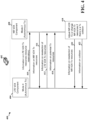
- FIG. 4 is a call flow diagram 400 illustrating an implementation of a NR component 408 of a UE 402 operating in the NR V2X autonomous mode (e.g., NR mode 2) exchanging information on transmission resources with a LTE component 406 of the same LTE operating in the LTE V2X autonomous mode (e.g., LTE mode 4) in accordance with certain aspects of the disclosure.
- NR V2X autonomous mode e.g., NR mode 2
- LTE component 406 of the same LTE operating in the LTE V2X autonomous mode
- LTE mode 4 LTE mode 4
- FIG. 4 is a call flow diagram 400 illustrating an implementation of a NR component 408 of a UE 402 operating in the NR V2X autonomous mode (e.g., NR mode 2) exchanging information on transmission resources with a LTE component 406 of the same LTE operating in the LTE V2X autonomous mode (e.g., LTE mode 4) in accordance with certain aspects of the disclosure.
- the LTE component 406 operating in the LTE V2X autonomous mode may schedule transmission resources for LTE V2X communication at 406.
- the resources may be in time and/or frequency.
- the LTE component may schedule resources for V2X transmission in a special pattern.
- the LTE component may reserve semi-persistent scheduling (SPS) resources for LTE V2X communication.
- SPS semi-persistent scheduling
- the LTE component may reserve the SPS resources for LTE V2X transmission until the SPS resources are adjusted due to a resource reselection procedure.
- the resources may be periodic. For example, one subframe may be reserved for LTE V2X transmission for every N subframes, where N is the period in subframes of the SPS resources.
- the LTE component may schedule one or more resources on a one-time only basis (e.g., one-shot resource).
- the LTE component may communicate information on the scheduled resources for LTE V2X transmission to the NR component at 410.
- the LTE component may communicate with the NR component using inter-stacks communication by transferring information from a LTE V2X stack to a NR V2X stack.
- the NR component 408 operating in the NR V2X autonomous mode may schedule transmission resources for NR V2X communication.
- the resources may be reserved as one-shot resources or as SPS resources for NR V2X transmission. Due to backward compatibility reasons, and because LTE V2X may service basic safety applications, if there is a collision in the scheduled resources for the LTE V2X transmission and NR V2X transmission, priority may be given to the LTE V2X transmission.
- the NR component may use the information, e.g., 410 to schedule or adjust NR V2X transmission resources to avoid using the LTE V2X transmission resources at 418.
- the NR component may reselect the NR V2X resources.
- the NR component 408 may also schedule or adjust NR V2X transmission resources to avoid using LTE V2X transmission resources based on information 412 and 414 received from the LTE component 406, discussed infra.
- priority may be given to the NR V2X transmission.
- high priority resources for NR V2X that collide with LTE V2X resources may trigger a reselection of resources at the LTE V2X component 406.
- the NR component 408 may communicate information on the high priority resources for NR V2X transmission to the LTE component at 416 so the LTE component may reselect resources.
- the NR component may communicate information on reselected resources for NR V2X transmission to the LTE component at 420.
- the NR component may communicate with the LTE component by transferring information from the NR V2X stack to the LTE V2X stack.
- the LTE component 406 may receive information on the high priority resources reserved for NR V2X transmission at 416 and, if there is a collision between the NR V2X transmission high priority resources and the scheduled LTE V2X transmission resources, may trigger reselection of the LTE V2X transmission resources.
- the LTE component may communicate information on the reselected resources for LTE V2X transmission to the NR component at 412.
- the NR component may use the information, e.g., 412 to schedule or adjust NR V2X transmission resources to avoid using the LTE V2X transmission resources at 418.
- the NR component when the NR component detects the collision, the NR component may terminate the NR V2X transmission to give priority to the LTE V2X transmission. In one aspect, the NR component may adjust the transmit power of the NR V2X transmission. In one aspect, the LTE component may adjust the transmit power of the LTE V2X transmission. In one aspect, the NR component may communicate information on potential or actual collisions to the LTE component at 422. The LTE component may change the scheduled resources for LTE V2X transmission if there are potential collisions or may implement measures to mitigate performance loss if there are actual collisions.
- the LTE component 406 may communicate to the NR component 408 information on potential resources that may be selected by the LTE component for LTE V2X transmission at 414.
- the NR component may avoid using these potential resources for NR V2X transmission. Therefore, even though the NR component may not know whether one or more of the potential resources have actually been selected for LTE V2X transmission, the NR component may reduce the potential for collisions by refraining from using the potential resources for NR V2X transmission until other resources are exhausted.
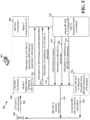
- FIG. 5 is a call flow diagram 500 illustrating an implementation of a NR component 508 of a UE operating in the NR V2X autonomous mode (e.g., NR mode 2) exchanging information on transmission resources with a LTE component 506 of the same UE operating in the LTE V2X mode in which a first base station 504 schedules LTE V2X transmissions (e.g., LTE mode 3) in accordance with certain aspects of the disclosure.
- a first base station 504 schedules LTE V2X transmissions (e.g., LTE mode 3) in accordance with certain aspects of the disclosure.
- LTE V2X communication and NR V2X communication
- aspects may also be applied to V2V or D2D communication based on a first RAT and a second RAT.
- a first base station 504 may schedule transmission resources for LTE V2X communication using a first RAT.
- the resources may be SPS resources or dynamic resources that are allocated on a one-time basis.
- the first base station 504 may transmit a resource grant for the scheduled resources for LTE V2X transmission to the LTE component 506 of the UE at 509.
- the LTE may be allocated SPS resources and the first base station 504 may transmit a control message to activate or deactivate the allocated SPS resources.
- the LTE component 506 may communicate information on the LTE V2X transmission resources granted by the first base station 504 to the NR component 508 at 510.
- the LTE component may communicate information on SPS process configuration or information on dynamic resources allocated in a one-shot grant for LTE V2X transmission to the NR component.
- the LTE component may communicate information on activation/deactivation of the SPS processes for LTE V2X transmission to the NR component at 514.
- the first base station 504 may reselect or adjust the LTE V2X transmission resources if there is a potential for collisions. For example, the first base station 504 may receive information on high priority resources reserved for NR V2X transmission, and if there are potential collisions (e.g., periodic collisions) between resources for the LTE V2X transmission and the high priority resources for the NR V2X transmission, the first base station 504 may select new resources for the LTE V2X transmission. The first base station 504 may transmit a new SPS process configuration for LTE V2X transmission or a new resource grant for the reselected resources to the UE. The UE may communicate information on the reselected resources for LTE V2X to the NR component at 512.
- potential collisions e.g., periodic collisions
- the NR component 508 operating in the NR V2X autonomous mode may schedule transmission resources for NR V2X communication at 508.
- the resources may be reserved as one-shot resources or as SPS resources for NR V2X transmission.
- the NR component may schedule or adjust NR V2X transmission resources to avoid collisions with the LTE V2X transmission resources at 518. For example, if there are periodic collisions between the one-shot resources for the NR V2X transmission and the SPS resources for the LTE V2X transmission, the NR component may reselect the one-shot resources for the NR V2X transmission.
- the NR component may communicate information on the one-shot resources for NR V2X transmission to the LTE component at 520.
- the NR component may communicate information on reselected one-shot resources for NR V2X transmission to the LTE component at 522. In one aspect, the NR component may communicate information on potential collisions between resources scheduled for NR V2X transmission and resources scheduled for LTE V2X transmission to the LTE component at 516. In one aspect, the NR component may detect actual collisions between NR V2X transmission and LTE V2X transmission and may communicate information on the actual collisions to the LTE component.
- the LTE component 506 may forward the information on the resources for NR V2X transmission or information on potential or actual collisions to the first base station 504 at 524.
- the first base station 504 and the NR component 508 may operate on asynchronous timelines.
- the information on the resources for NR V2X transmission may need to be converted from the NR V2X timeline to the timeline of the first base station 504.
- the first base station 504 may perform the conversion if it has knowledge of the NR V2X timeline.
- the LTE component may perform the conversion at 526.
- the LTE component may have knowledge of the NR V2X timeline and may convert the information on the resources for NR V2X transmission from the NR V2X timeline to the timeline of the first base station 504.
- the LTE component may transmit the converted information on the resources for NR V2X transmission to the base station 504 at 528.
- the first base station 504 may determine if there are collisions between SPS resources for the LTE V2X transmission and the high priority resources for the NR V2X transmission, and may trigger reselection of the SPS resources for the LTE V2X transmission if there are collisions.
- FIG. 6 is a call flow diagram 600 illustrating an implementation of a NR component 608 of a LTE 602 operating in the NR V2X mode in which an NR base station 620 schedules NR V2X transmissions (e.g., NR mode 1) and exchanging information on transmission resources with a LTE component 606 of the same UE operating in the LTE V2X autonomous mode (e.g., LTE mode 4) in accordance with certain aspects of the disclosure.
- NR V2X transmissions e.g., NR mode 1
- LTE component 606 of the same UE operating in the LTE V2X autonomous mode
- LTE mode 4 LTE V2X autonomous mode
- An NR base station 620 may schedule transmission resources for NR V2X communication.
- the resources may be dynamic resources that are allocated on a one-time basis or may be SPS resources.
- the NR base station 620 may transmit a resource grant for the scheduled resources for NR V2X transmission to the NR component of the UE, e.g., at 626.
- the NR component may process the resource grant for the NR V2X transmission, e.g., at 628.
- the NR component may communicate information on the resources for NR V2X transmission to the LTE component at 630. While FIG. 6 illustrates 626, 628, and 630 occurring at the bottom of diagram 600, these steps may occur at the top of diagram 600 (e.g. before 610).
- the LTE component 606 may reserve resources for LTE V2X transmission in an SPS manner.
- the LTE component may communicate information on the SPS resources for LTE V2X transmission to the NR component at 610.
- the LTE component may receive information on high priority resources reserved for NR V2X transmission (e.g., at 630) and, if there is a collision between the NR V2X transmission high priority resources and the scheduled LTE V2X transmission resources, the LTE component may trigger reselection of the LTE V2X transmission resources.
- the LTE component may communicate information on the reselected resources for LTE V2X transmission to the NR component at 612.
- the LTE component 606 may communicate to the NR component 608 information on potential resources that may be selected by the LTE component for LTE V2X transmission at 614.
- the potential resources may not actually be selected for LTE V2X transmission, but the NR base station 620 may refrain from allocating these potential resources for NR V2X transmission to avoid collisions.
- the LTE component may communicate information on a priority of LTE V2X transmission packets to the NR component at 616.
- the NR component 608 may process the information 610, 612 on the resources for LTE V2X transmission, the information 614 on potential resources selectable by the LTE component 606 for LTE V2X transmission, and the information 616 on priority of LTE V2X transmission packet at 608, and may forward some of the information on the LTE V2X transmissions to the NR base station 620. For example, the NR component may forward information on selected resources for LTE V2X transmission to the NR base station 620 for the NR base station 620 to adjust resources allocated for NR V2X transmission to avoid collisions at 624.
- the NR component may forward a certain percentage of the potential resources selectable by the LTE component for LTE V2X transmission to the NR base station 620 for the NR base station to avoid allocating these same resources for NR V2X transmission.
- the NR component may transmit the information on the LTE V2X transmission to the NR base station 620 periodically .
- the NR component may transmit the information if the change in the number of potential resources selectable by the LTE component for LTE V2X transmission exceeds a configurable threshold.
- the information on the resources for LTE V2X transmission or the potential resources selectable by the LTE component for LTE V2X transmission may need to be converted from the LTE V2X timeline to the timeline of the NR base station 620.
- the NR component 608 may have knowledge of the LTE V2X timeline and may convert the information on the resources for LTE V2X transmission from the LTE V2X transmission timeline to the timeline of the NR base station 620 at 618.
- the NR component may transmit the converted information on the resources for LTE V2X transmissions to the NR base station 620 at 622.
- the NR base station 620 may avoid allocating the resources reserved for the LTE V2X transmissions for use by NR V2X transmissions to avoid collisions at 624. In one aspect, the NR base station 620 may allocate the same resources for NR V2X transmission if there are higher priority NR packets with lower latencies waiting for transmission.
- FIG. 7 is a call flow diagram 700 illustrating an implementation of a NR component 708 of a LTE 702 operating in the NR V2X mode in which an NR base station 720 schedules NR V2X transmissions (e.g., NR mode 1) and exchanging information on transmission resources with a LTE component 706 of the same UE operating in the LTE V2X mode in which an LTE base station 703 schedules LTE V2X transmissions (e.g., LTE mode 3) in accordance with certain aspects of the disclosure.
- NR V2X transmissions e.g., NR mode 1
- LTE V2X transmissions e.g., LTE mode 3
- LTE V2X transmissions e.g., LTE mode 3
- An NR base station 720 may schedule transmission resources (e.g. at 726) for NR V2X communication (e.g., processed at 728).
- the LTE component 706 may communicate information (e.g. 710, 712, 714, 716) on the resources for LTE V2X transmissions to the NR component 708.
- the NR component may process the information (for example, timeline conversion at 718) and may forward some of the information on the LTE V2X transmission to the NR base station 720 (e.g. at 722).
- the NR base station 720 may thus avoid allocating the resources reserved for the LTE V2X transmissions for use by NR V2X transmissions to avoid collisions at 724.
- the operations of the LTE component, the NR component, and the NR base station 720 are similar to those discussed in FIG. 6 , and will not be repeated for brevity.
- An LTE base station 703 may schedule transmission resources (e.g., at 704 and 705) for LTE V2X communication, as described above with respect to FIG. 5 .
- the NR component 708 may communicate information on the resources for NR V2X transmission to the LTE component at 730.
- the LTE component 706 may forward the information on the resources for NR V2X transmission to the LTE base station 703 at 734.
- the LTE base station 703 and the NR base station 720 may operate on asynchronous timelines. As such, the information on the resources for NR V2X transmission may need to be converted from the timeline of the NR base station 720 to the timeline of the LTE base station 703.
- the NR component may perform the conversion if it has knowledge of the timeline of the LTE base station 703, and may communicate the converted timeline to the LTE component.
- the LTE component may perform the conversion at 732 if it has knowledge of the timeline of the NR base station 720.
- the LTE base station 703 may perform the conversion if it has knowledge of the timeline of the NR base station 720.
- the LTE component may forward information about the timeline of the NR base station 720 to the LTE base station 703 at 736.
- the LTE base station 703 may determine if there are collisions (e.g., periodic collisions) between SPS resources for the LTE V2X transmission and high priority resources for the NR V2X transmission, and may reconfigure the SPS processes for the LTE V2X transmission if there are collisions.
- collisions e.g., periodic collisions
- FIG. 8 is a flowchart of a method for a second RAT component of a LTE to avoid collisions on V2X transmission using the second RAT based on information on resources for V2X transmission using the first RAT received from a first RAT component of the UE in accordance with certain aspects of the disclosure.
- the method may be performed by a NR component of a UE (e.g., UE 104, 350, 402, 502, 602, 702, 1350; the apparatus 1002, 1002'; the processing system 1114, which may include the memory 360 and which may be the entire UE 350 or a component of the LTE 350, such as the TX processor 368, the RX processor 356, and/or the controller/processor 359).
- a NR component of a UE e.g., UE 104, 350, 402, 502, 602, 702, 1350; the apparatus 1002, 1002'; the processing system 1114, which may include the memory 360 and which may be the entire UE 350 or a component of
- Optional aspects are illustrated with a dashed line.
- the method improves performance of V2X transmission using two RATs coexisting on the UE by allocating or adjusting transmission resources for the V2X transmission using the RAT with a lower priority to avoid potential collisions between V2X transmission using the two RATs.
- the example aspects are described in connection with LTE V2X communication and NR V2X communication, aspects may also be applied to V2X, V2V or D2D communication based on a first RAT and a second RAT.
- the second RAT component of the UE receives information on resources for V2X transmission using the first RAT from a first RAT component.
- the resources may be SPS resources for V2X transmission.
- the SPS resources for V2X transmission may be periodic.
- the resources may be resources scheduled on a one-time only basis (e.g., one-shot resources).
- the resources may be reselected SPS resources for V2X transmission determined by the first RAT component to avoid collisions between the V2X transmission using the first RAT and the second RAT.
- the resources may be potential or candidate resources that may be selected by the first RAT component for V2X transmission.
- the second RAT component of the UE may receive the information on the V2X transmission resources from the first RAT component using inter-stacks communication.
- the second RAT component may determine if there is a potential collision between resources for V2X transmission using the first RAT and resources for V2X transmission using the second RAT. For example, the second RAT component may determine if there are one or more collisions between the SPS resources for the LTE V2X transmission using the first RAT and the resources for the NR V2X transmission using the second RAT.
- the second RAT component may adjust the resources for V2X transmission using the second RAT to avoid or reduce the potential collision.
- the second RAT component may adjust the resources for V2X transmission using the second RAT to give priority to the resources for V2X transmission using the first RAT. For example, if there are one or more collisions between the resources for the V2X transmission using the second RAT and the SPS resources for the V2X transmission using the first RAT, the second RAT component may reselect the resources for the V2X transmission using the second RAT.
- the second RAT component may use the resources allocated for the V2X transmission using the second RAT to perform V2X transmission with a receiving UE.
- the resources may be one-shot resources or SPS resources used by the second RAT component to transmit one or more V2X transmission packets.
- the V2X transmission packets may have different levels of priority.
- the second RAT component converts information on resources for V2X transmission using the first RAT from a timeline based on the first RAT to a timeline based on a base station of the second RAT.
- the conversion may be performed by the base station of the second RAT if the base station schedules resources for V2X transmission using the second RAT.
- the base station of the second RAT and the first RAT component may operate on asynchronous timlines in order for the base station of the second RAT to schedule resources for V2X transmission using the second RAT to avoid collisions with the V2X transmission using the first RAT, the information on resources for V2X transmission using the first RAT may need to be put into the timeline of the base station of the second RAT.
- the second RAT component transmits to the base station of the second RAT the information on resources for V2X transmission using the first RAT that has been converted into the timeline of the base station of the second RAT.
- the transmitted information may include information on the SPS processes for the V2X transmission using the first RAT, information on potential resources selectable by the first RAT component for V2X transmission using the first RAT, and information on priority of V2X transmission packets using the first RAT.
- the second RAT component may forward to the base station of the second RAT a certain percentage of the potential resources selectable by the first RAT component for V2X transmission using the first RAT.
- the base station of the second RAT may avoid allocating these same resources for the V2X transmission using the second RAT.
- the second RAT component may transmit the information on the resources for V2X transmission using the first RAT to the base station of the second RAT periodically. In one aspect, the second RAT component may transmit the information if the change in the number of potential resources selectable by the first RAT component for V2X transmission using the first RAT exceeds a configurable threshold.
- the second RAT component may communicate to the first RAT component information on resources for V2X transmission using the second RAT.
- V2X transmission using the second RAT may be given priority over V2X transmission using the first RAT if packets in V2X transmission have high priority, tight delay requirement, or both.
- the resources for V2X transmission using the second RAT may be high priority resources.
- the first RAT component may receive the information on high priority resources for V2X transmission using the second RAT and may trigger reselection of the resources for V2X transmission using the first RAT if there are collisions between the SPS resources for V2X transmission using the first RAT and the high priority resources for V2X transmission using the second RAT.
- FIG. 9 is a flowchart 900 of a method for a first RAT component of a UE to exchange information on V2X transmission resources with a second RAT component of the UE and to transmit information on resources for V2X transmission using the second RAT to a base station of the first RAT in accordance with the invention.
- the method may be performed by a LTE component of a UE (e.g., UE 104, 350, 402, 502, 602, 702, 1350; the apparatus 1002, 1002'; the processing system 1114, which may include the memory 360 and which may be the entire LTE 350 or a component of the UE 350, such as the TX processor 368, the RX processor 356, and/or the controller/processor 359).
- the method improves performance of V2X transmission using two RATs coexisting on the UE by allocating or adjusting transmission resources for the V2X transmission using the RAT with a lower priority to avoid potential collisions between V2X transmission using the two RATs.
- LTE V2X communication and NR V2X communication aspects may also be applied to V2X, V2V or D2D communication based on a first RAT and a second RAT.
- the first RAT component of the UE communicates to a second RAT component of the UE information on resources for V2X transmission using the first RAT.
- the resources may be SPS resources for V2X transmission using the first RAT.
- the SPS resources for V2X transmission may be periodic.
- the resources may be resources scheduled on a one-time only basis (e.g., one-shot resources) using the first RAT.
- the resources may be reselected SPS resources for V2X transmission using the first RAT determined by the first RAT component to avoid collisions between the V2X transmission using the first RAT and using the second RAT
- the resources may be potential or candidate resources that may be selected by the first RAT component for V2X transmission using the first RAT.
- the first RAT component of the UE may communicate the information on the V2X transmission resource using the first RAT to the second RAT component using inter-stacks communication.
- the first RAT component may use the resources allocated for the V2X transmission using the first RAT to perform V2X transmission with a receiving UE.
- the resources may be SPS resources or a one-shot resource used by the first RAT component to transmit one or more V2X transmission packets.
- the V2X transmission packets may have different levels of priority.
- the first RAT component may receive from the second RAT component information on resources for V2X transmission using the second RAT.
- V2X transmission using the second RAT may be given priority over V2X transmission using the first RAT if packets in V2X transmission have high priority, tight delay requirement, or both.
- the resources for V2X transmission using the second RAT may be high priority resources.
- the first RAT component may receive the information on high priority resources for V2X transmission using the second RAT and may trigger reselection of the SPS resources for V2X transmission using the first RAT if there are collisions between the SPS resources for V2X transmission using the first RAT and the high priority resources for V2X transmission using the second RAT.
- the first RAT component converts information on resources for V2X transmission using the second RAT from a timeline based on the second RAT to a timeline based on a base station of the first RAT.
- the conversion may be performed if the base station of the first RAT schedules resources for V2X transmission using the first RAT.
- the base station of the first RAT and the second RAT component may operate on asynchronous timelines, in order for the base station of the first RAT to schedule resources for V2X transmission using the first RAT to avoid collisions with the resources V2X transmission using the second RAT, the information on resources for V2X transmission using the second RAT may need to be put into the timeline of the base station of the first RAT.
- the resources for V2X transmission using the second RAT may be based on a timeline of the base station of the second RAT.
- the first RAT component may convert information on resources for V2X transmission using the second RAT from a timeline of the base station of the second RAT to a timeline of the base station of the first RAT.
- the first RAT component transmits to the base station of the first RAT information on resources for V2X transmission using the second RAT.
- the first RAT component may transmit the information on resources for V2X transmission using the second RAT that has been converted into the timeline of the base station of the first RAT.
- the first RAT component may perform the conversion if it has knowledge of the timeline of the second RAT component, such as at 908.
- the second RAT component may perform the conversion if it has knowledge of the timeline of the base station of the first RAT.
- the first RAT component may transmit the information on resources for V2X transmission using the second RAT that is still based on the timeline of the second RAT.
- the base station of the first RAT may convert the information on resources for V2X transmission using the second RAT from a timeline of the second RAT to a timeline of a base station of the first RAT if the base station of the first RAT has knowledge of the timeline of the second RAT.
- the base station of the first RAT may determine if there are collisions (e.g., one or more collisions) between SPS resources for the V2X transmission using the first RAT and high priority resources for the V2X transmission using the second RAT, and may reconfigure the SPS processes for the V2X transmission using the first RAT if there are collisions.
- collisions e.g., one or more collisions
- FIG. 10 is a conceptual data flow diagram 1000 illustrating the data flow between different means/components in an example apparatus 1002 in accordance with certain aspects of the disclosure.
- the apparatus 1002 may be a UE that communicates using two RATs (e.g., UE 104, 350, 402, 502, 602, 702, 1002', 1350).
- the apparatus includes a reception component 1004 that receives communication from a base station 1060 of a first RAT and a base station 1050 of a second RAT.
- the reception component 1004 may also receive V2X communications from a first UE using the first RAT and V2X communications from a second UE using the second RAT.
- the apparatus also includes a transmission component 1022 that transmits communications to the base station 1060 of a first RAT (e.g., as described in connection with 910) and the base station 1050 of a second RAT (e.g., as described in connection with 812).
- the transmission component 1022 may transmit information on V2X transmissions using the second RAT to the base station 1060 of the first RAT and may transmit information on V2X transmissions using the first RAT to the base station 1050 of the second RAT.
- the transmission component 1022 may also transmit V2X communications to the first UE using the first RAT (e.g., as described in connection with 904) and V2X communications to the second UE using the second RAT (e.g., as described in connection with 808).
- the apparatus 1002 includes components of the first RAT and components of the second RAT.
- the components of the first RAT includes first RAT autonomous transmission resource determination component 1006 configured to schedule resources for V2X transmission using the first RAT (e.g., as described in connection with 406, 506, 606, 706).
- the components of the first RAT includes first RAT stack 1008 configured to receive a grant of resources for V2X transmission using the first RAT from the base station 1060 of the first RAT.
- the first RAT stack 1008 may also receive resources for V2X transmission using the first RAT from the first RAT autonomous transmission resource determination component 1006.
- the first RAT stack 1008 may generate information on resources for V2X transmission using the first RAT and may communicate the information to components of the second RAT such as the collision determination component 1012 (e.g., as described in connection with 902).
- the components of the first RAT includes first RAT timeline conversion component 1020 configured to convert information on resources for V2X transmission using the second RAT from the timeline of the second RAT to the timeline of the first RAT (e.g., as described in connection with 908).
- the first RAT timeline conversion component 1020 may output the information on resources for V2X transmission using the second RAT based on the timeline of the base station 1060 of the first RAT.
- the components of the second RAT includes second RAT autonomous transmission resource determination component 1010 configured to schedule resources for V2X transmission using the second RAT (e.g., as described in connection with 408, 508, 608, 708).
- the components of the second RAT include collision determination component 1012 configured to determine if there is a potential collision between resources for V2X transmission using the first RAT and the resources for V2X transmission using the second RAT (e.g., as described in connection with 804).
- Information on resources for V2X transmission using the first RAT may be received from the first RAT stack 1008.
- Information on resources for V2X transmission using the second RAT may be received from the base station 1050 of the second RAT via the grant of transmission resources for the second RAT or may be received from the second RAT autonomous transmission resource determination component 1010.
- the components of the second RAT include a second RAT transmission resource adjustment component 1014 configured to adjust transmission using the second RAT or to change resources for V2X transmission using the second RAT if a potential collision is detected by the collision determination component 1012 (e.g., as described in connection with 806).
- the components of the second RAT include a second RAT stack 1016 configured to receive a grant of resources for V2X transmission using the second RAT from the base station 1050 of the second RAT.
- the second RAT stack 1016 may also receive resources for V2X transmission using the second RAT from the second RAT autonomous transmission resource determination component 1010.
- the second RAT stack 1016 may generate information on resources for V2X transmission using the second RAT and may communicate the information to components of the first RAT (e.g., as described in connection with 814).
- the components of the second RAT includes a second RAT timeline conversion component 1018 configured to convert information on resources for V2X transmission using the first RAT from the timeline of the first RAT to the timeline of the second RAT (e.g., as described in connection with 810).
- the second RAT timeline conversion component 1018 may output the information on resources for V2X transmission using the second RAT based on the timeline of the base station 1050 of the second RAT.
- the apparatus 1002 may include additional components that perform each of the blocks of the algorithm in the aforementioned flowcharts of FIGs. 8 and 9 .
- each block in the aforementioned flowcharts of FIGs. 8 and 9 may be performed by a component and the apparatus may include one or more of those components.
- the components may be one or more hardware components specifically configured to carry out the stated processes/algorithm, implemented by a processor configured to perform the stated processes/algorithm, stored within a computer-readable medium for implementation by a processor, or some combination thereof.
- FIG. 11 is a diagram 1100 illustrating an example of a hardware implementation for an apparatus 1002' of a UE employing a processing system 1114 in accordance with certain aspects of the disclosure.
- the processing system 1114 may be implemented with a bus architecture, represented generally by the bus 1124.
- the bus 1124 may include any number of interconnecting buses and bridges depending on the specific application of the processing system 1114 and the overall design constraints.
- the bus 1124 links together various circuits including one or more processors and/or hardware components, represented by the processor 1104, the components 1004, 1006, 1008, 1010, 1012, 1014, 1016, 1018, 1020, 1022, and the computer-readable medium / memory 1106.
- the bus 1124 may also link various other circuits such as timing sources, peripherals, voltage regulators, and power management circuits, which are well known in the art, and therefore, will not be described any further.
- the processing system 1114 may be coupled to a transceiver 1110.
- the transceiver 1110 is coupled to one or more antennas 1120.
- the transceiver 1110 provides a means for communicating with various other apparatus over a transmission medium.
- the transceiver 1110 receives a signal from the one or more antennas 1120, extracts information from the received signal, and provides the extracted information to the processing system 1114, specifically the reception component 1004.
- the transceiver 1110 receives information from the processing system 1114, specifically the transmission component 1022, and based on the received information, generates a signal to be applied to the one or more antennas 1120.
- the processing system 1114 includes a processor 1104 coupled to a computer-readable medium / memory 1106.
- the processor 1104 is responsible for general processing, including the execution of software stored on the computer-readable medium / memory 1106.
- the software when executed by the processor 1104, causes the processing system 1114 to perform the various functions described supra for any particular apparatus.
- the computer-readable medium / memory 1106 may also be used for storing data that is manipulated by the processor 1104 when executing software.
- the processing system 1114 further includes at least one of the components 1004, 1006, 1008, 1010, 1012, 1014, 1016, 1018, 1020, 1022.
- the components may be software components running in the processor 1104, resident/stored in the computer readable medium / memory 1106, one or more hardware components coupled to the processor 1104, or some combination thereof.
- the processing system 1114 may be a component of the UE 350 and may include the memory 360 and/or at least one of the TX processor 368, the RX processor 356, and the controller/processor 359. Alternatively, the processing system 1114 may be the entire UE (e.g., see 350 of FIG. 3 ).
- the apparatus 1002/1002' for wireless communication includes means for receiving by the second RAT component from the first RAT component information on resources for V2X transmission using the first RAT (e.g., at least collision determination component 1012); means for determining if there is a potential collision between resources for V2X transmission using the first RAT and resources for V2X transmission using the second RAT (e.g., at least collision determination component 1012); means for adjusting transmission using the second RAT or changing resources for V2X transmission using the second RAT (e.g., at least second RAT transmission resource adjustment component 1014); means for transmitting V2X packets carried in resources for V2X transmission using the second RAT (e.g., at least transmission component 1022); means for converting information on resources for V2X transmission using the first RAT from a timeline of the first RAT to a timeline of the second RAT (e.g., at least second RAT timeline conversion component 1018); means for transmitting to a base station of the second RAT information on resources for V2
- the apparatus 1002' for wireless communication includes means for communicating information on resources for V2X transmission using the first RAT from the first RAT component to the second RAT component (e.g., at least first RAT stack 1008); means for transmitting V2X packets carried in resources for V2X transmission using the first RAT (e.g., at least transmission component 1022); means for receiving by the first RAT component from the second RAT component information on V2X transmission resources using the second RAT (e.g., at least first RAT timeline conversion component 1020); means for converting information on resources for V2X transmission using the second RAT from a timeline of the second RAT to a timeline of the first RAT (e.g., at least first RAT timeline conversion component 1020); means for transmitting to a base station of the first RAT information on resources for V2X transmission using the second RAT (e.g., at least transmission component 1022).
- the second RAT component e.g., at least first RAT stack 1008
- the aforementioned means may be one or more of the aforementioned components of the apparatus 1002 and/or the processing system 1114 of the apparatus 1002' configured to perform the functions recited by the aforementioned means.
- the processing system 1114 may include the TX Processor 368, the RX Processor 356, and the controller/processor 359.
- the aforementioned means may be the TX Processor 368, the RX Processor 356, and the controller/processor 359 configured to perform the functions recited by the aforementioned means.
- FIG. 12 is a flowchart 1200 of a method for a base station of a first RAT to receive from a UE information on resources reserved for V2X transmission from the UE using a second RAT to determine resources for V2X transmission from the UE using the first RAT in accordance with certain aspects of the disclosure.
- the method may be performed by an LTE base station (e.g., eNB, base station 102, 310, 504, 703, 1060, the apparatus 1302/1302'; the processing system 1414, which may include the memory 376 and which may be the entire base station 310 or a component of the base station 310, such as the TX processor 316, the RX processor 370, and/or the controller/processor 375).
- LTE base station e.g., eNB, base station 102, 310, 504, 703, 1060, the apparatus 1302/1302'
- the processing system 1414 which may include the memory 376 and which may be the entire base station 310 or a component of the
- the first RAT may be LTE and the second RAT may be NR.
- the method may be performed by an NR base station (e.g., gNB, base station 102, 310, 620, 720, 1050, the apparatus 1302/1302'; the processing system 1414, which may include the memory 376 and which may be the entire base station 310 or a component of the base station 310, such as the TX processor 316, the RX processor 370, and/or the controller/processor 375).
- the first RAT may be NR and the second RAT may be LTE.
- Optional aspects are illustrated with a dashed line.
- the method improves performance of V2X transmission using two RATs coexisting on the UE by allocating or adjusting transmission resources for the V2X transmission using the RAT with a lower priority to avoid potential collisions between V2X transmission using the two RATs.
- the example aspects are described in connection with LTE V2X communication and NR V2X communication, aspects may also be applied to V2X, V2V or D2D communication based on a first RAT and a second RAT.
- the base station of the first RAT may receive from the first RAT component of a UE information on second resources reserved for V2X transmission using the second RAT.
- the information may be information on resources for V2X transmission using the second RAT that has been converted into the timeline of the base station of the first RAT.
- the information may be information on resources for V2X transmission using the second RAT that is still based on the timeline of the second RAT.
- the base station of the first RAT may convert the information on second resources reserved for V2X transmission using the second RAT from the timeline of the second RAT to the timeline of the first RAT.
- the base station of the first RAT may convert the information on resources for V2X transmission using the second RAT from a timeline of the second RAT to a timeline of a base station of the first RAT if the base station of the first RAT has knowledge of the timeline of the second RAT.
- the base station of the first RAT may determine the first resources for V2X transmission using the first RAT to avoid collisions with second resources reserved for V2X transmission using the second RAT. For example, the base station of the first RAT may determine if there are collisions (e.g., one or more collisions) between SPS resources for the V2X transmission using the first RAT and high priority resources for the V2X transmission using the second RAT, and may reconfigure the SPS processes for the V2X transmission using the first RAT if there are collisions.
- collisions e.g., one or more collisions
- the base station of the first RAT may transmit information on first resources for V2X transmission using the first RAT to the first RAT component of the UE.
- the base station of the first RAT may transmit resource grants for scheduled resources for V2X transmission to the first RAT component of the UE.
- the resources may be SPS resources or dynamic resources that are allocated on a one-time basis which are used by the first RAT component to transmit one or more V2X transmission packets.
- the first RAT component of the UE may use the resources allocated for the V2X transmission using the first RAT to perform V2X transmission with a receiving UE.
- FIG. 13 is a conceptual data flow diagram 1300 illustrating the data flow between different means/components in an example apparatus 1302 in accordance with certain aspects of the disclosure.
- the apparatus 1302 may be a base station of a first RAT such as an LTE base station (e.g., eNB, base station 102, 310, 504, 703, 1060, the apparatus 1302/1302').
- the apparatus 1302 may be a base station such as an NR base station (e.g., gNB, base station 102, 310, 620, 720, 1050, the apparatus 1302/1302').
- the apparatus includes a reception component 1304 that receives uplink communication from UE 1350 and a transmission component 1306 that transmits downlink communication to LTE 1350.
- the reception component 1304 may be configured to receive information on resources for V2X transmission using the second RAT from the first RAT component of the UE 1350 (e.g., as described in connection with 1202).
- the transmission component 1306 may be configured to transmit a grant of resources for V2X transmission using the first RAT to the first RAT component of the UE 1350 (e.g., as described in connection with 1208).
- the first RAT component of the UE 1350 may use the resources granted for the V2X transmission using the first RAT to perform V2X with a receiving UE.
- the apparatus 1302 may include a timeline conversion component 1308 configured to convert information on resources for V2X transmission using the second RAT from a timeline of the second RAT to a timeline of the first RAT (e.g., as described in connection with 1204).
- the timeline conversion component 1308 may output the information on resources for V2X transmission using the second RAT based on the timeline of the apparatus 1302.
- the apparatus 1302 includes a transmission resource determination component 1310 configured to determine or adjust resources for V2X transmission using the first RAT to avoid collisions with the resources for V2X transmission using the second RAT (e.g., as described in connection with 1206).
- the transmission resource determination component 1310 may generate the grant of resources for V2X transmission using the first RAT for transmission by the transmission component 1306 to the first RAT component of the UE 1350.
- the apparatus 1302 may include additional components that perform each of the blocks of the algorithm in the aforementioned flowchart of FIG. 12 . As such, each block in the aforementioned flowchart of FIG. 12 may be performed by a component and the apparatus may include one or more of those components.
- the components may be one or more hardware components specifically configured to carry out the stated processes/algorithm, implemented by a processor configured to perform the stated processes/algorithm, stored within a computer-readable medium for implementation by a processor, or some combination thereof.
- FIG. 14 is a diagram 1400 illustrating an example of a hardware implementation for an apparatus 1302' of a base station employing a processing system 1414 in accordance with certain aspects of the disclosure.
- the processing system 1414 may be implemented with a bus architecture, represented generally by the bus 1424.
- the bus 1424 may include any number of interconnecting buses and bridges depending on the specific application of the processing system 1414 and the overall design constraints.
- the bus 1424 links together various circuits including one or more processors and/or hardware components, represented by the processor 1104, the components 1304, 1306, 1308, 1310, and the computer-readable medium / memory 1406.
- the bus 1424 may also link various other circuits such as timing sources, peripherals, voltage regulators, and power management circuits, which are well known in the art, and therefore, will not be described any further.
- the processing system 1414 may be coupled to a transceiver 1410.
- the transceiver 1410 is coupled to one or more antennas 1420.
- the transceiver 1410 provides a means for communicating with various other apparatus over a transmission medium.
- the transceiver 1410 receives a signal from the one or more antennas 1420, extracts information from the received signal, and provides the extracted information to the processing system 1414, specifically the reception component 1304.
- the transceiver 1410 receives information from the processing system 1414, specifically the transmission component 1306, and based on the received information, generates a signal to be applied to the one or more antennas 1420.
- the processing system 1414 includes a processor 1404 coupled to a computer-readable medium / memory 1406.
- the processor 1404 is responsible for general processing, including the execution of software stored on the computer-readable medium / memory 1406.
- the software when executed by the processor 1404, causes the processing system 1414 to perform the various functions described supra for any particular apparatus.
- the computer-readable medium / memory 1406 may also be used for storing data that is manipulated by the processor 1404 when executing software.
- the processing system 1414 further includes at least one of the components 1304, 1306, 1308, 1310.
- the components may be software components running in the processor 1404, resident/stored in the computer readable medium / memory 1406, one or more hardware components coupled to the processor 1404, or some combination thereof.
- the processing system 1414 may be a component of the base station 310 and may include the memory 376 and/or at least one of the TX processor 316, the RX processor 370, and the controller/processor 375. Alternatively, the processing system 1414 may be the entire base station (e.g., see 310 of FIG. 3 ).
- the apparatus 1302' for wireless communication includes means for receiving from the first RAT component of a LTE information on resources for V2X transmission using the second RAT (e.g., at least reception component 1304); means for converting information on resources for V2X transmission using the second RAT from a timeline of the second RAT to a timeline of the first RAT (e.g., at least timeline conversion component 1308); means for determining or adjusting resources for V2X transmission using the first RAT to avoid collisions with the resources for V2X transmission using the second RAT (e.g., at least transmission resource determination component 1310); means for transmitting grant of resources for V2X transmission using the first RAT to the first RAT component of the UE (e.g., at least transmission component 1306).
- the aforementioned means may be one or more of the aforementioned components of the apparatus 1302 and/or the processing system 1414 of the apparatus 1302' configured to perform the functions recited by the aforementioned means.
- the processing system 1414 may include the TX processor 316, the RX processor 370, and the controller/processor 375.
- the aforementioned means may be the TX processor 316, the RX processor 370, and the controller/processor 375 configured to perform the functions recited by the aforementioned means.
- Combinations such as "at least one of A, B, or C,” “one or more of A, B, or C,” “at least one of A, B, and C,” “one or more of A, B, and C,” and "A, B, C, or any combination thereof' include any combination of A, B, and/or C, and may include multiples of A, multiples of B, or multiples of C.
- combinations such as “at least one of A, B, or C,” “one or more of A, B, or C,” “at least one of A, B, and C,” “one or more of A, B, and C,” and "A, B, C, or any combination thereof' may be A only, B only, C only, A and B, A and C, B and C, or A and B and C, where any such combinations may contain one or more member or members of A, B, or C.
Landscapes
- Engineering & Computer Science (AREA)
- Signal Processing (AREA)
- Computer Networks & Wireless Communication (AREA)
- Quality & Reliability (AREA)
- Mobile Radio Communication Systems (AREA)
Claims (15)
- Un procédé de communication sans fil au niveau d'un équipement d'utilisateur, UE, possédant un premier composant de technologie d'accès radio, RAT, pour une communication au moyen d'une première RAT et un deuxième composant RAT pour une communication au moyen d'une deuxième RAT, comprenant :la réception (610, 710, 802, 902), par le deuxième composant RAT de l'UE à partir du premier composant RAT de l'UE, d'informations relatives à des premières ressources pour une première transmission en liaison latérale au moyen de la première RAT,la conversion (618, 718, 810, 908) des informations relatives aux premières ressources pour la première transmission en liaison latérale au moyen de la première RAT à partir d'un première chronologie basée sur la première RAT vers une deuxième chronologie basée sur la deuxième RAT,la transmission (622, 722, 812, 910), par le deuxième composant RAT de l'UE à une station de base de la deuxième RAT, d'au moins une partie des informations relatives aux premières ressources pour la première transmission en liaison latérale au moyen de la première RAT après la conversion des informations vers la deuxième chronologie basée sur la deuxième RAT, etla transmission à un UE de réception d'au moins une transmission parmi la première transmission en liaison latérale au moyen de la première RAT ou une deuxième transmission en liaison latérale au moyen de la deuxième RAT.
- Le procédé selon la Revendication 1, où la première RAT comprend évolution à long terme, LTE, et la deuxième RAT comprend nouvelle radio, NR.
- Le procédé selon la Revendication 1, où les informations relatives aux premières ressources comprennent des informations temporelles destinées à la première transmission en liaison latérale au moyen de la première RAT.
- Le procédé selon la Revendication 3, où les informations relatives aux premières ressources comprennent une réservation de planification semi-persistante, SPS, au moyen de la première RAT.
- Le procédé selon la Revendication 1, où les informations relatives aux premières ressources comprennent une pluralité de ressources potentielles qui sont aptes à être réservées pour la première transmission en liaison latérale au moyen de la première RAT.
- Le procédé selon la Revendication 1, comprenant en outre la transmission par l'UE de la au moins une partie des informations à la station de base de la deuxième RAT en réponse à un octroi provenant de la première RAT ou d'une resélection de ressource par le premier composant RAT.
- Le procédé selon la Revendication 1, comprenant en outre l'indication par l'UE d'une priorité de la première transmission au moyen de la première RAT à la station de base de la deuxième RAT.
- Le procédé selon la Revendication 1, où les informations relatives aux premières ressources comprennent :des informations temporelles destinées à la première transmission par l'intermédiaire de la première RAT, et où un premier temps de la première transmission au moyen de la première RAT a lieu avec un modèle sur une période temporelle, ouune pluralité de ressources potentielles qui sont aptes à être réservées pour la première transmission au moyen de la première RAT.
- Un appareil de communication sans fil au niveau d'un équipement d'utilisateur, UE, (104, 350, 402, 502, 602, 702, 1002, 1350) possédant un premier composant de technologie d'accès radio, RAT, pour une communication au moyen d'une première RAT et un deuxième composant RAT pour une communication au moyen d'une deuxième RAT, comprenant :une mémoire (1106), etau moins un processeur (1104) couplé à la mémoire et configuré de façon à :recevoir, par le deuxième composant RAT de l'UE à partir du premier composant RAT de l'UE, des informations relatives à des premières ressources destinées à une première transmission en liaison latérale au moyen de la première RAT,convertir les informations relatives aux premières ressources destinées à la première transmission en liaison latérale au moyen de la première RAT à partir d'une première chronologie basée sur la première RAT vers une deuxième chronologie basée sur la deuxième RAT,transmettre, par le deuxième composant RAT de l'UE, à une station de base (1050) de la deuxième RAT, au moins une partie des informations relatives aux premières ressources destinées à la première transmission en liaison latérale au moyen de la première RAT après la conversion des informations vers la deuxième chronologie basée sur la deuxième RAT, ettransmettre à une UE de réception au moins une transmission parmi la première transmission au moyen de la première RAT ou une deuxième transmission au moyen de la deuxième RAT.
- L'appareil selon la Revendication 9, où les informations relatives aux premières ressources comprennent des informations temporelles destinées à la première transmission en liaison latérale au moyen de la première RAT ou une réservation de planification semi-persistante, SPS, au moyen de la première RAT.
- L'appareil selon la Revendication 9, où le au moins un processeur est configuré de façon à indiquer une priorité de la première transmission au moyen de la première RAT à la station de base de la deuxième RAT.
- Un procédé de communication sans fil comprenant le procédé de communication sans fil selon la Revendication 1 et comprenant en outre, au niveau d'une station de base de la deuxième RAT, qui planifie des deuxièmes ressources destinées à la deuxième transmission en liaison latérale de l'UE, au moyen de la deuxième RAT :la réception (622, 722, 1202), à partir de l'UE, de la au moins une partie des informations relatives aux premières ressources destinées à la première transmission en liaison latérale à partir de l'UE vers l'UE de réception par l'intermédiaire de la première RAT, les premières ressources ayant été converties vers la deuxième chronologie de la deuxième RAT à partir de la première chronologie de la première RAT,la détermination (624, 724, 1206) des deuxièmes ressources destinées à la deuxième transmission en liaison latérale au moyen de la deuxième RAT de façon à éviter les premières ressources réservées pour la première transmission en liaison latérale au moyen de la première RAT, etla transmission (626, 726, 1208) d'informations de ressource relatives aux deuxièmes ressources à l'UE.
- Le procédé selon la Revendication 12, où les informations de ressource relatives aux deuxièmes ressources comprennent : des deuxièmes informations temporelles destinées à la deuxième transmission en liaison latérale au moyen de la deuxième RAT ou une réservation de planification semi-persistante, SPS, au moyen de la deuxième RAT.
- Le procédé selon la Revendication 12, où les informations relatives aux premières ressources comprennent :
des premières informations temporelles destinées à la première transmission en liaison latérale au moyen de la première RAT ou une réservation de planification semi-persistante, SPS, au moyen de la première RAT. - Un système de communication sans fil comprenant l'appareil de communication sans fil au niveau de l'UE selon la Revendication 10 et un appareil de communication sans fil au niveau de la station de base (102, 310, 504, 703, 1060, 1302) de la deuxième RAT, qui planifie des deuxièmes ressources destinées à la deuxième transmission en liaison latérale de l'UE, au moyen de la deuxième RAT, l'appareil de communication sans fil au niveau de la station de base comprenant :une mémoire (1406), etau moins un processeur (1404) couplé à la mémoire et configuré de façon à :recevoir, à partir de l'UE, la au moins une partie des informations relatives aux premières ressources réservées pour la première transmission en liaison latérale à partir de l'UE vers l'UE de réception par l'intermédiaire de la première RAT, les premières ressources ayant été converties vers la deuxième chronologie de la deuxième RAT à partir de la chronologie de la première RAT,déterminer les deuxièmes ressources destinées à la deuxième transmission en liaison latérale au moyen de la deuxième RAT de façon à éviter les premières ressources réservées pour la première transmission en liaison latérale au moyen de la première RAT, ettransmettre des informations relatives aux deuxièmes ressources à l'UE.
Applications Claiming Priority (3)
| Application Number | Priority Date | Filing Date | Title |
|---|---|---|---|
| US201862754562P | 2018-11-01 | 2018-11-01 | |
| US16/669,344 US11172508B2 (en) | 2018-11-01 | 2019-10-30 | Methods to avoid transmission collisions for NR V2X and LTE V2X within the same device |
| PCT/US2019/059223 WO2020092812A1 (fr) | 2018-11-01 | 2019-10-31 | Procédés pour éviter des collisions de transmission pour v2x nr et v2x lte au sein du même dispositif |
Publications (3)
| Publication Number | Publication Date |
|---|---|
| EP3874852A1 EP3874852A1 (fr) | 2021-09-08 |
| EP3874852B1 true EP3874852B1 (fr) | 2024-03-06 |
| EP3874852B9 EP3874852B9 (fr) | 2024-08-07 |
Family
ID=70457965
Family Applications (1)
| Application Number | Title | Priority Date | Filing Date |
|---|---|---|---|
| EP19809671.1A Active EP3874852B9 (fr) | 2018-11-01 | 2019-10-31 | Procédés pour éviter des collisions de transmission pour v2x nr et v2x lte au sein du même dispositif |
Country Status (4)
| Country | Link |
|---|---|
| US (1) | US11172508B2 (fr) |
| EP (1) | EP3874852B9 (fr) |
| CN (1) | CN112970304B (fr) |
| WO (1) | WO2020092812A1 (fr) |
Cited By (1)
| Publication number | Priority date | Publication date | Assignee | Title |
|---|---|---|---|---|
| EP4042772A4 (fr) * | 2019-11-18 | 2022-11-09 | Guangdong Oppo Mobile Telecommunications Corp., Ltd. | Sélection et rapport de ressources dans des communications de liaison latérale |
Families Citing this family (24)
| Publication number | Priority date | Publication date | Assignee | Title |
|---|---|---|---|---|
| US11076413B2 (en) * | 2018-12-18 | 2021-07-27 | Qualcomm Incorporated | Multiple wireless communication technology co-channel coexistence |
| CN113475147B (zh) * | 2019-02-27 | 2023-10-03 | Lg电子株式会社 | 基于dci执行lte sl通信的方法和装置 |
| EP3709528A1 (fr) * | 2019-03-15 | 2020-09-16 | Nokia Technologies Oy | Réutilisation spatiale pour communications sans fil |
| US12262352B2 (en) * | 2019-09-29 | 2025-03-25 | Apple Inc. | Dual-mode sidelink operation |
| WO2021235765A1 (fr) * | 2020-05-21 | 2021-11-25 | 엘지전자 주식회사 | Communication de liaison latérale |
| US12446053B2 (en) | 2020-06-03 | 2025-10-14 | Lg Electronics Inc. | Method and apparatus for reselecting sidelink transmission resource in NR V2X |
| US11627501B2 (en) * | 2020-09-11 | 2023-04-11 | Qualcomm Incorporated | Enabling multi-RAT co-channel coexistence |
| WO2022178062A1 (fr) * | 2021-02-17 | 2022-08-25 | Kyocera Corporation | Évitement de collision de transmission assisté par réseau dans des communications de véhicule à véhicule |
| CN113170473B (zh) * | 2021-03-11 | 2023-04-04 | 北京小米移动软件有限公司 | 一种通信方法、通信装置及存储介质 |
| US12047914B2 (en) * | 2021-04-01 | 2024-07-23 | Apple Inc. | Inter-UE coordination for on-demand sensing |
| EP4374635A4 (fr) * | 2021-07-23 | 2025-04-16 | QUALCOMM Incorporated | Protection de coexistence de véhicule à tout d'évolution à long terme et de nouvelle radio dans des canaux adjacents |
| US20240284482A1 (en) * | 2021-08-18 | 2024-08-22 | Qualcomm Incorporated | Forwarding sidelink resource reservation information |
| CN115767466A (zh) * | 2021-09-01 | 2023-03-07 | 华为技术有限公司 | 一种资源确定的方法和装置 |
| US20230132052A1 (en) * | 2021-10-21 | 2023-04-27 | Qualcomm Incorporated | Cooperative operation for sidelink bandwidth part |
| CN116582886A (zh) * | 2022-01-30 | 2023-08-11 | 华为技术有限公司 | 一种控制信息的发送方法和通信装置 |
| US20230300800A1 (en) * | 2022-03-21 | 2023-09-21 | Samsung Electronics Co., Ltd. | Sidelink mode 2 resource selection for intra-band coexistence between nr v2x and lte v2x |
| CN114928825B (zh) * | 2022-04-29 | 2025-05-27 | 中国信息通信研究院 | 一种车联网harq信息反馈方法和设备 |
| EP4569992A1 (fr) * | 2022-08-10 | 2025-06-18 | Toyota Jidosha Kabushiki Kaisha | Gestion d'une latence associée à une sélection et à une resélection de ressources dans des communications sans fil |
| CN115516998B (zh) * | 2022-08-12 | 2025-11-11 | 北京小米移动软件有限公司 | 一种直连通信方法及装置 |
| KR20250049455A (ko) * | 2022-09-30 | 2025-04-11 | 주식회사 윌러스표준기술연구소 | 무선 통신 시스템에서 데이터 송수신 방법, 장치 및 시스템 |
| EP4362586A1 (fr) * | 2022-10-27 | 2024-05-01 | Nokia Technologies Oy | Appareil, procédé et programme informatique |
| KR20250136965A (ko) * | 2023-02-23 | 2025-09-16 | 켁텔 와이어리스 솔루션즈 코퍼레이션 리미티드 | 통신을 위한 방법 및 단말 기기 |
| CN116113043B (zh) * | 2023-02-23 | 2025-09-30 | 上海移远通信技术股份有限公司 | 用于通信的方法及终端设备 |
| US20250071807A1 (en) * | 2023-08-25 | 2025-02-27 | Nxp B.V. | Peripheral device directed collision avoidance |
Family Cites Families (7)
| Publication number | Priority date | Publication date | Assignee | Title |
|---|---|---|---|---|
| WO2015077973A1 (fr) | 2013-11-29 | 2015-06-04 | Qualcomm Incorporated | Procédés et appareil permettant une atténuation des interférences dans un système de communication sans fil |
| TWI674027B (zh) * | 2014-09-24 | 2019-10-01 | 日商新力股份有限公司 | 電訊設備及方法 |
| US10708920B2 (en) * | 2015-03-03 | 2020-07-07 | Qualcomm Incorporated | Method and apparatus for dynamic device capability signaling in wireless communications |
| US10051636B2 (en) * | 2015-03-14 | 2018-08-14 | Qualcomm Incorporated | Device based two-stage random resource selection for small data transmission |
| US10448405B2 (en) * | 2015-03-19 | 2019-10-15 | Qualcomm Incorporated | Methods and apparatus for mitigating resource conflicts between ultra low latency (ULL) and legacy transmissions |
| CN107359971A (zh) * | 2016-05-10 | 2017-11-17 | 北京信威通信技术股份有限公司 | V2x的消息盲重传次数确定方法、系统及决策节点 |
| CN113678479B (zh) * | 2019-04-01 | 2025-07-01 | 联想(新加坡)私人有限公司 | 多种无线电接入技术通信 |
-
2019
- 2019-10-30 US US16/669,344 patent/US11172508B2/en active Active
- 2019-10-31 WO PCT/US2019/059223 patent/WO2020092812A1/fr not_active Ceased
- 2019-10-31 EP EP19809671.1A patent/EP3874852B9/fr active Active
- 2019-10-31 CN CN201980070949.XA patent/CN112970304B/zh active Active
Cited By (1)
| Publication number | Priority date | Publication date | Assignee | Title |
|---|---|---|---|---|
| EP4042772A4 (fr) * | 2019-11-18 | 2022-11-09 | Guangdong Oppo Mobile Telecommunications Corp., Ltd. | Sélection et rapport de ressources dans des communications de liaison latérale |
Also Published As
| Publication number | Publication date |
|---|---|
| EP3874852A1 (fr) | 2021-09-08 |
| WO2020092812A1 (fr) | 2020-05-07 |
| EP3874852B9 (fr) | 2024-08-07 |
| US20200146066A1 (en) | 2020-05-07 |
| US11172508B2 (en) | 2021-11-09 |
| CN112970304B (zh) | 2024-06-11 |
| CN112970304A (zh) | 2021-06-15 |
Similar Documents
| Publication | Publication Date | Title |
|---|---|---|
| EP3874852B1 (fr) | Procédés pour éviter des collisions de transmission pour v2x nr et v2x lte au sein du même dispositif | |
| AU2020302708B2 (en) | UE assisted fast transition between RRC states | |
| US11576228B2 (en) | Uplink preemption indication on multiplexed uplink channels | |
| EP3895487B1 (fr) | Sélection de faisceau par défaut sur la base d'un sous-ensemble de coresets | |
| US11324041B2 (en) | Signaling of default and scheduled beam in cot | |
| EP3864868B1 (fr) | Relais basé sur un réseau v2x | |
| CN111713158B (zh) | 用于指示传输抢占的系统和方法 | |
| US20220183027A1 (en) | Full-duplex mode dependent physical layer priority | |
| US12512940B2 (en) | Enhanced MAC-CE and RRC IE for multi-carrier configurations | |
| US20210152230A1 (en) | Procedural delays and scheduling restriction based on component carrier groups | |
| WO2021155589A1 (fr) | Capacité d'équipement utilisateur à fournir un rapport lié à une sélection de faisceau de liaison montante | |
| US20250096940A1 (en) | Pucch/pusch dmrs bundling duration | |
| WO2020226835A9 (fr) | Signaux de référence de surveillance de liaison radio pour des ue qui ne prennent pas en charge la surveillance de liaison radio basée sur csi-rs | |
| WO2022246730A1 (fr) | Commande de transmission pour communication basée sur plusieurs relais | |
| US12177018B2 (en) | PUCCH/PUSCH DMRS bundling duration | |
| US12598601B2 (en) | Radio frequency shared path information | |
| EP4315909A1 (fr) | Rx/tx simultanée pour porteuses multiples | |
| US11224060B2 (en) | Gap transmission in channel occupancy time | |
| US20240154730A1 (en) | Sps pucch harq ack/nack configuration | |
| US11632796B2 (en) | Uplink cancelation-assisted listen-before-talk for full-duplex base station | |
| US20250008548A1 (en) | Collisions rules considerations between prs and other downlink channels | |
| WO2021253143A1 (fr) | Coexistence entre une détection sans fil et une communication sans fil dans des bandes cellulaires | |
| US11825512B2 (en) | Priority rule for half duplex UEs on preconfigured downlink symbols | |
| US12069630B2 (en) | Management of uplink signal transmission repetitions in a user equipment (UE) configured with one or more portions of a frequency band | |
| US12621833B2 (en) | Transmission of deferred SPS HARQ feedback coinciding with current PUCCH |
Legal Events
| Date | Code | Title | Description |
|---|---|---|---|
| STAA | Information on the status of an ep patent application or granted ep patent |
Free format text: STATUS: UNKNOWN |
|
| STAA | Information on the status of an ep patent application or granted ep patent |
Free format text: STATUS: THE INTERNATIONAL PUBLICATION HAS BEEN MADE |
|
| PUAI | Public reference made under article 153(3) epc to a published international application that has entered the european phase |
Free format text: ORIGINAL CODE: 0009012 |
|
| STAA | Information on the status of an ep patent application or granted ep patent |
Free format text: STATUS: REQUEST FOR EXAMINATION WAS MADE |
|
| 17P | Request for examination filed |
Effective date: 20210330 |
|
| AK | Designated contracting states |
Kind code of ref document: A1 Designated state(s): AL AT BE BG CH CY CZ DE DK EE ES FI FR GB GR HR HU IE IS IT LI LT LU LV MC MK MT NL NO PL PT RO RS SE SI SK SM TR |
|
| DAV | Request for validation of the european patent (deleted) | ||
| DAX | Request for extension of the european patent (deleted) | ||
| STAA | Information on the status of an ep patent application or granted ep patent |
Free format text: STATUS: EXAMINATION IS IN PROGRESS |
|
| 17Q | First examination report despatched |
Effective date: 20230512 |
|
| GRAP | Despatch of communication of intention to grant a patent |
Free format text: ORIGINAL CODE: EPIDOSNIGR1 |
|
| STAA | Information on the status of an ep patent application or granted ep patent |
Free format text: STATUS: GRANT OF PATENT IS INTENDED |
|
| RIC1 | Information provided on ipc code assigned before grant |
Ipc: H04W 72/54 20230101ALN20230821BHEP Ipc: H04W 4/40 20180101ALN20230821BHEP Ipc: H04W 36/14 20090101ALN20230821BHEP Ipc: H04W 16/14 20090101ALN20230821BHEP Ipc: H04W 88/06 20090101ALN20230821BHEP Ipc: H04L 5/00 20060101ALI20230821BHEP Ipc: H04W 72/12 20090101ALI20230821BHEP Ipc: H04W 72/02 20090101AFI20230821BHEP |
|
| INTG | Intention to grant announced |
Effective date: 20230913 |
|
| GRAS | Grant fee paid |
Free format text: ORIGINAL CODE: EPIDOSNIGR3 |
|
| GRAA | (expected) grant |
Free format text: ORIGINAL CODE: 0009210 |
|
| STAA | Information on the status of an ep patent application or granted ep patent |
Free format text: STATUS: THE PATENT HAS BEEN GRANTED |
|
| AK | Designated contracting states |
Kind code of ref document: B1 Designated state(s): AL AT BE BG CH CY CZ DE DK EE ES FI FR GB GR HR HU IE IS IT LI LT LU LV MC MK MT NL NO PL PT RO RS SE SI SK SM TR |
|
| REG | Reference to a national code |
Ref country code: CH Ref legal event code: EP |
|
| REG | Reference to a national code |
Ref country code: DE Ref legal event code: R096 Ref document number: 602019047912 Country of ref document: DE |
|
| REG | Reference to a national code |
Ref country code: IE Ref legal event code: FG4D |
|
| REG | Reference to a national code |
Ref country code: LT Ref legal event code: MG9D |
|
| PG25 | Lapsed in a contracting state [announced via postgrant information from national office to epo] |
Ref country code: LT Free format text: LAPSE BECAUSE OF FAILURE TO SUBMIT A TRANSLATION OF THE DESCRIPTION OR TO PAY THE FEE WITHIN THE PRESCRIBED TIME-LIMIT Effective date: 20240306 |
|
| REG | Reference to a national code |
Ref country code: NL Ref legal event code: MP Effective date: 20240306 |
|
| PG25 | Lapsed in a contracting state [announced via postgrant information from national office to epo] |
Ref country code: GR Free format text: LAPSE BECAUSE OF FAILURE TO SUBMIT A TRANSLATION OF THE DESCRIPTION OR TO PAY THE FEE WITHIN THE PRESCRIBED TIME-LIMIT Effective date: 20240607 |
|
| REG | Reference to a national code |
Ref country code: CH Ref legal event code: PK Free format text: BERICHTIGUNG B9 |
|
| PG25 | Lapsed in a contracting state [announced via postgrant information from national office to epo] |
Ref country code: RS Free format text: LAPSE BECAUSE OF FAILURE TO SUBMIT A TRANSLATION OF THE DESCRIPTION OR TO PAY THE FEE WITHIN THE PRESCRIBED TIME-LIMIT Effective date: 20240606 Ref country code: HR Free format text: LAPSE BECAUSE OF FAILURE TO SUBMIT A TRANSLATION OF THE DESCRIPTION OR TO PAY THE FEE WITHIN THE PRESCRIBED TIME-LIMIT Effective date: 20240306 |
|
| PG25 | Lapsed in a contracting state [announced via postgrant information from national office to epo] |
Ref country code: ES Free format text: LAPSE BECAUSE OF FAILURE TO SUBMIT A TRANSLATION OF THE DESCRIPTION OR TO PAY THE FEE WITHIN THE PRESCRIBED TIME-LIMIT Effective date: 20240306 |
|
| PG25 | Lapsed in a contracting state [announced via postgrant information from national office to epo] |
Ref country code: RS Free format text: LAPSE BECAUSE OF FAILURE TO SUBMIT A TRANSLATION OF THE DESCRIPTION OR TO PAY THE FEE WITHIN THE PRESCRIBED TIME-LIMIT Effective date: 20240606 Ref country code: NO Free format text: LAPSE BECAUSE OF FAILURE TO SUBMIT A TRANSLATION OF THE DESCRIPTION OR TO PAY THE FEE WITHIN THE PRESCRIBED TIME-LIMIT Effective date: 20240606 Ref country code: LT Free format text: LAPSE BECAUSE OF FAILURE TO SUBMIT A TRANSLATION OF THE DESCRIPTION OR TO PAY THE FEE WITHIN THE PRESCRIBED TIME-LIMIT Effective date: 20240306 Ref country code: HR Free format text: LAPSE BECAUSE OF FAILURE TO SUBMIT A TRANSLATION OF THE DESCRIPTION OR TO PAY THE FEE WITHIN THE PRESCRIBED TIME-LIMIT Effective date: 20240306 Ref country code: GR Free format text: LAPSE BECAUSE OF FAILURE TO SUBMIT A TRANSLATION OF THE DESCRIPTION OR TO PAY THE FEE WITHIN THE PRESCRIBED TIME-LIMIT Effective date: 20240607 Ref country code: FI Free format text: LAPSE BECAUSE OF FAILURE TO SUBMIT A TRANSLATION OF THE DESCRIPTION OR TO PAY THE FEE WITHIN THE PRESCRIBED TIME-LIMIT Effective date: 20240306 Ref country code: ES Free format text: LAPSE BECAUSE OF FAILURE TO SUBMIT A TRANSLATION OF THE DESCRIPTION OR TO PAY THE FEE WITHIN THE PRESCRIBED TIME-LIMIT Effective date: 20240306 Ref country code: BG Free format text: LAPSE BECAUSE OF FAILURE TO SUBMIT A TRANSLATION OF THE DESCRIPTION OR TO PAY THE FEE WITHIN THE PRESCRIBED TIME-LIMIT Effective date: 20240306 |
|
| REG | Reference to a national code |
Ref country code: AT Ref legal event code: MK05 Ref document number: 1664755 Country of ref document: AT Kind code of ref document: T Effective date: 20240306 |
|
| PG25 | Lapsed in a contracting state [announced via postgrant information from national office to epo] |
Ref country code: SE Free format text: LAPSE BECAUSE OF FAILURE TO SUBMIT A TRANSLATION OF THE DESCRIPTION OR TO PAY THE FEE WITHIN THE PRESCRIBED TIME-LIMIT Effective date: 20240306 Ref country code: LV Free format text: LAPSE BECAUSE OF FAILURE TO SUBMIT A TRANSLATION OF THE DESCRIPTION OR TO PAY THE FEE WITHIN THE PRESCRIBED TIME-LIMIT Effective date: 20240306 |
|
| PG25 | Lapsed in a contracting state [announced via postgrant information from national office to epo] |
Ref country code: NL Free format text: LAPSE BECAUSE OF FAILURE TO SUBMIT A TRANSLATION OF THE DESCRIPTION OR TO PAY THE FEE WITHIN THE PRESCRIBED TIME-LIMIT Effective date: 20240306 |
|
| PG25 | Lapsed in a contracting state [announced via postgrant information from national office to epo] |
Ref country code: NL Free format text: LAPSE BECAUSE OF FAILURE TO SUBMIT A TRANSLATION OF THE DESCRIPTION OR TO PAY THE FEE WITHIN THE PRESCRIBED TIME-LIMIT Effective date: 20240306 |
|
| PG25 | Lapsed in a contracting state [announced via postgrant information from national office to epo] |
Ref country code: IS Free format text: LAPSE BECAUSE OF FAILURE TO SUBMIT A TRANSLATION OF THE DESCRIPTION OR TO PAY THE FEE WITHIN THE PRESCRIBED TIME-LIMIT Effective date: 20240706 |
|
| PG25 | Lapsed in a contracting state [announced via postgrant information from national office to epo] |
Ref country code: SM Free format text: LAPSE BECAUSE OF FAILURE TO SUBMIT A TRANSLATION OF THE DESCRIPTION OR TO PAY THE FEE WITHIN THE PRESCRIBED TIME-LIMIT Effective date: 20240306 Ref country code: PT Free format text: LAPSE BECAUSE OF FAILURE TO SUBMIT A TRANSLATION OF THE DESCRIPTION OR TO PAY THE FEE WITHIN THE PRESCRIBED TIME-LIMIT Effective date: 20240708 |
|
| PG25 | Lapsed in a contracting state [announced via postgrant information from national office to epo] |
Ref country code: EE Free format text: LAPSE BECAUSE OF FAILURE TO SUBMIT A TRANSLATION OF THE DESCRIPTION OR TO PAY THE FEE WITHIN THE PRESCRIBED TIME-LIMIT Effective date: 20240306 Ref country code: CZ Free format text: LAPSE BECAUSE OF FAILURE TO SUBMIT A TRANSLATION OF THE DESCRIPTION OR TO PAY THE FEE WITHIN THE PRESCRIBED TIME-LIMIT Effective date: 20240306 |
|
| PG25 | Lapsed in a contracting state [announced via postgrant information from national office to epo] |
Ref country code: AT Free format text: LAPSE BECAUSE OF FAILURE TO SUBMIT A TRANSLATION OF THE DESCRIPTION OR TO PAY THE FEE WITHIN THE PRESCRIBED TIME-LIMIT Effective date: 20240306 |
|
| PG25 | Lapsed in a contracting state [announced via postgrant information from national office to epo] |
Ref country code: PL Free format text: LAPSE BECAUSE OF FAILURE TO SUBMIT A TRANSLATION OF THE DESCRIPTION OR TO PAY THE FEE WITHIN THE PRESCRIBED TIME-LIMIT Effective date: 20240306 |
|
| PG25 | Lapsed in a contracting state [announced via postgrant information from national office to epo] |
Ref country code: SK Free format text: LAPSE BECAUSE OF FAILURE TO SUBMIT A TRANSLATION OF THE DESCRIPTION OR TO PAY THE FEE WITHIN THE PRESCRIBED TIME-LIMIT Effective date: 20240306 |
|
| PG25 | Lapsed in a contracting state [announced via postgrant information from national office to epo] |
Ref country code: SM Free format text: LAPSE BECAUSE OF FAILURE TO SUBMIT A TRANSLATION OF THE DESCRIPTION OR TO PAY THE FEE WITHIN THE PRESCRIBED TIME-LIMIT Effective date: 20240306 Ref country code: SK Free format text: LAPSE BECAUSE OF FAILURE TO SUBMIT A TRANSLATION OF THE DESCRIPTION OR TO PAY THE FEE WITHIN THE PRESCRIBED TIME-LIMIT Effective date: 20240306 Ref country code: RO Free format text: LAPSE BECAUSE OF FAILURE TO SUBMIT A TRANSLATION OF THE DESCRIPTION OR TO PAY THE FEE WITHIN THE PRESCRIBED TIME-LIMIT Effective date: 20240306 Ref country code: PT Free format text: LAPSE BECAUSE OF FAILURE TO SUBMIT A TRANSLATION OF THE DESCRIPTION OR TO PAY THE FEE WITHIN THE PRESCRIBED TIME-LIMIT Effective date: 20240708 Ref country code: PL Free format text: LAPSE BECAUSE OF FAILURE TO SUBMIT A TRANSLATION OF THE DESCRIPTION OR TO PAY THE FEE WITHIN THE PRESCRIBED TIME-LIMIT Effective date: 20240306 Ref country code: IS Free format text: LAPSE BECAUSE OF FAILURE TO SUBMIT A TRANSLATION OF THE DESCRIPTION OR TO PAY THE FEE WITHIN THE PRESCRIBED TIME-LIMIT Effective date: 20240706 Ref country code: EE Free format text: LAPSE BECAUSE OF FAILURE TO SUBMIT A TRANSLATION OF THE DESCRIPTION OR TO PAY THE FEE WITHIN THE PRESCRIBED TIME-LIMIT Effective date: 20240306 Ref country code: CZ Free format text: LAPSE BECAUSE OF FAILURE TO SUBMIT A TRANSLATION OF THE DESCRIPTION OR TO PAY THE FEE WITHIN THE PRESCRIBED TIME-LIMIT Effective date: 20240306 Ref country code: AT Free format text: LAPSE BECAUSE OF FAILURE TO SUBMIT A TRANSLATION OF THE DESCRIPTION OR TO PAY THE FEE WITHIN THE PRESCRIBED TIME-LIMIT Effective date: 20240306 |
|
| PG25 | Lapsed in a contracting state [announced via postgrant information from national office to epo] |
Ref country code: IT Free format text: LAPSE BECAUSE OF FAILURE TO SUBMIT A TRANSLATION OF THE DESCRIPTION OR TO PAY THE FEE WITHIN THE PRESCRIBED TIME-LIMIT Effective date: 20240306 |
|
| REG | Reference to a national code |
Ref country code: DE Ref legal event code: R097 Ref document number: 602019047912 Country of ref document: DE |
|
| PG25 | Lapsed in a contracting state [announced via postgrant information from national office to epo] |
Ref country code: IT Free format text: LAPSE BECAUSE OF FAILURE TO SUBMIT A TRANSLATION OF THE DESCRIPTION OR TO PAY THE FEE WITHIN THE PRESCRIBED TIME-LIMIT Effective date: 20240306 |
|
| PLBE | No opposition filed within time limit |
Free format text: ORIGINAL CODE: 0009261 |
|
| STAA | Information on the status of an ep patent application or granted ep patent |
Free format text: STATUS: NO OPPOSITION FILED WITHIN TIME LIMIT |
|
| PG25 | Lapsed in a contracting state [announced via postgrant information from national office to epo] |
Ref country code: DK Free format text: LAPSE BECAUSE OF FAILURE TO SUBMIT A TRANSLATION OF THE DESCRIPTION OR TO PAY THE FEE WITHIN THE PRESCRIBED TIME-LIMIT Effective date: 20240306 |
|
| PG25 | Lapsed in a contracting state [announced via postgrant information from national office to epo] |
Ref country code: DK Free format text: LAPSE BECAUSE OF FAILURE TO SUBMIT A TRANSLATION OF THE DESCRIPTION OR TO PAY THE FEE WITHIN THE PRESCRIBED TIME-LIMIT Effective date: 20240306 |
|
| 26N | No opposition filed |
Effective date: 20241209 |
|
| PG25 | Lapsed in a contracting state [announced via postgrant information from national office to epo] |
Ref country code: SI Free format text: LAPSE BECAUSE OF FAILURE TO SUBMIT A TRANSLATION OF THE DESCRIPTION OR TO PAY THE FEE WITHIN THE PRESCRIBED TIME-LIMIT Effective date: 20240306 |
|
| REG | Reference to a national code |
Ref country code: CH Ref legal event code: PL |
|
| PG25 | Lapsed in a contracting state [announced via postgrant information from national office to epo] |
Ref country code: MC Free format text: LAPSE BECAUSE OF FAILURE TO SUBMIT A TRANSLATION OF THE DESCRIPTION OR TO PAY THE FEE WITHIN THE PRESCRIBED TIME-LIMIT Effective date: 20240306 |
|
| PG25 | Lapsed in a contracting state [announced via postgrant information from national office to epo] |
Ref country code: LU Free format text: LAPSE BECAUSE OF NON-PAYMENT OF DUE FEES Effective date: 20241031 Ref country code: BE Free format text: LAPSE BECAUSE OF NON-PAYMENT OF DUE FEES Effective date: 20241031 |
|
| PG25 | Lapsed in a contracting state [announced via postgrant information from national office to epo] |
Ref country code: CH Free format text: LAPSE BECAUSE OF NON-PAYMENT OF DUE FEES Effective date: 20241031 |
|
| REG | Reference to a national code |
Ref country code: BE Ref legal event code: MM Effective date: 20241031 |
|
| PGFP | Annual fee paid to national office [announced via postgrant information from national office to epo] |
Ref country code: GB Payment date: 20250911 Year of fee payment: 7 |
|
| PGFP | Annual fee paid to national office [announced via postgrant information from national office to epo] |
Ref country code: FR Payment date: 20250912 Year of fee payment: 7 |
|
| PG25 | Lapsed in a contracting state [announced via postgrant information from national office to epo] |
Ref country code: IE Free format text: LAPSE BECAUSE OF NON-PAYMENT OF DUE FEES Effective date: 20241031 |
|
| PGFP | Annual fee paid to national office [announced via postgrant information from national office to epo] |
Ref country code: DE Payment date: 20250912 Year of fee payment: 7 |
|
| PG25 | Lapsed in a contracting state [announced via postgrant information from national office to epo] |
Ref country code: HU Free format text: LAPSE BECAUSE OF FAILURE TO SUBMIT A TRANSLATION OF THE DESCRIPTION OR TO PAY THE FEE WITHIN THE PRESCRIBED TIME-LIMIT; INVALID AB INITIO Effective date: 20191031 |
|
| PG25 | Lapsed in a contracting state [announced via postgrant information from national office to epo] |
Ref country code: CY Free format text: LAPSE BECAUSE OF FAILURE TO SUBMIT A TRANSLATION OF THE DESCRIPTION OR TO PAY THE FEE WITHIN THE PRESCRIBED TIME-LIMIT; INVALID AB INITIO Effective date: 20191031 |