EP3875584A1 - Hefestämme und verfahren zur produktion von omega-hydroxyfettsäuren und dicarbonsäuren - Google Patents
Hefestämme und verfahren zur produktion von omega-hydroxyfettsäuren und dicarbonsäuren Download PDFInfo
- Publication number
- EP3875584A1 EP3875584A1 EP21162092.7A EP21162092A EP3875584A1 EP 3875584 A1 EP3875584 A1 EP 3875584A1 EP 21162092 A EP21162092 A EP 21162092A EP 3875584 A1 EP3875584 A1 EP 3875584A1
- Authority
- EP
- European Patent Office
- Prior art keywords
- fatty acids
- der
- activity
- lipolytica
- acid
- Prior art date
- Legal status (The legal status is an assumption and is not a legal conclusion. Google has not performed a legal analysis and makes no representation as to the accuracy of the status listed.)
- Pending
Links
Images



Classifications
-
- C—CHEMISTRY; METALLURGY
- C12—BIOCHEMISTRY; BEER; SPIRITS; WINE; VINEGAR; MICROBIOLOGY; ENZYMOLOGY; MUTATION OR GENETIC ENGINEERING
- C12P—FERMENTATION OR ENZYME-USING PROCESSES TO SYNTHESISE A DESIRED CHEMICAL COMPOUND OR COMPOSITION OR TO SEPARATE OPTICAL ISOMERS FROM A RACEMIC MIXTURE
- C12P7/00—Preparation of oxygen-containing organic compounds
- C12P7/64—Fats; Fatty oils; Ester-type waxes; Higher fatty acids, i.e. having at least seven carbon atoms in an unbroken chain bound to a carboxyl group; Oxidised oils or fats
- C12P7/6409—Fatty acids
-
- C—CHEMISTRY; METALLURGY
- C12—BIOCHEMISTRY; BEER; SPIRITS; WINE; VINEGAR; MICROBIOLOGY; ENZYMOLOGY; MUTATION OR GENETIC ENGINEERING
- C12N—MICROORGANISMS OR ENZYMES; COMPOSITIONS THEREOF; PROPAGATING, PRESERVING, OR MAINTAINING MICROORGANISMS; MUTATION OR GENETIC ENGINEERING; CULTURE MEDIA
- C12N1/00—Microorganisms; Compositions thereof; Processes of propagating, maintaining or preserving microorganisms or compositions thereof; Processes of preparing or isolating a composition containing a microorganism; Culture media therefor
- C12N1/14—Fungi; Culture media therefor
- C12N1/16—Yeasts; Culture media therefor
- C12N1/165—Yeast isolates
-
- C—CHEMISTRY; METALLURGY
- C12—BIOCHEMISTRY; BEER; SPIRITS; WINE; VINEGAR; MICROBIOLOGY; ENZYMOLOGY; MUTATION OR GENETIC ENGINEERING
- C12N—MICROORGANISMS OR ENZYMES; COMPOSITIONS THEREOF; PROPAGATING, PRESERVING, OR MAINTAINING MICROORGANISMS; MUTATION OR GENETIC ENGINEERING; CULTURE MEDIA
- C12N9/00—Enzymes; Proenzymes; Compositions thereof; Processes for preparing, activating, inhibiting, separating or purifying enzymes
- C12N9/0004—Oxidoreductases (1.)
- C12N9/0006—Oxidoreductases (1.) acting on CH-OH groups as donors (1.1)
-
- C—CHEMISTRY; METALLURGY
- C12—BIOCHEMISTRY; BEER; SPIRITS; WINE; VINEGAR; MICROBIOLOGY; ENZYMOLOGY; MUTATION OR GENETIC ENGINEERING
- C12N—MICROORGANISMS OR ENZYMES; COMPOSITIONS THEREOF; PROPAGATING, PRESERVING, OR MAINTAINING MICROORGANISMS; MUTATION OR GENETIC ENGINEERING; CULTURE MEDIA
- C12N9/00—Enzymes; Proenzymes; Compositions thereof; Processes for preparing, activating, inhibiting, separating or purifying enzymes
- C12N9/0004—Oxidoreductases (1.)
- C12N9/001—Oxidoreductases (1.) acting on the CH-CH group of donors (1.3)
-
- C—CHEMISTRY; METALLURGY
- C12—BIOCHEMISTRY; BEER; SPIRITS; WINE; VINEGAR; MICROBIOLOGY; ENZYMOLOGY; MUTATION OR GENETIC ENGINEERING
- C12N—MICROORGANISMS OR ENZYMES; COMPOSITIONS THEREOF; PROPAGATING, PRESERVING, OR MAINTAINING MICROORGANISMS; MUTATION OR GENETIC ENGINEERING; CULTURE MEDIA
- C12N9/00—Enzymes; Proenzymes; Compositions thereof; Processes for preparing, activating, inhibiting, separating or purifying enzymes
- C12N9/90—Isomerases (5.)
-
- C—CHEMISTRY; METALLURGY
- C12—BIOCHEMISTRY; BEER; SPIRITS; WINE; VINEGAR; MICROBIOLOGY; ENZYMOLOGY; MUTATION OR GENETIC ENGINEERING
- C12P—FERMENTATION OR ENZYME-USING PROCESSES TO SYNTHESISE A DESIRED CHEMICAL COMPOUND OR COMPOSITION OR TO SEPARATE OPTICAL ISOMERS FROM A RACEMIC MIXTURE
- C12P7/00—Preparation of oxygen-containing organic compounds
- C12P7/40—Preparation of oxygen-containing organic compounds containing a carboxyl group including Peroxycarboxylic acids
- C12P7/44—Polycarboxylic acids
-
- C—CHEMISTRY; METALLURGY
- C12—BIOCHEMISTRY; BEER; SPIRITS; WINE; VINEGAR; MICROBIOLOGY; ENZYMOLOGY; MUTATION OR GENETIC ENGINEERING
- C12P—FERMENTATION OR ENZYME-USING PROCESSES TO SYNTHESISE A DESIRED CHEMICAL COMPOUND OR COMPOSITION OR TO SEPARATE OPTICAL ISOMERS FROM A RACEMIC MIXTURE
- C12P7/00—Preparation of oxygen-containing organic compounds
- C12P7/64—Fats; Fatty oils; Ester-type waxes; Higher fatty acids, i.e. having at least seven carbon atoms in an unbroken chain bound to a carboxyl group; Oxidised oils or fats
- C12P7/6409—Fatty acids
- C12P7/6427—Polyunsaturated fatty acids [PUFA], i.e. having two or more double bonds in their backbone
-
- C—CHEMISTRY; METALLURGY
- C12—BIOCHEMISTRY; BEER; SPIRITS; WINE; VINEGAR; MICROBIOLOGY; ENZYMOLOGY; MUTATION OR GENETIC ENGINEERING
- C12Y—ENZYMES
- C12Y101/00—Oxidoreductases acting on the CH-OH group of donors (1.1)
- C12Y101/03—Oxidoreductases acting on the CH-OH group of donors (1.1) with a oxygen as acceptor (1.1.3)
- C12Y101/0302—Long-chain-alcohol oxidase (1.1.3.20)
-
- C—CHEMISTRY; METALLURGY
- C12—BIOCHEMISTRY; BEER; SPIRITS; WINE; VINEGAR; MICROBIOLOGY; ENZYMOLOGY; MUTATION OR GENETIC ENGINEERING
- C12Y—ENZYMES
- C12Y103/00—Oxidoreductases acting on the CH-CH group of donors (1.3)
- C12Y103/03—Oxidoreductases acting on the CH-CH group of donors (1.3) with oxygen as acceptor (1.3.3)
- C12Y103/03006—Acyl-CoA oxidase (1.3.3.6)
-
- C—CHEMISTRY; METALLURGY
- C12—BIOCHEMISTRY; BEER; SPIRITS; WINE; VINEGAR; MICROBIOLOGY; ENZYMOLOGY; MUTATION OR GENETIC ENGINEERING
- C12Y—ENZYMES
- C12Y502/00—Cis-trans-isomerases (5.2)
- C12Y502/01—Cis-trans-Isomerases (5.2.1)
- C12Y502/01008—Peptidylprolyl isomerase (5.2.1.8), i.e. cyclophilin
-
- C—CHEMISTRY; METALLURGY
- C12—BIOCHEMISTRY; BEER; SPIRITS; WINE; VINEGAR; MICROBIOLOGY; ENZYMOLOGY; MUTATION OR GENETIC ENGINEERING
- C12R—INDEXING SCHEME ASSOCIATED WITH SUBCLASSES C12C - C12Q, RELATING TO MICROORGANISMS
- C12R2001/00—Microorganisms ; Processes using microorganisms
- C12R2001/645—Fungi ; Processes using fungi
- C12R2001/72—Candida
- C12R2001/73—Candida lipolytica
Definitions
- the invention relates to various yeast strains of the species Yarrowia lipolytica and associated processes for the biocatalytic production of ⁇ -hydroxy fatty acids or dicarboxylic acids with the aid of these strains.
- Dicarboxylic acids are carboxylic acids with two carboxy groups (general structure: HOOC- (CH 2 ) n -COOH), which have a wide range of applications in the chemical industry, e.g. for the production of fragrances, adhesives, nylon and other polyamides, resins, Corrosion inhibitors or lubricants, find.
- the biotechnological production of long-chain dicarboxylic acids is of particular interest, since a number of undesirable by-products are formed in the chemical synthesis of these.
- ⁇ -Hydroxy fatty acids contain a hydroxyl group (general structure: HOOC- (CH 2 ) n -CH 2 OH) at the C ⁇ atom (C atom with the greatest possible distance from the carboxy group).
- ⁇ -Hydroxy fatty acids are also of great importance in the chemical industry, since they are used, among other things, in lubricants, adhesives, cosmetics and cancer therapeutics. Furthermore, ⁇ -hydroxy fatty acids could become very important in the future, since they can be used as monomers for the synthesis of bioplastics.
- yeast Yarrowia ( Y. ) lipolytica is to be used in the context of this invention.
- the yeast Y. lipolytica was chosen as the host organism for bioconversion because it is able to use a variety of substrates as a carbon source.
- substrates include glucose, glycerol, proteins, alcohols and acetate.
- this also includes a large number of hydrophobic substrates such as vegetable oils, fats, fatty acids and n- alkanes ( Barth G & Gaillardin C (1997) FEMS Microbiol Rev 19: 219-237 .).
- the hydrophobic substrates are emulsified by the yeast and taken up into the cell interior with the help of specialized membrane transporters ( Fickers P, Benetti PH, Wache Y, Marty A, Mauersberger S, Smit MS & Nicaud JM (2005) FEMS Yeast Res 5: 527-543 .).
- N -alkanes absorbed into the cell are gradually converted into fatty acids with the same chain length as part of the primary (monoterminal) alkane oxidation ( Fig. 1 ).
- the fatty acids are then broken down as part of the ⁇ -oxidation to acetyl-CoA, which flows into the tricarboxylic acid and glyoxylate cycle.
- yeasts such as Candida ( C. ) tropicalis and Y. lipolytica are able to convert long-chain alkanes or fatty acids into ⁇ , ⁇ -dicarboxylic acids.
- their metabolism must be prevented as part of the ⁇ -oxidation. This can be done, for example, by deleting the POX genes coding for acyl-CoA oxidase. If the ⁇ -oxidation is switched off, this leads to an increased ⁇ -oxidation of the fatty acids ( Smit et al. (2005) Biotechnol. Lett. 27: 859-864 .).
- the production of the dicarboxylic acids was mainly achieved by deleting the POX4 and POX5 genes.
- There are a number of patents that protect corresponding C. tropicalis production strains and associated production processes e.g. US4339536A , EP296506A2 and WO200017380A1 ).
- a patent from 2013 describes how yeasts can be made to produce increased amounts of dicarboxylic acids in general (in a manner known per se). In the exemplary embodiments, however, only C. tropicalis is specifically dealt with here ( WO201306730A2 , WO201306733A2 ).
- acyl-CoA oxidase genes POX1, POX2, POX3, POX4, POX5 and POX6
- DGA1 acyl-CoA-diacylglycerol-acyltransferase gene
- LRO1 lecithin-cholesterol-acyltransferase gene
- the object of the present invention is to provide novel yeast strains of the species Y. lipolytica which are suitable for the microbial production of ⁇ -hydroxy fatty acids or dicarboxylic acids, in larger amounts than previously known, and a method for cultivating these strains.
- the ⁇ -hydroxy fatty acid is particularly preferably a linear ⁇ -hydroxy fatty acid according to the general structure: HOOC- (CH 2 ) n -CH 2 OH with n in the range from 8 to 16.
- ⁇ -hydroxy fatty acids or dicarboxylic acids is increased in the context of the present invention if this is increased by at least 10 mol%, particularly preferably at least 20 mol%, compared to yeast cells without the corresponding genetic modification.
- the invention is based on the recently obtained knowledge that the gene which codes for the fatty alcohol oxidase FAO1: YALI0B14014g in the yeast strain of the species Y. lipolytica could be identified.
- the inventors have also now surprisingly found that the deletion of the gene coding for the Fao1p enzyme reduces further ⁇ -oxidation of ⁇ -hydroxy fatty acids to fatty acid aldehyde or to dicarboxylic acid in the context of ⁇ -oxidation of fatty acids.
- the reduction in the activity of the products of FADH, ADH1, ADH2, ADH3, ADH4, ADH5, ADH6, ADH7 and / or FAO1 particularly advantageously prevents or reduces the further oxidation of the ⁇ -hydroxy fatty acids to fatty acid aldehyde or to the dicarboxylic acid in the context of the ⁇ - Oxidation of fatty acids.
- the fat alcohol oxidase gene has not yet been described in Y. lipolytica. Its use in the context of biotechnological fields of application also represents part of this invention.
- the expression of a gene coding for a protein can be inhibited or reduced, for example, by inhibiting or reducing the transcription of the coding gene or the translation of the mRNA formed.
- the deletion of the coding genes can be achieved, for example, by expanding the genes using Deletion cassettes are carried out.
- the expression of a dysfunctional or activity-reduced gene product can be brought about, for example, by insertion, substitution or point mutation in the gene coding for the protein.
- deletion of a coding gene is preferred.
- the yeast strain according to the invention for the production of ⁇ -hydroxy fatty acids thus preferably has a deletion of the genes for the acyl-CoA oxidases ( POX1, POX2, POX3, POX4, POX5 and POX6 ) and for the (fatty) alcohol dehydrogenases (FADH, ADH1 , ADH2, ADH3, ADH4, ADH5, ADH6, ADH7 ) and / or for the (fatty) alcohol oxidases ( FAO1 ). Furthermore, the formation of fat cells is reduced, preferably by reducing the activity of the gene products of PAH1 and / or SCT1.
- the activities of individual or all cytochrome P450 gene products in particular of ALK1 : YALI0E25982g, ALK2: YALI0F01320g, ALK3: YALl0A20130g, ALK4, YALl0A20130g, ALK4: YALl0B013816g, ALK4: YALl0B013816g, ALK4 : YALl0B013816g, are also preferred ALK7 : YALI0A15488g, ALK8 : YALI0C12122g, ALK9 : YALI0B06248g, ALK10: YALI0B20702g, ALK11 : YALI0C10054g and / or ALK12 : YALI0A20130g increased.
- the increase in individual or all cytochrome P450 gene products advantageously leads to an increased formation of
- NADPH cytochrome P450 reductase CPR1 : YAL10D04422g
- the activity of NADPH cytochrome P450 reductase is additionally increased in the yeast strain according to the invention for the microbial production of ⁇ -hydroxy fatty acids, which leads to an increased formation of ⁇ -hydroxy fatty acids from the corresponding hydrophobic substrate , especially n -alkanes and fatty acids.
- the activity of phosphatidic acid dephosphohydrolase (PAH1 : YAL10D27016p) is preferably additionally reduced in the yeast strain according to the invention for the microbial production of ⁇ -hydroxy fatty acids.
- PHA1 phosphatidic acid dephosphohydrolase
- YAL10D27016p The activity of phosphatidic acid dephosphohydrolase (PAH1 : YAL10D27016p) is preferably additionally reduced in the yeast strain according to the invention for the microbial production of ⁇ -hydroxy fatty acids.
- the activity of glycerol-3-phosphate acyltransferase is additionally reduced in the yeast strain according to the invention for the microbial production of ⁇ -hydroxy fatty acids, which advantageously leads to a reduction in the size of the fat cells and thus to a increased formation of ⁇ -hydroxy fatty acids from the corresponding hydrophobic substrate, in particular n -alkanes and fatty acids (and other hydrophobic substrates).
- the activity of the phospholipid diacylglycerol acyltransferase ( LRO1 : YALI0E16797g) is additionally reduced, which leads to a reduction in the size of the fat cells and thus to an increased formation of ⁇ -hydroxy fatty acids from the corresponding hydrophobic substrate, in particular n- alkanes and fatty acids.
- the activity of the diacylglycerol acyltransferase is additionally reduced in the yeast strain according to the invention for the microbial production of ⁇ -hydroxy fatty acids, which leads to a reduction in the size of the fat cells and thus to an increased formation of ⁇ - Hydroxy fatty acids from the corresponding hydrophobic substrate, in particular n -alkanes and fatty acids.
- the activity of glycerol-3-phosphate dehydrogenase is additionally increased in the yeast strain according to the invention for the microbial production of ⁇ -hydroxy fatty acids, which leads to a reduction in the size of the fat cells and thus to a increased formation of ⁇ -hydroxy fatty acids leads to the corresponding hydrophobic substrate, in particular n -alkanes and fatty acids.
- the reduction in the activity of the citrate and oxaloacetate transporter ( YHM2 : YALI0B10736g) and / or the reduction in the activity of the citrate transport protein ( CTP1 : YALI0F26323g) in the yeast strain according to the invention for the microbial production of ⁇ -hydroxy fatty acids has proven particularly advantageous pointed out, since this produces a smaller amount of organic acids and / or is secreted into the culture medium.
- the transport of ⁇ -hydroxy fatty acids from the yeast cell or from the endoplasmic reticulum into the cytoplasm is increased, for example by the increased activity of specific membrane transporters, which leads to a increased formation of ⁇ -hydroxy fatty acids from the corresponding hydrophobic substrate, in particular n -alkanes and fatty acids.
- the transport of the hydrophobic substrates into the yeast cell or the respective organelles is preferably increased, for example by the increased activity of specific membrane transporters, which leads to increased formation of ⁇ -hydroxy fatty acids from the corresponding hydrophobic substrate, in particular n- alkanes and fatty acids.
- the invention also relates to the use of the yeast strain according to the invention for the microbial production of ⁇ -hydroxy fatty acids of the general structure: HOOC- (CH2) n-OH, HOOC- (C n H 2n-2 ) -CH 2 OH, COOC- (C n H 2n-4 ) -CH 2 OH or HOOC- (C n H 2n-6 ) -CH 2 OH, with n in the range of 6 to 18, from a hydrophobic substrate.
- HOOC- (CH2) n-OH HOOC- (C n H 2n-2 ) -CH 2 OH
- HOOC- (C n H 2n-6 ) -CH 2 OH with n in the range of 6 to 18, from a hydrophobic substrate.
- the invention also includes a yeast strain of the species Y. lipolytica for the microbial production of dicarboxylic acids from n -alkanes and fatty acids (and other hydrophobic substrates) which reduce the activities of acyl-CoA oxidases (namely POX1 : YALI0E32835g, POX2 : YALI0F10857g, POX3 : YALI0D24750g, POX4: YALI0E27654g, POX5: YALI0C23859g, POX6: YALI0E06567g) and is characterized in that in addition this yeast strain the activities relevant (fatty) alcohol dehydrogenases (notably selected from FADH: YALI0F09603g, ADH1: YALl0D25630g, ADH2: YALI0E17787g, ADH3: YALI0A16379g, ADH4: YALI0E15818g, ADH5: Y
- the yeast strain according to the invention for the production of dicarboxylic acids preferably has a deletion of the genes POX1, POX2, POX3, POX4, POX5 and POX6 .
- it shows an increased activity of the products of FADH, ADH1, ADH2, ADH3, ADH4, ADH5, ADH6, ADH7 and / or FAO1 .
- the formation of fat cells is reduced, preferably by reducing the activity of the gene products of PAH1 and / or SCT1.
- the increase in the activity of the gene products of FADH, ADH1, ADH2, ADH3, ADH4, ADH5, ADH6, ADH7 and / or FAO1 particularly advantageously increases the further oxidation of the ⁇ -hydroxy fatty acids to fatty acid aldehyde or to dicarboxylic acid in the context of the ⁇ -oxidation of fatty acids, so that the desired dicarboxylic acids are formed to a greater extent.
- An increased activity of a protein is preferably to be understood as meaning that the activity per cell is increased, which can be achieved by increasing the amount of protein or by increasing the protein's own activity.
- the increase in the amount of protein is characterized by the fact that more protein is formed than with an unchanged strain under the same conditions.
- the increase in the protein's own activity is characterized by the fact that the same amount of protein in a modified strain has a higher activity than in an unchanged strain.
- the additional introduction of the relevant gene under the control of a strong promoter is particularly preferred, preferably the TEF1 promoter from Yarrowia lipolytica.
- the cells form very large fat cells ( lipid bodies ) in the course of cultivation. It can be assumed that the fatty acids (or intracellular derivatives of these) are esterified with glycerol and stored intracellularly in the fat cells. This reduces the product yield ultimately achieved.
- the transport of the substrates into the cell or the respective organelles (peroxisomes, endoplasmic reticulum) and the transport of the products ( ⁇ -hydroxy fatty acids and dicarboxylic acids) from the cell or from the respective organelles are increased. This can be ensured, for example, by increasing the activity of specific transporters.
- the combination of several of the aforementioned genetic modifications leads to an increased product yield, an increased yield and / or an increased space-time yield.
- a wild-type isolate of the yeast Y. lipolytica preferably the strain H222
- the strain H222 was deposited on April 29, 2013 at the DSMZ (German Collection for Microorganisms and Cell Cultures GmbH, D-38142 Braunschweig) under the number DSM 27185 in accordance with the Budapest Treaty on the International Recognition of the Deposit of Microorganisms for the Purposes of Patent Procedures.
- DSMZ German Collection for Microorganisms and Cell Cultures GmbH, D-38142 Braunschweig
- a selection marker is required to use a strain for further genetic engineering.
- This selection marker can be introduced into the trunk in a manner known per se, for example in the form of uracil auxotrophy.
- uracil auxotrophic strains can be used, preferably the strain H222-S4 ( Mauersberger S, Wang HJ, Gaillardin C, Barth G & Nicaud JM (2001) J Bacteriol 183: 5102-5109 .).
- genes or constructs that replace existing genes are introduced, preferably by means of customary methods which are known in the prior art.
- the introduced genes which code for the enzymes mentioned are preferably placed functionally under the control of a constitutive promoter, it being possible for the promoters to be identical or different from one another.
- Constitutive promoters are preferably used.
- the promoter of the translational elongation factor 1 alpha is particularly preferably used.
- the genes introduced are preferably placed under the control of a promoter which is dependent on the cultivation conditions.
- Activators or inducers preferably activate the promoter which is dependent on the cultivation conditions (also called operator in the sense of the application) by interacting directly with a regulatable promoter or by binding to a repressor protein which is then released from the promoter.
- the above-mentioned enzymes are synthesized in the yeast strain according to the invention and are thus available for the biocatalytic conversion of a hydrophobic substrate, in particular a corresponding n -alkane or a fatty acid.
- the promoters which are dependent on the cultivation conditions differ from one another, so that the promoters can be activated in a primary signal-specific manner.
- the presence of different activators and / or inductors in the yeast strain can thus advantageously lead to the expression of selected genes, whereby the stress for a recombinant yeast cell is minimized.
- promoters for example pTEF1, pPOX2, pPOT1, pXPR1, pICL1
- pTEF1, pPOX2, pPOT1, pXPR1, pICL1 The corresponding nucleic acid sequences for promoters (for example pTEF1, pPOX2, pPOT1, pXPR1, pICL1) which can be used for a method according to the invention are very well known to the person skilled in the art or can be found in known databases.
- natural promoters can also advantageously be used for a method according to the invention.
- the terminator of the isocitrate lyase gene is preferably used.
- the ⁇ -hydroxy fatty acid is particularly preferably a linear ⁇ -hydroxy fatty acid according to the general structure: HOOC- (CH 2 ) n -CH 2 OH with n in the range from 8 to 16.
- the conversion to the reaction product ⁇ -hydroxy fatty acid also takes place with (fatty) alcohol oxidases and (fatty) alcohol dehydrogenases remaining in the yeast cells used .
- the yeast cells of at least one yeast strain in the process according to the invention for the biocatalytic production of ⁇ -hydroxy fatty acids of the type Y. lipolytica are preferably selected from the yeast strain according to the invention for the microbial production of ⁇ -hydroxy fatty acids.
- the yeast strain is preferably contacted with a hydrophobic substrate by direct addition to the liquid component in the form of a liquid and / or solid.
- an organic phase can also be used as a substrate reservoir, whereby the process runtime can be optimized.
- a hydrophobic substrate is understood to mean a substance which is water-insoluble per se, having an optionally branched and / or unsaturated hydrocarbon skeleton with 8 to 20 carbon atoms.
- the hydrophobic substrate is preferably selected from the group of n -alkanes with the general structure: H 3 C- (CH 2 ) n -CH 3 (for example dodecane, pentadecane, hexadecane) or alkenes of the general structure H 3 C- (C n H 2n - 2 ) -CH 3 , H 3 C- (C n H 2n-4 ) -CH 3 or H 3 C- (C n H 2n-6 ) - CH 3 , where n is an integer in the range from 6 to 18, of the optionally branched saturated fatty acids of the general structure: HOOC- (CH 2 ) n -CH 3 , where n is an integer in the range from 6 to 18 (e.g.,
- oleic acid linoleic acid, arachidonic acid
- fatty acid alkyl esters of the general structure: ROOC- (CH 2 ) n -CH 3 , with n in the range from 6 to 18 and where R is an optionally branched C 1-4 -alkyl radical.
- the aforementioned n -alkanes, alkenes or saturated or unsaturated fatty acids with a chain length (number of carbon atoms in the longest chain) of eight to eighteen carbon atoms, ie n in the range from 6 to 16, serve as a hydrophobic substrate for bioconversion.
- n- alkanes and fatty acids with a chain length of eight to eighteen carbon atoms serve as a hydrophobic substrate for the bioconversion, preferably but not exclusively.
- the concentration of the hydrophobic substrate at the beginning of the production is 1 to 50 grams per liter of culture medium (gl -1 ), particularly preferably 5 to 40 gl -1 .
- the dicarboxylic acid is particularly preferably a linear dicarboxylic acid according to the general structure: HOOC- (CH 2 ) n -CH 2 OH with n in the range from 8 to 16.
- the activities of individual or all cytochrome P450 gene products are preferred in the yeast cells for the process according to the invention for the production of ⁇ -hydroxy fatty acids or dicarboxylic acids
- ALK6: YALI0B01848g, ALK7: YALI0A15488g, ALK8 : YALI0C12122g, ALK9 : YALI0B06248g, ALK10 : YALI0B20702g, ALK11 : YALI0C10054g and / or ALK12 : YALI0A20130g increased.
- the increase in individual or all cytochrome P450 gene products advantageously leads to an increased formation of ⁇ -hydroxy fatty acids or dicarboxylic
- NADPH cytochrome P450 reductase CPR1 : YALl0D04422g
- the activity of NADPH cytochrome P450 reductase is increased in the yeast cells for the process according to the invention for the production of ⁇ -hydroxy fatty acids or dicarboxylic acids, which leads to an increased formation of ⁇ -hydroxy fatty acids or Dicarboxylic acids from the corresponding hydrophobic substrate, in particular n -alkanes and fatty acids.
- YALl0D25630g ADH2: YALI0E17787g, ADH3: YALI0A16379g, ADH4: YALI0E15818g, ADH5
- activities relevant (Fetts-) alcohol dehydrogenases namely FADH: ADH1 YALI0F09603g: YALl0D02167g, ADH6: YALI0A15147g, ADH7 : YALI0E07766g
- FADH ADH1 YALI0F09603g: YALl0D02167g
- ADH6 YALI0A15147g
- ADH7 YALI0E07766g
- the activities of relevant (fatty) alcohol oxidases are preferably also increased in the yeast cells of the process according to the invention for the production of dicarboxylic acids, which leads to an increased formation of dicarboxylic acids from the corresponding hydrophobic substrate, in particular n-alkanes and fatty acids
- the activities of relevant (fat) aldehyde dehydrogenases are increased in the yeast cells
- relevant (fat) aldehyde dehydrogenases FALDH1 : YALI0A17875g, FALDH2 : YALI0E15400g, FALDH3 : YALI0B01298g, FALD0F237 : YALI1298g, increased
- FALDH1 YALI0A17875g
- FALDH2 YALI0E15400g
- FALDH3 YALI0B01298g
- FALD0F237 YALI1298g
- the yields of ⁇ -hydroxy fatty acids or dicarboxylic acids in the process according to the invention for a period of one day are preferably in the range from 1 to 20 gl -1 , particularly preferably in the range from 4 to 15 gl -1 .
- ⁇ -hydroxy fatty acids and dicarboxylic acids are produced in a bioreactor (fermenter) in which a yeast strain according to the invention is fermented under suitable growth conditions in a suitable culture medium.
- the invention also relates to processes for the production of ⁇ -hydroxy fatty acids and dicarboxylic acids, which are characterized in that a microorganism according to the invention is cultivated in a bioreactor (fermenter) in a manner known per se.
- the reaction product ⁇ -hydroxy fatty acids and dicarboxylic acids are preferably isolated by extracting the aqueous component with an organic solvent selected from the group of phthalic acid esters, particularly preferably ethyl acetate, 1,2-cyclohexanedicarboxylic acid diisononyl ester and Mesamoll®, and / or the aliphatic branched and / or linear hydrocarbons, preferably with 5 to 16 carbon atoms, such as, for example, n -pentane, cyclopentane, n -hexane, cyclohexane, n -heptane, n- octane, cyclooctane, n -decane, n -dodecane or n -hexadecane.
- an organic solvent selected from the group of phthalic acid esters, particularly preferably ethyl acetate, 1,2-cyclohexanedicar
- the organic solvents mentioned are preferably used in a single-phase, aqueous system for extraction after the conversion of the hydrophobic substrate.
- the organic solvents mentioned serve in a two-phase system in the form of a second phase in addition to the cultivation medium as a reservoir for the hydrophobic substrate and / or for separating off the reaction product.
- the isolation of the dicarboxylic acids and / or ⁇ -hydroxy fatty acids by extraction of the aqueous component with an organic solvent is preferably carried out after the separation of the yeast cells in the form of biomass from the culture medium, the separation of the yeast cells in the form of biomass from the culture medium preferably by centrifugation or Filtration takes place.
- the extraction of the reaction products ⁇ -hydroxy fatty acids and dicarboxylic acids is preferably carried out with an organic solvent at a pH between 0 and 8, particularly preferably between 1 and 7, very particularly preferably between 1 and 6.
- a distillation is carried out after the extraction, the organic solvent preferably being separated off.
- the organic solvent is preferably separated off by evaporation at a pressure between 0.1 and 1000 mbar, particularly preferably between 0.1 and 750 mbar, very particularly preferably between 1 and 400 mbar.
- the activity of phosphatidic acid dephosphohydrolase (PAH1 : YAL10D27016p) is preferably additionally reduced in a yeast strain for the process according to the invention for the production of ⁇ -hydroxy fatty acids or dicarboxylic acids.
- PHA1 phosphatidic acid dephosphohydrolase
- the activity of the glycerol-3-phosphate acyltransferase is additionally reduced in the yeast strain used, which advantageously leads to a reduction in the size of the fat cells and thus leads to an increased formation of ⁇ -hydroxy fatty acids or dicarboxylic acids from the corresponding hydrophobic substrate, in particular n- alkanes and fatty acids (and other hydrophobic substrates).
- the activity of the phospholipid diacylglycerol acyltransferase ( LRO1 : YALI0E16797g) is additionally reduced, which leads to a reduction in the Size of the fat cells and thus leads to an increased formation of ⁇ -hydroxy fatty acids or dicarboxylic acids from the corresponding hydrophobic substrate, in particular n -alkanes and fatty acids.
- the activity of the diacylglycerol acyltransferase is additionally reduced in the yeast strain according to the invention for the microbial production of ⁇ -hydroxy fatty acids or dicarboxylic acids, which leads to a reduction in the size of the fat cells and thus to an increased formation of ⁇ -hydroxy fatty acids or dicarboxylic acids from the corresponding hydrophobic substrate, in particular n- alkanes and fatty acids.
- the activity of glycerol-3-phosphate dehydrogenase is additionally increased in the yeast cells of the corresponding yeast strain, which leads to a reduction in the size of the fat cells and thus leads to an increased formation of ⁇ -hydroxy fatty acids or dicarboxylic acids from the corresponding hydrophobic substrate, in particular n- alkanes and fatty acids.
- the hydrophobic substrates into the yeast cells or the respective organelles (peroxisomes, endoplasmic reticulum), e.g. through the increased activity of specific membrane transporters, is increased, which leads to an increased formation of ⁇ -hydroxy fatty acids or dicarboxylic acids from the corresponding hydrophobic substrate, in particular n- alkanes and fatty acids.
- the transport of ⁇ -hydroxy fatty acids and dicarboxylic acids from the yeast cell or from the endoplasmic reticulum into the cytoplasm is increased, e.g. through the increased activity of specific membrane transporters , which leads to an increased formation of ⁇ -hydroxy fatty acids or dicarboxylic acids from the corresponding hydrophobic substrate, in particular n- alkanes and fatty acids and accumulation in the culture medium.
- the reduction in the activity of the citrate and oxaloacetate transporter ( YHM2 : YALI0B10736g) and / or the reduction in the activity of the citrate transport protein ( CTP1 : YALI0F26323g) in the yeast cells has proven to be particularly advantageous for the process according to the invention for the microbial production of ⁇ -Hydroxy fatty acids or dicarboxylic acids, as this produces a smaller amount of organic acids and / or is secreted into the culture medium.
- the cultivation medium is preferably a minimal medium.
- a minimal medium is understood to mean an aqueous culture medium which contains all substrates required for the growth of the yeast cells (e.g. carbon source, mineral salts, trace elements, vitamins) in dissolved form, but which at the same time does not contain any complex ingredients or complex biomolecules (e.g. yeast extract, peptone, tryptone, etc.).
- substrates required for the growth of the yeast cells e.g. carbon source, mineral salts, trace elements, vitamins
- yeast extract e.g. yeast extract, peptone, tryptone, etc.
- Mono- or disaccharides for example glucose, D-fructose, xylose, maltose, sucrose and / or polyhydric alcohols, such as glycerol, crude glycerol and mannitol, are therefore preferably added to the cultivation medium as carbon sources; the added carbon source is particularly preferred Glucose.
- ammonium / ammonia or amino acids such as glutamine / glutamate are used as the nitrogen source (N source) for the cultivation of yeast strains in the process according to the invention.
- cultivation conditions under which the fat cells are comparatively low and the conversion rate of the substrates offered are comparatively high are to be preferred.
- Limiting the growth of the cells prevents excessive amounts of the substrate used from being stored in the cells, which reduces the product yield, and prevents oxygen from being limited, which reduces productivity.
- nitrogen limitation In the yeast Y. lipolytica, this limitation leads to a growth stop after the nitrogen source has been used up and to the formation of citric acid and iso-citric acid.
- the nitrogen content in the medium during the production phase i.e. after contacting the yeast cells with the hydrophobic substrate, should preferably be less than 2 gl -1 , preferably less than 1 gl -1 , highly preferably less than 0.5 gl -1 , most preferably 0 gl Be -1.
- the production phase is characterized in that it follows a phase of strong growth (growth phase) and only has low growth (compared to the growth rate), but increased product formation.
- the cultivation in the fermenter is preferably carried out under controlled process parameters, the pH value in the cultivation medium being particularly preferably kept constant (during a certain growth phase).
- the fermentation is particularly preferably carried out under limitation conditions.
- the pH value in the cultivation medium should, after contacting, i.e. during the growth phase, correspond to the physiologically preferred value of 5.5 and, during the production phase, i.e. after contacting the yeast cells with the hydrophobic substrate, preferably 5.5-9.0, in particular preferably 7.0-9.0 and particularly preferably 8.0.
- the yeast cells are preferably cultivated under physiological conditions at a temperature between 0 and 60 ° C, preferably between 10 and 50 ° C, particularly preferably between 20 and 40 ° C, the pH of the cultivation medium being between 2.0 and 9, 0, preferably between 5.5 and 9.0, particularly preferably between 7.0 and 9.0, particularly preferably around 8.0.
- the biomass in the form of yeast cells for the process according to the invention for the biocatalytic production of dicarboxylic acids or ⁇ -hydroxy fatty acids can be obtained in a manner known to the person skilled in the art of preculturing the yeast cells to be used accordingly (cultivation on complete medium and / or minimal medium), for example by cultivation in complete medium, like YPD medium (DSM medium No. 393), but preferably by cultivation in a medium that enables the generation of high cell densities, for example by cultivation in minimal medium (e.g.
- Another aspect of the invention also relates to the use of yeast cells of the yeast strain of the species Y. lipolytica modified according to the invention, a method according to the invention or a kit according to the invention.
- the Fig. 1 shows that n -alkanes are absorbed into the cell and then converted into the corresponding fatty acid with the same chain length in the course of the primary alkane oxidation.
- the fatty acids are then broken down into acetyl-CoA (or propionyl-CoA) in the course of ⁇ -oxidation.
- the diterminal oxidation of fatty acids ( ⁇ -oxidation) can take place in parallel.
- the names of the chemical substances formed are given as well as the names of the enzymes involved and the corresponding genes.
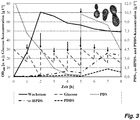
- the amounts of the dicarboxylic acids and ⁇ -hydroxy fatty acids formed were Cultivation determined by gas chromatography.
- the glucose concentration was kept between 2 and 3% (w / v) by regular refeeding (arrows). After 5 days, 1% (w / v) pentadecanoic acid was added.
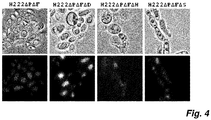
- Fig. 4 shows the cultivation of Y. lipolytica H222 ⁇ P ⁇ F, H222 ⁇ P ⁇ F ⁇ D, H222 ⁇ P ⁇ F ⁇ H and H222 ⁇ P ⁇ F ⁇ S in minimal medium with glucose and pentadecanoic acid (PDS) as carbon sources (3% (v / v) glucose, 1% (w / v) PDS, 17.3 gl -1 KH 2 PO 4 , 1.35 gl -1 K 2 HPO 4 x 3 H 2 O, 3 gl -1 (NH 4 ) 2 SO 4 , 0.7 gl -1 MgSO 4 x 7 H 2 O, 0.5 gl -1 NaCl, 0.4 gl -1 Ca (NO 3 ) 2 x 4 H 2 O, 0.5 mg l -1 H 3 BO 3 , 0.04 mg l -1 CuSO 4 x 5 H 2 O, 0.1 mg l -1 Kl, 0.4 mg l -1 MnSO 4 x 4 H 2 O, 0.2 mg l
- the glucose concentration was through regular refeeding kept between 2 and 3% (w / v). After 3 days, 1% (w / v) pentadecanoic acid was added. The cells were microscoped after 5 days, the fat cells being stained with Nile red (top: light microscope image; bottom: fluorescence microscope image).
- the cultivation took place in the fermenter at 28 ° C.
- the oxygen saturation was adjusted to 55%.
- the cells were inoculated with an OD 600 of 1 and incubated for 24 h at pH 5.5 (automated titration of HCl and NaOH). Then 15 gl -1 DD was added and the pH was adjusted to 8.0. Glucose was added every 24 hours to adjust the final concentration to 5% (w / v).
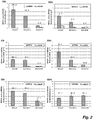
- the amounts of dodecanedioic acid (DDDS) and ⁇ -hydroxydodecanoic acid ( ⁇ -HDDS) formed were determined by gas chromatography after 2 days, 3 days and 4 days of cultivation.
- Fig. 6 shows the enzyme activities of (fatty) alcohol dehydrogenases and oxidase in cell lysates of the strains Yarrowia lipolytica H222 ⁇ P, H222 ⁇ P ⁇ A, H222 ⁇ P ⁇ F, H222 ⁇ P ⁇ A ⁇ F and H222 ⁇ PoF.
- the cells were cultivated as described in Example 8 and harvested and disrupted after three days.
- lipolytica H222 ⁇ P ⁇ F was cultivated in minimal medium with glucose and dodecane (DD) as carbon sources in the fermenter (5% (w / v) glucose, 2 gl -1 KH 2 PO 4 , 0.32 gl -1 K 2 HPO 4 ⁇ 3 H 2 O, 6 gl -1 (NH 4 ) 2 SO 4 , 1.4 gl -1 MgSO 4 x 7 H 2 O, 1 gl -1 NaCl, 0.8 gl -1 Ca (NO 3 ) 2 x 4 H 2 O, 1 mg l -1 H 3 BO 3 , 0.08 mg l -1 CuSO 4 x 5 H 2 O, 0.2 mg l -1 Kl, 0.8 mg l -1 MnSO 4 x 4 H 2 O, 0.4 mg l -1 Na 2 MoO 4 x 2 H 2 O, 0.8 mg l -1 ZnSO 4 x 7 H 2 O, 12 mg l -1 FeCl 3 x
- the glucose concentration was adjusted to 5-10% (w / v) every 24 hours by regular refeeding (arrows). After 2 d the pH was adjusted to 8.0 and after 2 d and 3 d 15 gl -1 dodecane admitted. Glucose was added every 24 hours to adjust the final concentration to 5-10% (w / v).
- Example 1 Prevention of the breakdown of fatty acids by blocking ⁇ -oxidation
- the respective promoter and terminator regions were amplified by PCR, using the primers pXXX_fw / pXXX_rv and XXXt_fw / XXXt_rv (XXX stands for the gene to be deleted).
- Genomic DNA from Y. lipolytica H222 served as template.
- overhang primers an I-Sce I restriction site was inserted at the end of the promoter and at the beginning of the terminator area.
- Promoter and terminator fragments were fused to one another by overlap PCR with the primers pXXX_fw and XXXt_rv.
- the overlap fragment was then ligated into the vector pJET1.2 / blunt (Fermentas; SEQ ID NO 1).
- the resulting plasmid was cut with I-Scel and the loxP-URA3-loxP cassette, which was derived from the pJMP113 plasmid ( Fickers P, Le Dall MT, Gaillardin C, Thonart P & Nicaud JM (2003) New disruption cassettes for rapid gene disruption and marker rescue in the yeast Yarrowia lipolytica. J Microbiol Methods 55: 727-737 .) obtained using the restriction enzyme I-Scel was inserted.
- the respective deletion cassette was obtained by PCR or restriction and converted into Y. lipolytica H222-S4, which can be produced from Y. lipolytica H222 ( Mauersberger, S., HJ Wang, et al. (2001) J Bacteriol 183 (17): 5102-5109 ), after Barth and Gaillardin ( Barth G & Gaillardin C (1996) Yarrowia lipolytica. Springer-Verlag, Berlin, Heidelberg, New York .) transformed.
- the marker was recovered using the Cre-Iox recombination system ( Fickers P, Le Dall MT, Gaillardin C, Thonart P & Nicaud JM (2003) New disruption cassettes for rapid gene disruption and marker rescue in the yeast Yarrowia lipolytica. J Microbiol Methods 55: 727-737 .).
- the successful deletion of a gene was confirmed by PCR using the primers pXXX_fw and XXXt_rv as well as pXXX_fw and XXXt_rv2.
- XXXt_rv2 binds in the area of the gene to be deleted, but outside of the deletion cassette.
- the strain that carried the deletions of the genes POX1, POX2, POX3, POX4, POX5 and POX6 was named H222 ⁇ P and forms the basis for the construction of strains that can be used for the biotechnological production of ⁇ -hydroxy fatty acids and dicarboxylic acids.
- Example 2 Prevention of the oxidation of the ⁇ -hydroxy fatty acids to the fatty acid aldehyde or to the dicarboxylic acid in the context of the ⁇ -oxidation
- the respective promoter and terminator region was amplified by PCR using the primers pXXX_fw / pXXX_rv and XXXt_fw / XXXt_rv (XXX stands for the gene to be deleted).
- Genomic DNA from Y. lipolytica H222 served as template.
- a Bam HI restriction site was inserted using overhang primers at the end of the promoter area and at the beginning of the terminator area.
- a Hind III - restriction site and at the end of the terminator region a Nde I restriction site (ADH1: Not I, FAO1: Eco RI) added.
- the fragments were ligated into the vector pJET1.2 / blunt (Fermentas; SEQ ID NO 1) or pUCBM21 (Boehringer Ingelheim; SEQ ID NO 2).
- the plasmids obtained in this way were linearized with Bam HI and the URA blaster (TcR-URA3-TcR cassette) which was obtained from the plasmid pUC-Lys2-DK2 (SEQ ID NO 3) by restriction with Bam HI and Bg / II , was inserted.
- the complete gene (including the promoter and terminator region) was amplified by means of PCR, using the primers pADH7_fw and ADH7t_rv.
- the fragment obtained was ligated into the vector pJET1.2 / blunt (Fermentas; SEQ ID NO 1), the open reading frame of the ADH7 gene was removed by restriction with San DI and Nsi I and the URA blaster, which was generated from the plasmid pUC -Lys2-DK2 obtained by restriction with San DI and Nsi I was inserted.
- the respective deletion cassette was obtained by PCR or restriction and converted into Y. lipolytica H222-S4, which can be produced from Y. lipolytica H222 ( Mauersberger, S., HJ Wang, et al. (2001) J Bacteriol 183 (17): 5102-5109 ), after Barth and Gaillardin ( Barth G & Gaillardin C (1996) Yarrowia lipolytica. Springer-Verlag, Berlin, Heidelberg, New York .) transformed.
- the marker was selected using FOA ( Boeke JD, LaCroute F & Fink GR (1984) Mol Gen Genet 197: 345-346 .) recovered.
- FOA Boeke JD, LaCroute F & Fink GR (1984) Mol Gen Genet 197: 345-346 .
- the successful deletion of a gene was confirmed by PCR using the primers pXXX_fw and XXXt_rv as well as pXXX_fw and XXXt_rv2.
- XXXt_rv2 binds in the area of the gene to be deleted, but outside of the deletion cassette.
- the strain that carried the deletions of the genes POX1, POX2, POX3, POX4, POX5 and POX6 as well as FADH , AHD1 , AHD2 , AHD3 , AHD4 , AHD5 , AHD6 and AHD7 was named H222 ⁇ P ⁇ A.
- the strain that carried the deletions of the genes POX1, POX2, POX3, POX4, POX5 and POX6 as well as FAO1 was named H222 ⁇ P ⁇ F.
- Example 3 Comparative cultivation of different production strains in the shake flask
- H222 ⁇ P ⁇ A and H222 ⁇ P ⁇ F are capable of producing larger amounts of ⁇ -hydroxy fatty acids and dicarboxylic acids
- these were in a minimal medium with glycerol and various n -alkanes (dodecane, pentadecanoic, hexadecane) and fatty acids
- Pentadecanoic acid, hexadecanoic acid cultivated (3% (v / v) glycerol + 0.5% (v / v) glycerol after 48 h, 1% (v / v) n- alkane or 1% (v / v) fatty acid, 20 gl -1 CaCO 3 , 17.3 gl -1 KH 2 PO 4 , 1.35 gl -1 K 2 HPO 4 x 3 H 2 O, 3g l -1 (NH 4 ) 2 SO 4 ,
- ⁇ -hydroxy fatty acids formed ⁇ -hydroxydodecanoic acid, ⁇ -hydroxypentadecanoic acid, ⁇ -hydroxyhexadecanoic acid
- dicarboxylic acids dodecanedioic acid, pentadecanedioic acid, hexadecanedioic acid
- Y. lipolytica H222 ⁇ P formed relatively large amounts of dicarboxylic acids and can therefore be used as a starting strain for the construction of a corresponding production strain for dicarboxylic acids.
- Both Y. lipolytica H222 ⁇ P ⁇ A and H222 ⁇ P ⁇ F formed increased amounts of ⁇ -hydroxy fatty acids and can thus be used as starting strains for the construction of corresponding production strains for ⁇ -hydroxy fatty acids.
- Y. lipolytica H222 ⁇ P ⁇ F is to be preferred over H222 ⁇ P ⁇ A.
- Both n- alkanes and fatty acids can be converted by all strains to ⁇ -hydroxy fatty acid or dicarboxylic acid with the same chain length.
- the yeasts were compared in minimal medium with glucose (3% (w / v) glucose, 1% (w / v) pentadecanoic acid, 17.3 gl -1 KH 2 PO 4 , 1.35 gl -1 K 2 HPO 4 ⁇ 3 H 2 O, 3 gl -1 (NH 4 ) 2 SO 4 , 0.7 gl -1 MgSO 4 x 7 H 2 O, 0.5 gl -1 NaCl, 0.4 gl -1 Ca (NO 3 ) 2 x 4 H 2 O, 0.5 mg l -1 H 3 BO 3 , 0.04 mg l -1 CuSO 4 x 5 H 2 O, 0.1 mg l -1 Kl, 0.4 mg l -1 MnSO 4 x 4 H 2 O, 0.2 mg l -1 Na 2 MoO 4 x 2 H 2 O, 0.4 mg l -1 ZnSO 4 x 7 H 2 O, 6 mg l -1 FeCl 3 x 6 H 2 0.3 mg l
- the yeasts were further cultivated in complete medium with glucose and pentadecanoic acid (1% (w / v) yeast extract, 2% (w / v) peptone, 2% (w / v) glucose and 1% (w / v) pentadecanoic acid in 1% Tween 80), with 1% (w / v) glucose being replenished when this was used up. After 4 days, 1% (w / v) pentadecanoic acid in 1% Tween 80 was replenished. Under these conditions, almost no ⁇ -hydroxypentadecanoic acid or pentadecanedioic acid was formed (each ⁇ 0.1 gl -1 ).
- the yeasts were cultivated in minimal medium with glucose and pentadecanoic acid (3% (v / v) glucose, 1% (w / v) pentadecanoic acid in 1% Tween 80, 17.3 gl -1 KH 2 PO 4 , 1.35 gl - 1 K 2 HPO 4 x 3 H 2 O, 3 gl -1 (NH 4 ) 2 SO 4 , 0.7 gl -1 MgSO 4 x 7 H 2 O, 0.5 gl -1 NaCl, 0.4 gl - 1 Ca (NO 3 ) 2 x 4 H 2 O, 0.5 mg l -1 H 3 BO 3 , 0.04 mg l -1 CuSO 4 x 5 H 2 O, 0.1 mg l -1 Kl, 0 , 4 mg l -1 MnSO 4 x 4 H 2 O, 0.2 mg l -1 Na 2 MoO 4 x 2 H 2 O, 0.4 mg l -1 ZnSO 4 x 7 H 2 O
- the yeasts were cultivated in minimal medium with glucose and pentadecanoic acid (3% (v / v) glucose, 1% (w / v) pentadecanoic acid in 1% Tween 80, 17.3 gl -1 KH 2 PO 4 , 1.35 gl - 1 K 2 HPO 4 x 3 H 2 O, 3 gl -1 (NH 4 ) 2 SO 4 , 0.7 gl -1 MgSO 4 x 7 H 2 O, 0.5 gl -1 NaCl, 0.4 gl - 1 Ca (NO 3 ) 2 x 4 H 2 O, 0.5 mg l -1 H 3 BO 3 , 0.04 mg l -1 CuSO 4 x 5 H 2 O, 0.1 mg l -1 Kl, 0 , 4 mg l -1 MnSO 4 x 4 H 2 O, 0.2 mg l -1 Na 2 MoO 4 x 2 H 2 O, 0.4 mg l -1 ZnSO 4 x 7 H 2 O
- minimal medium is more suitable for cultivation than complete medium.
- glucose is more suitable than glycerol as a carbon source for the provision of energy.
- the glucose should be re-fed in such a way that the glucose is not used up (ie its concentration does not drop to 0 gl -1 ).
- the respective promoter and terminator region was amplified by PCR, using the primers pXXX_fw / pXXX_rv and XXXt_fw / XXXt_rv (XXX stands for the gene to be deleted).
- Genomic DNA from Y served as a template. lipolytica H222.
- a Bam HI restriction site was inserted by using overhang primers at the end of the promoter and at the beginning of the terminator area.
- a Hin dIII restriction site was added at the beginning of the promoter area and an Eco RI restriction site at the end of the terminator area. The fragments were ligated into the vector pUCBM21 (Boehringer Ingelheim; SEQ ID NO 2).
- the plasmids obtained in this way were linearized with Bam HI and the URA blaster (TcR-URA3-TcR cassette), which was obtained from the plasmid pUC-Lys2-DK2 (SEQ ID NO 3) by restriction with Bam HI and Bgl II, was inserted.
- the respective deletion cassette was obtained by PCR or restriction and converted into Y. lipolytica H222-S4, which can be produced from Y. lipolytica H222 ( Mauersberger, S., HJ Wang, et al. (2001) J Bacteriol 183 (17): 5102-5109 ), after Barth and Gaillardin ( Barth G & Gaillardin C (1996) Yarrowia lipolytica. Springer-Verlag, Berlin, Heidelberg, New York .) transformed.
- the marker was selected using FOA ( Boeke JD, LaCroute F & Fink GR (1984) Mol Gen Genet 197: 345-346 .) recovered.
- XXXt_rv2 binds in the area of the gene to be deleted, but outside of the deletion cassette.
- the strain which carried the deletions of the genes POX1, POX2, POX3, POX4, POX5 and POX6 as well as DGA1 was named H222 ⁇ P ⁇ D.
- the strain which carried deletions of the genes POX1, POX2, POX3, POX4, POX5 and POX6 as well as PAH1 was named H222 ⁇ P ⁇ H.
- the strain which carried the deletions of the genes POX1, POX2, POX3, POX4, POX5 and POX6 as well as SCT1 was named H222 ⁇ P ⁇ S.
- the strain which carried the deletions of the genes POX1, POX2, POX3, POX4, POX5 and POX6 as well as FAO1 and DGA1 was named H222 ⁇ P ⁇ F ⁇ D.
- the strain which carried the deletions of the genes POX1, POX2, POX3, POX4, POX5 and POX6 as well as FAO1 and PAH1 was named H222 ⁇ P ⁇ F ⁇ H.
- the strain which carried the deletions of the genes POX1, POX2, POX3, POX4, POX5 and POX6 as well as FAO1 and SCT1 was named H222 ⁇ P ⁇ F ⁇ S.
- the strain that carried the deletions of the genes POX1, POX2, POX3, POX4, POX5 and POX6 as well as FADH, ADH1, ADH2, ADH3, ADH4, ADH5, ADH6, ADH7, FAO1 and DGA1 was named H222 ⁇ P ⁇ A ⁇ F ⁇ D.
- the strain that carried deletions of the genes POX1, POX2, POX3, POX4, POX5 and POX6 as well as FADH, ADH1, ADH2, ADH3, ADH4, ADH5, ADH6, ADH7, FAO1 and PAH1 was named H222 ⁇ P ⁇ A ⁇ F ⁇ H.
- the strain that carried the deletions of the genes POX1, POX2, POX3, POX4, POX5 and POX6 as well as FADH, ADH1, ADH2, ADH3, ADH4, ADH5, ADH6, ADH7, FAO1 and SCT1 was named H222 ⁇ P ⁇ A ⁇ F ⁇ S.
- the strains Y. lipolytica H222 ⁇ P ⁇ F ⁇ D, H222 ⁇ P ⁇ F ⁇ H and H222 ⁇ P ⁇ F ⁇ S and their parent strain Y. lipolytica H222 ⁇ P ⁇ F were cultivated in minimal medium with glucose and pentadecanoic acid (3% (v / v) glucose, 1% (w / v) pentadecanic acid - 1 KH 2 PO 4 , 1.35 g I -1 K 2 HPO 4 x 3 H 2 O, 3 g I -1 (NH 4 ) 2 SO 4 , 0.7 g I -1 MgSO 4 x 7 H 2 O , 0.5 g I -1 NaCl, 0.4 g I -1 Ca (NO 3 ) 2 x 4 H 2 O, 0.5 mg I -1 H 3 BO 3 , 0.04 mg I -1 CuSO 4 x 5 H 2 O, 0.1 mg I -1 KI, 0.4 mg I -1 MnSO 4 x 4 H 2 O, 0.2 mg I -1 Na
- strains with reduced fat corpuscles forms the basis for the development of strains for the efficient production of ⁇ -hydroxy fatty acids and dicarboxylic acids, since the esterification of the offered substrates with glycerol and their storage in the adipose corpuscles reduces the turnover rate.
- Example 6 Increased expression of FAO1 in Yarrowia lipolytica H222 ⁇ P
- part of the constitutive promoter of the translation elongation factor 1 alpha gene (TEF1: YALI0C09141g ) was obtained by means of PCR, using the primers pTef_Spel_fw3 and pTef_FAOo_ol_rv.
- the plasmid pINTB_HMG1 (SEQ ID NO 5) served here as a template.
- the FAO1 gene (YALI0B14014g) was amplified by means of PCR using the primers pTef_FAOo_ol_fw and FAO1o_Sphl_rv (template: genomic DNA from Y. lipolytica H222).
- an integration platform was obtained by means of PCR using the primers INT_AscI_fw_KpnI and INT_AscI_rv_KpnI, cut with Kpnl and ligated into the backbone of the vector pINTB-FAO1 obtained by restriction digestion with Kpnl, resulting in the plasmid pINTC-FAO1.
- the plasmid pINTC-FAO1 was finally linearized with Ascl and transformed into the desired Y. lipolytica recipient strain.
- Example 7 Increased expression of CPR1 in Yarrowia lipolytica H222 ⁇ P and H222 ⁇ P ⁇ A ⁇ F
- part of the constitutive promoter of the translation elongation factor 1 alpha gene (TEF1: YALI0C09141g ) was obtained by means of PCR, using the primers pTef_Spel_fw3 and pTEF_CPR1_ol_rv.
- the plasmid pINTB_HMG1 (SEQ ID NO 5) served here as a template.
- the CPR1 gene (YALI0D04422g) was amplified by means of PCR using the primers pTEF_CPR1_ol_fw and CPR1_SphI_rv (template: genomic DNA from Y. lipolytica H222).
- the resulting plasmid was finally linearized with Not I and converted into the desired Y. lipolytica recipient strains transformed.
- the successful integration of the CPR1 gene was confirmed by PCR, using the primers INTB_out_fw and INTB_out_rv, which bind in the genomic DNA outside the integrated construct.
- the strain containing both the deletions of the genes POX1, POX2, POX3, POX4, POX5, POX6, FADH, ADH1, ADH2, ADH3, ADH4, ADH5, ADH6, ADH7, FAO1 and the additional copy of CPR1 under the control of TEF 1 Promoter was named H222 ⁇ P ⁇ A ⁇ FoC.
- Example 8 Comparative cultivation of different production strains in the fermenter
- the strains Yarrowia lipolytica H222 ⁇ P, H222 ⁇ P ⁇ A, H222 ⁇ P ⁇ F, H222 ⁇ P ⁇ A ⁇ F, H222 ⁇ PoF, H222 ⁇ PoC, H222 ⁇ P ⁇ D, H222 ⁇ P ⁇ H, H222 ⁇ P ⁇ S, H222 ⁇ P ⁇ A ⁇ FoC, H222 ⁇ P ⁇ A ⁇ F ⁇ D were H222 ⁇ P ⁇ A ⁇ F ⁇ H and H222 ⁇ P ⁇ A ⁇ F ⁇ S, the construction of which was described in Examples 1, 2, 5, 6 and 7, cultivated in the fermenter.
- Minimal medium with glucose (5% (w / v) glucose, 1 g I -1 KH 2 PO 4 , 0.16 g I -1 K 2 HPO 4 x 3 H 2 O, 3 g I -1 ( NH 4 ) 2 SO 4 , 0.7 g I -1 MgSO 4 x 7 H 2 O, 0.5 g I -1 NaCl, 0.4 g I -1 Ca (NO 3 ) 2 x 4 H 2 O, 0.5 mg I -1 H 3 BO 3 , 0.04 mg I -1 CuSO 4 x 5 H 2 O, 0.1 mg I -1 KI, 0.4 mg I -1 MnSO 4 x 4 H 2 O , 0.2 mg I -1 Na 2 MoO 4 x 2 H 2 O, 0.4 mg I -1 ZnSO 4 x 7 H 2 O, 6 mg I -1 FeCl 3 x 6 H 2 O, 0.3 mg I -1 thiamine hydrochloride).
- Y. lipolytica H222 ⁇ P formed relatively large amounts of dicarboxylic acids and can therefore be used as a starting strain for the construction of a corresponding production strain for dicarboxylic acids ( Figure 5A ).
- Y. lipolytica H222 ⁇ P ⁇ A and H222 ⁇ P ⁇ F formed increased amounts of ⁇ -hydroxy fatty acids and can thus be used as starting strains for construction corresponding production strains for ⁇ -hydroxy fatty acids can be used.
- Y. lipolytica H222 ⁇ P ⁇ F is to be preferred over H222 ⁇ P ⁇ A ( Figure 5A ).
- Y. lipolytica H222 ⁇ P ⁇ A ⁇ F only formed small amounts of dicarboxylic acids and is therefore the preferred starting strain for the construction of production strains for ⁇ -hydroxy fatty acids ( Figure 5A ).
- Example 9 Enzyme test for determining the (fatty) alcohol dehydrogenase and oxidase activity
- the enzyme activities of (fatty) alcohol dehydrogenases and oxidase were determined in cell lysates of the strains Yarrowia lipolytica H222 ⁇ P, H222 ⁇ P ⁇ A, H222 ⁇ P ⁇ F, H222 ⁇ P ⁇ A ⁇ F and H222 ⁇ PoF.
- the cells were cultivated as described in Example 8 and harvested and disrupted after three days.
- Example 9 Cultivation of Y. lipolytica H222 ⁇ P ⁇ F in the fermenter
- the strain Y. lipolytica H222 ⁇ P ⁇ F was cultivated in the fermenter for 7 days.
- Minimal medium with glucose and an increased amount of mineral salts, trace elements and vitamins (5% (w / v) glucose, 2 g I -1 KH 2 PO 4 , 0.32 g I -1 K 2 HPO 4 ⁇ 3 served as the cultivation medium H 2 O, 6 g I -1 (NH 4 ) 2 SO 4 , 1.4 g I -1 MgSO 4 x 7 H 2 O, 1 g I -1 NaCl, 0.8 g I -1 Ca (NO 3 ) 2 x 4 H 2 O, 1 mg I -1 H 3 BO 3 , 0.08 mg I -1 CuSO 4 x 5 H 2 O, 0.2 mg I -1 KI, 0.8 mg I -1 MnSO 4 x 4 H 2 O, 0, 4 mg I -1 Na 2 MoO 4 x 2 H 2 O, 0.8 mg I -1 ZnSO 4 x 7 H 2 O, 12 mg I -1 FeCl 3 x 6 H 2 O, 0.6 mg I -1 Thiamine hydrochloride).
Landscapes
- Chemical & Material Sciences (AREA)
- Organic Chemistry (AREA)
- Life Sciences & Earth Sciences (AREA)
- Engineering & Computer Science (AREA)
- Health & Medical Sciences (AREA)
- Zoology (AREA)
- Wood Science & Technology (AREA)
- Genetics & Genomics (AREA)
- Bioinformatics & Cheminformatics (AREA)
- General Health & Medical Sciences (AREA)
- General Engineering & Computer Science (AREA)
- Biochemistry (AREA)
- Biotechnology (AREA)
- Microbiology (AREA)
- Medicinal Chemistry (AREA)
- Biomedical Technology (AREA)
- General Chemical & Material Sciences (AREA)
- Chemical Kinetics & Catalysis (AREA)
- Molecular Biology (AREA)
- Oil, Petroleum & Natural Gas (AREA)
- Mycology (AREA)
- Botany (AREA)
- Tropical Medicine & Parasitology (AREA)
- Virology (AREA)
- Micro-Organisms Or Cultivation Processes Thereof (AREA)
- Preparation Of Compounds By Using Micro-Organisms (AREA)
Applications Claiming Priority (3)
| Application Number | Priority Date | Filing Date | Title |
|---|---|---|---|
| DE102013022175 | 2013-12-12 | ||
| EP14830951.1A EP3080252B1 (de) | 2013-12-12 | 2014-12-10 | Hefestämme und verfahren zur produktion von -hydroxyfettsäuren und dicarbonsäuren |
| PCT/EP2014/077237 WO2015086684A1 (de) | 2013-12-12 | 2014-12-10 | HEFESTÄMME UND VERFAHREN ZUR PRODUKTION VON ω-HYDROXYFETTSÄUREN UND DICARBONSÄUREN |
Related Parent Applications (2)
| Application Number | Title | Priority Date | Filing Date |
|---|---|---|---|
| EP14830951.1A Division EP3080252B1 (de) | 2013-12-12 | 2014-12-10 | Hefestämme und verfahren zur produktion von -hydroxyfettsäuren und dicarbonsäuren |
| EP14830951.1A Division-Into EP3080252B1 (de) | 2013-12-12 | 2014-12-10 | Hefestämme und verfahren zur produktion von -hydroxyfettsäuren und dicarbonsäuren |
Publications (1)
| Publication Number | Publication Date |
|---|---|
| EP3875584A1 true EP3875584A1 (de) | 2021-09-08 |
Family
ID=52432762
Family Applications (2)
| Application Number | Title | Priority Date | Filing Date |
|---|---|---|---|
| EP21162092.7A Pending EP3875584A1 (de) | 2013-12-12 | 2014-12-10 | Hefestämme und verfahren zur produktion von omega-hydroxyfettsäuren und dicarbonsäuren |
| EP14830951.1A Active EP3080252B1 (de) | 2013-12-12 | 2014-12-10 | Hefestämme und verfahren zur produktion von -hydroxyfettsäuren und dicarbonsäuren |
Family Applications After (1)
| Application Number | Title | Priority Date | Filing Date |
|---|---|---|---|
| EP14830951.1A Active EP3080252B1 (de) | 2013-12-12 | 2014-12-10 | Hefestämme und verfahren zur produktion von -hydroxyfettsäuren und dicarbonsäuren |
Country Status (7)
| Country | Link |
|---|---|
| US (2) | US10093950B2 (da) |
| EP (2) | EP3875584A1 (da) |
| DE (1) | DE102014220186B4 (da) |
| DK (1) | DK3080252T3 (da) |
| ES (1) | ES2886026T3 (da) |
| HU (1) | HUE055491T2 (da) |
| WO (1) | WO2015086684A1 (da) |
Families Citing this family (12)
| Publication number | Priority date | Publication date | Assignee | Title |
|---|---|---|---|---|
| DE102014220186B4 (de) | 2013-12-12 | 2017-06-22 | Technische Universität Dresden | Hefestämme und Verfahren zur Produktion von Omega-Hydroxyfettsäuren und Dicarbonsäuren |
| US20180363011A1 (en) * | 2015-03-27 | 2018-12-20 | Fonds De Developpement Des Filieres Des Oleagineux Et Des Proteagineux Fidop | Microorganisms and use thereof for the production of diacids |
| KR101903552B1 (ko) | 2015-10-27 | 2018-10-04 | 한국생명공학연구원 | 중쇄 디아민의 생산 방법 |
| CN108473993A (zh) * | 2015-10-27 | 2018-08-31 | 韩国生命工学研究院 | 中链氨基羧酸的生产方法 |
| EP3378940B1 (en) * | 2015-10-27 | 2020-06-03 | Korea Research Institute of Bioscience and Biotechnology | Method for producing heavy chain diol |
| EP3376859B1 (en) | 2015-11-18 | 2021-01-06 | Provivi, Inc. | Microorganisms for the production of insect pheromones and related compounds |
| JP2019517797A (ja) | 2016-06-06 | 2019-06-27 | プロヴィヴィ インコーポレイテッド | 脂肪アルコールおよび脂肪アルデヒドの半生合成的生産 |
| WO2018018402A1 (en) * | 2016-07-26 | 2018-02-01 | Evonik (Shanghai) Investment Management Co., Ltd | Process of omega-hydroxyl fatty acid production |
| US10557152B2 (en) | 2017-05-12 | 2020-02-11 | The Regents Of The University Of California | Yeast host cells and methods for producing fatty alcohols |
| WO2018213554A1 (en) | 2017-05-17 | 2018-11-22 | Provivi, Inc. | Microorganisms for the production of insect pheromones and related compounds |
| US12110527B2 (en) | 2018-11-22 | 2024-10-08 | Universiteit Gent | Production of symmetrical bolaform sophorosides |
| WO2024149755A1 (en) * | 2023-01-10 | 2024-07-18 | Nutrition & Biosciences USA 4, Inc. | Production of omega-hydroxy fatty acids and their derivatives using engineered cells |
Citations (8)
| Publication number | Priority date | Publication date | Assignee | Title |
|---|---|---|---|---|
| US4339536A (en) | 1979-06-08 | 1982-07-13 | Nippon Mining Co., Ltd. | Process for the preparation of long-chain dicarboxylic acids by fermentation |
| EP0296506A2 (de) | 1987-06-26 | 1988-12-28 | Henkel Kommanditgesellschaft auf Aktien | Fermentative Herstellung von Dicarbonsäuren |
| WO2000017380A1 (en) | 1998-09-21 | 2000-03-30 | General Electric Company | Method for high specific bioproductivity of alpha, omega-alkane dicarboxylic acids using candida tropicalis |
| WO2006064131A1 (fr) | 2004-12-15 | 2006-06-22 | Institut Francais Du Petrole | Production d’acides dicarboxyliques par des souches mutantes ameliorees de yarrowia lipolytica |
| US7238482B2 (en) * | 2003-05-07 | 2007-07-03 | E. I. Du Pont De Nemours And Company | Production of polyunsaturated fatty acids in oleaginous yeasts |
| WO2011008232A2 (en) | 2009-05-06 | 2011-01-20 | Dna 2.0 Inc. | BIOSYNTHETIC ROUTES TO LONG-CHAIN a, w-HYDROXY ACIDS, DIACIDS AND THEIR CONVERSION TO OLIGOMERS AND POLYMERS |
| WO2013006733A2 (en) | 2011-07-06 | 2013-01-10 | Verdezyne, Inc. | Biological methods for preparing a fatty dicarboxylic acid |
| WO2013151393A1 (ko) | 2012-04-06 | 2013-10-10 | 이화여자대학교 산학협력단 | 생물전환을 통한 장쇄 지방산으로부터 중쇄 오메가-하이드록시지방산, 알파,오메가-디카르복실산, 오메가-아미노지방산을 생산하는 방법 |
Family Cites Families (11)
| Publication number | Priority date | Publication date | Assignee | Title |
|---|---|---|---|---|
| US20170145433A1 (en) | 2004-10-08 | 2017-05-25 | Dow Agrosciences Llc | Lowering saturated fatty acid content of plant seeds |
| US8110670B2 (en) | 2006-05-19 | 2012-02-07 | Ls9, Inc. | Enhanced production of fatty acid derivatives |
| PL2655612T3 (pl) | 2010-12-23 | 2017-12-29 | Shell Internationale Research Maatschappij B.V. | Czynniki uszkadzające geny produkujące pochodne tłuszczowego acylo-coa |
| EP2607479A1 (en) | 2011-12-22 | 2013-06-26 | Evonik Industries AG | Biotechnological production of alcohols and derivatives thereof |
| WO2014152309A1 (en) | 2013-03-14 | 2014-09-25 | Materia, Inc. | Use of soluble metal salts in metathesis reactions |
| KR102202927B1 (ko) | 2013-03-14 | 2021-01-14 | 윌마르 트레이딩 피티이 엘티디 | 처리된 복분해 기질 물질 및 이의 제조 및 사용 방법 |
| US20160222419A1 (en) | 2013-09-18 | 2016-08-04 | The Governors Of The University Of Alberta | Genetically engineered saccharomyces cerevisiae and yarrowia lipolytica and production of fatty alcohols |
| DE102014220186B4 (de) | 2013-12-12 | 2017-06-22 | Technische Universität Dresden | Hefestämme und Verfahren zur Produktion von Omega-Hydroxyfettsäuren und Dicarbonsäuren |
| GB201406591D0 (en) | 2014-04-11 | 2014-05-28 | Ximo Ag | Compounds |
| EP3277827B1 (en) | 2015-04-02 | 2021-03-24 | Biopetrolia AB | Fungal cells and methods for production of very long chain fatty acid derived products |
| EP3376859B1 (en) * | 2015-11-18 | 2021-01-06 | Provivi, Inc. | Microorganisms for the production of insect pheromones and related compounds |
-
2014
- 2014-10-06 DE DE102014220186.1A patent/DE102014220186B4/de active Active
- 2014-12-10 WO PCT/EP2014/077237 patent/WO2015086684A1/de not_active Ceased
- 2014-12-10 US US15/103,191 patent/US10093950B2/en active Active
- 2014-12-10 EP EP21162092.7A patent/EP3875584A1/de active Pending
- 2014-12-10 DK DK14830951.1T patent/DK3080252T3/da active
- 2014-12-10 EP EP14830951.1A patent/EP3080252B1/de active Active
- 2014-12-10 HU HUE14830951A patent/HUE055491T2/hu unknown
- 2014-12-10 ES ES14830951T patent/ES2886026T3/es active Active
-
2018
- 2018-08-13 US US16/102,213 patent/US10640796B2/en active Active
Patent Citations (9)
| Publication number | Priority date | Publication date | Assignee | Title |
|---|---|---|---|---|
| US4339536A (en) | 1979-06-08 | 1982-07-13 | Nippon Mining Co., Ltd. | Process for the preparation of long-chain dicarboxylic acids by fermentation |
| EP0296506A2 (de) | 1987-06-26 | 1988-12-28 | Henkel Kommanditgesellschaft auf Aktien | Fermentative Herstellung von Dicarbonsäuren |
| WO2000017380A1 (en) | 1998-09-21 | 2000-03-30 | General Electric Company | Method for high specific bioproductivity of alpha, omega-alkane dicarboxylic acids using candida tropicalis |
| US7238482B2 (en) * | 2003-05-07 | 2007-07-03 | E. I. Du Pont De Nemours And Company | Production of polyunsaturated fatty acids in oleaginous yeasts |
| WO2006064131A1 (fr) | 2004-12-15 | 2006-06-22 | Institut Francais Du Petrole | Production d’acides dicarboxyliques par des souches mutantes ameliorees de yarrowia lipolytica |
| WO2011008232A2 (en) | 2009-05-06 | 2011-01-20 | Dna 2.0 Inc. | BIOSYNTHETIC ROUTES TO LONG-CHAIN a, w-HYDROXY ACIDS, DIACIDS AND THEIR CONVERSION TO OLIGOMERS AND POLYMERS |
| WO2013006733A2 (en) | 2011-07-06 | 2013-01-10 | Verdezyne, Inc. | Biological methods for preparing a fatty dicarboxylic acid |
| WO2013006730A2 (en) | 2011-07-06 | 2013-01-10 | Verdezyne, Inc. | Biological methods for preparing a fatty dicarboxylic acid |
| WO2013151393A1 (ko) | 2012-04-06 | 2013-10-10 | 이화여자대학교 산학협력단 | 생물전환을 통한 장쇄 지방산으로부터 중쇄 오메가-하이드록시지방산, 알파,오메가-디카르복실산, 오메가-아미노지방산을 생산하는 방법 |
Non-Patent Citations (14)
| Title |
|---|
| ATHENSTAEDT K, BIOCHIM BIOPHYS ACTA, vol. 1811, 2011, pages 587 - 596 |
| BARTH GGAILLARDIN C, FEMS MICROBIOL REV, vol. 19, 1997, pages 219 - 237 |
| BARTH GGAILLARDIN C: "Yarrowia lipolytica", 1996, SPRINGER-VERLAG |
| BOEKE JDLACROUTE FFINK GR, MOL GEN GENET, vol. 197, 1984, pages 345 - 346 |
| FICKERS PBENETTI PHWACHE YMARTY AMAUERSBERGER SSMIT MSNICAUD JM, FEMS YEAST RES, vol. 5, 2005, pages 527 - 543 |
| FICKERS PLE DALI MTGAILLARDIN CTHONART PNICAUD JM: "New disruption cassettes for rapid gene disruption and marker rescue in the yeast Yarrowia lipolytica", J MICROBIOL METHODS, vol. 55, 2003, pages 727 - 737, XP002336154, DOI: 10.1016/j.mimet.2003.07.003 |
| GATTER MICHAEL ET AL: "A newly identified fatty alcohol oxidase gene is mainly responsible for the oxidation of long-chain omega-hydroxy fatty acids in Yarrowia lipolytica", FEMS YEAST RESEARCH, vol. 14, no. 6, September 2014 (2014-09-01), pages 858 - 872, XP008175574 * |
| KEMP G D ET AL: "LIGHT SENSITIVITY OF THE N ALKANE-INDUCED FATTY ALCOHOL OXIDASE FROM CANDIDA-TROPICALIS AND YARROWIA-LIPOLYTICA", APPLIED MICROBIOLOGY AND BIOTECHNOLOGY, vol. 32, no. 4, 1990, pages 461 - 464, XP002737635, ISSN: 0175-7598 * |
| LU WNESS JEXIE WZHANG XMINSHULL JGROSS RA, J AM CHEM SOC, vol. 132, 2010, pages 15451 - 15455 |
| MATATIELE PR: "PhD thesis", 2005, INSTITUT NATIONAL AGRONOMIQUE PARIS-GRIGNON |
| MAUERSBERGER SWANG HJGAILLARDIN CBARTH GNICAUD JM, J BACTERIOL, vol. 183, no. 17, 2001, pages 5102 - 5109 |
| PICATAGGIO SROHRER TDEANDA KLANNING DREYNOLDS RMIELENZ JEIRICH LD, BIOTECHNOLOGY, vol. 10, 1992, pages 894 - 898 |
| SMIT ET AL., BIOTECHNOL. LETT., vol. 27, 2005, pages 859 - 864 |
| SMIT MSMOKGORO MMSETATI ENICAUD JM, BIOTECHNOL LETT, vol. 27, 2005, pages 859 - 864 |
Also Published As
| Publication number | Publication date |
|---|---|
| EP3080252A1 (de) | 2016-10-19 |
| HUE055491T2 (hu) | 2021-11-29 |
| DK3080252T3 (da) | 2021-09-13 |
| US10640796B2 (en) | 2020-05-05 |
| EP3080252B1 (de) | 2021-07-07 |
| DE102014220186A1 (de) | 2015-06-18 |
| US20160304913A1 (en) | 2016-10-20 |
| US10093950B2 (en) | 2018-10-09 |
| DE102014220186B4 (de) | 2017-06-22 |
| US20180371510A1 (en) | 2018-12-27 |
| ES2886026T3 (es) | 2021-12-16 |
| WO2015086684A1 (de) | 2015-06-18 |
Similar Documents
| Publication | Publication Date | Title |
|---|---|---|
| EP3080252B1 (de) | Hefestämme und verfahren zur produktion von -hydroxyfettsäuren und dicarbonsäuren | |
| EP2602311B1 (de) | Candida tropicalis Zellen und deren Verwendung | |
| DE60120415T2 (de) | Herstellung von polyhydroxyalkanoaten aus polyolen | |
| Dulermo et al. | Analysis of ATP-citrate lyase and malic enzyme mutants of Yarrowia lipolytica points out the importance of mannitol metabolism in fatty acid synthesis | |
| Gajdoš et al. | Single cell oil production on molasses by Yarrowia lipolytica strains overexpressing DGA2 in multicopy | |
| US8597931B2 (en) | Mutant yeast strains capable of accumulating a large quantity of lipids | |
| DE69728096T2 (de) | Polyester-Synthase Gen und Verfahren zur Herstellung von Polyestern | |
| WO2010043197A1 (de) | Mikroorganismus zur herstellung von bernsteinsäure | |
| WO2011008232A2 (en) | BIOSYNTHETIC ROUTES TO LONG-CHAIN a, w-HYDROXY ACIDS, DIACIDS AND THEIR CONVERSION TO OLIGOMERS AND POLYMERS | |
| DE102007015583A1 (de) | Ein Enzym zur Herstellung von Methylmalonyl-Coenzym A oder Ethylmalonyl-Coenzym A sowie dessen Verwendung | |
| DE3853548T2 (de) | Verfahren zur Herstellung von Verbindungen mit einer Hydroxyl- oder Epoxy-Endgruppe und Mikroorganismen dafür. | |
| EP2609207B1 (de) | Ganzzell-biotransformation von fettsäuren zu den um ein kohlenstoffatom verkürzten fettaldehyden | |
| AT393136B (de) | Verfahren zur herstellung von beta-hydroxybuttersaeurederivaten | |
| DE102004052115A1 (de) | Mikroorganismen zur Herstellung von Fettsäureestern, Verfahren zu deren Herstellung und deren Verwendung | |
| WO2006061137A1 (de) | Gdh-mutante mit verbesserter chemischer stabilität | |
| WO2024257028A2 (en) | Fermentation material | |
| DE102011056290A1 (de) | Pilzstämme mit genetischer modifikation betreffend einen carbonsäure-transporter | |
| DE102007048625B4 (de) | Biotechnologische Herstellung von Crotonsäure | |
| EP4448780A2 (de) | Mischungen von glucose und xylose zur fermentativen herstellung von ortho-aminobenzoesäure | |
| DE102013209950A1 (de) | Hefestamm und Verfahren zur Produktion von Lycopin | |
| DE10333144B4 (de) | Verfahren zur biotechnologischen Herstellung von Citronensäure mit einer genetisch veränderten Hefe Yarrowia lipolytica | |
| US20260125718A1 (en) | Genetically modified strain of aureobasidium pullulans and use thereof for producing bioproduct in high yield | |
| DE112023004151T5 (de) | Rekombinante wirtssysteme für die herstellung von aleuritinsäure und verfahren dazu | |
| EP1200600A2 (de) | Ein- oder mehrzellige organismen zur herstellung von riboflavin | |
| DE102011056297A1 (de) | Verfahren zur biotechnischen Herstellung von Dicarbonsäuren |
Legal Events
| Date | Code | Title | Description |
|---|---|---|---|
| PUAI | Public reference made under article 153(3) epc to a published international application that has entered the european phase |
Free format text: ORIGINAL CODE: 0009012 |
|
| STAA | Information on the status of an ep patent application or granted ep patent |
Free format text: STATUS: THE APPLICATION HAS BEEN PUBLISHED |
|
| AC | Divisional application: reference to earlier application |
Ref document number: 3080252 Country of ref document: EP Kind code of ref document: P |
|
| AK | Designated contracting states |
Kind code of ref document: A1 Designated state(s): AL AT BE BG CH CY CZ DE DK EE ES FI FR GB GR HR HU IE IS IT LI LT LU LV MC MK MT NL NO PL PT RO RS SE SI SK SM TR |
|
| STAA | Information on the status of an ep patent application or granted ep patent |
Free format text: STATUS: REQUEST FOR EXAMINATION WAS MADE |
|
| 17P | Request for examination filed |
Effective date: 20220308 |
|
| RBV | Designated contracting states (corrected) |
Designated state(s): AL AT BE BG CH CY CZ DE DK EE ES FI FR GB GR HR HU IE IS IT LI LT LU LV MC MK MT NL NO PL PT RO RS SE SI SK SM TR |