EP3876201A1 - Détection d'objet et système de filtrage candidat - Google Patents
Détection d'objet et système de filtrage candidat Download PDFInfo
- Publication number
- EP3876201A1 EP3876201A1 EP21167995.6A EP21167995A EP3876201A1 EP 3876201 A1 EP3876201 A1 EP 3876201A1 EP 21167995 A EP21167995 A EP 21167995A EP 3876201 A1 EP3876201 A1 EP 3876201A1
- Authority
- EP
- European Patent Office
- Prior art keywords
- pixels
- image
- pixel
- bounding
- bounding box
- Prior art date
- Legal status (The legal status is an assumption and is not a legal conclusion. Google has not performed a legal analysis and makes no representation as to the accuracy of the status listed.)
- Granted
Links
Images

Classifications
-
- G—PHYSICS
- G06—COMPUTING OR CALCULATING; COUNTING
- G06F—ELECTRIC DIGITAL DATA PROCESSING
- G06F16/00—Information retrieval; Database structures therefor; File system structures therefor
- G06F16/50—Information retrieval; Database structures therefor; File system structures therefor of still image data
- G06F16/53—Querying
- G06F16/535—Filtering based on additional data, e.g. user or group profiles
-
- G—PHYSICS
- G06—COMPUTING OR CALCULATING; COUNTING
- G06T—IMAGE DATA PROCESSING OR GENERATION, IN GENERAL
- G06T7/00—Image analysis
- G06T7/70—Determining position or orientation of objects or cameras
-
- G—PHYSICS
- G06—COMPUTING OR CALCULATING; COUNTING
- G06F—ELECTRIC DIGITAL DATA PROCESSING
- G06F18/00—Pattern recognition
- G06F18/20—Analysing
- G06F18/21—Design or setup of recognition systems or techniques; Extraction of features in feature space; Blind source separation
- G06F18/211—Selection of the most significant subset of features
- G06F18/2113—Selection of the most significant subset of features by ranking or filtering the set of features, e.g. using a measure of variance or of feature cross-correlation
-
- G—PHYSICS
- G06—COMPUTING OR CALCULATING; COUNTING
- G06N—COMPUTING ARRANGEMENTS BASED ON SPECIFIC COMPUTATIONAL MODELS
- G06N3/00—Computing arrangements based on biological models
- G06N3/02—Neural networks
- G06N3/04—Architecture, e.g. interconnection topology
- G06N3/045—Combinations of networks
-
- G—PHYSICS
- G06—COMPUTING OR CALCULATING; COUNTING
- G06N—COMPUTING ARRANGEMENTS BASED ON SPECIFIC COMPUTATIONAL MODELS
- G06N3/00—Computing arrangements based on biological models
- G06N3/02—Neural networks
- G06N3/08—Learning methods
-
- G—PHYSICS
- G06—COMPUTING OR CALCULATING; COUNTING
- G06T—IMAGE DATA PROCESSING OR GENERATION, IN GENERAL
- G06T2207/00—Indexing scheme for image analysis or image enhancement
- G06T2207/20—Special algorithmic details
- G06T2207/20084—Artificial neural networks [ANN]
Definitions
- Neural networks may detect objects in an image by identifying changes in the image features and then predicting bounding boxes that encompass the various objects, such as people, within the image.
- the bounding boxes may indicate how many different people are identified in the image.
- the output from a neural network may include hundreds or thousands of variations on bounding boxes for each object in the image.
- Non-maximum suppression or some other combination algorithm may be used to identify a final bounding box for each object based on a comparison of the thousands of candidate bounding boxes for each object.
- NMS Non-maximum suppression
- this box-by-box comparison to identify a final bounding box requires a great deal of processing power and time. This slows down system functionality and reduces throughput, thereby creating system and processing back logs.
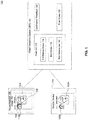
- FIG. 1 is a block diagram 100 illustrating example functionality for providing an object detection and candidate filtering system, according to some embodiments.
- An object detection system (ODS) 102 may increase system throughput by reducing the processing power, memory, and number of computing cycles that would otherwise be required to identify the objects of an image 104.
- ODS 102 may receive information regarding a processing of image 104 from a neural network 106.
- a user may upload image 104 to neural network 106 which may then process the uploaded image 104 as described herein, and output pixel and bounding box information regarding the image 104 to ODS 102.
- Neural network 106 may include a computing system that uses different machine learning algorithms, working together across one or more computing devices, to perform complex data processing tasks - generally (and in some embodiments) without being programmed with any task-specific rules.
- a neural network may be configured or trained to identify images of cats by analyzing images or objects that have been labeled as "cat” or “not cat”. Based on this analysis, the network may dynamically generate characteristics of cats such as tails, fur, whiskers, cat-like faces, etc.
- Neural network 106 may be configured to perform object identification tasks on images, by identifying the various or specified objects of an image 104.
- an image 104 may be provided to neural network 106 which may use various machine-learning algorithms, processes, or computing devices to produce bounding boxes 108 which identify the various objects 110 in the image 104.
- bounding boxes 108 which identify the various objects 110 in the image 104.
- two people objects 110A and 110B are identified in the image 104; however other embodiments, may include other types of object identification such as animals, locations, buildings, etc., and may include more than just two objects.
- image 104 is shown as including only two bounding boxes 108 for each object 110.
- neural network 106 may generate any number (including thousands or tens of thousands) of bounding boxes for an object 110 in image 104.
- each object 110 may include different numbers of generated bounding boxes 108.
- object 110A may have 100 bounding boxes 108
- object 110B has 50 bounding boxes.
- the size of the image 104 and/or objects 110 may correspond to the number of bounding boxes 108 generated. For example, larger objects 110 within in image 104 and larger or higher resolution images 104 may include more bounding boxes.
- the bounding boxes 108 may not be visually displayed on the image itself 104 as they are received by ODS 102. Instead, the bounding box and other output processing information from neural network 106 may be received as pixel information 112.
- pixel information 112 may include metadata or one or more data files associated with a particular or identified image 104. Pixel info 112 may include information that indicates the locations of the various generated bounding boxes 108 for each of the various objects 110 of image 104.
- pixel info 112 may include information pertaining to each pixel (or an identified subset of pixels) of image 104 (at a particular, identified, or pre-defined resolution).
- each pixel of image 104 may have or correspond to its own set of pixel info 112.
- the pixels may be identified based on X, Y coordinates on image 104, or may have unique pixel identifiers that indicate a location of the pixel on image 104 - which may be included in pixel info 112.
- Pixel info 112 may include a confidence score 114 and box dimensions 116 for each pixel for which pixel info 112 is received by ODS 102.
- pixel info 112 may be grouped together based on to which object 108 or set of bounding boxes the pixel is associated. For example, the pixel info 112 for the pixels associated with object 110A may be grouped together, while the pixel info 112 for the pixels associated with object 110B may be grouped together.
- pixel info 112 for identical bounding box predictions 108 for particular objects 110 may be identified by ODS 102 and discarded to save processing resources. For example, if two different machines or processes of neural network 106 predict the same bounding box for one of the objects 110, one of the duplicates may be discarded (e.g., based on having a lower overall confidence score 114).
- Confidence score 114 may indicate a confidence level with which it is estimated or predicted that a bounding box 108 encompasses the respective or identified pixel.
- neural network 106 may estimate or predict an accuracy of each predicted bounding box 108 which may be provided as confidence score 114.
- confidence score 114 For a particular bounding box 108, pixels near the center of the bounding box 108 may often have a higher confidence score 114 than pixels closer to the edges or bounds of each box 108.
- a first set of one or more machines of neural network 106 may output an image 104 with a single predicted or estimated bounding box 108 around a particular object 110.
- the machines may also generate confidence score 114 for each pixel of the image 104.
- the confidence score 114 may indicate a confidence that a bounding box 108 should be generated around a respective pixel.
- pixels near the center of an image 110 as described in further detail below may include bounding boxes 108.
- confidence score 114 may indicate a confidence with which the respective pixel is estimated to be part of the identified object 110 of image 104 or within the identified bounding box 108.
- object identification is primarily used to refer to distinguishing between different objects of a particular image 104.
- the image 104 may include two different cars.
- further processing may be performed (after the objects have been identified) to classify the car objects that were identified.
- classification may include determining the make, model, year, color, dimensions, etc. of the car objects.
- Box dimensions 116 may indicate a length, width, and location of a predicted bounding box 108 associated with a particular output of neural network 106.
- Each output may include one predicted set of bounding boxes 108 for a particular scan or processing of image 104.
- neural network may include two outputs for image 104, in which each output includes two bounding boxes 108 (one associated with each person object 110A, 110B of image 104).
- neural network 106 may provide four outputs, in which each output includes only one bounding box 104 for an object 104 that has been identified for image 104.
- neural network 106 may provide hundreds or thousands (or more) of different outputs (e.g., predicted bounding boxes 108 for objects 110 of image 104).
- ODS 102 may receive pixel info 112 pertaining to an aggregation of the possible bounding boxes 108 for the objects 110 identified in image 104.
- Dimensions 116 may be a measure or other indication as to a size, shape, and location of the bounding boxes of image 104.
- dimensions 116 may indicate a length, width, and start location of the box. The start location may be one of the corners from which length and width are measures (in numbers of pixels).
- dimensions may include an indication of a center of the circle or oval, or a pixel on the circumference, and a circumference measure. In other embodiments, other dimensions and shapes may be identified for various bounding boxes 108.
- dimensions 116 may indicate a measure (e.g., length x width) in pixels of image 104 at a particular resolution.
- dimensions 116 may be 50 pixels x 100 pixels and provide an upper left start location or identification of a particular pixel from image 104.
- the start location may be an upper left, upper right, lower left, or lower right corner of the box.
- ODS 102 would be able to determine from box dimensions 116 how to draw or where a bounding box 108 is located on image 104.
- ODS 102 may calculate a box center 118.
- Box center 118 may be the coordinates or other identifier of a particular pixel or pixels from image 104 that is the center, center point, or near the center of the respective bounding box 108 as indicated by box dimensions 116.
- box center 118 of a particular bounding box 108 may include multiple pixels which may or may not be adjacent to one another in image 104.
- box center 118 of a rectangular box may be equidistant (or near equidistant) to opposing box edges.
- an image processing system may use an algorithm or combine or process the hundreds or thousands (or more) of varying bounding boxes 108 to identify a set of final bounding boxes 120 for image 104.
- the final boxes 120 may include one box per object 110.
- the final boxes 120 may be calculated or determined from the predicated boxes 108 based on their overlap. For example, non-maximum suppression (NMS) may be used to compare two overlapping predicted bounding boxes 108 and eliminate the less accurate one (e.g., based on their relative confidence scores 114).
- NMS non-maximum suppression
- NMS may compare a first bounding box relative to an object 110A to a second, at least partially overlapping bounding box on the same object 110A. Then, for example, based on the relative confidence scores 114, an NMS processor (not shown) may discard the bounding box 108 associated with the lesser confidence scores. NMS may repeat this process over and over again for the hundreds or thousands of bounding box combinations received from a neural network 106. The goal behind NMS may be to end up with one final box 120 for each object 110A, 110B (e.g., such that none of the final boxes 120 are overlapping).
- NMS non-linear (e.g., quadratic) relationship with the number of candidate boxes that are to be processed. For example, if the number of candidate boxes 108 for an object 110A of an image 104 is reduced from 10,000 to 5,000 (e.g., 50%), the time it takes or the resources consumed by NMS in processing the candidate may be reduced from a measure of 100 to a measure of 25 (e.g., greater than the percentage reduction in candidates).
- NMS may include a linear relationship with the candidate boxes, but may include a quadratic or non-linear relationship to the number of processing cycles consumed.
- NMS may be provided as an exemplary processing technique which may be used to reduce, combine, or identify final boxes 120.
- other embodiments may include other processing / bounding box processing or combination techniques to identify final boxes 120.
- ODS 102 may perform a filtering operation prior to submitting candidate bounding boxes 108 to NMS or other processing platform. By performing the filtering operations described herein, ODS 102 may improve operational speed and consume fewer processing resources than would otherwise be required with a direct submission of the candidate outputs from neural network 106 to NMS without prior filtering. Also the filtering operation may use fewer resources relative to NMS.
- ODS 102 may reduce the number of candidate outputs (e.g., combinations of predicted bounding boxes 108 output by neural network 106) submitted to NMS. As an example of the scale of reduction in an embodiment, ODS 102 may reduce the number of candidates from 10,000 to 10. This reduction for a single object may greatly improve system throughput because the filtering operations for reducing the candidates from 10,000 to 10 require fewer processing resources than would be required for NMS to perform the comparison operation to reduce the candidates from 10,000 to 10. However, ODS 102 may perform similar filtering operations for each of the identified objects 110 of image 104, thus further improving performance.
- candidate outputs e.g., combinations of predicted bounding boxes 108 output by neural network 106
- the remaining candidates may then be processed using NMS or another process to produce a set of final boxes 120 (e.g., which may include its own box dimensions to indicate a location, size, and shape of the final boxes 120 on image 104 at a particular or identified resolution).
- This processing may be performed for each identified object of an image, and may increase performance results in dense images with lots of closely located objects.
- ODS 102 may perform confidence filtering. To reduce the processing resources (e.g., computing cycles, memory, etc.), ODS 102 may filter the pixels of image 104 based on their confidence score 114. As indicated above, confidence score 114 may indicate a confidence that a bounding box 108 should be generated around a respective pixel of an object 110 of image 104.
- ODS 102 may apply a confidence threshold 122 to filter out any pixels that do not satisfy confidence threshold 122.
- confidence threshold 122 may be set to 0.50 or 50% such that pixels with confidence scores 114 less than 50% are not further processed by ODS 102, and are discarded.
- pixel information 112 for pixels that do not satisfy confidence threshold 122 may be deleted or otherwise removed (thus freeing up memory resources that would otherwise be required in maintaining the pixel info 112 that is no longer required for further processing).
- confidence filtering may be performed by neural network 106, such that only pixel information 112 for those pixels that satisfy confidence threshold 122 is received by ODS 102 - thus consuming less bandwidth in the transmission of less data, and consuming fewer resources on ODS 102.
- ODS 102 may perform centering filtering operations.
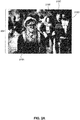
- FIGs. 2A and 2B illustrate example operations related to performing centering filtering in an object detection and candidate filtering system, according to some example embodiments.
- ODS 102 may identify those pixel(s) that are the closest to the predicted center of the various objects 210A-D of an image 204. By identifying the centermost pixels of each predicted object 210, ODS 102 may limit the number of candidate bounding boxes to be processed by NMS to only those bounding boxes corresponding to the centermost pixels of each object 210A-D.
- FIG. 2A illustrates an example display representative of the operations performed by ODS 102, in some embodiments.
- ODS 102 may not generate the actual pixel boxes and arrows images shown FIG. 2A , but may perform processing that is represented by these described features.
- the lettered pixels A-L may correspond to those pixels whose confidence score 114 meets or exceeds confidence threshold 122.
- the arrows indicate a predicted center for a bounding box for that particular pixel.
- a bounding box may include tens, hundreds, or thousands of pixels.
- Each pixel may indicate a confidence score 112 with regard to its inclusion within the bounding box (such that edge pixels may have lower confidence scores than more centered pixels).
- border pixels e.g., near the edge of an image 110
- the corresponding bounding box for each pixel may have a unique center (e.g., box center 118) because different predicted bounding boxes for different pixels may not be the exact same size, shape, and/or location for a particular image.
- the bounding boxes are not illustrated in the example of FIG. 2A .
- the arrows may illustrate where the box center 118 is for the bounding box of each lettered pixel is located.
- the box center 118 of the bounding box for pixel A may be pixel C.
- the box center 118 of the bounding box for pixel J may be itself, and the box center 118 of the bounding box for pixel H may be an unlettered pixel next to G (e.g., whose confidence score did not satisfy confidence threshold 122).
- the box centers may be separated by any different number of pixels.
- the box center 118 of pixel A may be pixel F.
- ODS 102 may iteratively remove pixels to which no other pixel is pointing as a box center 118. For example, with regard to object 210A, in a first iteration, pixels A, B, E and F may be removed or filtered out from being candidates of box centers 118 since no other pixels are pointing to these pixels. In a second iteration, ODS 102 may determine that since C points to D and D points to C, both pixels are to remain.
- ODS 102 may then provide only the bounding boxes (e.g., pixel info 112) corresponding to pixels C and D for resolution by NMS, rather than the pixel info 112 for all of the pixels, or even just the pixel info 112 for the lettered pixels A-F that satisfy confidence threshold 122.
- bounding boxes e.g., pixel info 112
- this reduction in the number of candidate bounding boxes submitted for resolution to determine final boxes 120 may result in a non-linear (e.g., quadratic) improvement in processing speed and corresponding reduction in required processing resources to determine final boxes 120.
- a non-linear (e.g., quadratic) improvement in processing speed and corresponding reduction in required processing resources to determine final boxes 120 may result in a non-linear (e.g., quadratic) improvement in processing speed and corresponding reduction in required processing resources to determine final boxes 120.
- ODS 102 may remove pixel C (e.g., the corresponding pixel info 112) because no remaining pixels point to C (as pixels, A, B, E, and F were already filtered out). ODS 102 may repeat this filtering process multiple times until obtaining a final subset of pixels, with each pixel including at least 1 arrow pointing to it (e.g., are indicated as the box center 118) by at least one other remaining pixel.
- pixel C e.g., the corresponding pixel info 112
- ODS 102 may repeat this filtering process multiple times until obtaining a final subset of pixels, with each pixel including at least 1 arrow pointing to it (e.g., are indicated as the box center 118) by at least one other remaining pixel.
- box M if there was a pixel M below box E that pointed to pixel E, in the first iteration, box M would be filtered out. In the second iteration, pixel E that points to pixel D would be removed. In the third iteration, it may be determined that pixel D remains because pixel C still points to pixel D.
- pixel H may be pointing to a pixel without a letter (e.g., indicating it is a pixel with a low confidence score 114, that is, below confidence threshold 122).
- box H would be filtered out.
- the unmarked box would be filtered out because pixel G is pointing to itself.
- ODS 102 may require that at least one pixel or bounding box is submitted for each object 210 of an image 204. If pixel G also pointed to the unlettered pixel, then different embodiments may result in different pixels being submitted for NMS processing. In an embodiment, the first iteration may result in a determination that the only remaining box is unlettered (e.g., does not satisfy confidence threshold 122) and as such those remaining lettered pixels G and H that satisfy confidence threshold 122 may be provided for NMS processing. In another embodiment, the unlettered box with low confidence may be provided to NMS for processing.
- the minimum number of arrows may be increased beyond 1, which may have the effect of filtering out less prominent objects (e.g., such as object 210C) from the image 104.
- FIG. 2B illustrates an example of how the lettered pixels of FIG. 2A may be filtered by ODS 102, according to an embodiment.
- a bounding box corresponding to one or more centering pixels may be returned.
- pixels C and D may be returned for further processing (e.g., NMS processing).
- pixel G may be returned for further processing.
- pixel J may be returned for further processing.
- pixel L may be returned for further processing.
- final box 120A may be the output of ODS 102, which combines or processes the bounding boxes 108 of image 110A, while final box 120B may represent the output from processing the bounding boxes 108 of image 110B.
- the image including the objects 110A and 110B with final boxes 120A and 120B, respectively, after NMS processing may be provided for display on a user device 124.
- Device 124 may include a mobile device, laptop, television, or other computing device.
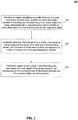
- FIG. 3 is a flowchart 300 illustrating example operations of an object detection and candidate filtering system, according to some embodiments.
- Method 300 can be performed by processing logic that can comprise hardware (e.g., circuitry, dedicated logic, programmable logic, microcode, etc.), software (e.g., instructions executing on a processing device), or a combination thereof. It is to be appreciated that not all steps may be needed to perform the disclosure provided herein. Further, some of the steps may be performed simultaneously, or in a different order than shown in FIG. 3 , as will be understood by a person of ordinary skill in the art. Method 300 shall be described with reference to FIG. 1 . However, method 300 is not limited to the example embodiments.
- an image comprising a plurality of pixels and pixel information for each pixel is received, wherein the pixel information indicates a bounding box corresponding to an object within the image associated with a respective pixel and a confidence score associated with the bounding box for the respective pixel.
- ODS 102 may receive pixel info 112 about the pixels of image 104.
- Pixel info 112 may include confidence scores 114 and box dimension information 116, and box center information 118 may be received or otherwise computed or derived from box dimensions 116.
- pixels that do not correspond to a center of at least one of the bounding boxes are iteratively removed until a subset of pixels each of which correspond to a center of at least one of the bounding boxes remains. For example, as illustrated in the example of FIG. 2A , in a first iteration, pixels A, B, E, and F may be removed as they do not correspond to a box center 118. In other embodiments, multiple iterations may be performed until at least one pixel remains for each object 210A-D, or each remaining pixel is pointed to as the box center 118 by another remaining pixel.
- a final bounding box associated with each object of the image based on an overlapping of the bounding boxes of the subset of pixels and the corresponding confidence scores is determined. For example, after identifying a set of candidate boxes, NMS processing may be performed and a set of final boxes 120 may be generated. The final boxes 120 may be provided for output or display on a device 124.
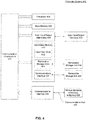
- FIG. 4 Various embodiments may be implemented, for example, using one or more well-known computer systems, such as computer system 400 shown in FIG. 4 .
- One or more computer systems 400 may be used, for example, to implement any of the embodiments discussed herein, as well as combinations and sub-combinations thereof.
- Computer system 400 may include one or more processors (also called central processing units, or CPUs), such as a processor 404.
- processors also called central processing units, or CPUs
- Processor 404 may be connected to a communication infrastructure or bus 406.
- Computer system 400 may also include customer input/output device(s) 403, such as monitors, keyboards, pointing devices, etc., which may communicate with communication infrastructure 406 through customer input/output interface(s) 402.
- customer input/output device(s) 403 such as monitors, keyboards, pointing devices, etc.
- processors 404 may be a graphics processing unit (GPU).
- a GPU may be a processor that is a specialized electronic circuit designed to process mathematically intensive applications.
- the GPU may have a parallel structure that is efficient for parallel processing of large blocks of data, such as mathematically intensive data common to computer graphics applications, images, videos, etc.
- Computer system 400 may also include a main or primary memory 408, such as random access memory (RAM).
- Main memory 408 may include one or more levels of cache.
- Main memory 408 may have stored therein control logic (i.e., computer software) and/or data.
- Computer system 400 may also include one or more secondary storage devices or memory 410.
- Secondary memory 410 may include, for example, a hard disk drive 412 and/or a removable storage device or drive 414.
- Removable storage drive 414 may be a floppy disk drive, a magnetic tape drive, a compact disk drive, an optical storage device, tape backup device, and/or any other storage device/drive.
- Removable storage drive 414 may interact with a removable storage unit 418.
- Removable storage unit 418 may include a computer usable or readable storage device having stored thereon computer software (control logic) and/or data.
- Removable storage unit 418 may be a floppy disk, magnetic tape, compact disk, DVD, optical storage disk, and/ any other computer data storage device.
- Removable storage drive 414 may read from and/or write to removable storage unit 418.
- Secondary memory 410 may include other means, devices, components, instrumentalities or other approaches for allowing computer programs and/or other instructions and/or data to be accessed by computer system 400.
- Such means, devices, components, instrumentalities or other approaches may include, for example, a removable storage unit 422 and an interface 420.
- Examples of the removable storage unit 422 and the interface 420 may include a program cartridge and cartridge interface (such as that found in video game devices), a removable memory chip (such as an EPROM or PROM) and associated socket, a memory stick and USB port, a memory card and associated memory card slot, and/or any other removable storage unit and associated interface.
- Computer system 400 may further include a communication or network interface 424.
- Communication interface 424 may enable computer system 400 to communicate and interact with any combination of external devices, external networks, external entities, etc. (individually and collectively referenced by reference number 428).
- communication interface 424 may allow computer system 400 to communicate with external or remote devices 428 over communications path 426, which may be wired and/or wireless (or a combination thereof), and which may include any combination of LANs, WANs, the Internet, etc.
- Control logic and/or data may be transmitted to and from computer system 400 via communication path 426.
- Computer system 400 may also be any of a personal digital assistant (PDA), desktop workstation, laptop or notebook computer, netbook, tablet, smart phone, smart watch or other wearable, appliance, part of the Internet-of-Things, and/or embedded system, to name a few non-limiting examples, or any combination thereof.
- PDA personal digital assistant
- Computer system 400 may be a client or server, accessing or hosting any applications and/or data through any delivery paradigm, including but not limited to remote or distributed cloud computing solutions; local or on-premises software ("on-premise” cloud-based solutions); "as a service” models (e.g., content as a service (CaaS), digital content as a service (DCaaS), software as a service (SaaS), managed software as a service (MSaaS), platform as a service (PaaS), desktop as a service (DaaS), framework as a service (FaaS), backend as a service (BaaS), mobile backend as a service (MBaaS), infrastructure as a service (IaaS), etc.); and/or a hybrid model including any combination of the foregoing examples or other services or delivery paradigms.
- as a service” models e.g., content as a service (CaaS), digital content as a service (DCaaS), software as a
- Any applicable data structures, file formats, and schemas in computer system 400 may be derived from standards including but not limited to JavaScript Object Notation (JSON), Extensible Markup Language (XML), Yet Another Markup Language (YAML), Extensible Hypertext Markup Language (XHTML), Wireless Markup Language (WML), MessagePack, XML User Interface Language (XUL), or any other functionally similar representations alone or in combination.
- JSON JavaScript Object Notation
- XML Extensible Markup Language
- YAML Yet Another Markup Language
- XHTML Extensible Hypertext Markup Language
- WML Wireless Markup Language
- MessagePack XML User Interface Language
- XUL XML User Interface Language
- a tangible, non-transitory apparatus or article of manufacture comprising a tangible, non-transitory computer useable or readable medium having control logic (software) stored thereon may also be referred to herein as a computer program product or program storage device.
- control logic software stored thereon
- control logic when executed by one or more data processing devices (such as computer system 400), may cause such data processing devices to operate as described herein.
- references herein to "one embodiment,” “an embodiment,” “an example embodiment,” or similar phrases, indicate that the embodiment described can include a particular feature, structure, or characteristic, but every embodiment can not necessarily include the particular feature, structure, or characteristic. Moreover, such phrases are not necessarily referring to the same embodiment. Further, when a particular feature, structure, or characteristic is described in connection with an embodiment, it would be within the knowledge of persons skilled in the relevant art(s) to incorporate such feature, structure, or characteristic into other embodiments whether or not explicitly mentioned or described herein. Additionally, some embodiments can be described using the expression “coupled” and “connected” along with their derivatives. These terms are not necessarily intended as synonyms for each other.
- Coupled can also mean that two or more elements are not in direct contact with each other, but yet still co-operate or interact with each other.
Landscapes
- Engineering & Computer Science (AREA)
- Theoretical Computer Science (AREA)
- Physics & Mathematics (AREA)
- General Physics & Mathematics (AREA)
- Data Mining & Analysis (AREA)
- General Engineering & Computer Science (AREA)
- Life Sciences & Earth Sciences (AREA)
- Evolutionary Computation (AREA)
- Artificial Intelligence (AREA)
- Computer Vision & Pattern Recognition (AREA)
- Biophysics (AREA)
- General Health & Medical Sciences (AREA)
- Software Systems (AREA)
- Health & Medical Sciences (AREA)
- Biomedical Technology (AREA)
- Mathematical Physics (AREA)
- Computational Linguistics (AREA)
- Computing Systems (AREA)
- Molecular Biology (AREA)
- Evolutionary Biology (AREA)
- Bioinformatics & Cheminformatics (AREA)
- Bioinformatics & Computational Biology (AREA)
- Databases & Information Systems (AREA)
- Image Analysis (AREA)
Applications Claiming Priority (2)
| Application Number | Priority Date | Filing Date | Title |
|---|---|---|---|
| US16/288,357 US10915786B2 (en) | 2019-02-28 | 2019-02-28 | Object detection and candidate filtering system |
| EP19207364.1A EP3703010B1 (fr) | 2019-02-28 | 2019-11-06 | Détection d'objet et système de filtrage candidat |
Related Parent Applications (1)
| Application Number | Title | Priority Date | Filing Date |
|---|---|---|---|
| EP19207364.1A Division EP3703010B1 (fr) | 2019-02-28 | 2019-11-06 | Détection d'objet et système de filtrage candidat |
Publications (3)
| Publication Number | Publication Date |
|---|---|
| EP3876201A1 true EP3876201A1 (fr) | 2021-09-08 |
| EP3876201C0 EP3876201C0 (fr) | 2024-05-22 |
| EP3876201B1 EP3876201B1 (fr) | 2024-05-22 |
Family
ID=68470325
Family Applications (2)
| Application Number | Title | Priority Date | Filing Date |
|---|---|---|---|
| EP21167995.6A Active EP3876201B1 (fr) | 2019-02-28 | 2019-11-06 | Détection d'objet et système de filtrage candidat |
| EP19207364.1A Active EP3703010B1 (fr) | 2019-02-28 | 2019-11-06 | Détection d'objet et système de filtrage candidat |
Family Applications After (1)
| Application Number | Title | Priority Date | Filing Date |
|---|---|---|---|
| EP19207364.1A Active EP3703010B1 (fr) | 2019-02-28 | 2019-11-06 | Détection d'objet et système de filtrage candidat |
Country Status (3)
| Country | Link |
|---|---|
| US (1) | US10915786B2 (fr) |
| EP (2) | EP3876201B1 (fr) |
| CN (1) | CN111625668B (fr) |
Families Citing this family (14)
| Publication number | Priority date | Publication date | Assignee | Title |
|---|---|---|---|---|
| US11188740B2 (en) * | 2019-12-18 | 2021-11-30 | Qualcomm Incorporated | Two-pass omni-directional object detection |
| CN111931723B (zh) * | 2020-09-23 | 2021-01-05 | 北京易真学思教育科技有限公司 | 目标检测与图像识别方法和设备、计算机可读介质 |
| US11562554B1 (en) | 2020-11-12 | 2023-01-24 | Amazon Technologies, Inc. | Workload reduction for non-maximum suppression operation |
| KR20220083232A (ko) * | 2020-12-11 | 2022-06-20 | 현대자동차주식회사 | 객체의 픽셀 데이터 생성 방법, 객체의 방향성 결정 방법, 객체 추적 방법 및 장치와 이 방법을 실행하기 위한 프로그램을 기록한 기록 매체 |
| US20240104947A1 (en) * | 2020-12-14 | 2024-03-28 | Mars, Incorporated | Systems and methods for classifying food products |
| WO2022150978A1 (fr) | 2021-01-12 | 2022-07-21 | Nvidia Corporation | Agrégation de rectangles englobants voisines pour réseaux neuronaux |
| CN112863187B (zh) * | 2021-01-18 | 2022-04-15 | 阿波罗智联(北京)科技有限公司 | 感知模型的检测方法、电子设备、路侧设备和云控平台 |
| US11798269B2 (en) * | 2021-03-16 | 2023-10-24 | Kneron (Taiwan) Co., Ltd. | Fast non-maximum suppression algorithm for object detection |
| GB2610457A (en) * | 2021-03-31 | 2023-03-08 | Nvidia Corp | Generation of bounding boxes |
| KR20220143404A (ko) * | 2021-04-16 | 2022-10-25 | 현대자동차주식회사 | 센서 정보 융합 방법 및 장치와 이 방법을 실행하기 위한 프로그램을 기록한 기록 매체 |
| US12462604B2 (en) * | 2021-06-03 | 2025-11-04 | U-Haul International, Inc. | Method and system for verifying uploaded customer photographs |
| CN113658259A (zh) * | 2021-08-30 | 2021-11-16 | 武汉科技大学 | 基于视觉定位的冷轧厂轧辊的自动抓取方法 |
| CN114612678A (zh) * | 2022-02-23 | 2022-06-10 | 武汉路特斯汽车有限公司 | 视觉感知算法评测方法 |
| US20260051139A1 (en) * | 2024-08-19 | 2026-02-19 | Synaptics Incorporated | Object detection with dynamic confidence thresholds |
Citations (1)
| Publication number | Priority date | Publication date | Assignee | Title |
|---|---|---|---|---|
| US20190057507A1 (en) * | 2017-08-18 | 2019-02-21 | Samsung Electronics Co., Ltd. | System and method for semantic segmentation of images |
Family Cites Families (19)
| Publication number | Priority date | Publication date | Assignee | Title |
|---|---|---|---|---|
| US9769354B2 (en) * | 2005-03-24 | 2017-09-19 | Kofax, Inc. | Systems and methods of processing scanned data |
| US8180178B2 (en) * | 2009-06-24 | 2012-05-15 | Hewlett-Packard Development Company, L.P. | Autocropping and autolayout method for digital images |
| US8938116B2 (en) * | 2011-12-08 | 2015-01-20 | Yahoo! Inc. | Image cropping using supervised learning |
| KR101697652B1 (ko) * | 2012-04-25 | 2017-01-18 | 한국전자통신연구원 | 3차원 영상 시스템에서 영상 객체를 추출하기 위한 장치 및 그 방법 |
| EP2804128A3 (fr) * | 2013-03-22 | 2015-04-08 | MegaChips Corporation | Dispositif de détection d'être humain |
| GB2529671B (en) * | 2014-08-28 | 2017-03-08 | Canon Kk | Transformation of 3-D object for object segmentation in 3-D medical image |
| EP3265994B1 (fr) * | 2015-03-06 | 2020-01-15 | Flir Systems, Inc. | Détection de pixels anormaux |
| US9542751B2 (en) * | 2015-05-08 | 2017-01-10 | Qualcomm Incorporated | Systems and methods for reducing a plurality of bounding regions |
| WO2017126225A1 (fr) * | 2016-01-22 | 2017-07-27 | 日産自動車株式会社 | Procédé et dispositif de détermination de piéton |
| US10482681B2 (en) * | 2016-02-09 | 2019-11-19 | Intel Corporation | Recognition-based object segmentation of a 3-dimensional image |
| CN106295678B (zh) * | 2016-07-27 | 2020-03-06 | 北京旷视科技有限公司 | 神经网络训练与构建方法和装置以及目标检测方法和装置 |
| US10657364B2 (en) * | 2016-09-23 | 2020-05-19 | Samsung Electronics Co., Ltd | System and method for deep network fusion for fast and robust object detection |
| US10346723B2 (en) * | 2016-11-01 | 2019-07-09 | Snap Inc. | Neural network for object detection in images |
| CN117095349A (zh) * | 2016-12-05 | 2023-11-21 | 摩托罗拉解决方案公司 | 外观搜索系统、方法和非暂时性计算机可读介质 |
| WO2018119668A1 (fr) * | 2016-12-27 | 2018-07-05 | 深圳大学 | Procédé et système de reconnaissance de la tête d'un piéton |
| US10380853B1 (en) * | 2017-05-22 | 2019-08-13 | Amazon Technologies, Inc. | Presence detection and detection localization |
| US10997727B2 (en) * | 2017-11-07 | 2021-05-04 | Align Technology, Inc. | Deep learning for tooth detection and evaluation |
| US10579901B2 (en) * | 2017-12-05 | 2020-03-03 | Canon Kabushiki Kaisha | Method, system and apparatus for comparing objects in images |
| US10157331B1 (en) * | 2018-03-08 | 2018-12-18 | Capital One Services, Llc | Systems and methods for image preprocessing to improve accuracy of object recognition |
-
2019
- 2019-02-28 US US16/288,357 patent/US10915786B2/en active Active
- 2019-11-06 EP EP21167995.6A patent/EP3876201B1/fr active Active
- 2019-11-06 EP EP19207364.1A patent/EP3703010B1/fr active Active
- 2019-11-20 CN CN201911141339.2A patent/CN111625668B/zh active Active
Patent Citations (1)
| Publication number | Priority date | Publication date | Assignee | Title |
|---|---|---|---|---|
| US20190057507A1 (en) * | 2017-08-18 | 2019-02-21 | Samsung Electronics Co., Ltd. | System and method for semantic segmentation of images |
Non-Patent Citations (3)
| Title |
|---|
| LI YUEZUN ET AL: "Pixel Offset Regression (POR) for Single-shot Instance Segmentation", 2018 15TH IEEE INTERNATIONAL CONFERENCE ON ADVANCED VIDEO AND SIGNAL BASED SURVEILLANCE (AVSS), IEEE, 27 November 2018 (2018-11-27), pages 1 - 6, XP033518304, DOI: 10.1109/AVSS.2018.8639428 * |
| SHANGBANG LONG ET AL: "Scene Text Detection and Recognition: The Deep Learning Era", ARXIV.ORG, CORNELL UNIVERSITY LIBRARY, 201 OLIN LIBRARY CORNELL UNIVERSITY ITHACA, NY 14853, 10 November 2018 (2018-11-10), XP081490429 * |
| XINGYI ZHOU ET AL: "Bottom-up Object Detection by Grouping Extreme and Center Points", ARXIV.ORG, CORNELL UNIVERSITY LIBRARY, 201 OLIN LIBRARY CORNELL UNIVERSITY ITHACA, NY 14853, 23 January 2019 (2019-01-23), XP081161561 * |
Also Published As
| Publication number | Publication date |
|---|---|
| EP3876201C0 (fr) | 2024-05-22 |
| US20200279128A1 (en) | 2020-09-03 |
| CN111625668B (zh) | 2021-09-21 |
| EP3703010B1 (fr) | 2021-04-14 |
| US10915786B2 (en) | 2021-02-09 |
| CN111625668A (zh) | 2020-09-04 |
| EP3876201B1 (fr) | 2024-05-22 |
| EP3703010A1 (fr) | 2020-09-02 |
Similar Documents
| Publication | Publication Date | Title |
|---|---|---|
| EP3876201B1 (fr) | Détection d'objet et système de filtrage candidat | |
| US11861919B2 (en) | Text recognition method and device, and electronic device | |
| CN112801164A (zh) | 目标检测模型的训练方法、装置、设备及存储介质 | |
| US12118770B2 (en) | Image recognition method and apparatus, electronic device and readable storage medium | |
| EP3905126A2 (fr) | Procédé et appareil de groupement d'images | |
| CN109711508B (zh) | 图像处理方法和装置 | |
| CN113657483A (zh) | 模型训练方法、目标检测方法、装置、设备以及存储介质 | |
| CN113657249A (zh) | 训练方法、预测方法、装置、电子设备以及存储介质 | |
| CN112861885A (zh) | 图像识别方法、装置、电子设备及存储介质 | |
| CN113516185A (zh) | 模型训练的方法、装置、电子设备及存储介质 | |
| CN115049882A (zh) | 模型的训练方法、图像多标签分类方法、装置及电子设备 | |
| CN113963011A (zh) | 图像识别方法、装置、电子设备及存储介质 | |
| CN115632874A (zh) | 一种实体对象的威胁检测方法、装置、设备及存储介质 | |
| CN113627526B (zh) | 车辆标识的识别方法、装置、电子设备和介质 | |
| CN112131199B (zh) | 一种日志处理方法、装置、设备及介质 | |
| CN114998649B (zh) | 图像分类模型的训练方法、图像分类方法及装置 | |
| CN114037865B (zh) | 图像处理方法、装置、设备、存储介质和程序产品 | |
| CN111507944A (zh) | 皮肤光滑度的确定方法、装置和电子设备 | |
| CN114648814A (zh) | 人脸活体检测方法及模型的训练方法、装置、设备及介质 | |
| CN113377998A (zh) | 数据加载的方法、装置、电子设备及存储介质 | |
| CN115984618B (zh) | 图像检测模型训练、图像检测方法、装置、设备及介质 | |
| CN114418123B (zh) | 一种模型降噪方法、装置、电子设备及存储介质 | |
| CN115841475A (zh) | 一种心脏图像分割方法、装置、设备及存储介质 | |
| CN116385789A (zh) | 图像处理方法、训练方法、装置、电子设备及存储介质 | |
| CN116468479A (zh) | 确定页面质量评估维度方法、页面质量的评估方法和装置 |
Legal Events
| Date | Code | Title | Description |
|---|---|---|---|
| PUAI | Public reference made under article 153(3) epc to a published international application that has entered the european phase |
Free format text: ORIGINAL CODE: 0009012 |
|
| STAA | Information on the status of an ep patent application or granted ep patent |
Free format text: STATUS: THE APPLICATION HAS BEEN PUBLISHED |
|
| AC | Divisional application: reference to earlier application |
Ref document number: 3703010 Country of ref document: EP Kind code of ref document: P |
|
| AK | Designated contracting states |
Kind code of ref document: A1 Designated state(s): AL AT BE BG CH CY CZ DE DK EE ES FI FR GB GR HR HU IE IS IT LI LT LU LV MC MK MT NL NO PL PT RO RS SE SI SK SM TR |
|
| STAA | Information on the status of an ep patent application or granted ep patent |
Free format text: STATUS: REQUEST FOR EXAMINATION WAS MADE |
|
| 17P | Request for examination filed |
Effective date: 20220217 |
|
| RBV | Designated contracting states (corrected) |
Designated state(s): AL AT BE BG CH CY CZ DE DK EE ES FI FR GB GR HR HU IE IS IT LI LT LU LV MC MK MT NL NO PL PT RO RS SE SI SK SM TR |
|
| GRAP | Despatch of communication of intention to grant a patent |
Free format text: ORIGINAL CODE: EPIDOSNIGR1 |
|
| STAA | Information on the status of an ep patent application or granted ep patent |
Free format text: STATUS: GRANT OF PATENT IS INTENDED |
|
| INTG | Intention to grant announced |
Effective date: 20240105 |
|
| GRAS | Grant fee paid |
Free format text: ORIGINAL CODE: EPIDOSNIGR3 |
|
| GRAA | (expected) grant |
Free format text: ORIGINAL CODE: 0009210 |
|
| STAA | Information on the status of an ep patent application or granted ep patent |
Free format text: STATUS: THE PATENT HAS BEEN GRANTED |
|
| AC | Divisional application: reference to earlier application |
Ref document number: 3703010 Country of ref document: EP Kind code of ref document: P |
|
| AK | Designated contracting states |
Kind code of ref document: B1 Designated state(s): AL AT BE BG CH CY CZ DE DK EE ES FI FR GB GR HR HU IE IS IT LI LT LU LV MC MK MT NL NO PL PT RO RS SE SI SK SM TR |
|
| REG | Reference to a national code |
Ref country code: GB Ref legal event code: FG4D |
|
| REG | Reference to a national code |
Ref country code: CH Ref legal event code: EP |
|
| REG | Reference to a national code |
Ref country code: DE Ref legal event code: R096 Ref document number: 602019052805 Country of ref document: DE |
|
| REG | Reference to a national code |
Ref country code: IE Ref legal event code: FG4D |
|
| U01 | Request for unitary effect filed |
Effective date: 20240621 |
|
| U07 | Unitary effect registered |
Designated state(s): AT BE BG DE DK EE FI FR IT LT LU LV MT NL PT SE SI Effective date: 20240701 |
|
| PG25 | Lapsed in a contracting state [announced via postgrant information from national office to epo] |
Ref country code: IS Free format text: LAPSE BECAUSE OF FAILURE TO SUBMIT A TRANSLATION OF THE DESCRIPTION OR TO PAY THE FEE WITHIN THE PRESCRIBED TIME-LIMIT Effective date: 20240922 |
|
| PG25 | Lapsed in a contracting state [announced via postgrant information from national office to epo] |
Ref country code: HR Free format text: LAPSE BECAUSE OF FAILURE TO SUBMIT A TRANSLATION OF THE DESCRIPTION OR TO PAY THE FEE WITHIN THE PRESCRIBED TIME-LIMIT Effective date: 20240522 |
|
| PG25 | Lapsed in a contracting state [announced via postgrant information from national office to epo] |
Ref country code: GR Free format text: LAPSE BECAUSE OF FAILURE TO SUBMIT A TRANSLATION OF THE DESCRIPTION OR TO PAY THE FEE WITHIN THE PRESCRIBED TIME-LIMIT Effective date: 20240823 |
|
| PG25 | Lapsed in a contracting state [announced via postgrant information from national office to epo] |
Ref country code: ES Free format text: LAPSE BECAUSE OF FAILURE TO SUBMIT A TRANSLATION OF THE DESCRIPTION OR TO PAY THE FEE WITHIN THE PRESCRIBED TIME-LIMIT Effective date: 20240522 |
|
| PG25 | Lapsed in a contracting state [announced via postgrant information from national office to epo] |
Ref country code: PL Free format text: LAPSE BECAUSE OF FAILURE TO SUBMIT A TRANSLATION OF THE DESCRIPTION OR TO PAY THE FEE WITHIN THE PRESCRIBED TIME-LIMIT Effective date: 20240522 |
|
| PG25 | Lapsed in a contracting state [announced via postgrant information from national office to epo] |
Ref country code: PL Free format text: LAPSE BECAUSE OF FAILURE TO SUBMIT A TRANSLATION OF THE DESCRIPTION OR TO PAY THE FEE WITHIN THE PRESCRIBED TIME-LIMIT Effective date: 20240522 Ref country code: NO Free format text: LAPSE BECAUSE OF FAILURE TO SUBMIT A TRANSLATION OF THE DESCRIPTION OR TO PAY THE FEE WITHIN THE PRESCRIBED TIME-LIMIT Effective date: 20240822 Ref country code: IS Free format text: LAPSE BECAUSE OF FAILURE TO SUBMIT A TRANSLATION OF THE DESCRIPTION OR TO PAY THE FEE WITHIN THE PRESCRIBED TIME-LIMIT Effective date: 20240922 Ref country code: HR Free format text: LAPSE BECAUSE OF FAILURE TO SUBMIT A TRANSLATION OF THE DESCRIPTION OR TO PAY THE FEE WITHIN THE PRESCRIBED TIME-LIMIT Effective date: 20240522 Ref country code: GR Free format text: LAPSE BECAUSE OF FAILURE TO SUBMIT A TRANSLATION OF THE DESCRIPTION OR TO PAY THE FEE WITHIN THE PRESCRIBED TIME-LIMIT Effective date: 20240823 Ref country code: ES Free format text: LAPSE BECAUSE OF FAILURE TO SUBMIT A TRANSLATION OF THE DESCRIPTION OR TO PAY THE FEE WITHIN THE PRESCRIBED TIME-LIMIT Effective date: 20240522 Ref country code: RS Free format text: LAPSE BECAUSE OF FAILURE TO SUBMIT A TRANSLATION OF THE DESCRIPTION OR TO PAY THE FEE WITHIN THE PRESCRIBED TIME-LIMIT Effective date: 20240822 |
|
| U20 | Renewal fee for the european patent with unitary effect paid |
Year of fee payment: 6 Effective date: 20241126 |
|
| PG25 | Lapsed in a contracting state [announced via postgrant information from national office to epo] |
Ref country code: CZ Free format text: LAPSE BECAUSE OF FAILURE TO SUBMIT A TRANSLATION OF THE DESCRIPTION OR TO PAY THE FEE WITHIN THE PRESCRIBED TIME-LIMIT Effective date: 20240522 |
|
| PG25 | Lapsed in a contracting state [announced via postgrant information from national office to epo] |
Ref country code: RO Free format text: LAPSE BECAUSE OF FAILURE TO SUBMIT A TRANSLATION OF THE DESCRIPTION OR TO PAY THE FEE WITHIN THE PRESCRIBED TIME-LIMIT Effective date: 20240522 Ref country code: SK Free format text: LAPSE BECAUSE OF FAILURE TO SUBMIT A TRANSLATION OF THE DESCRIPTION OR TO PAY THE FEE WITHIN THE PRESCRIBED TIME-LIMIT Effective date: 20240522 |
|
| PG25 | Lapsed in a contracting state [announced via postgrant information from national office to epo] |
Ref country code: SK Free format text: LAPSE BECAUSE OF FAILURE TO SUBMIT A TRANSLATION OF THE DESCRIPTION OR TO PAY THE FEE WITHIN THE PRESCRIBED TIME-LIMIT Effective date: 20240522 Ref country code: RO Free format text: LAPSE BECAUSE OF FAILURE TO SUBMIT A TRANSLATION OF THE DESCRIPTION OR TO PAY THE FEE WITHIN THE PRESCRIBED TIME-LIMIT Effective date: 20240522 Ref country code: CZ Free format text: LAPSE BECAUSE OF FAILURE TO SUBMIT A TRANSLATION OF THE DESCRIPTION OR TO PAY THE FEE WITHIN THE PRESCRIBED TIME-LIMIT Effective date: 20240522 |
|
| REG | Reference to a national code |
Ref country code: DE Ref legal event code: R097 Ref document number: 602019052805 Country of ref document: DE |
|
| PLBE | No opposition filed within time limit |
Free format text: ORIGINAL CODE: 0009261 |
|
| STAA | Information on the status of an ep patent application or granted ep patent |
Free format text: STATUS: NO OPPOSITION FILED WITHIN TIME LIMIT |
|
| 26N | No opposition filed |
Effective date: 20250225 |
|
| REG | Reference to a national code |
Ref country code: CH Ref legal event code: PL |
|
| PG25 | Lapsed in a contracting state [announced via postgrant information from national office to epo] |
Ref country code: MC Free format text: LAPSE BECAUSE OF FAILURE TO SUBMIT A TRANSLATION OF THE DESCRIPTION OR TO PAY THE FEE WITHIN THE PRESCRIBED TIME-LIMIT Effective date: 20240522 |
|
| REG | Reference to a national code |
Ref country code: CH Ref legal event code: PL |
|
| PG25 | Lapsed in a contracting state [announced via postgrant information from national office to epo] |
Ref country code: CH Free format text: LAPSE BECAUSE OF NON-PAYMENT OF DUE FEES Effective date: 20241130 |
|
| PG25 | Lapsed in a contracting state [announced via postgrant information from national office to epo] |
Ref country code: IE Free format text: LAPSE BECAUSE OF NON-PAYMENT OF DUE FEES Effective date: 20241106 |
|
| U20 | Renewal fee for the european patent with unitary effect paid |
Year of fee payment: 7 Effective date: 20251127 |
|
| PGFP | Annual fee paid to national office [announced via postgrant information from national office to epo] |
Ref country code: GB Payment date: 20251121 Year of fee payment: 7 |
|
| PG25 | Lapsed in a contracting state [announced via postgrant information from national office to epo] |
Ref country code: HU Free format text: LAPSE BECAUSE OF FAILURE TO SUBMIT A TRANSLATION OF THE DESCRIPTION OR TO PAY THE FEE WITHIN THE PRESCRIBED TIME-LIMIT; INVALID AB INITIO Effective date: 20191106 |
|
| PG25 | Lapsed in a contracting state [announced via postgrant information from national office to epo] |
Ref country code: CY Free format text: LAPSE BECAUSE OF FAILURE TO SUBMIT A TRANSLATION OF THE DESCRIPTION OR TO PAY THE FEE WITHIN THE PRESCRIBED TIME-LIMIT; INVALID AB INITIO Effective date: 20191106 |
|
| PG25 | Lapsed in a contracting state [announced via postgrant information from national office to epo] |
Ref country code: SM Free format text: LAPSE BECAUSE OF FAILURE TO SUBMIT A TRANSLATION OF THE DESCRIPTION OR TO PAY THE FEE WITHIN THE PRESCRIBED TIME-LIMIT; INVALID AB INITIO Effective date: 20191106 |