EP3876451B1 - Verfahren und vorrichtung für informationsrückkopplung - Google Patents
Verfahren und vorrichtung für informationsrückkopplung Download PDFInfo
- Publication number
- EP3876451B1 EP3876451B1 EP18938739.2A EP18938739A EP3876451B1 EP 3876451 B1 EP3876451 B1 EP 3876451B1 EP 18938739 A EP18938739 A EP 18938739A EP 3876451 B1 EP3876451 B1 EP 3876451B1
- Authority
- EP
- European Patent Office
- Prior art keywords
- transmission position
- terminal
- information
- unlicensed channel
- harq
- Prior art date
- Legal status (The legal status is an assumption and is not a legal conclusion. Google has not performed a legal analysis and makes no representation as to the accuracy of the status listed.)
- Active
Links
Images




Classifications
-
- H—ELECTRICITY
- H04—ELECTRIC COMMUNICATION TECHNIQUE
- H04L—TRANSMISSION OF DIGITAL INFORMATION, e.g. TELEGRAPHIC COMMUNICATION
- H04L1/00—Arrangements for detecting or preventing errors in the information received
- H04L1/12—Arrangements for detecting or preventing errors in the information received by using return channel
- H04L1/16—Arrangements for detecting or preventing errors in the information received by using return channel in which the return channel carries supervisory signals, e.g. repetition request signals
- H04L1/18—Automatic repetition systems, e.g. Van Duuren systems
- H04L1/1806—Go-back-N protocols
-
- H—ELECTRICITY
- H04—ELECTRIC COMMUNICATION TECHNIQUE
- H04W—WIRELESS COMMUNICATION NETWORKS
- H04W74/00—Wireless channel access
- H04W74/08—Non-scheduled access, e.g. ALOHA
- H04W74/0808—Non-scheduled access, e.g. ALOHA using carrier sensing, e.g. carrier sense multiple access [CSMA]
-
- H—ELECTRICITY
- H04—ELECTRIC COMMUNICATION TECHNIQUE
- H04W—WIRELESS COMMUNICATION NETWORKS
- H04W72/00—Local resource management
- H04W72/12—Wireless traffic scheduling
- H04W72/1215—Wireless traffic scheduling for collaboration of different radio technologies
-
- H—ELECTRICITY
- H04—ELECTRIC COMMUNICATION TECHNIQUE
- H04L—TRANSMISSION OF DIGITAL INFORMATION, e.g. TELEGRAPHIC COMMUNICATION
- H04L1/00—Arrangements for detecting or preventing errors in the information received
- H04L1/12—Arrangements for detecting or preventing errors in the information received by using return channel
- H04L1/16—Arrangements for detecting or preventing errors in the information received by using return channel in which the return channel carries supervisory signals, e.g. repetition request signals
- H04L1/1607—Details of the supervisory signal
- H04L1/1671—Details of the supervisory signal the supervisory signal being transmitted together with control information
- H04L1/1678—Details of the supervisory signal the supervisory signal being transmitted together with control information where the control information is for timing, e.g. time stamps
-
- H—ELECTRICITY
- H04—ELECTRIC COMMUNICATION TECHNIQUE
- H04L—TRANSMISSION OF DIGITAL INFORMATION, e.g. TELEGRAPHIC COMMUNICATION
- H04L1/00—Arrangements for detecting or preventing errors in the information received
- H04L1/12—Arrangements for detecting or preventing errors in the information received by using return channel
- H04L1/16—Arrangements for detecting or preventing errors in the information received by using return channel in which the return channel carries supervisory signals, e.g. repetition request signals
- H04L1/18—Automatic repetition systems, e.g. Van Duuren systems
- H04L1/1812—Hybrid protocols; Hybrid automatic repeat request [HARQ]
-
- H—ELECTRICITY
- H04—ELECTRIC COMMUNICATION TECHNIQUE
- H04L—TRANSMISSION OF DIGITAL INFORMATION, e.g. TELEGRAPHIC COMMUNICATION
- H04L1/00—Arrangements for detecting or preventing errors in the information received
- H04L1/12—Arrangements for detecting or preventing errors in the information received by using return channel
- H04L1/16—Arrangements for detecting or preventing errors in the information received by using return channel in which the return channel carries supervisory signals, e.g. repetition request signals
- H04L1/18—Automatic repetition systems, e.g. Van Duuren systems
- H04L1/1829—Arrangements specially adapted for the receiver end
- H04L1/1854—Scheduling and prioritising arrangements
-
- H—ELECTRICITY
- H04—ELECTRIC COMMUNICATION TECHNIQUE
- H04L—TRANSMISSION OF DIGITAL INFORMATION, e.g. TELEGRAPHIC COMMUNICATION
- H04L5/00—Arrangements affording multiple use of the transmission path
- H04L5/003—Arrangements for allocating sub-channels of the transmission path
- H04L5/0053—Allocation of signalling, i.e. of overhead other than pilot signals
-
- H—ELECTRICITY
- H04—ELECTRIC COMMUNICATION TECHNIQUE
- H04L—TRANSMISSION OF DIGITAL INFORMATION, e.g. TELEGRAPHIC COMMUNICATION
- H04L5/00—Arrangements affording multiple use of the transmission path
- H04L5/003—Arrangements for allocating sub-channels of the transmission path
- H04L5/0053—Allocation of signalling, i.e. of overhead other than pilot signals
- H04L5/0055—Physical resource allocation for ACK/NACK
-
- H—ELECTRICITY
- H04—ELECTRIC COMMUNICATION TECHNIQUE
- H04W—WIRELESS COMMUNICATION NETWORKS
- H04W72/00—Local resource management
- H04W72/20—Control channels or signalling for resource management
-
- H—ELECTRICITY
- H04—ELECTRIC COMMUNICATION TECHNIQUE
- H04W—WIRELESS COMMUNICATION NETWORKS
- H04W72/00—Local resource management
- H04W72/20—Control channels or signalling for resource management
- H04W72/21—Control channels or signalling for resource management in the uplink direction of a wireless link, i.e. towards the network
Definitions
- next-generation communication systems flexible configuration of multiple service types is to be supported. Further, different service types correspond to different service requirements. For example, an enhanced Mobile Broad Band (eMBB) service type has major requirements focusing on aspects such as large bandwidth and high data rate; an Ultra Reliable Low Latency Communication (URLLC) service type has major requirements focusing on high reliability and low latency; and a massive Machine Type Communication (mMTC) service type has major requirements focusing on a large number of connections.
- eMBB enhanced Mobile Broad Band
- URLLC Ultra Reliable Low Latency Communication
- mMTC massive Machine Type Communication
- XIAOMI "Discussion on the HARQ enhancement for NR-U" discusses the HARQ enhancement for NR-U.
- Rel-15 NR design wherein the timing between the PDSCH and corresponding HARQ transmissions is indicated by the PDSCH-to-HARQ-timing-indicator in the scheduling DCI.
- examples of the present disclosure provide an information feedback method and apparatus.
- an information feedback method is provided according to claim 1.
- an information feedback apparatus is provided according to claim 6.
- a non-transitory computer readable storage medium is provided according to claim 7.
- Dependent claims provide further embodiments of the invention.
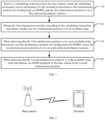
- a terminal can determine a second transmission position for feeding back HARQ when a first transmission position obtained by the scheduling instruction for feeding back the HARQ is detected to be in a non-available state, where the first transmission position is on a first unlicensed channel resource and the second transmission position is on a second unlicensed channel resource. Further, when detecting that the second transmission position is in an available state, the terminal sends information on HARQ feedback to a base station at the second transmission position, thereby realizing information feedback on an unlicensed channel resource and improving reliability of the information feedback.
- a base station can configure a scheduling instruction for a terminal and send the scheduling instruction to the terminal.
- the terminal can send information on HARQ feedback to the base station at a second transmission position when a first transmission position determined by the scheduling instruction is detected to be in a non-available state and the second transmission position determined for feeding back the HARQ is in an available state, where the second transmission position is on the second unlicensed channel resource.
- information feedback on an unlicensed channel resource is realized and reliability of the information feedback is improved.
- the first transmission position may be in an available state or may be in a non-available state. If the first transmission position is in an available state, it indicates that the terminal is capable of sending information on HARQ feedback to the base station at the first transmission position. If the first transmission position is in a non-available state, it indicates that the terminal cannot send the information on the HARQ feedback to the base station at the first transmission position.
- (1-3) A plurality of BWPs configured on a plurality of unlicensed carriers.
- the plurality of unlicensed channel resources configured by the base station for the terminal may be the plurality of BWPs on the plurality of unlicensed carriers.
- a BWP refers to contiguous resources on a band within a carrier.
- step 140 when the second transmission position is detected to be in the available state, the information on the HARQ feedback is sent to the base station at the second transmission position.
- FIG. 4 is a flowchart illustrating another information feedback method according to the present invention.
- the information feedback method is applicable to a terminal. The method is based on the method shown in FIG. 1 .
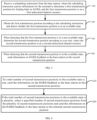
- the scheduling instruction includes first time domain position information and/or first frequency domain position information configured for the terminal by the base station to indicate the second transmission position. As shown in FIG. 4 , when step 130 of determining the second transmission position for feeding back the HARQ is performed, the following step 410 may be included.
- FIG. 5 is a flowchart illustrating another information feedback method according to an example.
- the information feedback method may be applicable to be a terminal. The method is based on the method shown in FIG. 1 . As shown in FIG. 5 , when step 130 of determining the second transmission position for feeding back the HARQ is performed, the following step 510 may be included.
- step 510 may include the following.
- the set rule includes a second correspondence between second unlicensed channel resource and specified frequency offset value, where a specified frequency offset value refers to a frequency domain offset value between the first transmission position on the first unlicensed channel resource for HARQ feedback and the second transmission position on the second unlicensed channel resource for HARQ backup feedback.
- step 510 may include the following.
- the set rule includes the first correspondence in the first circumstance and the second correspondence in the second circumstance.
- step 510 may include the following.
- the second transmission position on the second unlicensed channel resource may be determined according to the set rule, thereby improving efficiency of determining the transmission position for the HARQ backup feedback.
- FIG. 6 is a flowchart illustrating another information feedback method according to an example.
- the information feedback method may be applicable to a terminal. The method is based on the method shown in FIG. 1 . As shown in FIG. 6 , step 130 may include the following steps 610-620.
- the information on the HARQ feedback is sent to the base station at that second transmission position.
- the second transmission position is used to characterize a specified position for sending HARQ backup feedback, and second transmission positions corresponding to different unlicensed channel resources can be different.
- the terminal can send the information on the HARQ feedback to the base station at the second transmission position on BWP 3.
- step 620 if the total number of second transmission positions in the available state is a plurality, a specified number of second transmission positions are selected from the plurality of second transmission positions, and the information on the HARQ feedback is sent to the base station at the selected second transmission position.
- no matter what method is used to determine the second transmission position on the second unlicensed channel resource for HARQ backup feedback if there are a plurality of second transmission positions in the available state, one or more second transmission positions may be selected, and the information on the HARQ feedback is sent to the base station at the selected second transmission positions.
- the specified number in step 620 may be 1, or may be greater than 1 and smaller than or equal to the total number.
- the base station configures three BWPs, e.g., BWP 1, BWP 2 and BWP 3 on one unlicensed carrier for the terminal:
- the terminal may send the information on the HARQ feedback to the base station at the second transmission position on BWP 2 or the second transmission position on BWP 3, and may also send the information on the HARQ feedback to the base station at the second transmission position on BWP 2 and the second transmission position on BWP 3, where the second transmission position on BWP 2 and the second transmission position on BWP 3 are different transmission positions.
- the information on the HARQ feedback is sent to the base station at that second transmission position; and if the total number of second transmission positions in the available state is more than one, a specified number of second transmission positions are selected from the more than one second transmission positions and the information on the HARQ feedback is sent to the base station at the selected one or more second transmission positions, thereby providing security of information feedback and improving practicability of the information feedback.
- FIG. 7 is a flowchart illustrating an information feedback method according to an example.
- the information feedback method is applicable to a base station which configures a plurality of unlicensed channel resources for a terminal. As shown in FIG. 7 , the information feedback method includes the following steps 710-730.
- a scheduling instruction is configured for the terminal, where the scheduling instruction carries information for the terminal to determine a first transmission position for feeding back an HARQ, and the first transmission position is on a first unlicensed channel resource.
- information feedback may refer to HARQ feedback from the terminal in response to downlink data received on the first unlicensed channel resource.
- the base station informs the terminal about a specific position at which the HARQ feedback is sent via the scheduling instruction.
- the information carried in the scheduling instruction for the terminal to determine the first transmission position for feeding back the HARQ may be the first transmission position on the first unlicensed channel resource, such that the terminal may directly obtain the first transmission position for feeding back the HARQ from the scheduling instruction.
- the information may be indication information indicating the first transmission position, such that the terminal may obtain the indication information from the scheduling instruction and then determine the first transmission position for feeding back the HARQ based on the indication information.
- the first unlicensed channel resource may be an unlicensed channel resource currently used by the terminal, and the first transmission position may be a specified position on the first unlicensed channel resource, which is configured by the base station for the terminal and used for HARQ feedback.
- the scheduling instruction in step 710 includes first time domain position information and/or first frequency domain position information configured for the terminal by the base station to indicate a second transmission position.
- the first time domain position information and/or the first frequency domain position information is located at a fixed or configurable position on the scheduling instruction; and the first time domain position information and/or the first frequency domain position information has a fixed or configurable length of information bits.
- the base station configures the first time domain position information and/or the first frequency domain position information for the terminal, such that the terminal can determine a second transmission position based on the first time domain position information and/or the first frequency domain position information configured by the base station when the terminal detects that the first transmission position on the first unlicensed channel resource designated for HARQ feedback is in a non-available state.
- a plurality of unlicensed channel resources configured by the base station for the terminal may include but not limited to the following three scenarios.
- (5-1) A plurality of BWPs configured on one unlicensed carrier.
- the scheduling instruction is sent to the terminal, such that the terminal sends information on HARQ feedback to the base station at a second transmission position when the first transmission position determined by the scheduling instruction is detected to be in a non-available state and the second transmission position determined for feeding back HARQ is in an available state, where the second transmission position is on a second unlicensed channel resource.
- the scheduling instruction is configured for the terminal and sent to the terminal, such that the terminal sends the information on the HARQ feedback to the base station at the second transmission position when the first transmission position obtained by the scheduling instruction is detected to be in the non-available state and the second transmission position determined for feeding back HARQ is in the available state, where the second transmission position is on the second unlicensed channel resource.
- the terminal sends the information on the HARQ feedback to the base station at the second transmission position when the first transmission position obtained by the scheduling instruction is detected to be in the non-available state and the second transmission position determined for feeding back HARQ is in the available state, where the second transmission position is on the second unlicensed channel resource.
- FIG. 8 is a flowchart illustrating an information feedback method according to an example.
- the information feedback method may be applicable to a base station which configures a plurality of unlicensed channel resources for a terminal. The method is based on the method shown in FIG. 7 . As shown in FIG. 8 , the information feedback method may further include the following steps 810-830.
- a set rule is configured for the terminal.
- the set rule includes a first correspondence between second unlicensed channel resource and specified time length and/or a second correspondence between second unlicensed channel resource and specified frequency offset value.
- a specified time length refers to a time interval between the first transmission position on the first unlicensed channel resource for HARQ feedback and the second transmission position on the second unlicensed channel resource for HARQ backup feedback.
- a specified frequency offset value refers to a frequency domain offset value between the first transmission position on the first unlicensed channel resource for HARQ feedback and the second transmission position on the second unlicensed channel resource for HARQ backup feedback.
- the set rule is added to a system message or specified signaling.
- the specified signaling may include at least one of the followings: (1) RRC signaling, (2) MAC-CE signaling, or (3) physical layer signaling.
- the system message or the specified signaling is sent to the terminal, such that the terminal obtains the set rule from the system message or the specified signaling.
- the set rule is configured for the terminal and added to the system message or the specified signaling, and then the system message or the specified signaling is sent to the terminal.
- the terminal can obtain the set rule from the system message or the specified signaling, and further determine the second transmission position on the second unlicensed channel resource for HARQ backup feedback according to the set rule. In this way, reliability of information feedback is improved.
- the present disclosure also provides examples of information feedback apparatuses.
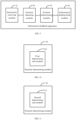
- a position detecting module 92 is configured to obtain the first transmission position according to the scheduling instruction, and detect whether the first transmission position is in an available state.
- An information feeding back module 94 is configured to send information on HARQ feedback to the base station at the second transmission position in response to detecting that the second transmission position is in the available state.
- a second transmission position for feeding back HARQ is determined when a first transmission position obtained by the scheduling instruction for feeding back the HARQ is detected to be in a non-available state, where the first transmission position is on a first unlicensed channel resource and the second transmission position is on a second unlicensed channel resource. Further, when detecting that the second transmission position is in an available state, information on HARQ feedback is sent to a base station at the second transmission position, thereby realizing information feedback on an unlicensed channel resource and improving reliability of the information feedback.
- the scheduling instruction includes first time domain position information and/or first frequency domain position information configured for the terminal by the base station to indicate the second transmission position.
- the position determining module 93 may include: a first determining sub-module 101 configured to determine the second transmission position according to the first time domain position information and/or the first frequency domain position information included in the scheduling instruction.
- the second transmission position may be determined according to the first time domain position information and/or the first frequency domain position information included in the scheduling instruction from the base station, such that a transmission position of HARQ backup feedback is determined according to the scheduling instruction from the base station and the flexibility of determining the transmission position of the HARQ backup feedback is improved.
- the first time domain position information and/or the first frequency domain position information locates at a fixed or configurable position of the scheduling instruction; and t the first time domain position information and/or the first frequency domain position information has a fixed or configurable length of information bits.
- the position determining module 93 may include: a second determining sub-module 111 configured to determine the second transmission position according to a set rule.
- the second transmission position on the second unlicensed channel resource may be determined according to the set rule, thereby improving efficiency of determining a transmission position of HARQ backup feedback.
- the set rule includes a first correspondence between second unlicensed channel resource and specified time length, and a specified time length refers to a time interval between the first transmission position on the first unlicensed channel resource for the HARQ feedback and the second transmission position on the second unlicensed channel resource for HARQ backup feedback, and the second determining sub-module 111 may include a first calculating sub-module 121 and a third determining sub-module 122.
- the first calculating sub-module 121 is configured to obtain second time domain position information for determining the second transmission position according to the first correspondence and/or obtain second frequency domain position information for determining the second transmission position according to a second correspondence.
- the third determining sub-module 122 is configured to determine the second transmission position according to the obtained second time domain position information and/or the obtained second frequency domain position information.
- the set rule further includes a second correspondence between second unlicensed channel resource and specified frequency offset value, and a specified frequency offset value refers to a frequency domain offset value between the first transmission position on the first unlicensed channel resource for the HARQ feedback and the second transmission position on the second unlicensed channel resource for the HARQ backup feedback, and the third determining sub-module 122 may include a second calculating sub-module 131 and a fourth determining sub-module 132.
- the second calculating sub-module 131 is configured to obtain the second frequency domain position information for determining the second transmission position according to the second correspondence.
- the fourth determining sub-module 132 is configured to determine the second transmission position according to the obtained second time domain position information and the obtained second frequency domain position information.
- the set rule is predefined or configured by the base station for the terminal and notified to the terminal via a system message or specified signaling, and the specified signaling includes at least one of the followings: RRC signaling, MAC-CE signaling and physical layer signaling.
- the information feeding back module 94 may include the following sub-modules.
- a first feeding back sub-module 141 is configured to send, in response to determining that a total number of second transmission positions in the available state is one, information on HARQ feedback to the base station through the one second transmission position.
- a second feeding back sub-module 142 is configured to select, in response to determining that the total number of second transmission positions in the available state is a plurality, a specified number of second transmission positions from the plurality of second transmission positions and send the information on the HARQ feedback to the base station at the selected second transmission position.
- the specified number is 1, or the specified number is greater than 1 and smaller than or equal to the total number.
- the information on the HARQ feedback is sent to the base station at that second transmission position; and if the total number of second transmission positions in available state is more than one, a specified number of second transmission positions are selected from the more than one second transmission positions, and the information on the HARQ feedback are sent to the base station at the selected one or more second transmission positions, thereby providing security of information feedback and improving practicability of the information feedback.
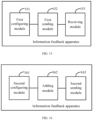
- FIG. 15 is a block diagram illustrating an information feedback apparatus according to an example.
- the apparatus is applicable to a base station which configures a plurality of unlicensed channel resources for a terminal, and performs the information feedback method shown in FIG. 7 .
- the information feedback apparatus may include the following modules.
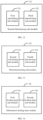
- a first configuring module 151 is configured to configure a scheduling instruction for the terminal, where the scheduling instruction carries information for the terminal to determine a first transmission position for feeding back an HARQ, and the first transmission position is on a first unlicensed channel resource.
- a first sending module 152 is configured to send the scheduling instruction to the terminal, such that the terminal sends information on HARQ feedback to the base station at a second transmission position in response to determining that the first transmission position determined by the scheduling instruction is detected to be in a non-available state and the second transmission position determined for feeding back the HARQ is in an available state, where the second transmission position is on a second unlicensed channel resource.
- a scheduling instruction is configured for the terminal and sent to the terminal, such that the terminal can send information on HARQ feedback to the base station at a second transmission position when a first transmission position determined by the scheduling instruction is detected to be in a non-available state and the second transmission position determined for feeding back the HARQ is in an available state, where the second transmission position is on the second unlicensed channel resource.
- the terminal can send information on HARQ feedback to the base station at a second transmission position when a first transmission position determined by the scheduling instruction is detected to be in a non-available state and the second transmission position determined for feeding back the HARQ is in an available state, where the second transmission position is on the second unlicensed channel resource.
- the plurality of unlicensed channel resources include a plurality of BWPs configured on one unlicensed carrier, a plurality of unlicensed carriers, or a plurality of BWPs configured on a plurality of unlicensed carriers.
- the power supply component 1703 supplies power for different components of the apparatus 1700.
- the power supply component 1703 may include a power supply management system, one or more power supplies, and other components associated with generating, managing and distributing power for the apparatus 1700.
- the sensor component 1707 may also include a light sensor, such as a CMOS or CCD image sensor, for use in imaging applications.
- the sensor component 1707 may also include an acceleration sensor, a gyro sensor, a magnetic sensor, a pressure sensor, or a temperature sensor.
- the communication component 1708 is configured to facilitate wired or wireless communication between the apparatus 1700 and other devices.
- the apparatus 1700 may access a wireless network based on a communication standard, such as Wi-Fi, 2G or 3G, or a combination thereof.
- the communication component 1708 receives broadcast signals or broadcast associated information from an external broadcast management system via a broadcast channel.
- the communication component 1708 also includes a near field communication (NFC) module to facilitate short range communication.
- the NFC module may be implemented based on a radio frequency identification (RFID) technology, an infrared data association (IrDA) technology, an ultrawideband (UWB) technology, a Bluetooth ® (BT) technology, and other technologies.
- RFID radio frequency identification
- IrDA infrared data association
- UWB ultrawideband
- BT Bluetooth ®
- the apparatus 1700 may be implemented by one or more application specific integrated circuits (ASICs), digital signal processors (DSPs), digital signal processing devices (DSPDs), programmable logic devices (PLDs), field programmable gate arrays (FPGAs), controllers, microcontrollers, microprocessors or other electronic elements for performing the above methods.
- ASICs application specific integrated circuits
- DSPs digital signal processors
- DSPDs digital signal processing devices
- PLDs programmable logic devices
- FPGAs field programmable gate arrays
- controllers microcontrollers, microprocessors or other electronic elements for performing the above methods.
- non-transitory computer readable storage medium including instructions, such as a memory 1702 including instructions, where the instructions are executable by the processor 1709 of the apparatus 1700 to perform the method as described above.
- the non-transitory computer readable storage medium may be a random access memory (RAM), a read only memory (ROM), a CD-ROM, a magnetic tape, a floppy disk, an optical data storage device, and the like.
- the apparatus 1700 is capable of performing any one of the information feedback methods described above.
- FIG. 18 is a structural schematic diagram illustrating an information feedback apparatus according to an example.
- the apparatus 1800 may be provided as a base station.
- the apparatus 1800 includes a processing component 1822, a wireless transmission/receiving component 1824, an antenna component 1826, and a signal processing part specific to wireless interface.
- the processing component 1822 may further include one or more processors.
- One or more processors of the processing component 1822 are configured to perform any one of the information feedback methods described above.
Landscapes
- Engineering & Computer Science (AREA)
- Signal Processing (AREA)
- Computer Networks & Wireless Communication (AREA)
- Mobile Radio Communication Systems (AREA)
Claims (7)
- Informationsrückkopplungsverfahren mit den folgenden Schritten:Empfangen (110), durch ein Endgerät, eines Planungsbefehls von einer Basisstation, wobei das Endgerät durch die Basisstation mit mehreren unlizenzierten Kanalressourcen konfiguriert wird, wobei der Planungsbefehl Informationen für das Endgerät aufweist, um eine erste Übertragungsposition für das Rückkoppeln einer Hybrid Automatic Repeat Request (HARQ) zu bestimmen, und die erste Übertragungsposition auf einer ersten unlizenzierten Kanalressource liegt;Erhalten (120), durch das Endgerät, der ersten Übertragungsposition gemäß dem Planungsbefehl, und Erkennen, durch das Endgerät, ob sich die erste Übertragungsposition in einem verfügbaren Zustand befindet;Bestimmen (130), durch das Endgerät, einer zweiten Übertragungsposition für das Rückkoppeln der HARQ in Reaktion darauf, dass sich die erste Übertragungsposition in einem nicht verfügbaren Zustand befindet, wobei sich die zweite Übertragungsposition auf einer zweiten unlizenzierten Kanalressource befindet; undSenden (140), durch das Endgerät, von Informationen über HARQ-Rückkopplung an die Basisstation an der zweiten Übertragungsposition in Reaktion auf das Erkennen, dass sich die zweite Übertragungsposition in dem verfügbaren Zustand befindet;wobei das Bestimmen (130), durch das Endgerät, der zweiten Übertragungsposition für das Rückkoppeln der HARQ den folgenden Schritt aufweist:Bestimmen (510) der zweiten Übertragungsposition gemäß einer voreingestellten Regel; wobei die voreingestellte Regel eine erste Entsprechung zwischen der zweiten unlizenzierten Kanalressource und einer spezifizierten Zeitdauer aufweist, und sich eine spezifizierte Zeitdauer auf ein Zeitintervall zwischen der ersten Übertragungsposition auf der ersten unlizenzierten Kanalressource für die HARQ-Rückkopplung und der zweiten Übertragungsposition auf der zweiten unlizenzierten Kanalressource für eine HARQ-Backup-Rückkopplung bezieht; undwobei das Bestimmen der zweiten Übertragungsposition auf der zweiten unlizenzierten Kanalressource gemäß der voreingestellten Regel die folgenden Schritte aufweist:Erhalten zweiter Zeitdomänenpositionsinformationen zum Bestimmen der zweiten Übertragungsposition gemäß der ersten Übereinstimmung; undBestimmen der zweiten Übertragungsposition gemäß den erhaltenen zweiten Zeitdomänenpositionsinformationen.
- Verfahren nach Anspruch 1, bei welchem die voreingestellte Regel ferner eine zweite Übereinstimmung zwischen der zweiten unlizenzierten Kanalressource und einem spezifizierten Frequenzversatzwert aufweist, und sich ein spezifizierter Frequenzversatzwert auf einen Frequenzdomänenversatzwert zwischen der ersten Übertragungsposition auf der ersten unlizenzierten Kanalressource für die HARQ-Rückkopplung und der zweiten Übertragungsposition auf der zweiten unlizenzierten Kanalressource für die HARQ-Backup-Rückkopplung bezieht; und
wobei das Bestimmen der zweiten Übertragungsposition gemäß den erhaltenen zweiten Zeitdomänenpositionsinformationen die folgenden Schritte aufweist:Erhalten zweiter Frequenzdomänenpositionsinformationen zum Bestimmen der zweiten Übertragungsposition gemäß der zweiten Übereinstimmung; undBestimmen der zweiten Übertragungsposition gemäß den erhaltenen zweiten Zeitdomänenpositionsinformationen und den zweiten Frequenzdomänenpositionsinformationen. - Verfahren nach Anspruch 1, bei welchemdie voreingestellte Regel vordefiniert ist, oderdie voreingestellte Regel von der Basisstation für das Endgerät konfiguriert wird und dem Endgerät über eine Systemnachricht oder eine spezifizierte Signalisierung mitgeteilt wird, und die spezifizierte Signalisierung die folgende Signalisierung aufweist:Radio Resource Control, RRC, -Signalisierung und/oderMedium Access Control-Control Element, MAC-CE, -Signalisierung und/oderPhysical Layer-Signalisierung.
- Informationsrückkopplungsverfahren mit den folgenden Schritten:Konfigurieren (710), durch eine Basisstation, eines Planungsbefehls für ein Endgerät, wobei die Basisstation mehrere unlizenzierte Kanalressourcen für das Endgerät konfiguriert, wobei der Planungsbefehl Informationen für das Endgerät aufweist, um eine erste Übertragungsposition zum Rückkoppeln eines Hybrid Automatic Repeat Request, HARQ, zu bestimmen, wobei sich die erste Übertragungsposition auf einer ersten unlizenzierten Kanalressource befindet;Senden (720), durch die Basisstation, des Planungsbefehls an das Endgerät, so dass das Endgerät Informationen über eine HARQ-Rückkopplung an die Basisstation an einer zweiten Übertragungsposition in Reaktion auf die Feststellung sendet, dass die durch den Planungsbefehl bestimmte erste Übertragungsposition als in einem nicht verfügbaren Zustand befindlich erkannt wird und sich die für das Rückkoppeln der HARQ bestimmte zweite Übertragungsposition in einem verfügbaren Zustand befindet, wobei sich die zweite Übertragungsposition auf einer zweiten unlizenzierten Kanalressource befindet; undEmpfangen (730), durch die Basisstation, der Informationen über die HARQ-Rückkopplung von dem Endgerät;wobei das Verfahren ferner die folgenden Schritte aufweist:Konfigurieren (810) einer voreingestellten Regel für das Endgerät, wobei die voreingestellte Regel eine erste Übereinstimmung zwischen der zweiten unlizenzierten Kanalressource und einer spezifizierten Zeitdauer aufweist, und sich eine spezifizierte Zeitdauer auf ein Zeitintervall zwischen der ersten Übertragungsposition auf der ersten unlizenzierten Kanalressource für die HARQ-Rücckopplung und der zweiten Übertragungsposition auf der zweiten unlizenzierten Kanalressource für eine HARQ-Backup-Rückkopplung bezieht; Versetzen des Endgeräts in die Lage, zweite Zeitdomänenpositionsinformationen zum Bestimmen der zweiten Übertragungsposition gemäß der ersten Übereinstimmung zu erhalten, und die zweite Übertragungsposition gemäß den erhaltenen zweiten Zeitdomänenpositionsinformationen zu bestimmen;Hinzufügen (820) der voreingestellten Regel zu einer Systemnachricht oder einer spezifizierten Signalisierung; undSenden (830) der Systemnachricht oder der spezifizierten Signalisierung an das Endgerät, derart, dass das Endgerät die voreingestellte Regel aus der Systemnachricht oder der spezifizierten Signalisierung erhält.
- Verfahren nach Anspruch 4, bei welchem die voreingestellte Regel ferner eine zweite Übereinstimmung zwischen der zweiten unlizenzierten Kanalressource und einem spezifizierten Frequenzversatzwert aufweist, und sich ein spezifizierter Frequenzversatzwert auf einen Frequenzdomänenversatzwert zwischen der ersten Übertragungsposition auf der ersten unlizenzierten Kanalressource für die HARQ-Rückkopplung und der zweiten Übertragungsposition auf der zweiten unlizenzierten Kanalressource für die HARQ-Backup-Rückkopplung bezieht.
- Informationsrückkopplungsvorrichtung', welche dazu ausgebildet ist, das Verfahren nach einem der Ansprüche 1-5 durchzuführen.
- nichtflüchtiges computerlesbares Speichermedium, welches ein Computerprogramm speichert, wobei das Computerprogramm dazu ausgebildet ist, das Informationsrückkopplungsverfahren nach den Ansprüchen 1-5 durchzuführen.
Applications Claiming Priority (1)
| Application Number | Priority Date | Filing Date | Title |
|---|---|---|---|
| PCT/CN2018/113011 WO2020087348A1 (zh) | 2018-10-31 | 2018-10-31 | 信息反馈方法及装置 |
Publications (3)
| Publication Number | Publication Date |
|---|---|
| EP3876451A1 EP3876451A1 (de) | 2021-09-08 |
| EP3876451A4 EP3876451A4 (de) | 2021-10-20 |
| EP3876451B1 true EP3876451B1 (de) | 2025-07-02 |
Family
ID=65872655
Family Applications (1)
| Application Number | Title | Priority Date | Filing Date |
|---|---|---|---|
| EP18938739.2A Active EP3876451B1 (de) | 2018-10-31 | 2018-10-31 | Verfahren und vorrichtung für informationsrückkopplung |
Country Status (4)
| Country | Link |
|---|---|
| US (1) | US11856571B2 (de) |
| EP (1) | EP3876451B1 (de) |
| CN (1) | CN109565381B (de) |
| WO (1) | WO2020087348A1 (de) |
Families Citing this family (3)
| Publication number | Priority date | Publication date | Assignee | Title |
|---|---|---|---|---|
| WO2020227907A1 (zh) * | 2019-05-13 | 2020-11-19 | Oppo广东移动通信有限公司 | 一种资源确定方法及装置、终端 |
| WO2021179221A1 (zh) * | 2020-03-11 | 2021-09-16 | Oppo广东移动通信有限公司 | 数据传输方法、装置、设备及存储介质 |
| CN113938932A (zh) * | 2020-07-13 | 2022-01-14 | 中国联合网络通信集团有限公司 | 一种通信方法和装置 |
Family Cites Families (12)
| Publication number | Priority date | Publication date | Assignee | Title |
|---|---|---|---|---|
| CN106658742B (zh) * | 2015-11-03 | 2020-07-03 | 中兴通讯股份有限公司 | 数据调度及传输的方法、装置及系统 |
| CN106658724A (zh) | 2015-11-04 | 2017-05-10 | 中兴通讯股份有限公司 | 一种基于非授权载波的信令配置、传输方法、站点、终端 |
| CN111050408B (zh) | 2016-04-01 | 2022-07-29 | 展讯通信(上海)有限公司 | 上行传输的反馈方法和系统、基站和用户设备 |
| CN107332646B (zh) * | 2016-04-29 | 2021-05-11 | 中兴通讯股份有限公司 | Harq-ack的发送方法及装置 |
| US10701677B2 (en) * | 2016-05-12 | 2020-06-30 | Samsung Electronics Co., Ltd. | Method and apparatus for uplink resource assignment for cellular network using unlicensed bands |
| US10630410B2 (en) * | 2016-05-13 | 2020-04-21 | Telefonaktiebolaget Lm Ericsson (Publ) | Network architecture, methods, and devices for a wireless communications network |
| CN106130702A (zh) | 2016-07-15 | 2016-11-16 | 深圳市金立通信设备有限公司 | 一种混合自动重传请求进程处理方法、设备及通信系统 |
| CN106301739B (zh) | 2016-08-16 | 2019-08-02 | 宇龙计算机通信科技(深圳)有限公司 | 基于动态帧结构的上行harq反馈方法、装置和基站 |
| US10645730B2 (en) * | 2017-04-06 | 2020-05-05 | Huawei Technologies Co., Ltd. | Flexible grant-free resource configuration signaling |
| US11109236B2 (en) * | 2017-11-09 | 2021-08-31 | Qualcomm Incorporated | Techniques for carrier feedback in wireless systems |
| KR20220008661A (ko) * | 2020-07-14 | 2022-01-21 | 삼성전자주식회사 | 무선 통신 시스템에서 하향링크 피드백 정보 결정 방법 및 장치 |
| US12362885B2 (en) * | 2020-10-12 | 2025-07-15 | Qualcomm Incorporated | Acknowledgement (ACK) and negative acknowledgement (NACK) reporting for a physical downlink shared channel (PDSCH) grant |
-
2018
- 2018-10-31 CN CN201880002277.4A patent/CN109565381B/zh active Active
- 2018-10-31 US US17/290,225 patent/US11856571B2/en active Active
- 2018-10-31 WO PCT/CN2018/113011 patent/WO2020087348A1/zh not_active Ceased
- 2018-10-31 EP EP18938739.2A patent/EP3876451B1/de active Active
Also Published As
| Publication number | Publication date |
|---|---|
| US20210385823A1 (en) | 2021-12-09 |
| EP3876451A4 (de) | 2021-10-20 |
| CN109565381A (zh) | 2019-04-02 |
| EP3876451A1 (de) | 2021-09-08 |
| US11856571B2 (en) | 2023-12-26 |
| WO2020087348A1 (zh) | 2020-05-07 |
| CN109565381B (zh) | 2021-08-17 |
Similar Documents
| Publication | Publication Date | Title |
|---|---|---|
| US11582793B2 (en) | Information reporting method and apparatus, and bandwidth part based operating method and apparatus | |
| EP3751890A1 (de) | Verfahren und vorrichtung zur koexistenzinterferenzkoordination in einem gerät sowie benutzerausrüstung und kommunikationsvorrichtung | |
| US11895630B2 (en) | Method and device for identifying downlink transmissions | |
| US12382493B2 (en) | Slot format indication method and apparatus | |
| EP3793278B1 (de) | Verfahren und vorrichtung für funkrufsynchronisation | |
| US11665719B2 (en) | Method and apparatus for transmitting data | |
| US11968716B2 (en) | Information configuration methods, and information reporting methods, base station, and user equipment | |
| EP3809772B1 (de) | Verfahren und vorrichtung zur bestimmung von uplink- und downlink-schaltstellen | |
| US11800547B2 (en) | Information transmission method and device | |
| EP3876451B1 (de) | Verfahren und vorrichtung für informationsrückkopplung | |
| CN115088294A (zh) | 一种上报方法、发送方法、装置、设备及存储介质 | |
| US11533728B2 (en) | Data transmission method and apparatus on unlicensed frequency band | |
| EP3952465B1 (de) | Verfahren und vorrichtung zum konfigurieren eines steuerbereichs | |
| WO2019047097A1 (zh) | 信令检测的实现方法、装置、用户设备及基站 | |
| EP3952395B1 (de) | Kanalanzeigeverfahren und -vorrichtung |
Legal Events
| Date | Code | Title | Description |
|---|---|---|---|
| STAA | Information on the status of an ep patent application or granted ep patent |
Free format text: STATUS: THE INTERNATIONAL PUBLICATION HAS BEEN MADE |
|
| PUAI | Public reference made under article 153(3) epc to a published international application that has entered the european phase |
Free format text: ORIGINAL CODE: 0009012 |
|
| STAA | Information on the status of an ep patent application or granted ep patent |
Free format text: STATUS: REQUEST FOR EXAMINATION WAS MADE |
|
| 17P | Request for examination filed |
Effective date: 20210528 |
|
| AK | Designated contracting states |
Kind code of ref document: A1 Designated state(s): AL AT BE BG CH CY CZ DE DK EE ES FI FR GB GR HR HU IE IS IT LI LT LU LV MC MK MT NL NO PL PT RO RS SE SI SK SM TR |
|
| A4 | Supplementary search report drawn up and despatched |
Effective date: 20210921 |
|
| RIC1 | Information provided on ipc code assigned before grant |
Ipc: H04W 74/08 20090101ALI20210915BHEP Ipc: H04L 1/18 20060101AFI20210915BHEP |
|
| DAV | Request for validation of the european patent (deleted) | ||
| DAX | Request for extension of the european patent (deleted) | ||
| STAA | Information on the status of an ep patent application or granted ep patent |
Free format text: STATUS: EXAMINATION IS IN PROGRESS |
|
| 17Q | First examination report despatched |
Effective date: 20220906 |
|
| GRAP | Despatch of communication of intention to grant a patent |
Free format text: ORIGINAL CODE: EPIDOSNIGR1 |
|
| STAA | Information on the status of an ep patent application or granted ep patent |
Free format text: STATUS: GRANT OF PATENT IS INTENDED |
|
| INTG | Intention to grant announced |
Effective date: 20250227 |
|
| P01 | Opt-out of the competence of the unified patent court (upc) registered |
Free format text: CASE NUMBER: APP_13515/2025 Effective date: 20250319 |
|
| GRAS | Grant fee paid |
Free format text: ORIGINAL CODE: EPIDOSNIGR3 |
|
| GRAA | (expected) grant |
Free format text: ORIGINAL CODE: 0009210 |
|
| STAA | Information on the status of an ep patent application or granted ep patent |
Free format text: STATUS: THE PATENT HAS BEEN GRANTED |
|
| AK | Designated contracting states |
Kind code of ref document: B1 Designated state(s): AL AT BE BG CH CY CZ DE DK EE ES FI FR GB GR HR HU IE IS IT LI LT LU LV MC MK MT NL NO PL PT RO RS SE SI SK SM TR |
|
| REG | Reference to a national code |
Ref country code: GB Ref legal event code: FG4D |
|
| REG | Reference to a national code |
Ref country code: CH Ref legal event code: EP |
|
| REG | Reference to a national code |
Ref country code: DE Ref legal event code: R096 Ref document number: 602018083329 Country of ref document: DE |
|
| REG | Reference to a national code |
Ref country code: IE Ref legal event code: FG4D |
|
| REG | Reference to a national code |
Ref country code: NL Ref legal event code: FP |
|
| PGFP | Annual fee paid to national office [announced via postgrant information from national office to epo] |
Ref country code: NL Payment date: 20251021 Year of fee payment: 8 |
|
| PG25 | Lapsed in a contracting state [announced via postgrant information from national office to epo] |
Ref country code: PT Free format text: LAPSE BECAUSE OF FAILURE TO SUBMIT A TRANSLATION OF THE DESCRIPTION OR TO PAY THE FEE WITHIN THE PRESCRIBED TIME-LIMIT Effective date: 20251103 |
|
| REG | Reference to a national code |
Ref country code: AT Ref legal event code: MK05 Ref document number: 1810504 Country of ref document: AT Kind code of ref document: T Effective date: 20250702 |
|
| PG25 | Lapsed in a contracting state [announced via postgrant information from national office to epo] |
Ref country code: IS Free format text: LAPSE BECAUSE OF FAILURE TO SUBMIT A TRANSLATION OF THE DESCRIPTION OR TO PAY THE FEE WITHIN THE PRESCRIBED TIME-LIMIT Effective date: 20251102 |
|
| PGFP | Annual fee paid to national office [announced via postgrant information from national office to epo] |
Ref country code: GB Payment date: 20251022 Year of fee payment: 8 |
|
| PG25 | Lapsed in a contracting state [announced via postgrant information from national office to epo] |
Ref country code: NO Free format text: LAPSE BECAUSE OF FAILURE TO SUBMIT A TRANSLATION OF THE DESCRIPTION OR TO PAY THE FEE WITHIN THE PRESCRIBED TIME-LIMIT Effective date: 20251002 |
|
| REG | Reference to a national code |
Ref country code: LT Ref legal event code: MG9D |
|
| PG25 | Lapsed in a contracting state [announced via postgrant information from national office to epo] |
Ref country code: AT Free format text: LAPSE BECAUSE OF FAILURE TO SUBMIT A TRANSLATION OF THE DESCRIPTION OR TO PAY THE FEE WITHIN THE PRESCRIBED TIME-LIMIT Effective date: 20250702 |
|
| PG25 | Lapsed in a contracting state [announced via postgrant information from national office to epo] |
Ref country code: FI Free format text: LAPSE BECAUSE OF FAILURE TO SUBMIT A TRANSLATION OF THE DESCRIPTION OR TO PAY THE FEE WITHIN THE PRESCRIBED TIME-LIMIT Effective date: 20250702 |
|
| PG25 | Lapsed in a contracting state [announced via postgrant information from national office to epo] |
Ref country code: HR Free format text: LAPSE BECAUSE OF FAILURE TO SUBMIT A TRANSLATION OF THE DESCRIPTION OR TO PAY THE FEE WITHIN THE PRESCRIBED TIME-LIMIT Effective date: 20250702 |
|
| PGFP | Annual fee paid to national office [announced via postgrant information from national office to epo] |
Ref country code: FR Payment date: 20251030 Year of fee payment: 8 |
|
| PG25 | Lapsed in a contracting state [announced via postgrant information from national office to epo] |
Ref country code: GR Free format text: LAPSE BECAUSE OF FAILURE TO SUBMIT A TRANSLATION OF THE DESCRIPTION OR TO PAY THE FEE WITHIN THE PRESCRIBED TIME-LIMIT Effective date: 20251003 |
|
| PG25 | Lapsed in a contracting state [announced via postgrant information from national office to epo] |
Ref country code: SE Free format text: LAPSE BECAUSE OF FAILURE TO SUBMIT A TRANSLATION OF THE DESCRIPTION OR TO PAY THE FEE WITHIN THE PRESCRIBED TIME-LIMIT Effective date: 20250702 Ref country code: CZ Free format text: LAPSE BECAUSE OF FAILURE TO SUBMIT A TRANSLATION OF THE DESCRIPTION OR TO PAY THE FEE WITHIN THE PRESCRIBED TIME-LIMIT Effective date: 20250702 |
|
| PG25 | Lapsed in a contracting state [announced via postgrant information from national office to epo] |
Ref country code: LV Free format text: LAPSE BECAUSE OF FAILURE TO SUBMIT A TRANSLATION OF THE DESCRIPTION OR TO PAY THE FEE WITHIN THE PRESCRIBED TIME-LIMIT Effective date: 20250702 |
|
| PG25 | Lapsed in a contracting state [announced via postgrant information from national office to epo] |
Ref country code: BG Free format text: LAPSE BECAUSE OF FAILURE TO SUBMIT A TRANSLATION OF THE DESCRIPTION OR TO PAY THE FEE WITHIN THE PRESCRIBED TIME-LIMIT Effective date: 20250702 Ref country code: PL Free format text: LAPSE BECAUSE OF FAILURE TO SUBMIT A TRANSLATION OF THE DESCRIPTION OR TO PAY THE FEE WITHIN THE PRESCRIBED TIME-LIMIT Effective date: 20250702 |
|
| PG25 | Lapsed in a contracting state [announced via postgrant information from national office to epo] |
Ref country code: RS Free format text: LAPSE BECAUSE OF FAILURE TO SUBMIT A TRANSLATION OF THE DESCRIPTION OR TO PAY THE FEE WITHIN THE PRESCRIBED TIME-LIMIT Effective date: 20251002 |
|
| PG25 | Lapsed in a contracting state [announced via postgrant information from national office to epo] |
Ref country code: ES Free format text: LAPSE BECAUSE OF FAILURE TO SUBMIT A TRANSLATION OF THE DESCRIPTION OR TO PAY THE FEE WITHIN THE PRESCRIBED TIME-LIMIT Effective date: 20250702 |
|
| PG25 | Lapsed in a contracting state [announced via postgrant information from national office to epo] |
Ref country code: RO Free format text: LAPSE BECAUSE OF FAILURE TO SUBMIT A TRANSLATION OF THE DESCRIPTION OR TO PAY THE FEE WITHIN THE PRESCRIBED TIME-LIMIT Effective date: 20250702 |
|
| PG25 | Lapsed in a contracting state [announced via postgrant information from national office to epo] |
Ref country code: SM Free format text: LAPSE BECAUSE OF FAILURE TO SUBMIT A TRANSLATION OF THE DESCRIPTION OR TO PAY THE FEE WITHIN THE PRESCRIBED TIME-LIMIT Effective date: 20250702 |
|
| PG25 | Lapsed in a contracting state [announced via postgrant information from national office to epo] |
Ref country code: DK Free format text: LAPSE BECAUSE OF FAILURE TO SUBMIT A TRANSLATION OF THE DESCRIPTION OR TO PAY THE FEE WITHIN THE PRESCRIBED TIME-LIMIT Effective date: 20250702 |
|
| PG25 | Lapsed in a contracting state [announced via postgrant information from national office to epo] |
Ref country code: IT Free format text: LAPSE BECAUSE OF FAILURE TO SUBMIT A TRANSLATION OF THE DESCRIPTION OR TO PAY THE FEE WITHIN THE PRESCRIBED TIME-LIMIT Effective date: 20250702 |
|
| PG25 | Lapsed in a contracting state [announced via postgrant information from national office to epo] |
Ref country code: SK Free format text: LAPSE BECAUSE OF FAILURE TO SUBMIT A TRANSLATION OF THE DESCRIPTION OR TO PAY THE FEE WITHIN THE PRESCRIBED TIME-LIMIT Effective date: 20250702 Ref country code: EE Free format text: LAPSE BECAUSE OF FAILURE TO SUBMIT A TRANSLATION OF THE DESCRIPTION OR TO PAY THE FEE WITHIN THE PRESCRIBED TIME-LIMIT Effective date: 20250702 |