EP3877882B1 - Système et procédé à entropie distribuée - Google Patents
Système et procédé à entropie distribuée Download PDFInfo
- Publication number
- EP3877882B1 EP3877882B1 EP18939183.2A EP18939183A EP3877882B1 EP 3877882 B1 EP3877882 B1 EP 3877882B1 EP 18939183 A EP18939183 A EP 18939183A EP 3877882 B1 EP3877882 B1 EP 3877882B1
- Authority
- EP
- European Patent Office
- Prior art keywords
- computer node
- entropy
- computer
- data
- values
- Prior art date
- Legal status (The legal status is an assumption and is not a legal conclusion. Google has not performed a legal analysis and makes no representation as to the accuracy of the status listed.)
- Active
Links
Images
Classifications
-
- G—PHYSICS
- G06—COMPUTING OR CALCULATING; COUNTING
- G06F—ELECTRIC DIGITAL DATA PROCESSING
- G06F7/00—Methods or arrangements for processing data by operating upon the order or content of the data handled
- G06F7/58—Random or pseudo-random number generators
- G06F7/582—Pseudo-random number generators
-
- H—ELECTRICITY
- H04—ELECTRIC COMMUNICATION TECHNIQUE
- H04L—TRANSMISSION OF DIGITAL INFORMATION, e.g. TELEGRAPHIC COMMUNICATION
- H04L9/00—Cryptographic mechanisms or cryptographic arrangements for secret or secure communications; Network security protocols
- H04L9/08—Key distribution or management, e.g. generation, sharing or updating, of cryptographic keys or passwords
- H04L9/0861—Generation of secret information including derivation or calculation of cryptographic keys or passwords
- H04L9/0869—Generation of secret information including derivation or calculation of cryptographic keys or passwords involving random numbers or seeds
-
- G—PHYSICS
- G06—COMPUTING OR CALCULATING; COUNTING
- G06F—ELECTRIC DIGITAL DATA PROCESSING
- G06F21/00—Security arrangements for protecting computers, components thereof, programs or data against unauthorised activity
- G06F21/50—Monitoring users, programs or devices to maintain the integrity of platforms, e.g. of processors, firmware or operating systems
- G06F21/57—Certifying or maintaining trusted computer platforms, e.g. secure boots or power-downs, version controls, system software checks, secure updates or assessing vulnerabilities
-
- G—PHYSICS
- G06—COMPUTING OR CALCULATING; COUNTING
- G06F—ELECTRIC DIGITAL DATA PROCESSING
- G06F21/00—Security arrangements for protecting computers, components thereof, programs or data against unauthorised activity
- G06F21/60—Protecting data
- G06F21/602—Providing cryptographic facilities or services
-
- H—ELECTRICITY
- H04—ELECTRIC COMMUNICATION TECHNIQUE
- H04L—TRANSMISSION OF DIGITAL INFORMATION, e.g. TELEGRAPHIC COMMUNICATION
- H04L9/00—Cryptographic mechanisms or cryptographic arrangements for secret or secure communications; Network security protocols
- H04L9/08—Key distribution or management, e.g. generation, sharing or updating, of cryptographic keys or passwords
- H04L9/0816—Key establishment, i.e. cryptographic processes or cryptographic protocols whereby a shared secret becomes available to two or more parties, for subsequent use
- H04L9/0819—Key transport or distribution, i.e. key establishment techniques where one party creates or otherwise obtains a secret value, and securely transfers it to the other(s)
- H04L9/0825—Key transport or distribution, i.e. key establishment techniques where one party creates or otherwise obtains a secret value, and securely transfers it to the other(s) using asymmetric-key encryption or public key infrastructure [PKI], e.g. key signature or public key certificates
-
- H—ELECTRICITY
- H04—ELECTRIC COMMUNICATION TECHNIQUE
- H04L—TRANSMISSION OF DIGITAL INFORMATION, e.g. TELEGRAPHIC COMMUNICATION
- H04L9/00—Cryptographic mechanisms or cryptographic arrangements for secret or secure communications; Network security protocols
- H04L9/32—Cryptographic mechanisms or cryptographic arrangements for secret or secure communications; Network security protocols including means for verifying the identity or authority of a user of the system or for message authentication, e.g. authorization, entity authentication, data integrity or data verification, non-repudiation, key authentication or verification of credentials
- H04L9/3297—Cryptographic mechanisms or cryptographic arrangements for secret or secure communications; Network security protocols including means for verifying the identity or authority of a user of the system or for message authentication, e.g. authorization, entity authentication, data integrity or data verification, non-repudiation, key authentication or verification of credentials involving time stamps, e.g. generation of time stamps
Definitions
- PRNG pseudorandom number generators
- An “interaction” may include a reciprocal action or influence.
- An interaction can include a communication, contact, or exchange between parties, devices, and/or entities.
- Example interactions include a transaction between two parties and a data exchange between two devices. Interactions can also be agreements, contracts, and the like.
- Interaction data may refer to data associated with an interaction. In some embodiments, interaction data may result from user initiated input. In other embodiments, interaction data may be transaction data.
- a "pseudorandom number generator” may include a function, module, or component designed to generate a sequence of numbers whose properties approximate the properties of a random number.
- a seed may be an input to a PRNG.
- inputting a same seed as previously inputted into a PRNG may result in the same random values as previous generated, whereas inputting a different seed may result in different random values.
- a "secure communication channel” may include a networking channel between two entities, such as a server computer and mobile device, that may allow the two entities to communicate with each other through a secure channel without eavesdropping by a third entity, spoofing of the communication by a third entity or masquerading of the third entity as one of the two expected entities participating in the secure communication.
- Setting up a secure communication channel allows sensitive information such as credit card numbers, social security numbers, login credentials and signaling information for managing the trusted execution environment to be transmitted securely between the two entities.
- SSL secure socket layer
- a "virtualized environment” may provide isolation between different operating environments sharing the same physical resources.
- a virtualized environment provides a logical abstraction of computing resources from physical constraints.
- One common abstraction is referred to as a virtual machine (also known as guest), or VM, which provides the content running in the VM a direct interface to the physical hardware while maintaining the abstraction.
- Virtualization technology allows multiple VMs running on the same physical hardware to operate independently and isolated from each other.
- the one or more VMs on the system are managed by a Virtualized Machine Monitor, or VMM (also known as hypervisor or host).
- VMM is a software or firmware layer responsible for hosting and managing virtual machines.
- the VMM manages the system's processor, memory, and allocates other resources for each VM.
- a function can be a proof of work function.
- a computer node can determine the computer time used to compute the proof of work function.
- a function can include processing an interaction and/or a plurality of interactions.
- a computer node can process a plurality of interactions and determine the computation time used to process the plurality of interactions.
- a "memory” may include any suitable device or devices that may store electronic data.
- a suitable memory may comprise a non-transitory computer readable medium that stores instructions that can be executed by a processor to implement a desired method. Examples of memories may comprise one or more memory chips, disk drives, etc. Such memories may operate using any suitable electrical, optical, and/or magnetic mode of operation.
- a "processor” may include any suitable data computation device or devices.
- a processor may comprise one or more microprocessors working together to accomplish a desired function.
- the processor may include a CPU that comprises at least one high-speed data processor adequate to execute program components for executing user and/or system-generated requests.
- the CPU may be a microprocessor such as AMD's Athlon, Duron and/or Opteron; IBM and/or Motorola's PowerPC; IBM's and Sony's Cell processor; Intel's Celeron, Itanium, Pentium, Xeon, and/or XScale; and/or the like processor(s).
- Embodiments of the invention describe generating high quality entropy in a software only or a hardware assisted software environment, such as a virtualized environment.
- Embodiments of the invention describe creating an entropy pool within the virtualized environment using multiple sources of entropy.
- the entropy pool can aggregate the entropy from one or more entropy sources to provide a tamper-resistant and robust source of entropy for a computer node.
- Entropy sources may include system events, hardware attributes, OS visible sources, and/or any other entropy sources described herein.
- the one or more entropy pools can be pooled in a specific pattern (e.g., nonlinear), for example, a pattern used in Fortuna PRNG.
- the seed for a PRNG can be sourced externally to the VM to achieve a strong level of randomness quality thus preventing the attacker from determining attributes of the PRNG and the seeds to the PRNG.
- Embodiments of the invention provide for collection of entropy from an external entropy source into an entropy pool, which may be used in the generation of encryption keys.
- the components of system 100 can communicate with one another via any appropriate means, including a communications network.
- Messages and other communications between the databases, data processor, and data sources may be in encrypted or unencrypted form.
- a communications network may be any one and/or the combination of the following: a direct interconnection; the Internet; a Local Area Network (LAN); a Metropolitan Area Network (MAN); an Operating Missions as Nodes on the Internet (OMNI); a secured custom connection; a Wide Area Network (WAN); a wireless network (e.g., employing protocols such as but not limited to a Wireless Application Protocol (WAP), I-mode, and/or the like); and/or the like.
- WAP Wireless Application Protocol
- Messages between the devices and computers may be transmitted using a secure communications protocol such as, but not limited to, File Transfer Protocol (FTP); Hypertext transfer Protocol (HTTP); Secure Hypertext Transfer Protocol (HTTPS), Secure Socket Layer (SSL) and/or the like.
- FTP File Transfer Protocol
- HTTP Hypertext transfer Protocol
- HTTPS Secure Hypertext Transfer Protocol
- SSL Secure Socket Layer
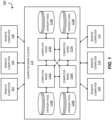
- the remote computers 102-112 may be any suitable remote computer remotely located in reference to the computer node cluster 114.
- the remote computer is capable of generating interaction data and also transmitting the interaction data to the computer node cluster 114 and/or to one or more computer nodes.
- the remote computers 102-112 may be access devices that may transmit transaction data to the computer node cluster 114 via a transport computer after initiating a transaction with a consumer (i.e., user).
- the computer node cluster 114 may be a hypervisor capable of managing a plurality of virtual machines.
- the computer nodes 116A-122A may be VMs run by the hypervisor.
- the computer node cluster 114 may be referred to as a host machine while the computer nodes 116A-122A may be referred to as guest machines.
- the hypervisor may be capable of presenting the guest machines with a virtual operating platform and may be capable of managing the execution of the guest machines. Multiple instances of a variety of operating systems may share virtualized hardware resources.
- the operating systems may be, for example, Linux, Windows, and macOS.
- the hypervisor may perform operating-system-level virtualization, wherein the instances, typically called containers, can share a single kernel.
- the entropy pools 116B-122B may be a device, database, file, and/or persistent storage capable of storing entropy.
- An entropy pool can accumulate and aggregate input from various entropy sources over time.
- An entropy pool may be accessed by a computer node to retrieve random values.
- an entropy pool can store a plurality of random values derived from input from an entropy source.
- An entropy pool may store entropy in any suitable manner, for example, by storing a large number in a kernel's memory.
- the large number may be a hash of various input entropy sources.
- the large number may be, for example, a 4096 bit number, or the like. If the large number is a 4096 bit number, then there may be 2 4096 possibilities for this number so it can contain up to 4,096 bits of entropy.
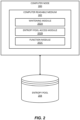
- FIG. 2 shows a block diagram of a computer node 200 according to some embodiments of the invention.
- the exemplary computer node 200 may comprise a computer readable medium 202 comprising a whitening module 202A, an entropy pool access module 202B, and a function module 202C.
- the computer node 200 may be operatively coupled to an entropy pool 204, as described above.
- the computer readable medium 202 comprises code, executable by the computer node 200, to implement a method comprising: receiving a plurality of data values from a plurality of computer nodes, each computer node creating a data value based on a time that the computer node in the plurality of computer nodes takes to perform a function; providing the data values or derivatives thereof as random values to an entropy pool of random values; selecting a random value from the entropy pool; and initiating use of the random value in an operation.
- the whitening module 202A may comprise software code that can perform, in conjunction with a processor, a whitening process.
- the whitening module 202A may perform a whitening transformation that can transform a vector of random variables, such as differences in data values measured at different computer nodes, into a new set of variables with a covariance equivalent to the identity matrix, meaning that they are uncorrelated and each have variance 1.
- a whitening process can remove underlying correlation in a set of data. For example, if a entropy source were to generate values of 0 and 1 at a ratio of 55% 0's and 45% 1's, the data generated by the entropy source could be whitened to remove bias from the generated data. Thus, the resulting entropy values may not be biased towards 0's or 1's.
- X is a random (column) vector with non-singular covariance matrix M and mean 0.
- X may comprise data values determined by the computer node 200.
- W M -1 / 2 (i.e., Mahalanobis or ZCA whitening)
- the Cholesky decomposition of M -1 i.e., Cholesky whitening
- the Eigen-system of M i.e., PCA whitening
- the whitening module 202A may perform any suitable whitening process as known by one of skill in the art.
- the function may include the computer node 200 determining a nonce to a hash function that results in a hash value less than a difficulty value. After performing the function, the function module 202C determines a length of time taken to perform the function.
- the computer node 200 performs the function while processing interaction data. Since the interaction data can vary between computer nodes and the computer nodes may have different resources, the length of time taken to perform the function can vary between computer nodes. For example, there may be 5 computer nodes in the computer node cluster. Each computer node may take the following computation times to perform the function in parallel with processing interaction data: 5.123456 seconds, 5.123421 seconds, 5.123399 seconds, and 5.123482 seconds.
- the PRNG can be used to generate RSA keys with continuous reseeding from the entropy pool, the one-time-use RSA keys generated by the computer node 200 may not contain any information (e.g., co-generated probable primes) usable by an attacker to attack other keys.
- the computer node 200 may further comprise a processor.
- the processor may be coupled to one or more output elements, one or more input elements, the non-transitory computer readable medium 202, a secure memory, and a network interface.
- the one or more output elements may comprise any suitable device(s) that may output data. Examples of output elements may include display screens, speakers, and data transmission devices.
- the one or more input elements may include any suitable device(s) capable of inputting data into the computer node 200. Examples of input devices include buttons, touchscreens, touch pads, microphones, etc.
- the network interface may include an interface that can allow the computer node 200 to communicate with external computers.
- Network interface may enable the computer node 200 to communicate data to and from another device (e.g., another computer node, a remote computer, etc.).
- Some examples of network interface may include a modem, a physical network interface (such as an Ethernet card or other Network Interface Card (NIC)), a virtual network interface, a communications port, a Personal Computer Memory Card International Association (PCMCIA) slot and card, or the like.
- the wireless protocols enabled by network interface may include Wi-Fi TM .
- Data transferred via network interface may be in the form of signals which may be electrical, electromagnetic, optical, or any other signal capable of being received by the external communications interface (collectively referred to as "electronic signals” or “electronic messages”). These electronic messages that may comprise data or instructions may be provided between network interface and other devices via a communications path or channel.
- any suitable communication path or channel may be used such as, for instance, a wire or cable, fiber optics, a telephone line, a cellular link, a radio frequency (RF) link, a WAN or LAN network, the Internet, or any other suitable medium.
- computer nodes may be configured to receive input from a variety of entropy sources, such as mouse events, thread timing, audio noise, keyboard events, network packets, performance counters, memory state, interrupt events, etc.
- entropy sources such as mouse events, thread timing, audio noise, keyboard events, network packets, performance counters, memory state, interrupt events, etc.
- the entropy pool can accumulate and aggregate input from various entropy sources over time.
- a user may press keys on a keyboard operatively coupled to a computer node.
- the keypresses can generate interrupts.
- An interrupt can be a signal to the processor that is emitted by hardware or software indicating an event.
- the interrupt can be processed by an interrupt handler, which may depend on the type of hardware, e.g., USB keyboard, PS/2 keyboard, etc.
- a kernel of the computer node may use timing values between successive interrupts to feed the entropy pool (e.g., via add_keyboard_randomness()).
- Applications can read from the entropy pool (e.g., via /dev/random and /dev/urandom). In this way, the applications may have access to random values, and may initiate operations with the random values.
- the interrupt handler may store timestamps for multiple interrupts before normalizing the input.
- the interrupt handler may have different rules either encoded or configured for filtering out information from the various entropy sources.
- Another example may include filtering out virtualization events deliberately caused by code running inside the VM, such as VMexit causing instructions executed by code residing in the VM.
- the input received from different entropy sources may be normalized with each other.
- a first entropy source may capture the timestamp for an interrupt
- a second entropy source may capture the number of interrupts that occurred during a specified period (measured in time or instructions executed).
- the data format may be different for these two input method used by the computer node.
- the input from each source stored in the computer node may be normalized by padding (i.e., adding bits) or chopping (i.e., removing bits) of the input data to normalize the data to a fixed length output.
- the input data may be normalized by hashing the input to a fixed length output.
- the normalized input data from each entropy source may be accumulated over time in an entropy pool.
- the normalized data for each entropy source can be hashed together with the previous data accumulated for each entropy source.
- the new entropy input coming in over time for each entropy source can be merged together, using techniques such various hashing mechanisms.
- the entropy associated with an entropy source may improve as more entropy data is merged together or accumulated over time.
- the accumulated values are reset based on a pre-configured time.
- the accumulated values may be reset upon being used as input to a PRNG and generating the PRNG random values.
- the accumulated values may be reset in a variety of ways without departing from the scope of the invention or not reset at all.
- Embodiments of the invention allow for entropy collection that can provide high quality entropy that may be mixed with entropy available at the kernel level (i.e., OS-provided entropy).
- OS-provided entropy available at the kernel level
- a distributed entropy system and method according to embodiments of the invention will be further described.
- a computer node may mix the OS-provided entropy, as described above, with entropy from entropy sources, as described below, into an entropy pool.
- Embodiments of the invention can take advantage of an effect that functions have on network latency and calculation processing time.
- the functions are performed by a plurality of computer nodes.
- Each computer node may process the function in a different amount of time as another computer node.
- Embodiments may use a distributed clustered environment to perform computations that either yield some randomness and/or have finite and non-trivial execution time.
- a computer node takes the difference in the computation time of those operations (i.e., function) compared to the computation time of other computer nodes in the computer node cluster (both local and remote) and use microsecond timers to derive entropy.
- the computer node can perform a whitening algorithm on the measured computation time and/or the differences between computation times to remove bias from the entropy.
- the difference in computation time can be a random process since the computer nodes may be run on hypervisors that perform various tasks (i.e., functions) that are outside the control of a single VM, application, or even attacker, thus causing collateral variance in calculation performance by the computer nodes.
- the network traffic, and in some embodiments latency, on the hypervisor can be random from a viewpoint of a single VM.
- Functions can be a hidden reality from the point of view of a single VM running an entropy harvest, for example, one VM may not have access to another VM's function. As an example of this, each VM can execute a function in N number of CPU cycles.
- Each computer node receives the computation time from the other computer nodes and then determines a difference between each of the times.
- the computer node may truncate the different measurements of the computation time to a predetermined number of digits, for example, 4 digits, 3 digits, 2 digits, 1 digit, etc. In this way, the computer node can determine the least significant digits of the differences in computation time. Proper whitening techniques on the least significant digits can further achieve good quality randomness.
- interaction data As per handling a large number of external requests from remote computers, the measurement of a new request arrival and their hashed payloads (i.e., interaction data) can be completely independent from workloads.
- the source of the interaction data can be the real-world behavior of millions of users and cannot be predicted at the micro-level.
- the user's physical behavior can drive the variable load on the system, causing enough disturbance in the infrastructure to provide high quality entropy by measuring specially crafted functions.
- high quality entropy can be obtained by observing data, such as metadata.
- metadata can include cardholder names associated with performed transactions. The first letter of each cardholder name from each transaction can be compiled into a random string. This random string may have a letter frequency similar to a distribution of first letter names in the world, country, state, etc. that the transactions are performed in, however, the random sting will be completely random.
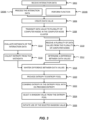
- FIG. 3 shows a flowchart of an entropy generation method according to an embodiment of the invention.
- the method illustrated in FIG. 3 will be described in the context of a computer node cluster receiving interaction data from remote computers and computer nodes, running as virtual machines on the computer node cluster, deriving entropy from the interaction data.
- the steps are illustrated in a specific order, it is understood that embodiments of the invention may include methods that have the steps in different orders.
- a computer node in a computer node cluster receives interaction data from a remote computer.
- the computer node 116A may receive interaction data from the remote computer 102.
- the computer node cluster 114 may receive interaction data from one or more remote computers, e.g., remote computer 102-112.
- the computer node cluster 114 may distribute interaction data to the computer nodes, e.g., computer node 116A, computer node 118A, computer node 120A, and computer node 122A.
- the computer node may receive the interaction data from the computer node cluster 114.
- the computer node processes the interaction data.
- the computer node can be capable of processing any suitable interaction data. For example, if the interaction data is transaction data, then the computer node can process the transaction data.
- the computer node may perform certificate authority services, authorization services, exception file services, and clearing and settlement services.
- the computer node may be capable of authenticating a user associated with the interaction data.
- the interaction data received by a computer node from a computer node cluster may include interaction data from a plurality of remote computers. For example, the computer node cluster may receive interaction data from at least 10,000 remote computers.
- the computer node cluster may group interaction data, in any suitable manner, and then transmit the group of interaction data to the computer node.
- the computer node may process the group of interaction data, which can include, for example, interaction data from at least 2000 remote computers.
- the interaction data may be access data resulting from a user requesting access to a system at a remote computer.
- the computer node can receive and process the access data by, for example, determining whether to allow the user to access the system.
- Step S304B is performed in parallel with step S304A. While the computer node is processing the interaction data, the computer node also performs a function.
- the function may be a time and resource consuming task. In some embodiments, the function may be preprovisioned to the computer node via the computer node cluster. Each computer may perform the same function.
- the function may be a series of mathematical equations and/or problems that the computer node performs. For example, the computer node may calculate 10 10 / i for values of i ⁇ [0, 10 10 ].
- the function may be any other suitable workload as described herein. As another example, the function may involve factoring a number into two or more prime numbers.
- the computer node After processing the interaction data and performing the function, the computer node creates a first data value.
- the first data value is the length of time taken to perform the function.
- the computer node can determine the first data value by measuring the computation time of the function.
- the function computation time can be impacted by the computer node cluster and the individual computer nodes' utilization from co-hosted tasks.
- the computer node can transmit the first data value to a plurality of computer nodes in the computer node cluster.
- the computer node 116A may transmit the first data value to the computer node 118A, the computer node 120A, and the computer node 122A.
- the computer node can transmit the first data value to any suitable number of other computer nodes.
- the computer node may transmit the first data value to all other computer nodes in the computer node cluster.
- transmissions between computer nodes may be facilitated by the computer node cluster.
- the computer node can receive a plurality of data values from the plurality of computer nodes.
- the computer node 116A may receive a data value from the computer node 118A, the computer node 120A, and the computer node 122A.
- the other computer nodes may be able to run the same function, determine the computation time of the function, and transmit the computation time (i.e., data value) to each of the other computer nodes. All clock skews and chaotic loads on the computer nodes of the computer node cluster can contribute to non-deterministic and chaotic output of those operations. In other words, the data value determined by each computer node may be different.
- the computer node determines a difference between the first data value and each data value of the plurality of data values. For example, if the computer node received a plurality of data values including three data values, then the computer node can determine the difference between the first data value and each of the three data values of the plurality of data values, resulting in three differences between data values.
- the computer node may create a first data value of 4.123456 seconds at step S306.
- the computer node may receive a plurality of data values including the data values of 4.123502 seconds, 4.123813 seconds, and 4.123279 seconds at step S310.
- the computer node can then determine the difference between the first data value and each data value of the plurality of data values, and may adjust the values by removing leading zeros; the differences may be 046, 357, and 177 with respect to this example.
- the computer node can evaluate metadata of the interaction data.
- the type of metadata may be based on the type of interaction data.
- the metadata may be, for example, a timestamp of the interaction, a timestamp of transmission and/or reception, a size of the data, a transaction amount, a means of creation of the data, a purpose of the data, a creator of the data, a data quality, keywords, and/or any other suitable metadata.
- the computer node can determine if the interaction data includes metadata that is highly variable between different interaction data, for example, the microseconds of the timestamp.
- the computer node can collect entropy from the metadata. If the metadata includes timestamps, then the computer node can collect a predetermined number of least significant digits of the timestamps. For example, the timestamps may be in a format such as 12:34:56.123456. The computer node can collect the three least significant digits of the timestamp, e.g., 456. The computer node can collect any suitable number of digits from the timestamp as entropy for the entropy pool.
- the computer node may perform a whitening process with the differences between data values.
- the computer node may perform whitening after collecting entropy from the metadata, at step S316.
- the computer node can whiten the difference between data values as well as whiten the metadata.
- the computer node may perform whitening in any suitable manner as described herein. The result of whitening the differences between data values and/or metadata can result in entropy.
- the computer node provides entropy to an entropy pool.
- the computer node 116A can provide entropy to the entropy pool 116B.
- the entropy from the data values can be provided to the entropy pool as random values.
- the computer node can hash together the differences between data values with the data currently stored in the entropy pool.
- the computer node may provide the plurality of data values or derivatives thereof (i.e., whitened values) as random values to the entropy pool of random values.
- replenishing the entropy pool may be referred to as stirring.
- Entropy from entropy sources can be stirred into the mix of bits in the entropy pool.
- the computer node may combine the entropy in the entropy pool with OS provided entropy.
- the computer node may hash the entropy from the OS provided entropy with the entropy of the entropy pool.
- the computer node may store the result of hashing the entropy from different entropy sources into the entropy pool.
- the computer node can hash together the entropy derived from the differences in computation time of a function with the OS provided entropy derived from an entropy source such as a memory state, thread timing, audio noise, network packets, performance counters, and/or the like.
- the computer node can use a SHA (Secure Hashing Algorithm) hashing mechanism, and in other embodiments a MD (Message Digest) hashing mechanism, for combing entropy from several entropy sources.
- a SHA-2 hashing mechanism may be used for processing the entropy sources, instead of an MD hashing mechanism.
- a property of entropy can be that it mixes well. The computer node can mix the entropy from two or more unrelated entropy sources, the resulting new entropy stream cannot have less entropy than the inputs.
- the computer node selects a random value from the entropy pool.
- the computer node can select a random value in any suitable manner.
- the entropy pool may contain a stream of values; the computer node can select the last n values of the steam of values. After the computer node selects the last n values, the remaining values may be mixed using techniques such various hashing mechanisms.
- the selected random value can be of any suitable size, such as 32-bits, 40-bits, 56-bits, 64-bits, 128-bits, 256-bits, etc.
- the computer node initiates the use of the selected random value.
- initiating the use of the selected random value can comprise the computer node inputting the selected random value into a pseudorandom function generator that outputs a second random value.
- the selected random value can be a seed that can be inputted into the pseudorandom function generator.
- the computer node can generate encryption keys using the second random value.
- the computer node may use the second random value rather than the selected random value from the entropy source to generate encryption keys.
- the entropy pool may produce a limited number of random bits per second.
- the selected random value can be used to seed a faster cryptographically secure pseudorandom function generator, which then generates the second random value.
- the selected random value and/or the second random value can be used for any suitable purpose, application, and/or operation, such as, for example, lotteries, gambling machines, video games, image processing and reconstruction, music and graphics composition, scientific and financial modeling simulation, program and algorithm testing, equation-solving, and computer security applications such as cryptography, digital signatures, and protected communication protocols.
- initiating the use of the selected random value can comprise presenting a user with 5 reels on a display, each reel comprising 12 symbols.
- the user may select a button or pull a lever to initiate a spin of the 5 reels, the button, for example, may state "spin," "go,” etc.
- Each of the 12 symbols may be associated with an integer from 1-12.
- the computer node can use the selected random value, which is in a range of 1-12, to select a symbol associated with the selected random value.
- the computer node may end the spin of the reel and display the symbol associated with the selected random value.
- the computer node may use additional random values for the remaining reels. If the combination of the selected symbols matches a predetermined pattern of symbols the user may win a predetermined prize.
- initiating the use of the selected random value can comprise determining a second random value from a PRNG, wherein the input to the PRNG (i.e., the seed) is the selected random value.
- the computer node can then use the second random value to determine the outcome of a lootbox or other digital item in a massively multiplayer online (MMO) game.
- the remote computers may be personal computers of gamers and the interaction data may be login data, logout data, crash reports, player activities in the game, and/or the like.
- the interaction data may be transaction data.
- the computer nodes may use metadata in the transaction data to generate entropy.
- a remote computer can present a webpage to a user, in which the user initiates a transaction.
- the remote computer can employ a counter that adds a counter value (e.g., 1, 2, 3, ..., etc.) to each subsequent webpage (i.e., payment page) that is presented to the users.
- a counter value e.g., 1, 2, 3, ..., etc.
- the computer node cluster can receive the counter value with transaction data in a random order (also after a random time).
- the counter value may be metadata including in the interaction data.
- a computer node can evaluate the metadata (i.e., the counter value) and can then collect entropy from the metadata. For example, the computer node can concatenate, or otherwise combine, the computer values from the received transaction data. The combined counter values may be a random number due to the random order in which the values are received. The computer node may add the entropy to an entropy pool, as described herein.
- the computer node may receive transaction data regarding 10 transactions.
- the metadata may include the counters from 0-9.
- the computer node may receive the transaction data in an order such that the counters are in the following order: 0, 5, 2, 3, 7, 9, 1, 4, 8, 6.
- the altered order of the counters can especially be altered when some user interaction is performed, such a user entering a card number, an address, a game code, a press of a button, and/or any other suitable user input, since different users can perform the user interaction in different amounts of time.
- the computer node add entropy from the metadata to the entropy pool. For example, the computer node may hash a value of 0523791486 with the existing data in the entropy pool.
- the computer node may first perform a whitening process on the value 0523791486 and other data values received from other computer nodes before storing the entropy in the entropy pool.
- the computer node may then select a random value from the entropy pool and input the selected random value as a seed into a PRNG.
- the PRNG may output a second random value used to generate asymmetric RSA encryption keys which may be used to encrypt further communications regarding and/or including the transaction data.
- the system may use transaction metadata to generate entropy.
- the remote computers may be point-of-sale (POS) terminals which may add a timestamp of when a card swipe occurs to transaction data transmitted in authorization request messages to the computer node cluster.
- the timestamp may, for example, be in a format of 12:34:56.123456, or other suitable format, which is measured with a 1/1.000.000 second accuracy.
- the computer nodes can evaluate the timestamps (i.e., metadata in the interaction data) and collect the least significant digits of the timestamp, which can be used as source of randomness.
- POS clocks are not very well synchronized, thus further randomizing the timestamps.
- the computer nodes can collect entropy from timestamps in the metadata.
- a transaction's impact on computation time can be used to generate entropy.
- the entropy discovery task i.e., function
- the entropy discovery task uses a total of 10,000 calculations and can be processed on any different 5 computer nodes in sequence (i.e., 2000 calculations per computer node).
- processing a single transaction uses between 500 and 1,000 calculations (depending on what the user requested, what type of card they have, etc.).
- a single computer node may have capacity of 4,000 calculations per second. The computer node may on average process 4 transactions concurrently. This means that, on average, 3,000 calculations per second are utilized by transaction processing, leaving, on average, a spare calculation capacity of 1,000 calculations per second.
- the entropy discovery task When the entropy discovery task is run periodically it may consume spare calculation capacity from 5 computer nodes and, depending on actual node utilization, the entropy discovery task can spend 2 seconds or more on every computer node.
- the minimum total execution time for the entropy discovery task may be 5 seconds, assuming transaction processing utilized no more than 2,000 calculations from each computer node. The actual time can be higher due to computer nodes being busy with transaction processing as well as due to cluster utilization varying due to variability that cardholders provide.
- Multiple entropy discovery tasks may be performed.
- the computer nodes may use the variability of the task duration to discover randomness in cardholder behaviors.
- Entropy can be derived, as described above, from the differences between how long a computer node takes to run the entropy discovery task. For simplicity of the above numbers, it can be assumed that computation on a computer node is not run in parallel, however, it is understood that computations may be run in parallel on computer nodes in some embodiments of the invention.
- a computer system can include a plurality of the components or subsystems, e.g., connected together by external interface or by an internal interface.
- computer systems, subsystems, or apparatuses can communicate over a network.
- one computer can be considered a client and another computer a server, where each can be part of a same computer system.
- a client and a server can each include multiple systems, subsystems, or components.
- any of the embodiments of the present invention can be implemented in the form of control logic using hardware (e.g., an application specific integrated circuit or field programmable gate array) and/or using computer software with a generally programmable processor in a modular or integrated manner.
- a processor includes a single-core processor, multi-core processor on a same integrated chip, or multiple processing units on a single circuit board or networked.
- any of the methods described herein may be totally or partially performed with a computer system including one or more processors, which can be configured to perform the steps.
- embodiments can be involve computer systems configured to perform the steps of any of the methods described herein, potentially with different components performing a respective steps or a respective group of steps.
- steps of methods herein can be performed at a same time or in a different order. Additionally, portions of these steps may be used with portions of other steps from other methods. Also, all or portions of a step may be optional. Additionally, and of the steps of any of the methods can be performed with modules, circuits, or other means for performing these steps.
Landscapes
- Engineering & Computer Science (AREA)
- Computer Security & Cryptography (AREA)
- Theoretical Computer Science (AREA)
- General Physics & Mathematics (AREA)
- General Engineering & Computer Science (AREA)
- Physics & Mathematics (AREA)
- Computer Networks & Wireless Communication (AREA)
- Signal Processing (AREA)
- Software Systems (AREA)
- Computer Hardware Design (AREA)
- General Health & Medical Sciences (AREA)
- Bioethics (AREA)
- Health & Medical Sciences (AREA)
- Computational Mathematics (AREA)
- Mathematical Analysis (AREA)
- Mathematical Optimization (AREA)
- Pure & Applied Mathematics (AREA)
- Debugging And Monitoring (AREA)
- Information Retrieval, Db Structures And Fs Structures Therefor (AREA)
Claims (8)
- Procédé comprenant :la réception, par un noeud d'ordinateur dans un réseau comprenant une pluralité de noeuds d'ordinateur (116A, 118A, 120A, 122A), d'une pluralité de valeurs de données, chacun de la pluralité de noeuds d'ordinateur créant une valeur de données de la pluralité de valeurs de données sur la base d'un temps de calcul qu'un noeud d'ordinateur correspondant dans la pluralité de noeuds d'ordinateur prend pour réaliser une fonction ;la réception (S302), par le noeud d'ordinateur (116A, 118A, 120A, 122A ) à partir d'un ordinateur distant (102, 104, 106, 108, 110, 112), de données d'interaction ;le traitement (S304A), par le noeud d'ordinateur (116A, 118A, 120A, 122A), des données d'interaction en parallèle à la réalisation de la fonction (S304B) ;la détermination (S306), par le noeud d'ordinateur (116A, 118A, 120A, 122A), d'un temps de calcul que le noeud d'ordinateur prend pour réaliser la fonction ;la détermination (S312), par le noeud d'ordinateur (116A, 118A, 120A, 122A), d'une différence entre le temps que prend le noeud d'ordinateur pour réaliser la fonction et chaque valeur de données de la pluralité de valeurs de données ;la fourniture (S320), par le noeud d'ordinateur (116A, 118A, 120A, 122A), des différences entre la première valeur de données et chacune de la pluralité de valeurs de données ou des dérivés de celles-ci en tant que valeurs aléatoires à une réserve d'entropie (116B, 118B, 120B, 122B) de valeurs aléatoires ;la sélection (S324), par le noeud d'ordinateur (116A, 118A, 120A, 122A), d'une valeur aléatoire choisie à partir de la réserve d'entropie (116B, 118B, 120B, 122B) ; etle lancement (S326), par le noeud d'ordinateur (116A, 118A, 120A, 122A), de l'utilisation de la valeur aléatoire choisie dans une opération.
- Procédé selon la revendication 1, comprenant en outre :l'évaluation, par le noeud d'ordinateur (116A, 118A, 120A, 122A), de métadonnées des données d'interaction ;la collecte, par le noeud d'ordinateur (116A, 118A, 120A, 122A), de valeurs d'entropie à partir d'estampilles temporelles dans les métadonnées ; etla fourniture, par le noeud d'ordinateur (116A, 118A, 120A, 122A), des valeurs d'entropie ou de dérivés de celles-ci en tant que valeurs aléatoires à la réserve d'entropie (116B, 118B, 120B, 122B).
- Procédé selon la revendication 1, dans lequel le lancement de l'utilisation de la valeur aléatoire choisie dans l'opération comprend en outre :la fourniture en entrée, par le noeud d'ordinateur (116A, 118A, 120A, 122A), de la valeur aléatoire choisie dans un générateur de fonction pseudo-aléatoire qui fournit en sortie une deuxième valeur aléatoire ; etla génération, par le noeud d'ordinateur (116A, 118A, 120A, 122A), d'une ou de plusieurs clés de chiffrage utilisant la deuxième valeur aléatoire.
- Procédé selon la revendication 1, dans lequel l'opération concerne des opérations de loterie, des opérations de machine de jeux d'argent, des opérations de jeu vidéo, des opérations de traitement et de reconstruction d'image, des options de composition musicale, des opérations de composition graphique, des simulations de modélisation scientifique, des simulations de modélisation financière, des opérations de test de programme et d'algorithme ou des opérations de résolution d'équation.
- Procédé selon la revendication 1, dans lequel la pluralité de valeurs de données est une pluralité de valeurs aléatoires reçues depuis la pluralité de noeuds d'ordinateur (116A, 118A, 120A, 122A).
- Procédé selon la revendication 1, dans lequel la valeur aléatoire choisie est un nombre aléatoire.
- Procédé selon la revendication 1, comprenant en outre :
le blanchiment (S318), par le noeud d'ordinateur (116A, 118A, 120A, 122A), de la pluralité de valeurs de données ou de dérivés de celles-ci avant de fournir la pluralité de valeurs de données ou de dérivés de celles-ci à la réserve d'entropie (116B, 118B, 120B, 122B). - Noeud d'ordinateur comprenant :
un support lisible par ordinateur comprenant un code destiné à mettre en œuvre un procédé selon l'une quelconque des revendications précédentes.
Applications Claiming Priority (1)
| Application Number | Priority Date | Filing Date | Title |
|---|---|---|---|
| PCT/US2018/060003 WO2020096614A1 (fr) | 2018-11-09 | 2018-11-09 | Système et procédé à entropie distribuée |
Publications (3)
| Publication Number | Publication Date |
|---|---|
| EP3877882A1 EP3877882A1 (fr) | 2021-09-15 |
| EP3877882A4 EP3877882A4 (fr) | 2021-11-17 |
| EP3877882B1 true EP3877882B1 (fr) | 2024-07-10 |
Family
ID=70611427
Family Applications (1)
| Application Number | Title | Priority Date | Filing Date |
|---|---|---|---|
| EP18939183.2A Active EP3877882B1 (fr) | 2018-11-09 | 2018-11-09 | Système et procédé à entropie distribuée |
Country Status (5)
| Country | Link |
|---|---|
| US (1) | US11843695B2 (fr) |
| EP (1) | EP3877882B1 (fr) |
| CN (1) | CN113424184B (fr) |
| SG (1) | SG11202104633WA (fr) |
| WO (1) | WO2020096614A1 (fr) |
Families Citing this family (6)
| Publication number | Priority date | Publication date | Assignee | Title |
|---|---|---|---|---|
| US10402172B1 (en) * | 2019-02-28 | 2019-09-03 | Qrypt, Inc. | Multi-source entropy and randomness aggregation and distribution network |
| AU2020287873B2 (en) * | 2019-06-07 | 2023-10-26 | Lockheed Martin Corporation | Systems and methods for processor virtualization |
| US11381395B2 (en) * | 2020-03-05 | 2022-07-05 | Citrix Systems, Inc. | System and methods for encryption based on environmental factors |
| US12293164B2 (en) * | 2021-09-01 | 2025-05-06 | Capital One Services, Llc | Devices and techniques to perform entropy-based randomness via a contactless card |
| US12225111B2 (en) * | 2022-03-08 | 2025-02-11 | SanDisk Technologies, Inc. | Authorization requests from a data storage device to multiple manager devices |
| WO2024263241A1 (fr) * | 2023-06-23 | 2024-12-26 | Arris Enterprises Llc | Procédé et appareil pour la génération de nombres aléatoires |
Family Cites Families (12)
| Publication number | Priority date | Publication date | Assignee | Title |
|---|---|---|---|---|
| US9026638B2 (en) | 2007-02-05 | 2015-05-05 | Novell, Inc. | Stealth entropy collection |
| US8738676B2 (en) | 2009-05-29 | 2014-05-27 | International Business Machines Corporation | Entropy generation on a parallel computer system |
| US20110022916A1 (en) | 2009-07-24 | 2011-01-27 | Prasanna Desai | Method and system for saving power for packet re-transmission in an encrypted bluetooth low power link layer connection |
| US9495190B2 (en) * | 2009-08-24 | 2016-11-15 | Microsoft Technology Licensing, Llc | Entropy pools for virtual machines |
| US9086936B2 (en) | 2012-07-31 | 2015-07-21 | International Business Machines Corporation | Method of entropy distribution on a parallel computer |
| US9037624B1 (en) * | 2012-08-03 | 2015-05-19 | Seagate Technology Llc | Using memory access times for random number generation |
| US9507566B2 (en) | 2014-04-01 | 2016-11-29 | Oracle International Corporation | Entropy generation for a distributed computing system |
| US9436529B2 (en) | 2014-12-26 | 2016-09-06 | Red Hat, Inc. | Providing random data to a guest operating system |
| US9658832B2 (en) * | 2015-05-18 | 2017-05-23 | Red Hat Israel, Ltd. | Multi-factor entropy sourcing for random number generators |
| US20160345188A1 (en) * | 2015-05-21 | 2016-11-24 | Qualcomm Incorporated | Low-cost randomness in wlan chipsets for internet of everything |
| US9979794B2 (en) * | 2015-09-17 | 2018-05-22 | Ericsson Ab | Entropy sharing in a large distributed system based on entropy verification by an entropy broker |
| US11646867B2 (en) * | 2017-12-22 | 2023-05-09 | The Boeing Company | Systems and methods implementing countermeasures to phase tracking attacks on ring oscillator based entropy sources |
-
2018
- 2018-11-09 CN CN201880099364.6A patent/CN113424184B/zh active Active
- 2018-11-09 EP EP18939183.2A patent/EP3877882B1/fr active Active
- 2018-11-09 US US17/291,590 patent/US11843695B2/en active Active
- 2018-11-09 SG SG11202104633WA patent/SG11202104633WA/en unknown
- 2018-11-09 WO PCT/US2018/060003 patent/WO2020096614A1/fr not_active Ceased
Also Published As
| Publication number | Publication date |
|---|---|
| CN113424184A (zh) | 2021-09-21 |
| EP3877882A1 (fr) | 2021-09-15 |
| CN113424184B (zh) | 2025-08-22 |
| EP3877882A4 (fr) | 2021-11-17 |
| US20210409207A1 (en) | 2021-12-30 |
| SG11202104633WA (en) | 2021-06-29 |
| US11843695B2 (en) | 2023-12-12 |
| WO2020096614A1 (fr) | 2020-05-14 |
Similar Documents
| Publication | Publication Date | Title |
|---|---|---|
| EP3877882B1 (fr) | Système et procédé à entropie distribuée | |
| US9558358B2 (en) | Random number generator in a virtualized environment | |
| US10447770B2 (en) | Blockchain micro-services framework | |
| US10749884B2 (en) | Systems and methods for detecting and preventing spoofing | |
| Zhang et al. | {REM}:{Resource-Efficient} mining for blockchains | |
| Bukasa et al. | How trustzone could be bypassed: Side-channel attacks on a modern system-on-chip | |
| CN110121709A (zh) | Fpga平台即服务(paas) | |
| CN110689412A (zh) | 基于区块链的用于游戏虚拟物品交易的方法、装置、服务器和存储介质 | |
| Side et al. | Lockeddown: Exploiting contention on host-gpu pcie bus for fun and profit | |
| WO2015006497A1 (fr) | Jeu distribué sécurisé | |
| Yang et al. | An effective and scalable VM migration strategy to mitigate cross-VM side-channel attacks in cloud | |
| JP2018055551A (ja) | データ変換プログラム、データ変換方法、およびデータ変換装置 | |
| JP7268259B1 (ja) | ブロックチェーン乱数取得方法、装置、機器および媒体 | |
| US9436529B2 (en) | Providing random data to a guest operating system | |
| Naghibijouybari et al. | Beyond the cpu: Side–channel attacks on gpus | |
| Monfared et al. | BSRNG: a high throughput parallel bitsliced approach for random number generators | |
| Alam et al. | In-situ extraction of randomness from computer architecture through hardware performance counters | |
| Naizer | A Consolidated Solution for Broader Statistical Testing of Random Number Generators in a Post-Quantum Era | |
| US11463249B2 (en) | Fairness in gaming | |
| Cucurull et al. | Transitioning to a Javascript voting client for remote online voting | |
| Huo et al. | PPCPP: A Practical Payment Channel Model with Privacy Protection | |
| Mounica | Enhancing Blockchain Scalability for IoT Transactions Using ZK-Rollups: A Secure and Efficient Off-Chain Solution | |
| Segu et al. | Recycling Memory in Recoverable Mutex | |
| Gulmezoglu | Towards Automated Analysis of Microarchitectural Attacks using Machine Learning | |
| CN118540106A (zh) | 一种数据处理方法、装置、电子设备及存储介质 |
Legal Events
| Date | Code | Title | Description |
|---|---|---|---|
| STAA | Information on the status of an ep patent application or granted ep patent |
Free format text: STATUS: THE INTERNATIONAL PUBLICATION HAS BEEN MADE |
|
| PUAI | Public reference made under article 153(3) epc to a published international application that has entered the european phase |
Free format text: ORIGINAL CODE: 0009012 |
|
| STAA | Information on the status of an ep patent application or granted ep patent |
Free format text: STATUS: REQUEST FOR EXAMINATION WAS MADE |
|
| 17P | Request for examination filed |
Effective date: 20210607 |
|
| AK | Designated contracting states |
Kind code of ref document: A1 Designated state(s): AL AT BE BG CH CY CZ DE DK EE ES FI FR GB GR HR HU IE IS IT LI LT LU LV MC MK MT NL NO PL PT RO RS SE SI SK SM TR |
|
| REG | Reference to a national code |
Ref legal event code: R079 Ipc: G06F0007580000 Ref country code: DE Ref legal event code: R079 Ref document number: 602018071737 Country of ref document: DE Free format text: PREVIOUS MAIN CLASS: G06F0021570000 Ipc: G06F0007580000 |
|
| A4 | Supplementary search report drawn up and despatched |
Effective date: 20211015 |
|
| RIC1 | Information provided on ipc code assigned before grant |
Ipc: G06F 21/60 20130101ALI20211011BHEP Ipc: G06F 21/62 20130101ALI20211011BHEP Ipc: G06F 9/455 20180101ALI20211011BHEP Ipc: G06F 21/57 20130101ALI20211011BHEP Ipc: G06F 7/58 20060101AFI20211011BHEP |
|
| DAV | Request for validation of the european patent (deleted) | ||
| DAX | Request for extension of the european patent (deleted) | ||
| P01 | Opt-out of the competence of the unified patent court (upc) registered |
Effective date: 20230511 |
|
| GRAP | Despatch of communication of intention to grant a patent |
Free format text: ORIGINAL CODE: EPIDOSNIGR1 |
|
| STAA | Information on the status of an ep patent application or granted ep patent |
Free format text: STATUS: GRANT OF PATENT IS INTENDED |
|
| INTG | Intention to grant announced |
Effective date: 20230922 |
|
| GRAJ | Information related to disapproval of communication of intention to grant by the applicant or resumption of examination proceedings by the epo deleted |
Free format text: ORIGINAL CODE: EPIDOSDIGR1 |
|
| STAA | Information on the status of an ep patent application or granted ep patent |
Free format text: STATUS: REQUEST FOR EXAMINATION WAS MADE |
|
| GRAP | Despatch of communication of intention to grant a patent |
Free format text: ORIGINAL CODE: EPIDOSNIGR1 |
|
| STAA | Information on the status of an ep patent application or granted ep patent |
Free format text: STATUS: GRANT OF PATENT IS INTENDED |
|
| INTC | Intention to grant announced (deleted) | ||
| INTG | Intention to grant announced |
Effective date: 20240202 |
|
| GRAS | Grant fee paid |
Free format text: ORIGINAL CODE: EPIDOSNIGR3 |
|
| GRAA | (expected) grant |
Free format text: ORIGINAL CODE: 0009210 |
|
| STAA | Information on the status of an ep patent application or granted ep patent |
Free format text: STATUS: THE PATENT HAS BEEN GRANTED |
|
| AK | Designated contracting states |
Kind code of ref document: B1 Designated state(s): AL AT BE BG CH CY CZ DE DK EE ES FI FR GB GR HR HU IE IS IT LI LT LU LV MC MK MT NL NO PL PT RO RS SE SI SK SM TR |
|
| REG | Reference to a national code |
Ref country code: CH Ref legal event code: EP |
|
| REG | Reference to a national code |
Ref country code: DE Ref legal event code: R096 Ref document number: 602018071737 Country of ref document: DE |
|
| REG | Reference to a national code |
Ref country code: LT Ref legal event code: MG9D |
|
| REG | Reference to a national code |
Ref country code: NL Ref legal event code: MP Effective date: 20240710 |
|
| PG25 | Lapsed in a contracting state [announced via postgrant information from national office to epo] |
Ref country code: PT Free format text: LAPSE BECAUSE OF FAILURE TO SUBMIT A TRANSLATION OF THE DESCRIPTION OR TO PAY THE FEE WITHIN THE PRESCRIBED TIME-LIMIT Effective date: 20241111 |
|
| REG | Reference to a national code |
Ref country code: AT Ref legal event code: MK05 Ref document number: 1702636 Country of ref document: AT Kind code of ref document: T Effective date: 20240710 |
|
| PG25 | Lapsed in a contracting state [announced via postgrant information from national office to epo] |
Ref country code: NL Free format text: LAPSE BECAUSE OF FAILURE TO SUBMIT A TRANSLATION OF THE DESCRIPTION OR TO PAY THE FEE WITHIN THE PRESCRIBED TIME-LIMIT Effective date: 20240710 |
|
| PG25 | Lapsed in a contracting state [announced via postgrant information from national office to epo] |
Ref country code: PT Free format text: LAPSE BECAUSE OF FAILURE TO SUBMIT A TRANSLATION OF THE DESCRIPTION OR TO PAY THE FEE WITHIN THE PRESCRIBED TIME-LIMIT Effective date: 20241111 Ref country code: NL Free format text: LAPSE BECAUSE OF FAILURE TO SUBMIT A TRANSLATION OF THE DESCRIPTION OR TO PAY THE FEE WITHIN THE PRESCRIBED TIME-LIMIT Effective date: 20240710 |
|
| PG25 | Lapsed in a contracting state [announced via postgrant information from national office to epo] |
Ref country code: NO Free format text: LAPSE BECAUSE OF FAILURE TO SUBMIT A TRANSLATION OF THE DESCRIPTION OR TO PAY THE FEE WITHIN THE PRESCRIBED TIME-LIMIT Effective date: 20241010 |
|
| PG25 | Lapsed in a contracting state [announced via postgrant information from national office to epo] |
Ref country code: GR Free format text: LAPSE BECAUSE OF FAILURE TO SUBMIT A TRANSLATION OF THE DESCRIPTION OR TO PAY THE FEE WITHIN THE PRESCRIBED TIME-LIMIT Effective date: 20241011 Ref country code: FI Free format text: LAPSE BECAUSE OF FAILURE TO SUBMIT A TRANSLATION OF THE DESCRIPTION OR TO PAY THE FEE WITHIN THE PRESCRIBED TIME-LIMIT Effective date: 20240710 Ref country code: PL Free format text: LAPSE BECAUSE OF FAILURE TO SUBMIT A TRANSLATION OF THE DESCRIPTION OR TO PAY THE FEE WITHIN THE PRESCRIBED TIME-LIMIT Effective date: 20240710 |
|
| PG25 | Lapsed in a contracting state [announced via postgrant information from national office to epo] |
Ref country code: BG Free format text: LAPSE BECAUSE OF FAILURE TO SUBMIT A TRANSLATION OF THE DESCRIPTION OR TO PAY THE FEE WITHIN THE PRESCRIBED TIME-LIMIT Effective date: 20240710 |
|
| PG25 | Lapsed in a contracting state [announced via postgrant information from national office to epo] |
Ref country code: LV Free format text: LAPSE BECAUSE OF FAILURE TO SUBMIT A TRANSLATION OF THE DESCRIPTION OR TO PAY THE FEE WITHIN THE PRESCRIBED TIME-LIMIT Effective date: 20240710 |
|
| PG25 | Lapsed in a contracting state [announced via postgrant information from national office to epo] |
Ref country code: AT Free format text: LAPSE BECAUSE OF FAILURE TO SUBMIT A TRANSLATION OF THE DESCRIPTION OR TO PAY THE FEE WITHIN THE PRESCRIBED TIME-LIMIT Effective date: 20240710 Ref country code: IS Free format text: LAPSE BECAUSE OF FAILURE TO SUBMIT A TRANSLATION OF THE DESCRIPTION OR TO PAY THE FEE WITHIN THE PRESCRIBED TIME-LIMIT Effective date: 20241110 |
|
| PG25 | Lapsed in a contracting state [announced via postgrant information from national office to epo] |
Ref country code: HR Free format text: LAPSE BECAUSE OF FAILURE TO SUBMIT A TRANSLATION OF THE DESCRIPTION OR TO PAY THE FEE WITHIN THE PRESCRIBED TIME-LIMIT Effective date: 20240710 |
|
| PG25 | Lapsed in a contracting state [announced via postgrant information from national office to epo] |
Ref country code: RS Free format text: LAPSE BECAUSE OF FAILURE TO SUBMIT A TRANSLATION OF THE DESCRIPTION OR TO PAY THE FEE WITHIN THE PRESCRIBED TIME-LIMIT Effective date: 20241010 Ref country code: ES Free format text: LAPSE BECAUSE OF FAILURE TO SUBMIT A TRANSLATION OF THE DESCRIPTION OR TO PAY THE FEE WITHIN THE PRESCRIBED TIME-LIMIT Effective date: 20240710 |
|
| PG25 | Lapsed in a contracting state [announced via postgrant information from national office to epo] |
Ref country code: RS Free format text: LAPSE BECAUSE OF FAILURE TO SUBMIT A TRANSLATION OF THE DESCRIPTION OR TO PAY THE FEE WITHIN THE PRESCRIBED TIME-LIMIT Effective date: 20241010 Ref country code: PL Free format text: LAPSE BECAUSE OF FAILURE TO SUBMIT A TRANSLATION OF THE DESCRIPTION OR TO PAY THE FEE WITHIN THE PRESCRIBED TIME-LIMIT Effective date: 20240710 Ref country code: NO Free format text: LAPSE BECAUSE OF FAILURE TO SUBMIT A TRANSLATION OF THE DESCRIPTION OR TO PAY THE FEE WITHIN THE PRESCRIBED TIME-LIMIT Effective date: 20241010 Ref country code: LV Free format text: LAPSE BECAUSE OF FAILURE TO SUBMIT A TRANSLATION OF THE DESCRIPTION OR TO PAY THE FEE WITHIN THE PRESCRIBED TIME-LIMIT Effective date: 20240710 Ref country code: IS Free format text: LAPSE BECAUSE OF FAILURE TO SUBMIT A TRANSLATION OF THE DESCRIPTION OR TO PAY THE FEE WITHIN THE PRESCRIBED TIME-LIMIT Effective date: 20241110 Ref country code: HR Free format text: LAPSE BECAUSE OF FAILURE TO SUBMIT A TRANSLATION OF THE DESCRIPTION OR TO PAY THE FEE WITHIN THE PRESCRIBED TIME-LIMIT Effective date: 20240710 Ref country code: GR Free format text: LAPSE BECAUSE OF FAILURE TO SUBMIT A TRANSLATION OF THE DESCRIPTION OR TO PAY THE FEE WITHIN THE PRESCRIBED TIME-LIMIT Effective date: 20241011 Ref country code: FI Free format text: LAPSE BECAUSE OF FAILURE TO SUBMIT A TRANSLATION OF THE DESCRIPTION OR TO PAY THE FEE WITHIN THE PRESCRIBED TIME-LIMIT Effective date: 20240710 Ref country code: ES Free format text: LAPSE BECAUSE OF FAILURE TO SUBMIT A TRANSLATION OF THE DESCRIPTION OR TO PAY THE FEE WITHIN THE PRESCRIBED TIME-LIMIT Effective date: 20240710 Ref country code: BG Free format text: LAPSE BECAUSE OF FAILURE TO SUBMIT A TRANSLATION OF THE DESCRIPTION OR TO PAY THE FEE WITHIN THE PRESCRIBED TIME-LIMIT Effective date: 20240710 Ref country code: AT Free format text: LAPSE BECAUSE OF FAILURE TO SUBMIT A TRANSLATION OF THE DESCRIPTION OR TO PAY THE FEE WITHIN THE PRESCRIBED TIME-LIMIT Effective date: 20240710 |
|
| REG | Reference to a national code |
Ref country code: DE Ref legal event code: R097 Ref document number: 602018071737 Country of ref document: DE |
|
| PG25 | Lapsed in a contracting state [announced via postgrant information from national office to epo] |
Ref country code: DK Free format text: LAPSE BECAUSE OF FAILURE TO SUBMIT A TRANSLATION OF THE DESCRIPTION OR TO PAY THE FEE WITHIN THE PRESCRIBED TIME-LIMIT Effective date: 20240710 Ref country code: RO Free format text: LAPSE BECAUSE OF FAILURE TO SUBMIT A TRANSLATION OF THE DESCRIPTION OR TO PAY THE FEE WITHIN THE PRESCRIBED TIME-LIMIT Effective date: 20240710 Ref country code: SM Free format text: LAPSE BECAUSE OF FAILURE TO SUBMIT A TRANSLATION OF THE DESCRIPTION OR TO PAY THE FEE WITHIN THE PRESCRIBED TIME-LIMIT Effective date: 20240710 |
|
| PG25 | Lapsed in a contracting state [announced via postgrant information from national office to epo] |
Ref country code: EE Free format text: LAPSE BECAUSE OF FAILURE TO SUBMIT A TRANSLATION OF THE DESCRIPTION OR TO PAY THE FEE WITHIN THE PRESCRIBED TIME-LIMIT Effective date: 20240710 |
|
| PG25 | Lapsed in a contracting state [announced via postgrant information from national office to epo] |
Ref country code: CZ Free format text: LAPSE BECAUSE OF FAILURE TO SUBMIT A TRANSLATION OF THE DESCRIPTION OR TO PAY THE FEE WITHIN THE PRESCRIBED TIME-LIMIT Effective date: 20240710 |
|
| PG25 | Lapsed in a contracting state [announced via postgrant information from national office to epo] |
Ref country code: IT Free format text: LAPSE BECAUSE OF FAILURE TO SUBMIT A TRANSLATION OF THE DESCRIPTION OR TO PAY THE FEE WITHIN THE PRESCRIBED TIME-LIMIT Effective date: 20240710 Ref country code: SK Free format text: LAPSE BECAUSE OF FAILURE TO SUBMIT A TRANSLATION OF THE DESCRIPTION OR TO PAY THE FEE WITHIN THE PRESCRIBED TIME-LIMIT Effective date: 20240710 |
|
| PLBE | No opposition filed within time limit |
Free format text: ORIGINAL CODE: 0009261 |
|
| STAA | Information on the status of an ep patent application or granted ep patent |
Free format text: STATUS: NO OPPOSITION FILED WITHIN TIME LIMIT |
|
| 26N | No opposition filed |
Effective date: 20250411 |
|
| REG | Reference to a national code |
Ref country code: CH Ref legal event code: PL |
|
| PG25 | Lapsed in a contracting state [announced via postgrant information from national office to epo] |
Ref country code: MC Free format text: LAPSE BECAUSE OF FAILURE TO SUBMIT A TRANSLATION OF THE DESCRIPTION OR TO PAY THE FEE WITHIN THE PRESCRIBED TIME-LIMIT Effective date: 20240710 |
|
| PG25 | Lapsed in a contracting state [announced via postgrant information from national office to epo] |
Ref country code: LU Free format text: LAPSE BECAUSE OF NON-PAYMENT OF DUE FEES Effective date: 20241109 |
|
| REG | Reference to a national code |
Ref country code: CH Ref legal event code: PL |
|
| PG25 | Lapsed in a contracting state [announced via postgrant information from national office to epo] |
Ref country code: CH Free format text: LAPSE BECAUSE OF NON-PAYMENT OF DUE FEES Effective date: 20241130 |
|
| REG | Reference to a national code |
Ref country code: BE Ref legal event code: MM Effective date: 20241130 |
|
| PG25 | Lapsed in a contracting state [announced via postgrant information from national office to epo] |
Ref country code: SE Free format text: LAPSE BECAUSE OF FAILURE TO SUBMIT A TRANSLATION OF THE DESCRIPTION OR TO PAY THE FEE WITHIN THE PRESCRIBED TIME-LIMIT Effective date: 20240710 |
|
| PG25 | Lapsed in a contracting state [announced via postgrant information from national office to epo] |
Ref country code: BE Free format text: LAPSE BECAUSE OF NON-PAYMENT OF DUE FEES Effective date: 20241130 |
|
| PG25 | Lapsed in a contracting state [announced via postgrant information from national office to epo] |
Ref country code: IE Free format text: LAPSE BECAUSE OF NON-PAYMENT OF DUE FEES Effective date: 20241109 |
|
| PGFP | Annual fee paid to national office [announced via postgrant information from national office to epo] |
Ref country code: DE Payment date: 20251022 Year of fee payment: 8 |
|
| PGFP | Annual fee paid to national office [announced via postgrant information from national office to epo] |
Ref country code: GB Payment date: 20251022 Year of fee payment: 8 |
|
| PGFP | Annual fee paid to national office [announced via postgrant information from national office to epo] |
Ref country code: FR Payment date: 20251022 Year of fee payment: 8 |
|
| PG25 | Lapsed in a contracting state [announced via postgrant information from national office to epo] |
Ref country code: HU Free format text: LAPSE BECAUSE OF FAILURE TO SUBMIT A TRANSLATION OF THE DESCRIPTION OR TO PAY THE FEE WITHIN THE PRESCRIBED TIME-LIMIT; INVALID AB INITIO Effective date: 20181109 |
|
| PG25 | Lapsed in a contracting state [announced via postgrant information from national office to epo] |
Ref country code: CY Free format text: LAPSE BECAUSE OF FAILURE TO SUBMIT A TRANSLATION OF THE DESCRIPTION OR TO PAY THE FEE WITHIN THE PRESCRIBED TIME-LIMIT; INVALID AB INITIO Effective date: 20181109 |