EP3884653B1 - Verfahren und vorrichtung zur steuerung einer intelligenten vorrichtung zur durchführung entsprechender operationen - Google Patents
Verfahren und vorrichtung zur steuerung einer intelligenten vorrichtung zur durchführung entsprechender operationen Download PDFInfo
- Publication number
- EP3884653B1 EP3884653B1 EP19902036.3A EP19902036A EP3884653B1 EP 3884653 B1 EP3884653 B1 EP 3884653B1 EP 19902036 A EP19902036 A EP 19902036A EP 3884653 B1 EP3884653 B1 EP 3884653B1
- Authority
- EP
- European Patent Office
- Prior art keywords
- information
- control instruction
- device control
- user
- target
- Prior art date
- Legal status (The legal status is an assumption and is not a legal conclusion. Google has not performed a legal analysis and makes no representation as to the accuracy of the status listed.)
- Active
Links
Images










Classifications
-
- G—PHYSICS
- G06—COMPUTING OR CALCULATING; COUNTING
- G06F—ELECTRIC DIGITAL DATA PROCESSING
- G06F18/00—Pattern recognition
- G06F18/20—Analysing
- G06F18/24—Classification techniques
- G06F18/241—Classification techniques relating to the classification model, e.g. parametric or non-parametric approaches
- G06F18/2411—Classification techniques relating to the classification model, e.g. parametric or non-parametric approaches based on the proximity to a decision surface, e.g. support vector machines
-
- G—PHYSICS
- G05—CONTROLLING; REGULATING
- G05B—CONTROL OR REGULATING SYSTEMS IN GENERAL; FUNCTIONAL ELEMENTS OF SUCH SYSTEMS; MONITORING OR TESTING ARRANGEMENTS FOR SUCH SYSTEMS OR ELEMENTS
- G05B15/00—Systems controlled by a computer
- G05B15/02—Systems controlled by a computer electric
-
- H—ELECTRICITY
- H04—ELECTRIC COMMUNICATION TECHNIQUE
- H04M—TELEPHONIC COMMUNICATION
- H04M1/00—Substation equipment, e.g. for use by subscribers
- H04M1/72—Mobile telephones; Cordless telephones, i.e. devices for establishing wireless links to base stations without route selection
- H04M1/724—User interfaces specially adapted for cordless or mobile telephones
- H04M1/72403—User interfaces specially adapted for cordless or mobile telephones with means for local support of applications that increase the functionality
- H04M1/72409—User interfaces specially adapted for cordless or mobile telephones with means for local support of applications that increase the functionality by interfacing with external accessories
- H04M1/72415—User interfaces specially adapted for cordless or mobile telephones with means for local support of applications that increase the functionality by interfacing with external accessories for remote control of appliances
-
- G—PHYSICS
- G05—CONTROLLING; REGULATING
- G05B—CONTROL OR REGULATING SYSTEMS IN GENERAL; FUNCTIONAL ELEMENTS OF SUCH SYSTEMS; MONITORING OR TESTING ARRANGEMENTS FOR SUCH SYSTEMS OR ELEMENTS
- G05B2219/00—Program-control systems
- G05B2219/20—Pc systems
- G05B2219/26—Pc applications
- G05B2219/2642—Domotique, domestic, home control, automation, smart house
-
- G—PHYSICS
- G06—COMPUTING OR CALCULATING; COUNTING
- G06F—ELECTRIC DIGITAL DATA PROCESSING
- G06F2218/00—Aspects of pattern recognition specially adapted for signal processing
-
- H—ELECTRICITY
- H04—ELECTRIC COMMUNICATION TECHNIQUE
- H04M—TELEPHONIC COMMUNICATION
- H04M1/00—Substation equipment, e.g. for use by subscribers
- H04M1/72—Mobile telephones; Cordless telephones, i.e. devices for establishing wireless links to base stations without route selection
- H04M1/724—User interfaces specially adapted for cordless or mobile telephones
- H04M1/72448—User interfaces specially adapted for cordless or mobile telephones with means for adapting the functionality of the device according to specific conditions
-
- H—ELECTRICITY
- H04—ELECTRIC COMMUNICATION TECHNIQUE
- H04M—TELEPHONIC COMMUNICATION
- H04M1/00—Substation equipment, e.g. for use by subscribers
- H04M1/72—Mobile telephones; Cordless telephones, i.e. devices for establishing wireless links to base stations without route selection
- H04M1/724—User interfaces specially adapted for cordless or mobile telephones
- H04M1/72448—User interfaces specially adapted for cordless or mobile telephones with means for adapting the functionality of the device according to specific conditions
- H04M1/72454—User interfaces specially adapted for cordless or mobile telephones with means for adapting the functionality of the device according to specific conditions according to context-related or environment-related conditions
Definitions
- the present disclosure relates to the field of artificial intelligence technology, and in particular, to a device control method, an apparatus, an electronic device, and a computer readable storage medium.
- buttons on devices or buttons on remote control devices enter people's daily lives, and users may control these devices to perform corresponding operations by manually adjusting buttons on devices or buttons on remote control devices.
- smart devices for example, smart home devices such as smart speakers, smart air conditioners, smart TVs, smart ovens, etc.
- smart home devices gradually enter people's daily life
- users may control smart home devices to perform corresponding operations without manually adjusting buttons on devices or buttons on remote control devices
- users may control smart home devices to perform corresponding operations through applications installed on terminal devices such as mobile phones, and particularly for instance, users may control air conditioners to be turned on through smart terminal devices such as mobile phones.
- controlling process is generally only based on control instructions input by users, and other factors that may affect operations of devices are not considered, which may result in low security and flexibility of device controlling process. Therefore, how to control smart devices to perform corresponding operations more safely and flexibly becomes a key issue.
- US 2016/0378080 A1 discloses technologies for conversational interfaces for system control.
- EP 2 738 478 A2 discloses intelligent comfort management using natural language processing to interface with a comfort system controller.
- the present disclosure provides a device control method, an apparatus, an electronic device, and a computer readable storage medium, which may solve the problem of how to control the smart device to perform corresponding operations more safely and flexibly.
- a device control method comprising:
- a device control apparatus comprising:
- an electronic device comprising:
- a computer readable storage medium wherein the storage medium stores at least one computer instruction, at least one program, a code set, or an instruction set that, which, when loaded and executed by the processor to implement the device control method according to the first aspect.
- the technical solution provided by the present disclosure is advantageous in the following:
- the present disclosure provides a device control method, an apparatus, an electronic device, and a computer readable storage medium, which may control at least one target device to perform a corresponding operation, by acquiring at least one of user information, environment information, and device information and the device control instruction input by the user, based on the acquired information and the device control instruction.
- the present disclosure considers at least one factor, which may affect operations of the device, of the user information, the device information, and the environment information, in addition to considering the control instruction input by the user when controlling the device, such that the device may operate more safely and flexibly.
- an operation of the air conditioner is directly controlled to turn on, off, or adjust the temperature, such that it is possible to control the smart device to perform corresponding operations safely and conveniently.
- the existing smart device control system does not perform differentiated controls for users, and performs the same operation for all user requests.
- the above-mentioned user groups such as the elderly and children are unable to be given corresponding protections or suggestions, which may bring danger; for another, if the smart devices are not using corresponding protective measures according to device conditions or environment conditions, it may also bring danger.
- a smart device in the prior art performs corresponding operations on device control instructions (such as voice instructions) for children, and does not consider whether the children are suitable for operating a certain device or performing a certain function, even if a device, for example an oven, more dangerous for children may also allow children to operate, which brings a greater risk to children; for another example, instructions for the elderly do not provide protective measures, making the elderly operate devices very cumbersome, and also resulting potential danger due to operational errors.
- the smart device control system in the prior art does not consider the relevant information of the user when the user controls a device, thereby resulting in low security of the device control process.
- the operating parameters corresponding to the control instruction may have the following problems:
- the device does not adjust the instruction, and even if there is a danger or not applicable, the corresponding operation is still performed, or the instruction is unclear or out of the execution range, the device may not perform any operation, resulting in low security when the user controls these devices through control instructions, or there are inconvenient problems, thereby resulting in poor user experience.
- the button-type refers to often unlocking based on a specific button or button combination, such as an induction cooker or a washing machine
- the password-type refers to unlocking based on a specific password, such as a TV and a computer
- the fingerprint-type refers to unlocking based on fingerprint, such as a mobile phone
- the embodiment of the present disclosure provides a method for controlling a smart device that may be applied to a control system of smart home, which first acquires an instruction (including a voice instruction) input by a user, also acquires image information of the user, and acquires user information of the user according to the image information of the user and/or voice information through the database comparison, which including a user profile (such as age, gender, etc.), a user authority (such as the user's authority for controlling device), and the like; in addition, it may also acquire device information (such as device working state information) or environment information (device working environment information), etc., perform corresponding semantic understanding operations according to the user information, and/or the device information, and/or the environment information, and then perform corresponding operations according to semantic understanding results, such that corresponding operations may be performed according to relevant information of the user, the device, and the environment.
- a user profile such as age, gender, etc.
- a user authority such as the user's authority for controlling device
- device information such as device working state information
- environment information
- the operation result of rejecting to execute the device control instruction may be output, or when the user does not have the control authority for the target function corresponding to the device control instruction, the operation result of rejecting to execute the device control instruction may be output.
- the device may be controlled correspondingly according to the authority corresponding to the child, such as not allowing the child to operate a certain device (such as an oven), or restricting a certain function of the device operated by the child, such as not allowing to delete a saved TV channel.
- a corresponding operation is performed according to the working state of the device to implement safe operation of the device and protect the device and the user.
- the operation result of rejecting to execution the device control instruction may be output. For example, when the device is an oven, if the oven has been working for a long time, the excessive temperature may cause danger to the user or the device, and at this time, the operation result of rejecting execution may be output for the instruction of rising temperature of the user, to protect to the user and the device.
- a corresponding operation is performed according to the working environment of the device to implement safe operation of the device and protect the device and user.
- the operation result of rejecting to execute the device control instruction may be output.
- the device is an air conditioner
- the current ambient temperature is very low, it is not suitable for continuing to cool down and easy to bring a health hazard to the user, and meanwhile an operation result of rejecting to perform may be output to the user for the temperature cooling operation instruction of the air conditioner, so as to protect to the user.
- the embodiment of the present disclosure further provides a method for rewriting parameter, which solves the technical problem 2, and when a control instruction (including the voice instruction) form the user is dangerous or inapplicable, or if the instruction is unclear or exceeds the execution range, it may automatically change an operation parameter corresponding to the control instruction to improve convenience and security for the user to use the device.
- a control instruction including the voice instruction
- it may automatically change an operation parameter corresponding to the control instruction to improve convenience and security for the user to use the device.
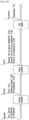
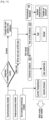
- the embodiment of the present disclosure provide a device control method, as shown in Fig. 1 , the method including: Step S101: acquiring a device control instruction input by a user.
- the user may input the device control instruction in a text manner, or input the device control instruction in a voice manner, or input the device control instruction by using other manners for example as a button or a gesture. It is not limited in the embodiments of the present disclosure.
- Step S102 controlling at least one target device to perform a corresponding operation based on the acquired device control instruction.
- Step S102 the controlling the at least one target device to perform a corresponding operation in Step S102, includes Step S1021 and Step S1022, wherein,
- Step S1021 acquiring at least one of the following information: user information, environment information, and device information.
- Step S1022 controlling at least one target device to perform a corresponding operation based on the acquired information and the device control instruction.
- the user information may include user information of the user inputting the device control instruction; the device information may include device information of the target device corresponding to the device control instruction of the user; and the environment information may include environment information corresponding to the target device.
- the user information includes user profile information and/or device control authority information of the user; and/or the device information includes working state information of the device; and/or the environment information includes working environment information of the device.
- the user profile information includes user information for example user identity information, age, gender, user preference and the like, and may also include historical information that the user controls device (for example, when the user previously controls the air conditioner, the air conditioning temperature is generally set to 28 degrees centigrade, or when controlling the TV the user generally sets the TV channel to Channel 1 and Channel 5.);
- the device control authority information of the user includes: the user's control authority for a device and/or the user's control authority for a target function.
- the target device refers to a device that the user wants to control
- the target function refers to a function that the user wants to control for the target device, for example, if the user wants to rise the temperature of the air conditioner, then the air conditioner is the target device, and that rising the temperature of the air conditioner is the target function.
- the working state information of the device includes at least one of the following: current working state information of the device (for example, temperature, humidity, channel, power, storage condition, duration of continuous operation, etc.), target working state (for example, the optimal working state of the device, etc.), the executable functions of the device, the executable parameters (for example the adjustable temperature range of the air conditioner is 16 to 32 degrees centigrade), and the like.
- current working state information of the device for example, temperature, humidity, channel, power, storage condition, duration of continuous operation, etc.
- target working state for example, the optimal working state of the device, etc.
- the executable functions of the device for example the adjustable temperature range of the air conditioner is 16 to 32 degrees centigrade
- the working environment information of the device includes: current working environment information of the device and/or set target working environment information (for example, optimal working environment information, etc.); wherein the working environment information contains temperature, humidity, pressure, etc.
- Step S1022 may specifically include Step S10221 (not shown in the figure), wherein,
- Step S10221 outputting an operation result of rejecting to execute the device control instruction based on the acquired information and the device control instruction.
- the outputting an operation result of rejecting to execute the device control instruction includes: outputting the operation result of rejecting to execute the device control instruction, when determining that at least one of the following is satisfied according to the acquired information: the user possessing no control authority for the at least one target device; the user possessing no control authority for a target function corresponding to the device control instruction; the at least one target device not satisfying an execution condition corresponding to the device control instruction; and a working environment of the at least one target device not satisfying an execution condition corresponding to the device control instruction.
- the controlling at least one target device to perform a corresponding operation includes: determining at least one target device corresponding to the device control instruction and/or a target function corresponding to the device control instruction, based on the acquired information and the device control instruction; controlling at least one target device to perform the corresponding operation based on the at least one target device and/or the target function.
- the determining at least one target device corresponding to the device control instruction includes: performing domain classification processing based on the acquired information and the device control instruction to obtain an execution probability of each device; and outputting the operation result of rejecting to execute the device control instruction if the execution probability of each device is less than a first preset threshold, or otherwise, determining at least one target device corresponding to the device controlling device based on the execution probability of each device.
- domain classification processing is performed based on the acquired information and the device control instruction to obtain an execution probability of each device; and the operation result of rejecting to execute the device control instruction is output if the execution probability of each device is less than a first preset threshold which characterizes that the user does not have control authority for the at least one target device, or otherwise, the at least one target device corresponding to the device controlling device is determined based on the execution probability of each device.
- the determining the target function corresponding to the device control instruction includes: performing intent classification processing based on the acquired information and the device control instruction to determine an execution probability of each control function; outputting the operation result of rejecting to execute the device control instruction if the execution probability of each control function is less than a second preset threshold, or otherwise, determining the target function corresponding to the device control instruction based on the execution probability of each control function.
- the operation result of rejecting to execute the device control instruction is output if the execution probability of each control function is less than a second preset threshold, which characterizes that the user possesses no control authority for the target function corresponding to the device control instruction.
- the device control instruction input by the user when the device control instruction input by the user is obtained, during performing a corresponding operation, by combining at least one of the user information, the environment information, and the device information, factors affecting device operation and/or user security may be considered, thereby avoiding potential dangers and thus more intelligently controlling the device control instruction to improve the user experience; for example, when the device control instruction input by the user is input by a child and the target device to be controlled is an oven, it may be input that the operation result of rejecting to execute the device control instruction in conjunction with the user information and the like, to avoid the danger of operating the oven for the child.
- Step S1022 may specifically include: Step S 10222 (not shown in the figure), wherein, Step S 10222: controlling at least one target device to perform a corresponding operation based on the acquired information.
- the target parameter information is the parameter information after the parameter information in the device control instruction is changed.
- Step S10222 the controlling the at least one target device to perform a corresponding operation according to target parameter information, includes: controlling the at least one target device to perform a corresponding operation according to the target parameter information when satisfying at least one of the following:
- the device control instruction inputted by the user is "adjust the air conditioner to a suitable temperature.” That is, if the device control instruction does not contain the parameter value, then the parameter information in the device control instruction may be changed according to at least one of the user information, the device information, and the environment information to obtain the target parameter information, and the air conditioner is controlled according to the target parameter information to perform the corresponding operation; for example, if the temperature of the current environment is 32 degrees centigrade in summer, the user generally sets the temperature to 25 degrees centigrade when controlling the air conditioner temperature in summer, and therefore, the parameter value of the target parameter information may be set to 25 degrees centigrade which will lead the air conditioner operating at 25 degrees centigrade.
- the parameter information in the device control instruction is changed, to obtain the target parameter information, and the air conditioner is controlled to perform a corresponding operation according to the target parameter information, such as setting the parameter value of the target parameter information to 25 degrees centigrade according to the user information and the environment information, which will lead the air conditioner operating at 25 degrees centigrade.
- the controlling the at least one target device to perform a corresponding operation according to target parameter information includes: performing slot tag processing on the device control instruction to obtain the parameter information in the device control instruction; determining whether to change the parameter information in the device control instruction based on the parameter information in the device control instruction and the acquired information; if changed, determining the changed target parameter information based on the parameter information in the device control instruction and the acquired information.
- the determining whether to change the parameter information in the device control instruction based on the parameter information in the device control instruction and the acquired information includes: obtaining, by logistic regression processing, the logistic regression result based on the parameter information in the device control instruction and the acquired information; determining whether to change the parameter information in the device control instruction based on the logistic regression result; and/or, the determining the changed target parameter information based on the parameter information in the device control instruction and the acquired information, includes: obtaining a linear regression result based on the parameter information in the device control instruction and the acquired information by linear regression processing; determining the changed parameter information based on the linear regression result.
- the method may further include Step Sa (not shown in the figure) and Step Sb (not shown in the figure), wherein,
- any of the training data comprising the following information: device control information, parameter information in the device control information, information indicating whether the parameter in the device control instruction has been changed, changed parameter information, user information, environment information, and device information.
- the method may further include Step Sc (not shown in the figure), wherein Step Sc: determining the target loss function.
- Step Sc may specifically include Step Sc1 (not shown in the figure), Step Sc2 (not shown in the figure), Step Sc3 (not shown in the figure), and Step Sc4 (not shown in the figure), wherein,
- the target device when controlling the target device to perform the corresponding operation based on the device control information input by the user, during determining the target parameter information corresponding to the corresponding operation performed by the target device, it may be determined whether to change the parameter information in the device control instruction and the changed parameter information by combining at least one of the user information, the device information, and the environment information, so as to control the target device to perform a corresponding operation based on the changed parameter information, thereby improving the intelligence of performing the corresponding operation based on the control instruction and improving the user experience.
- the oven temperature may be adjusted to a lower temperature, thereby avoiding device damage and ensure the user's personal safety during the operation;
- the user device instruction is "adjust the air conditioning temperature to 100 degrees centigrade', based on the device information, the air conditioning temperature cannot be adjusted to 100 degrees centigrade, and the target parameter information may be adjusted to 32 degrees centigrade based on at least one of the user information, the device information and the environment information and the like to avoid the situation that the device is not executed due to parameter problems in the device control instruction, thereby improving user experience;
- the user device instruction input by the child is "open Channel 10 on TV', combined with the user information, it is known that the child is not allowed to watch Channel 10 on TV, and it may adjust Channel 10 for another channel which is suitable for the child, thereby improving the intelligence of controlling the device to perform the
- Step S1021 Step Sd (not shown in the figure) and Step Se (not shown in the figure) may be included, wherein,
- Step S1022 may specifically include: controlling at least one target device to perform the operation based on the information representation vector corresponding to the acquired information and the device control instruction.
- the embodiment of the present disclosure provides a device control method, which may control at least one target device to perform a corresponding operation, by acquiring at least one of user information, environment information, and device information and the device control instruction input by the user, based on the acquired information and the device control instruction; as can be seen from the above, compared with the methods for controlling device based solely on the control instruction input by a user in the prior art, the present disclosure considers at least one factor, which may affect operations of the device, of the user information, the device information, and the environment information, in addition to considering the control instruction input by the user when controlling the device, such that the device may operate more safely and flexibly.
- an operation of the air conditioner is directly controlled to turn on, off, or adjust the temperature, such that it is possible to control the smart device to perform corresponding operations safely and conveniently.
- Embodiment 1 is mainly used to solve problem 1 in the prior art, which during performing corresponding operations based on the device control instruction input by a user, the user inputting the device control instruction is not recognized, causing some groups (such as children or elderly people) to dangerously operate certain devices (such as the oven), or unable to be restricted to operate a certain device or a certain function of a certain device, for example, the child cannot be restricted to turn on the smart TV or the child cannot adjust the channel;
- Embodiment 2 is mainly used to solve technical problems 2 existing in the prior art, including: the parameter value in the device control instruction input by the user will cause damage to the user or the device; the parameter value in the device control instruction input by the user exceeds the range executable by the device; the parameter value in the device control instruction input by the user is a parameter value of the user's limited operation; the parameter value in the device
- the at least one target device corresponding to the device control instruction and/or the target function corresponding to the device control instruction may be determined by the acquired user information and/or environment information and/or device information as well as the device control instruction input by the user, and a corresponding operation is performed based on the determined at least one target device and/or the target function.
- This embodiment mainly considers the user information of the user input by the device control instruction to determine whether the user has the authority to operate the target device and/or the target function involved in the device control instruction.
- the device control instruction input by the user may be input by means of a voice, a text, a button, a gesture, and the like.
- the device control instruction input by the user is described in a voice form, as follows:
- the user information includes user profile information and/or device control authority information of the user.
- the device information includes working state information of the device.
- the environment information includes working environment information of the device.
- the user profile information may include user identity information and/or gender and/or age and/or user preference information and the like.
- the device control authority information of the user includes a user's control authority for the device and/or a user's control authority for the target function.
- the working state information of the device includes at least one of the following: current working state information of the device (such as temperature, humidity, channel, power, storage condition, duration of continuous operation, etc.), and executable functions of the device, executable parameters, etc.
- current working state information of the device such as temperature, humidity, channel, power, storage condition, duration of continuous operation, etc.
- executable functions of the device executable parameters, etc.
- the working environment information of the device includes a current working environment of the device and/or a set target working environment (such as an optimal working environment, etc.).
- the working environment includes temperature, humidity, pressure and the like.
- Step S201 may be performed before Step S202, or may be performed after Step S202, and may also be performed simultaneously with Step S202. It is not limited in the embodiment of the present disclosure.
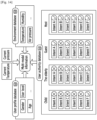
- the user profile database and the user authority database may be preset, as shown in Fig. 2a , wherein the user profile database stores user profile information, including: gender, age, user level (also referred to as user group), nickname, voice recognition template, and face recognition template and other data, wherein the user group may be divided into four user groups, namely, a host user group, a child user group, an elderly user group, and a guest user group.
- user profile database stores user profile information, including: gender, age, user level (also referred to as user group), nickname, voice recognition template, and face recognition template and other data
- the user group may be divided into four user groups, namely, a host user group, a child user group, an elderly user group, and a guest user group.
- the user profile data of the host user group, the child user group, and the elderly user group may be written at the time of registration, and the user profile data of the guest user group may be written at the time of registration or at the time of use; in the user authority database, the device control authority of each user for using each device is recorded; if the authorities are set separately according to the user groups, the user authority database may record a list of the categories of the device that may be used by the host user group, the child user group, the elderly user group, and the guest user group (i.e., user's control authorities for the device) and functions that each device may use (i.e., user's control authority for the target function), wherein the list may also be referred to as an intent list, containing executable or inexecutable intents for each user or each user group, the intent containing the target device and/or target function that the user wants to control. For example, that controlling an air conditioner belongs to an intent, and that raising the air conditioner temperature also belongs to an intent.
- each user or each user group may be separately set with an intent list, for example, for a child user group, the intents A, B, C, D, E may not be allowed, and the intent F is allowed to be performed; for the elderly user group, intents A, B are not allowed to be performed, and intents C, D, E, F are allowed to be performed; for the guest user group, intents B, D, E are not allowed to be performed, intents A, C, F are allowed to be performed; for the host user group, the intents A, B, C, D, E, and F are all allowed to be performed, which the function list has a default setting and may also be set manually, such as manually set by a user in the user group.
- user information is acquired by voiceprint recognition and/or image recognition.
- the user profile information of the user input by the device control instruction is determined, such as at least one of identity information, gender information, age information, and user group information, based on the voiceprint recognition; if an image collecting apparatus is provided on some devices, based on user's face image information of the user inputting the device control instruction collected by the image collecting apparatus, the user profile information of the user inputting the device control instruction may be determined based on the face image recognition technology, such as at least one of identity information, gender information, age information, and user group information.
- the identity authentication may use the face authentication information to compare and authenticate with the user face recognition template of each user in the user profile database to determine the user identity.
- the identity authentication uses the voiceprint authentication information to compare and authenticate with the user's voiceprint recognition template in the user profile database to determine the user identity (considering that in the scenario of smart home, a camera is often installed on a computer or a TV, when the speaker is in kitchen and bedroom, an image signal may not exist).
- the user profile of the user in the user database is output, including gender, age, user group, etc.; if the identity authentication fails, it means a new user, then creating and writing new user profile data, writing the acquired gender data, age data, etc., and the user group may be set as a guest, outputting new user profile data, including gender, age, user group, etc., then querying the user authority (also referred to as user device control authority) of the corresponding user group in the authority database according to the user group in the output user profile data and outputting thereof.
- the user authority also referred to as user device control authority
- User authority and user profile information is integrated into multi-modal information, and at least one target device corresponding to the device control instruction and/or target function corresponding to the device control instruction is determined based on the integrated multi-modal information and the device control instructions input by the user, as in Step S203.
- a Markov random domain, a convolutional neural network, or the like may be used to perform voiceprint recognition on a device control instruction input by voice to determine at least one of identity information, gender information, and age information of the user inputting the device control instruction.
- the network after training the voiceprint classification network with a large amount of data, the network is used to extract a feature vector of the voiceprint and save the feature vector as a template; comparing the feature of the voiceprint to be authenticated with the cosine distance of each feature template in the database during authentication, if exceeding the threshold, the authentication is considered to be successful, otherwise it fails; the convolutional neural network may also be used for voice recognition of age information and/or the gender information, which is not described in the embodiment of the present disclosure.
- the sound noise cancellation processing may also be performed on the device control instruction input by the user.
- the sound noise cancellation technology may include a multi-microphones cooperative noise cancellation technology, and a convolutional neural network noise cancellation technology. This is not described in the embodiment of the present disclosure.
- Step S203 (not shown in the figure): determining the at least one target device corresponding to the device control instruction and/or the target function corresponding to the device control instruction based on the acquired information and the device control instruction.
- controlling the at least one target device to perform a corresponding operation based on the acquired information and the device control instruction includes: controlling the at least one target device to perform an operation based on the information representation vector corresponding to the acquired information and the device control instruction.
- a manner of converting the multi-modal information (the acquired information) into an information representation vector corresponding to the multi-modal information is introduced, wherein specifically, after acquiring at least one of the user information, the environment information, and the device information, this manner further includes converting the discrete information in the acquired information into a continuous dense vector; and the information representation vector (multi-modal information representation vector) corresponding to the acquired information is determined according to the converted continuous dense vector and the continuous information in the acquired information.
- the discrete information in the acquired information may be converted into a continuous dense vector by a transform matrix.
- a continuous dense vector is obtained by conversion by the transform matrix; the converted continuous dense vector and the information not belonging to the discrete value in the acquired information are connected to obtain a joint vector, and then the joint vector is performed with a preset processing to obtain an information representation vector corresponding to the acquired information.
- the acquired information for example, gender, authority, and favorite channels are, as discrete values, required to be converted into a continuous dense vector by an encoding matrix, meanwhile, age, favorite temperature, etc. may be directly input; the encoded multi-modal information is connected to obtain the joint vector, which then is subjected to a full connection layer and a sigmoid activation function to obtain the information representation vector (multi-modal information representation vector) corresponding to the acquired information.
- the information corresponding to the gender is processed by the gender encoding matrix to obtain a continuous dense vector corresponding to the gender information;
- the device control authority information of the user is processed by the authority encoding matrix to obtain a continuous dense vector corresponding to the authority information;
- the favorite channel is processed by the emotion encoding matrix to obtain a continuous dense vector corresponding to the favorite channel.
- the at least one target device corresponding to the device control instruction and/or the target function corresponding to the device control instruction is specifically implemented based on the acquired information and the device control instruction:
- the at least one target device corresponding to the device control instruction and/or the target function corresponding to the device control instruction may be determined;
- the at least one target device corresponding to the device control instruction and/or the target function corresponding to the device control instruction may be determined according to the age information and/or the gender information of the user inputting the device control instruction;
- the at least one target device corresponding to the device control instruction and/or the target function corresponding to the device control instruction may be determined based on the user group information to which the user inputting the device control instruction belongs, as well as the age information and/or the gender information of the user inputting the device control instruction.
- the at least one target device corresponding to the device control instruction and/or the target function corresponding to the device control instruction may be determined. For example, based on the acquired information (multi-modal information) and the device control instruction, and through the trained domain classifier (DC), the at least one target device corresponding to the device control instruction and/or the target function corresponding to the device control instruction may be determined; and/or based on the acquired information (multi-modal information) and the device control instruction, the target function corresponding to the device control instruction is determined through the trained intent classifier (IC).
- the acquired information multi-modal information
- DC trained domain classifier
- the determining at least one target device corresponding to the device control instruction includes: performing domain classification processing based on the acquired information and the device control instruction to obtain an execution probability of each device; and outputting the operation result of rejecting to execute the device control instruction if the execution probability of each device is less than a first preset threshold, or otherwise, determining at least one target device corresponding to the device controlling device based on the execution probability of each device.
- determining at least one target device corresponding to the device controlling device based on the execution probability of each device includes: determining the device corresponding to the maximum probability of each device execution probability as the device corresponding to the device control instruction.
- the domain classification result (the execution probability of each device) is 0.91, 0.01, and 0.08 respectively corresponding to device 1, device 2, and device 3, wherein the first preset threshold is 0.5, and the device corresponding to the device control instruction is determined to be device 1.
- domain classification result execution probability of each device
- each device execution probability is not greater than 0.5
- the operation result of rejecting to execute the device control instruction is output.
- the at least one target device corresponding to the device control instruction may be determined by a model (for example, a domain classifier), before determining the at least one target device corresponding to the device control instruction, it may further include: training a model (domain classifier), which the domain classifier will be described in the following as an example.
- a model for example, a domain classifier
- the training data is (s i , m i , d i ), wherein s i represents sentence text of the input data (device control instruction), m i represents the multi-modal information which includes gender, authority, age and the like of the user inputting the device control instruction, d i represent the tag of the sentence, that is, the domain to which it belongs (i.e., which device it belongs to), i represents the index of one piece of training data in the training data set, j represents the device index, and d ij represents the probability that the domain of the sentence i is the device j (which may be referred as the execution probability of the device), and d i is a one-hot encoding form, that is, when the sentence belongs to the j-th device, d ij is 1, and d ik (k ⁇ j) is 0; if the sentence is an override sentence, that is, a user has no control authority for the target device (for example, an 4-year-old user'
- M is the total number of devices
- N is the total number of input data sentences
- d ⁇ ij is the predicted output of the model, that is, the probability that the domain of the sentence i predicted by the model is the device j, and the loss is 0 when the predicted output and d ij are completely identical.
- the domain classification result is obtained based on the acquired information and the device control instructions, and by using the trained the domain classifier.
- the input data is (s, m), wherein s is the text information corresponding to the device control instruction and m is the multi-modal information
- the predicted output d ⁇ domain classification results
- d ⁇ k is the largest element in d ⁇
- c is the first preset threshold and may be 0.5
- the sentence is classified as the k-th device, and if d ⁇ k ⁇ c, it indicates that the execution probability of all devices is less than the first preset threshold, indicating that the sentence belongs to the protected case, and the user does not have the control authority for the target device, which accordingly the device control instruction may be rejected to perform (for example, an 4-year-old user's instruction sentence is "give me bake a sweet potato," while the oven is not allowed for
- the input text may be a device control instruction in a text format input by the user, and may also be a device control instruction converted from the device control instruction in voice format input by the user through the voice-text conversion, and the text is subjected to the word encoding (word vector conversion and position encoding) to obtain the encoding vector, then after subjecting to the convolutional neural network and the self-attention model, the text expression vector is obtained.
- word encoding word vector conversion and position encoding
- the text after converted by the word vector is (w1, w2, w3...), wherein w1, w2, w3 represents the word vector corresponding to each word in the sentence (device control instruction);
- the position encoding is a function (f(1), f(2), f(3)) and is a function of the position index of the word vector (specifically, a vector (f(1), f(2), f(3)) is stitched after each word vector, and these vectors are computed by using the function about position, which the function may be implemented in a variety of ways, with more commonly used methods including sin or cos function.); and then the two parts are added to obtain the encoding vector (w1+f(1), w2+f(2), w3+f(3)..), which then the obtained encoding vector is subjected to the convolutional neural network and self-attention model to obtain a text expression vector, and the multi-modal information processing module processes the multi-modal information to obtain a multi-modal information representation vector, that is, the information representation vector
- the difference between the DC model in the present disclosure and the existing DC model is that multi-modal information is added as an input, such that the model may perform domain classification (determining at least one target device) with reference to current user profile information and/or environment information and/or device information. For example, when the temperature of the oven is too high, the user inputs "bake cake for one hour", and domain classifier will not classify the sentence into the oven domain, but will reject to perform it to ensure the safety of the oven and the user.
- domain classification determining at least one target device
- an independent DC model may be separately deployed for each device, that is, each device separately performs domain classification processing.
- a DC model may also be shared by multiple devices; the model may be deployed in cloud, for example, after a device receives a device control instruction input by a user, the device uploads to cloud, and the cloud performs domain classification according to at least one of the device information, the user information, and the environment information, and the received device control instruction.
- the device that receives the user input may output an operation result of rejecting to execute the device control instruction; if the maximum execution probability in the domain classification result is not less than the first preset threshold, the device with the largest execution probability may be confirmed as the target device, and the instruction is transmitted to the target device for subsequent operations (e.g., intent classification processing, slot tag processing, etc.), or the cloud continues to perform operations such as intent classification processing, and transmits the final operation instruction to the target device for execution.
- the shared DC model may also be deployed in a terminal, for example, a DC model is deployed in device A.
- terminal A After terminal A receives the device control instruction input by the user, domain classification is performed according to at least one of the device information, the user information, and the environment information, and the received device control instruction. If the execution probability of each device is less than the first preset threshold, it may output an operation result of rejecting to execute the device control instruction; if the maximum execution probability is not less than the first preset threshold, the device with the largest execution probability may be confirmed as the target device, and the instruction is transmitted to the target device for subsequent operations (e.g., intent classification processing, slot tag processing, etc.), or device A continues to perform operations such as intent classification processing, and transmits the final operation instruction to the target device for execution.
- subsequent operations e.g., intent classification processing, slot tag processing, etc.
- the target function corresponding to the device control instruction may be determined based on the acquired information and the device control instruction.
- the target device may be determined first, and then the target function is determined.
- each smart device may separately deploy with an IC model and share a DC model.
- the target device may be determined by the DC model, and then the target function may be determined by the IC model of the target device; the target device and the target function may also be determined at the same time, which the order of execution is not specifically limited herein.
- Step S203 the determining the target function corresponding to the device control instruction, including: performing intent classification processing based on the acquired information and the device control instruction to determine an execution probability of each control function; outputting the operation result of rejecting to execute the device control instruction if the execution probability of each control function is less than a second preset threshold, or otherwise, determining the target function corresponding to the device control instruction based on the execution probability of each control function.
- the intent classification processing is performed by a model (intent classifier) based on the acquired information and the device control instruction.
- the intent classification may be performed only by one model (a shared IC model), and the intent classification may also be performed by using models in the respective target devices.
- an independent IC model may be separately deployed for each device, that is, each device separately performs domain classification processing.
- An IC model may also be shared by multiple devices; the model may be deployed in cloud, for example, after a device receives a device control instruction input by a user, the device uploads to cloud, and the cloud performs the intent classification according to at least one of the device information, the user information, and the environment information, and the received device control instruction.
- the device which are indicated to receive the user input may output an operation result of rejecting to execute the device control instruction; if the maximum execution probability in the intent classification result is not less than the second preset threshold, the control function with the largest execution probability may be confirmed as the target function, and the instruction is transmitted to the target device for subsequent operations (e.g., slot tag processing, etc.), or the cloud continues to perform operations such as slot tag processing, and transmits the final determined operation instruction to the target device for execution.
- the shared IC model may also be deployed in a terminal, for example, an IC model is deployed in the device A.
- the intent classification is performed according to at least one of the device information, the user information, and the environment information, and the received device control instruction. If the execution probability of each device is less than the second preset threshold, it may output an operation result of rejecting to execute the device control instruction; if the maximum execution probability is not less than the second preset threshold, the control function with the largest execution probability may be confirmed as the target function, and the instruction is transmitted to the target device for subsequent operations (e.g., slot tag processing, etc.), or device A continues to perform operations such as slot tag processing, and transmits the final determined operation instruction to the target device for execution.
- the target device for subsequent operations e.g., slot tag processing, etc.
- the intent classification processing may be performed by the model (intent classifier), then before performing intent classification processing by the model (intent classifier) based on the acquired information and the device control instruction, the following is further included: training a model (intent classifier), specifically as follows:
- M is the total number of control functions
- N is the total number of input data sentences
- j is the function index
- I ij is the probability that the intent of the sentence i is the function j (which may be called the execution probability of the control function)
- Î ij is the predicted output of the model, that is, the probability that the model predicts the intent of the sentence i to be the function j
- I i is the tag of the i-th training data
- I i is in the one-hot encoding form, that is, when the sentence belongs to the j-th function
- I ij is 1, I ik (k ⁇ j) is 0.
- the training sentence is an override sentence, that is, the user does not have the control authority of the target function (for example, the instruction sentence of the user of age 4 is "uninstall XXAPP on TV', however the function for uninstalling app on the TV is unavailable for using by the child even if the TV is open to the child), then all elements of I i are 0.
- the instruction sentence of the user of age 4 is "uninstall XXAPP on TV', however the function for uninstalling app on the TV is unavailable for using by the child even if the TV is open to the child)
- the training sample still contains the acquired information (multi-modal information), and the multi-modal information may be initialized by the multi-modal information in the trained domain classifier, for example, the weight of the multi-modal intent classifier may be initialized by some methods (such as using a vector corresponding to some multi-modal information as the weight of the classifier) to speed up the training.
- the target function corresponding to the device control instruction may be determined based on the device control instruction input by the user and the acquired information, and through the trained intent classifier.
- the manner for specifically determining the target function corresponding to the device control instruction is as follows:
- the input of the intent classifier is (s, m), wherein s is the text information corresponding to the device control instruction, and m is the multi-modal information.
- the domain (target device) is obtained through the DC model, and then the trained IC model in the domain is used, such that the predicted output Î may be obtained, and Î k is the largest element in the Î.
- the classification result of the device control instruction is the k-th function (target function), if d ⁇ k ⁇ c, it indicates that the device control instruction belongs to the protected case and will be rejected to execute. If the host sets the authorities of the child, the elderly, the guest, etc. in the user authority database, and the k-th function is just in the mask list, then it will be rejected to execute.
- the device control instruction input by the user includes: an intent A, an intent D, or an intent F.
- the intent classifier directly outputs the intent A, the intent D, or the intent F; if the host sets the user authority (intent A, intent C and intent F are allowed to operate, but intent B, intent D, and intent E are not allowed to operate), then the intent classifier directly outputs intent A and intent F, and rejects to execute intent D.
- the input text may be a device control instruction in a text format input by the user, and may also be a device control instruction converted from the device control instruction in voice format input by the user through the voice-text conversion, and the text is subjected to the word encoding (word vector conversion and position encoding) to obtain the encoding vector, then after subjecting to the convolutional neural network and the self-attention model, the text expression vector is obtained.
- word encoding word vector conversion and position encoding
- the text after converted by the word vector is (w1, w2, w3%), wherein w1, w2, w3 represents the word vector corresponding to each word in the sentence (device control instruction); the position encoding is a function (f(1), f(2), f(3)) and is a function of the position index of the word vector; and then the two parts are added to obtain the encoding vector (w1+f(1), w2+f(2), w3+f(3)..), which then the obtained encoding vector is subjected to the convolutional neural network and self-attention model to obtain a text expression vector, and the multi-modal information processing module processes the multi-modal information to obtain a multi-modal information representation vector, that is, the information representation vector corresponding to the acquired information; the multi-modal information representation vector and the text expression vector are connected to obtain a joint vector (such as a vector (a1, a2, a3...), a vector (b1, b2, b3...), and a vector (a1, a1,
- the target device corresponding to the device control instruction is not determined based on the acquired information and the device control instruction (directly outputting an instruction of rejecting to execute the corresponding operation), the target function corresponding to the device control instruction may not be determined, and the device control instruction is not tagged.
- Step S203 the embodiment of the present disclosure provides a specific example: a child inputs the device control instruction "turn the oven on” by voice, wherein the oven is a device forbidden to be operated by the child, and the operation is rejected by the domain classifier; for another example, a child inputs the device control instruction "delete XXXAPP in the mobile phone” by voice, wherein the mobile phone is a device that allows the child to operate, but the intent of deleting an APP is not allowed to be operated by the child, such that the device control instruction determines the target device is a mobile phone by the domain classifier, and the operation is rejected by the intent classifier.
- the control instruction "adjusts the air conditioner to 30 degrees centigrade” is processed by the domain classifier to obtain the domain classification result (oven: 0.01; washing machine: 0.02; air conditioner: 0.37), that is, the target device is an air conditioner; the intent classification result is obtained by the intent classifier (intent A, turn on air conditioner: 0.01; intent B, turn off air conditioner: 0.02; intent C, set temperature: 0.97), that is, the target function is to set the temperature, and then through the slot tagger, the parameter information (temperature: "30") in the device control instruction is obtained, as shown in Fig.
- the present disclosure determines the target device and/or the target function and/or the target parameter information according to at least one of the device information, the user information, and the environment information, which fully considers various factors that may affect the safe operation of the device, and may also enable the user to be capable of conveniently controlling authorities of the device, which may greatly improve the security and flexibility when the user controlling the device.
- Step S204 (not shown in the figure): performing slot tag processing on the device control instruction to obtain target parameter information.
- the determining the target function corresponding to the device control instruction based on the acquired information and the device control instruction may be executed in parallel with Step S204, or may be performed serially. It is not limited in the embodiment of the present disclosure. Certainly, when the instruction to reject the corresponding operation is output based on the acquired information and the device control instruction in Step S203, Step S204 may not be performed.
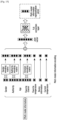
- the ST model includes: an encoding layer and a decoding layer, wherein the encoding layer includes: a word encoding layer, a long short-term memory (LSTM) layer, and an attention layer; and the decoding layer includes: an LSTM layer and a multilayer perceptron (MLP) layer.
- the encoding layer includes: a word encoding layer, a long short-term memory (LSTM) layer, and an attention layer
- the decoding layer includes: an LSTM layer and a multilayer perceptron (MLP) layer.
- MLP multilayer perceptron
- x1, x2....xm are the user's device control instructions, and the encoding layer also uses a combination of word vector conversion and position encoding, which each word is represented as a vector of a fixed dimension after encoding; the LSTM layer is used for encoding, the features (h1, h2 unlikehm) of each word are extracted; y1,y2....yk are the taggers corresponding to x1,x2....xm (it may use the BMO tag, wherein B means that the vocabulary is the starting position of the parameter, M means that the vocabulary is the middle position or ending position of the parameter, and O means that the vocabulary is not a parameter), and y1, y2...yk are represented as the hidden state C after subjecting to the LSTM layer; C and h1, h2 juxtaposhm are used to calculate the vector d through the attention layer, d is subjected to the MLP to obtain the vector f, and f is subjected to MLP to output the tag yk+1 of the next
- the device control instruction is subjected to slot tag processing by an ST model (Viterbi decoding method) to obtain target parameter information.
- the method further includes: training the ST model through the training sample and the loss function, which specifically is as follows:
- the training sample set is (s i , y i , c i , v i , m i ), wherein s i represents the text information corresponding to the input device control instruction, y i represents the BMO tag of the instruction (for example, S i is "set the air conditioner to 30 degrees centigrade", y i is "O O O O B M"), and i is the index of each piece of data in the training sample set.
- y ij represents the BMO tag of the j-th word of the i-th training sample
- y ⁇ ij is the BMO result of the j-th word of the i-th training sample predicted by the model.
- Step S205 controlling the at least one target device to perform a corresponding operation based on the at least one target device and/or the target function and/or target parameter information.
- At least one target device is controlled to perform a corresponding operation.
- the target device is an air conditioner
- the target function is to adjust the temperature
- the target parameter information is 30 degrees centigrade, thereby the air conditioner being controlled to adjust the temperature to 30 degrees centigrade according to the determined information.
- Step S206 since the operation result of rejecting to execute the device control instruction is directly output due to the existence of the domain classifier and the intent classifier, the present embodiment may further include Step S206, wherein: Step S206 (not shown in the figure): outputting the operation result of rejecting to execute the device control instruction, based on the acquired information and the device control instruction.
- the outputting the operation result of rejecting to execute the device control instruction includes: outputting the operation result of rejecting to execute the device control instruction, when determining that at least one of the following is satisfied according to the acquired information: the user possessing no control authority for the at least one target device; the user possessing no control authority for a target function corresponding to the device control instruction; the at least one target device not satisfying an execution condition corresponding to the device control instruction; and a working environment of the at least one target device not satisfying an execution condition corresponding to the device control instruction.
- the above execution condition may be preset, for example, the execution condition for adjusting the air conditioner temperature to 30 degrees centigrade may be that the ambient temperature is lower than 30 degrees centigrade, or the execution condition for adjusting the oven temperature to 260 degrees centigrade may be that the continuous running time of the oven is less than 3 hours.
- the device control instruction input by the child is "to increase the oven temperature to 240 degrees centigrade". Based on the acquired user information, it may be known that the input user of the device control instruction is a child, and it may be known from the authority database that the child cannot operate the oven, that is, the child does not have the control authority of the target device, and it directly rejects to perform the operation corresponding to the device control instruction;
- the device control instruction input by a child is "delete XX application on the TV"
- the user of the device control instruction is a child based on the acquired user information, and it may be known from the authority database that that the child is able to operate the TV, but unable to "delete an application” (target function), that is, the child does not have the control authority for the target function, thereby directly rejecting to perform the operation corresponding to the device control instruction;
- the device control instruction input by the user is "adjust the air conditioner temperature to 32 degrees centigrade", that is, the working environment of the air conditioner does not satisfy the execution condition corresponding to the device control instruction, then the operation corresponding to the device control instruction is directly rejected to perform.
- the operation when it is determined that the operation result of the device control instruction is not performed based on the acquired information and/or the device control instruction, the operation may not be performed, and a notification message is output to notify the current rejection to perform the control instruction, or alternatively, it is possible to simply not perform the corresponding operation.
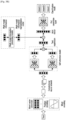
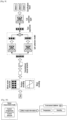
- a device control system is introduced for Embodiment 1 (taking that the user inputs the device control instruction by voice as an example), as shown in Fig. 6a , the system is divided into a sound processing module, an image processing module, and a multi-modal information processing module, speech conversion module, semantic understanding module, dialog management (DM) module, speech synthesis module, execution module.
- the speech conversion module may be referred to as an auto speech recognition (ASR) module
- the semantic understanding module may be referred to as a natural language understanding (NLU) module
- the speech synthesis module may be referred to as a text to speech (TTS) module
- TTS text to speech
- NGS natural language generation
- NGS natural language generation
- the sound processing module performs noise cancellation and identity recognition, and outputs the sound signal and the identity authentication information after the noise cancellation processing.
- the image processing module performs face extraction and face recognition, and outputs identity authentication information.
- the identity authentication information output by the sound processing module is integrated into multi-modal information through the multi-modal information processing module; the sound signal output by the sound processing module is converted into text information by the speech conversion module; the text information and the multi-modal information is input to the semantic understanding module, and the semantic understanding module outputs the domain (target device), the intent (target function) and the tagger (target parameter information) of the sentence to the dialog management module and the execution module; the dialog management module generates a reply text which will be synthesized by the speech synthesis module to give a reply; the corresponding operation is performed by the execution module.
- the prior art does not consider image signals and identity authentication, and does not consider multi-modal information when performing semantic understanding ( Fig.
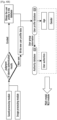
- the multi-modal information processing module is described in detail: The function of this module is to process the information obtained by the sound processing module and the image processing module, and to compile processes to obtain multi-modal information.
- the structure of the module is as shown in Fig. 6b , and the multi-modal information includes user image information (including age, gender, etc.) acquired by the user profile database and user authority data (user device control authority) acquired from the authority database.
- the identity authentication uses the face authentication information output by the image processing module to compare and authenticate with the user face recognition template of each user in the user profile database and determines the identity of the user; if the authentication is passed, that is, the user is determined to be an existing user according to the identity authentication result, the user profile of the user in the user profile database is obtained and outputted, including gender, age, user group, etc.; if the identity authentication fails, that is it is judged as a new user according to the identity authentication result, new user profile data is created and written in the user profile database, the gender and age data obtained by the sound processing module and the image processing module are written, and the newly created user profile data is output, including gender, age, user group, etc.
- the user authority of the corresponding user group is queried in the authority database and then is output.
- the user authority output and user profile data are integrated into the multi-modal information.
- the multi-modal information is output to a semantic understanding module, that is, a natural language understanding (NLU) module, which may also be referred to as a multi-modal NLU module.
- NLU natural language understanding
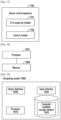
- the system architecture diagram of the prior art is shown in Fig. 7 , in which the sound signal is converted into text by the speech conversion module after being processed by the sound processing module, and the text is processed by the semantic understanding module to obtain the domain, the intent and the tagger of the sentence which are output to the dialog management module and the execution module, and the dialog management module generates a reply text that is synthesized by the speech synthesis module to give a reply; and the operation is performed by the execution module. Therefore, it may bring a security risk to the device or the user that the device control instruction directly performing the user input in the prior art, and the control of the device is not flexible.
- the present disclosure determines the target device and/or the target function and/or the target parameter information according to at least one of the device information, the user information, and the environment information, which fully considers various factors that may affect the safe operation of the device, and may also enable the user to be capable of conveniently controlling authorities of the device, which may greatly improve the security and flexibility when the user controlling the device.
- This embodiment mainly introduces that based on the acquired user information and/or environment information and/or device information, it is determined whether the parameter information in the device control instruction input by the user is necessary to be changed, and if necessary, the changed parameter information is output to solve the above technical problem 2 (wherein, in the embodiment, when determining the at least one target device and/or the target function corresponding to the device control instruction, the acquired information (including: user information, environment information, and device information) may be disregarded), specifically as follows: Step S301 (not shown in the figure): acquiring a device control instruction input by the user.
- Step S301 the manner of acquiring the device control instruction input by the user in Step S301, refers to the above Step S201. It will not be described in detail in this embodiment.
- Step S302 (not shown in the figure), determining at least one target device corresponding to the device control instruction and/or a target function corresponding to the device control instruction based on the acquired device control instruction.
- the determining the at least one target device corresponding to the device control instruction and/or the target function corresponding to the device control instruction based on the acquired device control instruction includes: determining the at least one target device corresponding to the device control instruction based on the acquired device control instruction and the domain classifier; determining the target function corresponding to the device control instruction based on the acquired device control instruction and the intent classifier.
- the model structure of the domain classifier is shown in Fig. 8 , wherein the input text is a device control instruction in a text format input by the user, or a device control instruction in a text format converted from the device control instruction in the voice format input by the user through the voice-text conversion, and the device control instruction in a text format is processed through word encoding (word vector conversion and position encoding) to obtain the encoding vector, which then is processed through the convolutional neural network and the self-attention model to obtain the text expression vector.
- word vector is converted as (w1, w2, w3...), wherein w1, w2, w3...
- the position encoding is a function (f(1), f(2), f(3)), and is a function of the position index of the word vector; the two parts are added to obtain the encoding vector (w1+f(1), w2+f(2), w3+f(3)..), which is input into the full connection layer to output the classification results: the execution probability of domain A (device A), the execution probability of domain B (device B), and the execution probability of domain C (device C). The device with the highest execution probability is selected as the target device.
- the model structure of the domain classifier may also adopt the structure shown in Fig. 2b , that is, the multi-modal information processing module processes the multi-modal information to obtain a multi-modal information representation vector, which is connected with the text expression vector to obtain a joint vector, and the joint vector is input into the full connection layer to output the domain classification result.
- the model structure of the intent classifier may also adopt the structure shown in Fig. 3b , that is, the multi-modal information processing module processes the multi-modal information to obtain a multi-modal information representation vector, which is connected with the text expression vector to obtain a joint vector, and the joint vector is input into the full connection layer to output the intent classification result.
- the device information may be obtained in the same manner, such as collecting device information (including current operating temperature of the device, working humidity, etc.) and an appropriate operating parameter stored in the device database (which may also be referred to as optimal working state information) to obtain the multi-modal information by the obtained device information and/or environment information.
- device information including current operating temperature of the device, working humidity, etc.
- optimal working state information an appropriate operating parameter stored in the device database
- Step S304 may specifically include Step S3041 (not shown in the figure), wherein, Step S3041: obtaining the target parameter information based on the acquired information and the device control instruction and through the slot tagger.
- the target parameter information includes any one of the following: the parameter information after the parameter information in the device control instruction is changed by the slot tagger and the parameter information in the device control instruction.
- the target parameter information is the parameter information after the parameter information in the device control instruction is changed by the slot tagger; if the device control instruction does not satisfy the preset condition, the target parameter information is the parameter information in the device control instruction.
- the preset condition includes at least one of the following:
- Step S3041 may specifically include: Step S30411 (not shown in the figure), Step S30412 (not shown in the figure), and Step S30413 (not shown in the figure), wherein,
- Step S30412 may include: obtaining, by logistic regression processing, the logistic regression result based on the parameter information in the device control instruction and the acquired information; determining whether to change the parameter information in the device control instruction based on the logistic regression result.
- Step S30413 if changed, determining the changed target parameter information based on the parameter information in the device control instruction and the acquired information.
- determining the changed target parameter information based on the parameter information in the device control instruction and the acquired information may include: obtaining, by linear regression processing, the linear regression result based on the parameter information in the device control instruction and the acquired information; determining the changed parameter information based on the linear regression result.
- the prediction result is obtained by fitting the prediction function, and the preset result may include: whether to change the parameter information in the device control instruction and at least one of changed parameter information.
- the prediction function may take many forms.
- the fitting prediction function may be a linear function, wherein linear regression processing is performed to obtain a linear regression result when the fitting prediction function is a linear function; the fitting prediction function may also be an exponential function, the logistic regression is performed to obtain a logistic regression result when the fitting prediction function is an exponential function; further, the fitting prediction function may also be a polynomial function, the similar linear regression processing is performed to obtain a similar linear regression result when the fitting prediction function is a polynomial function.
- the prediction function may further include other functions, which is not limited herein.
- the output result of the slot tagger includes the changed parameter information, and may also include: the indication information corresponding to the changed parameter information, and parameter information in the device control instruction.
- the target parameter information is determined as the parameter information in the device control instruction; further, if the parameter information in the device control instruction does not need to be changed, the output result of the slot tagger includes: the indication information corresponding to the unchanged parameter information, and parameter information in the device control instruction.
- x1, x2....xm are the user's device control instructions, and the encoding layer also uses a combination of word vector conversion and position encoding, which each word is represented as a vector of a fixed dimension after encoding;
- the LSTM layer is used to encode, the features (h1, h2 unlikehm) of each word is extracted;
- y1,y2....yk are the taggers corresponding to x1,x2....xm (it may use the BMO tag, wherein B means that the vocabulary is the starting position of the parameter, M means that the vocabulary is the middle position or ending position of the parameter, and O means that the vocabulary is not a parameter), and y1, y2...yk are represented as the hidden state C by the LSTM layer;
- C and h1, h2 are used to calculate the vector d through the attention layer, d is subjected to MLP to obtain the vector f, and f is subjected to MLP to output the tag
- the vector f and the information representation vector (multi-modal information representation vector) corresponding to the acquired information are subjected to logistic regression and linear regression to obtain the logistic regression result and the linear regression result, respectively.
- the EOS (End of Sentence) in Fig. 11 indicates the end of the sentence.
- the logistic regression result determines whether the parameter is changed at time k+1 (i.e., the output result is changed or not changed), and the linear regression result determines the changed value (i.e., the padding value).
- the logistic regression result determines whether the parameter is changed, and the linear regression result determines the changed value, such that the network has an ability to rewrite the parameter.
- the device control instruction input by the user is "set the air conditioner to 100 degrees centigrade", the instruction is classified into the air conditioner domain by the domain classifier, and the intent classifier assigns it to the intent of "setting air conditioner temperature”; since the air temperature cannot be set by 100 degrees centigrade, the air conditioner cannot be executed, and therefore, after the parameter is tagged by the slot tagger model in the embodiment of the present disclosure, the upper limit temperature of the air conditioner in the environment database is rewritten to 30 degrees centigrade from 100 degrees centigrade after the logistic regression and the linear regression (or changed to a user preferred temperature of 26 degrees centigrade in the user profile database).
- the parameter is passed to the air conditioner for execution, thereby increasing the indoor temperature and be more in line with the semantics of "setting the air conditioner to 100 degrees centigrade".
- the user sentence is "turn the oven up to 240 degrees centigrade”
- the device monitoring module monitors that the current oven has a higher operating temperature and a longer working time, and passes the information to the multi-modal information representation vector;
- the ST tagging model tags the parameter as 240 degrees centigrade, and the parameter is rewritten in combination with the multi-modal information representation vector to output 200 degrees centigrade for the oven to execute.
- the MLP in the existing slot tagging model obtains the tag yk+1 at the next moment, it directly serves as an output result, and is not subjected to logistic regression and linear regression, which may result in the device failing to accurately execute the device control instruction or execution result binging danger to the user or the device.
- the unreasonable parameter information or the unclear parameter information in the device instruction information may be changed into reasonable and clear parameter information, thereby improving the safety of the operation of the device, reducing the risk of device failure, and improving the flexibility of the control of the device, which thus improves the user experience.
- the method further includes: acquiring a plurality of training data; and training the slot tagger based on the acquired training data and by the target loss function.
- any training data includes the following information: the device control instruction; the slot tagging result corresponding to the device control instruction; information indicating whether to change the parameter in the device control instruction; the changed parameter information; the acquired information.
- the method before training the slot tagger based on the acquired training data and through a target loss function, the method further includes: determining the target loss function.
- the determining the target loss function includes: determining a first loss function based on the slot tagging result corresponding to the device control instruction in each training data and the predicted tagging result of the slot tagger; determining a second loss function based on the information indicating whether the parameter in the device instruction in each training data has been changed and the information indicating whether changed predicted by the model; determining a third loss function based on the changed parameter information in each training data and the changed parameter information output by the slot tagger; and determining the target loss function based on the first loss function, the second loss function, and the third loss function.
- the training data set used for training the slot tagger may be (s i , y i , c i , v i , m i ), wherein s i represents the text information corresponding to the input device control instruction, y i represents the BMO tag corresponding to the device control instruction (for example, S i is "set the air conditioner to 30 degrees centigrade", y i is "O O O O B M"), c i is 0 or 1 (0 means that there is no parameter to be changed, and 1 means the parameter needs to be modified), v i means the changed padding value (the changed target parameter information), m i represents the multi-modal information (acquired information) (including a current sensor measurement, an appropriate value and an executable range of the device, etc.), and c i is the index of each piece of data in the training data set.
- M is the total number of words in the training data
- N is the total number of sentences in the input data
- the first item in Loss indicates the tagging error
- y ij indicates the BMO tag of the j-th word of the i-th training data
- y ⁇ ij is the BMO result of the j-th word of the i-th training data predicted by the model
- the second term in Loss is the parameter correction error
- c i indicates whether the parameter needs to be changed
- the third item in Loss is the square of the difference between the changed value v ⁇ i output by the model and the tag modification value v i , wherein ⁇ and ⁇ are coefficients.
- Step S305 controlling at least one target device to perform the corresponding operation based on the at least one target device and/or the target function and/or the target parameter information.
- the at least one target device is controlled to perform a corresponding operation.
- Embodiment 2 The text information corresponding to the device control instruction input by the user is "set the air conditioner to 100 degrees centigrade", which is directly classified into the air conditioner domain by the domain classifier, the intent classifier directly assigns the control instruction to the intent of "set air conditioner temperature", and the slot tagger tags "100" as the parameter.
- the device information contained in the multi-modal information contains the maximum temperature of the air conditioner of 32 degrees centigrade and the suitable temperature of 29 degrees centigrade.
- the parameter rewrites that the output c i of the network logistic regression is greater than 0.5 and the linear regression output v i is 32 degrees centigrade; the parameter is rewritten, and the output result of 32 degrees centigrade of the linear regression is transmitted to the air conditioner for execution.
- a device control system is introduced for Embodiment 2 (taking that the user inputs the device control instruction by voice as an example), the user's voice signal and environment signal (such as indoor temperature, indoor air quality, etc.) are collected to finally constitute a semantic understanding of the user, give voice feedback and execute the corresponding instructions.
- the system is divided into a sound processing module, an environment monitoring module, and a multi-modal information processing module, speech conversion module, semantic understanding module, dialog management module, speech synthesis module, execution module.
- the audio collecting apparatus collects the sound signal
- the sound processing module performs noise cancellation, and outputs the sound signal after the noise cancellation processing
- the sensor collects environment information including temperature and humidity
- the information output by the above sound processing module and the environment monitoring module is integrated into multi-modal information by the multi-modal information processing module.
- Fig. 12 only shows the example of the multi-modal information containing the environment information, and the multi-modal information in the present disclosure may further contain the device information and/or the user information which not shown in Fig.
- the sound signal output by the sound processing module is converted into text information by the speech conversion module; both the text information and the multi-modal information is input to the semantic understanding module, and the semantic understanding module outputs the domain, the intent and the tagger of the sentence to the dialog management module and the execution module; the dialog management module generates a reply text which will be synthesized by the speech synthesis module to give a reply; the corresponding operation is performed by the execution module.
- the dialog management module is for generating a reply according to the result of the semantic understanding module (including the domain to which the device control instruction belongs (target device), the target function, and the tagging result (target parameter information)).
- This part may be manually designed to reply, or may be replied through the trained model, which will not be described again.
- the speech synthesis module converts the result of the dialog management module into audio output, which will not be described again.
- the execution module is for executing the hardware device of the user's device control instruction, and the execution module is deployed in a smart terminal (including a smart home device, a mobile phone, etc.).
- the system architecture diagram of the prior art is shown in Fig. 7 .
- the sound signal performed by noise cancellation via the sound processing module is converted into text information by the speech conversion module;
- the text is processed by the semantic understanding module, to obtain and output the domain, the intent and the tagger of the sentence to the dialog management module and the execution module;
- the dialog management module generates a reply text which will be synthesized by the speech synthesis module to give a reply;
- the corresponding operation is performed by the execution module. Therefore, the prior art directly performs according to the parameter information in the device control instruction input by the user, which may cause a security risk to the device or the user, or may result in the device failing to perform the corresponding operation accurately when the parameter is unclear.
- the present disclosure adjusts the target parameter information according to at least one of the device information, the user information, and the environment information, which fully considers various factors that may affect the safe operation of the device, and may also enable the corresponding operations to be performed according to the changed parameters when the parameters in the instruction are unclear or unsafe, which may greatly improve the security and flexibility when the user controlling the device.
- the embodiment mainly introduces to determine at least one target device and/or the target function corresponding to the device control instruction in combination with the acquired information (multi-modal information), determine whether the parameter information in the device control instruction is changed in combination with the acquired information (multi-modal information) to output the changed target parameter information (if not changed, to output the parameter information in the device control instruction), and perform the device control instruction input by the user based on at least one target device and/or the target function and/or target parameter information (changed or unchanged), which is specifically described as follows: Step S401 (not shown in the figure): acquiring a device control instruction input by the user.
- the device control instruction input by the user may be input by the user through a text manner, or may be input by the user by using a voice, a button, a gesture, or the like. It is not limited in the embodiment of the present disclosure.
- the embodiment of the present disclosure is introduced by an example in which a user inputs a device control instruction by voice.
- Step S402 (not shown in the figure): acquiring at least one of the following information: user information, environment information, and device information.
- the user profile database and the user authority database may be preset, as shown in Fig. 2a , wherein the user profile database stores user profile information, including: gender, age, user group, nickname, voice recognition template, and face recognition template and other data, wherein the user group may be divided into four user groups, namely, a host user group, a child user group, an elderly user group, and a guest user group.
- the user profile data of the host user group, the child user group, and the elderly user group may be written at the time of registration, and the user profile data of the guest user group may be written at the time of registration or at the time of use;
- the user authority database records the categories of the device that may be used by the host user group, the child user group, the elderly user group, and the guest user group and a list of functions that each device may use.
- the intents A, B, C, D and E may not be allowed, and the intent F is allowed to be performed; for the elderly user group, intents A, B are not allowed to be performed, and intents C, D, E, F are allowed to be performed; for the guest user group, intents B, D, E are not allowed to be performed, intents A, C, F are allowed to be performed; for the host user group, the intents A, B, C, D, E, and F are all allowed to be performed, which the function list has default settings and may also be set manually, such as manually set by the user group user.
- user information is acquired by voiceprint recognition and/or image recognition.
- the sound processing module determines at least one of the identity information, the gender information, the age information of the user inputting the device control instruction based on the voiceprint recognition; if an image collecting apparatus is provided on some devices, the image processing module determines at least one of the identity information, the gender information, the age information and the user group information of the user inputting the device control instruction based on the face image information of the user inputting the device control instruction collected by the image collecting apparatus through the face image recognition technology.
- the user profile of the user in the user database is output, including gender, age, user group, etc.; if the identity authentication fails, it means a new user, then creating and writing new user profile data, writing the acquired gender data, age data, etc., and the user group may be set as a guest. Then newly created user profile data is output, including gender, age, user group, etc., then the user authority of the corresponding user group in the user authority database is queried and output according to the output user group in the user profile data.
- the user authority output and user profile information are integrated into the multi-modal information, and at least one target device and/or device control instruction corresponding to the device control instruction is determined based on the integrated multi-modal information and the device control instruction input by the user, as in Step S403.
- a Markov random domain, a convolutional neural network, or the like may be used to perform voiceprint recognition on a device control instruction input by voice to determine at least one of identity information, gender information, and age information of the user inputting the device control instruction.
- the network after training the voiceprint classification network with a large amount of data, the network is used to extract the feature vector of the voiceprint and saves the feature vector as a template; comparing the feature of the voiceprint to be authenticated with the cosine distance of each feature template in the database during authentication, if exceeding the threshold, the authentication is successful, otherwise it fails; the convolutional neural network may also be used for voice recognition of age information and/or the gender information, which is not described in the embodiment of the present disclosure.
- the sound processing module may first perform sound noise cancellation processing on the device control instruction input by the user.
- the sound noise cancellation technology may include: a multi-mic cooperative noise cancellation technology, and a convolutional neural network noise cancellation technology. This is not described in the embodiment of the present disclosure.
- Step S402 that is, after acquiring the device control instruction input by the user by voice and the face image information, then the identity authentication is performed, and if the authentication is passed, that is, the user is determined to be an existing user according to the identity authentication result, then the user profile information (including: age, gender, user group, etc.) is acquired from the created user profile database, and the user authority is acquired from the pre-created user authority database based on the user group information; if the identity authentication fails, that is it is judged as a new user according to the identity authentication result, the user profile is obtained based on the device control instruction input by the user by voice and the face image information, and stored in the user profile database, that is, the new user image data is written; and the environment information (current temperature, current air pressure, etc.) is acquired through the environment monitoring module, and suitable environment information (suitable temperature, suitable air pressure, etc.) is obtained from preset environment data.
- the device information may be acquired, and the multi-modal information may be composed according to the above information, as shown
- the multi-modal information includes: environment information (including current temperature, current air pressure, etc.), information obtained from the user profile database (including gender, user level (user group)), age, etc.), information obtained from the environment database (including suitable temperature, suitable humidity, suitable pressure, etc.) and information acquired from the user authority database.
- environment information including current temperature, current air pressure, etc.
- user profile database including gender, user level (user group)), age, etc.
- information obtained from the environment database including suitable temperature, suitable humidity, suitable pressure, etc.
- information acquired from the user authority database includes the categories of the device that may be used by the host user group, the child user group, the elderly user group, and the guest user group and a list of functions that each device may use.
- the intents A, B, C, D and E may not be allowed, and the intent F is allowed to be performed; for the elderly user group, intents A, B are not allowed to be performed, and intents C, D, E, F are allowed to be performed; for the guest user group, intents B, D, E are not allowed to be performed, intents A, C, F are allowed to be performed; for the host user group, the intents A, B, C, D, E, and F are all allowed to be performed.
- Step S401 may be performed before Step S402, or may be performed after Step S402, and may also be performed simultaneously with Step S402. It is not limited in the embodiment of the present disclosure.
- Step S403 (not shown in the figure), determining at least one target device corresponding to the device control instruction and/or a target function corresponding to the device control instruction, based on the acquired information and the device control instruction.
- the at least one target device corresponding to the device control instruction and/or the target function corresponding to the device control instruction may be determined; the at least one target device corresponding to the device control instruction and/or the target function corresponding to the device control instruction may be determined according to the age information and/or the gender information of the user inputting the device control instruction; the at least one target device corresponding to the device control instruction and/or the target function corresponding to the device control instruction may be determined based on the user group information to which the user inputting the device control instruction belongs, as well as the age information and/or the gender information of the user inputting the device control instruction.
- the at least one target device corresponding to the device control instruction and/or the target function corresponding to the device control instruction may be determined. For example, based on the acquired information (multi-modal information) and the device control instruction, and through the trained domain classifier (DC), the at least one target device corresponding to the device control instruction and/or the target function corresponding to the device control instruction may be determined; and/or based on the acquired information (multi-modal information) and the device control instruction, the target function corresponding to the device control instruction is determined through the trained intent classifier (IC).
- the acquired information multi-modal information
- DC trained domain classifier
- the determining at least one target device corresponding to the device control instruction includes: obtaining the domain classification result by using the domain classifier based on the acquired information and the device control instruction; and if the maximum element value in the domain classification result is not less than a first preset threshold, or otherwise, determining at least one target device corresponding to the device control instruction based on the domain classification result.
- the method may further include: training the domain classifier.
- the domain classification result is obtained based on the acquired information and the device control instructions, and by using the trained domain classifier.
- the input data is (s, m), wherein s is the text information corresponding to the device control instruction and m is the multi-modal information
- the predicted output d ⁇ domain classification results
- d ⁇ k is the largest element in d ⁇
- c is the first preset threshold and may be 0.5
- the sentence is classified as the k-th device, and if d ⁇ k ⁇ c, it indicates that the execution probability of all devices is less than the first preset threshold, indicating that the sentence belongs to the protected case, which accordingly the device control instruction may be rejected to perform (for example, an 4-year-old user's instruction sentence is "give me bake a sweet potato," while the oven is not allowed for use by the child), wherein all the elements of the sentence tag are
- the input text may be a device control instruction in a text format input by the user, and may also be a device control instruction converted from the device control instruction in voice format input by the user through the voice-text conversion, and the text is subjected to the word encoding (word vector conversion and position encoding) to obtain the encoding vector, then after subjecting to the convolutional neural network and the self-attention model, the text expression vector is obtained.
- word encoding word vector conversion and position encoding
- the text after converted by the word vector is (w1, w2, w3%), wherein w1, w2, w3 represents the word vector corresponding to each word in the sentence (device control instruction); the position encoding is a function (f(1), f(2), f(3)) and is a function of the position index of the word vector, the two parts are added to obtain the encoding vector (w1+f(1), w2+f(2), w3+f(3)..), which then the obtained encoding vector is subjected the convolutional neural network and self-attention model to obtain a text expression vector, and then the multi-modal information representation vector and the text expression vector are connected to obtain a joint vector (such as a vector (a1, a2, a3...), a vector (b1, b2, b3...), and a vector (d1, a2, a3..., b1, b2, b3, ...) after connected); then the joint vector is input into the full connection layer to output the classification result (the execution probability
- the method further includes: converting discrete information in the acquired information into a continuous dense vector; determining an information representation vector (multi-modal information representation vector) corresponding to the acquired information according to the converted continuous dense vector and the continuous information in the acquired information.
- the discrete information in the acquired information may be converted into a continuous dense vector by a transform matrix.
- a continuous dense vector is obtained by conversion by the transform matrix; the converted continuous dense vector and the information in the acquired information which does not belong to the discrete value are connected to obtain a joint vector, and then the joint vector is performed with a preset processing to obtain an information representation vector corresponding to the acquired information.
- the encoded multi-modal information is connected to obtain the joint vector, which then is subjected to a full connection layer and a sigmoid activation function to obtain the information representation vector (multi-modal information representation vector) corresponding to the acquired information.
- the information corresponding to the gender is processed by the gender encoding matrix to obtain a continuous dense vector corresponding to the gender information;
- the device control authority information of the user is processed by the authority encoding matrix to obtain a continuous dense vector corresponding to the authority information;
- the favorite channel is processed by an emotion encoding matrix to obtain a continuous dense vector corresponding to the favorite channel.
- the controlling at least one target device to perform a corresponding operation based on the acquired information and the device control instruction includes: controlling at least one target device to perform a corresponding operation based on the information representation vector corresponding to the acquired information and the device control instruction.
- the difference between the DC model and the existing DC model is that multi-modal information is added as an input, such that the model may perform domain classification (determining at least one target device) with reference to the user information and/or environment information and/or device information. For example, when the temperature of the oven is too high, the user inputs "bake cake for one hour", and the domain classifier will not classify the sentence into the oven domain, but will reject to perform.
- domain classification determining at least one target device
- the target function corresponding to the device control instruction may be determined based on the acquired information and the device control instruction and by using the intent classifier; when the at least one target device is determined based on the acquired information and the device control instruction, the target function corresponding to the device control instruction is respectively determined based on the acquired information and the device control instruction, and by the intent classifiers respectively corresponding to the respective target devices in at least one target device.
- Step S403 determining the target function corresponding to the device control instruction, includes: performing intent classification processing based on the acquired information and the device control instruction to determine an execution probability of each control function; outputting the operation result of rejecting to execute the device control instruction if the execution probability of each control function is less than a second preset threshold, or otherwise, determining the target function corresponding to the device control instruction based on the execution probability of each control function.
- the intent classification processing is performed by a model (intent classifier) based on the acquired information and the device control instruction.
- intent classification may be performed only by one model, and the intent classification may also be performed by using models in the respective target devices.
- Î ij is the predicted output of the model
- I i is the tag of the i-th training data and is in the one-hot encoding form, that is, when the sentence belongs to the j-th function (target function), I ij is 1, I ik (k ⁇ j) is 0.
- the training sentence is an override sentence (for example, the instruction sentence of the user of age 4 is "uninstall XXAPP on the TV', however the function for uninstall app on the TV is unavailable for the child even if the TV is open to the child), and then all elements of I i are 0.
- the training sample still contains the acquired information (multi-modal information), and the multi-modal information may be initialized by the multi-modal information in the trained domain classifier, to speed up the training.
- the target function corresponding to the device control instruction may be determined based on the device control instruction input by the user and the acquired information, and through the trained intent classifier.
- the manner for specifically determining the target function corresponding to the device control instruction is as follows:
- the input of the intent classifier is (s, m), wherein s is the text information corresponding to the device control instruction, and m is the multi-modal information.
- the domain (device) is obtained through the DC model, and then the IC model trained by the domain is used, such that the predicted output Î may be obtained, and Î k is the largest element in the Î.
- the classification result of the device control instruction is the k-th function (target function), and if d ⁇ k ⁇ c, it indicates that the device control instruction belongs to the protected case and will be rejected to execute. Meanwhile, if the host sets the authorities of the child, the elderly, the guest, etc. in the user authority database, and the k-th function is just in the mask list, then it will be rejected to execute.
- the device control instruction input by the user includes: intent A, intent D, or intent F.
- the intent classifier directly outputs intent A, intent D, or intent F; if the host sets the user authority (intent A, intent C and intent F are allowed to be operated, but intent B, intent D, and intent E are not allowed to be operated), then the intent classifier directly outputs intent A and intent F, and rejects to execute intent D.
- the device control instruction will be assigned to the TV domain by the domain classifier, but the function of deleting the channel list of the TV is not open to the child. Since all elements of the tag of this sentence are 0 during training, the predicted output of the device control instruction is close to 0 or may be close to the threshold c when predicting by the trained intent classifier, so that the intent classifier may not give an intent classification and the target function will be rejected to execute.
- the multi-modal information input to the intent classifier when determining the target function is its corresponding representation vector.
- the manner of acquiring the information representation vector corresponding to the acquired information from the acquired information refers to the foregoing embodiment in detail which will not be described herein again.
- the target device corresponding to the device control instruction is not determined based on the acquired information and the device control instruction (directly outputting an instruction of rejecting to execute the corresponding operation), the target function corresponding to the device control instruction may not be determined, and the device control instruction is not tagged.
- Step S404 (not shown in the figure): performing tag processing on the device control instruction to obtain target parameter information based on the acquired information.
- Step S304 may specifically include Step S3041 (not shown in the figure), wherein, Step S3041: obtaining the target parameter information based on the acquired information and the device control instruction and through the slot tagger.
- the target parameter information includes any one of the following: the parameter information after the parameter information in the device control instruction is changed by the slot tagger and the parameter information in the device control instruction.
- the target parameter information is the parameter information after the parameter information in the device control instruction is changed by the slot tagger; if the device control instruction does not satisfy the preset condition, the target parameter information is the parameter information in the device control instruction.
- the preset condition includes at least one of the following:
- Step S4041 may specifically include: Step S40411 (not shown in the figure), Step 430412 (not shown in the figure), Step 430413 (not shown in the figure), Step S40414 (not shown in the figure), and Step S40415 (not shown in the figure), wherein,
- Step S40412 may include: obtaining the logistic regression result by logistic regression processing based on the parameter information in the device control instruction and the acquired information; determining whether to change the parameter information in the device control instruction based on the logistic regression result.
- Step S30413 if changed, determining the changed target parameter information based on the parameter information in the device control instruction and the acquired information.
- the determining the changed target parameter information based on the parameter information in the device control instruction and the acquired information may include: obtaining the linear regression result based on the parameter information in the device control instruction and the acquired information by linear regression processing; determining the changed parameter information based on the linear regression result.
- the output result of the slot tagger includes the changed parameter information, and may also include: the indication information corresponding to the changed parameter information, and parameter information in the device control instruction.
- the output result of the slot tagger includes: the indication information corresponding to the unchanged parameter information, and parameter information in the device control instruction.
- steps S40411-S40413 the specific process of performing slot tag processing by the slot tagger is introduced: the structure of the encode and the decoder, wherein x1, x2....xm are the user's device control instructions, and the encoding layer also uses a combination of word vector conversion and position encoding, which each word is represented as a vector of a fixed dimension after encoding; the LSTM layer is used to encode, the features h1, h2 unlikehm of each word are extracted; y1,y2....yk are the taggers corresponding to x1,x2....xm (it may use the BMO tag, wherein B means that the vocabulary is the starting position of the parameter, M means that the vocabulary is the middle position or ending position of the parameter, and O means that the vocabulary is not a parameter), and y1, y2...yk are represented as the hidden state C by the LSTM layer; C and h1, h2 togetherhm are used to calculate the vector d through the attention
- the logistic regression result determines whether the parameter is changed at the moment k+1, and the linear regression result determines the changed value.
- the logistic regression result determines whether the parameter is changed, and the linear regression result determines the changed value, such that the network has an ability to rewrite the parameter.
- the device control instruction input by the user is "set the air conditioner to 100 degrees centigrade", the instruction is classified into the air conditioner domain by the domain classifier, and the intent classifier is assigned to the intent of "setting air conditioner temperature”; the ST model labels "100 degrees centigrade” as the parameter to be transferred to the air conditioner, since the air temperature cannot be set by 100 degrees centigrade, the device control instruction cannot be executed.
- 100 degrees centigrade is rewritten as the upper limit temperature of the air conditioner in the environment database by the logistic regression and linear regression (or changed to a user preferred temperature in the user profile database).
- the parameter is transferred to the air conditioner for execution, thereby increasing the indoor temperature and be more in line with the semantics of "setting the air conditioner to 100 degrees centigrade".
- the user sentence is "turn the oven up to 240 degrees centigrade", and it is monitored that the current oven has a higher operating temperature and a longer working time, and the information is transferred to the multi-modal information representation vector; the ST tagging model tags the parameter as 240 degrees centigrade, and the parameter is rewritten in combination with the multi-modal information representation vector to output 200 degrees centigrade for the oven to execute.
- the method further includes: acquiring a plurality of training data; and training the slot tagger based on the acquired training data and by the target loss function.
- any of the training data comprising the following information: the device control information, slot tag result corresponding to the device control instruction, the information indicating whether the parameter in the device control instruction has been changed, the changed parameter information, the acquired information.
- the method before training the slot tagger based on the acquired training data and through a target loss function, the method further includes: determining the target loss function.
- the determining the target loss function includes: determining a first loss function based on the slot tagging result corresponding to the device control instruction in each training data and the predicted tagging result of the slot tagger; determining a second loss function based on the information indicating whether the parameter in the device instruction in each training data has been changed and the information indicating whether changed predicted by the slot tagger; determining a third loss function based on the changed parameter information in each training data and the changed parameter information output by the slot tagger; and determining the target loss function based on the first loss function, the second loss function, and the third loss function.
- the training data set used for training the slot tagger may be (s i , y i , c i , v i , m i ), wherein s i represents the text information corresponding to the input device control instruction, y i represents the BMO tag corresponding to the device control instruction (for example, S i is "set the air conditioner to 30 degrees centigrade", and y i is "O O O O B M"), c i is 0 or 1 (0 means that there is no parameter to be changed, and 1 means the parameter needs to be changed), v i means the changed padding value (the changed parameter information), m i represents the multi-modal information (acquired information) (including a current sensor measurement, an appropriate value and an executable range of the device, etc.), and i is the index of each piece of data in the training data set.
- s i represents the text information corresponding to the input device control instruction
- y i represents the BMO tag corresponding to the device control instruction (for example
- the first item in Loss indicates the tagging error
- y ij indicates the BMO tag of the j-th word of the i-th training data
- y ⁇ ij is the BMO result of the j-th word of the i-th training data predicted by the model
- the second term in Loss is the parameter correction error
- c i indicates whether the parameter needs to be changed
- the third item in Loss is the square of the difference between the changed value v ⁇ i output by the model and the tag modification value v i .
- Step S405a (not shown in the figure): controlling at least one target device to perform the corresponding operation based on the at least one target device and/or the target function and/or the target parameter information.
- Step S403 if at least one the target device and/or the target function corresponding to the device control instruction is determined in Step S403, and the target parameter information is output in Step S404, the at least one target device is controlled to perform a corresponding operation.
- Step S405b (not shown in the figure): outputting an operation result of rejecting to execute the device control instruction based on the acquired information and the device control instruction.
- Step S403 when it is determined by Step S403 that the device control instruction input by the user cannot be executed, the device control instruction input by the user is not executed, and an instruction of rejecting to execute the corresponding operation may be output.
- outputting an operation result of rejecting to execute the device control instruction includes: outputting the operation result of rejecting to execute the device control instruction, when determining that at least one of the following is satisfied according to the acquired information: the user possessing no control authority for the at least one target device; the user possessing no control authority for a target function corresponding to the device control instruction; the at least one target device possessing no execution condition corresponding to the device control instruction; and a working environment of the at least one target device possessing no execution condition corresponding to the device control instruction.
- Embodiment 1 For the above conditions, an example of outputting the operation result of rejecting to execute the device control instruction is shown in Embodiment 1, and details are not described herein again.
- a device control system is introduced for Embodiment 3 (taking that the user inputs the device control instruction by voice as an example), wherein the user's voice signal, image signal and environment signal (such as indoor air quality, etc.) are collected to finally constitute a semantic understanding of the user, give voice feedback and execute the corresponding instructions.
- the system is divided into a sound processing module, an image processing module, an environment monitoring module, a multi-modal information processing module, a speech conversion module, a semantic understanding module, a dialog management module, a speech synthesis module, and an execution module.
- the main improvement of the embodiment of the present disclosure is in the multi-modal information processing module and the semantic understanding module.
- the sound processing module performs noise cancellation and identity recognition, and outputs the sound signal and the identity authentication information after the noise cancellation processing.
- the image collecting apparatus camera
- the image processing module performs face extraction and face recognition, and outputs identity authentication information.
- the sensor collects the environment information including temperature, humidity and the like.
- the identity authentication information, the environment information and the like output by the image processing module, the sound processing module, and the environment monitoring module is integrated into the multi-modal information through the multi-modal information processing module; the sound signal output by the sound processing module is converted into text by the speech conversion module; both the text and the multi-modal information is input to the semantic understanding module, and the semantic understanding module outputs the domain, the intent and the tagger of the sentence to the dialog management module and the execution module; the dialog management module generates a reply text which will be synthesized by the speech synthesis module to give a reply; the corresponding operation is performed by the execution module.
- the hardware device in this embodiment of the present disclosure may be implemented by the following manners:
- the flow of the TTS module is described in detail below.
- the TTS module in the embodiment of the present disclosure may generate an emotional speech for the reply text, for example, speeches with different intonations, different speech speeds, and/or different volume may be obtained, and the process may be referred to as an Emotional TTS.
- the user's emotional information may be fused, as shown in FIG. 20a .
- an emotional recognition process is performed on the processing result of the sound processing module and the processing result of the image processing module to obtain the user's emotional information
- the identity authentication uses the face authentication information output by the image processing module to compare and authenticate with the user face recognition template of each user in the user profile database and determines the identity of the user; if the authentication is passed, that is, the user is determined to be an existing user according to the identity authentication result, the user profile (including gender, age, user group, etc.) of the user in the user profile database is obtained and outputted; if the identity authentication fails, that is, it is determined as a new user according to the identity authentication result, new user profile data is created and written in the user profile database, the gender and age data obtained by the sound processing module and the image processing module are written, and the newly created user profile data (including gender, age, user group, etc.) is output; according to the output user group in the user profile data
- the user information (for example, user emotional information, user identity information, user age information, user gender information, etc.) in the multi-modal information may be used to perform the Emotional TTS, thereby outputting different emotional speeches for different users or outputting different emotional speeches for different states of the same user.
- the embodiment of the present disclosure proposes that the neural network of the Emotional TTS may be pre-trained, and then the online Emotional TTS processing is performed by using the neural network to obtain and output different emotional speeches for different users or different emotional speeches for different states of the same user.
- Fig. 20b illustrates the schematic flowchart of training the neural network of the Emotional TTS.
- a combination of all text samples is used as the input of the network training, and a combination of respective emotional speech samples corresponding to the text samples is used as the output of the network training, to train and obtain an initial neural network of the Emotional TTS, wherein the initial neural network may obtain a more neutral emotional representation and the emotional information is not rich enough.
- the text samples and an emotional code are used as the input of the network training, and the respective emotional speech samples corresponding to the text samples are used as the output of the network training, and the neural network is trained again, so that the neural network with better performance can be obtained.
- the database stores the text samples and the corresponding emotional speech samples, and also stores a one-hot code of emotion category.
- the text samples are preprocessed to extract features of the text samples, for example, full label features, and corresponding audio features (also referred to as acoustic features) are extracted for the emotional speech samples.
- the one-hot code of the emotion category in the database is processed by a coding matrix, and the embedded emotional code, i.e., "emotional code" in the figure, may be obtained.
- input features may be obtained, for example, input features may be obtained by directly connection.
- a Bi-directional Long Short-Term Memory (Bi-LSTM) network is trained such that the output acoustic features approximate to the acoustic features corresponding to the emotional speech samples.
- FIG. 20c illustrates a schematic diagram of an online process of the neural network of the Emotional TTS
- an emotional category which is desired to reply to the user (which may be referred to as a desired emotional category, i.e., an emotional category corresponding to a reply voice from the device that the user desires to receive) may be determined from the obtained multi-modal information, wherein the desired emotional category may be related to the user information, for example, related to the user's age, gender, user emotional information, etc., and the user's desired emotional category may be obtained by the multi-modal information including the user information.
- the reply character i.e, the reply text, which may be simplified as text
- the feature of the text is extracted, and the input feature may be obtained according to the feature of the text and the emotional code corresponding to the user's desired emotional category (for example, the input feature may be obtained by directly connecting the feature of the text and the emotional code corresponding to the user's desired emotional category);
- the input feature is input to the trained Bi-LSTM network, and the Bi-LSTM network outputs the acoustic feature corresponding to the reply text, and then a vocoder generates a speech corresponding to the reply text based on the acoustic features (corresponding to the generating speech in Fig. 20c ).
- the above TTS module in the embodiment of the present disclosure may generate emotional speeches for a reply text, for example, voices with different intonations, different speech speeds, and/or different volumes may be obtained, thereby improving the user experience.
- the embodiment of the present disclosure further provides a device control apparatus.
- the device control apparatus provided by the embodiment of the present disclosure will be introduced from the perspective of functional modularization with reference to the accompanying drawings.
- the apparatus 1700 may include a first acquiring module 1701 and a control module 1702, wherein,
- the first acquiring module 1701 is configured to acquire a device control instruction input by the user and at least one of the following information: user information, environment information, and device information.
- the control module 1702 is configured to control at least one target device to perform a corresponding operation based on the information acquired by the first acquiring module 1701 and the device control instruction.
- the user information includes user profile information and/or device control authority information of the user; and/or the device information includes working state information of the device; and/or the environment information includes working environment information of the device.
- control module 1702 is specifically configured to output an operation result of rejecting to execute the device control instruction based on the acquired information and the device control instruction.
- control module 1702 is specifically configured to output the operation result of rejecting to execute the device control instruction, when determining that at least one of the following is satisfied according to the acquired information: the user possessing no control authority for the at least one target device; the user possessing no control authority for a target function corresponding to the device control instruction; the at least one target device not satisfying an execution condition corresponding to the device control instruction; and a working environment of the at least one target device not satisfying an execution condition corresponding to the device control instruction.
- control module includes: a first determining unit and a control unit, wherein,
- the first determining unit is specifically configured to perform domain classification processing based on the acquired information and the device control instruction to obtain an execution probability of each device; and output the operation result of rejecting to execute the device control instruction if the execution probability of each device is less than a first preset threshold, or otherwise, determine at least one target device corresponding to the device controlling device based on the execution probability of each device.
- the first determining unit is specifically configured to perform intent classification processing based on the acquired information and the device control instruction to determine an execution probability of each control function; output the operation result of rejecting to execute the device control instruction if the execution probability of each control function is less than a second preset threshold, or otherwise, determine the target function corresponding to the device control instruction based on the execution probability of each control function.
- control module 1702 is specifically configured to control the at least one target device to perform a corresponding operation according to the target parameter information based on the acquired information.
- the target parameter information is the parameter information after the parameter information in the device control instruction is changed.
- control module 1702 is specifically further configured to control the at least one target device to perform a corresponding operation according to the target parameter information when satisfying at least one of the following:
- control module 1702 includes: a slot tag processing unit, a second determining unit, and a third determining unit, wherein,
- the first determining unit, the second determining unit, and the third determining unit may all be the same unit, or may be different units, or any two units may be the same unit. It is not limited in the embodiment of the present disclosure.
- the second determining unit is specifically configured to obtain the logistic regression result by logistic regression processing based on the parameter information in the device control instruction and the acquired information; and determine whether to change the parameter information in the device control instruction based on the logistic regression result; and/or,
- the third determining unit is specifically configured to obtain a linear regression result by linear regression processing based on the parameter information in the device control instruction and the acquired information; and determine the changed parameter information based on the linear regression result.
- the apparatus 1700 further includes a second acquiring module and a training module, wherein, the second acquiring module is configured to acquire multiple training data.
- the first acquiring module and the second acquiring module may be the same acquiring module, and may also be different acquiring modules. It is not limited in the embodiment of the present disclosure.
- the apparatus 1700 further includes a first determining module.
- the first determining module is configured to determine a target loss function
- the fourth determining unit, the fifth determining unit, the sixth determining unit, and the seventh determining unit may all be the same determining unit or may be different determining units, any two of them may be the same determining units, and any three of them may be the same determining units. It is not limited in the embodiment of the present disclosure.
- the first determining module and the second determining module may be the same determining module, and may also be different determining modules. It is not limited in the embodiment of the present disclosure.
- the control module 1702 is specifically configured to control at least one target device to perform an operation based on the information representation vector and the device control instruction corresponding to the acquired information determined by the second determining module.
- the embodiment of the present disclosure provides a device control apparatus, may control at least one target device to perform a corresponding operation, by acquiring at least one of user information, environment information, and device information and the device control instruction input by the user, based on the acquired information and the device control instruction; as can be seen from the above, compared with the methods for controlling device based solely on the control instruction input by a user in the prior art, the embodiment of the present disclosure considers at least one factor, which may affect operations of the device, of the user information, the device information, and the environment information, in addition to considering the control instruction input by the user when controlling the device, such that the device may operate more safely and flexibly.
- the device control apparatus provided by the embodiment of the present disclosure is applicable to the foregoing method embodiments, and details are not described herein again.
- the device control apparatus provided by the embodiment of the present disclosure is introduced in the above from the perspective of function modularization.
- the electronic device provided by the embodiment of the present disclosure is introduced from the perspective of hardware materialization, and the computing system of the electronic device is introduced at the same time.
- the embodiment of the present disclosure provides an electronic device, which is applicable to the foregoing method embodiments, as shown in Fig. 18 , including: a processor 1801; and a memory 1802 configured to store machine readable instructions.
- the processor 1801 is caused to execute the above device control method.
- the processor 1910 may use the output interface 1930 and the input interface 1940 to perform the method flow described above in connection with Fig. 1 and any variations thereof.
- the embodiment of the present disclosure provides an electronic device, may control at least one target device to perform a corresponding operation, by acquiring at least one of user information, environment information, and device information and the device control instruction input by the user, based on the acquired information and the device control instruction; as can be seen from the above, compared with the methods for controlling device based solely on the control instruction input by a user in the prior art, the embodiment of the present disclosure considers at least one factor, which may affect operations of the device, of the user information, the device information, and the environment information, in addition to considering the control instruction input by the user when controlling the device, such that the device may operate more safely and flexibly.
- an operation of the air conditioner is directly controlled to turn on, off, or adjust the temperature, such that it is possible to control the smart device to perform corresponding operations safely and conveniently.
- the electronic device and the computing system of the electronic device provided by the embodiment of the present disclosure is applicable to the foregoing method embodiments, and details are not described herein again.
- the manner for determining whether the parameter information in the user device instruction is changed and/or the changed parameter information in Embodiment 3 may be referred to Embodiment 2 of "based on the parameter information in the device control instruction and the acquired information, the prediction result is obtained by fitting the prediction function, and the preset result may include: at least one of whether to change the parameter information in the device control instruction and changed parameter information.
- the prediction function may take many forms.
- the fitting prediction function may be a linear function, wherein linear regression processing is performed to obtain a linear regression result when the fitting prediction function is a linear function; the fitting prediction function may also be an exponential function, the logistic regression is performed to obtain a logistic regression result when the fitting prediction function is an exponential function; further, the fitting prediction function may also be a polynomial function, the similar linear regression processing is performed to obtain a similar linear regression result when the fitting prediction function is a polynomial function.
- the prediction function may further include other functions, which is not limited herein.”
Landscapes
- Engineering & Computer Science (AREA)
- General Engineering & Computer Science (AREA)
- General Physics & Mathematics (AREA)
- Physics & Mathematics (AREA)
- Data Mining & Analysis (AREA)
- Signal Processing (AREA)
- Computer Networks & Wireless Communication (AREA)
- Human Computer Interaction (AREA)
- Theoretical Computer Science (AREA)
- Automation & Control Theory (AREA)
- Bioinformatics & Cheminformatics (AREA)
- Evolutionary Computation (AREA)
- Evolutionary Biology (AREA)
- Computer Vision & Pattern Recognition (AREA)
- Bioinformatics & Computational Biology (AREA)
- Artificial Intelligence (AREA)
- Life Sciences & Earth Sciences (AREA)
- Selective Calling Equipment (AREA)
- User Interface Of Digital Computer (AREA)
Claims (11)
- Verfahren, das durch eine elektronische Vorrichtung durchgeführt wird, wobei das Verfahren Folgendes umfasst:Erfassen eines Befehls zur Steuerung einer Vorrichtung, der von einem Benutzer eingegeben wurde;Bestimmen einer Identität des Benutzers durch Erkennen mindestens eines von einer Stimme oder einem Gesicht des Benutzers;Generieren einer multimodalen Information, die ein Benutzerprofil und eine Benutzerautorität des Benutzers aus einer Datenbank basierend auf dem bestimmten Benutzer umfasst;Bestimmen mindestens einer Zielvorrichtung und einer Absicht des Befehls zur Steuerung der Vorrichtung basierend auf den multimodalen Informationen;Bestimmen eines Vorgangs der mindestens einen Zielvorrichtung basierend auf der Absicht des Befehls zur Steuerung der Vorrichtung und den multimodalen Informationen; undSteuern der mindestens einen Zielvorrichtung zur Durchführung des Vorgangs basierend auf einem Verarbeitungsmodell und den multimodalen Informationen,dadurch gekennzeichnet, dass das Verarbeitungsmodell erfasst wird durch:Erfassen mehrerer Trainingsdaten;Bestimmen einer Zielverlustfunktion, basierend auf Parameterinformationen in den Trainingsdaten und Parameterinformationen, die durch ein Verarbeitungsmodell vorhergesagt werden; undTrainieren des Verarbeitungsmodells durch die Zielverlustfunktion zur Änderung der Parameterinformationen im Befehl zur Steuerung der Vorrichtung basierend auf den Trainingsdaten.
- Verfahren nach Anspruch 1, wobei die Steuerung der mindestens einen Zielvorrichtung Folgendes umfasst:
Ausgeben einer Ablehnung der Ausführung des Befehls zur Steuerung der Vorrichtung, wenn mindestens eines von Folgendem erfüllt ist:der Benutzer besitzt keine Steuerbefugnis für die mindestens eine Zielvorrichtung;der Benutzer besitzt keine Steuerbefugnis für eine Zielfunktion, die dem Befehl zur Steuerung der Vorrichtung entspricht;die mindestens eine Zielvorrichtung erfüllt eine Ausführungsbedingung nicht, die dem Befehl zur Steuerung der Vorrichtung entspricht; undeine Arbeitsumgebung der mindestens einen Zielvorrichtung erfüllt eine Ausführungsbedingung nicht, die dem Befehl zur Steuerung der Vorrichtung entspricht. - Verfahren nach Anspruch 1, wobei das Bestimmen des Vorgangs Folgendes umfasst:Bestimmen einer Zielfunktion, die dem Befehl zur Steuerung der Vorrichtung entspricht, basierend auf der multimodalen Information und dem Befehl zur Steuerung der Vorrichtung; undBestimmen des Vorgangs basierend auf der Zielfunktion.
- Verfahren nach Anspruch 1, wobei das Bestimmen der mindestens einen Zielvorrichtung Folgendes umfasst:Durchführen einer Domänenklassifizierungsverarbeitung basierend auf den multimodalen Informationen und dem Befehl zur Steuerung der Vorrichtung, um eine Ausführungswahrscheinlichkeit einer zugehörigen Vorrichtung zu erhalten;Ausgeben einer Ablehnung der Ausführung des Befehls zur Steuerung der Vorrichtung, wenn die Ausführungswahrscheinlichkeit der zugehörigen Vorrichtung kleiner als ein erster voreingestellter Schwellenwert ist; undBestimmen mindestens einer Zielvorrichtung, wenn die Ausführungswahrscheinlichkeit der zugehörigen Vorrichtung größer oder gleich dem ersten voreingestellten Schwellenwert ist.
- Verfahren nach Anspruch 3, wobei das Bestimmen der Zielfunktion Folgendes umfasst:Durchführen einer Absichtsklassifizierungsverarbeitung basierend auf den multimodalen Informationen und dem Befehl zur Steuerung der Vorrichtung, um eine Ausführungswahrscheinlichkeit einer Steuerungsfunktion zu erhalten;Ausgeben einer Ablehnung der Ausführung des Befehls zur Steuerung der Vorrichtung, wenn die Ausführungswahrscheinlichkeit der Steuerungsfunktion kleiner als ein zweiter voreingestellter Schwellenwert ist; undBestimmen der Zielfunktion, wenn die Ausführungswahrscheinlichkeit der Steuerungsfunktion größer oder gleich dem zweiten voreingestellten Schwellenwert ist.
- Verfahren nach Anspruch 1, wobei das Bestimmen des Vorgangs Folgendes umfasst:Durchführen einer Schlitz-Tag-Verarbeitung am Befehl zur Steuerung der Vorrichtung, um Parameterinformationen im Befehl zur Steuerung der Vorrichtung zu erhalten;Bestimmen, ob die Parameterinformationen im Befehl zur Steuerung der Vorrichtung basierend auf den multimodalen Informationen zu ändern sind; undfalls geändert, Bestimmen der geänderten Parameterinformationen als Zielparameterinformationen.
- Verfahren nach Anspruch 6, wobei die Parameterinformation als zu ändern bestimmt wird, wenn der Befehl zur Steuerung der Vorrichtung keinen Parameterwert enthält oder der im Befehl zur Steuerung der Vorrichtung enthaltene Parameterwert nicht zu dem Parameterwert in einem durch die multimodale Information bestimmten Parameterwertbereich gehört.
- Verfahren nach Anspruch 6, wobei das Bestimmen, ob die Parameterinformationen zu ändern sind, Folgendes umfasst:Erhalten, durch eine logistische Regressionsverarbeitung, eines logistischen Regressionsergebnisses basierend auf der Parameterinformation im Befehl zur Steuerung der Vorrichtung und der multimodalen Information; undBestimmen, ob die Parameterinformationen im Befehl zur Steuerung der Vorrichtung basierend auf dem logistischen Regressionsergebnis geändert werden sollen.
- Verfahren nach Anspruch 1, wobei die Trainingsdaten mindestens eines von Folgendem umfassen:die Informationen zur Steuerung der Vorrichtung, die Parameterinformationen in den Informationen zur Steuerung der Vorrichtung, die Informationen, die anzeigen, ob der Parameter im Befehl zur Steuerung der Vorrichtung geändert werden soll, die Informationen über die geänderten Parameter, die Benutzerinformationen, die Umgebungsinformationen und die Vorrichtungsinformationen,wobei das Bestimmen der Zielverlustfunktion ferner Folgendes umfasst:Bestimmen einer ersten Verlustfunktion basierend auf den Parameterinformationen im Befehl zur Steuerung der Vorrichtung in den einzelnen Trainingsdaten und den vom Modell vorhergesagten Parameterinformationen im Befehl zur Steuerung der Vorrichtung;Bestimmen einer zweiten Verlustfunktion basierend auf der Information, die angibt, ob der Parameter im Vorrichtungsbefehl in den einzelnen Trainingsdaten geändert wurde, und der Information, die angibt, ob die Änderung durch das Modell vorhergesagt wurde;Bestimmen einer dritten Verlustfunktion basierend auf den geänderten Parameterinformationen in den einzelnen Trainingsdaten und den durch das Modell vorhergesagten geänderten Parameterinformationen; undBestimmen der Zielverlustfunktion basierend auf der ersten Verlustfunktion, der zweiten Verlustfunktion und der dritten Verlustfunktion.
- Verfahren nach einem der Ansprüche 1 bis 9, ferner umfassend:Umwandeln diskreter Informationen in den multimodalen Informationen in einen kontinuierlichen dichten Vektor durch eine Codierer-Matrix, die angepasst ist, um diskrete Werte in den kontinuierlichen dichten Vektor zu wandeln; undBestimmen eines Informationsrepräsentationsvektors, der der multimodalen Information entspricht, gemäß dem gewandelten kontinuierlichen dichten Vektor und der kontinuierlichen Information in der multimodalen Information,wobei das Bestimmen des Vorgangs Folgendes umfasst:
Bestimmen des Vorgangs basierend auf dem Informationsrepräsentationsvektor. - Vorrichtung zur Steuerung einer Vorrichtung, wobei die Vorrichtung Folgendes umfasst:einen Speicher (1802); undeinen Prozessor (1801), der konfiguriert ist zum:Erfassen eines Befehls zur Steuerung einer Vorrichtung, der von einem Benutzer eingegeben wurde;Bestimmen einer Identität des Benutzers durch Erkennen mindestens eines von einer Stimme oder einem Gesicht des Benutzers;Generieren einer multimodalen Information, die ein Benutzerprofil und eine Benutzerautorität des Benutzers aus einer Datenbank basierend auf dem bestimmten Benutzer umfasst;Bestimmen mindestens einer Zielvorrichtung und einer Absicht des Befehls zur Steuerung der Vorrichtung basierend auf den multimodalen Informationen;Bestimmen eines Vorgangs der mindestens einen Zielvorrichtung basierend auf der Absicht des Befehls zur Steuerung der Vorrichtung und den multimodalen Informationen; undSteuern der mindestens einen Zielvorrichtung zur Durchführung des Vorgangs basierend auf einem Verarbeitungsmodell und den multimodalen Informationen,dadurch gekennzeichnet, dass das Verarbeitungsmodell erfasst wird durch:Erfassen mehrerer Trainingsdaten;Bestimmen einer Zielverlustfunktion, basierend auf Parameterinformationen in den Trainingsdaten und Parameterinformationen, die durch ein Verarbeitungsmodell vorhergesagt werden; undTrainieren des Verarbeitungsmodells durch die Zielverlustfunktion zur Änderung der Parameterinformationen im Befehl zur Steuerung der Vorrichtung basierend auf den Trainingsdaten.
Applications Claiming Priority (3)
| Application Number | Priority Date | Filing Date | Title |
|---|---|---|---|
| CN201811585137 | 2018-12-24 | ||
| CN201910267629.5A CN111352348B (zh) | 2018-12-24 | 2019-04-03 | 设备控制方法、装置、电子设备及计算机可读存储介质 |
| PCT/KR2019/018392 WO2020138911A1 (en) | 2018-12-24 | 2019-12-24 | Method and apparatus for controlling smart device to perform corresponding operations |
Publications (3)
| Publication Number | Publication Date |
|---|---|
| EP3884653A1 EP3884653A1 (de) | 2021-09-29 |
| EP3884653A4 EP3884653A4 (de) | 2022-01-26 |
| EP3884653B1 true EP3884653B1 (de) | 2025-03-26 |
Family
ID=71126596
Family Applications (1)
| Application Number | Title | Priority Date | Filing Date |
|---|---|---|---|
| EP19902036.3A Active EP3884653B1 (de) | 2018-12-24 | 2019-12-24 | Verfahren und vorrichtung zur steuerung einer intelligenten vorrichtung zur durchführung entsprechender operationen |
Country Status (3)
| Country | Link |
|---|---|
| US (1) | US12174919B2 (de) |
| EP (1) | EP3884653B1 (de) |
| WO (1) | WO2020138911A1 (de) |
Families Citing this family (10)
| Publication number | Priority date | Publication date | Assignee | Title |
|---|---|---|---|---|
| JP7279445B2 (ja) * | 2019-03-20 | 2023-05-23 | 富士通株式会社 | 予測方法、予測プログラムおよび情報処理装置 |
| EP4182920A4 (de) * | 2020-10-30 | 2023-12-27 | Samsung Electronics Co., Ltd. | Verfahren und system zur zuweisung einer eindeutigen stimme für eine elektronische vorrichtung |
| CN112417117B (zh) * | 2020-11-18 | 2024-07-23 | 腾讯科技(深圳)有限公司 | 会话消息生成方法、装置及设备 |
| CN113946810B (zh) * | 2021-12-07 | 2022-09-20 | 荣耀终端有限公司 | 一种应用程序的运行方法及电子设备 |
| CN114755931A (zh) * | 2022-03-10 | 2022-07-15 | 青岛海尔科技有限公司 | 控制指令的预测方法和装置、存储介质及电子装置 |
| CN115542761A (zh) * | 2022-09-30 | 2022-12-30 | 深圳市欧瑞博科技股份有限公司 | 设备智能控制方法、系统、智能控制设备和存储介质 |
| CN115424622A (zh) * | 2022-11-04 | 2022-12-02 | 之江实验室 | 一种人机语音智能交互方法和装置 |
| CN116184848A (zh) * | 2022-11-30 | 2023-05-30 | 海尔优家智能科技(北京)有限公司 | 设备控制方法、装置、存储介质及电子装置 |
| CN116859789A (zh) * | 2023-08-11 | 2023-10-10 | 佛山市云米电器科技有限公司 | 应用于智能开关的智能控制方法及装置 |
| CN119126555A (zh) * | 2024-08-09 | 2024-12-13 | 珠海格力电器股份有限公司 | 一种设备控制方法及装置、电子设备、存储介质 |
Family Cites Families (18)
| Publication number | Priority date | Publication date | Assignee | Title |
|---|---|---|---|---|
| JP5127645B2 (ja) | 2008-09-22 | 2013-01-23 | 株式会社デンソーアイティーラボラトリ | 車載機器の制御装置及び制御方法 |
| JP5179602B2 (ja) * | 2010-02-08 | 2013-04-10 | アンリツ株式会社 | 測定パラメータ入力制御装置及び方法 |
| WO2014024441A1 (ja) * | 2012-08-07 | 2014-02-13 | パナソニック株式会社 | 機器制御方法、機器制御システム |
| EP2738478A3 (de) | 2012-11-28 | 2014-08-13 | Lennox Industries Inc. | Intelligente Komfortverwaltung unter Verwendung natürlicher Sprachverarbeitung mit Schnittstelle zu einer Komfortsystemsteuerung |
| US9576248B2 (en) * | 2013-06-01 | 2017-02-21 | Adam M. Hurwitz | Record linkage sharing using labeled comparison vectors and a machine learning domain classification trainer |
| KR101637077B1 (ko) * | 2014-06-16 | 2016-07-20 | 경북대학교 산학협력단 | 어플리케이션 패키지 기반의 맞춤형 서비스 제공이 가능한 스마트 홈 시스템과 이를 이용한 맞춤형 서비스 제공방법 및 이 방법을 수행하기 위한 기록매체 |
| US10274911B2 (en) * | 2015-06-25 | 2019-04-30 | Intel Corporation | Conversational interface for matching text of spoken input based on context model |
| CN105182786A (zh) * | 2015-09-30 | 2015-12-23 | 王竞 | 智能家居管理装置和系统 |
| CN106856447A (zh) | 2015-12-09 | 2017-06-16 | 北京三星通信技术研究有限公司 | 交互内容信息的处理方法、及相关装置、和终端设备 |
| CN105974802B (zh) * | 2016-04-27 | 2017-09-29 | 腾讯科技(深圳)有限公司 | 一种控制智能设备的方法、装置和系统 |
| US11226597B2 (en) * | 2016-07-11 | 2022-01-18 | Johnson Controls Technology Company | Systems and methods for interaction with a building management system |
| US9817383B1 (en) * | 2016-07-11 | 2017-11-14 | Johnson Controls Technology Company | Systems and methods for agent interaction with building management system |
| KR102058557B1 (ko) * | 2016-05-17 | 2019-12-23 | 한국전자통신연구원 | 스마트 홈 기반 실내 환경 제어모드 추천 장치 및 방법 |
| CN105871671B (zh) * | 2016-05-31 | 2020-03-03 | 北京小米移动软件有限公司 | 控制、获取智能家居设备上传数据的方法及装置 |
| CN107065583B (zh) | 2017-04-27 | 2021-06-25 | 台州市吉吉知识产权运营有限公司 | 一种中程通讯连接系统和实现方法 |
| CN107146616B (zh) * | 2017-06-13 | 2020-05-08 | Oppo广东移动通信有限公司 | 设备控制方法及相关产品 |
| CN107655154A (zh) | 2017-09-18 | 2018-02-02 | 广东美的制冷设备有限公司 | 终端控制方法、空调器及计算机可读存储介质 |
| CN108227565A (zh) | 2017-12-12 | 2018-06-29 | 深圳和而泰数据资源与云技术有限公司 | 一种信息处理方法、终端及计算机可读介质 |
-
2019
- 2019-12-24 EP EP19902036.3A patent/EP3884653B1/de active Active
- 2019-12-24 US US17/417,667 patent/US12174919B2/en active Active
- 2019-12-24 WO PCT/KR2019/018392 patent/WO2020138911A1/en not_active Ceased
Also Published As
| Publication number | Publication date |
|---|---|
| EP3884653A1 (de) | 2021-09-29 |
| US20220012547A1 (en) | 2022-01-13 |
| US12174919B2 (en) | 2024-12-24 |
| EP3884653A4 (de) | 2022-01-26 |
| WO2020138911A1 (en) | 2020-07-02 |
Similar Documents
| Publication | Publication Date | Title |
|---|---|---|
| EP3884653B1 (de) | Verfahren und vorrichtung zur steuerung einer intelligenten vorrichtung zur durchführung entsprechender operationen | |
| CN111352348B (zh) | 设备控制方法、装置、电子设备及计算机可读存储介质 | |
| US20250390075A1 (en) | Device control method, conflict processing method, corresponding apparatus and electronic device | |
| CN111754998B (zh) | 人工智能设备以及操作人工智能设备的方法 | |
| US11308955B2 (en) | Method and apparatus for recognizing a voice | |
| EP3525205B1 (de) | Elektronische vorrichtung und verfahren zur durchführung einer funktion der elektronischen vorrichtung | |
| EP3834076B1 (de) | Elektronische vorrichtung und steuerungsverfahren dafür | |
| US20250308377A1 (en) | Methods and systems for ambient system control | |
| KR102309031B1 (ko) | 지능형 에이전트 관리 방법 및 장치 | |
| US11776544B2 (en) | Artificial intelligence apparatus for recognizing speech of user and method for the same | |
| CN112820291A (zh) | 智能家居控制方法、系统和存储介质 | |
| CN109564759A (zh) | 说话人识别 | |
| US20210366472A1 (en) | Artificial intelligence apparatus for speech interaction and method for the same | |
| US20210210073A1 (en) | Artificial intelligence device for providing speech recognition function and method of operating artificial intelligence device | |
| KR20190096308A (ko) | 전자기기 | |
| KR102563817B1 (ko) | 사용자 음성 입력 처리 방법 및 이를 지원하는 전자 장치 | |
| US12218950B1 (en) | State determination and device control | |
| CN105185378A (zh) | 声控方法、声控系统及能够进行声控的空调 | |
| CN118820736A (zh) | 基于行为识别的智能锁管理系统及方法 | |
| US20210337274A1 (en) | Artificial intelligence apparatus and method for providing visual information | |
| CN115373280A (zh) | 一种远程语音控制方法、装置及系统 | |
| US11893999B1 (en) | Speech based user recognition | |
| US12555576B2 (en) | Artificial intelligence apparatus and method for controlling the same | |
| Dweik et al. | Skeleton of implementing voice control for building automation systems | |
| CN114999458A (zh) | 一种基于语音和视线的多模态免唤醒系统及方法 |
Legal Events
| Date | Code | Title | Description |
|---|---|---|---|
| STAA | Information on the status of an ep patent application or granted ep patent |
Free format text: STATUS: THE INTERNATIONAL PUBLICATION HAS BEEN MADE |
|
| PUAI | Public reference made under article 153(3) epc to a published international application that has entered the european phase |
Free format text: ORIGINAL CODE: 0009012 |
|
| STAA | Information on the status of an ep patent application or granted ep patent |
Free format text: STATUS: REQUEST FOR EXAMINATION WAS MADE |
|
| 17P | Request for examination filed |
Effective date: 20210623 |
|
| AK | Designated contracting states |
Kind code of ref document: A1 Designated state(s): AL AT BE BG CH CY CZ DE DK EE ES FI FR GB GR HR HU IE IS IT LI LT LU LV MC MK MT NL NO PL PT RO RS SE SI SK SM TR |
|
| A4 | Supplementary search report drawn up and despatched |
Effective date: 20211223 |
|
| RIC1 | Information provided on ipc code assigned before grant |
Ipc: G05B 15/02 20060101ALI20211217BHEP Ipc: H04M 1/725 20210101AFI20211217BHEP |
|
| DAV | Request for validation of the european patent (deleted) | ||
| DAX | Request for extension of the european patent (deleted) | ||
| STAA | Information on the status of an ep patent application or granted ep patent |
Free format text: STATUS: EXAMINATION IS IN PROGRESS |
|
| 17Q | First examination report despatched |
Effective date: 20230228 |
|
| GRAP | Despatch of communication of intention to grant a patent |
Free format text: ORIGINAL CODE: EPIDOSNIGR1 |
|
| STAA | Information on the status of an ep patent application or granted ep patent |
Free format text: STATUS: GRANT OF PATENT IS INTENDED |
|
| INTG | Intention to grant announced |
Effective date: 20241029 |
|
| GRAS | Grant fee paid |
Free format text: ORIGINAL CODE: EPIDOSNIGR3 |
|
| GRAA | (expected) grant |
Free format text: ORIGINAL CODE: 0009210 |
|
| STAA | Information on the status of an ep patent application or granted ep patent |
Free format text: STATUS: THE PATENT HAS BEEN GRANTED |
|
| AK | Designated contracting states |
Kind code of ref document: B1 Designated state(s): AL AT BE BG CH CY CZ DE DK EE ES FI FR GB GR HR HU IE IS IT LI LT LU LV MC MK MT NL NO PL PT RO RS SE SI SK SM TR |
|
| REG | Reference to a national code |
Ref country code: GB Ref legal event code: FG4D |
|
| REG | Reference to a national code |
Ref country code: CH Ref legal event code: EP |
|
| REG | Reference to a national code |
Ref country code: DE Ref legal event code: R096 Ref document number: 602019067934 Country of ref document: DE |
|
| REG | Reference to a national code |
Ref country code: IE Ref legal event code: FG4D |
|
| PG25 | Lapsed in a contracting state [announced via postgrant information from national office to epo] |
Ref country code: RS Free format text: LAPSE BECAUSE OF FAILURE TO SUBMIT A TRANSLATION OF THE DESCRIPTION OR TO PAY THE FEE WITHIN THE PRESCRIBED TIME-LIMIT Effective date: 20250626 |
|
| PG25 | Lapsed in a contracting state [announced via postgrant information from national office to epo] |
Ref country code: FI Free format text: LAPSE BECAUSE OF FAILURE TO SUBMIT A TRANSLATION OF THE DESCRIPTION OR TO PAY THE FEE WITHIN THE PRESCRIBED TIME-LIMIT Effective date: 20250326 |
|
| REG | Reference to a national code |
Ref country code: LT Ref legal event code: MG9D |
|
| PG25 | Lapsed in a contracting state [announced via postgrant information from national office to epo] |
Ref country code: NO Free format text: LAPSE BECAUSE OF FAILURE TO SUBMIT A TRANSLATION OF THE DESCRIPTION OR TO PAY THE FEE WITHIN THE PRESCRIBED TIME-LIMIT Effective date: 20250626 |
|
| PG25 | Lapsed in a contracting state [announced via postgrant information from national office to epo] |
Ref country code: HR Free format text: LAPSE BECAUSE OF FAILURE TO SUBMIT A TRANSLATION OF THE DESCRIPTION OR TO PAY THE FEE WITHIN THE PRESCRIBED TIME-LIMIT Effective date: 20250326 |
|
| PG25 | Lapsed in a contracting state [announced via postgrant information from national office to epo] |
Ref country code: LV Free format text: LAPSE BECAUSE OF FAILURE TO SUBMIT A TRANSLATION OF THE DESCRIPTION OR TO PAY THE FEE WITHIN THE PRESCRIBED TIME-LIMIT Effective date: 20250326 |
|
| PG25 | Lapsed in a contracting state [announced via postgrant information from national office to epo] |
Ref country code: GR Free format text: LAPSE BECAUSE OF FAILURE TO SUBMIT A TRANSLATION OF THE DESCRIPTION OR TO PAY THE FEE WITHIN THE PRESCRIBED TIME-LIMIT Effective date: 20250627 Ref country code: BG Free format text: LAPSE BECAUSE OF FAILURE TO SUBMIT A TRANSLATION OF THE DESCRIPTION OR TO PAY THE FEE WITHIN THE PRESCRIBED TIME-LIMIT Effective date: 20250326 |
|
| REG | Reference to a national code |
Ref country code: NL Ref legal event code: MP Effective date: 20250326 |
|
| PG25 | Lapsed in a contracting state [announced via postgrant information from national office to epo] |
Ref country code: NL Free format text: LAPSE BECAUSE OF FAILURE TO SUBMIT A TRANSLATION OF THE DESCRIPTION OR TO PAY THE FEE WITHIN THE PRESCRIBED TIME-LIMIT Effective date: 20250326 |
|
| PG25 | Lapsed in a contracting state [announced via postgrant information from national office to epo] |
Ref country code: SE Free format text: LAPSE BECAUSE OF FAILURE TO SUBMIT A TRANSLATION OF THE DESCRIPTION OR TO PAY THE FEE WITHIN THE PRESCRIBED TIME-LIMIT Effective date: 20250326 |
|
| REG | Reference to a national code |
Ref country code: AT Ref legal event code: MK05 Ref document number: 1780126 Country of ref document: AT Kind code of ref document: T Effective date: 20250326 |
|
| PG25 | Lapsed in a contracting state [announced via postgrant information from national office to epo] |
Ref country code: SM Free format text: LAPSE BECAUSE OF FAILURE TO SUBMIT A TRANSLATION OF THE DESCRIPTION OR TO PAY THE FEE WITHIN THE PRESCRIBED TIME-LIMIT Effective date: 20250326 |
|
| PG25 | Lapsed in a contracting state [announced via postgrant information from national office to epo] |
Ref country code: ES Free format text: LAPSE BECAUSE OF FAILURE TO SUBMIT A TRANSLATION OF THE DESCRIPTION OR TO PAY THE FEE WITHIN THE PRESCRIBED TIME-LIMIT Effective date: 20250326 Ref country code: PT Free format text: LAPSE BECAUSE OF FAILURE TO SUBMIT A TRANSLATION OF THE DESCRIPTION OR TO PAY THE FEE WITHIN THE PRESCRIBED TIME-LIMIT Effective date: 20250728 |
|
| PG25 | Lapsed in a contracting state [announced via postgrant information from national office to epo] |
Ref country code: IT Free format text: LAPSE BECAUSE OF FAILURE TO SUBMIT A TRANSLATION OF THE DESCRIPTION OR TO PAY THE FEE WITHIN THE PRESCRIBED TIME-LIMIT Effective date: 20250326 Ref country code: PL Free format text: LAPSE BECAUSE OF FAILURE TO SUBMIT A TRANSLATION OF THE DESCRIPTION OR TO PAY THE FEE WITHIN THE PRESCRIBED TIME-LIMIT Effective date: 20250326 |
|
| PG25 | Lapsed in a contracting state [announced via postgrant information from national office to epo] |
Ref country code: AT Free format text: LAPSE BECAUSE OF FAILURE TO SUBMIT A TRANSLATION OF THE DESCRIPTION OR TO PAY THE FEE WITHIN THE PRESCRIBED TIME-LIMIT Effective date: 20250326 |
|
| PG25 | Lapsed in a contracting state [announced via postgrant information from national office to epo] |
Ref country code: EE Free format text: LAPSE BECAUSE OF FAILURE TO SUBMIT A TRANSLATION OF THE DESCRIPTION OR TO PAY THE FEE WITHIN THE PRESCRIBED TIME-LIMIT Effective date: 20250326 |
|
| PG25 | Lapsed in a contracting state [announced via postgrant information from national office to epo] |
Ref country code: RO Free format text: LAPSE BECAUSE OF FAILURE TO SUBMIT A TRANSLATION OF THE DESCRIPTION OR TO PAY THE FEE WITHIN THE PRESCRIBED TIME-LIMIT Effective date: 20250326 |
|
| PG25 | Lapsed in a contracting state [announced via postgrant information from national office to epo] |
Ref country code: SK Free format text: LAPSE BECAUSE OF FAILURE TO SUBMIT A TRANSLATION OF THE DESCRIPTION OR TO PAY THE FEE WITHIN THE PRESCRIBED TIME-LIMIT Effective date: 20250326 |
|
| PG25 | Lapsed in a contracting state [announced via postgrant information from national office to epo] |
Ref country code: IS Free format text: LAPSE BECAUSE OF FAILURE TO SUBMIT A TRANSLATION OF THE DESCRIPTION OR TO PAY THE FEE WITHIN THE PRESCRIBED TIME-LIMIT Effective date: 20250726 |
|
| REG | Reference to a national code |
Ref country code: DE Ref legal event code: R097 Ref document number: 602019067934 Country of ref document: DE |
|
| PGFP | Annual fee paid to national office [announced via postgrant information from national office to epo] |
Ref country code: DE Payment date: 20251120 Year of fee payment: 7 |
|
| PGFP | Annual fee paid to national office [announced via postgrant information from national office to epo] |
Ref country code: GB Payment date: 20251120 Year of fee payment: 7 |
|
| PG25 | Lapsed in a contracting state [announced via postgrant information from national office to epo] |
Ref country code: DK Free format text: LAPSE BECAUSE OF FAILURE TO SUBMIT A TRANSLATION OF THE DESCRIPTION OR TO PAY THE FEE WITHIN THE PRESCRIBED TIME-LIMIT Effective date: 20250326 |
|
| PG25 | Lapsed in a contracting state [announced via postgrant information from national office to epo] |
Ref country code: CZ Free format text: LAPSE BECAUSE OF FAILURE TO SUBMIT A TRANSLATION OF THE DESCRIPTION OR TO PAY THE FEE WITHIN THE PRESCRIBED TIME-LIMIT Effective date: 20250326 |
|
| PLBE | No opposition filed within time limit |
Free format text: ORIGINAL CODE: 0009261 |
|
| STAA | Information on the status of an ep patent application or granted ep patent |
Free format text: STATUS: NO OPPOSITION FILED WITHIN TIME LIMIT |
|
| REG | Reference to a national code |
Ref country code: CH Ref legal event code: L10 Free format text: ST27 STATUS EVENT CODE: U-0-0-L10-L00 (AS PROVIDED BY THE NATIONAL OFFICE) Effective date: 20260211 |
|
| 26N | No opposition filed |
Effective date: 20260105 |