EP3886025A1 - Procédé destiné à l'exécution de transactions - Google Patents
Procédé destiné à l'exécution de transactions Download PDFInfo
- Publication number
- EP3886025A1 EP3886025A1 EP20168317.4A EP20168317A EP3886025A1 EP 3886025 A1 EP3886025 A1 EP 3886025A1 EP 20168317 A EP20168317 A EP 20168317A EP 3886025 A1 EP3886025 A1 EP 3886025A1
- Authority
- EP
- European Patent Office
- Prior art keywords
- transaction
- participant
- pseudonym
- server
- application program
- Prior art date
- Legal status (The legal status is an assumption and is not a legal conclusion. Google has not performed a legal analysis and makes no representation as to the accuracy of the status listed.)
- Withdrawn
Links
Images


Classifications
-
- G—PHYSICS
- G06—COMPUTING OR CALCULATING; COUNTING
- G06Q—INFORMATION AND COMMUNICATION TECHNOLOGY [ICT] SPECIALLY ADAPTED FOR ADMINISTRATIVE, COMMERCIAL, FINANCIAL, MANAGERIAL OR SUPERVISORY PURPOSES; SYSTEMS OR METHODS SPECIALLY ADAPTED FOR ADMINISTRATIVE, COMMERCIAL, FINANCIAL, MANAGERIAL OR SUPERVISORY PURPOSES, NOT OTHERWISE PROVIDED FOR
- G06Q20/00—Payment architectures, schemes or protocols
- G06Q20/38—Payment protocols; Details thereof
- G06Q20/40—Authorisation, e.g. identification of payer or payee, verification of customer or shop credentials; Review and approval of payers, e.g. check credit lines or negative lists
- G06Q20/405—Establishing or using transaction specific rules
-
- G—PHYSICS
- G06—COMPUTING OR CALCULATING; COUNTING
- G06F—ELECTRIC DIGITAL DATA PROCESSING
- G06F21/00—Security arrangements for protecting computers, components thereof, programs or data against unauthorised activity
- G06F21/60—Protecting data
- G06F21/62—Protecting access to data via a platform, e.g. using keys or access control rules
- G06F21/6218—Protecting access to data via a platform, e.g. using keys or access control rules to a system of files or objects, e.g. local or distributed file system or database
- G06F21/6245—Protecting personal data, e.g. for financial or medical purposes
- G06F21/6254—Protecting personal data, e.g. for financial or medical purposes by anonymising data, e.g. decorrelating personal data from the owner's identification
-
- G—PHYSICS
- G06—COMPUTING OR CALCULATING; COUNTING
- G06F—ELECTRIC DIGITAL DATA PROCESSING
- G06F21/00—Security arrangements for protecting computers, components thereof, programs or data against unauthorised activity
- G06F21/60—Protecting data
- G06F21/64—Protecting data integrity, e.g. using checksums, certificates or signatures
-
- G—PHYSICS
- G06—COMPUTING OR CALCULATING; COUNTING
- G06Q—INFORMATION AND COMMUNICATION TECHNOLOGY [ICT] SPECIALLY ADAPTED FOR ADMINISTRATIVE, COMMERCIAL, FINANCIAL, MANAGERIAL OR SUPERVISORY PURPOSES; SYSTEMS OR METHODS SPECIALLY ADAPTED FOR ADMINISTRATIVE, COMMERCIAL, FINANCIAL, MANAGERIAL OR SUPERVISORY PURPOSES, NOT OTHERWISE PROVIDED FOR
- G06Q20/00—Payment architectures, schemes or protocols
- G06Q20/02—Payment architectures, schemes or protocols involving a neutral party, e.g. certification authority, notary or trusted third party [TTP]
-
- G—PHYSICS
- G06—COMPUTING OR CALCULATING; COUNTING
- G06Q—INFORMATION AND COMMUNICATION TECHNOLOGY [ICT] SPECIALLY ADAPTED FOR ADMINISTRATIVE, COMMERCIAL, FINANCIAL, MANAGERIAL OR SUPERVISORY PURPOSES; SYSTEMS OR METHODS SPECIALLY ADAPTED FOR ADMINISTRATIVE, COMMERCIAL, FINANCIAL, MANAGERIAL OR SUPERVISORY PURPOSES, NOT OTHERWISE PROVIDED FOR
- G06Q20/00—Payment architectures, schemes or protocols
- G06Q20/08—Payment architectures
- G06Q20/085—Payment architectures involving remote charge determination or related payment systems
- G06Q20/0855—Payment architectures involving remote charge determination or related payment systems involving a third party
-
- G—PHYSICS
- G06—COMPUTING OR CALCULATING; COUNTING
- G06Q—INFORMATION AND COMMUNICATION TECHNOLOGY [ICT] SPECIALLY ADAPTED FOR ADMINISTRATIVE, COMMERCIAL, FINANCIAL, MANAGERIAL OR SUPERVISORY PURPOSES; SYSTEMS OR METHODS SPECIALLY ADAPTED FOR ADMINISTRATIVE, COMMERCIAL, FINANCIAL, MANAGERIAL OR SUPERVISORY PURPOSES, NOT OTHERWISE PROVIDED FOR
- G06Q20/00—Payment architectures, schemes or protocols
- G06Q20/30—Payment architectures, schemes or protocols characterised by the use of specific devices or networks
- G06Q20/32—Payment architectures, schemes or protocols characterised by the use of specific devices or networks using wireless devices
- G06Q20/327—Short range or proximity payments by means of M-devices
- G06Q20/3276—Short range or proximity payments by means of M-devices using a pictured code, e.g. barcode or QR-code, being read by the M-device
-
- G—PHYSICS
- G06—COMPUTING OR CALCULATING; COUNTING
- G06Q—INFORMATION AND COMMUNICATION TECHNOLOGY [ICT] SPECIALLY ADAPTED FOR ADMINISTRATIVE, COMMERCIAL, FINANCIAL, MANAGERIAL OR SUPERVISORY PURPOSES; SYSTEMS OR METHODS SPECIALLY ADAPTED FOR ADMINISTRATIVE, COMMERCIAL, FINANCIAL, MANAGERIAL OR SUPERVISORY PURPOSES, NOT OTHERWISE PROVIDED FOR
- G06Q20/00—Payment architectures, schemes or protocols
- G06Q20/30—Payment architectures, schemes or protocols characterised by the use of specific devices or networks
- G06Q20/36—Payment architectures, schemes or protocols characterised by the use of specific devices or networks using electronic wallets or electronic money safes
- G06Q20/363—Payment architectures, schemes or protocols characterised by the use of specific devices or networks using electronic wallets or electronic money safes with the personal data of a user
-
- G—PHYSICS
- G06—COMPUTING OR CALCULATING; COUNTING
- G06Q—INFORMATION AND COMMUNICATION TECHNOLOGY [ICT] SPECIALLY ADAPTED FOR ADMINISTRATIVE, COMMERCIAL, FINANCIAL, MANAGERIAL OR SUPERVISORY PURPOSES; SYSTEMS OR METHODS SPECIALLY ADAPTED FOR ADMINISTRATIVE, COMMERCIAL, FINANCIAL, MANAGERIAL OR SUPERVISORY PURPOSES, NOT OTHERWISE PROVIDED FOR
- G06Q20/00—Payment architectures, schemes or protocols
- G06Q20/38—Payment protocols; Details thereof
- G06Q20/382—Payment protocols; Details thereof insuring higher security of transaction
- G06Q20/3821—Electronic credentials
-
- G—PHYSICS
- G06—COMPUTING OR CALCULATING; COUNTING
- G06Q—INFORMATION AND COMMUNICATION TECHNOLOGY [ICT] SPECIALLY ADAPTED FOR ADMINISTRATIVE, COMMERCIAL, FINANCIAL, MANAGERIAL OR SUPERVISORY PURPOSES; SYSTEMS OR METHODS SPECIALLY ADAPTED FOR ADMINISTRATIVE, COMMERCIAL, FINANCIAL, MANAGERIAL OR SUPERVISORY PURPOSES, NOT OTHERWISE PROVIDED FOR
- G06Q20/00—Payment architectures, schemes or protocols
- G06Q20/38—Payment protocols; Details thereof
- G06Q20/382—Payment protocols; Details thereof insuring higher security of transaction
- G06Q20/3823—Payment protocols; Details thereof insuring higher security of transaction combining multiple encryption tools for a transaction
-
- G—PHYSICS
- G06—COMPUTING OR CALCULATING; COUNTING
- G06Q—INFORMATION AND COMMUNICATION TECHNOLOGY [ICT] SPECIALLY ADAPTED FOR ADMINISTRATIVE, COMMERCIAL, FINANCIAL, MANAGERIAL OR SUPERVISORY PURPOSES; SYSTEMS OR METHODS SPECIALLY ADAPTED FOR ADMINISTRATIVE, COMMERCIAL, FINANCIAL, MANAGERIAL OR SUPERVISORY PURPOSES, NOT OTHERWISE PROVIDED FOR
- G06Q20/00—Payment architectures, schemes or protocols
- G06Q20/38—Payment protocols; Details thereof
- G06Q20/40—Authorisation, e.g. identification of payer or payee, verification of customer or shop credentials; Review and approval of payers, e.g. check credit lines or negative lists
- G06Q20/401—Transaction verification
- G06Q20/4014—Identity check for transactions
-
- G—PHYSICS
- G06—COMPUTING OR CALCULATING; COUNTING
- G06Q—INFORMATION AND COMMUNICATION TECHNOLOGY [ICT] SPECIALLY ADAPTED FOR ADMINISTRATIVE, COMMERCIAL, FINANCIAL, MANAGERIAL OR SUPERVISORY PURPOSES; SYSTEMS OR METHODS SPECIALLY ADAPTED FOR ADMINISTRATIVE, COMMERCIAL, FINANCIAL, MANAGERIAL OR SUPERVISORY PURPOSES, NOT OTHERWISE PROVIDED FOR
- G06Q30/00—Commerce
- G06Q30/06—Buying, selling or leasing transactions
-
- G—PHYSICS
- G06—COMPUTING OR CALCULATING; COUNTING
- G06Q—INFORMATION AND COMMUNICATION TECHNOLOGY [ICT] SPECIALLY ADAPTED FOR ADMINISTRATIVE, COMMERCIAL, FINANCIAL, MANAGERIAL OR SUPERVISORY PURPOSES; SYSTEMS OR METHODS SPECIALLY ADAPTED FOR ADMINISTRATIVE, COMMERCIAL, FINANCIAL, MANAGERIAL OR SUPERVISORY PURPOSES, NOT OTHERWISE PROVIDED FOR
- G06Q30/00—Commerce
- G06Q30/06—Buying, selling or leasing transactions
- G06Q30/0601—Electronic shopping [e-shopping]
- G06Q30/0613—Electronic shopping [e-shopping] using intermediate agents
- G06Q30/0615—Anonymizing
-
- H—ELECTRICITY
- H04—ELECTRIC COMMUNICATION TECHNIQUE
- H04L—TRANSMISSION OF DIGITAL INFORMATION, e.g. TELEGRAPHIC COMMUNICATION
- H04L9/00—Cryptographic mechanisms or cryptographic arrangements for secret or secure communications; Network security protocols
- H04L9/08—Key distribution or management, e.g. generation, sharing or updating, of cryptographic keys or passwords
- H04L9/0816—Key establishment, i.e. cryptographic processes or cryptographic protocols whereby a shared secret becomes available to two or more parties, for subsequent use
- H04L9/0819—Key transport or distribution, i.e. key establishment techniques where one party creates or otherwise obtains a secret value, and securely transfers it to the other(s)
- H04L9/083—Key transport or distribution, i.e. key establishment techniques where one party creates or otherwise obtains a secret value, and securely transfers it to the other(s) involving central third party, e.g. key distribution center [KDC] or trusted third party [TTP]
-
- G—PHYSICS
- G06—COMPUTING OR CALCULATING; COUNTING
- G06Q—INFORMATION AND COMMUNICATION TECHNOLOGY [ICT] SPECIALLY ADAPTED FOR ADMINISTRATIVE, COMMERCIAL, FINANCIAL, MANAGERIAL OR SUPERVISORY PURPOSES; SYSTEMS OR METHODS SPECIALLY ADAPTED FOR ADMINISTRATIVE, COMMERCIAL, FINANCIAL, MANAGERIAL OR SUPERVISORY PURPOSES, NOT OTHERWISE PROVIDED FOR
- G06Q40/00—Finance; Insurance; Tax strategies; Processing of corporate or income taxes
- G06Q40/02—Banking, e.g. interest calculation or account maintenance
-
- H—ELECTRICITY
- H04—ELECTRIC COMMUNICATION TECHNIQUE
- H04L—TRANSMISSION OF DIGITAL INFORMATION, e.g. TELEGRAPHIC COMMUNICATION
- H04L2209/00—Additional information or applications relating to cryptographic mechanisms or cryptographic arrangements for secret or secure communication H04L9/00
- H04L2209/42—Anonymization, e.g. involving pseudonyms
Definitions
- the invention relates to a method for carrying out transactions between a number of participants.
- a large number of methods for carrying out transactions are known from the prior art, in particular for the financial sector.
- a frequent weak point of these methods is the ability to manipulate the transaction-limiting data, such as the bank details of senders and recipients of a transfer. This is particularly problematic in the area of online banking due to the accessibility of the transaction channel, for example through man-in-the-middle attacks.
- TAN procedure process-specific transaction numbers
- This procedure has been further improved by the iTAN or the chipTAN procedure in terms of its security against manipulation, with the chipTAN in particular being characterized by a media break.
- a media break here means the transition from one medium, for example the Internet, to another medium, for example the visual acquisition of an image. This reduces the vulnerability of the method, since both media would have to be attacked in order to manipulate the method.
- WO2014075862A1 describes the use of a notary server in combination with a transaction server.
- the process protects the transaction data, such as bank details, from manipulation.
- any attacker who succeeds in breaking into the transaction server could exchange the pseudonyms and thereby cause a transaction to be carried out between participants other than those between whom the transaction should actually take place.
- the invention is based on the object of creating an improved method for carrying out transactions.
- Embodiments of the invention can have the advantage that on the one hand the data to be processed or stored ("transaction parameters", for example medical data of a patient, an ID of a test kit, an amount of money to be transferred, etc.) in a primarily unusable , ie, encrypted form is transmitted over the network to the transaction server.
- the transaction server also does not have a suitable decryption key at the time the transaction request is received.
- the transaction server only receives the decryption key and can decrypt the cipher only if a suitable decryption key is stored in the notary server for the first pseudonym of the first participant. However, this alone is not enough to execute or initiate the transaction. Rather, at least the first assignment test must also be passed.
- the transaction server can thus prevent an attack scenario in which an attacker has obtained unauthorized access to the transaction server and replaces the first pseudonym of the first participant there within the received transaction request with a pseudonym of another participant, e.g. to redirect the data to someone who is also registered with the notary server Cooperation partner of the attacker.
- the data to be saved (transaction parameters) are thus inseparably assigned to the first participant (e.g. the participant who creates and / or processes the data), because the second pseudonym of the first participant - together with the transaction parameters - is part of the cipher and can be accessed using the The first pseudonym transmitted in clear text together with the cipher can be clearly assigned to the first participant by the notary server.
- the second participant is also assigned to the transaction parameters unambiguously and in a manner that cannot be manipulated, because the pseudonym of the second participant is also part of the cipher.
- both a “fingerprint” of the subscriber creating or processing the transaction parameters and a “fingerprint” of the subscriber receiving the transaction parameters are linked to the transaction parameters in a tamper-proof manner.
- Embodiments of the invention also have the advantage that, according to embodiments of the invention, the transaction master data, that is to say for example the account number the participants or the real names or addresses of the participants, are never transmitted over the potentially insecure network connection between the terminals of the participants. Instead, only the pseudonyms are transmitted, i.e. data values from which this transaction master data cannot be reconstructed. Rather, the transaction master data of the individual participants registered with the notary server are stored in the register of the notary server and are only transmitted from the notary server to the transaction server specifically for individual participants or pairs of participants after security checks have been carried out, e.g. Carry out or initiate a transaction.
- the notary server and the transaction server are preferably located within a specially protected IT infrastructure and the transaction server is preferably configured to delete the transaction master data received from the participants in a requested transaction immediately after the transaction has been carried out or initiated.
- Embodiments of the invention can furthermore have the advantage that the maintenance and processing of sensitive data of the participants (transaction parameters, e.g. medical data of a patient, an electronic prescription for drugs, amounts of money to be transferred, etc.) is strictly separated from the administration of the participant accounts.
- the notary server does not receive the sensitive transaction parameters, as these are only sent from the device of the participants to the transaction server, but not from the transaction server to the notary server.
- a transaction server receives the transaction master data for individual subscribers, at most temporarily, in order to carry out the requested transaction. This ensures that the situation cannot arise in which both the transaction master data and the sensitive transaction parameters of several participants are exposed due to the intrusion into a single computer system and the sensitive data can be assigned to individual participants with disclosed identities.
- the second pseudonyms, decryption keys and transaction master data are in the register of the notary server in encrypted form, the first pseudonyms of the participants are in plain text before.
- the notary server After receiving a first pseudonym from the transaction server, the notary server is configured to selectively decrypt only that participant register entry, including the second pseudonym, decryption key and / or transaction master data contained therein, whose first pseudonym is identical to the pseudonym received from the transaction server.
- the transaction server After the transaction server has transmitted the second pseudonym and the decryption key in response to the receipt of the first pseudonym and later, after a successful first assignment manipulation test, the transaction master data and possibly other data of the participant, the notary server deletes the decrypted second pseudonyms, decryption keys and / or transaction master data. This can further increase security.
- the number and type of at least one transaction server that receives the transaction master data from the notary server and / or the type of transactions carried out by the at least one transaction server is determined individually for individual transaction parameters or for the entirety of the transaction parameters by participant-specific transaction control data specified in the register of the notary server are stored linked to the first pseudonym of the respective participant.
- Embodiments of the invention can have the advantage that the control over the execution of the transactions is implemented on the server side, that is to say is implemented in the interaction between the notary server and the at least one transaction server. It is therefore not possible for the data processing in the context of the requested transaction to be manipulated by manipulating the application program on a terminal device that is comparatively poorly protected. This offers additional protection against the loss or manipulation of sensitive transaction parameters.
- the transaction control data indicate which other subscribers or subscriber groups are allowed to read, process, store, delete, modify or forward which types of data this subscriber under which conditions, and / or indicate whether a confirmation on must be obtained from the first and / or second participant before the transaction is carried out.
- the transaction control data can be defined and taken into account across applications, subscriber-specifically and / or transaction-parameter-specifically.
- a cross-application definition of the transaction control data can provide that all transaction parameters, which are blood pressure values or blood sugar values of a patient, can be saved directly from the respective application program (e.g. blood pressure app or blood sugar monitoring app) in the patient's electronic patient file, provided that the The assignment manipulation tests described here and, if necessary, further security tests were positive.
- the transaction control data can, however, provide that all transaction parameters, which are genomic sequence data of a patient, may only be stored in the patient's electronic patient file after additional explicit confirmation by an application program on the patient's terminal, with the patient's explicit confirmation for each transaction for storage genomic data must be carried out in addition to the assignment manipulation tests described here.
- the notary server can provide a web interface, for example via a web portal, via which individual participants can log in and edit the transaction control data stored for them on the notary server.
- the individual application programs can have a Have an interface for the exchange of transaction control data with the notary server as well as a user interface (e.g. GUI) that allows the participant to change his transaction control data via the GUI of this app for this app but possibly also with effect for other apps.
- the notary server is configured to receive the changes to the transaction control data from the application program, to update the transaction control data stored in the register for this application program and this participant accordingly and to check whether the changes concern aspects that have to be changed globally for other application programs, which are registered or initialized for the participant. In this case, the notary server also causes the transaction control data of these further application programs to be updated in the register data record of this one participant.
- Embodiments of the invention can also have the advantage of a high degree of flexibility, because the subscriber can change the transaction control data stored for him on the notary server for each subscriber.
- the decryption key which is assigned to each of the participants in the register, as well as the encryption key corresponding to this, are each a unique cryptographic key generated individually for the respective participant.
- the transaction server cannot decrypt the ciphers contained in transaction requests from other participants with this key. This can increase security because if an attacker were to successfully break into the transaction server and learn the decryption key for a transaction request, this attacker would not be able to use it to decrypt the ciphers of other participants.
- the participants are natural persons, legal persons, data memories or other physical objects, in particular medical devices or kits, or a combination of two or more of the aforementioned types of participants.
- Embodiments can have the advantage that a large number of different transactions can be mapped here with the same system architecture and security infrastructure.
- the development of new applications e.g. for the monitoring of physiological parameters of patients, for data-supported health monitoring or for software-supported diagnostic assistance can thus be considerably simplified, because the developers of the respective application only have to ensure in the newly developed application program that in the course of the initialization of the application program for a specific subscriber whose pseudonyms, keys and optionally further configuration data are stored in the application program in a secure manner.
- the application program must also create transaction inquiries in such a way that the subscriber's pseudonyms are used in the manner described here to form a cipher.
- the new application program should preferably be configured in such a way that, in the interoperation of the notary server and the application program, various data are stored in the course of the initialization of an instance of the new application program for a specific participant both in this instance of the application program and in the register entry of this participant on the notary server.
- the various data are stored in such a way that a copy of some of this data is saved in the application program and in the participant's notary server register entry, e.g. the created pseudonyms, transaction control data and other configuration data that were specifically created for the newly developed application program.
- Some other data can be stored in such a way that functionally complementary data are stored in the application program and the notary server register entry, e.g.
- Embodiments can be used, for example, for transactions for the storage, for reading and / or for the computational evaluation of sensitive medical data, for creating, transmitting and storing drug prescriptions, for transferring amounts of money.
- an application program in the event of a pandemic, can be developed in the shortest possible time, which saves the pandemic status of a participant (eg “unknown”, “infected”, “immune”).
- the application program can only allow a status change from “unknown” to “infected” if the entry is created or confirmed by a participant registered as a doctor.
- the “pandemic application” can change the status from “infected” to “immune” if a doctor confirms this or automatically after a period of time within which it is known for the respective pandemic that immunity has occurred after the infection has been overcome is.
- the app could be configured to confirm the current status of the patient after the patient has been authenticated to the pandemic app by confirming the pandemic status of the patient by means of a transaction request to read the pandemic status from the patient record or a special pandemic database Sends to the transaction server and displays the pandemic status received as a result of the execution of the read transaction via a GUI of the pandemic app.
- This would have the advantage that both the operator of a pandemic database and / or health authorities, who may be allowed to access it, are always up to date with regard to the infection status of large parts of the population without knowing the names and addresses of the patients who are in the Context of demographic analyzes are irrelevant anyway.
- the patient would have the advantage of being "immune" to third parties (e.g.
- the first participant is the creator or processor of the transaction parameters. Additionally or alternatively, the second participant is a data store or a recipient of the transaction parameters representing a natural or legal person.
- Embodiments of the invention thus offer a flexible and quickly expandable and at the same time very secure IT infrastructure for the transmission, storage and implementation of transaction requests and corresponding transactions.
- the method further comprises an initialization of the application program for the first participant.
- the first and second pseudonyms can be generated as unique pseudonyms of the subscriber individually generated for the application program or a transaction type supported by the application program.
- the encryption key and the decryption key can be saved as for the application program or a transaction type supported by the application program individually generated, unique cryptographic key pair of the subscriber can be generated.
- Embodiments can have the advantage that the individual application programs are isolated from one another in terms of security through the generation or use of application program-specific subscriber pseudonyms. If, for example, the real name of a person who is assigned a pseudonym used by a blood pressure app is known in connection with this pseudonym, it does not automatically reveal which person is behind the pseudonyms used by a blood sugar app, because the Different application programs or "apps" use different, application-specific pseudonyms for the participants for whom the respective application programs were initialized.
- the initialization for the first participant takes place for one of several different application programs.
- the application program is initialized for one or more other participants.
- an application program can be designed as a multi-user application program and contain a register with the pseudonyms, keys and optionally also further data of several participants. Participants must register with the application program before using it, e.g. using a password, biometric data and / or a hardware token.
- patient management programs or complex medical special applications in hospitals can be designed as multi-user application programs.
- the application-specific data generated for the respective participant e.g. application-specific control data, application program IDs, etc.
- the global subscriber identifier is for all applications that are initialized for a subscriber are identical and is stored in the register in such a way that the global subscriber identifier is only known to the notary server.
- a global identifier can be advantageous, since it enables the notary server to link several application programs that have been initialized for a specific subscriber registered with the notary server to one another without the need for the different application programs to be the same Use pseudonyms for a specific participant (which can be a security issue). This enables the notary server to enforce certain transaction control data of a participant globally for several application programs.
- the notary server can use the global identifier of the participant recognize which application program-specific partial data records of a subscriber (including, for example, several pseudonyms, the decryption key) are assigned to a particular subscriber.
- the encryption key used to generate the cipher and the corresponding decryption key are both user-specific and application-program-specific. This can increase security, because the ciphers that are generated by various application programs for a specific subscriber do not immediately become transparent if the subscriber's decryption key should become known. Rather, only one participant and only the data of the application program corresponding to this decryption key is affected by the loss or becoming known of a decryption key.
- the notary server and each of the at least one transaction server are located within a specially protected IT environment, for example within a data center or a data center network or within a distributed computer system, which is particularly characterized by various technical and / or organizational measures is protected from unauthorized access by third parties.
- the participants' end devices are typically outside of this specially protected IT environment.
- the terminals are connected to the transaction server via the Internet.
- the notary server is preferably configured to ignore transaction inquiries and / or other inquiries received from a computer outside the protected IT environment.
- the notary server can therefore exchange data with the at least one transaction server in the context of the initialization or execution of a specific transaction, but not directly with a terminal.
- An exchange of data between the notary server and the terminal is preferably only permitted for the purpose of initializing an application program for a specific participant registered with the notary server.
- the initialization includes storage of application program-specific subscriber data of the first subscriber and an application program ID in the application program and a copy in the register of the notary server.
- the application program-specific subscriber data and the application program ID are part of the transaction requests sent later after initialization.
- the method includes forwarding the application program-specific subscriber data and the application program ID from the transaction server to the notary server.
- the method preferably includes a second assignment manipulation test carried out by the notary server with regard to the assignment of the transaction request to an application program, the assignment being deemed to have been manipulated if no application program ID of the application program that is linked to the first pseudonym is stored in the register and / or if the application program-specific subscriber data received as part of the transaction request do not match the subscriber data that are stored in the register linked to the first pseudonym of the first subscriber.
- the notary server does not send the transaction master data to the transaction server if the second assignment manipulation test determines that the assignment has been tampered with.
- the application program-specific subscriber data can include the following data: application-specific key to secure communication between the terminal with the application program and the notary server ("channel key"), configuration data of the application program, a terminal hardware ID (GUID ) on which the application program is instantiated, an application program ID, biometric data of the participant for whom the application program was initialized, other identifiers of the participant for whom the application program was initialized (e.g. identity card number, passport number, etc.), transaction control data and combinations of two or more of the aforementioned dates.
- the channel key can be used to set up a secure data transmission channel (e.g. HTTPS) during the initialization of the application program between the notary server and the application program.
- HTTPS secure data transmission channel
- the method includes storage of application program-specific transaction control data in the application program and a copy in the register of the notary server, which is carried out for the first participant as part of the initialization of the application program.
- the application-specific transaction control data specify rights and / or roles of the first participant with regard to the transaction parameters provided by the application program. For example, a patient can specify in his transaction control data that only certain doctors can read and / or write access to his electronic patient file.
- transaction control data may already be present in the transaction request, e.g. those that are stored in the application program.
- additional, application-specific or cross-application control data, which are transmitted to the transaction server, can be stored on the notary server.
- the method includes a registration of the first and / or the second participant in the course of a registration of this participant for the application program for one or more of the transaction types that are supported by the transaction server and which are also supported by the application program.
- a registration of a subscriber for an application program can include, for example, the generation and storage of pseudonyms and keys for this application program on the notary server and in the application program.
- the support of a transaction type by an application program includes that the application program is configured to generate a transaction request for this transaction type.
- the notary server checks whether the first participant is registered for the transaction type specified in the transaction request.
- the notary server transmits the transaction master data of the first participant to the transaction server only if the first participant is registered for the transaction type specified in the transaction request.
- the first participant has registered for several different application programs that implement different applications.
- the transaction types supported by the different applications overlap, so that a transaction type of the transaction server can be requested by the multiple application programs.
- one application program can be a patient management program and the other application program be an app from a sequencing service provider, both of which use a certain type of transaction to transfer funds.
- the notary server generates a graphic code for the first participant for one of the application programs, the graphic code for each transaction type supported by this one application program containing at least a first and second pseudonym, and optionally further data such as encryption key and / or transaction control data.
- This graphic code is now recorded by one application program, e.g. while the application program is being initialized for this one subscriber.
- the code can also be recorded by another application program, e.g. to record the pseudonym of a participant in a transaction.
- the first and / or second pseudonym of the first and / or second participant is recorded by recording a graphic code in which the first and / or second pseudonym is encoded.
- the notary server generates a graphic code for each of the participants and for each application program for which the participant is registered, the code preferably a first and / or second pseudonym for each of the transaction types supported by this application program and preferably further the execution of a transaction of this Contains data determining the type of transaction.
- the notary server provides each of the generated graphic codes to the subscriber for whom it was issued, in order to enable the subscriber to participate in a transaction of one of the predefined transaction types as the first and / or second participant by presenting the graphic code.
- the application program comprises at least a first and a second module, wherein the first and second module are each configured to capture a graphic code generated by the notary server for the first or second participant, both a pseudonym of the transaction participant and the To record the type of transaction to be carried out and a transaction request for the type of transaction to be carried out in each case recorded Transaction, wherein the transaction requests generated by the first and second modules are requests for different types of transactions.
- the at least one transaction server and / or the notary server is designed to carry out a first assignment manipulation test with regard to the assignment of the transaction parameters to the first participant.
- the assignment is deemed to have been manipulated if the second pseudonym of the first participant obtained through the decryption of the cipher is not identical to the second pseudonym stored in the register of the notary server for the first participant.
- the notary server is designed to transmit at least the transaction master data of the first participant to the at least one transaction server only if the first assignment manipulation check shows that the assignment has not been manipulated.
- the passing of the first assignment manipulation check is a necessary but not yet a sufficient criterion for the transmission of the transaction master data to the at least one transaction server.
- the at least one transaction server is designed to perform or initiate the requested transaction between the first participant and the second participant using the transaction parameters and the transaction master data in response to the receipt of the transaction master data of the first participant.
- the notary server is designed to identify the decryption key stored in the register using the first pseudonym of the first participant by the notary server; and for the transmission of the subscriber-specific decryption key by the notary server to the transaction server.
- the interface can in particular be an interface to a web portal via which individual participants can authenticate themselves to the notary server. Additionally or alternatively, the interface can be designed as an interface to one or more application programs that have been initialized for one of the participants and that enable the participant to authenticate himself to the application program.
- the method is used to carry out transactions between a number of participants registered with a notary server.
- Each participant in the transaction is assigned a preferably participant-specific and application program-specific decryption key, transaction master data, which are preferably also application-specific and participant-specific, and at least two unique pseudonyms (which are preferably also application-specific and participant-specific).
- the assignment of the pseudonyms and identifiers to the respective participants is stored on the notary server.
- a register of the notary server e.g.
- a directory or a relational database can contain a register entry for each registered participant that contains a global, cross-application participant ID and for each application program for which the participant has registered or that for this participant has been initialized, contains its own data record (sub-register entry).
- Each subscriber's application program-specific sub-register entry can contain, for example, the application-specific transaction master data, pseudonyms, decryption keys and, optionally, further data such as transaction control data and / or contain application-specific configuration data of this participant.
- Transaction data also referred to here as “transaction-limiting data” or “transaction master data”
- transaction master data are data without the knowledge of which it is not possible to carry out a transaction and which are typically constant over a number of transactions.
- the transaction master data would be, for example, the bank details of the participants, in the case of a message being transmitted, for example, postal or e-mail addresses.
- Transaction master data remains the same for a large number of transactions and can therefore be referred to as master data.
- the transaction master data of a participant can be different for different applications.
- a notary server is a server computer. This does not necessarily have to represent a physical entity, but can also be completely virtual, for example as an outsourced processing unit in a computer network.
- the notary server and / or the at least one transaction server can be designed as a cloud computer system.
- a notary server is preferably designed in such a way that the stored data of the notary server are protected from access by third parties and are only made available to the transaction server upon request from a transaction server.
- each of the at least one transaction server is also designed to securely store the data managed by it, in particular transaction inquiries with transaction parameters (movement data), and to protect it from unauthorized access by third parties.
- the pseudonyms and a subscriber-specific encryption key of a first subscriber are recorded by the application program, for example in the course of the initialization of the application program for the first subscriber.
- Said data can be recorded, for example, by manual input or by reading out a data memory or by scanning an optical code, for example a QR code.
- the application program can be a patient management program that is initialized for a specific doctor in that the doctor holds a document identifying him as a doctor in front of the camera of his terminal device.
- the program can be used, for example, to save sensitive medical data of a patient in his or her electronic patient file on a transaction server.
- the sensitive medical data can be, for example, a graphic code that identifies the patient (e.g. barcode, matrix code, QR code, etc.), blood pressure data, prescribed medication, diagnoses, etc.
- the first participant would be the remitter or sender.
- the pseudonym of the payee referred to here as the "second participant" is preferably detected by sensors, for example by reading out a magnetic card or visually capturing a barcode or a QR code that encoded the pseudonym of the second participant.
- the pseudonym of the second participant can preferably be a pseudonym that corresponds to the "second" pseudonym of the second participant in terms of function or in terms of its generation, with at least a first and a second pseudonym on the notary server for the second participant as well Pseudonyms are stored, which are formed analogously to the first and second pseudonyms of the first participant.
- Pseudonyms are stored, which are formed analogously to the first and second pseudonyms of the first participant.
- any other pseudonym that is stored in the register of the notary server for the second participant can also be used.
- the transaction parameters are communicated to the application program.
- the transaction parameters would be the amount to be transferred or a purpose.
- Transaction parameters can therefore be different for each transaction and can be referred to as movement data.
- the transaction parameters consist of medical data or an identifier of a test kit, e.g. for taking samples (blood, urine, saliva, etc.) from a patient.
- the entire transaction data record which contains at least the second pseudonym of the first participant, the pseudonym of the second participant and transaction parameters, is encrypted with the encryption key of the first participant and the cipher thus obtained is combined integrated into a transaction request with the first pseudonym of the first participant.
- the transaction request can contain further parameters.
- the application program sends the transaction request to at least one transaction server.
- the notary server can be connected to several transaction servers that carry out and initiate various transactions.
- the execution and initiation of the transaction can be application-specific, e.g. in that application-specific transaction control parameters control the selection of the transaction server to be used and / or the type of execution of the transaction.
- the application program can be preconfigured to send the transaction request to a suitable transaction server, which can also carry out or initiate the required transaction.
- the forwarding can take place here, for example, via the Internet or any other communication channel.
- the transaction server receives the transaction request, it extracts the first pseudonym of the first participant from this, which is contained in plain text, and sends this to the notary server.
- the notary server searches the register for a participant data record which contains a first pseudonym which is identical to the first pseudonym received from the transaction server. If the participant data record is completely or partially encrypted, the notary server decrypts the participant data record whose assigned pseudonym is identical to the received first pseudonym ("matches"), at least to the extent that the second pseudonym stored associated with this first pseudonym is the decryption key corresponding to the encryption key and the transaction master data in decrypted Form. The decryption key and optionally also the second pseudonym are sent back to the transaction server. If a subsequent first assignment manipulation check is carried out by the transaction server, the second pseudonym of the first participant determined in the register is also sent to the transaction server.
- the transaction server decrypts the cipher with the decryption key received from the notary server.
- the transaction server sends the second pseudonym of the first participant obtained from the decryption to the notary server.
- the notary server or the transaction server carries out an initial assignment manipulation test.
- the second pseudonym of the first participant which the notary server has identified in the register using the first pseudonym of this participant, is compared with the second pseudonym obtained through the decryption of the cipher. If the compared second pseudonyms are identical, the first assignment check is deemed to have been passed, and the assignment of the transaction parameters to the first participant is therefore deemed not to have been manipulated.
- further checks can be carried out by the notary server and / or transaction server. If the checks are carried out on the transaction server, the results are transmitted to the notary server.
- the notary server Since an assignment of the pseudonyms and the transaction master data to the corresponding participants is stored on the notary server, the notary server is able to identify the first and second participants involved in the transaction for the application program and the transaction using their pseudonyms.
- the notary server is configured to transmit the transaction master data of the participants to the transaction server, provided that all the assignment manipulation tests to be carried out result in the transaction request or the assignment of transaction parameters to the first participant not being manipulated is. As soon as the transaction server has received the transaction master data of the participants, it can either carry out the transaction or initiate it.
- the embodiment described is particularly advantageous since the transaction request contains both the pseudonym of the second participant and the transaction parameters in encrypted form and only contains the first pseudonym of the first participant in plain text. It is therefore not possible to manipulate the transaction data, such as bank details or real names of patients, which are contained in the transaction request. Exchanging the first pseudonym in order to assign the cipher to another participant in a manipulative way is also excluded, since this manipulation would be discovered in the course of the first assignment manipulation test.
- the pseudonyms of the participants are each assigned a series of data.
- the transaction master data of each participant must first be stored in the register of the notary server. As described above, these are provided to the transaction server by the notary server on request.
- information can be stored in the register of the notary server which uniquely identifies a participant. This can be, for example, name, address, place and date of birth, an ID number or a combination of these data.
- unique channel information is stored on the notary server for each participant, which channel information is suitable for specifying a communication channel between the notary server and the application program. This can be, for example, an email address of the participant or a postal address. It can also be an application interface to the application program in order to exchange initialization data with the application program.
- the aforementioned data can be recorded, for example, when a participant registers on the notary server, in that each participant fills out a form with personal data.
- the entered data is then entered into the notary server or recorded by it.
- the data of the Participants are only known to the notary server and are protected from access by others. In the course of the registration, the identity of the participant can also be verified, for example by checking an identification document.
- each participant is assigned at least two unique pseudonyms.
- the subscriber's first pseudonym can be, for example, a random number or a value derived from a random number.
- the second pseudonym can also be a random number that was generated independently of the first pseudonym, or the second pseudonym can be a pseudonym derived from the first pseudonym.
- the notary server can be designed to generate the second application-specific pseudonym by cryptographic encryption of a combination of the first application-specific pseudonym of a participant with a global, cross-application program-wide participant ID ("notary.server.ID").
- the second pseudonym of a participant is stored in the register not statically, but dynamically, and the notary server dynamically derives the second pseudonym from other participant data using cryptographic operations, e.g. from the first pseudonym and the global cross-application program participant ID.
- the second pseudonym is calculated by the notary server by encrypting at least part of the participant's data stored in the register for the participant.
- the second pseudonym can be calculated specifically for the first participant and a certain application by encrypting the first pseudonym, the global cross-application program-wide subscriber ID and optionally also application-program-specific transaction control data.
- the key used for encryption and also a second pseudonym generated as a cipher is stored exclusively on the notary server, so that the second pseudonym can only be created and / or decrypted by the notary server.
- the complete data set of each participant does not necessarily have to be stored on the notary server, but rather only an assignment of pseudonyms and keys. Any method can be used for encryption.
- the transaction parameters contained in a transaction request will be manipulated.
- this can be prevented since the transaction parameters are transmitted to the transaction server in encrypted form, that is to say as part of a cipher.
- the transaction data record is then decrypted by the transaction server using an application program-specific decryption key that was provided by the notary server on the basis of the first pseudonym in the transaction request.
- the security of the method described above can be adapted to the respective security requirements.
- the type of encryption and the key used can be specified individually for each type of transaction or for each transaction itself. Symmetrical, asymmetrical or hybrid encryption methods can be used here. It is also possible to only partially encrypt a transaction data record. For example, critical transaction parameters such as a transfer amount or secret information can be protected, while non-critical transaction parameters such as an accompanying text do not have to be encrypted.
- the first pseudonym is always transmitted in clear text within a possibly encrypted communication channel and transmitted outside of the cipher.
- the transaction request is transmitted from the application program to the transaction server via a protected, preferably encrypted communication channel, for example via an HTTPS connection.
- a protected, preferably encrypted communication channel for example via an HTTPS connection.
- the transaction request is encrypted in its entirety, including the first pseudonym HTTPS.
- plain text is not to be understood here as meaning that the transaction request is necessarily transmitted unencrypted in its entirety, but only that the transaction request is initially formed as a combination of a cipher and the first pseudonym in clear text form, whereby it is possible that the transaction request is additionally encrypted in its entirety, e.g. via HTTPS.
- a transaction is only carried out if at least some of the participants in the transaction have been authenticated by the transaction server or the notary server.
- the subscribers are preferably only authenticated after the transaction request has been received by a transaction server. Because the participants in the transaction were authenticated by the transaction or notary server, and because a first assignment manipulation test and optionally further tests are carried out, it is ensured before the transaction is carried out that the participant's pseudonyms and the transaction parameters contained in the transaction request are not exchanged or otherwise manipulated. According to this embodiment, an exchange of the pseudonyms would therefore be recognized at the latest during the assignment manipulation test.
- the participants are authenticated via application programs which are respectively registered with the participants with the additional use of a validity time window for a transaction request.
- each participant is preferably assigned its own application program and the assignment of the application programs to the participants is stored on the notary server.
- a validity time window is first set for this transaction request.
- the transaction request is then only processed by a transaction server if the processing time falls within the validity time window of the transaction request.
- the application program inserts a time stamp into the transaction request. This documents the time at which the transaction request was created.
- a transaction request is now received by a transaction server, it checks whether the current time is within the validity time window, taking into account the time stamp of the transaction request. If this is the case, the or the application programs of the participants requested a confirmation of the transaction request.
- the request can either be sent by the transaction server or the notary server.
- a confirmation request can consist in the fact that, triggered by the transaction or notary server, a pop-up window is opened on the participant's application program, which informs the participant that a transaction request has been received. There is then the option of confirming or rejecting this transaction request.
- a transaction is only carried out when all the requested confirmations have been received.
- the transaction request is rejected by the transaction server. This prevents the transaction request from being held back for later processing.
- the assignment manipulation check preferably in combination with an authentication of the participants, further prevents a transaction from being made to an incorrect recipient. For example, the sender for his part can wait to confirm the transaction request until the recipient has received the request for confirmation. As soon as a confirmation request has been received by the recipients, it is ensured that the recipient's pseudonyms have not been manipulated.
- the application program which records the pseudonyms and to which the transaction parameters are transmitted is registered with one of the participants.
- its pseudonym is known to the application program and does not have to be entered again for each transaction order. If a transaction data record is sent by this application program, the pseudonym of the subscriber to whom the application program was registered is automatically inserted into the transaction request.
- the registration of the application program on the participant enables the application program to be clearly assigned to this participant by the notary server or the transaction server. In this way, transaction inquiries which are sent from the registered application program to the transaction server can be clearly assigned to a first participant will. An unnoticed manipulation of the pseudonym of the first participant is excluded.
- the registration of an application program to a subscriber can also include an assignment of the application program to a terminal. This can prevent the application program from being extracted from the subscriber's terminal and used on another terminal against the subscriber's will.
- the registration of an application program on a subscriber includes the following steps: First, the application program senses the first and second pseudonyms of the subscriber to whom the application program is to be registered, and preferably also the application program-specific encryption key and / or other data such as transaction control data. This can be done either during the installation of the application program or afterwards. The application program then determines a parameter which uniquely identifies the terminal on which the application program is installed. This can be, for example, the globally unique identifier (GUID) of the terminal, which is usually stored in the hardware of the terminal. The application program then transmits the parameter that uniquely identifies the terminal to the notary server.
- GUID globally unique identifier
- participant information that can be clearly assigned to the participant by the notary server is transmitted to the notary server. This can be, for example, a security question, personal information contained in the participant's data record, or any number that was generated when the participant logged on to the notary server and is only known to the participant and the notary server.
- a registration request is received on the notary server, it now checks whether the transmitted participant information is in the Record of the subscriber to whom the pseudonym is assigned is included. If this is the case, information about the terminal on which an application program was registered is additionally added to the subscriber's application program-specific partial data record in the register of the notary server.
- the transaction server which is configured to receive transaction inquiries containing transaction parameters, a first pseudonym in plain text form and a cipher with transaction parameters, from one or more instances of at least one application program, is the first alias of the to extract the first participant and send it to the notary server.
- the transaction server is also configured to carry out or initiate the requested transaction only in the event that an assignment manipulation check has been carried out successfully with regard to the first participant and the transaction parameters.
- the notary server contains data records of the participants in the procedure, the data records containing the following information: The first and second pseudonym of a participant, as well as data that uniquely identify the participant, e.g. account data or address data, and / or transaction master data of the participant.
- the notary server provides the transaction-relevant data, which belong to a pseudonym contained in the transaction data record, to the transaction server.
- the system described above further includes a terminal of a subscriber, an application program which enables the previously described method to be carried out being installed on the subscriber's terminal.
- the notary server of the system described above is adapted to uniquely assign the terminal on which the application program is installed to a subscriber.
- a computer program product is presented which is adapted to carry out the method steps described above.
- a “participant”, also referred to as a "user”, is understood here to mean any entity that can be involved in a transaction, e.g. as a sender of transaction parameters or recipient of transaction parameters.
- a participant can be a natural or legal person or a data storage device or an electronic access management system or an item that is provided with an identifying label with an optically detectable code, for example, or the like.
- a “pseudonym” is understood here as an identifier of a subscriber, which is used instead of a “real” or official identifier (e.g. real name, IP address and port in a digital service) and serves to conceal the subscriber's identity.
- a “terminal” is understood here to be a data processing device, e.g. a monolithic or distributed computer system, a device or vehicle with a data processing unit, or a portable computer system, in particular a notebook, a tablet computer or a smartphone.
- a data processing device e.g. a monolithic or distributed computer system, a device or vehicle with a data processing unit, or a portable computer system, in particular a notebook, a tablet computer or a smartphone.
- An “application program”, also called “application” or “app”, is understood here to mean a software program or a software module which is configured to process or support a useful or desired non-system functionality. It is used to "solve user problems". Examples of application areas are: patient management programs, smartphone apps from health services and data analysis services, e-mail programs, web browsers, word processing, programs for organizing groups of people or goods, etc.
- a “transaction server” is understood here to mean a computer system which is used to carry out or initiate transactions.
- notary server is understood here to mean a computer system which is used for the secure storage and administration of participant accounts.
- a “transaction” is understood here as a transfer of objects or their digital representatives or data from one participant to one or more other participants.
- Transaction master data is understood here to mean data that is essentially statically assigned to a participant and without the knowledge of which a transaction to and from this participant cannot be carried out. For example, address data or account details of a person.
- Transaction parameters are understood here to mean data which are transmitted from one participant to the other in the course of the transaction or which contain information relating to the objects transmitted during the transaction or their digital representatives. They can differ from transaction to transaction.
- Example of transaction parameters would be an amount of money to be transferred or a currently measured blood pressure value that is to be saved.
- Transaction control data is understood here to mean data that specify the way, how, where, when and / or by whom a transaction is carried out, and / or which are evaluated by the notary server or transaction server in order to determine how specify where, when and by whom a transaction will be carried out depending on the result of this evaluation.
- transaction control data can contain if-then conditions that determine who is to process transaction parameters of a certain type and / or whether explicit confirmation from the participant or participants is required for these transaction parameters.
- the transaction server supports a predefined set of transaction types.
- the first and / or second pseudonym of the first and / or second participant is recorded by recording a graphic code (eg QR code).
- the first and / or second pseudonym identified (after the transaction master data has been provided by the notary server) not only the sender or recipient of a transaction, but also the type of transaction to be performed by the transaction server.
- the notary server is configured to generate a code for each of the participants and each of the transaction types supported by the transaction server for which the participant is registered, which code contains the first and / or second pseudonym and preferably further data determining the execution of the transaction and which to make available to the respective participant for whom the code was issued, in order to enable them to participate as the first and / or second participant in a transaction of one of the predefined transaction types by presenting the QR code.
- the application program comprises at least a first and a second module, each of which is configured to record both a pseudonym of a transaction participant and the type of transaction to be carried out by recording a QR code and to create a transaction request for the respective transaction to be carried out, wherein the transaction requests generated by the first and second modules are requests for different types of transactions.
- one module can generate a transaction request to pay for medical or other services or products and the other module can generate a transaction request to record, save, delete, analyze, process, manipulate or move medical data.
- aspects of the present invention can be embodied as a device, method or computer program or computer program product. Accordingly, aspects of the present invention may take the form of a hardware-only embodiment, a software-only embodiment (including firmware, in-memory software, micro-code, etc.), or an embodiment combining software and hardware aspects, all of which are herein may be generically referred to as a "circuit", "module” or “system”. Furthermore, aspects of the present invention may take the form of a computer program or computer program product that can be transmitted through one or more computer-readable media in In the form of computer executable code. A computer program also includes the computer executable code. "Computer executable code" can also be referred to as "computer program instructions”.
- the computer readable medium can be a computer readable signal medium or a computer readable storage medium.
- a "computer readable storage medium” as used herein includes a tangible storage medium capable of storing instructions executable by a processor of a computing device.
- the computer readable storage medium can be referred to as a computer readable non-transitory storage medium.
- the computer readable storage medium can also be referred to as a tangible computer readable medium.
- a computer readable storage medium may also be capable of storing data that enables it to be accessed by the processor of the computing device.
- Examples of computer readable storage media include, but are not limited to: a floppy disk, a magnetic hard disk, a solid state hard disk, flash memory, a USB stick, random access memory (RAM), read only memory (ROM), an optical disk, a magneto-optical disk, and the processor's register file.
- Examples of optical disks include compact disks (CD) and digital versatile disks (DVD) such as CD-ROM, CD-RW, CD-R, DVD-ROM, DVD-RW or DVD-R disks.
- the term computer-readable storage medium also refers to various types of recording media that are suitable for being accessed by the computing device via a network or a communication link. For example, data can be accessed via a modem, the Internet, or a local area network.
- Computer executable code executed on a computer readable medium can be transmitted over any suitable medium including, but not limited to, wireless, wired, fiber optic, RF, etc., or any suitable combination of the foregoing media.
- a computer-readable signal medium may include a propagated data signal containing the computer-readable program code, for example in a base signal (baseband) or as part of a carrier signal (carrier wave). Such a propagation signal can be formed in any shape including, but not limited to, an electromagnetic shape, an optical shape, or any suitable combination thereof.
- a computer readable signal medium can be any computer readable medium that is not a computer readable storage medium and that can transmit, distribute, or transport a program for use by or in connection with an instruction execution system, device, or apparatus.
- "Computer memory” or “memory” is an example of a computer readable storage medium. Computer memory is any memory that is directly accessible to a processor.
- Computer data storage or “data storage” is another example of a computer readable storage medium.
- Computer data storage is any non-transitory computer-readable storage medium.
- a computer memory can also be a computer data memory, or vice versa.
- a "processor” includes an electronic component capable of executing a program- or machine-executable instruction or computer-executable code.
- Reference to the computing device including a "processor” should be interpreted as possibly including more than one processor or processing cores.
- the processor can be, for example, a multi-core processor.
- a processor can also refer to a collection of processors within a single computer system or distributed across multiple computer systems.
- the term computing device or the computer is also intended to be interpreted in such a way as to possibly indicate a collection or network of computing devices or computers, each comprising a processor or processors.
- the computer executable code can be executed by multiple processors that can be distributed within the same computing device or even across multiple computers.
- Computer executable code may include machine executable instructions or a program that causes a processor to perform an aspect of the present invention.
- Computer executable code for performing operations for aspects of the present invention can be in any combination be written in one or more programming languages, including an object-oriented programming language such as Java, Smalltalk, C ++ or the like, and conventional procedural programming languages such as the "C" programming language or similar programming languages, and translated into machine-executable instructions.
- the computer-executable code may be in high-level programming language form, or in a pre-translated form, and used in conjunction with an interpreter that generates the machine-executable instructions.
- the computer-executable code can be executed entirely on a user's computer, partly on the user's computer, as a stand-alone software package, partly on the user's computer and partly on a remote computer, or completely on the remote computer or server.
- the remote computer can be connected to the user's computer through any type of network, including a local area network (LAN) or a wide area network (WAN), or the connection can be made to an external computer (for example via the internet using an internet service provider).
- LAN local area network
- WAN wide area network
- an internet service provider for example via the internet using an internet service provider
- the computer program instructions can be executed on one processor or on multiple processors. In the case of several processors, these can be distributed over several different entities (e.g. clients, servers). Each processor could execute a part of the instructions provided for the respective entity. If a system or method is mentioned that comprises several entities, the computer program instructions are understood to mean that they are adapted to be executed by a processor assigned or associated with the respective entity.
- These computer program instructions can be provided to a processor of a general purpose computer, special purpose computer or other programmable data processing device in order to generate a device so that the instructions executed via the processor of the computer or the other programmable data processing device have means for executing the in the block or blocks of the flowcharts and / or generate defined functions / steps in the block diagrams.
- These computer program instructions can also be stored on a computer-readable medium that can control a computer or other programmable data processing device or other device to operate in a particular manner so that the instructions stored on the computer-readable medium produce an article of manufacture, including instructions that use the / implement the function / step specified in the block or blocks of the flowcharts and / or the block diagrams.
- the computer program instructions may also be stored on a computer, other programmable data processing device, or other device to cause a series of process steps to be performed on the computer, other programmable data processing device, or other device to generate a process executed on a computer such that the Instructions executed on the computer or other programmable devices generate methods for implementing the functions / steps specified in the block or blocks of the flowcharts and / or the block diagrams.
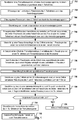
- the Figure 1 shows a flow chart of an embodiment of the method according to the invention.
- the feasibility of the method requires at least the presence of a transaction server, a notary server, a number of participants and an application program.
- Each participant is assigned at least a first and a second unique pseudonym, the assignment of the pseudonyms to the participants being stored on the notary server.
- the participants' transaction master data are assigned to the notary server.
- the transaction master data of a participant can be, for example, their bank details, postal addresses, an address of a cloud storage service, name and address of a natural person or the like.
- each of the participants registered with the notary server is assigned a pair of a cryptographic encryption key and a corresponding decryption key for each application that has been initialized for this participant, the decryption key in the register of the notary server and the encryption key in the application program that is used for the Participant has been initialized is saved.
- the application program and at least one transaction server are provided.
- the provision of the application program can include the downloading and installation of the application program on a terminal of the first participant.
- the terminal can be, for example, a desktop computer or a portable computer, in particular a notebook, tablet computer or smartphone.
- a step 704 the first and second pseudonyms as well as the encryption key specifically created for this application program by the notary server of the first participant, for example a doctor who is involved in the transaction, are recorded.
- the pseudonyms and the encryption key are recorded by the application program, for example during the initialization of the application program for the doctor by reading out a memory in which the pseudonyms and the encryption key are stored, or by visually recording an optically detectable code that contains the pseudonyms and contains the doctor's encryption key.
- the step 704 can take place, for example, once during the initialization of the application program for the first participant and does not have to be repeated for later transactions, since the pseudonyms and the encryption key are preferably stored permanently in the application program.
- a pseudonym of the second participant is also recorded by the application program in step 706.
- the second participant can also have a first and second pseudonym that was created by the transaction server specifically for the second participant and for this application.
- the notary server can have the pseudonyms of the second participant stored in a register entry of the second participant for this application program and create a QR code (or other optically detectable code) that is made available to the application program as required by the specific application.
- the second participant can represent a special target database that is designed, for example, to selectively store genome sequence data or blood sugar data or medically related patient data.
- the application program reads the QR code with the pseudonym of the second participant either for each individual transaction to be carried out or once for several transactions to be carried out in the future, it can be determined that the target database is the database identified by the pseudonym.
- the transaction parameters can be, for example, a data record of sensitive medical data of a patient to be transmitted between two participants.
- the transaction parameters to be transmitted in the transaction are recorded by the application program.
- the medical data can be entered manually, or it can be automatically recorded x-ray images, MRT images or other data that are relevant in the respective application context.
- the application program In step 710, the application program generates a cipher by using at least the second pseudonym of the first participant, the (first or second) pseudonym of the second participant and the transaction parameters with the encryption key encrypted.
- the cipher can also contain further data, for example transaction control data and / or the device ID of the terminal and / or an application program ID of the application program.
- step 712 the application program generates a transaction request which contains at least the cipher and the first pseudonym of the first participant in plain text.
- the transaction request is sent to the transaction server over a network connection.
- the transaction server sends the first pseudonym to the notary server in response to the receipt of the transaction request, since the transaction server cannot assign the pseudonyms to the participants and their transaction master data. However, the transaction cannot be carried out without knowledge of the participants' transaction master data.
- the notary server is in turn able, on the basis of the assignment of participants and pseudonyms stored with it, to assign the corresponding participants to the pseudonyms that were transmitted by the transaction server.
- the notary server searches the register for participant entries which contain a first pseudonym which is identical to the first pseudonym received from the transaction server. If no such participant entry (participant data record) is found, the requested transaction is not carried out and, for example, canceled with or without an error message. If such a subscriber entry (subscriber data record) is found, the second pseudonym which is assigned to the same (here: first) subscriber and which is assigned to the same application program as the first pseudonym is identified.
- a decryption key stored linked to the first pseudonym is identified, which is specific for the application program and corresponds or at least should correspond to the encryption key used by the application program, provided that the first pseudonym is not sent to or by an attacker during the transmission or processing of the transaction request the transaction server has been tampered with.
- At least the identified decryption key and optionally also the second pseudonym of the first participant stored in the register are returned from the notary server to the transaction server in step 717.
- step 718 the transaction server decrypts the cipher with the decryption key and thereby receives the second pseudonym of the first participant, the transaction parameters and the pseudonym of the second participant in unencrypted form.
- step 720 the notary server or the transaction server carries out a first assignment manipulation test in order to determine whether the assignment of the first pseudonym to the cipher and the transaction parameters contained therein has been manipulated.
- the second pseudonym identified by the notary server in the register is compared with the decrypted second pseudonym of the first participant. If the compared second pseudonyms are not found to be identical, the assignment is deemed to have been manipulated. In this case, the method is aborted in step 726, optionally further steps to warn the participants or to identify the cause of the problem.
- the identity of the compared second pseudonyms of the first participant is established, the assignment of the first pseudonym to the transaction parameters is deemed not to have been manipulated.
- the optional further test steps can include test steps, for example, whether further data that was encrypted together with the transaction parameters and integrated into the cipher is stored in the register on the notary server for the first participant and for this application program in an identical form.
- This additional data can, for example, be a hardware ID of the end device on which the Application program is instantiated, an application program ID, a transaction type ID, one or more attributes (for example of the participant or the requested transaction) and / or transaction control parameters.
- the further data can preferably be configured at least partially in a transaction type-specific manner, this optionally being possible down to the level of individual attributes.
- the further check can consist, for example, of a second assignment control check, in which it is checked in a manner analogous to that described for the second pseudonym of the first participant whether the further data obtained by decrypting the cipher are in identical form in the register of the notary server for the first participant and for this application program are stored.
- an application program designed as a patient management program can integrate the hospital's cost center in the form of a transaction control data attribute value into the cipher for each payment-specific transaction request, so that the payment transaction can be carried out in such a way that the transfer is posted to the cost center responsible for the doctor , whereby the cost center for the doctor is also stored on the notary server and is compared with the cost center specified in the cipher in the course of the second assignment manipulation test.
- the transaction server together with the first pseudonym of the first participant, also sends the pseudonym of the second participant to the notary server to enable the notary server to identify the transaction master data of the second participant.
- the pseudonym of the second participant is only sent from the transaction server to the notary sender when the first assignment manipulation check shows that there is no manipulation.
- the hardware ID of the terminal can be, for example, a Globally Unique Identifier (GUID) of the terminal on which the application program is installed, the GUID being stored in the notary server in the course of the initialization of the application program for the first participant in the register entry of the first participant .
- GUID Globally Unique Identifier
- the application program according to embodiments of the invention Since the application program according to embodiments of the invention is registered with the first participant, his pseudonyms are known to the application program from the initialization of the application program. Therefore, only the pseudonym of the second participant has to be recorded while the application program is running.
- the globally unique identifier (GUID) of the terminal is also preferably recorded during the initialization by the application program.
- the pseudonyms of the participants are extracted from the transaction data record by the transaction server and transmitted to the notary server.
- the GUID which can be part of the cipher, can also be passed on to the notary server after it has been decrypted.
- the notary server now checks whether the GUID received is contained in the data record of the first participant.
- the procedure is terminated.
- the transaction is carried out or initiated.
- the GUId or a terminal device or application program-specific hardware or software ID By using a registered application program and taking into account the GUId or a terminal device or application program-specific hardware or software ID, unnoticed manipulation of the transaction request is prevented.
- the transaction request was sent from an application program instance or a terminal device that is not known to the notary server, the notary server cannot return an identical hardware or software ID and the transaction is not carried out because the transaction request originates from an unregistered device or application program .
- the Figure 2 shows a flowchart of an embodiment of the method according to the invention, the first assignment control check being carried out by the notary server.
- the transaction server also sends the second pseudonym of the first participant, obtained by decrypting the cipher, to the notary server.
- Step 720 is taken by the notary server.
- the Figure 3 shows a flowchart of an embodiment of the method according to the invention, the first assignment control check being carried out in step 720 by the transaction server.
- the notary server sends the identified decryption key of the first participant as well as the second pseudonym of the first participant stored in the register to the transaction server, so that in step 720 the transaction server sends the second pseudonym received from the notary server with the decrypted second one contained in the cipher Can compare pseudonyms.
- the result of the first assignment manipulation test must be sent from the transaction server to the notary server in an additional step 732.
- FIG Figure 3 shows further steps of the method relating to subscriber authentication according to further embodiments of the invention. Steps 201-206 are identical or analogous to those of FIG Figure 1 .
- an authentication request is sent to the participants 305.
- each participant has a registered application program.
- the notary server must also be able to communicate with the application programs of the participants.
- a request can be sent to the subscriber's application program, which must be manually confirmed by the subscriber.
- the request can contain, for example, the information between whom a transaction is to be carried out and which transaction parameters were transmitted.
- the method is terminated 307. However, if all participants confirm the authentication request, the method is continued in accordance with steps 105-107 described above.
- a first participant who wants to carry out a transaction with the other participants can, for his part, wait to confirm the authentication request until he knows that all the other participants have also confirmed the authentication request.
- This can be implemented, for example, in that the first participant calls the other participants and asks whether an authentication request that corresponds to the intended transaction has been received.
- the confirmation request can also be made on any other communication channel, digital or analog.
- the application software used by the participants can have an interface in order to digitally use in the background a request as to whether a confirmation request with regard to a transaction currently to be carried out has been answered positively and to process a corresponding response. As soon as a positive answer to the confirmation request is received, it is impossible for the transaction to be carried out to be redirected to other people.
- FIG. 3 is a flowchart of an embodiment of the method according to the invention, the method being expanded to include the additional steps of registering an application program and requesting authentication according to embodiments of the invention.
- the application program is initialized for the first participant as already described for embodiments of the invention, the GUID of the terminal of the first participant being determined here.
- the GUID which is contained in the cipher of the transaction request, could be clearly assigned to the first pseudonym of the first participant
- an authentication request is sent to the other participants by the notary or transaction server 305 and / or second assignment manipulation test carried out.
- the order of security queries 204 and 305 can also be interchanged.
- this embodiment of the method ensures the identity of the first participant on the basis of the registration, while the identity of the other participants is secured on the basis of the authentication request. Thus, overall prevents unnoticed manipulation of the pseudonyms of the participants in the transaction.
- FIG. 3 is a flow chart of a method according to the invention for registering an application program with a subscriber.
- the application program is installed on a terminal of the subscriber.
- a terminal device can be, for example, a smartphone, a personal computer, a tablet PC or the like.
- the first and second pseudonyms of the subscriber who would like to register the application program are recorded by the application program.
- the recording of the pseudonyms can optionally take place during the installation of the application program or afterwards.
- the pseudonyms themselves can be recorded, for example, by reading in a graphic code or reading out a storage medium.
- the first and second pseudonyms of the first participant are stored after they have been recorded by the application program.
- an encryption key of the first participant is recorded, the encryption key preferably being created specifically for the participant and for the application program.
- the globally unique identifier of the terminal is also recorded 503 by the application program. This is usually stored in the hardware of the terminal.
- the pseudonyms and GUID After the pseudonyms and GUID have been recorded, they are transmitted 504 to the notary server.
- the notary server After receiving a corresponding request from the transaction server, the notary server uses the first pseudonym and / or the second pseudonym to identify further data that is in the register of the notary server for the first participant and the application program are assigned, e.g. the GUID.
- the notary server can then request additional participant information from the participant via a communication channel between the application program and the notary server, which is specified by channel information during registration.
- the corresponding communication channel can be defined, for example, by a postal or e-mail address.
- Participant information can be, for example, the date of birth, the address, the identity card number of the participant or the like.
- the participant information was initially stored in the participant's data record when the participant was registered with the notary server and can be assigned to the participant by the notary server.
- the notary server After receiving the participant information, the notary server checks whether the transmitted participant information is contained in the data record assigned to the pseudonym on the notary server 506. If this is the case, the GUID of the terminal on which the application program was installed is assigned 507 to the data record of the first pseudonym of the first participant. However, if the participant information is not contained in the data record of the pseudonym, the data record is discarded and the registration is aborted 508.
- the registration of the application program with a participant enables the notary server to send an authentication request to this application program. According to the statements above, this contributes to the security of the method. Registration of the application program further increases user-friendliness, since the pseudonyms of the subscriber to whom the application program is registered do not have to be read in again for each transaction, but are automatically added to the transaction data record by the application program.
- FIG. 6 shows a system 600 which enables a method to be carried out according to an embodiment of the invention.
- a notary server 610, a transaction server 620 and the terminal of a subscriber 630 are essentially required.
- the system can also comprise several transaction servers and / or several terminals of several participants.
- the notary server 610 contains a database 611, also referred to here as a “register”, on which at least the assignment of pseudonyms and cryptographic keys to participants and the transaction master data of the participants are stored.
- the entirety of the data stored on the notary server for a specific participant and a specific application program can also be referred to as an application-specific participant data record, or simply as a "participant data record", for example if only a single application program is registered for a participant.
- the notary server also contains means for encryption and decryption 612 of data records of the participants.
- This can be, for example, a processor with an assigned data memory, the data memory containing a program code which can be executed by the processor and which contains computer-executable instructions which are adapted to encrypt and decrypt a data record in accordance with a specific encryption method.
- the transaction server 620 contains means for initiating a transaction 621, which for example in the case of a financial transaction can be a communication link with a bank.
- the transaction server 620 also contains means for decrypting 622 the transaction data records, which can be implemented analogously to 612.
- the terminal of a subscriber 630 contains a database 631 in which, for example, after an application program has been registered, the application-specific first and second pseudonyms and the application-specific encryption key of the subscriber are stored.
- the terminal of a subscriber 630 also contains a number or character sequence which uniquely identifies the terminal 632, for example the GUID of the terminal.
- the application program can contain, for example, an encryption module 633 for encrypting data records 633 and for creating a cipher, the module 633 being able to be designed analogously to 612.
- the terminal device 630 also contains the application program 634, which is required to carry out the transactions. This is able to access the GUID 632, the database 631 and the means for encryption 633.
- the terminal device 630 also contains a sensor 635 with which the pseudonyms of participants can be recorded. This sensor is operatively linked to the application program so that the application program can receive information from the sensor.
- Communication channels exist between the terminal 630 and the notary server 610, which are used for authentication of a subscriber 604 and for registration an application program on a participant 605 can be used. Both the application program and the notary server preferably have special program interfaces that are designed for protected data exchange with one another.
- the pseudonyms of the participants in the transaction are recorded by the sensor 635 and passed on to the application program 634.
- the encryption key is preferably also passed on here.
- the transaction parameters are recorded by the application program 634 and the GUID 632 of the terminal 630 is recorded.
- the pseudonyms of the first participant contained in the database 631 are also read out by the application program 634 and added to the transaction data record.
- the data record thus created consisting of the second pseudonym of the first participant, the pseudonyms of the other participants, the GUID of the terminal and the transaction parameters, is now encrypted 633 with the encryption key of the first participant
- the pseudonym of the first participant is part of a transaction request that is transmitted to the transaction server 620 along the communication channel 603.
- the transaction server then extracts the pseudonyms of the participants and the GUID of the terminal on which the transaction data record was created from the decrypted transaction data record.
- a first assignment manipulation test is carried out in accordance with embodiments of the invention, such as, for example, with reference to FIG Figures 1-3 is described.
- the transaction master data belonging to the pseudonyms are now requested 601 by the transaction server 620 at the notary server 610.
- the GUID extracted previously is also transmitted to the notary server.
- the notary server 610 can, for example, first carry out the first assignment manipulation test and then additionally check whether the GUID received is stored in the data record of the first participant in the register of the notary server. If this is not the case, the method is terminated because it must be assumed that the application program is being used against the will of the first participant, for example due to an extraction of the application program from the terminal of the first participant. However, if the received GUID matches the GUID contained in the data record of the first participant, an authentication request 604 is sent to the terminals 630 of the other participants. If the authentication request is not confirmed by at least one participant, the method is terminated.
- the notary server assigns the pseudonyms to the corresponding participants with the respective transaction master data and transmits the transaction master data of participants 602 to the transaction server 620. This now carries out the transaction 621 or pushes it using the previously received transaction parameters at.
- FIG. 11 shows a block diagram of a terminal device 630 and the notary server 610 during the initialization of the application program 710.
- application programs 710, 712 which contain different application program IDs 754, 756, can be installed on the terminal of the subscriber 740.
- the end device can also have a device ID, e.g. a GUID 742, which optionally becomes part of the cipher and the notary server then checks whether the device ID for the respective application program 710, 712 is stored in the register of the notary server.
- a device ID e.g. a GUID 742
- a new subscriber 740 is registered on the notary server as follows: a global, cross-application program-wide subscriber ID (“notary.ident number”) 748 is created for the subscriber.
- This number can be, for example, a number that is incremented for each newly registered participant or generated randomly and is unique for the participant. It is only known to the notary server and is never communicated to other systems.
- the global subscriber ID is assigned a subscriber-specific, application-specific random value 746 which serves as the first pseudonym (IDx1) ("pers.ident.number").
- a cryptographic pair is generated for the subscriber from an encryption key 756 and a corresponding decryption key 758.
- the two keys 756 and 758 can be symmetric or asymmetric keys.
- the global subscriber ID is assigned an application-specific, subscriber-specific cryptographic key 750 ("pers.ident key").
- this key is generated as a randomly generated key, for example as a one time pad key.
- This key is also stored solely on the notary server.
- the "pers.ident key” can be, for example, a symmetrical key that is used to encrypt all or at least some of the data stored in the register for this application on the notary server.
- the data is temporarily and specifically decrypted for the participant and the application program using the "pers.ident key", which was identified using the application-specific first pseudonym provided by the transaction server. This data therefore contains the application program-specific second pseudonym of the applicant and the transaction master data.
- the decrypted data is deleted by the notary server, so that said data is only still available in the form encrypted by means of the "pers.ident key". Since the pseudonym is encrypted and decrypted by the same entity, the problems that would arise from the transmission of the key are no longer applicable.
- the notary.ident number 748 and the pers.ident number 746 are converted into the second pseudonym 752 of the first participant ("pers.ident code" or "IDx2 ”) created and saved.
- the pers.ident number 746 is the "first pseudonym” in plain text form, the identifying pseudonym, the pers.ident code, as the "second pseudonym", represents the central security feature for checking the transaction request for manipulation of the assignment of transaction parameters to the participants.
- further subscriber-specific and / or application program-specific data can be present in the register, in particular the device ID 742 of a terminal device registered for the subscriber and / or for the application program, transaction master data 744 of the first subscriber, and / or transaction control data.
- the transaction control data specify e.g. rights and / or roles of the participant in the transaction, location and type and scope of the data processing of certain types of transaction parameters, etc.
- the notary server is configured to calculate a QR code (“ident.QR code”) 640 during the course of the registration of the subscriber for a specific application program, which is subscriber-specific and application-program-specific and which contains the first and second pseudonyms 746 , 752 of the subscriber and optionally further subscriber-specific and / or application program-specific data (for example transaction control data) contains or encoded.
- This QR code can be stored in the register as an image file linked to an identifier of the participant and to an identifier of the application program for which the QR code was generated.
- This QR code can also be viewed as another pseudonym of the first participant, as it does not contain the participant data in plain text and is specific to both the participant and the application.
- the first pseudonym (“pers.ident number”), the second pseudonym (“pers.ident code”) and / or the QR code "ident.QR code” 640, which can be used as a third pseudonym, can be used in any large number for different application programs are generated by the notary server and deposited or saved in the register for the respective participant. They are different identifying features (pseudonyms) of the same participant.
- the above-mentioned pseudonyms and keys are specifically created for this subscriber and this application program and some of these data, in particular the first and second pseudonyms and the encryption key 756, are entered into the application program in question read in. This can be done by entering it manually.
- this can be done by the notary server transmitting the first and second pseudonyms and the encryption key to the application program via a protected communication channel, as indicated by the solid arrows.
- the transmission can also take place (dashed arrow) in that the notary server generates the QR code 640 in which the first and second pseudonyms, the encryption key and optionally other data are encoded, and outputs this QR code.
- the QR code can be sent to the subscriber on a letter of invitation sent by post to register the application.
- the QR code can also be sent to the participant by e-mail or displayed to the participant via a website on a web portal of the notary server.
- the first and second pseudonyms can be transmitted from the notary server to the application program to be neutralized in a simple and fail-safe manner .
- Typing in long sequences of alphanumeric characters without semantic meaning is particularly prone to errors. so that the recording of the participant's pseudonyms by means of a QR code can significantly increase the reliability of the initialization process.
- QR code instead of a QR code, other graphic codes can also be used for all of the embodiments described here, e.g. barcodes, etc.
- the coding, storage and transmission of the first and second pseudonyms in the form of a QR code makes it easier to capture the first and second pseudonyms during the initialization of the registration program, since a QR code can be visually captured with little effort, for example by the camera a smartphone or tablet PC.
- a QR code can be printed on a medical kit for recording biological sample material (blood, tissue, urine, saliva, etc.), which was generated by the notary server according to the method described here and which contains the first and second pseudonyms of the second participant
- the second participant here can be a database, for example, which is used to store the medical data collected on the basis of the biological sample (metabolite values of a blood sample, sequence data obtained from a saliva sample, etc.).
- Figure 8 shows a block diagram of the contents of the register entry of a subscriber for several different application programs.
- the participant When registering for the first time, the participant can decide whether he or she would like to save his first name and surname stored on the notary server or also the date and place of birth in the ident.QR code.
- the notary.ident number and the pers.ident key are never given out.
- the pers.ident number is used as a pseudonym and the pers.ident code is used to authenticate a participant. The same applies to the pseudonyms and keys of the other application programs.
- the notary server For each of the partial data records a) -g), the notary server generates a QR code that contains the respective first pseudonym (e.g. pers.ident number or pay-ident-no or access-ident-no), the respective second pseudonym (e.g. pers .ident.Code or pay.ident.Code or Access. ident. Code etc) and preferably also an encryption key (not shown here) in coded form.
- the respective first pseudonym e.g. pers.ident number or pay-ident-no or access-ident-no
- the respective second pseudonym e.g. pers .ident.Code or pay.ident.Code or Access. ident. Code etc
- an encryption key not shown here
- the application program is designed to decode a QR code generated by the notary server, or the notary server is designed to generate the QR code in such a way that the application program can decode it.
- Figure 9 Figure 3 shows a block diagram of a terminal and the notary server during the initiation of a transaction.
- the application program "Application 1" can be initialized as, for example, for Figure 7 described. After initialization has taken place, a first and a second pseudonym 746, 752 are stored for the “first participant”, here a “patient A”, both in the register of the notary server and in the application program. An application program-specific encryption key 756 is stored in the application program, the associated decryption key 758 in the register of the notary server.
- the application program is used to enable a patient to have their own genome sequenced without necessarily having to consult a doctor.
- the patient A can, for example, order a "sample set", here referred to as a "kit", by post from a sequencing service provider.
- the kit contains, for example, cotton swabs for a mucous membrane swab as well as instructions on how this smear can be taken and where the smear should be sent.
- QR code 908 is a QR code that encodes at least a pseudonym of a second participant in a planned transaction.
- the second participant here is a database 906 for storing the genome data, which is operated by the sequencing service, the database being instantiated on the transaction server 620 or being operatively connected to the transaction server so that the transaction server can read and write access to the sequence database.
- the QR code does not contain all the data that are necessary to identify the database, such as the IP number of the computer, port number, database name, etc. Rather, it is the data that are necessary for a SQL client to connect to the database, for example can be securely stored as the transaction master data of subscriber B in the notary server in order to increase the security of the sequence database.
- QR code 910 is also printed on the kit or the operating instructions.
- transaction parameters are coded in the form of a sequencing project ID.
- the sequencing project ID is an ID under which the genome data of patient A obtained during sequencing are stored.
- Application 1 is an app offered by the sequencing service that is used to initiate and process the sequencing project.
- the patient scans the two QR codes 908, 910 via a camera to which the sequence app has access and decodes it in order to record the pseudonym of the sequence database and the transaction parameters in the form of the sequence project ID.
- the participant follows the operating instructions and sends the mucous membrane swab in a return envelope, which can also contain the QR code 910 with the sequence project ID, by post to the sequencing service provider.
- the sample with the mucous membrane swab is preferably only provided with the QR code 910, but not with the real name of the patient. This ensures that the sequence service provider or at least the persons entrusted with handling the sample do not know the identity of patient A.
- the participant generates a transaction request 914 via the sequencing app, which contains a cipher 912 and a first pseudonym 746 of patient A.
- the cipher contains the transaction parameters 907 in the form of the kit ID, the second pseudonym 752 of patient A and a pseudonym 902 from the sequence database which was encoded in the QR code 908.
- the cipher also preferably contains transaction control data 916.
- the transaction request can be initiated, for example, by calling up a corresponding function of the sequencing app via the app's GUI.
- the sequencing app sends the transaction request to the transaction server. This sends the first pseudonym 746 to the notary server.
- a first assignment manipulation test is then carried out by the notary server or transaction server. The implementation of this first assignment manipulation test was, for example, with reference to Figures 1-3 described.
- a second assignment manipulation check based on the transaction control data is preferably also carried out in an analogous manner.
- the notary server is configured to analyze the transaction control data 916 stored in the register for the sequencing app at the latest after the first and optionally also the second assignment manipulation check has been concluded positively (result: no manipulation). For example, these could provide that sequence data-related transactions always require explicit confirmation by at least that participant from whom the sequence data originate.
- the notary server would send a confirmation request to the sequencing app on the patient's terminal device 630 and only pass on the transaction master data of the patient and the sequencing service to the transaction server after receiving a confirmation.
- the transaction server carries out the requested transaction if all the assignment manipulation tests are positive and the patient has confirmed the requested transaction.
- the execution of the transaction has the effect that a new, still empty data record is created in the sequencing database, which contains the kit ID 907 as a key or identifier.
- the sequencing service As soon as the sequencing service has completed the sequencing of the sample DNA, he writes the genomic data in the data set of the sequence database identified by the kit ID 907.
- the patient can carry out the genome sequencing largely anonymously and thus in a secure manner.
- the real name of the patient is not known to the staff in the sequencing laboratory and the real name is also not available in the sequence database.
- the notary server can provide the patient and other authorized participants with the exact address of the sequence database (transaction master data of the second participant), it does not itself have the sequence data.
- the sequencing app can have other functions and can, for example, be used to pay for the sequencing service. For this it is only necessary that the sequencing app contains pseudonyms and keys for the creation of payment-related transactions in addition to the pseudonyms and keys for creating sequence project-related transaction requests.
- a large number of apps in the healthcare sector are provided with the same authentication method, which can automatically meet the strict data protection requirements in Germany / Europe (GDPR) without their own development effort.
- This software is made available to a cooperating company (signing a usage rights agreement) via a "download platform”.
- the sequencing app can also be used to query the readiness of data donations, e.g. to make the genome data available for research in a pseudonymised form.
- Every type of software that uses the procedure described here to initiate and carry out transactions receives a software ID on the notary server.
- Newly registered software is offered to the participants registered on the notary server as a new transaction method for download.
- the type and scope of data processing that is protected by the method described here is defined according to embodiments of the invention by the software on the terminal and disclosed to the subscriber as part of the registration for this software:
- a blood pressure diary app collects blood pressure data. Who should receive this data (a doctor using his med.ident code; a data storage location using his Cloud.ident code) is defined by the recipient's ident.QR code in the "Send data" function of the App is read.
- the functionality for registering the application program with the notary server and for exchanging pseudonyms and other data during initialization is provided in the form of a program library or program module, so that the application developer only has to worry about the actual business logic of the application program. This results in new opportunities to develop many products with the same basic structure for different medical fields of application in a short time. For which data is to be given in an "external" app to the participant (ie software that he does not yet use himself) consent to data processing is made possible by sending a GDPR-compliant declaration of consent to the terminal device registered with the pers.ident number .
- the consent can be given by confirmation on a registered terminal device "audit-proof". This means that the insured person who reads his ident.QR code into a cooperating app can also give his consent to data exchange for defined data only.
- the type of data processing can also be determined in which function of the app the ident.QR code is read in (i.e. code 908 in the above example).
- the type of application program ("app") in general and the functions in particular thus determine the scope of the data and the type of data processing for which the consent to data processing is given by a participant in the ident.QR code procedure.
- the challenge in merging the data from external sources into the electronic patient record (EPR) of an insured person is to ensure data integrity (interface definition that only data of the same data type is stored in the record in the same location) and the reliable location of the associated storage location (in which database should the data be saved?).
- data integrity and the storage location are achieved via the standardization by means of the transaction method described here and the use of application identification codes and / or function identification codes.
- a country code two-digit, DE for Germany
- a consecutive number 001 to 999
- QR codes ie for each ident function 999 applications (correspondingly more if letters are used) can be used per country without new ident. QR codes / numbers having to be issued).
- FIG. 10 shows a block diagram relating to the derivation of a graphic code 932 from application program-specific subscriber data.
- the QR code is preferably derived during the initialization of an application program for a specific subscriber, as has already been done, for example, with reference to FIG Figure 7 has been described.
- the notary server creates an application-specific first pseudonym ("pers.ident number”) 746 in the course of the registration of the participant for a certain application program.
- the second pseudonym (“pers.ident code”) 752 is generated on the first pseudonym 746.
- a total of the first 746 and second 752 pseudonyms, the encryption key 756 and optional further data such as application program-specific and / or global transaction control parameters are used in the form of a QR code "ident.QR code” 640, 932 coded, which can be used as an additional pseudonym.
- Figure 11 shows a block diagram of a system with additional checking of the transaction control data.
- the system includes a notary server 610, one or more transaction servers 620 and a terminal device 630 of a participant, in this case a doctor A.
- the notary server, the transaction server and the terminal device correspond to the exemplary embodiments already described, with the system in the in Figure 11 Example shown is used for an application scenario in which the application program ("application”) was initialized for doctor A and is used to store the medical data of various patients, for example patient "B", in the respective electronic patient file of the patient on a central Storage service (cloud storage).
- application application program
- the pseudonyms and the encryption key of doctor A are read into the application and permanently stored there. For example, this can be done in that a document that identifies participant A as a doctor has a document created by the notary server for the doctor graphic code is stored, which contain the pseudonyms, the encryption key and optionally also transaction control data.
- the transaction control data can also be stored in the application right from the start and optionally changed by the doctor via a GUI.
- the control data can specify the format in which the patient data are to be stored in the file, and information on whether and which information on the person or the doctor's practice is to be stored in the patient file, linked to the patient's medical data.
- the application can be a patient management program.
- a patient can visit the doctor's practice and present an ID (e.g. insurance card, etc.) on which a graphic code generated by the notary server with a pseudonym of the patient is printed.
- the graphic code with the patient's pseudonym can also be displayed on a patient application on a terminal device 950 of the patient, for example a smartphone.
- the transaction parameters that are to be stored in the patient file in the course of the transaction can be, for example, recorded symptoms, diagnoses and / or medication prescribed by the doctor.
- a cipher is generated which, in addition to the doctor's second pseudonym, also contains a patient's pseudonym, the transaction parameters and other data, for example the transaction control data and / or the GUID.
- the cipher and the doctor's first pseudonym are sent to the transaction server via a network and processed there as already described for other examples.
- the first assignment manipulation check with regard to the identity of the pseudonym contained in the cipher with the pseudonym of participant A stored in the notary server is carried out in the transaction server, but it is also possible that the check is carried out by the notary server.
- a second assignment manipulation test is carried out in a functionally analogous manner with regard to the identity of the transaction control data 952 contained in the cipher with the control data stored in the notary server. This step ensures that the control data that control the execution of the requested transaction (e.g. specify in which format, with which transmission protocol, on which database server or database etc.
- the medical data to be saved is to be transmitted and saved and / or processed ), cannot be manipulated on the terminal of subscriber A or after decryption of the cipher on the transaction server.
- an attacker who successfully penetrates the doctor's terminal or the transaction server manipulates the control data controlling the transaction in such a way that the sensitive medical data can be transmitted to third parties or changed. This is prevented by checking in the course of the second assignment manipulation check that the transaction control data that were received as part of the cipher with the transaction request are identical to the control data that participant A and / or the developer of the application program stored on the notary server Has.
- the requested transaction is carried out taking into account the transaction control data.
- the transaction control data can provide that data that have been created by a specific type of application program must always be stored on a specific cloud storage device.
- This control data instruction can be supplemented by further transaction control data which are stored on the notary server for specific applications or transaction types and which can optionally also be assigned to individual participants and can be changed by them after successful authentication on the notary server.
- the patient can have stored in the form of personal transaction data for the application program on the notary server that patient data, which contain DNA sequence information, only after an explicit confirmation by the patient may be stored in the patient file (or a special sequence data server), whereas blood pressure data may be written to the patient's own file or in one of the several other databases without explicit confirmation by patient B.
- the transaction server carries out each requested transaction in such a way that the control data relevant to this transaction are taken into account. If the transaction server determines, for example, that the medical data contained in the cipher consisted of both sequence data and blood pressure data, the transaction server automatically divides the patient's medical data and immediately saves the blood pressure data in the target directory specified in the control data Patients, the sequence data, however, only after explicit confirmation by patient B.
- the second assignment manipulation check does not have to include all control data relevant to a transaction, but only that part of the control data that was transmitted as part of the cipher with the transaction request.
- further control data can be stored on the notary server, which are sent to the transaction server, for example, in response to the receipt of the first pseudonym.
- Figure 12 shows a block diagram of a system with a notary server, at least one transaction server and a terminal.
- transaction functions or “transaction functionalities” 972, 974, 976
- transaction functionalities are implemented on the transaction server 620.
- Each type of transaction is an individually executable software and / or hardware functionality, the execution of which on the transaction server causes or initiates the execution of a requested transaction.
- the transaction types can include a transaction type for storing medical data and / or a transaction type for transferring a sum of money and / or a transaction type for performing a specific analysis (e.g. association studies of genotypes and phenotypes) and for storing the result at a specific storage destination.
- the transaction server has a module 980 for decrypting ciphers received from one or more terminals as part of a transaction request became.
- the transaction server also includes a test module 978 for performing the first and optionally also one or more second assignment manipulation tests and a selection module which is designed to identify those of the transaction types 972-976 that can effect the execution or initiation of the respective requested transaction. If the test module 978 returns as a result that there is no manipulation at all and the transaction request is integer and the subscriber has the required rights, the selection module selects the corresponding transaction type and executes it.
- the terminal is initialized for a first subscriber A.
- the terminal supports and integrates two of the several transaction types implemented on the transaction server, namely the functionality "F1" for storing patient data in a patient record and the functionality F2 for transferring a sum of money.
- the physician can use application program 634 not only to collect and store patient data, but also to make certain related payments.
- the doctor can commission a laboratory to carry out a blood analysis and pay for the laboratory using the payment function of the application program.
- the doctor (subscriber A, for whom the program 634 is initialized) or the application program 634 uses the key 756, pseudonyms 746, 752 and optionally also transaction control data 916, which in their entirety 956 correspond to the transaction type "F1" 972 are assigned.
- the doctor or the application program 634 uses the key 970, pseudonyms 962, 964 and optionally also transaction control data 968, which in their entirety 958 are assigned to the transaction type “F2” 974.
- the notary server 610 contains a register in which several of the transaction types and the associated keys, pseudonyms and control data are assigned to individual registered participants. At least the first and second pseudonyms and optionally also the encryption key and / or the transaction control data belonging to two or more of the transaction types are preferably encoded in the form of a graphic code and in the register for the respective participant saved. For each application program that was initialized for a specific subscriber, a single graphic code is generated in the subscriber's register entry and stored in association with an identifier of this application program. This one graphic code contains at least the first and second pseudonym of the participant for all transaction types supported by this application program, and optionally other data such as encryption key, transaction control data, GUID, etc.
- the notary server is configured to make this application-specific code available to the respective participant, e.g. via a printout or a client app of the notary server.
- the participant can initialize the application program for himself and / or authenticate himself with this code with the application program that has already been initialized and / or with the notary server (e.g. to change configuration data).
Landscapes
- Business, Economics & Management (AREA)
- Engineering & Computer Science (AREA)
- Accounting & Taxation (AREA)
- Theoretical Computer Science (AREA)
- Physics & Mathematics (AREA)
- General Physics & Mathematics (AREA)
- General Business, Economics & Management (AREA)
- Strategic Management (AREA)
- Finance (AREA)
- Computer Security & Cryptography (AREA)
- General Health & Medical Sciences (AREA)
- Development Economics (AREA)
- Economics (AREA)
- Computer Networks & Wireless Communication (AREA)
- Bioethics (AREA)
- Health & Medical Sciences (AREA)
- Software Systems (AREA)
- General Engineering & Computer Science (AREA)
- Computer Hardware Design (AREA)
- Marketing (AREA)
- Medical Informatics (AREA)
- Databases & Information Systems (AREA)
- Signal Processing (AREA)
- Storage Device Security (AREA)
Applications Claiming Priority (1)
| Application Number | Priority Date | Filing Date | Title |
|---|---|---|---|
| EP20166382 | 2020-03-27 |
Publications (1)
| Publication Number | Publication Date |
|---|---|
| EP3886025A1 true EP3886025A1 (fr) | 2021-09-29 |
Family
ID=70056981
Family Applications (1)
| Application Number | Title | Priority Date | Filing Date |
|---|---|---|---|
| EP20168317.4A Withdrawn EP3886025A1 (fr) | 2020-03-27 | 2020-04-06 | Procédé destiné à l'exécution de transactions |
Country Status (1)
| Country | Link |
|---|---|
| EP (1) | EP3886025A1 (fr) |
Cited By (1)
| Publication number | Priority date | Publication date | Assignee | Title |
|---|---|---|---|---|
| CN119172750A (zh) * | 2024-11-06 | 2024-12-20 | 合肥工业大学 | 一种车辆与充电桩的安全连接方法、充放电方法及系统 |
Citations (2)
| Publication number | Priority date | Publication date | Assignee | Title |
|---|---|---|---|---|
| EP1150227A1 (fr) * | 2000-04-28 | 2001-10-31 | Lucent Technologies Inc. | Commerce électronique anonyme et sûr |
| WO2014075862A1 (fr) | 2012-11-14 | 2014-05-22 | Heinz Giesen | Procédé de réalisation de transactions |
-
2020
- 2020-04-06 EP EP20168317.4A patent/EP3886025A1/fr not_active Withdrawn
Patent Citations (2)
| Publication number | Priority date | Publication date | Assignee | Title |
|---|---|---|---|---|
| EP1150227A1 (fr) * | 2000-04-28 | 2001-10-31 | Lucent Technologies Inc. | Commerce électronique anonyme et sûr |
| WO2014075862A1 (fr) | 2012-11-14 | 2014-05-22 | Heinz Giesen | Procédé de réalisation de transactions |
Cited By (1)
| Publication number | Priority date | Publication date | Assignee | Title |
|---|---|---|---|---|
| CN119172750A (zh) * | 2024-11-06 | 2024-12-20 | 合肥工业大学 | 一种车辆与充电桩的安全连接方法、充放电方法及系统 |
Similar Documents
| Publication | Publication Date | Title |
|---|---|---|
| EP2409255B1 (fr) | Procédé de production de paires de clefs cryptographiques asymétriques | |
| DE102007019375A1 (de) | Systeme und Verfahren zur Re-Identifikation von Patienten | |
| EP1410128A1 (fr) | Dispositif de traitement de donnees | |
| CN109947854B (zh) | 基于区块链的电子病历处理方法、装置、设备和介质 | |
| DE10253676B4 (de) | Verfahren und Vorrichtung für die Fernübertragung sensibler Daten | |
| Li et al. | Leveraging standards based ontological concepts in distributed ledgers: a healthcare smart contract example | |
| JP2024502512A (ja) | 個人遺伝子識別情報の取得、制御、アクセス及び/又は表示の方法及びシステム | |
| Saxena et al. | Blockchain for public health: Technology, applications, and a case study | |
| Kolan et al. | Medical blockchains and privacy in Austria-technical and legal aspects | |
| DE102007021275A1 (de) | Verfahren zur Übertragung und/oder zur Bereitstellung persönlicher elektronischer Daten eines Inhabers, insbesondere gesundheitsbezogener elektronischer Daten eines Patienten | |
| EP3886025A1 (fr) | Procédé destiné à l'exécution de transactions | |
| DE10156877A1 (de) | Verfahren und System zum gesicherten Speichern und Auslesen von Nutzdaten | |
| EP3785159A1 (fr) | Procédé de fusion de données partielles différentes | |
| WO2018015409A1 (fr) | Moteur de cryptage-décryptage destiné à manipuler des données de patient sensibles et procédé correspondant | |
| Berman | Zero-check: a zero-knowledge protocol for reconciling patient identities across institutions | |
| EP3244362B1 (fr) | Procédé destiné à l'exécution de transactions | |
| DE10209780B4 (de) | Datenverarbeitungssystem für Patientendaten | |
| EP3433778A1 (fr) | Logiciel à logique de commande permettant de sécuriser la transmission de données personnelles sur internet à partir d'ordinateurs vers le serveur, à stockage sécurisé des données sur des serveurs | |
| JP2017204205A (ja) | 治験ビューアシステム | |
| WO2021204313A1 (fr) | Système de suivi assurant la confidentialité | |
| EP2693352A1 (fr) | Système de transmission de données personnelles et non personnelles (Data Split) | |
| Bombera | Privacy-preserving eHealth: A self-sovereign identity based infrastructure for medical records | |
| Jakubowski et al. | Blockchain-based applications in various areas of healthcare functioning | |
| Vaccaroli et al. | Grand duchy of Luxembourg: a case study of a national master patient index in production since five years | |
| Rakshana et al. | A Smart and User-Friendly Interface for Storing and Retrieving Personal Medical Records |
Legal Events
| Date | Code | Title | Description |
|---|---|---|---|
| PUAI | Public reference made under article 153(3) epc to a published international application that has entered the european phase |
Free format text: ORIGINAL CODE: 0009012 |
|
| STAA | Information on the status of an ep patent application or granted ep patent |
Free format text: STATUS: THE APPLICATION HAS BEEN PUBLISHED |
|
| AK | Designated contracting states |
Kind code of ref document: A1 Designated state(s): AL AT BE BG CH CY CZ DE DK EE ES FI FR GB GR HR HU IE IS IT LI LT LU LV MC MK MT NL NO PL PT RO RS SE SI SK SM TR |
|
| STAA | Information on the status of an ep patent application or granted ep patent |
Free format text: STATUS: THE APPLICATION IS DEEMED TO BE WITHDRAWN |
|
| 18D | Application deemed to be withdrawn |
Effective date: 20220330 |