EP3886210A1 - Cellule de type enroulé, batterie secondaire au lithium-ion, et électrode plane négative - Google Patents
Cellule de type enroulé, batterie secondaire au lithium-ion, et électrode plane négative Download PDFInfo
- Publication number
- EP3886210A1 EP3886210A1 EP19896730.9A EP19896730A EP3886210A1 EP 3886210 A1 EP3886210 A1 EP 3886210A1 EP 19896730 A EP19896730 A EP 19896730A EP 3886210 A1 EP3886210 A1 EP 3886210A1
- Authority
- EP
- European Patent Office
- Prior art keywords
- active material
- lithium
- material layer
- negative
- layer
- Prior art date
- Legal status (The legal status is an assumption and is not a legal conclusion. Google has not performed a legal analysis and makes no representation as to the accuracy of the status listed.)
- Granted
Links
Images

Classifications
-
- H—ELECTRICITY
- H01—ELECTRIC ELEMENTS
- H01M—PROCESSES OR MEANS, e.g. BATTERIES, FOR THE DIRECT CONVERSION OF CHEMICAL ENERGY INTO ELECTRICAL ENERGY
- H01M10/00—Secondary cells; Manufacture thereof
- H01M10/05—Accumulators with non-aqueous electrolyte
- H01M10/058—Construction or manufacture
- H01M10/0587—Construction or manufacture of accumulators having only wound construction elements, i.e. wound positive electrodes, wound negative electrodes and wound separators
-
- H—ELECTRICITY
- H01—ELECTRIC ELEMENTS
- H01M—PROCESSES OR MEANS, e.g. BATTERIES, FOR THE DIRECT CONVERSION OF CHEMICAL ENERGY INTO ELECTRICAL ENERGY
- H01M10/00—Secondary cells; Manufacture thereof
- H01M10/04—Construction or manufacture in general
- H01M10/0431—Cells with wound or folded electrodes
-
- H—ELECTRICITY
- H01—ELECTRIC ELEMENTS
- H01M—PROCESSES OR MEANS, e.g. BATTERIES, FOR THE DIRECT CONVERSION OF CHEMICAL ENERGY INTO ELECTRICAL ENERGY
- H01M10/00—Secondary cells; Manufacture thereof
- H01M10/05—Accumulators with non-aqueous electrolyte
- H01M10/052—Li-accumulators
- H01M10/0525—Rocking-chair batteries, i.e. batteries with lithium insertion or intercalation in both electrodes; Lithium-ion batteries
-
- H—ELECTRICITY
- H01—ELECTRIC ELEMENTS
- H01M—PROCESSES OR MEANS, e.g. BATTERIES, FOR THE DIRECT CONVERSION OF CHEMICAL ENERGY INTO ELECTRICAL ENERGY
- H01M4/00—Electrodes
- H01M4/02—Electrodes composed of, or comprising, active material
- H01M4/13—Electrodes for accumulators with non-aqueous electrolyte, e.g. for lithium-accumulators; Processes of manufacture thereof
- H01M4/133—Electrodes based on carbonaceous material, e.g. graphite-intercalation compounds or CFx
-
- H—ELECTRICITY
- H01—ELECTRIC ELEMENTS
- H01M—PROCESSES OR MEANS, e.g. BATTERIES, FOR THE DIRECT CONVERSION OF CHEMICAL ENERGY INTO ELECTRICAL ENERGY
- H01M4/00—Electrodes
- H01M4/02—Electrodes composed of, or comprising, active material
- H01M4/13—Electrodes for accumulators with non-aqueous electrolyte, e.g. for lithium-accumulators; Processes of manufacture thereof
- H01M4/134—Electrodes based on metals, Si or alloys
-
- H—ELECTRICITY
- H01—ELECTRIC ELEMENTS
- H01M—PROCESSES OR MEANS, e.g. BATTERIES, FOR THE DIRECT CONVERSION OF CHEMICAL ENERGY INTO ELECTRICAL ENERGY
- H01M4/00—Electrodes
- H01M4/02—Electrodes composed of, or comprising, active material
- H01M4/36—Selection of substances as active materials, active masses, active liquids
- H01M4/362—Composites
- H01M4/364—Composites as mixtures
-
- H—ELECTRICITY
- H01—ELECTRIC ELEMENTS
- H01M—PROCESSES OR MEANS, e.g. BATTERIES, FOR THE DIRECT CONVERSION OF CHEMICAL ENERGY INTO ELECTRICAL ENERGY
- H01M4/00—Electrodes
- H01M4/02—Electrodes composed of, or comprising, active material
- H01M4/36—Selection of substances as active materials, active masses, active liquids
- H01M4/362—Composites
- H01M4/366—Composites as layered products
-
- H—ELECTRICITY
- H01—ELECTRIC ELEMENTS
- H01M—PROCESSES OR MEANS, e.g. BATTERIES, FOR THE DIRECT CONVERSION OF CHEMICAL ENERGY INTO ELECTRICAL ENERGY
- H01M4/00—Electrodes
- H01M4/02—Electrodes composed of, or comprising, active material
- H01M4/36—Selection of substances as active materials, active masses, active liquids
- H01M4/38—Selection of substances as active materials, active masses, active liquids of elements or alloys
- H01M4/381—Alkaline or alkaline earth metals elements
- H01M4/382—Lithium
-
- H—ELECTRICITY
- H01—ELECTRIC ELEMENTS
- H01M—PROCESSES OR MEANS, e.g. BATTERIES, FOR THE DIRECT CONVERSION OF CHEMICAL ENERGY INTO ELECTRICAL ENERGY
- H01M4/00—Electrodes
- H01M4/02—Electrodes composed of, or comprising, active material
- H01M4/36—Selection of substances as active materials, active masses, active liquids
- H01M4/38—Selection of substances as active materials, active masses, active liquids of elements or alloys
- H01M4/386—Silicon or alloys based on silicon
-
- H—ELECTRICITY
- H01—ELECTRIC ELEMENTS
- H01M—PROCESSES OR MEANS, e.g. BATTERIES, FOR THE DIRECT CONVERSION OF CHEMICAL ENERGY INTO ELECTRICAL ENERGY
- H01M4/00—Electrodes
- H01M4/02—Electrodes composed of, or comprising, active material
- H01M4/36—Selection of substances as active materials, active masses, active liquids
- H01M4/58—Selection of substances as active materials, active masses, active liquids of inorganic compounds other than oxides or hydroxides, e.g. sulfides, selenides, tellurides, halogenides or LiCoFy; of polyanionic structures, e.g. phosphates, silicates or borates
- H01M4/5825—Oxygenated metallic salts or polyanionic structures, e.g. borates, phosphates, silicates, olivines
-
- H—ELECTRICITY
- H01—ELECTRIC ELEMENTS
- H01M—PROCESSES OR MEANS, e.g. BATTERIES, FOR THE DIRECT CONVERSION OF CHEMICAL ENERGY INTO ELECTRICAL ENERGY
- H01M4/00—Electrodes
- H01M4/02—Electrodes composed of, or comprising, active material
- H01M4/36—Selection of substances as active materials, active masses, active liquids
- H01M4/58—Selection of substances as active materials, active masses, active liquids of inorganic compounds other than oxides or hydroxides, e.g. sulfides, selenides, tellurides, halogenides or LiCoFy; of polyanionic structures, e.g. phosphates, silicates or borates
- H01M4/583—Carbonaceous material, e.g. graphite-intercalation compounds or CFx
- H01M4/587—Carbonaceous material, e.g. graphite-intercalation compounds or CFx for inserting or intercalating light metals
-
- H—ELECTRICITY
- H01—ELECTRIC ELEMENTS
- H01M—PROCESSES OR MEANS, e.g. BATTERIES, FOR THE DIRECT CONVERSION OF CHEMICAL ENERGY INTO ELECTRICAL ENERGY
- H01M4/00—Electrodes
- H01M4/02—Electrodes composed of, or comprising, active material
- H01M4/62—Selection of inactive substances as ingredients for active masses, e.g. binders, fillers
-
- H—ELECTRICITY
- H01—ELECTRIC ELEMENTS
- H01M—PROCESSES OR MEANS, e.g. BATTERIES, FOR THE DIRECT CONVERSION OF CHEMICAL ENERGY INTO ELECTRICAL ENERGY
- H01M4/00—Electrodes
- H01M4/02—Electrodes composed of, or comprising, active material
- H01M2004/021—Physical characteristics, e.g. porosity, surface area
-
- H—ELECTRICITY
- H01—ELECTRIC ELEMENTS
- H01M—PROCESSES OR MEANS, e.g. BATTERIES, FOR THE DIRECT CONVERSION OF CHEMICAL ENERGY INTO ELECTRICAL ENERGY
- H01M4/00—Electrodes
- H01M4/02—Electrodes composed of, or comprising, active material
- H01M2004/026—Electrodes composed of, or comprising, active material characterised by the polarity
- H01M2004/027—Negative electrodes
-
- Y—GENERAL TAGGING OF NEW TECHNOLOGICAL DEVELOPMENTS; GENERAL TAGGING OF CROSS-SECTIONAL TECHNOLOGIES SPANNING OVER SEVERAL SECTIONS OF THE IPC; TECHNICAL SUBJECTS COVERED BY FORMER USPC CROSS-REFERENCE ART COLLECTIONS [XRACs] AND DIGESTS
- Y02—TECHNOLOGIES OR APPLICATIONS FOR MITIGATION OR ADAPTATION AGAINST CLIMATE CHANGE
- Y02E—REDUCTION OF GREENHOUSE GAS [GHG] EMISSIONS, RELATED TO ENERGY GENERATION, TRANSMISSION OR DISTRIBUTION
- Y02E60/00—Enabling technologies; Technologies with a potential or indirect contribution to GHG emissions mitigation
- Y02E60/10—Energy storage using batteries
-
- Y—GENERAL TAGGING OF NEW TECHNOLOGICAL DEVELOPMENTS; GENERAL TAGGING OF CROSS-SECTIONAL TECHNOLOGIES SPANNING OVER SEVERAL SECTIONS OF THE IPC; TECHNICAL SUBJECTS COVERED BY FORMER USPC CROSS-REFERENCE ART COLLECTIONS [XRACs] AND DIGESTS
- Y02—TECHNOLOGIES OR APPLICATIONS FOR MITIGATION OR ADAPTATION AGAINST CLIMATE CHANGE
- Y02P—CLIMATE CHANGE MITIGATION TECHNOLOGIES IN THE PRODUCTION OR PROCESSING OF GOODS
- Y02P70/00—Climate change mitigation technologies in the production process for final industrial or consumer products
- Y02P70/50—Manufacturing or production processes characterised by the final manufactured product
Definitions
- the present application belongs to the field of battery technology, and in particular relates to a wound electrode assembly, a lithium-ion secondary battery, and a negative electrode plate.
- Theoretical research and practical application show that during the charge and discharge cycle process of the battery, a small amount of lithium ions extracted from the positive electrode are received by the unpaired region of the negative electrode; in addition, under the thermodynamic driving force of entropy increase, lithium migration occurs between the unpaired region and paired region (i.e. a region with a opposite positive electrode plate) of the lithium-intercalated negative electrode due to the difference in lithium concentration.
- the lithium ions migrated to the unpaired region are used for SEI (solid electrolyte interface) film consumption on the surface of the unpaired region, or are permanently stored in the unpaired region, and will no longer participate in the deintercalation reaction between the positive and negative electrodes and become “dead lithium", which will cause capacity loss and deteriorate the cycle performance and storage performance of the lithium-ion secondary battery, and the impact is more serious at high temperatures (above 40°C)
- the embodiments of the present application provide a wound electrode assembly, a lithium-ion secondary battery and a negative electrode plate, aiming to reduce or eliminate the conversion of reversible active lithium to the "dead lithium" of the active material layer in the unpaired region, and to improve cycle performance and storage performance of the lithium-ion secondary battery.
- the first aspect of the embodiments of the present application provides a wound electrode assembly for lithium-ion secondary battery.
- the negative electrode plate of the wound electrode assembly includes a negative electrode current collector and a negative active material layer disposed on two opposite surfaces of the negative electrode current collector, wherein the negative active material layer includes a negative active material; and the two negative active material layers respectively include an active material layer in an unpaired region and an active material layer in a paired region distributed successively in the length direction of the negative electrode plate, and two active material layers in the unpaired region are arranged at both ends in the length direction of the negative electrode plate, and a first metallic lithium layer is disposed on the surface of one or both of the two active material layers in the unpaired region, so that to form a first lithium pre-intercalation compound in either or both of the active material layers in the two unpaired region.
- the second aspect of the embodiments of the present application provides a lithium-ion secondary battery including a wound electrode assembly.
- the negative electrode plate of the electrode assembly includes a negative electrode current collector and a negative active material layer disposed on two opposite surfaces of the negative electrode current collector, wherein the negative active material layer includes a negative active material; and the two negative active material layers respectively include active material layers in an unpaired region and the active material layers in a paired region distributed successively in the length direction of the negative electrode plate, and the two active material layers in the unpaired region are arranged at both ends in the length direction of the negative electrode plate, and either or both of the active material layers in the unpaired region contain a first lithium pre-intercalation compound.
- the third aspect of the embodiments of the present application provides a negative electrode plate for lithium-ion secondary battery, wherein the negative electrode plate includes: a negative electrode current collector; a negative active material layer disposed on two opposite surfaces of the negative electrode current collector, wherein the two negative active material layers respectively include active material layers in an unpaired region and the active material layers in a paired region distributed successively in the length direction of the negative electrode plate, and the two active material layers in an unpaired region are arranged at both ends in the length direction of the negative electrode plate, and the negative active material layer includes a negative active material; and a metallic lithium layer including at least a first metallic lithium layer, wherein first metallic lithium layer is disposed on the surface of one or both of the active material layers in an unpaired region, so that either or both of the active material layers in an unpaired region form a first lithium pre-intercalation compound.
- the first pre-intercalated lithium compound is formed in one or both of the active material layers in the unpaired regions, thereby reducing the thermodynamic driving force of lithium intercalation or lithium migration on the active material layer in the unpaired regions, effectively reducing or eliminating the conversion of the reversible active lithium from the positive electrode to the "dead lithium" in the active material layers in the unpaired regions, so it can effectively reduce the capacity loss of lithium-ion secondary battery during cycle and storage processes, and improve the cycle performance and storage performance of lithium-ion secondary batteries.
- any lower limit may be combined with any upper limit to form a range that is not explicitly described; and any lower limit may be combined with other lower limits to form an unspecified range, and any upper limit may be combined with any other upper limit to form an unspecified range.
- each point or single value between the endpoints of the range is included in the range. Thus, each point or single value can be combined with any other point or single value or combined with other lower or upper limits to form a range that is not explicitly specified.
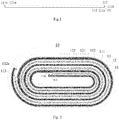
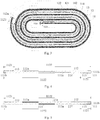
- wound electrode assembly 10 according to the first aspect of the embodiment of the present application will be described with reference to Figs. 2 to 5 .
- the wound electrode assembly 10 described in the first aspect of the embodiments of the present application is a bare electrode assembly, i.e., a structure that has not been infiltrated by an electrolyte.
- the wound electrode assembly 10 may only comprise a negative electrode plate 11, a positive electrode plate 12 and a separator 13.
- the positive electrode plate 12 comprises a positive electrode current collector 121 and positive active material layers 122 disposed on two opposite surfaces of the positive electrode current collector 121, and the positive active material layer 122 comprises a positive active material.
- the negative electrode plate 11 comprises a negative electrode current collector 111 and negative active material layers 112 disposed on two opposite surfaces 111a of the negative electrode current collector 111, and the negative active material layer 112 comprises a negative active material.
- the wound electrode assembly 10 is formed by winding a positive electrode plate 12, a negative electrode plate 11 and a separator 13, and the separator film 13 functions as an isolation between the positive electrode plate 12 and the negative electrode plate 11.
- Both the positive electrode plate 12 and the negative electrode plate 11 adopt a continuous coating structure.
- the structures of the continuously coated positive electrode plate 12 and the negative electrode plate 11 are similar.
- the negative electrode current collector 111 comprises two opposite end edges 111b along its own length, and both the negative active material layers 112 on the two surfaces 111a of the negative electrode current collector 111 extend from one end edge 111b of the negative electrode current collector 111 to the other end edge 111b.
- the positive electrode plate 12, the separator 13 and the negative electrode plate 11 are stacked, and the wound electrode assembly 10 is obtained after winding. Since both the innermost and outermost circles of the wound electrode assembly 10 are the negative electrode plate 11, it is inevitable that on the side of the innermost circle of the negative electrode plate 11 facing the center of the wound electrode assembly 10, the active material layer 112 has an active material layer 1121 in an unpaired region facing no positive electrode plate 12; and on the side of the outermost circle of the negative electrode plate 11 facing away from the center of the wound electrode assembly 10, the negative active material layer 112 has an active material layer 1121 in an unpaired region facing no positive electrode plate 12.
- the two negative active material layers 112 of the negative electrode plate 11 respectively comprise an active material layer 1121 in an unpaired region and the active material layers 1122 in a paired region distributed successively in the length direction of the negative electrode plate 11, and two active material layers 1121 in unpaired regions are arranged at both ends in the length direction of the negative electrode plate 11, that is to say, the two active material layers 1121 in the unpaired regions are arranged at the winding starting end and the winding ending end of the negative electrode plate 11.
- the "active material layer 1122 in the paired region” refers to the portion of the negative active material layer 112 excluding the active material layers 1121 in an unpaired region. It should also be noted that in order to ensure that the lithium ions released from the positive active material layer 122 during charging can be completely received by the negative active material layer 112 to avoid safety problems caused by the lithium evolution of the electrode assembly 10. Both the width direction and the length direction of the active material layer 1122 in the paired region are larger than those of the positive active material layer 112, so that the active material layer 1122 in the paired region has a certain elongation zone 112a (i.e., overhang) in the width direction and the length direction.
- elongation zone 112a i.e., overhang
- the elongation zone 112a is not directly opposite to the positive active material layer 122, in this context, the elongation zone 112a is a part of the active material layer 1122 in the paired region, and does not belong to the active material layers 1121 in the unpaired region.
- the active material layer 1121 in the unpaired region and the active material layer 1122 in the paired region may be the same or different.
- the active material layer 1121 in the unpaired region is same as the active material layer 1122 in the paired region, and the negative active material layer 112 can be prepared at one time, which is beneficial to improve production efficiency.
- a first metallic lithium layer 113 is disposed on the surface of one or both of the two active material layer 1121 in the unpaired region, so that either or both of the active material layers in an unpaired region form a first lithium pre-intercalation compound.
- the first metallic lithium layer 113 is disposed on the two lone pair region active material layers 1121, so that the first metallic lithium layer 113 is formed on the two active material layers 1121 in the unpaired region, so as to form a first lithium pre-intercalation compound on the active material layers 1121 in the unpaired region.
- the active material layer 1121 in the unpaired region having the first metallic lithium layer 113 of the negative electrode plate 11 may be immersed in the electrolyte, so that the first metallic lithium layer 113 will lithiate the negative active material of the active material layer 1121 in the unpaired region.
- the negative active material layer 1121 in the unpaired region forms a first lithium pre-intercalation compound, and then is assembled with the positive electrode 12 to obtain the wound electrode assembly 10 pre-intercalated with lithium, which can be further assembled to obtain a lithium-ion secondary battery.
- the negative electrode plate 11 It is also possible to assemble the negative electrode plate 11 with the first metallic lithium layer 113 and the positive electrode plate 12 to obtain the wound electrode assembly 10, and then the wound electrode assembly 10 is put into the casing 20 and the electrolyte is injected to obtain a lithium-ion secondary battery. Under the action of the electrolyte, the first metallic lithium layer 113 lithiates the negative active material of the active material layer 1121 in the unpaired region, and forms a first lithium pre-intercalation compound in the active material layer 1121 in the unpaired region. This method is simpler and easier to operate, and can achieve higher production efficiency.
- the first metallic lithium layer 113 is formed on one or both of the two active material layers 1121 in the unpaired region of the negative electrode plate 11 to form the first lithium pre-intercalation compound, thereby reducing the thermodynamic driving force of lithium intercalation or lithium migration on the active material layer 1121 in the unpaired region, effectively reducing or eliminating the conversion of the reversible active lithium from the positive electrode to the "dead lithium" in the active material layer 1121 in the unpaired region, so it can effectively reduce the capacity loss of lithium-ion secondary battery during cycle and storage and improve the cycle performance and storage performance of lithium-ion secondary batteries.
- the use of the wound electrode assembly 10 of the embodiment of the present application can enable the lithium-ion secondary battery to have higher cycle performance and storage performance, and it also has higher cycle performance and storage performance at high temperatures.
- the active material layer 1121 in the unpaired region is inevitably present in the wound electrode assembly 10.
- the first metallic lithium layer 113 is disposed on the surface of the active material layer 1121 in the unpaired region facing away from the negative electrode current collector 111. After the first lithium metal layer 113 lithiating the active material layer 1121 in the unpaired region, it can better ensure that the negative active material layer 112 and the negative electrode current collector 111 have a higher bonding force.
- the ratio of the weight of the first metallic lithium layer 113 per unit area to the weight of the active material layer 1121 in the unpaired region per unit area is from 0.5% to 10%, so as to ensure a suitable active lithium content of the active material layer 1121 in the unpaired region.
- the first-cycle lithium intercalation capacity C 1 of the active material layer 1121 in the unpaired region per unit area and the capacity C 2 of the first metallic lithium layer 113 per unit area satisfy C 1 /(C 2 ⁇ K 1 ) ⁇ 1.10, wherein K 1 is the utilization rate of metallic lithium in the metallic lithium layer 113.
- K 1 is the utilization rate of metallic lithium in the metallic lithium layer 113.
- the utilization rate of the metallic lithium in the first metallic lithium layer 113 is usually less than 100%. According to research experience, the utilization rate of metallic lithium in the first metallic lithium layer 113 is generally from 75% to 85%, such as 78%-82%, or 80%. Of course, by reducing the oxidation of metallic lithium in the first metallic lithium layer 113 and reducing the participation of lithium ions from the first metallic lithium layer 113 in forming the negative electrode, the utilization rate can be improved.
- a first lithium pre-intercalation compound is formed on the active material layer 1121 in the unpaired region, and the ratio of the active lithium content of the active material layer 1121 in the unpaired region to the gram capacity of the negative active material in the active material layer 1121 in the unpaired region is from 0.005 to 0.95.
- Keeping he ratio of the active lithium content of the active material layer 1121 in the unpaired region to the gram capacity of the negative active material in the active material layer 1121 in the unpaired region within the above range can reduce or eliminate the conversion of the reversible active lithium deinterlaced from the positive electrode to the "dead lithium" in the active material layer 1121 in the unpaired region, so it can effectively improve the cycle performance and storage performance of lithium-ion secondary batteries.
- it can also prevent lithium evolution or residual lithium from occurring in the active material layer 1121 in the unpaired region, thereby avoiding the gas generation problem caused by the precipitated lithium or lithium residual and ensuring that the lithium-ion secondary battery has high safety performance.
- the ratio of the active lithium content of the active material layer 1121 in the unpaired region to the gram capacity of the negative active material in the active material layer 1121 in the unpaired region is from 0.05 to 0.95. That is to say, after the lithium of the first metallic lithium layer 113 is used for the SEI film formation consumption on the surface of the active material layer 1121 in the unpaired region to compensate for the first charge and discharge efficiency, it still occupies a lot of vacancies in the active material layer 1121 in the unpaired region that can be intercalated with lithium. It can more effectively reduce or eliminate the conversion of reversible active lithium to the "dead lithium" of the active material layer 1121 in the unpaired region, and improve the cycle performance and storage performance of the lithium-ion secondary battery.
- the active lithium content of the active material layer 1121 in the unpaired region can be obtained by test method for a button half-cell.
- the negative electrode plate 11 comprising the active material layer 1121 in the unpaired area is cut out, and after the active material layer 1122 in the paired region on the opposite side is removed, a test sample is obtained; the test sample and a lithium metal sheet are combined to form a button half-cell, then the button half-cell is charged at 0.1C current and in voltage range of the button full-cell made of the corresponding active material of the full battery, to test the lithium deintercalation capacity of the active material layer 1121 in the unpaired region; then the above test sample is accurately weighed and deducted the weight of the negative electrode current collector 111 to calculate the mass of the negative active material according to the proportion of the negative active material in the coating slurry; the ratio of the lithium deintercalation capacity of the active material layer 1121 in the unpaired region of the tested button half-cell to the mass of the negative active material is the active lithium content of the
- first-cycle lithium intercalation capacity C1' of the active material layer 1122 per unit area of the paired region and first-cycle lithium deintercalation capacity C3 per unit area of the positive active material layer 122 of the electrode assembly satisfy C1'/C3 ⁇ 1.10.
- the negative active material of the active material layer 1122 in the paired region can provide enough vacancies to receive the intercalation of lithium ions extracted from the positive active material layer 122.
- a second metallic lithium layer 114 is further disposed on the surface of one or both of the active material layers 1122 in the two paired regions, so that a second lithium pre-intercalation compound 114 is formed on one or both of the active material layers 1122 in the two paired region.
- the second metallic lithium layer 114 lithiates the negative active material of the active material layer 1122 in the paired region, forming a second lithium pre-intercalation compound on the active material layer 1122 in the paired region, which can effectively compensate for the capacity loss caused by the participation of lithium ions released from the positive active material in the formation of negative electrode, improve the first-time efficiency, cycle performance and storage performance of the lithium-ion secondary battery, and ensure that the lithium-ion secondary battery has higher safety performance.
- the second metallic lithium layer 114 is disposed on the active material layer 1122 in the two paired regions, so that the second lithium pre-intercalation compound is formed in the active material layers 1122 in the two paired regions. It is also possible to provide the second metallic lithium layer 114 only on the active material layer 1122 in any paired region, so that the second lithium pre-intercalation compound is formed on the active material layer 1122 in the paired region.
- the second metallic lithium layer 114 is disposed on the surface of the active material layer 1122 in the paired region facing away from the negative electrode current collector 111. After the second lithium metal layer 114 lithiating the active material layer 1122 in the paired region, it can better ensure that the negative active material layer 112 and the negative current collector 111 have a high bonding force.
- the manner in which the second metallic lithium layer 114 lithiates the negative active material of the active material layer 1122 in the paired region can refer to the manner in which the first metallic lithium layer 113 lithiates the negative active material of the active material layer 1121 in the unpaired region.
- the first-cycle lithium intercalation capacity C 1 ' of the active material layer 1122 in the paired region per unit area, the first-cycle lithium deintercalation capacity C 3 of the positive active material layer 122 of the electrode assembly per unit area, and the capacity C 4 of the second metallic lithium layer 114 per unit area satisfy C 1 '/(C 3 +C 4 ⁇ K 2 ) ⁇ 1.10, where K 2 is the utilization rate of metallic lithium in the second metallic lithium layer 114.
- the negative active material of the active material layer 1122 in the paired region can provide enough vacancies to receive the intercalation of lithium ions from the second metallic lithium layer 114 and the positive active material layer 122.
- the utilization rate of the metallic lithium in the second metallic lithium layer 114 is usually less than 100%. According to research experience, the utilization rate of the metallic lithium in the second metallic lithium layer 114 is generally from 75% to 85%, such as 78%-82%, or 80%. Of course, by reducing the oxidation of metallic lithium in the second metallic lithium layer 114 and reducing the participation of lithium ions from the second metallic lithium layer 114 in forming the negative electrode, the utilization rate can be improved.
- the ratio of the weight of the second metallic lithium layer 114 per unit area to the weight of the active material layer 1122 in the paired region per unit area is from 0.5% to 10% to ensure a suitable active lithium content of the active material layer 1122 in the paired region.
- the thickness of the second metallic lithium layer 114 and the first metallic lithium layer 113 can be the same or be different.
- the weight of the second metallic lithium layer 114 per unit area and the weight of the first metallic lithium layer 113 per unit area can be the same or be different.
- the second metallic lithium layer 114 is the same as the first metallic lithium layer 113, thus a metallic lithium layer comprising the second metallic lithium layer 114 and the first metallic lithium layer 113 can be disposed on the surface of the negative active material layer 112 at one time, to make the operation simpler and thus to improve the production efficiency.
- the above-mentioned negative active material may be one or more of natural graphite, artificial graphite, soft carbon, hard carbon, mesophase carbon microspheres, nano carbon, carbon fiber, elemental silicon, silicon-oxygen compound, silicon-carbon composite, silicon alloy, elemental tin, tin-oxygen compound, tin-carbon composite, tin alloy, and lithium titanate.
- the above-mentioned silicon-oxygen compound refers to SiOx, in which x ⁇ 2, such as silicon monoxide, etc.
- the silicon-carbon composite can be one or more of carbon-coated silicon, carbon-coated silicon-oxygen compound, a mixture of silicon and carbon, a mixture of silicon-oxygen compound and carbon, and a mixture of silicon and silicon-oxygen compound and carbon, in which the carbon can be one or more of natural graphite, artificial graphite, soft carbon, hard carbon, mesophase carbon microspheres, nano carbon and carbon fiber.
- the tin-oxygen compounds can be, for example, one or more of SnO and SnO 2 .
- the tin-carbon composites can be one or more of carbon-coated tin, carbon-coated tin-oxygen compounds, a mixture of tin and carbon, a mixture of tin-oxygen compound and carbon, a mixture of tin and tin oxide compound and carbon, wherein the carbon can be one or more of natural graphite, artificial graphite, soft carbon, hard carbon, mesophase carbon microspheres, nano carbon and carbon fiber.
- the tin alloy can be, for example, one or more of Li-Sn alloy and Li-Sn-O alloy.
- the lithium titanate can be, for example, Li 4 Ti 5 O 12 with a spinel structure.
- the above-mentioned negative active material comprises a carbon-based negative active material, such as one or more of natural graphite, artificial graphite, soft carbon, hard carbon, mesophase carbon microspheres, nano carbon, and carbon fiber.
- a carbon-based negative active material such as one or more of natural graphite, artificial graphite, soft carbon, hard carbon, mesophase carbon microspheres, nano carbon, and carbon fiber.
- the above-mentioned negative active material comprises one or more of natural graphite and artificial graphite.
- the negative active material layer 112 may further comprise a conductive agent and a binder.
- the present application does not specifically limit the types of conductive agents and binders in the negative active material layer 112, and can be selected according to actual needs.
- the conductive agent may be one or more of graphite, superconducting carbon, acetylene black, carbon black, Ketjen black, carbon dots, carbon nanotubes, graphene, and carbon nanofibers
- the binder may be one or more of styrene rubber (SBR), polyvinylidene fluoride (PVDF), polytetrafluoroethylene (PTFE), polyvinyl butyral (PVB), water-dispersible acrylic resin, and carboxymethyl cellulose (CMC).
- the negative active material layer 112 may further optionally comprise a thickener, such as carboxymethyl cellulose (CMC).
- a thickener such as carboxymethyl cellulose (CMC).
- the negative electrode current collector 111 may use a metal foil or a porous metal plate, for example, a foil or a porous plate of metals such as copper, nickel, titanium, or iron, or their alloys, such as a copper foil.
- the above-mentioned positive active material may be selected from materials capable of intercalating and deintercalating lithium ions, for example, a lithium transition metal composite oxide, in which the transition metal can be one or more of Mn, Fe, Ni, Co, Cr, Ti, Zn, V, Al, Zr, Ce, and Mg.
- a lithium transition metal composite oxide in which the transition metal can be one or more of Mn, Fe, Ni, Co, Cr, Ti, Zn, V, Al, Zr, Ce, and Mg.
- the lithium transition metal composite oxide may be one or more of, for example, LiMn 2 O 4 , LiNiO 2 , LiCoO 2 , LiNi 1-y Co y O 2 (0 ⁇ y ⁇ 1), LiNi a Co b Al 1-a-b O 2 (0 ⁇ a ⁇ 1, 0 ⁇ b ⁇ 1, 0 ⁇ a+b ⁇ 1), LiNi m Co n Mn 1-m-n O 2 (0 ⁇ m ⁇ 1, 0 ⁇ n ⁇ 1, 0 ⁇ m+n ⁇ 1), LiMPO 4 (M can be one or more of Fe, Mn, and Co) and Li 3 V 2 (PO 4 ) 3 .
- the lithium transition metal composite oxide can also be doped with one or more of other transition metals, non-transition metals and non-metals.
- the positive active material layer 122 may further comprise a conductive agent and a binder.
- the present application does not specifically limit the types of conductive agents and binders in the positive active material layer 122, and can be selected according to actual needs.
- the conductive agent may be one or more of graphite, superconducting carbon, acetylene black, carbon black, Ketjen black, carbon dots, carbon nanotubes, graphene, and carbon nanofibers
- the binder may be one or more of styrenebutadiene rubber (SBR), water-dispersible acrylic resin, carboxymethyl cellulose (CMC), polyvinylidene fluoride (PVDF), polytetrafluoroethylene (PTFE), polyvinyl butyral (PVB), ethylene-vinyl acetate copolymer (EVA), vinylidene fluoride-tetrafluoroethylene-propylene terpolymer, vinylidene fluoride-hexafluoropropylene-t
- the positive electrode current collector 121 may be a metal foil or a porous metal plate, for example, a foil or a porous plate of metals such as aluminum, copper, nickel, titanium, or silver, or their alloys, such as an aluminum foil.
- any well-known porous separator having electrochemical stability and chemical stability can be selected, such as one or more of glass fiber, non-woven fabric, polyethylene, polypropylene and polyvinylidene fluoride.
- the separator can be a single-layer film or a multilayer composite film.
- the method includes the following steps: coating a positive electrode slurry on the two opposite surfaces of the positive electrode current collector 121, drying and cold pressing, to obtain the positive electrode plate 12; coating a negative electrode slurry on the two opposite surfaces 111a of the negative electrode current collector 111, drying and cold pressing, to obtain the negative active material layer 112, and then disposing the first metallic lithium layer 113 and the optional second metallic lithium layer 114 on the surface of the negative active material layer 112 facing away from the negative electrode current collector 111 to obtain the negative electrode plate 11; assembling the positive electrode plate 12, the separator 13 and the negative electrode plate 11 into a wound electrode assembly 10.
- a rolling method can be used to stably fix the first metallic lithium layer 113 and the optional second metallic lithium layer 114 on the surface of the negative active material layer 112 with the intermolecular force between the lithium metal and the negative active material.
- the raw materials of the first metallic lithium layer 113 and the optional second metallic lithium layer 114 can be selected from one or more of lithium powder, lithium ingot, and lithium sheet.
- a lithium-ion secondary battery provided by an embodiment of the present application comprises a wound electrode assembly 10, an electrolyte (not shown in the figure), and an outer casing 20 for encapsulating the wound electrode assembly 10 and the electrolyte.
- the negative electrode plate 11 of the wound electrode assembly 10 comprises a negative electrode current collector 111 and negative e active material layers 112 disposed on two opposite surfaces 111a of the negative electrode current collector 111.
- the two negative active material layers 112 respectively comprise active material layers 1121 in an unpaired region and active material layers 1122 in a paired region distributed successively in the length direction of the negative electrode plate, and the active material layers 1121 in the two unpaired regions are arranged at both ends in the length direction of the negative electrode plate, and one or both of the active material layers in the two unpaired region comprises a first lithium pre-intercalation compound.
- the wound electrode assembly 10 with the first metallic lithium layer 113 can be packed into the casing 20, and then an electrolyte can be injected. Under the action of the electrolyte, the first metallic lithium layer 113 lithiates the negative active material of the active material layer 1121 in the unpaired region, and forms a first lithium pre-intercalation compound on the active material layer 1121 in the unpaired region, thereby obtaining the lithium pre-intercalation wound electrode assembly 10.
- the wound electrode assembly 10 having the first metallic lithium layer 113 and the second metallic lithium layer 114 according to the first aspect of the embodiments of the present application can be packed into the casing 20, and the electrolyte solution can be injected.
- the first metallic lithium layer 113 lithiates the negative active material of the active material layer 1121 in the unpaired region, forming a first lithium pre-intercalation compound in the active material layer 1121 in the unpaired region
- the second metallic lithium layer 114 lithiates the negative active material of the active material layer 1122 in the paired region, forming the second lithium pre-intercalation compound in the active material layer 1122 in the paired region to obtain the lithium pre-intercalation wound electrode assembly 10.
- the first lithium pre-intercalation compound is formed in one or both of the active material layers 1121 in the two unpaired region of the negative electrode plate 11, which reduces the thermodynamic drive of lithium insertion or lithium migration of the active material layer 1121 in the unpaired region, effectively reducing or eliminating the conversion of the reversible active lithium from the positive electrode to the "dead lithium" in the active material layer 1121 in the unpaired region, so it can effectively reduce the capacity loss of lithium-ion secondary battery during cycle and storage and improve the cycle performance and storage performance of lithium-ion secondary batteries.
- the lithium-ion secondary battery of the present application has higher cycle performance and storage performance, and it also has higher cycle performance and storage performance at high temperatures.
- the ratio of the active lithium content of the active material layer 1121 in the unpaired region to the gram capacity of the negative active material in the active material layer 1121 in the unpaired region is from 0.005 to 0.95.
- the ratio of the active lithium content of the active material layer 1121 in the unpaired region to the gram capacity of the negative active material in the active material layer 1121 in the unpaired region is from 0.05 to 0.95.
- the electrolyte comprises a solvent and a lithium salt dissolved in the solvent, and the types of the solvent and the lithium salt are not specifically limited, and can be selected according to requirements.
- the above-mentioned solvent may be a non-aqueous organic solvent, such as one or more, preferably two or more of ethylene carbonate (EC), propylene carbonate (PC), ethyl methyl carbonate (EMC), diethyl carbonate (DEC), dimethyl carbonate (DMC), dipropyl carbonate (DPC), methyl propyl carbonate (MPC), ethyl propyl carbonate (EPC), methyl formate (MF), ethyl formate (Eft), methyl acetate (MA), ethyl acetate (EA), propyl acetate (PA), methyl propionate (MP), ethyl propionate (EP), propyl propionate (PP), methyl butyrate (MB), ethyl butyrate (EB), and propyl butyrate (BP).
- EC ethylene carbonate
- PC propylene carbonate
- EMC diethyl carbonate
- DMC diethyl carbonate
- the lithium salt may be one or more of LiPF 6 (lithium hexafluorophosphate), LiBF 4 (lithium tetrafluoroborate), LiClO 4 (lithium perchlorate), LiAsF 6 (lithium hexafluoroarsenate), LiFSI (lithium bisfluorosulfonimide), LiTFSI (lithium bistrifluoromethanesulfonimide), LiTFS (lithium trifluoromethanesulfonate), LiDFOB (lithium difluorooxalate borate), LiBOB (lithium dioxalate borate), LiPO 2 F 2 (lithium difluorophosphate), LiDFOP (lithium difluorooxalatophosphate) and LiTFOP (lithium tetrafluorooxalate phosphate), such as one or more of LiPF 6 (lithium hexafluorophosphate), LiBF 4 (lithium tetrafluoroborate), LiClO
- the electrolyte may also optionally comprise other additives, such as one or more of vinylene carbonate (VC), vinyl ethylene carbonate (VEC), fluoroethylene carbonate (FEC), difluoroethylene carbonate (DFEC), trifluoroproplylene carbonate (TFPC), succinonitrile (SN), adiponitrile (ADN), glutaronitrile (GLN), hexanetrinitrile (HTN), 1,3-propane sultone (1,3-PS), ethylene sulfate (DTD), methylene methanedisulfonate (MMDS), 1-propene-1,3-sultone (PST), 4-methylvinyl sulfate (PCS), 4-ethylvinyl sulfate (PES), 4-propylvinyl sulfate (PEGLST), propylene sulfate (TS), 1,4-butane sultone (1,4-BS), ethylene sulfite (DTO
- Lithium iron phosphate LiFePO 4 as a positive active material, acetylene black as a conductive agent and PVDF as a binder were dispersed at a weight ratio of 94:4:2 into a solvent NMP and mixed uniformly to obtain a positive electrode slurry; the positive electrode slurry was uniformly coated on the two surfaces of an aluminum foil as a positive electrode current collector, wherein the single-sided coating weight of the positive electrode slurry on one side was 0.280 g/1540.25 mm 2 , based on the weight without solvent. After drying and cold pressing, a positive electrode plate was obtained.
- the first lithium deintercalation capacity of LiFePO 4 was 160 mAh/g, and the gram capacity was 144 mAh/g.
- a first metallic lithium layer was respectively arranged by rolling to obtain the negative electrode plate.
- the first lithium intercalation capacity of artificial graphite was 365 mAh/g, and the gram capacity was 340 mAh/g; the weight of the first metallic lithium layer per unit area was 1.99 mg/1540.25 mm 2 , and the gram capacity of metallic lithium was 3861.3 mAh/g; in each negative active material layer, the ratio of the area of the active material layer in the paired region to the area of the active material layer in the unpaired region was 89.5:10.5.
- the positive electrode plate, the polyethylene porous separator and the negative electrode plate were arranged in sequence and wound into an electrode assembly. Then the electrode assembly was put into an outer casing, into which the electrolyte was then injected; after encapsulating the lithium-ion secondary battery was obtained.
- the weight of the first metallic lithium layer per unit area was 4.71 mg/1540.25 mm 2 .
- the weight of the first metallic lithium layer per unit area was 9.24 mg/1540.25 mm 2 .
- the weight of the first metallic lithium layer per unit area was 12.95 mg/1540.25 mm 2.
- the single-sided coating weight of the positive electrode slurry was 0.242 g/1540.25 mm 2 ; on the entire surface of the two negative active material layers facing away from the negative electrode current collector, the metallic lithium layer was formed by rolling, i.e. a first metallic lithium layer was disposed on the surface of the active material layers in the two unpaired regions, and a second metallic lithium layer was disposed on the surface of the active material layer in each of the two paired regions.
- the weight of the metallic lithium layer per unit area was 1.99 mg/1540.25 mm 2 .
- the single-sided coating weight of the positive electrode slurry was 0.230 g/1540.25 mm 2
- the single-sided coating weight of the negative electrode slurry was 0.162 g/1540.25 mm 2
- the weight of the metallic lithium layer per unit area was 5.18 mg /1540.25 mm 2 .
- LiNi 0.8 Co 0.1 Mn 0.1 as a positive active material, acetylene black as a conductive agent and PVDF as a binder were dispersed at a weight ratio of 95.5:2.5:2 into a solvent NMP and mixed uniformly to obtain a positive electrode slurry; the positive electrode slurry was uniformly coated on the two surfaces of an aluminum foil as a positive electrode current collector, wherein the single-sided coating weight of the positive electrode slurry on one side was 0.279 g/1540.25 mm 2 , based on the weight without solvent. After drying and cold pressing, a positive electrode plate was obtained.
- the first-cycle lithium deintercalation capacity of LiNi 0.8 Co 0.1 Mn 0.1 was 215 mAh/g, and the gram capacity was 190 mAh/g.
- Silicon-carbon composite (a mixture of artificial graphite and SiO, and the mass ratio of artificial graphite to SiO is 8: 2) as a negative active material, acetylene black as a conductive agent, SBR as a binder and CMC as a thickener were dispersed at a weight ratio of 94:2 :3.5:0.5 in a solvent deionized water and mixed uniformly to obtain a negative electrode slurry; the negative electrode slurry was uniformly coated on both surfaces of the copper foil as the negative electrode current collector, wherein the single-sided coating weight of the negative electrode slurry was 0.125 g/1540.25 mm 2 based on the weight without solvent; after drying and cold pressing, the negative active layer was obtained; on the entire surface of the two negative active material layers facing away from the negative electrode current collector, a metallic lithium layer was formed by rolling, i.e.
- the first metallic lithium layer was disposed on the surface of the active material layers in the two unpaired regions, and a second metallic lithium layer was disposed on the surface of the active material layer in each of the two paired regions; thus a negative electrode plate was obtained.
- the first-cycle lithium intercalation capacity of silicon-carbon composite was 709 mAh/g, and the gram capacity was 568 mAh/g; the weight of the first metallic lithium layer per unit area was 5.74 mg/1540.25 mm 2 , and the gram capacity of metallic lithium was 3861.3 mAh/g; in each negative active material layer, the ratio of the area of the active material layer in the paired region to the area of the active material layer in the unpaired region was 75.5:24.5.
- the preparation of the electrolyte and the lithium-ion secondary battery was the same as in Example 1.
- the first metallic lithium layer was not disposed on the surface of the active material layer in the unpaired region of the negative electrode plate, and the second metallic lithium layer was not disposed on the surface of the active material layer in the paired region.
- the first metallic lithium layer was not disposed on the surface of the active material layers in the two unpaired regions of the negative electrode plate, and the second metallic lithium layer was respectively disposed on the surface of the active material layer in the two paired regions.
- the first metallic lithium layer was not disposed on the surface of the active material layer in the two unpaired regions of the negative electrode plate, and the second metallic lithium layer was respectively disposed on the surface of the active material layer in the two paired regions.
- the first metallic lithium layer was not disposed on the surface of the active material layer in the two unpaired regions of the negative electrode plate, and the second metallic lithium layer was respectively disposed on the surface of the active material layer in the two paired regions.
- the negative electrode plate comprising the active material layer in the unpaired region was cut out, and the active material layer of the opposite region on the opposite side was removed to obtain a test sample.
- the test sample and the lithium metal sheet were combined to form a button half-cell, which was charged at the voltage range of the button -cell made of the corresponding active material of the full battery at a current of 0.1C to test the lithium deintercalation capacity of the active material layer in the unpaired area; then the above test sample was accurately weighed and deducted the weight of the negative electrode current collector to calculate the mass of the negative active material according to the proportion of the negative active material in the coating slurry; the ratio of the lithium deintercalation capacity of the active material layer in the unpaired region of the tested button half-cell to the mass of the negative active material was the active lithium content Q of the active material layer in the unpaired region.
- the lithium-ion secondary battery was charged to 3.65 V (for Example 7 and Comparative Example 4, charged to 4.2 V at a constant current) at a constant current of 1 C (i.e., the current value at which the theoretical capacity was completely discharged within 1 h), then charge at a constant voltage to a current of 0.05 C, then left aside for 5 minutes, and then discharged at a constant current of 1 C to 2.5 V (for Example 7 and Comparative Example 4, discharged at a constant current to 2.8 V).
- This procedure was a charge and discharge cycle, and the discharge capacity at this time was recorded as the discharge capacity at the first cycle of the lithium-ion secondary battery.
- the lithium-ion secondary battery was subjected to 1000 cycles of charge and discharge according to the above method, and the discharge capacity at the 1000 th cycle was recorded.
- the capacity retention rate % of a lithium-ion secondary battery after 1000 cycles of 1C / 1C at 60 ° C discharge capacity after the 1000 th cycle / discharge capacity after the 1 st cycle ⁇ 100 % .
- the lithium ion secondary battery was charged to 3.65 V (for Example 7 and Comparative Example 4, charged to 4.2 V at a constant current) at a constant current of 0.5 C (i.e., the current value at which the theoretical capacity was completely discharged within 2 h), then charged at a constant voltage to a current of 0.05 C, then left aside for 5 minutes, and then discharged at a constant current of 0.5 C to 2.5 V (for Example 7 and Comparative Example 4, discharged at a constant current to 2.8 V), then the discharge capacity at this time was recorded as the initial reversible capacity of the lithium-ion secondary battery; then the battery was fully charged at a constant current of 0.5 C, and the fully-charged lithium-ion secondary battery was stored at 60°C for 150 days.
- the lithium-ion secondary battery was took out, cooled naturally to 25°C, and discharged to 2.5 V (for Example 7 and Comparative Example 4, discharged to 2.8 V at a constant current) at a constant current of 0.5 C, and left aside for 5 minutes, then charged at a constant current of 0.5 C to 3.65 V (for Example 7 and Comparative Example 4, charged at a constant current to 4.2 V), then charged at a constant voltage to a current of 0.05 C, then left aside for 5 minutes, and then discharged at a constant current of 0.5 C to 2.5 V (for Example 7 and Comparative Example 4, discharged at a constant current to 2.8 V), the discharge capacity at this time was recorded as the reversible capacity of the lithium-ion secondary battery after high-temperature storage for 150 days.
- the capacity retention rate % of a lithium-ion secondary battery after high temperature storage at 60 ° C for 150 days reversible capacity after high temperature storage for 150 days / initial reversible capacity ⁇ 100 %
- Table 1 The weight of the first metallic lithium layer per unit area mg/1540.25mm 2 W % Q mAh/g Q/Q cpg C 1 /(C 2 ⁇ K 1 ) C.B.
- Q/Q cpg referred to the ratio of the active lithium content Q of the active material layer in the unpaired region to the gram capacity Q cpg of the negative active material in the active material layer of the unpaired region.
- Example 5 and Comparative Example 2 and Example 6 and Comparative Example 3 it can compensate for the consumption of lithium ions during the first charge and discharge and the subsequent cycle process, during the battery charge-discharge cycle, the lithium ions extracted from the positive electrode were received by the active material layer in the unpaired region, and lithium migration was formed due to the difference in lithium concentration between the active material layer in the unpaired region and the active material layer in the paired region of the lithium-inserted negative electrode.
- the lithium ions that migrated to the active material layer in the unpaired pair were used for SEI film formation on the surface of the active material layer in the unpaired region, or are permanently stored in the active material layer in the unpaired region, which can no longer participate in the deintercalation reaction between the positive and negative electrodes and became "dead lithium", causing capacity loss and deteriorating the cycle performance and storage performance of the lithium-ion secondary battery.
- the above-mentioned problems can be effectively improved by forming the first lithium pre-intercalation compound in the unpaired region, so that the cycle performance and storage performance of the lithium ion secondary battery were further improved.
- Example 7 and Comparative Example 4 were specific implementation in which the negative active material was a silicon-carbon composite material, belonging to the application of the method according to the present application in the lithiated electrode assembly. It was also confirmed that the presence of first lithium pre-intercalation compounds in the active material layer in the unpaired region had a significant improvement effect on the cycle performance and storage performance of lithium ion secondary batteries.
- the first lithium pre-intercalation compound was formed after the injection of electrolyte, which can reduce the thermodynamic drive of lithium insertion or lithium migration of the active material layer in the unpaired region, effectively reducing or eliminating the conversion of the reversible active lithium from the positive electrode to the "dead lithium" in the active material layer in the unpaired region, so that the lithium-ion secondary battery can simultaneously have both high storage performance and cycle performance, and it can also have both high storage performance and cycle performance at high temperatures. Therefore, this application provides a simple and efficient improvement idea and process for the design of long-life lithium-ion secondary batteries.
Landscapes
- Chemical & Material Sciences (AREA)
- Chemical Kinetics & Catalysis (AREA)
- Electrochemistry (AREA)
- General Chemical & Material Sciences (AREA)
- Engineering & Computer Science (AREA)
- Composite Materials (AREA)
- Manufacturing & Machinery (AREA)
- Materials Engineering (AREA)
- Inorganic Chemistry (AREA)
- Crystallography & Structural Chemistry (AREA)
- Battery Electrode And Active Subsutance (AREA)
- Secondary Cells (AREA)
Applications Claiming Priority (2)
| Application Number | Priority Date | Filing Date | Title |
|---|---|---|---|
| CN201811519433.2A CN111312987B (zh) | 2018-12-12 | 2018-12-12 | 卷绕式电芯、锂离子二次电池及负极极片 |
| PCT/CN2019/073980 WO2020118884A1 (fr) | 2018-12-12 | 2019-01-30 | Cellule de type enroulé, batterie secondaire au lithium-ion, et électrode plane négative |
Publications (3)
| Publication Number | Publication Date |
|---|---|
| EP3886210A1 true EP3886210A1 (fr) | 2021-09-29 |
| EP3886210A4 EP3886210A4 (fr) | 2022-01-12 |
| EP3886210B1 EP3886210B1 (fr) | 2023-06-21 |
Family
ID=71077111
Family Applications (1)
| Application Number | Title | Priority Date | Filing Date |
|---|---|---|---|
| EP19896730.9A Active EP3886210B1 (fr) | 2018-12-12 | 2019-01-30 | Cellule de type enroulé, batterie secondaire au lithium-ion, et électrode plane négative |
Country Status (5)
| Country | Link |
|---|---|
| US (1) | US11824167B2 (fr) |
| EP (1) | EP3886210B1 (fr) |
| CN (2) | CN111312987B (fr) |
| HU (1) | HUE062465T2 (fr) |
| WO (1) | WO2020118884A1 (fr) |
Cited By (1)
| Publication number | Priority date | Publication date | Assignee | Title |
|---|---|---|---|---|
| KR20230145333A (ko) * | 2022-04-08 | 2023-10-17 | 컨템포러리 엠퍼렉스 테크놀로지 씨오., 리미티드 | 전지 셀, 전지 및 전기 장치 |
Families Citing this family (10)
| Publication number | Priority date | Publication date | Assignee | Title |
|---|---|---|---|---|
| CN115413379B (zh) | 2021-03-26 | 2024-01-12 | 宁德时代新能源科技股份有限公司 | 电极组件、电池单体、电池及电极组件的制造方法和设备 |
| EP4089757B1 (fr) * | 2021-03-26 | 2024-03-13 | Contemporary Amperex Technology Co., Limited | Ensemble électrode, cellule de batterie, batterie et dispositif électrique |
| CN113097441B (zh) | 2021-03-31 | 2023-03-21 | 宁德新能源科技有限公司 | 电化学装置及电子装置 |
| CN113270568A (zh) * | 2021-05-27 | 2021-08-17 | 珠海冠宇电池股份有限公司 | 一种电芯和电池 |
| EP4510206A4 (fr) * | 2022-08-08 | 2025-07-23 | Contemporary Amperex Technology Co Ltd | Batterie secondaire, batterie et dispositif électrique |
| CN118431419A (zh) * | 2023-01-31 | 2024-08-02 | 比亚迪股份有限公司 | 锂离子电池负极片及其制备方法和包含其的锂离子电池 |
| JPWO2024247359A1 (fr) * | 2023-05-31 | 2024-12-05 | ||
| CN116705982A (zh) * | 2023-08-02 | 2023-09-05 | 深圳海辰储能控制技术有限公司 | 用于电池的极片及其制备方法、电池和用电设备 |
| CN117317383A (zh) * | 2023-09-25 | 2023-12-29 | 厦门海辰储能科技股份有限公司 | 电池及储能装置 |
| CN120072858A (zh) * | 2023-11-22 | 2025-05-30 | 广州汽车集团股份有限公司 | 负极极片及其制备方法和应用 |
Family Cites Families (21)
| Publication number | Priority date | Publication date | Assignee | Title |
|---|---|---|---|---|
| JPH01264176A (ja) * | 1988-04-14 | 1989-10-20 | Toshiba Battery Co Ltd | 円筒形リチウム電池 |
| JP3033563B2 (ja) * | 1998-09-03 | 2000-04-17 | 日本電気株式会社 | 非水電解液二次電池 |
| JP4944341B2 (ja) * | 2002-02-26 | 2012-05-30 | 日本電気株式会社 | リチウムイオン二次電池用負極の製造方法 |
| JP5084110B2 (ja) * | 2004-11-02 | 2012-11-28 | 三洋電機株式会社 | リチウム二次電池及びその製造方法 |
| JP2012114161A (ja) | 2010-11-22 | 2012-06-14 | Taiyo Yuden Co Ltd | 電気化学デバイス |
| JP2014225324A (ja) * | 2011-09-13 | 2014-12-04 | パナソニック株式会社 | 非水電解質二次電池 |
| CN102709591B (zh) * | 2012-05-24 | 2015-06-17 | 宁德新能源科技有限公司 | 一种锂离子二次电池 |
| CN104781979B (zh) | 2012-11-12 | 2017-03-08 | 丰田自动车株式会社 | 非水电解质二次电池 |
| JP2014165050A (ja) | 2013-02-26 | 2014-09-08 | Toyota Motor Corp | 非水電解質二次電池 |
| CN103378347A (zh) * | 2013-07-03 | 2013-10-30 | 东莞新能源科技有限公司 | 一种锂离子电池负极及其锂离子电池 |
| JP6061145B2 (ja) * | 2013-08-02 | 2017-01-18 | トヨタ自動車株式会社 | 二次電池 |
| KR20170030290A (ko) | 2015-09-09 | 2017-03-17 | 삼성에스디아이 주식회사 | 전극 조립체 및 이차 전지 |
| CN205355186U (zh) * | 2015-12-29 | 2016-06-29 | 宁德新能源科技有限公司 | 一种卷绕结构的电池 |
| CN205882096U (zh) * | 2016-06-06 | 2017-01-11 | 宁德新能源科技有限公司 | 卷绕式电芯 |
| CN106128791B (zh) * | 2016-06-29 | 2018-11-06 | 中航锂电(洛阳)有限公司 | 一种负极片、制备方法及采用该负极片的锂离子电容器 |
| CN206003898U (zh) * | 2016-09-22 | 2017-03-08 | 宁德新能源科技有限公司 | 一种卷绕式电芯 |
| CN206250284U (zh) * | 2016-12-02 | 2017-06-13 | 东莞新能源科技有限公司 | 一种阳极极片及其电芯 |
| JP6510573B2 (ja) * | 2017-02-10 | 2019-05-08 | 太陽誘電株式会社 | 蓄電素子 |
| CN107039633A (zh) * | 2017-03-24 | 2017-08-11 | 江苏乐能电池股份有限公司 | 一种高比能量锂离子电池复合负极极片及其锂离子电池 |
| CN107171028A (zh) * | 2017-07-07 | 2017-09-15 | 安普瑞斯(无锡)有限公司 | 一种卷绕式电芯及电池 |
| CN207572477U (zh) * | 2017-12-12 | 2018-07-03 | 宁德时代新能源科技股份有限公司 | 电极组件和二次电池 |
-
2018
- 2018-12-12 CN CN201811519433.2A patent/CN111312987B/zh active Active
- 2018-12-12 CN CN202110849220.1A patent/CN113571778B/zh active Active
-
2019
- 2019-01-30 HU HUE19896730A patent/HUE062465T2/hu unknown
- 2019-01-30 WO PCT/CN2019/073980 patent/WO2020118884A1/fr not_active Ceased
- 2019-01-30 EP EP19896730.9A patent/EP3886210B1/fr active Active
-
2021
- 2021-06-11 US US17/345,077 patent/US11824167B2/en active Active
Cited By (3)
| Publication number | Priority date | Publication date | Assignee | Title |
|---|---|---|---|---|
| KR20230145333A (ko) * | 2022-04-08 | 2023-10-17 | 컨템포러리 엠퍼렉스 테크놀로지 씨오., 리미티드 | 전지 셀, 전지 및 전기 장치 |
| EP4290605A4 (fr) * | 2022-04-08 | 2025-03-12 | Contemporary Amperex Technology (Hong Kong) Limited | Élément de batterie, batterie et appareil électrique |
| US12431501B2 (en) | 2022-04-08 | 2025-09-30 | Contemporary Amperex Technology (Hong Kong) Limited | Battery cell, battery and electric device |
Also Published As
| Publication number | Publication date |
|---|---|
| CN111312987B (zh) | 2021-08-17 |
| CN111312987A (zh) | 2020-06-19 |
| US20210305633A1 (en) | 2021-09-30 |
| EP3886210B1 (fr) | 2023-06-21 |
| US11824167B2 (en) | 2023-11-21 |
| HUE062465T2 (hu) | 2023-11-28 |
| WO2020118884A1 (fr) | 2020-06-18 |
| CN113571778B (zh) | 2023-08-18 |
| CN113571778A (zh) | 2021-10-29 |
Similar Documents
| Publication | Publication Date | Title |
|---|---|---|
| US11824167B2 (en) | Wound electrode assembly, lithium-ion secondary battery and negative electrode plate | |
| US12300814B2 (en) | Lithium ion secondary battery | |
| US11355742B2 (en) | Negative electrode plate and lithium-ion secondary battery | |
| EP3793005B1 (fr) | Anode pour batterie secondaire au lithium et procédé de fabrication de batterie secondaire au lithium | |
| CN111916706B (zh) | 锂离子二次电池、其制造方法、及包含其的电动交通工具、消费类电子产品和机械设备 | |
| EP4220754A1 (fr) | Plaque d'électrode négative en métal lithium, appareil électrochimique et dispositif électronique | |
| CN118472384A (zh) | 用于锂二次电池的电解液和包括其的锂二次电池 | |
| US11677074B2 (en) | Positive electrode plate, method for preparing the same and lithium-ion secondary battery | |
| US12444739B2 (en) | Positive electrode plate and lithium-ion secondary battery containing same | |
| CN112909318A (zh) | 锂离子二次电池及其制备方法与包含锂离子二次电池的电子产品和电动产品 | |
| US20240313215A1 (en) | Positive electrode, preparation method thereof, and lithium-ion secondary battery | |
| JP2024539299A (ja) | 電気化学装置およびそれを含む電子装置 | |
| CN117996215A (zh) | 电池及其制备方法、用电装置 |
Legal Events
| Date | Code | Title | Description |
|---|---|---|---|
| STAA | Information on the status of an ep patent application or granted ep patent |
Free format text: STATUS: THE INTERNATIONAL PUBLICATION HAS BEEN MADE |
|
| PUAI | Public reference made under article 153(3) epc to a published international application that has entered the european phase |
Free format text: ORIGINAL CODE: 0009012 |
|
| STAA | Information on the status of an ep patent application or granted ep patent |
Free format text: STATUS: REQUEST FOR EXAMINATION WAS MADE |
|
| 17P | Request for examination filed |
Effective date: 20210621 |
|
| AK | Designated contracting states |
Kind code of ref document: A1 Designated state(s): AL AT BE BG CH CY CZ DE DK EE ES FI FR GB GR HR HU IE IS IT LI LT LU LV MC MK MT NL NO PL PT RO RS SE SI SK SM TR |
|
| A4 | Supplementary search report drawn up and despatched |
Effective date: 20211209 |
|
| RIC1 | Information provided on ipc code assigned before grant |
Ipc: H01M 10/04 20060101ALI20211203BHEP Ipc: H01M 4/36 20060101ALI20211203BHEP Ipc: H01M 4/13 20100101AFI20211203BHEP |
|
| DAV | Request for validation of the european patent (deleted) | ||
| DAX | Request for extension of the european patent (deleted) | ||
| STAA | Information on the status of an ep patent application or granted ep patent |
Free format text: STATUS: EXAMINATION IS IN PROGRESS |
|
| 17Q | First examination report despatched |
Effective date: 20221028 |
|
| GRAP | Despatch of communication of intention to grant a patent |
Free format text: ORIGINAL CODE: EPIDOSNIGR1 |
|
| STAA | Information on the status of an ep patent application or granted ep patent |
Free format text: STATUS: GRANT OF PATENT IS INTENDED |
|
| RIC1 | Information provided on ipc code assigned before grant |
Ipc: H01M 4/02 20060101ALN20230320BHEP Ipc: H01M 10/0587 20100101ALI20230320BHEP Ipc: H01M 10/0525 20100101ALI20230320BHEP Ipc: H01M 4/587 20100101ALI20230320BHEP Ipc: H01M 4/58 20100101ALI20230320BHEP Ipc: H01M 4/38 20060101ALI20230320BHEP Ipc: H01M 10/04 20060101ALI20230320BHEP Ipc: H01M 4/36 20060101ALI20230320BHEP Ipc: H01M 4/13 20100101AFI20230320BHEP |
|
| INTG | Intention to grant announced |
Effective date: 20230404 |
|
| GRAS | Grant fee paid |
Free format text: ORIGINAL CODE: EPIDOSNIGR3 |
|
| GRAA | (expected) grant |
Free format text: ORIGINAL CODE: 0009210 |
|
| STAA | Information on the status of an ep patent application or granted ep patent |
Free format text: STATUS: THE PATENT HAS BEEN GRANTED |
|
| RAP3 | Party data changed (applicant data changed or rights of an application transferred) |
Owner name: CONTEMPORARY AMPEREX TECHNOLOGY CO., LIMITED |
|
| AK | Designated contracting states |
Kind code of ref document: B1 Designated state(s): AL AT BE BG CH CY CZ DE DK EE ES FI FR GB GR HR HU IE IS IT LI LT LU LV MC MK MT NL NO PL PT RO RS SE SI SK SM TR |
|
| P01 | Opt-out of the competence of the unified patent court (upc) registered |
Effective date: 20230516 |
|
| REG | Reference to a national code |
Ref country code: CH Ref legal event code: EP |
|
| REG | Reference to a national code |
Ref country code: DE Ref legal event code: R096 Ref document number: 602019031514 Country of ref document: DE |
|
| REG | Reference to a national code |
Ref country code: AT Ref legal event code: REF Ref document number: 1581547 Country of ref document: AT Kind code of ref document: T Effective date: 20230715 |
|
| REG | Reference to a national code |
Ref country code: IE Ref legal event code: FG4D |
|
| REG | Reference to a national code |
Ref country code: LT Ref legal event code: MG9D |
|
| REG | Reference to a national code |
Ref country code: NL Ref legal event code: MP Effective date: 20230621 |
|
| PG25 | Lapsed in a contracting state [announced via postgrant information from national office to epo] |
Ref country code: SE Free format text: LAPSE BECAUSE OF FAILURE TO SUBMIT A TRANSLATION OF THE DESCRIPTION OR TO PAY THE FEE WITHIN THE PRESCRIBED TIME-LIMIT Effective date: 20230621 Ref country code: NO Free format text: LAPSE BECAUSE OF FAILURE TO SUBMIT A TRANSLATION OF THE DESCRIPTION OR TO PAY THE FEE WITHIN THE PRESCRIBED TIME-LIMIT Effective date: 20230921 |
|
| REG | Reference to a national code |
Ref country code: AT Ref legal event code: MK05 Ref document number: 1581547 Country of ref document: AT Kind code of ref document: T Effective date: 20230621 |
|
| REG | Reference to a national code |
Ref country code: HU Ref legal event code: AG4A Ref document number: E062465 Country of ref document: HU |
|
| PG25 | Lapsed in a contracting state [announced via postgrant information from national office to epo] |
Ref country code: RS Free format text: LAPSE BECAUSE OF FAILURE TO SUBMIT A TRANSLATION OF THE DESCRIPTION OR TO PAY THE FEE WITHIN THE PRESCRIBED TIME-LIMIT Effective date: 20230621 Ref country code: NL Free format text: LAPSE BECAUSE OF FAILURE TO SUBMIT A TRANSLATION OF THE DESCRIPTION OR TO PAY THE FEE WITHIN THE PRESCRIBED TIME-LIMIT Effective date: 20230621 Ref country code: LV Free format text: LAPSE BECAUSE OF FAILURE TO SUBMIT A TRANSLATION OF THE DESCRIPTION OR TO PAY THE FEE WITHIN THE PRESCRIBED TIME-LIMIT Effective date: 20230621 Ref country code: LT Free format text: LAPSE BECAUSE OF FAILURE TO SUBMIT A TRANSLATION OF THE DESCRIPTION OR TO PAY THE FEE WITHIN THE PRESCRIBED TIME-LIMIT Effective date: 20230621 Ref country code: HR Free format text: LAPSE BECAUSE OF FAILURE TO SUBMIT A TRANSLATION OF THE DESCRIPTION OR TO PAY THE FEE WITHIN THE PRESCRIBED TIME-LIMIT Effective date: 20230621 Ref country code: GR Free format text: LAPSE BECAUSE OF FAILURE TO SUBMIT A TRANSLATION OF THE DESCRIPTION OR TO PAY THE FEE WITHIN THE PRESCRIBED TIME-LIMIT Effective date: 20230922 |
|
| PG25 | Lapsed in a contracting state [announced via postgrant information from national office to epo] |
Ref country code: FI Free format text: LAPSE BECAUSE OF FAILURE TO SUBMIT A TRANSLATION OF THE DESCRIPTION OR TO PAY THE FEE WITHIN THE PRESCRIBED TIME-LIMIT Effective date: 20230621 |
|
| PG25 | Lapsed in a contracting state [announced via postgrant information from national office to epo] |
Ref country code: SK Free format text: LAPSE BECAUSE OF FAILURE TO SUBMIT A TRANSLATION OF THE DESCRIPTION OR TO PAY THE FEE WITHIN THE PRESCRIBED TIME-LIMIT Effective date: 20230621 |
|
| PG25 | Lapsed in a contracting state [announced via postgrant information from national office to epo] |
Ref country code: ES Free format text: LAPSE BECAUSE OF FAILURE TO SUBMIT A TRANSLATION OF THE DESCRIPTION OR TO PAY THE FEE WITHIN THE PRESCRIBED TIME-LIMIT Effective date: 20230621 |
|
| PG25 | Lapsed in a contracting state [announced via postgrant information from national office to epo] |
Ref country code: IS Free format text: LAPSE BECAUSE OF FAILURE TO SUBMIT A TRANSLATION OF THE DESCRIPTION OR TO PAY THE FEE WITHIN THE PRESCRIBED TIME-LIMIT Effective date: 20231021 |
|
| PG25 | Lapsed in a contracting state [announced via postgrant information from national office to epo] |
Ref country code: SM Free format text: LAPSE BECAUSE OF FAILURE TO SUBMIT A TRANSLATION OF THE DESCRIPTION OR TO PAY THE FEE WITHIN THE PRESCRIBED TIME-LIMIT Effective date: 20230621 Ref country code: SK Free format text: LAPSE BECAUSE OF FAILURE TO SUBMIT A TRANSLATION OF THE DESCRIPTION OR TO PAY THE FEE WITHIN THE PRESCRIBED TIME-LIMIT Effective date: 20230621 Ref country code: RO Free format text: LAPSE BECAUSE OF FAILURE TO SUBMIT A TRANSLATION OF THE DESCRIPTION OR TO PAY THE FEE WITHIN THE PRESCRIBED TIME-LIMIT Effective date: 20230621 Ref country code: PT Free format text: LAPSE BECAUSE OF FAILURE TO SUBMIT A TRANSLATION OF THE DESCRIPTION OR TO PAY THE FEE WITHIN THE PRESCRIBED TIME-LIMIT Effective date: 20231023 Ref country code: IS Free format text: LAPSE BECAUSE OF FAILURE TO SUBMIT A TRANSLATION OF THE DESCRIPTION OR TO PAY THE FEE WITHIN THE PRESCRIBED TIME-LIMIT Effective date: 20231021 Ref country code: ES Free format text: LAPSE BECAUSE OF FAILURE TO SUBMIT A TRANSLATION OF THE DESCRIPTION OR TO PAY THE FEE WITHIN THE PRESCRIBED TIME-LIMIT Effective date: 20230621 Ref country code: EE Free format text: LAPSE BECAUSE OF FAILURE TO SUBMIT A TRANSLATION OF THE DESCRIPTION OR TO PAY THE FEE WITHIN THE PRESCRIBED TIME-LIMIT Effective date: 20230621 Ref country code: CZ Free format text: LAPSE BECAUSE OF FAILURE TO SUBMIT A TRANSLATION OF THE DESCRIPTION OR TO PAY THE FEE WITHIN THE PRESCRIBED TIME-LIMIT Effective date: 20230621 Ref country code: AT Free format text: LAPSE BECAUSE OF FAILURE TO SUBMIT A TRANSLATION OF THE DESCRIPTION OR TO PAY THE FEE WITHIN THE PRESCRIBED TIME-LIMIT Effective date: 20230621 |
|
| PG25 | Lapsed in a contracting state [announced via postgrant information from national office to epo] |
Ref country code: PL Free format text: LAPSE BECAUSE OF FAILURE TO SUBMIT A TRANSLATION OF THE DESCRIPTION OR TO PAY THE FEE WITHIN THE PRESCRIBED TIME-LIMIT Effective date: 20230621 |
|
| REG | Reference to a national code |
Ref country code: DE Ref legal event code: R097 Ref document number: 602019031514 Country of ref document: DE |
|
| PLBE | No opposition filed within time limit |
Free format text: ORIGINAL CODE: 0009261 |
|
| STAA | Information on the status of an ep patent application or granted ep patent |
Free format text: STATUS: NO OPPOSITION FILED WITHIN TIME LIMIT |
|
| PG25 | Lapsed in a contracting state [announced via postgrant information from national office to epo] |
Ref country code: DK Free format text: LAPSE BECAUSE OF FAILURE TO SUBMIT A TRANSLATION OF THE DESCRIPTION OR TO PAY THE FEE WITHIN THE PRESCRIBED TIME-LIMIT Effective date: 20230621 |
|
| PG25 | Lapsed in a contracting state [announced via postgrant information from national office to epo] |
Ref country code: SI Free format text: LAPSE BECAUSE OF FAILURE TO SUBMIT A TRANSLATION OF THE DESCRIPTION OR TO PAY THE FEE WITHIN THE PRESCRIBED TIME-LIMIT Effective date: 20230621 |
|
| 26N | No opposition filed |
Effective date: 20240322 |
|
| PG25 | Lapsed in a contracting state [announced via postgrant information from national office to epo] |
Ref country code: SI Free format text: LAPSE BECAUSE OF FAILURE TO SUBMIT A TRANSLATION OF THE DESCRIPTION OR TO PAY THE FEE WITHIN THE PRESCRIBED TIME-LIMIT Effective date: 20230621 Ref country code: IT Free format text: LAPSE BECAUSE OF FAILURE TO SUBMIT A TRANSLATION OF THE DESCRIPTION OR TO PAY THE FEE WITHIN THE PRESCRIBED TIME-LIMIT Effective date: 20230621 |
|
| REG | Reference to a national code |
Ref country code: DE Ref legal event code: R081 Ref document number: 602019031514 Country of ref document: DE Owner name: CONTEMPORARY AMPEREX TECHNOLOGY (HONG KONG) LI, HK Free format text: FORMER OWNER: CONTEMPORARY AMPEREX TECHNOLOGY CO., LIMITED, NINGDE CITY, FUJIAN, CN |
|
| PG25 | Lapsed in a contracting state [announced via postgrant information from national office to epo] |
Ref country code: MC Free format text: LAPSE BECAUSE OF FAILURE TO SUBMIT A TRANSLATION OF THE DESCRIPTION OR TO PAY THE FEE WITHIN THE PRESCRIBED TIME-LIMIT Effective date: 20230621 |
|
| PG25 | Lapsed in a contracting state [announced via postgrant information from national office to epo] |
Ref country code: MC Free format text: LAPSE BECAUSE OF FAILURE TO SUBMIT A TRANSLATION OF THE DESCRIPTION OR TO PAY THE FEE WITHIN THE PRESCRIBED TIME-LIMIT Effective date: 20230621 |
|
| REG | Reference to a national code |
Ref country code: CH Ref legal event code: PL |
|
| PG25 | Lapsed in a contracting state [announced via postgrant information from national office to epo] |
Ref country code: LU Free format text: LAPSE BECAUSE OF NON-PAYMENT OF DUE FEES Effective date: 20240130 |
|
| REG | Reference to a national code |
Ref country code: GB Ref legal event code: 732E Free format text: REGISTERED BETWEEN 20240829 AND 20240904 |
|
| REG | Reference to a national code |
Ref country code: HU Ref legal event code: GB9C Owner name: CONTEMPORARY AMPEREX TECHNOLOGY (HONG KONG) LIMITED, HK Free format text: FORMER OWNER(S): CONTEMPORARY AMPEREX TECHNOLOGY CO., LIMITED, CN Ref country code: HU Ref legal event code: FH1C Free format text: FORMER REPRESENTATIVE(S): SBGK SZABADALMI UEGYVIVOEI IRODA, HU Representative=s name: DANUBIA SZABADALMI ES JOGI IRODA KFT., HU |
|
| PG25 | Lapsed in a contracting state [announced via postgrant information from national office to epo] |
Ref country code: LU Free format text: LAPSE BECAUSE OF NON-PAYMENT OF DUE FEES Effective date: 20240130 |
|
| PG25 | Lapsed in a contracting state [announced via postgrant information from national office to epo] |
Ref country code: BE Free format text: LAPSE BECAUSE OF NON-PAYMENT OF DUE FEES Effective date: 20240131 |
|
| PG25 | Lapsed in a contracting state [announced via postgrant information from national office to epo] |
Ref country code: CH Free format text: LAPSE BECAUSE OF NON-PAYMENT OF DUE FEES Effective date: 20240131 |
|
| PG25 | Lapsed in a contracting state [announced via postgrant information from national office to epo] |
Ref country code: CH Free format text: LAPSE BECAUSE OF NON-PAYMENT OF DUE FEES Effective date: 20240131 Ref country code: BE Free format text: LAPSE BECAUSE OF NON-PAYMENT OF DUE FEES Effective date: 20240131 |
|
| REG | Reference to a national code |
Ref country code: BE Ref legal event code: MM Effective date: 20240131 |
|
| PG25 | Lapsed in a contracting state [announced via postgrant information from national office to epo] |
Ref country code: BG Free format text: LAPSE BECAUSE OF FAILURE TO SUBMIT A TRANSLATION OF THE DESCRIPTION OR TO PAY THE FEE WITHIN THE PRESCRIBED TIME-LIMIT Effective date: 20230621 |
|
| PG25 | Lapsed in a contracting state [announced via postgrant information from national office to epo] |
Ref country code: BG Free format text: LAPSE BECAUSE OF FAILURE TO SUBMIT A TRANSLATION OF THE DESCRIPTION OR TO PAY THE FEE WITHIN THE PRESCRIBED TIME-LIMIT Effective date: 20230621 |
|
| PG25 | Lapsed in a contracting state [announced via postgrant information from national office to epo] |
Ref country code: IE Free format text: LAPSE BECAUSE OF NON-PAYMENT OF DUE FEES Effective date: 20240130 |
|
| PG25 | Lapsed in a contracting state [announced via postgrant information from national office to epo] |
Ref country code: IE Free format text: LAPSE BECAUSE OF NON-PAYMENT OF DUE FEES Effective date: 20240130 |
|
| PG25 | Lapsed in a contracting state [announced via postgrant information from national office to epo] |
Ref country code: CY Free format text: LAPSE BECAUSE OF FAILURE TO SUBMIT A TRANSLATION OF THE DESCRIPTION OR TO PAY THE FEE WITHIN THE PRESCRIBED TIME-LIMIT; INVALID AB INITIO Effective date: 20190130 |
|
| PG25 | Lapsed in a contracting state [announced via postgrant information from national office to epo] |
Ref country code: TR Free format text: LAPSE BECAUSE OF FAILURE TO SUBMIT A TRANSLATION OF THE DESCRIPTION OR TO PAY THE FEE WITHIN THE PRESCRIBED TIME-LIMIT Effective date: 20230621 |
|
| PGFP | Annual fee paid to national office [announced via postgrant information from national office to epo] |
Ref country code: GB Payment date: 20251211 Year of fee payment: 8 |
|
| PGFP | Annual fee paid to national office [announced via postgrant information from national office to epo] |
Ref country code: FR Payment date: 20251128 Year of fee payment: 8 |
|
| PGFP | Annual fee paid to national office [announced via postgrant information from national office to epo] |
Ref country code: HU Payment date: 20260112 Year of fee payment: 8 |
|
| PGFP | Annual fee paid to national office [announced via postgrant information from national office to epo] |
Ref country code: DE Payment date: 20251203 Year of fee payment: 8 |