EP3889090A1 - Abgeleitete aufzugskabinenzuordnungen basierend auf der nähe potenzieller fahrgäste - Google Patents
Abgeleitete aufzugskabinenzuordnungen basierend auf der nähe potenzieller fahrgäste Download PDFInfo
- Publication number
- EP3889090A1 EP3889090A1 EP21173920.6A EP21173920A EP3889090A1 EP 3889090 A1 EP3889090 A1 EP 3889090A1 EP 21173920 A EP21173920 A EP 21173920A EP 3889090 A1 EP3889090 A1 EP 3889090A1
- Authority
- EP
- European Patent Office
- Prior art keywords
- passenger
- individual
- criterion
- proximity
- intended destination
- Prior art date
- Legal status (The legal status is an assumption and is not a legal conclusion. Google has not performed a legal analysis and makes no representation as to the accuracy of the status listed.)
- Granted
Links
Images
Classifications
-
- B—PERFORMING OPERATIONS; TRANSPORTING
- B66—HOISTING; LIFTING; HAULING
- B66B—ELEVATORS; ESCALATORS OR MOVING WALKWAYS
- B66B1/00—Control systems of elevators in general
- B66B1/24—Control systems with regulation, i.e. with retroactive action, for influencing travelling speed, acceleration, or deceleration
- B66B1/2408—Control systems with regulation, i.e. with retroactive action, for influencing travelling speed, acceleration, or deceleration where the allocation of a call to an elevator car is of importance, i.e. by means of a supervisory or group controller
-
- B—PERFORMING OPERATIONS; TRANSPORTING
- B66—HOISTING; LIFTING; HAULING
- B66B—ELEVATORS; ESCALATORS OR MOVING WALKWAYS
- B66B1/00—Control systems of elevators in general
- B66B1/34—Details, e.g. call counting devices, data transmission from car to control system, devices giving information to the control system
- B66B1/46—Adaptations of switches or switchgear
- B66B1/468—Call registering systems
-
- B—PERFORMING OPERATIONS; TRANSPORTING
- B66—HOISTING; LIFTING; HAULING
- B66B—ELEVATORS; ESCALATORS OR MOVING WALKWAYS
- B66B1/00—Control systems of elevators in general
- B66B1/02—Control systems without regulation, i.e. without retroactive action
- B66B1/06—Control systems without regulation, i.e. without retroactive action electric
-
- B—PERFORMING OPERATIONS; TRANSPORTING
- B66—HOISTING; LIFTING; HAULING
- B66B—ELEVATORS; ESCALATORS OR MOVING WALKWAYS
- B66B1/00—Control systems of elevators in general
- B66B1/34—Details, e.g. call counting devices, data transmission from car to control system, devices giving information to the control system
- B66B1/3415—Control system configuration and the data transmission or communication within the control system
- B66B1/3423—Control system configuration, i.e. lay-out
-
- B—PERFORMING OPERATIONS; TRANSPORTING
- B66—HOISTING; LIFTING; HAULING
- B66B—ELEVATORS; ESCALATORS OR MOVING WALKWAYS
- B66B1/00—Control systems of elevators in general
- B66B1/34—Details, e.g. call counting devices, data transmission from car to control system, devices giving information to the control system
- B66B1/3415—Control system configuration and the data transmission or communication within the control system
- B66B1/3446—Data transmission or communication within the control system
-
- B—PERFORMING OPERATIONS; TRANSPORTING
- B66—HOISTING; LIFTING; HAULING
- B66B—ELEVATORS; ESCALATORS OR MOVING WALKWAYS
- B66B5/00—Applications of checking, fault-correcting, or safety devices in elevators
- B66B5/0006—Monitoring devices or performance analysers
- B66B5/0012—Devices monitoring the users of the elevator system
-
- B—PERFORMING OPERATIONS; TRANSPORTING
- B66—HOISTING; LIFTING; HAULING
- B66B—ELEVATORS; ESCALATORS OR MOVING WALKWAYS
- B66B1/00—Control systems of elevators in general
- B66B1/34—Details, e.g. call counting devices, data transmission from car to control system, devices giving information to the control system
- B66B1/3407—Setting or modification of parameters of the control system
-
- B—PERFORMING OPERATIONS; TRANSPORTING
- B66—HOISTING; LIFTING; HAULING
- B66B—ELEVATORS; ESCALATORS OR MOVING WALKWAYS
- B66B1/00—Control systems of elevators in general
- B66B1/34—Details, e.g. call counting devices, data transmission from car to control system, devices giving information to the control system
- B66B1/3415—Control system configuration and the data transmission or communication within the control system
- B66B1/3446—Data transmission or communication within the control system
- B66B1/3461—Data transmission or communication within the control system between the elevator control system and remote or mobile stations
-
- B—PERFORMING OPERATIONS; TRANSPORTING
- B66—HOISTING; LIFTING; HAULING
- B66B—ELEVATORS; ESCALATORS OR MOVING WALKWAYS
- B66B2201/00—Aspects of control systems of elevators
- B66B2201/20—Details of the evaluation method for the allocation of a call to an elevator car
-
- B—PERFORMING OPERATIONS; TRANSPORTING
- B66—HOISTING; LIFTING; HAULING
- B66B—ELEVATORS; ESCALATORS OR MOVING WALKWAYS
- B66B2201/00—Aspects of control systems of elevators
- B66B2201/20—Details of the evaluation method for the allocation of a call to an elevator car
- B66B2201/223—Taking into account the separation of passengers or groups
-
- B—PERFORMING OPERATIONS; TRANSPORTING
- B66—HOISTING; LIFTING; HAULING
- B66B—ELEVATORS; ESCALATORS OR MOVING WALKWAYS
- B66B2201/00—Aspects of control systems of elevators
- B66B2201/40—Details of the change of control mode
- B66B2201/46—Switches or switchgear
- B66B2201/4607—Call registering systems
- B66B2201/4615—Wherein the destination is registered before boarding
-
- B—PERFORMING OPERATIONS; TRANSPORTING
- B66—HOISTING; LIFTING; HAULING
- B66B—ELEVATORS; ESCALATORS OR MOVING WALKWAYS
- B66B2201/00—Aspects of control systems of elevators
- B66B2201/40—Details of the change of control mode
- B66B2201/46—Switches or switchgear
- B66B2201/4607—Call registering systems
- B66B2201/4661—Call registering systems for priority users
- B66B2201/4669—Call registering systems for priority users using passenger condition detectors
Definitions
- Elevator systems have proven useful for carrying passengers between different levels in a building. For many years an individual desiring elevator service would indicate an intended direction of travel from a particular floor by pressing a hall call button. In response to such a call the elevator system controller would determine whether the passenger intended to travel up or down from the boarding floor and direct a car to that floor, illuminate a direction light near the entrance to the car, and open the door so the passenger could board. Once in the elevator car the passenger is able to indicate an intended destination floor through a car operating panel, which typically includes a set of buttons corresponding to the potential destination floors.
- elevator dispatch controller determines which elevator car will most efficiently service each such request and assigns an elevator car for each passenger.
- the car assignment process usually includes considering whether sufficient room is available in a candidate car based on the number of passengers assigned to that car. Once a suitable car is identified, there are various known techniques to notify the passenger which car has been assigned to travel to the intended destination.
- An illustrative example embodiment of an elevator system includes a destination entry device configured to allow a passenger to indicate an intended destination prior to entering an elevator car and at least one detector configured to detect a proximity between the passenger and at least one other individual that has not indicated an intended destination.
- a controller is configured to determine whether the detected proximity between the passenger and the at least one other individual satisfies at least one criterion indicating that the at least one other individual likely is associated with the passenger, will board an elevator car with the passenger, and will travel to the intended destination with the passenger.
- the controller is configured to assign an elevator car to carry the passenger and the at least one other individual to the intended destination when the detected proximity satisfies the at least one criterion.
- the detected proximity includes an indication of a distance between the passenger and the at least one other individual, the at least one criterion comprises a distance threshold, and the at least one criterion is satisfied when the indication of the distance is below the distance threshold.
- the detected proximity satisfies the at least one criterion
- the detector is configured to detect a second proximity between at least one second individual and either of the passenger or the at least one other individual, the at least one second individual has not indicated an intended destination through the destination entry device
- the controller is configured to determine whether the second proximity satisfies the at least one criterion indicating that the at least one second individual is likely associated with the passenger and will board the elevator car with the passenger and travel to the intended destination with the passenger
- the controller is configured to assign the elevator car to carry the at least one second individual with the passenger and the at least one other individual to the intended destination.
- the controller is configured to determine a duration of the detected proximity, the at least one criterion comprises a time threshold, and the at least one criterion is satisfied when the duration exceeds the time threshold.
- the detector is configured to provide an indication of a first zone in which the passenger is located, the detector is configured to provide an indication of a second zone in which the at least one other individual is located, and the controller is configured to determine whether a relationship between the first zone and the second zone satisfies the at least one criterion.
- the at least one criterion includes the first zone and the second zone being the same or the first zone being within a threshold distance of the second zone.
- the detector is configured to provide an indication of respective positions of the passenger and the at least one other individual relative to at least one reference location and the detected proximity is based on a distance between the respective positions.
- the detected proximity includes an indication of respective movement of the passenger and the at least one other individual and the at least one criterion is satisfied when the respective movements correspond to the passenger and the at least one other individual moving together toward or near a landing of the elevator system.
- the detector comprises a turnstile through which individuals must pass before approaching an elevator car of the elevator system
- the detected proximity includes an indication of respective turnstiles through which the passenger and the at least one other individual passed
- the detected proximity includes an indication of respective times when the passenger and the at least one other individual passed through the respective turnstiles
- the at least one criterion is satisfied when the respective turnstiles are within a threshold distance of each other and the respective times are within a threshold time of each other.
- the controller is configured to determine whether the passenger and the at least one other individual have previously used the elevator system to travel together to the intended destination, and determine whether the at least one criterion is satisfied based on whether the passenger and the at least one other individual have previously used the elevator system to travel together to the intended destination.
- An illustrative example method of managing elevator car assignments in response to service requests that indicate an intended destination of a passenger outside of an elevator car includes receiving a service request from a passenger outside of an elevator car, the service request indicating an intended destination of the passenger; detecting a proximity between the passenger and at least one other individual that has not indicated an intended destination; determining whether the detected proximity between the passenger and the at least one other individual satisfies at least one criterion indicating that the at least one other individual is likely associated with the passenger and will board an elevator car with the passenger and travel to the intended destination with the passenger; and assigning an elevator car to carry the passenger and the at least one other individual to the intended destination when the at least one criterion is satisfied.
- detecting the proximity includes providing an indication of a distance between the passenger and the at least one other individual; the at least one criterion comprises a distance threshold; and determining whether the detected proximity between the passenger and the at least one other individual satisfies at least one criterion includes determining whether the indication of the distance is below the distance threshold.
- the detected proximity satisfies the at least one criterion; the at least one second individual has not indicated an intended destination; and the method includes detecting a second proximity between at least one second individual and either of the passenger or the at least one other individual, determining whether the second proximity satisfies the at least one criteria indicating that the at least one second individual is likely associated with the passenger and will board the elevator car with the passenger and travel to the intended destination with the passenger, and assigning the elevator car to carry the at least one second individual with the passenger and the at least one other individual to the intended destination.
- the at least one criterion comprises a time threshold; and the method includes determining a duration of the detected proximity, and determining that the at least one criterion is satisfied when the duration exceeds the time threshold.
- An example embodiment having one or more features of the method of any of the previous paragraphs includes determining a first zone in which the passenger is located; determining a second zone in which the at least one other individual is located; and determining whether a relationship between the first zone and the second zone satisfies the at least one criterion.
- the at least one criterion includes the first zone and the second zone being the same or the first zone being within a threshold distance of the second zone.
- An example embodiment having one or more features of the method of any of the previous paragraphs includes determining respective positions of the passenger and the at least one other individual relative to at least one reference location, and wherein the detected proximity is based on a distance between the respective positions.
- An example embodiment having one or more features of the method of any of the previous paragraphs includes detecting respective movement of the passenger and the at least one other individual, and wherein the at least one criterion is satisfied when the respective movements correspond to the passenger and the at least one other individual moving together toward or near a landing of the elevator system.
- detecting the proximity comprises determining respective turnstiles through which the passenger and the at least one other individual passed; determining respective times when the passenger and the at least one other individual passed through the respective turnstiles; and determining that the at least one criterion is satisfied when the respective turnstiles are within a threshold distance of each other and the respective times are within a threshold time of each other.
- An example embodiment having one or more features of the method of any of the previous paragraphs includes determining whether the passenger and the at least one other individual have previously used the elevator system to travel together to the intended destination, and determining whether the at least one criterion is satisfied based on whether the passenger and the at least one other individual have previously used the elevator system to travel together to the intended destination.
- Embodiments of this invention provide the ability to determine how many passengers are likely to board an elevator car to travel to a particular destination even when less than all of the potential passengers have provided an indication of an intended destination prior to entering an elevator car. Inferences based on determining whether individuals approaching an elevator landing are in close proximity to each other allow for associating such individuals with a scheduled passenger and reserving space for such individuals on the same car as that passenger.
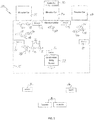
- FIG. 1 schematically illustrates selected portions of an elevator system 20.
- a destination entry device 22 allows passengers desiring elevator service to enter a service request including an intended destination prior to entering any of the elevator cars 24, 26 and 28.
- the elevator cars 24, 26 and 28 do not include a car operating panel and passengers are not able to indicate a desired destination from within any of the cars.
- a controller 30, which includes at least one computing device, determines which of the elevator cars 24, 26 and 28 to assign to each passenger using a known dispatching or elevator car assignment algorithm.
- the controller 30 is configured or programmed to assign an elevator car to other individuals who have not entered a service request through the destination entry device 22.
- At least one detector 32 provides an indication of a proximity between a passenger who entered a service request and at least one other individual. The controller 30 uses information regarding such a proximity to determine whether the other individual is likely associated with the passenger and will board the elevator car and travel to the intended destination with the passenger.
- the detectors 32 in the illustrated embodiment are known devices.
- Example detectors include cameras that provide video or image data or depth sensors. Other detectors do not use image-based detection. Some embodiments include indoor GPS detectors that provide indications of the positions of different individuals. Other embodiments include signaling techniques such as triangulation or signal strength determinations to locate individuals. Some detectors are able to recognize a mobile station or an RFID device carried by an individual and use such devices to locate and track individuals.
- determining proximity includes determining an approximate distance between different individuals. The distance may be based on individual locations or distances from a detector. In some embodiments the distance determination is zone-based in that the detectors 32 provide an indication of a zone within which an individual is located. For example, the elevator lobby 34 in Figure 1 may be divided into multiple zones or sections. Depending on the size of the zones and the accuracy capabilities of the detectors 32, two individuals may be considered in close enough proximity to each other to be likely associated and traveling together on an elevator car if they are in the same zone or if they are respectively in zones that are close enough to each other to indicate a close proximity between them.
- the illustrated example includes detectors 36 outside of or spaced from the elevator lobby 34.
- the detectors 36 can provide information to the controller 30 regarding individuals moving toward the elevator lobby, for example, which may be useful to identify potentially associated individuals even when the elevator lobby 34 becomes crowded.
- the controller 30 may take coordinated movement of individuals into account when determining whether they are associated and likely to travel together on an elevator car. Taking coordinated movement into account provides a more robust and accurate determination as it is possible for unassociated individuals to be near each other at a moment in time but it is less likely that unassociated individuals will remain near each other while moving through an area such as the elevator lobby 34 or another part of a building.
- the illustrated embodiment includes security turnstiles 38 through which an individual must pass to enter a building including the elevator system 20.
- the controller 30 is configured to utilize information from the turnstiles 38 as at least a portion of a proximity determination.
- One aspect of some known security turnstiles is that they provide information regarding a person's identity, the specific turnstile used and the time of passage. Such information may be used by the controller 30 when determining if two individuals are in close enough proximity to be likely to ride together on an elevator car to a common destination.
- turnstiles 38 When, for example, two individuals enter through turnstiles 38 that are close to each other within a time that satisfies a threshold, they can be considered in close enough proximity to each other to be associated. If the turnstiles each uses are remote from each other, which may be at different building entrances, or the time between their respective entries is too long, then they are not considered in close enough proximity to each other to be associated or likely to travel together on an elevator car.
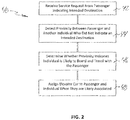
- FIG. 2 is a flow chart diagram 40 that summarizes an example approach.
- a passenger enters an elevator service request through the destination entry device 22 including an indication of the passenger's intended destination.
- at least one of the detectors 32, 26, 38 provides an indication of the proximity between the passenger and at least one other individual who did not enter an elevator service request.
- Recognizing the passenger and any other individual to distinguish who has entered a request and who has not may be accomplished in different ways.
- Some example embodiments include facial recognition and the ability to track individuals through an area such as the elevator lobby 34 to recognize those who entered a request and those who did not.
- Another embodiment utilizes information regarding a number of people in the elevator lobby 34 and the number of requests received at 42 with the difference indicating how many people did not enter their own requests.
- Other embodiments use device recognition techniques to recognize a mobile station or RFID device carried by individuals and an ability to associate such devices with requests that have been entered.
- the controller uses information from at least one of the detectors 32, 36, 38 to determine whether a proximity between the passenger who entered a request and another individual that did not enter a request satisfies at least one criterion that indicates that the two are likely associated and will board and travel together on the same elevator car to that passenger's intended destination.
- the determination at 46 includes determining how close the individuals are to each other or a distance between them. If that distance is less than a threshold distance the individuals under consideration are considered associated.
- the criterion used at 46 includes movement of the individuals that is monitored or tracked over time. When two individuals move together or whose movement is coordinated or similar as they progress toward the elevator lobby 34 or elevator cars 24, 26 and 28 they are considered associated. On the other hand, when two individuals are not moving together or in a coordinated manner they will not be considered associated. As mentioned above, other criteria may be used to make the determination at 46.
- the controller 30 assigns the same elevator car to the passenger and the other individual or individuals at 48. In this way the controller 30 is able to monitor the total number of likely or expected people on an elevator car and to reserve adequate space to accommodate them even when less than all of them have specifically requested elevator service.
- the approach taken by the controller 30 enhances the passenger's experience and convenience and can improve overall elevator system performance during peak travel times.
- the scenario schematically represented in Figure 1 demonstrates various ways in which the controller may assign elevator cars.
- a passenger 50 entered a request and the controller 30 assigned the elevator car 26 to the passenger 50. Since no one else is near the passenger 50, the controller 30 does not associate any other individuals with that request.
- Another passenger 52 entered a request for service to another intended destination and the controller 30 has assigned the elevator car 28 to the passenger 52.
- Two other individuals 54 and 56 did not enter a request through the destination entry device 22.
- the individual 54 is close enough to the passenger 52 that the distance between them satisfies the proximity criteria used by the controller 30 to determine that the individual 54 is associated with the passenger 52.
- the controller 30 has therefore assigned the elevator car 28 to the individual or at least counted the individual 54 among those expected to board the elevator car 28 and travel to the intended destination of the passenger 52.
- the individual 56 in this example is not close enough to the passenger 52 to satisfy a minimum threshold distance to be considered directly associated with the passenger 52.
- the individuals 54 and 56 are close enough to each other to satisfy the proximity criteria used by the controller 30 and the controller determines that the individuals 54 and 56 are likely associated and will travel together on the elevator car 28.
- the controller 30 in this example therefore, associates the individual 56 with the passenger 52 and assigns the elevator car 28 to the individual 56.
- This example scenario demonstrates one way in which the controller uses an indication of a proximity between an individual and a passenger or another individual already associated with that passenger to determine that both of those individuals are associated with the same passenger.
- the controller uses that information to associate the individuals 64 and 68 with the passenger 60 and assigns them to the elevator car 24 on that basis.
- the individual 66 may be associated with the individuals 64 and 68 even though that individual was not detected walking with the others because the individual 66 entered through a turnstile 38 close to and at about the same time as the individual 64, for example.
- the passenger 70 is the only one of those three who entered an elevator service request through the destination entry device 22.
- the controller 30 determines that the individual 72 is likely associated with the passenger 70 and will travel on the same elevator car to the same destination based on how close they are to each other and moving in the same direction as indicated by the arrows 76.
- the individual 76 by contrast, is not heading in the same direction as indicated by the arrow 78.
- the controller 30 in this example considers the different directions of movement of the individual 74 and the passenger 70 to indicate that they are not associated or at least not likely to travel on the same elevator car to the same destination.
- proximity criteria may be used to determine when individuals who did not enter a request for elevator service are likely associated with a passenger who did request service to an intended destination.
- the criteria, any weight assigned to a particular criterion, and the way in which the controller 30 processes associated information may vary depending on the type of detectors 34, 36 and 38, for example.
- some embodiments include utilizing other known characteristics of individuals to determine whether they are likely associated and will travel on the same elevator car to the same destination. For example, when individuals may be identified based on facial recognition or a device signature or identity the controller 30 stores associations between individuals who travel together to the same destination and uses such past behavior to increase a confidence factor regarding a likelihood that the individuals are associated. Additionally, the controller 30 may have access to a database that includes associations and default destinations of individuals, such as employees of a particular business and the floor where each works. Such additional information is used in some embodiments as part of the process of determining whether an individual who did not enter an intended destination should be assigned to the same elevator car of another passenger.
Landscapes
- Engineering & Computer Science (AREA)
- Automation & Control Theory (AREA)
- Computer Networks & Wireless Communication (AREA)
- Indicating And Signalling Devices For Elevators (AREA)
- Elevator Control (AREA)
Applications Claiming Priority (2)
| Application Number | Priority Date | Filing Date | Title |
|---|---|---|---|
| US201862720518P | 2018-08-21 | 2018-08-21 | |
| EP19192819.1A EP3613689B1 (de) | 2018-08-21 | 2019-08-21 | Abgeleitete aufzugskabinenzuordnungen basierend auf der nähe potenzieller fahrgäste |
Related Parent Applications (1)
| Application Number | Title | Priority Date | Filing Date |
|---|---|---|---|
| EP19192819.1A Division EP3613689B1 (de) | 2018-08-21 | 2019-08-21 | Abgeleitete aufzugskabinenzuordnungen basierend auf der nähe potenzieller fahrgäste |
Publications (2)
| Publication Number | Publication Date |
|---|---|
| EP3889090A1 true EP3889090A1 (de) | 2021-10-06 |
| EP3889090B1 EP3889090B1 (de) | 2023-05-10 |
Family
ID=67659673
Family Applications (2)
| Application Number | Title | Priority Date | Filing Date |
|---|---|---|---|
| EP19192819.1A Active EP3613689B1 (de) | 2018-08-21 | 2019-08-21 | Abgeleitete aufzugskabinenzuordnungen basierend auf der nähe potenzieller fahrgäste |
| EP21173920.6A Active EP3889090B1 (de) | 2018-08-21 | 2019-08-21 | Abgeleitete aufzugskabinenzuordnungen basierend auf der nähe potenzieller fahrgäste |
Family Applications Before (1)
| Application Number | Title | Priority Date | Filing Date |
|---|---|---|---|
| EP19192819.1A Active EP3613689B1 (de) | 2018-08-21 | 2019-08-21 | Abgeleitete aufzugskabinenzuordnungen basierend auf der nähe potenzieller fahrgäste |
Country Status (3)
| Country | Link |
|---|---|
| US (1) | US11554931B2 (de) |
| EP (2) | EP3613689B1 (de) |
| CN (1) | CN110844722B (de) |
Cited By (1)
| Publication number | Priority date | Publication date | Assignee | Title |
|---|---|---|---|---|
| US20200062538A1 (en) * | 2018-08-21 | 2020-02-27 | Otis Elevator Company | Inferred elevator car assignments based on proximity of potential passengers |
Families Citing this family (4)
| Publication number | Priority date | Publication date | Assignee | Title |
|---|---|---|---|---|
| US12330906B2 (en) * | 2018-10-22 | 2025-06-17 | Otis Elevator Company | System and method for prioritizing service to remote elevator calls based on proximity to elevator lobby |
| WO2022200672A1 (en) * | 2021-03-26 | 2022-09-29 | Kone Corporation | An arrangement and a method for monitoring objects in monitored area |
| JP7173233B1 (ja) | 2021-07-16 | 2022-11-16 | フジテック株式会社 | 通知システム、端末装置および制御方法 |
| CN115520739B (zh) * | 2022-10-25 | 2026-03-06 | 日立楼宇技术(广州)有限公司 | 一种目的层登记的方法、装置、电子设备以及存储介质 |
Citations (2)
| Publication number | Priority date | Publication date | Assignee | Title |
|---|---|---|---|---|
| US20070017753A1 (en) * | 2004-01-26 | 2007-01-25 | Kone Corporation | Elevator arrangement with hall call destination input |
| JP2017114670A (ja) * | 2015-12-25 | 2017-06-29 | フジテック株式会社 | エレベータの群管理制御装置及び群管理システム、並びにエレベータシステム |
Family Cites Families (27)
| Publication number | Priority date | Publication date | Assignee | Title |
|---|---|---|---|---|
| US6209685B1 (en) | 1999-06-04 | 2001-04-03 | Otis Elevator Company | Selective, automatic elevator call registering system |
| KR101171032B1 (ko) * | 2006-08-25 | 2012-08-03 | 오티스 엘리베이터 컴파니 | 목적지 입력 급송 작동들에서의 보안 추적을 위한 익명 승객 인덱싱 시스템 |
| FI121464B (fi) * | 2009-01-16 | 2010-11-30 | Kone Corp | Hissijärjestelmä |
| FI20116170A7 (fi) | 2011-11-23 | 2013-05-24 | Kone Corp | Hissijärjestelmä |
| WO2013130040A1 (en) | 2012-02-28 | 2013-09-06 | Otis Elevator Company | Elevator traffic monitoring system and method |
| MX351208B (es) | 2012-06-25 | 2017-10-05 | Inventio Ag | Transbordos en sistemas de ascensor de varios pisos. |
| DE112012006728T5 (de) | 2012-07-25 | 2015-04-16 | Mitsubishi Electric Corporation | Aufzugplattformvorrichtung |
| WO2014118421A1 (en) | 2013-01-30 | 2014-08-07 | Kone Corporation | Pre-allocation of an elevator call |
| CN111232780A (zh) | 2013-07-29 | 2020-06-05 | 通力股份公司 | 对电梯系统生成目的地呼叫的方法和系统 |
| US9988238B2 (en) | 2013-09-03 | 2018-06-05 | Otis Elevator Company | Elevator dispatch using facial recognition |
| EP3044150A1 (de) | 2013-11-14 | 2016-07-20 | Kone Corporation | Verfahren zur zuordnung von aufzügen in aufzugsanlagen |
| JP6230472B2 (ja) * | 2014-04-14 | 2017-11-15 | 株式会社日立製作所 | 群管理エレベータ装置 |
| EP3191391B1 (de) * | 2014-09-12 | 2020-11-04 | KONE Corporation | Rufzuweisung in einem aufzugssystem |
| JP2016074536A (ja) * | 2014-10-09 | 2016-05-12 | 三菱電機株式会社 | エレベータ案内装置 |
| US9957132B2 (en) | 2015-02-04 | 2018-05-01 | Thyssenkrupp Elevator Ag | Elevator control systems |
| WO2017006379A1 (ja) * | 2015-07-03 | 2017-01-12 | 株式会社日立製作所 | 群管理エレベータ装置及び群管理による乗車号機の割り当て方法 |
| CN107176508A (zh) | 2016-03-11 | 2017-09-19 | 奥的斯电梯公司 | 电梯交互终端和电梯交互系统 |
| US20170291792A1 (en) * | 2016-04-06 | 2017-10-12 | Otis Elevator Company | Destination dispatch dynamic tuning |
| JP6678529B2 (ja) * | 2016-07-11 | 2020-04-08 | 株式会社日立製作所 | エレベーターシステム及びかご呼び推定方法 |
| US10087046B2 (en) | 2016-10-12 | 2018-10-02 | Otis Elevator Company | Intelligent building system for altering elevator operation based upon passenger identification |
| EP3587322A1 (de) * | 2018-06-21 | 2020-01-01 | Otis Elevator Company | Aufzugsversendung |
| CN110626891B (zh) * | 2018-06-25 | 2023-09-05 | 奥的斯电梯公司 | 用于改进的电梯调度的系统和方法 |
| US11554931B2 (en) * | 2018-08-21 | 2023-01-17 | Otis Elevator Company | Inferred elevator car assignments based on proximity of potential passengers |
| US20200130987A1 (en) * | 2018-10-24 | 2020-04-30 | Otis Elevator Company | Reassignment based on piggybacking |
| WO2020157367A1 (en) * | 2019-01-29 | 2020-08-06 | Kone Corporation | User interface solution for elevator system |
| US11724909B2 (en) * | 2019-04-18 | 2023-08-15 | Otis Elevator Company | Elevator car assignment based on a detected number of waiting passengers |
| US20220177269A1 (en) * | 2020-12-04 | 2022-06-09 | Otis Elevator Company | Elevator car space allocation based on detecting voices of potential passengers |
-
2019
- 2019-05-30 US US16/426,265 patent/US11554931B2/en active Active
- 2019-08-21 CN CN201910772578.1A patent/CN110844722B/zh active Active
- 2019-08-21 EP EP19192819.1A patent/EP3613689B1/de active Active
- 2019-08-21 EP EP21173920.6A patent/EP3889090B1/de active Active
Patent Citations (2)
| Publication number | Priority date | Publication date | Assignee | Title |
|---|---|---|---|---|
| US20070017753A1 (en) * | 2004-01-26 | 2007-01-25 | Kone Corporation | Elevator arrangement with hall call destination input |
| JP2017114670A (ja) * | 2015-12-25 | 2017-06-29 | フジテック株式会社 | エレベータの群管理制御装置及び群管理システム、並びにエレベータシステム |
Cited By (2)
| Publication number | Priority date | Publication date | Assignee | Title |
|---|---|---|---|---|
| US20200062538A1 (en) * | 2018-08-21 | 2020-02-27 | Otis Elevator Company | Inferred elevator car assignments based on proximity of potential passengers |
| US11554931B2 (en) * | 2018-08-21 | 2023-01-17 | Otis Elevator Company | Inferred elevator car assignments based on proximity of potential passengers |
Also Published As
| Publication number | Publication date |
|---|---|
| US20200062538A1 (en) | 2020-02-27 |
| EP3613689B1 (de) | 2021-06-16 |
| EP3889090B1 (de) | 2023-05-10 |
| CN110844722A (zh) | 2020-02-28 |
| CN110844722B (zh) | 2022-03-29 |
| EP3613689A1 (de) | 2020-02-26 |
| US11554931B2 (en) | 2023-01-17 |
Similar Documents
| Publication | Publication Date | Title |
|---|---|---|
| EP3613689B1 (de) | Abgeleitete aufzugskabinenzuordnungen basierend auf der nähe potenzieller fahrgäste | |
| US7712586B2 (en) | Passenger guiding system for a passenger transportation system | |
| US8028806B2 (en) | Method of dispatching an elevator car including an expected arrival time of a passenger near an elevator car | |
| US9365393B2 (en) | Conveying system having a detection area | |
| JP5318584B2 (ja) | エレベータ制御に用いるビデオ補助式システム | |
| US9862567B2 (en) | Generating destination calls for elevator system | |
| EP3733577B1 (de) | Aufzugskabinenzuordnung basierend auf einer erfassten anzahl von wartenden fahrgästen | |
| US10550622B2 (en) | Method and system for increasing the safety in the boarding area and for optimizing usage of the capacity in transport means which comprise at least one locally fixed boarding area | |
| US12421076B2 (en) | Elevator call registration when a car is full | |
| US20170210594A1 (en) | Method for controlling a lift installation | |
| JP6776549B2 (ja) | エレベータの群管理制御装置及び群管理システム、並びにエレベータシステム | |
| EP4008658B1 (de) | Aufzugskabinenraumzuweisung auf basis der erfassung von stimmen von potenziellen passagieren | |
| CN113661140B (zh) | 乘客引导装置以及乘客引导方法 | |
| US20210179385A1 (en) | Method of prioritizing passenger travel in an elevator | |
| JP6567074B2 (ja) | エレベータの群管理制御装置および群管理制御方法 | |
| JP7447562B2 (ja) | ビルシステムの管理装置およびビルシステム | |
| JP2020019602A (ja) | エレベータシステム | |
| JP2022012533A (ja) | モビリティ支援システム、車両配車装置、エレベータ管理装置、発券装置、設備管理装置およびモビリティ支援プログラム | |
| KR20160065262A (ko) | 개인용 휴대단말기의 블루투스 비콘인식을 이용한 엘리베이터 및 에스컬레이터의 탑승자 인원검출 및 행동분석 시스템 및 그 제어방법 | |
| KR20200049266A (ko) | 교통 약자에게 경로 안내 서비스를 제공하는 방법 및 시스템 | |
| KR102097317B1 (ko) | 철도 역사 경로 안내 지원 시스템 및 방법 | |
| US20250305832A1 (en) | Method and a predictive gate system for predicting an exit route of a user from an area having a restricted access | |
| HK1234382B (zh) | 电梯系统 |
Legal Events
| Date | Code | Title | Description |
|---|---|---|---|
| PUAI | Public reference made under article 153(3) epc to a published international application that has entered the european phase |
Free format text: ORIGINAL CODE: 0009012 |
|
| STAA | Information on the status of an ep patent application or granted ep patent |
Free format text: STATUS: THE APPLICATION HAS BEEN PUBLISHED |
|
| AC | Divisional application: reference to earlier application |
Ref document number: 3613689 Country of ref document: EP Kind code of ref document: P |
|
| AK | Designated contracting states |
Kind code of ref document: A1 Designated state(s): AL AT BE BG CH CY CZ DE DK EE ES FI FR GB GR HR HU IE IS IT LI LT LU LV MC MK MT NL NO PL PT RO RS SE SI SK SM TR |
|
| STAA | Information on the status of an ep patent application or granted ep patent |
Free format text: STATUS: REQUEST FOR EXAMINATION WAS MADE |
|
| 17P | Request for examination filed |
Effective date: 20220223 |
|
| RBV | Designated contracting states (corrected) |
Designated state(s): AL AT BE BG CH CY CZ DE DK EE ES FI FR GB GR HR HU IE IS IT LI LT LU LV MC MK MT NL NO PL PT RO RS SE SI SK SM TR |
|
| GRAP | Despatch of communication of intention to grant a patent |
Free format text: ORIGINAL CODE: EPIDOSNIGR1 |
|
| STAA | Information on the status of an ep patent application or granted ep patent |
Free format text: STATUS: GRANT OF PATENT IS INTENDED |
|
| INTG | Intention to grant announced |
Effective date: 20221129 |
|
| RAP3 | Party data changed (applicant data changed or rights of an application transferred) |
Owner name: OTIS ELEVATOR COMPANY |
|
| GRAS | Grant fee paid |
Free format text: ORIGINAL CODE: EPIDOSNIGR3 |
|
| GRAA | (expected) grant |
Free format text: ORIGINAL CODE: 0009210 |
|
| STAA | Information on the status of an ep patent application or granted ep patent |
Free format text: STATUS: THE PATENT HAS BEEN GRANTED |
|
| AC | Divisional application: reference to earlier application |
Ref document number: 3613689 Country of ref document: EP Kind code of ref document: P |
|
| AK | Designated contracting states |
Kind code of ref document: B1 Designated state(s): AL AT BE BG CH CY CZ DE DK EE ES FI FR GB GR HR HU IE IS IT LI LT LU LV MC MK MT NL NO PL PT RO RS SE SI SK SM TR |
|
| REG | Reference to a national code |
Ref country code: GB Ref legal event code: FG4D |
|
| REG | Reference to a national code |
Ref country code: AT Ref legal event code: REF Ref document number: 1566500 Country of ref document: AT Kind code of ref document: T Effective date: 20230515 Ref country code: CH Ref legal event code: EP |
|
| REG | Reference to a national code |
Ref country code: DE Ref legal event code: R096 Ref document number: 602019028985 Country of ref document: DE |
|
| REG | Reference to a national code |
Ref country code: IE Ref legal event code: FG4D |
|
| REG | Reference to a national code |
Ref country code: LT Ref legal event code: MG9D |
|
| REG | Reference to a national code |
Ref country code: NL Ref legal event code: MP Effective date: 20230510 |
|
| REG | Reference to a national code |
Ref country code: AT Ref legal event code: MK05 Ref document number: 1566500 Country of ref document: AT Kind code of ref document: T Effective date: 20230510 |
|
| PG25 | Lapsed in a contracting state [announced via postgrant information from national office to epo] |
Ref country code: SE Free format text: LAPSE BECAUSE OF FAILURE TO SUBMIT A TRANSLATION OF THE DESCRIPTION OR TO PAY THE FEE WITHIN THE PRESCRIBED TIME-LIMIT Effective date: 20230510 Ref country code: PT Free format text: LAPSE BECAUSE OF FAILURE TO SUBMIT A TRANSLATION OF THE DESCRIPTION OR TO PAY THE FEE WITHIN THE PRESCRIBED TIME-LIMIT Effective date: 20230911 Ref country code: NO Free format text: LAPSE BECAUSE OF FAILURE TO SUBMIT A TRANSLATION OF THE DESCRIPTION OR TO PAY THE FEE WITHIN THE PRESCRIBED TIME-LIMIT Effective date: 20230810 Ref country code: NL Free format text: LAPSE BECAUSE OF FAILURE TO SUBMIT A TRANSLATION OF THE DESCRIPTION OR TO PAY THE FEE WITHIN THE PRESCRIBED TIME-LIMIT Effective date: 20230510 Ref country code: ES Free format text: LAPSE BECAUSE OF FAILURE TO SUBMIT A TRANSLATION OF THE DESCRIPTION OR TO PAY THE FEE WITHIN THE PRESCRIBED TIME-LIMIT Effective date: 20230510 Ref country code: AT Free format text: LAPSE BECAUSE OF FAILURE TO SUBMIT A TRANSLATION OF THE DESCRIPTION OR TO PAY THE FEE WITHIN THE PRESCRIBED TIME-LIMIT Effective date: 20230510 |
|
| PG25 | Lapsed in a contracting state [announced via postgrant information from national office to epo] |
Ref country code: RS Free format text: LAPSE BECAUSE OF FAILURE TO SUBMIT A TRANSLATION OF THE DESCRIPTION OR TO PAY THE FEE WITHIN THE PRESCRIBED TIME-LIMIT Effective date: 20230510 Ref country code: PL Free format text: LAPSE BECAUSE OF FAILURE TO SUBMIT A TRANSLATION OF THE DESCRIPTION OR TO PAY THE FEE WITHIN THE PRESCRIBED TIME-LIMIT Effective date: 20230510 Ref country code: LV Free format text: LAPSE BECAUSE OF FAILURE TO SUBMIT A TRANSLATION OF THE DESCRIPTION OR TO PAY THE FEE WITHIN THE PRESCRIBED TIME-LIMIT Effective date: 20230510 Ref country code: LT Free format text: LAPSE BECAUSE OF FAILURE TO SUBMIT A TRANSLATION OF THE DESCRIPTION OR TO PAY THE FEE WITHIN THE PRESCRIBED TIME-LIMIT Effective date: 20230510 Ref country code: IS Free format text: LAPSE BECAUSE OF FAILURE TO SUBMIT A TRANSLATION OF THE DESCRIPTION OR TO PAY THE FEE WITHIN THE PRESCRIBED TIME-LIMIT Effective date: 20230910 Ref country code: HR Free format text: LAPSE BECAUSE OF FAILURE TO SUBMIT A TRANSLATION OF THE DESCRIPTION OR TO PAY THE FEE WITHIN THE PRESCRIBED TIME-LIMIT Effective date: 20230510 Ref country code: GR Free format text: LAPSE BECAUSE OF FAILURE TO SUBMIT A TRANSLATION OF THE DESCRIPTION OR TO PAY THE FEE WITHIN THE PRESCRIBED TIME-LIMIT Effective date: 20230811 |
|
| PG25 | Lapsed in a contracting state [announced via postgrant information from national office to epo] |
Ref country code: FI Free format text: LAPSE BECAUSE OF FAILURE TO SUBMIT A TRANSLATION OF THE DESCRIPTION OR TO PAY THE FEE WITHIN THE PRESCRIBED TIME-LIMIT Effective date: 20230510 |
|
| PG25 | Lapsed in a contracting state [announced via postgrant information from national office to epo] |
Ref country code: SK Free format text: LAPSE BECAUSE OF FAILURE TO SUBMIT A TRANSLATION OF THE DESCRIPTION OR TO PAY THE FEE WITHIN THE PRESCRIBED TIME-LIMIT Effective date: 20230510 |
|
| PG25 | Lapsed in a contracting state [announced via postgrant information from national office to epo] |
Ref country code: SM Free format text: LAPSE BECAUSE OF FAILURE TO SUBMIT A TRANSLATION OF THE DESCRIPTION OR TO PAY THE FEE WITHIN THE PRESCRIBED TIME-LIMIT Effective date: 20230510 Ref country code: SK Free format text: LAPSE BECAUSE OF FAILURE TO SUBMIT A TRANSLATION OF THE DESCRIPTION OR TO PAY THE FEE WITHIN THE PRESCRIBED TIME-LIMIT Effective date: 20230510 Ref country code: RO Free format text: LAPSE BECAUSE OF FAILURE TO SUBMIT A TRANSLATION OF THE DESCRIPTION OR TO PAY THE FEE WITHIN THE PRESCRIBED TIME-LIMIT Effective date: 20230510 Ref country code: EE Free format text: LAPSE BECAUSE OF FAILURE TO SUBMIT A TRANSLATION OF THE DESCRIPTION OR TO PAY THE FEE WITHIN THE PRESCRIBED TIME-LIMIT Effective date: 20230510 Ref country code: DK Free format text: LAPSE BECAUSE OF FAILURE TO SUBMIT A TRANSLATION OF THE DESCRIPTION OR TO PAY THE FEE WITHIN THE PRESCRIBED TIME-LIMIT Effective date: 20230510 Ref country code: CZ Free format text: LAPSE BECAUSE OF FAILURE TO SUBMIT A TRANSLATION OF THE DESCRIPTION OR TO PAY THE FEE WITHIN THE PRESCRIBED TIME-LIMIT Effective date: 20230510 |
|
| REG | Reference to a national code |
Ref country code: DE Ref legal event code: R097 Ref document number: 602019028985 Country of ref document: DE |
|
| PG25 | Lapsed in a contracting state [announced via postgrant information from national office to epo] |
Ref country code: MC Free format text: LAPSE BECAUSE OF FAILURE TO SUBMIT A TRANSLATION OF THE DESCRIPTION OR TO PAY THE FEE WITHIN THE PRESCRIBED TIME-LIMIT Effective date: 20230510 |
|
| PLBE | No opposition filed within time limit |
Free format text: ORIGINAL CODE: 0009261 |
|
| STAA | Information on the status of an ep patent application or granted ep patent |
Free format text: STATUS: NO OPPOSITION FILED WITHIN TIME LIMIT |
|
| REG | Reference to a national code |
Ref country code: CH Ref legal event code: PL |
|
| PG25 | Lapsed in a contracting state [announced via postgrant information from national office to epo] |
Ref country code: MC Free format text: LAPSE BECAUSE OF FAILURE TO SUBMIT A TRANSLATION OF THE DESCRIPTION OR TO PAY THE FEE WITHIN THE PRESCRIBED TIME-LIMIT Effective date: 20230510 |
|
| PG25 | Lapsed in a contracting state [announced via postgrant information from national office to epo] |
Ref country code: LU Free format text: LAPSE BECAUSE OF NON-PAYMENT OF DUE FEES Effective date: 20230821 |
|
| 26N | No opposition filed |
Effective date: 20240213 |
|
| GBPC | Gb: european patent ceased through non-payment of renewal fee |
Effective date: 20230821 |
|
| PG25 | Lapsed in a contracting state [announced via postgrant information from national office to epo] |
Ref country code: LU Free format text: LAPSE BECAUSE OF NON-PAYMENT OF DUE FEES Effective date: 20230821 Ref country code: CH Free format text: LAPSE BECAUSE OF NON-PAYMENT OF DUE FEES Effective date: 20230831 |
|
| PG25 | Lapsed in a contracting state [announced via postgrant information from national office to epo] |
Ref country code: SI Free format text: LAPSE BECAUSE OF FAILURE TO SUBMIT A TRANSLATION OF THE DESCRIPTION OR TO PAY THE FEE WITHIN THE PRESCRIBED TIME-LIMIT Effective date: 20230510 |
|
| REG | Reference to a national code |
Ref country code: BE Ref legal event code: MM Effective date: 20230831 |
|
| REG | Reference to a national code |
Ref country code: IE Ref legal event code: MM4A |
|
| PG25 | Lapsed in a contracting state [announced via postgrant information from national office to epo] |
Ref country code: SI Free format text: LAPSE BECAUSE OF FAILURE TO SUBMIT A TRANSLATION OF THE DESCRIPTION OR TO PAY THE FEE WITHIN THE PRESCRIBED TIME-LIMIT Effective date: 20230510 Ref country code: IT Free format text: LAPSE BECAUSE OF FAILURE TO SUBMIT A TRANSLATION OF THE DESCRIPTION OR TO PAY THE FEE WITHIN THE PRESCRIBED TIME-LIMIT Effective date: 20230510 |
|
| PG25 | Lapsed in a contracting state [announced via postgrant information from national office to epo] |
Ref country code: IE Free format text: LAPSE BECAUSE OF NON-PAYMENT OF DUE FEES Effective date: 20230821 |
|
| PG25 | Lapsed in a contracting state [announced via postgrant information from national office to epo] |
Ref country code: GB Free format text: LAPSE BECAUSE OF NON-PAYMENT OF DUE FEES Effective date: 20230821 |
|
| PG25 | Lapsed in a contracting state [announced via postgrant information from national office to epo] |
Ref country code: IE Free format text: LAPSE BECAUSE OF NON-PAYMENT OF DUE FEES Effective date: 20230821 Ref country code: GB Free format text: LAPSE BECAUSE OF NON-PAYMENT OF DUE FEES Effective date: 20230821 |
|
| PG25 | Lapsed in a contracting state [announced via postgrant information from national office to epo] |
Ref country code: BE Free format text: LAPSE BECAUSE OF NON-PAYMENT OF DUE FEES Effective date: 20230831 |
|
| PG25 | Lapsed in a contracting state [announced via postgrant information from national office to epo] |
Ref country code: BG Free format text: LAPSE BECAUSE OF FAILURE TO SUBMIT A TRANSLATION OF THE DESCRIPTION OR TO PAY THE FEE WITHIN THE PRESCRIBED TIME-LIMIT Effective date: 20230510 |
|
| PG25 | Lapsed in a contracting state [announced via postgrant information from national office to epo] |
Ref country code: BG Free format text: LAPSE BECAUSE OF FAILURE TO SUBMIT A TRANSLATION OF THE DESCRIPTION OR TO PAY THE FEE WITHIN THE PRESCRIBED TIME-LIMIT Effective date: 20230510 |
|
| PG25 | Lapsed in a contracting state [announced via postgrant information from national office to epo] |
Ref country code: CY Free format text: LAPSE BECAUSE OF FAILURE TO SUBMIT A TRANSLATION OF THE DESCRIPTION OR TO PAY THE FEE WITHIN THE PRESCRIBED TIME-LIMIT; INVALID AB INITIO Effective date: 20190821 |
|
| PG25 | Lapsed in a contracting state [announced via postgrant information from national office to epo] |
Ref country code: HU Free format text: LAPSE BECAUSE OF FAILURE TO SUBMIT A TRANSLATION OF THE DESCRIPTION OR TO PAY THE FEE WITHIN THE PRESCRIBED TIME-LIMIT; INVALID AB INITIO Effective date: 20190821 |
|
| PGFP | Annual fee paid to national office [announced via postgrant information from national office to epo] |
Ref country code: DE Payment date: 20250724 Year of fee payment: 7 |
|
| PGFP | Annual fee paid to national office [announced via postgrant information from national office to epo] |
Ref country code: FR Payment date: 20250723 Year of fee payment: 7 |
|
| PG25 | Lapsed in a contracting state [announced via postgrant information from national office to epo] |
Ref country code: TR Free format text: LAPSE BECAUSE OF FAILURE TO SUBMIT A TRANSLATION OF THE DESCRIPTION OR TO PAY THE FEE WITHIN THE PRESCRIBED TIME-LIMIT Effective date: 20230510 |