EP3889132A1 - Inhibitoren der monoacylglycerol lipase(magl) - Google Patents
Inhibitoren der monoacylglycerol lipase(magl) Download PDFInfo
- Publication number
- EP3889132A1 EP3889132A1 EP21166820.7A EP21166820A EP3889132A1 EP 3889132 A1 EP3889132 A1 EP 3889132A1 EP 21166820 A EP21166820 A EP 21166820A EP 3889132 A1 EP3889132 A1 EP 3889132A1
- Authority
- EP
- European Patent Office
- Prior art keywords
- compound
- stereoisomer
- solvate
- salt
- tautomer
- Prior art date
- Legal status (The legal status is an assumption and is not a legal conclusion. Google has not performed a legal analysis and makes no representation as to the accuracy of the status listed.)
- Granted
Links
- 0 C*C(Nc(cc(cc1)-c(cc2F)ccc2O)c1O)=O Chemical compound C*C(Nc(cc(cc1)-c(cc2F)ccc2O)c1O)=O 0.000 description 2
- MJHJVDDSKHQVDE-UHFFFAOYSA-N CC(C)C1OC1Nc(cc(cc1)-c(cc2F)ccc2O)c1O Chemical compound CC(C)C1OC1Nc(cc(cc1)-c(cc2F)ccc2O)c1O MJHJVDDSKHQVDE-UHFFFAOYSA-N 0.000 description 1
Images
Classifications
-
- C—CHEMISTRY; METALLURGY
- C07—ORGANIC CHEMISTRY
- C07C—ACYCLIC OR CARBOCYCLIC COMPOUNDS
- C07C233/00—Carboxylic acid amides
- C07C233/01—Carboxylic acid amides having carbon atoms of carboxamide groups bound to hydrogen atoms or to acyclic carbon atoms
- C07C233/16—Carboxylic acid amides having carbon atoms of carboxamide groups bound to hydrogen atoms or to acyclic carbon atoms having the nitrogen atom of at least one of the carboxamide groups bound to a carbon atom of a hydrocarbon radical substituted by singly-bound oxygen atoms
- C07C233/24—Carboxylic acid amides having carbon atoms of carboxamide groups bound to hydrogen atoms or to acyclic carbon atoms having the nitrogen atom of at least one of the carboxamide groups bound to a carbon atom of a hydrocarbon radical substituted by singly-bound oxygen atoms with the substituted hydrocarbon radical bound to the nitrogen atom of the carboxamide group by a carbon atom of a six-membered aromatic ring
- C07C233/25—Carboxylic acid amides having carbon atoms of carboxamide groups bound to hydrogen atoms or to acyclic carbon atoms having the nitrogen atom of at least one of the carboxamide groups bound to a carbon atom of a hydrocarbon radical substituted by singly-bound oxygen atoms with the substituted hydrocarbon radical bound to the nitrogen atom of the carboxamide group by a carbon atom of a six-membered aromatic ring having the carbon atom of the carboxamide group bound to a hydrogen atom or to a carbon atom of an acyclic saturated carbon skeleton
-
- A—HUMAN NECESSITIES
- A61—MEDICAL OR VETERINARY SCIENCE; HYGIENE
- A61P—SPECIFIC THERAPEUTIC ACTIVITY OF CHEMICAL COMPOUNDS OR MEDICINAL PREPARATIONS
- A61P25/00—Drugs for disorders of the nervous system
-
- A—HUMAN NECESSITIES
- A61—MEDICAL OR VETERINARY SCIENCE; HYGIENE
- A61P—SPECIFIC THERAPEUTIC ACTIVITY OF CHEMICAL COMPOUNDS OR MEDICINAL PREPARATIONS
- A61P35/00—Antineoplastic agents
-
- C—CHEMISTRY; METALLURGY
- C07—ORGANIC CHEMISTRY
- C07C—ACYCLIC OR CARBOCYCLIC COMPOUNDS
- C07C233/00—Carboxylic acid amides
- C07C233/01—Carboxylic acid amides having carbon atoms of carboxamide groups bound to hydrogen atoms or to acyclic carbon atoms
- C07C233/16—Carboxylic acid amides having carbon atoms of carboxamide groups bound to hydrogen atoms or to acyclic carbon atoms having the nitrogen atom of at least one of the carboxamide groups bound to a carbon atom of a hydrocarbon radical substituted by singly-bound oxygen atoms
- C07C233/24—Carboxylic acid amides having carbon atoms of carboxamide groups bound to hydrogen atoms or to acyclic carbon atoms having the nitrogen atom of at least one of the carboxamide groups bound to a carbon atom of a hydrocarbon radical substituted by singly-bound oxygen atoms with the substituted hydrocarbon radical bound to the nitrogen atom of the carboxamide group by a carbon atom of a six-membered aromatic ring
- C07C233/29—Carboxylic acid amides having carbon atoms of carboxamide groups bound to hydrogen atoms or to acyclic carbon atoms having the nitrogen atom of at least one of the carboxamide groups bound to a carbon atom of a hydrocarbon radical substituted by singly-bound oxygen atoms with the substituted hydrocarbon radical bound to the nitrogen atom of the carboxamide group by a carbon atom of a six-membered aromatic ring having the carbon atom of the carboxamide group bound to an acyclic carbon atom of a carbon skeleton containing six-membered aromatic rings
Definitions
- the present invention relates to compounds of formula (I) useful as inhibitors, in particular as reversible non-covalent inhibitors, of the enzyme monoacylglycerol lipase (MAGL).
- the present invention also relates to the therapeutic use of such compounds, pharmaceutical compositions that include them and processes for obtaining them.
- the enzyme monoacylglycerol lipase is a serine hydrolase expressed in most types of brain cells, including astrocytes, oligodendrocytes and microglia cells, which is part of the endocannabinoid system (ECS).
- ECS endocannabinoid system
- the ECS is an endogenous system involved in numerous physiological and pathological processes, including neuroprotection, pain perception, anxiety, immune modulation, motor coordination, inflammation and the regulation of neoplastic cells.
- the ECS consists of two G protein-coupled receptors called cannabinoid receptor type 1 and 2 (CB1 and CB2), endogenous lipid molecules called endocannabinoids (eCBs) and numerous enzymes responsible for the synthesis and degradation of such molecules.
- CB1 receptors are found mainly in the central nervous system (CNS), while CB2 are predominantly expressed on T cells of the immune system, but their presence has been recently demonstrated also in the CNS.
- the eCBs act as signal molecules that exert their biological actions in the human body by interacting with the CB1 and CB2 receptors.
- the main eCB present in the brain is 2-arachidonoylglycerol (2-AG), which after activating cannabinoid receptors is transported into the cell cytoplasm to be degraded.
- MAGL is the enzyme responsible for the hydrolysis of 85% of 2-AG, while the remaining 15% is hydrolysed by two other enzymes, ABHD6 and ABHD12.
- tumour cells need a large pool of fatty acids, both for the synthesis of new cell membranes of rapidly growing cells and for the formation of tumorigenic cell mediators.
- MAGL results to have a key role because, in addition to metabolize 2-AG at the CNS level, it also hydrolyzes monoacylglycerols to fatty acids and glycerol at the peripheral level, thus providing cancer cells with a significant amount of lipid substrates.
- Another carbamate nanomolar inhibitor frequently used as a reference for MAGL inhibition studies is the compound CAY10499 reported by Muccioli and Lambert in 2008.
- the present invention relates to compounds of formula (I), as defined below.
- compounds of formula (I) act as powerful inhibitors of the enzyme monoacylglycerol lipase (MAGL) with a reversible mechanism of action, mediated in particular by non-covalent bonds.
- MAGL monoacylglycerol lipase
- the compounds of the invention can be advantageously used to prevent and/or treat any condition that could be improved by the inhibition of MAGL, such as serious pathological conditions of neurodegenerative inflammation and tumours.
- the compounds of formula (I) resulted to be effective in inhibiting the cell viability of various tumour cell lines, such as colorectal cancer, breast cancer and ovarian cancer.
- this salt, stereoisomer, solvate or tautomer is pharmaceutically acceptable.
- at least one linear C1-C6 alkyl chain independently of the others is a linear C1-C4 alkyl chain, preferably it is methyl.
- this linear C1-C6 alkyl chain in position R and/or R 1 is methyl.
- this linear C1-C20 alkyl chain is a linear C4-C15 alkyl chain.
- this C3-C6 branched alkyl chain is isopropyl or tert-butyl.
- At least one aryl independently of the others is phenyl or naphthyl.
- At least one halogen independently of the others is F, Cl or Br, preferably it is F.
- at least one haloalkyl independent of the others is CF 3 .
- this haloalkoxyl is OCF 3 .
- this carboxylic ester is COOMe.
- R is H or methyl.
- R is H.
- R 3 is selected from the group consisting of: F, Cl, Br, CF 3 and CN.
- R 3 is F.
- R is H and R 3 is F.
- R 1 is H or methyl.
- R 1 is H.
- R 2 is selected from the group consisting of: (CH 2 ) p CH 3 , CMeR 3 R 4 and (CH 2 ) q Ph, wherein: p is an integer comprised between 0 and 19, R 3 and R 4 are independently of each other H or Me, q is an integer comprised between 1 and 10.
- p is an integer comprised between 3 and 14.
- R 3 is hydrogen and R 4 is methyl or R 3 and R 4 are both methyl.
- q is an integer comprised between 1 and 4.
- R 2 is selected from the group consisting of: n-butyl, n-pentyl, n-hexyl, n-heptyl, n-octyl, n-nonyl, n-undecanyl, n-tridecanyl, n-pentadecanyl, isopropyl, tert-butyl, phenyl, benzyl, (CH 2 ) 2 phenyl, (CH 2 ) 3 phenyl, (CH 2 ) 4 phenyl and (CH 2 )naphthyl.
- the compound, salt, stereoisomer, solvate or tautomer of the present invention is of formula (II): wherein R 1 and R 2 are as defined above.
- the compound, salt, stereoisomer, solvate or tautomer of the present invention is of formula (III): where n is an integer comprised between 0 and 19. Preferably, n is an integer comprised between 3 and 14.
- the compound, salt, stereoisomer, solvate or tautomer of the present invention is of formula (IV): in which R 3 and R 4 are independently of each other hydrogen or linear or branched C1-C8 alkyl chain (for example methyl).
- R 3 is hydrogen and R 4 is methyl or R 3 and R 4 are both methyl.
- the compound, salt, stereoisomer, solvate or tautomer of the present invention is of formula (V): wherein m is an integer comprised between 1 and 10. Preferably, m is an integer comprised between 1 and 4.
- the compound of the present invention is selected from the group consisting of: 1 9 2 10 3 11 4 12 5 13 6 14 7 15 8 16 17 or it is a salt, stereoisomer, solvate or tautomer of them.
- the term “compound” also includes any salt, stereoisomer, solvate or tautomer thereof.
- the compound as defined above is an inhibitor of the enzyme monoacylglycerol lipase (MAGL).
- MAGL monoacylglycerol lipase
- this compound is a reversible inhibitor of the MAGL enzyme.
- this compound is a reversible and/or non-covalent and/or competitive inhibitor of the MAGL enzyme. Therefore, the compounds of the present invention can be used in therapy, but also in biological, cellular, biochemical assays, etc.
- the present invention provides an inhibitor of the MAGL enzyme, in particular a reversible and/or non-covalent and/or competitive inhibitor, having the structure defined above.
- the present invention provides a method, in particular an in vitro method, for inhibiting the MAGL enzyme comprising the step of binding this enzyme with a compound as defined above.
- This method may include the further step of comparing the results to an appropriate control and can therefore be used to assess whether a given compound acts as an inhibitor/activator of the MAGL enzyme.
- the compound as defined above is for use as a medicament.
- this medicament is neuroprotective, analgesic, anti-inflammatory, antitumour and/or anxiolytic.
- such medicament is an inhibitor of the MAGL enzyme.
- the compound as defined above is for use as an inhibitor of the enzyme monoacylglycerol lipase (MAGL).
- MAGL monoacylglycerol lipase
- this inhibitor of the enzyme monoacylglycerol lipase is a reversible inhibitor.
- this inhibitor of the enzyme monoacylglycerol lipase is a reversible and/or non-covalent and/or competitive inhibitor.
- the compound as defined above is for use in the prevention and/or prophylaxis and/or treatment of any condition that could be prevented, cured, improved and/or eradicated by inhibition of the MAGL enzyme, such as for example a MAGL-mediated condition, a disease in which the MAGL enzyme is overexpressed/upregulated or a disease characterized by an activity of the MAGL enzyme higher than in healthy subjects.
- a MAGL-mediated condition a disease in which the MAGL enzyme is overexpressed/upregulated or a disease characterized by an activity of the MAGL enzyme higher than in healthy subjects.
- this condition is selected from the group consisting of: tumour, neuroinflammation, a neurodegenerative disease, pain, a neurological disorder, a psychiatric disorder, a head injury, an autoimmune disease, inflammation, abstinence, a metabolic disorder, steatohepatitis, and any combination of them.
- this condition is a pathological condition of neurodegenerative inflammation or a tumour.
- this tumour is selected from the group consisting of: colorectal cancer, breast cancer, ovarian cancer, pancreatic cancer, liver cancer and any combination thereof.
- this tumour is a carcinoma or an adenocarcinoma.
- this tumour is primary or metastatic.
- this tumour prevention and/or treatment includes the prevention and/or treatment of at least one tumour symptom, such as nausea and pain.
- this neurodegenerative disease is selected from the group consisting of: Alzheimer's disease, Parkinson's disease, Huntington's disease, a demyelinating disease, such as multiple sclerosis, amyotrophic lateral sclerosis and acute disseminated encephalomyelitis, and any combination thereof.
- this pain is acute or chronic.
- this neurological disorder is selected from the group consisting of: epilepsy, migraine, neurotoxicity and stroke (including cerebral haemorrhage and ischemia).
- this psychiatric disorder is anxiety or depression.
- this metabolic disorder is the metabolic syndrome.
- this steatohepatitis is non-alcoholic steatohepatitis.
- the present invention also provides the combination of the compound of the invention with a further therapeutic intervention, such as for example radiotherapy or chemotherapy. Therefore, the use as defined above is preferably in combination with a further therapeutic intervention, such as radiotherapy or chemotherapy. Preferably, this further therapeutic intervention is a further therapeutic agent.
- this further therapeutic intervention is a further therapeutic agent
- the combination can be formulated in a single dosage form or the compound of the invention and the further therapeutic agent can be administered separately, both simultaneously and sequentially.
- a further object of the present invention is constituted by a pharmaceutical composition
- a pharmaceutical composition comprising:
- this further therapeutic agent is one or more of: a modulator of the cannabinoid system, a neuromodulator, an anti-inflammatory.
- this composition is for use in the prevention and/or treatment of any condition as defined above.
- a further object of the present invention is a process for the preparation of a compound, salt, stereoisomer, solvate or tautomer as defined above in which R and/or R 1 are H.
- this process comprises the deprotection step of a compound of formula (VI): wherein PG and PG 1 are the same or different protecting groups to obtain a compound of formula (I), salt, stereoisomer, solvate or tautomer as defined above wherein R and/or R 1 are H.
- Suitable deprotection conditions can be selected from technician of the sector based on the protecting groups used.
- this protecting groups are independently selected from each other from the group consisting of: benzyl, acetyl and linear C1-C6 alkyl chain, for example methyl.
- this protecting group is a C1-C6 linear alkyl chain
- the deprotection can be carried out according to the standard methods used in the sector, for example in the presence of BBr 3 and/or in DCM and/or from a temperature below 0 °C up to room temperature.
- the compound of formula (VI) can be prepared by a Suzuki reaction between an aryl-boronic acid of formula (VII) and an aryl halide of formula (VIII) under the standard conditions used in the field: where X is a halogen.
- alkyl chain refers to a straight or branched hydrocarbon chain consisting exclusively of carbon and hydrogen atoms linked by single bonds, containing the specified number of carbon atoms.
- this alkyl chain contains from 1 to 20 carbon atoms (C1-C20) or from 1 to 15 carbon atoms (C1-C15) or from 1 to 6 carbon atoms (C1-C6) or from 1 to 4 atoms carbon (C1-C4). It should be understood that when this alkyl chain is branched, the minimum number of carbon atoms is 3.
- alkyl chain examples include but are not limited to methyl, ethyl, n-propyl, isopropyl, butyl, sec-butyl, tert-butyl, pentyl, isopentyl, tert-pentyl, hexyl, heptyl, octyl, nonyl, decanyl, dodecanyl, tridecanyl, tetradecanyl, pentadecanyl, etc.
- aryl refers to a monocyclic, bicyclic or polycyclic aromatic system, consisting exclusively of carbon and hydrogen atoms. Suitable examples of aryl are phenyl and naphthyl. As used herein, the term “heteroaryl” refers to an aryl in which at least one carbon atom is replaced with a heteroatom.
- haloalkyl refers to a linear or branched alkyl chain, as defined above, in which at least one hydrogen atom is replaced by a halogen.
- the length of the alkyl chain in this haloalkyl is: from 1 to 20 carbon atoms (C1-C20 haloalkyl) or from 1 to 15 carbon atoms (C1-C15 haloalkyl) or from 1 to 6 carbon atoms (C1- C6 haloalkyl) or from 1 to 4 carbon atoms (C1-C4 haloalkyl).
- Suitable examples of haloalkyl include CF 3 , CH 2 CH 2 CH 2 F, C 4 F 9 , CHF 2 , CH 2 F.
- haloalkoxyl refers to a linear or branched alkyl chain, as defined above, linked via an oxygen atom in which at least one hydrogen atom is replaced by a halogen.
- the length of the alkyl chain in this haloalkoxy is: from 1 to 20 carbon atoms (C1-C20 haloalkoxyl) or from 1 to 15 carbon atoms (C1-C15 haloalkoxyl) or from 1 to 6 carbon atoms (C1- C6 haloalkoxy) or from 1 to 4 carbon atoms (C1-C4 haloalkoxyl).
- carboxylic ester refers to the -COOR' functionality, in which R' is preferably an alkyl chain as defined above.
- salts of the compounds defined above are also included in all possible stoichiometric and non-stoichiometric forms.
- salt refers to derivatives of the compounds of the invention in which the compound of the invention is modified by converting an acid or basic group into the corresponding addition salt with a base or a conventional acid, respectively. Due to their potential use in medicine, such salts are preferably pharmaceutically acceptable.
- Pharmaceutically acceptable salts include conventional non-toxic salts obtained by salification of a compound of formula (I) with inorganic acids (e.g., hydrochloric, hydrobromic, sulfuric or phosphoric acid), or with organic acids (e.g., acetic, propionic, succinic, benzoic, sulphanilic, 2-acetoxy-benzoic, cinnamic, mandelic, salicylic, glycolic, lactic, oxalic, malic, maleic, malonic, fumaric, tartaric, citric, p-toluenesulfonic, methanesulfonic, ethanesulfonic, or naphthalenesulfonic).
- inorganic acids e.g., hydrochloric, hydrobromic, sulfuric or phosphoric acid
- organic acids e.g., acetic, propionic, succinic, benzoic, sulphanilic, 2-acetoxy-benzoic, c
- Suitable pharmaceutically acceptable salts include pharmaceutically acceptable alkali or alkaline earth metal salts such as sodium, potassium, calcium or magnesium salts.
- suitable pharmaceutical salts see: Berge S. M. et al., J. Pharm. Sci. 1977, 66, 1-19 ; Gould P. L. Int. J. Pharm 1986, 33, 201-217 and Bighley et al. Encyclopedia of Pharmaceutical Technology, Marcel Dekker Inc, New York 1996, Volume 13, page 453-497 .
- Other salts, which are not pharmaceutically acceptable, for example the trifluoroacetate salt can be useful in the preparation of compounds of the present invention and these salts constitute a further aspect of the invention.
- the salts of the invention can be more stable than the corresponding compounds in free form.
- the compounds of the invention can exist in non-solvated forms as well as in solvated forms, in particular with pharmaceutically acceptable solvents such as water, EtOH and analogues.
- Such solvated forms constitute a further object of the present invention.
- Some compounds of the invention may exist in stereoisomeric forms, i.e., they may contain one or more asymmetric centers, in particular asymmetric carbon atoms.
- the optically pure single stereoisomers (enantiomers and diastereomers) as well as the mixtures (racemic and not-racemic) of these are included in the scope of the present invention.
- the mixtures of stereoisomers can be separated to give a single enantiomer e.g., using preparative HPLC with a chiral stationary phase column or resolved to produce single enantiomers using methods known to technicians of the sector. Furthermore, chiral intermediates can be resolved and used to prepare single enantiomers.
- the invention also includes all isotopic variations of the compounds of the invention.
- An isotopic variation is defined as the one in which at least one atom is replaced by an atom having the same atomic number but an atomic mass different from the atomic mass usually found in nature.
- isotopes examples include isotopes such as 2 H, 3 H, 13 C, 14 C, 15 N, 17 O 18 O, 31 P, 32 P, 3S S, 18 Fe 36 C, respectively. Substitution with isotopes such as deuterium 2 H may provide certain therapeutic benefits resulting from greater metabolic stability.
- the isotopic variations of the compounds of the invention can generally be prepared by conventional procedures as well as by the illustrative methods or with the preparations described in the examples below using suitable isotopic variations of the suitable reagents.
- prodrugs can act as prodrugs, i.e., they do not possess pharmacological activity as such, but can be administered orally or parenterally and subsequently metabolized in the organism to form compounds of the invention that are pharmacologically active. All the prodrugs of the compounds defined above are equivalent to the compounds of formula (I) and are therefore included in the scope of the invention. Examples of prodrugs suitable for the compounds of the present invention are described in Drug of Today, Volume 19, Number 9, 1983, pp 499-538 , in Topics in Chemistry, Chapter 31, pp 306-316 , in " Design of Prodrugs" by H.
- Bundgaard Elsevier, 1985, Chapter 1 and also include compounds of formula (VI), in particular compounds of formula (VI) in which PG and PG 1 are independently of each other benzyl, acetyl or linear C1-C6 alkyl chain such as methyl. It will be further appreciated by technicians of the sector that certain portions, known to the experts as “pro” portions, described by H. Bundgaard, in “Design of Prodrugs", can be positioned on appropriate features when such features are present within the compounds of the invention.
- the compounds described so far can be in crystalline, co-crystalline, amorphous or polymorphic form and any of them are part of the invention.
- the monoacylglycerol lipase (MAGL) enzyme also known as MGL or MGLL, is well known in the sector.
- MGL monoacylglycerol lipase
- MAGL monoacylglycerol lipase
- MGL monoacylglycerol lipase
- MGLL monoacylglycerol lipase
- MAGL includes the protein (enzyme) as well as any fragment, derivative, variant, isoform, polymorph, etc. of it, especially the functional ones.
- MAGL is preferably human.
- the amino acid sequence of MAGL is one of those defined in the Universal Protein Resource database (UniProtKB) at number Q99685 in the version of 15 October 2019 (https://www.uniprot.org/uniprot/Q99685).
- inhibitors of MAGL or grammatical variants of this expression, is to be meant in particular the inhibition of at least one function of MAGL, for example: the catalytic activity of MAGL in the hydrolysis of 2-arachidonoylglycerol (2-AG) and of other lipid molecules and the ability of MAGL to bind 4-nitrophenylacetate (4-NPA).
- the inhibition of MAGL can be measured according to any technique known in the sector, for example by calculating the IC 50 (concentration of inhibitor which reduces the activity of MAGL by 50% compared to its activity in the absence of inhibitor) or of K i (inhibition constant) as described in the Examples below.
- the compounds of the invention show an IC 50 for MAGL measured as described in the assays below equal to or less than 25.0 ⁇ M, more preferably, equal to or less than 20 ⁇ M, even more preferably, less than 10 ⁇ M, in particular less than 8 ⁇ M.
- MAGL inhibition can also be measured by the assays described in Deng Hui, Li Weimin, Monoacylglycerol lipase inhibitors: cancer malignancy, neurological and metabolic disorders, Acta Pharmaceutica Sinica B, https://doi.org/10.1016/j.apsb.2019.10.006 , which is incorporated herein as a reference.
- the MAGL inhibition can be measured with respect to an appropriate control, for example the isolated enzyme not treated in any way, a healthy subject, a subject affected by a pathology mediated by the MAGL activity, the isolated enzyme treated with a MAGL inhibitor, a subject during the course of treatment with a MAGL inhibitor.
- an appropriate control for example the isolated enzyme not treated in any way, a healthy subject, a subject affected by a pathology mediated by the MAGL activity, the isolated enzyme treated with a MAGL inhibitor, a subject during the course of treatment with a MAGL inhibitor.
- the compounds of the present invention inhibit the activity of MAGL by about 10%, 20%, 30%, 40%, 50%, 60%, 70%, 80%, 90% with respect to an appropriate control.
- inhibitors or grammatical variants of this expression includes any degree of decrease of this function with respect to an appropriate control, including eradication.
- inhibitor or grammatical variants of this expression, is to be meant in particular the establishment of a link between MAGL and an inhibitor, which slows down or inhibits the speed of an enzymatic reaction compared to the speed of the same reaction in the absence of the inhibitor.
- Reversible inhibition is characterized by the fact that the link between MAGL and the inhibitor can break and the enzymatic reaction can proceed. In the case of a reversible type of inhibition, the inhibitory activity of the molecule remains almost unchanged by applying different ligand-enzyme co-incubation times.
- Granchi C, et al., Optimization of a Benzoylpiperidine Class Identifies a Highly Potent and Selective Reversible Monoacylglycerol Lipase (MAGL) Inhibitor. J Med Chem. 2019 Feb 28; 62 (4): 1932-1958. Doi: 10.1021 / acs. jmedchem.8b01483 . Epub 2019 Feb 11. PMID: 30715876.
- non-covalent inhibition or grammatical variants of this expression, is to be meant in particular the establishment of a link between MAGL and an inhibitor mediated by non-covalent interactions, such as hydrogen bond, hydrophobic interaction and ionic bond.
- the compound is usually able to covalently bind the cysteine residues.
- DTT 1,4-Dithio-DL-threitol
- a competitive inhibitor is an enzyme inhibitor that follows a competitive inhibition mechanism, i.e., competes with the substrate for binding to the active site of the enzyme.
- treatment includes: (1) inhibition of the condition (for example, stopping, reducing or delaying the development of the condition or a relapse or at least one symptom of the condition); and/or (2) relieve the condition (including regression of the condition or at least one of its symptoms); and/or (3) keep the condition stable to avoid worsening.
- the benefit for a patient to be treated is statistically significant or at least perceptible to the patient or physician.
- a compound of the invention is administered to a patient to treat a condition, the result may not always be a complete treatment.
- prevention and prophylaxis include: the prevention or delay of the onset of at least one symptom of the condition in a subject at risk of being affected or predisposed to the condition but not yet showing any symptoms of the condition.
- Neuroinflammation refers for example to acute or chronic inflammation of the nervous tissue, which is the major component of the nervous system tissue, i.e., the brain, spinal cord and branched peripheral nerves of the peripheral nervous system (PNS).
- Chronic neuroinflammation is associated with neurodegenerative diseases such as Alzheimer's disease, Parkinson's disease and multiple sclerosis. Acute neuroinflammation usually immediately follows an injury to the central nervous system, such as following a head injury.
- head injury refers for example to damage to the brain resulting from an external mechanical force, such as rapid acceleration, deceleration, impact, explosive waves or penetration.
- neurodegenerative disease refers for example to diseases related to the progressive loss of structure or function of neurons, including the death of neurons, or of a part of them, such as the myelin sheath.
- neurodegenerative diseases include, by way of example, Alzheimer's disease, Parkinson's disease and demyelinating diseases, such as amyotrophic lateral sclerosis, multiple sclerosis and acute disseminated encephalomyelitis.
- psychiatric disorder otherwise known as “mental illness” refers for example to behavioural or mental patterns that can cause the individual to suffer or to function poorly in life. These features can be persistent, relapsing and remitting, or occur as a single episode. Examples of mental disorders include, by way of example, anxiety and depression.
- neurotoxicity specifically refers to toxicity in the nervous system. It occurs when exposure to natural or man-made toxic substances (neurotoxins) alters the normal activity of the nervous system in a way that causes damage to the nerve tissue.
- neurotoxicity include, by way of example, neurotoxicity resulting from exposure to substances used in chemotherapy, radiation therapy, drug abuse and organ transplants, as well as exposure to heavy metals, certain foods and food additives, pesticides, solvents and/or industrial detergents, cosmetics and some naturally occurring substances.
- tumor is interchangeable with the term “cancer” and refers in particular to a disease characterized by the presence of a neoplasm resulting from an uncontrolled abnormal growth of cells (such cells are “tumour cells”).
- Pain includes chronic (including idiopathic pain) or acute pain and also pain-related conditions, such as neuropathic pain (including diabetic polyneuropathy), nociceptive pain, persistent pain, osteoarthritic pain, pain due to cancer and/or chemotherapy (e.g., neuropathy due to chemotherapy), inflammatory pain, postoperative pain, fibromyalgia, chronic widespread pain, musculoskeletal pain, myofascial pain, temporomandibular joint pain (TMJ pain), pain associated spasticity.
- neuropathic pain including diabetic polyneuropathy
- nociceptive pain including persistent pain
- osteoarthritic pain pain due to cancer and/or chemotherapy (e.g., neuropathy due to chemotherapy), inflammatory pain, postoperative pain, fibromyalgia, chronic widespread pain, musculoskeletal pain, myofascial pain, temporomandibular joint pain (TMJ pain), pain associated spasticity.
- chemotherapy e.g., neuropathy due to chemotherapy
- compositions of the present invention can be selected according to the treatment needs. These compositions are prepared by mixing and are suitably adapted to the chosen route of administration. Any pharmaceutical composition or formulation of the compounds described so far is included within the scope of the present invention.
- the routes of administration of the pharmaceutical compositions of the present invention include parenteral, oral, pulmonary, ophthalmic, nasal (inhalation), rectal, vaginal, aural, topical, buccal, transdermal, intravenous, intramuscular, subcutaneous, intradermal, intraocular, intracerebral, intralymphatic, intraarticular, intrathecal and intraperitoneal.
- the pharmaceutical compositions of the present invention can be for example in the form of tablets, capsules, oral preparations (including liquid), powders, granules, pills.
- the solid oral compositions can be prepared by conventional mixing, filling or tableting methods. The mixing operation can be repeated to distribute the active ingredient in all compositions containing large quantities of fillers. Such operations are conventional.
- Tablets and capsules for oral administration are generally presented in unit dosage forms and contain conventional excipients such as binders, fillers (including cellulose, mannitol, lactose), diluents, tablet agents, lubricants (including magnesium stearate), detergents, disintegrants (for example polyvinylpyrrolidone and starch derivatives such as sodium starch glycolate), dyes, flavouring and wetting agents (for example sodium lauryl sulfate).
- excipients such as binders, fillers (including cellulose, mannitol, lactose), diluents, tablet agents, lubricants (including magnesium stearate), detergents, disintegrants (for example polyvinylpyrrolidone and starch derivatives such as sodium starch glycolate), dyes, flavouring and wetting agents (for example sodium lauryl sulfate).
- the oral liquid preparations can be in the form of, for example, aqueous or oily suspensions, solutions, emulsions, syrups or elixirs, or they can be presented as a dry product to be reconstituted with water or a suitable vehicle before use.
- Such liquid preparations can contain conventional additives such as suspending agents, for example sorbitol, syrup, methylcellulose, gelatin, hydroxyethylcellulose, carboxymethylcellulose, aluminum stearate gel or hydrogenated edible fats; emulsifying agents, e.g., lecithin, sorbitan monooleate, or acacia; non-aqueous vehicles (which may include edible oils) such as almond oil, fractionated coconut oil, oil esters such as glycerin esters, propylene glycol, or ethyl alcohol; preservatives, such as methyl or propyl p-hydroxybenzoate or sorbic acid, and if desired, conventional flavourings or dyes.
- the oral formulations also include conventional slow-release formulations such as coated gastro-resistant tablets or granules.
- the pharmaceutical preparation for administration by inhalation can be provided by an insufflator or a pressure nebulizer.
- parenteral administration the compound can be suspended or dissolved, depending on the vehicle and concentration.
- Parenteral solutions are normally prepared by dissolving the compound in a vehicle, sterilizing the latter by filtration, filling suitable bottles and sealing.
- adjuvants such as local anaesthetics, preservatives and buffering agents can be dissolved in the vehicle.
- the composition can be frozen after filling the vials and removing the water under vacuum.
- the parenteral suspensions are prepared in substantially the same way, except that the compound can be suspended in the vehicle instead of being dissolved, and sterilized by exposure to ethylene oxide prior to suspension in the sterile vehicle.
- a surfactant or a wetting agent can be included in the composition to facilitate uniform distribution of the compound of the invention.
- the compositions for parenteral administration can be infused or injected.
- compositions can be for example enemas or suppositories containing conventional bases such as cocoa butter, polyethylene glycol, or other glycerides.
- Topical formulations may contain for example ointments, creams, lotions, gels, solutions, pastes and/or may contain liposomes, micelles and/or microspheres.
- ointments examples include oily ointments such as vegetable oils, animal fats, semisolid hydrocarbons, emulsifiable ointments such as hydroxystearin sulfate, anhydrous lanolin, hydrophilic petrolatum, cetyl alcohol, glycerol monostearate, stearic acid, water-soluble ointments containing polyethylene glycols of various molecular weights.
- Creams as known to formulation experts, are viscous liquids or semi-solid emulsions, and contain an oil phase, an emulsifier and an aqueous phase.
- the oily phase generally contains petrolatum and an alcohol such as cetyl or stearic alcohol.
- Formulations suitable for topical ocular administration also include eye drops, in which the active ingredient is dissolved or suspended in a suitable vehicle, in particular in an aqueous solvent for the active ingredient.
- a further method of administration of the compounds of the invention relates to transdermal delivery.
- Typical transdermal formulations include conventional aqueous and non-aqueous carriers, such as creams, oils, lotions or pastes or may be in the form of medicated membranes or patches.
- the compounds can be pharmaceutically formulated into liposomes or nanoparticles.
- Acceptable liposomes can be neutral, negatively or positively charged, with the charge being a function of the charge of the liposome components and the pH of the liposomal solution.
- Liposomes can normally be prepared using a mixture of phospholipids and cholesterol. Suitable phospholipids include phosphatidylcholine, phosphatidylethanolamine, phosphatidic acid, phosphatidylglycerol, phosphatidylinositol. Polyethylene glycol can be added to improve the blood circulation time of liposomes.
- Acceptable nanoparticles include albumin nanoparticles and gold nanoparticles.
- the term "vehicle”, used interchangeably with “excipient”, includes any pharmaceutically inactive and non-toxic organic or inorganic adjuvant, such as: diluents, absorbents, adsorbents, lubricants, binders, disintegrants, surfactants, dyes, sweeteners, antioxidants, antimicrobials, polymers, preservatives, solvents, solubilizers, isotonic agents, substances that increase viscosity, stabilizers, wetting agents, emulsifiers, sweeteners, flavourings, salts to vary the osmotic pressure, buffers, soothing or masking agents.
- excipient include lactose, sucrose, D-mannitol, starch, corn starch, crystalline cellulose, anhydrous silicic acid and similar substances.
- lubricants examples include magnesium stearate, calcium stearate, talc, colloidal silica and similar substances.
- binder examples include crystalline cellulose, white sugar, D-mannitol, dextrin, hydroxypropylcellulose, hydroxypropylmethylcellulose, polyvinylpyrrolidone, starch, sucrose, gelatin, methylcellulose, sodium carboxymethylcellulose and similar substances.
- disintegrant examples include starch, carboxymethylcellulose, calcium carboxymethylcellulose, sodium carboxymethyl starch, L-hydroxypropylcellulose and similar substances.
- solvents examples include water for injections, alcohol, propylene glycol, macrogol, sesame oil, corn oil, olive oil and similar substances.
- solubilizer examples include polyethylene glycol, propylene glycol, D-mannitol, benzyl benzoate, ethanol, trisaminomethane, cholesterol, triethanolamine, sodium carbonate, sodium citrate and similar substances.
- surfactants include stearyl triethanolamine, sodium lauryl sulfate, laurylaminopropionic acid, lecithin, benzalkonium chloride, benzethonium chloride, glycerin monostearate and the like, hydrophilic polymers such as polyvinyl alcohol, polyvinylpyrrolidone, sodium carboxymethylcellulose, hydroxycellulose, hydroxycellulose, hydroxycellulose, hydroxycellulose, hydroxycellulose, hydroxycellulose and similar substances.
- hydrophilic polymers such as polyvinyl alcohol, polyvinylpyrrolidone, sodium carboxymethylcellulose, hydroxycellulose, hydroxycellulose, hydroxycellulose, hydroxycellulose, hydroxycellulose, hydroxycellulose and similar substances.
- isotonic agent examples include glucose, D-sorbitol, sodium chloride, glycerin, D-mannitol and similar substances.
- buffers include buffer solutions such as phosphates, acetates, carbonates, citrates and similar substances.
- Examples of a soothing agent include benzyl alcohol and similar substances.
- preservatives include p-oxybenzoates, chlorobutanol, benzyl alcohol, phenylethyl alcohol, dehydroacetic acid, sorbic acid and similar substances.
- the invention also includes a kit comprising a first pharmaceutical composition being as described above and at least an object for containing it such as a container, a divided bottle or a pack of divided parts.
- the kit includes instructions for administering the composition.
- the kit form is particularly advantageous when it comprises a further separate pharmaceutical composition comprising at least one further therapeutic agent, for example a chemotherapeutic agent, since it allows the separate compositions to be administered in different dosage forms (e.g., oral and parenteral) and/or different dosage ranges.
- An example of such a kit is the so-called blister.
- Blisters are well known in the packaging industry and are widely used for the packaging of dosage forms of pharmaceutical units (tablets, capsules and the like).
- a daily dose can be from about 0.001 to 1000 mg/kg of body weight, preferably from about 0.1 to 20 mg/kg of body weight, preferably from about 0.5 to 4 mg/kg of body weight (for example about 300 mg per person), preferably divided into 1-3 single doses, which may consist, for example, in the same quantities.
- the compositions of the dosage units may contain submultiples thereof to compensate for the daily dose.
- the compound of the invention can be administered daily, weekly, or according to any other dosage regimen. The determination of the optimum dosages for a particular patient is well known to the experts of the sector. In particular, it will be clear that the upper and lower limits indicated here may be exceeded when this is indicated by the doctor, pharmacist, etc.
- Example 1 The synthetic schemes of Example 1 are examples of procedures for the preparation of a compound of formula (I). It should be understood that the compounds of the invention could be prepared by processes different from those illustrated in Example 1 and that the conversions depicted therein could be obtained using conditions different from those indicated. According to such synthetic schemes, it is useful to protect reactive functional groups to avoid unwanted reactions. Conventional protective groups can be used according to standard procedures, as described for example by T. Greene and P.G.M. Wuts in "Protective Groups in Organic Chemistry", John Wiley & Sons, 1991 . Preferably, the hydroxyl groups are masked as alkoxy groups, in particular as methoxyl, benzyl or acetyl groups.
- the compounds of the present invention can be prepared following the procedures described in the following schemes (schemes 1-4), specific for each series of examples. In the procedures described below, all temperatures are in degrees Celsius. The following abbreviations or reagents are explained as follows: room temperature, 20-25 °C (rt), hours (h), minutes (min.), potassium carbonate (K 2 CO 3 ), sodium chloride (NaCI), dichloromethane (DCM) , ethyl acetate (EtOAc), triethylamine (Et 3 N), N,N -dimethylformamide (DMF), equivalents (eq), molar concentration (M), volume/volume ratio (v/v), millimoles (mmol), milliliters (mL), thin layer chromatography (TLC), nuclear magnetic resonance (NMR), palladium acetate (Pd(OAc) 2 ), triphenylphosphine (PPh 3 ), boron tribromide (BBr 3 ), 1-
- Reverse phase analytical HPLC analysis was conducted using a Kinetex EVO C18 column (5 ⁇ m, 150 mm x 4.6 mm, Phenomenex, Inc.).
- Compounds 1-7, 10-17 were analyzed using the "A" method: eluent A, water; eluent B, CH 3 CN; after 5 min at 25% B, a gradient from 25% to 75% B is formed in 5 min and held at 75% B for 10 min; the flow rate is 1 mL/min.
- B1 was prepared starting from intermediate A1
- B2 was prepared starting from intermediate A2
- B3 was prepared starting from intermediate A3
- B4 was prepared starting from intermediate A4
- B5 was prepared starting from intermediate A5
- B6 was prepared from intermediate A6
- B7 was prepared from intermediate A7
- B8 was prepared from intermediate A8, B9 was prepared from intermediate A9.
- Example 1 was prepared starting from intermediate B1
- Example 2 was prepared starting from intermediate B2
- Example 3 was prepared starting from intermediate B3
- Example 4 was prepared to starting from intermediate B4
- Example 5 was prepared starting from intermediate B5
- Example 6 was prepared starting from intermediate B6
- Example 7 was prepared starting from intermediate B7
- Example 8 was prepared starting from intermediate B8,
- Example 9 was prepared starting from intermediate B9.
- C1 was prepared starting from 2-methylpropionic acid (Merck-Sigma Aldrich, 11754-100ML).
- C2 was prepared starting from 2,2-dimethylpropionic acid (Merck-Sigma Aldrich, T71803-100ML).
- D1 was prepared starting from intermediate C1
- D2 was prepared starting from intermediate C2.
- Example 10 was prepared starting from intermediate D1
- Example 11 was prepared starting from intermediate D2.
- F1 was prepared starting from intermediate E1
- F2 was prepared starting from intermediate E2
- F3 was prepared starting from intermediate E3
- F4 was prepared starting from intermediate E4
- F5 was prepared starting from intermediate E5.
- Example 12 was prepared starting from intermediate F1
- Example 13 was prepared starting from intermediate F2
- Example 14 was prepared starting from intermediate F3
- Example 15 was prepared to starting with intermediate F4
- Example 16 was prepared starting with intermediate F5.
- Example 2 In vitro screening to evaluate the activity on the recombinant human MAGL enzyme.
- the compound 4-nitrophenyl acetate (4-NPA Merck-Sigma Aldrich, 8430750025) was used as a substrate for the recombinant human MAGL enzyme (Cayman Chemical, 10007812). IC 50 values were generated in microplates containing 96 wells. The catalytic reaction was carried out at room temperature, at a final volume of 200 ⁇ L in 10 mM Tris buffer at pH 7.2 containing 1 mM EDTA and 0.1 mg/ml BSA. A total of 150 ⁇ L of 4-NPA 133.3 ⁇ M in ethanol was added to 10 ⁇ L of DMSO containing the appropriate amount of compound (500 - 0.00256 ⁇ M).
- the reaction began with the addition of 40 ⁇ L of the MAGL enzyme (11 ng/well). This dose is sufficient to keep the dosage linear for 30 minutes. After the reaction continued for 30 minutes, the absorbance values were then measured using a Victor X3 (PerkinElmer®) microplate reader at a wavelength of 405 nm. Two other analyzes were also performed in parallel: one reaction without compounds and the second containing neither compound nor enzyme. IC 50 values were obtained from these experimental data (Table 1). To remove possible false positive results, a blank analysis was carried out for each compound concentration and the final absorbance results were obtained, subtracting the absorbance produced by the presence of all components except the MAGL enzyme under the same conditions.
- IC 50 values were calculated from the experimental data (absorbance) through the construction of dose-response curves. Table 1. Inhibitory activity of compounds 1-17 against the recombinant human MAGL enzyme # CMPD ID Structure MAGL IC 50 ( ⁇ M) 1 DSC-3 7.6 ⁇ 0.1 2 DSC-68-A 3.2 ⁇ 0.2 3 DSC-70 1.1 ⁇ 0.1 4 DSC-6 0.61 ⁇ 0.03 5 DSC-74 2.9 ⁇ 0.1 6 DSC-15-B 1.1 ⁇ 0.1 7 DSC-20 2.8 ⁇ 0.3 8 DSC-25 2.5 ⁇ 0.4 9 DSC-31 > 20.0 10 DSC-34-B 19.7 ⁇ 1.0 11 DSC-37 > 20.0 12 DSC-47 6.9 ⁇ 0.4 13 DSC-58 5.1 ⁇ 0.5 14 DSC-79-BIS 2.0 ⁇ 0.1 15 DSC-64 0.34 ⁇ 0.01 16 DSC-81-B 1.1 ⁇ 0.1 17 DSC-61 1.9 ⁇ 0.1
- Example 3 In vitro test to study the inhibition mechanism (reversible or irreversible)
- Compound 15 was used as the reference compound for both tests.
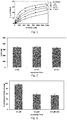
- the enzymatic reaction was carried out under the same conditions reported above. A total of 150 ⁇ L of solution containing the MAGL enzyme (11 ng/well) in buffer was added to 10 ⁇ L of DMSO containing the appropriate amount of compound 15 (40 - 0.00256 ⁇ M). After 0 minutes, 30 minutes and 60 minutes of incubation time, the reaction was started by adding 40 ⁇ L of 4-NPA 500 ⁇ M in buffer. The enzymatic activity was then measured according to the procedure described above. In principle, an irreversible inhibitor will increase its ability to block the enzyme with increasingly longer incubation times in the presence of the enzyme before adding the substrate; a constant IC 50 value, on the other hand, supports a reversible mechanism. As reported in Fig. 2 , compound 15 did not show any significant increase in its ability to block the activity of the MAGL enzyme after 30 and 60 minutes, suggesting a reversible interaction with the enzyme.
- the recombinant human MAGL enzyme (880 ng in 75 ⁇ l of Tris buffer, pH 7.2) was incubated for 60 minutes at room temperature with 5 ⁇ L of compound 15 (concentration of 12 ⁇ M and 0.3 ⁇ M in the mixture) dissolved in DMSO. The mixture containing the inhibitor and the enzyme was then diluted 40 times with the buffer solution. After 15 minutes of incubation, the reaction was started in a 160 ⁇ L aliquot with the addition of 40 ⁇ L of 4-NPA 500 ⁇ M in buffer and the enzyme activity was measured according to the procedure described above.
- the % of inhibition of the MAGL enzyme was calculated from the measured absorbance.
- the absorbance measured in the presence of only enzyme with vehicle and without compound was considered as absence of inhibition (positive control), while the absorbance measured in the wells with only vehicle without enzyme and without compound was considered as 100% inhibition (negative control).
- Intermediate absorbance values with respect to these two extremes indicate enzymatic inhibition and are calculated as the difference between the absorbance value in the well with the compound and the absorbance value of the negative control, all scaled as a percentage considering as the maximum value the negative control and minimum value of minimum inhibition the positive control.
- compound 15 were an irreversible inhibitor, its inhibitory potency should not decrease upon dilution. Otherwise, inhibition levels should be substantially reduced following dilution in the presence of a reversible inhibitor. As shown in Fig. 3 , compound 15 showed reversible inhibition, since the inhibition produced by a 20 ⁇ M concentration of the compound is significantly higher than the inhibition observed with a 40X dilution, which appears similar to that produced by a concentration of 0.5 ⁇ M of the compound.
- MDA-MB-231 Cell Biolabs AKR-231
- HCT116 ATCC® CCL-247
- CAOV3 ATCC® HTB-75
- OVCAR3 ATCC® HTB-161
- SKOV3 ATCC® HTB-77
- IC 50 values were calculated from dose-response curves. The means were obtained from the triplicates (Table 2). Table 2.
- IC 50 ( ⁇ M, mean ⁇ SD) Cpd HCT116 MDA-MB-231 CAOV3 OVCAR3 SKOV3 15 14 ⁇ 2 75 ⁇ 6 34 ⁇ 4 75 ⁇ 4 16 ⁇ 2
- compound 15 exhibits good cell viability inhibition activity for all cell lines tested.
Landscapes
- Chemical & Material Sciences (AREA)
- Organic Chemistry (AREA)
- Health & Medical Sciences (AREA)
- General Health & Medical Sciences (AREA)
- Pharmacology & Pharmacy (AREA)
- Veterinary Medicine (AREA)
- Public Health (AREA)
- Animal Behavior & Ethology (AREA)
- Chemical Kinetics & Catalysis (AREA)
- General Chemical & Material Sciences (AREA)
- Medicinal Chemistry (AREA)
- Nuclear Medicine, Radiotherapy & Molecular Imaging (AREA)
- Life Sciences & Earth Sciences (AREA)
- Bioinformatics & Cheminformatics (AREA)
- Neurosurgery (AREA)
- Engineering & Computer Science (AREA)
- Neurology (AREA)
- Biomedical Technology (AREA)
- Pharmaceuticals Containing Other Organic And Inorganic Compounds (AREA)
- Enzymes And Modification Thereof (AREA)
Applications Claiming Priority (1)
| Application Number | Priority Date | Filing Date | Title |
|---|---|---|---|
| IT102020000007150A IT202000007150A1 (it) | 2020-04-03 | 2020-04-03 | Inibitori di monoacilglicerolo lipasi (magl) |
Publications (2)
| Publication Number | Publication Date |
|---|---|
| EP3889132A1 true EP3889132A1 (de) | 2021-10-06 |
| EP3889132B1 EP3889132B1 (de) | 2022-12-14 |
Family
ID=72356231
Family Applications (1)
| Application Number | Title | Priority Date | Filing Date |
|---|---|---|---|
| EP21166820.7A Active EP3889132B1 (de) | 2020-04-03 | 2021-04-02 | Inhibitoren der monoacylglycerol lipase(magl) |
Country Status (2)
| Country | Link |
|---|---|
| EP (1) | EP3889132B1 (de) |
| IT (1) | IT202000007150A1 (de) |
Cited By (1)
| Publication number | Priority date | Publication date | Assignee | Title |
|---|---|---|---|---|
| US12286421B2 (en) | 2021-12-29 | 2025-04-29 | Psy Therapeutics, Inc. | Inhibiting monoacylglycerol lipase (MAGL) |
Citations (1)
| Publication number | Priority date | Publication date | Assignee | Title |
|---|---|---|---|---|
| US20180134674A1 (en) * | 2016-11-16 | 2018-05-17 | Abide Therapeutics, Inc. | Magl inhibitors |
-
2020
- 2020-04-03 IT IT102020000007150A patent/IT202000007150A1/it unknown
-
2021
- 2021-04-02 EP EP21166820.7A patent/EP3889132B1/de active Active
Patent Citations (1)
| Publication number | Priority date | Publication date | Assignee | Title |
|---|---|---|---|---|
| US20180134674A1 (en) * | 2016-11-16 | 2018-05-17 | Abide Therapeutics, Inc. | Magl inhibitors |
Non-Patent Citations (15)
| Title |
|---|
| "Remington ''The Science and Practice of Pharmacy", 2000, LIPPINCOTT WILLIAMS & WILKINS |
| "UniProtKB", Database accession no. Q99685 |
| BERGE S. M. ET AL., J. PHARM. SCI., vol. 66, 1977, pages 1 - 19 |
| BIGHLEY ET AL.: "Encyclopedia of Pharmaceutical Technology", vol. 13, 1996, MARCEL DEKKER INC, pages: 453 - 497 |
| CARLOTTA GRANCHI ET AL: "Optimization of a Benzoylpiperidine Class Identifies a Highly Potent and Selective Reversible Monoacylglycerol Lipase (MAGL) Inhibitor", JOURNAL OF MEDICINAL CHEMISTRY, vol. 62, no. 4, 28 February 2019 (2019-02-28), pages 1932 - 1958, XP055756032, ISSN: 0022-2623, DOI: 10.1021/acs.jmedchem.8b01483 * |
| DENG HUILI WEIMIN: "Monoacylglycerol lipase inhibitors: cancer malignancy, neurological and metabolic disorders", ACTA PHARMACEUTICA SINICA B, Retrieved from the Internet <URL:https://doi.org/10.1016/j.apsb.2019.10.006> |
| DRUG OF TODAY, vol. 19, no. 9, 1983, pages 499 - 538 |
| GOULD P. L., INT. J. PHARM, vol. 33, 1986, pages 201 - 217 |
| GRANCHI C ET AL.: "Optimization of a Benzoylpiperidine Class Identifies a Highly Potent and Selective Reversible Monoacylglycerol Lipase (MAGL) Inhibitor", J MED CHEM., vol. 62, no. 4, 11 February 2019 (2019-02-11), pages 1932 - 1958, XP055756032, DOI: 10.1021/acs.jmedchem.8b01483 |
| GRANCHI C ET AL.: "Structural Optimization of 4-Chlorobenzoylpiperidine Derivatives for the Development of Potent, Reversible, and Selective Monoacylglycerol Lipase (MAGL) Inhibitors", J MED CHEM., vol. 59, no. 22, 14 November 2016 (2016-11-14), pages 10299 - 10314 |
| GRANCHI C ET AL.: "Tuccinardi T. Structural Optimization of 4-Chlorobenzoylpiperidine Derivatives for the Development of Potent, Reversible, and Selective Monoacylglycerol Lipase (MAGL) Inhibitors", J MED CHEM., vol. 59, no. 22, 14 November 2016 (2016-11-14), pages 10299 - 10314 |
| GRANCHI ET AL., JOURNAL OF MEDICINAL CHEMISTRY, vol. 62, no. 4, 2019, pages 1932 - 1958 |
| H. BUNDGAARD, DESIGN OF PRODRUGS |
| H. BUNDGAARD: "Topics in Chemistry", vol. 31, 1985, ELSEVIER, article "Design of Prodrugs", pages: 306 - 316 |
| T. GREENEP.G.M. WUTS: "Protective Groups in Organic Chemistry", 1991, JOHN WILEY & SONS |
Cited By (1)
| Publication number | Priority date | Publication date | Assignee | Title |
|---|---|---|---|---|
| US12286421B2 (en) | 2021-12-29 | 2025-04-29 | Psy Therapeutics, Inc. | Inhibiting monoacylglycerol lipase (MAGL) |
Also Published As
| Publication number | Publication date |
|---|---|
| EP3889132B1 (de) | 2022-12-14 |
| IT202000007150A1 (it) | 2021-10-03 |
Similar Documents
| Publication | Publication Date | Title |
|---|---|---|
| JP5934184B2 (ja) | ヒストンデメチラーゼlsd1及び/又はlsd2の阻害剤としてのトラニルシプロミン誘導体 | |
| US20170298399A1 (en) | Biosynthesis of cannabinoid prodrugs and their use as therapeutic agents | |
| EP3572404B1 (de) | Butylphthalid-telmisartan-heterokomplex, herstellungsverfahren und anwendung davon | |
| AU2017286335A1 (en) | Methods for the manufacture of cannabinoid prodrugs, pharmaceutical formulations and their use | |
| WO2011146855A1 (en) | Selective hdac inhibitors | |
| EA027451B1 (ru) | Ингибиторы кинуренин-3-монооксигеназы, фармацевтические композиции и их применение | |
| WO2008021625A2 (en) | Combination faah inhibitor and analgesic, anti-inflammatory or anti-pyretic agent | |
| EP1592418B1 (de) | Verwendung von endocannabinoid-verbindungen zur behandlung von cns degenerativen krankheiten | |
| EP3889132B1 (de) | Inhibitoren der monoacylglycerol lipase(magl) | |
| JP7374233B2 (ja) | 立体配置を有するチエノピリミジン誘導体及び薬物におけるその応用 | |
| WO2000030683A1 (en) | Preventives and/or remedies for central nervous system diseases containing compounds having txa2 receptor antagonism and/or txa2 synthase inhibitory effect | |
| US9115116B2 (en) | Dual action inhibitors against histone deacetylases and 3-hydroxy-3-methylglutaryl coenzyme a reductase | |
| EP1861356A1 (de) | Imine als ionenkanalmodulatoren | |
| US20130085163A1 (en) | Pyripyropene Derivative Having ACAT2 Inhibiting Activity and Stable to Metabolizing Enzymes | |
| US20150119406A1 (en) | Tricyclic pyrone compounds reduce amyloid beta aggregates | |
| EP3708563B1 (de) | Selenopsammapin a und derivate davon, verfahren zu ihrer herstellung und diese als wirkstoffe enthaltende zusammensetzung zur vorbeugung und behandlung von krebs | |
| CA2690265A1 (en) | Mutual prodrugs and methods to treat cancer | |
| KR102760018B1 (ko) | 페로토시스 저해제 및 그 용도 | |
| JP2014509633A (ja) | スフィンゴ脂質シグナリングのモジュレーターとしての新規の複素環式化合物及びその使用 | |
| EP4559461A1 (de) | Duale nlrp1- und nlrp3-inhibitoren zur verwendung als medikament | |
| JP2021521109A (ja) | Keap1/nrf2タンパク質間相互作用の1,4−置換イソキノリン阻害剤 | |
| AU7919200A (en) | Anti-ischemic compounds | |
| WO2024239762A1 (zh) | 磷酸二酯酶4抑制剂、其药物组合物及其应用 | |
| EP4067367A1 (de) | Oleanan-cinnamamidderivat, verfahren zu seiner herstellung und seine verwendung | |
| US8765719B2 (en) | Therapeutic drug for adult T-cell leukemia |
Legal Events
| Date | Code | Title | Description |
|---|---|---|---|
| PUAI | Public reference made under article 153(3) epc to a published international application that has entered the european phase |
Free format text: ORIGINAL CODE: 0009012 |
|
| STAA | Information on the status of an ep patent application or granted ep patent |
Free format text: STATUS: THE APPLICATION HAS BEEN PUBLISHED |
|
| AK | Designated contracting states |
Kind code of ref document: A1 Designated state(s): AL AT BE BG CH CY CZ DE DK EE ES FI FR GB GR HR HU IE IS IT LI LT LU LV MC MK MT NL NO PL PT RO RS SE SI SK SM TR |
|
| STAA | Information on the status of an ep patent application or granted ep patent |
Free format text: STATUS: REQUEST FOR EXAMINATION WAS MADE |
|
| 17P | Request for examination filed |
Effective date: 20220331 |
|
| RBV | Designated contracting states (corrected) |
Designated state(s): AL AT BE BG CH CY CZ DE DK EE ES FI FR GB GR HR HU IE IS IT LI LT LU LV MC MK MT NL NO PL PT RO RS SE SI SK SM TR |
|
| GRAP | Despatch of communication of intention to grant a patent |
Free format text: ORIGINAL CODE: EPIDOSNIGR1 |
|
| STAA | Information on the status of an ep patent application or granted ep patent |
Free format text: STATUS: GRANT OF PATENT IS INTENDED |
|
| RIC1 | Information provided on ipc code assigned before grant |
Ipc: A61K 31/16 20060101ALI20220705BHEP Ipc: A61P 35/00 20060101ALI20220705BHEP Ipc: A61P 25/00 20060101ALI20220705BHEP Ipc: C07C 233/29 20060101ALI20220705BHEP Ipc: C07C 233/25 20060101AFI20220705BHEP |
|
| INTG | Intention to grant announced |
Effective date: 20220722 |
|
| RIN1 | Information on inventor provided before grant (corrected) |
Inventor name: GIORDANO, ANTONIO Inventor name: RIZZOLIO, FLAVIO Inventor name: TUCCINARDI, TIZIANO Inventor name: SCALABRINI, DIANA Inventor name: POLI, GIULIO Inventor name: MINUTOLO, FILIPPO Inventor name: MACCHIA, MARCO Inventor name: BONONI, GIULIA Inventor name: GRANCHI, CARLOTTA |
|
| GRAS | Grant fee paid |
Free format text: ORIGINAL CODE: EPIDOSNIGR3 |
|
| GRAA | (expected) grant |
Free format text: ORIGINAL CODE: 0009210 |
|
| STAA | Information on the status of an ep patent application or granted ep patent |
Free format text: STATUS: THE PATENT HAS BEEN GRANTED |
|
| AK | Designated contracting states |
Kind code of ref document: B1 Designated state(s): AL AT BE BG CH CY CZ DE DK EE ES FI FR GB GR HR HU IE IS IT LI LT LU LV MC MK MT NL NO PL PT RO RS SE SI SK SM TR |
|
| REG | Reference to a national code |
Ref country code: GB Ref legal event code: FG4D |
|
| REG | Reference to a national code |
Ref country code: CH Ref legal event code: EP |
|
| REG | Reference to a national code |
Ref country code: DE Ref legal event code: R096 Ref document number: 602021000963 Country of ref document: DE |
|
| REG | Reference to a national code |
Ref country code: IE Ref legal event code: FG4D |
|
| REG | Reference to a national code |
Ref country code: AT Ref legal event code: REF Ref document number: 1537604 Country of ref document: AT Kind code of ref document: T Effective date: 20230115 |
|
| REG | Reference to a national code |
Ref country code: LT Ref legal event code: MG9D |
|
| REG | Reference to a national code |
Ref country code: NL Ref legal event code: MP Effective date: 20221214 |
|
| PG25 | Lapsed in a contracting state [announced via postgrant information from national office to epo] |
Ref country code: SE Free format text: LAPSE BECAUSE OF FAILURE TO SUBMIT A TRANSLATION OF THE DESCRIPTION OR TO PAY THE FEE WITHIN THE PRESCRIBED TIME-LIMIT Effective date: 20221214 Ref country code: NO Free format text: LAPSE BECAUSE OF FAILURE TO SUBMIT A TRANSLATION OF THE DESCRIPTION OR TO PAY THE FEE WITHIN THE PRESCRIBED TIME-LIMIT Effective date: 20230314 Ref country code: LT Free format text: LAPSE BECAUSE OF FAILURE TO SUBMIT A TRANSLATION OF THE DESCRIPTION OR TO PAY THE FEE WITHIN THE PRESCRIBED TIME-LIMIT Effective date: 20221214 Ref country code: FI Free format text: LAPSE BECAUSE OF FAILURE TO SUBMIT A TRANSLATION OF THE DESCRIPTION OR TO PAY THE FEE WITHIN THE PRESCRIBED TIME-LIMIT Effective date: 20221214 |
|
| REG | Reference to a national code |
Ref country code: AT Ref legal event code: MK05 Ref document number: 1537604 Country of ref document: AT Kind code of ref document: T Effective date: 20221214 |
|
| PG25 | Lapsed in a contracting state [announced via postgrant information from national office to epo] |
Ref country code: RS Free format text: LAPSE BECAUSE OF FAILURE TO SUBMIT A TRANSLATION OF THE DESCRIPTION OR TO PAY THE FEE WITHIN THE PRESCRIBED TIME-LIMIT Effective date: 20221214 Ref country code: LV Free format text: LAPSE BECAUSE OF FAILURE TO SUBMIT A TRANSLATION OF THE DESCRIPTION OR TO PAY THE FEE WITHIN THE PRESCRIBED TIME-LIMIT Effective date: 20221214 Ref country code: HR Free format text: LAPSE BECAUSE OF FAILURE TO SUBMIT A TRANSLATION OF THE DESCRIPTION OR TO PAY THE FEE WITHIN THE PRESCRIBED TIME-LIMIT Effective date: 20221214 Ref country code: GR Free format text: LAPSE BECAUSE OF FAILURE TO SUBMIT A TRANSLATION OF THE DESCRIPTION OR TO PAY THE FEE WITHIN THE PRESCRIBED TIME-LIMIT Effective date: 20230315 |
|
| PG25 | Lapsed in a contracting state [announced via postgrant information from national office to epo] |
Ref country code: NL Free format text: LAPSE BECAUSE OF FAILURE TO SUBMIT A TRANSLATION OF THE DESCRIPTION OR TO PAY THE FEE WITHIN THE PRESCRIBED TIME-LIMIT Effective date: 20221214 |
|
| PG25 | Lapsed in a contracting state [announced via postgrant information from national office to epo] |
Ref country code: SM Free format text: LAPSE BECAUSE OF FAILURE TO SUBMIT A TRANSLATION OF THE DESCRIPTION OR TO PAY THE FEE WITHIN THE PRESCRIBED TIME-LIMIT Effective date: 20221214 Ref country code: RO Free format text: LAPSE BECAUSE OF FAILURE TO SUBMIT A TRANSLATION OF THE DESCRIPTION OR TO PAY THE FEE WITHIN THE PRESCRIBED TIME-LIMIT Effective date: 20221214 Ref country code: PT Free format text: LAPSE BECAUSE OF FAILURE TO SUBMIT A TRANSLATION OF THE DESCRIPTION OR TO PAY THE FEE WITHIN THE PRESCRIBED TIME-LIMIT Effective date: 20230414 Ref country code: ES Free format text: LAPSE BECAUSE OF FAILURE TO SUBMIT A TRANSLATION OF THE DESCRIPTION OR TO PAY THE FEE WITHIN THE PRESCRIBED TIME-LIMIT Effective date: 20221214 Ref country code: EE Free format text: LAPSE BECAUSE OF FAILURE TO SUBMIT A TRANSLATION OF THE DESCRIPTION OR TO PAY THE FEE WITHIN THE PRESCRIBED TIME-LIMIT Effective date: 20221214 Ref country code: CZ Free format text: LAPSE BECAUSE OF FAILURE TO SUBMIT A TRANSLATION OF THE DESCRIPTION OR TO PAY THE FEE WITHIN THE PRESCRIBED TIME-LIMIT Effective date: 20221214 Ref country code: AT Free format text: LAPSE BECAUSE OF FAILURE TO SUBMIT A TRANSLATION OF THE DESCRIPTION OR TO PAY THE FEE WITHIN THE PRESCRIBED TIME-LIMIT Effective date: 20221214 |
|
| PG25 | Lapsed in a contracting state [announced via postgrant information from national office to epo] |
Ref country code: SK Free format text: LAPSE BECAUSE OF FAILURE TO SUBMIT A TRANSLATION OF THE DESCRIPTION OR TO PAY THE FEE WITHIN THE PRESCRIBED TIME-LIMIT Effective date: 20221214 Ref country code: PL Free format text: LAPSE BECAUSE OF FAILURE TO SUBMIT A TRANSLATION OF THE DESCRIPTION OR TO PAY THE FEE WITHIN THE PRESCRIBED TIME-LIMIT Effective date: 20221214 Ref country code: IS Free format text: LAPSE BECAUSE OF FAILURE TO SUBMIT A TRANSLATION OF THE DESCRIPTION OR TO PAY THE FEE WITHIN THE PRESCRIBED TIME-LIMIT Effective date: 20230414 Ref country code: AL Free format text: LAPSE BECAUSE OF FAILURE TO SUBMIT A TRANSLATION OF THE DESCRIPTION OR TO PAY THE FEE WITHIN THE PRESCRIBED TIME-LIMIT Effective date: 20221214 |
|
| REG | Reference to a national code |
Ref country code: DE Ref legal event code: R097 Ref document number: 602021000963 Country of ref document: DE |
|
| PLBE | No opposition filed within time limit |
Free format text: ORIGINAL CODE: 0009261 |
|
| STAA | Information on the status of an ep patent application or granted ep patent |
Free format text: STATUS: NO OPPOSITION FILED WITHIN TIME LIMIT |
|
| PG25 | Lapsed in a contracting state [announced via postgrant information from national office to epo] |
Ref country code: DK Free format text: LAPSE BECAUSE OF FAILURE TO SUBMIT A TRANSLATION OF THE DESCRIPTION OR TO PAY THE FEE WITHIN THE PRESCRIBED TIME-LIMIT Effective date: 20221214 |
|
| 26N | No opposition filed |
Effective date: 20230915 |
|
| PG25 | Lapsed in a contracting state [announced via postgrant information from national office to epo] |
Ref country code: SI Free format text: LAPSE BECAUSE OF FAILURE TO SUBMIT A TRANSLATION OF THE DESCRIPTION OR TO PAY THE FEE WITHIN THE PRESCRIBED TIME-LIMIT Effective date: 20221214 |
|
| PG25 | Lapsed in a contracting state [announced via postgrant information from national office to epo] |
Ref country code: LU Free format text: LAPSE BECAUSE OF NON-PAYMENT OF DUE FEES Effective date: 20230402 |
|
| REG | Reference to a national code |
Ref country code: BE Ref legal event code: MM Effective date: 20230430 |
|
| PG25 | Lapsed in a contracting state [announced via postgrant information from national office to epo] |
Ref country code: MC Free format text: LAPSE BECAUSE OF FAILURE TO SUBMIT A TRANSLATION OF THE DESCRIPTION OR TO PAY THE FEE WITHIN THE PRESCRIBED TIME-LIMIT Effective date: 20221214 |
|
| PG25 | Lapsed in a contracting state [announced via postgrant information from national office to epo] |
Ref country code: MC Free format text: LAPSE BECAUSE OF FAILURE TO SUBMIT A TRANSLATION OF THE DESCRIPTION OR TO PAY THE FEE WITHIN THE PRESCRIBED TIME-LIMIT Effective date: 20221214 Ref country code: FR Free format text: LAPSE BECAUSE OF NON-PAYMENT OF DUE FEES Effective date: 20230430 |
|
| REG | Reference to a national code |
Ref country code: IE Ref legal event code: MM4A |
|
| PG25 | Lapsed in a contracting state [announced via postgrant information from national office to epo] |
Ref country code: BE Free format text: LAPSE BECAUSE OF NON-PAYMENT OF DUE FEES Effective date: 20230430 |
|
| PG25 | Lapsed in a contracting state [announced via postgrant information from national office to epo] |
Ref country code: IE Free format text: LAPSE BECAUSE OF NON-PAYMENT OF DUE FEES Effective date: 20230402 |
|
| PG25 | Lapsed in a contracting state [announced via postgrant information from national office to epo] |
Ref country code: IE Free format text: LAPSE BECAUSE OF NON-PAYMENT OF DUE FEES Effective date: 20230402 |
|
| PG25 | Lapsed in a contracting state [announced via postgrant information from national office to epo] |
Ref country code: IT Free format text: LAPSE BECAUSE OF FAILURE TO SUBMIT A TRANSLATION OF THE DESCRIPTION OR TO PAY THE FEE WITHIN THE PRESCRIBED TIME-LIMIT Effective date: 20221214 |
|
| PG25 | Lapsed in a contracting state [announced via postgrant information from national office to epo] |
Ref country code: BG Free format text: LAPSE BECAUSE OF FAILURE TO SUBMIT A TRANSLATION OF THE DESCRIPTION OR TO PAY THE FEE WITHIN THE PRESCRIBED TIME-LIMIT Effective date: 20221214 |
|
| PG25 | Lapsed in a contracting state [announced via postgrant information from national office to epo] |
Ref country code: BG Free format text: LAPSE BECAUSE OF FAILURE TO SUBMIT A TRANSLATION OF THE DESCRIPTION OR TO PAY THE FEE WITHIN THE PRESCRIBED TIME-LIMIT Effective date: 20221214 |
|
| PGFP | Annual fee paid to national office [announced via postgrant information from national office to epo] |
Ref country code: DE Payment date: 20250429 Year of fee payment: 5 |
|
| PGFP | Annual fee paid to national office [announced via postgrant information from national office to epo] |
Ref country code: CH Payment date: 20250508 Year of fee payment: 5 |
|
| PG25 | Lapsed in a contracting state [announced via postgrant information from national office to epo] |
Ref country code: CY Free format text: LAPSE BECAUSE OF FAILURE TO SUBMIT A TRANSLATION OF THE DESCRIPTION OR TO PAY THE FEE WITHIN THE PRESCRIBED TIME-LIMIT; INVALID AB INITIO Effective date: 20210402 |
|
| PG25 | Lapsed in a contracting state [announced via postgrant information from national office to epo] |
Ref country code: HU Free format text: LAPSE BECAUSE OF FAILURE TO SUBMIT A TRANSLATION OF THE DESCRIPTION OR TO PAY THE FEE WITHIN THE PRESCRIBED TIME-LIMIT; INVALID AB INITIO Effective date: 20210402 |
|
| PG25 | Lapsed in a contracting state [announced via postgrant information from national office to epo] |
Ref country code: TR Free format text: LAPSE BECAUSE OF FAILURE TO SUBMIT A TRANSLATION OF THE DESCRIPTION OR TO PAY THE FEE WITHIN THE PRESCRIBED TIME-LIMIT Effective date: 20221214 |
|
| GBPC | Gb: european patent ceased through non-payment of renewal fee |
Effective date: 20250402 |
|
| PG25 | Lapsed in a contracting state [announced via postgrant information from national office to epo] |
Ref country code: GB Free format text: LAPSE BECAUSE OF NON-PAYMENT OF DUE FEES Effective date: 20250402 |