EP3889293A2 - Tôle d'acier ayant une excellente ténacité de zone affectée par la chaleur et son procédé de fabrication - Google Patents
Tôle d'acier ayant une excellente ténacité de zone affectée par la chaleur et son procédé de fabrication Download PDFInfo
- Publication number
- EP3889293A2 EP3889293A2 EP19889074.1A EP19889074A EP3889293A2 EP 3889293 A2 EP3889293 A2 EP 3889293A2 EP 19889074 A EP19889074 A EP 19889074A EP 3889293 A2 EP3889293 A2 EP 3889293A2
- Authority
- EP
- European Patent Office
- Prior art keywords
- affected zone
- heat affected
- steel material
- steel
- excellent heat
- Prior art date
- Legal status (The legal status is an assumption and is not a legal conclusion. Google has not performed a legal analysis and makes no representation as to the accuracy of the status listed.)
- Pending
Links
Images


Classifications
-
- C—CHEMISTRY; METALLURGY
- C22—METALLURGY; FERROUS OR NON-FERROUS ALLOYS; TREATMENT OF ALLOYS OR NON-FERROUS METALS
- C22C—ALLOYS
- C22C38/00—Ferrous alloys, e.g. steel alloys
- C22C38/14—Ferrous alloys, e.g. steel alloys containing titanium or zirconium
-
- C—CHEMISTRY; METALLURGY
- C21—METALLURGY OF IRON
- C21D—MODIFYING THE PHYSICAL STRUCTURE OF FERROUS METALS; GENERAL DEVICES FOR HEAT TREATMENT OF FERROUS OR NON-FERROUS METALS OR ALLOYS; MAKING METAL MALLEABLE, e.g. BY DECARBURISATION OR TEMPERING
- C21D1/00—General methods or devices for heat treatment, e.g. annealing, hardening, quenching or tempering
- C21D1/02—Hardening articles or materials formed by forging or rolling, with no further heating beyond that required for the formation
-
- B—PERFORMING OPERATIONS; TRANSPORTING
- B23—MACHINE TOOLS; METAL-WORKING NOT OTHERWISE PROVIDED FOR
- B23K—SOLDERING OR UNSOLDERING; WELDING; CLADDING OR PLATING BY SOLDERING OR WELDING; CUTTING BY APPLYING HEAT LOCALLY, e.g. FLAME CUTTING; WORKING BY LASER BEAM
- B23K9/00—Arc welding or cutting
- B23K9/16—Arc welding or cutting making use of shielding gas
-
- C—CHEMISTRY; METALLURGY
- C21—METALLURGY OF IRON
- C21D—MODIFYING THE PHYSICAL STRUCTURE OF FERROUS METALS; GENERAL DEVICES FOR HEAT TREATMENT OF FERROUS OR NON-FERROUS METALS OR ALLOYS; MAKING METAL MALLEABLE, e.g. BY DECARBURISATION OR TEMPERING
- C21D6/00—Heat treatment of ferrous alloys
- C21D6/001—Heat treatment of ferrous alloys containing Ni
-
- C—CHEMISTRY; METALLURGY
- C21—METALLURGY OF IRON
- C21D—MODIFYING THE PHYSICAL STRUCTURE OF FERROUS METALS; GENERAL DEVICES FOR HEAT TREATMENT OF FERROUS OR NON-FERROUS METALS OR ALLOYS; MAKING METAL MALLEABLE, e.g. BY DECARBURISATION OR TEMPERING
- C21D6/00—Heat treatment of ferrous alloys
- C21D6/005—Heat treatment of ferrous alloys containing Mn
-
- C—CHEMISTRY; METALLURGY
- C21—METALLURGY OF IRON
- C21D—MODIFYING THE PHYSICAL STRUCTURE OF FERROUS METALS; GENERAL DEVICES FOR HEAT TREATMENT OF FERROUS OR NON-FERROUS METALS OR ALLOYS; MAKING METAL MALLEABLE, e.g. BY DECARBURISATION OR TEMPERING
- C21D6/00—Heat treatment of ferrous alloys
- C21D6/008—Heat treatment of ferrous alloys containing Si
-
- C—CHEMISTRY; METALLURGY
- C21—METALLURGY OF IRON
- C21D—MODIFYING THE PHYSICAL STRUCTURE OF FERROUS METALS; GENERAL DEVICES FOR HEAT TREATMENT OF FERROUS OR NON-FERROUS METALS OR ALLOYS; MAKING METAL MALLEABLE, e.g. BY DECARBURISATION OR TEMPERING
- C21D8/00—Modifying the physical properties of ferrous metals or ferrous alloys by deformation combined with, or followed by, heat treatment
- C21D8/02—Modifying the physical properties of ferrous metals or ferrous alloys by deformation combined with, or followed by, heat treatment during manufacturing of plates or strips
- C21D8/0221—Modifying the physical properties of ferrous metals or ferrous alloys by deformation combined with, or followed by, heat treatment during manufacturing of plates or strips characterised by the working steps
- C21D8/0226—Hot rolling
-
- C—CHEMISTRY; METALLURGY
- C21—METALLURGY OF IRON
- C21D—MODIFYING THE PHYSICAL STRUCTURE OF FERROUS METALS; GENERAL DEVICES FOR HEAT TREATMENT OF FERROUS OR NON-FERROUS METALS OR ALLOYS; MAKING METAL MALLEABLE, e.g. BY DECARBURISATION OR TEMPERING
- C21D8/00—Modifying the physical properties of ferrous metals or ferrous alloys by deformation combined with, or followed by, heat treatment
- C21D8/02—Modifying the physical properties of ferrous metals or ferrous alloys by deformation combined with, or followed by, heat treatment during manufacturing of plates or strips
- C21D8/0247—Modifying the physical properties of ferrous metals or ferrous alloys by deformation combined with, or followed by, heat treatment during manufacturing of plates or strips characterised by the heat treatment
-
- C—CHEMISTRY; METALLURGY
- C21—METALLURGY OF IRON
- C21D—MODIFYING THE PHYSICAL STRUCTURE OF FERROUS METALS; GENERAL DEVICES FOR HEAT TREATMENT OF FERROUS OR NON-FERROUS METALS OR ALLOYS; MAKING METAL MALLEABLE, e.g. BY DECARBURISATION OR TEMPERING
- C21D8/00—Modifying the physical properties of ferrous metals or ferrous alloys by deformation combined with, or followed by, heat treatment
- C21D8/02—Modifying the physical properties of ferrous metals or ferrous alloys by deformation combined with, or followed by, heat treatment during manufacturing of plates or strips
- C21D8/0247—Modifying the physical properties of ferrous metals or ferrous alloys by deformation combined with, or followed by, heat treatment during manufacturing of plates or strips characterised by the heat treatment
- C21D8/0263—Modifying the physical properties of ferrous metals or ferrous alloys by deformation combined with, or followed by, heat treatment during manufacturing of plates or strips characterised by the heat treatment following hot rolling
-
- C—CHEMISTRY; METALLURGY
- C21—METALLURGY OF IRON
- C21D—MODIFYING THE PHYSICAL STRUCTURE OF FERROUS METALS; GENERAL DEVICES FOR HEAT TREATMENT OF FERROUS OR NON-FERROUS METALS OR ALLOYS; MAKING METAL MALLEABLE, e.g. BY DECARBURISATION OR TEMPERING
- C21D9/00—Heat treatment, e.g. annealing, hardening, quenching or tempering, adapted for particular articles; Furnaces therefor
- C21D9/46—Heat treatment, e.g. annealing, hardening, quenching or tempering, adapted for particular articles; Furnaces therefor for sheet metals
-
- C—CHEMISTRY; METALLURGY
- C22—METALLURGY; FERROUS OR NON-FERROUS ALLOYS; TREATMENT OF ALLOYS OR NON-FERROUS METALS
- C22C—ALLOYS
- C22C38/00—Ferrous alloys, e.g. steel alloys
- C22C38/001—Ferrous alloys, e.g. steel alloys containing N
-
- C—CHEMISTRY; METALLURGY
- C22—METALLURGY; FERROUS OR NON-FERROUS ALLOYS; TREATMENT OF ALLOYS OR NON-FERROUS METALS
- C22C—ALLOYS
- C22C38/00—Ferrous alloys, e.g. steel alloys
- C22C38/002—Ferrous alloys, e.g. steel alloys containing In, Mg, or other elements not provided for in one single group C22C38/001 - C22C38/60
-
- C—CHEMISTRY; METALLURGY
- C22—METALLURGY; FERROUS OR NON-FERROUS ALLOYS; TREATMENT OF ALLOYS OR NON-FERROUS METALS
- C22C—ALLOYS
- C22C38/00—Ferrous alloys, e.g. steel alloys
- C22C38/02—Ferrous alloys, e.g. steel alloys containing silicon
-
- C—CHEMISTRY; METALLURGY
- C22—METALLURGY; FERROUS OR NON-FERROUS ALLOYS; TREATMENT OF ALLOYS OR NON-FERROUS METALS
- C22C—ALLOYS
- C22C38/00—Ferrous alloys, e.g. steel alloys
- C22C38/04—Ferrous alloys, e.g. steel alloys containing manganese
-
- C—CHEMISTRY; METALLURGY
- C22—METALLURGY; FERROUS OR NON-FERROUS ALLOYS; TREATMENT OF ALLOYS OR NON-FERROUS METALS
- C22C—ALLOYS
- C22C38/00—Ferrous alloys, e.g. steel alloys
- C22C38/06—Ferrous alloys, e.g. steel alloys containing aluminium
-
- C—CHEMISTRY; METALLURGY
- C22—METALLURGY; FERROUS OR NON-FERROUS ALLOYS; TREATMENT OF ALLOYS OR NON-FERROUS METALS
- C22C—ALLOYS
- C22C38/00—Ferrous alloys, e.g. steel alloys
- C22C38/08—Ferrous alloys, e.g. steel alloys containing nickel
-
- C—CHEMISTRY; METALLURGY
- C22—METALLURGY; FERROUS OR NON-FERROUS ALLOYS; TREATMENT OF ALLOYS OR NON-FERROUS METALS
- C22C—ALLOYS
- C22C38/00—Ferrous alloys, e.g. steel alloys
- C22C38/12—Ferrous alloys, e.g. steel alloys containing tungsten, tantalum, molybdenum, vanadium, or niobium
-
- C—CHEMISTRY; METALLURGY
- C21—METALLURGY OF IRON
- C21D—MODIFYING THE PHYSICAL STRUCTURE OF FERROUS METALS; GENERAL DEVICES FOR HEAT TREATMENT OF FERROUS OR NON-FERROUS METALS OR ALLOYS; MAKING METAL MALLEABLE, e.g. BY DECARBURISATION OR TEMPERING
- C21D2211/00—Microstructure comprising significant phases
- C21D2211/001—Austenite
-
- C—CHEMISTRY; METALLURGY
- C21—METALLURGY OF IRON
- C21D—MODIFYING THE PHYSICAL STRUCTURE OF FERROUS METALS; GENERAL DEVICES FOR HEAT TREATMENT OF FERROUS OR NON-FERROUS METALS OR ALLOYS; MAKING METAL MALLEABLE, e.g. BY DECARBURISATION OR TEMPERING
- C21D2211/00—Microstructure comprising significant phases
- C21D2211/002—Bainite
-
- C—CHEMISTRY; METALLURGY
- C21—METALLURGY OF IRON
- C21D—MODIFYING THE PHYSICAL STRUCTURE OF FERROUS METALS; GENERAL DEVICES FOR HEAT TREATMENT OF FERROUS OR NON-FERROUS METALS OR ALLOYS; MAKING METAL MALLEABLE, e.g. BY DECARBURISATION OR TEMPERING
- C21D2211/00—Microstructure comprising significant phases
- C21D2211/005—Ferrite
-
- C—CHEMISTRY; METALLURGY
- C21—METALLURGY OF IRON
- C21D—MODIFYING THE PHYSICAL STRUCTURE OF FERROUS METALS; GENERAL DEVICES FOR HEAT TREATMENT OF FERROUS OR NON-FERROUS METALS OR ALLOYS; MAKING METAL MALLEABLE, e.g. BY DECARBURISATION OR TEMPERING
- C21D2211/00—Microstructure comprising significant phases
- C21D2211/008—Martensite
Definitions
- the present disclosure relates to a steel material appropriate for a petrochemical material, a storage tank material, and the like, and more particularly, to a steel material having excellent weld zone toughness and a method for manufacturing the same.
- a high heat input welding method such as electrogas welding (EGW) is increasingly used for a base metal, but in this case, the heat affected zone is deteriorated due to a high heat input capacity to greatly decrease strength and toughness as compared with a region welded by a common welding method.
- EGW electrogas welding
- a representative local embrittlement region is a coarse crystal grain heat affected zone in the vicinity of a fusion line (FL) and has poor toughness due to crystal grain coarsening, formation of upper bainite.
- Patent Document 1 suggests a technology of adding Mg or Ca to a steel for controlling a content of oxygen (O) in the steel and forming a Mg or Ca oxide to suppress austenite crystal grains and to be acted as a nucleation site of ferrite to suppress formation of grain boundary ferrite, thereby improving toughness of a heat affected zone.
- O oxygen
- Patent Document 1 Japanese Patent Laid-Open Publication No. 2006-241510
- An aspect of the present disclosure is to provide a steel material which may be appropriately used as a material of structures and the like, that is, a steel material having excellent strength and toughness of a heat affected zone even in the case of performing high heat input welding and a method for manufacturing the same.
- An object of the present disclosure is not limited to the above description. Other objects of the present invention are described in overall contents of the specification, and it will not difficult at all for a person with ordinary skill in the art to which the present disclosure pertains to understand the objects of the present disclosure from the descriptions of the specification of the present disclosure.
- a steel material having excellent heat affected zone toughness includes, by weight: 0.02 to 0.08% of carbon (C), 0.15 to 0.5% of silicon (Si), 1.2 to 1.8% of manganese (Mn), 0.008% or less (excluding 0%) of phosphorus (P), 0.003% or less (excluding 0%) of sulfur (S), 0.005 to 0.1% of aluminum (Al), 0.01 to 0.5% of nickel (Ni), 0.01 to 0.1% of molybdenum (Mo), 0.005 to 0.05% of niobium (Nb), 0.005 to 0.02% of titanium (Ti), and 20 to 100 ppm of nitrogen (N), with a balance of Fe and other unavoidable impurities, and satisfies the following Relation Formula 1,
- a microstructure of a base metal includes, by area fraction, 20 to 60% of an acicular ferrite phase and 40 to 80% of a bainite phase, a microstructure of a fusion line in a heat affected zone after welding includes a ferrite phase and a bainite phase, and the steel material has a thickness of 10 to 40 mm: 0.42 > C + Mn / 6 + Cr + Mo + V / 5 + Cu + Ni / 15 wherein each element means a weight content.
- a method for manufacturing a steel material having excellent heat affected zone toughness includes: reheating a steel slab having an alloy composition described above and satisfying Relation 1 at 1050 to 1250°C; roughly rolling the reheated steel slab in a temperature range of 1200 to Ar3+30°C; after the rough rolling, finish-rolling the steel slab at a temperature higher than Ar3 to manufacture a hot rolled steel plate; and cooling the hot rolled steel plate down to room temperature to 550°C at a cooling rate of 5°C/s or more.
- a steel material having excellent strength and toughness in a heat affected zone as well as mechanical physical properties of a base metal may be provided.
- the steel material of the present disclosure may be appropriately used as a material for structures such as a petrochemical manufacturing facility, a storage tank, and the like.
- the inventors of the present disclosure conducted extensive research for obtaining a steel material having excellent strength and toughness of a heat affected zone as well as mechanical physical properties of a base metal. As a result, it was confirmed that a steel material allowing a heat affected zone having excellent strength and toughness to be secured even by high heat input welding may be provided by optimizing manufacturing conditions together with an alloy composition of the steel material, thereby completing the present disclosure.
- the "steel material” mentioned in the present disclosure may include not only a hot rolled steel plate manufactured by a series of processes but also a steel material having a weld zone (including a heat affected zone) formed by welding the hot rolled steel plate.
- the steel material having excellent heat affected zone toughness may include, by weight: 0.02 to 0.08% of carbon (C), 0.15 to 0.5% of silicon (Si), 1.2 to 1.8% of manganese (Mn), 0.008% or less (excluding 0%) of phosphorus (P), 0.003% or less (excluding 0%) of sulfur (S), 0.005 to 0.1% of aluminum (Al), 0.01 to 0.5% of nickel (Ni), 0.01 to 0.1% of molybdenum (Mo), 0.005 to 0.05% of niobium (Nb), 0.005 to 0.02% of titanium (Ti), and 20 to 100 ppm of nitrogen (N).
- Carbon (C) is an element effective for improving strength of steel, and in order to sufficiently obtain the effect, it is preferable to include 0.02% or more of carbon. However, when the content is more than 0.08%, the low temperature impact toughness of a base metal and a weld zone are greatly decreased.
- C may be included at 0.02 to 0.08%, more advantageously at 0.04 to 0.07%.
- Silicon (Si) is used as a deoxidizer and an element useful for improving strength and toughness of steel.
- Si is more than 0.5%, low temperature impact toughness and weldability may be rather poor, and thus, it is preferable to include 0.5% or less of Si.
- the content of Si is less than 0.15%, a deoxidation effect may be insufficient.
- Si may be included at 0.15 to 0.5%, more advantageously at 0.15 to 0.4%.
- Manganese (Mn) is an element advantageous for securing strength by solid solution strengthening. In order to sufficiently obtain the effect, it is preferable to include 1.2% or more of Mn. However, when the content is more than 1.8%, manganese is bonded to sulfur (S) in steel to form MnS, thereby greatly decreasing an elongation at room temperature and low temperature impact toughness.
- Mn may be included at 1.2 to 1.8%, more advantageously at 1.3 to 1.7%
- Phosphorus (P) is advantageous in terms of strength improvement and corrosion resistance of steel, but may greatly decrease impact toughness, and thus, it is preferable to maintain the content to be as low as possible.
- sulfur (S) is bonded to Mn in steel to form MnS to greatly deteriorate impact toughness, it is preferable to maintain the content as low as possible.
- Aluminum (Al) is an element for deoxidizing molten steel at a low cost, and in order to sufficiently obtain the effect, it is preferable to include Al at 0.005% or more. However, when the content is more than 0.1%, nozzle clogging is caused in continuous casting.
- Al may be included at 0.005 to 0.1%.
- Nickel (Ni) is an element advantageous for improving both strength and toughness of a base metal, and in order to sufficiently obtain the effect, nickel may be included at 0.01% or more. However, Ni is a high-priced element and when added at more than 0.5%, economic feasibility is greatly decreased.
- Ni may be included at 0.01 to 0.5%.
- Molybdenum (Mo) greatly improve hardenability only with addition in a small amount to suppress formation of a ferrite phase and also induce formation of a hard phase such as a bainite or martensite phase.
- Mo may greatly improve strength, it is necessary to add 0.01% or more of Mo.
- Mo is a high-priced element and when excessively added, hardness of a weld zone may be excessively increased to deteriorate toughness, and thus, considering the fact, it is necessary to limit the content to 0.1% or less.
- Mo may be included at 0.01 to 0.1%.
- Niobium (Nb) is precipitated in the form of NbC or Nb (C,N) to greatly improve strength of a base metal and a weld zone, and also, when reheated at a high temperature, solid-solubilized Nb suppresses recrystallization of austenite and transformation of ferrite or bainite, thereby obtaining a structure refinement effect.
- Nb increases stability of austenite even when cooling after rolling, production of a hard phase such as martensite or bainite is promoted even when cooled at a low rate to be useful for improving strength of a base metal.
- a grain boundary ferrite phase is formed after welding a steel material, a coarse NbC carbide may be formed to deteriorate physical properties.
- Nb may be included at 0.005% or more, but considering the aspect of securing weld zone impact toughness, Nb may be included at 0.05% or less.
- Titanium (Ti) is an element advantageous for suppressing crystal grain growth during reheating to greatly improve low temperature toughness. In order to sufficiently obtain the effect described above, it is preferable to include 0.005% or more of Ti, but when Ti is excessively added at more than 0.02%, low temperature impact toughness may be deteriorated due to nozzle clogging in continuous casting or center crystallization.
- Ti may be included at 0.005 to 0.02%.
- Nitrogen (N) forms a TiN precipitate when added with Ti to suppress crystal grain growth by heat effect during welding.
- N Nitrogen
- the content of N is more than 100 ppm, AlN is formed to cause surface cracks.
- N may be included at 20 to 100 ppm.
- V may be further included as described later.
- Vanadium (V) has a low solution solubilization temperature as compared with other alloy elements, and is precipitated in a heat affected zone to prevent drop in strength. Therefore, when securing strength after PWHT is not sufficient, 0.01% or more of vanadium may be added. However, when the content is more than 0.1%, a fraction of a hard phase such as MA is increased to deteriorate low temperature impact toughness of a weld zone.
- V when added, V may be included at 0.01 to 0.1%.
- a remaining component of the present disclosure is Fe.
- unintended impurities may be inevitably incorporated from raw materials or the surrounding environment, they may not be excluded. Since these impurities are known to any person skilled in the common manufacturing process, the entire contents thereof are not particularly mentioned in the present specification.
- the steel material of the present disclosure having the alloy composition described above has a carbon equivalent (Ceq) of less than 0.42, the carbon equivalent being represented by the following Relation Formula 1.
- the steel material of the present disclosure having the alloy composition described above and a controlled Ceq value has a thickness of 10 to 40 mm and may include, by area fraction, 20 to 60% of an acicular ferrite phase and 40 to 80% of a bainite phase, as a microstructure.
- the steel material of the present disclosure may have a low temperature structure as a microstructure to secure excellent strength and toughness.
- the acicular ferrite phase is less than 20% or the bainite phase is more than 80%, it is advantageous for securing strength but toughness may be deteriorated; however, when the acicular ferrite phase is more than 60% and the bainite phase is formed at less than 40%, it may be difficult to sufficiently secure strength.
- the steel material of the present disclosure may include a martensite phase (tempered martensite phase) at a constant fraction, except for the structures described above, and preferably, may include 10% or less (including 0%) of a martensite phase by area fraction.
- the steel material of the present disclosure may be welded, and it is preferable that after the welding, a microstructure of a fusion line in a heat affected zone has ferrite and bainite phases.
- the steel material of the present disclosure may advantageously secure strength and toughness of a weld zone, by appropriately forming a soft phase and a hard phase with the microstructure of a fusion line after welding.
- the fraction of each phase of the microstructure of the fusion line is not particularly limited, preferably, the ferrite phase may be included at 5 to 20% by area and a bainite phase may be included as a residual structure.
- the fusion line of the present disclosure may further include 5% or less (including 0%) of a MA phase except for the ferrite phase and the bainite phase.
- the steel material of the present disclosure includes a carbonitride of the fusion line in a heat affected zone and a base metal, the carbonitride is in the form of MC or M(C,N), in which M is one or more of Mo and Ti, and it is preferable that Mo is 20% by weight or more.
- the carbonitride is formed in the fusion line to prevent coarsening of austenite crystal grains, and thus, the heat affected zone has an austenite average crystal grain size of 500 ⁇ m or less.
- the present disclosure may have the microstructure of the base metal as described above even after PWHT, and thus, a tensile strength is 450 MPa or more and also Charpy impact absorption energy at -50°C is 200 J or more after PWHT so that strength and low temperature impact toughness are excellent.
- a tensile strength is 450 MPa or more and Charpy impact absorption energy at -50°C is 50 J or more before PWHT, while the tensile strength of the heat affected zone may be 450 MPa or more and the Charpy impact absorption energy at -50°C may be 100 J or more, after PWHT.
- high heat input welding may be applied by the welding method, and as an example, an electrogas welding (EGW) method having a heat input capacity of 100 to 200 kJ/cm may be applied.
- EGW electrogas welding
- the EGW method is a one-pass welding method, and is economically advantageous as compared with a common multi-pass welding method.
- a heat affected zone having excellent strength and toughness may be obtained from the steel material of the present disclosure, even when high heat input welding is applied.
- a steel slab satisfying the alloy composition described above and Relation Formula 1 is prepared, and may be subjected to a reheating process at 1050 to 1250°C.
- the steel slab may be reheated at 1050 to 1250°C.
- the steel slab which is reheated according to the above may be hot-rolled to be produced into a hot rolled steel plate.
- the hot rolling may be performed by undergoing rough rolling and finish rolling.
- the rough rolling may be performed in a temperature range of 1200 to Ar3+30°C, and the finish rolling may be performed at a temperature of Ar3 or higher. During the rough rolling, when the temperature is lower than Ar3+30°C, the temperature in the subsequent finish rolling is lowered to less than Ar3, which may cause poor quality.
- the manufactured hot rolled steel plate may be cooled to a temperature range of room temperature to 550°C, in which cooling may be performed at a cooling rate of 5°C/s or more.
- cooling rate in the cooling is less than 5°C/s
- ferrite crystal grains may be coarsened and a packet size of upper bainite is increased, so that is may be difficult to secure physical properties to be desired.
- the upper limit of the cooling rate is not particularly limited, but cooling may be performed at 100°C/s or less, considering facility specification, a thickness of a hot rolled steel plate, and the like.
- a pearlite or upper bainite phase may be formed to deteriorate strength and toughness.
- the cooling in performing cooling, the cooling may be initiated immediately after completing the finish hot rolling, and preferably the cooling may be initiated at 650°C or higher.
- the initiation temperature of the cooling is lower than 650°C, a ferrite fraction is excessively high, so that it is difficult to sufficiently secure strength. Therefore, the cooling may be initiated at 650°C or higher, more advantageously at 740°C or higher.
- the hot rolled steel plate of the present disclosure after cooling may have a microstructure formed of 20 to 60% of acicular ferrite and 40 to 80% of bainite by area fraction, thereby securing sufficient strength.
- 10% or less (including 0%) of a martensite phase may be included.
- the microstructure of the hot rolled steel plate is maintained as it is even after the PWHT process performed after welding, but the bainite phase and the martensite phase may be transformed into a tempered bainite or tempered martensite phase.
- the steel material manufactured by the series of processes described above may be welded, in which a heat input EGW process of a heat input capacity of 100 to 200 kJ/cm may be performed.
- the microstructure of the fusion line in the heat affected zone formed after the heat input EGW may include ferrite and bainite.
- the microstructure may include some MA phase, which is preferably included at 5% or less by area fraction.
- the heat affected zone having the microstructure described above may secure a tensile strength of 450 MPa or more and Charpy impact absorption energy at -50°C of 100 J or more even after a subsequent PWHT process.
- a post weld heat treatment (PWHT) process may be performed for removing residual stress, and the like.
- the post weld heat treatment (PWHT) process conditions are not particularly limited, but may be performed in a temperature range of 590 to 620°C for 60 minutes or more.
- the steel material (base metal) of the present disclosure may secure a tensile strength of 450 MPa or more and Charpy impact absorption energy at -50°C of 200 J or more even after PWHT.
- a steel slab having an alloy composition represented in the following Table 1 was reheated at 1120 to 1200°C and then finish-rolled at 870°C to manufacture each hot rolled steel plate. Thereafter, cooling of the hot rolled steel plate was initiated at 680 to 810°C and the steel plate was cooled by water to 100 to 200°C at a cooling rate of 5 to 70°C/s. Thereafter, the steel plate was subjected to a post weld heat treatment (PWHT) process in which the steel plate was maintained at 595°C for 60 minutes and then was air-cooled.
- PWHT post weld heat treatment
- finish rolling was performed immediately after rough rolling without designation of the finish rolling initiation temperature.
- microstructure was observed with an optical microscope, acicular ferrite, bainite, and martensite phases were visually distinguished using EBSD equipment, and each fraction was measured.
- the microstructure by thickness of the steel material manufactured by the alloy composition and the manufacturing conditions suggested in the present disclosure was confirmed. Specifically, since the acicular ferrite phase and the bainite phase were appropriately formed at an intended fraction regardless of the thickness of the steel material, it was confirmed that there was almost no deterioration of strength and impact toughness even after PWHT.
- Comparative steel 1 having an alloy composition which does not satisfy the present disclosure had rather low strength and toughness as compared with the inventive steels before PWHT. That is, Comparative steel 1 did not produce a Mo-based carbide in a matrix by not adding Mo, thereby having poor strength and toughness after PWHT.
- Comparative steel 2 had similar strength and toughness of a base metal to those of inventive steels by excessively adding Nb, but heat affected zone impact toughness was poor as confirmed in the following. This may be considered to be due to the fact that a TiNbCN carbonitride was formed by excessively added Nb to have poor toughness after welding and Nb induces grain boundary ferrite formation to adversely affect toughness after welding.
- Each hot rolled steel plate manufactured by subjecting steel slabs having alloy compositions of Table 1 to a [reheating - hot rolling - cooling] process as described in Example 1 was subjected to one-pass high heat input welding (EGW) at a heat input capacity of 170 kJ/cm to form a heat affected zone. Thereafter, the steel plate was subjected to a post weld heat treatment process in which the steel plate was maintained at 595°C for 60 minutes and then was air-cooled. Here, the post weld heat treatment process was performed twice.
- EGW high heat input welding
- the microstructure of the fusion line (FL) was observed by an optical microscope, ferrite, bainite, and hard phases (MA phase) were visually distinguished by EBSD equipment, each fraction was measured, and the results are shown in the following Table 5.
- an austenite average crystal grain size of the fusion line (FL) was measured, and the results are shown together.
- a specimen of the fusion line (FL) in the heat affected zone was collected, and a tensile strength (TS), a yield strength (YS), an elongation (EI), and an impact toughness (CVN) were measured.
- TS tensile strength
- YS yield strength
- EI elongation
- CVN impact toughness
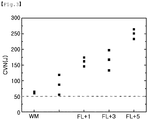
- each specimen was collected also in FL+1, FL+3, and FL+5 regions and impact toughness (CVN) was measured, and the results are shown in the following Table 6 (wherein +1, +3, and +5 regions refer to points 1 mm, 3 mm, and 5 mm away, respectively in a base metal direction based on a fusion line).
- the impact toughness (CVN) was measured by collecting each specimen before and after PWHT and then performing evaluation for each specimen.
- the microstructure of the fusion line (FL) in the heat affected zone obtained by welding the steel material manufactured by the alloy composition and the manufacturing conditions suggested in the present disclosure by the EGW method was confirmed. Specifically, since in Inventive steels 1 to 4, a soft phase and a hard phase were appropriately formed by the structure of the fusion line, it was confirmed that there was almost no deterioration of strength and impact toughness even after PWHT.
- Comparative steels 1 and 2 having alloy compositions which did not satisfy the present disclosure had poor impact toughness after PWHT of the fusion line in the heat affected zone.
- FIG. 2 is photographs of microstructures in FL, FL+1, FL+3, and FL+5 regions of Inventive steel 4, in which in FL and FL+1 regions, bainite and some grain boundary ferrite were observed and in FL+3 and FL+5 regions, there were fine and uniform polygonal ferrite structure.
- Inventive steel 4 secured impact toughness of the fusion line in the heat affected zone and the base metal of 50 J or more in all regions (FL, FL+1, FL+3, and FL+5) after PWHT.
Landscapes
- Chemical & Material Sciences (AREA)
- Engineering & Computer Science (AREA)
- Mechanical Engineering (AREA)
- Materials Engineering (AREA)
- Metallurgy (AREA)
- Organic Chemistry (AREA)
- Physics & Mathematics (AREA)
- Thermal Sciences (AREA)
- Crystallography & Structural Chemistry (AREA)
- Plasma & Fusion (AREA)
- Heat Treatment Of Steel (AREA)
- Heat Treatment Of Articles (AREA)
Applications Claiming Priority (2)
| Application Number | Priority Date | Filing Date | Title |
|---|---|---|---|
| KR1020180150705A KR102209581B1 (ko) | 2018-11-29 | 2018-11-29 | 용접열영향부 인성이 우수한 강재 및 이의 제조방법 |
| PCT/KR2019/016740 WO2020111874A2 (fr) | 2018-11-29 | 2019-11-29 | Tôle d'acier ayant une excellente ténacité de zone affectée par la chaleur et son procédé de fabrication |
Publications (2)
| Publication Number | Publication Date |
|---|---|
| EP3889293A2 true EP3889293A2 (fr) | 2021-10-06 |
| EP3889293A4 EP3889293A4 (fr) | 2021-11-03 |
Family
ID=70853614
Family Applications (1)
| Application Number | Title | Priority Date | Filing Date |
|---|---|---|---|
| EP19889074.1A Pending EP3889293A4 (fr) | 2018-11-29 | 2019-11-29 | Tôle d'acier ayant une excellente ténacité de zone affectée par la chaleur et son procédé de fabrication |
Country Status (7)
| Country | Link |
|---|---|
| US (1) | US12264387B2 (fr) |
| EP (1) | EP3889293A4 (fr) |
| JP (1) | JP7236540B2 (fr) |
| KR (1) | KR102209581B1 (fr) |
| CN (1) | CN113166884A (fr) |
| CA (1) | CA3121217C (fr) |
| WO (1) | WO2020111874A2 (fr) |
Families Citing this family (7)
| Publication number | Priority date | Publication date | Assignee | Title |
|---|---|---|---|---|
| KR20220071545A (ko) * | 2020-11-24 | 2022-05-31 | 현대자동차주식회사 | Twb 공법을 이용한 핫스탬핑 성형체 및 그 제조방법 |
| KR102546616B1 (ko) * | 2020-12-21 | 2023-06-23 | 주식회사 포스코 | 표면품질과 전기 저항 점용접성이 우수한 아연도금강판 및 그 제조방법 |
| KR20230078073A (ko) * | 2021-11-26 | 2023-06-02 | 주식회사 포스코 | 용접 열영향부 인성이 우수한 강재 및 그 제조방법 |
| CN114150228B (zh) * | 2021-12-08 | 2022-07-26 | 东北大学 | 一种抗大线能量焊接的建筑用钢及其生产方法 |
| CN114952191B (zh) * | 2022-06-01 | 2023-08-04 | 昆明理工大学 | 一种高镍含氮双相不锈钢的高性能焊接热影响区热加工方法 |
| JP2026510107A (ja) * | 2022-10-27 | 2026-04-01 | ポスコ カンパニー リミテッド | 溶接熱影響部靭性に優れた鋼材及びその製造方法 |
| WO2025079726A1 (fr) * | 2023-10-11 | 2025-04-17 | 日本製鉄株式会社 | Joint de soudure, et récipient sous pression |
Family Cites Families (29)
| Publication number | Priority date | Publication date | Assignee | Title |
|---|---|---|---|---|
| JPS61272348A (ja) * | 1985-05-27 | 1986-12-02 | Kobe Steel Ltd | 高靭性大入熱溶接用鋼 |
| JPH0499248A (ja) * | 1990-08-10 | 1992-03-31 | Sumitomo Metal Ind Ltd | 溶接熱影響部靭性の優る鋼材並びにその製法 |
| JP4160763B2 (ja) | 2002-03-12 | 2008-10-08 | 新日本製鐵株式会社 | 溶接歪みの少ない鋼板 |
| KR100622888B1 (ko) | 2002-09-04 | 2006-09-14 | 제이에프이 스틸 가부시키가이샤 | 대입열용접용 강재 및 그 제조방법 |
| JP3899014B2 (ja) | 2002-11-06 | 2007-03-28 | 新日本製鐵株式会社 | 母材および溶接熱影響部の靱性に優れた引張強さ570ないし800MPa級高強度鋼板およびその製造方法 |
| JP4332064B2 (ja) | 2004-05-07 | 2009-09-16 | 新日本製鐵株式会社 | 入熱20〜100kJ/mmの大入熱溶接用高HAZ靭性鋼材 |
| JP2006241510A (ja) | 2005-03-02 | 2006-09-14 | Nippon Steel Corp | 大入熱溶接部hazの低温靭性に優れた高強度溶接構造用鋼とその製造方法 |
| JP5292784B2 (ja) | 2006-11-30 | 2013-09-18 | 新日鐵住金株式会社 | 低温靱性に優れた高強度ラインパイプ用溶接鋼管及びその製造方法 |
| JP5141073B2 (ja) | 2007-03-30 | 2013-02-13 | Jfeスチール株式会社 | X70グレード以下の低降伏比高強度高靱性鋼管およびその製造方法 |
| JP2009041073A (ja) | 2007-08-09 | 2009-02-26 | Sumitomo Metal Ind Ltd | 溶接部からの延性き裂発生に対する抵抗性に優れる高張力鋼溶接継手およびその製造方法 |
| JP5096087B2 (ja) | 2007-09-11 | 2012-12-12 | 株式会社神戸製鋼所 | 母材低温靭性に優れた大入熱溶接用高張力鋼板 |
| WO2009072753A1 (fr) | 2007-12-04 | 2009-06-11 | Posco | Tôle d'acier à haute résistance avec une excellente ténacité à basse température et procédé de fabrication de celle-ci |
| JP5181697B2 (ja) | 2008-01-25 | 2013-04-10 | Jfeスチール株式会社 | 耐pwht特性に優れた高強度鋼板およびその製造方法 |
| CN101565796B (zh) | 2009-06-05 | 2011-10-05 | 武汉钢铁(集团)公司 | 一种抗拉强度570MPa级弯管用钢板及其生产方法 |
| WO2011148754A1 (fr) * | 2010-05-27 | 2011-12-01 | 新日本製鐵株式会社 | Procédé de fabrication d'une tôle d'acier épaisse |
| KR101271968B1 (ko) | 2010-12-15 | 2013-06-07 | 주식회사 포스코 | 용접 후 열처리 저항성이 우수한 중고온용 강판 및 그 제조방법 |
| KR20120071619A (ko) | 2010-12-23 | 2012-07-03 | 주식회사 포스코 | 용접후열처리 특성이 우수한 고강도 라인파이프 강판 및 그 제조방법 |
| JP5903880B2 (ja) * | 2011-12-26 | 2016-04-13 | Jfeスチール株式会社 | 耐サワー特性と溶接熱影響部靭性に優れたラインパイプ用高強度鋼板及びその製造方法 |
| KR101500047B1 (ko) * | 2012-12-26 | 2015-03-06 | 주식회사 포스코 | 용접구조물용 강재 및 그의 제조방법, 용접후열처리된 용접구조물 및 그의 제조방법 |
| CN105121684B (zh) * | 2013-04-04 | 2017-03-15 | 杰富意钢铁株式会社 | 热轧钢板及其制造方法 |
| EP3081662B1 (fr) | 2013-12-12 | 2019-11-13 | JFE Steel Corporation | Tôle d'acier et procédé permettant de fabriquer cette dernière |
| CN103695776B (zh) | 2013-12-20 | 2016-08-17 | 宝山钢铁股份有限公司 | 一种低碳当量焊接热影响区韧性优异的厚钢板及其制造方法 |
| KR101536471B1 (ko) | 2013-12-24 | 2015-07-13 | 주식회사 포스코 | 용접열영향부 인성이 우수한 초고강도 용접구조용 강재 및 이의 제조방법 |
| KR101657828B1 (ko) | 2014-12-24 | 2016-10-04 | 주식회사 포스코 | Pwht 후 인성이 우수한 고강도 압력용기용 강재 및 그 제조방법 |
| EP3276027B1 (fr) | 2015-03-26 | 2019-09-25 | JFE Steel Corporation | Tôle d'acier pour tuyaux de structure, procédé de production de tuyau de structure, et tuyau de structure |
| US20180298460A9 (en) | 2015-03-26 | 2018-10-18 | Jfe Steel Corporation | Steel plate for structural pipes or tubes, method of producing steel plate for structural pipes or tubes, and structural pipes and tubes |
| CN106906414A (zh) | 2015-12-22 | 2017-06-30 | 宝山钢铁股份有限公司 | 一种大线能量焊接热影响区韧性优异的厚钢板及其制造方法 |
| KR101867701B1 (ko) | 2016-11-11 | 2018-06-15 | 주식회사 포스코 | 수소유기균열 저항성이 우수한 압력용기용 강재 및 그 제조방법 |
| CN108060348B (zh) * | 2017-11-22 | 2020-06-30 | 燕山大学 | 一种多丝埋弧焊用钢板及其制造方法 |
-
2018
- 2018-11-29 KR KR1020180150705A patent/KR102209581B1/ko active Active
-
2019
- 2019-11-29 JP JP2021530177A patent/JP7236540B2/ja active Active
- 2019-11-29 WO PCT/KR2019/016740 patent/WO2020111874A2/fr not_active Ceased
- 2019-11-29 EP EP19889074.1A patent/EP3889293A4/fr active Pending
- 2019-11-29 CA CA3121217A patent/CA3121217C/fr active Active
- 2019-11-29 US US17/298,881 patent/US12264387B2/en active Active
- 2019-11-29 CN CN201980076999.9A patent/CN113166884A/zh active Pending
Also Published As
| Publication number | Publication date |
|---|---|
| EP3889293A4 (fr) | 2021-11-03 |
| KR102209581B1 (ko) | 2021-01-28 |
| CA3121217C (fr) | 2023-09-26 |
| US20220127704A1 (en) | 2022-04-28 |
| CN113166884A (zh) | 2021-07-23 |
| CA3121217A1 (fr) | 2020-06-04 |
| KR20200064510A (ko) | 2020-06-08 |
| JP2022510216A (ja) | 2022-01-26 |
| WO2020111874A2 (fr) | 2020-06-04 |
| US12264387B2 (en) | 2025-04-01 |
| WO2020111874A3 (fr) | 2020-08-06 |
| JP7236540B2 (ja) | 2023-03-09 |
Similar Documents
| Publication | Publication Date | Title |
|---|---|---|
| US12264387B2 (en) | Steel plate having excellent heat affected zone toughness and method for manufacturing thereof | |
| EP3395999B1 (fr) | Matériau en acier ayant une excellente résistance à la fissuration par l'hydrogène (hic) pour récipient sous pression et procédé de fabrication associé | |
| KR101846759B1 (ko) | 강판 및 그 제조 방법 | |
| EP3395987B1 (fr) | Acier à haute résistance et à faible taux d'élasticité présentant une excellente résistance à la fissuration par corrosion sous contrainte et une excellente ténacité à basse température | |
| EP3392366B1 (fr) | Matériau d'acier à haute résistance ayant d'excellentes propriétés d'impact de vieillissement sous contrainte à basse température et propriétés d'impact de zone affectée par la chaleur de soudage et procédé de fabrication de celui-ci | |
| EP2272994A1 (fr) | Acier ayant une résistance à la traction élevée et son procédé de fabrication | |
| EP2940172B1 (fr) | Feuille d'acier très robuste dotée d'une excellente résistance aux températures cryogéniques et de propriétés de rapport de limite d'élasticité peu élevé, et procédé de fabrication de ladite feuille | |
| CN109923237B (zh) | 具有优异的抗氢致开裂性的压力容器钢及其制造方法 | |
| EP2520680B1 (fr) | Feuillard d'acier à résistance mécanique élevée ayant une excellente résistance au traitement thermique post-soudage et son procédé de fabrication | |
| EP3561111B1 (fr) | Tôle d'acier épaisse ayant une excellente résistance à l'impact cryogénique et son procédé de fabrication | |
| EP2128294B1 (fr) | Métal commun pour plaque revêtue d'acier ayant une grande force et une excellente résistance dans la zone affectée par la chaleur de soudage, et son procédé de production | |
| EP3705596A1 (fr) | Matériau d'acier pour souder un tuyau en acier ayant une excellente ténacité à basse température, matériau en acier qui a subi un traitement thermique après soudage, et son procédé de fabrication | |
| EP4033002A1 (fr) | Plaque d'acier ultra-épaisse à haute résistance ayant une superbe ténacité à l'impact à basses températures et son procédé de fabrication | |
| EP3269837B1 (fr) | Acier micro allié et procédé de production dudit acier | |
| EP3964600A1 (fr) | Feuille d'acier très haute résistance offrant une excellente ouvrabilité de cisaillement et son procédé de fabrication | |
| EP3733905B1 (fr) | Matériau d'acier structural à haute résistance ayant d'excellentes caractéristiques d'inhibition de propagation des fissures de fatigue et son procédé de fabrication | |
| KR20150074706A (ko) | 중심부 저온 파괴전파 저항성 및 항복비 특성이 동시에 우수한 후물 라인파이프 강재 및 그 제조방법 | |
| EP3901305B1 (fr) | Acier de construction à haute résistance présentant une excellente aptitude au pliage à froid et son procédé de fabrication | |
| KR101546154B1 (ko) | 유정용 강관 및 그 제조 방법 | |
| EP3835448B1 (fr) | Acier pour récipient sous pression ayant une qualité de surface et une ténacité au choc excellentes, et son procédé de fabrication | |
| EP3730658A1 (fr) | Matériau en acier pour tuyau en acier à haute résistance et faible limite apparente d'élasticité ayant une excellente ténacité à basse température et procédé de fabrication s'y rapportant | |
| EP3872208B1 (fr) | Plaque d'acier destinée à un récipient sous pression présentant une excellente ténacité cryogénique et une excellente résistance à l'allongement et son procédé de fabrication | |
| EP3730653A1 (fr) | Acier à haute résistance présentant d'excellentes caractéristiques de faible rapport d'élasticité et son procédé de fabrication | |
| JP7265008B2 (ja) | 水素誘起割れ抵抗性に優れた圧力容器用鋼材及びその製造方法 | |
| EP3901306B1 (fr) | Acier de construction ayant une excellente résistance à la rupture fragile et son procédé de fabrication |
Legal Events
| Date | Code | Title | Description |
|---|---|---|---|
| STAA | Information on the status of an ep patent application or granted ep patent |
Free format text: STATUS: THE INTERNATIONAL PUBLICATION HAS BEEN MADE |
|
| PUAI | Public reference made under article 153(3) epc to a published international application that has entered the european phase |
Free format text: ORIGINAL CODE: 0009012 |
|
| STAA | Information on the status of an ep patent application or granted ep patent |
Free format text: STATUS: REQUEST FOR EXAMINATION WAS MADE |
|
| 17P | Request for examination filed |
Effective date: 20210611 |
|
| AK | Designated contracting states |
Kind code of ref document: A2 Designated state(s): AL AT BE BG CH CY CZ DE DK EE ES FI FR GB GR HR HU IE IS IT LI LT LU LV MC MK MT NL NO PL PT RO RS SE SI SK SM TR |
|
| A4 | Supplementary search report drawn up and despatched |
Effective date: 20211004 |
|
| RIC1 | Information provided on ipc code assigned before grant |
Ipc: C21D 9/46 20060101ALI20210928BHEP Ipc: C21D 6/00 20060101ALI20210928BHEP Ipc: B23K 9/00 20060101ALI20210928BHEP Ipc: C21D 1/02 20060101ALI20210928BHEP Ipc: C21D 8/02 20060101ALI20210928BHEP Ipc: C22C 38/00 20060101ALI20210928BHEP Ipc: C22C 38/14 20060101ALI20210928BHEP Ipc: C22C 38/12 20060101ALI20210928BHEP Ipc: C22C 38/08 20060101ALI20210928BHEP Ipc: C22C 38/06 20060101ALI20210928BHEP Ipc: C22C 38/02 20060101ALI20210928BHEP Ipc: C22C 38/04 20060101AFI20210928BHEP |
|
| DAV | Request for validation of the european patent (deleted) | ||
| DAX | Request for extension of the european patent (deleted) | ||
| RAP3 | Party data changed (applicant data changed or rights of an application transferred) |
Owner name: POSCO HOLDINGS INC. |
|
| RAP1 | Party data changed (applicant data changed or rights of an application transferred) |
Owner name: POSCO CO., LTD |
|
| STAA | Information on the status of an ep patent application or granted ep patent |
Free format text: STATUS: EXAMINATION IS IN PROGRESS |
|
| 17Q | First examination report despatched |
Effective date: 20230405 |