EP3889882A1 - Normalisation d'image augmentant la robustesse des applications d'apprentissage machine pour des images médicales - Google Patents
Normalisation d'image augmentant la robustesse des applications d'apprentissage machine pour des images médicales Download PDFInfo
- Publication number
- EP3889882A1 EP3889882A1 EP20166951.2A EP20166951A EP3889882A1 EP 3889882 A1 EP3889882 A1 EP 3889882A1 EP 20166951 A EP20166951 A EP 20166951A EP 3889882 A1 EP3889882 A1 EP 3889882A1
- Authority
- EP
- European Patent Office
- Prior art keywords
- images
- image
- image acquisition
- acquisition device
- machine learning
- Prior art date
- Legal status (The legal status is an assumption and is not a legal conclusion. Google has not performed a legal analysis and makes no representation as to the accuracy of the status listed.)
- Granted
Links
Images
Classifications
-
- G—PHYSICS
- G06—COMPUTING OR CALCULATING; COUNTING
- G06T—IMAGE DATA PROCESSING OR GENERATION, IN GENERAL
- G06T5/00—Image enhancement or restoration
- G06T5/90—Dynamic range modification of images or parts thereof
-
- G—PHYSICS
- G16—INFORMATION AND COMMUNICATION TECHNOLOGY [ICT] SPECIALLY ADAPTED FOR SPECIFIC APPLICATION FIELDS
- G16H—HEALTHCARE INFORMATICS, i.e. INFORMATION AND COMMUNICATION TECHNOLOGY [ICT] SPECIALLY ADAPTED FOR THE HANDLING OR PROCESSING OF MEDICAL OR HEALTHCARE DATA
- G16H30/00—ICT specially adapted for the handling or processing of medical images
- G16H30/20—ICT specially adapted for the handling or processing of medical images for handling medical images, e.g. DICOM, HL7 or PACS
-
- G—PHYSICS
- G06—COMPUTING OR CALCULATING; COUNTING
- G06N—COMPUTING ARRANGEMENTS BASED ON SPECIFIC COMPUTATIONAL MODELS
- G06N20/00—Machine learning
-
- G—PHYSICS
- G06—COMPUTING OR CALCULATING; COUNTING
- G06N—COMPUTING ARRANGEMENTS BASED ON SPECIFIC COMPUTATIONAL MODELS
- G06N3/00—Computing arrangements based on biological models
- G06N3/02—Neural networks
- G06N3/04—Architecture, e.g. interconnection topology
-
- G—PHYSICS
- G06—COMPUTING OR CALCULATING; COUNTING
- G06N—COMPUTING ARRANGEMENTS BASED ON SPECIFIC COMPUTATIONAL MODELS
- G06N3/00—Computing arrangements based on biological models
- G06N3/02—Neural networks
- G06N3/04—Architecture, e.g. interconnection topology
- G06N3/045—Combinations of networks
-
- G—PHYSICS
- G06—COMPUTING OR CALCULATING; COUNTING
- G06N—COMPUTING ARRANGEMENTS BASED ON SPECIFIC COMPUTATIONAL MODELS
- G06N3/00—Computing arrangements based on biological models
- G06N3/02—Neural networks
- G06N3/04—Architecture, e.g. interconnection topology
- G06N3/0464—Convolutional networks [CNN, ConvNet]
-
- G—PHYSICS
- G06—COMPUTING OR CALCULATING; COUNTING
- G06N—COMPUTING ARRANGEMENTS BASED ON SPECIFIC COMPUTATIONAL MODELS
- G06N3/00—Computing arrangements based on biological models
- G06N3/02—Neural networks
- G06N3/08—Learning methods
-
- G—PHYSICS
- G06—COMPUTING OR CALCULATING; COUNTING
- G06T—IMAGE DATA PROCESSING OR GENERATION, IN GENERAL
- G06T3/00—Geometric image transformations in the plane of the image
- G06T3/40—Scaling of whole images or parts thereof, e.g. expanding or contracting
- G06T3/4084—Scaling of whole images or parts thereof, e.g. expanding or contracting in the transform domain, e.g. fast Fourier transform [FFT] domain scaling
-
- G—PHYSICS
- G06—COMPUTING OR CALCULATING; COUNTING
- G06T—IMAGE DATA PROCESSING OR GENERATION, IN GENERAL
- G06T5/00—Image enhancement or restoration
- G06T5/40—Image enhancement or restoration using histogram techniques
-
- G—PHYSICS
- G06—COMPUTING OR CALCULATING; COUNTING
- G06T—IMAGE DATA PROCESSING OR GENERATION, IN GENERAL
- G06T5/00—Image enhancement or restoration
- G06T5/90—Dynamic range modification of images or parts thereof
- G06T5/92—Dynamic range modification of images or parts thereof based on global image properties
-
- G—PHYSICS
- G06—COMPUTING OR CALCULATING; COUNTING
- G06T—IMAGE DATA PROCESSING OR GENERATION, IN GENERAL
- G06T7/00—Image analysis
- G06T7/0002—Inspection of images, e.g. flaw detection
- G06T7/0012—Biomedical image inspection
-
- G—PHYSICS
- G06—COMPUTING OR CALCULATING; COUNTING
- G06V—IMAGE OR VIDEO RECOGNITION OR UNDERSTANDING
- G06V10/00—Arrangements for image or video recognition or understanding
- G06V10/40—Extraction of image or video features
- G06V10/50—Extraction of image or video features by performing operations within image blocks; by using histograms, e.g. histogram of oriented gradients [HoG]; by summing image-intensity values; Projection analysis
-
- G—PHYSICS
- G06—COMPUTING OR CALCULATING; COUNTING
- G06V—IMAGE OR VIDEO RECOGNITION OR UNDERSTANDING
- G06V30/00—Character recognition; Recognising digital ink; Document-oriented image-based pattern recognition
- G06V30/10—Character recognition
- G06V30/24—Character recognition characterised by the processing or recognition method
- G06V30/248—Character recognition characterised by the processing or recognition method involving plural approaches, e.g. verification by template match; Resolving confusion among similar patterns, e.g. "O" versus "Q"
- G06V30/2504—Coarse or fine approaches, e.g. resolution of ambiguities or multiscale approaches
-
- G—PHYSICS
- G16—INFORMATION AND COMMUNICATION TECHNOLOGY [ICT] SPECIALLY ADAPTED FOR SPECIFIC APPLICATION FIELDS
- G16H—HEALTHCARE INFORMATICS, i.e. INFORMATION AND COMMUNICATION TECHNOLOGY [ICT] SPECIALLY ADAPTED FOR THE HANDLING OR PROCESSING OF MEDICAL OR HEALTHCARE DATA
- G16H40/00—ICT specially adapted for the management or administration of healthcare resources or facilities; ICT specially adapted for the management or operation of medical equipment or devices
- G16H40/60—ICT specially adapted for the management or administration of healthcare resources or facilities; ICT specially adapted for the management or operation of medical equipment or devices for the operation of medical equipment or devices
- G16H40/63—ICT specially adapted for the management or administration of healthcare resources or facilities; ICT specially adapted for the management or operation of medical equipment or devices for the operation of medical equipment or devices for local operation
-
- G—PHYSICS
- G06—COMPUTING OR CALCULATING; COUNTING
- G06T—IMAGE DATA PROCESSING OR GENERATION, IN GENERAL
- G06T2207/00—Indexing scheme for image analysis or image enhancement
- G06T2207/10—Image acquisition modality
- G06T2207/10072—Tomographic images
- G06T2207/10081—Computed x-ray tomography [CT]
-
- G—PHYSICS
- G06—COMPUTING OR CALCULATING; COUNTING
- G06T—IMAGE DATA PROCESSING OR GENERATION, IN GENERAL
- G06T2207/00—Indexing scheme for image analysis or image enhancement
- G06T2207/20—Special algorithmic details
- G06T2207/20081—Training; Learning
-
- G—PHYSICS
- G06—COMPUTING OR CALCULATING; COUNTING
- G06T—IMAGE DATA PROCESSING OR GENERATION, IN GENERAL
- G06T2207/00—Indexing scheme for image analysis or image enhancement
- G06T2207/20—Special algorithmic details
- G06T2207/20084—Artificial neural networks [ANN]
-
- G—PHYSICS
- G06—COMPUTING OR CALCULATING; COUNTING
- G06T—IMAGE DATA PROCESSING OR GENERATION, IN GENERAL
- G06T2207/00—Indexing scheme for image analysis or image enhancement
- G06T2207/30—Subject of image; Context of image processing
- G06T2207/30004—Biomedical image processing
-
- G—PHYSICS
- G06—COMPUTING OR CALCULATING; COUNTING
- G06V—IMAGE OR VIDEO RECOGNITION OR UNDERSTANDING
- G06V2201/00—Indexing scheme relating to image or video recognition or understanding
- G06V2201/03—Recognition of patterns in medical or anatomical images
Definitions
- the invention relates to image processing and in particular to medical imaging.
- Medical image processing provides support for doctors when evaluating medical images taken from patients.
- Computerized systems assist doctors and/or medical professionals in making decisions on the presence of disease.
- Machine Learning is the use of computers (machines) in terms of hardware and software in order to make predictions from huge data sets.
- Machine learning algorithms are usually computer programs.
- One major difference to the classical software development consists in that the Machine Learning system discloses (learns) relationships between input and output data from data sets. Such relationships may not be known in advance. How the data are processed can change over the time. That is considered to be the learning process.
- Neural networks are among others a tool for machine learning. If the neural network consists of several layers, comprising a large number of neurons, it usually allows Deep Learning.
- One type of neural networks is the convolutional neural network. It comprises different types of layers including convolutional layers. As a result of mathematical processes key features of images are emphasized by convolution.
- the ML system is trained by specific training data sets. Test data sets are used to validate the training results. Once the system is trained and tested sufficiently it can be considered for real-world deployment, in particular in the medical domain. The quality of the data sets used play a major role in the efficiency of the ML system.
- Medical image data of patients will be provided to the ML system which will suggest diagnoses to the doctor. Reliability of diagnosis is improved with more accurate data.
- the specific problem that this invention aims to address is that the variability, mentioned above under item 3), caused by processing the recorded information with different image impressions can lead to a lower accuracy when unaccounted for in (deep) machine learning.
- a first method is image impression conversion.
- several methods for transformations between image impressions have been reported.
- US2012/0321151 introduces a method for conversion of image impression to enable current and prior image comparison in mammography.
- An input image is decomposed into high-pass images and a low-pass image. Adjusting values are determined and applied to the high-pass images and the low-pass image. Finally, an adjusted image is created.
- the method is designed for visual image comparison and not intended to be used for optimization of machine learning training.
- a second method is image normalization for machine learning.
- Image normalization is normally understood as the change of the intensity values in an image. Evaluation of medical images requires a specific image quality in order to find diseases based on images comparable from a technological perspective. Normalization of medical images has been addressed in various publications. For instance, researches of Phillips Healthcare investigated several methods for image normalization in [ M.S. Vidya et al.: “Local and Global Transformations to Improve Learning of Medical, Images Applied to Chest Radiographs", SPIE 2019v ]. Well-known global (e.g., histogram-based equalization) and spatially local (e.g., adaptive histogram equalization) methods were applied to chest X-ray images.
- the pre-processed images are input for the DenseNet-121 Classifier. However, the pre-processed images are not optimized to explicitly address the variability produced by different image impressions, as mentioned above under item 3) "variability".
- the present invention refers to a computer-implemented method (i.e. executed on a processing unit of a computer, which may e.g. be deployed in an image acquisition or processing apparatus) for normalizing medical images.
- a type of image acquisition device may be set for which the method should be applied (e.g. X-ray, MRI, CT etc.).
- the images stem from a predetermined type of image acquisition device (in the medical domain also called 'modality').
- the method uses a machine learning unit and comprises:
- the normalization unit provides normalized images as output which are normalized for all the different image impressions.
- the different image impressions are due to applying different configurations or settings for signal processing at the acquisition device or modality.
- a user e.g. a radiologist may tune or set his own preferences (configurations) for detector signal processing.
- image impressions does not relate to cognitive image impressions of a user, but to hardcoded settings or configurations for raw detector signal processing, namely to configurations which are used for converting the raw detector signals into image data. In each image to be rendered, these configurations or settings are kind of hardcoded or burnt-in.
- these configurations are configured one time after first commissioning of the image acquisition device.
- the configurations may be set by a dedicated configuration software which is only operated for commissioning of the image acquisition device.
- the user or operator the image acquisition device does not have access to this configuration software tool, which is provided by the manufacturer of the devices.
- the configurations are usually not amended or changed afterwards and during operation of the image acquisition device.
- the configurations are implicitly coded in the generated images, but are not explicitly available (e.g. in a data memory).
- the image impression is thus dependent on these configurations mentioned above, namely of image acquisition device-specific processing algorithms or types thereof or in particular of modality specific processing algorithms.
- the image impression may relate to different parameters, comprising contrast, brightness, image sharpness / level of detail etc.
- the invention is based on the observation that the variability of the image impressions is very high although the same type of device or modality is used. This is a major problem for subsequent image analyses and diagnosis. This information from the settings or configurations is taken into account for normalizing the images.
- the invention proposes a first normalization block which may be used for subsequent machine learning algorithms (in short ML algorithms) for diverse tasks.
- the ML algorithms may be executed subsequently in a second block, in particular, executed in a processing unit and are based on the results of the first normalization block.
- the system comprises the first and the second block, i.e. the normalization and the task specific ML block as well.
- the normalized images may be subject to a further processing, e.g. by means of a neural network algorithm or any other image processing.
- the computer-implemented method may further comprise:
- parameters of both (normalization and task specific) sequential ML units are jointly trained using the cost function of the second ML algorithm. This is referred to as end-to-end training and typically realized by representing both sequential ML units as one neural network.
- the training data set still comprises the variabilities due to hardware and/or software settings of the image acquisition device (modality) and due to patient-specific or anatomical parameters.
- variability 3 is reduced (due to configurations or setting in the modality-specific rendering algorithms).
- One key advantage of the present invention is that the quality of subsequent image processing techniques, in particular machine learning algorithms for image evaluation (with respect to diseases, to be executed in the second block) is improved. Further, training of the neural networks may be much more efficient, because the variability (as mentioned above as 3) aspect) produced by different image impressions is reduced in the first (normalization) block. This helps to remarkably reduce the amount of training data and leads to a better generalization across various image impressions.
- the (first) machine learning unit and/or a second machine learning unit is a neural network, in particular a deep neural network and/or a convolutional neural network, which typically will be deployed as a deep convolutional neural network.
- the step of decomposing comprises a pyramid decomposition.
- a pyramid decomposition represents an image as a series of components with reduced entropy. For more details it is referred to [ The Laplacian Pyramid as a Compact Image Code, P. Burt et al, in: IEEE TRANSACTIONS ON COMMUNICATIONS, VOL. COM-31, NO. 4, APRIL 1983 ].
- each of said images is decomposed into frequency bands, resulting in so called band-pass images.
- decomposing is executed by wavelet transformation or by Fourier transformation or by Laplace transformation.
- normalizing each of said components is executed by histogram equalization or mean and variance normalization.
- the normalization procedure preferably comprises
- a (first) machine learning algorithm (and corresponding neural network) is used for determining the normalization parameters and a second or other machine learning algorithm (and corresponding second neural network) may subsequently be applied for any task which has to be executed on the provided normalized images.
- Parameters of both networks may be trained in common, i.e. parameters ⁇ of the normalization network (first block) with parameters ⁇ of the subsequent task-specific ML algorithm (second block).
- the method comprises:
- a verification algorithm may be executed after providing the normalized images (output or result of the first block).
- the verification algorithm may comprise the step of superimposing the normalized components on each of the images thereby creating superimposed images.
- the images represent medical images from a preset type of image acquisition device (Computer tomography/CT, x-ray, ultrasound, magnetic resonance tomography, etc.).
- image acquisition device Computer tomography/CT, x-ray, ultrasound, magnetic resonance tomography, etc.
- non-medical images may be subject to the processing, explained herein, e.g. RGB images.
- normalizing comprises a global and/or a local normalization by locally normalizing all extracted components on a spatially local manner.
- normalizing the components by means of the machine learning unit is executed by using image processing knowledge of the image and applied image processing techniques.
- the processing knowledge may comprise knowledge about the image processing steps which have been applied to convert the detector signals, received from the image acquisition device's detector to provide an image representation.
- the processing knowledge may in addition comprise:
- a preset image acquisition device e.g. radiological images
- image processing steps algorithms
- various image impressions for X-ray images can be created by performing a photon energy normalization of the detector information, followed by noise reduction and gamma filtering for logarithmic scaling, and a parameterized nonlinear weighting of different frequency components.
- the last processing step comprises a decomposition step (e.g., a Laplacian pyramid decomposition, for more details see also [ The Laplacian Pyramid as a Compact Image Code, P.
- normalizing may use and apply a sliding window technique.
- a sliding window technique relates to an optimization algorithm for data processing in order to reduce the time complexity to O(n).
- An example for local image normalization is the application of histogram equalization or mean and variance normalization for small image regions, which are extracted by shifting a rectangular window over the image.
- One technical advantage of exploiting spatially local techniques is that the contrast in very light or dark regions can be remarkably enhanced.
- the hyperparameters (e.g. percentile of histogram-based equalizations) and/or the parameters of the normalization are not pre-set, but instead are determined and learned (calculated) by the machine learning algorithm.
- particular frequency bands may be selected due to image acquisition device-specific knowledge of the image processing algorithms.
- the amount of the frequency bands to be used may represent a hyperparameter of the normalization. This parameter may be subject of adaption and may be adapted during training of the ML algorithm.
- the invention in another aspect relates to a system for normalizing medical or non-medical images from a predetermined type of image acquisition device using a machine learning unit.
- the system is computer-based and comprises:
- the invention in another aspect relates to a computer program product comprising a computer program, the computer program being loadable into a memory unit of a computing unit, including program code sections to make the computing unit execute the method for image normalization according to an aspect of the invention, when the computer program is executed in said computing unit.
- the invention in another aspect relates to a computer-readable medium, on which program code sections of a computer program are stored or saved, said program code sections being loadable into and/or executable in a computing unit to make the computing unit execute the method for image normalization according to an aspect of the invention, when the program code sections are executed in the computing unit.
- the invention relates to a computer program, the computer program being loadable into a memory unit of a computer, in particular, of an image processing or image acquisition device.
- the realization of the invention by a computer program product and/or a computer-readable medium has the advantage that already existing modalities and servers can be easily adopted by software updates in order to work as proposed by the invention.
- the present invention relates to calculating normalized images for a set of images, acquired at a image acquisition device of a certain type, e.g. a radiological image acquisition device.
- the image may be a medical image with clinical content. It may be e.g. a DICOM image.
- the image may be generated by a certain modality as image acquisition device.
- the type of modality is not restricted for using the normalization method. However, the method is dedicated to a specific type, so that all images, acquired of this modality are re-calculated for being provided in a standardized form. Deviations of image impressions are equalized.
- Other embodiments refer to non-medical images acquired on non-medical devices, such as cameras.
- Equalized impressions relate to a relation between pixel intensities, e.g., by means of contrast, brightness or sharpness.
- Both blocks may comprise or access different neural networks, in particular CNNs, with different machine learning algorithms. All or subsets of the parameters for normalization may be learned in common - in particular in one single training - with the parameters for the task specific ML algorithm, which may be executed subsequently to providing the normalized images.
- Decomposing is a computer operation by means of a decomposition algorithm.
- the decomposition algorithm divides the input image in a pre-configurable set of frequency bands. Pyramid decomposition may be used in this respect.
- the result of decomposing is a set of decomposed or band-pass images.
- the band-pass images may be individually histogram-equalized or mean and variance standardized to account for pixel-value shifts produced by non-linear processing in the respective frequency band.
- any concept for decomposing an image into band-pass components e.g., based on Fourier/Laplace or wavelet transformation may be used, too.
- Normalizing is a computer operation by means of executing a normalizing algorithm.
- the normalizing algorithm adjusts pixel values of the individual band-pass images according to a global and local normalization strategy.
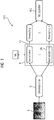
- Fig. 1 illustrates the general pipeline for normalizing images.
- a set of images S with images I1 to IV is provided.
- the images I1 to IV have different image impressions due to processing the same detector information with different configurations of the modality-specific - or more general: image acquisition device specific - image processing technique.
- the difference between images I1 to I5 is only produced by variability 3), as mentioned above.
- the recorded detector information is processed (converted) to produce a vendor- and/or application-specific image representation.
- the image impression can differ due to the shape of the anatomical structures which vary with the relative positioning and characteristics (e.g., age, gender) of a patient. It is important to note, that the provided images are created from the same detector information. There is no variability due to positioning or patient characteristics.
- image impression so far refers to different configurations of the image processing pipeline (on the related devices and apparatuses) to convert the same detector information to different image renderings , adjusted to the radiologists' needs.
- Each of said images I1 to IV is decomposed in a decomposition unit D thereby creating components C1 to Cn.
- Each of the components C1 to Cn is normally resampled thereby creating resampled components CR1 to CRn which represent input for the Machine Learning unit ML.
- Resampling might be important for images (e.g. X-ray) with a high resolution. Images with a resolution of 3000x3000 pixel can e.g. resampled to a resolution of 1000x1000 pixel. The reduction of the resolution might be relevant for machine learning units ML which for the sake of processing efficiency work with lower resolution images.
- the use of the resampled components CR1 to CRn instead of the complete image (e.g.
- the normalization results in that the image impressions (e.g. contrast, intensity) are more homogeneous but still different enough in order to achieve good training results by the machine learning unit ML.
- the goal of the normalization is to reduce the variability 3) produced by different image impressions.
- the normalized image still include the variabilities 1) and 2) obtained due to patient characteristics (e.g., age, gender), patient positioning (e.g., sitting, standing) and device setting (e.g., voltage, emitted photon energy). These variabilities 1) and 2) are diverse enough to achieve good training results.
- the machine learning unit ML may be adapted to receive a set of decomposed images, i.e. a set of normalized image components.
- a set of decomposed images i.e. a set of normalized image components.
- a straightforward approach is to exploit three normalized image components as input channels of a deep convolutional neural network which was topologically optimized for RGB images.
- a flexible number of normalized components can be directly used as input feature maps of a deep convolutional neural network.
- the system SYS is adapted for image normalization.
- the system SYS may be implemented on an image acquisition device or on a server in data network connection with the image acquisition device.
- the system SYS at least uses one neural network, in particular a CNN for determining the normalization parameters, which are used for normalizing the images I.
- a variety of task specific additional image data processings may be carried out on the normalized images, like those which may be implemented by a second neural network or by executing second machine learning algorithms ML2.
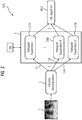
- Fig. 2 illustrates a specific embodiment for the application of the general pipeline for normalizing images according to Fig. 1 .
- a set of images S with medical images I1 to IV is provided.
- the images I1 to IV have different image impressions created by processing the same detector information with different configurations of the modality-specific or image acquisition device-specific image processing technique.
- the images I1 to IV differ due to the processing of the same detector information with different configurations of the modality-specific image processing technique or thus - more general - to image acquisition device-specific processing algorithms and settings.
- Each of said images I1 to IV is decomposed in a decomposition unit D thereby creating components C1 to Cn.
- the decomposition is carried out by pyramid decomposition.
- Each of said input images I1 to IV is decomposed into nine components C1 to C9 representing nine frequency bands.
- the resulting band-pass images are normalized in that each of the components C1 to C9 are individually histogram-equalized to account to pixel shifts produced by non-linear processing in the respective frequency band.
- the normalized components CN1 to CN9 are provided separately to the machine learning unit ML2. This is done without combining the normalized components CN1 to CN9 into one medical image.
- the advantage of this approach is that it allows the machine learning unit ML2 to exploit the information provided by the normalized image components in a more flexible way.
- the machine learning unit ML2 executes the training with the normalized image components. Training results are improved in that unpredictable results due to mismatches between training and testing conditions produced by various image impressions are mitigated.
- Possible alternatives to pyramid decomposition with task-specific number of frequency bands are, e.g. configurable decompositions based on the wavelet, Fourier or Laplacian transformation.
- the band-pass images could be normalized on a spatially local manner. For instance, by exploiting the identification of anatomical structures or by using a sliding window as similarly applied for adaptive histogram equalization.
- an alternative to manually set the respective hyperparameters is to represent the normalization as part of the processing carried out by the machine learning unit ML2 and thus to learn them in an end-to-end way (i.e., during the training phase).
- the machine learning unit ML, ML2 is preferably a neural network NN.
- a neural network is a deep neural network with more than two layers.
- the normalized components CN1 to CNn are input as feature maps of a convolutional layer of said deep neural network. This further improves the training results.
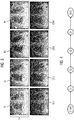
- Fig. 3 shows example images for four different image impressions without (upper row) and with (lower row) applying the normalization procedure according to the invention.
- the nine histogram normalized frequency components CN1 to CNn of Fig. 2 are superimposed.
- Fig. 4 shows a flow chart with a sequence of method steps.
- step S1 a set of image data with images is received at a decomposition unit or at another unit and provided to the decomposition unit.
- step S2 the received image is decomposed for providing decomposed or band pass images.
- step S3 the decomposed images are normalized.
- the method may end or may optionally be extended by step S4, which relates to resampling the normalized images.
- a verification algorithm may be executed on the result dataset with the normalized images.
- a computer program may be stored/distributed on a suitable medium, such as an optical storage medium or a solid-state medium, supplied together with or as part of other hardware, but may also be distributed in other forms, such as via the Internet or other wired or wireless telecommunication systems.
- a suitable medium such as an optical storage medium or a solid-state medium, supplied together with or as part of other hardware, but may also be distributed in other forms, such as via the Internet or other wired or wireless telecommunication systems.
- Program modules may include routines, programs, objects, components, data structures, etc. that perform a task(s) or implement particular abstract data types.
- Program modules may be practiced with other configurations, including hand-held devices, multiprocessor systems, microprocessor-based or programmable consumer electronics, network computers, minicomputers, set top boxes, mainframe computers, and the like.
- At least some aspects of the present invention may also be practiced in distributed computing environments where tasks are performed by remote processing devices linked through a communications network.
- program modules may be located in local and/or remote memory storage devices.
Landscapes
- Engineering & Computer Science (AREA)
- Theoretical Computer Science (AREA)
- Physics & Mathematics (AREA)
- General Physics & Mathematics (AREA)
- Health & Medical Sciences (AREA)
- Software Systems (AREA)
- General Health & Medical Sciences (AREA)
- Computer Vision & Pattern Recognition (AREA)
- Computing Systems (AREA)
- General Engineering & Computer Science (AREA)
- Medical Informatics (AREA)
- Data Mining & Analysis (AREA)
- Evolutionary Computation (AREA)
- Artificial Intelligence (AREA)
- Mathematical Physics (AREA)
- Biomedical Technology (AREA)
- Multimedia (AREA)
- Life Sciences & Earth Sciences (AREA)
- Molecular Biology (AREA)
- Computational Linguistics (AREA)
- Biophysics (AREA)
- Nuclear Medicine, Radiotherapy & Molecular Imaging (AREA)
- Radiology & Medical Imaging (AREA)
- Quality & Reliability (AREA)
- Epidemiology (AREA)
- Primary Health Care (AREA)
- Public Health (AREA)
- General Business, Economics & Management (AREA)
- Business, Economics & Management (AREA)
- Image Analysis (AREA)
- Apparatus For Radiation Diagnosis (AREA)
- Measuring And Recording Apparatus For Diagnosis (AREA)
Priority Applications (3)
| Application Number | Priority Date | Filing Date | Title |
|---|---|---|---|
| EP20166951.2A EP3889882B1 (fr) | 2020-03-31 | 2020-03-31 | Normalisation d'image augmentant la robustesse des applications d'apprentissage machine pour des images médicales |
| US17/204,030 US11790496B2 (en) | 2020-03-31 | 2021-03-17 | Image normalization increasing robustness of machine learning applications for medical images |
| CN202110319348.7A CN113470789B (zh) | 2020-03-31 | 2021-03-25 | 提高关于医学图像的机器学习应用的鲁棒性的图像归一化 |
Applications Claiming Priority (1)
| Application Number | Priority Date | Filing Date | Title |
|---|---|---|---|
| EP20166951.2A EP3889882B1 (fr) | 2020-03-31 | 2020-03-31 | Normalisation d'image augmentant la robustesse des applications d'apprentissage machine pour des images médicales |
Publications (2)
| Publication Number | Publication Date |
|---|---|
| EP3889882A1 true EP3889882A1 (fr) | 2021-10-06 |
| EP3889882B1 EP3889882B1 (fr) | 2023-06-07 |
Family
ID=70108122
Family Applications (1)
| Application Number | Title | Priority Date | Filing Date |
|---|---|---|---|
| EP20166951.2A Active EP3889882B1 (fr) | 2020-03-31 | 2020-03-31 | Normalisation d'image augmentant la robustesse des applications d'apprentissage machine pour des images médicales |
Country Status (3)
| Country | Link |
|---|---|
| US (1) | US11790496B2 (fr) |
| EP (1) | EP3889882B1 (fr) |
| CN (1) | CN113470789B (fr) |
Families Citing this family (2)
| Publication number | Priority date | Publication date | Assignee | Title |
|---|---|---|---|---|
| EP4160523B1 (fr) | 2021-09-29 | 2025-10-29 | Siemens Healthineers AG | Procédé mis en oeuvre par ordinateur permettant de déterminer une structure visible |
| US12614291B2 (en) * | 2023-04-06 | 2026-04-28 | Lawrence Livermore National Security, Llc | Coregistration of ground penetrating radar images |
Citations (1)
| Publication number | Priority date | Publication date | Assignee | Title |
|---|---|---|---|---|
| US20120321151A1 (en) | 2011-06-16 | 2012-12-20 | Zoehrer Fabian | Apparatus for adjusting images |
Family Cites Families (14)
| Publication number | Priority date | Publication date | Assignee | Title |
|---|---|---|---|---|
| CN101216939B (zh) * | 2008-01-04 | 2010-06-02 | 江南大学 | 基于量子行为粒子群算法的多分辨率医学图像配准方法 |
| JP4717935B2 (ja) * | 2009-03-23 | 2011-07-06 | 富士フイルム株式会社 | 画像処理装置および方法並びにプログラム |
| JP6307468B2 (ja) * | 2015-03-31 | 2018-04-04 | 富士フイルム株式会社 | 導電性フィルム、これを備える表示装置及び導電性フィルムの評価方法 |
| US10249065B2 (en) * | 2015-05-08 | 2019-04-02 | Max-Planck-Gesellschaft Zur Foerderung Der Wissenschaften E.V | Method and device for magnetic resonance imaging with improved sensitivity by noise reduction |
| US20180025290A1 (en) * | 2016-07-22 | 2018-01-25 | Edwards Lifesciences Corporation | Predictive risk model optimization |
| CN106384339A (zh) * | 2016-09-30 | 2017-02-08 | 防城港市港口区高创信息技术有限公司 | 一种红外夜视图像的增强方法 |
| US10127659B2 (en) * | 2016-11-23 | 2018-11-13 | General Electric Company | Deep learning medical systems and methods for image acquisition |
| CN107038692A (zh) * | 2017-04-16 | 2017-08-11 | 南方医科大学 | 基于小波分解和卷积神经网络的x线胸片骨抑制处理方法 |
| EP3612984A4 (fr) * | 2017-04-18 | 2021-03-24 | D5A1 Llc | Apprentissage et reconnaissance de machine multi-étage |
| US11501438B2 (en) * | 2018-04-26 | 2022-11-15 | Elekta, Inc. | Cone-beam CT image enhancement using generative adversarial networks |
| US10762398B2 (en) * | 2018-04-30 | 2020-09-01 | Elekta Ab | Modality-agnostic method for medical image representation |
| US11361225B2 (en) * | 2018-12-18 | 2022-06-14 | Microsoft Technology Licensing, Llc | Neural network architecture for attention based efficient model adaptation |
| CN110400275B (zh) * | 2019-07-22 | 2021-06-22 | 中电健康云科技有限公司 | 一种基于全卷积神经网络和特征金字塔的颜色校正方法 |
| CN110516759B (zh) * | 2019-09-02 | 2022-09-30 | 河南师范大学 | 一种基于机器学习的软组织肉瘤转移风险预测系统 |
-
2020
- 2020-03-31 EP EP20166951.2A patent/EP3889882B1/fr active Active
-
2021
- 2021-03-17 US US17/204,030 patent/US11790496B2/en active Active
- 2021-03-25 CN CN202110319348.7A patent/CN113470789B/zh active Active
Patent Citations (1)
| Publication number | Priority date | Publication date | Assignee | Title |
|---|---|---|---|---|
| US20120321151A1 (en) | 2011-06-16 | 2012-12-20 | Zoehrer Fabian | Apparatus for adjusting images |
Non-Patent Citations (5)
| Title |
|---|
| LIAM NEATH: "CheXNet2: End to End Improvements for Chest Disease Classification", CS230, 1 January 2018 (2018-01-01), pages 1 - 6, XP055729485, Retrieved from the Internet <URL:https://cs230.stanford.edu/projects_spring_2018/reports/8290537.pdf> [retrieved on 20200910] * |
| P. BURT ET AL.: "The Laplacian Pyramid as a Compact Image Code", IEEE TRANSACTIONS ON COMMUNICATIONS, vol. COM-31, no. 4, April 1983 (1983-04-01) |
| PHILIPSEN R H H M ET AL: "Localized Energy-Based Normalization of Medical Images: Application to Chest Radiography", IEEE TRANSACTIONS ON MEDICAL IMAGING, IEEE SERVICE CENTER, PISCATAWAY, NJ, US, vol. 34, no. 9, 1 September 2015 (2015-09-01), pages 1965 - 1975, XP011667560, ISSN: 0278-0062, [retrieved on 20150828], DOI: 10.1109/TMI.2015.2418031 * |
| S. GUENDEL ET AL.: "Learning to Recognize Abnormalities in Chest X-Rays with Location-Aware Dense Networks", CIARP, 2018 |
| VIDYA M S ET AL: "Local and global transformations to improve learning of medical images applied to chest radiographs", PROGRESS IN BIOMEDICAL OPTICS AND IMAGING, SPIE - INTERNATIONAL SOCIETY FOR OPTICAL ENGINEERING, BELLINGHAM, WA, US, vol. 10949, 15 March 2019 (2019-03-15), pages 1094936 - 1094936, XP060120528, ISSN: 1605-7422, ISBN: 978-1-5106-0027-0, DOI: 10.1117/12.2512717 * |
Also Published As
| Publication number | Publication date |
|---|---|
| EP3889882B1 (fr) | 2023-06-07 |
| CN113470789B (zh) | 2025-04-08 |
| US20210304361A1 (en) | 2021-09-30 |
| US11790496B2 (en) | 2023-10-17 |
| CN113470789A (zh) | 2021-10-01 |
Similar Documents
| Publication | Publication Date | Title |
|---|---|---|
| US10896352B2 (en) | Deep learning medical systems and methods for image reconstruction and quality evaluation | |
| US10628943B2 (en) | Deep learning medical systems and methods for image acquisition | |
| US10438354B2 (en) | Deep learning medical systems and methods for medical procedures | |
| KR102229853B1 (ko) | 환자 특정적 딥러닝 이미지 잡음제거 방법들 및 시스템들 | |
| US11003988B2 (en) | Hardware system design improvement using deep learning algorithms | |
| WO2020102914A1 (fr) | Système et procédé d'évaluation d'images médicales | |
| JP7479805B2 (ja) | 医用情報処理装置、医用情報処理方法、医用情報処理プログラムおよび医用情報処理システム | |
| EP3893198A1 (fr) | Procédé et système de détection d'anomalies assistée par ordinateur dans des données d'image | |
| WO2019169403A1 (fr) | Classification de réseau neuronal d'ostéolyse et de synovite près d'implants métalliques | |
| EP3889882B1 (fr) | Normalisation d'image augmentant la robustesse des applications d'apprentissage machine pour des images médicales | |
| US20200090810A1 (en) | Medical information processing apparatus, method and system | |
| Lu et al. | An Approach to Classifying X-Ray Images of Scoliosis and Spondylolisthesis Based on Fine-Tuned Xception Model. | |
| CN117152581B (zh) | 一种基于深度学习的mri图像识别方法及装置 | |
| Dos Santos et al. | Unsupervised model for structure segmentation applied to brain computed tomography | |
| Aggarwal et al. | Self-supervised noise-aware kernel synthesis for improved x-ray computed tomography imaging | |
| Bakaev et al. | Feasibility of spine segmentation in ML-based recognition of vertebrae in X-ray images | |
| CN120563386A (zh) | 一种医疗影像质量控制方法、系统、设备及介质 |
Legal Events
| Date | Code | Title | Description |
|---|---|---|---|
| PUAI | Public reference made under article 153(3) epc to a published international application that has entered the european phase |
Free format text: ORIGINAL CODE: 0009012 |
|
| STAA | Information on the status of an ep patent application or granted ep patent |
Free format text: STATUS: THE APPLICATION HAS BEEN PUBLISHED |
|
| AK | Designated contracting states |
Kind code of ref document: A1 Designated state(s): AL AT BE BG CH CY CZ DE DK EE ES FI FR GB GR HR HU IE IS IT LI LT LU LV MC MK MT NL NO PL PT RO RS SE SI SK SM TR |
|
| STAA | Information on the status of an ep patent application or granted ep patent |
Free format text: STATUS: REQUEST FOR EXAMINATION WAS MADE |
|
| STAA | Information on the status of an ep patent application or granted ep patent |
Free format text: STATUS: EXAMINATION IS IN PROGRESS |
|
| 17P | Request for examination filed |
Effective date: 20220404 |
|
| RBV | Designated contracting states (corrected) |
Designated state(s): AL AT BE BG CH CY CZ DE DK EE ES FI FR GB GR HR HU IE IS IT LI LT LU LV MC MK MT NL NO PL PT RO RS SE SI SK SM TR |
|
| 17Q | First examination report despatched |
Effective date: 20220509 |
|
| GRAP | Despatch of communication of intention to grant a patent |
Free format text: ORIGINAL CODE: EPIDOSNIGR1 |
|
| STAA | Information on the status of an ep patent application or granted ep patent |
Free format text: STATUS: GRANT OF PATENT IS INTENDED |
|
| GRAJ | Information related to disapproval of communication of intention to grant by the applicant or resumption of examination proceedings by the epo deleted |
Free format text: ORIGINAL CODE: EPIDOSDIGR1 |
|
| STAA | Information on the status of an ep patent application or granted ep patent |
Free format text: STATUS: EXAMINATION IS IN PROGRESS |
|
| INTG | Intention to grant announced |
Effective date: 20221114 |
|
| GRAP | Despatch of communication of intention to grant a patent |
Free format text: ORIGINAL CODE: EPIDOSNIGR1 |
|
| INTC | Intention to grant announced (deleted) | ||
| STAA | Information on the status of an ep patent application or granted ep patent |
Free format text: STATUS: GRANT OF PATENT IS INTENDED |
|
| INTG | Intention to grant announced |
Effective date: 20230105 |
|
| GRAS | Grant fee paid |
Free format text: ORIGINAL CODE: EPIDOSNIGR3 |
|
| GRAA | (expected) grant |
Free format text: ORIGINAL CODE: 0009210 |
|
| STAA | Information on the status of an ep patent application or granted ep patent |
Free format text: STATUS: THE PATENT HAS BEEN GRANTED |
|
| AK | Designated contracting states |
Kind code of ref document: B1 Designated state(s): AL AT BE BG CH CY CZ DE DK EE ES FI FR GB GR HR HU IE IS IT LI LT LU LV MC MK MT NL NO PL PT RO RS SE SI SK SM TR |
|
| REG | Reference to a national code |
Ref country code: GB Ref legal event code: FG4D |
|
| REG | Reference to a national code |
Ref country code: CH Ref legal event code: EP Ref country code: AT Ref legal event code: REF Ref document number: 1577261 Country of ref document: AT Kind code of ref document: T Effective date: 20230615 |
|
| REG | Reference to a national code |
Ref country code: DE Ref legal event code: R096 Ref document number: 602020011508 Country of ref document: DE |
|
| REG | Reference to a national code |
Ref country code: LT Ref legal event code: MG9D |
|
| REG | Reference to a national code |
Ref country code: NL Ref legal event code: MP Effective date: 20230607 |
|
| PG25 | Lapsed in a contracting state [announced via postgrant information from national office to epo] |
Ref country code: SE Free format text: LAPSE BECAUSE OF FAILURE TO SUBMIT A TRANSLATION OF THE DESCRIPTION OR TO PAY THE FEE WITHIN THE PRESCRIBED TIME-LIMIT Effective date: 20230607 Ref country code: NO Free format text: LAPSE BECAUSE OF FAILURE TO SUBMIT A TRANSLATION OF THE DESCRIPTION OR TO PAY THE FEE WITHIN THE PRESCRIBED TIME-LIMIT Effective date: 20230907 Ref country code: ES Free format text: LAPSE BECAUSE OF FAILURE TO SUBMIT A TRANSLATION OF THE DESCRIPTION OR TO PAY THE FEE WITHIN THE PRESCRIBED TIME-LIMIT Effective date: 20230607 |
|
| REG | Reference to a national code |
Ref country code: AT Ref legal event code: MK05 Ref document number: 1577261 Country of ref document: AT Kind code of ref document: T Effective date: 20230607 |
|
| PG25 | Lapsed in a contracting state [announced via postgrant information from national office to epo] |
Ref country code: RS Free format text: LAPSE BECAUSE OF FAILURE TO SUBMIT A TRANSLATION OF THE DESCRIPTION OR TO PAY THE FEE WITHIN THE PRESCRIBED TIME-LIMIT Effective date: 20230607 Ref country code: NL Free format text: LAPSE BECAUSE OF FAILURE TO SUBMIT A TRANSLATION OF THE DESCRIPTION OR TO PAY THE FEE WITHIN THE PRESCRIBED TIME-LIMIT Effective date: 20230607 Ref country code: LV Free format text: LAPSE BECAUSE OF FAILURE TO SUBMIT A TRANSLATION OF THE DESCRIPTION OR TO PAY THE FEE WITHIN THE PRESCRIBED TIME-LIMIT Effective date: 20230607 Ref country code: LT Free format text: LAPSE BECAUSE OF FAILURE TO SUBMIT A TRANSLATION OF THE DESCRIPTION OR TO PAY THE FEE WITHIN THE PRESCRIBED TIME-LIMIT Effective date: 20230607 Ref country code: HR Free format text: LAPSE BECAUSE OF FAILURE TO SUBMIT A TRANSLATION OF THE DESCRIPTION OR TO PAY THE FEE WITHIN THE PRESCRIBED TIME-LIMIT Effective date: 20230607 Ref country code: GR Free format text: LAPSE BECAUSE OF FAILURE TO SUBMIT A TRANSLATION OF THE DESCRIPTION OR TO PAY THE FEE WITHIN THE PRESCRIBED TIME-LIMIT Effective date: 20230908 |
|
| PG25 | Lapsed in a contracting state [announced via postgrant information from national office to epo] |
Ref country code: FI Free format text: LAPSE BECAUSE OF FAILURE TO SUBMIT A TRANSLATION OF THE DESCRIPTION OR TO PAY THE FEE WITHIN THE PRESCRIBED TIME-LIMIT Effective date: 20230607 |
|
| PG25 | Lapsed in a contracting state [announced via postgrant information from national office to epo] |
Ref country code: SK Free format text: LAPSE BECAUSE OF FAILURE TO SUBMIT A TRANSLATION OF THE DESCRIPTION OR TO PAY THE FEE WITHIN THE PRESCRIBED TIME-LIMIT Effective date: 20230607 |
|
| PG25 | Lapsed in a contracting state [announced via postgrant information from national office to epo] |
Ref country code: IS Free format text: LAPSE BECAUSE OF FAILURE TO SUBMIT A TRANSLATION OF THE DESCRIPTION OR TO PAY THE FEE WITHIN THE PRESCRIBED TIME-LIMIT Effective date: 20231007 |
|
| PG25 | Lapsed in a contracting state [announced via postgrant information from national office to epo] |
Ref country code: SM Free format text: LAPSE BECAUSE OF FAILURE TO SUBMIT A TRANSLATION OF THE DESCRIPTION OR TO PAY THE FEE WITHIN THE PRESCRIBED TIME-LIMIT Effective date: 20230607 Ref country code: SK Free format text: LAPSE BECAUSE OF FAILURE TO SUBMIT A TRANSLATION OF THE DESCRIPTION OR TO PAY THE FEE WITHIN THE PRESCRIBED TIME-LIMIT Effective date: 20230607 Ref country code: RO Free format text: LAPSE BECAUSE OF FAILURE TO SUBMIT A TRANSLATION OF THE DESCRIPTION OR TO PAY THE FEE WITHIN THE PRESCRIBED TIME-LIMIT Effective date: 20230607 Ref country code: PT Free format text: LAPSE BECAUSE OF FAILURE TO SUBMIT A TRANSLATION OF THE DESCRIPTION OR TO PAY THE FEE WITHIN THE PRESCRIBED TIME-LIMIT Effective date: 20231009 Ref country code: IS Free format text: LAPSE BECAUSE OF FAILURE TO SUBMIT A TRANSLATION OF THE DESCRIPTION OR TO PAY THE FEE WITHIN THE PRESCRIBED TIME-LIMIT Effective date: 20231007 Ref country code: EE Free format text: LAPSE BECAUSE OF FAILURE TO SUBMIT A TRANSLATION OF THE DESCRIPTION OR TO PAY THE FEE WITHIN THE PRESCRIBED TIME-LIMIT Effective date: 20230607 Ref country code: CZ Free format text: LAPSE BECAUSE OF FAILURE TO SUBMIT A TRANSLATION OF THE DESCRIPTION OR TO PAY THE FEE WITHIN THE PRESCRIBED TIME-LIMIT Effective date: 20230607 Ref country code: AT Free format text: LAPSE BECAUSE OF FAILURE TO SUBMIT A TRANSLATION OF THE DESCRIPTION OR TO PAY THE FEE WITHIN THE PRESCRIBED TIME-LIMIT Effective date: 20230607 |
|
| RAP2 | Party data changed (patent owner data changed or rights of a patent transferred) |
Owner name: SIEMENS HEALTHINEERS AG |
|
| REG | Reference to a national code |
Ref country code: DE Ref legal event code: R081 Ref document number: 602020011508 Country of ref document: DE Owner name: SIEMENS HEALTHINEERS AG, DE Free format text: FORMER OWNER: SIEMENS HEALTHCARE GMBH, MUENCHEN, DE |
|
| PG25 | Lapsed in a contracting state [announced via postgrant information from national office to epo] |
Ref country code: PL Free format text: LAPSE BECAUSE OF FAILURE TO SUBMIT A TRANSLATION OF THE DESCRIPTION OR TO PAY THE FEE WITHIN THE PRESCRIBED TIME-LIMIT Effective date: 20230607 |
|
| REG | Reference to a national code |
Ref country code: DE Ref legal event code: R097 Ref document number: 602020011508 Country of ref document: DE |
|
| PLBE | No opposition filed within time limit |
Free format text: ORIGINAL CODE: 0009261 |
|
| STAA | Information on the status of an ep patent application or granted ep patent |
Free format text: STATUS: NO OPPOSITION FILED WITHIN TIME LIMIT |
|
| PG25 | Lapsed in a contracting state [announced via postgrant information from national office to epo] |
Ref country code: DK Free format text: LAPSE BECAUSE OF FAILURE TO SUBMIT A TRANSLATION OF THE DESCRIPTION OR TO PAY THE FEE WITHIN THE PRESCRIBED TIME-LIMIT Effective date: 20230607 |
|
| PG25 | Lapsed in a contracting state [announced via postgrant information from national office to epo] |
Ref country code: SI Free format text: LAPSE BECAUSE OF FAILURE TO SUBMIT A TRANSLATION OF THE DESCRIPTION OR TO PAY THE FEE WITHIN THE PRESCRIBED TIME-LIMIT Effective date: 20230607 |
|
| 26N | No opposition filed |
Effective date: 20240308 |
|
| PG25 | Lapsed in a contracting state [announced via postgrant information from national office to epo] |
Ref country code: SI Free format text: LAPSE BECAUSE OF FAILURE TO SUBMIT A TRANSLATION OF THE DESCRIPTION OR TO PAY THE FEE WITHIN THE PRESCRIBED TIME-LIMIT Effective date: 20230607 Ref country code: IT Free format text: LAPSE BECAUSE OF FAILURE TO SUBMIT A TRANSLATION OF THE DESCRIPTION OR TO PAY THE FEE WITHIN THE PRESCRIBED TIME-LIMIT Effective date: 20230607 |
|
| REG | Reference to a national code |
Ref country code: CH Ref legal event code: PL |
|
| PG25 | Lapsed in a contracting state [announced via postgrant information from national office to epo] |
Ref country code: BG Free format text: LAPSE BECAUSE OF FAILURE TO SUBMIT A TRANSLATION OF THE DESCRIPTION OR TO PAY THE FEE WITHIN THE PRESCRIBED TIME-LIMIT Effective date: 20230607 |
|
| PG25 | Lapsed in a contracting state [announced via postgrant information from national office to epo] |
Ref country code: LU Free format text: LAPSE BECAUSE OF NON-PAYMENT OF DUE FEES Effective date: 20240331 |
|
| PG25 | Lapsed in a contracting state [announced via postgrant information from national office to epo] |
Ref country code: MC Free format text: LAPSE BECAUSE OF FAILURE TO SUBMIT A TRANSLATION OF THE DESCRIPTION OR TO PAY THE FEE WITHIN THE PRESCRIBED TIME-LIMIT Effective date: 20230607 |
|
| PG25 | Lapsed in a contracting state [announced via postgrant information from national office to epo] |
Ref country code: MC Free format text: LAPSE BECAUSE OF FAILURE TO SUBMIT A TRANSLATION OF THE DESCRIPTION OR TO PAY THE FEE WITHIN THE PRESCRIBED TIME-LIMIT Effective date: 20230607 Ref country code: LU Free format text: LAPSE BECAUSE OF NON-PAYMENT OF DUE FEES Effective date: 20240331 Ref country code: BG Free format text: LAPSE BECAUSE OF FAILURE TO SUBMIT A TRANSLATION OF THE DESCRIPTION OR TO PAY THE FEE WITHIN THE PRESCRIBED TIME-LIMIT Effective date: 20230607 |
|
| REG | Reference to a national code |
Ref country code: BE Ref legal event code: MM Effective date: 20240331 |
|
| PG25 | Lapsed in a contracting state [announced via postgrant information from national office to epo] |
Ref country code: BE Free format text: LAPSE BECAUSE OF NON-PAYMENT OF DUE FEES Effective date: 20240331 |
|
| PG25 | Lapsed in a contracting state [announced via postgrant information from national office to epo] |
Ref country code: IE Free format text: LAPSE BECAUSE OF NON-PAYMENT OF DUE FEES Effective date: 20240331 |
|
| PG25 | Lapsed in a contracting state [announced via postgrant information from national office to epo] |
Ref country code: IE Free format text: LAPSE BECAUSE OF NON-PAYMENT OF DUE FEES Effective date: 20240331 Ref country code: BE Free format text: LAPSE BECAUSE OF NON-PAYMENT OF DUE FEES Effective date: 20240331 Ref country code: CH Free format text: LAPSE BECAUSE OF NON-PAYMENT OF DUE FEES Effective date: 20240331 |
|
| PGFP | Annual fee paid to national office [announced via postgrant information from national office to epo] |
Ref country code: DE Payment date: 20250520 Year of fee payment: 6 |
|
| PGFP | Annual fee paid to national office [announced via postgrant information from national office to epo] |
Ref country code: GB Payment date: 20250403 Year of fee payment: 6 |
|
| PG25 | Lapsed in a contracting state [announced via postgrant information from national office to epo] |
Ref country code: CY Free format text: LAPSE BECAUSE OF FAILURE TO SUBMIT A TRANSLATION OF THE DESCRIPTION OR TO PAY THE FEE WITHIN THE PRESCRIBED TIME-LIMIT; INVALID AB INITIO Effective date: 20200331 |
|
| PG25 | Lapsed in a contracting state [announced via postgrant information from national office to epo] |
Ref country code: HU Free format text: LAPSE BECAUSE OF FAILURE TO SUBMIT A TRANSLATION OF THE DESCRIPTION OR TO PAY THE FEE WITHIN THE PRESCRIBED TIME-LIMIT; INVALID AB INITIO Effective date: 20200331 |
|
| PG25 | Lapsed in a contracting state [announced via postgrant information from national office to epo] |
Ref country code: TR Free format text: LAPSE BECAUSE OF FAILURE TO SUBMIT A TRANSLATION OF THE DESCRIPTION OR TO PAY THE FEE WITHIN THE PRESCRIBED TIME-LIMIT Effective date: 20230607 |
|
| PGFP | Annual fee paid to national office [announced via postgrant information from national office to epo] |
Ref country code: FR Payment date: 20260316 Year of fee payment: 7 |