EP3890971B1 - Feuilles en matière plastique à température de ramollissement vicat plus élevée dans les structures stratifiées - Google Patents
Feuilles en matière plastique à température de ramollissement vicat plus élevée dans les structures stratifiées Download PDFInfo
- Publication number
- EP3890971B1 EP3890971B1 EP19806004.8A EP19806004A EP3890971B1 EP 3890971 B1 EP3890971 B1 EP 3890971B1 EP 19806004 A EP19806004 A EP 19806004A EP 3890971 B1 EP3890971 B1 EP 3890971B1
- Authority
- EP
- European Patent Office
- Prior art keywords
- layer
- polycarbonate
- particularly preferably
- copolycarbonate
- diphenols
- Prior art date
- Legal status (The legal status is an assumption and is not a legal conclusion. Google has not performed a legal analysis and makes no representation as to the accuracy of the status listed.)
- Active
Links
Classifications
-
- C—CHEMISTRY; METALLURGY
- C08—ORGANIC MACROMOLECULAR COMPOUNDS; THEIR PREPARATION OR CHEMICAL WORKING-UP; COMPOSITIONS BASED THEREON
- C08J—WORKING-UP; GENERAL PROCESSES OF COMPOUNDING; AFTER-TREATMENT NOT COVERED BY SUBCLASSES C08B, C08C, C08F, C08G or C08H
- C08J7/00—Chemical treatment or coating of shaped articles made of macromolecular substances
- C08J7/04—Coating
- C08J7/042—Coating with two or more layers, where at least one layer of a composition contains a polymer binder
-
- B—PERFORMING OPERATIONS; TRANSPORTING
- B32—LAYERED PRODUCTS
- B32B—LAYERED PRODUCTS, i.e. PRODUCTS BUILT-UP OF STRATA OF FLAT OR NON-FLAT, e.g. CELLULAR OR HONEYCOMB, FORM
- B32B27/00—Layered products comprising a layer of synthetic resin
- B32B27/18—Layered products comprising a layer of synthetic resin characterised by the use of special additives
- B32B27/20—Layered products comprising a layer of synthetic resin characterised by the use of special additives using fillers, pigments, thixotroping agents
-
- B—PERFORMING OPERATIONS; TRANSPORTING
- B32—LAYERED PRODUCTS
- B32B—LAYERED PRODUCTS, i.e. PRODUCTS BUILT-UP OF STRATA OF FLAT OR NON-FLAT, e.g. CELLULAR OR HONEYCOMB, FORM
- B32B27/00—Layered products comprising a layer of synthetic resin
- B32B27/28—Layered products comprising a layer of synthetic resin comprising synthetic resins not wholly covered by any one of the sub-groups B32B27/30 - B32B27/42
- B32B27/286—Layered products comprising a layer of synthetic resin comprising synthetic resins not wholly covered by any one of the sub-groups B32B27/30 - B32B27/42 comprising polysulphones; polysulfides
-
- B—PERFORMING OPERATIONS; TRANSPORTING
- B32—LAYERED PRODUCTS
- B32B—LAYERED PRODUCTS, i.e. PRODUCTS BUILT-UP OF STRATA OF FLAT OR NON-FLAT, e.g. CELLULAR OR HONEYCOMB, FORM
- B32B27/00—Layered products comprising a layer of synthetic resin
- B32B27/30—Layered products comprising a layer of synthetic resin comprising vinyl (co)polymers; comprising acrylic (co)polymers
- B32B27/302—Layered products comprising a layer of synthetic resin comprising vinyl (co)polymers; comprising acrylic (co)polymers comprising aromatic vinyl (co)polymers, e.g. styrenic (co)polymers
-
- B—PERFORMING OPERATIONS; TRANSPORTING
- B32—LAYERED PRODUCTS
- B32B—LAYERED PRODUCTS, i.e. PRODUCTS BUILT-UP OF STRATA OF FLAT OR NON-FLAT, e.g. CELLULAR OR HONEYCOMB, FORM
- B32B27/00—Layered products comprising a layer of synthetic resin
- B32B27/30—Layered products comprising a layer of synthetic resin comprising vinyl (co)polymers; comprising acrylic (co)polymers
- B32B27/308—Layered products comprising a layer of synthetic resin comprising vinyl (co)polymers; comprising acrylic (co)polymers comprising acrylic (co)polymers
-
- B—PERFORMING OPERATIONS; TRANSPORTING
- B32—LAYERED PRODUCTS
- B32B—LAYERED PRODUCTS, i.e. PRODUCTS BUILT-UP OF STRATA OF FLAT OR NON-FLAT, e.g. CELLULAR OR HONEYCOMB, FORM
- B32B27/00—Layered products comprising a layer of synthetic resin
- B32B27/32—Layered products comprising a layer of synthetic resin comprising polyolefins
-
- B—PERFORMING OPERATIONS; TRANSPORTING
- B32—LAYERED PRODUCTS
- B32B—LAYERED PRODUCTS, i.e. PRODUCTS BUILT-UP OF STRATA OF FLAT OR NON-FLAT, e.g. CELLULAR OR HONEYCOMB, FORM
- B32B27/00—Layered products comprising a layer of synthetic resin
- B32B27/36—Layered products comprising a layer of synthetic resin comprising polyesters
-
- B—PERFORMING OPERATIONS; TRANSPORTING
- B32—LAYERED PRODUCTS
- B32B—LAYERED PRODUCTS, i.e. PRODUCTS BUILT-UP OF STRATA OF FLAT OR NON-FLAT, e.g. CELLULAR OR HONEYCOMB, FORM
- B32B27/00—Layered products comprising a layer of synthetic resin
- B32B27/36—Layered products comprising a layer of synthetic resin comprising polyesters
- B32B27/365—Layered products comprising a layer of synthetic resin comprising polyesters comprising polycarbonates
-
- B—PERFORMING OPERATIONS; TRANSPORTING
- B32—LAYERED PRODUCTS
- B32B—LAYERED PRODUCTS, i.e. PRODUCTS BUILT-UP OF STRATA OF FLAT OR NON-FLAT, e.g. CELLULAR OR HONEYCOMB, FORM
- B32B27/00—Layered products comprising a layer of synthetic resin
- B32B27/40—Layered products comprising a layer of synthetic resin comprising polyurethanes
-
- B—PERFORMING OPERATIONS; TRANSPORTING
- B32—LAYERED PRODUCTS
- B32B—LAYERED PRODUCTS, i.e. PRODUCTS BUILT-UP OF STRATA OF FLAT OR NON-FLAT, e.g. CELLULAR OR HONEYCOMB, FORM
- B32B3/00—Layered products comprising a layer with external or internal discontinuities or unevennesses, or a layer of non-planar shape; Layered products comprising a layer having particular features of form
- B32B3/26—Layered products comprising a layer with external or internal discontinuities or unevennesses, or a layer of non-planar shape; Layered products comprising a layer having particular features of form characterised by a particular shape of the outline of the cross-section of a continuous layer; characterised by a layer with cavities or internal voids ; characterised by an apertured layer
- B32B3/266—Layered products comprising a layer with external or internal discontinuities or unevennesses, or a layer of non-planar shape; Layered products comprising a layer having particular features of form characterised by a particular shape of the outline of the cross-section of a continuous layer; characterised by a layer with cavities or internal voids ; characterised by an apertured layer characterised by an apertured layer, the apertures going through the whole thickness of the layer, e.g. expanded metal, perforated layer, slit layer regular cells B32B3/12
-
- B—PERFORMING OPERATIONS; TRANSPORTING
- B32—LAYERED PRODUCTS
- B32B—LAYERED PRODUCTS, i.e. PRODUCTS BUILT-UP OF STRATA OF FLAT OR NON-FLAT, e.g. CELLULAR OR HONEYCOMB, FORM
- B32B7/00—Layered products characterised by the relation between layers; Layered products characterised by the relative orientation of features between layers, or by the relative values of a measurable parameter between layers, i.e. products comprising layers having different physical, chemical or physicochemical properties; Layered products characterised by the interconnection of layers
- B32B7/02—Physical, chemical or physicochemical properties
- B32B7/023—Optical properties
-
- B—PERFORMING OPERATIONS; TRANSPORTING
- B42—BOOKBINDING; ALBUMS; FILES; SPECIAL PRINTED MATTER
- B42D—BOOKS; BOOK COVERS; LOOSE LEAVES; PRINTED MATTER CHARACTERISED BY IDENTIFICATION OR SECURITY FEATURES; PRINTED MATTER OF SPECIAL FORMAT OR STYLE NOT OTHERWISE PROVIDED FOR; DEVICES FOR USE THEREWITH AND NOT OTHERWISE PROVIDED FOR; MOVABLE-STRIP WRITING OR READING APPARATUS
- B42D25/00—Information-bearing cards or sheet-like structures characterised by identification or security features; Manufacture thereof
- B42D25/30—Identification or security features, e.g. for preventing forgery
-
- B—PERFORMING OPERATIONS; TRANSPORTING
- B42—BOOKBINDING; ALBUMS; FILES; SPECIAL PRINTED MATTER
- B42D—BOOKS; BOOK COVERS; LOOSE LEAVES; PRINTED MATTER CHARACTERISED BY IDENTIFICATION OR SECURITY FEATURES; PRINTED MATTER OF SPECIAL FORMAT OR STYLE NOT OTHERWISE PROVIDED FOR; DEVICES FOR USE THEREWITH AND NOT OTHERWISE PROVIDED FOR; MOVABLE-STRIP WRITING OR READING APPARATUS
- B42D25/00—Information-bearing cards or sheet-like structures characterised by identification or security features; Manufacture thereof
- B42D25/30—Identification or security features, e.g. for preventing forgery
- B42D25/351—Translucent or partly translucent parts, e.g. windows
-
- B—PERFORMING OPERATIONS; TRANSPORTING
- B42—BOOKBINDING; ALBUMS; FILES; SPECIAL PRINTED MATTER
- B42D—BOOKS; BOOK COVERS; LOOSE LEAVES; PRINTED MATTER CHARACTERISED BY IDENTIFICATION OR SECURITY FEATURES; PRINTED MATTER OF SPECIAL FORMAT OR STYLE NOT OTHERWISE PROVIDED FOR; DEVICES FOR USE THEREWITH AND NOT OTHERWISE PROVIDED FOR; MOVABLE-STRIP WRITING OR READING APPARATUS
- B42D25/00—Information-bearing cards or sheet-like structures characterised by identification or security features; Manufacture thereof
- B42D25/40—Manufacture
- B42D25/45—Associating two or more layers
-
- C—CHEMISTRY; METALLURGY
- C08—ORGANIC MACROMOLECULAR COMPOUNDS; THEIR PREPARATION OR CHEMICAL WORKING-UP; COMPOSITIONS BASED THEREON
- C08G—MACROMOLECULAR COMPOUNDS OBTAINED OTHERWISE THAN BY REACTIONS ONLY INVOLVING UNSATURATED CARBON-TO-CARBON BONDS
- C08G64/00—Macromolecular compounds obtained by reactions forming a carbonic ester link in the main chain of the macromolecule
- C08G64/04—Aromatic polycarbonates
- C08G64/06—Aromatic polycarbonates not containing aliphatic unsaturation
- C08G64/08—Aromatic polycarbonates not containing aliphatic unsaturation containing atoms other than carbon, hydrogen or oxygen
- C08G64/12—Aromatic polycarbonates not containing aliphatic unsaturation containing atoms other than carbon, hydrogen or oxygen containing nitrogen
-
- G—PHYSICS
- G03—PHOTOGRAPHY; CINEMATOGRAPHY; ANALOGOUS TECHNIQUES USING WAVES OTHER THAN OPTICAL WAVES; ELECTROGRAPHY; HOLOGRAPHY
- G03H—HOLOGRAPHIC PROCESSES OR APPARATUS
- G03H1/00—Holographic processes or apparatus using light, infrared or ultraviolet waves for obtaining holograms or for obtaining an image from them; Details peculiar thereto
- G03H1/02—Details of features involved during the holographic process; Replication of holograms without interference recording
- G03H1/0252—Laminate comprising a hologram layer
- G03H1/0256—Laminate comprising a hologram layer having specific functional layer
-
- B—PERFORMING OPERATIONS; TRANSPORTING
- B32—LAYERED PRODUCTS
- B32B—LAYERED PRODUCTS, i.e. PRODUCTS BUILT-UP OF STRATA OF FLAT OR NON-FLAT, e.g. CELLULAR OR HONEYCOMB, FORM
- B32B38/00—Ancillary operations in connection with laminating processes
- B32B38/04—Punching, slitting or perforating
- B32B2038/042—Punching
-
- B—PERFORMING OPERATIONS; TRANSPORTING
- B32—LAYERED PRODUCTS
- B32B—LAYERED PRODUCTS, i.e. PRODUCTS BUILT-UP OF STRATA OF FLAT OR NON-FLAT, e.g. CELLULAR OR HONEYCOMB, FORM
- B32B2250/00—Layers arrangement
- B32B2250/24—All layers being polymeric
-
- B—PERFORMING OPERATIONS; TRANSPORTING
- B32—LAYERED PRODUCTS
- B32B—LAYERED PRODUCTS, i.e. PRODUCTS BUILT-UP OF STRATA OF FLAT OR NON-FLAT, e.g. CELLULAR OR HONEYCOMB, FORM
- B32B2264/00—Composition or properties of particles which form a particulate layer or are present as additives
- B32B2264/10—Inorganic particles
-
- B—PERFORMING OPERATIONS; TRANSPORTING
- B32—LAYERED PRODUCTS
- B32B—LAYERED PRODUCTS, i.e. PRODUCTS BUILT-UP OF STRATA OF FLAT OR NON-FLAT, e.g. CELLULAR OR HONEYCOMB, FORM
- B32B2264/00—Composition or properties of particles which form a particulate layer or are present as additives
- B32B2264/10—Inorganic particles
- B32B2264/102—Oxide or hydroxide
-
- B—PERFORMING OPERATIONS; TRANSPORTING
- B32—LAYERED PRODUCTS
- B32B—LAYERED PRODUCTS, i.e. PRODUCTS BUILT-UP OF STRATA OF FLAT OR NON-FLAT, e.g. CELLULAR OR HONEYCOMB, FORM
- B32B2264/00—Composition or properties of particles which form a particulate layer or are present as additives
- B32B2264/10—Inorganic particles
- B32B2264/107—Ceramic
- B32B2264/108—Carbon, e.g. graphite particles
-
- B—PERFORMING OPERATIONS; TRANSPORTING
- B32—LAYERED PRODUCTS
- B32B—LAYERED PRODUCTS, i.e. PRODUCTS BUILT-UP OF STRATA OF FLAT OR NON-FLAT, e.g. CELLULAR OR HONEYCOMB, FORM
- B32B2305/00—Condition, form or state of the layers or laminate
- B32B2305/34—Inserts
- B32B2305/342—Chips
-
- B—PERFORMING OPERATIONS; TRANSPORTING
- B32—LAYERED PRODUCTS
- B32B—LAYERED PRODUCTS, i.e. PRODUCTS BUILT-UP OF STRATA OF FLAT OR NON-FLAT, e.g. CELLULAR OR HONEYCOMB, FORM
- B32B2307/00—Properties of the layers or laminate
- B32B2307/40—Properties of the layers or laminate having particular optical properties
- B32B2307/41—Opaque
-
- B—PERFORMING OPERATIONS; TRANSPORTING
- B32—LAYERED PRODUCTS
- B32B—LAYERED PRODUCTS, i.e. PRODUCTS BUILT-UP OF STRATA OF FLAT OR NON-FLAT, e.g. CELLULAR OR HONEYCOMB, FORM
- B32B2307/00—Properties of the layers or laminate
- B32B2307/40—Properties of the layers or laminate having particular optical properties
- B32B2307/412—Transparent
-
- B—PERFORMING OPERATIONS; TRANSPORTING
- B32—LAYERED PRODUCTS
- B32B—LAYERED PRODUCTS, i.e. PRODUCTS BUILT-UP OF STRATA OF FLAT OR NON-FLAT, e.g. CELLULAR OR HONEYCOMB, FORM
- B32B2425/00—Cards, e.g. identity cards, credit cards
-
- B—PERFORMING OPERATIONS; TRANSPORTING
- B32—LAYERED PRODUCTS
- B32B—LAYERED PRODUCTS, i.e. PRODUCTS BUILT-UP OF STRATA OF FLAT OR NON-FLAT, e.g. CELLULAR OR HONEYCOMB, FORM
- B32B2457/00—Electrical equipment
-
- B—PERFORMING OPERATIONS; TRANSPORTING
- B32—LAYERED PRODUCTS
- B32B—LAYERED PRODUCTS, i.e. PRODUCTS BUILT-UP OF STRATA OF FLAT OR NON-FLAT, e.g. CELLULAR OR HONEYCOMB, FORM
- B32B38/00—Ancillary operations in connection with laminating processes
- B32B38/14—Printing or colouring
-
- C—CHEMISTRY; METALLURGY
- C08—ORGANIC MACROMOLECULAR COMPOUNDS; THEIR PREPARATION OR CHEMICAL WORKING-UP; COMPOSITIONS BASED THEREON
- C08J—WORKING-UP; GENERAL PROCESSES OF COMPOUNDING; AFTER-TREATMENT NOT COVERED BY SUBCLASSES C08B, C08C, C08F, C08G or C08H
- C08J2300/00—Characterised by the use of unspecified polymers
- C08J2300/22—Thermoplastic resins
-
- C—CHEMISTRY; METALLURGY
- C08—ORGANIC MACROMOLECULAR COMPOUNDS; THEIR PREPARATION OR CHEMICAL WORKING-UP; COMPOSITIONS BASED THEREON
- C08J—WORKING-UP; GENERAL PROCESSES OF COMPOUNDING; AFTER-TREATMENT NOT COVERED BY SUBCLASSES C08B, C08C, C08F, C08G or C08H
- C08J2369/00—Characterised by the use of polycarbonates; Derivatives of polycarbonates
Definitions
- the present invention relates to layer composites comprising at least one opaque layer a) and at least one transparent layer b), wherein the Vicat softening temperature B/120, determined according to ISO 306:2004 (method B120 50N; 120°C) of layer a) is ⁇ 156°C, preferably from ⁇ 156 °C to ⁇ 250 °C, particularly preferably from ⁇ 156 °C to ⁇ 230 °C, and wherein the Vicat softening temperature B/120, determined according to ISO 306:2004 (method B120 50N; 120°C/h) of layer a) is higher than that of the thermoplastic material of layer b), a process for producing such layer composites and security documents, preferably identification documents comprising such a layer structure.
- Security documents especially identification documents, increasingly contain polycarbonates, mostly in the form of films containing polycarbonates. Documents based on polycarbonates are usually very durable and a high level of forgery security can be achieved. Security documents usually contain various security features that can be identified using different testing methods and can therefore be recognized as original or forgery. Examples of such anti-counterfeiting devices and their manufacturing processes are given in the WO 2017/060686 A1 , EP 2 172 336 A1 and WO2010/091796A1 described.
- Polycarbonate documents allow the integration of a variety of security elements, which are listed in the DSA (Document Security Alliance) list of security elements, for example.
- DSA Document Security Alliance
- it makes sense to integrate five to a maximum of ten security elements in a document since, for example, when checking a person's identity using an ID card, the examiner should only spend a short amount of time, usually ten to twenty seconds. For this reason, security features that can be recognized quickly without tools and with a low error rate are particularly desirable.
- Security features are transparent areas in, for example, identification cards or data pages in passports. These transparent areas are also called “windows”. Holograms, security prints and other elements can be inserted into these windows, which can be recognized as original or fake by inspection.
- the function of the security feature is based on the high transparency of polycarbonate. If the transparency of the document in the window is impaired, then it may be a fake. The reason for this: If the document is covered with another transparent film, which contains, for example, false personal information, the change in the window appears clearly. The window appears less clear when viewed through. The clarity of the window is also impaired when attempting to open the document and then re-seal it.
- the production of windows in security documents is usually done by punching one or more openings in the opaque white core of the security and/or identification document, such as in ID & Secure Document News Vol. 4, July 2016
- This white opaque core of the security and/or identification document contains, in addition to visible security features such as a hologram (embossed and volume holograms), security print or other element, further security features e.g. electronic components such as antennas and IC chips, which are not visible to the viewer due to the upper white layer.
- the openings can have any shape, but are mainly circular or elliptical. These openings are filled with a transparent piece of film of the same shape and thickness, which is punched out separately from a corresponding piece of film. In addition, further transparent films can be arranged on the top or bottom of the core. After lamination of such a layer structure, a monolithic layer composite is obtained.
- WO2010/091796 A1 discloses a method for producing a laminated layer composite, in which at least one base layer and at least one further layer, between which a component is located, are laminated in two stages to form a layer composite made of two thermoplastic materials with different Vicat softening temperatures B/120.
- the Vicat softening temperature B/120 of the base layer has a higher Vicat softening temperature B/120 than the further layer.
- the disadvantage of the method is that, on the one hand, a complex two-stage lamination process is required and, on the other hand, this method can cause the layer carrying the antenna to flow, which leads to distortion of the right-angled legs of the antenna.
- the object of the present invention was therefore to provide a layer structure which, in particular after lamination to form a monolithic layer composite, enables largely distortion-free existing window geometries as well as the embedding of electronic components and/or further security features in the resulting laminated layer composite and does not cause any disturbances in printed images.
- the at least one layer b) comprises a thermoplastic material having a Vicat softening temperature of B/120, determined according to ISO 306 (50N; 50°/h) in a range of ⁇ 135 °C to ⁇ 155 °C, preferably ⁇ 140 °C to ⁇ 151 °C.
- the one or more polycarbonates or copolycarbonates based on diphenols of layer a) have an M w (weight average molecular weight, determined by size exclusion chromatography (SCE) after prior calibration with polycarbonate calibration substances) of at least 10,000 g/mol, preferably from 15,000 g/mol to 300,000 g/mol, particularly preferably 17,000 to 36,000 g/mol, very particularly preferably 17,000 to 34,000 g/mol. They can be linear or branched, they can be homopolycarbonates or copolycarbonates.
- SCE size exclusion chromatography
- the one or more diphenol-based polycarbonates or copolycarbonates may be those comprising at least one carbonate structural unit of the formulas (I-2), (1-3) and/or (I-4) shown below.
- R 5 represents a C 1 to C 4 alkyl radical, aralkyl radical or aryl radical, preferably a methyl radical or phenyl radical, very particularly preferably a methyl radical.
- the one or more polycarbonates or copolycarbonates based on diphenols comprise at least one carbonate structural unit of the formula (I-1).
- polycarbonates or copolycarbonates can be produced in a known manner from diphenols, carbonic acid derivatives, optionally chain terminators and optionally branching agents. Details of the production of polycarbonates have been laid down in many patents for about 40 years. For example, H. Schnell, "Chemistry and Physics of Polycarbonates", Polymer Reviews, Volume 9, Interscience Publishers, New York, London, Sydney 1964 , on D. Freitag, U. Grigo, PR Müller, H. Nouvertne', BAYER AG, "Polycarbonates” in Encyclopedia of Polymer Science and Engineering, Volume 11, Second Edition, 1988, pages 648-718 and finally on Drs. U. Grigo, K. Kirchner and PR Müller “Polycarbonates” in Becker/Braun, Plastics Handbook, Volume 3/1, Polycarbonates, Polyacetals, Polyesters, Cellulose Esters, Carl Hanser Verlag Kunststoff, Vienna 1992, pages 117-299 referred to.
- Starting materials for the realization of polycarbonate structural units according to formula (I-2), (I-3) and/or (I-4) are dihydroxydiphenylcycloalkanes of formula (I-2a), (I-3a) and/or (I-4a) wherein R 5 represents a C 1 to C 4 alkyl radical, aralkyl radical or aryl radical, preferably a methyl radical or phenyl radical, very particularly preferably a methyl radical.
- radicals R1 and R2 are hydrogen.
- R 3 and R 4 are simultaneously alkyl.
- the preferred alkyl radical in formula (I-1a) for R 3 , R 4 is methyl; the X atoms in the alpha position to the diphenyl-substituted C atom (C-1) are preferably not dialkyl-substituted, and at least one X atom in the beta position to C-1 is preferably alkyl-disubstituted.
- the polycarbonates can be prepared according to the EP0359953A1 from diphenols of formula (I-1a).
- Either one diphenol of the formula (I-1a) can be used to form homopolycarbonates or several diphenols of the formula (I-1a) can be used to form copolycarbonates.
- diphenols of formula (I-1a) can also be used in a mixture with other diphenols, for example with those of formula (I-1e) HO - Z - OH (I-1e), used to produce high molecular weight, thermoplastic, polycarbonates or copolycarbonates.
- Suitable other diphenols of the formula (I-1e) are those in which Z is an aromatic radical having 6 to 34 C atoms, which may contain one or more aromatic nuclei, may be substituted and may contain aliphatic radicals or cycloaliphatic radicals other than those of the formula (I-1a) or heteroatoms as bridge members.
- diphenols of formula (I-1e) are: Hydroquinone, resorcinol, dihydroxybenzenes, dihydroxydiphenyls, bis-(hydroxyphenyl)-alkanes, bis-(hydroxyphenyl)-cycloalkanes, bis-(hydroxyphenyl)-aryls, bis-(hydroxyphenyl)-ethers, bis-(hydroxyphenyl)-ketones, bis-(hydroxyphenyl)-sulfides, bis-(hydroxyphenyl)-ethers, bis-(hydroxyphenyl)-ketones, bis-(hydroxyphenyl)-sulfones, bis-(hydroxyphenyl)-sulfoxides, 1,1'-bis-(hydroxyphenyl)-diisopropylbenzenes, and their nuclear alkylated and nuclear halogenated compounds.
- Preferred other diphenols of formula (I-1e) are, for example: Resorcinol, 4,4'-dihydroxydiphenyl, 2,2-bis-(4-hydroxyphenyl)-propane, 2,4-bis-(4-hydroxyphenyl)-2-methylbutane, 1,1-bis-(4-hydroxyphenyl)-cyclohexane-2,2-bis-(4-hydroxyphenyl)-p-diisopropylbenzene, 2,2-bis-(3-methyl-4-hydroxyphenyl)-propane, 2,2- Bis-(3-chloro-4-hydroxyphenyl)-propane, bis-(3,5-dimethyl-4-hydroxyphenyl)-methane, 2,2-bis-(3,5-dimethyl-4-hydroxyphenyl)-propane, bis-(3,5-dimethyl-4-hydroxyphenyl)-sulfone, 2,4-bis-(3,5-dimethyl-4-hydroxyphenyl)-2-methylbutane, 1,
- Particularly preferred diphenols of formula (Ie) are, for example: 2,2-bis-(4-hydroxyphenyl)-propane, 2,2-bis-(3,5-dimethyl-4-hydroxyphenyl)-propane, 2,2-bis-(3,5-dichloro-4-hydroxyphenyl)-propane, 2,2-bis-(3,5-dibromo-4-hydroxyphenyl)-propane and 1,1-bis-(4-hydroxyphenyl)-cyclohexane.
- diphenols of the formula (I-1e) 4,4'-dihydroxydiphenyl and 2,2-bis-(4-hydroxyphenyl)-propane are preferred as diphenols of the formula (I-1e).
- the other diphenols can be used either individually or in a mixture.
- the polycarbonate properties in particular the Vicat softening temperature B/120, can be varied in a favorable manner.
- the total proportion of carbonate units of the formulas (I-1), (I-2), (I-3) and (I-4) in the copolycarbonate is preferably 0.1 - 88 mol%, particularly preferably 1 - 86 mol%, very particularly preferably 5 - 84 mol% and in particular 10 - 82 mol% (based on the sum of the moles of diphenols used).
- the copolycarbonate units of the formula (I-1) are derived from diphenols of the above-described formulas (I-1a) and (I-1e), preferably of the formulas (I-1b), (I-1c) and/or (I-1d) and 2,2-bis-(4-hydroxyphenyl)propane and/or 4,4'-dihydroxydiphenyl, particularly preferably of the formula (I-1b) and 2,2-bis-(4-hydroxyphenyl)propane.
- the copolycarbonate units are derived from diphenols of the formulas (I-1e) and (I-2a), (I-3a) and/or (I-4a).
- a preferred copolycarbonate is composed of 17 to 62 wt.% 2,2-bis-(4-hydroxyphenyl)propane and 83 to 38 wt.% comonomer of the general formula (I-2a), (I-3a) and/or (I-4a), wherein the amounts of bisphenol A and comonomer of the general formula (I-2a), (I-3a) and/or (I-4a) add up to 100 wt.%.
- the molar ratio of diphenols of formula (I-1a) to the other diphenols of formula (I-1e) which may be used should be between 100 mol% (I-1a) to 0 mol% (I-1e) and 2 mol% (I-1a) to 98 mol% (I-1e), preferably between 100 mol% (I-1a) to 0 mol% (I-1e) and 10 mol% (I-1a) to 90 mol% (I-1e) and in particular between 100 mol% (I-1a) to 0 mol% (I-1e) and 30 mol% (I-1a) to 70 mol% (I-1e).
- the proportion of diphenols of formula (I-1a), preferably of formula (I-1b) in the copolycarbonate is 10 to 95% by weight, particularly preferably 44-85% by weight.
- the preferred diphenol of formula (I-1e) used is 2,2-bis-(4-hydroxyphenyl)propane and/or 4,4'-dihydroxydiphenyl, the proportion of which is preferably 15 to 56% by weight.
- the copolycarbonate is very particularly preferably made up of diphenols of formula (I-1b) and 2,2-bis-(4-hydroxyphenyl)propane.
- the high molecular weight polycarbonates or copolycarbonates from the diphenols of formula (I-1a), optionally in combination with other diphenols, can be produced by the known polycarbonate production processes, as mentioned above.
- the different diphenols can be linked to each other either statistically or block-wise.
- the polycarbonates or copolycarbonates can be branched in a manner known per se. If branching is desired, it can be achieved in a known manner by condensing small amounts, preferably amounts between 0.05 and 2.0 mol% (based on diphenols used), of trifunctional or more than trifunctional compounds, in particular those with three or more than three phenolic hydroxyl groups.
- Some branching agents with three or more than three phenolic hydroxyl groups are: Phloroglucin, 4,6-dimethyl-2,4,6-tri-(4-hydroxyphenyl)-heptene-2, 4,6-dimethyl-2,4,6-tri-(4-hydroxyphenyl)-heptane, 1,3,5-tri-(4-hydroxyphenyl)-benzene, 1,1,1-tri-(4-hydroxyphenyl)-ethane, tri-(4-hydroxyphenyl)-phenylmethane, 2,2-bis-[ 4,4-bis-(4-hydroxyphenyl)-cyclohexyl]-propane, 2,4-bis-(4-hydroxyphenyl-isopropyl)-phenol, 2,6-is-(2-hydroxy-5-methyl-benzyl)-4-methylphenol, 2-(4-hydroxyphenyl)-2-(2,4-dihydroxyphenyl)-propane, hexa-[4-(4-hydroxyphenyl-
- trifunctional compounds are 2,4-dihydroxybenzoic acid, trimesic acid, cyanuric chloride and 3,3-bis-(3-methyl-4-hydroxyphenyl)-2-oxo-2,3-dihydroindole.
- Such monohydroxyaryl compounds are, for example, 1-, 2- or 3-methylphenol, 2,4-dimethylphenol, 4-ethylphenol, 4-n-propylphenol, 4-iso-propylphenol, 4-n-butylphenol, 4-isobutylphenol, 4-tert-butylphenol , 4-n-pentylphenol, 4-n-hexylphenol, 4-iso-octylphenol, 4-n-nonylphenol, 3-pentadecylphenol, 4-cyclohexylphenol, 4-(1-methyl-1-phenylethyl)phenol, 4-phenylphenol , 4-phenoxyphenol, 4-(1-naphthyl)-phenol, 4-(2-naphthyl)-phenol, 4-tritylphenol, methyl salicylate, ethyl salicylate, n-propyl salicylate, iso-propyl salicylate, n-butyl salicylate, iso-butyl salicylate,
- Suitable branching agents can be compounds with three or more functional groups, preferably those with three or more hydroxyl groups.
- Suitable compounds with three or more phenolic hydroxyl groups are, for example, phloroglucinol, 4,6-dimethyl-2,4,6-tri-(4-hydroxyphenyl)-hepten-2, 4,6-dimethyl-2,4,6-tri-(4-hydroxyphenyl)-heptane, 1,3,5-tri-(4-hydroxyphenyl)-benzene, 1,1,1-tri-(4-hydroxyphenyl)-ethane, tri-(4-hydroxyphenyl)-phenylmethane, 2,2-bis-(4,4-bis-(4-hydroxyphenyl)-cyclohexyl]-propane, 2,4-bis-(4-hydroxyphenyl-isopropyl)-phenol and tetra-(4-hydroxyphenyl)-methane.
- Suitable compounds with three or more functional groups are, for example, 2,4-dihydroxybenzoic acid, trimesic acid trichloride, cyanuric acid trichloride and 3,3-bis-(3-methyl-4-hydroxyphenyl)-2-oxo-2,3-dihydroindole.
- Preferred branching agents are 3,3-bis-(3-methyl-4-hydroxyphenyl)-2-oxo-2,3-dihydroindole and 1,1,1-tri-(4-hydroxyphenyl)ethane.
- polycarbonates or copolycarbonates with high heat resistance have been created, which also have good properties in other respects.
- polycarbonates or copolycarbonates based on the diphenols of the formula (I-1b), in which in particular R 1 and R 2 are hydrogen, have high heat resistance, good UV stability and good flow behavior in the melt.
- the layer a) according to the invention has a light transmission of ⁇ 0.1% and ⁇ 85%, preferably of ⁇ 1% and ⁇ 65%, particularly preferably of ⁇ 2% and ⁇ 50%" determined according to ISO 13468-2:2006-07.
- layer a) comprises at least one filler.
- the filler is preferably at least one color pigment and/or at least one other filler for producing a translucency of the filled layer, particularly preferably a white pigment, very particularly preferably titanium dioxide, zirconium dioxide and/or barium sulfate, in a particularly preferred embodiment titanium dioxide.
- the fillers mentioned are preferably added in amounts of from 2 to 50% by weight, particularly preferably from 5 to 40% by weight, based on the total weight of the layer containing the filler, which can be carried out for example by extrusion or coextrusion.
- the layer a) can have a layer thickness in the range of preferably from ⁇ 20 to ⁇ 150 ⁇ m, particularly preferably from ⁇ 25 to ⁇ 150 ⁇ m.
- the at least one further transparent layer b) contains at least one thermoplastic, has a light transmission of ⁇ 85% and ⁇ 98%, preferably of ⁇ 87% and ⁇ 95%, particularly preferably of ⁇ 88% and ⁇ 92%, determined according to ISO 13468-2:2006-07, and the Vicat softening temperature B/120 of the thermoplastic of layer b) is lower than that of the one or more polycarbonate(s) or copolycarbonate(s) based on diphenols of layer a).
- the at least one thermoplastic material of layer b) has a Vicat softening temperature of B/120, determined according to ISO 306 (50N; 120°/h) in a range from ⁇ 135 °C to ⁇ 155 °C, preferably ⁇ 140 °C to ⁇ 151 °C.
- the at least one thermoplastic material of layer b) can be at least one plastic material selected from polymers of ethylenically unsaturated monomers and/or polycondensates of bifunctional reactive compounds and/or polyaddition products of bifunctional reactive compounds, or mixtures thereof.
- thermoplastics are polycarbonates or copolycarbonates based on diphenols, poly- or copolyacrylates and poly- or copolymethacrylates such as, for example and preferably, polymethyl methacrylate (PMMA), poly- or copolymers with styrene such as, for example and preferably, polystyrene (PS) or polystyrene acrylonitrile (SAN), thermoplastic polyurethanes, and polyolefins such as, for example and preferably, polypropylene types or polyolefins based on cyclic olefins (e.g.
- poly- or copolycondensates of an aromatic dicarboxylic acid and aliphatic, cycloalphatic and/or araliphatic diols having 2 to 16 carbon atoms such as, for example and preferably, poly- or copolycondensates of terephthalic acid, particularly preferably poly- or copolyethylene terephthalate (PET or CoPET), glycol-modified PET (PETG), glycol-modified poly- or Copolycyclohexanedimethylene terephthalate (PCTG) or poly- or copolybutylene terephthalate (PBT or CoPBT), preferably poly- or copolycondensates of naphthalenedicarboxylic acid, particularly preferably polyethylene glycol naphthalate (PEN), poly- or copolycondensate(s) of at least one cycloalkyldicarboxylic acid, such as, by way of example and preferably, polycyclohexanedimethylene
- thermoplastics are one or more polycarbonates or copolycarbonates based on diphenols or blends containing at least one polycarbonate or copolycarbonate. Very particular preference is given to blends containing at least one polycarbonate or copolycarbonate and at least one poly- or copolycondensate of terephthalic acid, naphthalenedicarboxylic acid or a cycloalkyldicarboxylic acid, preferably cyclohexanedicarboxylic acid.
- polycarbonates or copolycarbonates in particular with average molecular weights Mw (determined by means of size exclusion chromatography (SEC) according to ISO 16014-1:2012 after prior calibration with polycarbonate calibration substances) of 500 g/mol to 100,000 g/mol, preferably from 10,000 g/mol to 80,000 g/mol, particularly preferably from 15,000 g/mol to 40,000 g/mol or their blends with at least one poly- or copolycondensate of terephthalic acid with average molecular weights Mw (determined by means of size exclusion chromatography (SEC) according to ISO 16014-1:2012 after prior calibration with polycarbonate calibration substances) from 10,000 g/mol to 200,000 g/mol, preferably from 21,000 g/mol to 120,000 g/mol.
- Mw determined by means of size exclusion chromatography (SEC) according to ISO 16014-1:2012 after prior calibration with polycarbonate calibration substances) of 500 g/mol to 100,000 g/mol, preferably from 10,000 g/mol
- polyalkylene terephthalates are suitable as poly- or copolycondensates of terephthalic acid.
- Suitable polyalkylene terephthalates are, for example, reaction products of aromatic dicarboxylic acids or their reactive derivatives (e.g. dimethyl esters or anhydrides) and aliphatic, cycloaliphatic or araliphatic diols and mixtures of these reaction products.
- Preferred polyalkylene terephthalates can be prepared from terephthalic acid (or its reactive derivatives) and aliphatic or cycloaliphatic diols with 2 to 10 C atoms by known methods ( Plastics Handbook, Vol. VIII, p. 695 ff, Karl-Hanser-Verlag, Kunststoff 1973 ).
- Preferred polyalkylene terephthalates contain at least 80 mol%, preferably 90 mol% of terephthalic acid residues, based on the dicarboxylic acid component, and at least 80 mol%, preferably at least 90 mol% of ethylene glycol and/or 1,4-butanediol and/or 1,4-cyclohexanedimethanol residues, based on the diol component.
- the preferred polyalkylene terephthalates can contain, in addition to terephthalic acid residues, up to 20 mol% of residues of other aromatic dicarboxylic acids having 8 to 14 C atoms or aliphatic dicarboxylic acids having 4 to 12 C atoms, such as, for example, residues of phthalic acid, isophthalic acid, naphthalene-2,6-dicarboxylic acid, 4,4'-diphenyldicarboxylic acid, succinic acid, adipic acid, sebacic acid, azelaic acid, cyclohexanediacetic acid.
- the preferred polyalkylene terephthalates can contain, in addition to ethylene or butanediol-1,4-glycol residues, up to 80 mol% of other aliphatic diols having 3 to 12 C atoms or cycloaliphatic diols having 6 to 21 C atoms, e.g. B.
- the polyalkylene terephthalates can be prepared by incorporating relatively small amounts of 3- or 4-hydric alcohols or 3- or 4-basic carboxylic acids, such as those used in DE-OS 19 00 270 and the US-PS 3 692 744
- preferred branching agents are trimesic acid, trimellitic acid, trimethylolethane and -propane and pentaerythritol.
- not more than 1 mol% of the branching agent, based on the acid component, is used.
- polyalkylene terephthalates which have been prepared solely from terephthalic acid and its reactive derivatives (e.g. its dialkyl esters) and ethylene glycol and/or 1,4-butanediol and/or 1,4-cyclohexanedimethanol residues, and mixtures of these polyalkylene terephthalates.
- Preferred polyalkylene terephthalates are also copolyesters which are prepared from at least two of the abovementioned acid components and/or from at least two of the abovementioned alcohol components; particularly preferred copolyesters are poly(ethylene glycol/butanediol-1,4) terephthalates.
- the polyalkylene terephthalates preferably used as components preferably have an intrinsic viscosity of approximately 0.4 to 1.5 dl/g, preferably 0.5 to 1.3 dl/g, each measured in phenol/o-dichlorobenzene (1:1 parts by weight) at 25°C.
- the blend of at least one polycarbonate or copolycarbonate with at least one poly- or copolycondensate of terephthalic acid is a blend of at least one polycarbonate or copolycarbonate with poly- or copolybutylene terephthalate or glycol-modified poly- or copolycyclohexanedimethylene terephthalate.
- Such a blend of polycarbonate or copolycarbonate with poly- or copolybutylene terephthalate or glycol-modified poly- or copolycyclohexanedimethylene terephthalate can preferably be one with 1 to 90 wt. % polycarbonate or copolycarbonate and 99 to 10 wt.
- poly- or copolybutylene terephthalate or glycol-modified Poly- or copolycyclohexanedimethylene terephthalate preferably with 1 to 90 wt.% polycarbonate and 99 to 10 wt.% polybutylene terephthalate or glycol-modified polycyclohexanedimethylene terephthalate, the proportions adding up to 100 wt.%.
- Such a blend of polycarbonate or copolycarbonate with poly- or copolybutylene terephthalate or glycol-modified poly- or copolycyclohexanedimethylene terephthalate can particularly preferably be one with 20 to 85% by weight of polycarbonate or copolycarbonate and 80 to 15% by weight of poly- or copolybutylene terephthalate or glycol-modified poly- or copolycyclohexanedimethylene terephthalate, preferably with 20 to 85% by weight of polycarbonate and 80 to 15% by weight of polybutylene terephthalate or glycol-modified polycyclohexanedimethylene terephthalate, the proportions adding up to 100% by weight.
- Such a blend of polycarbonate or copolycarbonate with poly- or copolybutylene terephthalate or glycol-modified poly- or copolycyclohexanedimethylene terephthalate can very particularly preferably be one with 35 to 80 wt.% polycarbonate or copolycarbonate and 65 to 20 wt.% poly- or copolybutylene terephthalate or glycol-modified poly- or copolycyclohexanedimethylene terephthalate, preferably with 35 to 80 wt.% polycarbonate and 65 to 20 wt.% polybutylene terephthalate or glycol-modified polycyclohexanedimethylene terephthalate, the proportions adding up to 100 wt.%.
- these can be blends of polycarbonate and glycol-modified polycyclohexanedimethylene terephthalate in the compositions mentioned above.
- aromatic polycarbonates or aromatic copolycarbonates are particularly suitable as polycarbonates or copolycarbonates.
- the polycarbonates or copolycarbonates can be linear or branched in a known manner.
- Diphenols of the general formula (Ie) are preferably used for the polycarbonates of layer b), very particularly preferably 4,4'-dihydroxydiphenyl and 2,2-bis-(4-hydroxyphenyl)-propane.
- layer b) has a layer thickness of ⁇ 30 to ⁇ 800 ⁇ m, preferably ⁇ 35 to ⁇ 700 ⁇ m, particularly preferably ⁇ 50 to ⁇ 600 ⁇ m.
- At least layers a) and b) have a surface area in a range from 1 to 1000 cm 2 , preferably in a range from 2 to 8000 cm 2 , particularly preferably in a range from 10 to 5000 cm 2 .
- the two layers a) and b) in the layer structure have the same surface dimensions.
- the two layers a) and b) overlap completely.
- the layer composite can comprise one or more further layer(s) c) containing at least one thermoplastic.
- these one or more layer(s) c) can have a light transmission of ⁇ 85% to ⁇ 98%, preferably of ⁇ 87% and ⁇ 95%, particularly preferably of ⁇ 88% and ⁇ 92%, determined according to ISO 13468-2:2006-07.
- the at least one layer(s) c) have the same surface area as layers a) and b). Furthermore, layers a), b) and c) preferably overlap completely.
- the at least one thermoplastic material of the one or more layers c) can independently be a thermoplastic material as described under layer b). Therefore, to avoid repetition, reference is made to the explanations and the preferred areas of layer b).
- the layer structure comprises at least one further layer c) containing one or more polycarbonates or copolycarbonates based on diphenols, preferably copolycarbonates based on diphenols.
- Layers a) and c) in this preferred embodiment of the layer structure are preferably identical in terms of their structure, but can vary in thickness from one another depending on the application.
- one of the at least one further layer c) is arranged on the other side of layer a) in the layer structure than layer b).
- the layer structure in this preferred embodiment of the layer structure has an arrangement of the layers in which layer b) is arranged between layers a) and c).
- These one or more layers c) can independently be the same or different in terms of material and thickness from layer b).
- the one or more layers c) can be arranged in the layer composite in such a way that at least the layer sequences c), a), b), or a), b), c) or c), a), b), c) result.
- further layers c) can also be arranged in addition to the above layer sequences, which can independently be the same or different in terms of material and layer thickness.
- the one or more layers c) have a thickness of ⁇ 10 to ⁇ 300 ⁇ m, preferably of ⁇ 20 to ⁇ 200 ⁇ m, particularly preferably of ⁇ 25 to ⁇ 150 ⁇ m.
- the at least one layer a), the at least one layer b) and/or the one or more layers c) contain at least one laser-sensitive additive, preferably black pigment, particularly preferably carbon black.
- This The embodiment of the invention can be easily personalized using laser engraving.
- the labeling of plastic films using laser engraving is referred to in the specialist world and also below as laser labeling. Accordingly, the term "laser labeled” is to be understood below as labeled using laser engraving.
- the laser engraving process is known to the expert and should not be confused with printing using laser printers.
- the laser-sensitive additive can be contained in the film according to the invention in an amount of ⁇ 3 to ⁇ 200 ppm, preferably from ⁇ 4 to ⁇ 180 ppm, particularly preferably from ⁇ 5 to ⁇ 160 ppm.
- the grain size of the laser-sensitive additive is in the range from 100 nm to 10 ⁇ m, and particularly advantageous if it is in the range from 50 nm to 2 ⁇ m.
- layer a) has at least one opening.
- the opening in layer a) can have different shapes and sizes, preferably the opening in layer a) has a circular or elliptical shape.
- the opening in layer a) can be made by punching with a suitable tool in layer a) using methods known to those skilled in the art.
- layer a) has a layer thickness of ⁇ 10 to ⁇ 150 ⁇ m, preferably of ⁇ 20 to ⁇ 100 ⁇ m, particularly preferably of ⁇ 25 to ⁇ 75 ⁇ m.
- the opening of layer a) is not additionally filled with a thermoplastic material.
- one or more electronic components, volume holograms and/or embossed holograms are arranged between layer a) and layer b).
- This component can be a microchip or an antenna.
- the layer composite may comprise further layers of a thermoplastic material as described above.
- layers a), b), c) and/or optionally further layers are films, in particular mono- and/or multi-layer films, which can be produced by extrusion or coextrusion and which comprise the above thermoplastics.
- layers a), b) and/or c) are monofilms, which can be produced by extrusion or coextrusion.
- the layer thicknesses of the individual layers a), b) and/or c) can be achieved independently of one another either by extrusion or coextrusion of the corresponding mono- and/or multi-layer films in the corresponding layer thickness.
- the layer thicknesses of the individual layers a), b) and/or c) can also be achieved independently of each other by superimposing corresponding thin films of these layers.
- One or more security features can be incorporated at any point in the layer composite according to the invention.
- Security features can be incorporated into the layer composite as electronic components, such as antennas and microchips, holograms and/or security prints.
- one or more security features are placed in the layer structure according to the invention in such a way that they are at least partially covered by layer a). It would be conceivable, for example, that one or more security features are placed between layers a) and b).
- layer a) comprises one or more openings.
- a window of layer b) is visible through the opening in layer a).
- further security features can also be included at other locations in the layer composite according to the invention.
- at least one security feature can be placed in such a way that it is visible through the window.
- volume and/or embossed holograms can be arranged in the aforementioned manner in this embodiment.
- this layer c) preferably also has an opening at the same location in relation to the surface area of the layers as layer a), preferably of the same size as the opening in layer a).
- the opening in layer c) is positioned in relation to the window in layer b) and the opening in layer a) in such a way that the at least one security feature is visible from both sides of the security element.
- volume and/or embossed holograms can be arranged in the aforementioned manner in this embodiment.
- an antenna is located between layer a) and b) or layer b) and c).
- the antenna is preferably arranged in such a way that it is not visible in the opening in layer a) or c) and thus also in the window in layer b).
- the individual layers of the layer structure can be pressed together by means of lamination using a laminating press under the influence of heat and pressure for a certain period of time, so that a monolithic bond of the individual layers is created, a so-called laminate.
- the pressure and temperature during the lamination process must be selected so that the individual layers and any security features they contain are not damaged, but the individual layers form a solid bond that does not later disintegrate back into the individual layers.
- an opening is also punched into layer c) or layers c), if present.
- the openings in layers a) and c) preferably overlap so that a window in layer b) is visible through the openings from both sides of the layer structure.
- the layer structure can be described before and/or after lamination by means of laser radiation.
- Another subject matter of the invention is a security document, preferably an identification document, comprising at least one layer structure according to the invention as described above.
- Another object is the use of an opaque layer a) containing one or more polycarbonate(s) or copolycarbonate(s) based on diphenols with a light transmission of ⁇ 0.1% and ⁇ 85%, preferably ⁇ 1% and ⁇ 65%, particularly preferably ⁇ 2% and ⁇ 50%, determined according to ISO 13468-2:2006-07, characterized in that the Vicat softening temperature B/120, determined according to ISO 306:2004 (method B120 50N; 120°C/h) of the one or more polycarbonates or copolycarbonates of layer a) is ⁇ 156 °C, preferably from ⁇ 156 °C to ⁇ 250 °C, particularly preferably from ⁇ 156 °C to ⁇ 230 °C, for the production of windows in security documents, preferably identification documents.
- Markolon TM 3108 high-viscosity amorphous, thermoplastic bisphenol A polycarbonate from Covestro AG with an MVR of 6.5 g/10min according to ISO 1133-1:2011 at 300°C and 1.2 kg coating weight and a Vicat softening temperature (VST) according to ISO 306:2004 method B120 at 50 N; 120 °C/h of 150°C and a glass transition temperature T g according to ISO 11357-1,-2 of 149°C
- KRONOS TM 2230 Titanium dioxide from Kronos for polycarbonate and other engineering thermoplastics with a TiO 2 content ⁇ 96 %
- the Vicat softening temperature of the polymer was determined to be 204°C according to ISO 306:2004 method B120 at 50 N; 120 °C/h.
- the polycarbonate showed a relative solution viscosity of 1.248, determined according to DIN EN ISO 1628-1:2009.
- the Vicat softening temperature of the polymer was determined to be 216°C according to ISO 306:2004 method B120 at 50 N; 120 °C/h.
- the batches for the production of a white layer were produced using a conventional twin-screw compounding extruder (ZSK 32) at processing temperatures of 250 to 330°C, which are typical for polycarbonate.
- the granulate was fed into the extruder's hopper.
- the respective material was melted and conveyed in the respective cylinder/screw plasticizing system.
- the material melt was fed to the nozzle. From the nozzle, the melt was fed to the smoothing calender.
- the final shaping and cooling of the material takes place on the smoothing calender.
- a matt steel roller (4-surface) and a matt rubber roller (4-surface) were used to structure the film surfaces. The film was then transported through a take-off and then wound up. In this way, the corresponding white opaque extrusion films were produced as shown in Table 2.
- a transparent polycarbonate film with a thickness of 100 ⁇ m was produced from 100% polycarbonate Makrolon TM 3108 at a melt temperature of approx. 280°C by extrusion.
- a matt steel roller (6-surface) and a matt rubber roller (2-surface) were used to structure the film surfaces.
- a film was produced like film 5, but with a thickness of 540 ⁇ m.
- a hole with a diameter of 10 mm and a second hole with a diameter of 20 mm were punched into each of the white opaque films 1 to 4a.
- Layer structures were produced in accordance with Table 3. A symmetrical layer structure of the card was chosen to avoid bending of the card. To do this, a stack was formed from the films in the order shown in Table 3 and the lamination was carried out on a lamination press from Bürkle with the following parameters.
- the diameters of the openings in films 1 to 4a were determined before and after lamination.
- the opening in films 1 to 4a was measured before lamination and the opening in the laminate was measured after lamination.
- Example 1 10.1mm 9.90mm 20.2mm 19.65mm
- Example 2 10.07mm 9.88mm 20.2mm 19.7mm
- Example 3 10.1mm 9.80mm 20.2mm 19.7mm
- a transparent polycarbonate film with a thickness of 100 ⁇ m was produced from 99.9994% polycarbonate Makrolon TM 3108 and 0.0006% (6 ppm) Vulcan XC 72 from Cabot at a melt temperature of approx. 280°C by extrusion.
- a matt steel roller (6-surface) and a matt rubber roller (2-surface) were used to structure the film surfaces.
- Layer structures were produced according to Table 5. For this purpose, a stack was formed from the films in the order shown in Table 5 and the lamination was carried out on a lamination press from Bürkle with the following parameters.
- a film 4b and a film 4c were placed on top of each other.
- a wire antenna was placed on the film 4b so that this wire antenna was in contact with layer 3.
- Example 5 The card in which the film 1b according to the invention bordered on the layer with the film 4b on which the wire antenna was placed had, after visual inspection, a straight surface between the film 1b according to the invention and the wires (Example 5).
- Example 6* in which the film 4b (layer 3) borders on the layer of film 4b, the antenna wires push through, i.e. the layers above were distorted and the wire antennas were therefore visible in the card.
Landscapes
- Chemical & Material Sciences (AREA)
- Health & Medical Sciences (AREA)
- Chemical Kinetics & Catalysis (AREA)
- Medicinal Chemistry (AREA)
- Polymers & Plastics (AREA)
- Organic Chemistry (AREA)
- Engineering & Computer Science (AREA)
- Manufacturing & Machinery (AREA)
- Physics & Mathematics (AREA)
- General Physics & Mathematics (AREA)
- Laminated Bodies (AREA)
- Compositions Of Macromolecular Compounds (AREA)
Claims (15)
- Structure stratifiée comprenant au moinsa) une couche a) opaque contenant un ou plusieurs polycarbonate(s) ou copolycarbonate(s) à base de diphénols, de préférence des copolycarbonate(s) à base de diphénols, la couche a) présentant une transmission de lumière ≥ 0,1% et ≤ 85%, de préférence ≥ 1% et ≤ 65%, de manière particulièrement préférée ≥ 2% et ≤ 50%, déterminée selon la norme ISO 13468-2:2006-07, etb) une autre couche b) transparente contenant au moins un matériau synthétique thermoplastique, ladite au moins une autre couche b) présentant une transmission de lumière ≥ 85% et ≤ 98%, de préférence ≥ 87% et ≤ 95%, de manière particulièrement préférée ≥ 88% et ≤ 92%,déterminée selon la norme ISO 13468-2:2006-07, caractérisée en ce que la température de ramollissement Vicat B/120, déterminée selon la norme ISO 306:2004 (méthode B120 50 N ; 120°C/h), dudit un ou desdits plusieurs polycarbonate(s) ou copolycarbonate(s) de la couche a) est ≥ 156°C, de préférence de ≥ 156°C à ≤ 250°C, de manière particulièrement préférée de ≥ 156°C à ≤ 230°C et en ce que la température de ramollissement Vicat B/120, déterminée selon la norme ISO 306:2004 (méthode B120 50 N ; 120°C/h), est supérieure à celle du matériau synthétique de la couche b),ladite au moins une couche a) comprenant au moins une ouverture et présentant une épaisseur de couche de ≥ 10 à ≤ 150 um.
- Structure stratifiée selon la revendication 1, ladite au moins une couche b) comprenant un matériau synthétique thermoplastique qui présente une température de ramollissement Vicat B/120, déterminée selon la norme ISO 306 (50 N ; 50°C/h), dans une plage de ≥ 135°C à ≤ 155°C, de préférence de ≥ 140°C à ≤ 151°C.
- Structure stratifiée selon la revendication 1 ou 2, ledit un ou lesdits plusieurs polycarbonate(s) ou copolycarbonate(s) à base de diphénols dans la couche a) comprenant au moins un motif structural carbonate de formule (I-1), (I-2), (I-3) et/ou (1-4)
 R1 et R2, indépendamment l'un de l'autre, signifient hydrogène, halogène, de préférence chlore ou brome, C1-C8-alkyle, C5-C6-cycloalkyle, C6-C10-aryle, de préférence phényle, et C7-C12-aralkyle, de préférence phényl-C1-C4-alkyle, en particulier benzyle,m signifie un nombre entier de 4 à 7, de préférence 4 ou 5,R3 et R4, pouvant être choisis individuellement pour chaque X, signifient indépendamment l'un de l'autre hydrogène ou C1-C6-alkyle etX signifie carbone,étant entendu que sur au moins un atome X, R3 et R4 signifient simultanément alkyle,
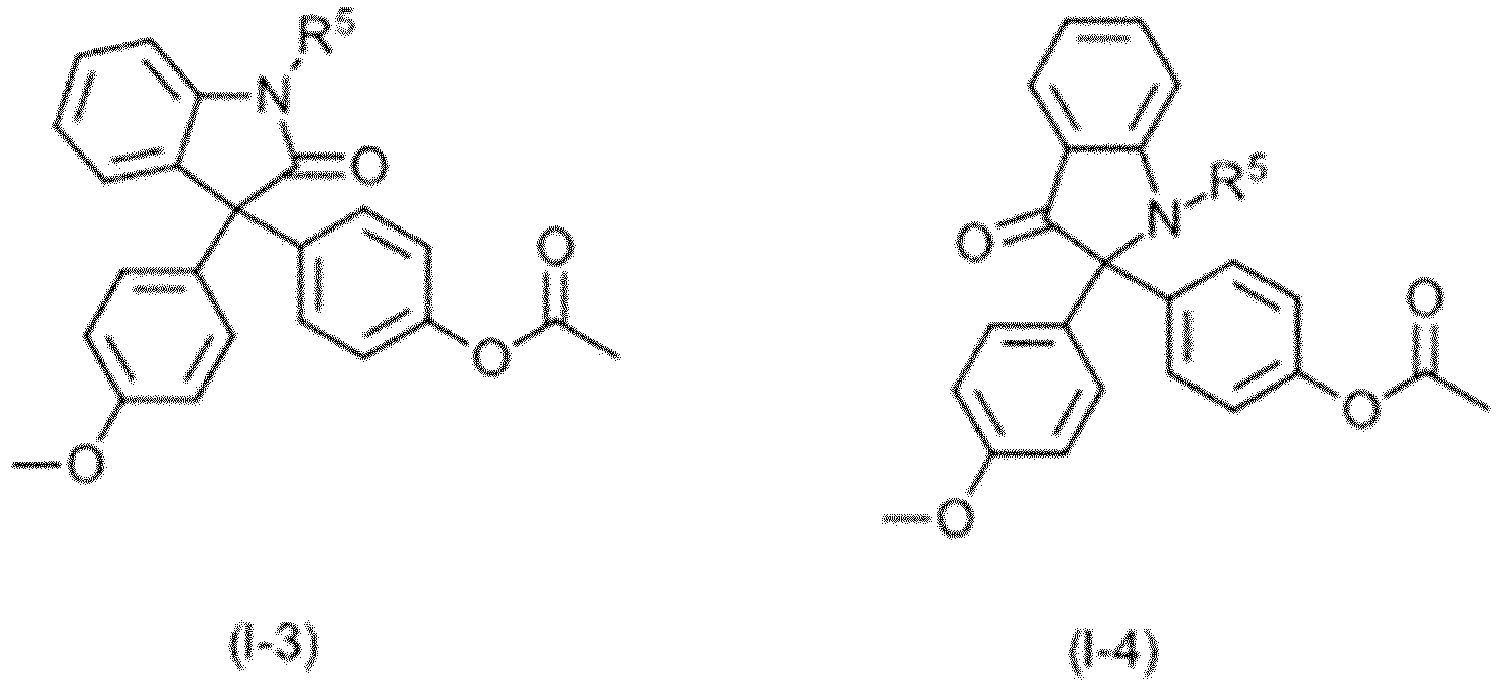 dans lesquelles R5 représente un radical C1-C4-alkyle, un radical aralkyle ou un radical aryle, de préférence un radical méthyle ou phényle, de manière tout particulièrement préférée un radical méthyle.
 - Structure stratifiée selon la revendication 3, ledit un ou lesdits plusieurs polycarbonate(s) ou copolycarbonate(s) à base de diphénols dans la couche a) comprenant au moins un motif structural carbonate de formule (I-1).
- Structure stratifiée selon la revendication 1 à 4, ladite au moins une ouverture de la couche a) n'étant pas remplie en plus d'un matériau thermoplastique.
- Structure stratifiée selon la revendication 1 à 5 ladite au moins une couche a) comprenant une charge, de préférence un pigment blanc, de manière particulièrement préférée du dioxyde de titane, du dioxyde de zirconium et/ou du sulfate de baryum, de manière tout particulièrement préférée du dioxyde de titane.
- Structure stratifiée selon la revendication 1 à 6, ladite au moins une couche a) présentant une épaisseur de ≥ 20 à ≤ 100 um, de manière particulièrement préférée de ≥ 25 à ≤ 75 um.
- Structure stratifiée selon la revendication 1 à 7, ladite au moins une couche b) comprenant au moins un matériau thermoplastique choisi parmi les polymères de monomères éthyléniquement insaturés et/ou les produits de polycondensation de composés réactifs bifonctionnels, de préférence un ou plusieurs polycarbonate(s) ou copolycarbonate(s) à base de diphénols, polyacrylate(s) ou copolyacrylate(s) et polyméthacrylate(s) ou copolyméthacrylate(s), polymère(s) ou copolymère(s) avec du styrène, polyuréthane(s), ainsi que polyoléfine(s), produit(s) de polycondensation ou de copolycondensation de l'acide téréphtalique, produit(s) de polycondensation ou de copolycondensation de l'acide naphtalènedicarboxylique, produit(s) de polycondensation ou de polycondensation d'au moins un acide cycloalkyldicarboxylique, polysulfone(s) ou des mélanges de ceux-ci, de manière particulièrement préférée un ou plusieurs polycarbonate(s) ou copolycarbonate(s) à base de diphénols ou mélanges contenant au moins un polycarbonate ou copolycarbonate.
- Structure stratifiée selon la revendication 1 à 8, une ou plusieurs autre(s) couche(s) c) comprenant au moins un matériau synthétique thermoplastique étant contenue(s) et cette au moins une autre couche c) présentant une transmission de lumière de ≥ 85% à ≤ 98%, ≥ 87% et ≤ 95 %, de manière particulièrement préférée ≥ 88 % et ≤ 92% déterminée selon la norme ISO 13468-2:2006-07.
- Structure stratifiée selon la revendication 1 à 9, la structure stratifiée comprenant une autre couche c) contenant un ou plusieurs polycarbonate(s) ou copolycarbonate(s) à base de diphénols, de préférence copolycarbonate(s) à base de diphénols.
- Structure stratifiée selon la revendication 1 à 9, ladite au moins une couche a), ladite au moins une couche b) et/ou ladite une ou lesdites plusieurs couches c) comprenant au moins un additif sensible au laser, de préférence un pigment noir, de manière particulièrement préférée de la suie.
- Structure à couches selon la revendication 1 à 10, au moins un composant électronique, hologramme volumique et/ou hologramme estampé étant agencé entre la couche a) et la couche b).
- Procédé de fabrication d'un composite stratifié, comprenant- la mise à disposition d'une structure stratifiée selon la revendication 1 à 10,- le cas échéant le placement d'un ou de plusieurs composants électroniques, d'un ou de plusieurs hologrammes volumiques et/ou d'un ou de plusieurs hologrammes estampés entre les couches a) et b),- découpage d'au moins une ouverture dans la couche a),- le cas échéant mise à disposition d'une ou de plusieurs couches c) comprenant au moins un matériau synthétique thermoplastique,- laminage de la structure stratifiée à une température de 120°C à 210°C, de préférence de 130°C à 205°C, de manière particulièrement préférée de 165°C à 200°C et à une pression de 10 N/cm2 à 400 N/cm2, de préférence de 30 N/cm2 à 300 N/cm2, de manière particulièrement préférée de 40 N/cm2 à 250 N/cm2.
- Document de sécurité, de préférence document d'identification, comprenant au moins une structure stratifiée selon l'une des revendications 1 à 11.
- Utilisation d'une structure stratifiée selon la revendication 1, contenant une couche a) opaque scontenant un ou plusieurs polycarbonate(s) ou copolycarbonate(s) à base de diphénols, présentant une transmission de lumière ≥ 0,1% et ≤ 85%, de préférence ≥ 1% et ≤ 65%, de manière particulièrement préférée ≥ 2% et ≤ 50%, déterminée selon la norme ISO 13468-2:2006-07, caractérisée en ce que la température de ramollissement Vicat B/120, déterminée selon la norme ISO 306:2004 (méthode B120 50N ; 120°C/h) dudit un ou desdits plusieurs polycarbonate(s) ou copolycarbonate(s) de la couche a) est ≥ 156°C, de préférence de ≥ 156°C à ≤ 250°C, de manière particulièrement préférée de ≥ 156°C à ≤ 230°C, pour la fabrication de fenêtres dans des documents de sécurité, de préférence des documents d'identification.
Applications Claiming Priority (2)
| Application Number | Priority Date | Filing Date | Title |
|---|---|---|---|
| EP18209747 | 2018-12-03 | ||
| PCT/EP2019/082559 WO2020114834A1 (fr) | 2018-12-03 | 2019-11-26 | Films en plastique à température de ramollissement vicat élevée dans des structure en couches |
Publications (2)
| Publication Number | Publication Date |
|---|---|
| EP3890971A1 EP3890971A1 (fr) | 2021-10-13 |
| EP3890971B1 true EP3890971B1 (fr) | 2024-08-28 |
Family
ID=64650122
Family Applications (1)
| Application Number | Title | Priority Date | Filing Date |
|---|---|---|---|
| EP19806004.8A Active EP3890971B1 (fr) | 2018-12-03 | 2019-11-26 | Feuilles en matière plastique à température de ramollissement vicat plus élevée dans les structures stratifiées |
Country Status (6)
| Country | Link |
|---|---|
| US (1) | US12195602B2 (fr) |
| EP (1) | EP3890971B1 (fr) |
| KR (1) | KR20210099555A (fr) |
| CN (1) | CN113226757B (fr) |
| FI (1) | FI3890971T3 (fr) |
| WO (1) | WO2020114834A1 (fr) |
Families Citing this family (4)
| Publication number | Priority date | Publication date | Assignee | Title |
|---|---|---|---|---|
| FI3584091T3 (fi) * | 2017-02-16 | 2024-03-21 | Dainippon Printing Co Ltd | Informaatiosivu |
| CN114746488A (zh) * | 2019-12-12 | 2022-07-12 | 科思创知识产权两合公司 | 具有特殊性质的膜 |
| EP4119344A1 (fr) * | 2021-07-14 | 2023-01-18 | Covestro Deutschland AG | Couches polymère spéciales destinées à l'obtention plus rapide des propriétés de laminage des structures multicouche |
| CN117642290A (zh) * | 2021-07-14 | 2024-03-01 | 科思创德国股份有限公司 | 适合于快速层压的膜结构 |
Family Cites Families (43)
| Publication number | Priority date | Publication date | Assignee | Title |
|---|---|---|---|---|
| US2970131A (en) | 1961-01-31 | polycarbonate process | ||
| BE532543A (fr) | 1953-10-16 | |||
| DE1007996B (de) | 1955-03-26 | 1957-05-09 | Bayer Ag | Verfahren zur Herstellung thermoplastischer Kunststoffe |
| US3275601A (en) | 1956-01-04 | 1966-09-27 | Bayer Ag | Manufacture of polycarbonates using tertiary amines, quaternary amines and salts thereof as catalysts |
| US2991273A (en) | 1956-07-07 | 1961-07-04 | Bayer Ag | Process for manufacture of vacuum moulded parts of high molecular weight thermoplastic polycarbonates |
| US3148172A (en) | 1956-07-19 | 1964-09-08 | Gen Electric | Polycarbonates of dihydroxyaryl ethers |
| US2999846A (en) | 1956-11-30 | 1961-09-12 | Schnell Hermann | High molecular weight thermoplastic aromatic sulfoxy polycarbonates |
| US3062781A (en) | 1958-07-02 | 1962-11-06 | Bayer Ag | Process for the production of polycarbonates |
| US2999835A (en) | 1959-01-02 | 1961-09-12 | Gen Electric | Resinous mixture comprising organo-polysiloxane and polymer of a carbonate of a dihydric phenol, and products containing same |
| GB1122003A (en) | 1964-10-07 | 1968-07-31 | Gen Electric | Improvements in aromatic polycarbonates |
| NL152889B (nl) | 1967-03-10 | 1977-04-15 | Gen Electric | Werkwijze ter bereiding van een lineair polycarbonaatcopolymeer, alsmede orienteerbare textielvezel van dit copolymeer. |
| FR1580834A (fr) | 1968-01-04 | 1969-09-12 | ||
| DE2063052A1 (de) | 1970-12-22 | 1972-07-13 | Bayer | Verseifungsbeständige Polycarbonate |
| DE2063050C3 (de) | 1970-12-22 | 1983-12-15 | Bayer Ag, 5090 Leverkusen | Verseifungsbeständige Polycarbonate, Verfahren zu deren Herstellung und deren Verwendung |
| DE2211956A1 (de) | 1972-03-11 | 1973-10-25 | Bayer Ag | Verfahren zur herstellung verseifungsstabiler blockcopolycarbonate |
| DE2507776C2 (de) | 1975-02-22 | 1983-09-22 | Bayer Ag, 5090 Leverkusen | Schnellkristallisierende Poly(äthylen/alkylen)-terephthalate |
| DE2507674A1 (de) | 1975-02-22 | 1976-09-09 | Bayer Ag | Schnellkristallisierende poly(aethylen/alkylen)-terephthalate |
| DE2715932A1 (de) | 1977-04-09 | 1978-10-19 | Bayer Ag | Schnellkristallisierende poly(aethylen/alkylen)-terephthalate |
| NO170326C (no) | 1988-08-12 | 1992-10-07 | Bayer Ag | Dihydroksydifenylcykloalkaner |
| US7101644B2 (en) * | 2000-06-23 | 2006-09-05 | Dai Nippon Printing Co., Ltd. | Hologram transfer foil |
| AU2002213213A1 (en) * | 2000-10-17 | 2002-04-29 | General Electric Company | Translucent and transparent polycarbonate thermoplastic alloys ane methods for making thereof |
| JP3706105B2 (ja) * | 2001-03-15 | 2005-10-12 | 三井化学株式会社 | ディスプレイ用フィルタおよびそれを用いた表示装置 |
| US6949599B2 (en) * | 2003-08-28 | 2005-09-27 | General Electric Company | Polycarbonate polyester molding composition |
| US7718733B2 (en) * | 2004-12-20 | 2010-05-18 | Sabic Innovative Plastics Ip B.V. | Optically clear polycarbonate polyester compositions |
| WO2006087965A1 (fr) * | 2005-02-21 | 2006-08-24 | Techno Polymer Co., Ltd. | Stratifie pour marquage au laser |
| ES2688777T3 (es) * | 2006-10-12 | 2018-11-06 | Suncolor Corporation | Composiciones poliméricas |
| US20080103267A1 (en) * | 2006-10-31 | 2008-05-01 | General Electric Company | Infrared transmissive thermoplastic composition |
| US9062196B2 (en) * | 2007-09-28 | 2015-06-23 | Sabic Global Technologies B.V. | High heat polycarbonates, methods of making, and articles formed therefrom |
| EP2172336A1 (fr) | 2008-09-24 | 2010-04-07 | Bayer MaterialScience AG | Caractéristiques de sécurité protégées contre la falsification dans des documents de sécurité ou de valeur |
| EP2218579A1 (fr) * | 2009-02-13 | 2010-08-18 | Bayer MaterialScience AG | Procédé amélioré destiné à la fabrication d'un composite stratifié laminé |
| EP2322356A1 (fr) * | 2009-11-13 | 2011-05-18 | Gemalto SA | Document d'identification et procédé d'élaboration |
| US8586183B2 (en) * | 2011-01-13 | 2013-11-19 | Sabic Innovative Plastics Ip B.V. | Thermoplastic compositions, method of manufacture, and uses thereof |
| MY175082A (en) * | 2012-01-19 | 2020-06-04 | Bayer Ip Gmbh | Plastic film for printing by dye diffusion thermal transfer printing |
| EP2634208A1 (fr) * | 2012-02-28 | 2013-09-04 | Bayer MaterialScience AG | Procédé pour la production d'un film à faible contrainte de qualité optique pour une utilisation dans des dispositifs optoélectroniques |
| US9018286B2 (en) * | 2012-05-24 | 2015-04-28 | Sabic Global Technologies B.V. | Flame retardant polycarbonate compositions, methods of manufacture thereof and articles comprising the same |
| KR20140085260A (ko) | 2012-12-27 | 2014-07-07 | 제일모직주식회사 | 공중합 폴리카보네이트 수지, 그 제조방법 및 이를 포함하는 성형품 |
| CN105216410B (zh) | 2014-07-02 | 2018-05-22 | 中国人民银行印制科学技术研究所 | 一种用于制作安全文件的塑料基材及其制备方法 |
| CN107001782B (zh) * | 2014-11-25 | 2019-07-05 | 沙特基础工业全球技术有限公司 | 耐候性热塑性组合物、制备方法及其制品 |
| WO2016087294A1 (fr) * | 2014-12-01 | 2016-06-09 | Covestro Deutschland Ag | Compositions de copolycarbonate présentant de meilleures propriétés rhéologiques et optiques, contenant des esters de diglycérol |
| KR101795136B1 (ko) * | 2015-05-29 | 2017-11-08 | 롯데첨단소재(주) | 폴리카보네이트 수지 및 이의 제조방법 |
| GB2543050A (en) * | 2015-10-05 | 2017-04-12 | De La Rue Int Ltd | A method of manufacturing a security sheet and a security sheet |
| WO2017187428A1 (fr) * | 2016-04-28 | 2017-11-02 | Sabic Global Technologies B.V. | Compositions pouvant être soudées par laser, objets formés à partir de celles-ci et procédés pour leur fabrication |
| CN109153819A (zh) * | 2016-05-27 | 2019-01-04 | 沙特基础工业全球技术有限公司 | 共聚碳酸酯透镜、制造方法及其应用 |
-
2019
- 2019-11-26 US US17/291,660 patent/US12195602B2/en active Active
- 2019-11-26 EP EP19806004.8A patent/EP3890971B1/fr active Active
- 2019-11-26 WO PCT/EP2019/082559 patent/WO2020114834A1/fr not_active Ceased
- 2019-11-26 CN CN201980079982.9A patent/CN113226757B/zh active Active
- 2019-11-26 KR KR1020217011506A patent/KR20210099555A/ko not_active Withdrawn
- 2019-11-26 FI FIEP19806004.8T patent/FI3890971T3/fi active
Also Published As
| Publication number | Publication date |
|---|---|
| EP3890971A1 (fr) | 2021-10-13 |
| CN113226757B (zh) | 2023-10-24 |
| WO2020114834A1 (fr) | 2020-06-11 |
| CN113226757A (zh) | 2021-08-06 |
| FI3890971T3 (fi) | 2024-11-29 |
| KR20210099555A (ko) | 2021-08-12 |
| US12195602B2 (en) | 2025-01-14 |
| US20210403661A1 (en) | 2021-12-30 |
Similar Documents
| Publication | Publication Date | Title |
|---|---|---|
| EP2393656B1 (fr) | Structure stratifiée et feuilles pour documents d'identité offrant des possibilités de gravure au laser améliorées | |
| EP2172336A1 (fr) | Caractéristiques de sécurité protégées contre la falsification dans des documents de sécurité ou de valeur | |
| EP3890971A1 (fr) | Films en plastique à température de ramollissement vicat élevée dans des structure en couches | |
| EP2218579A1 (fr) | Procédé amélioré destiné à la fabrication d'un composite stratifié laminé | |
| EP2804763B1 (fr) | Feuille en matière synthétique destinée à l'impression à l'aide d'une diffusion de colorant par transfert thermique | |
| EP3559095B1 (fr) | Feuilles en matière plastique pour document d'id à capacité de gravure laser et à résistance aux produits chimiques améliorées | |
| EP3727851B1 (fr) | Feuilles en matière plastique pour document d'id à luminosité des hologrammes estampés améliorée | |
| EP3880474A1 (fr) | Films plastiques présentant une opacité élevée et une faible transparence pour des documents d'identité pourvus d'une fenêtre transparente | |
| WO2013107773A1 (fr) | Feuille plastique pour impression par transfert thermique par diffusion de colorants | |
| EP3038838A2 (fr) | Feuille de données pour un document sécurisé et/ou de valeur | |
| EP4370334A1 (fr) | Structure de film appropriée pour une stratification rapide | |
| EP4370333A1 (fr) | Couches polymères spéciales permettant la stratification plus rapide de structures multicouches | |
| EP3707198B1 (fr) | Films plastiques à activité uv réduite | |
| EP4073151A1 (fr) | Films ayant des propriétés spéciales | |
| WO2010034409A1 (fr) | Utilisation d'un film en matière plastique en impression laser couleur | |
| EP4644131A1 (fr) | Structure en couches comprenant au moins deux couches présentant des gravures différentes |
Legal Events
| Date | Code | Title | Description |
|---|---|---|---|
| STAA | Information on the status of an ep patent application or granted ep patent |
Free format text: STATUS: UNKNOWN |
|
| STAA | Information on the status of an ep patent application or granted ep patent |
Free format text: STATUS: THE INTERNATIONAL PUBLICATION HAS BEEN MADE |
|
| PUAI | Public reference made under article 153(3) epc to a published international application that has entered the european phase |
Free format text: ORIGINAL CODE: 0009012 |
|
| STAA | Information on the status of an ep patent application or granted ep patent |
Free format text: STATUS: REQUEST FOR EXAMINATION WAS MADE |
|
| 17P | Request for examination filed |
Effective date: 20210705 |
|
| AK | Designated contracting states |
Kind code of ref document: A1 Designated state(s): AL AT BE BG CH CY CZ DE DK EE ES FI FR GB GR HR HU IE IS IT LI LT LU LV MC MK MT NL NO PL PT RO RS SE SI SK SM TR |
|
| DAV | Request for validation of the european patent (deleted) | ||
| DAX | Request for extension of the european patent (deleted) | ||
| STAA | Information on the status of an ep patent application or granted ep patent |
Free format text: STATUS: EXAMINATION IS IN PROGRESS |
|
| 17Q | First examination report despatched |
Effective date: 20220419 |
|
| RAP1 | Party data changed (applicant data changed or rights of an application transferred) |
Owner name: COVESTRO DEUTSCHLAND AG |
|
| GRAP | Despatch of communication of intention to grant a patent |
Free format text: ORIGINAL CODE: EPIDOSNIGR1 |
|
| STAA | Information on the status of an ep patent application or granted ep patent |
Free format text: STATUS: GRANT OF PATENT IS INTENDED |
|
| INTG | Intention to grant announced |
Effective date: 20240513 |
|
| GRAS | Grant fee paid |
Free format text: ORIGINAL CODE: EPIDOSNIGR3 |
|
| GRAA | (expected) grant |
Free format text: ORIGINAL CODE: 0009210 |
|
| STAA | Information on the status of an ep patent application or granted ep patent |
Free format text: STATUS: THE PATENT HAS BEEN GRANTED |
|
| AK | Designated contracting states |
Kind code of ref document: B1 Designated state(s): AL AT BE BG CH CY CZ DE DK EE ES FI FR GB GR HR HU IE IS IT LI LT LU LV MC MK MT NL NO PL PT RO RS SE SI SK SM TR |
|
| REG | Reference to a national code |
Ref country code: GB Ref legal event code: FG4D Free format text: NOT ENGLISH |
|
| REG | Reference to a national code |
Ref country code: CH Ref legal event code: EP |
|
| REG | Reference to a national code |
Ref country code: DE Ref legal event code: R096 Ref document number: 502019012011 Country of ref document: DE |
|
| REG | Reference to a national code |
Ref country code: IE Ref legal event code: FG4D Free format text: LANGUAGE OF EP DOCUMENT: GERMAN |
|
| REG | Reference to a national code |
Ref country code: FI Ref legal event code: FGE |
|
| REG | Reference to a national code |
Ref country code: LT Ref legal event code: MG9D |
|
| PG25 | Lapsed in a contracting state [announced via postgrant information from national office to epo] |
Ref country code: NO Free format text: LAPSE BECAUSE OF FAILURE TO SUBMIT A TRANSLATION OF THE DESCRIPTION OR TO PAY THE FEE WITHIN THE PRESCRIBED TIME-LIMIT Effective date: 20241128 |
|
| PG25 | Lapsed in a contracting state [announced via postgrant information from national office to epo] |
Ref country code: NL Free format text: LAPSE BECAUSE OF FAILURE TO SUBMIT A TRANSLATION OF THE DESCRIPTION OR TO PAY THE FEE WITHIN THE PRESCRIBED TIME-LIMIT Effective date: 20240828 Ref country code: GR Free format text: LAPSE BECAUSE OF FAILURE TO SUBMIT A TRANSLATION OF THE DESCRIPTION OR TO PAY THE FEE WITHIN THE PRESCRIBED TIME-LIMIT Effective date: 20241129 Ref country code: PL Free format text: LAPSE BECAUSE OF FAILURE TO SUBMIT A TRANSLATION OF THE DESCRIPTION OR TO PAY THE FEE WITHIN THE PRESCRIBED TIME-LIMIT Effective date: 20240828 Ref country code: PT Free format text: LAPSE BECAUSE OF FAILURE TO SUBMIT A TRANSLATION OF THE DESCRIPTION OR TO PAY THE FEE WITHIN THE PRESCRIBED TIME-LIMIT Effective date: 20241230 |
|
| PG25 | Lapsed in a contracting state [announced via postgrant information from national office to epo] |
Ref country code: BG Free format text: LAPSE BECAUSE OF FAILURE TO SUBMIT A TRANSLATION OF THE DESCRIPTION OR TO PAY THE FEE WITHIN THE PRESCRIBED TIME-LIMIT Effective date: 20240828 |
|
| PG25 | Lapsed in a contracting state [announced via postgrant information from national office to epo] |
Ref country code: LV Free format text: LAPSE BECAUSE OF FAILURE TO SUBMIT A TRANSLATION OF THE DESCRIPTION OR TO PAY THE FEE WITHIN THE PRESCRIBED TIME-LIMIT Effective date: 20240828 |
|
| REG | Reference to a national code |
Ref country code: NL Ref legal event code: MP Effective date: 20240828 |
|
| PG25 | Lapsed in a contracting state [announced via postgrant information from national office to epo] |
Ref country code: IS Free format text: LAPSE BECAUSE OF FAILURE TO SUBMIT A TRANSLATION OF THE DESCRIPTION OR TO PAY THE FEE WITHIN THE PRESCRIBED TIME-LIMIT Effective date: 20241228 |
|
| PG25 | Lapsed in a contracting state [announced via postgrant information from national office to epo] |
Ref country code: HR Free format text: LAPSE BECAUSE OF FAILURE TO SUBMIT A TRANSLATION OF THE DESCRIPTION OR TO PAY THE FEE WITHIN THE PRESCRIBED TIME-LIMIT Effective date: 20240828 |
|
| PG25 | Lapsed in a contracting state [announced via postgrant information from national office to epo] |
Ref country code: RS Free format text: LAPSE BECAUSE OF FAILURE TO SUBMIT A TRANSLATION OF THE DESCRIPTION OR TO PAY THE FEE WITHIN THE PRESCRIBED TIME-LIMIT Effective date: 20241128 Ref country code: ES Free format text: LAPSE BECAUSE OF FAILURE TO SUBMIT A TRANSLATION OF THE DESCRIPTION OR TO PAY THE FEE WITHIN THE PRESCRIBED TIME-LIMIT Effective date: 20240828 |
|
| PG25 | Lapsed in a contracting state [announced via postgrant information from national office to epo] |
Ref country code: RS Free format text: LAPSE BECAUSE OF FAILURE TO SUBMIT A TRANSLATION OF THE DESCRIPTION OR TO PAY THE FEE WITHIN THE PRESCRIBED TIME-LIMIT Effective date: 20241128 Ref country code: PT Free format text: LAPSE BECAUSE OF FAILURE TO SUBMIT A TRANSLATION OF THE DESCRIPTION OR TO PAY THE FEE WITHIN THE PRESCRIBED TIME-LIMIT Effective date: 20241230 Ref country code: PL Free format text: LAPSE BECAUSE OF FAILURE TO SUBMIT A TRANSLATION OF THE DESCRIPTION OR TO PAY THE FEE WITHIN THE PRESCRIBED TIME-LIMIT Effective date: 20240828 Ref country code: NO Free format text: LAPSE BECAUSE OF FAILURE TO SUBMIT A TRANSLATION OF THE DESCRIPTION OR TO PAY THE FEE WITHIN THE PRESCRIBED TIME-LIMIT Effective date: 20241128 Ref country code: NL Free format text: LAPSE BECAUSE OF FAILURE TO SUBMIT A TRANSLATION OF THE DESCRIPTION OR TO PAY THE FEE WITHIN THE PRESCRIBED TIME-LIMIT Effective date: 20240828 Ref country code: LV Free format text: LAPSE BECAUSE OF FAILURE TO SUBMIT A TRANSLATION OF THE DESCRIPTION OR TO PAY THE FEE WITHIN THE PRESCRIBED TIME-LIMIT Effective date: 20240828 Ref country code: IS Free format text: LAPSE BECAUSE OF FAILURE TO SUBMIT A TRANSLATION OF THE DESCRIPTION OR TO PAY THE FEE WITHIN THE PRESCRIBED TIME-LIMIT Effective date: 20241228 Ref country code: HR Free format text: LAPSE BECAUSE OF FAILURE TO SUBMIT A TRANSLATION OF THE DESCRIPTION OR TO PAY THE FEE WITHIN THE PRESCRIBED TIME-LIMIT Effective date: 20240828 Ref country code: GR Free format text: LAPSE BECAUSE OF FAILURE TO SUBMIT A TRANSLATION OF THE DESCRIPTION OR TO PAY THE FEE WITHIN THE PRESCRIBED TIME-LIMIT Effective date: 20241129 Ref country code: ES Free format text: LAPSE BECAUSE OF FAILURE TO SUBMIT A TRANSLATION OF THE DESCRIPTION OR TO PAY THE FEE WITHIN THE PRESCRIBED TIME-LIMIT Effective date: 20240828 Ref country code: BG Free format text: LAPSE BECAUSE OF FAILURE TO SUBMIT A TRANSLATION OF THE DESCRIPTION OR TO PAY THE FEE WITHIN THE PRESCRIBED TIME-LIMIT Effective date: 20240828 |
|
| PG25 | Lapsed in a contracting state [announced via postgrant information from national office to epo] |
Ref country code: RO Free format text: LAPSE BECAUSE OF FAILURE TO SUBMIT A TRANSLATION OF THE DESCRIPTION OR TO PAY THE FEE WITHIN THE PRESCRIBED TIME-LIMIT Effective date: 20240828 Ref country code: DK Free format text: LAPSE BECAUSE OF FAILURE TO SUBMIT A TRANSLATION OF THE DESCRIPTION OR TO PAY THE FEE WITHIN THE PRESCRIBED TIME-LIMIT Effective date: 20240828 Ref country code: SM Free format text: LAPSE BECAUSE OF FAILURE TO SUBMIT A TRANSLATION OF THE DESCRIPTION OR TO PAY THE FEE WITHIN THE PRESCRIBED TIME-LIMIT Effective date: 20240828 |
|
| PG25 | Lapsed in a contracting state [announced via postgrant information from national office to epo] |
Ref country code: EE Free format text: LAPSE BECAUSE OF FAILURE TO SUBMIT A TRANSLATION OF THE DESCRIPTION OR TO PAY THE FEE WITHIN THE PRESCRIBED TIME-LIMIT Effective date: 20240828 |
|
| PG25 | Lapsed in a contracting state [announced via postgrant information from national office to epo] |
Ref country code: CZ Free format text: LAPSE BECAUSE OF FAILURE TO SUBMIT A TRANSLATION OF THE DESCRIPTION OR TO PAY THE FEE WITHIN THE PRESCRIBED TIME-LIMIT Effective date: 20240828 |
|
| PG25 | Lapsed in a contracting state [announced via postgrant information from national office to epo] |
Ref country code: SK Free format text: LAPSE BECAUSE OF FAILURE TO SUBMIT A TRANSLATION OF THE DESCRIPTION OR TO PAY THE FEE WITHIN THE PRESCRIBED TIME-LIMIT Effective date: 20240828 Ref country code: IT Free format text: LAPSE BECAUSE OF FAILURE TO SUBMIT A TRANSLATION OF THE DESCRIPTION OR TO PAY THE FEE WITHIN THE PRESCRIBED TIME-LIMIT Effective date: 20240828 |
|
| REG | Reference to a national code |
Ref country code: DE Ref legal event code: R097 Ref document number: 502019012011 Country of ref document: DE |
|
| REG | Reference to a national code |
Ref country code: CH Ref legal event code: PL |
|
| PLBE | No opposition filed within time limit |
Free format text: ORIGINAL CODE: 0009261 |
|
| STAA | Information on the status of an ep patent application or granted ep patent |
Free format text: STATUS: NO OPPOSITION FILED WITHIN TIME LIMIT |
|
| PG25 | Lapsed in a contracting state [announced via postgrant information from national office to epo] |
Ref country code: MC Free format text: LAPSE BECAUSE OF FAILURE TO SUBMIT A TRANSLATION OF THE DESCRIPTION OR TO PAY THE FEE WITHIN THE PRESCRIBED TIME-LIMIT Effective date: 20240828 |
|
| PG25 | Lapsed in a contracting state [announced via postgrant information from national office to epo] |
Ref country code: LU Free format text: LAPSE BECAUSE OF NON-PAYMENT OF DUE FEES Effective date: 20241126 |
|
| REG | Reference to a national code |
Ref country code: CH Ref legal event code: PL |
|
| GBPC | Gb: european patent ceased through non-payment of renewal fee |
Effective date: 20241128 |
|
| PG25 | Lapsed in a contracting state [announced via postgrant information from national office to epo] |
Ref country code: CH Free format text: LAPSE BECAUSE OF NON-PAYMENT OF DUE FEES Effective date: 20241130 |
|
| 26N | No opposition filed |
Effective date: 20250530 |
|
| REG | Reference to a national code |
Ref country code: BE Ref legal event code: MM Effective date: 20241130 |
|
| PG25 | Lapsed in a contracting state [announced via postgrant information from national office to epo] |
Ref country code: SE Free format text: LAPSE BECAUSE OF FAILURE TO SUBMIT A TRANSLATION OF THE DESCRIPTION OR TO PAY THE FEE WITHIN THE PRESCRIBED TIME-LIMIT Effective date: 20240828 |
|
| PG25 | Lapsed in a contracting state [announced via postgrant information from national office to epo] |
Ref country code: BE Free format text: LAPSE BECAUSE OF NON-PAYMENT OF DUE FEES Effective date: 20241130 Ref country code: GB Free format text: LAPSE BECAUSE OF NON-PAYMENT OF DUE FEES Effective date: 20241128 |
|
| PG25 | Lapsed in a contracting state [announced via postgrant information from national office to epo] |
Ref country code: IE Free format text: LAPSE BECAUSE OF NON-PAYMENT OF DUE FEES Effective date: 20241126 |
|
| PGFP | Annual fee paid to national office [announced via postgrant information from national office to epo] |
Ref country code: DE Payment date: 20251022 Year of fee payment: 7 |
|
| PG25 | Lapsed in a contracting state [announced via postgrant information from national office to epo] |
Ref country code: AT Free format text: LAPSE BECAUSE OF NON-PAYMENT OF DUE FEES Effective date: 20241126 |
|
| PGFP | Annual fee paid to national office [announced via postgrant information from national office to epo] |
Ref country code: FI Payment date: 20251113 Year of fee payment: 7 |
|
| PGFP | Annual fee paid to national office [announced via postgrant information from national office to epo] |
Ref country code: FR Payment date: 20251023 Year of fee payment: 7 |
|
| REG | Reference to a national code |
Ref country code: AT Ref legal event code: MM01 Ref document number: 1717540 Country of ref document: AT Kind code of ref document: T Effective date: 20241126 |
|
| PG25 | Lapsed in a contracting state [announced via postgrant information from national office to epo] |
Ref country code: HU Free format text: LAPSE BECAUSE OF FAILURE TO SUBMIT A TRANSLATION OF THE DESCRIPTION OR TO PAY THE FEE WITHIN THE PRESCRIBED TIME-LIMIT; INVALID AB INITIO Effective date: 20191126 |
|
| PG25 | Lapsed in a contracting state [announced via postgrant information from national office to epo] |
Ref country code: CY Free format text: LAPSE BECAUSE OF FAILURE TO SUBMIT A TRANSLATION OF THE DESCRIPTION OR TO PAY THE FEE WITHIN THE PRESCRIBED TIME-LIMIT; INVALID AB INITIO Effective date: 20191126 |