EP3891636B1 - Détection de systèmes logiciels vulnérables - Google Patents
Détection de systèmes logiciels vulnérables Download PDFInfo
- Publication number
- EP3891636B1 EP3891636B1 EP19809096.1A EP19809096A EP3891636B1 EP 3891636 B1 EP3891636 B1 EP 3891636B1 EP 19809096 A EP19809096 A EP 19809096A EP 3891636 B1 EP3891636 B1 EP 3891636B1
- Authority
- EP
- European Patent Office
- Prior art keywords
- software
- neural network
- vulnerability
- software system
- corpus
- Prior art date
- Legal status (The legal status is an assumption and is not a legal conclusion. Google has not performed a legal analysis and makes no representation as to the accuracy of the status listed.)
- Active
Links
Images


Classifications
-
- G—PHYSICS
- G06—COMPUTING OR CALCULATING; COUNTING
- G06F—ELECTRIC DIGITAL DATA PROCESSING
- G06F21/00—Security arrangements for protecting computers, components thereof, programs or data against unauthorised activity
- G06F21/50—Monitoring users, programs or devices to maintain the integrity of platforms, e.g. of processors, firmware or operating systems
- G06F21/57—Certifying or maintaining trusted computer platforms, e.g. secure boots or power-downs, version controls, system software checks, secure updates or assessing vulnerabilities
- G06F21/577—Assessing vulnerabilities and evaluating computer system security
-
- G—PHYSICS
- G06—COMPUTING OR CALCULATING; COUNTING
- G06F—ELECTRIC DIGITAL DATA PROCESSING
- G06F18/00—Pattern recognition
- G06F18/20—Analysing
- G06F18/21—Design or setup of recognition systems or techniques; Extraction of features in feature space; Blind source separation
- G06F18/214—Generating training patterns; Bootstrap methods, e.g. bagging or boosting
-
- G—PHYSICS
- G06—COMPUTING OR CALCULATING; COUNTING
- G06N—COMPUTING ARRANGEMENTS BASED ON SPECIFIC COMPUTATIONAL MODELS
- G06N3/00—Computing arrangements based on biological models
- G06N3/02—Neural networks
- G06N3/04—Architecture, e.g. interconnection topology
- G06N3/044—Recurrent networks, e.g. Hopfield networks
-
- G—PHYSICS
- G06—COMPUTING OR CALCULATING; COUNTING
- G06N—COMPUTING ARRANGEMENTS BASED ON SPECIFIC COMPUTATIONAL MODELS
- G06N3/00—Computing arrangements based on biological models
- G06N3/02—Neural networks
- G06N3/04—Architecture, e.g. interconnection topology
- G06N3/044—Recurrent networks, e.g. Hopfield networks
- G06N3/0442—Recurrent networks, e.g. Hopfield networks characterised by memory or gating, e.g. long short-term memory [LSTM] or gated recurrent units [GRU]
-
- G—PHYSICS
- G06—COMPUTING OR CALCULATING; COUNTING
- G06N—COMPUTING ARRANGEMENTS BASED ON SPECIFIC COMPUTATIONAL MODELS
- G06N3/00—Computing arrangements based on biological models
- G06N3/02—Neural networks
- G06N3/04—Architecture, e.g. interconnection topology
- G06N3/045—Combinations of networks
-
- G—PHYSICS
- G06—COMPUTING OR CALCULATING; COUNTING
- G06N—COMPUTING ARRANGEMENTS BASED ON SPECIFIC COMPUTATIONAL MODELS
- G06N3/00—Computing arrangements based on biological models
- G06N3/02—Neural networks
- G06N3/04—Architecture, e.g. interconnection topology
- G06N3/0499—Feedforward networks
-
- G—PHYSICS
- G06—COMPUTING OR CALCULATING; COUNTING
- G06N—COMPUTING ARRANGEMENTS BASED ON SPECIFIC COMPUTATIONAL MODELS
- G06N3/00—Computing arrangements based on biological models
- G06N3/02—Neural networks
- G06N3/08—Learning methods
-
- G—PHYSICS
- G06—COMPUTING OR CALCULATING; COUNTING
- G06N—COMPUTING ARRANGEMENTS BASED ON SPECIFIC COMPUTATIONAL MODELS
- G06N3/00—Computing arrangements based on biological models
- G06N3/02—Neural networks
- G06N3/08—Learning methods
- G06N3/09—Supervised learning
Definitions
- the present invention relates to the detection of software systems vulnerable to attack.
- Network connected computer systems whether physical and/or virtual computer systems connected via one or more physical and/or virtual network communication mechanisms, can be susceptible to malicious attack.
- one or more computer systems can become infected with malicious software such as botnet agents or the like, and such infected systems can instigate malicious communication with other systems such as communications intended to propagate such infections and/or communications intended to affect the operation of target computer systems (e.g. denial of service attacks, hijacking or the like).
- Vulnerabilities can arise due to design flaws, inadequate or flawed programming or logic, oversight, erroneous or mis-configuration, use of software outside its design parameters, flaws or errors in the way software responds to other interfacing software or requests, and other sources and/or causes of vulnerability as will be apparent to those skilled in the art.
- Embodiments of the present invention address the challenge of detecting vulnerabilities in a computer software system and, in particular, monitoring vulnerabilities over time to identify changes in vulnerabilities affecting the software system.
- Changes in vulnerabilities can usefully trigger protective, corrective or remediative measures where remediation can include reducing an extent of vulnerability of a software system to an acceptable level. It is to be acknowldeged that software systems cannot always be rendered devoid of all vulnerabilities. This state of affairs arises due to the complexity of modern software, the interfaces between software systems and the scope of potential use of software systems that can extend beyond contemplated design constraints. Nonetheless, preference for maximum acceptable degree of vulnerability can be defined for a software system such that, for example, certain vulnerabilities are acknowledged and tolerated while other vulnerabilities are intolerable and require mitigation or remediation.
- Mitigation of a vulnerability can include introduction, deployment or configuration of protective measures.
- a software system vulnerable to a malware infection or attack can be complemented by antimalware facilities to mitigate the effect of the such attacks.
- Remediation measures for a vulnerability can include removing a known vulnerability altogether such as by patching, updating or replacing a known flawed software component or the like.
- Software systems are suites of software components arranged together to perform a function, provide a service or application.
- Software components of potentially multiple different classes can be brought together in a software system.
- classes of software component can include, inter alia: operating systems; databases; middleware; transaction handling services; applications software; communications libraries; user interface libraries; and other classes of software as will be apparent to those skilled in the art.
- Software components within these classes can be combined or otherwise brought together to constitute a software system.
- a particular operating system can be combined with a particular user application and a particular database to provide a software system.
- Such particular software are known as software components.
- Embodiments of the present invention generate representations of a software system in terms of vulnerabilities affecting the software system, such representations being generated over time for comparison to detect changes in the representations that indicate an increased vulnerability of the software system. When detected, increased vulnerability can trigger protective measures and/or remediation measures for the software system.
- the representations of vulnerabilities are known as embeddings in which a software system is represented as a vector representation derived based on attributes of vulnerabilities affecting the software system.
- individual software components and/or classes of software component for a software system are represented in a vector representation and aggregated to provide an aggregate vector representation comparable over time
- the generation of the vector representations as embeddings is achieved by training a fully connected neural network with a single hidden layer (the hidden layer being preferably smaller than input and output layers).
- Each unit in the input layer corresponds to a software component or class of components.
- Each unit in the output layer corresponds to a vulnerability.
- There is an input unit for each item in a corpus of all software such corpus including, for example, all software components and all classes of software component.
- there is an output unit for each vulnerability in a corpus of all vulnerabilities such as a corpus of vulnerabilities stored in a vulnerability database or register.
- the neural network is trained using training data derived from records of vulnerabilities stored in, for example, a vulnerability database.
- a vulnerability database Such an approach to the generation of embeddings is described in detail in " IP2Vec: Learning Similarities between IP Addresses” (Ring et al, 2017 IEEE International Conference on Data Mining Workshops ) which itself builds upon the approach described in detail in “ Efficient Estimation of Word Representations in Vector Space” (Mikolov et al., ArXiv, CoRR (Computing Research Repository), 2013 ).
- Both Ring et al. and Mikolov et al. are specifically cited here for their respective disclosures which, combined with the present specification, are to be read to provide sufficient disclosure of the present invention.
- Embodiments of the present invention improve upon the approach of Ring et al. and Mikolov et al. by, inter alia, the application of such embedding generation to vulnerability data over time for comparison to detect increased vulnerability of a software system. Further, embodiments of the present invention provide improvements including, inter alia, the triggering of mitigation and/or remediation measures. Yet further, embodiments of the present invention provide improvements including, inter alia, by use of pre-processing of training data to enhance the characterisation of vulnerabilities in the generated embeddings.
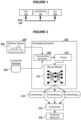
- FIG. 1 is a block diagram of a computer system suitable for the operation of embodiments of the present invention.
- a central processor unit (CPU) 102 is communicatively connected to a storage 104 and an input/output (I/O) interface 106 via a data bus 108.
- the storage 104 can be any read/write storage device such as a random-access memory (RAM) or a non-volatile storage device.
- RAM random-access memory
- An example of a non-volatile storage device includes a disk or tape storage device.
- the I/O interface 106 is an interface to devices for the input or output of data, or for both input and output of data. Examples of I/O devices connectable to I/O interface 106 include a keyboard, a mouse, a display (such as a monitor) and a network connection.
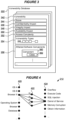
- FIG. 2 is a component diagram of a computer implemented arrangement for detecting increased vulnerability of a software system 200 in accordance with embodiments of the present invention.
- the software system 200 is an arrangement, aggregation and/or deployable specification of particular software components 220, each software component belonging to a class of software component.
- An embedding generator 202 is provided as a hardware, software, firmware or combination component for generating embeddings 214 as vector representations of the software system 220.
- the embedding generator 202 receives data records from a vulnerability database 222.
- the vulnerability database 222 is a data store storing information about known vulnerabilities affecting software as will be described in detail below with respect to Figure 3 .
- the vulnerability database 222 can equally be provided as a simple repository, website, data dump, document store or other suitable data store for storing vulnerability information.
- this description refers to records stored within, accessed within and/or received from the vulnerability database 222, it will be appreciated by those skilled in the art that such data records are items, structures, reports, documents or other units of data storing vulnerability information as will be described below.
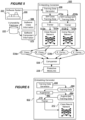
- FIG. 3 is a depiction of an exemplary vulnerability database in accordance with embodiments of the present invention.
- the vulnerability database 222 of figure 3 includes a plurality of vulnerability records 342 each including information about a known vulnerability. Each vulnerability will be identified in the vulnerability database 222 such as by a unique identifier, a unique name or similar (not illustrated).
- the exemplary record 342 the following exemplary data fields are provided. It will be appreciated that the exemplary data fields are not necessarily mandatory or exhaustive:
- the vulnerability database 222 constitutes a source of information regarding vulnerabilities including an indication of affected software components 358 and, preferably, classes of software components 362. While a single vulnerability database 222 is illustrated it will be appreciated that a composite of a plurality of vulnerability databases 222 such as complementary databases or other data stores can be used.
- An example of a vulnerability database 222 is the Common Vulnerabilities and Exposures (CVE) repository provided by the Mitre Corporation at www.cvedetails.com and cve.mitre.org (accessed on 2 nd December 2018.
- the CVE repository is provided by way of webpages containing entries for each of a plurality of known cybersecurity vulnerabilities, each vulnerability including substantially all of the fields illustrated in the vulnerability record 342 of Figure 4 .
- databases of vulnerability information can be obtained via, inter alia: exploit-db.com (provided by Offensive Security, accessed on 2 nd December 2018); and the National Vulnerability Database (NVD), a U.S. government repository of standards-based vulnerability management data represented using the Security Content Automation Protocol (SCAP) (NVD is available at nvd.nist.gov accessed on 2 nd December 2018).
- exploit-db.com provided by Offensive Security, accessed on 2 nd December 2018
- NAD National Vulnerability Database
- SCAP Security Content Automation Protocol
- the embedding generator 202 receives a plurality of data records such as record 342 for vulnerabilities from the vulnerability database 222.
- the records received by the embedding generator 202 can constitute all records in the database 222 or some select subset of records in the database 222 such as records relating to vulnerabilities affecting a certain subset of classes of software component, vulnerabilities affecting certain software components, or vulnerabilities satisfying any number of criteria defined in terms of characteristics of vulnerabilities including those characteristics indicated in Figure 3 and other characteristics not indicated.
- the embedding generator 202 includes a training data generator 206 as a software, hardware, firmware or combination component arranged to access data records from the vulnerability database 222 and generate training data for a neural network 212.
- the training data is generated according to the approach of Mikolov et al. and Ring et al. save for the data utilised for training the neural network 212 is software and vulnerability information (see, for example, section IV of Ring et al. and the example illustrated in Figure 3 of Ring et al.)
- Each vulnerability database 222 record is used to generate one or more training data items.
- the neural network 212 is trained using tuples each consisting of a class of software component and a vulnerability (i.e. (class, vulnerability) pairs). Additionally or alternatively, the neural network 212 is trained using tuples each consisting of a particular software component within a particular class and a vulnerability (i.e. (software component of class c, vulnerability) pairs). Further additionally or alternatively, the neural network 212 is trained using tuples each consisting of a particular software component (of any class) and a vulnerability (i.e. (software component, vulnerability) pairs). For provision to train the neural network 212 each element of a tuple can be encoded as a one-hot vector. In preferred embodiments, tuples are provided for each software (e.g.
- each software class or each software component in a corpus of all software (e.g. each software component in a corpus of all software components, such as all software components indicated in the vulnerability database 222 or, at least, in a selected subset of records in the vulnerability database 222).
- tuples are provided for each vulnerability in a corpus of all vulnerabilities, such as all vulnerabilities included in the vulnerability database 222 or, at least, in a selected subset of records in the vulnerability database 222.
- a first element in a training data item tuple is used as an input for the neural network 212 (encoded as a one-hot vector) and a second element in a training data item tuple is used as a desired output for the neural network 212 (encoded as a one-hot vector).
- a backpropagation training algorithm can be applied to train the neural network using such pairs of values (see, for example, " Learning internal representations by backpropagating errors", D. E. Rumelhart, G. E. Hinton, R. J. Williams, September 1985, Institute for Cognitive Science Report 8506, University of California, San Diego ).
- the neural network 212 is trained using stochastic gradient descent and backpropagation.
- the neural network 212 serves as a basis for defining a plurality of vector representations for each software component and/or class in the corpus according to the input data of the neural network.
- a vector constituted by the values of the weights of all connections in the neural network 212 from the input unit to each hidden unit can constitute a vectoral embedding for the software component or class.
- Figure 4 depicts a partial exemplary neural network 212 suitable for operation in embodiments of the present invention.
- the neural network 212 of Figure 4 is a partial representation because it shows only the connections between a single input unit and hidden unit, and between the hidden units and an output unit.
- the neural network 212 of Figure 4 depicts a set of input units 420 each corresponding to a software component (e.g. "OS A”, “OS B”, “Browser X”) or a class of software components (e.g. "Operating System", “Brower”, “Databas”).
- Output units 424 are also provided, each being associated with a vulnerability including: “Overflow”; “Execute Code”; “SQL Injection”; “Denial of Service”; “Memory Corruption”; and “Obtain Information”.
- Figure 4 also depicts weights w1, w2, w3 and w4 of connections between one input unit for software component "Browser X" and a set of hidden units 422.
- the neural network 212 is trained with the sample ⁇ "Browser X", "Denial of Service” ⁇ , so indicated by the weighted connections between the input unit for "Browser X" and the hidden units, and between the hidden units and output unit for "Denial of Service”.
- a vector with the components w1, w2, w3 and w4 thus constitutes a vector representation of the software component "Browser X” and is an embedding for software component "Browser X”.
- multiple embeddings can be generated stored as weights in the trained neural network 212.
- embedding(s) for a software component or class can be extracted from the trained neural network 212 and stored separately in a data store or memory associated with or accessible to the embedding generator 202 (not shown).
- a set of embeddings for the software system 200 is generated as an aggregation of embeddings 214 corresponding to one or more of the software components 220 of the software system 200 and the classes of software components for components 220 in the software system 200. In one embodiment, all software components 220 and/or classes of the software system 200 are used.
- the aggregation of embeddings 214 thus constitutes an aggregation of multiple vectors corresponding to the embeddings being aggregated.
- Several aggregation techniques can be employed for this purpose, ranging from computing the average embeddings difference of all the embeddings for the software system 200 to using more advanced techniques, such as those disclosed in " Aggregating Neural Word Embeddings for Document Representation” (R. Zhang, J. Guo, Y. Lan, J. Xu and X. Cheng, Springer, 2018 ) and/or “ Aggregating Continuous Word Embeddings for Information Retrieval” (S. Clinchant and F.
- the embedding generator 202 generates an aggregate embedding 214 for the software system.
- the embedding generator 202 is operable temporally on the basis of the vulnerability database 222 as constituted at a point in time t. Accordingly, an embedding 214 for the software system 200 generated by the embedding generator 202 on the basis of the vulnerability database 222 at time t is referred to as Embedding t .
- the vulnerability database 222 will change over time according to the addition, deletion and amendment of records therein as new vulnerabilities are exposed, existing vulnerabilities are better understood, more information is made available, more analysis of vulnerabilities are conducted and so on.
- multiple such embeddings 214 are generated, one for each of multiple different times t (points in time) using the vulnerability database 222 at that point in time (vulnerability database t ) such that each embedding 214 is an aggregation of vectors for software components and/or classes derived from the vector neural network 212 as trained using training data generated from data records in the vulnerability database 222 at that point in time t.
- each embedding 214 is an aggregation of vectors for software components and/or classes derived from the vector neural network 212 as trained using training data generated from data records in the vulnerability database 222 at that point in time t.
- the neural network 212 is trained using training data for the time t and embedding 214 is an aggregate of vector representations of weights in the trained neural network 212 for at least a subset of the software components and/or classes represented by the input units 420 for the software system 200.
- Figure 2 also includes a comparator 216 as a software, hardware, firmware or combination component operable to receive and compare a plurality of embeddings 214, each for a different time t.
- the comparator 216 performs a similarity analysis on a pair of vector representations for the software system 200, each vector representation corresponding to an embedding 214 generated for a different time t. In this way, differences between embeddings 214 at different times t for the software system 200 can be discerned and, where such differences meet or exceed a maximum threshold degree of difference, a determination of the existence of an indication of a change to the vulnerability of the software system 200 can be identified.
- the comparator 216 can make the vector comparison using a vector similarity function such as a cosine similarity function for comparing vectors as is known in the art.
- a vector similarity function such as a cosine similarity function for comparing vectors as is known in the art.
- Sufficiency of dissimilarity can be predetermined in terms of a degree of difference characterised in dependence on the particular vector similarity function employed - such as an angular difference, an extent of vectoral magnitude difference or a combination or other such characterisations of difference as will be apparent to those skilled in the art.
- protective measures 218 can be implemented to protect the software system 200 and/or reduce a vulnerability of the software system 200.
- Such protective measures can be mitigating measures to mitigate against exploitation of vulnerabilities of the software system 200, such mitigation measures being determined by reference to, for example, the vulnerability database 222 to identify the vulnerabilities of the software system 200.
- mitigating measures can include deployable software, hardware, firmware or combination facilities or features that can include, for example, the deployment of firewalls, new security measures, additional authentication or authorisation checks, execution or updating of antimalware services, preventing communication with the software system 200, increasing a level of monitoring, tracing or logging and other protective measures as will be apparent to those skilled in the art.
- the embedding generator 202 coupled with the comparator 216 provide for the effective characterisation of the software system 200 in terms of vulnerabilities of the software system 200 as vector representations (embeddings 214) for each of a plurality of times t such that changes detected between vector representations 214 can trigger the deployment of protective measures 218.
- a new neural network 212 is trained afresh for each different time t for which the embedding generator 202 operates.
- the neural network 212 for a time t is trained using training data 208 derived from vulnerability database 222 data records at that time, and each embedding 214 is defined as an aggregate of vector representations derived from the neural network 212 accordingly.
- a series of embeddings arising from multiply training the same neural network 212 constitute a temporal sequence of embeddings suitable for training a further neural network as a recurrent neural network.
- Recurrent neural networks can be used to analyse sequential data due to their ability to take multiple inputs one after the other and save state information between inputs. Such recurrent neural networks can be trained in an unsupervised way by making the target output at each step the embeddings for a next step (prediction) or by training a sequence-to-sequence model to reconstruct the entire sequence (autoencoder).
- Prediction or reconstruction errors derived from a recurrent neural network can then be used by the comparator 216 to indicate how likely a given sequence of embeddings 214 is to be diverging (or becoming increasingly dissimilar) in comparison to "normal" sequences that can be defined during a training time of operation when the vulnerabilities of the software system 200 are known to be consistent.
- the comparator 216 can be adapted to comparing multiple generations of vector representations by training a recurrent neural network for the software system 200 based on the multiple generations of vector representation. In this way, the trained recurrent neural network is suitable for classifying a subsequent vector representation as changed or sufficiently different in relation to multiple generations of vector representations.
- Figure 5 is a component diagram of a computer implemented arrangement for detecting increased vulnerability of a software system 200 in accordance with embodiments of the present invention. Many of the elements of Figure 5 are identical to those described above with respect to Figure 2 and these will not be repeated here.
- Figure 5 the distinction between software components and classes of software component are clearly indicated and a separate neural network is trained for each of software components and classes. In this way a plurality of embeddings 514a over times t are generated for the software system 200 based on vector representations of classes of software component, and a plurality of embeddings 514b over times t are generated for the software system 200 based on vector representations of software components.
- the embedding generator 202 receives data records from the vulnerabilities database 222 including vulnerability information for classes of software components 568 and vulnerability information for software components 570.
- the training data generator 206 thus generates two separate sets of training data.
- a first set of training data 572a is generated based on software component class information from vulnerability database 222 records.
- a second set of training data 572b is generated based on software component information from vulnerability database 222 records.
- trainers 510a and 510b (which could be provided as a single trainer) each train a neural network 512a and 512b such that neural network 512a is trained for classes of software component and neural network 512b is trained for software components.
- vector representations for each class of software component in a corpus of all classes can be extracted from class neural network 512a.
- vector representations for each software component in a corpus of all software components can be extracted from component neural network 512b.
- class embeddings 514a are generated as aggregates of class vector representations corresponding to software component classes for software system 220.
- component embeddings 514b are generated as aggregates of software component vector representations corresponding to software components for software system 220.
- the comparator is thus arranged to compare a series of class embeddings 514a and a series of component embeddings 514b for each of different times t in order to identify changes to embeddings over time as a trigger for protective measures 218.
- Figure 6 is an alternative arrangement of the embedding generator of Figure 1 in accordance with embodiments of the present invention. Many of the elements of Figure 6 are identical to those described above with respect to Figure 2 and these will not be repeated here. Further, the embedding generator 602 of Figure 6 is equally applicable to the arrangement of Figure 5 with appropriate modifications as will be apparent to those skilled in the art.
- the embedding generator 602 of Figure 6 is adapted to enhance the training data 680 by augmenting it.
- the embedding generator 602 includes an augmenter 682 as a software, hardware, firmware or combination component arranged to receive or access each item of the training data 680 and the data records received from the vulnerability database 222 (not shown in Figure 6 ) on the basis of which the training data 680 was generated.
- the augmentor 682 generates augmented training data 684 corresponding to the training data 680 with augmentations.
- the augmented training data 684 is then used by the trainer 210 to train the neural network 212 as previously described.
- the augmenter 682 performs augmentation of the training data 680 by replicating training data items so that they appear more than once in the augmented training data 684.
- a determination of whether to replicate a training data item is made based on one or more attributes of a vulnerability database 222 data record corresponding to the training data item.
- the replication may involve mere duplication of one, more than one or all training data items generated based on a vulnerability database 222, or repetition of such training data items multiple times in the augmented training data 684. In this way, characteristics of vulnerability database 222 data record deemed significant (based on one or more attributes) are emphasised in the augmented training data 684 by replication of training data items.
- such significance is determined based on a value of one or more attributes in a vulnerability database 222 data record, such as attributes corresponding to a score, impact or complexity of a vulnerability.
- attributes in a vulnerability database 222 data record such as attributes corresponding to a score, impact or complexity of a vulnerability.
- more significant vulnerabilities are emphasised in the augmented training data 684 by replication of training data items.
- characteristics of the software component and/or class indicated in a vulnerability database 222 data record can lead to replication.
- the augmenter 682 can augment training data 680 to augmented training data 684 by replicating training data items in response to a determination that a value of a score attribute of a vulnerability corresponding a training data item exceeds a predetermined threshold.
- Figure 7 is a component diagram of a computer implemented arrangement for detecting and remediating increased vulnerability of a software system 200 in accordance with embodiments of the present invention. Some of the features of Figure 7 are identical to those described above with respect to Figures 2 , 5 and 6 and these will not be repeated here.
- the comparator informs an increased vulnerability determiner 718 as a software, hardware, firmware or combination component adapted to determine whether a vulnerability for software system 200 has increased sufficiently to trigger remediation of the software system 200 so as to reduce a vulnerability of the system 200.
- remediation differs from mitigation in that an objective of remediation is to affect a vulnerability of the software system 200 such that a level or degree of vulnerability of the software system 200 is within permitted levels.
- Permitted levels of vulnerability can include a threshold degree of vulnerability indicated by a degree of difference (or change) between embeddings for the software system between two points in time t and t+u.
- an acceptable or permitted level of vulnerability can be a level of vulnerability that is known to be effectively mitigated by mitigation measures such as those previously described. Where a degree or level of vulnerability exceeds such a permitted or acceptable level, remediation by way of improving the level of vulnerability (by reducing vulnerability such as by eliminating one or more vulnerabilities) is preferred.
- a software modifier 790 is triggered to effect modifications to the software system 200 so as to affect a change to a degree of vulnerability of the software system 200 that is intended to reduce a degree of difference between an embedding generated for the software system 200 so changed and embeddings for previous times t.
- comparison with an embedding known to exceed a maximum threshold degree of difference from previous embeddings should be excluded from comparison with an embedding or a new modified version of the software system 200.
- software components in the software system 200 are iteratively adjusted and, at each iteration, a new aggregate vector representation (embedding) 214 for the software system 200 so adjusted is generated.
- Each regenerated embedding 214 is compared with the multiple previousl embeddings to identify one or more software component adjustments leading to a change in the embedding not exceeding a maximum threshold degree of change. In this way, the vulnerability of the software system 200 is reduced.
- Adjustment to the software system 200 can include, inter alia: replacing one or more software components with alternative compatible software components; replacing one or more software components with alternative versions of the software components; upgrading or updating one or more software components in the software system 200; and patching one or more software components in the software system with an available software patch intended to reduce a vulnerability of the software components.
- FIG. 8 is a flowchart of a computer implemented method of detecting increased vulnerability of a software system 200 in accordance with embodiments of the present invention.
- an iteration through each of a series of times t is initiated.
- a nested iteration is initiated through each of at least a subset of data records in the vulnerability database 222.
- one or more training data items are generated for a current data record from the database 222.
- the method iterates until all records are processed.
- the method trains a neural network 212 using the training data generated at step 806.
- vector representations (embeddings) for each of the software components and/or classes of software component are generated from the trained neural network 212.
- an aggregate vector representation (embedding) 214 is generated for the software system 200 by aggregating vector representations for software components and classes of the software system 200.
- the method iterates through all times t.
- the comparator compares the multiple generations (for each time t) of embeddings 214 for the software system 200 and, where a change between embeddings 214 exceeds a maximum threshold change, the method implements protective measures at step 822.
- step 822 triggers the implementation of remediations as described above with respect to Figure 7 and below with respect to Figure 10 .
- Figure 9 is a flowchart of an alternative computer implemented method of detecting increased vulnerability of a software system 200 in accordance with embodiments of the present invention.
- the steps of Figure 9 are identical to those described above with respect to Figure 8 except that, at step 909, training data items are augmented before training the neural network 212 at step 810 as previously described with respect to Figure 6 .
- Figure 10 is a flowchart of a computer implemented method of detecting and remediating increased vulnerability of a software system 200 in accordance with embodiments of the present invention.
- the method generates multiple generations of aggregate vectors for the software system 200 using the method of, for example, Figure 8 or Figure 9 .
- the comparator compares the multiple generations (for each time t) of embeddings 214 for the software system 200 and, where a change between embeddings 214 exceeds a maximum threshold change, the method proceeds to step 1068.
- the method commences an iteration of steps 1070 to 1074.
- the software components of the software system 200 are adjusted as previously described.
- a new aggregate vector representation is generated for the software system 200 so adjusted.
- the generations of vector embeddings generated at step 1066 are compared with the new embedding generated at step 1072.
- a generation of embedding generated at step 1066 that caused a change exceeding a maximum threshold degree of change at step 820 is excluded from the comparison at step 1074 as it represents an unacceptable degree of change.
- the threshold degree of change determined by the comparison of step 1074 exceeds the maximum acceptable degree, the method iterates to step 1068. Otherwise the method concludes as the adjusted software system 200 has a suitable reduction in a degree or level of vulnerability.
- a software-controlled programmable processing device such as a microprocessor, digital signal processor or other processing device, data processing apparatus or system
- a computer program for configuring a programmable device, apparatus or system to implement the foregoing described methods is envisaged as an aspect of the present invention.
- the computer program may be embodied as source code or undergo compilation for implementation on a processing device, apparatus or system or may be embodied as object code, for example.
- the computer program is stored on a carrier medium in machine or device readable form, for example in solid-state memory, magnetic memory such as disk or tape, optically or magneto-optically readable memory such as compact disk or digital versatile disk etc., and the processing device utilises the program or a part thereof to configure it for operation.
- the computer program may be supplied from a remote source embodied in a communications medium such as an electronic signal, radio frequency carrier wave or optical carrier wave.
- a communications medium such as an electronic signal, radio frequency carrier wave or optical carrier wave.
- carrier media are also envisaged as aspects of the present invention.
Landscapes
- Engineering & Computer Science (AREA)
- Theoretical Computer Science (AREA)
- Physics & Mathematics (AREA)
- General Engineering & Computer Science (AREA)
- Software Systems (AREA)
- General Physics & Mathematics (AREA)
- Computing Systems (AREA)
- Data Mining & Analysis (AREA)
- Life Sciences & Earth Sciences (AREA)
- Artificial Intelligence (AREA)
- Evolutionary Computation (AREA)
- Biophysics (AREA)
- General Health & Medical Sciences (AREA)
- Computational Linguistics (AREA)
- Mathematical Physics (AREA)
- Biomedical Technology (AREA)
- Health & Medical Sciences (AREA)
- Molecular Biology (AREA)
- Computer Hardware Design (AREA)
- Computer Security & Cryptography (AREA)
- Bioinformatics & Cheminformatics (AREA)
- Evolutionary Biology (AREA)
- Computer Vision & Pattern Recognition (AREA)
- Bioinformatics & Computational Biology (AREA)
- Stored Programmes (AREA)
Claims (14)
- Procédé, mis en œuvre par ordinateur, de détection d'une vulnérabilité accrue d'un système logiciel, le procédé comprenant :l'accès à des enregistrements de données correspondant chacun à une vulnérabilité de logiciel connue à un instant particulier, chaque enregistrement de données comportant une identification d'un logiciel affecté par la vulnérabilité ;la génération, pour chacun d'au moins un sous-ensemble des enregistrements de données, d'un ou de plusieurs éléments de données d'entraînement pour un réseau neuronal, chaque élément de données d'entraînement associant une vulnérabilité de l'enregistrement de données au logiciel affecté identifié par l'enregistrement de données, le réseau neuronal étant doté d'unités d'entrée correspondant à des éléments dans un corpus de tous les logiciels et d'unités de sortie correspondant à des éléments dans un corpus de toutes les vulnérabilités ;l'entraînement du réseau neuronal à l'aide des données d'entraînement de manière à définir une représentation vectorielle pour chaque logiciel dans le corpus de tous les logiciels sur la base de poids dans le réseau neuronal pour une unité d'entrée correspondant au logiciel ;l'agrégation, pour un sous-ensemble de logiciels dans le corpus correspondant à des logiciels dans le système logiciel, de représentations vectorielles pour chaque logiciel dans le sous-ensemble pour obtenir une représentation vectorielle agrégée pour le système logiciel pour l'instant particulier ;la répétition des étapes d'accès, de génération, d'entraînement et d'agrégation à des instants ultérieurs pour générer de multiples générations de représentations vectorielles agrégées pour le système logiciel, chaque génération correspondant à des enregistrements de données dont l'accès se fait à un instant différent ; etla comparaison des multiples générations de représentations vectorielles agrégées pour le système logiciel pour identifier un changement d'une ou de plusieurs représentations vectorielles agrégées comme une indication d'une vulnérabilité accrue du système logiciel.
- Procédé selon la revendication 1, comprenant en outre, en réponse à l'indication d'une vulnérabilité accrue du système logiciel, la mise en œuvre de mesures de protection pour le système logiciel, comportant au moins une des mesures suivantes : le déploiement et/ou la configuration d'un pare-feu pour protéger le système logiciel ; le déploiement et/ou la configuration d'une installation anti-logiciels malveillants pour protéger le système logiciel ; le déploiement et/ou la configuration d'une installation antivirus pour protéger le système logiciel ; le réglage de la sensibilité et/ou du niveau de surveillance d'une installation de sécurité associée au système logiciel ; l'arrêt de l'exécution du système logiciel ; l'imposition d'une mise à jour du système logiciel ; le remplacement sélectif d'un ou de plusieurs composants logiciels dans le système logiciel ; et la déconnexion sélective d'un ou de plusieurs systèmes informatiques exécutant le système logiciel d'un réseau informatique.
- Procédé selon l'une quelconque des revendications précédentes, dans lequel un nouveau réseau neuronal est entraîné à chaque répétition de l'étape d'entraînement.
- Procédé selon l'une quelconque des revendications précédentes, dans lequel le réseau neuronal est pourvu d'une seule couche d'unités cachées dont le nombre est inférieur à chacun des nombres suivants : un nombre d'unités d'entrée du réseau neuronal ; et un nombre d'unités de sortie du réseau neuronal.
- Procédé selon l'une quelconque des revendications précédentes, dans lequel l'identification d'un logiciel dans chaque enregistrement de données comporte l'identification d'au moins un composant logiciel associé à une classe de composants logiciels.
- Procédé selon la revendication 5, dans lequel des éléments de données d'entraînement sont générés pour un enregistrement de données pour associer une vulnérabilité de l'enregistrement de données à : une classe de composant logiciel identifiée par l'enregistrement de données et/ou un composant logiciel identifié par l'enregistrement.
- Procédé selon la revendication 5, dans lequel le réseau neuronal est un premier réseau neuronal, les unités d'entrée du premier réseau neuronal correspondant à des éléments dans un corpus de toutes les classes de composant logiciel, et dans lequel le premier réseau neuronal est entraîné à l'aide d'éléments de données d'entraînement associant des vulnérabilités à des classes de composant logiciel, et le procédé comprenant en outre :
l'entraînement d'un deuxième réseau neuronal, le deuxième réseau neuronal étant pourvu d'unités d'entrée correspondant à des éléments dans un corpus de tous les composants logiciels et d'unités de sortie correspondant à des éléments dans un corpus de toutes les vulnérabilités, le deuxième réseau neuronal étant entraîné à l'aide d'éléments de données d'entraînement associant des vulnérabilités à des composants logiciels de manière à définir une représentation vectorielle pour chaque composant logiciel dans un corpus de tous les composants logiciels sur la base de poids dans le deuxième réseau neuronal pour une unité d'entrée correspondant au composant logiciel. - Procédé selon la revendication 7, dans lequel le deuxième réseau neuronal est pourvu d'une seule couche d'unités cachées dont le nombre est inférieur à un nombre d'unités d'entrée et inférieur à un nombre d'unités de sortie du deuxième réseau neuronal.
- Procédé selon l'une quelconque des revendications précédentes, dans lequel la comparaison de multiples générations de représentations vectorielles agrégés comporte l'exécution d'une fonction de similarité vectorielle sur les représentations vectorielles agrégées pour déterminer un degré de similarité.
- Procédé selon la revendication 9, dans lequel l'identification d'un changement de la représentation vectorielle agrégée indiquant une vulnérabilité accrue du système logiciel comporte la détection d'une similarité vectorielle en deçà d'un degré de similarité seuil prédéterminé.
- Procédé selon la revendication 7, dans lequel la comparaison de multiples générations de représentations vectorielles agrégées comporte, pour chacun d'un ou de plusieurs composants logiciels dans le corpus de tous les composants logiciels et/ou pour chacune d'une ou de plusieurs classes de composant logiciel dans le corpus de classes de composant logiciel, l'entraînement d'un réseau neuronal récurrent sur la base des multiples générations de représentations vectorielles agrégées de sorte que le réseau neuronal récurrent entraîné soit apte à classifier une représentation vectorielle agrégée ultérieure comme indiquant une vulnérabilité accrue au regard de multiples générations de représentations vectorielles agrégées.
- Procédé, mis en œuvre par ordinateur, de détection d'une vulnérabilité accrue d'un système logiciel comportant une pluralité de composants logiciels, le procédé comprenant :la génération d'une représentation vectorielle de chaque composant logiciel dérivée d'un réseau neuronal entraîné à l'aide de données d'entraînement définies à partir de vulnérabilités connues des composants logiciels dans le système logiciel ;l'agrégation des représentations vectorielles pour le composant logiciel pour obtenir une représentation vectorielle agrégée pour un instant particulier ;la répétition des étapes de génération et d'agrégation pour une pluralité d'instants pour générer de multiples générations de représentations vectorielles agrégées ;la comparaison des multiples générations de représentations vectorielles agrégées pour détecter un changement d'une représentation vectorielle agrégée qui dépasse un degré de changement seuil maximal comme une indication d'une vulnérabilité accrue du système logiciel.
- Système d'ordinateur, incluant un processeur et une mémoire stockant un code de programme d'ordinateur pour réaliser les étapes du procédé selon l'une quelconque revendication précédente.
- Élément de programme informatique comprenant un code de programme informatique pour, lorsqu'il est chargé dans un système informatique et exécuté sur celui-ci, amener l'ordinateur à réaliser les étapes d'un procédé selon l'une quelconque des revendications 1 à 12.
Applications Claiming Priority (2)
| Application Number | Priority Date | Filing Date | Title |
|---|---|---|---|
| EP18209887 | 2018-12-03 | ||
| PCT/EP2019/083203 WO2020114920A1 (fr) | 2018-12-03 | 2019-12-01 | Détection de systèmes logiciels vulnérables |
Publications (2)
| Publication Number | Publication Date |
|---|---|
| EP3891636A1 EP3891636A1 (fr) | 2021-10-13 |
| EP3891636B1 true EP3891636B1 (fr) | 2025-06-11 |
Family
ID=64572240
Family Applications (1)
| Application Number | Title | Priority Date | Filing Date |
|---|---|---|---|
| EP19809096.1A Active EP3891636B1 (fr) | 2018-12-03 | 2019-12-01 | Détection de systèmes logiciels vulnérables |
Country Status (3)
| Country | Link |
|---|---|
| US (1) | US11989307B2 (fr) |
| EP (1) | EP3891636B1 (fr) |
| WO (1) | WO2020114920A1 (fr) |
Families Citing this family (15)
| Publication number | Priority date | Publication date | Assignee | Title |
|---|---|---|---|---|
| US11568049B2 (en) * | 2019-09-27 | 2023-01-31 | Mcafee, Llc | Methods and apparatus to defend against adversarial machine learning |
| US11537844B2 (en) * | 2020-02-03 | 2022-12-27 | Intuit Inc. | Systems and methods of business categorization and service recommendation |
| JP7422584B2 (ja) * | 2020-03-26 | 2024-01-26 | 株式会社日立製作所 | アプリケーション開発支援システム、アプリケーション開発支援方法 |
| US11768945B2 (en) * | 2020-04-07 | 2023-09-26 | Allstate Insurance Company | Machine learning system for determining a security vulnerability in computer software |
| US20220027409A1 (en) * | 2020-07-23 | 2022-01-27 | Vmware, Inc. | Entity to vector representation from graphs in a computing system |
| GB202020440D0 (en) * | 2020-12-22 | 2021-02-03 | British Telecomm | Identifying relationships in data |
| EP4359979A4 (fr) * | 2021-06-25 | 2025-01-22 | Red Bend Ltd. | Apprentissage hybride d'heuristiques d'expert, apprentissage automatique et profond pour classer des applications de grade automobile |
| US12166785B2 (en) | 2021-12-28 | 2024-12-10 | SecureX.AI, Inc. | Systems and methods for predictive analysis of potential attack patterns based on contextual security information |
| US12149555B2 (en) | 2021-12-28 | 2024-11-19 | SecureX.AI, Inc. | Systems and methods for vulnerability assessment for cloud assets using imaging methods |
| US12299133B2 (en) * | 2021-12-28 | 2025-05-13 | SecureX.AI, Inc. | Systems and methods for prioritizing security findings using machine learning models |
| US12591687B2 (en) * | 2022-05-04 | 2026-03-31 | Jpmorgan Chase Bank, N.A. | Method and system for facilitating application vulnerability drift analytics |
| CN116684122A (zh) * | 2023-05-04 | 2023-09-01 | 国网新疆电力有限公司 | 针对网络漏洞的网络攻防平台 |
| CN116800478A (zh) * | 2023-05-31 | 2023-09-22 | 北京东方通网信科技有限公司 | 一种基于神经网络的安全评估检测系统 |
| US20250112947A1 (en) * | 2023-09-29 | 2025-04-03 | Dell Products L.P. | Enhanced continuous mitigation system through the surveillance of known threats |
| US20250291929A1 (en) * | 2024-03-13 | 2025-09-18 | T-Mobile Usa, Inc. | Identifying and handling vulnerable information in log files using large language models |
Family Cites Families (60)
| Publication number | Priority date | Publication date | Assignee | Title |
|---|---|---|---|---|
| US20110214157A1 (en) * | 2000-09-25 | 2011-09-01 | Yevgeny Korsunsky | Securing a network with data flow processing |
| US20050114278A1 (en) | 2003-08-29 | 2005-05-26 | Mahesh Saptharishi | System and methods for incrementally augmenting a classifier |
| WO2005055073A1 (fr) * | 2003-11-27 | 2005-06-16 | Qinetiq Limited | Detection automatique d'anomalies |
| JP3922375B2 (ja) | 2004-01-30 | 2007-05-30 | インターナショナル・ビジネス・マシーンズ・コーポレーション | 異常検出システム及びその方法 |
| US8955122B2 (en) * | 2007-04-04 | 2015-02-10 | Sri International | Method and apparatus for detecting malware infection |
| US8738652B2 (en) | 2008-03-11 | 2014-05-27 | Paragon Science, Inc. | Systems and methods for dynamic anomaly detection |
| US8473523B2 (en) | 2008-10-31 | 2013-06-25 | Cavium, Inc. | Deterministic finite automata graph traversal with nodal bit mapping |
| US20120137367A1 (en) | 2009-11-06 | 2012-05-31 | Cataphora, Inc. | Continuous anomaly detection based on behavior modeling and heterogeneous information analysis |
| US8839441B2 (en) | 2010-06-28 | 2014-09-16 | Infosys Limited | Method and system for adaptive vulnerability scanning of an application |
| US8468599B2 (en) | 2010-09-20 | 2013-06-18 | Sonalysts, Inc. | System and method for privacy-enhanced cyber data fusion using temporal-behavioral aggregation and analysis |
| US8683591B2 (en) | 2010-11-18 | 2014-03-25 | Nant Holdings Ip, Llc | Vector-based anomaly detection |
| US9185095B1 (en) | 2012-03-20 | 2015-11-10 | United Services Automobile Association (Usaa) | Behavioral profiling method and system to authenticate a user |
| EP3522492A1 (fr) | 2012-03-22 | 2019-08-07 | Triad National Security, LLC | Balayage de chemins permettant de détecter des sous-graphes anormaux, détection d'anomalie/de changement et reconnaissance de situation de réseau |
| US9256746B2 (en) * | 2012-12-14 | 2016-02-09 | Vmware, Inc. | Device and method for remediating vulnerabilities |
| US20140279770A1 (en) | 2013-03-15 | 2014-09-18 | REMTCS Inc. | Artificial neural network interface and methods of training the same for various use cases |
| US9185124B2 (en) | 2013-02-27 | 2015-11-10 | Sayan Chakraborty | Cyber defense systems and methods |
| US20140283115A1 (en) * | 2013-03-15 | 2014-09-18 | International Business Machines Corporation | Method and system for monitoring access attempts of shared memory of databases |
| US10425429B2 (en) | 2013-04-10 | 2019-09-24 | Gabriel Bassett | System and method for cyber security analysis and human behavior prediction |
| US9652354B2 (en) | 2014-03-18 | 2017-05-16 | Microsoft Technology Licensing, Llc. | Unsupervised anomaly detection for arbitrary time series |
| US10038703B2 (en) | 2014-07-18 | 2018-07-31 | The Regents Of The University Of Michigan | Rating network security posture and comparing network maliciousness |
| EP3227820A1 (fr) | 2014-12-05 | 2017-10-11 | Permissionbit | Procédés et systèmes pour coder des processus informatiques pour une détection de logiciel malveillant |
| WO2016190868A1 (fr) | 2015-05-28 | 2016-12-01 | Hewlett Packard Enterprise Development Lp | Traitement de données de réseau au moyen d'une structure de données graphiques |
| US20160359695A1 (en) | 2015-06-04 | 2016-12-08 | Cisco Technology, Inc. | Network behavior data collection and analytics for anomaly detection |
| US10142353B2 (en) | 2015-06-05 | 2018-11-27 | Cisco Technology, Inc. | System for monitoring and managing datacenters |
| DE112016002806T5 (de) | 2015-07-24 | 2018-03-22 | Nec Laboratories America, Inc. | Eindringdetektion auf Graphenbasis unter Verwendung von Prozessspuren |
| US9798876B1 (en) | 2015-08-19 | 2017-10-24 | Symantec Corporation | Systems and methods for creating security profiles |
| US10783241B2 (en) * | 2015-10-28 | 2020-09-22 | Qomplx, Inc. | System and methods for sandboxed malware analysis and automated patch development, deployment and validation |
| US10248910B2 (en) | 2015-10-28 | 2019-04-02 | Fractal Industries, Inc. | Detection mitigation and remediation of cyberattacks employing an advanced cyber-decision platform |
| US10659333B2 (en) | 2016-03-24 | 2020-05-19 | Cisco Technology, Inc. | Detection and analysis of seasonal network patterns for anomaly detection |
| US11159549B2 (en) | 2016-03-30 | 2021-10-26 | British Telecommunications Public Limited Company | Network traffic threat identification |
| EP3437290B1 (fr) | 2016-03-30 | 2020-08-26 | British Telecommunications public limited company | Detection des menaces de sécurité informatique |
| US20170339022A1 (en) | 2016-05-17 | 2017-11-23 | Brocade Communications Systems, Inc. | Anomaly detection and prediction in a packet broker |
| US10372910B2 (en) | 2016-06-20 | 2019-08-06 | Jask Labs Inc. | Method for predicting and characterizing cyber attacks |
| US10855706B2 (en) | 2016-10-11 | 2020-12-01 | Battelle Memorial Institute | System and methods for automated detection, reasoning and recommendations for resilient cyber systems |
| US11146578B2 (en) | 2016-12-16 | 2021-10-12 | Patternex, Inc. | Method and system for employing graph analysis for detecting malicious activity in time evolving networks |
| KR102031123B1 (ko) | 2016-12-28 | 2019-11-08 | 주식회사 엘렉시 | 이상패턴 감지 시스템 및 방법 |
| US10880321B2 (en) | 2017-01-27 | 2020-12-29 | Vectra Ai, Inc. | Method and system for learning representations of network flow traffic |
| US10503902B2 (en) | 2017-03-08 | 2019-12-10 | Intel Corporation | System, apparatus and method for detecting a data-oriented programming attack |
| US10749883B1 (en) | 2017-05-02 | 2020-08-18 | Hrl Laboratories, Llc | Automatic anomaly detector |
| US20180336437A1 (en) | 2017-05-19 | 2018-11-22 | Nec Laboratories America, Inc. | Streaming graph display system with anomaly detection |
| WO2018224670A1 (fr) | 2017-06-09 | 2018-12-13 | British Telecommunications Public Limited Company | Détection d'anomalie dans des réseaux informatiques |
| EP3635932B1 (fr) | 2017-06-09 | 2023-03-29 | British Telecommunications public limited company | Détection d'anomalie améliorée dans des réseaux informatiques |
| US10505954B2 (en) | 2017-06-14 | 2019-12-10 | Microsoft Technology Licensing, Llc | Detecting malicious lateral movement across a computer network |
| US10728265B2 (en) | 2017-06-15 | 2020-07-28 | Bae Systems Information And Electronic Systems Integration Inc. | Cyber warning receiver |
| CN107633263A (zh) | 2017-08-30 | 2018-01-26 | 清华大学 | 基于边的网络图嵌入方法 |
| US20190102564A1 (en) * | 2017-10-02 | 2019-04-04 | Board Of Trustees Of The University Of Arkansas | Automated Security Patch and Vulnerability Remediation Tool for Electric Utilities |
| CN107885999B (zh) | 2017-11-08 | 2019-12-24 | 华中科技大学 | 一种基于深度学习的漏洞检测方法及系统 |
| US11741693B2 (en) | 2017-11-15 | 2023-08-29 | Palo Alto Research Center Incorporated | System and method for semi-supervised conditional generative modeling using adversarial networks |
| US10114954B1 (en) * | 2017-11-30 | 2018-10-30 | Kenna Security, Inc. | Exploit prediction based on machine learning |
| US11165802B2 (en) | 2017-12-05 | 2021-11-02 | Schweitzer Engineering Laboratories, Inc. | Network security assessment using a network traffic parameter |
| US20190179878A1 (en) | 2017-12-12 | 2019-06-13 | Google Llc | Generating organization-specific tags for communications from various sources of an organization using an expanded knowledge graph for organization-specific content |
| CN108108622B (zh) | 2017-12-13 | 2021-03-16 | 上海交通大学 | 基于深度卷积网络和控制流图的漏洞检测系统 |
| AU2019201137B2 (en) | 2018-02-20 | 2023-11-16 | Darktrace Holdings Limited | A cyber security appliance for a cloud infrastructure |
| US11108787B1 (en) | 2018-03-29 | 2021-08-31 | NortonLifeLock Inc. | Securing a network device by forecasting an attack event using a recurrent neural network |
| US11218324B2 (en) | 2018-04-05 | 2022-01-04 | Ares Technologies, Inc. | Systems and methods authenticating a digitally signed assertion using verified evaluators |
| US10826932B2 (en) | 2018-08-22 | 2020-11-03 | General Electric Company | Situation awareness and dynamic ensemble forecasting of abnormal behavior in cyber-physical system |
| US10793286B1 (en) | 2018-08-23 | 2020-10-06 | Rockwell Collins, Inc. | Vision based autonomous landing using flight path vector |
| US20200097810A1 (en) | 2018-09-25 | 2020-03-26 | Oracle International Corporation | Automated window based feature generation for time-series forecasting and anomaly detection |
| WO2020106720A1 (fr) | 2018-11-21 | 2020-05-28 | Tohidi Ali | Surveillance des incendies |
| EP3663951B1 (fr) | 2018-12-03 | 2021-09-15 | British Telecommunications public limited company | Détection d'anomalies de réseau à plusieurs facteurs |
-
2019
- 2019-12-01 EP EP19809096.1A patent/EP3891636B1/fr active Active
- 2019-12-01 WO PCT/EP2019/083203 patent/WO2020114920A1/fr not_active Ceased
- 2019-12-01 US US17/309,529 patent/US11989307B2/en active Active
Also Published As
| Publication number | Publication date |
|---|---|
| WO2020114920A1 (fr) | 2020-06-11 |
| EP3891636A1 (fr) | 2021-10-13 |
| US20220027477A1 (en) | 2022-01-27 |
| US11989307B2 (en) | 2024-05-21 |
Similar Documents
| Publication | Publication Date | Title |
|---|---|---|
| EP3891636B1 (fr) | Détection de systèmes logiciels vulnérables | |
| EP3891637B1 (fr) | Détection de changements de vulnérabilité dans des systèmes logiciels | |
| EP3891638B1 (fr) | Remédiation de vulnérabilités logicielles | |
| US11188650B2 (en) | Detection of malware using feature hashing | |
| US11556648B2 (en) | Machine learning model for malware dynamic analysis | |
| JP2017527931A (ja) | マルウェア検出の方法及びそのシステム | |
| US11973778B2 (en) | Detecting anomalies in computer networks | |
| WO2017193036A1 (fr) | Modèle d'apprentissage machine pour une analyse dynamique de logiciel malveillant | |
| Pundir et al. | RanStop: A hardware-assisted runtime crypto-ransomware detection technique | |
| Najari et al. | Malware detection using data mining techniques | |
| US20070074026A1 (en) | Detection of items stored in a computer system | |
| Canzanese Jr | Detection and classification of malicious processes using system call analysis | |
| GB2580773A (en) | Remediating software vulnerabilities | |
| Jovanović et al. | The impact of the application of antivirus programs on the security of computer systems | |
| Gadelrab et al. | Defining categories to select representative attack test-cases | |
| JP2022522383A (ja) | 既知及び/又は未知のサイバーセキュリティ脅威の形態素解析によりデータ異常を検出するシステム及び方法 | |
| Reviriego et al. | On the security of the k minimum values (KMV) sketch | |
| Phillips et al. | Sterilized Persistence Vectors (SPVs): Defense Through Deception on Windows Systems | |
| US12547716B2 (en) | Machine learning-based malware detection for code reflection | |
| Andronache et al. | The Impact of Malware Attacks on the Performance of Various Operating Systems. | |
| Seideman et al. | Determining vulnerability resolution time by examining malware proliferation rates | |
| Ravula | Classification of malware using reverse engineering and data mining techniques | |
| Reviriego Vasallo et al. | On the Security of the K Minimum Values (KMV) Sketch | |
| Saleh | Malware detection model based on classifying system calls and code attributes: a proof of concept | |
| CN121309173A (zh) | 网络攻击处理方法、装置、存储介质以及电子设备 |
Legal Events
| Date | Code | Title | Description |
|---|---|---|---|
| STAA | Information on the status of an ep patent application or granted ep patent |
Free format text: STATUS: UNKNOWN |
|
| STAA | Information on the status of an ep patent application or granted ep patent |
Free format text: STATUS: THE INTERNATIONAL PUBLICATION HAS BEEN MADE |
|
| PUAI | Public reference made under article 153(3) epc to a published international application that has entered the european phase |
Free format text: ORIGINAL CODE: 0009012 |
|
| STAA | Information on the status of an ep patent application or granted ep patent |
Free format text: STATUS: REQUEST FOR EXAMINATION WAS MADE |
|
| 17P | Request for examination filed |
Effective date: 20210527 |
|
| AK | Designated contracting states |
Kind code of ref document: A1 Designated state(s): AL AT BE BG CH CY CZ DE DK EE ES FI FR GB GR HR HU IE IS IT LI LT LU LV MC MK MT NL NO PL PT RO RS SE SI SK SM TR |
|
| RAP3 | Party data changed (applicant data changed or rights of an application transferred) |
Owner name: BRITISH TELECOMMUNICATIONS PUBLIC LIMITED COMPANY |
|
| DAV | Request for validation of the european patent (deleted) | ||
| DAX | Request for extension of the european patent (deleted) | ||
| P01 | Opt-out of the competence of the unified patent court (upc) registered |
Effective date: 20230623 |
|
| GRAP | Despatch of communication of intention to grant a patent |
Free format text: ORIGINAL CODE: EPIDOSNIGR1 |
|
| STAA | Information on the status of an ep patent application or granted ep patent |
Free format text: STATUS: GRANT OF PATENT IS INTENDED |
|
| RIC1 | Information provided on ipc code assigned before grant |
Ipc: G06N 3/045 20230101ALI20241202BHEP Ipc: G06N 3/044 20230101ALI20241202BHEP Ipc: G06N 3/08 20060101ALI20241202BHEP Ipc: G06F 21/57 20130101ALI20241202BHEP Ipc: G06N 3/04 20060101ALI20241202BHEP Ipc: G06F 21/56 20130101AFI20241202BHEP |
|
| INTG | Intention to grant announced |
Effective date: 20250102 |
|
| GRAS | Grant fee paid |
Free format text: ORIGINAL CODE: EPIDOSNIGR3 |
|
| GRAA | (expected) grant |
Free format text: ORIGINAL CODE: 0009210 |
|
| STAA | Information on the status of an ep patent application or granted ep patent |
Free format text: STATUS: THE PATENT HAS BEEN GRANTED |
|
| AK | Designated contracting states |
Kind code of ref document: B1 Designated state(s): AL AT BE BG CH CY CZ DE DK EE ES FI FR GB GR HR HU IE IS IT LI LT LU LV MC MK MT NL NO PL PT RO RS SE SI SK SM TR |
|
| REG | Reference to a national code |
Ref country code: GB Ref legal event code: FG4D |
|
| REG | Reference to a national code |
Ref country code: CH Ref legal event code: EP |
|
| REG | Reference to a national code |
Ref country code: DE Ref legal event code: R096 Ref document number: 602019071069 Country of ref document: DE |
|
| REG | Reference to a national code |
Ref country code: IE Ref legal event code: FG4D |
|
| PG25 | Lapsed in a contracting state [announced via postgrant information from national office to epo] |
Ref country code: FI Free format text: LAPSE BECAUSE OF FAILURE TO SUBMIT A TRANSLATION OF THE DESCRIPTION OR TO PAY THE FEE WITHIN THE PRESCRIBED TIME-LIMIT Effective date: 20250611 Ref country code: ES Free format text: LAPSE BECAUSE OF FAILURE TO SUBMIT A TRANSLATION OF THE DESCRIPTION OR TO PAY THE FEE WITHIN THE PRESCRIBED TIME-LIMIT Effective date: 20250611 |
|
| REG | Reference to a national code |
Ref country code: LT Ref legal event code: MG9D |
|
| PG25 | Lapsed in a contracting state [announced via postgrant information from national office to epo] |
Ref country code: NO Free format text: LAPSE BECAUSE OF FAILURE TO SUBMIT A TRANSLATION OF THE DESCRIPTION OR TO PAY THE FEE WITHIN THE PRESCRIBED TIME-LIMIT Effective date: 20250911 Ref country code: GR Free format text: LAPSE BECAUSE OF FAILURE TO SUBMIT A TRANSLATION OF THE DESCRIPTION OR TO PAY THE FEE WITHIN THE PRESCRIBED TIME-LIMIT Effective date: 20250912 |
|
| REG | Reference to a national code |
Ref country code: NL Ref legal event code: MP Effective date: 20250611 |
|
| PG25 | Lapsed in a contracting state [announced via postgrant information from national office to epo] |
Ref country code: BG Free format text: LAPSE BECAUSE OF FAILURE TO SUBMIT A TRANSLATION OF THE DESCRIPTION OR TO PAY THE FEE WITHIN THE PRESCRIBED TIME-LIMIT Effective date: 20250611 |
|
| PG25 | Lapsed in a contracting state [announced via postgrant information from national office to epo] |
Ref country code: HR Free format text: LAPSE BECAUSE OF FAILURE TO SUBMIT A TRANSLATION OF THE DESCRIPTION OR TO PAY THE FEE WITHIN THE PRESCRIBED TIME-LIMIT Effective date: 20250611 |
|
| PG25 | Lapsed in a contracting state [announced via postgrant information from national office to epo] |
Ref country code: RS Free format text: LAPSE BECAUSE OF FAILURE TO SUBMIT A TRANSLATION OF THE DESCRIPTION OR TO PAY THE FEE WITHIN THE PRESCRIBED TIME-LIMIT Effective date: 20250911 |
|
| PG25 | Lapsed in a contracting state [announced via postgrant information from national office to epo] |
Ref country code: LV Free format text: LAPSE BECAUSE OF FAILURE TO SUBMIT A TRANSLATION OF THE DESCRIPTION OR TO PAY THE FEE WITHIN THE PRESCRIBED TIME-LIMIT Effective date: 20250611 |
|
| PG25 | Lapsed in a contracting state [announced via postgrant information from national office to epo] |
Ref country code: NL Free format text: LAPSE BECAUSE OF FAILURE TO SUBMIT A TRANSLATION OF THE DESCRIPTION OR TO PAY THE FEE WITHIN THE PRESCRIBED TIME-LIMIT Effective date: 20250611 |
|
| PG25 | Lapsed in a contracting state [announced via postgrant information from national office to epo] |
Ref country code: PT Free format text: LAPSE BECAUSE OF FAILURE TO SUBMIT A TRANSLATION OF THE DESCRIPTION OR TO PAY THE FEE WITHIN THE PRESCRIBED TIME-LIMIT Effective date: 20251013 |
|
| REG | Reference to a national code |
Ref country code: AT Ref legal event code: MK05 Ref document number: 1802837 Country of ref document: AT Kind code of ref document: T Effective date: 20250611 |
|
| PG25 | Lapsed in a contracting state [announced via postgrant information from national office to epo] |
Ref country code: IS Free format text: LAPSE BECAUSE OF FAILURE TO SUBMIT A TRANSLATION OF THE DESCRIPTION OR TO PAY THE FEE WITHIN THE PRESCRIBED TIME-LIMIT Effective date: 20251011 |
|
| PGFP | Annual fee paid to national office [announced via postgrant information from national office to epo] |
Ref country code: DE Payment date: 20251126 Year of fee payment: 7 |
|
| PGFP | Annual fee paid to national office [announced via postgrant information from national office to epo] |
Ref country code: GB Payment date: 20251119 Year of fee payment: 7 |
|
| PG25 | Lapsed in a contracting state [announced via postgrant information from national office to epo] |
Ref country code: AT Free format text: LAPSE BECAUSE OF FAILURE TO SUBMIT A TRANSLATION OF THE DESCRIPTION OR TO PAY THE FEE WITHIN THE PRESCRIBED TIME-LIMIT Effective date: 20250611 Ref country code: SM Free format text: LAPSE BECAUSE OF FAILURE TO SUBMIT A TRANSLATION OF THE DESCRIPTION OR TO PAY THE FEE WITHIN THE PRESCRIBED TIME-LIMIT Effective date: 20250611 |
|
| PGFP | Annual fee paid to national office [announced via postgrant information from national office to epo] |
Ref country code: FR Payment date: 20251120 Year of fee payment: 7 |
|
| PG25 | Lapsed in a contracting state [announced via postgrant information from national office to epo] |
Ref country code: CZ Free format text: LAPSE BECAUSE OF FAILURE TO SUBMIT A TRANSLATION OF THE DESCRIPTION OR TO PAY THE FEE WITHIN THE PRESCRIBED TIME-LIMIT Effective date: 20250611 |
|
| PG25 | Lapsed in a contracting state [announced via postgrant information from national office to epo] |
Ref country code: PL Free format text: LAPSE BECAUSE OF FAILURE TO SUBMIT A TRANSLATION OF THE DESCRIPTION OR TO PAY THE FEE WITHIN THE PRESCRIBED TIME-LIMIT Effective date: 20250611 |
|
| PG25 | Lapsed in a contracting state [announced via postgrant information from national office to epo] |
Ref country code: EE Free format text: LAPSE BECAUSE OF FAILURE TO SUBMIT A TRANSLATION OF THE DESCRIPTION OR TO PAY THE FEE WITHIN THE PRESCRIBED TIME-LIMIT Effective date: 20250611 |
|
| PG25 | Lapsed in a contracting state [announced via postgrant information from national office to epo] |
Ref country code: SK Free format text: LAPSE BECAUSE OF FAILURE TO SUBMIT A TRANSLATION OF THE DESCRIPTION OR TO PAY THE FEE WITHIN THE PRESCRIBED TIME-LIMIT Effective date: 20250611 Ref country code: RO Free format text: LAPSE BECAUSE OF FAILURE TO SUBMIT A TRANSLATION OF THE DESCRIPTION OR TO PAY THE FEE WITHIN THE PRESCRIBED TIME-LIMIT Effective date: 20250611 |
|
| REG | Reference to a national code |
Ref country code: DE Ref legal event code: R097 Ref document number: 602019071069 Country of ref document: DE |
|
| PG25 | Lapsed in a contracting state [announced via postgrant information from national office to epo] |
Ref country code: DK Free format text: LAPSE BECAUSE OF FAILURE TO SUBMIT A TRANSLATION OF THE DESCRIPTION OR TO PAY THE FEE WITHIN THE PRESCRIBED TIME-LIMIT Effective date: 20250611 |
|
| PG25 | Lapsed in a contracting state [announced via postgrant information from national office to epo] |
Ref country code: IT Free format text: LAPSE BECAUSE OF FAILURE TO SUBMIT A TRANSLATION OF THE DESCRIPTION OR TO PAY THE FEE WITHIN THE PRESCRIBED TIME-LIMIT Effective date: 20250611 |
|
| PLBE | No opposition filed within time limit |
Free format text: ORIGINAL CODE: 0009261 |
|
| STAA | Information on the status of an ep patent application or granted ep patent |
Free format text: STATUS: NO OPPOSITION FILED WITHIN TIME LIMIT |
|
| REG | Reference to a national code |
Ref country code: CH Ref legal event code: L10 Free format text: ST27 STATUS EVENT CODE: U-0-0-L10-L00 (AS PROVIDED BY THE NATIONAL OFFICE) Effective date: 20260423 |