EP3891971B1 - Erkennung von gefälschten anrufen unter verwendung eines anrufheaders - Google Patents
Erkennung von gefälschten anrufen unter verwendung eines anrufheaders Download PDFInfo
- Publication number
- EP3891971B1 EP3891971B1 EP20767687.5A EP20767687A EP3891971B1 EP 3891971 B1 EP3891971 B1 EP 3891971B1 EP 20767687 A EP20767687 A EP 20767687A EP 3891971 B1 EP3891971 B1 EP 3891971B1
- Authority
- EP
- European Patent Office
- Prior art keywords
- call
- determining
- incoming phone
- spoofed
- route
- Prior art date
- Legal status (The legal status is an assumption and is not a legal conclusion. Google has not performed a legal analysis and makes no representation as to the accuracy of the status listed.)
- Active
Links
Images



Classifications
-
- H—ELECTRICITY
- H04—ELECTRIC COMMUNICATION TECHNIQUE
- H04M—TELEPHONIC COMMUNICATION
- H04M3/00—Automatic or semi-automatic exchanges
- H04M3/42—Systems providing special services or facilities to subscribers
- H04M3/436—Arrangements for screening incoming calls, i.e. evaluating the characteristics of a call before deciding whether to answer it
-
- H—ELECTRICITY
- H04—ELECTRIC COMMUNICATION TECHNIQUE
- H04M—TELEPHONIC COMMUNICATION
- H04M3/00—Automatic or semi-automatic exchanges
- H04M3/22—Arrangements for supervision, monitoring or testing
- H04M3/2281—Call monitoring, e.g. for law enforcement purposes; Call tracing; Detection or prevention of malicious calls
-
- H—ELECTRICITY
- H04—ELECTRIC COMMUNICATION TECHNIQUE
- H04M—TELEPHONIC COMMUNICATION
- H04M3/00—Automatic or semi-automatic exchanges
- H04M3/42—Systems providing special services or facilities to subscribers
- H04M3/42025—Calling or Called party identification service
- H04M3/42034—Calling party identification service
- H04M3/42042—Notifying the called party of information on the calling party
-
- H—ELECTRICITY
- H04—ELECTRIC COMMUNICATION TECHNIQUE
- H04M—TELEPHONIC COMMUNICATION
- H04M3/00—Automatic or semi-automatic exchanges
- H04M3/42—Systems providing special services or facilities to subscribers
- H04M3/42025—Calling or Called party identification service
- H04M3/42034—Calling party identification service
- H04M3/42059—Making use of the calling party identifier
-
- H—ELECTRICITY
- H04—ELECTRIC COMMUNICATION TECHNIQUE
- H04M—TELEPHONIC COMMUNICATION
- H04M3/00—Automatic or semi-automatic exchanges
- H04M3/42—Systems providing special services or facilities to subscribers
- H04M3/42348—Location-based services which utilize the location information of a target
- H04M3/42357—Location-based services which utilize the location information of a target where the information is provided to a monitoring entity such as a potential calling party or a call processing server
-
- H—ELECTRICITY
- H04—ELECTRIC COMMUNICATION TECHNIQUE
- H04W—WIRELESS COMMUNICATION NETWORKS
- H04W4/00—Services specially adapted for wireless communication networks; Facilities therefor
- H04W4/16—Communication-related supplementary services, e.g. call-transfer or call-hold
-
- H—ELECTRICITY
- H04—ELECTRIC COMMUNICATION TECHNIQUE
- H04M—TELEPHONIC COMMUNICATION
- H04M2203/00—Aspects of automatic or semi-automatic exchanges
- H04M2203/20—Aspects of automatic or semi-automatic exchanges related to features of supplementary services
- H04M2203/2027—Live party detection
-
- H—ELECTRICITY
- H04—ELECTRIC COMMUNICATION TECHNIQUE
- H04M—TELEPHONIC COMMUNICATION
- H04M2203/00—Aspects of automatic or semi-automatic exchanges
- H04M2203/60—Aspects of automatic or semi-automatic exchanges related to security aspects in telephonic communication systems
- H04M2203/6027—Fraud preventions
-
- H—ELECTRICITY
- H04—ELECTRIC COMMUNICATION TECHNIQUE
- H04M—TELEPHONIC COMMUNICATION
- H04M2242/00—Special services or facilities
- H04M2242/30—Determination of the location of a subscriber
Definitions
- caller ID caller identifier
- An exemplary method embodiment includes the steps of processing call records of a customer to identify calls which are possibly from a robocaller, based on at least one of i) a call characteristic or ii) a call pattern; storing calling party source identification information of the identified calls in a suspect robocall database; processing an incoming call, said processing including comparing calling party source identification information of an incoming call to the calling party source identification information in the suspect robocall database; and completing the incoming call in a standard manner if the incoming call is not in the suspect robocall database; and handling the call as a suspect robocall if the incoming calling party source identification information is in the suspect robocall database.
- Document WO 2008/146265 A2 discusses a method of detecting a campaign of unwanted telephone calls (SPIT, Spam over internet telephony) in a converged telephone network (NGN), including populating a first set of caller identifications where no call has been initiated to the caller identification during a predetermined period of time, populating a second set of caller identifications where a call has been initiated to the caller identification during the predetermined period of time, performing a homogeneity statistical test analysis of the first set and the second set, and interpreting the statistical analysis results in order to detect the campaign of unwanted telephone calls in the converged telephone network.
- Some embodiments include analyzing log messages to determine a source of th ⁇ 1 ⁇ e most telephone call traffic, and blocking the completion of telephone calls subsequently initiated by the determined source of the most telephone call traffic.
- Document US 2012/294435 A1 presents a method of and system for discovering and reporting the trustworthiness and credibility of calling party number information, such as Automatic Number Identification (ANI) or Calling Number Identification (Caller ID) information, or for inbound telephone calls.
- the disclosed method entails the use of real time telephone network status and signaling, network data, locally stored data, and predictive analytics.
- Practice of the disclosed method is neither detectable by nor intrusive to the calling party, and the method can be implemented into existing enterprise, telecommunications, and information service infrastructures.
- Document US 2018/249005 A1 shows how a system can be operable to receive a call from a communications device and identify whether the call is an automated call (e.g., robocall) from an automated dialer by determining whether its caller identification number (caller ID number) has been spoofed, and determine whether the call is part of a pattern consistent with automated calls.
- the system can determine whether the call is approved for connection to the call destination by querying one or more databases.
- a computer-implemented method to label an incoming phone call includes detecting the incoming phone call associated with a caller identifier (ID). The method further includes determining a location associated with the incoming phone call. The method further includes analyzing a call header of the incoming phone call to determine one or more call characteristics. The method further includes determining, based on the location and the one or more call characteristics, if the location is spoofed. The method further includes determining, based on the caller ID and the one or more call characteristics, if an access network associated with the incoming phone call is spoofed. The method further includes applying a trained machine learning model to determine whether the incoming phone call is a robocall.
- ID caller identifier
- the method further includes assigning a label to the incoming phone call, wherein the label indicates whether the incoming phone call is a spoofed call or whether the incoming phone call is the robocall.
- the method further includes sending the label to a callee device associated with the incoming phone call.
- analyzing the call header of the incoming phone call may comprise determining a route between a caller device associated with the incoming phone call and the server based on route information included in the call header.
- the one or more characteristics include a number of hops between the caller device and the server.
- determining the route comprises calculating the number of hops based on the route.
- determining if the location is spoofed includes retrieving a reference number of hops from a database based at least in part on the route information included in the call header and determining that the location is spoofed if the number of hops is different from the reference number of hops.
- determining if the location is spoofed includes retrieving a reference route from a database based at least in part on the caller ID, determining whether the route matches the reference route, and in response to determining that the route does not match the reference route, determining that the location is spoofed.
- the method further includes determining respective one or more characteristics of a plurality of intermediate devices in the route based on the call header.
- determining whether the route matches the reference route includes determining a count of the plurality of intermediate devices that have respective one or more characteristics that match characteristics of intermediate devices in the reference route and determining that the route matches the reference route if the count of the plurality of the plurality of intermediate devices meets a threshold.
- analyzing the call header of the incoming phone call includes determining a timezone associated with the incoming phone call.
- determining if the location is spoofed includes determining a caller timezone based on the caller ID and determining that the location is spoofed in the timezone associated with the incoming phone call is different from the caller timezone.
- analyzing the call header includes determining, based on the call header, that the incoming phone call is associated with a cellular network.
- determining if the access network associated with the incoming phone call is spoofed includes retrieving a cellular network identifier and a cell identifier from the call header, and determining that the access network is spoofed if at least one of the cellular network identifier or the cell identifier is missing or erroneous.
- the machine learning model is trained using data from a training database.
- the data may include prior call data including prior caller ID, prior caller IP address, and prior call route information.
- the prior call data for one or more prior calls in the prior call data is one or more of: indicative of a caller phone number or caller internet protocol (IP) address associated with at least one of: greater than a threshold number of prior outgoing calls in a particular period or multiple consecutive prior outgoing calls; indicative of a caller phone number that had at least three prior outgoing calls that were simultaneous; indicative of location spoofing or access network spoofing; or associated with a spam report.
- IP internet protocol
- the label is usable by the callee device to provide a user alert that indicates that the incoming phone call is the spoofed call and/or the robocall, or to automatically handle the incoming phone call.
- Some implementations include a non-transitory computer-readable medium with instructions stored thereon that, when executed by one or more hardware processors, cause the one or more hardware processors to perform operations that include detecting an incoming phone call associated with a caller identifier (ID); determining a location associated with the incoming phone call; analyzing a call header of the incoming phone call to determine one or more call characteristics; determining, based on the location and the one or more call characteristics, if the location is spoofed; determining, based on the caller ID and the one or more call characteristics, if an access network associated with the incoming phone call is spoofed; applying a trained machine learning model to determine whether the incoming phone call is a robocall; assigning a label to the incoming phone call, wherein the label indicates whether the incoming phone call is a spoofed call or whether the incoming phone call is the robocall; and sending the label to a callee device associated with the incoming phone call.
- ID caller identifier
- the operation of analyzing the call header of the incoming phone call includes determining a route between a caller device associated with the incoming phone call and the server based on route information included in the call header.
- the one or more characteristics include a number of hops between the caller device and the server, and wherein determining the route comprises calculating the number of hops based on the route.
- the operation of determining if the location is spoofed includes retrieving a reference number of hops from a database based at least in part on the route information included in the call header and determining that the location is spoofed if the number of hops is different from the reference number of hops.
- the operation of determining if the location is spoofed includes retrieving a reference route from a database based at least in part on the caller ID, determining whether the route matches the reference route, and in response to determining that the route does not match the reference route, determining that the location is spoofed.
- the operation of analyzing the call header includes determining, based on the call header, that the incoming phone call is associated with a cellular network, and the operation of determining if the access network associated with the incoming phone call is spoofed includes retrieving a cellular network identifier and a cell identifier from the call header and determining that the access network is spoofed if at least one of the cellular network identifier or the cell identifier is missing or erroneous.
- the label is usable by the callee device to provide a user alert that indicates that the incoming phone call is the spoofed call and/or the robocall, or to automatically handle the incoming phone call.
- Some implementations include a system comprising one or more hardware processors and a memory coupled to the one or more hardware processors, with instructions stored thereon, that when executed by the one or more hardware processors, cause the one or more hardware processors to perform operations that include detecting an incoming phone call associated with a caller identifier (ID); determining a location associated with the incoming phone call; analyzing a call header of the incoming phone call to determine one or more call characteristics; determining, based on the location and the one or more call characteristics, if the location is spoofed; determining, based on the caller ID and the one or more call characteristics, if an access network associated with the incoming phone call is spoofed; applying a trained machine learning model to determine whether the incoming phone call is a robocall; and assigning a label to the incoming phone call, wherein the label indicates whether the incoming phone call is a spoofed call or whether the incoming phone call is the robocall.
- ID caller identifier
- the operation of analyzing the call header of the incoming phone call includes determining a route between a caller device associated with the incoming phone call and the server based on route information included in the call header.
- the one or more characteristics comprises a number of hops between the caller device and the server, wherein the operation of determining the route includes calculating the number of hops based on the route, and wherein the operation of determining if the location is spoofed includes retrieving a reference number of hops from a database based at least in part on the route information included in the call header and determining that the location is spoofed if the number of hops is different from the reference number of hops.
- a spoofed call may be a call that is associated with a caller identification (caller ID) or other information that is not genuine.
- caller ID caller identification
- Various actors such as telemarketers, malicious actors, or others may use a non-genuine caller ID when placing calls to users, e.g., to make it appear as though the call is from a number and/or location that the user is likely to trust.
- a user may have a phone number associated with a particular geography, e.g., the user's home location; a particular service provider, e.g., wireless carrier, landline service provider, etc.; or based on other parameters.
- a particular geography e.g., the user's home location
- a particular service provider e.g., wireless carrier, landline service provider, etc.
- the first three digits of a phone number may be indicative of a geographic region for the home location.
- certain digits of a phone number may be indicative of the carrier at which the call originates, e.g., the carrier of the device that placed the call.
- a spoofed call may include a caller ID that includes incorrect caller information.
- a telemarketer may use a caller ID that is associated with the same geography as a recipient of the call to make it appear as though the call is from a local phone number.
- a malicious caller may use a caller ID that includes digits that are not associated with digit patterns that users may associate with malicious callers, e.g., numbers ending in certain patterns (e.g., "000000”) or such.
- a robocall may be a call that is placed using automated techniques.
- a robocall may be placed using a computer or other device that automatically dials outgoing calls.
- a robocall may include a prerecorded message that is automatically played as caller-side audio when a call is answered.
- a telemarketer may use a prerecorded message that includes content that markets a particular product or service.
- a telemarketer may place robocalls to a large number of users, e.g., in a target audience determined based number lists, geographic regions, and/or other parameters. Many users consider such automated calls as unwanted or undesirable and may decline such calls based on caller ID. However, when a spoofed call is placed by a robocaller, the user is not able to determine that the call is associated with a robocaller prior to answering the call.
- Detecting that a call is a spoofed call or a robocall can help reduce or prevent users having to answer such calls.
- Some implementations described herein automatically detect whether a call is a spoofed call or a robocall.
- Fig. 1 illustrates a block diagram of an example network environment 100, which may be used in some implementations described herein.
- network environment 100 includes one or more server systems, e.g., server system 102 in the example of Fig. 1 .
- Server system 102 can communicate with other systems and devices over a network 130.
- Server system 102 can include a server device 104, a location database 106, and a training database 108.
- server device 104 may provide a call labeling application 156.
- Network environment 100 also can include one or more client devices, e.g., client devices 120, 122, 124, and 126, which may communicate with each other and/or with server system 102 via network 130.
- Network 130 can be any type of communication network, including one or more of the Internet, local area networks (LAN), wireless networks, switch or hub connections, public switched telephone network (PSTN), etc.
- Network 130 may include network infrastructure such as cellular base stations, routers, gateways, etc.
- network 130 may include one or more Voice over IP (VoIP) to PSTN gateways.
- VoIP Voice over IP
- server system 102 may be hosted by a carrier, e.g., a cellular telephony provider, a landline provider, a VoIP provider, or any other telephony provider. While Fig. 1 shows a single server system 102, in some implementations, each carrier may have respective server systems that provide various functions related to telephone calls.
- a carrier e.g., a cellular telephony provider, a landline provider, a VoIP provider, or any other telephony provider.
- Fig. 1 shows a single server system 102, in some implementations, each carrier may have respective server systems that provide various functions related to telephone calls.
- such functions may include, e.g., enabling a client device to place a telephone call to another device; labeling a telephone call; routing a telephone call; ringing a callee device; enabling a caller to leave a voicemail or video message; enabling text messages, e.g., via short message service (SMS), rich communication services (RCS), etc.; and other functions related to calls or messaging.
- SMS short message service
- RCS rich communication services
- Fig. 1 shows one block for server system 102 with a single server device 104, location database 106, and training database 108, and shows four blocks for client devices 120, 122, 124, and 126.
- Server blocks 102, 104, 106, and 108 may represent multiple systems, server devices, and network databases, and the blocks can be provided in different configurations than shown.
- server system 102 can represent multiple server systems that can communicate with other server systems via network 130.
- server system 102 can include cloud hosting servers, for example.
- location database 106, training database 108, and/or other storage devices can be provided in server system block(s) that are separate from server device 104 and can communicate with server device 104 and other server systems via network 130.
- Each client device can be any type of electronic device, e.g., desktop computer, laptop computer, portable or mobile device, cellular phone, tablet computer, television, TV set top box or entertainment device, wearable devices (e.g., display glasses or goggles, wristwatch, headset, armband, jewelry, etc.), personal digital assistant (PDA), media player, game device, etc. that includes telephony functionality.
- network environment 100 may not have all of the components shown and/or may have other elements including other types of elements instead of, or in addition to, those described herein.
- end-users user 1, user 2, user 3, and user 4 may utilize communicate with server system 102 and/or each other using respective client devices 120, 122, 124, and 126.
- users U1, U2, U3, and U4 may interact with each other via applications running on respective client devices, e.g., a call application 152 and/or server system 102, and/or via a network service, e.g., a VoIP service, an over-the-top (OTT) calling service, or other type of network service, implemented on server system 102.
- OTT over-the-top
- respective client devices 120, 122, 124, and 126 may place telephone calls to other client devices via server system 102 or other server systems.
- any device of client devices 120, 122, 124, and/or 126 can provide one or more applications.
- client device 120 may provide a call application 152.
- Client devices 122-126 may also provide similar applications.
- call application 152 may provide a user of a respective client device with the ability to receive telephone calls.
- call application 152 may be a software application that executes on client device 120.
- call application 152 may provide a user interface.
- the user interface may include information related to the call, e.g., a caller identifier (caller ID) associated with the call, the name of the caller (e.g., from an address book of the user associated with the client device that receives the call, stored on the client device or on a server system), etc.
- the user interface may provide indications such as whether the caller ID of the caller is spoofed, whether the call is a robocall, whether the call is a spam or likely unwanted call, etc.
- a robocall may be call placed by a caller that uses automated calling tools to place outgoing phone calls.
- one or more of client devices 120-126 may include one or more other applications 154.
- other applications 154 may be applications that provide various types of functionality, e.g., calendar, address book, email, web browser, shopping, transportation (e.g., taxi, train, airline reservations, etc.), entertainment (e.g., a music player, a video player, a gaming application, etc.), social networking (e.g., messaging or chat, audio/video calling, sharing images/ video, etc.) and so on.
- one or more of other applications 154 may be standalone applications that execute on client device 120.
- one or more of other applications 154 may access a server system that provides data and/or functionality of applications 154.
- a user interface on a client device 120, 122, 124, and/or 126 can enable display of user content and other content, including images, video, data, and other content as well as communications, privacy settings, notifications, and other data.
- Such a user interface can be displayed using software on the client device, software on the server device, and/or a combination of client software and server software executing on server device 104, e.g., application software or client software in communication with server system 102.
- the user interface can be displayed by a display device of a client device, e.g., a touchscreen or other display screen, projector, etc.
- the user interface may include audio, such as beeps or other sounds that are played by a speaker of the client device, or played via headphones or other audio output devices coupled to the client device.
- the user interface may include a visual interface displayed on a display device and audio.
- features described herein can use any type of system and/or service. Any type of electronic device can make use of features described herein. Some implementations can provide one or more features described herein on one or more client or server devices disconnected from or intermittently connected to computer and/or telephony networks.
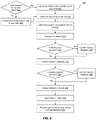
- Fig. 2 is a flow diagram illustrating an example method 200 to label a phone call, according to some implementations.
- method 200 can be implemented, for example, on a server system 102 as shown in Fig. 1 .
- the implementing system includes one or more digital processors or processing circuitry ("processors"), and one or more storage devices that are used to store a location database 106 and a training database 108.
- processors digital processors or processing circuitry
- storage devices that are used to store a location database 106 and a training database 108.
- different components of one or more servers can perform different blocks or other parts of the method 200.
- a first device is described as performing blocks of method 200. Some implementations can have one or more blocks of method 200 performed by one or more other devices (e.g., other server devices) that can send results or data to the first device.
- the method 200 can be initiated automatically by a server system.
- the method (or portions thereof) can be performed based on one or more particular events or conditions, e.g., an incoming phone call being received by a server system that implements method 200.
- Method 200 may begin at block 202.
- user consent e.g., user permission
- user data can include user interaction data, e.g., a clickstream, user's schedule, user data related to the use of a messaging application, user preferences, user biometric information, user characteristics (e.g., identity, name, age, gender, profession, user's cognitive and/or motor capabilities, etc.), information about a user's social network and contacts, social and other types of actions and activities, content, ratings, and opinions created or submitted by a user, a user's current location, historical user data such as usage patterns associated with software applications on a user computing device, images generated, received, and/or accessed by a user, images viewed or shared by a user, etc.
- One or more blocks of the methods described herein may use such user data in some implementations.
- block 204 it is determined that the blocks of the methods herein can be implemented with possible use of user data as described for those blocks, and the method continues to block 210. If user consent has not been obtained, it is determined in block 206 that blocks are to be implemented without the use of user data, and the method continues to block 210. In some implementations, if user consent has not been obtained, blocks are implemented without the use of user data and with synthetic data and/or generic or publicly-accessible and publicly-usable data. In some implementations, if user consent has not been obtained, method 200 is not performed.
- an incoming phone call is detected.
- a device that implements method 200 may receive a call request for a telephone call.
- the call request may be in the form of a call initiation message, e.g., a message sent using session initiation protocol (SIP) or other suitable protocol.
- the call initiation message may include a caller ID.
- the call initiation message may include a call header.
- the call header is a SIP header.
- the call header may include a network address, e.g., an internet protocol (IP) address, associated with a caller device that initiated the telephone call.
- IP internet protocol
- the call header may include a length of route, e.g., path between the caller device and the device that implements method 200.
- the length of route may correspond to a number of hops that the call initiation message passed through.
- the number of hops may be included in a field labeled "MAX-FORWARDS" in the call header.
- the call header may include timezone information, e.g., a timezone associated with the caller device.
- the call header may include route information, e.g., that lists information about one or more hops that the call initiation message passed through.
- the route information may include a network address for each hop, a receiving port number, a network protocol identifier, e.g., that indicates the type of network protocol over which the call initiation message was received at each hop (e.g., user datagram protocol, or other protocol).
- the route information may include a plurality of fields, each field corresponding to a respective hop in the route.
- the route information in call header may be modified at each hop in the route, e.g., each device (corresponding to a hop) that receives and forwards the call initiation message may append a record indicative of information about the hop to the call initiation message.
- the call header may include cellular network information.
- the cellular network information may include a type of cellular network (e.g., 3G, 4G, LTE, 5G, etc.); a cell identifier (e.g., corresponding to the cell or base station that the caller device is coupled to at the time of placing the call); a network identifier; and/or other information about the cellular network.
- the network information may include information of a WiFi network that the cellular device is connected to.
- Fig. 3 illustrates an example of a call header. Block 210 may be followed by block 212.
- a location associated with the call e.g., a location associated with the caller device is determined.
- the location associated with the call may be determined based on caller ID. For example, if the caller ID corresponds to a telephone number in the United States, the location associated with the caller may be determined as the United States. More particularly, the location may be determined as a specific location, e.g., a city block, a city, a region, or other aggregation, that corresponds to the caller ID, e.g., the first three digits of the caller ID. In some implementations, when the caller ID includes a country code, a country may be determined.
- a database of caller identifiers may be stored and utilized (e.g., in location database 106) to determine the location.
- Location database 106 may permit lookup of location using partial or full caller ID. In some implementations, e.g., if the caller ID is missing or not in a standard telephone number format, the location is determined to be unavailable.
- Block 212 may be followed by block 214.
- the call header is analyzed to determine one or more call characteristics.
- the one or more characteristics may include a number of hops between a caller device and the server that received the call initiation message.
- the number of hops may be a call characteristic included in the call header,.
- analyzing the call header may include determining a route between a caller device associated with the incoming phone call and the server based on route information included in the call header, e.g., network addresses (IP addresses) or other information. For example, when a call is placed from a cellular telephone serviced by a first carrier (Carrier 1) and the call initiation message is analyzed at a server of a second carrier (Carrier 2), the route may be determined as caller device -> carrier1 base station ->carrierl server -> carrier1-to-carrier2-line -> carrier2 server. In this example, the number of hops may be calculated from the route, e.g., 3 hops (between the caller device and carrier2 server). In some implementations, when the call header does not include the number of hops or route information, the number of hops may be determined as unknown.
- IP addresses network addresses
- the one or more characteristics may include whether the call is associated with a cellular network, a landline network, or a VoIP or OTT service.
- the call header includes one or more fields that indicate that the caller device is a cellular telephone (e.g., a carrier name, a cell identifier corresponding to a mobile base station, or other information), it may be determined that the phone call is associated with a cellular network.
- the caller device is a landline telephone, a VoIP telephone, or an OTT phone, it may be determined that the incoming phone call is not associated with a cellular network.
- ILEC incumbent local exchange carrier
- the one or more characteristics may include determining a timezone associated with the incoming phone call.
- analyzing the call header may include determining the timezone from a timezone field in the call header.
- the timezone field can be in various formats such "Date,” “X-TZ,” etc.
- An example of a timezone field in date format is "Date: Tue, 25 Sep 2018 23:20:21 GMT"
- Block 214 may be followed by block 216.
- determining if the location is spoofed may include determining a caller timezone based on the caller ID.
- the caller timezone may be determined as GMT - 8.00 based on the caller ID being associated with a caller in California (or another location in the Pacific timezone).
- determining if the location is spoofed may further include determining that the location is spoofed in the timezone associated with the incoming phone call, e.g., as determined from analyzing the call header timezone, is different from the caller timezone. For example, If a US landline number has location/routing patterns of international calls and/or the timezone (e.g., in the SIP field "Date") is outside of the US, it is very likely that the is spoofed.
- determining if the location is spoofed may include retrieving a reference number of hops from a database based on the route information. For example, the reference number of hops may be determined based on a caller ID associated with the call. The reference number of hops may be determined based on prior calls, e.g., between caller IDs that are similar to the caller ID (e.g., associated with the same or similar geographic region).
- prior calls that originate from caller IDs in the San Francisco, CA region to callee devices in the Los Angeles, CA region may be analyzed to determine that the reference number of hops for such calls is a particular number, e.g., 5.
- the reference number of hops may be a statistical value, e.g., a mean, median, or mode of the number of hops, calculated over the prior calls and other routing information such as IP addresses of the routes.
- Such determination may be made by a server that implements method 200 or by another server that has access to prior call data. To make such a determination, call data is used with specific user permission. Calls associated with users that do not provide such permission are excluded from prior calls used for the determination.
- the location may be determined that the location is spoofed if the number of hops associated with the call (determined in the one or more call characteristics from analysis of the call header in block 214) is different from the reference number of hops. For example, if the number of hops associated with the call is greater than the reference number of hops, it may indicate that the call passed through more intermediate devices than usual. This may occur, e.g., when the caller device attempts to spoof its location as a particular region (e.g., San Francisco, CA) while actually being located in a different location. Such location spoofing may be attempted, e.g., by unwanted or malicious callers that attempt to get a recipient to answer a call based on spoofed caller ID.
- the reference number of hops may be a range, e.g., 5-8 hops, to allow for variation in the number of hops in genuine calls, e.g., due to changing network conditions.
- determining if the location is spoofed may include retrieving a reference route from a database based on at least in part on the caller ID.
- the reference route may be determined based on prior call data, e.g., by analyzing route information for user-permitted prior calls.
- the reference route may be a typical route for calls between prior caller IDs associated with the same location (or region) as the incoming phone call and call recipients associated with the same location (or region) as the callee. For example, a call placed between devices that are on the same cellular carrier and in the same city may traverse a route caller device-> carrier base station-> carrier backhaul->carrier base station->callee device.
- determining if the route is spoofed may further include determining whether the route for the incoming phone call (determined in block 214) matches the reference route.
- a plurality of reference routes may be retrieved from the database and compared with the route for the incoming phone call.
- retrieving a reference route may include retrieving respective one or more characteristics of a plurality of intermediate devices in the reference route.
- respective one or more characteristics of a plurality of intermediate devices in the route may be determined based on the call header of the incoming phone call.
- determining whether the route matches the reference route may include determining a count of the plurality of intermediate devices that have respective one or more characteristics that match characteristics of intermediate devices in the reference route.
- the matching of routes may be performed in the sequence in which the intermediate devices occur in the route. For example, if the route is caller device->device A->device B->device C->, and if the reference route is caller device->device P->device Q->device R->device S, the comparisons of characteristics may be performed in the same sequence. In some implementations, gaps (missing intermediate device) or additions (additional devices in the sequence) in the sequence may be ignored when comparing routes. If it is determined that the route does not match the reference route, it is determined that the location is spoofed.
- a combination of any of timezone comparison, comparison of the number of hops with the reference number, and matching of the route with a reference route may be used to determine whether the location is spoofed. For example, in some implementations, the location may be determined as spoofed when the number of hops is different and the route associated with the call does not match the reference route. In another example, in some implementations, the location may be determined as spoofed when at least one condition is true: the timezones are different, the number of hops is different, or the route associated with the call does not match the reference route.
- block 216 may be followed by block 224. Else, block 216 may be followed by block 218.
- location database 106 is updated.
- location database 106 may be updated to include the caller ID (or a portion thereof, e.g., a portion that corresponds to a geography of the caller) and the one or more characteristics determined from the call header, along with an indication that the call is not a spoofed call. If the user does not provide permission, block 218 is not performed. Block 218 may be followed by block 220.
- a cellular network identifier and a cell identifier is retrieved from the call header.
- the call header for a call that is genuine (originates from a cellular device) includes the cellular network identifier (e.g., that identifies the carrier associated with the cellular device) and the cell identifier (e.g., that corresponds to a base station that the cellular device is coupled to).
- the call header for a spoofed call while indicating that the caller device is a cellular device may not include such information, or may include erroneous identifiers that are not consistent with known cellular infrastructure.
- call headers of prior genuine calls may be analyzed to determine known cellular infrastructure and corresponding information may be stored, e.g., in location database 106.
- a spoofed call may indicate a cell/carrier identifier that does not actually exist, or that is inconsistent with the location associated with the caller device.
- the cellular network identifier may be inconsistent with other information in the call header, e.g., route information that indicates one or more intermediate devices or hops in the path from the caller device to the device that implements method 200.
- the retrieved cellular network identifier and/or the cell/carrier identifier are analyzed to determine if the identifier is missing or erroneous. If it is determined in block 220 that at least one of the cellular network identifier or the cell identifier is missing or erroneous, it is determined that the access network associated with the incoming phone call is spoofed. For example, a malicious caller that attempts to make a call that originates from a VoIP or OTT caller device tries to mask the call by including a cellular identifier (e.g., a dummy cellular identifier), such masking can be detected by comparison of the cellular identifier with prior genuine calls.
- a cellular identifier e.g., a dummy cellular identifier
- block 220 may be followed by block 226. Else, block 220 may be followed by block 222.
- a label is assigned to the incoming phone call. In some implementations, more than one labels may be assigned to the call. In some implementations, assigning a label to the call may include assigning a label that indicates whether the incoming phone call is a spoofed call. For example, if it is determined in block 216 that the location associated with the call is spoofed, or if it is determined in block 220 that the access network associated with the call is spoofed, a label is associated with the call that indicates that the call is a spoofed call.
- assigning the label may include applying a training machine learning model to determine whether the incoming phone call is a robocall.
- the machine learning model may analyze call information such as caller ID; call header information such as caller device network address (IP address), route information, etc. to determine whether the call is a robocall.
- the machine learning model may be included as part of call labeling application 156.
- applying a trained machine learning model may include analyzing data using the model and generating an inference based on the model using an inference engine.
- the inference engine may be provided as part of call labeling application 156.
- the machine learning model may be trained using data from a training database, e.g., training database 108.
- the data used for training may include prior call data.
- the prior call data may include prior caller ID, prior caller IP address, and prior call route information. Each call in the prior call data may have an indication of whether the prior call was a robocall or not a robocall. Further, the prior call data may include call characteristics for each of the prior calls.
- supervised learning may be used to train the machine learning model.
- an untrained machine learning model e.g., a neural network or other model, may be provided the indications for each prior call along with the call characteristics.
- the machine learning model may generate indications of whether a call is a robocall based on call characteristics.
- a value based on the generated indications and the true indications in the prior call data may be calculated and used as feedback input to train the machine learning model.
- weights of one or more neural network nodes and/or connectivity between nodes may be adjusted.
- the training process may be repeated one or more times with different training data from the prior call data, e.g., until can generate indications with a threshold level of accuracy.
- the machine learning model may learn features of the prior call data that are indicative of robocalls.
- the indications in the prior call data may be generated manually or automatically and may reflect various characteristics that are associated with robocalls. For example, a prior call that has prior call data indicative of a caller phone number or caller internet protocol (IP) address that is associated with at least one of greater than a threshold number of prior outgoing calls in a particular period or multiple consecutive prior outgoing calls may be a robocall. In another example, a prior call that has prior call data indicative of a caller phone number that had at least three prior outgoing calls that were simultaneous may be a robocall. In another example, a prior call that had call data indicative of location spoofing or access network spoofing may be a robocall.
- IP internet protocol
- prior call data is associated with a spam report may be a robocall.
- a user that receives a call may be provided with a user interface that enables the user to submit the spam report that indicates that the call is a robocall, e.g., during the call or after the call.
- the prior call data may be automatically analyzed to determine whether it is indicative of a large number of prior outgoing calls from a caller phone number or caller IP address in a particular period or multiple consecutive periods.
- a robocaller may place a very large number of calls, e.g., 100 calls in a short time period, e.g., 10 minutes.
- a robocaller that uses an automated dialer may be characterized by multiple consecutive outgoing calls, e.g., 3 calls per minute, etc. with little to no intervening inactive period. Such patterns may be detected, e.g., using clustering techniques and be used to automatically assign an indication that the call is a robocall.
- call information indicates location spoofing or access network spoofing (e.g., determined as explained above with reference to blocks 212-220), it may be indicative of a robocaller.
- Block 222 may be followed by block 228.
- the label is sent to the callee device, e.g., along with a notification of the incoming phone call.
- the label may be usable by the callee device, e.g., by call application 152, to provide a user alert that indicates that the incoming phone call is the spoofed call and/or the robocall.
- the callee device may provide a visual or audio indication to a user of the callee device based on the label.
- call application 152 includes functionality to automatically handle calls
- the label may be usable by the callee device to perform actions such as automatically screening the call, declining the call, sending the call to voicemail, etc. Additional actions at the callee device can include labeling the call as spam.
- the user answers the call and determines it to be genuine the user can report that the call was falsely labeled. With user permission, such user-provided feedback can be used for training.
- Block 228 may be followed by block 230.
- user feedback regarding the incoming phone call may be received.
- the user feedback may indicate whether the label associated with the call was correct or incorrect, e.g., a robocall not identified by the label, a genuine call labeled as spoofed, etc.
- training database 108 may be updated based on the user feedback. For example, call information about the call may be added to training database 108. If the user declines permission to store call information and/or indications, block 230 is not performed, or is performed to only store such data for which the user has provided permission. In some implementations, e.g., if a client device also implements detection of spoofed calls or robocalls, results from such detection on the client device can also be utilized as training data, with user permission.
- block 216 may be followed by block 224.
- training database 108 may be updated, e.g., to store call information about the call and an indication that the location of the call was spoofed. If the user declines permission to store call information and/or indications, block 224 is not performed, or is performed to only store such data for which the user has provided permission. Block 224 may be followed by block 218.
- block 220 may be followed by block 226.
- training database 108 may be updated, e.g., to store call information about the call and an indication that the access network of the call was spoofed. If the user declines permission to store call information and/or indications, block 226 is not performed, or is performed to only store such data for which the user has provided permission. Block 226 may be followed by block 222.
- the trained machine learning model may be updated, e.g., based on the use of additional training data, e.g., added to training database 108 in any of blocks 224, 226, or 230. Additional training may improve accuracy of label prediction and/or speed of applying the model.
- trained model may be customized based on a device (e.g., server device 104) that the local classifier is executed on.
- client devices may have different processing capabilities based on available hardware, e.g., a single-core processor, a multi-core processor, one or more parallel processors, a graphics processor with a number of graphics processing units (GPUs), a reconfigurable processor (e.g., FPGA), a neural network processor, etc.
- GPUs graphics processing units
- FPGA reconfigurable processor
- a neural network processor etc.
- different devices may have different availability levels of other resources such as memory, network bandwidth, etc.
- a trained model with relatively higher complexity may be provided in a device that has a neural network processor or a GPU that is optimized for parallel processing, e.g., that the inference engine utilizes.
- a simplified trained model e.g., with fewer neural network nodes or layers
- a simplified trained model may be provided in a device that has greater resource constraints, e.g., a single-core processor with limited capabilities.
- Method 200 provides several technical benefits. By utilizing call information such as caller ID and call header, method 200 enables automatic detection of spoofed calls, e.g., that have location and/or access network that indicates that the call is not a genuine call. Further, method 200 also enables automatic detection of robocalls by matching one or more call characteristics with patterns associated with robocalls. Labels generated using method 200 enables a callee device to eliminate redundant call notifications (e.g., by automatically screening calls), or to provide an improved user interface (e.g., that provides user alerts of spoofed calls or robocalls).
- call information such as caller ID and call header
- method 200 enables automatic detection of spoofed calls, e.g., that have location and/or access network that indicates that the call is not a genuine call. Further, method 200 also enables automatic detection of robocalls by matching one or more call characteristics with patterns associated with robocalls. Labels generated using method 200 enables a callee device to eliminate redundant call notifications (e
- method 200 can assign labels to calls that originate on an IP network, calls that originate abroad (not the same country as the callee device), etc. using call headers. Further, method 200 implemented on a server device in a carrier network can detect spoofed calls and robocalls without a client device having to install or run any client-side application, or store data at a client device for the purposes of call labeling. Still further, method 200 can label calls even when user reports of spoofed calls, robocalls, or other unwanted calls from prior calls are unavailable. Still further, method 200 can be implemented by individual carriers that receive incoming phone calls (destination carriers) , without synchronization or other requirements on other carriers.
- method 200 has been described with reference to various blocks in Fig. 2 , it may be understood that the techniques described in this disclosure may be performed without performing some of the blocks of Fig. 2 . For example, some implementations, one or more of blocks 224, 226, and 230 may not be performed.
- one or more of detection of location spoofing (block 216), access network spoofing (block 220), and whether the call is a robocall (block 222) may not be performed.
- one or more of the blocks illustrated in Fig. 2 may be combined.
- blocks 212 and 214 may be combined.
- some of the blocks of method 200 may be performed in parallel or in an order different from that illustrated in Fig. 2 .
- blocks 216 and 218 may be performed in parallel.
- block 218 may be performed prior to block 216.
- block 222 may be split into multiple blocks, e.g., a block in which it is detected whether the call is a robocall, and a separate block in which a label is assigned to the call.
- method 200 may be implemented by a server device that part of a carrier network of a carrier associated with the callee.
- route information included in the call header includes information associated with hops between the caller device and the server device may include intermediate devices that are used for call routing. Therefore, the server device has access to route information that can be used to detect spoofing.
- method 200 may be implemented as part of IP multimedia subsystem (IMS) core network of carrier infrastructure.
- IMS IP multimedia subsystem
- method 200 may be performed prior to alerting a call recipient of the incoming phone call, e.g., prior to providing a signal to the caller device to ring the telephone.
- the label generated for the call may be provided together with the incoming call signal, enabling the caller device to provide user alerts or perform automatic actions based on the label.
- Fig. 3 is a diagram illustrating an example call header 300 for a phone call.
- call header 300 includes a network address, e.g., IP address 302, of a caller device that initiates the phone call.
- the network address may an IP v4 address, or an IP v6 address.
- Call header 300 further includes a length of path 304.
- the call header utilizes session initiation protocol (SIP) and the length of path is indicated by a field "Max-Forwards" with the value 66.
- SIP session initiation protocol
- Call header 300 further includes time zone information 306.
- the timezone associated with the caller device is GMT - 8 hours.
- Call header 300 further include route information 308.
- Route information 308 includes one or more records associated with intermediate devices or hops between a caller device and the device at which a call initiation message is received. Each hop may add (e.g., append) its own information to the call header prior to forwarding the call initiation message to the next hop.
- route information 308 includes information regarding two intermediate devices (servers).
- Call header 300 further includes cellular network information 310.
- cellular network information 310 includes a type of cellular network (3GPP), a cell id for the cell that the caller device is coupled to, among other information.
- Call header 300 further includes a visited network ID 312.
- visited network ID 312 indicates a carrier name.
- Call headers for various calls may include additional fields or may include fewer fields than the example illustrated in Fig. 3 .
- Call header 300 may be in a format specified by a protocol such as session initiation protocol (SIP). Such a protocol may be used for carrier interconnects.
- SIP session initiation protocol
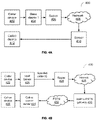
- Fig. 4A is a diagram illustrating an example call flow 400, according to some implementations.
- a caller device 402 is used to place a call.
- caller device 402 is a cellular telephony device.
- Caller device 402 is coupled to a base station 404.
- base station 404 When the call is initiated, caller device 402 sends a call request to a base station 404.
- Base station 404 relays the call request to a server 406, e.g., a server associated with the cellular network carrier for the caller device 402.
- Server 406 sends the call request to another server 410 via a network 408.
- network 408 may include the internet.
- network 408 may include a private network that couples server 406 and server 410.
- Server 410 may relay the call request to a callee device 412 (intermediate portions of the route not shown).
- Callee device may be any type of device, e.g., a cellular telephone, a landline telephone, a voice over IP (VoIP) client, or any other device that is associated with a telephone number.
- VoIP voice over IP
- Fig. 4A illustrates the use of a mobile device to initiate a call
- other types of devices e.g., landline telephones, satellite telephones, voice over IP (VoIP) clients, or any other type of device may initiate a call.
- VoIP voice over IP
- Different routes may be used for each of these types of caller devices.
- one or more devices in the route may update a call header of the call, e.g., to include information about itself.
- updating the call header may include appending information to the call header.
- each device in the route may determine a network address associated with a subsequent device in the route and forward the call request to the subsequent device after updating the call header.
- the call request may include information regarding the route, including the devices that the call was routed over and the sequence in which those devices received the call request.
- the information may include information about connections among multiple carriers/service providers.
- the call request originates from a cellular telephone and terminates at the call request reaches the callee device.
- the call header includes route information that is consistent with a call originating at a cellular telephone, e.g., information such as caller timezone, number of hops, etc. is consistent with the caller ID.
- Fig. 4B is a diagram illustrating another example call flow 420, according to some implementations.
- a caller device 422 is used to place a call.
- caller device 422 is a VoIP device.
- Caller device 422 is coupled to a VoIP server 424.
- VoIP server 424 adds a spoofed caller ID, e.g., associated with a cellular network and forwards the call request to a router 426.
- Router 426 sends the call request over the internet 428 to a VoIP to PSTN gateway 430.
- Gateway 430 interfaces to PSTN 432 via which the call request is relayed to callee carrier server 434.
- the callee carrier server send the call request to callee device 436.
- the call request originates from a VoIP caller device that attempts to present itself as a cellular device and terminates at the call request reaches the callee device.
- Method 200 can be implemented at an intermediate device, e.g., callee carrier server 434, to detect whether the call is a spoofed call or a robocall, and the generated label may be provided to callee device 436.
- Fig. 5 is a block diagram of an example device 500 which may be used to implement one or more features described herein.
- device 500 may be used to implement a client device, e.g., any of client devices 120-126 shown in Fig. 1 .
- device 500 can implement a server device, e.g., server device 104.
- device 500 may be used to implement a client device, a server device, or both client and server devices.
- Device 500 can be any suitable computer system, server, or other electronic or hardware device as described above.
- One or more methods described herein can be run in a standalone program that can be executed on any type of computing device. In an example, all computations can be performed within an application on a server device.
- device 500 includes a processor 502, a memory 504, and input/output (I/O) interface 506.
- Processor 502 can be one or more processors and/or processing circuits to execute program code and control basic operations of the device 500.
- a "processor” includes any suitable hardware system, mechanism or component that processes data, signals or other information.
- a processor may include a system with a general-purpose central processing unit (CPU) with one or more cores (e.g., in a single-core, dual-core, or multi-core configuration), multiple processing units (e.g., in a multiprocessor configuration), a graphics processing unit (GPU), a field-programmable gate array (FPGA), an application-specific integrated circuit (ASIC), a complex programmable logic device (CPLD), dedicated circuitry for achieving functionality, a special-purpose processor to implement neural network model-based processing, neural circuits, processors optimized for matrix computations (e.g., matrix multiplication), or other systems.
- CPU general-purpose central processing unit
- cores e.g., in a single-core, dual-core, or multi-core configuration
- multiple processing units e.g., in a multiprocessor configuration
- GPU graphics processing unit
- FPGA field-programmable gate array
- ASIC application-specific integrated circuit
- CPLD complex programmable logic device
- processor 502 may include one or more co-processors that implement neural-network processing.
- processor 502 may be a processor that processes data to produce probabilistic output, e.g., the output produced by processor 502 may be imprecise or may be accurate within a range from an expected output. Processing need not be limited to a particular geographic location, or have temporal limitations. For example, a processor may perform its functions in "real-time,” “offline,” in a "batch mode,” etc. Portions of processing may be performed at different times and at different locations, by different (or the same) processing systems.
- a computer may be any processor in communication with a memory.
- Memory 504 is typically provided in device 500 for access by the processor 502, and may be any suitable processor-readable storage medium, such as random access memory (RAM), read-only memory (ROM), Electrical Erasable Read-only Memory (EEPROM), Flash memory, etc., suitable for storing instructions for execution by the processor, and located separate from processor 502 and/or integrated therewith.
- Memory 504 can store software operating on the server device 500 by the processor 502, including an operating system 508, machine-learning application 530, other applications 512, and application data 514.
- Other applications 512 may include applications such as a data display engine, web hosting engine, image display engine, notification engine, call handling engine, social networking engine, etc.
- the machine-learning application 530 and other applications 512 can each include instructions that enable processor 502 to perform functions described herein, e.g., the method of Fig. 2 .
- machine-learning application 530 may utilize Bayesian classifiers, support vector machines, neural networks, or other learning techniques.
- machine-learning application 530 may include a trained model 534, an inference engine 536, and data 532.
- data 532 may include training data, e.g., data used to generate trained model 534.
- training data may include any type of data such as call information from prior calls.
- Training data may be obtained from any source, e.g., a data repository specifically marked for training, data for which permission is provided for use as training data for machine-learning, etc.
- training data may include such user data.
- data 532 may include permitted data such as call labels, call headers, caller ID, or other user-permitted information.
- training data may include synthetic data generated for the purpose of training, such as data that is not based on user input or activity in the context that is being trained, e.g., data generated from simulated calls.
- machine-learning application 530 excludes data 532.
- the trained model 534 may be generated, e.g., on a different device, and be provided as part of machine-learning application 530.
- the trained model 534 may be provided as a data file that includes a model structure or form, and associated weights.
- Inference engine 536 may read the data file for trained model 534 and implement a neural network with node connectivity, layers, and weights based on the model structure or form specified in trained model 534.
- Machine-learning application 530 also includes a trained model 534.
- the trained model may include one or more model forms or structures.
- model forms or structures can include any type of neural-network, such as a linear network, a deep neural network that implements a plurality of layers (e.g., "hidden layers" between an input layer and an output layer, with each layer being a linear network), a convolutional neural network (e.g., a network that splits or partitions input data into multiple parts or tiles, processes each tile separately using one or more neural-network layers, and aggregates the results from the processing of each tile), a sequence-to-sequence neural network (e.g., a network that takes as input sequential data, such as words in a sentence, frames in a video, etc. and produces as output a result sequence), etc.
- a convolutional neural network e.g., a network that splits or partitions input data into multiple parts or tiles, processes each tile separately using one or more neural-network layers, and
- the model form or structure may specify connectivity between various nodes and organization of nodes into layers. For example, nodes of a first layer (e.g., input layer) may receive data as input data 532 or application data 514. Subsequent intermediate layers may receive as input output of nodes of a previous layer per the connectivity specified in the model form or structure. These layers may also be referred to as hidden layers.
- a final layer e.g., output layer
- the output may be a label (or set of labels) for a call, a feature vector for the call, etc. depending on the specific trained model.
- model form or structure also specifies a number and/ or type of nodes in each layer.
- trained model 534 can include a plurality of nodes, arranged into layers per the model structure or form.
- the nodes may be computational nodes with no memory, e.g., configured to process one unit of input to produce one unit of output.
- Computation performed by a node may include, for example, multiplying each of a plurality of node inputs by a weight, obtaining a weighted sum, and adjusting the weighted sum with a bias or intercept value to produce the node output.
- the computation performed by a node may also include applying a step/activation function to the adjusted weighted sum.
- the step/activation function may be a nonlinear function.
- such computation may include operations such as matrix multiplication.
- computations by the plurality of nodes may be performed in parallel, e.g., using multiple processors cores of a multicore processor, using individual processing units of a GPU, or special-purpose neural circuitry.
- nodes may include memory, e.g., may be able to store and use one or more earlier inputs in processing a subsequent input.
- nodes with memory may include long short-term memory (LSTM) nodes. LSTM nodes may use the memory to maintain "state" that permits the node to act like a finite state machine (FSM). Models with such nodes may be useful in processing sequential data, e.g., words in a sentence or a paragraph, frames in a video, speech or other audio, etc.
- FSM finite state machine
- trained model 534 may include embeddings or weights for individual nodes.
- a model may be initiated as a plurality of nodes organized into layers as specified by the model form or structure.
- a respective weight may be applied to a connection between each pair of nodes that are connected per the model form, e.g., nodes in successive layers of the neural network.
- the respective weights may be randomly assigned, or initialized to default values.
- the model may then be trained, e.g., using data 532, to produce a result.
- training may include applying supervised learning techniques.
- the training data can include a plurality of inputs (e.g., call data for prior calls) and a corresponding expected output for each input (e.g., one or more labels for each call).
- values of the weights are automatically adjusted, e.g., in a manner that increases a probability that the model produces the expected output when provided similar input.
- training may include applying unsupervised learning techniques.
- unsupervised learning only input data may be provided and the model may be trained to differentiate data, e.g., to cluster input data into a plurality of groups, where each group includes input data that are similar in some manner.
- the model may be trained to differentiate calls such that the model distinguishes genuine calls from spoofed calls and/or robocalls.
- unsupervised learning may be used to produce knowledge representations, e.g., that may be used by machine-learning application 530.
- a trained model includes a set of weights, or embeddings, corresponding to the model structure.
- machine-learning application 530 may include trained model 534 that is based on prior training, e.g., by a developer of the machine-learning application 530, by a third-party, etc.
- trained model 534 may include a set of weights that are fixed, e.g., downloaded from a server that provides the weights.
- Machine-learning application 530 also includes an inference engine 536.
- Inference engine 536 is configured to apply the trained model 534 to data, such as application data 514, to provide an inference.
- inference engine 536 may include software code to be executed by processor 502.
- inference engine 536 may specify circuit configuration (e.g., for a programmable processor, for a field programmable gate array (FPGA), etc.) enabling processor 502 to apply the trained model.
- inference engine 536 may include software instructions, hardware instructions, or a combination.
- inference engine 536 may offer an application programming interface (API) that can be used by operating system 508 and/or other applications 512 to invoke inference engine 536, e.g., to apply trained model 534 to application data 514 to generate an inference.
- API application programming interface
- Machine-learning application 530 may provide several technical advantages. For example, when trained model 534 is generated based on unsupervised learning, trained model 534 can be applied by inference engine 536 to produce knowledge representations (e.g., numeric representations) from input data, e.g., application data 514. For example, a model trained for call labeling may produce representations of calls that have a smaller data size (e.g., 1 KB) than input call data (e.g., 10 MB). In some implementations, such representations may be helpful to reduce processing cost (e.g., computational cost, memory usage, etc.) to generate an output (e.g., a label).
- processing cost e.g., computational cost, memory usage, etc.
- such representations may be provided as input to a different machine-learning application that produces output from the output of inference engine 536.
- knowledge representations generated by machine-learning application 530 may be provided to a different device that conducts further processing, e.g., over a network.
- providing the knowledge representations rather than the call data may provide a technical benefit, e.g., enable faster data transmission with reduced cost.
- machine-learning application 530 may be implemented in an offline manner.
- trained model 534 may be generated in a first stage, and provided as part of machine-learning application 530.
- machine-learning application 530 may be implemented in an online manner.
- an application that invokes machine-learning application 530 e.g., operating system 508, one or more of other applications 512
- may utilize an inference produced by machine-learning application 530 e.g., provide the inference to a user, and may generate system logs (e.g., if permitted by the user, an action taken by the user based on the inference; or if utilized as input for further processing, a result of the further processing).
- System logs may be produced periodically, e.g., hourly, monthly, quarterly, etc. and may be used, with user permission, to update trained model 534, e.g., to update embeddings for trained model 534.
- machine-learning application 530 may be implemented in a manner that can adapt to particular configuration of device 500 on which the machine-learning application 530 is executed. For example, machine-learning application 530 may determine a computational graph that utilizes available computational resources, e.g., processor 502. For example, if machine-learning application 530 is implemented as a distributed application on multiple devices, machine-learning application 530 may determine computations to be carried out on individual devices in a manner that optimizes computation. In another example, machine-learning application 530 may determine that processor 502 includes a GPU with a particular number of GPU cores (e.g., 1000) and implement the inference engine accordingly (e.g., as 1000 individual processes or threads).
- processor 502 includes a GPU with a particular number of GPU cores (e.g., 1000) and implement the inference engine accordingly (e.g., as 1000 individual processes or threads).
- machine-learning application 530 may implement an ensemble of trained models.
- trained model 534 may include a plurality of trained models that are each applicable to same input data.
- machine-learning application 530 may choose a particular trained model, e.g., based on available computational resources, success rate with prior inferences, etc.
- machine-learning application 530 may execute inference engine 536 such that a plurality of trained models is applied.
- machine-learning application 530 may combine outputs from applying individual models, e.g., using a voting-technique that scores individual outputs from applying each trained model, or by choosing one or more particular outputs.
- machine-learning application may apply a time threshold for applying individual trained models (e.g., 0.5 ms) and utilize only those individual outputs that are available within the time threshold. Outputs that are not received within the time threshold may not be utilized, e.g., discarded.
- time threshold for applying individual trained models (e.g., 0.5 ms) and utilize only those individual outputs that are available within the time threshold. Outputs that are not received within the time threshold may not be utilized, e.g., discarded.
- such approaches may be suitable when there is a time limit specified while invoking the machine-learning application, e.g., by operating system 508 or one or more applications 512.
- machine-learning application 530 can produce different types of outputs.
- machine-learning application 530 can provide representations or clusters (e.g., numeric representations of call characteristics), labels (e.g., for call data), etc.
- machine-learning application 530 may produce an output based on a format specified by an invoking application, e.g. operating system 508 or one or more applications 512.
- memory 504 can alternatively be stored on any other suitable storage location or computer-readable medium.
- memory 504 (and/or other connected storage device(s)) can store one or more messages, one or more taxonomies, electronic encyclopedia, dictionaries, thesauruses, knowledge bases, message data, grammars, user preferences, and/or other instructions and data used in the features described herein.
- Memory 504 and any other type of storage can be considered “storage” or “storage devices.”
- I/O interface 506 can provide functions to enable interfacing the server device 500 with other systems and devices. Interfaced devices can be included as part of the device 500 or can be separate and communicate with the device 500. For example, network communication devices, storage devices (e.g., memory and/or databases 106 and 108), and input/output devices can communicate via I/O interface 506. In some implementations, the I/O interface can connect to interface devices such as input devices (keyboard, pointing device, touchscreen, microphone, camera, scanner, sensors, etc.) and/or output devices (display devices, speaker devices, printers, motors, etc.).
- input devices keyboard, pointing device, touchscreen, microphone, camera, scanner, sensors, etc.
- output devices display devices, speaker devices, printers, motors, etc.
- the I/O interface 506 can interface to other input and output devices. Some examples include one or more cameras which can capture images. Some implementations can provide a microphone for capturing sound (e.g., as a part of captured images, voice commands, etc.), audio speaker devices for outputting sound, or other input and output devices.
- Fig. 5 shows one block for each of processor 502, memory 504, I/O interface 506, and software blocks 508, 512, and 530. These blocks may represent one or more processors or processing circuitries, operating systems, memories, I/O interfaces, applications, and/or software modules.
- device 500 may not have all of the components shown and/or may have other elements including other types of elements instead of, or in addition to, those shown herein. While some components are described as performing blocks and operations as described in some implementations herein, any suitable component or combination of components of environment 100, device 500, similar systems, or any suitable processor or processors associated with such a system, may perform the blocks and operations described.
- Methods described herein can be implemented by computer program instructions or code, which can be executed on a computer.
- the code can be implemented by one or more digital processors (e.g., microprocessors or other processing circuitry) and can be stored on a computer program product including a non-transitory computer readable medium (e.g., storage medium), such as a magnetic, optical, electromagnetic, or semiconductor storage medium, including semiconductor or solid state memory, magnetic tape, a removable computer diskette, a random access memory (RAM), a read-only memory (ROM), flash memory, a rigid magnetic disk, an optical disk, a solid-state memory drive, etc.
- a non-transitory computer readable medium e.g., storage medium
- a magnetic, optical, electromagnetic, or semiconductor storage medium including semiconductor or solid state memory, magnetic tape, a removable computer diskette, a random access memory (RAM), a read-only memory (ROM), flash memory, a rigid magnetic disk, an optical disk, a solid-state memory drive, etc.
- the program instructions can also be contained in, and provided as, an electronic signal, for example in the form of software as a service (SaaS) delivered from a server (e.g., a distributed system and/or a cloud computing system).
- SaaS software as a service
- a server e.g., a distributed system and/or a cloud computing system
- one or more methods can be implemented in hardware (logic gates, etc.), or in a combination of hardware and software.
- Example hardware can be programmable processors (e.g. Field-Programmable Gate Array (FPGA), Complex Programmable Logic Device), general purpose processors, graphics processors, Application Specific Integrated Circuits (ASICs), and the like.
- FPGA Field-Programmable Gate Array
- ASICs Application Specific Integrated Circuits
- One or more methods can be performed as part of or component of an application running on the system, or as an application or software running in conjunction with other applications and operating system.
- users are provided with one or more opportunities to control whether information is collected, whether the personal information is stored, whether the personal information is used, and how the information is collected about the user, stored and used. That is, the systems and methods discussed herein collect, store and/or use user personal information specifically upon receiving explicit authorization from the relevant users to do so. For example, a user is provided with control over whether programs or features collect user information about that particular user or other users relevant to the program or feature.
- Each user for which personal information is to be collected is presented with one or more options to allow control over the information collection relevant to that user, to provide permission or authorization as to whether the information is collected and as to which portions of the information are to be collected.
- users can be provided with one or more such control options over a communication network.
- certain data may be treated in one or more ways before it is stored or used so that personally identifiable information is removed.
- a user's identity may be treated so that no personally identifiable information can be determined.
- a user device's geographic location may be generalized to a larger region so that the user's particular location cannot be determined.
- routines may be integrated or divided into different combinations of systems, devices, and functional blocks as would be known to those skilled in the art.
- Any suitable programming language and programming techniques may be used to implement the routines of particular implementations. Different programming techniques may be employed, e.g., procedural or object-oriented.
- the routines may execute on a single processing device or multiple processors.
- steps, operations, or computations may be presented in a specific order, the order may be changed in different particular implementations. In some implementations, multiple steps or operations shown as sequential in this description may be performed at the same time. The scope of protection is defined by the appended claims.
Landscapes
- Engineering & Computer Science (AREA)
- Signal Processing (AREA)
- Computer Networks & Wireless Communication (AREA)
- Computer Security & Cryptography (AREA)
- Technology Law (AREA)
- Telephonic Communication Services (AREA)
- Mobile Radio Communication Systems (AREA)
Claims (15)
- Computer-implementiertes Verfahren (200) zum Kennzeichnen eines eingehenden Telefonanrufs, wobei das Verfahren umfasst:Detektieren, auf einem Server, des eingehenden Telefonanrufs (210), der mit einer Anruferidentifikations-ID assoziiert ist;Bestimmen, durch den Server, eines Standortes (212), der mit dem eingehenden Telefonanruf assoziiert ist;Analysieren, durch den Server, eines Anrufheaders (214) des eingehenden Telefonanrufs, um eine oder mehrere Anrufeigenschaften zu bestimmen;Bestimmen, durch den Server, basierend auf dem Standort und der einen oder mehreren Anrufeigenschaften, ob der Standort gefälscht ist (216);Bestimmen, durch den Server, basierend auf der Anrufer-ID und der einen oder mehreren Anrufeigenschaften, ob ein Zugriffsnetzwerk, das mit dem eingehenden Telefonanruf assoziiert ist, gefälscht ist;Anwenden, durch den Server, eines trainierten Machine-Learning-Modells (222), um zu bestimmen, ob der eingehende Telefonanruf ein Roboteranruf ist;Zuweisen, durch den Server, eines Kennzeichens dem eingehenden Telefonanruf (222), wobei das Kennzeichen angibt, ob der eingehende Telefonanruf ein gefälschter Anruf ist oder ob der eingehende Telefonanruf ein Roboteranruf ist; undSenden des Kennzeichens an ein angerufenes Gerät (228), das mit dem eingehenden Telefonanruf assoziiert ist.
- Computer-implementiertes Verfahren nach Anspruch 1, wobei das Analysieren des Anrufheaders (214) des eingehenden Telefonanrufs ein Bestimmen einer Route zwischen einem anrufenden Gerät, das mit dem eingehenden Telefonanruf assoziiert ist, und dem Server, basierend auf Route-Informationen (308), die im Anrufheader (300) enthalten sind, umfasst, und wobei die eine oder mehrere Eigenschaften eine Zahl von Hops zwischen dem anrufenden Gerät und dem Server umfassen, und wobei das Bestimmen der Route ein Berechnen der Zahl der Hops basierend auf der Route umfasst.
- Computer-implementiertes Verfahren nach Anspruch 2, wobei das Bestimmen, ob der Standort gefälscht (216) ist, umfasst:Abrufen einer Referenzzahl von Hops aus einer Datenbank basierend zumindest teilweise auf der in dem Anrufheader (300) enthaltenen Route-Informationen (308); undBestimmen, dass der Standort gefälscht ist, wenn sich die Zahl der Hops von der Referenzzahl der Hops unterscheidet.
- Computer-implementiertes Verfahren nach Anspruch 2, wobei das Bestimmen, ob der Standort gefälscht (216) ist, umfasst:Abrufen einer Referenz-Route aus einer Datenbank basierend zumindest teilweise auf der Anrufer-ID;Bestimmen, ob die Route mit der Referenz-Route übereinstimmt; undIn Reaktion auf das Bestimmen, dass die Route nicht mit der Referenz-Route übereinstimmt, Bestimmen, dass der Standort gefälscht ist.
- Computer-implementiertes Verfahren nach Anspruch 4 ferner umfassend ein Bestimmen von jeweils einer oder mehreren Eigenschaften einer Mehrzahl von Zwischengeräten in der Route basierend auf dem Anrufheader, und wobei das Bestimmen, ob die Route mit der Referenz-Route übereinstimmt, umfasst:Bestimmen einer Anzahl von der Mehrzahl von Zwischengeräten, die jeweils eine oder mehrere Eigenschaften aufweisen, die mit den Eigenschaften der Zwischengeräte in der Referenz-Route übereinstimmen; undBestimmen, dass die Route mit der Referenz-Route übereinstimmt, wenn die Zahl von der Mehrzahl von der Mehrzahl von Zwischengeräten einen Schwellenwert erreicht.
- Computer-implementiertes Verfahren nach Anspruch 1, wobei das Analysieren des Anrufheaders (214) des eingehenden Telefonanrufs ein Bestimmen einer Zeitzone umfasst, die mit dem eingehenden Telefonanruf assoziiert ist, und wobei das Bestimmen, ob der Standort gefälscht (216) ist, umfasst:Bestimmen einer Anrufer-Zeitzone basierend auf der Anrufer-ID; undBestimmen, dass der Standort gefälscht ist, wenn sich die Zeitzone, die mit dem eingehenden Telefonanruf assoziiert ist, von der Anrufer-Zeitzone unterscheidet.
- Computer-implementiertes Verfahren nach Anspruch 1, wobei das Analysieren des Anrufheaders (214) ein Bestimmen, basierend auf dem Anrufheader, umfasst, dass der eingehende Telefonanruf mit einem Mobilfunknetz assoziiert ist, und wobei das Bestimmen, ob das mit dem ankommenden Telefonanruf assoziierte Zugriffsnetzwerk gefälscht ist (220), umfasst:Abrufen einer Mobilfunknetzwerkidentifikation und einer Zellenidentifikation von dem Anrufheader; undBestimmen, dass das Zugriffsnetzwerk gefälscht ist, wenn mindestens eines von der Mobilfunknetzwerkidentifikation oder der Zellenidentifikation fehlt oder fehlerhaft ist.
- Computer-implementiertes Verfahren nach Anspruch 1, wobei das Machine-Learning-Modell trainiert wird unter Verwendung von Daten von einer Trainingsdatenbank, wobei die Daten frühere Anrufdaten umfassen, die eine frühere Anrufer-ID, eine frühere Anrufer-IP-Adresse und frühere Anruf-Route-Informationen enthalten, wobei die früheren Anrufdaten für einen oder mehrere frühere Anrufe in den früheren Anrufdaten eines oder mehrere der folgenden sind:einen Hinweis auf eine Anrufer-Telefonnummer oder eine Anrufer-Internetprotokoll-IP-Adresse, die mit mindestens einem der folgenden assoziiert ist:
Größer als eine Schwellenzahl von früheren ausgehenden Anrufen in einem bestimmten Zeitraum oder mehrere aufeinanderfolgende frühere ausgehende Anrufe;einen Hinweis auf eine Anrufer-Telefonnummer, die mindestens drei frühere ausgehende Anrufe hatte, die gleichzeitig waren;einen Hinweis auf Standortfälschung oder Zugriffsnetzwerkfälschung; oderassoziiert mit einem Spam-Bericht. - Computer-implementiertes Verfahren nach Anspruch 1, wobei das Kennzeichen von dem angerufenen Gerät verwendbar ist, um eine Nutzerwarnung bereitzustellen, die darauf hinweist, dass der eingehende Telefonanruf der gefälschte Anruf und/oder der Roboteranruf ist oder den ankommenden Telefonanruf automatisch zu bearbeiten.
- Nicht-transitorisches computerlesbares Medium mit darauf gespeicherten Anweisungen, die, wenn sie durch einen oder mehrere Hardware-Prozessoren ausgeführt werden, den einen oder die mehreren Hardware-Prozessoren veranlassen, Operationen durchzuführen, die Folgendes umfassen:Detektieren des eingehenden Telefonanrufs (210), der mit einer Anruferidentifikations-ID assoziiert ist;Bestimmen eines Standortes (212), der mit dem eingehenden Telefonanruf assoziiert ist;Analysieren eines Anrufheaders (214) des eingehenden Telefonanrufs, um eine oder mehrere Anrufeigenschaften zu bestimmen;Bestimmen basierend auf dem Standort und der einen oder mehreren Anrufeigenschaften, ob der Standort gefälscht ist (216);Bestimmen basierend auf der Anrufer-ID und der einen oder mehreren Anrufeigenschaften, ob ein Zugriffsnetzwerk, das mit dem eingehenden Telefonanruf assoziiert ist, gefälscht ist;Anwenden eines trainierten Machine-Learning-Modells (222), um zu bestimmen, ob der eingehende Telefonanruf ein Roboteranruf ist;Zuweisen eines Kennzeichens dem eingehenden Telefonanruf (222), wobei das Kennzeichen angibt, ob der eingehende Telefonanruf ein gefälschter Anruf ist oder ob der eingehende Telefonanruf ein Roboteranruf ist; undSenden des Kennzeichens an ein angerufenes Gerät (228), das mit dem eingehenden Telefonanruf assoziiert ist.
- Nicht-transitorisches computerlesbares Medium nach Anspruch 10, wobei das Analysieren des Anrufheaders (214) des eingehenden Telefonanrufs ein Bestimmen einer Route zwischen einem anrufenden Gerät, das mit dem eingehenden Telefonanruf assoziiert ist, und dem Server, basierend auf Route-Informationen (308), die im Anrufheader (300) enthalten sind, umfasst, und wobei die eine oder mehrere Eigenschaften eine Zahl von Hops zwischen dem anrufenden Gerät und dem Server umfassen, und wobei das Bestimmen der Route ein Berechnen der Zahl der Hops basierend auf der Route umfasst, wobei das Bestimmen, ob der Standort gefälscht (216) ist, umfasst:Abrufen einer Referenzzahl von Hops aus einer Datenbank basierend zumindest teilweise auf der in dem Anrufheader (300) enthaltenen Route-Informationen (308); undBestimmen, dass der Standort gefälscht ist, wenn sich die Zahl der Hops von der Referenzzahl der Hops unterscheidet, und wobei das Bestimmen, ob der Standort gefälscht (216) ist umfasst:
Abrufen einer Referenzanzahl von Hops aus einer Datenbank basierend zumindest teilweise auf der in dem Anrufheader (300) enthaltenen Routeninformationen (308); undBestimmen, dass der Standort gefälscht ist, wenn sich die Anzahl der Hops von der Referenzanzahl der Hops unterscheidet, und/oder wobei das Bestimmen, ob der Standort gefälscht (216) ist, umfasst:Abrufen einer Referenz-Route aus einer Datenbank basierend zumindest teilweise auf der Anrufer-ID;Bestimmen, ob die Route mit der Referenz-Route übereinstimmt; undIn Reaktion auf das Bestimmen, dass die Route nicht mit der Referenz-Route übereinstimmt, Bestimmen, dass der Standort gefälscht ist. - Nicht-transitorisches computerlesbares Medium nach Anspruch 10, wobei das Analysieren des Anrufheaders (214) ein Bestimmen, basierend auf dem Anrufheader, umfasst, dass der eingehende Telefonanruf mit einem Mobilfunknetz assoziiert ist, und wobei das Bestimmen, ob das mit dem ankommenden Telefonanruf assoziierte Zugriffsnetzwerk gefälscht ist (220), umfasst:Abrufen einer Mobilfunknetzwerkidentifikation und einer Zellenidentifikation von dem Anrufheader; undBestimmen, dass das Zugriffsnetzwerk gefälscht ist, wenn mindestens eines von der Mobilfunknetzwerkidentifikation oder der Zellenidentifikation fehlt oder fehlerhaft ist.
- Nicht-transitorisches computerlesbares Medium nach Anspruch 10, wobei das Kennzeichen von dem angerufenen Gerät verwendbar ist, um eine Nutzerwarnung bereitzustellen, die angibt, dass der eingehende Telefonanruf der gefälschter Anruf und/oder der Roboteranruf ist oder um den ankommenden Telefonanruf automatisch zu bearbeiten.
- System umfassend:einen oder mehrere Hardware-Prozessoren (502); undeinen Speicher (504), der mit dem einen oder den mehreren Hardware-Prozessoren gekoppelt ist, in dem Anweisungen gespeichert sind, die, wenn sie von dem einen oder den mehreren Hardwareprozessoren ausgeführt werden, den einen oder die mehreren Hardwareprozessoren veranlassen, Operationen durchzuführen, die Folgendes umfassen:Detektieren des eingehenden Telefonanrufs (210), der mit einer Anruferidentifikations-ID assoziiert ist;Bestimmen eines Standortes (212), der mit dem eingehenden Telefonanruf assoziiert ist;Analysieren eines Anrufheaders (214) des eingehenden Telefonanrufs, um eine oder mehrere Anrufeigenschaften zu bestimmen;Bestimmen basierend auf dem Standort und der einen oder mehreren Anrufeigenschaften, ob der Standort gefälscht ist (216);Bestimmen basierend auf der Anrufer-ID und der einen oder mehreren Anrufeigenschaften, ob ein Zugriffsnetzwerk, das mit dem eingehenden Telefonanruf assoziiert ist, gefälscht ist;Anwenden eines trainierten Machine-Learning-Modells (222), um zu bestimmen, ob der eingehende Telefonanruf ein Roboteranruf ist;Zuweisen eines Kennzeichens dem eingehenden Telefonanruf (222), wobei das Kennzeichen angibt, ob der eingehende Telefonanruf ein gefälschter Anruf ist oder ob der eingehende Telefonanruf ein Roboteranruf ist; undSenden des Kennzeichens an ein angerufenes Gerät (228), das mit dem eingehenden Telefonanruf assoziiert ist.
- System nach Anspruch 14, wobei das Analysieren des Anrufheaders (214) des eingehenden Telefonanrufs ein Bestimmen einer Route zwischen einem anrufenden Gerät, das mit dem eingehenden Telefonanruf assoziiert ist, und dem Server, basierend auf Route-Informationen (308), die im Anrufheader (300) enthalten sind, umfasst, und wobei die eine oder mehrere Eigenschaften eine Zahl von Hops zwischen dem anrufenden Gerät und dem Server umfassen, und wobei das Bestimmen der Route ein Berechnen der Zahl der Hops basierend auf der Route umfasst, und wobei das Bestimmen, ob der Standort gefälscht (216) ist, umfasst:Abrufen einer Referenzzahl von Hops aus einer Datenbank basierend zumindest teilweise auf der in dem Anrufheader (300) enthaltenen Route-Informationen (308); undBestimmen, dass der Standort gefälscht ist, wenn sich die Zahl der Hops von der Referenzzahl der Hops unterscheidet.
Priority Applications (1)
| Application Number | Priority Date | Filing Date | Title |
|---|---|---|---|
| EP22186278.2A EP4099670B1 (de) | 2019-12-13 | 2020-08-25 | Erkennung von gefälschten anrufen unter verwendung eines anrufheaders |
Applications Claiming Priority (2)
| Application Number | Priority Date | Filing Date | Title |
|---|---|---|---|
| US201962948183P | 2019-12-13 | 2019-12-13 | |
| PCT/US2020/047780 WO2021118655A1 (en) | 2019-12-13 | 2020-08-25 | Detection of spoofed calls using call header |
Related Child Applications (2)
| Application Number | Title | Priority Date | Filing Date |
|---|---|---|---|
| EP22186278.2A Division EP4099670B1 (de) | 2019-12-13 | 2020-08-25 | Erkennung von gefälschten anrufen unter verwendung eines anrufheaders |
| EP22186278.2A Division-Into EP4099670B1 (de) | 2019-12-13 | 2020-08-25 | Erkennung von gefälschten anrufen unter verwendung eines anrufheaders |
Publications (2)
| Publication Number | Publication Date |
|---|---|
| EP3891971A1 EP3891971A1 (de) | 2021-10-13 |
| EP3891971B1 true EP3891971B1 (de) | 2022-10-05 |
Family
ID=72356535
Family Applications (2)
| Application Number | Title | Priority Date | Filing Date |
|---|---|---|---|
| EP22186278.2A Active EP4099670B1 (de) | 2019-12-13 | 2020-08-25 | Erkennung von gefälschten anrufen unter verwendung eines anrufheaders |
| EP20767687.5A Active EP3891971B1 (de) | 2019-12-13 | 2020-08-25 | Erkennung von gefälschten anrufen unter verwendung eines anrufheaders |
Family Applications Before (1)
| Application Number | Title | Priority Date | Filing Date |
|---|---|---|---|
| EP22186278.2A Active EP4099670B1 (de) | 2019-12-13 | 2020-08-25 | Erkennung von gefälschten anrufen unter verwendung eines anrufheaders |
Country Status (3)
| Country | Link |
|---|---|
| US (2) | US11425240B2 (de) |
| EP (2) | EP4099670B1 (de) |
| WO (1) | WO2021118655A1 (de) |
Families Citing this family (15)
| Publication number | Priority date | Publication date | Assignee | Title |
|---|---|---|---|---|
| WO2021101935A1 (en) * | 2019-11-19 | 2021-05-27 | Google Llc | Automatic call categorization and screening |
| JP7400836B2 (ja) * | 2020-01-06 | 2023-12-19 | 日本電信電話株式会社 | 呼警告装置、呼警告システム、呼警告方法、および、呼警告プログラム |
| US11671468B2 (en) | 2020-08-18 | 2023-06-06 | Dish Wireless L.L.C. | Authenticated calling voicemail integration |
| US20220086175A1 (en) * | 2020-09-16 | 2022-03-17 | Ribbon Communications Operating Company, Inc. | Methods, apparatus and systems for building and/or implementing detection systems using artificial intelligence |
| US11330406B1 (en) * | 2021-01-29 | 2022-05-10 | T-Mobile Usa, Inc. | Caller identifier |
| WO2022176041A1 (ja) * | 2021-02-17 | 2022-08-25 | 日本電信電話株式会社 | 呼警告装置、呼警告方法、および、呼警告プログラム |
| US11949804B2 (en) * | 2021-03-11 | 2024-04-02 | Bank Of America Corporation | Voice communication network defense system |
| CN115706754B (zh) * | 2021-08-05 | 2026-04-03 | 中兴通讯股份有限公司 | 不良电话的举报方法、终端、电子设备及存储介质 |
| US20240314237A1 (en) * | 2023-03-16 | 2024-09-19 | Doximity, Inc. | System and method of identifying call handling of incoming calls |
| EP4699296A2 (de) * | 2023-04-21 | 2026-02-25 | Pindrop Security, Inc. | Detektion von tieffälschung |
| US12562150B2 (en) | 2023-04-21 | 2026-02-24 | Pindrop Security, Inc. | Deepfake detection |
| US12592220B2 (en) | 2023-04-21 | 2026-03-31 | Pindrop Security, Inc. | Deepfake detection |
| US20240363119A1 (en) * | 2023-04-28 | 2024-10-31 | Pindrop Security, Inc. | Active voice liveness detection system |
| WO2025008791A1 (en) * | 2023-07-05 | 2025-01-09 | Phishflagger Inc. | A system and a method of using sequential numbering to detect a fraudulent telephone call within a telephone system |
| US20250175556A1 (en) * | 2023-11-28 | 2025-05-29 | At&T Intellectual Property I, L.P. | Apparatuses and methods for facilitating a federation of identifiers for reducing invalid communications and identifying attempts at spoofing |
Family Cites Families (11)
| Publication number | Priority date | Publication date | Assignee | Title |
|---|---|---|---|---|
| WO2007019583A2 (en) * | 2005-08-09 | 2007-02-15 | Sipera Systems, Inc. | System and method for providing network level and nodal level vulnerability protection in voip networks |
| US7974395B2 (en) * | 2005-09-28 | 2011-07-05 | Avaya Inc. | Detection of telephone number spoofing |
| US20080292077A1 (en) * | 2007-05-25 | 2008-11-27 | Alcatel Lucent | Detection of spam/telemarketing phone campaigns with impersonated caller identities in converged networks |
| US8238532B1 (en) * | 2009-05-19 | 2012-08-07 | TrustID, Inc. | Method of and system for discovering and reporting trustworthiness and credibility of calling party number information |
| US9705939B2 (en) | 2009-05-20 | 2017-07-11 | Peerless Network, Inc. | Self-healing inter-carrier network switch |
| WO2011073584A1 (fr) * | 2009-12-18 | 2011-06-23 | France Telecom | Procede de controle d'acces a un reseau local |
| US20180249005A1 (en) * | 2017-02-28 | 2018-08-30 | At&T Intellectual Property I, L.P. | System and method for identifying, authenticating, and processing an automated call |
| US11095664B2 (en) * | 2017-04-05 | 2021-08-17 | Apple Inc. | Detection of spoofed call information |
| US10911488B2 (en) * | 2017-09-22 | 2021-02-02 | Nec Corporation | Neural network based spoofing detection |
| US10666798B2 (en) * | 2017-12-06 | 2020-05-26 | Ribbon Communications Operating Company, Inc. | Methods and apparatus for detection and mitigation of robocalls |
| JP7069933B2 (ja) * | 2018-03-27 | 2022-05-18 | 日本電気株式会社 | 通信システム、通信端末、通信プログラム及び通信方法 |
-
2020
- 2020-08-25 EP EP22186278.2A patent/EP4099670B1/de active Active
- 2020-08-25 US US17/258,738 patent/US11425240B2/en active Active
- 2020-08-25 EP EP20767687.5A patent/EP3891971B1/de active Active
- 2020-08-25 WO PCT/US2020/047780 patent/WO2021118655A1/en not_active Ceased
-
2022
- 2022-07-20 US US17/869,151 patent/US20220360665A1/en not_active Abandoned
Also Published As
| Publication number | Publication date |
|---|---|
| EP4099670A1 (de) | 2022-12-07 |
| US20220124195A1 (en) | 2022-04-21 |
| EP4099670B1 (de) | 2024-12-18 |
| WO2021118655A1 (en) | 2021-06-17 |
| US20220360665A1 (en) | 2022-11-10 |
| EP3891971A1 (de) | 2021-10-13 |
| US11425240B2 (en) | 2022-08-23 |
Similar Documents
| Publication | Publication Date | Title |
|---|---|---|
| EP3891971B1 (de) | Erkennung von gefälschten anrufen unter verwendung eines anrufheaders | |
| US11838443B2 (en) | Collaborative phone reputation system | |
| US10116792B2 (en) | Adding additional information to caller ID information | |
| US20110044444A1 (en) | Multiple user identity and bridge appearance | |
| US12395587B2 (en) | Automatic call categorization and screening | |
| US20150181397A1 (en) | Method and system for intelligent call termination | |
| US20150181023A1 (en) | Method and system for intelligent call termination | |
| US20200314245A1 (en) | Artificial intelligence driven call routing system | |
| US11722861B2 (en) | Conditional communication forwarding based on origination and destination attributes | |
| CN114731355A (zh) | 基于呼叫设置的呼入控制 | |
| US10693920B2 (en) | Systems and methods for screening communication sessions | |
| US12294672B2 (en) | Automated generation of enhanced caller identification data | |
| CN118786660A (zh) | 呼叫者标识(id)的实时验证 |
Legal Events
| Date | Code | Title | Description |
|---|---|---|---|
| STAA | Information on the status of an ep patent application or granted ep patent |
Free format text: STATUS: UNKNOWN |
|
| STAA | Information on the status of an ep patent application or granted ep patent |
Free format text: STATUS: THE INTERNATIONAL PUBLICATION HAS BEEN MADE |
|
| PUAI | Public reference made under article 153(3) epc to a published international application that has entered the european phase |
Free format text: ORIGINAL CODE: 0009012 |
|
| STAA | Information on the status of an ep patent application or granted ep patent |
Free format text: STATUS: REQUEST FOR EXAMINATION WAS MADE |
|
| 17P | Request for examination filed |
Effective date: 20201222 |
|
| AK | Designated contracting states |
Kind code of ref document: A1 Designated state(s): AL AT BE BG CH CY CZ DE DK EE ES FI FR GB GR HR HU IE IS IT LI LT LU LV MC MK MT NL NO PL PT RO RS SE SI SK SM TR |
|
| GRAP | Despatch of communication of intention to grant a patent |
Free format text: ORIGINAL CODE: EPIDOSNIGR1 |
|
| STAA | Information on the status of an ep patent application or granted ep patent |
Free format text: STATUS: GRANT OF PATENT IS INTENDED |
|
| DAV | Request for validation of the european patent (deleted) | ||
| DAX | Request for extension of the european patent (deleted) | ||
| INTG | Intention to grant announced |
Effective date: 20220321 |
|
| GRAS | Grant fee paid |
Free format text: ORIGINAL CODE: EPIDOSNIGR3 |
|
| GRAA | (expected) grant |
Free format text: ORIGINAL CODE: 0009210 |
|
| STAA | Information on the status of an ep patent application or granted ep patent |
Free format text: STATUS: THE PATENT HAS BEEN GRANTED |
|
| AK | Designated contracting states |
Kind code of ref document: B1 Designated state(s): AL AT BE BG CH CY CZ DE DK EE ES FI FR GB GR HR HU IE IS IT LI LT LU LV MC MK MT NL NO PL PT RO RS SE SI SK SM TR |
|
| REG | Reference to a national code |
Ref country code: GB Ref legal event code: FG4D |
|
| REG | Reference to a national code |
Ref country code: CH Ref legal event code: EP |
|
| REG | Reference to a national code |
Ref country code: AT Ref legal event code: REF Ref document number: 1523491 Country of ref document: AT Kind code of ref document: T Effective date: 20221015 |
|
| REG | Reference to a national code |
Ref country code: DE Ref legal event code: R096 Ref document number: 602020005514 Country of ref document: DE |
|
| REG | Reference to a national code |
Ref country code: IE Ref legal event code: FG4D |
|
| REG | Reference to a national code |
Ref country code: NL Ref legal event code: FP |
|
| REG | Reference to a national code |
Ref country code: LT Ref legal event code: MG9D |
|
| REG | Reference to a national code |
Ref country code: AT Ref legal event code: MK05 Ref document number: 1523491 Country of ref document: AT Kind code of ref document: T Effective date: 20221005 |
|
| PG25 | Lapsed in a contracting state [announced via postgrant information from national office to epo] |
Ref country code: SE Free format text: LAPSE BECAUSE OF FAILURE TO SUBMIT A TRANSLATION OF THE DESCRIPTION OR TO PAY THE FEE WITHIN THE PRESCRIBED TIME-LIMIT Effective date: 20221005 Ref country code: PT Free format text: LAPSE BECAUSE OF FAILURE TO SUBMIT A TRANSLATION OF THE DESCRIPTION OR TO PAY THE FEE WITHIN THE PRESCRIBED TIME-LIMIT Effective date: 20230206 Ref country code: NO Free format text: LAPSE BECAUSE OF FAILURE TO SUBMIT A TRANSLATION OF THE DESCRIPTION OR TO PAY THE FEE WITHIN THE PRESCRIBED TIME-LIMIT Effective date: 20230105 Ref country code: LT Free format text: LAPSE BECAUSE OF FAILURE TO SUBMIT A TRANSLATION OF THE DESCRIPTION OR TO PAY THE FEE WITHIN THE PRESCRIBED TIME-LIMIT Effective date: 20221005 Ref country code: FI Free format text: LAPSE BECAUSE OF FAILURE TO SUBMIT A TRANSLATION OF THE DESCRIPTION OR TO PAY THE FEE WITHIN THE PRESCRIBED TIME-LIMIT Effective date: 20221005 Ref country code: ES Free format text: LAPSE BECAUSE OF FAILURE TO SUBMIT A TRANSLATION OF THE DESCRIPTION OR TO PAY THE FEE WITHIN THE PRESCRIBED TIME-LIMIT Effective date: 20221005 Ref country code: AT Free format text: LAPSE BECAUSE OF FAILURE TO SUBMIT A TRANSLATION OF THE DESCRIPTION OR TO PAY THE FEE WITHIN THE PRESCRIBED TIME-LIMIT Effective date: 20221005 |
|
| PG25 | Lapsed in a contracting state [announced via postgrant information from national office to epo] |
Ref country code: RS Free format text: LAPSE BECAUSE OF FAILURE TO SUBMIT A TRANSLATION OF THE DESCRIPTION OR TO PAY THE FEE WITHIN THE PRESCRIBED TIME-LIMIT Effective date: 20221005 Ref country code: PL Free format text: LAPSE BECAUSE OF FAILURE TO SUBMIT A TRANSLATION OF THE DESCRIPTION OR TO PAY THE FEE WITHIN THE PRESCRIBED TIME-LIMIT Effective date: 20221005 Ref country code: LV Free format text: LAPSE BECAUSE OF FAILURE TO SUBMIT A TRANSLATION OF THE DESCRIPTION OR TO PAY THE FEE WITHIN THE PRESCRIBED TIME-LIMIT Effective date: 20221005 Ref country code: IS Free format text: LAPSE BECAUSE OF FAILURE TO SUBMIT A TRANSLATION OF THE DESCRIPTION OR TO PAY THE FEE WITHIN THE PRESCRIBED TIME-LIMIT Effective date: 20230205 Ref country code: HR Free format text: LAPSE BECAUSE OF FAILURE TO SUBMIT A TRANSLATION OF THE DESCRIPTION OR TO PAY THE FEE WITHIN THE PRESCRIBED TIME-LIMIT Effective date: 20221005 Ref country code: GR Free format text: LAPSE BECAUSE OF FAILURE TO SUBMIT A TRANSLATION OF THE DESCRIPTION OR TO PAY THE FEE WITHIN THE PRESCRIBED TIME-LIMIT Effective date: 20230106 |
|
| P01 | Opt-out of the competence of the unified patent court (upc) registered |
Effective date: 20230510 |
|
| REG | Reference to a national code |
Ref country code: DE Ref legal event code: R097 Ref document number: 602020005514 Country of ref document: DE |
|
| PG25 | Lapsed in a contracting state [announced via postgrant information from national office to epo] |
Ref country code: SM Free format text: LAPSE BECAUSE OF FAILURE TO SUBMIT A TRANSLATION OF THE DESCRIPTION OR TO PAY THE FEE WITHIN THE PRESCRIBED TIME-LIMIT Effective date: 20221005 Ref country code: RO Free format text: LAPSE BECAUSE OF FAILURE TO SUBMIT A TRANSLATION OF THE DESCRIPTION OR TO PAY THE FEE WITHIN THE PRESCRIBED TIME-LIMIT Effective date: 20221005 Ref country code: EE Free format text: LAPSE BECAUSE OF FAILURE TO SUBMIT A TRANSLATION OF THE DESCRIPTION OR TO PAY THE FEE WITHIN THE PRESCRIBED TIME-LIMIT Effective date: 20221005 Ref country code: DK Free format text: LAPSE BECAUSE OF FAILURE TO SUBMIT A TRANSLATION OF THE DESCRIPTION OR TO PAY THE FEE WITHIN THE PRESCRIBED TIME-LIMIT Effective date: 20221005 Ref country code: CZ Free format text: LAPSE BECAUSE OF FAILURE TO SUBMIT A TRANSLATION OF THE DESCRIPTION OR TO PAY THE FEE WITHIN THE PRESCRIBED TIME-LIMIT Effective date: 20221005 |
|
| PLBE | No opposition filed within time limit |
Free format text: ORIGINAL CODE: 0009261 |
|
| STAA | Information on the status of an ep patent application or granted ep patent |
Free format text: STATUS: NO OPPOSITION FILED WITHIN TIME LIMIT |
|
| PG25 | Lapsed in a contracting state [announced via postgrant information from national office to epo] |
Ref country code: SK Free format text: LAPSE BECAUSE OF FAILURE TO SUBMIT A TRANSLATION OF THE DESCRIPTION OR TO PAY THE FEE WITHIN THE PRESCRIBED TIME-LIMIT Effective date: 20221005 Ref country code: AL Free format text: LAPSE BECAUSE OF FAILURE TO SUBMIT A TRANSLATION OF THE DESCRIPTION OR TO PAY THE FEE WITHIN THE PRESCRIBED TIME-LIMIT Effective date: 20221005 |
|
| 26N | No opposition filed |
Effective date: 20230706 |
|
| PG25 | Lapsed in a contracting state [announced via postgrant information from national office to epo] |
Ref country code: SI Free format text: LAPSE BECAUSE OF FAILURE TO SUBMIT A TRANSLATION OF THE DESCRIPTION OR TO PAY THE FEE WITHIN THE PRESCRIBED TIME-LIMIT Effective date: 20221005 |
|
| PG25 | Lapsed in a contracting state [announced via postgrant information from national office to epo] |
Ref country code: MC Free format text: LAPSE BECAUSE OF FAILURE TO SUBMIT A TRANSLATION OF THE DESCRIPTION OR TO PAY THE FEE WITHIN THE PRESCRIBED TIME-LIMIT Effective date: 20221005 |
|
| REG | Reference to a national code |
Ref country code: CH Ref legal event code: PL |
|
| PG25 | Lapsed in a contracting state [announced via postgrant information from national office to epo] |
Ref country code: MC Free format text: LAPSE BECAUSE OF FAILURE TO SUBMIT A TRANSLATION OF THE DESCRIPTION OR TO PAY THE FEE WITHIN THE PRESCRIBED TIME-LIMIT Effective date: 20221005 |
|
| PG25 | Lapsed in a contracting state [announced via postgrant information from national office to epo] |
Ref country code: LU Free format text: LAPSE BECAUSE OF NON-PAYMENT OF DUE FEES Effective date: 20230825 |
|
| PG25 | Lapsed in a contracting state [announced via postgrant information from national office to epo] |
Ref country code: LU Free format text: LAPSE BECAUSE OF NON-PAYMENT OF DUE FEES Effective date: 20230825 Ref country code: CH Free format text: LAPSE BECAUSE OF NON-PAYMENT OF DUE FEES Effective date: 20230831 |
|
| REG | Reference to a national code |
Ref country code: BE Ref legal event code: MM Effective date: 20230831 |
|
| REG | Reference to a national code |
Ref country code: IE Ref legal event code: MM4A |
|
| PG25 | Lapsed in a contracting state [announced via postgrant information from national office to epo] |
Ref country code: IT Free format text: LAPSE BECAUSE OF FAILURE TO SUBMIT A TRANSLATION OF THE DESCRIPTION OR TO PAY THE FEE WITHIN THE PRESCRIBED TIME-LIMIT Effective date: 20221005 |
|
| PG25 | Lapsed in a contracting state [announced via postgrant information from national office to epo] |
Ref country code: IE Free format text: LAPSE BECAUSE OF NON-PAYMENT OF DUE FEES Effective date: 20230825 |
|
| PG25 | Lapsed in a contracting state [announced via postgrant information from national office to epo] |
Ref country code: IE Free format text: LAPSE BECAUSE OF NON-PAYMENT OF DUE FEES Effective date: 20230825 Ref country code: FR Free format text: LAPSE BECAUSE OF NON-PAYMENT OF DUE FEES Effective date: 20230831 |
|
| PG25 | Lapsed in a contracting state [announced via postgrant information from national office to epo] |
Ref country code: BE Free format text: LAPSE BECAUSE OF NON-PAYMENT OF DUE FEES Effective date: 20230831 |
|
| PG25 | Lapsed in a contracting state [announced via postgrant information from national office to epo] |
Ref country code: BG Free format text: LAPSE BECAUSE OF FAILURE TO SUBMIT A TRANSLATION OF THE DESCRIPTION OR TO PAY THE FEE WITHIN THE PRESCRIBED TIME-LIMIT Effective date: 20221005 |
|
| PG25 | Lapsed in a contracting state [announced via postgrant information from national office to epo] |
Ref country code: BG Free format text: LAPSE BECAUSE OF FAILURE TO SUBMIT A TRANSLATION OF THE DESCRIPTION OR TO PAY THE FEE WITHIN THE PRESCRIBED TIME-LIMIT Effective date: 20221005 |
|
| PG25 | Lapsed in a contracting state [announced via postgrant information from national office to epo] |
Ref country code: CY Free format text: LAPSE BECAUSE OF FAILURE TO SUBMIT A TRANSLATION OF THE DESCRIPTION OR TO PAY THE FEE WITHIN THE PRESCRIBED TIME-LIMIT; INVALID AB INITIO Effective date: 20200825 |
|
| PG25 | Lapsed in a contracting state [announced via postgrant information from national office to epo] |
Ref country code: HU Free format text: LAPSE BECAUSE OF FAILURE TO SUBMIT A TRANSLATION OF THE DESCRIPTION OR TO PAY THE FEE WITHIN THE PRESCRIBED TIME-LIMIT; INVALID AB INITIO Effective date: 20200825 |
|
| PGFP | Annual fee paid to national office [announced via postgrant information from national office to epo] |
Ref country code: NL Payment date: 20250826 Year of fee payment: 6 |
|
| PGFP | Annual fee paid to national office [announced via postgrant information from national office to epo] |
Ref country code: DE Payment date: 20250827 Year of fee payment: 6 |
|
| PGFP | Annual fee paid to national office [announced via postgrant information from national office to epo] |
Ref country code: GB Payment date: 20250827 Year of fee payment: 6 |
|
| PG25 | Lapsed in a contracting state [announced via postgrant information from national office to epo] |
Ref country code: TR Free format text: LAPSE BECAUSE OF FAILURE TO SUBMIT A TRANSLATION OF THE DESCRIPTION OR TO PAY THE FEE WITHIN THE PRESCRIBED TIME-LIMIT Effective date: 20221005 |