EP3893293A1 - Elektroden mit hochem beladungszustand - Google Patents
Elektroden mit hochem beladungszustand Download PDFInfo
- Publication number
- EP3893293A1 EP3893293A1 EP21164649.2A EP21164649A EP3893293A1 EP 3893293 A1 EP3893293 A1 EP 3893293A1 EP 21164649 A EP21164649 A EP 21164649A EP 3893293 A1 EP3893293 A1 EP 3893293A1
- Authority
- EP
- European Patent Office
- Prior art keywords
- optionally
- active material
- binder
- electrode
- electrochemically active
- Prior art date
- Legal status (The legal status is an assumption and is not a legal conclusion. Google has not performed a legal analysis and makes no representation as to the accuracy of the status listed.)
- Granted
Links
Images





Classifications
-
- H—ELECTRICITY
- H01—ELECTRIC ELEMENTS
- H01M—PROCESSES OR MEANS, e.g. BATTERIES, FOR THE DIRECT CONVERSION OF CHEMICAL ENERGY INTO ELECTRICAL ENERGY
- H01M4/00—Electrodes
- H01M4/02—Electrodes composed of, or comprising, active material
- H01M4/36—Selection of substances as active materials, active masses, active liquids
- H01M4/362—Composites
-
- H—ELECTRICITY
- H01—ELECTRIC ELEMENTS
- H01M—PROCESSES OR MEANS, e.g. BATTERIES, FOR THE DIRECT CONVERSION OF CHEMICAL ENERGY INTO ELECTRICAL ENERGY
- H01M4/00—Electrodes
- H01M4/02—Electrodes composed of, or comprising, active material
- H01M4/04—Processes of manufacture in general
- H01M4/0402—Methods of deposition of the material
- H01M4/0404—Methods of deposition of the material by coating on electrode collectors
-
- H—ELECTRICITY
- H01—ELECTRIC ELEMENTS
- H01M—PROCESSES OR MEANS, e.g. BATTERIES, FOR THE DIRECT CONVERSION OF CHEMICAL ENERGY INTO ELECTRICAL ENERGY
- H01M4/00—Electrodes
- H01M4/02—Electrodes composed of, or comprising, active material
- H01M4/04—Processes of manufacture in general
- H01M4/0471—Processes of manufacture in general involving thermal treatment, e.g. firing, sintering, backing particulate active material, thermal decomposition, pyrolysis
-
- H—ELECTRICITY
- H01—ELECTRIC ELEMENTS
- H01M—PROCESSES OR MEANS, e.g. BATTERIES, FOR THE DIRECT CONVERSION OF CHEMICAL ENERGY INTO ELECTRICAL ENERGY
- H01M4/00—Electrodes
- H01M4/02—Electrodes composed of, or comprising, active material
- H01M4/13—Electrodes for accumulators with non-aqueous electrolyte, e.g. for lithium-accumulators; Processes of manufacture thereof
-
- H—ELECTRICITY
- H01—ELECTRIC ELEMENTS
- H01M—PROCESSES OR MEANS, e.g. BATTERIES, FOR THE DIRECT CONVERSION OF CHEMICAL ENERGY INTO ELECTRICAL ENERGY
- H01M4/00—Electrodes
- H01M4/02—Electrodes composed of, or comprising, active material
- H01M4/13—Electrodes for accumulators with non-aqueous electrolyte, e.g. for lithium-accumulators; Processes of manufacture thereof
- H01M4/139—Processes of manufacture
-
- H—ELECTRICITY
- H01—ELECTRIC ELEMENTS
- H01M—PROCESSES OR MEANS, e.g. BATTERIES, FOR THE DIRECT CONVERSION OF CHEMICAL ENERGY INTO ELECTRICAL ENERGY
- H01M4/00—Electrodes
- H01M4/02—Electrodes composed of, or comprising, active material
- H01M4/36—Selection of substances as active materials, active masses, active liquids
- H01M4/48—Selection of substances as active materials, active masses, active liquids of inorganic oxides or hydroxides
- H01M4/52—Selection of substances as active materials, active masses, active liquids of inorganic oxides or hydroxides of nickel, cobalt or iron
- H01M4/525—Selection of substances as active materials, active masses, active liquids of inorganic oxides or hydroxides of nickel, cobalt or iron of mixed oxides or hydroxides containing iron, cobalt or nickel for inserting or intercalating light metals, e.g. LiNiO2, LiCoO2 or LiCoOxFy
-
- H—ELECTRICITY
- H01—ELECTRIC ELEMENTS
- H01M—PROCESSES OR MEANS, e.g. BATTERIES, FOR THE DIRECT CONVERSION OF CHEMICAL ENERGY INTO ELECTRICAL ENERGY
- H01M4/00—Electrodes
- H01M4/02—Electrodes composed of, or comprising, active material
- H01M4/62—Selection of inactive substances as ingredients for active masses, e.g. binders, fillers
- H01M4/621—Binders
- H01M4/622—Binders being polymers
-
- H—ELECTRICITY
- H01—ELECTRIC ELEMENTS
- H01M—PROCESSES OR MEANS, e.g. BATTERIES, FOR THE DIRECT CONVERSION OF CHEMICAL ENERGY INTO ELECTRICAL ENERGY
- H01M10/00—Secondary cells; Manufacture thereof
- H01M10/05—Accumulators with non-aqueous electrolyte
- H01M10/052—Li-accumulators
-
- H—ELECTRICITY
- H01—ELECTRIC ELEMENTS
- H01M—PROCESSES OR MEANS, e.g. BATTERIES, FOR THE DIRECT CONVERSION OF CHEMICAL ENERGY INTO ELECTRICAL ENERGY
- H01M4/00—Electrodes
- H01M4/02—Electrodes composed of, or comprising, active material
- H01M2004/021—Physical characteristics, e.g. porosity, surface area
-
- H—ELECTRICITY
- H01—ELECTRIC ELEMENTS
- H01M—PROCESSES OR MEANS, e.g. BATTERIES, FOR THE DIRECT CONVERSION OF CHEMICAL ENERGY INTO ELECTRICAL ENERGY
- H01M4/00—Electrodes
- H01M4/02—Electrodes composed of, or comprising, active material
- H01M2004/026—Electrodes composed of, or comprising, active material characterised by the polarity
- H01M2004/027—Negative electrodes
-
- H—ELECTRICITY
- H01—ELECTRIC ELEMENTS
- H01M—PROCESSES OR MEANS, e.g. BATTERIES, FOR THE DIRECT CONVERSION OF CHEMICAL ENERGY INTO ELECTRICAL ENERGY
- H01M4/00—Electrodes
- H01M4/02—Electrodes composed of, or comprising, active material
- H01M2004/026—Electrodes composed of, or comprising, active material characterised by the polarity
- H01M2004/028—Positive electrodes
-
- Y—GENERAL TAGGING OF NEW TECHNOLOGICAL DEVELOPMENTS; GENERAL TAGGING OF CROSS-SECTIONAL TECHNOLOGIES SPANNING OVER SEVERAL SECTIONS OF THE IPC; TECHNICAL SUBJECTS COVERED BY FORMER USPC CROSS-REFERENCE ART COLLECTIONS [XRACs] AND DIGESTS
- Y02—TECHNOLOGIES OR APPLICATIONS FOR MITIGATION OR ADAPTATION AGAINST CLIMATE CHANGE
- Y02E—REDUCTION OF GREENHOUSE GAS [GHG] EMISSIONS, RELATED TO ENERGY GENERATION, TRANSMISSION OR DISTRIBUTION
- Y02E60/00—Enabling technologies; Technologies with a potential or indirect contribution to GHG emissions mitigation
- Y02E60/10—Energy storage using batteries
Definitions
- This disclosure relates to high loading electrodes for use in electrochemical devices such as secondary batteries.
- high loading electrodes as provided herein are characterized by areal loading, electrochemical loading or both.
- An electrode is a cathode or an anode.
- the loading of active material in a cathode may be and areal density of 30 mg/cm 2 or greater.
- the loading of active material in an anode may be areal density of 10 mg/cm 2 or greater.
- the loading of active material for either a cathode or anode may be at or above 4 mAh/cm 2 .
- a characteristic of the electrodes as provided herein in some aspects is an increased uniformity in binder distribution such that the increased binder migration toward the electrode surface of prior electrode systems is reduced resulting in greater binder distribution uniformity and/or increased binder concentration at the active/current collector interface.
- the ratio of binder concentration at a surface of the cathode active material relative to the binder at a current collector substrate surface is 2.0 or lower.
- the ratio of binder concentration at a surface of the anode active material relative to the binder at a current collector substrate surface is 3.0 or lower, optionally 2.0 or lower.
- High loading electrodes that display improved energy density.
- the electrodes show unexpectedly high adhesive properties and capacity retention at rates at or equal to C/2.
- High loading refers to the amount of electrode active material measured either as areal density of the electrode active material or electrochemical loading.
- a high loading electrode is one that has an areal loading of cathode active material of 30 mg/cm 2 or greater, optionally 30 milligrams per square centimeter (mg/cm 2 ) to 75 mg/cm 2 , optionally 30 mg/cm 2 to 50 mg/cm 2 , or an anode active material areal loading of 10 mg/cm 2 or greater, optionally 10 mg/cm 2 to 30 mg/cm 2 , optionally 15 mg/cm 2 to 25 mg/cm 2 .
- cathode active material of 30 mg/cm 2 or greater, optionally 30 milligrams per square centimeter (mg/cm 2 ) to 75 mg/cm 2 , optionally 30 mg/cm 2 to 50 mg/cm 2 , or an anode active material areal loading of 10 mg/cm 2 or greater, optionally 10 mg/cm 2 to 30 mg/cm 2 , optionally 15 mg/cm 2 to 25 mg/cm 2 .
- high loading is defined by the electrochemical loading of active material.
- a high loading electrode has an electrochemical loading of 4 milliamperehours per square centimeter (mAh/cm 2 ) or greater, optionally 4-15 mAh/cm 2 , optionally 4-10 mAh/cm 2 , optionally at or greater than 4 mAh/cm 2 , optionally at or greater than 5 mAh/cm 2 , optionally at or greater than 6 mAh/cm 2 , optionally at or greater than 7 mAh/cm 2 , optionally at or greater than 8 mAh/cm 2 , optionally at or greater than 9 mAh/cm 2 , optionally at or greater than 10 mAh/cm 2 .
- the electrodes as provided herein include an electrochemically active material and a binder that are coated onto a current collector substrate either directly on or via an intermediate substrate or material.
- An electrochemically active material is optionally suitable for use in a cathode, such as a cathode active material.
- an electrochemically active material is optionally suitable for use in an anode, such as an anode active material.
- An “active material” is a material that participates in electrochemical charge/discharge reaction of the battery such as by absorbing or desorbing an ion such as hydrogen, lithium, sulfur or other ion.
- an anode active material, cathode active, material or both are suitable for use in a lithium ion cell.
- an anode active material, cathode active, material or both are suitable for use in a lithium sulfur cell.
- an anode active material is defined as an electrochemically active material that will delithiate at potentials below 1.5 V versus lithium metal, optionally below 2.0 V versus lithium metal.
- a cathode active material is defined as an electrochemically active material that will lithiate at potentials above 1.5 V versus lithium metal, optionally above 2.0 V versus lithium metal.
- An anode active material or a cathode active material is optionally suitable for use in other cell types, optionally metal hydride cells, lead acid cells, or nickel-cadmium cells.
- an anode active material or cathode active material is not suitable for use in one or more of metal hydride cells, lead acid cells, or nickel-cadmium cells.
- an electrochemically active material is included in an electrode at a high loading.
- an electrochemically active material is a cathode active material at an areal density of 30 mg/cm 2 or greater, optionally 30 mg/cm 2 to 75 mg/cm 2 , optionally 30 mg/cm 2 to 50 mg/cm 2 , optionally at or greater than 30 mg/cm 2 , optionally at or greater than 35 mg/cm 2 , optionally at or greater than 40 mg/cm 2 , optionally at or greater than 45 mg/cm 2 , optionally at or greater than 50 mg/cm 2 , optionally at or greater than 55 mg/cm 2 , optionally at or greater than 60 mg/cm 2 , optionally at or greater than 65 mg/cm 2 , optionally at or greater than 70 mg/cm 2 .
- a cathode active material is some aspects, is included in an electrode at an electrochemical loading of 4 mAh/cm 2 or greater, optionally at or greater than 5 mAh/cm 2 , optionally at or greater than 6 mAh/cm 2 , optionally at or greater than 7 mAh/cm 2 , optionally at or greater than 8 mAh/cm 2 , optionally at or greater than 9 mAh/cm 2 , optionally at or greater than 10 mAh/cm 2 .
- an electrochemically active material is an anode active material at an areal density of 10 mg/cm 2 or greater, optionally 10 mg/cm 2 to 30 mg/cm 2 , optionally 15 mg/cm 2 to 25 mg/cm 2 , optionally at or greater than 11 mg/cm 2 , optionally at or greater than 12 mg/cm 2 , optionally at or greater than 13 mg/cm 2 , optionally at or greater than 14 mg/cm 2 , optionally at or greater than 15 mg/cm 2 , optionally at or greater than 16 mg/cm 2 , optionally at or greater than 17 mg/cm 2 , optionally at or greater than 18 mg/cm 2 , optionally at or greater than 19 mg/cm 2 , optionally at or greater than 20 mg/cm 2 , optionally at or greater than 21 mg/cm 2 , optionally at or greater than 22 mg/cm 2 , optionally at or greater than 23 mg/cm 2 , optionally at or greater than 24
- An anode active material is some aspects, is included in an electrode at an electrochemical loading of 4 mAh/cm 2 or greater optionally at or greater than 5 mAh/cm 2 , optionally at or greater than 6 mAh/cm 2 , optionally at or greater than 7 mAh/cm 2 , optionally at or greater than 8 mAh/cm 2 , optionally at or greater than 9 mAh/cm 2 , optionally at or greater than 10 mAh/cm 2 .
- the provided electrodes have a high loading of active material but also show improved adhesion or capacity retention at discharge rates of C/2 or greater than electrodes produced by prior techniques.
- the binder distribution throughout the electrode is optionally the binder distribution throughout the electrode.
- prior high loading electrodes create a binder distribution whereby the binder is somewhat segregated to higher concentration at the surface of the electrode (distal from the substrate), typically 2 to 3 or more times the concentration binder present at the current collector surface
- the provided electrodes have a more uniform binder distribution whereby the ratio of binder present at the electrode surface relative to the substrate surface is less than 2 for a cathode or optionally less than 3 for an anode.
- This more uniform binder distribution produces an electrode that is more physically robust and less susceptible to cracking either during cell formation, handling, or cycling. At the same time, the resulting electrodes have better capacity retention.
- Binder distribution is optionally defined as the amount (e.g., concentration) of binder after drying between differing regions defined in a direction perpendicular to the substrate surface.
- the electrode thickness is separated into 5 zones with zone one (1) being the 1/5 th of the electrode thickness nearest that current collector substrate (proximal), and zone five (5) being the 1/5 th of the electrode thickness nearest the electrode surface (distal the current collector substrate) with zones 2, 3, and 4 distributed therebetween.
- the concentration ratio of binder in zone 5 to zone 1.0 is 2.0 or lower, optionally 1.8 or lower, optionally 1.6 or lower, optionally 1.0 to 2.0, optionally 1.0 to 1.8, optionally 1.0 to 1.6, optionally 1.0 to 1.5, optionally 1.0 to 1.4, optionally 1.2 to 2, optionally 1.2 to 1.8, optionally 1.2 to 1.6, optionally 1.2 to 1.5, optionally 1.2 to 1.4.
- an electrochemically active material is an anode active material
- concentration ratio of binder in zone 5 to zone 1 is 3.0 or lower, optionally 2.5 or lower, optionally 2.3 or lower, optionally 2.0 to 3.0, optionally 2.0 to 2.8, optionally 2.0 to 2.5, optionally 2.0 or lower, optionally 1.8 or lower, optionally 1.6 or lower, optionally 1.0 to 2.0, optionally 1.0 to 1.8, optionally 1.0 to 1.6, optionally 1.0 to 1.5, optionally 1.0 to 1.4, optionally 1.2 to 2, optionally 1.2 to 1.8, optionally 1.2 to 1.6, optionally 1.2 to 1.5, optionally 1.2 to 1.4.
- the ratio of binder content at a midpoint (zone 3) relative to zone 1 is 1.5 or lower, optionally 1.4 or lower, optionally 1 to 1.5, optionally 1 to 1.4, optionally 1 to 1.3, optionally 1.15 to 1.5, optionally 1.15 to 1.4, optionally 1.15 to 1.3.
- the resulting electrodes with high loading optionally have a cycle life characterized by in excess of 80% residual capacity at cycle 20, optionally in excess of 80% residual capacity at cycle 25, optionally in excess of 80% residual capacity at cycle 50, optionally in excess of 80% residual capacity at cycle 100, optionally in excess of 80% residual capacity at cycle 150, optionally in excess of 80% residual capacity at cycle 200, optionally in excess of 80% residual capacity at cycle 250, optionally in excess of 80% residual capacity at cycle 300, optionally in excess of 80% residual capacity at cycle 350, optionally in excess of 80% residual capacity at cycle 400, optionally in excess of 80% residual capacity at cycle 450, optionally in excess of 80% residual capacity at cycle 500.
- the capacity retention of an electrode is 90% or greater when discharged at 0.5C rate, optionally 91%, 92%, 93%, 94%, 95%, 96%, or 97% or greater when discharged at a 0.5C rate.
- capacity retention of an electrode is 80% or greater when discharged at 0.6C rate, optionally 81%, 82%, 83%, 84%, 85%, 86%, 87%, 88%, or 89%, or greater when discharged at 0.6C rate.
- capacity retention of an electrode is 50% or greater when discharged at 1C rate, optionally 55%, 60%, 65%, 70%, 75%, 80%, or 85%, or greater when discharged at 1C rate.
- An electrode includes an electrochemically active material.
- An electrochemically active material is optionally including or is formed from silicon, Ni, Co, Mn, Mg, Fe, Ti, Al, a rare earth metal, carbon (e.g. graphite etc.), a conductive additive such as a carbon additive, or combinations thereof.
- an active material includes or is a lithium nickel-cobalt-manganese oxide active material such as NCM-111, NCM-424, NCM-523, NCM-622, NCM-811 or lithium nickel cobalt aluminum (NCA).
- the amount of electrode active material is optionally present at a weight percent of 50% or greater relative to the binder.
- an electrochemically active material is optionally suitable for use in formation of an anode or a cathode.
- an electrochemically active material optionally is or includes silicon, graphitic carbon, silicon carbon composites, tin, Ge, Sb, Al, Bi, As, Li metal, lithium alloys, metal alloys, transition metal oxides, nitride materials, sulfide materials, and combinations thereof.
- An alloy optionally includes one or more of Mg, Fe, Co, Ni, Ti, Mo, and W.
- Illustrative examples of a metal alloy for use as an electrochemically active material include silicon alloys.
- a silicon alloy is optionally and alloy of silicon and Ge, Be, Ag, Al, Au, Cd, Ga, In, Sb, Sn, Zn, or combinations thereof.
- the ratio of the alloying metal(s) to silicon is optionally 5% to 2000% by weight, optionally 5% to 500% by weight, optionally 20% to 60% by weight, based on silicon.
- an electrochemically active material includes a lithium alloy.
- a lithium alloy optionally includes any metal or alloy that alloys with lithium, illustratively including Al, Si, Sn, Ag, Bi, Mg, Zn, In, Ge, Pb, Pd, Pt, Sb, Ti, tin alloys, and silicon alloys.
- the electrochemically active material is an anode active material.
- anode active materials include: silicon; tin; carbon and graphitic carbon materials such as natural graphite, graphene, artificial graphite, expanded graphite, carbon fibers, hard carbon, carbon black, carbon nanotubes, fullerenes or activated carbon; a composite material of a metal or metal compound and a carbon or graphite material whereby a metal optionally includes lithium and silicon; or a lithium-containing nitride.
- an electrochemically active material is not graphite alone in the absence of silicon, lithium, or a metal.
- an electrochemically active material is a composite material of silicon and graphitic carbon that may or may not include a carbon coating and or thermal treatment to stabilize the adhesion of the coating to the surface.
- an electrochemically active material includes a coating, illustratively a carbon coating.
- a carbon coating when present, is a component of an over coating on or directly on the electrochemically active material.
- an electrochemically active material is a cathode active material.
- An electrochemically active material is optionally mixed with a binder.
- a binder is optionally a binder such as those used in secondary batteries.
- binder materials include but are not limited polyvinylidene difluoride (PVdF) optionally used in an n-methyl pyrrolidone (NMP) solution, and styrene butadiene rubber (SBR) binder optionally used in aqueous latex suspensions.
- PVdF polyvinylidene difluoride
- NMP n-methyl pyrrolidone
- SBR styrene butadiene rubber
- Other illustrative binder materials include SBR/carboxymethyl cellulose (CMC) blends, CMC, polyacrylic acid (PAA), and polyvinyl alcohol (PVA).
- binders known in the art may be used in some aspects.
- a polymer material used in some aspects of a binder include polyvinyl alcohol (PVA), polyacrylic acid (PAA), and polymethyl methacrylate (PMMA), or combinations thereof.
- PVA polyvinyl alcohol
- PAA polyacrylic acid
- PMMA polymethyl methacrylate
- a polymer or copolymer that forms a component of a binder has a molecular weight of 10,000 Daltons or higher.
- Such polymers and copolymers (collectively "polymers"), optionally those containing PVA, PAA, or PMMA, are commercially available.
- the polymers or copolymers optionally have a high polymerization degree, optionally of more than 3000.
- the amount of binder is limited in an electrode, optionally to a weight percentage of 10 weight percent or less.
- the weight percent of binder is 2% to 10%, optionally 3% to 5%, optionally 2%-10%, optionally 3%-10%, optionally 4%-10%, optionally 5%-10%, optionally 6%-10%, optionally 7%-10%, optionally 8%-10%, optionally 9%-10%, optionally 3%, optionally 4%, optionally 5%, optionally 6%, optionally 7%, optionally 8%, optionally 9%.
- the amount of binder in a cathode does not exceed 10 weight %, optionally 9 weight %, optionally 8 weight %, optionally 7 weight %, optionally 6 weight %, or optionally 5 weight %.
- the weight percent of binder is 1% to 5%, optionally 2% to 4%, optionally 1%, optionally 2%, optionally 3%, optionally 4%, optionally 5%.
- the weight percent of binder does not exceed 5 weight %, optionally 4 weight %, optionally 3 weight %.
- the weight percent of binder is 2%-10%, optionally 3%-5%, optionally 3%-10%, optionally 4%-10%, optionally 5%-10%, optionally 6%-10%, optionally 7%-10%, optionally 8%-10%, optionally 9%-10%, optionally 3%, optionally 4%, optionally 5%, optionally 6%, optionally 7%, optionally 8%, optionally 9%.
- the amount of binder in an anode that is made with an non-aqueous binder solvent does not exceed 10 weight %, optionally 9 weight %, optionally 8 weight %, optionally 7 weight %, optionally 6 weight %, or optionally 5 weight %.
- the electrochemically active material prior to or following combination with a binder may be in any physical form such as a particulate (e.g. powder), nanowire, sheet, nanotube, nanofiber, porous structure, whisker, nanoplatelet, or other configuration known in the art.
- a particulate e.g. powder
- nanowire e.g., nanowire
- sheet e.g., nanotube
- nanofiber e.g., nanofiber
- porous structure e.g., whisker, nanoplatelet, or other configuration known in the art.
- an electrochemically active material is on or directly associated with a current collector substrate.
- a substrate is optionally formed of any suitable electronically conductive and optionally impermeable or substantially impermeable material, including, but not limited to copper, stainless steel, titanium, or carbon papers/films, a non-perforated metal foil, aluminum foil, cladding material including nickel and aluminum, cladding material including copper and aluminum, nickel plated steel, nickel plated copper, nickel plated aluminum, gold, silver, any other suitable electronically conductive and impermeable material or any suitable combination thereof.
- substrates may be formed of one or more suitable metals or combination of metals (e.g., alloys, solid solutions, plated metals).
- An electrochemically active material is optionally in contact with a binder material, optionally intermixed with a binder material, in the formation of an electrode.
- the electrochemically active material is optionally employed with a binder material when forming an electrode by processes readily understood in the art.
- the resulting electrodes have a porosity which may be measured using known mass and calculated volume and related to actual final electrode volume as a measure of free space within the electrode.
- a porosity is optionally 30% to 50% or any value or range therebetween, optionally 35% to 40%.
- the porosity is optionally 20% to 40% or any value or range therebetween, optionally 30% to 35%.
- the electrochemically active material may be used in an electrode for a primary or a secondary battery.
- An electrode is optionally fabricated by suspending an electrochemically active material with a binder in a solvent to prepare a slurry, and applying the resulting slurry to a current collector substrate, followed by drying and optionally pressing.
- a solvent is optionally suitable to dissolve or suspend a binder.
- a solvent for the slurry is optionally aqueous (predominantly water) or non-aqueous (optionally excluding water). As such, water is an exemplary solvent. Additional examples of the solvent used in preparation of the electrode may include, but are not limited to carbonate-based, ester-based, ether-based, ketone-based, alcohol-based, or aprotic solvents.
- DMSO dimethyl sulfoxide
- NMP N-methyl pyrrolidone
- ethylene glycol ethylene glycol
- distilled water distilled water
- aqueous solvents e.g. buffered aqueous systems
- the electrode active material may be contacted with the current collector substrate via a continuous spray-coating or transfer coating process and then subjected to drying.
- Processes of forming a high loading electrode include a drying step. Drying is optionally performed substantially as described in U.S. Patent Application No: 14/385 in which a variable frequency microwave (VFM) drying/desiccation procedure is used to form an electrode. Briefly, a coated electrode that has not been subject to drying (or optionally was predried or partially predried) is subjected to VFM in a desired atmosphere at a desired temperature for a time necessary to sufficiently dry the electrode for subsequent use in an electrochemical cell. VFM is optionally swept in a range of 1 to 8 GHz, optionally 5 to 7 GHz, optionally 5.85 GHz to 6.65 GHz. The VFM may be varied at any suitable rate, optionally such that the rate of electrode transfer through the VFM stage is subjected to one range of VFM during the drying step. VFM drying optionally takes place over 10 min or less.
- VFM variable frequency microwave
- Drying an electrode is optionally done in a gaseous atmosphere, optionally an inert gas atmosphere.
- An atmosphere optionally is or includes nitrogen, argon, or other inert gas.
- a gas atmosphere is or includes air.
- An atmospheric temperature is the temperature of the atmosphere used to dry an electrode during a VFM drying process and is optionally 1 degree Celsius (°C) to 200°C or any value or range therebetween.
- atmospheric temperature is 1°C to 150°C, optionally 20°C to 150°C, optionally 25°C to 150°C, optionally 50°C to 150°C, optionally 120°C, optionally 80°C.
- An electrochemical cell is also provided that uses an electrode formed of an electrochemically active material at a high loading substantially as provided by the invention with aspects as described herein.
- An electrochemical cell optionally further includes an opposing electrode, optionally a cathode or an anode.
- the opposing electrode is optionally formed by processes similar to those used to form the counter electrode.
- An electrochemical cell optionally includes a separator, optionally positioned between an anode and a cathode.
- a separator is optionally any material suitable for ion transfer.
- Optional separator materials include a polyolefin material (e.g. polyethylene (PE) and polypropylene (PP)), polyethylene terephthalate (PET), poly vinylidene fluoride (PVdF), among others.
- An electrochemical cell includes an electrolyte.
- An electrolyte is optionally a solid or fluid electrolyte.
- the electrolyte includes a lithium salt and a non-aqueous organic solvent.
- a lithium salt is optionally LiPF 6 , LiBF 4 , LiSbF 6 , LiAsF 6 , LiN(SO 2 C 2 F 5 ) 2 , Li(CF 3 SO 2 ) 2 N, LiN(SO 3 C 2 F 5 ) 2 , LiC 4 F 9 SO 3 , LiClO 4 , LiAlO 2 , LiAlCl 4 , LiCl, LiI, or LiB(C 2 O 4 ) 2 (lithium bis(oxalato) borate; LiBOB).
- the lithium salt is optionally present in a concentration ranging from about 0.1 M to about 2.0 M.
- an electrolyte may have excellent performance and lithium ion mobility due to optimal electrolyte conductivity and viscosity.
- Other suitable electrolytes for other battery types may be used in the relative battery type (e.g., alkaline electrolyte such as KOH, solid electrolytes, among others).
- Bench scale slurry casting was used to produce electrodes.
- the slurry mixing conditions were adjusted to obtain a coatable formulation for high energy cell electrode loading.
- Cathodes are formed from 93 wt% lithium nickel cobalt manganese (NCM cathodes (532 or 622) as commercially available), 3 wt% conductive carbon, and 4 wt% polyvinylidene fluoride (PVdF) dispersed in N-methyl pyrrolidone (NMP).
- NCM cathodes lithium nickel cobalt manganese
- PVdF polyvinylidene fluoride
- NMP N-methyl pyrrolidone
- the components are mixed using a double planetary Ross mixer (Charles Ross & Son Company) to make the slurry. In order to obtain thick electrodes, the solid content was adjusted to between 50-65%.
- the slurry was casted at the desired loading on a 20-micron aluminum foil using a pilot scale slot-die coater.
- Control cathodes were directly dried at 120°C, optionally compressed by an automated IRM 200 heated roll calender press then punched with matched-metal die to form the positive electrode.
- Test cathodes were dried by subjecting the coated cathodes to drying using VFM techniques. VFM drying was performed using a frequency sweep from 5850 MHz to 6650 MHz with a sweep rate of 100 msec. The sweep wave form was a sawtooth. The microwave power output of the system was 2.25 KW TWT and the drying was performed at 95% max rated power. Total microwave exposure time was 5 min. An aluminum strip was welded to the foil of the dried electrode to serve as positive terminal.
- anode For production of an anode, a commercially available natural graphite (from Nippon Carbon Co.) with a capacity of 360 mAh/g was selected.
- the anode active powder and a conductive carbon were mixed with either PVdF or SBR binder (Zeon, BM-400B) to make a slurry (solid content 35% to 50%) by using a Flacktec SpeedMixer.
- the slurry viscosity and stability were checked by using a rheometer (TA Instruments AR2000). Electrodes were cast onto copper foil using a TMI K-control doctor blade coater and dried in a vaccum oven at 90°C, 120°C or by VFM irradiation using parameters as for the cathode.
- the electrodes were qualified for adhesion and flexibility using the following established standard operating procedures for production electrode quality assurance:
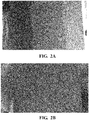
- Mandrel test The test unit was set up by placing a mandrel bar (size of 2, 3, and 4 mm) between two rollers. An electrode sample was slit to 4" long. Some samples were calendered to a porosity of 40% and others were not calendered. Holding each sample electrode at each end, the sample was rolled back and forth over mandrel bar 5 or 6 times. The sample dried using hot air only revealed significant surface cracking. By contrast in the hot air dried samples, no cracking or delamination was observed on the electrode surface dried using VFM at 80 degrees C after the test (Grade 1, passed). The cathode results are presented in FIG. 1 and anode results depicted in FIG. 2 . VFM in both anode and cathode produced high loading electrodes with excellent resistance to cracking and delamination by handling relative to traditionally dried electrodes.
- wet Adhesion In a standard operation, three pieces of 2"x 3" electrode are soaked in an electrolyte at 85 °C for 2 hours while contained in a sealed pouch. The electrode is removed from the pouch and blotted dry with a paper towel. On patted-dry electrodes, the operator uses the end of a razor blade and gently scrapes the electrode using constant pressure. After making three scribes, the electrode is rotated to an angle of 90 degrees and three more scribes are made thus creating a cross hatch pattern. The resulting electrodes are scored as follows:
- FIG. 3 shows the surfaces of cathodes made as above before and after the hot electrolyte test.
- the samples showed scraping marks only under the razor blade tips and only small delamination was observed (Grade 2) illustrating excellent wet adhesion of electrodes dried using VFM similar to those dried using traditional air drying techniques.
- Electrode rate capability was also evaluated in Li half cells at 4.2 to 2.7V. Cathodes made as above were calndered to 40% poroisity target thickness. The cell was charged at C/5 and discharged at different C-rates. The cathodes were validated independently in coin half cells versus lithium metal and in Li ion pouch cells versus baseline production-quality counter-electrodes. All the cells were assembled using semi-automated pilot cell production equipment.
- the VFM dried electrodes showed improved performance compared to those prepared using hot air drying only.
- the electrodes with a loading of 50 mg/cm 2 were capable of similar capacity retention as a standard prepared 18 mg/cm 2 loaded electrode. Results are illustrated in FIG. 4 .
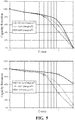
- Anode Similar protocols are performed using anodes prepared with either a water based binder (SBR) or a solvent based binder (PVdF). When SBR binder is used, the mass ratios were 97/2/1 wt% for active material/SBR/CMC (carboxyl methyl cellulose). When PVdF was used as binder the graphite content was 94%, PVdF was 5% and conductive additive 1%. Electrode rate capability was also evaluated in Li half cells 2.7 to 4.2V. The cell was charged at C/5 and discharge at 0.1, 0.2, 0.5, and 1.0C rates. The anode was tested against a Li metal counter elecrode. The results are depicted in FIG. 5 . Anodes prepared with both tested binders electrodes prepared using VFM irradiation showed improved rate capability.
- SBR binder water based binder
- PVdF solvent based binder
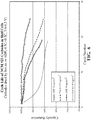
- Cycle Life Cathodes prepared as above were evaluated in coin half cells. The cells were cycled at C/2 rate between 4.2 - 2.7 V. Electrodes were calendered to 40% porosity and annealed at 120 °C for 2 hours. The electrodes with high loading and dried using the VFM irriation process showed improved cycle life relative to hot air dried electrodes. Results are illustrated in FIG. 6 .
- Impedance measurements were performed using a Solartron SI 1287 Electrochemical Interface and SI 1260 Impedance/Gain-phase Analyzer.
- the NCM523 cathodes prepared as above using two loadings (40 mg/cm 2 and 50 mg/cm 2 ) were dried under either convection hot air (baseline) or with by VFM techniques.
- the cathodes were fabricated into Li half cells. Half cells were charged to 4.3V for the impedance test, with frequency sweeping from 1 MHz to 1 mHz and with AC amplitude at 5 mV.
- Equivalent circuit fittings were completed using the Z-view software to calculate Ohmic resistance (R ohm ), surface resistance (R1), and diffusion resistance (Wo 1 ). The results are shown in FIG.
- Electrodes were subjected to measurements of binder distribution.
- the electrodes were divided into 5 regions extending from zone 1 (the 1/5 th thickness nearest the current collector) to zone 5 (the 1/5 th thickness nearest the electrode surface distal from the current collector). These zones are used when mapping (searching) for fluorine content (from the PVdF binder) using a scanning electron microscope (SEM) equipped with energy disperse X-ray spectroscopy (EDS) system.
- SEM scanning electron microscope
- EDS energy disperse X-ray spectroscopy
- the EDS software (EDAX from Ametek) provides weight percent of fluorine in the different zones giving a clear indication of binder distribution.
- the binder distribution demonstrated greater uniformity throughout the electrode at all thickness zones as illustrated in FIG. 9 .
- Anodes using SBR binder/water with 20 mg/cm 2 loading demonstrated greater uniformity than hot air dried electrodes as illustrated in FIG. 10 .
- anodes using NMP- based PVdF binder loaded to 20 mg/cm 2 showed a significantly lower zone 5/zone 1 ratio and greater uniformity than hot air dried electrodes. Results are illustrated in FIG. 11 .
- Patents, publications, and applications mentioned in the specification are indicative of the levels of those skilled in the art to which the invention pertains. These patents, publications, and applications are incorporated herein by reference to the same extent as if each individual patent, publication, or application was specifically and individually incorporated herein by reference.
Landscapes
- Chemical & Material Sciences (AREA)
- Chemical Kinetics & Catalysis (AREA)
- Electrochemistry (AREA)
- General Chemical & Material Sciences (AREA)
- Engineering & Computer Science (AREA)
- Manufacturing & Machinery (AREA)
- Materials Engineering (AREA)
- Composite Materials (AREA)
- Inorganic Chemistry (AREA)
- Battery Electrode And Active Subsutance (AREA)
Applications Claiming Priority (3)
| Application Number | Priority Date | Filing Date | Title |
|---|---|---|---|
| US201662346799P | 2016-06-07 | 2016-06-07 | |
| PCT/US2017/036312 WO2017214247A1 (en) | 2016-06-07 | 2017-06-07 | High loading electrodes |
| EP17810919.5A EP3465803B1 (de) | 2016-06-07 | 2017-06-07 | Hochbelastbare elektroden |
Related Parent Applications (2)
| Application Number | Title | Priority Date | Filing Date |
|---|---|---|---|
| EP17810919.5A Division EP3465803B1 (de) | 2016-06-07 | 2017-06-07 | Hochbelastbare elektroden |
| EP17810919.5A Division-Into EP3465803B1 (de) | 2016-06-07 | 2017-06-07 | Hochbelastbare elektroden |
Publications (2)
| Publication Number | Publication Date |
|---|---|
| EP3893293A1 true EP3893293A1 (de) | 2021-10-13 |
| EP3893293B1 EP3893293B1 (de) | 2023-05-10 |
Family
ID=60578125
Family Applications (2)
| Application Number | Title | Priority Date | Filing Date |
|---|---|---|---|
| EP21164649.2A Active EP3893293B1 (de) | 2016-06-07 | 2017-06-07 | Elektroden mit hochem beladungszustand |
| EP17810919.5A Active EP3465803B1 (de) | 2016-06-07 | 2017-06-07 | Hochbelastbare elektroden |
Family Applications After (1)
| Application Number | Title | Priority Date | Filing Date |
|---|---|---|---|
| EP17810919.5A Active EP3465803B1 (de) | 2016-06-07 | 2017-06-07 | Hochbelastbare elektroden |
Country Status (3)
| Country | Link |
|---|---|
| US (5) | US10916765B2 (de) |
| EP (2) | EP3893293B1 (de) |
| WO (1) | WO2017214247A1 (de) |
Families Citing this family (10)
| Publication number | Priority date | Publication date | Assignee | Title |
|---|---|---|---|---|
| WO2017214247A1 (en) * | 2016-06-07 | 2017-12-14 | Navitas Systems, Llc | High loading electrodes |
| CN109088033B (zh) * | 2018-08-07 | 2022-08-30 | 江西省汇亿新能源有限公司 | 高安全高能量长循环的磷酸铁锂型18650锂电池及其制备方法 |
| WO2020119431A1 (zh) * | 2018-12-14 | 2020-06-18 | 宁德时代新能源科技股份有限公司 | 一种锂离子电池 |
| CN112018397B (zh) * | 2020-09-21 | 2021-11-26 | 珠海冠宇电池股份有限公司 | 一种正极片及电池 |
| CN116250100A (zh) * | 2020-09-30 | 2023-06-09 | 松下知识产权经营株式会社 | 非水电解质二次电池用正极和非水电解质二次电池 |
| CN116888752A (zh) * | 2021-02-10 | 2023-10-13 | 株式会社Aesc日本 | 电池 |
| CN118202479A (zh) * | 2021-09-09 | 2024-06-14 | 快帽系统公司 | 用于储能装置的电极的制造 |
| CN115377353A (zh) * | 2022-10-27 | 2022-11-22 | 中创新航科技股份有限公司 | 一种负极片及应用其的电池 |
| CN118248830A (zh) * | 2024-05-29 | 2024-06-25 | 宁德时代新能源科技股份有限公司 | 二次电池和用电装置 |
| KR20260050637A (ko) * | 2024-10-08 | 2026-04-15 | 주식회사 엘지에너지솔루션 | 리튬 이차전지 및 이의 제조방법 |
Citations (6)
| Publication number | Priority date | Publication date | Assignee | Title |
|---|---|---|---|---|
| US5464705A (en) * | 1993-04-08 | 1995-11-07 | Moli Energy (1990) Limited | Battery incorporating hydraulic activation of disconnect safety device on overcharge |
| US6235427B1 (en) | 1998-05-13 | 2001-05-22 | Fuji Photo Film Co., Ltd. | Nonaqueous secondary battery containing silicic material |
| EP2320499A1 (de) * | 2008-08-20 | 2011-05-11 | Sanyo Electric Co., Ltd. | Sekundärbatterie mit nichtwässrigem elektrolyt |
| WO2012064531A1 (en) * | 2010-11-09 | 2012-05-18 | 3M Innovative Properties Company | High capacity alloy anodes and lithium-ion electrochemical cells containing same |
| US20120308861A1 (en) * | 2007-07-09 | 2012-12-06 | Greatbatch Ltd. | Method of making electrodes with distributed material loading used in electrochemical cells |
| US20140072850A1 (en) * | 2012-04-20 | 2014-03-13 | Lg Chem, Ltd. | Stepped electrode assembly having predetermined a thickness ratio in the interface between electrode units, battery cell and device comprising the same |
Family Cites Families (11)
| Publication number | Priority date | Publication date | Assignee | Title |
|---|---|---|---|---|
| CA2308346A1 (en) * | 1999-05-14 | 2000-11-14 | Mitsubishi Cable Industries, Ltd. | Positive electrode active material, positive electrode active material composition and lithium ion secondary battery |
| KR101136191B1 (ko) | 2003-09-10 | 2012-04-17 | 트르스티스 오브 보스톤 유니버시티 | 고체 산화물 연료전지 제조 방법 |
| JPWO2011145301A1 (ja) * | 2010-05-18 | 2013-07-22 | パナソニック株式会社 | リチウム二次電池 |
| JP2012022858A (ja) | 2010-07-14 | 2012-02-02 | Tokyo Electric Power Co Inc:The | 電極の製造方法 |
| US8574763B2 (en) * | 2010-10-13 | 2013-11-05 | Toyota Jidosha Kabushiki Kaisha | Electrode plate with a binder in a surface section with a lower glass transition point than a binder in a current collector plate section, secondary battery, and method for producing the electrode plate |
| JP2013149407A (ja) | 2012-01-18 | 2013-08-01 | Hitachi Ltd | リチウムイオン二次電池およびその製造方法 |
| DE112013001480T5 (de) | 2012-03-16 | 2015-04-09 | A 123 Systems, LLC | Mikrowellentrocknung von Lithium-Ionen Batterie Materialien |
| JP5993726B2 (ja) * | 2012-11-29 | 2016-09-14 | 株式会社日立製作所 | リチウムイオン二次電池 |
| JP6249399B2 (ja) * | 2013-12-19 | 2017-12-20 | 株式会社村田製作所 | リチウムイオン二次電池用電極、リチウムイオン二次電池、電池パック、電動車両、電力貯蔵システム、電動工具および電子機器 |
| WO2016133345A1 (ko) * | 2015-02-16 | 2016-08-25 | 주식회사 엘지화학 | 전극, 이를 포함하는 이차전지 및 이의 제조방법 |
| WO2017214247A1 (en) * | 2016-06-07 | 2017-12-14 | Navitas Systems, Llc | High loading electrodes |
-
2017
- 2017-06-07 WO PCT/US2017/036312 patent/WO2017214247A1/en not_active Ceased
- 2017-06-07 US US16/307,715 patent/US10916765B2/en active Active
- 2017-06-07 EP EP21164649.2A patent/EP3893293B1/de active Active
- 2017-06-07 EP EP17810919.5A patent/EP3465803B1/de active Active
-
2021
- 2021-01-06 US US17/142,339 patent/US11430978B2/en active Active
-
2022
- 2022-07-12 US US17/862,581 patent/US11843111B2/en active Active
-
2023
- 2023-11-01 US US18/385,972 patent/US12444731B2/en active Active
-
2025
- 2025-09-16 US US19/330,030 patent/US20260018593A1/en active Pending
Patent Citations (6)
| Publication number | Priority date | Publication date | Assignee | Title |
|---|---|---|---|---|
| US5464705A (en) * | 1993-04-08 | 1995-11-07 | Moli Energy (1990) Limited | Battery incorporating hydraulic activation of disconnect safety device on overcharge |
| US6235427B1 (en) | 1998-05-13 | 2001-05-22 | Fuji Photo Film Co., Ltd. | Nonaqueous secondary battery containing silicic material |
| US20120308861A1 (en) * | 2007-07-09 | 2012-12-06 | Greatbatch Ltd. | Method of making electrodes with distributed material loading used in electrochemical cells |
| EP2320499A1 (de) * | 2008-08-20 | 2011-05-11 | Sanyo Electric Co., Ltd. | Sekundärbatterie mit nichtwässrigem elektrolyt |
| WO2012064531A1 (en) * | 2010-11-09 | 2012-05-18 | 3M Innovative Properties Company | High capacity alloy anodes and lithium-ion electrochemical cells containing same |
| US20140072850A1 (en) * | 2012-04-20 | 2014-03-13 | Lg Chem, Ltd. | Stepped electrode assembly having predetermined a thickness ratio in the interface between electrode units, battery cell and device comprising the same |
Non-Patent Citations (1)
| Title |
|---|
| CHIA-CHIN CHANG ET AL: "THE INFLUENCE OF DIFFERENT ELECTRODE FABRICATION METHODS AND POLY(VINYLIDENE FLUORIDE) BINDERS ON THE ANODE ELECTRODE DIMENSION STABILITY AND CYCLABILITY IN LITHIUM-ION BATTERIES", JOURNAL OF NEW MATERIALS FOR ELECTROCHEMICAL SYSTEMS, ECOLE POLYTECHNIQUE DE MONTREAL, MONTREAL, CA, vol. 11, no. 1, 1 January 2008 (2008-01-01), pages 43 - 47, XP001513286, ISSN: 1480-2422 * |
Also Published As
| Publication number | Publication date |
|---|---|
| US12444731B2 (en) | 2025-10-14 |
| US20230104409A1 (en) | 2023-04-06 |
| US10916765B2 (en) | 2021-02-09 |
| US20260018593A1 (en) | 2026-01-15 |
| EP3893293B1 (de) | 2023-05-10 |
| EP3465803B1 (de) | 2021-05-05 |
| EP3465803A1 (de) | 2019-04-10 |
| US20190305299A1 (en) | 2019-10-03 |
| US20220077452A1 (en) | 2022-03-10 |
| US11843111B2 (en) | 2023-12-12 |
| US11430978B2 (en) | 2022-08-30 |
| WO2017214247A1 (en) | 2017-12-14 |
| EP3465803A4 (de) | 2019-12-25 |
| US20240063369A1 (en) | 2024-02-22 |
Similar Documents
| Publication | Publication Date | Title |
|---|---|---|
| US12444731B2 (en) | High loading electrodes | |
| Chen et al. | Toward greener lithium-ion batteries: Aqueous binder-based LiNi0. 4Co0. 2Mn0. 4O2 cathode material with superior electrochemical performance | |
| CN107112524B (zh) | 制备用于形成锂二次电池正极的组合物的方法、及使用所述组合物制造的正极和锂二次电池 | |
| Dominko et al. | Carbon nanocoatings on active materials for Li-ion batteries | |
| CN109786811B (zh) | 全固体电池的制造方法、全固体电池和浆液 | |
| US20160164138A1 (en) | Organic/inorganic composite electrolyte, electrode-electrolyte assembly and lithium secondary battery including the same, and manufacturing method of the electrode-electrolyte assembly | |
| EP4016675B1 (de) | Copolymerhaltiges bindemittel und dieses enthaltende elektrochemische vorrichtung | |
| US20140302397A1 (en) | Methods for Making Electrodes | |
| KR101352672B1 (ko) | 이차전지용 음극 활물질 | |
| KR20230089523A (ko) | 고로딩 양극 복합재를 포함하는 전고체전지 및 건식 코팅을 통한 그 제조방법 | |
| KR102781562B1 (ko) | 양극 접착력 개선용 바인더, 이를 포함하는 리튬 이차전지용 양극 및 상기 양극을 포함하는 리튬 이차전지 | |
| JP2022144809A (ja) | 非水電解質二次電池用正極 | |
| US20240047656A1 (en) | Electrode, all-solid-state battery, and method of producing electrode | |
| JP7138228B1 (ja) | 非水電解質二次電池用正極、並びにこれを用いた非水電解質二次電池、電池モジュール、及び電池システム | |
| JP7468966B2 (ja) | 二次電池用負極、その製造方法およびそれを含むリチウム二次電池 | |
| CN120511304B (zh) | 一种正极极片及其湿法制备方法与应用 | |
| JP7403443B2 (ja) | リチウムイオン電池の電極組成物及びその作製方法、電極及びそれを備える電池 | |
| JP2025056893A (ja) | リチウムイオン二次電池用正極およびリチウムイオン二次電池 | |
| JP2024088948A (ja) | 二次電池用電極、及び二次電池用電極の製造方法 | |
| KR20010012950A (ko) | 무수 전해질 전지용 전극의 제조방법 | |
| JP2022010854A (ja) | 蓄電デバイス用正極およびこれを用いた蓄電デバイス | |
| WO2024024552A1 (ja) | 非水系二次電池用負極及び非水系二次電池 | |
| CN116830295A (zh) | 制造用于锂二次电池的阴极的方法、使用其制造的阴极、和包括该阴极的锂二次电池 | |
| JPH10321235A (ja) | 非水系二次電池用負極 |
Legal Events
| Date | Code | Title | Description |
|---|---|---|---|
| PUAI | Public reference made under article 153(3) epc to a published international application that has entered the european phase |
Free format text: ORIGINAL CODE: 0009012 |
|
| STAA | Information on the status of an ep patent application or granted ep patent |
Free format text: STATUS: THE APPLICATION HAS BEEN PUBLISHED |
|
| AC | Divisional application: reference to earlier application |
Ref document number: 3465803 Country of ref document: EP Kind code of ref document: P |
|
| AK | Designated contracting states |
Kind code of ref document: A1 Designated state(s): AL AT BE BG CH CY CZ DE DK EE ES FI FR GB GR HR HU IE IS IT LI LT LU LV MC MK MT NL NO PL PT RO RS SE SI SK SM TR |
|
| STAA | Information on the status of an ep patent application or granted ep patent |
Free format text: STATUS: REQUEST FOR EXAMINATION WAS MADE |
|
| 17P | Request for examination filed |
Effective date: 20220407 |
|
| RBV | Designated contracting states (corrected) |
Designated state(s): AL AT BE BG CH CY CZ DE DK EE ES FI FR GB GR HR HU IE IS IT LI LT LU LV MC MK MT NL NO PL PT RO RS SE SI SK SM TR |
|
| RIC1 | Information provided on ipc code assigned before grant |
Ipc: H01M 4/02 20060101ALN20220916BHEP Ipc: H01M 10/052 20100101ALI20220916BHEP Ipc: H01M 4/04 20060101ALI20220916BHEP Ipc: H01M 4/139 20100101ALI20220916BHEP Ipc: H01M 4/62 20060101ALI20220916BHEP Ipc: H01M 4/13 20100101AFI20220916BHEP |
|
| RAP3 | Party data changed (applicant data changed or rights of an application transferred) |
Owner name: NAVITAS SYSTEMS, LLC |
|
| RIC1 | Information provided on ipc code assigned before grant |
Ipc: H01M 4/02 20060101ALN20221005BHEP Ipc: H01M 10/052 20100101ALI20221005BHEP Ipc: H01M 4/04 20060101ALI20221005BHEP Ipc: H01M 4/139 20100101ALI20221005BHEP Ipc: H01M 4/62 20060101ALI20221005BHEP Ipc: H01M 4/13 20100101AFI20221005BHEP |
|
| GRAP | Despatch of communication of intention to grant a patent |
Free format text: ORIGINAL CODE: EPIDOSNIGR1 |
|
| STAA | Information on the status of an ep patent application or granted ep patent |
Free format text: STATUS: GRANT OF PATENT IS INTENDED |
|
| RIC1 | Information provided on ipc code assigned before grant |
Ipc: H01M 4/02 20060101ALN20221103BHEP Ipc: H01M 10/052 20100101ALI20221103BHEP Ipc: H01M 4/04 20060101ALI20221103BHEP Ipc: H01M 4/139 20100101ALI20221103BHEP Ipc: H01M 4/62 20060101ALI20221103BHEP Ipc: H01M 4/13 20100101AFI20221103BHEP |
|
| INTG | Intention to grant announced |
Effective date: 20221123 |
|
| GRAS | Grant fee paid |
Free format text: ORIGINAL CODE: EPIDOSNIGR3 |
|
| GRAA | (expected) grant |
Free format text: ORIGINAL CODE: 0009210 |
|
| STAA | Information on the status of an ep patent application or granted ep patent |
Free format text: STATUS: THE PATENT HAS BEEN GRANTED |
|
| AC | Divisional application: reference to earlier application |
Ref document number: 3465803 Country of ref document: EP Kind code of ref document: P |
|
| AK | Designated contracting states |
Kind code of ref document: B1 Designated state(s): AL AT BE BG CH CY CZ DE DK EE ES FI FR GB GR HR HU IE IS IT LI LT LU LV MC MK MT NL NO PL PT RO RS SE SI SK SM TR |
|
| REG | Reference to a national code |
Ref country code: GB Ref legal event code: FG4D |
|
| REG | Reference to a national code |
Ref country code: AT Ref legal event code: REF Ref document number: 1567614 Country of ref document: AT Kind code of ref document: T Effective date: 20230515 Ref country code: CH Ref legal event code: EP |
|
| REG | Reference to a national code |
Ref country code: DE Ref legal event code: R096 Ref document number: 602017068812 Country of ref document: DE |
|
| REG | Reference to a national code |
Ref country code: IE Ref legal event code: FG4D |
|
| P01 | Opt-out of the competence of the unified patent court (upc) registered |
Effective date: 20230328 |
|
| REG | Reference to a national code |
Ref country code: SE Ref legal event code: TRGR |
|
| REG | Reference to a national code |
Ref country code: LT Ref legal event code: MG9D |
|
| REG | Reference to a national code |
Ref country code: NL Ref legal event code: MP Effective date: 20230510 |
|
| REG | Reference to a national code |
Ref country code: AT Ref legal event code: MK05 Ref document number: 1567614 Country of ref document: AT Kind code of ref document: T Effective date: 20230510 |
|
| PG25 | Lapsed in a contracting state [announced via postgrant information from national office to epo] |
Ref country code: PT Free format text: LAPSE BECAUSE OF FAILURE TO SUBMIT A TRANSLATION OF THE DESCRIPTION OR TO PAY THE FEE WITHIN THE PRESCRIBED TIME-LIMIT Effective date: 20230911 Ref country code: NO Free format text: LAPSE BECAUSE OF FAILURE TO SUBMIT A TRANSLATION OF THE DESCRIPTION OR TO PAY THE FEE WITHIN THE PRESCRIBED TIME-LIMIT Effective date: 20230810 Ref country code: NL Free format text: LAPSE BECAUSE OF FAILURE TO SUBMIT A TRANSLATION OF THE DESCRIPTION OR TO PAY THE FEE WITHIN THE PRESCRIBED TIME-LIMIT Effective date: 20230510 Ref country code: ES Free format text: LAPSE BECAUSE OF FAILURE TO SUBMIT A TRANSLATION OF THE DESCRIPTION OR TO PAY THE FEE WITHIN THE PRESCRIBED TIME-LIMIT Effective date: 20230510 Ref country code: AT Free format text: LAPSE BECAUSE OF FAILURE TO SUBMIT A TRANSLATION OF THE DESCRIPTION OR TO PAY THE FEE WITHIN THE PRESCRIBED TIME-LIMIT Effective date: 20230510 |
|
| PG25 | Lapsed in a contracting state [announced via postgrant information from national office to epo] |
Ref country code: RS Free format text: LAPSE BECAUSE OF FAILURE TO SUBMIT A TRANSLATION OF THE DESCRIPTION OR TO PAY THE FEE WITHIN THE PRESCRIBED TIME-LIMIT Effective date: 20230510 Ref country code: PL Free format text: LAPSE BECAUSE OF FAILURE TO SUBMIT A TRANSLATION OF THE DESCRIPTION OR TO PAY THE FEE WITHIN THE PRESCRIBED TIME-LIMIT Effective date: 20230510 Ref country code: LV Free format text: LAPSE BECAUSE OF FAILURE TO SUBMIT A TRANSLATION OF THE DESCRIPTION OR TO PAY THE FEE WITHIN THE PRESCRIBED TIME-LIMIT Effective date: 20230510 Ref country code: LT Free format text: LAPSE BECAUSE OF FAILURE TO SUBMIT A TRANSLATION OF THE DESCRIPTION OR TO PAY THE FEE WITHIN THE PRESCRIBED TIME-LIMIT Effective date: 20230510 Ref country code: IS Free format text: LAPSE BECAUSE OF FAILURE TO SUBMIT A TRANSLATION OF THE DESCRIPTION OR TO PAY THE FEE WITHIN THE PRESCRIBED TIME-LIMIT Effective date: 20230910 Ref country code: HR Free format text: LAPSE BECAUSE OF FAILURE TO SUBMIT A TRANSLATION OF THE DESCRIPTION OR TO PAY THE FEE WITHIN THE PRESCRIBED TIME-LIMIT Effective date: 20230510 Ref country code: GR Free format text: LAPSE BECAUSE OF FAILURE TO SUBMIT A TRANSLATION OF THE DESCRIPTION OR TO PAY THE FEE WITHIN THE PRESCRIBED TIME-LIMIT Effective date: 20230811 |
|
| PG25 | Lapsed in a contracting state [announced via postgrant information from national office to epo] |
Ref country code: FI Free format text: LAPSE BECAUSE OF FAILURE TO SUBMIT A TRANSLATION OF THE DESCRIPTION OR TO PAY THE FEE WITHIN THE PRESCRIBED TIME-LIMIT Effective date: 20230510 |
|
| PG25 | Lapsed in a contracting state [announced via postgrant information from national office to epo] |
Ref country code: SK Free format text: LAPSE BECAUSE OF FAILURE TO SUBMIT A TRANSLATION OF THE DESCRIPTION OR TO PAY THE FEE WITHIN THE PRESCRIBED TIME-LIMIT Effective date: 20230510 |
|
| PG25 | Lapsed in a contracting state [announced via postgrant information from national office to epo] |
Ref country code: SM Free format text: LAPSE BECAUSE OF FAILURE TO SUBMIT A TRANSLATION OF THE DESCRIPTION OR TO PAY THE FEE WITHIN THE PRESCRIBED TIME-LIMIT Effective date: 20230510 Ref country code: SK Free format text: LAPSE BECAUSE OF FAILURE TO SUBMIT A TRANSLATION OF THE DESCRIPTION OR TO PAY THE FEE WITHIN THE PRESCRIBED TIME-LIMIT Effective date: 20230510 Ref country code: RO Free format text: LAPSE BECAUSE OF FAILURE TO SUBMIT A TRANSLATION OF THE DESCRIPTION OR TO PAY THE FEE WITHIN THE PRESCRIBED TIME-LIMIT Effective date: 20230510 Ref country code: EE Free format text: LAPSE BECAUSE OF FAILURE TO SUBMIT A TRANSLATION OF THE DESCRIPTION OR TO PAY THE FEE WITHIN THE PRESCRIBED TIME-LIMIT Effective date: 20230510 Ref country code: DK Free format text: LAPSE BECAUSE OF FAILURE TO SUBMIT A TRANSLATION OF THE DESCRIPTION OR TO PAY THE FEE WITHIN THE PRESCRIBED TIME-LIMIT Effective date: 20230510 Ref country code: CZ Free format text: LAPSE BECAUSE OF FAILURE TO SUBMIT A TRANSLATION OF THE DESCRIPTION OR TO PAY THE FEE WITHIN THE PRESCRIBED TIME-LIMIT Effective date: 20230510 |
|
| REG | Reference to a national code |
Ref country code: CH Ref legal event code: PL |
|
| REG | Reference to a national code |
Ref country code: DE Ref legal event code: R097 Ref document number: 602017068812 Country of ref document: DE |
|
| REG | Reference to a national code |
Ref country code: BE Ref legal event code: MM Effective date: 20230630 |
|
| PG25 | Lapsed in a contracting state [announced via postgrant information from national office to epo] |
Ref country code: MC Free format text: LAPSE BECAUSE OF FAILURE TO SUBMIT A TRANSLATION OF THE DESCRIPTION OR TO PAY THE FEE WITHIN THE PRESCRIBED TIME-LIMIT Effective date: 20230510 |
|
| PG25 | Lapsed in a contracting state [announced via postgrant information from national office to epo] |
Ref country code: MC Free format text: LAPSE BECAUSE OF FAILURE TO SUBMIT A TRANSLATION OF THE DESCRIPTION OR TO PAY THE FEE WITHIN THE PRESCRIBED TIME-LIMIT Effective date: 20230510 |
|
| PG25 | Lapsed in a contracting state [announced via postgrant information from national office to epo] |
Ref country code: LU Free format text: LAPSE BECAUSE OF NON-PAYMENT OF DUE FEES Effective date: 20230607 |
|
| PLBE | No opposition filed within time limit |
Free format text: ORIGINAL CODE: 0009261 |
|
| STAA | Information on the status of an ep patent application or granted ep patent |
Free format text: STATUS: NO OPPOSITION FILED WITHIN TIME LIMIT |
|
| REG | Reference to a national code |
Ref country code: IE Ref legal event code: MM4A |
|
| PG25 | Lapsed in a contracting state [announced via postgrant information from national office to epo] |
Ref country code: LU Free format text: LAPSE BECAUSE OF NON-PAYMENT OF DUE FEES Effective date: 20230607 |
|
| PG25 | Lapsed in a contracting state [announced via postgrant information from national office to epo] |
Ref country code: IE Free format text: LAPSE BECAUSE OF NON-PAYMENT OF DUE FEES Effective date: 20230607 |
|
| 26N | No opposition filed |
Effective date: 20240213 |
|
| PG25 | Lapsed in a contracting state [announced via postgrant information from national office to epo] |
Ref country code: IE Free format text: LAPSE BECAUSE OF NON-PAYMENT OF DUE FEES Effective date: 20230607 Ref country code: CH Free format text: LAPSE BECAUSE OF NON-PAYMENT OF DUE FEES Effective date: 20230630 |
|
| PG25 | Lapsed in a contracting state [announced via postgrant information from national office to epo] |
Ref country code: SI Free format text: LAPSE BECAUSE OF FAILURE TO SUBMIT A TRANSLATION OF THE DESCRIPTION OR TO PAY THE FEE WITHIN THE PRESCRIBED TIME-LIMIT Effective date: 20230510 |
|
| PG25 | Lapsed in a contracting state [announced via postgrant information from national office to epo] |
Ref country code: SI Free format text: LAPSE BECAUSE OF FAILURE TO SUBMIT A TRANSLATION OF THE DESCRIPTION OR TO PAY THE FEE WITHIN THE PRESCRIBED TIME-LIMIT Effective date: 20230510 Ref country code: IT Free format text: LAPSE BECAUSE OF FAILURE TO SUBMIT A TRANSLATION OF THE DESCRIPTION OR TO PAY THE FEE WITHIN THE PRESCRIBED TIME-LIMIT Effective date: 20230510 Ref country code: BE Free format text: LAPSE BECAUSE OF NON-PAYMENT OF DUE FEES Effective date: 20230630 |
|
| PG25 | Lapsed in a contracting state [announced via postgrant information from national office to epo] |
Ref country code: BG Free format text: LAPSE BECAUSE OF FAILURE TO SUBMIT A TRANSLATION OF THE DESCRIPTION OR TO PAY THE FEE WITHIN THE PRESCRIBED TIME-LIMIT Effective date: 20230510 |
|
| PG25 | Lapsed in a contracting state [announced via postgrant information from national office to epo] |
Ref country code: BG Free format text: LAPSE BECAUSE OF FAILURE TO SUBMIT A TRANSLATION OF THE DESCRIPTION OR TO PAY THE FEE WITHIN THE PRESCRIBED TIME-LIMIT Effective date: 20230510 |
|
| PGFP | Annual fee paid to national office [announced via postgrant information from national office to epo] |
Ref country code: DE Payment date: 20250520 Year of fee payment: 9 |
|
| PGFP | Annual fee paid to national office [announced via postgrant information from national office to epo] |
Ref country code: GB Payment date: 20250520 Year of fee payment: 9 |
|
| PGFP | Annual fee paid to national office [announced via postgrant information from national office to epo] |
Ref country code: FR Payment date: 20250520 Year of fee payment: 9 |
|
| PG25 | Lapsed in a contracting state [announced via postgrant information from national office to epo] |
Ref country code: CY Free format text: LAPSE BECAUSE OF FAILURE TO SUBMIT A TRANSLATION OF THE DESCRIPTION OR TO PAY THE FEE WITHIN THE PRESCRIBED TIME-LIMIT; INVALID AB INITIO Effective date: 20170607 |
|
| PGFP | Annual fee paid to national office [announced via postgrant information from national office to epo] |
Ref country code: SE Payment date: 20250520 Year of fee payment: 9 |
|
| PG25 | Lapsed in a contracting state [announced via postgrant information from national office to epo] |
Ref country code: HU Free format text: LAPSE BECAUSE OF FAILURE TO SUBMIT A TRANSLATION OF THE DESCRIPTION OR TO PAY THE FEE WITHIN THE PRESCRIBED TIME-LIMIT; INVALID AB INITIO Effective date: 20170607 |
|
| PG25 | Lapsed in a contracting state [announced via postgrant information from national office to epo] |
Ref country code: TR Free format text: LAPSE BECAUSE OF FAILURE TO SUBMIT A TRANSLATION OF THE DESCRIPTION OR TO PAY THE FEE WITHIN THE PRESCRIBED TIME-LIMIT Effective date: 20230510 |