EP3893668B1 - Compositions alimentaires synthetiques - Google Patents
Compositions alimentaires synthetiques Download PDFInfo
- Publication number
- EP3893668B1 EP3893668B1 EP19896078.3A EP19896078A EP3893668B1 EP 3893668 B1 EP3893668 B1 EP 3893668B1 EP 19896078 A EP19896078 A EP 19896078A EP 3893668 B1 EP3893668 B1 EP 3893668B1
- Authority
- EP
- European Patent Office
- Prior art keywords
- cells
- population
- cases
- cultured
- cell
- Prior art date
- Legal status (The legal status is an assumption and is not a legal conclusion. Google has not performed a legal analysis and makes no representation as to the accuracy of the status listed.)
- Active
Links
Images










Classifications
-
- A—HUMAN NECESSITIES
- A23—FOODS OR FOODSTUFFS; TREATMENT THEREOF, NOT COVERED BY OTHER CLASSES
- A23L—FOODS, FOODSTUFFS OR NON-ALCOHOLIC BEVERAGES, NOT OTHERWISE PROVIDED FOR; PREPARATION OR TREATMENT THEREOF
- A23L13/00—Meat products; Meat meal; Preparation or treatment thereof
-
- A—HUMAN NECESSITIES
- A23—FOODS OR FOODSTUFFS; TREATMENT THEREOF, NOT COVERED BY OTHER CLASSES
- A23L—FOODS, FOODSTUFFS OR NON-ALCOHOLIC BEVERAGES, NOT OTHERWISE PROVIDED FOR; PREPARATION OR TREATMENT THEREOF
- A23L15/00—Egg products; Preparation or treatment thereof
-
- A—HUMAN NECESSITIES
- A23—FOODS OR FOODSTUFFS; TREATMENT THEREOF, NOT COVERED BY OTHER CLASSES
- A23L—FOODS, FOODSTUFFS OR NON-ALCOHOLIC BEVERAGES, NOT OTHERWISE PROVIDED FOR; PREPARATION OR TREATMENT THEREOF
- A23L17/00—Food-from-the-sea products; Fish products; Fish meal; Fish-egg substitutes; Preparation or treatment thereof
-
- C—CHEMISTRY; METALLURGY
- C12—BIOCHEMISTRY; BEER; SPIRITS; WINE; VINEGAR; MICROBIOLOGY; ENZYMOLOGY; MUTATION OR GENETIC ENGINEERING
- C12N—MICROORGANISMS OR ENZYMES; COMPOSITIONS THEREOF; PROPAGATING, PRESERVING, OR MAINTAINING MICROORGANISMS; MUTATION OR GENETIC ENGINEERING; CULTURE MEDIA
- C12N5/00—Undifferentiated human, animal or plant cells, e.g. cell lines; Tissues; Cultivation or maintenance thereof; Culture media therefor
- C12N5/06—Animal cells or tissues; Human cells or tissues
- C12N5/0602—Vertebrate cells
- C12N5/0652—Cells of skeletal and connective tissues; Mesenchyme
- C12N5/0653—Adipocytes; Adipose tissue
-
- C—CHEMISTRY; METALLURGY
- C12—BIOCHEMISTRY; BEER; SPIRITS; WINE; VINEGAR; MICROBIOLOGY; ENZYMOLOGY; MUTATION OR GENETIC ENGINEERING
- C12N—MICROORGANISMS OR ENZYMES; COMPOSITIONS THEREOF; PROPAGATING, PRESERVING, OR MAINTAINING MICROORGANISMS; MUTATION OR GENETIC ENGINEERING; CULTURE MEDIA
- C12N5/00—Undifferentiated human, animal or plant cells, e.g. cell lines; Tissues; Cultivation or maintenance thereof; Culture media therefor
- C12N5/06—Animal cells or tissues; Human cells or tissues
- C12N5/0602—Vertebrate cells
- C12N5/0652—Cells of skeletal and connective tissues; Mesenchyme
- C12N5/0658—Skeletal muscle cells, e.g. myocytes, myotubes, myoblasts
-
- C—CHEMISTRY; METALLURGY
- C12—BIOCHEMISTRY; BEER; SPIRITS; WINE; VINEGAR; MICROBIOLOGY; ENZYMOLOGY; MUTATION OR GENETIC ENGINEERING
- C12N—MICROORGANISMS OR ENZYMES; COMPOSITIONS THEREOF; PROPAGATING, PRESERVING, OR MAINTAINING MICROORGANISMS; MUTATION OR GENETIC ENGINEERING; CULTURE MEDIA
- C12N5/00—Undifferentiated human, animal or plant cells, e.g. cell lines; Tissues; Cultivation or maintenance thereof; Culture media therefor
- C12N5/06—Animal cells or tissues; Human cells or tissues
- C12N5/0602—Vertebrate cells
- C12N5/067—Hepatocytes
- C12N5/0671—Three-dimensional culture, tissue culture or organ culture; Encapsulated cells
-
- C—CHEMISTRY; METALLURGY
- C12—BIOCHEMISTRY; BEER; SPIRITS; WINE; VINEGAR; MICROBIOLOGY; ENZYMOLOGY; MUTATION OR GENETIC ENGINEERING
- C12N—MICROORGANISMS OR ENZYMES; COMPOSITIONS THEREOF; PROPAGATING, PRESERVING, OR MAINTAINING MICROORGANISMS; MUTATION OR GENETIC ENGINEERING; CULTURE MEDIA
- C12N5/00—Undifferentiated human, animal or plant cells, e.g. cell lines; Tissues; Cultivation or maintenance thereof; Culture media therefor
- C12N5/06—Animal cells or tissues; Human cells or tissues
- C12N5/0602—Vertebrate cells
- C12N5/0696—Artificially induced pluripotent stem cells, e.g. iPS
-
- D—TEXTILES; PAPER
- D01—NATURAL OR MAN-MADE THREADS OR FIBRES; SPINNING
- D01D—MECHANICAL METHODS OR APPARATUS IN THE MANUFACTURE OF ARTIFICIAL FILAMENTS, THREADS, FIBRES, BRISTLES OR RIBBONS
- D01D1/00—Treatment of filament-forming or like material
- D01D1/02—Preparation of spinning solutions
-
- D—TEXTILES; PAPER
- D01—NATURAL OR MAN-MADE THREADS OR FIBRES; SPINNING
- D01D—MECHANICAL METHODS OR APPARATUS IN THE MANUFACTURE OF ARTIFICIAL FILAMENTS, THREADS, FIBRES, BRISTLES OR RIBBONS
- D01D5/00—Formation of filaments, threads, or the like
- D01D5/0007—Electro-spinning
-
- C—CHEMISTRY; METALLURGY
- C12—BIOCHEMISTRY; BEER; SPIRITS; WINE; VINEGAR; MICROBIOLOGY; ENZYMOLOGY; MUTATION OR GENETIC ENGINEERING
- C12N—MICROORGANISMS OR ENZYMES; COMPOSITIONS THEREOF; PROPAGATING, PRESERVING, OR MAINTAINING MICROORGANISMS; MUTATION OR GENETIC ENGINEERING; CULTURE MEDIA
- C12N2502/00—Coculture with; Conditioned medium produced by
- C12N2502/13—Coculture with; Conditioned medium produced by connective tissue cells; generic mesenchyme cells, e.g. so-called "embryonic fibroblasts"
- C12N2502/1305—Adipocytes
-
- C—CHEMISTRY; METALLURGY
- C12—BIOCHEMISTRY; BEER; SPIRITS; WINE; VINEGAR; MICROBIOLOGY; ENZYMOLOGY; MUTATION OR GENETIC ENGINEERING
- C12N—MICROORGANISMS OR ENZYMES; COMPOSITIONS THEREOF; PROPAGATING, PRESERVING, OR MAINTAINING MICROORGANISMS; MUTATION OR GENETIC ENGINEERING; CULTURE MEDIA
- C12N2502/00—Coculture with; Conditioned medium produced by
- C12N2502/13—Coculture with; Conditioned medium produced by connective tissue cells; generic mesenchyme cells, e.g. so-called "embryonic fibroblasts"
- C12N2502/1335—Skeletal muscle cells, myocytes, myoblasts, myotubes
-
- C—CHEMISTRY; METALLURGY
- C12—BIOCHEMISTRY; BEER; SPIRITS; WINE; VINEGAR; MICROBIOLOGY; ENZYMOLOGY; MUTATION OR GENETIC ENGINEERING
- C12N—MICROORGANISMS OR ENZYMES; COMPOSITIONS THEREOF; PROPAGATING, PRESERVING, OR MAINTAINING MICROORGANISMS; MUTATION OR GENETIC ENGINEERING; CULTURE MEDIA
- C12N2506/00—Differentiation of animal cells from one lineage to another; Differentiation of pluripotent cells
- C12N2506/02—Differentiation of animal cells from one lineage to another; Differentiation of pluripotent cells from embryonic cells
-
- C—CHEMISTRY; METALLURGY
- C12—BIOCHEMISTRY; BEER; SPIRITS; WINE; VINEGAR; MICROBIOLOGY; ENZYMOLOGY; MUTATION OR GENETIC ENGINEERING
- C12N—MICROORGANISMS OR ENZYMES; COMPOSITIONS THEREOF; PROPAGATING, PRESERVING, OR MAINTAINING MICROORGANISMS; MUTATION OR GENETIC ENGINEERING; CULTURE MEDIA
- C12N2506/00—Differentiation of animal cells from one lineage to another; Differentiation of pluripotent cells
- C12N2506/13—Differentiation of animal cells from one lineage to another; Differentiation of pluripotent cells from connective tissue cells, from mesenchymal cells
- C12N2506/1307—Differentiation of animal cells from one lineage to another; Differentiation of pluripotent cells from connective tissue cells, from mesenchymal cells from adult fibroblasts
-
- C—CHEMISTRY; METALLURGY
- C12—BIOCHEMISTRY; BEER; SPIRITS; WINE; VINEGAR; MICROBIOLOGY; ENZYMOLOGY; MUTATION OR GENETIC ENGINEERING
- C12N—MICROORGANISMS OR ENZYMES; COMPOSITIONS THEREOF; PROPAGATING, PRESERVING, OR MAINTAINING MICROORGANISMS; MUTATION OR GENETIC ENGINEERING; CULTURE MEDIA
- C12N2513/00—3D culture
-
- C—CHEMISTRY; METALLURGY
- C12—BIOCHEMISTRY; BEER; SPIRITS; WINE; VINEGAR; MICROBIOLOGY; ENZYMOLOGY; MUTATION OR GENETIC ENGINEERING
- C12N—MICROORGANISMS OR ENZYMES; COMPOSITIONS THEREOF; PROPAGATING, PRESERVING, OR MAINTAINING MICROORGANISMS; MUTATION OR GENETIC ENGINEERING; CULTURE MEDIA
- C12N2533/00—Supports or coatings for cell culture, characterised by material
- C12N2533/30—Synthetic polymers
- C12N2533/40—Polyhydroxyacids, e.g. polymers of glycolic or lactic acid (PGA, PLA, PLGA); Bioresorbable polymers
Definitions
- the protein comprises gelatin, collagen, elastin, silk, soy derivatives, zein, gliadin, hordein, casein, wheat derivatives, gluten, whey, millet derivatives, quinoa derivatives, algae proteins, marine source proteins, pea proteins, or any combination thereof.
- the population of cells is deposited onto and within the polymeric fibers.
- the population of cells is integrated into the polymeric fibers in some instances.
- the population of cells comprises a non-cultured population of cells.
- the non-cultured population of cells is often derived or obtained from an animal, fish, or bird.
- the polymeric fibers are generated using a fiber spinning technique. In many instances, the fiber spinning technique is electrospinning or solution blow spinning.
- the polymeric fibers and the population of cells are arranged as alternating layers of fibers and cells.
- the volatile solvent is acetone or ethyl acetate, in some cases.
- the edible ingredient often comprises a texturizer, bulking agent or thickener, preservative, flavor enhancer, antimicrobial agent, pH modulator, desiccant, sweetener, curing or pickling agent, coloring agent, or any combination thereof.
- the edible ingredient comprises a protein, a carbohydrate, a fat, or any combination thereof.
- the protein comprises gelatin, collagen, elastin, silk, soy derivatives, zein, gliadin, hordein, casein, wheat derivatives, gluten, whey, millet derivatives, quinoa derivatives, algae proteins, marine source proteins, pea proteins, or any combination thereof, in various aspects.
- the carbohydrate comprises chitosan, carrageenan, starch, agar, tapioca starch, alginate, cellulose and cellulose derivatives, pullulan, dextran, glucomannan, cyclodextrin, agarose, konjac, pectin, carrageenan, alginate, xanthan, guar, locust bean gum, tara gum, gum tragacanth, gum arabic, fenugreek gum, modified starch, potato starch, pea starch, Hylon 7 corn starch, hemicellulose, altanan, or any combination thereof.
- the fat comprises soybean oil, sunflower oil, linseed oil, rapeseed oil, corn oil, olive oil, palm oil, palm kernel oil, butter, cheese, or any combination thereof.
- the composition comprises a supplement.
- the supplement often comprises a vitamin, a mineral, or both.
- the method further comprises depositing a population of cells onto the layer of polymeric fibers.
- the population of cells comprises a cultured population of cells.
- the population of cells comprises myocytes.
- the layer of polymeric fibers incorporates the myocytes and comprises fibers that are aligned to mimic muscle fibers, in certain aspects.
- the population of cells further comprises adipocytes.
- the layer of polymeric fibers incorporates the adipocytes and is configured to mimic adipose banding patterns.
- the population of cells comprises a non-cultured population of cells.
- the non-cultured population of cells is derived or obtained from an animal, fish, or bird.
- the layer of polymeric fibers and the population of cells are arranged as alternating layers of fibers and cells, in some instances.
- the method sometimes further comprises collecting the layer of polymeric fibers on a collector.
- the collector is a rotating drum.
- the solution blow spinning process is configured to achieve a desired polymeric fiber diameter or diameter range, in various aspects.
- the polymer fibers are configured to degrade over time.
- the marker of cell differentiation is MyoD, myosin heavy chain (MHC), alpha-actinin, Myh1, Myh4, Myh7, titin, nebulin, or myosin light polypeptide 2 (mylz2), and expression of the ORF of the transposase is controlled by a constitutively active promoter, in some aspects.
- excision of the at least one genetic construct leaves no genetic footprint of the at least one genetic construct in the at least one cell.
- the at least one differentiation gene comprises an ORF of at least one hepatocyte differentiation factor selected from Hepatocyte Nuclear Factor 1 Alpha (HNF1A), Forkhead Box A2 (FOXA2), and Hepatocyte Nuclear Factor 4 Alpha (HNF4A).
- inducing differentiation comprises using exosomes to deliver nucleic acids, small molecules, or growth factors targeting at least one pluripotency gene in the population of self-renewing cells.
- the at least one pluripotency gene comprises at least one of an anti-differentiation gene, an anti-proliferation gene, and a combination thereof, in some cases.
- microRNAs are delivered into the population of self-renewing cells through lipofection, nucleofection, transfection, or transduction.
- inducing differentiation comprises incubating the population of self-renewing cells with scaffolds embedded with DNA vectors containing microRNAs, wherein cells in the population internalize the DNA vectors and subsequently express the microRNAs.
- inducing differentiation comprises exposing the population of self-renewing cells to synthetic RNA coding for at least one differentiation gene.
- the population of self-renewing cells is sometimes maintained in a self-renewing state through modulation of DNA methylation.
- Inducing differentiation comprises modulating DNA methylation in the population of self-renewing cells, in some instances.
- Described herein is a method for producing cultured fish roe for human consumption, the method comprising: a) obtaining a population of fish cells capable of self-renewal; b) inducing formation of primordial germ cells in the population of fish cells; and c) culturing the primordial germ cells to maturate into fish roe.
- the population of fish cells comprises cells selected from embryonic stem cells or induced pluripotent stem cells.
- inducing formation of primordial germ cells comprises incubating the population of fish cells in a media formulation comprising BMP, retinoic acid, EGF, or any combination thereof.
- the media formulation further comprises luteinizing hormone, DHP, or both.
- inducing formation of primordial germ cells further comprises increasing expression of VASA, deadend, DAZL, CXCR4b, Buckyball, or any combination thereof.
- Described herein is a method of making a cultured food product, comprising: a) forming polymer fibers using solution blow spinning; b) seeding cultured cells onto the polymer fibers to form synthetic muscle tissue; and c) processing the cultured cells and polymer fibers to produce the cultured food product.
- the synthetic muscle tissue comprises a first configuration comprising cultured muscle cells and nanofibers arranged in parallel alignment to simulate muscle fibers.
- the synthetic muscle tissue comprises a second configuration comprising cultured adipose cells and nanofibers arranged to simulate adipose banding patterns.
- the first configuration and second configuration are combined to form the cultured food product configured to simulate a taste and texture of non-synthetic muscle tissue.
- the step of forming the polymer fibers in (a) occurs concurrently with the step of seeding cultured cells onto the polymer fibers in (b), in some aspects.
- the polymer fibers are made of monomers selected from proteins, polysaccharides, or both.
- Described herein is a method of producing a food composition having a fat phase, comprising: a) forming a plurality of polymer fibers using a solution blow spinning process, wherein said polymer fibers are formed from a composition comprising an edible ingredient dissolved in a volatile solvent; and b) dispersing said plurality of blow spun polymer fibers in a fat phase.
- the polymer fibers comprise a lipophilic material selected from prolamins and lipophilic cellulose derivatives.
- the method further comprises homogenizing a mixture of the plurality of blow spun polymer fibers and the fat phase. In certain instances, the method further comprises fragmenting the mixture into particles.
- the fish meat is sometimes tuna meat.
- the fish meat is sushi-grade tuna meat.
- inducing differentiation in (c) causes the population of cells to form myocytes and adipocytes.
- differentiation comprises transdifferentiation of cells into a different cell type.
- the fish meat is composed of at least 50% high glycolytic and anaerobic muscle fibers.
- the population of cells is frequently derived from sea bass, tuna, mackerel, blue marlin, swordfish, yellowtail, salmon, or trout.
- Processing in (d) usually comprises combining the population of cells with a second population of cells composed of myocytes or adipocytes.
- the population of cells is isolated as embryonic stem cells.
- the population of cells forms non-textured tissue after differentiation.
- culturing comprises growing the population of cells in a media formulation comprising at least one nutritional supplement.
- the at least one nutritional supplement usually comprises an omega-3 fatty acid.
- the at least one nutritional supplement comprises a polyunsaturated fatty acid, sometimes.
- the at least one nutritional supplement comprises a monounsaturated fatty acid.
- the population of cells is cultured using a non-serum media formulation. In many cases, the population of cells is cultured using a mushroom-based media formulation.
- the fish tissue comprises fast twitch muscle fibers.
- the fish tissue is salmon tissue.
- the fish tissue is tuna tissue.
- the fish tissue is occasionally trout tissue. In many instances, the fish tissue is surimi.
- the fish tissue is often sushi.
- the fish tissue is made for raw human consumption, in some cases.
- the fish tissue is sometimes cooked for human consumption.
- the adipocytes and myocytes are co-cultured in a media formulation comprising at least one nutritional supplement.
- the at least one nutritional supplement usually comprises an omega-3 fatty acid.
- the at least one nutritional supplement comprises a polyunsaturated fatty acid.
- the at least one nutritional supplement comprises a monounsaturated fatty acid, on occasion.
- a non-serum media formulation is used for cell culturing.
- a mushroom-based media formulation is used for cell culturing.
- methods for producing cultured fish tissue comprising: a) culturing a population of fish pre-adipocytes and a population of fish satellite cells, said populations adapted for suspension culture; b) inducing differentiation in the population of fish pre-adipocytes to form adipocytes; c) inducing differentiation in the population of fish satellite cells to form myocytes; d) co-culturing the adipocytes and myocytes; and e) processing the adipocytes and myocytes into fish tissue for human consumption.
- edible compositions comprising fish tissue produced from pre-adipocytes and satellite cells.
- methods of producing cultured fish meat for human consumption comprising: a) obtaining a population of pre-adipocytes and a population of satellite cells; b) adapting the population of pre-adipocytes and the population of satellite cells to suspension culture; c) inducing differentiation in the population of pre-adipocytes and the population of satellite cells; d) co-culturing the populations in suspension culture; and e) processing the populations into fish meat for human consumption.
- differentiation comprises transdifferentiation of cells into a different cell type.
- the fish meat is sushi.
- the fish meat is often surimi.
- the fish meat is suitable for raw consumption.
- the fish meat is cooked.
- the fish meat is salmon meat.
- the fish meat is sushi-grade salmon meat, in certain cases.
- the fish meat is often tuna meat.
- the fish meat is sushi-grade tuna meat.
- the fish meat is trout meat.
- the fish meat is composed of at least 50% high glycolytic and anaerobic muscle fibers.
- the population of pre-adipocytes is usually derived from sea bass, tuna, mackerel, blue marlin, swordfish, yellowtail, salmon, or trout.
- the population of satellite cells is often derived from sea bass, tuna, mackerel, blue marlin, swordfish, yellowtail, salmon, or trout.
- Co-culturing typically comprises growing and expanding the populations in cell culture.
- fish products suitable for human consumption comprising fish meat produced from myocytes and adipocytes grown in suspension culture.
- methods of producing cultured fish meat for human consumption comprising: a) obtaining a population fish pre-adipocytes capable of growing in suspension culture; b) obtaining a population of fish satellite cells capable of growing in suspension culture; c) inducing differentiation in the population of fish pre-adipocytes and the population of fish satellite cells to form adipocytes and myocytes; d) co-culturing the adipocytes and myocytes in suspension culture comprising at least one nutritional supplement; and e) processing the population of cells into fish meat for human consumption.
- Various aspects include at least one of the following elements.
- the fish meat is sushi.
- the fish meat is surimi. In many cases, the fish meat is suitable for raw consumption.
- obtaining the population of self-renewing cells comprises transitioning a population of cells from 2-dimensional adherent culture into 3-dimensional culture in a bioreactor.
- the population of self-renewing cells comprises differentiated cells that have become immortalized.
- Inducing differentiation in the population of self-renewing cells often comprises inducing transdifferentiation of cells in the population into myocytes, adipocytes, or a combination thereof.
- the population of cells are transdifferentiated into at least one cell type.
- the population of cells are transdifferentiated into at least one of hepatocytes, myocytes, and adipocytes.
- culturing comprises seeding the population of self-renewing cells on 3-dimensional micro-scaffolds.
- the 3-dimensional micro-scaffolds promote cell growth, adhesion, differentiation, or a combination thereof.
- the 3-dimensional micro-scaffolds are conjugated to at least one factor promoting cell growth, adhesion, differentiation, or a combination thereof, in various aspects.
- the micro-scaffolds comprise at least one of hydrogel, chitosan, polyethylene terephthalate, collagen, elastin, heparan sulfate, chondroitin sulfate, keratan sulfate, hyaluronic acid, laminin, fibronectin, cellulose, hemicellulose, pectin, lignin, alginate, glucomannan, polycaprolactone (PCL), textured vegetable protein (TVP), textured soy protein (TSP), and acrylates.
- PCL polycaprolactone
- TVP textured vegetable protein
- TSP textured soy protein
- the second genetic construct further comprises: a) an open reading frame (ORF) of at least one differentiation gene; and b) an inducible promoter controlling expression of: i) the open reading frame (ORF) of the at least one differentiation gene; and ii) the open reading frame (ORF) of the regulatory factor.
- inducing differentiation comprises exposing the at least one cell to an induction agent to induce expression of the ORF of at least one cell lineage gene and the ORF of the regulatory factor.
- the method typically comprises removing the induction agent after the population of self-renewing cells has been treated with the induction agent and before being processed for human consumption in step d).
- Inducing differentiation comprises generating myotubes within the population of self-renewing cells, in certain cases.
- inducing differentiation further comprises generating adipocytes within the population of self-renewing cells.
- the population of self-renewing cells comprises multipotent cells that are induced to differentiate into myocytes and adipocytes during step c).
- the multipotent cells often comprise a first subpopulation of myosatellite cells and a second subpopulation of pre-adipocytes.
- inducing differentiation comprises generating hepatocytes within the population of self-renewing cells.
- the population of self-renewing cells is derived from an avian species selected from duck, goose, chicken, and turkey, in some aspects.
- the method often further comprises inducing steatosis within at least one of the hepatocytes.
- the population of self-renewing cells comprises at least one cell modified to express at least one gene for enhancing steatosis upon treatment with an induction agent.
- the at least one cell is stably transformed using a construct comprising an open reading frame (ORF) encoding ATF4, ZFP423, LPIN1, PPAR, APOC3, APOE, ORL1, PEMT, MTTP, SREBP, STAT3, or KLF6. 433.
- inducing steatosis comprises incubating the hepatocytes in a culture medium comprising at least nutritional supplement.
- the at least one nutritional supplement often comprises a polyunsaturated fatty acid, a monounsaturated fatty acid, or a combination thereof.
- the at least one nutritional supplement comprises palmitic acid, oleic acid, docosahexaenoic acid, stearic acid, linoleic acid, linolenic acid, arachidonic acid, eicosapentaenoic acid, or a combination thereof.
- the cultured tissue comprises octopus, squid, or cuttlefish muscle cells, in certain aspects.
- the cultured tissue comprises fish muscle tissue.
- the population of self-renewing cells can be derived from sea bass, tuna, mackerel, blue marlin, swordfish, yellowtail, salmon, or trout.
- the fish muscle tissue is combined with separately cultured fish fat tissue during step d).
- the population of cells is cultured using a non-serum media formulation.
- the non-serum media formulation comprises a mushroom extract or soybean hydrolysate, in some aspects of the disclosure.
- the at least one nutritional supplement comprises an omega-3 fatty acid. In other cases, the at least one nutritional supplement comprises a polyunsaturated fatty acid. Occasionally, the at least one nutritional supplement comprises a monounsaturated fatty acid.
- the population of cells is cultured using a non-serum media formulation. In many cases, the population of cells is cultured using a mushroom-based media formulation.
- Some methods comprise: a) culturing a population of cells; b) inducing differentiation within the population of cells; c) inducing high lipid accumulation within the population of cells; and d) processing the population of cells for human consumption.
- the population of cells following differentiation comprises hepatocytes.
- processing comprises using the population of cells as an ingredient in foie gras.
- the population of cells is derived from duck or goose, in some cases.
- the population of cells is sometimes derived from at least one of poultry and livestock.
- inducing high lipid accumulation comprises inducing steatosis.
- high lipid accumulation is characterized by excess accumulation of cytoplasmic lipid droplets.
- Inducing high lipid accumulation often comprises exposing the population of cells to an exogenous compound that modulates at least one lipid metabolic pathway.
- inducing high lipid accumulation comprises exposing the population of cells to at least one of a toxin and a high lipid concentration.
- inducing high lipid accumulation comprises modulating at least one lipid metabolic pathway to enhance lipid retention within the population of cells.
- inducing high lipid accumulation comprises altering at least one gene in within the population of cells to modulate lipid metabolism.
- the population of cells following differentiation comprises liver, heart, kidney, stomach, intestine, lung, diaphragm, esophagus, thymus, pancreas, or tongue cells.
- Processing the population of cells for human consumption comprises blending the population of cells with cells having low lipid accumulation, in various aspects.
- the population of cells is sometimes isolated as embryonic stem cells.
- the population of cells has been modified to induce pluripotency.
- the population of cells is isolated as multipotent adult stem cells.
- Culturing typically comprises growing and expanding the population of cells in cell culture.
- inducing differentiation comprises exposing the population of cells to culture conditions that stimulate differentiation.
- the population of cells forms non-muscle tissue after differentiation, in some aspects.
- culturing comprises growing the population of cells in a media formulation comprising at least one nutritional supplement.
- the at least one nutritional supplement comprises an omega-3 fatty acid.
- the at least one nutritional supplement frequently comprises at least one of a polyunsaturated fatty acid.
- the population of cells is cultured using a non-serum media formulation. In many cases, the population of cells is cultured using a mushroom-based media formulation.
- Some such methods comprise: a) obtaining a population of differentiated cells capable of self-renewal; b) culturing the population of differentiated cells; c) manipulating at least one lipid metabolic pathway to induce steatosis in the population of differentiated cells such that the cells accumulate high lipid content; and d) processing the population of differentiated cells into non-textured tissue.
- obtaining the population of differentiated cells capable of self-renewal comprises transforming differentiated cells into immortalized cells.
- obtaining the population of differentiated cells capable of self-renewal comprises culturing differentiated cells until spontaneous mutations give rise to immortalized cells.
- differentiation comprises transdifferentiation of cells into a different cell type.
- the population of differentiated cells comprises fibroblasts.
- the population of differentiated cells are transdifferentiated into myocytes, adipocytes, or a combination thereof.
- the population of differentiated cells are derived from fish such as salmon or trout, in some aspects.
- the population of differentiated cells comprises hepatocytes, in certain instances.
- processing comprises using the population of differentiated cells as an ingredient in foie gras.
- the population of differentiated cells is derived from duck or goose.
- the population of cells does not require an adherence substrate for survival and proliferation, in certain instances.
- the population of cells is adapted to suspension culture. Oftentimes, the population of differentiated cells forms non-textured tissue. In some cases, the population of cells forms non-muscle tissue.
- Culturing comprises growing the population of cells in a media formulation comprising at least one nutritional supplement, in many aspects.
- the at least one nutritional supplement comprises an omega-3 fatty acid.
- the at least one nutritional supplement comprises a polyunsaturated fatty acid.
- the at least one nutritional supplement comprises a monounsaturated fatty acid.
- the population of cells is cultured using a non-serum media formulation. In many cases, the population of cells is cultured using a mushroom-based media formulation.
- Some such methods comprise: a) obtaining a population of self-renewing cells; b) culturing the population of self-renewing cells; c) inducing differentiation in the population of cells to form non-muscle tissue; and d) processing the cultured non-muscle tissue for human consumption.
- Various aspects incorporate at least one of the following elements.
- differentiation comprises transdifferentiation of cells into a different cell type.
- methods for producing cultured tissue for human consumption comprising: obtaining a population of self-renewing cells; adapting the population of self-renewing cells to suspension culture; culturing the population of self-renewing cells; inducing differentiation in the population of cells to form cultured tissue; and processing the cultured tissue for human consumption.
- differentiation comprises transdifferentiation of cells into a different cell type.
- Non-textured muscle tissue for human consumption. Some such methods comprise: a) obtaining a population of self-renewing cells; b) culturing the population of self-renewing cells; c) inducing differentiation in the population of cells to form non-textured muscle tissue; and d) processing the cultured non-textured muscle tissue for human consumption.
- Various aspects incorporate at least one of the following elements.
- the non-textured muscle tissue is octopus, squid, or cuttlefish muscle.
- the non-textured muscle tissue is fish muscle tissue.
- the fish muscle tissue comprises high glycolytic and anaerobic muscle fibers.
- the high glycolytic and anaerobic muscle fibers often make up at least 80% of the fish muscle tissue.
- the population of cells is derived from sea bass, tuna, mackerel, blue marlin, swordfish, yellowtail, salmon, or trout.
- the non-textured muscle tissue is combined with fat tissue.
- the muscle tissue and fat tissue are combined to create a surimi product.
- the fish muscle and fat tissue is sushi-grade.
- the population of cells is isolated as embryonic stem cells, in some aspects of the disclosure.
- the population of cells has been modified to induce pluripotency.
- the population of cells is isolated as multipotent adult stem cells. Culturing comprises growing and expanding the population of cells in cell culture, in various instances.
- inducing differentiation comprises exposing the population of cells to culture conditions that stimulate differentiation. In some cases, differentiation comprises transdifferentiation of cells into a different cell type. Sometimes, inducing differentiation comprises exposing the population of cells to at least one growth factor that stimulates differentiation. In various aspects, culturing comprises growing the population of cells on a two dimensional surface. Oftentimes, culturing comprises growing the population of cells on a three-dimensional scaffold. In certain instances, culturing comprises growing the population of cells on micro-scaffolds within a bioreactor, wherein the micro-scaffolds enable cell adhesion. In some scenarios, the population of cells does not require an adherence substrate for survival and proliferation. Sometimes, the population of cells is adapted to suspension culture.
- culinary foie gras compositions comprising tissue cultured hepatocytes having high lipid content and processed for human consumption.
- the composition has been processed into a plurality of slices. In certain instances, each slice weighs no more than about 5 ounces. Each slice is oftentimes individually packaged.
- the foie gras composition weighs at least about 1.5 pounds, is round and firm, and has no blemish.
- the foie gras composition has a package label indicating an A grade rating. In certain aspects of the disclosure, the foie gras composition weighs between about 0.75 to about 1.5 pounds. In some instances, the foie gras composition has a package label indicating a B grade rating.
- the tissue cultured hepatocytes form non-muscle tissue.
- the tissue cultured hepatocytes are cultured in a media formulation comprising at least one nutritional supplement, in many cases.
- the at least one nutritional supplement comprises an omega-3 fatty acid.
- the at least one nutritional supplement comprises a polyunsaturated fatty acid.
- the at least one nutritional supplement comprises a monounsaturated fatty acid.
- the tissue cultured hepatocytes are cultured using a non-serum media formulation. In many cases, the tissue cultured hepatocytes are cultured using a mushroom-based media formulation.
- the cultured organ cells are adapted to suspension culture.
- the cultured organ cells form non-textured tissue.
- the cultured organ cells form non-muscle tissue.
- the cultured organ cells are cultured in a media formulation comprising at least one nutritional supplement.
- the at least one nutritional supplement comprises an omega-3 fatty acid.
- the at least one nutritional supplement comprises a polyunsaturated fatty acid, in many instances.
- the at least one nutritional supplement comprises a monounsaturated fatty acid.
- the cultured organ cells are cultured using a non-serum media formulation. In many cases, the cultured organ cells are cultured using a mushroom-based media formulation.
- foie gras compositions comprising cultured liver cells having high lipid content and liver cells having low lipid content.
- the cultured liver cells having high lipid content and the liver cells having low lipid content are blended together.
- the foie gras composition is suitable as an ingredient for preparing one of a mousse, a parfait, and a pâté.
- the liver cells having low lipid content are cultured cells.
- the liver cells having low lipid content are un-cultured cells.
- compositions comprising avian liver cells grown in cell culture and processed for human consumption.
- packaged foie gras compositions comprising cultured liver cells processed into foie gras and packaging having a label indicating the foie gras was produced in a pathogen-free environment.
- the label indicates the composition was produced without exposure to avian bird flu virus.
- Some such methods comprise: a) culturing a population of cells in a pathogen-free culture environment; b) inducing differentiation within the population of cells; c) inducing high lipid accumulation within the population of cells; and d) processing the population of cells for human consumption.
- differentiation comprises transdifferentiation of cells into a different cell type.
- Some such methods comprise: a) culturing a population of cells; b) inducing differentiation in the population of cells; c) manipulating lipid metabolic pathways to induce steatosis in the population of cells such that the cells accumulate high lipid content; and d) processing the population of cells into non-textured tissue having no vasculature.
- differentiation comprises transdifferentiation of cells into a different cell type.
- compositions comprising fish tissue produced from cultured myocytes and adipocytes according to any of the methods described herein.
- cultured food products for human consumption comprising the cultured tissue produced according to the methods of any one of the foregoing methods.
- the cultured food product comprises packaging having a label indicating the cultured tissue was produced in a pathogen-free environment, a toxin-free environment, without force-feeding an animal, or any combination thereof.
- the cultured tissue is processed into a plurality of slices and packaged to form the cultured food product.
- an edible composition for human consumption comprising: a) a population of cells; and b) a plurality of polymeric fibers or scaffolds.
- the polymeric fibers or scaffolds comprise at least one edible ingredient.
- the edible ingredient comprises a texturizer, bulking agent or thickener, preservative, flavor enhancer, antimicrobial agent, pH modulator, desiccant, sweetener, curing or pickling agent, coloring agent, or any combination thereof.
- the edible ingredient comprises a protein, a carbohydrate, a fat, or any combination thereof.
- the polymeric fibers or scaffolds are generated using unidirectional freeze-drying, electro-spinning, solution blow spinning, wet spinning, casting, micromolding, 3D printing or extrusion, or any combination thereof.
- the composition comprises polymeric fibers generated using a fiber spinning technique and scaffolds generated using unidirectional freeze-drying, electro-spinning, solution blow spinning, wet spinning, casting, micromolding, 3D printing or extrusion, or any combination thereof.
- the polymeric fibers or scaffolds and the population of cells are arranged as alternating layers of fibers and cells.
- a method of producing an edible composition comprising: a) forming a plurality of polymer fibers using a solution blow spinning process, wherein said polymer fibers are formed from a composition comprising an edible ingredient dissolved in a solvent; and b) depositing said plurality of blow spun polymer fibers onto a surface to form a layer of polymer fibers.
- said composition comprises between about 1% and about 95% w/v protein, carbohydrate, fat, other polymer or a combination thereof.
- the solvent comprises a non-volatile solvent.
- the non-volatile solvent comprises water, salt water, an oil, or any combination thereof.
- the protein comprises collagen, elastin, silk, soy derivatives, gelatin, zein, gliadin, hordein, casein, wheat derivatives, gluten, whey, yeast extract, kafirin millet derivatives, quinoa derivatives, bean derivatives, textured vegetable proteins, egg white proteins, sea vegetable derivatives, algae proteins, transglutaminase, glutamic acid derivatives, fish source proteins, pea proteins, or any combination, isolate, or derivative thereof.
- the layer of polymeric fibers and the population of cells are arranged as alternating layers of fibers and cells.
- the method further comprises collecting the layer of polymeric fibers on a collector.
- the collector is a rotating drum or stationary surface.
- the solution blow spinning process is configured to achieve a desired polymeric fiber diameter or diameter range.
- a method of producing cultured tissue for human consumption comprising: a) obtaining a population of self-renewing cells; b) culturing the population of self-renewing cells; c) inducing differentiation in the population of self-renewing cells to form cultured tissue; and d) processing the cultured tissue for human consumption.
- the population of self-renewing cells comprises at least one cell that has been modified to undergo inducible differentiation.
- the at least one cell has been modified to incorporate at least one genetic construct comprising: a) an open reading frame (ORF) of at least one pluripotency gene; and b) an open reading frame (ORF) of a regulatory factor configured to inactivate the ORF of the at least one pluripotency gene.
- the at least one genetic construct further comprises: a) an open reading frame (ORF) of at least one differentiation gene; and b) a promoter controlling expression of the open reading frame (ORF) of the regulatory factor.
- inducing differentiation comprises exposing the at least one cell to an induction agent to induce expression of the ORF of the regulatory factor, wherein expression of transposase results in excision of the at least one differentiation gene.
- the method further comprises inducing expression of the ORF of the transposase, wherein expression of transposase results in excision of the at least one genetic construct.
- expression of the ORF of the transposase is controlled by a marker of cell differentiation.
- the at least one differentiation gene comprises a myogenic factor selected from Myogenin (MyoG), Myogenic Differentiation 1 (MyoD), Myogenic Factor 6 (MRF4), Myogenic Factor 5 (MYF5), PAX3, PAX7, and MEF2.
- Myogenin Myogenin
- MyoD Myogenic Differentiation 1
- MRF4 Myogenic Factor 6
- MYF5 Myogenic Factor 5
- PAX3, PAX7 and MEF2.
- cells in the population of self-renewing cells are maintained in a self-renewing state using microRNAs targeting at least one differentiation gene.
- inducing differentiation comprises removing microRNAs targeting at least one differentiation gene.
- inducing differentiation comprises exposing the population of self-renewing cells to microRNAs targeting at least one pluripotency gene.
- inducing differentiation comprises exposing the population of self-renewing cells to episomal DNA constructs targeting at least one pluripotency gene.
- inducing differentiation comprises using exosomes to target at least one pluripotency gene in the population of self-renewing cells.
- inducing differentiation comprises using exosomes to deliver nucleic acids, small molecules, or growth factors targeting at least one pluripotency gene in the population of self-renewing cells.
- the at least one pluripotency gene comprises at least one an anti-differentiation gene.
- microRNAs are delivered into the population of self-renewing cells through lipofection, nucleofection, transfection, or transduction.
- inducing differentiation comprises incubating the population of self-renewing cells with scaffolds embedded with DNA vectors containing microRNAs, wherein cells in the population internalize the DNA vectors and subsequently express the microRNAs.
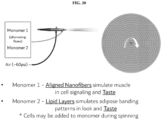
- a method of making a cultured food product comprising: a) forming polymer fibers using solution blow spinning; b) seeding cultured cells onto the polymer fibers to form synthetic muscle tissue; and c) processing the cultured cells and polymer fibers to produce the cultured food product.
- the synthetic muscle tissue comprises a first configuration comprising cultured muscle cells and nanofibers arranged in parallel alignment to simulate muscle fibers.
- the synthetic muscle tissue comprises a second configuration comprising cultured adipose cells and nanofibers arranged to simulate adipose banding patterns.
- the first configuration and second configuration are combined to form the cultured food product configured to simulate a taste and texture of non-synthetic muscle tissue.
- the monomers comprise proteins selected from comprises collagen, elastin, silk, soy derivatives, zein, gliadin, hordein, casein, wheat derivatives, gluten, whey, yeast extracts, kafirin, millet derivatives, quinoa derivatives, bean derivatives, textured vegetable proteins, egg white proteins, sea vegetable derivatives, algae proteins, transglutaminase, glutamic acid derivatives, gelatin, fish source proteins, and pea proteins, or any hydrolysates thereof, any isolates thereof, or any combination thereof.
- the monomers comprise polysaccharides selected from chitosan, carrageenan, starch, agar.
- tapioca starch alginate, cellulose and cellulose derivatives, pullulan, dextran, glucomannan, cyclodextrin, agarose, konjac, pectin, sea vegetable derivatives, alginate, xanthan, guar gum, locust bean gum, tara gum, gum tragacanth, gum arabic, fenugreek gum, modified starch, potato starch, pea starch, Hylon 7 corn starch, hemicellulose, and altanan, or any combination thereof.
- the step of forming polymer fibers in (a) comprises dissolving monomers in a solvent to form a pre-polymer solution, ejecting the solution into a gas or air stream to generate the polymer fibers as the solvent evaporates.
- a method of producing a food composition having a fat phase comprising: a) forming a plurality of polymer fibers using a solution blow spinning process, wherein said polymer fibers are formed from a composition comprising an edible ingredient dissolved in a solvent; and b) dispersing said plurality of blow spun polymer fibers in a fat phase.
- the polymer fibers comprise a lipophilic material selected from prolamins and lipophilic cellulose derivatives.
- the method further comprises homogenizing a mixture of the plurality of blow spun polymer fibers and the fat phase.
- the method further comprises fragmenting the mixture into particles.
- the composition comprises polymeric fibers generated using a fiber spinning technique and scaffolds generated using unidirectional freeze-drying, electro-spinning, solution blow spinning, wet spinning, casting, micromolding, 3D printing or extrusion, or any combination thereof.
- immortalized fibroblasts can be expanded and then transdifferentiated into myocytes, adipocytes, hepatocytes, and/or other desired cell types.
- the media formulations are modified from conventional media to not require fetal bovine serum or serum alternatives, which remain untested for human consumption.
- Media formulations can include low-serum or no-serum formulations that are derived from plants to reduce or obviate the use of animal components such as fetal bovine serum.
- plant-based formulations include soybean-based and plant hydrolysate-based media formulations.
- Media formulations often comprise at least one mushroom-based ingredient. In certain cases, the at least one mushroom-derived extract replaces fetal bovine serum in the media formulation.
- micro-scaffolds enable the growth of adherent cells in suspension culture such as in a bioreactor. These micro-scaffolds can be engineered to enhance stem cell proliferation, direct cell differentiation into the relevant lineage, and modulate flavor, texture, and tensile elasticity of the final meat product. Some adherent cells are modified to grow in suspension culture without requiring an adherent surface. Certain food products are produced using a homogeneous population of cells such as, for example, liver cells for making foie gras. Alternatively, some food products are produced using a heterogeneous population of cells such as a combination of muscle and fat cells. In some cases, a population of cells is differentiated into multiple cell types to create a heterogeneous population of differentiated cells.
- the systems and methods for producing cell cultured food products disclosed herein provide numerous advantages.
- the cultured meat is not exposed to pathogens such as avian bird flu or various bacterial strains during production.
- the systems and methods disclosed herein can provide for meat production without the use of antibiotics. This has the benefit of not inadvertently exposing humans to antibiotics while also avoiding the increased risk of bacteria developing antibiotic resistance.
- cultured food production does not require feed crops and avoids the production of animal waste, which often contains fecal coliform bacteria, ammonia, and phosphorus.
- a substantial amount of land is devoted to growing feed crops for livestock, which entails the widespread use of fertilizer, pesticides, and herbicides.
- cultured food products are capable of being produced with a relatively small environmental footprint.
- methods described herein produce cultured organ tissue for human consumption. Such methods comprise: a) culturing a population of cells capable of self-renewal; b) inducing differentiation in the population of cells to generate organ tissue; and c) processing the organ tissue for human consumption.
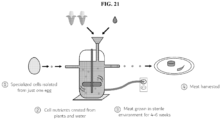
- FIG. 1 illustrates one embodiment of a process for culturing cells for human consumption.
- a population of self-renewing cells is obtained 101.
- self-renewing cells are sometimes embryonic stem cells, induced pluripotent stem cells, embryonic germ cells, immortalized differentiated cells, or nascent adult stem cells.
- the population of cells is cultured 102, and typically expanded to the desired population size.
- differentiation is induced in the population 103. In some cases, differentiation comprises transdifferentiation of cells into a different cell type.
- cells in the population are differentiated into hepatocytes. Oftentimes, lipid accumulation is induced in the population of cells comprising differentiated hepatocytes 104.
- the population of cells is processed for human consumption 105. For example, hepatocytes are often processed into foie gras or a foie gras food product.
- salmon fibroblasts are used for producing a food product.
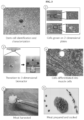
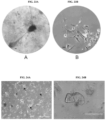
- Salmon fibroblasts can be induced to form spheroids for propagation in a bioreactor ( FIG. 7A ) (scale bar is 100 ⁇ m). The viability of these spheroids is confirmed by returning them to 2-Dimensional culture conditions and observing that the fibroblasts migrated circumferentially to form colonies ( FIG. 7B ) (scale bar is 100 ⁇ m).
- the fibroblasts are propagated, and then transdifferentiated into desired cell types such as myocytes, adipocytes, hepatocytes, or any combination thereof.
- the synthetic food product comprises avian hepatocytes and/or liver tissue derived from a duck or goose.
- the synthetic food product comprises steatotic liver tissue.
- these methods utilize self-renewing cells (e.g. pluripotent or multipotent cells) for development of avian-related foods based on their intrinsic regenerative capacity during early developmental stages. Successfully isolated duck embryonic stem cells growing in culture are shown in FIG. 9 .
- Some systems and methods disclosed herein comprise generation of cell line(s) capable of self-renewal for cultured food production.
- embryonic stem cells are isolated. Embryonic stem cells are pluripotent stem cells generated from early-stage embryos. Typically, the embryonic stem cells are harvested from a blastocyst 4-5 days after fertilization has occurred. The blastocyst has an inner cell mass that is removed and placed in culture. Those cells that remain viable in cell culture conditions are used to establish a cell line capable of self-renewal.
- FIG. 4A illustrates certain approaches for generating steatotic hepatocytes. In some instances, the embryonic stem cells are obtained from avian embryos such as, for example, duck or goose embryos 401.
- avian embryonic stem cells are pluripotent stem cells 411 optionally used for producing cultured foie gras.
- avian embryonic stem cells are isolated from blastodermal cells in Eyal-Giladi and Kochav Stage 10 (EGK-X) avian embryos.
- avian embryonic stem cells can be isolated by culturing them on inactivated STO feeders cells in an embryonic stem cell medium (ESA) with certain growth factors such as bFGF, IGF-1, mSCF, IL-6, OSM, LIF, IL-6, and IL-11 as described in Aubel P., Pain B. Chicken embryonic stem cells: establishment and characterization. Methods Mol. Biol. 2013; 1074:137-150 .
- ESA embryonic stem cell medium
- Successfully isolated duck embryonic stem cells growing in culture are shown in FIG. 9 .
- These approaches can also be utilized for generating fish myocytes and/or adipocytes ( FIG. 4B ).
- the isolated embryonic stem cells are typically differentiated into a desired cell type.
- the desired cell type is usually the fully differentiated cell that makes up the food product or a portion of the food product.
- a differentiated cell is a hepatocyte or liver cell 412.
- FIG. 10A shows duck hepatocytes growing in culture following successful differentiation. Differentiation was confirmed by measuring markers of hepatocyte differentiation (L-FABP, alpha-fetoprotein, and HNF3b, with beta-actin as a loading control) using RT-PCR ( FIG. 10B ). As shown in FIG. 10B , hepatocytes (right lane) generates observable expression of the hepatocyte differentiation markers compared to a lack of expression in the control undifferentiated cells (left lane).
- At least one episomal vector expressing a combination of reprogramming factors such as Oct3/4, Sox2, Klf4, L-Myc, C-Myc, Lin28, Nanog, and Lin4 are introduced cells originating from adult avian fibroblasts. Additional factors that are sometimes added include p53 for overcoming reprogramming barriers such as cellular senescence.
- an (ori-P/EBNA-1)-based episomal vector enables reprogramming while persisting episomally inside of the reprogrammed cells.
- embryonic germ cells are used as a source of pluripotent stem cells capable of self-renewal 403.
- Embryonic germ cells are capable of differentiation into the desired cell type such as, for example, mature hepatocytes for the purpose of liver tissue production.
- embryonic germ cells are isolated using protocols such as described in Guan et al., Derivation and characteristics of pluripotent embryonic germ cells in duck. Poultry Science. 2010; 89(2): 312-317 .
- duck embryonic tissue at stage 28 is obtained and subsequently dissociated using trypsin.
- differentiated cells are reprogrammed into the desired cell type without creating an intermediate pluripotent cell type 404.
- This process is sometimes referred to as transdifferentiation in which the desired cell type is generated from a non-stem cell.
- this method is carried out as described in Simeonov KP and Uppal H, Direct reprogramming of human fibroblasts to hepatocyte-like cells by synthetic modified mRNAs. PLOS ONE. 2014; 9(6): e100134 .
- differentiated cell lines e.g., fibroblasts
- a desired cell type such as myocytes, adipocytes, hepatocytes, or any combination thereof, and can be used to generate various types of food products such as fish meat or avian liver.
- an immortalized cell line capable of self-renewal is generated without transformation or direct genetic modification 406, in certain instances.
- a cell population is typically harvested and sequentially passaged for weeks until most cells undergo senescence, while a few spontaneous mutations arise that lead to the generation of a cell line with indefinite replicative potential.
- the cell population is obtained from embryonic differentiated cells such as, for example, embryonic (differentiated) liver cells. This process is capable of being applied to avian cells to generate immortalized avian hepatocytes such as described in Lee et al., Establishment of an immortal chicken embryo liver-derived cell line. Poultry Science. 2013; 92(6):1604-12 .
- differentiated cell lines e.g., fibroblasts
- a desired cell type such as myocytes, adipocytes, hepatocytes, or any combination thereof, and can be used to generate various types of food products such as fish meat or avian liver.
- nascent adult stem cells capable of self-renewal are isolated.
- the liver is one of the few organs with regenerative capacity in adult mammalian and avian organisms.
- the existence of stem cells within adult hepatic tissue is reviewed in Navarro-Alvarez et al., Hepatic stem cells and liver development. Methods Mol Biol. 2010;640:181-236 .
- nascent hepatic stem cells are isolated, cultivated, and expanded for use in cultured food production 407.
- fish pre-adipocytes and satellite cells are isolated and cultured to form cell lines suitable for expansion and differentiation into adipocytes and myocytes, respectively.
- the differentiated adipocytes and myocytes are usually then co-cultured together at a certain ratio to produce a desired final composition of adipocytes and myocytes in the resulting food product.
- liver cells are treated with toxic chemical compounds to generate cells with enhanced proliferative capacity 408.
- toxic chemical compounds For example, such exposure to toxic compounds has been shown to elicit a proliferative response within the liver parenchyma. Accordingly, these liver cells with enhanced proliferative capacity are cultivated and expanded for use in cultured food production, in various instances.
- cells obtained using any of the foregoing methods is further modified to generate a cell line that does not require an adherent substrate for growth or survival.
- This method sometimes involves the creation of hepatocytes that do not require an extracellular matrix for attachment in order to survive and proliferate.
- Advantages of being able to grow cells in suspension culture include the ability to easily and rapidly scale up growth. Oftentimes, suspension cultures are less labor and/or resource intensive because they are able to culture cells based on volume rather than surface area and allow for passaging of cells without detachment steps such as trypsinization.
- a cell line that does not require an adherent substrate is often combined with a bioreactor cell culture system to enhance large-scale food production.
- modified cell lines may express gene(s) that maintain the cell line in a state of self-renewal and/or proliferation.
- a state of self-renewal can be a state of proliferation or division while maintaining an undifferentiated state.
- induced pluripotent stem cells having the self-renewal property can be generated from differentiated adult cells by expressing one or more of Oct3/4, Sox2, Klf4 and c-Myc.
- a cell can be both differentiated and have capacity for indefinite proliferation (e.g. immortalized fibroblasts).
- the modified cell lines are responsive to an inducing agent that triggers a switch from one phenotype to another.
- the switch does not entail a change in cell type but instead comprises a change in cell phenotype or a cellular characteristic.
- the switch can induce a hepatocyte to undergo steatosis, become predisposed to steatosis (e.g. more likely to undergo steatosis under the appropriate conditions such as incubation with a fatty acid), or results in enhanced steatosis (e.g. increased lipid accumulation compared to a control).
- Examples of genes implicated in adipogenesis include FABP4, GLUT4, ADIPOQ, AGPAT2, PLIN1, LEP, and LPL.
- the construct comprises FABP4, GLUT4, ADIPOQ, AGPAT2, PLIN1, LEP, LPL, CEBPalpha, CEBPbeta, PPARgamma, or any combination thereof.
- the construct can comprise at least one, at least two, at least three, at least four, at least five, at least six, or all seven of the ORFs for genes selected from the group consisting of FABP4, GLUT4, ADIPOQ, AGPAT2, PLIN1, LEP, and LPL.
- the threshold cell division count is no more than about 100, about 200, about 300, about 400, about 500, about 600, about 700, about 800, about 900, about 1000, about 2000, about 3000, about 4000, about 5000, about 6000, about 7000, about 8000, about 9000, about 10000, about 20000, about 30000, about 40000, or about 50000 or more cell divisions.
- a Tet-on or Tet-off system typically utilizes a tetracycline transactivator protein.
- TetO sequences are typically positioned upstream of any ORF(s) whose expression is sought to be controlled using the Tet system.
- a promoter and the TetO sequence(s) can make up a tetracycline response element (TRE).
- the TRE consists of TetO sequence(s) and is placed upstream of a promoter and the ORF(s) for one or more genes of interest.
- the transactivator protein has a strong binding affinity for TetO operator sequence(s) when it is not bound by tetracycline (or a derivative such as doxycycline).
- the transactivator protein does not bind to the tetracycline response element (TRE).
- TRE tetracycline response element
- the transactivator protein has a strong binding affinity for TetO operator sequence(s) only when it is not bound by tetracycline.
- the transactivator protein binds the TetO sequences and promotes expression of the downstream ORF(s).
- Added tetracycline binds to the transactivation protein causing a conformational change that results in decreased or loss of binding to the TRE, resulting in reduced expression of the downstream ORF(s).
- the construct comprises at least one of HNF1A, FOXA1, and HNF4A.
- the construct comprises at least two of HNF1A, FOXA1, and HNF4A.
- the construct comprises HNF1A, FOXA1, and HNF4A.
- the construct can comprise HNF1A, FOXA1, HNF4A, or any combination thereof.
- the construct comprises HNF1A and FOXA1; HNF1A and HNF4A; or FOXA1 and HNF4A.
- the construct comprises the ORF for SREBP-1c ( Ferre P et al., Hepatic steatosis: a role for de novo lipogenesis and the transcription factor SREBP-1c. Diabetes Obes Metab. 2010 Oct;12 Suppl 2:83-92 ).
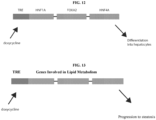
- Other genes are contemplated for use in the methods and construct systems described herein and include: LPIN1, PPAR, APOC3, APOE, ORL1, PEMT, MTTP, SREBP, STAT3, KLF6, or any combination thereof.
- genes involved in myocyte differentiation and adipogenesis can be used to induce differentiation from myosatellite cells into myocytes and pre-adipocytes into adipocytes, respectively.
- various genes are listed that can be used to generate induced pluripotent stem cells (iPSCs). Any one gene or combination of genes listed in Table 1 is contemplated for the stated purposes described herein.
- Addition of an inducing agent can cause a cell line stably incorporating this construct to express Cre recombinase for catalyzing the excision of the intervening sequence flanked by the pLox sites.
- the one or more genes e.g., one(s) that promote differentiation
- the TRE and Cre recombinase expression cassette are removed, resulting in footprint-free excision of the genes of interest.
- Such constructs can be used for inducing transdifferentiation of cells into a different cell type.
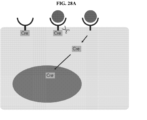
- FIG. 28B shows additional strategies for switching between gene sets (e.g., inactivating a pluripotency gene set and activating a differentiation gene set).
- These strategies can implement site-specific recombinase (SSR) systems in combination with inducible gene expression systems (e.g., tetracycline/doxycycline inducible systems).
- SSR site-specific recombinase
- inducible gene expression systems e.g., tetracycline/doxycycline inducible systems.
- the SSR/inducible combination is described in Zhang et al. Conditional gene manipulation: Cre-ating a new biological era. J Zhejiang Univ-Sci B (Biomed & Biotechnol) 2012 13(7):511-524 .
- this SSR/inducible system is used as a switch between pluripotency and differentiation for creating ex vivo meat.
- Such constructs can be used for inducing transdifferentiation of cells into a
- Transposons are naturally-occurring genetic sequences that facilitate the transposition of genes (excision and subsequent re-integration of genes into a different region of the genome). This phenomenon was initially characterized in the context of maize genes (colloquially termed "jumping genes") and has since been discovered in other species. Transposon sequences have previously been described for the purpose of integrating transgenes into a host genome; the best-characterized ones to date are Tol2, Piggybac, and Sleeping Beauty. Transposons typically contain genetic sequences that flank the gene, and require an enzyme (transposase) to facilitate both integration and excision.
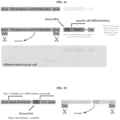
- FIG. 29 shows an embodiment of a method of transposon-mediated genetic self-excision for purpose of footprint-free gene editing.
- pLox sequences of the same color in parallel configurations undergo an excision event (removing the sequences between these triangles) in the presence of Cre enzyme.
- pLox sequences in anti-parallel configurations undergo recombination events, whereby the DNA sequences between the triangles flip back and forth in a stochastic manner.
- the excision transposase gene is under the control of an inducible promoter (Pro in the figure).
- This may be a classically-described inducible promoter (such as tetracycline-inducible with a tetracycline-responsive element (TRE], an estrogen receptor, or similar system), or it may be a promoter corresponding to a reporter of a differentiated cell lineage. In the latter case, this reporter may be used to excise the entire transgene cassette once a cell has undergone terminal differentiation and maturation.
- the excision transposase may be under the control of a MyoD promoter; in this case, a cell undergoing differentiation to skeletal muscle (myocyte) will express MyoD when differentiation is complete.
- induced expression and gene excision to maintain cells in an undifferentiated state of self-renewal may face a technical problem of promoter leakiness or a basal expression level.
- leakiness in the promoter could result in some expression of the recombinase, which then excises the pluripotent stem cell factors before the inducing agent is added.
- a key advantage of utilizing this system for purposes of cultured food production as described herein is that those cells that experience leakiness will likely lose their self-renewal phenotype and become outcompeted by the cells that maintain tighter control of recombinase expression.
- self-renewing e.g.
- Modified RNA can be used to express proteins that induce proliferation and differentiation.
- Modified RNA is synthetic RNA using several chemical modifications (e.g., bases are modified, such as pseudo-uridine in place of uridine and 6-methyladenine in place of adenine, and the RNA cap structure is often also modified for enhanced stability).
- Modified RNA can be synthesized using these chemically modified bases, and subsequently delivered to cells directly using conventional lipofection / nucleofection methods, or it may be embedded within cellular scaffolds for cells to internalize as they grow within / remodel these scaffolds.
- the systems, methods, and compositions disclosed herein provide for inducing lipid accumulation or steatosis.
- lipid accumulation or steatosis is induced in a population of cells for purposes of producing a cell cultured food product with increased lipid content.
- steatosis is a pathologic state characterized by the abnormal retention of lipids within a cell. The excess lipids accumulate in vesicles that displace the cytoplasm. Macrovesicular steatosis describes when the vesicles are large enough to displace or distort the nucleus, while microvesicular steatosis lacks this phenotype.
- FIG. 4A illustrates a process including the generation of steatotic hepatocytes 413 by genetic intervention and/or addition of exogenous compounds 409.
- Some methods produce cultured cells having high lipid accumulation for human consumption.
- One example of such a method comprises: a) culturing a population of cells; b) inducing differentiation within the population of cells; c) inducing high lipid accumulation within the population of cells; and d) processing the population of cells for human consumption.
- Steatosis and/or lipid accumulation is accomplished by manipulating lipid metabolism.
- the genetic profiles of hepatocytes that have undergone steatosis has been previously characterized by Chiappini et al., Exploration of global gene expression in human liver steatosis by high-density oligonucleotide microarray. Lab Invest. 2006 Feb;86(2):154-65 .
- Affected intracellular signaling pathways in steatotic hepatocytes involve lipid metabolism, and lead to the accumulation of lipid droplets within the cytoplasm of hepatocytes.
- the systems and methods described herein provide for reliable, high-efficiency induction of steatosis in a population of cells.
- steatosis and/or lipid accumulation is induced by manipulating at least one of lipid metabolism pathway(s) and ER pathway(s) involved in ER stress.
- steatosis or lipid accumulation is induced in hepatocytes or liver cells.
- steatosis or lipid accumulation is induced in non-hepatocyte cells such as, for example, myocytes or skeletal muscle cells.
- steatosis is induced in fish myocytes such as salmon myocytes.
- steatosis or lipid accumulation is induced in non-hepatocyte organ cells such as, for example, kidney cells.
- steatosis or lipid accumulation is induced in a pluripotent cell population or an adult progenitor cell population that is used as an intermediate cell line for expansion into a differentiated cell population.
- steatosis or lipid accumulation is induced earlier during the production process before the population of cells is differentiated.
- high lipid accumulation is induced in cells.
- the cells cultured in the lipid rich media are pluripotent stem cells such as embryonic stem cells or induced pluripotent stem cells.
- the cells cultured in the lipid rich media are multipotent stem cells such as adult progenitor cells, in certain instances.
- cells are cultured in a lipid rich media with at least one lipid type selected from saturated fatty acids, mono-unsaturated fatty acids, polyunsaturated fatty acids, and trans-fatty acids. Examples of lipids include palmitic acid, oleic acid, docosahexaenoic acid, stearic acid, linoleic acid, linolenic acid, arachidonic acid, and eicosapentaenoic acid.
- a culture media supplement can be added to the media at a concentration of at least about 1 ⁇ M, about 2 ⁇ M, about 3 ⁇ M, about 4 ⁇ M, about 5 ⁇ M, about 6 ⁇ M, about 7 ⁇ M, about 8 ⁇ M, about 9 ⁇ M, about 10 ⁇ M, about 20 ⁇ M, about 30 ⁇ M, about 40 ⁇ M, about 50 ⁇ M, about 60 ⁇ M, about 70 ⁇ M, about 80 ⁇ M, about 90 ⁇ M, about 100 ⁇ M, about 200 ⁇ M, about 300 ⁇ M, about 400 ⁇ M, about 500 ⁇ M, about 600 ⁇ M, about 700 ⁇ M, about 800 ⁇ M, about 900 ⁇ M, about 1mM, about 2mM, about 3mM, about 4mM, about 5mM, about 6mM, about 7mM, about 8mM, about 9mM, about 10mM, about 15mM, or about 20mM.
- a culture media supplement can be added to the media at a concentration of no more than about 1 ⁇ M, about 2 ⁇ M, about 3 ⁇ M, about 4 ⁇ M, about 5 ⁇ M, about 6 ⁇ M, about 7 ⁇ M, about 8 ⁇ M, about 9 ⁇ M, about 10 ⁇ M, about 20 ⁇ M, about 30 ⁇ M, about 40 ⁇ M, about 50 ⁇ M, about 60 ⁇ M, about 70 ⁇ M, about 80 ⁇ M, about 90 ⁇ M, about 100 ⁇ M, about 200 ⁇ M, about 300 ⁇ M, about 400 ⁇ M, about 500 ⁇ M, about 600 ⁇ M, about 700 ⁇ M, about 800 ⁇ M, about 900 ⁇ M, about 1mM, about 2mM, about 3mM, about 4mM, about 5mM, about 6mM, about 7mM, about 8mM, about 9mM, about 10mM, about 15mM, or about 20mM.
- FIG. 16A shows successful induction of steatosis (accumulation of intracellular lipid-containing vesicles; arrowhead) in duck hepatocytes upon incubation with 2 ⁇ M linoleic acid (bottom panel) compared to the untreated control (top panel).
- FIG. 16B shows a dose response curve correlating the percentage of steatotic hepatocytes with the concentration of linoleic acid. Similar results have been achieved with oleic acid.
- the cell culture media comprises a lipid concentration of about 1 mM to about 2 mM, about 1 mM to about 3 mM, about 1 mM to about 4 mM, about 1 mM to about 5 mM, about 1 mM to about 6 mM, about 1 mM to about 7 mM, about 1 mM to about 8 mM, about 1 mM to about 9 mM, about 1 mM to about 10 mM, about 1 mM to about 15 mM, about 1 mM to about 20 mM, about 2 mM to about 3 mM, about 2 mM to about 4 mM, about 2 mM to about 5 mM, about 2 mM to about 6 mM, about 2 mM to about 7 mM, about 2 mM to about 8 mM, about 2 mM to about 9 mM, about 2 mM to about 10 mM, about 2 mM to about 15 mM,
- cells are cultured in a culture media having a high lipid (or other media supplement described herein) concentration for about 1 day to about 2 days, about 1 day to about 3 days, about 1 day to about 4 days, about 1 day to about 5 days, about 1 day to about 6 days, about 1 day to about 7 days, about 1 day to about 8 days, about 1 day to about 9 days, about 1 day to about 10 days, about 1 day to about 15 days, about 1 day to about 20 days, about 2 days to about 3 days, about 2 days to about 4 days, about 2 days to about 5 days, about 2 days to about 6 days, about 2 days to about 7 days, about 2 days to about 8 days, about 2 days to about 9 days, about 2 days to about 10 days, about 2 days to about 15 days, about 2 days to about 20 days, about 3 days to about 4 days, about 3 days to about 5 days, about 3 days to about 6 days, about 3 days to about 7 days, about 3 days to about 8 days, about 3 days to about 9 days, about 3 days to about 10 days, about 2 days to
- a media formulation comprises a natural media.
- a media formulation comprises a synthetic media or a modification thereof.
- synthetic media include Minimum Essential Media (MEM), Essential 8 Media, Basal Medium Eagle (BME), Ham's F12, Ham's F-10, Fischer's Medium, CMRL-1066 Medium, Click's Medium, Medium 199, Dulbecco's Modified Eagle's Media (DMEM), RPMI-1640, L-15 medium, McCoy's 5A Modified Medium, William's Medium E, and Iscove's Modified Dulbecco's Medium (IMDM).
- Essential 8 Medium provides the most important components for maintaining pluripotent stem cells in a feeder cell-free environment.
- a feeder-free culture environment enhances the large-scale production of cultured food products because it avoids having to constantly re-seed feeder cell layers in order to grow pluripotent stem cells.
- multiple media formulations are used during the culturing of a population of cells.
- an initial population of cells with self-renewal ability is cultured with a media formulation that maintains the self-renewal ability such as, for example, maintaining a population of embryonic stem cells in an un-differentiated state.
- differentiation is induced in the population of cells having self-renewal ability.
- the embryonic stem cells are induced to differentiate into hepatocytes.
- This differentiation step sometimes requires a differentiation media formulation.
- certain differentiation factor(s) are added and/or factor(s) required for maintaining the self-renewal ability are removed in the differentiation media.
- steatosis is induced at least in part by the use of a steatotic media formulation.
- a steatotic media formulation sometimes comprises a lipid concentration of at least a certain concentration as described elsewhere herein.
- a media formulation comprises at least one nutrient or nutritional supplement for enhancing the nutritional content of the finished food product.
- a nutrient is a macronutrient or a micronutrient.
- Macronutrients are nutrients that are needed in large quantities and include proteins, fats, and carbohydrates.
- Micro-nutrients are required in small quantities and include vitamins, minerals, some amino acids, and certain compounds such as, for example, flavonoids.
- at least one nutrient is added to a media formulation for intake by a population of cultured cells.
- steatotic hepatocytes used to produce foie gras typically have high lipid accumulation inside of the cytoplasm. Culturing the hepatocytes in a media formulation having a specific lipid composition (e.g.
- omega-3 fatty acids may induce the resulting steatotic hepatocytes to have a modified lipid profile partially reflecting the lipid composition of the culture media.
- Certain methods provide for production of cultured tissue having increased nutritional content for human consumption. For example, some such methods comprise: a) culturing a population of cells in a culture medium having at least one nutritional supplement; b) manipulating lipid metabolic pathways to induce steatosis in the population of differentiated cells such that the cells accumulate high lipid content; and c) processing the population of differentiated cells into non-textured tissue for human consumption.
- Other methods comprise: a) culturing a population of cells in a culture medium having at least one nutritional supplement; b) manipulating lipid metabolic pathways to induce steatosis in the population of differentiated cells such that the cells accumulate high lipid content; and c) processing the population of differentiated cells into homogeneously textured tissue for human consumption.
- the supplemented culture media has no more than 1%, 2%, 3%, 4%, 5%, 6%, 7%, 8%, 9%, or 10% serum (e.g., animal serum such as FBS).
- serum e.g., animal serum such as FBS.
- Such reduced serum or no-serum culture media formulations can be utilized for growing or culturing any of the cells described herein including cells derived from various species such as avian cells, fish cells, porcine cells, bovine cells, and the cells of other edible species.
- the cells are derived from domesticated species (e.g., cows, pigs, chickens, ducks, etc).
- the cells are derived from non-domesticated species (trout, salmon, lobsters, crabs, etc).
- Various cell types can be cultured in the reduced serum or no-serum culture media formulations described herein, including multipotent cells, pluripotent cells, embryonic stem cells, induced pluripotent stem cells, myocytes, adipocytes, myosatellite cells, pre-adipocytes, mesenchymal stem cells, fibroblasts, hepatocytes, and other cell types.
- a population of cells or a cell line is adapted to grow in reduced serum or no-serum culture media formulations without requiring supplementation.
- FIG. 19A shows duck fibroblasts grown in serum-free media without additional supplementation;
- FIG. 19B shows a control culture grown in DMEM supplemented with 10% fetal bovine serum.
- FIGs. 4A-4B Various methods are optionally used to scale up production of cultured cells for making food products for human consumption.
- the systems and methods disclosed herein enable the large-scale production of cultured foods ( FIGs. 4A-4B ).
- One method is to use 2-Dimensional surfaces such as tissue culture dishes or their functional equivalents (e.g. a cell culture chamber).
- tissue culture dishes or their functional equivalents e.g. a cell culture chamber.
- a typical example would be a cell culture chamber having a polystyrene surface treated to increase hydrophilicity for enhancing attachment of adherent cells.
- the cell culture chamber is coated with a protein composition that acts as a substrate for cultured cells.
- the cell culture chamber often uses a media formulation as described herein.
- the 2D surface approach is scaled up by combining a plurality of cell culture chambers.
- bioreactor systems for culturing cells.
- Certain bioreactor systems facilitate production of cultured tissues suitable for human consumption.
- some bioreactor systems comprise: a) a reactor chamber comprising a plurality of micro-scaffolds that provide adhesion surfaces for cellular attachment; b) a population of self-renewing cells cultivated within bioreactor; c) a first source providing at least one maintenance media comprising components for maintaining the population of self-renewing cells without spontaneous differentiation; and d) a second source providing at least one differentiation media comprising components for differentiating the population of self-renewing cells into a specific lineage; wherein the reactor chamber receives maintenance media from the first source to cultivate the population of cells and receives differentiation media from the second source to differentiate the population of cells, wherein the population of cells generated in a single batch comprises cultured tissues suitable for human consumption and having a dry weight of at least 1 kg.
- FIG. 20 illustrates a diagram of one embodiment of a bioreactor system comprising a reactor chamber 2001 for culturing cells.
- the bioreactor system comprises stirring element 2003 for agitation of the contents of the reactor chamber 2001. Continuous or periodic agitation helps keep cells, cell clumps, and/or micro-scaffolds in suspension.
- Fresh media is added into the reactor chamber via at least one input port 2002. Fresh media is sometimes maintenance media, differentiation media, steatotic media, proliferation media, or any other media formulation disclosed herein. Depleted media or effluent is removed from the reactor chamber via at least one output port 2007.
- FIG. 21 shows an illustrative process by which a bioreactor system is used for meat production.
- specialized cells such as embryonic, pluripotent, or multipotent cells are isolated from an egg and adapted for growth in the bioreactor (e.g. using a hanging drop method to form spheroid bodies as shown in FIG. 22 ).
- the cells are grown using media comprising water and nutrients created from plants (e.g. using a plant-based substitute for animal-derived serum such as soybean hydrolysate or mushroom extract).
- the cells are grown in the sterile environment of the bioreactor for 4-6 weeks. In some cases, the cells are differentiated, and then harvested and/or processed into a meat product.
- Transitioning cells from 2-D cell culture plates to 3-D bioreactors can be carried out using various methods such as the hanging drop method shown in FIG. 22A .
- the hanging drop method entails placing cells in hanging drop culture and incubating them under physiological conditions until the cells form 3-D spheroids in which cells are in direct cell-cell contact and with extracellular matrix components.
- the illustrative example shown in FIG. 22A comprises suspending duck hepatocytes in hanging drops to initiate formation of spheroids (left panel). The spheroids are then transitioned into 3-D culture in a bioreactor ( FIG. 22A right panel). The 3-D culture allows for more rapid proliferation and/or growth of the cultured cells.
- Another exemplary bioreactor is shown in FIG. 22B (left panel).
- the cells from the spheroids are capable of propagating in the 3-D culture ( FIG. 22B right panel).
- an adherent cell culture is washed with PBS and incubated with a 0.05% trypsin 1mM EDTA solution to dissociate the cells.
- the trypsinization is then neutralized by addition of culture media, and the cells are digested with DNAse for 5 minutes at room temperature.
- the cells are centrifuged at 250Gs for 5 minutes. Next, the supernatant is discarded, and the cells are resuspended in culture media.
- a hanging drop is formed by pipetting a volume (e.g.
- a bioreactor system comprises at least one bioreactor, bioreactor tank, or reactor chamber 2001.
- a bioreactor system comprises at least 1, 2, 3, 4, 5, 6, 7, 8, 9, 10, 11, 12, 13, 14, 15, 16, 17, 18, 19, 20, 25, 30, 35, 40, 45, 50, 55, 60, 65, 70, 75, 80, 85, 90, 95, or 100 reactor chambers.
- a bioreactor system comprises about 1 reactor chamber to about 1,000 reactor chambers.
- a bioreactor system comprises about 1 reactor chamber.
- a bioreactor system usually comprises at most about 1,000 reactor chambers.
- the at least one reactor chamber has an internal volume suitable for large-scale cell culture.
- a reactor chamber has an internal volume of about 1 L (liter) to about 100,000 L.
- a reactor chamber has an internal volume of at least about 1 L, 10 L, 50 L, 100 L, 200 L, 300 L, 400 L, 500L, 1,000 L, 5,000 L, 10,000 L, 20,000 L, 30,000 L, 40,000 L, 50,000 L, or 100,000 L.
- a reactor chamber has an internal volume of at most about 10 L, 50 L, 100 L, 200 L, 300 L, 400 L, 500L, 1,000 L, 5,000 L, 10,000 L, 20,000 L, 30,000 L, 40,000 L, 50,000 L, or 100,000 L.
- bioreactor systems suitable for large-scale production of cultured cells for generation of food products.
- cells are cultured on a batch basis.
- cells are cultured continuously.
- fresh nutrients are usually supplied to ensure the appropriate nutrient concentrations for producing the desired food product.
- nutrients e.g. fresh culture media
- a base media is supplied to the bioreactor and supports an initial cell culture, while an additional feed media is then supplied to replenish depleted nutrients.
- a bioreactor system produces a batch of cultured cells during a certain time period.
- a bioreactor system produces a batch of cultured cells at least once every 1, 2, 3, 4, 5, 6, 7, 8, 9, 10, 11, 12, 13, 14, 15, 16, 17, 18, 19, 20, 21, 22, 23, 24, 25, 26, 27, 28, 29, or 30 days.
- the bioreactor system has components that enable the automated growth and maintenance of cell cultures.
- a bioreactor comprises at least one reactor chamber or reactor tank wherein the cultured cells grow.
- the bioreactor system has at least one pump for circulating the media, introducing fresh media, and/or removing waste media.
- the bioreactor system comprises a plurality of media tanks for introducing various types of media such as, for example, proliferation media, maintenance media (e.g. for maintenance of self-renewal ability), differentiation media, and steatotic media.
- the bioreactor system comprises at least one of oxygenator(s), carbon dioxide regulator(s), and a central control unit regulating components of the bioreactor system.
- the bioreactor has a stirring element for maintaining cultured cells in suspension and/or keeping the media mixed.
- the bioreactor usually comprises at least one sensor for monitoring the environment inside the reactor chamber.
- a sensor is typically a biosensor, a chemosensor, or an optical sensor for monitoring parameters important to cell culture.
- a sensor is configured to monitor at least one of pH, temperature, oxygen, carbon dioxide, glucose, lactate, ammonia, hypoxanthine, amino acid(s), dopamine, and lipid(s).
- the at least one sensor is in communication with a control unit (e.g. a computer system) that monitors the sensor parameters.
- the control unit provides the sensor parameters to a user such as, for example, on a display screen.
- the control unit often comprises at least one input source for receiving commands from a user.
- the scaffold comprises a material that remains in the cultured food product.
- a material that remains in the cultured food product.
- a scaffold comprises a hydrogel, a biomaterial such as extracellular matrix molecule (ECM) or chitosan, or biocompatible synthetic material (e.g. polyethylene terephthalate).
- ECM molecules are typically proteoglycans, non-proteoglycan polysaccharides, or proteins.
- micro-scaffolds are usually Micro-scaffolds allow adherent cells to be grown in a suspension bioreactor system.
- a micro-scaffold provides a surface for adherent cells such as hepatocytes to attach even while the micro-scaffold itself is in suspension.
- scaffolds and/or micro-scaffolds are produced by 3D printing of an appropriate material (e.g. collagen).
- Micro-scaffolds often have a porous structure. Sometimes, a micro-scaffold has a solid non-porous structure. A micro-scaffold is smaller than a conventional scaffold.
- FIG. 23A shows trout myosatellite cells grown on glucomannan microscaffolds that have successfully differentiated into myotubes in the 3-dimensional culture.
- FIG. 23B shows a negative control of undifferentiated myosatellite cells.
- FIG. 24A shows duck fibroblasts (arrowheads) successfully grown on glucomannan microscaffolds (arrows).
- FIG. 24B shows a representative glucomannan microscaffold. Alternative materials can be used in producing microscaffolds.
- Microscaffolds can comprise at least one of glucomannan, alginate, chitosan, polycaprolactone (PCL), matrix proteins (e.g., collagen, fibronectin, laminin), textured vegetable protein (TVP), textured soy protein (TSP), and acrylates.
- PCL polycaprolactone
- matrix proteins e.g., collagen, fibronectin, laminin
- TVP textured vegetable protein
- TSP textured soy protein
- acrylates e.g., polycaprolactone
- the microscaffolds are modified.
- microscaffolds are conjugated to one or more factors relevant to cell attachment, growth, differentiation, or a combination thereof.
- scaffolds or micro-scaffolds are not needed for culturing of cells in suspension.
- the cells are non-adherent cells and do not require a substrate or surface for attachment.
- the cells have been modified or engineered to no longer require an adherence substrate.
- hepatocytes are normally adherent cells, but in some instances, hepatocytes are modified to no longer require an extracellular matrix for attachment for survival and proliferation.
- Other adherent cells include myocytes and adipocytes, which are sometimes cultured to produce cultured meat products.
- the cells are typically a differentiated cell population such as, for example, myocytes, adipocytes, or hepatocytes.
- systems and method for creating food products which do not comprise any cultured cells in the final product.
- Approaches consistent with the present disclosure include spinning techniques such as electrospinning and solution blow spinning. Additional techniques compatible with the present disclosure include unidirectional freeze drying, wet spinning, casting, micromolding, 3D printing, or extrusion methods.
- the cells are animal cells. Sometimes, the cells are fish, animal, or avian cells. Examples of avian cells include cells derived from geese, ducks, chickens, Cornish game hens, pheasants, turkeys, Guinea hens, quails, pigeons, partridges, emus, ostriches, capons, grouses, swans, doves, woodcocks, chukars, and snipes. As an example, FIG. 25 shows an image of duck muscle tissue created according to the methods disclosed herein. The successful generation of the duck muscle tissue in FIG. 25 was confirmed by the muscle tissue's ability to spontaneously contract.
- certain methods comprise: a) culturing a population of fish myocytes in a culture media having at least one nutritional supplement; b) expanding the population of myocytes; and c) processing the population of myocytes into fish tissue for human consumption.
- the systems and methods described herein often allow production of edible compositions comprising fish tissue produced from cultured myocytes and adipocytes.
- Processing the cultured cells into a meat product can include at least one of smoking, fermenting, salting, marinating, poaching, baking, barbecuing, casseroling, shallow frying, deep frying, oven frying, grilling, and microwaving.
- the cells are processed into sushi grade fish meat suitable for raw consumption without being frozen.
- the fish meat is not cooked during processing.
- sushi grade fish meat produced according to the systems and methods disclosed herein include salmon and tuna.
- sushi grade meat refers to meat that is produced free of parasites and bacteria.
- the cells are usually free of pathogens, parasites, toxins, heavy metals (e.g. mercury), antibiotics, or any combination thereof.
- Certain systems and methods described herein provide for the production of cultured food products without exposure to contaminant(s). Some methods enable production of cultured cells for human consumption without using antibiotics. For example, certain methods comprise: a) culturing a population of cells without using antibiotics; b) inducing differentiation within the population of cells; c) inducing high lipid accumulation within the population of cells; and d) processing the population of cells for human consumption. Also disclosed herein are methods of producing cultured cells for human consumption without exposure to pathogens.
- Some such methods comprise: a) culturing a population of cells in a pathogen-free culture environment; b) inducing differentiation within the population of cells; c) inducing high lipid accumulation within the population of cells; and d) processing the population of cells for human consumption.
- Certain methods allow cultured food production without exposure to toxins.
- some such methods comprise: a) culturing a population of cells in a toxin-free culture environment; b) inducing differentiation within the population of cells; c) inducing high lipid accumulation within the population of cells; and d) processing the population of cells for human consumption.
- some cells form into adipocytes and some form into myocytes.
- myocytes and adipocytes are cultured separately, and subsequently mixed.
- the myocytes and adipocytes are homogeneously mixed in equal proportions.
- the myocytes and adipocytes are heterogeneously mixed in unequal proportions.
- the myocytes and adipocytes are typically combined at a certain ratio or proportion.
- myocytes and adipocytes are combined at a ratio of at least 1:1, 2:1, 3:1, 4:1, 5:1, 6:1, 7:1, 8:1, 9:1, 10:1, 11:1, 12:1, 13:1, 14:1, 15:1, 16:1, 17:1, 18:1, 19:1, 20:1, 21:1, 22:1, 23:1, 24:1, 25:1, 26:1, 27:1, 28:1, 29:1, 30:1, 35:1, 40:1, 45:1, 50:1, 60:1, 70:1, 80:1, 90:1, or at least 100:1, respectively.
- the myocytes and/or adipocytes are fish cells. In some instances, the myocytes and/or adipocytes are derived from salmon.
- the myocytes and/or adipocytes are derived from sea bass, tuna, mackerel, blue marlin, swordfish, yellowtail, salmon, trout, eel, abalone, squid, clams, ark shell, sweetfish, scallop, sea bream, halfbeak, shrimp, flatfish, cockle, octopus, or crab.
- tuna include yellowfin, southern Bluefin, northern Bluefin, Thunnus alalunga, Thunnus atlanticus, and Thunnus obesus.
- myocytes instead of combining myocytes and adipocytes, myocytes are induced to undergo steatosis to provide the desired lipid or fat content found in conventional salmon meat without requiring adipocytes.
- the meat produced according to the systems and methods disclosed herein usually comprises myocytes or skeletal muscle cells having a certain ratio or proportion of fast twitch (type II) and slow twitch (type I) muscle fibers.
- Slow twitch muscle fibers exhibit low-intensity contractions fueled by the oxidative pathway and demonstrate relatively higher endurance, while fast twitch muscle fibers have higher intensity contractions fueled by the glycolytic pathway.
- Fast twitch muscles are characterized by high glycolytic and anaerobic muscle fibers.
- the ratio of fast twitch and slow twitch muscle fibers in muscle tissue plays a role in the taste, color, texture, and other culinary properties of the meat.
- fish meat is characterized by a high proportion of fast twitch muscle fibers compared to animal meat, which has some role in the culinary differences between the two categories of meat.
- myocytes such as salmon myocytes are cultured to comprise at least 10%, 20%, 30%, 40%, 50%, 60%, 70%, 80%, 90%, 95% or more fast twitch fibers (e.g. high glycolytic and anaerobic muscle fibers).
- the percentage of fast twitch muscle fibers can be characterized by evaluating tissue samples using various laboratory techniques such as microscopy-based imaging (e.g.
- a myocyte generated according to the methods described herein has a length of at least about 10 ⁇ m, about 20 ⁇ m, about 30 ⁇ m, about 40 ⁇ m, about 50 ⁇ m, about 60 ⁇ m, about 70 ⁇ m, about 80 ⁇ m, about 90 ⁇ m, about 100 ⁇ m, about 110 ⁇ m, about 120 ⁇ m, about 130 ⁇ m, about 150 ⁇ m, about 200 ⁇ m, about 250 ⁇ m, about 300 ⁇ m, about 350 ⁇ m, about 400 ⁇ m, about 450 ⁇ m, about 500 ⁇ m, about 600 ⁇ m, about 700 ⁇ m, about 800 ⁇ m, about 900 ⁇ m, about 1000 ⁇ m, about 2000 ⁇ m, about 3000 ⁇ m, about 4000 ⁇ m, about 5000 ⁇ m, about 6000 ⁇ m, about 7000 ⁇ m, about 8000 ⁇ m, about 9000 ⁇ m, or about 10000
- Certain muscle tissues lack the texture of animal skeletal muscle such as beef, pork, or chicken.
- fish muscle tissue tends to have a non-textured or un-textured consistency.
- Fish muscle tissue such as salmon and tuna are often described as having a tasted texture that is delicate, soft, and/or having a homogeneous consistency.
- Other examples of non-textured meat include squid and octopus muscle tissue, which have a distinct non-textured consistency in comparison to animal skeletal muscle.
- Liver food products such as foie gras also have a non-textured characteristic. Certain methods described herein allow production of cultured non-textured tissue.
- Some such methods comprise: a) culturing a population of cells; b) inducing differentiation in the population of cells; c) manipulating lipid metabolic pathways to induce steatosis in the population of cells such that the cells accumulate high lipid content; and d) processing the population of cells into non-textured tissue.
- Certain methods disclosed herein produce cultured non-muscle tissue for human consumption. Some such methods comprise: a) obtaining a population of self-renewing cells; b) culturing the population of self-renewing cells; c) inducing differentiation in the population of cells to form non-muscle tissue; and d) processing the cultured non-muscle tissue for human consumption.
- the cells are hepatocytes. The hepatocytes are harvested after culturing for processing into a food product. Sometimes, the hepatocytes are processed into foie gras.
- the systems and methods disclosed herein enable the production of culinary foie gras compositions comprising tissue cultured hepatocytes having high lipid content and processed for human consumption.
- Some food product compositions comprise cultured organ cells processed into a non-textured non-muscle food product for human ingestion.
- the food product is sometimes an edible foie gras composition comprising cultured steatotic avian liver cells and seasoning.
- foie gras compositions comprise cultured liver cells having high lipid content and liver cells having low lipid content.
- Edible compositions are sometimes produced that comprise avian liver cells grown in cell culture and processed for human consumption.
- the food product is packaged with an optional label.
- micro-scaffolds that comprise at least one natural protein with texture-modifying properties.
- Micro-scaffolds of varying compositions can be used to produce a desired texture and/or consistency in the final food product.
- textured vegetable protein such as soy protein is used.
- Micro-scaffolds optionally comprise at least one filler or binder material for providing texture to the food product.
- micro-scaffolds are made of materials that biodegrade such that the finished food product no longer has any micro-scaffold structures remaining. For example, a population of cells is seeded onto micro-scaffolds in a bioreactor.
- micro-scaffolds can be used to guide the structure of the resulting cultured food product but do not remain in the food product for consumption by a human.
- micro-scaffolds and 3-D scaffolds may comprise materials that do not biodegrade and/or remain in the cultured food product for consumption.
- certain materials described herein can be used to generate the scaffolds in order to confer a particular structure, texture, taste, or other desired property.
- a foie gras composition weighs at least 1, 2, 3, 4, 5, 6, 7, 8, 9, 10, 12, 16, 20, 24, 28, 32, 36, 42, 48, 52, 56, 60, or 64 ounces. Oftentimes, a foie gras composition weighs about 1 ounce to about 64 ounces. In many cases, a foie gras composition weighs at least about 1 ounce. A foie gras composition usually weighs at most about 64 ounces.
- Certain cultured cells and/or tissues produced using the methods described herein are processed into food products.
- the cultured food product is packaged and/or labeled.
- the cultured cells and/or tissues can be processed into a plurality of slices (e.g. slices of foie gras or salmon meat) to form the cultured food product.
- the plurality of slices can be at least 2, 3, 4, 5, 6, 7, 8, 9, 10, 11, 12, 13, 14, 15, 16, 17, 18, 19, 20, 25, 30, 35, 40, 45, 50, 60, 70, 80, 90, or 100 slices.
- the plurality of slices is no more than 2, 3, 4, 5, 6, 7, 8, 9, 10, 11, 12, 13, 14, 15, 16, 17, 18, 19, 20, 25, 30, 35, 40, 45, 50, 60, 70, 80, 90, or 100 slices.
- the cultured food product is processed into shaped portions.
- the portions may be individually packaged or packaged together.
- the portions may be any number of shapes such as rectangle, square, circular, triangle, doughnut, tube, pyramid, or other shapes.
- the portions can have a flat shape (e.g. thin slices).
- a portion of the cultured food product can have a thickness of no more than about 5 mm, about 10 mm, about 20 mm, about 30 mm, about 40 mm, about 50 mm, about 60 mm, about 70 mm, about 80 mm, about 90 mm, or about 100 mm.
- a portion of the cultured food product has a thickness of at least about 5 mm, about 10 mm, about 20 mm, about 30 mm, about 40 mm, about 50 mm, about 60 mm, about 70 mm, about 80 mm, about 90 mm, or about 100 mm.
- the food product can be configured to have the taste, texture, consistency, or other food characteristic that is similar to meat or a meat product.
- the food product incorporates cultured cells such as cultured muscle cells, fat cells, liver cells, or any combination thereof.
- the food product may not have any cultured cells, and instead uses non-cell ingredients, for example, to produce a meat product having similar food characteristics as natural meat.
- the food product can include various ingredients such as cultured and/or non-cultured cells or tissues. Cultured cells or tissues can be generated according to the methods described herein.
- the cells can include a differentiated cell population such as, for example, myocytes, adipocytes, or hepatocytes.
- the cells comprise fish roe such as, for example, salmon roe, sea bass roe, tuna roe, mackerel roe, blue marlin roe, swordfish roe, yellowtail roe, salmon roe, or trout roe.
- an ingredient comprises one or more natural proteins, carbohydrates, and/or lipids.
- the ingredient can be configured to provide texture-modifying properties.
- the ingredients used according to the present disclosure can include various compositions depending upon the desired texture, consistency, taste, nutritional content, appearance, and/or other considerations with regards to the final food product.
- the ingredients used in the spinning approaches described herein can include monomers or molecules that can be formed into fibers. In some cases, the ingredients comprise polymers. Spinning techniques can be used for forming and/or combining fibers together to generate the food product.
- Electrospinning is another method for making fibers and can produce fibers 0.17nm - 5 ⁇ m in diameter. Electrospinning can produce smaller fibers than previously possible and offers a much greater variety of synthetic and natural polymers.
- a new solution blow spinning technique has been recently developed that combines various advantages of traditional solution blow spinning and electrospinning.
- This solution blow spinning technique can be performed using commercially inexpensive and easy to use airbrushes and does not require the application of high voltages or heat.
- solution blow spinning enables the use of an even greater number of natural and synthetic polymers and solvents, and produced fibers at orders of magnitude faster than previous approaches.
- solution blow spinning pumps monomers or other molecules (e.g., food proteins or starches that can be derived from various sources such as plants, algae, etc.) dissolved in a solvent through the central nozzle of an airbrush containing concentric nozzles with the outermost nozzle providing a high velocity gas or air stream (see FIG. I).
- monomers or other molecules e.g., food proteins or starches that can be derived from various sources such as plants, algae, etc.
- a solvent see FIG. I.
- the amount of volatile present in the deposited fiber or polymer may be no more than 0.1 % (w/w), 1 % (w/w), 2 % (w/w), 3 % (w/w), 4 % (w/w), 5 % (w/w), 10 % (w/w), 15 % (w/w), 20 % (w/w), 25 % (w/w), 30 % (w/w), 35 % (w/w), 40 % (w/w), 45 % (w/w), or 50 % (w/w).
- the concentration of total monomer in the solution is about 3 % (w/w) to about 30 % (w/w). In some cases, the concentration of total monomer in the solution is about 3 % (w/w) to about 5 % (w/w), about 3 % (w/w) to about 7 % (w/w), about 3 % (w/w) to about 10 % (w/w), about 3 % (w/w) to about 15 % (w/w), about 3 % (w/w) to about 20 % (w/w), about 3 % (w/w) to about 25 % (w/w), about 3 % (w/w) to about 30 % (w/w), about 5 % (w/w) to about 7 % (w/w), about 5 % (w/w) to about 10 % (w/w), about 5 % (w/w) to about 15 % (w/w), about 5 % (w/w) to about 20 % (w/w).
- the concentration of total monomer in the solution is about 3 % (w/w), about 5 % (w/w), about 7 % (w/w), about 10 % (w/w), about 15 % (w/w), about 20 % (w/w), about 25 % (w/w), or about 30 % (w/w). In some cases, the concentration of total monomer in the solution is at least about 3 % (w/w), about 5 % (w/w), about 7 % (w/w), about 10 % (w/w), about 15 % (w/w), about 20 % (w/w), or about 25 % (w/w).
- the concentration of total monomer in the solution is at most about 5 % (w/w), about 7 % (w/w), about 10 % (w/w), about 15 % (w/w), about 20 % (w/w), about 25 % (w/w), or about 30 % (w/w).
- the solution comprises a single monomer, two monomers, three monomers, four monomers, five monomers, or more monomers. For example, two or more different monomers may be combined in the solution used for solution blow spinning a particular desired polymer fiber.
- the air or gas humidity is about 0 % rh, about 5 % rh, about 10 % rh, about 15 % rh, about 20 % rh, about 25 % rh, about 30 % rh, about 35 % rh, about 40 % rh, about 45 % rh, about 50 % rh, or about 60 % rh.
- the air or gas humidity is at least about 0 % rh, about 5 % rh, about 10 % rh, about 15 % rh, about 20 % rh, about 25 % rh, about 30 % rh, about 35 % rh, about 40 % rh, about 45 % rh, or about 50 % rh.
- the air or gas humidity is at most about 5 % rh, about 10 % rh, about 15 % rh, about 20 % rh, about 25 % rh, about 30 % rh, about 35 % rh, about 40 % rh, about 45 % rh, about 50 % rh, or about 60 % rh.
- the air or gas pressure should be optimized for monomer flow and Taylor cone development.
- the air or gas pressure is about 10 pounds per square inch (psi) to about 100 psi per nozzle.
- the air or gas pressure is about 10 psi to about 20 psi, about 10 psi to about 30 psi, about 10 psi to about 40 psi, about 10 psi to about 50 psi, about 10 psi to about 60 psi, about 10 psi to about 70 psi, about 10 psi to about 80 psi, about 10 psi to about 90 psi, about 10 psi to about 100 psi, about 20 psi to about 30 psi, about 20 psi to about 40 psi, about 20 psi to about 50 psi, about 20 psi to about 60 psi, about 20 psi to about 70 psi,
- the air or gas pressure is at most about 20 psi, about 30 psi, about 40 psi, about 50 psi, about 60 psi, about 70 psi, about 80 psi, about 90 psi, or about 100 psi per nozzle.
- the temperature of air, gas, and monomer solution is at most about 35 °C, about 45 °C, about 50 °C, about 55 °C, about 60 °C, about 65 °C, about 70 °C, about 80°C, about 90 °C, or about 99 °C.
- the blow spinning and other spinning processes disclosed herein can be used to make scaffolds.
- Scaffolds can comprise 3D structures that act as a point of attachment for other ingredients of the edible composition.
- cells, fats, proteins, carbohydrates, or other polymers can attach to scaffolds.
- the scaffolds comprise polymer fibers or nanofibers generated using blow spinning, electrospinning, or other spinning processes disclosed herein.
- Non-limiting examples of acceptable proteins or protein derivatives include collagen, elastin, silk, soy derivatives, zein, gliadin, hordein, casein, wheat derivatives, gluten, whey, yeast extracts, kafirin, millet derivatives, quinoa derivatives, bean derivatives, textured vegetable proteins, egg white proteins, sea vegetable derivatives, algae proteins, transglutaminase, glutamic acid derivatives, gelatin, fish source proteins, pea proteins, or any hydrolysates thereof, any isolates thereof, or any combination thereof. These ingredients can be used pure or mixed together at any ratios.
- the solution containing the ingredient(s) before the spinning process begins comprises at least two, at least three, at least four, at least five, at least six, at least seven, at least eight, at least nine, or at least ten or more ingredients.
- these ingredients are often dissolved in volatile solvents including ethanol, acetic acid, formic acid, acetone, ethyl acetate, or other suitable solvents.
- volatile solvents including ethanol, acetic acid, formic acid, acetone, ethyl acetate, or other suitable solvents.
- the ingredients before the ingredients are dissolved in volatile solvents, they are dissolved at a higher concentration in a small amount of DMSO or water.
- the ingredients may also be dissolved in non-volatile solvents, such as water, salt water, or various oils.
- the edible composition comprises the protein or protein derivatives at a concentration of about 1 % (w/w) to about 80 % (w/w). In some cases, the edible composition comprises the protein or protein derivatives at a concentration of about 1 % (w/w) to about 5 % (w/w), about 1 % (w/w) to about 10 % (w/w), about 1 % (w/w) to about 20 % (w/w), about 1 % (w/w) to about 30 % (w/w), about 1 % (w/w) to about 40 % (w/w), about 1 % (w/w) to about 50 % (w/w), about 1 % (w/w) to about 60 % (w/w), about 1 % (w/w) to about 70 % (w/w), about 1 % (w/w) to about 80 % (w/w), about 5 % (w/w) to about 10 % (w/w), about 5 % (w/w). In some
- the edible composition comprises the protein or protein derivatives at a concentration of about 1 % (w/w), about 5 % (w/w), about 10 % (w/w), about 20 % (w/w), about 30 % (w/w), about 40 % (w/w), about 50 % (w/w), about 60 % (w/w), about 70 % (w/w), or about 80 % (w/w).
- the edible composition comprises the protein or protein derivatives at a concentration of at least about 1 % (w/w), about 5 % (w/w), about 10 % (w/w), about 20 % (w/w), about 30 % (w/w), about 40 % (w/w), about 50 % (w/w), about 60 % (w/w), or about 70 % (w/w).
- the edible composition comprises the protein or protein derivatives at a concentration of at most about 5 % (w/w), about 10 % (w/w), about 20 % (w/w), about 30 % (w/w), about 40 % (w/w), about 50 % (w/w), about 60 % (w/w), about 70 % (w/w), or about 80 % (w/w).
- the protein or protein derivative is present at a concentration of above about 80% (w/w), about 90% (w/w), or about 95% (w/w).
- High amounts of proteins or protein derivatives may be present in certain edible compositions meant to imitate or approximate high-protein food products such as, for example, low-fat lean meat or meat jerky. Examples of low-fat mean include lean ground beef which is at least 92% lean with 8% fat or less and extra lean ground beef that is at least 96% lean with 4% fat or less.
- the edible composition comprises the polysaccharides at a concentration of about 1 % (w/w), about 5 % (w/w), about 10 % (w/w), about 20 % (w/w), about 30 % (w/w), about 40 % (w/w), about 50 % (w/w), about 60 % (w/w), about 70 % (w/w), or about 80 % (w/w).
- the edible composition comprises the polysaccharides at a concentration of at least about 1 % (w/w), about 5 % (w/w), about 10 % (w/w), about 20 % (w/w), about 30 % (w/w), about 40 % (w/w), about 50 % (w/w), about 60 % (w/w), or about 70 % (w/w).
- the edible composition comprises the polysaccharides at a concentration of at most about 5 % (w/w), about 10 % (w/w), about 20 % (w/w), about 30 % (w/w), about 40 % (w/w), about 50 % (w/w), about 60 % (w/w), about 70 % (w/w), or about 80 % (w/w).
- the edible composition can also include additional molecules, for example other polymers, such as block copolymers or block copolymer intermediates, or the monomers that make up the block copolymers.
- block copolymers include modified poly(ethylene glycol), modified ethylene glycol monomer, polyester, poly(caprolactone), polylactic acid, poly(lactic-co-glycolic acid), polyethylene oxide, polyethylene glycol, poly(hydroxybutyrate), poly(ester urethane), polyvinyl alcohol, poloxamer, or any combination thereof.
- the edible composition comprises the other polymers at a concentration of about 1 % (w/w) to about 80 % (w/w).
- the edible composition comprises the other polymers at a concentration of about 1 % (w/w), about 5 % (w/w), about 10 % (w/w), about 20 % (w/w), about 30 % (w/w), about 40 % (w/w), about 50 % (w/w), about 60 % (w/w), about 70 % (w/w), or about 80 % (w/w).
- the edible composition comprises the other polymers at a concentration of at least about 1 % (w/w), about 5 % (w/w), about 10 % (w/w), about 20 % (w/w), about 30 % (w/w), about 40 % (w/w), about 50 % (w/w), about 60 % (w/w), or about 70 % (w/w).
- the edible composition comprises the other polymers at a concentration of at most about 5 % (w/w), about 10 % (w/w), about 20 % (w/w), about 30 % (w/w), about 40 % (w/w), about 50 % (w/w), about 60 % (w/w), about 70 % (w/w), or about 80 % (w/w).
- the ingredients can include cells such as cultured or non-cultured cells.
- the cells are added to the other ingredients such as monomers before, during, or after the spinning process by which the polymers or fibers are generated.
- the polymers or fibers can be generated as scaffolding to be used in a food product.
- cultured cells may be deposited onto the scaffolds or polymer fibers after they are generated via solution blow spinning.
- the scaffolds or polymer fibers comprising the deposited cells may be further cultured or incubated under suitable conditions to further grow or culture the cells.
- the ingredients or fiber scaffolds can be further cross-linked using various physical processes such as UV photopolymerization, heat, or chemicals (e.g., tannic acid, divalent cations, genipin, glutaraldehyde, N, N-(3-dimethylaminopropyl)-N' ethyl-carbodi-imide hydrochloride (EDC), N-hydroxysuccinimide (NHS), Tyrosinase. polyphenoloxidase, citric acid, alginic acid, etc.).
- the cross-linking can be used to enhance the association or interaction between individual fibers in the scaffold, between the ingredients, or between the fibers and the ingredients. In some cases, the cross-linking helps modulate properties of the fibrous material or final edible composition such as, for example, texture, consistency, and/or taste.
- Various processing conditions are consistent with the present disclosure and can include, for example, monomer concentrations, mixing ratios, solvation processes, humidity, gas or air pressure, monomer pumping speeds, nozzle diameters, number of nozzles, nozzle sizes, internozzle distances, multiple concentric nozzles, distances from nozzle to collector (working distance), collector geometry, collector rotational speed, and temperatures of monomer and solvent.
- Non-limiting examples of applications include: creation of scaffolds alone (e.g., aligned or unaligned fibers) for food, scaffolds combined with cells (e.g., added after scaffold spinning or added to the stream of materials during spinning) to foster cell survival, elongation, differentiation, or other desired outcome or property for food or tissue engineering, combining the food or tissue engineered tissues with other cells and tissues (such as, e.g., muscle, fats, fibrous tissue combined to make a biomimetic steak), creation of edible wrappings for food and/or spraying of food or agricultural products to enhance flavor, texture, and/or reducing spoilage, through prevention of oxygen and moisture penetration, cutting the fibers to be shorter using a mixer or chopper or blender to then be added to fatty acids or other products to stablilize emulsifications and improve viscosities in margarines, pastries, shampoo, body lotions, and other fat-based products or emulsions.
- the above examples illustrate non-limiting examples of applications.
- the method for generating fibers comprises solubilizing at least one monomer in a volatile solvent to generate a solution, and expelling the solution through a blow spinner to generate a polymeric fiber.
- the solution can be checked to ensure a certain level of viscosity.
- the viscosity of the solution can affect the fiber diameter. Accordingly, the viscosity of the solution can be adjusted by altering the concentration of the at least one monomer.
- Other factors that impact fiber diameter include the various processing conditions described herein such as, for example, nozzle size, pumping speed, working distance, etc.
- the method for generating fibers comprises adjusting spinning parameters until the fibers generated have a desired diameter or other property.
- the method can further comprise seeding cells onto the fibers.
- the different monomers can be spun at the same time, e.g., simultaneously, to create mixed or entangled fibers of varying content (e.g., having fibers with muscle and fibers with adipose cells).
- FIG. 30 shows a process by which monomer 1 and monomer 2 are both added simultaneously or via alternating flows to produce a mix or alternating pattern of the two monomers.
- a mix or alternating pattern of the two monomers can be used to produce food products that mimic certain food patterns such as, for example, high quality steaks that have high degree of marbling.
- the alternating pattern of monomers containing or mimicking meat is varied (e.g., in length and/or thickness) to mimic a natural marbling pattern.
- FIG. 31 provides another illustrative approach for generating fibers.
- Monomer solution 1 is spun onto a conveyor belt surface to create a first layer of fibers, and a second monomer solution 2 is then spun onto the first layer of fibers to generate a second layer of fibers.
- FIG. 31 shows a process by which monomer 1 and monomer 2 are added as separate layers to produce a layered food product. This process can be used to mimic certain food patterns such as, for example, bacon which often has alternating layers of fat and muscle.
- Cultured or non-cultured cells and/or tissues can be used to seed or are combined with the fibers and layers described herein to generate various edible compositions.
- the solution comprises ingredients configured to provide texture or other desired properties.
- the ingredients can include at least one texturizer, bulking agent or thickener, preservative, flavor enhancer, antimicrobial agent, salt, pH modulator, desiccant, oxidizing or reducing agent, sweetener, humectant, drying agent, antioxidant, vitamin, mineral, curing or pickling agent, enzyme, or coloring agent (e.g., to impart, preserve, or enhance color).
- the cells are processed to obtain one or more ingredients used in a food product.
- cells may be cultured and then processed to extract the protein, fat, carbohydrate, or other biomolecules for use as an ingredient in a food production process such as blow spinning, casting, extrusion, or any method known in the field of food manufacturing.
- the cells are not used in their entirety as living components of the food composition, but rather are harvested, processed (e.g., using lyophilization or fat isolation), and used to create a scaffold / final meat product.
- the final meat product is never seeded with live cells.
- the scaffolds disclosed herein are biocompatible and are seeded with cells such as those disclosed herein.
- collagen created from salmon cell culture is used to create a biomimetic scaffold. Additional salmon cells are then seeded on this scaffold, obviating the need for collagen, gelatin, or other materials to be isolated from an animal.
- a single cell population is used to create different tissues (muscle, fat, etc.) by making a scaffold that guides cells down distinct differentiation pathways in different areas of the scaffolding.
- the cell population may include undifferentiated or partially differentiated cells.
- the scaffold may have certain growth and/or differentiation embedded or dispersed at distinct areas, which induce differentiation of the same cell population into distinct differentiated cell types corresponding to distinct areas of the scaffold. In this way, an identical initial cell population can be used to generate distinct cell populations corresponding to distinct cell types on the scaffold.
- an area of the scaffold may have differentiation factors for multiple cell types, thus driving differentiation into multiple cell types in the same area to create a homogeneously mixed population.
- Described herein are edible compositions comprising a biocompatible monomer, and methods of forming and depositing blow spun polymer fibers formed from the described compositions.
- the composition can comprise a monomer or a blend of monomers.
- the blow spun polymer fibers can be directly deposited onto various surfaces, thereby generating a polymer fiber composition such as a layer or scaffold.
- Such polymer fiber compositions can be deposited on a collector such as a rotating drum or cylinder or a flat plate to create fibers.
- a rotating collector allows for alignment of the fibers as they are deposited/generated, for example, in generating aligned fibers that mimic muscle fibers.
- a non-rotating collector can be any surface (flat or uneven) that allows collection of non-aligned fibers, which can create a web or tangle of fibers, for example.
- Solution blow spinning can require an apparatus for expelling the monomer solution(s) and subjecting the solution to air or gas pressure, a concentrated monomer solution in a volatile solvent, and a compressed gas source. Examples of such an apparatus include airbrushes. This process can provide an ease of use and much faster deposition rates as compared to other methods such as electrospinning. Another advantage of solution blow spinning is it lacks the high voltage or conductivity requirements of electrospinning. Moreover, solution blow spinning can provide a portable and efficient alternative to electrospinning that allows direct deposition of polymer fiber compositions onto various surfaces.
- a system for solution blow spun polymer fibers comprises a concentrated polymer solution, a blow spinning platform, and a high pressure gas source.
- the airbrush or other apparatus used in solution blow spinning is typically used with a high pressure gas source.
- the gas source can provide pressurized hydrogen, nitrogen, carbon dioxide, air, another gas or gas mixture, or any combination thereof.
- proteins examples include gelatin, collagen, elastin, silk, soy derivatives, zein, gliadin, hordein, casein, wheat derivatives, gluten, whey, millet derivatives, quinoa derivatives, algae proteins, marine source proteins, pea proteins, and other forms of proteins.
- polysaccharides examples include chitosan, carrageenan, starch, agar, tapioca starch, alginate, cellulose and cellulose derivatives, pullulan, dextran, glucomannan, cyclodextrin, agarose, konjac, pectin, carrageenan, alginate, xanthan, guar, locust bean gum, tara gum, gum tragacanth, gum arabic, fenugreek gum, modified starch, potato starch, pea starch, Hylon 7 corn starch, hemicellulose, altanan, or any combination thereof.
- polysaccharides are the carbohydrates chitosan, carrageenan, agar.
- the composition comprises one or more biocompatible polymers.
- the solution often comprises a volatile solvent.
- the solution may also comprise a non-volatile solvent.
- the non-volatile solvent may include non-volatile solvent comprises water, salt water, or an oil.
- suitable salts include sodium chloride, potassium chloride, magnesium chloride, or calcium chloride.
- the concentration of salt in the salt water may be any concentration. In some cases, the salt in the salt water is present at a concentration of about 1 % (w/v) to about 99% (w/v).
- the salt in the salt water is present at a concentration of about of about 1 % (w/v) to about 2 % (w/v), about 1 % (w/v) to about 3 % (w/v), about 1 % (w/v) to about 4 % (w/v), about 1 % (w/v) to about 5 % (w/v), about 1 % (w/v) to about 10 % (w/v), about 1 % (w/v) to about 20 % (w/v), about 1 % (w/v) to about 30 % (w/v), about 1 % (w/v) to about 40 % (w/v), or about 1 % (w/v) to about 50 % (w/v).
- the oil comprises a linear, branched, saturated, or unsaturated fatty acid.
- the oil comprises a fatty acid or a fatty acid derivative, such as a fatty ester or fatty alcohol.
- the fatty acid may be any size fatty acid.
- the oil comprises a C 3 -C 50 fatty acid.
- the oil comprises a C 3 -C 50 fatty acid, a C 3 -C 40 fatty acid, a C 3 -C 30 fatty acid, a C 3 -C 20 fatty acid, a C 6 -C 50 fatty acid, a C 6 -C 40 fatty acid, a C 6 -C 30 fatty acid, a C 3 -C 20 fatty acid, a C 10 -C 50 fatty acid, a C 10 -C 40 fatty acid, or a C 10 -C 20 fatty acid, or any derivative or combination thereof.
- the spinning process utilizing the monomer solution can take place at room temperature or at above or below room temperature. In some cases, the solution is heated or cooled.
- the monomer solution can comprise one or more monomers at various concentrations and in various combinations.
- each monomer is present at a concentration of about 1 % (w/v) to about 50 % (w/v). In some cases, each monomer is present at a concentration of about 1 % (w/v) to about 2 % (w/v), about 1 % (w/v) to about 3 % (w/v), about 1 % (w/v) to about 4 % (w/v), about 1 % (w/v) to about 5 % (w/v), about 1 % (w/v) to about 10 % (w/v), about 1 % (w/v) to about 20 % (w/v), about 1 % (w/v) to about 30 % (w/v), about 1 % (w/v) to about 40 % (w/v), about 1 % (w/v) to about 50 % (w/v), about 2 % (w/v) to about 3 % (w/v), about 2 % (w/v) to about 4 % (w/v).
- each monomer is present at a concentration of about 1 % (w/v), about 2 % (w/v), about 3 % (w/v), about 4 % (w/v), about 5 % (w/v), about 10 % (w/v), about 20 % (w/v), about 30 % (w/v), about 40 % (w/v), or about 50 % (w/v).
- each monomer is present at a concentration of at most about 2 % (w/v), about 3 % (w/v), about 4 % (w/v), about 5 % (w/v), about 10 % (w/v), about 20 % (w/v), about 30 % (w/v), about 40 % (w/v), or about 50 % (w/v).
- monomer solutions can refer to solutions containing monomers, polymers, other ingredients, or any combination thereof.
- Suitable polymers for use in the disclosed solutions and compositions can have a linear, branched, or star structure.
- the polymers may also be chemically modified to contain side chains or end groups. Examples of side or end groups include aldehyde, epoxide, aliphatic chains, quinones, amines, peptides, amino acids, cyanoacrylates, N-hydroxysulfosuccinimide (NHS), thiols, etc.
- the fibers may be intended to provide a substrate for the deposition of cultured cells to form a desirable structure (e.g., muscle fibers in a meat product), but may later degrade or disintegrated to leave behind the cells while removing the polymer fibers.
- the degradation can be modulated by adjusting the various parameters in the spinning process and/or the solution of monomers that is used. For example, the concentration, type of monomer, viscosity, presence or absence of stabilizers, and other suitable parameters may be adjusted to produce polymer fibers having a certain level of stability.
- the polymer fibers are configured to undergo at least 20%, 30%, 40%, 50%, 60%, 70%, 80%, 90%, 95%, or 99% or higher degradation over a period of time following synthesis.
- melt spinning includes drawing down extruded strands of melted polymer to reduce the fiber diameter and typically requires ingredients having a viscoelasticity capable of withstanding the forces exerted upon the fibers.
- Electrospinning uses electric force to draw charged threads of polymer solutions, which can produce fibers having diameters in the nanometer scale, but is relatively slower compared to other approaches.
- Melt blowing extrudes molten polymer through a narrow opening and out into a stream of high velocity hot air that exerts a force upon the polymer to cause it to elongate into a fiber having a diameter in the micrometer scale. This process requires thermoplastic polymers and is traditionally not capable of achieving the low diameters of electrospinning.
- the fibers produced according to the present disclosure are suitable for use in various edible compositions such as synthetic foods using cultured cells or tissues and processed food products using non-cultured cells or tissues.
- the composition comprises a fat phase containing one or more fats or lipids.
- the fat phase can make up between 1% and 50% of the edible composition.
- the fat phase can contain oils, fats, or both.
- the composition can comprise a polymer such as, for example, prolamins and lipophilic cellulose derivatives.
- the polymer can be formed from a spinning method such as electrospinning or solution blow spinning. In a preferred embodiment, solution blow spinning is used to generate the polymer.
- spinning is a process that can be used to create fibers of polymeric materials.
- spinning processes include extruding a polymer or material in a liquid form through one or more openings to form continuous filaments or fibers.
- the polymer is a liquid formed by melting the polymer or by dissolving the polymer in a suitable solvent.
- the polymer or material is generated by solution blow spinning.
- Some approaches include pressing a molten or melted polymer through an opening after which it solidifies as it cools (e.g., melt spinning).
- Other examples of spinning include wet spinning, dry spinning, shear-driven spinning, centrifugation spinning, jet spinning, and electrospinning.
- the polymeric fibers or scaffolds provided herein can be prepared according to a variety of methods. Such methods include unidirectional freeze drying, electro-spinning, solution blow spinning, wet spinning, casting, micromolding, 3D printing, or extrusion techniques.
- Polymeric fibers or scaffolds provided herein can be prepared using 3D printing techniques.
- 3D printing techniques compatible with the compositions provided herein include stereolithography, digital light processing, fused deposition modeling, selective laser sintering, selective laser melting, electronic beam melting, laminated object manufacturing, binder jetting, and material jetting.
- the scaffold or polymeric fibers can be used to approximate one or more texture characteristics of a corresponding conventional food product.
- blow spinning can be used to align nanofibers in a parallel orientation in order to yield a structure comparable to a conventional meat product.
- these polymeric fibers serve to guide any deposited cells (before or after differentiation into muscle cells) in organizing with this orientation.
- Aligned nanofibers can also provide a better mouthfeel to the scaffold, with or without cells.
- the plurality of fibers can form the scaffold structure together, and optionally incorporate additional ingredients as disclosed herein to provide the desirable taste, texture, and nutrition profile of the corresponding conventional food product.
- blow-spun scaffolds containing nanofibers/microfibers are combined with other scaffolding components such as created using casting or extrusion.
- other scaffolding components such as created using casting or extrusion.
- blow-spun scaffolds could be used to mimic muscle tissue
- adjacent cast hydrogel scaffolds can have properties of adipose tissue or connective tissue to mimic the fat-laden striation patterns seen in conventional fish meat.
- cells are incorporated directly in the scaffold generation process instead of being deposited after the scaffolds have been generated. Incorporation of the cells into the scaffold directly during generation can be either as an addition to the base polymer in the case of a blow spun scaffold, or, in cast or extruded hydrogels, interspersed throughout the hydrogel. This is an important distinction because in both of these cases, cells are added as a final step, and would not expect significant differentiation or proliferation.
- the cells can be added by techniques such as vacuum seeding, injection, or simple gravity-based seeding.
- the assembling process can be achieved in a variety of ways.
- One method comprises creating the different components separately and assembling them as a final step of production. Assembly can be done with conventional food ingredients such as egg whites, cream of tartar, gums, sugars, calcium lactate, gluconate, sodium alginate, gelatin, pectin, pectin esterase, transglutaminase, heat and other binders.
- a refinement of this step would be that, after assembly of these components, they are combined with cells. As the cells grow and proliferate, they form their own matrix that 'glues' or binds the layers together.
- the fat phase comprises a vegetable oil, an animal oil, a fish oil, an algae oil, or any combination thereof.
- the fat phase comprises a butter, cheese, lard, or tallow.
- the fat phase can comprise a saturated fat, an unsaturated fat, or both.
- cultured or un-cultured cells are processed to extract the fat content (e.g., from cultured adipose cells) that is then included in the fat phase used to make the edible composition.
- the fat may be extracted from non-animal cells.
- the edible composition comprises the fat phase at a concentration of about 1 % (w/w) to about 80 % (w/w). In some cases, the edible composition comprises the fat phase at a concentration of about 1 % (w/w) to about 5 % (w/w), about 1 % (w/w) to about 10 % (w/w), about 1 % (w/w) to about 20 % (w/w), about 1 % (w/w) to about 30 % (w/w), about 1 % (w/w) to about 40 % (w/w), about 1 % (w/w) to about 50 % (w/w), about 1 % (w/w) to about 60 % (w/w), about 1 % (w/w) to about 70 % (w/w), about 1 % (w/w) to about 80 % (w/w), about 5 % (w/w) to about 10 % (w/w), about 5 % (w/w) to about 20 % (w/
- the edible composition comprises the fat phase at a concentration of about 1 % (w/w), about 5 % (w/w), about 10 % (w/w), about 20 % (w/w), about 30 % (w/w), about 40 % (w/w), about 50 % (w/w), about 60 % (w/w), about 70 % (w/w), or about 80 % (w/w).
- the edible composition comprises the fat phase at a concentration of at least about 1 % (w/w), about 5 % (w/w), about 10 % (w/w), about 20 % (w/w), about 30 % (w/w), about 40 % (w/w), about 50 % (w/w), about 60 % (w/w), or about 70 % (w/w).
- the edible composition comprises the fat phase at a concentration of at most about 5 % (w/w), about 10 % (w/w), about 20 % (w/w), about 30 % (w/w), about 40 % (w/w), about 50 % (w/w), about 60 % (w/w), about 70 % (w/w), or about 80 % (w/w).
- oils examples include vegetable oils such as include soybean oil, sunflower oil, linseed oil, low erucic rapeseed oil, corn oil, olive oil, palm oil, and palm kernel oil. Additional examples of oils include comprises soybean oil, sunflower oil, linseed oil, rapeseed oil, corn oil, algal oil, lecithin, olive oil, palm oil, palm kernel oil.
- oils can also include wheat germ oil, corn oil, sunflower oil, karite butter, castor oil, sweet almond oil, macadamia oil, apricot oil, soybean oil, rapeseed oil, cottonseed oil, alfalfa oil, poppy oil, pumpkin oil, sesame seed oil, marrow oil, avocado oil, hazelnut oil, grape seed oil, blackcurrant seed oil, evening primrose oil, millet oil, barley oil, quinoa oil, olive oil, rye oil, safflower oil, candlenut oil, passion flower oil or musk rose oil; or caprylic/capric acid triglycerides, synthetic oils.
- animal oils include milk fat such as butter or butter oil. Any combination of oils may be employed.
- lipophilic cellulose derivative examples include cellulose diacetate and alkylated celluloses such as methyl-ethylcellulose, ethylcellulose, propylcellulose or butylcellulose.
- the fibrous material comprises one or more lipid compounds.
- Lipid compounds in the context of the present disclosure are lipophilic materials which often are from natural origin, but may also be a synthetic compound.
- the lipid compound comprises lecithin, fatty acid, monoglyceride, diglyceride, triglyceride, phytosterol, phytostanol, phytosteryl-fatty acid ester, phytostanyl-fatty acid ester, wax, fatty alcohol, carotenoid, oil- soluble colorant, oil-soluble vitamin, oil soluble flavor, or oil soluble fragrance. Also combinations of these compounds are within the scope of the present disclosure.
- unsaturated fatty acids include myristoleic acid, palmitoleic acid, sapienic acid, oleic acid, elaidic acid, vaccenic acid, linoleic acid, linoelaidic acid, arachidonic acid, eicosapentaenoic acid, erucic acid, and docosahexaenoic acid.
- fats examples include plant oils such as apricot kernel oil, avocado oil, babassu oil, baobab oil, black seed oil, blackberry seed oil, blackcurrant seed oil, blueberry seed oil, camelina oil, camellia seed oil, castor oil, cocoa butter, coconut oil, corn oil, cottonseed oil, grape seed oil, hazelnut oil, hempseed oil, jojoba oil, lemon seed oil, lime seed oil, linseed oil, kukui nut oil, macadamia oil, maize oil, mango butter, mustard seed oil, olive oil, orange seed oil, palm oil, palm kernel oil, papaya seed oil, peach kernel oil, plum oil, pomegranate seed oil, poppy seed oil, pumpkins seed oil, rapeseed oil, red raspberry seed oil, sesame oil, shea butter, soy bean oil, strawberry seed oil, sunflower oil, sweet almond oil, and walnut oil.
- plant oils such as apricot kernel oil, avocado oil, babassu oil, baobab oil,
- fats examples include fish oils such as sardine oil, mackerel oil, herring oil, cod-liver oil.
- fats examples include animal oils such as butter, lard, and tallow.
- compositions disclosed herein can be produced in sterile environments. In some cases, preservatives are not required. In some cases, when a composition is an edible food product containing cells, the scaffold is sterilized prior to, during, or after seeding of the cells.
- the shelf life of the edible food products disclosed herein that utilize cultured cells can be significantly extended (compared with conventional meat) because these products are grown in a completely sterile environment. Resident pathogens (bacteria, yeast, etc.) are not present, and the need for refrigeration is obviated by sterile packaging. In some cases, the products are tested for shelf life preservation. In some cases, the food products are hermetically-sealed in sterile packaging that enable distribution without the need for refrigeration. In other cases, refrigeration is used to further extend shelf life.
- the product can be packaged with or without sterilization. Sterilization can be accomplished using Pasteurization, energetic sterilization (e.g., gamma or UV irradiation), or chemical sterilization (such as with ethanol, which is then removed from the product). In the absence of sterilization, packaging and storage can be similar or identical to that of conventional meat (refrigeration and a defined shelf life). For a sterilized product, antibiotic preservatives would not be necessary, although preservatives that slow the rate of intrinsic decay may be added.
- Non-limiting examples of preservatives for extending shelf include vinegar, citric acid, ascorbic acid, tartaric acid, potassium bitartrate, malic acid, fumaric acid, and lactic acid, sodium salts, sorbic acid, acetic acid, benzoic acid, propionic acid, adipic acid, sodium nitrate, ferrous lactate, ferrous gluconate, stannous chloride, or a combination thereof.
- Texture characteristics include elasticity, plasticity, Young's modulus, toughness, firmness, cohesiveness, juiciness, stiffness, and other relevant metrics. These texture characteristics can be measured using a texture analyzer.
- the food product is evaluated for a texture characteristic in comparison to a conventional food product such as, for example, a synthetic meat product compared to a conventional meat product.
- the synthetic food product has a value for the texture characteristic that is no more than 10%, 20%, 30%, 40%, 50%, 60%, 70%, 80%, or 90% higher or lower than the texture characteristic of the conventional food product.
- the texture characteristic can be measured according to conventional techniques known in the field such as Wamer-Bratzler or texture profile analysis.
- the scaffold or nanofibers and/or microfibers may be modulated in terms of compositional makeup as well as the manufacturing conditions to obtain the desirable texture characteristic(s).
- the ratio of scaffolds, nanofibers/microfibers, and hydrogel may be adjusted.
- a fatty product with high fat content may be made using a higher ratio of hydrogel containing extruded fat relative to a blow spun scaffold.
- the nutritional content of the food composition can be adjusted by controlling the ingredients that are incorporated into the scaffold and/or the final food product.
- the nutritional content of the food product is configured to approximate that of conventional meat in terms of protein, fats, and other nutrients (e.g., omega 3 fatty acids and various vitamins).
- representative numbers are as follows: approximately 4-21% fat and 15-28% protein with negligible carbohydrates.
- Coho Salmon meat fatty acids based on % of total oils Omega 3- 55.2%, Omega 6- 2.0%, Omega 9- 9.3%; Myristic Acid- 1.5%, Palmitic Acid- 16.9%, Palmitoleic Acid- 2.3%, Stearic Acid- 4.5%, Oleic Acid- 7.8%, Linoleic Acid- 0.6%, Linolenic Acid- 1.1%, Stearidonic Acid- 0.8%, Eicosenoic Acid- 1.5%, Eicosatrienoic Acid- 0.5%, Eicosatetraenoic Acid- 1.1%, Eicosapentaenoic Acid (EPA) - 11.35%, Arachidonic Acid- 1.0%, Docosapentaenoic Acid (DPA)- 2.2%, Docosahexaenoic Acid (DHA)- 38.6%.
- DPA Docosapentaenoic Acid
- DHA Docosahexaenoic Acid
- the food composition is made to have a certain appearance. This encompasses color, opacity, reflective properties, visual texture, and other relevant visual parameters.
- the food composition has a taste that is comparable to that of conventional food products such as conventional meat. Taste can be assessed by 3rd party sensory panels.
- FIG. 1 illustrates one embodiment of a process for producing cells for human consumption using self-renewing cells.
- the population of self-renewing cells is obtained 101, and then cultured 102 (e.g., on microscaffolds). Differentiation is induced in the cell population 103 followed by induction of lipid accumulation 104. Finally, the population of cells is processed for human consumption 105.
- FIG. 2 illustrates one embodiment of a process for culturing muscle tissue for human consumption.
- a first and a second population of self-renewing cells are obtained 201, 204.
- the two populations of cells are cultured 202, 205 to the desired population size.
- differentiation is induced in the two populations to generate myocytes 203 and adipocytes 206.
- the two populations of cells are processed for human consumption 207.
- FIG. 3 shows an overview of an exemplary process for preparing cultured meat for consumption.
- stem cell identification, isolation, and characterization are carried out. These cells are then grown in two-dimensional culture such as on a feeder cell layer. These cells are transitioned into suspension culture in a bioreactor. Subsequent to transitioning to suspension culture, the cells are differentiated into muscle cells. The meat is then harvested, and finally prepared and cooked.
- FIG. 4A shows illustrative approaches for growing a meat product for human consumption with avian hepatocytes as an exemplary example for making foie gras.
- the initial cell line is obtained.
- embryonic stem cells are isolated from avian embryos 401.
- Induced pluripotent stem cells can also be generated and differentiated from avian dermal fibroblasts 402.
- Embryonic germ cells can also be isolated from avian embryos 403.
- Direct reprogramming of avian dermal fibroblasts to hepatocytes is an option 404.
- Another method entails immortalization of adult differentiated avian hepatocytes 405 such as by viral transduction.
- adult differentiated avian hepatocytes can be serially passaged and grown, and selected for spontaneously transformed cells (e.g. spontaneously immortalized cells due to random mutation) 406.
- Nascent hepatic stem cells in adult avian liver tissue can also be isolated 407.
- cultured hepatocytes can be cultured and subjected to toxin or injury to enhance proliferative potential 408.
- the isolated stem cells 411 are then differentiated into differentiated hepatocytes 412 and subjected to induction of steatosis 413. Steatosis can be induced using a variety of methods including genetic intervention and exogenous treatments 409. Finally, these processes are assessed for scaling strategies 410 to enable large-scale production.
- FIG. 4B shows illustrative approaches for growing a fish meat product for human consumption.
- the initial cell line is obtained.
- embryonic stem cells are isolated from fish embryos 421.
- Induced pluripotent stem cells can also be generated and differentiated from somatic fish cells 422.
- Primordial germ cells can also be generated from somatic fish cells 423.
- Self-renewing fibroblasts can be selected such as through repeated passaging and selection of cell colonies that continue to proliferate 424.
- adult differentiated fish fibroblasts can be serially passaged and grown, and selected for spontaneously transformed cells (e.g. spontaneously immortalized cells due to random mutation).
- Another method entails direct reprogramming of fibroblasts into myocytes 425.
- Another method entails immortalization of fish cells such as myosatellite cells or adipocyte precursor cells using various methods such as by viral transduction (e.g., TERT, SV40 Large T Antigen) 426.
- Pluripotent cells e.g., embryonic stem cells 421, pluripotent stem cells 422, and primordial germ calls 423 can be grown to desired quantities 433 during the food production process.
- the pluripotent cells can then be differentiated into precursor cells such as pre-adipocytes 430 and/or myosatellite cells 429.
- cells can be induced to differentiate into the desired cell type (e.g., muscle and/or fat cells) using genetic techniques and/or exogenous treatments 427.
- adult differentiated cells such as fish (e.g., bass or salmon) fibroblasts are serially passaged to identify cells that have undergone spontaneous immortalization 424.
- These immortalized cells can be cultured to the desired quantity and then transdifferentiated 425 directly from the differentiated lineage into a desired lineage such as adipocytes and/or myocytes (or hepatocytes). Transdifferentiation can be accomplished using the various genetic modification techniques 427 such as using the expression constructs described herein.
- MSCs mesenchymal stem cells
- Mesenchymal stem cells are multipotent stromal cells capable of differentiating into various cell types including osteoblasts, chondrocytes, myocytes, and adipocytes.
- Mesenchymal stem cells can be derived from a variety of sources such as bone marrow and adipose tissue.
- MSCs from the bone marrow can be isolated using flow cytometry or by plating directly on cell culture plates to form colony-forming unit fibroblasts.
- the MSCs can be grown in culture to desired quantities before they are induced to differentiate into a target differentiated cell type such as myocytes, adipocytes, hepatocytes, or any combination thereof. In some cases, the MSCs are split into separate cultures and differentiated separately before being combined to form a meat product (e.g., a mixture of myocytes and adipocytes, or hepatocytes and adipocytes). MSCs can be cultured using a variety of cell culture methods and can be grown using basal media supplemented with serum. In some cases, MSCs are cultured using a non-serum media. Sometimes, MSCs are cultured using a non-serum or low-serum media supplemented with a plant-based supplement such as mushroom-derived extract or soybean hydrolysate.
- a target differentiated cell type such as myocytes, adipocytes, hepatocytes, or any combination thereof.
- the MSCs are split into separate cultures and differentiated separately before being combined
- FIGs. 5A-5D show isolation and characterization of myosatellite cells isolated from trout. Where present, insets magnify image details, and the scale bar is equal to 10 ⁇ m in all micrographs. Substantially pure populations of piscine myosatellite cells are shown in FIG. 5A with the myosatellite cells making up about 80% of the isolated cells.
- FIG. 5B shows RT-PCR results confirming the presence of hallmark genes (Mstnla, Myf5) expressed in these isolated myosatellite cells.
- FIG. 5C shows mature myocytes that were generated by differentiating myosatellite cells. The sheets of trout myotubes differentiated from the myosatellite cells are shown in FIG. 5D .
- FIG. 6A shows co-cultures of salmon myosatellite cells (arrowheads) and salmon pre-adipocytes (arrows) (scale bar is 500 ⁇ m).
- FIG. 6B shows successful myocyte differentiation into a mature myocyte within the co-culture (scale bar is 10 ⁇ m).
- FIG. 7A shows salmon fibroblasts that have been induced to form spheroids for propagation in a bioreactor (scale bar is 500 ⁇ m).
- FIG. 7B shows a spheroid that has been returned to 2-dimensional culture conditions to assess viability, which is confirmed by the cells from the spheroid migrating circumferentially to form colonies (scale bar is 500 ⁇ m).
- FIG. 8 shows a culture of bass myosatellite cells that has been successfully cultivated according to the cell culture techniques disclosed herein.
- FIG. 9 shows an embryonic stem cell colony derived from a duck egg.
- the ESCs formed colonies growing on a monolayer of mouse embryonic fibroblast (MEF) feeder cells as shown in FIG. 9 .
- MEF mouse embryonic fibroblast
- FIG. 10A shows a population of duck hepatocytes in culture. These duck hepatocytes were assayed for markers of hepatocyte differentiation using reverse transcriptase polymerase chain reaction (RT-PCR).
- FIG. 10B shows the results of the RT-PCR assay comparing a control of undifferentiated cells (left lane) against the duck hepatocyte sample (right lane) for expression of the hepatocyte differentiation markers L-FABP, alpha-fetoprotein, and HNF3b. Beta actin was used as a control.
- FIG. 11A shows self-renewing cells that were generated by culturing primary fibroblasts from duck and harvesting colonies of dividing cells after 6-8 weeks.
- FIG. 11B shows self-renewing cells that were generated by culturing primary fibroblasts from trout and harvesting colonies of dividing cells after 6-8 weeks. Both the duck and trout self-renewing cell colonies were characterized for morphology, proliferation rate, and proliferative capacity (number of passages achieved without changes in morphology, proliferative rate, and without genomic instability).
- FIG. 12 shows an exemplary embodiment of a construct that can be introduced into a cell to provide inducible differentiation into a hepatocyte.
- the construct comprises a tetracycline responsive element (TRE) and ORFs for the hepatocyte reprogramming factors HNF1A, FOXA1, and HNF4A.
- the construct can be stably transformed into a target cell such as a pluripotent or multipotent cell. In some cases, the construct can be stably transformed into a terminally differentiated cell such as a fibroblast.
- the TRE suppresses expression of the ORFs but allows the ORFs to be transcribed in the presence of tetracycline or doxycycline.
- a cell line stably incorporating this construct can be induced to differentiate into a hepatocyte via treatment with tetracycline/doxycycline.
- FIG. 13 shows an exemplary embodiment of a construct that can be introduced into a cell to allow inducible expression of one or more genes that predispose the cell to steatosis.
- the construct comprises a tetracycline responsive element (TRE) and the ORF for one or more genes involved in lipid metabolism such as ZFP423 (a zinc finger protein transcription factor) and/or ATF4 (activating transcription factor 4).
- TRE tetracycline responsive element
- the construct can be stably transformed into a target cell such as a pluripotent or multipotent cell. In some cases, the construct can be stably transformed into a terminally differentiated cell such as a fibroblast.
- the TRE suppresses expression of the ORFs but allows the ORFs to be transcribed in the presence of tetracycline or doxycycline.
- a cell line stably incorporating this construct can be induced to undergo steatosis or become predisposed to steatosis via treatment with tetracycline/doxycycline.
- the construct comprises at least one, at least two, at least three, at least four, at least five, at least six, at least seven, at least eight, at least nine, at least ten, or at least eleven genes selected from the group consisting of: ATF4, ZFP423, LPIN1, PPAR, APOC3, APOE, ORL1, PEMT, MTTP, SREBP, STAT3, and KLF6.
- FIG. 14 shows an exemplary embodiment of a DNA construct system that can be introduced into a cell to allow a proliferation/differentiation switch from a pluripotent phenotype into a differentiated phenotype.
- This system has a first construct comprising a pluripotency cassette providing constitutive expression of the ORFs for pluripotency factors (e.g. Oct4, Sox2, Klf4, I-Myc). The pluripotency factors of the first construct are flanked by pLox sites.
- the system has a second construct comprising a differentiation cassette providing tetracycline inducible expression of MyoD and Cre recombinase.
- an inducing agent such as tetracycline or doxycycline can induce expression of MyoD and Cre recombinase.
- MyoD expression can help cause the cell to undergo differentiation into a muscle cell.
- the Cre recombinase enzyme can catalyze the excision of the pluripotency factors flanked by the pLox sites. Then inducing agent can be removed to cease induction of MyoD and Cre recombinase expression.
- FIG. 15 shows an exemplary construct that can be introduced into a cell to provide an inducible "off-switch".
- This construct comprises one or more genes of interest and an expression cassette comprising TRE and Cre recombinase, which are flanked by pLox sites. Addition of an inducing agent can cause a cell line stably incorporating this construct to express Cre recombinase for catalyzing the excision of the intervening sequence flanked by the pLox sites.
- the one or more genes e.g., one(s) that promote differentiation
- the TRE and Cre recombinase expression cassette are removed, resulting in footprint-free excision of the genes of interest.
- FIG. 16A shows cultured duck hepatocytes.
- the top panel shows a negative control culture of duck hepatocytes untreated with linoleic acid.
- the close-up of the top panel shows the cell morphology of the hepatocytes.
- the bottom panel shows duck hepatocytes treated with 2 ⁇ M linoleic acid.
- the close-up of the bottom panel shows that the linoleic acid treated hepatocytes were successfully induced to undergo steatosis (an accumulation of lipid-containing vesicles -indicated by the arrowhead).
- FIG. 16B shows a dose response graph for linoleic acid treatment versus the percentage of hepatocytes having steatosis.
- FIG. 17 shows a graph plotting the number of cells from an immortalized cell line derived from adult duck hepatocytes by selecting rapidly proliferating hepatocytes following serial passaging.
- These immortalized cells were cultured in progressively decreasing concentrations of fetal bovine serum (FBS) in the presence of soybean hydrolysate (10g/L).
- FBS fetal bovine serum
- the number of hepatocytes and the percentage of FBS are graphed over time with the hepatocytes starting at below 4 million cells and 10% serum and gradually increasing in number until just above ten million cells at below 2% serum (0.8%) over a period of 20 days.
- the media supplementation of soybean hydrolysate allowed the serum requirements of the cultured cells to be reduced by 92%.
- FIG. 18 shows duck fibroblasts that have also been successfully grown in 10% shiitake mushroom extract after successive reduction of fetal bovine serum from the cell culture media.
- FIG. 19A shows duck fibroblasts grown in serum-free media without additional supplementation
- FIG. 19B shows a control culture grown in DMEM supplemented with 10% fetal bovine serum.
- FIG. 20 shows one embodiment of a bioreactor system used for cell culture.
- the bioreactor system comprises a reactor chamber 2001 for culturing cells and a stirring element 2003 for agitating the contents of the reactor chamber 2001.
- Media is added into the reactor chamber via at least one input port 2002.
- the media is sometimes maintenance media, differentiation media, steatotic media, proliferation media, or any other media formulation disclosed herein.
- Media is removed from the reactor chamber via at least one output port 2007.
- oxygen, carbon dioxide, and/or other gases are introduced through at least one input gas port 2006.
- the input gas port 2006 is optionally coupled to an aerator positioned inside the reactor chamber.
- the bioreactor system comprises at least one sensor 2004 for monitoring the reactor chamber.
- FIG. 21 shows an illustrative process by which a bioreactor system is used for meat production.
- Specialized cells are isolated from an egg and grown in the bioreactor.
- the cells are grown using media comprising water and nutrients created from plants (e.g. as a substitute for serum).
- the cells are grown in the sterile environment of the bioreactor for 4-6 weeks. Finally, the cells are harvested and/or processed into a meat product.
- FIG. 22A and FIG. 22B show a spheroid formed from duck hepatocytes growing in a hanging drop and a spinner flask into which the spheroid can be transferred for 3-dimensional suspension culture.
- FIG. 22A cells are grown in "hanging drops" of media and develop into spheroids and are then transferred to spinner flasks and grown in 3-dimensional suspension culture to allow scaling up of cell production.
- FIG. 23A shows fish myosatellite cells grown on glucomannan microscaffolds (10% w/v) that have differentiated to form 3-dimensional myotubes.
- FIG. 23B shows a negative control of undifferentiated myosatellite cells from the same preparation grown in identical cell culture conditions.
- FIG. 24A shows duck fibroblasts (arrowheads) successfully grown on glucomannan microscaffolds (arrows).
- FIG. 24B shows a representative glucomannan microscaffold.
- FIG. 25 shows duck muscle tissue that was created by differentiation of myosatellite cells. This figure represents a still photo from a movie demonstrating spontaneous myocyte contraction.
- FIG. 26 shows additional exemplary food products for human consumption generated according to the methods disclosed herein.
- the left panel shows a duck liver pâté made using duck steatotic liver cells.
- the right panel shows a exert gras butter made using duck steatotic liver cells.
- FIG. 27 shows exemplary food products for human consumption generated according to the methods disclosed herein.
- the left panel shows a salmon pâté.
- the right panel shows a duck meat pâté.
- chicken meat patés have also been developed.
- FIG. 28A shows an exemplary embodiment of a method of Cre delivery for the purpose of activating / silencing particular genes.
- FIG. 28B shows different methods of using Cre to induce a "switch" between activated gene sets relevant to meat creation (e.g., proliferation and differentiation).
- FIG. 29 shows an embodiment of a method of transposon-mediated genetic self-excision for purpose of footprint-free gene editing.
- pLox sequences of the same color in parallel configurations undergo an excision event (removing the sequences between these triangles) in the presence of Cre enzyme.
- pLox sequences in anti-parallel configurations undergo recombination events, whereby the DNA sequences between the triangles flip back and forth in a stochastic manner.
- the transgenes are flanked by a transposon flanking sequence (TFS in the legend) permitting excision of the entire transgene cassette.
- the excision transposase gene is under the control of an inducible promoter (Pro in the figure).
- This may be a classically-described inducible promoter (such as tetracycline-inducible with a tetracycline-responsive element [TRE], an estrogen receptor, or similar system), or it may be a promoter corresponding to a reporter of a differentiated cell lineage.
- this reporter may be used to excise the entire transgene cassette once a cell has undergone terminal differentiation and maturation. This principle may be applied to adipogenesis, vasculogenesis, and differentiation into any other lineage.
- FIG. 30 shows an embodiment of a solution blow spinning process for generating fibers.
- the first monomer 1 comprises aligned nanofibers that simulate muscle fibers.
- the second monomer 2 comprises lipid layers that simulate adipose banding.
- the muscle and/or fat cells may be added before, during, or after the blow spinning process.
- the spun fibers are collected using a collector, in this case, a rotating cylinder.
- FIG. 31 shows another embodiment of a solution blow spinning process for generating fibers.
- the first and second monomer solutions are blow spun onto a surface as two separate layers to create a multi-layered fiber composition.
- the layers can include different cells or tissues such as muscle and fat cells to create a composition that mimics certain properties of meat such as, for example, texture and/or composition.
- the spun fibers are collected using a collector, in this case, a rotating cylinder used in combination with a conveyor belt.
- the term “monomer” refers to an ingredient or component that can be processed into a fiber or fibrous material according to spinning techniques described herein.
- Monomer can refer to monomeric units of a polymer such as, for example, a glucose monomer in a polysaccharide polymer; however, the term is given a more expansive meaning in the present disclosure and includes “monomer” subunits that do not necessarily form covalent bonds to create a repeating polymeric structure (unless such a structure is specified).
- individual molecules of cellulose (a polymer) can be the "monomer” subunits that may form “polymer” fibers through covalent and/or non-covalent interactions.
- the term “polymer” refers to a fiber or fibrous material that is generated from a composition or solution of monomers according to the spinning techniques described herein.
- hepatocyte refers to liver cells, hepatocytes, and hepatocyte-like cells. Hepatocytes are of animal origin and can be derived from various avian species including, as non-limiting examples, duck (e.g. Mulard duck, Barbary duck), goose (e.g. grey Austin goose), chicken, turkey, emu, Cornish chicken, Japanese quail, National Rock chicken, and ostrich.
- duck e.g. Mulard duck, Barbary duck
- goose e.g. grey Austin Bear chicken
- high lipid accumulation refers to the formation of lipid-containing vacuoles or vesicles inside of at least 10%, 20%, 30%, 40%, 50%, 60%, 70%, 80%, 90%, 95%, or 99% of the cells in a population of cells. In some cases, “high lipid accumulation” refers to the formation of lipid-containing vacuoles or vesicles inside of a majority (e.g. greater than half) of the cells in a population of cells.
- self-renewal refers to cell division or proliferation while maintaining a certain cell type (e.g. an undifferentiated state).
- examples of self-renewing cells include embryonic stem cells, induced pluripotent stem cells, and multipotent stem cells (e.g. myosatellite cells, hepatoblasts, and other progenitor cells).
- self-renewing cells include differentiated cells that have been immortalized (e.g. via spontaneous immortalization).
- Example 1 cultured fish meat produced using embryonic stem cells
- Example 2 cultured fish meat produced using induced pluripotent stem cells
- Example 3 cultured fish meat produced using direct cell reprogramming
- transdifferentiation allows for the immortalized fibroblasts to be converted into the desired cell type without requiring the use of stem cells.
- Example 4 micro-scaffolding system for culturing synthetic foods
- Cells are cultured using any of the techniques described in examples 1-6 using 3D scaffolds that guide the growth of the adherent hepatocytes to generate cellular structures approximating the size and shape of conventional avian livers.
- the 3D scaffolds are composed of a biocompatible material such as alginate that biodegrades over time such that the finished foie gras product no longer has any scaffolding material remaining.
- the hepatocytes are grown to approximate the conventional avian liver without requiring centrifugation and processing to generate foie gras having the desired texture and consistency.
- Baby geese are raised and spend the first four weeks of their lives eating and growing. They are then transferred to cages and fed a high protein, high starch diet for another four weeks. At about eight to ten weeks, the birds are force fed by gavage, wherein two to four pounds of grain and fat are forced down the birds' throats using a feeding tube on a daily basis. The excess consumption of food causes the birds' livers to undergo steatosis in which the livers enlarge up to ten times or more than their normal size. During this process, the birds are exposed to various pathogens in the crowded and unsanitary conditions. Finally, the geese are slaughtered, and their livers harvested and sold as foie gras.
- Embryonic stem cells are isolated from salmon embryos.
- the embryonic stem cells are first cultured using optimized media substrates and media formulations to achieve persistent cellular proliferation and maintenance of the de-differentiated state.
- the media formulations utilize synthetic serum-free media.
- the cells are cultured in a pathogen-free cell culture system without exposure to toxins or heavy metals such as mercury that is often found in fish meat.
- separate populations of embryonic stem cells are induced to differentiate into myocytes and adipocytes, respectively.
- the myocytes are differentiated to produce a desired ratio of around 80% fast twitch and around 20% slow twitch muscle fibers.
- the myocytes and adipocytes are cultured and expanded to a desired quantity of cells.
- the myocytes and adipocytes are harvested and processed by centrifugation and compaction to generate the texture and consistency of conventional sushi-grade salmon, or alternatively, surimi-style salmon.
- Fish myocytes and adipocytes were targeted for development of fish-related foods based on their intrinsic regenerative capacity during early developmental stages.
- the cultivation of relevant salmon tissues ex vivo, including myocytes, adipocytes, hepatocytes, fibroblasts, and undifferentiated multipotent cell lineages is characterized and optimized.
- trout pre-adipocytes and myosatellite cells are isolated, cultured, and characterized.
- Trout myosatellite cells were isolated and then characterized as shown in FIGs. 5A- 5D. Where present, insets magnify image details, and the scale bar is equal to 10 ⁇ m in all micrographs.
- FIG. 5A Substantially pure populations of piscine myosatellite cells were successfully isolated and are shown in FIG. 5A with the myosatellite cells making up about 80% of the isolated cells. Next, these cells were characterized with relevant transcriptional markers.
- FIG. 5B shows RT-PCR results confirming the presence of hallmark genes (Mstnla, Myf5) expressed in these isolated cells. Next, culture conditions were optimized for these cell lines. Culture media protocols were used to successfully differentiate myosatellite cells into mature myocytes ( FIG. 5C ). The sheets of myotubes differentiated from the myosatellite cells are shown in FIG. 5D . Pre-adipocytes were also differentiated into adipocytes.
- salmon myosatellite cells were co-cultured with salmon pre-adipocytes (arrows) for producing a food product comprising both muscle and fat cells or tissue as shown in FIG. 6A (scale bar is 100 ⁇ m).
- the pre-adipocytes were differentiated into adipocytes, and the myosatellite cells differentiated into myocytes (arrowhead) as shown in FIG. 6B (scale bar is 10 ⁇ m).
- Example 10 De novo creation of induced pluripotent stem cells using episomal reprogramming
- Pluripotent stem cells were targeted for development of cultured foods based on their lack of commitment to a cell lineage and having great versatility with respect to inducible differentiation.
- myocytes, adipocytes, fibroblasts and other tissue components can be created from a single pool of pluripotent stem cells.
- iPSCs Induced pluripotent stem cells
- MEF mouse embryonic fibroblast
- Transitioning cells from 2-dimensional (e.g., cell culture dishes) to 3-dimensional suspension cultures is carried out and optimized to validate a method of scaling up cultured food production.
- Three dimensional suspension culture represents the first stage of scaling for food production because it offers the opportunity to grow significantly larger quantities of biological material with more efficient growth media utilization.
- iPSCs induced pluripotent stem cells
- EBs embryoid bodies
- iPSCs induced pluripotent stem cells
- Protocols are refined to reliably acclimatize stem cells to growth in suspension culture, and to establish optimal culture conditions for growth and maintenance of pluripotency.
- One such method is the "hanging drop” technique, whereby cells are grown within a droplet of media, resulting in spontaneous formation of spheroids that are then acclimated to 3-dimensional culture conditions.
- Cells are grown in media as "hanging drops” for 72 hours to form embryoid bodies.
- the embryoid bodies are then transferred to spinner flasks and grown in 3-dimensional suspension culture to allow scaling up of cell production.
- the induced pluripotent stem cells are differentiated in 3-dimensional cell culture.
- An immortalized cell line derived from adult duck hepatocytes was generated by serial passaging the cultured hepatocytes and selecting colonies that proliferated at the highest rates.
- the immortalized cell line was then grown in media as "hanging drops" for 72 hours ( FIG. 22A ), after which the formation of spheroids became apparent.
- the spheroids were then transferred to spinner flasks and grown in 3-dimensional suspension culture to allow scaling up of cell production.
- the immortalized duck hepatocytes are differentiated in 3-dimensional cell culture.
- Example 13 Cell adaption to cell suspension culture and differentiation using microscaffold technology
- microscaffolds also known as microcarriers. These molecules offer foci of attachment, promote survival in the context of 3-dimensional shear forces, and stimulate both growth and differentiation.
- Novel microscaffolds were developed to overcome a fundamental challenge of 3-dimensional cell culture of ensuring that nutrients and other protective factors are accessible to cells deep within a growing tissue when these cells do not directly contact the cell culture medium.
- the microscaffolds provided an added benefit of enhancing cellular proliferative capacity by engaging integrins and other extracellular-sensing transmembrane proteins found in the extracellular environment.
- these microscaffolds are engineered to contribute gustatory and structural properties that determine the product's final taste and texture.
- Glucomannan (a water-soluble polysaccharide derived from konjac) was identified after an initial screen for inexpensive, abundant, neutral-tasting, and partially-soluble polysaccharides. Glucomannan has a relatively neutral taste profile, while the concentration used could be used to influence the tensile elasticity of the final product.
- microscaffolds were generated using glucomannan and tested in various formulations to promote differentiated duck and piscine cell growth.
- FIG. 23A shows fish myosatellite cells grown on glucomannan microscaffolds (10% w/v). These myosatellite cells were assessed for their ability to differentiate into myocytes on the microscaffolds.
- FIG. 24A shows duck fibroblasts (arrowheads) grown on glucomannan microscaffolds (arrows).
- FIG. 24B shows a representative glucomannan microscaffold.
- duck fibroblasts can successfully attach to and grow on glucomannan microscaffolds, demonstrating the potential to generate larger 3-D structures such as, for example, a liver (e.g. following differentiation of the fibroblasts into hepatocytes).
- the cell culture media is improved and optimized through sourcing of animal-free alternatives to serum to reduce and/or eliminate animal-derived components from production.
- Duck fibroblasts were successfully grown in 10% shiitake mushroom extract after successive reduction of fetal bovine serum from the cell culture media ( FIG. 18 ).
- Duck fibroblasts grown in serum-free Essential 8 media FIG. 19A
- FIG. 19B were compared to control cultures grown in DMEM supplemented with 10% fetal bovine serum
- the following components were used to create 1 gram of cell mass for a salmonid meat product prototype: 50ml fetal bovine serum (FBS), 500ml Dulbecco's Modified Eagle Media (DMEM), additional supplements such as pyruvate and non-essential amino acids, pipettes and culture dishes, and approximately 4 hours of labor.
- FBS fetal bovine serum
- DMEM Dulbecco's Modified Eagle Media
- additional supplements such as pyruvate and non-essential amino acids
- pipettes and culture dishes and approximately 4 hours of labor.
- the successful transition to 3-dimensional culture reduced the labor time by half through elimination of the need for daily cell culture media changes and cell culture dishes, and reduction of pipette use, resulting in a relative decrease in resources needed to grow the cell mass. This corresponded to a roughly 50% reduction in price per pound.
- a plant-based media e.g., soybean and/or cottonseed hydrolysate supplements
- Microscaffolds are generated using various naturally-occurring substrates such as agar, alginate, and long-chain neutral charge polysaccharides derivatives for more extensive testing with respect to promotion of cell growth, maintenance of phenotype, and the preservation of flavor and fundamental culinary properties.
- glucomannan and other sugars can either be dissolved or polymerized by a chemical reaction (e.g., heating and cooling at a defined pH).
- Other microscaffolds can be generated by either dissolved in solution or polymerized and then broken into small pieces.
- Microscaffolds are generally irregularly shaped, and serve as points of attachment for small numbers of cells (as opposed to macroscaffolds, which are porous and enable cells to grow within them).
- microscaffold structures are developed that include recombinant extracellular matrix proteins.
- Such microscaffold hybrids polysaccharide + matrix protein
- Preliminary studies indicate that these engineered microscaffolds offer significant benefits in terms of cellular proliferation and maintenance of genotypic stability.
- These microscaffolds can be generated using materials that allow bioresorbtion during cell propagation, obviating the need to extract these materials prior to harvest of the resultant food products.
- microscaffolds are also engineered to incorporate protein growth factors, proteoglycans, and lipids for enhancement of microscaffold function. These hybrid particles/microscaffolds can modulate intracellular signaling toward enhanced proliferation and extended maintenance of the desired cellular phenotype. Various expression systems are tested for optimal yield and cost-effectiveness.
- hybrid microscaffolds composed of polysaccharide / protein growth factor / extracellular matrix protein are generated and characterized.
- encapsulated lipids are incorporated within 3-dimensional cell culture.
- Some of these microscaffolds use neutral charge, long-chain polysaccharides as described above with extracellular matrix components, protein growth factors, and encapsulated fatty acids.
- Specific metrics for these engineering optimizations include cellular proliferative capacity and rate, genomic stability (particularly as it applies to telomerase expression / cellular senescence), efficiency of differentiation, and morphologic consistency during culture.
- lipid species can include: unsaturated, polyunsaturated, saturated, omega-3 fatty acids, etc.).
- Serum-free formulations that promote stem cell proliferation and inhibit differentiation of stem cells are generated.
- Such defined media formulations can be optimized for fish stem cells and use animal-free components such as plant-derived supplements. These formulations are optimized with respect to various growth factors to both promote stem cell growth and inhibit spontaneous differentiation in culture.
- One approach is the in-house reconstitution of defined media formulations.
- An example of this approach is the published formulation of Essential 8 TM medium, for which the eight base components (including recombinant proteins) may be separately sourced to support large-scale stem cell growth.
- An additional requisite component in existing media for stem cell cultures is an extracellular matrix protein (such as laminin) that must similarly be expressed and purified, adding to the cost of these culture systems.
- Recombinant proteins are expressed, purified, and then incorporated into media formulations which are assessed for ability to support and promote cell growth and proliferation.
- Expression systems include algae, bacteria, yeast, insect, and mammalian cell cultures. Although the expression and purification of individual proteins carries an initially high cost, this process permits a higher level of precision for the titration of protein concentrations in cell culture. Such precision aids in the process of defining requisite cell culture components.
- a peptide and protein screen is developed to aid in the optimization of cell culture components in each established cell line.
- cell lines to secrete growth factors that promote the viability and proliferation of other cells is the central principle underlying conditioned media or co-culture systems. Certain cell lines are evaluated for their ability to condition media with particular growth factors necessary for large-scale production of meat. In particular, cell lines that overexpress factors such as hepatocyte growth factor (HGF), fibroblast growth factor-2 (FGF2), and leukemia inhibitory factor (LIF) can improve cost-efficiency over expression and purification of the recombinant forms of these proteins.
- HGF hepatocyte growth factor
- FGF2 fibroblast growth factor-2
- LIF leukemia inhibitory factor
- the various approaches can be refined and optimized to increase production efficiency and decrease costs.
- FBS Plant-based media optimization. FBS is reduced or eliminated from cell culture growth media by gradually transitioning cell lines to plant-based culture media supplemented with a plant-derived extract such as soybean hydrolysate or mushroom extract (see FIGs. 17-19 ).
- a plant-derived extract such as soybean hydrolysate or mushroom extract
- studies are carried out identifying lower cost, plant-based alternatives for supplements such as pyruvate and non-essential amino acids either through custom formulations or off-the-shelf products available through industrial-scale suppliers.
- Proprietary low-cost media formulation Further refine the plant-based media formulation, reducing pre-mixed DMEM requirements by moving to lower cost formulations.
- Proprietary low-cost media is further optimized .
- Refine the plant-based media formulation by moving from higher-cost sources of animal-free recombinant proteins (e.g., albumin, transferrin, insulin) to industrial quantities and pricing for plant-derived protein components.
- animal-free recombinant proteins e.g., albumin, transferrin, insulin
- Conduct peptide / protein screen to improve cell proliferation rate, maintain de-differentiated state of stem cells, and increase efficiency of terminal differentiation.
- Bioreactors are adapted for the efficient growth of 3-dimensional cultures. This process is achieved by satisfying 3 sub-objectives: i) refining small-scale bioreactors for efficient tissue growth, ii) procuring and adapting medium-scale bioreactors to supply a minimum viable product to two restaurants, and iii) developing large-scale bioreactors under an economic model for large-scale meat production.
- Efficient bioreactor design can minimize waste in culture media (with the recycling of components such as buffers) and provide the seamless transition from one culture media to another (e.g. stem cell growth media versus myocyte differentiation media).
- Preliminary studies entail optimizing laminar and shear flow in small-scale 3-dimensional cultures to optimize long-term cellular spheroid growth. These initial studies assess growth rates among different differentiated piscine cell lines (with or without microscaffolds).
- bioreactors are configured for pharmaceutical applications and require the use of costly disposable bags for each tissue harvest. These bioreactors are down-scaled to remove unnecessary features to enable increased longer-term resource efficiency in cultured tissue production.
- the transition to medium-scale production using bioreactors can be accomplished according to the methods described below.
- Evaluate optimal media change frequency Assess opportunity for media reuse / recycling. Identify optimal density at the time of harvest. Identify methods for tracking cell growth (spheroids versus individual cells).
- Example 20 cultured foie gras produced using embryonic stem cells
- Embryonic stem cells are isolated from Eyal-Giladi and Kochav Stage 10 (EGK-X) avian embryos.
- the embryonic stem cells are first cultured using optimized media substrates and media formulations to achieve persistent cellular proliferation and maintenance of the de-differentiated state.
- the media formulations utilize synthetic serum-free media.
- the cells are cultured in a pathogen-free cell culture system.
- the embryonic stem cells are induced to differentiate into hepatocytes.
- the hepatocytes are cultured and expanded to a desired quantity of cells.
- the culture media is supplemented with high concentrations of free fatty acids such as oleic acid, thereby inducing the hepatocytes to undergo steatosis by taking in and storing an excess amount of extracellular fatty acids.
- the steatotic hepatocytes are then harvested and processed by centrifugation and compaction to generate the texture and consistency of conventional foie gras.
- This foie gras product lacks texture of skeletal muscle meats.
- the foie gras is substantially composed of only hepatocytes unlike skeletal muscle meats that include myocytes, endothelial cells, and adipose cells.
- the finished foie gras is firm, light-colored, and lacks any of the veins or blemishes that are often found in conventional foie gras. Accordingly, the foie gras is packaged for sale with a label indicating grade A quality and that it was made without force feeding.
- Example 21 cultured foie gras produced using induced pluripotent stem cells
- the culture media is supplemented with high concentrations of free fatty acids such as oleic acid, thereby inducing the hepatocytes to undergo steatosis by taking in and storing an excess amount of extracellular fatty acids.
- the steatotic hepatocytes are then harvested and processed by centrifugation and compaction to generate the texture and consistency of conventional foie gras.
- Example 22 cultured foie gras produced using direct cell reprogramming
- Avian dermal fibroblasts are isolated from a duck.
- a reprogramming strategy using the overexpression of transcription factors is employed to directly reprogram the dermal fibroblasts into hepatocytes without creating an intermediate pluripotent cell type.
- the hepatocytes are expanded to a desired quantity of cells and grown in culture media supplemented with high concentrations of free fatty acids such as oleic acid, which cause the hepatocytes to undergo steatosis by taking in and storing an excess amount of extracellular fatty acids.
- the steatotic hepatocytes are then harvested and processed by centrifugation and compaction to generate the texture and consistency of conventional foie gras.
- Example 23 cultured foie gras produced using immortalized mature hepatocytes
- Mature avian hepatocytes are isolated from duck liver.
- the hepatocytes are immortalized using classical techniques such as transformation with SV40 Large T Antigen or spontaneous hepatocyte immortalization by sequentially passaging the hepatocytes until spontaneous mutations arise that result in immortalization.
- the immortalized hepatocytes are expanded to a desired quantity of cells and grown in culture media supplemented with high concentrations of free fatty acids such as oleic acid, which cause the hepatocytes to undergo steatosis by taking in and storing an excess amount of extracellular fatty acids.
- the steatotic hepatocytes are then harvested and processed by centrifugation and compaction to generate the texture and consistency of conventional foie gras.
- Example 24 cultured foie gras produced using nascent hepatic stem cells
- Hepatic stem or progenitor cells are isolated from duck liver.
- the hepatic stem cells are cultured using optimized media substrates and media formulations to achieve persistent cellular proliferation and maintenance of the pluripotent state.
- the media formulations utilize synthetic serum-free media.
- the cells are cultured in a pathogen-free cell culture system.
- the hepatic stem cells are induced to differentiate into mature hepatocytes and expanded to a desired quantity of cells.
- the culture media is supplemented with high concentrations of free fatty acids such as oleic acid, thereby inducing the hepatocytes to undergo steatosis by taking in and storing an excess amount of extracellular fatty acids.
- the steatotic hepatocytes are then harvested and processed by centrifugation and compaction to generate the texture and consistency of conventional foie gras.
- Example 25 genetic modulation of cultured hepatocytes to induce steatosis for producing foie gras
- Hepatocytes are obtained using any of the procedures described in examples 1-5, except the step of culturing the hepatocytes in a lipid enriched culture medium has been replaced with a step that genetically manipulates the metabolic pathway(s) responsible for lipid metabolism.
- the genetic manipulation results in the accumulation of lipid droplets within the cytoplasm of the hepatocytes, thereby resulting in steatosis.
- Example 26 producing an edible composition using solution blow spinning
- a solution of gelatin, collagen, and cellulose is prepared in an ethanol solvent.
- the solution is pumped through the central nozzle of an airbrush containing concentric nozzles with the outermost nozzle providing a high velocity air stream.
- the monomers hit the high pressure stream of gas or air
- the low pressure and shear from the inner nozzle causes the solvent to quickly evaporate, and entangled polymer fibers formed from the solutes from the solution (gelatin, collagen, cellulose) are collected as nano-microfibers on a spinning cylinder.
- the cylinder's rotation collects the fibers in alignment to create a first layer of fibers having a geometry similar to muscle fibrils.
- a nozzle then deposits a second layer of cultured fish myocytes on the surface of the first layer of fibers.
- a second airbrush then generates a third layer of fibers formed from lipophilic cellulose derivatives and fish oil.
- a second nozzle then deposits a fourth layer of cultured fish adipocytes on the surface of the third layer of fibers. These layers are collected by the rotating cylinder. The collected layers are then packaged and refrigerated for storage and later distributed for human consumption.
- the core technologies described herein is applied to the production of various processed foods and meats such as trout, tuna, other seafood products, and avian meats based on similar goals of environmental, ethical, and nutritional benefits.
- a nozzle then deposits a second layer of hydrogel comprising fats and oils approximating the fat content of salmon meat.
- a crosslinking agent is used to strengthen the connection between the fibers.
- a solution of gelatin, collagen, and cellulose is prepared in an ethanol solvent.
- the solution is pumped through the central nozzle of an airbrush containing concentric nozzles with the outermost nozzle providing a high velocity air stream.
- the monomers hit the high pressure stream of gas or air
- the low pressure and shear from the inner nozzle causes the solvent to quickly evaporate, and entangled polymer fibers formed from the solutes from the solution (gelatin, collagen, cellulose) are collected as nano-microfibers on a spinning cylinder.
- the cylinder's rotation collects the fibers in alignment to create a first layer of fibers having a geometry similar to muscle fibrils.
- the fibers are supplemented with growth factors and differentiation factors designed to induce growth and differentiation of undifferentiated or partially differentiated cell population into muscle cells.
- a nozzle then deposits a second layer of undifferentiated fish pre-myocytes on the surface of the first layer of fibers.
- a second airbrush then generates a third layer of fibers formed from lipophilic cellulose derivatives and fish oil.
- These fibers are supplement with growth factors and differentiation factors for inducing growth and differentiation into adipocytes.
- a second nozzle deposits a fourth layer of undifferentiated fish pre-adipocytes on the surface of the third layer of fibers.
Landscapes
- Health & Medical Sciences (AREA)
- Engineering & Computer Science (AREA)
- Life Sciences & Earth Sciences (AREA)
- Biomedical Technology (AREA)
- Chemical & Material Sciences (AREA)
- Zoology (AREA)
- Biotechnology (AREA)
- Organic Chemistry (AREA)
- Wood Science & Technology (AREA)
- Genetics & Genomics (AREA)
- Bioinformatics & Cheminformatics (AREA)
- General Health & Medical Sciences (AREA)
- Microbiology (AREA)
- General Engineering & Computer Science (AREA)
- Cell Biology (AREA)
- Biochemistry (AREA)
- Rheumatology (AREA)
- Polymers & Plastics (AREA)
- Food Science & Technology (AREA)
- Nutrition Science (AREA)
- Marine Sciences & Fisheries (AREA)
- Mechanical Engineering (AREA)
- Textile Engineering (AREA)
- Gastroenterology & Hepatology (AREA)
- Developmental Biology & Embryology (AREA)
- Transplantation (AREA)
- Micro-Organisms Or Cultivation Processes Thereof (AREA)
- Meat, Egg Or Seafood Products (AREA)
- Immobilizing And Processing Of Enzymes And Microorganisms (AREA)
Claims (12)
- Composition comestible pour la consommation humaine, comprenant :une population de cellules non humaines, dans laquelle la population de cellules comprend une population de cellules cultivées et une population de cellules non cultivées ; etune pluralité de fibres ou d'échafaudages polymères ;dans laquelle les fibres ou échafaudages polymères et la population de cellules sont agencés sous la forme de couches alternées de fibres et de cellules.
- Composition selon la revendication 1, dans laquelle les fibres ou échafaudages polymères comprennent au moins un ingrédient comestible, facultativement dans laquelle l'ingrédient comestible comprend un texturant, un agent de charge ou un épaississant, un conservateur, un exhausteur de goût, un agent antimicrobien, un modulateur de pH, un déshydratant, un édulcorant, un durcisseur ou un décapant, un colorant, ou une quelconque combinaison de ceux-ci, facultativement dans laquelle l'ingrédient comestible comprend une protéine, un glucide, une graisse, ou une quelconque combinaison de ceux-ci.
- Composition selon la revendication 1, dans laquelle la fibre ou l'échafaudage polymère comprend un supplément, facultativement dans laquelle le supplément comprend une vitamine, un minéral ou les deux.
- Composition selon la revendication 1, dans laquelle la population de cellules comprend une population cultivée de cellules, facultativement dans laquelle la population de cellules comprend des myocytes, facultativement dans laquelle la pluralité de fibres polymères comprend une couche de fibres incorporant les myocytes et alignées pour imiter des fibres musculaires.
- Composition selon la revendication 1, dans laquelle la population de cellules comprend en outre des adipocytes, facultativement dans laquelle la pluralité de fibres comprend une couche de fibres incorporant les adipocytes et configurées pour imiter des motifs de bandes adipeuses.
- Composition selon la revendication 1, dans laquelle la population de cellules non cultivées est dérivée ou obtenue à partir d'un animal, d'un poisson ou d'un oiseau.
- Composition selon la revendication 1, dans laquelle les fibres ou échafaudages polymères sont générés en utilisant une technique de filage de fibres, facultativement dans laquelle la technique de filage de fibres est l'électrofilage, le filage humide ou le filage par soufflage en solution.
- Composition selon la revendication 1, dans laquelle la composition comprend des fibres polymères générées en utilisant une technique de filage de fibres et des échafaudages générés en utilisant une lyophilisation unidirectionnelle, un électrofilage, un filage en solution, un filage humide, une coulée, un micromoulage, une impression ou d'une extrusion 3D, ou une quelconque combinaison de ceux-ci.
- Procédé de fabrication d'un produit alimentaire cultivé, comprenant les étapes consistant à :former des fibres polymères par filage-soufflage en solution ;ensemencer des cellules non humaines cultivées sur les fibres polymères pour former un tissu musculaire synthétique, dans lequel le tissu musculaire synthétique comprend une première configuration du tissu musculaire synthétique et une seconde configuration du tissu musculaire synthétique ; etcombiner la première configuration et la seconde configuration du tissu musculaire synthétique pour former le produit alimentaire cultivé ;dans lequel la première configuration comprend des cellules musculaires cultivées et des nanofibres agencées en alignement parallèle pour simuler des fibres musculaires ; etdans lequel la seconde configuration comprend des cellules adipeuses cultivées et des nanofibres agencées pour simuler des motifs de bandes adipeuses, facultativement dans lequel le produit alimentaire cultivé est configuré pour simuler un goût et une texture de tissu musculaire non synthétique.
- Procédé selon la revendication 9, dans lequel la formation des fibres polymères survient en même temps que l'ensemencement de cellules cultivées sur les fibres polymères.
- Procédé selon la revendication 9, dans lequel les fibres polymères sont constituées de monomères comprenant des protéines, des polysaccharides ou les deux.
- Procédé selon la revendication 9, dans lequel la formation de fibres polymères par filage-soufflage en solution comprend les étapes consistant àformer une pluralité de fibres polymères filées par soufflage en utilisant un procédé de filage par soufflage en solution, dans lequel lesdites fibres polymères sont formées à partir d'une composition comprenant un ingrédient comestible dissous dans un solvant ; etdéposer ladite pluralité de fibres polymères filées par soufflage sur une surface afin de former une couche de fibres polymères.
Priority Applications (1)
| Application Number | Priority Date | Filing Date | Title |
|---|---|---|---|
| EP25168662.2A EP4559487A3 (fr) | 2018-12-12 | 2019-12-12 | Compositions alimentaires synthetiques |
Applications Claiming Priority (2)
| Application Number | Priority Date | Filing Date | Title |
|---|---|---|---|
| US201862778751P | 2018-12-12 | 2018-12-12 | |
| PCT/US2019/066089 WO2020123876A1 (fr) | 2018-12-12 | 2019-12-12 | Compositions alimentaires synthetiques |
Related Child Applications (1)
| Application Number | Title | Priority Date | Filing Date |
|---|---|---|---|
| EP25168662.2A Division EP4559487A3 (fr) | 2018-12-12 | 2019-12-12 | Compositions alimentaires synthetiques |
Publications (4)
| Publication Number | Publication Date |
|---|---|
| EP3893668A1 EP3893668A1 (fr) | 2021-10-20 |
| EP3893668A4 EP3893668A4 (fr) | 2022-08-10 |
| EP3893668C0 EP3893668C0 (fr) | 2025-04-09 |
| EP3893668B1 true EP3893668B1 (fr) | 2025-04-09 |
Family
ID=71077026
Family Applications (2)
| Application Number | Title | Priority Date | Filing Date |
|---|---|---|---|
| EP19896078.3A Active EP3893668B1 (fr) | 2018-12-12 | 2019-12-12 | Compositions alimentaires synthetiques |
| EP25168662.2A Pending EP4559487A3 (fr) | 2018-12-12 | 2019-12-12 | Compositions alimentaires synthetiques |
Family Applications After (1)
| Application Number | Title | Priority Date | Filing Date |
|---|---|---|---|
| EP25168662.2A Pending EP4559487A3 (fr) | 2018-12-12 | 2019-12-12 | Compositions alimentaires synthetiques |
Country Status (6)
| Country | Link |
|---|---|
| US (1) | US20220025334A1 (fr) |
| EP (2) | EP3893668B1 (fr) |
| JP (1) | JP7556853B2 (fr) |
| IL (1) | IL283848A (fr) |
| SG (1) | SG11202106193QA (fr) |
| WO (1) | WO2020123876A1 (fr) |
Families Citing this family (51)
| Publication number | Priority date | Publication date | Assignee | Title |
|---|---|---|---|---|
| WO2020219755A1 (fr) * | 2019-04-23 | 2020-10-29 | The Regents Of The University Of California | Procédés et compositions pour la culture cellulaire sur des supports hétérogènes |
| EP3983529A1 (fr) * | 2019-06-14 | 2022-04-20 | Good Meat, Inc. | Produit alimentaire aviaire in vitro |
| JP7356336B2 (ja) * | 2019-12-23 | 2023-10-04 | 花王株式会社 | 電気紡績法用凹凸版 |
| WO2021138674A1 (fr) * | 2020-01-02 | 2021-07-08 | Fybraworks Foods, Inc. | Nouveau procédé de fabrication de viande synthétique |
| US20230174928A1 (en) * | 2020-02-07 | 2023-06-08 | University Of Georgia Research Foundation, Inc. | Multi-layer nanofiber scaffolds |
| KR102687279B1 (ko) * | 2020-07-22 | 2024-07-23 | 연세대학교 산학협력단 | 세포 코팅기술을 기반으로 한 배양육 제조방법 및 이로부터 제조된 배양육 |
| WO2022047263A1 (fr) * | 2020-08-28 | 2022-03-03 | Good Meat, Inc. | Compositions alimentaires extrudées comprenant des cellules animales cultivées et leurs procédés de production |
| CN113208059A (zh) * | 2020-12-14 | 2021-08-06 | 西北农林科技大学 | 一种用于细胞培养肉的可食用的果胶壳聚糖胶原蛋白3d支架的制造方法 |
| AU2022206415A1 (en) * | 2021-01-10 | 2023-08-17 | Supermeat The Essence Of Meat Ltd. | Pluripotent stem cell aggregates and microtissues obtained therefrom for the cultured meat industry |
| WO2022164858A1 (fr) * | 2021-01-26 | 2022-08-04 | The Regents Of The University Of California | Procédé de production de produits alimentaires à l'aide de cellules cultivées en culture comme alternative à l'élevage |
| WO2022162662A1 (fr) * | 2021-01-28 | 2022-08-04 | Aleph Farms Ltd. | Échafaudages enrichis en protéines imprimables en 3d |
| US20240352423A1 (en) * | 2021-03-10 | 2024-10-24 | Terasaki Institute For Biomedical Innovation | Methods and systems of producing products such as animal derived products |
| JP2024514177A (ja) * | 2021-04-13 | 2024-03-28 | ブルーナル, インコーポレイテッド | 細胞培養食品ならびに関連する細胞、組成物、方法、及び系 |
| CN117795058A (zh) * | 2021-04-28 | 2024-03-29 | 阿普赛德食品公司 | 生产用于人类消费的基于细胞的产品 |
| AU2021450828B2 (en) * | 2021-06-16 | 2024-09-19 | Upside Foods, Inc. | Plant fat-based scaffolds for the growth of cell-based meats and methods of making such products |
| US12503677B2 (en) * | 2021-06-16 | 2025-12-23 | Upside Foods, Inc. | Plant fat-based scaffolds for the growth of cell-based meats and methods of making such products |
| WO2023281114A1 (fr) * | 2021-07-09 | 2023-01-12 | Suprême | Produits alimentaires comprenant des cellules différenciées à partir de cellules souches oligopuissantes génétiquement modifiées |
| JP2024525652A (ja) * | 2021-07-09 | 2024-07-12 | エージェンシー フォー サイエンス,テクノロジー アンド リサーチ | 脂肪由来細胞株の単離方法及びその使用 |
| WO2023004515A1 (fr) * | 2021-07-30 | 2023-02-02 | Spiderwort Inc. | Procédés pour l'infiltration rapide de cellules dans des échafaudages 3d |
| CN113604359B (zh) * | 2021-08-09 | 2023-07-14 | 中国肉类食品综合研究中心 | 生物培育肉装置 |
| CN117795059A (zh) * | 2021-08-09 | 2024-03-29 | 阿利夫农场公司 | 从多能细胞分化的肌细胞、其产生方法和用途 |
| WO2023031839A2 (fr) * | 2021-09-01 | 2023-03-09 | Sophie's Bionutrients Pte Ltd. | Utilisation de microalgues mixotrophes pour produire de la viande et des fruits de mer cultivés en laboratoire |
| CZ309666B6 (cs) | 2021-10-07 | 2023-06-28 | Contipro A.S. | Způsob přípravy vláken a zařízení k provádění tohoto způsobu |
| EP4419650A1 (fr) | 2021-10-18 | 2024-08-28 | Supermeat the Essence of Meat Ltd. | Procédés de préparation d'un ingrédient alimentaire et compositions ainsi produites |
| WO2023069991A1 (fr) | 2021-10-19 | 2023-04-27 | Eat Scifi Inc. | Substitut de viande hybride à base de plante/cellule animale |
| IL313282A (en) | 2021-12-10 | 2024-08-01 | Mirai Int Ag | Edible microcarrier for the preparation of cultured meat and method of producing same |
| WO2023112804A1 (fr) * | 2021-12-16 | 2023-06-22 | 日東電工株式会社 | Structure fibreuse, matériau de structure pour viande cultivée, et procédé de fabrication de structure fibreuse |
| EP4472611A1 (fr) * | 2022-01-31 | 2024-12-11 | The Cultivated B. GmbH | Procédé de préparation d'une composition nutritive comestible et son utilisation |
| WO2023152488A1 (fr) * | 2022-02-08 | 2023-08-17 | Ivy Farm Technologies Limited | Bioréacteur |
| US20240002806A1 (en) * | 2022-03-10 | 2024-01-04 | Innocent Meat GmbH | Method for differentiating adult stem cells into final tissue |
| WO2023195584A1 (fr) * | 2022-04-05 | 2023-10-12 | 주식회사 더데이원랩 | Procédé de fabrication d'un film de biomasse d'origine marine |
| CN119384224A (zh) * | 2022-04-07 | 2025-01-28 | 苏普瑞姆公司 | 低温和高温下具有类似肉质地的可食用食品及其生产方法 |
| US20230329311A1 (en) * | 2022-04-19 | 2023-10-19 | Upside Foods, Inc. | Method for shaping a cell-mass mixture by vacuum sealing |
| CN114990048B (zh) * | 2022-04-25 | 2023-11-21 | 福建省亚热带植物研究所 | 一种藜麦种子外泌体的制备方法及其用途 |
| WO2023223083A1 (fr) * | 2022-05-20 | 2023-11-23 | Micro Meat S De Rl De Cv | Procédé de production de viande cultivée, matériaux et équipement |
| EP4293109A1 (fr) * | 2022-06-14 | 2023-12-20 | Upside Foods, Inc. | Cellules dérivées de muscles non squelettiques en tant que source de cellules myogéniques capables de suspension pour aliments cultivés |
| EP4547040A1 (fr) * | 2022-07-01 | 2025-05-07 | Good Meat, Inc. | Cellules animales cultivées conçues pour la croissance en faibles quantités, et/ou l'absence de facteurs de croissance directe, de facteurs de croissance indirecte, de sérum animal et/ou de composants animaux, et leurs procédés d'utilisation |
| EP4328296A1 (fr) * | 2022-08-24 | 2024-02-28 | Mirai Foods AG | Procédé de fonctionnement d'un bioréacteur pour viande cultivée et bioréacteur correspondant |
| JP2025532198A (ja) * | 2022-09-26 | 2025-09-29 | ブルーナル, インコーポレイテッド | 細胞培養食用魚類製品 |
| AU2023384043A1 (en) * | 2022-11-25 | 2025-06-19 | Btl Healthcare Technologies A.S. | The fgf-2 polypeptides with improved stability, the process for preparing the fgf-2 polypeptides and use thereof |
| KR20250142338A (ko) * | 2023-01-31 | 2025-09-30 | 로데스 유니버시티 | 옥수수 배유 기반의 생체재료 스캐폴드 |
| WO2024178266A1 (fr) * | 2023-02-23 | 2024-08-29 | Demolish Foods Inc. | Viande crue à base de plantes à partir de fibres musculaires à base de plantes |
| CZ310134B6 (cs) * | 2023-03-28 | 2024-09-18 | Contipro A.S. | Způsob přípravy vláken |
| CZ2023120A3 (cs) * | 2023-03-28 | 2024-09-18 | Contipro A.S. | Způsob přípravy vláken a zařízení k provádění tohoto způsobu |
| WO2025050181A1 (fr) * | 2023-09-08 | 2025-03-13 | Beaumont Nicholas John | Technologie de traitement |
| GB202316002D0 (en) * | 2023-10-19 | 2023-12-06 | 3D Bio Tissues Ltd | Methods for cell culturing |
| WO2025102111A1 (fr) * | 2023-11-15 | 2025-05-22 | Vow Group Pty Ltd | Compositions comestibles |
| CN117822148B (zh) * | 2023-12-06 | 2025-12-19 | 中南民族大学 | 一种利用交联-水洗制备植物蛋白肉仿生纤维的方法 |
| WO2025153826A1 (fr) * | 2024-01-18 | 2025-07-24 | Cellular Agriculture Ltd | Construction de culture cellulaire |
| WO2026068840A1 (fr) * | 2024-09-30 | 2026-04-02 | Bluu Gmbh | Applications de cellules de poisson en culture pour la production et l'amélioration d'aliments |
| WO2026068839A1 (fr) * | 2024-09-30 | 2026-04-02 | Bluu Gmbh | Production de cellules de poisson à grande échelle |
Family Cites Families (12)
| Publication number | Priority date | Publication date | Assignee | Title |
|---|---|---|---|---|
| US6592623B1 (en) * | 1999-08-31 | 2003-07-15 | Virginia Commonwealth University Intellectual Property Foundation | Engineered muscle |
| US6835390B1 (en) * | 2000-11-17 | 2004-12-28 | Jon Vein | Method for producing tissue engineered meat for consumption |
| US20060121006A1 (en) * | 2004-09-10 | 2006-06-08 | Chancellor Michael B | Production of nutritional and therapeutic products from cultured animal cells |
| EP1789063B1 (fr) * | 2004-09-17 | 2011-12-14 | Jon Vein | Viande destinee a la consommation fabriquee a partir de tissus et procede de production de cette viande |
| EP1985305A1 (fr) | 2007-04-24 | 2008-10-29 | Vivalis | Lignées de cellules souches dérivées d'embryons de canard pour la fabrication de vaccins viraux |
| WO2015038988A1 (fr) * | 2013-09-13 | 2015-03-19 | Modern Meadow, Inc. | Microsupports comestibles et exempts de produits d'origine animale pour viande transformée |
| US20150296834A1 (en) * | 2014-04-17 | 2015-10-22 | Savage River, Inc. dba Beyond Meat, Inc. | Plant based meat structured protein products |
| IL269949B2 (en) * | 2017-04-09 | 2024-03-01 | Supermeat The Essence Of Meat Ltd | Cultured meat-containing hybrid food |
| JP2021513617A (ja) * | 2018-02-14 | 2021-05-27 | ソシエテ・デ・プロデュイ・ネスレ・エス・アー | 食用繊維 |
| BR112021012871A8 (pt) * | 2019-02-01 | 2023-04-11 | Nanofiber Solutions Llc | Produto de carne cultivado e método para produzir um produto de carne cultivado |
| WO2020219755A1 (fr) * | 2019-04-23 | 2020-10-29 | The Regents Of The University Of California | Procédés et compositions pour la culture cellulaire sur des supports hétérogènes |
| WO2020222239A1 (fr) * | 2019-05-02 | 2020-11-05 | Aleph Farms Ltd. | Systèmes et procédés de culture pour la production à grande échelle d'aliments cultivés |
-
2019
- 2019-12-12 EP EP19896078.3A patent/EP3893668B1/fr active Active
- 2019-12-12 SG SG11202106193QA patent/SG11202106193QA/en unknown
- 2019-12-12 JP JP2021532492A patent/JP7556853B2/ja active Active
- 2019-12-12 EP EP25168662.2A patent/EP4559487A3/fr active Pending
- 2019-12-12 WO PCT/US2019/066089 patent/WO2020123876A1/fr not_active Ceased
- 2019-12-12 US US17/311,938 patent/US20220025334A1/en active Pending
-
2021
- 2021-06-09 IL IL283848A patent/IL283848A/en unknown
Also Published As
| Publication number | Publication date |
|---|---|
| EP4559487A2 (fr) | 2025-05-28 |
| EP3893668C0 (fr) | 2025-04-09 |
| EP3893668A1 (fr) | 2021-10-20 |
| WO2020123876A1 (fr) | 2020-06-18 |
| US20220025334A1 (en) | 2022-01-27 |
| JP7556853B2 (ja) | 2024-09-26 |
| SG11202106193QA (en) | 2021-07-29 |
| IL283848A (en) | 2021-07-29 |
| JP2022513441A (ja) | 2022-02-08 |
| EP3893668A4 (fr) | 2022-08-10 |
| EP4559487A3 (fr) | 2025-08-20 |
Similar Documents
| Publication | Publication Date | Title |
|---|---|---|
| JP7556853B2 (ja) | 合成食品組成物 | |
| JP2024073421A (ja) | エクスビボでの食肉の生産 | |
| Bhat et al. | Prospects for in vitro cultured meat–a future harvest | |
| US20230151330A1 (en) | Systems and methods for cell conversion | |
| JP2025081698A (ja) | 鳥類幹細胞を含む食品 | |
| Zheng et al. | A review: Analysis of technical challenges in cultured meat production and its commercialization | |
| JP2023504217A (ja) | 種特異的な又は属特異的なタンパク質で細胞の成長を増進する方法及びその用途 | |
| CA2580433A1 (fr) | Viande destinee a la consommation fabriquee a partir de tissus et procede de production de cette viande | |
| Roy et al. | Engineering a sustainable protein revolution: recent advances in cultured meat production | |
| Giglio et al. | A glance into the near future: cultivated meat from mammalian and insect cells | |
| Azhar et al. | Cell-based meat: the molecular aspect | |
| WO2024252001A1 (fr) | Procédés de culture de cellules | |
| CN101132803A (zh) | 组织工程食用肉及其生产方法 | |
| US20220369665A1 (en) | Generation of Cell-Based Products for Human Consumption | |
| WO2024241315A1 (fr) | Microsupports d'hydrogel comestibles comprenant des cellules, compositions les comprenant et leurs procédés de production et d'utilisation | |
| Vieira de Oliveira et al. | Cultured chicken meat developed by structuring cellular spheroids on an edible bacterial nanocellulose bioscaffold | |
| WO2025059173A1 (fr) | Milieu de culture cellulaire adipogène | |
| Fernando | Cultured meat from stem cells: Challenges and prospects | |
| US20240156137A1 (en) | Compositions and methods for producing non-human tissue engineered meat products | |
| Noor et al. | Newer trends and techniques adopted for manufacturing of In vitro meat through | |
| Sahoo et al. | The rise of cell-based fish meat: Innovations in tissue engineering for sustainable protein production |
Legal Events
| Date | Code | Title | Description |
|---|---|---|---|
| STAA | Information on the status of an ep patent application or granted ep patent |
Free format text: STATUS: THE INTERNATIONAL PUBLICATION HAS BEEN MADE |
|
| PUAI | Public reference made under article 153(3) epc to a published international application that has entered the european phase |
Free format text: ORIGINAL CODE: 0009012 |
|
| STAA | Information on the status of an ep patent application or granted ep patent |
Free format text: STATUS: REQUEST FOR EXAMINATION WAS MADE |
|
| 17P | Request for examination filed |
Effective date: 20210617 |
|
| AK | Designated contracting states |
Kind code of ref document: A1 Designated state(s): AL AT BE BG CH CY CZ DE DK EE ES FI FR GB GR HR HU IE IS IT LI LT LU LV MC MK MT NL NO PL PT RO RS SE SI SK SM TR |
|
| DAV | Request for validation of the european patent (deleted) | ||
| DAX | Request for extension of the european patent (deleted) | ||
| A4 | Supplementary search report drawn up and despatched |
Effective date: 20220711 |
|
| RIC1 | Information provided on ipc code assigned before grant |
Ipc: A61L 27/24 20060101ALI20220705BHEP Ipc: A61F 2/08 20060101ALI20220705BHEP Ipc: A23L 17/00 20160101ALI20220705BHEP Ipc: A23L 13/50 20160101ALI20220705BHEP Ipc: A23L 13/00 20160101AFI20220705BHEP |
|
| P01 | Opt-out of the competence of the unified patent court (upc) registered |
Effective date: 20230513 |
|
| STAA | Information on the status of an ep patent application or granted ep patent |
Free format text: STATUS: EXAMINATION IS IN PROGRESS |
|
| 17Q | First examination report despatched |
Effective date: 20230914 |
|
| GRAP | Despatch of communication of intention to grant a patent |
Free format text: ORIGINAL CODE: EPIDOSNIGR1 |
|
| STAA | Information on the status of an ep patent application or granted ep patent |
Free format text: STATUS: GRANT OF PATENT IS INTENDED |
|
| INTG | Intention to grant announced |
Effective date: 20241125 |
|
| GRAS | Grant fee paid |
Free format text: ORIGINAL CODE: EPIDOSNIGR3 |
|
| GRAA | (expected) grant |
Free format text: ORIGINAL CODE: 0009210 |
|
| STAA | Information on the status of an ep patent application or granted ep patent |
Free format text: STATUS: THE PATENT HAS BEEN GRANTED |
|
| AK | Designated contracting states |
Kind code of ref document: B1 Designated state(s): AL AT BE BG CH CY CZ DE DK EE ES FI FR GB GR HR HU IE IS IT LI LT LU LV MC MK MT NL NO PL PT RO RS SE SI SK SM TR |
|
| REG | Reference to a national code |
Ref country code: GB Ref legal event code: FG4D |
|
| REG | Reference to a national code |
Ref country code: CH Ref legal event code: EP |
|
| REG | Reference to a national code |
Ref country code: DE Ref legal event code: R096 Ref document number: 602019068564 Country of ref document: DE |
|
| REG | Reference to a national code |
Ref country code: IE Ref legal event code: FG4D |
|
| U01 | Request for unitary effect filed |
Effective date: 20250422 |
|
| U07 | Unitary effect registered |
Designated state(s): AT BE BG DE DK EE FI FR IT LT LU LV MT NL PT RO SE SI Effective date: 20250428 |
|
| P04 | Withdrawal of opt-out of the competence of the unified patent court (upc) registered |
Free format text: CASE NUMBER: APP_19618/2025 Effective date: 20250423 |
|
| PG25 | Lapsed in a contracting state [announced via postgrant information from national office to epo] |
Ref country code: ES Free format text: LAPSE BECAUSE OF FAILURE TO SUBMIT A TRANSLATION OF THE DESCRIPTION OR TO PAY THE FEE WITHIN THE PRESCRIBED TIME-LIMIT Effective date: 20250409 |
|
| PG25 | Lapsed in a contracting state [announced via postgrant information from national office to epo] |
Ref country code: NO Free format text: LAPSE BECAUSE OF FAILURE TO SUBMIT A TRANSLATION OF THE DESCRIPTION OR TO PAY THE FEE WITHIN THE PRESCRIBED TIME-LIMIT Effective date: 20250709 Ref country code: GR Free format text: LAPSE BECAUSE OF FAILURE TO SUBMIT A TRANSLATION OF THE DESCRIPTION OR TO PAY THE FEE WITHIN THE PRESCRIBED TIME-LIMIT Effective date: 20250710 |
|
| PG25 | Lapsed in a contracting state [announced via postgrant information from national office to epo] |
Ref country code: PL Free format text: LAPSE BECAUSE OF FAILURE TO SUBMIT A TRANSLATION OF THE DESCRIPTION OR TO PAY THE FEE WITHIN THE PRESCRIBED TIME-LIMIT Effective date: 20250409 |
|
| PG25 | Lapsed in a contracting state [announced via postgrant information from national office to epo] |
Ref country code: HR Free format text: LAPSE BECAUSE OF FAILURE TO SUBMIT A TRANSLATION OF THE DESCRIPTION OR TO PAY THE FEE WITHIN THE PRESCRIBED TIME-LIMIT Effective date: 20250409 |
|
| PG25 | Lapsed in a contracting state [announced via postgrant information from national office to epo] |
Ref country code: RS Free format text: LAPSE BECAUSE OF FAILURE TO SUBMIT A TRANSLATION OF THE DESCRIPTION OR TO PAY THE FEE WITHIN THE PRESCRIBED TIME-LIMIT Effective date: 20250709 |
|
| PG25 | Lapsed in a contracting state [announced via postgrant information from national office to epo] |
Ref country code: IS Free format text: LAPSE BECAUSE OF FAILURE TO SUBMIT A TRANSLATION OF THE DESCRIPTION OR TO PAY THE FEE WITHIN THE PRESCRIBED TIME-LIMIT Effective date: 20250809 |
|
| PG25 | Lapsed in a contracting state [announced via postgrant information from national office to epo] |
Ref country code: SM Free format text: LAPSE BECAUSE OF FAILURE TO SUBMIT A TRANSLATION OF THE DESCRIPTION OR TO PAY THE FEE WITHIN THE PRESCRIBED TIME-LIMIT Effective date: 20250409 |
|
| PG25 | Lapsed in a contracting state [announced via postgrant information from national office to epo] |
Ref country code: CZ Free format text: LAPSE BECAUSE OF FAILURE TO SUBMIT A TRANSLATION OF THE DESCRIPTION OR TO PAY THE FEE WITHIN THE PRESCRIBED TIME-LIMIT Effective date: 20250409 |
|
| PG25 | Lapsed in a contracting state [announced via postgrant information from national office to epo] |
Ref country code: SK Free format text: LAPSE BECAUSE OF FAILURE TO SUBMIT A TRANSLATION OF THE DESCRIPTION OR TO PAY THE FEE WITHIN THE PRESCRIBED TIME-LIMIT Effective date: 20250409 |
|
| U20 | Renewal fee for the european patent with unitary effect paid |
Year of fee payment: 7 Effective date: 20251229 |
|
| PLBE | No opposition filed within time limit |
Free format text: ORIGINAL CODE: 0009261 |
|
| STAA | Information on the status of an ep patent application or granted ep patent |
Free format text: STATUS: NO OPPOSITION FILED WITHIN TIME LIMIT |
|
| REG | Reference to a national code |
Ref country code: CH Ref legal event code: L10 Free format text: ST27 STATUS EVENT CODE: U-0-0-L10-L00 (AS PROVIDED BY THE NATIONAL OFFICE) Effective date: 20260218 |
|
| 26N | No opposition filed |
Effective date: 20260112 |