EP3896199B1 - Core-sheath composite polyester monofilament for superfine high-mesh filter - Google Patents
Core-sheath composite polyester monofilament for superfine high-mesh filter Download PDFInfo
- Publication number
- EP3896199B1 EP3896199B1 EP20763533.5A EP20763533A EP3896199B1 EP 3896199 B1 EP3896199 B1 EP 3896199B1 EP 20763533 A EP20763533 A EP 20763533A EP 3896199 B1 EP3896199 B1 EP 3896199B1
- Authority
- EP
- European Patent Office
- Prior art keywords
- monofilament
- core
- sheath
- polymer
- polyester
- Prior art date
- Legal status (The legal status is an assumption and is not a legal conclusion. Google has not performed a legal analysis and makes no representation as to the accuracy of the status listed.)
- Active
Links
Images
Classifications
-
- D—TEXTILES; PAPER
- D01—NATURAL OR MAN-MADE THREADS OR FIBRES; SPINNING
- D01D—MECHANICAL METHODS OR APPARATUS IN THE MANUFACTURE OF ARTIFICIAL FILAMENTS, THREADS, FIBRES, BRISTLES OR RIBBONS
- D01D5/00—Formation of filaments, threads, or the like
- D01D5/28—Formation of filaments, threads, or the like while mixing different spinning solutions or melts during the spinning operation; Spinnerette packs therefor
- D01D5/30—Conjugate filaments; Spinnerette packs therefor
- D01D5/34—Core-skin structure; Spinnerette packs therefor
-
- B—PERFORMING OPERATIONS; TRANSPORTING
- B01—PHYSICAL OR CHEMICAL PROCESSES OR APPARATUS IN GENERAL
- B01D—SEPARATION
- B01D39/00—Filtering material for liquid or gaseous fluids
- B01D39/08—Filter cloth, i.e. woven, knitted or interlaced material
- B01D39/083—Filter cloth, i.e. woven, knitted or interlaced material of organic material
-
- D—TEXTILES; PAPER
- D01—NATURAL OR MAN-MADE THREADS OR FIBRES; SPINNING
- D01F—CHEMICAL FEATURES IN THE MANUFACTURE OF ARTIFICIAL FILAMENTS, THREADS, FIBRES, BRISTLES OR RIBBONS; APPARATUS SPECIALLY ADAPTED FOR THE MANUFACTURE OF CARBON FILAMENTS
- D01F8/00—Conjugated, i.e. bi- or multicomponent, artificial filaments or the like; Manufacture thereof
- D01F8/04—Conjugated, i.e. bi- or multicomponent, artificial filaments or the like; Manufacture thereof from synthetic polymers
- D01F8/14—Conjugated, i.e. bi- or multicomponent, artificial filaments or the like; Manufacture thereof from synthetic polymers with at least one polyester as constituent
-
- B—PERFORMING OPERATIONS; TRANSPORTING
- B01—PHYSICAL OR CHEMICAL PROCESSES OR APPARATUS IN GENERAL
- B01D—SEPARATION
- B01D2239/00—Aspects relating to filtering material for liquid or gaseous fluids
- B01D2239/02—Types of fibres, filaments or particles, self-supporting or supported materials
- B01D2239/0216—Bicomponent or multicomponent fibres
- B01D2239/0233—Island-in-sea
-
- B—PERFORMING OPERATIONS; TRANSPORTING
- B01—PHYSICAL OR CHEMICAL PROCESSES OR APPARATUS IN GENERAL
- B01D—SEPARATION
- B01D2239/00—Aspects relating to filtering material for liquid or gaseous fluids
- B01D2239/04—Additives and treatments of the filtering material
- B01D2239/0457—Specific fire retardant or heat resistant properties
-
- B—PERFORMING OPERATIONS; TRANSPORTING
- B01—PHYSICAL OR CHEMICAL PROCESSES OR APPARATUS IN GENERAL
- B01D—SEPARATION
- B01D2239/00—Aspects relating to filtering material for liquid or gaseous fluids
- B01D2239/10—Filtering material manufacturing
-
- B—PERFORMING OPERATIONS; TRANSPORTING
- B01—PHYSICAL OR CHEMICAL PROCESSES OR APPARATUS IN GENERAL
- B01D—SEPARATION
- B01D2239/00—Aspects relating to filtering material for liquid or gaseous fluids
- B01D2239/12—Special parameters characterising the filtering material
- B01D2239/1233—Fibre diameter
Definitions
- the present invention relates to a core-sheath type high strength composite polyester monofilament for superfine high-mesh filters. More specifically, it relates to a monofilament suitable for achieving a high mesh feature to realize a high level balance between filtering performance and permeation performance as required in acoustic filters, fuel filters and so on.
- Plain gauze fabrics produced by weaving monofilaments are in wide use in mesh cloth for screen printing applied to the production of print circuit boards in electronics fields that are rapidly growing in recent years and also in molded filters used for the production of automobiles, home electric appliances, etc.
- Specific examples of applications of plain gauze fabrics produced by weaving monofilaments include, for example, screen printing for T-shirts, banners, signboards, vending machine plates, car panels, outdoor/indoor signs, ballpoint pens, various cards, nameplates, scratch cards, braille tablets, CDs/DVDs, printed circuit boards, plasma displays, and liquid crystal displays.
- filters to prevent reattachment of dust in washing water
- filters fitted in air conditioners to remove dirt and dust in rooms and molded filters fitted in vacuum cleaners to remove dirt, dust, and trash.
- filters fitted in blood transfusion kits and artificial dialysis lines to remove air bubbles and in the automobile manufacturing field, such filters are used in fuel pumps and fuel injection devices mounted in fuel channels, as well as in ABSs, brakes, transmissions, and power steering machines, and they also play an important role in sideslip prevention systems and hydraulic systems such as WT, which is a latest mechanism for mileage improvement and output enhancement, in preventing dust and foreign objects from entering into electromagnetic valves and performing filtration for cleaning them.
- a monofilament for filters should be designed to have a higher residual elongation percentage as compared to monofilaments for screen gauze in order to provide durable and processable filters.
- a filter having improved sound transmission performance, filtration performance, dust prevention performance, etc. furthermore, it is necessary to use monofilaments with small fiber diameters and the use of fine monofilaments serves to produce a woven fabric with an increased opening ratio and also serves to widen the variation of the weaving method.
- Patent document 1 proposes a method for producing a monofilament for screen gauze, which is designed to prepare a core-sheath type composite material and produce a fine polyester monofilament with a fineness as small as 3 dtex under optimized equipment conditions to realize a single step procedure.
- Patent document 2 proposes a method designed to decrease the frequency of thread breakage during fine yarn formation by decreasing the viscosity unevenness that is attributed to differences in heat history of the polymer during passage through the melt-spinning pack.
- Patent document 3 proposes a method to develop a material with improved heat resistance and chemical resistance by using a polyethylene naphthalate polymer.
- Patent document 4 describes a sheath-core type conjugated polyester monofilament satisfying the following conditions: before wet heat treatment, the largest point strength is 5.5 to 8.0 cN/dtex, the strength at 5% elongation is 3.5 to 5.0 cN/dtex, the largest point elongation is 20 to 35%, and the wet heat shrinkage percent is 2.5 to 9.0%; after wet heat treatment, the largest point strength is 5.0 to 7.5 cN/dtex, the strength at 15% elongation is 4.0 to 7.0 cN/dtex, and the largest point elongation is 20 to 40%; an intrinsic viscosity of a core side polyester is 0.70 to 1.00 dL/g; an intrinsic viscosity of a sheath side polyester is 0.40 to 0.55 dL/g;
- the main object of the present invention is to provide a high-mesh plain gauze fabric with uniform opening for superfine high-mesh filters and also provide a monofilament having a very small and uniform fiber diameter.
- the monofilament to be used should have a core-sheath type composite structure with a high wear resistance, and accordingly, the discharge rate of each component should be lower than for the production of single component filaments.
- the present invention provides a monofilament having a very small and uniform fiber diameter that can serve to produce a fabric for superfine high-mesh filters with uniform openings.
- the filament according to the present invention is described in detail below.
- the monofilament according to the present invention is used for superfine high-mesh filters.
- the filter fitted to the small speaker in a smartphone is intended to prevent dust from being attached to the speaker, but since the speaker is very small, the aperture ratio will decrease, leading to muffling of sound, if the filter is made of thick threads.
- the mesh aperture ratio is increased by increasing the mesh interspace in order to prevent the muffling of sound, dust will enter the speaker to cause a failure. Under such circumstances, there is a call for a superfine high-mesh filter having both sound and pressure transmission performance and dust prevention performance, and there are demands for a woven fabric with a high mesh of 196 filaments/cm or more while maintaining a large mesh aperture ratio.
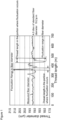
- the mesh interspace is so small that even slight fiber diameter fluctuations can cause collapse of the mesh. Furthermore, since the portion to which the mesh is attached is so small that the occupancy ratio of one mesh aperture is relatively large as compared with the size of the portion covered by the mesh, and accordingly, the filter performance can greatly deteriorate if only one mesh aperture is closed. Therefore, it is important for the monofilament for superfine high-mesh filter according to the present invention to have a very small and uniform fiber diameter, and the frequency of fiber diameter fluctuations of 1.0 ⁇ m or more in the fiber diameter direction is 1.0 or less in every 1,000,000 m in the fiber length direction of the monofilament. In order to suppress the variation in mesh interspace, the frequency of the fluctuations is preferably 0.8 or less in every 1,000,000 m, more preferably 0.5 or less in every 1,000,000 m.
- Fluctuation range ⁇ m in fiber diameter / thread length m in the portion where fluctuation occurs 0.004 to 0.250
- twitching Quick fiber diameter fluctuations such as seen in Fig. 1 are attributed to inclined jetting (twitching).
- a good method to suppress twitching is to decrease the portions where polymer retention occurs in the pack. Since the polymer discharge rate is decreased to an unprecedented level during the production of the monofilament according to the present invention, the occurrence of twitching can be suppressed by preventing the retention of the polymer coming out of the filtering layer, in addition to performing conventional retention prevention methods.
- the polymer supplied to the pack is sent to a filtering layer that consists mainly of fine sand and a filter to remove impurities, passed through a porous plate, stored temporarily in a polymer reservoir, and then introduced to a spinneret.
- the twitching can be prevented if the difference between the diameter of the polymer reservoir and the arrangement diameter of the porous plate outlet is designed to be less than 2 mm.
- the elimination of the tendency for tiny lumps of the polymer to be retained along the edge of the polymer reservoir serves to prevent the inclination (twitching) during discharge, which is attributed to momentary increases in the linear discharge rate, from being caused by such tiny lumps of the polymer having a decreased melt viscosity due to the retention.
- the monofilament according to the present invention has a monofilament fineness of 3.0 to 6.0 dtex in order to serve for the production of a high-mesh woven fabric that has a 196 filaments/cm or more while remaining a large mesh aperture ratio. Since thinner threads serve more effectively for decreasing the loss in sound and pressure, it is preferable to have a fineness of 3.0 to 5.0 dtex, more preferably, 3.0 to 4.0 dtex.
- the monofilament according to the present invention has a residual elongation percentage 30 to 45% in order to serve for the production of durable and processable filters. From the viewpoint of yarn-making stability, the residual elongation percentage is more preferably 30 to 42%, still more preferably 30 to 40%.
- the monofilament according to the present invention is a core-sheath type composite polyester monofilament containing a core covered by a sheath in such a manner that the core is not exposed at the surface.
- the core-sheath ratio (core : sheath) is in the range of 60:40 to 95:5 in order to ensure both a scum reduction effect during high-mesh weaving and strength improvement by the core. It is more preferably in the range of 70:30 to 90:10.
- the core-sheath ratio defined here for the present invention is determined on the basis of the cross-sectional areas of the two polyester components present in the polyester monofilament measured in a cross-sectional photograph of the polyester monofilament.
- polyester to be used for the present invention is described below.
- the polyester component used for forming the sheath in the polyester monofilament according to the present invention have an intrinsic viscosity lower than the intrinsic viscosity of the core polyester component and that the difference in intrinsic viscosity be 0.20 to 0.45. If the difference in intrinsic viscosity is 0.20 or more, it serves to control the degree of orientation and the degree of crystallinity of the sheath polyester component, i.e., the surface of the polyester monofilament, to low levels, which serves to achieve high scum resistance.
- the sheath bears the shear stress on the inner wall surfaces of the discharge holes of the spinneret used for melt spinning, the shearing force caused on the core is small. Accordingly, the core can be spun in a uniform state with a low degree of molecular chain orientation to enable the production of a final polyester monofilament having high strength.
- the sheath is also required to have an appropriate degree of orientation and therefore, a sufficient raw yarn strength cannot be achieved if the difference in intrinsic viscosity is larger than 0.45.
- the difference in intrinsic viscosity between the polyester components is more preferably 0.20 to 0.40.
- the core polyester component have an intrinsic viscosity in the range of 0.70 to 0.85. If the intrinsic viscosity is 0.70 or more, it will be possible to produce a polyester monofilament having sufficient strength and residual elongation percentage. It is more preferable for the core to have an intrinsic viscosity of 0.75 or more. The upper limit of the intrinsic viscosity is preferably 0.85 or less from the viewpoint of the ease of molding such as melt extrusion. Furthermore, the intrinsic viscosity of the core is more preferably 0.80 or less in consideration of the production cost and the influence of the decrease in molecular weight due to molecular chain breakage that may be caused by the heat and shearing force during the process.
- the sheath has an intrinsic viscosity of 0.40 or more. It is preferable for the sheath to have an intrinsic viscosity of 0.45 or more. On the other hand, in order to achieve high wear resistance, i.e. scum resistance, it is preferable for the sheath to have an intrinsic viscosity of 0.55 or less.
- a polyester material containing polyethylene terephthalate (hereinafter referred to as PET) as the main component is used as the polyester of the polyester monofilament according to the present invention.
- the PET used for the present invention may be a polyester containing terephthalic acid as main acid component and ethylene glycol as main glycol component, wherein 90 mol% or more is accounted for by the repeating unit of ethylene terephthalate.
- it may contain a copolymerization component capable of forming another ester bond as long as it accounts for less than 10 mol%.
- examples of acidic components include, but not limited to, bifunctional aromatic carboxylic acids such as isophthalic acid, phthalic acid, dibromoterephthalic acid, naphthalenedicarboxylic acid, and octoethoxybenzoic acid; bifunctional aliphatic carboxylic acids such as sebacic acid, oxalic acid, adipic acid, and dimer acid; and dicarboxylic acids such as cyclohexane dicarboxylic acid; whereas examples of glycol components include ethylene glycol, diethylene glycol, propanediol, butanediol, neopentyl glycol, bisphenol A, cyclohexanedimethanol, polyethylene glycol, polypropylene glycol, and other polyoxyalkylene glycols.
- bifunctional aromatic carboxylic acids such as isophthalic acid, phthalic acid, dibromoterephthalic acid, naphthalenedicarboxylic acid, and octoeth
- titanium dioxide as matting agent
- fine particles of silica or alumina as lubricant
- hindered phenol derivatives as antioxidants
- other additives such as flame retardant, antistatic agent, ultraviolet absorber, and coloring pigment may be added to the PET as required.
- the PET component in the core bears the main role in maintaining the strength of the polyester monofilament
- the inorganic particle additives such as titanium oxide that are usually added to polyester fibers to account for less than 0.6 wt%.
- the PET component in the sheath bears the main role in maintaining the abrasion resistance of the polyester monofilament, it preferably contains about 0.1 wt% to 0.6 wt% of inorganic particles such as of titanium oxide.
- It preferably has a strength of 5.0 to 6.0 cN/dtex in order to prevent a decrease in weavability and a decrease in dimensional stability during use as a filter material. If it has a strength of 5.0 or more, the filter can maintain high strength while suffering little filament slippage, thereby realizing high filtering performance and high resistance to filter breakage. If its strength is 6.0 cN/dtex or less, the scraping caused by the reed during high-mesh weaving can be prevented. The strength is more preferably 5.2 to 5.8 cN/dtex.
- the strength at 5% elongation is preferably 2.7 to 3.8 cN/dtex. If it has a strength of 2.7 cN/dtex or more, the filter can maintain high dimensional stability while suffering little filament slippage, thereby realizing high filtering performance and resistance to partial clogging. If its strength is 3.8 cN/dtex or less, the scraping caused by the reed during weaving can be prevented.
- the strength at 5% elongation is preferably 2.8 to 3.5 cN/dtex.
- the rate of fiber shrinkage in boiling water is preferably 7.0 to 10.0% because dimensional stabilization by heat setting and adjustment of the mesh interspace are to be performed after weaving. If it is 7.0% or more, it serves to ensure an appropriate degree of shrinkage and a desired mesh interspace. If it is 10.0% or less, on the other hand, it serves to ensure high dimensional stability during weaving.
- the boiling water shrinkage rate is more preferably 7.5% to 9.5%.
- melt spinning pack having a perforated plate designed so that polymer streams having different heat histories are discharged from mutually adjacent outlet holes and disposed in the polymer outlet face of the plate, thereby allowing the discharged polymer streams to be mixed uniformly as they move from the polymer reservoir to the inlet port of the spinneret.
- the melt spinning pack to be used is composed mainly of a filter layer, a filter, a perforated plate, and a spinneret that are arranged in this order.
- the perforated plate has multiple through-holes that allow polymer streams to pass through, and the through-holes in the polymer inlet face are disposed along the circumferences of n (n ⁇ 2) concentric circles A1, A2, A3, ..., An, with the circles being concentric around the center of the inlet face and with each circumference containing a plurality of through-holes, whereas in the polymer outlet face, through-holes are disposed along the circumferences of m (m ⁇ 1) concentric circles B1, B2, B3, ..., B m , with the circles being concentric around the center of the outlet face and with each circumference containing a plurality of through holes, wherein mutually adjacent through-holes disposed on one circle in the polymer outlet face come from different circles in the polymer inlet face.
- the polymer streams After passing through the through-holes, the polymer streams are discharged into a polymer reservoir disposed immediately below the perforated plate and then sent to the spinneret.
- polymer streams are forced to flow from different circles in the inlet face to mutually adjacent outlet holes disposed along one circle in the outlet face and then they are combined in the polymer reservoir and introduced into the spinneret.
- the molten polymer streams are mixed forcedly to reduce the viscosity unevenness attributed to differences in heat history.
- the number of concentric circle (n) in the inlet face of the perforated plate and the number of concentric circle (m) in the outlet face have the relation n > m and it is more preferable that the concentric circle (m) in the outlet face be one.
- the monofilament according to the present invention which has the aforementioned physical characteristics, can be developed as the monofilament prepared by melt-spinning the aforementioned polyester using the aforementioned melt-spinning pack and a generally known spinneret is drawn subsequently.
- the spinning speed is preferably 700 to 1,200 m/min and the draw ratio is preferably 3.4 to 4.6. Spinning at such a low speed and subsequent drawing to such a high ratio serve to produce a fiber having a desired strength.
- the preheating is preferably in the range of 80°C to 110°C.
- the heat setting temperature in the drawing step is preferably not higher than the melting point of the monofilament, and for the present invention, it is preferably in the range of 120°C to 180°C.
- a 500 m portion of the monofilament was skeined, and the value calculated by multiplying the mass (g) of the skein by 20 was adopted as its fineness.
- ⁇ is the viscosity of the polymer solution
- ⁇ 0 is the viscosity of the OCP
- t is the drop time (seconds) of the solution
- d is the density (g/cm 3 ) of the solution
- t 0 is the drop time (seconds) of the OCP
- d 0 is the density (g/cm 3 ) of the OCP.
- a mesh was produced according to the procedure described below using a 6 dtex monofilament according to the present invention as warp and using the monofilament prepared in each example or comparative example of the present invention as weft and evaluated.
- the melt-spinning pack had a filtering portion with a diameter of 45.0 mm and contained a nonwoven fabric filter, a perforated plate, and a spinneret.
- the perforated plate had perforated-plate inlet holes arranged along three circles: the circle closest to the center, called the first circle, had a diameter of 9 mm and had 8 inlet holes thereon; the second circle had a diameter of 17 mm and had 8 inlet holes thereon; and the third circle had a diameter of 33 mm and had 16 inlet holes thereon. All outlets were arranged along one circle that had a diameter of 27 mm: a total of 32 outlets were arranged in the order of an outlet leading to the first inlet circle, an outlet leading to the third inlet circle, an outlet leading to the second inlet circle, and an outlet leading to the third inlet circle.
- outlets are located so as to allow through-holes to be formed in such a manner that the polymer materials reaching mutually adjacent outlets come from inlets on different circles.
- the through-holes had a diameter of 1.8 mm and the perforated plate was made of SUS420J2.
- the polymer reservoir on the spinneret had a diameter of 28 mm and a thickness of 1.5 mm, and the spinneret was of a generally known composite type.
- the polymer materials were allowed to flow in such a manner that they would form a core-sheath type thread and they were discharged through a discharge hole with a diameter of 0.49 mm.
- the monofilament discharged from the spinneret was heated actively and its temperature was maintained so that the atmospheric temperature directly below the spinneret was controlled at 300°C. Then, it was cooled by a yarn cooling blower and taken up on an unheated first godet roller at a rate of 735 m/min while applying a spinning oil agent. This undrawn thread had a glass transition temperature of 80°C.
- the thread was sent to the first hot roll heated at a temperature of 90°C at a rate of 742 m/min without winding, sent to the second hot roll heated at a temperature of 90°C at a rate of 2,385 m/min and sent to the third hot roll heated at a temperature of 130°C at a rate of 3,373 m/min, drawing and heat-setting.
- the drawing ratio was 4.59.
- it was sent to two unheated godet rollers having a surface roughness of 0.8 S at a rate of 3,375 m/min and wound on a package while controlling the spindle rotation speed so as to control the wind-up tension at 0.425 g/dtex to provide a polyester monofilament of 3.0 dtex.
- Table 1 which summarizes major characteristics of this polyester monofilament, it had excellent fiber diameter uniformity and thread properties for use in superfine high-mesh filters and served to produce a mesh having high uniformity in weft thread density.
- Example 2 Except for adopting a discharge rate and draw ratio different from those in Example 1, a polyester monofilament having a fineness of 4.0 to 6.0 dtex was produced. As seen from Table 1, which summarizes major characteristics of each resulting polyester monofilament, it had excellent fiber diameter uniformity and thread properties and served to produce a mesh having high uniformity in weft thread density.
- Example 1 Example 2
- Example 3 Example 4 Discharge rate Core g/hole-min 0.74 1.09 1.31 1.60 Sheath g/hole-min 0.19 0.27 0.33 0.40 Total g/hole-min 0.93 1.36 1.63 2.00
- Diameter of polymer reservoir mm 28 28 28 Arrangement diameter of perforated plate outlets mm 27 27 27 27 Difference between diameter of polymer reservoir and arrangement diameter of outlets mm 1 1 1 1 1 Spinning rate m/min 735 735 735 735 Draw ratio ratio 4.59 4.59 4.59 4.50 Cross-sectional core-sheath ratio in monofilament core 80 80 80 80 80 sheath 20 20 20 20 20 20 Fineness dtex 3.0 4.0 4.8 6.0 Residual elongation percentage % 30 32 33 40 Frequency of fiber diameter fluctuations of 1.0 ⁇ m or more in fiber diameter direction number/7.68 mil.
- Example 5 Example 6
- Example 7 Example 8 Comparative example 1 Comparative example 2
- Discharge rate Core g/hole-min 1.29 1.23 0.95 0.82 1.35 0.68 Sheath g/hole-min 0.07 0.14 0.41 0.54 0.01 0.68
- Diameter of polymer reservoir mm 28 28 28 28 28 Arrangement diameter of perforated plate outlets mm 27 27 27 27 27 27 Difference between diameter of polymer reservoir and arrangement diameter of outlets mm 1 1 1 1 1 1 1 1 1 Spinning rate m/min 735 735 735 735 735 735 Draw ratio ratio 4.59 4.59 4.59 4.59 4.59 4.59 4.59 4.59
- Example 10 Comparative example 3 Discharge rate Core g/hole ⁇ min 1.09 1.09 1.09 Sheath g/hole ⁇ min 0.27 0.27 0.27 Total g/hole ⁇ min 1.36 1.36 1.36 Diameter of polymer reservoir mm 28 28 28 Arrangement diameter of perforated plate outlets mm 26.2 26.5 26.0 Difference between diameter of polymer reservoir and arrangement diameter of outlets mm 1.8 1.5 2.0 Spinning rate m/min 735 735 735 Draw ratio ratio 4.59 4.59 4.59 Cross-sectional core-sheath ratio in monofilament core 80 80 80 sheath 20 20 20 20 Fineness dtex 4.0 4.0 4.0 Residual elongation percentage % 32 32 32 Frequency of fiber diameter fluctuations of 1.0 ⁇ m or more in
Landscapes
- Engineering & Computer Science (AREA)
- Textile Engineering (AREA)
- Chemical & Material Sciences (AREA)
- Chemical Kinetics & Catalysis (AREA)
- General Chemical & Material Sciences (AREA)
- Mechanical Engineering (AREA)
- Multicomponent Fibers (AREA)
- Spinning Methods And Devices For Manufacturing Artificial Fibers (AREA)
- Woven Fabrics (AREA)
- Filtering Materials (AREA)
Applications Claiming Priority (2)
| Application Number | Priority Date | Filing Date | Title |
|---|---|---|---|
| JP2019031734 | 2019-02-25 | ||
| PCT/JP2020/007052 WO2020175370A1 (ja) | 2019-02-25 | 2020-02-21 | 高精細ハイメッシュフィルター用芯鞘複合ポリエステルモノフィラメント |
Publications (3)
| Publication Number | Publication Date |
|---|---|
| EP3896199A1 EP3896199A1 (en) | 2021-10-20 |
| EP3896199A4 EP3896199A4 (en) | 2022-09-14 |
| EP3896199B1 true EP3896199B1 (en) | 2024-03-06 |
Family
ID=72239587
Family Applications (1)
| Application Number | Title | Priority Date | Filing Date |
|---|---|---|---|
| EP20763533.5A Active EP3896199B1 (en) | 2019-02-25 | 2020-02-21 | Core-sheath composite polyester monofilament for superfine high-mesh filter |
Country Status (5)
| Country | Link |
|---|---|
| EP (1) | EP3896199B1 (pl) |
| JP (1) | JP7456383B2 (pl) |
| CN (1) | CN113166978B (pl) |
| PL (1) | PL3896199T3 (pl) |
| WO (1) | WO2020175370A1 (pl) |
Families Citing this family (2)
| Publication number | Priority date | Publication date | Assignee | Title |
|---|---|---|---|---|
| WO2022004225A1 (ja) * | 2020-06-30 | 2022-01-06 | 東レ株式会社 | ポリエステルモノフィラメント |
| EP4438777A4 (en) * | 2021-11-24 | 2025-11-19 | Toray Industries | COMPOSITE FIBER, MULTIFILAMENT AND FIBROUS PRODUCTS |
Citations (1)
| Publication number | Priority date | Publication date | Assignee | Title |
|---|---|---|---|---|
| EP1115924B1 (en) * | 1999-06-24 | 2005-04-13 | Teijin Limited | Non-crimping polyester monofilament and process for producing same |
Family Cites Families (8)
| Publication number | Priority date | Publication date | Assignee | Title |
|---|---|---|---|---|
| JP3778088B2 (ja) * | 2002-01-21 | 2006-05-24 | 東レ株式会社 | スクリーン紗用芯鞘型複合ポリエステルモノフィラメントおよびその製造方法 |
| KR101286795B1 (ko) * | 2005-07-28 | 2013-07-17 | 데이진 화이바 가부시키가이샤 | (원착) 폴리에스테르 모노 필라멘트 |
| JP2009005911A (ja) * | 2007-06-28 | 2009-01-15 | Teijin Fibers Ltd | 嗜好性飲料抽出フィルター用ポリエステルフィラメント |
| WO2010035640A1 (ja) * | 2008-09-26 | 2010-04-01 | 東レ株式会社 | ポリエステルモノフィラメント、およびその製造方法、ならびにそれを用いたスクリーン紗の製造方法 |
| JP5487629B2 (ja) | 2009-02-03 | 2014-05-07 | 東レ株式会社 | ポリエステルモノフィラメントおよびその製造方法 |
| JP5217058B2 (ja) | 2009-06-19 | 2013-06-19 | 帝人株式会社 | 産業資材フィルター紗用ポリエチレンナフタレートモノフィラメント |
| JP5336615B2 (ja) * | 2012-01-06 | 2013-11-06 | 帝人株式会社 | スクリーン紗用モノフィラメント |
| JP6578861B2 (ja) * | 2015-09-30 | 2019-09-25 | 東レ株式会社 | 溶融紡糸用パック |
-
2020
- 2020-02-21 CN CN202080006711.3A patent/CN113166978B/zh active Active
- 2020-02-21 JP JP2020539877A patent/JP7456383B2/ja active Active
- 2020-02-21 EP EP20763533.5A patent/EP3896199B1/en active Active
- 2020-02-21 WO PCT/JP2020/007052 patent/WO2020175370A1/ja not_active Ceased
- 2020-02-21 PL PL20763533.5T patent/PL3896199T3/pl unknown
Patent Citations (1)
| Publication number | Priority date | Publication date | Assignee | Title |
|---|---|---|---|---|
| EP1115924B1 (en) * | 1999-06-24 | 2005-04-13 | Teijin Limited | Non-crimping polyester monofilament and process for producing same |
Also Published As
| Publication number | Publication date |
|---|---|
| CN113166978B (zh) | 2023-05-12 |
| JPWO2020175370A1 (pl) | 2020-09-03 |
| WO2020175370A1 (ja) | 2020-09-03 |
| EP3896199A4 (en) | 2022-09-14 |
| JP7456383B2 (ja) | 2024-03-27 |
| EP3896199A1 (en) | 2021-10-20 |
| CN113166978A (zh) | 2021-07-23 |
| PL3896199T3 (pl) | 2024-06-24 |
Similar Documents
| Publication | Publication Date | Title |
|---|---|---|
| CN102165110B (zh) | 聚酯单丝、其制造方法以及使用其的丝网制造方法 | |
| CN102308033B (zh) | 聚酯单丝以及聚酯单丝的制造方法 | |
| KR100412246B1 (ko) | 비권축성 폴리에스테르계 모노필라멘트 및 그 제조 방법 | |
| CN110268109A (zh) | 热粘接性芯鞘型复合纤维以及经编针织物 | |
| EP3896199B1 (en) | Core-sheath composite polyester monofilament for superfine high-mesh filter | |
| JP4844515B2 (ja) | 細繊度ポリフェニレンスルフィドモノフィラメントおよびその製造方法 | |
| EP3677709B1 (en) | Single component polyester monofilament for superfine high-mesh filter | |
| JP4900234B2 (ja) | ポリエーテルエーテルケトンモノフィラメントおよびその製造法、およびポリエーテルエーテルケトンモノフィラメントからなるフィルター | |
| CN101189370B (zh) | (原液染色)聚酯单丝 | |
| EP3719183B1 (en) | High-strength fine-denier polyester multifilament | |
| JP7392266B2 (ja) | ハイメッシュスクリーン紗用複合ポリエステルモノフィラメントおよびその製造方法 | |
| EP4144900A1 (en) | Polyester monofilament | |
| KR20240102540A (ko) | 필터용 스펀본드 부직포 및 이의 제조 방법 | |
| JP2009084721A (ja) | 熱可塑性繊維のローラ油剤付与装置および熱可塑性繊維の製造方法 | |
| JP2025034561A (ja) | 芯鞘複合モノフィラメント | |
| JP2025143685A (ja) | 溶融紡糸口金パック | |
| JP2022041904A (ja) | ハイメッシュスクリーン紗用芯鞘型複合モノフィラメントおよびその製造方法 | |
| HK40031673A (en) | High-strength fine-denier polyester multifilament |
Legal Events
| Date | Code | Title | Description |
|---|---|---|---|
| STAA | Information on the status of an ep patent application or granted ep patent |
Free format text: STATUS: THE INTERNATIONAL PUBLICATION HAS BEEN MADE |
|
| PUAI | Public reference made under article 153(3) epc to a published international application that has entered the european phase |
Free format text: ORIGINAL CODE: 0009012 |
|
| STAA | Information on the status of an ep patent application or granted ep patent |
Free format text: STATUS: REQUEST FOR EXAMINATION WAS MADE |
|
| 17P | Request for examination filed |
Effective date: 20210713 |
|
| AK | Designated contracting states |
Kind code of ref document: A1 Designated state(s): AL AT BE BG CH CY CZ DE DK EE ES FI FR GB GR HR HU IE IS IT LI LT LU LV MC MK MT NL NO PL PT RO RS SE SI SK SM TR |
|
| A4 | Supplementary search report drawn up and despatched |
Effective date: 20220812 |
|
| RIC1 | Information provided on ipc code assigned before grant |
Ipc: D01D 5/34 20060101ALI20220808BHEP Ipc: B01D 39/08 20060101ALI20220808BHEP Ipc: D01F 8/14 20060101AFI20220808BHEP |
|
| GRAP | Despatch of communication of intention to grant a patent |
Free format text: ORIGINAL CODE: EPIDOSNIGR1 |
|
| STAA | Information on the status of an ep patent application or granted ep patent |
Free format text: STATUS: GRANT OF PATENT IS INTENDED |
|
| INTG | Intention to grant announced |
Effective date: 20231010 |
|
| RIN1 | Information on inventor provided before grant (corrected) |
Inventor name: ICHIKAWA, TOMOYUKI Inventor name: KOSAKA, SHUNSUKE Inventor name: SASAGAWA, HISASHI |
|
| GRAS | Grant fee paid |
Free format text: ORIGINAL CODE: EPIDOSNIGR3 |
|
| P01 | Opt-out of the competence of the unified patent court (upc) registered |
Effective date: 20231222 |
|
| GRAA | (expected) grant |
Free format text: ORIGINAL CODE: 0009210 |
|
| STAA | Information on the status of an ep patent application or granted ep patent |
Free format text: STATUS: THE PATENT HAS BEEN GRANTED |
|
| AK | Designated contracting states |
Kind code of ref document: B1 Designated state(s): AL AT BE BG CH CY CZ DE DK EE ES FI FR GB GR HR HU IE IS IT LI LT LU LV MC MK MT NL NO PL PT RO RS SE SI SK SM TR |
|
| REG | Reference to a national code |
Ref country code: CH Ref legal event code: EP |
|
| REG | Reference to a national code |
Ref country code: IE Ref legal event code: FG4D |
|
| REG | Reference to a national code |
Ref country code: DE Ref legal event code: R096 Ref document number: 602020026882 Country of ref document: DE |
|
| REG | Reference to a national code |
Ref country code: LT Ref legal event code: MG9D |
|
| PG25 | Lapsed in a contracting state [announced via postgrant information from national office to epo] |
Ref country code: LT Free format text: LAPSE BECAUSE OF FAILURE TO SUBMIT A TRANSLATION OF THE DESCRIPTION OR TO PAY THE FEE WITHIN THE PRESCRIBED TIME-LIMIT Effective date: 20240306 |
|
| REG | Reference to a national code |
Ref country code: NL Ref legal event code: MP Effective date: 20240306 |
|
| PG25 | Lapsed in a contracting state [announced via postgrant information from national office to epo] |
Ref country code: GR Free format text: LAPSE BECAUSE OF FAILURE TO SUBMIT A TRANSLATION OF THE DESCRIPTION OR TO PAY THE FEE WITHIN THE PRESCRIBED TIME-LIMIT Effective date: 20240607 |
|
| PG25 | Lapsed in a contracting state [announced via postgrant information from national office to epo] |
Ref country code: RS Free format text: LAPSE BECAUSE OF FAILURE TO SUBMIT A TRANSLATION OF THE DESCRIPTION OR TO PAY THE FEE WITHIN THE PRESCRIBED TIME-LIMIT Effective date: 20240606 Ref country code: HR Free format text: LAPSE BECAUSE OF FAILURE TO SUBMIT A TRANSLATION OF THE DESCRIPTION OR TO PAY THE FEE WITHIN THE PRESCRIBED TIME-LIMIT Effective date: 20240306 |
|
| PG25 | Lapsed in a contracting state [announced via postgrant information from national office to epo] |
Ref country code: ES Free format text: LAPSE BECAUSE OF FAILURE TO SUBMIT A TRANSLATION OF THE DESCRIPTION OR TO PAY THE FEE WITHIN THE PRESCRIBED TIME-LIMIT Effective date: 20240306 |
|
| PG25 | Lapsed in a contracting state [announced via postgrant information from national office to epo] |
Ref country code: RS Free format text: LAPSE BECAUSE OF FAILURE TO SUBMIT A TRANSLATION OF THE DESCRIPTION OR TO PAY THE FEE WITHIN THE PRESCRIBED TIME-LIMIT Effective date: 20240606 Ref country code: NO Free format text: LAPSE BECAUSE OF FAILURE TO SUBMIT A TRANSLATION OF THE DESCRIPTION OR TO PAY THE FEE WITHIN THE PRESCRIBED TIME-LIMIT Effective date: 20240606 Ref country code: LT Free format text: LAPSE BECAUSE OF FAILURE TO SUBMIT A TRANSLATION OF THE DESCRIPTION OR TO PAY THE FEE WITHIN THE PRESCRIBED TIME-LIMIT Effective date: 20240306 Ref country code: HR Free format text: LAPSE BECAUSE OF FAILURE TO SUBMIT A TRANSLATION OF THE DESCRIPTION OR TO PAY THE FEE WITHIN THE PRESCRIBED TIME-LIMIT Effective date: 20240306 Ref country code: GR Free format text: LAPSE BECAUSE OF FAILURE TO SUBMIT A TRANSLATION OF THE DESCRIPTION OR TO PAY THE FEE WITHIN THE PRESCRIBED TIME-LIMIT Effective date: 20240607 Ref country code: FI Free format text: LAPSE BECAUSE OF FAILURE TO SUBMIT A TRANSLATION OF THE DESCRIPTION OR TO PAY THE FEE WITHIN THE PRESCRIBED TIME-LIMIT Effective date: 20240306 Ref country code: ES Free format text: LAPSE BECAUSE OF FAILURE TO SUBMIT A TRANSLATION OF THE DESCRIPTION OR TO PAY THE FEE WITHIN THE PRESCRIBED TIME-LIMIT Effective date: 20240306 Ref country code: BG Free format text: LAPSE BECAUSE OF FAILURE TO SUBMIT A TRANSLATION OF THE DESCRIPTION OR TO PAY THE FEE WITHIN THE PRESCRIBED TIME-LIMIT Effective date: 20240306 |
|
| REG | Reference to a national code |
Ref country code: AT Ref legal event code: MK05 Ref document number: 1663587 Country of ref document: AT Kind code of ref document: T Effective date: 20240306 |
|
| PG25 | Lapsed in a contracting state [announced via postgrant information from national office to epo] |
Ref country code: SE Free format text: LAPSE BECAUSE OF FAILURE TO SUBMIT A TRANSLATION OF THE DESCRIPTION OR TO PAY THE FEE WITHIN THE PRESCRIBED TIME-LIMIT Effective date: 20240306 Ref country code: LV Free format text: LAPSE BECAUSE OF FAILURE TO SUBMIT A TRANSLATION OF THE DESCRIPTION OR TO PAY THE FEE WITHIN THE PRESCRIBED TIME-LIMIT Effective date: 20240306 |
|
| PG25 | Lapsed in a contracting state [announced via postgrant information from national office to epo] |
Ref country code: NL Free format text: LAPSE BECAUSE OF FAILURE TO SUBMIT A TRANSLATION OF THE DESCRIPTION OR TO PAY THE FEE WITHIN THE PRESCRIBED TIME-LIMIT Effective date: 20240306 |
|
| PG25 | Lapsed in a contracting state [announced via postgrant information from national office to epo] |
Ref country code: NL Free format text: LAPSE BECAUSE OF FAILURE TO SUBMIT A TRANSLATION OF THE DESCRIPTION OR TO PAY THE FEE WITHIN THE PRESCRIBED TIME-LIMIT Effective date: 20240306 |
|
| PG25 | Lapsed in a contracting state [announced via postgrant information from national office to epo] |
Ref country code: IS Free format text: LAPSE BECAUSE OF FAILURE TO SUBMIT A TRANSLATION OF THE DESCRIPTION OR TO PAY THE FEE WITHIN THE PRESCRIBED TIME-LIMIT Effective date: 20240706 |
|
| PG25 | Lapsed in a contracting state [announced via postgrant information from national office to epo] |
Ref country code: PT Free format text: LAPSE BECAUSE OF FAILURE TO SUBMIT A TRANSLATION OF THE DESCRIPTION OR TO PAY THE FEE WITHIN THE PRESCRIBED TIME-LIMIT Effective date: 20240708 Ref country code: SM Free format text: LAPSE BECAUSE OF FAILURE TO SUBMIT A TRANSLATION OF THE DESCRIPTION OR TO PAY THE FEE WITHIN THE PRESCRIBED TIME-LIMIT Effective date: 20240306 |
|
| PG25 | Lapsed in a contracting state [announced via postgrant information from national office to epo] |
Ref country code: EE Free format text: LAPSE BECAUSE OF FAILURE TO SUBMIT A TRANSLATION OF THE DESCRIPTION OR TO PAY THE FEE WITHIN THE PRESCRIBED TIME-LIMIT Effective date: 20240306 Ref country code: CZ Free format text: LAPSE BECAUSE OF FAILURE TO SUBMIT A TRANSLATION OF THE DESCRIPTION OR TO PAY THE FEE WITHIN THE PRESCRIBED TIME-LIMIT Effective date: 20240306 |
|
| PG25 | Lapsed in a contracting state [announced via postgrant information from national office to epo] |
Ref country code: AT Free format text: LAPSE BECAUSE OF FAILURE TO SUBMIT A TRANSLATION OF THE DESCRIPTION OR TO PAY THE FEE WITHIN THE PRESCRIBED TIME-LIMIT Effective date: 20240306 |
|
| PG25 | Lapsed in a contracting state [announced via postgrant information from national office to epo] |
Ref country code: SK Free format text: LAPSE BECAUSE OF FAILURE TO SUBMIT A TRANSLATION OF THE DESCRIPTION OR TO PAY THE FEE WITHIN THE PRESCRIBED TIME-LIMIT Effective date: 20240306 |
|
| PG25 | Lapsed in a contracting state [announced via postgrant information from national office to epo] |
Ref country code: SM Free format text: LAPSE BECAUSE OF FAILURE TO SUBMIT A TRANSLATION OF THE DESCRIPTION OR TO PAY THE FEE WITHIN THE PRESCRIBED TIME-LIMIT Effective date: 20240306 Ref country code: SK Free format text: LAPSE BECAUSE OF FAILURE TO SUBMIT A TRANSLATION OF THE DESCRIPTION OR TO PAY THE FEE WITHIN THE PRESCRIBED TIME-LIMIT Effective date: 20240306 Ref country code: PT Free format text: LAPSE BECAUSE OF FAILURE TO SUBMIT A TRANSLATION OF THE DESCRIPTION OR TO PAY THE FEE WITHIN THE PRESCRIBED TIME-LIMIT Effective date: 20240708 Ref country code: IS Free format text: LAPSE BECAUSE OF FAILURE TO SUBMIT A TRANSLATION OF THE DESCRIPTION OR TO PAY THE FEE WITHIN THE PRESCRIBED TIME-LIMIT Effective date: 20240706 Ref country code: EE Free format text: LAPSE BECAUSE OF FAILURE TO SUBMIT A TRANSLATION OF THE DESCRIPTION OR TO PAY THE FEE WITHIN THE PRESCRIBED TIME-LIMIT Effective date: 20240306 Ref country code: CZ Free format text: LAPSE BECAUSE OF FAILURE TO SUBMIT A TRANSLATION OF THE DESCRIPTION OR TO PAY THE FEE WITHIN THE PRESCRIBED TIME-LIMIT Effective date: 20240306 Ref country code: AT Free format text: LAPSE BECAUSE OF FAILURE TO SUBMIT A TRANSLATION OF THE DESCRIPTION OR TO PAY THE FEE WITHIN THE PRESCRIBED TIME-LIMIT Effective date: 20240306 |
|
| REG | Reference to a national code |
Ref country code: DE Ref legal event code: R097 Ref document number: 602020026882 Country of ref document: DE |
|
| PLBE | No opposition filed within time limit |
Free format text: ORIGINAL CODE: 0009261 |
|
| STAA | Information on the status of an ep patent application or granted ep patent |
Free format text: STATUS: NO OPPOSITION FILED WITHIN TIME LIMIT |
|
| PG25 | Lapsed in a contracting state [announced via postgrant information from national office to epo] |
Ref country code: DK Free format text: LAPSE BECAUSE OF FAILURE TO SUBMIT A TRANSLATION OF THE DESCRIPTION OR TO PAY THE FEE WITHIN THE PRESCRIBED TIME-LIMIT Effective date: 20240306 |
|
| PG25 | Lapsed in a contracting state [announced via postgrant information from national office to epo] |
Ref country code: DK Free format text: LAPSE BECAUSE OF FAILURE TO SUBMIT A TRANSLATION OF THE DESCRIPTION OR TO PAY THE FEE WITHIN THE PRESCRIBED TIME-LIMIT Effective date: 20240306 |
|
| 26N | No opposition filed |
Effective date: 20241209 |
|
| PG25 | Lapsed in a contracting state [announced via postgrant information from national office to epo] |
Ref country code: SI Free format text: LAPSE BECAUSE OF FAILURE TO SUBMIT A TRANSLATION OF THE DESCRIPTION OR TO PAY THE FEE WITHIN THE PRESCRIBED TIME-LIMIT Effective date: 20240306 |
|
| PGFP | Annual fee paid to national office [announced via postgrant information from national office to epo] |
Ref country code: CH Payment date: 20250301 Year of fee payment: 6 |
|
| REG | Reference to a national code |
Ref country code: DE Ref legal event code: R119 Ref document number: 602020026882 Country of ref document: DE |
|
| PG25 | Lapsed in a contracting state [announced via postgrant information from national office to epo] |
Ref country code: MC Free format text: LAPSE BECAUSE OF FAILURE TO SUBMIT A TRANSLATION OF THE DESCRIPTION OR TO PAY THE FEE WITHIN THE PRESCRIBED TIME-LIMIT Effective date: 20240306 |
|
| PG25 | Lapsed in a contracting state [announced via postgrant information from national office to epo] |
Ref country code: LU Free format text: LAPSE BECAUSE OF NON-PAYMENT OF DUE FEES Effective date: 20250221 |
|
| GBPC | Gb: european patent ceased through non-payment of renewal fee |
Effective date: 20250221 |
|
| REG | Reference to a national code |
Ref country code: BE Ref legal event code: MM Effective date: 20250228 |
|
| PG25 | Lapsed in a contracting state [announced via postgrant information from national office to epo] |
Ref country code: DE Free format text: LAPSE BECAUSE OF NON-PAYMENT OF DUE FEES Effective date: 20250902 |
|
| PG25 | Lapsed in a contracting state [announced via postgrant information from national office to epo] |
Ref country code: GB Free format text: LAPSE BECAUSE OF NON-PAYMENT OF DUE FEES Effective date: 20250221 |
|
| PGFP | Annual fee paid to national office [announced via postgrant information from national office to epo] |
Ref country code: FR Payment date: 20251231 Year of fee payment: 7 |
|
| PG25 | Lapsed in a contracting state [announced via postgrant information from national office to epo] |
Ref country code: BE Free format text: LAPSE BECAUSE OF NON-PAYMENT OF DUE FEES Effective date: 20250228 |
|
| PG25 | Lapsed in a contracting state [announced via postgrant information from national office to epo] |
Ref country code: IE Free format text: LAPSE BECAUSE OF NON-PAYMENT OF DUE FEES Effective date: 20250221 |
|
| PGFP | Annual fee paid to national office [announced via postgrant information from national office to epo] |
Ref country code: PL Payment date: 20251230 Year of fee payment: 7 |
|
| REG | Reference to a national code |
Ref country code: CH Ref legal event code: U11 Free format text: ST27 STATUS EVENT CODE: U-0-0-U10-U11 (AS PROVIDED BY THE NATIONAL OFFICE) Effective date: 20260301 |
|
| PGFP | Annual fee paid to national office [announced via postgrant information from national office to epo] |
Ref country code: RO Payment date: 20260127 Year of fee payment: 7 Ref country code: IT Payment date: 20260122 Year of fee payment: 7 |