EP3896265A1 - Dispositif et procédé de post-traitement des gaz d'échappement de moteur - Google Patents
Dispositif et procédé de post-traitement des gaz d'échappement de moteur Download PDFInfo
- Publication number
- EP3896265A1 EP3896265A1 EP18943270.1A EP18943270A EP3896265A1 EP 3896265 A1 EP3896265 A1 EP 3896265A1 EP 18943270 A EP18943270 A EP 18943270A EP 3896265 A1 EP3896265 A1 EP 3896265A1
- Authority
- EP
- European Patent Office
- Prior art keywords
- engine
- control valve
- intelligent control
- detected
- exhaust
- Prior art date
- Legal status (The legal status is an assumption and is not a legal conclusion. Google has not performed a legal analysis and makes no representation as to the accuracy of the status listed.)
- Granted
Links
Images

Classifications
-
- F—MECHANICAL ENGINEERING; LIGHTING; HEATING; WEAPONS; BLASTING
- F01—MACHINES OR ENGINES IN GENERAL; ENGINE PLANTS IN GENERAL; STEAM ENGINES
- F01N—GAS-FLOW SILENCERS OR EXHAUST APPARATUS FOR MACHINES OR ENGINES IN GENERAL; GAS-FLOW SILENCERS OR EXHAUST APPARATUS FOR INTERNAL-COMBUSTION ENGINES
- F01N3/00—Exhaust or silencing apparatus having means for purifying, rendering innocuous, or otherwise treating exhaust
- F01N3/02—Exhaust or silencing apparatus having means for purifying, rendering innocuous, or otherwise treating exhaust for cooling, or for removing solid constituents of, exhaust
- F01N3/021—Exhaust or silencing apparatus having means for purifying, rendering innocuous, or otherwise treating exhaust for cooling, or for removing solid constituents of, exhaust by means of filters
-
- F—MECHANICAL ENGINEERING; LIGHTING; HEATING; WEAPONS; BLASTING
- F01—MACHINES OR ENGINES IN GENERAL; ENGINE PLANTS IN GENERAL; STEAM ENGINES
- F01N—GAS-FLOW SILENCERS OR EXHAUST APPARATUS FOR MACHINES OR ENGINES IN GENERAL; GAS-FLOW SILENCERS OR EXHAUST APPARATUS FOR INTERNAL-COMBUSTION ENGINES
- F01N3/00—Exhaust or silencing apparatus having means for purifying, rendering innocuous, or otherwise treating exhaust
- F01N3/08—Exhaust or silencing apparatus having means for purifying, rendering innocuous, or otherwise treating exhaust for rendering innocuous
- F01N3/10—Exhaust or silencing apparatus having means for purifying, rendering innocuous, or otherwise treating exhaust for rendering innocuous by thermal or catalytic conversion of noxious components of exhaust
- F01N3/18—Exhaust or silencing apparatus having means for purifying, rendering innocuous, or otherwise treating exhaust for rendering innocuous by thermal or catalytic conversion of noxious components of exhaust characterised by methods of operation; Control
- F01N3/20—Exhaust or silencing apparatus having means for purifying, rendering innocuous, or otherwise treating exhaust for rendering innocuous by thermal or catalytic conversion of noxious components of exhaust characterised by methods of operation; Control specially adapted for catalytic conversion
- F01N3/2053—By-passing catalytic reactors, e.g. to prevent overheating
-
- F—MECHANICAL ENGINEERING; LIGHTING; HEATING; WEAPONS; BLASTING
- F01—MACHINES OR ENGINES IN GENERAL; ENGINE PLANTS IN GENERAL; STEAM ENGINES
- F01N—GAS-FLOW SILENCERS OR EXHAUST APPARATUS FOR MACHINES OR ENGINES IN GENERAL; GAS-FLOW SILENCERS OR EXHAUST APPARATUS FOR INTERNAL-COMBUSTION ENGINES
- F01N3/00—Exhaust or silencing apparatus having means for purifying, rendering innocuous, or otherwise treating exhaust
- F01N3/02—Exhaust or silencing apparatus having means for purifying, rendering innocuous, or otherwise treating exhaust for cooling, or for removing solid constituents of, exhaust
- F01N3/021—Exhaust or silencing apparatus having means for purifying, rendering innocuous, or otherwise treating exhaust for cooling, or for removing solid constituents of, exhaust by means of filters
- F01N3/033—Exhaust or silencing apparatus having means for purifying, rendering innocuous, or otherwise treating exhaust for cooling, or for removing solid constituents of, exhaust by means of filters in combination with other devices
- F01N3/035—Exhaust or silencing apparatus having means for purifying, rendering innocuous, or otherwise treating exhaust for cooling, or for removing solid constituents of, exhaust by means of filters in combination with other devices with catalytic reactors
-
- F—MECHANICAL ENGINEERING; LIGHTING; HEATING; WEAPONS; BLASTING
- F01—MACHINES OR ENGINES IN GENERAL; ENGINE PLANTS IN GENERAL; STEAM ENGINES
- F01N—GAS-FLOW SILENCERS OR EXHAUST APPARATUS FOR MACHINES OR ENGINES IN GENERAL; GAS-FLOW SILENCERS OR EXHAUST APPARATUS FOR INTERNAL-COMBUSTION ENGINES
- F01N3/00—Exhaust or silencing apparatus having means for purifying, rendering innocuous, or otherwise treating exhaust
- F01N3/08—Exhaust or silencing apparatus having means for purifying, rendering innocuous, or otherwise treating exhaust for rendering innocuous
- F01N3/10—Exhaust or silencing apparatus having means for purifying, rendering innocuous, or otherwise treating exhaust for rendering innocuous by thermal or catalytic conversion of noxious components of exhaust
- F01N3/103—Oxidation catalysts for HC and CO only
-
- F—MECHANICAL ENGINEERING; LIGHTING; HEATING; WEAPONS; BLASTING
- F01—MACHINES OR ENGINES IN GENERAL; ENGINE PLANTS IN GENERAL; STEAM ENGINES
- F01N—GAS-FLOW SILENCERS OR EXHAUST APPARATUS FOR MACHINES OR ENGINES IN GENERAL; GAS-FLOW SILENCERS OR EXHAUST APPARATUS FOR INTERNAL-COMBUSTION ENGINES
- F01N3/00—Exhaust or silencing apparatus having means for purifying, rendering innocuous, or otherwise treating exhaust
- F01N3/08—Exhaust or silencing apparatus having means for purifying, rendering innocuous, or otherwise treating exhaust for rendering innocuous
- F01N3/10—Exhaust or silencing apparatus having means for purifying, rendering innocuous, or otherwise treating exhaust for rendering innocuous by thermal or catalytic conversion of noxious components of exhaust
- F01N3/18—Exhaust or silencing apparatus having means for purifying, rendering innocuous, or otherwise treating exhaust for rendering innocuous by thermal or catalytic conversion of noxious components of exhaust characterised by methods of operation; Control
- F01N3/20—Exhaust or silencing apparatus having means for purifying, rendering innocuous, or otherwise treating exhaust for rendering innocuous by thermal or catalytic conversion of noxious components of exhaust characterised by methods of operation; Control specially adapted for catalytic conversion
- F01N3/206—Adding periodically or continuously substances to exhaust gases for promoting purification, e.g. catalytic material in liquid form, NOx reducing agents
- F01N3/2066—Selective catalytic reduction [SCR]
-
- F—MECHANICAL ENGINEERING; LIGHTING; HEATING; WEAPONS; BLASTING
- F01—MACHINES OR ENGINES IN GENERAL; ENGINE PLANTS IN GENERAL; STEAM ENGINES
- F01N—GAS-FLOW SILENCERS OR EXHAUST APPARATUS FOR MACHINES OR ENGINES IN GENERAL; GAS-FLOW SILENCERS OR EXHAUST APPARATUS FOR INTERNAL-COMBUSTION ENGINES
- F01N9/00—Electrical control of exhaust gas treating apparatus
-
- F—MECHANICAL ENGINEERING; LIGHTING; HEATING; WEAPONS; BLASTING
- F01—MACHINES OR ENGINES IN GENERAL; ENGINE PLANTS IN GENERAL; STEAM ENGINES
- F01N—GAS-FLOW SILENCERS OR EXHAUST APPARATUS FOR MACHINES OR ENGINES IN GENERAL; GAS-FLOW SILENCERS OR EXHAUST APPARATUS FOR INTERNAL-COMBUSTION ENGINES
- F01N2240/00—Combination or association of two or more different exhaust treating devices, or of at least one such device with an auxiliary device, not covered by indexing codes F01N2230/00 or F01N2250/00, one of the devices being
- F01N2240/36—Combination or association of two or more different exhaust treating devices, or of at least one such device with an auxiliary device, not covered by indexing codes F01N2230/00 or F01N2250/00, one of the devices being an exhaust flap
-
- F—MECHANICAL ENGINEERING; LIGHTING; HEATING; WEAPONS; BLASTING
- F01—MACHINES OR ENGINES IN GENERAL; ENGINE PLANTS IN GENERAL; STEAM ENGINES
- F01N—GAS-FLOW SILENCERS OR EXHAUST APPARATUS FOR MACHINES OR ENGINES IN GENERAL; GAS-FLOW SILENCERS OR EXHAUST APPARATUS FOR INTERNAL-COMBUSTION ENGINES
- F01N2250/00—Combinations of different methods of purification
- F01N2250/02—Combinations of different methods of purification filtering and catalytic conversion
-
- F—MECHANICAL ENGINEERING; LIGHTING; HEATING; WEAPONS; BLASTING
- F01—MACHINES OR ENGINES IN GENERAL; ENGINE PLANTS IN GENERAL; STEAM ENGINES
- F01N—GAS-FLOW SILENCERS OR EXHAUST APPARATUS FOR MACHINES OR ENGINES IN GENERAL; GAS-FLOW SILENCERS OR EXHAUST APPARATUS FOR INTERNAL-COMBUSTION ENGINES
- F01N2340/00—Dimensional characteristics of the exhaust system, e.g. length, diameter or volume of the exhaust apparatus; Spatial arrangements of exhaust apparatuses
- F01N2340/06—Arrangement of the exhaust apparatus relative to the turbine of a turbocharger
-
- F—MECHANICAL ENGINEERING; LIGHTING; HEATING; WEAPONS; BLASTING
- F01—MACHINES OR ENGINES IN GENERAL; ENGINE PLANTS IN GENERAL; STEAM ENGINES
- F01N—GAS-FLOW SILENCERS OR EXHAUST APPARATUS FOR MACHINES OR ENGINES IN GENERAL; GAS-FLOW SILENCERS OR EXHAUST APPARATUS FOR INTERNAL-COMBUSTION ENGINES
- F01N2410/00—By-passing, at least partially, exhaust from inlet to outlet of apparatus, to atmosphere or to other device
- F01N2410/03—By-passing, at least partially, exhaust from inlet to outlet of apparatus, to atmosphere or to other device in case of low temperature
-
- F—MECHANICAL ENGINEERING; LIGHTING; HEATING; WEAPONS; BLASTING
- F01—MACHINES OR ENGINES IN GENERAL; ENGINE PLANTS IN GENERAL; STEAM ENGINES
- F01N—GAS-FLOW SILENCERS OR EXHAUST APPARATUS FOR MACHINES OR ENGINES IN GENERAL; GAS-FLOW SILENCERS OR EXHAUST APPARATUS FOR INTERNAL-COMBUSTION ENGINES
- F01N2410/00—By-passing, at least partially, exhaust from inlet to outlet of apparatus, to atmosphere or to other device
- F01N2410/06—By-passing, at least partially, exhaust from inlet to outlet of apparatus, to atmosphere or to other device at cold starting
-
- F—MECHANICAL ENGINEERING; LIGHTING; HEATING; WEAPONS; BLASTING
- F01—MACHINES OR ENGINES IN GENERAL; ENGINE PLANTS IN GENERAL; STEAM ENGINES
- F01N—GAS-FLOW SILENCERS OR EXHAUST APPARATUS FOR MACHINES OR ENGINES IN GENERAL; GAS-FLOW SILENCERS OR EXHAUST APPARATUS FOR INTERNAL-COMBUSTION ENGINES
- F01N2560/00—Exhaust systems with means for detecting or measuring exhaust gas components or characteristics
- F01N2560/02—Exhaust systems with means for detecting or measuring exhaust gas components or characteristics the means being an exhaust gas sensor
- F01N2560/026—Exhaust systems with means for detecting or measuring exhaust gas components or characteristics the means being an exhaust gas sensor for measuring or detecting NOx
-
- F—MECHANICAL ENGINEERING; LIGHTING; HEATING; WEAPONS; BLASTING
- F01—MACHINES OR ENGINES IN GENERAL; ENGINE PLANTS IN GENERAL; STEAM ENGINES
- F01N—GAS-FLOW SILENCERS OR EXHAUST APPARATUS FOR MACHINES OR ENGINES IN GENERAL; GAS-FLOW SILENCERS OR EXHAUST APPARATUS FOR INTERNAL-COMBUSTION ENGINES
- F01N2560/00—Exhaust systems with means for detecting or measuring exhaust gas components or characteristics
- F01N2560/06—Exhaust systems with means for detecting or measuring exhaust gas components or characteristics the means being a temperature sensor
-
- F—MECHANICAL ENGINEERING; LIGHTING; HEATING; WEAPONS; BLASTING
- F01—MACHINES OR ENGINES IN GENERAL; ENGINE PLANTS IN GENERAL; STEAM ENGINES
- F01N—GAS-FLOW SILENCERS OR EXHAUST APPARATUS FOR MACHINES OR ENGINES IN GENERAL; GAS-FLOW SILENCERS OR EXHAUST APPARATUS FOR INTERNAL-COMBUSTION ENGINES
- F01N2570/00—Exhaust treating apparatus eliminating, absorbing or adsorbing specific elements or compounds
- F01N2570/12—Hydrocarbons
-
- F—MECHANICAL ENGINEERING; LIGHTING; HEATING; WEAPONS; BLASTING
- F01—MACHINES OR ENGINES IN GENERAL; ENGINE PLANTS IN GENERAL; STEAM ENGINES
- F01N—GAS-FLOW SILENCERS OR EXHAUST APPARATUS FOR MACHINES OR ENGINES IN GENERAL; GAS-FLOW SILENCERS OR EXHAUST APPARATUS FOR INTERNAL-COMBUSTION ENGINES
- F01N2610/00—Adding substances to exhaust gases
- F01N2610/02—Adding substances to exhaust gases the substance being ammonia or urea
-
- F—MECHANICAL ENGINEERING; LIGHTING; HEATING; WEAPONS; BLASTING
- F01—MACHINES OR ENGINES IN GENERAL; ENGINE PLANTS IN GENERAL; STEAM ENGINES
- F01N—GAS-FLOW SILENCERS OR EXHAUST APPARATUS FOR MACHINES OR ENGINES IN GENERAL; GAS-FLOW SILENCERS OR EXHAUST APPARATUS FOR INTERNAL-COMBUSTION ENGINES
- F01N2610/00—Adding substances to exhaust gases
- F01N2610/14—Arrangements for the supply of substances, e.g. conduits
- F01N2610/1453—Sprayers or atomisers; Arrangement thereof in the exhaust apparatus
-
- F—MECHANICAL ENGINEERING; LIGHTING; HEATING; WEAPONS; BLASTING
- F01—MACHINES OR ENGINES IN GENERAL; ENGINE PLANTS IN GENERAL; STEAM ENGINES
- F01N—GAS-FLOW SILENCERS OR EXHAUST APPARATUS FOR MACHINES OR ENGINES IN GENERAL; GAS-FLOW SILENCERS OR EXHAUST APPARATUS FOR INTERNAL-COMBUSTION ENGINES
- F01N2900/00—Details of electrical control or of the monitoring of the exhaust gas treating apparatus
- F01N2900/04—Methods of control or diagnosing
- F01N2900/0408—Methods of control or diagnosing using a feed-back loop
-
- F—MECHANICAL ENGINEERING; LIGHTING; HEATING; WEAPONS; BLASTING
- F01—MACHINES OR ENGINES IN GENERAL; ENGINE PLANTS IN GENERAL; STEAM ENGINES
- F01N—GAS-FLOW SILENCERS OR EXHAUST APPARATUS FOR MACHINES OR ENGINES IN GENERAL; GAS-FLOW SILENCERS OR EXHAUST APPARATUS FOR INTERNAL-COMBUSTION ENGINES
- F01N2900/00—Details of electrical control or of the monitoring of the exhaust gas treating apparatus
- F01N2900/06—Parameters used for exhaust control or diagnosing
- F01N2900/08—Parameters used for exhaust control or diagnosing said parameters being related to the engine
-
- F—MECHANICAL ENGINEERING; LIGHTING; HEATING; WEAPONS; BLASTING
- F01—MACHINES OR ENGINES IN GENERAL; ENGINE PLANTS IN GENERAL; STEAM ENGINES
- F01N—GAS-FLOW SILENCERS OR EXHAUST APPARATUS FOR MACHINES OR ENGINES IN GENERAL; GAS-FLOW SILENCERS OR EXHAUST APPARATUS FOR INTERNAL-COMBUSTION ENGINES
- F01N2900/00—Details of electrical control or of the monitoring of the exhaust gas treating apparatus
- F01N2900/06—Parameters used for exhaust control or diagnosing
- F01N2900/14—Parameters used for exhaust control or diagnosing said parameters being related to the exhaust gas
- F01N2900/1402—Exhaust gas composition
-
- F—MECHANICAL ENGINEERING; LIGHTING; HEATING; WEAPONS; BLASTING
- F01—MACHINES OR ENGINES IN GENERAL; ENGINE PLANTS IN GENERAL; STEAM ENGINES
- F01N—GAS-FLOW SILENCERS OR EXHAUST APPARATUS FOR MACHINES OR ENGINES IN GENERAL; GAS-FLOW SILENCERS OR EXHAUST APPARATUS FOR INTERNAL-COMBUSTION ENGINES
- F01N2900/00—Details of electrical control or of the monitoring of the exhaust gas treating apparatus
- F01N2900/06—Parameters used for exhaust control or diagnosing
- F01N2900/16—Parameters used for exhaust control or diagnosing said parameters being related to the exhaust apparatus, e.g. particulate filter or catalyst
- F01N2900/1602—Temperature of exhaust gas apparatus
-
- F—MECHANICAL ENGINEERING; LIGHTING; HEATING; WEAPONS; BLASTING
- F01—MACHINES OR ENGINES IN GENERAL; ENGINE PLANTS IN GENERAL; STEAM ENGINES
- F01N—GAS-FLOW SILENCERS OR EXHAUST APPARATUS FOR MACHINES OR ENGINES IN GENERAL; GAS-FLOW SILENCERS OR EXHAUST APPARATUS FOR INTERNAL-COMBUSTION ENGINES
- F01N2900/00—Details of electrical control or of the monitoring of the exhaust gas treating apparatus
- F01N2900/06—Parameters used for exhaust control or diagnosing
- F01N2900/16—Parameters used for exhaust control or diagnosing said parameters being related to the exhaust apparatus, e.g. particulate filter or catalyst
- F01N2900/1606—Particle filter loading or soot amount
-
- Y—GENERAL TAGGING OF NEW TECHNOLOGICAL DEVELOPMENTS; GENERAL TAGGING OF CROSS-SECTIONAL TECHNOLOGIES SPANNING OVER SEVERAL SECTIONS OF THE IPC; TECHNICAL SUBJECTS COVERED BY FORMER USPC CROSS-REFERENCE ART COLLECTIONS [XRACs] AND DIGESTS
- Y02—TECHNOLOGIES OR APPLICATIONS FOR MITIGATION OR ADAPTATION AGAINST CLIMATE CHANGE
- Y02T—CLIMATE CHANGE MITIGATION TECHNOLOGIES RELATED TO TRANSPORTATION
- Y02T10/00—Road transport of goods or passengers
- Y02T10/10—Internal combustion engine [ICE] based vehicles
- Y02T10/12—Improving ICE efficiencies
-
- Y—GENERAL TAGGING OF NEW TECHNOLOGICAL DEVELOPMENTS; GENERAL TAGGING OF CROSS-SECTIONAL TECHNOLOGIES SPANNING OVER SEVERAL SECTIONS OF THE IPC; TECHNICAL SUBJECTS COVERED BY FORMER USPC CROSS-REFERENCE ART COLLECTIONS [XRACs] AND DIGESTS
- Y02—TECHNOLOGIES OR APPLICATIONS FOR MITIGATION OR ADAPTATION AGAINST CLIMATE CHANGE
- Y02T—CLIMATE CHANGE MITIGATION TECHNOLOGIES RELATED TO TRANSPORTATION
- Y02T10/00—Road transport of goods or passengers
- Y02T10/10—Internal combustion engine [ICE] based vehicles
- Y02T10/40—Engine management systems
Definitions
- the present disclosure relates to the technical field of engines, and in particular to an engine exhaust aftertreatment device and a method thereof.
- an aftertreatment device is required to be installed. Through a supported catalyst inside the aftertreatment device, the emissions are converted. The exhaust treatment process of the aftertreatment device is generally treated successively through DOC-DPF-SCR before emission.
- the DOC Diesel Oxidation Catalyst: also known as oxidation catalytic technology, is a device that converts carbon monoxide (CO) and hydrocarbons (HC) in engine exhaust into harmless water (H 2 O) and carbon dioxide (CO 2 ).
- the DOC is mainly coated with precious metals such as platinum and palladium, and the main function of the DOC in emission treatment with Euro VI/China VI regulation is to oxidize nitric oxide (NO) in exhaust gas to nitrogen dioxide (NO 2 ), and accelerates the conversion rate and efficiency of nitrogen oxides (NO x ) in a subsequent SCR, and increases the temperature of fuel injected during the regeneration of an oxidized DPF, so as to prepare for the regeneration of the DPF.
- NO nitric oxide
- NO 2 nitrogen dioxide
- NO x nitrogen oxides
- the DPF Diesel Particulate Filter
- the DPF relies on alternately blocking an inlet and outlet of a carrier hole of a filter to force airflow through a porous wall to achieve the trapping of particles.
- the trapping efficiency is over 90%, effectively reducing the emission of pollutants such as PM2.5 in the exhaust gas.
- fuel injection is required for the regeneration of the DPF.
- Active regeneration also known as the injection of diesel fuel in the aftertreatment, is that O2 reacts with the diesel fuel in the DOC to increase an internal temperature of the DPF, which burns off carbon particles in the DPF by using high temperature.
- Passive regeneration the carbon particles in the DPF react with NO 2 , which achieves the purpose of removing the carbon particles inside the DPF.
- the reaction process is: C+2NO 2 ⁇ 4CO 2 +2NO.
- Thermal management refers to the use of some control means to increase the temperature of after exhaust and the exhaust entering an interior of the aftertreatment of the engine.
- SCR reaction refers to spraying a urea solution into SCR, and NH 3 reacts with NO x in the SCR to reduce the concentration of NO x in the exhaust gas. After the temperature exceeds 200 degrees Celsius, the reaction has a relative high efficiency, and the higher the exhaust temperature with a certain range is, the higher the reaction efficiency is.
- Urea injection temperature refers to the minimum temperature required for urea to be completely hydrolyzed and converted efficiently in the SCR.
- HC light-off temperature refers to the minimum temperature required for the complete conversion of HC in the DOC and the DPF (the temperature is generally around 300 degrees Celsius).
- the passive regeneration process requires that the carbon particles inside the DPF be reacted by NO 2 at a relative high exhaust temperature in the exhaust gas.
- the temperature of a carrier inside the aftertreatment is relative low, and has a low catalytic activity, the energy of the carrier to convert carbon particles is limited, and the efficiency of the passive regeneration is low.
- additional thermal management is required. Since the efficiency of the thermal management is poor, it is easy to cause deterioration of fuel consumption of the engine.
- the engine exhaust temperature is low, the internal carrier temperature of the aftertreatment is low, the catalytic activity is low, and the conversion efficiency of the urea in the SCR is low. If the engine is operated for a long time, it is easy to cause emissions of NO x to be high, too much unreacted urea accumulates in the SCR, and a great risk of crystallization is existed in the SCR, which causes the back pressure of the engine to increase and fuel consumption to deteriorate. At the same time, since the efficiency of the thermal management is poor, it is also easy to cause deterioration of fuel consumption of the engine.
- an existing engine exhaust aftertreatment system generally suffers from low exhaust treatment efficiency and is prone to exhaust excessive emissions.
- An engine exhaust aftertreatment device and method thereof is provided according to embodiments of the present disclosure, which solves the problem of low exhaust treatment efficiency and exhaust excessive emissions of the engine exhaust aftertreatment device.
- the engine exhaust aftertreatment device includes a first exhaust treatment unit and/or a second exhaust treatment unit;
- a first one-way valve is provided on the first bypass pipeline, and the first one-way valve only allows one-way communication from one end connected with the turbine front exhaust pipe to the other end connected with the first connection pipeline.
- a PID closed loop is used to adjust the opening degree of the first intelligent control valve.
- a urea nozzle is further provided on the first connection pipeline for connecting a urea solution, and an intake temperature detection device is provided at an inlet of the engine.
- an HC nozzle is further provided on a turbine rear exhaust pipe of the turbocharger.
- a hydrogen oxygen sensor is further provided on the turbine rear exhaust pipe, and the hydrogen oxygen sensor is located between the HC nozzle and a turbine of the turbocharger.
- a second one-way valve is further provided on the second bypass pipeline, and the second one-way valve only allows one-way communication from one end connected with the turbine front exhaust pipe to the other end connected with the second connection pipeline.
- a PID closed loop is used to adjust the opening degree of the second intelligent control valve.
- the first intelligent control valve if the engine is in the normal working state, the first intelligent control valve is in the normally closed state, and the exhaust gas passes through the turbocharger and then enters the DOC; if the temperature detected by the first temperature sensor is lower than the first preset value, or if the nitrogen oxygen emission detected by the nitrogen oxygen sensor exceeds the second preset value, or if the engine is in the cold start, it indicates the internal carrier of the aftertreatment has low temperature and poor catalytic activity. This kind of situation is particularly likely to occur under the conditions that the engine is in the cold start or idling for a long time.
- the first intelligent control valve is controlled by the ECU to open, so that the high-temperature exhaust gas of the turbine front exhaust pipe is directly introduced into the SCR through the first bypass pipeline, and the high-temperature exhaust gas of the turbine directly enters the SCR without passing through a supercharger, which increases the temperature of the exhaust gas, and quickly activates catalytic activity, reduces emissions and the risk of excessive unreacted urea accumulation in the SCR and internal crystallization of the SCR, improves the efficiency of active regeneration, the action efficiency of the SCR, and the efficiency of the engine.
- the SCR reaction does not require additional thermal management, which reduces the energy consumption caused by thermal management, thereby reducing the energy waste caused by thermal management in the aftertreatment, and improving the reaction efficiency of the SCR. Therefore, through the first exhaust treatment unit, the exhaust treatment efficiency of the engine exhaust aftertreatment device may be improved, and the risk of exhaust excessive emission is reduced to a certain extent.
- the second intelligent control valve is included, if the engine is in the normal working state, the second intelligent control valve is in the normally closed state, and the exhaust gas passes through the turbocharger and then enters the DOC; if the temperature detected by the second temperature sensor is lower than the third preset value (generally 250 degrees Celsius), or if the carbon load detected by the carbon load detection device reaches the carbon load required by the regeneration request of the DPF, which indicates the internal carrier of the aftertreatment has low temperature and poor catalytic activity. This kind of situation is particularly likely to occur when the engine is in the cold start or idling for a long time.
- the third preset value generally 250 degrees Celsius
- the second intelligent control valve is controlled by the ECU to open, so that the high-temperature exhaust gas of the turbine front exhaust pipe is directly introduced into the DPF, and the high-temperature exhaust gas of the turbine directly enters the DPF without passing through a supercharger, which increases the temperature of the exhaust, and quickly activates catalytic activity, reduces emissions, and reduces the cumulative rate of carbon deposits inside the DPF and the frequency of active regeneration of the DPF, and improves the reliability of the aftertreatment.
- a regeneration of the DPF is requested, there is no need to perform additional thermal management control, which reduces the energy consumption caused by thermal management, thereby reducing the energy waste caused by thermal management in the aftertreatment, and improving the efficiency of the passive regeneration of the DPF. Therefore, through the second exhaust treatment unit, the exhaust treatment efficiency of the engine exhaust aftertreatment device may be improved, and the risk of exhaust excessive emission is reduced to a certain extent.
- an engine exhaust aftertreatment method is further provided according to the present disclosure, and specifically including the steps:
- the above engine exhaust aftertreatment device is used by the above method, and the above engine exhaust aftertreatment device has the above technical effects, so the method using the above engine exhaust aftertreatment device also has corresponding technical effects, which will not be repeated here.
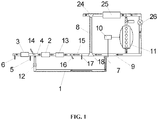
- FIG. 1 is an arrangement structural schematic diagram of a first exhaust treatment unit of an engine exhaust aftertreatment device according to an embodiment of the present disclosure
- FIG. 2 is an arrangement structural schematic diagram of a second exhaust treatment unit of an engine exhaust aftertreatment device according to an embodiment of the present disclosure
- FIGS. 1 and 2 Reference numerals in FIGS. 1 and 2 are listed as follow: 1 first bypass pipeline, 2 DPF, 3 SCR, 4 first connection pipeline, 5 first temperature sensor, 6 nitrogen oxygen sensor, 7 first intelligent control valve, 8 turbocharger, 9 turbine front exhaust pipe, 10 ECU, 11 engine, 12 first one-way valve, 13 DOC, 14 urea nozzle, 15 turbine rear exhaust pipe, 16 HC nozzle, 17 hydrogen oxygen sensor, 18 turbine, 19 second bypass pipeline, 20 second bypass pipeline, 21 second temperature sensor, 22 second intelligent control valve, 23 second one-way valve, 24 compressor, 25 intercooler, 26 EGR, 27 third temperature sensor.
- the core of the present disclosure is to provide an engine exhaust aftertreatment device and method to solve the problem of low exhaust treatment efficiency and exhaust excessive emissions of the engine exhaust aftertreatment device.
- an engine exhaust aftertreatment device provided according to the present disclosure includes a first exhaust treatment unit and/or a second exhaust treatment unit;
- the first intelligent control valve is included, and if the engine is in the normal working state, the first intelligent control valve is in the normally closed state, and the exhaust gas passes through the turbocharger and then enters the DOC; if the temperature detected by the first temperature sensor is lower than the first preset value, or if the nitrogen oxygen emission detected by the nitrogen oxygen sensor exceeds the second preset value, or if the engine is in the cold start, it indicates the internal carrier of the aftertreatment has low temperature and poor catalytic activity. This kind of situation is particularly likely to occur when the engine is in the cold start or idling for a long time.
- the first intelligent control valve is controlled by the ECU to open, so that the high-temperature exhaust gas of the turbine front exhaust pipe is directly introduced into the SCR through the first bypass pipeline, and the high-temperature exhaust gas of the turbine directly enters the SCR without passing through a supercharger, which increases the temperature of the exhaust gas, and quickly activates catalytic activity, reduces emissions and the risk of excessive unreacted urea accumulation in the SCR and internal crystallization of the SCR, improves the efficiency of active regeneration, the action efficiency of the SCR, and the efficiency of the engine.
- the SCR reaction does not require additional thermal management, which reduces the energy consumption caused by thermal management, thereby reducing the energy waste caused by thermal management in the aftertreatment, and improving the reaction efficiency of the SCR. Therefore, through the first exhaust treatment unit, the exhaust treatment efficiency of the engine exhaust aftertreatment device may be improved, and the risk of exhaust excessive emission is reduced to a certain extent.
- the second intelligent control valve is included, and if the engine is in the normal working state, the second intelligent control valve is in the normally closed state, and the exhaust gas passes through the turbocharger and enters the DOC; if the temperature detected by the second temperature sensor is lower than the third preset value (generally 250 degrees Celsius), or if the carbon load detected by the carbon load detection device reaches the carbon load required by the regeneration request of the DPF, it indicates the internal carrier of the aftertreatment has low temperature and poor catalytic activity. This kind of situation is particularly likely to occur when the engine is in the cold start or idling for a long time.
- the third preset value generally 250 degrees Celsius
- the second intelligent control valve is controlled by the ECU to open, so that the high-temperature exhaust gas of the turbine front exhaust pipe is directly introduced into the DPF, and the high-temperature exhaust gas of the turbine directly enters the DPF without passing through the supercharger, which increases the temperature of the exhaust, and quickly activates catalytic activity, reduces emissions, and reduces the cumulative rate of carbon deposits inside the DPF and the frequency of active regeneration of the DPF, and improves the reliability of the aftertreatment.
- a regeneration of the DPF is requested, there is no need to perform additional thermal management control, which reduces the energy consumption caused by thermal management, thereby reducing the energy waste caused by thermal management in the aftertreatment, and improving the efficiency of the passive regeneration of the DPF. Therefore, through the second exhaust treatment unit, the exhaust treatment efficiency of the engine exhaust aftertreatment device is improved, and the risk of exhaust excessive emission is reduced to a certain extent.
- first exhaust treatment unit and the second exhaust treatment unit may be chosen to arrange only one in the engine exhaust treatment device, or the first exhaust treatment unit and the second exhaust treatment unit may be provided at the same time. In practice application, the arrangement may be chosen according to actual needs.
- the conversion efficiency of the SCR may be improved through the first exhaust treatment unit, thereby improving the exhaust treatment efficiency of the exhaust aftertreatment device; the passive regeneration efficiency of the DPF may be improved through the second exhaust treatment unit, thereby improving the exhaust treatment efficiency of the exhaust aftertreatment device.
- a first one-way valve 12 is provided on the first bypass pipeline 1, and the first one-way valve 12 only allows one-way communication from one end connected with the turbine front exhaust pipe 9 to the other end connected with the first connection pipeline 4.
- a PID closed loop is used to adjust the opening degree of the first intelligent control valve 7, so that the first intelligent control valve may correct the opening degree of the first intelligent control valve by calculating the size of the opening degree, which enables the first intelligent control valve to maintain an accurate opening degree.
- a urea nozzle 14 is further provided on the first connection pipeline 4 for connecting a urea solution, and an intake temperature detection device is provided at an inlet of the engine 11.
- an intake temperature detection device By detecting an intake temperature of the engine through the intake temperature detection device, it is determined that whether the intake temperature of the engine is higher or lower than the normal intake temperature may be determined.
- the intake temperature is relatively high or low, the combustion of the engine may be more unstable after the device for improving the conversion efficiency of the SCR provided by the disclosure is activated. Therefore, in a case that the relatively high or low intake temperature of the engine is detected, the above function is not activated, that is, the intelligent control valve is in a closed state.
- an HC nozzle 16 is further provided on a turbine rear exhaust pipe 15 of the turbocharger 8.
- a hydrogen oxygen sensor 17 is further provided on the turbine rear exhaust pipe 15, and the hydrogen oxygen sensor 17 is located between the HC nozzle 16 and a turbine 18 of the turbocharger 8.
- real-time rate calculation may be performed according to the concentration of NO x measured by the hydrogen oxygen sensor, so as to meet the needs of urea injection control and efficiency monitoring of the SCR.
- a second one-way valve 23 is further provided on the second bypass pipeline 19, and the second one-way valve 23 only allows one-way communication from one end connected with the turbine front exhaust pipe 9 to the other end connected with the second connection pipeline 20.
- a PID closed loop is used to adjust the opening degree of the second intelligent control valve 22, so that the second intelligent control valve may correct the opening degree of the second intelligent control valve by calculating the size of the opening degree, which enables the second intelligent control valve to maintain an accurate opening degree.
- a third temperature sensor 27 for detecting an intake temperature of the DOC is further provided at an inlet of the DOC 13.
- the reaction rate of the SCR may be determined in an auxiliary manner by detecting the temperature upstream of the DOC, because the reaction rate of the SCR is greatly affected by the temperature upstream of the DOC.
- ECU is an abbreviation for electronic control unit in a vehicle.
- ECU should further include an intercooler 25 and an EGR 26, in which the EGR is a cooler, the SCR is a device for reducing the concentration of NO x in the exhaust gas by spraying urea solution in the engine exhaust aftertreatment device; in addition, the turbocharge 8 should include a turbine 18 and a compressor 24.
- an engine exhaust aftertreatment method is further provided according to the present disclosure, the engine exhaust aftertreatment device described in any one of the above solutions is used by the method, and the method specifically including the steps:
- the above engine exhaust aftertreatment device is used by the above method, and the above engine exhaust aftertreatment device has the above technical effects, so the method using the above engine exhaust aftertreatment device also has corresponding technical effects, which will not be repeated here.
Landscapes
- Engineering & Computer Science (AREA)
- Chemical & Material Sciences (AREA)
- Chemical Kinetics & Catalysis (AREA)
- Combustion & Propulsion (AREA)
- Mechanical Engineering (AREA)
- General Engineering & Computer Science (AREA)
- Health & Medical Sciences (AREA)
- Toxicology (AREA)
- Materials Engineering (AREA)
- Exhaust Gas After Treatment (AREA)
- Processes For Solid Components From Exhaust (AREA)
Applications Claiming Priority (1)
| Application Number | Priority Date | Filing Date | Title |
|---|---|---|---|
| PCT/CN2018/121080 WO2020118654A1 (fr) | 2018-12-14 | 2018-12-14 | Dispositif et procédé de post-traitement des gaz d'échappement de moteur |
Publications (3)
| Publication Number | Publication Date |
|---|---|
| EP3896265A1 true EP3896265A1 (fr) | 2021-10-20 |
| EP3896265A4 EP3896265A4 (fr) | 2022-07-20 |
| EP3896265B1 EP3896265B1 (fr) | 2025-05-14 |
Family
ID=71076750
Family Applications (1)
| Application Number | Title | Priority Date | Filing Date |
|---|---|---|---|
| EP18943270.1A Active EP3896265B1 (fr) | 2018-12-14 | 2018-12-14 | Dispositif et procédé de post-traitement des gaz d'échappement de moteur |
Country Status (6)
| Country | Link |
|---|---|
| US (1) | US11346266B2 (fr) |
| EP (1) | EP3896265B1 (fr) |
| CN (1) | CN113272536A (fr) |
| CA (1) | CA3116788C (fr) |
| PL (1) | PL3896265T3 (fr) |
| WO (1) | WO2020118654A1 (fr) |
Cited By (2)
| Publication number | Priority date | Publication date | Assignee | Title |
|---|---|---|---|---|
| WO2024062229A1 (fr) * | 2022-09-19 | 2024-03-28 | Cummins Emission Solutions, Inc. | Commande de turbine pour dosage amélioré |
| US12503967B2 (en) | 2019-08-14 | 2025-12-23 | Cummins Emission Solutions Inc. | Exhaust gas aftertreatment system |
Families Citing this family (6)
| Publication number | Priority date | Publication date | Assignee | Title |
|---|---|---|---|---|
| US10585185B2 (en) | 2017-02-03 | 2020-03-10 | Rohde & Schwarz Gmbh & Co. Kg | Security scanning system with walk-through-gate |
| CN113914982A (zh) * | 2021-11-01 | 2022-01-11 | 中国重汽集团济南动力有限公司 | 一种颗粒捕集器被动再生效率检测系统及方法 |
| CN114236050B (zh) * | 2021-12-13 | 2024-02-20 | 潍柴动力股份有限公司 | 一种氮氧传感器控制方法及装置 |
| CN115898609B (zh) * | 2023-03-01 | 2023-06-23 | 潍柴动力股份有限公司 | 尾气后处理装置、尾气后处理装置的控制方法及车辆 |
| CN117167659A (zh) * | 2023-09-07 | 2023-12-05 | 北内柴油机(天津)有限公司 | 一种发动机台架排气管路结构及测试方法 |
| CN117404161B (zh) * | 2023-11-30 | 2026-01-13 | 广西玉柴机器股份有限公司 | 一种基于双级scr系统的dpf再生控制方法 |
Family Cites Families (15)
| Publication number | Priority date | Publication date | Assignee | Title |
|---|---|---|---|---|
| DE102009004416A1 (de) * | 2009-01-13 | 2010-07-15 | Man Nutzfahrzeuge Aktiengesellschaft | Verfahren zum Betrieb von Komponenten der Abgasnachbehandlung sowie Abgasnachbehandlungsvorrichung |
| WO2010081665A1 (fr) | 2009-01-13 | 2010-07-22 | Man Nutzfahrzeuge Aktiengesellschaft | Procédé de fonctionnement de composants pour le post-traitement des gaz d'échappement et dispositif de post-traitement des gaz d'échappement |
| US8230843B2 (en) * | 2009-07-30 | 2012-07-31 | Ford Global Technologies, Llc | Cooler bypass to reduce condensate in a low-pressure EGR system |
| US8347609B2 (en) | 2009-12-23 | 2013-01-08 | Ford Global Technologies, Llc | Methods and systems for emission system control |
| US8347611B2 (en) * | 2009-12-23 | 2013-01-08 | Ford Global Technologies, Llc | Methods and systems for emission system control |
| DE102011017486A1 (de) * | 2011-04-19 | 2012-10-25 | Daimler Ag | Betriebsverfahren für einen Kraftfahrzeug-Dieselmotor mit einer Abgasreinigungsanlage |
| KR101875228B1 (ko) * | 2012-01-27 | 2018-07-05 | 두산인프라코어 주식회사 | Urea-scr 시스템 장치 및 제어방법 |
| US8745974B2 (en) * | 2012-01-31 | 2014-06-10 | Caterpillar Inc. | Exhaust system |
| DE102014201579B4 (de) | 2013-02-13 | 2017-06-14 | Ford Global Technologies, Llc | Brennkraftmaschine mit selektivem Katalysator zur Reduzierung der Stickoxide und Verfahren zum Betreiben einer derartigen Brennkraftmaschine |
| US8828342B1 (en) * | 2013-10-10 | 2014-09-09 | International Engine Intellectual Property Company, Llc | DPF energy conservation |
| US9212614B2 (en) * | 2013-11-21 | 2015-12-15 | Cummins Inc. | Thermal management for regenerating an aftertreatment device |
| DE102016201770B3 (de) * | 2016-02-05 | 2017-06-29 | Ford Global Technologies, Llc | Selbstzündende und für den HCCI-Betrieb geeignete Brennkraftmaschine und Verfahren zum Betreiben einer derartigen Brennkraftmaschine |
| US10677122B2 (en) * | 2017-09-08 | 2020-06-09 | Ford Global Technologies, Llc | Method and system for a particulate filter |
| JP7055641B2 (ja) * | 2018-01-12 | 2022-04-18 | 日本碍子株式会社 | 車両用エンジンにおける燃焼制御方法および車両用エンジンシステム |
| US11136944B2 (en) * | 2018-02-01 | 2021-10-05 | Ford Global Technologies, Llc | Blowdown runner wastegate for a split exhaust engine system |
-
2018
- 2018-12-14 PL PL18943270.1T patent/PL3896265T3/pl unknown
- 2018-12-14 US US17/287,935 patent/US11346266B2/en active Active
- 2018-12-14 CN CN201880096672.3A patent/CN113272536A/zh active Pending
- 2018-12-14 CA CA3116788A patent/CA3116788C/fr active Active
- 2018-12-14 WO PCT/CN2018/121080 patent/WO2020118654A1/fr not_active Ceased
- 2018-12-14 EP EP18943270.1A patent/EP3896265B1/fr active Active
Cited By (2)
| Publication number | Priority date | Publication date | Assignee | Title |
|---|---|---|---|---|
| US12503967B2 (en) | 2019-08-14 | 2025-12-23 | Cummins Emission Solutions Inc. | Exhaust gas aftertreatment system |
| WO2024062229A1 (fr) * | 2022-09-19 | 2024-03-28 | Cummins Emission Solutions, Inc. | Commande de turbine pour dosage amélioré |
Also Published As
| Publication number | Publication date |
|---|---|
| CA3116788A1 (fr) | 2020-06-18 |
| WO2020118654A1 (fr) | 2020-06-18 |
| EP3896265A4 (fr) | 2022-07-20 |
| US11346266B2 (en) | 2022-05-31 |
| CA3116788C (fr) | 2023-10-31 |
| PL3896265T3 (pl) | 2025-10-20 |
| CN113272536A (zh) | 2021-08-17 |
| EP3896265B1 (fr) | 2025-05-14 |
| US20210310395A1 (en) | 2021-10-07 |
Similar Documents
| Publication | Publication Date | Title |
|---|---|---|
| US11346266B2 (en) | Engine exhaust aftertreatment device and method | |
| EP2060756B1 (fr) | Procédé et système utilisant un catalyseur de réduction pour réduire l'oxyde de nitrate | |
| CN115898609B (zh) | 尾气后处理装置、尾气后处理装置的控制方法及车辆 | |
| CN211819579U (zh) | 柴油机及其后处理系统 | |
| JP5763294B2 (ja) | 排気浄化装置 | |
| JP2013142363A (ja) | ディーゼルエンジンの排気ガス浄化装置 | |
| CN116398283B (zh) | 一种dpf主动再生的后处理排放装置及控制方法 | |
| US11047282B2 (en) | Exhaust gas purification device | |
| JP2010121521A (ja) | エンジンの後処理システム | |
| CN112253299A (zh) | 发动机尾气NOx的净化系统及其控制方法、发动机 | |
| CN116877240A (zh) | 一种满足非道路第五阶段排放的柴油机尾气后处理系统 | |
| JP6589365B2 (ja) | 排出ガス浄化システム | |
| JP2012102684A (ja) | エンジンの排気浄化装置 | |
| CN210003364U (zh) | 一种后处理系统 | |
| CN118896017B (zh) | 一种氨柴发动机的尾气处理装置及尾气处理方法 | |
| US10947885B2 (en) | Passive nitric oxide storage catalyst management | |
| CN102383902B (zh) | 非电控柴油机排放物的控制处理方法及系统 | |
| CN110925066B (zh) | 后处理控制方法及发动机 | |
| CN113833552B (zh) | 碳颗粒清除方法及排气后处理系统 | |
| CN120367720B (zh) | 一种发动机排放系统及其热管理控制方法、车辆 | |
| JP2016079861A (ja) | 内燃機関のNOx浄化システム | |
| CN121111445B (zh) | 一种柴油机两级scr后处理系统及方法 | |
| EP4610475A1 (fr) | Moteur diesel | |
| CN109488428B (zh) | 一种后处理效率的控制方法、装置及系统 | |
| CN121916064A (zh) | 车辆尾气处理系统的控制方法、控制装置及车辆 |
Legal Events
| Date | Code | Title | Description |
|---|---|---|---|
| STAA | Information on the status of an ep patent application or granted ep patent |
Free format text: STATUS: THE INTERNATIONAL PUBLICATION HAS BEEN MADE |
|
| PUAI | Public reference made under article 153(3) epc to a published international application that has entered the european phase |
Free format text: ORIGINAL CODE: 0009012 |
|
| STAA | Information on the status of an ep patent application or granted ep patent |
Free format text: STATUS: REQUEST FOR EXAMINATION WAS MADE |
|
| 17P | Request for examination filed |
Effective date: 20210506 |
|
| AK | Designated contracting states |
Kind code of ref document: A1 Designated state(s): AL AT BE BG CH CY CZ DE DK EE ES FI FR GB GR HR HU IE IS IT LI LT LU LV MC MK MT NL NO PL PT RO RS SE SI SK SM TR |
|
| DAV | Request for validation of the european patent (deleted) | ||
| DAX | Request for extension of the european patent (deleted) | ||
| REG | Reference to a national code |
Ref country code: DE Ref legal event code: R079 Free format text: PREVIOUS MAIN CLASS: F01N0003280000 Ipc: F01N0003021000 Ref document number: 602018082033 Country of ref document: DE |
|
| A4 | Supplementary search report drawn up and despatched |
Effective date: 20220622 |
|
| RIC1 | Information provided on ipc code assigned before grant |
Ipc: F01N 3/20 20060101ALI20220615BHEP Ipc: F01N 3/10 20060101ALI20220615BHEP Ipc: F01N 9/00 20060101ALI20220615BHEP Ipc: F01N 3/021 20060101AFI20220615BHEP |
|
| STAA | Information on the status of an ep patent application or granted ep patent |
Free format text: STATUS: EXAMINATION IS IN PROGRESS |
|
| 17Q | First examination report despatched |
Effective date: 20240417 |
|
| GRAP | Despatch of communication of intention to grant a patent |
Free format text: ORIGINAL CODE: EPIDOSNIGR1 |
|
| STAA | Information on the status of an ep patent application or granted ep patent |
Free format text: STATUS: GRANT OF PATENT IS INTENDED |
|
| INTG | Intention to grant announced |
Effective date: 20241209 |
|
| GRAS | Grant fee paid |
Free format text: ORIGINAL CODE: EPIDOSNIGR3 |
|
| GRAA | (expected) grant |
Free format text: ORIGINAL CODE: 0009210 |
|
| STAA | Information on the status of an ep patent application or granted ep patent |
Free format text: STATUS: THE PATENT HAS BEEN GRANTED |
|
| AK | Designated contracting states |
Kind code of ref document: B1 Designated state(s): AL AT BE BG CH CY CZ DE DK EE ES FI FR GB GR HR HU IE IS IT LI LT LU LV MC MK MT NL NO PL PT RO RS SE SI SK SM TR |
|
| REG | Reference to a national code |
Ref country code: GB Ref legal event code: FG4D |
|
| REG | Reference to a national code |
Ref country code: CH Ref legal event code: EP |
|
| REG | Reference to a national code |
Ref country code: IE Ref legal event code: FG4D |
|
| REG | Reference to a national code |
Ref country code: DE Ref legal event code: R096 Ref document number: 602018082033 Country of ref document: DE |
|
| REG | Reference to a national code |
Ref country code: NL Ref legal event code: MP Effective date: 20250514 |
|
| PG25 | Lapsed in a contracting state [announced via postgrant information from national office to epo] |
Ref country code: PT Free format text: LAPSE BECAUSE OF FAILURE TO SUBMIT A TRANSLATION OF THE DESCRIPTION OR TO PAY THE FEE WITHIN THE PRESCRIBED TIME-LIMIT Effective date: 20250915 Ref country code: FI Free format text: LAPSE BECAUSE OF FAILURE TO SUBMIT A TRANSLATION OF THE DESCRIPTION OR TO PAY THE FEE WITHIN THE PRESCRIBED TIME-LIMIT Effective date: 20250514 Ref country code: ES Free format text: LAPSE BECAUSE OF FAILURE TO SUBMIT A TRANSLATION OF THE DESCRIPTION OR TO PAY THE FEE WITHIN THE PRESCRIBED TIME-LIMIT Effective date: 20250514 |
|
| REG | Reference to a national code |
Ref country code: LT Ref legal event code: MG9D |
|
| PG25 | Lapsed in a contracting state [announced via postgrant information from national office to epo] |
Ref country code: GR Free format text: LAPSE BECAUSE OF FAILURE TO SUBMIT A TRANSLATION OF THE DESCRIPTION OR TO PAY THE FEE WITHIN THE PRESCRIBED TIME-LIMIT Effective date: 20250815 Ref country code: NO Free format text: LAPSE BECAUSE OF FAILURE TO SUBMIT A TRANSLATION OF THE DESCRIPTION OR TO PAY THE FEE WITHIN THE PRESCRIBED TIME-LIMIT Effective date: 20250814 |
|
| PG25 | Lapsed in a contracting state [announced via postgrant information from national office to epo] |
Ref country code: NL Free format text: LAPSE BECAUSE OF FAILURE TO SUBMIT A TRANSLATION OF THE DESCRIPTION OR TO PAY THE FEE WITHIN THE PRESCRIBED TIME-LIMIT Effective date: 20250514 |
|
| REG | Reference to a national code |
Ref country code: AT Ref legal event code: MK05 Ref document number: 1794928 Country of ref document: AT Kind code of ref document: T Effective date: 20250514 |
|
| PG25 | Lapsed in a contracting state [announced via postgrant information from national office to epo] |
Ref country code: BG Free format text: LAPSE BECAUSE OF FAILURE TO SUBMIT A TRANSLATION OF THE DESCRIPTION OR TO PAY THE FEE WITHIN THE PRESCRIBED TIME-LIMIT Effective date: 20250514 |
|
| PG25 | Lapsed in a contracting state [announced via postgrant information from national office to epo] |
Ref country code: HR Free format text: LAPSE BECAUSE OF FAILURE TO SUBMIT A TRANSLATION OF THE DESCRIPTION OR TO PAY THE FEE WITHIN THE PRESCRIBED TIME-LIMIT Effective date: 20250514 |
|
| PG25 | Lapsed in a contracting state [announced via postgrant information from national office to epo] |
Ref country code: AT Free format text: LAPSE BECAUSE OF FAILURE TO SUBMIT A TRANSLATION OF THE DESCRIPTION OR TO PAY THE FEE WITHIN THE PRESCRIBED TIME-LIMIT Effective date: 20250514 |
|
| PG25 | Lapsed in a contracting state [announced via postgrant information from national office to epo] |
Ref country code: RS Free format text: LAPSE BECAUSE OF FAILURE TO SUBMIT A TRANSLATION OF THE DESCRIPTION OR TO PAY THE FEE WITHIN THE PRESCRIBED TIME-LIMIT Effective date: 20250814 |
|
| PG25 | Lapsed in a contracting state [announced via postgrant information from national office to epo] |
Ref country code: IS Free format text: LAPSE BECAUSE OF FAILURE TO SUBMIT A TRANSLATION OF THE DESCRIPTION OR TO PAY THE FEE WITHIN THE PRESCRIBED TIME-LIMIT Effective date: 20250914 |
|
| PG25 | Lapsed in a contracting state [announced via postgrant information from national office to epo] |
Ref country code: LV Free format text: LAPSE BECAUSE OF FAILURE TO SUBMIT A TRANSLATION OF THE DESCRIPTION OR TO PAY THE FEE WITHIN THE PRESCRIBED TIME-LIMIT Effective date: 20250514 |
|
| PG25 | Lapsed in a contracting state [announced via postgrant information from national office to epo] |
Ref country code: DK Free format text: LAPSE BECAUSE OF FAILURE TO SUBMIT A TRANSLATION OF THE DESCRIPTION OR TO PAY THE FEE WITHIN THE PRESCRIBED TIME-LIMIT Effective date: 20250514 Ref country code: SM Free format text: LAPSE BECAUSE OF FAILURE TO SUBMIT A TRANSLATION OF THE DESCRIPTION OR TO PAY THE FEE WITHIN THE PRESCRIBED TIME-LIMIT Effective date: 20250514 |
|
| PG25 | Lapsed in a contracting state [announced via postgrant information from national office to epo] |
Ref country code: CZ Free format text: LAPSE BECAUSE OF FAILURE TO SUBMIT A TRANSLATION OF THE DESCRIPTION OR TO PAY THE FEE WITHIN THE PRESCRIBED TIME-LIMIT Effective date: 20250514 |
|
| PGFP | Annual fee paid to national office [announced via postgrant information from national office to epo] |
Ref country code: PL Payment date: 20251124 Year of fee payment: 8 |
|
| PG25 | Lapsed in a contracting state [announced via postgrant information from national office to epo] |
Ref country code: EE Free format text: LAPSE BECAUSE OF FAILURE TO SUBMIT A TRANSLATION OF THE DESCRIPTION OR TO PAY THE FEE WITHIN THE PRESCRIBED TIME-LIMIT Effective date: 20250514 |
|
| PG25 | Lapsed in a contracting state [announced via postgrant information from national office to epo] |
Ref country code: SK Free format text: LAPSE BECAUSE OF FAILURE TO SUBMIT A TRANSLATION OF THE DESCRIPTION OR TO PAY THE FEE WITHIN THE PRESCRIBED TIME-LIMIT Effective date: 20250514 |
|
| PGFP | Annual fee paid to national office [announced via postgrant information from national office to epo] |
Ref country code: RO Payment date: 20251209 Year of fee payment: 8 |
|
| PG25 | Lapsed in a contracting state [announced via postgrant information from national office to epo] |
Ref country code: IT Free format text: LAPSE BECAUSE OF FAILURE TO SUBMIT A TRANSLATION OF THE DESCRIPTION OR TO PAY THE FEE WITHIN THE PRESCRIBED TIME-LIMIT Effective date: 20250514 |
|
| REG | Reference to a national code |
Ref country code: DE Ref legal event code: R097 Ref document number: 602018082033 Country of ref document: DE |
|
| PLBE | No opposition filed within time limit |
Free format text: ORIGINAL CODE: 0009261 |
|
| STAA | Information on the status of an ep patent application or granted ep patent |
Free format text: STATUS: NO OPPOSITION FILED WITHIN TIME LIMIT |
|
| REG | Reference to a national code |
Ref country code: CH Ref legal event code: L10 Free format text: ST27 STATUS EVENT CODE: U-0-0-L10-L00 (AS PROVIDED BY THE NATIONAL OFFICE) Effective date: 20260325 |
|
| 26N | No opposition filed |
Effective date: 20260217 |