EP3896899B1 - Sichere geschichtete verschlüsselung von datenströmen - Google Patents
Sichere geschichtete verschlüsselung von datenströmen Download PDFInfo
- Publication number
- EP3896899B1 EP3896899B1 EP21173723.4A EP21173723A EP3896899B1 EP 3896899 B1 EP3896899 B1 EP 3896899B1 EP 21173723 A EP21173723 A EP 21173723A EP 3896899 B1 EP3896899 B1 EP 3896899B1
- Authority
- EP
- European Patent Office
- Prior art keywords
- key
- stream
- data
- encrypted
- encryption
- Prior art date
- Legal status (The legal status is an assumption and is not a legal conclusion. Google has not performed a legal analysis and makes no representation as to the accuracy of the status listed.)
- Active
Links
Images







Classifications
-
- H—ELECTRICITY
- H04—ELECTRIC COMMUNICATION TECHNIQUE
- H04L—TRANSMISSION OF DIGITAL INFORMATION, e.g. TELEGRAPHIC COMMUNICATION
- H04L9/00—Cryptographic mechanisms or cryptographic arrangements for secret or secure communications; Network security protocols
- H04L9/08—Key distribution or management, e.g. generation, sharing or updating, of cryptographic keys or passwords
- H04L9/0816—Key establishment, i.e. cryptographic processes or cryptographic protocols whereby a shared secret becomes available to two or more parties, for subsequent use
- H04L9/0819—Key transport or distribution, i.e. key establishment techniques where one party creates or otherwise obtains a secret value, and securely transfers it to the other(s)
- H04L9/0825—Key transport or distribution, i.e. key establishment techniques where one party creates or otherwise obtains a secret value, and securely transfers it to the other(s) using asymmetric-key encryption or public key infrastructure [PKI], e.g. key signature or public key certificates
-
- G—PHYSICS
- G08—SIGNALLING
- G08B—SIGNALLING SYSTEMS, e.g. PERSONAL CALLING SYSTEMS; ORDER TELEGRAPHS; ALARM SYSTEMS
- G08B13/00—Burglar, theft or intruder alarms
- G08B13/18—Actuation by interference with heat, light, or radiation of shorter wavelength; Actuation by intruding sources of heat, light, or radiation of shorter wavelength
- G08B13/189—Actuation by interference with heat, light, or radiation of shorter wavelength; Actuation by intruding sources of heat, light, or radiation of shorter wavelength using passive radiation detection systems
- G08B13/194—Actuation by interference with heat, light, or radiation of shorter wavelength; Actuation by intruding sources of heat, light, or radiation of shorter wavelength using passive radiation detection systems using image scanning and comparing systems
- G08B13/196—Actuation by interference with heat, light, or radiation of shorter wavelength; Actuation by intruding sources of heat, light, or radiation of shorter wavelength using passive radiation detection systems using image scanning and comparing systems using television cameras
-
- G—PHYSICS
- G08—SIGNALLING
- G08B—SIGNALLING SYSTEMS, e.g. PERSONAL CALLING SYSTEMS; ORDER TELEGRAPHS; ALARM SYSTEMS
- G08B13/00—Burglar, theft or intruder alarms
- G08B13/18—Actuation by interference with heat, light, or radiation of shorter wavelength; Actuation by intruding sources of heat, light, or radiation of shorter wavelength
- G08B13/189—Actuation by interference with heat, light, or radiation of shorter wavelength; Actuation by intruding sources of heat, light, or radiation of shorter wavelength using passive radiation detection systems
- G08B13/194—Actuation by interference with heat, light, or radiation of shorter wavelength; Actuation by intruding sources of heat, light, or radiation of shorter wavelength using passive radiation detection systems using image scanning and comparing systems
- G08B13/196—Actuation by interference with heat, light, or radiation of shorter wavelength; Actuation by intruding sources of heat, light, or radiation of shorter wavelength using passive radiation detection systems using image scanning and comparing systems using television cameras
- G08B13/19665—Details related to the storage of video surveillance data
- G08B13/19667—Details realated to data compression, encryption or encoding, e.g. resolution modes for reducing data volume to lower transmission bandwidth or memory requirements
-
- H—ELECTRICITY
- H04—ELECTRIC COMMUNICATION TECHNIQUE
- H04L—TRANSMISSION OF DIGITAL INFORMATION, e.g. TELEGRAPHIC COMMUNICATION
- H04L63/00—Network architectures or network communication protocols for network security
- H04L63/04—Network architectures or network communication protocols for network security for providing a confidential data exchange among entities communicating through data packet networks
- H04L63/0428—Network architectures or network communication protocols for network security for providing a confidential data exchange among entities communicating through data packet networks wherein the data content is protected, e.g. by encrypting or encapsulating the payload
- H04L63/0435—Network architectures or network communication protocols for network security for providing a confidential data exchange among entities communicating through data packet networks wherein the data content is protected, e.g. by encrypting or encapsulating the payload wherein the sending and receiving network entities apply symmetric encryption, i.e. same key used for encryption and decryption
-
- H—ELECTRICITY
- H04—ELECTRIC COMMUNICATION TECHNIQUE
- H04L—TRANSMISSION OF DIGITAL INFORMATION, e.g. TELEGRAPHIC COMMUNICATION
- H04L9/00—Cryptographic mechanisms or cryptographic arrangements for secret or secure communications; Network security protocols
- H04L9/06—Cryptographic mechanisms or cryptographic arrangements for secret or secure communications; Network security protocols the encryption apparatus using shift registers or memories for block-wise or stream coding, e.g. DES systems or RC4; Hash functions; Pseudorandom sequence generators
- H04L9/065—Encryption by serially and continuously modifying data stream elements, e.g. stream cipher systems, RC4, SEAL or A5/3
-
- H—ELECTRICITY
- H04—ELECTRIC COMMUNICATION TECHNIQUE
- H04L—TRANSMISSION OF DIGITAL INFORMATION, e.g. TELEGRAPHIC COMMUNICATION
- H04L9/00—Cryptographic mechanisms or cryptographic arrangements for secret or secure communications; Network security protocols
- H04L9/14—Cryptographic mechanisms or cryptographic arrangements for secret or secure communications; Network security protocols using a plurality of keys or algorithms
-
- H—ELECTRICITY
- H04—ELECTRIC COMMUNICATION TECHNIQUE
- H04L—TRANSMISSION OF DIGITAL INFORMATION, e.g. TELEGRAPHIC COMMUNICATION
- H04L9/00—Cryptographic mechanisms or cryptographic arrangements for secret or secure communications; Network security protocols
- H04L9/30—Public key, i.e. encryption algorithm being computationally infeasible to invert or user's encryption keys not requiring secrecy
-
- H—ELECTRICITY
- H04—ELECTRIC COMMUNICATION TECHNIQUE
- H04L—TRANSMISSION OF DIGITAL INFORMATION, e.g. TELEGRAPHIC COMMUNICATION
- H04L2209/00—Additional information or applications relating to cryptographic mechanisms or cryptographic arrangements for secret or secure communication H04L9/00
- H04L2209/60—Digital content management, e.g. content distribution
-
- H—ELECTRICITY
- H04—ELECTRIC COMMUNICATION TECHNIQUE
- H04L—TRANSMISSION OF DIGITAL INFORMATION, e.g. TELEGRAPHIC COMMUNICATION
- H04L2209/00—Additional information or applications relating to cryptographic mechanisms or cryptographic arrangements for secret or secure communication H04L9/00
- H04L2209/60—Digital content management, e.g. content distribution
- H04L2209/601—Broadcast encryption
Definitions
- the present application relates to distributing streams of data (e.g. video and other streams in a security network) through a network infrastructure.
- the present application further relates to secure storage and distribution of data streams.
- This application further relates to controlling access to data streams and to providing differentiated access to multiple data streams to multiple users.
- a data stream may be a large, even endless, set of data.
- Data streams are generally divided into pieces, which together make up the stream.
- a video stream may be made up of video frames. These pieces are usually finite in length although depending on the type of data stream, it can be made up of predetermined size pieces or arbitrary (finite) sized pieces.
- PII personally identifiable information data
- An investigator is a user who harbors an interest in examining the contents of, or information about, any combination of data streams (e.g. a law enforcement agent, a prosecutor, a member of the security services or para-military organization, a security contractor, private investigator, a vendor contracted to enable forensic investigations or surveillance, a crime analyst, a marketing or business intelligence analyst, an automated system performing the functions of an investigator).
- a law enforcement agent e.g. a prosecutor, a member of the security services or para-military organization, a security contractor, private investigator, a vendor contracted to enable forensic investigations or surveillance, a crime analyst, a marketing or business intelligence analyst, an automated system performing the functions of an investigator.
- PII is "any information about an individual
- Linked information is information about or related to an individual that is logically associated with other information about the individual.
- linkable information is information about or related to an individual for which there is a possibility of logical association with other information about the individual.”
- an Originator may be a social media service provider or a retail merchant, interested in ensuring that certain PII of their clients is accessed by Investigators only when there is a legitimate need to do so.
- Owners of large security systems networks such as large businesses with a large number of cameras and other data sources, e.g. spread out over large or widespread premises may have the technical staff to run a data center, however with larger networks of surveillance equipment (or other data streaming sources) come very large quantities of data, which in turn require very large and expensive data centers.
- Cloud computing services offer the ability to store small or large amounts of data and streaming access online.
- cloud computing may provide redundant safety measures to ensure robust resilience to issues that can affect data storage such as floods, power failures, natural disasters, etc.
- Cloud computing offers an attractive alternative to self-administered data centers. It allows a purchaser to obtain reliable, scalable, redundant storage that is typically 24/7 accessible.
- cloud computing suffers from trust issues.
- cloud computing typically involves the purchase of on-demand services from a third party which may make certain security guarantees but which ultimately is beyond the control of the purchaser.
- highly sensitive data such as video streams from security cameras and other security-related data which may be core to the integrity of an organization, there is a reluctance to resort to external services for storage.
- Access control is another challenge facing streaming data management and particularly video surveillance data management.
- security staff may have access to the video feed from certain cameras, while it may be desired to keep the feed of other cameras, e.g. in highly sensitive areas, inaccessible to all but a subset of users.
- monitoring data could be used under certain conditions, e.g. with a warrant.
- it may be illegal to film public places or the private premises of others.
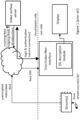
- Securing means and architectures currently known in the art are typically session-based.
- An example of such a system is illustrated in Figure 1 .
- Significant responsibility for such securing within storage services is placed on the account validation and file server components, burdening the latter with computational overhead that still renders the file storage service vulnerable overall.
- archive servers are typically made to manage keys, credentials, or other securing schemes, and often confer all but the crudest of access rights (i.e. fully granted or fully denied) to archived content. Deeper intelligence as to the content shared is likewise typically lacking preventing more sophisticated - and nuanced - forms of sharing, restriction, and rights management.
- a method for controlling access to streaming data by users over an untrusted network comprises at a trusted network zone at an encryption computer system obtaining from a key generator a first symmetric encryption key stream comprising a first plurality of distinct symmetric encryption keys encrypting respective sequential portions of a first data stream to create a first symmetrically encrypted data stream comprising sequential portions of encrypted data.
- the method further comprises at the trusted network zone receiving at least one public asymmetric encryption keys from respective remote computer systems over an untrusted network.
- the method further comprises at the trusted network zone.
- the method further comprises at the trusted network zone generating asymmetrically encrypted key stream data by digitally encrypting by the encryption computer system the first symmetric encryption key stream using each one of the at least one public asymmetric encryption keys to create respective asymmetrically encrypted first key streams wherein each of the asymmetrically encrypted first key streams is encrypted with a respective one of the at least one public asymmetric encryption keys, the asymmetrically encrypted key stream data comprising each of the asymmetrically encrypted first key streams.
- the method further comprises at the trusted network zone from the encryption computer system, transmitting the asymmetrically encrypted key stream data over the untrusted network.
- an encryption computer system for operating in a trusted network zone to control access to streaming data by users over an untrusted network.
- the encryption computer system comprises computer-readable instructions stored in a computer-readable storage medium comprising instructions for instructing a general-purpose processing unit to obtain from a key generator a first symmetric encryption key stream comprising a first plurality of distinct symmetric encryption keys encrypting respective sequential portions of a first data stream to create a first encrypted data stream comprising sequential portions of encrypted data.
- the encryption computer system also comprises computer-readable instructions stored in a computer-readable storage medium comprising instructions for instructing a general-purpose processing unit to receive at least one public asymmetric encryption keys from respective remote computer systems over an untrusted network.
- the encryption computer system also comprises computer-readable instructions stored in a computer-readable storage medium comprising instructions for instructing a general-purpose processing unit to generate asymmetrically encrypted key stream data by digitally encrypting the first symmetric encryption key stream using each one of the at least one public asymmetric encryption keys to create respective asymmetrically encrypted first key streams wherein each of the asymmetrically encrypted first key streams is encrypted with a respective one of the at least one public asymmetric encryption keys, the asymmetrically encrypted key stream data comprising each of the asymmetrically encrypted first key streams.
- the encryption computer system also comprises computer-readable instructions stored in a computer-readable storage medium comprising instructions for instructing a general-purpose processing unit to transmit the asymmetrically encrypted key stream data over the untrusted network.
- a method for accessing streaming data over an untrusted network comprises receiving at an agent station a symmetrically encrypted data stream comprising sequential portions of encrypted data.
- the method further comprises receiving at the agent station a asymmetrically encrypted key stream encrypted with a public key, the asymmetrically encrypted key stream comprising an encrypted symmetric encryption key stream comprising a plurality of distinct symmetric encryption keys encrypting respective sequential portions of a data stream into the symmetrically encrypted data stream.
- the method further comprises at the agent station, decrypting the asymmetrically encrypted key stream with a private key to derive the symmetric encryption key stream comprising the plurality of distinct symmetric encryption keys.
- the method further comprises at the agent station, decrypting the symmetrically encrypted data stream using symmetric encryption key stream by decrypting each sequential portion of encrypted data with a respective one of the plurality of distinct symmetric encryption keys to derive at least a portion of the data stream.
- the method further comprises at the agent station processing the at least a portion of the data stream.
- a computer system for accessing streaming data over an untrusted network comprising computer-readable instructions stored in a computer-readable storage medium comprising instructions for instructing a general-purpose processing unit to receive at an agent station a symmetrically encrypted data stream comprising sequential portions of encrypted data.
- the computer system further comprises computer-readable instructions stored in a computer-readable storage medium comprising instructions for instructing a general-purpose processing unit to receive at the agent station a asymmetrically encrypted key stream encrypted with a public key, the asymmetrically encrypted key stream comprising an encrypted symmetric encryption key stream comprising a plurality of distinct symmetric encryption keys encrypting respective sequential portions of a data stream into the symmetrically encrypted data stream.
- the computer system further comprises computer-readable instructions stored in a computer-readable storage medium comprising instructions for instructing a general-purpose processing unit to decrypt the asymmetrically encrypted key stream with a private key to derive the symmetric encryption key stream comprising the plurality of distinct symmetric encryption keys.
- the computer system further comprises computer-readable instructions stored in a computer-readable storage medium comprising instructions for instructing a general-purpose processing unit to decrypt the symmetrically encrypted data stream using symmetric encryption key stream by decrypting each sequential portion of encrypted data with a respective one of the plurality of distinct symmetric encryption keys to derive at least a portion of the data stream.
- the computer system further comprises computer-readable instructions stored in a computer-readable storage medium comprising instructions for instructing a general-purpose processing unit to process the at least a portion of the data stream.
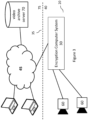
- FIG. 2a and Figure 2b illustrates conceptually a premise 25 where a video surveillance network operates.
- the video surveillance network comprises a plurality of data stream sources 50, which in this example are video surveillance cameras installed at various locations in the premises 25.
- Such monitoring may be desired for any purpose, such as for reasons related to surveillance and/or in connection with securing a given area, for archiving the events occurring within a given delimited space, or for any other purpose.
- the monitoring typically originates with a stream source 50, such as a security camera or other device capable of generating a streaming signal.
- Each source 50 may capture one or more stream.
- data sources 50 may provide other types of data such as audio data.
- the streaming data is organized into a data stream according to a suitable format.
- the Motion Picture Expert Group (MPEG) specifies several formats of video/audio streams, many of which are commonly used in video surveillance. Raw image data or sampled sound data may also be streamed in a bitstream, although this requires more bandwidth.
- MPEG Motion Picture
- a video stream may have an accompanying overlay stream providing added information to visually overlay on the video at output.
- the overlays may be associated with a different permission level than the underlying video (e.g. if they contain sensitive information).
- Other types of streams may include location streams such as a stream of GPS coordinates (e.g. corresponding to the location of a moving vehicle or camera), video masking overlays, subtitles or other textual captions (e.g. from speech-to-text), motion levels captured by a motion sensor, audio levels captured by a microphone, event streams (e.g. a stream of access control events such as door openings and motion detections, or video analytics events), license plates read by a license plate reader (e.g.
- the streams may also be stored as a file comprising the sequence of frames and read in a continuum, e.g. according to a current playback time Tx.
- each frame of each stream may be associated with a particular timestamp which may be used to synchronize the different streams.
- one or more streams being read from memory may be accessed according to a playback time, which may be used amongst the different streams to seek chronologically synchronized portions of the streams.
- streams being streamed over the network and received at a network interface may be buffered and played out according to the common playback time Tx.
- Unavailability of frames one of the streams being played back may cause a buffering which may affect all streams, or that stream alone may be buffered, seeked forward to catch up to the others when buffered.
- a buffering which may affect all streams, or that stream alone may be buffered, seeked forward to catch up to the others when buffered.
- Other mechanisms for synchronizing multiple streams may be used.
- a data stream may be finite, referring to such contents as the entirety of a computer file; alternatively, it may be infinite or have an unspecified duration such as video captured from a live surveillance camera.
- a stream may be stored as multiple files in archiving, for example in files corresponding to a fixed amount of time (e.g. 30 minutes) or data (a number of packets, or a number of bytes, etc).
- data source comes from capture devices and data consumption occurs at remote workstations.
- data streams may be provided by one or more users or subscribers at workstations. In such a case, the users or subscribers, and their workstation may take the role of data source(s).
- These workstations may be originators of the data streams or may have received them from a real source that produced them and provided them to the workstations by way of any interface means appropriate for doing so, such as through a physically trusted channel within secured premises, via a secured encrypted web upload portal, or by way of an encrypted tertiary file transfer application.
- One or more streams may be uploaded or transferred to embodiments by any appropriate means, as through a network.
- Said streams or portions thereof may be intended for a single recipient or user/subscriber, or for a specific user/subscriber set.
- a permissions management mechanism may be implemented within the user/subscriber interface to govern such details as which users(s) may access the (1) stream(s), (2) any portions thereof, or (3) information about the streams(s); and any further conditions or limitations governing such access (such as a time restriction).
- the user access/permissions list for each stream or any portion thereof may be specified for each respective stream and any combination of streams therein, within the user-subscriber interface.
- the users/subscribers may transfer streams to a central system or to any other user granted authority, typically by the first uploader or other party possessing ownership authority over a specific stream.
- access/permission may be modified, and correspondingly impact feed encryption policy and later accessibility of respective streams, further discussed herein.
- Data sources 50 have a role as one basis for production of video/data streams as discussed for various embodiments.
- Production of video/data streams may refer to the data streams emanating from any stream source 50; production may likewise encompass the result of a stream following any particular video or other editing process, post-process, enhancement, or other manipulation.
- the stream data that comes from the various data sources 50 is encrypted using a key encryption system. More particularly, the stream data is encrypted using a key stream comprising a plurality of distinct encryption keys that are provided sequentially over a period of time.
- the stream data is encrypted symmetrically using a symmetric encryption key stream that is a stream of symmetrical encryption keys.
- the key stream may be a non-repeating key stream, for example, of randomly generated new keys.
- the data stream can be divided into data stream portions, which may be of preset or arbitrary but finite length (e.g. a number of video frames for a video stream). Each portion may be encrypted by a respective random symmetric key.
- the sequence of symmetric keys encrypting a data stream may make up a key stream.
- the first data stream 105 encrypted using the first symmetric encryption key stream 110 by digitally encrypting with each of the distinct symmetric encryption keys of the first symmetric encryption key stream 110 respective sequential portions of the first data stream 105 to create a first symmetrically encrypted data stream 115.
- the first symmetrically encrypted data stream 115 is thus symmetrically encrypted using the sequence of symmetrical encryption keys in the first symmetrical encryption key stream 110.
- the first symmetrically encrypted data stream 115 comprises sequential portions of encrypted data. These portions, not necessarily organized in sequence although they are in this example, comprise encrypted versions of the sequential portions of the first data stream 105, each having been encrypted with a different encryption key from the first symmetric encryption key stream 110.
- the RTP packet may be provided with additional information as to other keys (e.g. other key indices) and an indication of where in the payload data is the transition point(s) from one key to the next.
- the encryption computer system 30, has access to an electronic access permission directory that stores associations between entities and access to data streams.
- the electronic access permission directory is a permissions 80 table stored in a computer-readable storage of the encryption computer system 30, as shown in Figure 5 .
- the table links comprises an entry for each data stream in the system 10 and for each data stream a list of entity values that are indicative of entities that have the right to access each data stream.
- the directory may comprise an indication of the type of access allowable for each entity for each data stream.
- the table could contain for each data stream entry a list of entity values for each of read access, overwrite access and delete access.
- the entities are represented in the directory by their public key.
- the entity value representative of the entity is the public key with which a symmetric encryption key stream is encrypted to provide access to a corresponding data stream to the entity.
- other identifiers such as user IDs or IP addresses of agent workstations 65 may be used.
- the directory may also comprise an entry to store the public key for each identifier to allow the encryption computer system 30 to find and obtain the public keys used in encrypting the symmetric encryption key streams.
- the encryption computer system 30 only encrypts a key stream with a particular public key if the public key is associated with a permission to access all or a portion of the corresponding data stream. For example, as the encryption computer system 30 receives the first data stream 105, the encryption computer system 30 consults the permissions directory 80 to determine which public keys or entities are permitted to access the first data stream. In this example the first data stream 105 is the video camera feed 1.
- the encryption computer system 30 logic looks up the video camera feed 1 (the first data stream 105) using an identifier associated with the first data stream 105, in this example a MAC address that is provided with the first data stream 105 and that is stored in the directory 80 under Video Camera Feed 1, and identifies in the directory 80 that three public keys are associated with access to the first data stream 105, namely Pub_Key_135, Pub_Key_057, and Pub_Key_169.
- the logic of the encryption computer system 30 encrypts the first symmetric encryption key stream 110 using each of these three public keys.
- the permissions directory may be a more complex database comprising additional fields such as a time period for which permission is granted.
- the time period may correspond to capture time as indicated, e.g. by time stamps in packet headers of the data streams that are preserved as entries in the headers of the encrypted data streams.
- a particular entity or agent may be granted access to camera feeds from a private office after work hours, but not during work hours.
- Other indications of restrictions on data access may be stored in the directory and retrieved by the encryption computer system 30 to control access to the streaming data such as variables indicating conditions based on other events obtained from other data sources 50.
- the encryption computer system 30 may comprise logic for reading data, e.g. streaming data, from data sources 50 and selectively encrypting a particular key stream associated with a particular data stream from a data source 50 on the basis of the read data.
- the encryption computer system may also selectively transmit the key stream on the basis of the read data.
- the first symmetric encryption key stream 110 and all other symmetric encryption key streams, are encrypted asymmetrically with the asymmetric encryption keys associated with a permission to access the corresponding data stream.
- an asymmetrically encrypted first key stream created with a first public key (in this example Pub_Key_135) 120.
- a corresponding asymmetrically encrypted first key stream for all the other public keys associated with access to the first data stream 105.
- another set of asymmetrically encrypted key streams may be created, one for each public key associated with access to the corresponding data.
- the first symmetric encryption key stream 110 is encrypted using a user's, or more generally an entity's, public key according to an asymmetric encryption algorithm.
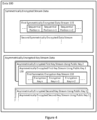
- the asymmetrically encrypted first key stream using the particular public key 120 is made by creating packets (called here for convenience 'key packets') comprising a non-encrypted portion and an encrypted portion.
- the non-encrypted portion comprises a thumbprint identifying the entity associated with this encrypted key stream.
- the thumb print may, for example, comprise the public certificate/public key of the entity. This can be used when receiving a request for a data stream to identify the corresponding encrypted key stream corresponding to the requester and to send the same to the requester.
- each key packet of the encrypted key stream comprises a single encrypted encryption key.
- This in this example there is a 1:1 relationship between symmetric keys from the first symmetric encryption key stream 110 and packets (key packets) of the asymmetrically encrypted first key stream using a particular public key 120.
- the encrypted key stream could be organized differently.
- the non-encrypted portion of the key packets in the encrypted key stream also comprises a life span field comprising life span data indicative of the span of use of an encryption key contained within the packet (in this case, the encryption key of the packet).
- symmetric encryption keys are changed at a certain frequency to encrypt the data stream with ever-changing symmetric keys (hence the key stream).
- the life span data provides an indication of the duration (e.g. in time or in number of frames, or otherwise) of the portion of the data stream that was encrypted with a corresponding (symmetric) encryption key.
- the encrypted portion of the key packets comprise encryption keys, in this example a single one. However, other information may be encrypted along with the symmetric encryption keys of the key stream.
- the encrypted portion also comprises information on how to process the encrypted data stream. For example, it may comprise information indicative of the type of data encrypted and how to process it, or indicative of the encryption protocol used to encrypt the data stream.
- the encrypted portion comprises protocol information indicating what kind of protocol is used to transmit the encrypted data stream and, optionally, protocol parameters. In this example the SRTP protocol is used.
- the receiver receives an encrypted data stream encrypted with a symmetric encryption based on a varying (e.g. time-varying) symmetric encryption key streams comprising individual portions of the encrypted data stream each being associated with a decryption key from a decryption key stream (in this case the decryption key is the same as the encryption key) and comprising a key index associated with a corresponding decryption key in the decryption key stream.
- the receiving device receives an encrypted key stream comprising the decryption key stream comprising portions associated with respective decryption keys.
- the decryption keys are associated with respective key indexes, in this example by having the key index provided with the decryption keys in the stream.
- the receiving device isolates the key index for respective portions of the encrypted data stream, identifies the decryption key associated with it, in this case by isolating the key index from the key stream and obtaining the associated key and decrypting the associated key using a private asymmetric decryption key, and finally, the device uses the decrypted symmetric decryption key associated with the key index to decrypt the portion or portions of the encrypted data stream associated with the same key index.
- the encryption of key streams has been described with reference to one particular key stream (the first symmetric encryption key stream 110) and for one particular asymmetric encryption key. It should be understood, however, that the foregoing can be applied to encrypt the key stream for other asymmetric encryption keys to provide other entities with access to the corresponding data stream. Likewise, the above can be applied to other symmetric key streams corresponding to other data streams.
- the symmetric key streams may be discarded after encrypting with one or more asymmetric public keys such that only entities having access rights can then decrypt the stream and reencrypt it using another public key to provide another entity access to the data stream.
- This may be combined with a request to a remote server (e.g. the server which controls streaming of encrypted data streams and/or encrypted key streams to entities) to provide the rights to the other entity such that the entity may receive the corresponding data stream and/or key stream upon request.
- data streams are immediately encrypted upon receipt by the encryption computer system 30 (alternatively they may be encrypted upon creation at the data source 50) and no copy is kept of the unencrypted data.
- Key streams are kept in a secure location and are isolated from the outside never to be sent, in this example, unless encrypted.
- the absence of a version of the first symmetric encryption key stream 110 encrypted by another entity's public key makes it impossible for that other entity to obtain the key stream and to decrypt the first symmetrically encrypted data stream 115.
- the system 10 benefits from inherent built-in safety that makes it possible to rely less on the security of the video archive server 70. By consequence it is possible to use otherwise insufficiently trusted systems for storage and distributed access to the stream data.
- symmetrical encryption is generally considerably less computationally intensive than asymmetrical encryption. Encryption is often not used in streaming applications because of the burden it imposes on the system. Indeed asymmetric encryption increases significantly the size of and therefore bandwidth required for a stream while imposing a heavy computational burden on encryption/decryption operations. As such, for streaming applications which have high data volumes and require efficient decryption and decoding, such encryption schemes have proven too burdensome for widespread adoption. In contrast symmetrical encryption is a much "lighter" solution which is less computationally burdensome and increases the size/bandwidth by a smaller factor. However, symmetric key encoding alone is less secure due to need to the transfer of keys.
- this encryption scheme whereby a data stream is encrypted symmetrically with a key stream and the key stream is encrypted asymmetrically with public keys of intended data stream recipients, does not depend upon the establishment of a secure tunnel between endpoints to exchange symmetric keys safely. Note that if data streams were encrypted asymmetrically, there would need to be a different encrypted version of each data stream for each of the public encryption keys used. In contrast in the system 10, only a single copy of the stream data is required, which is symmetrically encrypted to be safely storable on an untrusted server and transmittable over an untrusted network.
- a key stream according to the techniques taught herein will be far smaller than the data streams they are used to encode. Compared to the first data stream 105, the first symmetric encryption key stream 110 is far smaller. Even after asymmetric encryption, the asymmetrically encrypted first key stream is still a comparatively light file. It can therefore be stored and communicated with relatively low burden.
- a video stream uses a bandwidth of 1 Mbps.
- AES 128 encryption is used to encrypt the stream, with keys varying rapidly which provides a key stream of 128bps. The keys are a better fit for asymmetric encryption than data streams.
- the key streams, encrypted key streams, data streams and encrypted data streams need not, in fact, ever be stored as on single file. They may be broken down into multiple files comprising portions of the overall stream.
- the encrypted data stream is stored in archive as a set of files each containing 15 minutes of data (in one example the data is video or audio data and each file comprises 15 minutes of video or audio).
- the encrypted key streams may be stored (optionally) similarly in files comprising the keys of a corresponding file holding 15 minute of data stream.
- the file breakdown of the keys and data may be different.
- FIG. 6 is a logic block diagram showing an overview of the system 10 according to a non-limiting embodiment. As shown, the system still comprises a trusted network zone 20. In the particular configuration shown here, the video archive is used to store both encrypted stream data and asymmetrically encrypted key streams.
- An exemplary agent station 65 which in this example is a user system 400, has access to stream data via the video archive server 300.
- FIG. 7 shows an enlarged view of the trusted network zone.
- a data source 50 is a surveillance camera 210 that is within the trusted network zone 20.
- the encryption computer system 30 of the previous example was a single workstation or server computer system, however in alternative embodiments it may be distributed over several constituent parts.
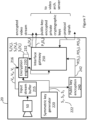
- the encryption computer system 30 is shown as comprising a data input with a stream buffer 215, a symmetric encryption engine 230, a public key encryption engine 240 and an interface gateway 250.
- a symmetric key source in the form of a symmetric key generator logic 220 is also part of the encryption computer system 30, although in alternate embodiments it may be an external module.
- the encryption computer system 30 comprises an input for connecting to the surveillance camera 210 and receiving therefrom streaming data.
- the connection with the data sources 50 may be a network connection.
- the input may employ a network interface which may be separate from the interface gateway 250, which in this example is used to interface with an the untrusted network 45.
- the input may be a direct connection to the data source 50.
- the data source provides a stream over a packet-based protocol and an input stream buffer 215 accumulates incoming packets to order them appropriately.
- the input stream buffer 215 is also used to unwrap network layer packets to derive application layer packets.
- a symmetric key generator 220 comprises logic for generating symmetric encryption keys (S 1 , S 2 , S 3 , ...) making up symmetric encryption key streams.
- the symmetric key generator may be provided externally, e.g. by an external service in a trusted communication relationship with the encryption computer system 30, or with another system portion which performs the stream data encryption (e.g. at the data source 50).
- the symmetric key generator 220 is at the encryption computer system and comprises software code, e.g. stored in a tangible computer-readable storage, comprising instructions instructing a general purpose (i.e. programmable) processing entity to generate symmetric encryption keys (S 1 , S 2 , S 3 , ...) in accordance with a key generation algorithm.
- Microsoft TM CryptoAPI is used.
- the encryption engine 230 comprises logic for applying an encryption algorithm to the stream data provided by the surveillance camera 210 using the symmetric encryption keys provided by the symmetric key generator 220.
- the encryption engine 230 is at the encryption computer system and comprises software code, e.g. stored in a tangible computer-readable storage, comprising instructions instructing a general purpose processing entity to perform the encryption.
- the stream data from the surveillance camera 210 is separated into sequential portions (V a , V b , V c , ...) (in this example, this is done by the encryption engine 230).
- Each of the sequential portions will be encrypted by a respective encryption key.
- each sequential portion (V a , V b , V c , ...) is selected to comprise a number of frames beginning with an I frame.
- each sequential portion (V a , V b , V c , ...) is subdivided by the encryption engine 230 into payload portions which will, once encrypted, make up the individual payloads of RTP packets.
- the payload portions may be subdivided according to a size factor (e.g. in terms of time or number of frames).
- the encryption engine 230 selects the sizes based on a number of frames and the presence of an I frame.
- the encryption engine 230 counts a minimum number of frames then selects the next I frame with which to being the next payload portion and places every frame before the selected next I frame into a payload portion then repeats this until the particular sequential portion (V a , V b , V c , ...) is all used up.
- the encryption engine 230 receives a stream of symmetric encryption keys from the symmetric key generator 220.
- the encryption engine 230 encrypts each sequential portions (V a , V b , V c , ...) a respective symmetric key and generates an a symmetrically encrypted data stream.
- the encryption engine 230 calls upon the symmetric key generator 220 at every particular sequential portion that is segmented to request a key (S 1 , S 2 , S 3 , ...), which it receives in return from the symmetric key generator 220 with which it encrypts the particular sequential portion.
- This calling may be done by software, e.g. by calling the functionality of a separate symmetric key generator class, e.g. by generating a request to the CryptoAPI
- the encryption engine 230 encrypts each individual sequential portion (V a , V b , V c , ...) of the data stream 216 with a respective encryption key (S 1 , S 2 , S 3 , ...) to generate a symmetrically encrypted data stream 232 comprised of sequential portions of encrypted data (S 1 (V a ), S 2 (V b ), S 3 (V c ), ).
- the encryption engine 230 applies the key stream-based encryption to the data stream 216 in real time keeping no copies of the unencrypted data stream 216.
- the encryption engine 230 encrypts each sequential portion in chunks that it will place in an RTP packet. Specifically, the encryption engine processes individual payload portions. Optionally, it may add to payload portions other information that is to be encrypted in the encrypted data stream, such as metadata.
- the encryption engine 230 applies the symmetric encryption of the payload portions, in this example using AES 128 encryption, and creates a packet, in this case an RTP packet, placing a time stamp in the header (which may have been received with, or derived from, the stream data, or generated at the encryption engine 230), as well as payload type information indicative of the type of payload contained and the key index, which it may receive from the key generator 220 or generate itself.
- each asymmetrically encrypted key streams like the asymmetrically encrypted first key stream using public key 1 120 comprised only one key stream, it will be appreciated that multiple key streams, e.g. all the key streams associated with one particular entity's (or group's) permission level or a subset thereof.
- an encrypted key stream may be created comprising all the key streams for simultaneous data streams to which a particular entity has access permission, e.g. by encrypting them together with the entity's public key.
- the public key encryption engine 240 has access (not shown) to the public keys of entities authorized to access the data stream 216. These may have been provided directly by agent stations 65 via any suitable communication system. It will be noted that public keys generally do not need to be securely transferred since they can only be used to encrypt, and not to decrypt, data.
- the public key encryption engine 240 also receives the symmetric key stream 222, but not for the purpose of encrypting anything with it, but rather to encrypt the symmetric key stream 222 itself.
- the public key encryption engine 240 comprises logic for applying an encryption algorithm to the symmetric encryption key stream 222 provided by the symmetric key generator 220 for each of the public asymmetric encryption keys associated with a permission to access the data stream encrypted with the symmetric encryption key stream using the public asymmetric encryption keys.
- the public key encryption engine 240 is at the encryption computer system and comprises software code, e.g. stored in a tangible computer-readable storage, comprising instructions instructing a general purpose processing entity to perform the encryption.
- the encryption algorithm used in the present example is asymmetric RSA encryption. This algorithm takes the symmetric encryption key stream 222 and using a public key P applies encryption to the stream 222 to create an asymmetrically encrypted key stream 242.
- the encryption is applied on a symmetric key-by-symmetric key basis such that the asymmetrically encrypted key stream 242 is a stream of asymmetrically encrypted symmetric keys (P(S 1 ), P(S 2 ), P(S 3 ), ).
- the resulting encrypted certificate-specific key stream is an asymmetrically encrypted selection of key stream (as described further herein, the asymmetrically encrypted key stream can contain only a subset of the symmetric keys corresponding to a particular data stream, where this subset corresponds to a subset of the data stream to which access is granted to the holder of the public key certificate) providing the intended user the ability to decrypt a corresponding selected segments of the encrypted data stream.
- the key stream generation, data stream encryption and public key encryption (for each permission-eligible public key) of the key stream may be repeated for additional data stream.
- the key streams generated may be re-used for multiple data streams, requiring no new encryption of the key stream.
- a group of entities e.g. a user group
- groups may be managed simply by generating an encrypted key stream for each member of the group and storing a group association associated with each member, as is the case in this example.
- the interface gateway 250 comprises logic directing communication of data from the encryption computer system 30.
- the encryption computer system 30 comprises the symmetrically encrypted data stream 232 and the asymmetrically encrypted key stream 242. Both of which are to be accessed by an agent station 65, but in this particular example, the symmetrically encrypted data stream 232 and the asymmetrically encrypted key stream 242 are stored on the video archiving server 70, which in this case is a server provided as a cloud computing service over the untrusted network 45.
- the interface gateway 250 comprises network interfaces for communicating over the untrusted network 45 and comprises logic for logging onto the remote video archiving server 70 and transmitting thereto, e.g. by streaming protocol, the symmetrically encrypted data stream 232 and the asymmetrically encrypted key stream 242 for storage thereat.
- the interface gateway 250 is at the encryption computer system 30 and comprises software code, e.g. stored in a tangible computer-readable storage, comprising instructions instructing a general purpose processing entity to perform the communication.
- the interface gateway 250 may also implement safeguards for appropriately shielding the trusted network zone 20 from the untrusted network 45. This may include firewall logic, proxying logic, packet sanitizing logic, re-encapsulation logic and logic for implementing a DMZ.
- the encryption computer system 30 and more broadly the trusted network zone 20 may more particularly be protected behind a DMZ implemented at the interface between the trusted network 20 and the untrusted network 45.
- the asymmetrically encrypted key stream 242 may be provided to the agent station 65 not through the video archiving server 70.
- the agent station 65 may be provided to the agent station 65 directly by the encryption computer system 30.
- the interface gateway 250 may be suited to receive requests from agent station 65 for the asymmetrically encrypted key stream 242.
- the agent station 65 may comprise logic to generate a request, e.g. based upon user input, for a particular data stream or portion thereof. The request may also be for combinations of specific streams or combinations of portions of specific streams.
- the request comprises data identifying the data stream, portion(s) of stream(s) or combination thereof as well as a requestor identifier identifying the requesting entity which in this example is the public key/certificate of the requesting entity.
- the encryption computer system validates whether the requesting entity is authorized to access the requested stream data. This may involve a traditional validation process, e.g. looking up the requestor identifier in a permissions table.
- Encryption of the data streams may occur at a variety of points in the system 10.
- encryption occurs within the trusted network zone.
- the encryption computer system 30 performs data encryption of the stream data.
- the encryption computer system 30 comprises an input interface for receiving from the data sources 50 the stream data and a network interface such as a LAN interface for communicating within the trusted network zone 20.
- a network interface such as a LAN interface for communicating within the trusted network zone 20.
- the data stream encryption occurred in the encryption computer system 30 embodied in a server or workstation, it is to be understood that the encryption computer system 30 may be distributed and some functionality thereof may take place, for example, inside the data sources 50.
- a cryptographic key 275a for decrypting a specific segment or portion of a feed not be received at the interface (whether at all, or, in the case of (live) video playback, within a sufficient processing/handling time margin offset 555) for combination with the portion of the feed 425a to which said key applies, no decryption may take place - or alternatively none for the portion of the feed to which said missing cryptographic key 275a applies.
- the corresponding portion of the feed may remain an encrypted and irrecoverable "patch".
- undecryptable or undecipherable video will simply not be played back over the duration of said "patch"; for example, a blank screen or other appropriate placeholder, typically containing less information than the aforementioned marker 288, may be substituted.
- the archive server 400 may advantageously comprise a simple FTP server governed by a comparatively minimal security policy. Even the breach of a single key may potentially enable malicious user to decrypt a discrete portion 425a of an encrypted feed which in scenarios may comprise a minor breach - accounting for only a few seconds of video or a few paragraphs of rich-text content.
- key streams 275 may be preferred to the intermittent and timely issuance of individual cryptographic keys 275.
- Bulk transfers of keys 275 in streams may accordingly be preferred for various reasons, which may non-limitingly include: minimizing possible interruption in video stream playback, increasing efficiency or potential performance, or simply reducing the number of individual keys to be transferred.
- the user/subscriber interface 500 may in embodiments be a minimalist client or a comprehensive application that executes at a user/subscriber's location and enables said user/subscriber to initiate (login to) and terminate (logout from) sessions, as well as any possible session-relevant interaction in-between.
- Such interactions may in embodiments non-limitingly include all functional possibilities discussed herein, such as uploading or transferring a data stream, specifying sharing policies, initiating transfer requests, and, most prominently, retrieving/receiving keys and/or key streams 175 and/or encrypted key streams 275 corresponding to an encrypted data feed to decrypt 425, receiving encrypted video feeds, and processing/decrypting the tandem cryptographic key and encrypted data feed into unencrypted and intelligible data for display 600.
- the user/subscriber interface 500 may request retransmission from the archive server 400 of a part or all of said encrypted feed 425, as might be required to overcome poor network quality, by issuing one or more index 325 values associated with discrete portions of said encrypted feed.
- a user wishes to subscribe to a particular stream or content stored within the video archive server 400, he may request to be granted access to the key or stream of keys 175 or encrypted key stream 275 necessary to decrypt said content. He may do this via a node of a user/subscriber interface 500 to which he has access, which may provide a user interface to a selectable catalog or listing of available encrypted video feeds 425 stored within the video archive server 400, from which he may formulate a subscription request. Said request is securely transmitted from the user/subscriber interface 500 to the key server 300 for validation and approval.
- the subscriber may receive a key or stream of keys, for decrypting said encrypted feeds, and he may accordingly be said to have subscribes to said video.
- management-related tasks may be imparted to the user/subscriber interface 500 to ensure that the key (stream) for the matching encrypted feed remains current and/or valid. This is particularly important for encrypted feeds 425 whose corresponding key 175 are intermittently valid or even periodically changed. Any necessary re-requesting, refreshing, or updating of keys 175 and other attendant validation may be performed by a specific User/subscriber interface 500 and the key server 300. Should access to the keys 175 to decrypt a specific encrypted feed 425 be no longer permitted as a result of a specific policy, the requesting subscriber may be informed by way of an appropriate message within the user/subscriber interface 500.
- individuals wishing to receive content 425 at a user/subscriber interface 500 may correctly be said to "subscribe" to one or more layers of content. This is particularly true for those individuals who are authorized to stream content 601, such as by receiving the cryptographic keys to decrypt the content.
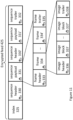
- the temporal, contractual, and delimiting nature of a subscription is further enforced in embodiments where one or more cryptographic keys are valid to decrypt only a portion (e.g. time- or other quantity-limited segment, as in Figure 12 ) of a stream and/or other file (see Figure 13a and Figure 13b ) available for redistribution to one or more individuals.
- Transactions involving the user/subscriber interface 500 thus typically require a login and/or authentication procedure and may be implemented using any suitable method known in the art, such as via a username/password pair.
- a successful transaction typically allows a user/subscriber to decrypt contents available on the video archive server 400 (or alternatively, for a live stream, received directly from the encryption computer system 31) that said user/subscriber is entitled to decrypt.
- Successful authentication allows a user/subscriber interact with embodiments, including all actions relevant to cause said user/subscriber to retrieve encrypted feeds 425 and in other embodiments, to store them.
- the interface 500 decrypts the encrypted data feed 425, 425a that it receives from the cloud, and places it into the user/subscriber's locally-accessible memory for local opening and/or playback.
- the password used by the interface 500 may be locally used for validating the identity of a user/subscriber.
- the password is likewise sent by the interface 500 to a separate, specially secure password server, so that any user/subscriber so authorized (i.e. by obtaining the key(s) 275 to which he may be entitled) may request a specific encrypted data feed 425 resident on the archive server 400 and be able to decrypt 551 and open or otherwise access 601 said feed.
- an encrypted data feed 425 may be served by the video archive server 400 to one (unicast) or to a plurality (multicast) of recipient users.
- each one of said plurality of recipient users requesting to decrypt 551 and access 601 a specific feed may be provided with the key or stream of keys 275 required to do so.
- a single key or stream of keys 275 may be generated by the key source 250 and be provided to a user/subscriber interface 500 to decrypt 551 a specific feed.
- Such access policy differentiation may for example be desirable in cases where it is intended, on one hand, to provide one or more users/subscribers with access to an encrypted feed 425 with keys 275 that provide decryption capability for a given time period of a video (e.g. Figure 7 ), or to portions of a file (e.g. Figure 8 , Figure 9 ), and on the other, to provide other users/subscribers with a single key 275 for the entire feed.
- the aforementioned access policy differentiation may likewise be implemented in tandem with or distinct from any encryption scheme which may target only specific parts or layers of a bitstream ( Figure 11 ), as further discussed herein.
- One non-limiting scenario of the foregoing access policy differentiation notion might feature an investigator who has been provided access to one or more security camera feeds from various coverage locations 25.
- the investigator accordingly works with the user/subscriber interface 500 assigned to him, with said interface 500 functioning as described substantially herein.
- His interface 500 might furthermore provide functionality allowing him to view, pause/freeze, and / or compare, correlate and/or playback frames captured by various cameras once decrypted locally.
- a rogue investigator may be tempted to abuse his position by stalking or otherwise observing movements of specific individuals captured by said sources 50 in a manner exceeding his prerogative.
- the access policy implemented for all investigators might grant to the latter the ability to decrypt all frames collected from all video surveillance cameras within a given mandate or specific premises 25 and whose content is stored in the video archive server 400.
- the policy in place - and key (or keys 275) assigned to said security guard may limit him to decrypting and viewing only the surveillance video captured within the previous hour, or alternatively, from the start of said security guard's shift.
- a video camera may be forbidden by law to gather surveillance footage from (or which partially includes) a public space.
- the security needs of an organization might strongly motivate the capture of said areas to preemptively ensure that any criminal offense or security-endangering incident may be captured and perpetrators identified and prosecuted.
- an array of cameras 50 may capture 101 various streams 100, with the latter encrypted 201 by the encryption module 200 and the resulting encrypted feeds 225 transmitted 226 to the video archive server 400.
- the keys 275 for decrypting the encrypted feeds may be stored in a key server 300 and typically accessible only to law enforcement authorities whose role would be to investigate any incident relating to events captured (or potentially captured) from said streams 100.
- a variation on this scenario might involve providing said keys 275 to allow law enforcement personnel to view 601 a high-quality, high-bandwidth variant of a stream 575 (via a user/subscriber interface 500 specific to said law enforcement detachment), with keys for a lower-quality variant - which blurs the faces of passersby - provided to private security personnel assigned to a specific perimeter (with said private security personnel viewing feeds via a user/subscriber interface 500 specific to said private security personnel).
- the 275 keys provided to law enforcement may be stored on a different key server 300 from those provided to private security personnel.
- Said distinct key servers 300 may in a still further embodiment have entirely different governance structures.
- law enforcement may directly govern a key source 250 and key server 300.
- a key 275 may be briefly or ephemerally shared by law enforcement over a secure connection between the key server 300 (which may in this case comprise a key source 250) and the encryption module 200.
- the encryption module 200 converts a stream 100 to an encrypted video feed 225 and transmits it 225 to the video archive server 400.
- users may typically receive encrypted feeds from the video archive server 400.
- a user/subscriber interface 500 it is preferable, for architectural optimization, for encrypted streams - including video streams to be streamed live - to be stored within and issued from the video archive server 400 to a user/subscriber interface 500 (or to a plurality thereof), thus promoting a strict enforcement of each module's respective role(s). While doing so might in principle increase latency, (with said latency being particularly undesirable for feeds intended to be streamed live), structural and deployment efforts may be employed to minimize and compensate for such latency as to render such undesirable effects comparatively negligible.
- each module can likewise provide opportunities to concentrate operational liabilities by optimizing the functions and particularities specific to each module in addition to the interactions between modules.
- the video archive server 400 must typically deal with receiving and particularly serving large volumes of data at a time.
- bandwidth considerations are of particular importance, especially with large numbers of user/subscriber interfaces 500 to which encrypted feeds must be transmitted concurrently.
- the key server 300 typically handles requests originating from numerous user/subscriber interfaces 500 located at various nodes within a network. The key server 300 must accordingly fulfill its operations, optimally doing so with minimal response time and latency.
- the key server's 300 fulfilling of user authentication and granting key requests is on the whole a significantly less bandwidth-intensive process than the video archive server's 400 serving of encrypted feeds to users/subscribers, the former's 300 bandwidth-related needs are significantly less robust than the latter's 400.
- embodiments of topologies contemplated herein provide for optimal operational scenarios.
- the decoupling of storage from key management operations significantly reduces the liability - and compromising effects - of any accidental serving of (encrypted) data or breach of said (encrypted) data.
- a large part of the responsibility for maintaining integrity of data access is accordingly placed upon the user/subscriber interface 500, which is trusted.
- the decryption process undertaken by the decryption module resident at the user/subscriber interface 500 node, combined with storing keys and encrypted feeds at disparate locations and joining them in a decryption process at the node at which they are consumed provides for an architecture whose very topology is optimized for security and performance.
- a compositing of multiple streams may be desired.
- Compositing may be either destructive or non-destructive in nature.
- One example might comprise the possibility of blending the contents of multiple streams, such as one video layer and thee audio layers to produce a new composited output.
- a user/subscriber may for instance be entitled to (i.e. have permission granted to obtain keys 175 for) each of the four said constituent layers and decrypt each of them at the user/subscriber interface 500 node.
- compositioning or blending of the four layers may be done on a processor that is local to the user/subscriber interface 500 (and appropriately trusted).
- the new stream 100 resulting from said compositioning may in turn be encrypted by the encryption module 200 which in an embodiment may be made accessible to the user/subscriber interface 500, for encryption.
- the requisite key(s) 275 would likewise be generated by the key source 250, with the resulting key(s) 275 stored within the key server 300, in accordance with functionality discussed at length herein.
- the user/subscriber interface 500 may provide functionality for the creation of new accounts. Deletion of accounts may likewise be implemented within a part of the interface 500, and, in a further embodiment, be the exclusive prerogative of a respective user or alternatively shared with a policy executed by service maintenance personnel.
- encryption module 200 and user/subscriber interface 500 may be combined into a single user-side application accessible on any platform, such as a personal computer or mobile platform. It will likewise be appreciated that in another series of embodiments, a single user/subscriber or account may be either allowed, forbidden, or limited in the number of multiple sessions that he may instantiate concurrently.
- the network or networks on which embodiments may be deployed may include, without limitation, a LAN, a WAN, and/or the internet.
- a trusted network may be used instead where an untrusted network is used (e.g. where communication takes place over an untrusted network). In such a case the present technology may still provide an additional layer of security as well as permission-based access control.
- the computer readable storage media provided herein may be tangible computer readable storage media such as chip- or disk-based storage media and may be accessible by a processing entity such as a CPU.
- the video archive server 70 was so named, this was mainly for convenience. It will be appreciated that it may represent a generic data stream archive server for storing data streams or more broadly data. Although a single encryption computer system 30 and video archive server 70 were shown here, it will be appreciated that multiple encryption computer systems may share a video archive server 70, or less typically vice versa. Moreover, both these entities may have redundant versions.
- a redundant encryption computer system may receive raw data streams like the original encryption computer system 30 and encrypt the data and/or key streams independently.
- Auxiliary archivers may be provided as a client to the video archive server 70 to store additional copies of encrypted data streams and/or encrypted key streams.
- the present technology allows for secure storage and transfer of data streams with differentiated permission access.
- the data streams may be very large or even unbounded/infinite and can be divided into finite segments arbitrarily or according to any suitable pattern. It should be understood, that portions of a stream are typically themselves streams. Thus what is said to be performed on a particular stream may be performed on only a part of the stream, the part on which it is performed being itself a stream. This should be evident, for example when discussing potentially infinite streams, where the presently described techniques may be applied to a portion thereof, which is itself a stream.
- Symmetric encryption is efficient over large data sets, but involves sharing a secret key which leads to trust issues.
- Asymmetric encryption is not as efficient over large data set, but allows better control.
- the present technology provides the benefit of both these techniques by securing a large dataset with the security of asymmetric encryption and with roughly the efficiency of symmetric encryption by asymmetrically encrypting the symmetric keys with which the large dataset is encrypted.
- the present technology also allows for effective handling of cloud trust issues since the data is encrypted both in storage and when transmitted.
- the central repository e.g. cloud
- the central repository does not have access to the unencrypted data and in one example is not able to grant new access permissions to new users by itself.
- a trusted agent is tasked with granting permission in a process that advantageously does not require direct access to the large dataset.
- Advantageously unencrypted copies of original data and symmetric keys need not be kept and are discarded for extra data safety.
- Distribution and sharing of the data is scalable and sharing does not require decrypting of the data stream itself, only of the key stream. Moreover sharing and permission granting can be performed granularly on portions of a data stream or an entire set.
- the data stream is segmented into segments of a particular length (e.g. 1 minute of time) and each segment is encrypted with a random symmetric key (which together form a key stream) to create an encrypted data stream. This may be an ongoing process whereby a new symmetric key is created every time a new segment beings (e.g. every minute) and it is appended to the key stream.
- the key stream can be asymmetrically encrypted with the public key in the certificate of an authorized entity to produce an encrypted certificate-specific key stream which can be shared with the authorized entity (or safely stored and/or broadly distributed) to provide the authorized entity access to the corresponding portion of data stream.
Landscapes
- Engineering & Computer Science (AREA)
- Computer Security & Cryptography (AREA)
- Computer Networks & Wireless Communication (AREA)
- Signal Processing (AREA)
- Computing Systems (AREA)
- General Physics & Mathematics (AREA)
- Physics & Mathematics (AREA)
- Theoretical Computer Science (AREA)
- Multimedia (AREA)
- Computer Hardware Design (AREA)
- General Engineering & Computer Science (AREA)
- Two-Way Televisions, Distribution Of Moving Picture Or The Like (AREA)
- Storage Device Security (AREA)
- Data Exchanges In Wide-Area Networks (AREA)
Claims (12)
- Verfahren zum Zugreifen auf Streaming-Daten über ein nicht vertrauenswürdiges Netzwerk (45), umfassend:Empfangen, an einer Agentenstation (65), eines symmetrisch verschlüsselten Datenstroms (115), umfassend sequentielle Abschnitte von verschlüsselten Daten;Empfangen, an der Agentenstation (65), eines ersten asymmetrisch verschlüsselten Schlüsselstroms (242), der mit einem ersten öffentlichen Schlüssel (120) verschlüsselt ist, der erste asymmetrisch verschlüsselte Schlüsselstrom (242) umfassend einen darin verschlüsselten symmetrischen Verschlüsselungsschlüsselstrom (110), umfassend eine Vielzahl von unterschiedlichen symmetrischen Verschlüsselungsschlüsseln, die jeweilige sequentielle Abschnitte eines Datenstroms in den symmetrisch verschlüsselten Datenstrom (115) verschlüsseln;Entschlüsseln, an der Agentenstation (65), des ersten asymmetrisch verschlüsselten Schlüsselstroms (242) mit einem privaten Schlüssel (412), um den symmetrischen Verschlüsselungsschlüsselstrom (110) abzuleiten, umfassend die Vielzahl von unterschiedlichen symmetrischen Verschlüsselungsschlüsseln;Empfangen, an der Agentenstation (65), eines öffentlichen Drittverschlüsselungsschlüssels, der zu einer Drittentität gehört, wobei der öffentliche Drittverschlüsselungsschlüssel zu einem privat-öffentlichen Drittschlüsselpaar gehört, umfassend einen privaten Drittschlüssel der Drittentität;Bestimmen einer Zugriffsberechtigung, die mit der Drittentität verknüpft ist, und Bestimmen einer Teilmenge der symmetrischen Verschlüsselungsschlüssel, die in dem symmetrischen Verschlüsselungsschlüsselstrom enthalten sind, auf der Grundlage der Zugriffsberechtigung;Durchführen, an der Agentenstation (65), einer asymmetrischen Verschlüsselung von mindestens der Teilmenge der symmetrischen Verschlüsselungsschlüssel unter Verwendung des öffentlichen Drittschlüssels, um einen zweiten asymmetrisch verschlüsselten Schlüsselstrom zu erzeugen;Übertragen des zweiten asymmetrisch verschlüsselten Schlüsselstroms über ein nicht vertrauenswürdiges Netzwerk (45).
- Verfahren nach Anspruch 1, ferner umfassend: Erzeugen einer Anforderung für den Datenstrom und Übertragen der Anforderung für den Datenstrom über das nicht vertrauenswürdige Netzwerk, wobei das Empfangen des symmetrisch verschlüsselten Datenstroms (115) an der Agentenstation (65) als Reaktion auf das Übertragen der Anforderung erfolgt.
- Verfahren nach Anspruch 2, wobei das Übertragen der Anforderung das Übertragen der Anforderung an einen Cloud-Server umfasst.
- Verfahren nach einem der Ansprüche 1 bis 3, wobei der erste asymmetrisch verschlüsselte Schlüsselstrom (242) von einem Server empfangen wird, das Verfahren ferner umfassend vor dem Empfangen des ersten asymmetrisch verschlüsselten Schlüsselstroms (242) an der Agentenstation (65) das Übertragen des ersten öffentlichen Schlüssels (120) an den Server.
- Verfahren nach einem der Ansprüche 1 bis 4, ferner umfassend:Entschlüsseln, an der Agentenstation (65), des symmetrisch verschlüsselten Datenstroms (115) unter Verwendung des symmetrischen Verschlüsselungsschlüsselstroms (110) durch Entschlüsseln jedes der sequentiellen Abschnitte der verschlüsselten Daten mit einem jeweiligen der Vielzahl von unterschiedlichen symmetrischen Verschlüsselungsschlüsseln, um mindestens einen Abschnitt des Datenstroms abzuleiten, undVerarbeiten, an der Agentenstation (65), von mindestens einem Abschnitt des Datenstroms.
- Verfahren nach Anspruch 5, ferner umfassend ein Präsentieren von Informationen, die in dem Datenstrom enthalten sind, an einen Benutzer.
- Verfahren nach Anspruch 6, wobei das Präsentieren der Informationen, die in dem Datenstrom enthalten sind, an einen Benutzer ein Decodieren und Anzeigen eines Videostroms umfasst.
- Verfahren nach einem der Ansprüche 1 bis 7, wobei der öffentliche Drittschlüssel von Dritten empfangen wird und der zweite asymmetrisch verschlüsselte Schlüsselstrom an Dritte übertragen wird.
- Verfahren nach einem der Ansprüche 1 bis 7, wobei der öffentliche Drittschlüssel von einem Videoüberwachungsserver empfangen wird und der zweite asymmetrisch verschlüsselte Schlüsselstrom an den Videoüberwachungsserver übertragen wird.
- Verfahren nach einem der Ansprüche 1 bis 9, wobei das Durchführen, an der Agentenstation (65), der asymmetrischen Verschlüsselung von mindestens der Teilmenge der symmetrischen Verschlüsselungsschlüssel unter Verwendung des öffentlichen Drittschlüssels an einer geeigneten Teilmenge des symmetrischen Verschlüsselungsschlüsselstroms (110) derart durchgeführt wird, dass der zweite asymmetrisch verschlüsselte Schlüsselstrom nur eine geeignete Teilmenge der symmetrischen Verschlüsselungsschlüssel enthält, die in dem symmetrischen Verschlüsselungsschlüsselstrom (110) enthalten sind.
- Agentenstation (65) zum Zugreifen auf Streaming-Daten über ein nicht vertrauenswürdiges Netzwerk (45), die Agentenstation (65) umfassend computerlesbare Anweisungen, die auf einem computerlesbaren Speichermedium gespeichert sind, umfassend Anweisungen zum Anweisen einer Verarbeitungseinheit, das Verfahren nach einem der Ansprüche 1 bis 10 durchzuführen.
- Computerlesbares Speichermedium, das computerlesbare Anweisungen darauf gespeichert aufweist, die durch eine Verarbeitungseinheit ausführbar sind, die computerlesbaren Anweisungen umfassend Anweisungen zum Durchführen des Verfahrens nach einem der Ansprüche 1 bis 10.
Applications Claiming Priority (3)
| Application Number | Priority Date | Filing Date | Title |
|---|---|---|---|
| US201562258022P | 2015-11-20 | 2015-11-20 | |
| PCT/CA2016/051350 WO2017083980A1 (en) | 2015-11-20 | 2016-11-18 | Secure layered encryption of data streams |
| EP16865359.0A EP3378189B1 (de) | 2015-11-20 | 2016-11-18 | Sichere geschichtete verschlüsselung von datenströmen |
Related Parent Applications (2)
| Application Number | Title | Priority Date | Filing Date |
|---|---|---|---|
| EP16865359.0A Division EP3378189B1 (de) | 2015-11-20 | 2016-11-18 | Sichere geschichtete verschlüsselung von datenströmen |
| EP16865359.0A Division-Into EP3378189B1 (de) | 2015-11-20 | 2016-11-18 | Sichere geschichtete verschlüsselung von datenströmen |
Publications (3)
| Publication Number | Publication Date |
|---|---|
| EP3896899A1 EP3896899A1 (de) | 2021-10-20 |
| EP3896899B1 true EP3896899B1 (de) | 2025-03-12 |
| EP3896899C0 EP3896899C0 (de) | 2025-03-12 |
Family
ID=58717241
Family Applications (2)
| Application Number | Title | Priority Date | Filing Date |
|---|---|---|---|
| EP16865359.0A Active EP3378189B1 (de) | 2015-11-20 | 2016-11-18 | Sichere geschichtete verschlüsselung von datenströmen |
| EP21173723.4A Active EP3896899B1 (de) | 2015-11-20 | 2016-11-18 | Sichere geschichtete verschlüsselung von datenströmen |
Family Applications Before (1)
| Application Number | Title | Priority Date | Filing Date |
|---|---|---|---|
| EP16865359.0A Active EP3378189B1 (de) | 2015-11-20 | 2016-11-18 | Sichere geschichtete verschlüsselung von datenströmen |
Country Status (5)
| Country | Link |
|---|---|
| US (4) | US10992461B2 (de) |
| EP (2) | EP3378189B1 (de) |
| JP (1) | JP6921075B2 (de) |
| CA (1) | CA3005476C (de) |
| WO (1) | WO2017083980A1 (de) |
Families Citing this family (53)
| Publication number | Priority date | Publication date | Assignee | Title |
|---|---|---|---|---|
| US11575524B2 (en) * | 2015-10-12 | 2023-02-07 | Servicenow, Inc. | Selective encryption delineation |
| EP3378235B1 (de) | 2015-11-20 | 2026-04-15 | Genetec Inc. | Medienstreaming |
| ES2725048T1 (es) * | 2016-07-29 | 2019-09-19 | Permanent Privacy Ltd | Aplicaciones asociadas a una encriptación segura |
| US11005650B2 (en) | 2016-10-19 | 2021-05-11 | Stripe, Inc. | Systems and methods for data management and the use of salts and keys in data encryption/decryption |
| US11010614B2 (en) * | 2017-01-26 | 2021-05-18 | Matias Klein | Total property intelligence system |
| US10560263B2 (en) * | 2017-03-24 | 2020-02-11 | Micron Technology, Inc. | Secure memory arrangements |
| US10430350B1 (en) | 2017-06-27 | 2019-10-01 | Wells Fargo Bank, N.A. | Secure storage of data through a multifaceted security scheme |
| US10284526B2 (en) * | 2017-07-24 | 2019-05-07 | Centripetal Networks, Inc. | Efficient SSL/TLS proxy |
| CN107995499B (zh) * | 2017-12-04 | 2021-07-23 | 腾讯科技(深圳)有限公司 | 媒体数据的处理方法、装置及相关设备 |
| CN108322778B (zh) * | 2018-02-09 | 2020-11-20 | 珠海迈科智能科技股份有限公司 | 一种提升dvb数据流加扰速度的方法及装置 |
| US11423161B1 (en) | 2018-05-26 | 2022-08-23 | Genetec Inc. | System and media recording device with secured encryption |
| US11055366B2 (en) | 2018-06-04 | 2021-07-06 | Genetec Inc. | Electronic evidence transfer |
| US11314888B2 (en) * | 2018-06-29 | 2022-04-26 | Vmware, Inc. | Multi-key, cloud-specific security |
| US11393204B2 (en) * | 2018-09-18 | 2022-07-19 | Capital One Service, LLC | Monitoring systems and methods |
| KR102140721B1 (ko) * | 2019-01-29 | 2020-08-03 | 주식회사 아이디스 | 안전한 암호화 정보 전송이 가능한 ip 카메라 보안 시스템 |
| CN111526378B (zh) * | 2019-02-02 | 2022-01-14 | 华为技术有限公司 | 一种签名信息的传输方法及装置 |
| US11683298B2 (en) * | 2019-02-27 | 2023-06-20 | Kobil Gmbh | Secure messaging |
| US11482005B2 (en) * | 2019-05-28 | 2022-10-25 | Apple Inc. | Techniques for secure video frame management |
| US11411717B2 (en) | 2019-08-05 | 2022-08-09 | Thinkware Corporation | Electronic device for speech security with less environmental sound distortion and operating method thereof |
| WO2021028831A1 (en) * | 2019-08-12 | 2021-02-18 | Pi-Taa Technology Ltd. | Real time decryption system and method for its use |
| US11238177B2 (en) * | 2019-09-18 | 2022-02-01 | Lenovo (Singapore) Pte. Ltd. | Multiuser information exchange management |
| US11296870B2 (en) * | 2019-10-01 | 2022-04-05 | Sap Se | Key management configurations |
| US20210126903A1 (en) * | 2019-10-29 | 2021-04-29 | Genetec Inc. | Data access control |
| US10862873B1 (en) | 2020-04-30 | 2020-12-08 | Snowflake Inc. | Message-based database replication |
| KR102197216B1 (ko) * | 2020-05-18 | 2020-12-31 | 권영훈 | 음성 신호와 영상 신호를 갖는 기밀 정보 관리 방법 및 장치 |
| US11595367B2 (en) * | 2020-09-30 | 2023-02-28 | Lenovo Enterprise Solutions (Singapore) Pte. Ltd. | Selectively disclosing content of data center interconnect encrypted links |
| TWI820363B (zh) * | 2020-12-01 | 2023-11-01 | 桓竑智聯股份有限公司 | 無實體導播裝置且無雲端系統之多媒體匯流和播放方法 |
| US11743241B2 (en) * | 2020-12-30 | 2023-08-29 | International Business Machines Corporation | Secure data movement |
| WO2022173930A1 (en) * | 2021-02-12 | 2022-08-18 | Visa International Service Association | Privacy preserving identity data exchange based on hybrid encryption |
| WO2022190024A1 (en) * | 2021-03-10 | 2022-09-15 | Epifi Technologies Private Limited | Methods, systems and computer program products for secure encryption of data for transmission via an untrusted intermediary |
| US11914745B2 (en) * | 2021-04-14 | 2024-02-27 | Ford Global Technologies, Llc | Personally identifiable information in encrypted data streams |
| US20220343925A1 (en) * | 2021-04-22 | 2022-10-27 | Xandrie SA | System and method for encoding audio data |
| US12105817B2 (en) * | 2021-07-16 | 2024-10-01 | Cisco Technology, Inc. | Serverless identity management |
| US12052229B2 (en) | 2021-07-30 | 2024-07-30 | Cisco Technology, Inc. | Secure frame encryption as a service |
| US11829495B2 (en) * | 2021-08-05 | 2023-11-28 | International Business Machines Corporation | Confidential data provided to a secure guest via metadata |
| KR102568418B1 (ko) * | 2021-08-26 | 2023-08-18 | 하이파이브랩 주식회사 | 다중 서명을 지원하는 전자 인증 시스템 및 방법 |
| US12041162B2 (en) | 2021-10-26 | 2024-07-16 | Juniper Networks, Inc. | Inline security key exchange |
| US12069180B1 (en) | 2021-10-27 | 2024-08-20 | Genetec Inc. | Systems and methods for retrieving data from a chain data structure |
| CN114285600B (zh) * | 2021-11-24 | 2024-07-26 | 上海电气风电集团股份有限公司 | 风电场的数据传输系统 |
| US20230171115A1 (en) * | 2021-11-29 | 2023-06-01 | Kishore Swaminathan | Event-locked messages with provable attestation |
| US12081647B2 (en) * | 2021-11-30 | 2024-09-03 | Bank Of America Corporation | Using automatic homomorphic encryption in a multi-cloud environment to support translytical data computation using an elastic hybrid memory cube |
| US12333054B2 (en) | 2022-07-14 | 2025-06-17 | Genetec Inc. | Tamper-evident storage and provisioning of media streams |
| US20240080666A1 (en) * | 2022-09-01 | 2024-03-07 | T-Mobile Innovations Llc | Wireless communication network authentication for a wireless user device that has a circuitry identifier |
| US12413562B2 (en) * | 2022-11-04 | 2025-09-09 | A&Ctechnology, Inc. | System and methods of crypto chat |
| FR3143789B1 (fr) * | 2022-12-15 | 2025-03-14 | Thales Sa | Procédé et dispositif de protection d'un flux entrant comportant un flux élémentaire constitué de paquets vidéo |
| CN116094771B (zh) * | 2022-12-23 | 2025-07-25 | 赛尔网络有限公司 | IPv6网络流数据脱敏方法、装置、电子设备及介质 |
| US12587363B2 (en) | 2023-03-10 | 2026-03-24 | Verkada Inc. | Method and apparatus for improved video information security against unauthorized access |
| US12513127B2 (en) * | 2023-06-16 | 2025-12-30 | Arlo Technologies, Inc. | End to end encryption of data in an electronic monitoring system |
| CN116737349B (zh) * | 2023-08-16 | 2023-11-03 | 中国移动紫金(江苏)创新研究院有限公司 | 流式数据处理方法、系统及存储介质 |
| US12549532B2 (en) * | 2024-04-24 | 2026-02-10 | Vision Marine Technologies | Cryptographic authentication of components in an electric vessel |
| WO2025243262A1 (en) * | 2024-05-23 | 2025-11-27 | Ionoco Holdings Ltd. | System and method for encrypting and decrypting data files |
| US12395329B1 (en) * | 2024-06-28 | 2025-08-19 | Ecosteer Srl | Record-level encryption scheme for data ownership platform |
| CN119316183B (zh) * | 2024-09-02 | 2025-12-09 | 北京东方通软件有限公司 | 一种基于可信计算的应用服务器安全防护方法和装置 |
Family Cites Families (56)
| Publication number | Priority date | Publication date | Assignee | Title |
|---|---|---|---|---|
| KR100332743B1 (ko) | 1994-11-26 | 2002-11-07 | 엘지전자주식회사 | 디지탈영상시스템의불법시청및복사방지방법및장치 |
| US6199076B1 (en) | 1996-10-02 | 2001-03-06 | James Logan | Audio program player including a dynamic program selection controller |
| US6052466A (en) * | 1997-08-28 | 2000-04-18 | Telefonaktiebolaget L M Ericsson (Publ) | Encryption of data packets using a sequence of private keys generated from a public key exchange |
| EP1062812B1 (de) | 1998-03-16 | 2005-05-25 | Intertrust Technologies Corp. | Streaming-media-abspielgerät mit fortdauernde kontrolle und schutz von medieninhalt |
| US6415326B1 (en) | 1998-09-15 | 2002-07-02 | Microsoft Corporation | Timeline correlation between multiple timeline-altered media streams |
| CA2388095A1 (en) | 1999-10-22 | 2001-05-03 | Activesky, Inc. | An object oriented video system |
| US20050015608A1 (en) * | 2003-07-16 | 2005-01-20 | Pkware, Inc. | Method for strongly encrypting .ZIP files |
| US7242772B1 (en) * | 2000-09-07 | 2007-07-10 | Eastman Kodak Company | Encryption apparatus and method for synchronizing multiple encryption keys with a data stream |
| JP4643888B2 (ja) | 2001-03-08 | 2011-03-02 | 富士通株式会社 | マルチメディア協調作業システム、そのクライアント/サーバ、方法、記録媒体、及びプログラム |
| JP2003009102A (ja) | 2001-04-18 | 2003-01-10 | Victor Co Of Japan Ltd | オブジェクトデータの符号化方法、オブジェクトデータの伝送方法、オブジェクトデータの復号方法、オブジェクトデータ符号化装置、オブジェクトデータ生成装置、オブジェクトデータ復号装置、オブジェクトデータ符号化用プログラム、オブジェクトデータ復号用プログラム、及びオブジェクトデータ記録媒体 |
| US7299209B2 (en) | 2001-10-18 | 2007-11-20 | Macrovision Corporation | Method, apparatus and system for securely providing material to a licensee of the material |
| US7260555B2 (en) * | 2001-12-12 | 2007-08-21 | Guardian Data Storage, Llc | Method and architecture for providing pervasive security to digital assets |
| JP2003309795A (ja) | 2002-04-17 | 2003-10-31 | Sony Corp | 再生装置および方法、提供装置および方法、並びにプログラム |
| US7773754B2 (en) | 2002-07-08 | 2010-08-10 | Broadcom Corporation | Key management system and method |
| US8064508B1 (en) * | 2002-09-19 | 2011-11-22 | Silicon Image, Inc. | Equalizer with controllably weighted parallel high pass and low pass filters and receiver including such an equalizer |
| US7305711B2 (en) * | 2002-12-10 | 2007-12-04 | Intel Corporation | Public key media key block |
| EP1445954A1 (de) | 2003-02-10 | 2004-08-11 | Thomson Licensing S.A. | Verfahren zur Übertragung und zum Empfangen von Schriftarteninformationen in Streaming-Systemen |
| GB2404489A (en) * | 2003-07-31 | 2005-02-02 | Sony Uk Ltd | Access control for digital storage medium content |
| US20050204038A1 (en) * | 2004-03-11 | 2005-09-15 | Alexander Medvinsky | Method and system for distributing data within a network |
| JP2005354497A (ja) | 2004-06-11 | 2005-12-22 | Matsushita Electric Ind Co Ltd | アクセス制御装置およびアクセス制御方法 |
| US7454021B2 (en) * | 2004-10-29 | 2008-11-18 | Hewlett-Packard Development Company, L.P. | Off-loading data re-encryption in encrypted data management systems |
| US7477740B2 (en) * | 2005-01-19 | 2009-01-13 | International Business Machines Corporation | Access-controlled encrypted recording system for site, interaction and process monitoring |
| US9225698B2 (en) * | 2005-05-12 | 2015-12-29 | Nokia Technologies Oy | Fine grain rights management of streaming content |
| JP2007041756A (ja) | 2005-08-02 | 2007-02-15 | Sony Corp | 情報処理装置および方法、プログラム、並びに、セキュリティチップ |
| US9319720B2 (en) | 2005-12-13 | 2016-04-19 | Audio Pod Inc. | System and method for rendering digital content using time offsets |
| CN101026615B (zh) | 2006-02-18 | 2011-09-14 | 华为技术有限公司 | 一种基于ims的流媒体网络系统 |
| US9225761B2 (en) | 2006-08-04 | 2015-12-29 | The Directv Group, Inc. | Distributed media-aggregation systems and methods to operate the same |
| EP2122900A4 (de) * | 2007-01-22 | 2014-07-23 | Spyrus Inc | Tragbares datenverschlüsselungsgerät mit konfigurierbaren sicherheitsfunktionen und verfahren zur dateienverschlüsselung |
| US20080219436A1 (en) * | 2007-03-05 | 2008-09-11 | General Instrument Corporation | Method and apparatus for providing a digital rights management engine |
| WO2009076652A1 (en) * | 2007-12-13 | 2009-06-18 | Pgp Corporation | Apparatus and method for facilitating cryptographic key management services |
| US20090161869A1 (en) * | 2007-12-19 | 2009-06-25 | Nstreams Technologies, Inc. | Method for distributing encrypted digital content |
| US9754625B2 (en) | 2008-07-31 | 2017-09-05 | Warner Bros. Entertainment Inc. | Generation and use of user-selected scenes playlist from distributed digital content |
| US20110072037A1 (en) | 2009-09-18 | 2011-03-24 | Carey Leigh Lotzer | Intelligent media capture, organization, search and workflow |
| US8468345B2 (en) * | 2009-11-16 | 2013-06-18 | Microsoft Corporation | Containerless data for trustworthy computing and data services |
| US9064096B2 (en) | 2009-12-07 | 2015-06-23 | Ncr Corporation | Methods and apparatus for secure distribution of protected content |
| US8712045B2 (en) | 2010-01-07 | 2014-04-29 | Microsoft Corporation | Digital rights management for media streams |
| WO2011119554A1 (en) | 2010-03-22 | 2011-09-29 | Echostar Technologies Llc | Systems and methods for securely streaming media content |
| EP2619939A2 (de) * | 2010-09-20 | 2013-07-31 | Rick L. Orsini | Systeme und verfahren für sichere gemeinsame datennutzung |
| US9015281B2 (en) * | 2010-10-08 | 2015-04-21 | Brian Lee Moffat | Private data sharing system |
| US20130290845A1 (en) | 2010-12-22 | 2013-10-31 | Thomson Licensing | Method and system for sending video edit information |
| CN103636160B (zh) * | 2011-03-07 | 2016-11-23 | 安全第一公司 | 安全文件共享方法与系统 |
| US20120272051A1 (en) * | 2011-04-22 | 2012-10-25 | International Business Machines Corporation | Security key distribution in a cluster |
| JP5699812B2 (ja) | 2011-05-31 | 2015-04-15 | 船井電機株式会社 | 再生装置 |
| EP2817917B1 (de) * | 2012-02-20 | 2018-04-11 | KL Data Security Pty Ltd | Kryptografisches verfahren und system |
| US9135955B2 (en) | 2012-03-26 | 2015-09-15 | Max Abecassis | Playing a video presentation with playback functions |
| US20150220516A1 (en) | 2012-08-16 | 2015-08-06 | Captioning Studio Technologies Pty Ltd | Method and system for providing relevant portions of multi-media based on text searching of multi-media |
| US9426196B2 (en) | 2013-01-04 | 2016-08-23 | Qualcomm Incorporated | Live timing for dynamic adaptive streaming over HTTP (DASH) |
| US9696881B2 (en) | 2013-01-15 | 2017-07-04 | Viki, Inc. | System and method for captioning media |
| US8891773B2 (en) * | 2013-02-11 | 2014-11-18 | Lsi Corporation | System and method for key wrapping to allow secure access to media by multiple authorities with modifiable permissions |
| US9257148B2 (en) | 2013-03-15 | 2016-02-09 | JBF Interlude 2009 LTD | System and method for synchronization of selectably presentable media streams |
| US9716737B2 (en) | 2013-05-08 | 2017-07-25 | Qualcomm Incorporated | Video streaming in a wireless communication system |
| KR101883579B1 (ko) | 2013-09-20 | 2018-07-30 | 코닌클리즈케 케이피엔 엔.브이. | 미디어 스트림들 간의 타임라인 정보를 상관시키기 위한 시스템 및 방법 |
| KR102009124B1 (ko) | 2014-01-29 | 2019-08-08 | 코닌클리즈케 케이피엔 엔.브이. | 이벤트 스트리밍 프레젠테이션 확립 |
| US9589143B2 (en) * | 2014-04-17 | 2017-03-07 | Xerox Corporation | Semi-trusted Data-as-a-Service platform |
| US9819656B2 (en) * | 2014-05-09 | 2017-11-14 | Sony Interactive Entertainment Inc. | Method for secure communication using asymmetric and symmetric encryption over insecure communications |
| EP3378235B1 (de) | 2015-11-20 | 2026-04-15 | Genetec Inc. | Medienstreaming |
-
2016
- 2016-11-18 CA CA3005476A patent/CA3005476C/en active Active
- 2016-11-18 US US15/776,448 patent/US10992461B2/en active Active
- 2016-11-18 JP JP2018526721A patent/JP6921075B2/ja active Active
- 2016-11-18 EP EP16865359.0A patent/EP3378189B1/de active Active
- 2016-11-18 WO PCT/CA2016/051350 patent/WO2017083980A1/en not_active Ceased
- 2016-11-18 EP EP21173723.4A patent/EP3896899B1/de active Active
-
2021
- 2021-03-25 US US17/212,312 patent/US11671247B2/en active Active
-
2023
- 2023-04-25 US US18/306,294 patent/US12058245B2/en active Active
-
2024
- 2024-06-25 US US18/753,365 patent/US12418410B2/en active Active
Also Published As
| Publication number | Publication date |
|---|---|
| EP3896899A1 (de) | 2021-10-20 |
| US12418410B2 (en) | 2025-09-16 |
| JP6921075B2 (ja) | 2021-08-18 |
| WO2017083980A1 (en) | 2017-05-26 |
| EP3378189A4 (de) | 2019-06-26 |
| US11671247B2 (en) | 2023-06-06 |
| US20210226780A1 (en) | 2021-07-22 |
| EP3378189B1 (de) | 2021-07-07 |
| US20180331824A1 (en) | 2018-11-15 |
| EP3896899C0 (de) | 2025-03-12 |
| US12058245B2 (en) | 2024-08-06 |
| CA3005476C (en) | 2024-03-05 |
| US20230336331A1 (en) | 2023-10-19 |
| US10992461B2 (en) | 2021-04-27 |
| US20240348428A1 (en) | 2024-10-17 |
| CA3005476A1 (en) | 2017-05-26 |
| EP3378189A1 (de) | 2018-09-26 |
| JP2018534879A (ja) | 2018-11-22 |
Similar Documents
| Publication | Publication Date | Title |
|---|---|---|
| US12058245B2 (en) | Secure layered encryption of data streams | |
| US11822626B2 (en) | Secure web RTC real time communications service for audio and video streaming communications | |
| KR100747755B1 (ko) | 데이터 스트림을 가상 스마트 카드 클라이언트 시스템에암호화하는 절차 및 스트리밍 서버 | |
| US7328345B2 (en) | Method and system for end to end securing of content for video on demand | |
| US9332002B1 (en) | Authenticating and authorizing a user by way of a digital certificate | |
| US9912480B2 (en) | Network service packet header security | |
| US20100017599A1 (en) | Secure digital content management using mutating identifiers | |
| US20050010536A1 (en) | Secure communication and real-time watermarking using mutating identifiers | |
| GB2533279B (en) | Secure media player | |
| US10250385B2 (en) | Customer call logging data privacy in cloud infrastructure | |
| CN104244026A (zh) | 一种视频监控系统中的密钥分发装置 | |
| CN101094394A (zh) | 一种保证视频数据安全传输的方法及视频监控系统 | |
| CN104113409A (zh) | 一种sip视频监控联网系统的密钥管理方法及系统 | |
| Puvvadi et al. | Cost-effective security support in real-time video surveillance | |
| US20180227117A1 (en) | System and Method for Synchronized Key Derivation across Multiple Conditional Access Servers | |
| Castiglione et al. | Towards a lawfully secure and privacy preserving video surveillance system | |
| CN111131265A (zh) | 一种工程勘察设计中视频加密传输方法 | |
| IT202300016611A1 (it) | Metodo e sistema di crittografia ibrida basati sull'impiego di un server delle chiavi | |
| SAMČOVIĆ | Security Issues in Digital Cinema |
Legal Events
| Date | Code | Title | Description |
|---|---|---|---|
| PUAI | Public reference made under article 153(3) epc to a published international application that has entered the european phase |
Free format text: ORIGINAL CODE: 0009012 |
|
| STAA | Information on the status of an ep patent application or granted ep patent |
Free format text: STATUS: THE APPLICATION HAS BEEN PUBLISHED |
|
| AC | Divisional application: reference to earlier application |
Ref document number: 3378189 Country of ref document: EP Kind code of ref document: P |
|
| AK | Designated contracting states |
Kind code of ref document: A1 Designated state(s): AL AT BE BG CH CY CZ DE DK EE ES FI FR GB GR HR HU IE IS IT LI LT LU LV MC MK MT NL NO PL PT RO RS SE SI SK SM TR |
|
| B565 | Issuance of search results under rule 164(2) epc |
Effective date: 20210915 |
|
| STAA | Information on the status of an ep patent application or granted ep patent |
Free format text: STATUS: REQUEST FOR EXAMINATION WAS MADE |
|
| 17P | Request for examination filed |
Effective date: 20220412 |
|
| RBV | Designated contracting states (corrected) |
Designated state(s): AL AT BE BG CH CY CZ DE DK EE ES FI FR GB GR HR HU IE IS IT LI LT LU LV MC MK MT NL NO PL PT RO RS SE SI SK SM TR |
|
| GRAP | Despatch of communication of intention to grant a patent |
Free format text: ORIGINAL CODE: EPIDOSNIGR1 |
|
| STAA | Information on the status of an ep patent application or granted ep patent |
Free format text: STATUS: GRANT OF PATENT IS INTENDED |
|
| RIC1 | Information provided on ipc code assigned before grant |
Ipc: H04L 9/06 20060101ALI20240919BHEP Ipc: H04L 9/14 20060101ALI20240919BHEP Ipc: G08B 13/196 20060101ALI20240919BHEP Ipc: H04L 9/30 20060101AFI20240919BHEP |
|
| INTG | Intention to grant announced |
Effective date: 20241014 |
|
| GRAS | Grant fee paid |
Free format text: ORIGINAL CODE: EPIDOSNIGR3 |
|
| GRAA | (expected) grant |
Free format text: ORIGINAL CODE: 0009210 |
|
| STAA | Information on the status of an ep patent application or granted ep patent |
Free format text: STATUS: THE PATENT HAS BEEN GRANTED |
|
| AC | Divisional application: reference to earlier application |
Ref document number: 3378189 Country of ref document: EP Kind code of ref document: P |
|
| AK | Designated contracting states |
Kind code of ref document: B1 Designated state(s): AL AT BE BG CH CY CZ DE DK EE ES FI FR GB GR HR HU IE IS IT LI LT LU LV MC MK MT NL NO PL PT RO RS SE SI SK SM TR |
|
| REG | Reference to a national code |
Ref country code: GB Ref legal event code: FG4D |
|
| REG | Reference to a national code |
Ref country code: CH Ref legal event code: EP |
|
| REG | Reference to a national code |
Ref country code: DE Ref legal event code: R096 Ref document number: 602016091570 Country of ref document: DE |
|
| REG | Reference to a national code |
Ref country code: IE Ref legal event code: FG4D |
|
| U01 | Request for unitary effect filed |
Effective date: 20250324 |
|
| U07 | Unitary effect registered |
Designated state(s): AT BE BG DE DK EE FI FR IT LT LU LV MT NL PT RO SE SI Effective date: 20250328 |
|
| PG25 | Lapsed in a contracting state [announced via postgrant information from national office to epo] |
Ref country code: RS Free format text: LAPSE BECAUSE OF FAILURE TO SUBMIT A TRANSLATION OF THE DESCRIPTION OR TO PAY THE FEE WITHIN THE PRESCRIBED TIME-LIMIT Effective date: 20250612 |
|
| PG25 | Lapsed in a contracting state [announced via postgrant information from national office to epo] |
Ref country code: ES Free format text: LAPSE BECAUSE OF FAILURE TO SUBMIT A TRANSLATION OF THE DESCRIPTION OR TO PAY THE FEE WITHIN THE PRESCRIBED TIME-LIMIT Effective date: 20250312 |
|
| PG25 | Lapsed in a contracting state [announced via postgrant information from national office to epo] |
Ref country code: NO Free format text: LAPSE BECAUSE OF FAILURE TO SUBMIT A TRANSLATION OF THE DESCRIPTION OR TO PAY THE FEE WITHIN THE PRESCRIBED TIME-LIMIT Effective date: 20250612 |
|
| PG25 | Lapsed in a contracting state [announced via postgrant information from national office to epo] |
Ref country code: HR Free format text: LAPSE BECAUSE OF FAILURE TO SUBMIT A TRANSLATION OF THE DESCRIPTION OR TO PAY THE FEE WITHIN THE PRESCRIBED TIME-LIMIT Effective date: 20250312 |
|
| PG25 | Lapsed in a contracting state [announced via postgrant information from national office to epo] |
Ref country code: GR Free format text: LAPSE BECAUSE OF FAILURE TO SUBMIT A TRANSLATION OF THE DESCRIPTION OR TO PAY THE FEE WITHIN THE PRESCRIBED TIME-LIMIT Effective date: 20250613 |
|
| PG25 | Lapsed in a contracting state [announced via postgrant information from national office to epo] |
Ref country code: SM Free format text: LAPSE BECAUSE OF FAILURE TO SUBMIT A TRANSLATION OF THE DESCRIPTION OR TO PAY THE FEE WITHIN THE PRESCRIBED TIME-LIMIT Effective date: 20250312 |
|
| PG25 | Lapsed in a contracting state [announced via postgrant information from national office to epo] |
Ref country code: PL Free format text: LAPSE BECAUSE OF FAILURE TO SUBMIT A TRANSLATION OF THE DESCRIPTION OR TO PAY THE FEE WITHIN THE PRESCRIBED TIME-LIMIT Effective date: 20250312 |
|
| PG25 | Lapsed in a contracting state [announced via postgrant information from national office to epo] |
Ref country code: CZ Free format text: LAPSE BECAUSE OF FAILURE TO SUBMIT A TRANSLATION OF THE DESCRIPTION OR TO PAY THE FEE WITHIN THE PRESCRIBED TIME-LIMIT Effective date: 20250312 |
|
| PG25 | Lapsed in a contracting state [announced via postgrant information from national office to epo] |
Ref country code: SK Free format text: LAPSE BECAUSE OF FAILURE TO SUBMIT A TRANSLATION OF THE DESCRIPTION OR TO PAY THE FEE WITHIN THE PRESCRIBED TIME-LIMIT Effective date: 20250312 |
|
| PG25 | Lapsed in a contracting state [announced via postgrant information from national office to epo] |
Ref country code: IS Free format text: LAPSE BECAUSE OF FAILURE TO SUBMIT A TRANSLATION OF THE DESCRIPTION OR TO PAY THE FEE WITHIN THE PRESCRIBED TIME-LIMIT Effective date: 20250712 |
|
| U20 | Renewal fee for the european patent with unitary effect paid |
Year of fee payment: 10 Effective date: 20251126 |
|
| PGFP | Annual fee paid to national office [announced via postgrant information from national office to epo] |
Ref country code: GB Payment date: 20251110 Year of fee payment: 10 |
|
| PLBE | No opposition filed within time limit |
Free format text: ORIGINAL CODE: 0009261 |
|
| STAA | Information on the status of an ep patent application or granted ep patent |
Free format text: STATUS: NO OPPOSITION FILED WITHIN TIME LIMIT |
|
| REG | Reference to a national code |
Ref country code: CH Ref legal event code: L10 Free format text: ST27 STATUS EVENT CODE: U-0-0-L10-L00 (AS PROVIDED BY THE NATIONAL OFFICE) Effective date: 20260121 |
|
| 26N | No opposition filed |
Effective date: 20251215 |